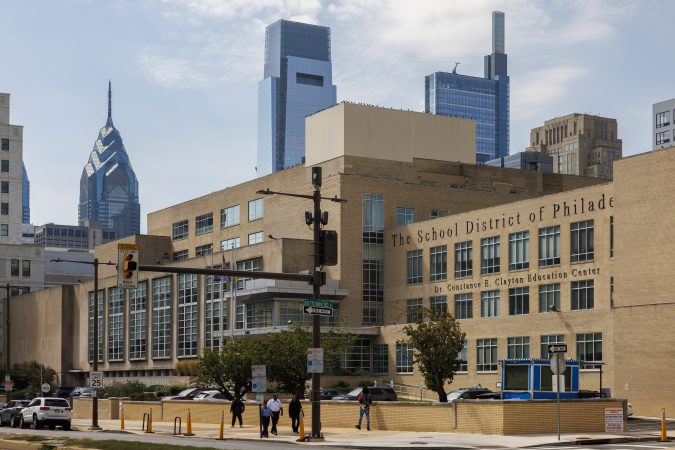
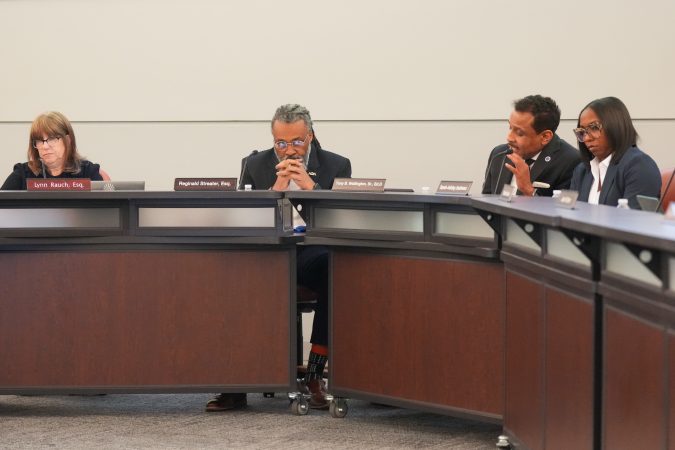
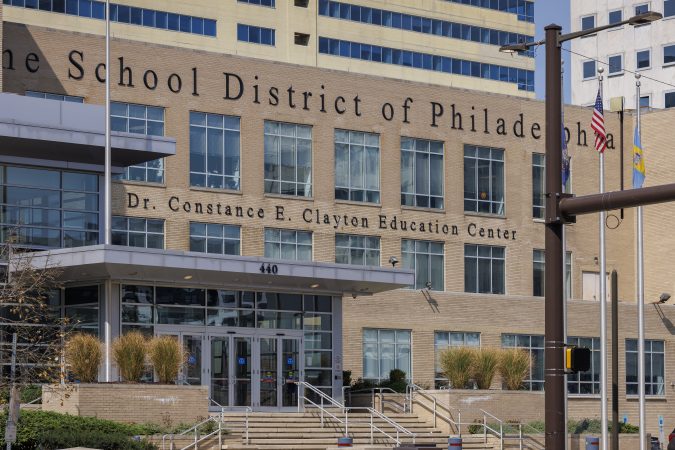
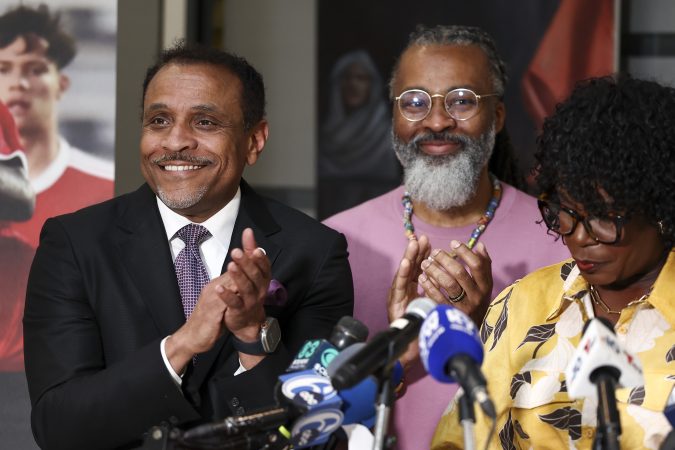
The Philadelphia school board on Thursday voted to nonrenew a city charter school — despite multiple ongoing lawsuits to attempt to halt the action.
The board voted 7-2 to nonrenew Philadelphia Montessori Charter School, the first step on a long road that could ultimately lead to closing the K-4 school in Southwest Philadelphia.
Sarah-Ashley Andrews, school board vice president, said the school’s students “have shown consistently low academic performance in math and English language arts. Its third and fourth graders have consistently lagged behind their peers in demographically similar schools, school district schools, and other Philadelphia charter schools serving the same grade levels. And student academic growth has not kept pace with state expectations.”
Philadelphia Montessori has had five different leaders since 2020. In 2024-25, the last school for which data are available, 18% of students met state standards in reading and 12% in math.
School leaders say the school is improving and serves an important role as the only public Montessori school in the city. They have objected to what they say are shifting and arbitrary standards for charter schools.
Board members Crystal Cubbage and Whitney Jones opposed the vote to begin the nonrenewal process. Cubbage, who said she had “mixed feelings” and initially was in favor of the nonrenewal, said she wanted more clarity on the school’s struggles.
Philadelphia Montessori has been aggressively attempting to block such action in court. State and federal lawsuits are pending, with school lawyers asking judges this week to block the board’s vote.
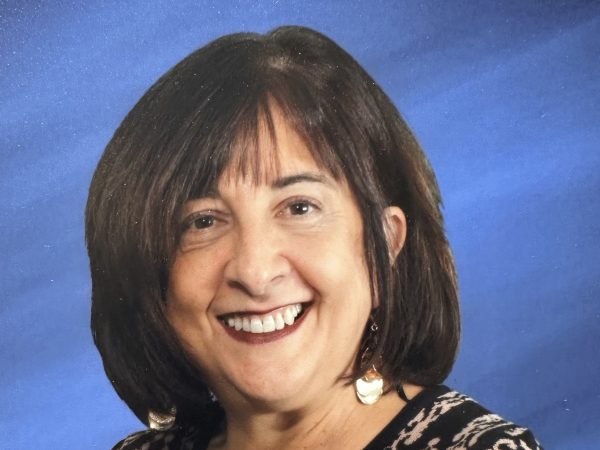
Amanda Wilson, the school’s executive director, asked the board to hold off on the nonrenewal.
“There is no emergency,” Wilson told the board. “There is no deadline requiring a vote before the courts have had the opportunity to weigh in on the significant legal issues surrounding this charter renewal process. Those issues are now pending in both state and federal court, and they deserve to be resolved before any action is taken. If this board proceeds today and the courts later determine that the school district’s process was unlawful, everyone loses.”
Lynn Rauch, the district’s general counsel, said “both the state and the federal court issued rulings that do allow us to proceed with the vote today.”
School board president Reginald Streater said it was appropriate to move forward with the Philadelphia Montessori matter, “exercising our responsibility and duty to ensure that schools throughout our district are meeting their responsibilities to children, families, and taxpayers by demonstrating a high-quality academic experience for our students.”
The school, which educates 228 students in an Island Avenue building, will continue to operate during the nonrenewal process — the appointment of a hearing officer, a formal hearing with witnesses and evidence, a report from the hearing officer, and, finally, another school board vote on how to move forward.
The Philadelphia school board on Thursday moved to borrow $600 million to pay employees and keep the lights on over the next several months.
The temporary borrowing, authorized at a special school board meeting, comes in two tranches — $200 million this month, and $400 million in September.
Borrowing to pay bills is a rite of summer for the district, the only school system in Pennsylvania unable to raise its own funds. The school board has had to issue tax and revenue anticipation notes for 43 of the past 45 years, officials said. Last year, the district authorized borrowing up to $1.5 billion because the state budget had not yet been passed.
“Simply put, it helps ensure our schools have the cash flow needed to open on time, pay employees and vendors, and continue serving students without interruption,” school board president Reginald Streater said at the meeting, which was held virtually.
Rates are not locked in, but chief financial officer Michael Herbstman said if the transactions happened now, the first borrowing, which is set to happen Tuesday through Bank of America, would come at a rate of 3.4%, and the September public borrowing would have a rate of 2.85%.
The move, then, will mean millions in borrowing costs for the school system.
Philadelphia, the nation’s ninth-largest school system, has about 114,000 students in 216 traditional public schools, and about 65,000 more in 83 charter schools. The district has a budget of about $4.6 billion.
The president of Philadelphia Montessori Charter School, two parents, and two students sued the Philadelphia School District in federal court Tuesday, alleging civil rights violations over what they say is an “unlawful and fundamentally unfair charter renewal process.”
Separately, the Southwest Philadelphia school also asked Commonwealth Court judges this week to bar the school board from taking a nonrenewal vote against it. That vote is now scheduled for a special meeting on Thursday.
The federal suit was filed in Philadelphia against the district, the school board, and Peng Chao, the district’s chief of charter schools.
The federal suit was filed by Christopher Smith, the president of Philadelphia Montessori’s board of trustees, parents Donnaye Noland and Maria C. Rios, and their children, students at the school. The parties also asked a federal judge for an emergency order stopping the board from taking any action around nonrenewal until the case is heard.
“This case is not about educational policy or the wisdom of charter schools,” the suit reads. “It is about whether a public school district may employ an arbitrary, internally developed, and concededly flawed evaluation process to recommend the closure of a public charter school serving predominantly Black or African American students and a significant population of students with disabilities, notwithstanding its own acknowledgment that the process lacks transparency, consistency and objective standards.”
Wanda Motley Odom, a spokesperson for the school board, said that the board does not comment on pending litigation, but that the filing “does not change our agenda for Thursday’s action meeting, or the board’s responsibility to carry out its statutory duty to consider matters properly before it. The board is reviewing the filing, and will continue to act in accordance with applicable law.”
U.S. District Judge Joshua D. Wolson has scheduled a Wednesday conference call on Philadelphia Montessori’s application for the federal emergency order.
A Commonwealth Court judge will also hear arguments on the application for an injunction Wednesday.
A charter nonrenewal vote does not mean a school closes, but it triggers a lengthy, formal nonrenewal hearing, and eventually a second board vote on nonrenewal.
Schools remain open during the nonrenewal hearing process and can appeal nonrenewal decisions.
Harm that can’t be undone
Philadelphia Montessori, the only public Montessori school in the city, serves 250 students on its Island Avenue campus.
At the board’s May meeting, officials flagged long-standing concerns about the school, including itsunderperforming both a similiar-schools group and the district as a whole in academics.
They also cited personnel problems at the school.
But Smith, Noland, and Rios say that students have “enrolled and remained at PMCS because traditional district placements were unsuccessful,” and that the methodology the district uses to evaluate charter schools “disproportionately disadvantages charter schools serving predominately Black or African American student populations by relying on metrics and comparator methodologies that produce racially disparate outcomes.”
The suit not only seeks to halt the district from implementing the nonrenewal but also asks for compensatory damages for the student plaintiffs.
Mark Seiberling, a lawyer for Philadelphia Montessori and the plaintiffs in the federal suit, said the school is not seeking special treatment, but equal treatment.
“Once the school district initiates the nonrenewal process, the resulting harm to students, families, and the school community cannot be fully undone,” Seiberling said in a statement. “We look forward to presenting the evidence in court. Our clients simply seek a fair, transparent, and lawful renewal process that complies with the Constitution and federal civil rights laws.”
The Philadelphia School District’s negligence proved fatal for a woman who died when a Roxborough High School utility pole fell and crushed her while she was walking at the school’s athletic complex, a new lawsuit alleges.
Paula Budin, a retired teacher, was walking on the Roxborough High track on the morning of Dec. 5, 2024, when a 45-foot wooden pole snapped at its base, striking her.
A passerby found her, bleeding and unresponsive on the ground, and called emergency services, but paramedics could not revive Budin, who died of blunt force trauma injuries from the accident.
Lawyers for Budin’s family accuse the district — and the Parsons Corp., which was hired by the school system to complete a facilities assessment of all its properties — of negligence. Officials failed to flag rotting at the base of the pole or properly maintain or inspect the pole, the suit said.
“The School District of Philadelphia knew or should have known of the dangerous condition of the subject pole as there were visible signs of its decay as far back as 2014,” the suit, filed this week in Philadelphia Common Pleas Court, reads. “Despite this actual and/or constructive knowledge and their appreciation of that risk of catastrophic harm, the district did not take corrective action nor did it warn students or members of the community of the risk of catastrophic harm.”
Budin’s family is seeking financial damages.
The school district does not comment on pending litigation, spokesperson Naima DeBrest said. Parsons spokesperson Bryce McDevitt said the same.
Philadelphia’s underfunded school system has a massive footprint — more than 300 buildings and athletic complexes. It has, in some cases, struggled to adequatelymaintain its facilities.
Budin, who was 73 when she died, had enjoyed an active lifestyle, her family said. She had taught at Germantown Academy and the Community Partnership School in North Philadelphia before her retirement and was close to her family — two sisters, two nephews, and a niece.
On the morning of her accident, Budin was walking near her home on Roxborough’s track on Pechin Street, which is generally open to the public. Four poles typically used to hold lighting or security cameras were positioned around the athletic complex.
Sometime after the accident, the district removed the three remaining poles from the property, the suit said. A subsequent inspection by Budin’s and the district’s lawyers and experts revealed the poles had no inspection tags, indicating they had not been inspectedprior to the accident, the suit says.
Budin’s lawyers say that the pole in question was buried in grass near a storm drain, on a slope near the track. The drain was filled with debris, and because of the condition of the area, no standing water could drain — leading to “lengthy periods of water exposure to the base of the pole at ground level that caused the pole to deteriorate and rot to the point of severe and dangerous decay,” the suit says.
The other poles were not situated near storm drains, and had no water damage or decay, the suit says.
Budin’s estate alleges that Parsons, which was hired by the district in 2015 to complete facilities condition assessments of all of its buildings and athletic complexes, is also culpable.
Parsons inspected the Roxborough fields more than once, issuing multiple reports about the fields, but did not inspect the poles, Budin’s lawyers say.
“The Parsons defendants knew or should have known they should inspect the utility poles located on the Roxborough athletic track and field yet failed to do so,” the suit reads. “At the time of December 2024 incident, the pole at issue had discoloration at the base and other visible signs of rot which must have been present for a significant period of time.”
More than 30% of high school students in the affluent Radnor and Wallingford-Swarthmore districts played sports in the 2024-25 school year.
In the Philadelphia school district, less than 10% of high school students did.
The disparities are part of a pattern, with fewer students playing sports in lesser-resourced urban schools, according to Research for Action, a Philadelphia-based educational research organization that released a report Thursday analyzing high school sports participation rates across Pennsylvania.
The report, which looked at sports as another barometer of opportunities available to students, found participation varies widely — as does school spending on sports programs.
It also found a link between funding and sports participation, with more students on average playing in higher-spending districts.
“The degree to which a student may have access to school athletics really depends on what district they’re in,” said Maja Pehrson, the report’s lead author.
Here’s what the report found — and what questions it raises about access to high school sports in Pennsylvania.
There are big differences in sports participation rates
Participation in school sports “hasn’t really been looked at very much,” Pehrson said. Research for Action analyzed data that school districts and charter schools are required to report to the Pennsylvania Department of Education on athletic opportunities.
The report found participation rates in the 2024-25 school year ranging from 5% in some school districts, to a handful of districts with rates above 40%.
Topping the list locally were Jenkintown School District, at 35%, and Springfield Township School District in Montgomery County at 34%; followed by Radnor and New Hope school districts, at 31%; Wallingford-Swarthmore, at 30%; West Chester, at 28%; and Upper Dublin, at 27% — all majority white, relatively affluent districts.
Below the Philadelphia school district’s 9.6% rate were Upper Darby, at 9%; William Penn and Norristown, at 8%; and Chester-Upland, at 6% — all districts that are majority non-white and high-poverty.
Overall, large, urban districts tended to have the lowest participation rates, meaning “almost half of Pennsylvania high school students are enrolled in districts where the likelihood of participating in a school athletics team is relatively low,” the report said.
Those “very low” participation districts — with 5% to 17% of students participating — also offered fewer sports per 1,000 students than high-participation districts, the report found.
Naima DeBrest, a spokesperson for the Philadelphia district, said the district had expanded athletic opportunities in recent years “by introducing new sports such as girls wrestling and girls flag football” and creating intramural programs at the elementary and middle school levels.
Despite “common challenges” faced by urban districts, “the district remains committed to expanding access to high-quality athletic opportunities and ensuring students have meaningful opportunities to participate in sports that support their academic success, well-being, and overall development,” DeBrest said, noting that the district’s rate is comparable to other urban districts.
<iframe title="Sports Participation and Athletics Spending Among Local School Districts" aria-label="Table" id="datawrapper-chart-dyc1W" src="https://datawrapper.dwcdn.net/dyc1W/1/" scrolling="no" frameborder="0" style="width: 0; min-width: 100% !important; border: none;" height="971" data-external="1"></iframe><script type="text/javascript">(function(){function e(){window.addEventListener(`message`,function(e){if(e.data[`datawrapper-height`]!==void 0){var t=document.querySelectorAll(`iframe`);for(var n in e.data[`datawrapper-height`])for(var r=0,i;i=t[r];r++)if(i.contentWindow===e.source){var a=e.data[`datawrapper-height`][n]+`px`;i.style.height=a}}})}e()})();</script>
And looking at what districts spend on athletics, it varied widely, the report found. Districts with “very low” participation reported spending an average of $409 per high school student on athletics, while “very high” participation districts — with 28.2% to 61.6% of students participation — spent an average of $939 per student.
Locally, the Jenkintown, West Chester, Phoenixville, and Colonial school districts reported spending more than $1,100 per high school student on athletics, compared with $145 per high school student in Philadelphia.
The report noted that those figures don’t fully reflect spending on school sports. Many districts didn’t report any spending on athletic facilities, for instance; Pehrson said it was likely hard for schools to calculate how much of their overall facilities spending was tied to athletics.
The data also don’t reflect any activities fees paid by students.
Charters have lower participation rates — but in line with Philly
Statewide, brick-and-mortar charter schools, which are publicly funded but independently run, reported lower rates of sports participation. On average, 8.4% of charter high school students participated in sports, compared with 18.1% in district schools. (Cyber charter schools reported no participation; charter students who participate in district programs are counted by districts.)
Rather than a difference between the charter and district sectors, however, the gap could largely be a product of school district conditions, the report said. Half the state’s charter high schools are located in Philadelphia, where the charter sports participation rates largely mirror the district’s, the report said.
In front of their boarded up dilapidated stadium, Olney High School athletes Cindi Lizardo (from left), Emma Blanco, Sidi Traore; and principal Michael Roth, coach Siena Childs, recent graduate Ysis Rivera, and athletic director Jorge Gonzalez point out the deplorable condition the sports facilities are in July 24, 2025. Olney High School, which spent a decade under charter management, was turned back over to the Philadelphia school district in 2022.Tom Gralish / Staff Photographer
Gender gaps persist
Boys participated in sports in 2024-25 at a higher rate than girls — at an average rate of 20.3% compared with 15.8%, the report found.
And those gaps persisted across different types of school districts, the report found. For instance, in districts with “very low” overall sports participation, 14% of boys participated, compared with 10% of girls. In districts with “moderate” participation, 24% of boys participated, compared with 19% of girls. And in “very high” participation districts, 35% of boys participated, compared with 30% of girls.
What’s driving the disparities?
The report found that access to high school sports in Pennsylvania “is not evenly distributed and is strongly shaped by structural conditions.”
“Districts with fewer athletic opportunities are more likely to be urban districts with large high schools and more students of color, and they tend to offer a narrower range of teams and spend less per student on athletics, limiting the extent to which students can engage,” the report said.
But district funding alone isn’t responsible for disparities, the report noted. The gender gap, for instance, is found in well-funded and poorly funded districts.
The pattern of higher-spending districts seeing more participation “doesn’t line up neatly for every district,” Pehrson said, noting that the data can’t fully answer questions about what’s driving differences in participation.
Other possible factors could include transportation and sports outside of schools, Pehrson said.
DeBrest, the Philadelphia spokesperson, noted that urban districts may also have limited athletic facilities, and practice space “and the need for some students to balance academics, work, or family responsibilities.”
Pehrson hopes the findings prompt more investigation into the availability of school sports, which “are a key part of students’ educational opportunities,” Pehrson said — from boosting physical and mental health, to promoting social-emotional skills and building community.
“There are clear disparities in terms of sports opportunities students are having,” Pehrson said. “Why is that, and how can we move forward and try to figure out these differences?”
Editor’s note: This story has been updated to reflect that Jenkintown and Springfield Township were the local districts with the highest sports participation rates.
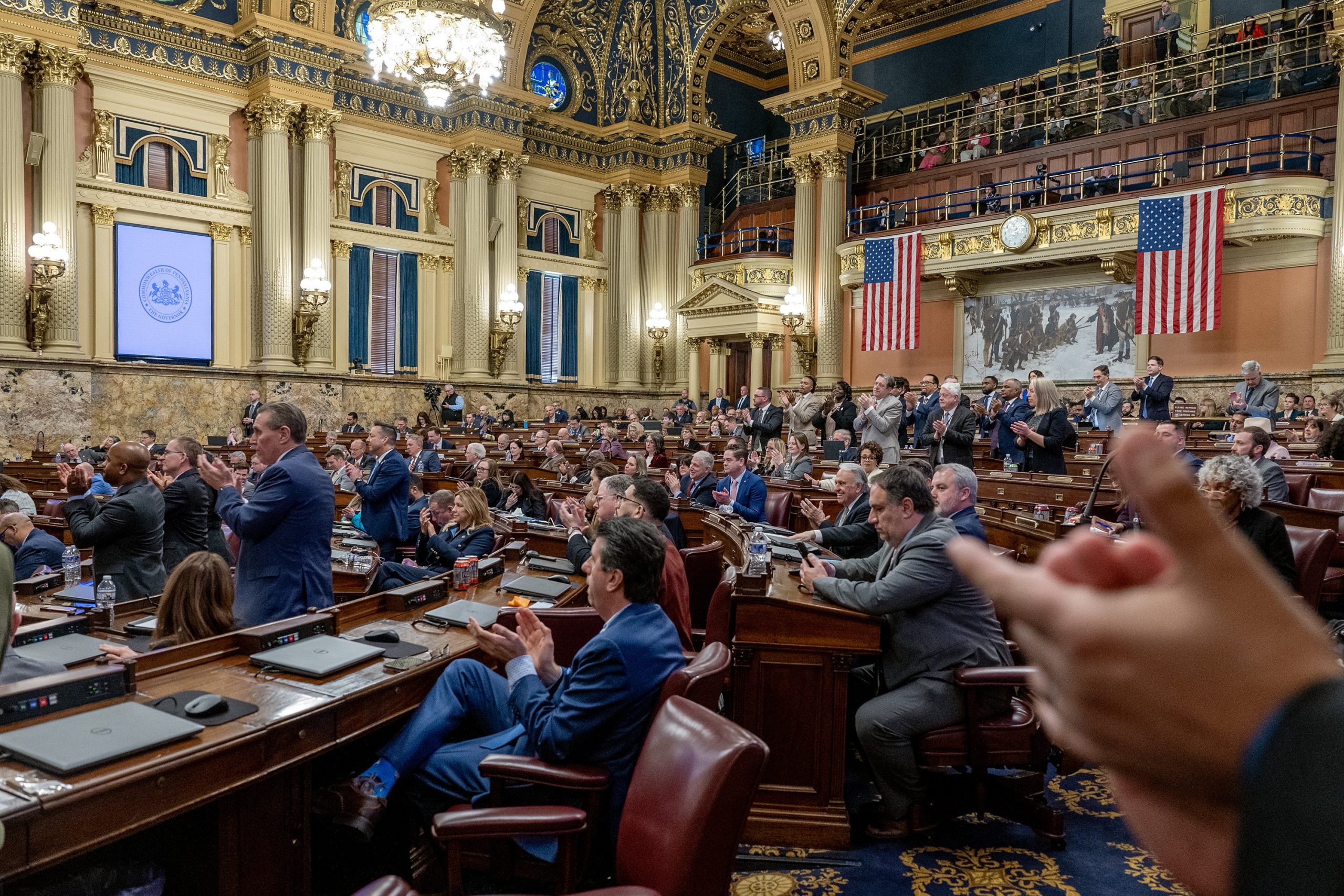
HARRISBURG — Pennsylvania’s new $50.8 billion state budget was sprawled across more than 600 pages of legislation and signed into law on Sunday. New data center regulations, education funding, and more were approved in the wide-ranging spending package.
But some of the most pressing issues facing the General Assembly were noticeably absent from the final deal, as Gov. Josh Shapiro and lawmakers in the split legislature were unable to reach a compromise — or did not want to touch the contentious issues until after they are up for election in November, sidelining some of Shapiro’s top budget priorities.
Here’s a look at what is in — and what was left out of — the 2026-27 Pennsylvania state budget.
Pennsylvania took another jump toward filling a multibillion-dollar funding gap between wealthy and poor school districts, after a court found that the state’s old system of funding education was unconstitutional. Since 2024, when the state first implemented new adequacy and tax equity formulas in efforts to fill the $4.5 billion“adequacy gap,” lawmakers have put nearly $1.9 billion toward funding lower-income districts, with plans to fill it by 2032.
“It keeps our promise to our school districts,” said State Rep. Jordan Harris (D., Philadelphia), who serves on the powerful appropriations committee responsible for allocating state dollars, in remarks on the House floor Sunday.
The latest installment of adequacy and tax equity payments — $565 million — will largely go to low-income districts that already have high property taxes. The Philadelphia School District, Pennsylvania’s largest district and the only one in the state that is unable to raise its own revenue, will get $136 million of that funding increase.
Out: Revenue generators
Shapiro proposed generating new revenue streams to help the state fix its multibillion-dollar structural deficit in his last four budget addresses. But the ways he wants to raise that cash have drawn resistance from Senate Republicans, who argue they are not policies that will improve the state’s economic standing — or cannot reach agreement within their caucus on how to address the issues.
Shapiro this year did not get the hefty minimum wage increase he asked for, seeking to raise the hourly rate from $7.25 to $15 — and counting on the higher wage for $80 million in higher income tax revenues. Nor was he able to get the General Assembly, where Democrats control the House and Republicans lead the Senate, to approve adult-use cannabis, which his office estimated would bring in $729.4 million in its first year, largely through licensing. (House Democrats have approved plans for a minimum wage increase and recreational marijuana legalization, but the Senate has not voted on the bills.)
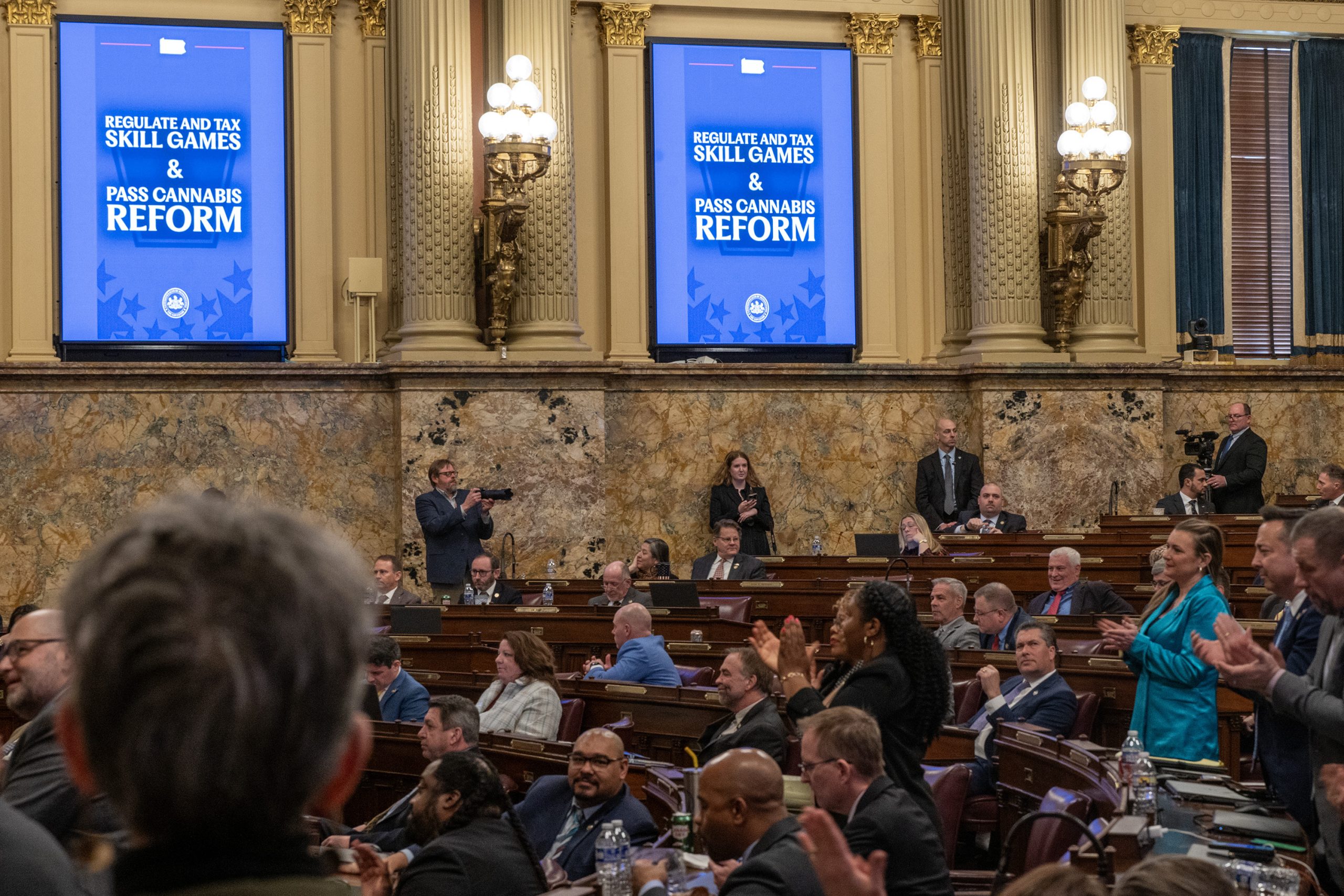
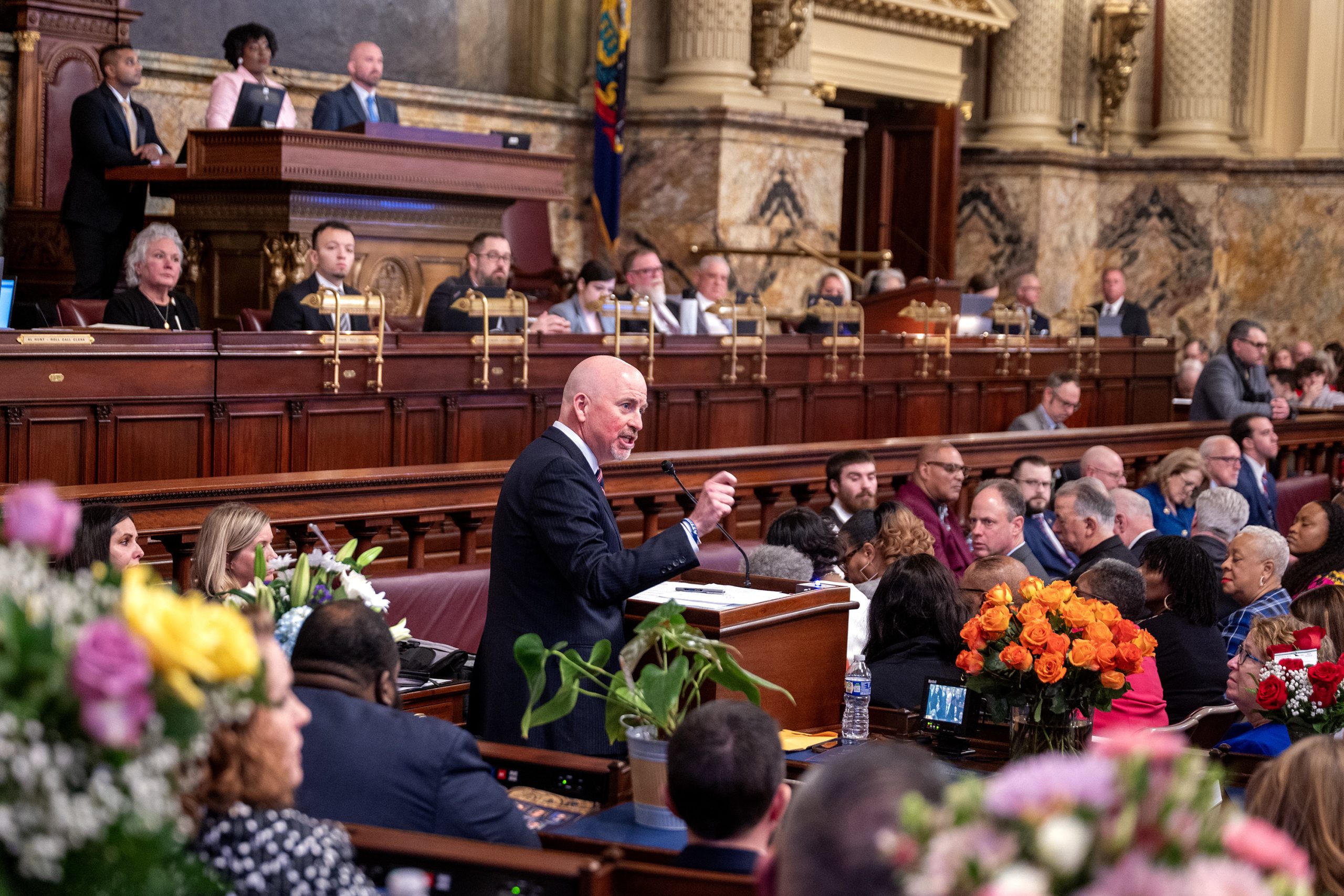
Screen shows skill games and cannabis regulation and reform as Gov. Josh Shapiro makes his annual budget proposal in the state House chamber in Harrisburg Tuesday, Feb. 3, 2026.Tom Gralish / Staff Photographer
Shapiro, in his February budget proposal, also called on the General Assembly to regulate and tax skill games at the same rate as casinos, a move that he has estimated could generate nearly $800 million in revenue in its first year. But any regulation of skill games — slot machine look-alikes that the state Supreme Court ruled last month are a form of gambling — was left out of the budget.
Lawmakers have until October to decide whether skill games will be taxed and regulated, under a grace period in the high court’s ruling. Otherwise, the devices found in many corner stores, gas stations, and bars will become illegal gambling machines. The issue has been the target of more than $8 million in lobbying and $9 million in campaign spending in Harrisburg, mostly funded by one company.
State Senate Majority Leader Joe Pittman (R., Indiana) during a press conference at the Capitol in Harrisburg Feb. 3, 2026.Tom Gralish / Staff Photographer
“We can act within the 120 days; we can act after the 120 days,” Senate Majority Leader Joe Pittman (R., Indiana) said Sunday. “But the choice is now quite simple. These machines are illegal, and in less than 120 days, they will be leaving the marketplace.”
In: Data center reporting requirements
Data centers — which are seeing a boom in Pennsylvania as artificial intelligence usage increases and communities push back on where the centers are being built — will be required to submit information about their energy and water usage.
Beginning next summer, data centers in the state with a peak energy demand greater than 10 megawatts will be required to submit information annually to the Pennsylvania Department of Environmental Protection.
Outlined as part of this year’s fiscal code, those reports will be publicly accessible. Data centers that do not submit information about their resource usage will be fined $10,000 a day.
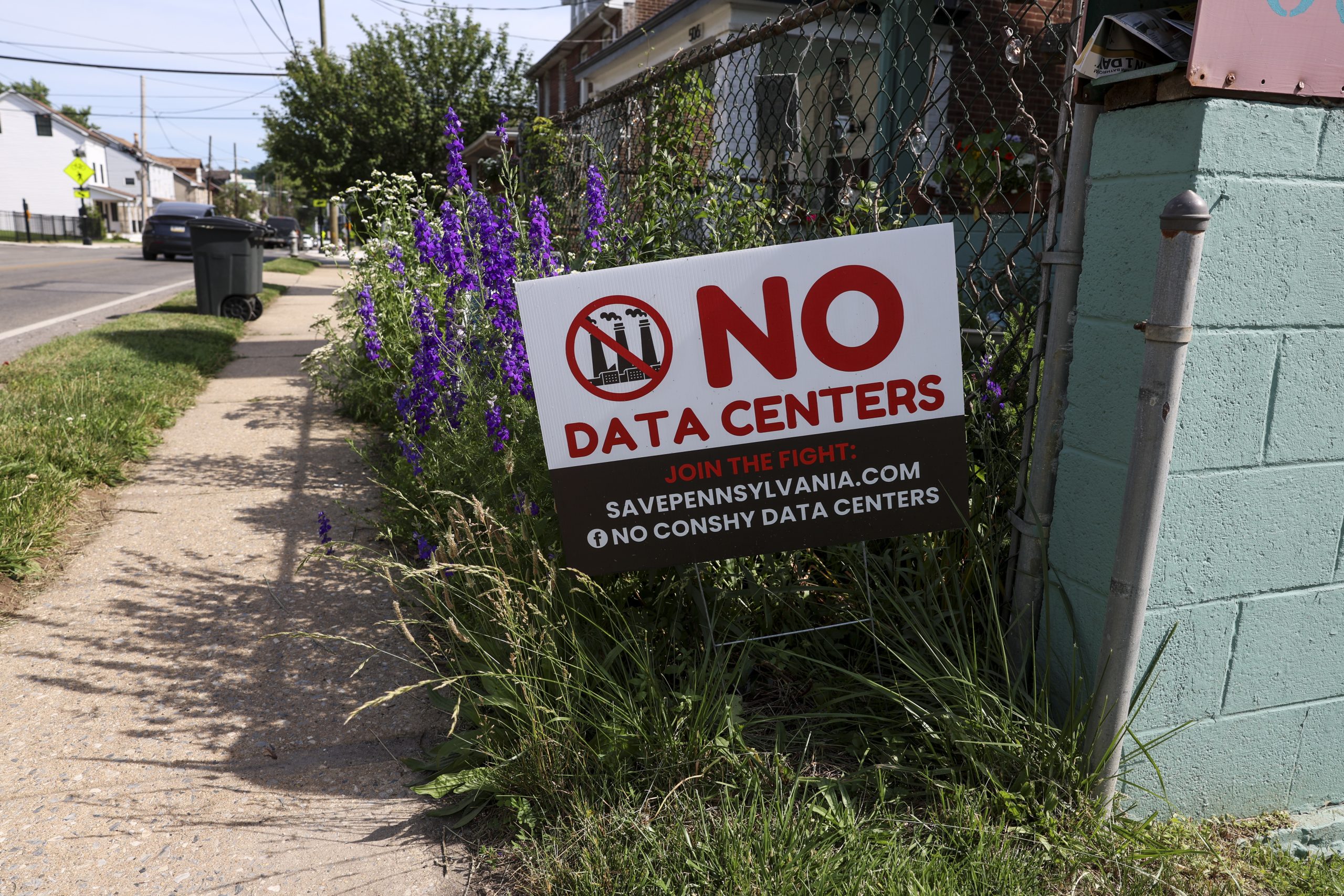
A yard sign protests the proposed data center on New Elm Street near the Closed Cleveland-Cliffs steel mill photographed on Thursday, June 4, 2026 in Conshohocken, Pa.Monica Herndon / Staff Photographer
Out: Data center regulations
A data center regulation bill, which would have limited state benefits for data center developers and was championed by Shapiro, was not included in the final budget deal. The governor called for limiting a sales and use tax exemption and expediting permitting to projects that comply with a set of transparency and environmental standards.
And several other data center regulation efforts that have received bipartisan support in recent weeks were also absent from the final spending package.
Those included efforts to repeal the sales tax exemption afforded to data center developers and attempts to enact a local or statewide moratorium on new data center development.
Both chambers passed language repealing the tax exemption and advanced differing bills to freeze development. One Democratic-sponsored bill would have given municipalities the option to implement a 180-day moratorium on new centers. The other, a Republican-sponsored measure, would allow for local moratoriums of up to 18 months.
In: Compromise
Compromise was the word of the day around the Capitol on Sunday, when the legislature swiftly passed the more than 600-page budget deal hashed out behind closed doors by Shapiro, Pittman, and House Majority Leader Matt Bradford (D., Montgomery) and passed with bipartisan support in both chambers.
The legislative leaders and Shapiro emphasized that they did not get exactly what they wanted in the budget, as a symptom of dealing with divided government. And leaders were proud to have reached the deal less than two weeks after their July 1 deadline, rather than the nearly five months it took to hash out an agreement last year.
House Majority Leader Matt Bradford (D., Montgomery) speaks on Tuesday, Jan. 7, 2025.Tom Gralish / Staff Photographer
Lawmakers had agreed to work over the weekend to hurriedly approve the budget deal, with members of the Senate coming in on Saturday night to begin advancing parts of the budget deal and the House joining them Sunday afternoon. By 6:15 p.m. Sunday, Shapiro had signed it.
Among the inspirations for the weekend of productivity, Bradford said: making it to the MLB All-Star Game in Philadelphia, for which he had tickets.
Out: Typical budget math
Leaders returned to some old accounting maneuvers to address the state’s multibillion-dollar structural deficit and avoid pulling from the state’s emergency savings account.
They spent down unused and underused dedicated funds, and rolled some of the state’s Medicaid payments totaling $1.3 billion to the next fiscal year, a move lawmakers typically resorted to before the state saw an influx of federal dollars during the COVID-19 pandemic.
Without those delayed payments, the state budget would total closer to $52.1 billion, and several GOP members criticized the total as being disingenuous.
Public school teachers and other state employees who retired before July 1, 2002, will receive a tiered monthly payment based on the date of their retirement. Similarly, police officers and firefighters who retired more than five years ago will receive monthly payments ranging from $50 to $300, depending on how long they have been retired.
Lawmakers from both parties had called for the cost-of-living increase.
Mayor Cherelle L. Parker had asked the General Assembly to close it as part of her own city budget pitch in a move estimated to bring an additional $1.5 million to Philadelphia.
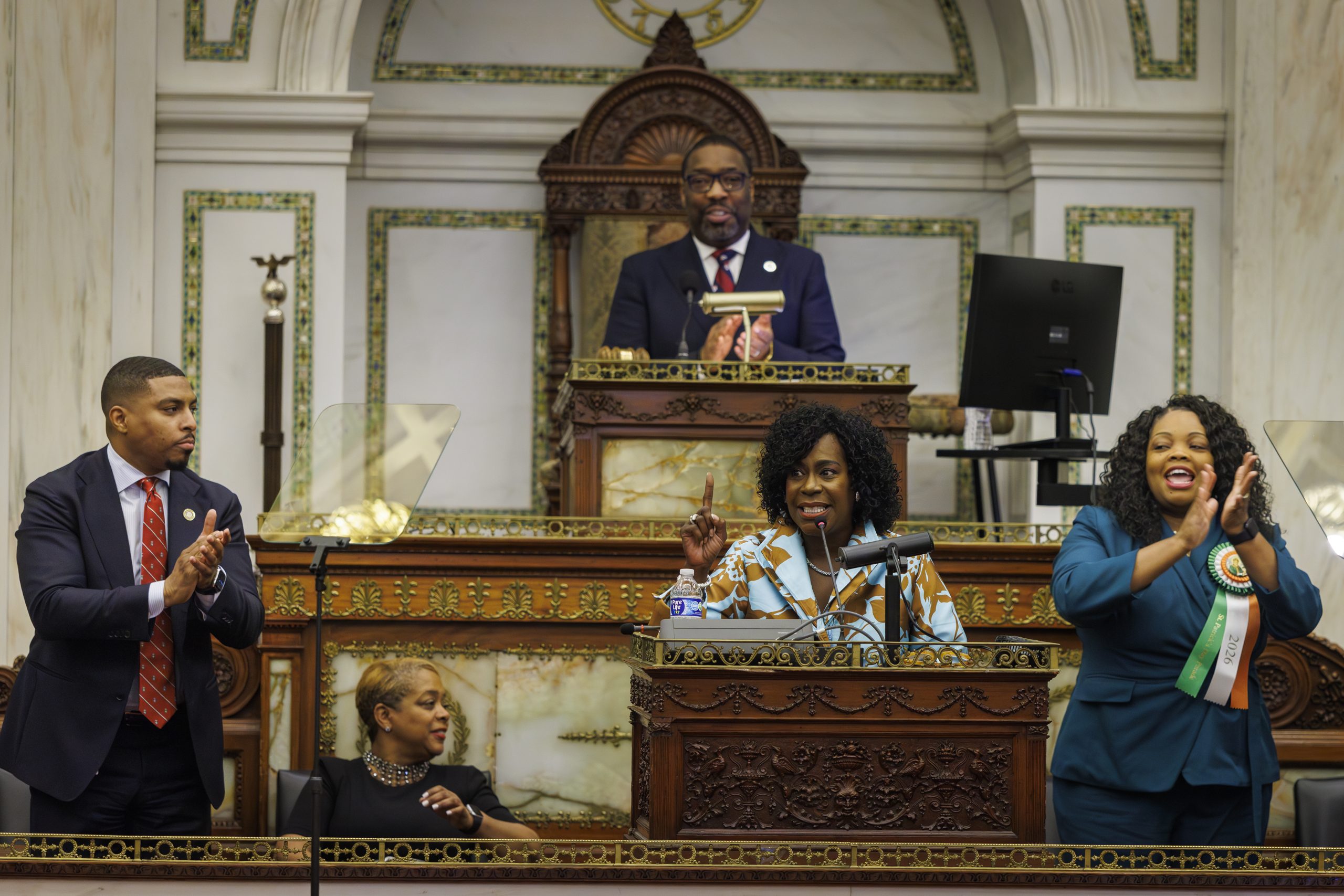
Philadelphia Mayor Cherelle L. Parker is cheered by members of Philadelphia City Council at conclusion of her budget address, Thursday, March 12, 2026.Alejandro A. Alvarez / Staff Photographer
Out: Banning cell phones in schools
Twenty-nine states have bell-to-bell cell phone bans. This year, Pennsylvania will not join them, despite the passage of two separate phone ban bills — one in each chamber of the legislature.
In: Mandatory recess for students K-5
Recess is now law in Pennsylvania.
Another education policy change championed by Shapiro, a mandatory, 30-minute recess for students in kindergarten through fifth grade was established in this year’s budget as a way to improve learning outcomes.
Out: Addressing looming problems — with looming deadlines
Several Pennsylvania funding issues that have gone years without being addressed were left out of the latest budget, some with more pressing deadlines than others.
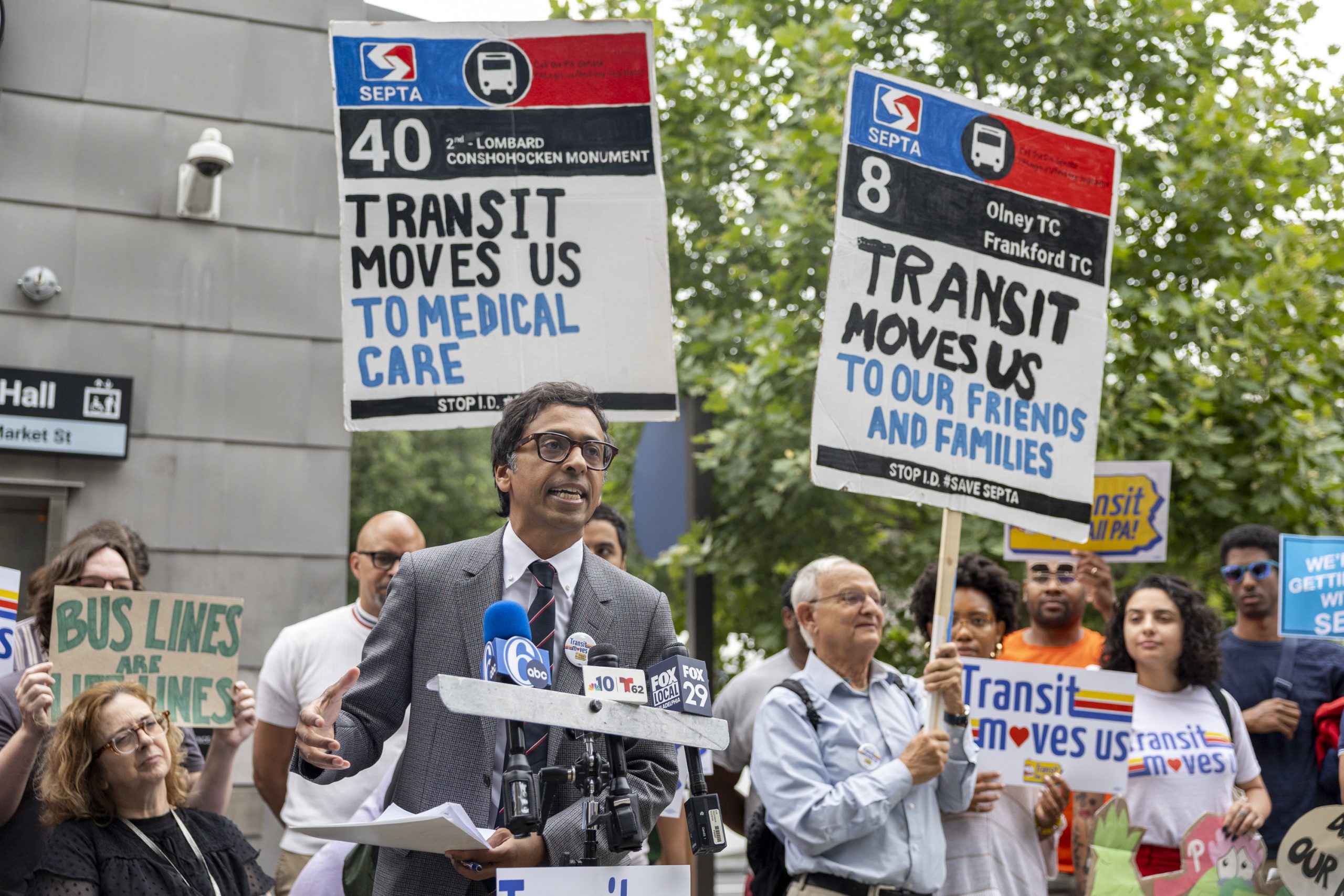
Lawmakers did not address a need for mass transit funding — which led to last year’s bitter budget stalemate among legislators — but are expected to identify a long-term funding stream for the transit agencies next year when a two-year fail-safe runs out.
Senator Nikil Saval, speaks at a press conference calling for more SEPTA funding from the state at Independence Hall in Philadelphia, Pa., on Friday, June 26, 2026.Tyger Williams / Staff Photographer
Other local governments and service providers said their needs are more pressing.
The County Commissioners Association of Pennsylvania released an urgent plea after the state budget was signed, noting that counties still have not received the critical mental health funding they need, or a surcharge increase used to fund 911 call systems. Home-health service providers also continued their calls for increased state funding they say is needed, as the industry faces serious staffing issues due to low state reimbursement rates.
Republican and Democratic lawmakers championed the organizations in this budget, making it the largest single-year increase for the critical services in state history, according to the Pennsylvania Coalition to Advance Respect.
“Today marks a turning point for survivors and rape crisis centers across Pennsylvania,” said Joyce Lukima, the organization’s coalition director, in a news release.
Ethan Young is an intern with the Pennsylvania Legislative Correspondents’ Association.
Brent Rose and his 9-year-old son, Alexander, were ready for the bus on the first day of the program Alexander is attending at De Burgos Elementary in North Philadelphia this summer for kids with special needs.
Alexander, who is on the autism spectrum, was told to be ready for the bus to pick him up at 8:08 a.m. But when it still had not come by 9:30, Rose’s wife drove their son from their home in Center City.
The episode was not an anomaly. Three weeks into the Philadelphia School District’s extended school year program, Rose said that on more than half of the days, his son’s bus simply has not shown up.
“It’s a huge inconvenience,” said Rose, who works for the IRS and has had to show up late or call out due to the problems. “You couldn’t just leave any 9-year-old out there and say good luck, but certainly not one on the spectrum, and say it’s going to be OK.”
Rose said the district has directed him to call dispatch for First Student, the company that operates his son’s bus route.
But often no one answers that line, Rose said, making it impossible to know whether a bus will eventually show up or not.
A spokesperson for the school district said the district is aware that “some families have experienced transportation delays and service disruptions for the Extended School Year (ESY) programming,” which schools nationally are required to offer to students with disabilities at risk of regressing over the summer.
“While the majority of routes are operating as scheduled, we recognize that some students have experienced significant delays, and we understand the impact this has had on families,” said the spokesperson, Naima DeBrest.
DeBrest attributed the delays to “staffing and operational issues affecting a portion of the transportation services provided by First Student.” She said the district had been working with First Student “to improve reliability,” including by reassigning 10 of the company’s routes.
Brenna Rudisill, a spokesperson for First Student, said the company recognized that “some families experienced transportation delays early in the program, and we apologize for the inconvenience and frustration that caused.” She said First Student had taken on additional routes after other vendors left the district.
“Our team has been working every day to stabilize and improve service,” Rudisill said.
For Rose, though, the issues have not resolved. On Thursday, after the bus was an hour and 20 minutes late, he called dispatch and was told a bus would arrive in half an hour. Rose did not see whether it eventually came; he had to pick up his wife from the hospital, taking his son with him.
On an earlier occasion when he was able to reach the bus dispatch, Rose used his phone to Google Translate for another parent who did not speak English and was also waiting at the stop: “The bus isn’t coming.”
Noting that First Student advertises an app with real-time updates on bus locations, Rose questioned why parents do not have access to that information.
That way, “you could contact work before you’re really behind,” said Rose, who also has gotten calls from De Burgos some days telling him he needs to pick up his son because no bus will be coming.
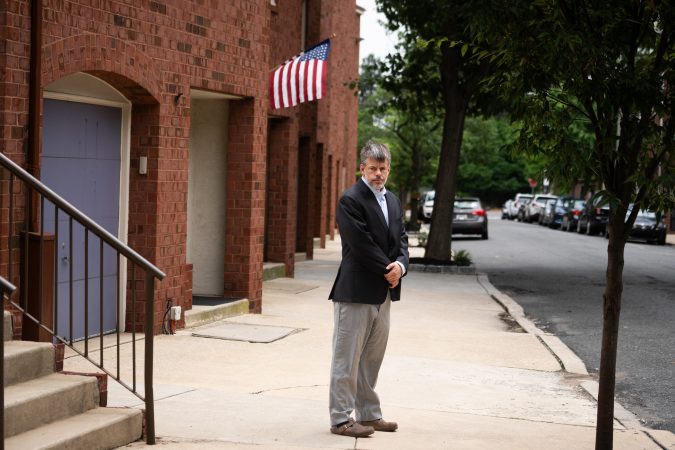
Brent Rose stands at the bus stop where his nine-year-old son, who has autism, waits for the bus to travel to Philadelphia’s Extended School Year program for kids with special needs, in Philadelphia, July 10, 2026. The problem is that his bus often never shows up to take him there.Jessica Griffin / Staff Photographer
DeBrest said the district is “in the early stages of implementing a new routing software system that will include a parent-facing application allowing families to track buses in real time.” In the meantime, she said, First Student has an automated text messaging service that can update parents.
Rose said that, despite many calls to First Student and messages to the district about the buses, he was unaware of that service.
He noted that the extended school year programming is not convenient for working parents: The day ends at 1:30, and it’s not easy to find aftercare for the rest of the afternoon.
But he and his wife have rearranged their schedules and enrolled their son for the last three summers because they think the program is important for his progress, “and we think the teachers do a good job,” Rose said.
When “the buses aren’t even doing what they’re supposed to do,” though, “it gets really frustrating,” Rose said.
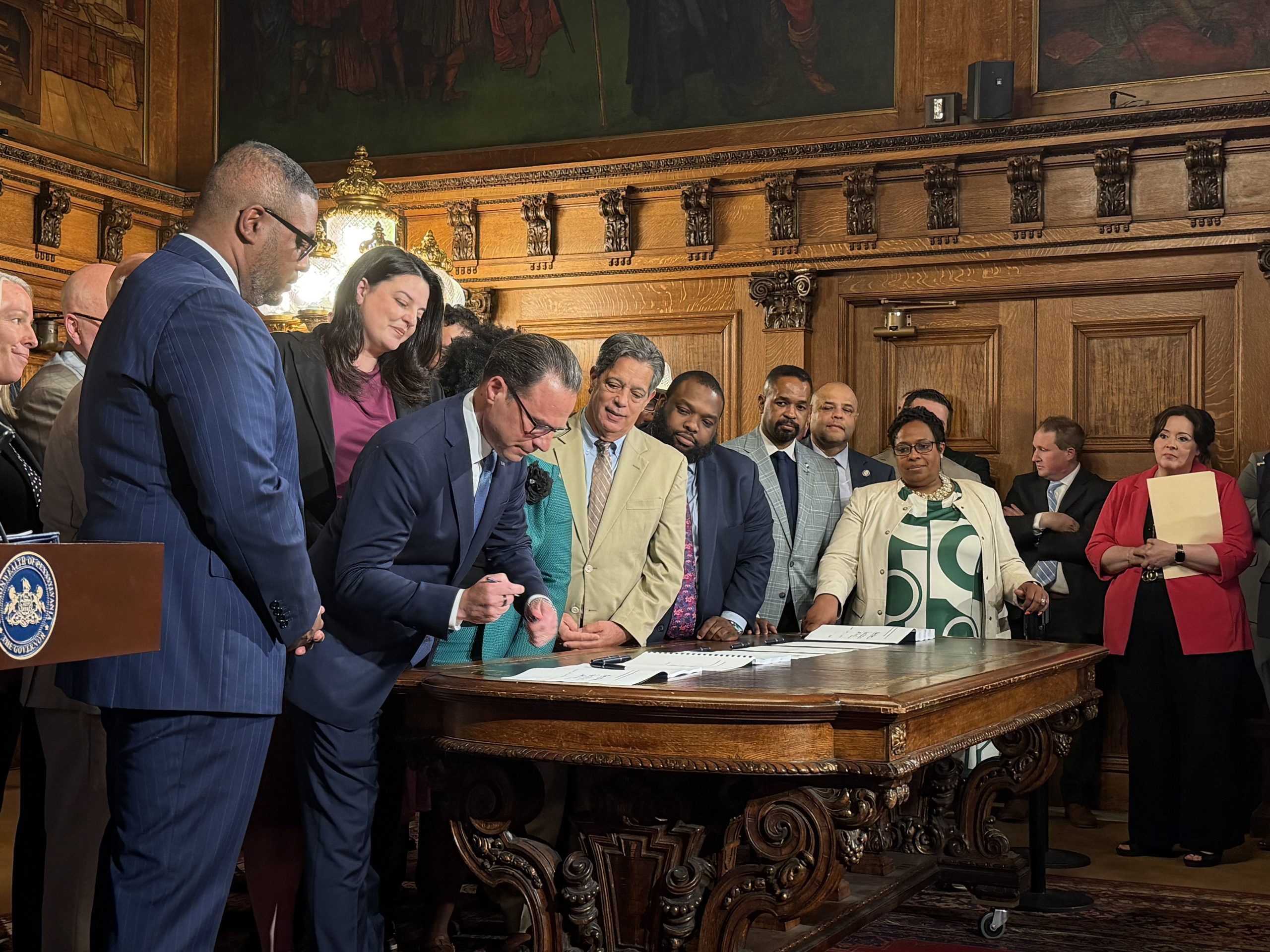
HARRISBURG — Gov. Josh Shapiro signed a $50.8 billion state budget on Sunday following the rushed passage of the overall deal by the General Assembly thatlawmakers said helps address the state’s affordability crisis but delays action on some of the most significant issues before the legislature.
“We managed, as the [vote count] indicates, to find compromise without compromising our core values,” Shapiro said during a news conference Sunday evening, before signing his fourth budget as Pennsylvania’s governor.
The deal was hashed out over weeks in closed-door meetings among top leaders and includes new transparency requirements for data centers, publicly funded housing projects, and public transit agencies. Lawmakers also agreed to a long-sought cost-of-living adjustment totaling approximately $168 million per year for some Pennsylvania retired teachers, police officers, and firefighters — some of whom have not seen an increase to their monthly pension payments in more than 20 years.
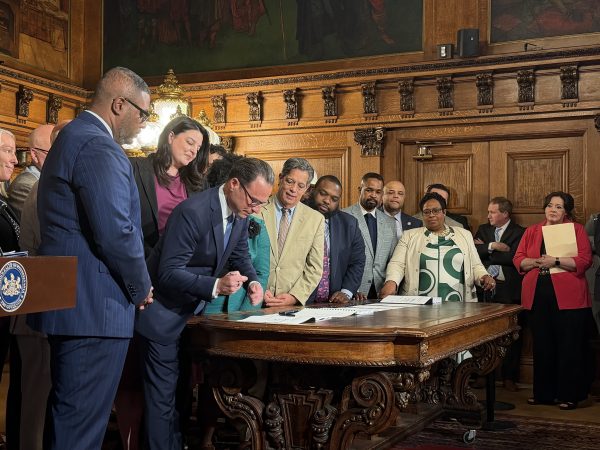
Gov. Josh Shapiro, flanked by fellow state Democrats, signs the 2026-27 Pennsylvania state budget in Harrisburg, Pa. on Sunday, July 12, 2026.Gillian McGoldrick / Staff
More education funding, data center requirements
Pennsylvania will have invested nearly $2 billion in new school funding through its adequacy and tax equity formulas since 2024. That’s when lawmakers first employed the new calculations to close a $4 billion “adequacy gap” after a landmark court ruling that found the state was illegally underfunding students in low-income districts. This year’s installment of adequacy funding topped $565 million, as part of an effort to prevent districts from having to raise property taxes on already low-income residents. The additional investment sends $136 million more this year to the School District of Philadelphia.
Legislative leaders failed to agree in the final budget on other issues that have seen broad support in both chambers, such as repealing a sales tax exemption for data center projects, allowing local moratoriums on data center projects, or banning cell phones in K-12 schools. They may revisit the issues during the fall legislative session.
Instead, they approved a new reporting requirement that will force data centers to submit annual reports detailing their water and energy usage. The companies will face a $10,000-a-day fine for failing to submit their reports.
But the budget does not address some of the most pressing issues before the General Assembly, including whether to tax and regulate skill games or allow the more than 70,000 gambling machines in Pennsylvania bars, corner stores and fraternal organizations to become illegal come October. The state has until then to decide how to approach the machines after the state’s Supreme Court last month determined that skill games, which have for years operated in a legal gray area, are slot machines and should be regulated as such. They also punted on finding a long-term funding solution to fund mass transit until next year, when a two-year fail-safe runs out.
The state House chamber as Gov. Josh Shapiro makes his annual budget proposal in Harrisburg Tuesday, Feb. 3, 2026.Tom Gralish / Staff Photographer
Shapiro, a first-term Democrat facing reelection this year, proposed a $53.3 budget in February that for a fourth time emphasized top Democratic initiatives such as raising the state minimum wage to $15 per hour or legalizing recreational marijuana. He also proposed other initiatives, such as a $1 billion critical infrastructure fund to help the state drive out public dollars to build more housing and energy generation, which did not see funding in the final budget deal.
State Sen. Nikil Saval (D., Philadelphia) was among the two Democrats who opposed the state budget, in part because it did not make the ambitious investments needed to address the state’s limited affordable housing stock.
“We cannot defer at this moment,” added Saval, the chair of the Philadelphia delegation in the Senate, in his floor remarks before the vote.
Lawmakers also declined to create any new generators of revenue for Pennsylvania,anddeferred addressing the state’s multibillion dollar structural deficit until future years.
‘Met in the middle’
The overall deal passed with bipartisan support in the GOP-controlled Senate, 44-6, and in the House, where Democrats hold a narrow majority, 167-35.
“We have met in the middle,” said Senate Majority Leader Joe Pittman (R., Indiana). “I am proud of this product, despite what some naysayers may say.”
The 2026-27 budget, which is a 1.4% increase in spending over the prior fiscal year, has no widespread tax increases. It also largely relies on accounting maneuvers like spending down unused or underused dedicated funds to address the structural deficit instead of pulling from the state’s emergency savings account.
One of the accounting moves to balance Pennsylvania’s budget includes delaying two months of payments totaling $1.3 billion to insurance companies that fulfill the state’s ballooning Medicaid programs until the next fiscal year. Without those delayed payments, the budget would total closer to $52.1 billion.
Several GOP House members opposed the budget, arguing it is unbalanced and only postpones tax increases to future years if spending isn’t cut.
State Rep. Brad Roae (R., Crawford), called the final budget a “fake number.” State Rep. Charity Grimm Krupa (R., Fayette) called it “voodoo math.” And State Rep. Marc Anderson (R., York) said the state was “cooking the books.”
But broadly, both Democratic and Republican members called the budget a reasonable compromise, acknowledging that they will have additional work to do in the fall legislative session and during next year’s budget negotiations to balance the state’s finances. During speeches on the Senate floor, several Republican senators quoted The Rolling Stones’ song “You Can’t Always Get What You Want,” emphasizing the second half of the refrain: “You might find you get what you need.”
State Rep. Jordan Harris (D., Philadelphia) also turned to music to represent his position on the budget deal, paraphrasing Anthony Hamilton’s “Do You Feel Me” as a response to his constituents’ concerns about affordability by sending more state dollars to school districts to help them avoid property tax increases and raising monthly pension payments for retirees.
“I am glad to stand today to support it, to let the people of Pennsylvania know, baby, the message is getting through,” Harris added.
Pennsylvania Legislative Correspondents’ Association Intern Ethan Young contributed to this article.
Numerous changes are afoot in the Philadelphia School District, with Superintendent Tony B. Watlington Sr. promoting some staffers and shifting others around amid multiple departures from the system.
The changes took effect July 1.
Watlington, in an announcement sent to staff detailing the changes, said he was “confident this team will help us build on our momentum as we continue improving outcomes for students, strengthening support for our schools, and advancing our goal of becoming the fastest-improving large urban school district in the country.”
The personnel shifts include:
Brenda Elliott, who became interim deputy superintendent of academic services when Jermaine Dawson left Philadelphia to become Baltimore’s superintendent, got that job permanently.
Elliott came to Philadelphia a year ago as associate superintendent of student life and innovation. She’s a former Tennessee state superintendent for school turnaround who has worked in a number of urban districts, including with Watlington in North Carolina.
She also spent time as a teacher, principal, and officer in the U.S. Army.
Tomás Hanna, who was associate superintendent for secondary schools, is now associate superintendent for student life and school operations.
Noah Tennant, assistant superintendent for Learning Network 13, is keeping that job, but is also now interim associate superintendent for secondary schools while a search for a permanent administrator is completed.
Michael Farrell is now chief academic officer. He had been chief learning officer. The new title combines two jobs: chief of curriculum and instruction and chief learning officer.
Nathalie Nérée became chief of special education, diverse learners, and wellness. She had previously been chief of special education and diverse learners.
Nyshawana Francis-Thompson, who was chief of curriculum and instruction, became senior adviser for strategic initiatives and innovation.
Jamina Clay, who had been an assistant superintendent supervising a learning network, is now assistant superintendent of school management and organization.
Kelly Espinosa, who has served as the principal of Fanny Jackson Coppin Elementary, is now interim assistant superintendent for Learning Network 4, replacing Clay. Janis Butler, a retired principal who often fills in as an interim principal in the district, will run Coppin.
Two more retired educators are now serving as interim assistant superintendents — Wilfredo Ortiz for Learning Network 8 and Lucy Feria for Learning Network 9. Ortiz replaces RenatoLajara, who’s now superintendent in Bethlehem; Feria replaces Ariel Lajara, who left Philadelphia to run the Vineland school system in South Jersey.
When a deal was struck to save 340 classroom-based jobs in the Philadelphia School District, Mayor Cherelle L. Parker and Superintendent Tony B. Watlington Sr. declared it “Christmas in June.”
It’s July now, but manystaffers still don’t have clarity on exactly who’s allowed to come back to positions that were almost cut and how that affects vacancies system-wide.
“It’s a mess, and it’s getting messier,” said Alison Andrawos, a teacher at Potter-Thomas Elementary in North Philadelphia who accepted a job in another district after learning this spring that her position would be cut and still doesn’t know whether it will be restored.
Monique Braxton, the school district spokesperson, said the system is “moving forward with restoring the approximately 340 school-based positions approved in the revised budget,” but that staffing the positions is separate from restoring them.
“We have been meeting with our union partners on implementation and are now working with principals on school staffing,” Braxton said in a statement. “All approved positions will be restored in the district’s budget system by Wednesday, July 9.”
The complex process is causing additional uncertainty for teachers and staff members andprolonging an already tumultuous hiring season as the district deals with fallout from 17 forthcoming school closings and the back-and-forth over millions in cuts stemming from a $300million district budget deficit.
Watlington this spring directed school principals to build their 2026-27 budgets factoring in the cuts, including about $50 million in school-based trims and the elimination of 340 classroom jobs. Parker then proposed a $1-per-trip rideshare tax she said would cancel the classroom cuts, but City Council balked, and for a time, the position losses appeared inevitable.
But restoring the positions was always going to be complicated.
Schools’ hiring timeline means that many of the teachers, counselors, and climate staff who were told they were going to be force-transferred because of the cuts sought and found new jobs over the past few months, either inside the district or elsewhere. Now, those workers eithermust rescind their acceptance of those new jobs or say “no thanks” to returning. Either way, that creates new vacancies in July, months after most schools have filled jobs and when many people are on vacation.
“We haven’t heard whether our positions are going to be reinstated, we don’t know what positions are available, and we don’t know what we’re doing in a few short weeks,”said Andrawos, an English as a second language specialist who began teaching in Philadelphia schools in 1997.
‘I’m pretty sure I’m going to be leaving’
Andrawos saidshedidn’t want to leave the city, but amid the worry of the past few months, she felt she had to explore jobs outside the district. Andrawos has been offered a position at a Delaware County school that comes with a raise and a shorter commute.
“I’m pretty sure I’m going to be leaving the School District of Philadelphia because of this,” Andrawos said.
Shesaid the decision is tough — she’s forged real bonds with her students’ families, and has been fielding messages saying they hope she stays at Potter-Thomas.
It’s not clear whether Andrawos’ position at Potter-Thomas, in North Philadelphia, will be restored because of the complicated way budgets are built, and the latitude principals have to shift positions based on school need and their own judgment calls.
Jobs are filled in city schools two ways — first, by a process called site selection, where principals hire any candidate they choose for open positions. Once the site selection window closes, district staff without positions choose from among open jobs in seniority order. Site selection closed weeks ago; force transfers without jobs have had their hiring sessions pushed back multiple times so far, and are still waiting.
Jane Roh, a spokesperson for the Philadelphia Federation of Teachers, said the union notified members June 19 that all positions cut due to the deficit would be restored; the PFT was told that district notifications to affected employees would immediately follow. So far, that has not happened.
That leaves staff sweating andfrustrated by a lack of answers, some said.
A roller coaster
One K-8 teacher, who asked that his name be withheld because he feared repercussions, was on the force transfer list because of budget cuts. With no notice that’s being walked back, he’s left with the possibility of having to get emergency certified to teach in another subject area, which would mean taking more courses.
The uncertainty is tough, and the answer to every question posed to the district and the union so far has been, we don’t know yet.
“For this whole summer, where teachers are supposed to have the space to reflect and rest and plan, we can’t do that to any degree,” the K-8 teacher said.
A teacher at a district high school, who also asked to remain anonymous because her employment situation is not settled, is in a similar boat. When her position was cut because of the deficit, she site selected into a job at another district high school.
The process has been frustrating, she said. She once got an email saying her transfer was canceled, but that turned out to be incorrect, though she never got official notice from the district about its error and had to make calls herself to figure it out.
When Parker and Watlington made their good-news announcement, she had no idea what to make of it. She still doesn’t, the teacher said.
“I’m on this roller coaster; I literally don’t know which school I’m going to work at in the fall,” said the high school teacher, who would be teaching different classes, depending on where she lands. “I want to prepare for the upcoming school year, and that’s impossible if you don’t know what you’re teaching.”
The school had been overstaffed four years ago as it navigated a complicated, unprecedented transition from a charter school back to a district school. It has soared, adding programs and opportunities and building a strong school culture; the community fears weathering steep staff cuts would jeopardize its progress.
Sarah Apt, a longtime Olney teacher active in the pushback against cuts, said Wednesday that the school was told it’s getting back three of its 17 staffers.
“We’re happy about that, but still fighting for more,” said Apt.
Among those still in limbo is Eric Baker, an Olney English teacher who’s been struggling with the back and forth, and the possible implications for the school he’s come to love — the school recruited students for a college prep track that’s potentially losing most of its teachers, including Baker.
“Because of this uncertainty, I’ve had to interview other places. I don’t know where I’m going to go. I would rather have the certainty of knowing where I’m going to work than having to deal with this,” said Baker. “It’s been frustrating.”