Tag: School District of Philadelphia

  • Bensalem school district selects a longtime administrator as its next superintendent

    Bensalem school district selects a longtime administrator as its next superintendent

    The Bensalem Township School District has selected longtime district administrator Victoria Velazquez as its next superintendent, after its previous superintendent resigned this spring amid a budget shortfall.

    Velazquez, who has worked for the district for 12 years, is expected to be appointed superintendent at a school board meeting Sept. 23, the Bucks County Intermediate Unit said in a statement Friday.

    “I am deeply honored and grateful for the opportunity to continue serving the Bensalem Township School District as district superintendent,” Velazquez said in a statement.

    Noting that her daughter graduated from Bensalem, Velazquez said, “It is my home, and it is a community I care deeply about and am incredibly proud to serve.”

    Velazquez was selected to lead the 6,400-student district after a search led by the Bucks County Intermediate Unit that drew 27 applicants from five states, according to the intermediate unit.

    Deborah King, the Bensalem school board president, said in a statement that she had watched Velazquez “lead with humility, diligence, integrity, and a genuine love for Bensalem.”

    “She knows this community, she believes in this community, and she understands that our students must remain at the heart of every decision we make,” King said.

    Velazquez has worked in Bensalem as assistant to the superintendent for K-12 administration, director of elementary curriculum and instruction/federal programs, and supervisor of data and assessment/federal programs.

    She has served as interim superintendent since April, after the district’s former superintendent, Samuel Lee, resigned amid a $12 million budget shortfall. The district eliminated more than 30 positions to help fill the gap .

    As interim superintendent, Velazquez worked with the board on organizational systems and fiscal stewardship “during a consequential period for the district,” the intermediate unit said in the statement.

    Before coming to Bensalem, Velazquez worked as a principal in the School District of Philadelphia and the Norristown Area School District. She received bachelor’s and master’s degrees from Temple University, a principal certification from Drexel University, and a doctorate in educational leadership, management, and policy and superintendent certification from Seton Hall University.

    If approved on Sept. 23, Velazquez will be sworn in as superintendent on Oct. 1 at Bensalem High School, the intermediate unit said.

  • Jalen Hurts donated $600,000 for AC at Philadelphia’s largest high school

    Jalen Hurts donated $600,000 for AC at Philadelphia’s largest high school

    Jalen Hurts was watching morning TV three years ago when he saw something that stopped him in his tracks.

    “I was very blown away by school not being canceled for snow, not for a hurricane or tropical storm, but for lack of AC,” the Eagles star quarterback said Tuesday.

    So Hurts went about doing something to fix that.

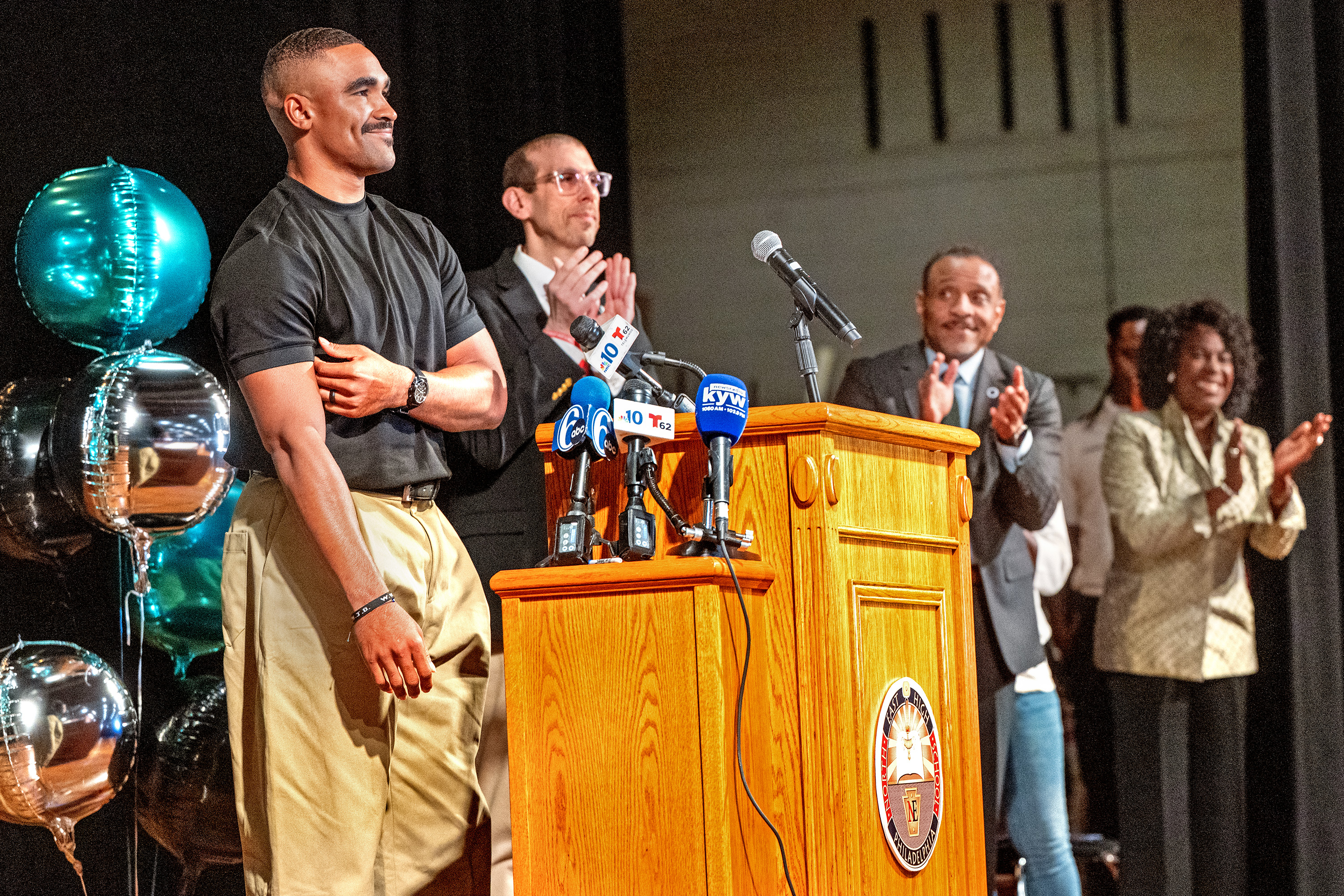
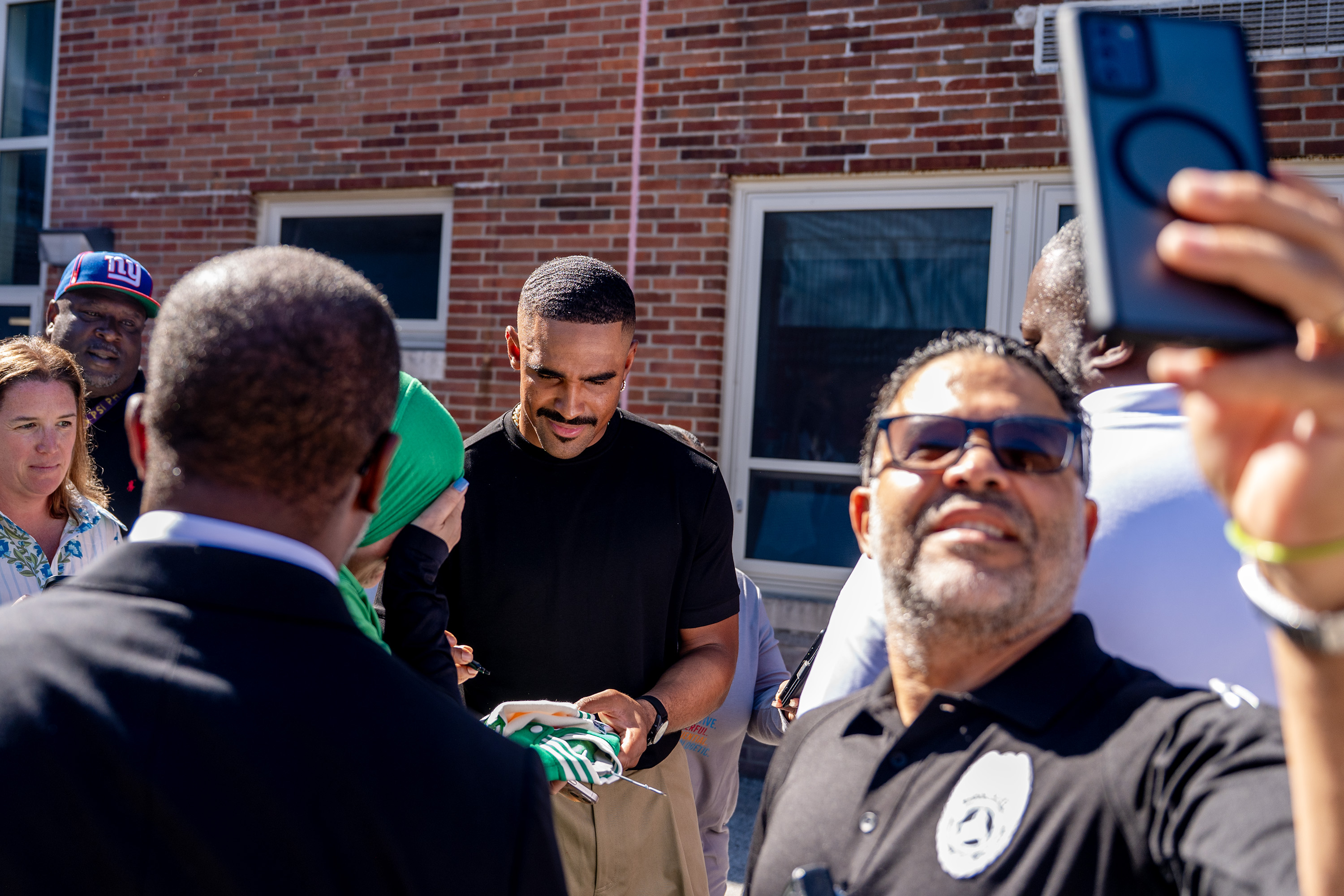
    On Tuesday, he stood on Northeast High’s stage to announce his foundation was putting up $600,000 to air-condition the school’s auditorium.

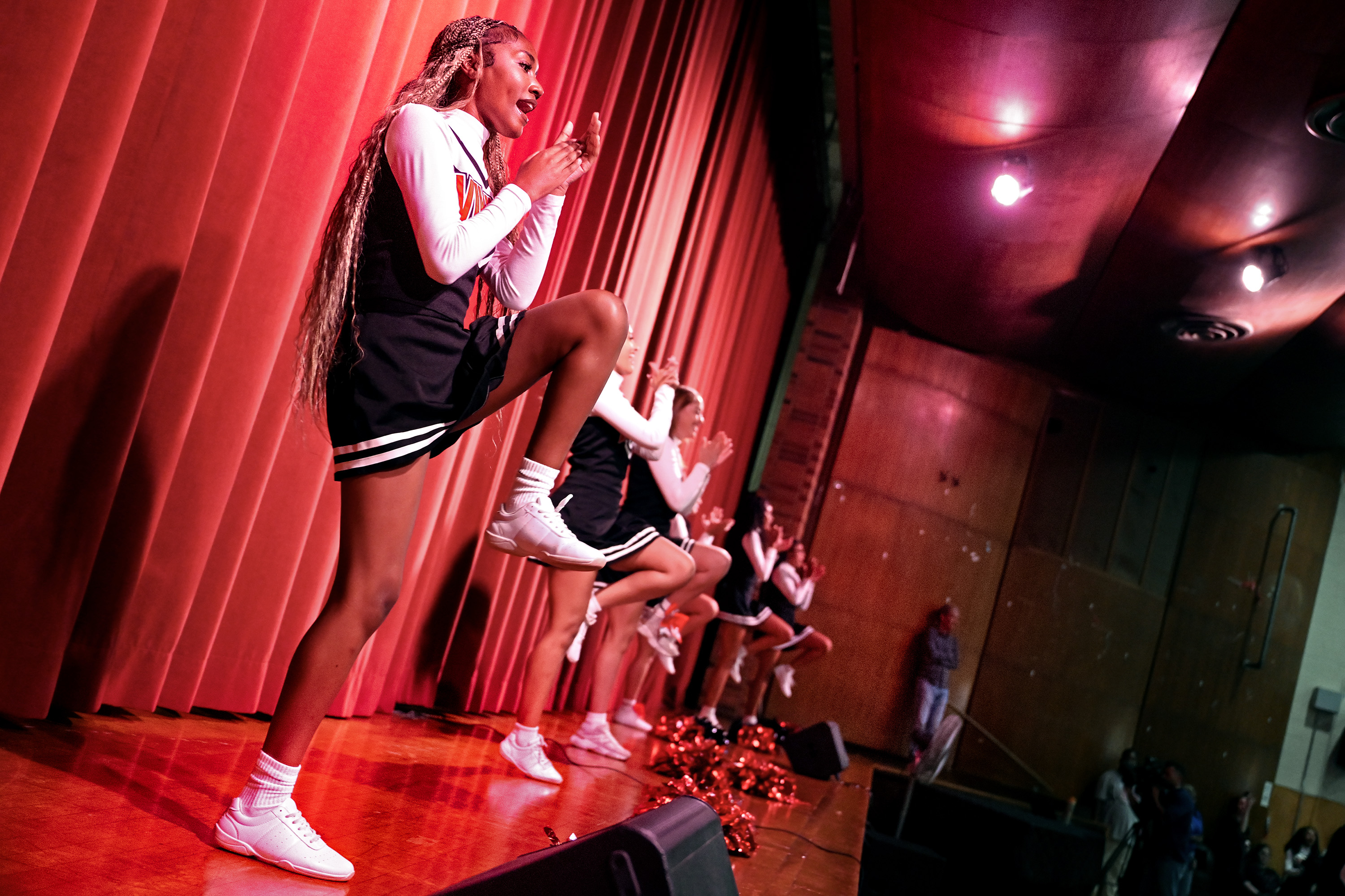
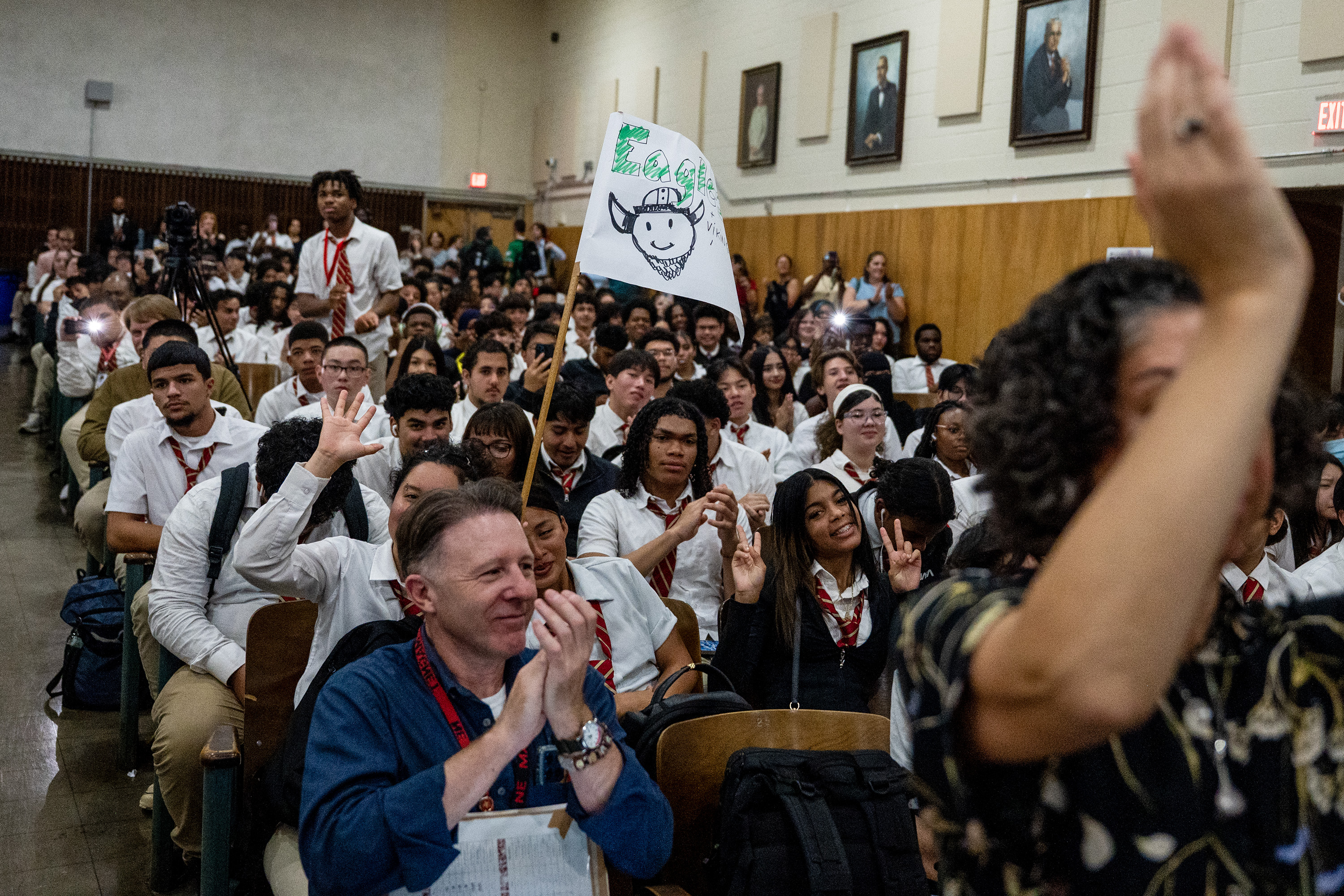
    The timing was good: Although temperatures were in the high 60s when Hurts made his announcement, it was sweltering in the auditorium, with more than 1,000 students, teachers, and dignitaries in the room. Sweat ran down the faces of members of the marching band toting heavy instruments and cheerleaders in long-sleeved uniforms. Mayor Cherelle L. Parker cooled herself with a small personal fan.

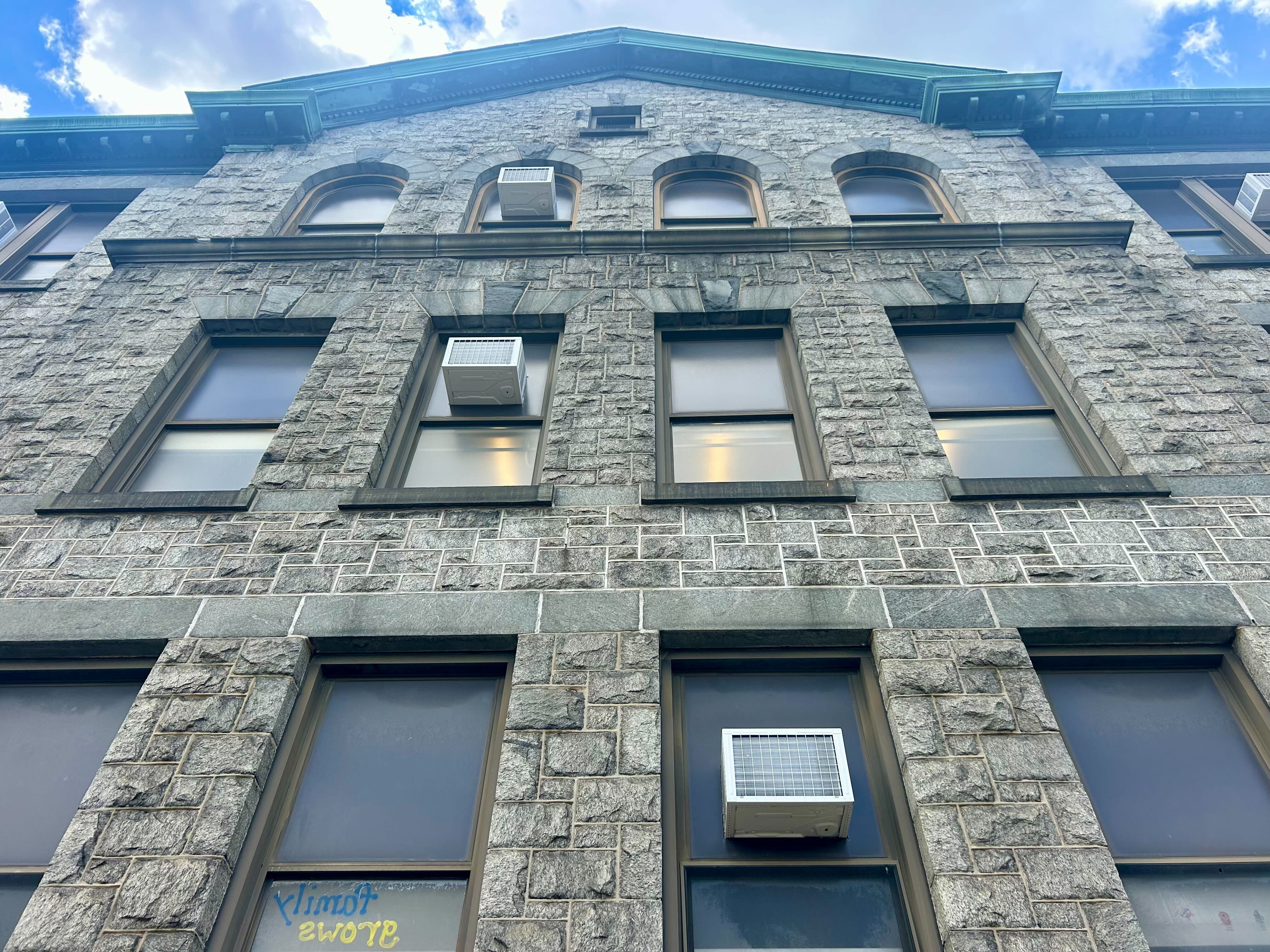
    When Hurts watched that TV spot, about half of the district’s schools were not air-conditioned. Hurts’ largesse has helped get the number down, but 52 schools — about a quarter of district buildings — still lack air-conditioning.

    Hurts, on Tuesday, said he wanted to move the needle more for Philadelphia schools.

    “Let’s get it to zero,” Hurts said of the number of schools without air-conditioning. “I want to get it to zero.”

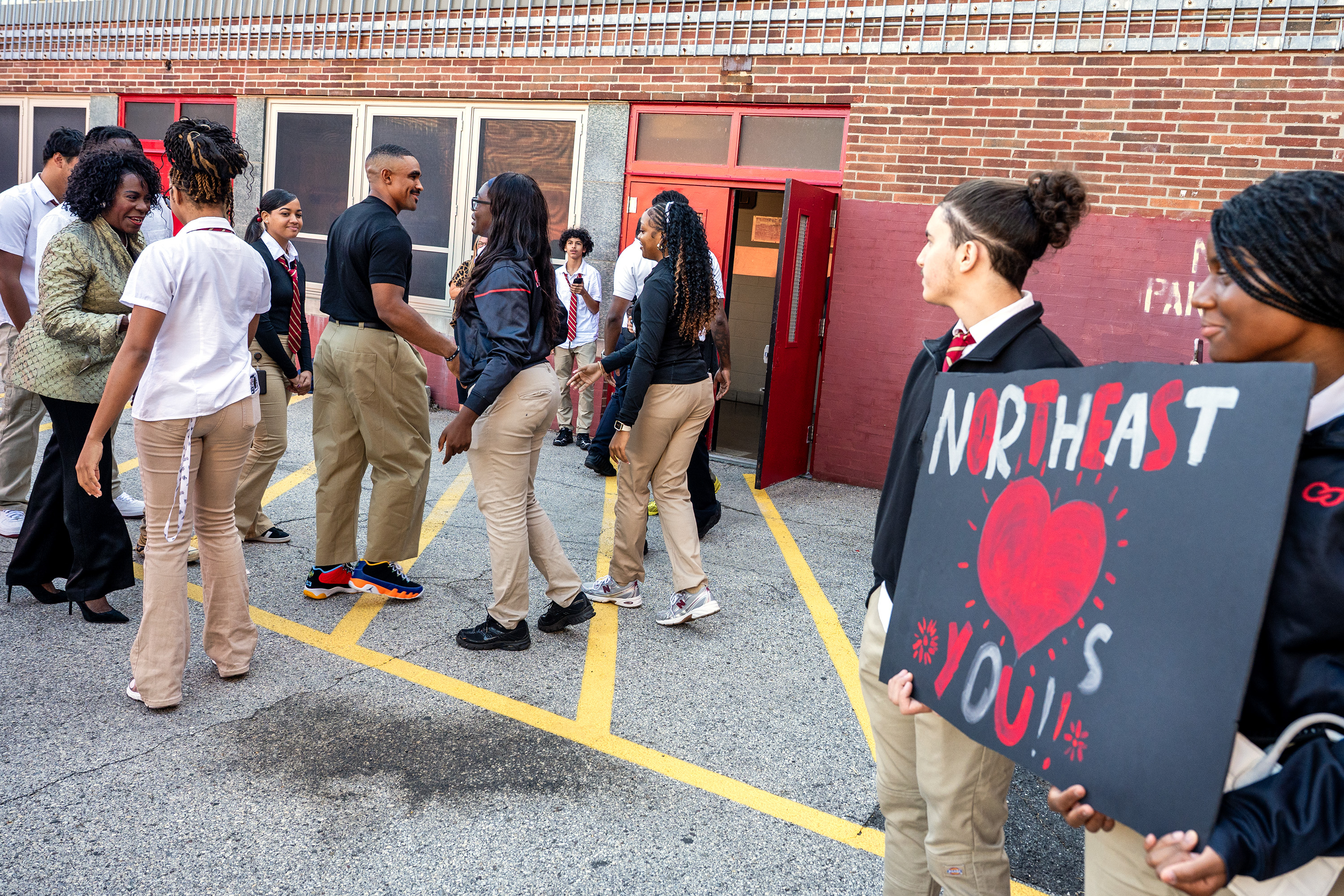
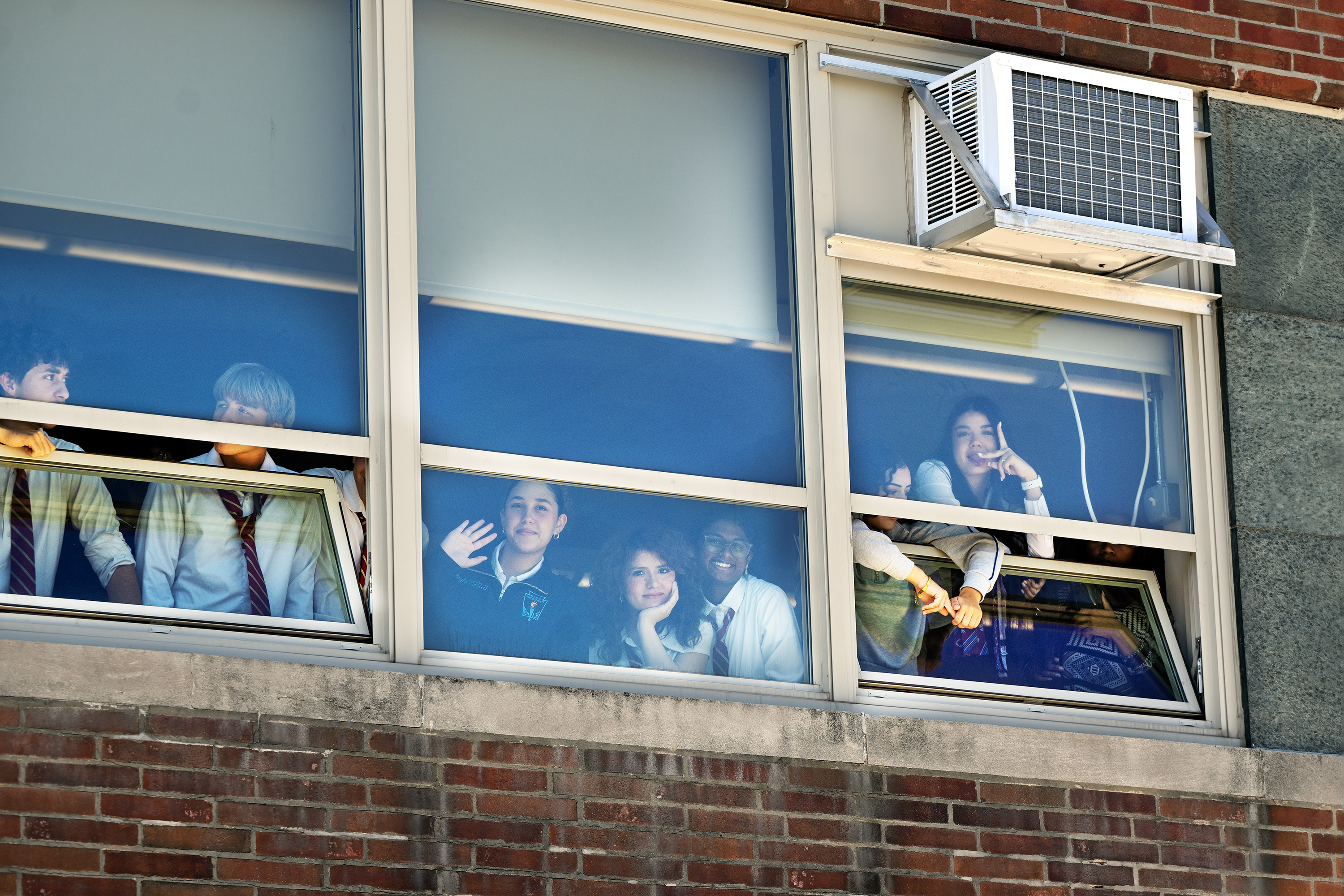
    Northeast High School watch from their classroom – with a window air conditioning unit – as Eagles quarterback Jalen Hurts leaves Tuesday, Sept. 15, 2026 following his appearance there to give the school $600k for an a new cooling system.Tom Gralish / Staff Photographer

    Asked why he was turning his attention to city schools, Hurts said he was influenced by his educator parents and the people who made a way for him.

    “It’s about service and showing up for those around you,” the quarterback said.

    Northeast High had window units cooling classrooms prior to Hurts’ announcement, but the auditorium, a hub of the school and the community, was tough to use in the spring and summer months, said Andrew Lukov, the school’s principal.

    “This changes everything for us,” Lukov said.

    A beaming Parker, who made sure to lead the adoring Northeast crowd in an E-A-G-L-E-S chant, spelled correctly, led the crowd in giving Hurts a standing ovation.

    “Jalen, on behalf of the entire city of Philadelphia, we say thank you for your gift,” Parker said. “You will have an impact on more than the 3,400 students who attend this school on a daily basis. You’ve also done something even more important: You’ve used your time, your treasure, and your celebrity to assist a constituency who will never be able to walk in your shoes.”

    Eagles quarterback Jalen Hurts as he appears at a rally in the auditorium at Northeast High School Tuesday, Sept. 15, 2026 to give the school $600k for an air conditioning system. With him onstage in the auditorium Northeast principal Andrew Lukov, School Superintendent Tony B. Watlington, Sr. and Mayor Cherelle L. Parker.Tom Gralish / Staff Photographer

    It feels a little surreal that a major space in an important school lacks adequate climate control in the United States, said Mekhriyona Ilkhomova, a Northeast senior whose speech earned a broad smile and a hands-over-heart gesture from Hurts.

    Hurts’ donation matters, not just because of the money but because of who he is, said Ilkhomova, a standout student and athlete.

    “It reminds us students of what we can become,” she said, “and what we can give back after becoming.”

    The state of the cool

    District officials had promised the entire system would be air-conditioned by 2027; the system appears off track to reach that goal.

    While Northeast is getting an upgrade, 52 schools lack air-conditioning.

    When temperatures are forecast to hit 85 degrees or higher by noon, those 52 schools are dismissed early. If the weather forecast calls for temperatures of 85 or higher before 9 a.m., those schools are closed for in-person instruction and remote learning days are called.

    That means unequal experiences, with students in some schools not missing instructional time when it’s hot, and those in a quarter of schools subject to interrupted schedules.

    School Superintendent Tony B. Watlington, Sr. (right) greets Eagles quarterback Jalen Hurts as he appears at a rally in the auditorium at Northeast High School Tuesday, Sept. 15, 2026 to give the school $600k for an air conditioning system. At left is Kathryn Epps, president & CEO, The Fund for the School District of PhiladelphiaTom Gralish / Staff Photographer

    Four weeks into a new school year, Philadelphia has had two heat-interrupted days at the 52 schools.

    Cooling the remainder of the 52 schools is not as simple as buying air-conditioning units: Many old buildings lack adequate electrical systems to support whole-school cooling.

    Those projects are complicated.

    An HVAC project at Kensington High went awry this summer, triggering asbestos issues that forced students and staff to relocate for the rest of the calendar year.

  • ‘The kids are not learning’: Employees inside a North Philly charter detail chaos inside their school

    ‘The kids are not learning’: Employees inside a North Philly charter detail chaos inside their school

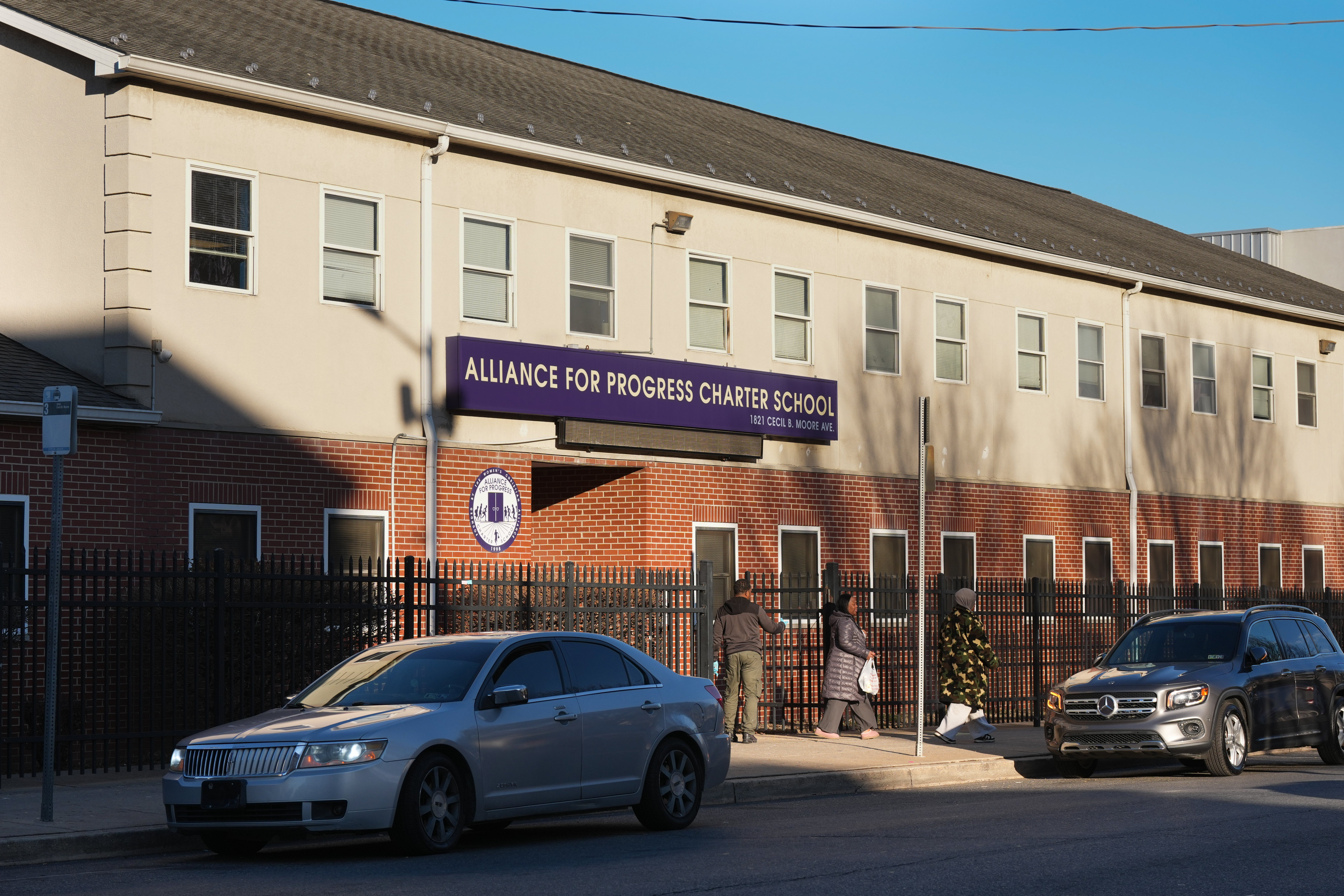
    The leadership meeting happened at midafternoon on a Tuesday at Alliance for Progress Charter School. It was a small huddle to discuss how the new school year was going.

    Unexpectedly, CEO Stacey Scott burst into the Aug. 25 meeting held inside the main office, disrupting the discussion.

    “You b—!” Scott said to the principal, Eric Langston, according to multiple people with direct knowledge of the meeting. She then spoke to the others in the room. “You can’t trust this snake! Motherf—!”

    Scott then walked out of the room, shouting, “F— this school,” and left.

    The extraordinary outburst, insiders say, shows Alliance for Progress, whose charter is up for renewal this year, is a school in turmoil.

    The Inquirer interviewed multiple people directly involved with the school, all of whom declined to be publicly identified because they fear reprisal.

    The North Philadelphia charter has churned through staff. Paraprofessionals — workers without college degrees or educational licenses — are providing instruction, those inside the school say. Students who never attended a day of school last year remained on Alliance’s rolls for the entire year, meaning the charter received payment for children it did not educate.

    Scott remains CEO, but is no longer working inside the building, according to the sources.

    Alliance, a K-8 school on Cecil B. Moore Avenue, had 616 students on roll last year.

    Both Scott and Larry Griffin, the president of the school’s board of directors, were asked to comment on the allegations. Griffin sent The Inquirer a statement. Scott did not respond.

    “Alliance For Progress Charter School continues our important work of educating our economically disadvantaged student populations,” Griffin wrote. “Respecting the privacy of all our AFPCS employees, we decline to comment on personnel matter.”

    Langston declined to comment.

    The Philadelphia School District’s charter schools office declined to comment. Officials from the charter office are expected to visit Alliance in late October to begin the enhanced review process that accompanies charter renewal.

    The school’s board of directors is scheduled to meet Tuesday night.

    Sounding an alarm

    Six weeks after joining Alliance as principal in July, Langston, who has spent time as a leader in the Mastery Charter system and at Northwood Academy, sent a confidential email outlining concerns he had about the school to the Alliance board of directors.

    The concerns, he said, according to the message obtained by The Inquirer, “have reached a level that gives me significant pause regarding leadership practices, organizational culture, transparency, and the long-term health of Alliance.”

    Langston asked for the board to shield him from possible retaliation. In 2025, the school’s former director of business and compliance filed a whistleblower lawsuit alleging he suffered reprisal — demotion — after reporting significant problems at the school.

    Raheem Harvey, who left Alliance last year, said he flagged to school and board officials violations of state and local bidding requirements, contracts issued without board approval, a student enrollment problem, skipped payroll taxes, and more.

    Scott told The Inquirer in December that Alliance officials “categorically deny all the allegations asserted by this disgruntled former employee.” That suit is still pending.

    Langston, in his email, laid out several issues raised by employees around ”Scott’s leadership and decision-making, including questions about whether decisions are consistently being made in the best interest of the school.” Alliance, he added, does not have “the level of psychological and professional safety necessary for adults to openly communicate, learn, disagree, grow and lead.”

    Different organizational structures are needed at the school, Langston said in the email. He proposed becoming chief schools officer — a promotion — which he said would result in “creating clearer lines of accountability and appropriately limit the extent to which Ms. Scott is involved in the daily instructional and operational decision-making of the school.”

    Langston also raised alarm over Scott instructing human resources to withhold the bonus an employee earned because the employee was taking family medical leave to care for an ill relative. Scott, he said, wanted to make sure the employee returned to Alliance after the leave.

    “I am deeply concerned that conditioning compensation already earned or otherwise due upon an employee’s return from protected leave may create significant legal, ethical and organizational exposure for Alliance,” Langston wrote.

    Langston also suggested Scott was misrepresenting staff vacancies and counting classes covered by substitutes as filled.

    “Our reporting should distinguish between FTE-filled positions, substitute-covered vacancies, and completely uncovered vacancies,” Langston wrote. “Anything less creates an inaccurate picture of our staffing reality. I believe the board deserves complete and transparent information upon which to make governance decisions.”

    ‘There are grave concerns’

    Four days after Langston sent the email to the board, Scott burst into his meeting shouting profanities, according to those with direct knowledge.

    Langston immediately notified the board of Scott’s conduct and asked for a meeting, which happened the next day.

    Some board members apologized for Scott’s behavior, but Griffin, the board president, neither offered an apology nor discussed the issues Langston raised, according to multiple insiders.

    Soon after the meeting, the board’s lawyer instructed Langston and the board to have no contact with each other. Alliance, at its lawyer’s instruction, has hired an outside consultant to investigate the situation.

    Langston remains on site at Alliance for Progress; Scott is working remotely, sending emails and issuing directives.

    Employees say Scott “has created a scope at the school where nothing can go on without her,” one employee said.

    The school’s atmosphere is “such a toxic working environment, not a healthy space. The kids are losing, the families are losing,” the employee said.

    “There are grave concerns,” the employee said. “We service families that come from challenging backgrounds, and we cannot assume that just the children have struggles. We have parents that cannot read. They do not know their children are not being serviced, their children are not being prioritized.”

    The employee said while the school’s climate is decent, Alliance lacks some organizational basics, including human resources processes and a formal student discipline cycle. Some students who never attended the school remained on roll all year, the employee said — an assertion confirmed by other employees.

    Some classes have been taught “for years” by unlicensed paraprofessionals, the first employee said.

    “It lacks stuff that a normal school understands,” the employee said. “It’s a very low tier, low level of support. The kids are not learning.”

    Just 9% of the school’s students meet state standards in reading, and 5% reached math standards. That is far below district and state achievement — in the Philadelphia School District, 33% of students were considered at grade level in reading and 25% in math; across Pennsylvania public schools, 50% of students are considered proficient in reading and 42% in math.

    A second employee, who also asked for anonymity for fear of reprisal, is particularly troubled by the school’s academic issues.

    “Our school is predominately Black and brown children, and they can’t read, and they’re just passed on to the next grade, and we go into these meetings, and they say, ‘These are the worst test scores I’ve ever seen.’ But what are we doing to make that different?”

    The second employee also expressed alarm about students on Alliance’s books who had left the school.

    “We noticed that students who’ve withdrawn were back on our roll. Students who haven’t been there for years. They literally lied on enrollment documentation,” the second employee said.

    Charters are allotted funding based on the number of students enrolled.

    “Something,” the second employee said, “is very wrong.”

  • A former Philly principal must repay $31k in school book fair, trip, and class dues money

    A former Philly principal must repay $31k in school book fair, trip, and class dues money

    The former principal of a Northeast Philadelphia elementary is on the hook for $31,000 paid to the school by students but never deposited into its bank account.

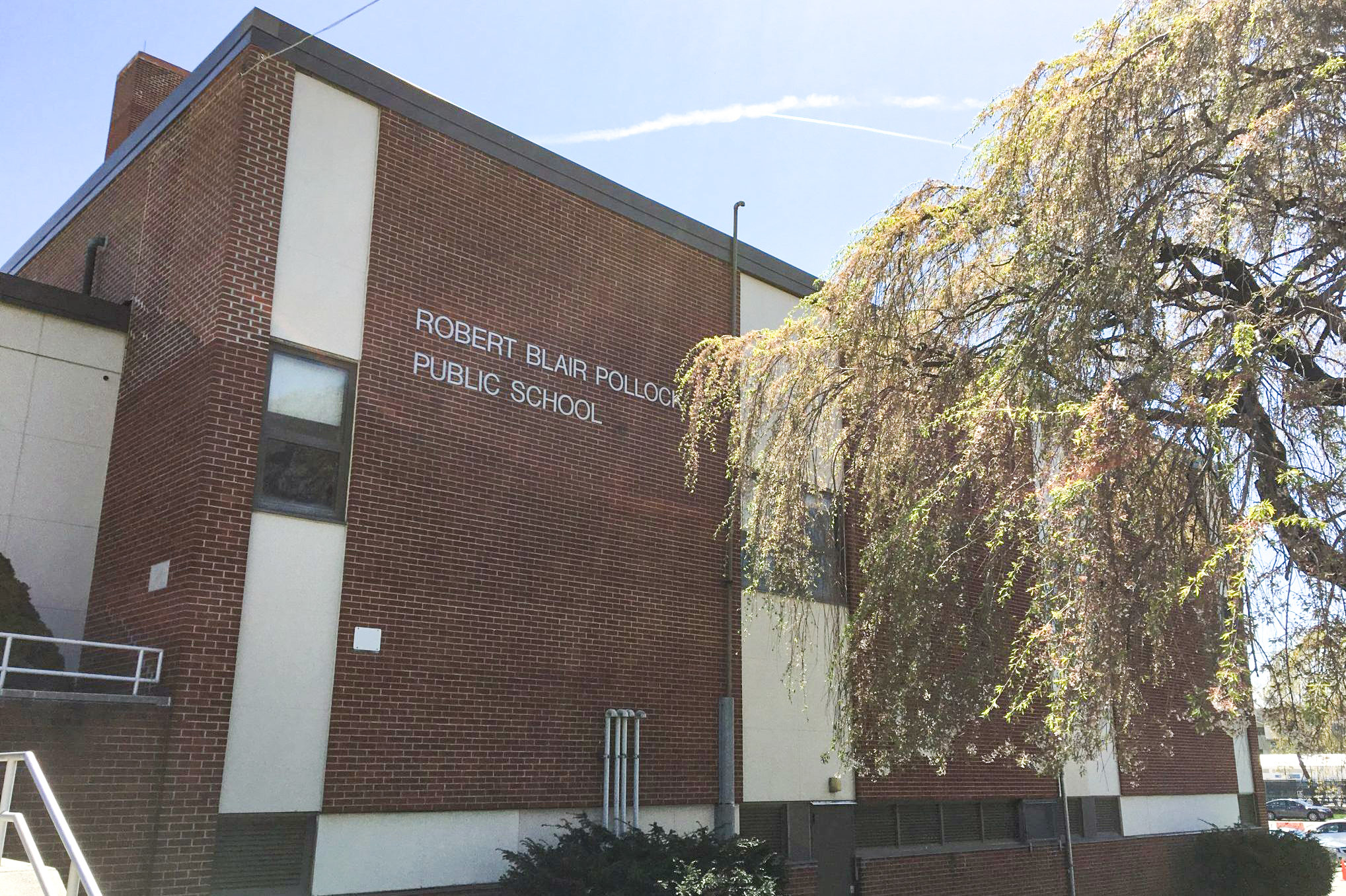
    According to the Philadelphia School District’s inspector general, the former principal of Robert Pollock Elementary, Yvette Jackson, received the money from events including book fairs, holiday bazaars, and class trips — plus dues for graduating eighth graders — but “failed to deposit proceeds.” Jackson has since retired.

    Multiple vendors, including Scholastic Books Inc., were not paid for goods delivered under Jackson’s watch, according to Pollock sources and documents reviewed by The Inquirer. The inspector general’s report confirmed the lack of payments.

    Jackson’s actions violated the district’s policies, “eroded the public’s trust and violated the district’s ethical standards required by the [Employee Code of Ethics] mandating honesty and forthrightness and avoiding falsification, misrepresentations and deceptions in records the former principal kept while managing and administering” school activities funds, wrote Sha S. Brown, the inspector general.

    The report stopped short of accusing Jackson of taking the funds, but said she was liable for all losses “resulting from administrative negligence and failure to exercise proper oversight and accounting” of student funds.

    At Brown’s recommendation, the district is withholding $31,576.24 from Jackson’s final termination pay. Jackson did not respond to a request for comment, but, according to the inspector general’s report, “the former principal acknowledged receipt of the memo and did not object to the proposed withholding.”

    Pollock, a K-8 school on Welsh Road, educates 900 students, 77% of whom are considered economically disadvantaged.

    Missing money, missing records

    The possible financial improprieties came to light during a reconciliation of school accounts after Jackson retired from Pollock at the end of the 2024-25 school year.

    When district personnel attempted to balance the books, money from trips, bake sales, class dues, and the holiday bazaar was missing, according to sources. Scholastic Books was not paid for either its fall 2024 or spring 2025 book sales.

    Ultimately, the district’s office of general accounting filed a complaint with the inspector general’s office “pertaining to the mismanagement of the Robert Pollock School Student Activity Fund (SAF) by the retiring principal,” according to documents reviewed by The Inquirer.

    The inspector general’s probe concluded that Jackson failed to keep adequate records and that over the course of the 2023-24 and 2024-25 school years, she made only five bank deposits, despite cash having been received for various school events through the year.

    District policy requires cash received for student activities be deposited into the bank “as soon as possible, ideally daily unless this would cause an undue hardship.”

    None of the deposits Jackson made came with required documentation, such as the dates and descriptions of the activities, number of students who participated, cost of participation, and more, the report said.

    “The former principal failed to account for, and deposit, the proceeds of several fundraising activities including book fairs and class dues (graduation fees) … the OIG could only partially match one bank deposit pertaining to the school’s 2023 fall book fair sales over this two-year period. Further, records indicate the former principal failed to pay invoices of SAF-related vendors,” Brown said.

    Brown found that Jackson collected the $31,576.24 but never deposited it. She also told a staffer managing the book fair that there was “no need for receipts,” the investigation found, despite district policy explicitly stating that receipts were required.

    In some instances, vendors were stiffed. Both Scholastic and a business that provided goods for the holiday bazaar were not paid, the report said.

    Book fair money is typically used to purchase books for classroom libraries and for students to take home. Other activities, like the bake sale, fund things like classroom pizza parties and assorted celebrations.

    “According to an administrator of the school, the holiday bazaar vendor said the former principal kept telling the vendor they were ‘… good for the money,’” the report said. “In total, the OIG found that three invoices remained unpaid and totaled $16,840.49.”

    Going forward, Brown said, the district must require student activities fund money be deposited into a bank account weekly.

    “Accounting and Financial Reporting staff will continue to work with school leaders to make timely deposits,” chief financial officer Mike Herbstman said in the district’s response to the report.

    The school district had no immediate comment Tuesday on the inspector general filing.

  • Philly’s school bus drivers, cleaners and maintenance workers have a new contract

    Philly’s school bus drivers, cleaners and maintenance workers have a new contract

    The people who drive Philadelphia School District buses and clean and maintain its buildings have a tentative contract.

    The district and negotiating team from 32BJ SEIU District 1201, which represents 2,000 workers, reached a deal right at the wire: 32BJ’s old contract was set to expired Monday at 11:59 p.m.

    Officials declined to disclose the terms of the deal, but 32BJ was making no secret of its asks. The big one was more money for its workers, who are among the lowest paid in the district.

    Members’ current pay scale ranges from bus attendants, who are paid $30,762 annually under the existing contract, to building engineers, whose pay rate starts at $51,155 and tops out at $77,832. The union’s best-paid employees are building construction workers, whose salary maxes out at $77,832.

    Tradespeople — bricklayers, HVAC mechanics, electrical mechanics, plumbers, and roofers — are paid $62,899 at the top of the pay scale.

    “We went into this looking for an agreement that reflects the hard work, dedication, and importance of our 2000 members covered under this agreement, and we believe this deal does that,” Tim Finucan, 32BJ SEIU state director, said in a statement. “We appreciate the strong relationship we have with the Philadelphia School District, and our shared commitment to providing family-sustaining wages, healthcare, and a ladder of opportunity within the district.”

    Union officials said membership will meet in the next two weeks to learn about and vote on the deal.

    In addition to higher pay, 32BJ was asking for a clearer path to job advancement, and ways to work with the school system to fill vacant jobs. The district often struggles to find qualified engineers and trades workers.

    Superintendent Tony B. Watlington Sr. said in a statement that he was “pleased to have reached a tentative agreement with our 32BJ SEIU Philadelphia school workers that recognizes the essential contributions of these dedicated professionals. Every day, our staff helps to safely transport our students and create the safe, welcoming, and supportive environments our students need to learn and thrive.”

  • With no PSSA scores in sight, Philly is pushing back its special-admissions deadline

    With no PSSA scores in sight, Philly is pushing back its special-admissions deadline

    The Philadelphia School District has pushed back the application window for its 37 magnet schools.

    The news hinges on PSSA scores, which have not been released to the public by the Pennsylvania Department of Education.

    Instead of students submitting applications for the 2027-28 school year between Sept. 8 and Oct. 30, as originally announced, the application window will now open Oct. 5 and close Nov. 24, officials announced Monday night.

    Students will use both their 2024-25 PSSA results and the yet-to-be-released 2026 scores.

    “This adjustment ensures families have access to official, verified 2026 assessment data when making their school choices,” officials said in a letter to families.

    Initially, district officials said that assessment results would not be ready in time for the application process, and that they would allow applying students to take an alternative assessment.

    But that plan has since changed. Superintendent Tony B. Watlington Sr. said last week it wasn’t clear if alternative assessments would be needed and now, officials are saying they won’t.

    State tests are a question mark

    The PSSAs remain a question mark for the district.

    Harrisburg officials released preliminary data to districts in the late spring, as they typically do, but Philadelphia has shared only limited student PSSA scores with select staff. Most Philly principals and teachers have not seen the scores, though other districts and schools have not withheld the data.

    State education officials notified districts last week that statewide results, typically available to districts in late August or early September, would be delayed, though the release of the data to parents and the public does not typically happen until the fall.

    Philadelphia officials then suggested the state holdup was the reason for their own delay.

    A district spokesperson said the system expects scores in adequate time to make admissions decisions.

    “Once the verified 2026 PSSA and Keystone results are released by PDE later this fall, district staff will contact all applicants to assist them with submitting their scores,” officials said in the letter to parents. “Families do not need to take any action regarding their 2026 assessment scores at this time.”

    A school selection town hall is scheduled for Wednesday at Powel Elementary, 3610 Warren St., from 5:30 to 7:30 p.m. Another town hall will be held virtually on Thursday from 1:30 to 3:30 p.m.

  • Philly schools transition committee app opens as district moves ahead with $3B facilities plan

    Philly schools transition committee app opens as district moves ahead with $3B facilities plan

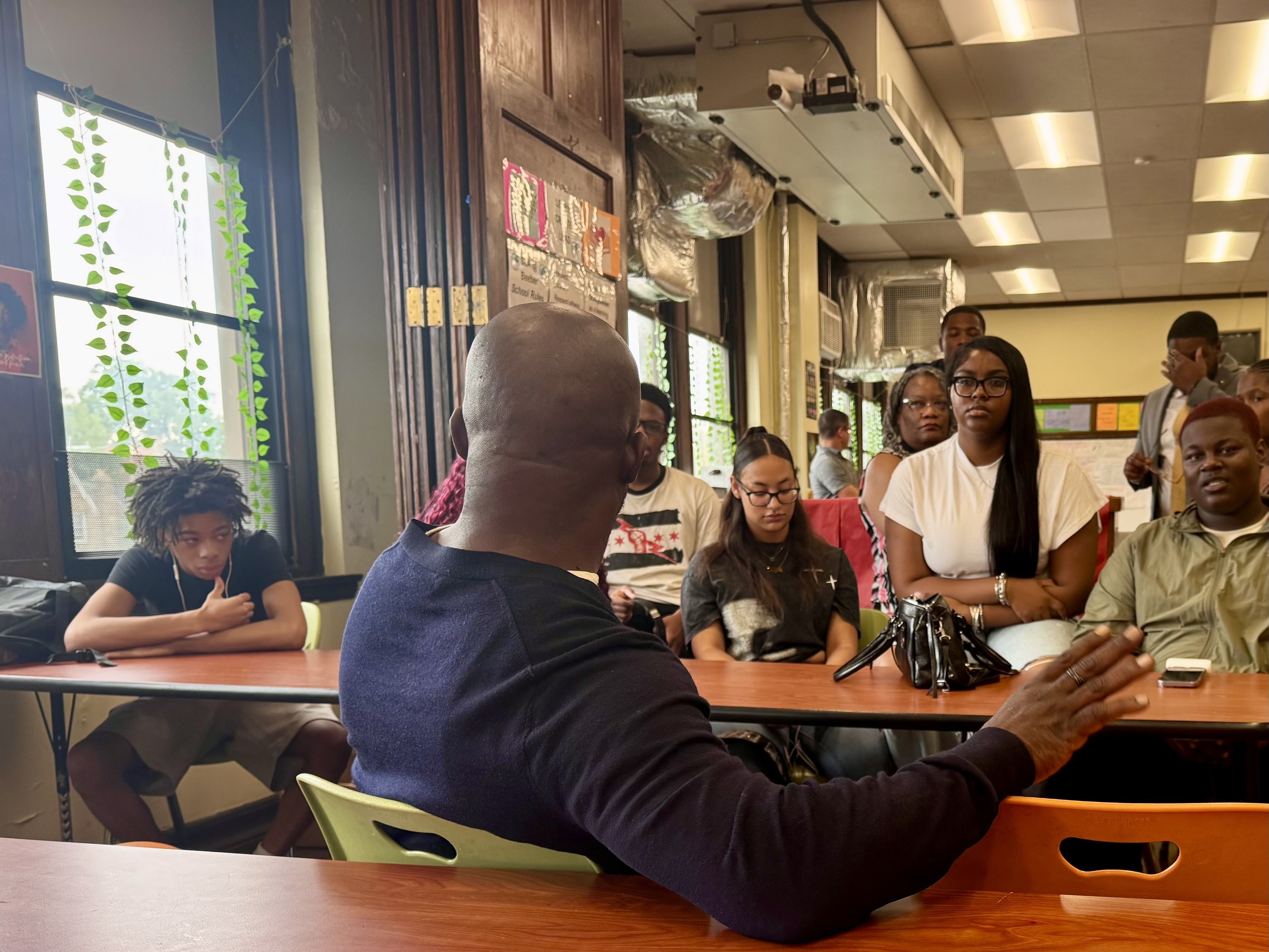
    Chris Johnson, principal of Science Leadership Academy at Beeber, looked at the students in front of him — 10th and 11th graders at Parkway West, a school that’s closing in June.

    “What’s coming up for you?” Johnson asked them.

    “Division,” one student said plainly.

    SLA Beeber won’t be doing that, Johnson said. On the first day of school last week, Johnson told his students if they were going to have issues accepting the Parkway West kids coming next year, they could leave.

    “We don’t do stepbrothers, stepsisters. We do family. Ain’t no division. We’re family,” said Johnson.

    The conversation came as Philadelphia School District officials toured SLA Beeber to tout a new process for managing school closings.

    Applications opened Monday for transition teams that will affect how changes will happen at 50 schools that will be closed or beginning phaseouts at the end of the 2026-27 school year, and those receiving students from those schools in 2027-28.

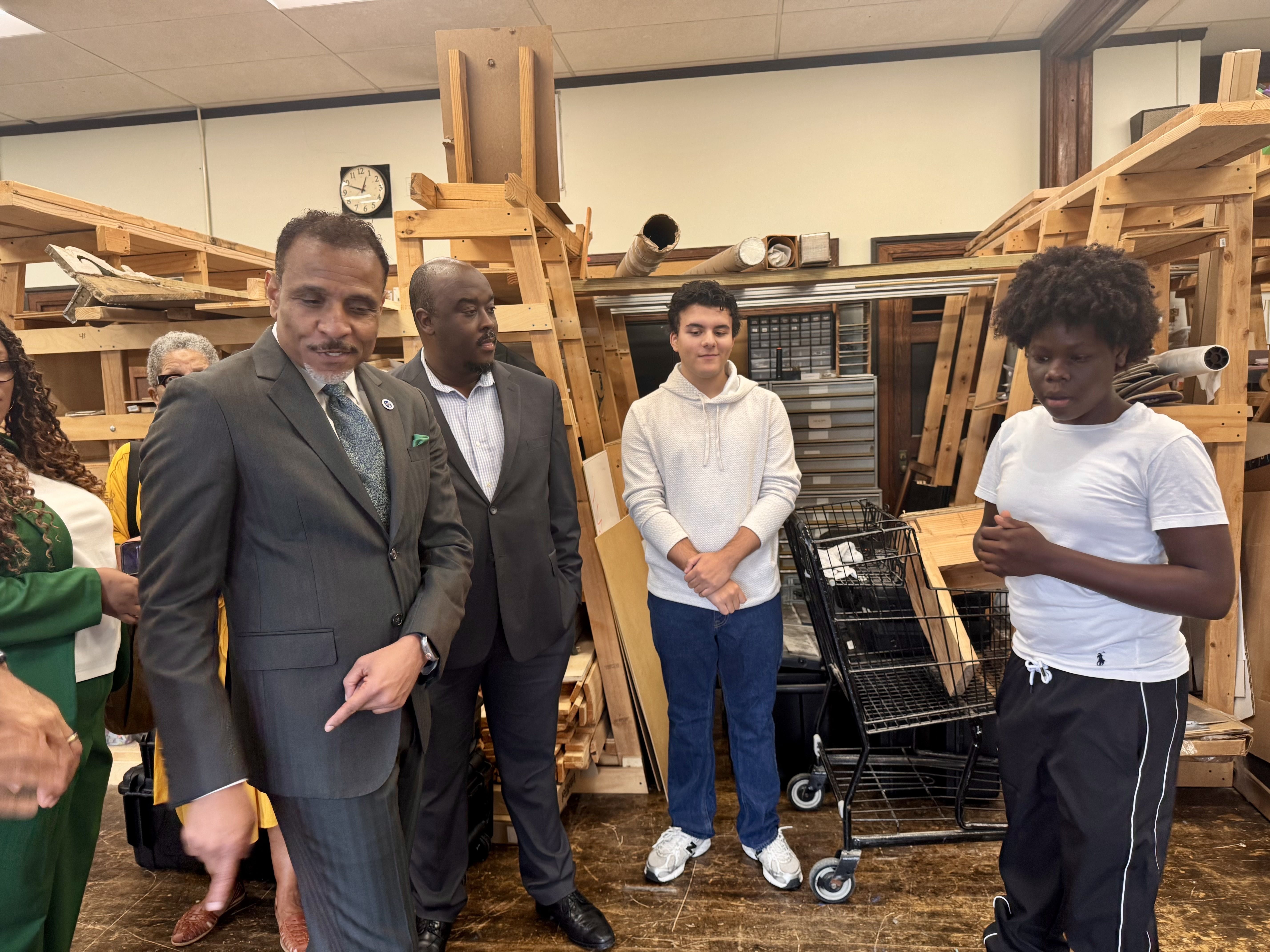
    Ten Parkway West students traveled to SLA Beeber Monday to get a preview: tours of the school, a sit-down with Johnson, shaking hands with Superintendent Tony B. Watlington Sr., school board members, and others.

    “We’ve got to do some things differently in Philadelphia to address the fact that we have a 65% occupancy rate across the district, which means 35% of our seats in our buildings in the district-operated schools are empty,” Watlington said at a news conference in a third-floor classroom.

    The school board in April approved a $3 billion facilities plan that will close 17 schools and modernize 169 over a decade, though the timeline and scope is not set in stone, as more than half of the plan is not yet funded. Some public officials, including several City Council members, are still pushing against the plan, demanding some schools be removed from the closing list.

    Shakeera Warthen-Canty, whom Watlington appointed this summer to lead a new School Transition Office, said transition committees will help think through concerns about safety, transportation, space planning, and more.

    “We understand that for some communities this is very hard, but we want to make sure that we are hearing them and we’re providing as much support as we can,” Warthen-Canty said. “The red carpet, white-glove treatment Dr. Watlington talked about, that’s what we want to make sure our principals, our staff, our students, and our families have.”

    Each transition committee will have about 20 members. Applications, available through the district’s website, will be open through Sept. 18. Those who are selected to sit on committees will be notified by Oct. 1, with work expected to begin the week of Oct. 12.

    ‘There’s a lot of uncertainty’

    When Parkway West first showed up on the list of possible school closings, principal William Brown and Johnson of SLA Beeber began meeting regularly, they said.

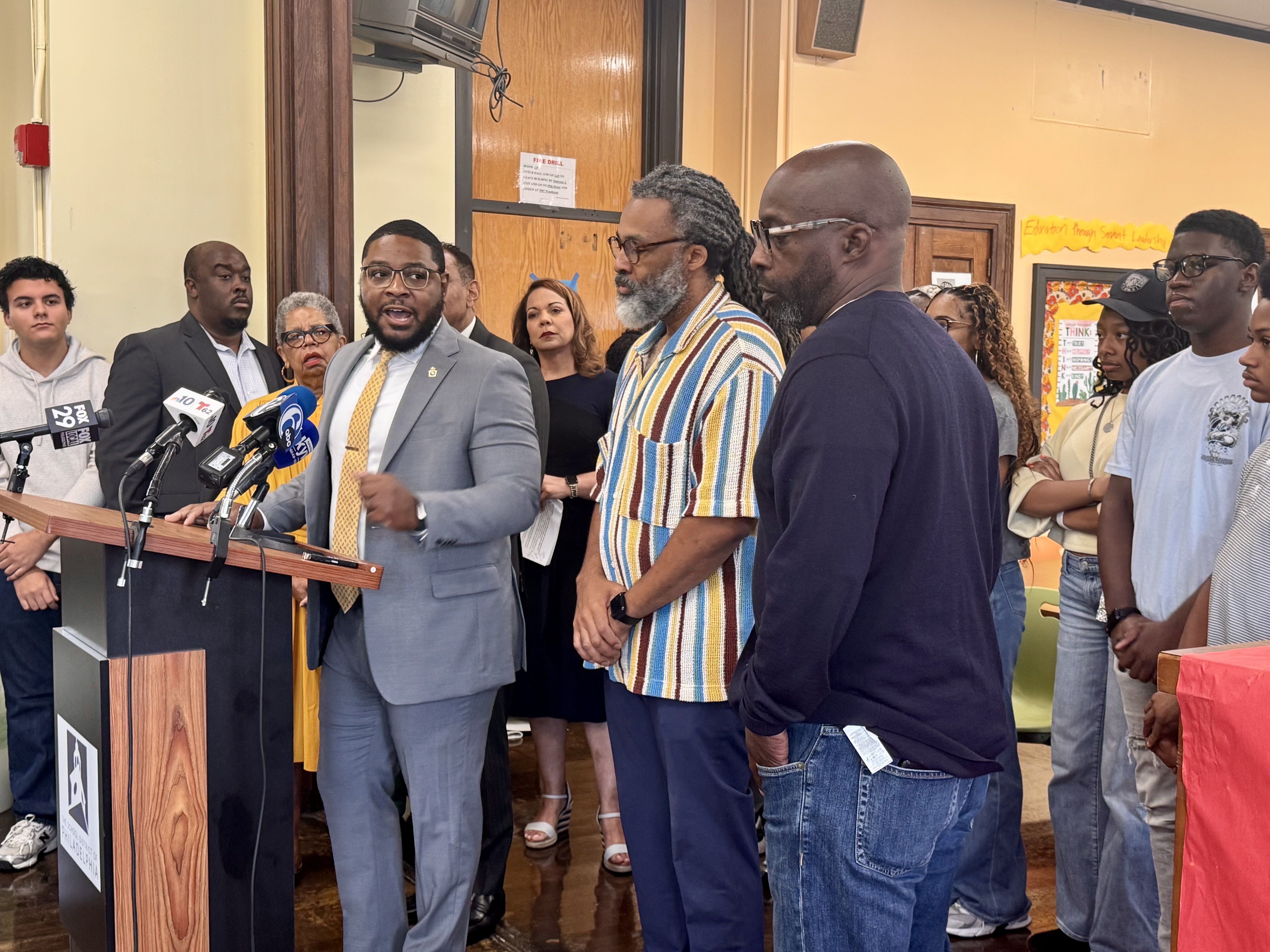
    William Brown (center, speaking at podium), principal of Parkway West, speaks at a news conference at SLA Beeber. Brown’s school is closing at the end of the school year, and its students will be sent to SLA Beeber.Kristen A. Graham / Staff

    “I’d be lying if I said this was an easy time for the Parkway West community,” Brown said Monday. “There’s a lot of uncertainty out there for the people involved.”

    SLA Beeber enrolled 533 students in grades 5 through 12 last year; Parkway West had 151 students in grades 9 through 12.

    While Parkway West students will have the opportunity to go to SLA Beeber, most staff will be force transferred to other schools, without a chance to follow their students. Still, Brown said, the focus is on children.

    “These are our young people, we really have to make sure they’re OK,” said Brown, who said the SLA Beeber and Parkway West communities “are united” around that goal.

    Later, SLA Beeber students Mohamed Ali, 15, and Sebastian Delgado-Colón, 16, showed Watlington, board president Reginald Streater, board member Whitney Jones, and others around their school. Other SLA Beeber classmates took Parkway West students on a tour.

    What do you think of the coming changes, the dignitaries asked Ali and Delgado-Colón.

    “I can’t imagine what they’re feeling, going into a completely new environment,” said Delgado-Colón.

    At first, Ali said, he thought about what the change would mean for SLA Beeber students.

    “Our teachers are very one-on-one with us. Is this going to change that? But we’re going to make the best of it,” said Ali.

    “We were looking at it in more of a tense way — now we’re looking at it as a net positive,” said Delgado-Colón.

    “It can build on community,” Ali added.

    Philadelphia Superintendent Tony B. Watlington Sr., school board member Whitney Jones, and Science Leadership Academy at Beeber students Sebastian Delgado-Colon and Mohamed Ali look at SLA Beeber’s engineering lab. Delgado-Colon and Ali gave Philadelphia School District officials a tour of the school, which will receive students from Parkway West after Parkway West closes at the end of the school year.Kristen A. Graham / Staff

    District officials have stressed that closing schools will enhance resources citywide.

    The cooperation between Parkway West and SLA Beeber, Watlington said, is a hopeful one.

    “It shows that we can make tough decisions and we can do it in a way that all of us absolutely can become winners and not losers,” the superintendent said. “Our gain doesn’t have to necessarily come at anybody’s expense.”

  • 52 Philly schools will dismiss early Tuesday because of predicted heat

    52 Philly schools will dismiss early Tuesday because of predicted heat

    With temperatures expected to get close to 90 degrees later this week, some Philadelphia schools will dismiss early Tuesday.

    Fifty-two schools still lack air-conditioning.

    “The Philadelphia region is experiencing higher-than-normal temperatures, and while the district has made significant progress toward ensuring our schools are adequately cooled to provide safe and comfortable learning environments, some schools still have inadequate cooling systems,” Oz Hill, the deputy superintendent of operations, wrote in a letter sent to families Monday.

    The Philadelphia School District’s extreme-weather protocol means that if temperatures are forecast to reach or exceed 85 degrees by noon, those schools dismiss early; if it hits 85 degrees by 9 a.m., the call is for remote learning.

    That means an unequal experience for students across the system, with students in some schools not missing any instructional time when it’s hot, and those in a quarter of schools subject to interrupted schedules.

    “While we know that in-person learning is the best environment for students, the safety and well-being of our students, staff, and families remains our top priority,” Hill wrote. “Thank you for your flexibility and partnership. Please take care, stay cool, and stay safe.”

    The holdup in air-conditioning all district schools is not related to the cost of air-conditioning units, but rather upgrading old electrical systems in the 52 schools.

    Such upgrades are tricky. An HVAC project at Kensington High went awry this summer, triggering asbestos issues that forced students and staff to relocate for the rest of the calendar year.

    School officials said in 2022 they aimed to have all district schools fully air-conditioned by 2027. But on the cusp of that cutoff, that goal seems unlikely.

    Which schools will dismiss early?

    The 52 schools that will have a half day Tuesday are:

    AMY Northwest

    Bache-Martin

    Blaine

    Building 21

    Catharine

    Comegys

    Comly

    Cooke

    Crossan

    Disston

    Dunbar

    Emlen

    Fell

    Fox Chase

    Ben Franklin High School

    Girard

    Harding

    C.W. Henry

    Hill-Freedman

    Hopkinson

    Houston

    Howe

    A.S. Jenks

    J.S. Jenks

    Lamberton

    Lingelbach

    Loesche

    Ludlow

    McCloskey

    McClure

    McMichael

    Mitchell

    J.H. Moore

    MYA

    Olney Elementary

    Overbrook Elementary

    Parkway West

    Patterson

    Rhawnhurst

    Rowen

    Roxborough High

    Sayre High

    Sharswood

    Sheppard

    South Philadelphia High

    Spring Garden

    Spruance

    Sullivan

    Tilden

    The U School

    Wagner

    Martha Washington

  • Measles outbreaks present ‘very real threats’ in Philly schools. Here’s how officials are working to prevent them.

    Measles outbreaks present ‘very real threats’ in Philly schools. Here’s how officials are working to prevent them.

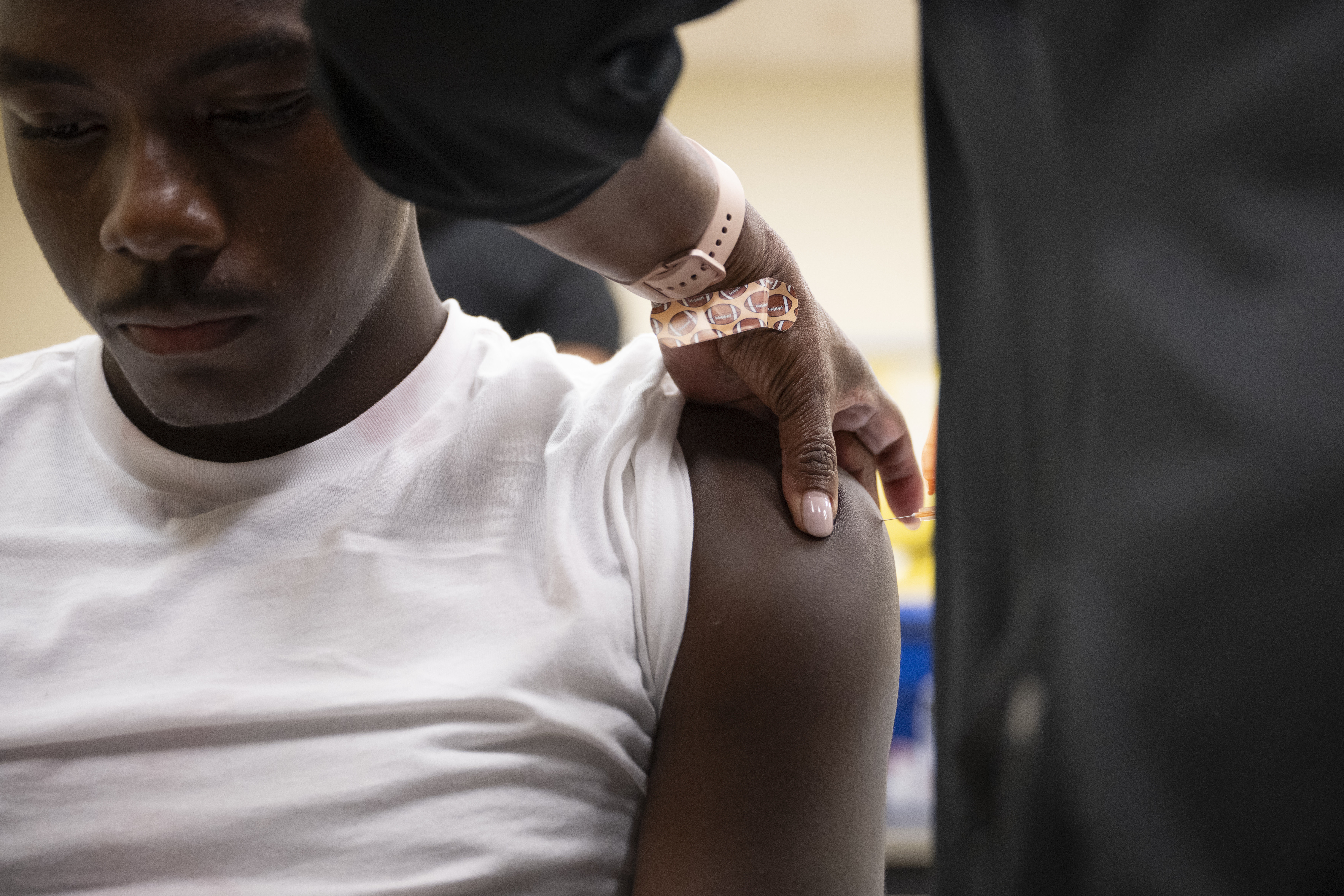
    Families with kids in tow lined up Thursday at Benjamin Franklin High School for a one-stop shop: physicals, mental health services, vision screenings, and, perhaps most important, vaccines.

    The Philadelphia School District is making a full-court press to get its vaccination rates up, amid a statewide measles outbreak and news that some city schools saw double-digit declines in kindergarten immunization rates in the 2025-26 school year — leaving communities vulnerable to further measles spread.

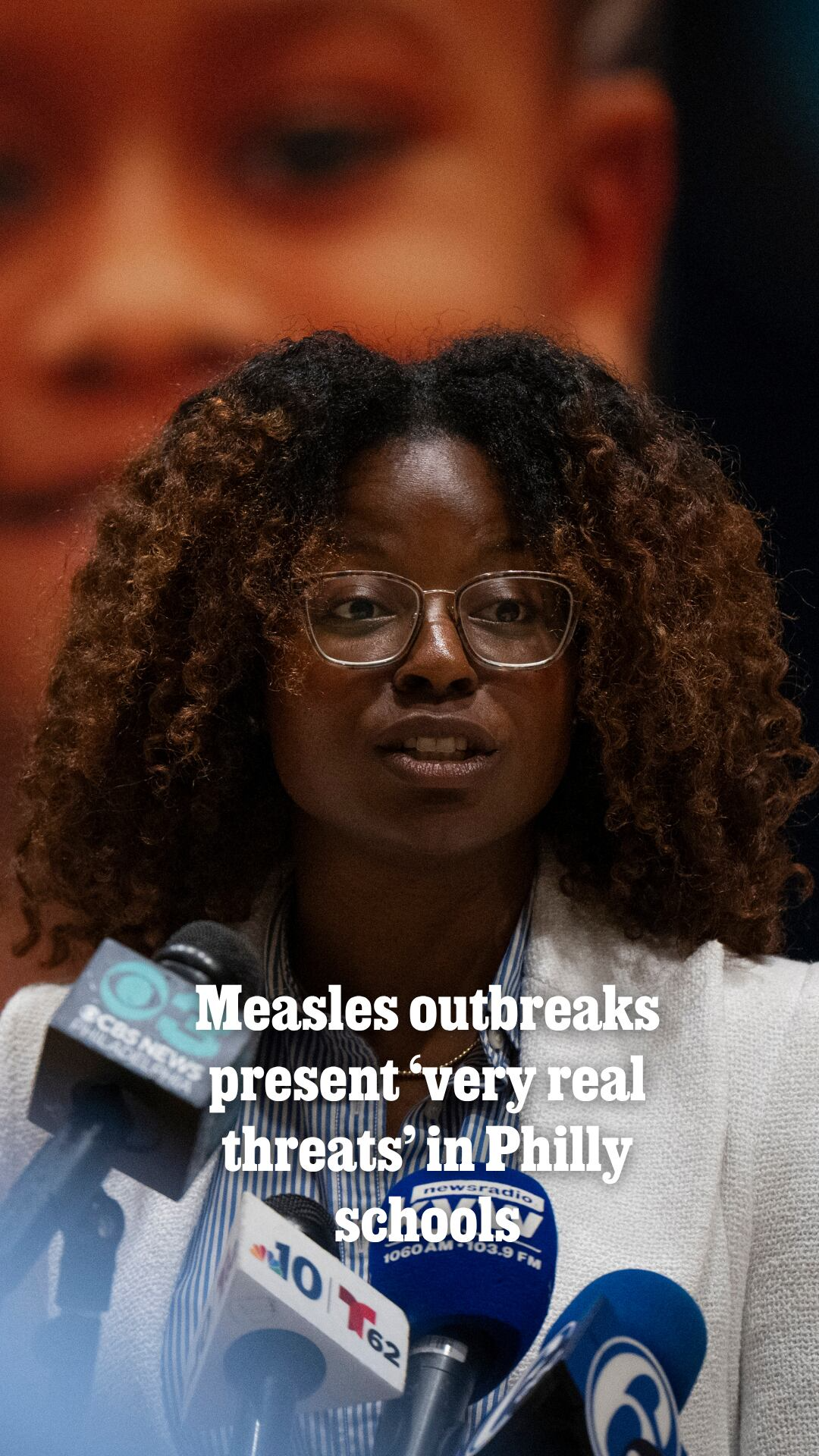
    Kids must be healthy to learn, said Kendra McDow, a pediatrician and the district’s medical director, and vaccines against diseases like measles, whooping cough, and chickenpox are crucial protection.

    “In 2026, these diseases are very real threats to the health of children and communities,” McDow said. “We are seeing in real time the tragic consequences of children and adolescents not getting vaccinated.”

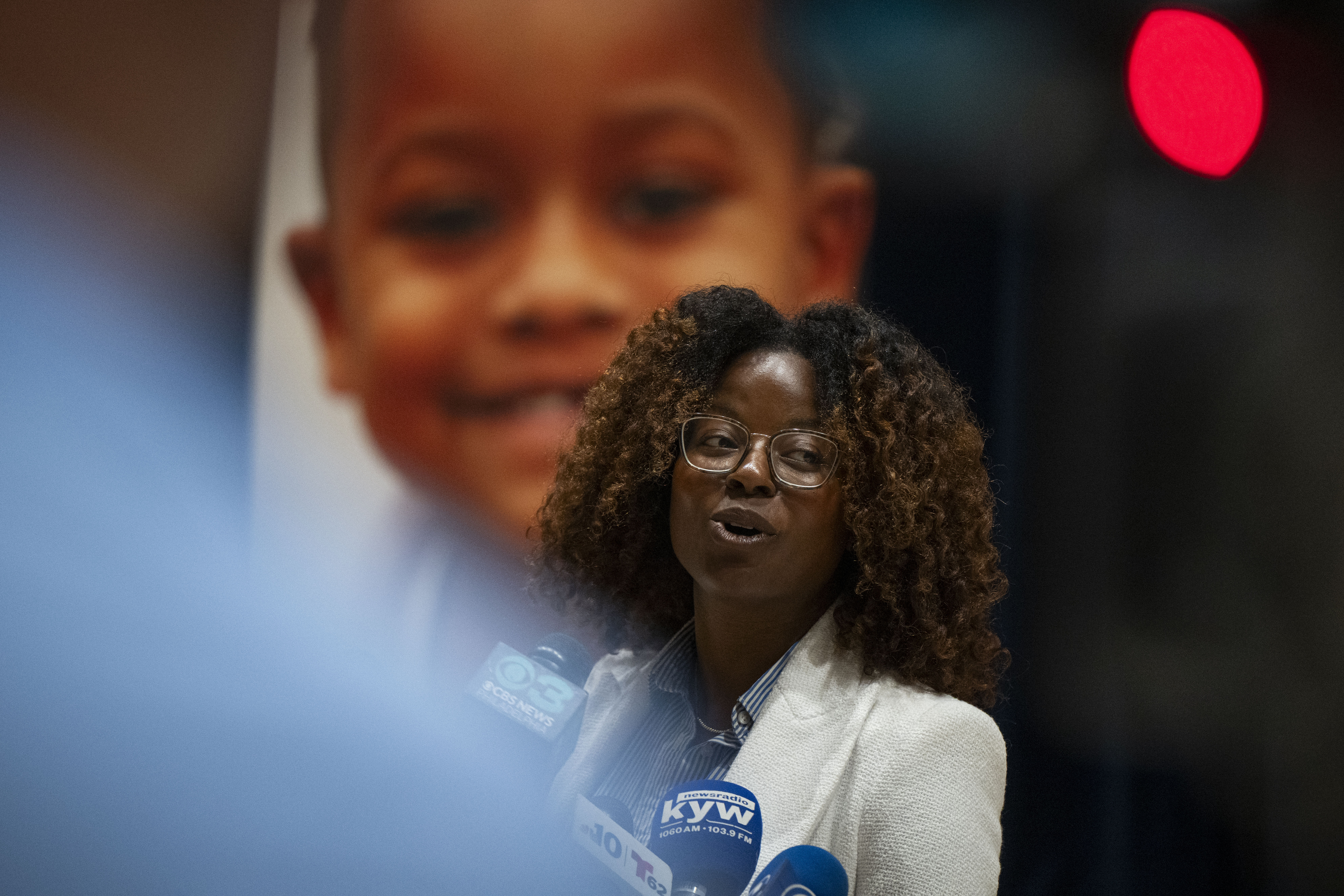
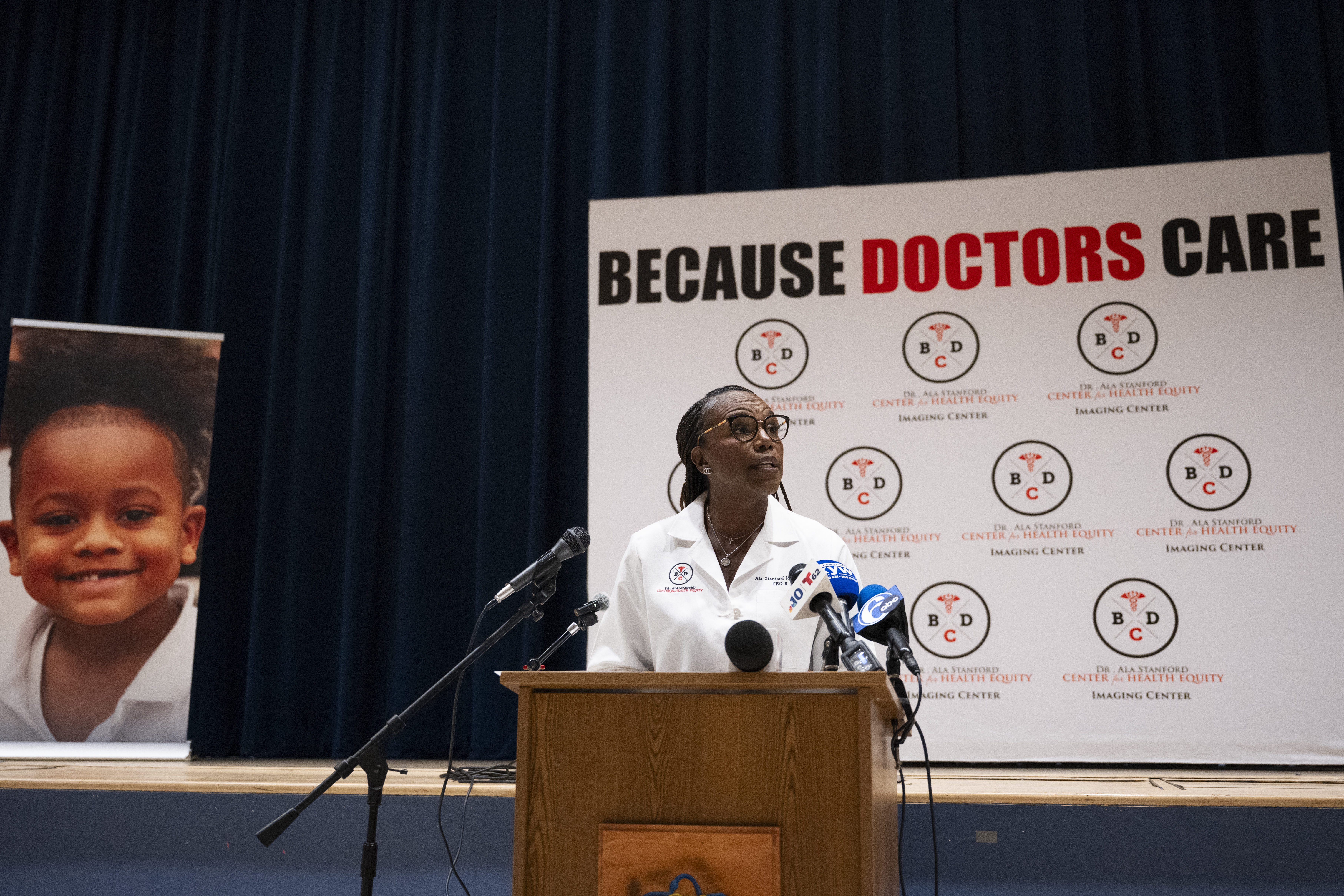
    Medical Officer Kendra McDow speaks during press conference encouraging vaccinations for Philadelphia kids on Thursday at Benjamin Franklin High School in Philadelphia.Joe Lamberti / For The Inquirer

    Two people in Lancaster County who tested positive for measles have recently died, state officials said Tuesday. They were Pennsylvania’s first measles-related deaths in 30 years. Both of the people were unvaccinated.

    To achieve community protection, which scientists call herd immunity, 95% of a school population must be vaccinated. And though Philadelphia’s vaccination rates remain relatively strong compared with other pockets of the state, about 40% of kindergarten classrooms across Philadelphia and its surrounding suburbs became vulnerable to a measles outbreak last school year, up from a third of classrooms the year prior, according to an Inquirer analysis of state data.

    To boost city immunization rates, the district is focusing on access — from a back-to-school bus tour this summer that came with a side of childhood vaccines to the Benjamin Franklin event over two weeks, which runs through Friday.

    Parents can register their children at the district’s Constance E. Clayton Education Center, at 440 N. Broad St., then walk up the block to Ben Franklin, at 550 N. Broad, to get their children vaccines and other preventive healthcare, including connection to mental health services and appointments to get eyeglasses.

    Measles is now in 28 Pennsylvania counties, with more than 400 cases reported this year — nearly half in the last month. No cases have been reported in Philadelphia, but the highly contagious disease is circulating in suburban Chester County.

    Pennsylvania had the most newly reported measles cases in the nation last week, said Ala Stanford, founder of the Black Doctors Consortium, and 73 state residents have been hospitalized.

    Pennsylvania now has the highest number of cases reported in the state since 1991.

    “This is not a mystery. It’s arithmetic,” Stanford said. “It takes 95% of us vaccinated to stop measles from moving through a community. Pennsylvania is at about 93%, and not one county in this region is at 95%.”

    What parents need to remember, Stanford said, is that since children traditionally have not received their first measles vaccine until age 1, “every infant in the city, in the stroller, in the car seat, at the family reunion has no protection of their own. We are their protection. That is the entire system.”

    In response to the current outbreak, state officials have started recommending that parents in affected areas vaccinate children as early as 6 months with a “zero dose” to provide extra protection against a disease so contagious that it will infect nine in 10 unvaccinated people who are exposed.

    The benefits of community protection go beyond babies and children, Stanford said: “It’s the teacher. The lunchroom lady, the man who sweeps the floor, the security officer at the door — you do not know who they go home to at night. You do not know who is on chemotherapy, who has had a transplant, who is caring for a newborn.”

    Philly schools recommend vaccinations for students
    Video: Philly schools recommend vaccinations for students

    ‘Why so many?’

    School officials plan to set up individual vaccine clinics at schools that have problematic compliance rates.

    Emlen Elementary in Mount Airy, for instance, had a 100% vaccination compliance rate among incoming kindergarteners two years ago. Last year, it dropped to 80%. (Many Emlen families cited philosophical or religious exemptions to vaccination.)

    Ericka Hayes, senior medical director of infection prevention at Children’s Hospital of Philadelphia, said rampant misinformation about vaccine safety certainly contributed to lower vaccination rates.

    “Parents should not let that sway them from giving their children one of the most tested and effective childhood interventions in history,” Hayes said.

    Disruptions from the pandemic are another factor in lagging vaccine rates, Stanford said.

    Dr. Ala Stanford of the Black Doctors consortium speaks during press conference encouraging vaccinations for Philadelphia kids on Thursday at Benjamin Franklin High School in Philadelphia.Joe Lamberti / For The Inquirer

    At a recent clinic at Strawberry Mansion High, Stanford said, children from 30 schools across the city showed up for shots.

    “We had 14- year-olds getting four shots, and we said, ‘Why so many?’” Stanford said. Families told care providers that they had fallen off on vaccine schedules, but were relieved to have a chance to catch up their children.

    As word spreads about vaccine access, about ease and availability across the city, “more people show up,” Stanford said.

    Kids can be excluded for vaccine noncompliance

    Children can be excluded from school under Pennsylvania law if they are unvaccinated and their families have not formally filed for an exemption on religious or philosophical grounds.

    According to state data, the Philadelphia School District excluded 34 12th graders, five seventh graders, and three kindergartners last school year for vaccine noncompliance.

    Far more students were labeled “noncompliant and attending” — 1,392 12th graders, 1,853 seventh graders, and 669 kindergartners. That means those students’ families have made a plan for them to get vaccinated, but have not yet followed up on it.

    Students without vaccine exemptions can be admitted to kindergarten on a provisional basis as long as they have a plan to catch up on their vaccines. (State law allows exceptions for students living in foster care or without permanent housing.) They are listed as “non-complaint but attending” when families fail to adhere to that plan.

    School officials have said they work with families in that category to help them catch up on shots, but unvaccinated kids may be asked to stay home if a communicable disease is identified at their school.

    School nurses are key to the effort, officials said, on the front lines of ensuring students are vaccine-compliant. Every school in the district currently has a full-time school nurse, McDow said.

    One of the district’s 277 school nurse positions is unfilled, but an agency nurse is covering that vacancy, and “we are working to have the position filled as soon as possible,” McDow said.

    The act of getting vaccinated or vaccinating your children, said James Garrow, deputy commissioner of the city health department, is powerful.

    “Your vaccination can help save lives,” Garrow said.

    (function(){function e(){window.addEventListener(`message`,function(e){if(e.data[`datawrapper-height`]!==void 0){var t=document.querySelectorAll(`iframe`);for(var n in e.data[`datawrapper-height`])for(var r=0,i;i=t[r];r++)if(i.contentWindow===e.source){var a=e.data[`datawrapper-height`][n]+`px`;i.style.height=a}}})}e()})();

  • Paying parents to become influencers and other priorities for Philly schools superintendent in 2026-27

    Paying parents to become influencers and other priorities for Philly schools superintendent in 2026-27

    Philadelphia Superintendent Tony B. Watlington Sr. zigzagged the city Monday, visiting seven schools across the city to start the 2026-27 year.

    The late-summer weather was perfect, sunny but not sweltering — an important factor in a school system laden with old buildings, where extreme heat sometimes means about a quarter of the district’s 113,000-plus students cannot learn in person or at all,

    Watlington is hoping that the back-to-school weather was an omen.

    “The way we start is going to be the way that we roll, and the way we finished last year,” the superintendent said. “We started off really well.”

    Watlington sat down with The Inquirer on Tuesday to preview the 2026-27 school year. Here are five things to know from the conversation.

    Priorities for this school year

    Three priorities will drive his administration this year, Watlington said: academics, customer service, and family engagement.

    Though new data are not yet available, Watlington is leaning hard on a study released earlier this year that found Philadelphia School District students’ post-pandemic learning is tops among large urban school systems, according to research out of Harvard and Stanford Universities.

    Superintendent Tony B. Watlington Sr. (left) and district board president Reginald L. Streater (right) hold a press conference at McClure Elementary Monday, Aug. 24, 2026 on the first day of school in the Philadelphia School District. Behind them in center is Carlton Williams, just a week into his job as the City’s Philadelphia’s Managing Director (he started Aug. 17)Tom Gralish / Staff Photographer

    “We want people to stop and digest that for a moment,” Watlington said. “Because people will say, ‘Well, are the scores still too low?’ I’d say absolutely, yes, we’ve got a lot of work to do and it’s not acceptable that two out of three kids don’t read or perform on grade level in math, but we’re getting better faster than the 25 largest school districts, and that’s our goal to be the fastest-improving, so we’re well on our way,” Watlington said.

    “We believe it’s important for us to work with parents as equal partners because they are our children’s first teachers, and when we support our parents and families, our kids just do better in school,” he said.

    Some parents will be paid to help schools improve

    Watlington said this is the year the district will begin paying some parents to help schools reach their goals. He announced a plan to do so in 2023, when he first laid out his strategic plan, but this year it is finally happening.

    The Parent and Community Ambassador Program will provide small stipends to “key community members and parents who just have a level of influence and cachet that no teacher, principal, counselor, police officer, or superintendent has in communities,” Watlington said. “If we can figure out how to connect with some of these key community folks, it will do nothing but help us to improve student attendance in schools where there may be some tensions or poor communication between families and school staff.”

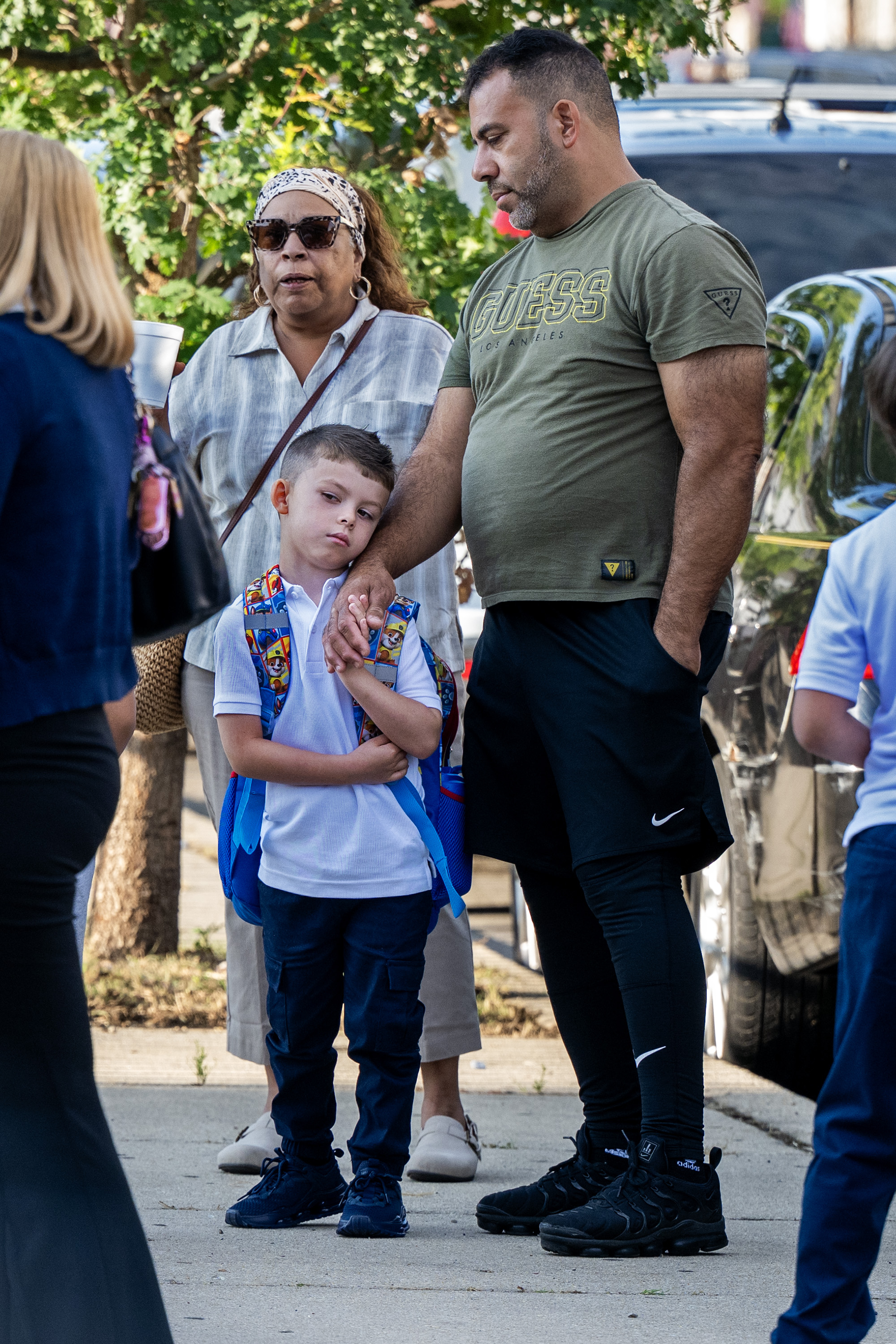
    Johnny Beauchamp (right) waits with his son Johnny (5, not a Jr.) as they arrive early at McClure Elementary Monday, Aug. 24, 2026 on the first day of school in the Philadelphia School District. Young Johnny is going into kindergarten and Beauchamp, a single father, took two days off from his work as a truck driver to make sure he could be there on “the start of the rest of his life.”Tom Gralish / Staff Photographer

    The aim, the superintendent said, is to address issues like homework completion, or family cooperation with key school initiatives.

    “We think that’s a pioneering effort,” Watlington said. “Families first in 2026-2027.”

    The program will begin as a pilot in a limited number of schools. Watlington did not provide details about how much ambassadors will be paid or how many schools will participate initially. He said details will be released soon.

    About those PSSA and Keystone scores

    There has been significant speculation around the release of state test scores. Pennsylvania released preliminary data to districts in the late spring, as it typically does, but Philadelphia has shared only limited student PSSA scores with select staff. Most Philly principals and teachers have not seen the scores, though other districts and schools have not withheld the data.

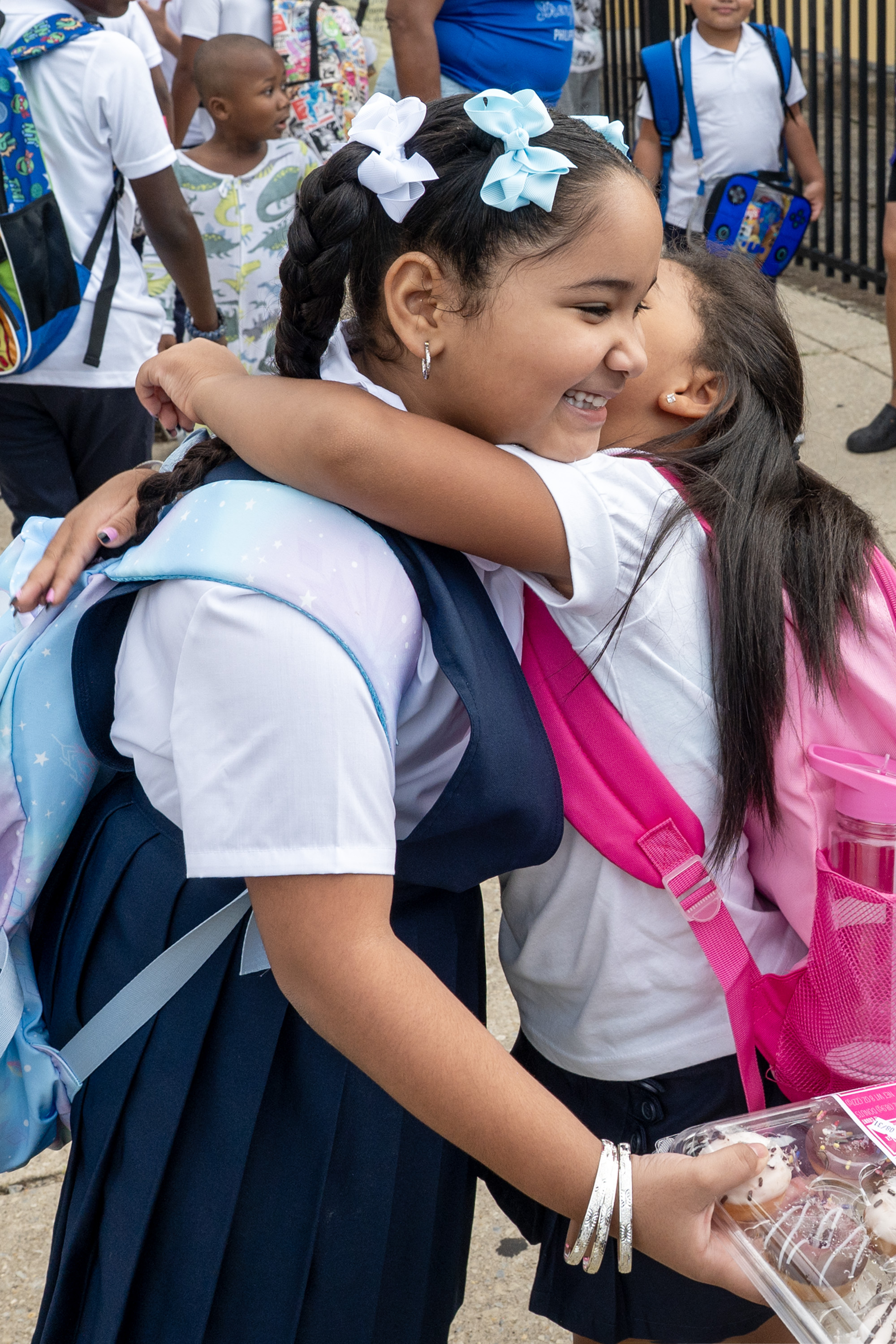
    Wuimarlyn Sanchez, (left) , 7, is greeted by a classmate outside McClure Elementary Monday, Aug. 24, 2026, starting as second graders on the first day of school in the Philadelphia School District.Tom Gralish / Staff Photographer

    The Pennsylvania Department of Education notified districts last week that statewide results, typically available to districts in late August or early September, would be delayed, though the release of the data to parents and the public does not typically happen until the fall.

    Philadelphia officials then suggested the state holdup was the reason for their own delay.

    Watlington said Tuesday that “we’re just going to wait for the official, verified data to come to us. We’re not trying to hide anything, but we need to get the verified data.”

    The superintendent suggested, however, that both statewide glitches in the administration of the test on the first day of PSSAs and the shift to online administration of exams, which research links to decline in student scores, will show an effect when the scores are finally made public.

    “My hunch is that, at the end of the day, online testing will have had some impact, but I don’t want to speculate on that across the Commonwealth of Pennsylvania,” Watlington said. “When the state verifies the data, we’ll release it immediately.”

    Some students were unable to access tests for up to 40 minutes on the first day PSSAs were administered.

    “All things being equal, I personally would like to be able to do over every single first-day test,” Watlington said. “That’s not really financially or time practical, but in an ideal world that would be my, my superintendent’s wish.”

    School selection’s still up in the air

    The district’s much-watched school selection process will open this year on Sept. 8 and close on Oct. 30. Watlington said its details are still being worked out, given the state score wrinkle.

    Pencils and crayons in the first grade classroom of teacher Lauren Cucinotta at Fanny Jackson Coppin Elementary are ready to write and color Tuesday, Aug. 18, 2026, as she prepares for the start of the School District of Philadelphia school year on Aug. 24.Tom Gralish / Staff Photographer

    Students who wish to gain admission to the system’s 37 criteria-based schools typically submit PSSA scores for consideration. Last week, district officials said they would not use PSSAs for school selection.

    Watlington said Tuesday that his team was “currently reviewing a number of options about how to handle the fact that we won’t have 2025-26 data in time for our school selection process. So we’re reviewing all of our options. I believe there was a thinking initially that we’d have students who have access to some special test — the Terra Nova, etc. We’ve not finalized a decision there yet, so we don’t want to get ahead of our skis just yet.”

    District size, and winning back kids to Philadelphia schools

    When Watlington talks about Philadelphia being one of the 10 largest school systems in the U.S., he is counting children enrolled in both traditional district schools and charters — all of which are supported by taxpayer dollars.

    Counted together, last year, the district had 113,735 students, and charters enrolled 64,469.

    The district’s enrollment grew for the first time in a decade in 2024-25, inching up by a little fewer than 2,000 students. It then lost 794 students last year, which Watlington attributes to a SEPTA strike at the beginning of the school year that caused a pronounced drop in student attendance and, he believes, caused some families to disenroll children from district schools.

    “It’s too soon to know exactly where our numbers will shake out, but my expectation and hope would be that we maintain the similar enrollment to last year,” Watlington said. “I expect this school district to grow over time, though.”

    Why? Watlington touted Masterman’s recent ranking by U.S. News & World Report as the nation’s No. 3 public high school in the country and the district’s academic gains.

    “We just need to tell that story,” Watlington said, “and go out and market ourselves to parents.”