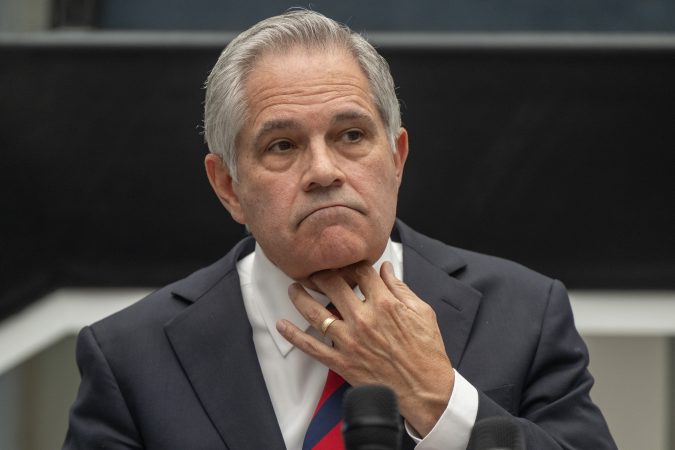
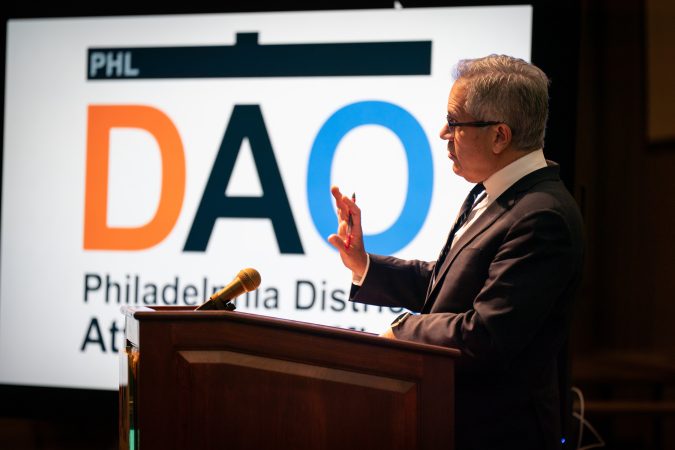
Two Philadelphia prosecutors have accused District Attorney Larry Krasner of instructing them to litigate a controversial appellate case in a manner that would “protect the office” — a highly unusual assertion that effectively accuses the city’s top law enforcement official of telling his staff to act in a way they now say was “incompatible with their ethical obligations and the interests of the Commonwealth.”
In a court document filed late Monday, Assistant District Attorneys Katherine Ernst and Steven J. Wildberger wrote that Krasner’s directive came after they had been seeking to persuade him to allow the state attorney general’s office to take over the appeal of Dennis Johnson, who is seeking to have his murder conviction overturned.
That case — which the district attorney’s office has been handling — has become a flash point in an ongoing debate about whether Krasner’s office has behaved improperly in its efforts to overturn flawed convictions.
And it received renewed attention last week, when a former prosecutor who was once assigned to Johnson’s appeal, and who had recommended that the conviction be overturned, said she had done so only at the direction of her boss. She also said she was encouraged to lie about aspects of the case in court to try to minimize scrutiny on the way the office handled it.
According to Ernst and Wildberger, they experienced similar pressures from Krasner.
As the office was weighing how to handle aspects of Johnson’s appeal this spring, they wrote, they tried to persuade Krasner to refer the case to the state attorney general’s office because of issues that had arisen internally over its handling.
One example, they said, was that a supervisor who was initially involved with the appeal — and who they believed had made mistakes while overseeing it — was still offering legal advice about it from a different role in the office, which Ernst and Wildberger viewed as self-interested and “inappropriate.”
But the district attorney’s office kept the case. And during the deliberations about how to move forward, Ernst and Wildberger wrote, they “received instruction from DA Krasner to litigate the case in a manner to ‘protect the office.’”
Then, in late June, Ernst and Wildberger wrote, they again asked Krasner to refer the case to state prosecutors, but “DA Krasner stated that there would be ‘consequences’ for anyone who notified the court of the conflict issues.”
Ernst and Wildberger nonetheless filed a notice in federal court saying they believed their office was beset by conflicts and should no longer handle Johnson’s appeal. Their filing Monday expanded on their reasons.
The accusations they lodged against Krasner represent a striking display of discord between line prosecutors and the city’s district attorney. And they come at a moment in which Krasner is under court scrutiny over his office’s actions in cases involving post-conviction review.
Krasner said in an interview Monday that although he had “a lot to say” about the latest filing, he was largely unable to comment because the case remains pending in federal court. A hearing at which many of the issues were being aired was cut short last week, and U.S. District Judge Paul Diamond has not yet scheduled the next portion of the proceeding.
“The DA’s office will be responding to the recent filing in the ethically appropriate way — on the record, because it is generally viewed as inappropriate and possibly unethical to comment during a pending hearing,” Krasner said.
The case on which the saga is centered is Johnson’s conviction for second-degree murder. A jury found him guilty in 2009 of having fatally shot Kenyatta Smith during a robbery outside a North Philadelphia convenience store two years earlier, and he was sentenced to life in prison.
Johnson appealed his conviction, in part because he said his trial attorney was ineffective. And in 2022, then-Assistant District Attorney Jaclyn Mason filed court documents agreeing with that assertion and saying Johnson’s conviction should be overturned.
But earlier this spring, Ernst and Wildberger signed on to a brief that tried to walk that recommendation back. They said that Mason’s filing had been filled with “material misstatements” and that they could no longer support it.
And according to Ernst and Wildberger’s latest brief, as they were having internal discussions in recent weeks about how to proceed with the case, the supervisor who had approved Mason’s work, Matthew Stiegler, was continuing to offer his thoughts on what to do. That included speaking to Krasner — which Ernst and Wildberger viewed as a clear conflict of interest because of his potential interest in seeking to clear his name rather than evaluate the case on its merits.
That development and others led the pair to “repeatedly” implore Krasner to refer the case to the attorney general’s office, Ernst and Wildberger wrote, which he did not do.
Krasner’s subsequent instructions to “protect the office” only deepened the degree of their office’s conflicts, they wrote, because such statements could lead to questions about whether prosecutors were acting primarily out of self-interest.
It was not immediately clear how or if Monday’s filing might affect Johnson’s appeal. Ernst and Wildberger said they were prepared to testify before Diamond about the situation, and they are expected to take the stand as the case proceeds.
Diamond has not yet set a timetable for when that testimony might occur.
How does democracy and civic life play out, and what is it like to be a citizen?
This question was posed to former mayoral and gubernatorial candidate Sam Katz by Andrew Ferrett, the director of In Pursuit: Philadelphia and the Making of America. The three of us had been collaborating for years on documentary history films produced by Katz’s company, History Making Productions. But despite his experience as a newsmaker, Katz had categorically refused to be interviewed himself.
In September 2024, when we finally convinced Katz to move to the other side of the camera, we were in the final editorial phases of In Pursuit. This was going to be a legacy project, we argued, your voice is needed (he had enjoyed a front-row view of Philadelphia civic life since the 1960s).
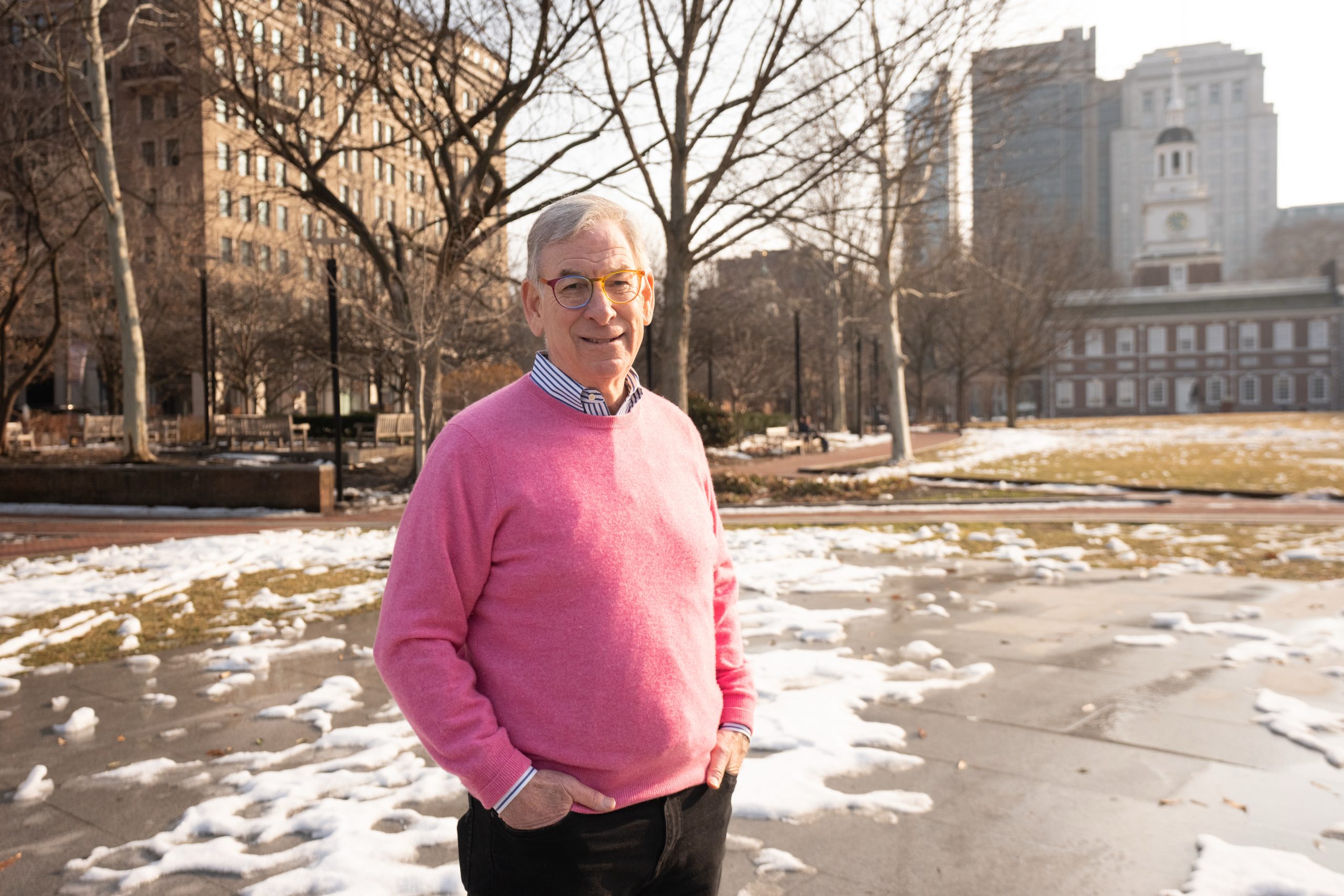
Sam Katz at Independence Hall in Philadelphia, Tuesday, Feb. 17, 2026.Jessica Griffin / Staff Photographer
“I would say that the most important job of a citizen, it’s to vote,” he began. We’d brought our crew up to a Fitzwater Street roof. The wind was blowing Katz’s peach tie; the skyline glinted behind him. “And in the sense of the use of the word democracy, even in its Greek origins, the only place where people could practice democracy was through voting.”
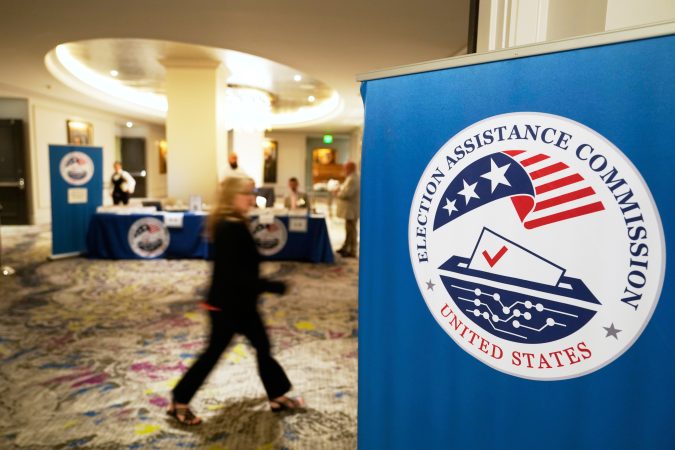
I recalled Katz’s remarks on democracy when I heard that President Donald Trump, taking another step to try to control November’s midterm elections (as The Inquirer argued recently), had fired the two remaining Democratic members of the federal Election Assistance Commission, and that the last remaining Republican member, Christy McCormick, had resigned.
The EAC was created in 2002 as a pro-democracy measure after the contested 2000 presidential election. As a bipartisan commission, it has set standards for voting machines, mail-in ballots, and cybersecurity. A U.S. Supreme Court ruling on June 29 overturned over a century of precedent, giving the president power to fire members of federal commissions like the EAC for political reasons and appoint loyalists.
Vacating the EAC won’t keep the midterms from happening in November, but it’s one more act in what former U.S. Reps. Richard Gephardt and Timothy Wirth call a “rolling coup.”
The firing of the commissioners was “deeply concerning in light of President Trump’s relentless efforts to try to interfere in elections,” said Michael Waldman, the president and chief executive of the Brennan Center for Justice at the New York University School of Law, the New York Times reported.
The dangers are real, as much to American democracy as to the spirit and meaning of citizenship, as Katz defines it. In Pursuit, a 10-part series being released throughout 2026, makes the consequences clear.
And yet, voting as a practice of democracy has almost always been threatened. In 1838, as Episode 4 of the series brings into dramatic focus, a new Pennsylvania Constitution determined that Black men, free men and landowners otherwise, no longer had the right to vote. Were no longer citizens.
In 1871, a year and a half after the 15th Amendment to the U.S. Constitution gave all Black men the franchise, a revanchist movement led by Philadelphia congressman and Speaker of the House Samuel Randall and his disciple, 4th Ward boss William McMullen, resulted in the murder of Black men trying to vote in the mayoral election, including civil rights leader Octavius V. Catto.
Episode 6 opens with Susan B. Anthony and a group of organized suffragists seizing the podium during the 100th anniversary reading of the Declaration of Independence, demanding what the 15th Amendment never delivered: women’s right to full citizenship (it would take another 44 years).
“I believe that I understood what citizenship meant from a very early age,” Katz continued. “My grandmother was legally blind. And so from the time I’m a young person, I took her to the polling place to vote.”
This familial joy, this right and responsibility, this tiny and also enormous act: it’s what defines our ability to be American. Lily Yeh, the founder of North Philadelphia’s Village of Arts and Humanities and an immigrant from Taiwan, says in Episode 10 of In Pursuit: “It reflects democracy and the essence I feel of America, which is most dear. One person, one vote.”
This is what’s fundamentally under threat. It’s a strange thing, as a filmmaker, to watch reality imitating all this history.
A former Philadelphia prosecutor who recommended that a man’s murder conviction be overturned said she did so at the direction of her boss — who she said had done no meaningful review of the evidence and instead was “colluding” with defense attorneys to find the most effective way to have the case thrown out.
While testifying at a unique hearing Friday in federal court, former Assistant District Attorney Jaclyn Mason said supervisors in the district attorney’s office had effectively abandoned their responsibility to independently investigate Dennis Johnson’s appeal and determine if he should be freed from prison.
Instead, Mason said, her supervisor, Matthew Stiegler, held routine meetings with Johnson’s lawyers, including the Federal Community Defender Office and the Pennsylvania Innocence Project, to strategize the most effective paths to secure Johnson’s release. And neither she nor Stiegler reviewed key evidence in Johnson’s case, she said, including trial transcripts, homicide files, or witness interviews.
“Matt told me: ‘If it’s good enough for the Innocence Project, it’s good enough for me,’” Mason said.
Just as strikingly, she said, earlier this spring, when it became clear that that process might be exposed in court, another set of supervisors asked her to lie to a federal judge.
As Mason recalled, the supervisors were worried that if the judge found out the full extent of the office’s actions in the case, it would exacerbate the already intense public scrutiny the office was under for the way it had acted in other murder appeals.
According to Mason, the supervisors suggested she simply tell the judge that any mistakes in the case were hers, and hope that that would be enough to avoid a more thorough inquiry.
Mason said she declined and resigned.
“I said, ‘I’m not going to go to court to lie to protect the district attorney’s office,” Mason said. “How come telling the truth isn’t an option?”
The extraordinary testimony came as part of Johnson’s appeal, which has taken an unusual path through the courts and remains pending before U.S. District Judge Paul S. Diamond.
It also served as the latest chapter in a series of developments that have raised questions about one of District Attorney Larry Krasner’s key policy initiatives: his office’s willingness to review old convictions and seek to overturn those that prosecutors believe were marred by legal problems.
Just last month, the Pennsylvania Supreme Court ruled that Krasner’s office had misled judges so consistently and flagrantly in appellate matters that moving forward, any time his office recommends that a conviction be overturned, the state attorney general must be brought in to review the matter as well.
Diamond was also involved in disciplining two top supervisors in Krasner’s office in recent months, finding that they had been “misleading and dishonest” while seeking to overturn an inmate’s death sentence.
Krasner has made post-conviction review a central part of his reform-oriented agenda, touting the fact that his office has helped free 59 people — mostly Black men — from what he’s called wrongful convictions.
But judges in both state and federal court have raised pointed questions in recent months about whether Krasner’s office has been sloppy or even intentionally misleading while seeking to advance that agenda.
And during Friday’s hearing, Diamond expressed occasional bewilderment at some of Stiegler’s admissions on the stand — including that while he led the office’s Federal Litigation Unit, his staff generally did not reinterview witnesses or speak to previous prosecutors before deciding whether to recommend that a conviction be overturned.
“It’s a smorgasbord of error — and we’re just gonna pick one?” Diamond asked.
A ‘pawn’ in a preordained process
The case around which Friday’s hearing was nominally centered was Johnson’s conviction for second-degree murder.
In 2009, a jury found him guilty of fatally shooting Kenyatta Smith during a robbery outside a North Philadelphia convenience store two years earlier. He was sentenced to life in prison.
Johnson appealed, in part because he said his trial lawyer was ineffective.
And in 2022, Mason filed court documents agreeing with that assertion — and saying the error was so pronounced that his conviction should be thrown out.
“The case against Johnson was not overwhelming from the outset and his counsel was constitutionally ineffective,” Mason wrote. “The post-trial investigation unearthed additional factors that highlight weaknesses in the prosecution and confirm a low level of confidence in the outcome of Johnson’s trial.”
In court Friday, however, Mason said she was effectively doing Stiegler’s bidding when she filed that brief.
She’d only been in the office for about four months when Stiegler assigned her Johnson’s case, she said. And she’d never before worked as a prosecutor or handled similar federal appeals.
The office also gave her close to no training, she said. And from the moment she was assigned Johnson’s case, she said, she got the impression that Stiegler knew how he wanted the matter to go.
“The decision to concede had been made, and then I was his pawn,” she said. “I was his scribe.”
In the months that followed, Mason said, she and Stiegler did almost no independent examination of the evidence in Johnson’s case. But they did have meetings with Johnson’s attorneys, she said, at which the two sides sometimes collaborated on legal strategies for how to ensure his petition would succeed.
When Mason did actually draft the brief supporting the appeal, she said, Stiegler offered edits — all of which made it into the document. Another supervisor, Nancy Winkelman, the onetime head of the Law Division, also made suggestions that were included in the final brief, Mason said.
Stiegler testified Friday as well, and said he believed that when Mason was assigned the case, she would review it and provide her best assessment to him. That review, he said, was expected to include an examination of key evidence, including trial testimony or witness statements.
But under questioning by Diamond, he acknowledged that his unit at that time did not regularly reinvestigate cases, either by re-interviewing witnesses or reexamining primary evidence — an admission that seemed to baffle the judge.
“You did no investigation on your own?” he asked at one point.
“No,” Stiegler replied.
As for the decision to agree that Johnson’s conviction should be overturned, Stiegler said: “My recollection is it was a collaborative decision between Ms. Mason and me.”
But Mason said that wasn’t true.
“He met and conferred with the Federal Defender and the Innocence Project to decide how it was going to go before it was assigned to me,” she said.
A sudden resignation
Still, none of that discord surfaced until this spring, when Diamond — who will ultimately decide whether to overturn Johnson’s conviction — scheduled an evidentiary hearing. At the time, he said he wanted to hear from several key witnesses to evaluate the strength of the evidence against Johnson.
He also asked the attorney general’s office to review the case, apparently wary that the district attorney’s office was simply agreeing with Johnson’s lawyers.
At that point, Mason said, a set of different supervisors in the Law Division “started to panic.”
And after she told them the “collusive” manner in which the appeal had been handled, she said she was told, in essence, to fall on her sword.
As Mason recalled it, the supervisors told her to tell Diamond that any mistakes in the office’s brief were hers, “and if we do that, the court might get angry, but it won’t find out how this concession got put together — which is what we really want to avoid.”
“The whole goal [was] that the process by which that concession came to be not be revealed,” Mason said.
Within days, Mason said, she resigned.
A few days after that, the supervisors in the Law Division — David Napiorski, Steven Wildberger, Peter Andrews, and Katherine Ernst — filed a motion with Diamond seeking to undo the position that Mason and Stiegler had once recommended, saying the pair’s brief had been based on “material misstatements.”
Mason said she was “blindsided” by that filing, and that she believed she was being used as a scapegoat to protect the office and its actions in the case.
“The whole scheme was designed to cover up how that brief was put together,” she said.
Friday’s hearing ended before the supervisors she accused of wrongdoing had time to testify or respond to her assertions. Diamond said he would schedule another hearing to hear from them.
Johnson’s fate also remains undecided with the legal issues unresolved.
Stiegler, meanwhile, denied that he’d pushed Mason to take a specific position in the case, or that he’d had improper interactions with Johnson’s defense lawyers as the office worked on the appeal.
Mason was definitive in her view of Stiegler’s testimony.
“Nothing Matt said was true,” Mason said. “Nothing he said was true.”
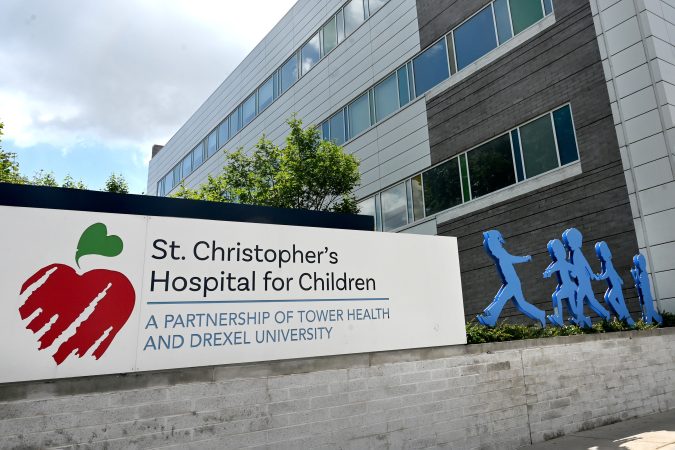
Threemajor Philadelphia-area health systems are exploring an alliance to support financially struggling St. Christopher’s Hospital for Children in North Philadelphia, its leaders announced Wednesday.
The proposed alliance would involve Nemours Children’s Health, Jefferson Health, and Temple Health, a St. Chris statement said.
St. Chris’ ownership would not change from the current 50-50 partnership between Drexel University and Tower Health.
Under the alliance, Wilmington-based Nemours would provide highly advanced, or tertiary, care. Nemours is Jefferson’s primary pediatric partner in the Philadelphia area.
The preliminary agreement announcement provided no timeline to form the alliance. It also did not mention specific financial support for the North Philadelphia institution, which has received millions from local health players following a 2019 bankruptcy and steep losses during the pandemic.
St. Chris’ board chair, P. Sue Perrotty, said the 150-year-old hospital will remain a “gateway” to care for families.
“Our goal is to preserve what makes St. Christopher’s so special while strengthening our operations, so our community-focused mission will endure,” she said.
“Whether care is delivered at St. Christopher’s or through our partners when clinically appropriate, our team will continue to coordinate every step of a patient’s journey, providing families with a seamless experience and a trusted guide throughout their child’s care.”
Beyond the critical health services St. Chris provides, the institution also plays a vital part in medical education for area medical schools, including those at Drexel, Thomas Jefferson University, Philadelphia College of Osteopathic Medicine, and Temple University.
Twice in the past four years, a coalition of Philadelphia nonprofits provided financial lifelines for St. Chris.
Children’s Hospital of Philadelphia, Jefferson, Temple, Philadelphia College of Osteopathic Medicine, Independence Health Group, and private donors provided $50 million over two years starting in 2022. Two years later, the same group, minus Independence, contributed another $30 million.
Jefferson and Temple were also part of a consortium that considered bidding for St. Chris in 2019 during its parent company’s bankruptcy. They backed out before the auction, which Drexel and Tower won with a $50 million bid.
Nemours spokesperson Shelley Meadowcroft said there was no financial support included in the agreement.
Nemours in recent years has lost affiliations with Main Line Health and ChristianaCare to CHOP. The alliance will strengthen “access to high-quality pediatric care in our region,” she wrote in an email.
“This collaboration also strengthens Delaware’s role in pediatric care by positioning Nemours Children’s Delaware-based clinical operations as a central hub for advanced specialty care, education, and innovation,” she added, “while supporting the long-term strength and mission of St. Christopher’s Children’s Hospital and the communities it serves.
In a statement, Temple University officials characterized the agreement as “non-binding letter of intent” to form an alliance “in support of St. Chris and its future.”
“The proposed alliance reflects a shared commitment to securing a future for St. Christopher’s while preserving the mission, clinical excellence and community role that have made the hospital a resource for children and families in Philadelphia and across the region,” officials said.
Philadelphia City Council is already looking to 2027. And with all 17 seats on the ballot next spring, the elections are shaping up to be a pivotal test of whether the city’s established politicians can withstand a rising tide of frustration with the party among Democratic voters.
All of the incumbents have said they intend to run for reelection, and several are likely to face serious challenges from new candidates focused on grassroots organizing and progressive groups — hoping to seize the opportunity presented by a nationwide leftward shift amid President Donald Trump’s second term.
Three districts have emerged as key battlegrounds.
And the city’s progressive organizations, emboldened by a series of wins locally and nationally, are targeting two other districts: the 1st, which stretches from South Philadelphia to Fishtown and is represented by Councilmember Mark Squilla, and the 8th, which includes parts of North and Northwest Philadelphia and is represented by Councilmember Cindy Bass.
“We’re definitely feeling confident,” said Robert Saleem Holbrook, executive director of the progressive advocacy group Straight Ahead. “Anyone who is going to be running under a progressive banner or a progressive movement is going to have to be running against the establishment, not toward it.”
A competitive race also appears to be taking shape for the seven Council seats that represent the city at-large.
Five of those seats are all but certain to be won by Democrats, making the May 2027 primary the key election in deep-blue Philadelphia.
The other two at-large seats — set aside for Council members outside the majority party under the city’s Home Rule Charter — will be decided in the November 2027 general election. Currently, the two minority party seats are held by Councilmembers Kendra Brooks and Nicolas O’Rourke of the left-leaning Working Families Party.
Jane Golden, founder and executive director of Mural Arts Philadelphia, takes the stage during the dedication of the Super Bowl LIX mural at Spike’s Trophies on June 17, 2025 in Philadelphia.Monica Herndon / Staff Photographer
Golden, 73, said last week that she is not currently running for Council, but acknowledged she has thought about it for years.
“It’s always something that is tempting to me, because I just love the city so much,” she said. “I feel honored that people even think of me.”
Progressives eye Bass’ North Philly seat
Philadelphia’s progressive activists this year see two key opportunities to expand the loosely organized left-leaning bloc on Council, which currently consists of four members. Winning additional seats could also grow their influence by enticing more moderate members to vote alongside them if they believe primary voters are moving left.
Leftists have notched high-profile wins in Democratic primaries across the country this year, including in Philadelphia, where democratic socialist State Rep. Chris Rabb (D., Philadelphia) bested more moderate candidates for a seat in Congress representing about half of the city. The district is one of the most Democratic in the nation.
Anderson-Oberman, 55, the executive director of the progressive group Reclaim Philadelphia, said last week that he is “leaning” toward taking another swing.
“We’re in a moment in this country and this city where people have had enough,” he said. “People are looking for new answers. … Cindy represents the old way of doing things.”
Union organizer Seth Anderson-Oberman, running for 8th District City Council, joins in a small rally with community and Happy Hollow Advisory Board members along Wayne Avenue at Happy Hollow Playground in Philadelphia on April 2, 2023.Tyger Williams / Staff Photographer
Another Council run by Anderson-Oberman may test how far progressive momentum can go in Philadelphia. He was a member of the Communist Party USA in his 20s, and has said he is proud of that experience.
Bass, 58, said she is ready for the race no matter who her opponent is.
In June, she survived a contentious fight for another four-year term as Democratic leader of Mount Airy’s 22nd Ward. She was criticized for her handling of the process, and the party ordered a redo of the election.
She and her progressive opponent, Octavius Price, tied, then struck a power-sharing agreement. Through it all, Bass said, longtime residents stuck by her — and she is confident voters will do the same next year.
“My voters are people who are based in this community, committed to this community, intend to stay in the communities that they are in,” she said.
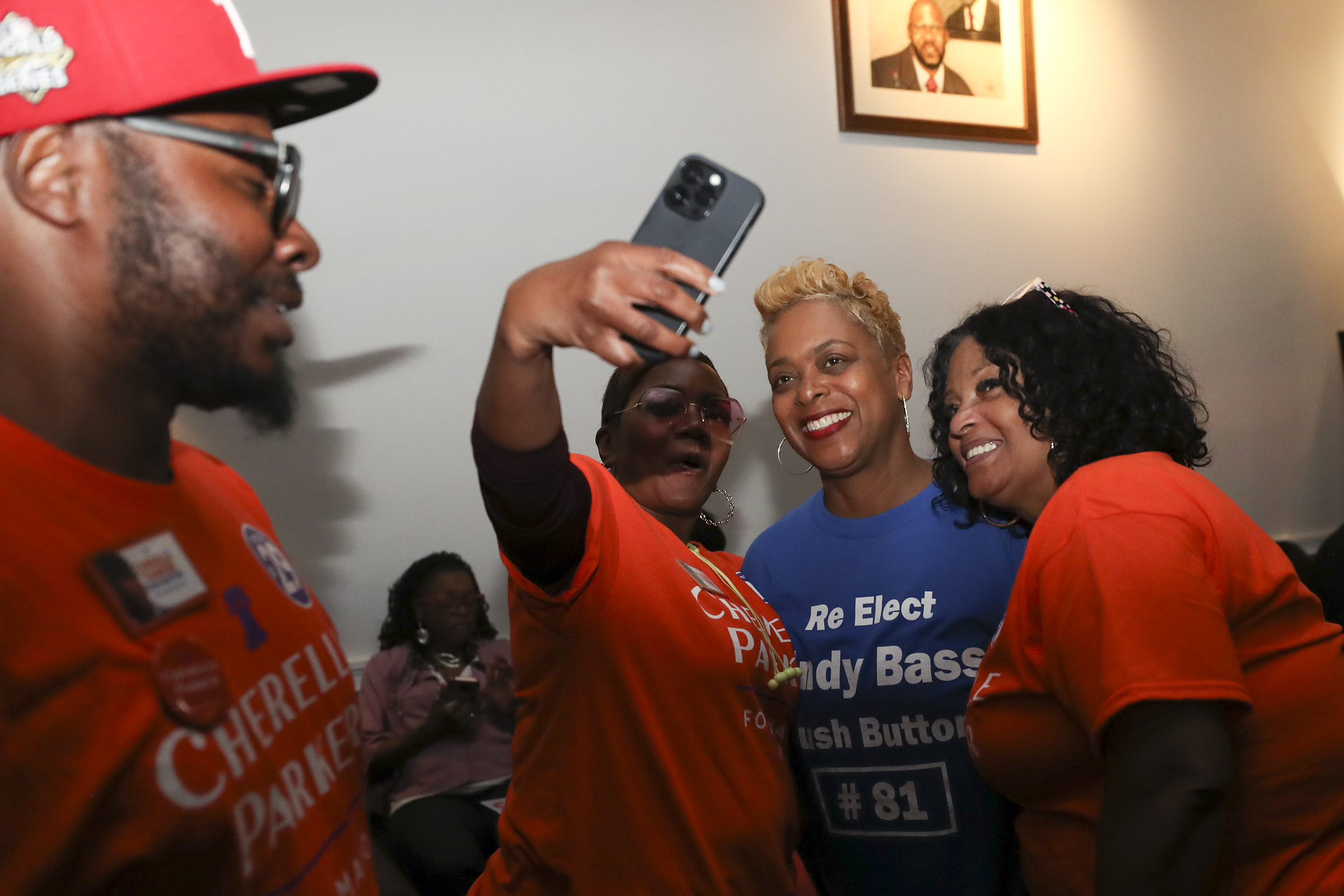
City Councilmember Cindy Bass (center) attends the watch party for Democratic candidate for mayor Cherelle L. Parker at Laborers 332 in Philadelphia on May 16, 2023.Heather Khalifa / Staff Photographer
Jeff Jones, a community leader and social justice advocate from Germantown, has also said he intends to run in the 8th District.
“I want to bring that new vision and a new voice to the 8th District, where residents and children and families can know that their voice matters, their concerns will be heard, and their challenges will be met,” said Jones, 61, a first-time political candidate.
Squilla could see a lefty challenger
Leftists are also eying Squilla’s seat, which represents the area along the Delaware River from Pennsport to Kensington. Since Squilla took office in 2012, the district has transformed from a bastion of working-class white voters to one of the most progressive swaths of the city.
Squilla, 63, who has strong labor ties and is one of the most pro-development district Council members, said being a centrist has likely put a target on his back in the 2027 election.
Another contributing factor may be Squilla’s support for controversial legislation in 2024 to approve the 76ers’ since-abandoned plan to build a new arena in Center City. The project, which would have been in Squilla’s 1st District, was opposed by advocates for Chinatown, which the arena would havebordered.
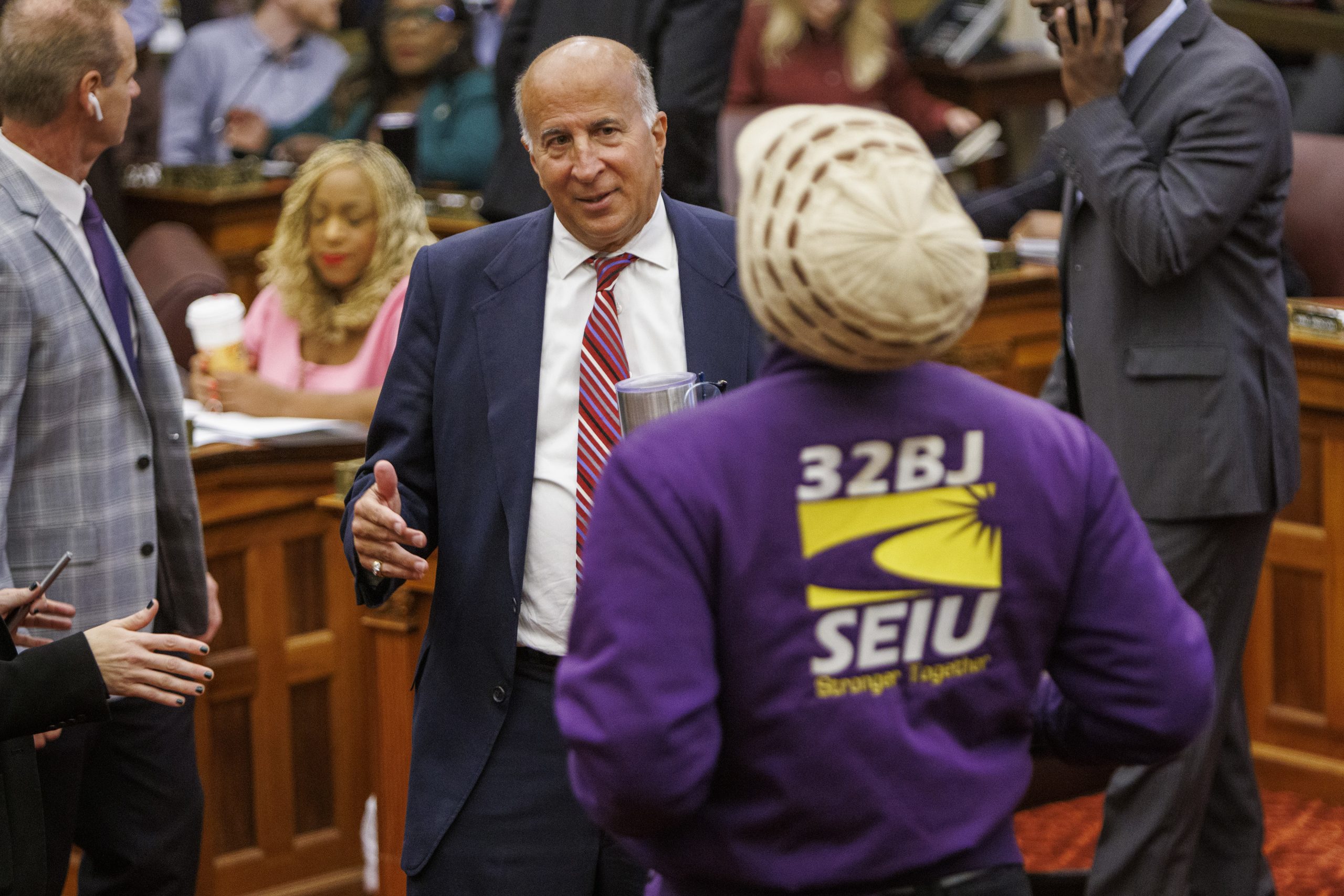
Councilmember Mark Squilla arrives in Council chambers on Nov. 12, 2024, before the start of a public hearing on a proposed Sixers arena.Alejandro A. Alvarez / Staff Photographer
Despite the fierce objections, Council approved the project with Mayor Cherelle L. Parker’s support in December 2024. Weeks later, the basketball team announced it was abandoning its Center City plan and would instead build its next arena in South Philly.
Squilla said he is prepared to defend his actions, noting that he worked to ensure any arena deal would benefit his district and that many of those promises are moving forward despite the 76ers withdrawing their proposal.
“The goal as an elected official, and also as a leader, is not always to make the popular decision,” he said. “The goal is to have a process to make the decision that would be best for the people around it.”
One prominent opponent of the Center City arena plan was Will Gross, the owner of Ox Coffee in Queen Village and a progressive who is the Democratic leader of the 2nd Ward. He is seen by political insiders and progressive organizations as the most likely candidate to take on Squilla.
Gross declined to comment.
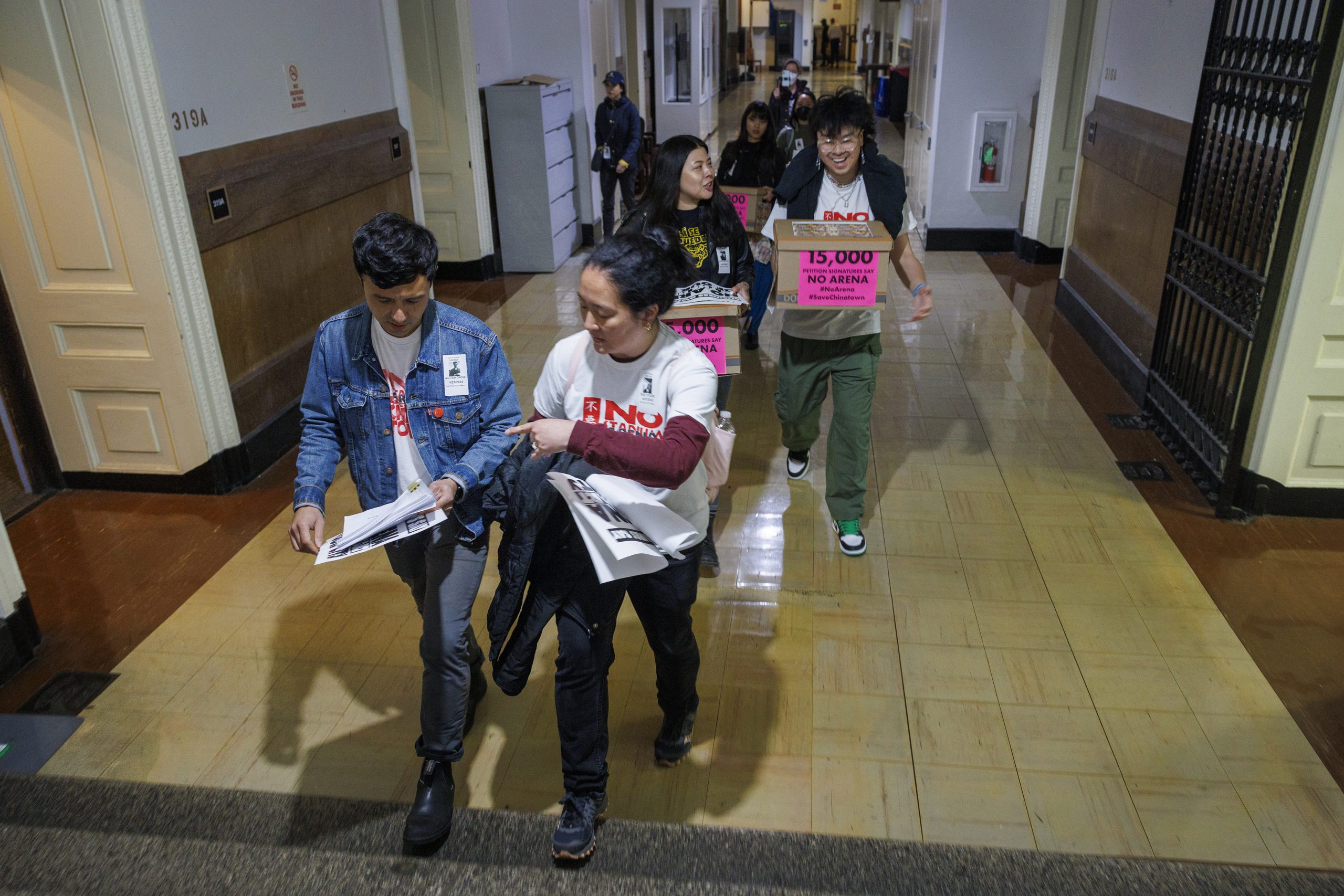
In this 2023 file photo, Will Gross and Kay Yoon, of the No Arena in Chinatown group, deliver petitions to Councilmember Mark Squilla. Alejandro A. Alvarez / Staff Photographer
A progressive challenger may also emerge in the North Philly and Kensington-based 7th District, which is represented by Councilmember Quetcy Lozada.
Some insiders have speculated that Celin may run again. He declined to comment.
Lozada, 55, said she “can’t focus” on potential challengers.
“If I spend my time listening to the buzz about who is running,” she said, “we won’t get any work done.”
A battle takes shape in the 5th District
In the 5th District, a seat that represents parts of North Philadelphia and Center City, a handful of Democratic challengers are lining up to take on Young, 40, who is seen as one of Council’s most vulnerable members.
That is in part because of the unusual way in which he was elected in 2023. He ended up being the only Democrat on the ballot after several others, including party officials’ preferred candidates, were removed amid legal challenges.
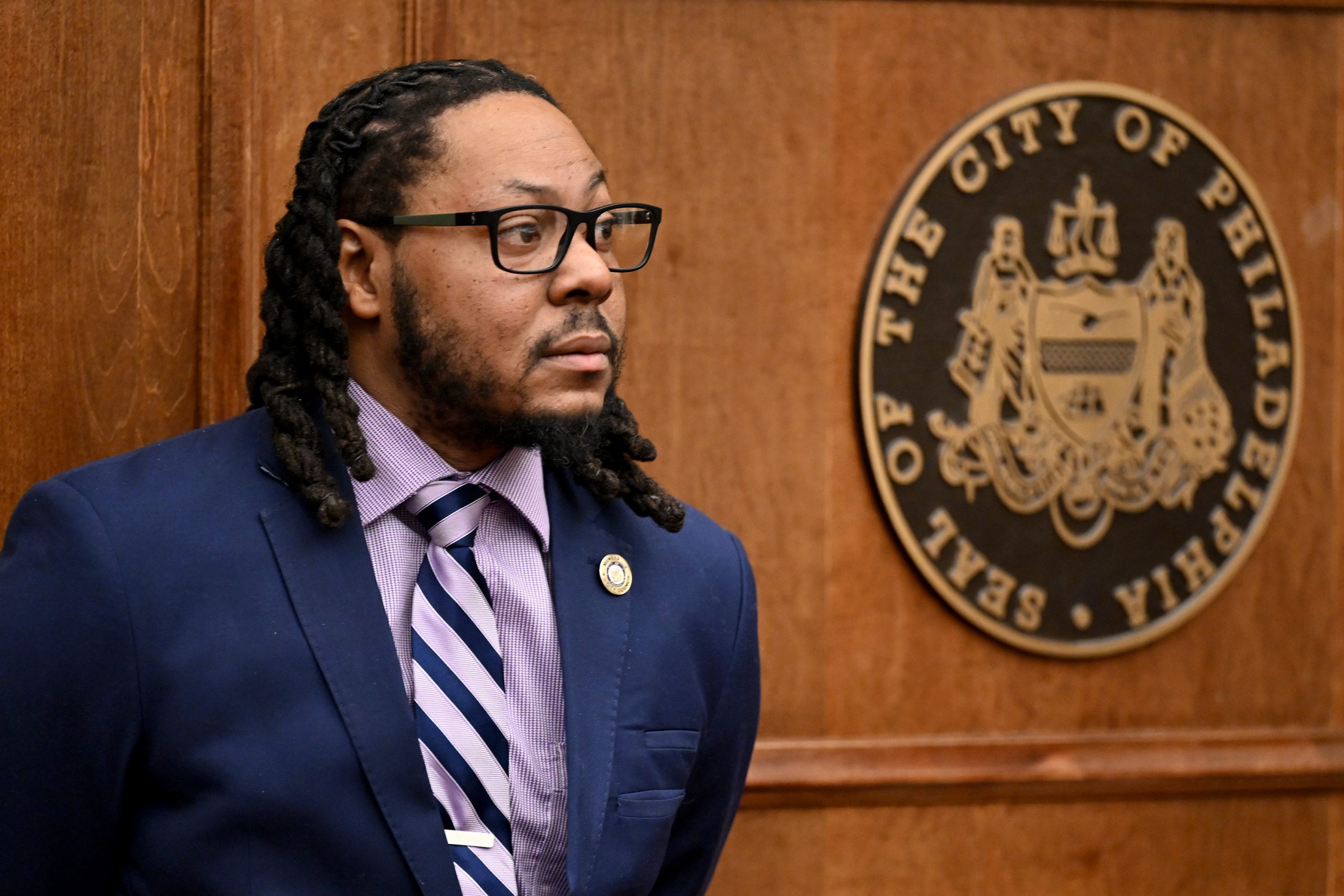
Councilmember Jeffery Young Jr. in chambers as City Council meets Dec. 11, 2025.Tom Gralish / Staff Photographer
One of those candidates was Curtis Wilkerson, who was chief of staff to former City Council President Darrell L. Clarke. Two sources, who spoke on condition of anonymity because they were not authorized to discuss the campaign dynamics, said Wilkerson is considering running for the seat again next year.He did not respond to a request for comment.
Also likely to run is Jalon Alexander, an attorney who unsuccessfully ran for an at-large seat on Council in 2023. Alexander, 33, formed an exploratory committee last year and is expected to formally declare his candidacy later this summer.
Two others are also considering running.
Dustin Dove, a lawyer and the president of the Fairmount Civic Association, said neighbors and community leaders have encouraged him to get in the Council race, and he is “taking the possibility of running seriously.”
“I think our city government should work for everyone by keeping our neighborhoods safe and streets walkable, making housing affordable, and ensuring fairness and access in public services,” Dove, 38, said last week.
Jalon Alexander, an attorney and community advocate, speaks to attendees at a meeting about potential SEPTA budget cuts hosted at Garden of Prayer Church in Strawberry Mansion on June 9, 2025.Erin Blewett / For The Inquirer
And Max Tuttleman, 37, a philanthropist who unsuccessfully ran for an at-large seat in 2023, said he “cares deeply about the 5th District and would never close the door to serving Philadelphia.”
He added that “Center City and the neighborhoods around it should be growing faster than they are.”
Young said in an interview last weekthat he intends to run for reelection, but that challengers are not his focus.
“I‘m focused on serving my constituency, serving my community,” he said. “The work that we’ve been doing will hopefully earn the support of the residents of the 5th District.”
A smaller, but competitive, at-large field
Over the last several election cycles, dozens of candidates lined up to run for at-large seats during a time of immense turnover in Council.
But with seven incumbents all looking toward reelection in 2027, there may be fewer challengers who line up to take them on. So far, only Golden and a handful of others have emerged as possible contenders.
David Alexander Jenkins, a cultural strategist known for delivering impassioned speeches during Council’s public comment section, said he is considering a run, encouraged by fellow community members.
“When the community that is around you constantly pushes you to intercede on their behalf, then it’s because they have trusted you to do what it is that you do best,” Jenkins, 39, said. “I think it would be incredibly unwise to ignore that.”
And Jude Husein, 28, a Palestinian-born community activist who was raised in North Philly, has already launched her campaign. If her bid is successful, Husein, a former staffer for State Sen. Art Haywood, would be the first member of Gen Z on Council.
In this 2023 file photo, Jude Husein, of North Philadelphia, speaks at a rally for a Day of Solidarity event at the Art Museum steps.Tyger Williams / Staff Photographer
Leaders of progressive organizations said they are closely watching her candidacy. However, Husein is not exactly running as a leftist. She said that her policy positions are varied and that she will seek endorsements from any institution that is “values-aligned.”
“I’m running because I think government should work for the people who pay for it, and should make neighborhoods affordable and safer,” she said.
Also in the running for Council at-large seats are Billy McCann, 46, a former teacher who lives in Port Richmond, and Isaiah T. Martin, 26, who lives in West Philly and leads a community development nonprofit. The pair, who both said they are progressive, have established something of a slate with Jones, who is challenging Bass in the 8th District.
They said they would prioritize public education, affordability, housing assistance, and government accountability, and they argued that establishment Democrats are failing to connect with voters.
“A new day is coming,” said Martin, another member of Gen Z who would make history on Council if elected. “It’s time we get people who are going to do the actual work and not just sit here and talk about it.”
Law enforcement officials seized nearly $6 million worth of crack-cocaine destined for Philadelphia as well as thousands of fentanyl pills in a monthslongdrug operation, authorities said Monday.
The seizure was the culmination of an 18-month joint investigation into several men who supplied or sold the potent synthetic opioid and other deadly drugs in the city’s Kensington neighborhood and elsewhere, according to Philadelphia District Attorney Larry Krasner, who said the cocaine seizure happened last week.
In all, Krasner said, law enforcement recovered 58 kilograms of cocaine with a street value of $5.8 million and fentanyl pills worth around $200,000.
The bust is the latest eye-grabbing effort to stem the flow of fentanyl and other deadly drugs into the city, and specifically to Kensington, considered one of the nation’s largest open-air drug markets.
The FBI targeted a sprawling criminal syndicate in the neighborhood last year when it arrested 33 members of the Weymouth Street gang, which was accused of running a 24/7 market for fentanyl and other drugs on the narrow block for nearly a decade.
In the latest raid, investigators were tipped off to the criminal activity in December 2025 when members of the Delaware River Port Authority Police pulled over 46-year-old Raabitah Reynolds as he drove back to Philadelphia from New York City.
After obtaining a search warrant for Reynolds’ vehicle, officers recovered a 9mm handgun and equipment for packaging drugs.
Later, when they searched a South Philadelphia stash house tied to Reynolds, they recovered 2 kilograms of fentanyl that was ready to be packaged, a gallon jar of PCP, various pills, and more firearms, according to Assistant District Attorney Stephen Girman.
Reynolds was charged with two counts of felony possession with the intent to deliver, two counts of criminal conspiracy, and related crimes. He is being held at the Curran Fromhold Correctional Facility with bail set at $500,000.
The haul was “a significant drug seizure in and of itself,” Girman said, but investigators did not stop there.
Reynolds’ arrest led them to one of his buyers, Khalil Dandy, a drug dealer who is accused of effectively controlling sales on a block at Kensington Avenue and E Street, according to Girman.
Dandy, 36, ran that operation from his home at a Center City condominium located near 12th and Chestnut Streets, Girman said.
Officers began visiting the Kensington block to conduct undercover buys, according to Girman, learning that Dandy was supplying fentanyl and crystal meth to street dealers in the neighborhood.
Dandy was arrested on March 18 and charged with possession with the intent to manufacture or deliver and related crimes. He was released from custody on bail as he awaits a preliminary hearing.
Meanwhile, investigators offered information about Reynolds to the DEA field office in New York, which led to the raid of a “pill mill” operating out of a Brooklyn apartment.
There agents recovered more than 20 kilograms of fentanyl that had been pressed into blue pills to pass off the deadly drug as oxycodone, Girman said.
These pills “are exceptionally dangerous, because people can take them thinking they are a regular prescription painkiller, and they can be filled with a fatal amount of fentanyl,” he said.
And as investigators traced Reynolds’ network, they learned he was also involved in bulk cocaine sales that came from a supplier on the West Coast.
Those shipments were shipped to Philadelphia in crates to be sold throughout the region, according to Girman.
In early July, investigators intercepted two of those containers, and with the assistance of a K9 unit, recovered a total of 58 kilograms of cocaine from within.
They arrested another Philadelphia man, 51-year-old Ephraim Ramsey, who had showed up to pick up the drugs.
Ramsey was charged with one count of felony possession with the intent to deliver and one count of criminal conspiracy.
And when Philadelphia police went to arrest Reynolds at an apartment in the city’s Kingsessing neighborhood, he led them on a chase through a second-story window and into a back alley before being apprehended.
From a separateapartment on City Avenue, investigators recovered more than 2,000 of the blue fentanyl-laced pills as well as counterfeit Adderall, according to Girman.
In a third residencein Olney — a house being prepped to stash the cocaine shipments — officers recovered an AR-15 rifle with an obliterated serial number.
Krasner, touting the success of the operation, said he was pleased that law enforcement officers had targeted large shipments of contraband as opposed to targeting “young people with a small amount of drugs in their pocket.”
“This, in my opinion, is a much more important and much more effective approach,” he said.
Pennsylvania State University, Temple and the University of Pittsburgh will split $10 million in the state’s first allotment toward performance-based funding under the new budget.
It’s the first time since the legislature passed the new performance-based formula last November that the three so-called state-related universities are receiving the funding in addition to the general appropriation they received last year. The formula considers overall enrollment, graduation rates, number of lower-income students as measured by those receiving federal Pell grants, students receiving degrees in high demand areas, and other factors.
For Penn State, the new funding will amount to a little over $4 million, raising its general education subsidy to $246.1 million, the school said in a news release. The school said it was its first increase in state education funding since 2019.
“This initial investment is an important first step that recognizes the essential role higher education plays in strengthening our commonwealth,” Penn State president Neeli Bendapudi said. “The metrics at the heart of this model align closely with Penn State’s mission and values.”
Temple said it would receive a little over $2 million in performance-based funding, in addition to its $158.2 million general appropriation. The North Philadelphia-based university also is set to receive $500,000 for its “University College,” which helps adult and non-traditional students and lifelong learners pursue degrees. A university spokesperson said the money is for the school’s bachelor of general studies program.
The performance-based funding grew out of a longstanding battle between the legislature and state-affiliated universities over transparency and accountability. State-related universities received hundreds of millions in state funding, yet have a quasi-public status exempting them from much of the state’s open records laws, a fact that has long been criticized by some legislators.
Gov. Josh Shapiro, a Democrat, signed the $50.8 billion budget deal Sunday, applauding leaders from both parties for their work on the issue. He specifically highlighted House Minority Leader Jesse Topper (R., Bedford), who has led the charge to create the new performance-based funding model.
“That’s something that leaders in Harrisburg have talked about for years and years and years, but we came together and we got it done,” Shapiro said during a news conference before signing the budget deal into law.
Meanwhile, the system that oversees Pennsylvania’s 10 universities including West Chester and Cheyney will receive $626.1 million, up about $5 million over last year. The Pennsylvania State System of Higher Education had been seeking a $31 million or a 5% boost in order to roll back a 4.3% tuition increase its board approved last week.
System spokesperson Kevin Hensil said Monday that the tuition increase would stay in place.
In-state students, who make up the vast majority of the system, will pay $8,338 annually, up $344 from $7,994.
The extra $5 million from the legislature, Hensil said, was “due to the expiration of funds related to a transfer workforce development partnership initiative” and would not impact the tuition increase.
The budget also included $78 million for debt relief in the system, but Hensil said that also would not impact the tuition increase.
“We are determining how it will be used, as we have in the past when such money was provided,” he said. “That analysis is underway.”
By the state covering the PASSHE debt, Shapiro said it would enable the state’s 10 state-owned universities to “shift those dollars into more funding for our faculty, more funding for our students, and more funding for our academic programs.”
In addition to West Chester and Cheyney, the other universities in the 83,005-student system include: Commonwealth, East Stroudsburg, Indiana, Kutztown, Lock Haven, Millersville, Penn West, and Shippensburg.
Lincoln University, which also is a state-related school, is not included in the performance-based funding plan, but it received a $1.1 million boost.
Funding for the state’s community colleges was held flat.
Michelle “MiMi” Gravley changed addresses frequently during her childhood in the 1990s, but rarely with a moving truck.
With her belongings in boxes and plastic bags, she would often find herself lodging at others’ houses in rooms her single mother could afford to rent. So it meant the world to Gravley, herself a single mother, last fall when she bought her first house, a rowhouse in North Philadelphia.
Gravley, 38, is no longer battling housing instability. But she has spent much of her adult life poor, including nearly two decades straight of government assistance, and wants a different fate for her three children. So she’s looking at wealth — specifically her house and her high-yield savings accounts — as something that can help her children avoid poverty as adults.
“I just want them to be OK,” Gravley told me, referring to her daughter, Buttons, 17, and her sons, Chippy, 14, and Boots, 11. “And when they have their kids, their kids is OK. And just, just breaking up generational curses.”
Gravley is one of the parents I spoke with recently in the Philadelphia area who wants to help their children build wealth to break the cycle of poverty in their families. Their goal is to bequeath something — whether it be modest savings or a piece of real estate — to help counter the pull of intergenerational poverty.
They face long odds: Only 16% of children who spend at least half their childhood poor go on to be economically successful, one study found. But there are emerging ideas and policies designed for children that some believe could improve those odds.
I’ve been a business reporter for more than a decade, with a keen interest in how wealth is built and deployed. I’ve had conversations with people from across the economic spectrum, from workers earning minimum wage to C-suite executives and billionaires. I closely follow developments about wealth and personal finance. And lately, I’ve been noticing growing momentum and innovation around wealth-building policies for children — some of which could impact the children or grandchildren of people like Gravley.
In my reporting, two relatively new wealth-building programs stand out. The first is baby bonds, which are government-run trust funds designed to benefit poor children. The other program is Trump Accounts, which are private investment accounts available to all children that allow nonprofits, philanthropic groups, and other entities to target contributions at low-income zip codes. Each has its pros and cons.
Because the creation of baby bonds and Trump Accounts are relatively recent developments (Connecticut approved the first statewide baby bond program in 2021; Trump Accounts were launched this year), there aren’t yet any long-term studies that directly assess their impact on poor populations. But advocates of early wealth accounts, as they are often called, point to supporting evidence from similar initiatives, including Education Savings Accounts. They also argue that structural changes in the economy necessitate a new kind of social contract with America’s young people.
Of her children’s financial future, MiMi Gravley says, “I just want them to be OK.”Aidan T. Gallo / Staff Photographer
“Younger generations face economic headwinds that older generations have not — student loans, unaffordability of housing, starting a family, probably declining Social Security benefits,” said Ray Boshara, a senior policy adviser with the Aspen Institute and Washington University in St. Louis who helped design the framing for Trump Accounts and a similar precursor plan by former Sen. Bob Casey, 401Kids.
He added: “They face a transformed economy. So part of the real purpose of Trump Accounts, I think, is … to give them start-up capital at age 18 to counter these economic headwinds.”
Gaining steam
Across the country, efforts rooted in baby bonds or Trump Accounts are either active, forthcoming, or undergoing serious consideration.
The framework for baby bonds was proposed in a 2010 paper by Darrick Hamilton, founding director of the Institute of Race, Power and the Political Economy at the New School, and William Darity Jr., an economist and social scientist at Howard University and Duke University.
Connecticut launched its CT Baby Bonds program in 2023. It automatically enrolls children whose births are covered by Medicaid. The idea is straightforward enough: When participants turn 18 and complete a financial literacy course, they can claim at least a five-figure sum that can only be used for specified wealth-buildingactivities, such as buying a home or starting a business.
Trump Accounts, also known as 530A accounts, were signed into law last year and took effect this month. Children who are enrolled in the program by their parents could potentially receive $1,000 from the U.S. government. When the enrollee turns 18, the account becomes a traditional IRA and can be used for a variety of purposes, though the tax consequences are lower if used for postsecondary education, a first home, or retirement.
Unlike baby bonds, Trump Accounts were not specifically designed for poor children. And one criticism is that wealthier families will likely contribute more than poor families, which would worsen wealth inequality. But what’s notable about them is that they allow third parties such as employers or philanthropists to contribute cash or stock directly to children in low-income neighborhoods.
For instance, the Dell family pledged funds for every American child in specific zip codes, while the Dalio family and financier Brad Gerstner pledged funds to children in Connecticut and in Indiana, respectively.
Attention in the Keystone State
It’s still early, but for now, the idea of helping poor children build a foundation of capital for the future appears to be drawing bipartisan interest. And in Pennsylvania, policymakers have started paying attention.
“Baby bonds have been a topic of a lot of focus because we all want to make sure that we are creating long-term economic mobility and really breaking the cycles of financial insecurity early,” said State Rep. Morgan Cephas, a Democrat whose district covers West Philadelphia. “So these are some models that we’ve been looking at … and are absolutely looking to do more.”
State Rep. Martina White, a Republican whose district covers Northeast Philadelphia, said Trump Accounts can be a “great tool for working families” and planned to look further into the concept of baby bonds.
Her initial preference, she said, would be to model baby bonds like a college endowment, in which the funding source for the program would come from interest or investment earnings, as opposed to directly from taxpayer dollars.
“I think that the fact that more legislative bodies and governments are looking into ways that we can provide the tools for working families to build their wealth — I think that’s phenomenal, and we should be doing more of that,” White said. “But also helping make sure that government is getting out of the way, too.”
Democratic State Rep. Morgan Cephas said baby bonds have been a focal point for her party “because we all want to make sure that we are creating long-term economic mobility.”Tom Gralish / Staff Photographer
Although baby bonds haven’t been proposed in Pennsylvania’s legislature, the state does have an early wealth initiative through its Keystone Scholars program, which puts $100 into an account that Pennsylvania students can use toward their education costs.
In Philadelphia, there aren’t any initiatives specifically targeting wealth building for children. But there are programs that aim to advance overall wealth access and accumulation. One of the latest is Philly Saves, which, upon implementation, would give workers a way to save for retirement if their current jobs don’t offer retirement plans.
Last month, Sens. John Fetterman and Dave McCormick made a joint appearance in Nicetown, where they urged parents to sign up for Trump Accounts. Fetterman seemed to anticipate that some listeners might be dubious about the program and presume it is politically partisan because of its name.
“Do not fall into that political trap,” Fetterman said. “This isn’t some radical thing. … Do this for your child.”
Even if early wealth initiatives arrive soon in Pennsylvania, it may be too late to have a big impact on older children because the accounts need time to grow.
For Gravley, that means early wealth policies could impact her children but will likely yield larger sums for her future grandchildren. Gravley said she welcomes them as long as there’s some kind of financial literacy involved.
“If you give these children … $10,000 with no instructions, good luck with that,” she said. “It has to be instructions with it, but I think it could be a big stepping stone.”
Darity, the social scientist who helped conceive the idea for baby bonds, said early wealth accounts will have different maximum outcomes based on their design, even if they each grew at 1% above the inflation rate.
For instance, the baby bonds plan he coauthored would turn $60,000 into $72,000 over 18 years at that growth rate (no annual contributions allowed). A federal baby bonds plan proposed by New Jersey Sen. Cory Booker ($1,000 deposit; maximum yearly government contributions of $2,000) would grow to about $41,000 at those terms. For Trump Accounts, a $1,000 deposit and maximum yearly private contributions of $5,000 would grow to $100,000 in 18 years.
While Trump Accounts have the highest growth potential, low-income families who don’t have thousands to contribute annually won’t have “a transformative sum of money at the end of the 18 years,” Darity said.
Because both programs are still so new, we’re decades away from seeing the results of any long-term studies on the efficacy of baby bonds or Trump Accounts once participants reach adulthood. But research into other programs suggests that external interventions in wealth building can have positive outcomes.
For instance, a long-term study of Oklahoma’s SEED OK program found that newborns who randomly received $1,000 in state funds had, by age 14, higher educational expectations, greater social-emotional development, and more family-contributed savings for college compared with those who didn’t.
A 2015 global study of roughly 10,000 households found that asset interventions — like giving impoverished families an income-producing asset, cash assistance, and skills training — had positive economic outcomes well after the program stopped.
Those findings are part of a growing body of evidence from other asset-building experiments that “already points in a consistent direction,” said William Elliott, founding director of the Center on Assets, Education, and Inclusion at the University of Michigan.
That direction, Elliott said, indicates that early wealth accounts should be a pillar of a new social contract with Americans — especially in an age when higher education debt can stall wealth creation.
“The current policy setup strongly favors those who already have wealth,” Elliott said. “And so you don’t have meritocracy happening. To get there, you can’t just give [people] a job anymore, because there’s a gap between wages and productivity. You also have to give them some wealth to make their effort and ability pay off.”
During an appearance in Nicetown with Sen. Dave McCormick, Sen. John Fetterman urged parents to sign up for child wealth-building accounts.Tom Gralish / Staff Photographer
The landscape in Philadelphia
There are more than 300,000 Philadelphians living below the poverty line, according to Pew Charitable Trusts — that translates to about $33,000 annually for a family of four. While the poverty rate here has declined to 19.7% from 26% over the past decade, Philadelphia still has the second-highest poverty rate among large U.S. cities.
Other figures show the prevalence of low-income households in our city.
Gravley, the only worker in her household of four, makes about $40,000 annually.
Raising Pennsylvania’s minimum wage above $7.25 may help workers locally; all of the commonwealth’s neighboring states have higher wage floors. But it could also be untenable for some small businesses.
For Gravley, her home is an asset that could help her family long term, but there’s little it can do to improve her economic prospects today. Despite holding three degrees — an associate in culinary arts, an associate in early childhood education, and a bachelor’s degree in leadership and organizational change — she still regularly grapples with the challenge of making ends meet.
As a program coordinator at Strawberry Mansion High School, Gravley said her expenses are usually about $2,200 per month, which means she typically has about $100 per month for the high-yield savings accounts she manages for herself and her children.
At one point she invested in the stock market but pulled out because she didn’t understand it.
It’s been this way for more than a decade for Gravley. As a recipient of Supplemental Nutrition Assistance Program and Medicaid benefits, she is making enough to cover needs, but financial security and financial growth for her family appear largely out of reach.
“[Welfare] helps, but it’s nothing programmed to get me out of the food stamp thing. Because you tell me to get the degrees and get the better job, and I’m trying to do that, or I did that, and it’s still not enough money. So where is the money?”
Jared Council is a business journalist based in Philadelphia. He was part of a team at the Wall Street Journal recognized as a finalist for the 2022 Pulitzer Prize in explanatory reporting for a series about the 1921 Tulsa Massacre. He is currently a program manager at Every Voice, Every Vote, a civic information and engagement program at the Lenfest Institute for Journalism.
The Inquirer is one of two dozen news organizations powering the Philadelphia Journalism Collaborative. Follow us at @PHLJournoCollab. This article is part of a national initiative exploring how geography, policy, and local conditions influence access to opportunity. Find more stories at economicopportunitylab.com.
A Queen Village teenager is accused of gunning down and robbing a pizza delivery driver after luring him to an abandoned home in North Philadelphia last month, police said Saturday.
Sincere Camps, 14, was arrested late Friday and charged with murder, robbery, conspiracy, gun violations, and related crimes in the June 5 death of Anshul Kuncha.
Camps remained in custody and was denied bail. There was no indication he had hired an attorney.
Kuncha, 28, was working as a driver for Pete’s Pizza on Ridge Avenue when he was shot once in the back of the head at the nearby Raymond Rosen Homes, a Philadelphia Housing Authority property on Edgley Street, according to police.
Surveillance footage from the area showed two people following Kuncha as he walked to the property which, unknown to him, was abandoned.
Investigators identified Camps as one of the people seen in that footage.
Kuncha was an Indian national living in Philadelphia, according to an interview with his parents published in The Times of India. He had been living in the city for four years, his sister, Tanvi, told the publication. She described him as “a very loving and joyful person.”
A LinkedIn profile associated with Kuncha showed he had graduated from Drexel University’s LeBow College of Business in 2024, and was also working as a data analyst for a company in Warminster.
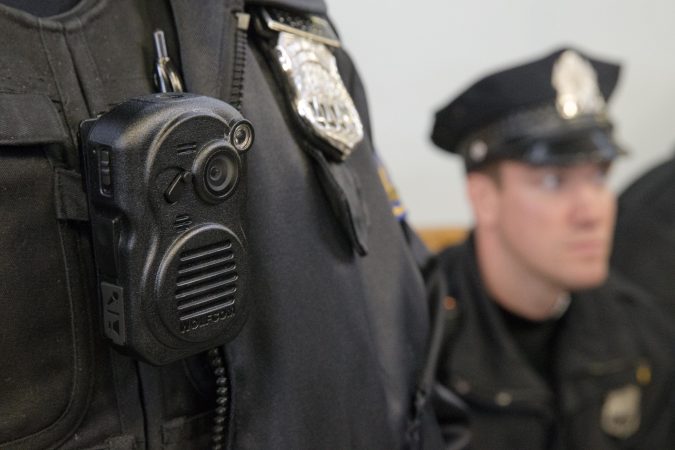
Police officers in one of Philadelphia’s largest districts frequently failed to activate their body-worn cameras during encounters that department policy required them to record, according to a new audit by the Citizens Police Oversight Commission.
The commission’s review of a random sample of 125 police incidents in North Philadelphia’s 22nd District found that officers recorded only 23 of 83 encounters that required camera footage.
The findings, released Wednesday, mark the final report in a series of audits examining body-worn camera compliance in four police districts across Philadelphia. Of the districts reviewed, the 22nd had the lowest rate of required recordings, raising concerns about whether one of the department’s primary accountability tools is being used consistently in the field, the commission said.
Janine Zajac, the commission’s director of auditing, policy, and research, said body-worn cameras are intended to provide accountability for both officers and the public. “It feels concerning when a really important tool for accountability isn’t being used,” she said.
The 22nd District, which spans neighborhoods includingYorktown, Strawberry Mansion, and Brewerytown, was selected alongside the 24th, 18th, and 15th Districts as part of an audit series designed to examine camera use across different parts of the city. The districts were chosen for their geographic diversity, activity levels, and the volume of complaints the commission receives from residents, Zajac said.
The audits looked at several measures of compliance with the department’s policy, including whether officers activated cameras when required, whether all officers on a scene recorded, and whether footage captured the full encounter.
Performance varied across the districts, said Michael Tooley Jr., a senior analyst for the commission. But the 22nd District stood out, he said: Officers recorded only 28% of incidents requiring footage, compared with 62% in the 18th District and 73% in the 15th District, and 88% of vehicle stops in the 24th District.
The commission reviewed incidents from April and June 2025 in the 22nd District, while the other audits examined a single month. Tooley said the commission expanded its review in the 22nd District because so few camera recordings were available from the first month requested.
The missed recordings occurred most often during investigations of premises — a category that includes domestic incidents, minor disturbances, and weapons-related calls — the review found, while vehicle stops and safety checks made up the second-largest share of incidents with absent videos.
The audit found that once officers turned their cameras on, they generally followed department procedures. Of the recordings reviewed, 91% captured the full duration of the encounter, 88% showed proper activation from standby mode, and 97% were correctly labeled and categorized.
Sgt. Eric Gripp said, a police spokesperson, the department takes the findings seriously. “Any instance in which an officer fails to activate a body-worn camera when required is inconsistent with department policy and our expectations,” he said.
Gripp noted that the 22nd District is one of the city’s busiest police districts, generating tens of thousands of body-worn camera recordings each year as officers respond to a high volume of calls and other interactions. While “that workload does not lessen our expectations for policy compliance,” he said, “it does highlight the scale of the body-worn camera program” and the demands placed on officers in the district.
City Councilmember Jeffrey Young, whose district includes much of the area served by the 22nd District, said the audit’s findings underscore the importance of adhering to body-worn camera policies, which “exist to protect everyone involved.”
He added: “I have confidence in [the department’s] ability to address these findings with transparency and professionalism.”
The audits of other districts revealed different weaknesses. In the 24th District, the commission found that nearly four in 10 videos failed to capture the entire traffic stop and that backup officers frequently did not record. In the 15th District, auditors found that officers often powered cameras completely off instead of leaving them in standby mode.
The 18th District in West Philadelphia posted some of the strongest results, with 98% standby-mode compliance and no video-labeling errors.
Joseph Giacalone, an adjunct professor at John Jay College of Criminal Justice and a retired sergeant with the New York City Police Department, said officers often arrive at chaotic scenes where remembering to activate a body-worn camera might not be their first instinct.
“It’s just not a natural thing,” he said.
But he also said departments must find ways to make camera activation routine because the footage can benefit both officers and the public. “Those videos provide better insight into what the police actually do — and most of the time, they’re right when they’re doing it,” he said.
Paula Sen, who coleads the Defender Association of Philadelphia’s police accountability unit and has conducted reviews of officers’ body-worn camera usage, said the footage is equally important for defendants and defense attorneys.
“Every attorney in this office watches hundreds to thousands of body-worn cameras each year,” Sen said. The recordings provide objective evidence that can contradict an officer’s account of an incident, she said, and help defense attorneys successfully challenge evidence in court.
Zajac said police department officials were receptive when the commission shared its findings and recommendations in May, with district leaders expressing interest in better understanding what might be preventing officers from properly using the cameras.
Gripp said the department continues to reinforce its body-worn camera policy through roll-call reminders, additional training, and supervisory oversight. Supervisors are expected to review footage, reinforce compliance, and address deficiencies when they are identified, he said.
Since launching its body-worn cameras more than a decade ago, Gripp said, the department has recorded millions of interactions. “Like any large-scale accountability program, our responsibility is to continually evaluate performance, identify opportunities for improvement, and strengthen compliance,” he said.
Clarification: A quote about the number of body-worn cameras viewed by the Defender Association of Philadelphia has been updated.