Angel Okeke, a junior at the Academy at Palumbo in Philadelphia, wanted to make sense of the loss of her best friend’s brother to a tragedy spurred by gang violence.
Isadora Pendygraft, an eighth grader at Welsh Valley Middle School in Narberth, felt pulled to explore how restorative justice could reshape the criminal court system.
Avigail Wus, a junior at Pennsbury High in Fairless Hills, hoped to examine how the public, the media, and courts interact with survivors of sexual assault.
They are among a group of students who spent nearly a year thinking, researching, and writing about changes they want to see in Philadelphia. This month, their work culminated in professional performances of their original plays.
“It’s freaking amazing,” Okeke said.
The possibility of performance
The student work is part of What Now: 2026, a new arts festival marking the country’s Semiquincentennial. When the festival was in the planning stages, Madeline Charne, director of education and programs for Philadelphia Young Playwrights, said sheknew youth voices ought to have a place.
That is how PYP’s Civic Theater Project was born.
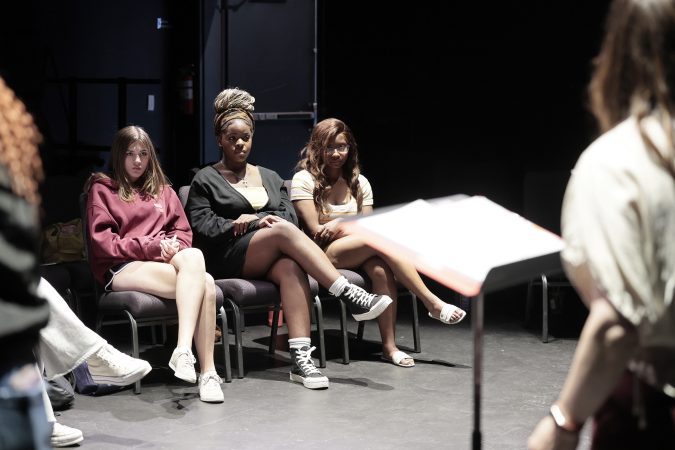
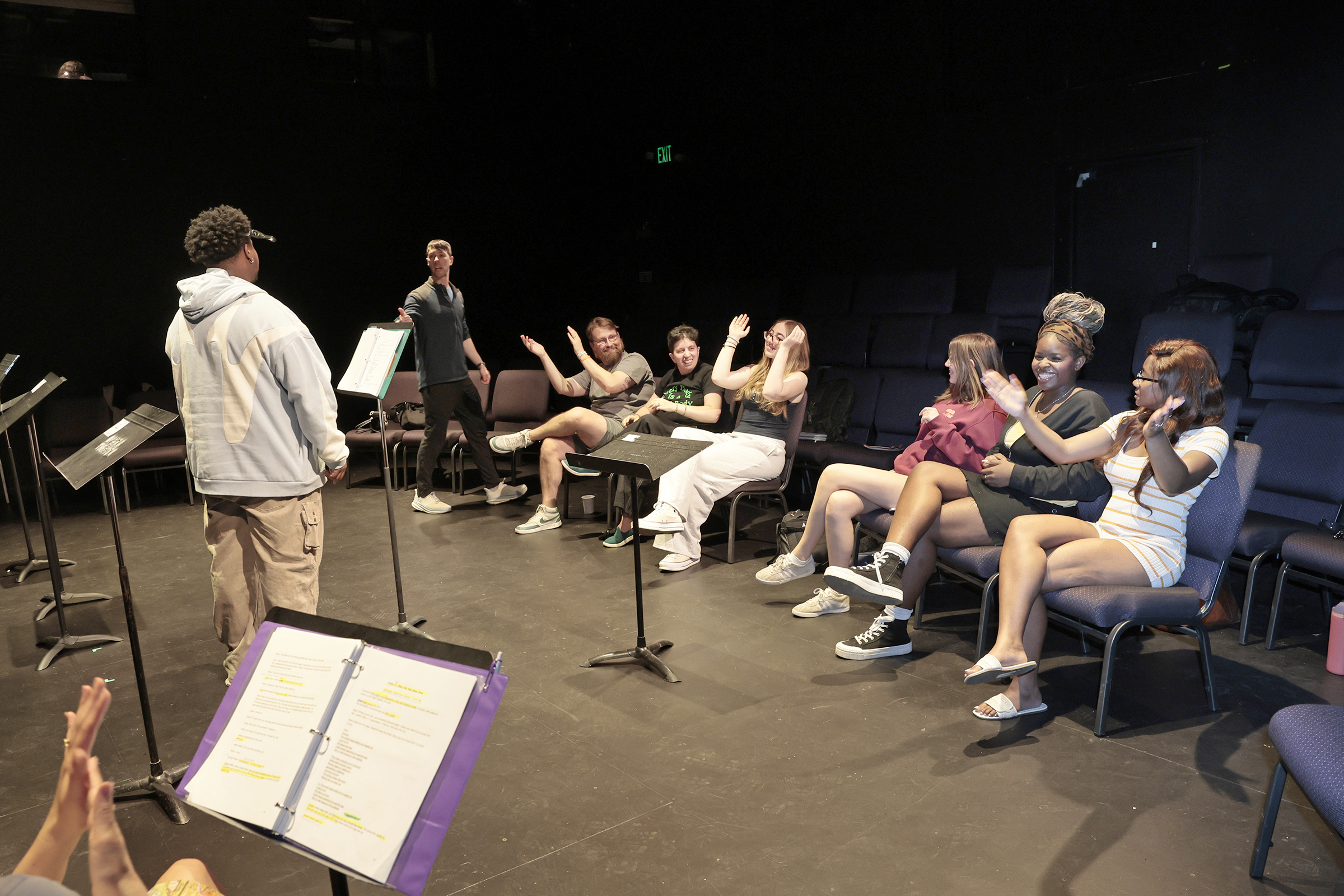
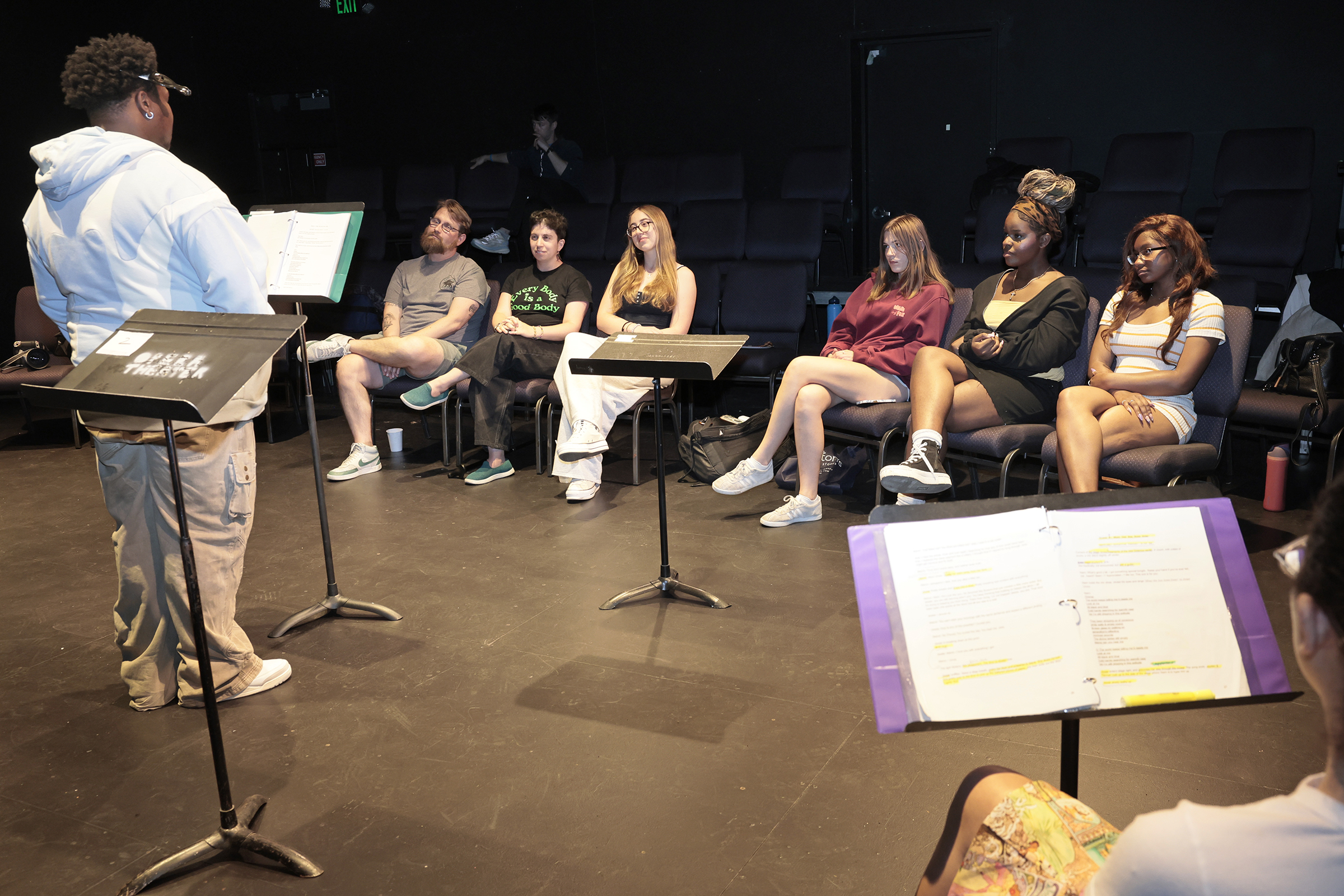
(L-R) Actor Raymond Ingram rehearses as (seated) Palumbo civics teacher Charlie McGeehan, Philly Young Playrights director of education and programs Madeline Charne, students Abigail Wus, Isadora Pendygraft, Angel Okeke, and Harmonee Summers look on during rehearsal at the Drake Theater in Philadelphia earlier this month.Elizabeth Robertson / Staff Photographer
Charne said she wanted students “thinking about how theater itself can create social change, not just be about social change.” She prompted students to imagine Philadelphia 25 years in the future, to dream about what should be changed, and to see their work as the beginning of that shift.
“Creativity and art and performance — that’s what has the possibility to make people actually listen,” said Charlie McGeehan, a Philadelphia School District civics teacher who worked as a PYP teaching artist.
Kids thought so, too. For every spot PYP had in the process, it received roughly five applicants. Eventually, five young people signed on: Okeke; Wus; Pendygraft; Harmonee’ Summers, who attends Springside Chestnut Hill Academy; and Maroua Benfadhla, a student at Science Leadership Academy.
The young playwrights had to commit one day a week to their work — researching and refining ideas, interviewing change makers around the city, committing to their eventual topic, writing, editing, critiquing one another’s work, andeven casting their plays.
The works the five eventually produced were a revelation, McGeehan said — powerful, smart, and character driven. They were presented in staged readings at the Louis Bluver Theatre in Center City.
The right rooms, the right resources
On a sweltering Wednesday this month just before the students’ work debuted, they gathered at the theater for a final run-through.
The playwrights sat in chairs, eyes fixed on the actors in front of them. The actors performed the plays without sets or costumes, just reading scripts on music stands and allowing the audience to take inthe power of the young people’s words.
The moment Summers first heard professional actors reading words she had written, it stopped her cold.
“It is so cliche to say it’s magical, but it feels different when your words are literally jumping off the page‚” said Summers, whose play is called The Double K Show. It chronicles two young women’s rise to stardom and the effect substance use has on their lives, and was shaped by events Summers observed growing up in North Philadelphia and attending an elite private school.
Part of the students’ process was finding resources that might help with the issues they tackled — from recovery and housing assistance organizations to groups that support survivors of sexual assault.
(L-R) Actor Raymond Ingram rehearses as Palumbo civics teacher Charlie McGeehan, Philly Young Playrights director of education and programs Madeline Charne, students Abigail Wus, Isadora Pendygraft, Angel Okeke and Harmonee’ Summers look on during rehearsal at the Drake Theater in Philadelphia earlier this month.Elizabeth Robertson / Staff Photographer
Pendygraft, whose mother, Letitia Stein, is an editor at The Inquirer, is a PYP veteran and the only middle schooler in the group. The playbill lists Pendygraft’s author name as Rut, a nickname. She said she was inspired by The 57 Bus, a book she had read about the ripple effects of a crime committed by one teenager against another.
“The criminal court has a long history of being complicated and a little corrupt and biased,” Pendygraft said, but restorative justice — the theme of her play — would go a long way toward repairing harm.
Wus said she used the motif of the Salem witch trials as “a critique about the way stories of sexual assault have been commodified into entertainment.” It wasa powerful exercise in using her voice, she said, made stronger by the magic of real performers.
“These actors, they’re the people you see on TV — they are so talented,” Wus said. “Hearing my words out loud has allowed me to make revisions to make my script feel more real. It’s probably one of the best writing experiences I’ve ever had.”
Okeke, who wrote Echoes Beyond Shut Doors about the loss of Naim Castleberry, her best friend’s brother, said she struggled for a time with the idea that her ideas would go nowhere.
“It felt very daunting to tackle such big issues. Often, I feel like I feel small as a young person in Philly. I have this doubt, ‘how much of an impact can I really make?’” Okeke said. But she powered through, with words — and the experience was transformative.
“Us youth really have good things to say if we’re put in the right rooms with the right resources,” she said.
In a forceful and scolding opinion, the Pennsylvania Supreme Court ruled Tuesday that District Attorney Larry Krasner’s office misled the courts, “violated its duty of candor,” and submitted false statements when asking a judge to vacate a 2004 murder conviction.
In the opinion released Tuesday, Justice Kevin Dougherty wrote that prosecutors’ pattern of misleading judges in seeking to overturn murder convictions is so troubling and recurrent that, going forward, before Krasner’s office seeks such relief, judges must notify the state attorney general’s office and allow it to review the case.
The decision amounted to one of the most scathing rebukes yet of Krasner’s efforts to revisit decades-old convictions, and arrives amid intensifying scrutiny of the office’s Conviction Integrity Unit and appeals division, whose handling of post-conviction cases has drawn criticism from judges in both state and federal court.
Just last week, Krasner’s office reversed course in a separate murder case, writing in a federal court filing that one of its prosecutors had made “material misstatements” and submitted “legally erroneous” statements when seeking to overturn a man’s murder conviction. The office sought to withdraw its recommendation to grant the defendant a new trial.
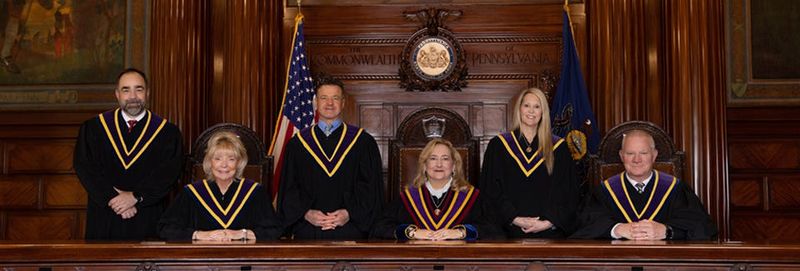
Supreme Court of Pennsylvania Justices Kevin Brobson, Christine Donohue, David Wecht, Debra Todd, Sallie Updyke Mundy and Kevin Dougherty in 2023.Provided by Administrative Offic
By giving the state attorney general authority to intervene when Philadelphia prosecutors decline to defend a conviction, the high court added a new layer of oversight to the state’s largest prosecutor’s office — a rare step that reshapes who controls post-conviction litigation in Pennsylvania.
Krasner, in a video statement shared late Tuesday, said the high court’s ruling “undermines the value of a vote in Philadelphia as compared to every other county.”
In the video, which featured images of the Rev. Dr. Martin Luther King Jr. and Rosa Parks, Krasner compared the pushback to his criminal justice reform efforts to those of other social justice movements.
“First they ignore you — we’re past it. Then they laugh at you — we’re past that. Then they fight you — and we have been fighting for 8½ years,” he said.
While four justices — Dougherty, Sallie Updyke Mundy, P. Kevin Brobson, and Daniel McCaffery — agreed there are systemic concerns about the district attorney’s office, three — Debra Todd, Christine Donohue, and David Wecht — supported neither that narrative nor the court’s remedy.
Wecht cast the lone full dissent, arguing that the case did not warrant the Supreme Court’s intervention and that the lower courts already have the tools necessary to prevent improper concessions by prosecutors.
The case at the center of the court’s ruling was that of Lavar Brown, who was sentenced to life in prison without the possibility of parole after a jury convicted him of second-degree murder in the robbery and shooting death of Michael Richardson, a North Philadelphia Rite Aid worker, in 2003.
Brown was later convicted of shooting and killing a second man, Robert Crawford, in 2005, and was sentenced to death — in part because of the first conviction.
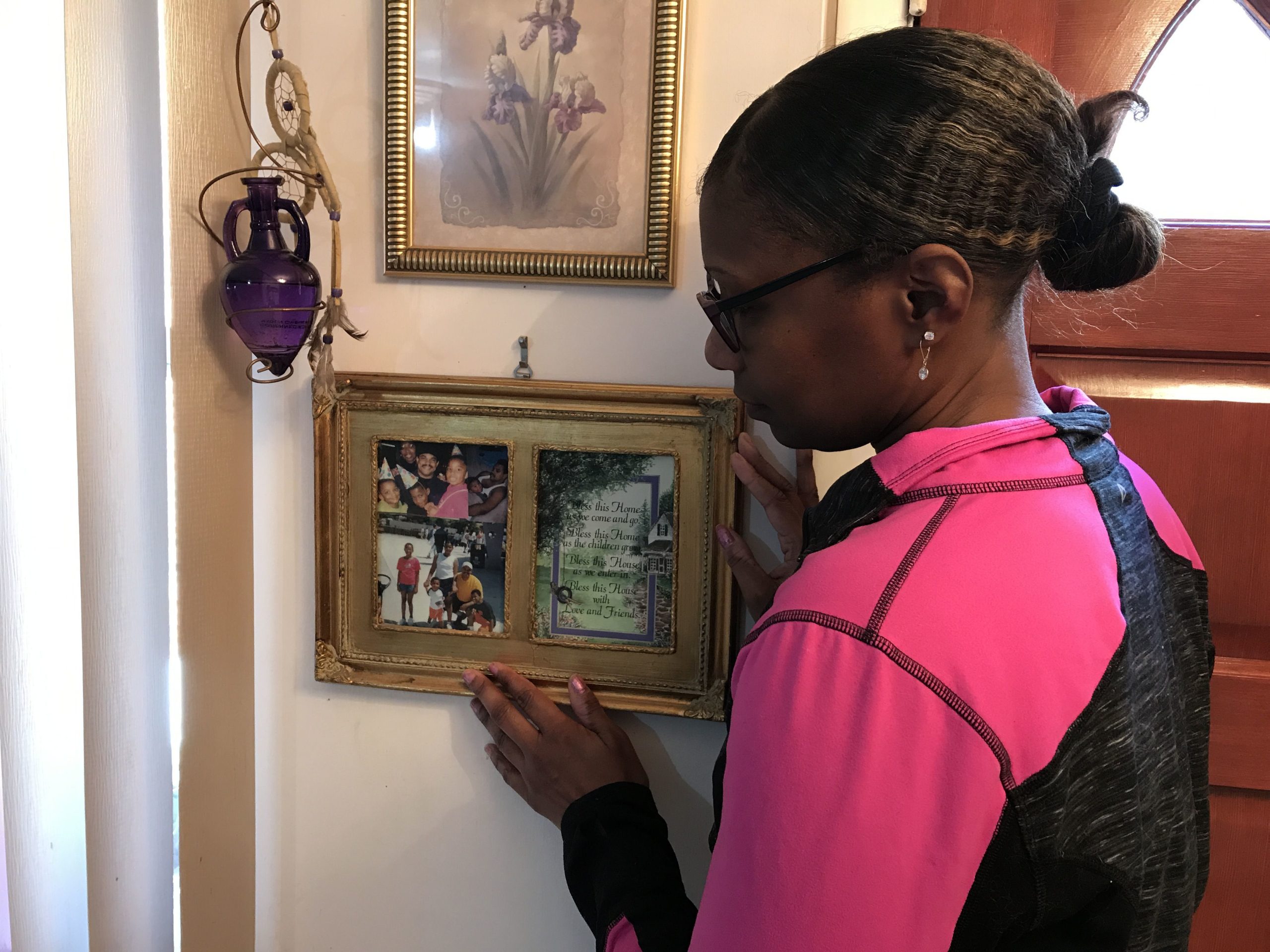
In this 2019 photo, Kristi Richardson looks at photos of her husband, Michael Richardson, who was shot and killed during a robbery at the Rite Aid where he worked in 2003.JULIE SHAW / Staff
In post-conviction court filings, Brown’s attorneys said the prosecution’s case in Richardson’s killing largely relied on the testimony of two witnesses — including one who, in a statement to police, implicated a teenage girl who was incarcerated at the time of the murder. The witness’ earlier statements were never provided to his trial lawyers, the attorneys said, which violated his right to a fair trial.
When a Common Pleas Court judge later granted Brown a new trial, the families of Richardson and Crawford took the unusual step of asking Pennsylvania’s highest court to intervene.
The families said Krasner had a conflict of interest because two of his former law partners had previously been involved in Brown’s case. They also argued the district attorney’s office was trying to “circumvent” the courts by conceding relief in the Rite Aid killing, which had served as an aggravating factor for his death sentence.
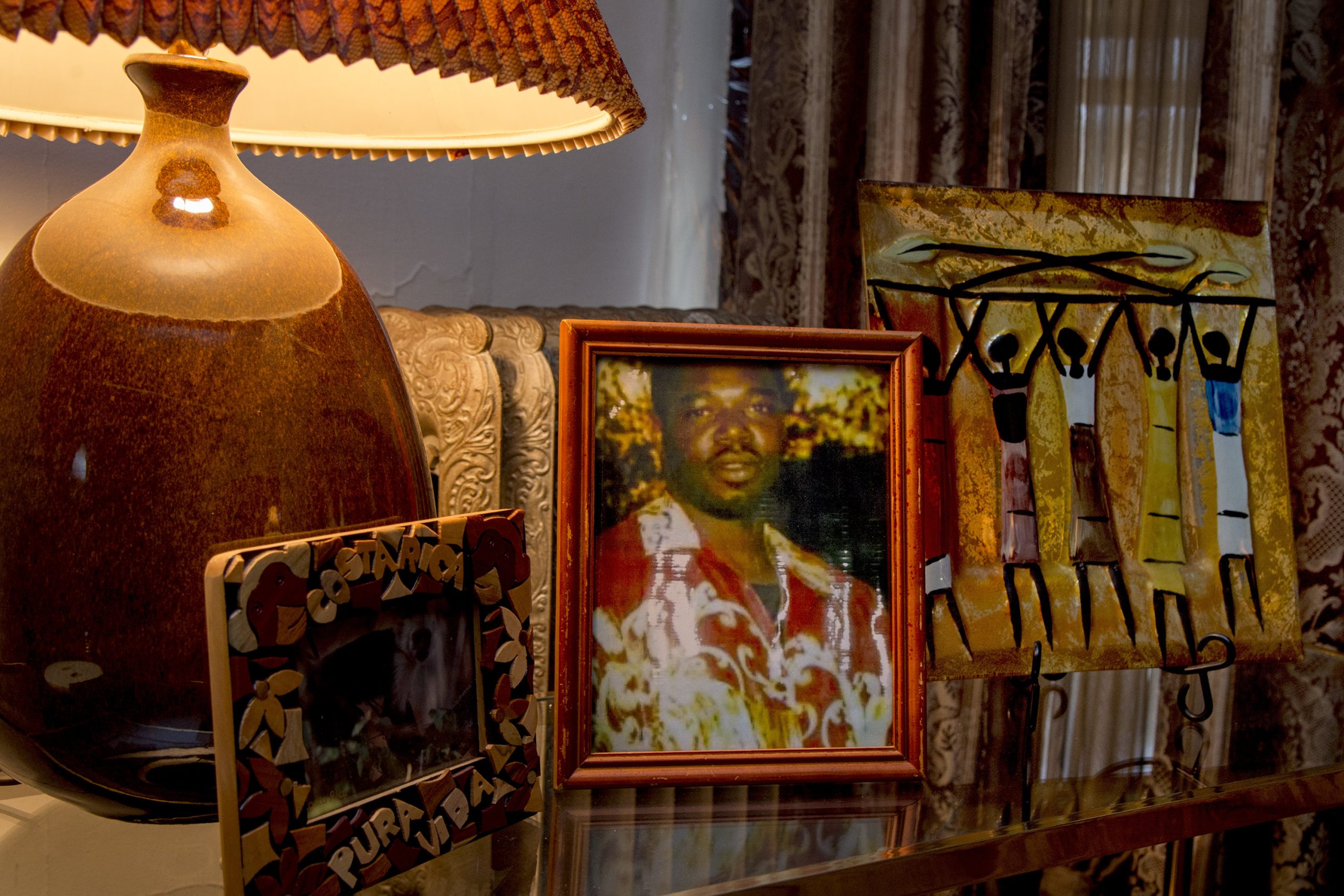
A photo of Robert Crawford in the home of his sister Suzette Crawford March 27, 2019. Robert was shot to death in Philadelphia in December 2003. His killer, Lavar Brown, is on death row.TOM GRALISH / Staff Photographer
The Supreme Court agreed to hear arguments in March 2025. And on Tuesday, six justices agreed that Brown’s conviction should not have been overturned and ordered a new hearing in the case.
Dougherty, in writing the majority opinion, was scathing in his assessments of prosecutors’ conduct.
In a case involving a murder conviction and death sentence, he wrote, the district attorney’s office’s “fidelity to its duty of candor should have been at its zenith. Regrettably, it was anything but.”
The opinion said prosecutors did not disclose a memorandum in which a key witness, Ronald Vann, identified Brown as being involved with the murder, even as they asked Common Pleas Court Judge Glenn Bronson to vacate the conviction.
Instead, the court said, they asserted that the document was irrelevant to Brown’s claims.
Krasner’s office also tried to keep the victim’s families from accessing it.
But the memorandum was “unquestionably relevant” to the case and showed a consistency over time of Vann’s statements, the opinion said. That Krasner’s office would say otherwise “rings hollow and smacks of post hoc rationalization,” the court said.
“The memorandum would have poured salt on the ‘fertile ground’ for impeachment envisioned by the DAO,” the ruling said, adding that withholding the document was a “breach of its duty of candor” to the court.
The high court also said prosecutors filed a joint stipulation with Brown’s attorneys that “was false in multiple respects,” including mischaracterizations of the timeline of witness statements to police.
The justices said prosecutors had not interviewed a single witness or investigator who had handled the case, and rejected their claims that it had conducted a “thorough, independent review of the records in this case.” Krasner’s office, the court said, “cut corners and shirked its duties in conducting its post-conviction ‘investigation.’”
The court reversed Bronson’s order granting Brown a new trial.
To “promote just outcomes” moving forward, the opinion said, the courts handling appeals must notify the attorney general’s office of any case in which Krasner’s office plans to seek relief, and give state prosecutors the opportunity to review it and weigh in on whether the decision is appropriate.
A lawyer for Brown could not be reached for comment. The Pennsylvania Innocence Project, which had filed a brief supporting Brown and the district attorney’s office alongside dozens of other prosecutors’ offices, former judges, and defense attorneys, declined to comment.
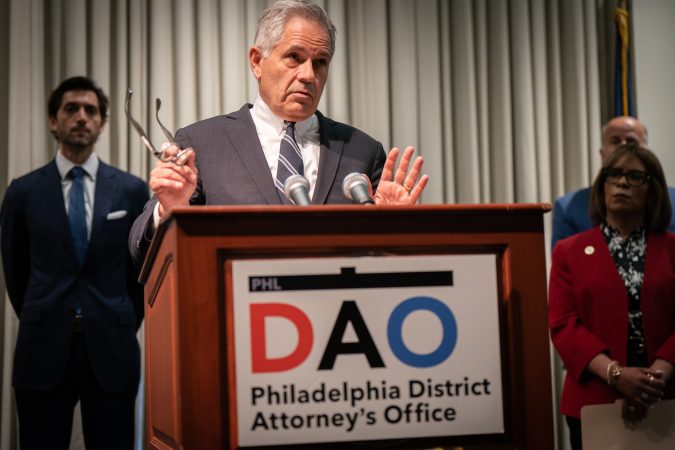
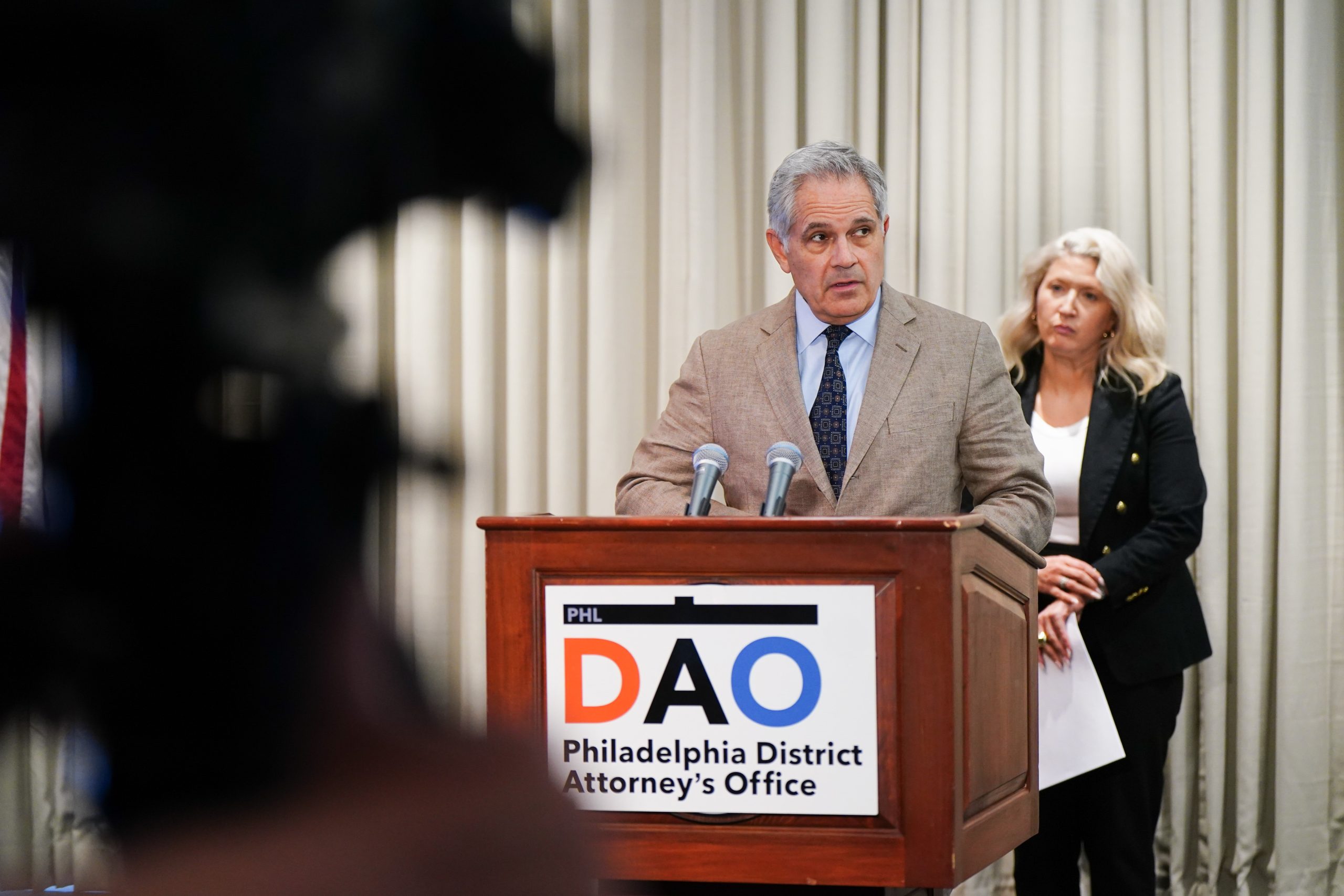
Da Larry Krasner speaks during a May 2026 press conference. Jessica Griffin / Staff Photographer
Chris Lynett, the lawyer who represented the families of Richardson and Crawford, said the high court’s opinion supported their belief that Brown’s case — like others — had not been scrutinized closely enough by prosecutors.
“We can’t just say that if we feel uncomfortable with a conviction that we are going to overturn it,” he said. “You need a full record, you need honesty, and you need an evaluation.”
Lynett, who worked as an assistant district attorney in Philadelphia for five years before leaving the office in 2020, said its leadership needs to “think about what they’re doing and what they’re encouraging their line prosecutors to do in court.”
The attorney general’s office had filed an amicus brief in support of the families, arguing that, since 2018, Krasner’s office agreed to overturn convictions in 115 cases with little to no meaningful opposition to defendants’ claims.
Attorney General David Sunday, a Republican, said in a statement Tuesday that his office is grateful to serve “as a check on this process for the citizens of Philadelphia and ensure that the interests of victims’ families are represented.”
When an investigation shows that a defendant was wrongfully convicted, his office said, prosecutors have a duty to remedy the situation — through the established court processes.
“As the Court noted,” his office said, “this case is about the failure of the process in Philadelphia, both as to this defendant and many others.”
Krasner, for his part, stood by his office’s policies. Philadelphia is on track to record the fewest homicides in recent memory, he said in the video, and correcting past mistakes builds trust in the criminal justice system.
Acting as an adversary in overturning wrongful convictions, he said, “doesn’t help safety, it doesn’t help democracy, it doesn’t help freedom, but that’s OK. Because we know where we are in the fight, and once we get past the fight, we all win.”
Nurses at Jefferson Einstein Philadelphia Hospital on Monday voted to authorize a strike if their bargaining committee calls for it as they negotiate a new union contract.
The nurses want the contract to include solutions to staffing issues, as well as assurances that the hospital will not close departments. Earlier this year, Jefferson Health announced plans to close several pediatric clinics, including the Pediatric & Adolescent Ambulatory Center at Einstein Philadelphia at the end of this month.
“Our patients deserve better than Jefferson is willing to deliver on its own. So do the nurses who care for them,” said Stephanie Stucka, a neuroscience nurse and co-president of Einstein Nurses United, in a statement.
The Logan hospital has about 1,200 unionized nurses, whose contract expired over six weeks ago. They are members of Einstein Nurses United, a local of Pennsylvania Association of Staff Nurses and Allied Professionals (PASNAP).
A little more than half the local’s members participated in the in-person vote, and 96% voted in favor of a strike, according to the union.
The union also voted to authorize a strike during their last contract negotiations in 2023, and ultimately reached an agreement on a new contract without walking off the job.
The union and hospital management continue to negotiate. Bargaining sessions are scheduled Tuesday, Wednesday and Monday, PASNAP spokesperson Megan Othersen Gorman said. If the committee does call for a strike, it must submit a 10-day notice under the National Labor Relations Act, she said.
“This action risks putting disruption ahead of patients and community members,” a Jefferson spokesperson said in an e-mailed statement Tuesday. “While a strike is not imminent, this vote sends the wrong message at a time when our community needs stability, partnership, and a shared commitment to care — especially as Philadelphia prepares to host major national and global events that will place increased demand on our healthcare system.”
The nurses’ union has proposed changes to improve staffing levels in most units, as well as contract language to protect staffing standards. It says Jefferson management has rejected these proposals.
The nurses also want management to commit to keeping hospital safety measures put in place in recent years, including increased security and weapons screenings. The union also noted nurses’ concerns that benefits like paid time off and pension may be cut, and that the cost of their healthcare plans could rise.
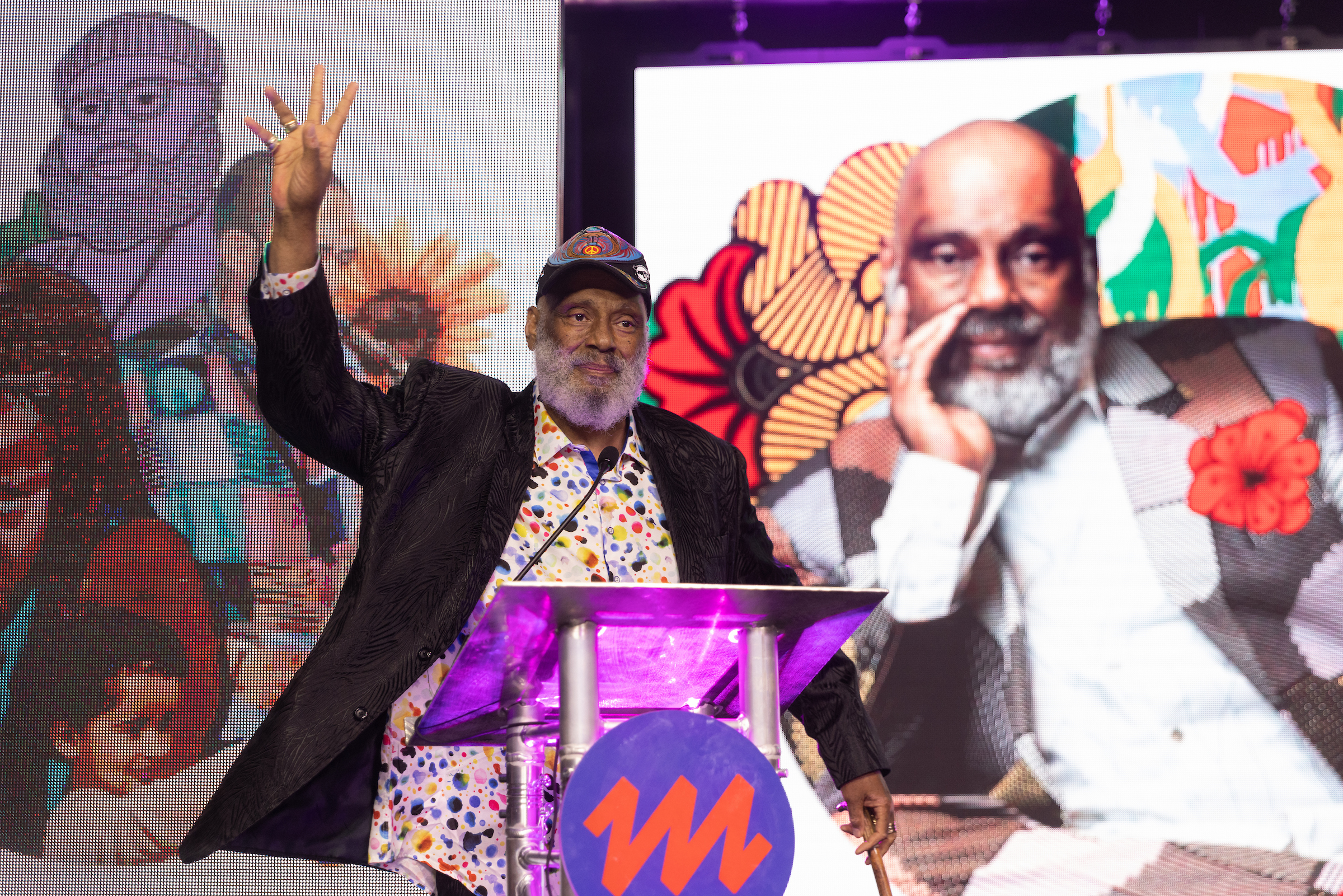
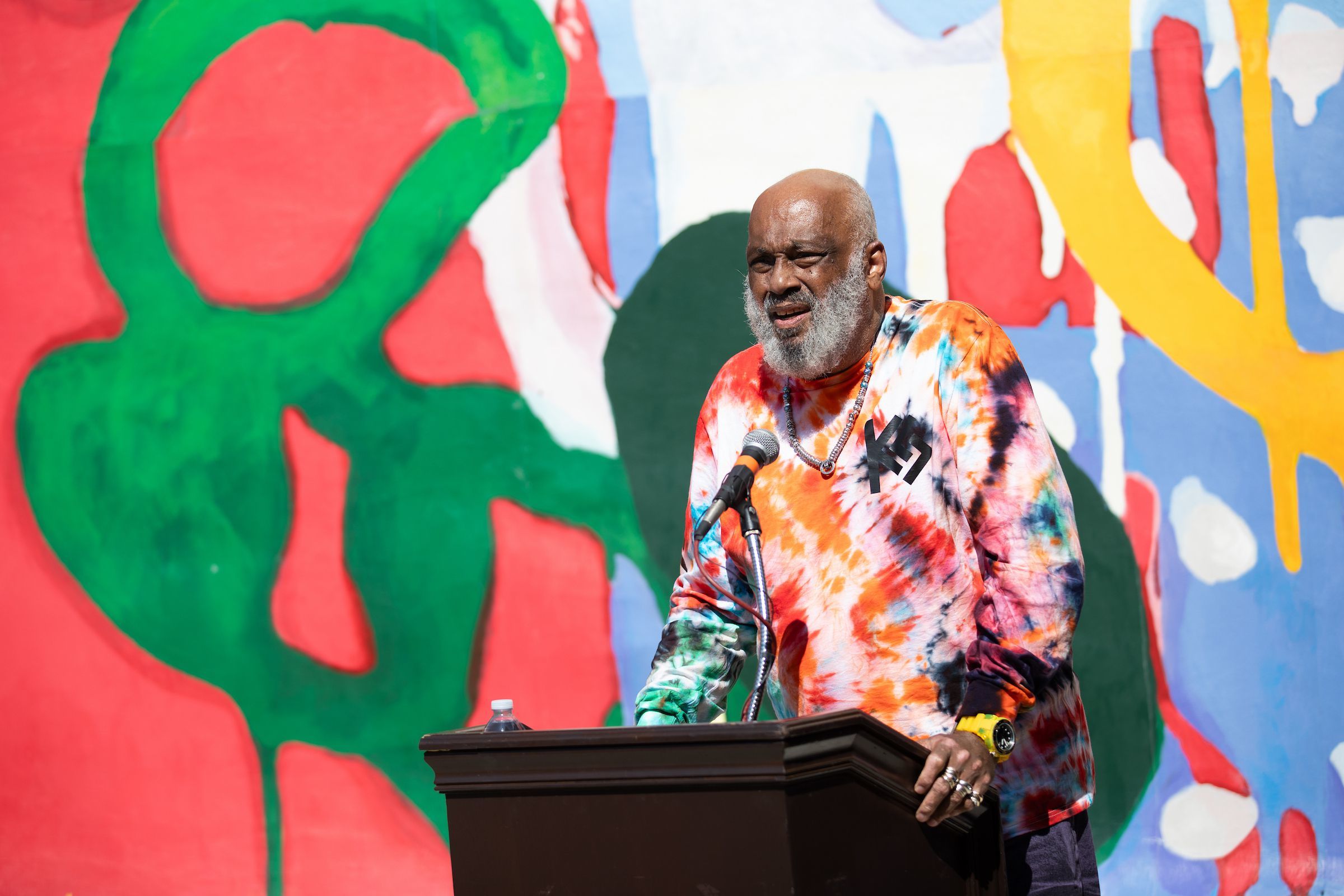
Danny Simmons, founder of Rush Arts Philadelphia, an arts community that provided space and motivation for local artists to be discovered and show their work, has died at 72. The cause of death was not announced.
Mr. Simmons was the older brother to hip-hop mogul and Def Jam Recordings cofounder Russell Simmons and Rev. Joseph “Run” Simmons, one-half of the classic rap group Run-DMC.
Mr. Simmons’ death was announced Monday by his brother Russell on Instagram.
“It is with a profound sense of loss that we honor and celebrate the life of Danny Simmons Jr., a beacon of love and creativity,” Russell Simmons wrote on the social media post.
“He was not just a brother, father, uncle, grandfather, and loving husband; he was a vibrant artist, dedicated supporter of creatives and a cherished friend. Though he has transitioned from this world, his legacy of kindness, generosity, and artistic brilliance will forever shine brightly in our hearts.”
Daniel Simmons Jr. was born on Aug. 17, 1953, in Hollis, Queens. His father, Daniel Simmons Sr., was a truant officer and Black history professor who also wrote poetry. His mother, Evelyn Simmons, was a teacher who painted as a hobby.
Both of his parents encouraged Mr. Simmons’ art but also pushed him to work a stable job with a pension. After receiving his degree in social work from NYU, he worked at the New York Bureau of Child Support through the 1980s.
“He was the true artist in the family,” Russell Simmons said in a subsequent social media post. “Joey and I went into music … but Danny was the one who created from the deepest place. His poetry, art, and ideas shaped how we think and gave us freedom to dream beyond limits.”
In 2003, Simon & Schuster published Mr. Simmons’ Three Days as the Crow Flies, a novel about a drug-addict hustler named Crow Shade, who poses as an artist in New York’s drug and arts scene.
Three Days as the Crow Flies is fictional, but by the 1990s, Mr. Simmons had kicked a 20-year heroin addiction, given up his 9-to-5, and leaned into abstract painting.
“I quit my job, started painting, and it started taking off,” he told The Inquirer in 2016. “But I couldn’t find a whole lot of outlets for my work. There were very few galleries dedicated to emerging Black artists. I figured if I was in that position, there had to be other artists in that position.”
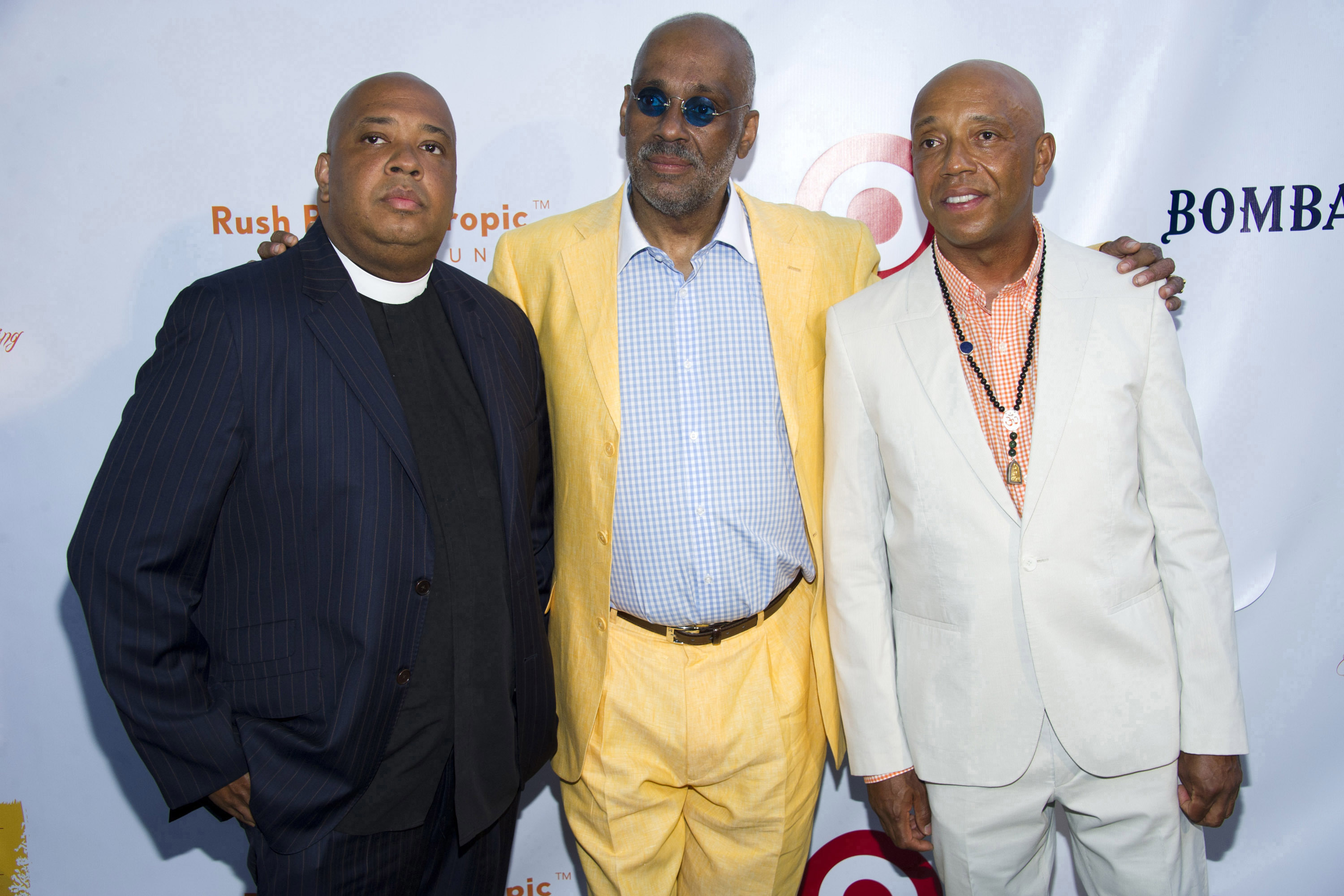
Joseph “Rev. Run” Simmons (left), Danny Simmons (center), and Russell Simmons attend the 12th annual Art For Life Benefit Gala at Russell Simmons’ estate in East Hampton, N.Y., on Saturday, July 30, 2011.
(Charles Sykes / AP Images for Rush Philanthropic)AP IMAGES FOR RUSH PHILANTHROPIC
Mr. Simmons became an avid collector of Black art, opened two galleries in downtown Manhattan, and founded Rush Philanthropic Arts Organization, supporting Black artists around the world.
“Danny’s impact has been global,” said Vashti DuBois, executive director of the Colored Girls Museum in Philadelphia. “His investments in and support of Black artists and Black institutions have fundamentally transformed the landscape of the Black art scene.”
In the early 2000s, Mr. Simmons convinced his brother Russell to produce HBO’s Def Poetry Jam. The show, a spinoff of HBO’s Def Comedy Jam, ran from 2002 to 2007 and breathed new life into spoken word poetry, first popularized by the 1970s Black Arts movement.
A prototype of Def Poetry Jam, that often showcased Philly artists Sonia Sánchez and Ursula Rucker, was filmed at the African American Museum in Philadelphia.
Mr. Simmons won a Tony for the stage adaption in 2003.
Danny Simmons speaking at a Mural Arts Philadelphia event to unveil the 2023 mural, “My Crazy Red Rooster.”Mural Arts
In 2015, the African American Museum hosted his solo show, “Badass Art, Man!” a colorful collection of paintings, collages, and statues he described as “neo-African abstract expressionist.”
Later that year, he moved to Northern Liberties, because it reminded him of parts of Brooklyn, into a place with a backyard large enough to store his immense collections.
He purchased an old bank building in the Logan section of Philadelphia on Old York Road and made it a home for Rush Arts Philadelphia, a community center and gallery. Until last month, the center supported the work of Philadelphia artists through a series of shows, exhibitions, and receptions.
“Mr. Simmons had a remarkable ability to bring people together through art, inspiring others to see the world through a more vibrant lens,” said Ashley Jordan, president and CEO of the African American Museum in Philadelphia. “His presence was as memorable as the masterpieces he created and championed.”
Mr. Simmons served on the Mural Arts board from 2022-25 and was the lead artist on four mural projects in Germantown and North Philadelphia.
His work resides in the Woodmere Art Museum and the Pennsylvania Academy of Fine Arts. In 2019, he was appointed to the Philadelphia Museum of Art’s African American Collections Committee.
“Danny was an extraordinary artist and human being,” said Jane Golden, founder and executive director of Mural Arts. “Danny was one of a kind, and he leaves very big shoes to fill in our city and our world.”
Apart from his brothers, Mr. Simmons is survived by his wife, Keia Simmons; son, Jamel Simmons; and other family members and friends.
Memorial services and celebrations have not been announced by the family.
Dawaun Lewis, 30, has been charged with murder, robbery, and related crimes in the death of 45-year-old Keisha Furlow, police said. He was taken into custody Thursday after being arrested by Highway Patrol officers near his home on West Girard Avenue.
First responders discovered Furlow, a mother of four, in an alley near her North Opal Street home in North Philadelphia early Sunday morning, according to police.
Her face had been badly injured, and investigators believe two bloodied bricks found near her body had been used in her slaying hours before, around 2 a.m.
Furlow was pronounced dead at the scene, and medical examiners determined she died from blunt force trauma.
Investigators said they reviewed surveillance footage showing a person kicking Furlow and beating her head with a brick. That person and another individual fled with Furlow’s purse before ditching it nearby, they said.
There was no word if police have any information about the second attacker. The investigation is continuing.
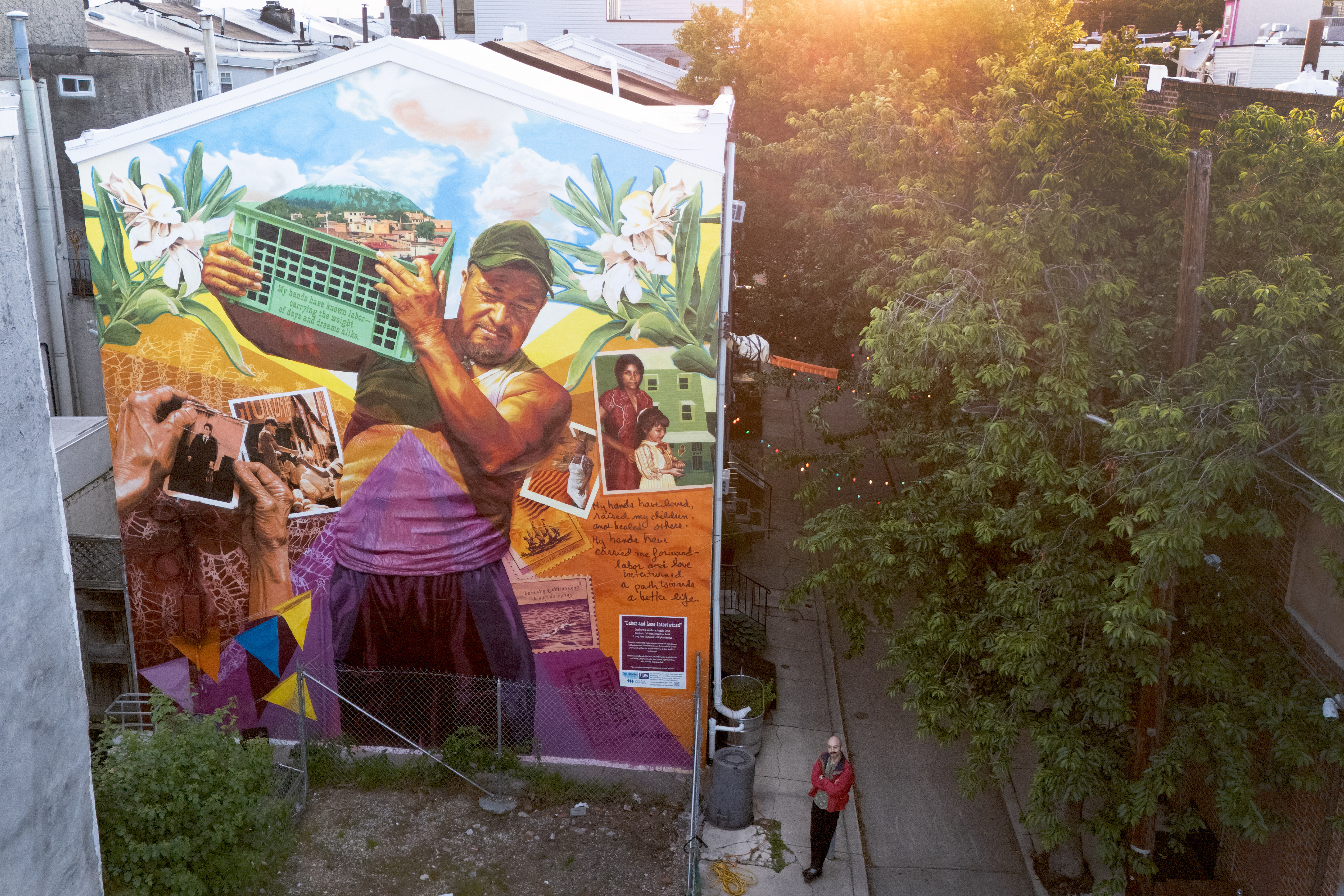
After first-time homebuyer Brendan McCreath settled into his Bella Vista rowhouse last spring, his first priority was contacting Mural Arts Philadelphia.
During the closing process, he had learned that the previous owner had agreed to let an artist paint a mural on the house, butwithdrew her support. McCreath wanted to revive the plan.
“I love that Philly is just loaded with murals,” he said. “It’s beautiful.”
In a city internationally known for murals, roughly 1,000 are on private homes through partnerships with Mural Arts. Homeowners don’t have to go through the organization to put a mural on their house. But if they do, Mural Arts covers the costs of preparing the wall, installing the piece, and maintaining the mural.
“We appreciate homeowners so much who really hold art in esteem and are thinking not just about their house but about the communal effect the art will have on the city,” said Jane Golden, founder and executive director of Mural Arts. “Murals become part of our collective identity.”
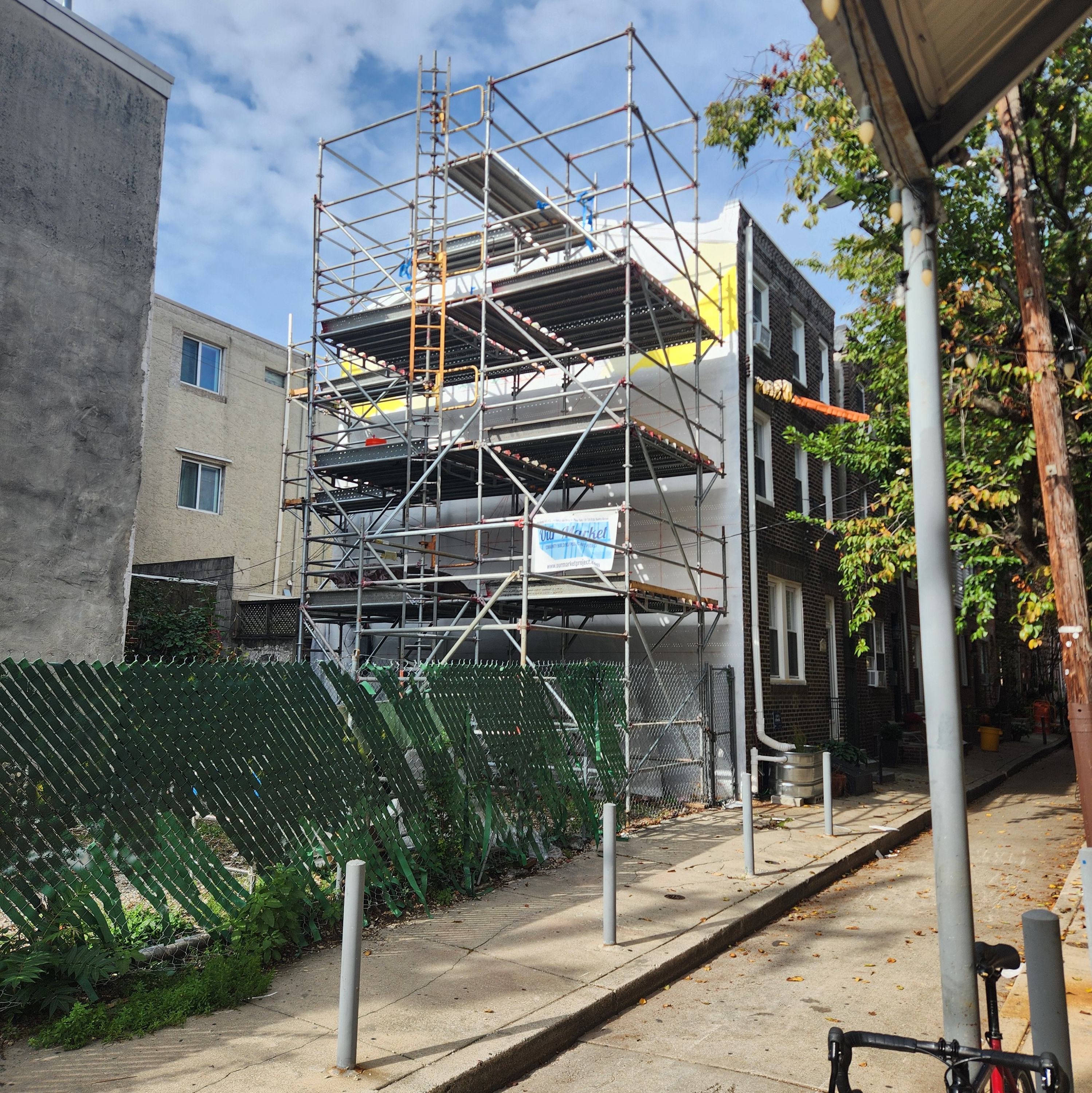
Homeowner Brendan McCreath captured photos of artist Michelle Angela Ortiz’s mural as it was installed last year.Brendan McCreath
Artists plan murals in collaboration with homeowners and neighbors. Some paint directly onto walls, but most now paint on large sections of cloth and piece them together later on surfaces, Golden said.
She estimates the wait list for artwork through Mural Arts is close to a thousand strong. In Philadelphia, “people 100% absolutely love public art,” she said.
The city gets about a hundred new works per year through Mural Arts. Pitches come from the wait list as well as artists, Mural Arts staff, city officials, and funders.
But the city also loses murals to development and demolitions. Mural Arts tries to stay away from vulnerable sites, including those next to vacant lots.
Lack of funding is usually what prevents Mural Arts from doing more work, Golden said. But sometimes, artists just need walls. The organization has an official “wall hunter” who scouts potential locations. The job has gotten harder, as more properties are owned by limited liability companies (LLCs), and tracking down humans who can give permission for murals is difficult.
Bella Vista homeowner John Del Rossi gave an immediate “yes” when Mural Arts approached him.
“I can’t imagine anybody saying, ‘No, don’t put this beautiful mural on my wall. Leave it blank and ugly,’” he said.
The Inquirer asked six homeowners why they wanted their properties to join Philadelphia’s rich tapestry of murals.
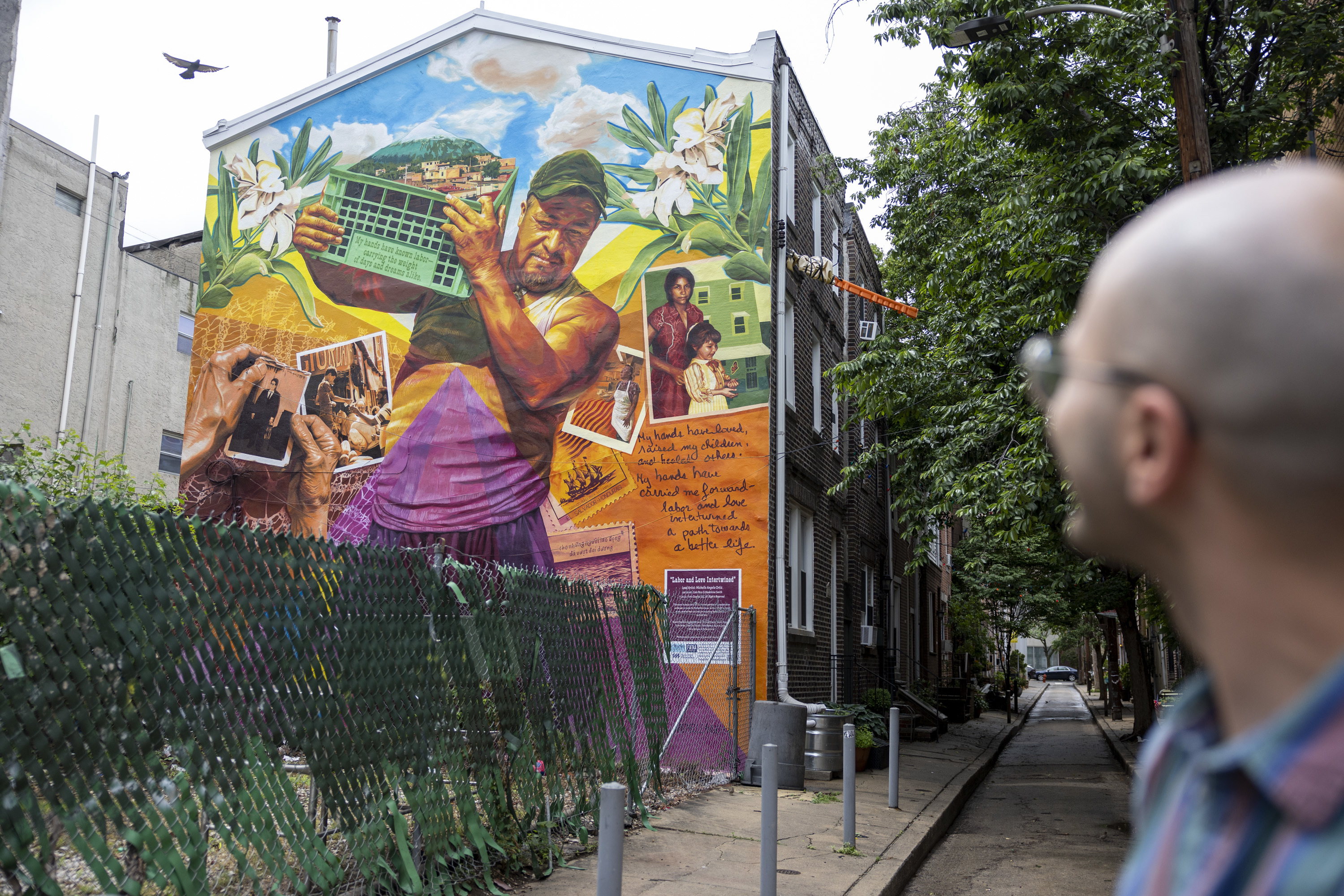
Brendan McCreath looks at the mural painted on the side of his rowhouse.Tyger Williams / Staff Photographer
Sometimes, McCreath will spot people gazing at the mural and stop to gaze with them. Then he’ll take out his keys and walk through the door behind it.
“There’s many people who will stop dead in their tracks and take a photo of the side of my house,” he said. “It’s such an open wall out to Ninth Street. It truly feels like the perfect placement for a mural.”
Creator Michelle Angela Ortiz makes art nationally and internationally, and turned to other projects when the mural fell through. But she was disappointed. She was born and raised on this block of League Street, and her parents still live there. Ortiz had wanted to paint a mural “at home” in her neighborhood.
So when McCreath revived plans for the mural, she was ecstatic.
Brendan McCreath poses for a portrait outside his home.Tyger Williams / Staff Photographer
The work is part of the Our Market Project that Ortiz created six years ago to broaden the narrative of what has become known as the Italian Market and honor the people from different backgrounds who make the market on South Ninth Street what it is.
“What we do in the market is not just sell things. We take care of one another,” Ortiz said. “We raise our families. We bring our culture. We bring our values and our spirit to the market.”
In the mural, which she painted directly onto McCreath’s wall, she highlights stories of neighbors with ties to the market. The center image is of a Mexican immigrant named Gabriel who works at Tran’s Produce, owned by Vietnamese immigrants. The mural includes a poem by Alice Harrison, a longtime market worker and the daughter of Holocaust survivors, who also lives on League Street.
Ortiz said her Our Market Project is “my love letter to my community, but also a way to pay homage and honor to my mother, who is an immigrant from Colombia and work[ed] at Giordano’s for 25 years.”
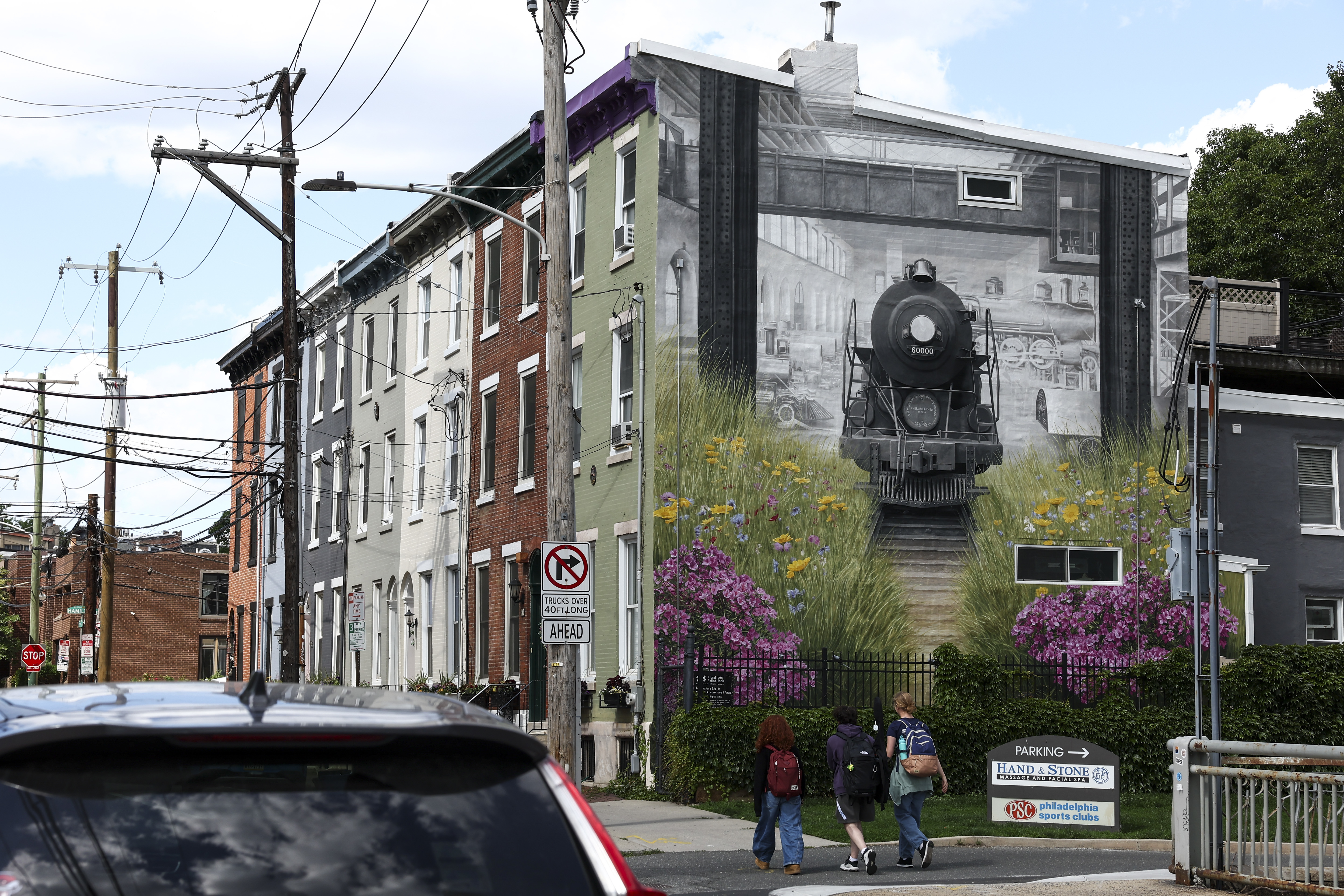
This mural by Phillip Adams pays tribute to Baldwin Locomotive Works and the Lenape.Monica Herndon / Staff Photographer
If you stare at the mural of a train on North 20th Street and think you hear a faint whistle, you’re not imagining things. Homeowner Susan Freeland likes to blow a train whistle when she sees the mural getting attention.
“Many people remark that it actually looks like the train is coming toward you, because it looks larger than life,” she said.
Freeland and her husband owned their house for a few years before she called Mural Arts about their “ugly, empty” wall. It was visibly lumpy from when the neighboring house was torn down.
“You would never know that to see the mural on it,” she said.
About six months after Freeland’s call, Mural Arts called back. That led to meetings with nearby neighbors and artist Phillip Adams. The mural stalled when neighbors said they didn’t like Adams’ first idea for a still-life painting.
His second idea, Freeland said, “really spoke more to explaining what used to be in the area right where we live.” It pays tribute to Baldwin Locomotive Works, once the world’s most successful builder of steam locomotives, and the Lenape, who once lived on the land.
For Freeland and her husband, having the mural on the house “makes us feel very special indeed.”
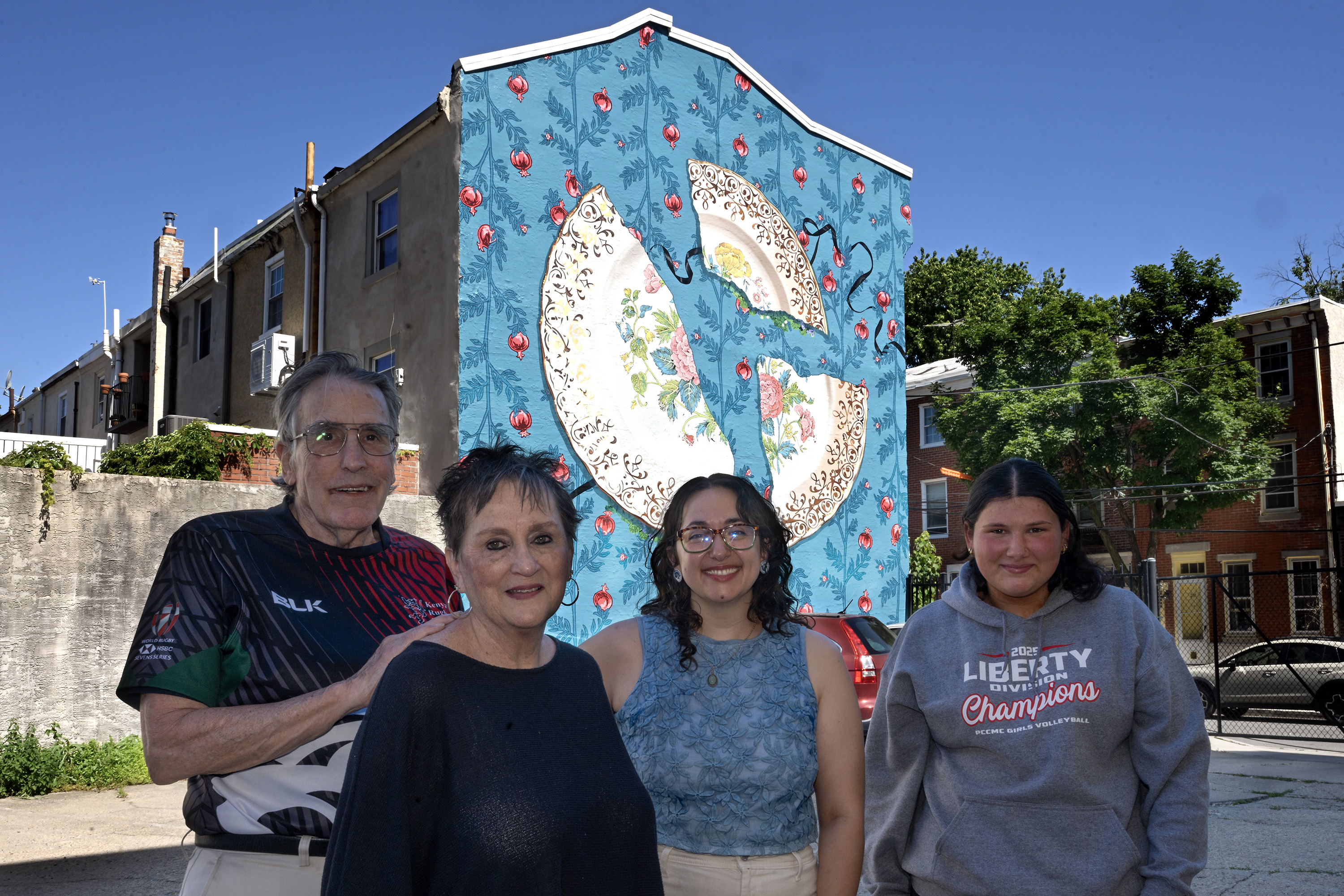
Homeowners Sara and Clark DeLeon (left) and their granddaughter Lucy Metzker (right) pose in front of their mural with artist Sammy Kovnat (center).Tom Gralish / Staff Photographer
Sara DeLeon was persistent. She kept calling to check on her 2016 application for a mural through Mural Arts. For years, she stayed on the wait list.
“My husband and I, we just kept believing that one day, the right mural would be up on our wall, and the right artist would choose our wall,” she said.
In 2024, Sara and her husband, Clark, finally got the call they’d been hoping for. Artist Sammy Kovnat needed a wall after another one fell through when a neighbor refused to make space for the installation process.
“We feel very lucky that she chose us,” DeLeon said.
Three renters in the neighboring building enthusiastically gave up their spots in the parking lot for a month so the mural could be installed.
The DeLeons were thrilled with the design, and so were their neighbors.
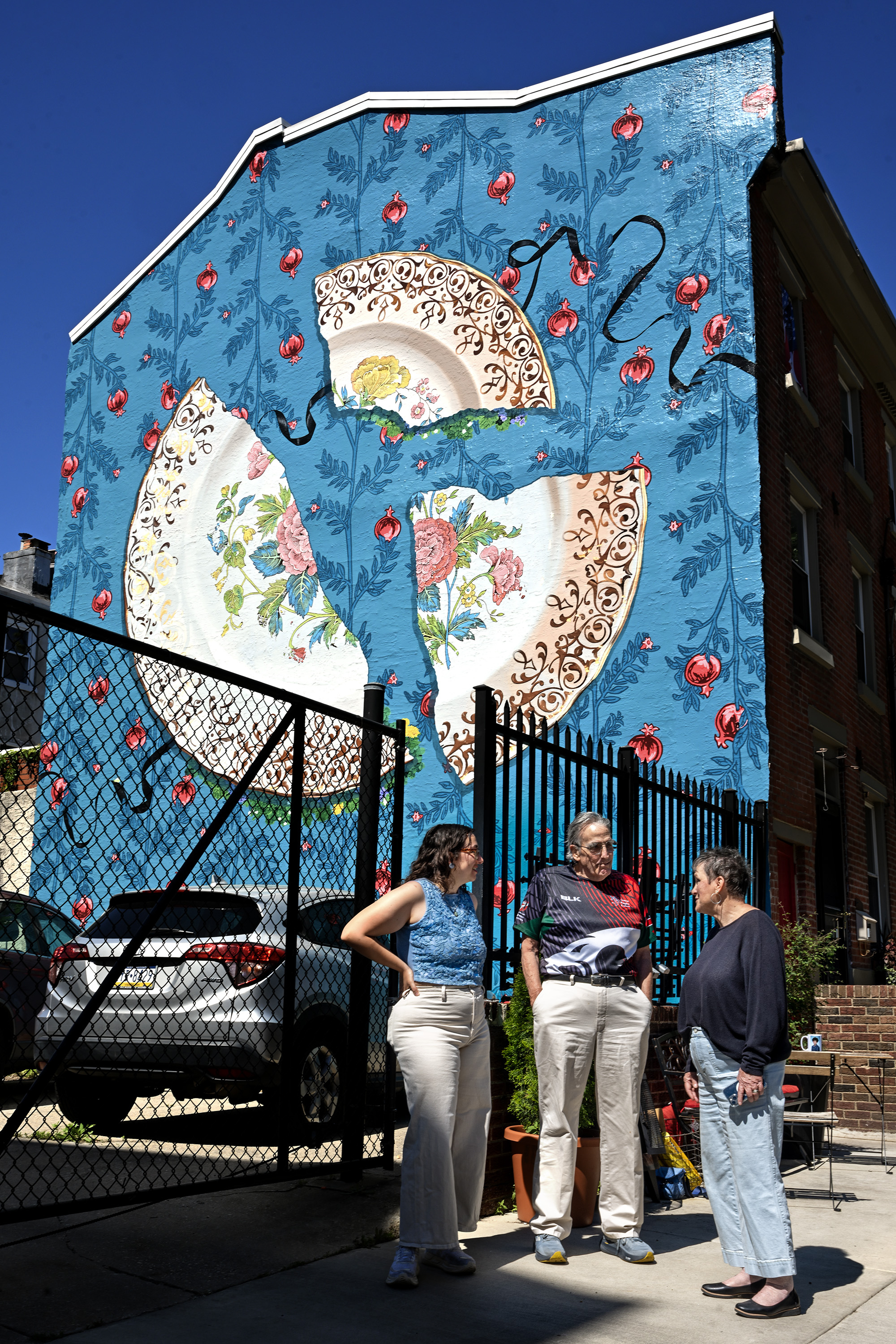
Artist Sammy Kovnat (left) talks with homeowners Sara and Clark DeLeon in front of their mural.Tom Gralish / Staff Photographer
“It’s the block’s mural, not just ours,” DeLeon said. “It’s become just a wonderful focal point.”
The DeLeons also discovered a surprising personal connection when they saw the artist’s plans that made the mural feel “like fate.” They had inherited a set of dishes from Clark’s mother with an almost identical design to the one on the large plate featured on the mural.
Kovnat makes mosaics using broken dishes, and painted the plate in shards as part of her work exploring healing after trauma. The background of the mural is an homage to her grandfather, the Philadelphia-based founder of a national wallpaper hangers union.
Whenever the DeLeons see people they don’t recognize looking at the mural, they always stop to talk and answer questions.
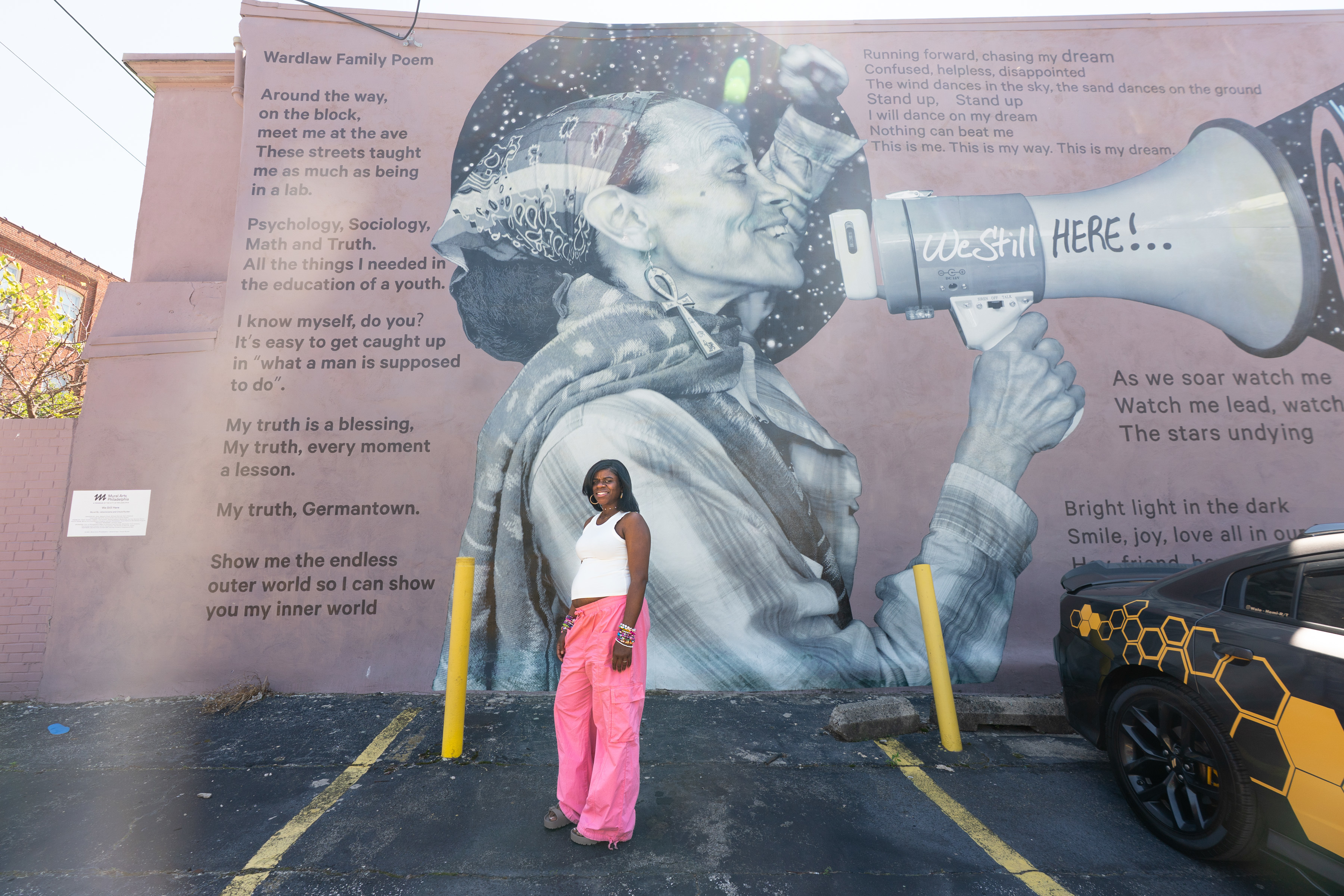
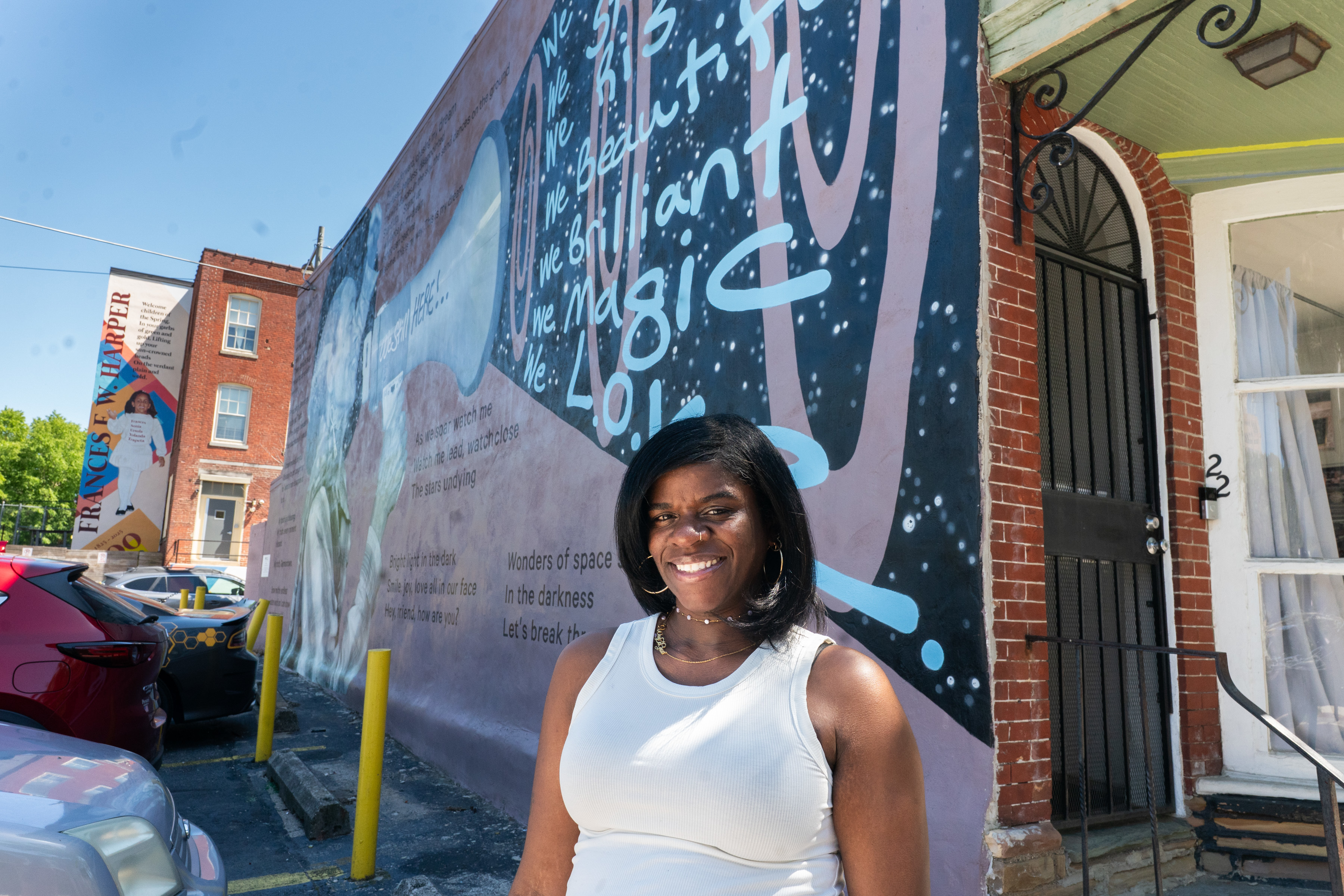
Shirley Wardlaw stands in front of the mural featuring poet and recording artist Ursula Rucker on her property, which includes a poem she wrote with her husband and daughter.Jessica Griffin / Staff Photographer
In 2019, a North Philadelphia mural of poet and recording artist Ursula Rucker was covered when a developer constructed a mixed-use building next to it. So Mural Arts invited artist Chip Thomas, aka Jetsonorama, to create another. The organization asked Shirley Wardlaw whether a mural of the Germantown native could go on her mixed-use building in Germantown.
Wardlaw operates a nursery school out of the building, and for a few years lived in the apartment above with her husband, Eckloff, and daughter, Sanayah. When the Wardlaws bought the property, the side wall had a partly sketched-out mural that had languished since Shirley was in high school. The wall was cracking, and it “looked pretty bad,” she said.
So Wardlaw applied to Mural Arts. And in came Jetsonorama.
Shirley Wardlaw worked with Mural Arts to get a mural on the side of her building, where she operates a nursery school.Jessica Griffin / Staff Photographer
“I was really attracted to his real-life art and the black and white photos,” Wardlaw said.
The mural features an image of Rucker holding a megaphone that amplifies a poem celebrating the community. Another poem was written by the Wardlaw family. Young people in the neighborhood also contributed poetry.
The mural “brought back life” to the area and is “a big attraction” for visitors, Wardlaw said.
“It’s a beautiful, colorful space at the end of our block,” she said.
Wardlaw thinks the mural helps draw families to her nursery school, and she has pitched murals to other neighborhood businesses as a way to attract customers.
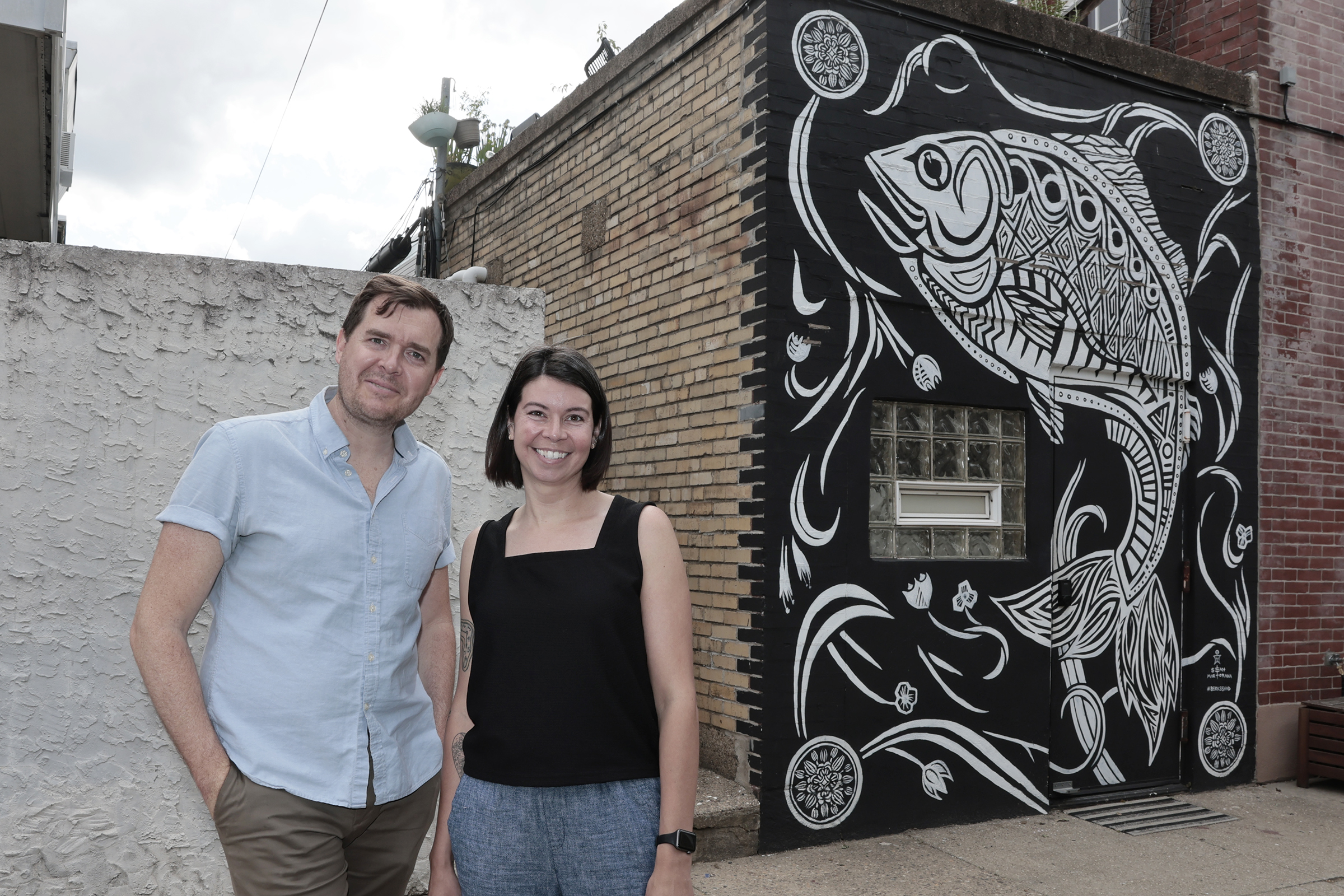
Christopher and Shannon Wink stand in front of the “Berks Shad” mural on their Fishtown home.Elizabeth Robertson / Staff Photographer
Berks Shad
The plain brick wall on Shannon and Christopher Wink’s Fishtown property was “screaming for a mural,” Shannon said.
The year after they moved in, it got one.
The Winks had known Philadelphia artist Sean Martorana for years and liked his style. So they asked him to paint the exterior wall of a structure that had been a cold storage room decades earlier. It was Martorana’s first outdoor mural.
“We knew we wanted something Fishtown,” Shannon Wink said. “It can easily get a little over-the-top, but it’s so nice to have a neighborhood that has its own visual identity.”
Martorana painted a giant shad surrounded by the Pennsylvania state flower, mountain laurel, in black and white, since the Winks didn’t want something too colorful. It all stands out next to the brick of their house.
“The way that the fish is oriented, it’s facing the river, which is something that Sean and we wanted to be really intentional about,” Wink said.
Sightseers often use their mural as a backdrop for photos. People have come in their wedding dresses.
The Winks’ two daughters were born after the mural was painted, so they’ve never known a home without it. The girls love walking around the neighborhood and seeing other decorated walls.
A neighbor of theirs, inspired by the Winks’ mural, gota similar one on their home, also painted by Martorana.
Wink encourages homeowners to get in on the city’s mural tradition.
“It’s just a really nice way to sometimes beautify, but also just create some more fun in a neighborhood,” she said.
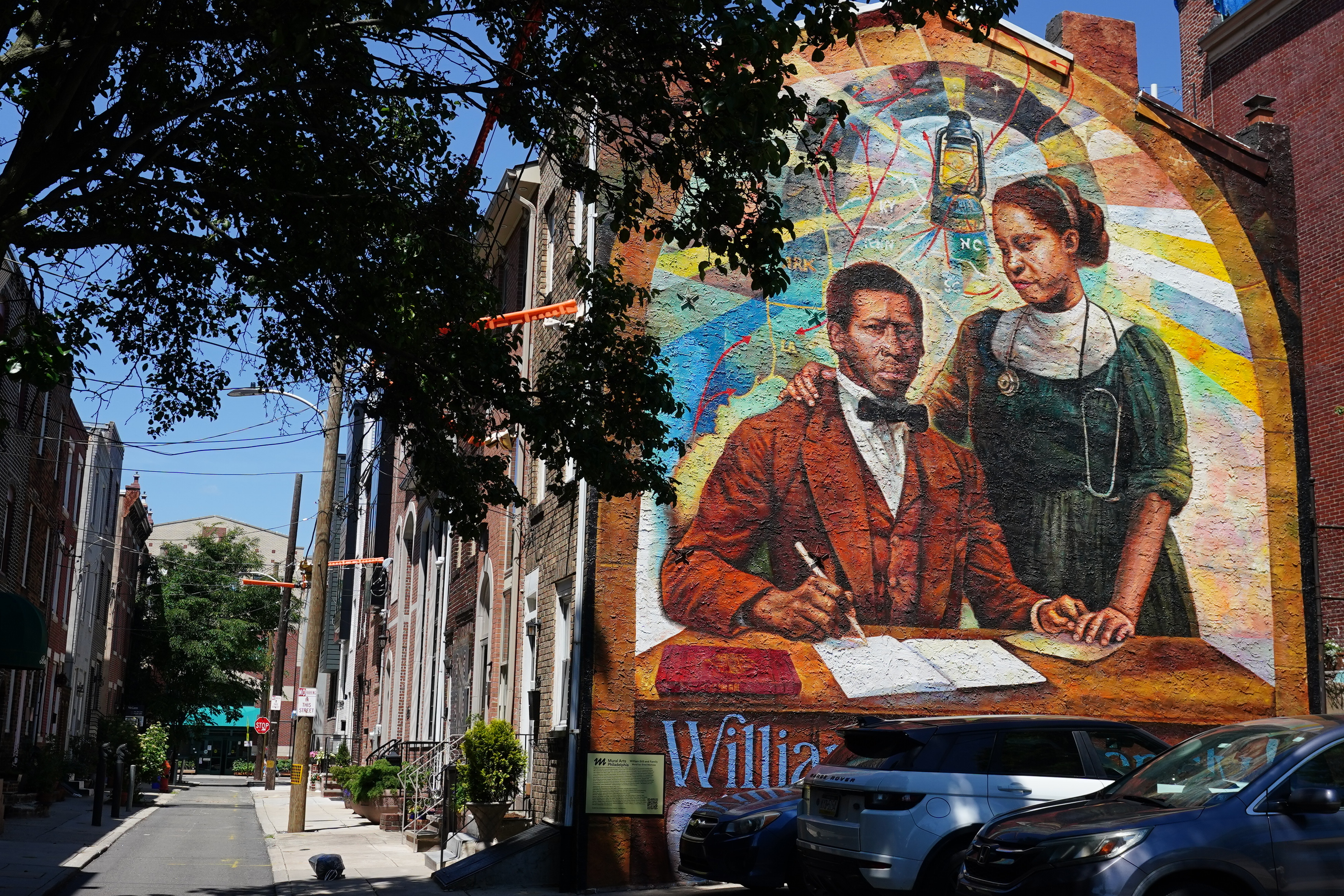
Mural Arts asked homeowner John Del Rossi for permission to honor William and Letitia Still, Underground Railroad leaders who once lived in the home. Jessica Griffin / Staff Photographer
John Del Rossi bought his Bella Vista rowhouse in 2006. But he didn’t know about its historic significance until 2018, when he learned the property was nominated for designation as the William and Letitia Still House, named for the Underground Railroad leaders who once lived there.
A few years after the house joined the Philadelphia Register of Historic Places, Mural Arts asked Del Rossi for permission for a mural to honor the Stills. He said hosting the artwork is an additional honor.
“The mural says a lot about what the house stood for,” he said. “It’s a visible representation of what took place in the home, and the sacrifice and the courage that people had in order to make that home what it was.”
During the design process, Del Rossi got to meet descendants of the Stills, which he called “a goose bumps type of meeting.”
“It was pretty surreal,” he said.
As the homeowner, he was invited to share his thoughts on the mural’s design, but he left the decisions to those who know more about art.
“I’m not an artist. I’m in medicine,” said Del Rossi, who works in California and rents out his home.
All mural expenses were covered, but he said he would have paid for the artwork himself if he had to in order to honor this piece of Philadelphia’s abolitionist history.
“I’m not gonna live forever,” Del Rossi said. “But hopefully, the mural will remain, and it’ll be a representation for the neighborhood and people in future generations to be able to see and understand what took place within those walls.”
Editor’s note: This story has been updated to correct the name of the mural, “Pomegranates and Plate Shards.”
A 45-year-old mother of four was beaten to death with a brick in North Philadelphia on Sunday, according to police.
Keisha Furlow was found in a rear alley on North Opal Street around 6:15 a.m. that morning by first responders, who pronounced her dead at the scene.
Furlow had suffered severe lacerations to her face, police said. Officers found two bloodied bricks on the ground near the woman’s body and believe they were used in the attack,which occurred around 2 a.m.
Investigators are searching for two people they believe are responsible for the attack, according to a law enforcement source who was not authorized to speak publicly given the ongoing nature of the investigation.
One of the attackers, captured on surveillance footage, appears to kick Furlow and beat her repeatedly with a brick, according to the source.
Investigators believe both assailants fled with Furlow’s purse after the attack. The department released an image of one of the suspects, a man, on Wednesday afternoon.
Furlow is a resident of the 2700 block of North Opal Street, according to police.
No arrests have been made, and homicide detectives continue to investigate.
Former City Councilmember Jannie Blackwell, who has been a fixture of Philadelphia politics for decades, is no longer a Democratic wardleader. State Sen. Sharif Street — weeks after losing the city’s heated congressional race — just became one.
And the Rev. Lewis Nash Sr., who in 2024 was removed as leader of the 47th Ward after The Inquirer reported he was recorded making anti-LGBTQ+ remarks, has returned to the post after being reelected in his North Philadelphia ward Monday night.
Meanwhile, the upstart group Wards That Work, which was backed by progressive activists and sought to recruit hundreds of people to run for committee openings in the May 19 Democratic primary, claimed victories in six wards that were previously seen as aligned with the party establishment or more centrist Democrats.
Despite those notable gains,fewer than one-third of Philadelphia’s 69 Democratic ward leaders are seen as closely aligned with the party’s left wing.
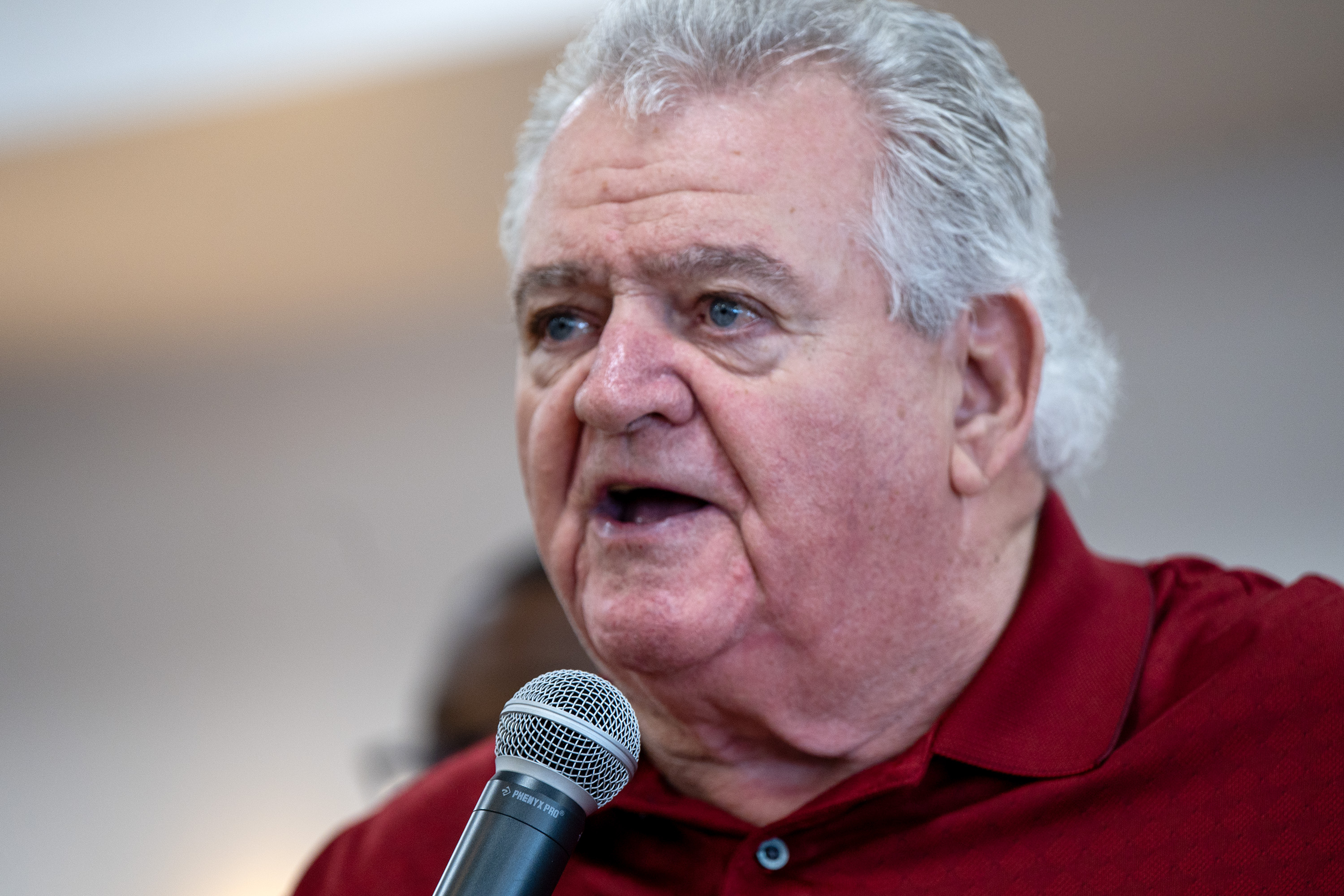
That means Bob Brady, who has led the local Democratic Party since 1986 and is seen by many as the embodiment of the political old guard, will likely coast to victory in party leadership elections — decided by the ward leaders — next week, securing an 11th term as chair of the Democratic City Committee.
The party’s internal politics have become a key battleground in the fight between progressive upstarts and the Democratic establishment. There has also been a renewed push to grow the number of “open wards” — those that allow committeepeople to vote on political endorsements rather than allowing ward leaders to decide unilaterally.
Brady, a former U.S. representative, has over the last few weeks struck a conciliatory tone regarding the party’s left wing after clashing with activists in a series of elections, most notably when the party sought to punish committeepeople who endorsed the elections of Councilmembers Kendra Brooks and Nicolas O’Rourke from the progressive Working Families Party.
“These labels — Working Families, Reclaim, socialist — the best labels they have that I love is they’re Democrats,” he said in an interview, referring in part to Reclaim Philadelphia, a group inspired by U.S. Sen. Bernie Sanders’ presidential runs that organized the local progressive movement’s first successful ward takeovers in 2018.
Now, he said, he is focused on unity as Democrats hope to make gains in this year’s midterm elections and defeat candidates aligned with President Donald Trump in future elections.
“We can come together and beat that nut in the White House,” Brady said.
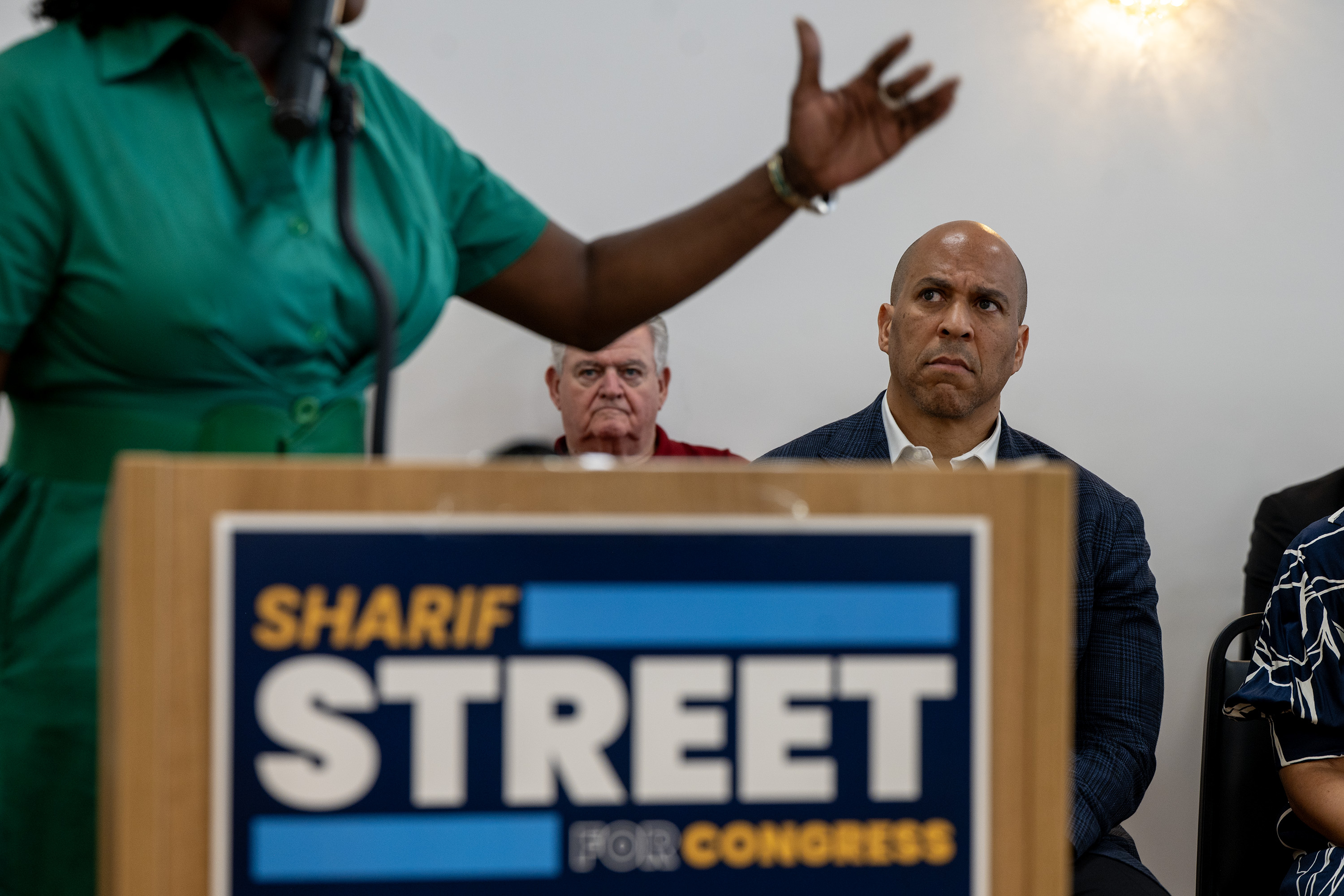
Philadelphia Democratic Party Chairman Bob Brady (left) and U.S. Sen. Cory Booker (right) listen as Mayor Cherelle L. Parker speaks in support of State Sen. Sharif Street at a get-out-the-vote rally at the Church of Christian Compassion in West Philadelphia Monday, May 18, 2026 the day before Tuesday’s Democratic primary election for the 3rd Congressional District.Tom Gralish / Staff Photographer
Earlier this year, however, Brady acknowledged that the Democratic City Committee funded mailers opposing some of the committeepeople backed by Wards That Work, and many on the left are still hoping for major changes in the local party.
District Attorney Larry Krasner, for instance, recently called on Brady to resign, and State Rep. Chris Rabb, a democratic socialist who last month won the Democratic primary for an open Philadelphia congressional seat, has emerged as a leading critic.
Rabb beat Street, the party’s endorsed candidate, in the 3rd Congressional District race, and has accused the city committee of neglecting the work of turning out the vote, instead concerning itself with backroom dealings among party insiders.
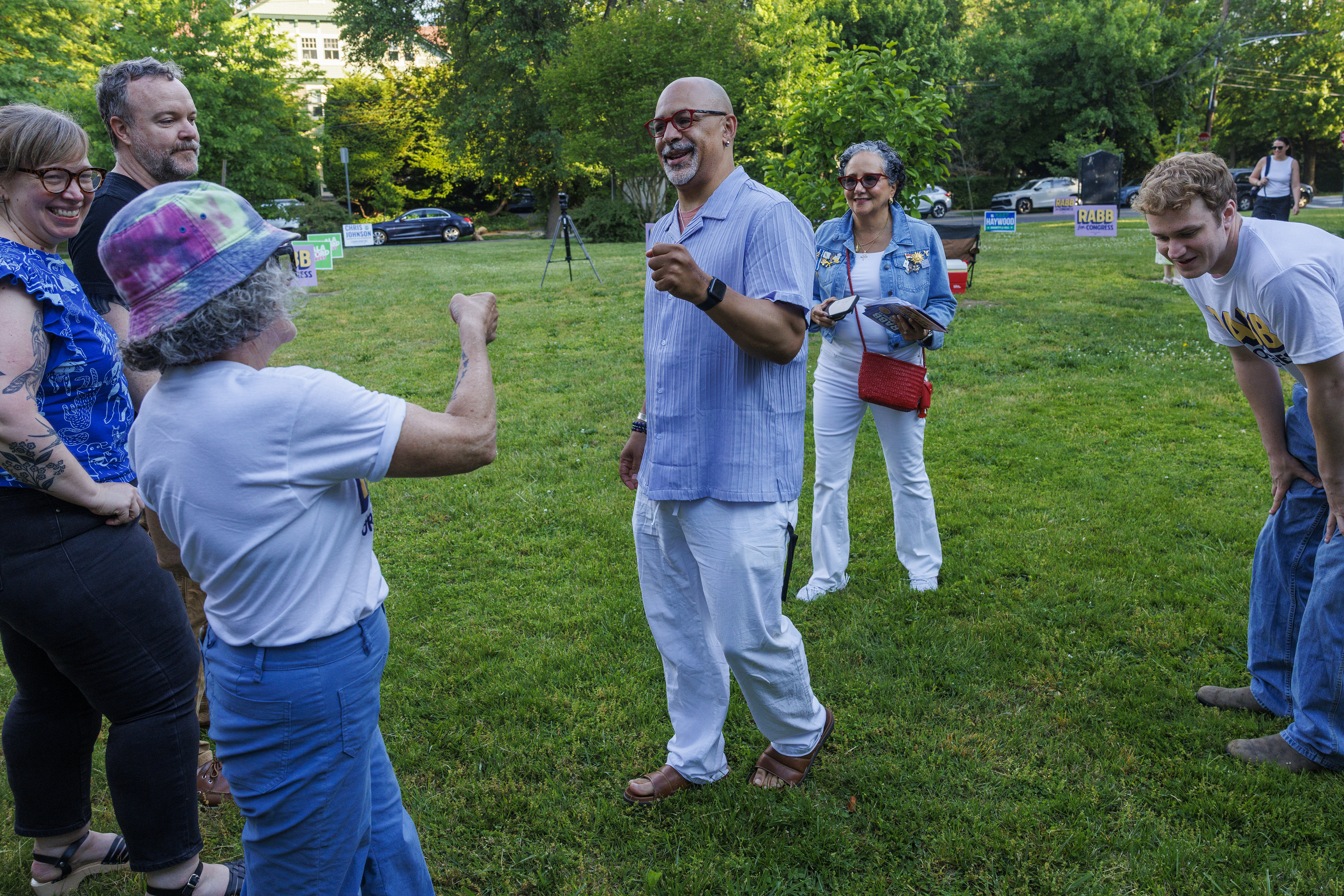
State Rep. Chris Rabb greets supporters on election day. He is arriving to his polling place to vote, Grace Epiphany Episcopal Church, Philadelphia, Tuesday, May 19, 2026.Alejandro A. Alvarez / Staff Photographer
Rabb has not explicitly called for Brady to resign. But he is now calling for a dramatic overhaul of the party, from its leaders to its bylaws to the city’s antiquated ward boundaries.
“What I’m asking for is for the ward leaders — whatever candidate is running for chair, whether it’s Bob Brady or anyone else — that they demand that their first order of business is to overhaul the bylaws by Labor Day [to focus] on building a local party built on transparency integrity and inclusion,” Rabb said in an interview last week.
Progressives make gains
On paper, Philadelphia’s Democratic Party structure is bottom-up. Every four years, during the primaries of presidential midterm cycles, registered Democrats elect two committeepeople from their precincts, as they did this year on May 19. The committeepeople then elect neighborhood-level ward leaders, and the ward leaders in turn elect the top officials in the city party, including Brady.
But in practice, many critics of the city’s old guard see a top-down reality, with Brady and other high-ranking city officials controlling the party’s agenda.
Progressives are hoping to wrest control of the party from the establishment or to force reforms that make it more hospitable to left-leaning candidates. But it remains an uphill battle given the diffuse nature of the party system.
Among the notable progressive wins in Monday night’s ward elections:
5th Ward (Center City): Ryan Alsayegh, a political consultant currently working for State Reps. Tarik Khan and Joe Hohenstein, unseated Mike Boyle.
25th Ward (Port Richmond, Kensington): Alexandria Mercedes Murphy, a neurophysiologist and volunteer with Reclaim Philadelphia, succeeded Tommy Johnson.
31st Ward (Fishtown, East Kensington): Molly Hartman, a staffer for Councilmember Rue Landau, faced no opponents in her bid to succeed Margaret Rzepski.
27th Ward (University City): Benjamin Moss-Horwitz, a staffer for State Rep. Rick Krajewski, won a contested race to succeed retiring ward leader Carol Jenkins, a party stalwart.
46th Ward (Squirrel Hill, Cedar Park): James Bridgeforth, a University of Delaware professor, ran an uncontested race to succeed Blackwell, who retired this year after defeating a progressive challenger for her ward in a contentious election four years ago.
In West Philadelphia’s 60th Ward, State Rep. Amen Brown, a centrist Democrat, was unseated by Lorraine White-Johnson.
White-Johnson, who had the backing of Wards That Work, said in an interview that she is not aligned with one faction and welcomes all Democrats. She added that she plans to explore opening up the ward but has not made formal plans to do so yet.
Philadelphia City Councilmember Cindy Bass on Thursday, September 11, 2025.Alejandro A. Alvarez / Staff Photographer
In Mount Airy’s 22nd Ward, Councilmember Cindy Bass declared herself reelected to a new term in a controversial move by saying she won a contested voice vote of committeepeople and denying motions for a roll-call vote that could have clarified the results. Her opponent, Octavius Price, was backed by progressive organizers and said he plans to challenge the election.
Some notable ward election results did not involve major ideological shifts.
Nash, who on Tuesday denied having made the anti-LGBTQ+ comments that previously cost him his seat, won a three-way race to reclaim the 47th Ward.
“I forgive everybody that was involved with those unforeseen circumstances,” Nash said in an interview Tuesday. “To anyone that was offended by the alleged comments, forgive me and the person who made those comments, allegedly and falsely, and let’s move forward.”
In a statement, Street said he would “take a back-to-basics approach, listening to my neighbors about their concerns and filling vacant committee member seats.”
“Last month’s election results galvanized my belief that we need to build the party from the ground up,” Street said in a statement. “We need to increase voter turnout in Black communities, like North Philadelphia, by demonstrating every day that Democrats are fighting for them.”
Staff writer Anna Orso contributed to this article.
The Justice Department has opened an investigation into whether the Philadelphia Police Department has been improperly revoking people’s gun permits, officials announced Tuesday — a remarkable development that puts one of the nation’s largest police forces under the scrutiny of federal law enforcement.
In a letter addressed to Mayor Cherelle L. Parker — which the Justice Department published online — Assistant Attorney General Harmeet K. Dhillon said the investigation “will evaluate the PPD’s policies and practices regarding issuance and revocation of licenses to carry firearms.”
If prosecutors determine those policies violate the Constitution, Dhillon said, the Justice Department could take the city to court.
Dhillon emphasized that federal officials “have not reached any conclusions” in their inquiry. And she said prosecutors would seek to speak with city and police officials throughout the course of their probe.
City spokespeople did not reply to requests for comment Tuesday.
The announcement came weeks after news reports detailed that police had revoked the gun permits of five members of a Philadelphia-based Black armed citizens group.
Members of the group, the Panthers, received letters from the city police department’s permitting unit in February, alerting them that their gun permits had been terminated and offering little explanation beyond saying the decision was based on “good cause” as well as “character and reputation.”
The notifications came shortly after some members got into a verbal altercation with police officers in North Philadelphia. Panthers members were patrolling the neighborhood carrying high-powered firearms at the time, and police said the confrontation “created an unreasonable danger to public safety.”
Panthers members, including the group’s leader, Paul Birdsong, have appealed the department’s decision and are awaiting hearings on the possibility of restoring their permits later this year.
Two members have had their permits restored since challenging the decision, according to Birdsong’s attorney, Lyandra Retacco.
Philadelphia has unique laws surrounding gun permits. In the city, unlike the rest of the state, gun owners are required to have a license to carry a firearm openly, and the police department has broad authority to revoke licenses.
The Justice Department said it planned to investigate whether the Philadelphia Police Department had become overly reliant on “a vague ‘good cause’ standard” in deciding whether to cancel permits.
“It is a violation of the Second Amendment for government officials to use vague, personal discretion when determining whether to issue or revoke permits to carry firearms,” the department said.
Jonathan Goldstein, a nationally recognized Second Amendment lawyer and University of Pennsylvania lecturer, said he considered the DOJ’s aims justified, given what he viewed as the Philadelphia Police Department’s “subjective” and “arbitrary” authority to revoke gun permits and infringe on firearms owners’ rights.
The government’s enforcement, Goldstein said, was “long since overdue.”
“It is refreshing to see that the DOJ has finally taken a focus on the Second Amendment seriously,” he said.
Goldstein, who also serves on the board of the National Rifle Association, said he was not aware of any specific instance in Philadelphia that may have resulted in the DOJ’s scrutiny of the police department. He said there had been numerous cases over the years in which he believed the city’s policies around permitting had violated gun owners’ rights.
Although the Justice Department’s inquiry is new, the city has faced other challenges in seeking to tighten regulations around firearms.
Mayors and City Council members for decades have sought to ban assault-style weapons, limit handgun purchases, or prohibit guns at recreation centers, but courts have consistently found such restrictions were unlawful.
The Pennsylvania Supreme Court in 2024 also ruled unanimously against the city’s attempt to overturn a state provision that prevents the city from enacting its own gun laws.
That has not stopped city officials from pursuing litigation. Earlier this spring, Parker’s administration sued the firearms manufacturer Glock Inc., accusing the company of using deceptive marketing practices to target young people.
He called himself “the Beast,” and he killed six people in six months.
Several of his victims were retail store workers who gave up cash or goods during robberies, and he decided to shoot them anyway. One of the victims was his mother — he shot her at her office because he wanted the payout from her life insurance policy.
On Tuesday, Keith Gibson, 44, was delivered a measure of accountability for his killing spree — one of the worst in recent city history — when a jury convicted him of four counts of first-degree murder and related crimes for the killings he committed in the city in 2021.
He was immediately ordered to serve four consecutive life sentences in prison. That’s on top of the seven life sentences he had already been handed for two murders and a string of robberies he committed in Delaware.
The case attracted attention when the crimes happened five years ago, in part because some of Gibson’s targets were compliant and effectively defenseless when he shot them. In one murder, at a Dunkin’ store in Fairhill, surveillance video showed an employee speaking with Gibson for several minutes and handing him cash before he shot her in the head and left her for dead.
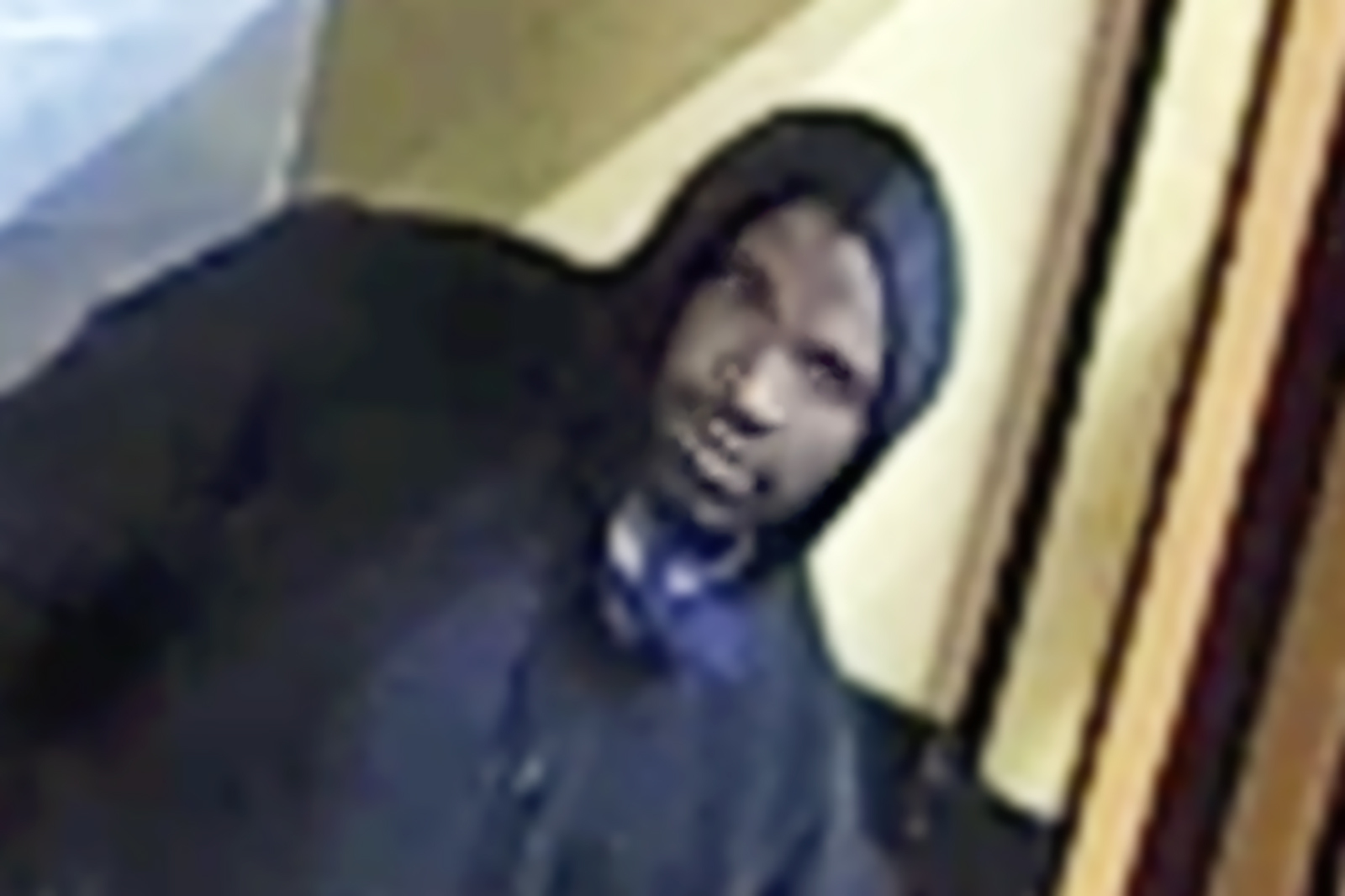
Surveillance video showed Keith Gibson inside the Dunkin’ before he shot and killed Christine Lugo in June 2021. Courtesy of Philadelphia police
Assistant District Attorneys Jeffrey Hojnowski and Katie Wood called Gibson’s crimes despicable.
“These were regular, ordinary people, fellow Philadelphians going about their business, trying to work, and they were gunned down callously, needlessly,” Hojnowski said. “This was never about the money. This is about control. This is about dominance.”
The case also stood out because of questions about why Gibson had been free to kill in the first place. In April 2021, he was jailed in Delaware for a probation violation, and a probation officer told a judge that police considered Gibson a suspect in his mother’s killing. But the judge ordered Gibson released, and in the weeks after, he went on to kill three more people.
The weeklong trial that led to his conviction in Philadelphia relied heavily on surveillance video and ballistics evidence. Testing showed that Gibson had used the same revolver in every crime, and officers in Wilmington found the gun as they arrested him for robbing a Rite Aid store.
A former friend, Amanda Masteller, took the stand and testified that Gibson, who she said referred to himself as “the Beast,” carried that revolver everywhere — including into her house and around her children when she let him stay in a spare room from time to time.
She wanted to tell him to stop coming over, she said, but the gun and his aggressive demeanor left her afraid of what might happen if she did so.
“I was petrified of this man,” she said.
Gibson’s crimes
Gibson’s killing spree began Jan. 28, 2021, at Al-Madinah Traders store in Germantown. There, he rummaged through the shop and stole several watches. He forced employees Roy Caban and Eric Flores into a back room, where he shot Flores in the head and Caban in the back as he tried to flee.
The following week, Gibson set out after his own mother.
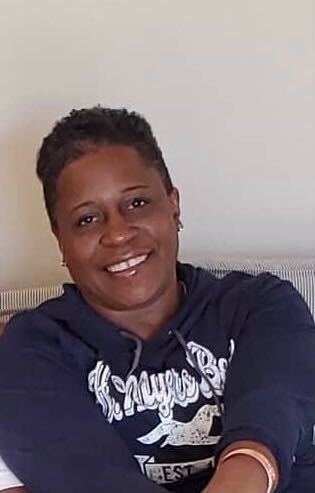
Christine Gibson, 54, was shot and killed by her son, Keith Gibson, in February 2021. She worked as the director of a mental health program at a community center in East Falls.Courtesy of David Thornton
Christine Gibson, 54, told family members she was afraid of her son and wanted him to move out of her North Philadelphia home. And, prosecutors said, she had made plans to remove him as the beneficiary of her life insurance policy.
On the morning of Feb. 8, Keith Gibson accompanied her to the United Peers Community Center in East Falls, where she worked as the director of a mental health counseling program. Once inside, he took her to a small office room in the rear of the building and shot her in the back of the head. Her body was found two days later.
Soon after, probation officials in Delaware sought to have Gibson held in jail, filing paperwork saying he was a suspect in his mother’s killing and that violated the terms of his probation from a 2010 manslaughter conviction.
But Superior Court Judge Vivian L. Medinilla declined to extend Gibson’s time in custody. He was released in late April.
A few weeks later, in late May, Gibson robbed an AT&T store in Elsmere, Del., of cash and phones, and shot and killed the store attendant before stealing her car.
And in early June, his crimes continued in Philadelphia.
Surveillance video played at trial showed Gibson wandering the city on foot before dawn on June 5. After leaving his house on the 2700 block of North Croskey Street at 4:25 a.m., evidence showed, Gibson walked about a mile and a half to the Dunkin’ at Fifth Street and Lehigh Avenue.
Christine Lugo was unlocking the store to start her shift when Gibson walked over to her with his gun and shoved her inside.
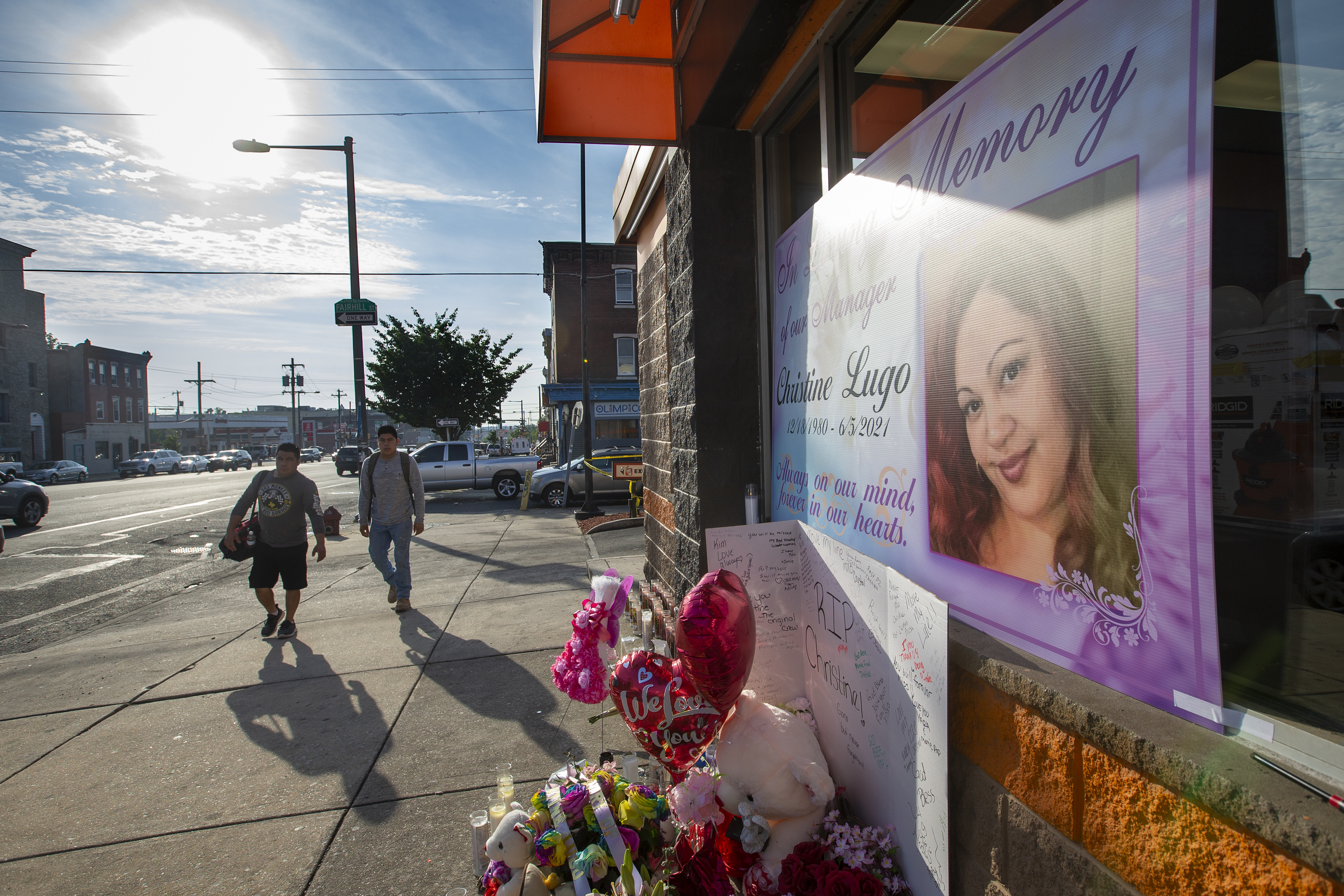
Christine Lugo was killed during a robbery at the Dunkin at 532 W Lehigh Ave. on June 5, 2021.
Cameras from inside the store captured the lengthy encounter. Lugo did not appear to panic, and was not aggressive toward Gibson. Instead, she could be seen shrugging at times and showing Gibson her wallet, as if to suggest she didn’t have anything for him to take.
Eventually, she sat down on a chair in a closet-size office and gave Gibson about $300 from the cash register trays.
Gibson then glanced at his watch, shot Lugo in the head, and walked out.
Later that day, he went to Wilmington, where he shot and killed Ronald Wright, 42, during a robbery.
His string of crimes began to unravel there three days later, when he robbed a Wilmington Rite Aid and stole a bag of cash — with a tracking device inside. Police quickly arrested him with a revolver behind a rowhouse. Ballistics tests later showed the same gun had been used at Al-Madinah Traders and in the killings of Gibson and Lugo.
Tips from the public identifying him in surveillance footage then bolstered the investigation. After Lugo was killed, police released some footage from the incident to try to identify a suspect. Masteller — his former friend from Delaware — said she saw it and called to tell police the man in the video was Gibson.
Gibson’s attorneys, Jonathan Strange and Brian Johnson of the Defender Association, said homicide detectives rushed to tie Gibson to other crimes as a means of closing old, unsolved cases. They failed to collect or test certain evidence, Johnson said, including surveillance video and DNA in some of the cases.
“The police had to take the easy way out,” he said.
Following his convictions, Gibson, in a lengthy ramble, said he was not happy with his legal representation and intended to appeal his convictions. He was not guilty, he said. And he only briefly addressed his victims’ families, saying: “I’m extremely sorry for your loss.”
It brought no comfort to the loved ones of his victims who had filled the courtroom throughout the trial.
Lugo’s children, Frances Rodriguez and Christian Lugo, said the disturbing video of their mother’s death will remain etched in their memories. Still, as prosecutors played it several times, they stayed to watch.
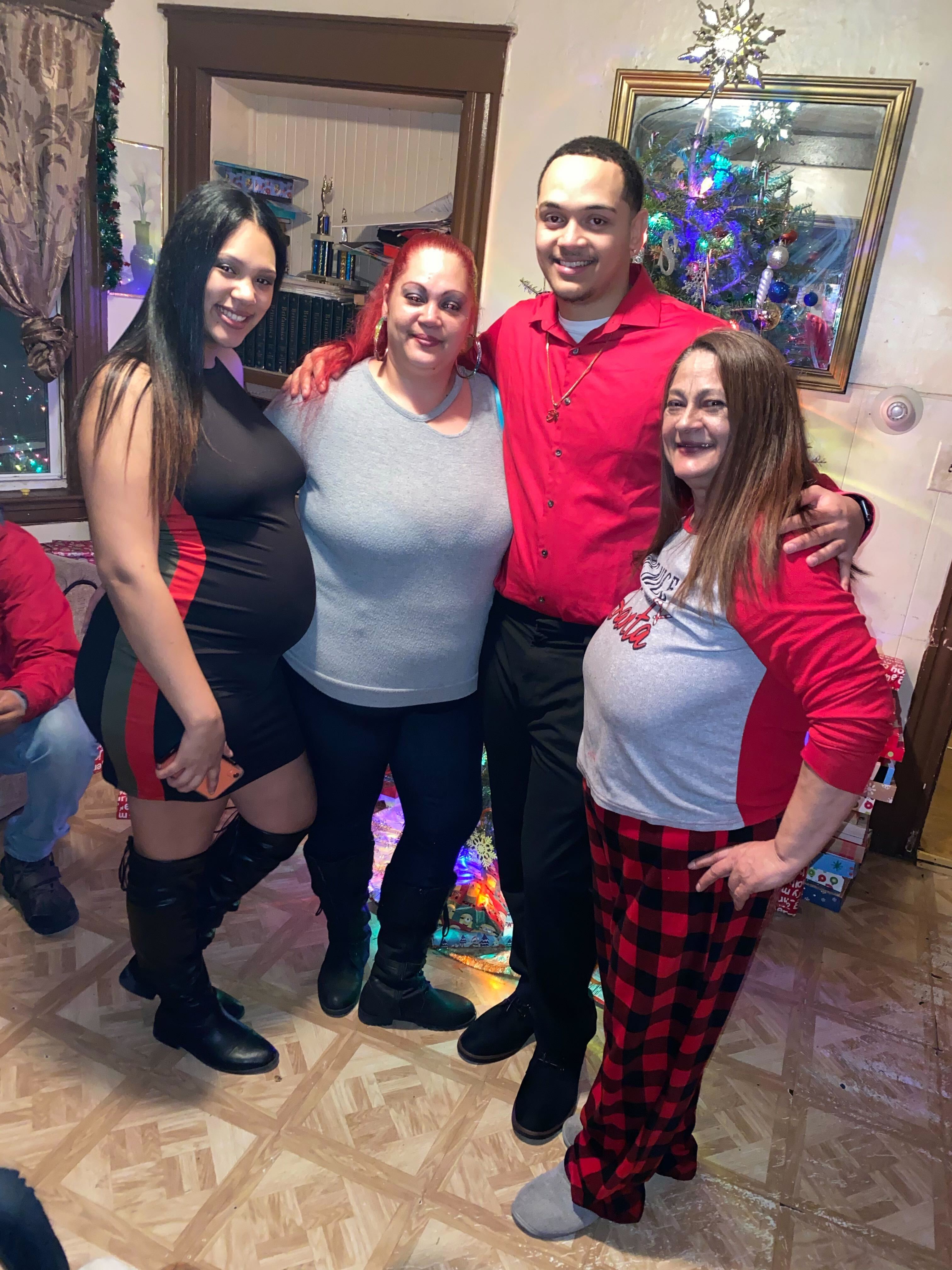
Left to right: Frances Rodriguez, Christine Lugo, Christian Lugo, and another family member celebrate Christmas.Courtesy of Frances
“I didn’t want my mom to be alone,” said Rodriguez, 27. “She already had to experience it alone already.”
Lugo, originally from Massachusetts, had a vibrant laugh and believed fiercely in giving people second chances, they said. She had two children and three grandchildren.
Also in the courtroom Tuesday were members of Gibson’s family, who had spent years praying he would be held accountable for killing his mother.
David Thornton, 68, said his nephew stole the golden years of his sister’s life.
Christine Gibson overcame years of addiction, he said, and went on to earn a master’s in sociology from Widener, bought a house in Philly, and was working a job she loved. She was strong, outgoing, and full of joy.
She had told Thornton she was afraid of her son, he said, but did not want to call the police.
“She’d say, ‘That’s my son,’” Thornton said. “That was her only child.”
They never imagined it would come to this.
“Some things,” he said, “are not meant to be understood.”