State and federal authorities on Friday arrested a man in North Philadelphia who was wanted in connection with a fatal shooting on I-95 last year that left a 21-year-old bystander dead.
The U.S. Marshals Service announced that authorities apprehended Wilfredo Ortiz-Suarez, 47, who is the third person to face charges related to the March 29, 2025, killing of Aiden Zeallor. Investigators described Zeallor, of Levittown, as the victim of errant gunfire that flew into his car while he was driving on I-95 near the Port Richmond section of the city at about 2:30 a.m.
Ortiz-Suarez was wanted by state police — which is handling the investigation — on murder, conspiracy, and related charges. Authorities executed a traffic stop to arrest him at about 1:45 p.m. Friday on the 3700 block of North Broad Street near Erie Avenue.
The apprehension comes about a month after police arrested two others they say were involved in the killing: Alondra M. Lopez, 28, and Joseph G. Toledo-Gonzalez, 27. Both face charges of murder, attempted murder, and related crimes.
It was not immediately clear what role police believe each defendant played in the shooting. State police did not immediately respond to a request for comment Saturday.
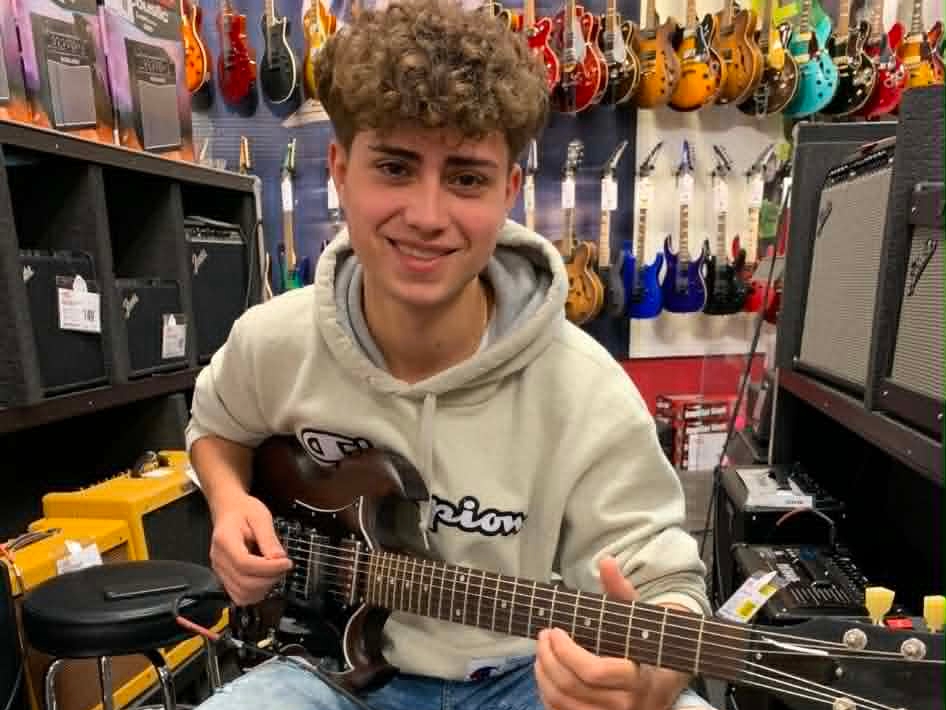
A photo of Aiden Zeallor.Denise Donahue
Police said previously that Zeallor and a friend were driving northbound on I-95 when someone using a semiautomatic weapon fired more than 50 rounds toward another vehicle, which investigators believe was the intended target. Two bullets went through Zeallor’s windshield and struck him, and he died at an area hospital hours later.
The driver of the other vehicle that was targeted by the bullets was also wounded.
Court documents that have been filed so far in the case do not describe the motive.
Ortiz-Suarez did not yet have an attorney listed in online records.
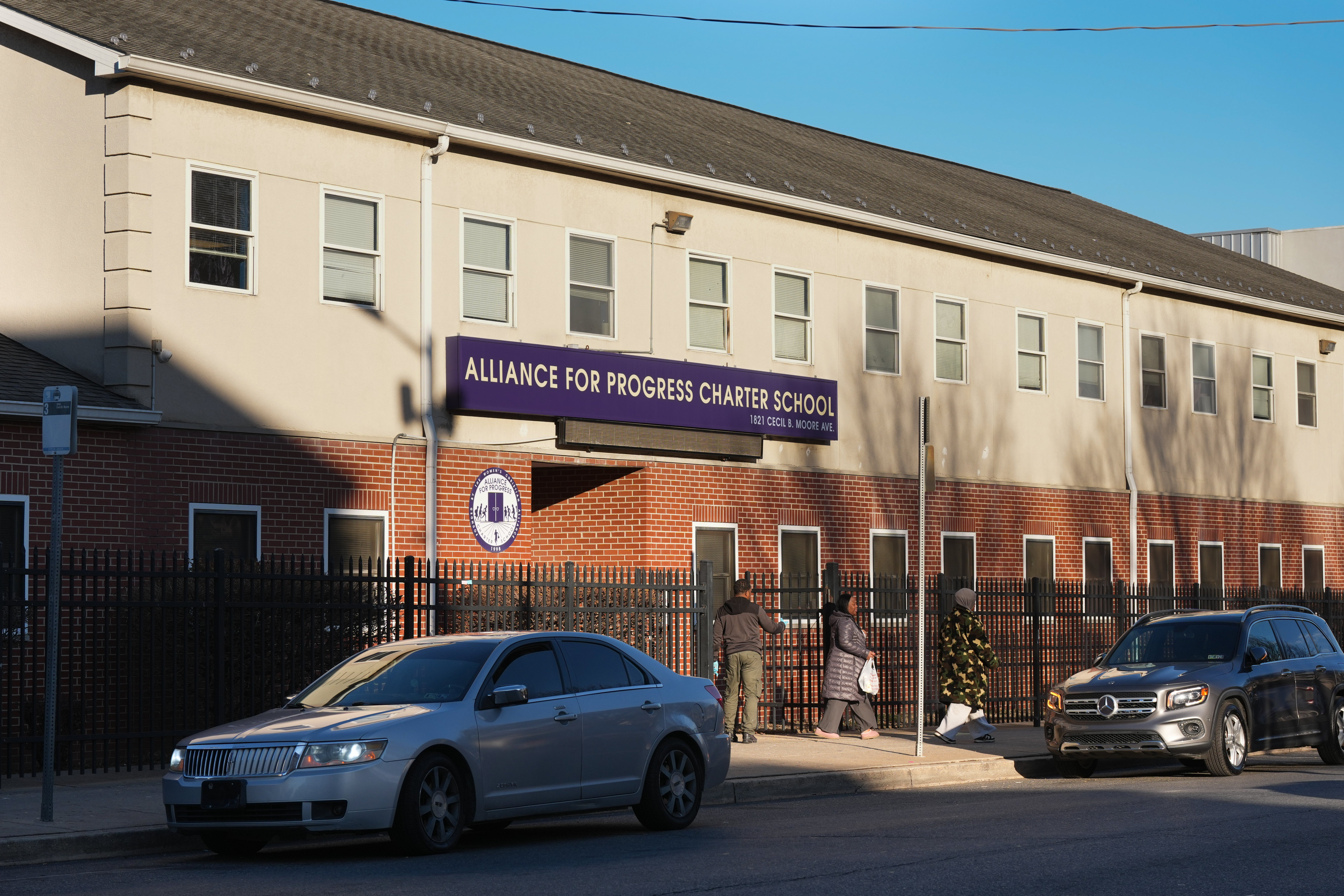
Alliance for Progress Charter School, a North Philadelphia charter roiled by turmoil, has a new leader.
Emmanuel George is now interim chief executive officer, the school’s board of directors chair said in an “important leadership update” recently sent to families. He replaces Stacey Scott, who served as Alliance’s CEO for several years.
George hails from New York City,where he spent 16 years as an educator and administrator in the charter sector. He describes himself as a consultant and school turnaround specialist.
It was not clear whether Scott was fired or voluntarily left. Larry Griffin, the board chair, did not address the circumstances surrounding Scott’s departure in his letter; he did say that Scott “will work with Mr. George to ensure a smooth and orderly transition.”
Alliance for Progress’ charter is up for renewal by the Philadelphia school board this school year.
Alliance, on Cecil B. Moore Avenue, has churned through staff in recent years. Paraprofessionals without college degrees or educational licenses are providing instruction, according to multiple people inside the school. Alliance also kept students on its rolls who did not attend, leading to state payments for children it did not educate, according to people inside the school.
Scott had been working remotely after an Aug. 25 incident in which she stormed into a meeting at the schooland began cursing at Eric Langston, the new principal.
George began his job on Sept. 26. It’s not clear exactly when Scott left her CEO role.
“You can’t trust this snake! Motherf—!” Scott allegedly said when she interrupted Langston’s meeting, according to people with firsthand knowledge. She then walked out of the room, shouting “F— this school,” and left the building.
Langston, who started working at Alliance this summer, had sent an August email to the board outlining concerns about the school, and Scott’s leadership in particular.
Langston spelled out issues around “Scott’s leadership and decision-making, including questions about whether decisions are consistently being made in the best interest of the school,” according to the email, which was obtained by The Inquirer.
Langston said his concerns “have reached a level that gives me significant pause regarding leadership practices, organizational culture, transparency, and the long-term health of Alliance.”
Griffin, in a statementThursday, said, “Alliance continues our review of matters identified by” the Inquirer story. “Given that, we still have no comment at this time.”
Continued worries
An Alliance staff member said the year is still concerningly chaotic.
On one recent day, a lockdown was called around lunchtime because a student could not be located, said the staffer, who asked to remain anonymous for fear of reprisal.
Ten minutes into the lockdown, it was discovered that the student didn’t actually attend Alliance.
“You aren’t aware that you may be missing a student until noon, and someone didn’t even know that student wasn’t in their class,” the staffer said.
“The staff are all great, but we’re all in the same mode of frustration, where we don’t know what’s going on. There’s a lack of communication from higher up. We’re frustrated and worried for the kids.”
Administration seems most focused on the school’s charter renewal, the staffer said.
The staffer said some Alliance students, especially the older ones at the600-studentK-8 school, have picked up on the problems.
“The kids know there’s such a turnover rate, and they can push teachers out. And there’s no consequences for them. They understand the dysfunction, they see teachers leaving all the time. They see their test scores — they’re aware that they’re really behind in reading. Not one grade, the entire school.”
Griffin, in his letter to families, said he knew transitions brought questions, and vowed the board would “remain actively engaged in supporting Mr. George, our faculty and staff and the school community. Our responsibility is to provide the leadership, oversight and stability Alliance needs to continue moving forward.”
The school’s direction must remain clear, Griffin wrote.
“Alliance for Progress exists to create opportunity for our students and help every child learn, grow and succeed,” Griffin said. “That means keeping students at the center of our decisions, supporting the people who serve them every day and strengthening the systems and practices that allow our school to deliver on its mission.”
St. Christopher’s Hospital for Children named Claire Alminde permanent president on Thursday, following a period of leadership turmoil at the North Philadelphia safety-net institution.
Alminde, who will continue to serve as chief nursing officer, had taken over in January from another acting president.
“Claire brings a unique combination of frontline clinical experience and hospital leadership, along with firsthand knowledge of what it takes to operate a hospital like St. Chris that plays such a vital role in Philadelphia and beyond,” St. Chris said in an email.
One of Alminde’s tasks will be to work with leaders at Nemours Children’s Health, Jefferson Health, and Temple Health to build an alliance announced in July to secure the future of St. Chris, which struggles financially because most of its patients have low-paying Medicaid insurance.
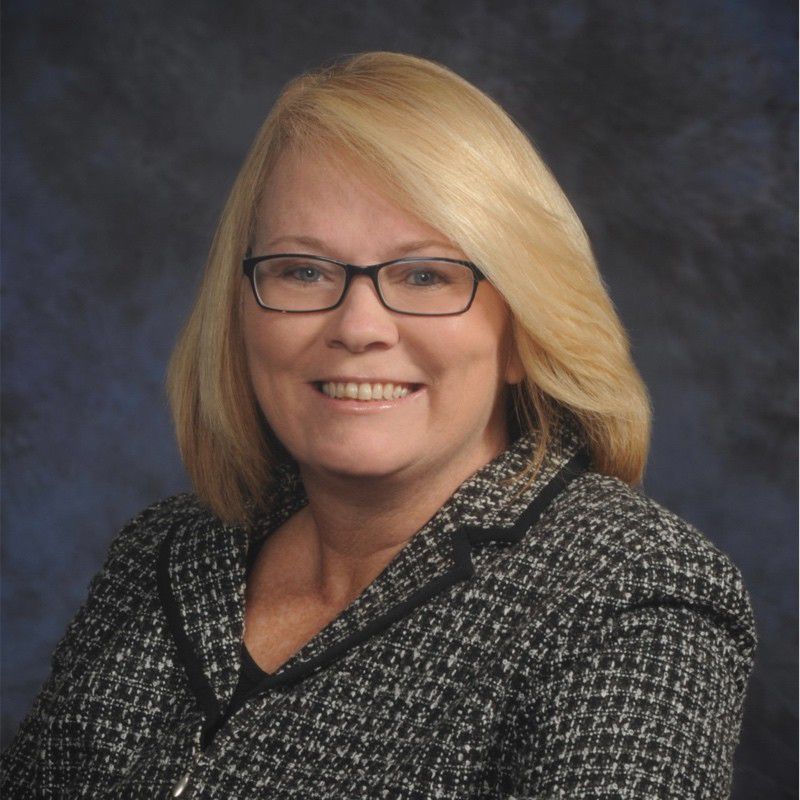
St. Chris’ chief nursing officer, Claire Alminde, has been named president of the North Philadelphia safety-net provider.St. Christopher's Hospital for Children
Alminde was the third interim or acting executive appointed to the top management position at the nonprofit hospital since February 2024 and its fourth leader since 2020.
Drexel University and Tower Health have owned St. Chris in a 50-50 joint venture since 2019. Tower oversees day-to-day operations.
“After several years of leadership changes, this appointment gives St. Christopher’s strong, permanent leadership from someone who knows our hospital, our people and the community we serve incredibly well,” Tower CEO Michael Stern said in a message to employees. “Claire understands what makes St. Chris such a special place and what it will take to move us forward.”
The safety-net provider received a $76 million revenue boost from its inclusion for the first time in a program that taxes Philadelphia hospitals and uses the money to increase the government’s Medicaid funding for facilities that disproportionately care for low-income patients.
An 83-year-old woman sitting on the steps in front of her house was wounded by stray gunfire from what police believe was a shootout early Wednesday evening in North Philadelphia, police said.
The woman was struck twice in the torso from two bullets around 5:15 p.m. on the 2300 block of North Gratz Street, Chief Inspector Scott Small said.
She was taken to Temple University Hospital, where she was listed in stable condition.
Police found more than 40 spent shell casings at the scene fired from two different-caliber firearms, Small said.
Nearby on Gratz Street, police found an empty sedan crashed into a light pole with its engine still running and a handgun inside, Small said.
Video showed a blue Honda Accord heading east on Dauphin Street. It stops and someone gets out and starts shooting, Small said.
It was not clear whom that person was shooting at, Small said.
The leader of a Philadelphia offshoot of the Black Panther Party for Self-Defense was charged with a firearms crime for carrying a concealed gun without a permit in the city of Chester — and the group’s growing visibility in the Delaware County community is sparking a clash with the city’s mayor.
Paul Birdsong, who founded Philly’s Panther group, was arrested this summer during what the group says was an armed community patrol of Chester’s streets.
Birdsong had been carrying two holstered handguns, one of which police said was partially obstructed by his waistband and constituted carrying a concealed weapon, according to the affidavit of probable cause for his arrest.
Birdsong, 40, is out on bail and appeared earlier this month in Magisterial District Court, where a judge ruled he should stand trial for that crime.
The judge dismissed two counts of disorderly conduct and one count of resisting arrest stemming from the July 11 incident, court records show.
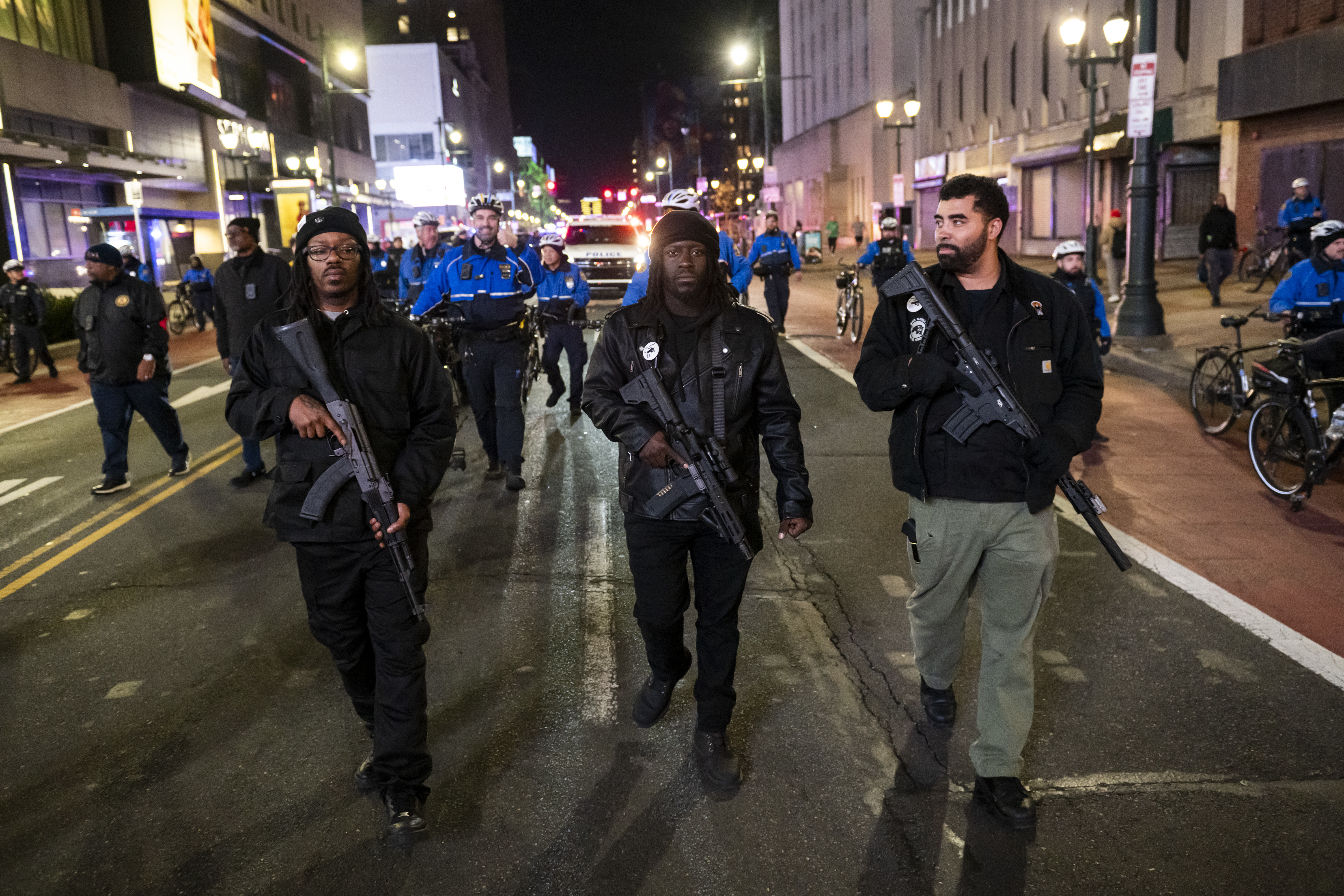
Birdsong’s arrest, as well as the arrest of another Panthers member in Chester in August, marked the latest run-in between police and the armed citizens group, which is styled after the 1960s political and militant organization. The Panthers first made headlines this winter during anti-ICE protests during which they carried assault-style weapons in Center City.
Panthers members say they are Second Amendment advocates and regularly conduct patrols in the name of public safety. They say the guns are not meant to intimidate, but to deter crime and encourage responsible firearms ownership. The group also holds weekly giveaways of food and essential supplies for those in need.
To address the Panthers’ presence, Roots and members of Chester City Council met with Birdsong and other members in a closed-door meeting on Tuesday.
Councilmembers appeared to have left the meeting with supportive views of the group. But tensions flared when Roots grew frustrated during talks and abruptly left the gathering early, according to Birdsong.
Roots declined to comment Tuesday, saying only that he had not been aware of the Panther members’ arrests. He did not immediately respond to an additional request for comment Wednesday.
A spokesperson for DOJ did not return a request for comment on the status of the investigation. A police spokesperson referred The Inquirer to the city’s law department, which declined to comment.
After the restrictions in Philadelphia, Panthers became active in Chester, where members have patrolled in the past.
In July, Birdsong was armed when he was stopped by a police officer near Barclay and West 5th Streets, according to the affidavit of probable cause for his arrest.
The officer said that he recognized Birdsong from a past encounter in Chester, and that he stopped him after seeing one of his handguns holstered “inside his right pants pocket with the majority of the firearm being concealed from view,” the document said.
Birdsong questioned why he was stopped and began to record the interaction, the affidavit said. He began to “curse and yell” when additional officers arrived, and he was detained, the document said.
In an interview this week, Birdsong disputed the officer’s account. He said that the gun was clearly visible and that he believes the enforcement was racially motivated.
“They’re arresting us as an effort on their part to bully us, to scare us,” he said.
Carrying a firearm in the open without a license is legal in Pennsylvania — but not in Philadelphia, where a license is required to carry either open or concealed.
Birdsong’s lawyer, Lyandra Retacco, said the matter would be resolved in court.
The July incident was not the only time Panthers have clashed with Chester police.
On Aug. 28, member William Ozah was charged with disorderly conduct and evading arrest after police said he ran from an officer who attempted to stop him for having a knife protruding from his pants pocket, according to the affidavit of probable cause for his arrest.
The officer used a Taser to subdue Ozah, the document said. During the chase, the officer said, Ozah tried to reach into a satchel, which he believed concealed a firearm.
After detaining Ozah, officers recovered a knife and a Bryna SD pepper-ball pistol — a less-lethal firearm that uses compressed gas to shoot projectiles filled with a chemical irritant.
He was held for court on both charges, court records show.
Meanwhile, Panthers have continued their Chester presence.
In addition to armed patrols, the group is handing out informational pamphlets to those curious about the group’s mission: to “protect and defend ourselves and our beautiful Black people,” it said.
The group had arrived, the pamphlet said, because “people reached out to us for help.”
This article has been updated to reflect comments made by Birdsong’s attorney.
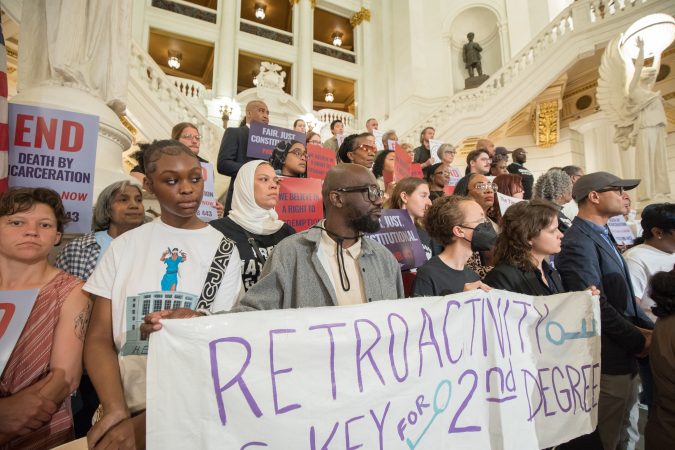
The high court will rule in the case of Jerome Coffey, a Philadelphia man convicted in a 1992 killing in which prosecutors said a group of men posing as law enforcement officers boxed in a man’s car and shot him.
The court’s decision will reach well beyond Coffey. It will settle whether roughly 1,100 people — including more than 500 convicted in Philadelphia — can ask judges for new sentences, or will remain bound by a punishment the state’s highest court has ruled unconstitutional.
In a unanimous decision in March, the justices said Pennsylvania’s mandatory life sentence for second-degree murder violates the state constitution’s ban on cruel punishments.
Second-degree murder covers killings committed during another felony — even when the defendant did not kill anyone. The high court held that judges must weigh a person’s individual role before imposing a punishment that lasts a lifetime.
But the high court did not say whether its ruling applied to people who had already been sentenced. Instead, it put the decision on hold for 120 days so the General Assembly could write a new sentencing law and, if lawmakers chose, decide the question of retroactivity themselves.
The legislature did neither, as measures introduced in both the Republican-controlled Senate and Democratic-controlled House failed to advance.
Coffey was convicted in 1994 in the death of Johnny Moss two years earlier. According to court records, three men got out of two cars that had pinned Moss’ vehicle near 24th and Thompson Streets in North Philadelphia. One man shouted “task force” and pulled Moss from his car.
Moss was shot in the head. His brother, who was standing beside the car, was shot in the arm.
At trial, prosecutors said Coffey was the man who shouted “task force,” while Coffey’s mother and sister testified that he was at home that night. The jury convicted him of second-degree murder, conspiracy, and related crimes. It acquitted his codefendant, Lee Smith, of all charges.
No physical evidence tied Coffey to the killing, his lawyers have said, and a key prosecution witness recanted before trial. The lawyers also said prosecutors withheld evidence that could have helped Coffey, but the state Superior Court rejected those contentions.
And on Tuesday, the state Supreme Court declined to review them, limiting the scope of his appeal to the sentencing question alone.
Even so, Bret Grote, the legal director of the Abolitionist Law Center, which represents Coffey, praised the court’s decision to hear the case.
“This is what those who have been serving this sentence have been waiting for,” said Grote, who also represented Derek Lee, the Pittsburgh man whose appeal of his life sentence for his second-degree murder conviction led to the court’s decision in March.
Grote said Coffey, who founded the grassroots Human Rights Coalition from prison, will be “well able to demonstrate” why the decision “should apply to people like him who need to be home with us out here in our communities.”
Because Coffey’s case began in Philadelphia, the district attorney’s office will argue for the state in his appeal. In an interview Tuesday, District Attorney Larry Krasner reiterated his support for retroactivity, saying, “We cannot have a legal system where people sit in jail for the rest of their lives for an unconstitutional sentence.”
He added that “this office, consistent with its obligation to seek justice and uphold the Constitution, will support retroactivity” in Coffey’s case.
Prosecutors elsewhere have signaled resistance, however. In August, the Pennsylvania District Attorneys Association’s communications chair, Berks County District Attorney John Adams, said prosecutors would not concede that the high court’s ruling applies retroactively without a new sentencing law.
Coffey’s case is unlikely to be resolved quickly. And in the meantime, lawmakers could still act.
Some stakeholders have predicted that legislative agreement on how to handle such cases is more likely after the Nov. 3 elections. A law that applies to people already serving the sentence could make the court’s answer moot.
But the outcome was always likely to land back with the high court without action by lawmakers, said Ben Lerner, a former Philadelphia Common Pleas Court judge and former chief defender.
“I’m not surprised,” Lerner said Tuesday. The high court, he said, was going to give the legislature “the first crack” at reforming the system. But if it failed, “the court was always going to have to step in and do what needs to be done.”
“It’s too important an issue,” he added. “Too basic a right.”
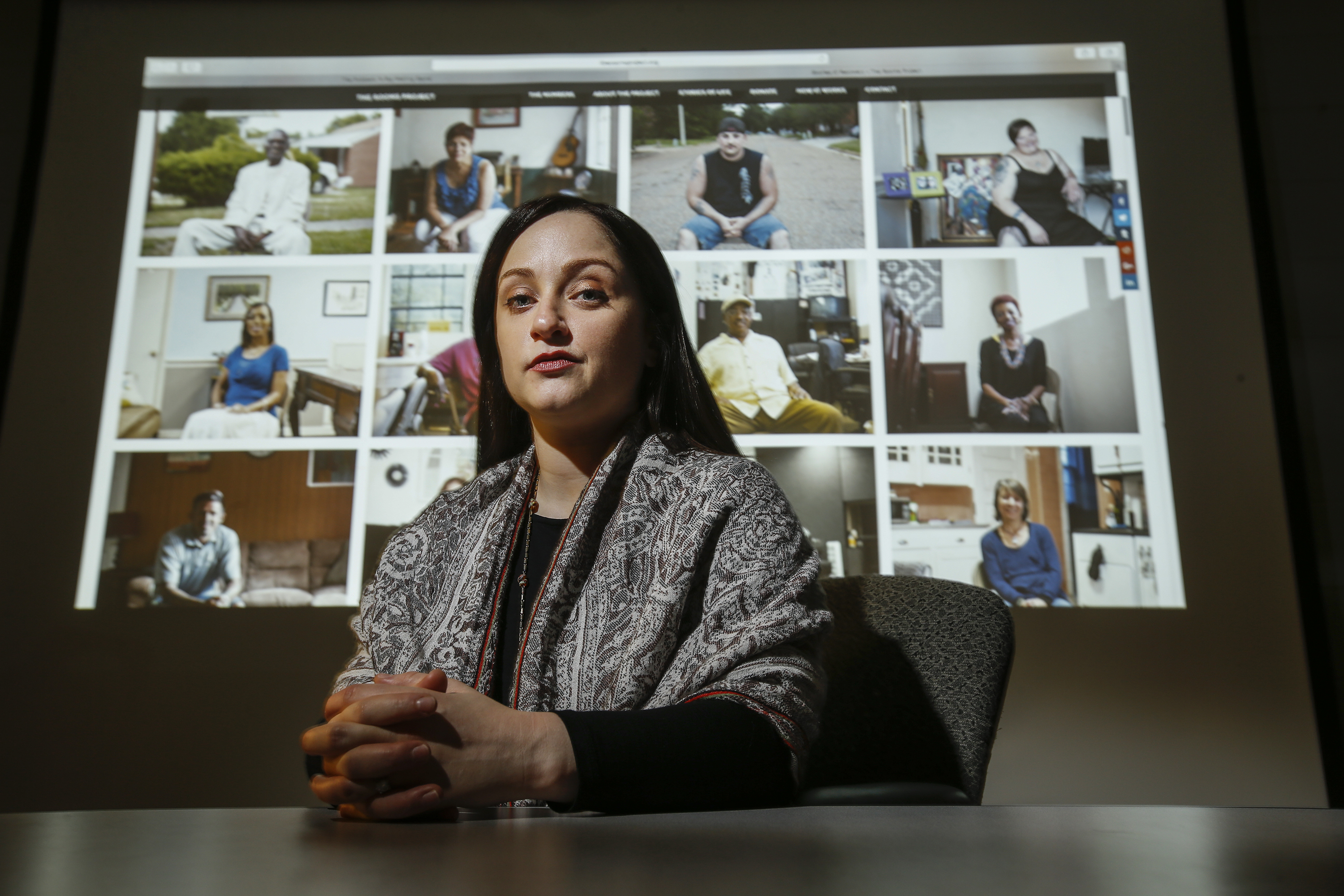
Kensington Voice — the independent, nonprofit newsroom and community hub covering the lower Northeast and North Philadelphia — has ceased publication.
“Kensington Voice has run out of money needed to pay our staff,” said Jillian Bauer-Reese, cofounder of Kensington Voice in a letter to readers published Monday.
The outlet’s website, which provided news, guides, community-authored opinions, and neighborhood resources created with community reporting, has been largely dormant for months.
“We should have shared this update sooner,” Bauer-Reese explained. “We stayed quiet while we worked through what would happen next, and that process has taken much longer than we expected.”
The hub is working with partners to preserve Kensington Voice’s work and resources, Bauer-Reese said, and to continue any ongoing projects where possible. The small news organization’s archives will stay online. Staff members — the hub employed six to eight journalists at its peak — had been laid off during the weeks and months leading to the announcement.
Funding for Kensington Voice — which operates with nonprofit status through a fiscal sponsor, Movement Alliance Project — had been a challenge for the last two years, Bauer-Reese wrote on the site.
“Thank you to everyone who read our work, shared it, trusted us with their time and their stories, corrected us, and helped make Kensington Voice what it has been,” she said.
News by and for residents
Serving the neighborhoods of Kensington, Fairhill, Harrowgate, Norris Square, and Port Richmond, Kensington Voice aimed to be something new when it was founded by Bauer-Reese and more than a half-dozen of her journalism students. Its communal reporting on the opioid overdose epidemic, housing, homelessness, poverty, and quality of life considered solutions to issues of inequality that have plagued North Philadelphia communities for decades.
As the neighborhood seemed to suffer worse than ever from the grip of drugs and violence, Kensington Voice became an advocate for a community often overlooked — and stigmatized. Like when a 2018 New York Times Magazine story famously referred to the languishing community as the “Walmart of Heroin.”
“The idea for Kensington Voice came from a hunch I had that in a neighborhood often at the center of our national news media’s drug and addiction journalism, the news and information needs of the community itself weren’t being met,” she had said in 2019.
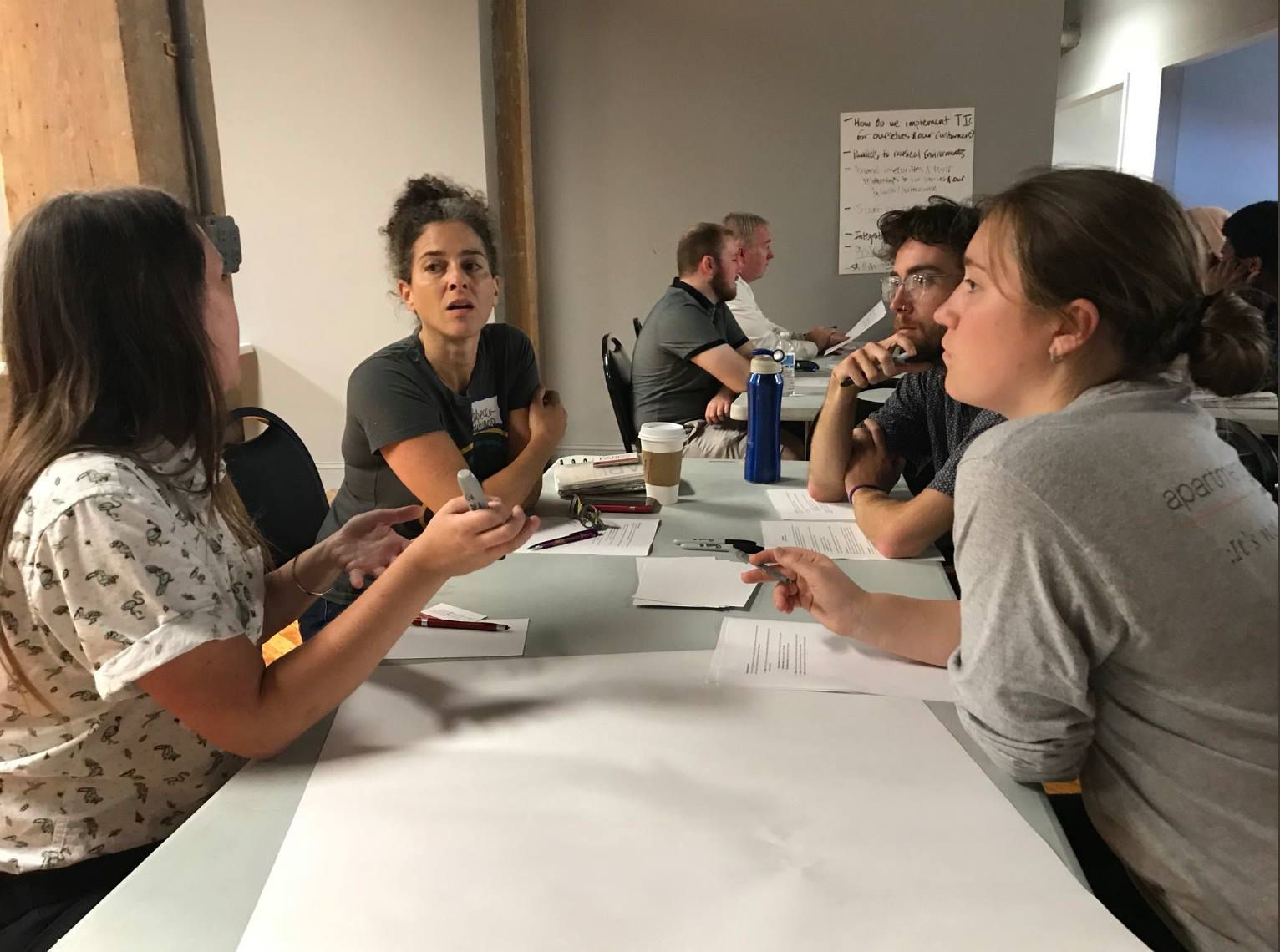
A Kensington Voice meet-and-greet in October 2018 at Impact Services. The event brought together community partners to talk about ideas for news coverage of the area.Handout
Within months, Bauer-Reese and her students operated a rotating pop-up community newsroom, run out of libraries, rec centers, and on street corners, and putting community voices foremost. At these pop-up stations, residents submitted story ideas and built storytelling bridges, where the realities and solutions of the community-led reporting. Reporters would meet residents at tables. Some residents published their own stories.
“The more I work in the community, the more I realize how the work of journalists impacts those who live and work there,” Bauer-Reese said in 2019.
During the peak of the opioid overdose crisis in Philadelphia in 2022, when more than 1,400 people died in Philadelphia from drugs, the Kensington Voice relied on shoe-leather reporting from the front lines to draw attention to the city’s struggling response.
The newsroom shared empowering first-person narratives from people in addiction building new lives, young mothers navigating complex support services systems, and the writings and art of gifted local high school students.
“I look up at that blue sky and wonder how much longer will it be blue until it is filled with smog,” wrote 16-year-old Kensington student Jazielys Serrano in a 2024 poem published through the hub’s Youth Voices Program.
Amid the challenges of reporting on the largest open-air drug market on the East Coast, Kensington Voice’s coverage received criticism as being too sympathetic to people who use drugs.
That was the point, Bauer-Reese explained. Flipping the lens so the most vulnerable had a chance to be heard.
“By being a part of the Kensington community and helping neighbors share their own voices, we hope to shed a new light on this community,” Bauer-Reese said in 2019.
Fading funding
Staffed by reporters, photojournalists, and editors at its peak, Kensington Voice began to leak funding as attention slowly began to fade from the neighborhood.
Before going dormant in the spring, the outlet published reports about medical mobile service bans in Kensington, police brutality, Mayor Cherelle L. Parker’s affordable housing plan, and plans to renovate Kensington’s embattled McPherson Square. The newsroom detailed community members’ heightened anxiety over U.S. Immigration and Customs Enforcement in North Philadelphia. It also published guides helping citizens connect with vital public resources, like information on how to report illegal dumping and abandoned cars, and where to find jobs, housing, and health support.
The work — and the relationships — will live on, Bauer-Reese wrote.
“What this community built with Kensington Voice doesn’t end here,” he said.
Temple University Health System saw a $22.7 million operating profit in the year that ended June 30, up slightly from $21.9 million in fiscal 2025, the North Philadelphia nonprofit told bondholders this week.
The result showed solid business operations while the system was “navigating intense professional liability and inflationary headwinds in a competitive Philadelphia healthcare market,” Temple said in an email to The Inquirer commenting on the results.
Here are more details:
Revenue: Temple’s total revenue rose nearly 10%, to $3.62 billion in fiscal 2026 from $3.29 billion the year before. Outpatient surgeries and cancer services were among the significant contributors to revenue growth from patient care, Temple said in its notice to bondholders.
Expenses: Insurance expenses climbed $19.3 million because of “higher professional liability costs related to inflationary legal expenses and the accelerated settlement of claims to mitigate rising awards by local courts,” Temple said.
Notable: Temple reported a 12% decline in cardiology procedures in fiscal 2026, to 4,654 from 5,274 the year before, because an unspecified number of physicians left. “As of late summer, 100% of these cardiology positions have been successfully filled,” Temple said.
In the past, principal Shauneille Taylor had no way of knowing when one of the children at Edward Gideon Elementary School had witnessed a shooting, or an incidence of domestic violence, or seen a parent arrested.
The child might walk into the North Philadelphia school the next day and act aggressively, or appear withdrawn, or shut down, and adults would wonder why — sometimes, they might even assign disciplinary consequences for acting out.
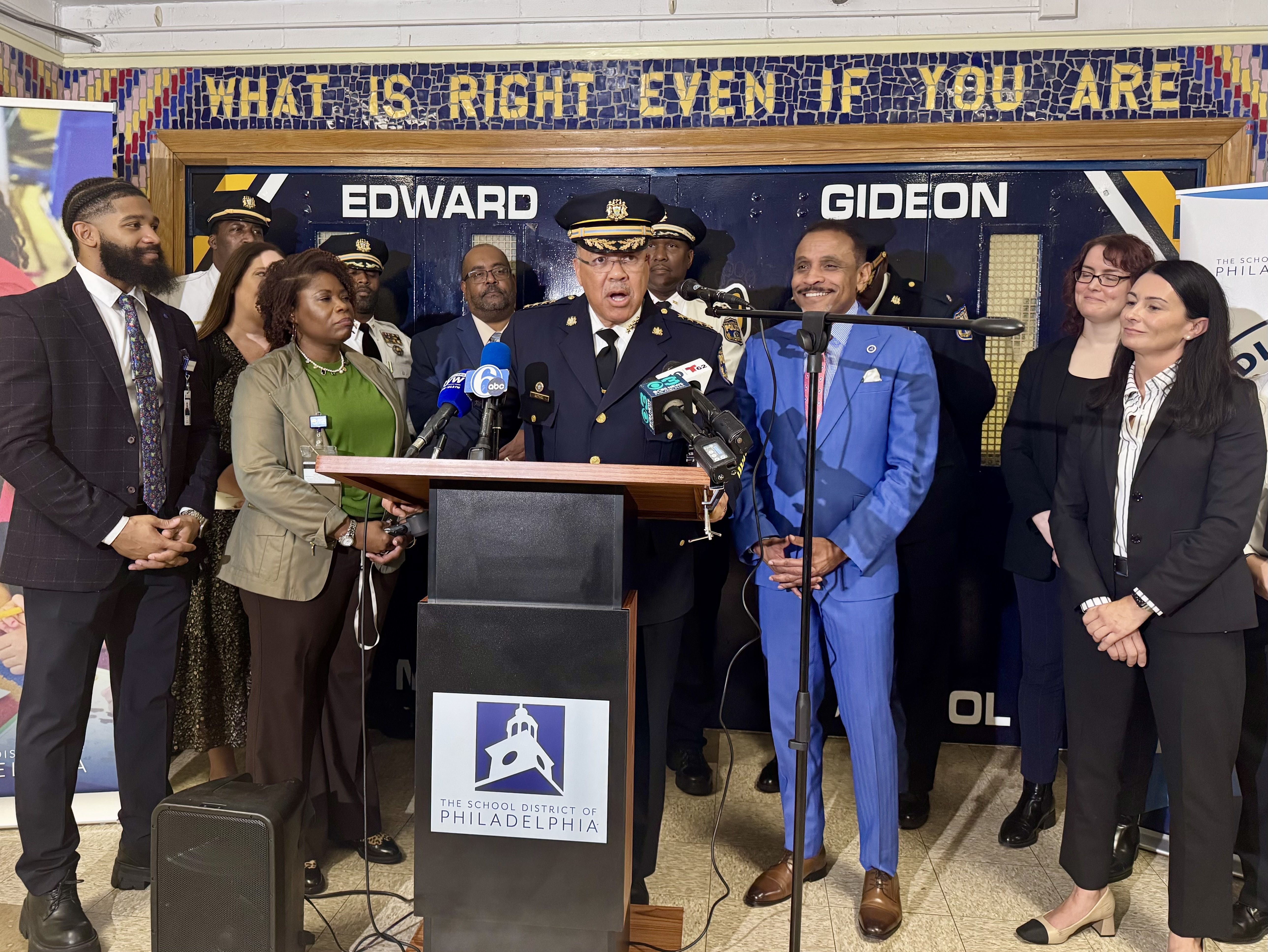
That changed with an initiative piloted at Gideon and 14 other city schools, now going districtwide, Philadelphia Police Commissioner Kevin Bethel and Superintendent Tony B. Watlington Sr. announced Monday.
The “Handle With Care” program allows officers to make referrals to schools attended by child witnesses to crimes. Schools are then alerted that one of their children may need extra attention, with staff trained in trauma-informed practices and poised to offer more support.
“Having that heads up has made a profound difference for our school,” Taylor said at a news conference in a Gideon hallway Monday.
The program is the brainchild of Bethel, a former district safety chief and longtime city officer, who dreamed for years about figuring out a way to better care for kids who witnessed traumatic events.
In 2024, the district used a $1 million federal grant to launch a “Handle With Care” pilot in 15 schools in North Philadelphia. That money paid for training and a dedicated staffer.
A $200,000 state grant will fund the staffer’s work going forward, officials said.
Officials “didn’t want to assume that everyone understands trauma, how to identify the warning signs, and how to provide that support,” Bethel said. “So we had the opportunity to provide training to Philadelphia police officers and school-based staff, not only on how to understand trauma, but on how to provide meaningful support. Through this pilot, we were able to provide that support to more than 70 students who may otherwise have walked into school carrying the weight of what they experienced without anyone knowing that they just needed a little extra care.”
It’s certainly a shift from years ago, Bethel said, when “the word trauma wasn’t really part of our vocabulary in policing or frankly, much of the conversations around children and their experiences.”
“But we understand today more than we do ever what young people experience and how those experiences affect their behavior, their ability to learn, their relationships, and their development. Our young people are exposed to significant levels of trauma,” he said.
When children witness traumatic events, officers have the ability to trigger Handle With Care alerts. A point person at the child’s school will then be alerted — not with the details of the incident, just that this student needs extra support because of an event.
It “gives the school an opportunity to intervene … rather than waiting until a child’s trauma manifests its way into a disciplinary action or academic, emotional problems,” Bethel said. “Early recognition creates an opportunity for early intervention.”
When Martha Glasco was growing up in North Philadelphia, she said, her opportunities were limited.
So when a teacher told Glasco — now an adult with a bright child of her own — about a new program that aimed to give promising Philadelphia kids six years of medical-school education with an eye toward careers in healthcare, Glasco was thrilled.
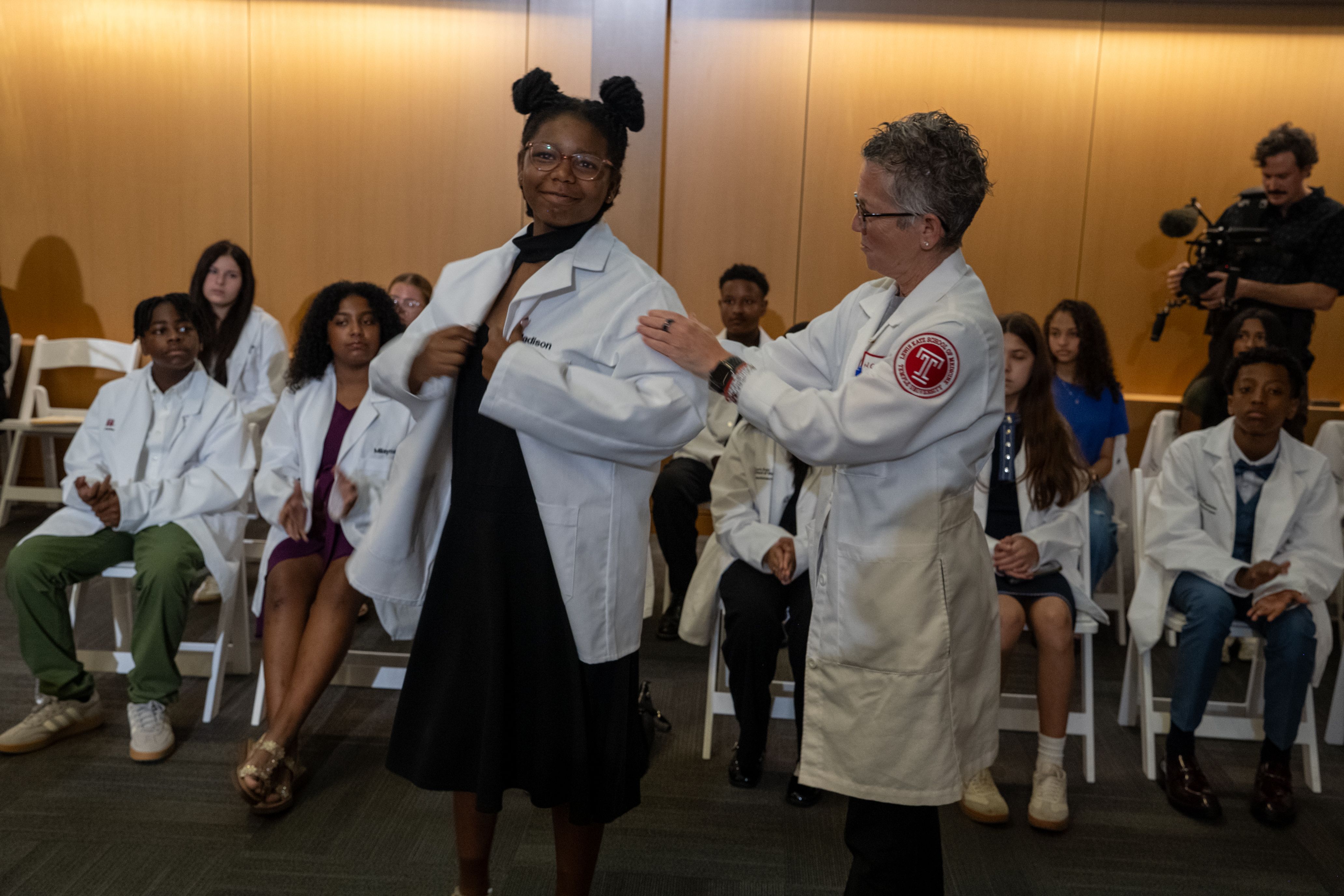
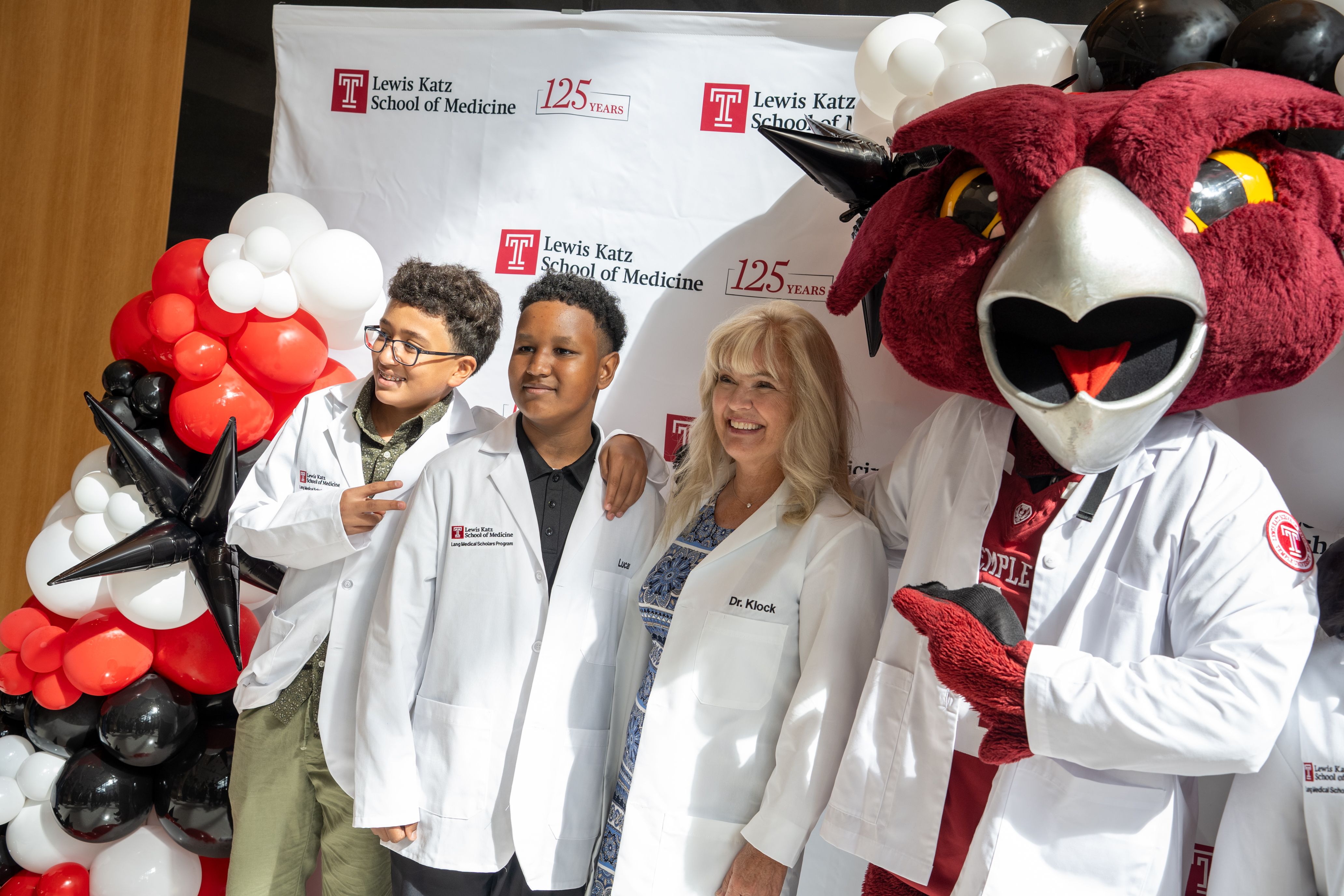
This month, Glasco’s daughter Madison Miller slipped a white coat over her shoulders, one of 32 Philadelphia seventh graders chosen for the initial class of Temple University’s Lang Medical Scholars Program. The 12-year-old, a student at E.W. Rhodes Elementary at 22nd and Clearfield Streets, will spend weekends and summers learning about systems of the body, completing internships, and engaging in rigorous college prep.
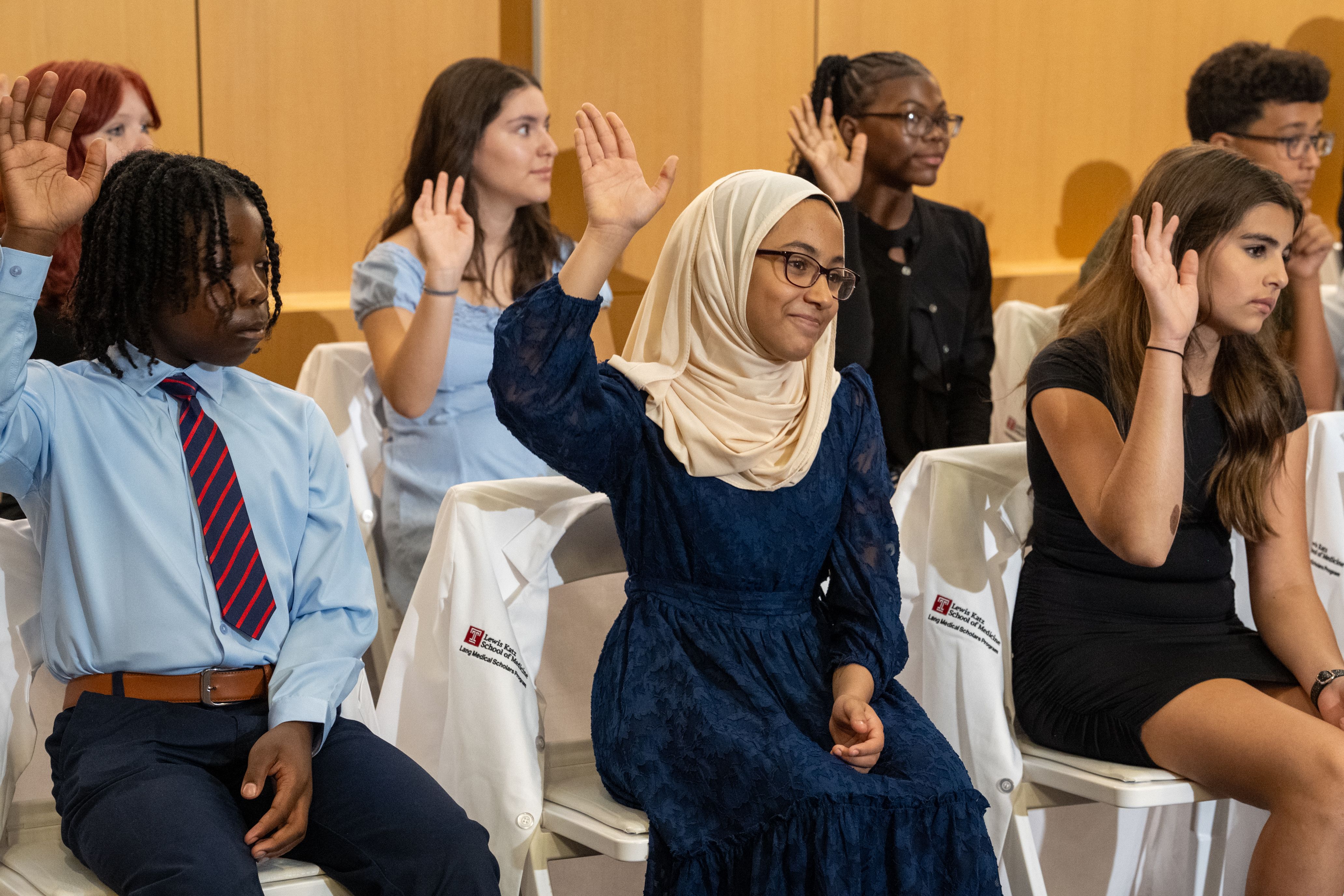
Seventh graders in Temple University Medical School’s Lang Scholars program prepare to get their white coats. The new program identifies promising students and gives them six years of pre-medical school education.Courtesy of Temple University
“This is a big deal,” said Glasco, who dreams of buying Madison scrubs and a stethoscope, tangible evidence of her place in Lang Scholars and the doors it could open.
“The passion around this, the mission is just — talent abounds and opportunity does not, right?” said Barbara Klock, the program director and its architect. Lang, she said, aims to change that for its students.
A long-held vision
Klock carried the idea of the Lang Scholars around for years, through a career as a Children’s Hospital of Philadelphia pediatrician and the Philadelphia School District’s chief medical officer.
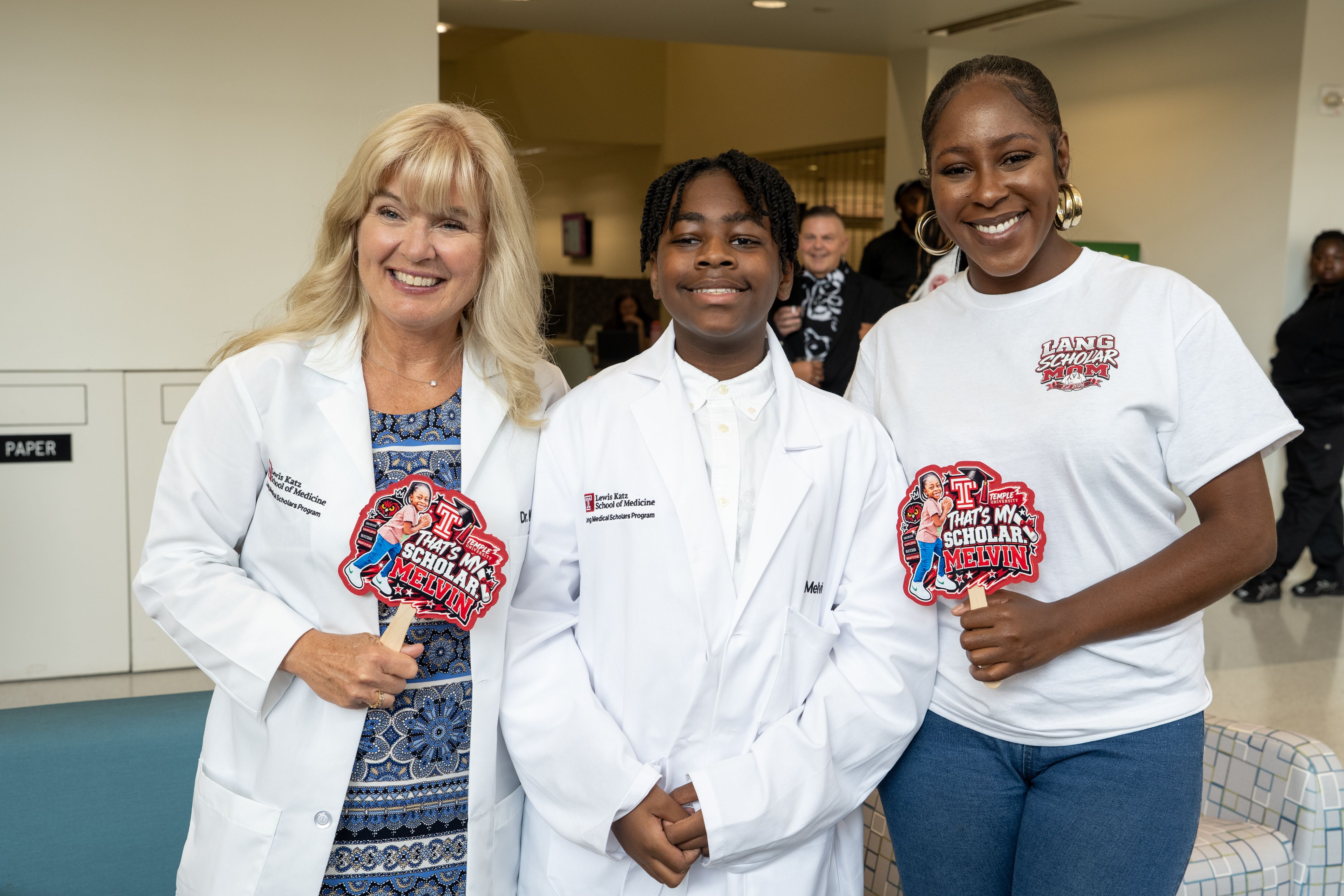
Melvin Poulson IV, a student at Hope Partnership School, and his mother, Allison Agee, pose with Barbara Klock, director of the Lang Scholars program.Courtesy of Temple University
Lang and Klock kept in touch after her Swarthmore graduation, and on one chance encounter at 30th Street Station in the 1990s, Lang mentioned to Klock that he was launching something he was really excited about.
“He said, ‘I have this idea for a program, but the kids start really young.’ He was always, ‘If you’re going to do something, it’s got to be the best,’ and for him, the best would be going to medical school,” Klock said.
That program, the Lang Youth Medical Program, has been thriving in New York for decades. Klock admired it from afar, and, sometimes, up close.
“I would go on Saturdays and see the program with the dream of bringing it to Philadelphia,” she said.
Klock decided it was time to go for her own version of that program in 2024. She reached out to Mitchell Morgan, chair of Temple’s board of trustees, via e-mail.
“I said, ‘I have this program. I would love to bring it to Temple,’” Klock said. “I wanted to do this with Temple because of where Temple is located, Temple’s mission and vision, and they really do what they say they do.”
Temple University Lang Scholars white coat ceremony.Courtesy of Temple University
She expected she might hear from Morgan within three weeks. Instead, she had a response, and a connection to Lewis Katz School of Medicine dean Amy Goldberg, by the end of that day.
In short order, the program was off and running, with Temple’s backing and philanthropic support, including some funding from Lang’s private foundation.
Klock pounded the pavement in the 2025-26 school year, reaching out to every Philadelphia school she could connect with — district, charter, private — to ask: Can I come talk to your sixth graders about an idea? Thirty-five schools opened the door for Klock to make presentations.
She didn’t ask counselors to recommend kids; she feared she would get only straight-A students and student council presidents. Those were fine, but she also wanted the bright-but-bored kids, the ones who were curious about science and life but maybe had hit a few bumps along the way.
Klock hoped to bring in 20 Lang scholars for the inaugural class. Nearly 14 times that number applied, and those who made it to the interview round flat-out wowed her, Klock said. She ended up getting permission to build a class of 32 — 22 girls and 10 boys — and will grow a grade every year.
The program’s aim is not to produce a class full of doctors. It is to produce a class full of curious and confident learners grounded in an academic medical setting. If some enter the medical field, Klock would be delighted, but that is not the main objective.
“These are kids who are so eager to learn,” Klock said. “They want to be with other students who are eager to learn. They are incredibly curious. They ask, ‘why?’ and ‘what if?’ What I want to do is give them the chance to continue to ask, ‘why?’ and ‘what if?,’ no matter what.”
‘This is serious’
Glasco was tipped off about the program by a teacher friend.
Madison first expressed her desire to become a doctor at age 3. Her preschool teacher has a photo of Madison holding a sign stating her career goal.
“She wants to be in the medical field, and I used to be in the medical field, so it’s actually perfect,” said Glasco, who used to work as an EMT and a medical assistant and is now a paraprofessional in a suburban school district.
It’s not far from her North Philadelphia house to Temple’s medical school, Madison said, but walking into the Medical Education and Research Building on North Broad Street felt like a different world in some ways.
Going to the interview was “very exciting,” Madison said, “but I was also very nervous. There were a lot of windows, and I could see everyone.”
When she got the word that she was a Lang Scholar, Madison was thrilled.
“My teacher was really excited, too, because he knew I was going to be in the medical field soon — kind of in medical school, like college,” Madison said. “My friends were really excited because they knew they were going to have a medical friend.”
Madison and the other Lang Scholars received their professional white coats to kick off the program on Sept. 19. They will begin their studies Oct. 3. Klock will teach the biweekly courses on the human body, health equity, public health, and more.
Over the years, the students will take trips, work at paid internships, sit in SAT prep courses, and receive help with college applications — all for free. They will dive into the health issues facing their communities, and have access to the same labs and facilities as Temple medical students.
Glasco cannot wait to drop Madison off for her first day of class as a Lang Scholar.
“I’m going to be on her really hard about this, because this is serious,” Glasco said. “I want her to get all the knowledge she can, and maintain it, so she can go further in whatever medical field she decides to do in the future.”