Tag: no-latest

  • US and Iran are close to a deal to end their war, officials say

    ISLAMABAD — Pakistan’s prime minister said Friday the United States and Iran have agreed to wording of an agreement aimed at ending their war in the Middle East and that mediators were working with both sides to finalize a deal.

    Prime Minister Shehbaz Sharif said the U.S. and Iran have reached a “final, agreed upon text.” He said Pakistan, which has taken the lead in mediation efforts, was working with the warring countries on next steps.

    “Peace has never been this close as it is now,” Sharif said in a post on X.

    The apparent breakthrough in negotiations comes after Iran exchanged fire with the U.S. and Israel over three days this week, threatening to return the Middle East to full-scale war.

    There was no immediate comment from U.S. or Iranian leaders on Sharif’s statement.

    Iranian Foreign Minister Abbas Araghchi said Friday an agreement “has never been closer” in a post on X. U.S. President Donald Trump, who has said multiple times in recent weeks that the countries were on the cusp of a deal, shared Araghchi’s post on his own social media.

    None of the leaders gave details about the emerging agreement.

    The war launched by the U.S. and Israel on Feb. 28 has rattled the Middle East and virtually shut down oil and natural gas shipments from the Persian Gulf. A fragile ceasefire has been in place since April 7.

    Official says emerging deal would reopen strait

    The U.S. and Iran were making progress Friday toward completing a deal that could effectively end the war, reopen the Strait of Hormuz, and begin the process of destroying or removing Tehran’s highly enriched uranium, according to a senior U.S. administration official.

    The official, who briefed reporters on condition of anonymity under ground rules set by the White House, said a deal was 80% to 85% done and that the U.S. side believes “most of the people who have authority” in the Iranian government want to sign onto the deal “but not everybody.”

    The official said technical details on how to remove Iran’s enriched uranium, according to the emerging agreement, would be worked out over 60 days after both sides sign it. The official did not detail who the U.S. envisions taking charge of removing the uranium, which is believed to be entombed under three nuclear sites that were battered by U.S. strikes last year.

    Three regional officials said the emerging deal is also expected to include the phased lifting of sanctions on Iran and the release of frozen Iranian assets. The officials spoke on condition of anonymity because of the sensitivity of the negotiations.

    Underscoring the fragility of the negotiations, Trump on Friday lashed out at Iranian officials on social media and said: “They better get their act together, and FAST!” That was before he shared Araghchi’s post.

    Officials say deal could be signed in coming days

    Iran’s nuclear program has been a key point of division. The U.S. and Israel fear it could lead to an atomic weapon — a main reason their leaders cited for going to war. Tehran has insisted its nuclear efforts are for peaceful purposes.

    Also critical is Iran’s effective closure of the Strait of Hormuz, a vital shipping lane for oil and natural gas. Disruption of transit through the strait has crimped global energy supplies, driven up fuel prices, and made food and other basics more expensive well beyond the region.

    The U.S. has responded since mid-April with a naval blockade of Iranian ports to choke off Iran’s own oil exports.

    The regional officials said they expect a signing ceremony for the agreement in the coming days after officials in Washington and Tehran approve it.

    Trump on Thursday claimed significant progress in the negotiations, just hours after he threatened to escalate attacks and seize Iran’s oil industry. Esmail Baghaei, a spokesperson for Iran’s Foreign Ministry, said on state television that mediators were active and the text of a deal was “mostly finalized.”

    There was no immediate comment Friday from Pakistan’s Foreign Ministry, which has been leading efforts to mediate a deal between the U.S. and Iran. Foreign Ministry spokesperson Tahir Andrabi had said Thursday that Pakistan remained involved in negotiations.

    Israel expects Trump to advocate for its interests

    Israeli Prime Minister Benjamin Netanyahu has said Israel is not a party to the deal being negotiated. He said in a statement Friday that he and Trump were in “full agreement” that Iran must not have nuclear weapons.

    Israeli Defense Minister Israel Katz said in a separate statement that Israel also expects Trump to uphold key Israeli interests, including weakening Iran’s missile program and proxy network.

    Katz warned that Israel could still act independently toward Iran and that the country would not pull out of the zones it is occupying in Lebanon, Syria, and Gaza, nor would it withdraw from the northern refugee camps of the Israeli-occupied West Bank.

    Iran has insisted that any deal to end the war must also end fighting in Lebanon between its ally militia Hezbollah and Israel. Netanyahu appears intent on pursuing his goal of destroying the militant group, complicating negotiations between Iran and the U.S.

    The deal was largely being brokered by Pakistan, led by its army chief Field Marshal Asim Munir, the regional officials said, with backing from Saudi Arabia, Turkey, Egypt, and Qatar.

  • A key U.S. government surveillance program is set to expire. A look at what that means

    WASHINGTON — A key surveillance tool seen as vital in preventing terror attacks and catching foreign spies was set to expire Friday after congressional efforts to temporarily extend it failed in bipartisan fashion.

    It’s a significant lapse for the program known as Section 702, and even as President Donald Trump nominates a new national intelligence director more palatable to both Republicans and Democrats than his initial pick, it’s unclear how soon lawmakers — set for recess — would be able to revive the spy program.

    Still, there is not expected to be an immediate drop-off in intelligence collection given that a court order from March certified that government surveillance powers under the law could remain in effect for another year.

    Section 702 allows for sweeping powers

    The provision is a part of the Foreign Intelligence Surveillance Act, known as FISA, and grants American spy agencies sweeping powers to collect and examine the communications of foreigners located outside the United States without first getting a warrant.

    U.S. officials see the law as an invaluable national security tool that has helped disrupt potential acts of terrorism, yielded valuable insight into ransomware attacks on critical infrastructure, and contributed to the killing of al-Qaida leader Ayman al-Zawahri in a 2022 drone strike.

    The law was passed in 2008 as an effort to codify key aspects of a predecessor spy program created by President George W. Bush’s Republican administration.

    Since then, officials across administrations of both major political parties have warned that without the law the government won’t be able to collect crucial intelligence overseas.

    Program’s renewal historically has been contentious

    The periodic need to reauthorize the law has prompted protracted debate in Congress well before this year, including discussion over whether additional guardrails are needed to protect the privacy of Americans and their personal data.

    That’s because when the government eavesdrops on foreigners abroad, it also sweeps up the communications of American citizens and others in the U.S. who are in contact with those surveillance targets.

    Civil liberties advocates have raised concerns over revelations that FBI analysts over the years have improperly queried the vast repository of intelligence collected through the program for information about Americans, including related to the Jan. 6, 2021, riot at the Capitol by a mob of Trump supporters and the racial justice protests of 2020, as well as about state and federal political figures.

    Some of those advocates have said the government should be required to have a warrant before examining communications collected from Americans. U.S. officials have said that a warrant would be legally unnecessary and overly cumbersome and that corrective measures have been implemented to reduce the number of improper queries.

    Complicating the debate is the unlikely political alliances it has produced, uniting a coalition of lawmakers skeptical of government surveillance that includes both privacy-minded liberal Democrats and Republicans who still regard the intelligence community with suspicion over the investigation of ties between Russia and Trump’s 2016 Republican presidential campaign.

    Pushback over acting intelligence pick Bill Pulte

    Democrats balked when Trump picked Bill Pulte to serve as acting national intelligence director and refused to support a FISA extension until the selection was withdrawn. Pulte, a Trump loyalist with no known national security experience, has set off alarms by using his perch as director of the Federal Housing Finance Agency to facilitate dubious mortgage fraud investigations of perceived Trump adversaries.

    A House vote this week that would have temporarily extended the program collapsed, with 19 Republicans and nearly all Democrats rejecting the temporary measure, 198-218. A Senate effort to approve its own versions also failed.

    After those votes, Trump announced he was tapping Jay Clayton, the U.S. attorney in Manhattan who previously served as chairperson of the Securities and Exchange Commission, as his permanent pick for director of national intelligence, or DNI. The pick was warmly received on Capitol Hill, but it was not enough to break the impasse before Friday’s scheduled expiration.

    Connecticut Rep. Jim Himes, the top Democrat on the House Intelligence Committee, said that he has “known and respected” Clayton for decades and that had he been tapped a week ago, “lots of pain might have been avoided.”

    “His intelligence, temperament, and deep commitment to public service will make him a terrific DNI,” Himes said.

    Next steps for the spy powers provision

    Before the congressional votes, Republican Arkansas Sen. Tom Cotton, chairperson of the Senate Intelligence Committee, and Iowa Sen. Chuck Grassley, chairperson of the Senate Judiciary Committee, had warned the Trump administration to prepare “for a potential significant gap in foreign intelligence collection.” Other lawmakers since then have voiced similarly dire concerns.

    The expiration is likely to be the first meaningful lapse of Section 702 since the law was created more than 15 years ago. In 2024, the Senate barely missed its midnight deadline before voting to approve a bill that was then signed by President Joe Biden, a Democrat, creating a brief lapse.

    Despite this year’s sunset of the statute, there’s no expectation of any immediate halt to intelligence collection as the U.S. hosts a series of events this summer with potential national security concerns, including the World Cup and festivities surrounding the 250th birthday of the United States.

    A March opinion from the secretive Foreign Intelligence Surveillance Court certified the program’s renewal for another 12 months, meaning that Section 702’s authority is expected to remain intact through then. Even so, it’s conceivable that without congressional reauthorization, communications companies forced to provide data to the government under the law could try to cease that compliance and argue that they cannot be compelled to cooperate.

  • The Gordie Howe Bridge opening between the U.S. and Canada was postponed. Here’s what to know

    The Gordie Howe Bridge opening between the U.S. and Canada was postponed. Here’s what to know

    A day before a ribbon-cutting ceremony, the opening of a new bridge meant to ease congestion at the busiest trade corridor between Canada and the United States hit another roadblock, four months after President Donald Trump vowed to block it.

    The authority that will operate the 6.4 billion-Canadian-dollar Gordie Howe International Bridge between Detroit and Windsor posted a notice online Thursday announcing that the opening, scheduled for late Friday morning, had been postponed.

    “Canada and the United States have agreed to delay the opening of the bridge, taking the necessary time to resolve any outstanding issues,” Chuck Andary, acting CEO of the bridge authority, said in a statement. “We appreciate the efforts of workers on both sides of the border to get the bridge to its current state of readiness.”

    The statement offered no details about those issues and gave no new opening date.

    Invitations to a Friday opening ceremony had been sent to participants Tuesday.

    In February, Trump threatened to stop or delay the project in a rambling social media post, saying he wished to punish Canada for what he described as its exploitation of the United States and its revival of trade ties with China, among other perceived transgressions.

    He also demanded compensation for a wealthy Detroit-area family that owns a nearly century-old bridge upstream, which currently carries around $300 million a day in trade.

    Matthew Moroun, a billionaire trucking industry scion in Detroit whose family has mounted legal challenges of the project for decades — one even reaching Canada’s Supreme Court — and aggressively lobbied governments on both sides of the border.

    Trump had issued his post hours after Moroun met in Washington with Commerce Secretary Howard Lutnick, The New York Times reported in February. Lutnick then called Trump.

    Less than one month before that meeting, Moroun donated $1 million to a super PAC devoted to Trump.

    What’s being negotiated?

    After Trump’s initial post, Canada’s prime minister, Mark Carney, said he called Trump and explained that although Canada paid for the bridge, it will share ownership with Michigan under a 2012 agreement between the two governments.

    Canada is Michigan’s largest export market.

    “This is a great example of cooperation between our countries,” Carney told reporters at the time. “I look forward to it opening.”

    Carney said that Trump asked Pete Hoekstra, who is the U.S. ambassador to Canada and is from Michigan, to “play a role in smoothing the conversation” about the bridge.

    In late May, Carney told reporters that there have been “discussions at the ambassadorial level around the bridge.” Neither Carney or officials in Canada or Michigan have offered any details about those talks.

    The bridge opening delay comes as a July 1 review deadline for the United States-Mexico-Canada Agreement on trade looms. The Trump administration has been offering varying signals about its continuation in the pact.

    On Wednesday, Trump said: “I don’t know that I’m going to renew it.”

    The following morning at a conference in Toronto on relations between Canada and the United States, Hoekstra appeared more optimistic about the pact’s continuation.

    He advised Canadians to “go into these negotiations very aggressively and say we know America has needs across the board and we’re here to partner with America.”

    He added: “We’re open to offers, make your case.”

    Why did Canada build a second bridge?

    The catalyst for the new bridge was the closing of the border after the Sept. 11, 2001, terrorist attacks.

    The enormous, miles-long traffic jams of trucks along roads in Ontario underscored the vulnerability created by relying on a single bridge for commercial traffic at North America’s busiest land crossing.

    There is a tunnel for vehicles linking Windsor and Detroit, but tractor-trailers are too tall to fit.

    The Ambassador Bridge, which opened in 1929, was also showing its age. Chunks of it regularly fell off, causing lane reductions on the bridge and street closings below in Windsor.

    An expressway that runs across southern Ontario ends on the outskirts of Windsor, forcing trucks to make a slow journey to the bridge on a congested local road.

    Investors and both governments floated several proposals, including a plan by the Moroun family to build a second crossing alongside the four-lane Ambassador Bridge.

    Who is the Moroun family?

    Manuel Moroun purchased the Ambassador Bridge in 1979 after building a fortune largely through the expansion of his father’s trucking company. Matthew Moroun, Manuel Moroun’s son, gradually took over as head of the family before the older Moroun’s death in 2020.

    Manuel Moroun was known for being exceptionally litigious even with other members of his family. He also had a reputation for disregarding government and court orders.

    The Moroun family bought properties on both sides of the border near its bridge and was known for leaving the buildings in those areas to decay, leading to disputes with both cities.

    A former railway station in Detroit that became a widely known symbol of the city’s decay was among the family’s holdings. It was sold to Ford Motor Co. in 2018 and was restored.

    Who paid for the new bridge?

    After finding no interest among U.S. lawmakers, the Canadian government has entirely financed the bridge’s construction and even paid for the highway interchange on the American side. The United States paid for the bridge’s border inspection facility.

    The project cost CA$6.4 billion, or $4.7 billion. The province of Ontario also completed a $1 billion highway expansion that opened a decade ago.

    By alleviating traffic on streets in Windsor, the bridge, which has been built roughly six years behind schedule, will benefit both countries, said Dennis Darby, CEO of the Canadian Manufacturers and Exporters, an industry group.

    “Fewer bottlenecks and fewer surprises mean more resilient, competitive supply chains,” Darby said in a statement.

    This article originally appeared in The New York Times.

  • Letters to the Editor | June 12, 2026

    Letters to the Editor | June 12, 2026

    Grade inflation fails

    Thanks for your candid article on grade inflation in Philly schools. Perhaps the reason the children live in poverty and are incapable of holding a job is that the public education system is an abject failure. Some misguided souls think these students should be given “equality of outcomes” — that they should be treated the same as the student who works hard, gets a legitimate “A,” and can read and do math at grade level on proficiency tests. As the old proverb says: “If you give a man a fish, he eats for a day. If you teach him to fish, he eats for a lifetime.” Philadelphia has been giving students a fish for decades — and the remainder of their lives is hunger.

    Alexander W. Ross Jr., Mount Laurel

    . . .

    The practice of giving wholesale passing grades in the Philadelphia School District — even for students who rarely show up to class or do not master most of the required content — is a very old story for which inadequate funding often takes the blame. But like many persistent problems in the district, this situation could be remedied if administrators took the time to identify and replicate the best practices in schools that are serving high percentages of low-income students, where grades actually are an accurate reflection of academic performance. A common thread in those schools is that struggling students receive the extra supports they need. The district should know what those schools are based on the reams of data it collects every year, but it seems to have done little or nothing to duplicate their efforts.

    When large numbers of Philadelphia high school graduates cannot pass the basic skills test for a job requiring only a high school diploma, or the placement test for college-level classes at community college, the message is clear: Grade inflation may be acceptable in the school district, but it doesn’t work in the real world.

    Debra Weiner, Quakertown

    . . .

    I sincerely hope people are reading the wonderful reporting of Kristen A. Graham regarding education issues. As a result of her work, we readers have learned that Philadelphia’s teachers essentially can’t fail anyone.

    What’s the point of education if a teacher giving a student an “F” is overruled by a principal?

    And whom do we thank?

    For starters, I would look at people like Jeff Yass, whose hostility toward public schools, tens of billions of dollars, and campaigns for “educational freedom” have increased the pressure on administrators to the point where some of them might foolishly think that this kind of grade inflation is actually helpful.

    In my humble opinion, every single teacher I had at Olney High did more for America than ByteDance, the politically divisive, Chinese-owned parent company of TikTok, which is responsible for much of the riches of the wealthiest Pennsylvanian.

    Should a school’s first priority be to educate children? Or to make money?

    The debate is elevated by Ms. Graham’s wonderful reporting, and I, for one, thank her.

    Al Gardner, Olney High School, Class of 1964, Bolivia, N.C.

    Join the conversation: Send letters to letters@inquirer.com. Limit length to 150 words and include home address and day and evening phone number. Letters run in The Inquirer six days a week on the editorial pages and online.

  • Horoscopes: Friday, June 12, 2026

    ARIES (March 21-April 19). Muscle builders don’t grow new muscles from nothing. They work repeatedly with the ones they already have, strengthening them through strain and recovery. Confidence, patience, discipline, courage, creativity, charm… all developed similarly, through repetition.

    TAURUS (April 20-May 20). Politeness will keep the wheels turning today. Your respectful interactions will reduce friction, create predictability, soften conflict and make cooperation easier. Tiny rituals of respect keep the machinery from grinding sparks.

    GEMINI (May 21-June 21). It’s easy to overlook your natural talents that are so much a part of who you are. But what feels routine to you will be perceived as deeply impressive, valuable and distinctive to others.

    CANCER (June 22-July 22). You’re playing with the wide-focus lenses and pondering your place in the grander scheme. Your actions gain new meaning when you consider even the smallest one has the potential to ripple outwards and impact others positively.

    LEO (July 23-Aug. 22). Planning has taken you far enough. Now you must choose the right point of entry. Where are your abilities genuinely useful? Who could most use what you do? This could apply to work, relationships, creative projects, networking and even social dynamics.

    VIRGO (Aug. 23-Sept. 22). Just as a gemstone becomes brilliant through grinding and abrasion, human character develops through challenge. It’s the moments that resist you, force you to adapt or bring you face to face with your edges… those are the moments that make you shine.

    LIBRA (Sept. 23-Oct. 23). Something that’s been lingering in the background becomes important. It was a vague idea or a faint desire that is now growing into a need that’s hard to ignore. So what would it really take to fulfill it?

    SCORPIO (Oct. 24-Nov. 21). You’re careful about who you get close to. You pay attention to indications of character, worldview and thought process. Generous spirits will be all around you. You’ll enjoy interactions of openness, trust and fun.

    SAGITTARIUS (Nov. 22-Dec. 21). Emotional intelligence helps you interpret behavior with nuance. Someone’s harshness may reflect exhaustion, insecurity, fear, embarrassment or grief. It doesn’t mean you should accept poor treatment, though it may allow you to reduce unnecessary escalation and find a productive path.

    CAPRICORN (Dec. 22-Jan. 19). The fair and wise choice isn’t always the immediately logical or dutiful one. As you carefully consider the available options, let your whimsy have its say. Don’t choose something that leaves you with a lingering “what if.”

    AQUARIUS (Jan. 20-Feb. 18). Some people conveniently forget who they owe and why. You’re aware of the ledger. You know who you owe and who owes you. This keeps you from feeling indebted when, in fact, you are not.

    PISCES (Feb. 19-March 20). One good thing about life’s little snags: They can cause people to work together for freedom, ease and beneficial results. Bonds are made in moments of vulnerability and resilience. You’ll help someone in a jam, and it will be lucky for both of you.

    TODAY’S BIRTHDAY (June 12). It’s your Year of Powerful Wielding when you channel your personal influence and electricity in life-changing directions. Energies like fame, competition, and desire will be managed to brilliant effect. More highlights: The things you’re doing that you’ve done for years will start to pay you much more and new work ignites earl on. Also, a sweet reunion and a domestic transformation. Cancer and Aquarius adore you. Your lucky numbers are: 49, 33, 12, 5 and 8.

  • Kennedy Center board to fight order to remove Trump’s name as deadline looms

    Kennedy Center board to fight order to remove Trump’s name as deadline looms

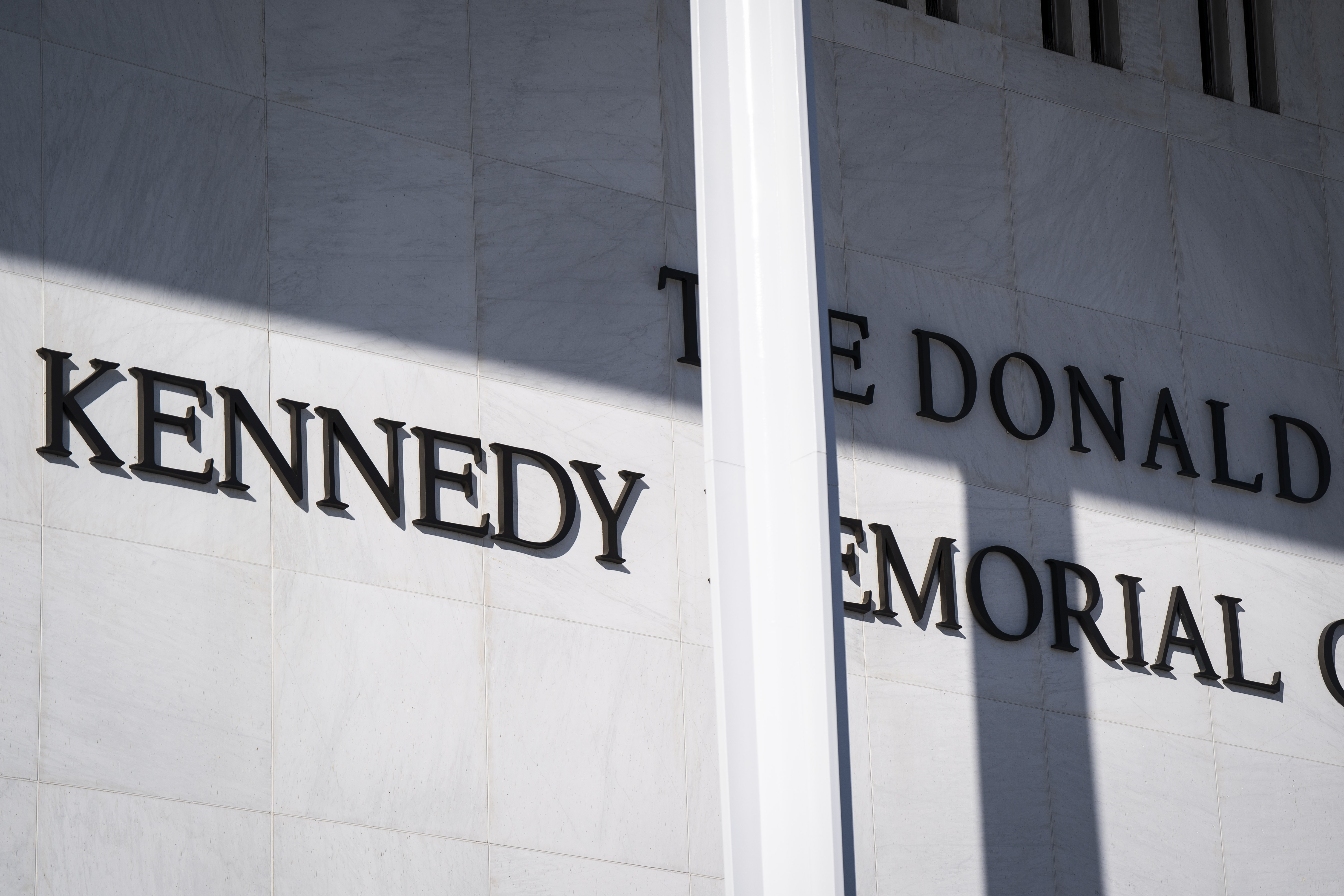
    The Kennedy Center’s board plans to fight a federal judge’s order to remove President Donald Trump’s name from the performing arts center.

    The center’s trustees on Thursday voted to seek a last-minute stay of U.S. District Judge Christopher Cooper’s directive to take Trump’s name off the center’s exterior by Friday as they appeal his ruling that renaming the center was illegal, according to a meeting attendee and someone briefed by a meeting attendee, who both spoke on the condition of anonymity for fear of retribution.

    The board’s decision came a day before Cooper’s deadline for the center to remove Trump’s name from its building and branding, part of a ruling in which the judge also granted a request from Rep. Joyce Beatty (D., Ohio) to temporarily block steps toward a planned two-year shutdown.

    Cooper’s order, the most significant legal blow yet to Trump’s effort to remake the Kennedy Center, found that the board exceeded its authority in December when it voted to rename the venue “The Donald J. Trump and The John F. Kennedy Memorial Center for the Performing Arts.” Congress gave the center its name, Cooper wrote, and only Congress can change it.

    In February, Trump announced that he planned to close the center for two years starting in early July. The closure was necessary, he said, to make roughly $250 million in renovations, a decision that blindsided staff, artists, and even some trustees. The board — stacked with loyalists who elected Trump chairman after he purged his predecessors’ appointees in February 2025 — voted in March to approve the closure. The center’s executive director, Matt Floca, testified in April that the building’s deterioration is so severe that staying open during construction would be “irresponsible,” citing failing roof panels and water seeping into electrical vaults.

    But Cooper ruled that the closure decision was made rashly, without the board weighing enough information about the potential harms. He did not bar trustees from ever shuttering the building, leaving the door open for the board to reconsider whether it should “come to this decision anew after independently balancing its multiple obligations to the Center in a prudent fashion.” The center’s general counsel highlighted that language last week in a memo to staff, noting that the court did not require the center to stay open during renovations or present any particular programming.

    The center has so far signaled that it will comply. In last week’s memo, the general counsel’s office ordered employees to erase all references to Trump from official materials, starting immediately with email signatures, letterhead, and other documents, followed by signs, brochures, ID cards, and the building’s exterior by Friday’s court-ordered deadline. On Monday, the center erased Trump’s name from its website and YouTube page, and by Thursday, it had done the same with its Facebook, LinkedIn, and X accounts.

    “We are complying with the court’s order while evaluating all legal options to preserve this revitalization and recognize President Trump’s leadership,” spokeswoman Roma Daravi said.

    Late Thursday afternoon, the center’s Instagram account was still branded “The Trump Kennedy Center,” and the president’s name remained emblazoned across the building’s facade.

    Hours after Cooper’s rulings, Trump lashed out at the judge and suggested he would abandon his involvement in the Kennedy Center altogether. In social media posts after the ruling, the president insisted that the building must close for renovations to proceed safely and said that unless he was “free to do what I do better than anyone else,” he had no interest in continuing. Trump said he had instructed the Commerce Department to arrange a “full and complete transfer” of the institution to Congress, a proposal that puzzled lawmakers and legal observers, since federal law vests management of the center in its board of trustees.

    Last week, Trump appeared to walk that back. When asked on Friday how he wanted to be involved at the center, Trump said, “The same way it is.”

    “I’m the chairman, so we’ll just keep it going,” he told reporters aboard Air Force One.

    On Wednesday, a White House official said the president will remain engaged in the center’s affairs as administration officials devise plans to fix “the facility’s major issues.” The White House contested the notion that Cooper’s rulings were a “defeat” for Trump.

  • U.S. slaps sanctions against Cuban oil and gas company as tensions rise

    SAN JUAN, Puerto Rico — The U.S. government on Thursday announced sanctions against Cuba’s state-owned oil and gas company in a move some experts say will only deepen the island’s crises and hit vulnerable Cubans the hardest.

    Secretary of State Marco Rubio asserted that key assets of the company, known as Cupet, were “unlawfully expropriated from American owners years ago.”

    He also accused Cuba’s government of weaponizing energy.

    “While the Cuban people have suffered fuel shortages and blackouts because of decades of under-investment in critical infrastructure, Cuba’s Communist leaders have diverted energy resources to line their own pockets,” Rubio said in a statement.

    He further noted, without providing evidence, that Cuban officials “resell countless barrels of scarce energy on the secondary market, hoarding energy supplies for its military, intelligence and repressive forces, and rationing energy as a tool of social control.”

    Bruno Rodríguez, Cuba’s foreign affairs minister, pushed back against Rubio’s comments in a post on X.

    “The U.S. Secretary of State, driven by ambitions of conquest, presidential aspirations, and the vindictive sentiments of the elitist clique that propelled his political career, is now further tightening the economic and energy blockade against Cuba,” he wrote. “To justify this, he doesn’t resort to excuses prepared by his State Department, but rather to the usual vulgar lies, the most aggressive, ignorant, and rabid rhetoric among Cuba’s enemies.”

    Cuba’s government has previously said that sanctions punish all Cubans and are aimed at strangling the economy to destabilize both the government and its people.

    Cupet’s fuel sales to the public are almost nonexistent and are currently rationed.

    William LeoGrande, an expert on Cuba at the American University in the United States, said the latest U.S. measure seems like an effort to block any major oil shipments.

    “It appears that they’re all in on strangling the Cuban economy,” he said. “Their policy is a contradiction. They claim they don’t want to create a humanitarian crisis, although that’s exactly what they’re doing.”

    ‘Risk of triggering mass migration’

    Ricardo Herrero, a Cuban economist based in the U.S. and executive director of the Cuba Study Group, a nonpartisan organization based in Washington, D.C., said he was “genuinely vexed” by the move.

    “How are private importers supposed to store diesel and get it into vehicles without using CUPET facilities?,” he wrote on X. “This undermines what, until this morning, had been a humanitarian priority for the US. Either something much bigger is afoot, or we’ve entered the ‘indiscriminate cruelty’ phase of this policy.”

    It’s unclear whether Cupet has any assets in the U.S., although it’s unlikely, LeoGrande said.

    He said he could understand the logic of the measure to decentralize the government and strengthen and empower the private sector by enabling it to sell gasoline to state enterprises, or force those enterprises to move toward privatization so they could be oil recipients.

    “Now, the Cubans are not going to privatize Cupet in the hope that might work and that somehow the U.S. might allow oil to go through in that way,” LeoGrande said.

    He noted that most private businesses in Cuba are small and don’t have the infrastructure to land an oil tanker, unload the product and distribute it.

    “They’re running a huge risk of triggering mass migration,” he said of the U.S. government.

    Thursday’s announcement comes almost a week after the U.S. government sanctioned Cuban President Miguel Díaz-Canel and other officials, as well as several institutions.

    Rubio said in a statement that all property or interests of Cupet located in the U.S. or in possession or control of U.S. people are blocked.

    “President Trump wants a new future for the Cuban people with greater economic and political freedom and opportunity,” Rubio wrote on X. “Until then, we will continue to target the Communist regime’s ability to leverage its energy trade to further its corrupt agenda and violently repress the Cuban people.”

    Cuba is already struggling under a decades-old embargo and a lack of petroleum as the U.S. keeps pushing for a change in its economic and political model.

    Power outages — already common given the economic and energetic crisis gripping the island for the past five years — have only intensified since U.S. President Donald Trump threatened tariffs in late January on any country that sells or provides oil to Cuba.

    Both countries have acknowledged that they’ve held talks, but the scope of them is unknown.

    Meanwhile, Trump has been threatening military action in Cuba ever since the U.S. military invaded Venezuela and arrested former President Nicolás Maduro.

    Last Thursday, Trump said Cuba has “sort of collapsed” and said “we’re going to handle that as soon as we’ve finished” military operations in Iran.

  • Trump plans to nominate U.S. Attorney Jay Clayton to be national intelligence director

    WASHINGTON — President Donald Trump said Thursday that he plans to nominate Jay Clayton, the U.S. attorney for the Southern District of New York and a former Securities and Exchange Commission chairman, as director of national intelligence.

    Trump announced the nomination on social media amid pressure from Congress to name a permanent replacement for Tulsi Gabbard, who announced her resignation last month. Trump faced intense pushback over his decision to name Bill Pulte, head of the Federal Housing Finance Agency, as acting director. The job oversees the coordination of 18 intelligence agencies.

    The resulting uproar led to a standoff in Congress after Democrats said they would refuse to renew foreign intelligence powers unless Trump pulled Pulte’s nomination and named a permanent nominee.

    “Few people anywhere in the Legal Community are respected at the level of Jay,” Trump wrote. “I encourage the United States Senate to confirm Jay as soon as possible.”

    Speaking later Thursday in the Oval Office, Trump said he still plans to keep Pulte in the role “for a little while” after earlier saying he wants Pulte to downsize the office. He called Clayton an “incredible talent” and said, “Nobody has better credentials.”

    As the U.S. attorney in Manhattan, Clayton oversees the most prestigious of the Justice Department’s prosecution offices, with a vast portfolio ranging from terrorism and espionage cases to security fraud and public corruption.

    He took over from interim U.S. Attorney Danielle Sassoon, who resigned in February after refusing to carry out orders from the Justice Department to drop corruption charges against Mayor Eric Adams. The case was eventually dropped after prosecutors from Washington submitted a request to a judge.

    Republicans hope to move quickly on nomination

    The Senate Intelligence Committee plans to hold a confirmation hearing for Clayton on Wednesday, according to a person who requested anonymity to discuss it ahead of an official notice.

    Senate Majority Leader John Thune (R., S.D.) told reporters that the Senate hopes to receive Clayton’s nomination paperwork from the White House as soon as Thursday. “We will move quickly,” he said.

    Democrats are holding up the renewal of a key surveillance law, the Foreign Intelligence Surveillance Act, in protest of Trump’s decision to temporarily tap Pulte. They say they won’t support an extension of the law, which expires at midnight Friday, until Trump withdraws Pulte’s appointment.

    Trump previously said Pulte would take over on June 19. It is unclear whether the Senate could move quickly enough to confirm Clayton before that date.

    “I don’t know what realistic is, but we’re gonna probe the limits of it,” Thune said.

    Connecticut Rep. Jim Himes, the top Democrat on the House Intelligence Committee, said that he has “known and respected” Clayton for decades and that if Trump had named him as the DNI nominee last week, “lots of pain might have been avoided.”

    “His intelligence, temperament and deep commitment to public service will make him a terrific DNI,” Himes said.

    Asked about Clayton’s nomination, Senate Democratic Leader Chuck Schumer said, “Pulte has to go.”

    “He cannot be in the DNI role,” Schumer said. “It’s too important.”

    Trump’s pick has led SDNY during a tumultuous period

    Clayton navigated his way through a 14-month tenure in the Southern District of New York without clashing with the federal judges in the busiest court in the nation, unlike his counterparts in upstate New York and New Jersey. After his interim term expired after 120 days, the judges of the Southern District appointed him as U.S. attorney.

    Clayton was sworn in April 2025 on the same day three prosecutors resigned, saying they felt pressured to admit wrongdoing or regret about prosecuting the case against Adams.

    Then, weeks later, the office had to withstand controversy over the Trump administration’s firing of one of its most respected and successful prosecutors, Maurene Comey. She claims she was fired because of Trump’s dislike of her father, former FBI Director James Comey.

    Under Clayton, the Manhattan U.S. Attorney’s Office facilitated the unsealing of thousands of pages of court records from the prosecutions of Jeffrey Epstein and Ghislaine Maxwell — documents that were made public as part of the Justice Department’s release of records related to the late sex offender and his longtime confidant.

    Clayton filed documents with the court explaining the process the government followed in releasing the materials.

    Clayton has also overseen the prosecution of former Venezuelan President Nicolás Maduro and Maduro’s wife, Cilia Flores, on drug trafficking charges.

    Clayton has overseen cases involving national security threats

    Several recent terrorism cases brought by Clayton’s office touch on the global threats and influences that he’ll be navigating if confirmed as director of national intelligence.

    They include the May arrest of Mohammad Baqer Saad Dawood al-Saadi, an Iraqi and Iranian citizen accused of plotting 20 attacks in Europe and Canada and planning to attack a Manhattan synagogue and Jewish centers in Los Angeles and Scottsdale, Ariz., in retaliation for the U.S. war on Iran.

    “There are foreign nations and terrorist organizations that see our success as a threat. A threat that they want eliminated,” Clayton said at a recent press briefing. “That is a stark truth.”

    “And don’t take my word for it,” he added. “Take their words and their actions. When your enemies tell you something, and when they act, you should know that they mean it.”

    The first Trump administration tried in June 2020 to install Clayton, then the chairman of the SEC, as U.S. attorney in Manhattan, but backed down and instead allowed Deputy U.S. Attorney Audrey Strauss to serve in the post. The reversal came after then-U. S. Attorney Geoffrey S. Berman agreed to step down, following assurances that probes into Trump allies would not be disrupted and that Strauss could lead the office.

    At the time, the office was looking into dealings by Rudy Giuliani, who was serving as Trump’s personal attorney, and was also investigating the actions of a state-owned Turkish bank.

  • Trump calls off latest threats to strike Iran, cites breakthrough in talks to end the war

    DUBAI, United Arab Emirates — President Donald Trump said Thursday he had called off new military strikes on Iran, claiming a breakthrough in negotiations to end the war just hours after the American leader threatened to escalate the conflict by seizing control of Iran’s oil industry.

    Trump has said multiple times in recent weeks that the warring parties have been on the cusp of a deal without anything coming to fruition. A spokesperson for Iran’s Foreign Ministry said in a live phone call on state television that mediators were active and nothing had been finalized to end the conflict that began Feb. 28 when the U.S. and Israel jointly attacked Iran.

    Trump opened an Oval Office event Thursday afternoon saying: “We just made a great settlement of the war with Iran.” He offered scant details, other than to say he expects an agreement to extend a fragile ceasefire that started in April to be finalized “over the next few days.”

    Extending the terms of the ceasefire gives U.S. leaders more time to negotiate over Iran’s nuclear program, the main reason Trump and Israeli Prime Minister Benjamin Netanyahu used to justify launching the war. Netanyahu’s office said Thursday that Israel is not a party to the emerging agreement between the U.S. and Iran.

    The announcement came after two days of back-and-forth attacks between the U.S. and Iran had pushed the Middle East closer to the resumption of a full-scale war.

    Trump had threatened further escalation earlier Thursday, posting on social media that the U.S. would hit Iran “VERY HARD TONIGHT” and take “total control” of its oil and gas industries. A few hours later, Trump posted on social media that significant points in the negotiations “have been brought to the highest level of Iranian leadership and approved.”

    Esmail Baghaei, the spokesperson for Iran’s Foreign Ministry, said in his phone call on state television that text of a deal is “mostly finalized.”

    “The problem is that the contradictions in America’s position has caused turbulence to this process,” he said Thursday night.

    A major sticking point in negotiations has been Iran’s nuclear program, which the U.S. and Israel fear could lead to an atomic weapon, but which Tehran says is for peaceful purposes. Another key issue is Iran’s stranglehold on the Strait of Hormuz, a critical shipping lane for transporting oil and natural gas.

    Trump again moves quickly from threats to negotiating

    Trump’s rapid shift Thursday from dire threats to promoting peace negotiations again underscored his whipsaw approach to the war. He suggested on Monday that a deal to end the conflict could be reached in a matter of days.

    Then back-and-forth strikes rattled the Middle East this week. The first involved attacks between Iran and Israel, followed by the two rounds of fire between the U.S. and Iran, which targeted countries where U.S. troops are based. The U.S. strikes began after Trump blamed Iran for downing an American attack helicopter near the Strait of Hormuz. Both pilots were rescued safely.

    Iran’s Foreign Ministry said the U.S. attacks had “effectively rendered the ceasefire … meaningless,” without saying it was abandoning it.

    After Trump threatened more attacks were to come on Thursday, Iran’s parliamentary speaker, Mohammad Bagher Qalibaf, responded on social media that “wrong strategies and impulsive decisions” would wreak havoc on energy markets and “create an endless quagmire that you will be stuck in for years.”

    It wasn’t the first time Trump threatened escalation before giving negotiations another chance. In April, he warned Iran that “a whole civilization will die tonight, never to be brought back again” if it didn’t agree to his terms, before extending a ceasefire.

    Trump threatened to seize Iran’s main oil terminal

    Iran’s monthslong disruption of shipping through the Strait of Hormuz has crimped global energy supplies, driven up fuel prices and made food and other basics more expensive well beyond the region.

    Trump had threatened Thursday to seize Kharg Island, the heart of Iran’s oil industry, through which 90% of its exports pass.

    But Trump himself soon voiced doubts about taking over the oil terminal, saying in an interview with Fox News: “I don’t know that America has the stomach for it, to be honest.”

    “I don’t want to have boots on the ground,” Trump said. ”But if I wanted to, we could put a small group of soldiers and take over the place.”

    Tensions persist over Iran’s nuclear program, Strait of Hormuz

    U.S. Treasury Secretary Scott Bessent said in a social media post that the U.S. would extract funds from frozen Iranian accounts to offset the costs of damage to American allies and any tolls Iran imposes for ships to transit the Strait of Hormuz.

    Beyond the deadlock over the strait, the two sides also remain at odds over Iran’s nuclear program. Tehran insists its nuclear efforts are peaceful. The U.S. and Israel fear Tehran’s stockpile of highly enriched uranium could be used to build an atomic weapon.

    Iran has insisted that any deal to end the war must also end fighting in Lebanon between its ally militia Hezbollah and Israel. But Israeli Prime Minister Benjamin Netanyahu appears intent on pursuing his goal of destroying the militant group.

    Iranian student says hope dwindles as attacks escalate

    A 25-year-old student in northern Iran says Iranians are fearing “chaos” amid the war with the U.S. and Israel and multiplying crises at home.

    The student, who lives in the city of Babol, said many Iranians are struggling to afford groceries in the face of mass job losses and triple-digit food inflation. He spoke on the condition of anonymity out of security fears.

    “Everything is going wrong and there is no hope among the people,” the student added.

    The student first spoke to The Associated Press before the war when he participated in widespread anti-government protests. He now says his chief concern is that Iran “maintain territorial integrity and deterrence” in the face of attacks by the U.S. and Israel.

    U.S. fires on another merchant ship to enforce blockade

    The U.S. military’s Central Command said Thursday that it struck a Guinea-Bissau-flagged tanker attempting to evade the American blockade on Iranian ports. It said the M/T Jalveer was transporting Iranian oil when it was disabled late Wednesday after its crew failed to obey U.S. orders.

    It’s the ninth merchant vessel the U.S. military says it disabled to enforce the blockade.

    Three Indian sailors were killed when American forces struck the Palau-flagged M/T Settebello on Tuesday, India’s minister overseeing ports and shipping said Thursday on X.

    U.S. Central Command said American forces issued warnings before firing on the ship, which it accused of trying to evade the blockade.

    The leader of the International Maritime Organization, a United Nations agency, condemned the attack.

  • Former AP reporter Marlene Louise Johnson, who sued wire for discrimination, dies at age 89

    DETROIT — Former Associated Press reporter Marlene Louise Johnson, whose lawsuit against the wire service for race and gender discrimination led to affirmative action plans to spur hiring of female, Black, and Hispanic journalists, has died at 89.

    Ms. Johnson died May 9 in a Los Angeles-area care facility after being released from a hospital. She had been suffering from dementia, according to her daughter, Morenike Joela Evans.

    Born in Rochester, N.Y., Ms. Johnson earned an associate degree from the University of Buffalo and a bachelor’s degree at Wayne State University in Detroit. At the age of 75, she graduated from Howard University’s School of Divinity with a master’s degree in religious studies.

    While working in the Detroit office of the late-Rep. John Conyers in the early 1970s, Ms. Johnson met and befriended late civil rights icon Rosa Parks. In 1955, Parks helped spark a bus boycott in Montgomery, Ala., when she was arrested for refusing to give up her seat to a white man, ultimately leading to the desegregation of the city’s public buses. Parks died in 2005.

    Ms. Johnson was hired in 1972 as a general assignment reporter in the AP’s Detroit bureau. She covered stories on Black capitalism, court-ordered busing in Detroit’s public schools, tensions between the predominately white police department and the city’s Black residents, breast cancer screening, and women empowerment in business and culture.

    Minority hiring program brings Johnson to AP

    Ms. Johnson, who was Black, sued the global news organization for race and gender discrimination the year after she joined. She had been hired as part of a minority hiring program meant to bring in diverse talent to the AP — but after several months on the job, Ms. Johnson claimed she had received no training. She also believed she was being held to a performance standard different from her white, male counterparts.

    “What the suit was about originally was racism,” Ms. Johnson said in a 2013 interview with History Makers, a nonprofit research and educational institution that keeps an online oral history of both well-known and unsung Black Americans.

    “I was filing a copy, and there was nothing wrong with the copy,” Ms. Johnson said. “And so, like nine months in, the boss decides that he’s going to retire, and he’s going to dump me. And I said ‘oh, my gosh.’ And so, I was very upset.”

    Ms. Johnson said the Newspaper Guild helped her file the suit, which later became a class-action claim involving several other female minority journalists. Ms. Johnson then took a leave of absence in June 1975, according to AP records. Newspaper archives show her AP byline appearing on a Detroit-datelined story in 1975.

    “It was a scary thing for her to do,” Evans said about her mother’s discrimination claim against the AP. Much later, “she ended up getting like $700. I remember her being very upset over that — it kind of got taken away from her getting justice.”

    Class-action lawsuit nets bonuses, training for women and minorities

    The Newspaper Guild’s sex and race discrimination class-action lawsuit against the AP was settled about decade later in 1983 for more than $1 million. Ms. Johnson was not listed as one of the plaintiffs. Under the agreement, which involved the U.S. Equal Employment Opportunity Commission, the AP was required to establish affirmative action plans for female journalists, as well as Black and Hispanic journalists.

    “The suit turned from all Black and one white [plaintiff], to all white and one Black [plaintiff],” Ms. Johnson recalled in the interview with History Makers. “And the one Black — the one that went to the civil suit — they took my name off and put another woman’s name on it. A Black woman who I had never heard of before.”

    The seven women listed as plaintiffs shared $83,120, according to a 2019 NewsGuild International article. Part of the settlement agreement included provisions for training and bonuses for AP’s minority and female journalists.

    “I wasn’t in it for the money,” Ms. Johnson said, also noting that she couldn’t find jobs in the journalism industry for some time after filing her lawsuit.

    “We should be grateful that someone like Marlene, a Black woman in the 1970s at a major news organization who had the courage,” said veteran journalist Vincent McCraw, who also is Black and worked with Ms. Johnson later in her career at the Washington Times. “Whether she, willingly or not, knew there would be a sacrifice, she took it.”

    Johnson returned to journalism, ventured into public relations

    Ms. Johnson later moved to Washington where she worked for the Newspaper Guild, the National Urban League, and the National 4-H Council. She also worked with the White House Council On Aging and was part of the press office for President Jimmy Carter’s inauguration committee, according to her obituary.

    McCraw, a regional manager for Report for America, said he learned of Ms. Johnson’s death from Evans. He met Ms. Johnson in the early 1990s in Washington when she was working in communications and he was covering city government for the Washington Times.

    “We struck up a conversation and I learned she’d been in journalism,” McCraw said. “What I did not know then was the suit she had against AP. After a year or so she mentioned how she wanted to get back into journalism.”

    It was through McCraw that Ms. Johnson would come to work at the Washington Times in 1994, where she was an assistant features editor, he said. Ms. Johnson retired from there in 2004.

    She held memberships in the National Association of Black Journalists, the Capital Press Club, and the Public Relations Society of America.

    ‘Somebody you could count on’

    For about a decade prior to her death, Ms. Johnson lived in the Los Angeles area where she was cared for by Evans.

    “She loved being a reporter, a journalist,” her daughter said. “She was really an advocate for people and telling the truth.”

    In the interview with History Makers, Ms. Johnson said she would like to be remembered “as a friend, as somebody you could count on, as a good Christian woman, as a strong woman, as a loving person, as a good mom, as a wonderful grandmom.”

    Ms. Johnson also is survived by two grandchildren, a son-in-law, and two siblings.