WASHINGTON — A federal judge Friday temporarily blocked the National Park Service from removing or revising signs, films, and other materials at national parks across the country to comply with a directive from President Donald Trump.
The ruling pauses enforcement of an executive order that called for removing or covering up materials at national parks that “inappropriately disparage Americans” or cast the United States “in a negative light.”
The judge, Angel Kelley of U.S. District Court for the District of Massachusetts, also ordered the park service to restore within three weeks any exhibits that it had dismantled or altered.
The ruling provides a temporary reprieve for the plaintiffs, a coalition of advocacy groups that sued over the executive order in February, while the litigation continues to unfold.
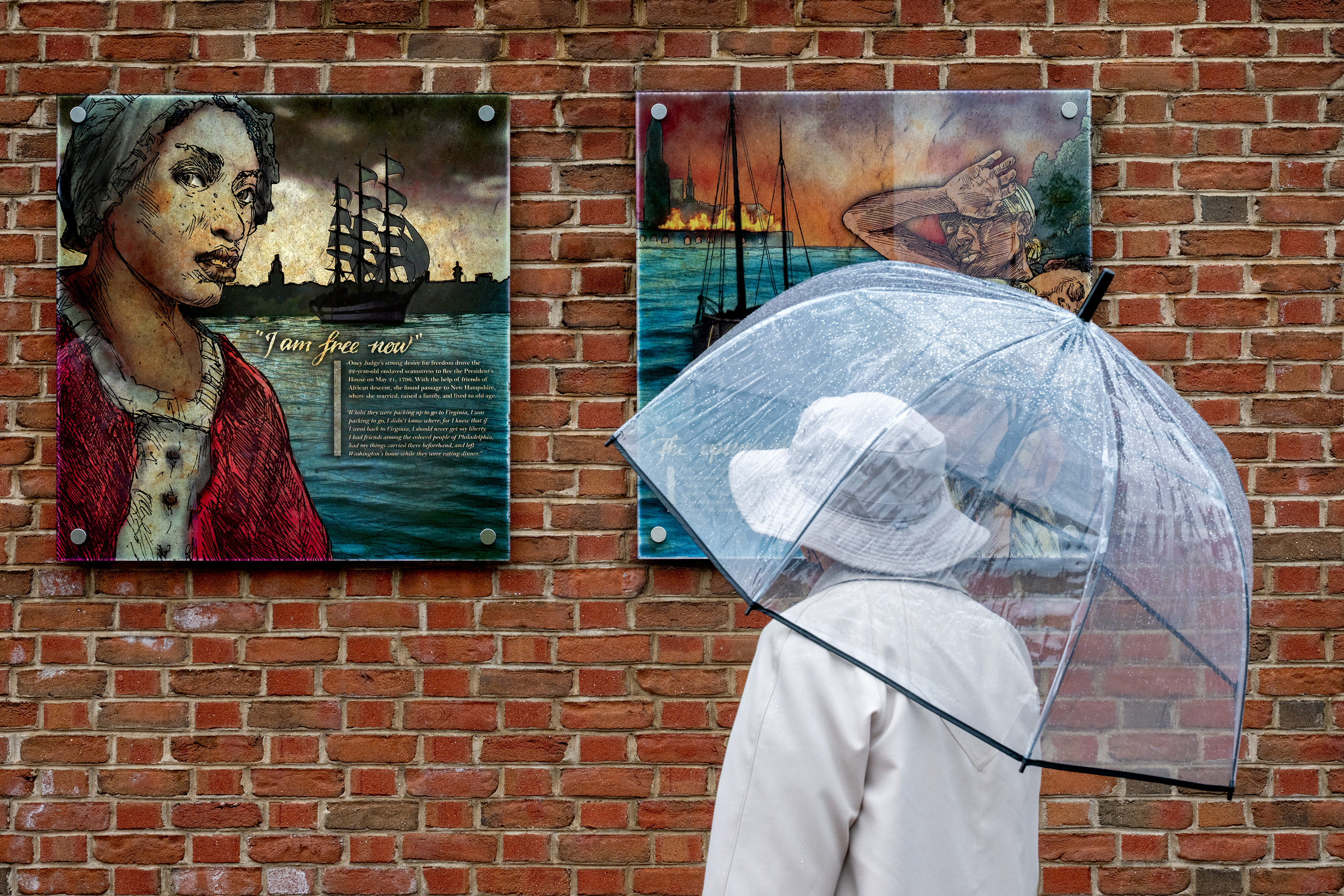
To comply with the president’s directive, the park service has taken down plaques about slavery at the President’s House in Philadelphia, a sign about climate change at Fort Sumter in South Carolina, and a sign about Indigenous people at Acadia National Park in Maine.
Another federal judge has already ordered the park service not to make further changes to the slavery exhibit at the President’s House Site at Independence National Historical Park, as she considers a separate lawsuit filed by Philadelphia.
Kelley, who was nominated by President Joe Biden, sharply rebuked the Trump administration for taking down materials. “Not only does this undermine the integrity of the national parks; it sets a dangerous precedent of censorship and sanitization,” she wrote.
Kelley began her 63-page ruling by listing examples of national parks that help educate visitors about difficult periods of American history, as well as contributions made by people of color, gay and transgender figures, women and other marginalized groups.
“From the echoes of abolition in John Brown’s Fort in Harpers Ferry, to the genesis of the modern LGBTQ+ civil rights movement at the Stonewall National Monument, to the retreating ice of Glacier National Park in Alaska, the national parks preserve the multifaceted and multilayered history of our nation, including the good, the bad and the ugly,” she wrote.
In the lawsuit, the plaintiffs argued that removing the materials was “arbitrary and capricious,” in violation of the Administrative Procedure Act. They also accused the park service of exceeding its legal authority.
Katie Martin, a spokesperson for the Interior Department, the parent agency of the park service, suggested that the administration would appeal the ruling.
“This ruling is from a liberal activist judge,” Martin said in an email. “The department will look at our appeal options while we celebrate U.F.C. Freedom 250 on the South Lawn of the White House this weekend in honor of our nation’s 250th with the greatest president in the history of our country — President Donald J. Trump.”
Emily Thompson, the executive director of the Coalition to Protect America’s National Parks, one of the advocacy groups that brought the lawsuit, applauded the ruling.
“National parks are not propaganda tools, nor should they be used for partisan purposes,” Thompson said in a statement. “They exist to preserve and interpret the full American story, not just the parts that make some politicians comfortable. This ruling is an important step to help ensure that remains the case.”
In an email sent after the ruling, a copy of which was reviewed by The New York Times, a park service official directed regional supervisors to pause carrying out Trump’s directive “for the time being.”
“Parks can continue to submit items for review, but implementation actions should pause pending further guidance,” the email said.
Elizabeth Bonker is a silent woman with a loud mission. She wants government agencies to cover the costs of training people with autism in a form of communication called assisted spelling. One problem: Leading professional organizations don’t believe it works.
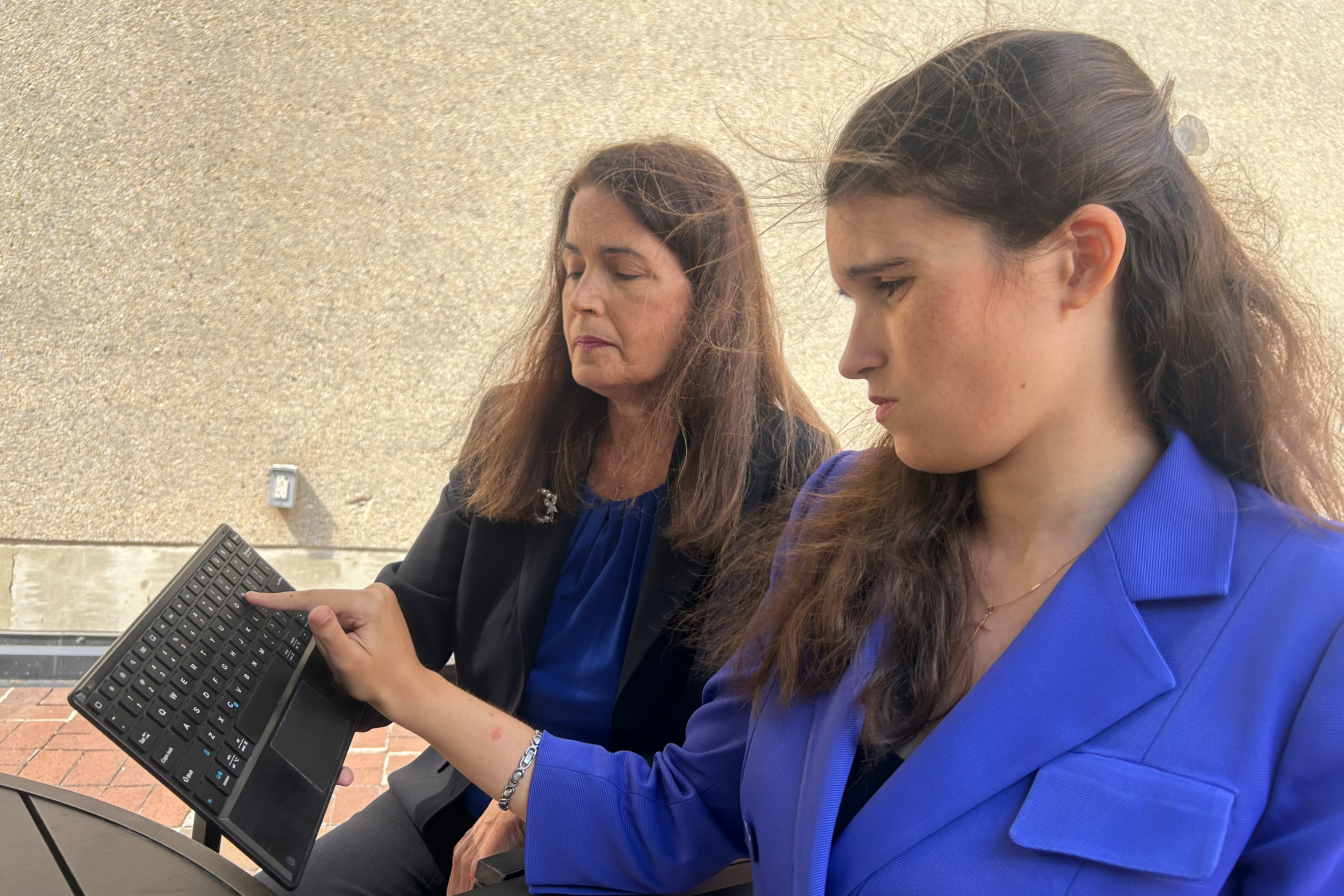
“All nonspeakers above the age of 5 should be given the opportunity,” typed Bonker, who is 28 and cannot talk. Her mother, Virginia Breen, held a wireless keyboard for her. They sat on a hotel patio before an April 27 meeting with a senior aide to Health and Human Services Secretary Robert F. Kennedy Jr.
“We are misunderstood and underestimated,” Bonker typed, occasionally humming or lightly groaning as she considered where to place a slender forefinger on the keyboard.
Assisted spelling is used to help nonverbal people communicate by pointing to letters on boards or using keyboards with physical help from another person.
Supporters say assisted spelling has improved the lives of thousands of people with autism, such as Bonker, and they have powerful allies. Kennedy appointed Bonker and another autistic “speller,” as they call themselves, to a 20-member autism panel made up largely of parents with children whose autism they attribute to vaccinations.
At the reconfigured panel’s first public session on April 28, three other members said their nonspeaking adult children were learning to communicate through spelling. The panel issued a resolution with language from Bonker stating that “robust” communications programs are essential for autistic people. Bonker has urged the Department of Health and Human Services to support training in assisted spelling for those who want it.
Other, validated methods enable nonspeakers to communicate through digital and analog pictures and letter boards. But assisted spelling isn’t autonomous communication, critics say: Consciously or not, the board holder may be influencing or responsible for the typed or pointed-at words — as with a Ouija board.
For many parents in Kennedy’s Make America Healthy Again community, the spelling controversy is angrily ringing the same bells as the notion that vaccines cause autism — which they refuse to consider debunked. As some people see it: Established medicine damaged them with vaccines and now refuses to accept a helpful treatment.
People with autism are “trapped in bodies that have betrayed them because the medical establishment has betrayed them,” said Louis Conte, who has a child with autism, in a September edition of a Kennedy-allied MAHA publication.
By limiting access to spelling, “you are not just limiting expression, you are erasing identity,” said Katie Sweeney, the mother of an autistic adult who is affiliated with an anti-vaccine medical group, at the autism panel meeting.
Mainstream autism experts and advocates in March convened the Independent Autism Coordinating Committee as a counter to Kennedy’s panel. At the new group’s meeting, one member spoke out against the spelling methods.
“In this underfunded disability environment, I don’t want a single penny diverted to debunked interventions like spelling,” said Amy Lutz, a senior lecturer in history at the University of Pennsylvania and an autism support advocate who described her 27-year-old son as “profoundly autistic.”
It’s not only a waste of time, she said later in an interview, but “people subjected to spelling are not given access to evidence-based education. Every interaction turns someone like my son into a puppet, and I find that very objectionable.”
A patchwork of perspectives
The universe of autistic people, their parents, researchers, advocates, and service providers is a broad, acrimonious spectrum. Some say that vaccines or chemical exposures caused a massive increase in autism, others that diagnostic changes account for most of the increase. Some seek mainstream or alternative treatments, some demand classroom inclusion, and others want residential treatment. Some people with autism say it’s a difference, not a disability.
“When I tell the parents of a young child they have autism, it’s a tragedy,” said Audrey Brumback, a child neurologist at Dell Medical School at the University of Texas-Austin. “When I give the same diagnosis to a teenager, it’s good news. It means, ‘There’s nothing wrong with you; you’re just autistic.’”
Scientific medicine has failed to deliver good treatments for autism. After four decades of concerted research, “the results have for the most part been very disappointing,” said David Mandell, a professor of psychiatry and pediatrics at the University of Pennsylvania.
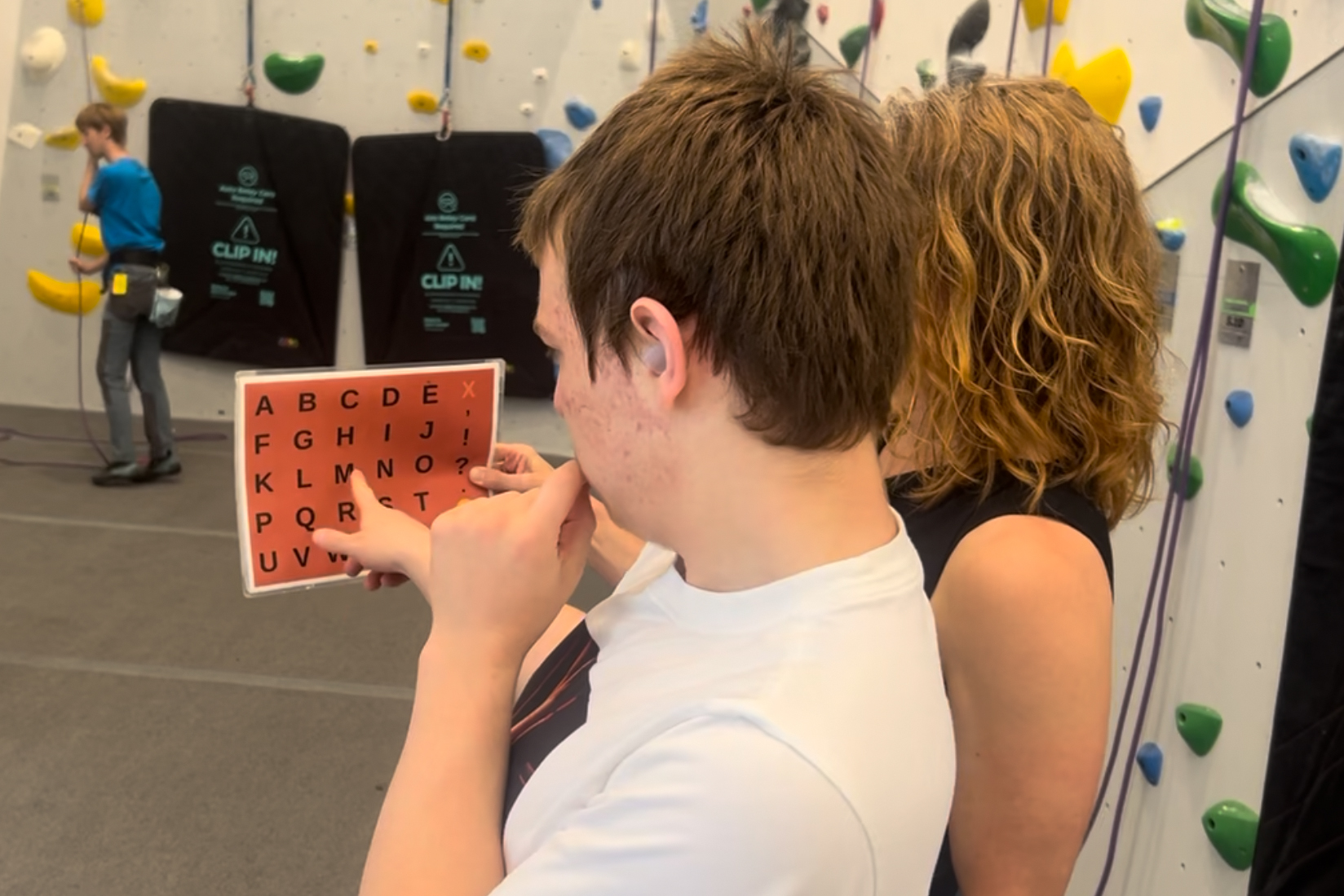
Noah Simmons has spent two years learning to spell and type. At a climbing center in Gaithersburg, Md., he communicated with the aid of his mother, Tracy Simmons, who is holding a laminated sheet with the alphabet. (Arthur Allen/KFF Health News)(Arthur Allen/KFF Health News)
Severely autistic children — those requiring round-the-clock care with ailments like epilepsy and generally lacking in verbal language — account for about a quarter of all U.S. autism diagnoses. Caring for them may mean dropping careers and spending vast sums on therapy. “They ought to spell special education with a dollar sign,” said Tracy Simmons, whose 17-year-old son, Noah, has autism.
Many parents of autistic children have tried vitamins and diets that exclude wheat, soy, or dairy. Some have turned to hyperbaric oxygen chambers, others to pig hormones to repair damage spuriously attributed to measles-mumps-rubella vaccines, and infusions of metal-leaching chemicals to remove traces of heavy metals in childhood shots. Recent regimens include camel milk, broccoli extract, and stem cell injections obtained at great expense in Panama and India.
In September, the White House touted leucovorin, used in some cancer care and for an ultrarare genetic condition. Marty Makary, then-commissioner of the FDA, said the drug could help 50% to 60% of kids with autism.
There’s little evidence behind any of these treatments, Brumback said. Many parents try multiple remedies at once; if a child’s condition improves, it’s hard to tell what worked — or whether the child simply grew out of a problem.
Noah the speller
During a Zoom session in which he typed on a keyboard held by his mother, Noah Simmons wrote glowingly about the world opened to him by two years of learning to spell and type.
“Im a new person. I have friends, I write, climbing,” he typed. “Conversation. I can have one. I have a say. Im human now.”
Later, at an indoor climbing center in Gaithersburg, Md., Noah scrambled nearly to the top of the wall before he slipped. He glided down the rope and slapped a high five with his climbing instructor as his mother approached. She carried a laminated sheet with the alphabet on it.
Tracy Simmons held the paper while Noah stabbed at the letters one by one, ending with a flourishing swipe at the exclamation mark: “Im going to crush it again!”
There, and at a later keyboard session at home, Noah seemed in control. But when Tracy stopped offering verbal prompts and encouragement, or stopped holding the board, Noah often got lost and signaled a need for help.
Tracy Simmons acknowledges that whoever holds the board could be steering a speller’s words. Despite his climbing prowess, Noah lacks fine motor skills, is anxious, and has trouble controlling his body, she said.
“He’s working on becoming an independent typer. He can do it short amounts of time,” she said. “But at times he gets overwhelmed.”
The method used by Noah and his mother came into use in the United States in the early 1990s. At first, trainers guided the arms or hands of the spellers as they pointed to a letter board. The idea was that the intelligence or literacy of severely autistic people was trapped in bodies they couldn’t control. They needed help physically learning to spell, first with a pencil or finger pointing at stenciled or printed letters, and eventually by typing on a keyboard.
Within a few years, however, dozens of experiments had shown that the facilitators, not the autistic people, were doing the spelling. A review published in 2018 found no evidence that the spellers could identify words or objects without their facilitators.
Next came the Rapid Prompting Method, devised by Soma Mukhopadhyay, an Indian mother of a boy with profound autism, who brought her system to the United States in 2001. Elizabeth Vosseller, a speech pathologist in Herndon, Va., launched a nearly identical method, Spelling to Communicate. In both, the facilitator, not the speller, holds the letter board. But each method relies on prompts.
Mukhopadhyay and Vosseller, who did not respond to requests for comment, have each declined to submit their systems to the kind of testing that disproved facilitated communication. Bonker said calls for such tests show a lack of respect for the disabled.
Asked why, after 23 years as a speller, she couldn’t communicate alone or without her mother holding the board, Bonker typed, “I can do it in certain environments that don’t include interviews with strangers.” Severely autistic people need coaches to help control their anxiety, Breen said.
Another star of the speller world, Woody Brown, spoke through his mother with Jenna Bush Hager on the Today show on April 1. The Browns were promoting his novel, Upward Bound, which became an immediate New York Times bestseller after its March release. During the segment, Mary Brown spoke in complete sentences that she said came from Woody, but the letters he typed, as far as the program’s viewers could see, did not correspond to her words and often looked like gibberish.
This raised questions about how Woody Brown could be the author of what critics described as a brilliant, sensitive novel. They pointed out that Mary Brown has worked as a Hollywood script analyst. The Browns did not respond to efforts to reach them for comment.
“Spellers” are best known to the public through the success of The Telepathy Tapes, which briefly unseated The Joe Rogan Experience as the country’s most popular podcast early last year. In The Telepathy Tapes’ first season, people with profound autism were allegedly revealed as clairvoyant superhumans.
The evidence for their telepathic abilities was produced through spelling. The host showed spellers and facilitators two things, and the speller, with the facilitator present, typed out what the facilitator saw. Viewers had to wonder whether this was evidence of telepathy or confirmation of what critics have said all along: that the facilitator is the one controlling the words, often by feeding the speller subtle cues.
Bonker said she appreciated the Telepathy Tapes’ host for including her nonprofit group’s information on its website. As for telepathic skills, “I believe nonspeakers have many gifts,” she said. “And I believe what they say.”
The debate over spelling is playing out in boards of education and courtrooms, where parents of autistic children seek aid for their children’s spelling lessons.
In New York state in March, anti-vaccine advocates for spellers showered scorn on state Sen. Patricia Fahy, the Democratic chair of the disabilities committee, after she inserted language into a disability rights bill requiring that payments go to “verified” communication methods that assured patient autonomy.
Vikram Jaswal, a University of Virginia psychologist who works with spellers, said he’s seen people with severe autism who can type independently, though only a handful have that ability out of the couple of hundred spellers he’s met. More research is needed to figure out who can best benefit from the technique, he said.
Tracy Simmons believes in the method, and so does her son — assuming he’s in control of what he types.
On a recent morning, Tracy read aloud a beautiful escape-from-Alcatraz story she said Noah had written with her help and that of his spelling trainer. “He writes all the time in his head,” she said, but it could take years for her son to consistently type independently.
KFF Health News is a national newsroom that produces in-depth journalism about health issues and is one of the core operating programs at KFF — the independent source for health policy research, polling, and journalism.
Ford is recalling more than 250,000 vehicles that were incorrectly repaired under a previous recall meant to fix a problem that caused the engine to stall while driving.
The recall includes 255,404 Ford Focus automobiles, model years 2012-2018. Ford said the canister purge valve may malfunction, causing the engine to stall unexpectedly while driving, increasing the risk of crash and injury.
To fix the problem, dealers will provide a powertrain software update free of charge.
Owner notification letters are expected to be mailed July 6. Owners may contact Ford customer service at 866-436-7332.
Ford’s number for this recall is 26S40. The National Highway Traffic and Safety Administration’s number for this recall is 26V369. The original NHTSA recall number for this issue is 18V735.
Vehicle identification numbers involved in this recall will become searchable on NHTSA.gov on July 6.
Earlier this week Honda announced a recall of more than 800,000 vehicles because rear suspension components may fail and cause drivers to lose control, increasing the chances of a crash or injury.
American Honda Motor Co. said the recall covers certain 2016-2022 Honda Pilot, 2017-2023 Ridgeline, 2019-2023 Passport, and 2014-2020 Acura MDX vehicles. The recall includes 880,514 vehicles that were sold in Connecticut, Delaware, the District of Columbia, Illinois, Indiana, Iowa, Kentucky, Maine, Maryland, Massachusetts, Michigan, Minnesota, Missouri, New Hampshire, New Jersey, New York, Ohio, Pennsylvania, Rhode Island, Vermont, Virginia, West Virginia and Wisconsin.
The problem centers around the rear subframe, which can corrode at suspension mounting points and cause the rear suspension to fail. Honda estimates that just 1% of the vehicles listed have the defect.
Honda has had no warranty claims and no reports of an injury or death related to the problem.
As a remedy, Honda and Acura dealers will inspect the rear subframe and install a reinforcement kit if necessary, or repair or replace the rear subframe components at no cost to vehicle owners.
Owner notification letters are expected to be mailed July 7.
The National Highway Traffic Safety Administration’s campaign number for the recall is 26V367000. Honda’s numbers for this recall are AOU and AOT. Vehicle Identification Numbers applicable to this recall will be searchable on NHTSA.gov beginning June 10.
Owners may contact Honda’s customer service at 888-234-2138.
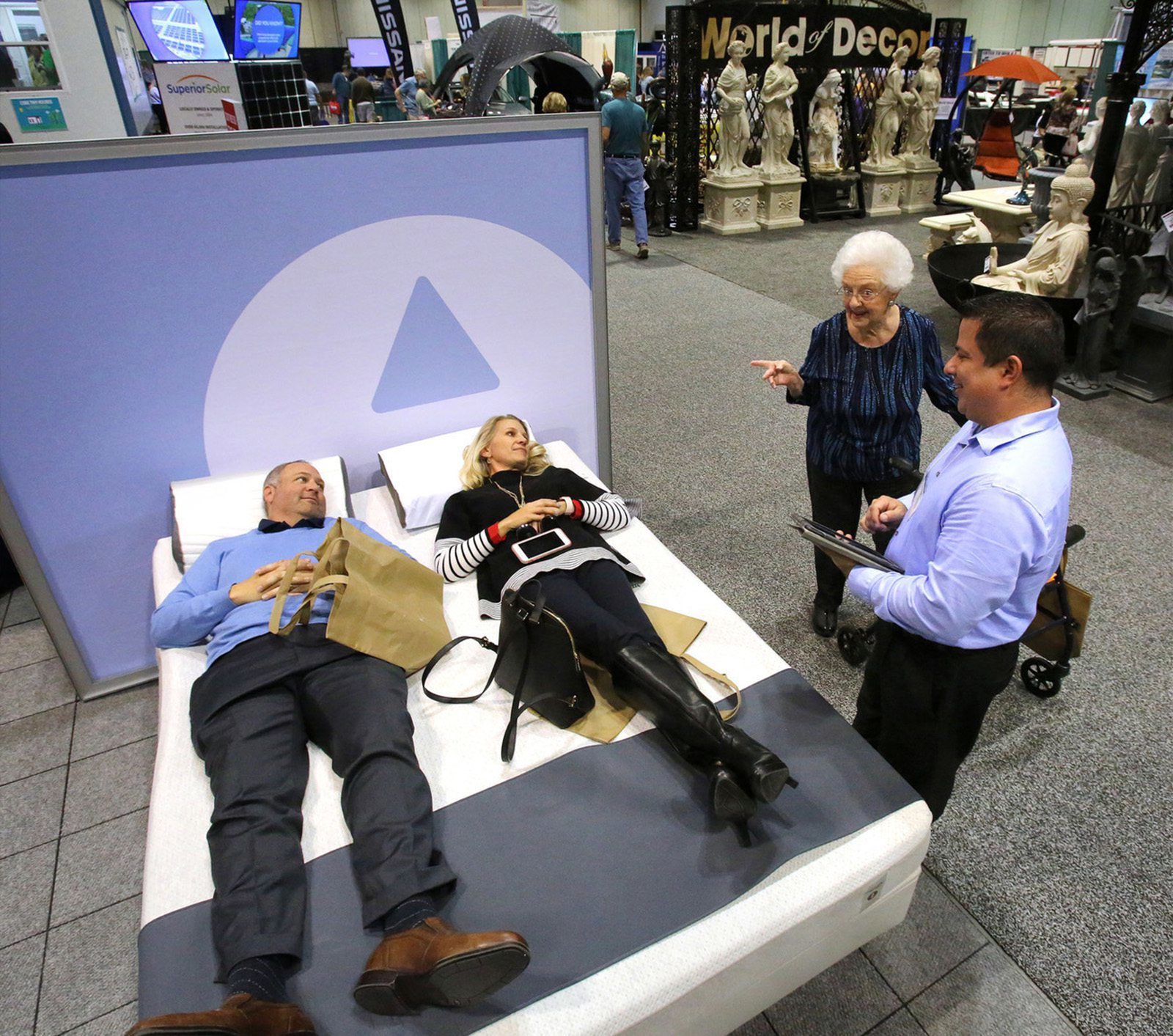
Mattress maker Sleep Number Corp. filed bankruptcy with an agreement to sell the firm to one-time retail partner Sleep Country Canada Inc. after years of weak demand, mounting financial pressure, and unpredictable tariffs.
Sleep Number blamed its bankruptcy, in part, on “the unpredictable shifting of trade rules imposed by the current U.S. government on top of an already vulnerable global supply chain,” according to a court filing Friday.
Even after the U.S. Supreme Court struck down some of President Donald Trump’s tariffs, “the broader trade landscape remained complex and the company continued to manage ongoing regulatory uncertainties, particularly regarding potential alternative tariff frameworks that may be imposed” on U.S. imports, chief financial officer Amy O’Keefe said in the filing.
Sleep Number filed for Chapter 11 protection from creditors in order to hold an auction, at which Sleep Country would be the so-called stalking horse bidder. Its all-cash opening offer for “substantially” all of the firm’s assets is $415 million, O’Keefe said.
Because the firm tried to sell itself in the months leading up to the Chapter 11 filing, O’Keefe said Sleep Number is seeking a 26-day sale process. Any competing bids would be due July 8 and the sale would close by July 31 under the company’s proposed timeline.
Sleep Number, which operates 572 stores and is known for its customizable beds, will continue operations while seeking a quicker-than-usual court-supervised sale process, according to the filing.
The company, whose shares have plunged more than 95% the past four months, has been hurt by declining store traffic amid broader industry pressures.
In response to mounting financial woes, O’Keefe said Sleep Number restructured its real estate portfolio and launched a number of cost-cutting initiatives in recent years. The firm had reported its operating costs fell by $136 million last year, but its net loss still widened as net sales dropped 16%.
Sleep Number said in a statement that it will continue to review its footprint with the aim of retaining as many retail locations as possible. It added that as much as $65 million of new borrowing has been arranged to pay for the restructuring process. Sleep Number would also refinance $195 million of older debt should the loan package be approved by the judge overseeing the bankruptcy case.
The company listed assets of between $500 million and $1 billion and liabilities of between $1 billion and $10 billion, with lenders owned about $672.5 million.
Even as President Donald Trump boosts coal over clean energy, solar power is hitting new milestones in the U.S. and remains the leading source of new power.
Data released Wednesday by global energy think tank Ember, along with a report by the Solar Energy Industries Association and analytics firm Wood Mackenzie, show the continued growth of solar and decline of coal in the United States despite federal policy. In May, for the first time, solar supplied more of the nation’s electricity than coal, or 12.8%, Ember said. Coal supplied 12.2%, its fourth-lowest monthly share ever.
“For years solar power has risen in the U.S. electricity mix,” said Nicolas Fulghum, senior energy and data analyst at Ember. ”At the same time, coal power has lost its status, first as the largest source in the U.S. mix, and then gradually over the years has fallen even further.”
Solar also became the third-largest source of electricity in the U.S. in May, behind natural gas and nuclear, Fulghum said. Coal generation hit an all-time monthly low in April and rebounded only modestly in May, allowing increasing solar generation to overtake coal, he added.
Electricity is produced by converting sources of energy — fossil fuels, renewable resources and nuclear — into electrical power. Burning coal, oil, and natural gas for electricity emits carbon dioxide, trapping heat in the atmosphere and warming the planet. By contrast, solar, wind, geothermal, hydropower, and nuclear are carbon-free.
After about two decades of essentially flat electricity consumption in the U.S., electricity demand is increasing to power artificial intelligence, grow domestic manufacturing, and electrify transportation and heating. Fulghum said he expects to see more months when solar exceeds coal generation, before overtaking it on an annual basis in a few years.
These milestones signify that solar “has staying power” at a time when there’s less support for renewable energy at the federal level, he added.
Wind and solar combined have overtaken coal in the past, and wind power alone has outpaced coal during spring months when wind speeds pick up. Ember gets its hourly and monthly data from the U.S. Energy Information Administration.
Globally, electricity generation from renewables is growing rapidly. Renewables will become the largest global energy source, used for almost 45% of electricity generation by 2030, according to the International Energy Agency.
Trump helps the struggling U.S. coal industry while curtailing solar and wind
Last week, Trump, a Republican, announced a plan to boost the struggling U.S. coal industry by spending nearly $700 million to support coal-fired power plants and coal exports. Trump said at a White House event that “coal’s a great business” and that “in terms of power, there’s really nothing like it.”
Martin Pochtaruk, CEO and founder of Canadian-based solar panel manufacturer Heliene, said Trump can say that coal is coming back but investors will invest their money in whatever brings the best return. And for power generation that is solar, making it the fastest-growing fuel, he added.
A White House spokesperson defended the Trump administration’s overall energy policies, saying they were geared toward strengthening the country’s security.
“The President has reversed the Left’s devastating policies, saved the American coal industry, prevented the retirement of more than 17 gigawatts of power, and saved lives during heightened demand periods,” Taylor Rogers said in a statement.
While Trump is trying to reverse the coal industry’s decline, solar has been the top source for new power for five years, SEIA said. SEIA and Wood Mackenzie said solar and battery storage were practically the only energy resources being built in the first quarter, making up 91% of all new generating capacity.
“As power demand skyrockets, political and regulatory attacks are slowing down the exact resources we rely on,” Darren Van’t Hof, interim president and CEO of SEIA, said in a statement. “Impeding the only sector that is actively building new power is a reckless gamble that will only drive electricity bills higher.”
Several groups sued the Environmental Protection Agency over canceling the Solar for All program. A district court dismissed the case last week citing lack of jurisdiction. The plaintiffs have another filing pending in the Court of Federal Claims.
In a ruling Saturday, a federal judge struck down guidance from the Internal Revenue Service restricting tax credits for wind and solar projects.
Trump has blamed renewable energy sources such as wind and solar power for skyrocketing energy costs. But energy analysts say recent price hikes are based on growing demand, aging infrastructure, and increasingly extreme weather events that are exacerbated by climate change. Most recently, the war in Iran that Trump launched has also led to a spike in energy costs.
Blaming clean energy is “nonsensical,” said U.S. Rep. Jared Huffman. The California Democrat said that “not even lighting $700 million of taxpayer money on fire” can save the dying coal industry.
“The rest of the world will move ahead toward a clean energy future with countries other than the United States leading the charge, unfortunately,” he said Wednesday. “Trump will fail in this agenda. But, he will do enormous damage to our global leadership on clean energy and to the cost of living for struggling Americans.”
Top states for solar voted for Trump
States won by Trump in the 2024 election accounted for 74% of all solar capacity installed in the first quarter of 2026, with Texas, Florida, Ohio, Indiana, Michigan, Arizona, and Mississippi ranking among the top 10 states for new solar additions, SEIA said. The U.S. now exceeds a total of 6 million installations nationwide across all solar sectors, which includes large-scale solar arrays, commercial, community solar, and residential or rooftop solar.
Johanna Neumann, at the Environment America Research and Policy Center, said it’s “good news for our health and our planet that solar continues to grow,” and also, not surprising.
“Today we can harness solar more affordably than any other energy source. It’s scalable. And it’s also our most abundant renewable energy source,” said Neumann, senior director of the center’s campaign for 100% renewable energy. “So I think it’s hard to keep the lid on a good idea, especially if the economics are tilting in your favor as well, which they are in the case of solar.”
Environment America’s renewable energy dashboard shows that 32 U.S. states generated at least 10% of their retail electricity sales from solar, wind and geothermal energy last year, compared to 18 states in 2016. Clean energy in the South is booming, particularly in Florida, Arkansas, and Mississippi, Neumann said.
“I think there is a misconception in the United States that clean energy is something for the coasts and liberal cities,” she said. “The true story of renewable energy is a 50-state story.”
ARIES (March 21-April 19). This Venus transit: Fit is everything. Love mantra: I find and hone the best matches. Reciprocal relationships only. My affection is returned in kind, filling my days with an ever-growing sense of belonging. No chasing, only facing.
TAURUS (April 20-May 20). This Venus transit: Stop treating crumbs like a banquet. Love mantra: I release bargain-bin affection to make room for love’s luxurious and delicious feast. I attract connections that nourish my spirit and strengthen my sense of worth.
GEMINI (May 21-June 21). This Venus transit: Declare new relationship rules and goals. Love mantra: My heart’s horizon is wide open and filled with a colorful hope. Oddly enough, trying new frameworks can liberate an era of love that’s boundless and free.
CANCER (June 22-July 22). This Venus transit: Your own preferences go to the top of the list. Love mantra: To learn what I like is a pleasure that fits into my life’s purpose. Others benefit from this pursuit too, which is ultimately unselfish.
LEO (July 23-Aug. 22). This Venus transit: Settle into the throne. Wielding power responsibly is a gift to your realm. Love mantra: Accepting a leadership position with grace and creativity is my gift to relationships, which thrive in my care.
VIRGO (Aug. 23-Sept. 22). This Venus transit: Choose lovers and friends who expand your world. Love mantra: All gets lighter and brighter as I learn new love languages. Possibilities open. Thriving fascinations become the new norm.
LIBRA (Sept. 23-Oct. 23). This Venus transit: Flirt shamelessly with life. Love mantra: Delight is my purpose, my aim, my middle name. Love comes to me as I pursue what feels playful, interesting and fun. Aesthetics matter like the right music, lighting, styles and ideas.
SCORPIO (Oct. 24-Nov. 21). This Venus transit: Make peace with your desire to be cherished. Love mantra: Wanting affection is a strength to be embraced, not a weakness to be confessed. My longing leads to connection, tenderness and the delights of a rich human experience.
SAGITTARIUS (Nov. 22-Dec. 21). This Venus transit: Tap into your heart’s daring. Love mantra: To be courageous in love is always a valuable education, regardless of outcome. Your heart’s wings either fly or learn what to try for the next liftoff.
CAPRICORN (Dec. 22-Jan. 19). This Venus transit: Retire from one-sided emotional labor. Love mantra: I stop pulling entire relationships uphill alone. Love meets me halfway. Love reaches back. Love carries weight with willing hands and open eyes.
AQUARIUS (Jan. 20-Feb. 18). This Venus transit: Make sure you’re really seen before you enjoy being chosen. Love mantra: Real belonging begins with honesty. I share my tastes, humor, dreams, and strange little passions with confidence. The right person loves the real me.
PISCES (Feb. 19-March 20). This Venus transit: Protect your own beautiful softness. Love mantra: My heart stays warm without becoming reckless. I refuse the armor that blocks future joy. Tenderness remains part of my strength and part of my beauty.
TODAY’SBIRTHDAY (June 13). It’s your Year of the Brushstrokes — you’re the artist, not the painting. The product is wonderful, but it’s the time spent making it you love the most. You’ll share your process for fun and profit. More highlights: Loved ones celebrate you at five milestones. Auspicious collaborations are gold in the bank. You’ll renovate, trade and talk your way into gorgeous environs. Aquarius and Virgo adore you. Your lucky numbers are: 8, 33, 29, 2 and 15.
DEAR ABBY: At the company where I work, multiple departments share a workspace. While most of my colleagues are quiet and considerate, certain members of one department are very loud. They talk nonstop (nothing work-related) and have no consideration for others who are trying to work and concentrate. It has reached the point that it is next to impossible to accomplish any work on a daily basis.
These individuals’ managers not only refuse to correct these behaviors, but often join in themselves. I understand I don’t work in a library, but I and others are desperate for a reasonable work setting and are trying to find the best approach to take. Help!
— DISTRACTED IN COLORADO
DEAR DISTRACTED: Not knowing the corporate structure in your company, I will guess that there is someone there who supervises the managers. You and the other employees who are encountering the disruption on a daily basis should discuss this as a group with that person to see if some accommodation can be made. If your complaint falls on deaf ears, a solution to your problem might be noise-canceling headphones. Another might be to look for a job with another company.
** ** **
DEAR ABBY: Every year for birthdays and holidays, my in-laws give cash as gifts to their children and their spouses. Should I be hurt that my in-laws always give an equal amount to my brothers-in-law and their spouses, while I always receive half the amount? I don’t need the cash, but the blatant difference makes me feel less valued than their other daughters-in-law.
I host all the family celebrations, visit my in-laws weekly and help my husband with repairs and upkeep around his parents’ home. My brothers-in-law and their spouses give their parents only limited amounts of time on holidays and limited physical assistance to their parents only if my husband begs for help.
I would never say anything to my husband because I don’t want to hurt his feelings. I just want to know if I am being petty.
— LESS THAN IN NEW YORK
DEAR LESS THAN: It appears your in-laws do not appreciate your efforts to be a good daughter-in-law. You are not “petty” for noticing the discrepancy, and I don’t blame you for feeling “less than,” because that is how you are being treated.
I do think you should have mentioned this to your husband when it first started happening. That kind of gift-giving is supposed to be equal. When it isn’t, there is something wrong. Whether you choose to continue helping them to the extent you have in the future is up to you.
** ** **
DEAR ABBY: I’m not sure what to make of a strange thank-you note I got from a relative. I gave a generous gift, and one year after the wedding, I received an acknowledgment thanking me for the gift and saying that she was no longer married to “John” because she wasn’t being treated with the respect she deserved. What do I say when I see her — “thanks for the note — sorry about your marriage,” or should I just let it go?
— PERPLEXED IN DELAWARE
DEAR PERPLEXED: It might be better simply to say, “It’s nice to see you. How are you doing?” and leave it at that.
WASHINGTON — The Kennedy Center was running out of options Friday evening to keep President Donald Trump’s name on the facade of the iconic performing arts venue.
A judge earlier in the afternoon rejected a request to pause a court-ordered deadline of Friday to remove references to Trump from the building and other aspects of the Kennedy Center’s operations. The institution appealed that ruling, an effort that was also rebuffed Friday evening.
Scaffolding was erected earlier in the day around a section of the building that includes Trump’s name, though there was no effort to remove it by 7 p.m. Eastern Time. Storms with lightning were dancing around Washington, adding to the challenge for workers.
After ignoring the Kennedy Center for much of his first term, Trump has wielded tremendous influence over the venue during his return to office. Just a month into his second term, he ousted the center’s previous leadership and replaced it with a board of trustees that named him chairman. Trump’s name was quickly added to the building.
In his ruling that only Congress could make changes to the Kennedy Center’s name, U.S. District Judge Christopher Cooper also blocked the administration from closing the cultural and arts venue for major renovations that had been planned to start in July and last for two years.
The Kennedy Center’s leadership argued in its appeal Friday that the renovation was badly needed and accused the lower court, in terms that seemed similar to Trump’s speech patterns, of interfering in the effort.
“The District Court is not allowing us to close in order to properly fix up and repair the Building, including potentially life threatening structural damage like beams and parking garage ceilings that are rusted, and in serious danger of falling onto people below,” according to the appeal. “Indeed, total collapse!”
Even as the Kennedy Center has fought efforts to remove Trump’s name from the building, it has taken steps to comply with Cooper’s initial ruling.
A June 4 memo to staff from the Kennedy Center’s Office of General Counsel said email signatures, letterhead and other documents must reflect the name as “The John F. Kennedy Center for the Performing Arts” or “Kennedy Center.”
The Kennedy Center’s website has dropped Trump’s name. And an earlier email sent to members offering ticket packages for the June 28 Mark Twain Award for American Humor ceremony came from the Kennedy Center without including Trump’s name.
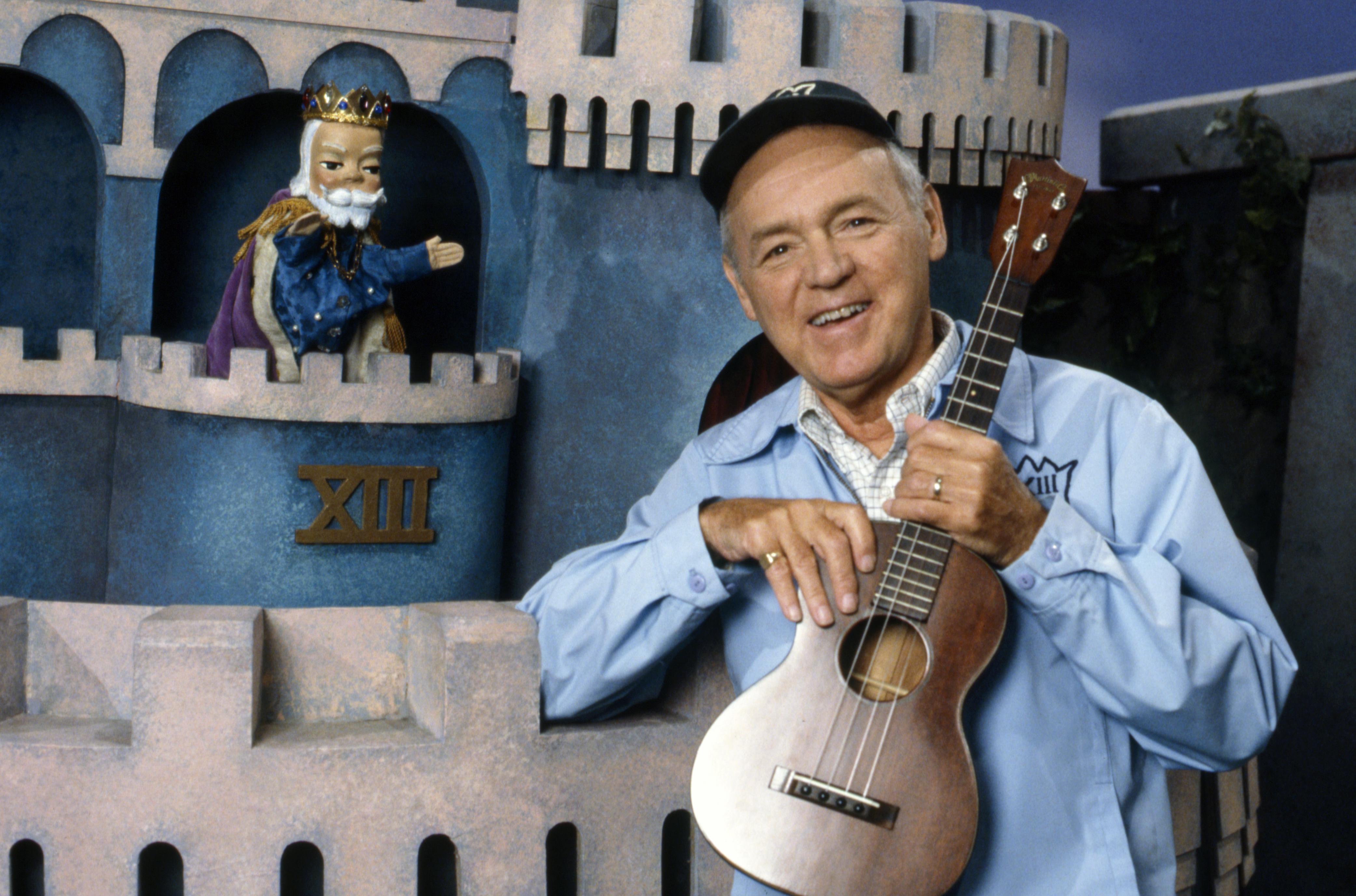
Joe Negri, an elegant jazz guitarist who passed up touring with Tony Bennett and other luminaries to remain in Pittsburgh, his beloved hometown, where he played Handyman Negri on Mister Rogers’ Neighborhood, cleaning castles, mixing cement, and bantering with King Friday, died May 30 in Scott Township, Pa. He was 99.
His death, at a senior living facility near Pittsburgh, was confirmed by his family.
Mr. Negri appeared on more than 300 episodes of the long-running public television show — first as an affable, singing handyman in the Neighborhood of Make-Believe and later as the congenial proprietor of Negri’s Music Shop, demonstrating instruments and playing alongside Wynton Marsalis, Yo-Yo Ma, and other musical guests.
“The thing about Joe was that he wasn’t acting,” David Newell, who played McFeely on the show, said in an interview. “He really was like the friendly fellow you might find walking around a neighborhood. He was just incredibly gentle as a person, but also as a musician.”
After touring with jazz bandleader Shep Fields as a teenager, Mr. Negri accompanied Andy Williams, Johnny Mathis, and other headliners in the 1950s, framing their melodies with rich, effervescent chords. The Pittsburgh Post-Gazette arts critic Harold V. Cohen called Mr. Negri a “wizard.”
Impressed by his talent, some Pittsburgh musicians persuaded him to move to New York, the center of the jazz world, where stars like Bennett wanted him to tour with them. But after arriving with his family in 1959, Mr. Negri realized he had made a mistake.
“Living wasn’t easy in New York,” he told NPR in 2010. “The kids had babysitters. Somebody had to take them to the park to play. The whole scene just kind of turned me off. So we packed up.”
Returning to Pittsburgh, Mr. Negri started a band and eventually became the music director at WTAE, a local television station. There, he worked with Fred Rogers on a short-lived children’s show.
In 1966, Rogers left WTAE to develop Mister Rogers’ Neighborhood for the public television station WQED. He hired Mr. Negri to be on the show and later asked him to play a handyman.
“I almost started laughing,” Mr. Negri later recalled. “I said, ‘Fred, you got the wrong guy. I’m not very handy. You know, I can’t do anything. I can’t even put a hammer on a nail.’”
Rogers was undeterred.
“Don’t worry,” he told his new handyman. “It’s going to be all pretend.”
From the outset, music was central to the show. Mr. Negri sang for the first time in Episode 13, performing Sometimes People Are Good, a song written by Rogers, after the puppet Lady Elaine Fairchilde borrowed a painting without asking.
The lesson is in the lyrics:
Sometimes people are good
And they do just what they should.
But the very same people who are good sometimes
Are the very same people who are bad sometimes.
It’s funny, but it’s true.
It’s the same, isn’t it for me …
Isn’t it the same for you?
At the end of the episode, Rogers reflected on what Lady Elaine had done. “If you want something, you ask for it,” he said. “And if you can’t have it, then you find something else.”
Bending down to pick up domino blocks from the floor, he added, “I wonder if Lady Elaine knew that.”
Then he, too, sang the song, lingering on the words “for you?”
Joseph Harold Negri was born June 10, 1926, in Pittsburgh, the son of Italian immigrants. His parents were Michael Negri, a bricklayer, and Rose (Viggiano) Negri.
Growing up in Mount Washington, a working-class neighborhood with a spectacular view of the city’s downtown, his home was filled with music. His father played the banjo. His mother listened to pop songs on the radio.
When he was 3, he started playing the ukulele. By the time he was 5, he was singing on Uncle Henry’s Radio Rascals, a local program for child performers. He took up the guitar when he was around 8, taking lessons at Volkwein’s Music, a well-known store in downtown Pittsburgh, where he learned to play solos by jazz guitarist Eddie Lang.
Mr. Negri had found his chord in life.
“I guess there’s been a mainline for me — the guitar,” he told Vintage Guitar Magazine in 2010. “I call myself a work in progress.”
In 1942, he played his first professional gig, sitting in with a local orchestra. Frank Andrini, a guitarist in Pittsburgh, took note of the performance and connected him with Fields, the bandleader. Mr. Negri dropped out of high school to tour with him.
“He promised my mom and dad I’d be in good hands and he would look after me,” Mr. Negri later recalled. “And he did.”
At 18, in the midst of World War II, he was drafted into the Army and sent to Europe, playing when he could at nightclubs and bars. An officer who saw him perform helped him join a special services unit that entertained soldiers.
After his Army service, Mr. Negri returned to Pittsburgh, studying music at the Carnegie Institute of Technology (now Carnegie Mellon University). His path seemed set — move to New York, play on albums and tour with jazz stars — but the road led back to his hometown.
“I feel that in this town I’ve gotten to do such a variety of things that I could never have done in New York or on the West Coast,” he told the Pittsburgh Press in 1971.
Mr. Negri married Joan Serafini in 1954. She survives him, along with their daughters, Lisa Negri, Laurie Bentz and Gia Leven, and three granddaughters.
SAN ANTONIO, Texas — The final moments in each of the first four games between the New York Knicks and San Antonio Spurs in these NBA Finals had much in common, including that the outcome was still undecided with a minute left every time.
There hasn’t been a finals like this, with a margin of four points or less in the final minute of each of the first four games, since 1973. New York won that series. The Knicks haven’t been champions since.
That could change Saturday. New York — leading the series 3-1 — can close out the Spurs in San Antonio when the finals resume with Game 5 (8:30 p.m., 6abc).
“You have to be present,” Knicks coach Mike Brown said Friday. “You can’t think about the outcome. It’s about the process, the next play, the next play, the next play.”
The series could easily be tied right now, after San Antonio wasted a 29-point lead in Game 4 in what became the biggest collapse in NBA Finals history.
The Spurs led 81-52 in the third quarter on Wednesday night and got outscored 55-25 the rest of the way, missing 29 of their final 35 shots and losing on Anunoby’s tip-in with 1.2 seconds remaining. Taylor Swift was among the many who celebrated long after the final horn, and now the Spurs have to find a way to somehow regroup from absolute agony.
“There’s conviction in strength and confidence,” Spurs coach Mitch Johnson said. “That’s what it is. There’s no trick. There’s no avoiding what’s happened. There’s no avoiding all four games have been winnable games. There’s no avoiding we’re down 3-1. There’s not avoiding ways that we could be better. There’s nobody that’s going to be harder on ourselves and accountable to ourselves than the people in the locker room and each other.”
Entering Game 4, teams with leads of 29 or more points in a game were:
249-0 this season.
288-2 over the last 30 postseasons.
4,088-13 over the last 30 seasons, counting regular season and playoff games.
That means the Spurs — who have had double-digit leads in all four games — had about a 99.7% chance of winning Game 4, tying the series and coming home with all the momentum. They’re on the brink of elimination instead.
“We still have that belief that we have a chance to win,” said Spurs guard De’Aaron Fox, who has heard tons of criticism since Wednesday for his decision to try a layup instead of running down the clock when he had the ball and San Antonio leading by one in the final moments. “But we’re taking this one game at a time. We’re not looking at it as we need to win three games. We need to win tomorrow and then we give ourselves a chance to play another game.”
It will not be easy. When the Knicks have had a closeout opportunity this season, they’ve left no doubt.
New York is 3-0 in closeout games in these playoffs, winning them by the almost comical average of 39.3 points per game. The Knicks led by 61 points before winning 140-89 to close out Atlanta in Round 1, led by 44 points before winning 144-114 to close out the 76ers in Round 2, then led by 45 points before winning 130-93 to close out Cleveland in the Eastern Conference finals.
All that happened on the road, too. And thousands of Knicks fans are expected in San Antonio on Saturday night, all ready to see New York end that long title drought.
“One possession at a time, one play at a time, one quarter at a time,” Knicks guard Jalen Brunson said. “You’re thinking about the now, how you can be better the next possession, how can you turn the page, positive or negative. Regardless of what’s going on, our mindset and approach has to stay the same. I think we’ve done a very good job of that. It’s something that has grown over the season. It’s really important, especially obviously now.”