Tag: Drexel University

  • Louis F. Rose, retired pioneering periodontist, physician, and professor, has died at 84

    Louis F. Rose, retired pioneering periodontist, physician, and professor, has died at 84

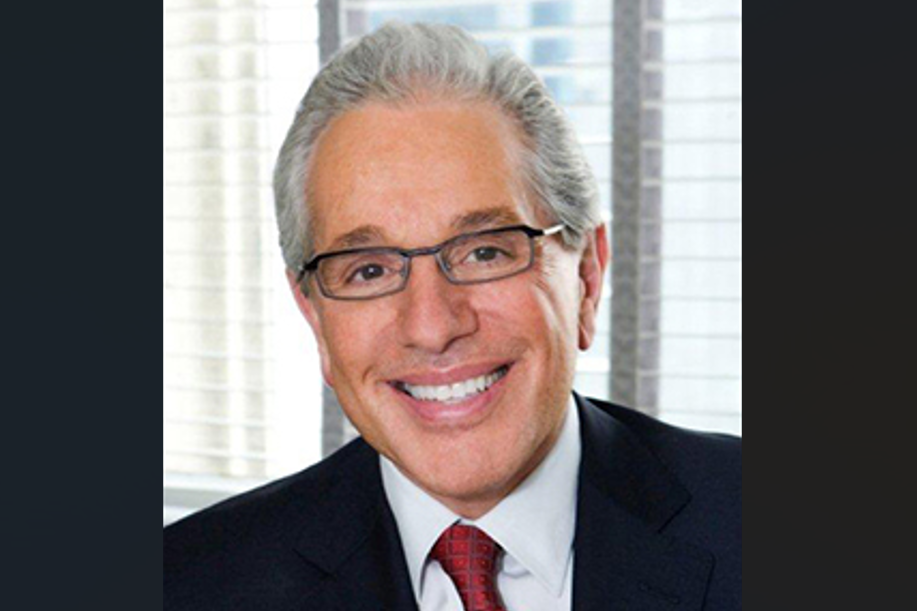
    Louis F. Rose, 84, of Bala Cynwyd, retired award-winning periodontist, innovative physician and researcher, former clinical professor of periodontics at the University of Pennsylvania School of Dental Medicine, onetime chief of the Division of Dental Medicine and Surgery at the old Medical College of Pennsylvania, mentor, author, and Frank Sinatra superfan, died Wednesday, Sept. 30, of neurological disease at Sunrise of Haverford assisted living center.

    Dr. Rose earned a degree in dental surgery at the Temple University School of Dentistry in 1968 and a medical degree from the Medical College of Pennsylvania, now part of the Drexel University College of Medicine, in 1972. He completed his graduate training in periodontics at Penn in 1970 and used his extraordinary dual dental and medical training to study how gum disease may affect diabetes, heart disease, premature birth, and other disorders that previously had not been linked to poor dental health.

    That convergence of dental and medical research and care became so effective and pervasive that the American Academy of Periodontology and others endorsed Dr. Rose’s recommendations, and he developed and directed a groundbreaking program at Penn that placed dental and medical students in the same classes.

    Steven G. Gabbe, former dean of the Vanderbilt University School of Medicine, taught a class he called the “Lou Rose Course.” Dr. Rose also pioneered the development of tooth implants, laser dental surgery, and improved safety procedures.

    “He influenced generations of dentists and physicians,” his family said in a tribute.

    He also taught at Harvard and New York Universities, and was a professor of medicine and surgery at Drexel University College of Medicine. He lectured to colleagues, students, and the public about healthcare issues across the United States and in Europe, Asia, the Middle East, South America, Africa, Australia, Canada, and Mexico.

    He operated a private practice on South Broad Street in Philadelphia and counted socialite Grace Kelly as one of his patients. Friends praised his “friendly smile and kind words” and “confidence and strength” in online tributes. One said: “Such a brilliant man who lived a simply fascinating life that touched so many.”

    Dr. Rose was onetime president of the American Academy of Esthetic Dentistry and the Northeastern Society of Periodontists. He was a director of the American Board of Periodontology and vice president for research of the Juvenile Diabetes Research Foundation.
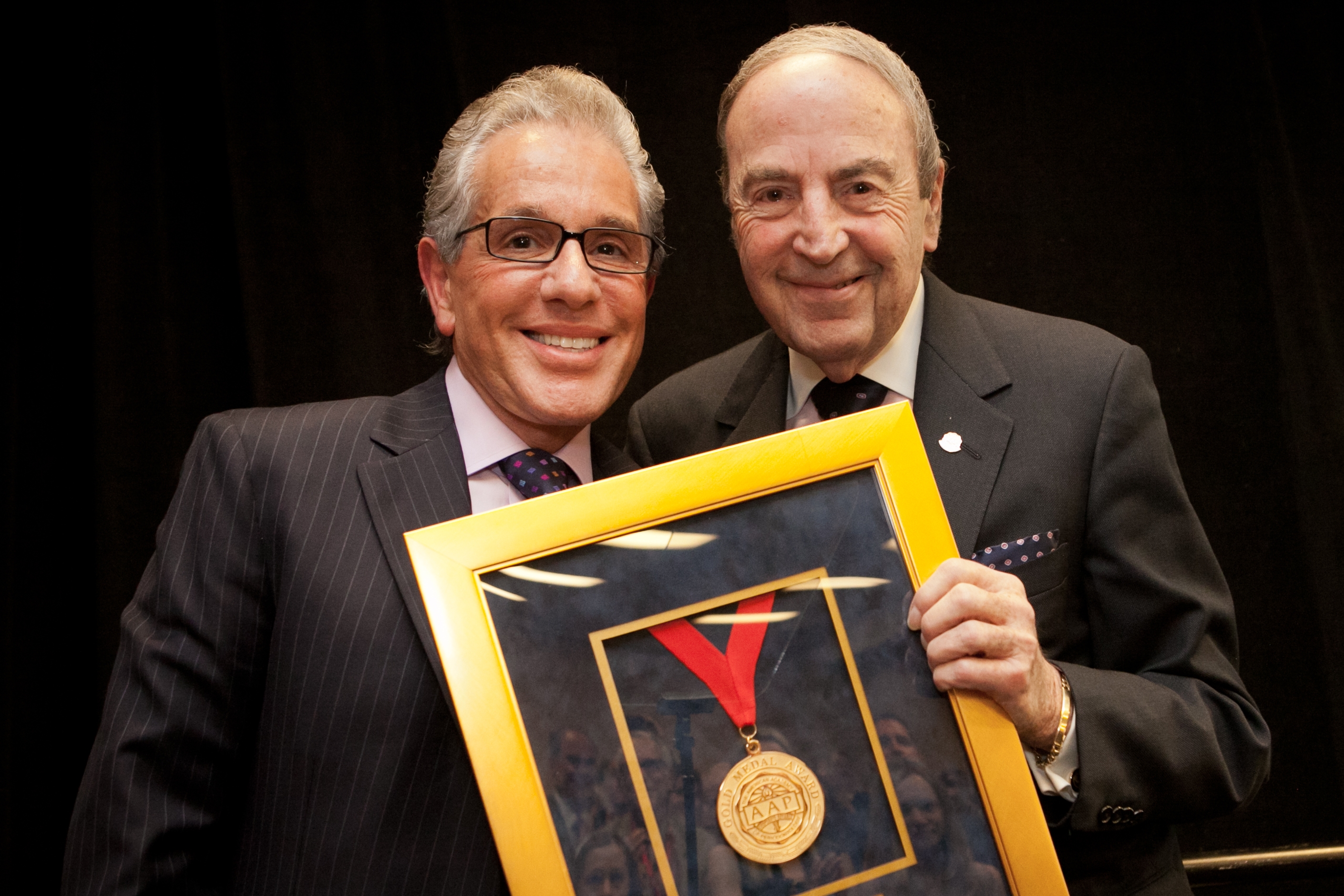
    Dr. Rose (above left) receives an award from his mentor and colleague, D. Walter Cohen. Below, he talks about the future of dentistry.Julia Zhogina Photography

    He earned a lifetime achievement award from the Cohen Amsterdam Educational Foundation, alumni awards from Temple, Drexel, and Penn, and the Gold Medal award from the American Academy of Periodontology in 2013. He wrote articles, research papers, and books, including Periodontics: Medicine, Surgery, and Implants, in 2004. He was editor in chief of the Compendium of Continuing Education in Dentistry.

    His mother, Mary, was a lifelong fan of Frank Sinatra, and Dr. Rose inherited her fascination with the singer’s music. He saw Sinatra in concert more than two dozen times, he told The Inquirer in 1990, and he and his wife, Claire, met Sinatra and became friends through a mutual friend in Atlantic City.

    At his practice, Dr. Rose played only Sinatra songs. In 1992, to mark Sinatra’s 77th birthday, the Daily News listed 16 places in Philadelphia that had connections to the crooner. Number 7 was Dr. Rose’s office.

    In 1995, Dr. Rose and his wife were recognized by the Juvenile Diabetes Research Foundation, and Sinatra called them “two wonderful people” in a letter to foundation officials and praised their “extraordinary accomplishments.”
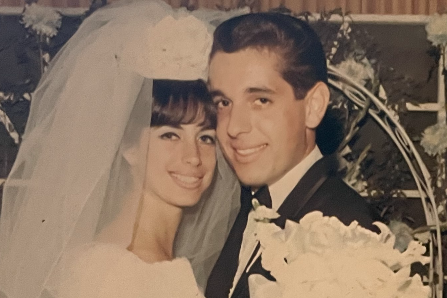
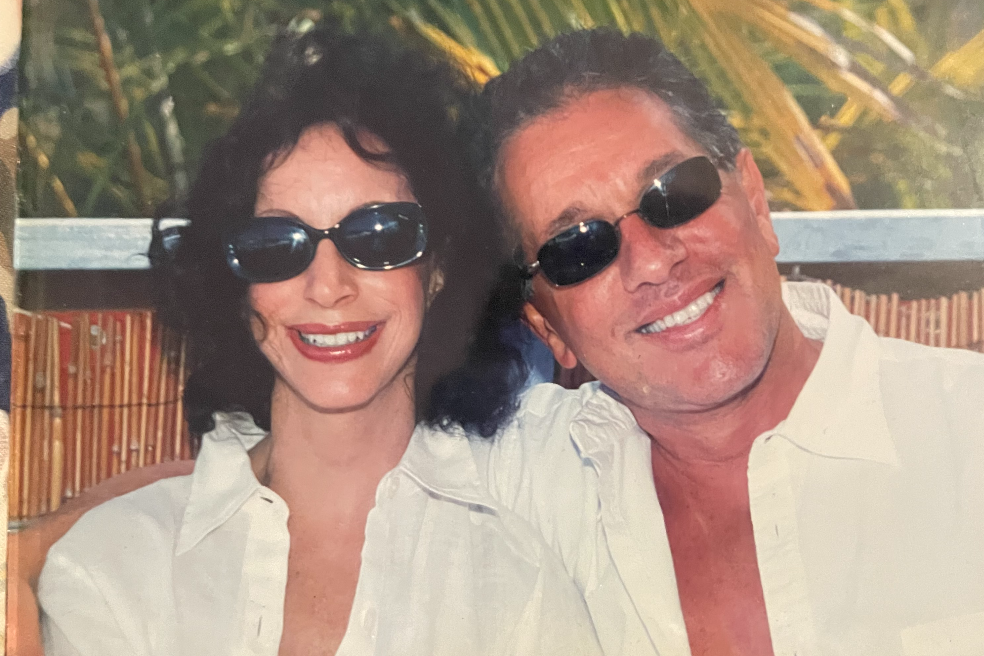
    Dr. Rose and his wife, Claire, married in 1965.Courtesy of the family

    “Frank Sinatra’s music was the soundtrack of his life,” Dr. Rose’s family said. He told The Inquirer: “Sinatra relaxes me. If I feel good, the patient feels good.”

    Louis Frank Rose was born Sept. 6, 1942, in Irvington, N.J., near Newark. He earned a bachelor’s degree at the University of Buffalo and moved to Philadelphia in 1965 to attend dental school at Temple.

    He met Claire Aberbach in a high school geometry class, and they married in 1965. They had sons David and Michael, and lived in Philadelphia, Penn Valley, Haverford, and Bala Cynwyd.

    Dr. Rose was funny and elegant, his wife said. He served in the Army Reserve, and he and his family made many memorable trips to St. Barts in the Caribbean. He passed on his love of Sinatra to his sons.
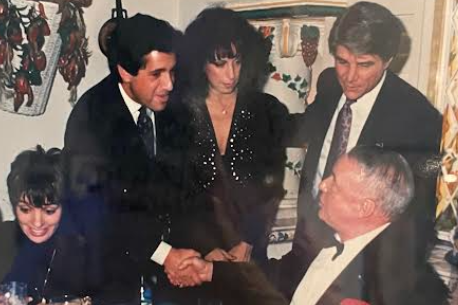
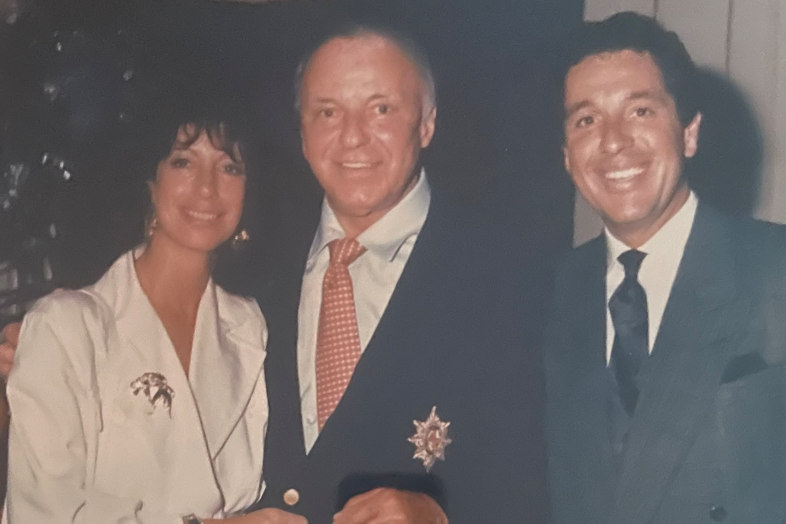
    Dr. Rose shakes hands with singer Frank Sinatra (above) and poses with his wife, Claire Rose, and Sinatra (below).Courtesy of the family

    “He was a fantastic father and grandfather, and an incredible role model,” his son David said. His son Michael said: “He did all that he did for his family. That’s what really drove him, to give to us all that he could.”

    His wife said: “He was a people person. His patients loved him. He had friends everywhere.”

    In addition to his wife and sons, Dr. Rose is survived by two granddaughters, three brothers, and other relatives.

    Private services were held earlier.

    Donations in his name may be made to the Alzheimer’s Association, 225 N. Michigan Ave., Floor 17, Chicago, Ill. 60601.
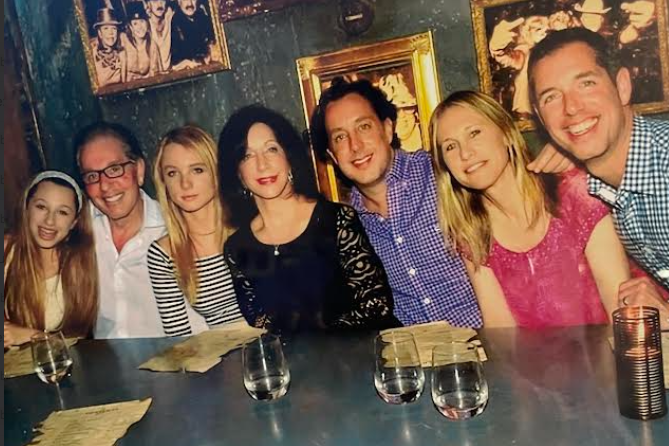
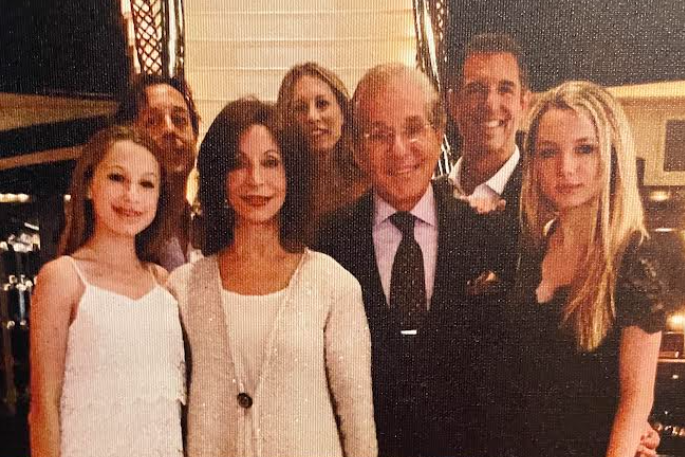
    Dr. Rose, second from left above, and front, second from right below, enjoyed time with his family.Courtesy of the family
  • The Philly Music Fest is back. Here are our can’t-miss picks from the lineup.

    The Philly Music Fest is back. Here are our can’t-miss picks from the lineup.

    It’s a milestone year for the Philly Music Fest.

    In 2017, Greg Seltzer and his wife, Jenn, founded the nonprofit festival that presents only Philly or Philly-connected acts at various independent venues, raising money to benefit music education organizations in the city.

    This year’s weeklong event is the PMF’s 10th. The fest begins Monday, Oct. 12, with the first of two nights at Ardmore Music Hall, headlined by Gregory Alan Isakov, and concludes Sunday, Oct. 18, with jazz saxophonist Immanuel Wilkins at Solar Myth.

    PMF 2026 will present 25 bands in nine showcases at six venues, bringing the total number of acts presented over the past decade to 175.

    In that time, says Greg Seltzer, a Ballard Spahr attorney as well as supporter of the Philly music scene, the PMF has donated $650,000 to music educations programs like Rock to the Future, Settlement Music School, Beyond the Bars, and Key of She.

    The economic impact in the region — including payments to bands, venues, and local vendors — runs somewhere between $2 and $3 million, Seltzer says, with the weeklong fest having grown to donating $100,000 to charity and generating $600,000 in economic impact per year.

    This year’s fest has many cool first-time gets. Only jazz percussionist-poet Angelo Outlaw (who is on an Oct. 15 MilkBoy Philly bill headlined by RJD2) and Remember Sports (on a loaded bill with Sweet Pill, Wax Jaw, and Midfield on Oct. 16 at Underground Arts), have played the PMF before.

    Acts making their PMF debuts include DJ-bandleader RJD2, country-folk songwriter Madi Diaz, metal quintet Dillinger Escape Plan, Philly emo quartet Marietta, Delaware-bred folkie Sug Daniels, and funk-soul rock-and-roller Owen Stewart.

    The big new PMF development, however, happens before any of the music showcases even begin.

    It’s the expansion of Inside Hustle, the music industry networking event that debuted as part of the PMF in 2018.

    From its inception, the idea behind Inside Hustle has been to redress the imbalance that has always been an issue with the Philadelphia music scene.

    That is, the city has always produced incomparable musicians and great music but has been lacking in infrastructure compared to industry centers like New York, Los Angeles, and Nashville.

    Earlier this year, Inside Hustle, which is designed to bring aspiring music business professionals together with industry insiders, grew from a twice-a-year event to a monthly get-together at the Ethical Society on Rittenhouse Square.

    Now the confab is having another growth spurt. On Oct. 10, the PMF is presenting this year’s Inside Hustle along with Philadelphia Music Alliance, Drexel University’s Antoinette Westphal School of Media Art & Design, and University of Pennsylvania radio station WXPN-FM (88.5), in its biggest iteration by far at the URBN Center on the Drexel campus.

    Sug Daniels reacts while performing at City Winery Philadelphia on Feb. 16, 2022. Daniels plays the Fallser Club in East Falls on Oct. 16 as part of this year’s Philly Music Fest.ELIZABETH ROBERTSON / Staff Photographer

    The four-hour daytime session will include 10 panels with titles like “Getting the Gig 101″ and “Breaking into Music Marketing,” plus opportunities to meet music business pros, and a keynote speech by Toby Leaman of Dr. Dog.

    The idea, says Seltzer, is to show the Philadelphia music scene has come of age as a place to do business, with renowned entities like Will Yip’s Memory Music Studios, the live music streaming platform nugs.net, and influential radio programming like WXPN’s World Cafe.

    Seltzer envisions Inside Hustle as “a kind of all-in Philly music conference” that he foresees becoming “an annual coming together of the entire Philly music industry.”

    And along with the music business, of course, the PMF is about the live music experience. Here are my PMF picks not to miss.

    Gregory Alan Isakov

    Indie folk songwriter Isakov’s Philly-ness isn’t well known — he was born in South Africa and lives in Colorado. His patient, understated songs have a spaciousness suitable to his Rocky Mountain milieu. But he grew up and first started playing in bands here, and in Ardmore, he’ll be in much cozier environs than he is accustomed to. Monday, Oct. 12, and Tuesday, Oct. 13, at Ardmore Music Hall.

    Lancaster native Madi Diaz plays Ardmore Music Hall on Oct. 13 as part of Philly Music Fest.Allister Ann / Courtesy of Pitch Perfect PR

    Madi Diaz

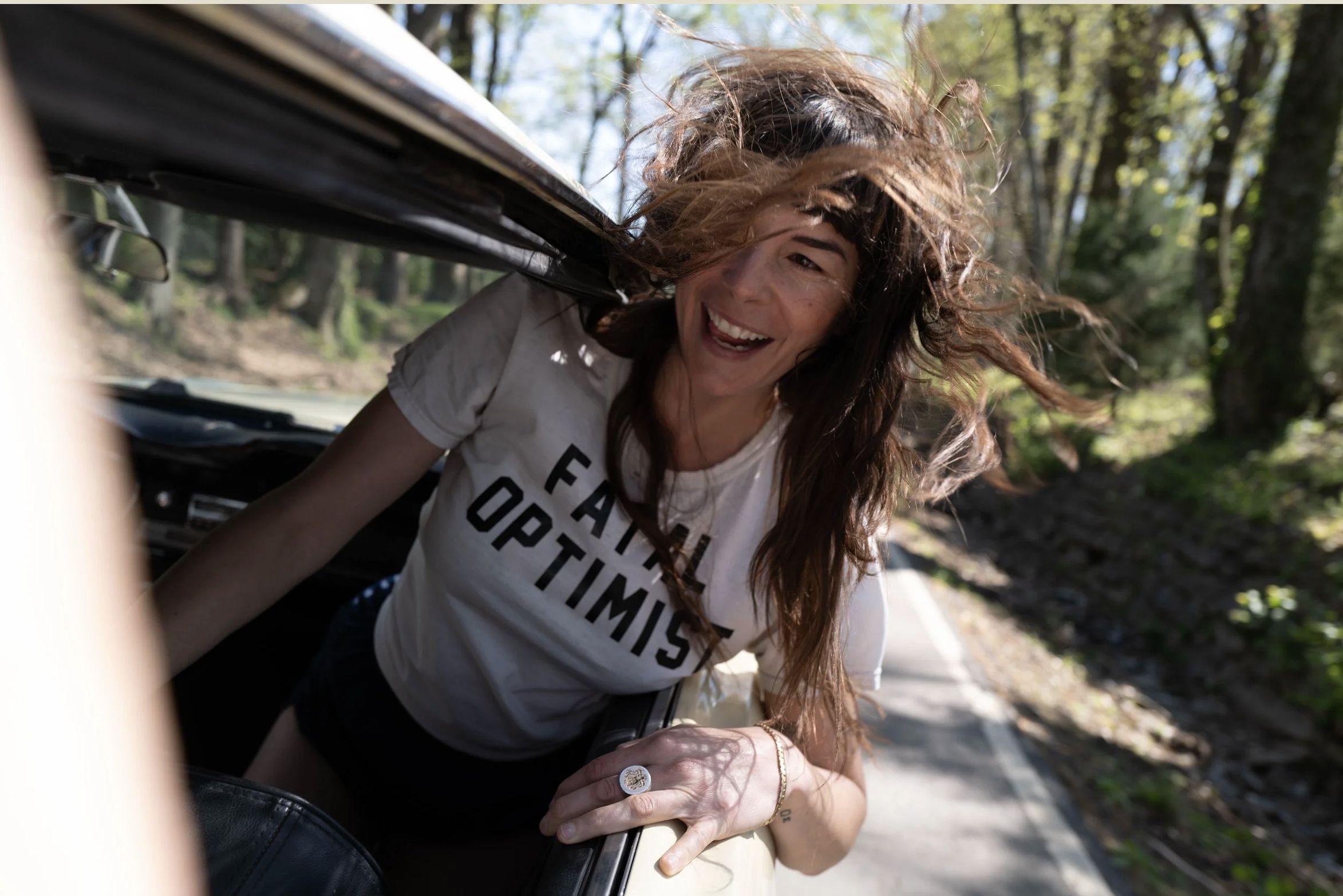
    Madi Diaz grew up in Lancaster and has the resumé of a successful Nashville songwriter. She’s cowritten hits for Kesha and Maren Morris, duetted with Kacey Musgraves on “Don’t Do Me Good” on Diaz’s Grammy-nominated 2024 album Weird Faith. She has also opened for Harry Styles and played in his touring band. And along with her own most-recent album, Fatal Optimist, she released a full-length cover album of Blink 182’s Enema of the State last year to raise money for a legal aid fund that assists immigrant communities. Tuesday, Oct. 13, at Ardmore Music Hall.

    Dillinger Escape Plan plays Underground Arts on Oct. 15 as part of Philly Music Fest.Courtesty of Philly Music Fest

    Dillinger Escape Plan

    In 2025, the PMF made its first foray into metal, and in 2026, the fest is back for more with math and metalcore quintet Dillinger Escape Plan. The band, originally from Morris Plains, N.J., split up after 2016’s Dissociation, and reunited in 2024 to celebrate the 25th anniversary of its 1999 debut, Calculating Infinity. The PMF show with Pyrron and Caged opening is one of a handful of dates as that reunion draws to a close. Thursday, Oct. 15, at Underground Arts.

    RJD2 will play MilkBoy Philly during Philly Music Fest in October.Courtesy of the Artist

    RJD2

    RJD2 is the formerly Philly-based DJ, producer, and multi-instrumentalist born Ramble Jon Krohn, who makes electronic and full-band music across many solo and collaborative projects. You might not think you know his music but you probably do. In 2006, “A Beautiful Mine” — an instrumental track drawn from Magnificent City, his collaborative album with rapper Aceyalone — was adapted as the opening theme to Mad Men. Thursday, Oct. 15, at MilkBoy Philly.

    Philly band Sweet Pill’s new album is “Still There’s a Glow.”Juliette Boulay

    Sweet Pill

    Hard-hitting Philly pop-punk band Sweet Pill is led by singer Zayna Yousseff and guitarist Jayce Williams, two native New Jerseyans who formed the band while students at Rowan University in 2018. The band finds its sweet spot with Still There’s a Glow, its sophomore release, which came out in March. Friday, Oct. 16, at Underground Arts.

    The Flying Vees

    It’s a been a good year for the women of the Flying Vees. Hannah Taylor, Shannon Vasile, Brechyn Chace, and Caitlin Ramsey wrote “Workman’s Song” for WXPN-FM’s 24 Hour Song Challenge, and took home first prize for their tune about how freedom isn’t always so easily appreciated by working people struggling to make ends meet. They played XPoNential Music Festival last month and the band is on a rock-solid bill with Owen Stewart, Roberta Faceplant, Sug Daniels, and Nik Greeley & the Operators. Friday, Oct. 16, at the Fallser Club.

    Philly quintet Wax Jaw plays Underground Arts on Oct. 16 as part of Philly Music Fest.Ryder Griffith

    Wax Jaw

    Philly quintet Wax Jaw makes music with manic energy and razor-sharp hooks, pulling from early punk and new wave. It Takes Guts!, the band’s debut on Philly’s Born Losers Records, is a ripping, fun-filled affair that gets serious as singer Shane Morgan writes about life in America as a transmasculine person. On a terrific bill with Sweet Pill, Remember Sports, and Midfield. Friday, Oct. 16, at Underground Arts.

    Marietta plays Underground Arts on Oct. 17 as part of Philly Music Fest.Courtesy of Philly Music Fest

    Marietta

    It seems like Philly emo bands come, go, and then decide to come back again. Like the Wonder Years and Algernon Cadwallader, Marietta followed a flurry of early activity, with its debut album, Summer Death, in 2013 and its follow-up, As It Were, two years later, and then had a long period of inactivity. The band has been back in action since reuniting a year ago at the Ukie Club, and is topping this bill that also features Euphoria Again, Bleary Eye, and Máty. Saturday, Oct. 17, at Underground Arts.

    Saxophonist Immanuel Wilkins, who was raised in Upper Darby, poses for a portrait on Sept. 28, 2026, in New York. (AP Photo/Andres Kudacki)Andres Kudacki

    Immanuel Wilkins

    This year, the PMF booked a genius. Upper Darby-raised saxophonist Immanuel Wilkins is the youngest of 20 winners in this year’s class of MacArthur Foundation’s genius grants. Wilkins put on a scintillating performance with his quartet plus special guests William Parker and Jeff “Tain” Watts during Ars Nova Workshop’s Coltrane 100 festival last month. Sunday, Oct. 18, at Solar Myth.

    Inside Hustle is free and will be held at the URBN Center, 3501 Market St., from 10 a.m. to 2 p.m. on Oct. 10. Philly Music Fest runs Oct. 12-18. Tickets sold separately for each showcase. phillymusicfest.com

  • There’s a lot of love for the Academy of Natural Sciences of Drexel University. Where’s the rescue?

    There’s a lot of love for the Academy of Natural Sciences of Drexel University. Where’s the rescue?

    Of all the sensations in the air following the closure of the museum at the Academy of Natural Sciences of Drexel University, perhaps none is more strongly felt than the creeping awareness that no white knight appears to be coming to the rescue.

    It could very well be that a savior is on the way. But benefactors generally don’t throw money at a problem that doesn’t have a clearly articulated solution. Most donors think of their funding as an investment — in a carefully constructed plan, in specific leaders in whom they can have confidence, and in a vision for the future.

    The academy at the moment does not appear to have all of these. As previously reported, Drexel and the academy are still talking, and hanging in the balance is a potential new affiliation agreement that would presumably outline how much Drexel’s financial support of the academy would be going forward, among other key matters.

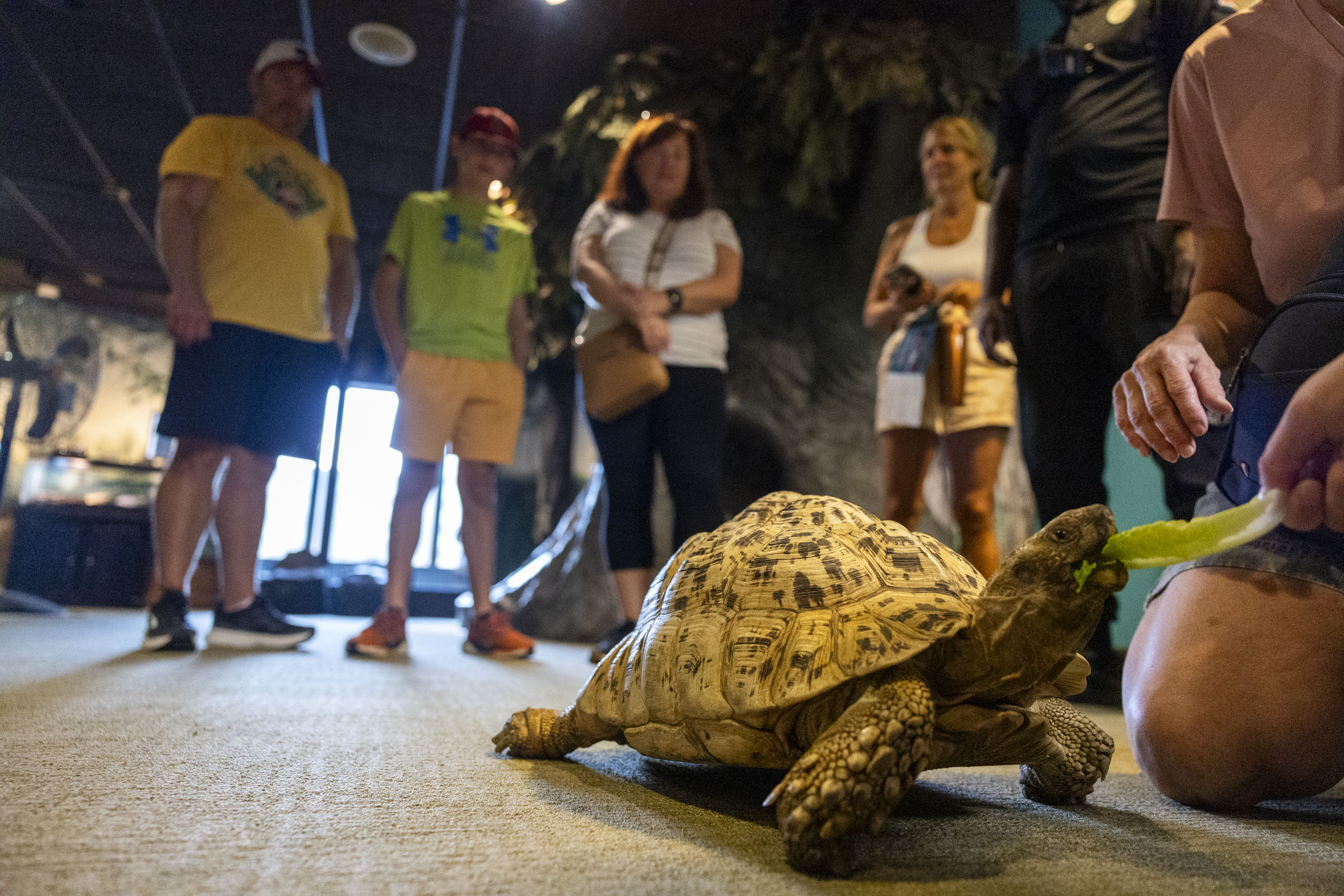
    Ollie, a leopard tortoise around the age of 60, is being fed by lead animal keeper Rachel Brown, at the Academy of Natural Sciences of Drexel University on Sept. 4.Tyger Williams / Staff Photographer

    If a solution is forming that would reopen the museum and provide a plan for the future, it hasn’t bubbled to the surface yet.

    That’s one of the reasons the William Penn Foundation cited when it offered to take over Drexel’s millions in operating support for the academy for at least a year — “so that the full range of options for the future of the museum could be properly explored, and to provide time to test the interest of other funders and supporters who have not been engaged so far,” Shawn McCaney, executive director of the William Penn Foundation, said last month.

    Drexel has neither accepted nor rejected William Penn’s offer.

    In other words, to slow down what has seemed like a rushed process long enough to answer critical questions in a thoughtful, objective way.

    How much would it cost to run a first-class and well-funded natural science museum in Philadelphia? What is a realistic annual attendance number? What should the earned-vs.-contributed income ratio be? How much would deferred maintenance on the building cost, and is all of the work urgent, or could some of it be phased over time?

    Another salient question: If the specimens collections are being moved off-site, could the freed-up space be leased to provide a revenue stream to support a museum that would stay on the Parkway with all the other museums? What about selling air rights for development?

    Perhaps lost in the tumult of the past few weeks is the fact that the scale of an immediate rescue isn’t very large compared to some others in the cultural sector.

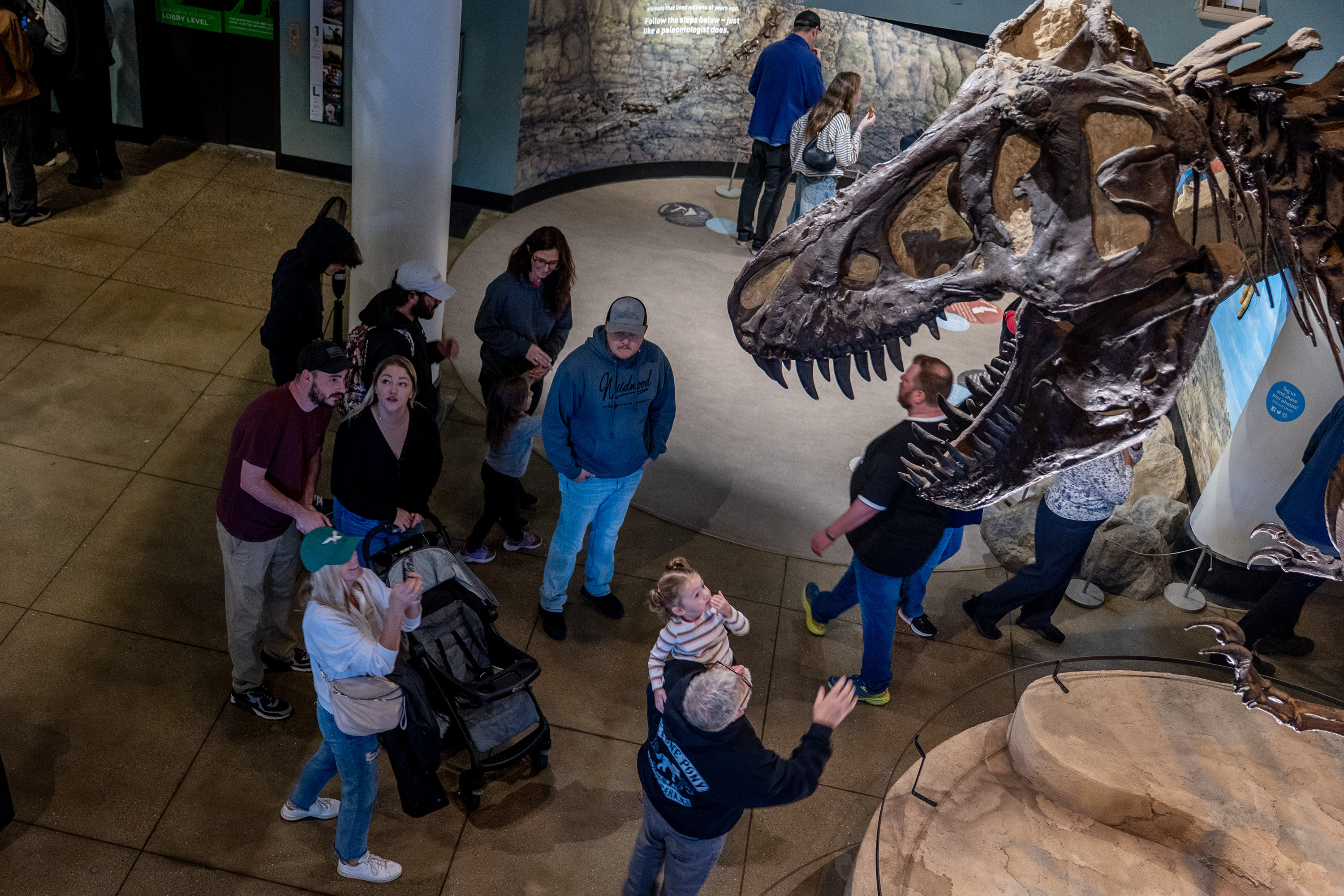
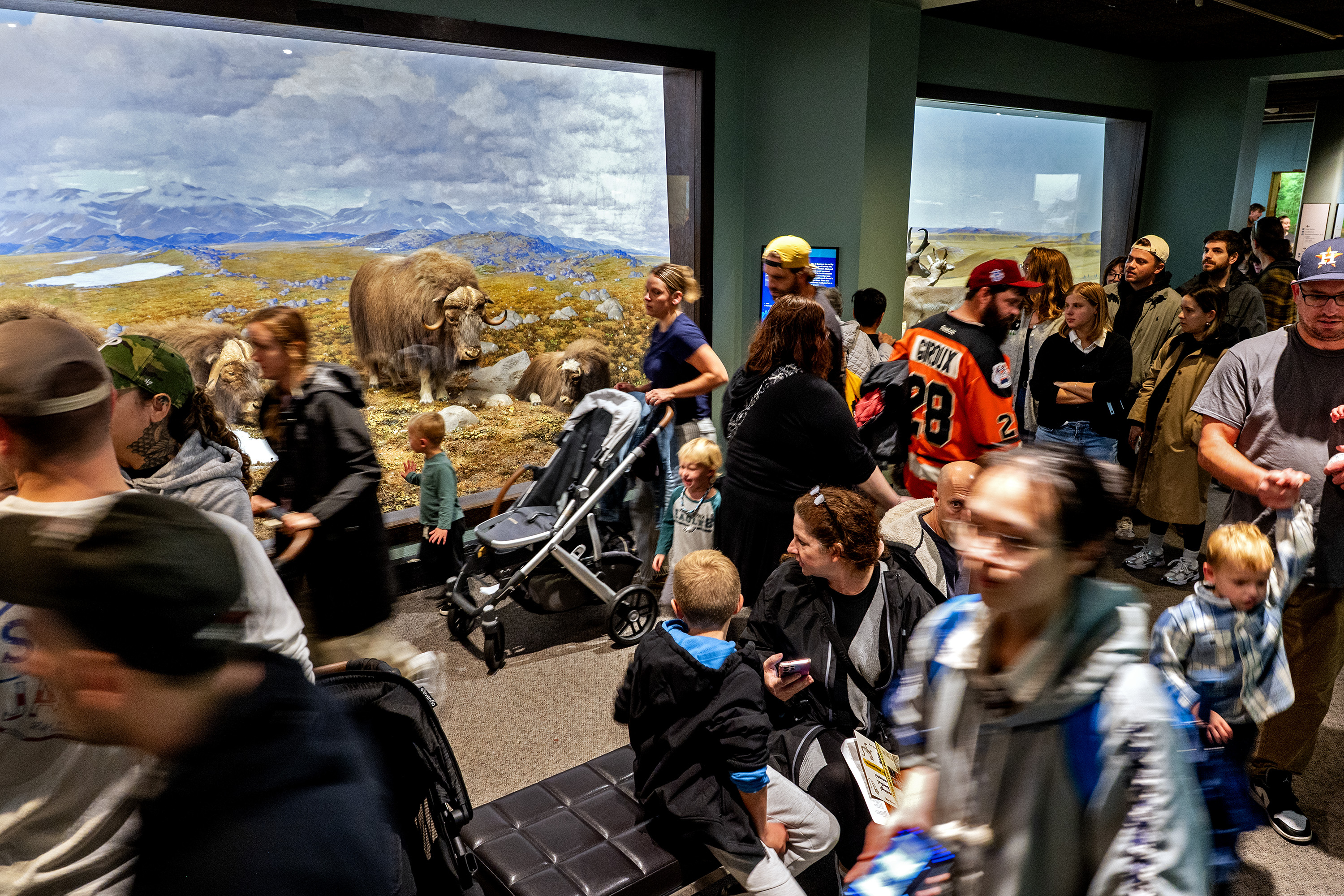
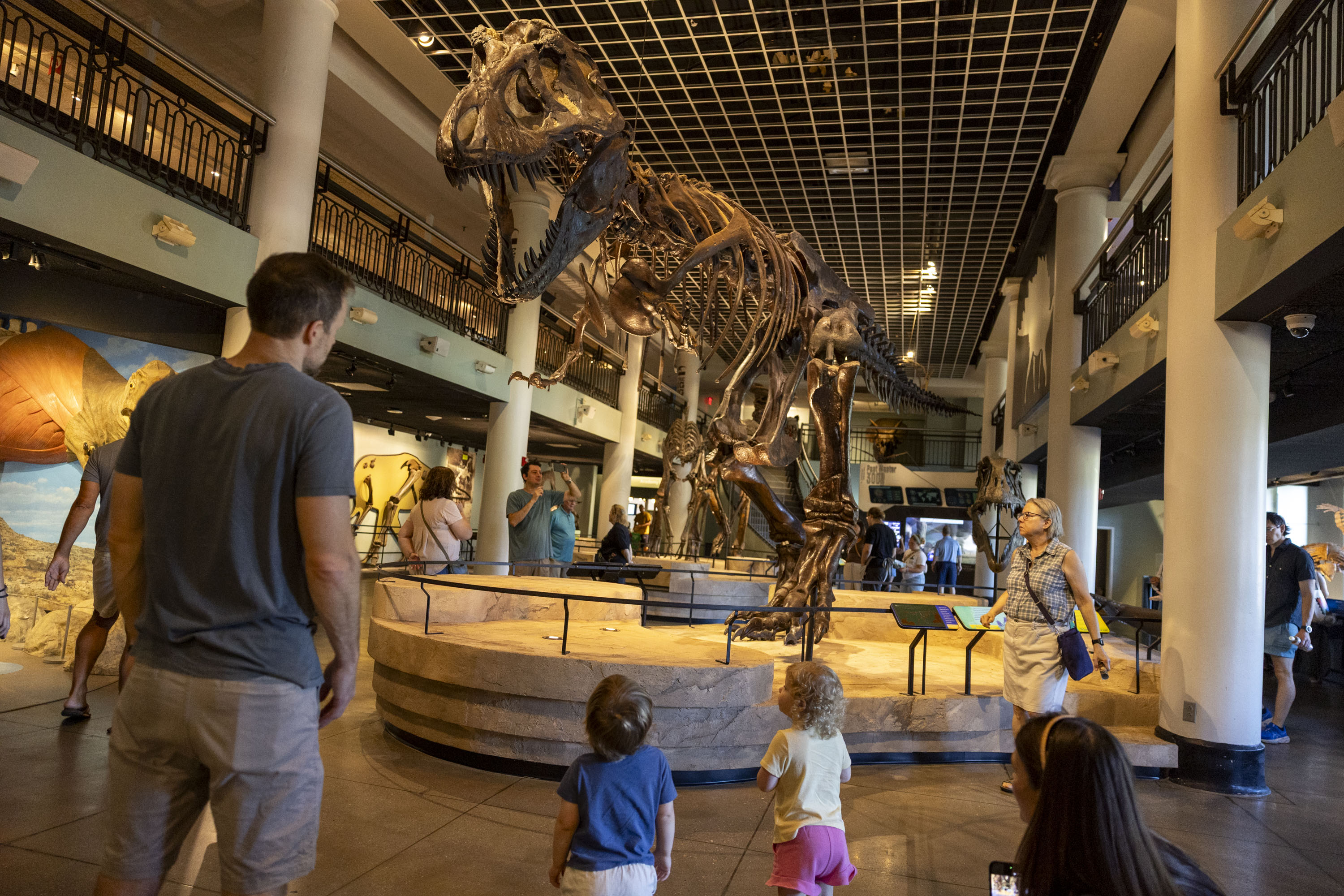
    The scene inside Dinosaur Hall in the Academy of Natural Sciences of Drexel University on Sept. 27, the last day that the museum was open.Tom Gralish / Staff Photographer

    One recent case is Opera Philadelphia, which was in debt just a few years ago and is now playing to sold-out houses. Consider: Opera Philadelphia is well on its way to raising $33 million in three years with an annual ticketed audience that’s about a quarter of the size of the Academy of Natural Sciences’.

    Arguably, the opera can raise more money because it’s an art form with a well-heeled crowd. But in reality, the natural donor pool for the academy is in science, pharma, and biotech — in other words, new-economy money and entrepreneurs, many of whom might be parents who want their children growing up in a city with a first-class natural science museum.

    The other question not understood at the moment is what the alternative might be. If it would cost, say, $200 million to renovate the building and fund the museum for a finite period while it builds ongoing support, it’s important to also consider what would be gained or lost in a differently imagined future.

    One scenario envisions cutting up the academy and dispersing its parts, according to a source familiar with plans who declined to be named because they were not authorized to speak.

    The collection of 19 million specimens would go to one place; the library and rare books deposited on long-term loan to another library; the research arm placed with another institution; the live animals given to a zoo to be cared for; and the museum would no longer be a stand-alone experience, but a less ambitious attraction spliced onto another institution.

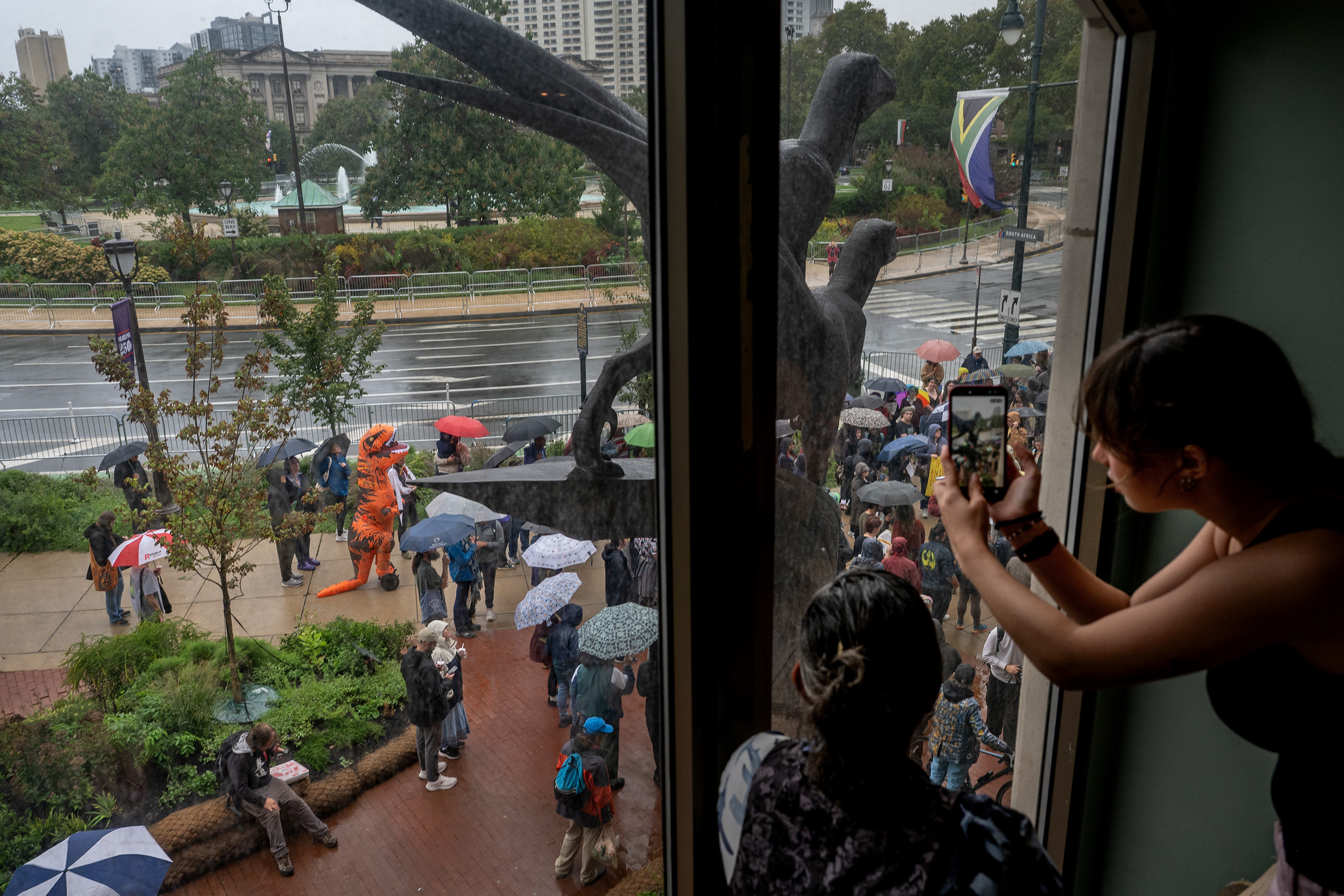
    Visitors inside the Academy of Natural Sciences of Drexel University watch protesters from hold a vigil outside the museum on Sept. 27.Tom Gralish / Staff Photographer

    In other words, the Academy of Natural Sciences would no longer be its own distinct thing with the kind of synergism that currently exists among the collections, research, and museum.

    The challenges on both sides are understandable. Drexel is feeling the pressures of shrinking enrollment trends being felt across higher education generally; over about the last decade, the university has lost about 20% of its enrollment, The Inquirer reported earlier this year. The academy has struggled for audiences and bandwidth in a highly competitive environment in the arts and culture sector.

    Though the academy had worked to rebuild attendance after the pandemic, “patterns of visitation and audience behavior changed in lasting ways, while the costs of operating the museum continued to rise,” the statement announcing the museum’s closure last month said.

    But at this particular moment it feels like something is slipping away, and the stewards of an institution that connects deeply to both the hearts and minds of millions are shedding little light on the animating factors of ongoing negotiations.

    David L. Cohen, who was brought in to lead talks for a new affiliation agreement between Drexel and the academy, has recently directed those involved to not speak publicly about it. A City Council hearing on the matter slated for Wednesday has been postponed until the end of the month because of a scheduling conflict.

    And Philadelphia, it seems, is at risk of becoming the city that can afford an opera company but not an institution that educates the public about the natural world.

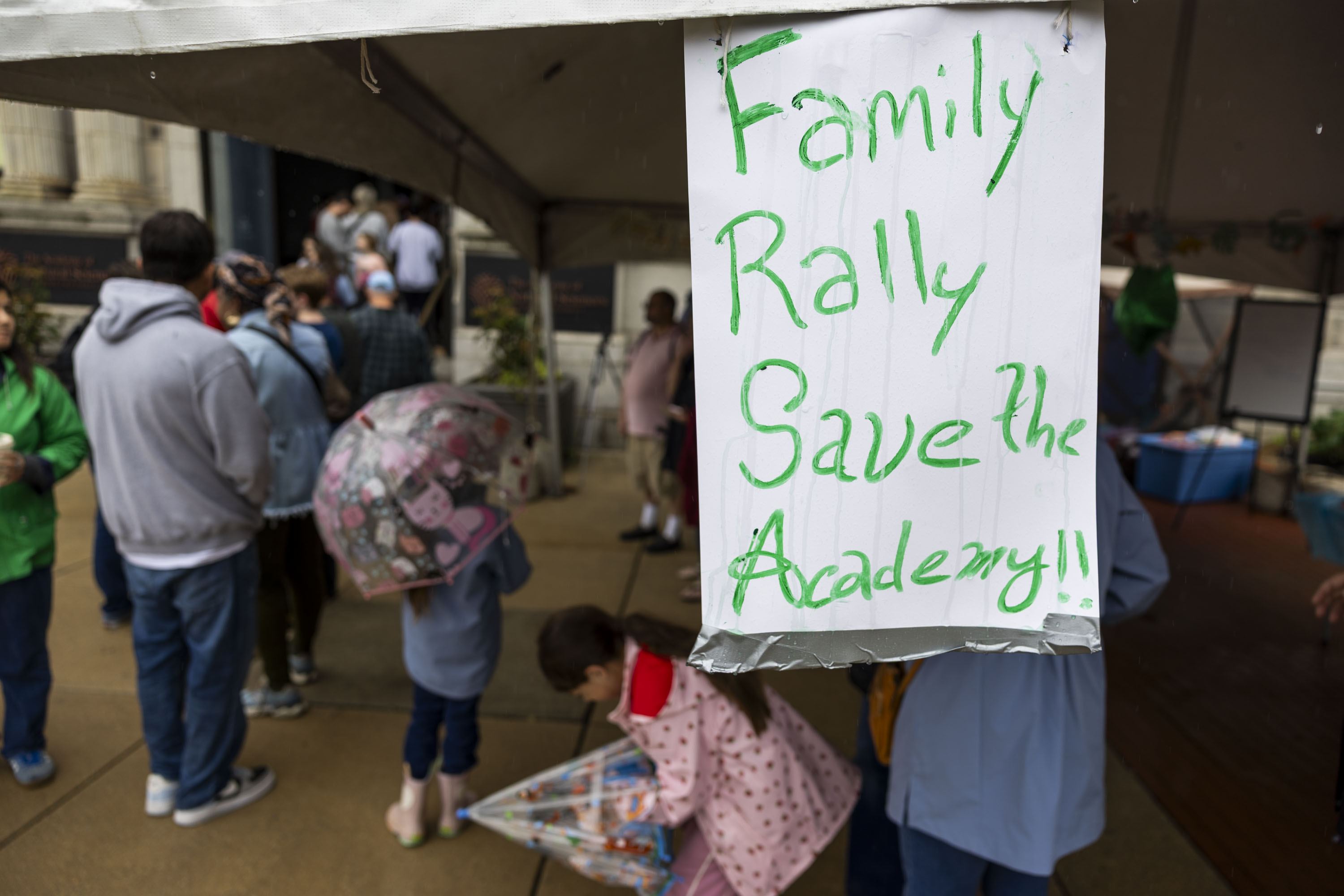
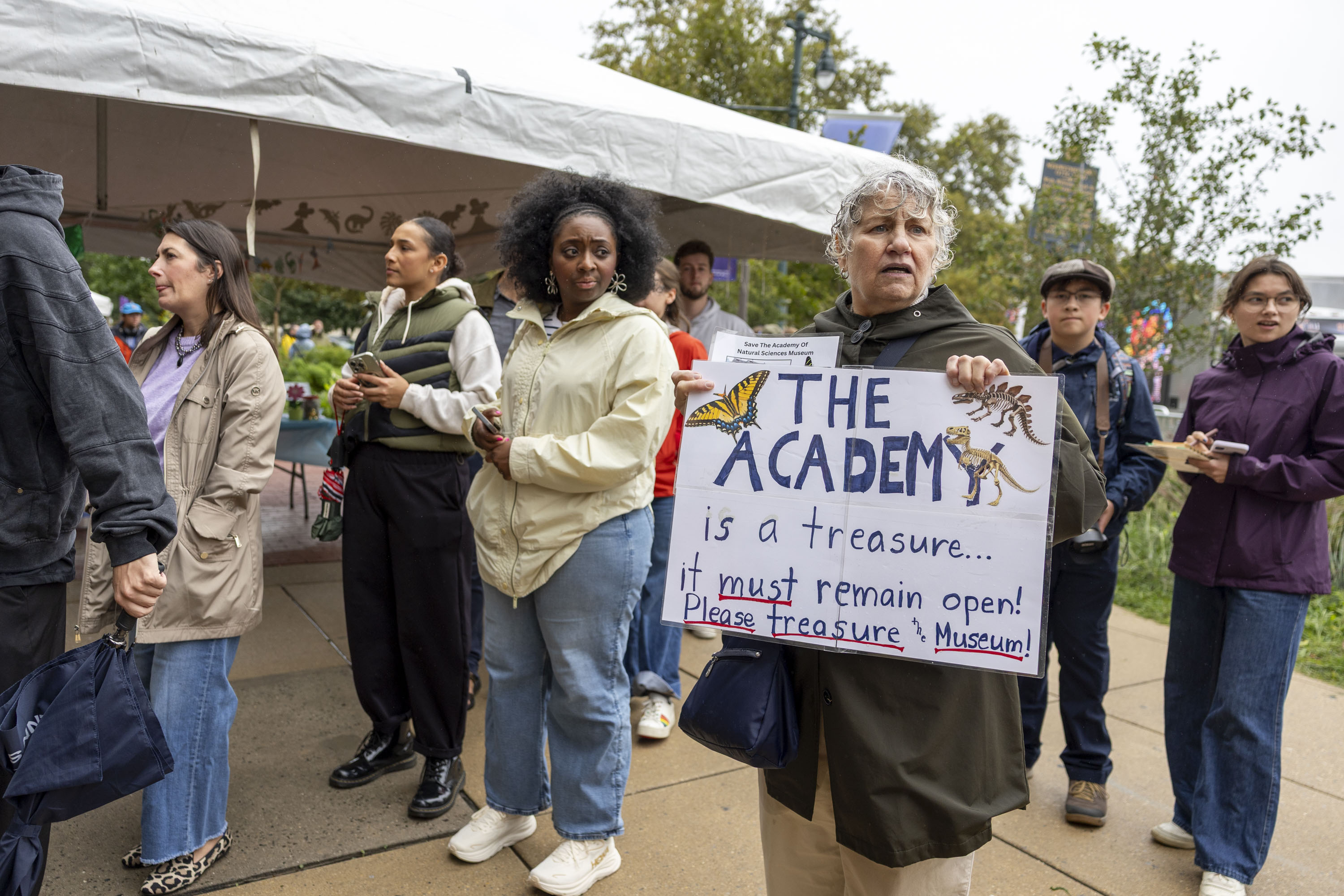
    Suzanne Ryan, a retired teacher of 43 years, is holding a sign for people entering and leaving the Academy of Natural Sciences of Drexel University on Sept. 26.Tyger Williams / Staff Photographer

    There’s something else at stake, and it’s probably a stealth reason the fight has taken on so much energy. This is the second time in recent memory that a major local cultural institution has gone under with no public warning, and no public plea for help. The University of the Arts in 2024 disappeared with just a few days’ notice and no public appeal for outside help, and now it’s happened again.

    In this case, it seems the arts and culture community has had enough. There’s a tremendous groundswell of support for an institution that for years had been quietly gasping for air. Are the stewards of the academy able to seize the moment and channel all of this energy and goodwill into a solution?

    The whole city is watching.

  • We have lattes at home: The rise of the at-home barista

    We have lattes at home: The rise of the at-home barista

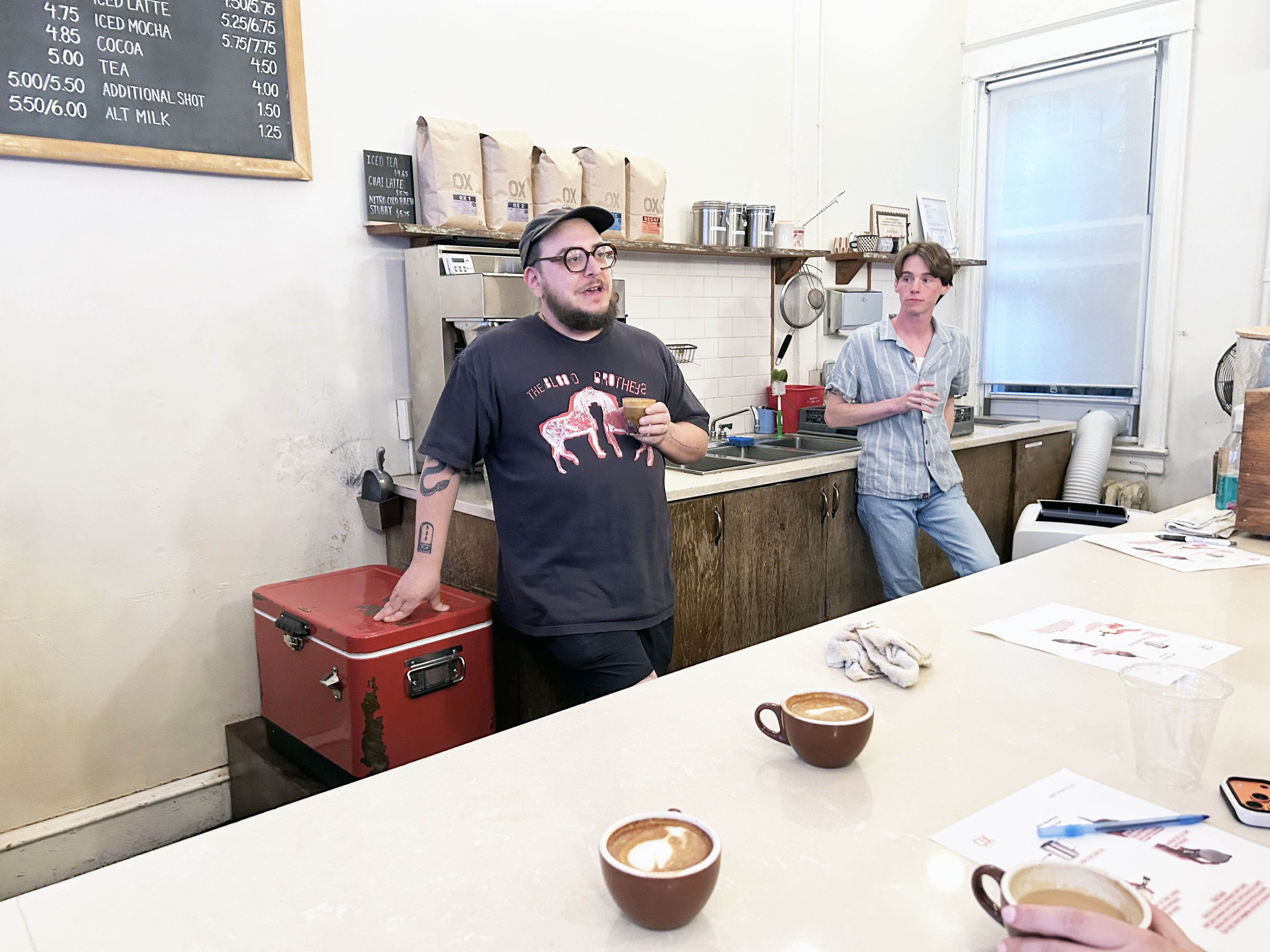
    Corey Regensburg’s working with a shiny chrome La Marzocco — the Cadillac of professional espresso machines. It purrs and whooshes as he pulls a double shot of espresso and sets it up for a latte tutorial. It’s well past Ox’s normal business hours, the sunset peers through the shop’s large windows and pulled-down shades.

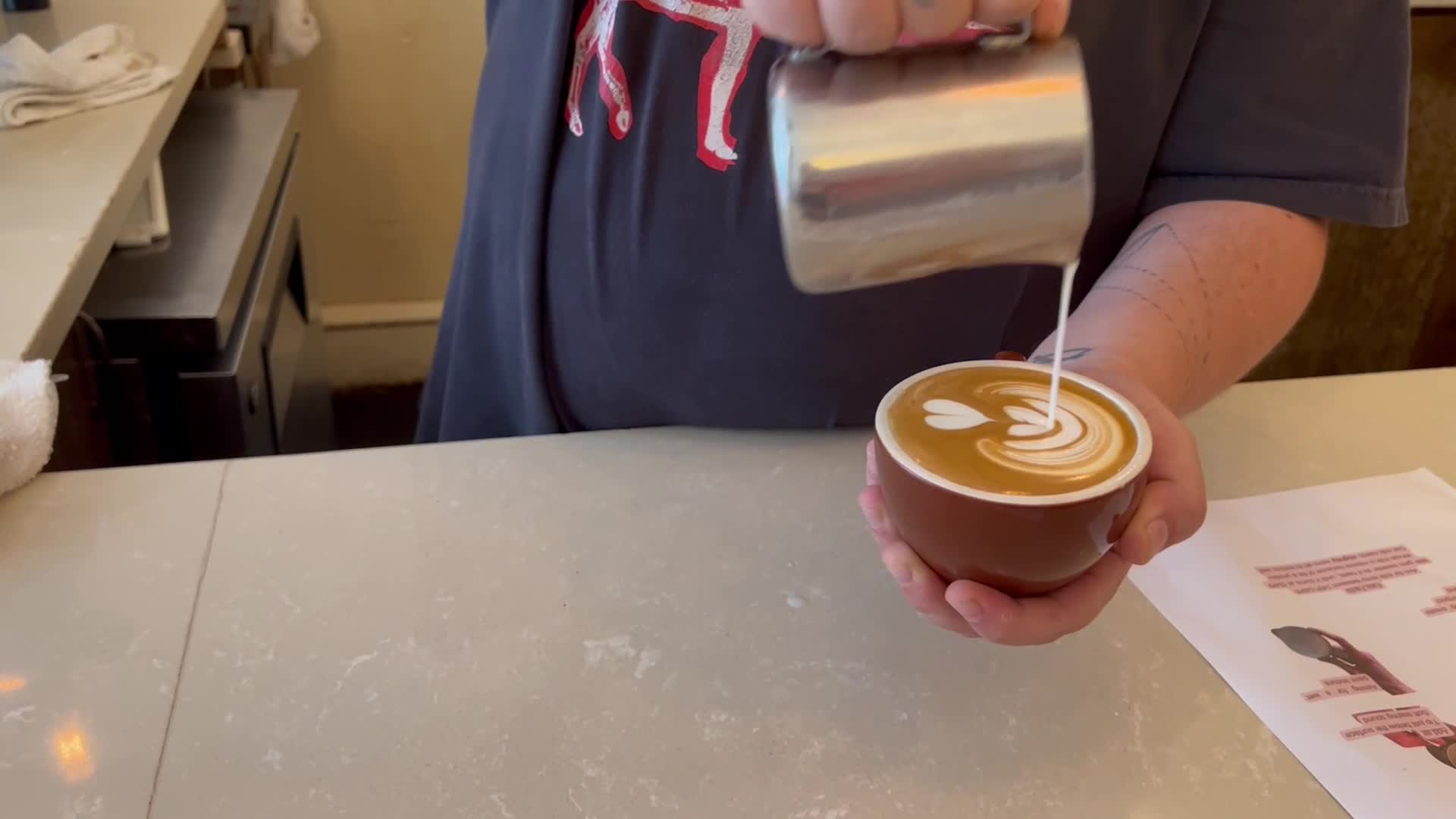
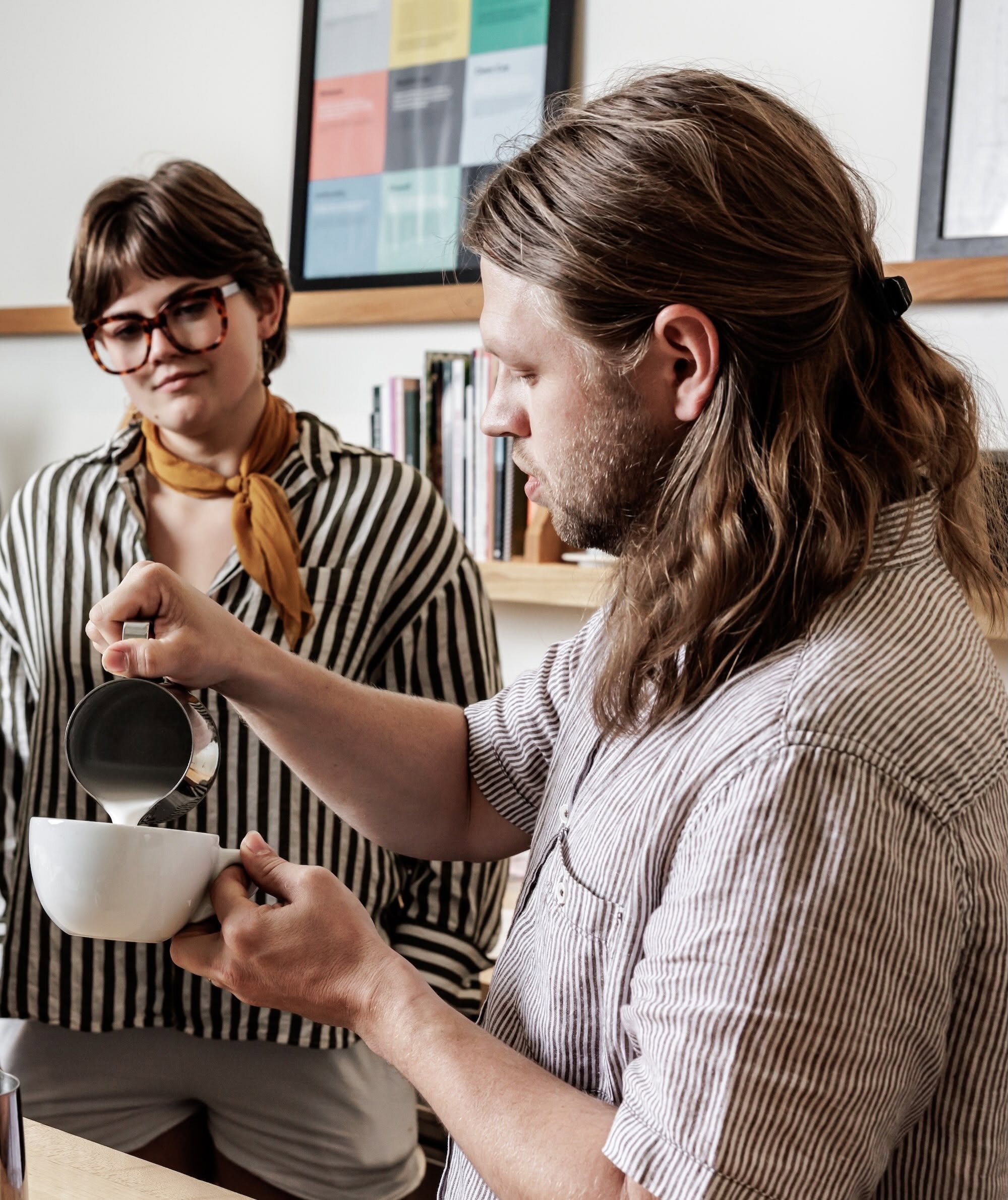
    Regensburg, one of the shop’s consultants, steams milk in a frothing pitcher and demonstrates his latte pour for a crowd of four people huddled around the quartz countertop at Ox Coffee in Queen Village.

    “Pencil thin,” he narrates as the milk streams into the base of the mug, sinking under the espresso’s golden layer of crema. Then, “push, push, glide,” he instructs. The result is a tulip design, finished with two dainty hearts.

    The spectators at Ox aren’t new employees — they’re at-home enthusiasts, including a father-daughter duo who took the class to perfect their kitchenside almond milk lattes.

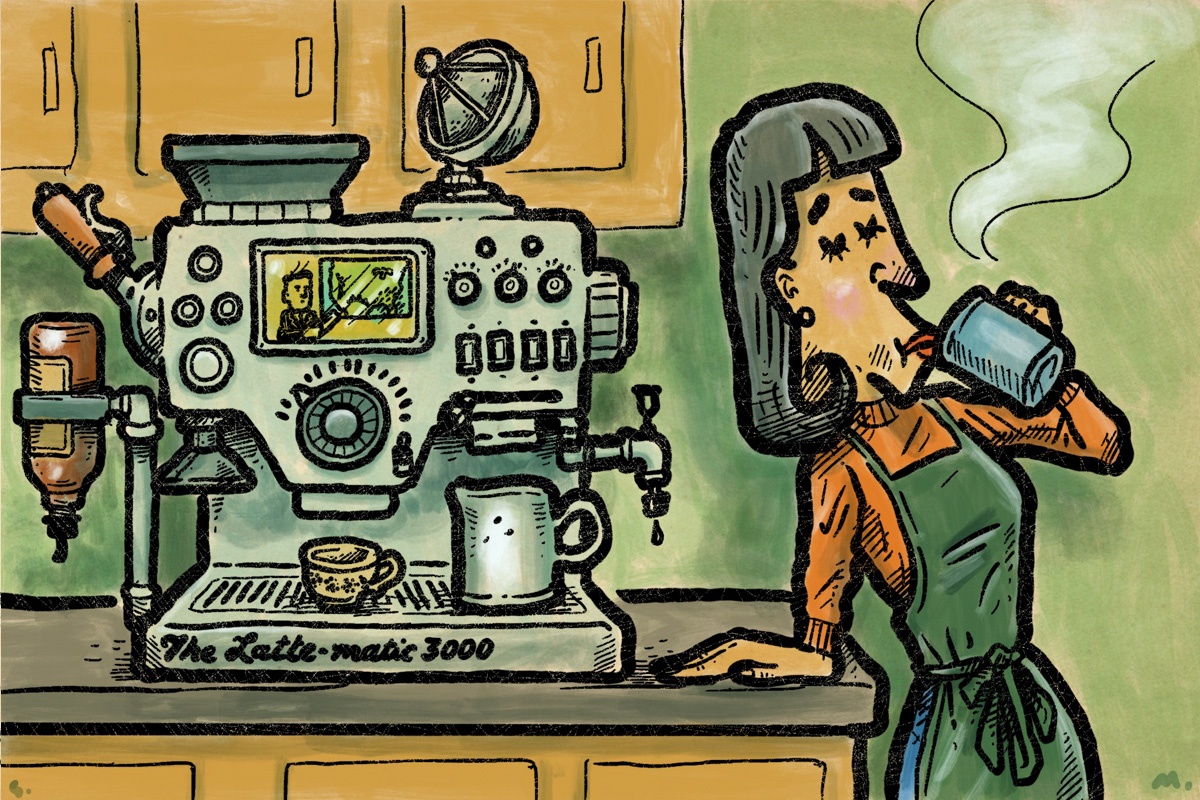
    Americans are buying all types of coffee makers and brewing at home more, according to the National Coffee Association, with ownership of countertop espresso machines growing by 50% in 2025 and still on the rise in 2026. Breville Kitchen Group, especially, has seen a surge in sales among amateur espresso makers, with a range of high-end automatic and semiautomatic machines.

    “COVID triggered a rise in at-home espresso,” Regensburg said. “Breville boomed like 10 times, and everyone else — from Panasonic to Ninja — hopped on.”

    Industry experts say the global espresso and coffee machine market is rapidly expanding, driven by a “prosumer” movement: enthusiasts at home who crave high-end gear to make cafe-style drinks.

    Now, coffee shops are leaning into the phenomenon, offering lessons to hobbyists to help master the craft. It illustrates a larger trend across the food service industry: teaching as a way to diversify revenue, build relationships with customers, and fulfill patrons’ desire to peek behind the curtain.

    Across Philly, you’ll find Mighty Bread teaching croissant classes, Jezabel’s hosting empanada-making courses, the Bread Room with pizza lessons, Bloomsday with wine 101 sessions, and plenty more.

    “It’s really exciting because it adds something to the dynamic besides going to eat or drink, which is wonderful but one-dimensional,” Jonathan Deutsch, director of Drexel University’s Food Lab, said.

    Corey Regensburg and Leo Dowd lead a Latte Art 101 class at Ox Coffee.Emily Bloch

    Leo Dowd runs Ox’s coffee class program. He says the shop has hosted about 10 classes so far on topics including espresso 101 and latte art for beginners. The classes allow everyday customers to get behind the bar and learn from the pros.

    “The rise of remote and hybrid work has played a big role [in coffee classes], along with DIY culture on social media,” Cody Wood, a barista trainer at Crema Coffee in Nashville, said. Crema runs a host of classes inside a training lab at its downtown location. “Overall, it seems more people are tackling home projects, baking bread, learning to cook, trying new experiences on their own, and learning to make the best coffee at home.”

    At Ox, the students take turns behind the La Marzocco — a powerhouse compared to any home espresso machine. They sheepishly tinker with the steam valve under Regensburg’s tutelage, practicing with water before moving onto whole milk.

    As the milk steams, he calls out cues for students to look out for, like the sound of paper tearing and the appearance of white paint. Dowd picks out a Sonny Stitt record and puts it on in the background.

    Ox Coffee consultant demonstrates pouring milk in a Latte Art 101 class
    Video: Ox Coffee consultant demonstrates pouring milk in a Latte Art 101 class

    Coffee shops giving away tricks of the trade — including recipes — hasn’t hurt sales, either. If anything, the rise of the at-home barista has helped them.

    “Zahav’s hummus recipe is published everywhere, for instance, and it doesn’t mean that you are going to necessarily make it,” Deutsch said. “Coffee’s different because on one hand, it’s really easy to make if you know what you’re doing. But on the other hand, to do espresso drinks really beautifully, you need the right equipment. And there’s awesome home equipment like the Breville, but it’s still not the same as going to a coffee shop and having a really properly pulled, professionally done espresso.”

    Wood at Crema in Nashville says the same people who take their coffee classes are also coming back to try new roasts and to talk shop.

    Cody Wood demonstrates a pour at Crema in Nashville. Wood, a barista trainer, also leads Crema’s public education program.Courtesy of Crema

    “My hope is that we continue to see better coffee brewed and shared in both cafes and homes,” he said. “Coffee has always been a communal experience. Everyone I know who loves making coffee loves sharing it with others.”

    Coffee classes nationwide average around $100 per session. Ox’s classes cost between $95-$135 depending on the intricacy.

    “That’s a lot of cups of coffee you would have to sell to get that kind of revenue,” Deutsch said.

    Deutsch said this approach is wise since during regular business hours, coffee sales rely on convenience and speed.

    “If you’re standing in line at 7 a.m., it’s not really a great time to ask about the sustainability of the beans and provenance and all this kind of stuff you might be curious about as a coffee nerd,” he said. “The whole idea of building a relationship with guests on a more substantive level makes sense. Also, if you go out, you’re going to spend a hundred bucks easily on a few drinks and some music. Why not educate yourself and do something entertaining that will stay with you?”

    Gloria Sullivan tried and reviewed 100 Philly coffee shops for her followers. Today, she creates her own signature drinks at home. She’s shown here trying an Ice Drip Coffee with half and half and an Iced Earl Gray Tea at Vault + Vine in Philadelphia in 2023.Jessica Griffin / Staff Photographer

    On social media, TikTok feeds are flooded with content creators attempting to create (or recreate) their favorite lattes and little treats at home.

    Philly-based creator Gloria Sullivan — aka @_gloyoyo_ — often documents her morning coffee ritual for her more than 700,000 followers. She alternates between her Breville Bambino, a moka pot, and other methods when making her coffee.

    “In the beginning, a lot of coffee creators framed their videos as ‘stop buying coffee out, make this at home instead’ and now it feels more focused on creativity, finding fun ways to make drinks at home exciting,” Sullivan said. “Making coffee is as much of a hobby as knitting or reading or baking, coupled with the fact that a lot of people want to start making content online and there’s not a super high barrier to entry for making coffee at home.”

    @_gloyoyo_ banana pudding🍌🌸 & a coffee to match🍌☕️ #bananapudding #bananacoffee #bananasyrup #coffeesyrups #icedcoffeerecipe ♬ original sound – Glo

    By the end of class at Ox, half empty mugs and rags are scattered across the bar. The level of proficiency after an hour and a half varies, but every guest has managed to get their milk to skate on top of their mug of espresso.

    The amateur work isn’t close to Regensburg’s tulip, but he remains encouraging.

    “I know that latte art is sexy and fun and it looks good on Instagram,” he said. “But this — milk texture — is what matters. Latte art got big because it’s indicative of good milk texture.”

    Dowd anticipates Ox’s coffee class schedule will ramp up this fall and winter as locals look for indoor activities.

    Currently, Ox appears to be the only Philly shop offering courses. But Deutsch wouldn’t be surprised if that changes soon enough.

    “I think it’s a really good idea,” he said. “The positives outweigh the risks of teaching people your secrets. I really think that’s more a mythology than a reality that’s borne out.”

  • Drexel University and the Academy of Natural Sciences may be headed for a split, sources say

    Drexel University and the Academy of Natural Sciences may be headed for a split, sources say

    Officials from Drexel University and the Academy of Natural Sciences were scheduled to meet Friday to continue discussing a path forward — with a potential split of the two organizations hovering over talks as one possibility.

    “That’s certainly a [potential] outcome,” said one source familiar with the situation who requested anonymity because they weren’t authorized to speak on the matter.

    But there likely also will be “reconciliation attempts,” the source said. “We either abide by the terms that we have been talking about or don’t.” If both sides abide by the terms, they said, “then everything continues peacefully.”

    The Academy and Drexel announced an affiliation in 2011, merging aspects of their operations but keeping separate boards. The Inquirer reported in April that Drexel told the Academy to either fully merge with the university or it would move to disaffiliate, and the two have been negotiating a new affiliation agreement.

    Neither the Academy nor Drexel returned calls early Friday evening seeking comment on whether the meeting had ended and its outcome.

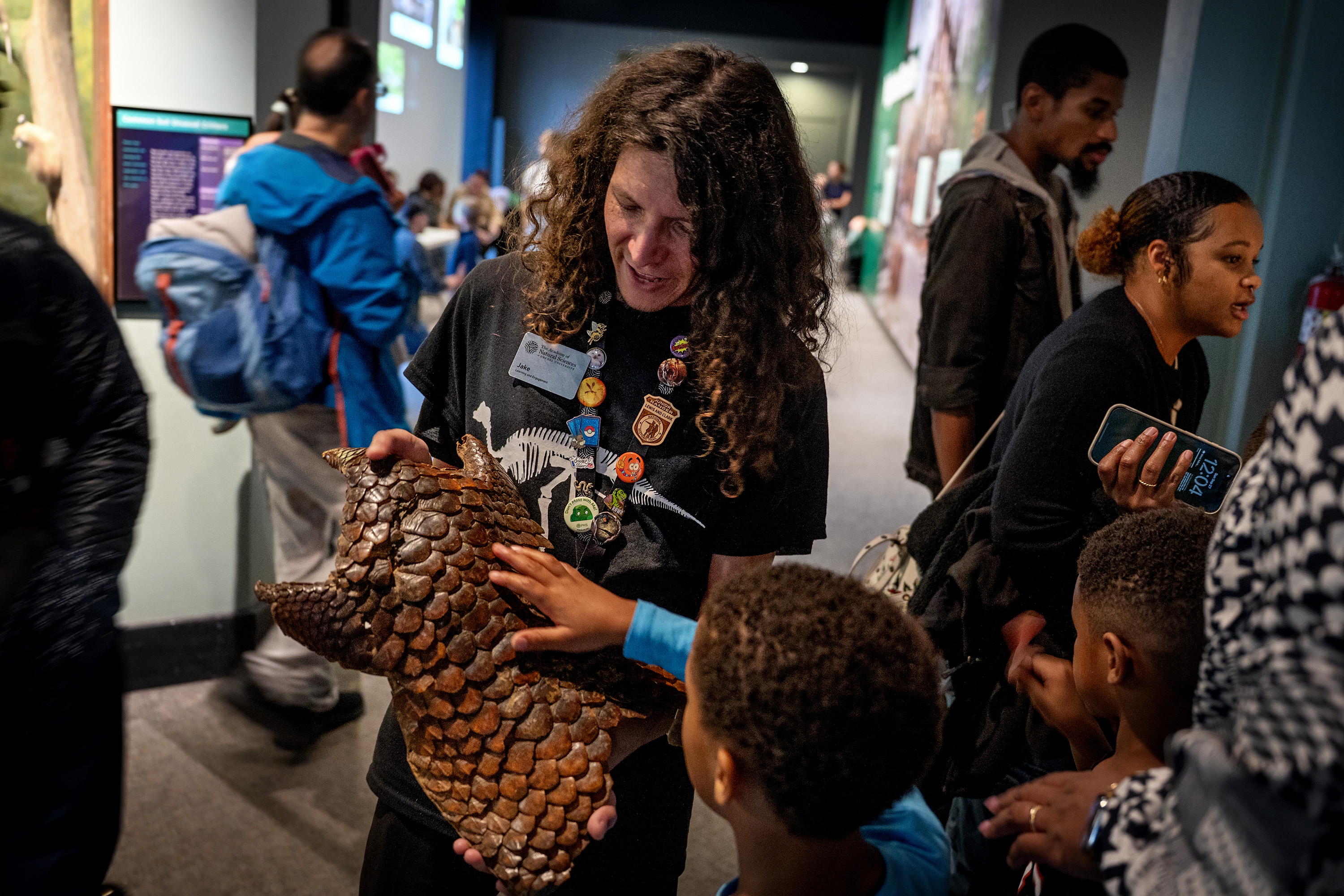
    Science educator Jake Cook lets visitors feel the skin of a pangolin — a scaly anteater — at the Academy of Natural Sciences of Drexel University on Sunday.Tom Gralish / Staff Photographer

    Drexel and the Academy disclosed plans in September to close the Academy museum, move the 19 million specimens in the collection, and eventually sell the building at 19th Street and the Benjamin Franklin Parkway.

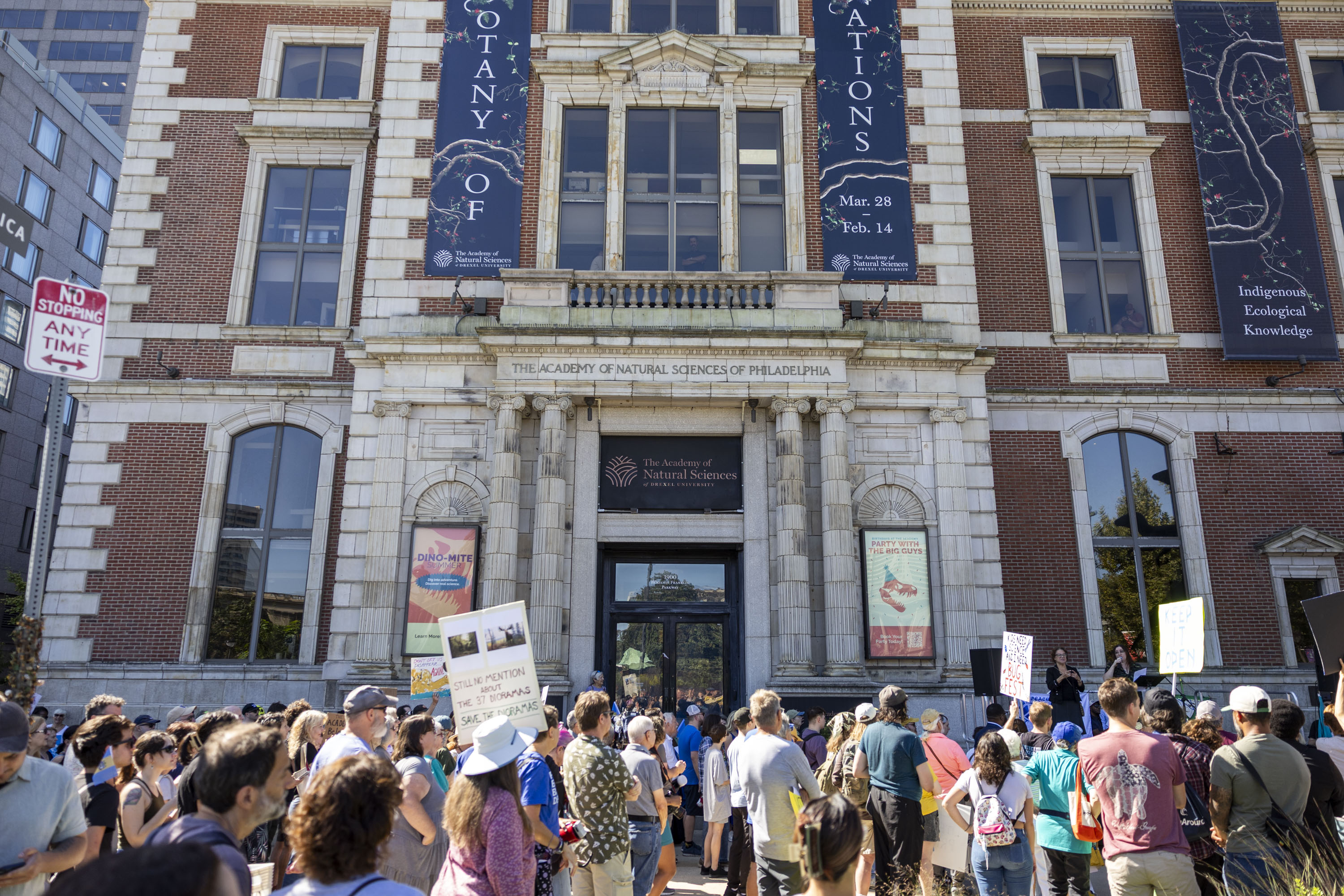
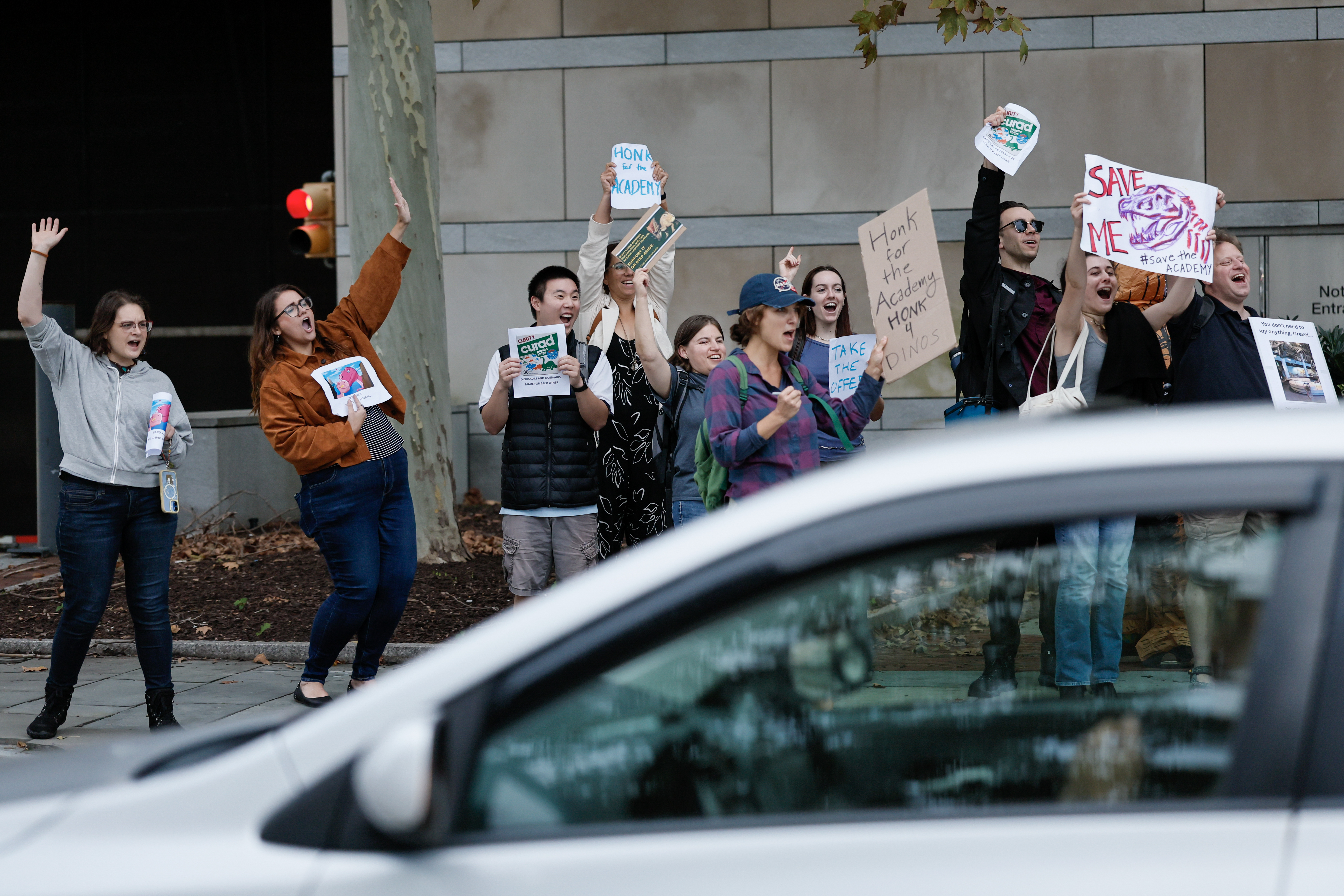
    A group of protesters earlier this week gathered at the same time as a Drexel board meeting and called on the university to disaffiliate and give the Academy a chance to negotiate what’s best for it.

    Drexel spokesperson Niki Gianakaris said earlier this week that the university had offered the Academy a path to disaffiliation.

    “We have been, and remain, open to that possibility,” she said. “We continue to engage in good-faith discussions with the Academy about its future.”

    Her comments came days after the William Penn Foundation made public its offer to underwrite operating costs for at least a year and keep the museum’s doors open while a permanent solution can be worked on.

    William Penn said the goal was to “provide time to test the interest of other funders and supporters who have not been engaged so far,” and the Academy leadership said it was open to the reprieve.

    The Academy, founded in 1812, has operated a museum since 1828, and its announced closure has generated street protests, more than 100,000 petition signatures, editorials, and the scheduling of City Council hearings for next week.

    The museum was shuttered to the public at the end of the day last Sunday, following large numbers of visitors in recent weeks but prior years of declining attendance. In the 2025 fiscal year, it brought in 126,000 visitors — down from 2014 when it welcomed 208,000 science fans to its “dioramas, dinosaurs, butterflies, live animals, and the renovated Children’s Nature Discovery Center, Outside In,” according to the Academy’s tax return from that year.

    The “Save the Academy” coalition gather outside of the National Constitution Center on Tuesday in an effort to keep the Academy of Natural Sciences museum open.Elizabeth Robertson / Staff Photographer

    Since the beginning of the Drexel-Academy affiliation a decade and a half ago, “our goal has always been to improve the financial position of that museum and the Academy of Natural Sciences as a whole, the research and the collections,” said a Drexel source familiar with the matter who was not authorized to speak publicly about it. “That was written into the original affiliation, and as we moved forward in time we hit snags and different things we never quite achieved that financial resilience then. And then COVID hit and that became even more challenging for the museum.”

    Drexel said that it had not received a formal proposal from William Penn but that it would be open to talking with the foundation about the matter.

    Gianakaris did not comment Friday on whether talks had been held or scheduled.

    “What William Penn has put forward is not enough,” said the first source, who had noted that a split was a possible outcome. “That wouldn’t do it.”

    Gianakaris said Drexel’s focus is on “safeguarding the Academy’s collections and research enterprise” while developing a “long-term model” that allows the public to engage with its collections.

    Drexel’s board of trustees earlier this week discussed the matter during a two-day meeting that was scheduled months ago. The meeting, the second held since Antonio Merlo became Drexel’s president July 1, 2025, was for the board to “focus on the university’s long-term future, strategic priorities and governance effectiveness,” Gianakaris said.

  • St. Christopher’s Hospital for Children named Claire Alminde permanent president

    St. Christopher’s Hospital for Children named Claire Alminde permanent president

    St. Christopher’s Hospital for Children named Claire Alminde permanent president on Thursday, following a period of leadership turmoil at the North Philadelphia safety-net institution.

    Alminde, who will continue to serve as chief nursing officer, had taken over in January from another acting president.

    “Claire brings a unique combination of frontline clinical experience and hospital leadership, along with firsthand knowledge of what it takes to operate a hospital like St. Chris that plays such a vital role in Philadelphia and beyond,” St. Chris said in an email.

    One of Alminde’s tasks will be to work with leaders at Nemours Children’s Health, Jefferson Health, and Temple Health to build an alliance announced in July to secure the future of St. Chris, which struggles financially because most of its patients have low-paying Medicaid insurance.

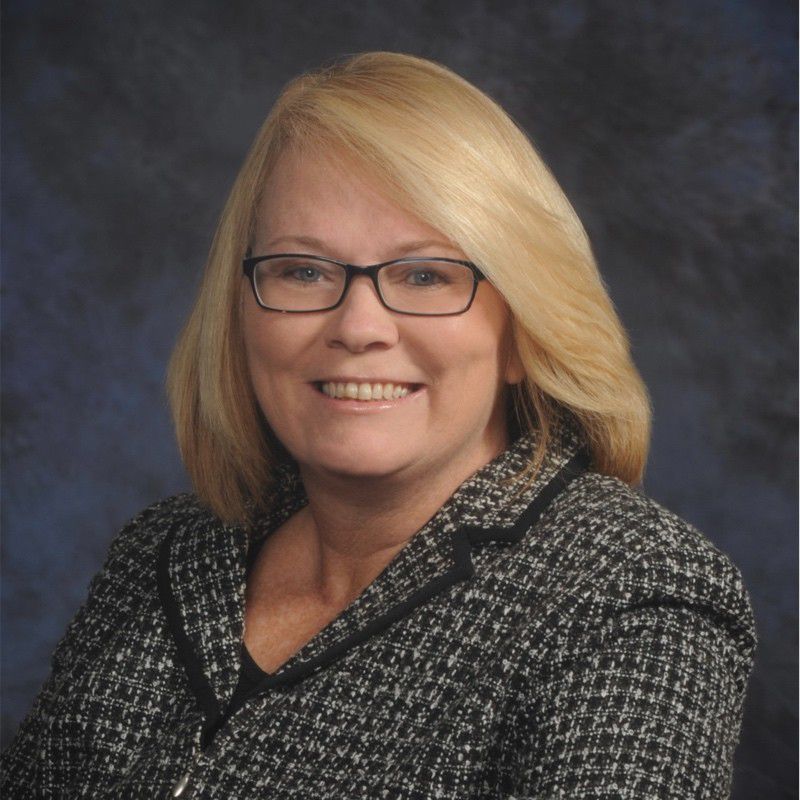
    St. Chris’ chief nursing officer, Claire Alminde, has been named president of the North Philadelphia safety-net provider.St. Christopher's Hospital for Children

    Alminde was the third interim or acting executive appointed to the top management position at the nonprofit hospital since February 2024 and its fourth leader since 2020.

    Drexel University and Tower Health have owned St. Chris in a 50-50 joint venture since 2019. Tower oversees day-to-day operations.

    “After several years of leadership changes, this appointment gives St. Christopher’s strong, permanent leadership from someone who knows our hospital, our people and the community we serve incredibly well,” Tower CEO Michael Stern said in a message to employees. “Claire understands what makes St. Chris such a special place and what it will take to move us forward.”

    St. Chris’ most recent financial results showed that it had an operating profit of $1.1 million in fiscal 2025, compared with a $31.6 million loss the year before.

    The safety-net provider received a $76 million revenue boost from its inclusion for the first time in a program that taxes Philadelphia hospitals and uses the money to increase the government’s Medicaid funding for facilities that disproportionately care for low-income patients.

  • Microplastic pollution found in 100% of Delaware River tributaries tested

    Microplastic pollution found in 100% of Delaware River tributaries tested

    Fleece fragments in a washer flow into a wastewater treatment plant. A plastic bag blows into a stream. A water bottle washes down a storm drain.

    All can end up in the region’s waterways as microplastics smaller than a grain of rice and find their way into drinking water and the stomachs of animals and fish.

    This kind of microplastic pollution was detected in 22 stream and river segments across the Delaware River watershed, according to a new survey of waterways by the nonprofit advocacy group PennEnvironment Research and Policy Center.

    Researchers analyzed water samples from sites along the Delaware River and its tributaries across Pennsylvania, New Jersey, Delaware, and New York.

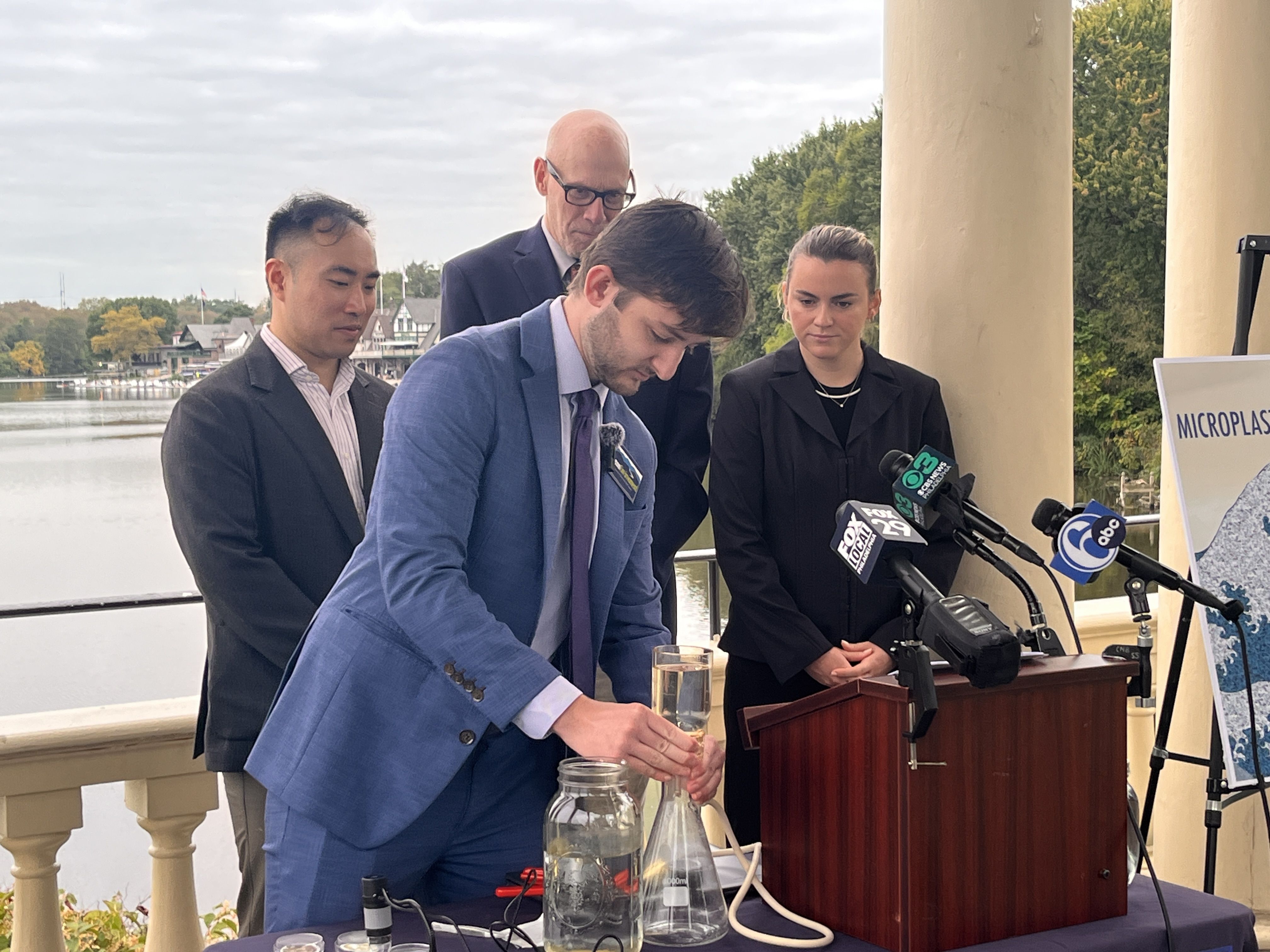
    The research was conducted in partnership with the nonprofit Environment New Jersey Research and Policy Center. Scientists with the Academy of Natural Sciences at Drexel University helped analyze the results, which were released Wednesday during a news conference at Fairmount Water Works.

    Contamination was found in the Delaware and Lehigh Rivers and the Schuylkill. It was found in Neshaminy Creek in Bucks County, Brandywine Creek in Chester County, and Cooper River in Camden County. And it was found along the Christina River in Delaware.

    Drexel’s lab analysis confirmed microscopic plastic at every sampled site, highlighting what the researchers say is a widespread environmental threat.

    “We can look at a waterway, and it might be free of litter, it might be free of visible plastic pollution, but that doesn’t necessarily mean it’s clean,” said Faran Savitz, an advocate for PennEnvironment. “The big takeaway is that we should be concerned. The depth, the breadth of this plastic pollution is staggering.”

    Faran Savitz with PennEnvironment demonstrates water testing. In the background from right are: Lizzy Mulvenna, with Environment New Jersey Research & Policy Center; David Velinsky, senior scientist, Academy of Natural Sciences; and Derek Ho, microplastics researcher, University of Pennsylvania.Frank Kummer

    Where do microfibers come from?

    Waterways in and around Philadelphia emerged as significant focal points in the survey results.

    Samples drawn from the Delaware River in Philadelphia tested positive for multiple categories of microplastics including microfibers, microfragments, and microfilm, as did other waterways. Microbeads, often found in cosmetic products, were also found in the Christina River.

    Microplastics are defined as fragments of less than 5 mm in length.

    The synthetic microfibers came primarily from clothing and textiles. Rigid microfragments from items such as fishing line were found in 82% of locations. And flexible microfilm from bags and packaging appeared in 77%.

    (function(){function e(){window.addEventListener(`message`,function(e){if(e.data[`datawrapper-height`]!==void 0){var t=document.querySelectorAll(`iframe`);for(var n in e.data[`datawrapper-height`])for(var r=0,i;i=t[r];r++)if(i.contentWindow===e.source){var a=e.data[`datawrapper-height`][n]+`px`;i.style.height=a}}})}e()})();

    Microplastics have been found in humans

    Researchers explained that laundering synthetic garments releases millions of microfibers that wastewater treatment facilities are unable to completely filter out before they are discharged into local streams.

    However, because plastic does not biodegrade but continuously fractures into tiny fragments, filters capture only a portion of plastic entering a waterway.

    Savitz said PennEnvironment’s study did not release the concentrations of microplastics because it did not want to compare one waterway or state against another.

    The findings carry ecological and public health implications, as microplastics can block digestive tracts in wildlife and absorb toxic chemicals like PCBs and PFAS that bioaccumulate up the food chain, the report stated.

    On average, humans ingest approximately 5 grams of plastic weekly, which is roughly equivalent to the weight of a credit card. Microplastics have been found in human blood, lung tissue, and organs, the researchers said.

    Plastics are also routinely found in wildlife, including sea turtles, birds, and whales. About 60% of all seabirds have ingested plastic, with that number rising.

    The environmental advocates are urging state and local leaders to enact policies such as producer responsibility for plastic packaging, bans on single-use foam and plastic bags, strict limits on pre-production plastic pellets, and enhanced drinking water filtration systems.

    Microbeads once used in personal care products were phased out under President Barack Obama in 2015. But many of those products still linger on household shelves.

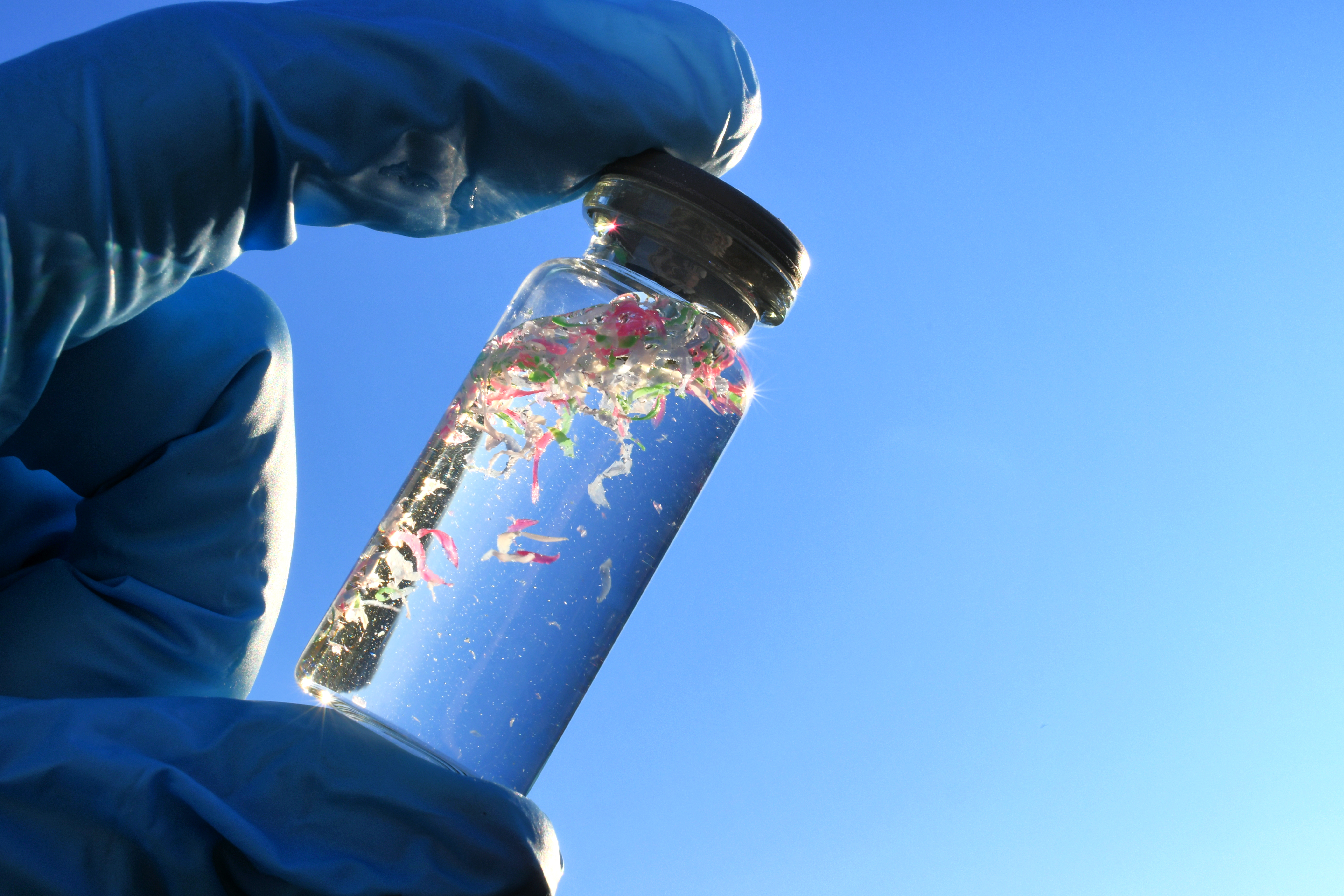
    File: A glass vial containing water and microplastic pollutionGetty Images

    Philadelphia’s drinking water

    Philadelphians get their drinking water from the Delaware River and the Schuylkill. Most microplastics are filtered out at the Philadelphia Water Department’s wastewater treatment plants, but some particles still get through.

    In 2025, PWD removed 4.6 tons of plastic litter from the Delaware and the Schuylkill, alongside an estimated 1,000 tons of plastic extracted through sewer maintenance, the researchers stated.

    PWD said in an online report that it is “unclear whether microplastics pose a danger to human health,” noting that the risk could depend on the level of exposure, the type of plastic, and the size of the particles.

    But it noted that research suggests some are harmful to fish and animals and can build up in the organs or bloodstream over time.

    “PWD is always investigating advanced treatment technologies that may eliminate microplastics and other impurities,” the report stated.

    David Velinsky, a senior scientist at the Academy of Natural Sciences of Drexel University, said, “plastics and microplastics are everywhere, from our clothing to the ubiquitous water bottle.”

    When plastics and microplastics are not properly disposed of or recycled, he said, they break down into ever smaller pieces.

    They “can travel great distances through both the air and in the water,” Velinsky noted.

    A plea for ‘producer responsibility’

    To combat pervasive plastics, advocates are urging federal and state lawmakers to enact targeted reforms, including the federal Plastic Pellet Free Waters Act currently before Congress, and state-level producer responsibility legislation for plastic packaging.

    Savitz emphasized that shifting financial and operational burdens back onto manufacturers is critical to curbing waste at its source.

    At least seven states have passed producer responsibility laws, though not all are in effect, according to the Product Stewardship Institute. Those states include Washington, Oregon, California, Colorado, Minnesota, Maryland, and Maine.

    “If we can shift the burden back onto companies that create this waste in the first place,” Savitz said, “we can actually reduce the waste, encourage recycling, and make these broader, more systemic changes.”

  • Let’s talk: Drexel University responds to William Penn’s offer on the Academy of Natural Sciences

    Let’s talk: Drexel University responds to William Penn’s offer on the Academy of Natural Sciences

    Even after a massive wave of love and a crescendo of protests over the weekend, the Academy of Natural Sciences of Drexel University museum won’t be getting an immediate reprieve.

    Philadelphia’s beloved gateway to the natural world will remain shuttered after Drexel University released a statement Monday in response to an offer from the William Penn Foundation to temporarily underwrite operating costs and keep the doors open.

    Drexel’s statement neither accepts nor rejects William Penn’s offer. Rather, it suggests that the university is open to talking.

    Drexel says that while it appreciates the William Penn Foundation’s “public suggestion that it assist in temporarily keeping the Academy’s museum open,” they have “not received a formal proposal with a defined level of financial support.”

    With that in mind, Drexel linked the William Penn offer with keeping both the museum and collections in the current building and what it says is a substantial amount of money that would be needed to bring the building at 19th Street and the Benjamin Franklin Parkway up to snuff.

    Drexel said Monday that it looked forward to “continuing to explore the possibility of Foundation support — alongside the considerable commitment Drexel has already made to preserving the research and education missions of the Academy — as we consider the substantial financial and operational challenges, including significant deferred maintenance needs associated with keeping the Academy of Natural Sciences’ collections at their current location.”

    “We believe that we are all working toward the same goal, which is to ensure that the treasures of the Academy remain accessible here in Philadelphia over the long-term,” said William Penn executive director Shawn McCaney in a statement Monday. “There are many considerations to determine the best path forward, and our offer of support is intended to help keep the museum open while a plan is developed.”

    No meetings between Drexel and the Foundation were scheduled, a Drexel spokesperson said.

    “Drexel intends to continue conversations with the William Penn Foundation to better understand and evaluate its offer,” said a Drexel source familiar with the matter who was not authorized to speak publicly about it.

    Visitors at the dioramas in the Academy of Natural Sciences of Drexel University on Sunday, the last day the museum was open to the public.Tom Gralish / Staff Photographer

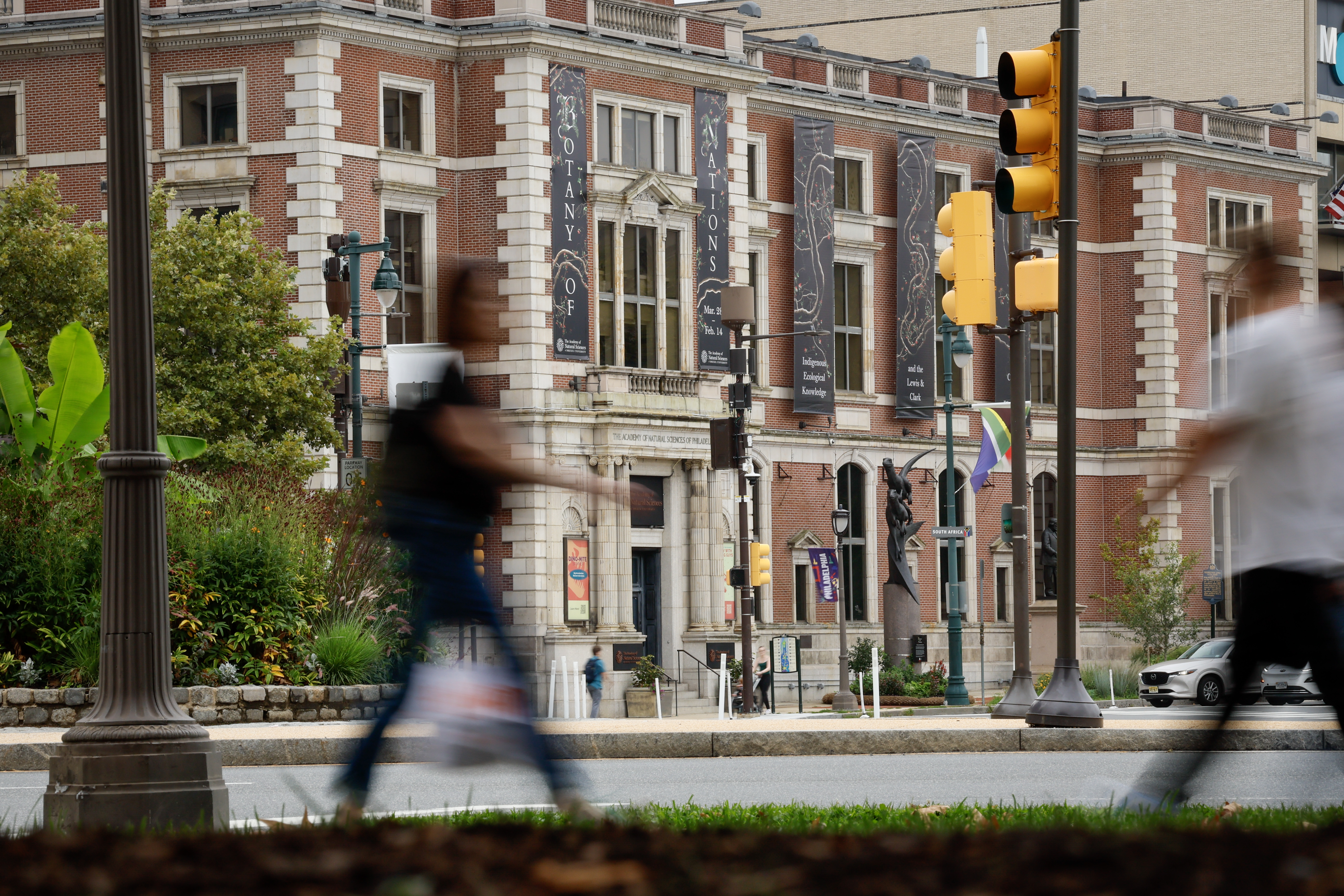
    The nearly two-century-old natural history museum closed to the public at 5 p.m. Sunday, and while the Academy‘s research and collections remain operational, leaders have said they intend to sell the building and move the collections at some point to an as-yet undetermined location. A public-facing museum experience of some kind is being envisioned elsewhere, but no details are set.

    Academy board chairperson Suzanne Biemiller on Monday did not immediately offer a comment.

    Citing a challenging financial picture and attendance trends, the Drexel and Academy boards on Sept. 1 abruptly announced the museum’s closure in 30 days without first coming forward with a public appeal for funds to help keep it open. Public demonstrations attracted hundreds at first, and in recent days online petitions topped 100,000 signatures.

    With the closure date fast approaching, William Penn last week extended a hand, offering to cover the cost of the operating subsidy Drexel has been providing to keep the museum open for at least another year, “so that the full range of options for the future of the museum could be properly explored, and to provide time to test the interest of other funders and supporters who have not been engaged so far,” said McCaney in a statement.

    One of the North American dioramas at the Academy of Natural Sciences of Drexel University just before the museum closed on Sunday.Tom Gralish / Staff Photographer

    The William Penn offer was intended to help float the Academy’s museum operations while due diligence was done on answering a number of questions about the Academy’s viability. Among them are determining the costs of addressing deferred maintenance in the building and gauging the level of philanthropic support that could be counted on to fund the museum on an ongoing basis.

    Biemiller said last week that the Academy was supportive of the idea.

    A Drexel spokesperson said that the Academy board and leadership team undertook an “extensive planning process” throughout much of 2024 and 2025 to identify a path toward long-term financial stability. The effort included an assessment of the Academy’s business model and explored options for a more sustainable financial and operational model, including the level of ongoing support required from Drexel.

    Although the university did not publicly reject the William Penn money last week, it said that “no proposal has been presented that would provide a permanent, sustainable path forward for the Academy’s museum.”

    Pressure intensified over the past few days, with politicians and activists asking why, if the hurdle was financial, Drexel would turn down such an offer.

    “We urge Drexel and the Academy to jointly agree to accept the William Penn Foundation’s gracious offer and keep the Academy of Natural Sciences open for the public to continue to enjoy,” wrote City Councilmembers Nina Ahmad and Jeffery Young Jr. in a statement Saturday.

    “Anything else is a clear abdication of their public duty, and a demonstration of their contempt for this priceless cultural resource.”

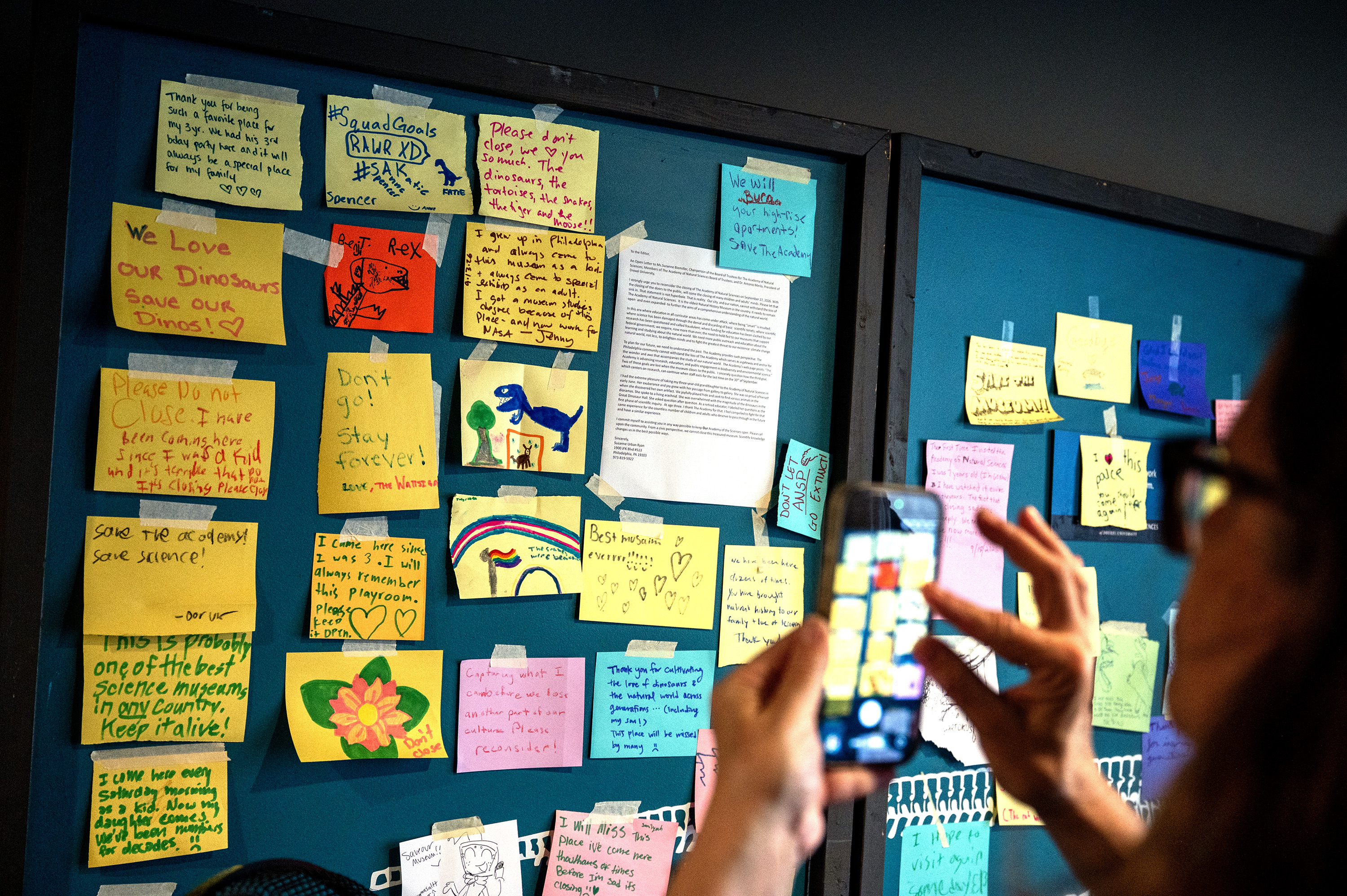
    Visitors left love notes inside the Academy of Natural Sciences of Drexel University Sunday.Tom Gralish / Staff Photographer

    Drexel says it has contributed $49 million toward the Academy’s budget since the two formed an affiliation announced in 2011. Yet, the institute has still struggled.

    “If somebody came in today and said, ‘here’s all the money you need to do all of the deferred maintenance, to do what needs to be done to the building to make sure that you can care for all of the collections and all of the research,’ and it’s feasible to do it there from an economic perspective, which would be wonderful, then I think we would be very open to it,” said the Drexel source. “But we probably still would have to keep the museum closed for a bit, just to be realistic because what needs to be done may not necessarily be able to be done while the museum’s open.”

    In the weeks since the impending closure was announced, attendance has soared, and revenue along with it. Estimated ticket revenue for September 2026 alone nearly matched the total ticket revenue for all of 2025, a Drexel spokesperson said.

    The Drexel and the Academy boards are in the process of renegotiating their affiliation agreement, brokered in part by David L. Cohen — the onetime Comcast executive and U.S. ambassador to Canada — at the behest of Gov. Josh Shapiro and Mayor Cherelle L. Parker.

    “That agreement includes a process for evaluating the future of the collections and the museum,” said Monday’s statement from Drexel. “Until that agreement is fully executed and approved by both boards, we do not intend to alter the plans that the Academy’s board and Drexel have agreed to.”

    The Greater Philadelphia Cultural Alliance on Monday lauded the William Penn Foundation’s “generous offer” and said it deserved consideration, but added that responding to one crisis won’t be enough.

    “Philadelphia must make a stronger, sustained commitment to the cultural institutions that are fundamental to our civic life,” said the GPCA statement.

  • Drexel wants to sell the Academy of Natural Sciences museum. A Council bill could restrict its redevelopment.

    Drexel wants to sell the Academy of Natural Sciences museum. A Council bill could restrict its redevelopment.

    A new zoning bill by City Councilmember Jeffery Young Jr. would restrict the redevelopment potential of the Academy of Natural Sciences museum after Drexel University this month announced plans to shutter the centuries-old institution.

    Young, whose 5th District includes the museum property on the Benjamin Franklin Parkway, introduced the ordinance at Thursday’s Council session.

    It would limit the allowed uses of the property and others around it to specific categories, including hospitals, government uses, libraries and cultural exhibits, and “community-supported” farms.

    Under Young’s legislation, residential and commercial uses would not be allowed. The property is currently zoned to allow multifamily residential development, unlike the other museums on the Parkway.

    Young said his legislation would simply change the museum’s zoning to reflect what has long been on the site.

    “It’s always been a cultural and civic use, so [my bill] would match the land use with the actual zoning to allow only cultural and civic type uses,” Young said. “But it wouldn’t prevent the academy from closing.”

    Councilmember Jeffery Young Jr. Elizabeth Robertson / Staff Photographer

    Drexel did not immediately offer comment on Young’s legislation.

    If the bill passes, it will make it much harder to convert the building to other uses. The owner would need to secure a variance from the Philadelphia Zoning Board of Adjustment, an often lengthy and costly process with no guarantee of success.

    During that process, any prospective developer would also be required to meet with community groups in advance of a zoning board hearing.

    Young said the purpose of his bill is to allow “the community some input on a site that has been a cultural use for centuries.”

    Instead of changing the property’s zoning to match those of neighboring museums and libraries, Young has proposed adding the restrictions to what is known as a zoning overlay — a kind of hyperlocal patch of the code — that covers his district and allows him to precisely describe what he wants to restrict and allow.

    Young said he is also considering changing the underlying zoning to match that of the Philadelphia Museum of Art, the Barnes Foundation, and other cultural institutions on the Parkway.

    “We are looking to do that, but the issue is that the planning commission doesn’t work for me and so they’re not on my time,” Young said. “Ultimately, we had to do what we could do from our office’s standpoint.”

    To become law, the bill would need to be approved first in the Committee on Rules and then by the full Council before heading to Mayor Cherelle L. Parker’s desk.

    If Young pushes forward, the bill is likely to pass in Council thanks to a practice known as councilmanic prerogative, in which the rest of Council defaults to the wishes of the member whose district includes a property when it comes to land-use decisions.

    Young, whose district includes parts of Center City and much of North Philadelphia, has abandoned zoning legislation that stirred controversy in the past, such as a housing ban around the former Hahnemann University Hospital campus.

    But the closure of the Academy of Natural Sciences is unpopular, and the new legislation is likely to have broad support from Council members.

    If enacted, the bill would take effect immediately.

    A surprise closure

    Founded in 1812, the Academy of Natural Sciences is the oldest institution of its kind in the nation, and its museum, which opened in 1828, is the country’s oldest natural history research museum. It houses 19 million biological specimens, including bones, carcasses, and plants.

    Drexel announced earlier this month that it was closing the museum effective Sept. 27, citing a decrease in attendance since the COVID-19 pandemic and the university’s financial woes. The decision caused an immediate uproar, including a protest on the Parkway attended by hundreds. Young vowed to “protect and preserve” the building.

    Matt LeBlanc, of Manayunk, and his wife, Alyssa, show their children, Miles and Clara, the Dinosaur Exhibit at the Academy of Natural Sciences of Drexel University earlier this month.Tyger Williams / Staff Photographer

    Leaders of Drexel and the academy have said that the “collections and their use to advance scientific knowledge will be the focus of our work for the near future” and that no final decision had been made on the building’s future.

    A source told The Inquirer the university’s ultimate aim is to relocate the collection and sell the building.

    After the announcement, Deputy Mayor Patricia Wellenbach, a top official in Parker’s administration, was named the academy’s temporary leader, serving as senior adviser while on loan from the city.

    Young and other members of Council have been attending rallies against the closure.

    “This academy has been there for over 200 years. It’s dedicated to civic and cultural education, to science,” Young said in a speech during Thursday’s meeting. “If we take that away, how will our kids learn?”

    Correction: An earlier version of the story inaccurately attributed plans to sell the museum building and relocate the academy’s collection.

  • CHOP’s measles exposure shows the growing danger of Pa.’s outbreak, experts say

    CHOP’s measles exposure shows the growing danger of Pa.’s outbreak, experts say

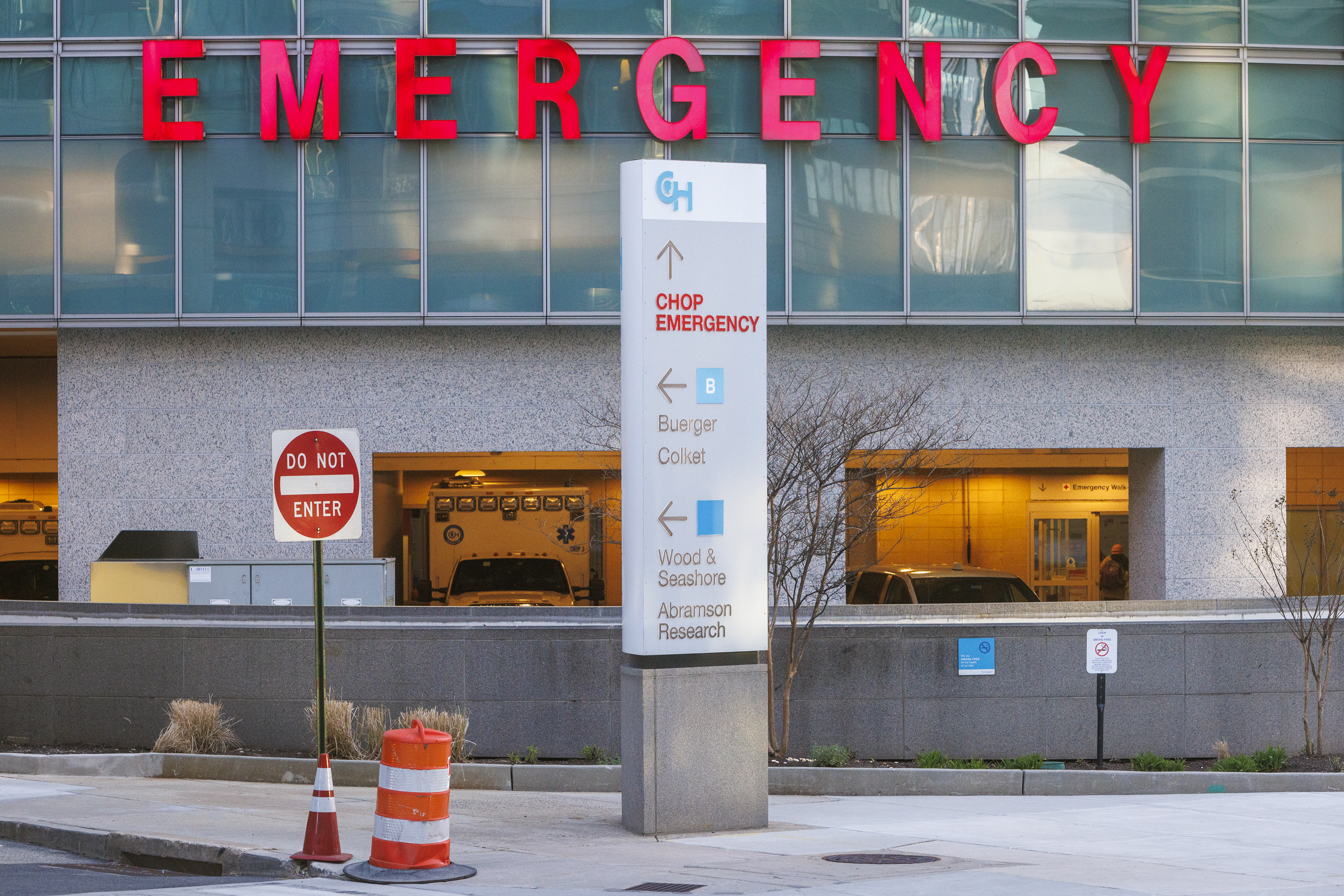
    The visitor arrived at a neonatal intensive care unit at the Children’s Hospital of Philadelphia in University City last Friday morning.

    Then they visited a family lounge. An atrium. A cafeteria.

    At each stop, the person, now known to be infected with measles, potentially exposed others to the highly contagious disease that is particularly risky for young children, city health officials announced this week.

    Hospitals have spent years preparing for such incidents, no longer a theoretical concern as Pennsylvania now deals with the nation’s largest measles outbreak this year, which has already sickened more than 760, experts in infectious disease prevention say.

    Nemours Children’s Hospital in Wilmington reported an exposure in its emergency room in February, although the state has seen only 23 cases of measles all year.

    And across the state in Allegheny County, the University of Pittsburgh Medical Center Children’s Hospital has reported several possible measles exposures this summer.

    Health officials did not specify how many babies and others were potentially exposed at CHOP in announcing the exposure late Thursday. Philadelphia health officials have issued only general details on the infected person’s visit, along with guidelines for anyone potentially exposed to the virus over the course of several hours on Sept. 11 at the hospital at 3401 Civic Center Blvd.

    The hospital is working with NICU families to ensure its patients are protected, Julia Sammons, vice president and associate chief medical officer of CHOP’s Office of Preparedness, Prevention and Response, wrote in an email.

    The hospital took “immediate action” after being notified of the exposure to identify babies who might have been exposed and offer preventive treatments to protect them from the virus, Sammons said. Exposed patients have also been placed in isolation and doctors are monitoring them for symptoms.

    The hospital is also working with staff and patients outside the NICU to ensure they understand the situation, Sammons said, and partnering with the state and city health departments “on contact tracing, timely testing, and safe quarantining practices for all the areas served by the CHOP enterprise.”

    Infectious disease experts say hospitals around the country have been monitoring an explosion of measles cases in the last several years.

    Pennsylvania as of Friday had seen 767 cases of measles in 2026, with 93 reported in the last week. One in five people with reported cases has been hospitalized.

    State officials have confirmed four measles-associated deaths in the last several weeks, the most seen in the nation in more than three decades, sparking a clash with federal officials over how to characterize the deaths.

    “Measles has been up and coming. It’s definitely on the radar of hospitals,” said Ericka Kalp, who directs Drexel University’s infection prevention and control academic programs. “Your risk has increased when you have multiple measles cases within your vicinity.”

    Every year, hospitals work on an infection control risk assessment, monitoring rising diseases around the country and internationally, and developing plans on how to treat sickened patients.

    That could include triaging patients with respiratory illnesses and isolating those with suspected cases in special rooms, said Kalp, who was not involved in the response at CHOP.

    Screening visitors to a hospital is tricky, she said.

    “We can ask visitors and the public not to visit if you’re sick, and visitors need to take it upon themselves to not go to the facility if they’ve been around a particular exposure,” she said.

    But some may not know they are ill: A person can be contagious for four days before measles’ telltale rash appears.

    Sammons said that CHOP screens visitors daily for signs or symptoms of illness at the hospital’s welcome desks, and signs remind visitors that no one with symptoms should be admitted to the NICU. She did not say whether the NICU visitor who exposed others on Friday was symptomatic.

    “We have been in constant communication with families in our NICU to discuss guidance to keep them safe,” she said. “As the measles outbreak continues to evolve, we continue to review and update our screening processes to reduce the risk of exposure to our patients and families.”

    The virus can linger in the air for up to two hours and infect nine in 10 unvaccinated people exposed to it.

    Pregnant women, babies under six months, and some immunocompromised people are among the groups who cannot be vaccinated. Their protection depends on nearly everyone else in a community being vaccinated to prevent the disease from spreading.

    But more parents have opted against vaccinating children for religious or philosophical reasons in recent years, The Inquirer has found, leaving hundreds of area schools and communities vulnerable to the spread of the virus.

    “When you see fewer people are becoming vaccinated and they have less immunity, it opens up a portal of spread,” Kalp said. “We’ve always trained for this type of thing.”

    Sammons said CHOP has stepped up public health education for families and is offering early MMR vaccines for eligible children amid the outbreak, as state health officials have recommended. The hospital is also improving its measles screening capabilities and “developing contingency plans for more widespread community transmission in our area,” she said.

    “The best way to control measles outbreaks remains vaccination with the measles, mumps, and rubella vaccine, which is safe and highly effective in preventing measles,” she said, noting the hospital’s long-running Vaccine Education Center, aimed at debunking misinformation about the safety of vaccines.

    (function(){function e(){window.addEventListener(`message`,function(e){if(e.data[`datawrapper-height`]!==void 0){var t=document.querySelectorAll(`iframe`);for(var n in e.data[`datawrapper-height`])for(var r=0,i;i=t[r];r++)if(i.contentWindow===e.source){var a=e.data[`datawrapper-height`][n]+`px`;i.style.height=a}}})}e()})();

    Treating those exposed

    CHOP is offering post-exposure treatments “in the form of antibodies” to infants who may have been exposed to the virus, Sammons said.

    Doctors can administer immunoglobulin, a treatment made from the plasma of adult donors, that helps boost a baby’s antibodies to infectious diseases like measles, said Sarah Long, a Drexel pediatrics professor and a physician specializing in infectious disease at the Bristol-Myers Squibb Children’s Hospital in New Brunswick, N.J.

    In an outbreak, she said, hospitals can consider limiting visitors to prevent exposures, especially for a virus like measles, which is particularly dangerous for young children and kills about 1 to 3 for every 1,000 infected.

    But responding to measles cases or exposures can require hospitals to expend extensive resources.

    “It’s an enormous number of meetings, manpower, education about IDing cases early, and sequestering as soon as a patient comes in with a fever,” she said. “It’s an enormous amount of money, gowning, gloving, and masks.”

    The latest rise in cases — and rising anti-vaccine sentiment — frustrates Long, who treated children during Pennsylvania’s last major measles outbreak in the early 1990s, which sickened 1,400 people and killed nine children.

    Now she’s worried again about vulnerable children. Nearly one-third of Pennsylvania’s cases this year have been reported in children under the age of 18, and two of the measles-associated deaths involved infants.

    “It makes me just angry, angry, angry. There are so many catastrophes in children’s healthcare that are not preventable,” she said. “To have catastrophes that are preventable is just unconscionable.”