The Bensalem Township School District has selected longtime district administrator Victoria Velazquez as its next superintendent, after its previous superintendent resigned this spring amid a budget shortfall.
Velazquez, who has worked for the district for 12 years, is expected to be appointed superintendent at a school board meeting Sept. 23, the Bucks County Intermediate Unit said in a statement Friday.
“I am deeply honored and grateful for the opportunity to continue serving the Bensalem Township School District as district superintendent,” Velazquez said in a statement.
Noting that her daughter graduated from Bensalem, Velazquez said, “It is my home, and it is a community I care deeply about and am incredibly proud to serve.”
Velazquez was selected to lead the 6,400-student district after a search led by the Bucks County Intermediate Unit that drew 27 applicants from five states, according to the intermediate unit.
Deborah King, the Bensalem school board president, said in a statement that she had watched Velazquez “lead with humility, diligence, integrity, and a genuine love for Bensalem.”
“She knows this community, she believes in this community, and she understands that our students must remain at the heart of every decision we make,” King said.
Velazquez has worked in Bensalem as assistant to the superintendent for K-12 administration, director of elementary curriculum and instruction/federal programs, and supervisor of data and assessment/federal programs.
As interim superintendent, Velazquez worked with the board on organizational systems and fiscal stewardship “during a consequential period for the district,” the intermediate unit said in the statement.
Before coming to Bensalem, Velazquez worked as a principal in the School District of Philadelphia and the Norristown Area School District. She received bachelor’s and master’s degrees from Temple University, a principal certification from Drexel University, and a doctorate in educational leadership, management, and policy and superintendent certification from Seton Hall University.
If approved on Sept. 23, Velazquez will be sworn in as superintendent on Oct. 1 at Bensalem High School, the intermediate unit said.
It’s been an extraordinary summer celebrating America’s 250th, but before we shift our focus from the events of 1776, we would direct the minds of our fellow Pennsylvanians to an earlier period — to the founding of the commonwealth, and to William Penn’s forward-thinking advocacy for religious and political freedom and his belief in democratic self-government. These ideas were central to his political philosophy and plans for the early government of Pennsylvania. They also found their way into the democratic experiment we steward today.
Although Philadelphia played an important role in setting the stage for a stunning world event — the birth of American democracy — the city was more than just a geographically convenient location for the nation’s founders to gather.
By the time of the revolution, Pennsylvania had become an important intellectual and economic center of the colonies, and the unique political culture and form of government established at its founding helped inform and inspire the development of American democracy, later embodied in the U.S. Constitution and Bill of Rights.
As Pennsylvanians, we are the inheritors of this impressive and innovative political heritage, a legacy that should be an important point of civic pride and inspiration for local patriotism.
Think about this: A decade after Penn arrived in America and began the work of establishing a refuge for religious dissenters, colonial Massachusetts accused nearly 200 individuals of witchcraft and executed 19 people. Massachusetts had a state religion until 1833; Pennsylvania never had a state religion.
After the end of the short-lived Maryland Toleration Act, Pennsylvania became the only colony where the Catholic Church enjoyed ongoing, legally secure protection.
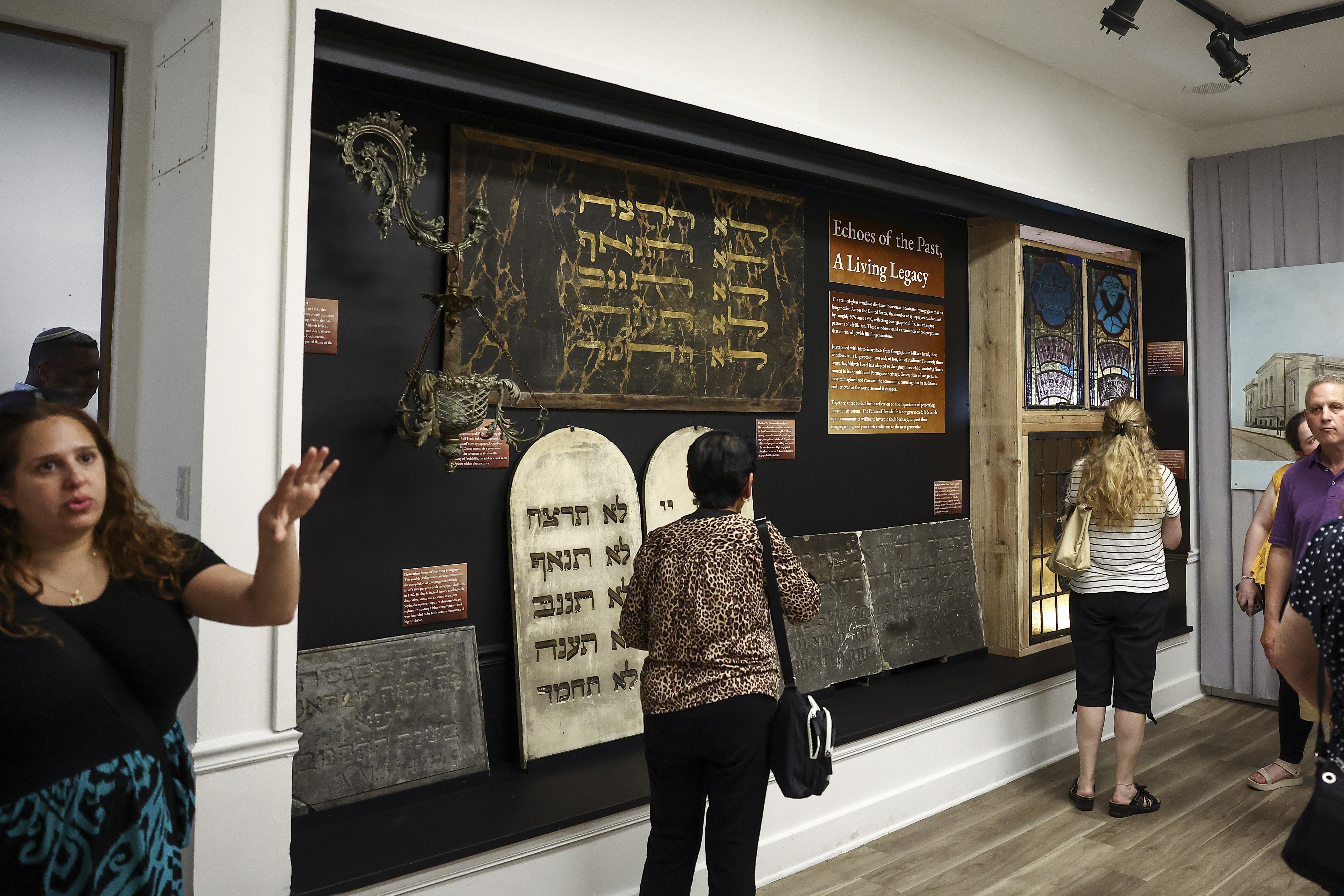
Visitors look at historic artifacts as part of the Jewish America 250 celebration at Congregation Mikveh Israel in Center City in July.Monica Herndon / Staff Photographer
And, of course, Pennsylvania is also home to the “Synagogue of the American Revolution,” Congregation Mikveh Israel, one of the oldest synagogues in the nation, dating to 1740.
As historian Nicolas P. Miller observed, the success of colonial Pennsylvania was linked in the minds of many onlookers to the freedoms, particularly religious liberty, that its inhabitants enjoyed.
To remind Pennsylvanians of our special birthright of religious tolerance, farsighted political liberties, and a long tradition of self-government that predate the nation, Poor Richards Charitable Trust, the William Penn Foundation, the Connelly Foundation, and the Syde Hurdus Foundation — in partnership with Drexel University’s Lenfest Center for Cultural Partnerships and the National Constitution Center — are presenting a new exhibit: “Pennsylvania’s Founding: How a City and a Colony Shaped America’s Civic DNA.”
For the first time, this exhibit will bring together original versions of several of the most important artifacts that helped define the civic and political character of early Pennsylvania, and tell the story of how the founding of the commonwealth helped inspire American democracy.
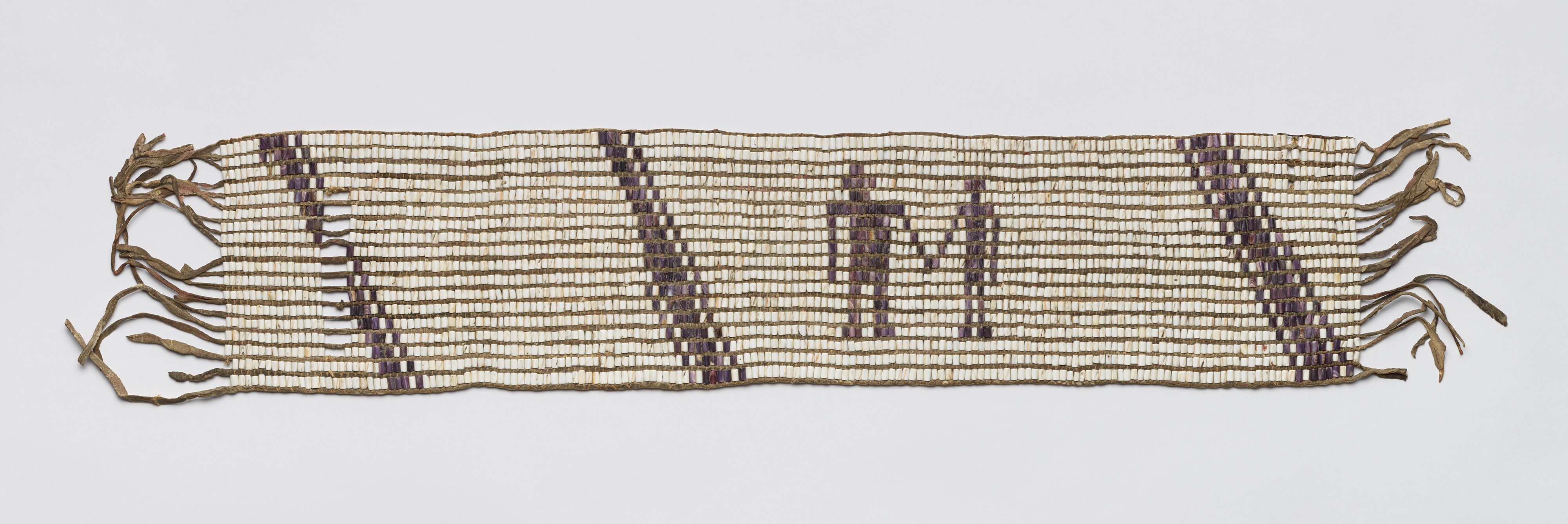
Wampum belt, 1682, likely made by Lenape female artisans in the Delaware Valley. Courtesy of the City of Philadelphia Atwater Kent Collection / Gift of John Granville Penn, Historical Society of Pennsylvania Collection.
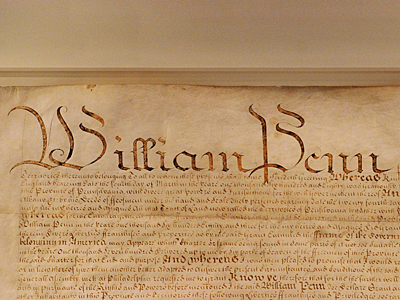
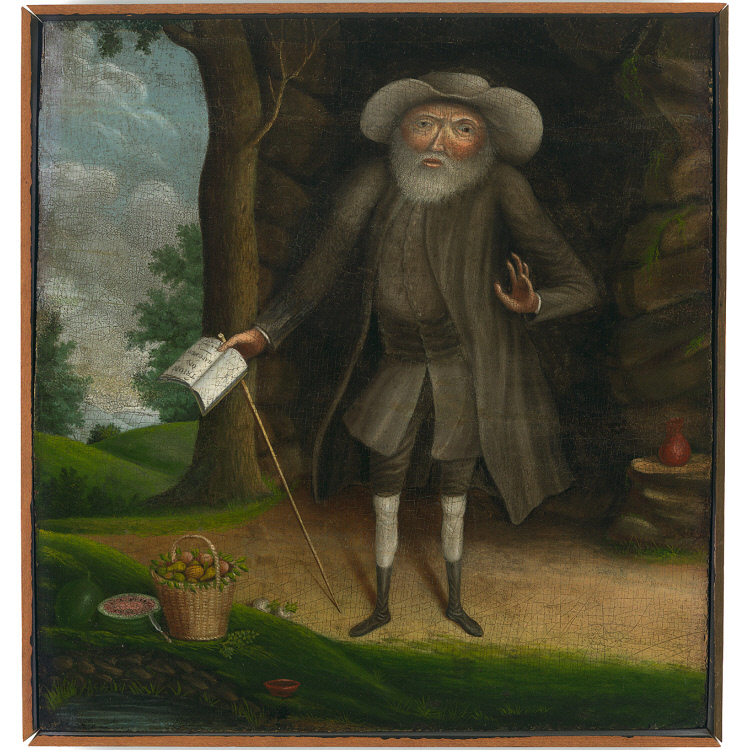
They include the 1681 Pennsylvania Charter, signed by King Charles II, establishing the colony and granting Penn authority to govern; Penn’s 1701 Charter of Privileges, a framework of government for Pennsylvania until 1776, establishing religious freedom and other liberties and protections; a Lenape wampum belt given to Penn, associated with the 1682 Treaty of Shackamaxon, symbolizing a hoped-for moment of peace and cooperation; the 1696 Quaker Protest Against Slavery, one of the earliest in the Americas, and materials connected to early abolitionist Benjamin Lay; and other artifacts that clearly document Penn’s and Pennsylvania’s key contributions to the establishment of American democracy.
Painting of abolitionist Benjamin Lay by William Williams at National Portrait Gallery of the Smithsonian Institution.National Portrait Gallery of the Smithsonian Institution.
The exhibit will be on view to the public, free of charge, at the National Constitution Center from Sept. 30 through Jan. 3, 2027. Learn more here.
So this fall, let’s continue the Semiquincentennial celebration. We encourage all Pennsylvanians to make a special pilgrimage to the National Constitution Center to see, understand, and remember our political heritage that is ours alone — a world-changing and invaluable inheritance of tolerance that we should continue to aspire to today.
Tom Riley is the president of the Connelly Foundation. David Seltzer is a trustee of Poor Richards Charitable Trust. Shawn McCaney is the executive director of the William Penn Foundation.
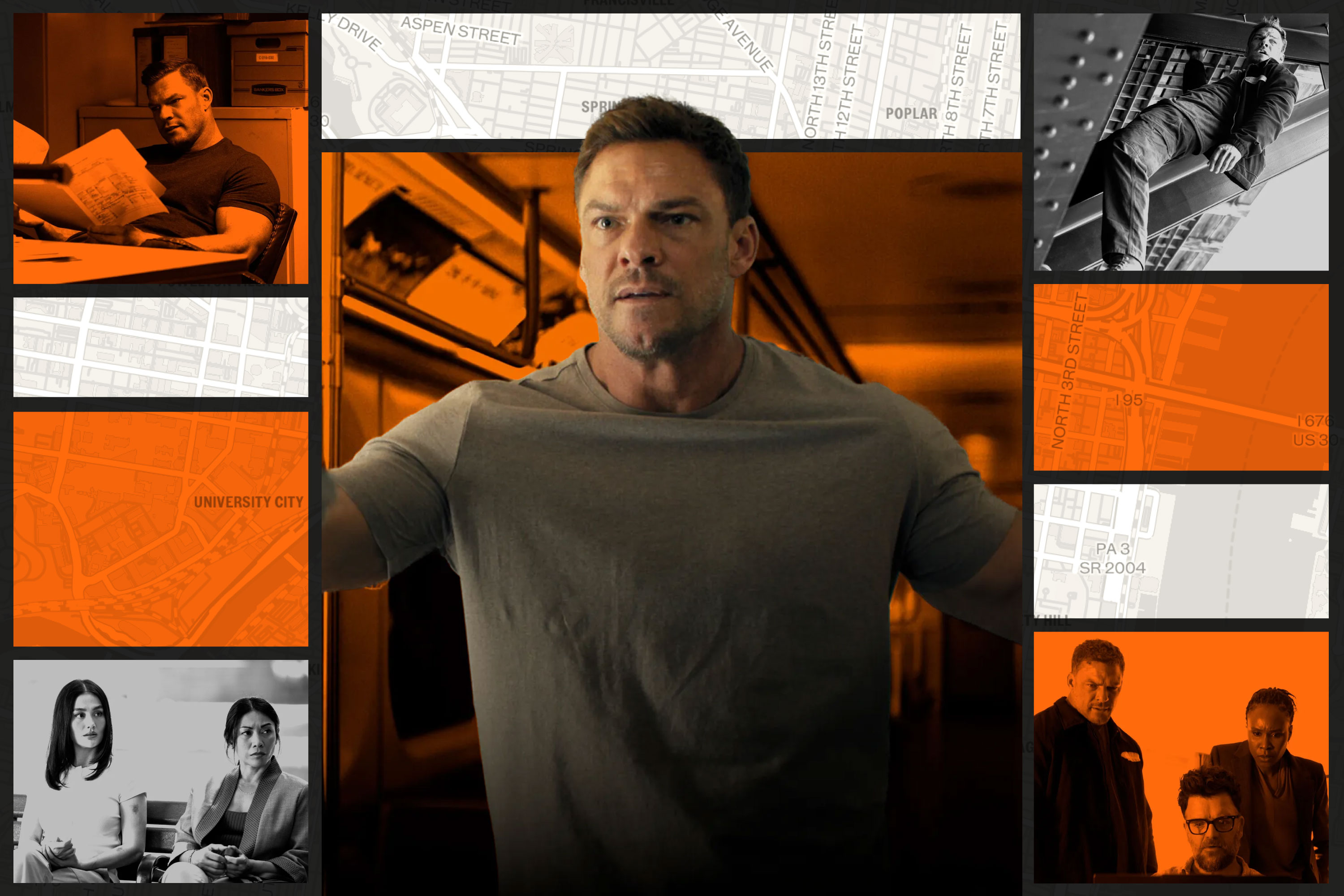
Vigilante Jack Reacher's shadowy dealings spilled out across Philadelphia for the Reacher’s fourth season, which is now available in full on Amazon Prime. Starring actor Alan Ritchson as the hulking retired Army investigator, the series was spotted filming around town in 2025.
Based on Lee Child's 2009 novel Gone Tomorrow, the fourth season of Reacher has its titular character facing off against he CIA, federal agents, and international mercenaries following a woman's suicide. And while much of the on-screen action appears to have been filmed elsewhere — namely Toronto, which looks a lot like Philly, but with space — the City of Brotherly Love does show up quite a bit.
Here, we've rounded up all the Philly spots we could identify in season four. Check out the map below for where Reacher and his cohorts went in the city.
story continues after advertisement
Loading…
Seen in episode 1
City Hall
Michael Bryant / Staff Photographer
Reacher's fourth season immediately sets the scene with a shot of the William Penn statue atop City Hall as a nightscape of Center City shines in the background.
Seen in episode 1
Uptown Beer Garden
Erin Blewett / For The Inquirer
We catch our first glimpse of our hero, Jack Reacher (Alan Ritchson), as he exits Uptown Beer Garden, walking out of the establishment silently with a beer in hand.
Seen in episode 1
LOVE Park
Michael Bryant / Staff Photographer
Reacher speaks for the first time this season, ordering a "wiz wit" from a nondescript food truck in Love Park.
Seen in episode 1
Avenue of the Arts
Jessica Griffin / Staff Photographer
Here, Reacher strolls down the sidewalk on the west side of Broad Street, chomping on his cheesesteak. Canonically, it is just after 2 a.m., and the street is deserted as he descends into the Walnut-Locust entrance of the B line, which runs along Broad Street.
Seen in episode 1
Walnut-Locust Station
Alejandro A. Alvarez / Staff Photographer
As he enjoys his cheesesteak, Jack Reacher (Alan Ritchson) heads down into the Broad Street Line at this Center City station. Several interior shots of the station are shown, including one in which a rat munches on a hot dog.
Seen in episode 1
Benjamin Franklin Bridge
Thomas Hengge / Staff Photographer
Philly is shown off in all its nocturnal glory in episodes one, and seven with a low-light shot of Center City from the Ben Franklin Bridge. Episode five features a skyline shot from the bridge, showing the One Water Street Apartments building.
Seen in episode 1
Benjamin Franklin Parkway
Tom Gralish / Staff Photographer
For the first time in the season's first episode, the sun rises on Philadelphia. And it does so in this stunning aerial shot showcasing many of the Ben Franklin Parkway's gems — Logan Circle, the Philadelphia Museum of Art, the works.
Seen in episode 1
Parkway Central Library
Tom Gralish / Staff Photographer
We get a great glimpse of the exterior of the Parkway Central Library before heading inside, where Jack Reacher (Alan Ritchson) and Jacob Merrick (Christopher Rodriguez-Marquette) do research on Congressman John Sampson (Marc Blucas), a North Carolina representative who is launching a presidential bid.
Seen in episode 1
Parc
Courtesy of HughE Dillon
Parc briefly plays host to Reacher, Lila Hoth (Agnez Mo), and Jacob Merrick (Christopher Rodriguez-Marquette) as the trio settles in at an outdoor table to evade police.
Seen in episode 3
Walt Whitman Bridge
Tom Gralish / Staff Photographer
Reacher and his cohorts travel back into Philly via this bridge after escaping Washington, D.C. In the background, the old Southwark Generating Station is clearly visible.
Seen in episode 3
Schuylkill Expressway
Tom Gralish / Staff Photographer
As Reacher and his crew traverse Philly at night, the action leads to a shot of the west end of Center City near 30th Street Station from the Schuylkill Expressway.
Seen in episode 3
Schuylkill Expressway
Monica Herndon / Staff Photographer
Here, we get another nightscape shot of Philly's skyline, again from I-76 near 30th Street Station looking east. In the foreground, Locust on the Park is lit up green and is featured prominently.
Seen in episode 4
Benjamin Franklin Parkway
Monica Herndon / Staff Photographer
The Philly skline is again featured in a sprawling shot from the Parkway. In the lower left, the Parkway House is visible.
Seen in episode 4
City Branch tunnel
Ed Hille / Staff Photographer
Fresh off a victory over some goons following a battle in the subway, Reacher makes his way back above ground here as he evades police.
Seen in episode 5
Philadelphia’s Magic Gardens
Margo Reed / Staff Photographer
While on the run from the police, Reacher and Tamara take refuge here, only narrowly avoiding capture in the Gardens' maze-like interior.
Seen in episode 5
The Rail Park
Yong Kim / Staff Photographer
Reacher and Tamara continue to evade capture, cutting through the Rail Park before dangling from its side to hide.
Seen in episode 6
12th and Market Streets
Alejandro A. Alvarez / Staff Photographer
Reacher and Tamara's mugshots appear on a screen at the corner of 12th and Market, which they see after passing by the Hard Rock Cafe.
Seen in episode 6
Italian Market
Alejandro A. Alvarez / Staff Photographer
Yet another Philly skyline shot, but this time from South Philly. If you look closely, you can see St. Paul Parish, as well as the seating area for the Di Bruno Bros. 9th Street Bottle Shop.
Seen in episode 7
56th and Market Streets
Kate McCann / Staff Photographer
This skyline shot looks east along the Market-Frankford El line, with one of Steve Powers' "A Love Letter For You" murals clearly visible.
Seen in episode 7
Highmark Mann Center for the Performing Arts
Jessica Griffin / Staff Photographer
The Mann becomes a plot point as a potential demonstration site for a toxin being sold on the dark web thanks to an orchestral concert of movie scores.
Seen in episode 8
Schuylkill Expressway
Tamara, Reacher, and Jacob travel along I-76 in South Philly, with a clear view of Kindy's Christmas Factory Outlet in the background. Reacher and his cohorts continue their journey on I-76, getting off at exit 349 and crossing over Packer Avenue. If you squint, you can just make out the Chickie's & Pete's sign in the background.
Seen in episode 8
Philadelphia Museum of Art
Tom Gralish / Staff Photographer
We get another aerial shot of the Parkway zooming into City Hall, but this time the camera travels over the roof of the Philadelphia Museum of Art. The building's bronze winged horses and griffins are the stars of the shot.
Seen in episode 8
45th and Market Streets
The season closes out on, you guessed it, an aerial shot of Center City. This one looks east from West Philadelphia as Reacher rides the subway to parts unknown, Drexel University's Vidas Field barely visible to the left.
story continues after advertisement
That was every location we could spot in this season of Reacher. Explore the map of all locations featured. Tap onHover overa pin to learn more.
Staff Contributors
Design and Development: Garland Fordice and Sam Morris
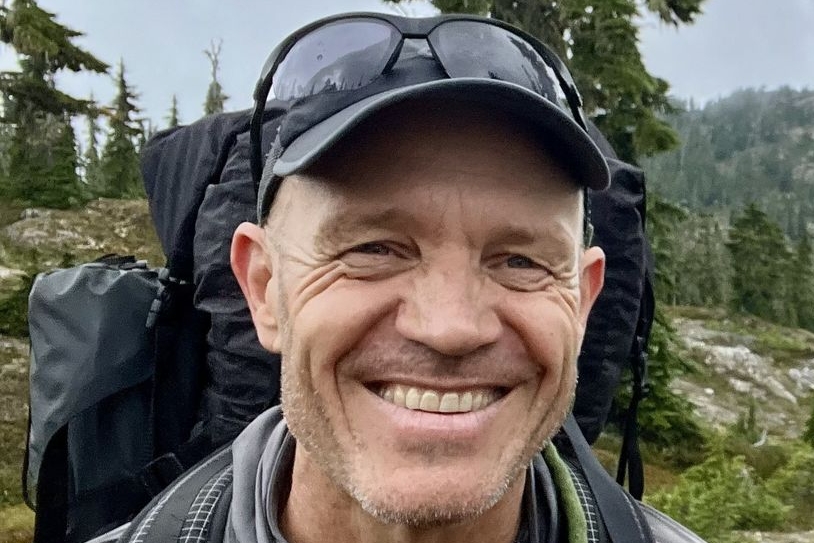
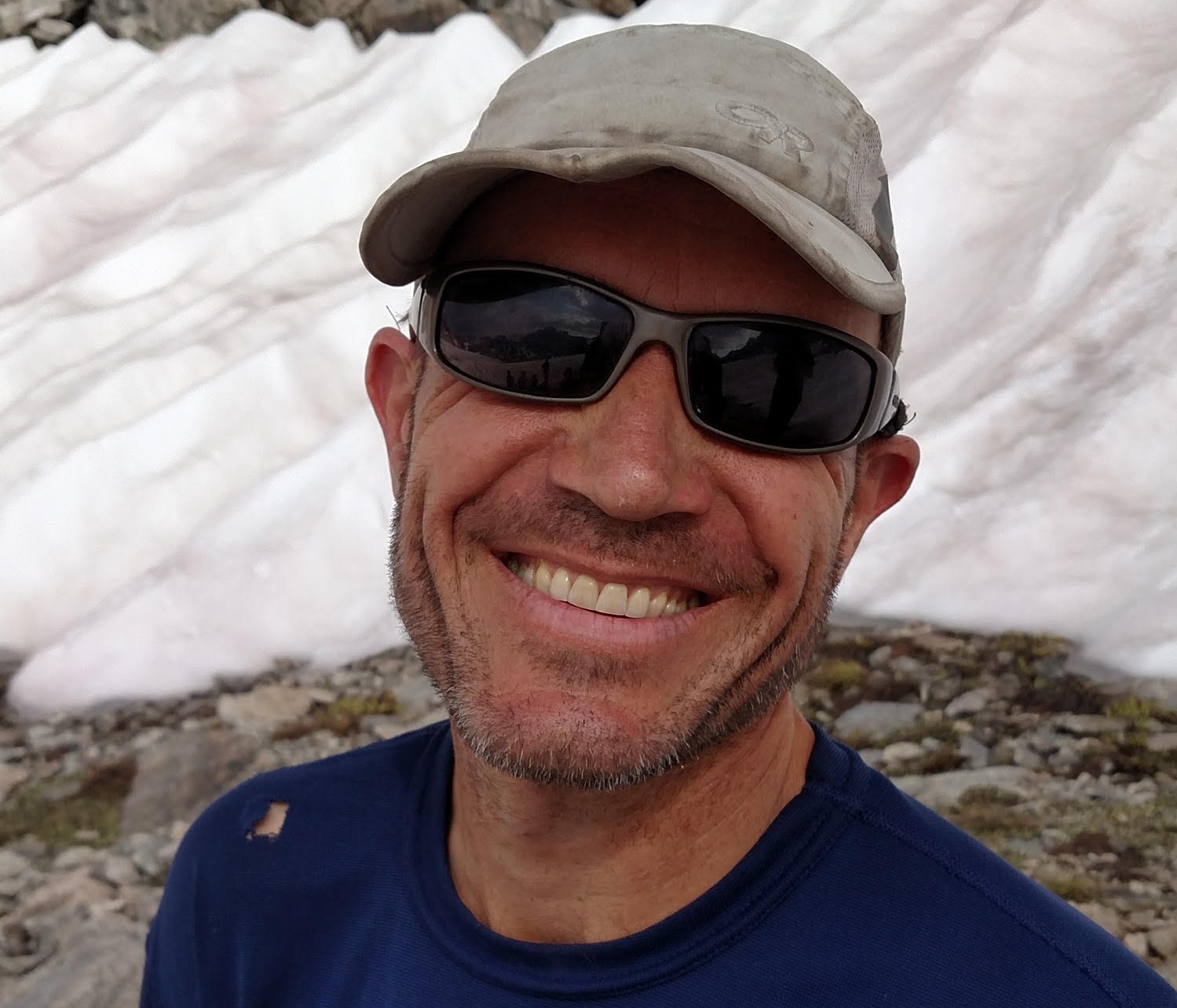
Peter D. Yeomans, 58, of Philadelphia, innovative clinical psychologist at the Corporal Michael J. Crescenz Department of Veterans Affairs Medical Center, founder of Cold Mountain Counseling LLC, worldwide mountaineer and backcountry adventurer, teacher, author, mentor, Quaker, and volunteer, died Friday, Aug. 28, of cardiac arrhythmia at the VA Medical Center in University City.
Dr. Yeomans was an expert in trauma, substance use disorder, moral injury, and spiritually integrated healthcare. He joined the Philadelphia VA Medical Center as a staff psychologist in 2009 and became director of its innovative PTSD outpatient team program in 2019.
He opened his own psychology practice, Cold Mountain Counseling, in 2021 and advised thousands of veterans, fellow backcountry adventurers, and other clients in need across the country. “He was instrumental in the healing process for so many veterans that it is hard to fathom the reach of his influence,” a VA colleague said in a tribute.
R. Tyson Smith, a friend and colleague, said several veterans told him: “Peter Yeomans saved my life.”
At the VA center, in addition to physical and mental ailments, Dr. Yeomans and others innovated a treatment for what are called “moral injuries” from military service. They connected therapists with VA chaplains to link emotional healing with faith rituals, and veterans in the program spoke appreciatively about shifting the guilt and shame of moral failures during war from soldiers in general to society at large.
“These are stories to hear and also for the public to wrestle with,” Dr. Yeomans told The Inquirer in 2019. His wife, Kate O’Shea, said: “He was the most responsible person you could imagine, and he felt he had a responsibility to humanity.”
Outside the medical center, Dr. Yeomans spent weeks at a time hiking, backpacking, packrafting, skiing, rock climbing, and mountain biking around the world. He reached summits in Alaska and Argentina, had to be rescued from a deep crevasse, and worked as a program supervisor and senior field instructor in the 1990s for the National Outdoor Leadership School in Alaska, Wyoming, Arizona, and Utah.
Later, he cofounded the local Wilderness Outdoor Leadership Force for teens in Kensington. Talia Young, a longtime WOLF member, called him “genuine and earnest … and joyful with kids.”
Dr. Yeomans was an avid cyclist.Bicycle Coalition of Greater Philadelphia
Longtime colleague Rob Riman said he was a “consummate adventure partner and wildly inspired guide.” On his website, coldmountaincounseling.com, Dr. Yeomans said: “Many of the fondest memories of my life are from adventures in the mountains.”
He earned a bachelor’s degree in psychology from Harvard University in 1991 and came to Philadelphia from Wyoming in 1997 to be with O’Shea. He earned a master’s degree in psychology from Lesley University in Massachusetts in 2001 and a doctorate in clinical psychology from Drexel University in 2008.
Dr. Yeomans traveled to New Zealand, Rwanda, Burundi, and elsewhere to train other counselors. He worked in state correctional institutions in Philadelphia and Chester, and earlier for the American Red Cross in Germany.
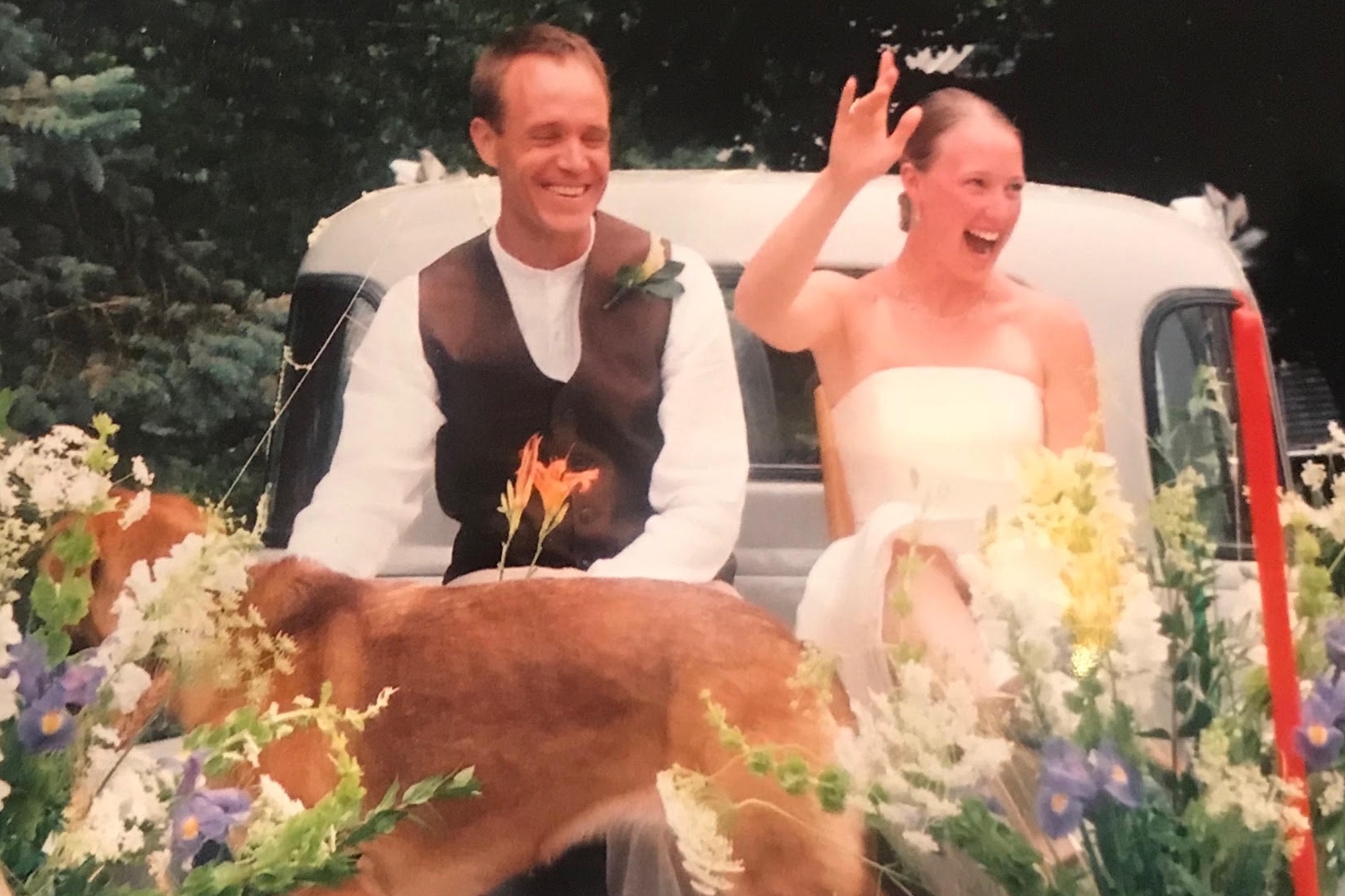
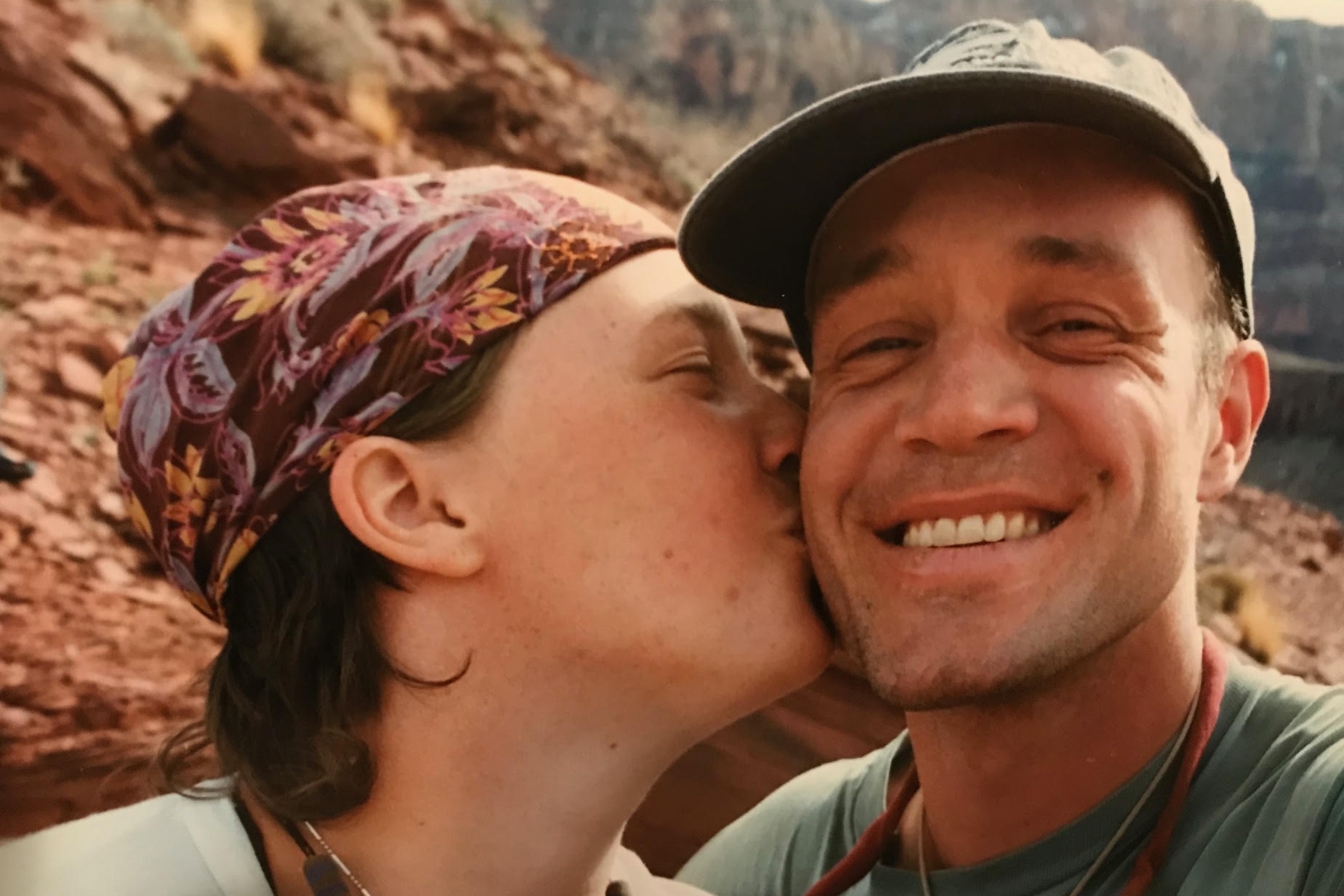
Dr. Yeomans and his wife, Kate, married in 2002 and had many adventures together. Courtesy of the family
He taught classes on moral injuries at Germantown Friends School, the University of Pennsylvania, and elsewhere. Longtime friend William Anninger said: “He was particularly good at creating emotional sharing among men.”
Friend Lila Berman said: “He exuded warmth and care for the people around him, and for the natural environment.”
Peter Douglass Yeomans was born Aug. 27, 1968, in Berkeley, Calif. The family moved to Massachusetts when he started high school, and he graduated from Concord Academy in 1986.
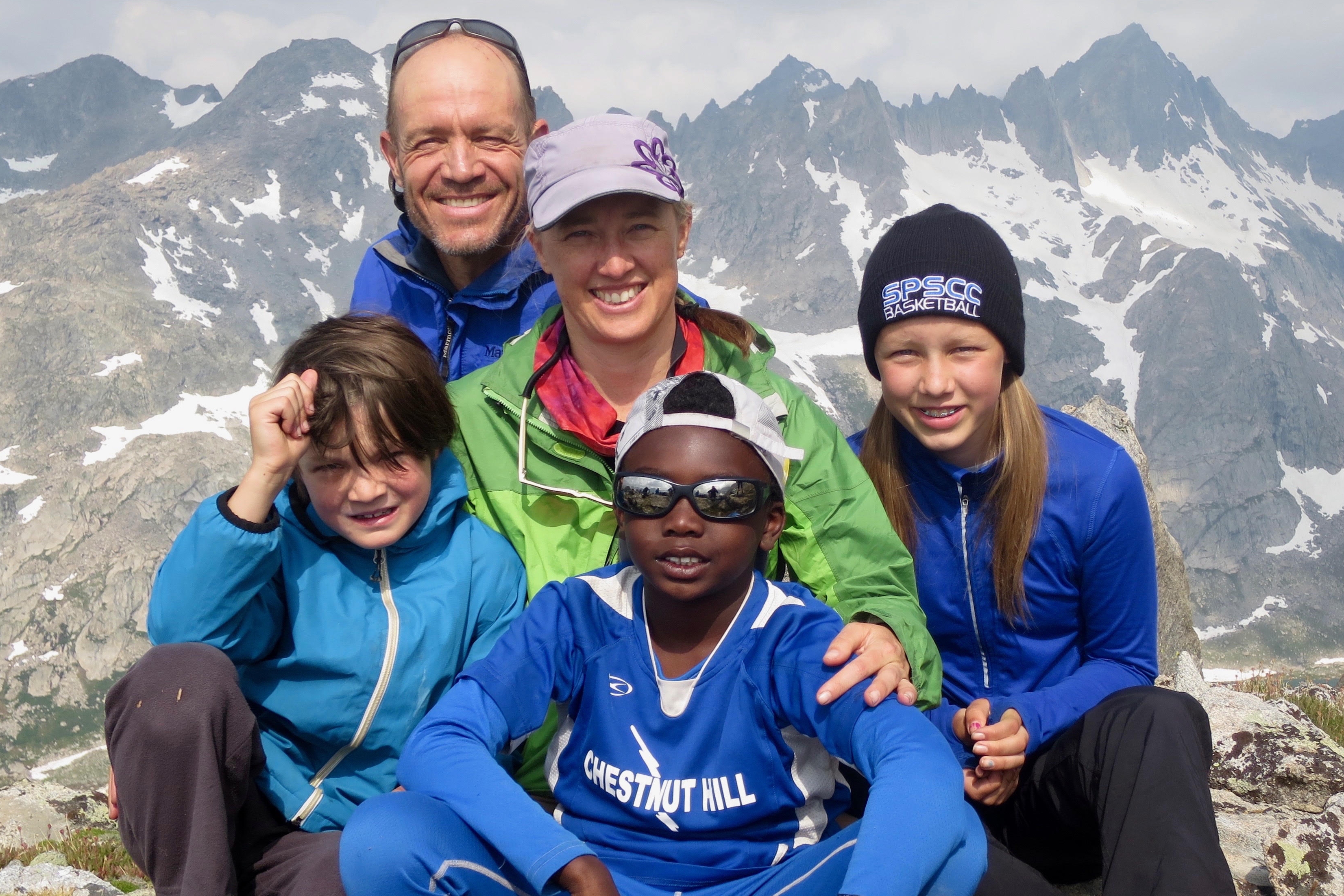
He met Kate O’Shea at an environmental ethics course in Utah in 1996, and they married in 2002 and lived in Germantown. He made her tea in the mornings and left love notes behind when he left the house first. They reared a daughter, Ada, and sons Josiah and Levi, and they all went on memorable adventures in Wissahickon Valley Park, across the country, and around the world.
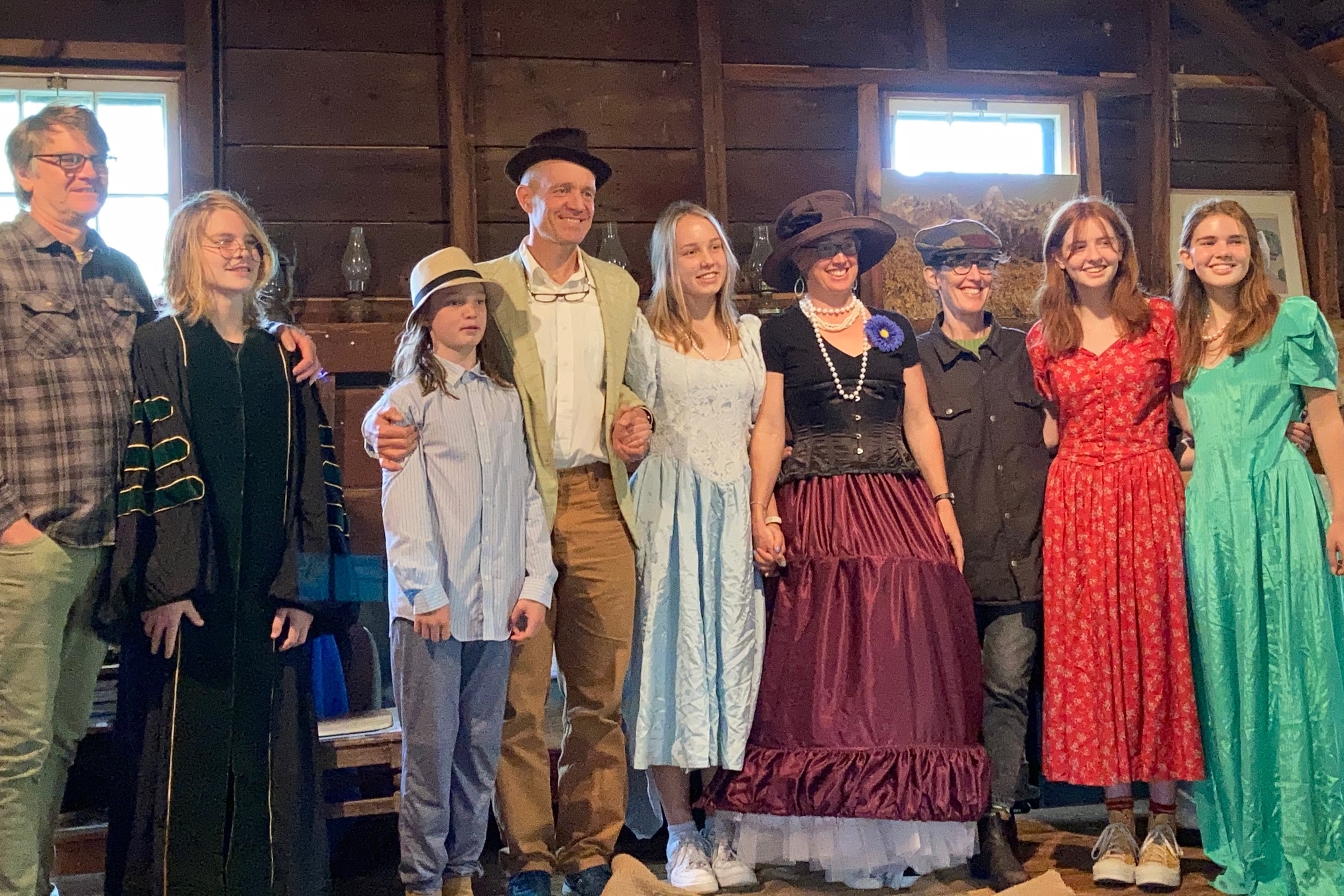
Dr. Yeomans, rear left on top and fourth from the left on bottom, enjoyed time with his family in the mountains and on stage. Courtesy of the family
“They complemented each other perfectly,” their daughter said. “He taught us how to read a map, find a campsite, and most importantly bake cinnamon rolls in the backcountry.”
Dr. Yeomans was a member of the Bicycle Coalition of Greater Philadelphia, and he rode his bike often from home in Germantown to work in University City. He went to Germantown Friends Meeting, played guitar, sang, and acted in theatrical shows in high school and later with community groups and his family.
He was inclusive and encouraging, his brother, Ben, said, “drawing out capacities in me I wasn’t yet trusting.” His parents, Anne and Tom, said: “It has been a great privilege to have been Peter’s parents.”
His mother-in-law, Margaret O’Shea, praised his “compassion, selflessness, nobility, and grace,” and his father-in-law, Dan O’Shea, said: “When our daughter met Peter she described him as ‘Mr. Perfect.’ Little did we know how perfect.”
“It has been a great privilege to have been Peter’s parents,” his parents said.Courtesy of the family
Kate O’Shea said: “Because of Peter, our world is a kinder, more generous, and more loving place.”
In addition to his wife, children, parents, brother, and in-laws, Dr. Yeomans is survived by other relatives.
A memorial service is to be held at 2 p.m. Saturday, Oct. 3, at Germantown Friends Meeting, 47 W. Coulter St., Philadelphia, Pa. 19144.
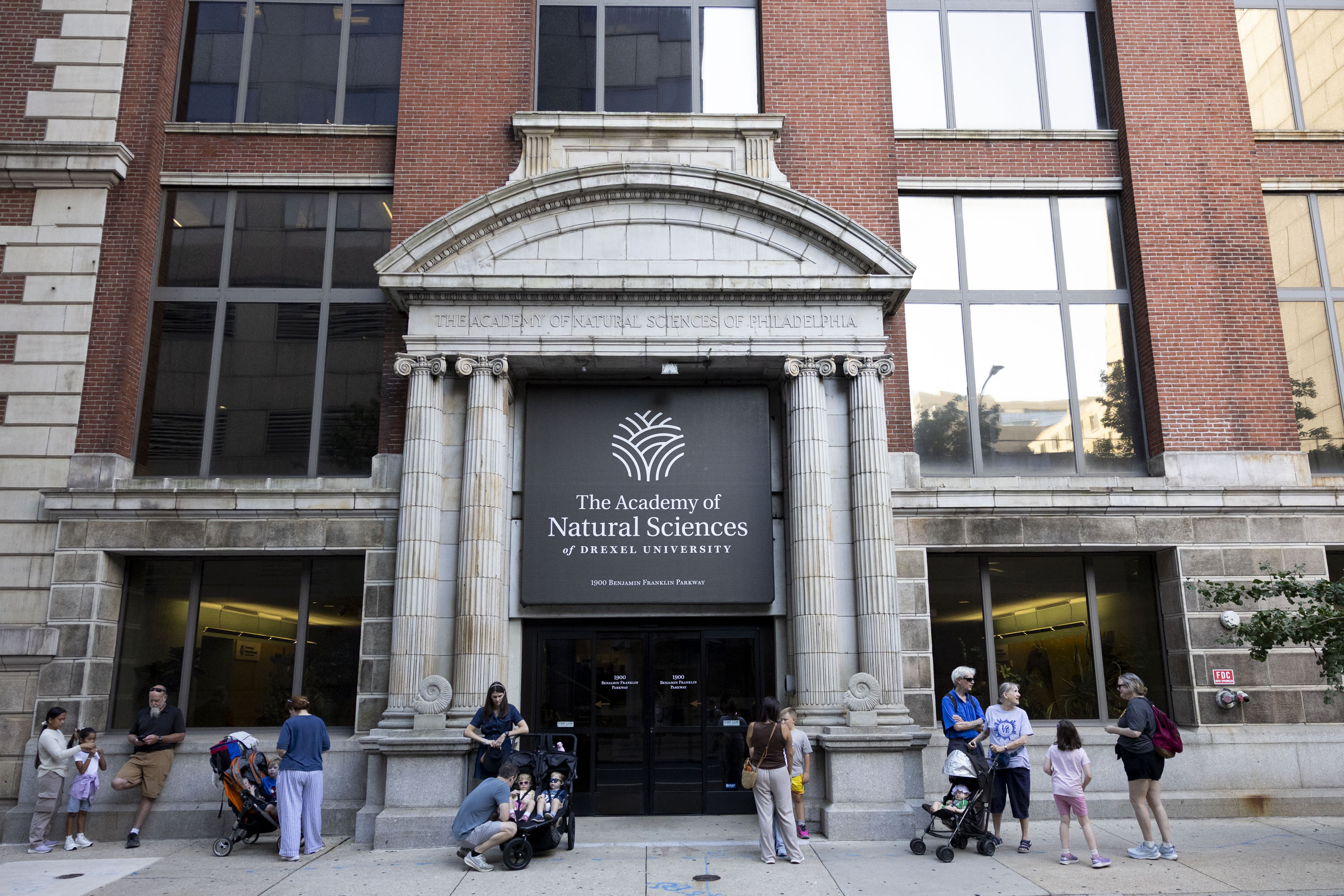
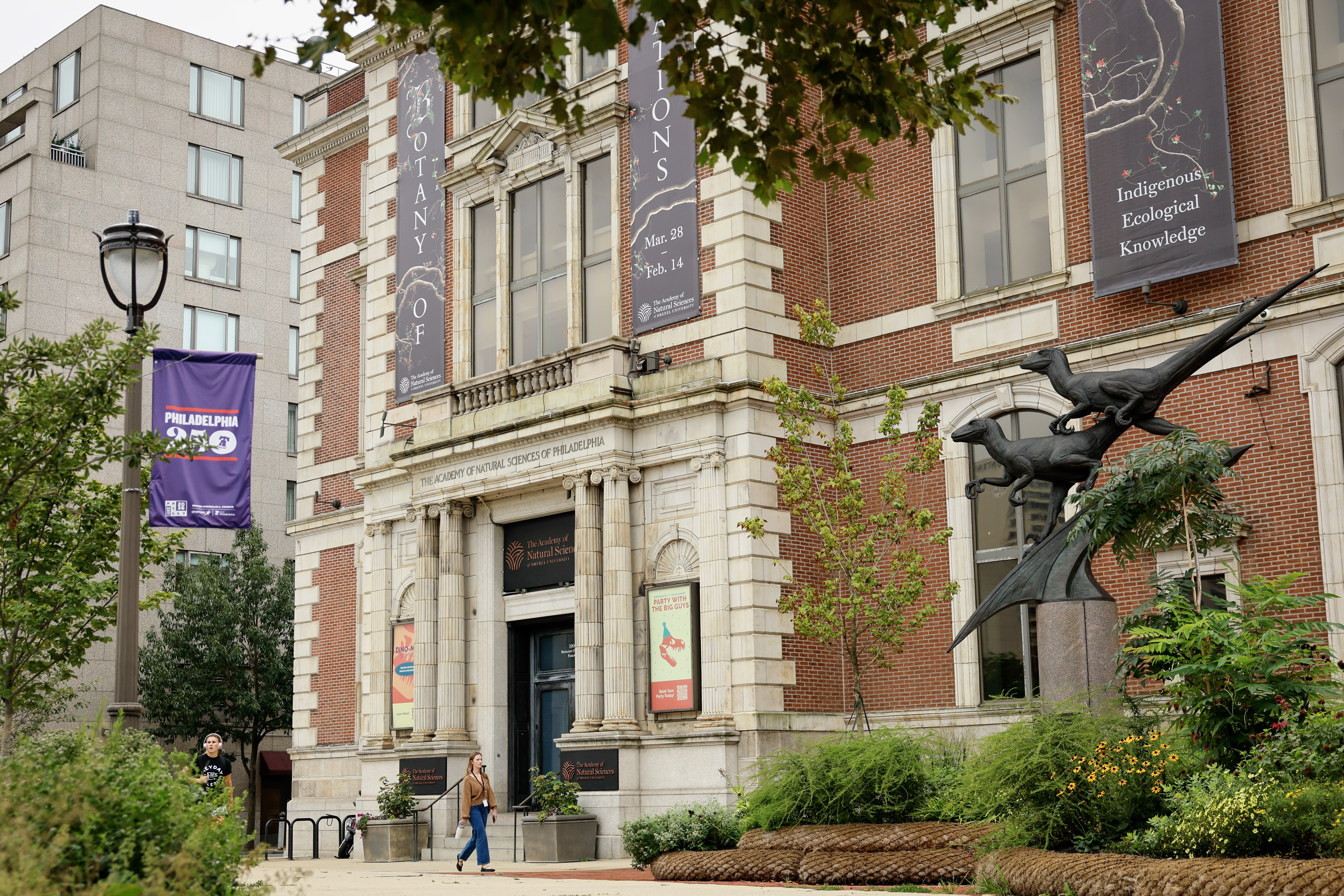
Dozens of parents pushing two-seat strollers cleared paths along the sidewalk in front of the museum at 19th and Benjamin Franklin Parkway. They were all looking for a spot in the line that stretched to the corner of Cherry Street.
Small children climbed onto the building’s brick-covered grooves for a peek inside the museum as they inched closer to the museum’s doors, which opened at 10 a.m.
People waiting at the side entrance at the Academy of Naturals Sciences of Drexel University on Friday, Sept. 4, 2026, in Philadelphia, Pa.Tyger Williams / Staff Photographer
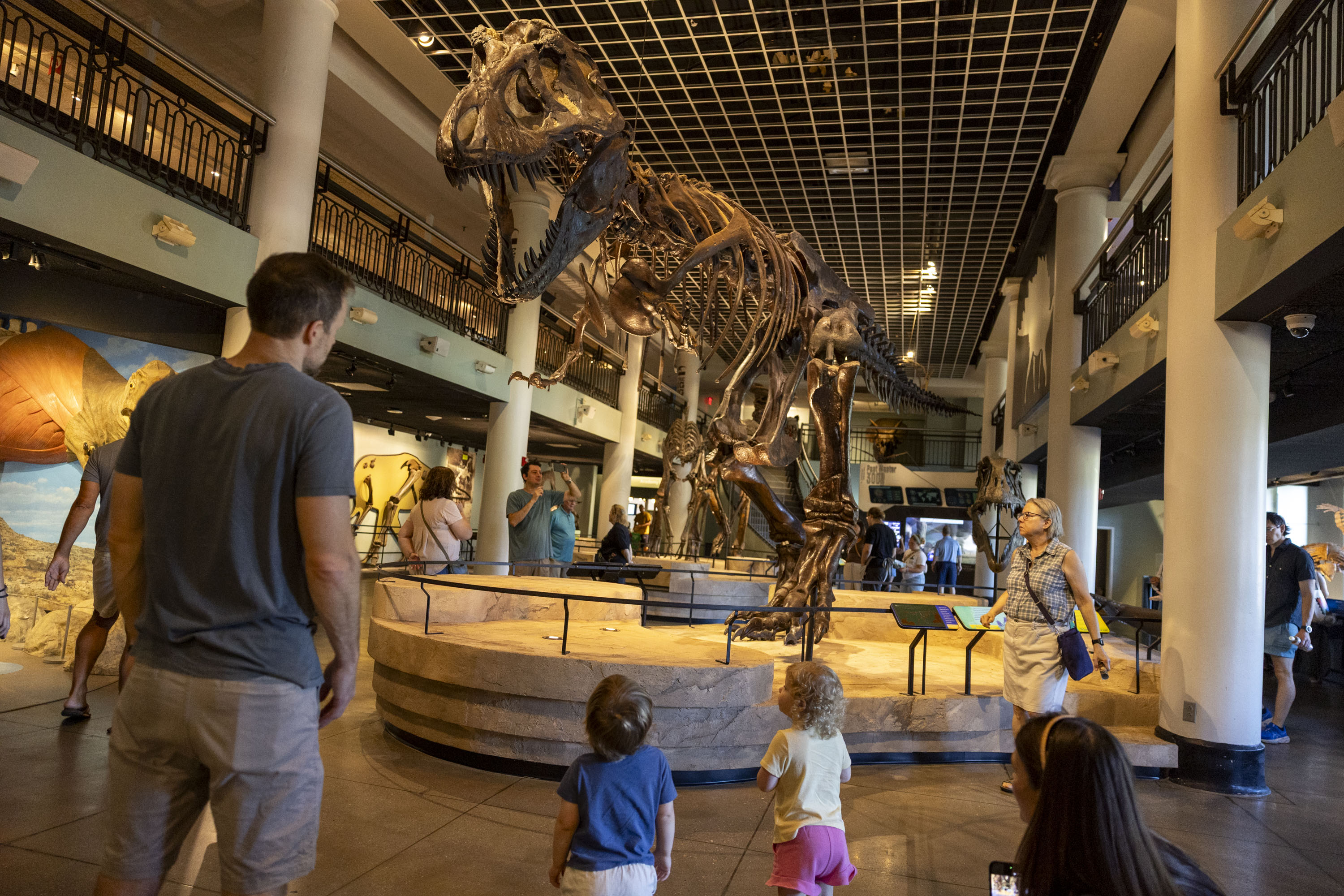
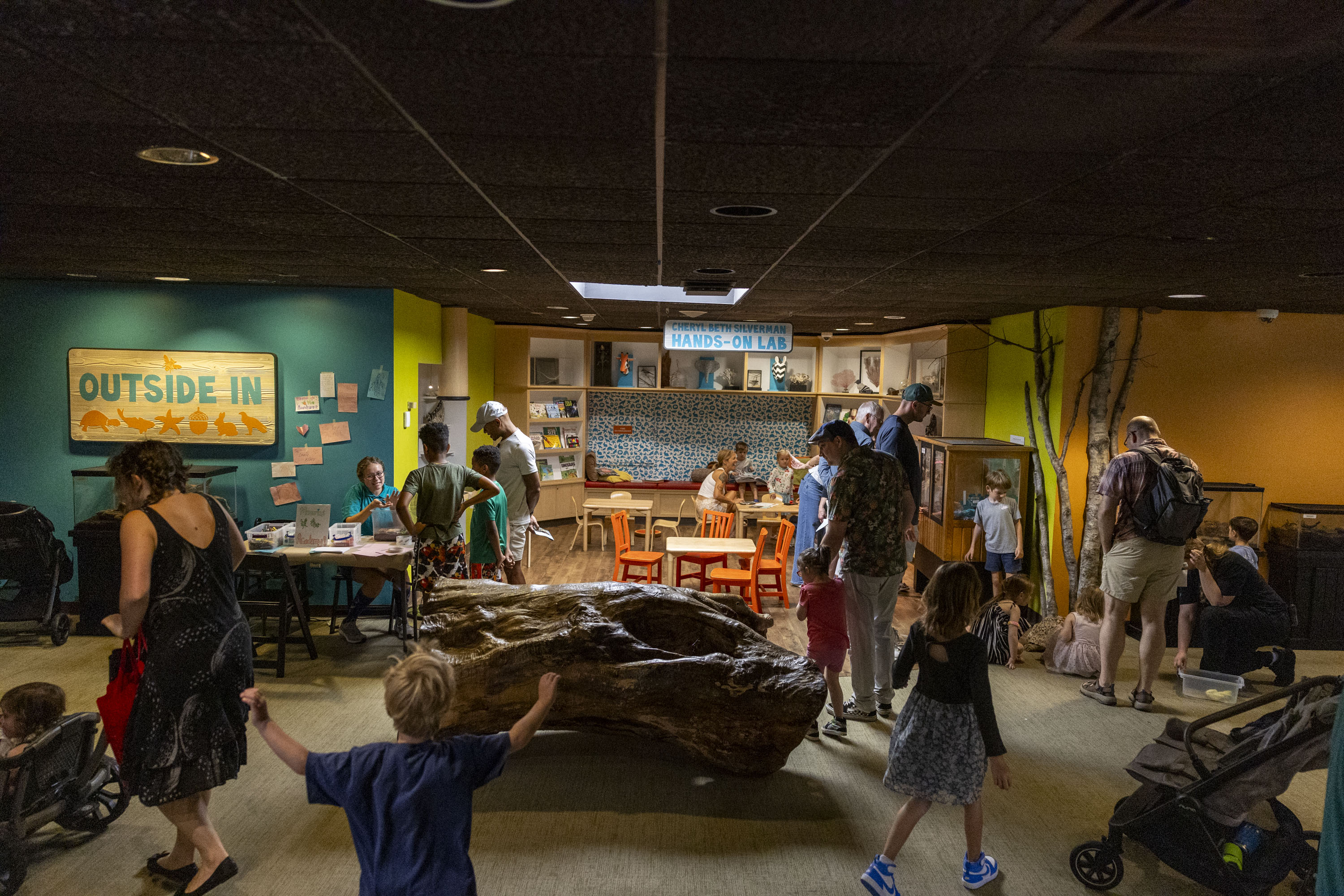
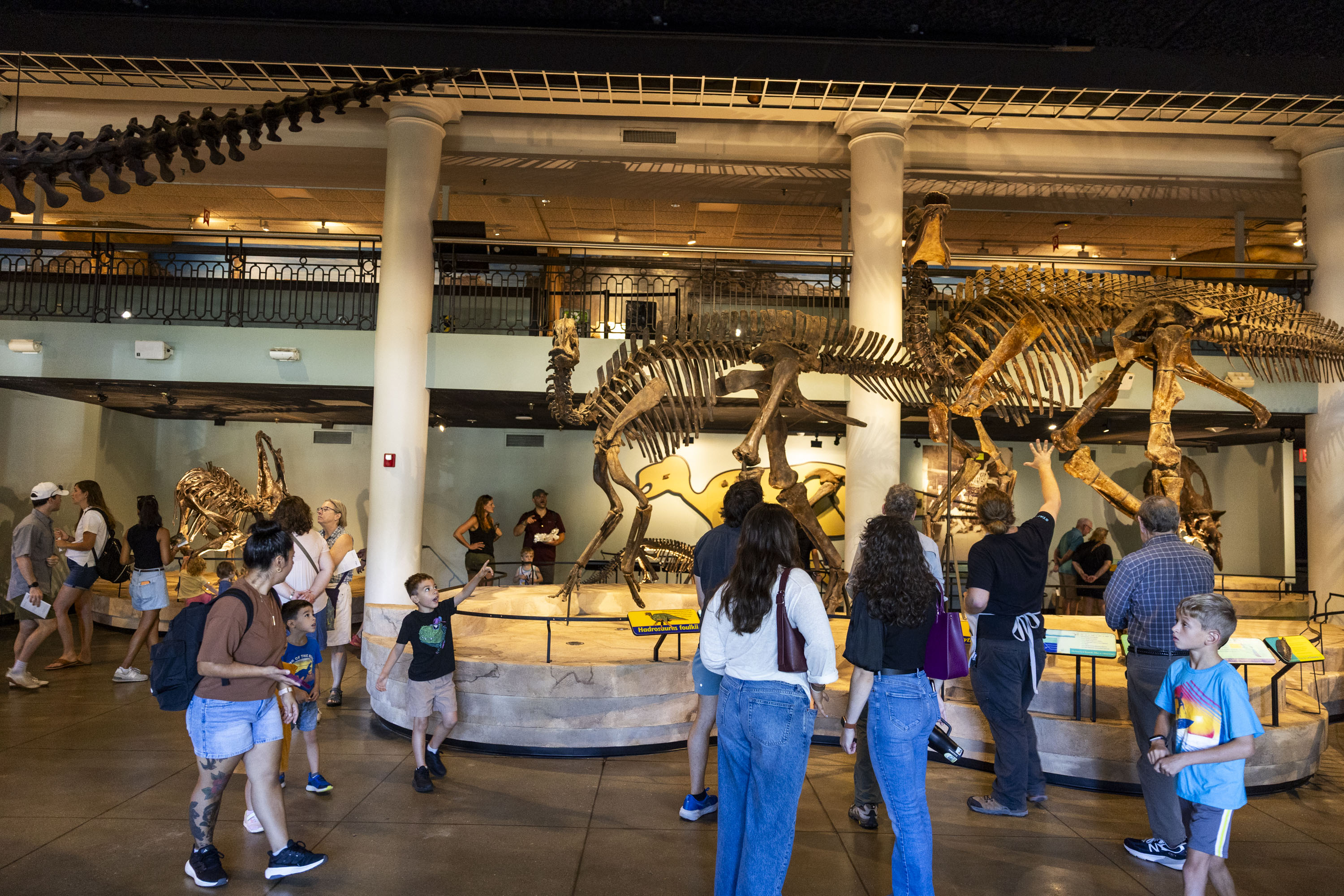
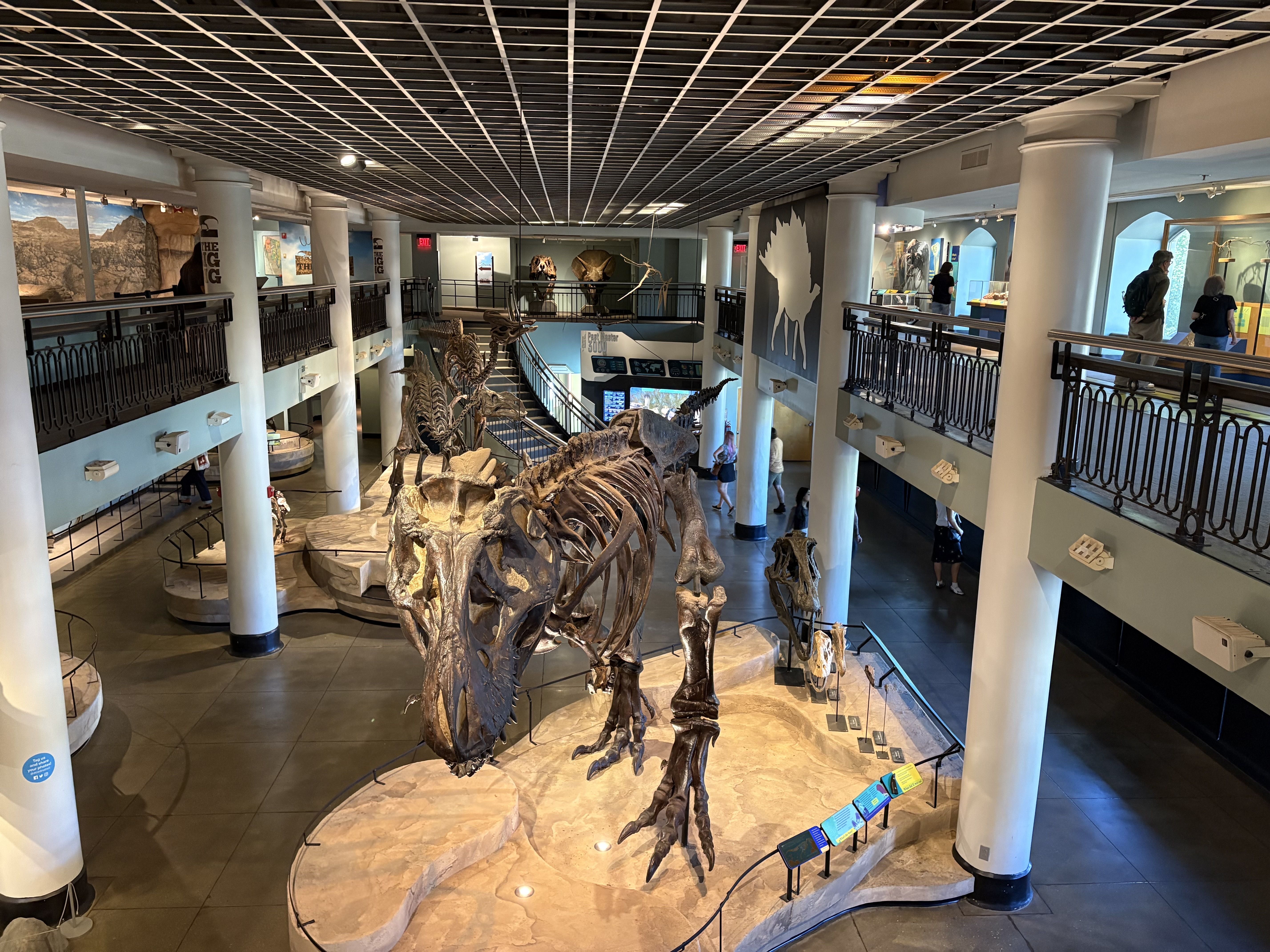
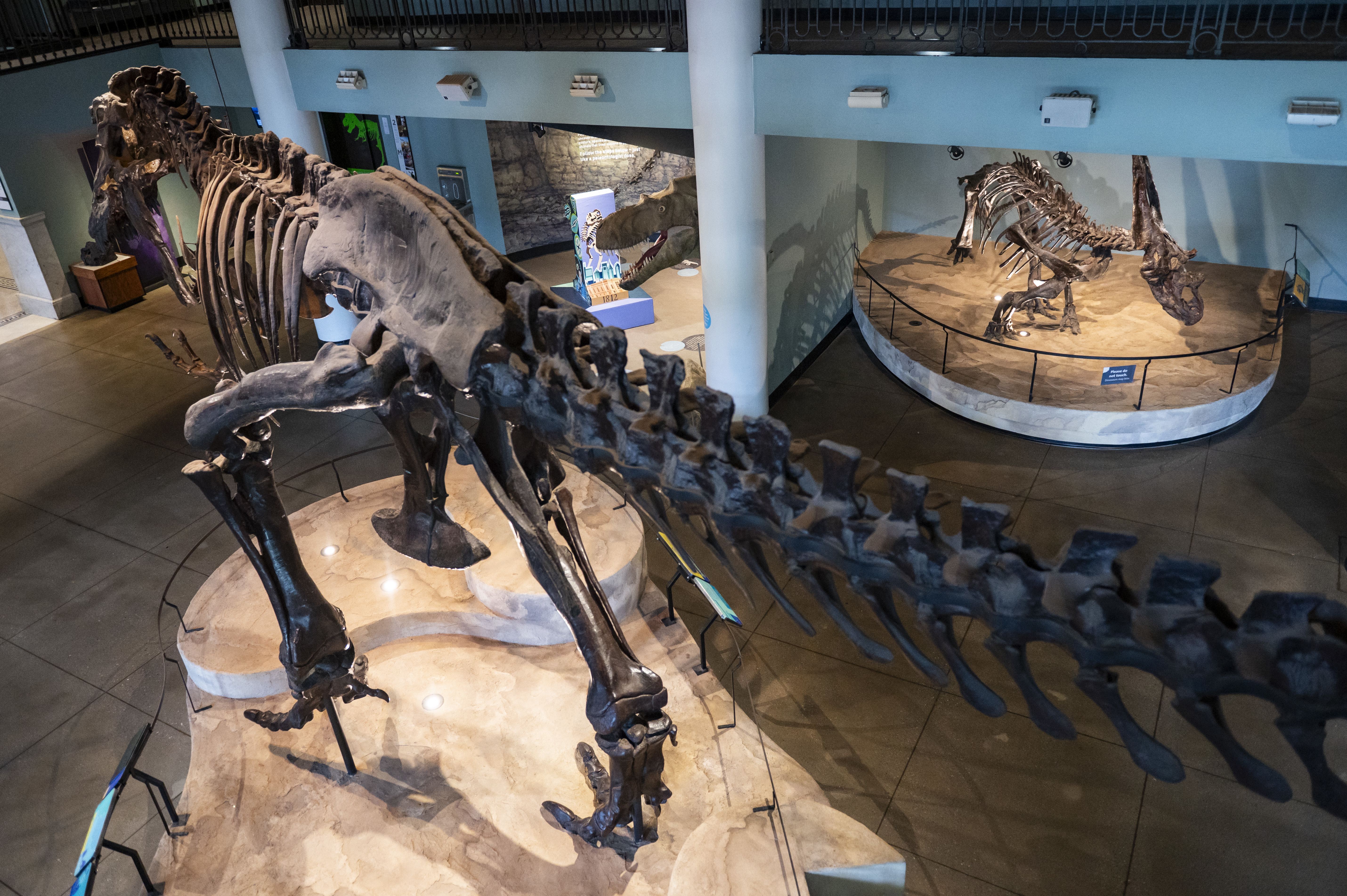
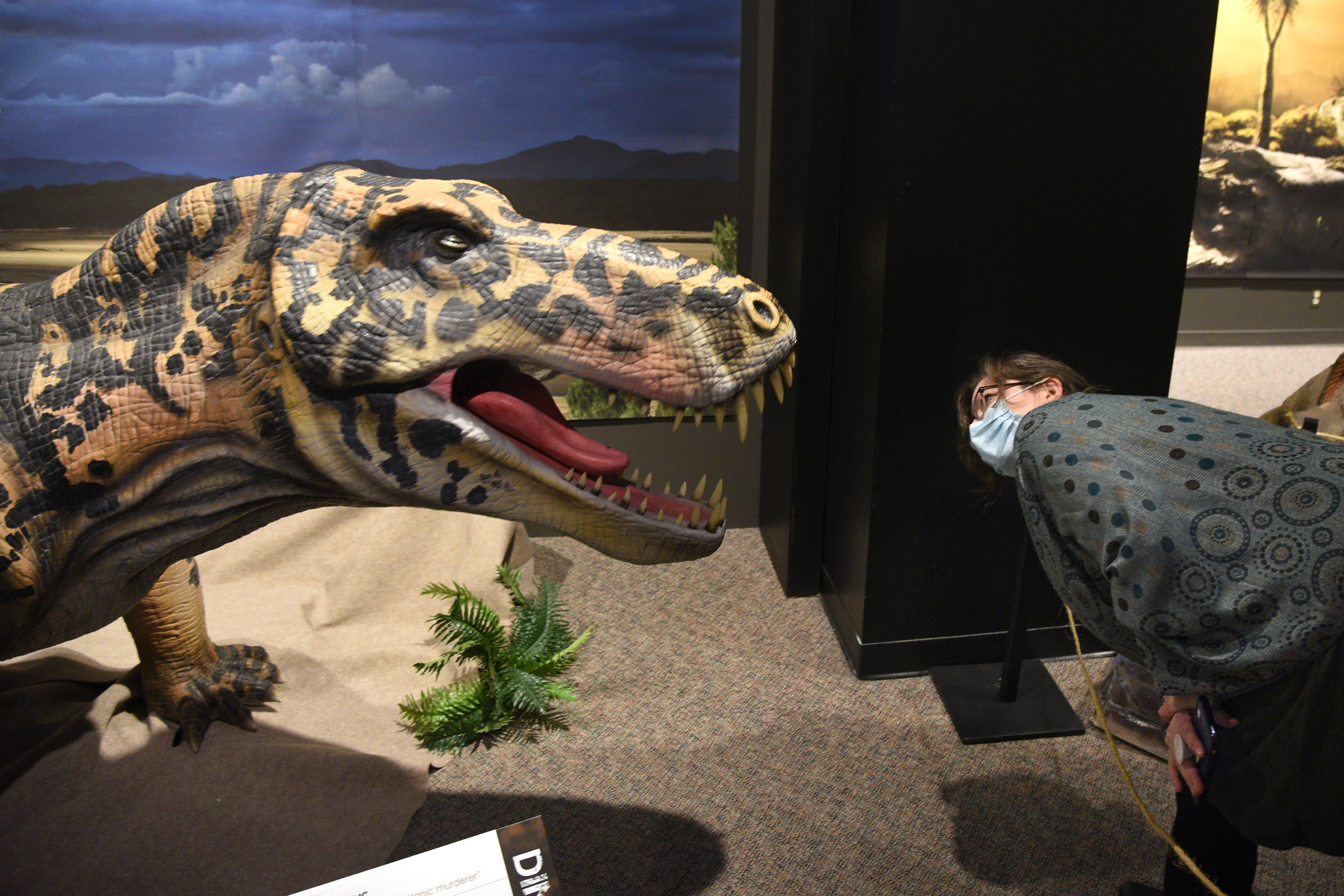
Inside, the museum was filled with visitors snapping selfies and taking family photos in front of full-scale dinosaur displays. Children sprinted across the mezzanine floor and rolled up their sleeves for the “big-dig” fossil exhibit. Others stopped by for close encounters with turtles and other live animals, while some frolicked alongside prehistoric creatures using virtual reality.
Staff members eagerly welcomed the growing crowd, with one commenting that the attendance reminded her of pre-pandemic times.
That post-pandemic drop in visitors, along with added financial pressures linked to Drexel’s budget deficit, are the reason the museum — which opened to the public in 1828 — plans to cease operations at the end of the business day Sept. 30.
Bella Vista resident Reiss Clauson-Wolf said he brought along his 2-year-old son to experience the same “wonder” he encountered as a 4-year-old visiting the museum.
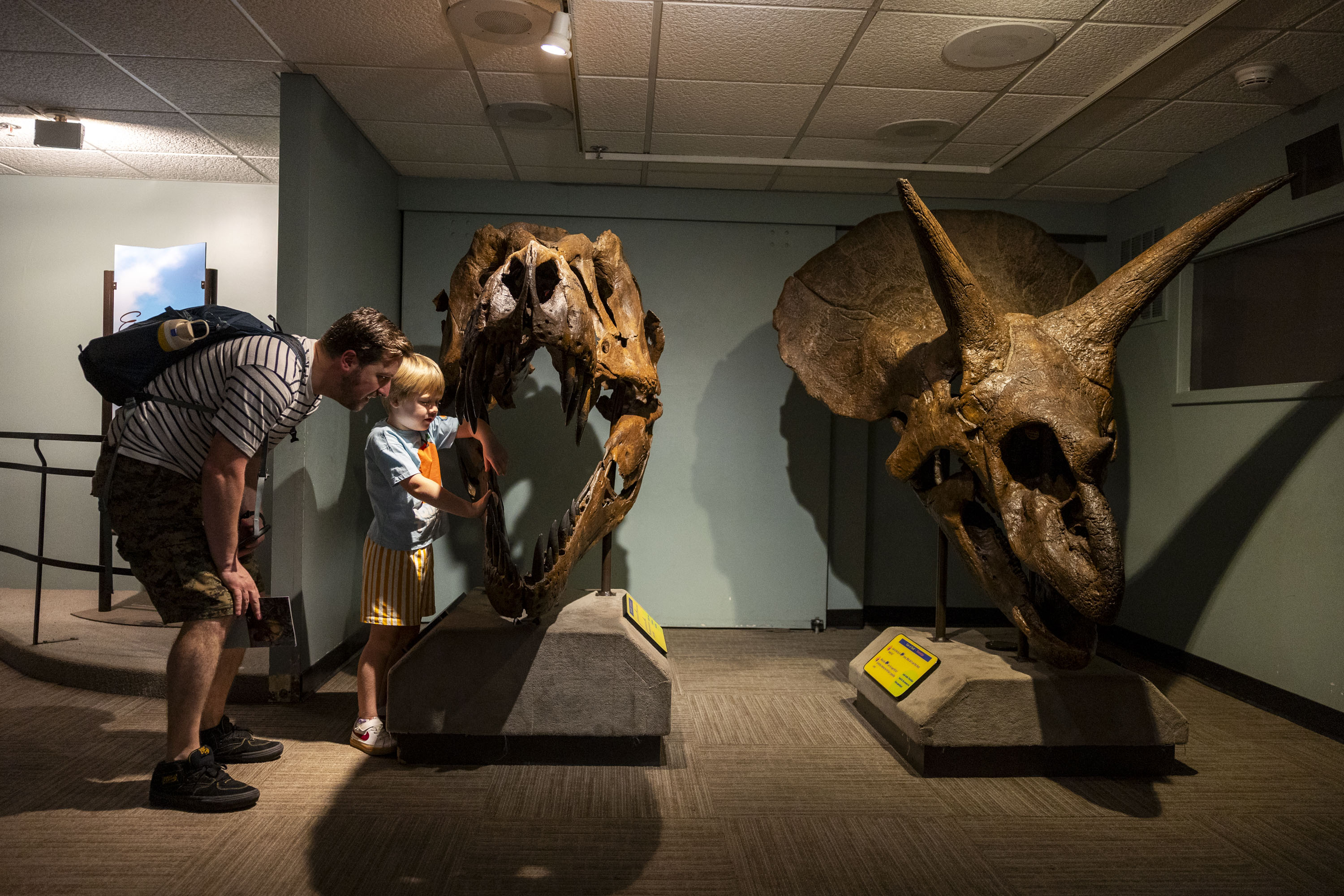
Michael Ashleigh, of Phoenixville, Pa., is with his son Otto, 5, looking at the Tyrannosaurus Rex Skull in the Dinosaur Hall at the Academy of Natural Sciences of Drexel University on Friday, Sept. 4, 2026, in Philadelphia, Pa. Michael wanted to give his son the experience he had 20 years ago when he first visited the Academy of Natural Sciences.Tyger Williams / Staff Photographer
The Dinosaur Hall and old-school dioramas of bison, bears, and tigers are core memories of his childhood, and he’s sad knowing his son and others won’t be able to experience it much longer.
“It’s such a joy. It’s really sad when an institution like this closes,” Clauson-Wolf said.
The museum’s last day with regular hours for the public will be Sept. 27.
Chris Bodenhamer, 39, said he didn’t know about the impending closure until he came into the museum on Friday morning. He had traveled from Miami to visit friends in the city and stopped by the museum to check out the new exhibit, “Botany of Nations,” which features historical items linked to Native American nations and explorers Lewis and Clark.
But upon hearing the news, Bodenhamer, who often visited the museum on his frequent trips to Philly, said he was devastated.
“It’s such a special place. You don’t get all of this stuff in one area. What can you do that’s better than this to replace it?” he said.
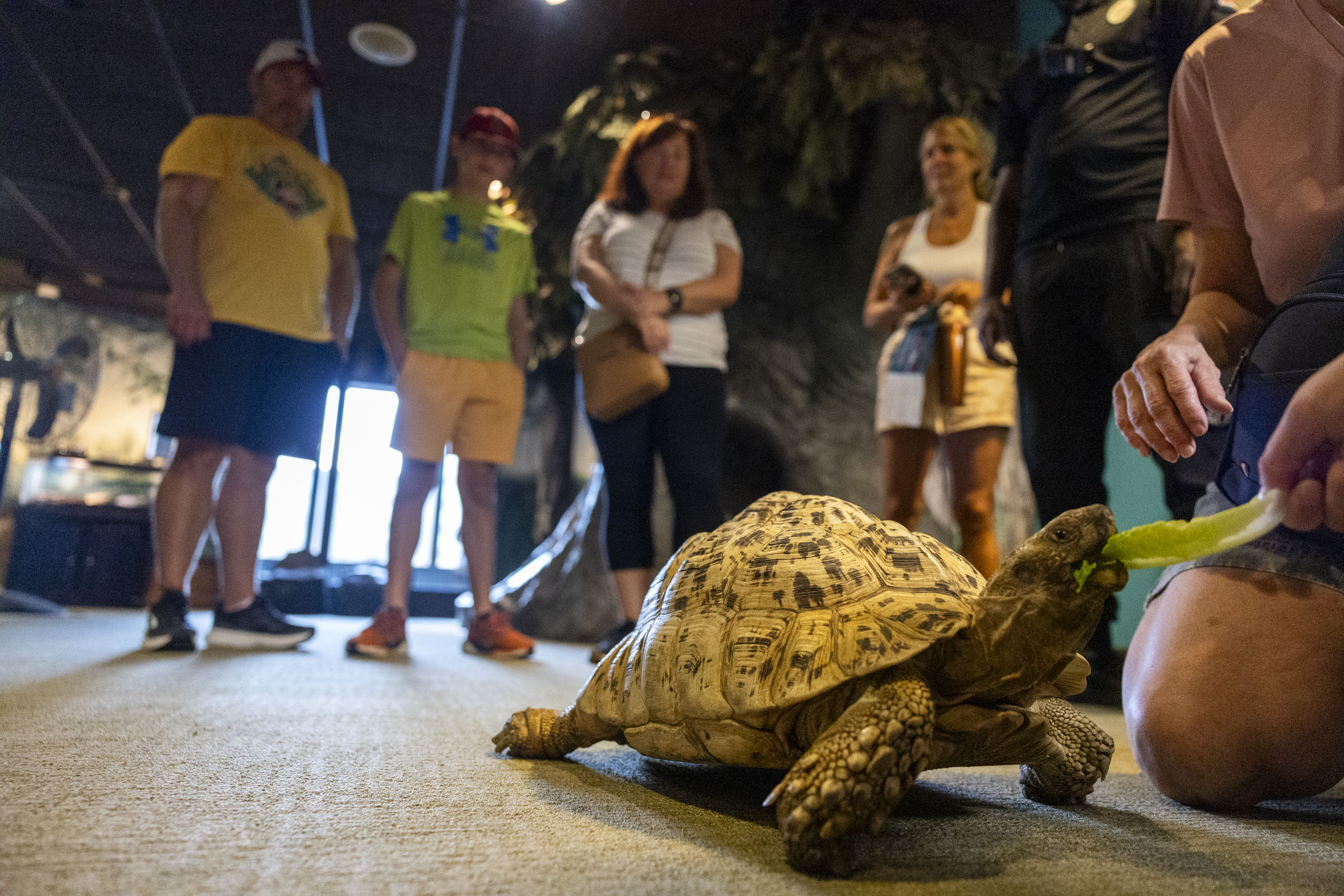
Ollie, the Leopard Tortoise around the age of 60, is being fed by Lead Animal Keeper Rachel Brown, at the Academy of Natural Sciences of Drexel University on Friday, Sept. 4, 2026, in Philadelphia, Pa.Tyger Williams / Staff Photographer
After hearing the news, Lancaster resident Dana Krooeck was determined to bring her two nephews to the museum before it closed. She enjoyed watching them walk the halls and engage with the exhibitions.
“They’re very hands-on, and they’re learning different stuff you don’t get a chance to learn about anywhere else,” Krooeck said.
Like Krooeck, her nephews Ethan Miegel, 10, and Benjamin Elmer, 8, said their favorite part was roaming through Dinosaur Hall.
“Everything here is awesome,” Elmer said.
“It’s an awesome museum. Why would they close it? I’m going to miss it,” said Miegel.
Families and their kids in the Outside In area where guests can pet live animals and other creatures during their visit at the Academy of Natural Sciences of Drexel University on Friday, Sept. 4, 2026, in Philadelphia, Pa.Tyger Williams / Staff Photographer
A rally aimed at saving the museum is planned for Tuesday at 10 a.m. in front of the Academy building at 1900 Benjamin Franklin Parkway. It is being organized by Skype A Scientist founder Sarah McAnulty, a squid biologist whose nonprofit focuses on science education, as well as Philly Science Action and Green Philly.
“We have the responsibility to make sure Drexel and other decision-makers know that this isn’t something we are going to take lying down,” said McAnulty.
People walking in to see the Dinosaur Hall with various Skeletons and displays at the Academy of Natural Sciences of Drexel University on Friday, Sept. 4, 2026, in Philadelphia, Pa.Tyger Williams / Staff Photographer
McAnulty said she grew up in the Philadelphia area and went to the Academy frequently. It’s important not just to the city but the entire country, she said, noting its fame as the first natural history museum in the United States.
“It’s unconscionable to close the museum down to the public,” she said. “It’s the responsibility of the stewards of that museum, the Academy board, and Drexel to do whatever it takes to preserve both the collections and the public-facing museum.”
In a social media post announcing the rally, organizers called on Drexel to find a way to keep the museum open.
“At a time when climate change and science continue to be under attack, Philadelphia cannot afford to lose another institution that connects people to the natural world,” the post said. “This is an institution Philadelphia can’t afford to lose.”
“We recognize that this is an emotional time for many who care about the academy,” Drexel said in a statement in response to the announcement of the rally.
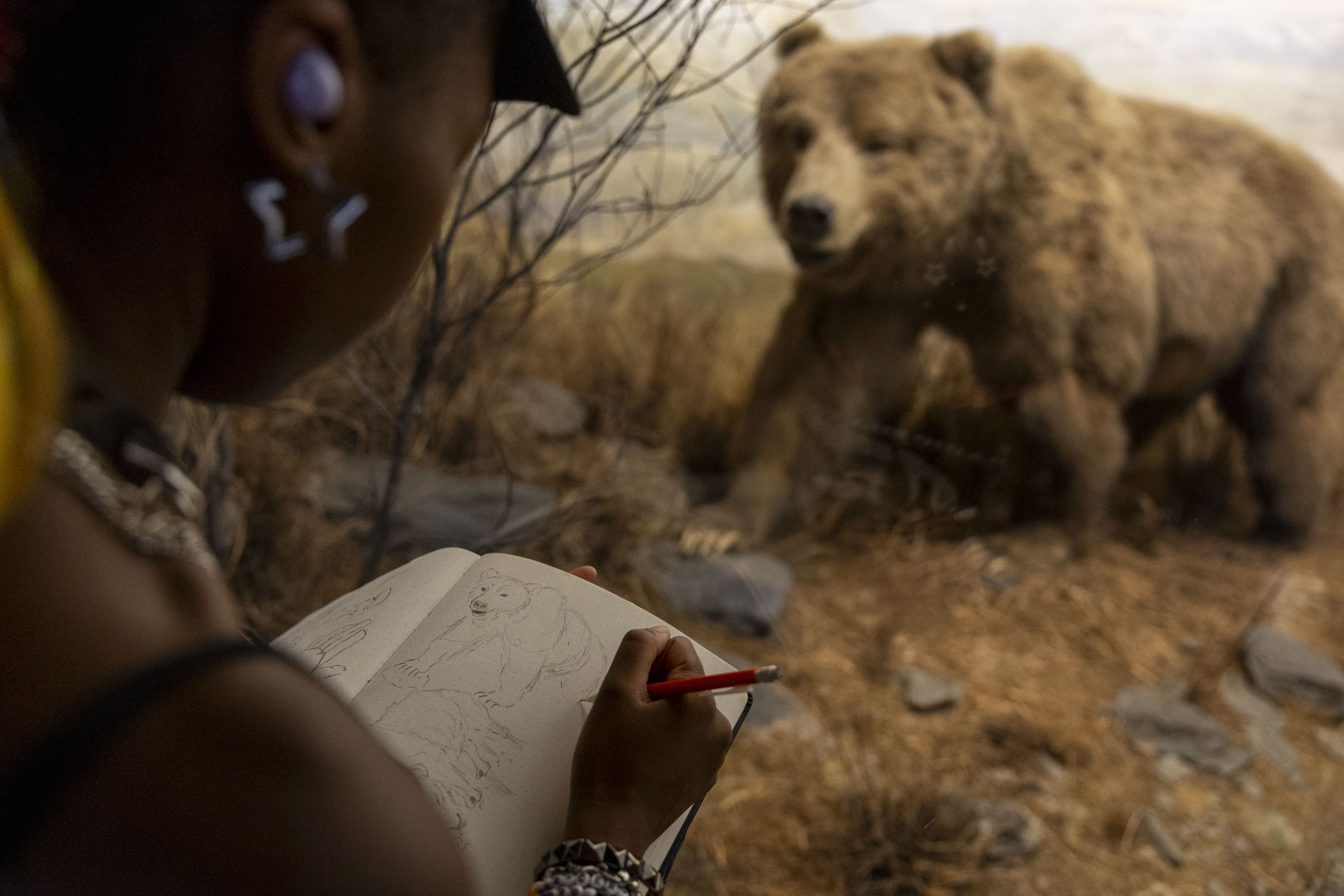
Mackenzie Guiloaune, 19, of Mount Laurel, N.J., is drawing the Kodiak Brown Bear in the display for Giants of the Alaskan Coast at the Academy of Natural Sciences of Drexel University on Friday, Sept. 4, 2026, in Philadelphia, Pa. Mackenzie often comes to the Academy to draw the various displays to help with her artist block.Tyger Williams / Staff Photographer
The decision to close the museum, the school said, was “not made lightly” and will “protect the collections and scientific mission at the heart of the Academy and represents an important step toward addressing the Academy’s financial challenges.”
“The Academy’s Board and Drexel leadership are committed to developing a sustainable long-term model that preserves the Academy’s scientific research enterprise and creates new, meaningful opportunities for continued public engagement and display of these natural history collections and the scientific discoveries they make possible,” the statement said.
Back at the museum, Mackenzie Guillaume, 19, said the museum’s closing is also a loss for artists, who like her, visit the museum to clear “artist’s block.”
“This is one of my favorite places to come, draw stuff, and show people,” she said.
The second-year student at Moore College of Art & Design said the full-scale replicas of animals inspire her art. The sketches she has done at the museum incorporate the details of the animals and the small “stories” embedded inside the museum’s encasings.
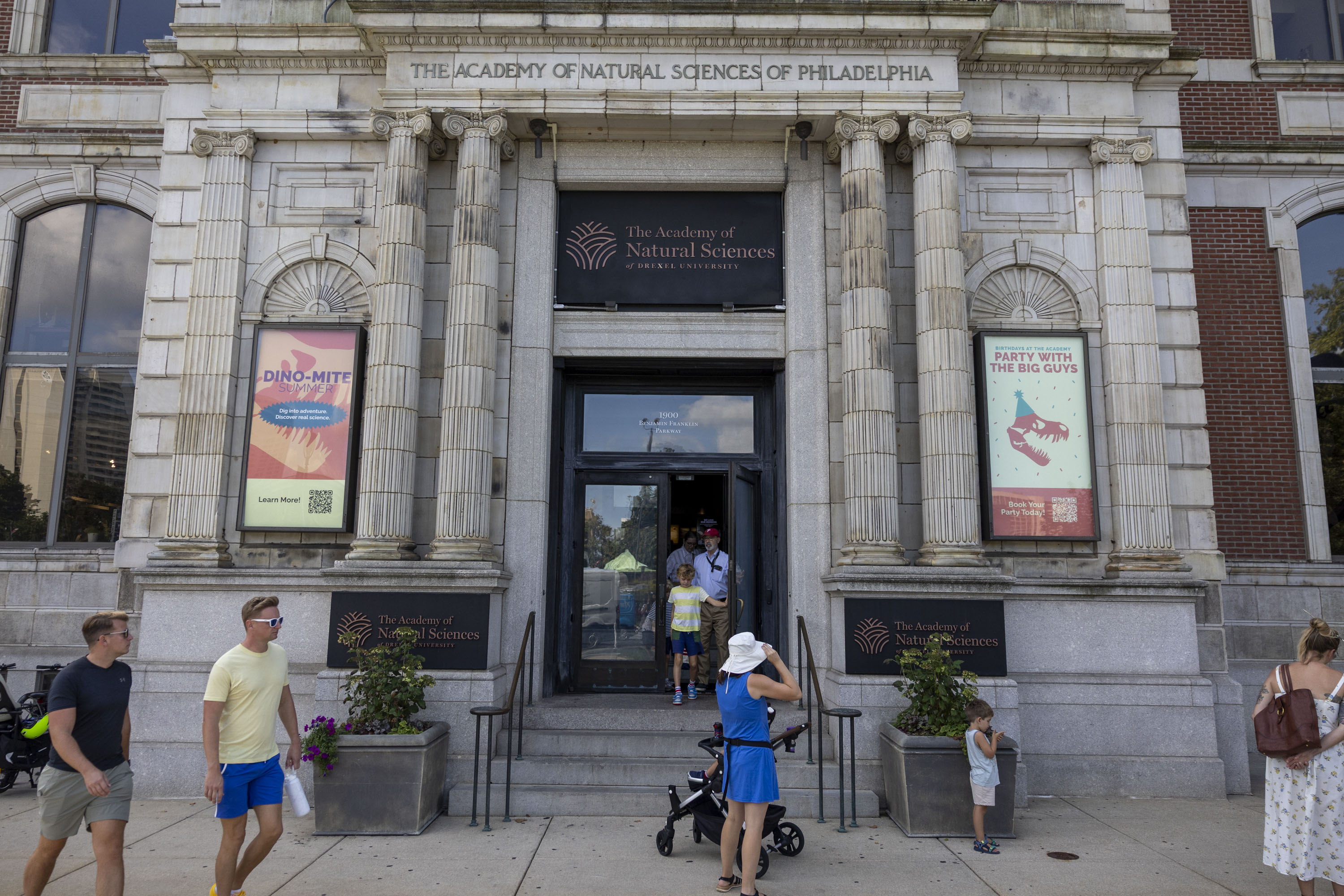
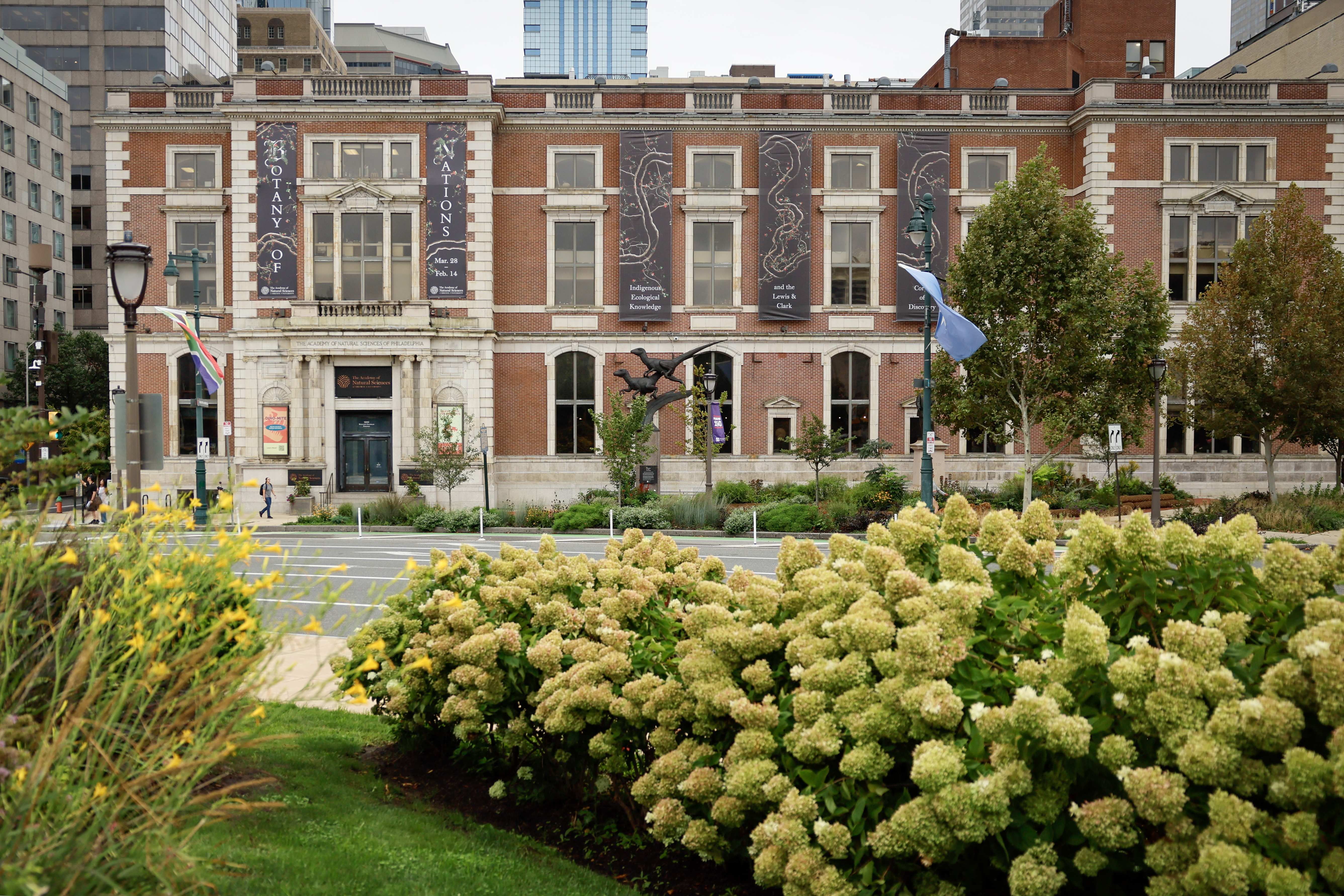
The outside entrance to the Academy of Natural Sciences of Drexel University on Friday, Sept. 4, 2026, in Philadelphia, Pa.Tyger Williams / Staff Photographer
Guillaume said the closure felt like part of a broader trend. “I feel like I’m watching everything get stripped away. From UArts to [defaced] murals and now this,” she said.
The closure of the museum doesn’t affect the rest of the Academy, which builds and maintains the collections and conducts research, all housed inside the Parkway structure. Though not part of the new terms of the deal between Drexel and the Academy, officials said, the goal is to relocate the museum’s collections and sell the 1876 building, owned by the Academy.
Mitchell Hirsch, a Spring House resident and retired scientist, brought his son and two grandchildren into the city to visit the museum.
“This is the only dinosaur museum in all of Philadelphia, and I think its loss will be a serious one,” he said.
Speaking over the din of the noisy museum,filled with children shouting with excitement, he said that the increased attendance was evidence of the institution’s impact, and hopes it signals a brighter future for the Academy museum.
“These institutions enrich all of our lives,” he said.
When I committed to attending Drexel University at 17, I was excited for many reasons.
Drexel is a fantastic school for science and engineering. It’s in a vibrant and central part of the city. It was near enough to my parents that I could take SEPTA to visit them on the weekends. And at that time, in 2014, it had recently become affiliated with the Academy of Natural Sciences.
That meant, as a Drexel student, I could flash my blue-and-yellow ID and be granted instant free access to the Academy museum, one of the coolest places I’d ever been.
As a kid, I dug around in the mock archeology site where replica bones were buried under sediment; I learned to gingerly dust them off to avoid damaging fossils. I marveled at the Tyrannosaurus rex at the entrance with bones bigger than my whole body. I felt the humidity rush over my skin as I walked into the butterfly exhibit, where I learned how caterpillars build cocoons, how they must struggle to emerge unaided from their chrysalises so they properly develop their wings, and how wonderful it feels to see a butterfly with wings the size of soft pretzels land right at your feet or — if you were lucky — on your raised arm, goosebumps and all.
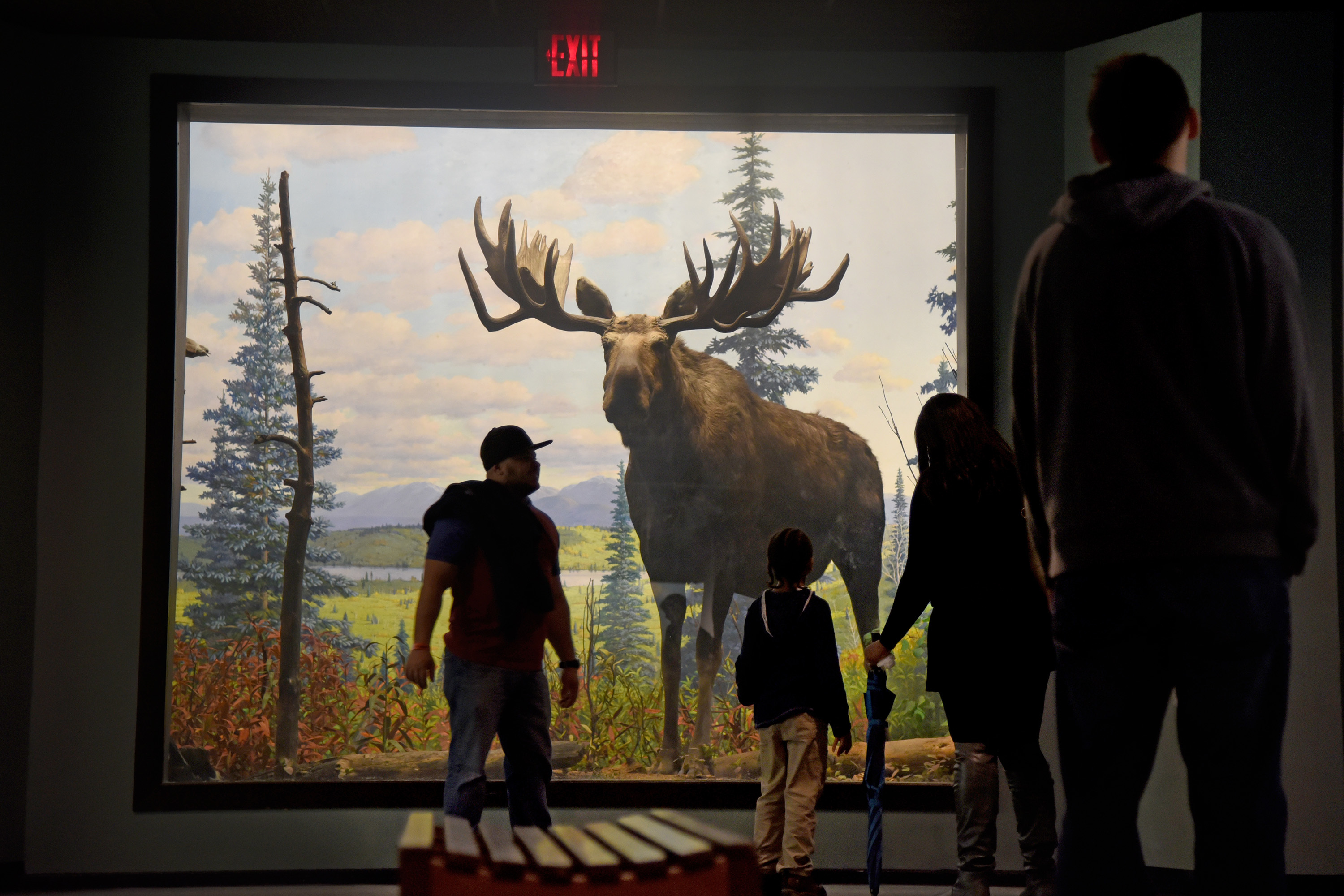
Visitors look over the moose diorama at the Academy of Natural Sciences in 2018. Drexel University has announced that the museum will close at the end of the month because of high costs and dwindling attendance.Tom Gralish / Staff Photographer
When you expose a child to science, you open a door to a new universe. In almost 200 years in the city, the Academy museum achieved something extraordinary and rare: It got kids (and adults of all ages) excited about dinosaurs and insects and animals from faraway places. It taught thousands of visitors about their connection to the natural world. It inspired generations of science-curious people to don lab coats and hiking boots and advance our understanding of what surrounds us.
I’m no exception. My work now as a science journalist consists, in large part, of helping other people understand the wonders of science. I credit the Academy with helping me understand those wonders first — back when I was just a kid with a magnifying glass, an insatiable curiosity, and a terrific natural history museum accessible to my family by the regional train.
The Academy of Natural Sciences is scheduled to close at the end of the month unless Drexel University finds a way to save it, writes Gina Vitale.Elizabeth Robertson / Staff Photographer
If we lose the Academy museum, we don’t just lose the fossil-digging pit and the grand hall of dinosaurs. We lose one more way to introduce Philadelphia’s kids to science. We lose future ecologists and conservationists and people working to save a warming world. We shut one more door to that magnificent universe.
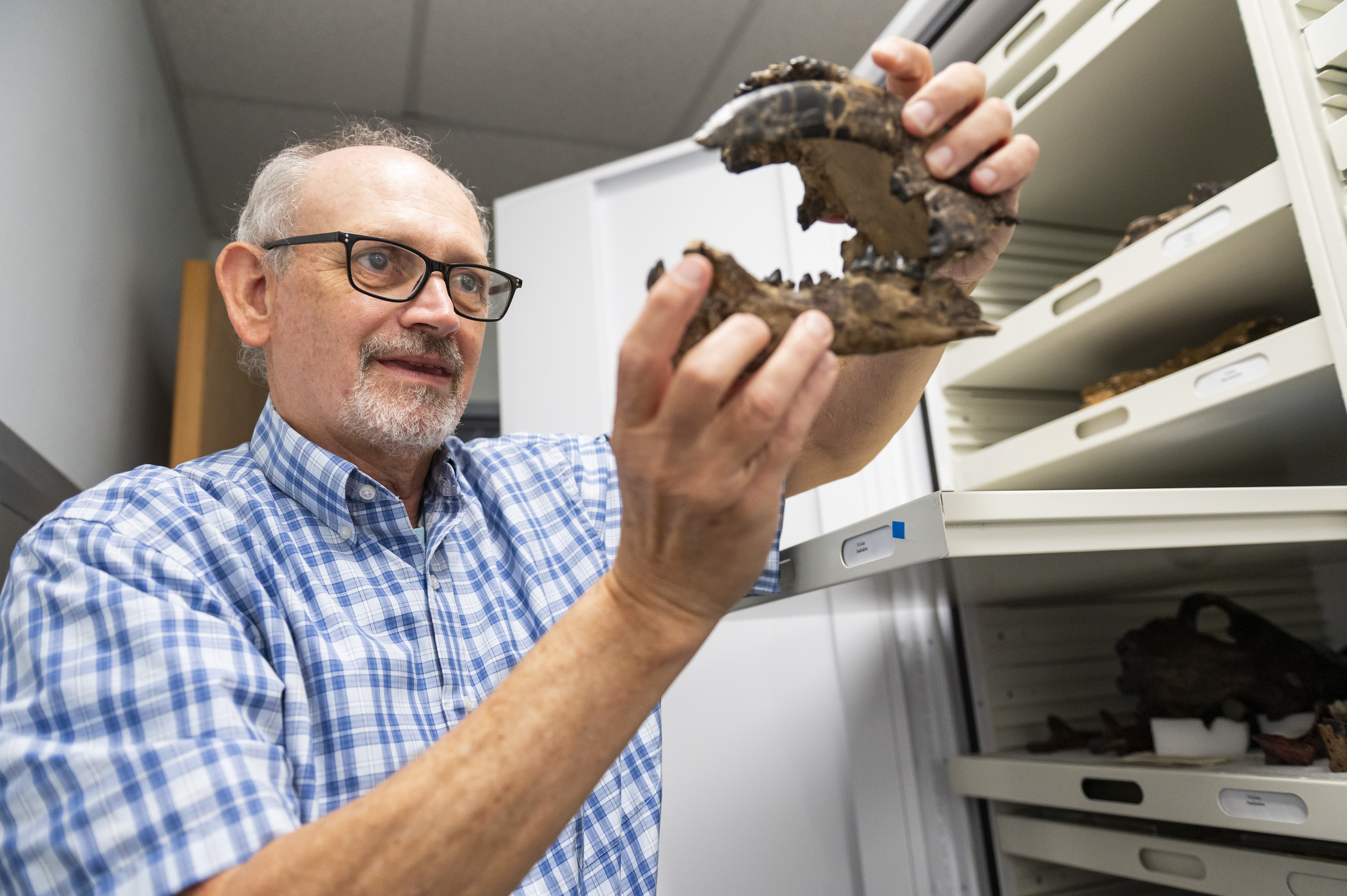
Ned Gilmore, the collection manager for vertebrate paleontology, holds up the mouth of a Smilodon gracilis, a type of saber-toothed tiger, at the Academy of Natural Sciences last month.Allie Ippolito / For The Inquirer
When I was a student, I loved that my university supported an institution like the Academy — the oldest natural history museum in the United States. I can think of no better thing to do for the city and for future Drexel students than for the university to help find a way to preserve this incredibly special museum in Philadelphia.
If they do that, they won’t just have my gratitude. They’ll have the thanks of current and future science enthusiasts throughout the city, and along the tracks of the regional trains.
Gina Vitale is a journalist and writer who grew up in Greater Philadelphia.
After the threat of a possible split, the Academy of Natural Sciences and Drexel University reached a tentative agreement that will continue their affiliation and maintain Drexel’s financial support of the Academy, multiple sources confirmed Wednesday. It will also give the university control over its major decision-making.
Also on Wednesday, Drexel and the Academy appointed Patricia “Trish” Wellenbach to temporarily lead the Academy, serving as its senior adviser. She is deputy mayor to Philadelphia Mayor Cherelle L. Parker’s administration and previously president and CEO of the Please Touch Museum. Wellenbach is on loan from the city and will not receive any compensation from Drexel or the Academy for her new role.
Drexel holds the reins
The announcement comes one day after Drexel and the Academy said they would close the Academy’s museum effective Sept. 30 and that Academy CEO Scott Cooper would be stepping down immediately. Sept. 27 will be the last day the museum will be open to the public.
Though not part of the new terms, the goal now is to relocate the Academy’s collections and sell its 1876 building at 19th and the Benjamin Franklin Parkway, which has numerous deferred maintenance needs, said a source close to the talks between Drexel and the Academy who asked not to be identified.
The new “nonbinding” terms of the letter of intent maintain Drexel’s financial support of the Academy, modify the governance structure, and preserve the right of the Academy board to de-affiliate from Drexel and find a new partner or partners for its collections should it wish to do so.
The terms cover issues such as selection of an interim leader and a permanent leader of the Academy and budgeting, according to a source close to the talks. While Drexel and the Academy will engage in a collaborative process to find a new leader, the final decision will rest with Drexel, the source said.
Dinosaur Hall at the Academy of Natural Sciences on Wednesday, Aug. 5, 2026.Allie Ippolito / For The Inquirer
“It’s fair to say all decisions of importance have to be approved by Drexel,” the source said, including the budget, which is about $25 million annually.
Under the affiliation agreement in 2011, Drexel provided substantial financial support to the Academy and covered its deficits.That will continue, and Drexel also will cover the costs of relocation of the collection and other transition expenses, the source said.
Academy board chair Suzanne Biemiller did not respond to messages seeking comment.
A ‘solid’ but nonbinding resolution
Of the new terms, another Academy board member said:
“I’m hopeful that something positive will come of it. The goal is to find a way to keep the Academy in existence and achieve its mission, so I think it’s a solid resolution,” said the board member, who asked that their name not be used.
Like most letters of intent, the agreement is nonbinding until the two sides come to a complete binding agreement, the source said.
The Inquirer reported in April that Drexel was seeking to totally take over the Academy or end the partnership. The terms signed Tuesday were brokered by former Comcast executive and U.S. Ambassador to Canada David L. Cohen at the behest of Gov. Josh Shapiro.
Sept. 27 is the last day the Academy of Natural Sciences of Drexel University will be open to the public.Elizabeth Robertson / Staff Photographer
The leaders of Drexel and the Academy signed the terms sheet on Tuesday, Cohen said. But there are significant ongoing issues for the Academy and Drexel to work through, he added.
“They include the responsible move of the collections, and a variety of other transition activities,” he said. “The Academy needs a senior representative, a senior voice in these ongoing discussions both to communicate internally at the Academy and with other stakeholders including Drexel.”
She will have a voice in discussions on finding another location to display some of the collections, now that the museum will be closed, Cohen said.
Patricia Wellenbach, former president and CEO of the Please Touch Museum.Heather Khalifa / Staff Photographer
A temporary leader
Wellenbach will be based at the Academy part of the week while also continuing in her city role. She will lead temporarily while Drexel and the Academy search for an interimleader.
“Ms. Wellenbach has had a distinguished career spanning nonprofit leadership, healthcare, governance and public service,” said the announcement from Drexel president Antonio Merlo and Biemiller.
Mayor Parker in a statement called the Academy “a critical, longstanding part of Philadelphia’s cultural and educational landscape” and said she was pleased to loan Wellenbach to the effort.
“We are working collaboratively with Gov. Shapiro, Ambassador Cohen, the Academy and toward the outcome we all seek for the City of Philadelphia,” Parker said.
The Academy museum is ending operations after nearly two centuries because of declining visitorship and rising expenses, according to the Academy and Drexel.
“Over time, it became clear that these were not temporary pressures, but fundamental changes in the economics of the Academy’s operational model, costs that have imperiled the Academy’s ability to discharge its overall mission and preserve its legacy,” the two institutions said in a joint statement Tuesday.
Biemiller and others have pledged to not abandon the Academy’s role in educating the broader public about the natural world.
While it was “incumbent upon us to find places and ways” for the museum to continue, she said earlier this week, the exact form it would take has not been determined.
While Drexel has the major decision-making power, the Academy board will continue to be the fiduciary board and decision-maker for the Academy’s endowment, though management of it has been delegated to Drexel’s investment office, according to the source close to talks.
The museum opened in 1828, and moved to its current location on the Benjamin Franklin Parkway in 1876. Its last day with regular hours for the public will be Sunday, Sept. 27.
For some, the greatest loss was the sense of wonder children get when they peruse the museum, see bugs squirm, explore enormous nest displays and dioramas and, of course, lay eyes on the gigantic dinosaur skeleton.
“I’ll always remember the first time I went to the museum and I saw the dinosaur bones,” said Sakura Okuri, a 53-year-old retired FBI special agent who grew up in Germantown. “I’m just sorry that young kids aren’t going to be able to have that memory.”
Okuri, who now lives outside Pittsburgh, took comfort in knowing that if he missed something in one of the rich, expansive exhibits he’d have another chance because “it would always be there for me,” he said. “Apparently that’s not the case.”
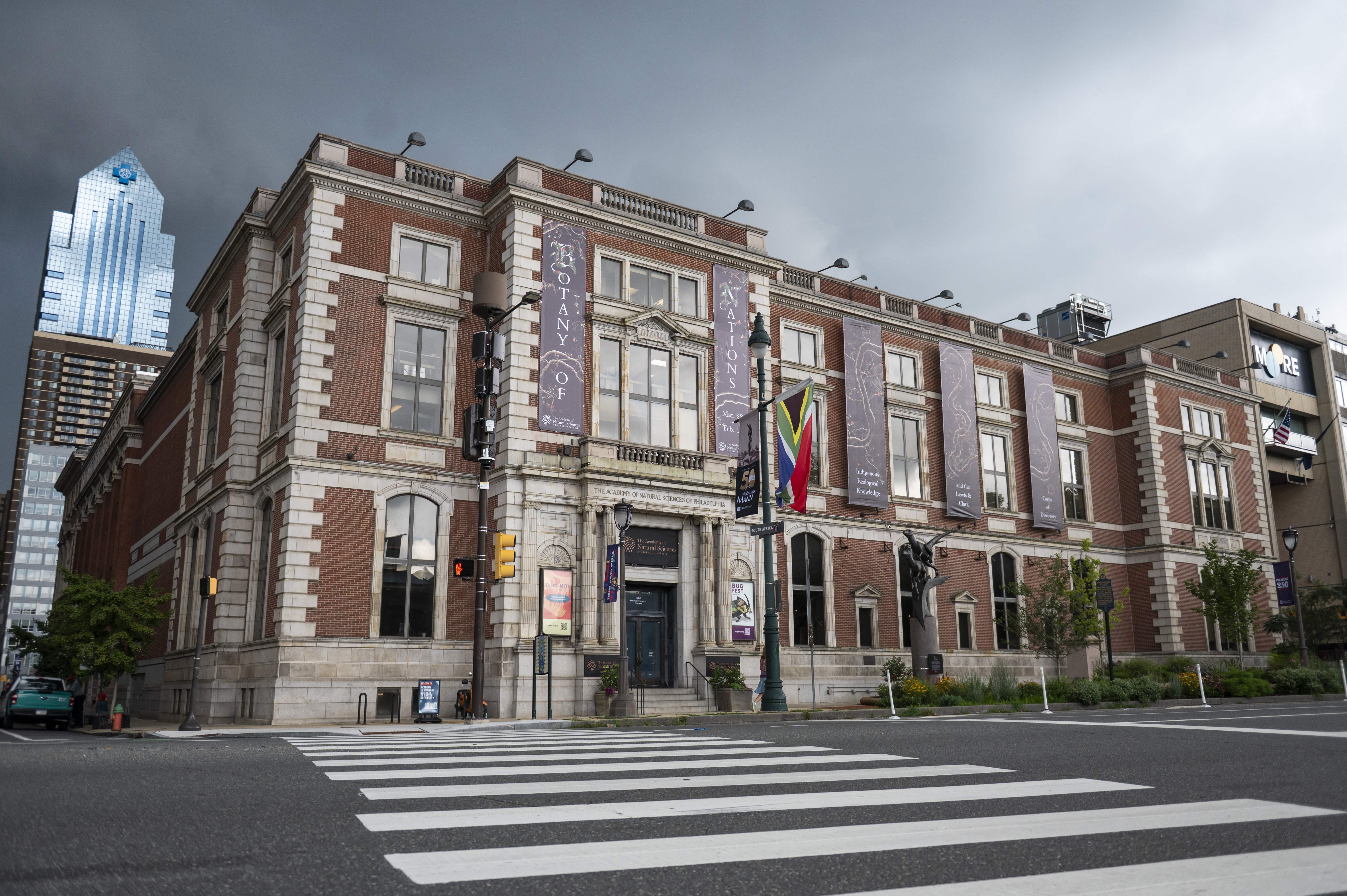
The exterior of the Academy of Natural Sciences on Aug. 5.Allie Ippolito / For The Inquirer
The news landed hard for 9-year-old Mira Thompson, who was leaving the Free Library of Philadelphia’s Parkway Central branch with her dad Tuesday afternoon when she got word. She’d gone to the Academy museum on multiple school field trips recently and was looking forward to more visits.
“That’s where I learned about pH testing last year,” Thompson said. “I didn’t know how to do that before going. I’m going to miss just being there.”
For many, it was a site of family bonding. Temple University senior Sean McClendon recalled fond memories there with his Opa, his grandfather, who worked at the museum taking care of owls and birds. Michael Ginsberg, a 60-year-old Northeast Philly native, remembers zealously volunteering to hold a hissing cockroach during a presentation at the museum to “get a rise out of my daughter.”
“My wife was not a fan of that,” he recalled. “‘Go wash your hands,’” she instructed.
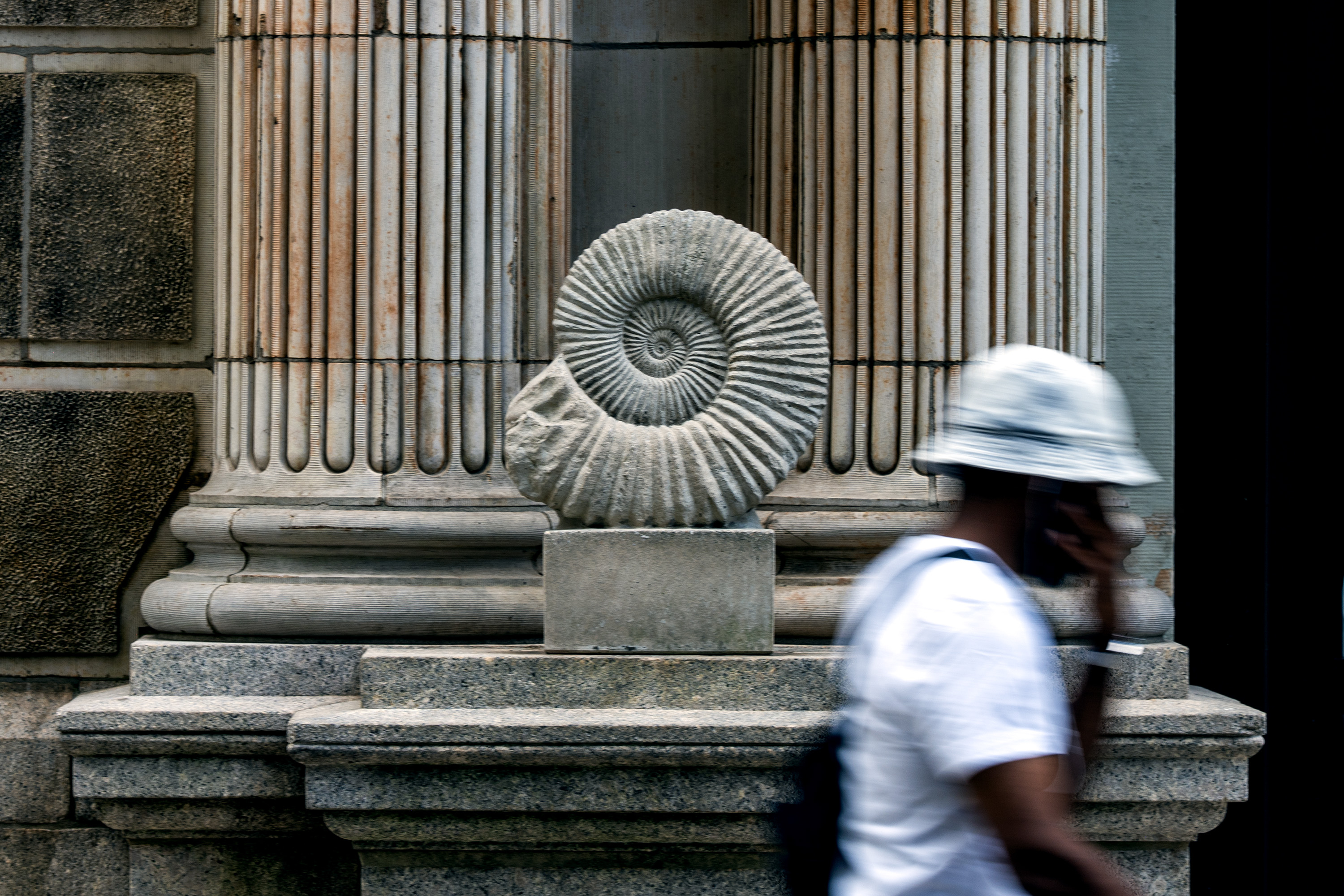
One of two shell sculptures placed on either side of the entrance on the 19th Street entrance to the Academy of Natural Sciences of Drexel University.Tom Gralish / Staff Photographer
Ginsberg’s dad took him there when he was in first grade. Seeing the dinosaur bones in real life was a thrill after only knowing them on the pages of library books. He was shocked to see they were brown and not white like in renderings.
When he became a dad, himself, he started bringing his daughter.
“Dad, why are all the animals dead?” he remembered his then-toddler asking.
“They’re stuffed, hon,” he explained to her. “It’s a really cool art. It’s a way to get you closer. Just trust me, this is really cool stuff.”
The aim , ultimately, is to relocate the Academy’s collections and sell the building, which has a lot of deferred maintenance needs, said a source close to the talks between Drexel and the Academy, who asked not to be identified.
The interactive “Ocean Bound” exhibit at Academy of Natural Sciences in 2023.Courtesy of the Academy of Natural Sciences of Drexel University
Online, tributes poured in. Some said the museum inspired them to study museum education, others brought their kids there when they learned to walk, they said, or when the air-conditioning in their homes broke in the summer. Some parents considered it a seminal part of parenthood in Philadelphia; others relayed fond memories of bringing their kids with disabilities to the sensory friendly hour.
Kim Lynne, from Drexel Hill, often brought her 18-year-old son, Ethan, who is on the autism spectrum, to the museum starting around age 3. He appreciated the dinosaurs and bugs; she appreciated the discount Ethan’s medical needs access card granted them on the admission fee.
“He loved the third floor where they had the children’s area, the insects,” Lynne said. “He was into it early on.”
Colleen Hall, 45, often marveled at the museum when she passed by it during her years at Community College of Philadelphia. She then ventured in for social events and was wowed by the dinosaurs, butterflies, and polar bears. She enrolled at St. Joseph’s Museum and Cultural Heritage education graduate program in hopes of working there one day.
It’s hard to wrap her mind around the notion that the museum is really closing.
“My brain just isn’t going there yet,” she said when asked how she felt about the closure.
“It’s not the 11th hour yet,” she added.
For longtime Philadelphians, the loss of the museum marks another step in the city losing its character as shiny new facades slowly replace the old and storied institutions closing their doors.
“We are losing some of the things that make us a historic city,” said McClendon, the Temple senior. “I think that’s really something that’s part of Philly’s brand or image, not just cheesesteaks, and I think people might forget how much history there is because it’s so modernized.”
To those who’ve gone with parents and kids like Ginsberg, the facility is a generational treasure and one of the few places that Philadelphians of all ages, races, and socio-economic classes can enjoy.
“Our city is losing abig part of its heart,” he said.
Drexel University and the Academy of Natural Sciences announced Tuesday that the museum would close for good on Sept. 30. Its last day open to the public with regular hours will be Sunday, Sept. 27.
While the Academy’s research and collections will be unaffected by this closure, here’s how things will change for the museum’s members and its events.
Will museum members get refunds?
Most recently, memberships for the Academy museum cost $65 for individuals. $135 for families.
“Members will receive direct communication in the coming days with information about their memberships, including benefits, expiration dates, and transition options,” Drexel said in a statement.
The Franklin Institute, the university said, will honor Scademy memberships through their expiration dates, so members can visit the institute situated only about a block away from the Academy.
Members could also “adjust the tax-deductible portion of their membership or request a prorated refund for the remaining membership period,” the university said.
The university said it will provide information to members and also post it on the Academy’s website when it becomes available.
What will happen to events scheduled at the museum?
“All programs and events scheduled to take place before the closure will continue as planned,” the university said. The university did not respond to what will happen to events that are rescheduled after Sept. 30 or if there are any.
What happens to the interns and students currently working in co-ops at the museum?
“Five Drexel students are currently working at the Academy in co-op positions. Their roles support the Academy’s research and collections’ activities and are not affected by the closure of the museum,” the university statement said.
Will hours be expanded if the closure announcement drives a high turnout?
The university said visitors should come to the museum through Sept. 27 “and participate in programs and events offering opportunities to experience and celebrate the museum during its final weeks.”
The Academy of Natural Sciences of Drexel University, 1900 Benjamin Franklin Parkway, is open Friday to Sunday 10 a.m. to 5 p.m. ansp.org
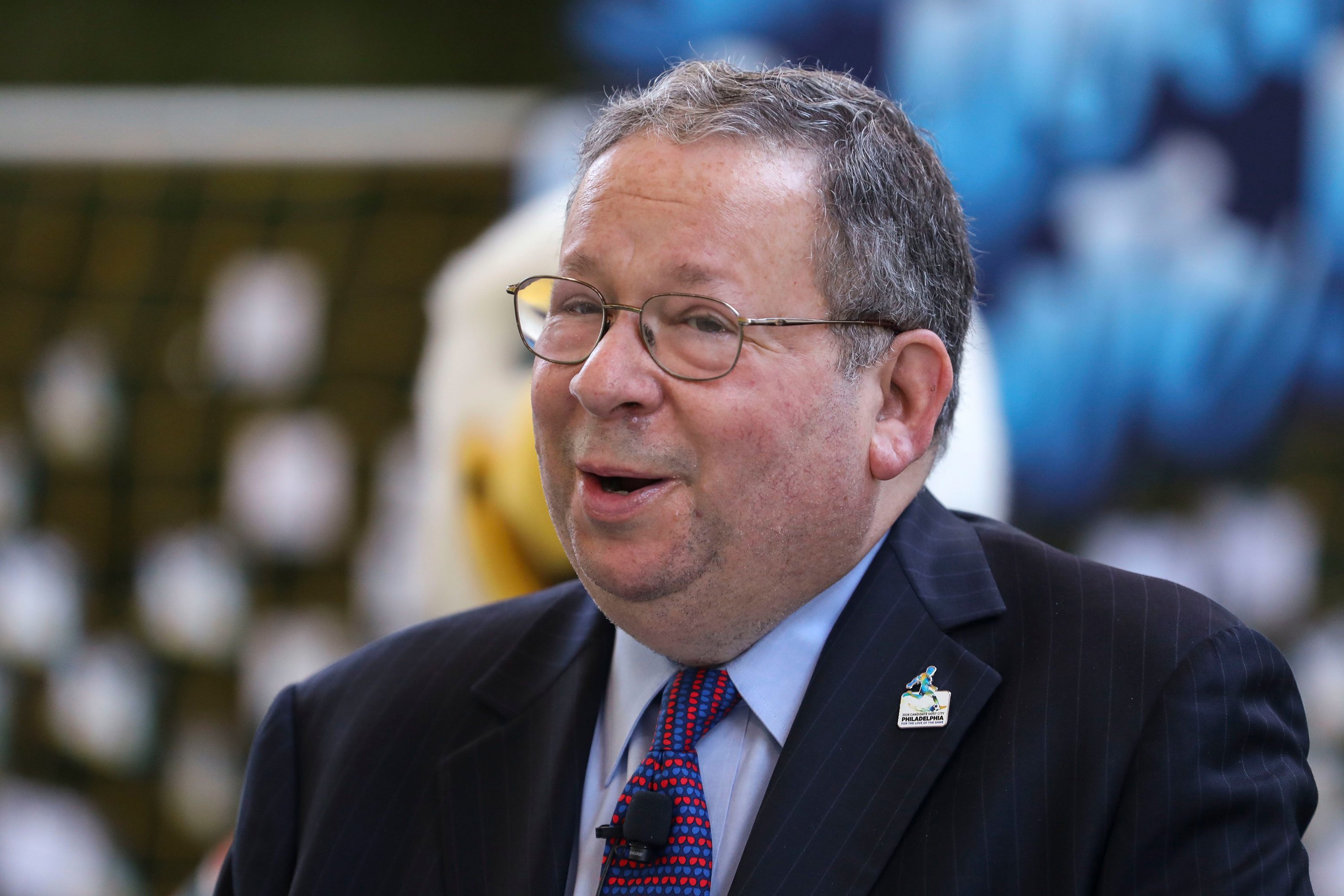
David L. Cohen, the former U.S. ambassador to Canada and Comcast executive, said the governor asked him to be his “agent” in helping to broker a deal between Drexel University and the Academy of Natural Sciences.
No one, he said, wanted to see another University of the Arts, which abruptly closed in June 2024, leaving a hole in the city’s arts landscape and sending students and staff scrambling.
“I don’t want to lose the Academy on my watch, and neither does the mayor,” Gov. Josh Shapiro told Cohen, Cohen said. “Can you figure out if there’s a solution here? If there’s a solution, can you help convince the Academy and Drexel to pursue that solution.”
That’s what Cohen said he has been doing, holding 40 or 50 meetings over the last several months in search of an agreement and producing a draft proposal for the future of the Academy.
The two entities, he said, are close to agreeing to terms on governance and finances. While the museum is closing, as Drexel and the Academy announced Tuesday, the larger agreement would allow for the continued operation and growth of the Academy in Philadelphia, without jeopardizing Drexel, which is facing its own financial challenges.
“We want to preserve the Academy,” he said, “but we also don’t want to jeopardize Drexel.”
“Drexel and the Academy are working with my office, with Gov. Shapiro’s office, and with Ambassador David L. Cohen, as the governor’s representative, to preserve the essential mission of the Academy. We are working collaboratively toward the outcome we all seek for the City of Philadelphia,” Mayor Cherelle L. Parker said in a statement.
The governor’s press office did not responded to requests for comment.
The exterior of the Academy of Natural Sciences on Wednesday, Aug. 5, 2026.Allie Ippolito / For The Inquirer
Cohen has long been a negotiator in many major city issues, formerly serving as chief of staff to former Philadelphia Mayor Ed Rendell and leading the board of trustees of the University of Pennsylvania.
Shapiro, he said, was clear about the objectives.
“The goal that the governor articulated to me and the mayor was to preserve the essential mission of the Academy, all three legs on the stool,” he said citing research, education and public engagement with the collection. “Some of the legs might be a little shorter. They might be a little skinnier. But the goal is that the Academy survives and has a foundation to thrive and grow in Philadelphia. This is a matter of civic importance.”
Drexel and the Academy are exploring establishing another museum, maybe a smaller one, in another location through a third partner, Cohen said.
“That’s a work in process,” he said. “I had an hour and a half meeting yesterday with one of the potential institutions that could serve that function for the Academy and for Drexel.”
Cohen said he hopes ultimately the community rallies around the Academy and helps to support it.
“We don’t need a single savior here,” he said. “This can be a community effort. I know the Philadelphia nonprofit and foundation community, and time and again this community has stepped up, and I have every hope that we, and it’s a we, will step up again.”
Cohen credited both Drexel and the Academy for their cooperation and willingness to “focus on a common need for the community as a whole. They really deserve the credit for doing this.”
The mayor, too, commended Drexel University and the Academy of Natural Sciences “for its significant, ongoing work to preserve the Academy’s educational mission and extraordinary two-century legacy as a natural history institution, including its world-renowned collections.”
Cohen said he first got involved in the matter about a year ago when he was home recovering from back surgery and got a call from two members of the Academy board about the issues they were having with their partner, Drexel.
The Academy was looking at possibly leaving the city, though it really didn’t want to do that, he said. He suggested they talk to the mayor and the governor. The board members told him they had been trying to do that but were unable to get attention.
Cohen texted the governor and mayor on the spot from his living room, he said. Meetings were convened, and that led to the governor seeking Cohen’s help.
“My wife says to me ‘why in the world did you take this on,” Cohen recalled. “Let me tell you, this legacy, this mission, this institution is worth fighting for. There is real history here, real value.”