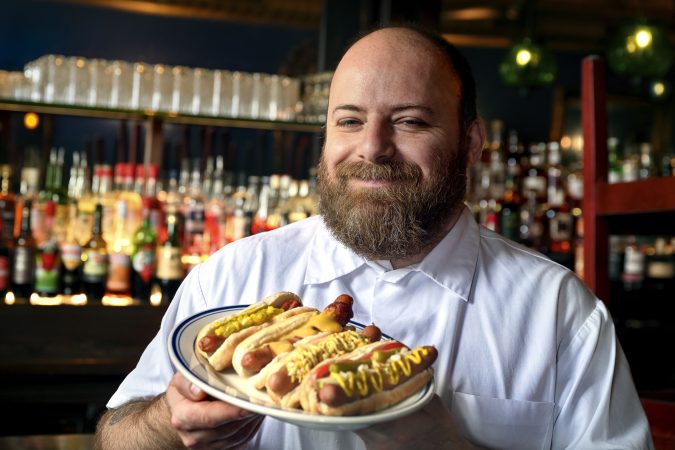
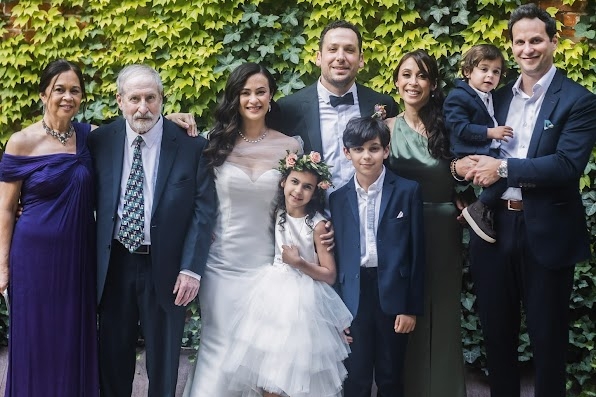
After decades of opening and running restaurants for other people, chef Nic Macri and operations executive Suzanne O’Brien are becoming owners themselves.
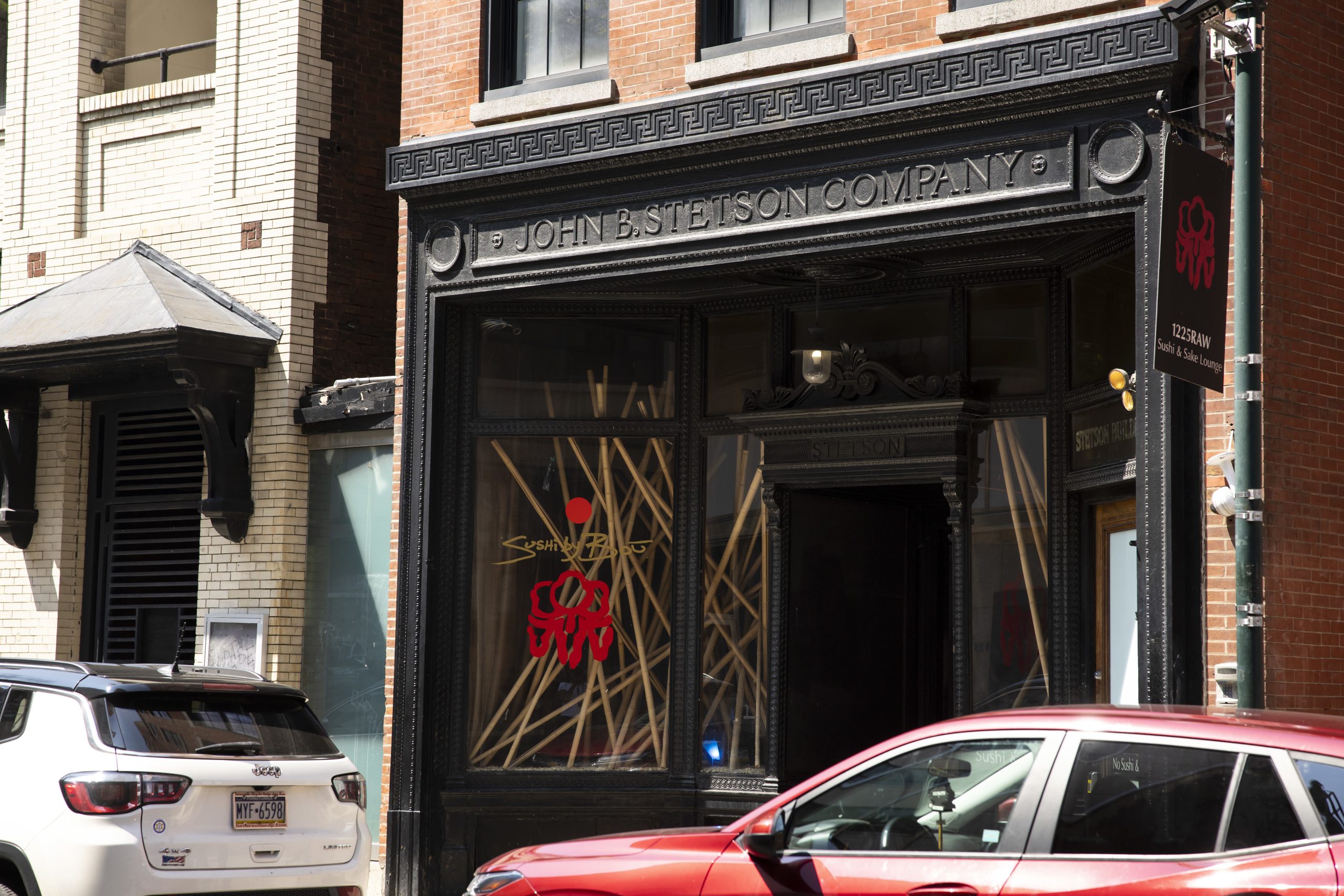
The Royal Restaurant Group colleagues are joining cofounder Stephen Simons as partners in a still-unnamed Italian-inspired tavern planned for the former 1225 Raw space at 1225 Sansom St. in Washington Square West. It’s just steps off the 13th Street bar-restaurant cluster that includes El Vez, Prunella, Pearl & Mary, Double Knot, Vintage, Time, Barbuzzo, Darling Jack’s, and Little Gay Pub.
The restaurant space at 1225 Sansom St. was last 1225 Raw and Sushi by Bou.Monica Herndon / Staff Photographer
The project remains in the design stage, with demolition expected to begin shortly. Simons said a late April 2027 opening would be the best-case scenario, though it could take about a year.
For Macri, 41, the restaurant will be the big leap in a career that has taken him from his native Ontario to some of Philadelphia’s best-known kitchens and butcher shops. O’Brien, 58, has spent more than three decades opening and operating restaurants, including Dock Street Brewery, Cantina Los Caballitos, Royal Boucherie, and dancerobot, but has never before held an ownership stake.
Macri, the son of Calabrian immigrants who settled in the Toronto suburbs, came to Philadelphia on a Drexel University soccer scholarship. After cooking at Osteria and Southwark, he founded La Divisa Meats, the acclaimed Reading Terminal Market butcher shop that established him as one of the city’s premier charcutiers. He joined Royal Tavern as executive chef at its 2023 reopening from the pandemic shutdown.
The new restaurant will draw partly on Macri’s Sunday Sauce dinners at Royal, though he described the idea more broadly as “Philadelphia cooking with an Italian accent.”
“It won’t be rooted in one particular style or region,” he said. “It’s more about the Italian diaspora than one specific place.”
The menu will include fresh and dried pastas, house-made bread and salumi, preserved vegetables, and shareable large plates. Vegan dishes will be built around vegetables rather than meat substitutes.
One likely signature is a house-made mortadella sandwich on ciabatta, which Macri hopes can become the restaurant’s counterpart to Royal Tavern’s burger. His charcuterie program will focus on one featured item at a time rather than a large assortment.
“Especially if we’re making it ourselves, I want to highlight one thing and give people a chance to really enjoy it,” he said.
The beverage program is expected to include wines by the glass, a larger selection of Italian bottles, frozen cocktails, nonalcoholic drinks, and a small beer list. Desserts will likely include tiramisu and seasonal fruit tarts or crostatas.
Macri said the partnership offered a chance to take on more responsibility without moving away from the daily work of running a restaurant.
“I wanted to do something slightly larger and have more involvement than I do at Royal Tavern,” he said. “This seemed like the best opportunity for me to grow.”
He jokingly proposed calling it “Another Italian Restaurant,” an idea that did not survive.
“I don’t think they thought it was as funny as I did,” he said.
O’Brien brings deep operations background to the partnership. In 1991, she began waiting tables at the then-hotspot Metropolis — now the Fine Wine & Good Spirits store at 1515 Locust St. — and moved into management at the Palm and Cuba Libre before helping Simons and Frank build Royal Restaurant Group, whose holdings include Royal Sushi & Izakaya and Triangle Tavern. She is now the company’s CEO and said she would remain so.
“I’ve opened many restaurants, but this is the first one that’s actually mine,” she said. “It’s kind of funny.”
Macri was the deciding factor.
“I trust Nic,” O’Brien said. “He just likes really good food. It doesn’t have to be fancy, and he doesn’t try to make things into something they’re not. We’re very aligned on that.”
The restaurant will occupy the former 1225 Raw space and the adjoining former Sushi by Bou space, vacant since the city Revenue Department shut it down in early 2025 over tax and liquor-licensing issues surrounding the former operator, Glu Hospitality. The property extends a block to Chestnut Street, and will have about 100 indoor seats, a private dining room, and a courtyard and terrace that could accommodate about 40 more.
O’Brien, who oversees landscaping at several Royal properties, including the seasonal PHS pop-ups, said the outdoor space and the building’s historic character would help shape the design. Ambit Architecture, which worked with Royal on dancerobot, is handling the project.
The partners envision a restaurant priced between Royal Tavern and Royal Boucherie, with enough flexibility for a casual weeknight dinner, a date, or a family meal.
“It’s going to be fun,” O’Brien said. “It’s the kind of place where you might come a couple of times a week, bring your mom to dinner one night, or go on a date another night.”
A partner at one of the city’s largest law firms who once worked as a federal prosecutor was confirmed Thursday by the U.S. Senate to become the Philadelphia region’s newest federal judge.
Antonio Pozos’ nomination to join the region’s U.S. District Court was approved by a vote of 49-44. There was no discussion as the Senate voted to approve his nomination, which earns him a lifetime seat on the bench.
Pozos, 44, most recently a partner at Faegre Drinker Biddle & Reath, is the first person appointed to the region’s district court since President Donald Trump began his second term last year. During his first term, Trump had five judges confirmed to the region’s federal bench.
Pozos will fill a vacancy created by last year’s retirement of U.S. District Judge Mitchell Goldberg, giving the court 22 district judges and eight senior judges.
District court judges oversee a variety of criminal and civil cases each year, and typically issue the first rulings on legal questions that can sometimes reach the U.S. Supreme Court.
Although some of Trump’s recent nominations to judicial posts across the country have been controversial — including his decision to nominate his former personal lawyer, Emil Bove, to the Philadelphia-based U.S. Court of Appeals for the Third Circuit — Pozos’ candidacy received some bipartisan support.
Shortly after his nomination was announced, Pennsylvania’s Democratic senator, John Fetterman — who, under Senate rules, had the ability to block Pozos’ candidacy from advancing — decided to allow the process to move forward, the first time any Democrat had done so for a district court nominee during Trump’s second term.
Fetterman also voted Thursday to confirm Pozos.
During a confirmation hearing last month, U.S. Sen. Dave McCormick (R., Pa.) called Pozos a “successful attorney, a strong Pennsylvanian, a decorated public servant, and he’s eminently qualified for this role.”
Pozos was criticized by some Democratic senators during the hearing for hesitating to use the word attacked when describing the riot at the U.S. Capitol on Jan. 6, 2021. He instead said it “appeared that there was violence and trespass” that day, and called the events “profoundly troubling.”
Pozos lives in Bryn Mawr and is a graduate of Harvard College and the University of Michigan Law School, according to a questionnaire he submitted to the Senate Judiciary Committee.
Before he became a partner at his firm in 2018, the questionnaire said, he spent three years as a prosecutor in the Justice Department’s criminal fraud section in Washington, where he often worked on cases involving healthcare fraud. He previously worked as an associate in a Washington-based firm and clerked for U.S. District Judge Anthony J. Trenga in Virginia.
In Philadelphia, Pozos has served as a lecturer at the University of Pennsylvania’s Carey Law School and is on the board of Drexel University’s Kline School of Law.
With Pozos’ confirmation to the bench, Trump has now appointed six of the Philadelphia region’s district judges, who handle cases that arise from the city, its suburbs, and counties in and around Reading and Allentown. Former Presidents Joe Biden and Barack Obama each appointed seven judges to the bench, and two were appointed by George W. Bush.
Trump has had a more outsize impact on the region’s appellate court, where he has appointed six of the court’s 14 members across his two terms.
Philly may be among the James Beard Awards’ most valuable players, but it won’t be their next host.
The Philadelphia Convention & Visitors Bureau — the organization that brought the Michelin Guide to Philly last year — doesn’t plan to pursue a bid to host the James Beard Foundation’s annual awards ceremony, a spokesperson told reporters Monday.
Considered to be the restaurant industry’s Oscars, the Beard Awards have celebrated the best in food service and media across the United States every spring since 1991.
“Recognition through the awards can be transformative — driving visibility, strengthening businesses, and creating new opportunities for recipients both immediately and over time,” the Beard Foundation said last week in a statement announcing a request for information from potential host cities. “These benefits extend to the host destination as well: The multiday event showcases the local culinary community while generating national media attention and meaningful economic impact.”
Hosting the awards also comes with significant price tag: The Beard Foundation is asking interested cities to commit to spending a minimum of $4 million for the first year, with annual increases of up to 5% after. Cities can source the money through a mix of cash investment, sponsorships, and public sector funds.
Cities can send in preliminary information — including an estimate of hotel stock, prospective venues, and responses to short-answer questions — to the Beard Foundation through Aug. 7. Selected applicants will then be invited to submit official proposals. The next host will be announced in early 2027.
Philly has likely ruled itself out.
“Our mission is to attract citywide conventions, meetings, and major events that generate significant overnight visitation and hotel demand,” Convention & Visitors Bureau spokesperson Jaime Martorana wrote over email. “After reviewing the James Beard Awards’ event hosting requirements, we’ve determined they aren’t fully aligned with the PHLCVB’s mission and mandate.”
People arrive at the 2024 James Beard Awards in Chicago. The Oscars of the restaurant industry is looking for a new city to host the awards from 2029 to 2033.Erin Hooley
Philly’s untouched resumé
It’s unclear which hosting requirements don’t match up with the Convention & Visitors Bureau’s mandate of bringing major events to Philly.
Reviewed by The Inquirer, the seven-part application asks cities to detail the high-profile events it has hosted in the last three years, outline its transit options, and explain how their restaurant scene upholds values of “culinary excellence, sustainability, inclusion, [and] accessibility.”
Philadelphia spent the past two months juggling nonstop major events, from six World Cup matches, the MLB All-Star Game, and, perhaps biggest of all, the nation’s 250th birthday. All the while, the city’s estimated 19,000 hotel rooms reached a record-high 90% occupancy as hundreds of thousands visited Philly. Even the delay-plagued, chronically-underfunded SEPTA rose to the occasion, with expanded service, free fare, and dance parties.
Hanna Williams (left) and husband, Chad, at the 2025 Michelin Guide Northeast Cities awards at the Kimmel Center in Philadelphia. Their restaurant, Friday Saturday Sunday, is the only local restaurant to have a James Beard Award and a Michelin Star.Elizabeth Robertson / Staff Photographer
Philly is also a James Beard Awards darling, fielding finalists nine out of the past 10 years. In June, chef Chutatip “Nok” Suntaranon’s Thai restaurant, Kalaya, won outstanding restaurant, while Royal Sushi & Izakaya’s Jesse Ito was named Best Chef, Mid-Atlantic, a region that spans New Jersey, Delaware, Maryland, Virginia, and Washington.
Visit Philadelphia, the city’s official tourism nonprofit, has worked with the James Beard Foundation since 2016, including hosting the 2020 nominee announcement and several dinner and marketing events in the years since.
“It seems to me like we should at least be having a conversation about what the relative merits of hosting are, especially since the Beards have been very good to us,” said Jonathan Deutsch, the director of Drexel University’s Food Lab and a previous judge for the Beard Awards’ media and leadership categories.
Deutsch and others in the local food scene say it’s a mistake for Philly not to try, forgoing at least a little bit of the momentum Philly has built as a destination for world-class dining and tourism. Freelance journalist and Inquirer contributorAdam Erace — who chaired the Beard Awards Mid-Atlantic subcommittee from 2010 to 2020 — highlighted that Philly’s status as a Northeast corridor city with a reliable airport makes it easy for nominees to commute.
Mawn’s Phila Lorn (left) and Rachel Lorn at the 2025 James Beard Awards in Chicago. Lorn won emerging chef that year.Courtesy of Rachel Lorn
“We’ve spent the past 10 years pushing as a city to grow. If anybody’s ready, we’re ready,” said chef Chad Williams, whose Rittenhouse Square restaurant Friday Saturday Sunday won the James Beard award for Outstanding Restaurant in 2023 and was a finalist for Outstanding Bar in June.
What could Philly miss out on?
In a few words: millions of dollars in economic impact.
The 2026 James Beard Awards in Chicago generated $8.3 million in direct spending from the operational costs associated with putting on the ceremony, plus offsite spending by attendees, according to a report the foundation commissioned from the Oxford Economics Co. That direct spending turned into $17 million in overall economic impact on the greater Chicago area, including $1.2 million in local and state tax revenue.
Philadelphia chefs are acknowledged at the Michelin Guide announcements at the Kimmel Center Tuesday, Nov. 18, 2025, in Philadelphia.Elizabeth Robertson / Staff Photographer
Erace and Deutsch, who both have attended the Beard Awards, describe it as a weekend of dinners, pre-parties, after-parties, and pop-ups that encourage attendees to eat and drink in the host city. This year’s awards included roughly 41 events in the days leading up to the ceremony, Illinois Restaurant Association president Sam Toia told the Chicago Sun-Times.
The restaurant awards’ voting body — composed of anonymous judges with industry experience selected via committee — is only allowed to vote for restaurants they’ve eaten at in the past year, explained Erace. This gives Chicago a small leg up. Hosting the awards enables more judges to eat in the city and speak to its restaurants’ quality.
“It seems like a missed opportunity,” said Deutsch. “You have top chefs, journalists, cookbook authors, passionate foodies … who are paying a couple of thousand dollars over the weekend for airfare, dining, and a hotel just to experience the awards.”
What about the Michelin Guide?
Last year, the Convention and Visitor’s Bureau successfully bid to bring the Michelin Northeast Cities Guide — and its award ceremony — to Philly for the first time.
“Now that the busiest period of our 2026 event calendar has concluded, we’ll be reconnecting with the restaurants and chefs recognized in the Guide to better understand how the first half of the year performed and how Michelin recognition has supported their businesses,” Martorana said.
The Michelin Man, whose name is Bibendum, arrives at the Michelin Guide announcements at the Kimmel Center, on Tuesday, Nov. 18, 2025, in Philadelphia.Elizabeth Robertson / Staff Photographer
It’s still unclear how much it cost to court the guide, or how much it boosted Philadelphia overall. The Philadelphia Convention & Visitors Bureau declined to share how much it paid Michelin and has yet to make data available about the spending generated by Michelin’s newfound Philadelphia presence.
Cities pay to be included in the Michelin Guide, often cobbling together funding from a mix of tourism organizations, public investment, and sponsorships. The price of admission is steep: Boston and Atlanta both paid upward of $1 million to bring the Michelin Guide to their cities, while Texas raised $2.7 million from Dallas, Austin, San Antonio, Fort Worth, and Houston to get a dedicated Texas guide. Some locals, like Virginia and Buffalo, rebuffed Michelin entirely, calling the fees unsustainable.
In Philly, the Michelin Guide and the James Beard Awards can appear to be an echo chamber, with the same set of restaurants receiving praise from both. Williams — whose restaurant Friday Saturday Sunday is the city’s only restaurant to receive a Michelin Star and a Beard Award — said each accolade generated “equal” bumps in reservations.
From left: Joe Beddia, Greg Root, Nick Kennedy (rear), Chutatip “Nok” Suntaranon, and Roland Kassis, with the Michelin Man at the Michelin Guide announcement event at the Kimmel Center Tuesday, Nov. 18, 2025, in Philadelphia.Elizabeth Robertson / Staff Photographer
The sameness begs the question: Does Philly need both?
Deutsch wondered if the city’s decision to not go for the Beard Awards has to do with “fine-dining fatigue,” or if the powers that be feel like “they spent a lot of money to check that box for the next few years,” he said.
The Michelin Guide is technically the better bet — at least numbers-wise, Erace acknowledged.
“Thirty-something restaurants get some kind of recognition, and they can take that to the bank forever,” he said. “With the Beards, there’s only so many winners every year.”
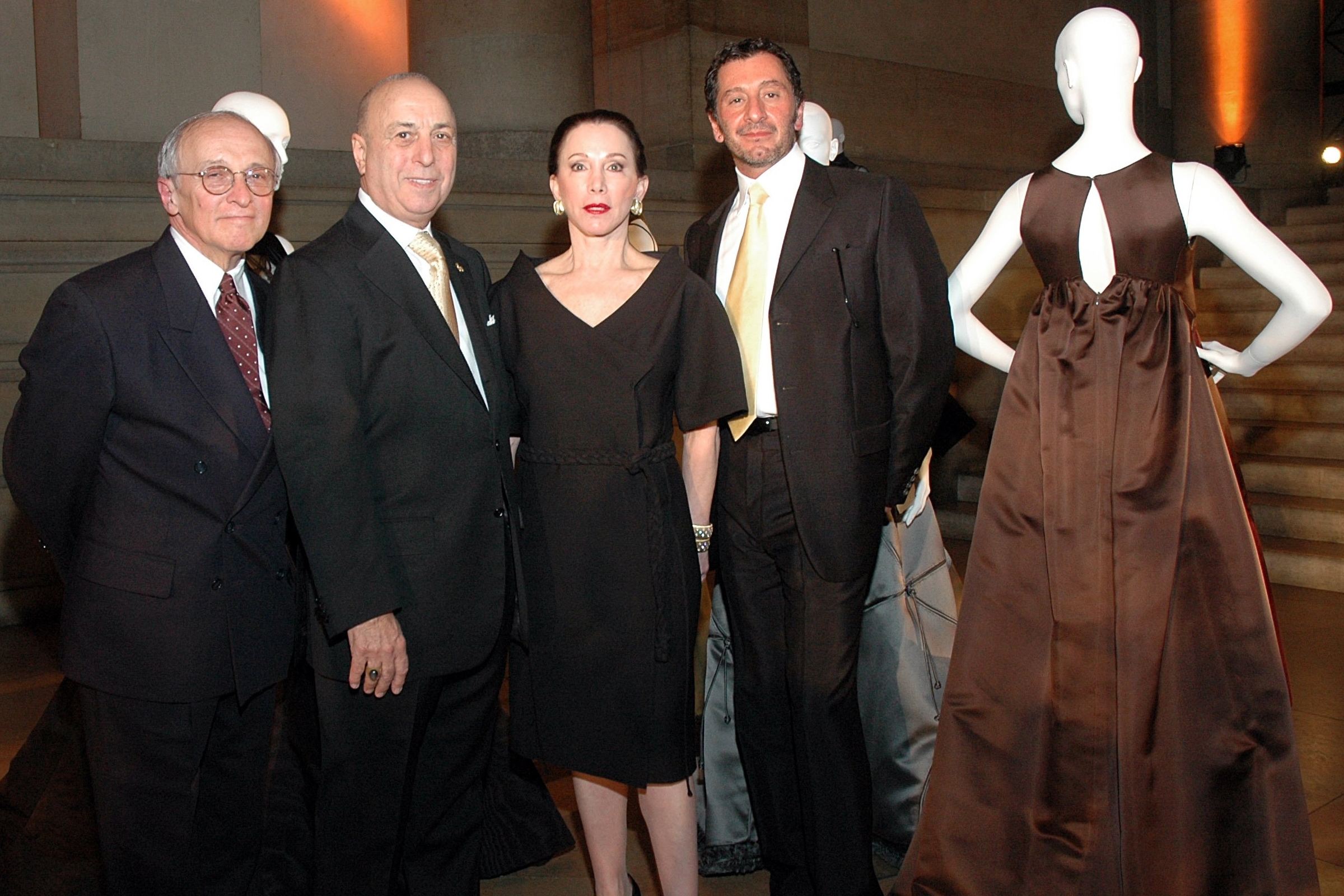
Emil DeJohn, 88, of Ambler, celebrated clothing designer, longtime college department chair and professor of fashion, lecturer, volunteer, and mentor to generations of designers, tailors, dressers, models, and students, died Wednesday, June 24, of a heart attack at his home.
Born in Philadelphia, Professor DeJohn worked for 37 years with Bill Blass and other notable clothing designers on Seventh Avenue in New York, and for 21 years as chair of the fashion department at Moore College of Art and Design, director of fashion career development at Drexel University, and professor of fashion at the now-closed Art Institute of Philadelphia.
He designed clothing of all kinds for men, women, and children for Jones New York, OshKosh B’Gosh, and other international labels from 1960 to 1997. He established his own label, Alex DeJohn by Emil, in the 1980s, and his creations appeared on the covers of Vogue, Harper’s Bazaar, and other magazines.
Several of his gowns were offered to singer Barbra Streisand in the 1960s, and he received design compliments from, among others, film star Elizabeth Taylor and Andre Leon Talley, former editor-at-large at Vogue. In the 1980s, he was chosen by then-first lady Nancy Reagan to design a colorful clothing collection promoting her “Just Say No” antidrug campaign.
In New York, Professor DeJohn showed designs at Bergdorf Goodman, Saks Fifth Avenue, Neiman Marcus, and Macy’s. In Philadelphia, he showed at Bonwit Teller and other top shops.
He also showed in London, Paris, Milan, Hong Kong, and elsewhere around the world. He lectured about fashion at other universities, represented the industry at high school career fairs, and mentored many young designers.
At fashion shows, they always gave him a front-row seat. “It’s an incredible profession,” he told The Inquirer in 2001. “Lots of ups and just as many downs. I wouldn’t trade one day.”
In 1997, looking to engage less with consumers and more with emerging designers, Professor DeJohn left the workshops and showrooms in New York for classrooms in Philadelphia. He spent six years as chair of the fashion design department at Moore, several years as director of fashion career development at Drexel, and finally retired in 2018 as a professor of fashion at the Art Institute.
At Moore, Professor DeJohn recruited Bob Mackie, Betsey Johnson, and other renowned designers to meet his students and provide internships and jobs. At Drexel, he oversaw the Crystal Star Award for design program and taught a class called Aspects of Fashion and Merchandising.
Professor DeJohn (left) attended many galas as director of the Crystal Award for design at Drexel. Emil DeJohn
He hosted a fashion club at the Art Institute and was named the school’s 2017 Teacher of the Year. “He was always happy to answer our questions and tell us about the industry,” a former student said in a tribute. Another said: “He inspired all of us to dream big.”
Professor DeJohn won the city’s Phashion Phest Philadelphia Award for design in 2001 and told The Inquirer: “Teaching the students has been a gift to me. I never envisioned anything I could enjoy more than designing. But this has become an amazing part of my life. I actually love coming to work.”
He earned other awards for design and his volunteer work at the Rowan House, the Ronald McDonald House, and other nonprofits. “He stood as a beacon of hope,” said his granddaughter Alexandra, “always making everyone feel like he believed in them, always bringing out what made them special.”
His granddaughter Isabella said: “His legacy continues to inspire me every day.”
Professor DeJohn met Bette Anne DeChiaro at a dance at the Shore when he was 17, and they married in 1963. Courtesy of the family
Emil Joseph DeJohn was born Dec. 20, 1937, in his mother’s bedroom in South Philadelphia. The youngest of three children, he discovered art in grade school, took art classes at Fleisher Art Memorial, and graduated from John Bartram High School.
He earned a bachelor’s degree in fine arts at the old Pennsylvania Museum and School of Industrial Art in 1959. He won the school’s design citation as a senior and worked at first as an illustrator for the Bulletin’s fashion pages.
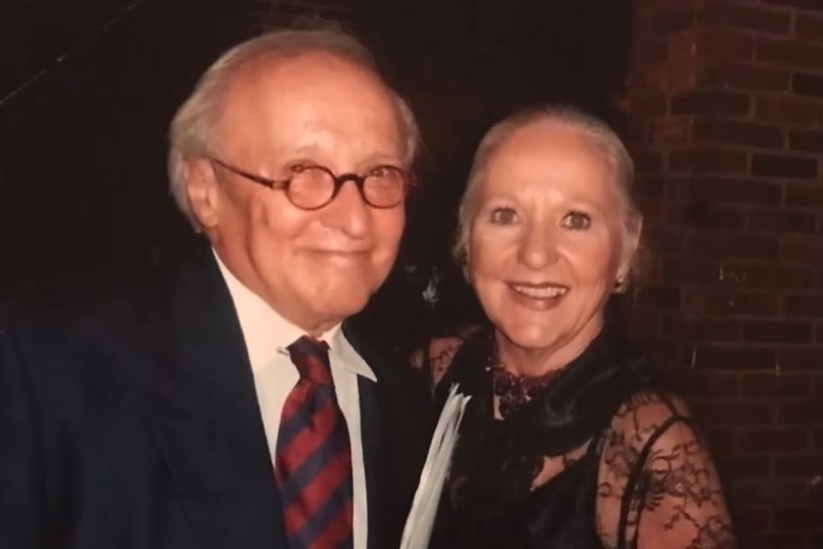
He met Bette Anne DeChiaro at a dance at the Shore when he was 17, and they married in 1963. They had a daughter, Leisa, and a son, Christian, and lived in Center City, Wyncote, and Ambler.
Professor DeJohn liked antiques, flowers, and anything blue and white. He supported the old Carmelites monastery in Philadelphia and belonged to St. Luke the Evangelist Church in Glenside.
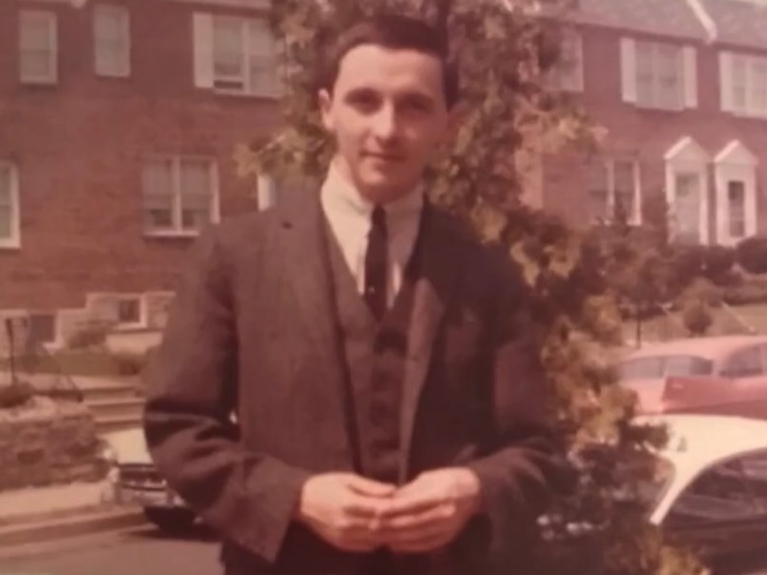
Professor DeJohn first became interested in art and fashion in grade school. Courtesy of the family
He made friends on his daily two-hour train rides to New York and said he never considered leaving Wyncote. “I loved leaving all that and coming home to cut the grass,” he told The Inquirer in 2001. “My neighbors didn’t even know what I did for a living.”
He designed his daughter’s wedding dress, took his granddaughters to mesmerizing fashion events, and made memorable trips to Ocean City, N.J., Longwood Gardens, New Hope, New Mexico, and Florida. He especially enjoyed decorating his home and Christmas tree with ornaments and live flowers.
“He made us all feel seen and special,” his daughter said. “He did that for everyone he met.”
In addition to his wife and children, Professor DeJohn is survived by four grandchildren, one great-granddaughter, and other relatives. A sister, a brother, and a son-in-law died earlier.
Professor DeJohn (right) said he would never leave Wyncote for New York. Courtesy of the family
Services were held earlier.
Donations in his name may be made to the Carmel of Jesus Crucified Monastery, Attn: Mother Pia, Box 308, Muenster, Texas 76252.
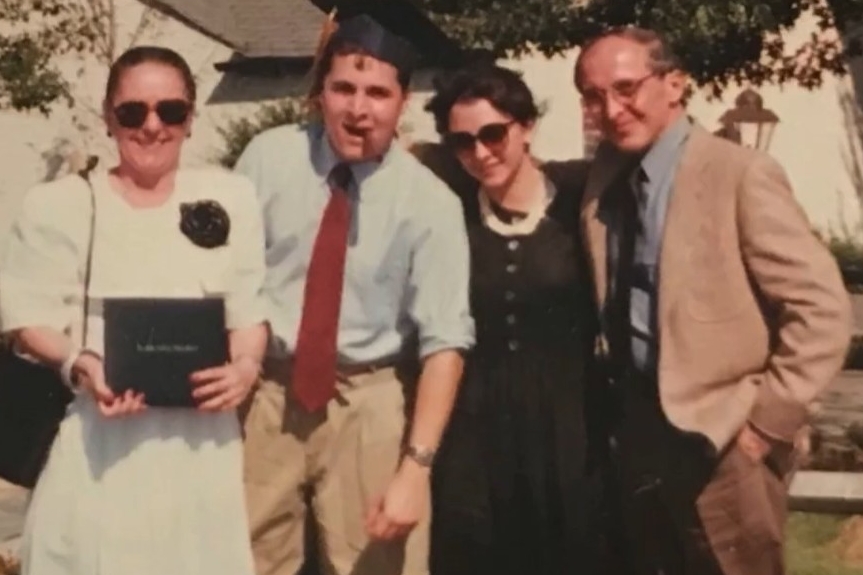
Professor DeJohn (second from right) enjoyed time with his family.Courtesy of the family
Even the Freedom Fuel Network promoted by President Donald Trump isn’t immune to rising gas prices.
Yet, the Philadelphia-area network of gas stations is expanding anyway, according to the company’s website.
The enterprise, currently made up of 25 stations spread across the region, garnered national attention earlier this month when it began selling regular gas for $3.47 a gallon — a nod to Trump, and 40 to 50 cents cheaper than other stations.
Gas station owners suddenly undercut, political observers, and government watchdogs wondered how long the promotion would continue.
It turns out, not long.
The Inquirer visited seven Freedom Fuel locations over several days, and while all were still selling gas cheaper than nearby competitors, the deep discounts from earlier were gone.
Gas prices are up everywhere, including the Freedom Fuel Network station on Edgemont Avenue in Brookhaven, Delaware County.Rob Tornoe /
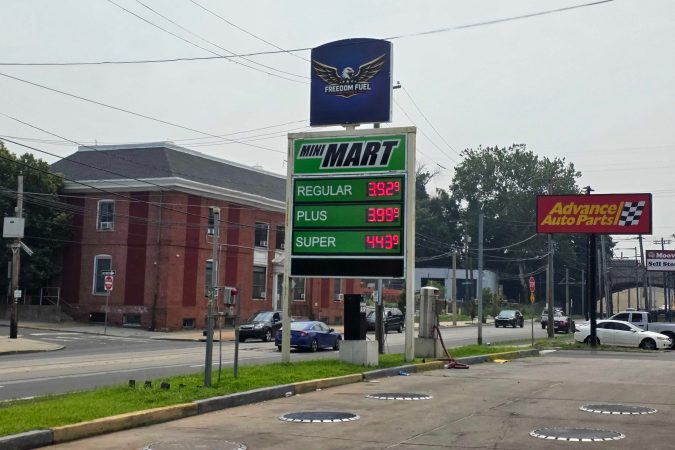
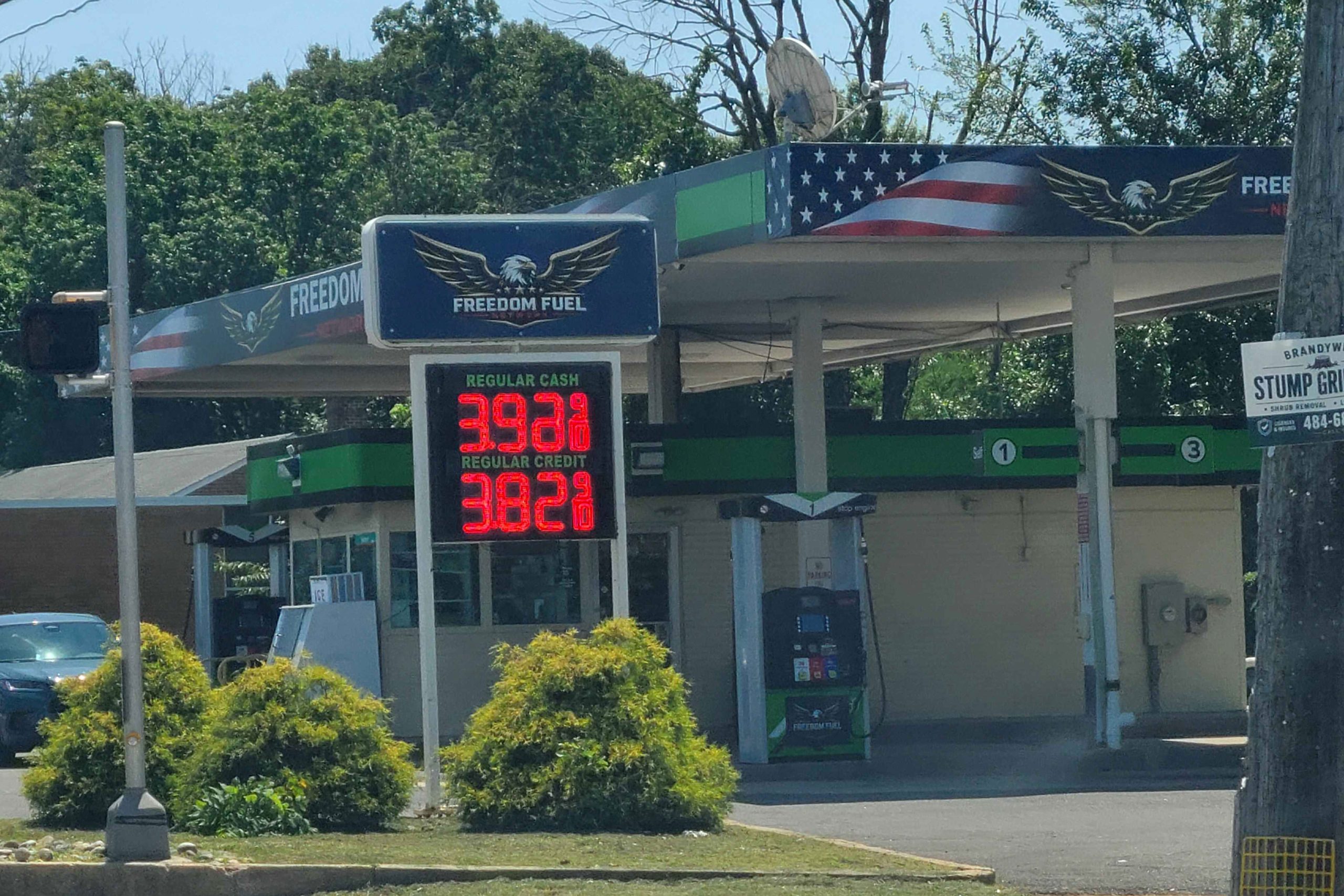
Three Philadelphia gas stations and two Delaware County locations were among those within the network selling gas at $3.92 a gallon Monday. Near Philadelphia’s Freedom Fuel stations, competitors were charging $3.89 to $4.09 for a gallon of gas. The same was true in South Jersey, where Freedom Fuel stations in Marlton and West Berlin were selling gas around 10 cents a gallon less than their nearbycompetitors.
(function(){function e(){window.addEventListener(`message`,function(e){if(e.data[`datawrapper-height`]!==void 0){var t=document.querySelectorAll(`iframe`);for(var n in e.data[`datawrapper-height`])for(var r=0,i;i=t[r];r++)if(i.contentWindow===e.source){var a=e.data[`datawrapper-height`][n]+`px`;i.style.height=a}}})}e()})();
Selling gasoline is a low-margin business, with owners making just “a few pennies” of profit per gallon sold, according to Eliezer Fich, a finance professor at Drexel University’s LeBow College of Business.
“They can sustain those losses for a little while, but it becomes unsustainable if you can’t offset that with a convenience store or a car wash,” said Fich.
Several Freedom Fuel stations visited by Inquirer reporters were small, appeared somewhat rundown, and offered a limited selection of products beyond gas. One location had an inoperable convenience store.
Fich doesn’t know the specifics of Freedom Fuel. He said independent stations banding together can offer purchasing power with refineries, which can be one route to securing lower fuel costs. But those savings wouldn’t come close to supporting the deep discounts the stations were offering.
Despite the White House’s involvement in promoting Freedom Fuel, a spokesperson said the company received no government subsidies and did not obtain fuel at a lower cost. The below-market prices would exist “for as long as the company chooses,” the spokesperson said.
If that’s the case, the business itself was already absorbing dramatic losses before the United States resumed attacks on Iran, leading to a jump in gas prices over the past week.
The average cost of a gallon of fuel in Philadelphia was $4.17 a gallon Monday, up from $3.95 a gallon last week, according to AAA. Nationally, the average cost of a gallon of gas also jumped back to $4 a gallon, up from $3.14 a gallon compared to last year.
While questions remain, Freedom Fuel plans to expand
Little is known about who is taking on the likely losses expected from the promotion.
Former Evesham Township mayor, Baltimore Ravens assistant coach, and self-proclaimed “proud Trump supporter” Randy Brown, along with former commodities trader Yoni Gontownik, both signed the certificate of formation, first obtained by The Newsground, an investigative news outlet. Neither could be reached for comment.
Cherry Hill developer Shamikh Kazmi and his brother Syed Kazmi are linked to at least six locations. The brothers, who have been embroiled in at least two lawsuits related to previous gas station ventures, also could not be reached for comment.
One of Shamikh Kazmi’s businesses was sued as a result of a lengthy trademark dispute with BP America Inc. and BP Products North America Inc. in 2021. That case ended with four deputies with the U.S. Marshals Service seized remaining brand signs in June 2022, according to court documents.
Also in 2021, the brothers were accused by Petroleum Marketing Group Inc, a fuel distribution company, of stealing thousands of gallons of gas from the company. Petroleum Marketing Group sued the brothers, who were ordered by a federal judge in February to pay $600,000.
Still, the people behind Freedom Fuel are looking at expansion.
“Since launch, drivers have flooded us with one request: bring Freedom Fuel Network to my area,” read the website Monday. “We heard you. Due to overwhelming demand for additional locations, we’re expanding to serve more communities with lower prices at the pump.”
The website did not give a timeline for when those additional stations could come online and did not respond to a request for comment.
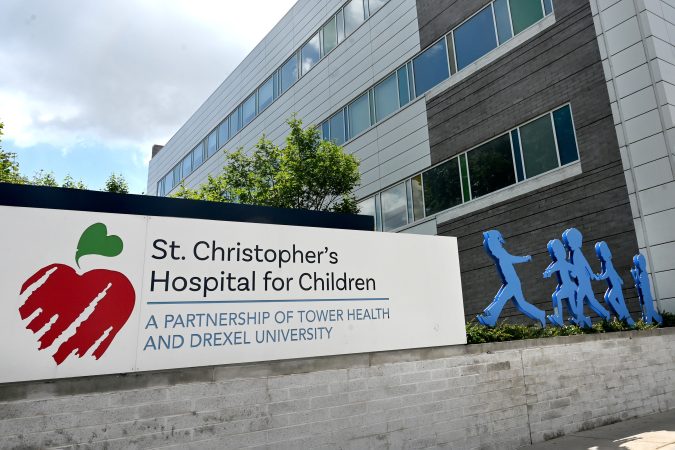
Threemajor Philadelphia-area health systems are exploring an alliance to support financially struggling St. Christopher’s Hospital for Children in North Philadelphia, its leaders announced Wednesday.
The proposed alliance would involve Nemours Children’s Health, Jefferson Health, and Temple Health, a St. Chris statement said.
St. Chris’ ownership would not change from the current 50-50 partnership between Drexel University and Tower Health.
Under the alliance, Wilmington-based Nemours would provide highly advanced, or tertiary, care. Nemours is Jefferson’s primary pediatric partner in the Philadelphia area.
The preliminary agreement announcement provided no timeline to form the alliance. It also did not mention specific financial support for the North Philadelphia institution, which has received millions from local health players following a 2019 bankruptcy and steep losses during the pandemic.
St. Chris’ board chair, P. Sue Perrotty, said the 150-year-old hospital will remain a “gateway” to care for families.
“Our goal is to preserve what makes St. Christopher’s so special while strengthening our operations, so our community-focused mission will endure,” she said.
“Whether care is delivered at St. Christopher’s or through our partners when clinically appropriate, our team will continue to coordinate every step of a patient’s journey, providing families with a seamless experience and a trusted guide throughout their child’s care.”
Beyond the critical health services St. Chris provides, the institution also plays a vital part in medical education for area medical schools, including those at Drexel, Thomas Jefferson University, Philadelphia College of Osteopathic Medicine, and Temple University.
Twice in the past four years, a coalition of Philadelphia nonprofits provided financial lifelines for St. Chris.
Children’s Hospital of Philadelphia, Jefferson, Temple, Philadelphia College of Osteopathic Medicine, Independence Health Group, and private donors provided $50 million over two years starting in 2022. Two years later, the same group, minus Independence, contributed another $30 million.
Jefferson and Temple were also part of a consortium that considered bidding for St. Chris in 2019 during its parent company’s bankruptcy. They backed out before the auction, which Drexel and Tower won with a $50 million bid.
Nemours spokesperson Shelley Meadowcroft said there was no financial support included in the agreement.
Nemours in recent years has lost affiliations with Main Line Health and ChristianaCare to CHOP. The alliance will strengthen “access to high-quality pediatric care in our region,” she wrote in an email.
“This collaboration also strengthens Delaware’s role in pediatric care by positioning Nemours Children’s Delaware-based clinical operations as a central hub for advanced specialty care, education, and innovation,” she added, “while supporting the long-term strength and mission of St. Christopher’s Children’s Hospital and the communities it serves.
In a statement, Temple University officials characterized the agreement as “non-binding letter of intent” to form an alliance “in support of St. Chris and its future.”
“The proposed alliance reflects a shared commitment to securing a future for St. Christopher’s while preserving the mission, clinical excellence and community role that have made the hospital a resource for children and families in Philadelphia and across the region,” officials said.
The city government will assume control of the Philadelphia Sexual Assault Response Center, the only program in the city that offers free sexual assault exams, after years of uncertainty over how the center would be managed and financed.
Mayor Cherelle L. Parker’s administration announced Wednesday that the Philadelphia Department of Public Health will take over PSARC, a nonprofit program that is currently operated by Drexel University and serves about 300 patients a year.
The center is staffed 24-7 by nurses trained to conduct sexual assault exams that are performed to collect DNA and other evidence, sometimes known as “rape kits.” The center is located at 300 E. Hunting Park Ave., in the same building as the Philadelphia Police Special Victims Unit; patients are not required to report sexual assault to police, however.
PSARC was founded in 2011 and contracts with hospitals that do not have staff specially trained in handling sexual assault response. It was previously managed by Hahnemann University Hospital, the historic Center City facility that shuttered in 2019 after filing for bankruptcy.
Since then, Drexel’s College of Nursing and Health Professions has managed the center.
But PSARC has struggled to survive amid years of funding challenges. Prior to last year, it did not receive dedicated funding from the city — it was funded entirely by Drexel, and the state reimbursed the center $1,000 for each patient treated there.
Drexel officials told members of Parker’s administration last year that the university could not continue managing the program, according to two sources involved in the conversations who spoke on the condition of anonymity because they were not authorized to discuss the matter. Last fall, Drexel was in the midst of cutting staff and benefits university-wide amid a massive operating deficit and low enrollment.
The Parker administration explored transitioning the program to the control of another crisis center, the sources said.
But other nonprofits were facing their own funding-related disruptions last year. For example, in October, Philadelphia’s only rape crisis center, the Philadelphia Center Against Sexual Violence, paused some of its services and laid off staff amid the monthslong state budget impasse.
Ultimately, Drexel continued operating PSARC, with the city allocating $250,000 in emergency funding last year to support the program.
This year’s city budget, which took effect on July 1, includes $300,000 in funding for PSARC. That money was allocated to the health department.
In a statement, Crystal Yates-Gale, the city’s deputy managing director for health and human services, thanked Drexel “for supporting PSARC since its founding and for making this transition seamless so there is no pause in operations.”
Emily Roper, the dean of Drexel’s College of Nursing and Health Professions, said in a statement that the transition “has been thoughtfully planned in close collaboration with the City of Philadelphia to ensure continuity of services for survivors.”
“For more than a decade, PSARC has provided compassionate, expert care to survivors of sexual assault,” she said, “and we are deeply grateful to the dedicated clinicians and staff whose unwavering commitment has made that possible.”
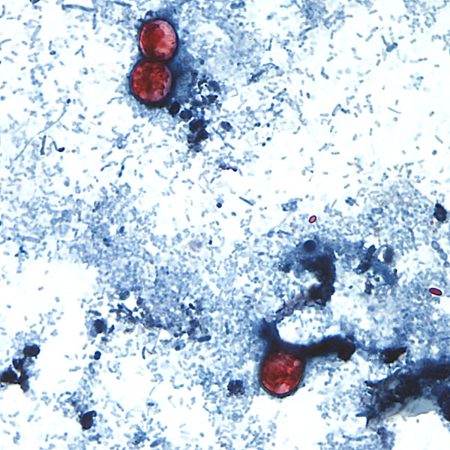
An intestinal parasite that causes “explosive” diarrhea is sickening people across 34 states, the Centers for Disease Control and Prevention said Tuesday.
Despite outbreaks affecting two states bordering Pennsylvania, the Philadelphia region so far shows no signs of widespread illness from Cyclospora cayetanensis.
Speaking to reporters, federal health officials said they had linked cyclosporiasis cases in a widespread outbreak in Michigan, Ohio, Kentucky, and West Virginia. Michigan alone had reported more than 3,000 cases by Tuesday.
“It’s a much higher number than we typically see in a cyclosporiasis season — much, much higher than last year or the year before,” said Gwen Biggerstaff, the deputy director of CDC’s Division of Foodborne, Waterborne, and Environmental Diseases.
Reporting requirements for cyclosporiasis cases differ in Pennsylvania, but cases here remain relatively low. Cases were also at typical levels in New Jersey, and none has been reported in Delaware since May.
Here’s what you need to know about the parasite and how to prevent it:
How is cyclosporiasis spread?
Cyclosporiasis is caused by a single-celled parasite, cyclospora, that spreads through fecal material. It can infect a person’s gut after consuming food or water contaminated by feces.
Common symptoms include watery diarrhea, a loss of appetite, cramping, nausea, and fatigue. Past outbreaks have been associated with leafy greens and other produce, said Rosemary Trout, an associate professor of food science at Drexel University.
The disease doesn’t spread directly from person to person. It becomes infectious after one to two weeks outside the body, and infected people may not immediately develop symptoms.
“It can take two days to two weeks for symptoms to appear,” said Akhil Vaidya, a distinguished professor in the Department of Microbiology & Immunology at Drexel’s College of Medicine.
“That has been the challenge for tracking where the parasite came from. Most likely it’s in some produce, but which produce it’s coming from is not really clear. People don’t remember what they ate two weeks back.”
How do health officials track cyclosporiasis?
Health officials in 47 states, including New Jersey and Delaware, are required by law to report cyclosporiasis cases to the CDC.
Pennsylvania is among a handful of states where doctors are not required to report cases to health officials, but they do so on a voluntary basis, and state officials investigate and submit case reports to the CDC.
A federal foodborne illness surveillance system, FoodNet, stopped tracking cyclosporiasis last year.
But that program’s goal is to “look at trends over time to inform policy and prevention activities,” not monitor active outbreaks, and only drew data from 10 sites around the country, the CDC’s Biggerstaff said.
“[FoodNet] doesn’t give us the data we have from national surveillance,” she said. That broader program is “unchanged,” she said.
Are there cases in the Philly area?
Though Pennsylvania borders Ohio and West Virginia, two states involved in an ongoing outbreak, cases here have been relatively low. So far this year, state health officials have reported 28 cases, 14 of them in Southeastern Pennsylvania.
New Jersey has reported between 31 and 80 cases since May, when cyclosporiasis cases typically rise, according to the CDC. But health officials there said last week that the state is experiencing “normal seasonal circulation without known clusters or outbreaks.”
Delaware has not reported any cases since May 1, the CDC said.
What about cases elsewhere?
Cases in Michigan, Ohio, Kentucky, and West Virginia are considered part of a “multistate outbreak” that is likely tied to a common source, Biggerstaff said. But it’s still unclear what that source is.
Though the CDC has lagged behind states in confirming cases so far, the agency has confirmed 1,645 cyclosporiasis cases since May, and is monitoring 5,100 additional reported cases that will “require additional analysis to confirm,” Biggerstaff said.
How is cyclosporiasis prevented?
Good handwashing practices are the first line of defense against cyclosporiasis: Wash your hands for at least 20 seconds in hot, soapy water.
Washing produce also helps, but rinsing does not necessarily remove all traces of cyclospora, said Trout, the food safety professor. Heating produce to 150 degrees Fahrenheit can kill the parasite.
Trout said that higher-risk groups — immunocompromised people, young children, elderly people, and pregnant women — may want to avoid fresh produce and instead opt for frozen or canned fruit and vegetables.
Most of those products have been treated with heat at some point in their packaging process.
“If you are in a high risk population, or very worried about it, it’s valid,” she said. “The case number is very high, and it’s proximate to our state.”
Bill Wine, 81, of Philadelphia, three-time Mid-Atlantic Emmy Award-winning film and TV critic, retired tenured associate professor of TV and film at La Salle University, onetime freelance TV critic for the Daily News, freelance writer, playwright, and popular lecturer, died Sunday, June 14, of complications from Parkinson’s disease at his home in Chestnut Hill.
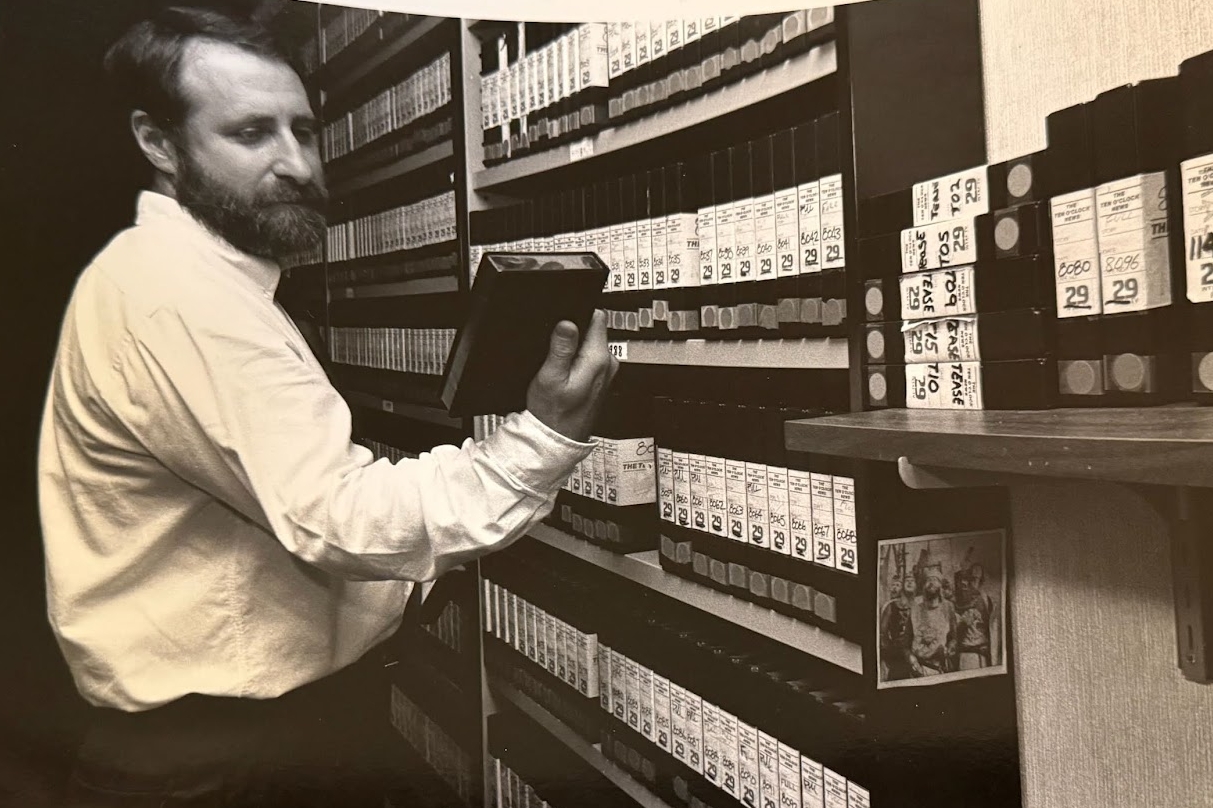
The son of two part-time amateur actors and a lifelong devotee of theater, film, TV, writing, and teaching, Mr. Wine was a film critic for WTXF-TV, Channel 29, for 12 years and KYW radio for 17 years. Known for his pithy, witty, and often acerbic reviews, and a breezy conversational style of writing, he worked at Channel 29 from 1990 to 2002 and KYW from 2001 to 2018.
“Bill Wine was a character out of a Neil Simon comedy, more Oscar than Felix,” said Carrie Rickey, former Inquirer movie critic. “You didn’t have to wait long for the punchline.”
Mr. Wine’s film reviews on Channel 29 were often funny and entertaining. Channel 29
At Channel 29, Mr. Wine was nominated for eight regional Emmy Awards for commentary and writing, and won three. He appeared regularly on the station’s Ten O’Clock News, in primetime movie preview and review programs, and later on Mondays, Wednesdays, and Fridays on Good Day Philadelphia.
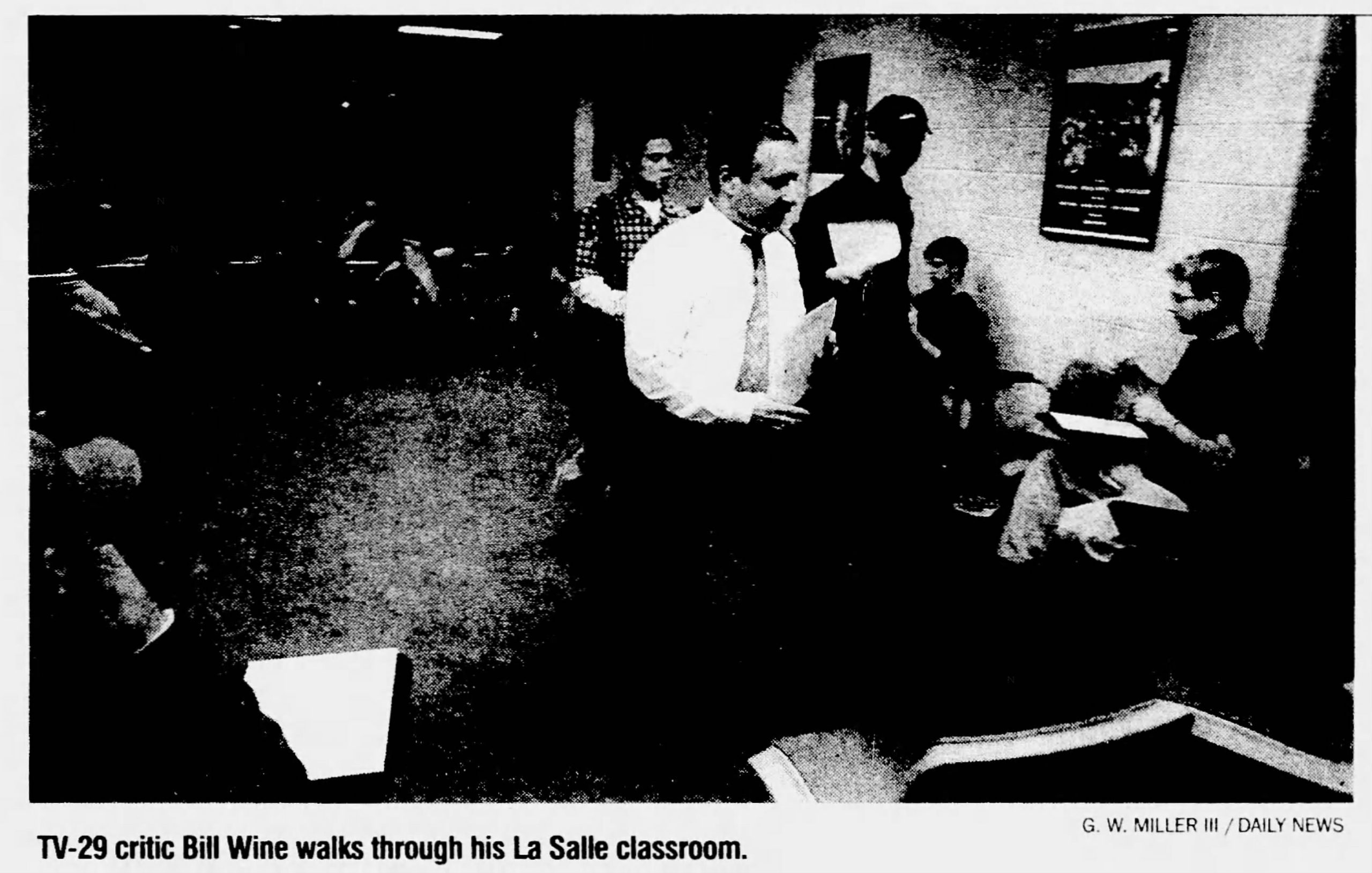
By 1990, he had already written hundreds of freelance film reviews for the Daily News and Courier-Post, done radio reviews for WPEN, and taught a variety of classes about film and writing for a decade at La Salle. So, despite no previous TV experience, he was hired at Channel 29 over 60 other film critic applicants.
“I had never been on TV, but I wasn’t nervous,” he told the Daily News in 2001, “because I had been standing in front of 100 students for 10 years.”
Mr. Wine worked at at WTXF-TV, Channel 29, for 12 years.Courtesy of the family
He started at KYW radio in 2001 and usually aired reviews and reports on Thursdays, Fridays, and Saturdays. Sometimes, he watched three movies in one day. He left Channel 29 in 2002 and KYW in 2018 only after both companies eliminated their local film critic position.
“When I started [writing film reviews], it was before the internet,” he told The Inquirer in 2018. “A lot of people [now] feel like, ‘Who the heck is a movie critic to come on in a minute and to dismiss something that took hundreds of people and millions of dollars to create?’”
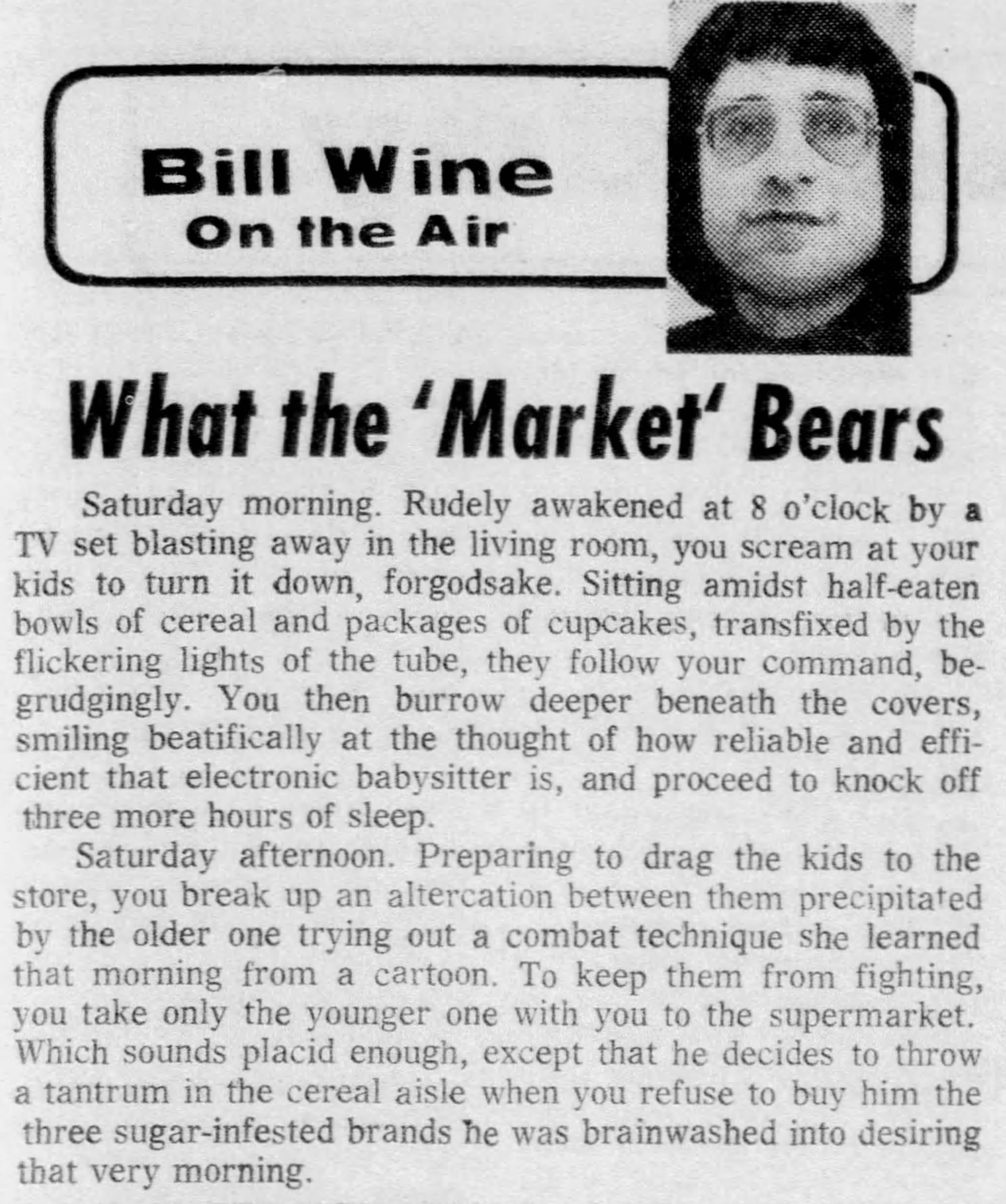
In the 1970s and ‘80s, he wrote articles and reviewed films, TV shows, books, and plays for WPEN, The Inquirer, Courier-Post, Philadelphia Magazine, and other outlets. In 1975, he wrote dozens of freelance TV columns called “On the Air” for the Daily News.
Mr. Wine wrote dozens of columns as a freelance TV critic for the Daily News in 1975.Newspapers.com
He spent three years in California in the 1970s working on plays and film and TV scripts. He hobnobbed with famous writers, producers, and actors in Los Angeles, staged one of his own plays, and was a winning contestant on a new TV game show.
He wrote 11 plays over the years, and several made it to the stage. “Now the people who disagree with my reviews can come and find out if I’m as dumb as they think I am,” he told The Inquirer in 2002.
He aired reviews on WIP radio and lectured often at libraries, schools, community centers, theaters, and other venues about his favorite films, adapting books to film, and other topics.“He could be wickedly funny, especially when delivering a pan of a movie,” his family said in a tribute. “One of his favorite quotes was: ‘I had a bad seat. It was facing the screen.’”
Mr. Wine was a prolific playwright who enjoyed table readings with family and friends. La Shina Clark / Staff Photographer
Mr. Wine earned a bachelor’s degree in math at Drexel University and a master’s degree in communications at Temple University. He helped design La Salle’s nascent Communication Department in the 1980s, and school officials called him one of their “Founding Fathers.” He also taught briefly at Drexel, and came close to earning a doctorate at Temple.
In 2001, he was featured in a Daily News story about “celebrity professors” and said: “You have to remind yourself that this is television, not the classroom. You mention, say, ‘film noir’ on TV, and you get a memo.”
William David Wine was born June 21, 1944, in Germantown. He grew up in West Oak Lane and Cherry Hill, attended Central High School, and graduated from the old Cherry Hill High School.
A story and this photo of Mr. Wine about his time as a professor at La Salle appeared in the Daily News in 2001.Newspapers.com
As a boy, he devoured newspaper movie reviews and fell in love with film after seeing Alfred Hitchcock’s 1954 thriller Rear Window. He got positive reviews of his own freelance movie review when he was at Temple, and he knew then, he said later, that writing about movies was his creative niche.
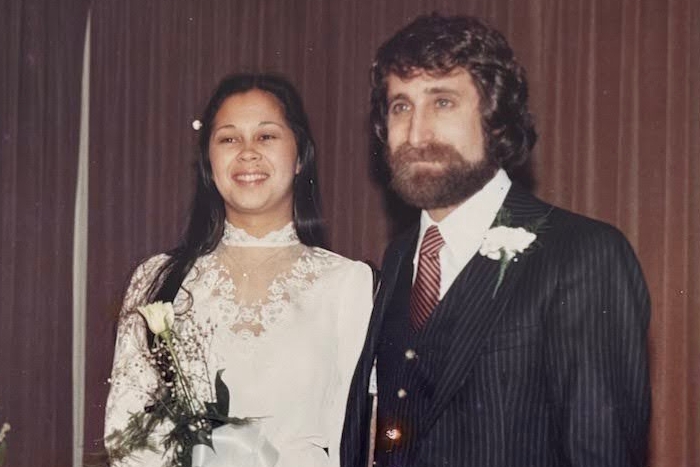
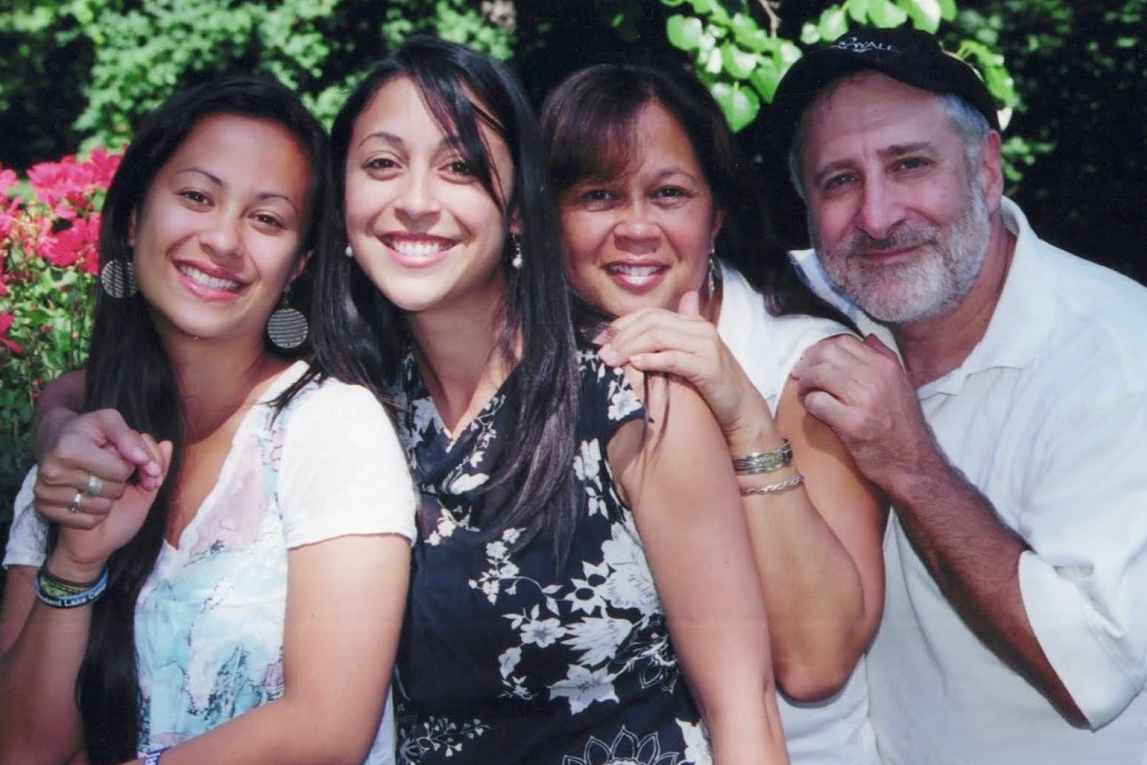
He married Dina Lichtman, and they divorced later. He married Suzanne Monsalud in 1981, and they had daughters Simone and Paulina, and lived in Germantown, Wyncote, and Chestnut Hill.
Mr. Wine and his wife, Suzanne, married in 1981.Courtesy of the family
Together, Mr. Wine and his family traveled to Paris and London, and he and his wife honeymooned in Rio de Janeiro, Brazil. He doted on his daughters and sometimes took them to his La Salle classroom, the Channel 29 TV set, and movie screenings.
Friends, former colleagues, and former students called him “a force of nature,” “smart and gifted,” and “a rare combination of kindness, professionalism, and humor.” His daughter Simone said: “His humor, warmth, and presence made life brighter.”
Mr. Wine played tennis, third base on adult softball teams, and pickup basketball into his 70s. He followed the Phillies, 76ers, and Eagles closely, and hit tennis balls with Hall of Famer Rod Laver at a publicity event in Los Angeles.
Mr. Wine and his family made memorable trips to Paris, London, and elsewhere. Courtesy of the family
“He was a wonderful father and a dedicated teacher,” his wife said. “He was a real Philadelphian, and we complemented each other.”
His daughter Paulina said: “Dad, I think you cracked the code. We’ll see you at the movies.”
Philadelphians sweated through Julys in the 1940s, brooding over World War II as temperatures averaged in the mid-to-upper 70s, including nighttime lows.
Today, as the city prepares to mark the nation’s 250th anniversary, they swelter under average July temperatures of around 80 degrees — and those nighttimes have gotten warmer.
Over the past 85 years, Julys in Philadelphia are running on average 4.4 degrees warmer than in 1940, based on an analysis of historical weather data. That translates to an increase of about 0.52 degrees per decade.
(function(){function e(){window.addEventListener(`message`,function(e){if(e.data[`datawrapper-height`]!==void 0){var t=document.querySelectorAll(`iframe`);for(var n in e.data[`datawrapper-height`])for(var r=0,i;i=t[r];r++)if(i.contentWindow===e.source){var a=e.data[`datawrapper-height`][n]+`px`;i.style.height=a}}})}e()})();
Nights are even toastier, showing a rise of 4.8 degrees over the same time period.
(function(){function e(){window.addEventListener(`message`,function(e){if(e.data[`datawrapper-height`]!==void 0){var t=document.querySelectorAll(`iframe`);for(var n in e.data[`datawrapper-height`])for(var r=0,i;i=t[r];r++)if(i.contentWindow===e.source){var a=e.data[`datawrapper-height`][n]+`px`;i.style.height=a}}})}e()})();
“Science shows that while summer heat is nothing new, climate change is pushing it beyond what we’ve experienced in the past,” Zachary Labe, a climate scientist at the nonprofit Climate Central, said in an email.
The Inquirer used 1940 as a base year in its analysis because it is the oldest year for consistent records at Philadelphia International Airport. The data from the National Oceanic and Atmospheric Administration’s Regional Climate Centers ends at July 2025.
The data does not include this July, which could set records.
105 degrees possible
The National Weather has issued an extreme heat warning with possible record highs starting Thursday and heading into the July 4 weekend.
And Philadelphia has declared a heat emergency, activating the city’s pioneering heat-response system.
High temperatures Thursday, Friday, and Independence Day are all forecast to top 100 degrees and threaten daily records. The current record highs for those dates are 103 degrees for Thursday, 104 for Friday, and 103 for the Fourth.
The record-warmest lows are 82, 77, and 79 for those days respectively, according to data from the National Weather Service’s Mount Holly office.
The weather service says dangerously hot conditions with heat index values between 100 and 110 degrees are expected each day. Very warm low temperatures in the mid-70s to the low 80s at night won’t offer much relief, the office noted.
When combined, multiple days of such high temperatures and humidity will exacerbate impacts, say those meteorologists. The hottest conditions are expected Thursday through Friday.
Climate change
Although it’s difficult to pin any single heat wave to climate change, the majority of climate scientists say the burning of fossil fuels has led to ever-increasing amounts of heat-trapping greenhouse gases in the atmosphere and transformed the climate.
The Princeton-based Climate Center says human activities have warmed the planet by about 1.2°C (2.2°F) above pre-industrial levels. The Princeton-based organization of scientists says that since 1970, July has warmed in 94% of the 243 U.S. cities it studied. Temperatures for the month have risen by 2.6 degrees on average.
“That includes hotter and more humid nights like those this week, which raise health risks because the body has less time to cool down and recover,” Labe said.
A big impact on cities
Excessive heat hits urban areas like Philadelphia hard, said Mathy Stanislaus, of the Philadelphia Climate Justice Collective.
The collective is a partnership of the Mantua Civic Association, SEAMAAC, Esperanza, Overbrook Environmental Education Center, and the Environmental Collaboratory at Drexel University. Stanislaus is vice provost and executive director of The Environmental Collaboratory.
In the most densely populated, least tree-lined parts of Philadelphia temperatures can soar 20 degrees higherthan in greener, wealthier neighborhoods, he notes.
That’s because of the heat island effect, which occurs when cities are significantly warmer than surroundingareas because of the lack of tree canopy combined with high concentrations of heat-absorbing pavement, dark roofs, and buildings.
It’s something many people in the suburbs, or wealthier areas, might not think about, Stanislaus said.
“I don’t think people realize the gravity of the circumstances for lower income urban communities who have an affordability crisis compounded by the heat crisis,” he said.
Stanislaus said some households in the city don’t have air-conditioning, and those that do can face a choice as to whether they should use it or not.
“Even if they have an AC, they may not be able to afford to actually run it,” he said.
According to a report by the collective, Philadelphia households overall on average spend about 6.7% of their income on energy, but that the burden is much higher for Black and Hispanic households. The poor conditions of many homes because of their age contribute to the strain.
Stanislaus says temperatures strain critical public and healthcare systems.
He credits Philadelphia for its array of cooling centers, pools, and spraygrounds. But, he said, many residents are notaware of them or lack transportation. He’d like to see more money devoted to public awareness during heat waves.
In addition, he said healthcare systems need more staff trained in heat-related care and education, as well as better tracking heat-related illnesses and deaths.
There has been one death attributed to heat so far this year, according to data from the Philadelphia Department of Public Health. In the past two decades, the biggest number of deaths came in 2011 and 11 with 35. But the city has upped its response measurably since then and the number of deaths has trended down.
Stanislaus believes heat-related deaths and illnesses are underreported.
“There’s an urgency to heat,” Stanislaus said. “We need to meet the moment.”