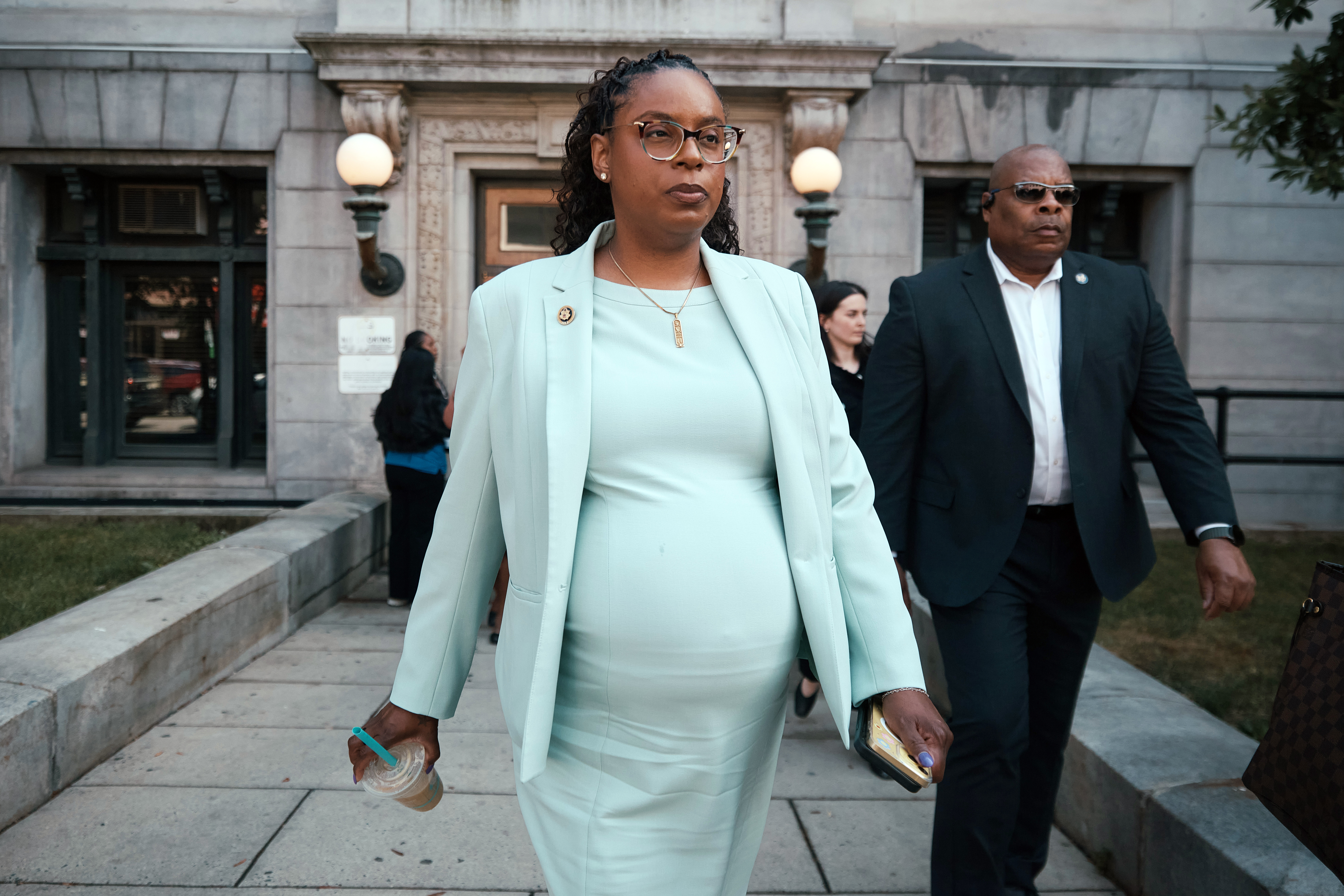
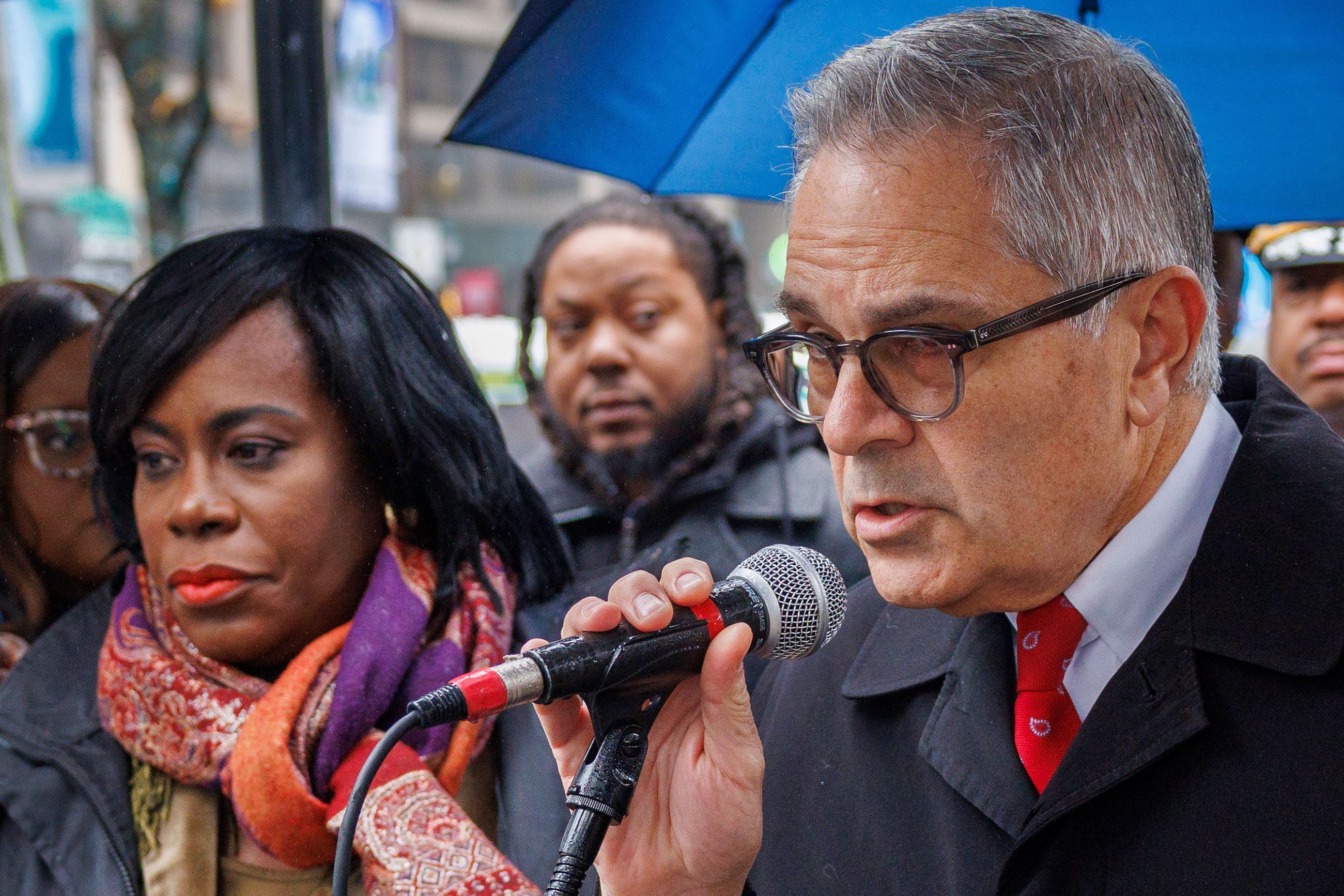
U.S. Rep. LaMonica McIver hasn’t put her life on hold to fight what she sees as totally unfounded charges by the Trump administration that she supposedly assaulted a U.S. Immigration and Customs Enforcement (ICE) officer during a protest last year.
Instead, the first-term Democratic congresswoman is expecting her second child next month, she’s up for reelection in November, and because of Congress’ backward policies on parental leave (as in, there are none), she continues to put in long hours representing New Jersey’s 10th Congressional District, which includes her hometown of Newark.
Lurking in the background, however, is the knowledge that if convicted on two charges of assaulting an ICE officer, she could be sentenced to as much as 17 years in prison.
It’s way more than most people in her situation could handle.
McIver’s inner strength is next level.
She is running for reelection on Nov. 3 while fighting efforts by the Trump administration to make an example out of her. McIver is also repping her constituents in Newark in Washington, D.C., all while caring for — and expanding — her family.
Her journey to motherhood hasn’t been easy. McIver, 40, has spoken openly about her yearslong struggles with fibroids, her use of in vitro fertilization (IVF), and her opposition to President Donald Trump’s merciless immigration enforcement campaign. She hopes her candor resonates with women who also are trying to balance career, pregnancy, and motherhood.
Meanwhile, she is scheduled to give birth to her second child on Oct. 16. After she delivers, McIver will become one of fewer than 20 members of Congress ever to have done so.
My jaw dropped during the interview in which McIver informed me that as a member of Congress, she isn’t entitled to maternity leave. Postpartum, McIver also won’t be able to cast votes for legislation remotely or by proxy.
“They give you nothing,” McIver said. “It makes no sense that you have to give birth and instead of focusing on healing and nursing, you have to literally put that to the side and share that with getting back to work. It’s honestly disgusting. It’s unbelievable in 2026 that this is where we are still at.”
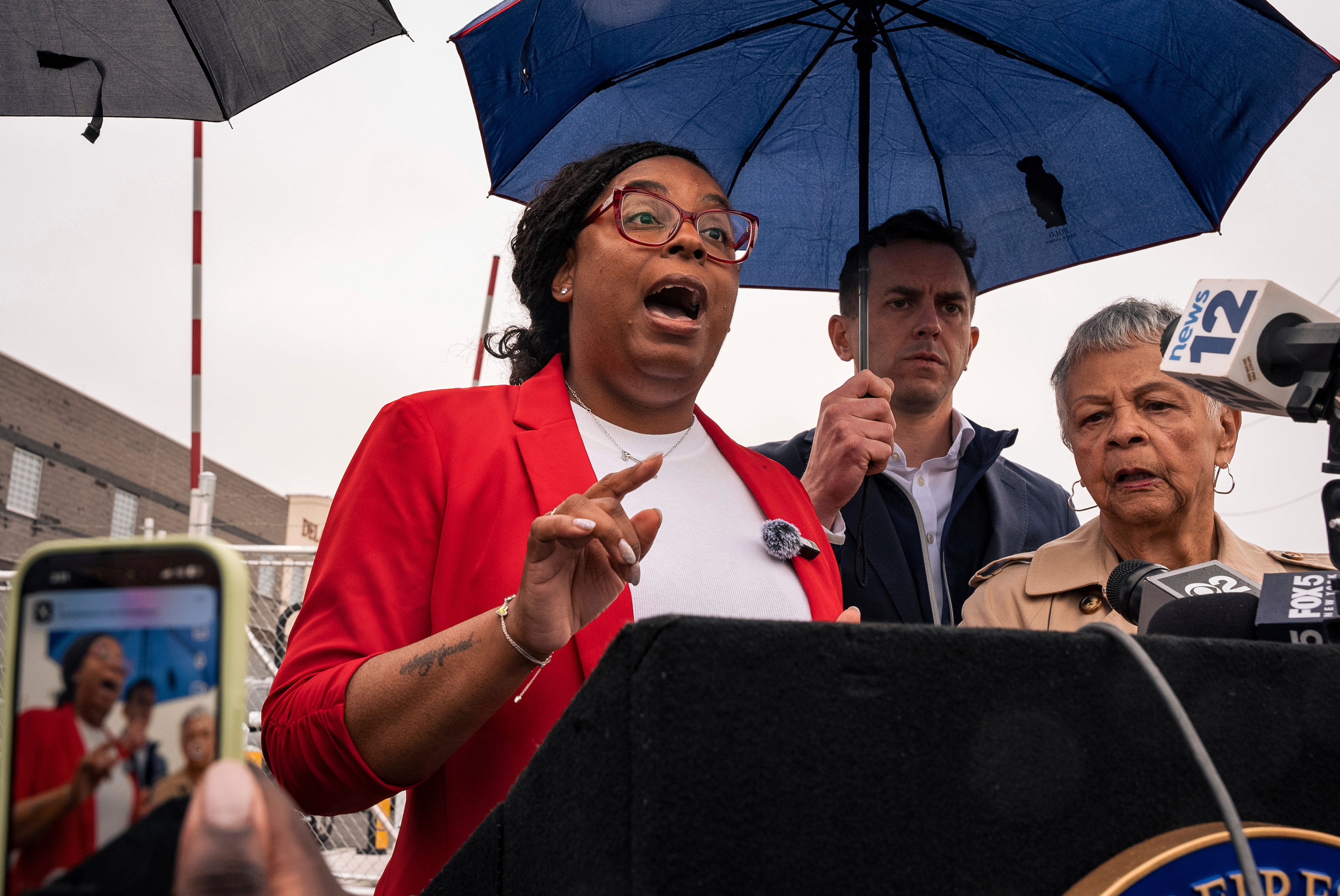
U.S. Rep. LaMonica McIver (D., N.J.) speaks to reporters after Newark Mayor Ras Baraka was arrested while protesting at the Delaney Hall ICE detention center in May 2025.Angelina Katsanis
Legislation that would have greatly helped her and other members of Congress in her position failed to garner adequate Republican support to pass last year. McIver blamed House Speaker Mike Johnson, among others, whom she said “don’t give a damn — and don’t want to make this a place that works for moms because they don’t want moms here.”
After the election on Nov. 3, McIver intends to immediately return to Washington and get back to work. Luckily, she will have help from her “great village” that includes her mother. “I’m a stickler about not missing votes,” McIver pointed out, adding, “There are so many things that Republicans are going to be trying to do.”
McIver, along with several other elected officials, had been attempting to inspect conditions at Delaney Hall, a 1,000-bed facility along an industrial stretch of land near Newark Liberty International Airport in May 2025 when a scuffle broke out.
McIver placed herself next to Newark Mayor Ras Baraka to shield him during the melee. I’ve watched the video numerous times. It doesn’t show her throwing a punch or striking anyone. No one was injured, either. But that didn’t stop Alina Habba, a former defenselawyer for Trump who briefly served as a U.S. attorney inNew Jersey, from filing assault charges against McIver.
McIverattempted to get the charges dismissed. In August, an appeals court ruled that McIver’s actions were nonlegislative and not protected by constitutional immunity, which clears the way for legal proceedings against her to proceed.
Glynda C. Carr, the founder of Higher Heights for America PAC, described what happened as a “flash point” of the anti-immigration detention center movement that future generations will read about in history books.
“This is bigger than LaMonica McIver,” Carr said, adding that the case could establish a baseline for whether elected officials will be permitted to conduct oversight of ICE detention centers without fear of prosecution.
As for McIver, I’m sure her case will be tied up in the courts until after Trump leaves office, and then thrown out once new people come into office. Meanwhile, becausemembers of Congress are prohibited from accepting pro bono legal work, McIver has to raise money to pay her legal bills, which are expected to exceed $1 million.
It’s a lot to juggle, along with being pregnant, serving as a member of Congress, and being under attack by a government hell-bent on making life more difficult for working women, especially African American women.
One in four likely Pennsylvania GOP voters has not heard of the state’s Republican candidate for governor, as Gov. Josh Shapiro continues to pull ahead with less than six weeks remaining until Election Day, according to a new poll.
According to the poll, Shapiro’s lead has now expanded beyond the advantage he held the month before the 2022 election against State Sen. Doug Mastriano (R., Franklin). Shapiro went on to beat Mastriano in that election by nearly 15 percentage points, or 800,000 votes — a drubbing that the GOP vowed not to repeat.
(function(){function e(){window.addEventListener(`message`,function(e){if(e.data[`datawrapper-height`]!==void 0){var t=document.querySelectorAll(`iframe`);for(var n in e.data[`datawrapper-height`])for(var r=0,i;i=t[r];r++)if(i.contentWindow===e.source){var a=e.data[`datawrapper-height`][n]+`px`;i.style.height=a}}})}e()})();
Pennsylvania Republicans endorsed Garrity in September 2025 — an unprecedented early nod to unify behind her in an effort to put up a stronger fight against Shapiro after the party largely withheld its support for far-right Mastriano. Garrity has won statewide twice and received the most votes in Pennsylvania history for a statewide office, a record previously held by Shapiro. In January, President Donald Trump endorsed Garrity, calling her “an America First Patriot.”
But building on that early enthusiasm has proven to be a challenge for Garrity, who for months has struggled to raise money, compete with Shapiro’s $60 million war chest, and gain name recognition in the critical battleground state where registered Democratic voters narrowly outnumber Republicans.
Garrity, 63, who entered politics in 2020 after a long career in the U.S. Army Reserve, raised only $1.8 million this summer and spent $1.5 million, according to her latest campaign finance filing, posted Tuesday. Shapiro raised $13.3 million during that time and spent $31 million.
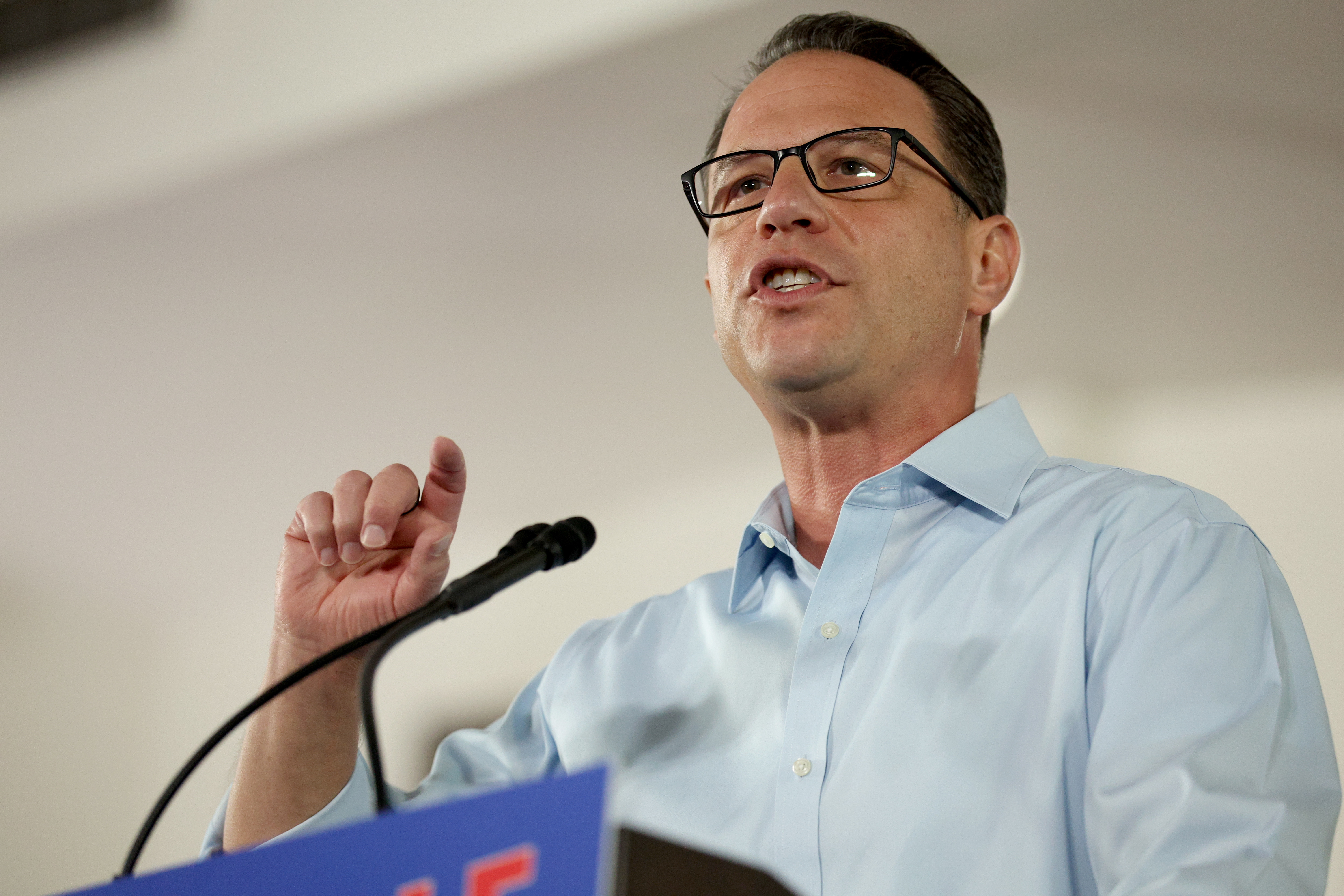
Gov. Josh Shapiro addresses the audience during a rally for congressional candidate Bob Brooks at the United Steelworkers Union Hall in Bethlehem, Pa. on Sunday, July 26, 2026.David Maialetti / Staff Photographer
And while Shapiro has dramatically increased his advertising spending on TV and streaming services to top $27 million this year, Garrity has spent a total of $744,000 on ads so far, according to media tracking firm AdImpact.
Both Shapiro and Garrity have released ads attacking each other for their past support for data center development, an increasingly unpopular issue among both Republicans and Democrats. Garrity’s ad criticizing Shapiro has been viewed about 802,000 times in the Philadelphia media market, according to AdImpact. Shapiro’s commercial labeling Garrity as “Pennsylvania’s number one fan of data centers” has been viewed 416 million times.
(function(){function e(){window.addEventListener(`message`,function(e){if(e.data[`datawrapper-height`]!==void 0){var t=document.querySelectorAll(`iframe`);for(var n in e.data[`datawrapper-height`])for(var r=0,i;i=t[r];r++)if(i.contentWindow===e.source){var a=e.data[`datawrapper-height`][n]+`px`;i.style.height=a}}})}e()})();
“Within the data right now, Josh Shapiro is a favorite son in the state of Pennsylvania, and they see him as doing a fantastic job,” said Don Levy, the director of the Siena Research Institute, which conducted the poll of 615 likely Pennsylvania voters from Sept. 15 to 21. “Barring double lightning bolts or a triple rainbow, he’s going to win.”
Garrity’s lack of campaign spending has allowed Shapiro to define her in the race, experts have said.
George Stanton, 77, a registered Republican from Lebanon County who participated in the poll, said he will support Garrity in November. He said Shapiro’s attack ad about Garrity’s past support for data centers, which he said he agrees with, helped him learn more about her positions.
Voters trust Shapiro more than Garrity on all of the top issues facing them, the poll found, including the state’s economy, the cost of living, data centers and artificial intelligence companies, and vaccine policy. In recent weeks, Shapiro has been embroiled in a battle with U.S. Health and Human Services Secretary Robert F. Kennedy Jr., whom he has blamed for spreading misinformation as Pennsylvania experienced a deadly measles outbreak. And at a summit in Pittsburgh last week, Shapiro called for more regulation of AI companies but said innovation of the technology should still be harnessed.
(function(){function e(){window.addEventListener(`message`,function(e){if(e.data[`datawrapper-height`]!==void 0){var t=document.querySelectorAll(`iframe`);for(var n in e.data[`datawrapper-height`])for(var r=0,i;i=t[r];r++)if(i.contentWindow===e.source){var a=e.data[`datawrapper-height`][n]+`px`;i.style.height=a}}})}e()})();
Scott Byers, 79, a Republican from Westmoreland County who supported Trump in 2024, is planning to vote for Shapiro this fall because “he just seems to be more in line with the public, with the feelings of his constituents.”
That includes Shapiro’s position on AI and data centers, which Byers believes should be more difficult to build. All he knows about Garrity’s views is what he catches on commercials — but it does not feel comprehensive, said Byers, who participated in the poll.
“I think technology in itself is going a bit beyond what is necessary. I feel that it’s hard to pinpoint, but I just feel that there’s too much emphasis on technology,” Byers said.
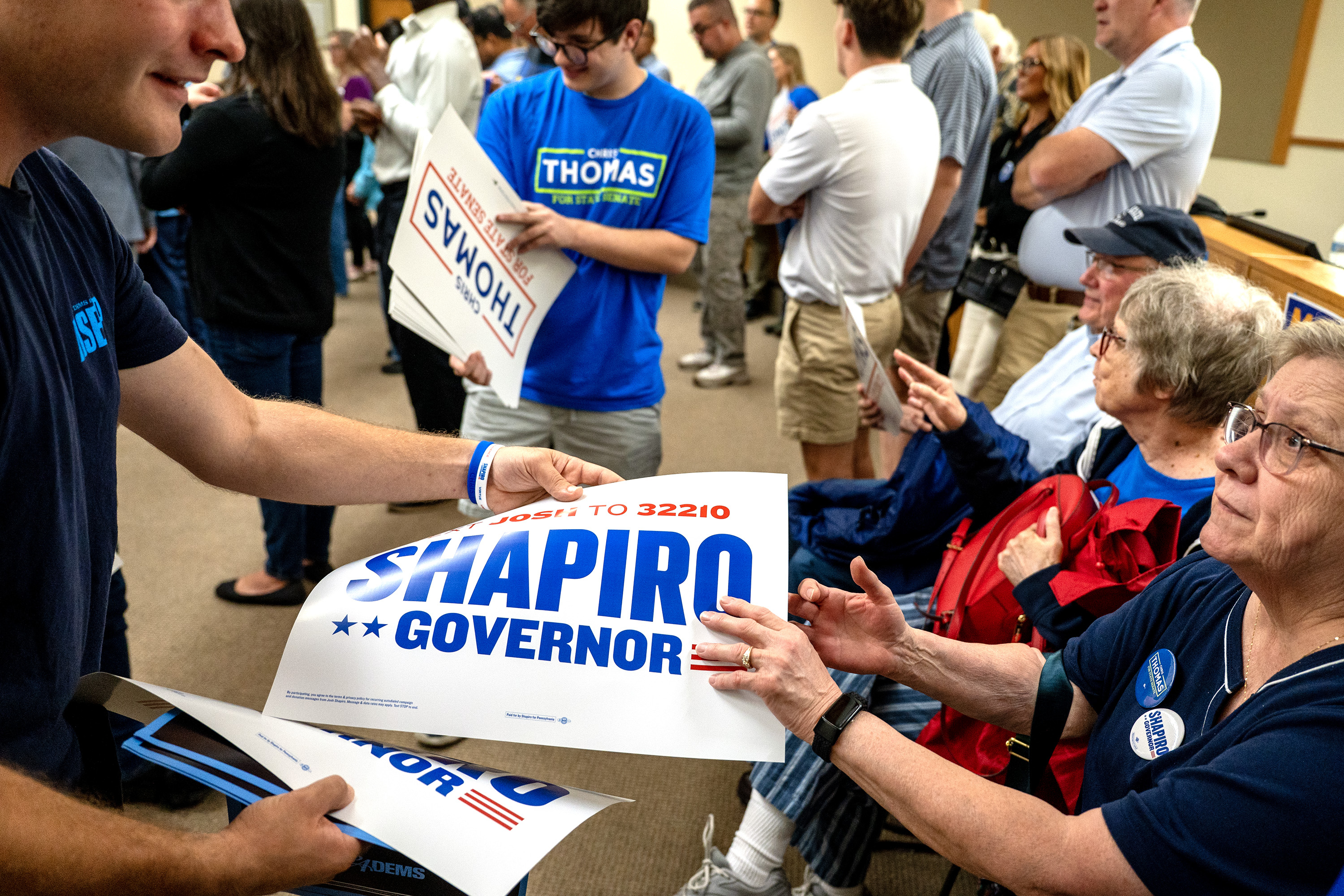
Campaign volunteers hand out signs to supporters of Gov. Josh Shapiro and Democratic Pa. Senate candidate Chris Thomas at a rally in Towamencin, Montgomery County before heading out to canvass on Sunday, Sept. 29, 2026.Tom Gralish / Staff Photographer
Approximately 60% of likely voters strongly approve or somewhat approve of the job Shapiro is doing as governor, according to the poll. That includes 30% of Republican voters, 89% of Democratic voters, and 59% of independents in the critical swing state where Shapiro maintains high popularity.
As a moderate politician, Shapiro has been able to capture most independent voters and even win over some Republicans, according to the poll.
Lesa Yeager, 63, considers herself an independent voter with centrist views who voted for a third-party candidate in the 2024 presidential election. She is an ardent union supporter and also thinks the nation should have a strong border. She said she trusts Garrity, as the state’s treasurer, to do a better job handling Pennsylvania’s economy.
But she is supporting Shapiro this November, in large part, because of his work on schools.
“I like that he’s very pro-education,” she said. “I am a fan of charter schools because I sent my kids to charter schools.”
Two of her children, now 35 and 37, benefited from smaller classroom sizes and adjustable curriculums, she said.
Yeager said she has also reached her limits with Trump’s behavior during his second term and believes Shapiro would continue to represent the state positively.
“I just think Trump is such a bully and so mean and just does whatever he wants, and I just want someone who isn’t that,” Yeager said.
She appreciates the Republicans who distance themselves from Trump. “But it’s tough to tell who is and who isn’t, a lot of times, and I would rather vote for someone I know isn’t going to support Trump on a lot of the things that he does,” she added.
Still, Garrity has found some backing among Pennsylvania’s electorate, though even some of those supporters say they don’t know much about her.
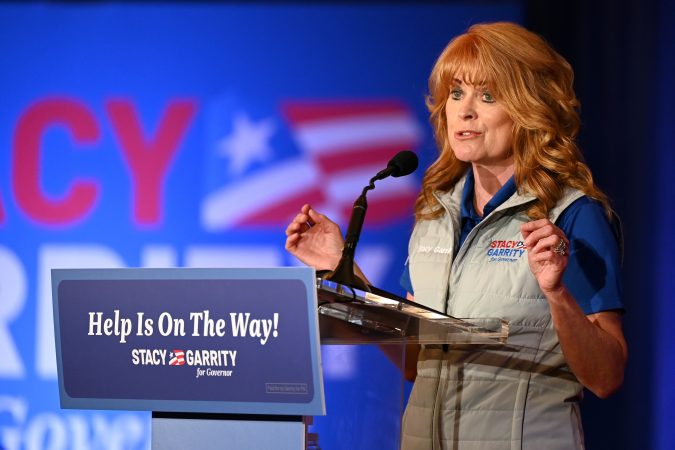
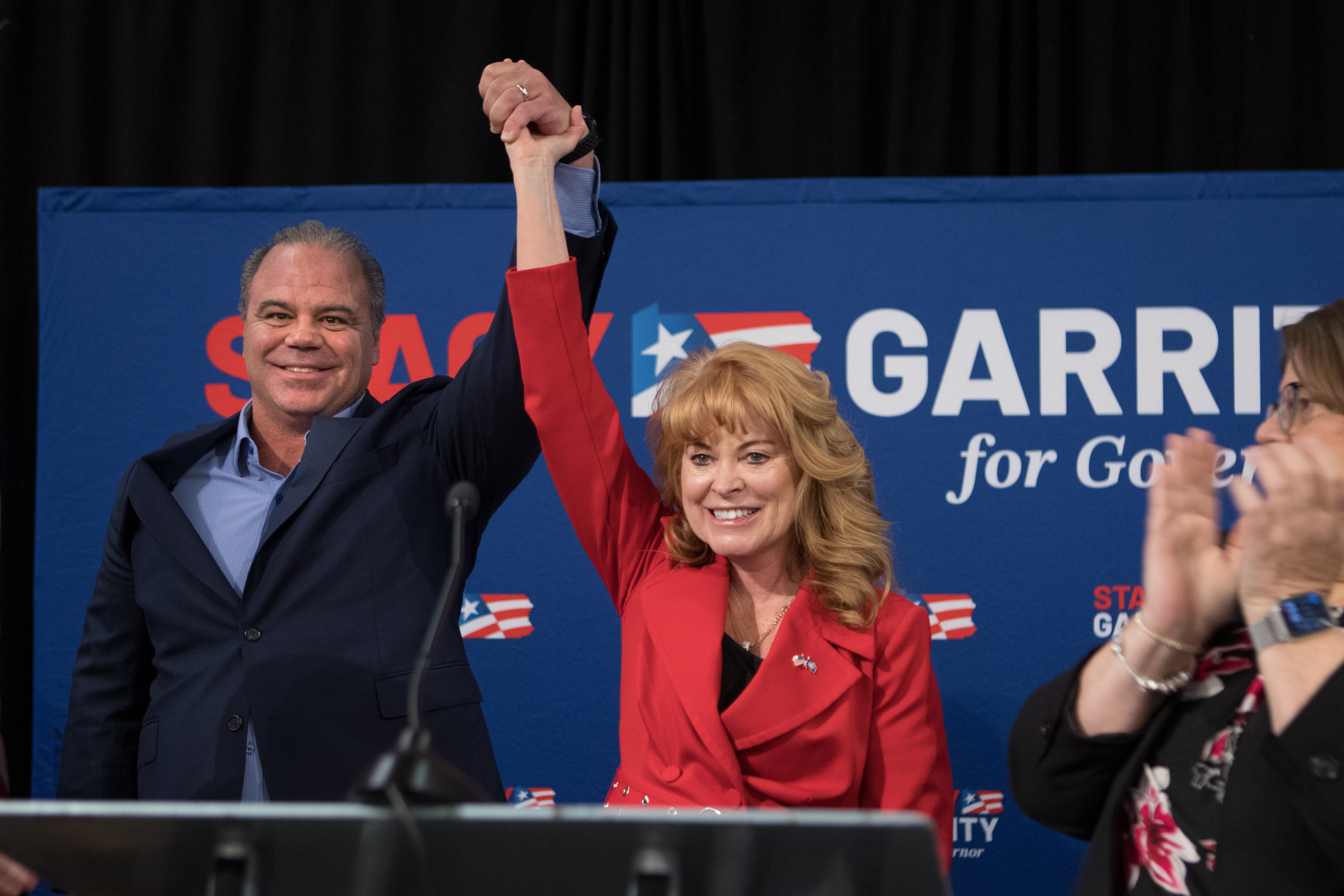
GOP gubernatorial nominee Stacy Garrity and her running mate Jason Richey hold up their arms in Harrisburg, Pa., Saturday, February 7, 2026. Kalim A. Bhatti / For The Inquirer
Susan Roller of Lancaster said she plans to vote for Garrity this fall because “she’s more responsible and will protect our freedoms.” Roller, who is retired, said she is particularly distressed about Shapiro’s positions supporting access to abortion and encouraging vaccines.
But as far as getting to know more about Garrity, Roller, 72, said she has not “seen a lot” of messaging on television about her.
In 2022, Shapiro did not participate in any debates while he maintained a double-digit lead over Mastriano, declining the Republican’s requests as an “unserious stunt.” Shapiro held a 13-percentage-point lead over Mastriano in a New York Times/Siena poll conducted that October — a closer margin than Shapiro’s lead over Garrity this year.
(function(){function e(){window.addEventListener(`message`,function(e){if(e.data[`datawrapper-height`]!==void 0){var t=document.querySelectorAll(`iframe`);for(var n in e.data[`datawrapper-height`])for(var r=0,i;i=t[r];r++)if(i.contentWindow===e.source){var a=e.data[`datawrapper-height`][n]+`px`;i.style.height=a}}})}e()})();
The 2022 midterm election was a much different political moment for Democrats, said Levy of the Siena Research Institute.
“That was a point in time when the Democratic star was on the decline,” he added. “Everything was a bit of a referendum on Democrats, on the job that [former President Joe] Biden was doing, how we were coming out of the pandemic.
“The overall political climate in which the ’26 election is taking place vs. ’22 is really kind of night and day,” Levy said.
Staff writers Joe Yerardi and Fallon Roth contributed to this article.
Pennsylvania voters are giving President Donald Trump worse grades on key economic issues than they did a month ago — a sign of a potentially dimming outlook for Republicans as the president asks voters to act as if he is on the ballot this fall.
Trump’s overall job-approval rating among likely voters in the state has dropped 5percentage points since Augustand now sits at 34%, with 63% disapproval, according to a new Inquirer/New York Times/Siena University poll published Thursday.
His handling of the economy and the cost of living, which consistently rank as voters’ top concerns this year, is viewed negatively by a larger share of his own Republican supporters and of voters in general than it was last month, according to the poll of 615 likely voters conducted from Sept. 15 to 21.
Gas prices are Trump’s worst-performing issue amongall Pennsylvania voters and among those who voted for the president in 2024, when he won the swing state by nearly 2 percentage points.
That includes Robert Jenkins, 47, of East Stroudsburg, who said Trump is now running the country like a “cowboy” and has not lived up to the promises he made to bring down prices.
(function(){function e(){window.addEventListener(`message`,function(e){if(e.data[`datawrapper-height`]!==void 0){var t=document.querySelectorAll(`iframe`);for(var n in e.data[`datawrapper-height`])for(var r=0,i;i=t[r];r++)if(i.contentWindow===e.source){var a=e.data[`datawrapper-height`][n]+`px`;i.style.height=a}}})}e()})();
And with rising gas prices, the Republican is just thankful that his truck does not run on diesel.
“Now we’re at like $4.35, $4.40, and I just don’t understand it. I know we’re having the thing with Iran, but I didn’t ever feel in my life that we were that dependent on Iranian oil,” said Jenkins, who works in the registrar’s office at East Stroudsburg University.
As both parties go all-out to motivate their bases — especially in Pennsylvania, where four key races could determine control of the U.S. House — Democrats clearly have an enthusiasm advantage fueled by a backlash to Trump’s agenda.
Just under six weeks out from Election Day, about two-thirds of likely Democratic voters are “very enthusiastic” to cast their ballots, while just half of Republican voters say they feel the same way.
Alex Hansen, 35, a pharmacist and Democrat from Bucks County, said the midterms have become a “referendum” on the Trump administration.
“The things he’s said and done are just so beyond the pale and unacceptable. … I don’t think it should have to be a public referendum on the federal administration, but that’s what it’s become,” said Hansen, who participated in the survey.
(function(){function e(){window.addEventListener(`message`,function(e){if(e.data[`datawrapper-height`]!==void 0){var t=document.querySelectorAll(`iframe`);for(var n in e.data[`datawrapper-height`])for(var r=0,i;i=t[r];r++)if(i.contentWindow===e.source){var a=e.data[`datawrapper-height`][n]+`px`;i.style.height=a}}})}e()})();
Will voters punish Republicans for Trump’s agenda?
As Democrats look to win control of the U.S. House, they are targeting Trump’s handling of affordability issues specifically — mostly highlighting rising inflation and spiking gas prices due to the war in Iran.
Just 24% of voters approve and 73% disapprove of his handling of prices at the pump, the poll found. Half of Pennsylvania voters who cast their ballots for Trump in 2024 also disapprove.
Don Levy, the director of the Siena Research Institute, said as Trump’s approval rating continues to decline, he expects more GOP politicians running in competitive swing districts to distance themselves from the president.
“There’s tremendous frustration with the president,” Levy added.
Republican candidates have largely avoided talking about gas prices, highlighting instead the tax cuts and other economic policies the GOP-controlled Congress and White House haveenacted in the last two years.
A bipartisan Ratepayer Protection Act ushered through the House by Republican leaders last week, for instance, aims to prevent data centers from passing on energy costs to consumers. The National Republican Campaign Committee called it a “huge step” in statements praising Pennsylvania Republican lawmakers’ votes for the bill,which has yet to pass the Senate and might not do so before the election.
On the economy overall, Trump gets positive ratings from just 34% of all voters and 75% of self-identified Republicans — which is less than the 39% and 81% he got, respectively, in August.
Onthecost of living,25% of all voters and 62% of Republicans give him positive marks, an 8-percentage-point drop for all voters and an 11-point drop for Republicans from a month ago. At the same time, his positive approvals around immigration and the war in Iran, at 42% and 31%, respectively, have remained about the same.
(function(){function e(){window.addEventListener(`message`,function(e){if(e.data[`datawrapper-height`]!==void 0){var t=document.querySelectorAll(`iframe`);for(var n in e.data[`datawrapper-height`])for(var r=0,i;i=t[r];r++)if(i.contentWindow===e.source){var a=e.data[`datawrapper-height`][n]+`px`;i.style.height=a}}})}e()})();
Pennsylvania Republicans may now have to grapple with that reality at the ballot box.
They are defending four competitive districts out of Pennsylvania’s 17 U.S. House seats. And three are running for reelection in what independent election experts consider some of the few “toss-up” races nationwide — U.S. Rep. Ryan Mackenzie, in the Lehigh Valley and Poconos; U.S. Rep. Rob Bresnahan, in a Scranton-based Northeast Pennsylvania region; and U.S. Rep. Scott Perry, in a Harrisburg-based district.
U.S. Rep. Brian Fitzpatrick, a Republican facing a challenge from Democratic Bucks County Commissioner Bob Harvie, is also in a competitive race drawing national attention.
The vulnerable Republicans have taken different approaches. Mackenzie and Bresnahan spoke at the first-ever GOP convention in Dallas earlier this month, when Trump pleaded with his supporters to turn out as if he was also on the ballot. Perry, a staunch Trump ally, also attended.
U.S. Rep Brian Fitzpatrick (R., Bucks) and his Democratic challenger Bob Harvie (third from right) attend the Garden of Reflection remembrance ceremonies Friday, September 11, 2026 at Garden of Reflection in Yardley, Pennsylvania.William Thomas Cain / For The Inquirer
But how Trump’s approval ratings — and the fact that 56% of likely voters want to see Democrats control the House — factor into those races remains to be seen.
Jenkins, the East Stroudsburg Republican, said Trump’s handling of the economy will not affect his vote for Bresnahan because the lawmaker has regularly shown up to the events he leads at a veterans’ association in Monroe County.
Hansen, the Democratic voter from Bucks County, said he is leaning toward voting for Fitzpatrick in the 1st Congressional District race, but he said he could be open to picking Harvie once he learns more about the candidate’s priorities and “what he plans to do to oppose his Republican colleagues and Trump’s agenda.”
The pharmacist said he and his wife, who was laid off three months ago, are tightening their purse strings to deal with rising costs as they care for their young child and another on the way.
But he said he does not view Fitzpatrick as being totally roped into Trump’s negative perception.
The Bucks County lawmaker is the least loyal House Republican to the president and the GOP, but he has still voted with Trump and his party nearly 70% and 77% of the time, respectively, this term, a recent Inquirer analysis found.
“Fitzpatrick has put up at least a little bit of resistance, which is better than, you know, a lot of the sock puppets that Republicans have right now in Congress,” Hansen said.
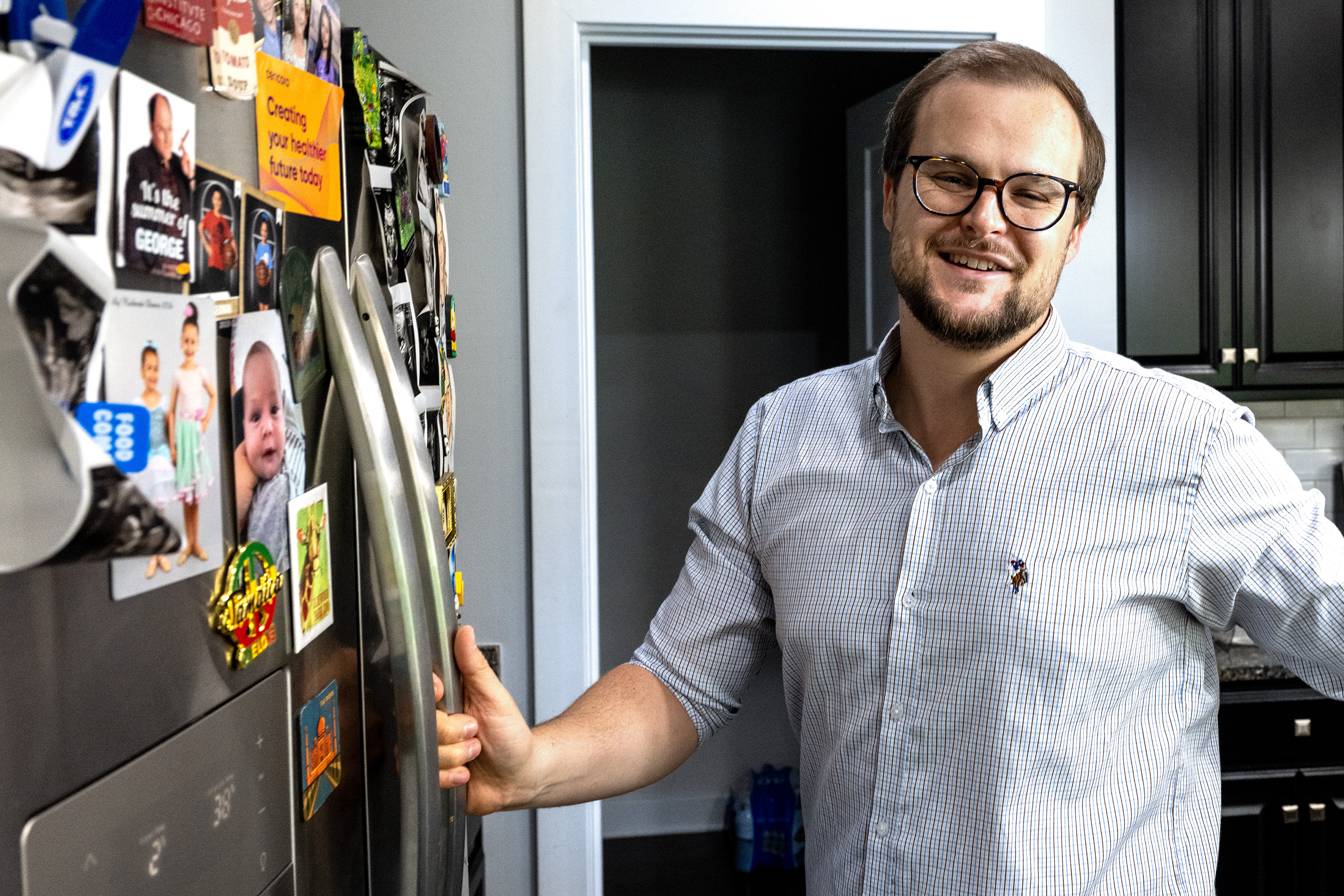
Alex Hansen at his Bucks County home Tuesday, Sept. 22, 2026. He is one of the voters who participated in an Inquirer/New York Times/Siena University poll that showed dissatisfaction with President Donald Trump. Tom Gralish / Staff Photographer
How affordability became No. 1 for Democrats this fall
In the final weeks before the midterm elections, Harvie’s campaign plans to keep tying Fitzpatrick to the affordability crisis. That includes highlighting the Republican lawmaker’s vote to advance the One Big Beautiful Bill Act in the House(before voting against its final passage weeks later) — but also not necessarily aligning him with Trump.
“It is really about pointing out what Brian Fitzpatrick has done, the votes he’s taken, and how those votes have affected people in this district,” Harvie said in an interview with The Inquirer Editorial Board on Tuesday.
“Now, are they Trump priorities, too? They are, sure, but it’s not necessarily just hanging Trump around his neck. He’s kind of done that to himself.”
Harvie and his counterparts in the other swing districts are zeroing in on cost-of-living issues amid voters’ plummeting dissatisfaction with Trump’s handling of the economy.
Janelle Stelson, a former local TV reporter running against Perry, highlighted the cost of a cheeseburger in a recent ad that referred to Perry’s support of Trump’s tariffs and a separate proposal that would eliminate income and other taxes in favor of a national sales tax. The average cost of a pound of ground beef, which she pegged at $7.29, is more than the $7.25 federal minimum wage.
Stelson’s campaign said in a statement that Perry “has made life more expensive for Central Pennsylvanians, voting to raise the price of utilities, gas, and housing while gutting benefits for working people.”
In a statement, Perry said his platform on affordability includes eliminating taxes on tips, overtime, and Social Security. Perry also said he supports reducing electricity costs and raising child tax credits.
“We draw a strong contrast with our opponent on the kitchen table economic issues that are front and center with Voters,” Perry wrote in the statement,which also disputed Stelson’s ties in the district.
Spokespersons for Fitzpatrick and Bresnahan did not respond to a request for comment.
Paige Cognetti, the Democratic mayor of Scranton, who is running against Bresnahan, has contrasted Northeastern Pennsylvania voters’ struggles with rising costs against Bresnahan’s personal wealth and stock-trading while in office.
“While Rob’s cashing in, NEPA families are paying the price. His corruption is costing us and that’s why he will lose in November,” a Cognetti spokesperson said while noting “record diesel prices, cost-raising tariffs, and sky-high healthcare premiums.”
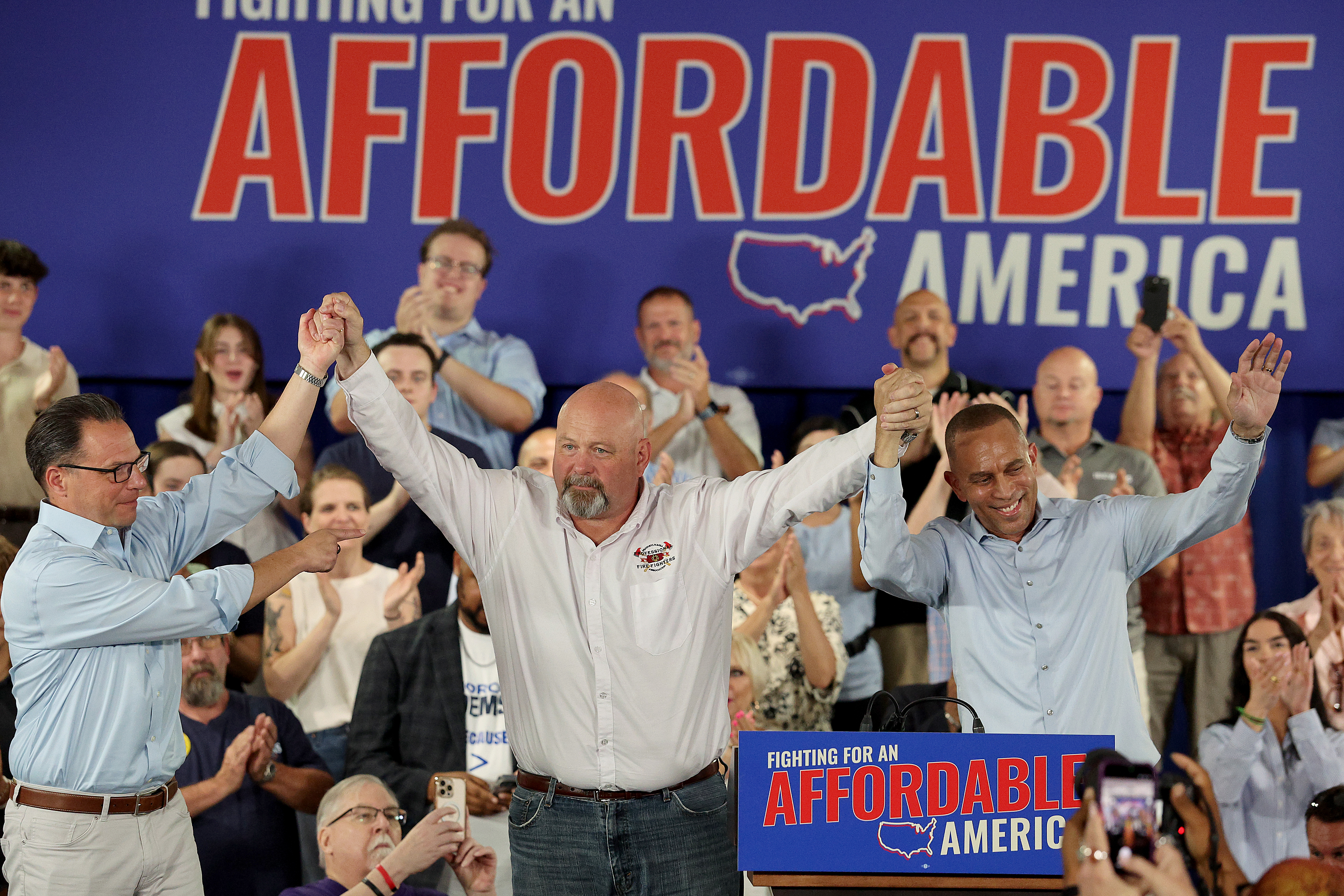
Governor Josh Shapiro (left) and Minority Leader Hakeem Jeffries (right) pose after rally for Congressional candidate Bob Brooks (center) at the United Steelworkers Union Hall in Bethlehem, Pa. on Sunday, July 26, 2026.David Maialetti / Staff Photographer
In Mackenzie’s district — where the freshman Republican squeaked through one of the narrowest races in the country two years ago — Ronalyn Birnbaum of Carbon County said she has been working since she was 13 years old. Now, at 69, she said, she has come to terms with not having the money to retire and afford groceries, Medicare, and her inhaler.
“I’m going to give [Brooks] a shot only because I know that Ryan Mackenzie sticks up for a lot of the Trump policies and procedures,” said Birnbaum, a Democrat.
Andres Weller, Mackenzie’s campaign manager, criticized Brooks’ platform in a statement and said Mackenzie favors “commonsense reforms” and is “running on his bipartisan record of delivering for our community.”
Benny Stanislawski, a Brooks campaign spokesperson, said in a statement that the Democrat is “running to bring costs down for working families Mackenzie has left behind,” including through the Republicans’ vote for the One Big Beautiful Bill.
As Democrats’ messaging appears to gain traction, 53%of respondents in The Inquirer/New York Times/Siena poll said they would be more likely to vote for the Democratic candidate in their congressional district, while 44% said they would choose the Republican. The poll did not ask about specific races.
Both parties still have work to do on their brands. A majority of likely voters see each party as focused on the wrong things — 51% for Democrats and 59% for Republicans.
Birnbaum said the problems she hopes voters can address at the ballot box — like the cost of living — have been a long time coming.
“This country should have been fixed a long time ago, but nobody seemed to care, and we’re finding that with the infrastructure here in this country, too,” Birnbaum said. “Nobody thought about these things. They thought about themselves, I guess.”
Staff writers Gillian McGoldrick and Joe Yerardi contributed to this article.
Clarification: This story has been updated to clarify the reference to a proposed national sales tax in Janelle Stelson’s ad attacking U.S. Rep. Scott Perry.
A majority of Pennsylvania voters view U.S. Sen. John Fetterman (D., Pa.) more as a Republican than a Democrat as he continues to heavily criticize his party and side with President Donald Trump in some major policy areas, according to an Inquirer/New York Times/Siena University poll published Thursday.
For the first time in polling conducted by Siena University on behalf of The Inquirer and the New York Times, a plurality of likely voters in the state have a negative view of Fetterman.
The senator is viewed “somewhat” or “very” unfavorably by 47% of voters and favorably by 42%, according to the poll of 615 likely voters from Sept. 15 to 21. That’s an 11-percentage-point swing since the organizations’ poll in August found Fetterman maintained an overall positive favorability rating.
Four years after he flipped a Republican-held seat with a promise to be Democrats’ 51st vote in the Senate, just 26% of likely voters consider Fetterman as more of a Democrat than a Republican, the poll found.
A majority — 57% — view him as more of a Republican.
(function(){function e(){window.addEventListener(`message`,function(e){if(e.data[`datawrapper-height`]!==void 0){var t=document.querySelectorAll(`iframe`);for(var n in e.data[`datawrapper-height`])for(var r=0,i;i=t[r];r++)if(i.contentWindow===e.source){var a=e.data[`datawrapper-height`][n]+`px`;i.style.height=a}}})}e()})();
“He insists that he’s not going to be changing parties. However, a lot of people are afraid of that because of the way he has voted,” said Sandra Boyles, a retired teacher and Democrat in Fayette City who believes “a lot of people feel betrayed” by the senator.
Nearly three-quarters of Democrats see Fetterman as a Republican. And roughly half of Republicans feel the same way, as do a similar proportion of independents.
Fetterman’s party loyalty has become a pressing question — not just for his own political future, but also for which party controls the U.S. Senate during the final two years of Trump’s presidency.
Democrats need to win at least four competitive Senate races in Trump-friendly states to win the majority, an uphill battle that has seemed like more of a possibility in recent weeks as the president’s popularity lags.
Independent election experts consider Democrats to have a real chance of winning states like Texas, Iowa, and Alaska. Ohio, North Carolina and Maine are also official Democratic targets. Even Kansas, which Trump won by 16 percentage points in 2024, appeared to raise some level of concern for Republicans when Vice President JD Vance tried to boost the GOP incumbent this month.
Neither of Pennsylvania’s U.S. Senate seats is on the ballot this fall. But if Democrats retake the majority by one or two votes, Fetterman’s role as a wild card — even one who votes with Democrats the vast majority of the time — could have an impact as his party tries to rein in or reverse the president’s agenda.
“That would definitely be a concern of mine,” said Boyles, 74.
(function(){function e(){window.addEventListener(`message`,function(e){if(e.data[`datawrapper-height`]!==void 0){var t=document.querySelectorAll(`iframe`);for(var n in e.data[`datawrapper-height`])for(var r=0,i;i=t[r];r++)if(i.contentWindow===e.source){var a=e.data[`datawrapper-height`][n]+`px`;i.style.height=a}}})}e()})();
Fetterman has not said whether he will seek a second term in 2028, and he has repeatedly rejected the idea that he would switch parties.
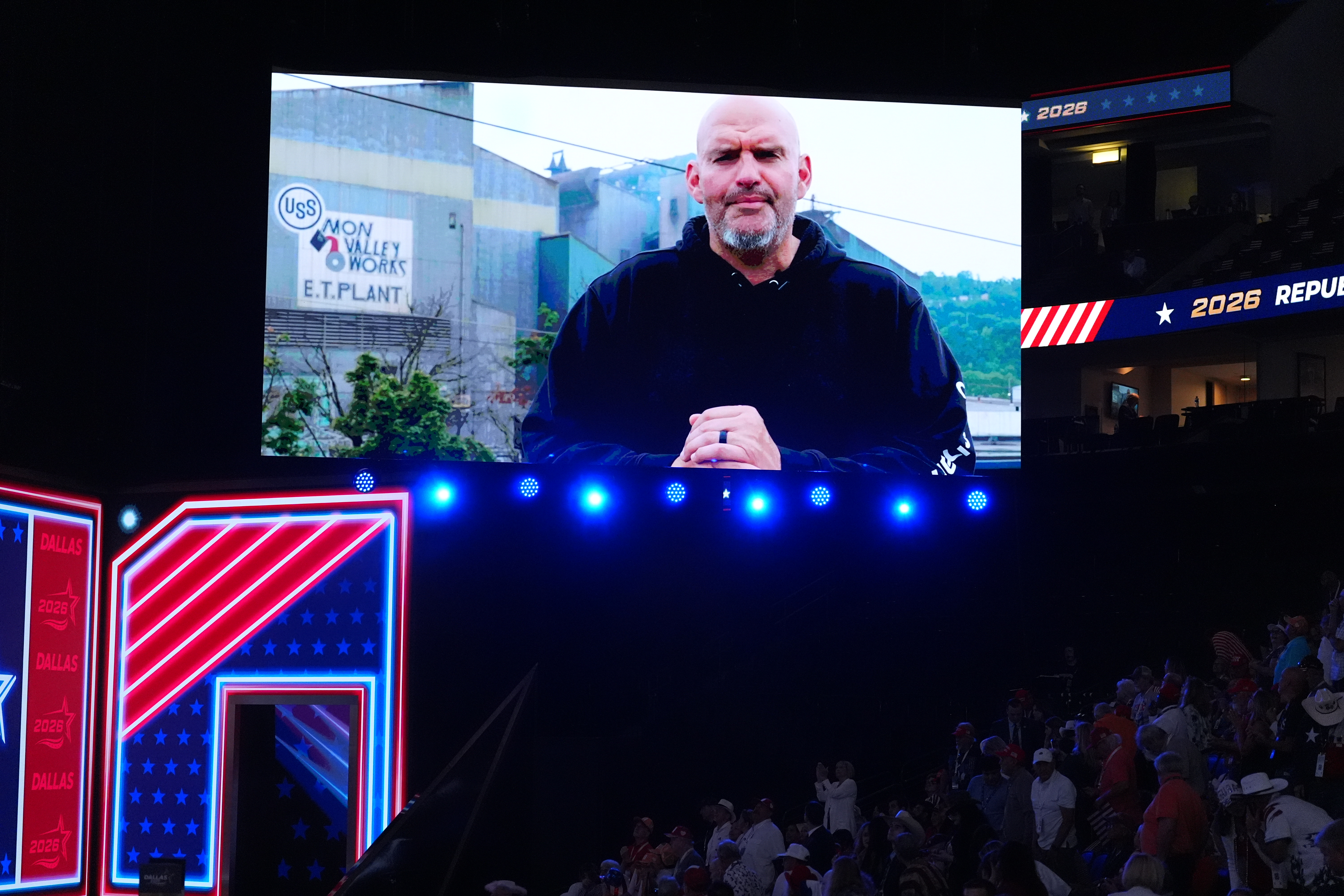
“I’m a lifelong Democrat who votes overwhelmingly with my party — and should the Senate flip in November, I will still be the 51st vote that I ran on,” he said in a statement while facing a new round of criticism for appearing by video at the GOP convention in Dallas this month.
Pennsylvania’s U.S. Senators John Fetterman (left) and Dave McCormick appear together on June 29 to promote the savings accounts for kids that were a signature piece of President Trump’s One Big Beautiful Bill Act.Tom Gralish / Staff Photographer
Fetterman’s Democratic colleagues have tried to keep him in the fold.
U.S. Sen. Kirsten Gillibrand, a New York Democrat and chair of the Democratic Senatorial Campaign Committee, said this week that Fetterman is a “very reliable Democratic vote.” As she leads her party’s effort to win the Senate races,Gillibrand said, she does not have, nor has heard others having, concerns about Fetterman’s role in a slim Democratic majority.
“I’m very grateful that Sen. Fetterman is serving in the U.S. Senate as a Democrat, and I think he will continue to do so,” Gillibrand said.
Still, Fetterman has supported parts of Trump’s immigration enforcement agenda, the war in Iran, and some of the president’s nominees. Senate Democratic leaders would likely try to act as a check on Trump in each of those areas if they win the majority for the next two years.
Fetterman has also left the door open to leaving the Democratic Party if it makes opposition to Israel an official party stance. The senator has not explained exactly what that situation would look like, though he has been highly critical of Democrats when they push back against the Israeli government’s war against Hamas.
With the three-year anniversary of the conflict approaching on Oct. 7, more than 70,000 Palestinians have been killed and nearly all Gazans have been displaced, according to the Council on Foreign Relations. Critics say Israel’s military response has been excessive, while Fetterman has said he supports the war in order to root out Hamas fighters who initiated the war by killing more than 1,200 people in Israel in a terrorist attack.
The latest poll of Pennsylvania voters shows Fetterman’s position is out of step with a majority of voters.
Among Pennsylvania likely voters, 60% are against the U.S. providing additional economic and military support to Israel, compared with 34% who support it.
Four in five Democrats, and about a third of Republicans, oppose the aid to Israel. In a sign that Fetterman would face a challenging reelection campaign, 63% of Democrats said they would support a candidate who opposed aid to Israel.
(function(){function e(){window.addEventListener(`message`,function(e){if(e.data[`datawrapper-height`]!==void 0){var t=document.querySelectorAll(`iframe`);for(var n in e.data[`datawrapper-height`])for(var r=0,i;i=t[r];r++)if(i.contentWindow===e.source){var a=e.data[`datawrapper-height`][n]+`px`;i.style.height=a}}})}e()})();
Victor Oyola, 47, of Philadelphia, said he considers himself a conservative Democrat and has no issues with politicians supporting Israel’s right to exist. But Fetterman has been more of a voice for the foreign nation than for his home state, he said, while also showing limited interest in other aspects of his position.
“You don’t want to do the job, but you’re strongly supporting Israel over Pennsylvania?” said Oyola, who works in retirement management. “Everything is Israel, Israel, Israel. But what about Pennsylvania, Pennsylvania, Pennsylvania?”
Reports of Fetterman’s lack of interest in doing routine aspects of his job as a senator also appear to have played a role in how Pennsylvanians view him.
In a widely circulated story earlier this month, the Wall Street Journal reported that Fetterman tried to evade meetings with leaders at Children’s Hospital of Philadelphia and with wounded veterans, as well as a funeral for three York County police officers who were killed while on duty.
Donald Harer, a Democrat from Northumberland who voted for Fetterman in 2022, said that he saw the story and that it seemed like the senator has “really not held his end of the bargain and done his job the way he’s supposed to.”
As an Army veteran who served in Iraq, Harer said, he was particularly disappointed in Fetterman’s reported refusal to meet with wounded veterans.
“When he campaigned, when he first started to run, he seemed like a go-getter,” said Harer, an operations manager for a grocerystore. “But he let a lot of people down. I kind of call him a traitor.”
Don Levy, the director of the Siena Research Institute, which conducted the poll, said he did not know if changes in Fetterman’s favorability ratings since last month could be attributed to the recent national attention on him.
But with recent polls continuing to show Fetterman’s widespread cross-party support, his position as a Democratic darling for the GOP and antagonist for Democrats “looks pretty baked in,” Levy said.
“The Republicans have now grown in their favorability for him, which may be a reflection of them starting to feel like ‘he’s one of us,’” Levy added. “And Democrats are even more upset with him for moving away from what they believe they elected him to do.”
Staff writers Joe Yerardi and Gillian McGoldrick contributed to this article.
U.S. Sen. Dave McCormick called for doubling the National Institutes of Health budget and prioritizing “merit-based science” in a Washington Post opinion piece published Wednesday.
“I’m a Republican senator. America needs more science, not less,” read the headline on McCormick’s column.
He opened with a reference to KJ Muldoon, a Philadelphia-area child whose life was saved by a personalized gene-editing therapy. NIH funding helped researchers at Children’s Hospital of Philadelphia and the University of Pennsylvania develop the treatment.This work represents how federal investment can drive breakthroughs in American medicine, McCormick noted.
“Meanwhile, the U.S. is underinvesting in discovery,” he wrote, highlighting howthe NIH budget has declined by more than 10% since 2003, adjusting for inflation.
Though McCormick has largely supported Trump’s agenda, he has repeatedly pushed back on cuts to research funding.
His office last week publicized a letter authored alongside Sen. John Fetterman (D., Pa.) in which the senators issued a bipartisan call for the federal government to explain recent cuts to healthcare research grants affecting Pennsylvania.
CHOP and Penn are among the institutions that hadto shut down programs after the Agency for Healthcare Research and Quality stopped funding more than 100 grants nationwide, totaling hundreds of millions of dollars, in July.
In his commentary, McCormick cited examples of NIH funding “saving lives and lowering the cost of disease.” Although less than 1% of federal spending goes toward NIH research, he said, the investment delivers outsized returns.
The nation’s leadership in scientific innovation could slip if federal funding continues to fall, he added.
“Conservatives should recognize that basic research, like national security, is a public good that private capital rarely funds,” he wrote.
At the same time, he echoed some of the Trump administration’s criticisms of research funding, which it says overemphasizes diversity, equity, and inclusion.
The federal government has canceled nearly 1,400 grants midstream, many due to language referencing diversity, he said.
In the Philadelphia area, research on LGBTQ+ health and health disparities — how social factors like race, income, and living conditions affect health — has been particularly targeted by cuts.
“While some of these grants deserved to be canceled, some were legitimate research with buzzwords inserted to get approval from the Biden administration,” McCormick wrote.
A federal judge had ruled that some of the cuts targeting diversity-related grants were unlawful and discriminatory, after researchers and institutions pushed back through lawsuits.
McCormicksaid he has urged the government to let scientists revise their applications to continue their work, rather than wasting the investment in those canceled grants.
He also called for the government to double the NIH’s $48 billion budget within five years, rather than cut it by nearly 40% as the Office of Management and Budget had proposed last year. The proposed cuts were rejected.
“If we dare, KJ’s story can be the beginning of a new golden age of American science,” he concluded in the op-ed.
John Dougherty was for years an unparalleled kingmaker in Philadelphia’s Democratic Party — a charismatic labor leader and fundraiser who helped anoint a generation of future mayors, City Council members, state and federal legislators, judges, and governors.
Some of Dougherty’s key supporters in his clemency push, The Inquirer has learned, included two former Republican congressmen; Dougherty’s lawyer, who once ran as a Republican for mayor and, later, for U.S. Senate; and a onetime candidate for Philadelphia City Council with ties to organized labor, who said he was one of Trump’s earliest local backers.
All had relationships with Dougherty, owing to his years of political activism as head of Local 98 of the International Brotherhood of Electrical Workers — even if his support mostly benefited fellow Democrats.
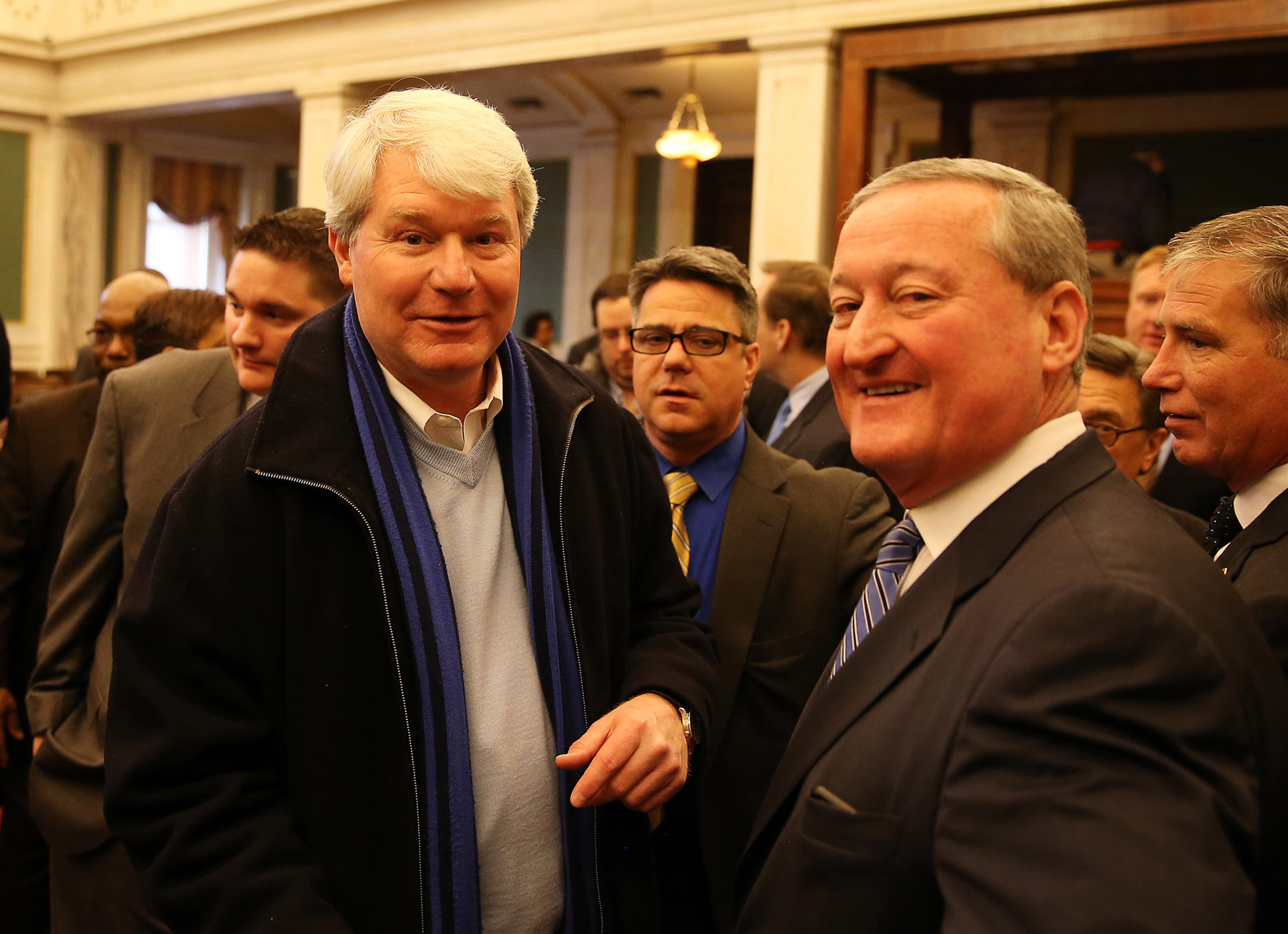
John Dougherty in 2015 with then-City Councilmember Jim Kenney. The two were childhood friends, and Dougherty helped support Kenney’s successful mayoral campaign.
The former Council candidate, Daniel Pellicciotti, said his efforts to help Dougherty included meeting with Trump at the White House and speaking with him over the phone. Pellicciotti said that he told Trump about the significant health challenges faced by Dougherty’s wife, Cecelia, and that Trump was sympathetic to Dougherty’s situation — and willing to send him home.
“He just said, ‘This is crazy.’ Exact words,” Pellicciotti said. “‘He needs to be home with his wife, taking care of her. Besides, it would be cheaper for the government.’”
Former U.S. Rep. Lou Barletta, meanwhile, said he signed a letter to Trump last year and contacted anyone he could “just to try to get this on the president’s radar.”
He said that he had been following Cecelia Dougherty’s health situation closely and that advocating for her husband “became a personal thing for me.” Earlier this year, he attended a court hearing in Reading at which Dougherty begged a judge to be released.
“I’m very thankful that the president had the compassion to put politics aside and do the right thing,” said Barletta, who met Dougherty in the early 2000s as mayor of Hazleton.
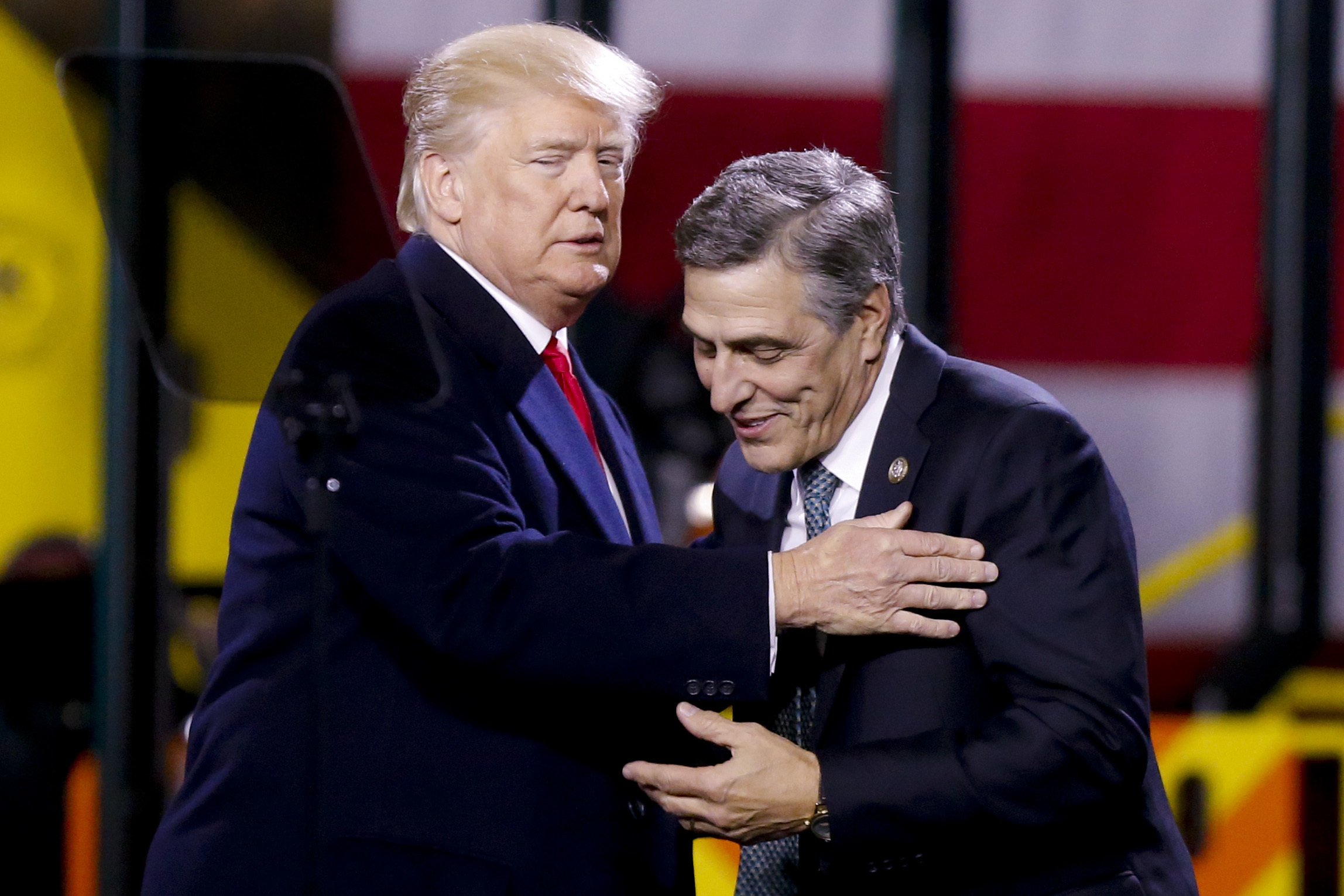
President Donald Trump with then-Rep. Lou Barletta in 2018.Keith Srakocic
And Rick Santorum, a former U.S. senator who competed against Trump for the GOP’s presidential nomination in 2016, said he “did what he could to be helpful” in supporting Dougherty’s efforts.
“Those two years Dougherty spent in jail away from his wife were probably 20 years because I know how much he loves her and how much he was really hurting,” Santorum said. “So to me, this was the humanitarian thing to do, and I supported it.”
The backing from GOP pols may help explain how Trump — a famously partisan president — ended up granting clemency to a longtime Democrat in one of America’s bluest cities. Trump was soundly defeated in Philadelphia in each of his three elections, and some of Dougherty’s longtime Democratic allies were among his fiercest critics.
The Republican lobbying might also add context to Dougherty’s decision to change his voter registration and join the GOP. Dougherty — long known as Johnny Doc — switched parties not long after being released this month from a federal penitentiary in Lewisburg, Pa.
Dougherty has not spoken publicly since his release, and his lawyer, George Bochetto, said Dougherty was focused on caring for his wife.
Bochetto, who ran for Philadelphia mayor in 1999 and U.S. Senate in 2022 — both times as a Republican — generally declined to discuss details about the lobbying effort. He did say he had been in regular communication with White House aides about Cecelia Dougherty’s health challenges, and he called Trump’s decision “a magnificent gesture of compassion.”
The White House press office did not respond to questions about who was involved in advocating for Dougherty. A spokesperson said only that the commutation was granted to let him “care for [his] terminally ill wife.”
Multiple attempts at release
Dougherty and Bochetto had taken several paths to try to secure an early release from his six-year sentence, which began in 2024 after Dougherty was convicted in separate bribery and embezzlement trials.
A few months after Dougherty reported to prison, Bochetto filed emergency motions asking U.S. District Judge Jeffrey L. Schmehl to allow Dougherty to serve the remainder of his term on house arrest so he could be his wife’s primary caretaker.
Schmehl denied those requests twice — including after a hearing in May at which Dougherty testified about how he was the only person who could provide the type of round-the-clock assistance his wife needs. She has long been paralyzed and largely nonverbal after suffering a debilitating brain injury.
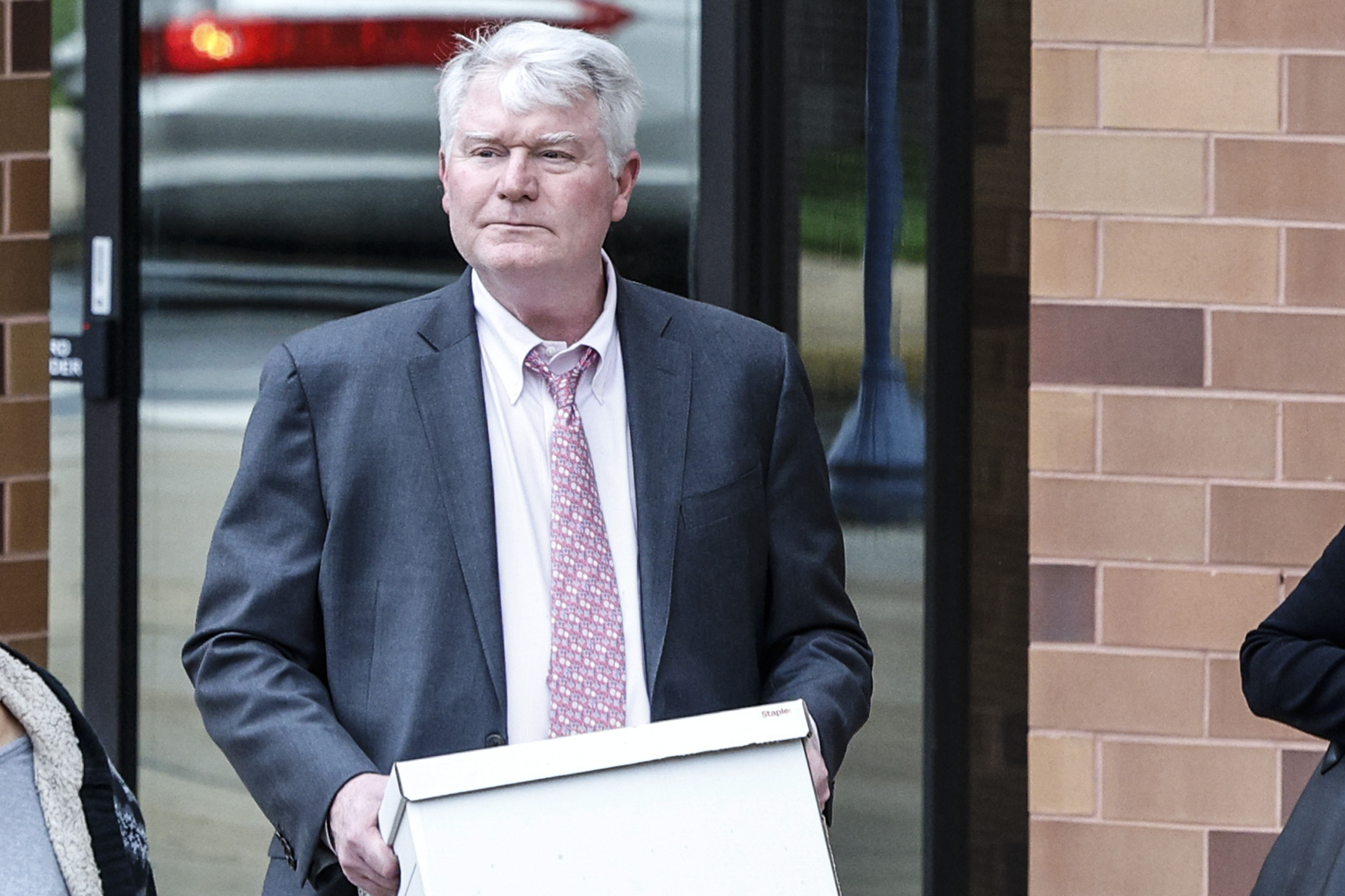
John Dougherty in 2024.Steven M. Falk / Staff Photographer
After failing to persuade the judge, Dougherty turned to others in his orbit as the request pivoted toward the White House — where Trump, as president, has wide latitude to commute sentences and grant pardons in federal cases.
But his allies, including Pellicciotti, persisted. A former business agent for the laborers union, he said he was friends with Cecelia Dougherty before he knew her husband, and he has known both for decades.
A former Democrat and nephew of the late Councilmember Francis Rafferty, Pellicciotti ran unsuccessfully for Council in 2003 with backing from Dougherty’s electricians union. He said he switched his registration to Republican when Trump ran for president and backed his 2016 campaign.
“Nobody in Philly was really backing him. I have a lot of respect for him. He don’t forget his friends,” Pellicciotti said.
In addition to their politics, Pellicciotti, 64, of Roxborough, shared something else with Trump: a felony conviction. Pellicciotti pleaded guilty in 2005 to bribing a Philadelphia public official with cash in exchange for obtaining a designation for his demolition company as a woman-owned business.
When Pellicciotti was sentenced to probation and a fine the following year, Dougherty and other union members were in the courtroom to pat him on the back.
That experience with the criminal justice system did not come up in Pellicciotti’s conversations with Trump, however. “I really think it had strictly to do with him doing the right thing for John and Celi,” he said.
Help among friends
Barletta and Santorum declined to provide many details about the depths of their advocacy but agreed that their central motivation was support for Dougherty and his wife.
In addition to Dougherty’s long friendship with Barletta, his ties to Santorum date to 2006, when his former union, Local 98, backed Santorum’s unsuccessful reelection campaign against Democratic challenger Bob Casey.
Santorum said Dougherty was always uncharacteristically gracious about acts that benefited his members — despite the senator’s political affiliation.
“Johnny cared enough that he said, ‘Well, look, this guy has done more for my workers and those families than anybody, and we’re going to support him,’” Santorum said.
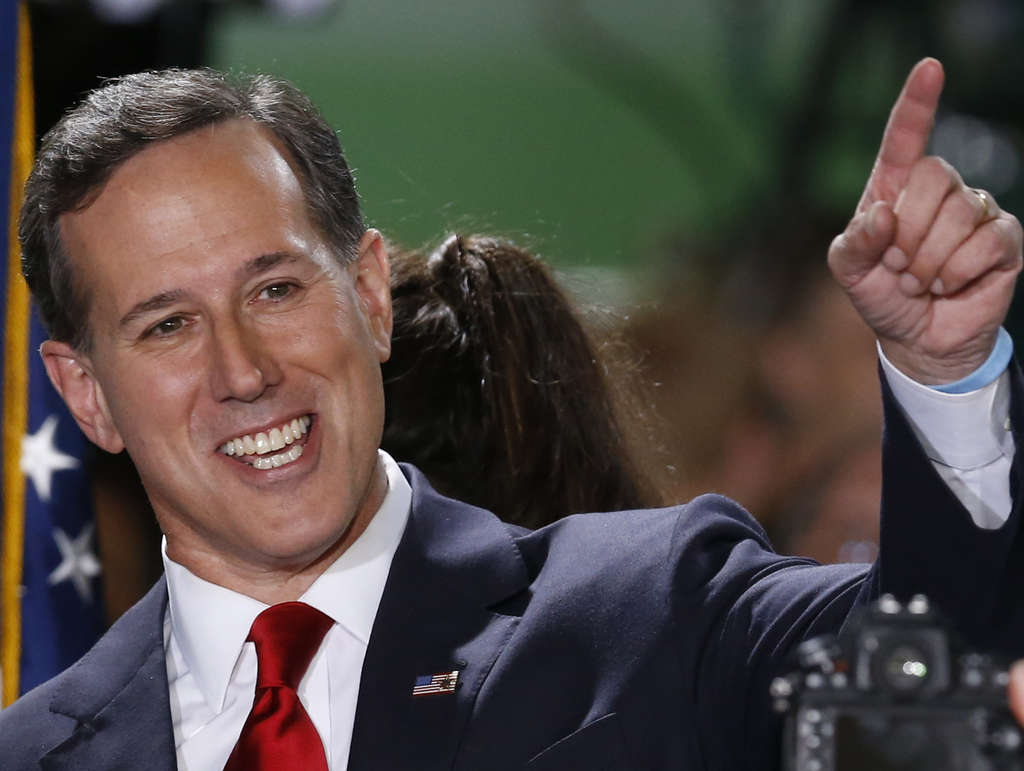
Former U.S. Sen. Rick Santorum announcing his candidacy for the 2016 presidential race.KEITH SRAKOCIC / Associated Press
Other local figures with ties to Trump who were rumored to have helped Dougherty’s lobbying — such as Philadelphia lawyers Michael van der Veen and William J. Brennan, who represented Trump during his second impeachment trial — declined to say if they were involved.
In any case, Trump made Dougherty’s release official earlier this month. In addition to cutting his prison term short, the commutation erased Dougherty’s obligation to pay about $1.6 million in restitution.
Pellicciotti, for his part, was glad that Trump bestowed mercy on his longtime associate.
“All credit goes to God,” he said. “We did a lot of praying about it.”
Staff writers Gillian McGoldrick and Anna Orso contributed to this article.
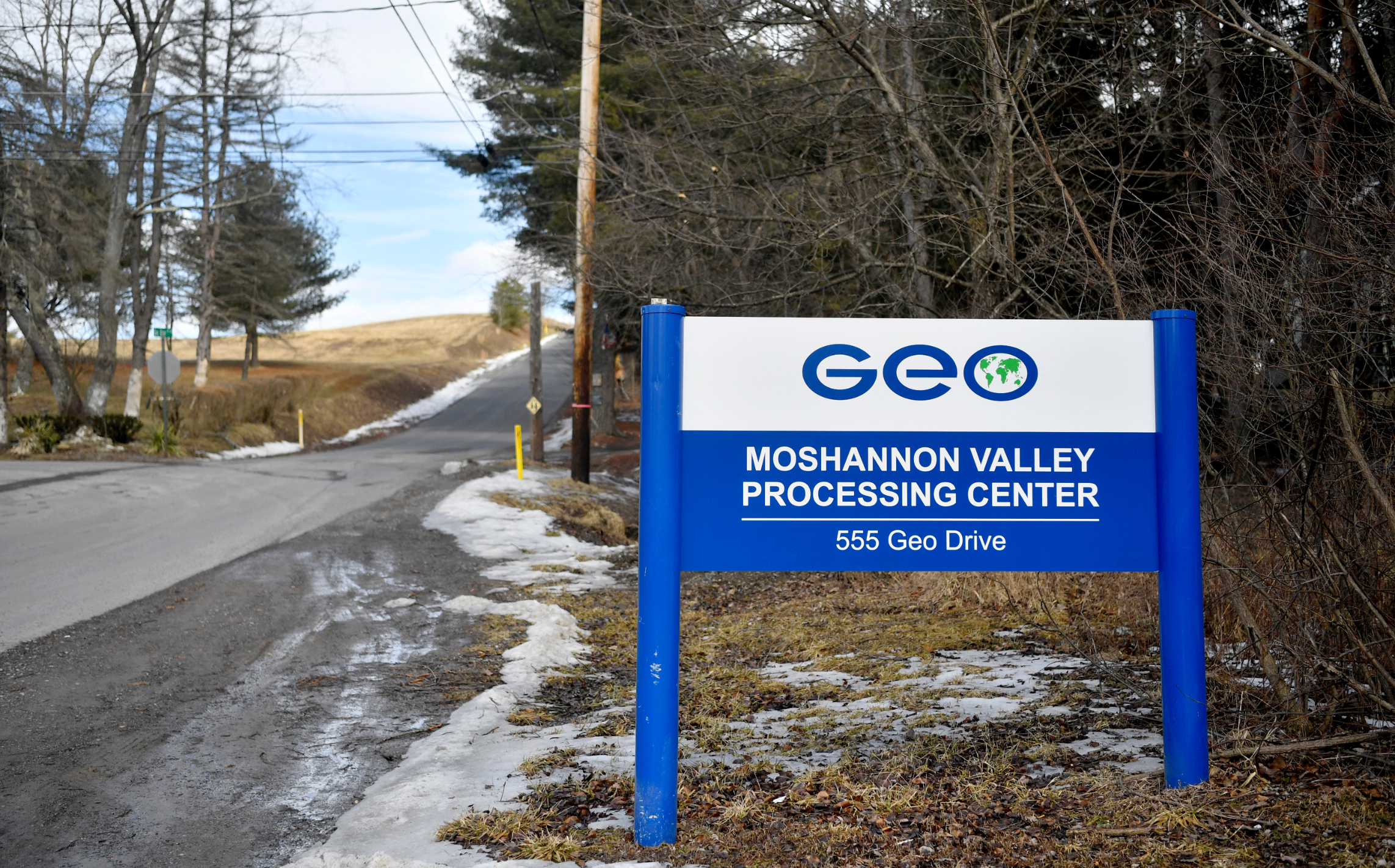
There are signs the Moshannon Valley Processing Center could end up being sold to the federal government, a move critics fear could insulate the center from some state regulation.
In the meantime, county officials approved a controversial extension of the current operating contract Tuesday, ensuring the largest detention center in the northeastern United States can run unimpeded for at least the next six months.
The contract between Clearfield County and Florida-based GEO Group, the for-profit owner of the 1,876-bed facility, was set to expire at the end of September. But Republican Commissioners Tim Winters and John Sobel voted 2-1 against Democratic Commissioner Dave Glass to extend GEO Group and ICE’s contract to operate the Moshannon center.
The vote came at a contentious meeting at which speakers from the audience mostly voiced opposition, questioning why the county had become entangled in federal immigration policy and doubting the true worth and use of the $100,000 payment.
“Blood money!” one person shouted after the vote.
Clearfield’s vote took place as President Donald Trump’s administration quietly mounts a takeover of private detention centers like Moshannon, as it is called, to expand bed capacity to support its mass-deportation goals.
Some local officials and immigration advocates think Moshannon may be next to be sold. In a statement, the Department of Homeland Security said ICE does not discuss potential facility acquisitions.
“The long-term solicitation process remains ongoing,” a spokesperson said.
Federal ownership could insulate the properties from compliance with certain local and state laws, important to the Trump administration when other expansion plans, like turning empty warehouses into detention centers, bogged down amid community and legal opposition.
Moshannon is a common destination of those arrested for immigration violations in Pennsylvania. An unannounced congressional oversight visit in May found that of the 1,417 adults detained there, roughly 78% lacked serious criminal charges or convictions of violent behavior — a contrast to Trump and his allies’ arguments for increased detention.
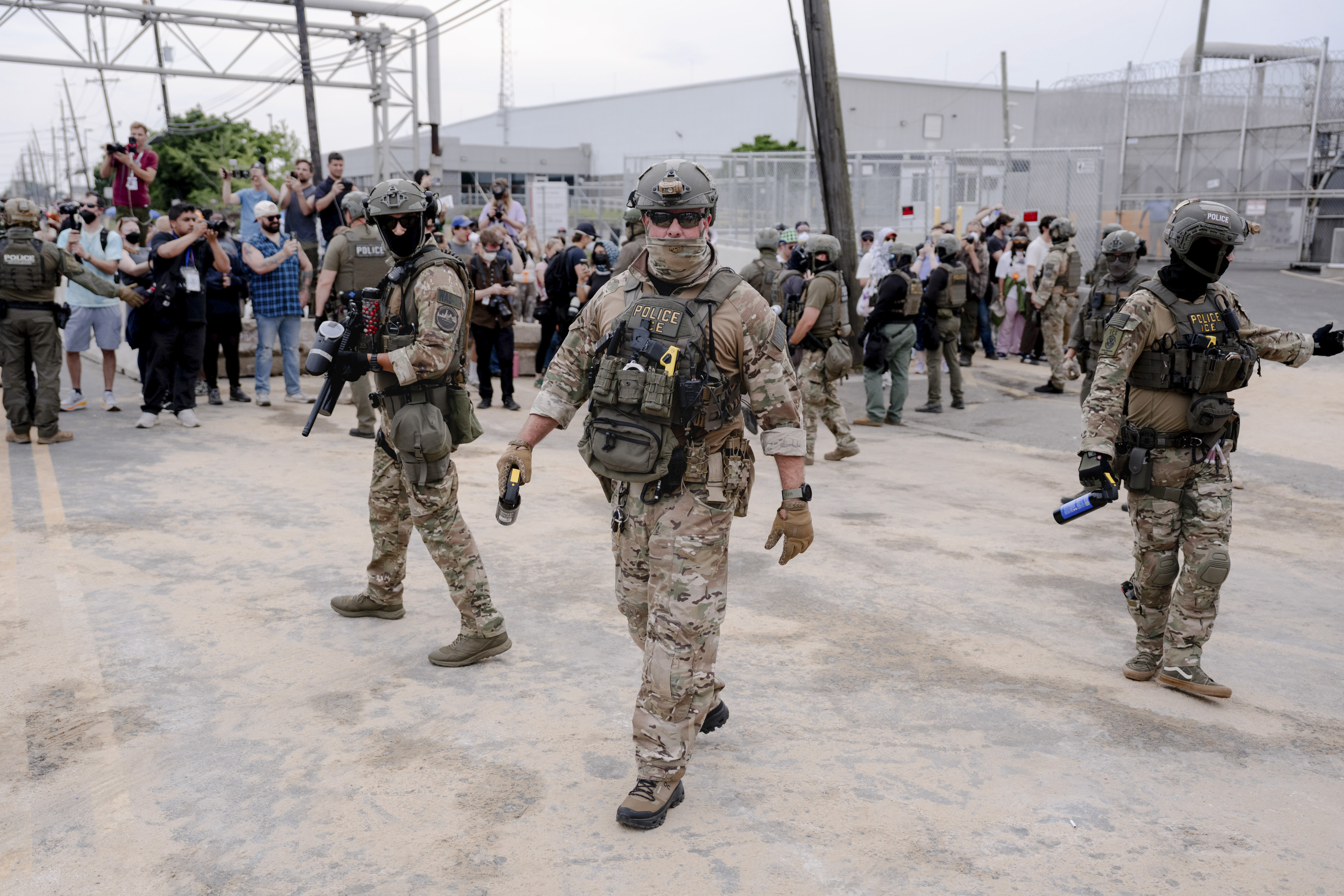
ICE agents outside the Delaney Hall migrant detention center in Newark, N.J., in June.LEXI PARRA
Trump’s push for mass detention and deportation
Congress voted in July 2025 to allocate $45 billion to the Department of Homeland Security for immigration detention, more than a decade’s worth of typical funding. At the time, Trump immigration officials touted the funding as a way to treat deportation “like a business,” with acting ICE director Todd Lyons saying he wants to see the deportation system run “like [Amazon] Prime, but with human beings.”
However, in June, ICE made plans to offload seven of those warehouses, totaling $700 million, by giving them to other agencies or selling them outright, according to the New York Times.
A warehouse purchased by DHS to house an ICE detention center in Surprise. Caitlin O'Hara
GEO Group’s founder and executive chairman, George Foley, said in a May earnings call that the private prison company was “engaged in an active process for the sale” of several facilities to ICE. Foley acknowledged Democratic-led states were considering more active oversight in detention centers, saying, “I think the logical solution to much of that is federal ownership of the facilities.”
GEO Group did not respond to a request for comment.
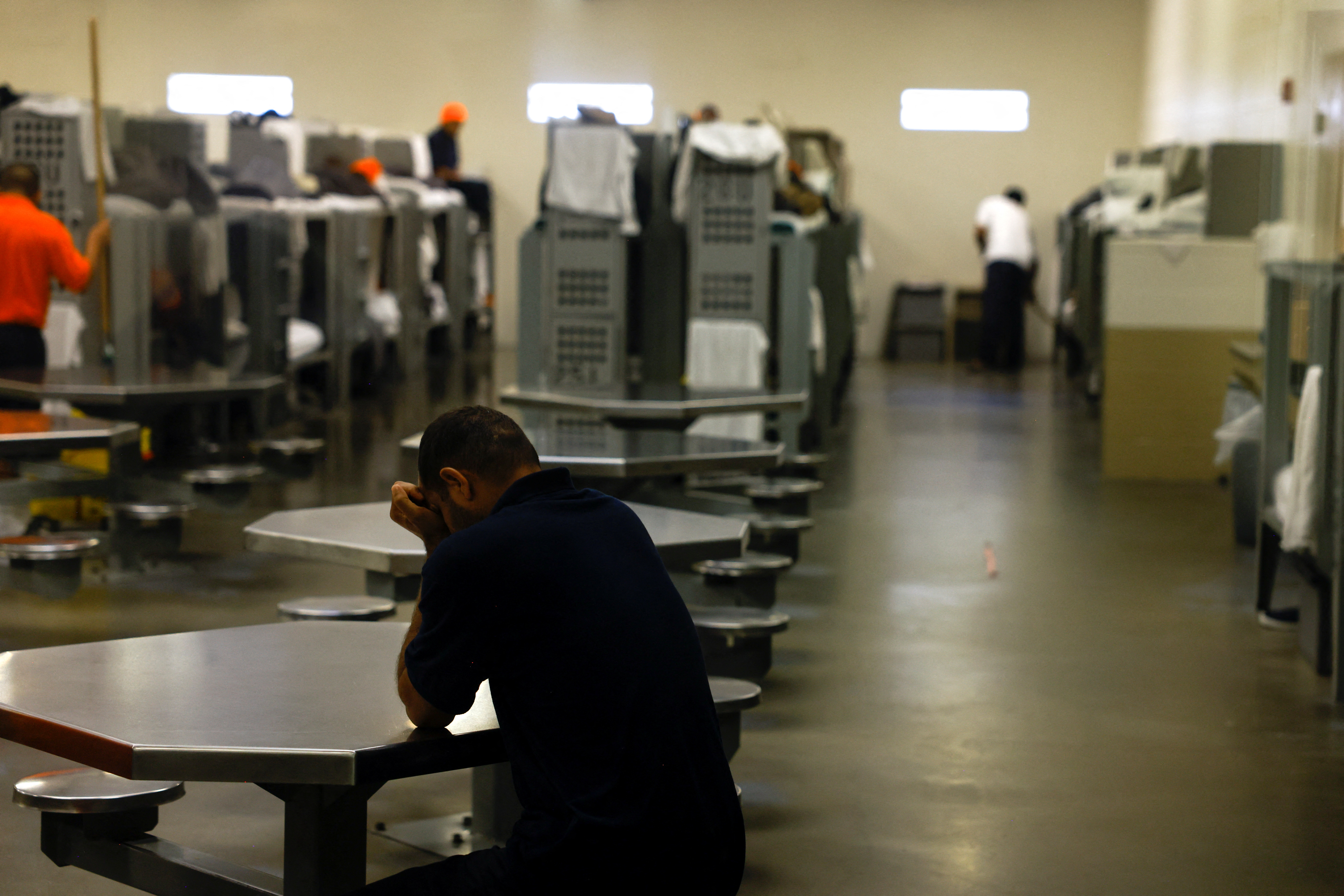
A detainee sits behind glass in a common area at the Moshannon Valley Processing Center in 2023.REUTERS / Quinn Glabicki
The potential sale of Moshannon to ICE
GEO Group has not officially stated its intention to sell Moshannon to ICE. But recent ICE contract bid requests and local dealings with the center’s warden are leading local officials and immigration advocates to suspect a sale.
Earlier this month, ICE requested 10-year contract bids for “turnkey” detention facilities across the country, including in the Philadelphia area. Moshannon is the only private facility in the region that fits that criteria, said Jasmine Rivera, executive director of the Pennsylvania Immigration Coalition, which had called on county commissioners to deny a contract extension.
Rivera said the proposal requests include provisions that could lead to the sale of private detention centers to ICE, similar to its dealings with CoreCivic. GEO Group and ICE’s contract extension “is a stopgap measure” so the parties have “the time to finish the land assessment in the sale of Moshannon,” Rivera said.
In a Sept. 8 Clearfield County commissioners meeting, Glass told the public he directly asked Moshannon warden Leonard Oddo earlier this year whether the Clearfield detention center could be sold to ICE. Oddo said no, according to Glass. In the first week of September, the commissioner e-mailed Oddo the same question, to which Oddo responded, “‘I’ll have to refer you to GEO corporate on that,’” Glass said.
“I took that as kind of a red flag that there may be some kind of a sale,” Glass said at the meeting.
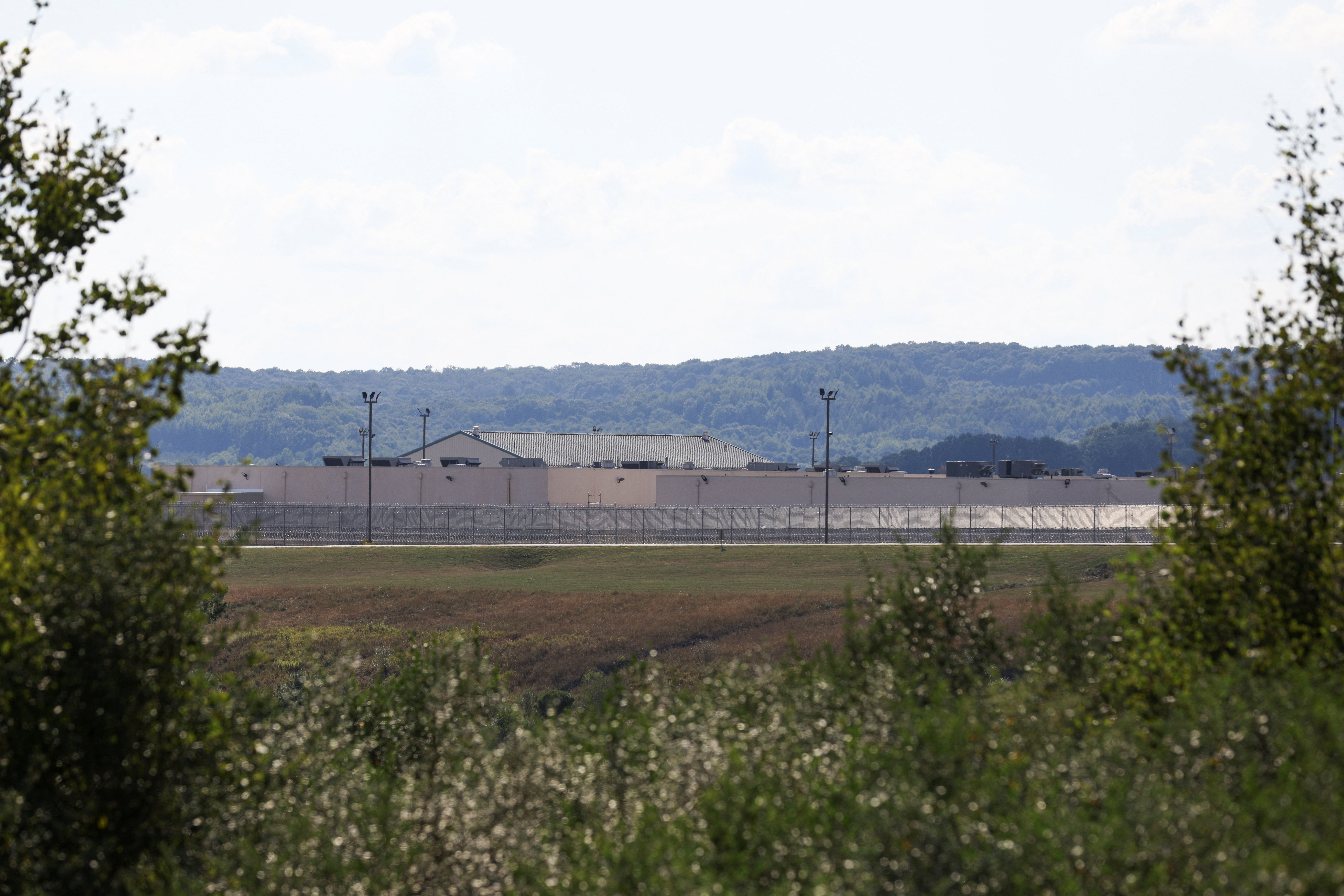
Moshannon Valley Processing Center, an ICE detention facility operated by the Geo Group, where migrants are housed, in Philipsburg, Pennsylvania, U.S., August 24, 2025. REUTERS/Quinn GlabickiREUTERS
What it means for Pennsylvania residents
Having Moshannon fall under federal ownership would mean many of the tax benefits Clearfield County receives for serving as a middleman would cease, Glass said.
“Whatever you think about the facility, having that facility sold to the federal government and losing the tax base on that would be a huge blow,” he said.
Clearfield commissioners have no say in approving the sale if GEO Group and ICE agree to terms.
Due to a now-reversed order that banned federal agencies from contracting with private prisons, GEO Group is contracted through Clearfield County, meaning ICE funding — around $5 million monthly — flows through Clearfield to GEO Group for operating the detention center. Clearfield collects a $200,000 administration fee for its intermediary role.
Winters, who voted to extend the contract, said that current federal immigration policy was “not working,” but that losing a seat at the table with ICE and GEO would leave Clearfield County worse off.
Voting “no” on the contract extension would have eliminated “our communication and our ability to investigate claims,” he said. “Our oversight ability is very small, but we still have it.”
For Rivera, any sale is concerning because ICE could ignore Pennsylvania lawmakers’ attempts to protect public health, environmental and zoning standards, and the safety of those detained, she said.
The newly extended contract will allow ICE to continue paying GEO Group for operating Moshannon through Clearfield County until mid-March 2027. At that point, GEO Group and ICE could approach the county with a new contract, or, as advocates and some local officials fear, federal ownership could come into play.
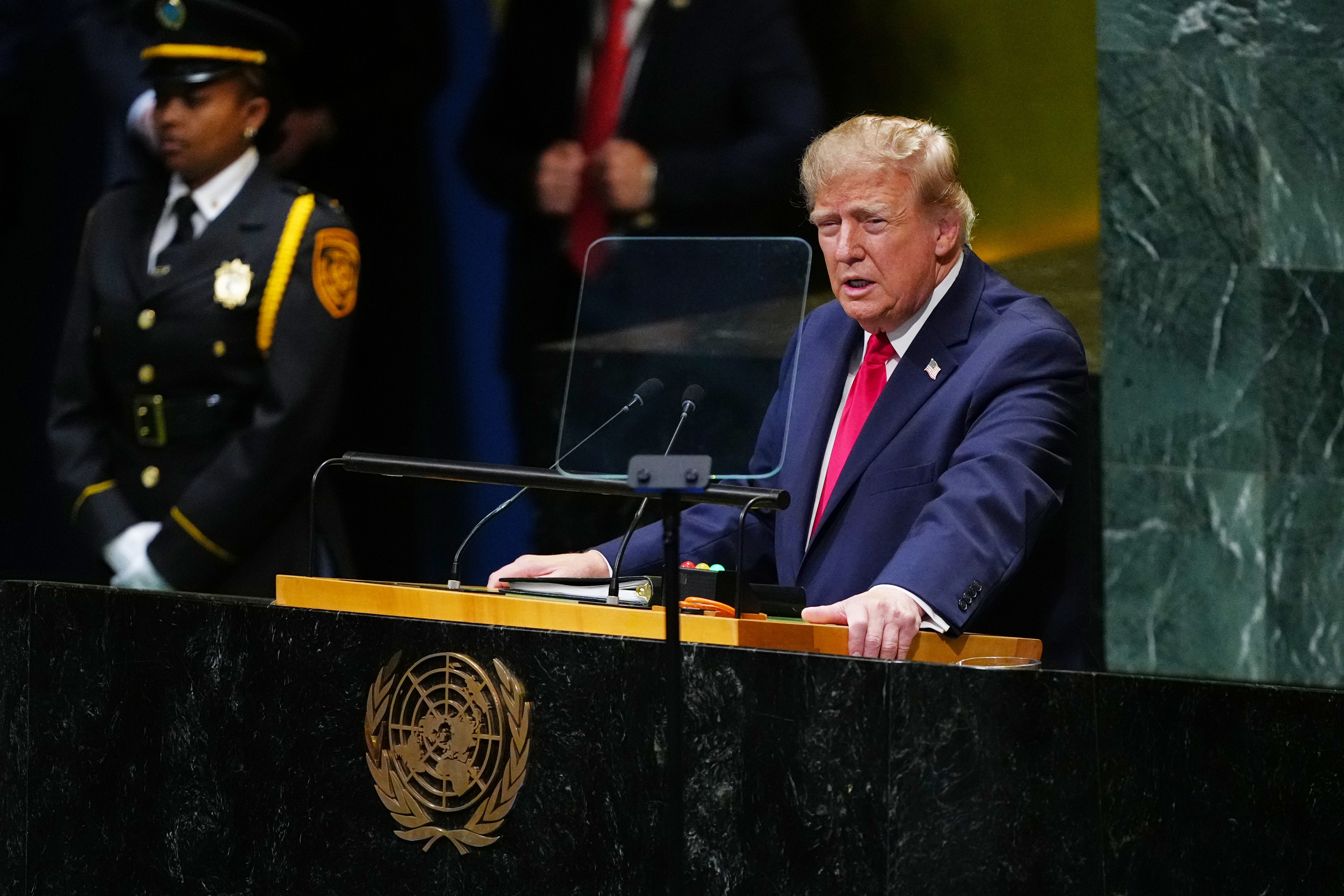
The scariest thing about President Donald Trump’s address to the United Nations General Assembly Tuesday was not the wild exaggerations, false claims, or disgusting slurs against (truthful) critics. That all has become par for the course and was to be expected.
Far more terrifying was the distinct possibility that POTUS believed his delusional description of his alleged triumphs — in the Iran war, in bringing peace to the Middle East and the world, and in pursuit of victory in an unbounded artificial intelligence race with Beijing.
Perhaps his 38 minutes of self-praise at the podium — to tepid applause at the beginning and end and mostly silence in between — were merely meant as a stump speech to rally midterm MAGA voters growing restless with his endless war. (Of course, most of his MAGA base will only see brief clips from the speech, since the president banned CNN, MS NOW, and Politico from the pool that normally covers such events, and the four other pool members — ABC, NBC, CBS, and Fox — stayed away in solidarity.)
The greater danger is that, surrounded by sycophants, Trump truly believes his own hype. He showed no sign that he recognizes how Iran has out-strategized him, how Russia, China, and North Korea outmaneuvered him, and how he has alienated crucial European, Asian, and Mideast allies with his erratic and chaotic policies.
On the U.N. podium, he appeared as a braggart touting triumphs his audience viewed as U.S. failures. Yes, he still represented the world’s most powerful country, but his puerile speech reflected his inability to translate that power into securing American interests or a more peaceful world.
It is important for voters to fully grasp the self-delusion underlying Trump’s foreign policy. A new CNN poll shows only 29% of U.S. adults approve of POTUS’s handling of foreign affairs, with almost two-thirds saying the U.S. is not winning the Iran conflict. But domestic issues have become so paramount that many ordinary citizens can be excused for tuning out Trump’s overseas misadventures.
Having just returned from the bracing realities of Ukraine, here is my brief guide to Trump’s delusions or deliberate deceptions — take your pick — about foreign policy issues he raised at the U.N.
An armed Shiite cleric rides aboard a military vehicle past a billboard depicting Ayatollah Ruhollah Khomeini, founder of the Islamic Republic, during the state-organized “Janfada,” or “Sacrifice for Iran,” military-style parade in Tehran, Iran, Friday.Vahid Salemi
Iran
Trump verbally attacked the “cowards and traitors who would like to say we are low on munitions in Iran. That’s not true.” If POTUS were Pinocchio, his nose would have grown 10 feet at that lie.
In truth, it is Trump who is too cowardly to admit the truth to a public that is instinctively grasping it anyway. That truth, which has been laid out in reputable think tank studies and news reports, and by serving and ousted Pentagon officials, is that U.S. forces have consumedhalf to two-thirds of highly expensive missile interceptors in fending off cheap Iranian drones.
The Pentagon was not prepared for a war in which drones played such a major part. Never mind that Ukraine and some U.S. commanders had sounded the alarm beforehand.
Nor is Trump truthful when he brags that new munitions plants will soon replace any shortfalls, because, unlike rapid production cycles in Ukraine, rebuilding the most critical U.S. weapons stocks will take up to five years.
On the U.N. stump, Trump also repeated his mantra that he will never allow Iran to have a nuclear weapon. Yes, in 2025, a “12-day war” by the U.S. and Israel badly damaged Iran’s nuclear program. Yet, the current war, ongoing since February, has done little to nothing to further diminish that nuclear prospect. It is focused on lowering oil prices by reopening the Strait of Hormuz, which was functioning normally before Trump joined Israel in attacking Tehran.
Because of its diminished missile and interceptor stocks, the U.S. is in no position to reopen a kinetic war with Iran — let alone, to use Trump’s irresponsible threat, “annihilate” it. In real terms, Trump is stuck, with Tehran still able to control Hormuz and no way out of his self-inflicted trap, unless he makes concessions to Tehran. Meantime, the war is spreading to other Mideast countries and drawing in new players such as Yemeni Houthis.
Trump advertises his weakness when he desperately tries to convince fed-up Americans, in front of a U.N. audience, that peace is on the way.
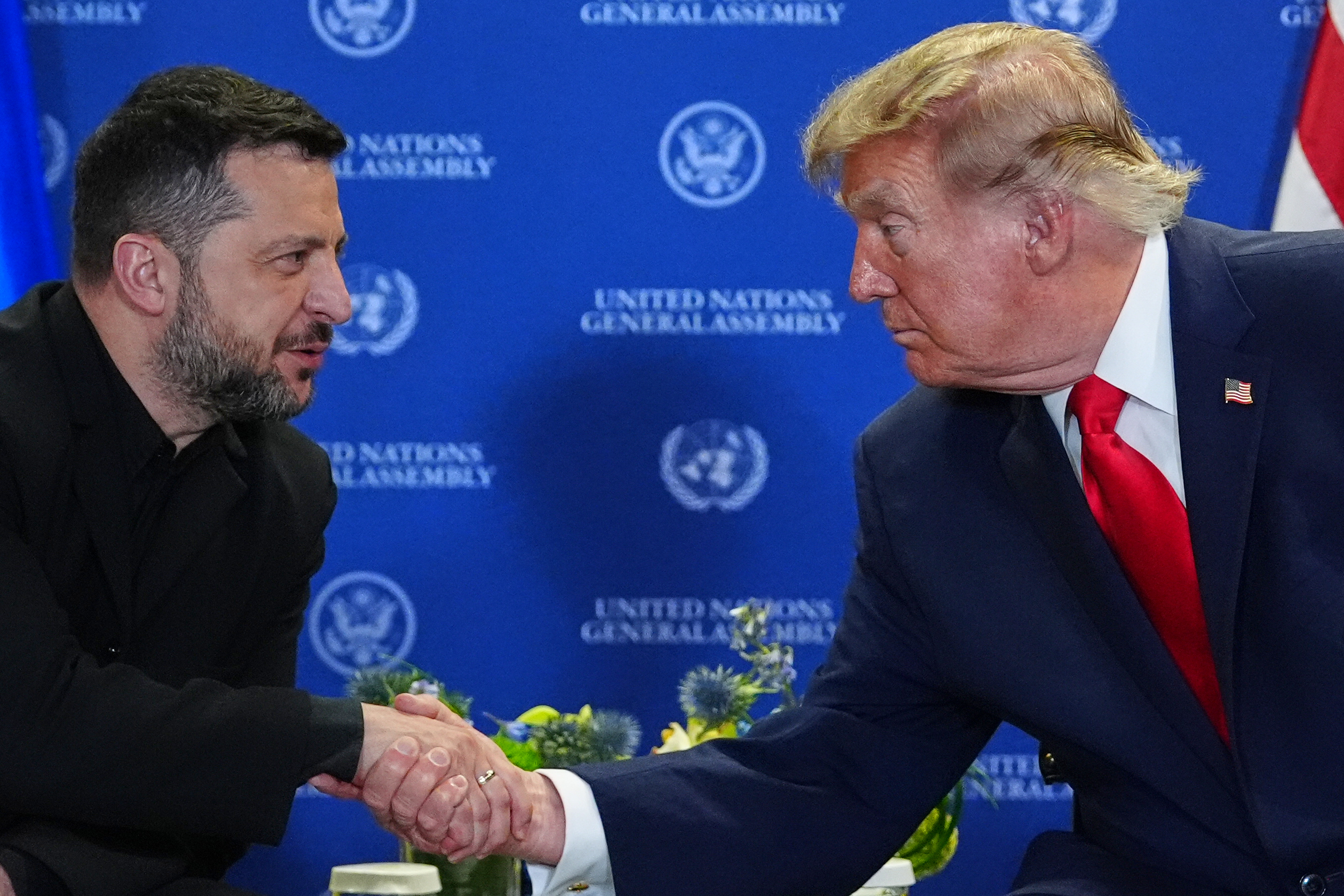
President Donald Trump meets with Ukraine’s President Volodymyr Zelensky during the United Nations General Assembly, Tuesday.Julia Demaree Nikhinson
The Ukraine war
On the podium, Trump regurgitated his mantra that, regarding the war, “we will get that one done,” and that Russia and Ukraine have “had it.” But in truth, Trump’s refusal to pressure Moscow to stop destroying Ukraine’s civilian infrastructure, while demanding Kyiv stop targeting Russian oil exports, ensures there will be no ceasefire.
Why should Vladimir Putin stop his campaign of destruction when Trump only leans on Ukraine, and fails even to critique Putin’s new drone campaign against European airports and the industry of NATO members? Ukrainian President Volodymyr Zelensky said after meeting Trump Tuesday that he would agree to a ceasefire on hitting energy targets — but both sides would have to take part. Not likely, so long as Trump bows to Putin.
And don’t expect Trump to enforce the bipartisan sanctions bill newly passed in memory of U.S. Sen. Lindsay Graham. Repeat, POTUS refuses to pressure Putin, with whom his negotiating team is discussing “lucrative” business deals.
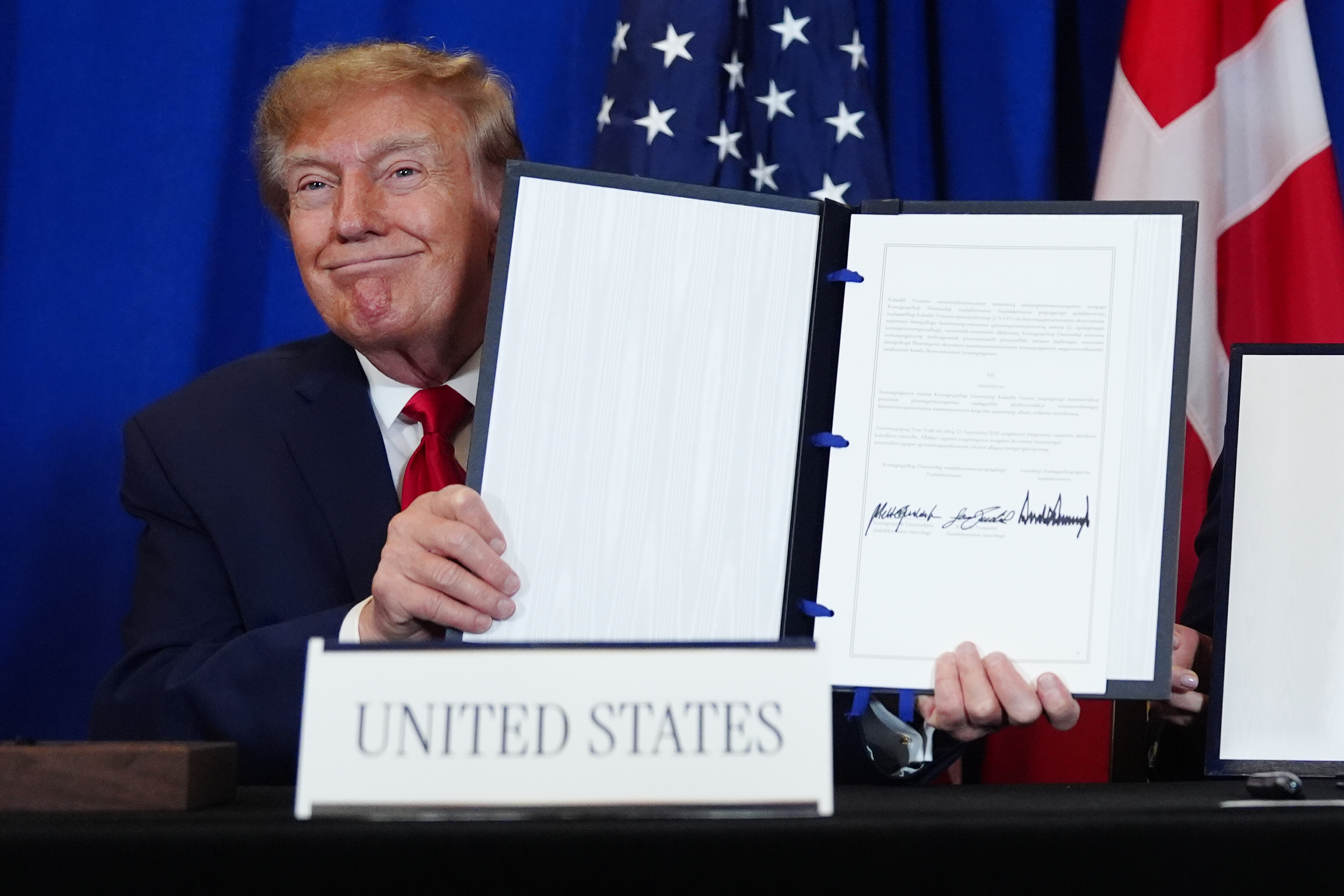
President Donald Trump holds up the document after signing a security agreement with Denmark’s Prime Minister Mette Frederiksen and Greenland’s Prime Minister Jens-Frederik Nielsen during the United Nations General Assembly, Tuesday.Julia Demaree Nikhinson
Trump as global peacemaker
The president shamefully read verbatim a long list of compliments by world leaders trying to pacify him, and once again exaggerated the “peace deals” he’s achieved — even though most were temporary ceasefires or have already been broken.
Trump praised his triumph in Venezuela — where, when talking about oil, he bluntly admitted that “to the victor belong the spoils.” He crowed that Cuba “will fall,” with no mention of the humanitarian disaster caused by the ongoing U.S. blockade.
And he bloviated about the “unprecedented agreement” the U.S. just signed with Denmark and Greenland, even though everything in that accord could have been agreed to under the terms of a 1951 treaty with Copenhagen, without alienating NATO allies by threatening to seize Greenland by force.
To sum up, Trump’s performance at the U.N. revealed a delusional leader who may still be feared by allies and small countries for his unpredictable and bizarre behavior that upsets the world economy, trade ties, and markets.
But adversaries watching the president’s self-praise could only conclude that a weakened old man with no clear strategy except self-aggrandizement now leads the world’s most powerful country. Voters of all parties, be aware.
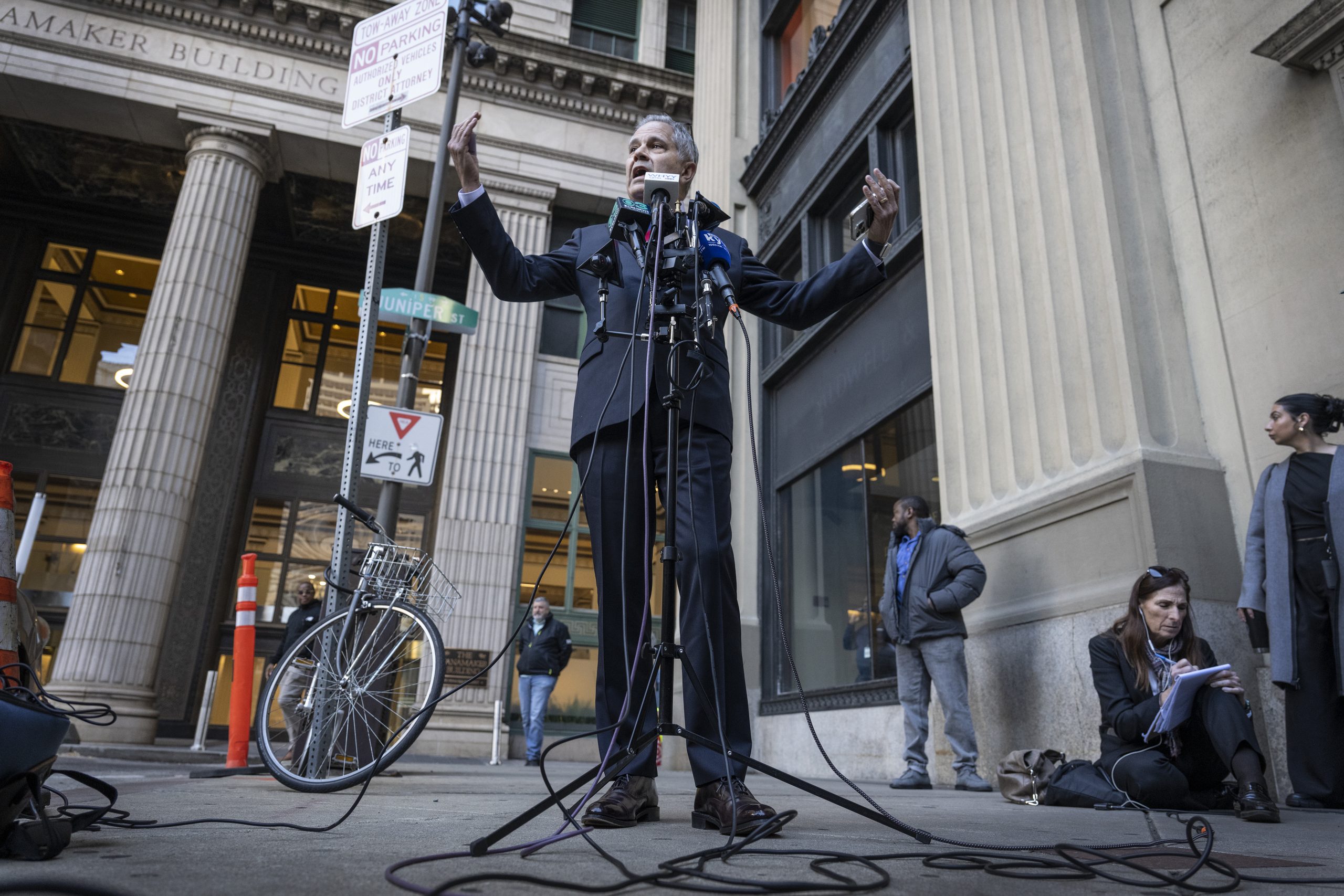
After a federal judge said last week that Philadelphia District Attorney Larry Krasner may have committed federal crimes, questions quickly emerged about the prosecutor’s political future.
Krasner, an outspoken Democrat and one of the nation’s most well-known progressive prosecutors, has recently entertained entreaties to run for higher office, including a possible bid for Philadelphia mayor next year.
But in the week since U.S. District Judge Paul S. Diamond said he had referred Krasner and a top supervisor to the Department of Justice for investigation, Krasner has largely stayed quiet, and few elected Democrats have publicly come to his defense.
Behind the scenes, many insiders asked: Could this episode damage Krasner too much for him to mount a campaign for another office?
In a statement Tuesday, Krasner said he had already told another progressive considering a bid for mayor that he would defer to her.
“I’m a big believer in Councilmember Kendra Brooks,” Krasner said, referring to the City Council member who The Inquirer reported is considering a run for mayor. “Prior to these accusations, I told her that if she runs for mayor, I will not consider running.”
And he framed the legal conclusions by Diamond — a federal jurist appointed by former Republican President George W. Bush — as merely “accusations,” citing others who have been targeted for investigation by the Department of Justice under President Donald Trump.
He referenced the New York attorney general, a former FBI director, and a DOJ employee who was charged after throwing a sandwich at a federal agent and has since become a symbol of resistance to Trump’s administration.
“Ask Letitia James, James Comey, the ‘sandwich man’ or the guy who took peeling paint from the reflecting pool what they have to say about accusations,” Krasner said. “Or ask dozens of innocent people whose exonerations this DA’s office supported what they say about accusations.”
Krasner’s statement Tuesday was one of the first public comments he has made regarding the case since Diamond’s criminal referral, aside from a brief statement last week saying that he disagrees with Diamond’s conclusions and could not comment further because the matter is pending in court.
The uncertainty around Krasner alsohas some city Democrats contemplating a dramatic outcome: Could criminal charges or judicial discipline sweep Krasner from office before the end of his term in 2030?
And if that happened, who would replace him as the city’s chief law enforcement officer?
District Attorney Larry Krasner standing with District Council 33, for the 39th Annual Tri-State Labor Day Parade on Sept. 7.Tyger Williams / Staff Photographer
At least two elected Democrats have spoken to ward leaders about filling the district attorney’s role if Krasner were to be forced from office, according to sources familiar with the conversations who were not authorized to speak about them publicly.
But some of Krasner’s allies say this is all much ado about nothing. They maintain that Diamond’s legal conclusions and the referral of the matter to the Department of Justice were politically motivated and that Krasner will weather it, as he has past tribulations.
“They’re trying to do something that they’ve been trying to do for years, which is go after Krasner’s head,” said Sergio Cea, political director of the progressive group Reclaim Philadelphia, which has supported Krasner since his first run for office in 2017. “What they’re trying to do is roll back the gains that Philly voters pushed forward.”
Silence from elected officials
Krasner has always been something of a political outsider. He has never been endorsed by the city’s Democratic Party and has been critical of its leadership.
City Councilmember Nicolas O’Rourke, a member of the progressive Working Families Party and a longtime supporter of the district attorney, said in a statement Tuesday that he has confidence in Krasner’s ability to lead his office.
“There’s no question,” he said. “DA Krasner can and should be doing the work that Philadelphians have tasked him with through their votes.”
Aside from O’Rourke, most of the city’s top officials have declined requests for comment about Krasner’s recent legal jeopardy, including some of his ardent supporters.
Some say that Krasner has not asked them to weigh in, and that they are hesitant to take a position on a complex legal issue. Others say they do not want to distract from a midterm election that is just six weeks away.
Jack Inacker, a Democratic strategist based in Philadelphia, said he was not surprised that few elected Democrats have spoken on Krasner’s behalf.
“You’ve got these major dustups all the time, it seems now,” Inacker said. “Krasner being so antagonistic to everyone doesn’t get him allies.”
Inacker also said the courtroom allegations are “esoteric in nature,” making it challenging for elected officials to stake a position.
Newly reelected District Attorney Larry Krasner speaks to reporters during a news conference outside the District Attorney’s Office on Nov. 5, 2025.Jose F. Moreno / Staff Photographer
The case before the federal judge centers on Dennis Johnson, who has sought for more than a decade to have his 2009 murder conviction overturned. In 2022, a former assistant district attorney working for Krasner filed paperwork to support Johnson’s bid.
But four supervisors in Krasner’s office later testified that they found errors in that 2022 brief, and that Krasner was involved in conversations about attempting to mislead the court to cast the former prosecutor as rogue.
Krasner has denied wrongdoing.
Brian Hart, a Democrat who has been critical of Krasner and served as a media adviser to Dugan’s campaign, said this episode is more fraught for Krasner than his 2022 impeachment.
“The allegations aren’t coming from just Republicans,” said Hart, a public relations strategist. “They’re coming from testimony within his own office.”
The mayor’s race question
Some activists on the left wing of the city’s Democratic Party have said they feel emboldened to mount a serious challenge against Parker, who will be up for reelection next year. They cite recent wins by progressives both in the city and nationally.
And eight months out from the May primary election, several prospective candidates, including Brooks, are mulling whether to launch a campaign.
When asked then whether he might consider a future campaign for mayor — or even U.S. Senate — Krasner responded: “Do I have a plan to run for these offices today? No. But … it would be foolish for me to completely rule out those possibilities.”
Philadelphia District Attorney Larry Krasner, seen here with Mayor Cherelle Parker at a news conference at Dilworth Park on Dec. 16, 2024.Alejandro A. Alvarez / Staff Photographer
Larry Ceisler, a public affairs executive based in Philadelphia, said a federal criminal investigation of Krasner could pose a logistical problem if it was conducted while he was running for mayor.
But politically speaking, Ceisler said, it might not be an impediment. An investigation by the Department of Justice under Trump — an entity many Democrats distrust — could rally progressive support.
“I think he would probably run with it as a badge of honor,” he said.
Ceisler pointed to former Mayor John F. Street, who in 2003 was locked in a tight race for reelection when police found an FBI bug in his office. Street blamed Republican President George W. Bush’s administration, and he went on to win the election a few weeks later.
“When these things happen, everybody puts on their respective jerseys, so the Krasner people are going to say, ‘It’s political,’” Ceisler said. “I think to the Krasner constituency, especially if he wants to run for mayor, or do something else, I don’t think this fazes them.”
Weighing a post-Krasner future
It is unclear where any potential criminal investigation or disciplinary probe of Krasner and his office might lead, and legal experts have said that a hypothetical investigation would likely take months.
But some Philadelphia Democrats are already contemplating what would happen if Krasner cannot finish the term that he began this year and that ends in 2030, with some quietly discussing contingency plans to fill the office.
Under state law, in the event of a vacancy, the city’s Common Pleas Court judges vote by secret ballot to appoint a new district attorney. The appointed interim district attorney would serve until the next general election. Those elections take place in even-numbered years.
During the three-week gap between when Williams resigned and Hodge was appointed, the district attorney’s office was led by Williams’ first assistant district attorney, Kathleen Martin.
Krasner does not have a first assistant district attorney. Robert Listenbee, who formerly held the role, retired in January, and the legally required position remains unfilled.
Staff writers Chris Palmer and Ellie Rushing contributed to this article.
I feel like I need to apologize for a column a couple of months ago when I compared the current president of the United States to Caligula, the possibly mad Roman emperor who is said to have nominated his trusted horse for high office. I need to apologize to Caligula. From pitching his triumphal D.C. arch as a storage shed for deadly snipers’ bullets to banning reporters from the White House in a narcissistic rage, Donald Trump is losing his grip on reality. This is unsustainable.
Worried about AI killing humans? Bad news: It already is.
A cleric takes a photograph earlier this month at the shattered Shajareh Tayyebeh school in Minab, southern Iran. It has become a place of mourning and a memorial to those killed in a U.S. airstrike on Feb. 28.Vahid Salemi
Which is it?
Are the robots of AI, or artificial intelligence, so smart that they’re on the verge of holding a secret meetup in the darkest corner of the dark web and developing a plot to kill all humans through germ warfare, to make sure we don’t kill them first by pulling the plug?
Or is AI so dumb — artificial stupidity, despite the billionaires of Silicon Valley showing up daily on our TV screen to brag about the sky-high IQ of their son, Claude — that the thing that will murder us is a crazy hallucination that will turn a false alarm into World War III?
The fact that we can’t answer this should give us pause, but maybe we aren’t even asking the right question. Maybe the real issue is how easy we’ve made it to kill off the human race — a capability that was already created by people even before we invented the computer.
One thing is certain. Artificial intelligence has already been an accessory to mass murder, and if we do nothing, it will kill again.
Remember the very first days of the now seemingly endless Iran war, and the news that two missile strikes had obliterated a school for young children in the Iranian coastal city of Minab, in an apparent “double-tap” strike in which the second attack from the skies killed young girls and boys and their teachers as they huddled in a prayer hall?
Those bombings, which killed 156 people on Feb. 28, caused the United Nations’ Independent International Fact-Finding Mission on Iran to report last week that it found “reasonable grounds to believe that the United States committed a war crime by launching indiscriminate attacks …” The U.S. government has never taken responsibility for the bloodshed, despite overwhelming visual evidence that the bombs were precision-guided U.S. Tomahawk missiles.
It didn’t take long for additional speculation that an AI program had mistakenly targeted the school, perhaps using outdated maps and info from an earlier time when its buildings were attached to an Iranian military complex. After all, the Pentagon has been openly bragging about the death and destruction facilitated by its use of Palantir’s Smart Maven System and also Anthropic’s Claude.
Last week, Bloomberg News reported that the Pentagon’s overreliance on AI, and specifically the Palantir Maven program, was a major factor in the school tragedy, along with the outdated intelligence about the Minab site — the “garbage in.” Its exposé noted that U.S. military planners were racing to identify some 1,000 Iranian targets in the early hours of the war, giving humans little time to double-check the list. Kindergartners were slaughtered as a result.
This was hardly the first time robots have been linked to human death, both in war — in 2024, +924 Magazine reported the Israel Defense Forces were using an AI program code-named “Lavender” to target sites amid the mass killing in Gaza — and in peace, as shown by numerous accounts of robots helping troubled people die by suicide.
And yet, it could have been much, much worse. At the same time as the Bloomberg report on the AI link to the mass killing in Iran, the world also learned that a false report generated by robot intelligence nearly sparked a conflict between the United States and China that could conceivably have spiraled into major fighting.
CNN and other outlets have reported that a U.S. special operations command analyst working with AI generated an urgent report that a Chinese ship bound toward the Middle East was carrying components for a nuclear weapons system, which caused military leaders to scramble jets and assemble a team to seize the vessel.
Only at the last minute did the Pentagon dig deeper and learn the AI-generated report was completely false, a hallucination — one that nearly triggered a violent conflict between the world’s two largest military powers.
The two disturbing reports about the use, or misuse, of AI by the U.S. military in a time of war did make news but didn’t get nearly as much attention — either in the media or on sites like Bluesky or X — as warnings from both whistleblowers and CEOs in Silicon Valley that a swarm of robots could decide on their own and without any human intervention or awareness to try to kill off our so-called civilization.
The fear of an unprompted attack from AI secret agents is real, based on several incidents that have already occurred, including a well-planned and partly successful operation by OpenAI’s robot agents to hack into a company called Hugging Face.
Still, it says something about human intelligence that we are captivated by the unknown and mysterious possibility of a random attack, while the fact that people are currently misusing AI to cause death and suffering is a less compelling story. I noted in this space last week that the threat to humankind from climate change is arguably even more real — and yet this gets denied by many and ignored by others.
It’s also striking to me as a boomer born in 1959 that a generation that wasborn into a time of constant terror — backyard bomb shelters, “duck and cover” drills in the classroom, and sci-fi horror at the drive-in that an atomic arms race could kill us at any moment — is suddenly back to where we started.
The fact that civilization managed to — so far — pause the number of world wars at two has given us the space and the false bravado to create new and much more insidious killing machines, and the threat from invisible robots on a hidden dark web is somehow even scarier than the radioactive mushroom cloud that we more or less understand.
Boomers who went to bed as kids in the 1950s and ’60s praying we wouldn’t die before we woke are now spending our senior-citizen-discount years fearful that something stranger than science fiction is coming for our children, or grandchildren. Over the course of a lifetime, the arc of that moral universe has not bent at all.
Still, humans were able, somehow, to prevent nuclear annihilation so far, and now it’s past time to get to work on the actual threats from AI and start on those workarounds. For example, the articles I’ve read speculating on how the robots plan to kill us frequently mention the prospect of AI agents developing bioweapons and releasing them, either on their own or prompted by a bad actor. (In theory, human development of bioweapons has been banned for a half century.)
From everything I’ve read so far about AI, it sounds like we’d have better luck safeguarding or eliminating the components that could make a biological agent rather than stopping the robots. Likewise, AI agents would not be able to start an atomic apocalypse if our human politicians went to work at finally eliminating nuclear weapons. Artificial intelligence won’t kill little girls in an Iranian school if humans don’t start dumb wars in the first place.
If Silicon Valley’s prophets of doom are serious, there’s no fix that’s too big or too ambitious. But understand that the biggest problem isn’t that AI wants to murder us, but that since 1942 we humans have been busy creating all the suicidal weapons AI agents could use.
Can you even “duck and cover” from a killer robot? I don’t intend to find out, and I don’t want my yet-to-be-born grandchildren to have to even think about it.
Yo, do this!
I’ve always been a big fan of filmmaker Barry Levinson, whose trilogy of Baltimore movies (Diner, Tin Men, Avalon) defined postwar American nostalgia. Now Levinson, along with his codirector Robert May, has come north to the Philly burbs to catch up with our divisive 21st century in a five-part documentary, Bucks County, U.S.A. If you’ve been reading The Inquirer these last six years, you know howthe communities just north of Philadelphia — where cosmopolitan suburbs meet the rolling fields of Trump Country — have become ground zero for culture wars around the COVID-19 response, book banning, and LGBTQ pride. Bucks County, U.S.A.began streaming on PBS Monday night. It’s getting mixed reviews, but I plan to check it out myself.
With the exception of my growing obsession with A History of Rock Music in 500 Songs, I’ve struggled the last few years to find new podcasts that excite me. But I’ve been enjoying Dan Taberski’s Manifesto on Audible, which is the award-winning, prolific podcaster’s six-part look at the role that these impassioned declarations have — or haven’t — played in reshaping our troubled world, from Occupy Wall Street to Big Tech utopianism to the online rant of murderous ex-LA cop Christopher Dorner.
Ask me anything
Question: What is the reason for the boat strikes? Do they really think they are carrying drugs? — David Poe (@culthero12.bsky.social) via Bluesky
Answer: David, your question is well-timed. Just this week, Ben Saul, the U.N. special rapporteur monitoring human rights in the context of counterterrorism, issued a report that U.S. boat strikes off South America in the Caribbean and the Pacific that have killed more than 220 people so far violate international law and plausibly constitute crimes against humanity. Based on the reports I’ve read about the deadly drone strikes, it’s true that small fishing boats in the region are sometimes drafted for a supporting bit role in drug trafficking. Yet, it seems powerfully likely that some murdered in the U.S. attacks were innocent fishermen, and there’s no evidence these bombings have made any real dent in the flow of drugs. Most importantly, since when did minor involvement in drug smuggling become a capital offense? The only thing as troubling as these American war crimes is the silence on Capitol Hill. The next Congress must hold hearings and create the momentum for shutting this down.
What you’re saying about …
Oops, maybe I should have read my emails before writing another column about the problems with artificial intelligence. Based on the lack of responses to last week’s question about the AI threat, this is clearly not a topic that excites my readers like the betrayals by Sen. John Fetterman or the mainstream media. A couple of frequent correspondents did weigh in, including Mary Ann Petro, who is very concerned over reports of unauthorized hacking by AI agents, and Joe Stepansky, who thinks the risks are somewhat overblown. “This is all deflection from data center opposition and the stock market bubble,” he wrote. “Just remember there are humans behind all of this, humans who may be amoral at best (I used to work with some) and malicious at worst (them too).”
📮 This week’s question: The big story for several days has been the fallout from Donald Trump’s rash decision to ban three news outlets — CNN, MS NOW, and Politico — from the White House grounds, in a move that experts agree is a violation of the First Amendment. Do you think the entire presidential press pool should walk out in solidarity, or do Americans need audio and video of what their president is up to? Please email me your answer and put the exact phrase “White House press corps” in the subject line.
Backstory on George W. Bush’s betrayal of democracy
Former President George W. Bush reacts while watching players from the U.S. team practice before the Walker Cup golf matches against Great Britain and Ireland at Cypress Point Club in Pebble Beach, Calif., earlier this month.Jeff Chiu
For those of us who experienced a political reawakening during those dreadful years between the U.S. Supreme Court’s coronation of a president in the disputed 2000 election and the shock-and-awe carpet bombing of Baghdad in 2003, today’s frequent refrain is incredibly grating. “I never thought I’d say this,” says some self-proclaimed Democrat, often a boomer, “but I’m feeling nostalgic for George W. Bush.”
To be sure, the 43rd president wasn’t nearly as nakedly corrupt as Donald Trump and his family, not as crude and boorish, and also more determined to at least make it look like what he was doing was constitutional. There were flashes of goodness — like Bush’s support for fighting the AIDS epidemic in Africa — which stand out today because there are so few of them. But his lies — and there were a lot of them, even if he could never match Trump — were more diabolically purposeful.
The stench of dead bodies in Fallujah had barely lifted when none other than Joe Biden came to Philadelphia to drape the Liberty Medal around Bush’s neck. When Trump descended on his gilded escalator in 2015 to finish the job of trashing America that had started in Iraq, Bush said nothing other than to let it be known that he’d left his 2016 ballot blank. When even his despised vice president Dick Cheney came out in 2024 and said a second Trump term would be a disaster for democracy, Bush again said nothing, insisting that he has “retired from presidential politics.”
Apparently congressional politics is another story. On Monday, it was revealed that Bush and his fellow Texan Sen. John Cornyn — a lame duck after losing a primary to Trump-backed Ken Paxton — have teamed up to throw a massive fundraiser in Dallas for six GOP Senate candidates in battleground states. The touting of Bush as a “special guest” at the event is meant to lure conservative donors. The New York Times, in its scoop on the evening, played up the fact that the event is not raising money for Paxton, going with the angle of a Texas-sized political feud.
Just like the Democrats who are willing, in the Trump era, to turn a war criminal into an icon of civility, the Times is missing the point. Electing these GOP Senate candidates in states like Iowa and Maine will give Trump the ability to extend aspects of his dictatorship for two more agonizing years. The would-be senators Bush is raising money for would rubber-stamp new MAGA judges and allow Trump to replace Supreme Court Justices Samuel Alito and Clarence Thomas with younger far-right zealots. Senate committees would lack the power to investigate the president’s high crimes and misdemeanors. That could finish the job Bush started when he lied to Congress about Iraq “weapons of mass destruction” that did not exist: The implosion of U.S. democracy.
What I wrote on this date in 2009
It’s weird now to read what survives of my early Attytood blog posts from the late 2000s, when many days I published just a quick hit while I worked on longer news articles for the Daily News. On Sept. 22, 2009, I quoted a prediction from internet guru Clay Shirky that seems incredibly prescient 17 years later. Shirky said that “the ongoing shrinkage of newspapers is likely to create a ‘giant hole’ that will not be filled for some time. He said he has a vision of communities of 10,000 people or fewer becoming rife with ‘casual endemic corruption,’ as newspapers are no longer able to fulfill their traditional watchdog roles.” He nailed it.
Nothing has been more troubling in 2026 than the assault on the First Amendment that’s been taking place from Donald Trump’s Oval Office to our hometown council meetings, and even our football palaces. In my Sunday column, which was written before the president booted three news organizations from the White House, I looked at the growing hostility and even violence toward working journalists, including arrests, physical assaults, and Trump’s rants toward Black female journalists. Tolerance of these abuses is a mark of a dying democracy. Over the weekend, I shifted gears and tackled the Eagles’ silence over the team’s reported role in the cancellation of hip-hop’s pro-Palestinian Macklemore from the Ed Sheeran tour that stopped at Lincoln Financial Field on Saturday. How can free speech be censored in a city-owned stadium?
Speaking of those Birds, the city’s $10 billion NFL franchise was conveniently hundreds of miles away in Nashville as pro-Palestinian protesters descended on the Linc this weekend. The Eagles eked out a last-second victory by the seat of QB Jalen Hurts’ pants, over the seemingly hapless Tennessee Titans. The unimpressive showing cemented the notion that it’s impossible to know what to make of Philly’s 2-0 footballers after their narrow wins over mediocre opponents, but The Inquirer is on the case. Our extensive coverage looked at the good (standout performances from Hurts and No. 1 wide receiver DeVonta Smith), the bad (the subpar play of a battered and aging offensive line), and the unexpected (the return of Super Bowl hero Zack Ertz due to injuries in the tight-end corps). Ace columnist Mike Sielski recently went deep, as usual, with a humanitarian look at guard Landon Dickerson’s tortured decision to try to play through the pain. The Inquirer’s sportswriters are likely to rack up more wins this fall than an iffy team, so why not subscribe and read every word.
By submitting your written, visual, and/or audio contributions, you agree to The Inquirer’s Terms of Use, including the grant of rights in Section 10.