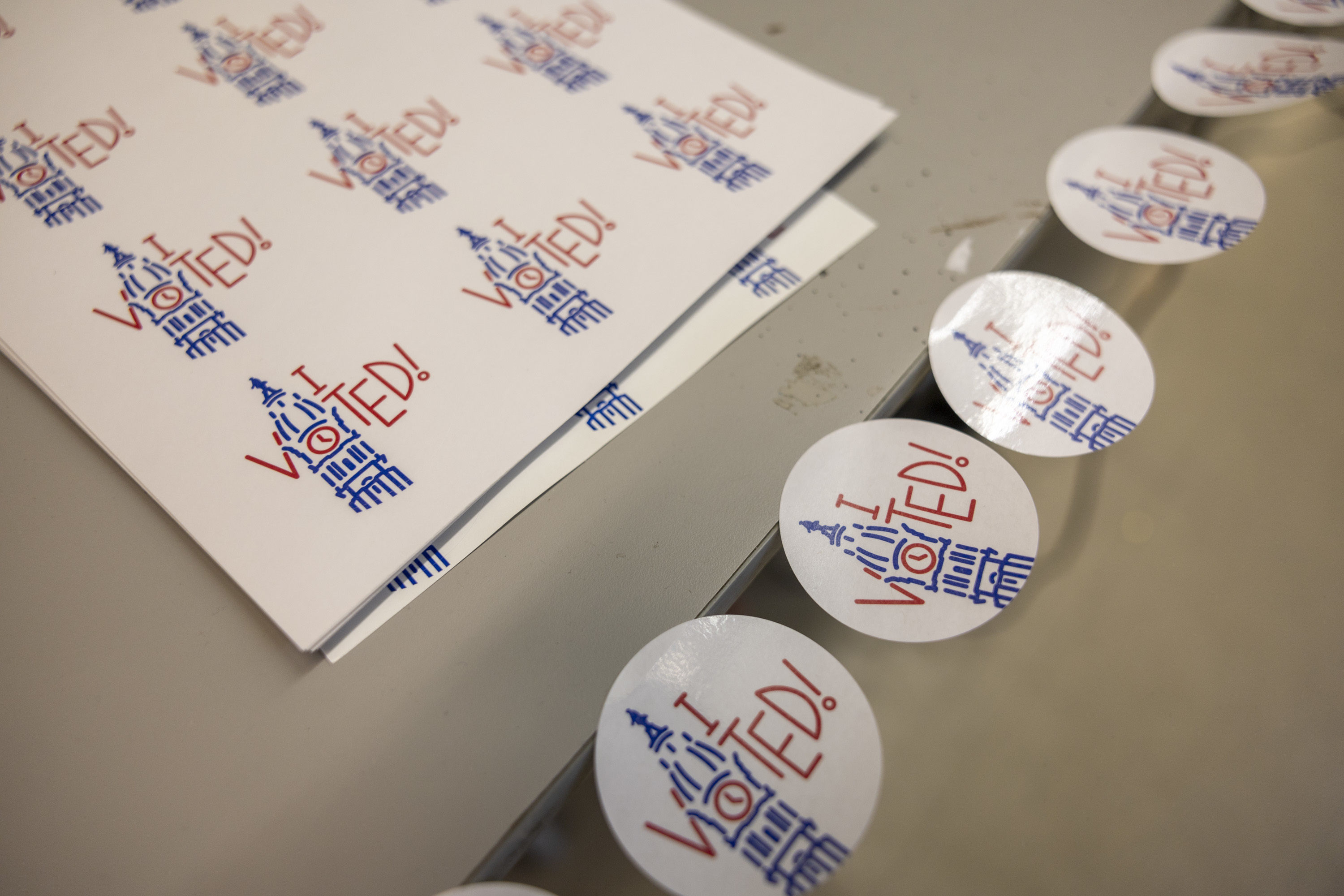
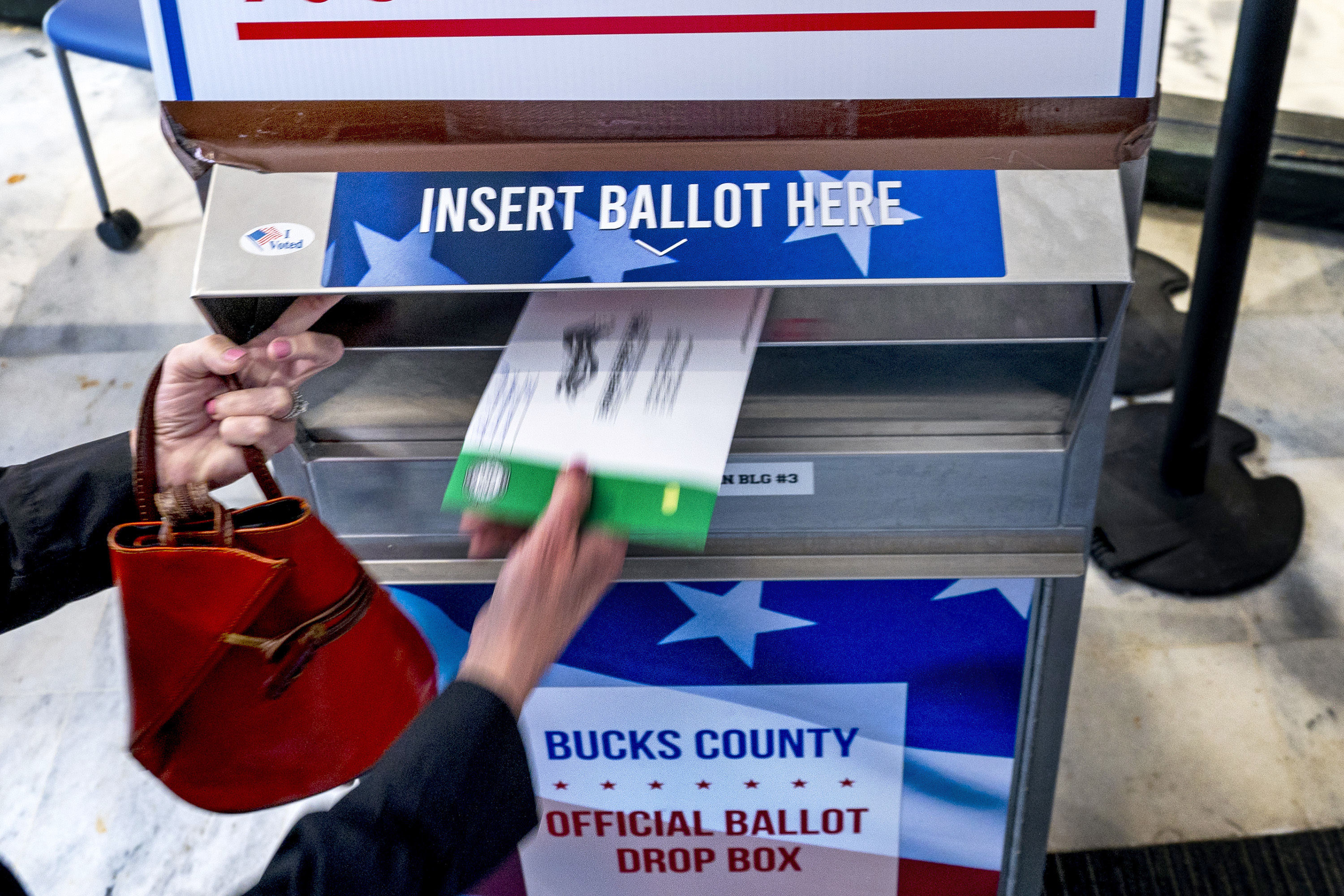
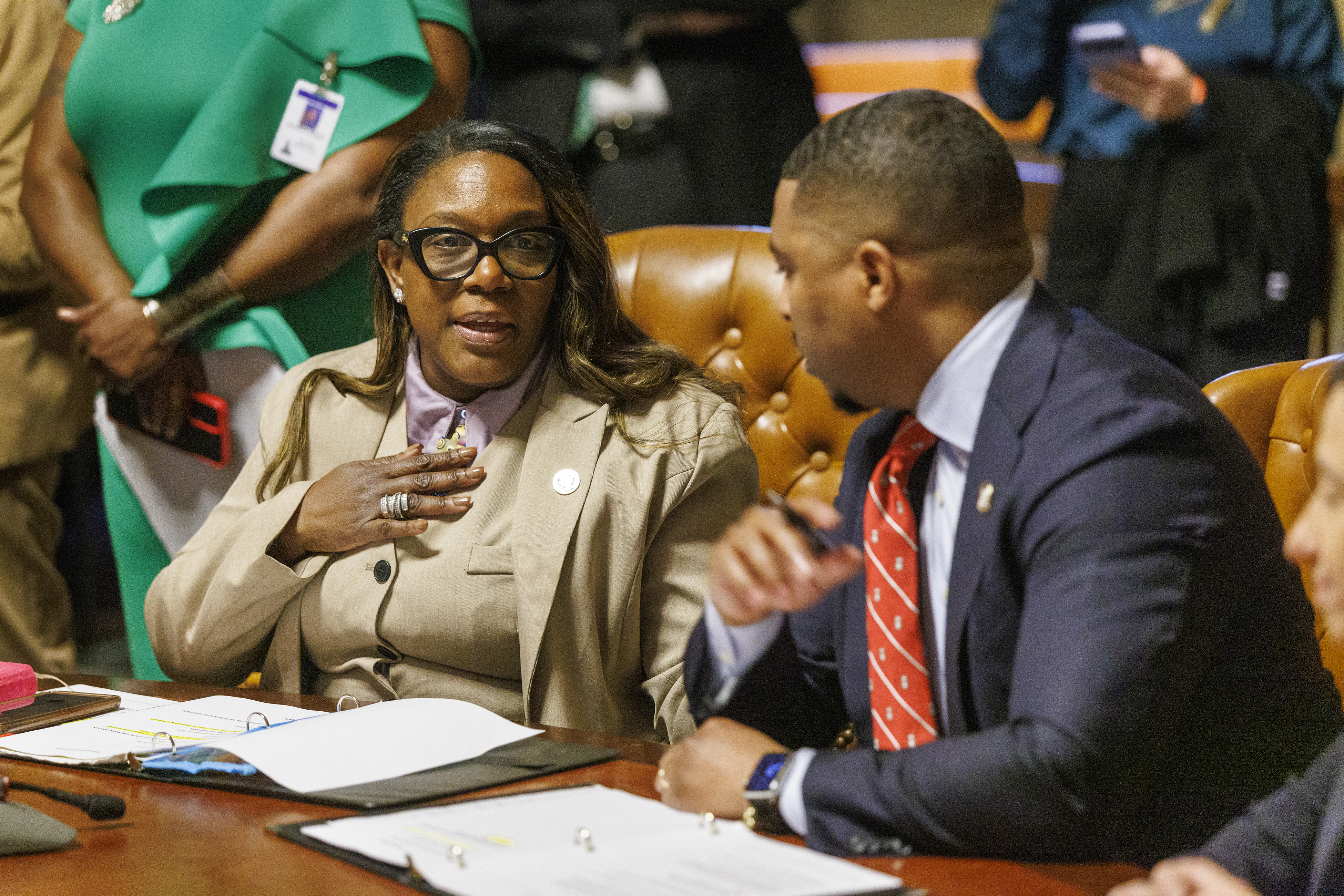
A former Philadelphia woman who voted twice in the 2024 presidential election was sentenced Thursday to three years of probation.
Miya Pack, 40, who now lives in Georgia, pleaded guilty earlier this year to voting more than once in a federal election after prosecutors said she cast ballots in 2024 in Bergen County, N.J. — where she grew up — and in Philadelphia.
Pack was not affiliated with any political party at the time, according to Pennsylvania voter records. And prosecutors did not specify which candidate she voted for.
Pack also did not name her preferred candidate Thursday while addressing U.S. District Judge Joshua D. Wolson. Instead, she simply said she was “nervous” about the election’s outcome, but recognizes now that that was no excuse for voting twice.
“I was wrong,” she said. “I’m very, very sorry.”
Pack voted in-person in North Jersey on Oct. 26, 2024, court documents said, and then cast another ballot in-person in Philadelphia 10 days later, on Election Day.
Assistant U.S. Attorney Nancy Potts said Pack’s crime “violates the trust that we have in one another to abide by the basic rules of society.”
And Wolson, the judge, said Pack’s offense “strikes at the heart of democracy in many respects.”
“There’s a degree of honor code in voting, and breaches of that undermine the public confidence in elections,” he said. “And our elections function in no small part because they rely on a public perception of confidence.”
Pack said she understood. And both she and her attorney said Pack has been left “mortified” and “embarrassed” by the case, which has been covered by a variety of news outlets, making her name and background easy to find online.
Election officials and other experts generally agree that voter fraud has not historically occurred on a large scale, or at rates that might undermine electoral results — particularly in national elections, such as presidential contests.
Pack’s indictment was announced last year alongside the indictment of another man, Matthew Laiss, who voted twice for Trump in 2020. Laiss was sentenced earlier this year to six months of house arrest and three years of probation.
Just when you are tempted to assign sole blame for our growing reputation as human rights abusers to President Donald Trump and his misbegotten administration, up steps the Supreme Court of the United States.
The ruling, which was not signed by the justices, does not make a determination onthe legality of the process itself — the court will begin hearing arguments on that question in December. Nevertheless, it was, according to the New York Times, being celebrated as a victory by the Trump administration, which has deported more than 25,000 migrants to 29 “third countries.”
Yet, for those of us who look to our judicial system as a means to ensure this White House doesn’t get away with every human and civil rights violation it can think of, the court’s decision is deeply troubling.
Sarah H. Paoletti, the director of the Transnational Legal Clinic at the University of Pennsylvania Carey Law School, says the order is “yet one more example of the Supreme Court majority ceding exceptional deference to the Executive.”
“In granting the stay, the court has cleared the way for [the U.S. Department of Homeland Security] to disappear individuals overnight and transport them to countries without notice, and without the opportunity to be heard on their fear-based claims as to those countries, with callous disregard to the grievous rights violations they are likely to face,” Paoletti said via email.
Paoletti noted that the court’s ruling came on the same day 20 independent human rights experts appointed as U.N. Special Rapporteurs and a Special Rapporteur of the African Commission on Human and Peoples’ Rights condemned the practice of third-country removals.
Malka Older — writer, sociologist, aid worker, and executive director of Global Voices, the international newsroom made up of writers and human rights activists — sees the harms as part of a pattern of unethical national choices.
“The Supreme Court allowing the government to continue removing immigrants to third countries — countries where they know no one, have no safety net, no connections, no assistance, and may be under active threat for their identity or convictions — is allowing irreparable harm to continue being done to those people,” Older told me via Facebook. “This kind of deportation rips apart people’s lives, leaving them stranded, and it demonstrates the moral vacuity of U.S. policy, pushing people off somewhere else as though that absolves us of all responsibility.”
“It is the same dynamic that sees the U.S. export plastic waste, dangerous industrial byproducts, unappealing jobs, and increasingly data centers, hoping that if people can’t see the harm they’ll pretend it isn’t happening but in this case, the harm is happening very directly to human beings, to our neighbors.”
But anecdotally, and through the work of journalistshere at The Inquirer and at other media organizations, we know that most of those being detained for deportation — even to third countries — are mostly just ordinary human beings.
“There are people who have lived in this country for upwards of 30 years who are being deported because they lack residency,” Guatemalan-born and Brooklyn-based author and translator David Unger said via Facebook.
A deportee from the United States who was sent to Liberia stands on the balcony of a hotel in Marshall, Liberia, in August.CARIELLE DOE
“My daughter, an immigration lawyer, had a Jamaican client who was deported to Eswatini in Africa and held incommunicado for three months before finally being sent to Jamaica, where he has no living relatives,” he added. “Guatemala has accepted 2,000 deportees originally from Mexico. Who knows what danger they may be in when they finally reach their birth land. This is simply cruel and, possibly, lethal to them.”
Trump is fond of repeating that our nation is the hottest country in the world right now, but what I see is that we’re radioactive. Our ranking in the Human Rights Measurement Initiative rights tracker, which compares us with our peer high-income countries and fellow members of the Organization for Economic Co-operation and Development (OECD), is pretty terrible: 3.7 out of 10. And a number of the categories in which we are dead-last — “freedom from torture and ill-treatment,” “freedom from arbitrary arrest,” and “freedom from forced disappearance” — are tied directly to the administration’s mass deportation plan.
You know what to do. Thirty-three days from now, get yourself to a polling place and elect people willing to limit the executive branch’s morally disgraceful inclinations. And come December, pray the Supreme Court is willing to limit it, too.
The overall approval rating for the first-termDemocratic governor also remains steady eight months into her tenure, the poll said.
The poll found 44% of New Jerseyans approve of the way Sherrill is handling her job, 34% disapprove, and 22% are unsure. The poll was conducted from Sept. 24 through 27, a period covering the investigation’s release and former Lt. Gov. Dale Caldwell’s resignation.
South Jersey residents were less supportive of Sherrill, however, with 33% approving of her performance, 47% disapproving, and 21% unsure.
(function() {
var l2 = function() {
new pym.Parent(‘SHERRILLPOLL3.html’,
‘https://media.inquirer.com/storage/inquirer/projects/innovation/arcgis_iframe/SHERRILLPOLL3.html’);
};
if (typeof(pym) === ‘undefined’) {
var h = document.getElementsByTagName(‘head’)[0],
s = document.createElement(‘script’);
s.type = ‘text/javascript’;
s.src = ‘https://pym.nprapps.org/pym.v1.min.js’;
s.onload = l2;
h.appendChild(s);
} else {
l2();
}
})();
“Gov. Sherrill’s approval numbers look much like they did at 100 days, which in this political climate — and after a challenging summer — is itself an accomplishment,” said Ashley Koning, an assistant research professor and director of the Eagleton Center for Public Interest Polling at Rutgers University-New Brunswick.
”She continues to draw more positive reactions than negative ones, and more New Jerseyans have formed an impression of her than had of Phil Murphy at this same point in his first term,” Koning said. “But a quarter of residents still have no opinion of her almost a year in, and how those New Jerseyans eventually break will decide whether her net positive ratings hold.”
Stephen Sigmund, a spokesperson for Sherrill, said the poll reflects how the governor has approached the job.
“Since day one, Gov. Sherrill has been taking action to drive down costs, build a stronger future for our kids, make Trenton more accountable, and stand up to Donald Trump’s attacks on our state. That work is resonating with New Jerseyans, and her focus will always be on delivering for them,” Sigmund said.
The pollster asked participants to evaluate how well she had handled the independent investigation into claims that Caldwell used his job to meet women.
The center had to adjust the question to reflect Caldwell’s resignation last Friday, but there was no statistically significant difference in how people responded. The poll found 68% saying she handled the situation “very well” or “somewhat well,” 14% “not very well” or “not well” at all, and 19% were unsure, the poll said.
Sherrill released the independent counsel’s report, which corroborated allegations of sexual harassment, last Thursday. Caldwell resigned the following day. He and his attorney, Thomas Calcagni, denied any wrongdoing and called the investigation flawed.
“She brought in an outside investigator and then called publicly for her own lieutenant governor to resign, and most residents read that as accountability rather than protecting her own or politics as usual,” Koning said.
The governor released a 61-page report from a monthlong investigation conducted by an outside law firm late Thursday afternoon. The report said Caldwell had made inappropriate comments to women and violated ethics rules. Caldwell, a minister, is the former president of Centenary University.
According to the report, Caldwell made a “romantic advance toward a female staffer’s friend.” When she turned him down, Caldwell told the staffer that ambitious women like her and her friend needed a man in his position to help them “but you young women are looking for young sperm,” according to the report.
Although Sherrill’s marks are favorable, participants were less optimistic on the direction of the state, with 43% saying New Jersey was on the wrong track, 37% on the right track, and 20% unsure.
The poll also asked residents their opinion on President Donald Trump. He remained overwhelmingly unpopular in New Jersey, with 24% saying they had a favorable impression of him, 66% unfavorable, and 10% no opinion.
In South Jersey, 60% of residents had an unfavorable opinion, 30% had a favorable opinion, and 10% had no opinion. The poll defined South Jersey as Camden, Burlington, Gloucester, Cumberland, Salem, and Cape May Counties.
The results are based on a survey of 1,004 adults. The poll has a margin of error of plus or minus 4.1 percentage points.
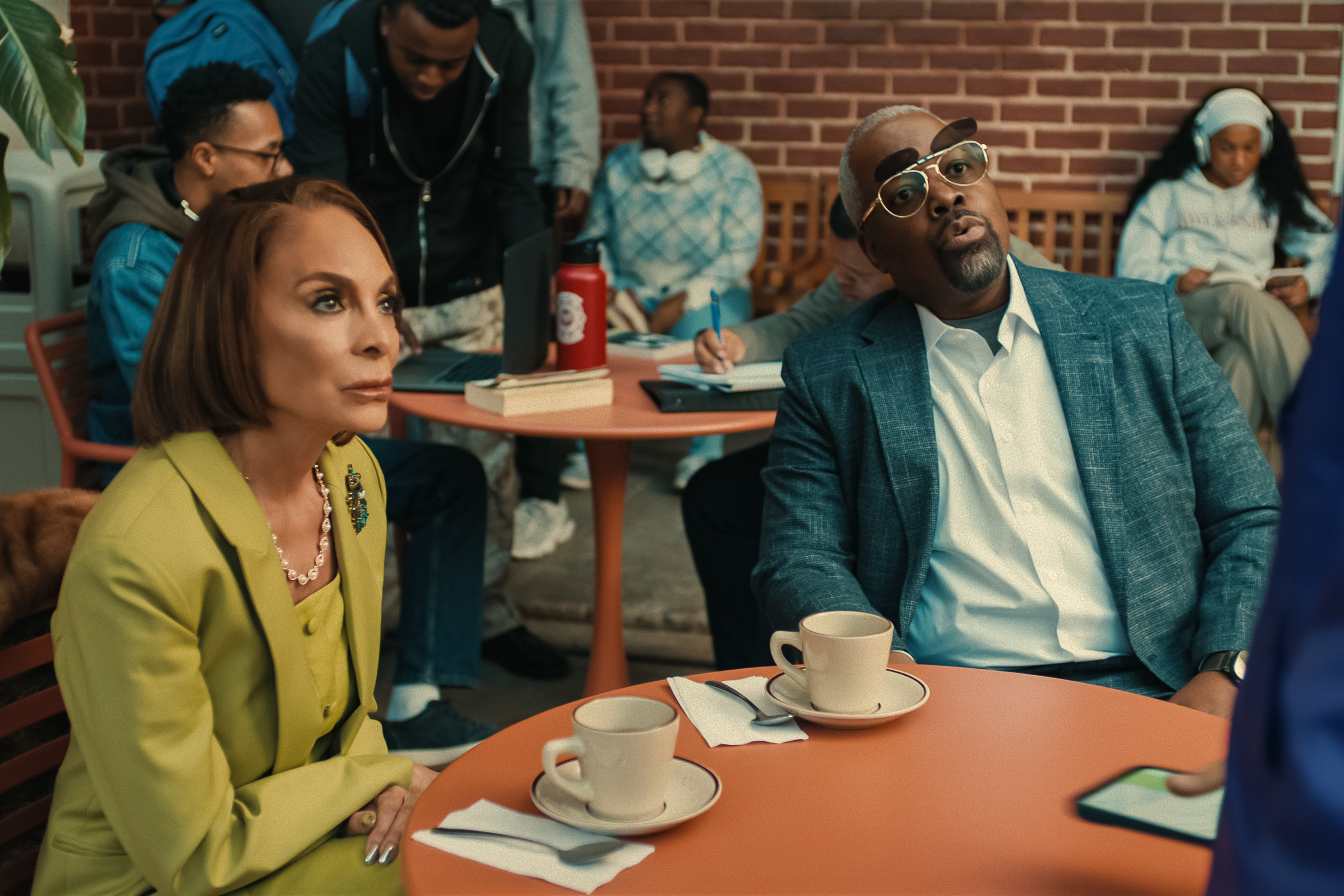
The reboot of A Different World on Netflix is a welcome distraction from ruminating about the upcoming midterm elections and worrying about whether AI will kill us all.
I’ve enjoyed getting reacquainted with the characters from The Cosby Show spinoff, which originally debuted in 1987 and is set on the campus of the fictitious HBCU Hillman College. The show’s leads, Whitley Gilbert, played by Jasmine Guy, and Dwayne Wayne, played by Kadeem Hardison, have gone from being undergraduates to serving as the president and first lady of Hillman. They both look considerably older, and therein lies the proverbial rub.
Hardison, who was a skinny kid with flip-up glasses during his days on the show, is heavier now and has gray hair. Guy, who in our modern vernacular would have been considered a WCW back in the day, has visibly matured, too. At age 64, she’s refined, elegant, graceful, and still attractive, but she doesn’t look 25 anymore and — despite the vitriol she’s getting on social media — that’s completely natural and not a bad thing.
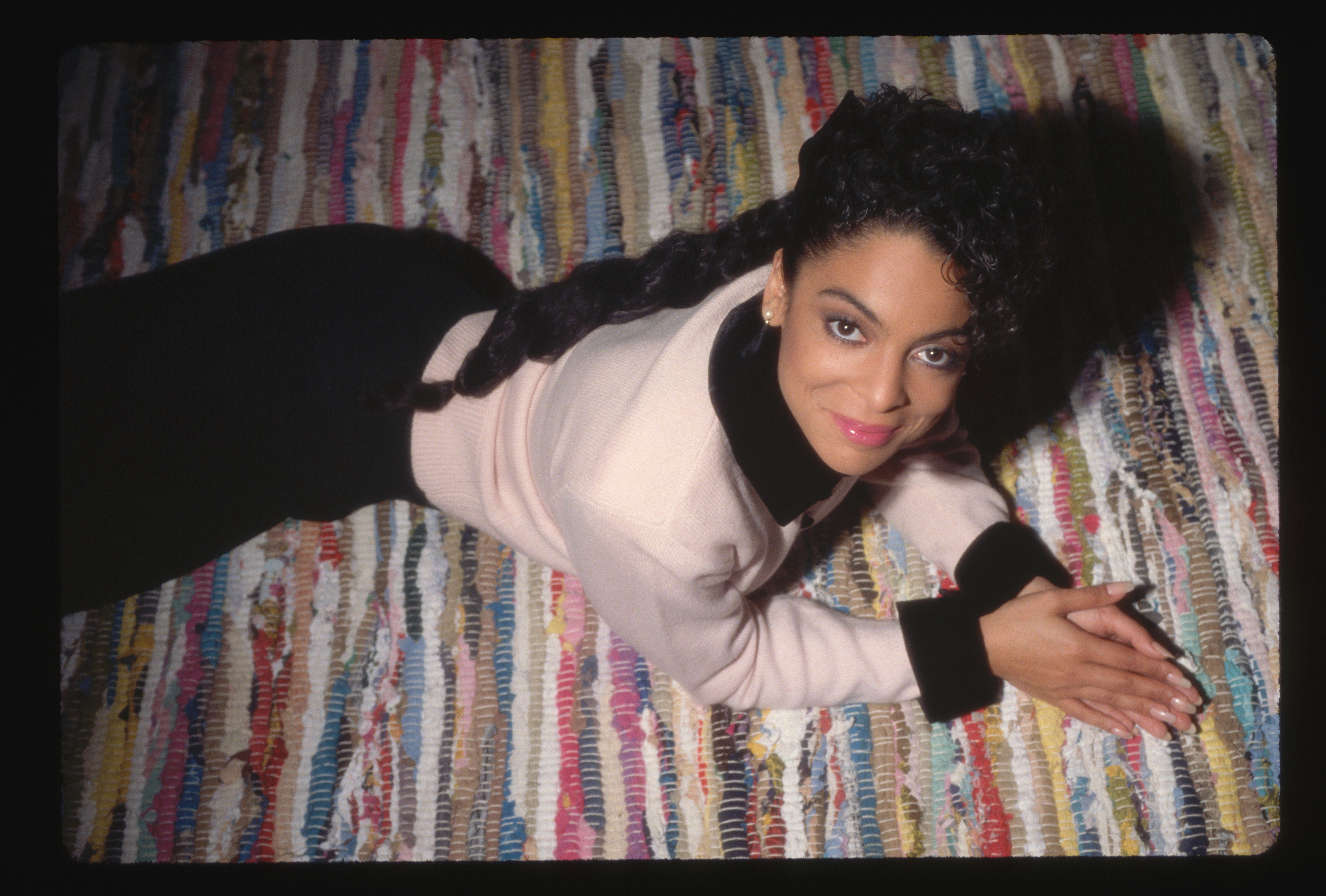
The actress Jasmine Guy in 1988 when she was 26 years old.Lynn Goldsmith / Getty Images
This shouldn’t be a big deal. Maturing — emotionally and physically —is part of life. But from the way some commenters have criticized Guy for looking older, you’d think she was the only one on the show who has been touched by the hands of Father Time.
I take umbrage at some of the online vitriol. I was a young woman myself when the show first aired and have gotten older right along with the cast members. An awful lot has happened since the show ended in 1993.
Guy, 64, during an appearance on “The Jennifer Hudson Show” last month.Chris Haston /WBTV via Getty Images
Guy must have read some of the terrible things people have been saying online about her appearance because on Monday, she addressed them by posting on social media: “The internet can be brutal to women as we grow older. It asks us to celebrate life while criticizing every sign that we’ve lived it.”
Some national cultures venerate older people, but that’s not so here in the United States. We are obsessed with beauty and youth, which is why TikTok filters and AI-generated “de-aging” photos proliferate. Older women in all walks of life don’t always get the respect they deserve. It irritates some people when older females refuse to fade quietly into the sunset. An estimated two out of three female workers over 50 regularly face ageism, according to a survey by AARP.
Former Secretary of State Hillary Clinton experienced this when she ran for president in 2016. Instead of being praised for launching a presidential bid when she was 68, she faced questions about her age. Donald Trump, who happens to be two years Clinton’s senior, publicly mocked her after she contractedpneumonia on the campaign trail and claimed she lacked the stamina to be president. Trump also accused her of not looking presidential enough for the job.
Democratic presidential nominee Hillary Clinton speaks as Republican presidential nominee Donald Trump listens during a presidential debate in St. Louis in October 2016.Rick T. Wilking
You’d think female Republicans would have automatically disqualified him for that. Instead, many nodded right along with his ageist, sexist rhetoric and most voted for him. This is one reason why America is in the situation it is today, with a narcissistic megalomaniac running the country.
Deep-seated bias against older women might also be what keeps America from electing a female president during our lifetime. I respect former CNN anchor Don Lemon and his work as an independent journalist. But Lemon uttered what a lot of voters thought when he said on air in 2023 that then-GOP presidential candidate Nikki Haley, who was 51, “isn’t in her prime.” He went on to say, “If you google when is a woman in her prime, it will say 20s and 30s and 40s.”
Meanwhile, white male politicians don’t have to waste inordinate amounts of time convincing skeptics that their advanced age doesn’t automatically disqualify them from holding elected office. Female candidates shouldn’t have to, either. The same should apply to women in other walks of life, as well.
It’s A Different World,all right. But when it comes to ageist bias against women, some things haven’t changed a bit.
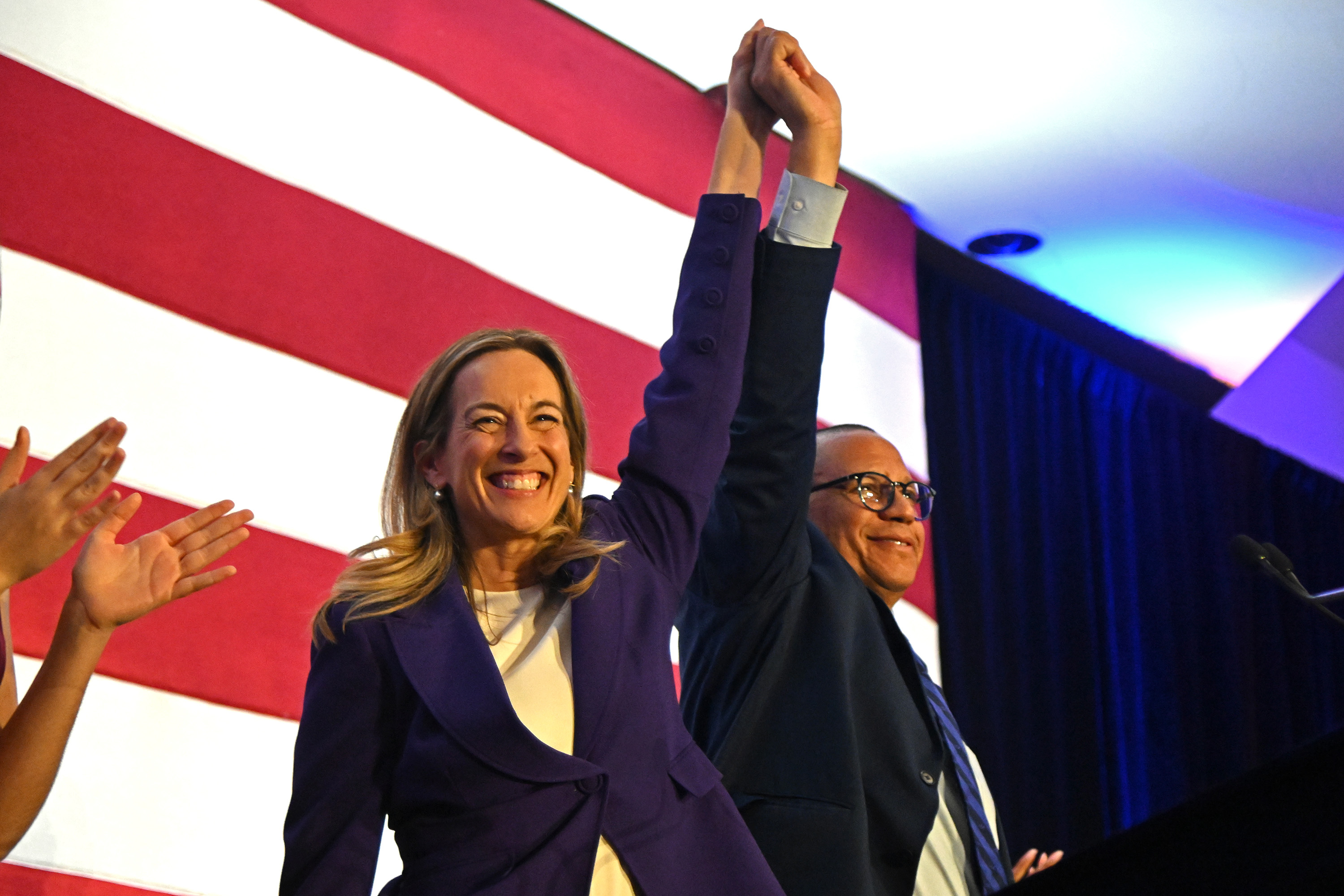
In announcing the resignation of New Jersey Lt. Gov. Dale Caldwell last week amid allegations of harassment and ethics violations, Gov. Mikie Sherrill said an independent investigation had found “a pattern of behavior that does not meet the standards of this administration.”
In a state where official misconduct has often been not just tolerated but embraced — and at a time when our national government is making workaday New Jersey corruption look quaint — Sherrill responded swiftly, fairly, and decisively to the accusations against the lieutenant governor, who doubled as the state’s chief elections official.
The governor’s decision was particularly principled given that Caldwell is not only a fellow Democrat, but also the running mate she chose just last year. Demanding his exit after just eight months of service effectively required Sherrill to acknowledge she had made a poor choice.
Accepting mistakes, embracing accountability, and moving forward are qualities voters should expect from all elected officials.
An investigation led by former state Attorney General Christopher Porrino, who was hired by the administration’s chief ethics officer to look into anonymous complaints about the lieutenant governor, found several of the accusations credible.
Among the most troubling was that after Caldwell unsuccessfully propositioned a friend of an employee, he complained to the employee that young women like her and her friend were “looking for young sperm.” The investigation also substantiated that Caldwell pushed for the promotion of a sometime romantic partner in another state department without disclosing their relationship. And it found he had a habit of taking nonpaying personal guests to ticketed functions he attended in his official capacity.
Dale Caldwell speaks before Mikie Sherrill as they celebrate their victory at an election night party in East Brunswick, N.J., Nov. 4, 2025.Tom Gralish / Staff Photographer
Porrino’s report noted that all this conduct was in violation of state policies Caldwell had been informed of in training sessions to no apparent avail.
Granted, this wasn’t a question of throttling interstate travel for political reasons or inventing a state job for a paramour, to name a couple of the Garden State’s more infamous gubernatorial scandals — let alone anything approaching the brazen, unprecedented corruption that has characterized President Donald Trump’s second term. But Caldwell’s alleged behavior would and should constitute a firing offense in any number of more obscure private-sector jobs. The standard for public officials should be higher, not lower.
Caldwell, who continues to deny the allegations, deserves credit for stepping down and allowing the administration to move on nevertheless. His resignation allowed the governor to immediately appoint a new secretary of state whose full attention can be devoted to the role, which is especially crucial considering the approaching midterm election and the Trump administration’s efforts to interfere with it. Sherrill said she would select a new lieutenant governor within 45 days.
The governor’s handling of the matter has certainly not been flawless. Especially given published reports of the allegations and Caldwell’s service as acting governor during Sherrill’s out-of-state travels, she should have been quicker to disclose the existence and general nature of the investigation. She could have done so while reserving judgment and without discussing unsubstantiated allegations in detail.
That being said, the outcome is more important and encouraging. As Sherrill noted, “There has been a culture in Trenton, probably since the birth of our nation, to sweep this under the rug.”
The governor is to be commended for a stark departure from that history.
Gov. Josh Shapiro’s hope for a Democratic state Senate likely hinges on the Philadelphia suburbs, where three swing districts could give his party the majority in the chamber for the first time in 33 years.
Democrats in the Keystone State have zeroed in on the GOP-held seats in the 6th District in Bucks County, the 16th in Bucks and Lehigh, and the 24th in Montgomery and Berks Counties as three of the districts they’re hoping to flip to create a Democratic trifecta in Harrisburg with a possible blue wave in November.
The competitive races in Bucks and Montgomery Countiesare unfolding ahead of this November’s midterm elections when Pennsylvania will also be in the spotlight for Shapiro’s reelection bid and four congressional contests that could determine party control of the U.S. House.
Like most Democrats across the country, Eileen Hartnett Albillar in the 6th District, Mark Pinsley in the 16th District, and Chris Thomas in the 24th are centering their pitch to voters around affordability as Pennsylvanians’ signal their overwhelming disapproval of President Donald Trump’s handling of economic issues and gas prices.
“Individual candidates matter, campaigns matter … but I do think it’s pretty clear that all these elections, to one extent or another, wind up being a referendum on President Donald Trump, and I think that puts Democrats in a very strong position,” said State Sen. Santarsiero, the chair of Bucks County’s Democratic Party. Santarsiero is also running for reelection this year.
Republicans currently hold 27 seats in the 50-member state Senate.Democrats would need to flip at least two seats and hold the governor’s office to take control with the lieutenant governor’s tie-breaking vote.
A Democratic trifecta in Harrisburg — if the party maintains its House majority and flips the Senate — would allow Shapiro in a second term to usher through a minimum wage increase and more transportation funding among other priorities that have been blocked by the GOP Senate.
But Democratic candidates will have to win over independent and even some Republican voters to prevail in the swing districts against GOP incumbent State Sens. Frank Farry in the 6th, Jarrett Coleman in the 16th, and Tracy Pennycuick in the 24th. The GOP has a registration advantage in all three districts, according to state data.
Farry, Coleman, and Pennycuick did not respond to requests for an interview, but the state party projected confidence about their ability to hold their seats.
“Maintaining the majority in the Senate is a top priority for Republicans in Pennsylvania,” said James Markley, executive director of the PA GOP.
He also praised Farry, Pennycuick, and Coleman for their work to lower costs and improve the state’s education system.
“When it comes to majorities in the State House or the State Senate, every seat matters,” he said.
Here’s what to watch.
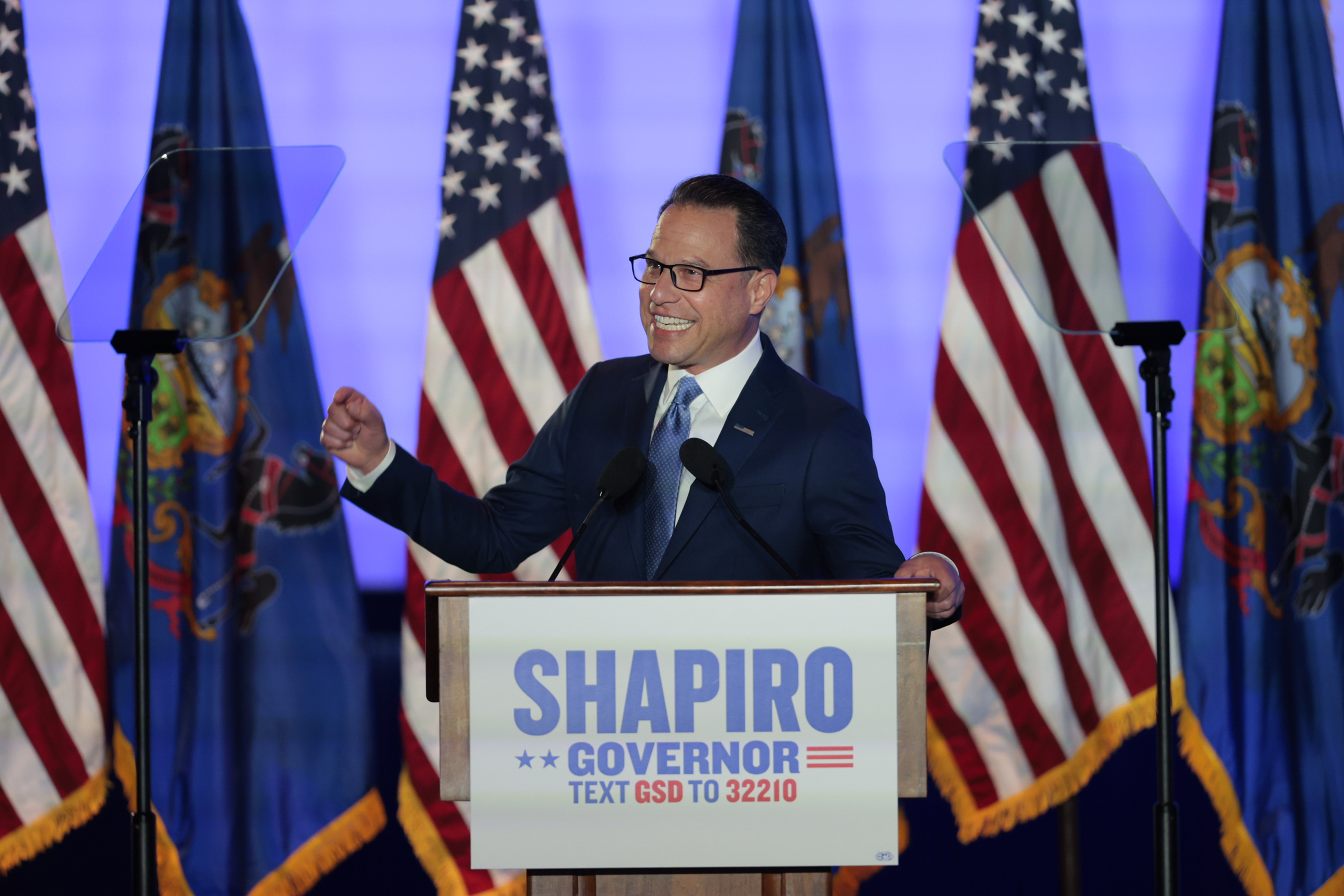
Gov. Josh Shapiro addresses supporters at a primary night part in Warminster on Tuesday, May 19, 2026Steven M. Falk / For The Inquirer
‘You don’t take for granted anything in Bucks County’
Bucks County’s importance ahead of November has been clear for months.
In Warminster last May, Shapiro held a primary night party at a former space centrifuge where he promotedhis reelection campaign and a slew of downballot candidates. There, Hartnett Albillar, who is also the county’s clerk of courts and a social worker by trade, declared: “The path to flipping the Senate runs right through Bucks County.”
As she continues knocking on doors and courting voters in the 6th District, which includes most of the middle of the county, that reality could not be more obvious. But, Hartnett Albillar said, despite Shapiro’s support (he has endorsed all three candidates) and a blue wave in the forecast, she’s not thinking of her election as a shoo-in.
“We know that you don’t take for granted anything in Bucks County,” she said in an interview last month.
That’s because the suburb is notorious for split-ticket voting, she said.
“Democrats have won here in other races, but I believe you have to make your case to voters individually,” Hartnett Albillar said, adding that voters in her district don’t look at party labels.
It’s a dynamic that has, for example, allowed GOP U.S. Rep. Brian Fitzpatrick to maintain his congressional seat even in years Democrats do well — like in 2022 when Shapiro won the county by nearly 20 points.
Pinsley is trying to make that argument in the Upper Bucks County portion of the 16th where voters are less familiar with the Lehigh County controller and where Republicans have a roughly 22,000 voter registration advantage — the largest gap of the three districts.
Eileen Hartnett Albillar (center) is challenging State Sen. Frank Farry in Bucks County’s 6th District.Hartnett Albillar Campaign
This race is also a rematch for Pinsley after he lost by 8 points against Coleman in 2022.
But the Democrat was given another chanceby votersthis year after he succeeded in a heated primary without the Bucks County Democratic Committee’s backing.
Now that he has the party’s support, he says it’s helped him reach a whole new circle of people for his events, including “Pastries with Pinsley,” a regularmeet-and-greet at various coffeehouses in the district, but especially in Bucks. This weekend, he’s headed to the So Fresh So Green Cafe in Perkasie.
“60% of the vote is in Lehigh County, and 40% of the vote is from Bucks County,” Pinsley said in an interview last month. “We need Bucks. We need Bucks to win. You’re not going to win in just Lehigh.”
Across county lines into Montgomery County — Shapiro’s home county, which has a reputation for being deep blue — also lies another swing district that Democrats are investing in as Thomas, a volunteer firefighter and community organizer, hopes to bring Pennycuick’s tenure in the state Senate to a close.
Until now, the 24th District, a hodge-podge of suburban and rural communities in Montco and Berks County that Thomas calls “all-encompassing of Pennsylvania” has “always been just out of reach in terms of how the district was drawn.”
But this year, with a combination of voters’ frustrations and Shapiro on the ballot, Thomas believes “a lot of the stars are aligning.”
“There’s a slim path to the majority without this district,” he said.
But Republicans won’t be giving up these suburban swing districts so easily.
Michael Straw, a spokesperson for the Pennsylvania Senate Republican Campaign Committee, said the GOP is “ready to compete for every vote in Bucks County.”
Straw said in a statement that candidates will highlight the bipartisan bills that lawmakers have introduced and have since been signed into law, including Farry’s legislation to reduce cost barriers for breast cancer screenings and Coleman’s bill to address school safety and increase parental transparency.
“We are making these legislative accomplishments known to voters across the political spectrum,” Straw said.
Both parties are betting on affordability
Heading into November, both Democrats and Republicans are trying to make the case to voters in these key swing districts that they are the party of affordability.
Straw said that Republicans view these elections as an opportunity to emphasize affordability and fiscal responsibility to put “an important check on the Democrats overspending.”
“Senate Republicans have helped to prevent wasteful spending, stop the Democrats’ electricity tax that would have cost Pennsylvanians more, and have supported reducing taxes on working families,” Straw said. “PA Senate Republicans have made affordability the priority while Democrats have repeatedly stood in the way.”
Bucks County GOP State Sen. Frank Farry (center) during a ceremonial meeting of the Pennsylvania Senate at the National Constitution Center May 5, 2026.Tom Gralish / Staff Photographer
And for Democrats, that means addressing voter frustrations that have trickled down from federal policies.
Trump — who has urged voters to think of him as being on ballot — is getting worsening marks on the economy from Pennsylvania voters. The president’s own voters in 2024 are also dissatisfied with his handling of gas prices, polling shows.
“They’re not happy about the Iran war. They’re not happy about the cost of gas. There are other costs that are going up, and many of them do blame the president, and all of these races have been federalized in many ways,” Pinsley said.
In response to the rising costs of living, affordability has taken up most of the oxygen in Democrats’ messaging as the party shifts away from issues that have been prevalent in previous campaigns, such as abortion.
With a focus on prices, the three swing district candidates have not had to switch up their stump speech even when chatting with Republican or independent voters that they’ll need to win over to be successful in November.
Hartnett Albillar said that all voters are simply looking for a “functional” and competent government.
Other key issues popping up in these races include funding for SEPTA and data centers; the latter of which has sparked contentious ads, including one by Hartnett Albillar’s campaign in the 6th District that provoked Farry’s campaign to file a cease-and-desist.
“I’ve heard many times that folks are not looking at whether there’s a ‘D’ or an ‘R’ next to the name,” she said. “They’re looking at the person who will be able to bring change and bring fresh ideas because the current system is not working for us. Costs are way too high, and they want someone who’s going to do the work.”
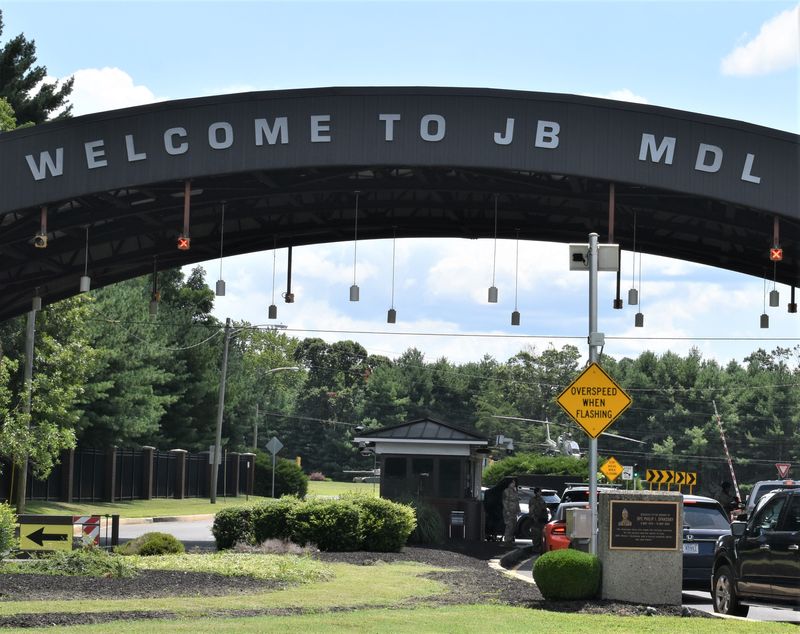
The Trump administration has dropped its plans to build an immigrant-detention center at Joint Base McGuire-Dix-Lakehurst in South Jersey, according to a new report from the Government Accountability Office.
The office said that in October, after the opening of an ICE detention site at Fort Bliss in El Paso, Texas, Pentagon officials said they “no longer plan to build detention facilities on other military installations.”
Specifically, the report said, Defense Department and Immigration and Customs Enforcement officials “told us that they did not move forward with plans for facilities in Indiana and New Jersey.”
More than a year ago, in July 2025, the administration confirmed plans to house detainees at the South Jersey base as a way to support President Donald Trump’s plans for mass deportations.
Specific details were not released, and as time went on it was unclear if planning had gone forward.
In November 2025, local Democratic elected officials said they had received a letter from the administration saying there was currently no approved construction plan, nor a timeline, for confining people at the base.
U.S. Reps. Donald Norcross and Herb Conaway, both New Jersey Democrats and members of the House Armed Services Committee, requested more information about the administration’s plans from the Department of Homeland Security.
The administration’s response said the government’s need for more detention space “reflects the Trump administration’s commitment to restoring the rule of law and ending the catch-and-release policies of prior years that jeopardized American communities.”
The base had been named as one of two sites certified to hold immigrants, the other being Camp Atterbury in Indiana.
The report by the GAO, a nonpartisan, investigative arm of Congress, said ICE had begun new detention initiatives before developing a plan for expansion, resulting in waste. Since January 2025, ICE had invested significant resources in six new initiatives to increase detention capacity, but by July 2026 had scaled back four of them, the GAO said.
In 1964, I was a) only 5 years old and b) living in the New York suburbs, so while I’ve been hearing all my life about the notorious collapse of the Phillies that September, I didn’t get to experience that feeling of existential dread in real time. But I was almost there last week, as the 2026 Phillies nearly became the first team to blow a four-game playoff lead with five games to play. Almost. Sunday’s 7-3 win over Tampa Bay sent my beloved/cursed midlife baseball team back to the playoffs for the fifth straight year. The chill of the offseason has been delayed for at least two more sure-to-be-heart-attack-inducing games in Atlanta. ‘Woke 1.0′
The only thing wrong with ‘Woke 1.0’ was that it wasn’t implemented
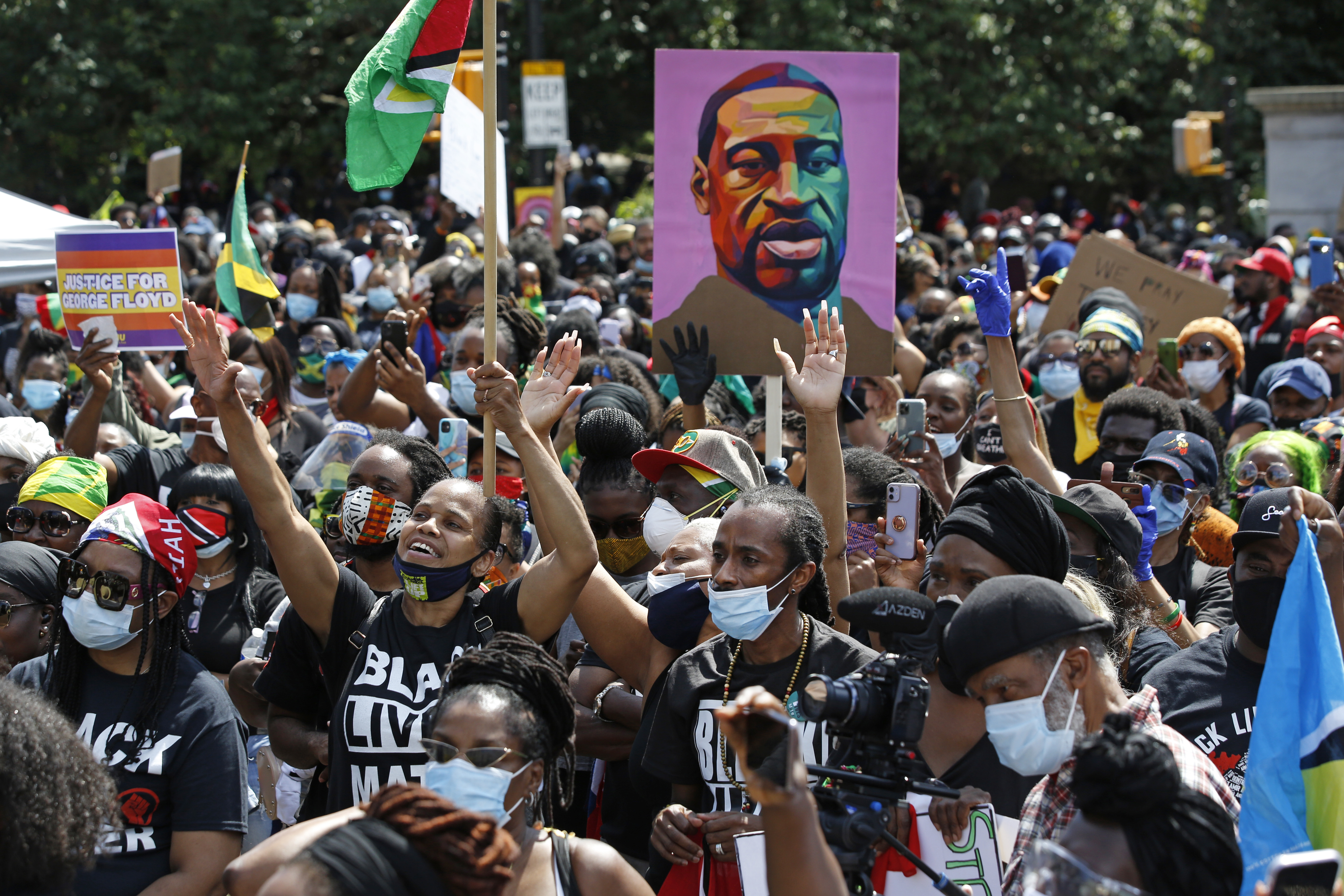
People participate in a Caribbean-led Black Lives Matter rally in June 2020 at Brooklyn’s Grand Army Plaza in New York. Kathy Willens
It’s a war almost nobody wanted, and yet it never, ever seems to end. Just thisweekend there was yet another spontaneous incident that caused the conflict to flare back up again, as an entire platoon of keyboard commandos mobilized for action.
Yes, the utterly ridiculous “war on woke” is back on again. The equally senseless fighting in Iran is almost certain to end sooner than this boondoggle.
The flashpoint was something appropriately trivial enough for this war of distraction: a decision by the Boston Globe to report on the, yes, somewhat silly fight consuming a western Massachusetts lesbian tavern called the Last Ditch Bar and Arts Venue. The hangout continues to require all patrons to wear COVID-era KN95 masks, as a gesture that everyone is welcome at all times, including the immunocompromised.
The fracas that broke out when the owners of the Last Ditch sought to make just one night a week “mask-optional” in a bid to boost business didn’t just make for a widely read Globe scoop (supposedly it brought in several thousand new subscribers). It also spread great joy among the nattering nabobs who continue to see COVID-19 overreaction as the avatar of a far-left conspiracy to make America ungreat.
Suzy Weiss, writing for the Free Press founded by her sister and now CBS News honcho, Bari Weiss, emailed with glee that “what happened at Last Ditch shows that Woke 1.0 never ended in some parts of America. It just got crazier.” The Washington Post’s Megan McArdle — who can thank her colleague Kathleen “Donald Trump Will Be a Normal President” Parker for not having the worst columnist batting average of all time — declared that, groan, “The Great Awokening Is Over.”
This nonsense rekindled a fire that’s been smoldering since the summer among a certain crowd — six-figure-salaried pundits who call Trump “uncouth” and pat themselves on the back for their brave liberalism before picking up their kids at the Dalton School and catching the last train for the Hamptons — who insist America’s downfall didn’t peak with the 2016 election of a demagogue with dictatorial ambition.
No, the real crisis hit in 2020 when, in their telling, our great Fortune 500 companies were blackmailed into tweeting “Black Lives Matter,” when someone at the far edge of a protest march carried a sign that read “Defund the Police,” and when some tripping-on-idealism sophomore at Oberlin complained that serving bahn mi in the cafeteria was “cultural appropriation.”
Trump might be uncouth, they argue, but America will never be whole without a Truth and Reconciliation Commission and a public apology for the crimes against humanity of the “woke era.”
The accelerant, if not the trigger, for this insanity was possibly the most unlikely of sources:U.S. Rep. Alexandria Ocasio-Cortez of New York, heir apparent to the progressive movement, whom many would like to see run for president in 2028. Like her allies on the left, AOC has been undergoing a kind of Spanish Inquisition from journalists demanding an explanation for why — at a time when millions were marching against U.S. cops killing more citizens than anywhere else in the developed world — some folks on the far-left wanted to abolish not just the police but maybe Thanksgiving.
Ocasio-Cortez laughed off the question by quoting another New York progressive that “Woke 1 was crazy” and arguing that the madness of monthslong COVID lockdowns caused some people to voice extreme ideas they shouldn’t be judged upon six years later.
To say AOC’s comments were a mistake would be an understatement. She gave the critics an inch, and they’ve taken about 87 miles and counting. It gave a boost to a bevy of “both sides” columnists who’ve been dying to say the left and the right are equally to blame for everything that’s wrong with America.
“Restitution, if only in the form of honest contrition and perhaps even a public apology, is in order,” demanded conservative New York Times columnist Bret Stephens, who may have been referring toa few other journalists or professors who today blame “Woke 1.0” for their career setbacks, although he also may have been thinking about his own epic fight with the college professor who called him “a bedbug.”
Look, we all can laugh at the worst foibles of the far-left; that’s why Portlandia was such a popular show, even among liberals. We should cringe when some professor calls people “folx,” and get mad at more serious illiberal crimes against free speech, like stealing student newspapers or shutting down campus speakers over their politics.
But it’s a massive false equivalence to compare these offenses by low-wattage college students and a few professors to the high crimes and misdemeanors of an American fascist movement that includes the president,big chunks of Congress, and the U.S. Supreme Court. What’s more, the people making these comparisons want to make you forget what the upheavals that peaked in 2020 were actually about, which was upending the status quo of which they are card-carrying members.
They want you to remember that “Defund the Police” placard so you’ll forget that millions marched in the streets in 2020 because George Floyd was just one of more than 1,000 Americans killed by the police that year — or that at least 1,000 people have died the same way in every year since then.
They want you to get mad about the “bahn mi kids” at Oberlin, so you won’t get angry at the gross unfairness of an educational system that’s tilted toward the kids of those writers and politicians demanding apologies for “wokeness” — the privilege that gives their pampered offspring SAT prep and legacy admissions while the rabble attends lousy public schools.
They have ridiculed, mocked, and called for the police suppression of every social movement from Occupy Wall Street to No Kings — maybe because they don’t want a higher marginal tax rate, but definitely because they are terrified that a more equal society for everyone means less status for them. Heck, some plebe might call them a “bedbug” and get away with it this time.
AOC got it totally wrong. “Woke 1″ wasn’t crazy. Its biggest problem was that the heart and soul of the movement — no more militarized police, better wages and health insurance, billionaires paying their fair share of taxes, and colleges that are accessible and affordable — was never implemented. The bad guys won, and the good guys gave up too easily.
No one needs to apologize for saying that maybe we should improve society somewhat. But meanwhile, hey, look over there — it’s a crazy lesbian bar!
Yo, do this!
Over the years, as I’ve called on my love of American history to try and explain what went right and then went terribly wrong in the 80-plus years since World War II, there is one place that keeps popping up again and again: the University of California, especially its flagship Berkeley campus. In a time of free tuition and rising postwar optimism, the UC system was the crown jewel of U.S. public higher education, only to become ground zero for 1960s protests and the rise of Ronald Reagan, followed by fights over affirmative action, rising college costs, and much more. My good friend and former Newsday mentor Miriam Pawel has just published a much-needed chronicle of all this — California Dreams: The Making and Remaking of the University of California — that just now was enthusiastically downloaded by me.
The crisis of press freedom in the United States has recently become a front-page story, with Donald Trump’s stunning and typically ham-handed efforts to ban news organizations he personally doesn’t like — CNN, MS NOW, and Politico — from the White House. At the same time, I chronicled the growing threats and harassment as well as actual violence against U.S. journalists that is endangering the First Amendment. I am asking you today to make a contribution to The Philadelphia Inquirer High-Impact Journalism Fund. Your gift ensures we have the resources to not only execute deep, investigative reporting that holds the powerful accountable, but to do so while keeping our journalists safe from the escalating legal and physical threats that have become a daily reality in this business.
Ask me anything
Question: How can Article I [of the U.S. Constitution] reassert itself when Article III seems intent on creating a unitary executive with vast, uncheckable powers? — Jackie Gardina (@jackiegardina.bsky.social) via Bluesky
Answer: Jackie, that’s a good question — what you’re basically asking is how can Congress (the subject of Article I) undo the power-grabbing role of the judiciary, and specifically the U.S. Supreme Court, that was created in Article III? No doubt, Donald Trump’s dictatorial ambitions have been fueled by a series of high court rulings that have placed the president above the law and expanded White House powers. But America’s founders clearly gave Congress the tools to reassert control, if only they would use them. Lawmakers have the authority to expand the Supreme Court, impose term limits on justices, mandate a code of ethics, and take other measures to bring this star chamber back to reality. And I believe a majority of voters are more than ready to sign off on such radical changes.
What you’re saying about …
There was pretty much unanimity among responders to last week’s question about Donald Trump banning reporters from his least favorite news outlets from the White House — an action that was quickly (and predictably) overturned by a (Trump-appointed) federal judge. Readers thought the entire press corps should walk out in solidarity, with no need to hurry back and record the president’s every utterance. “Not only should the White House press corps walk out in solidarity, but they should also start standing up for their colleagues when the president insults them,” wrote emailer David (full names, please!). “A few white guys saying, ‘Mr. President, that is not acceptable’ might actually register with Trump and his advisors.” Added Stephen R. Rourke, “Moreover, it would deprive Trump of the only thing he cares about: visibility.”
📮 This week’s question: Major League Baseball has scored TV ratings wins with games in unlikely settings, such as the Iowa cornfield that hosts the Field of Dreams game. Now MLB has approached the good people of the Trump regime with a new idea: a baseball field in anational park, possibly Wyoming’s Grand Teton. Brilliant marketing, or another crime against Mother Nature? Please email me your answer and put the exact phrase “National Park baseball” in the subject line.
Backstory on the Christian wealth scam with ties to the Eagles
Brandon Graham, Nick Sirianni, and Saquon Barkley are among the Eagles past and present scheduled to speak at Life Surge on Saturday.Staff Photographs
It was already a bad look in May 2025 when some of the brightest lights of the then-Super Bowl-titlist Philadelphia Eagles — including head coach Nick Sirianni and star running back Saquon Barkley — pocketed large appearance fees to talk about football and God at an event at the now-named Xfinity Mobile Arena called Champions of Faith. The rally, as reported at the time by The Inquirer and other news outlets, existed to promote a Christian wealth scheme called Life Surge whose founder had left behind a trail of deception and fraud allegations. My colleagues Olivia Reiner and Ryan W. Briggs reported growing allegations that Life Surge “exploits the Christian faith and the allure of the famous speakers as a cover for ‘bait and switch’ sales tactics pitching a series of weekend investing seminars.”
The Eagles-laden event — which also featured speeches and a chance to meet stalwarts such as Brandon Graham, Cooper DeJean, and retired Hall of Famer Brian Dawkins — went ahead despite the negative coverage, but you could already sense the Life Surge saga was not going to end well. Last week, a scathing exposé led by podcaster Pablo Torre, who was just awarded a Pulitzer Prize for his investigative reporting that led to a massive fine against the NBA’s Los Angeles Clippers, turned Life Surge’s dodgy practices and the deep involvement of Heisman Trophy-winning retired quarterback Tim Tebow into a national scandal.
The joint project by Torre and Mother Jones investigative reporter Kiera Butler reported that “hundreds of attendees swap stories of high-pressure sales tactics infused with Christian messaging” on a large Facebook group of unhappy Life Surge customers, Reddit threads, and elsewhere. Some said they withdrew retirement funds or went deep into credit card debt to pay for “SurgeU” classes in wealth management that can cost as much as $40,000.
The story, boosted by Torre’s podcasting clout and the focus on Tebow’s role as a frequent featured speaker who’s earned an estimated $2 million to $4 million from his involvement, garnered immediate results. Tebow has already announced he is pausing any future involvement with Life Surge, noting “the allegations are extremely serious.” It’s doubtful any of the Eagles will face any consequences for their one-day fling with Life Surge, and yet maybe this scandal will finally convince Philly athletes to stop saying anything for another fistful of dollars.
It was stunning to see that the newest and arguably brightest star in the city’s sports firmament, the new 76er LeBron James, signed a $15 million deal — far more than the reduced salary he accepted to help the Sixers finally win another title — with the online prediction market Polymarket. This despite the fact that New York state (where James is apparently living, by the way) and others have accused Polymarket of running an unlicensed gambling operation, in an era when betting addictions are wrecking far too many lives.
James’ new ads for Polymarket dropped just weeks after The Inquirer reported that the Phillies’ highest-paid slugger, Bryce Harper, who has a 13-year, $330 million contract, was paid to film a personalized Cameo video that the sports-betting company FanDuel then sent to a gambler who was racking up $1.5 million in debt.
Harper said FanDuel slapped its logo on the video with neither his knowledge nor permission. Meanwhile, Eagles legend Dawkins, one of last year’s Life Surge speakers, found himself embroiled in controversy this week when Donald Trump’s Department of Homeland Security lifted a hype video of the footballer to promote its mass deportation efforts. The use of the video without Dawkins’ permission was an outrage, but then it’s easy to fool the public when our sporting heroes won’t stop running their mouths to inflate their already bloated bank balance.
What I wrote on this date in 2020
Thursday will mark the 56th anniversary of the night that forever defined Philly “attytood”: The Phillies’ final home game at iconic Connie Mack Stadium in 1970, which prompted fans of the team that still has the most losses in major-league history to rip everything — even the toilets — out of the rusted ballpark before rioting on the field. I wrote on the 50th anniversary six years ago that the chaos was “a pivot point in how the nation would see Philadelphia — no longer either the place of history-class field trips or boring Quaker blue laws but now the U.S. capital of blue-collar attytood, with sports fans who were in your face, with a wooden slat if someone was dumb enough to hand them one.”
Only one column this week, as I also toiled on my latest investigative reporting project on what’s really happening with immigration arrests in Pennsylvania. In that column, I looked at Donald Trump’s increasingly erratic and outlandish public statements and argued that — instead of news coverage that soberly looks at every bat-guano crazy outburst or rambling speech — it’s time for the media to start seriously questioning the president’s mental health. The moment for real talk about Trump’s disordered mind — and whatever remedy is possible — is now, before the crisis implodes.
Speaking of Donald Trump, one defining feature of his second presidency has been the fearfulness of newspaper editorial boards — including many that had called for Richard Nixon or even Bill Clinton to resign back in the day — to aggressively challenge the current POTUS even as he flagrantly violates both laws and common decency. I’m proud to work with the exception: the award-winning editorial board of The Philadelphia Inquirer. Spearheaded by my friend and colleague Paul Davies, The Inquirer this week has been publishing the latest in a six-part series of major indictments of Trump’s massive wrongdoing called “The Art of the Steal.” The recent broadsides included “It’s all about him,” which digs into Trump’s obsession with wasteful Washington, D.C., vanity projects, and “The family that grifts together,” which aims to chronicle the endless parade of crypto scams, defense contracts, and other financial schemes that have made billions of dollars for the president’s kin. These outstanding works of opinion journalism are just the latest example of how a newsroom funded not by billionaires but by a nonprofit foundation created in the public interest can’t be bought off or cowed by a corrupt government. You can support this important work — and enjoy reading it — when you subscribe to The Inquirer.
By submitting your written, visual, and/or audio contributions, you agree to The Inquirer’s Terms of Use, including the grant of rights in Section 10.
With recent victories by democratic socialists nationwide prompting a fierce debate about the future of the Democratic Party, most Democrats in Pennsylvania have a positive view of socialism — and nearly 40% consider themselves to be a democratic socialist, a new poll found.
About one-third of likely voters in the midterm elections this fall have a favorable view of socialism and 56% have an unfavorable view. That result closely mirrors a recent national poll from the New York Times and Siena University, raising questions about the appeal of socialism to a wider swath of voters.
“We’re more popular than ever,” said Dan Parker, cochair of Philadelphia’s chapter of the Democratic Socialists of America (DSA). “But we still have a long way to go.”
(function(){function e(){window.addEventListener(`message`,function(e){if(e.data[`datawrapper-height`]!==void 0){var t=document.querySelectorAll(`iframe`);for(var n in e.data[`datawrapper-height`])for(var r=0,i;i=t[r];r++)if(i.contentWindow===e.source){var a=e.data[`datawrapper-height`][n]+`px`;i.style.height=a}}})}e()})();
The survey of 615 likely Pennsylvania voters conducted from Sept. 15 through 21 comes amid a surge of leftist victories both locally and across the country.
State Rep. Chris Rabb defeated a pair of more moderate candidates in Philadelphia’s highly competitive congressional primary in May. A democratic socialist, Rabb is highly favored to win in the general election and has spent the months since his primary campaigning for other like-minded candidates.
Nearly all of those candidates — from Abdul El-Sayed in the high-stakes Michigan U.S. Senate race to a pair of New York candidates boosted by Mayor Zohran Mamdani — have also won their primaries as Rabb and his allies look to grow the ranks of progressives starting on Capitol Hill in January.
“The mainstream Democratic establishment candidates are telling us time and time again to settle for less, to expect nothing other than the status quo,” Parker said. “People are looking for a different set of politics that speaks to their material needs and to the values of freedom that many are striving for.”
Parker said Philadelphia DSA has been “exploding” since Rabb’s victory. The group mobilized hundreds of volunteers to knock between 75,000 and 100,000 doors during his campaign, and more than 750 new members have joined since May to put the chapter’s total ranks at about 3,000, he said.
Councilmember Kendra Brooks speaks with colleague Nicolas O’Rourke during a March 12 caucus session. Alejandro A. Alvarez / Staff Photographer
Rabb’s success follow that of Pittsburgh’s U.S. Rep. Summer Lee, who was first elected to Congress with DSA support in 2022. Other DSA-backed elected officials include Philadelphia City Councilmembers Kendra Brooks and Nicolas O’Rourke, as well as State Sen. Nikil Saval, while new primary victories this year include Mark Pinsley and Ce-Ce Gerlach in Lehigh Valley-based legislative races.
Further growth, Parker said, will come with DSA-backed candidates working in office to “prove that government can exist to serve ordinary people.”
On that agenda: Advocating for universal healthcare, affordable housing, progressive tax policies, defunding and ultimately abolishing ICE, and ending the wars in Iran and Gaza.
“What makes DSA distinct — and democratic socialism as a political movement distinct — is that it’s not really just about who has the right ideas,” Parker said. “It’s about a theory of change that puts the vast majority of society in the driver’s seat.”
(function(){function e(){window.addEventListener(`message`,function(e){if(e.data[`datawrapper-height`]!==void 0){var t=document.querySelectorAll(`iframe`);for(var n in e.data[`datawrapper-height`])for(var r=0,i;i=t[r];r++)if(i.contentWindow===e.source){var a=e.data[`datawrapper-height`][n]+`px`;i.style.height=a}}})}e()})();
As Democrats look to retake control of Congress and the White House, how much influence that movement will yield remains an open question.
Moderates like Gov. Josh Shapiro, a potential 2028 Democratic presidential candidate, have acknowledged the energy on the left while advocating for a more centrist approach. Shapiro said this summer that the progressive candidates were practicing “performative politics” and would need to deliver if elected. He has also said he expects the party to have the most significant “battle over what we believe in” in more than three decades as the next presidential race gets underway.
The latest poll shows the party’s base remains divided in Pennsylvania.
While Democrats in the state remain split in their views of socialism, 38% consider themselves to be a democratic socialist while 57% do not, the poll found. Just over half of Democrats see their party as divided and 45% believe it’s united.
‘A tiny, tiny fraction’
Some observers also cautioned that the number of self-identifying democratic socialists across all of Pennsylvania — a swing state that has largely elected moderates to statewide office — may appear larger than reality. The poll did not define democratic socialism, for one. And progressives have been overrepresented in other polling this year, including in Wisconsin and Michigan, said Lew Irwin, a political science professor at Duquesne University in Pittsburgh.
“A lot of people will claim an affiliation when they actually have an affinity,” Irwin said, adding that it’s still become “increasingly mainstream and acceptable inside the Democratic Party” to identify as socialist.
J.J. Balaban, a Philadelphia-based ad maker for more moderate Democrats like U.S. Rep. Brendan Boyle, pointed to the fact that even with the additional energy on the left, the vast majority of Democrats in Washington next year will not be socialist.
“We’re talking about a tiny, tiny fraction of the Democratic caucus,” he said.
Balaban said that is one of the reasons why Republicans’ campaign messaging may also not be effective as they try to defend their majorities in the November midterm elections. Republicans have branded all kinds of Democrats as socialists — repeatedly denouncing the entire party as far left and “communist” in its agenda.
One of the main characters featured in those attacks has been Hasan Piker, the controversial leftist streamer who campaigned with Rabb and other candidates this year. His visit to Philadelphia in April drew hundreds of young progressives but was condemned by Rabb’s opponents and Jewish groups who consider his views antisemitic.
Online influencer Hasan Piker speaks to attendees at an April 30 fundraiser for State Rep. Chris Rabb’s 2026 congressional campaign at Renata’s Kitchen in West Philadelphia.Erin Blewett / For The Inquirer
Piker’s support of El-Sayed has become a dominant issue in the Michigan race, but the poll of Pennsylvania voters shows he is mostly unknown in the Keystone State.
Among Pennsylvania likely voters, 23% had an unfavorable view of Piker and 6% had a favorable view. Two-thirds said they had not heard of him — and a higher share of Republicans knew him compared to Democrats.
“He is a much greater part of the discourse in the Fox cinematic universe than he is in actual Democratic discourse,” Balaban said.
With polls increasingly showing Democratic momentum this fall, even some conservatives appear to be pushing for Republicans to shift their messaging away from socialism.
Former U.S. Rep. George Santos, a Republican who has reportedly lived at least partially in the Poconos since President Donald Trump commuted his sentence last year, posted a video Thursday in which he criticized a mailer for U.S. Rep. Rob Bresnahan, a freshman Republican in a tight reelection campaign. The mailer claims Bresnahan will “stop the socialists” and lists his Democratic challenger, Paige Cognetti, alongside the “socialist dream team” of progressives Mamdani, U.S. Sen. Bernie Sanders (Ind., Vt.), and U.S. Rep. Alexandria Ocasio-Cortez (D., N.Y.).
“Please stop sending me this. It’s silly,” Santos said in the video, adding colorful language to say Pennsylvania Republicans should be focusing on the cost of living.
“No more rhetoric!” he added.
Staff writer Joe Yerardi contributed to this article.
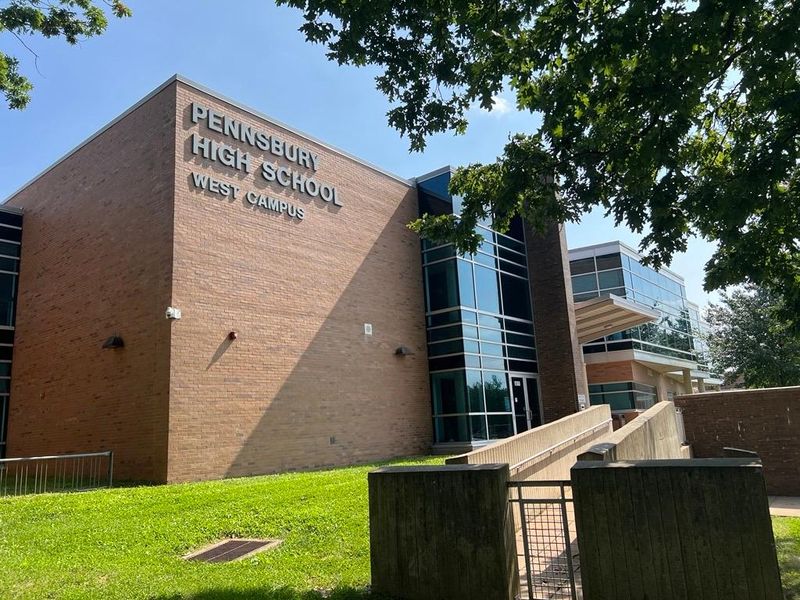
A conservative Christian legal group is asking the U.S. Department of Education to investigate the Pennsbury School District, after a mother and father said the district violated their rights by hiding their child’s use of a different name and pronouns for nearly three school years.
After parents confronted the Bucks County district last year, it agreed to use the student’s given name at graduation, but did not change its policy to require that parents be notified of a student’s name change, according to the complaint filed last week by the Orlando-based Liberty Counsel.
“Parents have the right to know when their child is struggling with an issue, and are the first line of defense for their child,” said Richard Mast, a staff attorney with Liberty Counsel, which has brought cases favoring religious liberty and opposing LGBTQ+ rights.
A Pennsbury spokesperson declined to comment Monday. The K-12 district enrolls about 9,400 students from Yardley Borough, Lower Makefield Township, Falls Township, and Tullytown Borough.
The complaint comes as President Donald Trump’s administration has escalated pressure on school districts over policies protecting transgender students. The U.S. Department of Justice earlier this month sued the Kansas City, Kan., school district, alleging it violated parents’ rights by facilitating “gender transitions” for students without informing their parents.
The Education Department also this month opened an investigation into a Massachusetts school district for using a male name and pronouns for a student without parents’ knowledge.
Conservative legal groups are also taking aim at schools: The Chester County Intermediate Unit this month rescinded a policy that barred staff from disclosing a student’s transgender status to parents without the student’s permission after receiving a letter from the Alliance Defending Freedom and the Harrisburg-based Independence Law Center, the groups said Monday. A spokesperson for the intermediate unit said it recommended the policy’s repeal “as part of its ongoing review of board policies and in recognition of the evolving legal landscape regarding transgender students.”
“There is absolutely a targeted attempt by the administration, and those aligned, to try to erase trans students from our schools and elsewhere from our culture,” said Kristina Moon, a senior attorney with the Education Law Center, a Philadelphia-based group that advocates for LGBTQ+ students. The Education Department earlier this year opened an investigation into the Great Valley School District in Chester County for a policy allowing transgender girls to participate in girls’ sports teams.
Students “need to feel safe and be able to be themselves in school,” Moon said, adding that she worries schools are getting a “very harmful message … that if you care about trans students having a sense of belonging, then you too will be targeted by the Trump administration.”
Name changes and ‘a right to privacy’
The complaint filed Sept. 21 by Liberty Counsel against Pennsbury alleges that the mother and father did not learn until the end of their child’s junior year that Pennsbury High School staff had been calling the student by a male name and pronouns since ninth grade. The complaint does not identify the student, who has since graduated, or the parents.
The district used a “false male name” and pronouns for the student in both personal interactions and electronic information systems, according to the complaint.
In one handwritten note included in the complaint, a coach wrote to the student in October 2025: “My son! My boy! It’s finally senior night! … Your high school years may not have always been like you dreamt it would be, but it’s okay! … I could not be more grateful and honored to be your coach/mom.”
While the student’s mother had heard other students referring to her child by the name during sophomore year, the student brushed it off, saying, “‘It’s just a silly name,’” Mast said in an interview Monday. The mother “didn’t pry further,” Mast said.
But when the student brought home a memory book during junior year, the mother saw a male name was used for her child, Mast said. She then went back and reviewed other memory books and saw they also used the name.
Had the parents known sooner, “they would have helped the child get the counseling she needed to be comfortable with her natal sex,” said Mast, who said the parents’ relationship with their child has suffered. “No girl should be made to feel like she is born in the wrong body.”
On Nov. 17, the parents demanded that Pennsbury use their child’s given name and female pronouns, according to the complaint. After a Dec. 1 meeting, the district said it would do so going forward, the complaint said.
But it did not fulfill all of the parents’ requests, leading Liberty Counsel to issue a demand letter on March 6, according to the complaint.
The district agreed to use the student’s given name at graduation and on the student’s diploma, but said it could not control what appeared in the memory books, because those were issued by a booster club, the complaint said.
And it has not updated its policy related to transgender students, according to the complaint. The parents had asked the district to require principals to communicate with parents before a student could be called by a different name.
The district’s policy says it will accept a student’s asserted gender identity, and “all persons, including students, have a right to privacy. This includes the right to keep private one’s transgender status or gender expansive presentation at school.”
The policy also includes a section about “parental consent” that says that if a parent or student requests a name change without proof the name has been changed legally, “the parent/guardian and student will be provided” with a form. That did not happen in this case, according to the Liberty Counsel complaint.
Pennsbury is ‘not unique’
Pennsbury’s policy is “not unique” among Philadelphia-area districts, said Jeffrey Sultanik, a solicitor for numerous districts in the region.
Lower Merion’s policy, for instance, says “school personnel should not disclose information about a (transgender or gender diverse) student’s gender identity and expression to others, including the student’s parents/guardians and/or other school personnel, unless legally required to do so or unless the student has authorized such disclosure.”
The Pennsbury complaint “may dictate what other school districts end up doing,” depending on how the Education Department responds, Sultanik said.
The complaint alleges violations of the Family Educational Rights and Privacy Act, a federal law protecting the privacy of student educational records.
The law “prohibits a federally funded school district from maintaining a policy that denies or effectively prevents a parent from inspecting and reviewing a minor child’s education records,” according to the complaint, which also alleges violations of the Protection of Pupil Rights Amendment — a federal law governing surveys administered to students on sensitive topics — and Title IX.
Moon, of the Education Law Center, said “there is currently no law that schools have to notify parents about students sharing to their counselor, or a trusted teacher, that they identity as transgender.”
In cases Moon is familiar with, she said, school counselors ask students if they have told their parents about their gender identity.
“I really don’t think in the vast majority of cases, this is anything like teachers trying to avoid, or counseling students to avoid, conversations with their families,” Moon said.