U.S. Immigration and Customs Enforcement has awarded more than $17 million in contracts, mostlyto businesses, in the Philadelphia area since the start of President Donald Trump’s second term, with more than half of that money going to a firearms manufacturer in Montgomery County.
The local data, compiled by The Appeal, highlights the Trump administration’s spending related to raids and enforcement operations as the agency carries out the president’s mass deportation agenda, including its purchases of weaponry.
Geissele Automatics, a firearms manufacturer based in North Wales, has the largest and perhaps most consequential contract with ICE in the Philadelphia area.
The company — which specializes in selling high-grade, AR-15-style semiautomatic weapons and parts to consumers, law enforcement agencies, and the military — entered a contract with ICE for nearly $9.1 million in September 2025, according to federal data.
The payment was for the delivery of “precision long guns and accessories” to support ICE agents as well as the agency’s tactical programs, the data show. It’s unclear where the equipment is being used.
Neither the company’s founder, Bill Geissele, nor a representative from the company’s sales team returned a request for comment.
Nationwide,ICE and U.S. Customs and Border Protection has dramatically increased spending on firearms in Trump’s second term, according to a report earlier this year from U.S. Sen. Adam Schiff (D., Calif.), leading to outcry from Democratic officials and voters who say the agency has become a militarized force with little oversight or accountability.
That outrage continued this month when Democrats voiced their opposition to ICE’s plan to provide ICE officers with electric shock gloves. Schiff’s oversight report, released earlier this year, called ICE and CBP’s contracts for weaponry a “misuse of taxpayer dollars to maximally arm federal immigration agents.”
A spokesperson for Department of Homeland Security said in a statement that $17 million in contracts in the Philadelphia region is “simply not accurate” and “conflates nationwide ICE contracts” with spending in the area.
“ICE contracts with vendors across the country to support its law enforcement mission. The existence of a federal contract, a vendor located in a particular region, or a nationwide contract vehicle does not mean that the full value of that contract was spent in Philadelphia,” the spokesperson said
“Reporting should accurately distinguish between nationwide contract values, vendor locations, places of performance, and actual federal expenditures before presenting a misleading figure as fact,” they added.
The details on the contracts come as residents and advocates in the Philadelphia region and nationwide are continuing to remain vigilant of ICE’s presence in their communities. Earlier this year, ICE struck deals to retrofit warehouses in Pennsylvania and New Jersey into mass detention centers before later backtracking after residents and leaders in both states voiced opposition.
Bill Geissele — who hosts the manufacturer’s podcast Shots Fired in Anger —has donated to Republican elected officials in Pennsylvania, including U.S. Sen. Dave McCormick and U.S. Rep. Dan Meuser. Geissele’s contract, while not the company’s first with the federal government, is by far the most significant contract between the gun manufacturer and the federal agency on record.
(function() {
var l2 = function() {
new pym.Parent(‘ice_contracts2’,
‘https://media.inquirer.com/storage/inquirer/projects/innovation/arcgis_iframe/ice_contracts2.html’);
};
if (typeof(pym) === ‘undefined’) {
var h = document.getElementsByTagName(‘head’)[0],
s = document.createElement(‘script’);
s.type = ‘text/javascript’;
s.src = ‘https://pym.nprapps.org/pym.v1.min.js’;
s.onload = l2;
h.appendChild(s);
} else {
l2();
}
})();
In August 2024 for example, under former President Joe Biden’s administration, Geissele Automatics entered a $12,224 contract with ICE for equipment to support a “sniper sustainment” course, according to data compiled by The Appeal.
By 2025, when Trump returned to the White House and significantly ramped up ICE operations nationwide, those contracts ballooned.
On top of the $9.1 million contract that year, Geissele was paid $27,936 to provide training rifles and magazines for the agency’s Office of Firearms and Tactical Programs, as well as $16,544 for rifles and accessories required for testing and evaluation.
ICE also took its spending across the river to Burlington County in New Jersey, where it awarded George J. Petronis Enterprises Inc., a gun shop, slightly more than $505,000 since the start of Trump’s second term for training ammunition and ink cartridges for 9mm training ammo to support ICE’s Office of Firearms and Tactical Programs in Fort Benning, Ga.
George J. Petronis Enterprises Inc. did not return an email requesting comment.
The Appeal’s dashboard also shows a contract for rental of a firing range between ICE and the county’s fire academy, located in Conshohocken, that has existed since at least 2021. But Montgomery County officials said Friday that the contract is with the broader Department of Homeland Security — which ICE is a part of — and not with the federal immigration enforcement agency directly.
County Commissioner Jamila Winder, a Democrat, said that the academy is used by local, state, and federal agencies for law enforcement training but “this facility is not available for training for those engaged in immigration enforcement activities.”
Other contracts highlighted by The Appeal dashboard may also be directly tied to DHS, instead of ICE.
Earlier this year, Montgomery County’s Board of Commissioners passed a resolution restricting federal immigration enforcement from using county property or resources for noncriminal investigations.
Other local contracts with ICE include a roughly $50,000 contract with the Philadelphia Parking Authority for rental spaces for 16 vehicles and more than $78,000 to Ricoh USA Inc., an office technology company headquartered in Chester County that was also used under the Biden administration. Coast2Coast Shredding LLC, which is headquartered in Montgomery County but shreds documents in California, received more than $94,000 from ICE.
Whitney Biennial curators travel the length and breadth of the country, paying visits to artists in their studios, surveying their work, and picking creators whose work they think represents the present climate of art making in the country. Together, they bring a once-every-two-years expansive exhibition to New York’s Whitney Museum of American Art, often regarded as the most prestigious and faithful register of American art.
Past biennial curators — the 2024 edition was curated by the Institute of Contemporary Art’s former associate curator, Meg Onli — have embarked on these travels separately, but for the country’s 250th year and the biennial’s 82nd, Whitney curators Marcela Guerrero and Drew Sawyer traveled together.
Whitney Museum of American Art’s Biennial 2026 curators Drew Sawyer, Marcela GuerreroBryan Derballa
“We wanted to just listen to artists and see where they were at, see what they were thinking about, how they were processing recent events,” said Guerrero. They traveled for a bit over a year, nationally and internationally, and visited more than 300 artists.
“The idea of relationality and how do we relate in different ways” at political and interpersonal levels, is a theme that eventually emerged from their survey, Guerrero said.
While in the past some curators have traveled as far as Hawaii, Guerrero and Sawyer’s short travel to Philadelphia in the winter of 2024 proved equally fruitful.
“Philly was such a productive trip and very coherent in terms of what we were hearing from artists on gentrification, displacement, and the cost of living,” Guerrero said.
Artists in Philadelphia, Sawyer noticed, “seem to be particularly preoccupied with ideas of infrastructure” and there exists a strong sense of connection among them. Several of the city’s artist are graduates of the MFA programs at the University of Pennsylvania and University of the Arts, taught by the same professors like Michelle Lopez (whose work is included in this year’s biennial) and Sharon Hayes (whose work was a part of the 2024 biennial).
Maia Chao, “Being Moved,” 2026. Performance, Whitney Museum of American Art, New York, May 14–17, 2026. Commissioned by the Whitney Museum of American Art.Julieta Cervantes
Performance artists Maia Chao and Jonathan González, both of whose works are part of the biennial, live in West Philadelphia and are friends and collaborators. Emilio Martínez Poppe attended Penn and studied with Lopez, and was particularly interested in the idea of infrastructure from the perspective of the labor of public sector employees to help build and maintain our social and civic architectures.
“A kind of certain institutional critique, I would say, was common” among Philadelphia artists, said Sawyer.
“One of my biggest takeaways is the real vibrancy of the artistic scene in Philadelphia,” he said.
Here are the Philadelphia artists whose works appear in the Whitney Biennial.
West Philadelphia-based artist Maia Chao’s performance pieces “Being Moved’ and “Scores for the Museum Visitor” are part of the 2026 Whitney Biennial.Amelia Golden
Maia Chao
“Scores for the Museum Visitor,” “Being Moved”
Maia Chao’s performance art emerges from studying social behavior. Where some might see the mundane walk from home to work, she sees choreography, a rhythm, and an interaction of the body with its surroundings.
Her biennial performance piece Being Moved, choreographed by Lena Engelstein, takes inspiration from how museum visitors interact with the art. “It reframes the focus from the art itself to the visitors’ experience,” she said. The title refers to both “this potential to be moved by an artwork,” but also “of the ways that the institution makes us move, makes us move our bodies, and makes us behave in the presence of extremely valuable assets.”
That tension of the push and pull of a museum — where its mission might seem inviting and welcoming but once inside, rules around how to behave, what to touch abound — is at the center of Chao’s piece.
Maia Chao, “Being Moved,” 2026. Performance, Whitney Museum of American Art, New York, May 14–17, 2026. Commissioned by the Whitney Museum of American Art.Julieta Cervantes
When visiting the biennial beyond Chao’s performance schedule, visitors view Scores for the Museum Visitor as a set of prompts, an invitation to create “micro performances” of their own.
Among the scores are: “Identify another museum visitor. From afar, copy their movements as closely as possible.” “While holding a museum brochure, clasp your hands behind your back. Drop the brochure.” “Find a bench. Take a seat. Imagine the artworks slowly falling to the floor.”
“These are invitations to kind of transgress the rules, [for] engaging with the artwork, or interpreting and encountering an artwork,” the artist said.
Maia Chao, “Being Moved,” 2026. Performance, Whitney Museum of American Art, New York, May 14–17, 2026. Commissioned by the Whitney Museum of American Art.Julieta Cervantes
Chao first caught the curators’ attention with Agents of Deterioration (2024), made in collaboration with Ethan Philbrick, a performance piece commissioned by the Hirshhorn Museum and Sculpture Garden. Sawyer was drawn in by Chao’s “legacy of institutional critique through affective registers.”
“There’s a real kind of commitment to the institution, even as Maia is critiquing it, which we felt was important in this moment where there’s, from many different directions, an eroding of faith in institutions. We were really interested in the way she both critiques and pushes institutions to do better,” he said.
Artist and Penn professor Michelle Lopez whose “Pandemonium” is part of the 2026 Whitney BiennialKelsey Valencia, Denniston Hill Residency
Michelle Lopez
“Pandemonium”
Pandemonium is a fully Philadelphia piece of art. It was made in collaboration with the Moore College of Art and Design and the Franklin Institute, supported by the Pew Center for Arts & Heritage and the University of Pennsylvania, filmed at Northeast Philadelphia’s RAIR (Recycled Artist in Residency), premiered at the Fels Planetarium and the Galleries at Moore, and inspired by artist Michelle Lopez’s earlier work exhibited at the ICA.
“Philadelphia is just a really supportive environment for artists,” said Lopez, who is an associate professor of fine arts at Penn’s Stuart Weitzman School of Design, where she leads the sculpture program. “I could not have made that work in New York.”
The video project, as Lopez says, came from a desire to “situate the viewer in the eye of a storm so that they could feel, on a somatic level, what it was like to have their environment really collapse around them.”
At the Whitney Museum, Pandemonium plays on a domed screen on the ceiling of the gallery and demands that the viewer sit below it and look up. What they witness is things moving around with a violent force against the sky — debris, newspapers, packaging, clothing (including Lopez’s own and her son’s old underwear), and other markers of extreme human consumption.
In order to make this mayhem happen, Lopez, who is trained in sculpture, built a tornado machine using a robotic contraption, industrial fans, and leaf blowers. Together they created a simulation of a tornado at RAIR which was then filmed and eventually screened in the Fels Planetarium.
“A lot of the work imagistically, came from seeing images of tornadoes and hurricanes wiping out towns. I was really interested in the way nature could collapse culture,” said Lopez, who lives in South Philadelphia.
Installation view of Whitney Biennial 2026 (Whitney Museum of American Art, March 8–August 2026). Michelle Lopez, “Pandemonium,” 2025.Jason Lowrie/BFA.com
While a Whitney gallery is nowhere close to the grandeur and wonder of the Fels Planetarium, the 360-format video manages to suck in a viewer who feels almost weightless as the feeling of being thrown around by the forces of nature is simulated.
When the curators visited Philadelphia for studio visits, “top on our list was Michelle Lopez,” said Sawyer. “We were aware that she had been working on this major moving image project that departed from what she’s most well known for, which is sculpture. So we were really excited to meet with her, especially because her work had not been a part of the biennial before.”
Artist Emilio Martínez Poppe, whose work “Civic Views” was on display in the City Hall courtyard last year. This year, it’s a part of the Whitney Biennial.Neal Santos
Emilio Martínez Poppe
“Civic Views”
Like Lopez’s Pandemonium, artist Emilio Martínez Poppe’s Civic Views is an artwork that is only possible because the city of Philadelphia exists. Several Philadelphians have already seen Martínez Poppe’s workwhen it was on view last year in the City Hall courtyard.
Martínez Poppe was then studying city planning and working toward an MFA in visual art from Penn when he was mulling over the future of city planning graduate students who’d go on to join the public service workforce.
It was in conversation with professors that he found out that the oldest surviving daguerreotype in the country, which is stored at the Historical Society of Pennsylvania, was taken by Joseph Saxon, who was a public sector employee working for the U.S. Mint.
“That was shot out of the U.S. Mint, where the Widener Building is today. He’s following Daguerre’s technological recipe, he uses it to photograph what he sees through the window. Unlike Daguerre, who was a theater entrepreneur, Saxton was a public sector employee who was doing something he was not hired to do,” said Martínez Poppe. “He was hired to work on the newly nationalized currency and he was tinkering with this invention in his office, and that view is one of the only real entry points that we have into his position at his job there, which is interesting.”
Emilio Martínez Poppe looks out the windows at the Department of Behavioral Health and Intellectual disAbility Services office on Tuesday, Feb. 11, 2025 in Philadelphia. Emilio Martínez Poppe is working on a project curated by Jameson Paige that documents the views from municipal service buildings. The project also includes interviews with city workers.Monica Herndon / Staff Photographer
Inspired, Martínez Poppe visited municipal buildings all across Philadelphia and photographed views from the inside out so he could document what city workers see from their windows. Alongside, he conducted “dozens of long form, anonymized interviews” with city workers from more than 20 agencies.
“I would ask them, what was your perspective of city government before working here, who taught you about the value of public sector work? Often, so many people would tell me it was their mothers.”
Civic Views is a result of those conversations — a coming together of anonymized interview snippets and photographs displayed in a scaffolding-like structure in the middle of a Whitney gallery. “It’s the scaffolding that dissolves the authoritative center, even in the Whitney Biennial,” said Martínez Poppe.
An installation view of Emilio Martínez Poppe’s “Civic Views.”Summer Surgent-Gough
“The public sector is vulnerable to radical change, for better or worse. With my work, I want to say that it’s time to seize the means, seize our technology to create the world that belongs to us,” the artist, who now works for the New York City Mayor’s Office as a civic arts programs coordinator, said.
“We need to assume that responsibility. That’s why the project centers the voices of workers and how their positions shape their views. But also how their views shape the structures that we are living in and living through.”
On the curators’ Philadelphia visit, Guerrero recalled seeing Civic Views and people of the city interacting with it. “It was very touching,” she said. Her favorite part about the work is that it uses “the tropes of the camera, of the interview, of bureaucracy, but then upends it completely.”
Installation view of Whitney Biennial 2026 (Whitney Museum of American Art, March 8–August 2026). “Civic Views” (2024) by Emilio Martínez Poppe, “Philadelphia Housing Authority, South,” 2024; Emilio Martínez Poppe, “Philadelphia Department of Sanitation, North,” 2024; Emilio Martínez Poppe along with works of Kainoa GruspeJason Lowrie/BFA.com
“You see how important the job of a public servant is,” she said, “and how you know they’re in kind of a double bind because they’re the face of the government and also they receive the same services they provide … their kids are in the public school system, they depend on the Department of Sanitation.”
She finds this complexity “beautifully translated” in Civic Views. “You can really put yourself in the shoes of the person who’s speaking and feel the care that really goes into this type of work that should not be overlooked.”
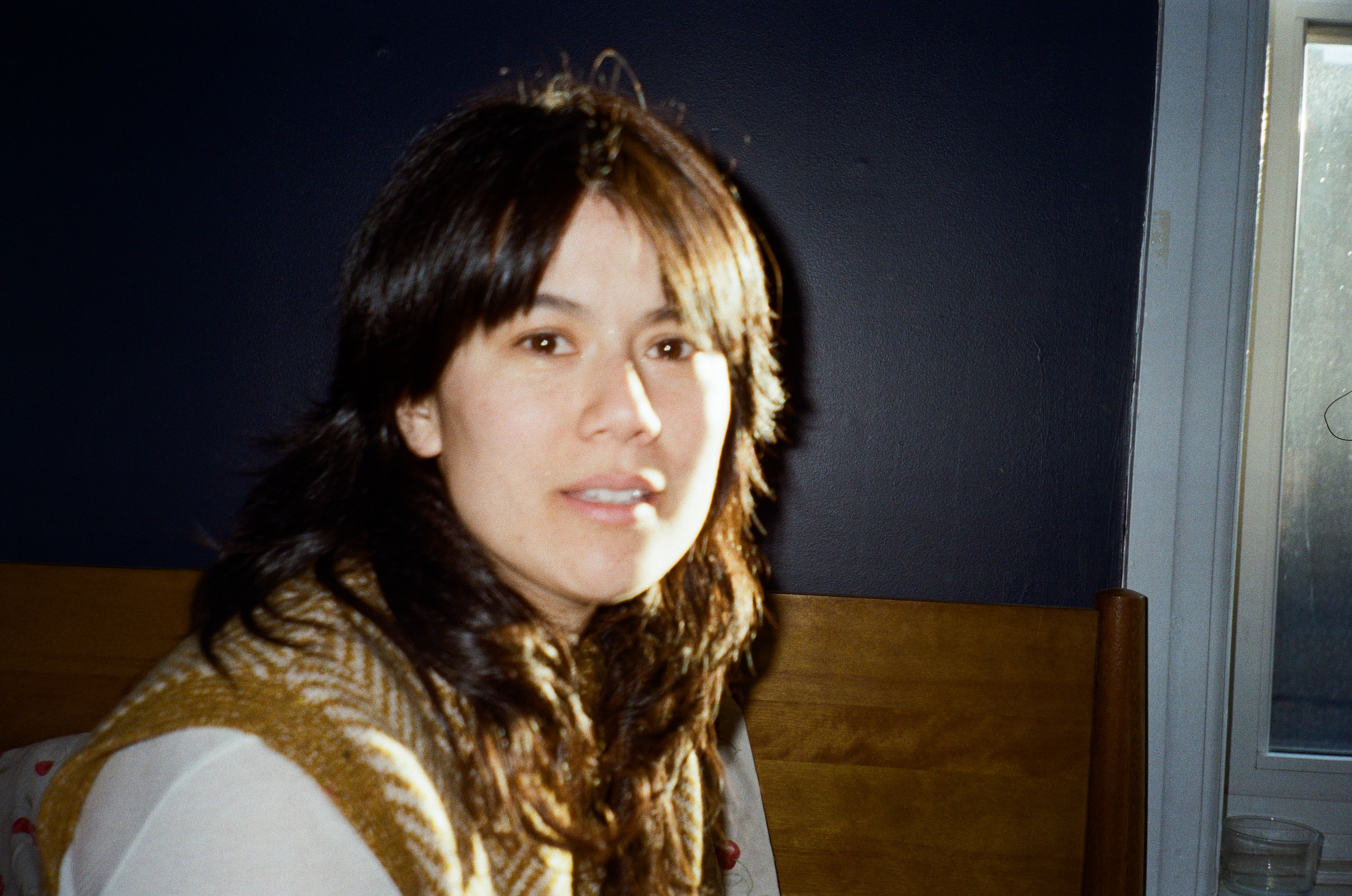
Artist Jonathan González whose performance piece ‘magic hour — golden time’ is part of the 2026 Whitney BienialRudy Gerson
Jonathan González
“magic hour — golden time”
Like Chao, Jonathan González’s work also sees a two-pronged approach with performance and photography. Three Super 8 photographs, A, B, and C, mark the locations, across the museum, of the three-hour long performance piece presented by González and their co-artists.
“Each photograph shares with the performers how to perform the work,” said González, who also lives in West Philadelphia. Magic hour-golden time, they said, “is a double leaning. Magic hour comes from the usage in broadcast television when you have the highest viewership. And golden hour is that moment of the sunset. And so the piece is merging this experience of looking out and also being seen over three hours.”
Jonathan González, “magic hour–golden time,” 2026. Rehearsal performance, Whitney Museum of American Art, New York, May 12, 2026. Commissioned by the Whitney Museum of American Art.Julieta Cervantes
From three terraces around the museum, the performers follow the sun’s movement for three hours. In the first hour, the performers “embody the architecture that surrounds the museum” and makes up the city’s skyline. The second hour, they said, “is a procedure of call and response … the dancers dance with every dance you’ve ever danced, and take information from one another as dancers, as well as from the pedestrians.”
The final hour, González said, is performed on an inaccessible terrace. “It can only be viewed from across the street, you cannot see it from the museum. It’s called the ‘Endless Bow,’ and it’s 60 minutes of bowing to the sun and bowing to the world and bowing to the performance.”
Philadelphia, the former University of the Arts professor said, gives them “the capacity to slow down to hear these voices, and have dreams, visions come to you.” The city allows them the time to spend time in the studio with friends like Chao and inspires them to “collaborating not toward a particular product or aim, but much of the time experimentation.”
Jonathan González, “magic hour–golden time,” 2026. Performance, Whitney Museum of American Art, New York, May 12, 2026. Commissioned by the Whitney Museum of American Art.Julieta Cervantes
“Just the fertile nature of Philly as a historical Black geography has been really important for me to really situate the questions of time and what happens to a city at the late stage of industrialization, and to really think critically about what a group can do, what mutuality is,” they said.
“Certain artists just stay in your mind, and you want to come back and see what they are working on,” said Guerrero recalling her first tryst with González’s work. “The work felt so mature. There’s this notion of how, through improvisation, you can be attuned to your surroundings. In the case of their performance, they make these other effective strategies [for attunement] that don’t always rely on the senses, and that is something that is very present in the show.”
The Whitney Biennial 2026 is on view through Aug. 23 and on partial view, which will include all of the Philadelphia artists’ static works, through Oct. 12. The Whitney Museum of American Art, 99 Gansevoort St., New York. whitney.org
New Jersey Gov. Mikie Sherrill signed a bill Thursday that offers greater protections for reproductive and gender-affirming healthcare — both for patients and for providers in the state — by making it a crime to intervene against such care.
The new law strengthens existing reproductive healthcare protections and also broadens them to now include gender-affirming care. It is meant to cover residents as well as people traveling to the state.
“This is a very big deal. It’s amazing,” said Martha Madrigal, a transgender woman who leads the Collingswood chapter of PFLAG, a national advocacy group for the families of LGBTQ+ people.
She added that the law is a “solid declaration” that interfering with transgender rights “does not stand in New Jersey. We’re letting out an enormous sigh of relief today.”
The legislation expands New Jersey’s shield laws by expressly including gender-affirming care in the definition of “protected reproductive healthcare services.”
Essentially, the law creates a new crime for interfering with someone trying to access reproductive healthcare, such as an abortion, or gender-affirming care.
It is now a fourth-degree crime (a low-level felony like shoplifting, punishable by up to 18 months in prison) to injure, threaten, intimidate, or physically block patients or providers, or to damage property in an effort to interfere with such care.
The law would also protect providers from extradition to other states that have banned abortion or gender-affirming care for minors.
Sherrill said New Jersey is “standing firm in defense of reproductive freedoms — including the right to choose and the right to receive gender-affirming care.”
In comments after the signing, Sherrill referenced “attacks” and efforts to impose restrictions on access to abortion and gender-affirming healthcare by the Trump administration and Republican-led states.
She said the transgender community has been “relentlessly attacked” by the Trump administration.
“They’ve pulled tactics straight out of the ‘Red Scare’ playbook to restrict transgender people’s healthcare,” Sherrill contended.
Since returning to office last year, President Donald Trump has issued orders to block federal funding for gender-affirming care for people under 19, oust transgender military personnel, and prevent transgender people from using the gender they self-identify as on passports.
“We are not going to pay for our innocent children to undergo these barbaric surgeries and practices, which result in unthinkable and irreversible harm to their young bodies,” Trump said on Truth Social earlier this month after Medicaid ended reimbursement for hormone treatment and surgeries for minors.
Surgeries for minors are extremely rare. And fewer than 1 in 1,000 U.S. adolescents receive medication for gender-affirming care, according to a Harvard University study released last year.
State Sen. Teresa Ruiz (D., Essex), a chief sponsor of the bill and the Senate’s majority leader, said the bill makes New Jersey “a beacon of hope” in the nation.
“You can’t tell us what we can read on a library shelf but want to be up in our uterus in an exam room,” she said.
The law empowers patients and providers to take legal action against individuals who interfere with their access to or delivery of protected care.
And it protects healthcare providers from professional penalties or adverse actions involving their medical malpractice insurance for providing care that is legal in New Jersey.
Speaking for healthcare providers in New Jersey, Kristyn Brandi and Catherine Obando, doctors from Union who are preparing to open a clinic providing abortions and gender-affirming care, praised the law as an assurance that providers could deliver care without “risking their freedom or professional license” in the state.
“We are grateful to know that our patients and staff will be protected from criminalization and harassment,” Brandi and Obando said in a statement as founders of the Luminosas Wellness Collective.
Like scattered billiard balls, 16 Early Head Start children scampered across a rubber-matted playground in Southwest Philadelphia last week.
Vigilant for tumbles or conflicts, four teachers calmly monitored the 1- and 2-year-olds in their high-energy frolic at an early learning center run by KenCrest, a nonprofit that operates Head Start and other programs in seven neighborhoods throughout Philadelphia.
Head Start’s low ratio of one teacher for every four toddlers is a hallmark of standards for the 61-year-oldfederal program that provides free education, health, nutrition, family support, and daycare services for low-income children from birth to age 5.
But now, advocates say, Head Start risks being eviscerated by changes proposed by the Trump administration.
The vaunted teacher-child ratio, along with other foundational principles that make Head Start unique, is being threatened by plans to “deregulate” the program — overhauling the way it operates by eliminating more than 1,400 regulatory mandates that dictate how the program is administered.
“We could be going to two staff members for 25 toddlers and two for 30 older kids,” said Melanie Brennan, executive director of early learning programs at KenCrest.
“What’ll bathroom time look like?”
The Trump administration defends its proposed changes as the building blocks for a better Head Start, which serves 700,000 low-income children nationwide, including an estimated 7,500 in Philadelphia.
“We are removing unnecessary bureaucracy, strengthening nutrition and physical health, trusting parents and local communities,” said Health and Human Services Secretary Robert F. Kennedy Jr., whose department administers Head Startat the federal level.
That does not ring true to Head Start professionals in Philadelphia.
“It’s laughable to say all they’re trying to do is take away some bureaucracy,” Brennan said. “By ending rules that guide Head Start’s high, uniform standards, the administration’s real goal is to leave the education business.”
In Philadelphia, more than $70 million in federal funding for Head Start goes through the Philadelphia School District, the program’s largest provider in the city, said Diane Castelbuono, the district’s deputy chief for early learning.
KenCrest Director Josie Jones with staff and Early Head Start students.Jessica Griffin / Staff Photographer
The district uses that money to directly operate Head Start programming in more than 60 school buildings, mostly elementary schools, throughout the city, she said. It also works with approved contractors who run Head Start classrooms at approximately 75 childcare sites in Philadelphia, Castelbuono added.
Asked for comment on the proposed changes, the school district said in a statement that the Head Start program has “positively impacted” students and that district officials “remain committed to preserving the robust standards that have proven essential to our program’s success.”
‘Stunned and sad’
While only Congress can repeal the statutory authorization for Head Start, which has an annual budget of about $12 billion, opponents of the Trump administration’s proposal warn the new rules would weaken the program to the point it became unrecognizable — or stopped existing altogether.
The plan, called “Reducing Federal Burden for Head Start Programs,” was released Aug. 7.
Public comment will be accepted until October, when the administration hopes to finalize the rules.
Kush Desai, a spokesperson for the White House, said the changes would enable the government to provide a stronger program that ensures services “are delivered effectively to children and families in need” by reducing “unnecessary administrative burden.”
Advocates who have spent their late-summer vacations reading the complex, nearly 200-page document say they are in the process of marshaling opposition, which they hope will delay or alter the administration’s plans.
“There’s so much to unpack,” said Kara McFalls, executive director of the Pennsylvania Head Start Association in Harrisburg. “We’re checking with experts to see if Head Start becomes gravely harmed.”
Advocates say initial readings of the new rule justify their concerns.
Beyond altering teacher-child ratios, the administration would lower the cap on Head Start administrative program costs from 15% to 5%, which means local programs could spend only up to 5% of their total budget on operational overhead like management, human resources, IT, and administrative salaries.
That would be “devastating,” McFalls said, making it harder for programs to pay staff working in these departments.
An Early Head Start student plays with a doll at KenCrest in Southwest Philadelphia.Jessica Griffin / Staff Photographer
Additionally, the administration would require instruction to be conducted in English only — which could hit several Head Start programs across the city that offer bilingual education.
“That policy would be ridiculous and biased,” said Rachel Sanders, executive director of Your Child’s World Learning Center, which includes Head Start programs in Southwest and Northeast Philadelphia, as well as in West Oak Lane. “Our children speak multiple languages.”
While all primary instruction is in English, Sanders said, children who speak Spanish, Mandarin, Arabic, or another language are taught the lessons either by teachers fluent in those languages or by translators brought in to help.She added that 50% of the students in the Northeast location do not speak English on the first day of instruction, but that the additional support helps them eventually learnthe language.
“No way would we ever discontinue translating,” she said.
Under the Trump administration plan, requirements for math and literacy curricula would be removed. Also gone would be stipulations that programs check on whether families have provided their children with immunizations, dental visits, wellness checks, and mental health consultations.
And hygiene training — including the Head Start tradition that children brush their teeth in class — would end.
The proposed changes “left me stunned and sad,” said Chandell Craig-Cromwell, 39, of West Philadelphia, a mother of two Head Start graduates who works in human resources in a city agency.
“This isn’t just education, or babysitting. It’s developmental support,” she said. “I’m upset for all the moms who’ll get this new version of Head Start.”
If the administration alters Head Start so profoundly, said Sharon Wolf, an early education expert at the University of Pennsylvania, she questioned whether the program should still keep its name.
“I fear we could be moving to weakened, ordinary childcare,” she said.“Then, is it Head Start anymore?”
Madison Marino Doan, a policy analyst in the Center for Education Policy at the conservative Heritage Foundation, disputed the notion that the administration’s proposal represented an effort to eliminate Head Start.
“The current proposal under consideration is an effort to deregulate the program and give states greater flexibility to design programs that reflect the needs of their communities while maintaining current funding,” she said.
Doan added that Congress should simply end the program — a recommendation made in the foundation’s Project 2025, a conservative blueprint for a second Trump administration.
Some advocates warn the administration’s push to change the program has more to do with ideology than concerns about efficiency.
Tyrone Scott, a director at First Up, a Philadelphia-based early education nonprofit, said he often runs into people who self-identify as conservatives at public forums who say that part of Head Start’s true mission is to “indoctrinate kids with a political ideology that includes ideas like racial justice.”
But, he said, the mission of Head Start is a lot simpler than that.
“It teaches kindness,” he said. “That isn’t a political philosophy.”
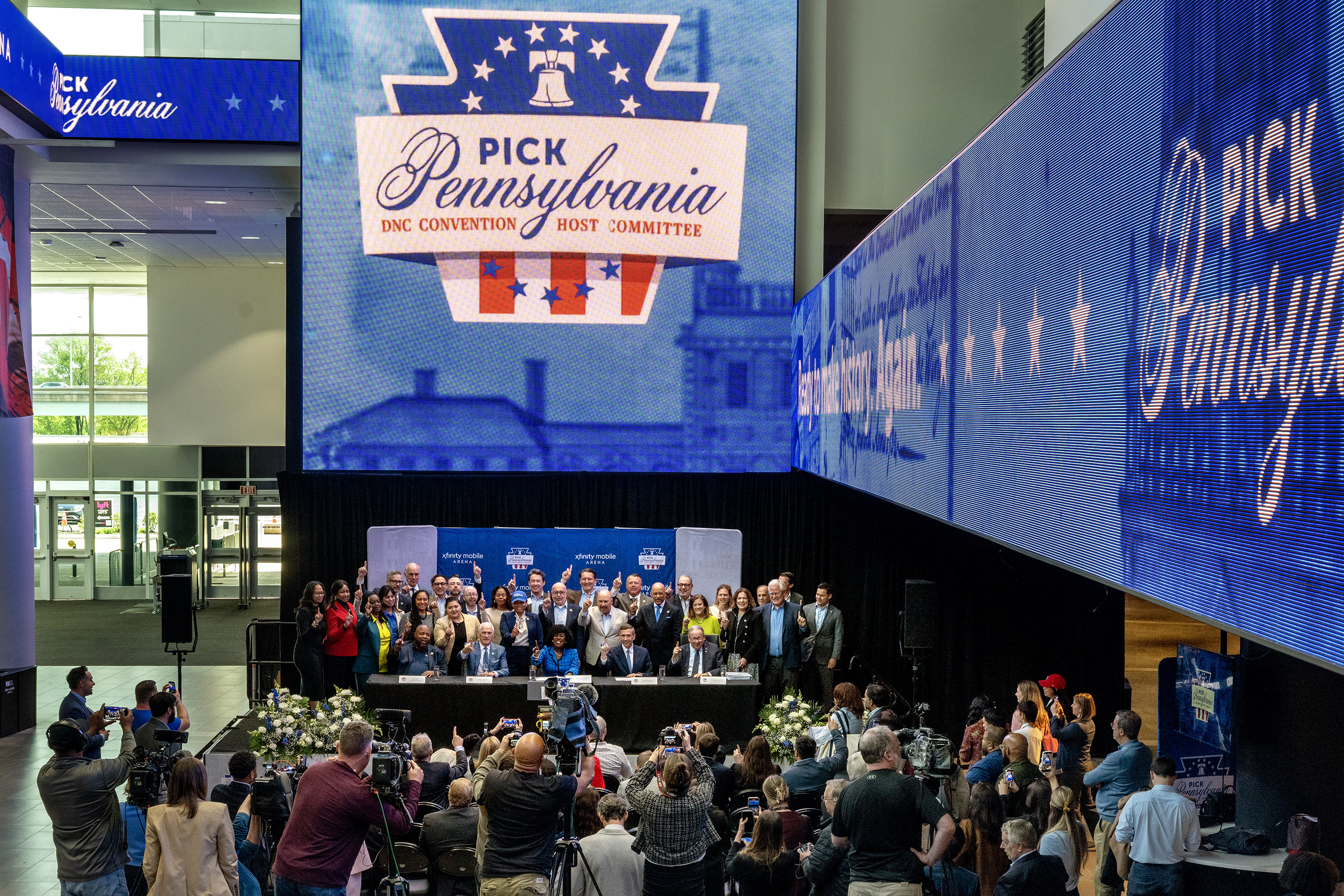
Philadelphia is one of three finalist cities to host the 2028 Democratic National Convention, the party announced Thursday.
In addition to Philadelphia, the Democratic National Committee said it is also considering Denver and Boston on its narrowed short list of cities to hold the next presidential nominating convention. The announcement means that Atlanta and Chicago, which were on a previous list of five potential host cities, have been eliminated from contention.
Ken Martin, the chair of the Democratic National Committee, said in a statement that the three finalist cities put forward “incredibly strong bids.” He did not say why the party is no longer considering Atlanta or Chicago.
If Philadelphia is picked, the convention would take place from Aug. 7 to 10, 2028, at Xfinity Mobile Arena in the South Philadelphia stadium complex. The Republican Party’s 2028 convention will be held in Houston.
Democrats in 2028 will choose from an array of potential candidates to succeed President Donald Trump. No major candidate has formally launched a campaign, but Pennsylvania Gov. Josh Shapiro is widely considered to be a contender.
The announcement comes as Martin has faced criticism for his leadership of the party, especially as it relates to fundraising. Democrats trail Republicans ahead of this year’s midterm elections when it comes to money in the bank.
Mayor Cherelle L. Parker is joined by city leaders and Democratic National Committee Chair Ken Martin and his team for a “One City” salute group photo Thursday, April 30, 2026, after they toured the Xfinity Mobile Arena facilities as the city makes its bid to host the 2028 Democratic National Convention. Tom Gralish / Staff Photographer
The party’s decision to narrow its 2028 convention short list comes after Martin and other top officials traveled to the five finalist cities in the spring to assess logistical readiness, including arena capacity, technological capabilities, transportation and security infrastructure, and more.
In April, local Democratic officials and some of the city’s biggest boosters wooed Martin over the course of a three-day trip and presented the city as an improved tourist destination since 2016, the last time the party hosted its major convention in the city. That year, Democrats nominated former Secretary of State Hillary Clinton, who lost the general election to Trump.
The events draw thousands of party members and journalists from around the world, putting the host region in the spotlight for several days. Proponents of hosting the convention also argue that it will generate business as visitors eat, shop, and play; the true economic impact of conventions, however, is up for debate.
Mayor Cherelle L. Parker, who has led the city’s effort to bid for the 2028 convention, said in a news release that Philadelphia this year has “proven that we can do big things better than any other city in the country.”
She cited this summer’s litany of big events in the city, including FIFA World Cup games, the MLB All-Star Game and Home Run Derby, and events associated with America’s 250th birthday.
“We are ready to welcome the Democratic Party and the nation back to our city,” she said.
David L. Cohen, the longtime Democratic Party stalwart and president of Pick Pennsylvania, the city’s host committee, said in a statement that Philadelphia’s selection as a finalist “is a testament to the ongoing strength of our bid and our record of success.”
“We have presented an unmatched case,” he said, “built on experience, preparation, strong partnerships, and a proven ability to deliver major national and international events.”
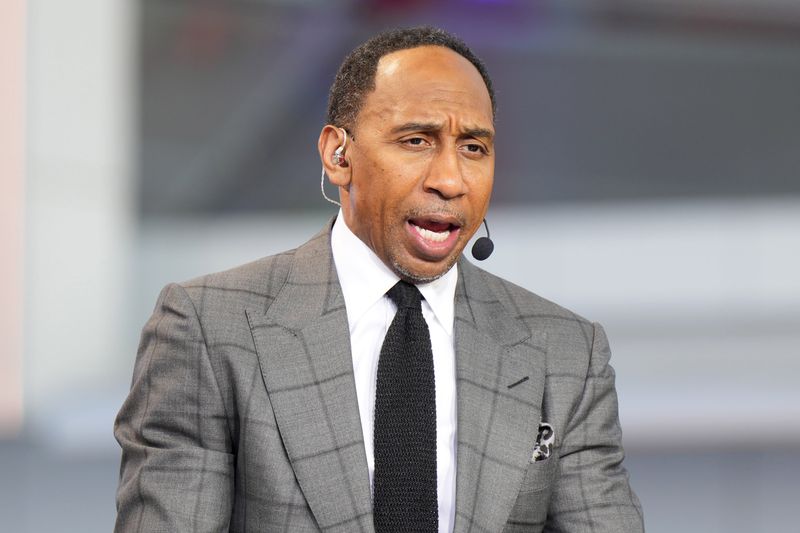
I was in the ballroom of the Marriott Marquis hotel in Atlanta Saturday night when sports talk show host and political commentator Stephen A. Smith was named a recipient of the National Association of Black Journalists’ 2026 Thumbs Down Award.
Talk about a fork-drop moment.
People gasped. Others groaned. There were cheers and boos as the realization of what had just happened registered. Smith — whose smiling face was plastered up on a giant screen — had gotten an award nobody ever wants to get. A voice-over announcer explained that he had been selected because of his “recurring public pattern of disparaging commentary directed at prominent Black women across politics, sports, and media.”
Smith, the star and executive producer of ESPN’s First Take, was not in attendance. But he promised a bold response, posting ominously on X that Christmas had arrived early. He wrote: “I’ve shut my mouth for years. Now y’all started something.”
Fox News host Sean Hannity wasted no time in getting Smith on his conservative talk show, and asked if the award had to do with Smith’s criticisms of so-called radical people on the left. Hannity also brought up U.S. Rep. Jasmine Crockett (D., Texas) and former MSNBC host Joy Reid, and accused them both of saying “nutty things.” That was rich coming from him.
Smith should have let him have it for that. But instead of defending these smart, accomplished Black women, Smith made it all about himself. He brought up how he had been raised by a Black woman and has four older sisters, 10 nieces, and two daughters, and called NABJ’s indictment a “flat-out lie.”
“I don’t know what the hell they are talking about,” Smith said about NABJ.
U.S. Rep. Jasmine Crockett (D., Texas) speaks during a primary election watch party in March in Dallas. Tony Gutierrez
Oh, I think he does.
Smith, a registered independent, publicly apologized last year after catching major heat for criticizing Crockett, saying she used “rhetoric for the streets” and questioning how it served her constituents. Smith has been similarly critical of tennis legend Serena Williams, former Vice President Kamala Harris, as well as Reid.
We know this game. Black women make easy targets for provocateurs like Smith who cater to a largely white male audience. Greater energy should go into going after politicians like President Donald Trump, who thinks Smith is “low IQ” and “dumb as a rock.”
In a video released Tuesday, Smith asked: “Where are your facts? You don’t have facts. You have feelings. Everything that I am. Everything that I’ve achieved, that has uplifted me in my life, has been associated with Black women. Black women have been my strength, my source of inspiration, and so much more my entire life.”
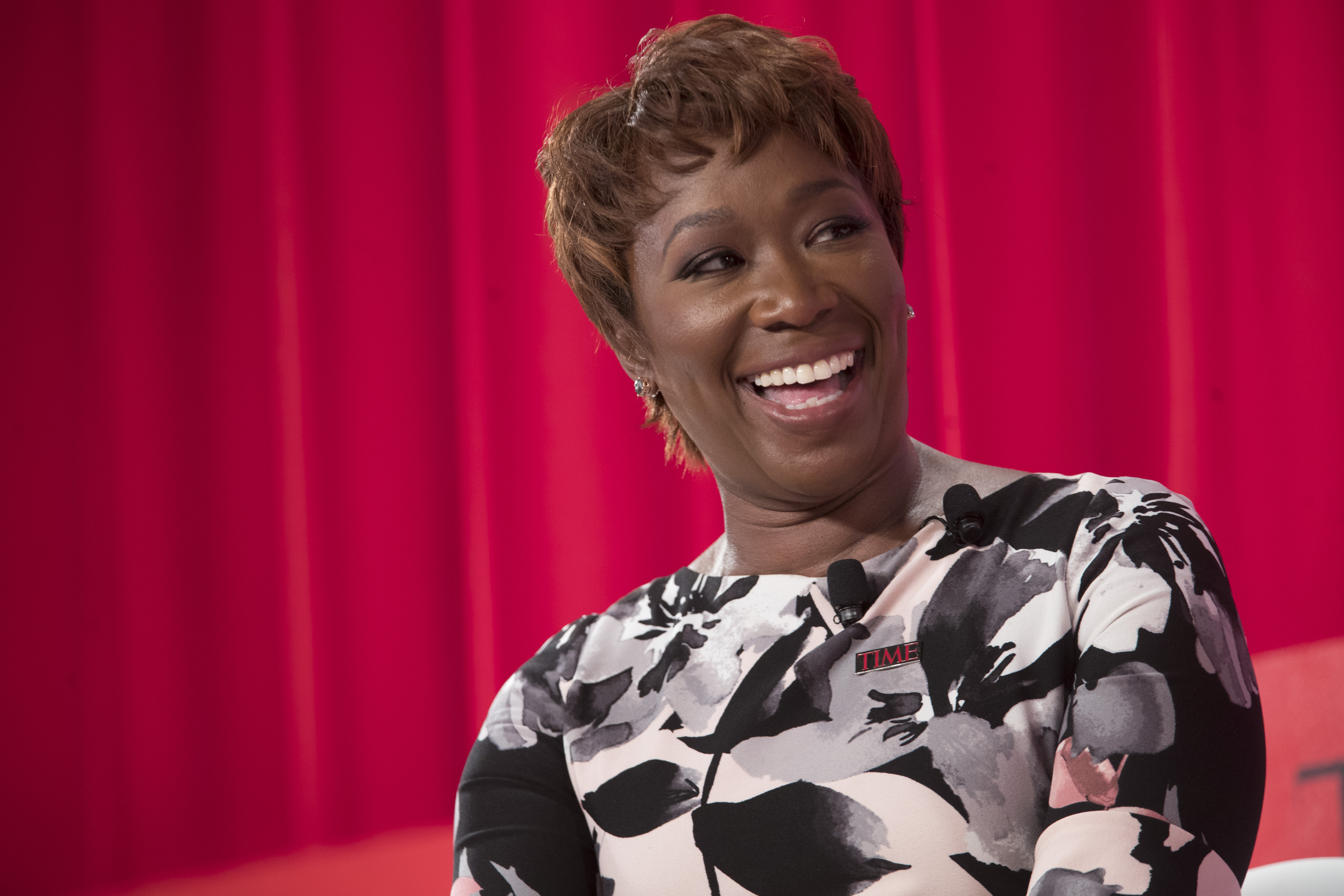
Joy Reid photographed during the TIME 100 Summit in 2025 in New York. Mary Altaffer
Other recipients of this year’s Thumbs Down Award include Federal Communications Commission Chair Brendan Carr, DuJuan McCoy, the owner of Circle City Broadcasting, CBS, and the Washington Post.
This isn’t new. NABJ has been calling out individuals and institutions since its founding in 1975.
The late Daily News columnist Chuck Stone planted the first seeds for the Thumbs Down Award a half century ago when he wentafter Agriculture Secretary Earl L. Butz, who made a racist remark about Black voters, according to former NABJ president DeWayne Wickham during an interview on #RolandMartinUnfiltered. During NABJ’s very first convention in 1976, Stone, who was president, organized a news conference demanding Butz’s ouster.
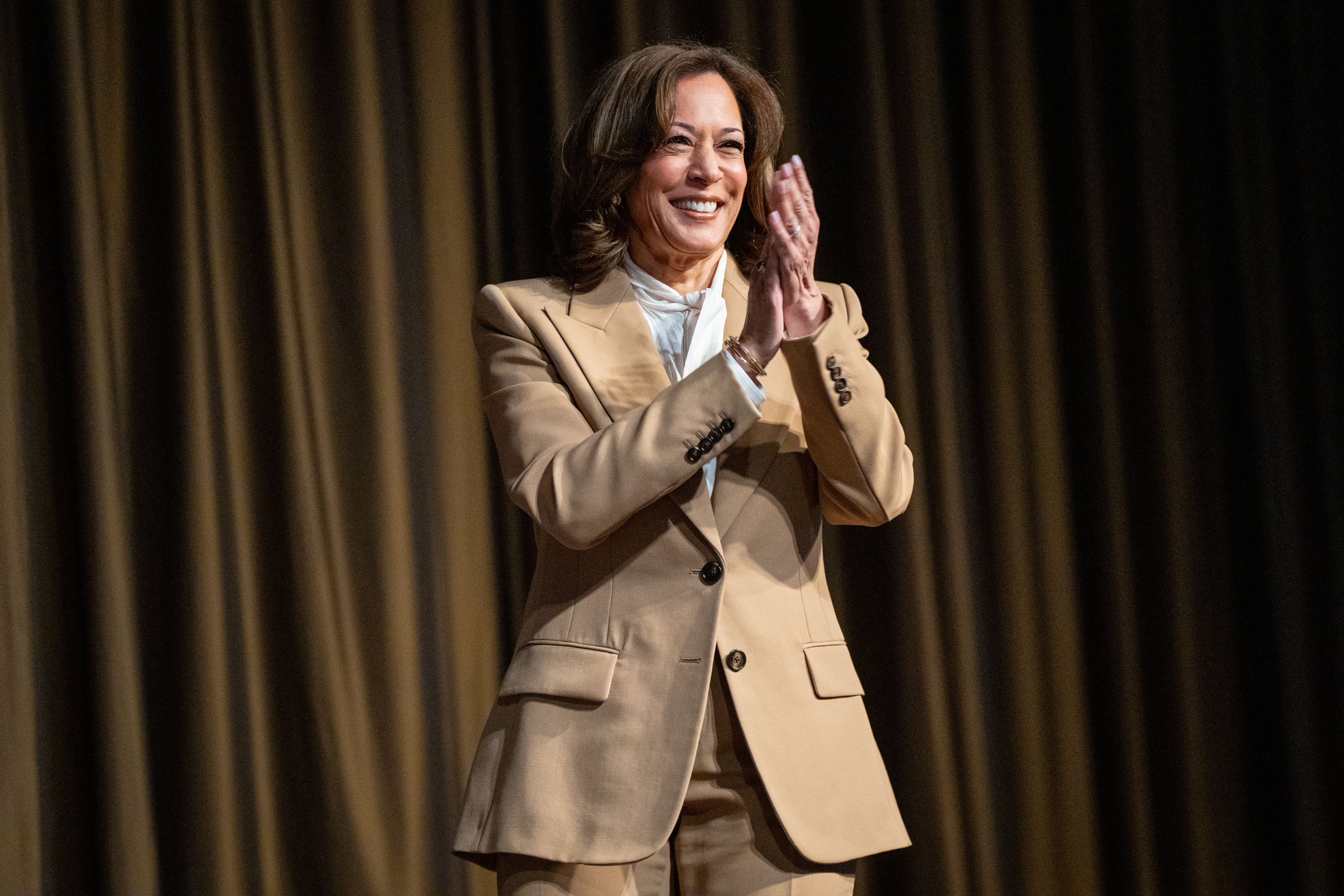
Kamala Harris, former vice president and 2024 presidential candidate, at the National Action Network Convention in New York in April.Angelina Katsanis
I met Smith years ago when we were both still early in our careers. He worked for The Inquirer; I was at the Daily News.
Like me, he credits NABJ for helping jump-start his journalism career. Last year, he aired his show, First Take, from the convention in Cleveland. He’s also mentored young journalists and recruited at the career fair. Smith refers to members of NABJ’s sports task force as his “brothers.”
There’s no telling what’s next for him. TV and film projects? A run for the presidency?
I don’t rule anything out.
I just hope that instead of being defensive, Smith reflects. He should think about whether his words have uplifted the community of Black women he says have played such a big role in his achievements. He has to ask himself if some of his own rhetoric has been “for the streets.” And he needs to take NABJ president Errin Haines’ advice and view the Thumbs Down Award as a “call to do better.” The door is open. The opportunity for change is there.
Pennsylvania Democrats, including Gov. Josh Shapiro, are pointing to a stunning upset in a special election for a deep-red state House district as proof that the party has momentum while campaigning this fall for a trifecta in Harrisburg.
Butler CountyDemocrat Brandon Dukes said his apparent victory over Republican Scott Timko, by fewer than 100 votes as of Wednesday afternoon, was thanks to his focus on local issues, such as a major corridor perennially under construction to the frustration of residents.
“We kept it local, we kept it practical, and we kept it common sense,” Dukes said in an interview.
The 12th Pennsylvania House District, just north of Pittsburgh, went for President Donald Trump by more than 18 percentage points just two years ago and had been held by Republicans since 1999.
Dukes’ apparent win attracted national attention Wednesday as both a sign of the backlash to the president’s party heading into November and as a north star for centrist Democrats as they seek a path forward.
“We won that district last night with a middle-of-the-road community leader, who I backed, who won this improbable race,” Shapiro told CBS Mornings, contrasting Dukes with the party’s more left-leaning candidates this cycle.
“What we’re seeing are commonsense folk from the community who, I think, reflect a lot more my values and my approach to governing who are winning and are upsetting Republicans in these deeply Republican districts,” said Shapiro, a moderate Democrat widely expected to run for president in 2028.
Shapiro recorded a robocall urging voters to cast ballots in the race, his campaign confirmed.
Recipe for November
Democrats are aiming to flip four congressional districts in Pennsylvania this fall and win control of the state Senate for the first time in 30 years with Shapiro, a popular governor, at the top of the ticket.
Dukes, who will compete to win the seat again in November in a rematch with Timko, shattered previous Democratic runs in the Butler County district.
“The fact we just flipped this seat tonight is a political earthquake,” U.S. Rep. Brendan Boyle, a Philadelphia Democrat, said on X.
The district had been represented for more than two decades by one of the Pennsylvania House’s most conservative members, former State Rep. Daryl Metcalfe, who retired in 2023 and was known for his anti-LGBTQ+ rhetoric and actions.
State Rep. Malcolm Kenyatta, a Philadelphia Democrat, said that the seat is one the party “should not have had a chance to come within sneezing distance of,” but that Dukes’ performance provides a blueprint that can be replicated throughout the state.
“Winning here means there is not a single safe seat for the GOP,” Kenyatta, a vice chair of the Democratic National Committee, said on X.
The Associated Press had not called the race as of Wednesday evening, but both parties made statements indicating that they expected Dukes’ lead to hold.
Chantell McCurdy, the director of Butler’s election bureau, said the initial count has been completed and there is a five-day period to challenge the results.
James Markley, a spokesperson the Pennsylvania Republican Party, said in a statement that the race needs to be a “wake up call for Republican voters,” and warned against policies from the Democratic Party’s more leftward flank.
While expressing confidence that the party would win the seat back in November, he also lamented the party’s inability to turn out voters this election.
“The General Election will come down to which party does a better job getting their voters to participate in the election using any legal means of casting a ballot. Democrats did a better job of this,”he said.
Pennsylvania Republican House Leader Jesse Topper of Bedford County downplayed the significance of the special election, calling the results “disappointing but unsurprising” because of demographic change in the district, the timing of the vote during the summer,and the unpredictable electorate for such contests.
“There is much more yet to unfold in the final months of the 2026 election cycle and we will continue carrying out vision for positive growth in Pennsylvania through November,” he said.
But Democrats noted that Dukes’ victory in the district would not have been possible if he did not work to win over Republican voters.
“You cannot win a deep-red district like this without getting at least a big chunk of independents and at least some Republicans” who are “rejecting the chaos and high prices of Donald Trump,” said Pennsylvania Democratic chair Eugene DePasquale.
“I think this is a recipe for a big November for the Democratic Party,” he said.
Dukes, a loan administrator, said he listed affordability, infrastructure, and education as the key issues for his campaign.
DePasquale said Dukes’ campaign worked because he “focused on issues that mattered in the district,” such as high prices and cuts to Medicaid andfood assistance under Trump.
But DePasquale dismissed the idea that Democrats should run only certain kinds of candidates to win.
“We need to be a big-tent party, and we need to have candidates that reflect their districts,” he said. “We are embracing candidates that spread the ideological spectrum of the Democratic coalition, and you’re going to see that lead to success this November.”
Statehouse campaigns often do not receive as much money or attention as congressional and statewide races, but Dukes received a boost from several major figures in the party.
He also boasted an endorsement from former Transportation Secretary Pete Buttigieg, another possible Democratic presidential contender, who said Wednesday that Dukes’ win “reflects voters’ readiness for change.”
Rematch ahead
After he is sworn in, Dukes will serve a roughly 2½-month term, following the resignation of former State Rep. Stephenie Scialabba, a Republican.
As an incumbent, he will then face a rematch with Timko in November for a full two-year term.
Dukes said he plans to “stick with what worked best” for his November campaign, which will include maintaining face-to-face contact with voters.
A graduate of the University of Pittsburgh, Dukes lives with his wife and daughter in Cranberry Township and describes himself as an “avid Star Wars fan” on his campaign website.
House Speaker Joanna McClinton, a Philadelphia Democrat, said Dukes’ win builds momentum for the party to make the case to voters about how electing Democrats achieves their goals on issues like codifying abortion protections and raising the minimum wage.
When state lawmakers return to Harrisburg in September, several issues await, including whether to tax and regulate skill games, finding a long-term funding solution to fund mass transit, and the use of cell phones in K-12 schools.
“When he gets started in Harrisburg in September, he’s going to be a part of the larger House Democratic agenda that’s been focused on affordability and on opportunities for all Pennsylvanians,” she said. “Voters were very motivated to make their values and their frustrations known at the ballot box.”
Dukes will provide votes that he can take back to constituents to further his reelection argument.
“It’s important to tell voters what you’re going to do to make their lives easier because that’s what we did, and we spoke about how we were going to do that,” he said. “It resonated pretty well last night.”
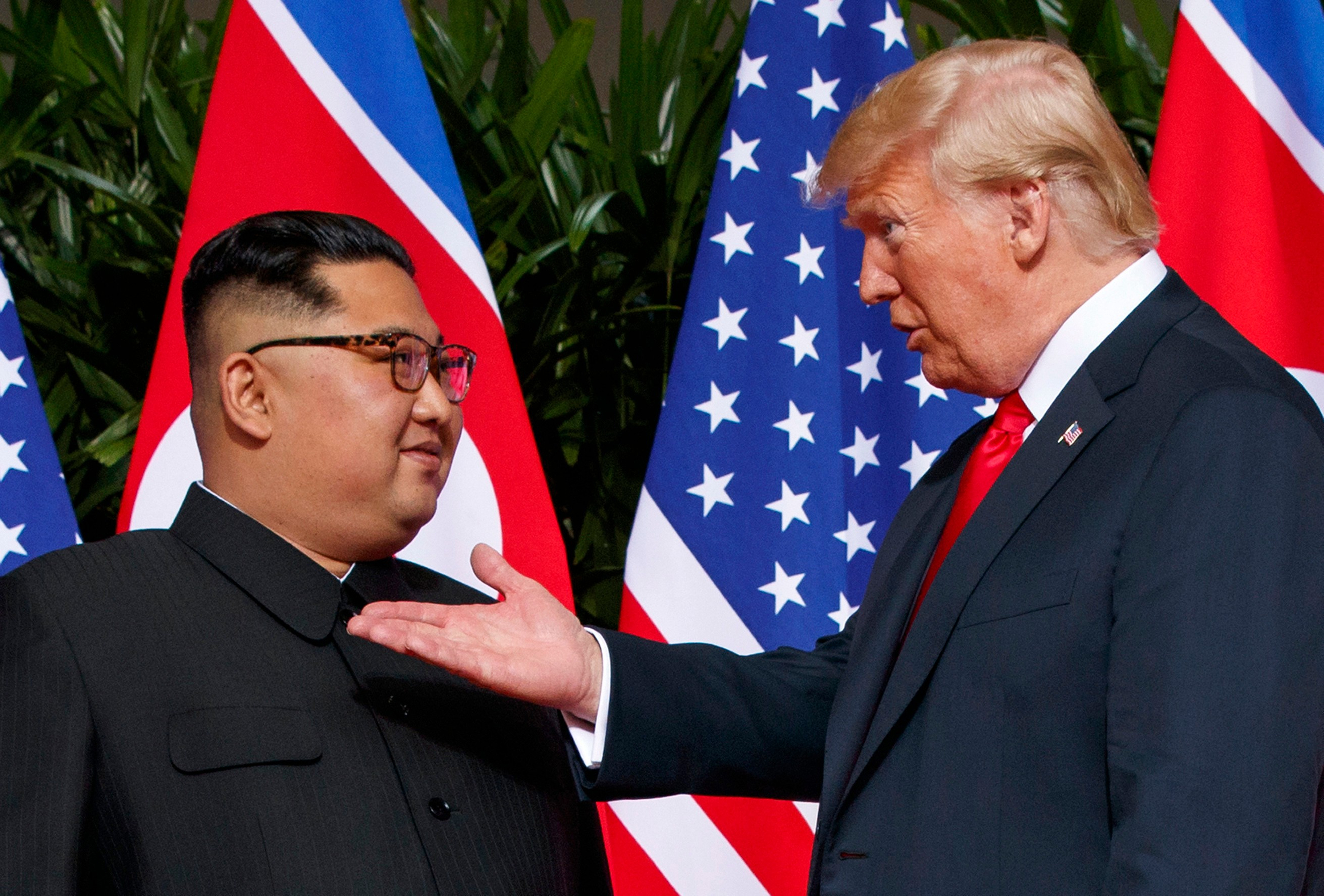
He’s become world famous for embracing America’s enemies and backstabbing our allies. Yet, Donald Trump outdid himself Sunday — on the eve of joint military exercises with South Korea — when he announced the U.S. was scaling back participation to avoid offending his great friend, the nuclear-armed North Korean dictator Kim Jong Un.
Perhaps this was just a frantic attempt to shift attention from the quagmire in Iran. Having failed to end Tehran’s nuclear program, the president is offering nuclear talks “without preconditions” to Kim. You will recall the two “fell in love” after Kim wrote Trump “beautiful letters” in 2018, and he responded in kind.
The military exercises, Trump said, would be “inappropriate and hostile” to a country that “has been unthreatening and respectful” during his presidency.
Unthreatening? Respectful? Anything but.
Kim humiliated Trump after meetings in 2018 and 2019 by rejecting nuclear talks and massively increasing his stock of nuclear weapons and missiles. He’s made clear he wants U.S. recognition as a nuclear power, one that threatens South Korea, Japan, the Philippines, as well as U.S. bases and territory.
Yet, Trump’s selective memory — remembering Kim’s love letters, but ignoring his rebuffs and insults — lays bare a terrible truth about our aging, raging president: his unshakeable belief that his “great” relations with Kim (and with Russia’s Vladimir Putin and China’s Xi Jinping) will ultimately convince them to do his bidding.
The president’s megalomaniacal belief in his own brilliance blinds him to his repeated failures with all three dictators. He refuses to recognize that far from friendship, Kim, Putin, and Xi are bound together in an axis of adversaries who are helping a fourth member — Iran — stand up to the United States.
Trump’s superman delusions aid all these adversaries, even as he dismisses allies who could help keep them in check.
“To treat Kim Jong Un as a partner of some kind is absolutely illogical and counterproductive,” I was told by retired Rear Adm. Mark Montgomery, who served for more than three decades in the U.S. Navy, including in the Pacific.
Montgomery, who is a recognized expert on cyber and technology policy, is now a senior fellow at the Foundation for Defense of Democracies, where he has coauthored an important book, Axis of Aggressors: Countering the Cooperation of China, Russia, Iran, and North Korea.
Canceling the South Korea exercises, which Trump said he would have done if it wasn’t too late, decreases U.S. readiness, Montgomery told me, and puts U.S. troops at risk. About 28,500 are based in South Korea.
“Kim is not going to give up his nuclear weapon nor is he going to make some kind of deal that will win a Nobel Prize,” he said.
In fact, Montgomery added, Trump’s touted first term tête-à-têtes with Kim “made no impact whatsoever.” Kim increased his nuclear weapons yearly during Trump’s first and second term, and is now estimated to have around 50 to 60 nuclear warheads ready for use.
Moreover, North Korea is the perfect example of the close ties and fraternal help that the axis powers provide to each other. “Russia has helped North Korea build more accurate intercontinental missiles which can reach much of U.S. territory,” Montgomery said. “This already puts us under threat.”
Russia has also aided Pyongyang with advanced technology to improve its nuclear and missile programs, which decreases Kim’s willingness to negotiate.
For his part, the North Korean leader has repaid Russia by sending artillery shells, missiles, and tens of thousands of troops to help Putin attack Ukraine. They also work in Russian drone factories, freeing up Russian soldiers to go to the front.
Thus, the man Trump so admires contributes daily to Moscow’s slaughter of civilians in hospitals, schools, and apartment buildings in Ukraine.
Moreover, Putin, the president’s other self-professed buddy, joins axis members in helping the Iranian regime survive and continue to threaten American troops. Iran initially provided Russia with deadly Shahed drones, which Moscow now manufactures and upgrades. Those now-upgraded Iranian drones have killed U.S. troops in Kuwait. Putin also shared intelligence with Tehran that helped the regime target U.S. bases.
All this hasn’t even touched on the intensified partnership between Moscow and Beijing in which the two primary axis members share technology and intel to jointly undermine U.S. interests.
“The axis has helped Iran. The conflict with Iran ties up the U.S. military and makes us less ready for China, and the Russian attack on Ukraine distracts Europe. And Trump doesn’t see that the threats from North Korea make us less able to defend Taiwan,” Montgomery said.
Trump is incapable of connecting the dots. Like a sun god at the center of the world, he looks at each adversary through the lens of their relationship to him. He is blind to the links that bind them together.
The president thinks his personal diplomacy and that of close friends, like fellow real estate tycoon Steve Witkoff and son-in-law Jared Kushner, are superior to normal diplomatic engagement. No expertise is necessary, Montgomery told me.
“His first term didn’t prove that to be true. It hasn’t moved any of the four axis powers, and it hasn’t moved the Iranian Revolutionary Guards,” he noted. “It is an integrated task to fight the axis of aggressors. Especially if the president doesn’t recognize who the bad guys are.”
And, I would add, if those who do recognize the bad guys — like Secretary of State Marco Rubio and many GOP senators — are more interested in pacifying POTUS than in the security of the United States.
What a difference three words can make. For weeks, the American body politic has watched the strange relationship between Donald Trump and his ever-present 35-year-old aide Natalie Harp in a state of puzzled silence. Then, Georgia Democratic Sen. Jon Ossoff spoke at a weekend rally and said that Trump “doesn’t want to do the job” and would rather “build his ballroom and travelwith Natalie on their apparently defenseless flying palace.” The floodgates opened — on social media and sites like the Drudge Report and in angry retorts from the White House that only threw gasoline on the controversy. It goes to show what Democrats can accomplish when they’re not afraid to speak the truth.
An expert raises questions about Freedom Fuel and Venezuelan oil
The Freedom Fuel Network gas station at 1400 Dreshertown Rd. in Dresher last month.
For a government that seems to be in your face 24 hours a day, the Trump regime has managed to produce more mysteries than Sir Arthur Conan Doyle. Where’s Melania? Why was the president’s butt sticking way out at his last event? But here in Philadelphia, one Donald Trump-linked mystery has confounded motorists for weeks.
Why is Trump-promoted Freedom Fuel, a web of 29 service stations that popped up out of nowhere this summer, able to continue to sell gas cheaper than its rivals down the street?
The mostly suburban stations in Southeastern Pennsylvania and South Jersey burst onto the scene with prices at $3.47 a gallon — lower than anything since Trump’s disastrous war of choice against Iran launched in late February — and continue to undercut their competitors by about 10-20 cents per gallon. Experts have said that’s not sustainable, unless the stations are somehow getting their gasoline on the cheap.
Now a former high-level State Department official in the Barack Obama administration is trying to connect the dots between the Freedom Fuel conundrum and the ongoing questions about millions of barrels of crude oil Trump has bragged that the United States has taken out of Venezuela.
Jonathan Winer, who recently wrote about Freedom Fuel and Venezuela for the Washington Spectator and discussed his findings on the Court of History podcast, doesn’t connect all the dots, but his research is a reminder of how little the American public knows about the aftermath of the Trump regime’s January assault on Venezuela that captured strongman Nicolás Maduro and installed a friendlier head of state.
The Inquirer and other outlets have reported extensively on Freedom Fuel stations in Greater Philadelphia, including its ties to pro-Trump Republican ex-mayor of Evesham Township, N.J., Randy Brown, who signed Freedom Fuel’s certificate of formation. Former commodities trader Yoni Gontownik — a major donor to GOP causes and a New Jersey-based pro-Israel political action committee — also signed those papers.
Trump promoted the launch of Freedom Fuel on his Truth Social feed, but the White House has denied direct involvement in the flag-themed gas stations, and so has the companyitself. “Freedom Fuel Network is a privately owned and proudly patriotic company — along with its convenience store operators, haulers, sign companies, and operational partners — that answered President Trump’s call to action to lower prices at the pump,” it proclaims on its website.
Veterans in tracking the complicated oil market remain baffled. “People can’t mysteriously get fuel at a lower price and continue to offer that,” Winer said on the podcast. “You could, of course, do a very short promotion, but you basically can’t [sustain]it.”
It may be a total coincidence, but the giant enigma that is Freedom Fuel and its cheap gasoline surfaced at exactly the same time the president boasted about the cheap oil the United States is supposedly getting from the resource-rich South American nation his troops invaded.
“We’re taking their oil,” Trump proclaimed about Venezuela while in Las Vegas earlier this month. “To the victor belong the spoils.” He added that what America has taken has paid for the brief January war “many, many, many times.” But analysts know next to nothing about what is actually happening to as much as one million barrels of oil that Venezuela produces every day.
Winer pointed to a couple of common bonds between the efforts to market low-cost gasoline here in Philly and White House efforts to control the flow of Venezuelan oil.
The first is the role of Jarrod Agen, executive director of the National Energy Dominance Council inside the White House, who posted two photos of himself giving a thumbs-up at a new Freedom Fuel station in Philadelphia whenit opened on the July 4 weekend. Both Agen and the president himself insisted that the new gas retailer is proof of what the Trump regime is doing to lower prices at the pump.
Winer noted that Agen was also a key member of an American team that traveled to Caracas in April, met with the Trump-backed new president, Delcy Rodríguez, and came home bragging of new commodities deals, including in the oil sector.
The second overlap that Winer points to involves a Texas-based global commodities firm, Mercuria, which announced on May 1 that it had reached a major deal with Venezuela under what it called a “White House-supported initiative.” The announcement featured a photo of atop Mercuria official posing with Agen.
Mercuria told the Washington Post, which has also investigated Freedom Fuel, that it has no involvement with Freedom Fuel. Yet Gontownik, the trader listed as a backer of Freedom Fuel, was also listed as recently as March in campaign finance reports as an executive with Mercuria. But he also insists that he no longer works for the Texas firm — which has been linked to other Trump-regime commodities initiatives. (The ex-Philly journalist Maureen Tkacik, investigations editor at American Prospect, also raises a lot of questions about the role of Mercuria, Gontownik, and the firm Blue Owl Capital, which Trump invested in earlier this year.)
It must be stressed again that all of these connections are circumstantial. At the same time, this much cannot be disputed: The American people have not been given the most basic information about the extent of U.S. involvement in the Venezuelan oil trade, how much money is involved, or where all that money is going at a time when the price of crude oil has skyrocketed.
I could not agree more with Winer’s plea that Congress go after the U.S. Treasury, State, and Energy Departments that are sitting on undisclosed records of U.S.-linked oil transactions — even though realistically that might have to wait until Democrats gain a foothold on Capitol Hill next year. He also called on the media to dig deeper, which is why I wanted to amplify Winer’s early-stage reporting.
Look, we all want to pay less for gas, which is why motorists have been lining up at Freedom Fuel pumps since the stations opened last month. But most of us don’t want to live in a dying empire where a strongman’s tin soldiers steal a sovereign nation’s buried treasure so that favored insiders can profit. We still have no idea what’s been done in Venezuela in our name, and we need to find out.
Yo, do this!
It’s great that people — especially younger people — are returning to brick-and-mortar movie theaters in the long, hot summer of 2026, but the quality of the releases hasn’t really matched the boffo box-office numbers. That may change starting this weekend with the release of Tony, a movie that could have been titled “Becoming Anthony Bourdain.” The film stars Dominic Sessa playing the future chef, author, and beloved TV traveler as a lanky, awkward 19-year-old, spending a summer on Cape Cod and learning to embrace his love for the kitchen — and humanity. I’m really looking forward to this one.
There are two must-read articles out this week from Adam Bonica, a Stanford University professor who specializes in money and politics. The first is his lengthy investigation into dodgy fundraising practices by top Democratic Party committees and leaders, in which endless spam fundraising emails have hit home with susceptible elderly donors, some of whom have drained their life savings. The second is the story behind the story of how both the New York Times and the “Never Trumper” website the Bulwark both chickened out on publishing Bonica’s essential journalism. The cowardice of the elite media in America’s authoritarian moment is beyond disheartening.
Ask me anything
Question: Why aren’t more Democrats supporting and campaigning on the 32hour work week? It seems like a policy that would appeal to working people across the political spectrum. — brown cloud (@milehighdsa.bsky.social) via Bluesky
Answer: Good question. One political leader, Vermont Sen. Bernie Sanders, has aggressively pushed the 32-hour workweek without a reduction in pay, noting that this would pass the productivity gains of the computer era back to the workers who are being more productive. So, yeah, what’s not to like? It’s certainly true that a lot of Democrats, especially centrists, are heavily dependent on campaign contributions from corporate types who don’t like the idea of a shorter workweek. But I think ultimately, Democratic cowardice on these pro-worker issues goes all the way back to the Ronald Reagan era, and a fear that they’ll be branded by the GOP as the party of “free stuff.” But this isn’t free stuff. We’ve earned it.
What you’re saying about …
Last week’s question about how Democrats should view the primary success of leftists such as Michigan Senate hopeful Abdul El-Sayed drew a response that was both robust (despite the summer doldrums) and fairly unanimous. Proposals from the progressive movement like Medicare-for-All and taxing the wealthy, you agreed, are long overdue. Tom Lees noted that the GOP is trying to find the most extreme democratic socialists, but that “the [Rep. Alexandria Ocasio-Cortez] branch which supports ideas similar to European Social Democrats is the group that is getting people excited.” Craig Strimel added that leftist candidates have failed in the past, but “I also believe that we are so far deep in the current fiasco, and so damned close to total collapse of democracy, that we really are in an all-or-nothing situation right now.”
📮 This week’s question: Georgia Democratic Sen. Jon Ossoff has caused something of a political earthquake with his blunt criticisms of Donald Trump, including a reference to his ever-present young aide Natalie Harp. Has Ossoff crossed a line of incivility that’s a bad look for Dems, or are his criticisms a breath of fresh air? Please email me your answer and put the exact phrase “Ossoff comments” in the subject line.
Backstory on Jason Arday, casualty in the ‘war on woke’
Torchbearer Jason Arday carries the Olympic flame on the torch relay leg between Sutton and Merton in London in July 2012.Joe Giddens
There are two kinds of people in this world. There are normal folks who maybe get a slight whiff of news from the TV or when they boot up their computer, and never heard of a man named Jason Arday. Then there are people who (like me) spend far too much of their day on social media, and now know all about the charismatic Cambridge professor — the youngest Black man to reach those heights in the university’s long history — who came under fire for alleged plagiarism and biographical exaggerations.
The allegations apparently simmered from the day of Arday’s 2023 appointment, but boiled over in recent weeks. He acknowledged some citation errors in his 2015 doctoral thesis — mistakes that Liverpool John Moores University called “honest and reasonable” — but the allegations kept coming. They were fueled by a Cambridge colleague and self-proclaimed “race realist” who went on British national TV to lambaste Arday as “not smart” and label him as merely a diversity hire.
The famously not-laid-back British press went wild on the controversy, with literally hundreds of articles about Arday — not just the Fleet Street tabloids, but even the august Times of London, which ran 60 stories. The media frenzy over the young, dreadlocked sociology of education professor didn’t stop when Arday resigned his Cambridge post, saying that “the relentless accusations, speculation and public commentary have taken a profound toll on me and on those I love.” The media frenzy didn’t even stop when Arday was found dead in his home last Friday. He was 41.
Just one day after Arday’s body was found, Julia Hartley-Brewer, a host on a Rupert Murdoch-owned U.K. TV network, told her audience that Arday “was a liar and a fraud who was rightly exposed for what he really was by academics and journalists who were simply doing their job.”
I’m sorry, but as a lifelong journalist, I never realized that hounding a professor who wasn’t perfect but was loved by his students to his early death is part of the job. To the contrary, I think that good journalism might involve noting that scores of white professors and authors who’ve been caught and admitted to plagiarism or similar issues have been allowed to apologize and go on with their careers. And that bad journalism might be implying that Arday’s middling issues are some kind of commentary on any and every academic with darker skin — as opposed to researching the systemic racism that leaves a supposedly enlightened school like Cambridge with 0.4% Black professors, in an England that’s 4.2% Black.
The ghouls who hounded Arday to his death didn’t work in a vacuum. They tapped intoa disgusting narrative that way too many journalists and self-appointed public intellectuals are spreading not just in the U.K. and the rest of Europe, but here in the United States. They think the righteous COVID-19-era outcry against police brutality and a grossly unequal society was some kind of mania they’ve branded “Woke 1.0.” Never mind that the police were never defunded in 2020, not even close. The nattering nabobs of anti-wokeness won’t rest until every college classroom or airplane cockpit is made safe for white privilege.
Let me do my job as an opinion writer and tell you what I think about these mostly aging, mostly white, mostly male pundits who have so little to say about right-wing fascism that’s in power in America and on the rise in Britain and instead desperately cling to their status from the perceived threat of a few Black intellectuals. With key elections approaching on both sides of the pond, they opportunistically saw Arday as their latest chance to stir up white voters and preserve the status quo, even if that means tolerating an authoritarian police state. Now, a once-promising Black professor is a casualty in their glorious “war on woke.” Have they no shame?
What I wrote on this date in 2020
As I noted in this space a couple of weeks ago, there’s so much about the peak year of the COVID-19 pandemic that we’ve successfully tried to forget. That includes much about the consequential yet somehow anemic showdown between Donald Trump and Joe Biden, which included their virtual, prepackaged summer conventions. On this date six years ago, I grumpily covered the Democratic National Convention from my couch in Delco and — stop me if this sounds familiar — complained that the party was ducking progressive issues. “If viewers didn’t notice what the Democrats left out in their tightly scripted telethon so focused on Trump’s coronavirus failings and his paranoid style — such as climate change, gun violence, and the other things that young people across America have been marching for — the history books might.”
I’ve cut back on column writing this month, mainly because I’m working on a long-term investigation that I’m really excited about. In my one piece published this weekend, I took a deeper dive into the stunning reports that winter drone attacks on fishing boats off the coast of Ecuador — with eight sailors missing and presumed dead — were a covert operation by Donald Trump’s CIA. This callous disregard for innocent human life is the latest example of a White House death cult that must be held to account by a new Congress, and eventually by prosecutors.
It’s truly remarkable the extent to which public opposition to the data centers that support artificial intelligence, or AI, has gone from near zero to 60 mph (or maybe 80) in a matter of months — especially here in Pennsylvania. With public unrest over these behemoths around their air and noise pollution and impact on electric bills, as well as growing discomfort with AI itself, becoming a key issue in the fall election, The Inquirer has been all over this story. On Tuesday, veteran business columnist Joseph M. DiStefano looked at how major contractors are hoping that demand for new data centers will get them through an otherwise sluggish economy. That might be a pipe dream if municipalities respond to voters by rejecting these proposals, as happened last week with a massive facility planned for suburban King of Prussia. You’re going to want to read The Inquirer’s in-depth coverage of this debate before you vote in November, which means it’s time to finally subscribe. What have you been waiting for?
By submitting your written, visual, and/or audio contributions, you agree to The Inquirer’s Terms of Use, including the grant of rights in Section 10.
ABC is moving to block President Donald Trump’s administration from the unprecedented step of taking eight local stations off the air, including 6abc in Philadelphia.
On Tuesday, the network filed a lawsuit against the Federal Communications Commission, which is threatening to take away the stations’ broadcast licenses in a move ABC described as an “existential threat” to its business.
“Acting through the Federal Communications Commission, the administration has waged a retaliatory campaign against ABC for a single reason: it disapproves of what ABC broadcasts,” said the lawsuit, filed in the U.S. District Court for the District of Columbia.
The FCC has the power to regulate 6abc and the other stations because they broadcast over public airwaves.
ABC also filed a motion for a temporary restraining order against the FCC’s attempt to force an early renewal.
“Again and again, the administration has attacked ABC’s speech,” the lawsuit states. “Over time, those attacks have escalated into express demands that ABC be stripped of its broadcast licenses because of its speech.”
6abc’s broadcast license, renewed without controversy in 2023, runs through 2030.
“All broadcasters have a legal obligation to operate in the public interest — even Disney,” an FCC spokesperson said in a statement. “Disney is obviously very concerned about the FCC’s proceeding, as evidenced by their ongoing campaign of disinformation as well as their decision to ask a court to stop the FCC from further pursuing matters.”
So far, the FCC has not presented evidence 6abc or the other seven ABC stations have violated public interest requirements.
“We’re very principled on this. We’re going to stand up to what we believe is journalistic integrity,” Disney CEO Josh D’Amaro said during a CNBC interview last week. “And we’re not going to be told how to run that side of our business.”
FCC could move against 6abc and others soon
FCC Chairman Brendan Carr with then President-elect Donald Trump in November 2024. Brandon Bell
The next step would be for the FCC to issue a hearing designation order, which would officially begin a legal process that could end with the stations losing their broadcast licenses.
ABC said in its lawsuit if the FCC issued such an order, an “adverse outcome is all-but-guaranteed.”
A hearing would normally be decided by an administrative law judge, but the Trump-controlled commission could designate itself to to preside over the case. The commission has two Trump appointees and one Biden appointee, Anna Gomez, who praised ABC’s “courage” and willingness to fight back.
“For months, the FCC has waged a campaign of censorship and control against Disney’s ABC stations, using the threat of broadcast license revocations to punish a company for speech this administration doesn’t like,” Gomez said in a statement. “This should be a welcome sign for every broadcaster who has felt the weight of this overreaching government pressure in silence.”
If the FCC moves to revoke 6abc and the other stations’ broadcast licenses, Disney could appeal the case to federal court. The legal process could take years.
“Regardless of the outcome, the adjudication itself would be immensely harmful to ABC and the stations,” the lawsuit states. “The proceedings are likely to be expensive and protracted.”
There is no official timeline, but the FCC’sfinal deadline for public comments was Aug. 5, and respondents were overwhelmingly supportive of 6abc and the network’s other local stations.
“The loss of 6ABC broadcasting would deeply impact the Philadelphia region,” wrote the Philadelphia Police Foundation, ”removing a trusted journalistic voice and a critical pillar of support that local nonprofits and public safety organizations rely upon.”