WASHINGTON — President Donald Trump wants Immigration and Customs Enforcement officers to keep pulling over vehicles, signaling his opposition Wednesday to plans announced just a day earlier to suspend most traffic stops following another string of fatal shootings.
It’s not clear whether ICE will quickly reverse course and resume most stops, which have been a key tool in Trump’s immigration crackdown.
Ending those stops, Trump wrote, would be “playing right into the criminal’s hands.”
“We CANNOT give up one of ICE’s most important and effective Crime Fighting tools, THE TRAFFIC STOP!” Trump wrote Wednesday on his social media site.
Hours after Trump made his views known, Homeland Security Secretary Markwayne Mullin issued his own statement saying people illegally in the country would be “arrested and deported wherever they are.” But Mullin didn’t directly say whether ICE officers will be allowed to carry out traffic stops.
Before that, two motorists were shot and killed by ICE officers — one in Texas last week and another in Maine on Monday.
After the Maine killing, Trump administration officials told ICE officers to suspend most vehicle stops, people familiar with the decision said Tuesday.
Since the immigration crackdown began, federal officers confronting drivers have opened fire several times, saying the drivers’ vehicles had posed a danger. Policing experts have long said that shooting into moving cars presents a danger of its own and should almost always be avoided.
There have been at least 10 deaths involving encounters with immigration agents since Trump launched his deportation campaign. At least four of them involved people in vehicles, a trend so troubling that Republican U.S. Sen. Susan Collins of Maine urged Department of Homeland Security leaders “to cease all non-urgent vehicle stops.”
Two shootings in a week, she said Wednesday, “raise very serious questions” and warrant a halt in that approach for the time being.
ICE has been under pressure to beef up arrest and deportation numbers. It says people being sought are increasingly staying in their homes, and it often blames immigration advocates who advise immigrants to stay in homes unless ICE produces a warrant signed by an independent judge.
ICE officers say that means they’re forced to find other ways to make arrests.
DHS says the man killed in Maine came to the U.S. illegally
More protests are planned after hundreds gathered Tuesday to remember Johan Sebastián Durán Guerrero, the 25-year-old Colombian national who was shot in his car Monday.
Karolina Rojas, his partner and the mother of their young daughter, shared a photo on Instagram of the three hugging and smiling.
“I love you, my darling, my life. I love you. I have no words for this pain. You were my everything. Please watch over me. Help me find the strength to carry on. Stay with me always. Don’t leave me alone. I’m begging you, my love,” she wrote.
Durán Guerrero illegally entered the U.S. on Sept. 1, 2023, through the southern border, DHS said Wednesday. Advocacy groups said that when he was killed, he was authorized to work in the U.S.
Sen. Angus King (Ind., Maine) said the Homeland Security secretary told him on Monday that ICE officers were in Biddeford to serve an arrest warrant but that it wasn’t for the person who was shot.
When ICE tried to stop a vehicle driven by someone who came from a home under surveillance, the “vehicle attempted to flee the scene and, fearing for public safety, an officer discharged his weapon,” the department said.
It its statement Wednesday, DHS said Guerrero was released into the U.S. after crossing the border.
The department didn’t answer questions about the agent who shot him.
Photos showed bullet holes in Durán Guerrero’s car windshield, but the officers involved didn’t have body cameras, leaving many questions.
Maine shooting puts a spotlight on ICE
Outgoing Colombian President Gustavo Petro called the shooting of Durán Guerrero a targeted killing “at the hands of the U.S. government.”
In Wednesday’s social media post, Trump told ICE to be “judicious, fair and smart, and go back and do your very important job.”
Border czar Tom Homan told reporters that the investigation needs to play out and that officers will be held accountable if they are found to have acted inappropriately or illegally.
Maine’s Democratic governor, Janet Mills, said ICE should be scrapped as a federal agency if it can’t be fixed.
Mills, who has criticized ICE before, said Wednesday that the agency needs changes “before more families are robbed of a loved one.”
I taught high school history in Vermont in the 1980s, during the waning years of the Cold War. When we got to Hiroshima and Nagasaki, I dug up the translation of a Soviet textbook and made copies of the pages that described America’s atomic attacks on Japan.
I gave the pages to my students and asked them to compare the Soviet account to the one in their textbook, which said the U.S. dropped the bombs because Japan wouldn’t surrender. By contrast, the Soviet book claimed that our real aim was to demonstrate our technological prowess and block the global spread of communism.
Many years later, I got an email from a former student who said that exercise opened her mind to the way different people think about the world. And it made her realize that history isn’t simply a record of names, dates, and events. It’s a debate about their meaning and significance.
We have a great opportunity to teach that lesson right now. And we don’t have to look abroad to find material for it.
The debate over history is here. It’s happening all around us. The only question is whether we can muster the will — and the courage — to expose our young people to it.
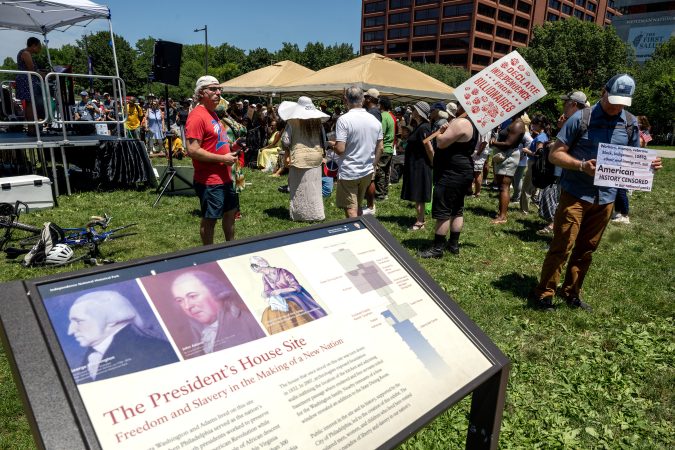
Consider the controversy over slavery exhibits at the President’s House here in Philadelphia. Back in January, the Trump administration ordered the removal of panels about the nine African Americans whom George Washington enslaved. And last month, a federal appeals court upheld the right of the White House to replace those panels with, yes, a different interpretation.
The administration’s new panels — which you can read online — acknowledge that Washington and other Founding Fathers practiced slavery. But the panels remove earlier language, highlighting its brutality. Instead, we are told, enslaved people living in the President’s House “experienced a greater modicum of autonomy than elsewhere.”
On July 4, protesters converged upon the site and taped printed copies of the original panels to the walls. “I know they’ll get torn down,” one demonstrator said, “but hopefully there’s enough people here today for the holiday that they’ll be seen, and maybe it’ll inspire someone else to do the same.”
Here’s who I hope will be inspired: America’s history teachers. They should give the text of the original panels — and also of the new ones — to their students, just as I shared American and Soviet interpretations of the atomic bombings.
And they should ask their students about the differences. Why did one of the earlier panels highlight “The Dirty Business of Slavery” — especially the buying and selling of human beings — and why did the Trump administration omit that? Why did it also leave out most of the details about Ona Judge, Martha Washington’s personal maid, who escaped to freedom in 1796?
Teachers should also share the Trump administration’s recent report attacking the Smithsonian’s National Museum of American History. There’s too much at the museum about racism and oppression, the White House says, and not enough about progress and freedom.
A display in the “Great Debate” section of a democracy exhibit at the Smithsonian’s National Museum of American History, seen in August 2025.Calvin Woodward
Again, is that right? Schools that are close enough to Washington, D.C., should take students to the museum and let them decide for themselves. Everyone else should assign the Trump administration report and rejoinders to it by historians and others.
Teachers have been doing lessons like that for a long time. In the 1980s, Oregon history instructor Bill Patterson had his students compare their state-approved textbook with A People’s History of the United States by radical scholar Howard Zinn.
And if you think this was all just an exercise in left-wing propaganda, think again. Patterson’s students wrote letters to Zinn and took issue with his interpretations, including his claim that the bombings of Hiroshima and Nagasaki were unnecessary.
I can’t remember what my own students decided about America’s use of atomic weapons in Japan. But I’m glad I didn’t give them a single interpretation of it. That’s not education; it’s indoctrination.
A few days after he returned to the presidency in January 2025, Donald Trump issued an executive order “ending radical indoctrination in K-12 schooling.” But in its first sentence, the order calls on schools to “instill a patriotic admiration for our incredible nation.”
That’s indoctrination, too. I know the White House doesn’t want the kind of debate I’m advocating here. But neither do some people on the left, who will inevitably dismiss my approach as “bothsidesism.”
Please. Our students need to come to their own conclusions about the President’s House, the Smithsonian, and everything else. If you only want them to hear your side, you’re in the same league as Trump and his disciples.
News flash: We disagree about our nation. On its 250th birthday, the best way to celebrate it would be to present our differences to our students openly and honestly. It’s not our job to tell them what to think. It’s their job to figure it out.
Jonathan Zimmerman teaches history and education at the University of Pennsylvania. His next book, “Schooling Citizens: How Education Can Save Democracy,” will be published in the spring by the American Philosophical Society Press.
Editor’s Note: An earlier version of this column incorrectly noted that the story of Ona Judge, a woman enslaved by George Washington, was not part of a new display at Independence Mall. She is, in fact, featured in the exhibit.
Pennsylvania Secretary of State Al Schmidt stressed that the state was not in violation of any voting regulations in a response letter to a Department of Justice inquiry that threatened criminal charges over suspicions of noncitizen voting.
The letter, sent Monday, pushed back against the Trump administration’s insistence that allowing federal assistance in inspecting voter rolls was the best way to avoid criminal prosecution for “aiding and abetting the violation” of federal voting laws.
The Trump administration’sletter, sent July 7, was addressed to voting officials in all 50 states and requested a reply within the week. Schmidt’s reply made it clear that Pennsylvania would not hand over voter rolls to the federal government and reiterated that voting regulations were followed meticulously.
“I take seriously the obligations under both federal and Pennsylvania law to ensure that only eligible voters have access to the ballot box and to see to it that Pennsylvania’s voter rolls are appropriately maintained and updated,” wrote Schmidt, an appointee of Democratic Gov. Josh Shapiro.
“That means working with the election officials of our 67 counties who are statutorily responsible for voter list maintenance,” Schmidt said. “Be assured that these dedicated local officials, as well as our employees who serve at the Department of State, work tirelessly to ensure that Pennsylvania’s voter rolls are accurately maintained.”
Pennsylvania officials have warned since last year that turning over the voter rolls to the federal government without redactions could put sensitive information at risk.
The DOJ letter comes after President Donald Trump’s long history of spreading voter fraud conspiracy theories and falsely claiming that he won the 2020 election.
“I have seen the most fantastical things on social media, making completely ridiculous allegations that have no basis in fact at all,” Schmidt told CNN in 2020.
In his capacity as Philadelphia city commissioner, Schmidt in 2017 identified a glitch in the Pennsylvania Department of Transportation’s system that had allowed 168 noncitizens to register to vote.
But noncitizen voting does not happen at a rate that would change presidential election results, Schmidt emphasized in a recent interview with VoteBeat.
“One thing that became very clear through that research and all evidence suggests that noncitizens voting in elections in the United States occurs very rarely,” Schmidt said. “It doesn’t mean that it’s not important. Like I said before, every vote is precious, and we want to make sure that we do everything we can to safeguard and strengthen election integrity. But there’s no evidence to suggest that it happens in any widespread way whatsoever.”
While Schmidt’s letter did not grant the Trump administration access to voter rolls, it did link to the state’s most recent voter registration report, which outlines the outcomes of officials’ efforts to keep the rolls accurate.
According to the report, 338,000 voter registrations were canceled in 2025, most of them because the voter died or moved. In around 120 cases, a registration was recalled because an official found the person was ineligible to vote.
“We [Pennsylvania Department of State] have worked closely with the Department of Justice on matters that have led to criminal charges as recently as this year,” Schmidt wrote in reply to the DOJ. “The Department consistently cooperates with our state and federal partners in their investigations to help ensure that only eligible voters are registered and able to cast ballots in our Commonwealth.”
A journalistic mentor of mine back in the 1980s told me that Harry Truman, pressed for a comment on the passing of a political enemy, finally said, “It’s a damn shame when anybody dies.” Of course, like most perfect quotes, HST probably never actually said this, yet I find occasion to think of these words often. On Saturday night, South Carolina GOP Sen. Lindsey Graham — whose moral compass went haywire in the 2010s when a brief moment of truth–telling about Donald Trump melted into embarrassing capitulation — died suddenly from heart problems. He was just 71. It’s a damn shame.
Dems need to give up on fake blue-collar campaigns like Platner’s
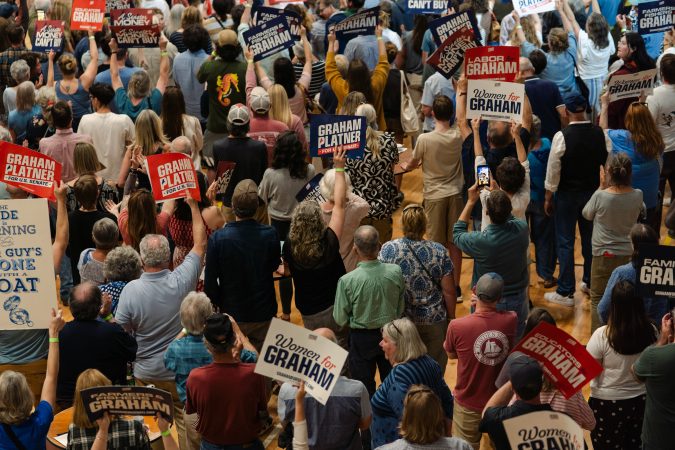
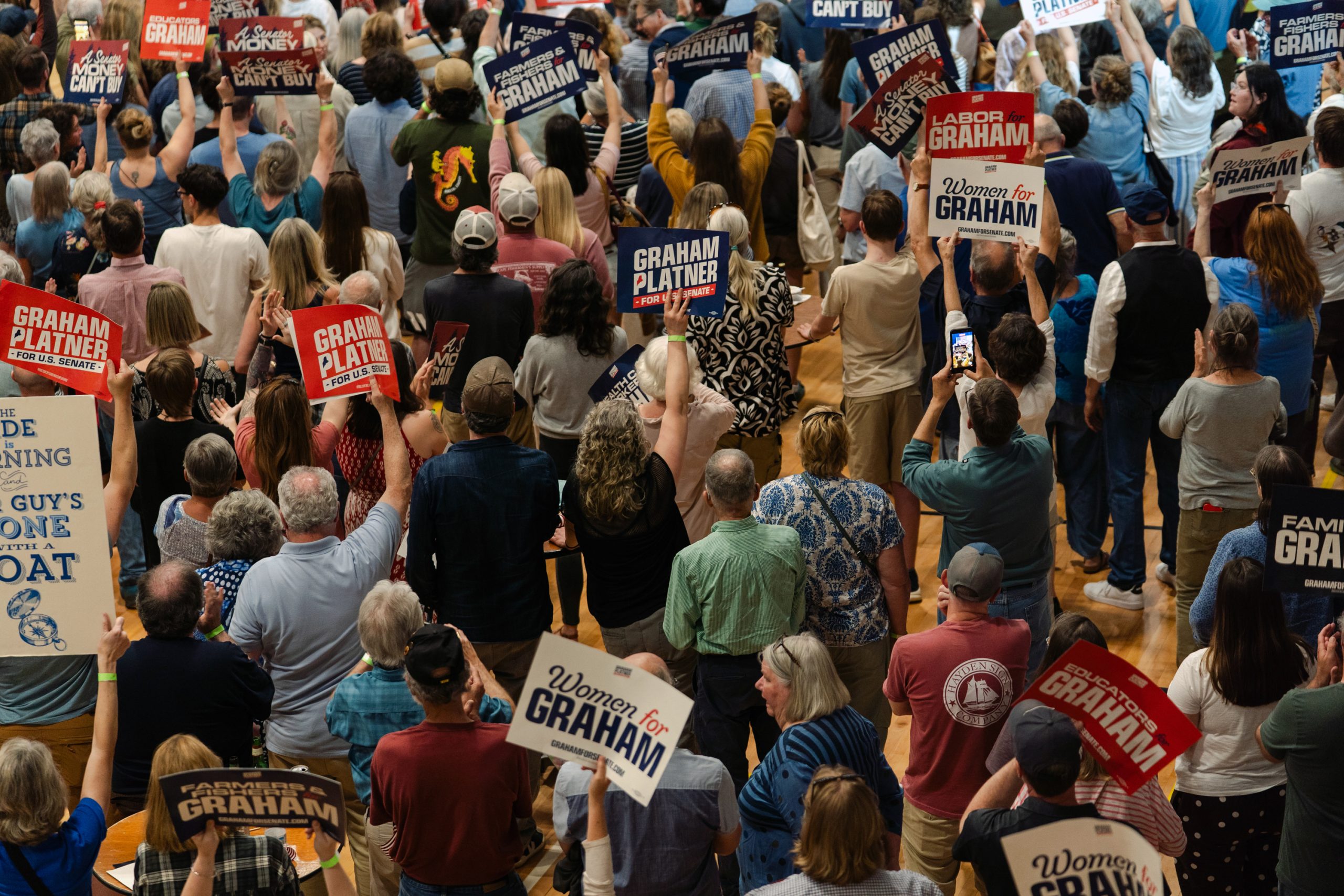
Supporters cheer for Graham Platner in Blue Hill, Maine, after he won the Democratic Senate primary on June 9. Platner’s bid for the Senate inspired progressive Democrats. But the campaign, which he suspended July 8, was messy, disorganized and ultimately doomed by a steady drip of scandal. SOPHIE PARK
Graham Platner, the failed Maine Democratic Senate candidate, was introduced to most of us outside of the Pine Tree State less as a human being than as a fully formed narrative.
The ruggedredhead with angry eyes was an ex-Marine from the Iraq and Afghanistan wars who became an oyster farmer and then a political outsider with all the right words for an electorate that’s mad as hell and isn’t going to take it anymore.
We now know that Platner’s origin story — compelling, but larded with omissions and sprinkled with lies — belonged on the fiction shelf. But even after the Democrats’ scandal-scarred June primary winner accepted the inevitable and ended his candidacy on Friday, he lives on as an avatar upon which everyone with a stake in a badly broken Democratic party can project their distrust and rage toward others — folks who ought to be their allies in an all-out war against fascism.
Days later, the Platner discourse is almost as toxic as the candidate himself. People who voice their opinions, even in 280 characters on social media, get called everything from sexist Bernie-bro rape apologists to Quislings who want big corporations to keep running the Democrats into the ground, and all the rest in between. Don’t even mention Israel. In fact, don’t @ me after this is posted.
Having said all that, there is a conversation that must be had by the Democrats, and probably a wider circle. And the disappearance of Platner himself from the picture makes that easier, because I think we can all stipulate that as a human being he was clearly not worthy to be a U.S. senator, even in the Senate’s current morally diminished state.
There is another Graham Platner somewhere on Earth 2 who also suffered PTSD and developed a drinking problem fighting in pointless wars, and who also got a Nazi tattoo and posted wretched stuff on Reddit, but turned his life around in a glorious redemption song. But that’s not the Platner we got on here on Earth 1. Instead of an apology, he was weirdly defensive about his past, because — we now know — he was hiding stuff that was even worse than that.
Although Platner has denied the most serious charge of a sexual assault, there should be zero tolerance in the Democratic Party for the type of sexual misconduct that’s been confirmed, let alone what’s been additionally alleged. That’s not just the only proper moral stance, but it sets Dems apart from a twisted GOP that nominated Trump three times. Platner’s disappearance is a blessing to everyone.
But even with that matter resolved, we still haven’t answered the bigger question that I posed the only other time I wrote about Platner back in the spring: Why did a majority of Maine Democrats — roughly 150,000 voters — ignore the party establishment to back this guy?
But first Democrats — and just about everyone, frankly — need to do a better job understanding not just the “why” of Platner supporters, but the “who.” Baked into the Platner myth was this notion that in running a gruff-sounding ex-Marine and oyster farmer, Democrats had found a key to regaining the long-lost white working class.
Two huge problems with this. First — and this will sound familiar here in Pennsylvania where shorts-and-hoodie-wearing Sen. John Fetterman grew up upper middle class before donning a blue collar — Platner comes from a fairly privileged background. He’s the son of a lawyer and upscale restaurant owner and grandson of a famous architect; he started high school at the super-elite Hotchkiss School.
Which brings us to the crux of the problem: the notion that Platner’s pre-implosion success was his ability to win back working-class voters in an overwhelmingly white state. Polls exposed this all as a lie. A late June survey from the New York Times/Portland Press Herald/Siena showed Platner losing white, non-college educated voters by a whopping 21% to the GOP incumbent Sen. Susan Collins. So what gave him a shot at winning? A massive 37% edge among college degree holders.
Look, we all know that it’s been the obsessive mantra of the political pundit class that Democrats will never fully win back America without restoring the working-class coalition that elected Franklin Roosevelt four times during the New Deal era. I hate to be a contrarian here, but what if that’s not true?
A society that over a half-century has once again made higher education an elite sport and now has a right-wing media and demagogues like Trump to heighten working-class grievances and blame the wrong people has created voters who — at least for now (hold this thought) — arguably aren’t worth chasing after.
The frayed alliance of progressives and liberals who comprise the core of the Democratic base do some dumb stuff — opposing new units that could lower housing costs, or “nice white parents” leading to de facto school segregation — that should stop.
An America that’s not inclusive and that isn’t fair when it comes to gross income inequality, not to mention who gets to see a doctor or send their kid to college, isn’t a cause worth fighting for. And there’s already a healthy number of working-class people — not the majority, not yet — who would agree with this.
Platner was a bad guy but he appealed to voters who wanted good things. Let’s not bemoan the fact that his movement was based on educated people. Let’s build on that. Instead of lowering our values to win elections, let’s play the long game to lift more people up to a better place.
It’s way past time for college-educated progressives and our allies to stop apologizing for the things we believe in. The current push to find a candidate who can replace Platner and fight for all the right stuff — without the personal baggage of their predecessor — is a great place to start. Maybe it’s even time to revive the old cliché: As Maine goes, so goes the nation.
Yo, do this!
Tuesday is the folk-music legend Woody Guthrie’s 114th birthday. I use the present tense because it very much feels like the singer who influenced living icons from Bob Dylan to Bruce Springsteen is still with us. Now, a friend, the pioneering rock journalist Greg Mitchell, has directed a new documentary about the musician, his political activism in the mid-20th century, and his lasting influence: Woody Guthrie and the Ghost of Tom Joad. It’s now streaming on PBS.org and will also be popping up on PBS stations this summer. You can — and should! — stream it here.
Monday night I read a remarkable piece of journalism that I feel compelled to share. Last week, a lot of America was talking about a photo from July 4 that showed a young Black woman on a D.C. Metro train surrounded by masked members of the white supremacist Patriot Front. There was so much commentary about what this woman must be feeling and thinking, and almost all of it — as shown by some remarkable reporting by former Inquirer journalist Ellie Silverman, writing for NOTUS — was wrong. The truth is heartbreaking.
Ask me anything
Question: Why do we not know what’s going on with (ailing Kentucky Sen. Mitch) McConnell? What is the Republican endgame? What’s the benefit to prolonging the process of determining a replacement? What is that process (seems to be in dispute)?
Answer: We know a little more now than we did when I addressed this issue last week. His staff on Sunday released a brief statement and what is being called a “proof of life photo” — with that morning’s Washington Post sports page visible in the shot — seeking to explain McConnell’s month-long hospitalization and hoped-for return to the Senate. There were, of course, immediate conspiracy theories that the photo was artificial intelligence, but there’s no compelling evidence of that. The biggest mystery is, why doesn’t the 84-year-old McConnell just quit, with only about six months left until he leaves office in January? Kentucky has changed its Senate replacement law a couple of times, mainly because GOP lawmakers don’t want Democratic Gov. Andy Beshear making the pick. The new law requires a special election, but there probably will not be one if McConnell stays in office through Aug. 3. Republicans seem desperate to avoid the special election, and I’m not sure why, since McConnell surely isn’t helping advance the Trump agenda from his hospital bed.
What you’re saying about…
You really didn’t think I could go a whole newsletter without mentioning soccer, did you? Last week’s question about Trump’s FIFA intervention and the reversal of the American Folarin Balogun’s red-card suspension drew a unanimous response: The president was wrong to get involved, and he seemed to create a negative vibe around the U.S. team before it got blown out of the World Cup by Belgium, 4-1. “To me, it appeared to be the wrong call, but the ref called it.” wrote ex-soccer mom Suzanne Urban Ryan. “We had to live with it. Trump getting involved was just really poor judgement based on his need to win a game that he is not even a player.” Added Jordan Lang: “I’m sure his corrupted meddling negatively affected the psychology of the U.S players.” Yup.
📮 This week’s question: Trump plans to address the nation in prime time Thursday with ginned-up information about his bogus and debunked claim that the 2020 election was stolen from him. He is laying the groundwork for November, and election interference on a scale to rival the Jim Crow South. How can Congress, the courts, the media, and everyday citizens respond to this dire threat before it spirals out of control? Please email me your answer and put the exact phrase “Trump election meddling” in the subject line.
Backstory on why ICE is killing immigrants, again
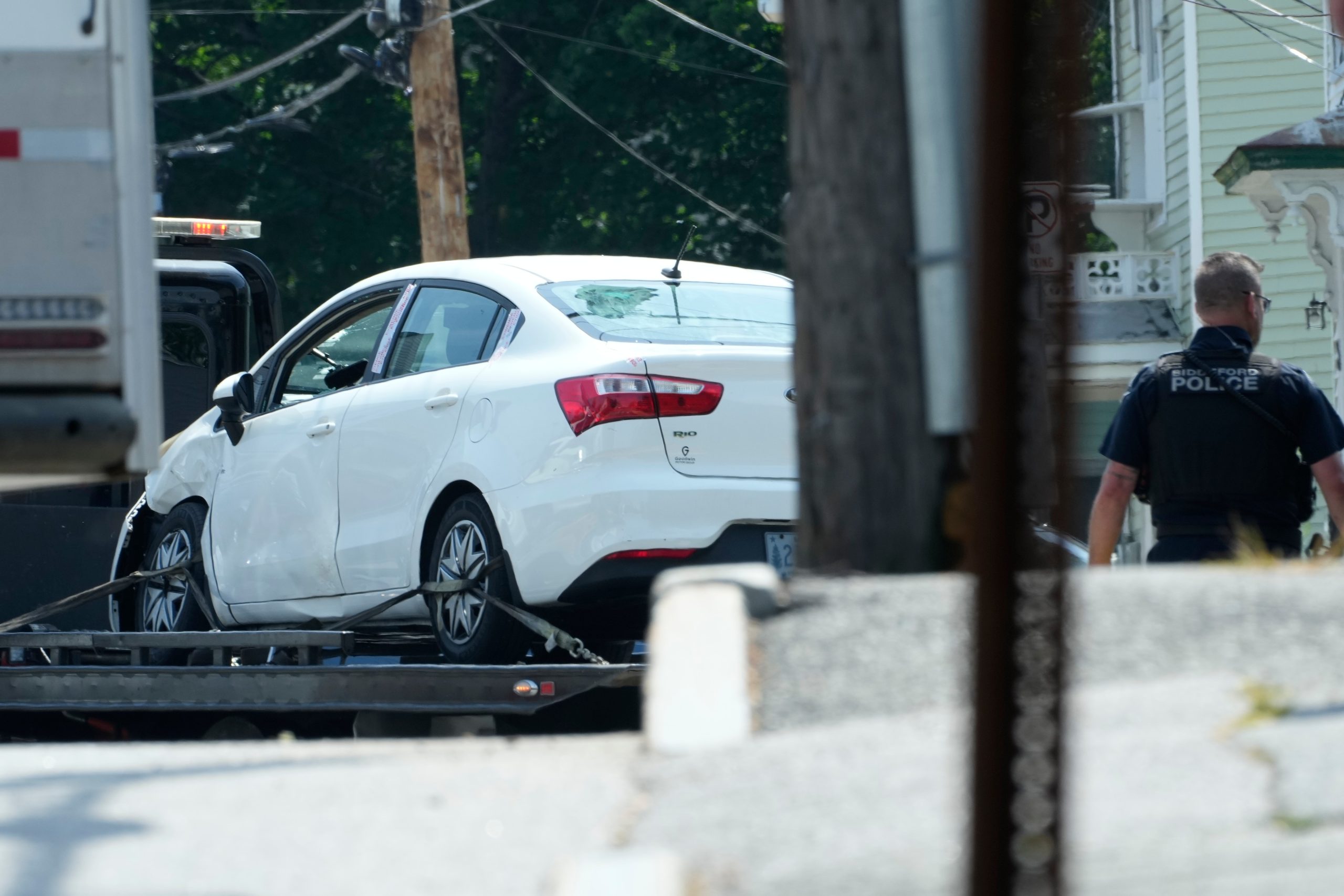
A vehicle with a damaged window is transported away from the scene of a shooting involving U.S. Immigration and Customs Enforcement, Monday in Biddeford, Maine. Robert F. Bukaty
The fight against police brutality against African Americans in the late 2010s found its rallying cry when New York City police choked and killed a street peddler named Eric Garner, whose last words were. “I can’t breathe!” Now, Monday’s latest fatal shooting by U.S. Immigration and Customs Enforcement agents that shattered the morning calm of Biddeford, Maine has produced a new mantra. As 26-year-old Joan Sebastian Guerrero lay dying on the pavement — shot in the head, then dragged from his car and handcuffed — a bystander heard him say in anguish: “I tried to stop.”
Moments earlier, the man, reported to be a Colombian national with a U.S. work permit, had left his home, possibly with his daughter, in a white Kia sedan, which was hemmed in by ICE agents in their vehicles. Although the Department of Homeland Security changed the wording of its statements over the course of the day, it ultimately reported that an ICE agent shot Guerrero because the driver attempted to flee and the officer was “fearing for public safety.” But ICE and DHS, whose officers have now shot and killed at least 11 people since Donald Trump returned to office, have repeatedly seen their versions unravel as more video and witnesses emerged. The two most recent attacks — Monday’s assault on Guerrero and last week’s Houston shooting of 52-year-old Mexican national Lorenzo Salgado Araujo — happened on working-class residential streets without clear videos of the shootings, and with ICE agents not wearing body cams.
Still, a pattern is starting to emerge as DHS and its new leader, the former Oklahoma senator Markwayne Mullin, put a flood of new, barely trained ICE recruits on the streets in attempt to make mass arrests of immigrants without the same level of hoopla and backlash that happened in cities like Minneapolis and Chicago under Mullin’s predecessor, Kristi Noem. In both the Houston and Biddeford shootings, ICE began the morning in what it claimed was a targeted operation seeking a specific immigrant with a removal order, only to try to arrest and ultimately kill men, in Salgado and Guerrero, who were not the supposed targets.
It’s quickly becoming clear that ICE’s new strategy is a recipe for disaster. Both Salgado and Guerrero, according to what we know from witness accounts, didn’t seem to know what exactly to do when their vehicles were surrounded by unmarked vans and yelling men. In both cases, ICE agents interpreted the predictable panic and chaos as aggression, and made a split-second decision to end a human life forever. It increasingly looks as if the federal agents — facing an impossibly ambitious goal from the Trump regime of arresting and deporting 1 million people a year — insist they have a name on a sheet of paper, when in reality they are racially profiling brown-skinned men driving to blue-collar jobs.
Like so many projects of our current government, the new ICE scheme is not only inhumane but also dumb and counterproductive. Mullin’s apparent new strategy was to meet the high arrest quotas sought by Trump and his immigration guru Stephen Miller without generating the kind of public protest and backlash that all but drove DHS out of Minnesota this winter. It’s not working. Even before Guerrero’s name was released, angry demonstrators took to the streets in Biddeford and stormed the office of the state’s GOP Sen. Susan Collins, who recently voted for a $70 billion cash infusion for immigration raids.
The tactics may have changed slightly, but the repulsive devaluation of human life has not. Mass deportation is a failure — strategically, politically, and morally.
What I wrote on this date in 2019
Some days my past writings read like Nostradamus, but more often than not they reveal how fleeting our political moments can be. On this date seven years ago, this columnist joined a lot of progressive voters in swooning over the early-stage presidential ambitions of Massachusetts Democratic Sen. Elizabeth Warren, who had just spoken at the left-wing convention Netroots Nation here in Philadelphia. “With her slam-dunk performance Saturday,” I wrote, “Elizabeth Warren became president … of the American progressive movement, anyway.” But Sen. Bernie Sanders had other ideas about that, and then Joe Biden and South Carolina voters came along with different ideas about Warren, Sanders, and control of the Democratic Party. Read the rest: “Netroots Nation was the day Elizabeth Warren became president of the American left.”
Recommended Inquirer reading
It was a full week for me, and for American outrage. First, I tackled the Houston ICE killing of 52-year-old Mexican national Lorenzo Salgado Araujo and the return of ambitious immigration raids to American cities. I noted that the new ICE strategy aimed to ramp up arrests without generating public outcry, and I urged readers not to go to sleep on mass deportation. Over the weekend, I wrote about the similarities between the Trump regime and the disastrous ancient reign of the Roman emperor Caligula. I detailed how Trump’s growing paranoia that he will be assassinated in office is causing new bloodshed in the Persian Gulf and inspiring fresh efforts to quash civil liberties here at home.
Kenesaw Mountain Landis must be spinning in his grave. He was the former federal judge who tried Chicago’s notorious “Black Sox” for throwing the 1919 World Series at the behest of New York gamblers, then became baseball commissioner to clean up the national pastime. For decades, Major League Baseball shunned even the slightest whiff of gambling connections that might taint the sport — but times have changed. My Inquirer colleague David Gambacorta — one of the best investigative reporters in the business — last week broke a remarkable story about how the lucrative betting site FanDuel egged on a local addicted gambler to keep playing until he lost some $1.5 million. Plot twist: FanDuel’s effort includedhaving Phillies slugger Bryce Harper send a personalized video to please the local bettor. It’s disturbing that a) Harper, with a 13-year $330 million contract, also feels the need to peddle $899 videos on Cameo and b) he has a relationship with people at a gambling website. But FanDuel is now “the official sports betting partner” of MLB — an appalling relationship that only encourages morally dubious behavior like the Harper video. The rank corruption of modern American society, including sports, is why we need investigative reporters like Gambacorta. You can read the next installments in this saga, and support his work, when you subscribe to The Inquirer.
By submitting your written, visual, and/or audio contributions, you agree to The Inquirer’s Terms of Use, including the grant of rights in Section 10.
A Malvern man was sentenced Tuesday to more than three years in prison for having a collection of homemade bombs at his house — a discovery police made after he was arrested for bringing guns to a “No Kings” protest in West Chester last year.
Kevin Krebs, 32, apologized for his actions, saying he had let his family down and adding: “I really screwed up, and I regret everything that I did.”
His family said in court that Krebs — who was adopted from a Lithuanian orphanage as a toddler — had suffered from lifelong developmental disabilities, including autism. And they believed his interest in bombs and firearms was part of an obsessive nature that he also displayed in other, non-threatening technical areas, such as electrical work, which he performed professionally.
Krebs told U.S. District Judge Mary Kay Costello that he had built the bombs only to blow up pumpkins in the Poconos, calling his pursuit “purely recreational.”
Costello said she was not sure that was true. And in any case, she said, his possession and interest in building such devices was a threat to himself and others.
“Just having these bombs in your home posed a grave danger to other people,” Costello said.
In addition to imposing a 37-month prison sentence, Costello ordered Krebs to serve three years of supervised release. He had pleaded guilty in December to a charge of possessing unregistered devices.
A firearms case remains pending in Chester County, with a trial scheduled to begin next week, according to court records.
The events that led to Krebs’ arrest began last June, when attendees at a “No Kings” protest in West Chester told officers they thought Krebs had been carrying a gun.
Police who stopped Krebs found him carrying a loaded handgun, extra rounds of ammunition, and other weapons including a knife and bayonet, prosecutors said. He also had an AR-15 rifle in his car.
He did not have a concealed carry permit, and Chester County prosecutors charged him with illegal gun possession.
Two days later, police searched his home on Conestoga Road and found 13 homemade pipe bombs, prosecutors said, some of which contained nails or screws, which can make the devices more violent when they detonate. Investigators also found components used to make detonators and tactical vests, which prosecutors said demonstrated that he was not simply experimenting with explosives — he was building an “arsenal” of dangerous weapons.
County prosecutors charged Krebs with new crimes including possessing weapons of mass destruction and causing a catastrophe, and federal prosecutors went on to adopt the portions of the case that related to explosives.
Krebs’ case attracted attention in part due to its connection to the No Kings demonstration, one in a series of recurring events at which protesters across the country rally against President Donald Trump. But prosecutors said Krebs’ beliefs and potential motives were not particularly clear.
Krebs was a registered Democrat but had previously been registered as a Republican and said online that he had voted for Trump. Writing online, Krebs later said he came to regret that vote, and before the No Kings event, he had been posting violent rhetoric about Trump and police.
Krebs said in court Tuesday that he attended the protest “in support of the rally” but did not elaborate.
Krebs’ parents told Costello, the judge, that they harbored deep remorse and shame for failing to recognize their son’s drift toward dangerous habits.
But Costello said they had done everything they could to provide their son a better life — welcoming him into a safe home, providing him structure and support, and seeking to connect him with therapy and medications throughout his life.
“This is not your fault,” Costello said. “This was Mr. Krebs’ doing, and he’s going to have to face the consequences of that.”
Delaware became the seventh state to name a surgeon general with the appointment Monday of a physician to serve as the state’s “principal public health communicator” and advise Gov. Matt Meyer on health matters.
Neil Hockstein, an otolaryngologist who chairs Delaware’s Health Care Commission, will helm public health measures.
Meyer, a Democrat, said the appointment grew out of state government efforts to reassure residents after a chaotic period for U.S. public health, with Robert F. Kennedy Jr., a longtime anti-vaccine activist, leading federal health agencies under President Donald Trump’s administration.
“We live in a time where the information coming from the federal government is not evidence-driven. It’s not fact-based,” he said.
Last year, Delaware joined Pennsylvania and other Northeastern states in a public health coalition to surveil infectious diseases and promote vaccination, joining several states also launching their own public health initiatives in response to the federal changes.
“Traditionally, we’ve been able to rely on the federal government for environmental protection, for food assistance, for reliable health and weather information,” Meyer said. “Now there’s a lot of loss of trust, and in so many ways we’re saying, ‘How can states pick up the mantle?’”
Pennsylvania has a physician general, a similar position. New Jersey does not have a surgeon general.
The Delaware Healthcare Association, which represents the state’s hospitals and health systems, called Hockstein an “invaluable, unrelating advocate” and applauded the creation of the position.
Delaware’s surgeon general will report to Secretary of Health Christen Linke Young, who said the position will help reach residents not already receiving services through her department.
“His job, really, is to think about the whole [public health] ecosystem and to speak to people in a way that is broader than the particular clients who receive particular services from us,” she said.
Republican State Sen. Eric Buckson, who represents parts of Kent County, said the state “already has everyone in place to make sure that the state of Delaware is getting the information it needs to make the best decisions.”
“Do we need this position generated on the premise the current administration is going to somehow mislead Delaware?” he said, adding that he believes Kennedy has “done an excellent job of provoking a conversation.”
A new surgeon general’s focus
Hockstein plans to prioritize “foundational” public health initiatives such as promoting vaccination and ensuring access to clean water and food, along with issues like adequate access to healthcare, especially among older residents.
“More people will die because they have inadequate access to healthcare in Delaware than will die of measles, mumps, or rubella this year,” he said, citing infectious diseases now rising as vaccine rates have declined.
Hockstein said he sees his role as twofold: communicating about health initiatives with the public while supporting healthcare workers.
“They’re hurting right now, and I think having a voice that understands what they do on a daily basis and the threats that they’re feeling is important.”
He said he still plans to see patients for about eight hours a week.
Meyer said he also wants Hockstein to focus on adolescent mental health, partnering with local school districts to raise awareness about the issue.
“It really needs to be attacked with a public health mindset,” he said. “We have an epidemic of loneliness. We have children who know how to interact with their phones and with video games, but not with each other.”
A federal judge has officially dismissed the seditious conspiracy case against former Philadelphia Proud Boys leader Zach Rehl, putting an end to a landmark prosecution that had at one point served as a leading example of the Justice Department’s effort to seek criminal consequences for people who attacked the U.S. Capitol on Jan. 6, 2021.
U.S. District Judge Timothy Kelly wrote in a memorandum Friday night that he effectively had no other choice but to dismiss the case against Rehl and his three codefendants, Proud Boys Ethan Nordean, Joseph Biggs, and Dominic Pezzola.
An appeals court earlier this year had already granted a Justice Department request to vacate the men’s convictions because prosecutors said they no longer believed in them, Kelly said.
And in 2025, President Donald Trump — the intended beneficiary of the Jan. 6 melee — also signed an executive order that prohibited prosecutors from continuing to pursue any cases against Jan. 6 defendants in court.
Against that backdrop, Kelly wrote, he had “no grounds” to rule that the case against Rehl and his codefendants remain open, and he granted the government’s request to dismiss all charges.
“President Trump’s views about the prosecution of those who attacked the U.S. Capitol on January 6 — whether those views are based on fact or fiction — are well known, as is his intention to extend clemency to them through the Executive Order,” Kelly wrote. “The Government’s request to dismiss this case is consistent with that general approach.”
Rehl celebrated the ruling on social media, writing: “Finally, it’s ALL OVER! January 6th can now be a thing of the past for me!”
Kelly’s ruling serves as the latest example of how Trump has consistently sought to rewrite the history of what occurred at the Capitol more than five years ago — and how he has attempted to use the levers of power since he returned to the White House last year to effectively undo any consequences for those who participated in it.
Rehl, of Port Richmond, was one of the most prominent figures from the attack. A jury in 2023 concluded that he and his codefendants had spearheaded a plan to try to block Congress’ certification of Joe Biden’s win in the 2020 presidential election by riling up a mob that went on to violently storm the Capitol.
The verdict served as one of the most significant examples of a sprawling Justice Department investigation. Prosecutors charged more than 1,500 people in connection with the attack, some of whom faced only misdemeanor trespassing offenses while others were accused of serious felonies, including assaulting police officers.
Rehl, his codefendants, and several other leaders of the Proud Boys and Oath Keepers were convicted of the rarely used sedition charge and cast as ringleaders. And when Rehl was sentenced to 15 years behind bars, prosecutors at the time said a lengthy sentence was warranted because he had “threatened the bedrock principles of our country.”
But in the years after the attack, Trump consistently downplayed the gravity of what happened that day, and he said the Justice Department’s investigation into it was politically motivated and corrupt.
Then, last year, just hours after he was sworn back into office to begin his second term, Trump issued blanket pardons to nearly everyone who was charged in connection with the riot. He also ordered the Justice Department to to drop and dismiss hundreds of other cases that were still pending.
Rehl was one of the few defendants who received a commutation instead of a pardon, meaning his prison sentence was cut short but his conviction remained intact.
But Kelly’s decision last week — made at the urging of Trump’s Justice Department — has now wiped out Rehl’s conviction as well, effectively clearing him of all criminal culpability from the episode.
Kelly — who was appointed by Trump during his first term — did not shy away from describing Jan. 6 in stark terms, writing in his memorandum that it was “a perilous event,” and an “attack” on people, police officers, Congress, and the peaceful transfer of power.
“Moving forward,” the judge wrote, “if this Nation’s experiment in self-government is to last another 250 years, the American people — no matter their partisan preferences — will have to act together to preserve, protect and defend that miracle through our constitutional framework.”
In the back of a classroom where she had just read to 20 attentive preschool kids, U.S. Rep. Chrissy Houlahan was concerned about what the staff of the West Chester YMCA was telling her.
Nearly a third of the families who rely on the facility’s childcare programs — in the richest county in Pennsylvania, and one of the wealthiest in the country — receive financial assistance to cover the $1,900 monthly cost, the staffers said.
Houlahan, a Democrat who is soft-spoken when she is not grilling President Donald Trump’s cabinet secretaries or House Speaker Mike Johnson (R., La.) on Capitol Hill, asked about the income qualifications for financial aid. At a certain point, the YMCA staff told her, some parents have a disincentive to earn more, lest they become disqualified and then stuck with a higher bill.
“It’s terrible, no matter how you do the math,” Houlahan said a few hours later at a Malvern restaurant, relaying the story to her daughter, Molly Rosa Houlahan, and daughter-in-law, Kristen Rosa Houlahan.
The YMCA’s fee was about the same amount the couple were paying for their 18-month-old, Lucy. With another child due in September, it is also an amount they still are unsure how to afford twice over.
“We’re very fortunate in our jobs, and we’re both trying to get promotions in order to be able to afford a second daycare,” said Molly Rosa Houlahan, 33, a local theater director and producer. “But we are not in that position yet. I don’t totally know what will happen when this second child arrives.”
From childcare to healthcare, groceries to gas prices, affordability concerns have remained top of mind for Americans this year — dominating discussions on Capitol Hill ahead of the high-stakes midterm elections.
Republicans, who control Congress and the White House, say they have made real progress in raising wages and lowering costs. They marked the first anniversary of Trump’s One Big Beautiful Bill Act — since rebranded by Republicans as the Working Families Tax Cut Act — this month by celebrating the law’s more generous tax refunds and other benefits, like new investment savings accounts for children under 18.
Democrats have pointed to the bill’s simultaneous cuts to Medicaid spending and food assistance for low-income families. They say Trump signaled he has no interest in lowering costs when he refused to sign a bipartisan housing bill and said he doesn’t “think about Americans’ financial situation” when handling the war in Iran.
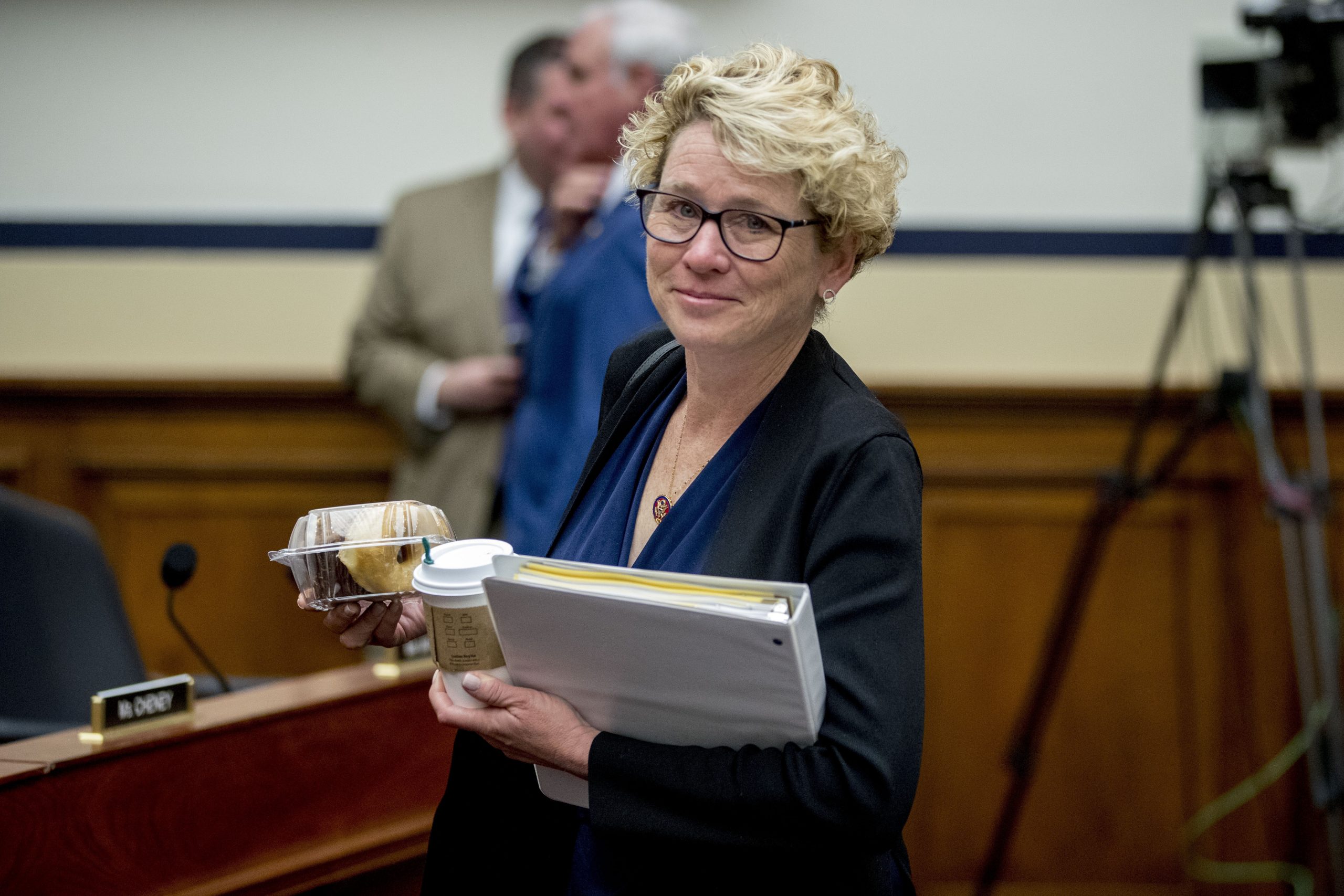
In this 2019 file photo, U.S. Rep. Chrissy Houlahan (D., Pa.) arrives for a House Armed Services Committee budget hearing for the Departments of the Army and Air Force on Capitol Hill in Washington.Andrew Harnik
Houlahan, who has represented most of Chester and Berks Counties since 2019, routinely highlights the broader scope of cost-of-living issues alongside her colleagues. She has taken a leading role among centrist House Democrats to help craft a detailed “affordability agenda.”
Whether her party can advance any of those policies in Washington, even if it wins control of one or both chambers of Congress in November, remains an open question as Trump remains in office and the International Monetary Fund warns of a worsening global economy.
But as the fight drags out, it has also become increasingly personal for Houlahan and her family.
In addition to occasionally helping fill the gaps in their granddaughter’s care, Houlahan and her husband’s own home in Devon, Chester County, has transformed into a version of a so-called sandwich generation household within the last year. The couple’s other adult daughter, her husband, and both of Houlahan’s parents, who are 80 and 84, have all moved in.
The underlying circumstances for the multigenerational home, as they would be for any family, are various and personal. And Houlahan emphasized across multiple interviews that she is fortunate to have the means to welcome her family under her roof. (Houlahan is an Air Force veteran and a former executive at the athletic apparel company AND1. Her husband, Bart, is a partner at an investment research firm.)
But the larger realities — like skyrocketing costs for childcare and senior living — have also now played a role in her own life.Her mother has a Parkinson’s diagnosis, and her parents were unable to find a one-floor living space that was affordable and fit their other needs as they looked to move closer to their family.
“We’re having these conversations, and you know people all over our community are having these conversations,” she said. “It’s an acute issue for families in our area: How do you balance all of this?”
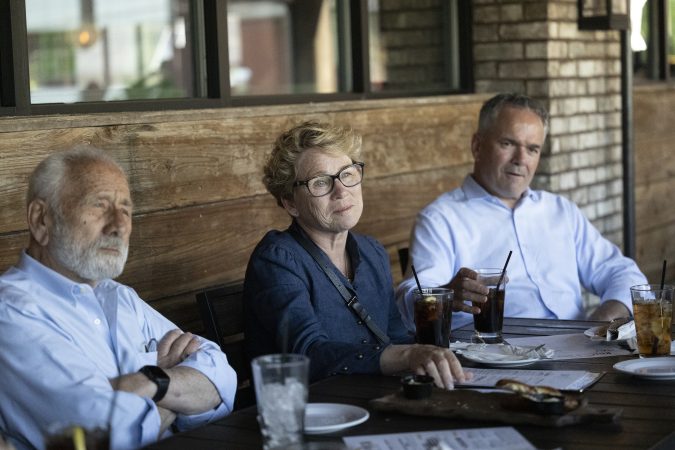
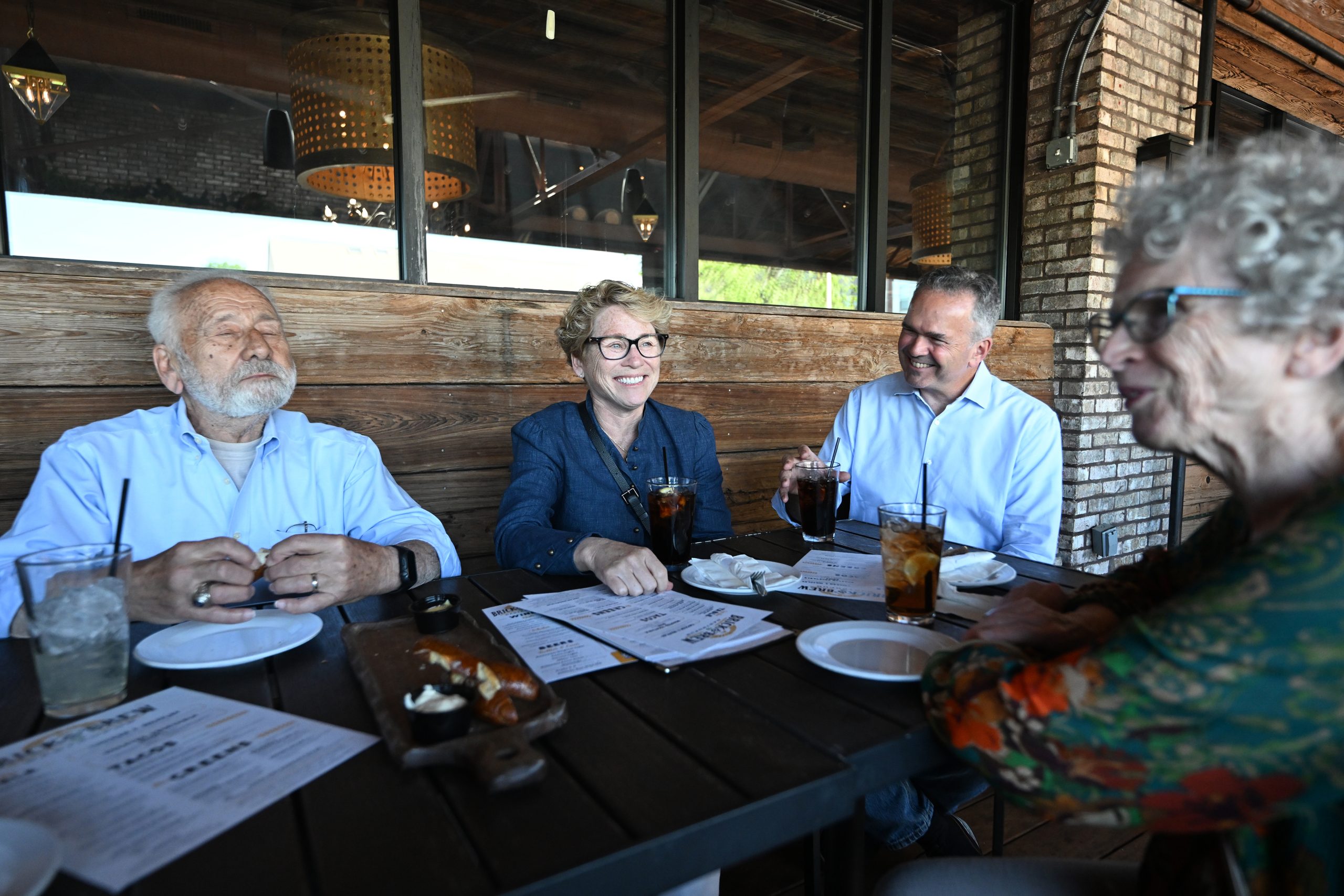
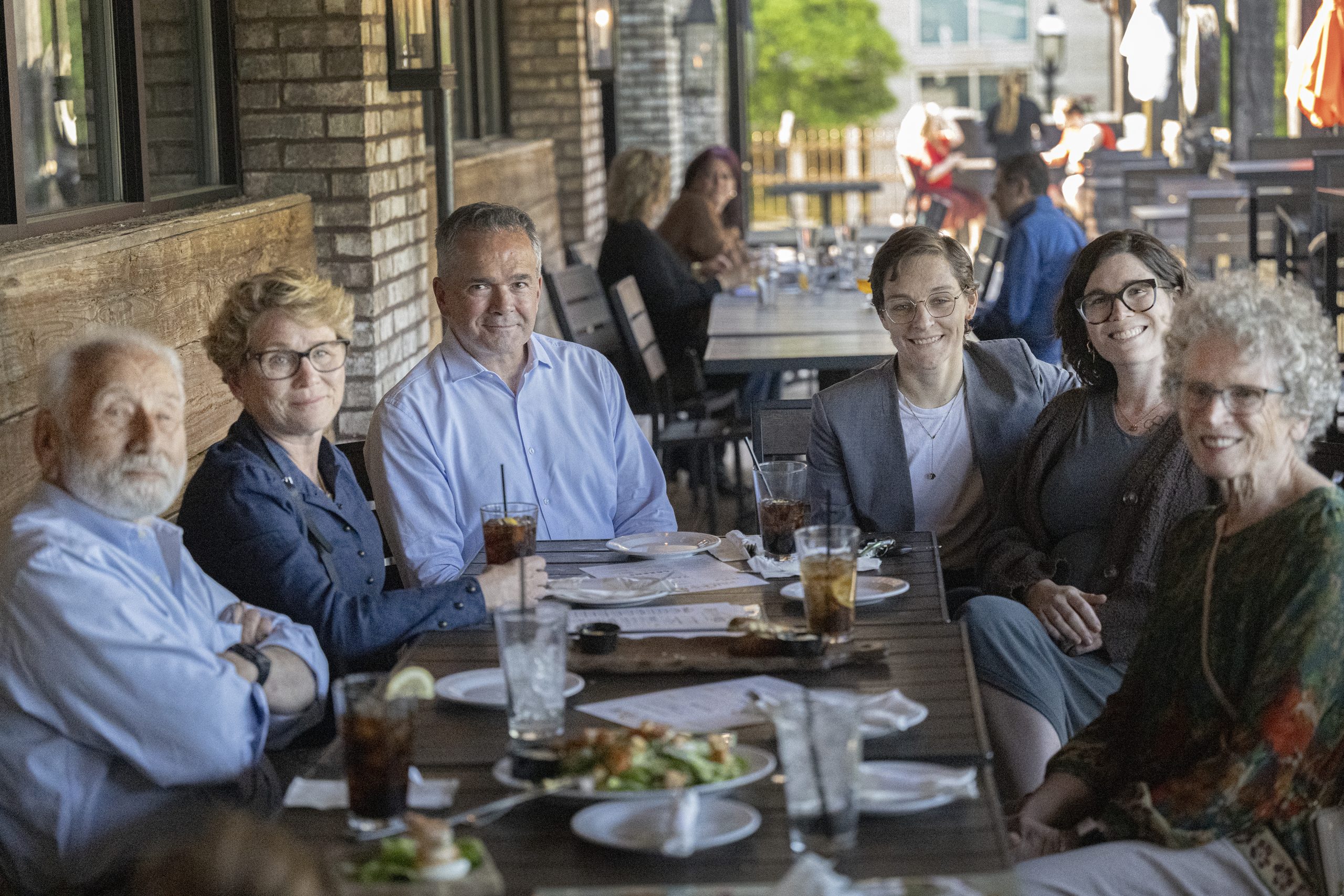
U.S. Rep. Chrissy Houlahan (center) has dinner with her family at Brick & Brew in Malvern, including her father, Andy Jampoler (left), her husband, Bart Houlahan, and her mother, Suzy Jampoler.Jose F. Moreno / Staff Photographer
‘A big balancing act’
Houlahan has shared parts of her family’s story as she has traveled her district this year — prioritizing events and meetings that aim for a deeper understanding of an affordability crisis that has not spared her home county, where the median household income is about $131,000, or 40% more than the statewide average.
On back-to-back days this spring, that meant a focus on the kinds of childcare and senior-care issues she has become familiar with.
“We call it ‘from zero to Edna,’” Laura Schoefield-Pierson, executive director of the YMCA of Greater Brandywine, said of the facility’s programs aimed at all ages, from infants to seniors.
Walking Houlahan through the pre-K classes and a gym with a dozen seniors playing table tennis, Schoefield-Pierson spoke about the organization’s exercise programs aimed at offsetting symptoms of Alzheimer’s or Parkinson’s, and about the complexities of providing assistance for families with young children.
In addition to the “many children” whose care is subsidized through the state’s Child Care Works program — set for families earning 200% or less of the federal poverty level, or $66,000 for a family of four — others receive aid through the YMCA, Schoefield-Pierson said. The facility’s fundraising goal this year is $237,000, she said. On the day of Houlahan’s visit, Schoefield-Pierson said “the kiddos” were writing thank-you notes to donors.
U.S. Rep. Chrissy Houlahan (D., Pa.) interacts with teachers and children at a childcare center at the YMCA in West Chester.Jose F. Moreno / Staff Photographer
Though the U.S. Department of Health and Human Services recommends childcare should not exceed 7% of household income, Houlahan said she was surprised to learn a family would have to earn $327,000 to meet that benchmark at the YMCA for one child.
Nationally, the average annual cost of childcare in 2024 was $13,128, an increase of 29% over the previous five years and far exceeding the national recommendation for the average household’s budget.
“It’s crazy how much healthcare and childcare plays into your family planning,” said Helena Cordoba, a 35-year-old mother of two who said at a roundtable hosted by Houlahan that she had been hoping to grow her family.
A Colombian immigrant who owns Café Com Leite in Phoenixville, Cordoba said she thought she had been living the American dream. But a recent miscarriage and the rising costs of both childcare and healthcare, which she does not currently have, have made her rethink her family’s plans.
“I never thought I was going to say, ‘Maybe the miscarriage is a blessing.’ That thought on its own is very saddening,” Cordoba said. “I don’t know if we were going to be able to afford another baby. Our life would have been completely turned upside down.”
Others voiced similar struggles while Houlahan sympathized and shared her daughter’s own experience with a $2,000 monthly daycare bill.
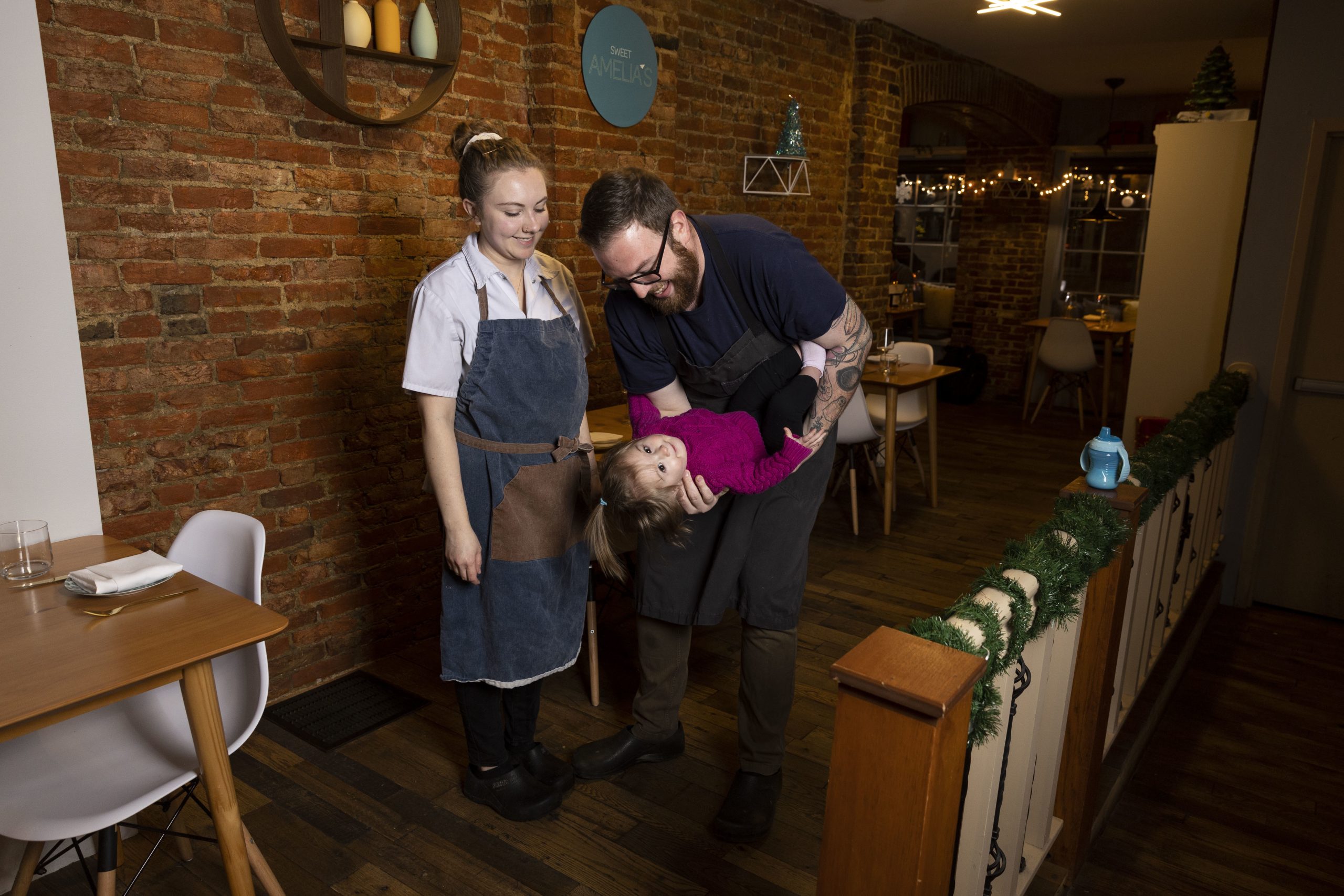
Karessa, Amelia, and Zack Hathaway, pictured here in 2023, at Sweet Amelia’s in Kennett Square.Monica Herndon / Staff Photographer
Zack Hathaway, who owns the restaurant Sweet Amelia’s in Kennett Square with his wife, Karessa, said their business “makes just enough” to cover the $700 to $800 weekly cost for their babysitter amid a demanding restaurant schedule. Thomas Smith, who works at the Cleveland-Cliffs steel plate production facility in Coatesville, said he makes too much to qualify for subsidies for his grandchildren but still struggles to cover the cost.
“It’s like a big balancing act to be able to put your kids in a place that you want to feel comfortable with them being and with being able to afford it,” said Amarte Grove, another Cleveland-Cliffs employee and a father of five daughters.
In another tour focused on the other end of the agespectrum, Houlahan peppered staffers at Brandywine Valley Active Aging in Downingtown about their work to offer free meals, housing services, and activities to about 120 seniors daily.
According to the organization, Chester County’s homeless population has decreased in recent years — from 916 in 2023 to 747 in 2025. But the percentage of that population that is over 60 has increased from 9% in 2023 to 14% in 2026. About 45 older adults in the county were homeless as of early May, according to the organization, which works alongside other independent and government groups to connect seniors with stable housing.
“It is really difficult to live in Chester County,” said Jen Manthey, BVAA’s director of information and assistance. “It takes a long time for them to get out of homelessness, partly because it takes a long time for us to build the trust with them and get that rapport — that they trust what we’re saying, and there aren’t $400 room rentals out there that we’re just hiding from you.”
U.S. Rep. Chrissy Houlahan (D. Pa.) visits with senior citizens at the YMCA in West Chester. She shares the burden of the “sandwich generation” caring for her elderly parents, opening her home to her adult daughter and son-in-law, and helping to care for her other daughter’s toddler.Jose F. Moreno / Staff Photographer
Nick Popov, BVAA’s chief operating officer, said demand remains high for the 5,000 free lunches the organization provides every month to individuals age 60 and older. The cost for those meals is reimbursed through the Pennsylvania Department of Aging, though the organization raises most of its funding in total, he said.
“The services are out there. We’re doing everything we can to provide them,” Popov said. “But it’s always a struggle to kind of balance the bottom line between our goals and what we can actually affordably accomplish.”
Houlahan’s parents said they had never expected to move in with their daughter. Even as they looked to move closer to their family and could not find a spot that fit their financial and physical needs, it took some convincing, mostly from their son-in-law, Bart Houlahan.
“It was an inspiration that permits us to enter old age — serious old age, not just the kid stuff right now — with greater confidence that our health will be sustained,” said Andy Jampoler,Houlahan’s father, a Holocaust survivor born in German-occupied Poland in 1942.
U.S. Rep. Chrissy Houlahan poses at a family during dinner at Brick & Brew in Malvern, including her father, Andy Jampoler (left), her husband, Bart Houlahan, daughter Molly Rosa Houlahan, daughter-in-law Kristen Rosa Houlahan, and Houlahan’s mother, Suzy Jampoler.Jose F. Moreno / Staff Photographer
Turning experience into policy
In May, Houlahan introduced legislation that would require the federal government to collect data on the sandwich generation, a step she said is critical to creating better policies for an “undervalued role in the nation’s economy.”
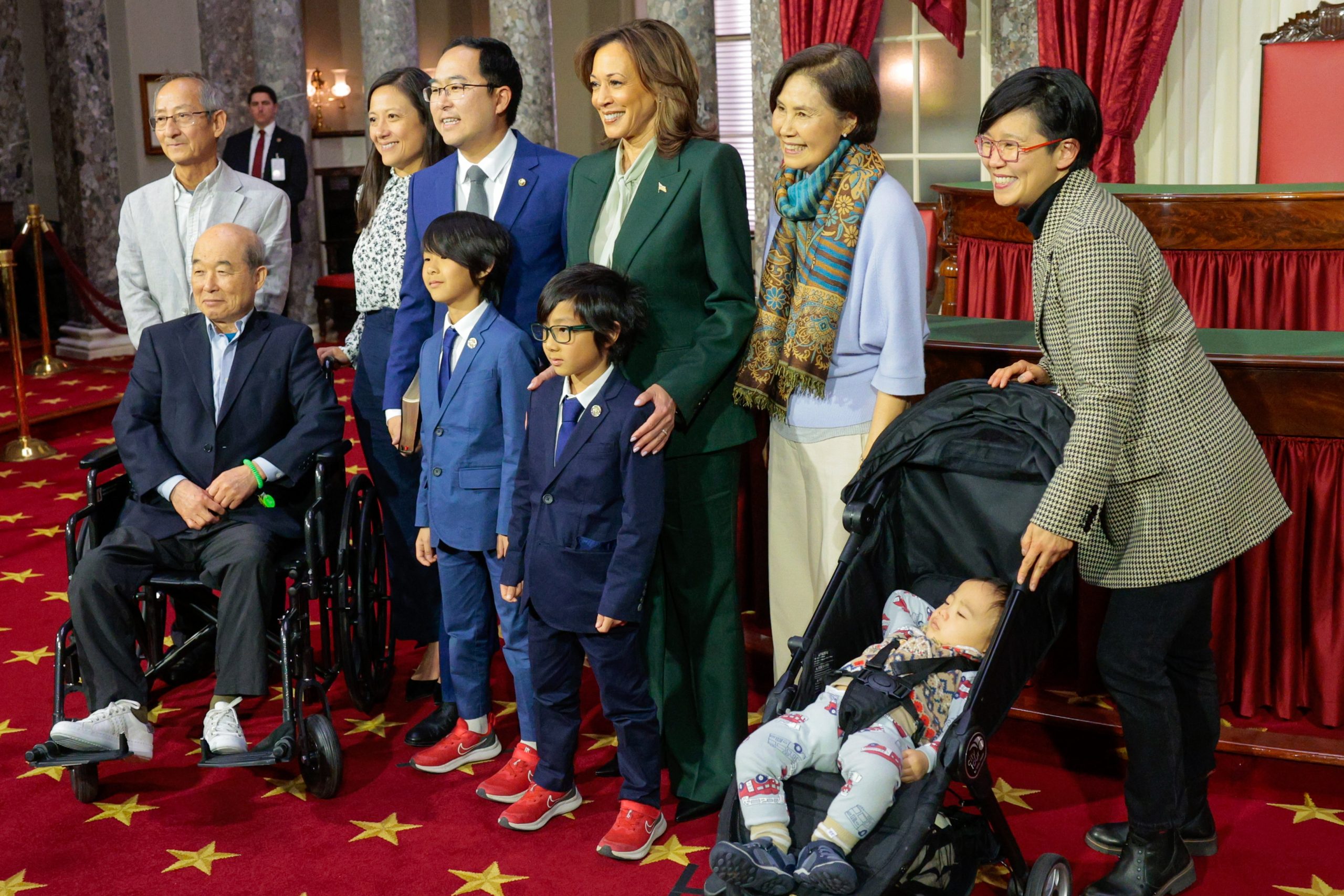
It would require at least one federal survey to ask whether individuals provide unpaid care to both children and older adults. U.S. Sen. Andy Kim (D., N.J.), who has two young sons and cares for his father with Alzheimer’s, sponsored a companion bill in the Senate.
Sen. Andy Kim (D., N.J.) poses with his family and Vice President Kamala Harris after taking the ceremonial oath of office in the old Senate chamber on Jan. 3, 2025, in Washington.Steven M. Falk / Staff Photographer
Houlahan is also the chair of an “economic growth and cost of living” working group within the New Democrat Coalition, a group of self-described centrist Democrats that includes about half of the entire caucus. The group rolled out an “affordability agenda” earlier this year that is considered a framework for how Democrats would tackle housing, healthcare, energy, paid family leave, and much more if they win control of the House.
U.S. Rep. Brad Schneider (D., Ill.), chair of the New Democrat Coalition, credited Houlahan for her leadership with the agenda, describing her as having a “quiet wisdom that focuses on the core of a problem” while bringing her own life experience to the work.
“Everyone’s experience is unique, but her experience shares many of the aspects of what people across the country are facing,” Schneider said. “The sandwich generation, taking care of kids and parents, for whatever circumstance, while at the same time seeing the cost of just everyday living … is putting a burden on families.”
The legislation aims to incentivize housing construction, restrict large investors from buying single-family homes, help families with home repairs, and more. The president reiterated Friday that he would not sign it, allowing the bill to become law without his signature.
In her Capitol Hill office about an hour after Trump canceled that bill signing late last month, Houlahan described the president as “so obtuse that he can’t see in front of him that this is something that the people want.” After spending much of the last year calling out Johnson, the House speaker, for not standing up to Trump, she said there should be “counterinsurgents” and an “uprising” in the Republican Party.
At the same time, she expressed some hope. The housing bill may have been a rare moment of bipartisanship, but it was also a sign that Congress can still act on affordability even before the end of the year, she said.
“We don’t have time, for all of this stuff, to wait until somebody else is in charge,” Houlahan said. “We can do this ourselves.”
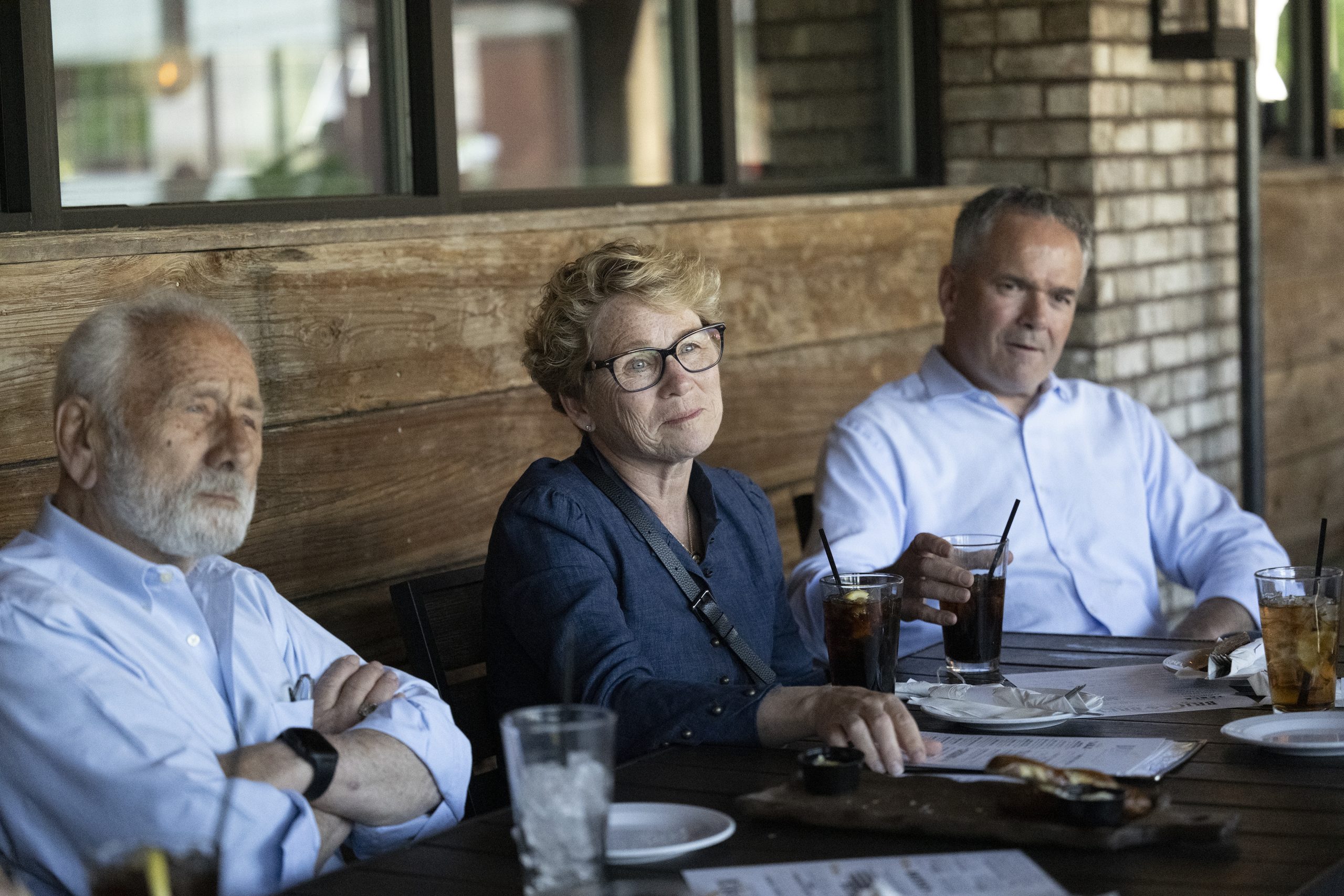
U.S. Rep. Chrissy Houlahan (D., Pa.) sits between her father, Andy Jampoler, and her husband, Bart Houlahan, at Brick & Brew in Malvern. Houlahan’s parents recently moved in with her. Jose F. Moreno / Staff Photographer
HARRISBURG — Pennsylvania’s top legislative leaders and Gov. Josh Shapiro have reached a $50.8 billion budget deal, more than a week after a new state budget was due at the start of the fiscal year, according to two sources briefed on the closed-door conversations.
Details of the contents of the overall budget deal were not immediately available on Saturday, as lawmakers are expected to begin reviewing the bills in the coming days and a final budget is expected to reach Shapiro’s desk by early next week. The state Senate was scheduled to advance parts of the budget on Saturday evening, and the House was scheduled to do the same on Sunday afternoon.
Though the deal comes more thana week past due, the agreement on the state budget framework among Pennsylvania’s Democratic-controlled House, Republican-led Senate, and Democratic governor marks an improvement from last year’s nearly five-month budget impasse that required school districts, counties, and social service providers to take out expensive loans or close altogether.
Half of the state Senate and all 203 state representatives are up for reelection this year, and many are eager to approve a state budget and return to their districts to campaign. Many of the more contentious issues before the legislators appear to have been kicked to the General Assembly’s fall legislative session or will resurface in budget talks next year, when lawmakers are not scheduled to face voters. Shapiro, too, is up for reelection this year; his Republican challenger is State Treasurer Stacy Garrity.
Pennsylvania’s budget deal was crafted largely in secret over weeks of closed-door meetings involving top legislative staff and leaders including Shapiro, House Majority Leader Matt Bradford (D., Montgomery), and Senate Majority Leader Joe Pittman (R., Indiana).
The overall budget deal presented to the General Assembly will feature a state spending plan, in addition to some policy changes as part of horse-trading of legislative priorities by top leaders.
One major policy change that appeared to be advancing as part of the overall deal on Saturday evening is a bill to allow local municipalities to pass ordinances placing a moratorium on data center development for no longer than 18 months. That bill, Senate Bill 1345, sponsored by Sen. Jarret Coleman (R., Bucks/Lehigh), was scheduled for a committee vote Saturday evening, when amendments to the bill were possible.
Gov. Josh Shapiro arrives on the state House chamber to make his annual budget proposal in Harrisburg Tuesday, Feb. 3, 2026.Tom Gralish / Staff Photographer
Shapiro hinted that a deal was near on Thursday at a news conference in Altoona, saying, “You’re going to see a lot of activity in the Capitol this weekend.”
“We’ve been working hard, really hard, to bring both sides together, to bring togetherDemocrats and Republicans, and I think you’re going to see a result that benefits the good people of Pennsylvania really soon,” Shapiro added.
It was not immediately clear how legislative leaders and Shapiro agreed to fill the state’sbillion-dollar structural deficit without creating any new revenue streams as part of the 2026-27 fiscal year budget. Even if lawmakers did not increase spending this year — which they are expected to do — the state would need to make up $1.2 billion to balance the budget.
The deal’s 1.4% increase over last year’s $50.1 billion budget does not allow much room for new spending, unless other existing programs have been cut.
In new spending, the deal appeared to include an increase to the state’s funding for public education through its adequacy and tax equity formulas, which were designed by lawmakers in 2024 to close a $4 billion “adequacy gap” following a landmark court ruling that found Pennsylvania was illegally underfunding students in low-income districts.
“If the adequacy number was not agreed to, we wouldn’t be having this conversation,” said State Sen. Vincent Hughes (D., Philadelphia), who is the minority chair of the powerful Senate Appropriations Committee, on Friday evening. “I think the adequacy number will be consistent with what the governor proposed.”
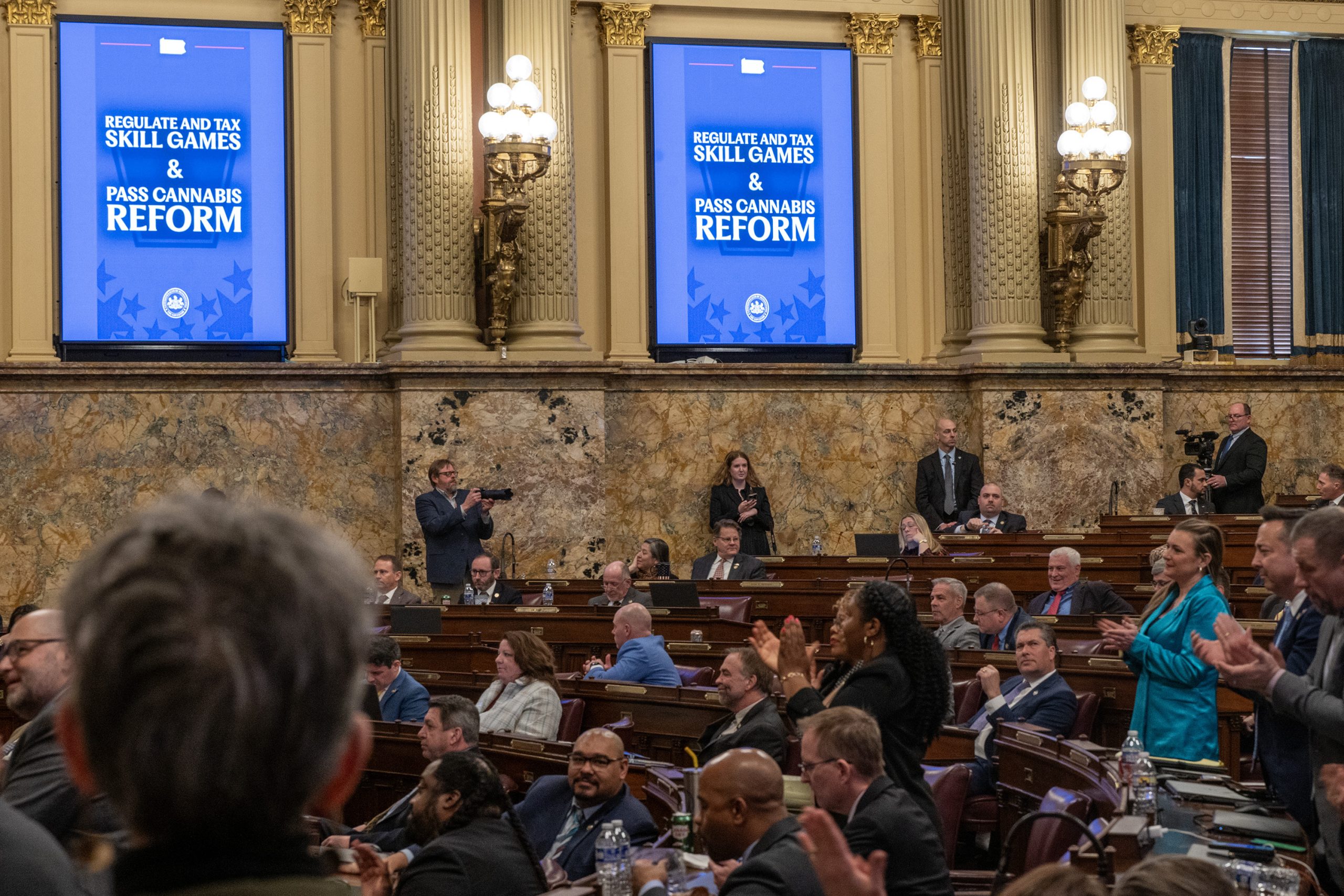
Shapiro proposed a $53.2 billion budget in February, which included a $565 million increase to adequacy funding for public schools. He also included new potential revenue generators from taxing and regulating skill games, legalizing recreational marijuana, and increasing the state’s minimum wage to $15 per hour. None of these potential revenue generators appeared to make it into the final deal.
Screens shows skill games and cannabis regulation and reform as Gov. Josh Shapiro makes his annual budget proposal in the state House chamber in Harrisburg Tuesday, Feb. 3, 2026.Tom Gralish / Staff Photographer
The state is on track to bring in $48.9 billion this year in revenue, according to the Pennsylvania Independent Fiscal Office’s latest projections. Pennsylvania also maintains a $7.7 billion Rainy Day Fund that Senate Republicans have tried to prevent the state from tapping into. It is unclear whether lawmakers will agree to access some of the reserve dollars as many Pennsylvanians face an affordability crisis. Tapping into the Rainy Day Fund requires a two-thirds majority vote by both chambers.
The state budget topped $50 billion for the first time last year and has increased by 25% — approximately $10 billion — over a five-year period.
Pennsylvania Legislative Correspondents’ Association intern Ethan Young contributed to this article.
Philadelphia-area Democrats criticized President Donald Trump’s recent promotion of Freedom Fuel gas stations in Pennsylvania and New Jersey as an effort to fool people about the high price of fuel rather than a long-term solution to the problem.
“This appears to be a PR stunt of some sort, which is designed to distract people from the fact that gas prices have gone up because the president started a war against Iran,” said Democratic U.S. Rep. Mary Gay Scanlon, who represents Delaware County and parts of South Philadelphia.
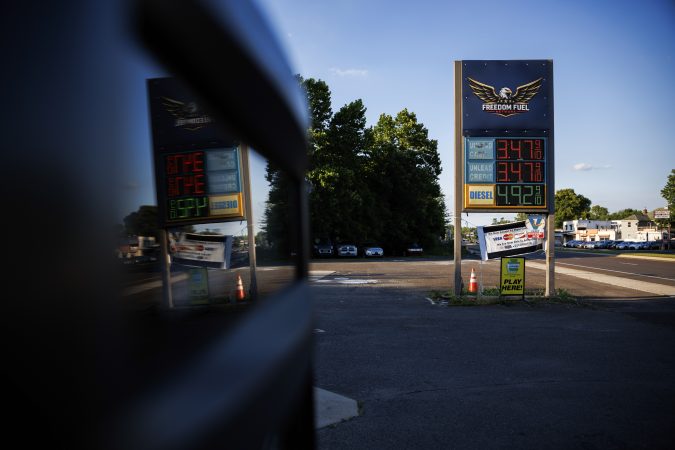
Questions still abound about who is behind the Freedom Fuel Network, which popped up around the region earlier this month with 25 gas stations sporting the branding.
No entity is registered in Pennsylvania or New Jersey with the name, but an application for a trademark was filed in Delaware on July 1, two days before the July 3 launch that was heavily promoted by the White House.
Trump was posting about it on Truth Social ahead of the launch, praising the retailer’s patriotism and promising that gas prices nationally would soon fall after they surged following his decision to attack Iran earlier this year.
“This Retailer is taking the lead, and others should follow. They are doing this because they love the U.S.A. We are proud to celebrate America’s 250th Birthday in the Great Commonwealth of Pennsylvania, the Birthplace of our very special, one-of-a-kind Declaration of Independence, and where I won BIG in the Presidential Election!” Trump said on Truth Social on July 1.
The stations started selling gas at $3.47 a gallon on July 3, with the price a nod to the 47th president, according to the White House. Scanlon said that when she stopped by Friday morning, prices were already going up just seven days later.
“I actually went to one this morning just to get a sense of what was going on,” Scanlon said. ”They may have started with a price of $3.47, but it’s already going up; this one was at $3.57,″ she added, without identifying the location.
U.S. Rep. Brendan Boyle, a Democrat who represents Philadelphia, said these stations are too little, too late for constituents who have been feeling squeezed by gas prices.
“Gas was $2.98 a gallon before Trump’s disastrous Iran War. Prices then jumped 50% — the biggest jump in gas prices in American history. These few discounted gas stations are a band-aid on a gunshot wound,” Boyle said in a statement to The Inquirer.
U.S. Rep. Brendan F. Boyle holds a news conference at a Philadelphia gas station to announce legislation to suspend the federal gas tax whenever the national average price of gasoline exceeds $4.00 per gallon.Jessica Griffin / Staff Photographer
Boyle has been outspoken about gas prices while in office. In April, he announced a bill to suspend the federal gas tax when gas prices exceed $4 per gallon.
The average gas price in Philadelphia as of Saturday was $3.99 per gallon, about 11 cents above the national average, according to AAA’s fuel price tracker.
Gas prices peaked in May but have remained volatile because of the ongoing conflict with Iran. Following U.S. attacks, Iran closed the Strait of Hormuz — an essential trading route — causing gas prices to spike. Recently, the U.S. and Iran resumed attacks, marking the end of a three-week ceasefire.
“In no uncertain terms, the Cease Fire is OVER!” Trump posted on Truth Social on Friday.
U.S. Rep. Dwight Evans, a retiring Philadelphia Democrat, said that ending the war in Iran would be the long-term solution for lowering gas prices.
“As of now, it [the Freedom Fuel Network] doesn’t sound like a long-term solution,” Evans said. “Gas prices are high because Trump has been more focused on vanity projects like a ballroom than on ending his over-four-month illegal war of choice — a war which both houses of Congress have now voted to stop.”
According to the White House, Freedom Fuel is an independent company that the Trump administration does not fund, and it says the company was not buying gas at a discounted price.
But the White House has been heavily promoting the effort. It posted a video to social media Tuesday featuring patrons at Freedom Fuel gas stations crediting Trump.
“I thought gas was more expensive, but it’s not. So thanks Trump for saving me some money!” a man says in the opening of the video, which touts the prices as being 50 cents lower than the Pennsylvania average.
Scanlon said that identifying the people funding the initiative would make clear the motive for the low prices and whether they would be there to stay.
“Someone is making it worthwhile for these independent stations to rebrand themselves and sell at under market rates,” she said. “I mean, they’ve got to be making up that money somehow. So the question just is, who is doing it and why? Although it seems there can be no other reason than to prop up the president’s faltering poll numbers.”