Tag: Donald Trump

  • Freedom Fuel stations across the Philly region offer cheap gas, feature local owners, and raise ethical concerns

    Freedom Fuel stations across the Philly region offer cheap gas, feature local owners, and raise ethical concerns

    Across the Philadelphia region, former Sunoco, Karco, and Gas N Go stations with makeshift Freedom Fuel Network signs have been selling less-expensive gas to drivers for about a week.

    Who is behind the 25 gas stations selling Freedom Fuel in the Philadelphia region, and how they are able to offer gas 40 to 50 cents cheaper than nearby stations, remains unclear.

    The effort has been promoted by both the White House and President Donald Trump, raising ethics concerns from the public and government watchdogs.

    Richard Painter, who served for two years as chief White House ethics lawyer in the George W. Bush administration, said it is within a business owner’s First Amendment right to sell cheap gas, possibly at a loss, to “improve the image of the president and help the country through a national crisis.”

    “The ethical issue is the involvement of the Trump administration,” he said, pointing to federal regulations that set standards of conduct for executive branch employees. “They simply can’t endorse it or have anything to do with it.”

    An entity called “Freedom Fuel Network LLC,” based in Delaware, applied for a trademark on July 1. That same day, Trump promoted the network, saying on his Truth Social account that it was being run by a “very smart retailer.”

    There are no businesses registered in either Pennsylvania or New Jersey under the name Freedom Fuel Network.

    The White House did not respond to multiple requests to identify or provide contact information for the owners. A White House spokesperson would say only that it is a private company that is not purchasing gas at a discount or receiving government money.

    Anna Vishev, the attorney who filed the Freedom Fuel Network trademark application, said she would pass inquiries along to her client, but The Inquirer never heard back.

    A Freedom Fuel-branded station on Rt. 73 in Marlton, N.J.Lacey Latch / staff

    Due to tight profit margins, stations that sell cheaper gas usually focus on making up the difference in other ways, such as convenience stores and car washes, according to Jeff Lenard, spokesperson for the National Association of Convenience Stores, a trade organization representing retail fuel outlets.

    That does not appear to be the case at many of the Freedom Fuel Network stores Inquirer reporters visited in recent days. One location in Brookhaven, Delaware County, had an inoperable convenience store. Several were very small, appeared somewhat rundown, and offered a very limited selection of products.

    “It’s difficult to see how these stations are making money,” Lenard said. “Those types of stations tend to be more dependent on gas margins.”

    Lenard said it is possible the Freedom Fuel Network branding is a temporary promotion, which is not unheard of in the fuel industry. T-Mobile partnered with Shell last month to offer $1.99-a-gallon gas at stations in Los Angeles, Houston, and Chicago as part of an anniversary promotion.

    Some Freedom Fuel stations were already raising gas prices by the end of the week, including in Bensalem, where gas was $3.57 a gallon Friday.

    While questions remain about the owners and structure of the Freedom Fuel Network, Lenard said gasoline is a highly regulated industry and drivers should not worry about purchasing fuel from lesser-known brands.

    “There shouldn’t be an issue with gas quality,” Lenard said. “When fuel comes out of the refinery, there’s nothing that says it’s BP gas, it’s Wawa gas. … It’s all blended together.”

    A small network of local owners and past issues with stations
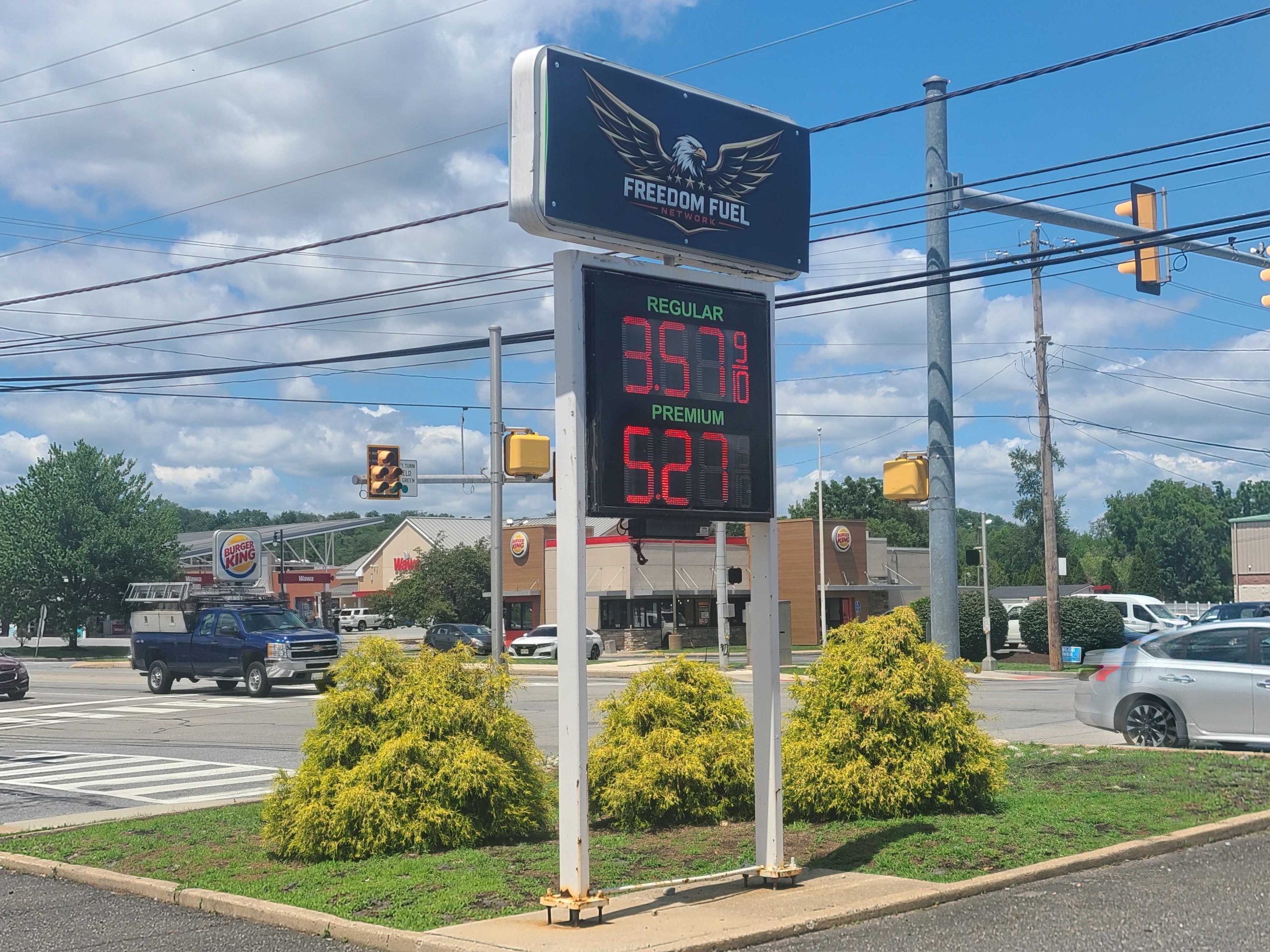
    Freedom Fuel Network branding is draped over a Gas n’ Go sign at a station on Edgmont Avenue in Brookhaven.Rob Tornoe / staff

    Inquirer reporters reached out to the parcel owners, lessees, and LLCs connected to at least 19 of the gas stations. Most calls and messages went unanswered, and, on two occasions, reporters were directed to the Freedom Fuel website by LLC affiliates. In-person queries were also unsuccessful, with store attendants saying they were unaware of the origins of the branding change or unauthorized to talk about the matter.

    The opaqueness behind a private operation receiving White House promotion has drawn considerable scrutiny online and even an in-person protester at a Montgomery County location.

    “Who is paying for this[?]” read a man’s sign last week.

    By the end of the week, Freedom Fuel offered limited remarks through the venture’s website, saying it had “answered President Trump’s call to action to lower prices at the pump.” It went on to dismiss unspecified “misinformation and baseless speculation circulating.”

    “As a result of lowering prices, 25 gas stations have experienced explosive growth — an average volume increase of more than 50 percent, with several locations surging over 100 percent,” said the message.

    The company did not expand on how the operation came to be or how the discounts work, but at least two clusters of network participants have shared ownership ties, with one of the clusters promoting its participation on social media.

    A local Karco Gas Instagram account highlighted the Freedom Fuel transformation in its stories — at least two of its locations in Philadelphia and one in Bensalem are part of the network.

    The Freedom Fuel site in Bensalem has ties to Cherry Hill developer Shamikh Kazmi, who is listed as president of Diwan Petrol Inc. The business was ensnared in a lengthy trademark dispute with BP America Inc. and BP Products North America Inc. in 2021.

    After the business failed to fully comply with a judge’s order to remove BP signage, four deputies with the U.S. Marshals Service seized remaining brand signs in June 2022, according to court documents.

    Kazmi could not be reached for comment, but in February announced plans to expand his Yum Grills venture to 15 locations in the Philadelphia region, including a gas station in Eagleville, Montgomery County, that is also part of the Freedom Fuel Network.

    At least five other network locations are run by members of a family that operates gas stations in the region under various LLCs, including Syan I Inc., Syan Investment LLC, and Fernwood Realty Co.

    The only other time one of the five locations across Delaware County and Philadelphia drew media attention was in 2021, when the Gas N Go in Brookhaven experienced an unknown problem with fuel delivery. The subsequent oil spill resulted in dozens of dead frogs, turtles, fish, and a fox along a nearby waterway.

    Another Freedom Fuel station, this one in the Nicetown section of Philadelphia, had been embroiled in a trademark dispute that ended with a judge ordering the removal of all Phillips 66 branding and a $20,000 judgment against KRSM Inc. and site owner Riar HR LLC in May.

    An attorney for the defendants was not listed on the docket and calls to the owner of Riar HR LLC went unreturned.

    How promotions have changed during the Trump era

    Painter, who is now a law professor at the University of Minnesota, noted that stringent ethics rules have been in place since the Watergate scandal that limit using a public office to endorse any companies or organizations, whether they are private or nonprofits.

    That is why Painter was vocal about concerns regarding the creation of the Penn Biden Center for Diplomacy and Global Engagement in 2017. When Joe Biden became president-elect, he encouraged his transition team to have the University of Pennsylvania drop the name to avoid the appearance of impropriety when the university raised funds for the center. That never happened.

    Still, Trump and his administrations have taken very different approach to these ethics rules since his first term in office.

    “We’ve seen multiple instances in which this president has chosen to endorse, in his official capacity, private companies and private organizations,” Painter said. “This is something I would have absolutely insisted not happen under the Bush administration.”

    Earlier this term, Trump turned the White House lawn into a Tesla showroom, and just last week, Dell Technologies shares soared after he promoted the company in the Oval Office.

    For now, questions about Freedom Fuel’s structure and ties to the Trump administration continue to spark anger, skepticism, and curiosity.

    “Customers are asking. We tell them to visit the website,” said Mike R., a manager of a few Freedom Fuel stations in Delaware County who declined to be fully identified, citing concern over his privacy. ”Frankly, I have no information.”

    Meanwhile, Ankit Modi, the owner of a Sunoco franchise in Bensalem for the last 15 years, said the low prices of a Freedom Fuel station next door were hurting his business.

    “People see the lower price and just go there,” Modi said. “I don’t know how it works.”

    Modi said the Freedom Fuel signs looked temporary, and he had expected the station to revert to Karco following the Fourth of July. That has not happened. On Friday, Freedom Fuel was selling gas for 43 cents a gallon less than Modi’s Sunoco.

    “I’m making just eight to 10 cents in profit [per gallon], so how are they able to sell for less without government help?” Modi said. “It’s shady and unheard of.”

    Back in North Philadelphia, the lack of information was not stopping drivers from pulling in and filling up their tanks.

    “It doesn’t matter to me where it comes from if I see a good price,” said Jorge Mejia, who pumped gas into his car and had no clue what made the gas cheap. “I just hope it’s good.”
  • Democrat John Fetterman launches cross-aisle fundraising committee with Republican Dave McCormick

    Democrat John Fetterman launches cross-aisle fundraising committee with Republican Dave McCormick

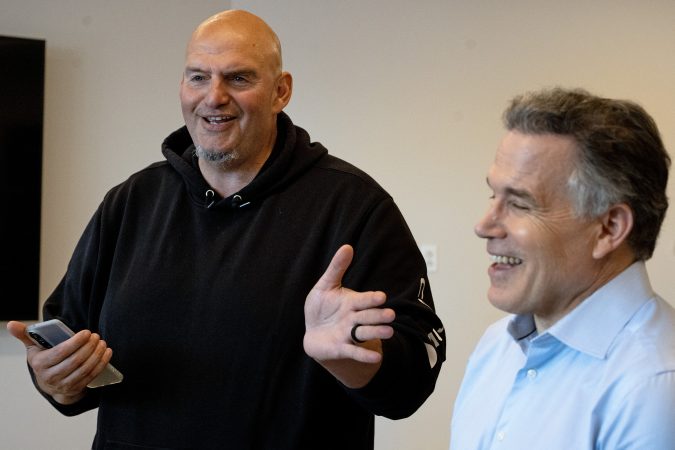
    In a rare move, Pennsylvania’s two senators have created a joint fundraising committee that would allow them to split money from donors who want to give to both of their campaigns, despite being members of different parties.

    Democratic Sen. John Fetterman’s decision to join Republican Sen. Dave McCormick in the fundraising collaboration comes as he has repeatedly dismissed speculation that he could switch parties after siding with Republicans on several key votes.

    As polls have shown him losing support among Democratic voters, he has also reported raising significantly fewer campaign funds on his own and has not said if he will run for a second term in 2028.

    Common Ground PA, which filed paperwork with the Federal Election Commission Monday, lists four beneficiaries for the joint fund: Fetterman for PA; Friends of Dave McCormick; Every Vote PAC, which lists Fetterman as the PAC sponsor; and Pennsylvania Honor, which lists McCormick as the leadership PAC sponsor.

    A joint fundraising committee, first enabled by the FEC in 1977, allows two or more candidates, PACs, or party committees to coordinate fundraising efforts to share donations and expenses.

    A donor can abide by federal contribution limits while still giving one check that can be allocated to multiple campaigns. But since these groups typically involve party committees, it is rare for these joint ventures to be bipartisan.

    Katie Terry, who is listed as the treasurer for Team McCormick, is also the treasurer for Common Ground PA. She did not respond to a request from The Inquirer for comment.

    Mike DeVanney, a spokesperson for McCormick’s campaign, called the PAC a donor-driven effort.

    “This group of donors value the collaboration exhibited by Senators McCormick and Fetterman for Pennsylvania and want to support both of them,” he said in a statement.

    The joint fundraising committee was first reported by Politico.

    The two senators have spoken often about their cross-aisle friendship since McCormick took office in 2025, and they have repeatedly teamed up in recent months.

    They appeared alongside each other last week in Philadelphia to promote Trump Accounts, the new federally backed savings accounts for kids that became law with President Donald Trump’s signature One Big Beautiful Bill Act.

    And they joined forces to fill Pennsylvania’s empty spot at the Great American State Fair in Washington after Gov. Josh Shapiro said state officials could not find a Pennsylvania business to sponsor the state’s booth.

    Fetterman has routinely criticized his own party, feuding with progressives on a range of issues, including Israel and immigration enforcement.

    In a fundraising email sent in May, McCormick referred to Fetterman as one of his “closest working partners,” a realization that he said surprised even him.

    In that drive, which asked donors to support his efforts to “work across the aisle to get results for the people of Pennsylvania,” McCormick praised his Democratic colleague.

    “Senator John Fetterman and I couldn’t look more different. We don’t agree on everything. But we both grew up in Pennsylvania. We both know what it means to fight for working families who feel like Washington forgot them. And we both refuse to let politics get in the way of getting things done,” he wrote.

    McCormick told reporters in May his friendship with Fetterman is the most frequent topic of conversation he hears, and he gets positive feedback from it.

    “We look for ways to work together. I think people want that,” he said.

    Individuals could donate to Fetterman or McCormick separately. But joint fundraising committees, which are used widely by both parties, pull in large checks from donors and split the money across multiple committees using a formula that adheres to federal contribution limits, according to an analysis from the watchdog group OpenSecrets.

    Typically, though, campaigns jointly fundraise with their party.

    Common Ground PA is among the few coordinated efforts across the aisle. A former PAC, the Problem Solvers Patriots, raised funds for members of both parties in previous election cycles.

    Fetterman, who polls poorly with Pennsylvania Democrats, is likely to face a primary challenge if he runs for another term.

    Former U.S. Rep. Conor Lamb, who lost the Senate primary to Fetterman in 2022 and has not ruled out a run in 2028, blasted the move online as “Another betrayal from Fetterman.”

    U.S. Rep. Chris Deluzio, a Western Pennsylvania Democrat who says he has received “a lot of encouragement” to run for Fetterman’s seat, also questioned the creation of the PAC.

    “Helping the Republicans raise money to spend against Democrats is bad, right?” Deluzio said on X.

    However, Fetterman has been notching strong approval from Republicans, and Pennsylvania Republicans along with Trump himself said he could receive GOP support if he switched parties.

    Fetterman’s Republican support has also been growing at the bank with contributions from prominent GOP donors, particularly through his other joint fundraising committee and leadership PAC. At the same time, his fundraising has plummeted overall, raising less than half his previous annual totals in 2025.

    Staff writers Gillian McGoldrick and Sam Janesch contributed to this article.

  • ICE killed Lorenzo Salgado Araujo. They want you to be apathetic. Don’t be.

    ICE killed Lorenzo Salgado Araujo. They want you to be apathetic. Don’t be.

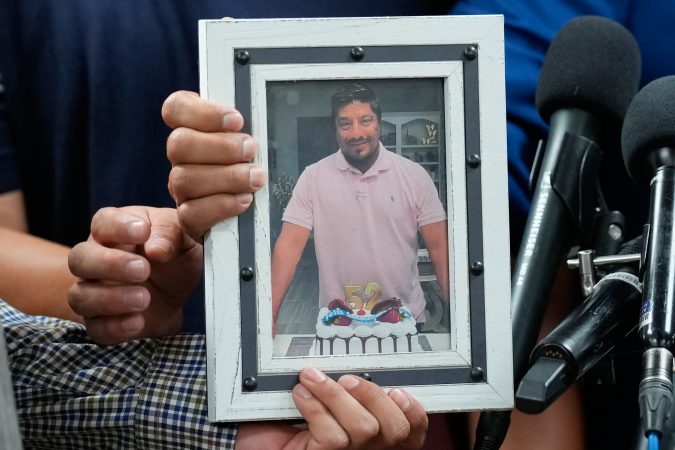
    Lorenzo Salgado Araujo woke up at 5 a.m. Tuesday and started his day like almost every other one for the last 35 years since he came to Houston from Mexico and built his own American dream brick by brick — sending his three sons to top universities on the foundation he’d constructed through years of backbreaking labor.

    His wife also got up to make him a hearty meal before he put on his work boots, fired up his van, and picked up three coworkers in Houston’s heavily Latino East End to build new homes on the city’s outskirts. But it proved to be Salgado’s last drive.

    Just a short time later, the 52-year-old Salgado was lying face down outside of his van on a city sidewalk, surrounded by agents from U.S. Immigration and Customs Enforcement as blood poured from a bullet wound on the right side of his stomach. He was recorded screaming in pain: “Help me! They shot me! … ¡Me están matando!”

    Translation: “They are killing me!”

    He died a short time later in a nearby hospital. ICE said the fatal shooting occurred after officers tried to arrest Salgado in what it called “a targeted enforcement operation” — even though Salgado apparently had no criminal record and for more than a year had been steadily making progress toward securing a work permit that would resolve his immigration status.

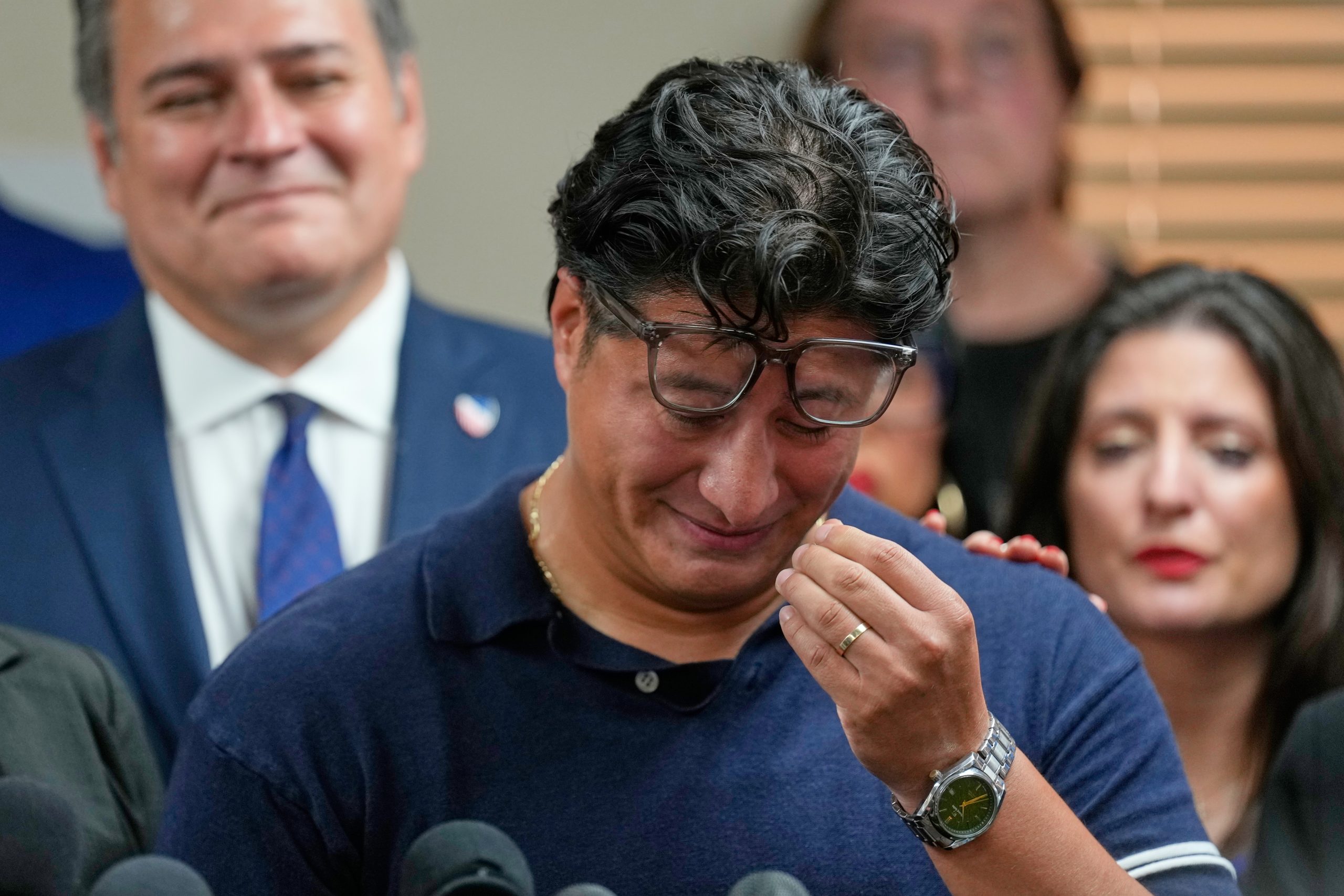
    “We dotted every ‘i,’ crossed every ‘t,’ filled every document, attended every appointment,” his tearful son, 29-year-old teacher Ronaldo Salgado, said in a news conference on Wednesday. Afterward, the younger Salgado told the Bulwark: “I love our dad; he worked hard. He always told us that we needed to do well in school so we don’t end up like him in the sun.”

    Ronaldo Salgado, son of Lorenzo Salgado Araujo, wipes away tears while speaking during a news conference Wednesday in Houston. David J. Phillip

    The killing of Salgado — family man, essential worker, and American dreamer who was doing everything the right way after joining the 1990s mass migration of undocumented Mexicans — is a crime against humanity that makes anyone who still has a functioning moral compass want to scream in outrage.

    Still, what happened after Salgado was gunned down is deeply troubling in a different way. America seemed to mostly shrug at a killing no less senseless than this winter’s Minneapolis ICE fatal shootings of Renee Good and Alex Pretti, let alone other law enforcement murders like George Floyd in 2020, which sparked days of nationwide protest.

    The implosion of now ex-Maine Democratic Senate candidate Graham Platner or Donald Trump’s inane prattle at a NATO summit took up most of the hour on cable-TV news, with reporting on yet another ICE killing squeezed in at the end. A fascist regime cutting down our law-abiding neighbors in the streets is becoming background noise.

    Just how they want it.

    To be sure, there are differences between what happened Tuesday in Texas and the Minneapolis killings that grabbed so much attention six months ago. A large activist community in the Twin Cities was out in the streets at the time of the Good and Pretti shootings, with whistles and cell phones, producing a flood of video evidence that exposed ICE’s lies and inspired massive demonstrations.

    In contrast, Salgado was killed in a low-income neighborhood, and while there is video of the wounded laborer on the ground, there’s not yet been definitive footage revealing how or why he was shot. That doesn’t alleviate the nagging concern that the media and some corners of the public and the body politic care more when the victims are white U.S. citizens — which, if true, is morally unconscionable.

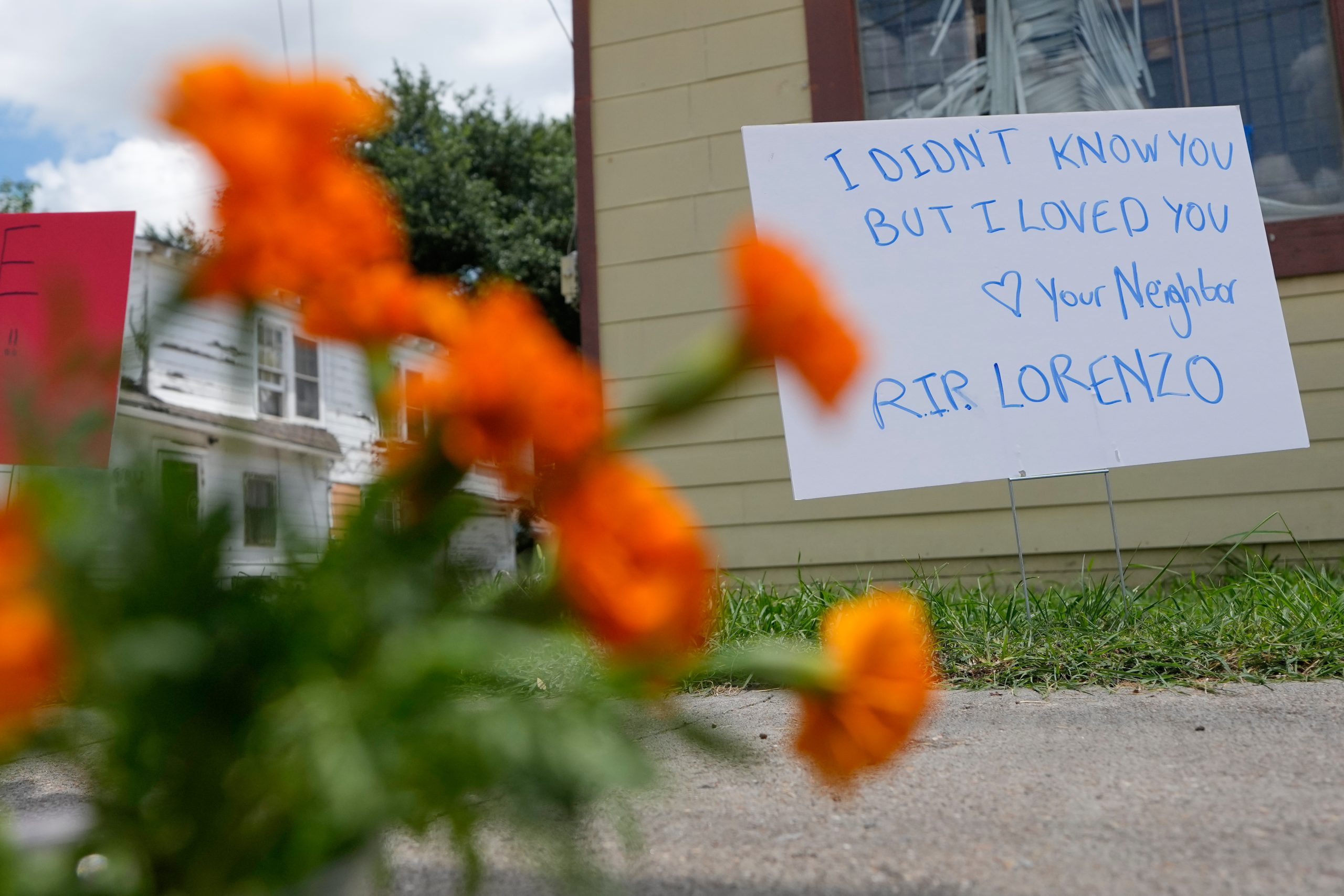
    A makeshift memorial for Lorenzo Salgado Araujo, who was shot and killed by an ICE officer Tuesday, is shown Wednesday in Houston. David J. Phillip

    Americans should be alarmed at the bigger picture that’s slowly unfolding before us. After briefly pressing the pause button in the furor over the Good and Pretti killings — pulling back from its federal assault on Minnesota, firing the flamboyant and infuriating Greg Bovino and Kristi Noem, and drastically scaling back its plan for warehouse concentration camps — ICE is back, and more dangerous than ever.

    After an era of waving a red flag before an activated, engaged, and angry citizenry it didn’t see coming, by naming operations like the “Catahoula Crunch” or “Charlotte’s Web,” and with Bovino mugging for the TV cameras, ICE has resumed working toward its inhumane target of one million deportations per year, but with a much lower profile.

    There are thousands of new immigration agents on the streets, fueled by Congress giving two massive funding infusions totaling about $240 billion, and with Homeland Security and ICE under new management, they are hoping to terrorize immigrant communities without generating headlines or protests. “ICE is making record arrests right now,” Trump’s immigration czar, Tom Homan, told Fox News. “We turned the heat up …”

    The New York Times reported last week that with no press releases or hoopla, daily immigration arrests had doubled over a five-day period to a total of roughly 10,000, or 2,000 per day, with immigrants arrested during required government check-ins, but also during traffic stops like the one in which Salgado was killed.

    This is a human rights nightmare in the making. The stepped-up arrests are all but certain to lead to more dangerous and potentially fatal encounters like the one that occurred on Houston’s Canal Street, but the other impacts are equally pernicious.

    Fear levels in big-city neighborhoods with large immigrant communities are spiking yet again — keeping countless kids home from school and essential workers off the job, crimping an already strained economy. The Trump regime’s squalid gulag archipelago of immigration detention centers — whose crisis of overcrowding had eased slightly with the spring enforcement slowdown — is seeing a surge again, and that will also lead to catastrophe.

    Detention deaths are soaring to record levels — more than 50 since Trump returned to office in January 2025. We are learning troubling details, for example, about the March death of an Afghan national who came to the United States after working with U.S. Special Forces and who died after just one day in ICE custody. Relatives of Mohammad Nazeer Paktiawal, 41, said he was not allowed to bring his asthma inhaler into detention; officials say he died of an “adverse drug reaction” that brought on an attack.

    In Houston, there’s no evidence to support ICE’s initial claim that Salgado was resisting arrest, but — given what we are learning about the horrors of detention — it’s not surprising that immigrants facing an arrest are terrified at what might happen next. Meanwhile, ICE and other agencies are going to extreme lengths to avoid accountability.

    In California, ICE — overflowing with our tax dollars — is spending an astronomical $1.5 billion to buy two large privately run immigration prisons from the corporation CoreCivic, for the purpose of preventing state and local inspectors from monitoring what happens there. WIRED recently reported that ICE’s internal watchdog agency is focusing its attention not on agent misconduct but on tracking down outside critics.

    What are they trying to hide?

    In the killing of Salgado, we don’t know the answer — yet. ICE claims Salgado, whom it dehumanized as an “illegal alien,” “weaponized his vehicle” and tried to run over the agent who was arresting him, and that the agent then fired the fatal bullet.

    We don’t know if there’s any truth here. But what we do know is that in every similar situation during the Trump regime — including Good and Pretti and others like Chicago nonfatal shooting victim Marimar Martinez — the initial ICE version of what happened proved to be a lie, and often a brazen one. It takes a willing moral blindness to automatically accept ICE’s story about what happened to Salgado.

    And yet, we are seeing that not only from the local FBI — which is not investigating the officer’s action, but the alleged crime of resisting arrest — but also from Houston Mayor John Whitmire, who said he trusts the federal government to do a thorough investigation, as if he’d been living in a cave these last 15 months.

    In their anguished news conference on Wednesday, family members and local Democratic officials called for the release of any ICE body-cam footage and an independent investigation into what really went down in Houston’s Magnolia Park section.

    They need our help, though. ICE’s new summer assault on immigrant communities, and its ability to get away with its many crimes, is counting on an exhausted or apathetic American public to not demand action as so many of us did with Pretti or Good or Floyd.

    Please say his name — Lorenzo Salgado Araujo — and take to the streets and demand justice. His death is just as deserving of our time and our moral outrage, if not more so.

    On Wednesday night, about 1,000 Houstonians came out to keep that flickering flame alive.

    “This is the exact spot that Lorenzo took his final breath,” Cesar Espinosa, executive director of the immigrant rights group FIEL Houston, told the protest marchers. “And in the spirit of solidarity, I don’t know about you, but I say, if they come for one of us, they come for all of us.”

  • Graham Platner and the Democrats’ war on expertise

    Graham Platner and the Democrats’ war on expertise

    Let’s suppose you’re the kind of Democrat who — like me — derides Republicans for declaring war on expertise. From vaccines and climate change to tariffs and foreign aid, we say, the GOP has discarded professional knowledge in its quest for power.

    Why, then, do we support candidates who lack expertise — and experience — themselves?

    That’s the question we should be asking about Graham Platner, whose campaign for the Senate is on the ropes following a former girlfriend’s claim that he had sexually assaulted her. Platner has never held elected office; his only political experience was a stint on his town planning board.

    How can we be OK with that? If we value expertise in government, we should want leaders who have demonstrated it. But Democratic voters seem to be moving in the opposite direction.

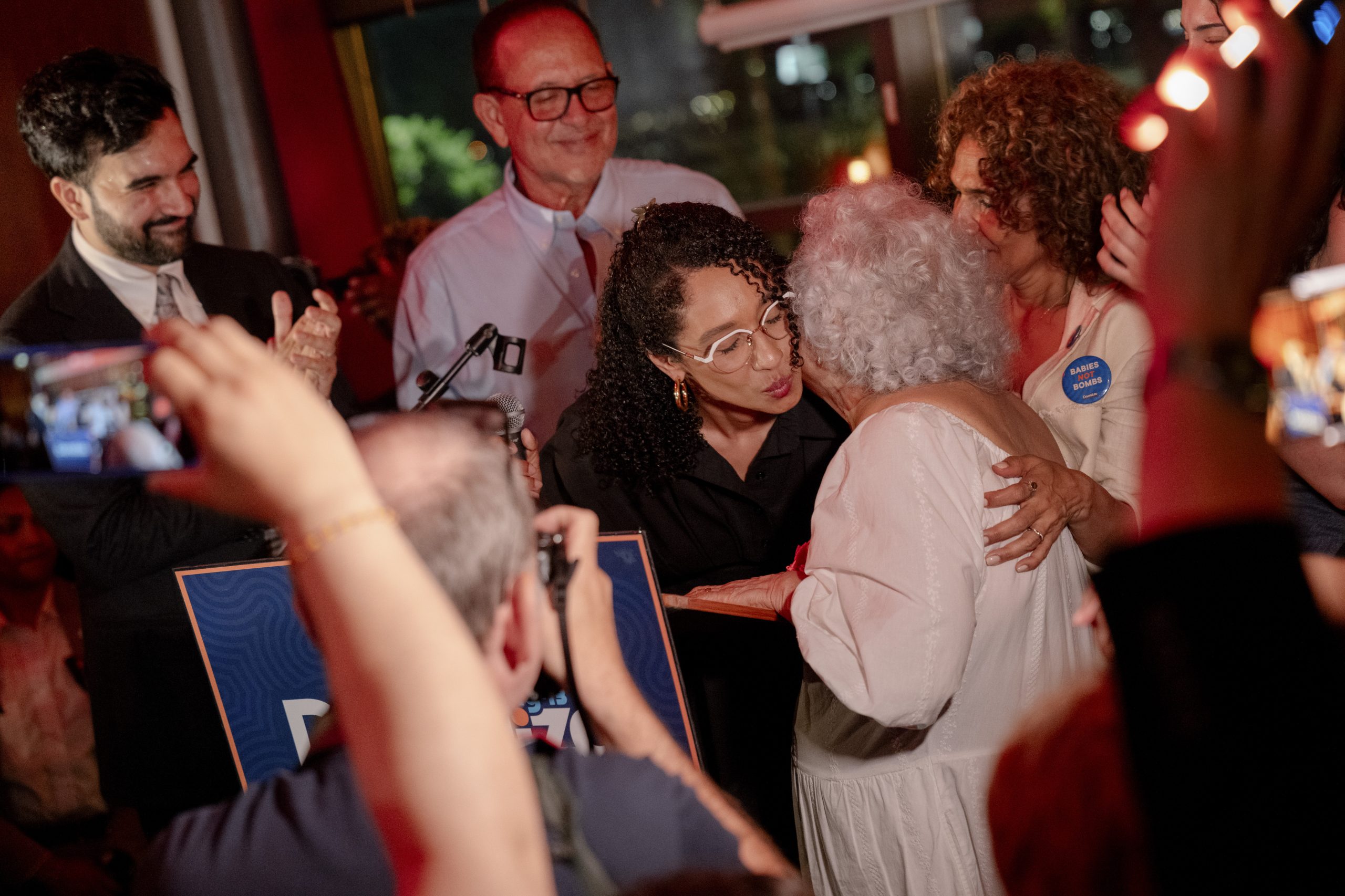
    In the recent New York primary, they chose Darializa Avila Chevalier to replace five-term, 71-year-old Rep. Adriano Espaillat. The first Dominican American — and the first formerly undocumented immigrant — to be elected to Congress, Espaillat helped win measures protecting delivery drivers and home-based childcare providers. But he lost to a 32-year-old graduate student who has zero political experience.

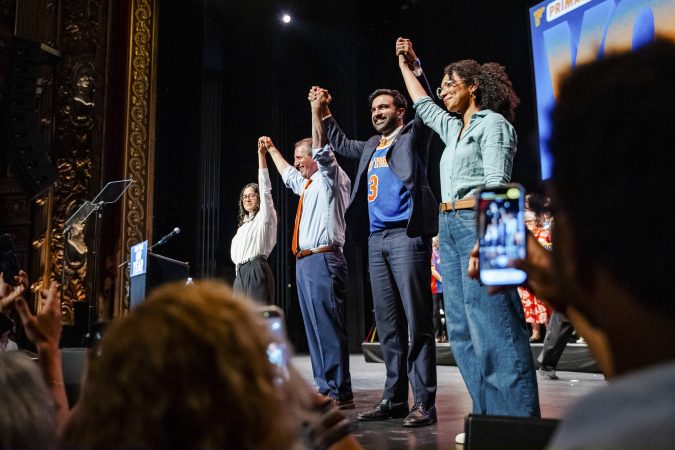
    Darializa Avila Chevalier (center), alongside New York Mayor Zohran Mamdani (left), greets supporters after winning the Democratic nomination for New York’s 13th Congressional District.LEXI PARRA

    Neither does Melat Kiros, 29, who unseated 15-term Rep. Diana DeGette, 68, in the Democratic primary in Colorado. She has worked as a lawyer and — more recently — as a barista. But when it comes to politics, she is a complete novice.

    Then there’s Platner. A combat veteran and oyster farmer, he ran as an aw-shucks common man. That meant eschewing what he called “the establishment,” including experienced political consultants and pollsters.

    But guess what? It turns out experience matters. The young Democratic operative who recruited Platner to run for Senate bypassed the standard background check, which usually takes a few weeks. He opted instead for a three-day “investigation” by a firm that didn’t even bother to interview Platner or solicit a questionnaire from him.

    To its credit, the firm flagged some of Platner’s controversial Reddit posts. But a more thorough — and, yes, professional — background check would surely have uncovered his “unsettling” behavior around women, which former girlfriend Jenny Racicot described to reporters last month.

    And earlier this week, Racicot said Platner had shown up drunk at her house — after she asked him to stay away — and forcibly had sex with her. Platner denied the charge, but he said he was “mindful of the political reality it would inflict” and that he was taking time to “reflect” on how to proceed.

    Leading Democrats — including Sens. Elizabeth Warren and Bernie Sanders — called on Platner to quit the race, and I agree with them. But I also think the party should reflect on why we continue to elevate candidates who lack any real political experience.

    To defenders of these outsiders, their inexperience is a selling point. If you want to challenge the establishment, the argument goes, you need people who aren’t tainted by it — which was a major sentiment behind then-29-year-old Alexandria Ocasio-Cortez’s upset in New York’s 14th Congressional District in 2018. Ever since, some have argued, that’s the only way to get progressives into power.

    Nonsense. Here in Philadelphia, Chris Rabb scored a stunning victory in the May primary race to replace Rep. Dwight Evans. Like Chevalier and Kiros, Rabb calls himself a democratic socialist. But he also has significant experience in government.

    Jonathan Zimmerman wonders how voters can be OK with supporting Graham Platner, a Senate candidate who has never held elected office.JORDAN GALE

    Rabb served for five terms in the Pennsylvania House of Representatives, where he sponsored bills to repeal the death penalty and to promote restorative justice in criminal sentencing. He knows his way around Washington, too. Earlier in his career, he worked as an aide to Carol Moseley Braun, the first African American woman in the U.S. Senate.

    Whatever you think of Rabb’s politics, he is qualified for the job. And we should care about that. Just like we shouldn’t make a housing official the director of national intelligence, we shouldn’t make an oysterman a member of Congress. To serve effectively in government — like any other professional role — you need knowledge and experience.

    And if you think otherwise, just look at the guy in the White House. America elected 44 presidents before Donald Trump. Forty-one of them had held prior political office; the other three (Zachary Taylor, Ulysses S. Grant, and Dwight D. Eisenhower) were victorious U.S. war generals.

    By contrast, Trump was a failed real estate baron and a successful reality TV figure. His two presidencies have been monuments to incompetence because he doesn’t believe in expertise. Or in anything, really, except himself. Remember “I alone can fix it”? He didn’t, and he won’t.

    Experts don’t know everything, of course, and they can be wrong (see: COVID-19 lockdowns). But they do know more than the rest of us about what they do. In choosing candidates like Graham Platner, Democrats turned their backs on that principle. Let’s hope they rediscover it before it’s too late.

    Jonathan Zimmerman teaches education and history at the University of Pennsylvania. He is the author of “Schooling Citizens: How Education Can Save Democracy,” which will be published next spring by American Philosophical Society Press.

  • The Supreme Court freed college athletes to earn. Collective bargaining is the next step.

    The Supreme Court freed college athletes to earn. Collective bargaining is the next step.

    It is past time for Division I colleges and universities to recognize that their student-athletes deserve both the right to bargain collectively and recognition that they are employees because of the compensation their institutions provide to them and the control those institutions have over them.

    A deluge of media coverage has been aimed at other issues in big-time college sports, particularly football and basketball, but too little attention has been given to what should be center-stage — how student-athletes should be fairly treated by the institutions that benefit from their athletic prowess.

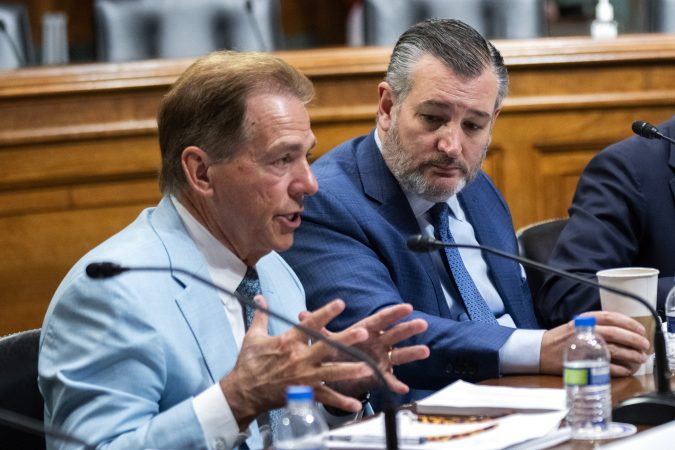
    The Senate Commerce Committee recently held a hearing on the Protect College Sports Act of 2026, sponsored by Sens. Ted Cruz (R., Texas) and Maria Cantwell (D., Wash.), to “restore order” to college sports. This 111-page legislative effort is the latest in a series of approximately 40 bills aimed at reversing judicial rulings that oblige universities to share financial gains with their players.

    Like their legislative predecessors, the 2026 bill limits or ignores existing player rights and immunizes universities from antitrust liability resulting from player-initiated litigation and substitutes Congress’ judgment for the courts, players, and universities.

    Thus, the 2026 bill restricts the ability of players to transfer through a “portal” from one college to another and limits player eligibility to five years beyond the day of high school graduation. The bill would preclude awarding antitrust damages to players who seek to increase their mobility and earnings. It would also preempt state laws guaranteeing players compensation for their names, images, and likenesses used, for instance, on video games and athletic clothing (this has come to be called NIL money).

    Until the last decade, the unchallenged position of the National Collegiate Athletic Association was that all college players are amateurs entitled to no more than athletic scholarships and frequently inadequate reimbursement for college expenses. Post-World War II football and basketball were dominated by the Southeastern Conference and the Big Ten, and both were big businesses.

    Notwithstanding this reality, the NCAA maintained that the players were amateurs who could not be paid until the U.S. Supreme Court in 2021 ruled that the NCAA and its member campuses were liable for treble damages when they conspired to deny the players “educational” compensation beyond athletic scholarships and reimbursements.

    Universities became involved in class-actions brought by their players about player transfers, eligibility, and related issues following that Supreme Court ruling. The ruling recognized that the universities have always treated athletes differently from other students, sometimes providing them with preferred admissions as well as under-the-table monies and other benefits, frequently in conjunction with wealthy alumni and “boosters.”

    With California leading the way, many states enacted so-called NIL laws that allow players to be compensated for use of their names, images, and likenesses.

    But the NCAA continued to insist the players were amateurs. As a result, outside “booster” groups or “collectives” were created to provide business deals to attract or retain college athletes from a source other than the universities.

    Meanwhile, institutions of higher learning went to war to attract coaches with multimillion-dollar salaries, often exceeding those of any other employee, and — among state universities — any other state employee, including governors.

    In the wake of these developments, an immediate response was the negotiation of financially lucrative media deals by the universities and a realignment of college conferences.

    Stanford University, for example, left the Pac-12 Conference to join the Atlantic Coast Conference, requiring all its varsity athletes to travel regularly across the country, increasing the separation from their classrooms.

    Further, NIL procedures have become a kind of Wild West, sometimes composed of shadowy characters and “agents” who operate without any regulation as is provided in the professional leagues.

    Earlier this year, President Donald Trump convened a meeting of business and university officials in connection with a new executive order to preempt state regulation. The 2026 Cruz-Cantwell bill is the most recent response. It consigns players to minority representation on an athletic “governing board” or “rulemaking committee.”

    Deeply troubling, it avoids even a mention of collective bargaining or employee status for the players. The current National Labor Relations Board is unlikely to address these issues effectively. And this Congress is unlikely to act on the Cruz-Cantwell bill.

    Some, we realize, claim we should go back to an earlier era when money was not center stage in every aspect of Division I college sports. But it is too late to return that genie to its bottle.

    Rather than wait for voluntary recognition of the organizing power of college players, or for state legislatures to take action, Congress should amend the National Labor Relations Act to allow student-athletes to exercise their collective bargaining rights.

    This step by a new Congress in 2027 could provide much-needed protections for college athletes in terms of adequate compensation, health and safety protections, as well as a reasonable measure of player mobility fashioned by both students and universities seeking a balance between freedom and a disruptive revolving door.

    After all, the most appropriate forum for resolving the complex matters around modern-day college athletics isn’t through one-off legislation or the occasional court ruling, but rather at the collective bargaining table.

    Thomas Ehrlich is the president emeritus of Indiana University, former provost of the University of Pennsylvania, and former dean of Stanford Law School. Currently, he is an adjunct professor at the Stanford University Graduate School of Education. William B. Gould IV is the Charles A. Beardsley Professor of Law, emeritus, at Stanford Law School. He is a member of the National Academy of Arbitrators and former chairman of both the National Labor Relations Board and the California Agricultural Labor Relations Board.

  • Climate denial is what history will remember about July 4, 2026 | Will Bunch Newsletter

    Over the last decade, I’ve grown used to waking up before dawn and writing about a soul-crushing defeat from the night before. Usually it’s on a Wednesday, but somehow Donald Trump is always involved. Monday’s 4-1 demolition of the U.S. men’s national soccer team by Belgium pretty much confirmed that I won’t live to see Americans win the World Cup in my lifetime, so it’s time for acceptance. But these last three weeks have been a blast, and the party isn’t over. Sometimes the tritest words are also the truest: Maybe the real World Cup was the friends we made along the way.

    If someone forwarded you this email, sign up for free here.

    Future generations will remember America’s 250th for its state of denial

    The long-awaited arrival of the 250th birthday of the United States inspired a lot of talk about everything that’s changed since July 4, 1776, especially as “the man on a hobby horse” sinks to the founders’ worst fears about democracy and demagoguery.

    But historians of the future may dwell on another huge difference between the day the ink started drying on the American Declaration of Independence and July 4, 2026.

    The thermometer.

    Thomas Jefferson — his work as chief author of the nation’s founding document wrapped up — bought a new thermometer that morning and recorded the temperature in Philadelphia three times in his diaries that day, including a temperate 1 p.m. reading of 76 degrees.

    Jefferson’s thermometer might not have been up to the task of keeping up with Philadelphia’s climate 250 years later. On Saturday’s Semiquincentennial, temperatures maxed out at 101 degrees — the third straight day that the mercury reached that mark, which had never happened since records began in 1870. But with the fetid, humid air, it felt more like 110 degrees for anyone brave enough to celebrate America’s birthday outside.

    Philly should have seen this train coming. I mean, literally. Two days earlier, officials just outside of Reading, nearly two hours northwest of America’s founding city, plowed ahead with a welcoming party for Union Pacific’s Big Boy No. 4014, the world’s largest operating steam locomotive — even as the railway relic ran an hour late, with some thermometers posting 106 degrees.

    The result was what local officials called “a mass casualty event” — no one died, but rescue teams were summoned from neighboring counties to help revive more than 100 people suffering from heat exhaustion, in desperate need of water or an IV. Some 35 of the would-be train spotters were rushed to the hospital.

    “It was a little bit chaotic,” an EMS director told the local TV station in Reading. “I don’t think anyone anticipated the weather or the volume of crowds.”

    But they should have seen it coming. The Big Boy heat fiasco was almost too spot on as a metaphor for the slow train wreck of climate change, as the locomotive would spur on the Industrial Revolution that then triggered the rise of greenhouse gas pollution. To the extent that anyone out there still listens to scientists, they were quick to say this weekend: We warned you.

    The scientific group World Weather Attribution, which tracks the impact of human-made global warming, said last week’s heat dome over the Eastern Seaboard was indeed a rare event, yet — without the contribution of burning fossil fuels to a warming planet — it “would have been so extreme as to be virtually impossible.”

    Heat waves aren’t new. I was just 7 but still remember the July Fourth week of 1966 — exactly six decades ago — when it also topped 100 degrees. It’s one of the few things I remember from that grade-school time because it was so incredibly rare. Today, “once-in-a-century” heat waves are routine all over the planet. In June and looming again this week, Western Europe — where few homes are air-conditioned — has sweltered under temperatures that climate scientists weren’t expecting until around 2050.

    This suffocating July Fourth could have been — to steal a phrase from the multiplex marquee — America’s “disclosure day,” exposing the truth of a threat to humankind that’s been hiding in plain sight. Instead, it was our “denial day,” led by our planet’s denier-in-chief, Donald Trump, whose 250th birthday card to America only read: “Don’t look up.”

    The denial was immediate, as the president insisted — ignoring the experts who warned that the triple-digit temperatures and intense, gathering thunderstorms might spark a much bigger “mass casualty event” in Washington, D.C. — on going ahead with his bombastic and self-serving speech and a fireworks show that lasted well into the early morning hours of July 5.

    Our modern-day seersucker-wearing mayor of Jaws might as well have told the broiled holiday weekend throng, “But, as you see, it’s a beautiful day, the beaches are open, and people are having a wonderful time” — as ominous John Williams music swelled in the background.

    The denial was also metaphorical to the max — and not just when those predicted storms arrived and panicked MAGA Trump supporters were forced to take refuge at the National Museum of African American History and Culture, the history and culture their movement is so eager to erase.

    In New York Harbor, U.S. Coast Guard vessels forced the storied environmental sloop Clearwater — which took part in the historic Bicentennial tall ships parade back in 1976 — to leave the July 4 Parade of Ships because of two anodyne political banners taped to its sails: “Save the Clean Water Act” and “Indigenous Rights, Racial Justice, Climate Solutions.” Don’t look up, not even at a tall ship.

    Hours later, during the fireworks show, the Brooklyn Bridge caught fire, which had nothing to do with climate change, yet felt like a coded message from the overheated planet nonetheless.

    But maybe we shouldn’t wade too deeply into the metaphors when the worst denial is the all-too-real policy stuff. Every day, some nightmare headline about killer floods or disappearing glaciers is met with some nonsensical action from the U.S. government based on Earth 2, where none of this is happening.

    As the climate-change-intensified heat dome settled in over the Eastern United States, Trump issued pardons for nine people — and you really can’t make this stuff up — who’d been convicted of felony violations of the Clean Air Act by selling or installing devices for diesel trucks that defeated their emissions controls, because polluting our spacious skies is no longer a crime in Trump’s America.

    It cuts much deeper than this. Trump actually chose the July 4 peak of the heat wave to announce a massive cut in federal subsidies for wind and solar projects, a move that was expected under legislation passed last year. This was just one more layer to a sweeping agenda that has massively relaxed pollution regulations and even wasted taxpayer dollars to make sure clean energy projects aren’t built.

    America continues to get a whopping 82% of its energy from polluting fossil fuels, and that’s unlikely to drop over the next 30 months, regardless of how many Trump voters can cheat death on looming “mass casualty events.” But POTUS 47 warned voters he planned to set the world on fire if he returned to the White House.

    What’s harder to understand, frankly, is why the people who should be fighting Trump on climate change are running away from the front lines. Yes, I’m talking about Democratic Party leaders who’ve tossed climate action down the memory hole in the 2026 campaign — either terrified that any mention of climate will undercut their single-minded focus on affordability, or distract from fighting Trump’s brand of autocracy.

    And ditto for newsroom leaders who seem to have decided that environmental journalists are the first people to lay off, not to mention the other world chieftains who ought to be challenging Trump’s destructive policies, but are meeting the moment with a shrug. Even Canada’s center-left prime minister, Mark Carney, is now backing away from the aggressive climate action he once supported, claiming, “It’s too expensive.”

    That’s a lot of malarkey, as the president who just four years ago passed the largest climate action bill in U.S. history might say. Clean energy continues to rise elsewhere in the world because the alternatives, like wind and solar, are ultimately cheaper and also a source of desperately needed job creation. The fossil-fuel-boosted heat wave of July 4, 2026, proved that inaction is a threat not only to our lives and our liberty but also to the pursuit of happiness. It’s hard to celebrate 250 years of American democracy when climate denial is exposing that system as so badly broken.

    Yo, do this!

    • Did I mention the World Cup isn’t over? If you are a true fan of the Beautiful Game, you’ll brush off the quadrennial disappointment of the U.S. men’s team and get excited to watch one of the greatest generations of international soccer superstars we’ve ever seen. One of the more intriguing of the four quarterfinal matchups this weekend will occur when Harry Kane and his English squad face Erling Haaland and his Norwegian upstarts in the Miami heat. The match kicks off at 5 p.m. Saturday on Fox.
    • The new movie scene for the July Fourth holiday was a disappointment, so the heat wave was a perfect opportunity for revisiting the classics of the 1970s and ’80s with the generation that had not been born yet. We went back to the late Rob Reiner’s first great serious film, the coming-of-age saga Stand By Me. It’s hard not to feel nostalgia today for a time when 12-year-olds had to entertain themselves without iPhones and could disappear into the woods overnight, which felt less strange in 1986 when the movie was first released. It felt truly like a faint signal from a lost planet.

    Ask me anything

    Question: Talk about Mitch McConnell’s demise. — Wendy (@wensilver.bsky.social) via Bluesky

    Answer: Well, Wendy, that’s not exactly a question, and while the New York Times is reporting that the Kentucky senator and former majority leader was unconscious and in cardiac arrest when paramedics found him on June 14, his staff insists McConnell is still alive. That hasn’t stopped conspiracy theories that McConnell is on life support until August, when his replacement, named by GOP lawmakers, could avoid a messy November election. I don’t know about that, and I agree that it’s very poor form to speak ill of the dead. So the fact that he’s still alive is an ideal moment to remind everyone that his hijacking of the U.S. Supreme Court and his cowardice during Donald Trump’s second impeachment both started America on the path toward tyranny. So get well soon, senator. You still have a lot to answer for.

    What you’re saying about …

    Last week’s question about whether you are happy or concerned about progressive Democrats doing well in the 2026 primaries brought a mix of interesting responses that aren’t easy to categorize. Most of you want Dems who will fight harder than the current crew. “I have been voting since 1968, always for Democrats, but seldom with enthusiasm,” wrote Stephen Boone. “Finally, in my old age, there are a few decent politicians. I want more AOCs! More Zohran Mamdanis! …” Others felt more cautious. Wrote Thomas Desmond: “I think the progressive candidates are fine in deep blue seats, but may not be a great idea in purple or light-red seats that could prove winnable this year.”

    📮 This week’s question: It may be water under the bridge next week, but Donald Trump’s personal role in overturning the arguably wrongly given red card to U.S. star Folarin Balogun has sparked a heated debate. Was the red card an injustice to be reversed by any means necessary? Or did Trump’s involvement ruin the World Cup? Please email me your answer and put the exact phrase “Trump Balogun” in the subject line.

    Backstory on Trump ruining the World Cup like everything else

    If the big-screen tragedy of the U.S. men’s soccer team’s same-as-it-ever-was Round of 16 exit from the 2026 World Cup on Monday night had a theme song, it should have been John Lennon’s “Instant Karma.” For its first four (mostly) exhilarating matches, the USMNT gave a nation that was desperate for both an escape from relentless bad news — but also a connection to a wider world — the good vibes it desired. It truly felt like the Americans could go further than ever before (in modern times) in the planet’s greatest sporting event. TV ratings soared. Watch parties were packed. A broken land was coming together.

    Then Donald Trump showed up.

    To longtime soccer fans, the red card handed out last Wednesday to the U.S.’s top goal scorer, Folarin Balogun, for stepping (seemingly unintentionally) on the ankle of a Bosnian player during a 2-0 victory — a harsh punishment that meant not only his ejection from the pitch but a suspension for the upcoming Belgium match — was the essence of our love/hate relationship with soccer. It may be a beautiful game, but it’s the ugly calls that we debate for decades. For a non-soccer fan and malignant narcissist like Trump, for whom anything that goes against his desired outcome is proof of the world’s unfairness toward him, the looming loss of America’s star striker was an opportunity to act like the strutting strongman of a personalist dictatorship.

    The Trump White House called in the lawyers, treating soccer like it was a bad story about the president in the New York Times, or like trying to reverse the 2020 election. And POTUS got on the phone and called up a fellow dictator, Gianni Infantino, the president of the notoriously corrupt FIFA — a man who even invented a FIFA Peace Prize and gave it to Trump as protection so that his $13 billion soccer tournament wouldn’t get hurt. By Sunday, FIFA announced — without any effort at justification — that Balogun’s suspension was lifted and he was cleared to play. This had not happened during a World Cup since 1962. The raw power play cemented the world’s bitter opinion about today’s United States: a nation that refuses to play by the rules, whether it’s blowing up fishing boats or fixing a soccer tournament.

    There were too many ironies to bear — especially the fact that Trump had just gone all the way to the U.S. Supreme Court to fight to strip U.S. citizenship from people like Balogun, who was born to British-Nigerian parents in 2001 during an American visit, and millions of other immigrants who aren’t as talented with their feet. But the other irony was that — like so many corrupt schemes, whether from the mafia or the Trump White House — the president’s soccer coup failed. It felt like Trump had attacked the positive zeitgeist around U.S. men’s soccer with a neutron bomb. Balogun rarely even touched the ball. We’ll never know how much of Belgium’s 4-1 rout of the mistake-prone U.S. was simply a European powerhouse outclassing the Americans, as has happened so many times before, and how much was Trump destroying the juju.

    It did seem fitting that this sordid affair played out over the weekend of America’s 250th birthday, as it was more confirmation that Trump, in spite of what the hat says, actually has no clue what makes America great. If any one principle stood out from the founders’ 1776 and 1787 experiments, it is that the United States was to be based on fairness and following the rules, with no king imposing his will. The single greatest thing about America’s presidential elections was not who won, but the fact that the loser accepted the results, and there was a peaceful transfer of power — until Jan. 6, 2021. Likewise, nothing could ruin the often unbridled joy of the World Cup faster than a rigged competition.

    I’m still looking forward to the next 12 days, to watching the pinpoint passing of Argentina’s Lionel Messi or the raw power of Norway’s Erling Haaland, and to seeing who can actually win the World Cup on the pitch, and not in a back room. We already know the tournament’s biggest loser: Donald Trump.

    What I wrote on this date in 2014

    Looking back on this Attytood blog post from 12 years ago today is a reminder of how debates can evolve over time. My short piece on July 7, 2014, was a riff on an op-ed that called newspapers’ online comment sections in those early internet years “a hate crime” that should be cordoned off because of the vitriol spewed at immigrants or others outside the traditional American hierarchies. Back then, I disagreed, taking the side of free speech absolutism. “These are people who shouldn’t be censored … just set straight,” I argued. “The one true powerful weapon against offensive free speech … is your free speech, and mine.” Time proved me wrong: The Inquirer now avoids comments on most articles, including my columns. It turned out that “the wisdom of the crowd” that newsroom reformers once hailed was fatally infected with racism, sexism, and other forms of hate.

    Read the rest: “‘Newspaper Comment Sections Become Cordoned-Off Hate Crime Scenes.’”

    Recommended Inquirer reading

    • Only one column last week, as I enjoyed the July Fourth holiday by spending time with family and watching countless hours of soccer. In that piece, I wrote about an American 250th birthday that should have been a meditation on what makes our nation great, and where we so desperately need to improve — but which Donald Trump used as an excuse to rob the cash register when no one was looking. The president’s staggering $2.2 billion-plus payday during his first full year back in office — accomplished with a mix of crypto flimflammery, informed stock trading, and dealings with foreign dictators — is a five-alarm fire for the rule of law.
    • One final thought about the 250th birthday of the United States as the moment recedes into the rearview mirror. It’s true that 2026 has been a lousy year, economically, for newsrooms, but you would never know that from reading The Inquirer’s remarkable coverage of such an eventful time. I’ve already praised our world-class World Cup coverage, but our overworked staff also went out and covered a July Fourth party that happened despite killer heat, biblical storms, and a plague of locusts (not really, but it felt that way). This included some real accountability journalism, such as the Trump regime’s efforts to twist the truth around George Washington and slavery, as well as questioning the cost of the big day for city taxpayers. It was also a reminder that Philadelphia has been a hotbed for journalism and the rugged practice of bringing the First Amendment to life since the early days of the republic. Help keep it going another 250 years by subscribing to The Inquirer.

    By submitting your written, visual, and/or audio contributions, you agree to The Inquirer’s Terms of Use, including the grant of rights in Section 10.

  • Democratic leaders threaten self-destruction after wins by popular left-wing candidates

    Democratic leaders threaten self-destruction after wins by popular left-wing candidates

    For years, I have summed up American politics in one sentence: Republicans have no principles, Democrats have no spine. Now, Democrats seem intent on proving they have no brains to go with that wobbly backbone. Following James Carville’s lead, some frightened Democrats appear determined to snatch defeat from the jaws of victory.

    Carville worked magic nearly 35 years ago, helping mastermind Bill Clinton’s 1992 win. He has since become the epitome of the conventional-wisdom consulting class. Only a split within the party could darken the Democrats’ bright electoral prospects this year and beyond. Yet, Carville seems determined to promote precisely that division.

    Appointing himself the party’s membership czar, Carville openly advocates for an intraparty “schism,” pushing out the democratic socialists whom voters just elected in Democratic primaries. Sparing no expletives, he said, “I actually do think it’s time for Democrats to talk the S-word: schism.”

    Even the word reeks of futility. Schism is most closely associated with the Great Church Schism, which culminated in 1054. The schism irreparably split the Christian Church into Eastern Orthodox and Western Roman Catholic, and weakened Christianity for centuries. It led to Western Crusaders sacking Constantinople in 1204, and left the Eastern Orthodox exposed to the rising Ottoman empire, which took the city in 1453.

    The Democratic Party has always thrived on diversity. In the 1930s, Sen. “Cotton Ed” Smith and fellow conservatives held the party’s right flank while Sen. Robert Wagner and the liberals held its left. That coalition built the majorities that enabled Franklin Delano Roosevelt to enact the New Deal and to lead the nation through World War II.

    One of FDR’s few political missteps was his attempt to purge conservatives in the 1938 primaries. The failed purge, which party chair James Farley called a “bust,” drove Southern Democrats into a conservative coalition with Republicans and shattered FDR’s aura of invincibility. Though not the primary cause, it contributed to staggering Democratic losses that November: 72 House seats and eight Senate seats.

    Carville’s schism has no upside. A handful of democratic socialists will not turn America into Cuba. They sit much closer to the Democratic mainstream than Cotton Ed’s bloc sat to FDR’s. A September Gallup poll found that 66% of Democrats hold a positive view of socialism. And these are not hard-line socialists; they more closely resemble the social democrats of Scandinavia, who would regulate capitalist enterprise, rather than have the state seize it.

    The downside, though, is immense. A divided party wins fewer elections. The most likely outcome of a Democratic schism is MAGA rule for the foreseeable future, posing grave danger to American democracy itself.

    Carville’s promotional flair has won his idea wide coverage, and some Democrats have signed on. The Nation blared that “Establishment Democrats Are Embracing Loserdom.” The author warned that “Some centrists would rather have Trump triumph than forge an alliance with the left.”

    Former Democratic Party chair Jaime Harrison told left-wing Democrats: “If you hate the Democratic Party, then please don’t run for our nomination. Don’t use our resources. Don’t rely on our volunteers. Don’t use our infrastructure.”

    Democratic Rep. Josh Gottheimer of New Jersey agreed. “Are we going to let them take over the party? Or are we going to stand up and fight back?” he said. “Many of us believe, as I do, that if you’re a socialist, you’re not a Democrat.”

    Democratic Sen. John Fetterman of Pennsylvania, although not explicitly endorsing Carville’s call for schism, blasted left-wing Democrats. He said that the victory of democratic socialists has “just been the dancing days of the dirtbag left. You know, some of these candidates are outrageous.”

    Carville and his backers should remember the words made famous by football coach Vince Lombardi: “Winning isn’t everything; it’s the only thing.” Stopping Donald Trump and his cronies from subverting our democracy is not the most important thing; it is the only thing.

    A united Democratic Party, not a top-down purged one, holds the only hope of achieving that end.

    Instead of panicking over left-wing candidates’ victories, mainstream Democrats should learn why those wins sparked such voter enthusiasm. Democrats should also reject Carville’s siren song and heed Sen. Cory Booker’s response to Fetterman’s slamming of the “dirtbag left.”

    “If you want to heal a country, you can’t be picking fights,” he said. “Our party is not homogeneous. One of the things that makes the Democratic Party great is that it’s a big-tent party. We need to stay that way. The focus has got to be the November elections.”

    Allan J. Lichtman is a distinguished professor of history at American University. He is also the author of “Great American Presidents: The Twelve Who Transformed the Nation,” out from Bancroft Press in September.

  • Michael Coard: When it comes to the President’s House, justice delayed is not always justice denied

    Michael Coard: When it comes to the President’s House, justice delayed is not always justice denied

    The version of history President Donald Trump intends to tell at the President’s House Site on Independence Mall racially whitewashes, at best, and “racistly” censors, at worst, the abject evil of slavery.

    It offensively and outrageously claims, for example, that it provided “a modicum of autonomy” in Philadelphia relative to the South — despite the fact that slavery, by definition, provides no autonomy whatsoever. The revisionist text asserts that slavery caused George Washington “discomfort” despite the fact that he enslaved 316 Black human beings at his Mount Vernon, Va., plantation, and transported nine of them to Philadelphia, where he illegally held them from 1790 to 1797 — in violation of Pennsylvania’s 1780 Gradual Abolition Act and its 1788 amendment.

    Yet, that view was endorsed by the Third Circuit Court of Appeals in its June 18 ruling restoring the Trump administration’s right to remove 34 panels about the people enslaved by President Washington.

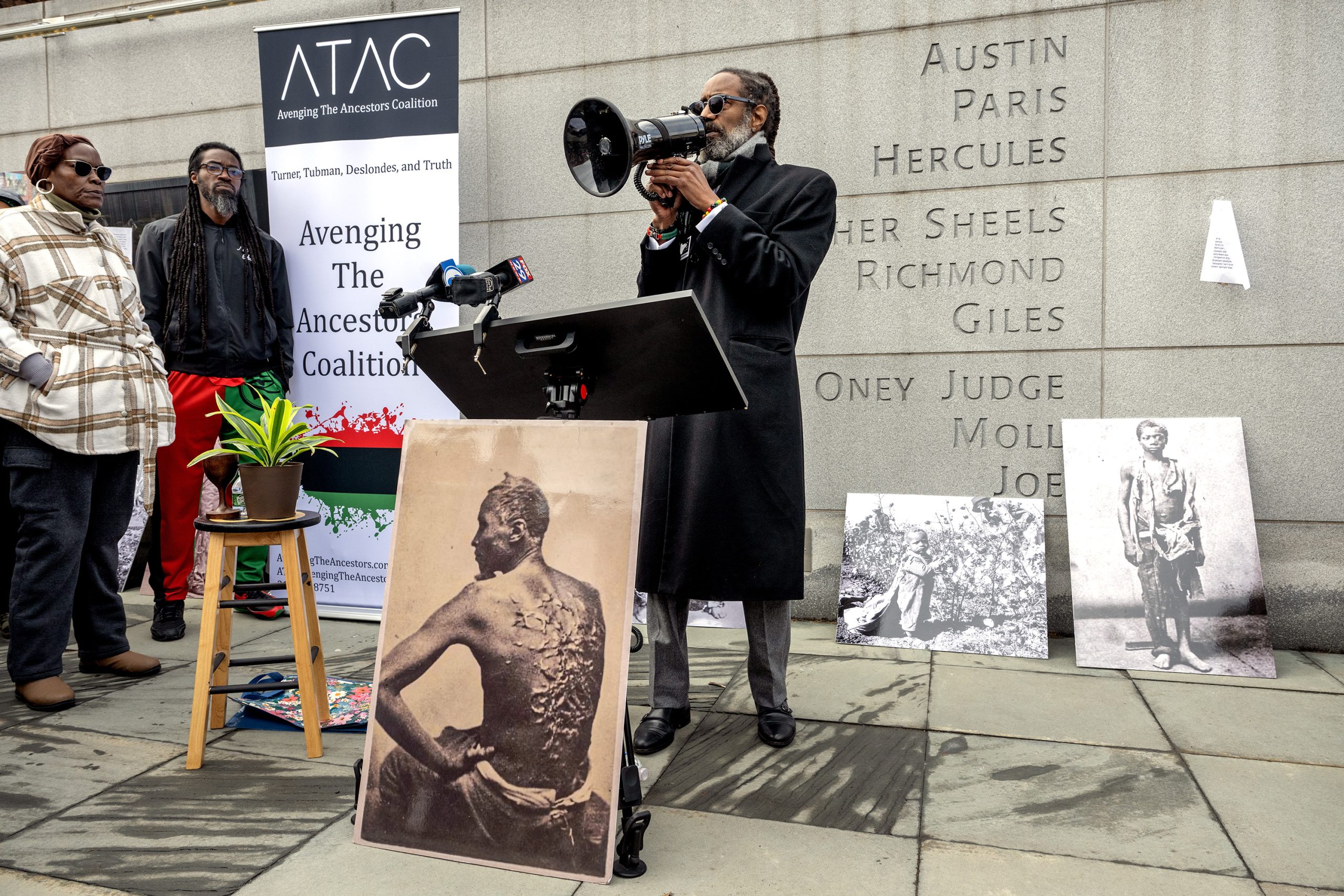
    The group I founded and lead, the Avenging the Ancestors Coalition, is one of the groups appealing the decision — a ruling that called to mind one of the author James Baldwin’s most profound statements: “To be Black and conscious in America is to be in a constant state of rage.”

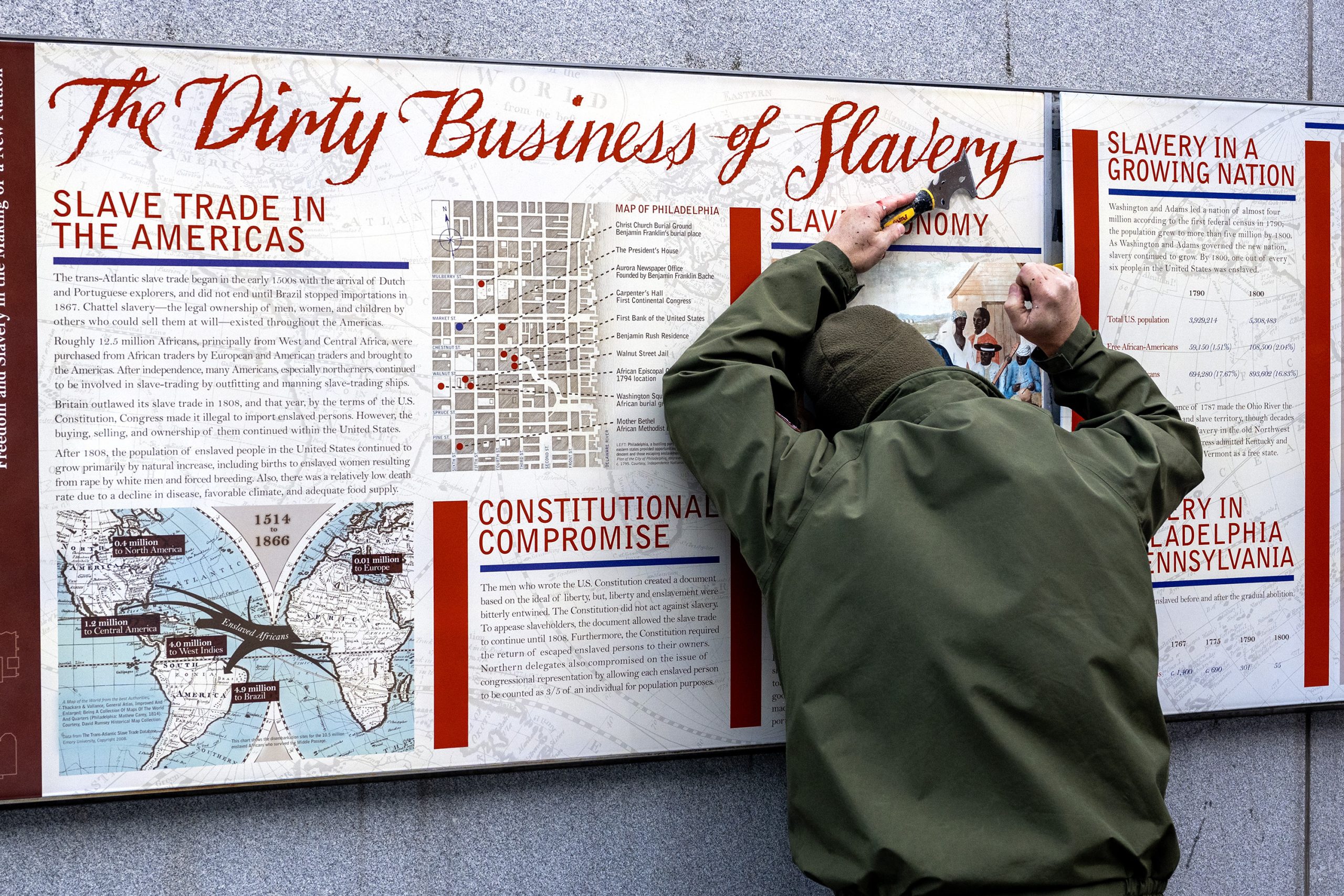
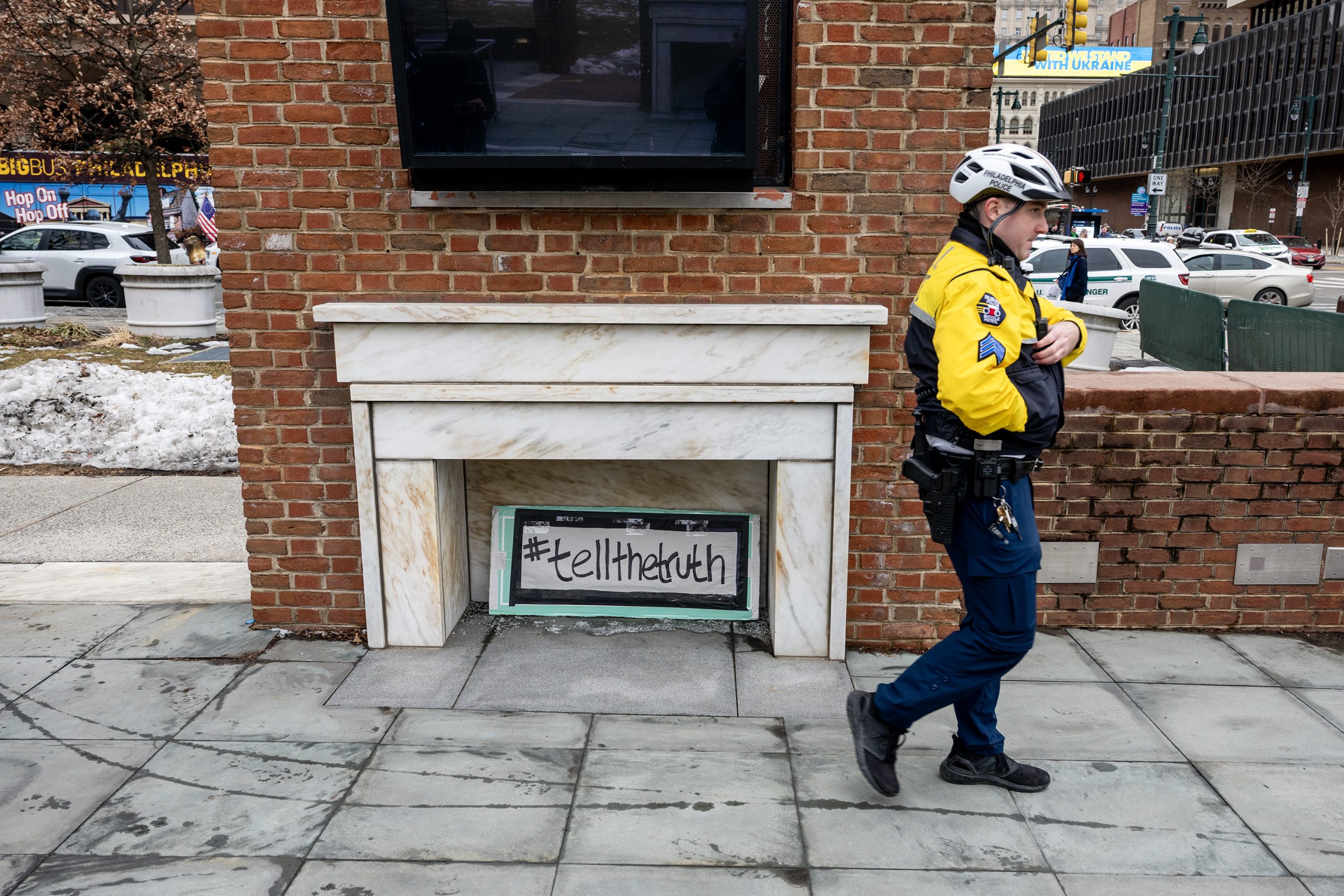
    A National Park Service worker removes an interpretive panel — “The Dirty Business of Slavery” — at the President’s House Site in Independence National Historical Park in January.Tom Gralish / Staff Photographer

    If you’re Black and conscious in America, you know about slavery and sharecropping and convict leasing and lynching and Jim Crow and disenfranchisement and gerrymandering and redlining and police brutality and mass incarceration — and therefore you are necessarily enraged.

    Allow me to expand upon the aforementioned slavery awareness part.

    Although American slavery was birthed in 1619 in Virginia, it was not unique to that colony or state or to the South. It also happened in the North, including in Philadelphia.

    On the southwest corner of Front and High Streets — now Market Street — stood the London Coffee House, which opened in 1754 with funds provided by 200 local merchants. It was where shippers, businessmen, and local officials — including the governor — socialized, drank coffee and alcohol, and ate in private booths while making deals.

    It was where, on the High Street side, auctions were held for carriages, foodstuffs, horses, and African girls, boys, women, and men who had just been unloaded from ships that docked right across the street at the Delaware River.

    Slavery was a key component of daily life here in Pennsylvania generally, and Philadelphia particularly.

    In the 1760s, nearly 4,500 enslaved Black people labored in the colony. About one of every six white households in the city held at least one Black person in bondage. This cruel institution began here in 1684 when the “slave” ship Isabella from Bristol, England, anchored in Philadelphia with 150 captured Africans.

    A year later, William Penn himself held three Black people in bondage at his Pennsbury Manor estate, 20 miles north of Philly.

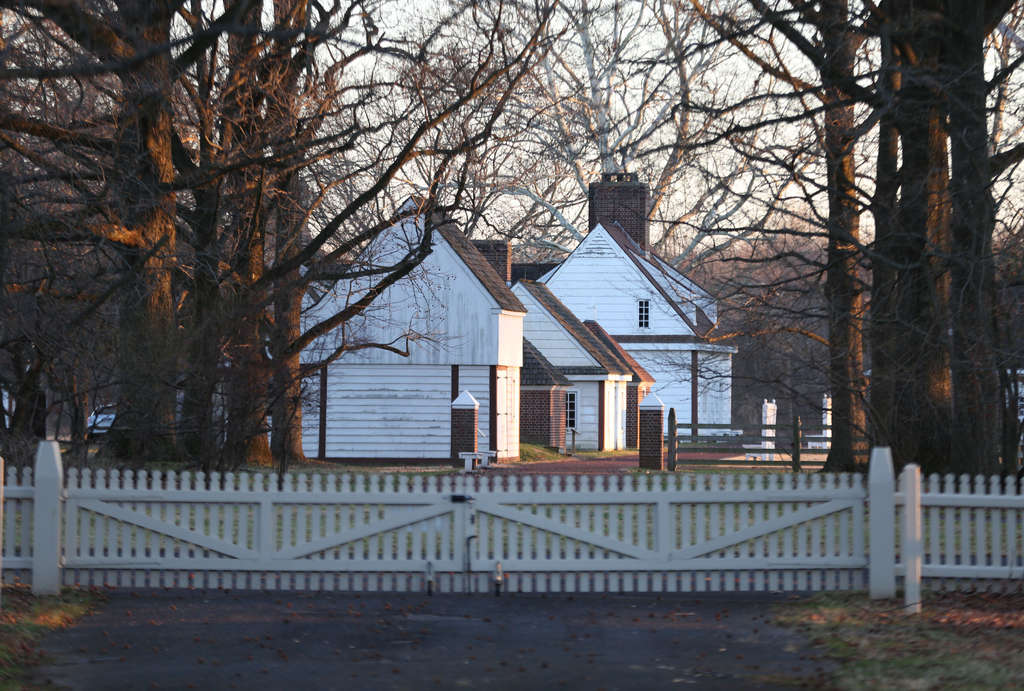
    Pennsbury Manor, built by William Penn. In 1685, Michael Coard writes, Penn himself held three Black people in bondage.

    The story of slavery on federal property in Philadelphia is especially important now that America is celebrating its 250th anniversary. Accordingly, the truth, the whole truth, and nothing but the truth must now be told about this country’s history. And that truth includes the following:

    On July 4, 1776, when the edited version of the Declaration of Independence was formally adopted by the Continental Congress in Philadelphia, 41 of the 56 signers of that historic document — as confirmed by Chuck Huggins, former communications specialist at U.S. Army Military Intelligence — enslaved Black folks.

    One of those 56 white men, the drafter of the Declaration of Independence, namely Thomas Jefferson, enslaved 175 Black men, women, and children in 1776, and increased that number to 267 by 1822.

    When that historic document was adopted in 1776, slavery was legal in all 13 colonies, which means 20% of the population was enslaved. Despite the claim in the second paragraph of the Declaration of Independence that “All men are created equal,” there were more than 500,000 enslaved Black persons in the 13 colonies from 1776 to 1800.

    Sgns and notes placed by visitors at the President’s House in Independence National Historical Park in February replace the panels about slavery that were removed in January by the National Park Service. Tom Gralish / Staff Photographer

    And slavery wasn’t just a Southern sin. During the time of the Declaration of Independence, approximately 40,000 Black people were held in bondage in the North, as documented by James M. Velo, a researcher at the Encyclopedia of History. Census records from 1780 show 6,855 of those 40,000 were in Pennsylvania, with 539 in Philadelphia.

    With the 1788 U.S. Constitution, which ultimately resulted from the 1776 Declaration of Independence, the position of president was officially created. Twelve presidents at some point in their lives enslaved Black human beings: Martin Van Buren, one; Ulysses S. Grant, five; Andrew Johnson, eight; William Henry Harrison, 11; James K. Polk, 25; John Tyler, 70; James Monroe, 75; James Madison, approximately 100-125; Zachary Taylor, approximately 150; Andrew Jackson, approximately 150-200; Thomas Jefferson, 267; and George Washington, 316.

    And speaking of Washington, he’s the very same person who in 1784 — which was just six years before he arrived in the city — had teeth from enslaved Black adults “transplanted into” his mouth, as documented in An Imperfect God: George Washington, His ‘Slaves,’ and the Creation of America by award-winning author, historian, and Library of Virginia board of trustees member, Henry Wiencek.

    Moreover, five years later in 1789, a dentist in Philadelphia made Washington’s first set of total dentures from teeth that were “yanked from the heads of his ‘slaves,’” as documented in George Washington’s Teeth: An Unconventional Guide to the Eighteenth Century by Robert Darnton, a cultural historian and professor who served as the American Historical Association’s president, Harvard University‘s library director, and a New York Public Library board member.

    Washington didn’t have wooden teeth, as we were all taught in elementary school; he actually had enslaved Black folks’ teeth. This is just one of many reasons why the truth, the whole truth, and nothing but the truth must be told about American history.

    But Trump does not believe in telling the truth, which is why on Jan. 22 at 2:50 p.m., he had the 34 interpretive panels about slavery removed. Or, better stated, “desecrated,” because purging constitutes the debasement of an essential part of historic hallowed ground at Sixth and Market Streets.

    The author speaks at the President’s House Site on Feb. 16 during the Avenging the Ancestors Coalition’s annual gathering on Presidents Day.Tom Gralish / Staff Photographer

    Trump committed an action that Republican-appointed federal District Court Judge Cynthia Rufe, in her Feb. 16 opinion ordering complete restoration of all 34 panels, described as “Orwellian.”

    In her blistering 40-page opinion, Rufe wrote: “As if the Ministry of Truth in George Orwell’s ’1984′ now existed, with its motto ‘Ignorance is Strength,’ this court is now asked to determine whether the federal government has the power it claims — to dissemble and disassemble historical truths when it has some domain over historical facts. It does not.”

    Her reference to 1984 is absolutely on point because it immediately conjured Big Brother’s ruling party, which had (like Trump’s ruling party obviously has) the slogan: “Who controls the past controls the future. Who controls the present controls the past.”

    But that’s not America’s ideal. That’s not America’s promise. And that’s not what any political party in America should advocate at any time, but especially not during America’s Semiquincentennial.

    But a panel from the Third Circuit now says Trump’s federal government can exercise that kind of control.

    Despite that, the Avenging the Ancestors Coalition is not deterred. Although we want justice and we want it now, we are students of history, and therefore know that African descendants in this country and African Americans here have never achieved success without struggle and delay.

    Remember the clarion call of Frederick Douglass, who proclaimed: “Power concedes nothing without a demand. It never did and it never will.” And that is exactly why he also commanded: “Agitate! Agitate! Agitate!”

    The coalition has taken a page from the book of the civil rights activists of the 1950s and 1960s who sent protesters into the streets to raise hell and attorneys into the courtrooms to raise issues. They eventually won — and we, too, will eventually win.

    The victory, theoretically, could come from a Third Circuit panel rehearing and reversal, or from a Third Circuit ruling involving all 14 members of the court in a reversal of its three-member panel’s decision.

    It could, theoretically, result in the U.S. Supreme Court granting relief after petitioning, or could result from the filing of a completely new lawsuit.

    Or it could theoretically result from some other legal action. But no matter what is ultimately decided by the Third Circuit Court of Appeals or any other federal court, the Avenging the Ancestors Coalition will relentlessly continue to demand justice.

    That justice may not come today or tomorrow, but it will come eventually if we continue to agitate for it.

    Today, tomorrow, next week, next month, next year, and forever. After all, justice delayed is not always justice denied.

    Michael Coard is a civil rights attorney and founder of the Avenging the Ancestors Coalition (ATAC), which led the successful effort to establish the President’s House slavery memorial at Independence National Historical Park in Philadelphia. Although he has been a trial lawyer for three decades, he authored this commentary in his role as founder of Avenging the Ancestors Coalition and not in his role as an attorney.

  • In Philly, the 250th birthday of a fragile nation was celebrated with pomp and sweat. Then came the storm.

    In Philly, the 250th birthday of a fragile nation was celebrated with pomp and sweat. Then came the storm.

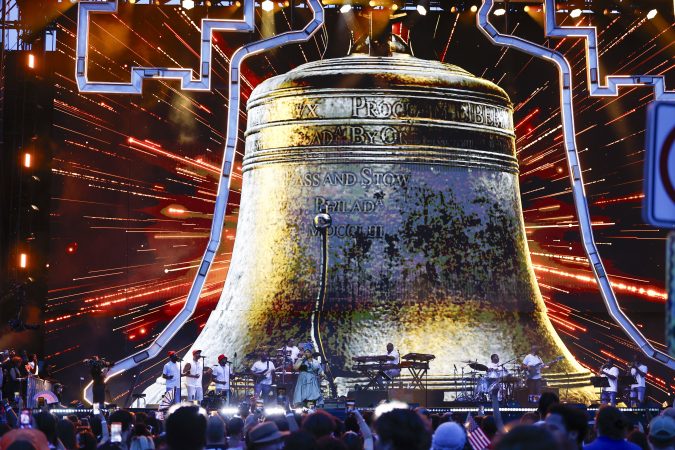
    An unscheduled and dramatic light and sound show — this one produced by nature — interrupted Philadelphia’s July Fourth extravaganza Saturday night, forcing crowds to evacuate the Parkway three hours before the man-made fireworks show was scheduled to start.

    People were told to leave the area and seek shelter midway through the One Philly: Unity Concert for America. But city officials were not quite ready to call it a Semiquncentennial — a year in the planning — and two hours later the city announced the event would resume with a shortened schedule and the fireworks finale. This time, the manmade kind.

    Forecasters had been warning for the last two days that potent thunderstorms were possible Saturday night, as so often happens when a heat wave begins to break down.

    July Fourth marked the third consecutive day that the temperature had reached 100 in Philly, tying a record set in 1963 and 2011, and the atmosphere on Saturday, congested with water vapor, was exhibiting clear evidence that it was about to pop. A severe-storm watch covered the entire region.

    Earlier, declaring a measure of independence from steaminess that made the atmosphere feel like sweat itself, hundreds of thousands in the region celebrated the day 250 years ago when rebellious colonists gathering in Philadelphia announced to the world they had formed a fragile new nation.

    From a ceremonial burial to a patriotic pet parade, for a day at least, anxieties over divisiveness, a national identity crisis, historical controversies, AI, or the state of the economy and the world yielded to an air of celebration robust enough to compete with the heat.

    About the only serious clouds during the day were the ominous storm forecasts, but the day belonged to the sun, albeit a hot one.

    It was a day to savor the fact that the nation has been able to withstand a Civil War; two World Wars; a Great Depression; and a Cold War nuclear stare down with the Soviet Union, whose life span it has exceeded by about 180 years.

    And as the festivities got underway, a ceremony on Independence Mall, where the Declaration of Independence was read on July 4, 1776, suggested the United States plans to stick around for a while. That would be the burial of the national time capsule, to be opened in 2276.

    “I know that we’re here for a burial,” said Mayor Cherelle L. Parker, but “this one is about hope … about believing that the generations who come after us will build a stronger nation.”

    One piece of evidence that people were ready to make a patriotic day of it was the fact that by 11 a.m., the wait to visit Independence Hall was seven hours; two hours just to enter Independence Square. Maps became impromptu fans for people waiting to see the Liberty Bell. Yet the crowds were enduring it all with a remarkable equanimity on a day when people evidently were primed to savor a remarkable occasion.

    The daytime events included the Celebration of Freedom event and the must-see Betsy Ross House Patriotic Pet Parade.

    Josh Martin plays historic person Joseph Plumb, during a reading of the Declaration of Independence behind Independence Hall.Jessica Griffin / Staff Photographer

    City officials were aware that the Unity Concert For America and fireworks might interrupted by a natural light show but they were determined to proceed come thunder or high water. Fireworks had been scheduled for 11:45 p.m.

    The sun ruled through the afternoon, and the triple-digit heat indexes appeared powerless to mute the enthusiasm of the crowds.

    They certainly weren’t factors in the time capsule event, where onlookers showed up adorned in red, white, and blue, along with Indy, a bald eagle. Tucked into the capsule were items from the three branches of government, all the territories, and all the states, including a whale bone from Maine and poems from Alabama.

    “A time capsule is more than a collection of artifacts,” Parker said. “It’s a message from one generation to the next about who we were, what we valued, and what we believed was worth preserving.”

    Mayor Cherelle L. Parker speaking at the Constitution Center.Jessica Griffin / Staff Photographer

    What some people were on Saturday, even those enjoying themselves and not complaining, was certifiably hot.

    (We will eschew saying hotter than a firecracker, but note that this publication used that phrase to describe the record July Fourth heat in 1966.)

    British pop-rock vocalist Seal, who was the opening act at 5:45 p.m., did complain: “I know it’s hot, but it’s not hot enough.” Wearing a banana-yellow blazers, Seal, of Nigerian and Brazilian descent, proclaimed, “It’s only 105. I want it to be 110.”

    Actually, it got only 101, and that was indeed hot enough for most folks.

    Adorned in red, white, and blue, people gathered in the shade at the Independence Beer Garden across Sixth Street from Independence Mall, escaping some of the heat to sip beer with the World Cup displayed on a big screen.

    Sandra Rahn, from Jacksonville, Fla., was among the escapees. She was taking a break from the sun to watch the game. Her Yorkie pup, Matilda, was cooling off alongside her, following the Patriotic Pet Show at the Betsy Ross House.

    Rahn, her husband, and Matilda, arrived Wednesday to celebrate the country’s 250th, attending as many outdoor events as they could so Matilda could be part of the festivities.

    “Everybody’s excited and outside; it’s been great,” Rahn said.

    On Monday, they are to head home to Florida, where they hope to “cool off.”

    For the record, at 3 p.m. the heat index in Philly was 103; in Jacksonville, 98.

    And hidden in plain sight among those braving the serpentine line to visit Independence Hall were numerous time travelers from the Revolutionary era.

    Aaron Patrick journeyed — like many Revolutionary War soldiers once had done — from Carlisle, Cumberland County, and donned a wool waistcoat and a black tricorn hat as he made his way through the line. Temperature check: about 93 degrees Fahrenheit.

    “Everyone’s hot,” Patrick said. ”I’m just a little warmer than most.”

    The outfits start with a linen shift for women or a linen shirt for men, said Abby Harting, a historical clothing expert. “It’s naturally cool, wicks sweat away — it’s perfect for a muggy, hot day, because the fabric does the same thing it did 250 years ago,” Harting said.

    On top of the linen, the boys and men in the group wore a light wool waistcoat, while the girls and women wore a “stay,” which serves the same purpose as a bra, and another layer. Harting noted the women’s layers were designed to last for years and adapt to a person’s changing body.

    She said their decision to dress up was a bit of “experiential archaeology,” and a great way to imagine what those in 1776 were experiencing — both mentally and physically — as they adopted the Declaration of Independence.

    For Washington, D.C.-area couple Katelyn and Zachary Damm, their historical hobby started with the tricorn hat given to Zachary by his father-in-law. From there, they turned to Amazon to order their clothes.

    The buffs prepared for their trip by reading about the era and studying the Declaration of Independence, Zachary Damm said.

    “All of our freedoms date back to this day,” Katelyn Damm said. “That makes it special.”

    Period dressers were not to be outdone by Bruno, a canine star at the Betsy Ross House.

    The 18-year-old yellow Labrador retriever, sporting big blacked-out goggles and using a baby-dog stroller to move around, immediately stole the show at the Patriotic Pet Show. With his long fluffy blond hair waving in the breeze, Bruno’s confident smile told the crowd everything they needed to know: This veteran was here to bring home gold.

    Not all the activities were of a festive nature. Striking Peco workers picketed outside the power company’s headquarters.

    Outside the Liberty Bell, about 200 folks gathered in the yard next door at the President’s House to honor the nine people enslaved by George and Martha Washington in the 1790s. This year, attendees said the annual independence gathering, with its focus on freedom, truth, and remembrance, felt different.

    On Friday, a federal appeals court gave the legal go-ahead for President Donald Trump’s administration to install the panels it wants to replace the original slavery exhibit.

    “Over the last six months, since the president issued an executive order, they have tried to whitewash and bend history in a way that doesn’t tell the whole story of the country,” said Dawn Chavous, spokesperson for Avenging the Ancestors Coalition. “We are here because it’s important to not only remember, but protect and defend the history of America, which includes Black and African American history.”

    Primarily, however, people went about the business of celebrating across the region.

    In Doylestown, Gov. Josh Shapiro joined the Fourth of July parade, and, of course, people gathered for holiday block parties.

    Danny Torres, who runs the barbecue business The Latin Grill, prepares Puerto Rican and Jerk seasoned chicken wings in a grill at a block party in the Ludlow section of Philly.Aidan T. Gallo / Staff Photographer

    In Philly’s Ludlow section, Johanna Rodriguez and Michael Cunningham mixed fresh lemonade as they watched their daughter and son splash around in the swimming pool in the middle of their Jefferson Street block.

    Rodriguez said the block takes Fourth of July seriously because it’s one of the only times everyone comes outside to enjoy the festivities and see each other in person.

    “Obviously, having a block party with all the neighbors coming together is always the best,” Rodriguez said. ”Just hanging out and talking about the old days. It brings back the classic vibes.”

    No one appeared to be complaining about the heat from the grill or the sun.

    For the record, according to Thomas Jefferson, on the afternoon of July 4, 1776, at what is now Independence Mall the temperature was a pleasant 76 degrees.

    Staff writers Maggie Prosser, Isabel Maney, and Michelle Myers contributed to this article.

  • Trump administration gets final legal OK to install own panels at President’s House, city appeals

    Trump administration gets final legal OK to install own panels at President’s House, city appeals

    A Philadelphia-based federal appeals court gave President Donald Trump’s administration the final go-ahead to install its own exhibit at the President’s House.

    The new panels, which historians have criticized for whitewashing George Washington’s role in enslaving nine people, have been manufactured and stand ready to install, the Justice Department told the court.

    The procedural step, which the U.S. Court of Appeals for the Third Circuit took on an observed federal holiday, followed a Thursday request by Justice Department attorneys to allow the National Park Service to “begin work immediately and install its new exhibits.” The Third Circuit ruled last month that the city has no rights over the President’s House.

    “The President’s House is an important national historical site, and the Government submits that the President’s House exhibits should be fully installed without further delay,” the government’s filing said.

    Only two of 11 new panels mention the people enslaved at the President’s House, which was the exhibit’s original purpose. The exhibits are not factually wrong, historians said, but cast Washington in a more sympathetic light.

    “Slaves living in the President’s House experienced a greater modicum of autonomy than elsewhere in the South such as to explore the city and sometimes even attend the theater, with Washington buying the tickets,” one panel reads.

    The city quickly appealed and asked the Third Circuit court to recall the Friday-morning order, saying it didn’t have time to respond to the Justice Department’s Thursday request.

    And while the federal government asked to install the exhibits “immediately,” the request did not identify a reason for the rush.

    “That is not an emergency,” the city’s filing said, “it is a preference for speed.”

    The court shouldn’t have issued its final approval for changes without waiting the 90 days Philadelphia had to appeal last month’s order, the filing said.

    The city also repeated the argument, which has not found purchase with the appellate judges so far, that allowing the Trump administration to install its own exhibit would cause the city and public irreparable harm.

    The city’s motion does not automatically pause the court’s order.

    But in addition, the city filed a motion for a stay, while the Third Circuit considers the appeal, with District Judge Cynthia M. Rufe, who issued the now-vacated injunction ordering the Trump administration to restore the exhibits it had removed.

    The city and the Department of the Interior did not immediately respond to requests for comment.

    The President’s House has been subject to litigation in federal courts since the Trump administration dismantled the slavery exhibit in January.

    It has been in legal limbo in recent weeks because of litigation in a Boston federal court, where conservation groups sued to stop the Interior Department’s implementation of Trump’s 2025 executive order requiring no national parks displays that “inappropriately disparage Americans past or living.”

    At least 50 exhibits were removed from more than 30 sites nationwide, according to court records. Among them are also mentions of slavery at Independence Hall and the Second National Bank of the United States that the Trump administration quietly removed.

    A federal judge in Boston last month ordered the National Park Service to restore all removed exhibits to parks across the nation. But the Court of Appeals for the First Circuit disagreed and stayed that order Thursday.

    Hours later, Justice Department attorneys asked the Philadelphia-based federal court to clear the final procedural step — and the court obliged before noon Friday.

    The biggest question remaining is whether the Trump administration will attempt to install the panel during this historic July 4 weekend marking the United States’ 250th anniversary.