Tag: Donald Trump

  • Pope Leo XIV celebrates immigrants in speech to Philadelphia crowd amid clash with Trump ahead of 250th anniversary

    Pope Leo XIV celebrates immigrants in speech to Philadelphia crowd amid clash with Trump ahead of 250th anniversary

    Addressing a Philadelphia crowd live from the Vatican, Pope Leo XIV called for a “recommitment” to American ideals.

    The first U.S.-born pope delivered remarks virtually at an interfaith ceremony inside Philadelphia’s National Constitution Center on the eve of the United States’ 250th birthday to accept the center’s prestigious Liberty Medal.

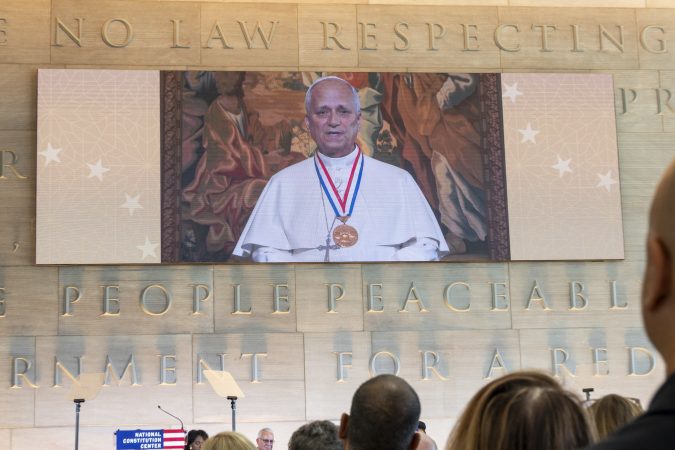
    Facing a screen showing the live, cheering Philadelphia audience, the pontiff wore his Liberty Medal along with a cross around his neck.

    Leo, who grew up in Chicago and attended Villanova University, quickly pointed out his American roots, calling himself “a son of this great country.”

    “I join you in asking God’s blessings upon America’s future that the lofty ideals enshrined at the beginning of the Declaration of Independence may continue to guide the flourishing of the nation in unity, justice, and peace,” he said.

    Leo, who was elected pope last year, spent years serving the church in Peru and has been outspoken about calling for international peace. That’s landed him at odds with President Donald Trump’s administration on the issue of migrants, the war in Iran, and more.

    The pope leaned into some of those themes in his speech, even though he did not refer to the president directly.

    He nodded to his advocacy for humane treatment of immigrants and noted that the founders of the United States “made America a byword for freedom, as the country opened its doors to successive waves of immigrants, enabling them and their children to play their part in shaping the future of the nation.”

    He said the “love of freedom” in the United States has inspired the country “to look beyond itself and at great sacrifice to champion the cause of freedom beyond its own borders.” But he acknowledged that mission hasn’t been straightforward, noting that building a society that embodies such ideals “was not always easy and, in many respects, is still a work in progress.”

    The pontiff’s speech comes the day before he plans to visit Lampedusa, an Italian island known as a stop for migrants making the dangerous journey across the Mediterranean Sea from North Africa to Europe. His predecessor Pope Francis made his first official visit outside of Rome in 2013 to the same island and condemned the “globalization of indifference” toward migrants.
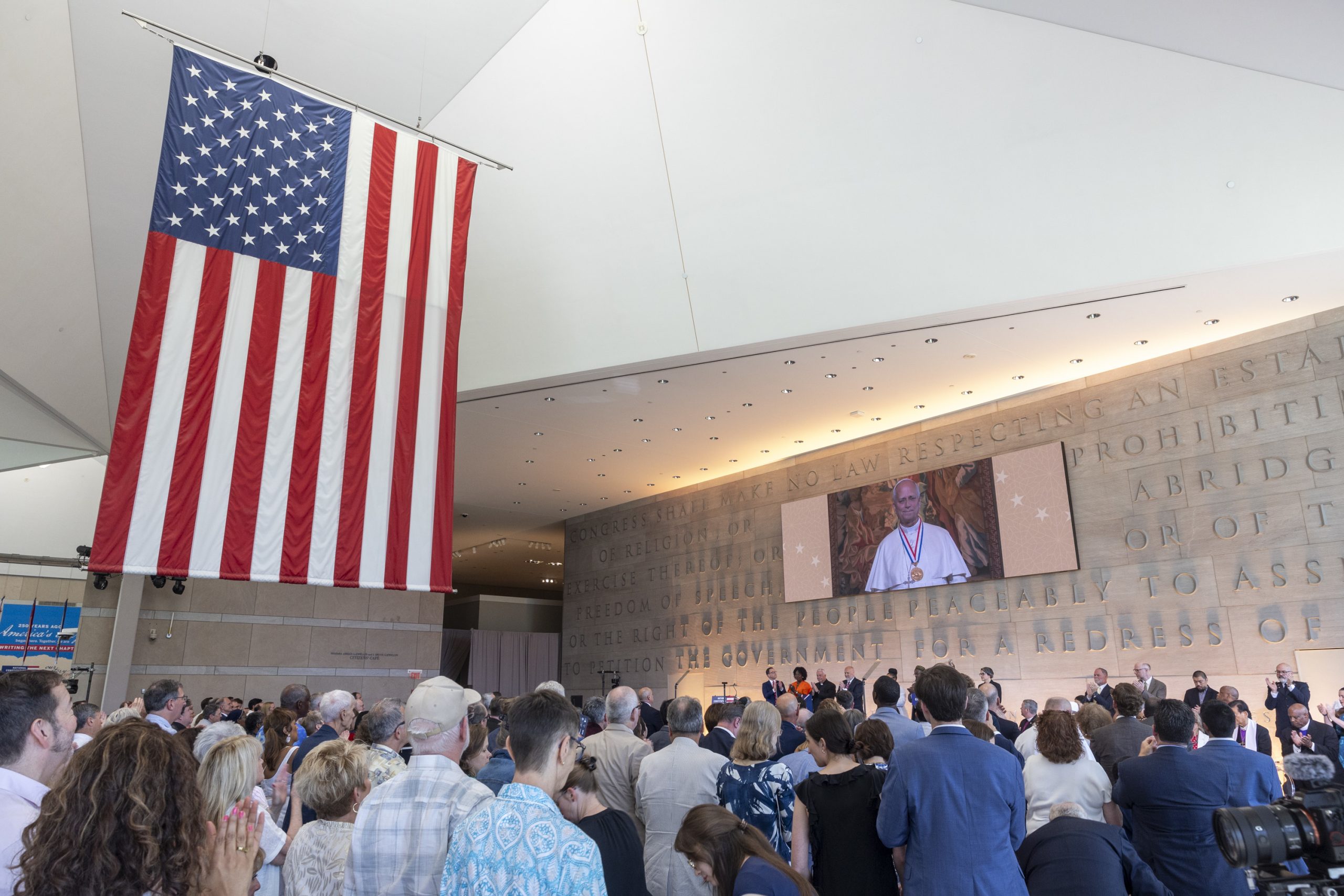
    Pope Leo XIV speaks at the Liberty Medal Ceremony at the National Constitution Center in Philadelphia on Friday.Tyger Williams / Staff Photographer

    Julie Silverbrook, the chief content and learning officer for the National Constitution Center, emphasized in a Friday interview that Leo is a “global leader who has been uniquely shaped by American ideals.”

    “He has brought together people of different faith traditions, and through his ministry really reflected his belief in the inherent dignity of all human beings,” she said.

    Leo declined an invitation from Trump to the United States to celebrate the country’s 250th birthday on July Fourth, the New York Times reported. The first American-born pope opting to visit migrants instead sends a stark message as the president pursues his mission of mass deportations.

    But the pontiff’s participation in the Philadelphia program highlights his connections to the region, which isn’t lost on the National Constitution Center.

    The Philadelphia-based private nonprofit organization chose Leo for the award due to “his lifelong work promoting religious liberty and freedom of conscience and expression around the world — ideals enshrined by America’s founders in the First Amendment to the U.S. Constitution.” That, and also because he is the first pope born in the United States, and has connections to Philadelphia, Silverbrook said.

    “He was shaped by those freedoms … in much the same way that the Declaration of Independence was shaped by the city of Philadelphia, and of course a reflection of American values that have been carried globally,” she said.

    When a delegation from Philadelphia’s National Constitution Center met with Leo at the Vatican in April to present him with the medal in person, they also bore a few local goodies: a bundle of Villanova swag, a replica of George Washington’s Acts of Congress, and a Wawa tote bag filled with Tastykakes.

    “I think he very much so feels a connection to Philadelphia, both having been educated here, and I think in this semiquincentennial moment, I think the eyes of the world are on Philadelphia, and we’re thinking about the ideals that have emanated from this place for 250 years,” Silverbrook said.

    Leo, a 1977 Villanova alum, recently passed on a surprise message to graduates of his alma mater. Vince Stango, the interim president and CEO of the National Constitution Center, also went to the Augustinian university on the Main Line, which co-sponsored the NBC10 broadcast of the event along with the archdiocese and Malvern Prep.
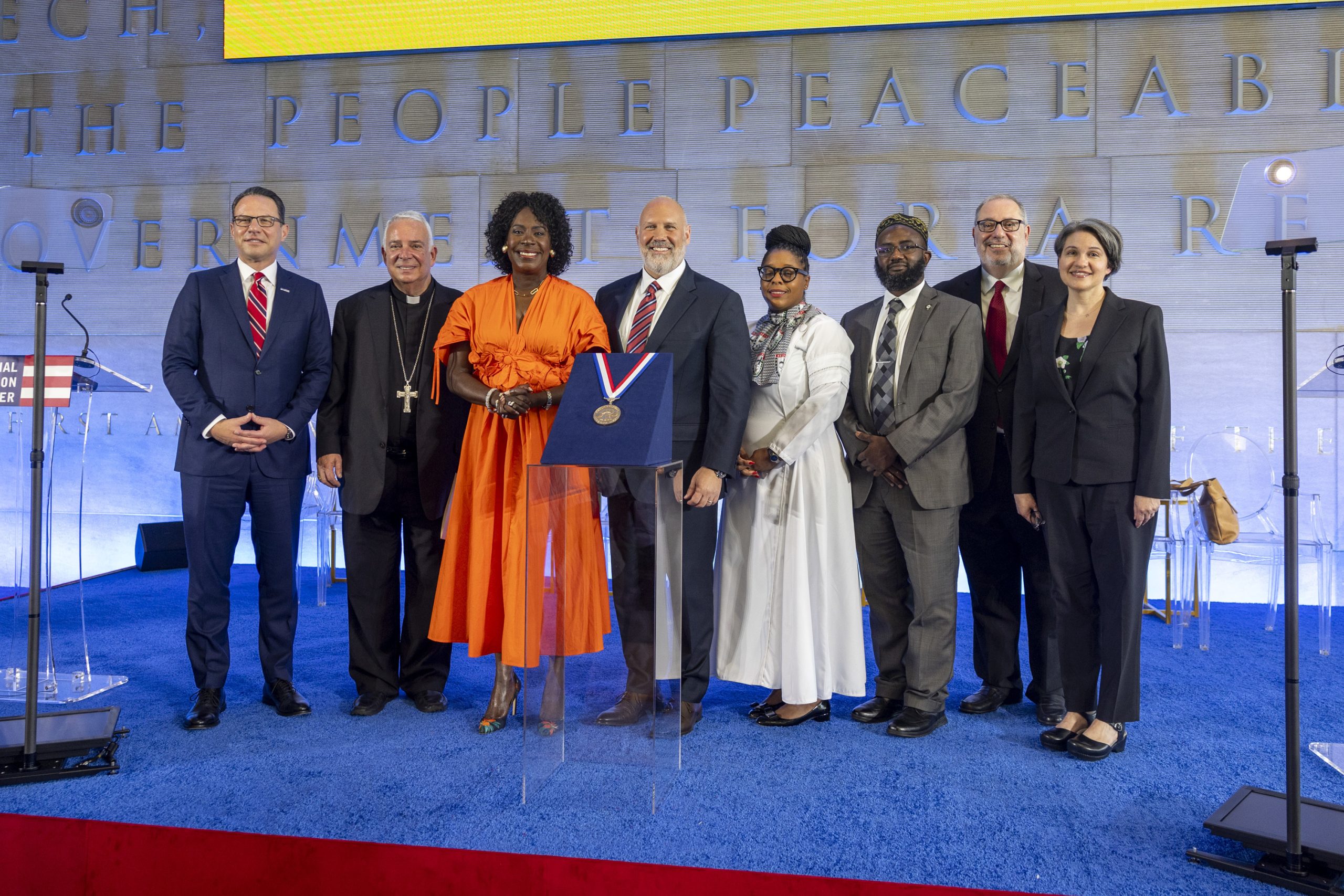
    (From left to right) Gov. Josh Shapiro, Rev. Nelson J. Pérez, Mayor Cherelle L. Parker, Interim President & CEO of National Constitutional Center Vince Stango, Rev. Carolyn C. Cavaness, Imam Quaiser D. Abdullah, Rev. Luis A. Cortés Jr., and Rabbi Jill L. Maderer, pose for a photo at the Liberty Medal Ceremony at the National Constitution Center in Philadelphia, Pa., on Friday.Tyger Williams / Staff Photographer

    Clashing with Trump

    The pope has contended that it’s up to each country to determine how they want to accept migrants while also denouncing the Trump administration’s “extremely disrespectful” treatment of them.

    He has also spoken out against Trump’s threats against Iran, and declined to participate in the president’s “Board of Peace” for Gaza’s reconstruction.

    In an April social media rant, Trump complained that he doesn’t “want a Pope who criticizes the President of the United States.” The president called the Catholic leader weak and accused him of “catering to the Radical Left.”

    Leo told reporters that month that he has “no fear, neither of the Trump administration, nor of speaking out loudly about the message in the Gospel, and that’s what I believe I am called to do, what the church is called to do.”

    In his Friday remarks, the pope made a call for unity but warned that a country should come together with “ideals that do not fade with the passing of time.”

    He called on the United States to recognize its values of “peace and prosperity, a country characterized by generosity and nobility of heart,” and said the values of “shared human dignity, equality, and the rights laid out in the Declaration of Independence” can help unite and guide the nation.

    The Liberty Medal

    The Liberty Medal was created in 1988 and has been hosted by the National Constitution Center since 2006.

    The award has gone to storytellers, philanthropists, civil rights leaders, and politicians on both sides of the aisle, such as Ukrainian President Volodymyr Zelenskyy, former Supreme Court Justice Ruth Bader Ginsberg, the Bushes, Malala Yousafzai, and Thurgood Marshall.

    The center describes its recipients as individuals who “strive to secure the blessings of liberty to people around the globe.”

    The process of selecting Leo began about a year ago, Silverbrook said.

    The speech was initially going to be projected on Independence Mall, but the event was moved indoors due to the extreme heat and livestreamed by the center online.

    Rich Russo, 63, a Fishtown resident who attended the event in person, called the experience “once in a lifetime.”

    “How many times do you get the pope talking to you?” said Russo, who works for a bank.

    Gov. Josh Shapiro, who is Jewish, and Mayor Cherelle L. Parker, a Baptist — both Democrats who have been outspoken about their own faiths — joined Philadelphia Archbishop Nelson J. Pérez and other religious leaders who made remarks on stage prior to the pope’s speech. Pennsylvania Attorney General Dave Sunday, a Republican, rang a replica Liberty Bell outside.

    “Philly is proud that the pope is a graduate of Villanova University who spent time living and working in our region,” Pérez said on stage. “Pope Leo knows us, and we feel like we know him, too.”

    “His influence, however, extends beyond Philadelphia,” the archbishop added.
  • I visited the Great American State Fair on the National Mall in D.C. It wasn’t great.

    WASHINGTON — It was blisteringly hot when I showed up at President Donald Trump’s much-ballyhooed Great American State Fair on the National Mall in honor of the nation’s 250th birthday.

    As I headed off to check in as a member of the media, a friend who’d accompanied me decided to wait at a lemonade stand.

    At first, I was a little concerned, wondering how I was ever going to find her. A lemonade stand on the National Mall in Washington, D.C., was bound to be mobbed on a scorcher of a day like the one we had on Monday.

    I needn’t have worried. It wasn’t that kind of party. Crowds were so thin that I quickly spotted her standing alone and eating a snow cone that cost a whopping $8. “Even on a hot day, there was no line at the lemonade stand,” pointed out my friend, Pamela Thomas of Pathfinders Travel, who had taken the train from Philadelphia with me.

    That should give you a pretty good idea of how it was at the so-called Great American State Fair, brought to us by Freedom 250, an organization created by President Donald Trump.

    Low crowds.

    High food prices.

    Lots of walking.

    The Great American State Fair was downright boring.

    Oh, there was an 110-foot Ferris wheel borrowed from the Smithsonian Institution. I watched people stand unsheltered under the blazing sun as they waited for their turn. But that’s the only carnival ride I saw.

    This wasn’t like any state fair I’d ever attended. Where was the merry-go-round? Where was the roller coaster? The cotton candy? The local beauty queens? The fair could use a quilting demonstration and band performances. I saw only one cornhole game.

    The so-called Great American State Fair needs a whole lot more fun and a whole lot less Trump.

    There wasn’t much for children to do besides have souvenir replicas of their new Trump passports stamped.

    I managed to find some shade while sitting on a folding chair inside an area called David’s Tent. As I cooled off, I listened to a woman onstage sing religious songs. Behind me was an aboveground swimming pool set up, ostensibly, for on-the-spot baptisms. In the spirit of inclusivity, there was also a candle-filled menorah positioned in the front of the tent.

    At one point, we made our way over to the Hawaii booth. Inside, all we saw was a large mural of the Aloha State that included a picture of former President Barack Obama that someone had defaced.

    A smiling woman offered to stamp our “passports.” There was nothing else going on in that booth. Not a flowered lei or macadamia nut in sight. No hula dance demonstration. No ukulele performance.

    Same thing with the neighboring Alaska booth.

    I made a point of checking out the North Carolina booth, which had been criticized for having images of Confederate flags on display on TV monitors. This one was a bit more inviting, with its colorful NASCAR displays. I didn’t see anything resembling a rebel flag — but I did see a bale of cotton just sitting on the floor, which can be seen as offensive because of its slavery connotations. The setup had been organized by private donors. One company, Mt. Olive Pickles, has since pulled out of the fair.

    The D.C. booth had some upbeat music playing, a fake cherry blossom tree, and a giant map of the mall that attendees stuck pins into to represent where they lived. “No go-go music?” I asked an attendant, who assured me that some was in the playlist.

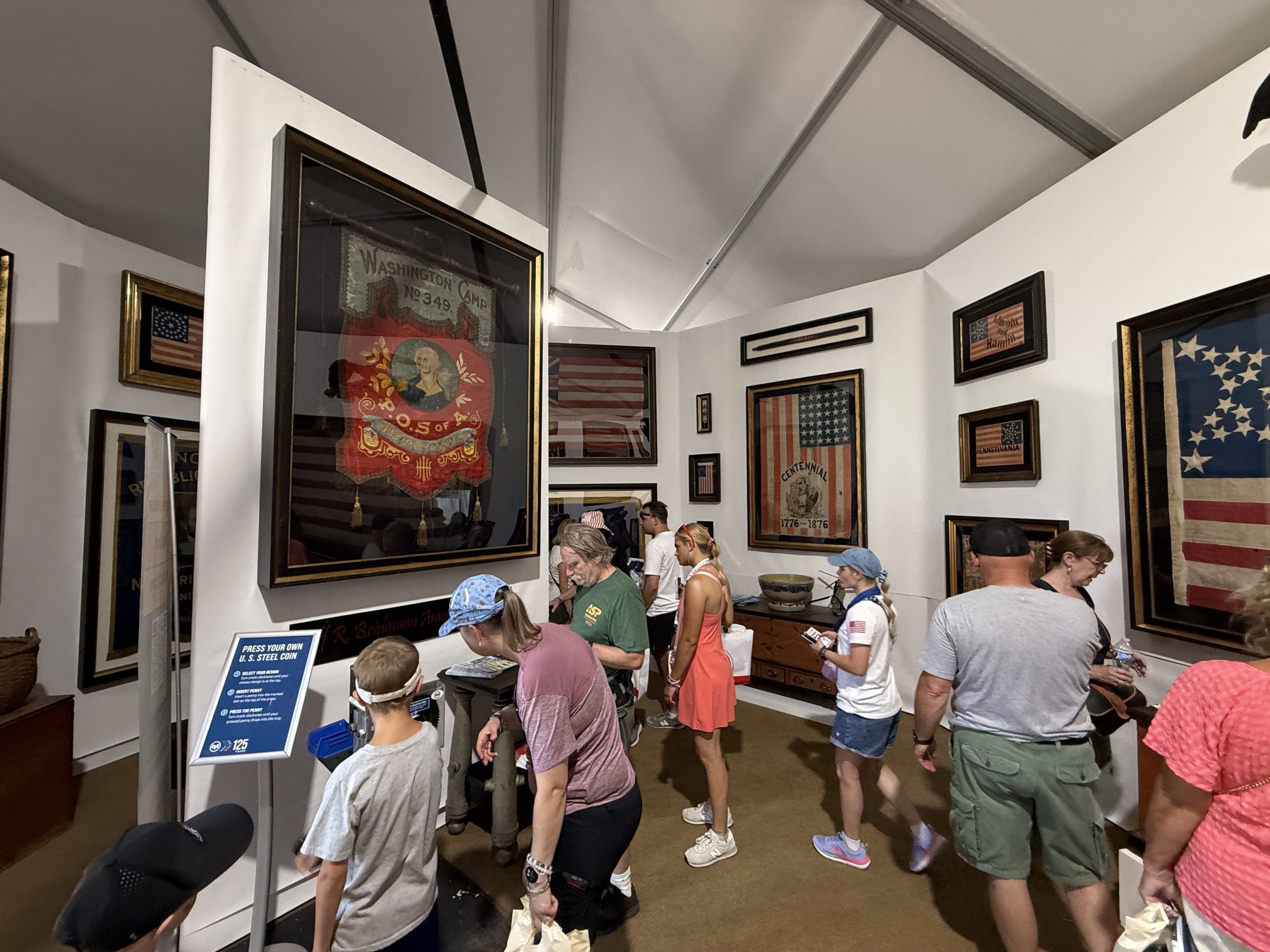
    Pennsylvania’s pavilion showcases state history and memorabilia at the Great American State Fair on June 30 in Washington, D.C.Sam Janesch / Staff

    Pennsylvania had initially opted out of participating, but its booth opened the day after I was there, funded by private sponsors and pulled together by U.S. Sens. Dave McCormick (R., Pa.) and John Fetterman (D., Pa.) after Gov. Josh Shapiro passed on participating.

    Cape May County, a Republican stronghold, sponsored the New Jersey booth and brought in an impressive-looking eight-foot sand castle. But I noticed one small red plastic bucket of saltwater taffy that a kid was rummaging through. For an area as rich and diverse as the Garden State, the display felt incomplete.

    Soon, I had had enough.

    We stopped by the media table again on our way out and asked about what was on the schedule for later. The answer? A rodeo demonstration at 7 p.m. That was it.

    I was stunned. America deserved more and better for its 250th birthday celebration.

    So, if you decide to go experience the Great American State Fair before it is dismantled on July 10, don’t say I didn’t warn you.

  • The 250th anniversary gathering of Congress at Independence Hall touches on divided times, uneven history

    The 250th anniversary gathering of Congress at Independence Hall touches on divided times, uneven history

    Two days before the American revolutionaries signed the Declaration of Independence in 1776, the Second Continental Congress gathered in Philadelphia to formally vote on the matter.

    Standing in virtually the same spot 250 years later, their distant successors commemorated that historic moment while grappling, at times, with what it left out.

    “The fact that we have you here together is a symbol of progress,” said U.S. Rep. Dwight Evans, a retiring Democrat who’s spent more than four decades as one of Philadelphia’s central Black political leaders. “250 years ago, people like me were not fully included in the founders’ vision. … The struggle to live up to our founding ideals was hard fought.”

    More than 30 members of the 119th Congress attended the event at Independence Hall, one of many marking the Semiquincentennial in the city this week. U.S. Rep. Brendan Boyle, a Philadelphia Democrat whose district includes the historic site, had worked for years to bring his colleagues to the site to mark the nation’s founding.

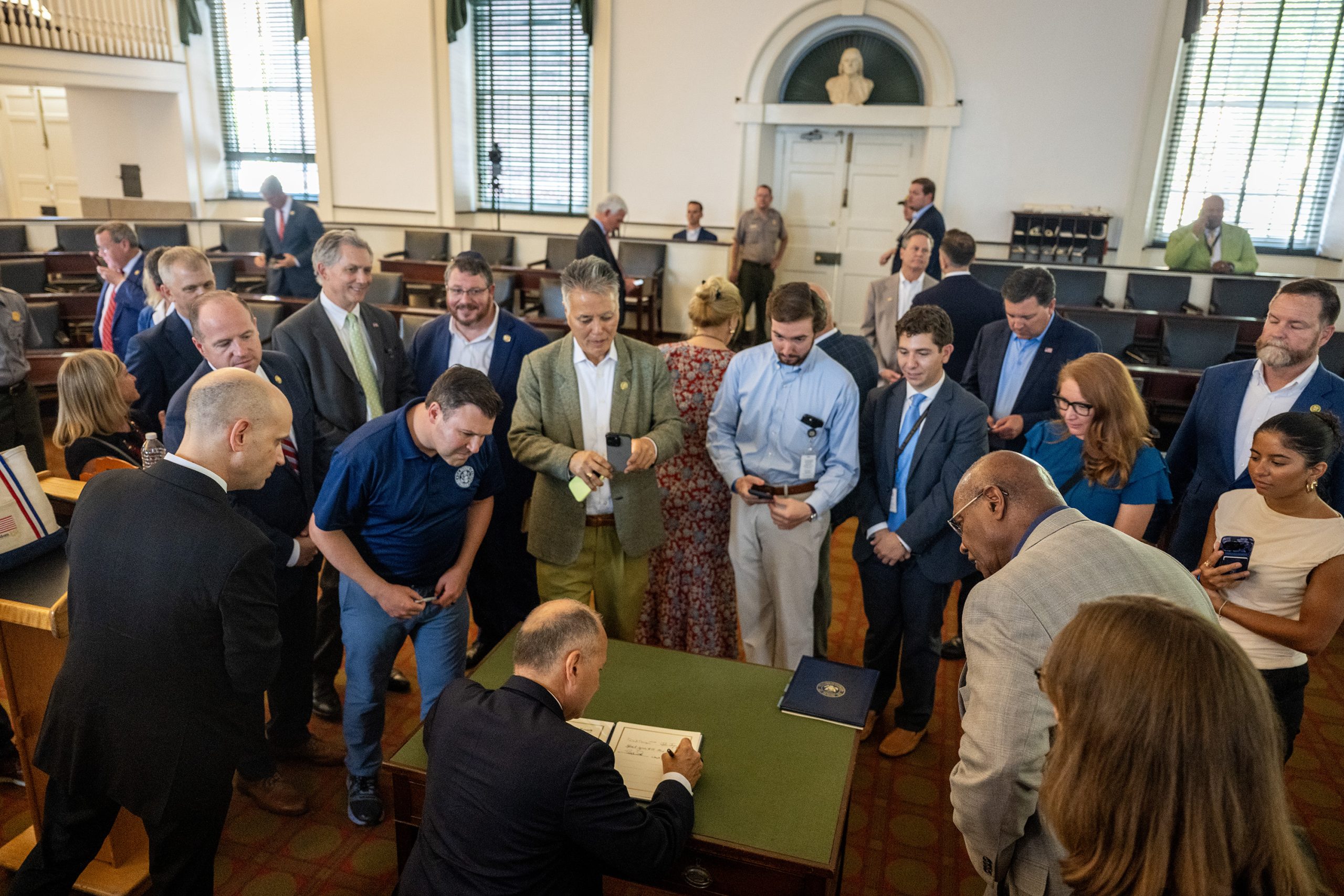
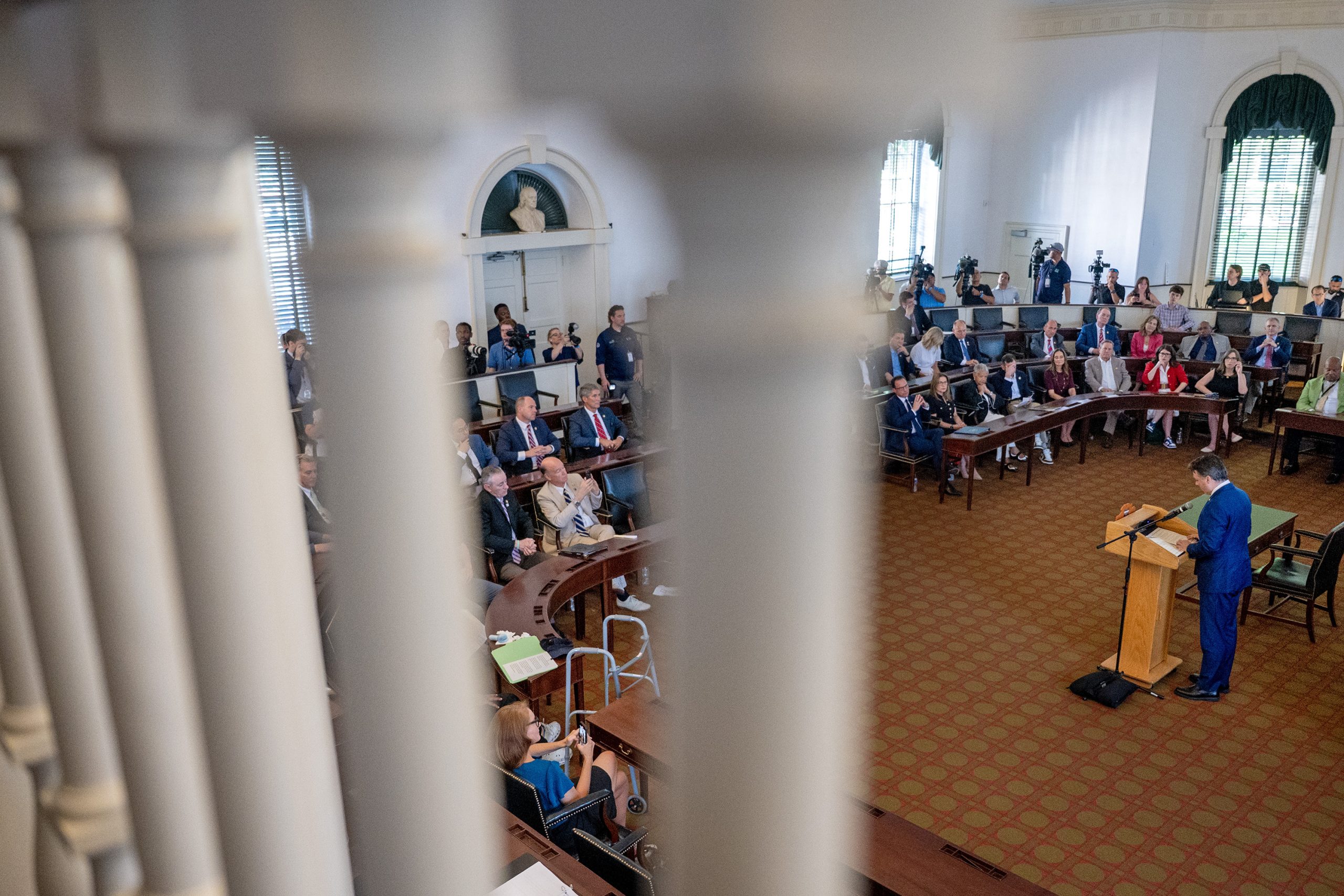
    A bust of Benjamin Franklin is above the door in the back of Congress Hall as U.S. Rep. Lloyd Smucker of Lancaster County signs a ceremonial document after the House of Representatives met at Independence Hall on Thursday. Tom Gralish / Staff Photographer

    As Boyle and others walked through that history in Congress Hall — the room where the legislative branch convened before relocating to Washington — they referenced both the uneven history of the country and the divided, polarized times that define modern America.

    “America has indeed struggled at times, beginning with the horrors of chattel slavery and the oppression of Native Americans, to live up to our highest ideals,” said House Minority Leader Hakeem Jeffries (D., N.Y.). “But the high–minded principles, upon which this great country was born, have served as an eternal lamp post for us to continue to strive and march toward a more perfect union.”

    Jeffries’ remarks — from a high-profile lawmaker poised to become the first Black speaker of the U.S. House if his party wins control in the midterms later this year — came as President Donald Trump’s administration has tried to pull back the federal government’s references to the history of slavery, including on Independence Mall, most notably at the President’s House, a block from where the lawmakers gathered.

    The Democratic leader was one of multiple speakers, including Pennsylvania Gov. Josh Shapiro, who made veiled references to Republicans’ ceding Congress’ role as a check on Trump. The members of Congress who served at Independence Hall believed the chamber “would be separate and coequal, never subservient or co-opted,” Jeffries said.

    “Let us never forget that we don’t work for any other branch of government,” he said. “There are no kings in the United States of America. We work exclusively for the American people.”

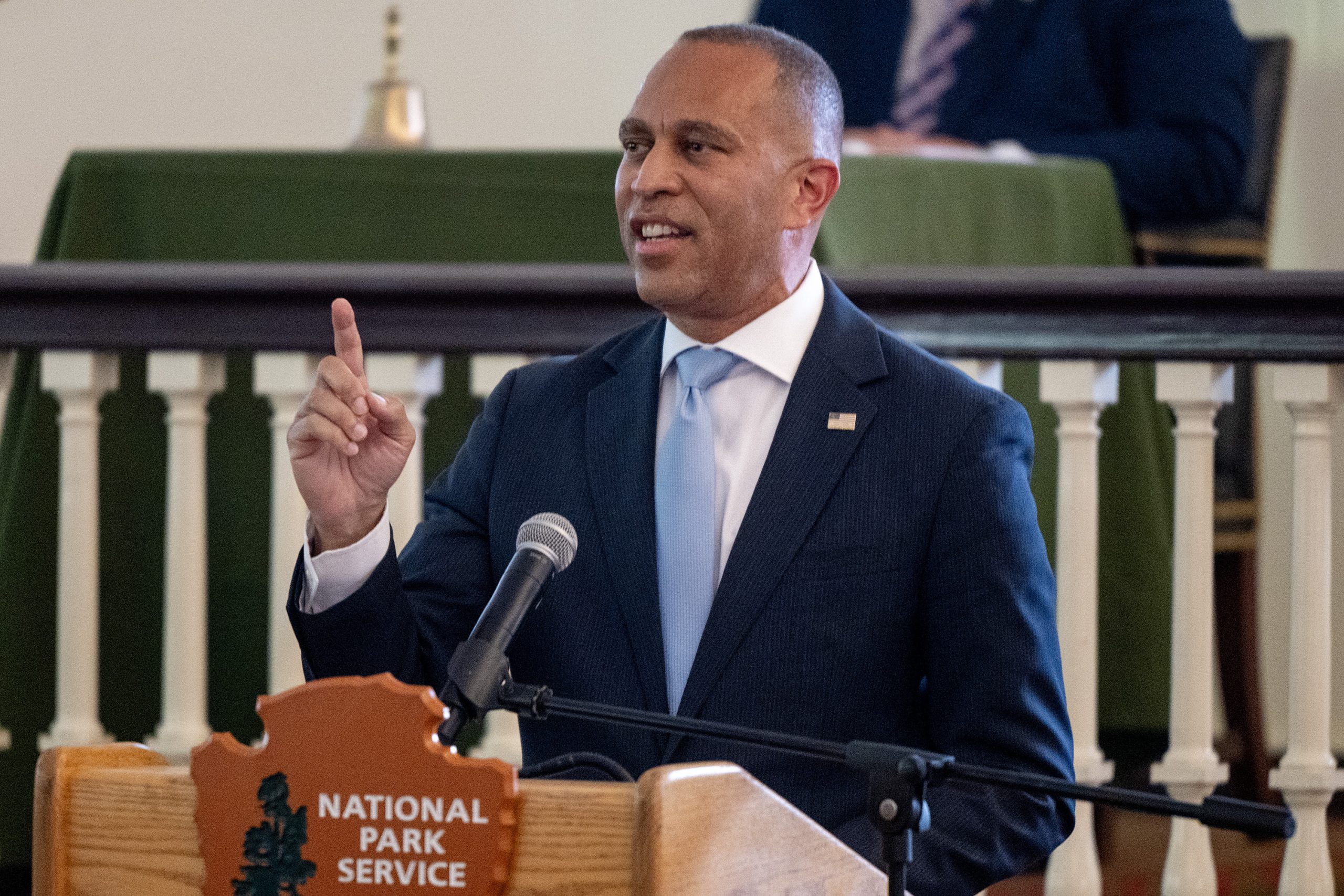
    House Democratic Leader Hakeem Jeffries addresses the Representatives meeting in Congress Hall. He said it was important to speak about the history of slavery in America. The gathering marked the 250th anniversary of the day the Second Continental Congress voted for independence.Tom Gralish / Staff Photographer

    U.S. Rep. Glenn “GT” Thompson, a Centre County Republican and dean of the Pennsylvania delegation, presided over the event. He said afterward that some of the remarks turned “a little political.”

    “But it is an excellent observation,” Thompson said. “We don’t have a king. We can thank George Washington for that.”

    Thompson was one of several Pennsylvania Republicans to attend the mostly Democratic event, but other top officials were noticeably absent.

    Pennsylvania’s top-ranking Republican federal official, U.S. Sen. Dave McCormick, did not attend. Neither did U.S. Sen. John Fetterman, a Democrat who has increasingly aligned himself with Trump and Republicans.

    U.S. Sen. Andy Kim (D., N.J.), who lives in nearby Burlington County, was the only senator to attend.

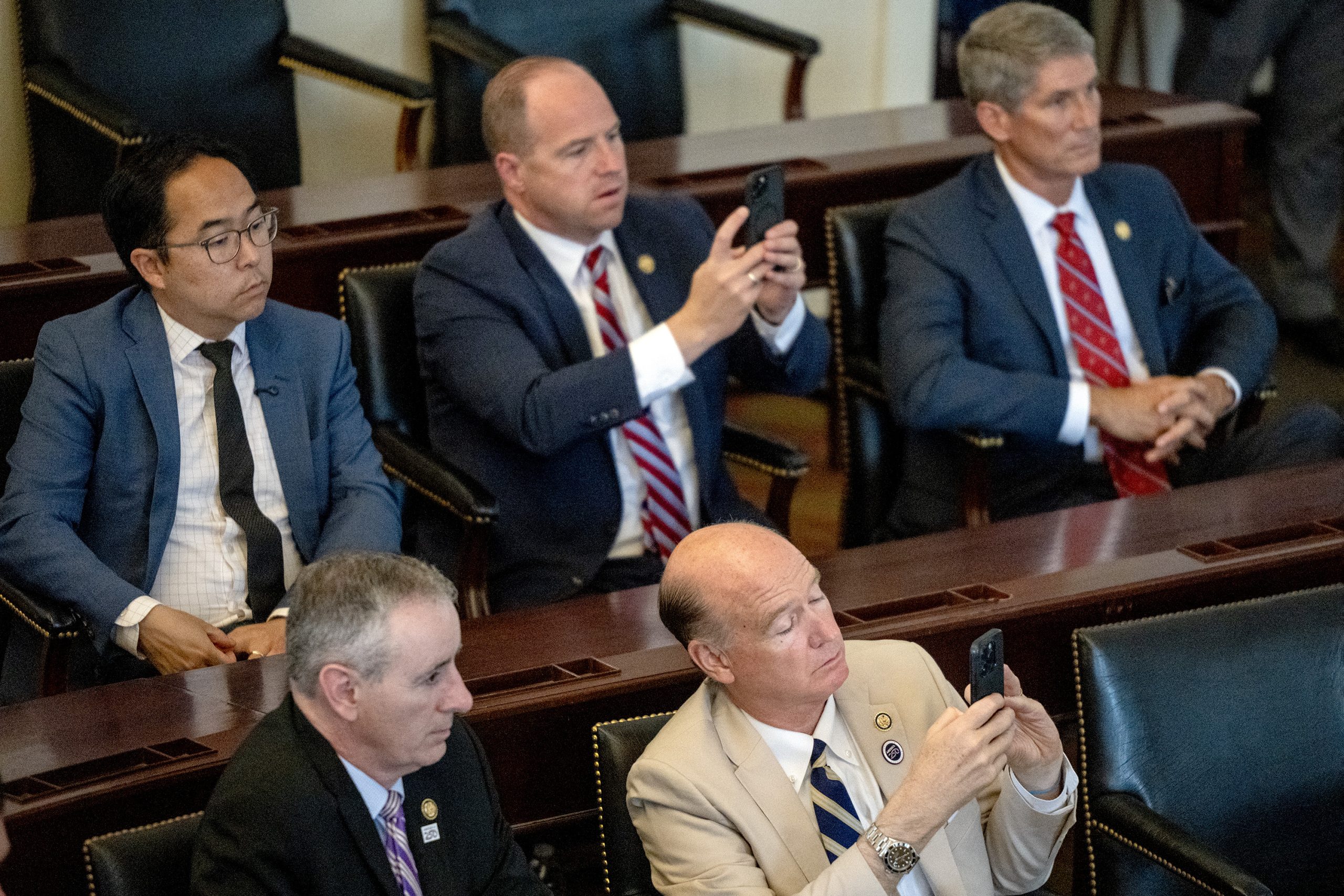
    U.S. Senator Andy Kim (left) of New Jersey joins House members.Tom Gralish / Staff Photographer

    ‘Let this sacred place awaken us’

    Since 1800, Congress has met outside Washington, D.C., on only extremely rare occasions.

    In 1987, a ceremonial joint session in Philadelphia marked the 200th anniversary of the Constitution, and in September 2002, more than 300 members met in New York City for the first anniversary of 9/11.

    Thursday’s gathering in Philadelphia was considered a ceremonial event, not a formal joint session, so the lawmakers did not debate legislation or cast votes in the room where they conducted that kind of official business in the earliest days of the nation.

    There weren’t defined political parties, all those years ago.

    But the fissures that soon arose in the nation’s first capital — and that have only become more entrenched since then — were evident both in and around Thursday’s event.

    The 45-minute ceremony was a bipartisan showing. A pair of Pennsylvania Republicans in particular, Thompson and U.S. Rep. Brian Fitzpatrick (R., Bucks), kicked off the day with a call to order and invocation. Others like U.S. Reps. Ryan Mackenzie (R., Lehigh), Lloyd Smucker (R., Lancaster) and John Joyce (R., Blair) also attended.

    Fitzpatrick, a moderate Republican facing a tough reelection campaign this year, and Boyle, a moderate Democrat, were among several speakers who talked about the anniversary being a moment for Congress to recommit to its founding goals.

    “Let this sacred place awaken us, a solemn charge that flows from what was proclaimed here 250 years ago,” Fitzpatrick said.

    Among the over 30 lawmakers, though, Democrats outnumbered their colleagues across the aisle. Jeffries addressed the room, while no members of House Republican leadership, who control the chamber, made an appearance.

    ‘A great balancing act’

    The day itself came after a chaotic few weeks in Washington, even during an unusually divisive two-year term.

    The most significant bipartisan legislation produced during Trump’s second term, a comprehensive housing bill that includes a home-repair program that originated in Pennsylvania, was temporarily scuttled when the president refused to sign it. His demands for a controversial voter-ID and elections reform bill first was derided by members of both parties.

    U.S. Rep. Brendan F. Boyle speaks as members of Congress gather for the ceremonial event.Tom Gralish / Staff Photographer

    Just 48 hours before Thursday’s gathering, that move was still causing turbulence on Capitol Hill as Republican House Speaker Mike Johnson canceled the rest of the week’s agenda because of disagreements around the legislation, known as the SAVE America Act.

    Johnson did not attend the event at Independence Hall.

    Shapiro, a Democrat and potential 2028 presidential candidate, made a veiled reference to the current Republican-led Congress’ failure to serve as a check on Trump. He said the founders set in motion “a great balancing act” that lawmakers were responsible for upholding.

    “Two and a half centuries later, we continue to work to find that balance, work that each of you is charged with taking up every single day,” Shapiro said.

    Even in the blocks around the lawmakers’ gathering, the tensions of the Trump era were evident.

    A few blocks away at the historic Christ Church, local advocates and interfaith leaders gathered before the congressional event to call out the president’s aggressive immigration enforcement tactics. One local member of Congress — U.S. Rep. Mary Gay Scanlon, a Delaware County Democrat — stood with them before joining her colleagues at Independence Hall.

    And just down the street at the President’s House, tourists saw an incomplete display after the Trump administration took down information that memorialized the nine people George Washington enslaved in Philadelphia during the nation’s founding.

    Boyle pointed to fights by “generations of Americans who refused to accept that liberty and equality belonged only to some.”

    “That struggle is not separate from the American story,” Boyle said. “It is the American story.”

  • The last legal obstacle for the Trump administration’s own President’s House panels has been removed

    The last legal obstacle for the Trump administration’s own President’s House panels has been removed

    The President’s House has been in legal limbo for weeks.

    Even though a Philly-based federal appeals court gave the green light to President Donald Trump’s administration to install its proposed panels to replace the slavery exhibit National Park Service staff dismantled in January, federal litigation out of Boston placed any actual changes to the site on hold.

    That obstacle was lifted Thursday by a Boston-based federal appeals court, just two days before the nation’s 250th anniversary celebration, and the Trump administration wasted no time.

    Hours after the ruling out of Massachusetts, Justice Department attorneys asked the Philadelphia-based Court of Appeals for the Third Circuit to take the final procedural step so the National Park Service “may begin work immediately and install its new exhibits.”

    The Third Circuit ruled last month that Philadelphia doesn’t have rights over the President’s House exhibit, and approved the Trump administration’s proposed panels, which historians criticized for whitewashing George Washington’s own culpability in the enslavement of nine people in his Philadelphia home.

    That ruling vacated a Philadelphia federal district court judge’s February injunction that ordered the National Park Service to restore the President’s House site to its state before any panels were removed in January.

    The federal government on Thursday requested the “immediate issuance” of a procedural order that would enable it to begin installing new panels and said it hadn’t done so before because of the ongoing litigation in New England.

    Still, it’s unclear when the new exhibits could be fixed to the historical site’s walls.

    A spokesperson for the U.S. Department of the Interior did not respond to questions about when the National Park Service intended to install the new exhibit and the time the installation would require.

    Instead, the spokesperson shared a statement saying the Interior Department had “encouraged Americans to visit our cultural and historic sites and engage in meaningful conversations about the moments that have shaped our country.”

    The new panels have been manufactured, Assistant U.S. Attorney Gregory in den Berken said in last month’s Third Circuit hearing.

    A spokesperson for Philadelphia’s Law Department said the city was reviewing its options.

    The change that led to the Justice Department’s request came from the Court of Appeals for the First Circuit, where a three-judge panel ruled the federal government does not have to reinstall before July Fourth exhibits the Trump administration had removed from national parks as part of its efforts to remove displays that “inappropriately disparage Americans past or living.”

    At least 50 exhibits were removed from more than 30 sites nationwide, according to court records.

    The First Circuit previously issued an administrative stay on most of a lower-court ruling that halted the Trump administration’s changes to the parks. Such stays are a way for an appeals court to maintain a status quo while the judges study the case.

    But the new order, which stays the entire ruling, is based on the arguments and facts of the case.

    The First Circuit rejected the Boston district judge‘s finding that anything but restoring the exhibits nationwide would cause irreparable harm.

    The district judge’s ruling ordered the National Park Service to “undertake a burdensome reinstallation and restoration project in short order,” the First Circuit ruling said, while the conservation groups that brought the lawsuit could not show they would be harmed directly by exhibits’ absence or alterations.

    The First Circuit judges assigned to the case were Chief Judge David J. Barron, appointed by Barack Obama, and Joe Biden appointees Gustavo A. Gelpí Jr. and Julie Rikelman.

    The ruling is “merely a temporary procedural setback,” said Brooke Menschel, an attorney with Democracy Forward that represents the conservation groups.

    “Unfortunately, for now, the decision allows the administration to continue removing and altering interpretive materials that are critical for millions of visitors to understand our nation’s history, right at the moment when so many Americans will be enjoying the parks over the upcoming semiquincentennial weekend,” Menschel said in a statement.

    Mayor Cherelle L. Parker vowed to “pursue every legal action possible” in an effort to reverse last month’s Third Circuit ruling.

    So far, Parker’s administration has not taken any action. Legal experts noted that none of the administration’s options are a slam dunk.

    One option would be to file an emergency stay request with the U.S. Supreme Court, which would be up to conservative Justice Samuel Alito to decide.

  • The America-turns-250 column Donald Trump doesn’t want me to write

    The America-turns-250 column Donald Trump doesn’t want me to write

    It was right after birthright citizen Folarin Balogun tapped in another game-winning goal for U.S. men’s soccer in the World Cup Wednesday night that I had a moment of clarity about where things are in America as our nation turns 250.

    I’d gone to Union Yards, the outdoorsy beer hall adjacent to Chester’s soccer palace, Subaru Park, not only to catch the game but also a vibe that I’d wanted to turn into this column.

    The euphoria after Balogun’s goal — a red-bearded man in a colonial tri-corner hat and the two older veterans who’ve saluted through all of the prematch “Star-Spangled Banner” jumping to their feet, as a little girl in cornrows danced on a table — was the bucket-list moment I’d come there for.

    I saw a beer-recipe melting pot of Americans cheering the immigrant-heavy rainbow coalition of U.S. soccer, showing yet again — just as we did in 1976, when I was 17 — that the people instinctively know how to celebrate what’s actually great about our country no matter how much our leaders try to muck it up.

    I’d joked with my editors earlier in the week that I might lose my columnist license (not an actual thing, although maybe it should be) if my piece that runs on the weekend of the United States Semiquincentennial wasn’t a Big Think essay on what the American Experiment all means — to the extent that anyone can actually think through the fireworks, traffic jams, and 100-degree temperatures.

    That’s when it hit me. That was exactly the column Donald Trump was counting on from me and every other opinion writer in America ahead of Independence Day. The 47th president needed a week when the pundits put on their wide-angle lenses and put away the magnifying glasses, while his “forgotten Americans” headed off to the beach or the fireworks show, or gorged themselves on six hours of World Cup soccer every day, and stopped watching the news.

    An international jewel thief needs to create a distraction. Because if you’d been paying attention during the nation’s summer vacation week, you’d have seen that Trump is robbing us blind.

    The July Fourth holiday gave the Trump regime an opportunity for the ultimate Friday news dump, the now time-honored tradition of releasing the worst stuff when people will be unplugged for a few days. In this case, the dump was a federally mandated financial disclosure form that revealed the stunning extent to which Trump has cashed in on his power and influence as president since taking office in January 2025.

    The top-line numbers defy belief. Trump, who reported earning at least $622 million in 2024, his last year as an out-of-power businessman, revealed that he made at least $2.2 billion in 2025, and it’s hard not to see a lot of this as coming from turning the institution of the American presidency into a cash cow.

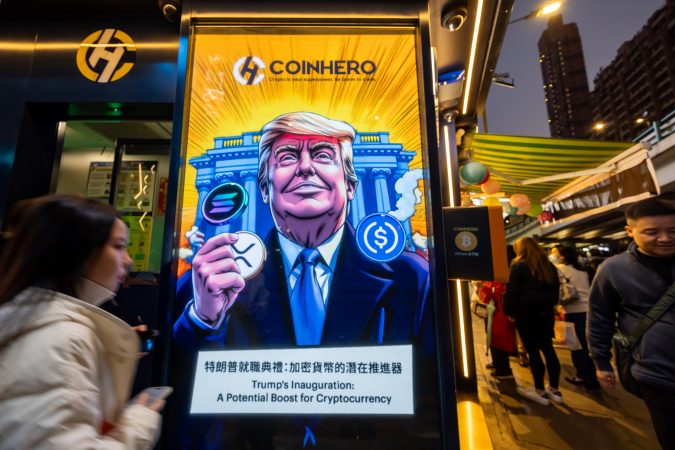
    Consider the $636 million Trump made by releasing a so-called meme coin — an asset whose value is tied to nothing beyond its own hype — that depicted his fist-pumping reaction to the 2024 assassination attempt in Butler, Pa., and which was released literally hours before he took the oath of office again. Not only is this a staggering amount, but Trump pocketed this cash by fleecing thousands of middle-class folks who voted for him.

    Publicly available information from last year showed that some 764,000 individuals who bought the Trump meme coin after its launch lost money. How many investors profited from the $TRUMP coin? Just 58 — and no one got nearly as rich as the man pictured on the coin.

    Yet, Trump’s other sources of wealth are almost as troubling — especially the real estate and crypto deals with foreign nations that have an enormous stake in the president’s policy decisions. That’s especially true when the investment arm of the United Arab Emirates bought nearly half of the Trump family’s main crypto venture, World Liberty Financial, contributing to his at least $1.4 billion in crypto-related earnings. The U.S. and the UAE are (or were) key allies in the war-torn Persian Gulf.

    But the important thing to understand about Trump’s money: It’s not a case in which the issue is that these deals are a lot shadier than the financial profiteering by, say, Jimmy Carter or Warren G. Harding or whomever. None of Trump’s 44 White House predecessors seriously profited from the presidency while they were still in office.

    Carter put his peanut farm in a blind trust. On the flip side, Spiro Agnew pleaded no contest to a felony charge for accepting just a few thousand dollars in the White House — not billions. There is absolutely no precedent for Trump’s naked greed and for how he trades on his office for personal profit.

    Yet, the president thinks that by declaring his crimes on a public document, voters will think it isn’t a crime — even if he releases that form over July Fourth to hedge his bets.

    Indeed, the scale and scope of the president’s grift is vast and overwhelming, which is the point. I’m just now getting to a different Trump family scandal, in which the president approved a lucrative tungsten mining deal with Kazakhstan whereby his sons are key investors, propped up with up to $1.6 billion in loans from Trump’s Pentagon.

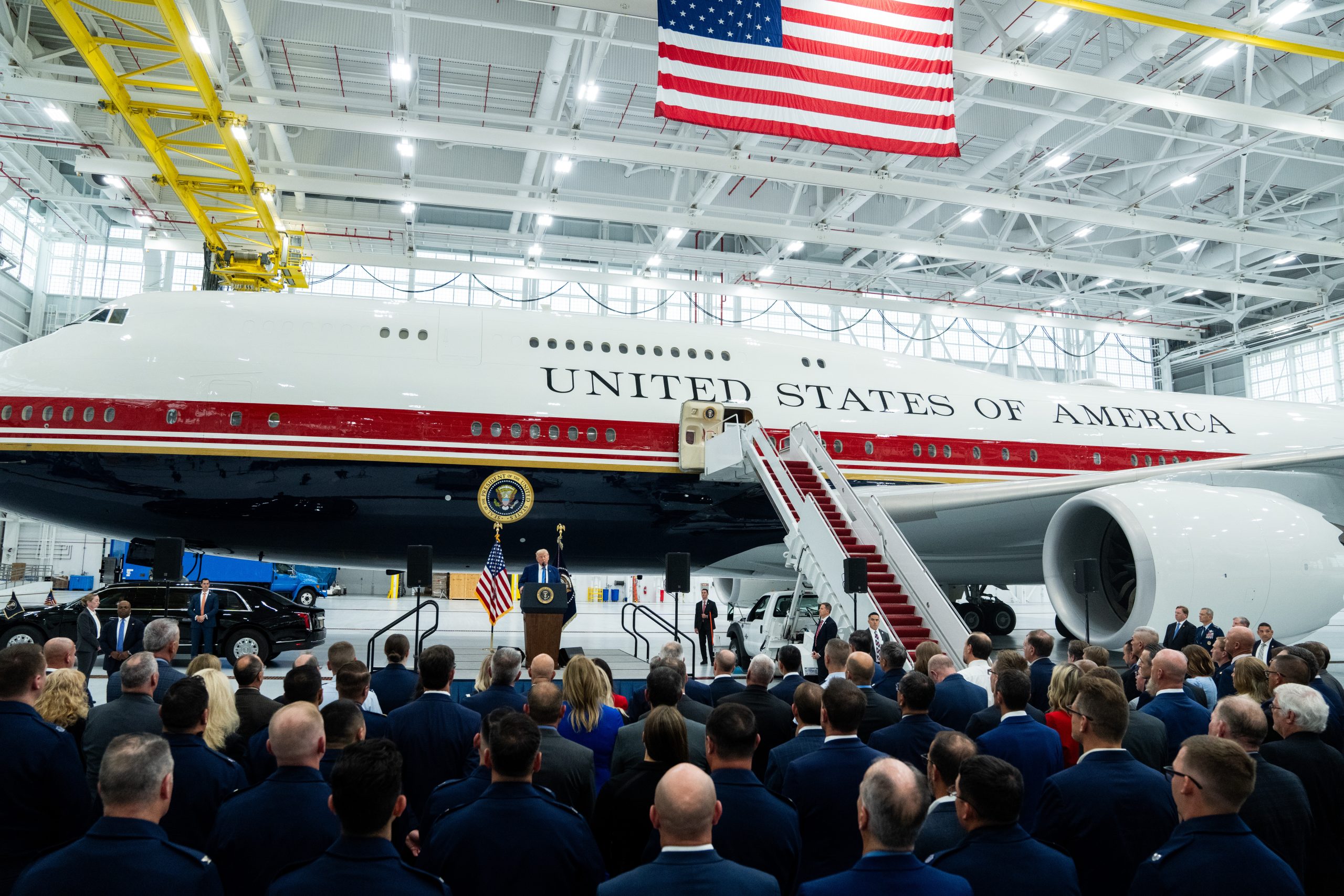
    Trump took questions about his family’s 2025 cash bonanza as — and you can’t make this up — he prepared to fly for the first time in the $400 million luxury jet that was gifted by Qatar and which, after a brief stint as Air Force One, is slated to go to Trump’s presidential library (a.k.a. Trump) in 2029.

    President Donald Trump delivers remarks next to the new red, white, and blue Boeing 747 jetliner donated by the government of Qatar that will be used as Air Force One, at Joint Base Andrews, Md., in June.ALLISON ROBBERT

    Still, the national media — and a lot of social media, as well — gave more attention to the Trump disasters that are easier to visualize, including troops guarding his green algae swamp at the Lincoln Memorial Reflecting Pool and empty fields at his Freedom 250’s disastrous Great American State Fair, which sits nearly empty while thousands pack bars for the international joy of the World Cup, or line the rainbow-colored routes of Pride Month parades.

    One of the many ironies here is that Trump is inadvertently doing America a July Fourth favor by highlighting a key part of the flawed wisdom of the nation’s founders. In declaring independence in 1776 and creating a government that aimed for people-powered democracy with checks and balances on unbridled autocracy, the mad scientists of the American Experiment also expressed their fears for our future.

    “The only path to a subversion of the republican system of the Country is, by flattering the prejudices of the people, and exciting their jealousies and apprehensions, to throw affairs into confusion, and bring on civil commotion,” Alexander Hamilton wrote in 1790. “When a man unprincipled in private life, desperate in his fortune, bold in his temper … is seen to mount the hobby horse of popularity, he may ‘ride the storm and direct the whirlwind.’”

    This Fourth of July week, I’ve been thinking a lot about the 1770s, but also the 1970s. For the second-half baby boomers like myself, it’s impossible not to experience the nation’s 250th anniversary without sepia-toned memories of July 4, 1976 — the U.S. Bicentennial.

    Things were both so similar and so different.

    Just as democracy stares into the abyss now, the assassinations, riots, and bombings of the late 1960s and early ’70s felt like the apocalypse to those who lived through it. But the Watergate scandal — yes, the very thing JD Vance and others on the far-right are dismissive of now — and the way courts and newsrooms and members of Congress responded had created a new hopeful yearning in the summer of 1976.

    That feeling is what made the day I enjoyed with my family as a 17-year-old a half-century ago — watching those glorious tall ships glide down the Hudson River from my dad’s high-rise office on 10th Avenue, then cramming into a subway to get to the fireworks over the Statue of Liberty — still bring back chills today. There was an unexpected sense of togetherness — and, naively in hindsight, that a storm had passed.

    It’s different in 2026. The whirlwind that Hamilton warned us about is directly overhead, and the man is still riding, however clumsily, the hobby horse. The institutions that saved us ahead of 1976 are shells of their former selves, as if a neutron bomb had struck.

    And yet, the fundamental essence of what can make America actually great someday remains intact: its people. This summer, millions of us are showing that Americans want things that can bring us together, and also to celebrate what makes us all different and all special, whether on a soccer pitch or a parade route laced with pink.

    The question is, how do we take this positive energy and stop the whirlwind? How do we celebrate a 250-year slow-bending of the arc of the moral universe without losing our focus on the ongoing crime scene at 1600 Pennsylvania Avenue?

    When the president’s Freedom 250 sets off 850,000 fireworks over Washington on Saturday, think of every single blast as about $2,000 that Trump pocketed for himself, and then it might be possible to comprehend the scope of his crime against our citizenry.

    Don’t let the president hijack the Fourth of July to rob the focus from what matters most, the things we need to write and discuss and march against every week: his unprecedented criminality. The bombs are bursting in air, but only when we unleash our people power and seek justice will we see the dawn’s early light of a new nation again.

    Happy birthday, America.

  • Top Trump official Sean Duffy promotes the President’s House in video with Mayor Parker

    Top Trump official Sean Duffy promotes the President’s House in video with Mayor Parker

    President Donald Trump’s administration has spent almost a year scrutinizing, and then dismantling, and then trying to rewrite history at one of Independence Mall’s most informative exhibits on slavery.

    All for one of Trump’s cabinet secretaries to promote the President’s House in a new video ahead of July Fourth.

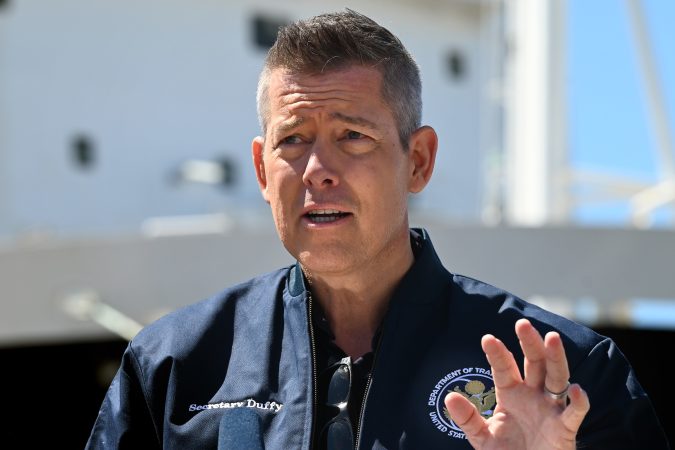
    Transportation Secretary Sean Duffy, who has been one of the Trump administration’s biggest cheerleaders for this week’s 250th anniversary celebrations, produced a video asking Mayor Cherelle L. Parker which Philadelphia historical sites visitors should see.

    Parker listed the highlights — the National Constitution Center, Independence Mall, the Liberty Bell, and ended her list of recommendations with the President’s House, which memorializes the nine people enslaved by George Washington in Philadelphia.

    “Reconnect with our history, recommit to the democratic values that we stand on, and have an amazing time,” Parker said.

    Cue Duffy showcasing pictures of the very panels at the President’s House that his boss wants to take down.

    The video, which was posted Wednesday to Duffy’s social media, appears to have been filmed in May, when Duffy visited Philadelphia while the city and the Trump administration were in the midst of a legal battle over the President’s House after the federal government removed the site’s exhibits earlier this year.

    A February court order allowed some of the panels to be reinstalled. Then, a ruling from the Third Circuit Court of Appeals in June said the Trump administration could replace the exhibits with its own materials, which are posted online.

    After the Third Circuit’s ruling, Parker said in a statement that: “I will pursue every legal action possible to reverse this decision. We cannot and WILL not rest until the full story of American history — including the existence of slavery at the President’s House here in Philadelphia — is told, for our Nation and the World to see.”

    On Thursday, a Boston-based federal appeals court removed the final legal obstacle that prevented the Trump administration from installing its own exhibits at the President’s House.

    This was not Duffy’s only visit to Philadelphia that coincided with a key event in the President’s House saga. Duffy joined Interior Secretary Doug Burgum in a visit to Independence National Historical Park in September 2025, just days after reports that the Interior Department planned to make changes to the President’s House.

    The secretaries were preparing for the Semiquincentennial celebrations. The Transportation Department, led by Duffy, has promoted road trips to a number of sites targeted by the Interior for changes, including Harpers Ferry National Historical Park in Virginia, in addition to the sites in Philadelphia.

    Duffy, a former MTV reality television star, has faced backlash for shooting a reality TV-style travel series with his family over the span of several months called The Great American Road Trip, meant to encourage celebrating the United States ahead of the 250th.

    A trailer for the series shows that he stopped in Philadelphia and visited LOVE Park and the Liberty Bell.

    In Wednesday’s video, which does not appear to be related to the series, Duffy says, “There’s no better place to go than where it all began in Philadelphia.”

    “This city is truly amazing, and the history that exists here,” Duffy said, “No one has it.”

  • Pope Leo XIV is speaking to the National Constitution Center live from the Vatican. Here’s what to know.

    Pope Leo XIV will accept the National Constitution Center’s Liberty Medal on Friday, delivering remarks live from the Vatican that will be broadcast inside the Sixth and Arch building.

    The U.S.-born pontiff’s speech is a major addition to Philadelphia’s already extensive lineup of activities and events on the eve of the United States’ 250th birthday on July Fourth.

    His speech will be particularly anticipated in Philadelphia given the Semiquincentennial and Leo’s deep ties to the Philly area.

    The Catholic leader has garnered attention for clashing with President Donald Trump’s administration, which will be further exemplified by his visit with migrants on Independence Day.

    His award acceptance speech also comes just two days after traditionalist Catholics in Switzerland defied him by consecrating bishops without his consent, which Leo called “a sin of extreme gravity,” the Associated Press reported.

    His Friday remarks were initially going to be broadcast on Independence Mall but it was moved inside due to extreme heat.

    Here’s what to know ahead of his Liberty Medal speech.

    What are Pope Leo’s connections to the Philly area?

    Not only is he the first U.S.-born pope, but he has connections to the Philly area — despite being from Chicago.

    Leo graduated from Villanova University in 1977 with a bachelor’s degree in mathematics. He received an honorary doctorate of humanities in 2014 from the Augustinian university.

    Those who knew him at the time described him as a Midwesterner with a sense of humor who was tuned in to global issues like immigration and poverty — and like anyone who goes to Villanova, a big basketball fan. He worked part-time at St. Denis Catholic Church in Havertown as part of the cemetery maintenance crew during his studies.

    In May, he passed along a surprise commencement message to this year’s graduates. In that message, he fittingly referenced America’s 250th anniversary.

    “May the graduates of 2026 always be faithful to the guiding light that has been so important for these 250 years,” Leo said.

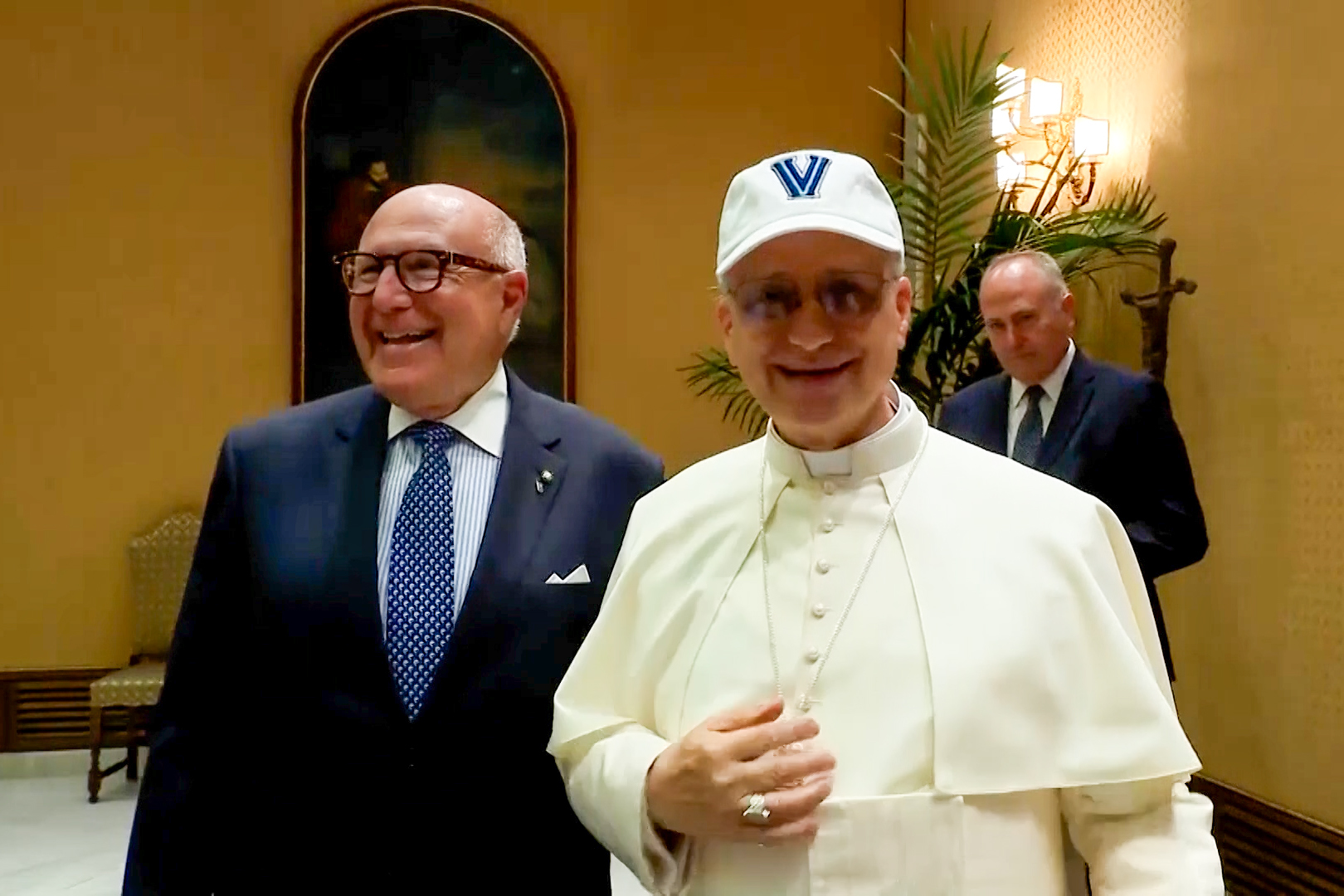
    This video screen grab shows Pope Leo XIV wearing a Villanova hat given to him during a meeting with an Italian heritage group.Associated Press

    Last month, a delegation from Philadelphia’s National Constitution Center met with Leo at the Vatican to present him with the medal. They would have been remiss to forget to celebrate his Philly connections.

    So they brought him a few local goodies: a bundle of Villanova swag, a replica of George Washington’s Acts of Congress, and, best of all, a Wawa tote bag filled with Tastykakes.

    Vince Stango, interim president and CEO of the Constitution Center, said the visit had “a real Philadelphia vibe that was unmistakable.”

    What’s the Liberty Medal?

    The Liberty Medal has been presented by the nonpartisan National Constitution Center since 2006, offering the esteemed prize to individuals and organizations who “strive to secure the blessings of liberty to people around the globe.”

    In Leo’s case, he’s receiving the award because of his work in promoting religious liberty.

    Previous recipients of the award include Ukrainian President Volodymyr Zelensky, the late U.S. Supreme Court Justice Ruth Bader Ginsburg, the late U.S. Sen. John McCain (R., Ariz.), and the late civil rights leader and U.S. Rep. John Lewis (D., Ga.).

    How do I watch?

    The National Constitution Center is streaming the ceremony live on its YouTube channel at 10:45 a.m. NBC10 will also broadcast the awards.

    Tickets to the event were previously made available to the public and other invited guests.

    What’s going on with the pope and Trump?

    Trump invited the pontiff to visit the United States on July Fourth to celebrate the 250th anniversary of the country. He declined.

    Instead, the pope will spend Independence Day visiting Lampedusa, an Italian island in the Mediterranean Sea located between Tunisia, Malta, and Sicily. It‘s a major entry point for migrants seeking refuge in Europe from North Africa. It’s one of the deadliest migration paths in the world, Reuters reported.

    Leo’s predecessor, Pope Francis, visited the island in 2013.

    Francis, who was close with Leo, also clashed with President Donald Trump and Vice President JD Vance on issues like immigration, and that tension has continued under the new pontiff.

    The pope said in November that the United States has been treating migrants “in a way that is extremely disrespectful” under the Trump administration. A month prior, he suggested that the United States’ treatment of immigrants is “inhumane.”

    Vance, who converted to Catholicism in 2019, said this week on Fox News that he finds the Vatican’s immigration views “troubling,” saying that “mass migration has victims.”

    Leo was also outspoken in his opposition to Trump’s war in Iran, and the Vatican declined to participate in Trump’s “Board of Peace” for Gaza.

    Trump has not held back on his criticism of the pope, calling him “WEAK on Crime, and terrible for Foreign Policy” in an April social media rant. He faced condemnation from Catholics — who have found themselves taking a side between the pope and the president — after sharing a now-deleted image of himself presented as Jesus.

    It will be telling whether Leo leans into his disagreements with the Trump administration, whether directly or indirectly, during his speech on Friday.

  • U.S. Mint releases new nickels, dimes, quarters, and half-dollar for 250th

    U.S. Mint releases new nickels, dimes, quarters, and half-dollar for 250th

    Check your change: You might have one of the U.S. Mint’s special-edition coins celebrating the nation’s 250th birthday.

    For one year only, circulating nickels, dimes, quarters, and half-dollars will feature new historical designs. Part of the U.S. Mint’s Semiquincentennial program, many of the coins entered circulation at the beginning of the year.

    “The program is the most significant redesign of the nation’s circulating coins in the past century,” said Jill Westeyn, acting chief of public affairs at the U.S. Mint. “These coins commemorate 250 years of American Liberty by reflecting our country’s founding principles and honoring our nation’s history.”

    What’s on the coins

    The quarter is a star of the program, boasting five different designs that highlight pivotal moments in American history.

    The Mayflower Compact, signed in 1620 as one of the New World’s earliest documents establishing self-government, inspired one of the quarter’s designs, which features the iconic ship.

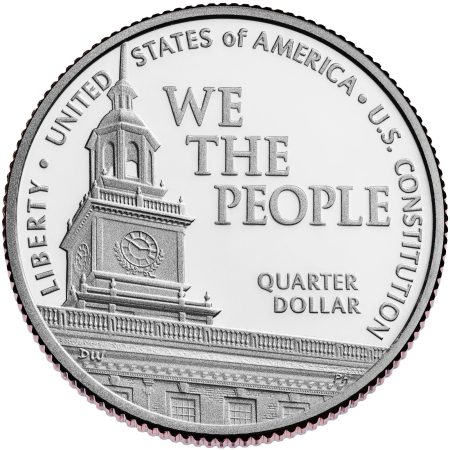
    Motifs from the Declaration of Independence, the Revolutionary War, and the U.S. Constitution appear on three of the other quarters. Images include Philadelphia landmarks like the Liberty Bell and Independence Hall.

    The fifth quarter honors President Abraham Lincoln’s Gettysburg Address. Meant to highlight the Civil War-era speech’s commitment to equality, the quarter depicts Lincoln on one side and clasped hands on the other.

    The quarters are scheduled for circulation in separate intervals throughout the year. So far, the Mayflower Compact Quarter, the Revolutionary War Quarter, and the Declaration of Independence Quarter have been released. The remaining two designs will enter circulation later in the year.

    The dime and half-dollar feature Liberty, an American allegorical figure of a mythical goddess. The dime includes her cap, a symbol of freedom in ancient Rome, and the half-dollar depicts Liberty gazing to her right, meant to convey looking toward the future.

    The nickel may look familiar with its portrait of President Thomas Jefferson, but an addition of the dual date, “1776 ~ 2026,” updates the coin for the anniversary.

    A collectible penny with the dual date is also available for purchase in annual sets sold on the mint’s website. The mint discontinued the copper cent in 2025 because it cost more to produce than it’s worth.

    The bipartisan Citizens Coinage Advisory Committee had reportedly proposed designs for the 250th that will not see the light of day, including coins that would have commemorated the end of slavery, the women’s suffrage movement, and the civil rights movement. But Treasury Secretary Scott Bessent, tasked with making the final design choices, did not pick any of those.

    Other coins

    President Donald Trump’s 24-karat gold coins, which feature his portrait and were also intended to highlight the country’s 250th anniversary, are not among the program. The U.S. Commission of Fine Arts voted unanimously to approve the design in March, but the coins are not slated for production until after July 4.

    The U.S. Mint has approximately 1,400 employees across four production facilities (one of which is in Philadelphia), a bullion depository, and its headquarters in Washington, D.C. It produced 8 billion coins during fiscal year 2025, per the organization’s annual report.

  • As Congress comes to Philadelphia, Josh Shapiro takes center stage in America 250 celebrations

    As Congress comes to Philadelphia, Josh Shapiro takes center stage in America 250 celebrations

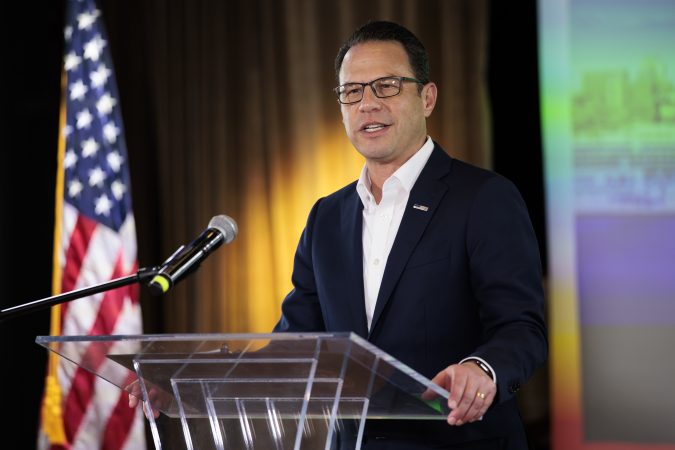
    Pennsylvania Gov. Josh Shapiro has a message for members of Congress when they convene at Independence Hall in Philadelphia on Thursday:

    This is the birthplace of democracy, and with it, comes the responsibilities that America’s founders left behind.

    “The founders made clear that we have a real responsibility to do the work to constantly perfect our union,” Shapiro said in an interview this week, ahead of his speech before the ceremonial meeting of Congress, marking 250 years since the Declaration of Independence was signed in that same building. “And that the Congress of the United States has a unique responsibility in that to be a check on the executive branch.”

    Those words come at a critical inflection point in America’s history, amid a tumultuous presidency, and as Shapiro is rumored to have aspirations of a White House bid in 2028. The first-term Democratic governor will appear before approximately 40 bipartisan members of Congress in Old City at the event convened by U.S. Rep. Brendan Boyle (D., Pa.), speaking to the lawmakers from across the country about their collective duty to the public. Shapiro will attend numerous other 250th celebrations across Philadelphia in the coming days, during which he said he plans to share his optimism for America’s future and deep concerns that President Donald Trump has led the nation astray from its founders’ design.

    “I don’t think patriotism belongs to one party. I don’t think it should ever be partisan,” Shapiro said. “Unfortunately, Donald Trump routinely divides us, routinely injects partisanship into his definition of patriotism, and his actions, in many ways, are the opposite of patriotism.”

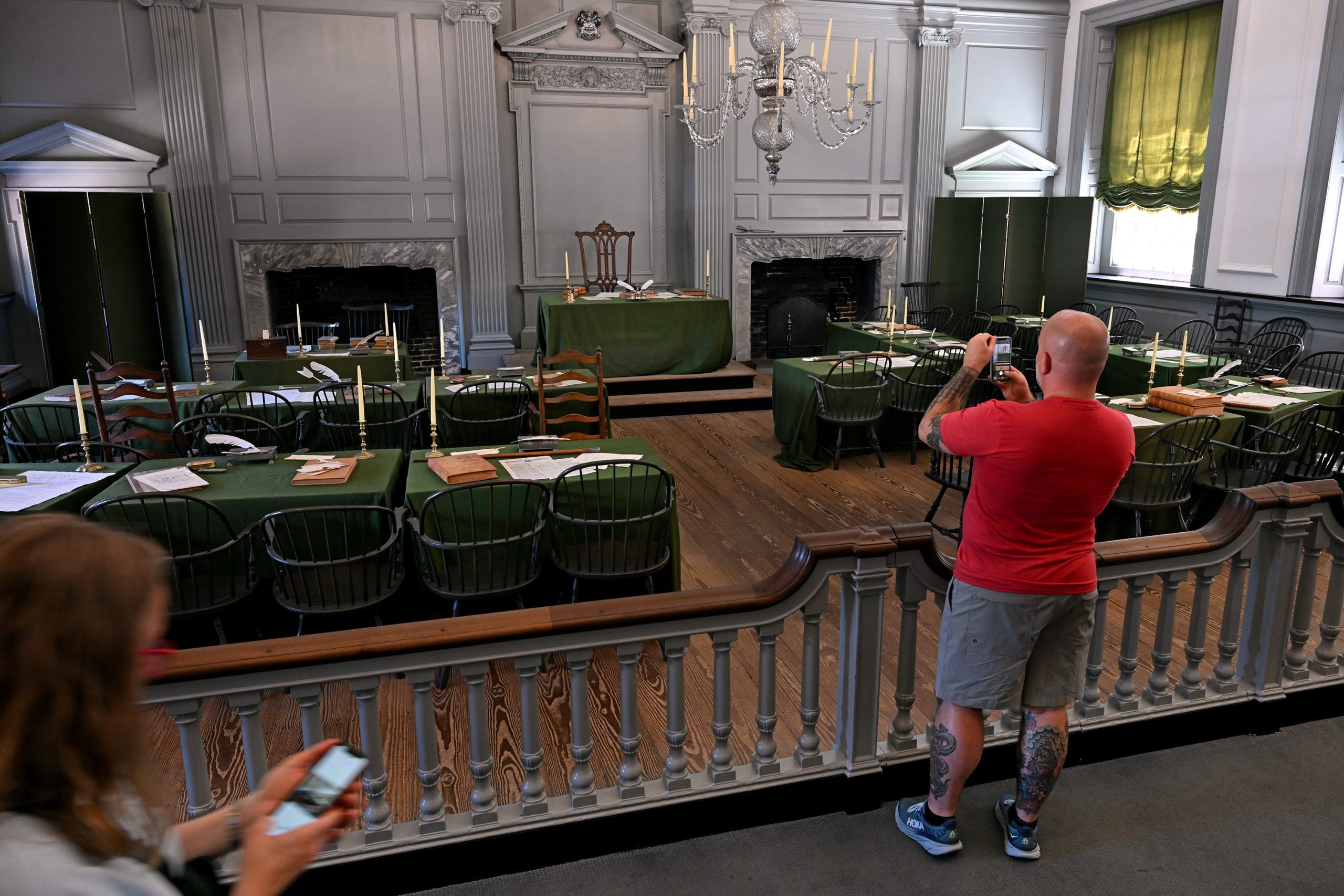
    Assembly Room in Independence Hall (Pennsylvania State House) Monday, June 15, 2026. This is the exact space where the Second Continental Congress met and the Declaration of Independence was adopted.Tom Gralish / Staff Photographer

    As Trump plans to spend America’s 250th birthday hosting a political rally on the National Mall — with no plans to visit Philadelphia, the city where the nation was founded — Shapiro sees his own role as a unifier, and in direct contrast to Trump. As attention shifts to Philadelphia this weekend, he’ll appear on the national stage from sunup to sundown at events and on frequent TV hits — all with a home-turf advantage for his 2028 presidential prospects, as the governor of the nation’s quintessential swing state and also most important to the country’s founding.

    “[Celebrating the 250th] allow the spotlight to shine on Shapiro, even though it’s not entirely about him,” said Alison Dagnes, a political-science professor at Shippensburg University. “Do I think that helps his ambitions? Sure.”

    ‘Direct contrast’

    Sitting with Shapiro in his Harrisburg office earlier this week, it’s undeniable that he’s a history nerd — another reason why he was built for the moment.

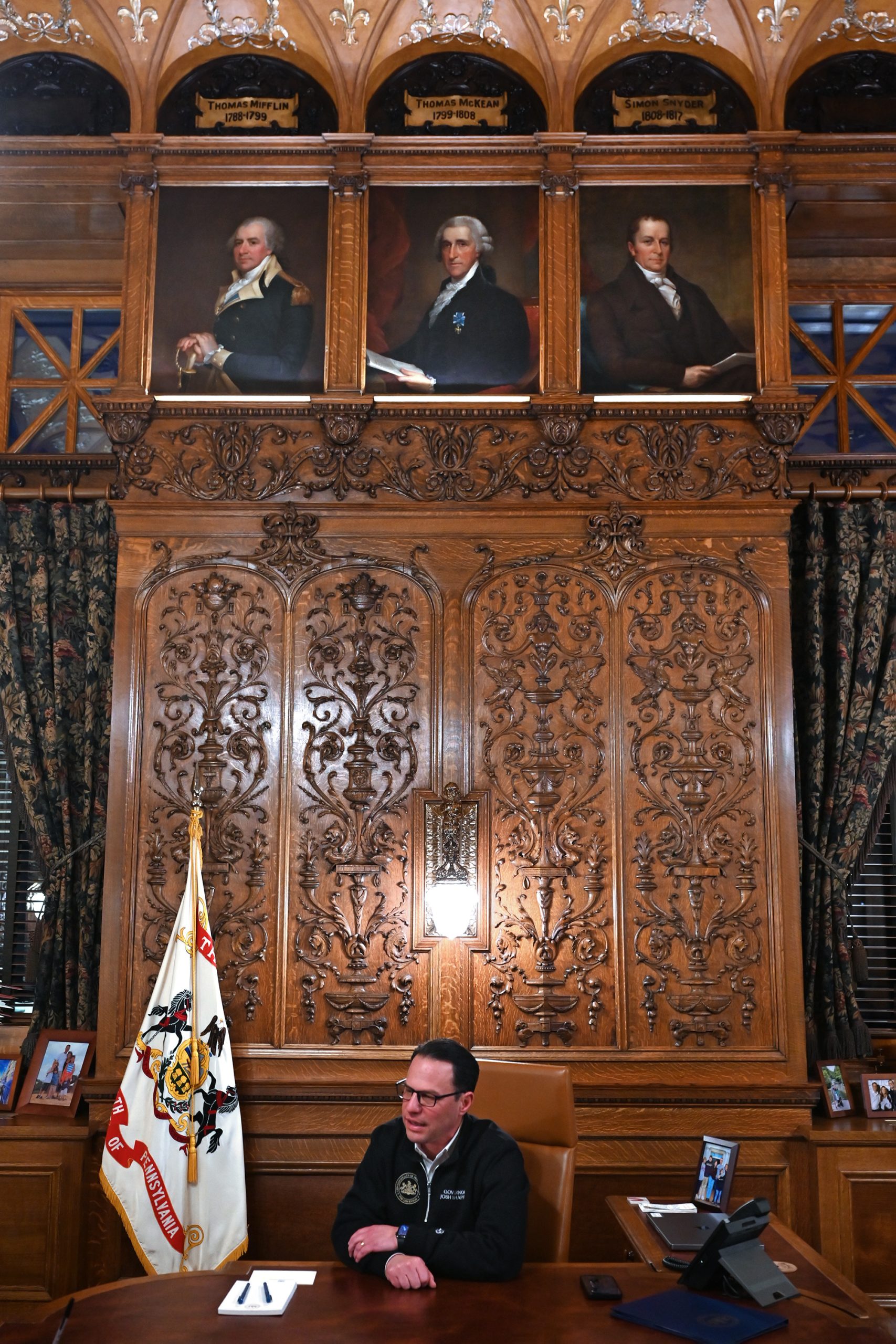
    He casually quotes segments of The Federalist Papers, and references his favorite story about Benjamin Franklin‘s fixation on a half-sun on the back of George Washington’s chair during the 1787 Constitutional Convention, which Franklin remarked during the U.S. Constitution signing that “it is a rising and not setting sun.” Without having to look for its location, he points to his right to a portrait of Franklin, one of his predecessors as governor of Pennsylvania, hanging on his office wall. He notes lesser-known Pennsylvanians who played an important role in the nation’s founding whom he plans to highlight over the coming days.

    “You know, I hate to quote a guy not from Pennsylvania,” Shapiro said, returning to The Federalist Papers to recite James Madison’s concerns about giving an executive too much power.

    Gov. Josh Shapiro in the Capitol in Harrisburg Feb. 21, 2023.Tom Gralish / Staff Photographer

    “If Madison were here today, he’d be really concerned about how one man has accumulated so much power and is wielding it in really dangerous ways, and I hope that at this 250-year mark we find our way back to that balance and back to the constraints on the people who lead our government,” he said.

    Shapiro sees his leadership style as a “direct contrast” to Trump’s, especially at this moment.

    “[Trump] restricts peoples’ freedom and liberties,” the governor added. “He whitewashes our history. That doesn’t further a sense of community, that doesn’t further patriotism. All that does is divide us, and I refuse to participate in that.”

    But for the next few days, Shapiro said his approach to the 250th celebrations is to: “Celebrate America, find ways to bring people together, and to have some fun in the process.”

    Fair games

    Despite his overtures of political unity, Shapiro has faced accusations from Republicans in recent days for playing partisan games over Pennsylvania’s participation in Trump’s 16-day Great American State Fair. Shapiro, in addition to several other Democratic governors last week, announced that Pennsylvania would not take part in the fair due to his administration being unable to secure any state businesses to sponsor the exhibit. Staffing and sponsoring the exhibit on the state’s dime would have cost $700,000 that would be better spent on in-state 250th events, he said this week.

    In the weekend that followed, Pennsylvania’s U.S. senators, Republican Dave McCormick and Democrat John Fetterman, made a push to fill the state’s empty exhibit. By Tuesday, it was filled with antique flags lent by a York County man, bags of potato chips from Snyder County, and a Christmas tree display from Fayette County, among other Pennsylvania-centric items.

    Pennsylvania’s pavilion showcases state history and memorabilia at the Great American State Fair on June 30, 2026, in Washington, D.C.Sam Janesch / Staff

    Some of the businesses originally told Shapiro’s office they didn’t have enough time to participate. But when McCormick and Fetterman approached them with the idea to fill the empty pavilion, they joined in.

    “They obviously had a change of heart at the last minute. That’s fine,” Shapiro said about the revived Pennsylvania pavilion.

    State Treasurer Stacy Garrity — Shapiro’s Republican challenger for governor, who has aligned herself with Trump — in a statement called Shapiro the “only career politician who has politicized America 250.”

    “Josh Shapiro put his political ambitions above his commonwealth and his nation when he pulled Pennsylvania out of the national celebration of our 250th birthday in a pitiful attempt to score cheap political points with the liberal wing of his party,” Garrity said.

    Beyond the 250th

    Shapiro’s strength as a politician has always been his ability to appear “harmonizing” and bringing people together, dating back to his days as a Montgomery County commissioner, Dagnes said.

    A careful politician, Shapiro is known to stick to his message and has faced criticism from some fellow Democrats for his well-rehearsed statements.

    When Shapiro delivers his messages of unity and freedom to a broader audience in the coming days, voters are likely to view them as authentic — one of the most important qualities to any presidential hopeful, she added.

    “If [California Gov.] Gavin Newsom is the guy who’s gonna punch Trump in the face, then Shapiro is going to be the guy who’s like, ‘No, let me offer you an alternative,’” Dagnes said.

    “It’s what he should be doing right now, because this is what America is about,” she added.

  • Philadelphia’s historic sites draw tourists from around the world. They’re getting an incomplete version of the President’s House.

    Philadelphia’s historic sites draw tourists from around the world. They’re getting an incomplete version of the President’s House.

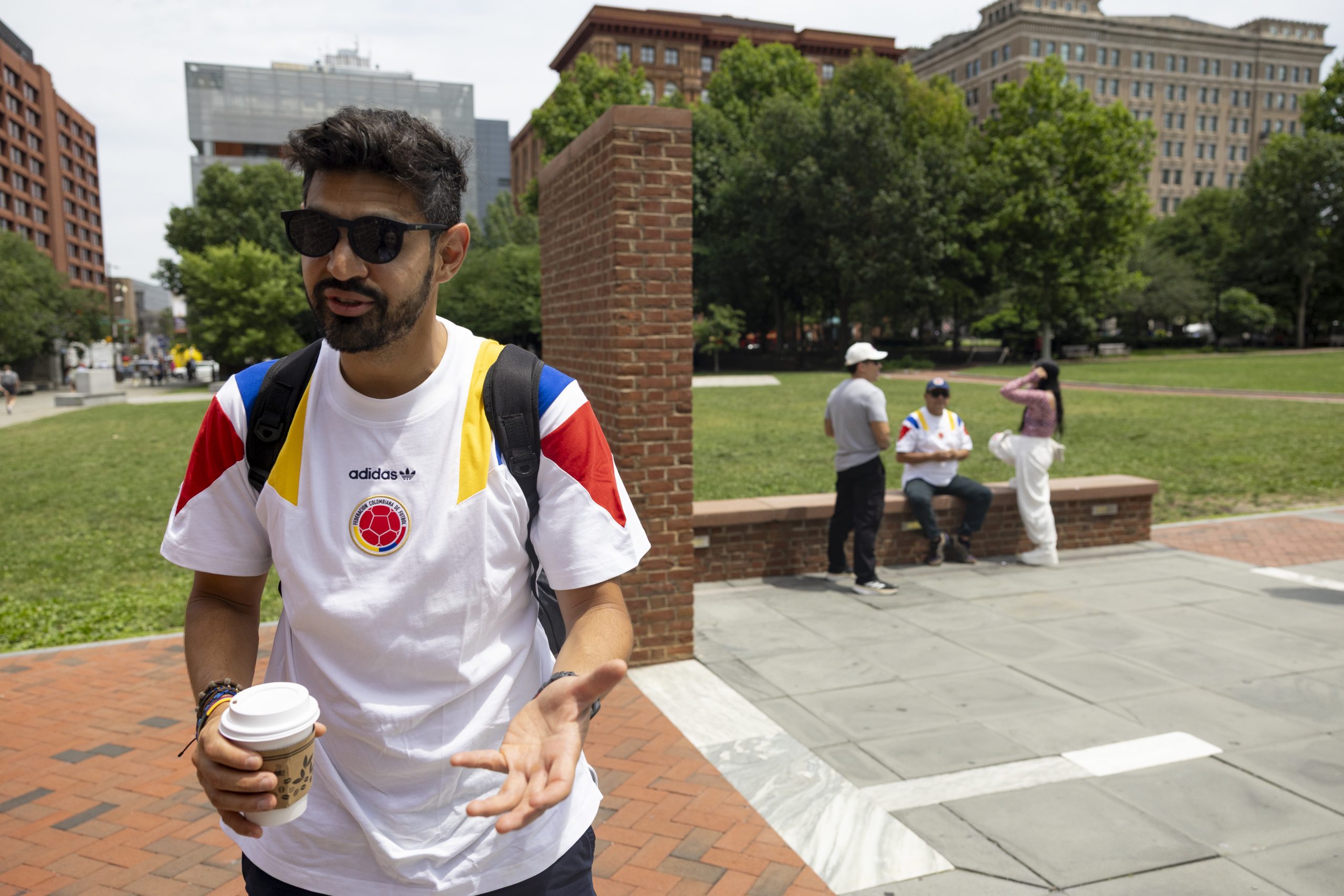
    On a sweltering and humid summer afternoon — as tourists and historical reenactors milled about Old City ahead of 250th anniversary celebrations — Cristian Marín guided his family through the President’s House.

    Loyal soccer fans, Marín’s family had traveled from Colombia to visit their son in Philadelphia, attend the World Cup matches, and see the Revolutionary Era sites.

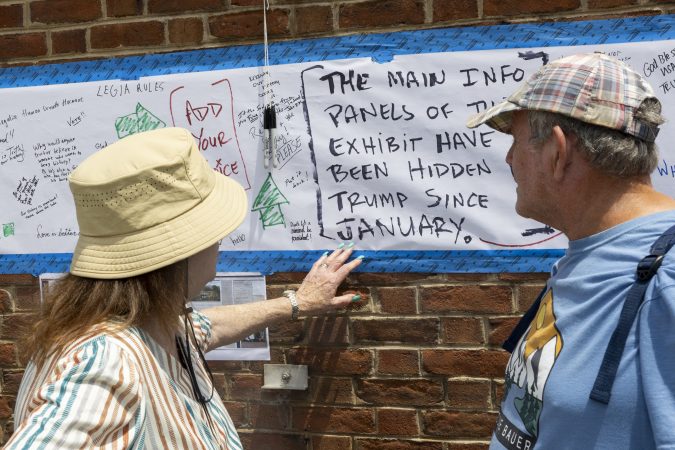
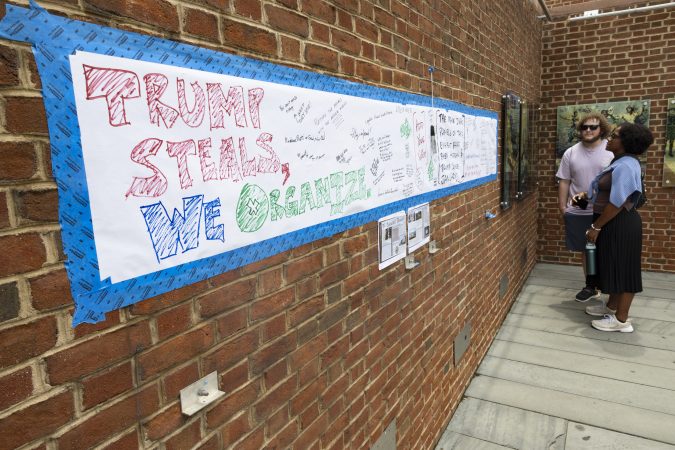
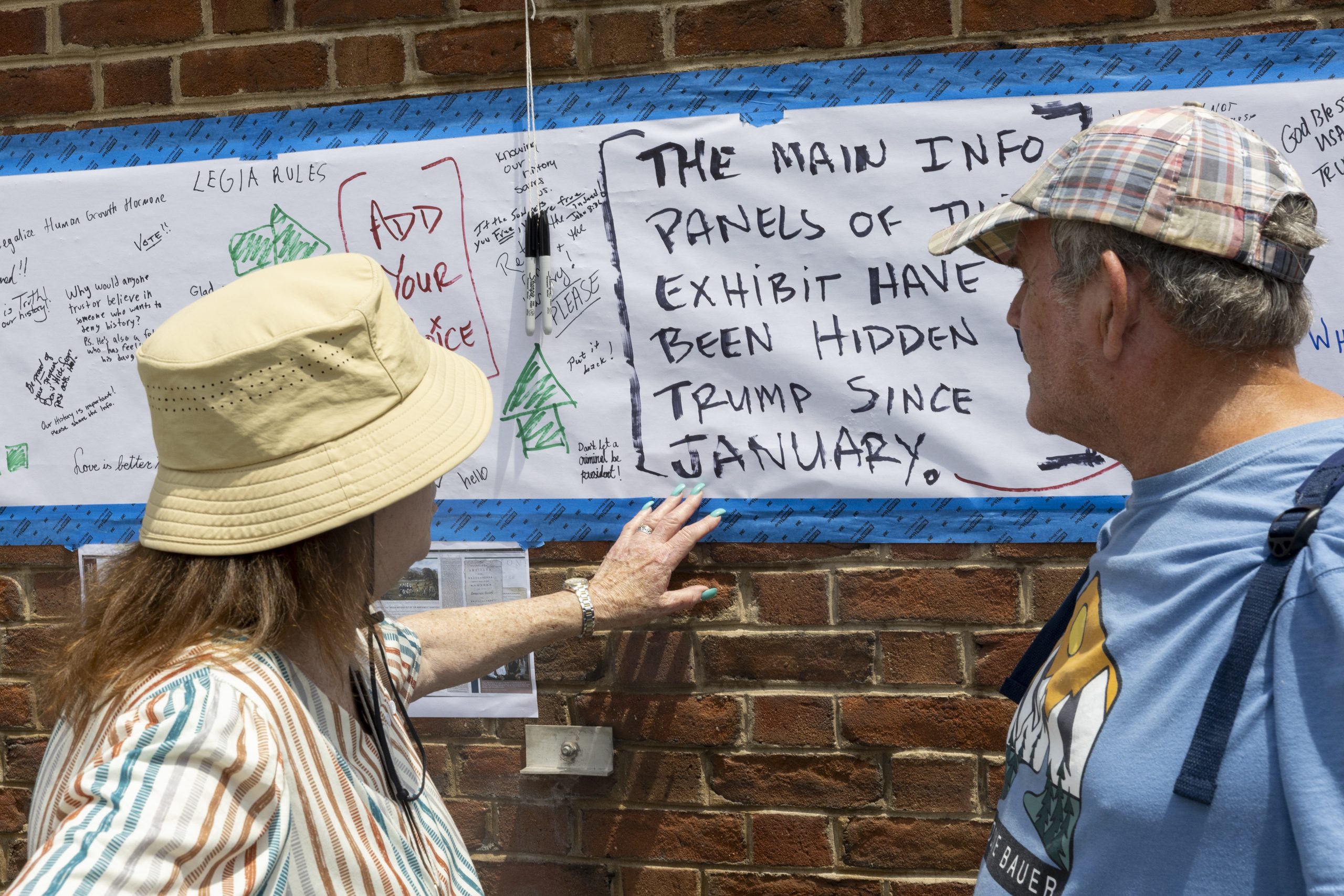
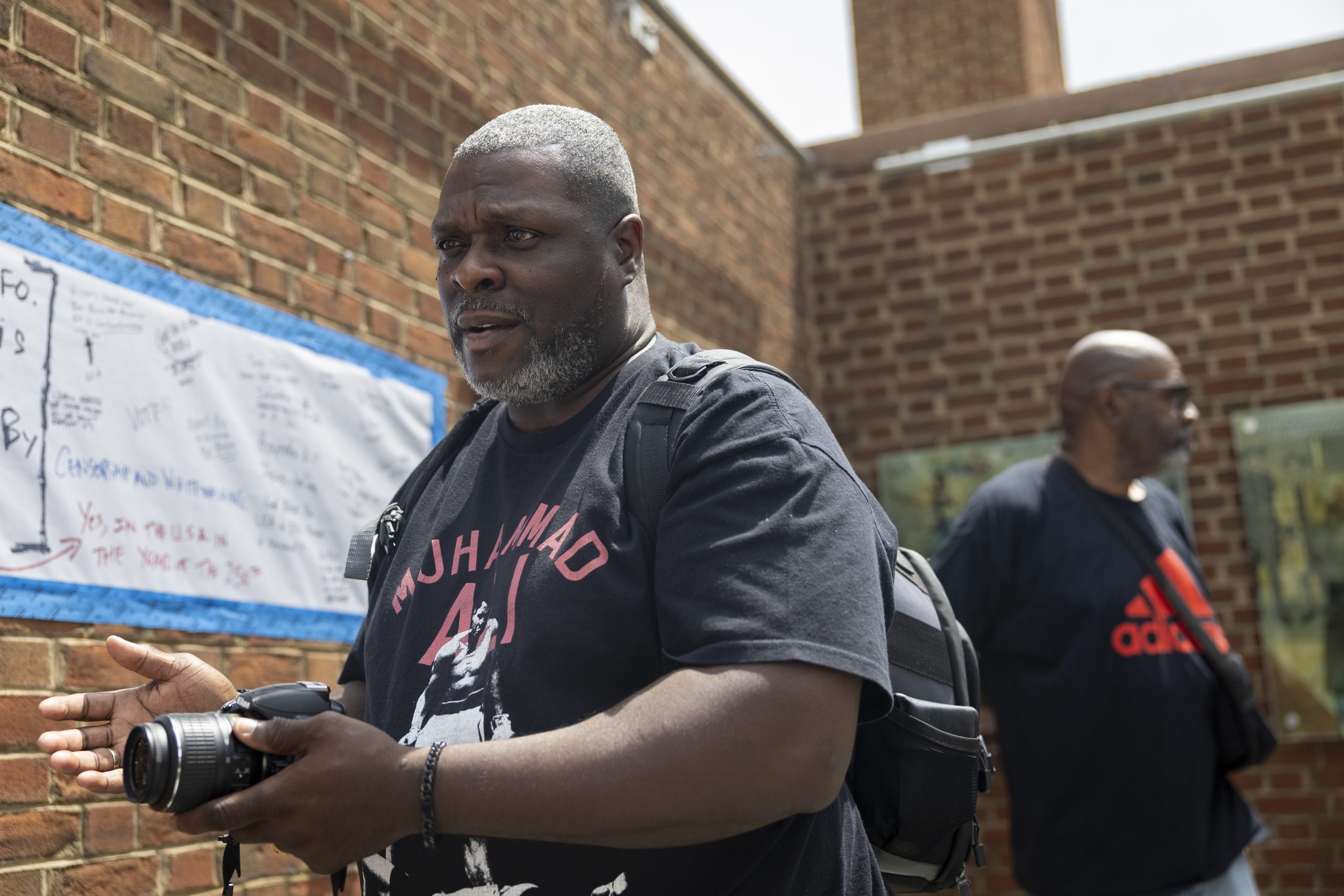
    But it was up to Marín, 37, to play tour guide last Friday and explain to his family why large gaps of brick wall were covered by paper adorned with handwritten messages expressing their indignation with President Donald Trump after his administration removed exhibits about slavery at George Washington’s former home in Independence National Historical Park.

    Marín’s family started laughing from pure disbelief about the “craziness of the situation,” he said.

    Marín’s relatives are among an influx of tourists visiting Philadelphia in the lead up to the city’s Semiquincentennial festivities only to find themselves confronted with evidence of the largely partisan battle playing out over how to tell the complicated story of America’s founding.

    “For me, it’s shocking to see a country trying to erase that history,” said Marín, a freelance journalist. “I think it’s important to remember our past in order to just not repeat those kinds of things.”

    Cristian Marín, 37, tours the President’s House in Independence National Historical Park last week. Aidan T. Gallo / Staff Photographer

    Ahead of the 250th, both Philadelphians who have been engaged in the fight to protect historical exhibits and tourists who have wandered through the President’s House for the first time, have lamented the Trump administration’s changes to the exhibit, which was largely dismantled by the administration earlier this year.

    They told The Inquirer that the missing panels, such as those that discuss the brutality of slavery, do a significant disservice to understanding the full picture — even the ugly parts — of U.S. history.

    “History is going to be out there, and the more we share history, the better for everybody,” said Hector Vargas, 40, from New York. “For the new generation, and even ourselves, because this is something from the past and we need to understand better — what happened and how this great country basically became the great country it is.”

    The Philadelphia Convention and Visitors Bureau estimates that from 250th-related events alone the city will welcome over 1.5 million overnight visitors in 2026.

    But the turmoil facing the President’s House is hanging over the celebrations, as the site’s stakeholders and the Trump administration battle over which version of history residents and visitors will see as they celebrate on Independence Mall.

    Judges presiding over lawsuits related to the President’s House or other threats by the Trump administration to change historical content at national parks have viewed the Fourth of July as a deadline to set the record straight as to whether the federal government has the authority to rewrite history.

    Some advocates believe the Trump administration saw it that way, too.

    Visitors read unofficial signage put up to protest the Trump administration’s changes to the President’s House site, which memorializes the nine people enslaved by George Washington in Philadelphia. Aidan T. Gallo / Staff Photographer

    The Inquirer reported that the federal government also quietly removed mentions of slavery from Independence Hall and a panel under Thomas Jefferson’s portrait at the Second Bank — sending a new wave of outrage among historians and advocates ahead of this weekend.

    “In the 250th anniversary of the founding of the Declaration of Independence, there’s probably increased impetus and motivation to get these changes installed before the dawn of the Fourth,” said Paul Steinke, executive director of the Preservation Alliance for Greater Philadelphia.

    ‘They want to make us believe that slavery did not happen’

    Perched on folding chairs bordered by patriotic banners that flapped in the wind, dozens of Philadelphians spent their Friday night at the People’s Plaza, a concrete gathering space just steps away from the President’s House eight days before the 250th anniversary.

    A truck displaying a digital screen with the name of the event, “Trump Fascism: Historical Erasure and the Battle Over the Truth,” parked across the street.

    With Independence Hall towering behind them, state Rep. Chris Rabb, attorney and advocate Michael Coard, civil rights organizer Masaru Edmund Nakawatase, and visual artist Dread Scott railed against the federal government’s changes to history at an event hosted by Refuse Fascism, an anti-Trump organization.

    The gathering is one of many events opponents to the Trump administration’s actions are holding in the days surrounding the 250th. Coard’s group, Avenging the Ancestors Coalition, is hosting its annual Black Independence Day on July Fourth at the President’s House.

    “We have so much power and it scares these people. If it didn’t scare them, why would they be worried about this exhibit right here?” Rabb (D., Philadelphia) declared, pointing at the President’s House.

    Rabb, who will represent parts of Philadelphia in Congress after winning the Democratic primary for the Third District in May, has often spoken of how he is a descendant of both a signer of the Declaration of Independence who enslaved people and of Black abolitionists.

    The Trump administration had spent a year eyeing the President’s House and other exhibits before they abruptly dismantled the site in January, just weeks into the nation’s 250th year. Last year, the president had issued an executive order directing parks to conduct a content review of materials that could “inappropriately disparage Americans past or living.”

    Subsequent legal battles have allowed some — but not all — of original panels to be reinstalled, though the administration can now install its own spin on history at the President’s House, the Third Circuit Court of Appeals in Philadelphia has ruled.

    But the struggle to confront the full scope of U.S. history is baffling to some visitors, like Camila Ordenana, 24, from Ecuador. Ordenana, who ventured from Guayaquil to Philadelphia to attend a World Cup game, said she has never seen this kind of censorship in her other travels.

    “It is weird, because we have been to several places, several historical cities, like, I can remember going to the U.K. or going to Germany, and you can learn about the experience in a very neutral and respectful way,” Ordenana said.

    Katrie White, 53, from Illinois, traveled to Philadelphia specifically for sightseeing to learn more about African American history. She said she was disturbed by the removal of the signs.

    “They want to make us believe that slavery did not happen,” White said. “And that’s how it affected African Americans, that it wasn’t a big deal, that it made us better. But of course, we all know that it didn’t, and it really did affect us. It was a trauma that is still carried on to this day.”

    Many Philadelphians appear to agree.

    A recent Suffolk University / Inquirer poll found that a quarter of city residents see preserving historic sites as Philadelphia’s top responsibility to the nation ahead of the 250th.

    Richard Porter (left), 52, of Michigan, at the President’s House last week.Aidan T. Gallo / Staff Photographer

    Gathered by the Market Street entrance of the President’s House last Friday, looking at the colorful illustration panels that remained, Richard Porter grappled with the impact of the removals, saying that without the educational information, “We’ll repeat it over and over again.”

    The Michigan resident said that the country is at a point where it needs to move forward but that the changes to the President’s House are sowing further divisions.

    “This is an everyday battle. It’s not just today or for the 250; this is all the time,” Porter said.