President Donald Trump and his appointees are obstructing the free press. Calling reporters the enemy of the state; suing newspapers that publish things he doesn’t like; demanding that television stations fire hosts; arresting and serving reporters with subpoenas — the attacks are real and often successful.
It’s hard to know what to do to protect freedom of the press, but in the Delaware Valley, there is a clear, straightforward action we can take to fight Trump’s censorship.
The Federal Communications Commission (FCC) is trying to exert control over which news gets on the air by threatening to withdraw the broadcast licenses that are required for stations to transmit their signals over the airwaves. Locally, it is reviewing the license held by WPVI, or 6abc.
Why ABC stations? Trump has long tried to force the Disney-owned company (which also owns the ABC network) to pull two shows that have been critical of him and his administration: The View and Jimmy Kimmel Live! — which both air on WPVI.
Unlike other attacks on the media, this one we can stop.
The FCC must seek “community input” before arriving at any decision about the fate of WPVI’s broadcast license. You can tell the FCC to stop attacking the free press by clicking here and filling out the one-page form. Take time to tell the Trump administration and the FCC that freedom of the press is a foundational principle.
A free press was so important to our “Founding Fathers” that it was listed in the First Amendment of the Bill of Rights: “Congress shall make no law respecting an establishment of religion, or prohibiting the free exercise thereof; or abridging the freedom of speech, or of the press; or the right of the people peaceably to assemble, and to petition the Government for a redress of grievances.”
Disney and WPVI are not perfect. There is plenty not to like, but the solution to the problem of corporate-controlled news is to break up the corporate giants, not to replace them with other corporate giants that will support Trump.
It’s unbelievable that those conservatives who so often talk about the original intention of the Constitution are silent as Trump destroys the constitutionally mandated freedom of the press.
It is appalling.
And too often, we can do nothing to support the free press under attack. This time, we can.
Lance Haver is the consumer reporter for the Philadelphia Hall Monitor, a worker-owned news service supported by the Lenfest Foundation. Lance@LanceHaver.com
Even the Freedom Fuel Network promoted by President Donald Trump isn’t immune to rising gas prices.
Yet, the Philadelphia-area network of gas stations is expanding anyway, according to the company’s website.
The enterprise, currently made up of 25 stations spread across the region, garnered national attention earlier this month when it began selling regular gas for $3.47 a gallon — a nod to Trump, and 40 to 50 cents cheaper than other stations.
Gas station owners suddenly undercut, political observers, and government watchdogs wondered how long the promotion would continue.
It turns out, not long.
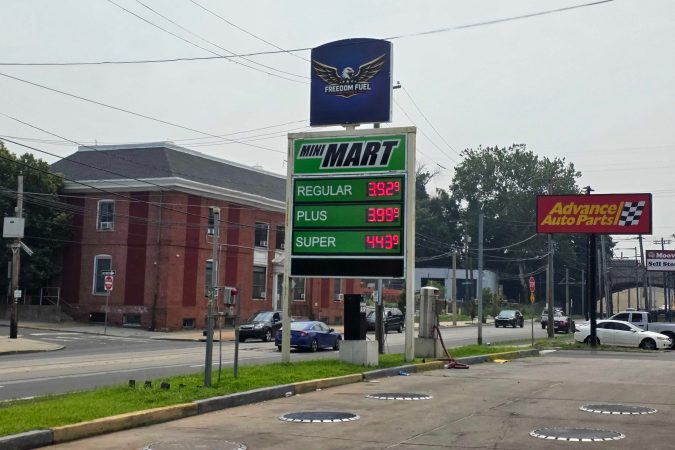
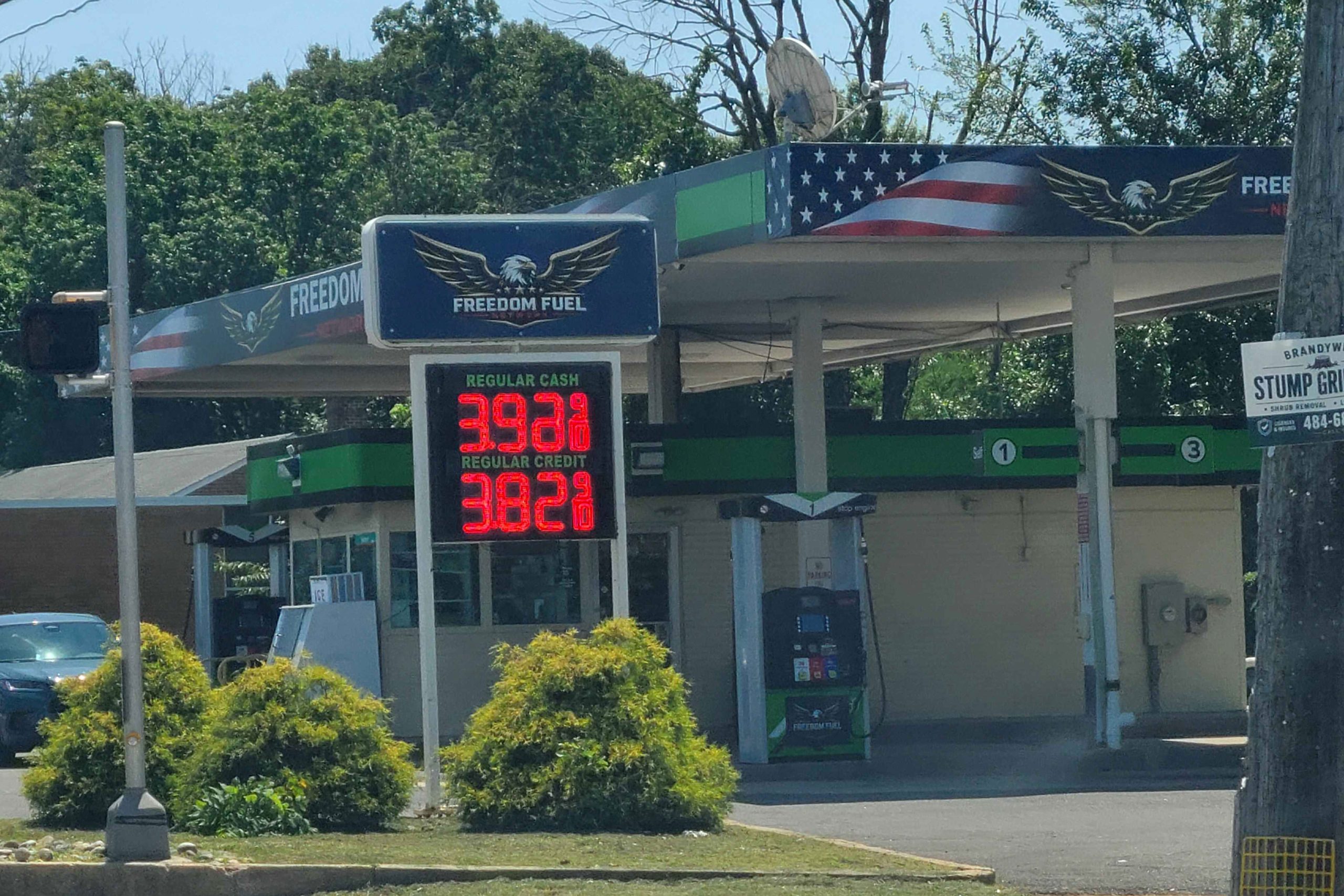
The Inquirer visited seven Freedom Fuel locations over several days, and while all were still selling gas cheaper than nearby competitors, the deep discounts from earlier were gone.
Gas prices are up everywhere, including the Freedom Fuel Network station on Edgemont Avenue in Brookhaven, Delaware County.Rob Tornoe /
Three Philadelphia gas stations and two Delaware County locations were among those within the network selling gas at $3.92 a gallon Monday. Near Philadelphia’s Freedom Fuel stations, competitors were charging $3.89 to $4.09 for a gallon of gas. The same was true in South Jersey, where Freedom Fuel stations in Marlton and West Berlin were selling gas around 10 cents a gallon less than their nearbycompetitors.
(function(){function e(){window.addEventListener(`message`,function(e){if(e.data[`datawrapper-height`]!==void 0){var t=document.querySelectorAll(`iframe`);for(var n in e.data[`datawrapper-height`])for(var r=0,i;i=t[r];r++)if(i.contentWindow===e.source){var a=e.data[`datawrapper-height`][n]+`px`;i.style.height=a}}})}e()})();
Selling gasoline is a low-margin business, with owners making just “a few pennies” of profit per gallon sold, according to Eliezer Fich, a finance professor at Drexel University’s LeBow College of Business.
“They can sustain those losses for a little while, but it becomes unsustainable if you can’t offset that with a convenience store or a car wash,” said Fich.
Several Freedom Fuel stations visited by Inquirer reporters were small, appeared somewhat rundown, and offered a limited selection of products beyond gas. One location had an inoperable convenience store.
Fich doesn’t know the specifics of Freedom Fuel. He said independent stations banding together can offer purchasing power with refineries, which can be one route to securing lower fuel costs. But those savings wouldn’t come close to supporting the deep discounts the stations were offering.
Despite the White House’s involvement in promoting Freedom Fuel, a spokesperson said the company received no government subsidies and did not obtain fuel at a lower cost. The below-market prices would exist “for as long as the company chooses,” the spokesperson said.
If that’s the case, the business itself was already absorbing dramatic losses before the United States resumed attacks on Iran, leading to a jump in gas prices over the past week.
The average cost of a gallon of fuel in Philadelphia was $4.17 a gallon Monday, up from $3.95 a gallon last week, according to AAA. Nationally, the average cost of a gallon of gas also jumped back to $4 a gallon, up from $3.14 a gallon compared to last year.
While questions remain, Freedom Fuel plans to expand
Little is known about who is taking on the likely losses expected from the promotion.
Former Evesham Township mayor, Baltimore Ravens assistant coach, and self-proclaimed “proud Trump supporter” Randy Brown, along with former commodities trader Yoni Gontownik, both signed the certificate of formation, first obtained by The Newsground, an investigative news outlet. Neither could be reached for comment.
Cherry Hill developer Shamikh Kazmi and his brother Syed Kazmi are linked to at least six locations. The brothers, who have been embroiled in at least two lawsuits related to previous gas station ventures, also could not be reached for comment.
One of Shamikh Kazmi’s businesses was sued as a result of a lengthy trademark dispute with BP America Inc. and BP Products North America Inc. in 2021. That case ended with four deputies with the U.S. Marshals Service seized remaining brand signs in June 2022, according to court documents.
Also in 2021, the brothers were accused by Petroleum Marketing Group Inc, a fuel distribution company, of stealing thousands of gallons of gas from the company. Petroleum Marketing Group sued the brothers, who were ordered by a federal judge in February to pay $600,000.
Still, the people behind Freedom Fuel are looking at expansion.
“Since launch, drivers have flooded us with one request: bring Freedom Fuel Network to my area,” read the website Monday. “We heard you. Due to overwhelming demand for additional locations, we’re expanding to serve more communities with lower prices at the pump.”
The website did not give a timeline for when those additional stations could come online and did not respond to a request for comment.
WASHINGTON — U.S. Sen. Andy Kim (D., N.J.) is introducing a plan to provide free healthcare to every child in the country, an idea he thinks could become a strategic step toward universal healthcare while addressing the urgent needs of an estimated — and likely undercounted — 4.6 million uninsured children.
Enrollment in MediKids, as he calls it, would be automatic at birth and extend until age 26. It aims to provide comprehensive benefits to uninsured children and young adults while also tackling the larger affordability crisis and the healthcare cuts under President Donald Trump that are expected to lead to further disenrollment in the coming years.
Strategically, Kim said, he also hopes the idea will be a politically popular jumping-off point as his party prepares to regain some level of control in Washington during the midterm elections this year and then fight for the White House in 2028.
“It really kind of brings that debate about healthcare to its core essence,” Kim said. “Who is going to stand in the way? Who could possibly say that we shouldn’t provide healthcare to every child in this country?”
Kim, speaking to reporters in his office on Capitol Hill last week, said he was in the early stages of figuring out and advocating for the program. He also said he was clear-eyed about the “political realities” that will make it difficult to pass.
Even if Democrats win control of the House and Senate this year, finding a bipartisan agreement with Trump during the remaining two years of his term would be an uphill battle.
Beyond that, Democrats have had their own internal debates on the issue — symbolized by Joe Biden’s opposition to Medicare for All during his 2020 campaign as progressives like U.S. Sen. Bernie Sanders (Ind., Vt.) championed the idea.
Kim said he sees MediKids as a steppingstone toward universal government-backed healthcare, which he expects to be part of his party’s debates again heading into the 2028 presidential election. He said he introduced it now because of the “urgency” of the affordability crisis and a “hunger for ideas” that he hears from voters in New Jersey and elsewhere.
Critically, he said, it is also a personal issue for him and his family. Trump’s attempt to roll back the ACA during his first term coincided with the birth of Kim’s son, who had immediate medical needs.
“I would not be here in Congress had it not been for that experience,” Kim said. “No parent should have to experience what I had to, and what many parents right now have to, which is worry about whether or not they’re going to be able to get healthcare for their kid if they lose a job, or change jobs, or any number of other issues.”
MediKids as introduced would operate as an extension of Medicaid, which currently covers about 35.5 million kids, including through the Children’s Health Insurance Program. It would provide access to comprehensive screening and early treatment benefits that experts say improve overall health outcomes for children.
Kim said he did not have even a rough estimate of what it would cost to extend the benefits to every child and young adult through age 26. Though the price tag is likely to be significant — and play a role in the program’s ability to gain political support in Washington — he said the long-term investment in healthier kids will have “real savings over time.” Identifying a funding source would come later as Democrats figure out how to pay for a long list of priorities if they win control of Congress and the presidency, he said.
“When you think of our healthcare system, writ large, children are very inexpensive,” said Joan Alker, a research professor and executive director of the Center for Children and Families at the Georgetown McCourt School of Public Policy.
Alker said research has shown that providing healthcare for kids creates a“great return on investment, both from the perspective of taxpayer dollars and, more importantly, from the perspective of having children who are going to grow and thrive.”
MediKids, she said, would be an effective and in some ways novel way of tackling an “extraordinarily worrying” trend.
After steady declines in the number of uninsured children both before and after the passage of the Affordable Care Act in 2010, the figures have fluctuated in the last decade. The 4.6 million children without insurance in 2024 represented about 6% of all children, an increase from about 5.1% in 2022. That period coincided with changes in Medicaid after the pandemic, a period known as the unwinding.
But child enrollment in Medicaid and CHIP has also decreased dramatically since Trump took office again in January 2025 — declining by more than 2 million through May of this year, according to the center at Georgetown.
Enrollment has decreased in Pennsylvania by about 130,000, or 4.1%, and in New Jersey by about 28,000, or 1.5%. Indiana has seen the worst fallout, with about 360,500, or about 20%, fewer children enrolled.
Alker said most children remain eligible. The drop-offs are due to a variety of reasons, including families with mixed immigration statuses being less willing to participate in federal government programs under Trump, less outreach by the federal government to connect individuals with healthcare options, and more administrative red tape for Medicaid, she said.
“I think this is a harbinger of what’s to come next year,” Alker said, referring to the changes to Medicaid eligibility that were passed in the One Big Beautiful Bill Act and will begin to be implemented after the midterm elections.
“There’s a lot of conversation about children being protected,” she said. “But when you start cutting off parents and other adults, when you start adding red tape, then children are going to be impacted.”
According to the Kaiser Family Foundation, a nonprofit healthcare-focused think tank, about 26.7 million people — adults and children — were uninsured in 2024. That is about the same amount as in 2016, which marked a high-water mark after the Affordable Care Act passed.
Kim said he set the upper eligibility limit for MediKids at age 26 because of the popular piece of the ACA that allows young adults to stay on their parents’ insurance until that age. He said he is still working through all aspects of the program, though, and his priority remains on the growing number of children who are uninsured.
“That should be unacceptable for everybody,” Kim said. “I honestly did not realize the number was that high when I first set out to do this. But it’s shocking in the richest, most powerful country in the world that we have that level of problem that is out there right now.”
After more than a week of strikes that unraveled an ill-fated ceasefire, the conflict between the United States and Iran stands on a knife’s edge. Now is the time, analysts say, to find a way to draw down an exponentially destructive confrontation — or risk provoking a war that cascades beyond what they may be able to contain.
And though the dangers of escalation are growing, analysts say, neither side can really afford it, either economically or politically at home.
Over the past few days, Iran and the U.S. have dealt blows that quickly went beyond battering military targets and have gradually raised the stakes of their renewed war.
Both sides have struck water and desalination plants that risk depriving tens of thousands of power and water supplies during the deadly Gulf summer heat. Traffic through the vital Strait of Hormuz is once again blocked both by officials in Tehran, the Iranian capital, and those in Washington, while the U.S. has reinstated a blockade of Iranian ports.
U.S. strikes have heavily bombarded roads and infrastructure in southern Iran, killing and trapping civilians, while raising anxieties it is preparing the ground for a potential invasion in the area.
Iran’s strikes on U.S. forces in Jordan have now killed two U.S. soldiers and wounded dozens, bringing the human cost of war much closer to home for Americans while puncturing the Trump administration’s projection of complete military dominance.
“This is the wake-up moment for both sides,” said Ellie Geranmayeh, an Iran expert at the European Council on Foreign Relations. “They either take the diplomatic off ramp now or risk allowing the war to spiral beyond managed escalation.”
As both sides’ targets expand, so does the war’s potential geographic reach.
The growing tit-for-tat of infrastructure strikes in Iran and Arab Gulf countries could quickly devastate civilian populations in the region. Iran has already warned that if it is hit badly enough, it will gun for Gulf installations critical to international energy supplies.
U.S.-allied Saudi Arabia struck an airport held by Iran-aligned Houthi rebels in Sanaa, Yemen, last week. That has increased the likelihood, Geranmayeh said, of Tehran calling on its Yemeni allies to block the crucial Red Sea shipping lane, Bab al-Mandab. Such a move would quickly compound risks to the global economy.
The costs of accelerating the conflict are high for both sides.
Both the Trump administration and Iran’s new hard-line leadership face all of the same economic and political risks that compelled their warring governments only a month earlier to sign a vaguely worded “memorandum of understanding,” which aimed to negotiate an end to the conflict.
As then, the havoc the war has wreaked on the global economy since the initial U.S.-Israeli attack on Iran last February has yet to abate. Expanding the unpopular war further risks damaging President Donald Trump’s Republican allies in the upcoming midterm elections.
Iran’s economy was so dire before the war that it sparked nationwide protests that were suppressed in a deadly crackdown. Now, battered by wide-scale destruction, it faces a dangerous economic reckoning that is worsened by the U.S. blockade on its ships.
The very factors that make escalation so dangerous for Washington and Tehran may also be what is pushing them to riskier attacks, as they seek to increase the pressure on each other.
“The conflict has now become a contest against time and a war of endurance,” wrote Hamidreza Azizi, an Iranian security expert at the German Institute for International and Security Affairs, on social media. “The decisive question will be whether Iran’s deteriorating economic and infrastructural conditions outpace the rise in energy prices driven by instability in the Strait of Hormuz, or vice versa.”
Discontent over the human and economic cost of war is starting to be more palpable in Iran. On Saturday, 268 prominent Iranians, including academics, politicians, athletes, clerics and trade unionists, signed a “No to war” petition — a risky move at a time when the government, backed by a fiercely pro-war hard-line base, has continued to crack down fiercely on dissent.
“The government will have a very difficult time convincing people that they should continue fighting this war at the cost of Iran’s destruction,” said Omid Memarian, an Iran analyst at DAWN, a Washington-based Middle East research institute. “So time is ticking for them, too.”
That sense of time slipping away is likely what encouraged Iran to launch the attacks on ships that began the latest spiral, said Farzan Sabet, an Iran analyst at the Geneva Graduate Institute in Switzerland, not with the aim of expanding the war, but to take advantage of strategic gains while they have them.
“They saw their leverage in terms of being able to control the strait quickly decline,” he said, as the United States encouraged ships to navigate the waterway beyond Iranian oversight during the ceasefire.
These attacks should be seen as Iranian efforts to “keep themselves relevant at the likely negotiating table” more than to signal that they aim to win militarily, Memarian said. And they could easily backfire.
The strikes on U.S. targets in Jordan, for example, have not only caused heavy casualties and damage to helicopters and equipment. They have very publicly underlined that Tehran retains the ability to strike back and sometimes outmaneuver a far more powerful U.S. military.
The possibility that such attacks trigger public anger in the United States, or simply enrage the mercurial Trump, Memarian said, has now “clearly put Trump in a position where he is more likely to escalate militarily.”
At the same time, with the economic and political stakes so high, Trump has few palatable options for escalation.
Between now and early to mid-August, Sabet said, the Trump administration is likely to try to weaken Iran’s leaders militarily, or to destroy Iran’s ability to control traffic in the Strait of Hormuz through asymmetric attacks. Yet, he said, there was little sign the United States could succeed in doing that.
“I am skeptical of any one-off U.S. escalation being able to dramatically change Iran’s calculus,” he said. “It would have to be something truly earth-shattering,” he said.
One approach that could achieve that effect would be a U.S. ground invasion, most likely on a southern island near the strait. Many Iranians have viewed the intense U.S. strikes on the country’s south as a potential precursor to such a campaign.
Geranmayeh said the risks that previously made the Trump administration leery of that option — from the potential for heavy casualties to the possibility of prolonged occupation — are even bigger now. U.S. troops would face new disadvantages like intense summer heat, and Iranian forces that by now have spent months preparing for such an offensive.
If Trump was considering such a campaign, it would likely come after the midterm elections, Sabet argued, when the political risk for him is lower.
The coming days remain precarious nonetheless. With Iran eager to project its military power, every strike risks a miscalculation that could deepen the war instead of hastening negotiations, said Memarian of DAWN, the Washington-based research institute.
“I think it’s going to get much worse before it gets better,” he said.
How does democracy and civic life play out, and what is it like to be a citizen?
This question was posed to former mayoral and gubernatorial candidate Sam Katz by Andrew Ferrett, the director of In Pursuit: Philadelphia and the Making of America. The three of us had been collaborating for years on documentary history films produced by Katz’s company, History Making Productions. But despite his experience as a newsmaker, Katz had categorically refused to be interviewed himself.
In September 2024, when we finally convinced Katz to move to the other side of the camera, we were in the final editorial phases of In Pursuit. This was going to be a legacy project, we argued, your voice is needed (he had enjoyed a front-row view of Philadelphia civic life since the 1960s).
Sam Katz at Independence Hall in Philadelphia, Tuesday, Feb. 17, 2026.Jessica Griffin / Staff Photographer
“I would say that the most important job of a citizen, it’s to vote,” he began. We’d brought our crew up to a Fitzwater Street roof. The wind was blowing Katz’s peach tie; the skyline glinted behind him. “And in the sense of the use of the word democracy, even in its Greek origins, the only place where people could practice democracy was through voting.”
I recalled Katz’s remarks on democracy when I heard that President Donald Trump, taking another step to try to control November’s midterm elections (as The Inquirer argued recently), had fired the two remaining Democratic members of the federal Election Assistance Commission, and that the last remaining Republican member, Christy McCormick, had resigned.
The EAC was created in 2002 as a pro-democracy measure after the contested 2000 presidential election. As a bipartisan commission, it has set standards for voting machines, mail-in ballots, and cybersecurity. A U.S. Supreme Court ruling on June 29 overturned over a century of precedent, giving the president power to fire members of federal commissions like the EAC for political reasons and appoint loyalists.
Vacating the EAC won’t keep the midterms from happening in November, but it’s one more act in what former U.S. Reps. Richard Gephardt and Timothy Wirth call a “rolling coup.”
The firing of the commissioners was “deeply concerning in light of President Trump’s relentless efforts to try to interfere in elections,” said Michael Waldman, the president and chief executive of the Brennan Center for Justice at the New York University School of Law, the New York Times reported.
The dangers are real, as much to American democracy as to the spirit and meaning of citizenship, as Katz defines it. In Pursuit, a 10-part series being released throughout 2026, makes the consequences clear.
And yet, voting as a practice of democracy has almost always been threatened. In 1838, as Episode 4 of the series brings into dramatic focus, a new Pennsylvania Constitution determined that Black men, free men and landowners otherwise, no longer had the right to vote. Were no longer citizens.
In 1871, a year and a half after the 15th Amendment to the U.S. Constitution gave all Black men the franchise, a revanchist movement led by Philadelphia congressman and Speaker of the House Samuel Randall and his disciple, 4th Ward boss William McMullen, resulted in the murder of Black men trying to vote in the mayoral election, including civil rights leader Octavius V. Catto.
Episode 6 opens with Susan B. Anthony and a group of organized suffragists seizing the podium during the 100th anniversary reading of the Declaration of Independence, demanding what the 15th Amendment never delivered: women’s right to full citizenship (it would take another 44 years).
“I believe that I understood what citizenship meant from a very early age,” Katz continued. “My grandmother was legally blind. And so from the time I’m a young person, I took her to the polling place to vote.”
This familial joy, this right and responsibility, this tiny and also enormous act: it’s what defines our ability to be American. Lily Yeh, the founder of North Philadelphia’s Village of Arts and Humanities and an immigrant from Taiwan, says in Episode 10 of In Pursuit: “It reflects democracy and the essence I feel of America, which is most dear. One person, one vote.”
This is what’s fundamentally under threat. It’s a strange thing, as a filmmaker, to watch reality imitating all this history.
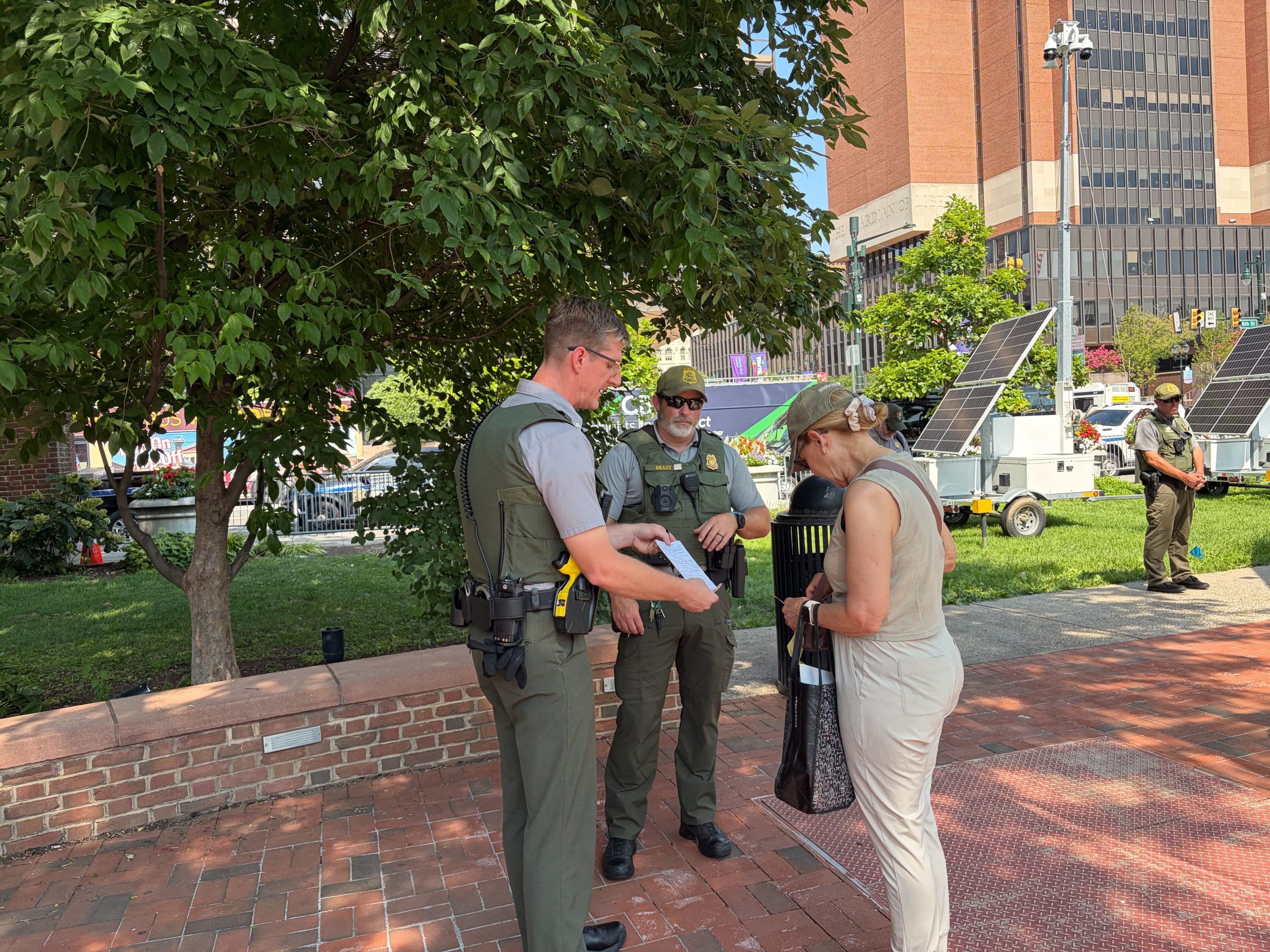
George Washington’s Philadelphia mansion is flanked by three mobile surveillance trailers. And in an unusual deployment, U.S. Park Police officers in black uniforms are guarding the site alongside National Park Service rangers, who are a familiar fixture at Independence National Historical Park.
“The replacement of these interpretation panels is creating a lot of security concerns … because it requires 24/7 monitoring to ensure the panel replacement is completed, and prevent and limit potential damages outside of normal park operations,” the Department of Interiorsaid in its justification to not review multiplebids.
The Interior Department intends to purchase the surveillance equipment from Verkada Inc., a California-based security systems company, through distributor Carahsoft Technology Corp.
The published notice does not include a cost estimate but indicates it will be more than $50,000.
Park employees installed two surveillance trailers on the west side of the site last week, which they said were for MLB All-Star Game events nearby. In the early morning after the game, the Trump administration swapped the President’s House exhibit.
Thetwo trailers remained at the very politically sensitive President’s House Site, as the Interior Department refers to it in new public records.
Park Police officers installed a third on the east side of the site Wednesday morning.
The presence of Park Police at the site is also a notable change.
Officer O’Hanlon’s uniform at the site of the President’s House on Thursday.Aidan T. Gallo / Staff Photographer
The federal law enforcement agency was established by Washington in 1791 to protect federal property in the District of Columbia. It has since been absorbed into the Interior Department, but remains located in the New York City, Washington, D.C., and San Francisco metropolitan areas to “investigate and detain persons suspected of committing offenses against the United States,” according to the National Park Service.
“Officers also carry out services for many notable events conducted in the national parks,” according to Park Service.
The National Park Service’s budget justification for this upcoming fiscal year notes that U.S. Park Police are tasked with enhancing security at “iconic national parks” such as at the Liberty Bell and Independence Hall “to address intrusions, vulnerabilities, and potential terrorist threats.”
But until recently, there has not been a regular U.S. Park Police presence at the President’s House, which is steps from the Liberty Bell, since the Trump administration began scrutinizing the site last summer.
The president instructed the Interior Department to review all national park displays and flag those that “inappropriately disparage Americans past or living.” The Interior Department’s purchase notice notes that security of the site is important to comply with the order, or else the “White House will elevate issues.”
The Philadelphia Police Department is not aware of any credible threats to the President’s House Site, spokesperson Sgt. Eric Gripp said, but “federal agencies are also not required to notify us of arrests, citations, staffing decisions, or other enforcement activity.”
An Interior Department spokesperson declined to answer questions about the Park Police deployment, surveillance system, or the risk assessment.
Park staff would remove the poster almost every night — he even uses masking tape to make the task easier, he said — but no one bothered the 65-year-old.
But Tuesday, he was approached by a group of officers wearing black, unlike the gray-and-green uniforms of the Park rangers he is accustomed to seeing.
After taping five or six posters, a U.S. Park Police officer instructed him to stop.
When Wallace invoked his First Amendment right to free speech, the situation got “a lot more confrontation.”
“A bunch more officers arrived,” he said. “At that point I was threatened with arrest.”
Sandra Shachar, 72, cited for vandalism at the President’s House Site on Wednesday for attempting to post news articles on the walls.Abraham Gutman
Wallace eventually left without an arrest or citation, but Sandra Shachar wasn’t so lucky the next day.
Shachar, 72, has been taping news articles about the litigation surrounding the President’s House since January too. But Wednesday, hours after the Trump administration swapped the exhibit, she was fined $305 for vandalism by two park rangers.
“I think it highlights the state that we’re in as a country, where our right to free speech is now impeded,” the local psychologist said.
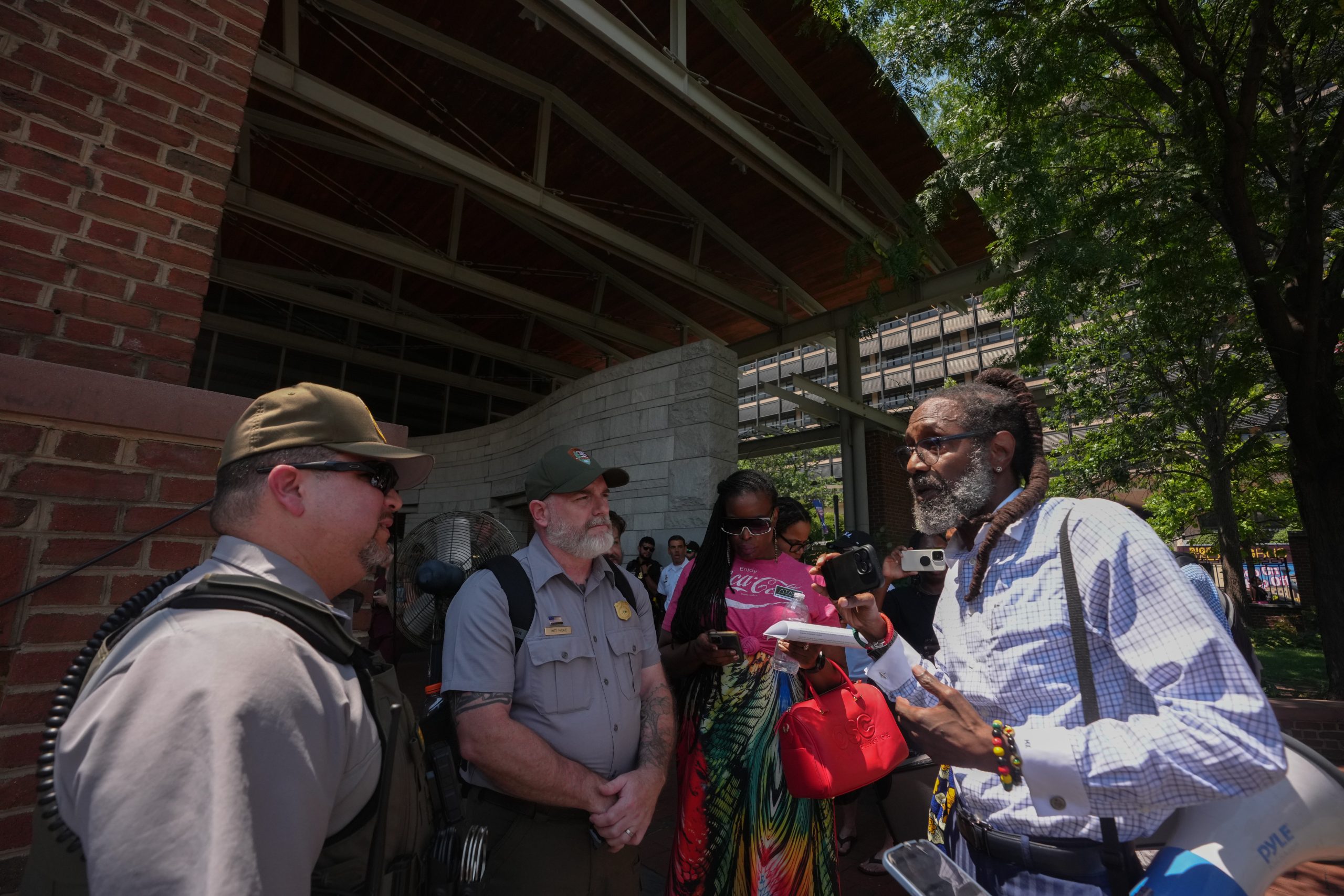
The rangers said they would cite speakers if the event proceeded within the site’s parameters.
“I gotta tell you, I’ve been doing this since June of 2002,” Coard said to the officer. “Never heard of it.”
Lawyer Michael Coard advocates for his First Amendment rights to gather and speak freely at the President’s House Site, where Coard and others planned a news conference Wednesday to address the installation of new panels.Jessica Griffin / Staff Photographer
The group moved closer to the Liberty BellCenter’s entrance, and the rangers allowed the event to take place.
Later Wednesday night, the President’s House Coalition, composed of a group of advocates and stakeholders who have been working to protect the site, told its Instagram followers to “be mindful of Trump’s administration’s tactics” and the “heavy presence” of federal officers at the site.
“Don’t let them bait you into getting arrested,” the activist group account said. “We’d fight to get you out of jail *laughing emoji* but we’d rather spend out energy on fighting against Trump’s administration.”
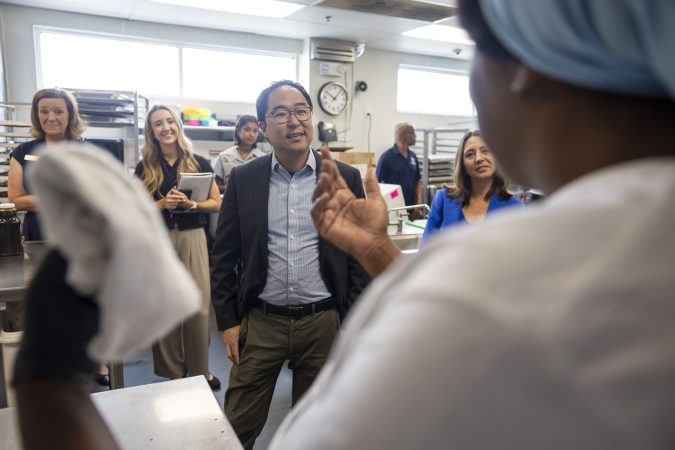
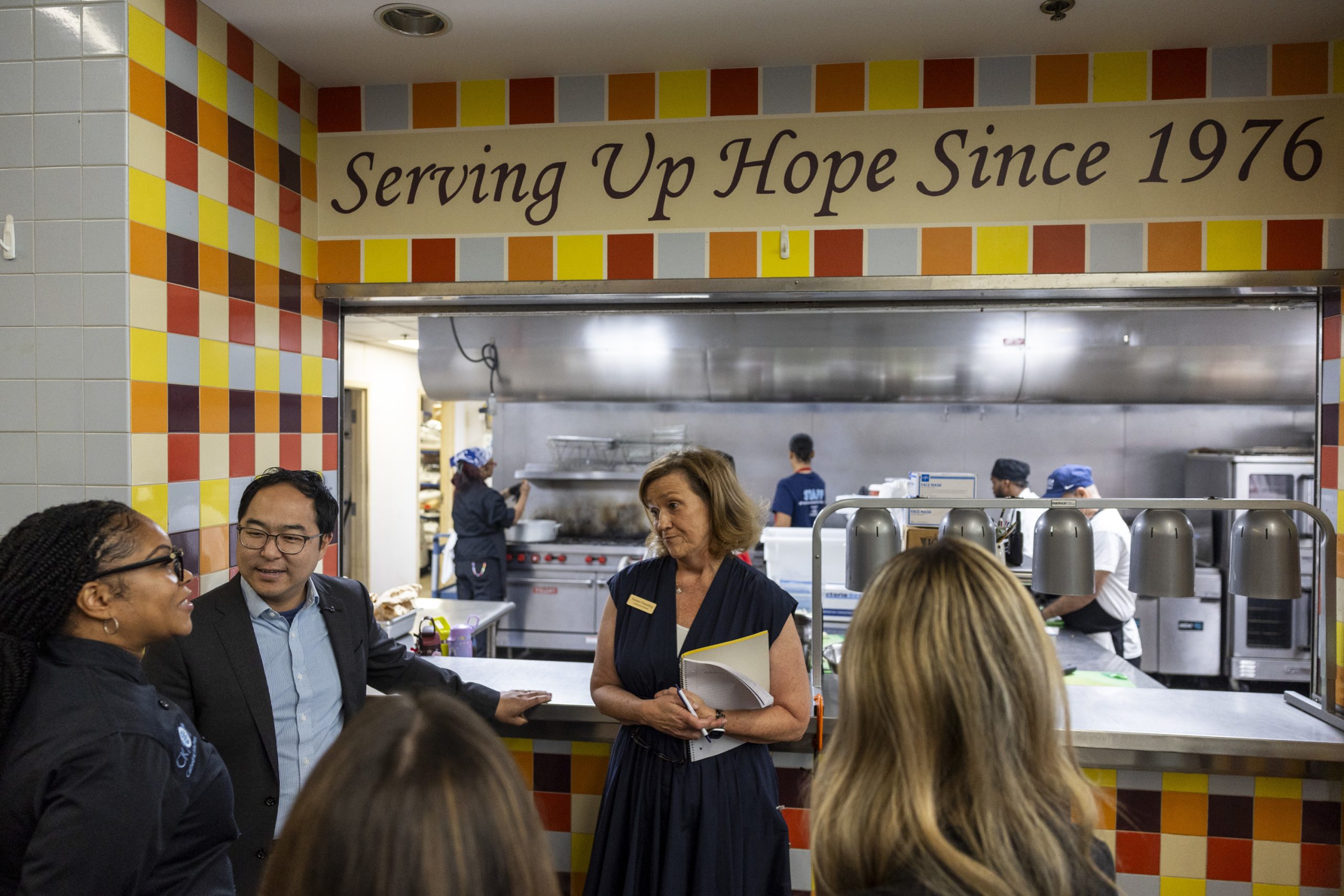
Touring Cathedral Kitchen, the largest emergency meal supplier in South Jersey, Democratic Sen. Andy Kim praised the 50-year-old Camden institution Friday for the food it has served and the people it has saved.
“The Kitchen is building community, right here in New Jersey,” said Kim, who noted that the nonprofit distributes 28,000 meals a month while training low-income people to be chefs and restaurant workers. Cathedral Kitchen also works to help people obtain IDs, apply for jobs and benefits, and find housing.
Its work is needed more than ever, the New Jersey lawmaker said, with hunger on the rise because of high food prices and President Donald Trump’s One Big Beautiful Bill Act, which reduced federal food assistance such as SNAP (the Supplemental Nutrition Assistance Program) beginning July 4 of last year.
Cutting SNAP benefits and changing eligibility requirements, Kim said, is a “devastating and cruel thing to do” at a time when cost of living has been climbing.
“Why are we taking away necessary support at this time?” Kim asked. “I mean, we’re talking about food, the basics of being a human. Why is this happening now, at a time when people are struggling with affordability?”
New Jersey Sen. Andy Kim visits Cathedral Kitchen in Camden, speaking to the workers who provide food for their community and those in need.Tyger Williams / Staff Photographer
The food assistance cuts are coinciding with the economic fallout from tariffs and the Iran war, Kim noted.
Nationwide, between January 2025 and January 2026, SNAP rolls decreased by more than 4 million people — from 42 million to 38 million — according to USDA figures.
In New Jersey, SNAP participation has fallen by more than 50,000 individuals between March 2025 and March of this year, New Jersey Department of Human Services figures show.
And in Pennsylvania, nearly 90,000 people lost SNAP benefits between July 2025 and Aprildue to new eligibility requirements, according to an analysis by the Pennsylvania Department of Human Services (DHS).
At the same time, food prices have risen more than 3% in the last year.
As a result, in Camden, Burlington, Gloucester, and Salem Counties, the number of meals distributed to help those in need grew by 34% over the last four years, according to the Food Bank of South Jersey
“I know the Camden area,” said Kim, who grew up in nearby Marlton and Cherry Hill. “I’ve seen the struggles that have been here and still persist.”
The Trump administration has said the cuts it’s made to SNAP, Medicaid, and other programs were necessary to staunch “waste, fraud, and abuse.” It maintains that it’s instituted strict work requirements for SNAP to move more people into the workforce and reduce dependency on government support.
Kim said many Americans don’t understand that a large number of people who live in poverty also work. “Millions with jobs are still poor, and this country needs a mindset shift to understand that,” Kim said.
Sen. Andy Kim (D., N.J.) speaks with Naimah Rutling, executive chef at Cathedral Kitchen in Camden, N.J., on Friday.Tyger Williams / Staff Photographer
As he continued his Tour of Cathedral Kitchen, Kim invariably found himself in the organization’s actual kitchen, bustling with food workers slicing carrots and onions, preparing for meals ahead.
Clearly enjoying the moment, Kim said that at home, he makes his own bread, including pizza dough.
Kim asked executive chef Naimah Rutling what her favorite food is. “Grilled cheese,” she said without hesitating. Kim laughed and said, “I have a 9-year-old and a 10-year-old. About 90% of what we eat is grilled cheese.”
Before leaving, Kim praised workers in the kitchen for their diligence and dedication in preparing food for those who need it.
“It gives meaning and purpose to their lives,” he said. “I love the passion I see.”
Gov. Josh Shapiro blasted President Donald Trump Friday morning, a day after the president used a prime-time speech to reignite a series of conspiracy theories about his 2020 election loss that intelligence and voting experts have both warned are based on misrepresentations and falsehoods.
“It was an unfortunate day for America to have really an unhinged president in the White House spewing a whole bunch of conspiracy theories that are just simply not connected to reality,” Shapiro said on MS NOW’s Morning Joe Friday morning.
The speech comes less than four months ahead of the November election, which will determine control of Congress and the Pennsylvania governor’s office. As Trump administration looks to usher in sweeping national changes to election administration, Shapiro and other Democrats have promised to continue resisting those efforts.
Shapiro, a potential Democratic contender for the presidency in 2028, noted his role in battling Trump’s team in court as Pennsylvania attorney general in the aftermath of the 2020 election — which Trump continues to insist he won, without evidence, six years later.
“I went 43-0,” Shapiro said, calling Trump’s assertions baseless.
DHS targets Pennsylvania and New Jersey
While the president did not directly reference Pennsylvania in the speech, the White House did target the state — along with New Jersey, California, and Nevada — in a document it posted online Thursday evening in support of the president’s claims.
The document claims that the Department of Homeland Security has identified more than 250,000 noncitizens registered to vote spread across the four Democratic-led states, but it provides little explanation of the methodology used.
Pennsylvania Secretary of State Al Schmidt, a Republican appointed by Shapiro, rejected the allegation in a statement.
“Pennsylvania follows all state and federal laws when it comes to our elections, and our voter rolls are properly maintained and updated,” Schmidt said in a statement Thursday. “All evidence has shown that noncitizen voting is extremely rare across the country, including in Pennsylvania.”
The assertions, which Trump said were made in concert with the nation’s top intelligence agency chiefs, are included in memos on the White House homepage that together weave broad allegations of fraud surrounding the 2020 presidential election that remain unproven despite multiple audits and investigations six years later.
“These disclosures reveal an election system so broken and so vulnerable that no one can possibly defend it. It is not defensible,” Trump said Thursday.
But none of memos show evidence that would change the outcome of the election and a broad range experts have pointed that some contain information that undercut Trump’s claims.
The document targeting Pennsylvania and New Jersey is a one-page summary of a Department of Homeland Security investigation, which the White House says identified, a total of 278,000noncitizens across the country who are registered to vote in federal elections.
The White House document suggests the number was derived from putting voter files through the federal government’s Systematic Alien Verification for Entitlements (SAVE) tool, which has previously been used to further false claims of widespread voter fraud.
“While the Department has made clear that we cannot share Pennsylvanians’ private, personal information, we welcome DHS sharing their methodology and list of potential ineligible voters so we can carefully review the validity of their claims,” Schmidt said in the statement.
The announcement also comes as Pennsylvania and other states have pushed back against requests from the Department of Justice to hand over unredacted voter rolls. Schmidt has argued that sharing the rolls would put voters’ personal information at risk.
The Trump administration has insisted doing so is the best way to avoid criminal prosecution for “aiding and abetting the violation” of federal voting laws.
DHS Secretary Markwayne Mullin said 23 states already work with the department to screen for noncitizen voters, in a news conference Friday, and those who continue to resist could face legal consequences.
States that want to be reimbursed for the cost of running federal elections must implement the department’s requests, he said.
“We will make sure that we make those states a priority to look at who voted in their states, and hold the election officials accountable,” Mullin said. “If the election officials — once we gave them the information they need to secure their elections — chose not to, then those individuals can also be held accountable by fines, by penalties, and even depending on how far it goes, prison time.”
There have been only 77 instances of noncitizens voting in the entire United States between 1999 and 2023, according to an analysis from the Bipartisan Policy Center, and authorities investigated in each instance.
To vote in Pennsylvania, you must be a U.S. citizen, a resident of the state for 30 days, and 18 years old by Election Day. Registration must be done 15 days prior to an election.
There are three main ways to register: online, via a paper form handed into a county board of elections, or at PennDot or another state agency. Some people register when obtaining a driver’s license, if eligible, or after a naturalization ceremony.
But the SAVE system doesn’t always catch up with those changes, said Ben Geffen, a senior attorney at the Public Interest Law Center in Philadelphia who reviews elections. That means, results might show “false positives” that evaporate upon “even a little bit of investigation” into individual circumstances.
Pennsylvania will be crucial in determining control of the House with four swing districts being targeted by both parties, meaning that the state’s election is likely to fall under the microscope as they repeatedly have since the 2020 election when Trump sought to overturn Joe Biden’s victory.
“We are prepared here in the Commonwealth of Pennsylvania to once again have a free and fair, safe and secure election,” Shapiro said.
State audit found only one noncitizen on Pa. voter rolls
Shapiro said he trusts Schmidt, a Republican, “because we believe here in Pennsylvania the administration of elections is nonpartisan.”
In 2017, Schmidt, then a Philadelphia city commissioner, identified a glitch in PennDot’s system that had allowed 168 noncitizens to register to vote in the city, and likely a couple hundred statewide.
The voter rolls were updated in 2018, Geffen said, so none of the glitches would have impacted the 2020 election or any beyond.
A 2026 audit from Pennsylvania Auditor General Timothy DeFoor, a Republican, found that just one noncitizen was improperly registered to vote at PennDot due to human error. The individual never cast a ballot.
New Jersey has also fought against the full release of its voter rolls.
Gov. Mikie Sherrill joined other Democratic governors in calling Trump’s speech “alarming” in a statement issued Thursday.
“Democratic governors stand ready to fight back against the Trump administration and stop any and all unlawful attacks on every American’s constitutional right to vote,” said the statement from the Democratic Governors Association.
Sen. Andy Kim, (D., N.J.) referred to Trump’s address as “25 minutes of conspiracy theories from a man who still can’t get over 2020” in a post on X.
Trump also used the speech, which was not carried live on ABC, NBC, or CNN, to advocate for the SAVE Act, the elections bill that would require people to prove that they are U.S. citizens when registering to vote.
“Addressing this crisis of election security demands that Congress must pass the SAVE America Act,” Trump said. “How easy is that to do unless you want to cheat?”
The legislation, which has stalled in Congress, is unpopular among Democrats and even some Republicans. Among the concerns that have been raised from opponents is that it could block married people who take their spouse’s surname from registering to vote because of the mismatch with their birth certificates.
Sen. Dave McCormick (R., Pa.) urged passage of the bill on social media Thursday, but he did not respond to a question Friday about the Trump administration’s claims about noncitizen voting in Pennsylvania.
But as November approaches, another Pennsylvania Republican, Philadelphia City Commissioner Seth Bluestein, said voters can be sure their votes will be counted accurately.
“Prior to every election, we conduct logic and accuracy testing on every piece of equipment that is used for the election,” said Bluestein, the sole Republican on the three-member board that oversees Philadelphia elections.
“Voters, when they cast their ballots, have a verifiable paper ballot for every single vote that gets cast, and then after the election, we conduct two audits of a random sampling of ballots to verify that they were tabulated accurately,” he said.
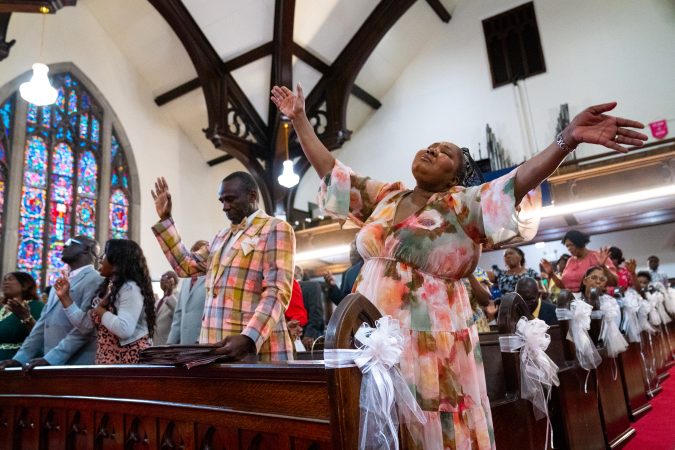
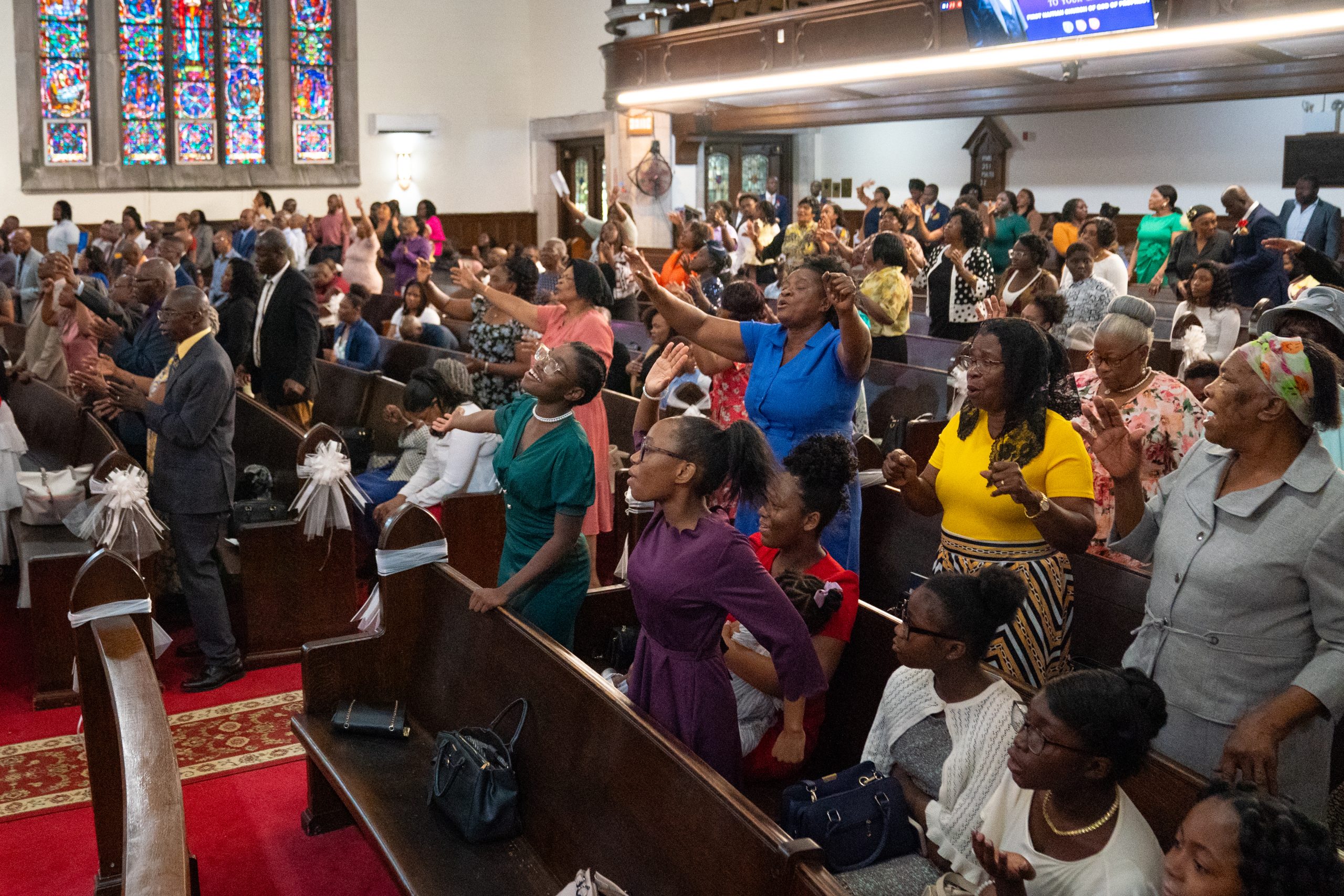
After taking the pulpit at the First Haitian Church of God of Prophecy on Sunday, the Rev. Frantz Ulysse immediately spoke to the calamity that confronts families in his congregation:
The end of the special immigration status that for years has allowed thousands of Haitians to live and work in Philadelphia and across the United States with their homeland in chaos ― ruinous natural disasters, governmental collapse, and gang violence that has displaced more than a million people.
“We, as Haitians, we are in trouble,” Ulysse told worshipers at the Olney church. “We need to pray, because our God is a faithful God, and I believe he’s going to do something for us. … Our homeland, Haiti, it is not a safe place to go back to right now.”
Prayers have been buttressed by petitions and by pleas to Congress to help before it’s too late.
President Donald Trump is poised to return roughly 350,000 Haitians to a country that the U.S. government says is too dangerous for Americans, after the Supreme Court ruled last month that he could end temporary protected status for immigrants from Haiti and Syria.
TPS is a humanitarian status that the U.S. can grant to foreign nationals whose nations are embroiled in war, environmental disasters, epidemics, or other extraordinary circumstances. It provides work authorization and protection from removal, but no path to permanent residency or citizenship.
Among Philadelphia’s 11,000-strong Haitian community, disbelief over the court decision has turned to misery and fear, advocates say.
The U.S. State Department has told Americans to stay out of Haiti, issuing its highest “Do Not Travel” advisory and warning those who insist on going to prepare a last will and testament.
Many Haitians ask: How can Haiti be safe for my family if it’s not safe for others? Some face the prospect of separation from spouses and children who are U.S. citizens. Some will not step outside their homes to go to work, church, or school, afraid that federal agents could be watching, advocates said.
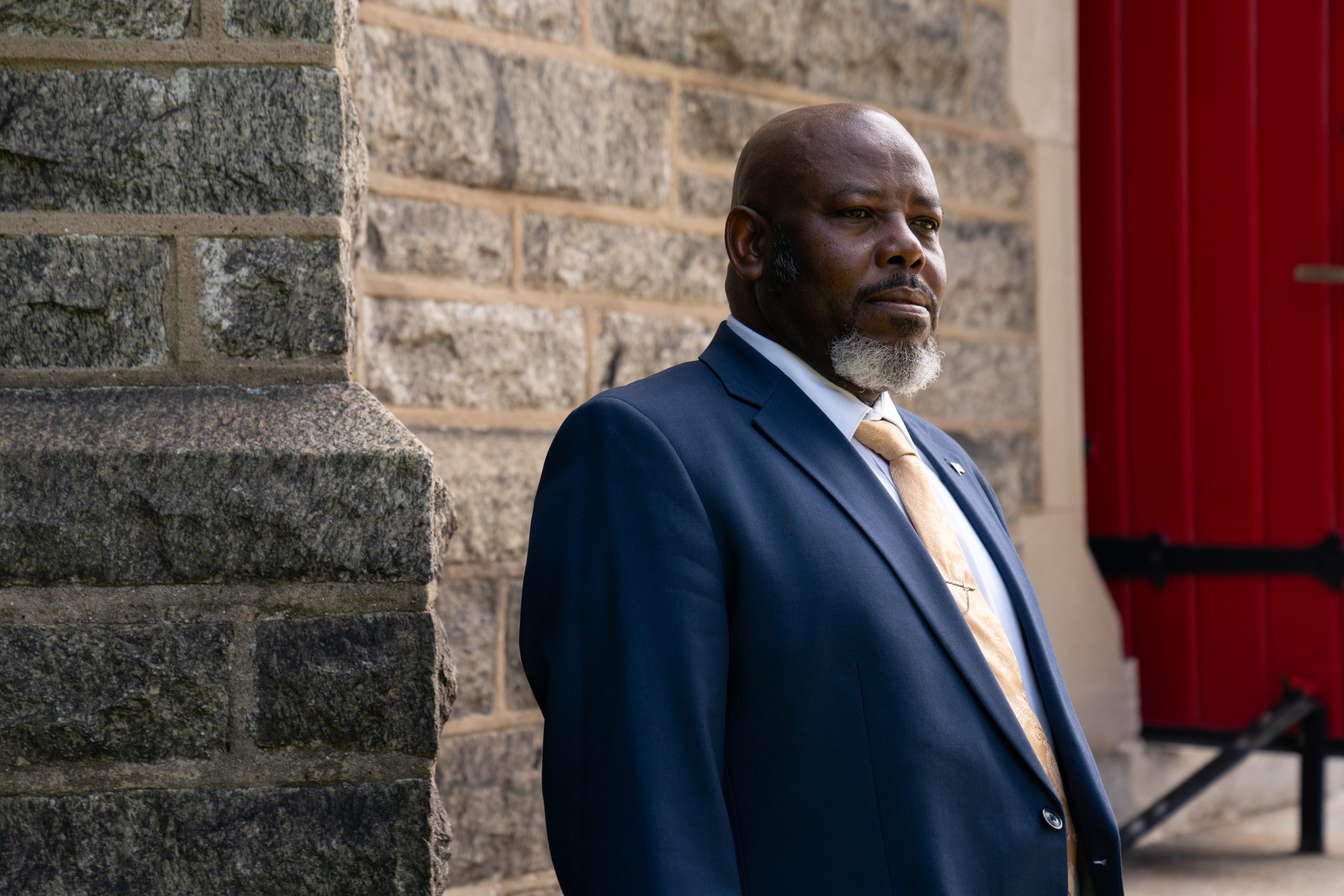
“A lot of people are suffering now,” said Clifford Solomon, a church usher who is the father of four American children and whose wife is about to deliver a fifth. “A lot of my family is here [under TPS], my friends, my neighbors, all of them.”
Clifford Solomon, a church usher at the First Haitian Church of God of Prophecy, poses for a portrait before service in Philadelphia on July 12.Sarah Silbiger / For The Inquirer
The Trump administration insists that “temporary” means temporary. The president tried and failed to end TPS for Haiti, the poorest nation in the Western Hemisphere ― two-thirds of residents live in poverty ― during his first term.
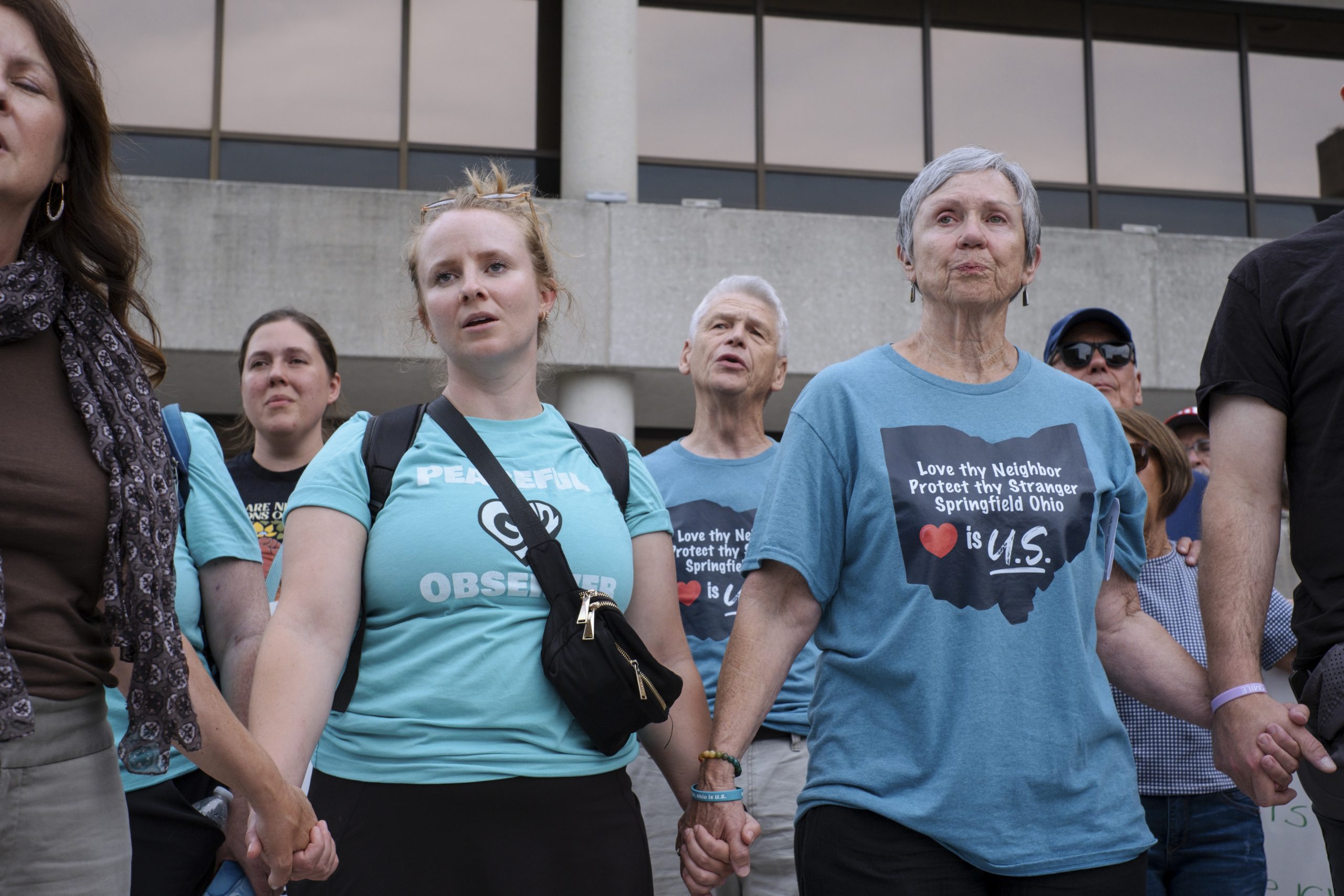
While running for president in 2024, he falsely accused Haitian immigrants in Springfield, Ohio, of eating cats and dogs, and blamed those in tiny Charleroi, Pa., set on the Monongahela River about 20 miles south of Pittsburgh, of causing “massive crime.”
The court decision did not immediately terminate TPS for people from Haiti and Syria, but started the process for implementing an order that typically takes 32 days. Once TPS ends, holders revert to their previous immigration status, meaning those Haitians who were undocumented or have no other protection will be subject to arrest and deportation.
Meanwhile, U.S. Citizenship and Immigration Services says work authorizations for Haitians will expire on July 24.
“We are seeing the impact on the community in Pennsylvania, in Philadelphia, and across the country,” said Guerline Jozef, founder of the California-based Haitian Bridge Alliance, a national nonprofit. “The fear of deportation, the fear of family separation, the fear of losing everything.”
The alliance has helped commence a series of pro-TPS rallies led by labor unions, faith leaders, and immigrant rights groups in cities from San Diego to Boston, proclaiming that “families who have built their lives, careers, and communities in the United States deserve stability, dignity, and protection — not fear and uncertainty.”
Supporters of the Haitian community rally at City Hall in Springfield, Ohio, June 25. In Springfield, some residents see the end of an economic boom after the end of a humanitarian program for immigrants. Others see still darker possibilities. AMY POWELL
Yet uncertainty rules, and many Haitians with TPS are investigating options even as they hope for relief from Congress.
Esaie Pierre, founder of Men Anpil, a Philadelphia-based nonprofit that helps Haitian migrants, said he is assisting people who want to apply for asylum in the United States. Others who come to him are considering where else in the world they might be able to live.
One young man is thinking about Chile, Pierre said.
“They are not wanted here, but have established some kind of life here,” Pierre said. “We’ve assimilated. I’ve assimilated.”
The events that led to this moment began in January 2010, when Haiti suffered a massive earthquake ― the 7.0-magnitude seism followed by a 6.1-magnitude aftershock ― that, as the National Immigration Forum put it, fundamentally altered the nation’s trajectory.
Estimates of the death toll ranged from 100,000 to 300,000 people, while about 1.5 million were forced into unsanitary, overcrowded camps. The damage crippled the government.
Three days after the initial quake, the Obama administration announced that undocumented Haitian immigrants in the U.S. would be granted TPS.
Thousands more would be welcomed over time under humanitarian programs, and become eligible for TPS, as Haiti grew mired in crisis ― a deadly cholera epidemic the same year, Hurricane Sandy in 2012 and Hurricane Matthew in 2016, and a 7.2-magnitude earthquake in 2021 that killed more than 1,000.
That year the assassination of President Jovenel Moïse ― elected four years earlier amid allegations of fraud and corruption ― saw the collapse of basic government functions and the rise of armed gangs.
“You send them back, it’s like you’re signing a death sentence for them,” said Esther Emmanuel, a church soloist who has family members here under TPS. “We’re asking God to do a miracle and to hear the cries of his people, and to also soften the hearts of Congress.”
Esther Emmanuel, a church soloist who has family members in the United States under temporary protected status at the First Haitian Church of God of Prophecy in Philadelphia on July 12.Sarah Silbiger / For The Inquirer
Today the United Nations estimates that 90% of Port-au-Prince, the capital and largest city, is under the control of criminal groups, the violence having left thousands dead and displaced more than 1.4 million people.
The State Department warns of robberies, carjackings, and sexual assaults. It advises U.S. citizens who go to Haiti to establish plans in case they are kidnapped ― including a “proof of life” protocol, so family members can ask specific questions to kidnappers as a way to determine if their loved one is still alive.
“The only general hospital in Port-au-Prince has been closed for over two years,” Jozef said. “There’s no infrastructure in Haiti for people to be received. … We find ourselves as a community without a home, without a home to go to, without a home to stay in.”
Talie Cerin, who lives in Philadelphia’s Cobbs Creek neighborhood, was visiting Haiti at the time of the 2010 earthquake. She watched her childhood home crumble.
She has lived here under TPS, graduating from Immaculata University, then earning a master’s degree in education from Eastern University, and now working as the founder and lead editor of Woy Magazine, an internet publication about Haitian experiences.
“The toughest part about being a TPS recipient is the ambiguity,” Cerin said. “The confusion keeps you from making long-term plans. It traps you in a prison of conjecture, whispers of ICE raids, and stories of people in detention centers.”
Her sister, Lunise Cerin, was born in Philadelphia but lived in Haiti from age 5 to 16 before returning here to attend high school and college. The worry of losing her sister, and possibly their home, has been disorienting, Lunise Cerin said, generating “an enormous cloud of grief.”
Her family has lived in Philadelphia since the 1980s, she said, and for them the end of TPS would mean the end of an established, multigenerational life.
“Are we going to be gone?” she wondered.
Congregants sing during service at the First Haitian Church of God of Prophecy in Philadelphia on July 12.Sarah Silbiger / For The Inquirer
Many at the First Haitian Church of God of Prophecy ask the same.
The pastor’s office has been deluged with phone calls. Some people tell Ulysse that they might as well die, that returning to Haiti is impossible, but trying to stay here without TPS means they cannot work to pay rent or to buy food for their children.
“They don’t know what to do,” Ulysse said. “I let them know God is the same yesterday, today, and forever, to trust the Lord. … Me, my heart is telling me something good is going to happen.”
Homeland Security Secretary Markwayne Mullin was speaking to reporters this month in New York when one asked whether he was under pressure from the White House to increase immigration arrests. Mullin replied that his department was in lockstep with the president’s team and boasted that arrests and deportations were rising.
“When we go after the worst of the worst, which is exactly what we’re doing, we’re saving lives,” he said.
Just over two weeks later, Mullin is facing his biggest political and managerial crisis since taking office in March as he scrambles to respond to two deadly shootings involving U.S. Immigration and Customs Enforcement officers. The violence has drawn harsh denunciations from Democrats and immigration advocates, as well as criticism from one prominent Republican senator, and the situation has threatened to reignite the wide public backlash that arose in January when immigration officers killed two U.S. citizens during a surge of operations.
Mullin’s attempt to quell the uproar over the shootings this week — ordering a moratorium on vehicle-stop arrests by ICE officers — has exposed the precarious position he is in while trying to comply with President Donald Trump’s demands. Less than 48 hours after Mullin issued the directive on traffic stops, a White House official confirmed that it had been reversed.
Mullin promised to rebuild public trust in the Department of Homeland Security after replacing Kristi L. Noem, and he has undone some of his predecessor’s moves, taking a quieter approach in an effort to stay out of the headlines.
At the same time, he has doubled down on Trump’s deportation agenda. Data provided to Congress and reviewed by the Washington Post show that under Mullin’s leadership, ICE officers have been making record numbers of arrests. Through July 12, ICE had arrested more than 200,000 people in 2026, a more than 40% increase compared with the same period last year.
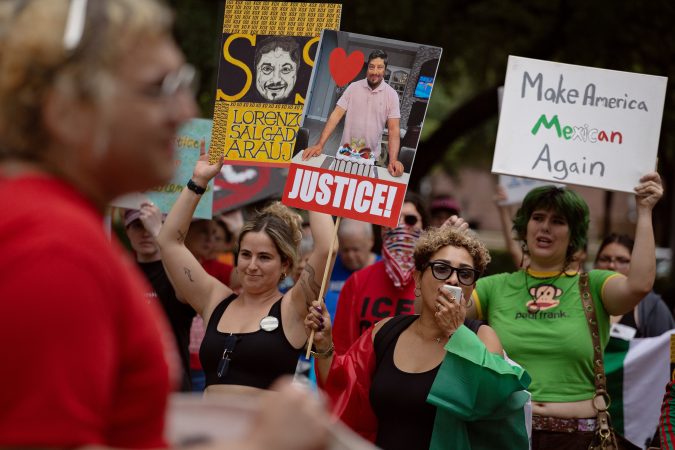
Those arrests were largely happening outside public view until last week, when an ICE officer shot and killed a 52-year-old Mexican man, Lorenzo Salgado Araujo, in Houston. Salgado had been driving to work, and DHS officials said he was not the target of the ICE operation. His family said he had lived in the United States as an undocumented immigrant for more than 35 years and had no criminal record. Surveillance footage has raised questions about DHS’s account of the events surrounding the shooting.
Less than a week later, a 25-year-old Colombian man, Johan Sebastián Durán Guerrero, was shot and killed by an ICE officer in Biddeford, Maine. He was also shot while driving, was the father of a young child and does not appear to have had a criminal record.
Mullin’s apparent predicament illustrates the competing incentives within the Trump administration over immigration enforcement ahead of the midterm elections in November that will determine whether Democrats win back control of Congress and establish a meaningful check on Trump’s power for his final two years.
Trump abruptly undercut Mullin on Wednesday by praising vehicle stops as one of ICE’s most important tools, and Trump’s far-right base revolted over Mullin’s leadership on enforcement, calling him weak and ineffective. After the policy was reversed, Mullin wrote on social media that there was no conflict between himself and the president.
“President Trump and I are on the same page,” he wrote. “We want our @ICEgov officers to have all options available to keep them safe while executing our mission of deporting as many illegal alien criminals from our country as possible.”
Some Republican allies and Trump political advisers are wary about the potential for a broader public backlash to the president’s immigration agenda in an election year. But the administration’s immigration hawks, including White House deputy chief of staff Stephen Miller, have continued to push for mass deportations to make good on the president’s campaign promise and appeal to his hard-line base.
“The president’s supporters reacted absolutely as they should have, and I think the president saw that,” said Mike Howell, president of the Oversight Project and a visiting fellow at the Heritage Foundation, in regards to Mullin’s pause on traffic stops. “Everyone is now seeing another example of the walk-back instinct of DHS leadership.”
ICE earlier this month had topped 2,000 arrests per day several times, a DHS official said, after setting that figure as a daily arrest target. The official spoke on the condition of anonymity to share internal information not authorized for release.
In June, ICE arrested and detained more than 39,500 individuals, topping the previous monthly high of 37,800 in December, according to the data reviewed by the Post. DHS is on pace to exceed that number in July.
The agency has added thousands of new officers, as well as surveillance technology and other resources, thanks to more than $170 billion in new immigration enforcement funding approved by congressional Republicans last year.
During his news conference in New York this month, Mullin called that funding “the most consequential bill — definitely of President Trump’s tenure and possibly in recent history.” He accused Democrats, including New York Mayor Zohran Mamdani, of being soft on crime and immigration enforcement, and said DHS “might have to flex a little bit more” to respond to the policies in places such as New York.
Yet Mullin’s pullback on the vehicle stops, which came after he spoke with Sens. Susan Collins (R) and Angus King (Ind.) of Maine, has left him open to criticism from immigration hawks inside and outside the administration.
One former DHS official suggested that Mullin made the policy change amid pressure from Collins, who is facing a difficult reelection campaign, without consulting the White House.
“A cabinet secretary just went 180 degrees from the policy of both Trump administrations,” said the former official, who spoke on the condition of anonymity to frankly discuss his former agency.
In an interview with Fox News on Tuesday, White House border czar Tom Homan said Mullin had made the decision to pause vehicle stops after consulting with ICE leadership.
“I’m confident that ICE is well trained in vehicle stops,” Homan said. “This is a temporary pause while they look at the incidents.”
Mullin has said little publicly about the shootings. When asked about the Houston incident in a brief phone interview with Atlanta News First, he expressed regret that ICE officers were not wearing body cameras and blamed a 76-day partial shutdown of DHS in the spring as Congress was deadlocked over a funding bill for slowing efforts to distribute more cameras.
Wednesday on X, Mullin reposted Trump’s message in support of ICE and added his own statement, saying DHS is focused on keeping officers safe and removing criminals.
“Illegal aliens will be arrested and deported wherever they are. If you are here illegally, LEAVE NOW,” Mullin wrote, adding that officers are facing a major increase in attacks by people using vehicles to threaten them. (In fact, federal prosecutors in several cases have dropped charges against people accused of assaulting officers in light of contradictory evidence.)
“We remind illegal aliens attempting to evade arrest is dangerous,” Mullin wrote.
A former ICE official said Mullin was chosen for the role because he would follow White House directives, and had predicted that Mullin would walk back the pause on vehicle stops or water it down if Trump demanded he do so.
“He’s not going to do anything counter to what the president wants,” the former official said, speaking on the condition of anonymity to offer a frank assessment of internal deliberations.
Immigrant rights advocates expressed skepticism that Mullin is committed to softening ICE’s image to restore broader public trust in the agency.
Nayna Gupta, policy director at the American Immigration Council, said the Trump administration “may have moved away from the more theatrical displays of force that characterized operations in places like Minneapolis and Chicago, but the basic objective has not changed: a fixation on increasing detentions and deportations simply for the sake of numbers.”
Gupta said that effort has accelerated as ICE has begun to spend the money from the congressional funding bill, and that it’s leading to more violence by federal officers.
Yet some business leaders who have worked with Mullin, who previously owned a large plumbing company in Oklahoma, say he has taken a measured approach to enforcement and been far more receptive than Noem to hearing their concerns over the impact of mass deportations on their companies, many of which rely on immigrant labor.
To the immigration hard-liners, any sign that Mullin is appeasing more moderate interests reads as a betrayal of the president and his voters.
“Secretary Mullin comes from the Senate, and when it comes to that body, there’s an overeagerness to please other people in that body,” said Howell, of the Heritage Foundation. “So when Senator Collins calls and asks him to do something, then he does it, and it looks bad.”