Tag: Chester County

  • A dam is removed, but the Brandywine’s battle against flooding may never end

    A dam is removed, but the Brandywine’s battle against flooding may never end

    The water was flowing peacefully, a solid 7 feet below flood stage, when Matt Collins checked the reading from the government flood gauge, housed in a wooden shed behind the building that is home to the Brandywine Museum of Art.

    The ivy on a brick wall had turned an autumnal shade of oxblood, and on a spectacular October afternoon in the heart of Wyeth country, it was hard to believe that Chadds Ford and towns from Honey Brook, Chester County, to Wilmington have been at war for decades with the storied stream from which the museum takes its name.

    And the battle of the Brandywine in a watershed that is home to 265,000 people, and expected to add 150,000 more by century’s end, has been escalating and shows no signs of ending. An Inquirer analysis determined the Brandywine has been the most flood-prone stream in the region.

    Earlier this month, an obstructive dam just upstream from the museum was dismantled, one of the recommendations in a comprehensive report coauthored by the Brandywine Conservancy — which operates the museum — on taming the flooding throughout the watershed.

    Equpiment removes the obsolete Hoffman’s Mill dam on the Brandywine Creek in Chadds Ford earlier this month.Brandywine Convservancy

    The watershed is still recovering from the ravages of Ida in 2021, its legacy powerfully evident at the museum, where Collins is the acting director of facilities. An arc of wooden benches along the erstwhile floor-to-ceiling windows near the main entrance now also serves as a flood barrier.
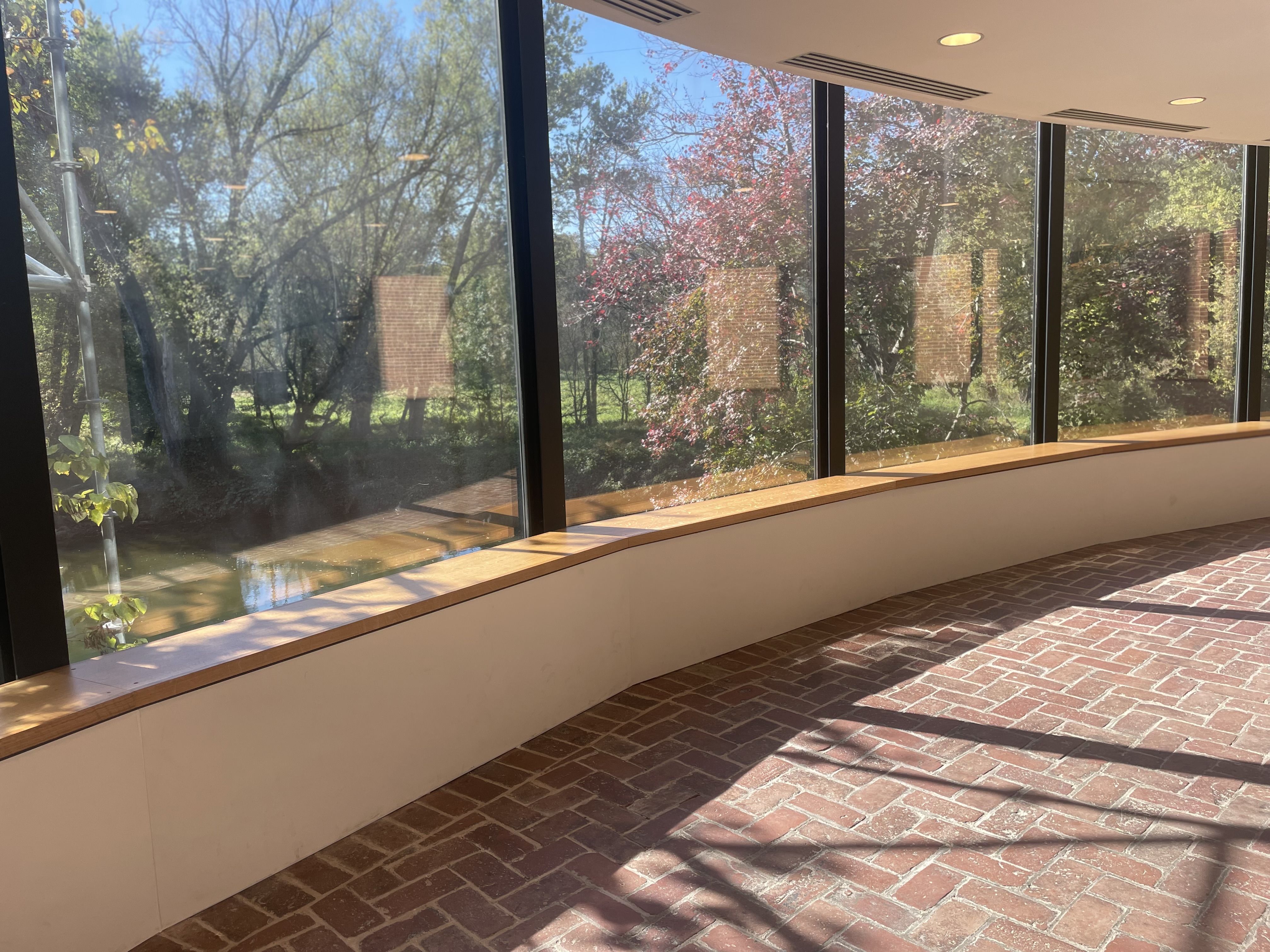
    A bench-like row suitable for sitting at the Brandywine Museum, in front of the erstwhile flood-to-ceiling windows, also is serving as a flood barrier. Staff / Anthony R. Wood

    What was once classroom and lecture space on the ground floor is now bunkered among pipes and sump pumps and other flood-fighting hardware.

    “This is all new,” Collins said. “We had to reroute everything.”

    The low ceilings, spartan interior, windowless walls, and labyrinth of metal evoke a submarine.

    And the hope is that it would be submarine-watertight if another Ida came along, said Nicole Kindbeiter, communications director for the conservancy.

    The museum flood-proofing, which Kindbeiter said required closing off about 12,000 square feet of what was publicly usable space in the lower levels, has taken five years and $30 million. A hefty portion came from federal and state disaster assistance.

    At long last, conservancy officials are confident that the work is near completion and that the building can withstand an assault similar to that of Ida, during which the river stage rose to 21 feet — 4 feet higher than the previous record crest.

    But the grand plan to tame the Brandywine Creek is just beginning, and it is unclear how much it is going to cost, where the money will come from, and when it might be completed.

    The Brandywine battle plan

    The study, compiled by the conservancy, the Chester County Water Resources Authority, and the University of Delaware Water Resources Center and released last year, looked at 300 sites in the watershed, which covers more than 20% of Chester County.

    Starting at an elevation of about 1,000 feet in the western end of the county, the East and West Branches of the creek form a jagged U shape before joining the main stem not far from Longwood Gardens, ultimately flowing into the Christina River near Wilmington.

    Through the years, it has caused floods of trouble. The watershed hosts nearly 150 “repetitive loss properties,” those that have suffered repeated flood losses, which have been a drain on the perennially cash-strapped National Flood Insurance Program.

    Thousands of properties reside in 100-year floodplains, areas in which a 100-year flood has a 1% chance of occurrence.

    Among its recommendations, the 2025 report called for the removal of four dams, two of which, including the one near the museum, are gone, and 10 bridge replacements.

    It targeted an area across the creek from the museum on land owned by the Brandywine Conservancy for “floodplain restoration,” more or less returning a property to a predevelopment state. The conservancy is seeking funding, said its director, Grant DeCosta.

    But a whole lot of land has headed in the other direction, the report noted. In the heart of the watershed along the Route 30 corridor, impervious cover — the hard surfaces that incite runoff — increased from 9% to as much as 15% between 2001 and 2021.

    The fact that so much land in the county was off-limits to development likely kept Ida’s flooding from being worse. A lot of the undeveloped acreage is either owned or held in conservation easements by the conservancy and other entities.

    That said, Ida was more than bad enough.

    Ida’s legacy and the area’s flood history

    By the time the museum opened in 1971 at the site of a closed flour mill, the building it occupied had endured more than 65 floods dating to 1912, according to National Weather Service records.

    By just a few years, the museum’s opening predated the era of federal flood mapping, which in all likelihood would have deemed the site unbuildable.

    Three months after it opened, a tremendous rainstorm blamed for 12 deaths and wiping out a 20-home development in nearby Chester city triggered the museum’s first major flood. Around the time of its first anniversary, the deadly remnants of Hurricane Agnes resulted in another major flood at the Brandywine.

    Agnes’ crest was topped in September 1999 by Floyd’s rains, but Ida was a once-in-800-years event that outdid Floyd’s crest by 4 feet.

    Ida was blamed for one death in Downingtown. The Chester County emergency center dealt with more than 4,000 calls and more than 300 storm-related rescues within 10 hours. Property damage throughout the watershed was immense.

    And at some point, officials say, they expect more troubles.
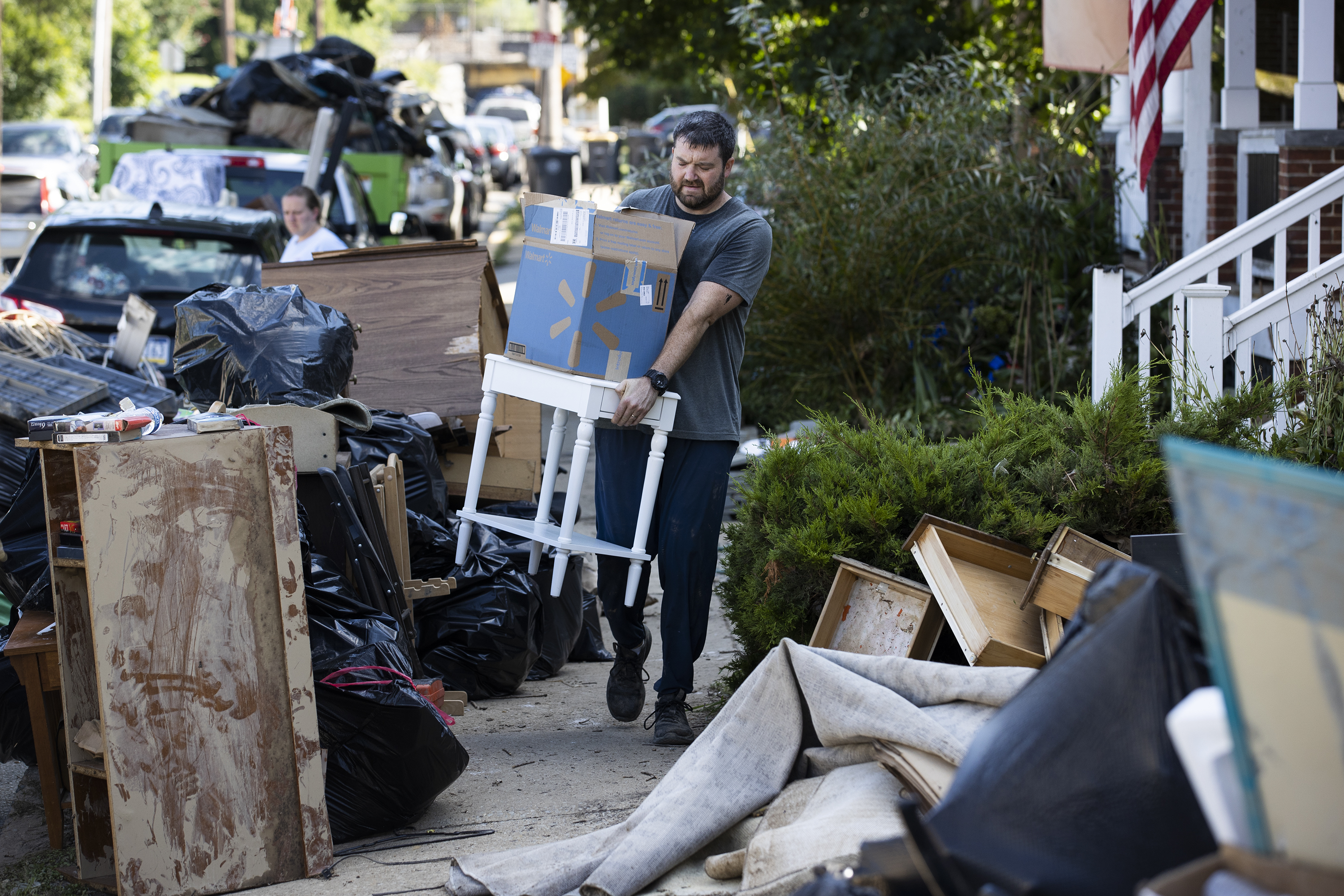
    Steve O’Connor carries some on the things he was able to salvage from his home on Brandywine Avenue in Downingtown in the wake of Ida in September 2021CHARLES FOX / Staff Photographer

    The future of the Brandywine

    Precipitation amounts have been creeping up in the region with the warming of the planet, and the Brandywine study assumed increased rains.

    But as the region learned repeatedly this summer, it would be all but impossible to predict where the heaviest rains will target their ferocity at any given time.

    The proposed Brandywine projects have no timetable, DeCosta said, “given the scale of the flooding challenges we have.”

    “It’s a roll of the dice,” said Gerald Kauffman, director of the University of Delaware Water Resources Center, an author of the study. A major factor in the timing is going to be money, Kauffman said, with federal funding drying up.

    As for the museum, the conservancy is adding a 40,000-square-foot building, to be ready in three years, as part of a $100 million expansion.

    This one will be on a hillside, about 60 feet higher than the one that survived Ida, and Floyd, and Agnes.

    Correction: This story has been updated to reflect that the museum’s flood-proofing plans required it to close off about 12,000 square feet of public space in the lower level.
  • Schools walk a tight line with measles plans | Inquirer Chester County

    Schools walk a tight line with measles plans | Inquirer Chester County

    Hi, Chester County,

    Area school districts are taking different approaches to preparing for potential measles outbreaks. Here’s a look at some of their plans. Also this week, East Whiteland resident are threatening to sue, a beloved community theater could be without a home, plus a popular West Chester winery is adding a restaurant.

    — Lisa Dukart (chestercounty@inquirer.com)

    If someone forwarded you this email, sign up for free here.

    How some Chester County school districts are preparing for measles vulnerabilities

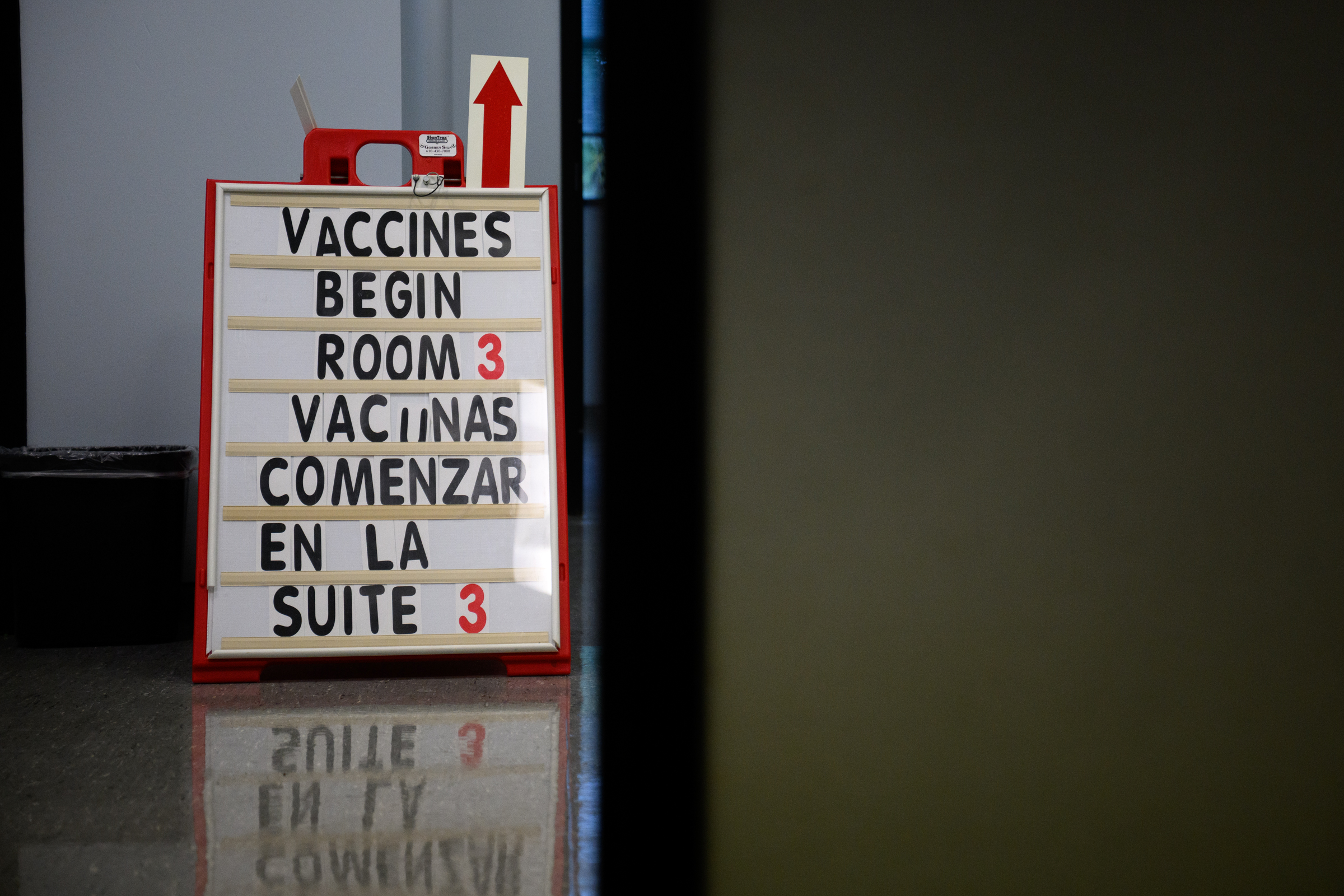
    A sign for vaccinations directs visitors at the Chester County Health Department.Kriston Jae Bethel / For the Inquirer

    As measles cases continue to climb and spill over into Chester County, districts throughout the region are taking varying approaches to preparing for possible outbreaks.

    West Chester Area School District has created a secure portal for employees to upload vaccination records, and district nurses have reached out to families that don’t have vaccine records on file.

    Downingtown Area School District said it’s communicated with staff about possible quarantines in the case of exposure. Others, such as Kennett Consolidated School District, are working to let families know “that immunizations for measles are a protective measure for all.”

    But for some administrators, especially those who faced backlash during the pandemic, preparing for a measles outbreak is something of a tight-rope walk.

    The Inquirer’s Maddie Hanna looks at how some are navigating it.

    SALT’s future could be in jeopardy

    A beloved theater company’s future is in a precarious state following what at least one community member calls a “bait-and-switch” by the township.

    SALT Performing Arts, a performing arts space at 1645 Art School Rd. in Chester Springs, has been operating out of the township building for the past 12 years. The group put in about $400,000 in renovations that concluded last year.

    But this week, the West Pikeland board of supervisors voted to put the building up for bid, potentially leaving SALT without a home. The township hopes to get up to $2 million, offsetting the cost of a new police facility.

    The decision drew backlash. Reporter Brooke Schultz has the details.

    📍 Countywide news

    💡 Community news

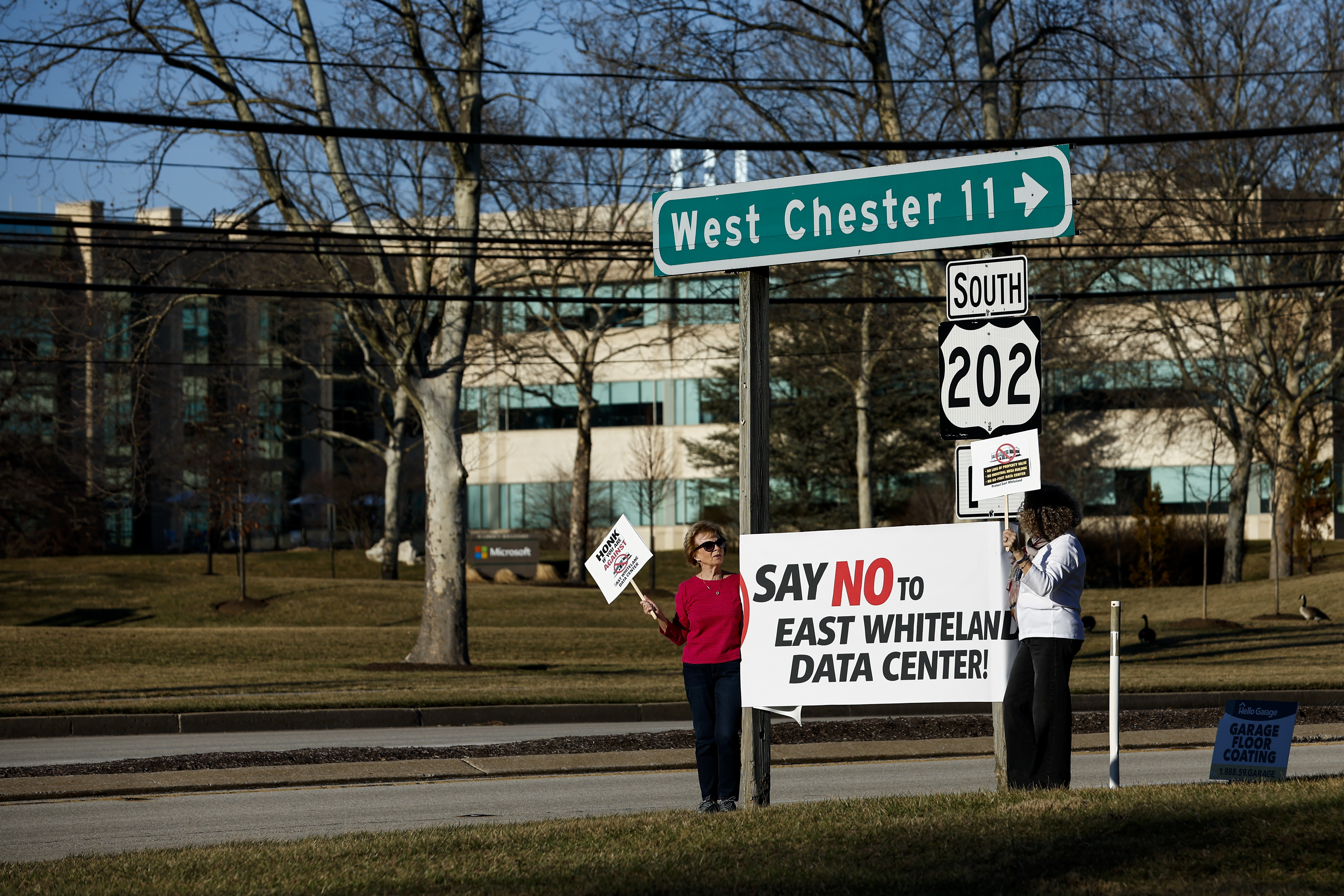
    • Frustrated residents in East Whiteland are threatening, with the help of a newly hired attorney, to sue the township and developer of a controversial 1.5 million square foot data center project if their concerns aren’t addressed. This comes after the township hired a PR firm to help it handle “inquires and information requests.”
    • The long-awaited Phoenixville Wawa at 799 Valley Forge Rd. is slated to open on Thursday.
    • Beth Chaim Reform Congregation’s longtime rabbi Michelle Denker Pearlman died last month of leiomyosarcoma, a rare soft tissue cancer. Outside of her work at the Malvern congregation, Pearlman, 56, was a social justice activist, musical stage performer, and mentor.
    • Gov. Josh Shapiro announced a 10-year plan to support farmers as they face land loss, rising costs, and labor shortages. He made the announcement from historic Milky Way Farm in Chester Springs late last week.
    • A 14-year-old boy was shot last week by Zaid-An Butcher, 15, in Coatesville. The victim was taken to the hospital and listed in fair condition at the time. Butcher will be prosecuted as an adult, 6abc reports.
    • A woman reported being assaulted on a trail near the 500 block of Dean Street in West Chester last week. Police are investigating.
    • Schuylkill Township last week appointed Hans Mueller to its board of supervisors, filling a vacancy left after Devin Hager’s resignation. Mueller will serve through December 2027.
    • It may only be October, but Jingle & Co., a holiday shopping collaboration between eight local brands, has opened at 812 E. Lancaster Ave. in Berwyn.
    • West Chester Refillery Station, which provides bulk refills of common household items, has opened its doors at 54 E. Street Rd.

    🏫 Schools briefing

    • Downingtown Area School District Superintendent Robert “Bob” O’Donnell will step down from the role at the end of the 2026-27 academic year, he announced at last week’s school board meeting. O’Donnell has been in the role since July 2022.
    • Great Valley’s homecoming festivities take place Friday and Saturday.
    • Owen J. Roberts School District has nominated Danielle Ryan to fill the school board seat left vacant after Rita Pederson’s recent resignation. The board is slated to vote on her nomination at Monday’s meeting.

    🍽️ On our plate

    • Popular West Chester winery Turks Head Wines has morphed into a winery-restaurant. Added to its tasting room at 120 N Church St., the concept builds on their mission to bring a bit of California to Pennsylvania. They’ve brought on chef Dave McDonald, of Laurel Creek Country Club and Helm BYOB, to help.
    • Baithak Indian Cuisine opened recently at 10 Riverside Dr. in Spring City.
    • Steel City Brewing in Coatesville is planning its “very first soft opening” in the form of a Haunted Speakeasy on Oct. 30 where costumes are encouraged. The brewery/community hub inside the county’s first YMCA said the event comes ahead of a January opening.

    🎳 Things to do

    ☀️ Solar Astronomy: Get an introduction to safe sun-gazing at this event. ⏰ Saturday, Oct. 24, 10 a.m.-noon 💵 Free 📍 Starr Farm Park, West Chester

    🌻 Chrysanthemum Festival: Explore the colors of fall, including a double chrysanthemum arch. ⏰ Through Sunday, Nov. 15, times vary 💵 Free for members, prices vary for non-members 📍 Longwood Gardens, Kennett Square

    👻 Halloween events

    🎃 Here’s a look at community festivities in the coming days:

    🏡 On the market

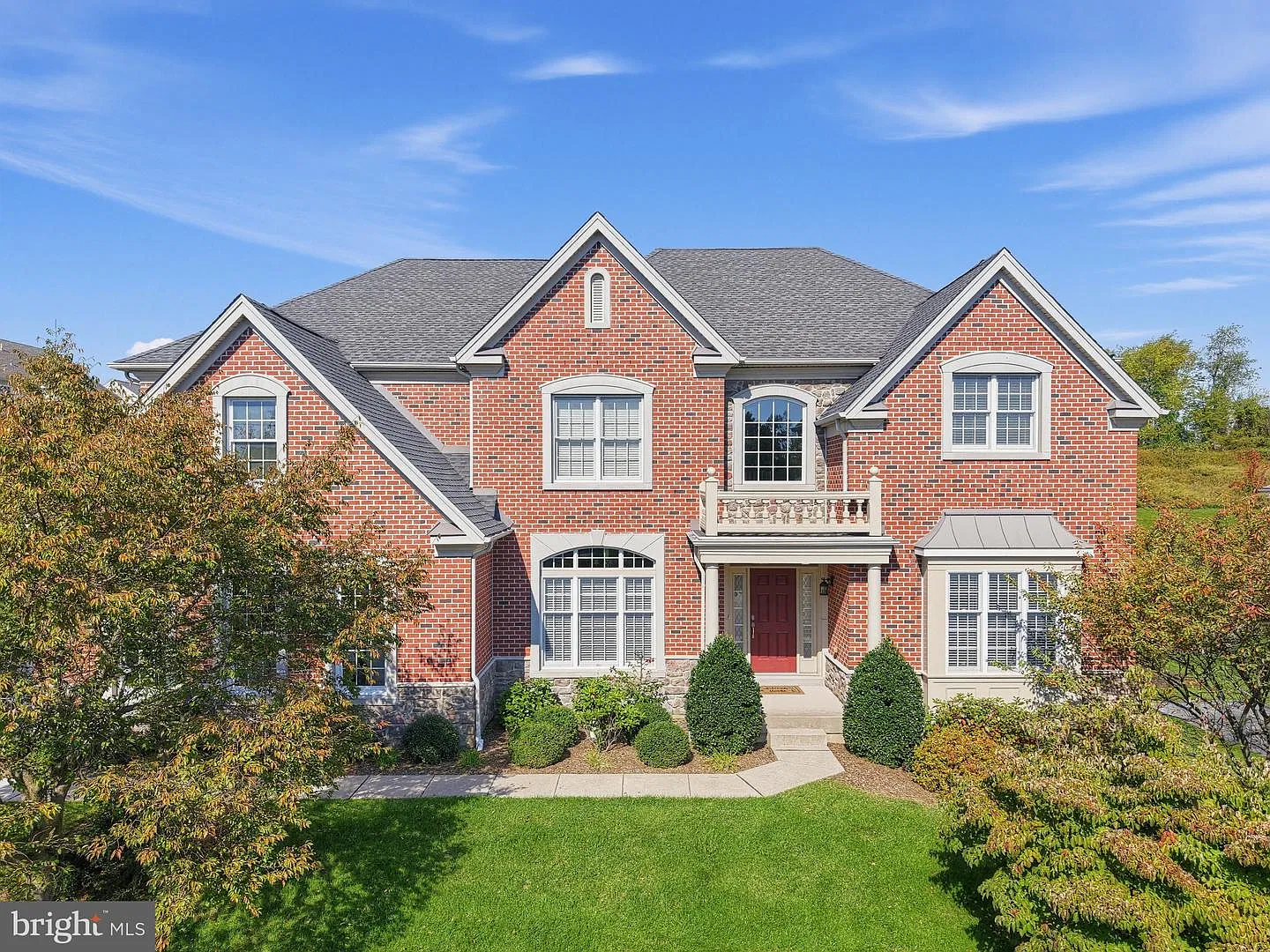
    A five-bedroom Chester Springs home with a spacious yard

    Located in the Summit at Byers Station neighborhood, this five-bedroom brick home has living and dining rooms, and an eat-in kitchen — with granite countertops and a butler’s pantry — that opens onto a family room with a fireplace. It has a first-floor bedroom and full bathroom, with four additional bedrooms and bathrooms upstairs, including the primary suite with dual walk-in closets and a soaking tub. Other features include a bonus room and a deck overlooking the backyard.

    See more photos of the home here.

    Price: $1.15M | Size: 4,730 SF | Acreage: 0.37

    📈 Chester County market report

    • Median listing price: $590,000 (down $9,000 from August) 📉
    • Median sold price: $590,000 (up $21,800 from August) 📈
    • Median days on the market: 32 (down one day from August) 📉

    This Chester County market report is published on a monthly basis. Above is data for September from realtor.com.

    🗞️ What other Chester County residents are reading this week:

    Staffer Patricia Madej contributed to this newsletter.

    Clarification: This newsletter has been updated to reflect that the November election is the general election.

    By submitting your written, visual, and/or audio contributions, you agree to The Inquirer’s Terms of Use, including the grant of rights in Section 10.

    This suburban content is produced with support from the Leslie Miller and Richard Worley Foundation and The Lenfest Institute for Journalism. Editorial content is created independently of the project donors. Gifts to support The Inquirer’s high-impact journalism can be made at inquirer.com/donate. A list of Lenfest Institute donors can be found at lenfestinstitute.org/supporters.

  • Measles is thought of as a childhood illness, but more Pa. adults are getting sick

    Measles is thought of as a childhood illness, but more Pa. adults are getting sick

    The adults who arrive at Penn State Lancaster Medical Center with measles have symptoms far more severe than the virus’ hallmark cough, fever, and rash.

    They are weak and disoriented with meningitis, sepsis, or pneumonia. Some have bacterial infections in their blood, kidney failure, or hepatitis.

    “To see that in otherwise young healthy patients is very unusual,” said Fahmida McGann, an infectious disease physician at the hospital.

    Pennsylvania’s measles outbreak is defying epidemiologists’ expectations and historical trends: Adults account for about two-thirds of the 1,300 cases reported by the state in the largest outbreak the country has seen in decades.

    Until now, measles was rarely seen among adults. The virus is so contagious that virtually no one made it out of childhood without getting sick prior to the advent of a vaccine in the 1960s. Recent major outbreaks in Texas and South Carolina primarily affected children, with adults accounting for about a third of cases.

    Pennsylvania’s outbreak is also sending people to the hospital at almost twice the rate seen in other recent outbreaks. Six people diagnosed with measles — four of them adults — have died, according to state health officials and local coroners. An infant, born with the disease after his mother was sick during pregnancy, was among the deaths.

    The toll showcases how adults over age 20 are among the groups at greatest risk for serious complications, given that they are more likely than children to have underlying medical conditions that make it harder to recover.

    Pennsylvania is seeing the highest hospitalization rate among children under 4 years old. They represent one in three of those admitted to the hospital, according to the state health department.

    Doctors say adults who waited to seek medical attention until they were too sick to carry out their home and work responsibilities could also be contributing to the high hospitalization rate.

    And just this week, health providers received a state-issued alert about congenital measles, which occurs when a pregnant woman passes on measles to her newborn infant. Cases are so rare that standard tracking is non-existent, and little is known about its long-term implications.

    Pennsylvania’s measles outbreak is a phenomenon decades in the making, experts say. The virus appears to be spreading widely in communities, such as Amish enclaves across the state, where some have skipped vaccines for a generation or more.

    “You have to have individuals who aren’t getting vaccinated, but who also aren’t being exposed to measles for decades,” said William Moss, a professor of epidemiology and international health at the Johns Hopkins Bloomberg School of Public Health.

    A yearslong decline in vaccination rates amid rising politicization and misinformation has left any unvaccinated individual — infant, child, or adult — vulnerable to the disease now ripping through the state.

    Children under 5 and people with compromised immune systems are also at high risk for severe illness.

    Measles among adults

    Adults between ages 25 and 49 have been hardest hit by Pennsylvania’s measles outbreak, state data shows, followed by adults between the ages of 18 and 24. Combined, they represent about 60% of cases.

    About 20% of all measles patients in Pennsylvania require hospital treatment. Adults older than 50 are the second most likely to be hospitalized, representing more than one-fourth of hospitalizations.

    Both trends are unusual, medical experts say.

    The outbreak’s path in Pennsylvania is nearly a mirror opposite of how measles has typically spread:

    • Last year in west Texas, adults accounted for about a third of cases in an outbreak that originated in a Mennonite community. Roughly 13% of all patients were hospitalized, and two people, both children, died.
    • In South Carolina, school-age children were at the center of an outbreak that sickened 997 this year and last. There were no deaths.
    • Between 1990 and 1991, more than 1,500 measles cases were reported in Philadelphia, amid a national resurgence of the disease. Here and nationally, children under 5 were more likely to get sick.

    So far this year in Pennsylvania, about 870 adults and 440 children have contracted measles. The state’s tally is likely an undercount, since not all measles patients get tested or visit doctors. Adults with more serious cases may be more likely to get reported than mild cases among school-age children, experts say.

    (function() { var l = function() { new pym.Parent( ‘measles-age__graphic’, ‘https://media.inquirer.com/storage/inquirer/ai2html/measles-age/index.html’); }; if(typeof(pym) === ‘undefined’) { var h = document.getElementsByTagName(‘head’)[0], s = document.createElement(‘script’); s.type = ‘text/javascript’; s.src = ‘https://pym.nprapps.org/pym.v1.min.js’; s.onload = l; h.appendChild(s); } else { l(); } })();

    Glen Wheeler, a primary care doctor working at the center of the statewide outbreak in Lancaster County, had never seen a measles case in his 56-year career until this year.

    At his clinic in Smoketown, he sees a lot of lacerations, eye injuries, burns, and other problems that arise from the hard work of farm life. He knows his patients — mostly Amish and Mennonite families — typically seek care only when they are too sick to work.

    In recent weeks, between six and 10 adults are showing up daily, sleep deprived and dehydrated from trying to push through measles.

    “They’re having diarrhea or vomiting, they can’t keep liquids down, and they’re coughing so hard they can’t sleep or can’t breathe,” said Wheeler.

    Wheeler takes many to a private room cordoned off from the rest of the clinic and hooks them up to an IV with electrolytes, to help them hydrate. Some go through multiple IV bags before leaving.

    Treatments focus on minimizing symptoms, because there is no cure or specific therapy for measles. Some patients are so sick Wheeler refers them to the hospital.

    Many measles patients who arrive at Lancaster Medical Center can be treated in the emergency department and sent home to recover. But some must be admitted for more advanced care, said McGann, who treats adults at the hospital.

    Patients are generally “not coming in super early,” but rather days after developing a rash, which typically appears three to five days after the first symptoms, McGann said.

    The vast majority of measles cases involve mild-to-moderate flulike symptoms that improve within two weeks, and don’t require hospital care. McGann suspects that some of the patients arriving with advanced illness assumed they, too, would be able to recover at home.

    “It’s not a benign disease,” McGann said.

    Congenital measles emerges

    In an outbreak spreading among adults, unvaccinated pregnant women are particularly vulnerable, because they cannot receive the measles, mumps, and rubella vaccine, which contains a live, weakened version of the virus.

    The state has reported 64 measles cases among pregnant people. A measles infection raises the risk of premature delivery and complications for the infant after birth.

    “When there’s a widespread outbreak in a community, it’s next to impossible for an [unvaccinated pregnant woman] to not be exposed,” said John Goldman, an infectious disease specialist at the University of Pittsburgh Medical Center.

    The measles, mumps, and rubella (MMR) vaccine is 93% effective after one dose and 97% effective after two doses. Kriston Jae Bethel / For the Inquirer

    The state is working with the Centers for Disease Control and Prevention to develop tools to track cases of infants with congenital measles. In the past, there was little need: Most women had already acquired measles or were immunized by childbearing age and were unlikely to pass it to their newborn.

    The death of an infant in Lancaster County drew wide attention to the risks of measles during pregnancy.

    The mother contracted measles shortly before she gave birth prematurely to a baby who also tested positive for measles. After his death, Lancaster County’s coroner told reporters that he did not believe the child died from measles, but of a lacerated spleen. Other physicians have questioned this conclusion, noting that measles can weaken the spleen, making it more likely to rupture.

    State officials have maintained the infant’s death was associated with measles.

    Earlier this week, state health officials issued a health alert for physicians with advice on how to treat measles during pregnancy and after birth.

    Women who have measles around the time they give birth can pass on the virus to their newborn, putting them at risk for potentially fatal complications, such as brain swelling and a rare complication called subacute sclerosing panencephalitis, a brain disorder that develops years after a child recovers from the disease.

    Goldman said he’s aware of “a couple” cases of congenital measles treated in his health system, mostly at UPMC Lititz in Lancaster County, but could not provide an exact number.

    As in adults, treating congenital measles involves working to ease symptoms. Exposed pregnant women and babies can receive immune globulin, an antibody treatment that can offer some protection against measles and other illnesses, or at least prevent severe disease, Goldman said.

    “We can do our best to predict what these babies may struggle with, but we just don’t have a whole lot of experience to pull from,” said Alexandra Medoro, the medical director of CHOP’s congenital and perinatal infections program.

    Shifting public health response

    In smaller measles outbreaks in recent years in Pennsylvania and nationally, tried-and-true messaging targeted parents with vulnerable children.

    The mantra of public health leaders: Get your children vaccinated. Pediatric offices, urgent care centers, and hospitals were advised that flulike symptoms could be the early signs of measles that appear before the telltale red rash. They also were given photos of the rash on the arms, backs, and faces of children.

    But as Pennsylvania’s outbreak logs more adult patients, public health leaders and hospitals are revising the playbook.

    Another local hospital at the outbreak’s epicenter, Penn Medicine Lancaster General Hospital, has updated its electronic medical record to prompt intake staff to ask all patients if they have had flulike symptoms and if they are vaccinated against measles, said Nitin Patel, an infectious disease doctor at the hospital.

    Vaccines are available at state and county health centers, as well as pop-up clinics scheduled in outbreak areas. Kriston Jae Bethel / For the Inquirer

    Pennsylvania’s Department of Health has scheduled dozens of pop-up clinics in rural communities, where some entire families come to get vaccinated. The measles vaccine is 93% effective after the first of two recommended doses.

    Nurses employed by Chester County, which has the third-highest number of cases in Pennsylvania, make house calls to Amish and Mennonite families who don’t use cars.

    Messaging has emphasized that anyone can get measles, said Jeanne Franklin, Chester County’s health director.

    “The disease doesn’t know how old you are,” Franklin said. “This is not a childhood disease — you can get it at any point in your life if you’re unvaccinated.”

  • A Chesco business owner is facing more charges for alleged sexual abuse of children

    A Chesco business owner is facing more charges for alleged sexual abuse of children

    A Chester County business owner, who was arrested earlier this year for alleged sexual abuse of children, is facing additional charges this week.

    John H. Lymberis, 58, has been charged with more than 20 counts relating to the production and possession of child pornography and unlawful contact with a minor out of state, according to charging documents. Lymberis, of Parkesburg, who owned Harry’s Hotdogs and Athena’s Kafenio in Sadsburyville.

    Evan Kelly, the attorney representing Lymberis, said they were aware the charges were coming, and Lymberis planned to “vigorously challenge [the charges] in court.”

    Lymberis allegedly sent a Michigan 15-year-old sexual messages and images and later bragged about and distributed her photos in online chat rooms, according to charging documents. The victim, now an adult, surrendered her phone in June for the investigation, leading to the additional charges.

    The new charges stem from the earlier investigation, which were prompted by a 2024 report from the National Center for Missing and Exploited Children indicating that someone used the Kik messaging app to upload and share photos and videos of alleged child sexual abuse material from September to October that year.

    Lymberis — who was first arrested and charged with sexual abuse of children, digital forgery, and related charges for alleged possession and distribution of child sexual abuse material in May — was identified through email addresses attached to the Kik account and information provided through the Delaware County Internet Crimes Against Children Task Force.

    During a search of Lymberis’ house, he “admitted his use of the Kik social media” app, according to the charging documents; the account contained videos where he identified himself by name.

    Lymberis “bragged in chats … with other chat members about a 15-year-old female that is now an adult and still communicates with him. He shared images with those chat members,” the documents state.

    Detectives identified the girl, whose images and sexual texts were on Lymberis’ Kik account.

    Investigators found that she began talking to Lymberis in 2019 in a Kik chat room, where they continued exchanging sexual videos and messages for years. Lymberis “even sent her an e-card on her 16th birthday,” according to charging documents. She turned 18 in September 2021.

    The victim estimates that she sent 90-100 images when she was underage; she positively identified him in a photograph. She said he was “very charming and caused her emotional issues,” according to the documents.

    Lymberis was arraigned this week and posted bail. A preliminary hearing is scheduled for Nov. 2.

    This suburban content is produced with support from the Leslie Miller and Richard Worley Foundation and The Lenfest Institute for Journalism. Editorial content is created independently of the project donors. Gifts to support The Inquirer’s high-impact journalism can be made at inquirer.com/donate. A list of Lenfest Institute donors can be found at lenfestinstitute.org/supporters.

  • A community theater spent $400,000 on renovations. Now, the town may sell the building and leave them without a home.

    A community theater spent $400,000 on renovations. Now, the town may sell the building and leave them without a home.

    A community theater is caught in the crosshairs of West Pikeland Township’s hope to sell the municipal building it calls home — just about a year after the performing arts company completed nearly half a million dollars’ worth of renovations there.

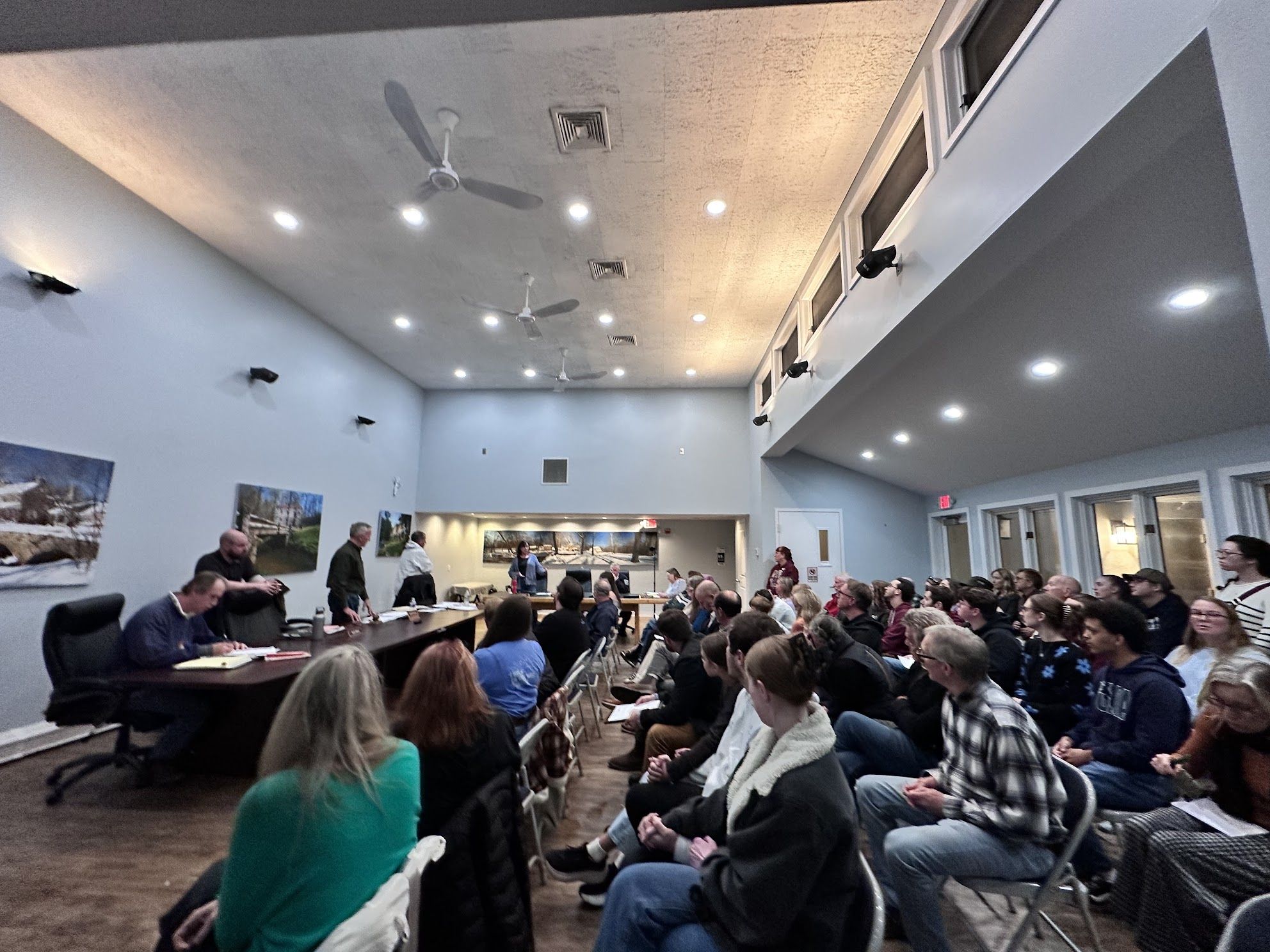
    The West Pikeland Board of Supervisors voted 3-2 on Monday to put the building, at 1645 Art School Rd. in Chester Springs, up for bid. Board members cast their votes before a packed house had an opportunity to speak in support of SALT Performing Arts, the hub that has been based at the township building for 12 years. The group shares the space with township administrative offices.

    But after roughly an hour of public comment decrying the decision, board member Bryan Maher sought to require that the buyer honor the license agreement as a condition of the bid — something the township originally was going to make optional. The board could not make that change at Monday’s meeting, after already voting to put the building up for bid, but may reconvene Thursday to discuss adding such a condition. Officials said the date and time will be published online.

    “That is the best we can do according to the regulations, the lovely second-class township code that we all have to abide by,” the township manager, Joan Blatcher, told attendees Monday.

    On Monday, Oct. 19, community members arrived to speak in support of SALT Performing Arts retaining their home at the West Pikeland Township municipal building after contributing around $400,000 to its renovation. Township officials voted to put the property up for public bid Monday, but after impassioned comments, plan to reconvene to consider adding protections.Courtesy of SALT

    Lauren McComas, SALT’s president and artistic director, said Tuesday that the group was feeling hopeful.

    “But it’s still unfolding and nothing is certain,” she added.

    The proposed sale comes just more than a year after SALT put together about $400,000 to pay for necessary safety improvements and renovations in the space, striking an agreement with the township to foot the bill if the organization could license the space for 10 years at a fixed cost.

    The township wants to sell the property for at least $2 million to offset the cost of purchasing a new facility to house its police force, which the community pushed to save several years ago when the municipality considered disbanding it and using the state police instead.

    “We knew we were rolling the dice in raising almost half a million dollars and investing it into a property that we did not own, but we trusted the township and this good-faith deal we made with each other,” McComas said.

    Speaking to attendees at the meeting, captured in footage on a resident’s unofficial YouTube channel, Maher said the sale of the building was necessary to ensure the township could renovate the new building at 1001 Kimberton Rd. and get the police force accredited. But he did not want to lose SALT in the process, calling on the theater and Historic Yellow Springs, a community organization and the building’s previous owner, to work something out.

    “It’s not just about how much money can we squeeze out of this building so we can build new extra bits and bobs over at the new one,” he said. “That’s not my priority here. My priority here is that the community is built through the purchase of the new building and the reinforcement of what’s here — that’s SALT. That’s not this building.”

    His comments drew a standing ovation.

    The township purchased the property in 2005 from Historic Yellow Springs, an organization dedicated to the history and preservation of the village.

    There are two buildings on the property; West Pikeland’s police are in the smaller single-story building, while the township administrative offices, a meeting room, and SALT share the larger building, Blatcher said.

    SALT started its theater company in the space in 2014, McComas said.

    In the more than a decade since, it has produced 90 main-stage productions, and had more than 14,000 children perform on stage through educational arts programs, she said. SALT has community partnerships with Acting Antics, an all-abilities theater group; the Chester County Food Bank; the Domestic Violence Center of Chester County; and the VFW, busing unhoused veterans to the facility for private shows during the holidays and providing them with hot meals and necessities.

    In 2023, township officials told SALT leaders that a brick wall and skylight were becoming a liability and needed to be replaced. SALT offered to raise money for the renovations, along with other improvements to the space, in exchange for a 10-year license agreement at a fixed rent. The township agreed, McComas said.

    SALT fundraised for two years and completed the project in September 2025, McComas said.

    Earlier this year, the township approached SALT about its intention to sell the building. While officials gave SALT right of first refusal for the purchase, as specified in the agreement, it was too steep a cost after pouring so much into the renovations, McComas said. The theater also took out a $200,000 construction loan as part of the $400,000 effort, guaranteed by McComas herself, to complete the work, reassured by the 10-year commitment.

    They entered the agreement in May 2023, and it became effective Jan. 1, 2024, Blatcher said.

    “This is our home and this is our hub. And if they did not honor our license agreement and kicked us out, SALT would be done,” McComas said. “All that we just built for the last 12 years with sweat and tears and blood and passion would just be done.”

    Blatcher said the township had not planned to sell the building when it entered the agreement. But because the building is a part of the Historic Yellow Springs Village and on the historic register, she said, “there are limitations to how that can be done” to accommodate a larger police squad and meet the requirements of accreditation.

    Ahead of a possible reconsideration later this week, Blatcher said, the licensing agreement with SALT is included in the bid packet for potential purchasers. Bidders are instructed to advise the township if they would assume the terms, or prefer the township terminate it “as permitted in the current agreement with 30 days notice.”

    “I am not aware of a single person on the staff or Supervisors of the Township who want SALT to have to relocate,” Blatcher wrote in an email. “The township has done what it can to provide SALT with as much time as it could to get funding or enter into a partnership or agreement with HYS to retain the building. The supervisors have obligations to the residents of the township that go beyond fostering the exceptional community built by SALT.”

    McComas said leaders tried to limit how many people came out Monday to speak on SALT’s behalf, but the evening saw impassioned pleas from staff members, donors, community partners, and more.

    “We’re not asking for anything for free. We’re not even asking you to invest in the arts,” said Rob Merow, vice president and technical director of SALT. “We’re simply asking you to not double dip on the recent investment that SALT’s donors made and afford us the privilege of maintaining excellence in arts and kindness within West Pikeland Township.”

    Valerie Dixon said she started as a ticket-buyer before she became involved as a choreographer for the performing arts center. She condemned the township’s decision to sell the property without honoring the license.

    “That little bait-and-switch felt like a huge slap in the face,” she said. “Not just to me, as a donor and a ticket-buyer and a staff member of this organization and an educator to thousands of kids who come in through our doors here, but also as a community resident. Slap in the face.”

    McComas’ 15-year-old daughter, Eloise, choked up as she spoke to the board.

    “SALT is my second home. I grew up here. My brothers grew up here,” she said. “I just really hope that you will choose to not just do what is legal, but also do what is morally right.”

    This suburban content is produced with support from the Leslie Miller and Richard Worley Foundation and The Lenfest Institute for Journalism. Editorial content is created independently of the project donors. Gifts to support The Inquirer’s high-impact journalism can be made at inquirer.com/donate. A list of Lenfest Institute donors can be found at lenfestinstitute.org/supporters.

  • Residents give notice of intent to sue East Whiteland and developer over 1.5 million square foot data center project

    Residents give notice of intent to sue East Whiteland and developer over 1.5 million square foot data center project

    East Whiteland residents are teeing up a lawsuit against the township, its elected officials, and a developer over an approved 1.5 million-square-foot data center project, if concerns outlined in a letter sent Tuesday are not addressed “immediately and substantially.”

    The notice, which argues that there were violations of township ordinances in approving the plan, comes after East Whiteland United, a group of community members, retained attorney Philip S. Rosenzweig to represent them earlier this month.

    It’s another attempt by residents to halt the development of the data center, slated for the 79-acre Cyprus Foote Mineral Co. property, a Superfund site that sits at the border of East and West Whiteland Townships.

    An attempt to appeal the land use was quashed by a Chester County judge earlier this year, but residents have not taken their foot off the gas in their opposition to the project.

    The township manager declined to comment. The township board chair and a representative for the developer did not immediately respond to a message seeking comment.

    The eight-page notice — published on the resident group’s website and sent to the township, its three-member elected board, and developers Green Fig and Sentinel Data Centers — says its basis to sue rests on several factors.

    Those include a letter from Aqua America, a public water company, indicating it could not meet the data center’s water needs and new permit applications that seek to modify the design “impermissibly.” It also argues that an environmental impact assessment of it was “fraudulent and incomplete,” and that the developer has “circumvented” municipal planning code requirements.

    The data center, which secured early approvals from township officials in 2018 and 2024, saw increased scrutiny from the community this past year, when its developers sought to expand its footprint and update their plans.

    With data centers more top of mind now than they were before, residents began showing up to meetings in large numbers, growing more vocal — and more organized. The project even prompted residents to push for adding more supervisors to the board in November’s election.

    The developers abandoned efforts to update their proposal after the vehement outcry, instead deciding to build the previously approved plan. As preliminary construction work has begun, the developers have been issued two stop work orders over concerns with permitting.

    Last week, officials voted to hire a PR firm as it grapples with increased information requests.

    This suburban content is produced with support from the Leslie Miller and Richard Worley Foundation and The Lenfest Institute for Journalism. Editorial content is created independently of the project donors. Gifts to support The Inquirer’s high-impact journalism can be made at inquirer.com/donate. A list of Lenfest Institute donors can be found at lenfestinstitute.org/supporters.

  • For Catholics, Hegseth’s thwarted execution plan and Pope Leo’s health are just two concerns at a worrisome moment

    For Catholics, Hegseth’s thwarted execution plan and Pope Leo’s health are just two concerns at a worrisome moment

    The last two weeks have been a bit of a news whirlwind for Catholics like me. Not gonna lie — my candles have been lit 24/7, my rosary is at hand, and I’ve been regularly checking for Vatican updates on the health of Pope Leo XIV, who was diagnosed with lung cancer and underwent surgery on Oct. 13.

    But I was already praying hard even before that, as were many other Catholics in the U.S.

    The Catechism of the Catholic Church holds that the death penalty is inadmissible in any circumstance, after a revision to that effect was put in place by Pope Francis in 2018.

    But U.S. Roman Catholic bishops have been actively advocating against capital punishment for more than 50 years. And when Secretary of Defense Pete Hegseth announced earlier this month that the Pentagon would be livestreaming the firing squad execution of Fort Hood shooter Nidal Hasan — and that President Donald Trump backed the plan — the bishops denounced the plan quickly and decisively.

    Many Catholics in the pews deplored it as well.

    “As a Catholic, I cannot countenance the death penalty,” said Michelle Francl-Donnay, a parishioner of Our Mother of Good Counsel Church in Bryn Mawr. “But beyond that — to present this as public entertainment, to crow over the power on display, to suggest that this is a teaching moment — deeply offends me. It erodes our humanity. It diminishes us.”

    Sister Bethany Welch from Philadelphia echoed that double concern in an email. “First, the announcement to livestream a public execution is a deliberate, calculated escalation of violence against human beings, intended to stir up hatred and fear. Let me name this before anything else. Second, the Gospel invitation to follow a nonviolent Jesus calls me to radically embrace the way of inclusive love that takes shape in works of mercy. I am thus compelled to decry the death penalty and all manner of government-sponsored killing.”

    That condemnation of the death penalty is central to Jeff Singleton of Pax Christi Chester County. “We oppose the death penalty in all cases … televised or not,” he told me. “Those who are guilty, even of the most heinous crimes, are still sacred in the eyes of our loving God who embraces all sinners as sons and daughters. Mr. Hegseth has perhaps done us all a favor, by bringing the barbarism of execution into the light. Capital punishment is no less savage in secret.”

    By the time President Trump backtracked Thursday, announcing that the execution of Hasan will still take place on Dec. 3, but won’t be livestreamed, Catholics were deep into prayer centered on Pope Leo’s recovery, and what that might mean in fraught moments like those last week.

    “At a time when violence, extreme nationalism, xenophobia, contempt for international agencies, and total disregard for compassion and the common good are the new norms in policymaking, the world needs the example and leadership of Pope Leo,” Suzanne Wentzel, a parishioner of St. Joseph Parish in Downingtown, said via email.

    “For people of all faiths or no faith, he provides the light of truth and goodness, and inspires hope that humanity can still find its soul,” she said.

    Selfishly, I wonder how we will manage if we have to do without Pope Leo’s unwavering moral voice in these ethically compromised times.

    From actors to heads of state to former Secretary of Labor Robert Reich, they are all expressing similar sentiments about the pontiff’s role on the world stage:

    Wishing a speedy recovery to Pope Leo XIV.

    He continues to serve the world as a much needed source of moral authority when many leaders, at home and abroad, are abdicating their responsibilities.

    [image or embed]

    — Robert Reich (@rbreich.bsky.social) October 14, 2026 at 6:01 PM

    But the Catholics I reached out to about the precarity of Pope Leo’s voice at this crucial moment, are full of faith.

    “Pope Leo may have to pull back in the sense of not being able to hold a press conference, or an audience at the Vatican, but recent popes have continued to be a force on the world stage even when very ill,” said Francl-Donnay, who is also a scientist, a scholar of the Vatican Observatory, and the author of Prayer: Biblical Wisdom for Seeking God. “I think of Pope Francis praying the Angelus from the balcony of the hospital after major surgery, bringing our attention to the need to accompany the sick, and for access to healthcare for the poor in particular.”

    “Even when Pope Leo’s physical voice might be muted, his recent encyclical speaks clearly and firmly about the need to seek the truth, and to have a clear view of reality — not rely on alternative facts or live in our own bubbles,” she said. “Psalm 19 — prayed regularly by those who keep the Liturgy of the Hours, including me and Pope Leo — reminds us: … no voice is heard yet their span extends through all the earth, their words to the utmost bounds of the world. Ultimately the truth cannot be silenced.”

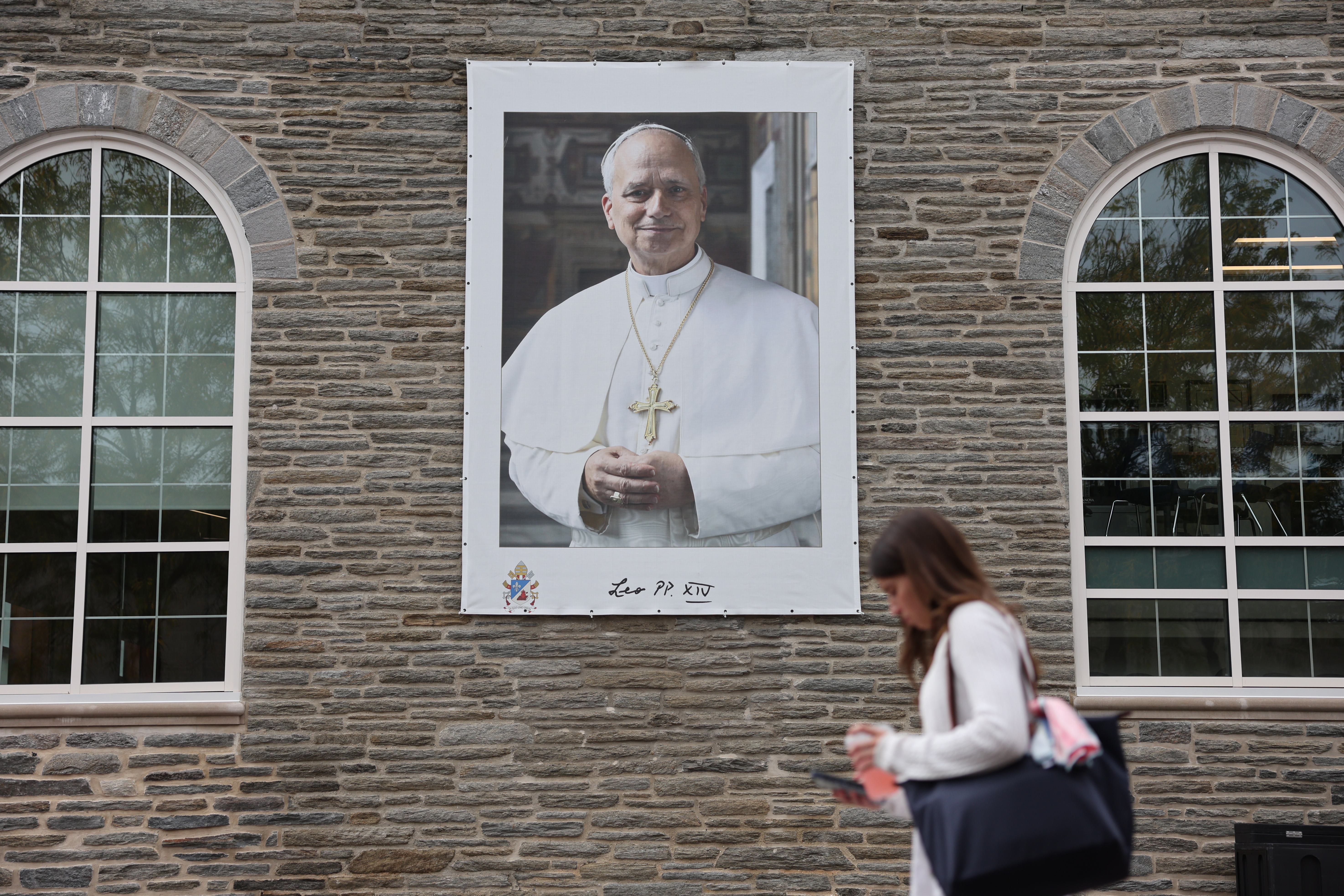
    A student walks by a large poster of Pope Leo XIV at Villanova University on Sept. 30. “Pope Leo may have to pull back in the sense of not being able to hold a press conference, or an audience at the Vatican, but recent popes have continued to be a force on the world stage even when very ill,” Michelle Francl-Donnay said.David Maialetti / Staff Photographer

    Msgr. Hugh Shields, a retired priest from the Archdiocese of Philadelphia, sees a clear role for Catholics and people of good will during the pontiff’s recovery.

    “Pope Leo’s care, courage, and conviction on behalf of the ‘voiceless’ millions of our brothers and sisters is hopefully an impetus for us to speak up, even if Pope Leo’s voice need be silent in recuperation,” he told me. “We are required to question and challenge any person (president or pauper) who believes that his or her position is the only position that can solely determine what cherished words like constitutionality, morality, respect, justice, truth, legality, responsibility — let alone love, peace and fairness — actually mean.”

    “That requirement,” he added, “impels us not to stand silently by and allow anyone to rewrite what our faith has taught us.”

  • How Chesco residents are organizing to fend off — or change — housing and data center development

    After Aus Marburger sat through the first hearing that would change the rolling farms of Hibernia Road in West Brandywine to an age-restricted development with roughly 230 homes, he felt called to action.

    Marburger, 48, printed out hundreds of fliers and knocked on roughly a hundred doors, urging the community to show up in opposition. After that wave of outreach, Marburger and other residents established an LLC, launched a GoFundMe campaign, and hired an attorney, with the goal of staving off the new neighborhood.

    Across Chester County, residents have been organizing in an effort to be better heard when they push back on proposed development. There have been a number of wins for residents in the last decade, serving as a blueprint for new battles. As the state grapples with more data center applications, residents have turned their attention there, too, banding together to shut down construction.

    “We’ve got a crisis of overdevelopment in these rural communities on the outskirts of the suburbs and the cities, and really, I think, it’s a county- and also a statewide issue that needs to be looked at,” Marburger said.

    ‘Real flashpoints’

    Chester County saw some of the highest population growth in Pennsylvania between 2020 and 2024. To address that, housing has been trending toward higher-density construction. Multifamily and apartment units soared in 2024, making up roughly half of the housing stock that year, according to the county’s planning commission.

    At the same time, Chester County — and many of the localities within it — is seeking to preserve open space, sending more than a million dollars in grant funds to municipalities and land preservation organizations in July. The county has more preserved private land than any other in the nine-county metro area, according to officials.

    Still, residents are lining up to press for more.

    While it is not occurring only in Chester County — squabbles like this have played out across Philadelphia’s collar counties — the county is somewhat uniquely positioned, with its wealthier population and its focus on open space, which is a big draw for prospective residents.

    The county does not track how many organizations like Marburger’s group, Friends of Brandywine Farms, pop up.

    But there have been some notable successful campaigns for community groups, such as in West Bradford or Westtown. And there have also been some hurdles. After a Chester County judge sided with a developer in July, Willistown officials are weighing how to move forward with pending litigation regarding Rock Hill Farm. Residents have been pushing back against development of that land for years.

    “It’s fairly novel when it does happen; obviously, it gets a lot of interest in the public and in the press because it’s not something that happens every day,” said Matthew Edmond, executive director of the county’s planning commission. “That’s the interesting thing about Chester County is that it’s part of our civic fabric here for people to be engaged in their community.”

    Residents have also organized around fighting data centers. Community members, who formed an organization to fight an approved data center in East Whiteland, recently hired an attorney to challenge it. In other communities, residents have created social media pages to share information and drive attendance at meetings — sometimes stopping projects before they started.

    “Those are real flashpoints,” Edmond said. “Sometimes these big ones … they change the landscape.”

    Those groups have a lot of power, said Chase Englund, founder of the Pennsylvania Small Enterprise Foundation. When a community shows up in force, the elected officials take notice.

    Often, he said, opposition community groups have a clear message, and it is easy to organize neighbors around it: traffic, noise, safety, aesthetics.

    It is harder for developers to explain amorphous economic benefits on the business side. That is something his organization, which advocates for small business owners, is trying to change for smaller players that don’t have the resources bigger developers do.

    They have tried to find common ground between residents and developers.

    “You’ve got this perception that these companies are coming in and steamrolling local concerns, and they just have they have deep pocketbooks, and it’s David and Goliath,” he said. “But the Goliaths are getting even bigger because a lot of the smaller developers just can’t put up with the amount of issues that they face because of some of these residents’ concerns.”

    ‘Not going to get it back’

    A number of residents who have recently taken up the preservation mantle view the push to save Crebilly Farm, across 204 acres in Westtown, as the pinnacle in fending off developers.

    Elizabeth Moro, who formed Neighbors for Crebilly LLC with her husband, Vince, considers it their sixth child.

    It was a yearslong fight against developer Toll Bros., but one the community stuck with despite the hurdles, she recalls. They had to learn what they were doing from the ground up.

    “We kind of thought we’re probably crazy for even attempting this, but when it came together, it was just unbelievable, and we cried,” she said.

    In the end, the Moros were stuck with the legal bill — roughly $20,000, though the attorneys worked some pro bono hours. But the cost ultimately felt necessary.

    “I think what it was for us is just a sense of, ‘This is a community treasure that once it’s gone, we’re not going to get it back,’” she said.

    ‘A good fight’

    Crebilly paved the way for residents in Uwchlan Township, where officials are considering an age-restricted development for the 228-acre Lionville Station Road project, including 492 homes, 100 acres of open space, and a swimming pool facility that could be used by the school’s team and the public.

    The development is a far cry from what earlier proposals had been: an industrial warehouse, similar to what appeared on a nearby parcel years before.

    Residents learned about the initial warehouse after it had already been approved, and found themselves with little recourse. But then a second was proposed for the heart of David Fertell’s residential community. It “got everybody really ginned up.”

    Fertell found assistance from someone who was active in saving Crebilly, who helped the residents find an attorney. They raised roughly $30,000 on GoFundMe. The attorney facilitated a conversation between Fertell and the developer, who “picked up his toys and left,” Fertell recalled.

    The residents ideally wanted it to be open space, but could not put up the roughly $75 million to cover it. Instead, the Downingtown Area School District, which owned the land and wanted to sell it, listened to neighbors’ wishes and found a developer to turn the acreage into housing. The residents have not even needed the attorney much.

    The board of supervisors has until November to decide whether to approve a zoning amendment and the plan. After years of the residents digging in, Fertell said, he hopes they approve it.

    “I love a good fight, so I’m not complaining. I’m just saying it takes a lot of time. It distracts you from your business and it distracts you from your family,” he said. “We put things on hold because it was important.”

    ‘For decades more’

    In West Brandywine, where Marburger and residents are just stepping up to bat, the board of supervisors is weighing whether to allow Toll Bros. to develop roughly 115 acres into an age-restricted development.

    At the August conditional-use hearing that kicked Marburger and other residents into action, they cited concerns over the strain it would put on medical services following the closure of Brandywine Hospital, as well as environmental impacts to the wooded and wetland areas.

    The residents’ attorney attended a September hearing for the property and was granted a continuance until Monday.

    “[Developers] will basically throw all the legal resources they have at that township, which is why a lot of times if you don’t have a citizen group that’s willing to put up legal opposition, you can’t rely on the township solicitor in most cases to be able to stand up to the attorneys of a Fortune 500 company,” Marburger said.

    Scrimmages like this one are playing out across the region, said Edmond, from the planning commission.

    “These battles have been happening in our region for decades, and they’ll probably happen for decades more,” he said. “Even though we have fewer land to develop than we did 50 years ago, people will still battle over the things that matter to them, and that’s OK. That’s part of democracy, too.”

    This suburban content is produced with support from the Leslie Miller and Richard Worley Foundation and The Lenfest Institute for Journalism. Editorial content is created independently of the project donors. Gifts to support The Inquirer’s high-impact journalism can be made at inquirer.com/donate. A list of Lenfest Institute donors can be found at lenfestinstitute.org/supporters.

  • Measles is spreading in Chester County, but many schools aren’t talking about their risk

    Measles is spreading in Chester County, but many schools aren’t talking about their risk

    Lynn April has seen chatter on social media from parents in her community, expressing hesitancy about giving their children vaccines.

    But she was shocked to hear that numerous elementary schools in the West Chester Area School District had seen crucial immunization rates fall, as a vaccine-preventable measles outbreak expands into Chester County.

    “I would think the majority of parents I am associated with would also find that pretty horrifying,” said April, who has a third grader and a fifth grader at East Goshen Elementary.

    The suburban district reflects a trend worrying health experts: Fewer families are choosing to vaccinate their kids. In West Chester, five of the district’s 11 elementary schools reported kindergarten measles, mumps, and rubella vaccination rates last school year below 95% — the threshold long considered necessary to ensure community protection.

    (function(){function e(){window.addEventListener(`message`,function(e){if(e.data[`datawrapper-height`]!==void 0){var t=document.querySelectorAll(`iframe`);for(var n in e.data[`datawrapper-height`])for(var r=0,i;i=t[r];r++)if(i.contentWindow===e.source){var a=e.data[`datawrapper-height`][n]+`px`;i.style.height=a}}})}e()})();

    One school, Penn Wood Elementary, appeared especially high risk, with only 87.5% vaccinated. Three private schools in or on the border of the district also reported concerningly low kindergarten MMR vaccination rates.

    Yet school leaders in West Chester have not issued community messages highlighting the risk of the current measles outbreak. Nor are they sharing school-by-school vaccination data that indicate risky pockets within a district of about 12,000 students that touts an overall high vaccination rate.

    West Chester Superintendent David Christopher questioned whether his community remains as exposed as state data collected last school year suggest. District nurses have called families that didn’t have vaccination records on file, Christopher said, and accounting for all grade levels, every school campus has a vaccination rate above 95%.

    “We’re really talking about a pretty small percentage of students in the district,” Christopher said in an interview.

    Even small declines in vaccination rates within a grade level, however, can increase community risk, health experts said.

    With the nation’s largest measles outbreak in decades spreading across the state, René Najera, director of public health at the College of Physicians of Philadelphia, says a high vaccination rate no longer creates a comfort zone.

    “It’s some comfort, but it’s not enough, especially in an epidemic situation,” Najera said. “You could have a population with 96% vaccinated, and still have a roaring infection go through.”

    Christopher said he’s aware the ongoing measles outbreak could bring significant disruption: Earlier this month, a reported measles case led Oxford Area High School to shut down for a day to verify vaccination records for staff members.

    “The nature of it — you could have one student in a building, and the entire building exposed — is concerning,” Christopher said.

    ‘Not our intention to pressure families’

    Across the Philadelphia region, vaccination rates have been dropping, with at least 40% of area schools reporting kindergarten measles vaccination rates in 2025 below the threshold for what scientists call “herd immunity.”

    Kindergarten vaccination rates are considered a bellwether for a community’s attitudes toward vaccination, as parents are deciding whether to get the shots required by law to attend school.

    And increasingly, families are refusing vaccines. Pennsylvania has some of the loosest vaccine exemption policies in the nation, broadly allowing families to pass on immunizations required for school entry by claiming religious, philosophical, or medical objections.

    At West Chester’s Penn Wood Elementary, MMR vaccination rates among kindergartners fell 8 percentage points last year, with 56 out of 64 kindergartners vaccinated.

    Five students had philosophical exemptions to the vaccine, according to state data. (Another four were “noncompliant but attending,” a term the state uses for children who haven’t submitted exemption records but are in school.)

    At Westtown-Thornbury, MMR vaccinations dropped from 100% of kindergartners two years ago to under 92% last year — seemingly because of seven students claiming religious exemptions to vaccination.

    Sue Gramling, the president of Westtown-Thornbury’s parent-teacher organization, declined to comment about the school’s rate, saying in a message that she didn’t want to speak on behalf of the PTO “since this is such a hot topic right now.”

    Two other West Chester elementaries with kindergarten MMR rates below the 95% threshold, Glen Acres and East Goshen, also recorded declines in the past year.

    Christopher said those rates are dated. Nurses later called families who hadn’t submitted vaccination paperwork, more provided records, and some additional students have been vaccinated, he said.

    Asked whether nurses had called families who opted out through legal exemptions, Christopher said in an email that “the connections have been to ensure that families are educated to make informed decisions about vaccines.”

    “We understand that there are a variety of reasons that families may make this decision, and it is not our intention to pressure families, but to make sure they are informed,” he said.

    David Christopher, superintendent of the West Chester Area School DistrictCourtesy of the West Chester Area School District

    As community organizations, schools have a responsibility to help disseminate information that affects their students and staff, said Holley Wilkin, an associate professor of communications at Georgia State University who specializes in health communication.

    “With something like measles, it’s affecting their students and they should be playing that role,” she said.

    To help communities understand their risk, Pennsylvania’s health department published school-level vaccination data this summer for the first time.

    Tension in communications

    Public health officials have warned since the summer that measles is actively circulating along Chester County’s western border with Lancaster County, the center of the state’s current outbreak.

    But schools appear reluctant to talk about measles planning. Of 12 Chester County school districts contacted by The Inquirer about their preparations, only West Chester agreed to an interview.

    In the Downingtown Area School District — where two schools last year reported kindergarten MMR vaccination rates last year below herd immunity levels — spokesperson Jenn Shealy said the district had communicated with staff about possible quarantines.

    “Our nurses have also individually reached out to the small number of families of students for whom we do not have current vaccination records,” Shealy said in an email.

    The Kennett Consolidated School District has “communicated with families and staff that immunizations for measles are a protective measure for all,” spokesperson Lisa Palmarini said in an email.

    Some area school leaders who faced backlash over pandemic restrictions acknowledged tension around communicating about measles.

    Marc Bertrando, superintendent of the Garnet Valley School District in Delaware County, said he wanted to make sure the district communicated with medically fragile students about the outbreak. But he didn’t want to be seen as dictating medical decisions.

    “We’re just going to stick to, ‘Everybody makes their own health choices, but these are the facts,’” Bertrando said in an interview last month.

    Wilkin, the communications expert, said schools that ignore their role as public health messengers also run the risk of angering parents of children who can’t be vaccinated — and rely on so-called herd immunity to keep them safe.

    “There’s going to be potentially some parents upset at you no matter which way you go,” she said.

    Questions around preparation

    In the event of a measles case reported in a school building, Chester County health officials say all exposed students and staff who can’t prove vaccination will have to stay home for 21 days.

    West Chester has created a secure portal for staff to upload vaccination records, Christopher said.

    “The hard part is just finding those records,” Christopher said. He said the “vast majority” of staff had been vaccinated, but couldn’t provide an estimate of how many staff had provided documentation.

    The president of the district’s teachers union, Michele Curay-Cramer, declined to comment on measles preparations.

    April, the East Goshen elementary parent, was surprised to hear about possible 21-day quarantines. “That’s a long time to have a teacher out,” she said.

    In the Oxford Area School District, the decision to shut down the high school Oct. 9 also surprised community members. Some said they wanted more information about why the district had closed the school but not called off a high school football game.

    “I’m a bit taken aback,” said Joe Maida, whose 5-year-old granddaughter attends a district elementary school. But “I’m not giving it much energy.”

    Christopher said he isn’t sure how many resources to devote to preparing for an outbreak that may not deeply impact his district.

    But “if we’re fully unprepared, there will be questions,” he said.

    Inquirer staff writers Lizzie Mulvey, Brooke Schultz, and Aubrey Whelan contributed to this article.

  • Birding booms in Philly, as Gen Z and millennials flock to the pastime

    Birding booms in Philly, as Gen Z and millennials flock to the pastime

    Victoria Sindlinger led a six-member flock from the Quackers Bird Club across the University of Pennsylvania campus, peering into hundreds of trees and shrubs along the way.

    Binoculars dangling, the crew navigated past Franklin Field, traversed a steel bridge, skirted past tennis courts, and ducked into a pocket park.

    For two hours on a recent walk they tracked a northern mockingbird tucked into a willow oak, caught a yellow warbler mid-hunt, pinpointed a monarch butterfly resting on goldenrod, and observed other flora and fauna, including a giant hornet nest.

    Sindlinger, a 22-year-old senior environmental science major from West Philadelphia, launched the club during her freshman year, pitching it to a small group chat of classmates. The group has grown to 120 members and is an official university organization.

    The Quackers are part of an expanding wave of young, city-dwelling birders reshaping the hobby with a distinct urban tilt. While regional sanctuaries like Cape May and Berks County’s Hawk Mountain draw international recognition, the popularity of urban birding across Philadelphia and its dense suburbs is soaring, according to some of the region’s most enthusiastic bird-watchers.

    “I think there’s been more interest in birds and more research and more activity around birds here in the Philly area than any other place in the Western Hemisphere,” said Keith Russell, program manager for urban conservation at Audubon Mid-Atlantic.

    Victoria Sindlinger, founder of the Quackers Bird Club at the University of Pennsylvania, leads a birding walk across campus.Tyger Williams / Staff Photographer
    A northern mockingbird spotted in a tree next to Franklin Field during a Quackers Bird Club outing at the University of Pennsylvania.Tyger Williams / Staff Photographer

    The convergence of COVID-19 isolation and modern nature applications helped trigger a surge in urban birding. Campus clubs are multiplying, groups of like-minded people are gathering, and loose local networks are banding together through informal meetups.

    “The really nice thing about birding in general — and running a bird club — is that it’s actually pretty easy to do,” Sindlinger said. Her club takes excursions by SEPTA, via rented car, or even by foot.

    “The birds are out there. Especially on Penn’s campus, which is so beautifully green.”

    <iframe title="The number of eBird users in Pennsylvania, New Jersey grew by nearly 50% after 2020" aria-label="Line chart" id="datawrapper-chart-1KZr7" src="https://datawrapper.dwcdn.net/1KZr7/1/" scrolling="no" frameborder="0" style="width: 0; min-width: 100% !important; border: none;" height="498" data-external="1"></iframe><script type="text/javascript">(function(){function e(){window.addEventListener(`message`,function(e){if(e.data[`datawrapper-height`]!==void 0){var t=document.querySelectorAll(`iframe`);for(var n in e.data[`datawrapper-height`])for(var r=0,i;i=t[r];r++)if(i.contentWindow===e.source){var a=e.data[`datawrapper-height`][n]+`px`;i.style.height=a}}})}e()})();</script>

    Indeed, the growth of birding in the region, and particularly Philadelphia, has been extraordinary, according to data from eBird, a citizen-science project by Cornell University’s Lab of Ornithology that allows birders to log the species they see and the locations.

    Consider:

    • In 2020, Pennsylvania had 9,559 eBird users. In 2025, it had 15,830, a 66% increase.
    • New Jersey had 6,098 users in 2020. It had 11,082 by the end of last year, an 82% increase.
    • And Philadelphia went from 1,035 eBird users in 2020 to 2,754 last year — a 166% increase.

    Add to that, the growth of Philly Birding Weekend, which celebrated its fifth year on Oct. 10 and 11. About 140 people registered for 10 trips. Birders spotted 36 species during one of those outings at the Discovery Center in Fairmount Park.

    Birding finds a new flock of enthusiasts in Philadelphia
    Video: Birding finds a new flock of enthusiasts in PhiladelphiaTyger Williams

    A tech-fueled birding boom

    For Russell, of Audubon Mid-Atlantic, urban birding should rarely require a personal vehicle, trips to remote coastal reserves, or thousands of dollars in camera gear.

    “When I was a kid here in Philly, I couldn’t drive. I had to walk, so I had to just go in my neighborhood,” Russell said.

    He champions unheralded urban pockets, like a stormwater retention pond off 51st Street near Bartram’s Garden, accessible by public transit. That single basin routinely attracts rare shorebirds, including red knots, phalaropes, and Baird’s sandpipers.

    “Studies show that people who observe birds become healthier, happier, and more content,” Russell said. “We live in a very stressful time and a very stressful world.”

    The Delaware Valley Ornithological Club, founded in 1890, helps link birding groups in the region through its jam-packed calendar of walks and events.

    Services like eBird lower the entry bar, opening direct channels to the natural world. eBird, launched in 2002, lets users tap a global database.

    Merlin, an app also developed by the Cornell ornithology lab, helps users identify birds. Merlin introduced photo identification in 2014 and audio identification in 2021.

    Pennsylvanians logged 32,000 checklists — digital records of birds spotted during field trips — into eBird in August alone, said Kathi Borgmann, a spokesperson for the Cornell lab.

    “We are seeing month-over-month growth of 10% to 20%,” Borgmann said of the service.

    Though Cornell does not officially track user demographics, Borgmann added, “We see all these young people on social media talking about eBird and Merlin.”

    House sparrows on the University of Pennsylvania campus during a Quackers Bird Club outing.Tyger Williams / Staff Photographer

    Driven by curiosity

    For Katrina Clark, a 47-year-old literacy specialist from Cobbs Creek, eBird helped draw her to the urban birding scene.

    She first picked up binoculars during the 2020 lockdowns. Strolling through her neighborhood, a friend pointed out a gray catbird, a species Clark assumed belonged in a zoo, not a neighborhood of concrete.

    Driven by curiosity, she checked eBird, studied local maps, and eventually joined the board of the In Color Birding Club, a group founded in 2020 to cultivate a safe, inclusive environment for Black birders.

    “I did not think about birds except that they were far away, not connected to the city,” Clark said.

    While large sanctuaries like the John Heinz National Wildlife Refuge offer massive species tallies, Clark finds equal satisfaction watching a downy woodpecker work a solitary tree along Cobbs Creek while city trolleys rattle past.

    A house sparrow nestled in a tree on the University of Pennsylvania campus during a Quackers Bird Club outing.Tyger Williams / Staff Photographer

    Finding community

    Elise Greenberg, 35, founded Philly Queer Birders in 2021 to merge her background in biology with a desire for community during the pandemic.

    “I wanted to get outside, I wanted to be around other people, and I was missing the queer community and missing birding,” Greenberg said.

    What began as a small outing quickly exploded. Today, her informal walks draw up to 100 people, backed by an Instagram community of over 7,000 followers. Her group draws an intergenerational mix that leans heavily toward young adults and young families.

    Greenberg focuses the itinerary on transit-accessible locations like the Woodlands and the Discovery Center, with occasional trips out to Chanticleer Garden or Tyler Arboretum.

    Unusual sightings often spark massive interest. When a rare tundra bean goose landed near Fairmount Park along the Schuylkill in 2021, birders from across the region flooded the riverbanks.

    “The joy they found seeing it provided a spark,” Greenberg recalled.

    It is a sentiment shared by other bird-watchers.

    Manchi Wang, of Shanghai, China, on the lookout during a Quackers Bird Club outing on the University of Pennsylvania campus.Tyger Williams / Staff Photographer

    ‘Outlets that bring us together’

    Jonah Perelman, a 22-year-old biophysics major at Penn, moved from suburban New Jersey to Philadelphia, assuming his passion for birding would be put on hold. But a poster hung by Sindlinger in a dining hall pointed him toward the Quackers.

    Now he helps coordinate the group’s outings to locations such as Cape May, Middle Creek Wildlife Management Area in Lancaster County, and an owl-banding site in Chester County.

    Yet their core routine includes one distinctly local stop: the campus Biopond at James G. Kaskey Memorial Park.

    For a generation raised on screens, Perelman views birding as a vital offline sanctuary.

    “We are now really one of the first generations who grew up with iPhones and iPads,” Perelman said. “A lot of us realize we don’t want to be so technologically plugged in. We want outlets that bring us together and offer new ways to connect with the world.”

    Data editor Stephen Stirling contributed to this article.

    <style>
    h6.font-inquirer-headline {
        max-width: 500px;
        margin-left: auto;
        margin-right: auto;
    }
    
    .inq-p--has-dropcap::first-letter {
        font-weight: 400 !important;
    }
    </style>