Tag: Chester County

  • A hard winter is coming for Pennsylvania homes that heat with oil

    A hard winter is coming for Pennsylvania homes that heat with oil

    RICHMOND TOWNSHIP, Pa. — Golden leaves fluttered onto Jennifer Heller’s frost-covered lawn in rural Berks County recently, but she’d rather bundle up and cuddle with the dogs before filling the oil tank in the basement.

    A hard winter is coming for Heller and the 685,000 other Pennsylvania households that use oil to heat their homes. As of late October, the average cost of a gallon of heating oil in the commonwealth was $6.048, the second-highest price ever recorded in the state.

    The record, $6.066, was set earlier in the month.

    “It’s going to be very tough,” said Jamie Van Nostrand, a fellow at the University of Pennsylvania’s Kleinman Center for Energy Policy. “People are going to be doing everything they can to prevent that oil heat from kicking on.”

    Heller, 52, said she’ll wear more clothes around the house, fire up the oven more often, and use the clothes dryer at night, before bed. She’s also sealing cracks and holes and, possibly, weatherproofing her windows.

    “Don’t underestimate the power of a dog and a few cats for body heat,” she said, laughing.

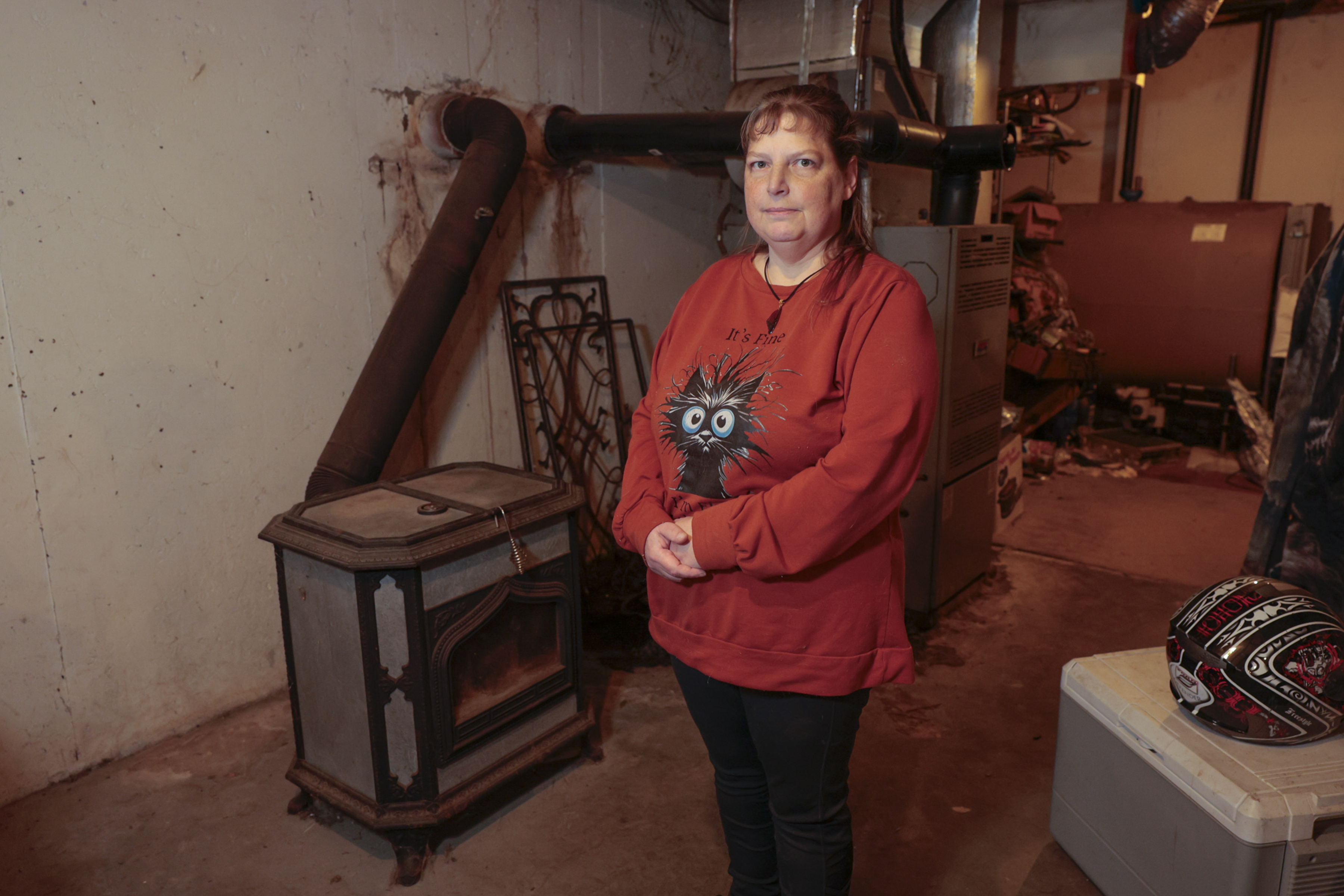
    Jennifer Heller talks about her home heating oil bill at her home in Richmond Township, Berks County. Steven M. Falk / For The Inquirer

    Elsewhere in the state, people are buying heating oil a few gallons at a time at gas stations to get them through cold spells. They’re chopping wood or ordering it, and, if they can afford it, installing electric-run heat pumps that can raise the temperatures in specific rooms as opposed to an entire house.

    For Brendan Lydon, of Pottsville, Schuylkill County, filling a 500-gallon oil tank is a last resort.

    “In November 2025, it would have cost us around $1,500. If I were to order today, it would cost us $2,654,” Lydon said.

    Most energy experts attribute the drastic jump in oil prices to the conflict in Iran, which retaliated against the U.S. by tightening oil shipments through the Strait of Hormuz. According to the U.S. Energy Information Administration, 2026 prices started off at $3.348 per gallon in Pennsylvania. On March 2, just days after the U.S. conflict in Iran started, the price jumped to $4.065 and has continued climbing ever since.

    A bird flies low over the water as cargo ships lie at anchor in the Strait of Hormuz off Bandar Abbas, Iran, on Oct. 24.Amirhosein Khorgooi

    Some Republicans have acknowledged the Iran effect, with caveats. Many have said higher oil prices are a “temporary blip,” a hardship Americans must face for a safer world. Others have blamed Biden-era regulations, the Ukraine-Russia war, and decreased refining capabilities here in the United States.

    Over half of all Pennsylvanians, and more than 70% of Philadelphians, use natural gas for home heat, and the U.S. Energy Information Administration’s “Winter Fuels Outlook” actually predicts stable or lower costs for most users this coming season.

    That’s not the case for heating oil. The EIA expects costs to be 21% higher this winter. The issue is more pronounced in rural counties, which also vote overwhelmingly for Republicans. According to the U.S. Census Bureau, about 2% of Philadelphia households use oil heat. In rural counties like Schuylkill, Carbon, and Mifflin, however, over 40% of households use oil for heat. In Bedford County, almost half the households use oil.

    In the Pennsylvania coal region, Michael Sedor has taken small containers to local gas stations to buy a few gallons of heating oil or diesel fuel to make ends meet. Sedor, a resident of Treverton, Northumberland County, said lines sometimes form at the gas stations when it gets colder.

    “I still do it, I still go to the gas station cause I can’t pay $600 to fill my tank,” he said. “You seal up your house with plastic bags. You cut back. You do what you have to do.”

    Sedor said proactive measures like installing new windows, investing in better insulation, or purchasing heat pumps are financially out of reach for many Pennsylvanians. In Philadelphia, homeowner Tony Albrecht researched an oil-to-natural gas conversion when he moved from Pittsburgh to West Mount Airy. The estimate was $10,000. He kept the oil heat.

    “And that was in 2014,” he said of the estimate.

    On the Coal Region Discontent Facebook page Sedor runs, people told him they plan to use electric blankets, credit cards, and to cut back on Christmas. Some seemed to have no answers.

    “I am so screwed, hoping for a heat wave,” one person wrote.

    In Chester County, Roisin Ferguson has a low oil tank but a whopping eight cords of firewood stacked up around her property in West Bradford Township. A cord of firewood can run anywhere from $150 to $350 depending on how long it’s been “seasoned” and delivery fees. Last year, the family went through three cords, but Ferguson hopes to cut back on other fuel sources this year, specifically their oil heater.

    “We’ll set the oil to 62 and just burn the wood for the winter,” Ferguson said.
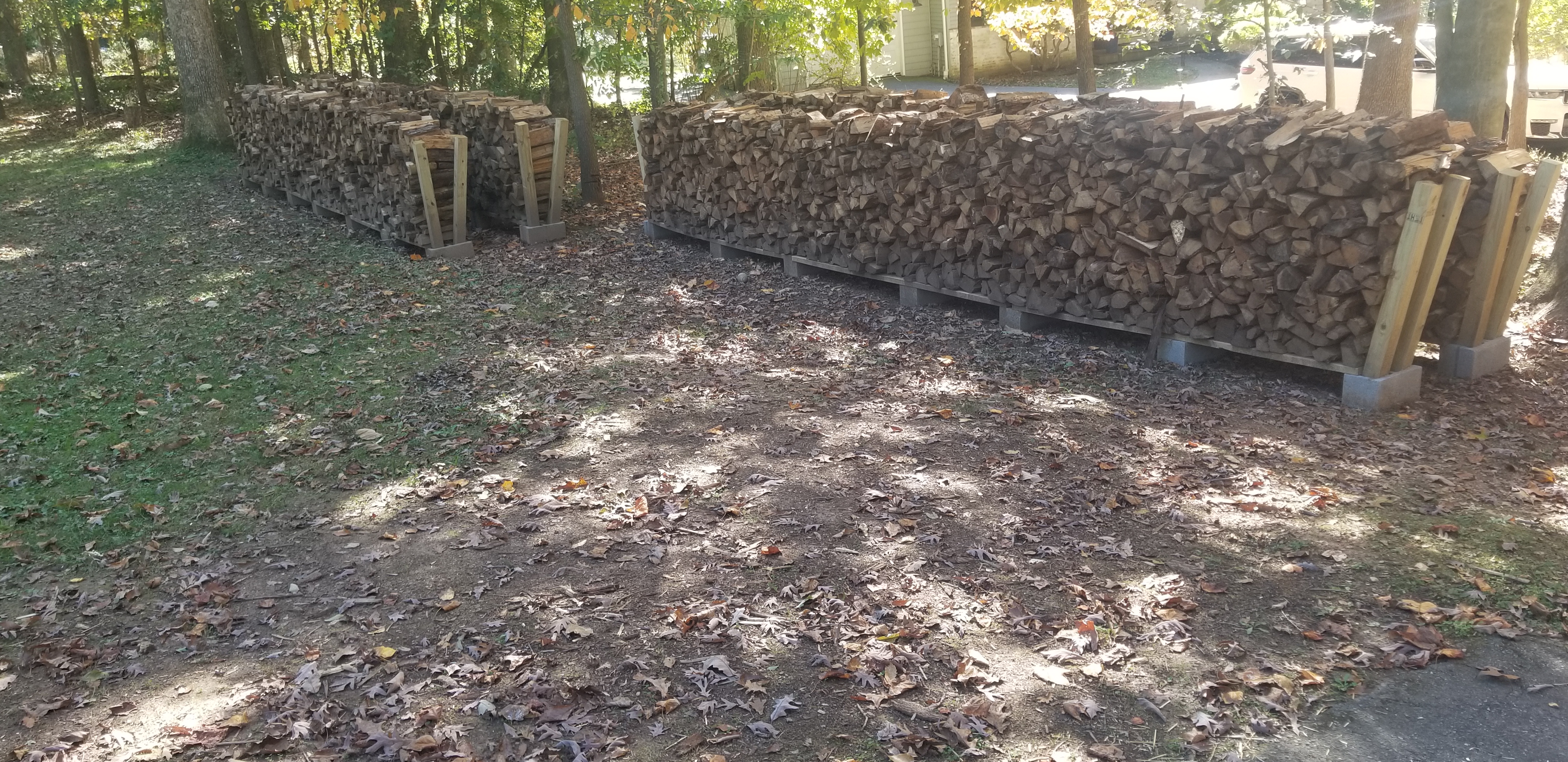
    A “mountain of wood” sits in Roisin Ferguson’s yard in Chester County in preparation for the winter.Roisin Ferguson

    At the Vine and Fig Tree, an intentional Christian community in Philadelphia, resident Aaron Wilson lives with about 10 others, including his wife, in multiunit dwellings in Germantown. The community uses an assortment of heating sources, including oil, Wilson said. The water heater, which everyone there uses for showers, baths, laundry, and dishwashing, runs on oil, and they haven’t collectively discussed switching it out to natural gas yet.

    “The price of this might get insane, so we’re going to have to start budgeting for a replacement,” he said. “We have to look over the bills.”

    Wilson said he’s been surprised that so few elected officials and candidates have been talking about the looming heating crunch.

    A spokesperson for Gov. Josh Shapiro, who is seeking reelection, said “no one has reached out to the Governor’s Office on this issue” but mentioned that programs like the Low-Income Home Energy Assistance Program (LIHEAP) are available for residents.

    Applications for LIHEAP opened Nov. 2, so there’s no way to know how many more people have applied for assistance this year.

    Sen. John Fetterman’s office did not return multiple requests for comment about heating costs in Pennsylvania this winter. Representatives from the Democratic and Republican Parties in Pennsylvania also did not return requests for comment.

    A spokesperson for Sen. Dave McCormick referred the Inquirer to statements he made recently on CNBC, in which he discussed fuel costs but not heating in particular.

    “I think people see a lot of effort to try to bring down prices,” McCormick said. “And I think they appreciate that.”

    Last month, the U.S. Department of Energy announced a plan to release 315,000 barrels of fuel oil from the Northeast Home Heating Oil Reserve to “mitigate supply chain challenges disrupting fuel oil supply.” Experts, including Van Nostrand, said that’s not enough to make any lasting impact.

    Doug Woosnam, executive vice president of the Eastern Pennsylvania Energy Association, said a quick resolution in Iran would make the biggest difference for consumers.

    Ships in the Persian Gulf, near the Strait of Hormuz, as seen from a plane near the United Arab Emirates on July 20.TOMAS MUNITA

    “If the war ended this weekend,” he said before Halloween, “by the middle of November, consumers would be seeing relief, and that relief would continue to get better through the season.”

    Heller said she didn’t want to get political about the issue and didn’t believe the war was a main cause of the price spikes.

    “Last time, when Obama or Biden was in office, we were told we couldn’t blame the gas prices on him,” she said. “So the same thing goes with Trump.

    Heller estimates there are 150 gallons left right now in her 250-gallon tank, but she plans to use it sparingly and avoid filling the tank.

    “They won’t deliver less than 150 gallons,” she said. “So I can’t fill too early, and I can’t pick too late because then I’m down too low.”

    Oil delivery companies in the region said many customers are cutting back and asking for smaller deliveries but shouldn’t gamble with very low tanks, which can require costly repairs due to sludge buildup.

    “It’s an issue, and we really tried to get ahead of it this year,” said Michael Longo Jr., of 7 Oil, a New Jersey-based family business started in 1983. “We’ve really tried to be upfront and honest. We know everyone is not going to be able to pay an $800 bill. So if people say, ‘Just bring me 100 gallons,’ we work with them.”

    Longo said his company delivers to 17,000 households, mostly in New Jersey, with some households in Pennsylvania. He regularly puts out YouTube videos giving tips for more efficient heating, like setting a thermostat to 68 instead of 70.

    In one recent video titled “What’s been going on with Oil?,” Longo empathized with customers’ pain and told them to make their concerns known to the people they elected.

    “Call your local representatives,” he said. “If you’re unhappy with what’s going on, we live in America; you should have a voice. Let them know your frustration. That’s the only way things change.”

    On a recent late-October morning in Berks County, Heller did have her oil heater on, with the thermostat set to 69, but she was hoping the afternoon sun would trap a little warmth. Soon, the days would grow darker, and she’d have to turn to her secret weapon: the rarely used wood stove and endless supply of firewood she gets from her father, who owns forested land.

    If and when she needs more oil, Heller will have a hard conversation with her husband and children.

    “It’s going to be oil,” she said, “or Christmas.”

    Jennifer Heller keeps her thermostat at 69 degrees at her Berks County home.Steven M. Falk / For The Inquirer
  • Pennsylvania measles outbreak appears to be slowing, but experts urge caution

    Pennsylvania measles outbreak appears to be slowing, but experts urge caution

    Pennsylvania’s record-breaking measles outbreak appears to be slowing down, though state health officials and experts say cases could spike again as cold weather sends people indoors with large pockets of undervaccinated people still vulnerable to viral spread.

    Pennsylvania Health Secretary Debra Bogen said she would want to see the downward trend continue for “a couple more weeks” to feel confident that the outbreak is slowing down.

    “A couple weeks of decline doesn’t mean it’s a pattern,” Bogen said. “We’re optimistic, but I’m not predicting what’s going to happen.”

    What started as a handful of measles cases in Lancaster and Lebanon Counties, as Pennsylvania winter thawed to spring, had exploded to a public health crisis by summer.

    The tally rapidly rose, with a staggering 150 new infections reported a week by mid-August.

    By October, Pennsylvania was grappling with the nation’s largest measles outbreak in three decades, with more than 1,400 cases reported. The virus had spread to more than half of the state’s counties. Six deaths were linked to measles, and one in five people infected became so sick they needed hospital care.

    The spread now appears to be slowing, even as the 74 new cases reported in the past week still lead the nation and represent a historic statewide high for a disease long considered eliminated in the U.S. through widespread vaccination.

    The trend line reflected in an epidemic curve newly publicized by the state shows a real-time view of reported infections peaking in September, and declining steadily since in a classic bell curve.

    This is not how measles has played out in other recent outbreaks, experts say. A highly contagious virus like measles typically tracks a different path, rising sharply, reaching a plateau, then declining in fits and starts.

    Experts hypothesize that a combination of factors likely contributed to this unusual trajectory: The outbreak here has been heavily concentrated in rural communities where significant numbers of children and adults are unvaccinated. The virus may have spread like wildfire there, but is now burning itself out, having infected everyone who was vulnerable.

    A massive education and vaccination campaign by state and local health departments may also be slowing the spread of the highly contagious virus.

    State public health leaders say they are cautiously optimistic. But experts warn that, so long as vulnerable pockets of unvaccinated individuals remain, measles will eventually resurge.

    “It’s like any war — the enemy is always going to find weaknesses,” said Brian Castrucci, an epidemiologist and CEO of de Beaumont Foundation, a community health philanthropy outside Washington, D.C. “Measles is always going to be out there, looking for the next vulnerable community.”

    Are measles cases slowing down in Pennsylvania?

    An epidemic curve gives public health officials real-time data, week by week, on measles spread.

    The curve logs measles cases by the date the patient developed measles’ telltale rash, which usually appears three to five days after the person starts exhibiting other symptoms, like a fever, cough, or runny nose.

    If health officials don’t know when a person developed a rash, cases are logged based on the date a patient tested positive for measles. If that information isn’t available, cases are entered based on when they were reported to the state health department.

    Pennsylvania Department of Health reported about 470 per month in August and September, with an average of more than 100 cases every week.

    Weekly case counts have dropped since the first week of September, when the health department reported 143 new cases.

    In all of October, Pennsylvania logged half as many measles cases as in each of the previous two months — 238 cases. That number could still rise as more cases are reported in the coming weeks, since they are logged by date of rash onset.

    (function(){function e(){window.addEventListener(`message`,function(e){if(e.data[`datawrapper-height`]!==void 0){var t=document.querySelectorAll(`iframe`);for(var n in e.data[`datawrapper-height`])for(var r=0,i;i=t[r];r++)if(i.contentWindow===e.source){var a=e.data[`datawrapper-height`][n]+`px`;i.style.height=a}}})}e()})();

    Cases could begin rising again, as measles is among the respiratory viruses that typically spread more easily during cold weather because people spend more time inside.

    Another limitation: The epidemic curve relies exclusively on infections that have been reported to authorities.

    For months, experts and public health officials have noted that it’s likely many measles cases in Pennsylvania have not been reported. A Centers for Disease Control and Prevention “disease detective” is working with state health staffers to understand the true scope of the outbreak, Bogen said.

    “We know the iceberg above the water. We don’t know the iceberg under the water,” she said.

    An undercount of cases could help explain the precipitous drop in illness in recent weeks, said Rémy Pasco, research associate at the University of Colorado who helped develop a measles outbreak simulator based on school vaccination rates.

    Recent measles outbreaks in Texas and South Carolina have declined more slowly, first plateauing, then rising and falling over an extended period of time.

    In Pennsylvania, the epidemic curve is “too pretty,” Pasco said.

    A textbook-perfect bell curve like that makes him wonder what could be missing, he said. For instance, perhaps the virus reached a community where reporting is significantly lagging or lacking.

    “I think we’re going to see more up and down,” Pasco said.

    A massive vaccination campaign

    State health workers have given out about 10,700 doses of the measles, mumps, and rubella vaccine since the outbreak began in April.

    Other health providers across Pennsylvania normally give out about 25,000 doses of MMR a month. By August, they were dispensing double that.

    And more parents are opting to give infants a “dose zero,” an early MMR shot at 6 to 11 months old. (Typically, babies receive their first MMR shot, which is 93% effective against the virus, at 12 months, and a second around 4 to 6 years old, offering 97% protection.)

    In June, the state began recommending an accelerated vaccine schedule for children living in areas affected by measles; in October alone, more than 4,500 children got an early first dose, a 20-fold increase from January, when typically the shot would have been recommended only for children traveling to areas with measles.

    Additionally, more than 12,000 children got an early second dose last month.

    Public health workers have tailored their strategies to reach insulated communities, particularly Amish and Mennonite communities, that have historically been resistant to modern medicine, and are often distrustful of outsiders.

    In Lancaster County, which has the most reported cases in the state, the health department consulted with Amish elders and religious leaders to develop a plan for reaching families that relies on word of mouth.

    They set up clinics in private homes and community centers with entrances not visible from the road, where people could get vaccinated without others their own community knowing, Jennifer Wallace, a pediatrician and the medical director of the state’s health centers, told The Inquirer last month.

    “It all started with, ‘What are the communities we are trying to target, and how can we be respectful and work with them? Let’s not push what we think public health should be,’” Wallace said. “And it worked.”

    In Chester County, which has the state’s third-highest case count at 93 cases, measles actively spread along the western border with Lancaster County but not widely beyond.

    Even as cases are slowing here, county health leaders are preparing another outreach push that they hope will further contain the virus.

    The health department is considering a mass mailer urging vaccination to send to some 4,000 households in western Chester County. County officials have not yet decided whether to send a mailer or what exactly it would say.

    Targeting residences through the mail would be a new communications tactic in the department’s measles response, which has focused on messages tailored to specific communities. But health leaders believe this approach could be effective in western Chester County because so many families there are unvaccinated, said Jeanne Franklin, the county’s health director.

    The same approach could “fall on deaf ears” in eastern parts of the county, which have higher vaccination rates and would not necessarily benefit from a mailer urging people to get vaccinated, Franklin said. Instead, the health department is contacting individual schools with lower vaccination rates.

    School district superintendents have “really stepped up” after Oxford Area High School, near the Lancaster border, closed for a day after a positive measles case. Under state policy, students and staff who are unvaccinated or cannot prove their vaccine status must remain out of school for 21 days after an exposure. School administrators decided to call off classes because they did not have vaccination records for enough of their staff.

    Now, more schools are gathering those records in advance and drafting plans for how to respond if a measles case is identified, Franklin said.

    “It sets the stage for anything else in the future,” she said.

  • This Chesco wedding venue is using its own backyard veggies and herbs for guests

    This Chesco wedding venue is using its own backyard veggies and herbs for guests

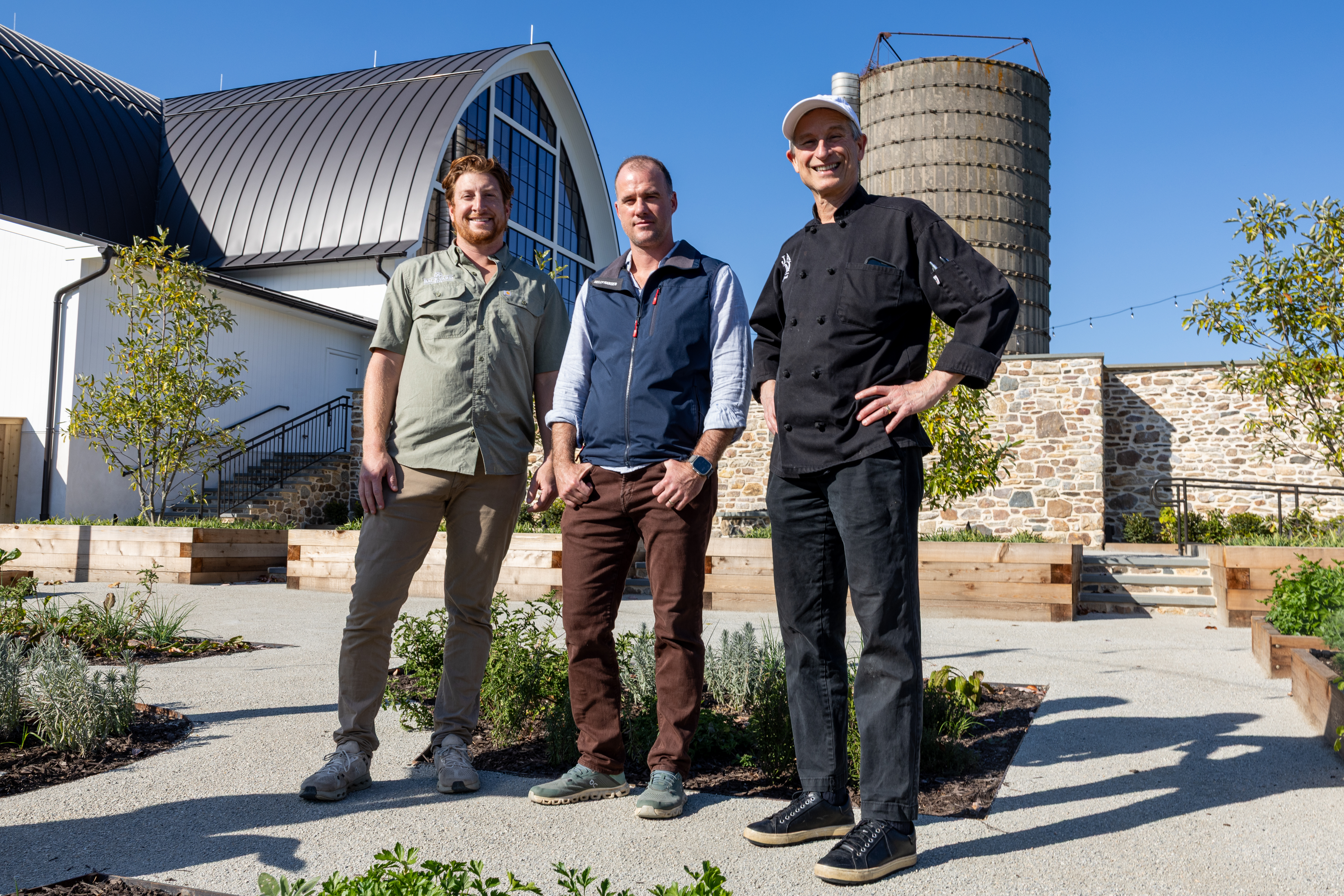
    Kennett Square’s latest wedding venue is tapping into its agricultural lineage, embracing a farm-to-table approach by serving guests vegetables and herbs grown on-site.

    Willowdale, nestled in the rolling fields at 115 E. Street Rd. that once housed a working farm and is the site of a steeplechase equestrian course, officially transformed into an event space in September, with a reimagined historic barn and renovated farmhouse to host weddings, corporate events, and more.

    And just outside the barn, where couples will dance and clink Champagne flutes through the night, a kitchen garden is growing the staples that will appear on their tables.

    Its lettuce, plentiful enough for the first time since it was planted in mid-September, was plated for wedding guests this month. Its herbs — lavender, rosemary, basil — are muddled in a glass dispenser to create “meadow water” for guests to sip as they wander through the garden during cocktail hour.

    It’s a “zero-mile” farm-to-table approach that taps into the property’s — and Chester County’s — long history of agriculture.

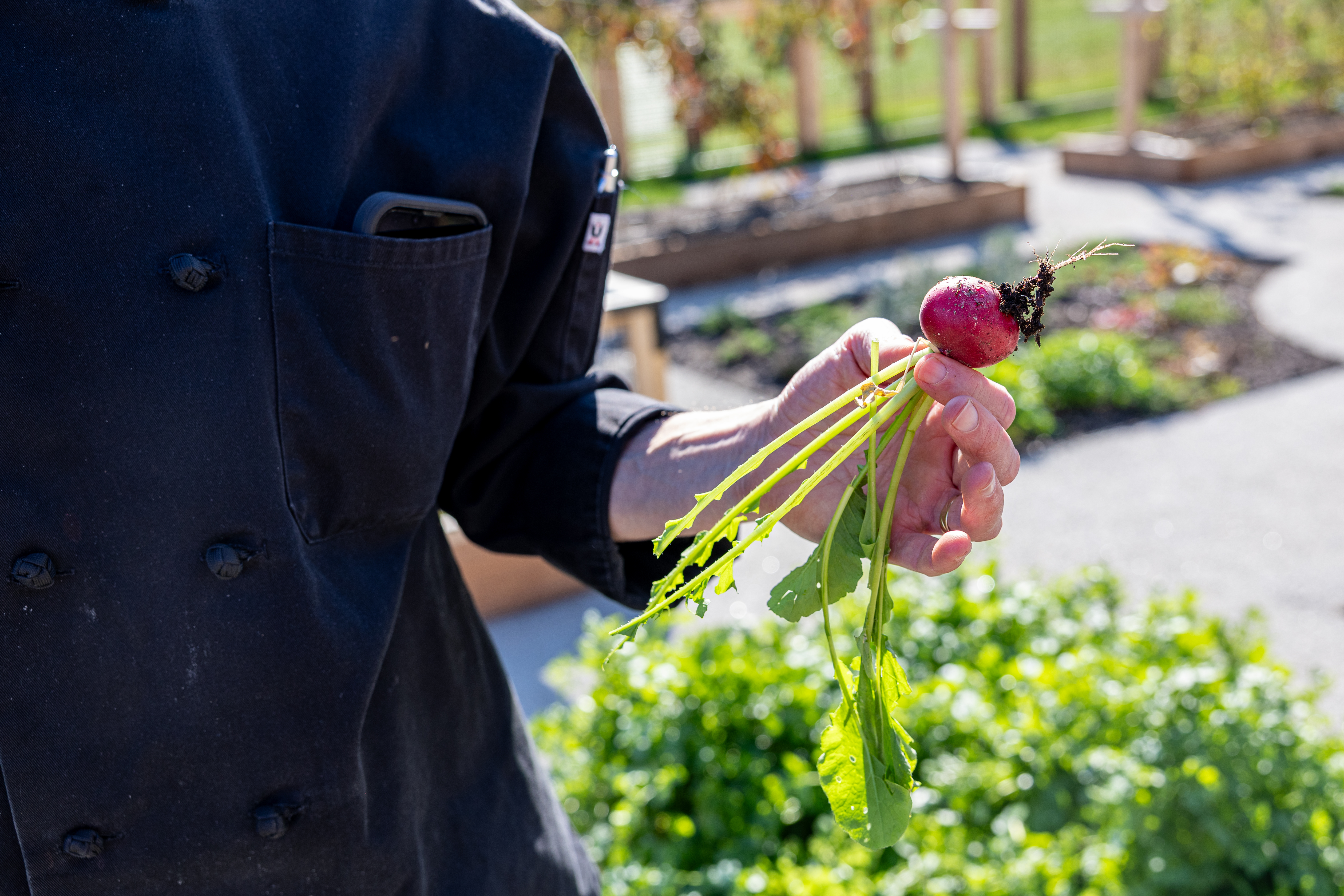
    Hospitality group founder Jeffrey A. Miller picks a radish from the venue garden in Kennett Square on Oct. 30. Fall crops such as spinach, dill, parsley, and scallions have been growing in the garden.Aidan T. Gallo / Staff Photographer

    People who like that mission and good food are likely to be their clientele, said Jeffrey A. Miller, the founder and CEO of his eponymous hospitality group, which opened the venue in collaboration with the property’s owners, Katherine and Michael Bucklin.

    Couples “want a gorgeous venue. They want something, I think, where they feel aligned with the mission of the organization, and then they like good food, typically,” he said. “I think they enjoy touring the garden and seeing what we’re growing and knowing there’s a good chance it’ll be on their plate.”

    The venue, which has 70 weddings on the books for 2027 and more than a dozen into 2028, offers indoor and outdoor ceremony spots, with separate cocktail hour lounge and dinner spaces. Guests can stay at the nearby farmhouse, the Yellow House, in eight overnight rooms. Get-ready spaces and suites are available for the wedding parties, too. The capacity is around 270, Miller said. Depending on the season and the day, prices range between $250 to $350 a person, which includes the rental, the food, the liquor, and staff.

    Three generations have overseen the 156-acre property. Katherine Bucklin’s grandparents owned and operated it in the ’50s, before it changed hands to her father, Dixon Stroud. Stroud added a herd of dairy cows to produce milk and ice cream for his nearby Landhope Farms convenience store. The Bucklins took over operations a few years ago, Michael Bucklin said.

    It’s primarily open space, with the convenience store tucked into the southwest corner.

    Though the land hosts the steeplechase and a hot-air balloon festival, among other events, the barn area was an “underutilized structure” on a commercial property, Michael Bucklin said. They wanted to find ways to reuse the space.

    “We wanted to continue being part of that solution of keeping open space in our area because there’s so much pressure from development in this area, and so this was kind of one of the big strongholds of open space,” he said.

    The newly added garden in Kennett Square.Aidan T. Gallo / Staff Photographer

    “I think the pressure will continue to grow on the property over time. But what we’ve created, I think, will help offset that financially,” he said. “My children, hopefully, and their children too, will be proud of what we’ve created here, and can help keep it going.”

    Miller, who has more than 40 years of experience in catering, got involved about 10 years ago. It took some time, stalled in part thanks to COVID-19, before the venue materialized.

    He took the Bucklins to another of the hospitality group’s venues, Waterloo Village, in northern New Jersey, where a full-time farmer grows vegetables, fruits, and berries and raises chickens. He wanted to bring something similar to life at Willowdale. And in the past month, that goal has been realized. The venue’s opening officially kicked off in late September, honoring the legacy there: The first event was an 80th birthday party for Stroud himself.

    The raised beds will change throughout the year, embracing the climate and the season: Root vegetables like onions and carrots in early spring, tomatoes starting in mid-May, alongside peppers or eggplants. Perennials — raspberries, blackberries, asparagus, rhubarb, and kitchen herbs — will have their season or be on offer throughout the year.

    The Bucklins are also reintroducing farm animals. They plan to add chickens, who will have a run between the double fencing of the garden. Their eggs will be used by the kitchen. Mini Highland cows and some goats are also calling the grounds home now, Bucklin said.

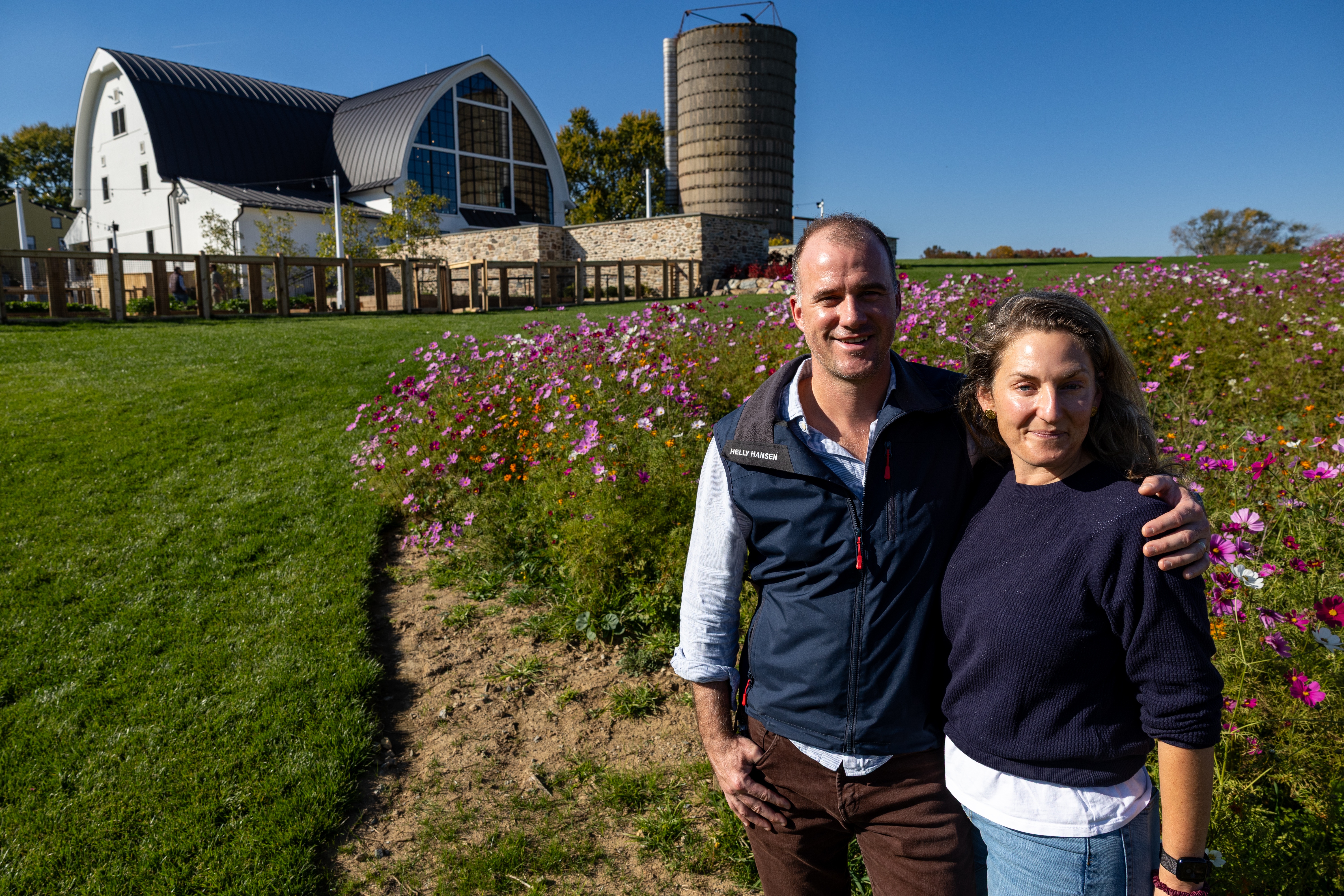
    Venue owners Michael and Katherine Bucklin took over operations of Willowdale a few years ago.Aidan T. Gallo / Staff Photographer

    For the greens, menus are planned a year in advance, but typically they have a salad and use herbs in various dishes. They call their clients about eight to 10 days out from the event and discuss what the garden is currently producing, and look at the menus to see what they can use.

    “If we know we’re going to be doing a herb heavy meal, we’ll just harvest the herbs there for the event. If it’s going to be salad, we’ll just harvest the salad greens. We also might do sort of a farmer’s choice for our vegetables,” he said. “Then everyone gets a taste of the garden, which is really, really nice.”

    The garden was coordinated and installed by Backyard Eats, which works with residential and corporate spaces, helping get gardens off the ground, and maintaining them with as heavy, or as light, of a hand as its owner desires.

    “A big part of designing the garden was like, OK, aesthetically, what’s going to look nice here all year, plants that stick and stay, and then what beds are we going to use to rotate and create seasonalities?” said Mike Bennett, owner of the company. “Long before the garden was in the ground, I was on the phone with the catering manager talking about like, ‘OK, what do you use? Here’s our favorite things that are kind of true and reliable.’”

    Backyard Eats owner Mike Bennett and venue owner Michael Bucklin talk out in the garden.Aidan T. Gallo / Staff Photographer

    It’s a “humbling experience” to work on the scale of a wedding venue, he noted.

    “We’re beholden to Mother Nature in a way, and what’s coming at what times,” he said.

    But he loves that the venue is combining its heritage with the concept of sustainability.

    “It’s just, to me, such a romantic and sustainable idea where people actually experience not only food growing right in front of them and kind of see how it’s all made, but there’s certainly a sustainability aspect to this — a zero-food miles type of setup where this tomato is not coming from across the country,” he said. “I think that’s really nice, in terms of the experience guests are going to have.”

    This suburban content is produced with support from the Leslie Miller and Richard Worley Foundation and The Lenfest Institute for Journalism. Editorial content is created independently of the project donors. Gifts to support The Inquirer’s high-impact journalism can be made at inquirer.com/donate. A list of Lenfest Institute donors can be found at lenfestinstitute.org/supporters.

  • Meet Abigail McGettigan, a 17-year-old from Downingtown who’s making her Team USA rugby debut

    Meet Abigail McGettigan, a 17-year-old from Downingtown who’s making her Team USA rugby debut

    The first time Abbey McGettigan played rugby, she was the only girl on an all-boys team. Now, she’s flying across the Atlantic Ocean to Dakar, Senegal, to represent Team USA at the Youth Olympic Games as a cocaptain on the women’s rugby sevens team.

    Now 17, the Downingtown native turned to rugby after trying several other sports. After getting used to being the smallest on the field when she started as a 10-year-old with the Downingtown Rugby Club, her love for the game has only grown.

    “I was so nervous. I had never been more nervous for anything in my life than I was for playing rugby with all the boys,” McGettigan said. “But once I played a few games and went to a bunch of practices, the confidence started building, and I realized how much I loved it, which pushed me to keep going, keep doing it.”

    McGettigan is one of 29 athletes representing Team USA in various sports. The games, which mark the first time an Olympic event will be held in Africa, begin Saturday evening with the opening ceremony. The rugby sevens competition begins Monday and is available to stream through Olympics.com and the Olympics Channel.

    Her parents, Sean and Maggi McGettigan, knew they couldn’t pass up the chance to see their daughter compete on an international stage.

    “No matter what happens, we’re going to want to go give her big hugs after the games like we always do,” Maggi said. “I remember when we were talking about whether we were going to go or not and looking at the schedule and just seeing the words ‘opening ceremonies’ and being like, ‘Oh, of course we have to go.’”

    The McGettigans are no strangers to the sport; family members have played over the years. But when Abbey and her older sister, Lily, began playing, it took their parents some time to get used to watching them compete in such a physical sport.

    “Rugby is a different sport than other sports they have played,” Maggi said. “It is so inclusive. The girls are so supportive of each other. So even though, if you’re a parent, you’re looking at this like, ‘Oh, my God, that’s way too intense or aggressive,’ that’s what makes it an amazing sport and what the players fall in love with. My biggest advice for parents is just let them give it a try. I guarantee they’re going to love it.”

    Rugby has been growing in popularity among girls, building on the visibility of high-profile athletes such as Ilona Maher. Oliver Snow, Abbey’s longtime coach and head coach of the Downingtown Rugby Club, said he has seen this growth firsthand.

    “It’s kind of funny now, but we used to call her ‘little baby Abbey’ because she looked so small on the field with everyone,” Snow said. “But even back then, I knew she had something special, and this exposure is going to help the sport and club grow even more than it already has. We are able to have full teams of girls playing at a competitive level. That wasn’t the same when the McGettigans began.”

    It’s been a whirlwind for Abbey, a senior at Downingtown STEM Academy. The past few months have included Youth Olympic Games trials in California as well as college recruiting and applications.

    “They mailed us a big package of all this Team USA stuff when we found out we made the team, so opening that was the moment when I was like, ‘Wow, this is really happening.’ It was surreal,” she said.

    The excitement for rugby doesn’t stop after the Youth Olympics, however. Abbey will join her sister in playing the sport in college, heading to Harvard next fall, while her older sister attends Brown.

    “All summer, my sister and I worked out together in preparation for my camp to qualify for Team USA. She’s one of my biggest inspirations, really,” Abbey said.

    Down the line, Abbey said one of her biggest goals is to play for the senior U.S. squad.

    “She has this determination and motor inside of her that is unstoppable, which I’m sure we will see not only in Dakar but throughout her rugby career,” Snow said.

    For now, though, Abbey’s sights are focused on the competition ahead. With her parents in the crowd and her sister cheering her on from the States, she said she feels prepared and excited for the games ahead.

    “I trust all my teammates so much,” Abbey said. “Of course, I’m nervous because I’ve never competed at a level like this before, internationally, representing Team USA. But I remember all the work I’ve done and what my family and coaches have said. As long as I’m present and am where my feet are, I’m confident we will succeed.”

  • Homecomings, step shows, and more highlights kick off Philly’s HBCU weekend

    Homecomings, step shows, and more highlights kick off Philly’s HBCU weekend

    For Virginia Union linebacker Christian Aiken, the Panthers’ 62-0 victory over Lincoln “means everything.”

    Aiken, a South Jersey native, helped spearhead a defensive effort that shut out the Division II Lions at Lincoln Financial Field on Friday. The game kicked off this year’s One Philly HBCU Week, hosted by the City of Philadelphia and the Eagles. Aiken, the Central Intercollegiate Athletic Association’s leader in sacks, rushed to the stands following the game. He went to greet his family, some wearing custom No. 44 gear.

    “Being a Philadelphia Eagles fan, getting an opportunity to come out here, play with my teammates, and just enjoy this stage,” Aiken said. “One Philly HBCU week, get out of here, come out and put on a showcase. It’s amazing. … I got my whole family out here, man. I got cousins, everybody.”

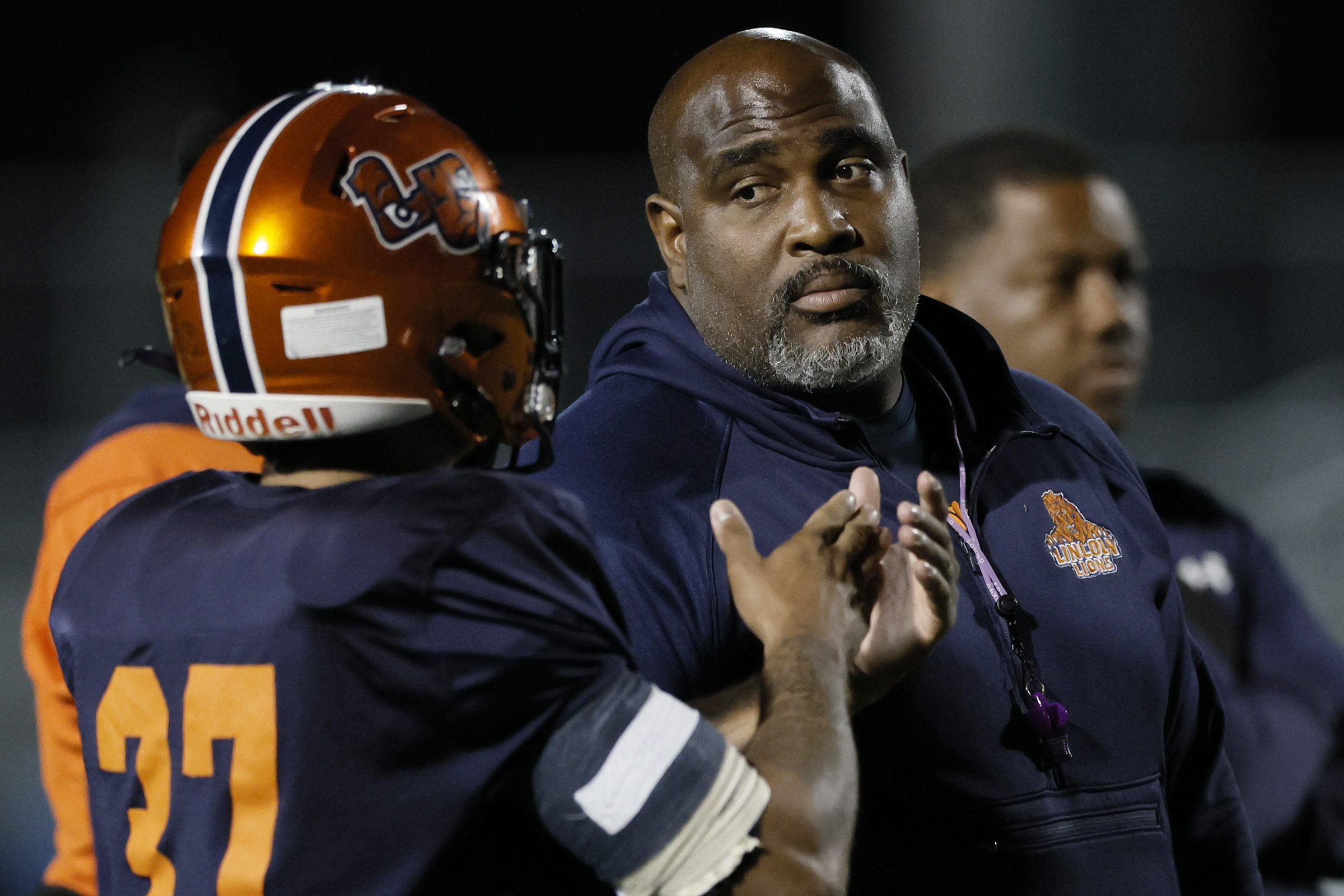
    Despite the outcome, the moment was not lost on Lincoln either. The Chester County college was invited to participate in this year’s festivities, in part because the program participated in the first HBCU Classic in 1919. That game, played against Howard, was also played in Philadelphia.

    “It’s an unbelievable experience,” said Lincoln linebacker Charles Thompson, a Chester native. “Riding past the stadium anytime I have to go to Philly, its about 15 minutes from my house, so it was awesome.”

    Virginia Union’s Raphael Tucker dives into the end zone for a touchdown against Lincoln University on Friday.Elizabeth Robertson / Staff Photographer

    ‘A historical moment’

    Prior to kickoff, the Lincoln and Virginia Union faithful held joint tailgates outside the Linc. Along with their school colors, many of the fans sported their Greek letters.

    “HBCUs, it’s a vibe,” said Lincoln alum Chris Barnes. “It’s almost like a homecoming. Anytime we get a chance to get together, watch the game, do some cooking, share stories about when we were on campus — It’s just a really, really good atmosphere. … See some folks we probably haven’t seen in a couple days.”

    Added Virginia Union graduate Raynee Doweary: “We were at Union last week … To be able to see them back-to-back in our neck of the woods, it’s that Panther pride, that Panther love, as simple as that.”

    Before the game kicked off, fans who got to the Linc early were treated to a step show. Step is a type of dance where performers use their bodies to create a beat through stomping and clapping. It was popularized on HBCU campuses in the early 1900s and is still a major part of campus culture today.

    “I feel like it’s really a historical moment,” said Jasir Jeffcoet, a member of Lincoln’s Kappa Alpha Psi chapter. “This is our second step show win within a week, so we make history day by day. Great to be at the HBCU Classic doing our thing. We appreciate everybody here that gathered to make sure everything got right today.”

    Friday’s step show is part of the six day celebration of HBCUs. Earlier in the day, the city held a college and career fair.

    The week’s events kicked off on Tuesday at West Philadelphia High School, where various community cheer groups and marching bands put on elaborate performances. For Halloween, West Philadelphia’s Marching Orange & Blue performed Michael Jacksons’ “Thriller” — complete with zombie makeup.

    “We had the cheerleaders and the young bands, the school bands, and they’re competing [in the Battle of the Bands],” said Mayor Cherelle L. Parker. “ … Temple was there. Father Judge was there. — That’s what ‘One Philly’ is, right?”

    On Friday, the Marching Orange & Blue were the opening act for rapper Ludacris, who played a melody of his hits at halftime. Jamire Boyer, a member of the Marching Orange & Blue, was nervous when he first heard his high school band would perform at the Eagles’ stadium.

    Participants perform during the step competition on Friday.Elizabeth Robertson / Staff Photographer

    However, after being around all the various performers this week, his apprehension turned to excitement.

    “It makes me inspired to do it more and more often,” Boyer said.

    Devin Jackson contributed to the reporting of this story.

  • Lincoln embraces homecoming as HBCU game brings the school back to Philly after 16 years

    Lincoln embraces homecoming as HBCU game brings the school back to Philly after 16 years

    Charles Thompson and his fraternal twin brother, Noble, lived less than 20 minutes away from Lincoln Financial Field growing up in Chester. Charles is an hour and 22 minutes older than Noble, and they played every sport together growing up.

    “Every day was about competition,” Noble Thompson said.

    They once held a flag inside the stadium before an Eagles game with their youth football program nine years ago. For the first time in their football lives, the Lincoln University senior football captains will be playing at the Linc when the Division II football program faces Virginia Union on Friday (7 p.m., ESPN+). Lincoln, based in Oxford Township, Chester County, is the nation’s oldest degree-granting historically Black college. The football team will return to Philadelphia for the first time in 16 years.

    “It’s a huge honor,” said Noble Thompson, a utility player on Lincoln’s offense who plays tight end, fullback, and slot receiver. “[We] got a lot of [our] family members coming up. … Just to have [our] family out here to come see me play [our] second to last game, just a [great] honor.”

    Added Charles Thompson, who plays linebacker: “Playing at the Linc is like a dream come true. … [Our] family get to see me play in the NFL stadium. It’s awesome.”

    That sentiment was shared similarly throughout the Lincoln football team, with a large portion of the roster hailing from Philadelphia and its surrounding areas. For many, the game will represent a homecoming and an opportunity to play in front of family, friends, former teammates, and Lincoln graduates who last saw their university play at Northeast High School in 2010 as part of the Lincoln-Cheyney HBCU football rivalry.

    Noble Thompson, who grew up in Chester, plays multiple positions on offense for Lincoln University.Elizabeth Robertson / Staff Photographer

    That also extends to its coaches. Khalil Steward, who played his high school ball at Imhotep, went on to play at Delaware Valley University, then started his coaching career at Martin Luther King Jr. High School in Germantown under fellow Lincoln assistant Malik Jones, who coaches receivers on Frank Turner’s staff. Steward’s mom went to Virginia State, whom Lincoln played earlier this season, and his family had long wanted him to play and attend an HBCU.

    Now, he’s getting an opportunity to coach on the sideline of the Linc Friday night as “a diehard Eagles fan.”

    “It’s going to feel like a great moment. A lot of us always dreamed about this,” said Steward, who also remembers attending the Lincoln-Cheyney games in Philadelphia growing up. “It’s a special moment, especially for the guys to get that experience, be where the professional guys be. … We get to be home and play at the Linc and what’s more special than that? We got a lot of South Jersey kids, some Philly kids that are Eagles fans, so they all [are] hype and excited about it as well.”

    Take two for Davis

    Mikal Davis Jr. had no idea when he decided to transfer to Lincoln last offseason that he would get another chance to play at the Linc.

    The quarterback, who began his college career at Delaware State in 2024, was on the Hornets’ team last year when they faced Norfolk State in the HBCU Battle of the Legends game between old Eagles teammates DeSean Jackson and Michael Vick. Davis was buried on Delaware State’s depth chart, but the junior quarterback said the experience last year “was surreal.”

    “Just being able to have that experience that I always dreamed about as a kid. Getting drafted, going to the NFL, and [that game] just happened to be in my hometown with the Philadelphia Eagles,” said Davis, an Imhotep graduate. “I had a Hall of Famer as my coach [DeSean Jackson]. He [had] us in the Linc … I was just taking it all in.”

    This time around, though, will be different. Davis began the season as the backup quarterback to Jayden Triplett, the team’s starter. Triplett suffered an injury during Lincoln’s loss to Elizabeth City State on Oct. 10, which forced Davis into action.

    Quarterback Mikal Davis Jr. during a Lincoln University football practice on Wednesday.Elizabeth Robertson / Staff Photographer

    The left-handed quarterback, who took the majority of the starting reps during Wednesday’s practice as Triplett works his way back into the lineup, is ready to seize the moment, should he have to take the field Friday night.

    “Having an opportunity to play in [the Linc], so [my mentality] is like, ‘Why not? Why not win?’” Davis said. “I feel like it’s just different knowing when you’re going to get in, or having that opportunity to play at the Linc. So, with that being said, you just have to be ready, ready, ready, have that mindset that it’s just another game, but it’s still a big atmosphere, a big stage. A lot of eyes are going to be there.”

    Friday’s game will be the second opportunity for Lincoln to play at an NFL stadium. Earlier this season, the program traveled to Chicago to play at Soldier Field in the Chicago Football Classic against Mississippi Valley State, a Football Championship Subdivision HBCU school. Turner and his staff are taking the lessons learned from that 35-21 loss into Friday’s game.

    Lincoln planned to have a walk-through at the Linc on Thursday, then stay in Philadelphia overnight leading into Friday night’s game.

    Linebacker Charles Thompson during a Lincoln University football practice on Wednesday.Elizabeth Robertson / Staff Photographer

    Turner, in his fourth season as the program’s head coach, has been trying to keep his team focused on the game with the buzz palpable for many players’ families planning to attend. He is looking forward to the “great exposure” the program will gain from the opportunity.

    “It’s one of those things where the stage shouldn’t be too big for us. It’s just more so keeping these guys focused,” Turner said. “The distractions is a little bit more on this end now, so it’s just keeping them grounded.”

  • How residents fight data centers and development | Inquirer Chester County

    How residents fight data centers and development | Inquirer Chester County

    Hi, Chester County!

    Some community groups have had success fending off what they deem to be unwanted development, helping create blueprints for future fights. Here’s how. Also this week, we look at the local referendums and questions on Tuesday’s ballot, the sale of SALT Performing Arts’ home has been put on hold for now, plus, take a peek inside a nearly 18,000-square-foot estate on the market for almost $9 million.

    Hope the rest of your week is spooktacular! See you back here next Wednesday.

    — Lisa Dukart (chestercounty@inquirer.com)

    If someone forwarded you this email, sign up for free here.

    How county residents are coming together to fend off development

    As Chester County’s population continues to climb and developers look to build on open land, residents are becoming increasingly vocal in their quest to push back.

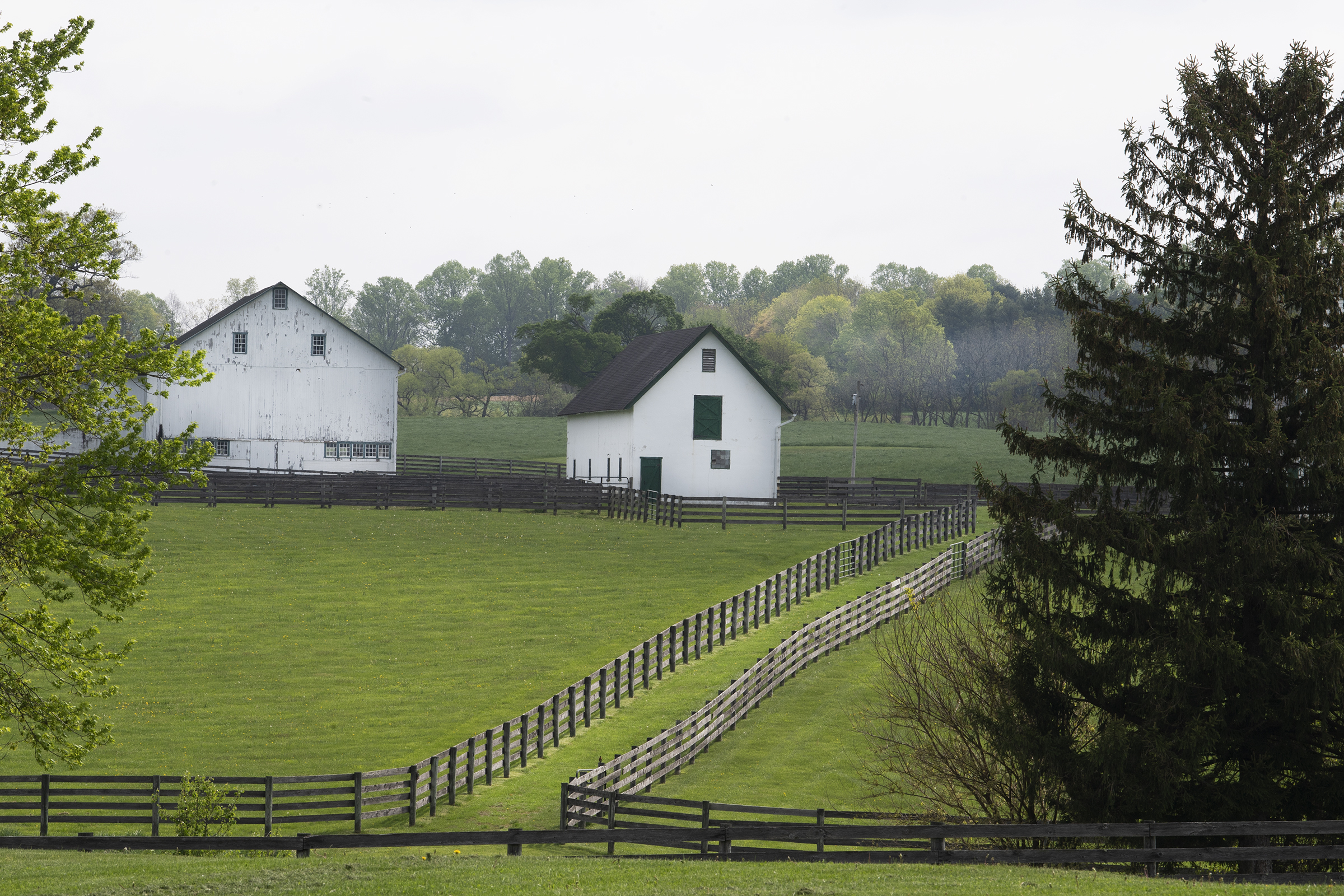
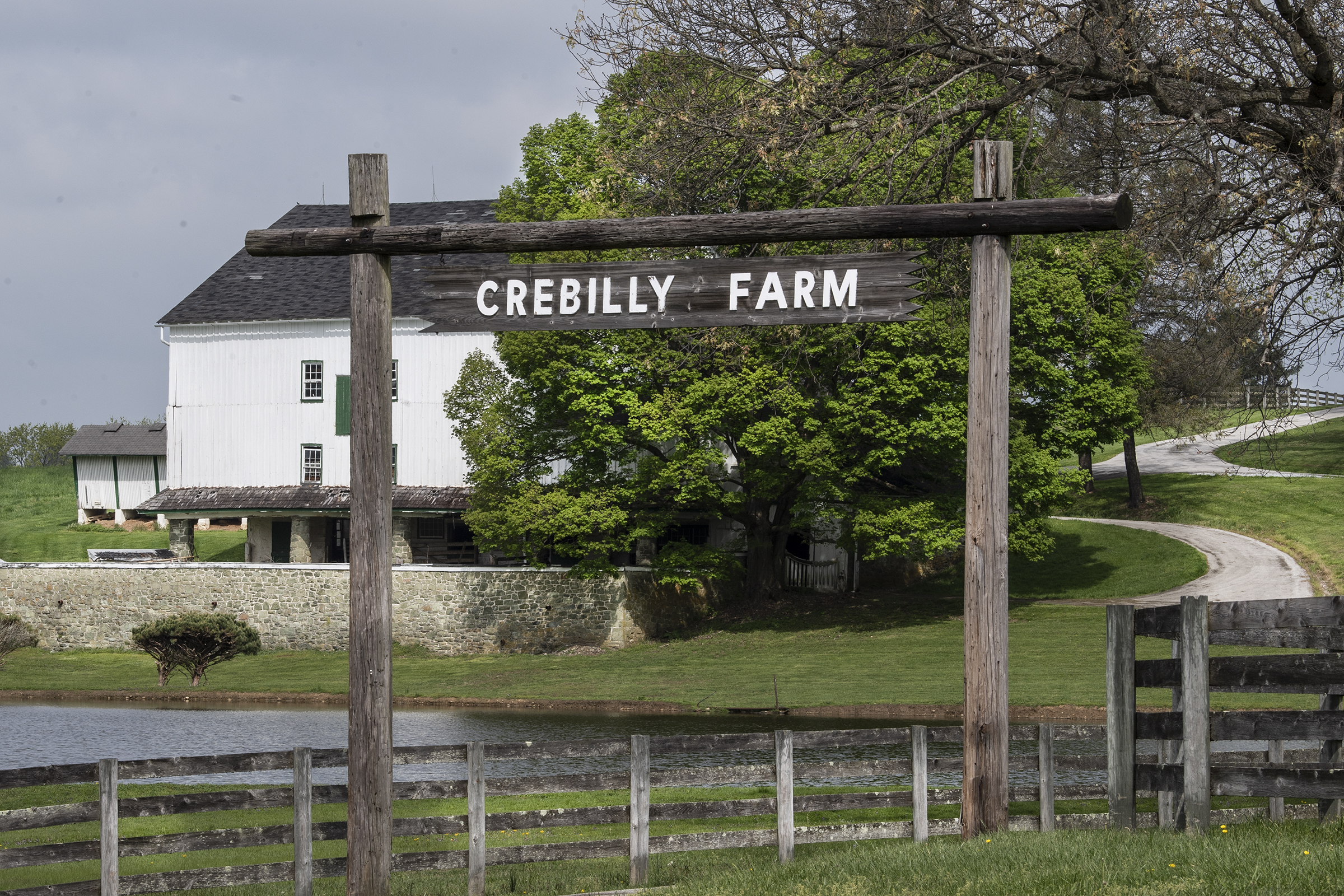
    Rallying around open space, groups have formed to fight data centers and preserve properties like Crebilly Farm, Rock Hill Farm, and now a vast swath in West Brandywine being eyed for an age-restricted community. (Discussions in West Brandywine will continue Monday at 5 p.m. at the township building and via Zoom.)

    Past efforts are helping create blueprints for new battles and ones still to come, The Inquirer’s Brooke Schultz reports.

    📍 Countywide news

    • The general election is Tuesday. While the governor’s seat is the top race, some county voters have referendums to consider. Unsure what’s on your ballot? Check out The Inquirer’s guide to the midterms here and see the local questions you might be asked to consider. (P.S. Last week we misreferenced the election, which is indeed a general election.)
    • The number of children in the county declined 5% between 2010 and 2025, part of a larger trend of people having fewer children regionally and nationally, according to an Inquirer analysis of Census Bureau data. The Inquirer’s Dana Munro unpacks the decline.
    • Roadway projects continue throughout the county this week, causing traffic detours and possible delays. Here’s where.

    💡 Community news

    • After community members decried the possible sale of the Chester Springs property that houses SALT Performing Arts, West Pikeland Township’s board of supervisors this week agreed to temporarily put a hold on its sale. In the meantime, they plan to look into whether they can require a potential buyer to retain the theater’s existing license agreement there.
    • John H. Lymberis, who owned Harry’s Hotdogs and Athena’s Kafenio in Sadsburyville, is facing more charges related to the production and possession of child pornography and unlawful contact with a minor out of state. The 58-year-old was arrested for alleged sexual abuse of children earlier this year.
    • Educational nonprofit Mighty Writers is slowly resuming services at its Kennett Square outpost after being forced to furlough employees last month amid financial headwinds. Food distribution is running twice a week and two part-time workers had been restored as of last week.
    • Some area farmers are worrying about future food instability as the state’s climate continues to become warmer and more extreme. In response, FarmerJawn, which grows some of its crops in West Chester, is adapting its plans.
    • A nearly 18,000-square-foot Tredyffrin Township home with six bedrooms, including one with a massive closet and dressing room, is on the market for $8.75 million. Other features include a built-in, 700-gallon fish tank and a more than 8,000-square-foot detached garage that can accommodate 40 vehicles. Take a peek inside.
    • Westside Community Center in West Chester played host to the biannual Philly AM skating competition over the weekend, bringing together a wide array of competitors. More than competition, skateboarding can help foster a tight-knit, diverse community, Inquirer contributor Becca O’Reilly reports.
    • A Downingtown man, Elijah Thomas, 28, has been charged by the District Attorney’s office with trafficking minors, involuntary deviate sexual intercourse with minors, and possession with intent to deliver controlled substances for allegedly demanding sexual contact and money in exchange for providing marijuana to two 14-year-olds. A 17-year-old also reported being sexually assaulted by Thomas.
    • Square Roots Collective is growing its footprint in Kennett Square, acquiring the building at 225-29 Birch St., according to the Philadelphia Business Journal. The nonprofit behind projects like The Creamery, Artelo, Opus, and The Francis hotel hasn’t revealed its plans for the space that houses Braeloch Brewing and Chaikhana Chai.
    • Main Line Flower Market has opened its doors at 610 Lancaster Ave. in Berwyn, offering florals, classes, and more.
    • About a year after opening, Downingtown’s Boutique On Thirty is closing its doors.

    🏫 Schools briefing

    • Chester County Intermediate Unit has opened its Great Valley campus. The Child and Career Development Center is expected to serve students from 21 districts throughout the Delaware Valley through four special education programs and 12 classrooms.
    • Oxford Area School District alum Karen Bradley, who graduated in 2010, competed on Jeopardy! Monday night, coming in second place.
    • Unionville-Chadds Ford School District recently completed the installation of about 900 solar panels on the high school roof, a project funded in part by state grants. It’s expected to produce 25% of the district’s energy.

    🍽️ On our plate

    • Fearless Restaurants, the group behind White Dog Cafe and other popular regional eateries, has been ordered to pay $200,000 to two former employees. They allege Fearless mishandled sexual harassment at the group’s Italian restaurant, Rosalie, in Wayne. Fearless operates a White Dog location in the Chester Springs area, which was not included in the suit.
    • Sitara Indian Cuisine has opened at 630 Lancaster Ave. The Malvern joint’s menu includes Tandoor- and Tiffin-style dishes, in addition to Indo-Chinese noodle and rice options.
    • There are just a few days left to submit flavor nominations for Herr’s next round of the “Flavored by Philly” competition, which closes Monday. The Nottingham-based chip brand selected three flavors this year in honor of the nation’s semiquincentennial.

    🎳 Things to do

    🏇 Pennsylvania Hunt Cup: See the 91st running, which includes tailgating and a kids’ stick pony race. ⏰ Sunday, Nov. 1, gates open at 10 a.m. 💵 $100 general admission parking in advance, $125 on race day 📍 Pennsylvania Hunt Cup, Kennett Square

    🧑‍🌾 Good Food Fest: Shop local produce, listen to live music, check out cooking demonstrations, and more. ⏰ Sunday, Nov. 1, 11 a.m.-4 p.m. 💵 $10-$50 📍 Kimberton Fairgrounds, Phoenixville

    🎃 Halloween events: The West Chester parade is tonight at 7 p.m., Oxford’s is tomorrow at 6:30 p.m., New Garden’s pet parade and movie night is Friday at 5 p.m., and Caln’s Halloween party is Saturday from 1 to 3 p.m. Owen J. Roberts also has a trick-or-treat event tomorrow at 5 p.m. And Wallace Township is hosting its Tricks, Treats, and Eats festivities Saturday from 3 to 5 p.m.

    🏡 On the market

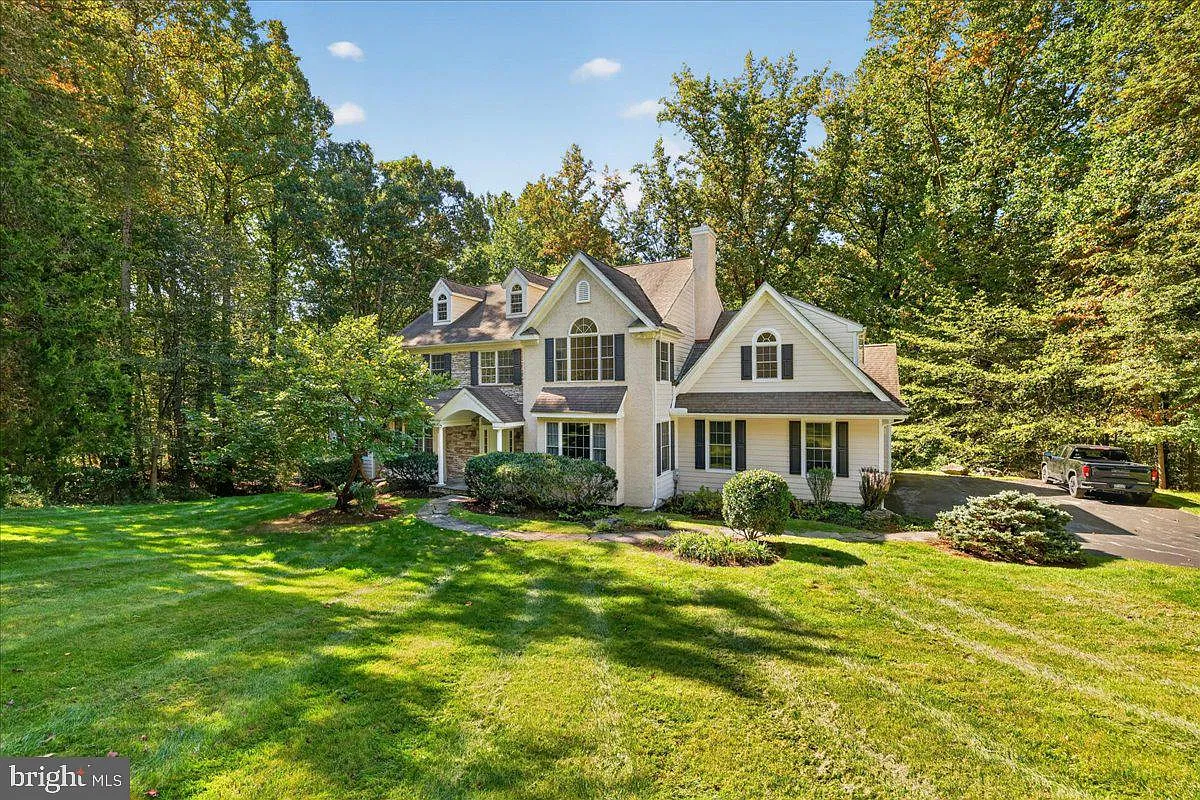
    A Downingtown home near Marsh Creek State Park

    Situated on two acres and backing up to a large swath of conserved land, this four-bedroom home has plenty of access to nature. Its first floor has multiple living areas, including a family room with vaulted ceilings and a stone fireplace. Outside is a deck overlooking the woods.

    See more photos of the property here.

    Price: $950,000 | Size: 4,254 SF | Acreage: 2

    📈 Chester County market report

    • Median listing price: $590,000 (down $9,000 from August) 📉
    • Median sold price: $590,000 (up $21,800 from August) 📈
    • Days on the market: 32 (down one day from August) 📉

    This Chester County market report is published on a monthly basis. Above is data for September from realtor.com.

    🗞️ What other Chester County residents are reading this week:

    By submitting your written, visual, and/or audio contributions, you agree to The Inquirer’s Terms of Use, including the grant of rights in Section 10.

    This suburban content is produced with support from the Leslie Miller and Richard Worley Foundation and The Lenfest Institute for Journalism. Editorial content is created independently of the project donors. Gifts to support The Inquirer’s high-impact journalism can be made at inquirer.com/donate. A list of Lenfest Institute donors can be found at lenfestinstitute.org/supporters.

  • The sale of West Pikeland community theater’s home is on hold for now, after public support

    The sale of West Pikeland community theater’s home is on hold for now, after public support

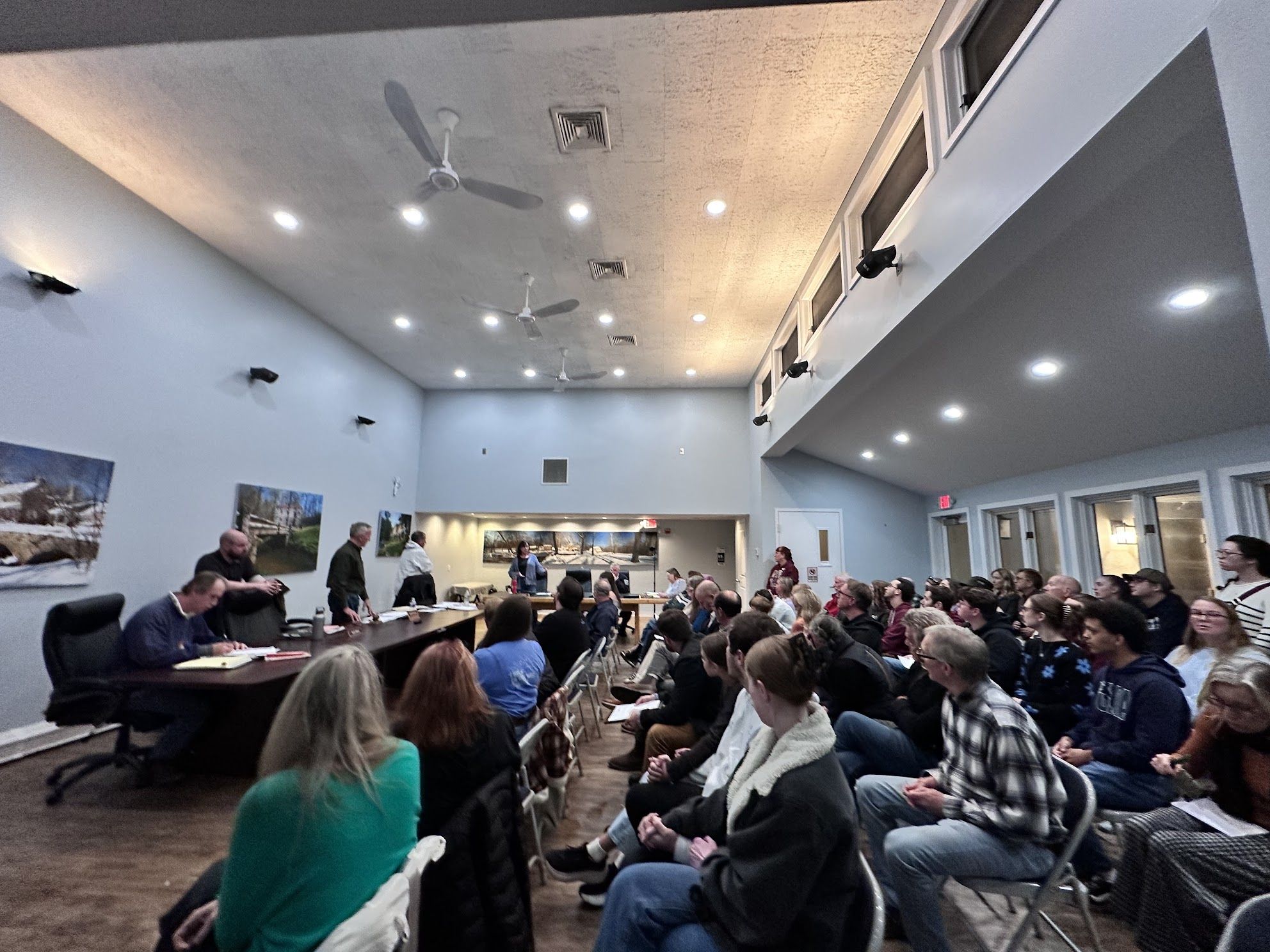
    After a packed house decried the possibility of a community theater being left without a home, the West Pikeland supervisors will halt putting the property up for bid while they examine legal avenues regarding the theater’s existing license agreement.

    The board of supervisors on Monday voted unanimously to rescind a vote taken last week to advertise a bid packet that would have put the municipal building, which also houses SALT Performing Arts, up for sale in the coming weeks. The audience, which filled the meeting room, applauded when the motion passed.

    “For the moment, we feel hopeful,” Lauren McComas, president of SALT, said Tuesday. “Largely because the community has really rallied around this.”

    The officials are awaiting further guidance from the township’s solicitor about whether they can require a potential buyer to retain SALT’s existing license agreement to use a portion of the space. That requirement could undercut the bids they receive, supervisor Bryan Maher said. The solicitor on Monday said she was looking at what could be done.

    “When we get that answer, we will announce that publicly here so there’s no lack of understanding of what our legal guidance is and what we can and cannot do,” Maher told those in attendance. “There’s a lot to unpack here.”

    The delay in selling the building, located at 1645 Art School Rd. in Chester Springs, comes after residents pleaded last week for additional protections to preserve a 10-year license agreement with SALT.

    The agreement, signed originally in 2023, was struck after SALT offered to make roughly $400,000 in capital improvements to the building in exchange for 10 years of fixed rent in the space. The township acquired the property in 2005, and SALT has been a tenant since 2014. A second building on the property houses the police force, which the community rallied to save several years ago.

    West Pikeland did not plan on selling the property when it made the agreement, officials have said. But the township is looking to improve its police department. In order to purchase another building, at 1001 Kimberton Rd., to provide more space and improved facilities for its officers, it wants to sell the existing township building to offset the costs, officials said previously.

    SALT and the building’s former owner, Historic Yellow Springs, were offered first right of refusal for the purchase of the property. McComas said previously that SALT was unable to afford it after years of fundraising for the renovations it completed last year.

    McComas said Tuesday that SALT was looking into creative solutions with Historic Yellow Springs for acquiring the property. But without a lot of time to fundraise, “we’re hoping they do the right thing in the end and somehow figure out a way to require us in the bid if we can’t come up with a creative solution prior to that,” she said.

    This suburban content is produced with support from the Leslie Miller and Richard Worley Foundation and The Lenfest Institute for Journalism. Editorial content is created independently of the project donors. Gifts to support The Inquirer’s high-impact journalism can be made at inquirer.com/donate. A list of Lenfest Institute donors can be found at lenfestinstitute.org/supporters.

  • Here are some of the questions Chester County voters will be asked in next week’s election

    Here are some of the questions Chester County voters will be asked in next week’s election

    Aside from the big-ticket races, some Chester County voters will have a say in how their local government runs when they cast their ballots in the general election next week, in votes that could change how many officials serve on municipal councils.

    Voters in East Whiteland and Malvern will weigh how many elected officials will represent them, while residents in Tredyffrin are considering a robust update to modernize their Home Rule Charter. Polls open at 7 a.m. on Tuesday, Nov. 3.

    Here’s a little more about each question, to which voters will cast a “yes” or “no” answer.

    East Whiteland residents could expand their board of supervisors from three to five members

    In East Whiteland, much of the year has been colored by a sprawling and controversial 1.5 million-square-foot data center project, which, despite its approvals in 2024, saw forceful opposition when it surfaced again this year as the developers sought changes to the plan.

    Concerned about the project, residents swiftly gathered enough signatures over the summer to ask the community to add two more supervisors to the board to increase and give “more balanced” representation and a range of perspectives over future projects, organizers have said.

    If the ballot issue is approved, it would expand the board of supervisors from three to five members.

    Board members are elected at-large and serve six-year terms. They appoint township staff and members of the boards and commissions within the township, plus hear conditional-use applications, levy taxes, and more.

    “Ultimately, after attending several meetings and watching residents passionately oppose the project, it felt like we could use a little bit more representation,” township resident Jessica Larkin, who spearheaded the effort to collect signatures for the referendum, previously told The Inquirer.

    Malvern could shrink its board from seven to five

    Residents in Malvern are leading the charge to downsize their board of supervisors from seven elected officials to five, arguing that a smaller board will be more efficient and lead to more qualified candidates, said Danny Fruchter, one of the petition leaders.

    A bipartisan group of nine residents — including a former mayor, former president of borough council, and zoning hearing board chairman — successfully petitioned to get the question on the ballot.

    In Malvern, supervisors are elected at-large and serve four-year terms. They are limited to serving two consecutive terms.

    With a population of roughly 3,500 within one square mile and waning volunteerism, the borough is spread thin across its numerous volunteer positions, from the elected positions to numerous committees, Fruchter said.

    “We lose a lot of the most experienced, qualified people due to [term limits], and neither party, in anybody’s memory, has come up with four qualified candidates,” he said.

    It would also reduce the number of people the relatively small township staff has to communicate with, Fruchter said.

    With neighboring East Whiteland and Willistown operating with fewer elected officials, Fruchter said, “a lot of us are very, very comfortable suggesting that the borough should be five.”

    If the referendum passes, terms of current council members would not be affected. In the 2027 election, voters would elect only two members, rather than four. The staggered election system would continue; the three seats that are not up for election next year would be on the ballot in 2029.

    The borough has had seven officials since at least 2008, when the Home Rule Charter was adopted. Under Pennsylvania law, municipalities can have between three and nine council positions.

    After decades, Tredyffrin seeks a robust update to its charter

    During the height of the COVID-19 pandemic, scores of municipalities embraced online meetings, coming together on Zoom or live streaming to the public on YouTube or municipal websites. Tredyffrin was no different; its members still occasionally join that way, board chairman David Miller said.

    But it is not explicitly permitted in the municipality’s Home Rule Charter, which was adopted and last changed in 1975. Making videoconferencing explicitly permitted within the governing document kicked off the revision voters will decide on next week, which packs in 40 amendments to the charter.

    The change is not altering how the government runs, but rather “making things more efficient and saving ourselves some money,” Miller said.

    The updated version would allow a quorum for council meetings to be established by in-person and virtual attendance. It also removes some physical printing requirements, instead updating the charter to provide meeting minutes, law language, budget documents, and more for free online.

    It codifies a change that was made in the 1980s, Miller said, that increased supervisors’ compensation from $1,500 to $3,000. The vote would not increase their compensation, but reflect what they actually make, Miller said.

    The proposed update removes a requirement that the township manager and police chief reside in Tredyffrin, a provision Miller said the board had previously been able — and has often decided — to waive.

    It updates some language around agendas and voting, too. If voters approve the referendum, the charter will codify state law making agendas public 24 hours prior to a meeting, rather than eight hours. It would require that board members vote by roll call on ordinances and resolutions, and that those votes are recorded in the minutes.

    The proposal would abolish the office of elected auditor and tax collector positions, using third parties instead, which the township was already doing.

    It also cleans up language and broadens the nondiscrimination clause.

    The township held several public meetings as officials drafted the changes over the last year, which saw low attendance, Miller said.

    As sample ballots have circulated, more people have started to ask about it, he said.

    “Unfortunately, it’s long because it hasn’t been updated in a very long time,” Miller said.

    This suburban content is produced with support from the Leslie Miller and Richard Worley Foundation and The Lenfest Institute for Journalism. Editorial content is created independently of the project donors. Gifts to support The Inquirer’s high-impact journalism can be made at inquirer.com/donate. A list of Lenfest Institute donors can be found at lenfestinstitute.org/supporters.

  • This $8.75M Chester County home for sale includes a massive garage for 40 cars

    This $8.75M Chester County home for sale includes a massive garage for 40 cars

    More than 8,000 square feet would be a lot of space for a house. But this Chester County property for sale for $8.75 million includes a detached garage of that size designed to house a car collection.

    The space can fit about 40 vehicles and has three lifts and radiant flooring.

    “For a high-end car enthusiast, this property is perfect,” said listing agent Carole Bissett-Montagna with Compass Real Estate.

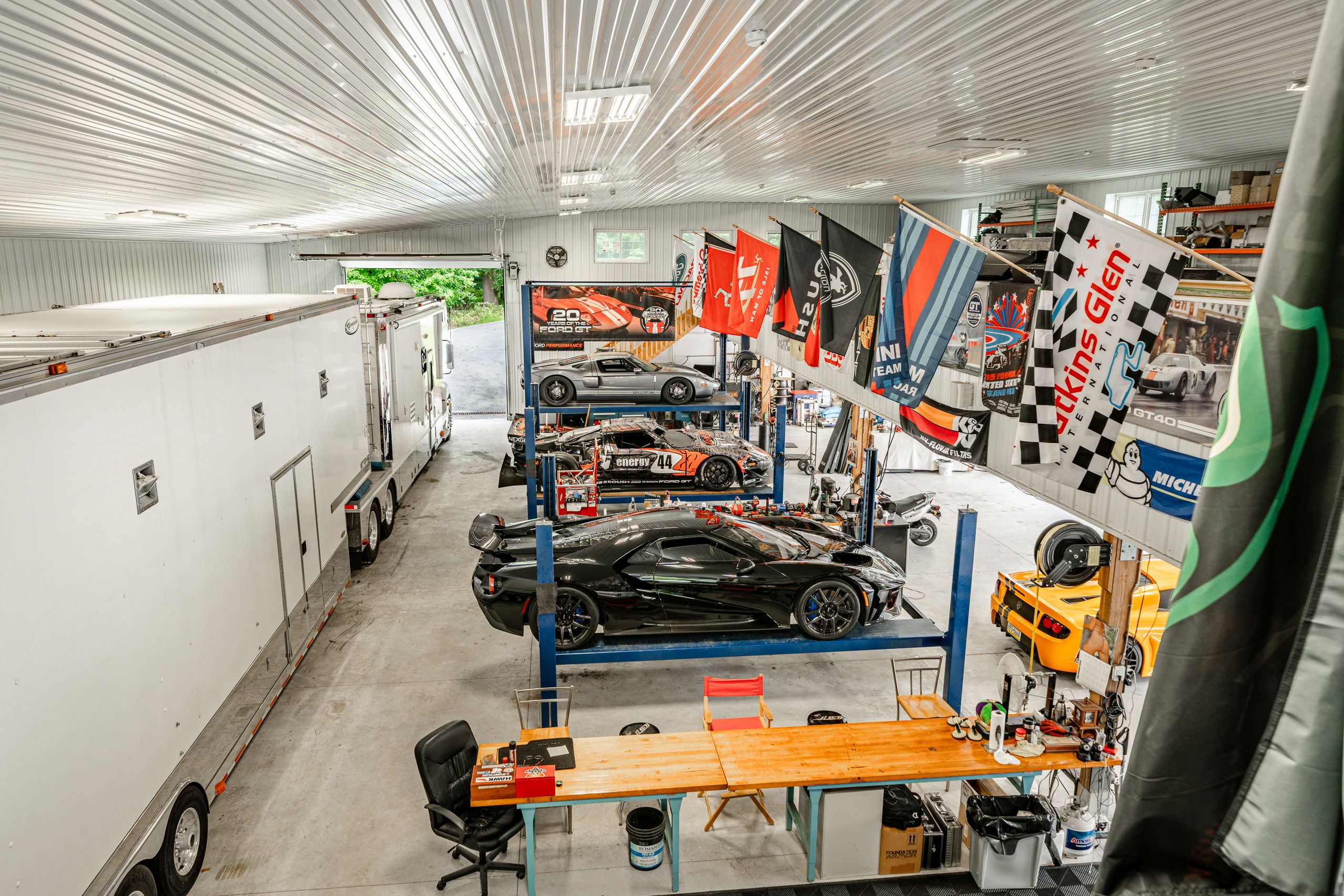
    The 8,300-square foot detached garage is currently designed for a car collection.Brian Castro, Virtual Vista

    A buyer also could reimagine the space for another hobby or as an indoor sport or recreational facility, she said. It also has an office and a bathroom.

    The garage sits off to the side of the property’s residence, which spans 17,832 square feet and has six bedrooms, six full bathrooms, and three half bathrooms.

    It’s all on about 6½ acres of mostly wooded property in Tredyffrin Township.

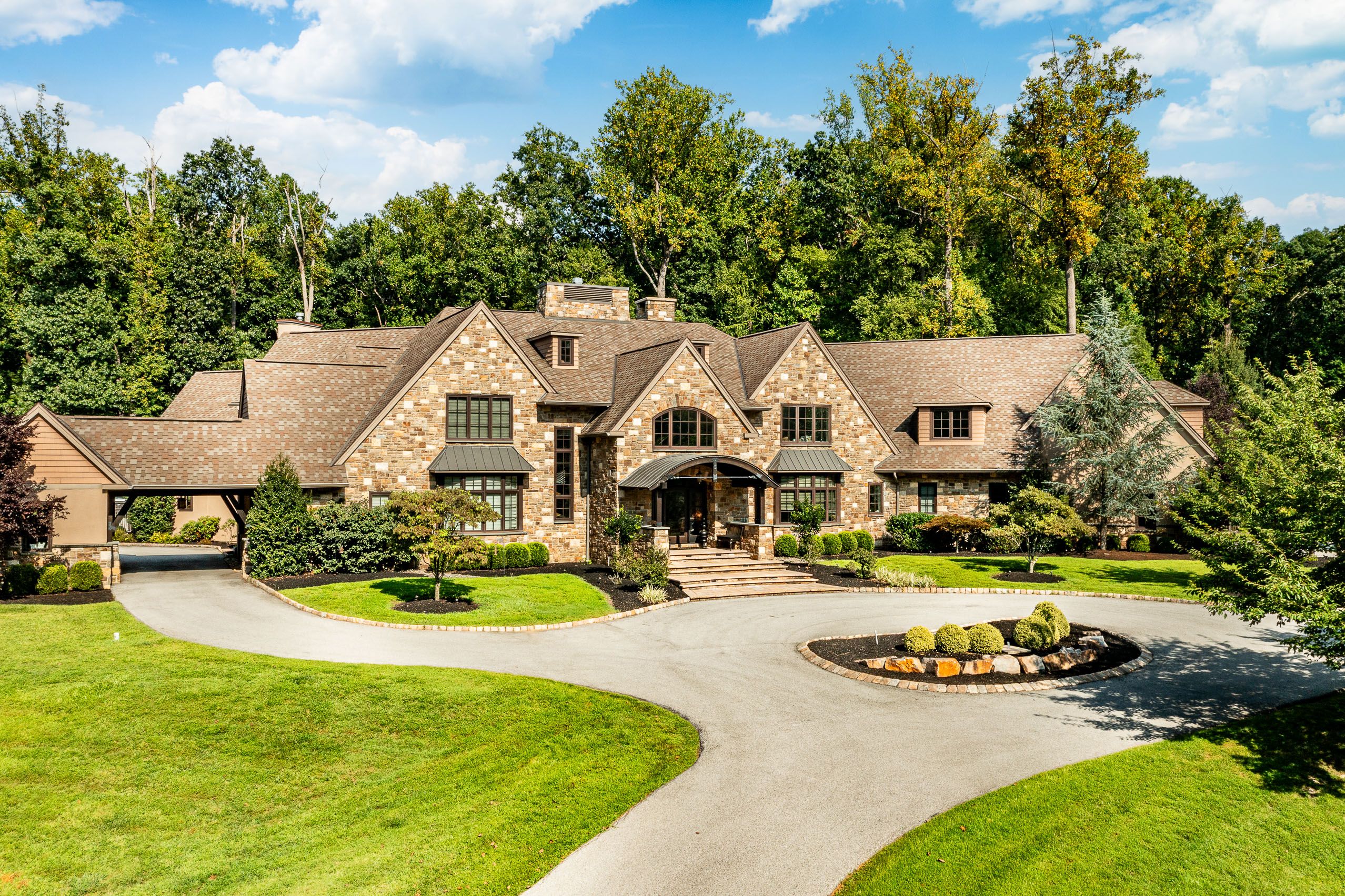
    This property includes a 17,832-square-foot house and an 8,300-square-foot detached garage.Brian Castro, Virtual Vista

    The home has “beautiful finishing touches you just don’t see in other homes” and “a very open floor plan for a home that size,” Bissett-Montagna said. Unique cabinetry and fieldstone throughout the home also make the property stand out, she said.

    The house has two primary suites. The one on the first floor includes a bathroom with a steam room. The one on the second floor features a fireplace, a balcony, and an 800-square-foot closet and dressing room.

    A primary suite on the second floor features an 800-square-foot closet and dressing room.Brian Castro, Virtual Vista

    The house’s great room features vaulted 34-foot ceilings and a two-story, three-sided stone fireplace. Large windows and glass doors look out onto the backyard.

    Next to the great room, a built-in bar has custom lighted cabinetry and a two-sided, 700-gallon saltwater fish tank. The tank is fully automated and feeds the fish itself.

    The kitchen features a built-in pizza oven; a two-level, 20-foot island; black slate flooring; and integrated lighting in all the cabinets and drawers. The dual-oven range is topped by a custom metal range hood.

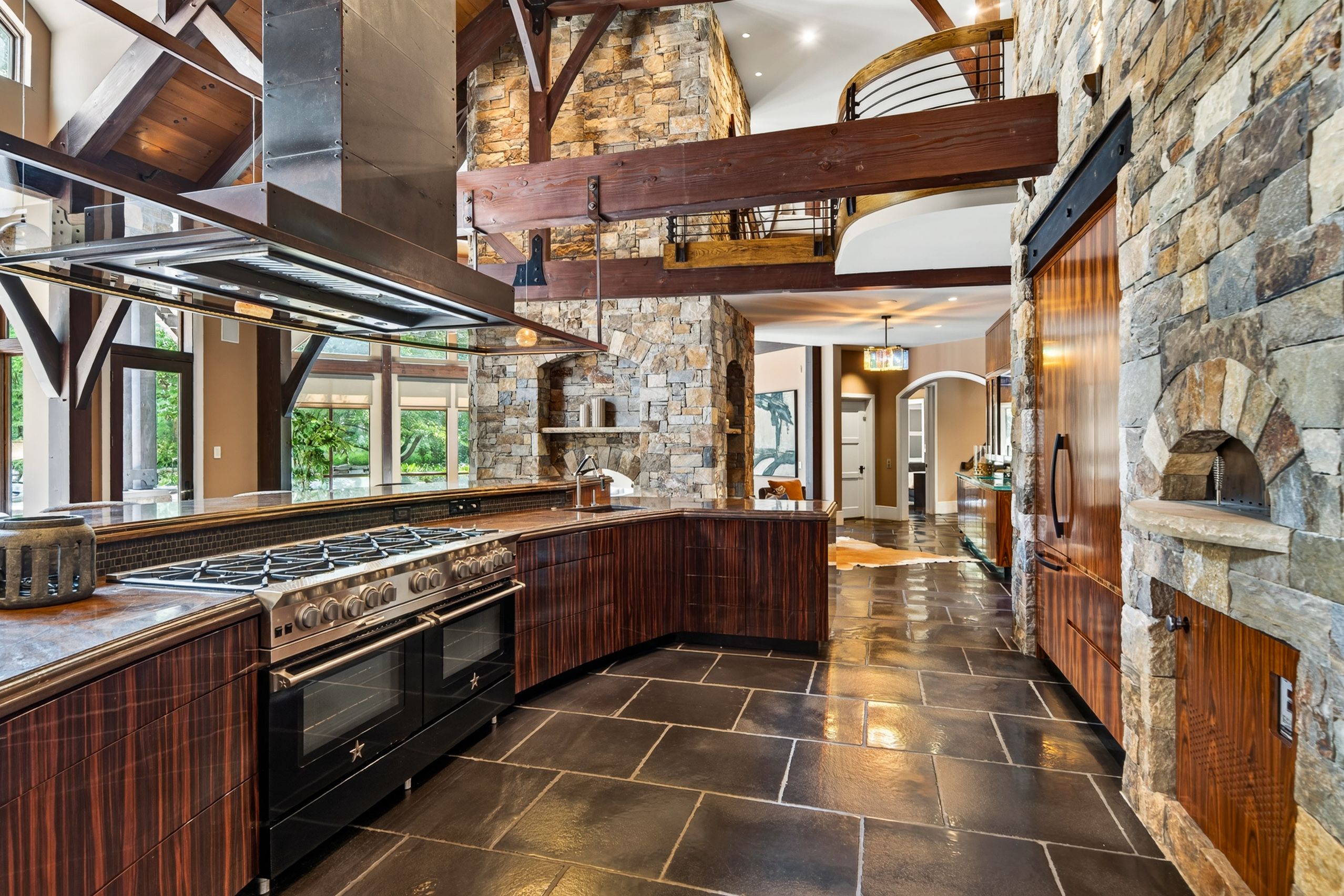
    The kitchen includes a built-in pizza oven and a dual-oven range.Brian Castro, Virtual Vista

    A separate food-preparation area includes a commercial refrigerator and freezer, a commercial dishwasher, another dishwasher, and an oversized sink.

    A guest or in-law suite with a private entrance includes a full kitchen, a bedroom, a bathroom, and a seating area.

    A four-seasons room blends indoor and outdoor living with sliding glass doors. Between this room and the dining room is a wall with a 60-inch built-in fireplace.

    Downstairs, a finished basement includes a bar, wine cellar, media room, gym, and additional entertainment spaces.

    In the backyard, a large terrace has several seating areas and surrounds the home’s 45,000-gallon, free-form swimming pool. The space also includes three fire features, a pool house, a built-in grill, and a bar area with a sink.

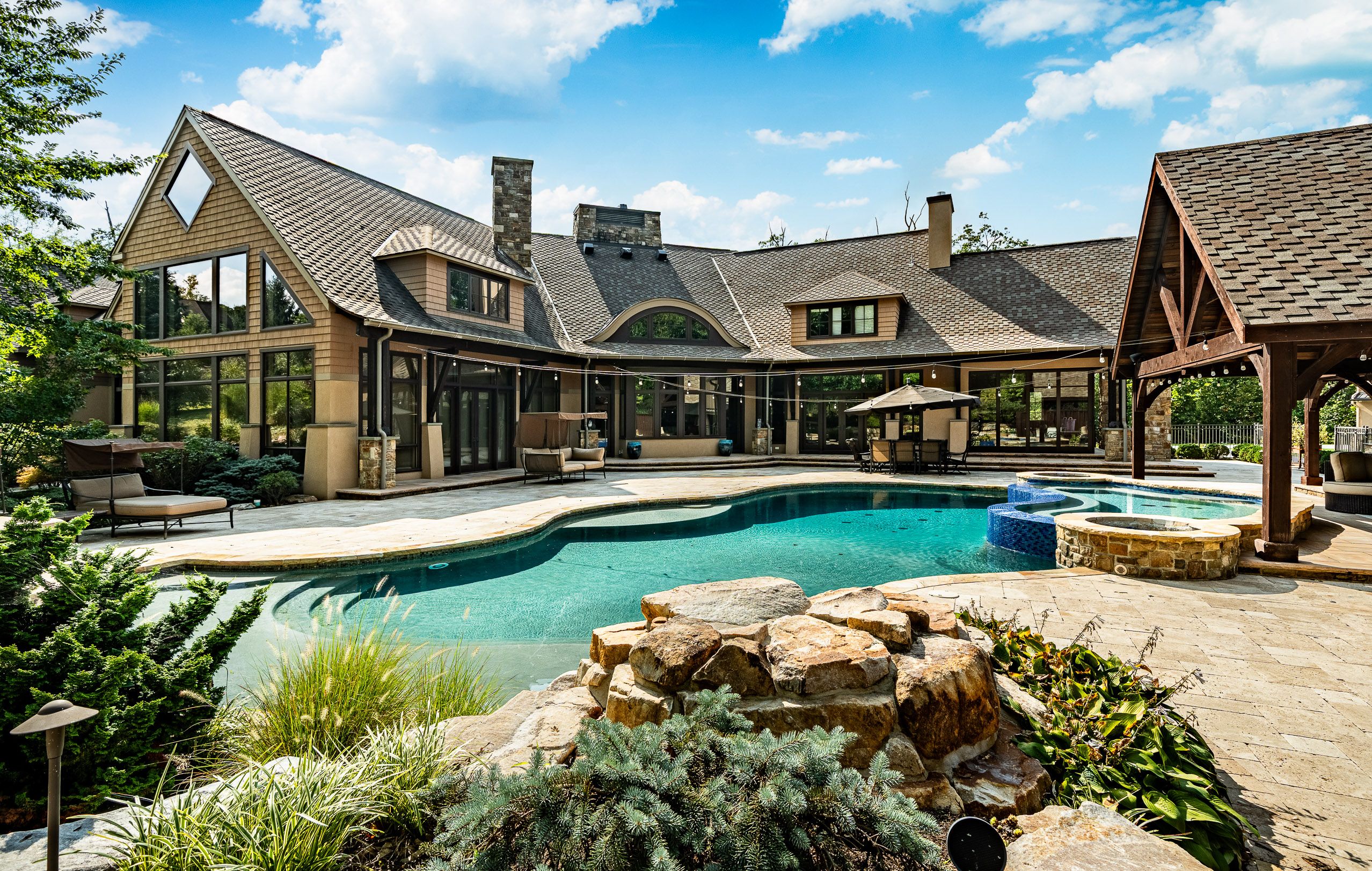
    The backyard includes a pool, pool house, several seating areas, and fire features.Brian Castro, Virtual Vista

    The home is a few miles’ drive to I-76 and Pickering Valley Golf Club and is near the Diamond Rock nature preserve.

    The property was listed for sale in September.