Tag: Chester County

  • A 20-year-old Amish woman with leukemia got measles and died in Pa.’s largest outbreak in three decades

    A 20-year-old Amish woman with leukemia got measles and died in Pa.’s largest outbreak in three decades

    The headstone had not yet been placed Thursday on the freshly dug grave where a 20-year-old Amish woman was buried this week amid the rolling clover fields and dairy farms at the edge of suburban Philadelphia.

    Newly wed, and receiving treatment for blood cancer, she was the last of nine siblings sickened when measles swept through her unvaccinated family’s home on a one-lane road in Lancaster County.

    At first, the home remedies that eased their symptoms seemed to help her, too: Soothing the fever with bath soaks. Calming the rash with coconut or olive oil. Cloistering in a dark room to ease light sensitivity.

    Then her fever spiked. She struggled to breathe and had to sleep sitting up in a recliner in the living room, her maternal grandmother recalled.

    Her family does not operate cars, in keeping with Amish beliefs, so they hired a driver to take her to the emergency department at Hershey Medical Center about an hour away. She died about two weeks later in the intensive care unit there, her grandmother said.

    Speaking on the porch of her stone farmhouse, the grandmother described the family’s experience with Pennsylvania’s largest measles outbreak in three decades, now the nation’s largest. At her request, The Inquirer withheld her name and that of her deceased granddaughter to protect the family’s privacy.

    She said her granddaughter ultimately developed double pneumonia and died after the family decided to discontinue use of a ventilator.

    The cancer made her especially vulnerable to a virus as contagious as measles, which will infect 9 in 10 unvaccinated people who are exposed.

    “Her immune system wasn’t built up,” the grandmother said. “She just couldn’t take it with the measles.”
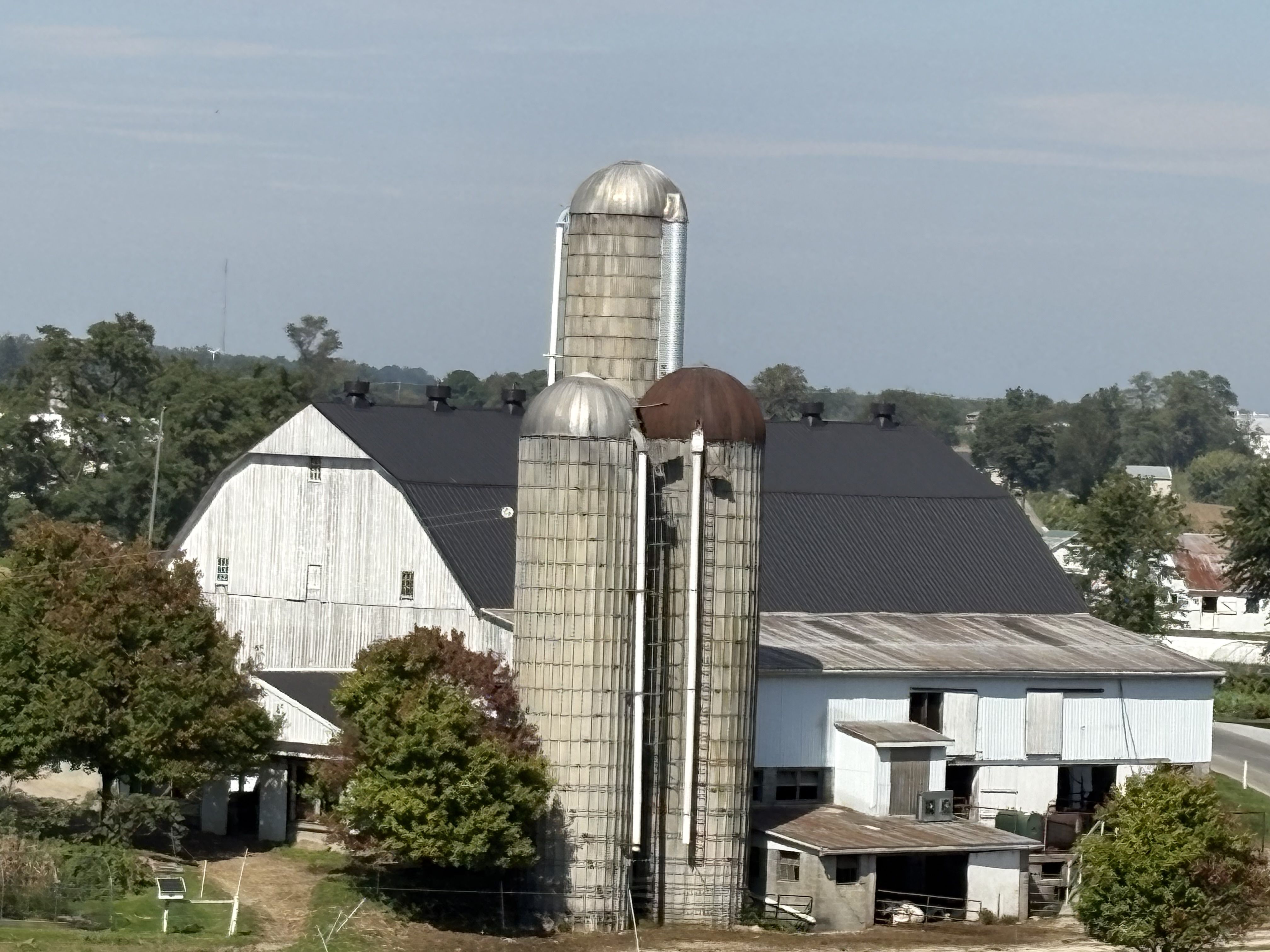
    The Lancaster County borough where a 20-year-old Amish young woman died from pneumonia caused by measles is dotted with diary farms and grain silos.Wendy Ruderman

    Pennsylvania reported on Wednesday its fifth measles-related death, revealing only that the latest fatality was an unvaccinated Lancaster County resident. Health officials did not provide further details, citing privacy laws.

    But it appears from the grandmother’s account, along with other records and news reports, that three of the five deaths occurred in adults with measles. Other reported deaths included an 18-year-old Amish woman from Mifflin County and a 40-year-old from Jefferson County with severe respiratory conditions. Two Amish infants in Lancaster County who had confirmed measles cases also died. All five cases involved people who were unvaccinated, either by choice or because they were too young to receive vaccines.

    The number of deaths in adults is striking, said Paul Offit, who heads the Vaccine Education Center at the Children’s Hospital of Philadelphia. Widespread childhood vaccinations had eradicated the disease in the United States, leaving mostly children too young to be vaccinated at high risk in recent decades. Now multiple generations of unvaccinated children are adults, exposing wider vulnerabilities across the state, Offit said.

    “We’re aging out a population that was never vaccinated,” he said.

    After learning the details of the 20-year-old’s death from The Inquirer, Offit explained that measles commonly leads to pneumonia.

    “The measles virus reproduces itself in the lungs and can cause severe and occasionally fatal infection,” he said.

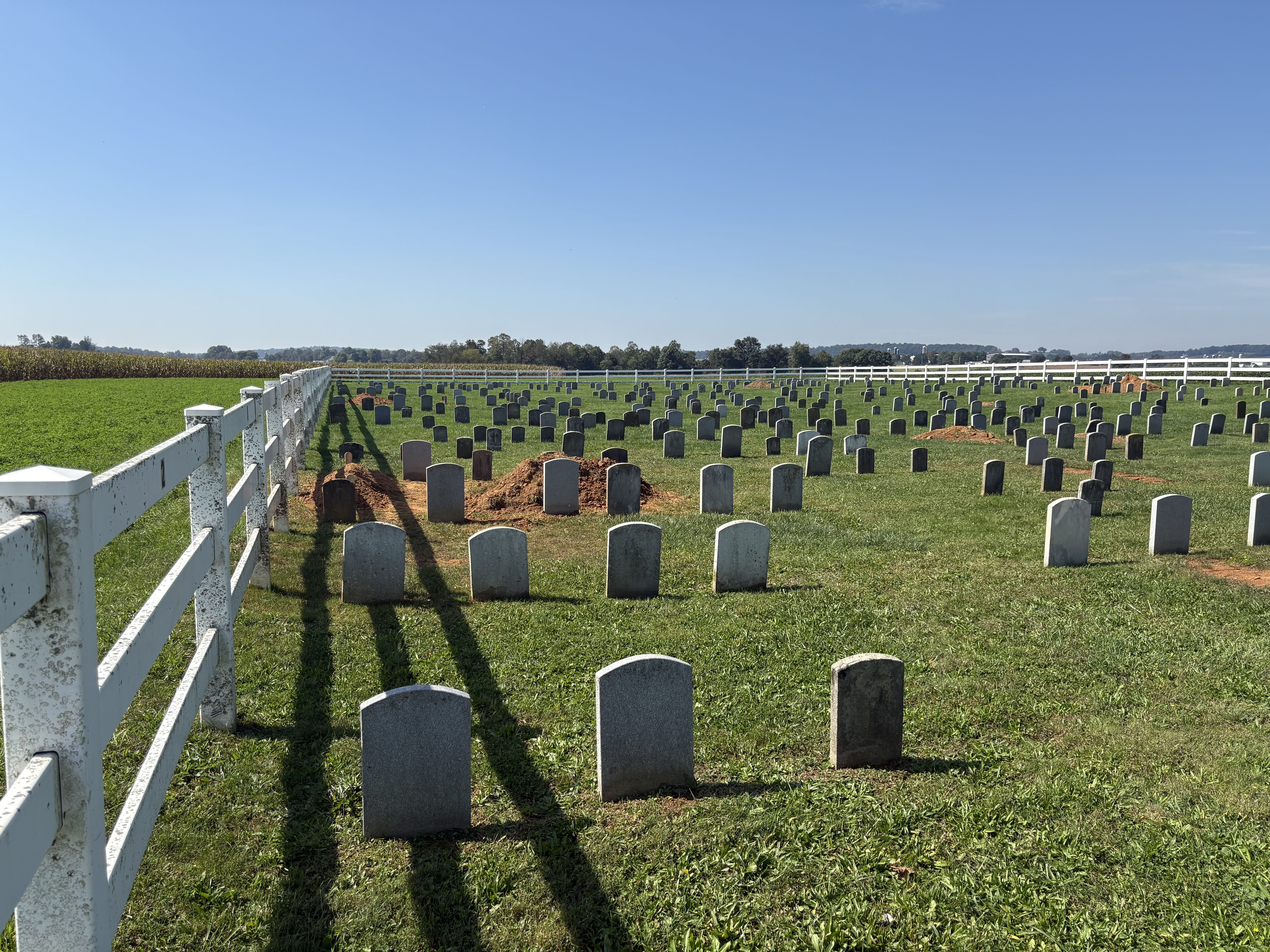
    The Amish cemetery where the 20-year-old woman is buried.Wendy Ruderman

    Too late to get vaccinated

    The young woman, the second oldest in a line of nine siblings, ages 6 to 22, feared getting measles in the outbreak in Lancaster County, her grandmother said.

    About two years ago, she was diagnosed with leukemia, a blood cancer, and began medical treatment with the help of an “English” neighbor — as Amish call outsiders — to drive her to her medical appointments.

    The treatment regimen of chemo and steroids further weakened her immune system. She knew she was at risk of more severe sickness from a viral infection like measles, which started spreading throughout her family in the late summer.

    Her eight siblings, her parents, and her new husband all got sick, the grandmother said.

    Along with home remedies, family members drank extra fluids to stay hydrated, the grandmother said.

    “They weren’t worried,” the grandmother said. “Measles just has to take its course.”

    Although no one in the household was vaccinated, they are not opposed to the vaccine based on Amish beliefs. They believe it’s an individual choice, she said, and many Amish people opt not to get vaccinated because they “don’t know what’s in it.”

    “We wouldn’t tell people not to get vaccinated,” the grandmother said. “It’s up to each person.”

    As illness spread in her household, her granddaughter grew more worried about getting the virus than about the vaccine that medical authorities have long considered safe and effective.

    She asked her doctor if she could get a measles vaccination. Her doctor said no. “She wasn’t allowed to get the shot because she was on chemo,” the grandmother said.

    The measles vaccine contains a live but weakened virus, and her granddaughter was already immunocompromised from the leukemia treatment.

    After getting measles, her granddaughter began to feel better in early September. She picked vegetables from the family’s garden to make soup using tomato juice as the broth. She canned jars for the coming cold months, her grandmother said.

    “She had good days,” the grandmother said.

    Then, in mid-September, she spiked a high fever, and her breathing became labored.

    “She could hardly breath. Her lungs were just in bad shape,” she said.

    The Amish typically only seek emergency hospital treatment until “sometimes we’re dying,” the grandmother said, recalling how her husband got chided by a doctor in 2018 for waiting too long to get the heart surgery he desperately needed.

    “We do what we can at home,” she said. “We have so many natural things we can do.”

    By Sept. 11, the family knew it was time to take her granddaughter for emergency care at Hershey Medical Center.

    At Hershey’s ER, doctors gave her a chest X-Ray, but sent her home before reading it, the grandmother said.

    “They wouldn’t do anything for her. They didn’t want her there,” she said. (A Hershey spokesperson did not reply to a request for comment on Friday.)

    A Hershey provider later called and left a voicemail message asking the family to bring her back. Although the family has a phone in their house, the grandmother said they rarely use it. With the ringer off, all calls go to voicemail, she said.

    A driver took them back to the hospital, where she was admitted on Sept. 14. An ultrasound showed fluid between the lining of her lungs and in her lungs. She was diagnosed with double pneumonia, her grandmother said.

    Hospital staff hooked her up to supplemental oxygen.

    “They had the oxygen up as far as they could and she still had to work to breathe,” the grandmother said.

    About a week later, they moved her to the intensive care unit, where they sedated her so they could put her on a ventilator while intubated.

    The hospital allowed two family members at a time to sit by her bed. Her granddaughter’s young husband and the girl’s mother sat vigil, the grandmother said.

    As she continued to deteriorate, life support was the only remaining option, and it carried the risk of neurological complications, including brain death.

    The family didn’t want that, the grandmother said. “They couldn’t do anything more,” she said.

    They turned off the oxygen and shut off the ventilator, Family members, including her new husband’s parents, gathered around her bed.

    She died with a breathing tube still in her mouth, the grandmother said.

    A happy first year of marriage

    More than 300 people came to the family’s home on Monday for the funeral service and viewing. She was buried in a cemetery near the family’s home, about a month before what would have been her first wedding anniversary.

    Despite being ill with leukemia, her granddaughter’s trademark “rosy pink cheeks” and “beautiful smile” beamed on her wedding day, her grandmother recalled.

    The November 2025 wedding, held at the family home, was a festive affair, with plates loaded up with chicken and vegetables, chicken and filling, pickled cabbage, and cooked celery.

    She feels sorry for her granddaughter’s husband, who declined to be interviewed. “They had a good year together,” she said.

    At the young woman’s home, two black dogs, with hay in their matted curly hair, greeted an Inquirer reporter on Thursday. Some of her family members were outside, unloading cornstalks from a horse-drawn wagon and feeding them into a John Deere harvesting machine.

    They stopped working and spoke to one another in Pennsylvania Dutch, a centuries-old German dialect, before fetching the young woman’s father, who declined to be interviewed.

    Staff writers Aubrey Whelan and Sarah Gantz contributed to this article.
  • These three Chester County voters have cast ballots in 50 consecutive November elections

    These three Chester County voters have cast ballots in 50 consecutive November elections

    Fifty November general elections have passed “in the blink of an eye,” said Rita Lese as she was inducted into the state’s Voter Hall of Fame on Friday.

    Lese has a long tradition of going to the polls, which started when she was a little girl, walking there with her parents. It felt like the “greatest thing” to go behind the curtain of the booth. That history continued as an adult, with her two daughters in tow on Election Day. Living in the same house for the last 50 years, just down the road from their polling place, she’d walk to cast her ballot in rain and sun.

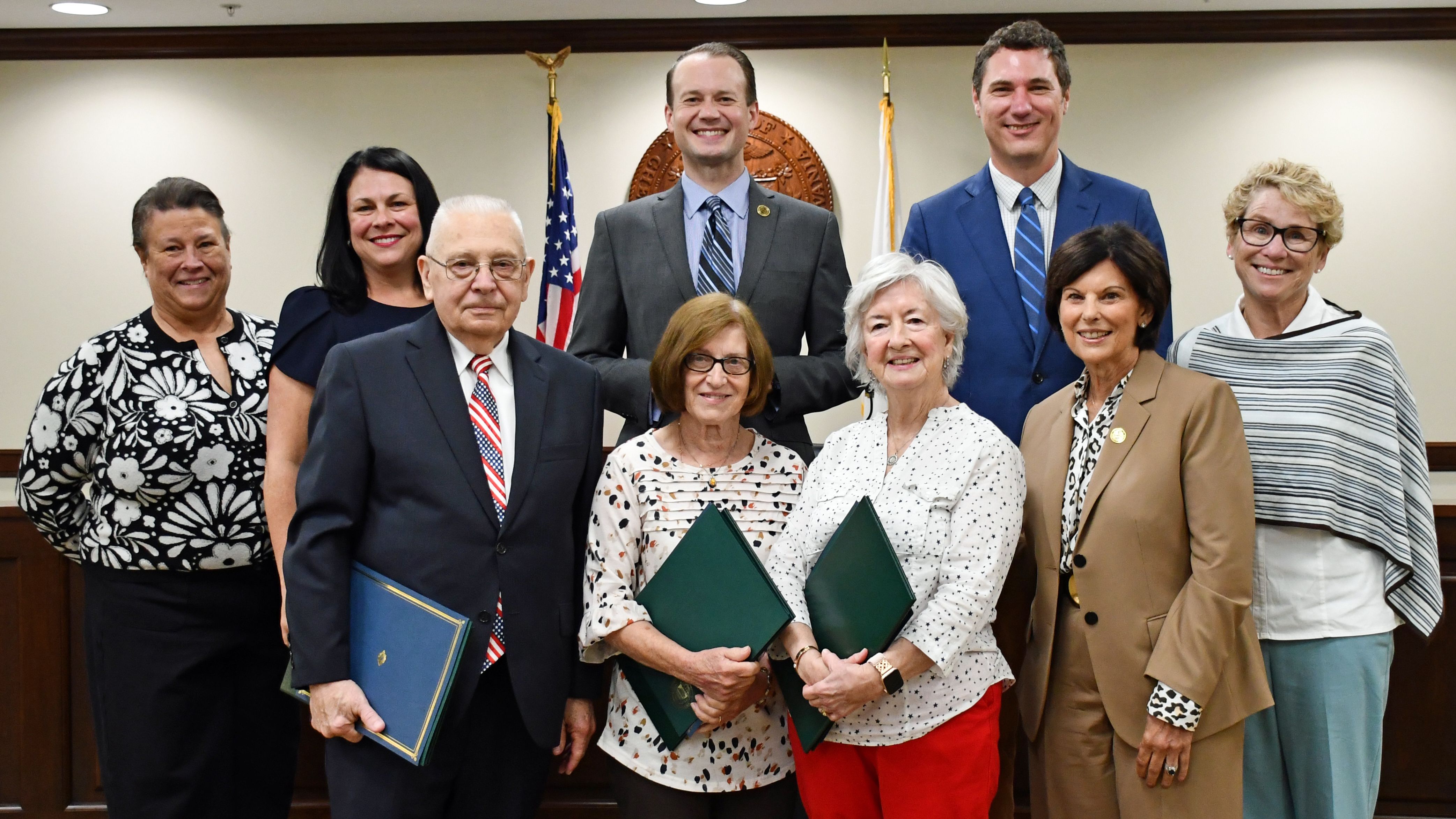
    Lese, 77, was one of three Chester County residents — including her husband, Michael Lese, and Patricia Conroy — to be recognized for voting in 50 consecutive November elections during Chester County’s Board of Elections meeting Friday.

    Established in 1986, the Voter Hall of Fame was formed to encourage Pennsylvania residents to cast their ballots. In the four decades since, more than 25,000 voters statewide have been inducted. Voters are recognized in each of the counties; Friday’s celebration increases Chester County’s contribution to that tally to 118, officials said.

    “So there’s no excuse for the rest of us, is what you’re saying?” Josh Maxwell, the chairman of the county’s board of elections, asked Rita Lese.

    It appears no.

    It was a “a huge commitment and a tremendous accomplishment,” said Stephanie Reid, executive deputy secretary for the Pennsylvania Department of State.

    “There had to have been some Election Days when they were ill, or they were busy with pressing work, or commitments with their children, the weather was bad, any other challenge that comes up every day in our lives that would have made going to cast their ballot inconvenient,” she said during the ceremony Friday. “Yet they persevered.”

    But when Rita Lese thinks about what the suffragettes went through to secure some women’s right to vote in 1920, she can’t imagine not showing up to the polls each year; she thinks about it every year she does. Michael Lese, 78, who describes himself as an avid reader of history, said he feels similarly.

    “When I read all of those sacrifices that people made so that we have the right to vote, it just instilled in me the importance of what this means,” he said.

    The Leses’ civic engagement hasn’t stopped at casting their ballots, either. Rita always wanted to work the polls, but her career as a nurse made that pretty much impossible. In retirement, she thought maybe she’d have the opportunity. But Michael beat her to it: A longtime construction executive, he has spent essentially a second career at the polls. For 25 years, he has served as a clerk, a machine inspector and, for the last three, a judge of elections. He’s brought Rita in as an emergency poll worker when he’s low on poll workers.

    It’s never been just about the issues for the Leses, but just the importance of showing up.

    “It’s what you do,” Michael said in an interview.

    “It’s what you do,” Rita echoed. “It’s a circle on the calendar, and that’s the day you vote.”

    After half a century of voting, there are a few elections that stick out. The elections of presidents Jimmy Carter in 1976 and Barack Obama in 2008 felt particularly remarkable, they said. They’ve seen the evolution in voting: “from write-ins, to the styluses, to the little circles and different machines.”

    With a rise in mail ballots, the crowds haven’t been the same, they said. But as their daughters are avid voters by mail ballots, they hope that participation hasn’t declined either. (In 2024, 77% of Pennsylvania’s eligible voters cast a ballot in the November election, in numbers that have dipped and grown in the last 36 years, according to state data. That year saw some of the highest participation since 1988.)

    The Leses joked they’d hopefully go for another 25 years of consecutive elections.

    Meanwhile, inductee Patricia Conroy, 79, came to her own civic participation a little differently. Her father, a longtime mail carrier who raised her and her four siblings basically on his own, “cared a whole lot about voting,” she said.

    One Election Day, she remembers him coming home, remarking that someone told him they wouldn’t be voting: “Just imagine if everybody felt that way,” she recalls him saying.

    That stayed with her.

    “And so, I’ve been voting, all the time,” she said.

    Elections have become a significant part of her family’s life. Two of her siblings ran for local office, and her sister is also being inducted to the Voter Hall of Fame in Philadelphia, she said.

    A retired real estate agent, Conroy worked as a judge of elections, a Democratic committeeperson, and on campaigns. She also brought her sons with her to the polls. Both her and her husband — who met on the aptly patriotic Fourth of July as teenagers in 1966 — have early November birthdays. She remembers apologizing to him for missing his birthday in 1992 to celebrate President Bill Clinton’s win. (“I told him: You understand, we’re partying,” she said.)

    There are other memorable elections: Gov. Josh Shapiro’s election was a highlight, she said. And some others are notable for not going her way, she said.

    “Let’s just say we had a lot of laughs and a lot of tears on various election nights,” she said.

    U.S. Rep. Chrissy Houlahan, a Democrat who represents Chester County, called the three “exemplars of what model citizens should be.”

    “Elections and candidates have clearly changed over those 50 years,” she said. “Our country has changed, but throughout it, you have made your voice heard.”

    For those keen to start their long, storied voting history, voter registration closes Oct. 19.

    This suburban content is produced with support from the Leslie Miller and Richard Worley Foundation and The Lenfest Institute for Journalism. Editorial content is created independently of the project donors. Gifts to support The Inquirer’s high-impact journalism can be made at inquirer.com/donate. A list of Lenfest Institute donors can be found at lenfestinstitute.org/supporters.

  • The auction for St. Peter’s Village was postponed as a full house waited to see the new owners

    The auction for St. Peter’s Village was postponed as a full house waited to see the new owners

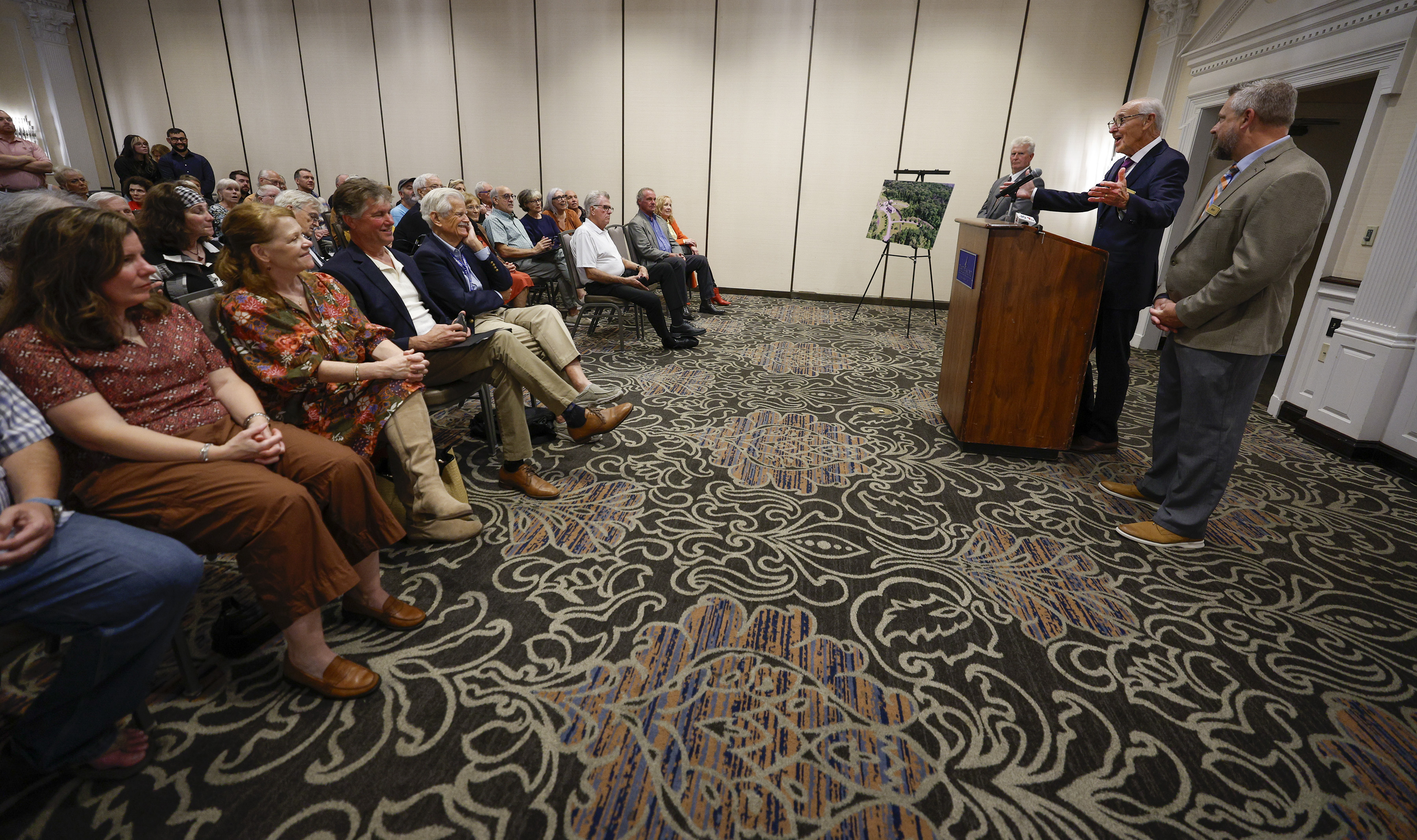
    The auction for Chester County’s historic St. Peter’s Village — which put on offer roughly 80 acres, more than a hundred home sites, and the handful of businesses contained within the boundaries — ended before it began Wednesday.

    Speaking to a full house containing a large number of residents and business owners, auctioneer Doug Clemens informed attendees that it had been postponed — an announcement he acknowledged “could make you happy, maybe will make you sad.”

    No date was immediately set.

    A spokesperson for Piazza Management said on Friday, days after the auction, that “the auction was postponed due to technical electronic on line [sic] bidding issues and on site phone communication complications.”

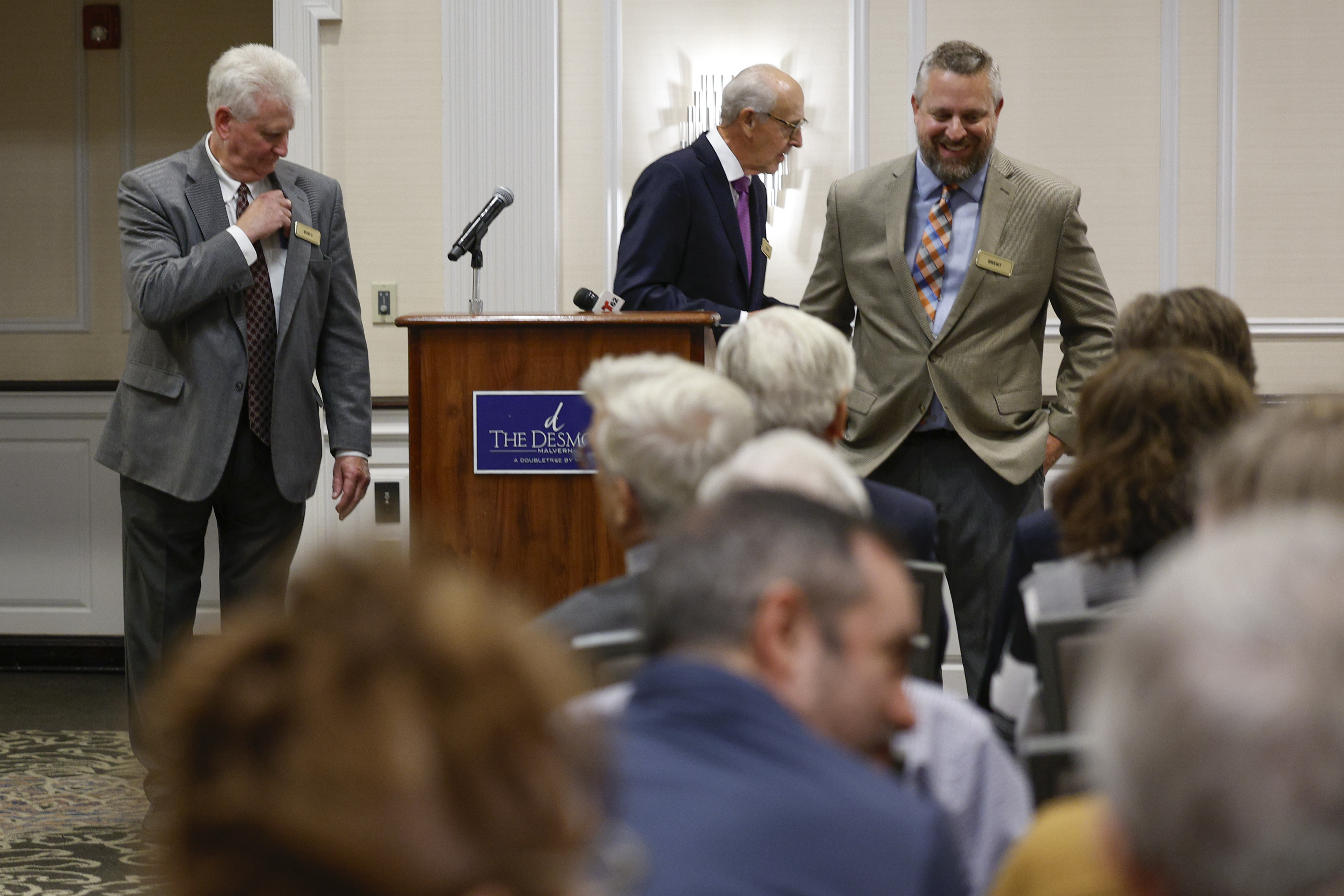
    Auctioneer Doug Clemens, center, walked off after announcing that there would be no auction on Wednesday of St. Peter’s Village. The auction was held off-site at the Desmond Hotel Malvern only to find out at the last second, the auction was canceled.Steven M. Falk / For The Inquirer

    It was not immediately clear how many people had shown up to bid on the property. Those interested in bidding on the land were told to bring, by a bank cashier’s check, $150,000.

    The sale of 80 acres, give or take, of a beloved village piqued sizable interest when the auction was announced over the summer. But it also prompted concerns from those in and out of the village, who worried if the new owners would retain what makes it so special.

    Clemens said previously that the auctioneers received thousands of inquiries, including from people who lived in the village, curious about what would become of it.

    The public auction, held in Malvern, drew spectators and was a crowd of familiar faces for residents and business owners in the village. As they left the meeting room, they speculated over possible deals that could have arisen.

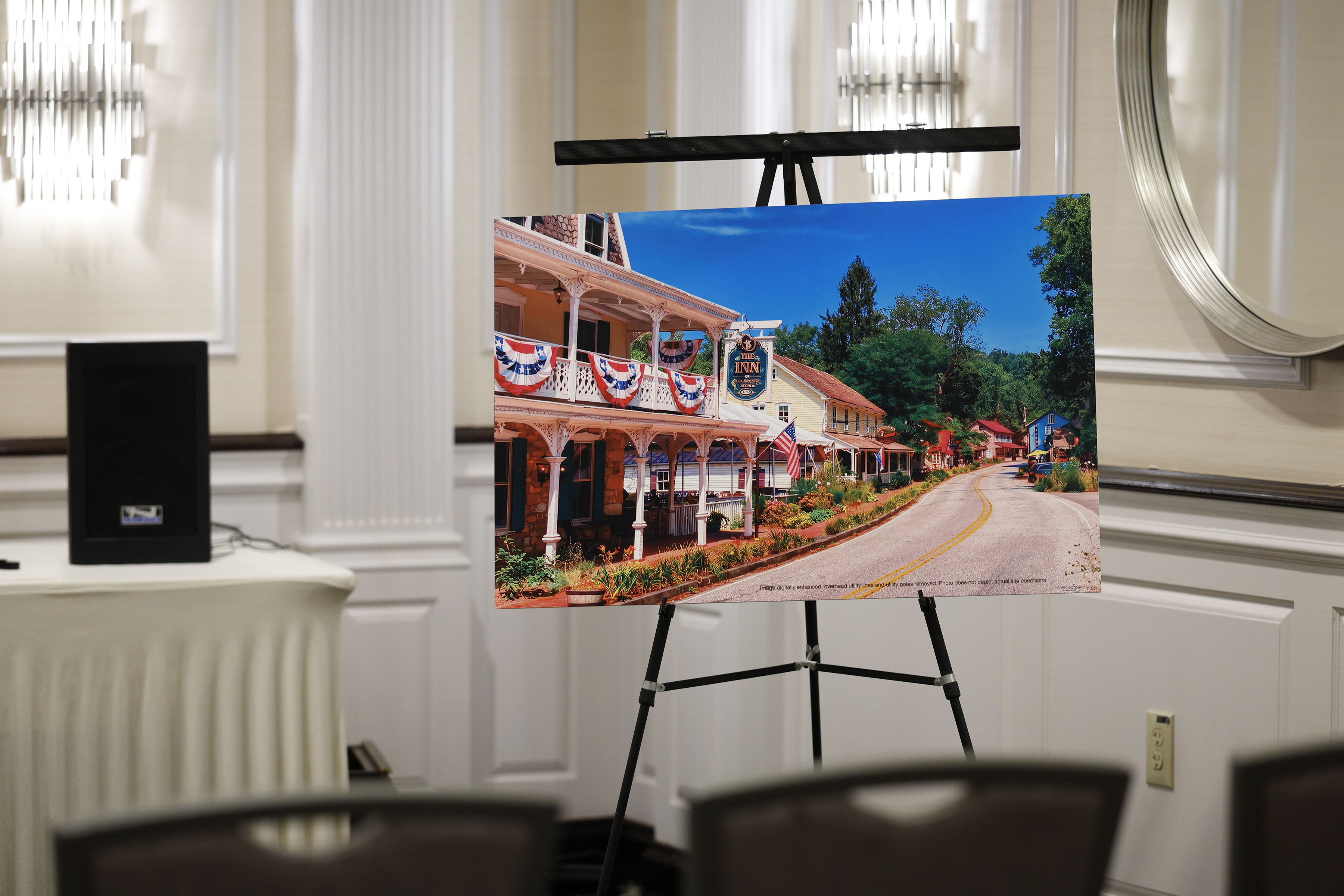
    St. Peter’s Village, which grew around the French Creek and flourished in the Gilded Age due to its natural resources, became a place of recreation and leisure in the 1880s. Since then, it has continued to draw tourists to its quaint shops, rocky shores, and hiking trails. The village is nestled in Warwick Township, which has a population of roughly 2,600.

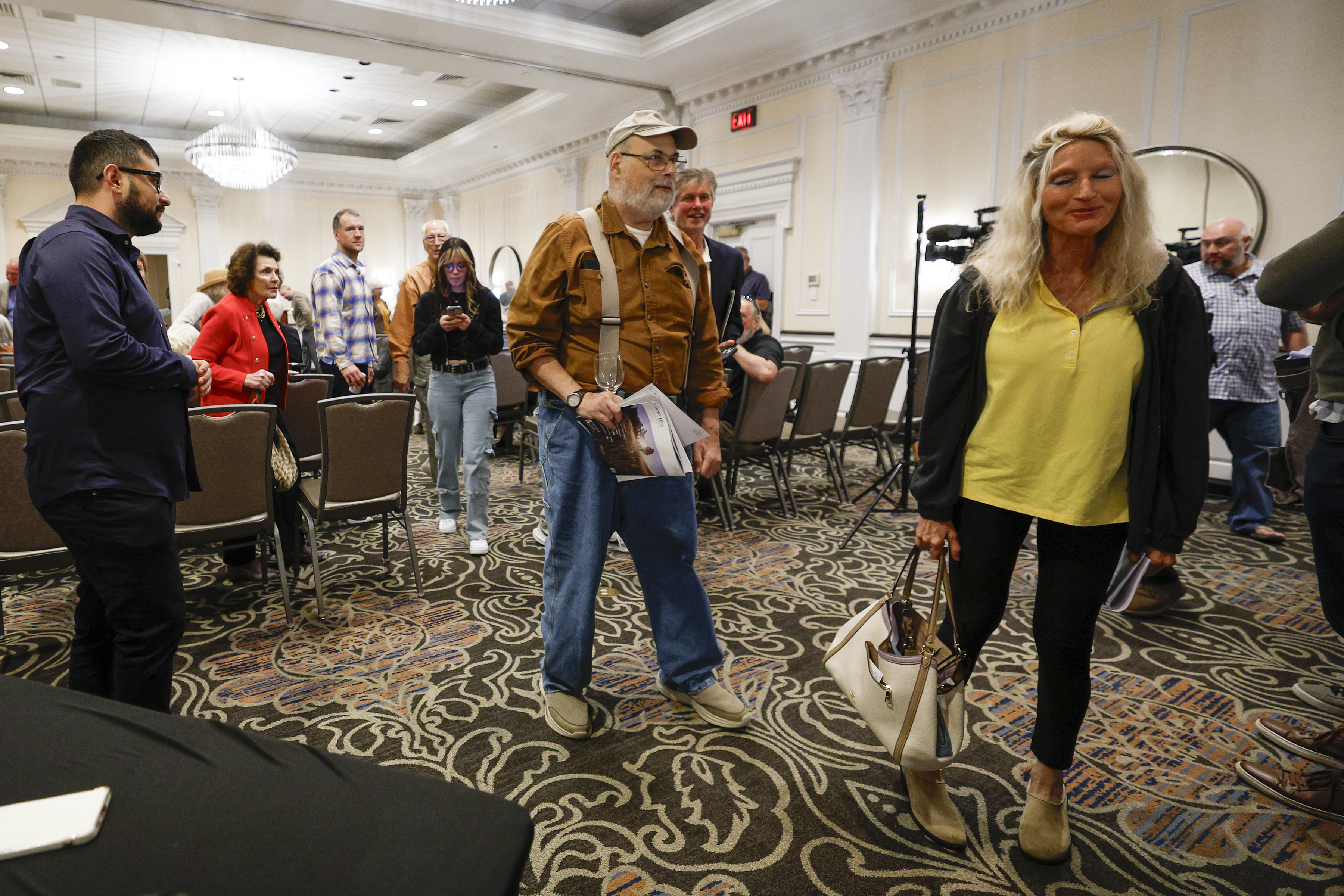
    People walk out after the auction of St. Peter’s Village was canceled. The auction was held off-site at the Desmond Hotel Malvern only to find out at the last second, that auction was canceled.Steven M. Falk / For The Inquirer

    The owners had planned two neighborhoods, totaling about 121 home sites, with a mix of densely populated housing and larger single-family homes. With the economic downturn in the early 2000s, that vision never fully materialized; several homes are unfinished. To see it through, a new buyer would have to improve the wastewater treatment plant included in the purchase.

    Tom Tulley, a resident since 2009 who lives adjacent to the proposed development, has concerns about building out the land to the envisioned extent.

    He has known development was inevitable, but if “they put another 150 homes with however many toilets and bathtubs and washing machines, I’m just concerned that the aquifer might not be able to support it,” he said.

    Longtime business owners Christopher and Ashley Dilworth, who own Fox & Frog Apothecary, were excited that the Piazzas were set to turn it over so someone else could take the mantle and continue revitalizing the village. Christopher Dilworth acknowledged there “will be opinions on which way would be better, which way would be worse.”

    But, Ashley Dilworth said, “I think all of the people in the village and everyone that came out would just be excited for anyone who had a big enough vision to move it to the next level.”

    St. Peter’s Village was to be sold off to the highest bidder. The auction was held off-site at the Desmond Hotel Malvern only to find out at the last second, the auction was canceled,, September 30, 2026Steven M. Falk / For The Inquirer

    It has had, over the last several years, a new life breathed into it, she said. With the help of social media, people from across the region — from New York to Delaware — have been discovering the town, which boasts everything from antique stores to modern jewelry to an antique arcade.

    “People are staying in this little one-block town for a whole day,” Christopher Dilworth said. “There’s that much to do there and experience.”

    Peter Melle and his wife, Melanie, who owned the bakery in town for about 15 years, were hoping to see someone pick up the project where it was left off.

    “Everybody’s curious,” he said. “I think it’s a great project. … I think it’ll be a phenomenal location to build. But it’s about the money.”

    Megan Reese, who lives in Malvern, has gone to St. Peter’s for a long time. She wanted to see someone purchase it who would take care of it and also “honor all the fun that’s occurring.”

    “A lot of people love St. Peter’s, and it’s iconic. It’s been around for a very long time,” she said. “I really want it to be a heart project for somebody.”

    This story has been updated to include a statement regarding the reason for the auction’s postponement.

    This suburban content is produced with support from the Leslie Miller and Richard Worley Foundation and The Lenfest Institute for Journalism. Editorial content is created independently of the project donors. Gifts to support The Inquirer’s high-impact journalism can be made at inquirer.com/donate. A list of Lenfest Institute donors can be found at lenfestinstitute.org/supporters.

  • Pennsylvania confirms a fifth death associated with widening measles outbreak

    Pennsylvania confirms a fifth death associated with widening measles outbreak

    A fifth person has died amid Pennsylvania’s growing measles outbreak, state health officials confirmed on Wednesday.

    The Pennsylvania Department of Health said in a news release that an unvaccinated resident of Lancaster County tested positive for measles and has died.

    Health officials said they would not release any additional identifying details about the person who died, citing state privacy laws.

    The state has confirmed two other measles-associated deaths this year in Lancaster County residents, both involving infants in the Amish community.

    Mifflin and Jefferson Counties have also reported two measles-associated deaths involving an 18-year-old and a 40-year-old, respectively.

    The announcement came as confirmed measles cases in Pennsylvania reached 943 so far this year, the largest outbreak in the state in three decades and the highest case count nationwide this year. The state has confirmed 40 new cases in the last two days.

    The outbreak is centered in Lancaster, where nearly 400 people have been sickened so far this year, but also expanding in other counties, including Chester County in suburban Philadelphia, which had reported 83 cases as of Wednesday, the third-highest countywide case count in the state.

    (function(){function e(){window.addEventListener(`message`,function(e){if(e.data[`datawrapper-height`]!==void 0){var t=document.querySelectorAll(`iframe`);for(var n in e.data[`datawrapper-height`])for(var r=0,i;i=t[r];r++)if(i.contentWindow===e.source){var a=e.data[`datawrapper-height`][n]+`px`;i.style.height=a}}})}e()})();

    The death toll reported in Pennsylvania is also the nation’s highest since 1992, but state and federal officials have clashed over how to characterize the four previous deaths reported in the state, all in people who were unvaccinated and confirmed to have measles infections.

    The CDC’s public tracking of the toll of measles outbreaks nationally currently only shows two deaths from measles, reflecting decisions made under the leadership of President Donald Trump’s Health Secretary Robert F. Kennedy, Jr., a longtime anti-vaccine activist. The CDC’s website does not say where the two deaths occurred.

    Gov. Josh Shapiro, a Democrat, has accused Kennedy of spreading misinformation about the safety of the measles vaccine, contributing to declining vaccination rates statewide. Kennedy has faulted Shapiro for politicizing the deaths and initially said his administration may have “fabricated” two deaths.

    Pennsylvania officials said the latest death also fits the criteria for the state’s definition of a measles-associated death: One that occurred within 30 days of symptom onset in a person with clinical evidence of a measles infection and a positive lab test, that wasn’t due to an unrelated cause, like a car crash.

    In confirming measles-associated deaths, the state also considers medical records and whether the person was exposed to measles before their death.

    Statewide, nearly one in five people with reported cases have been hospitalized.

    About a third of confirmed measles cases have occurred in children under 18.

    Physicians and local officials in affected counties have warned that there are likely far more cases than have been officially reported.

    Nearly all of the confirmed cases of measles have been in unvaccinated people, state officials said. The state confirmed four cases involving extremely rare “breakthrough” infections in people who were vaccinated, less than 1% of the total cases reported.

    (function(){function e(){window.addEventListener(`message`,function(e){if(e.data[`datawrapper-height`]!==void 0){var t=document.querySelectorAll(`iframe`);for(var n in e.data[`datawrapper-height`])for(var r=0,i;i=t[r];r++)if(i.contentWindow===e.source){var a=e.data[`datawrapper-height`][n]+`px`;i.style.height=a}}})}e()})();

    Lancaster County coroner Stephen Diamantoni said state officials called him Wednesday to inform him of the latest measles-associated death, but provided no additional information on the case.

    He said his office had not handled any recent deaths involving a person who tested positive for measles.

    State officials have noted that not all deaths are referred to a coroner. They did not specify whether the latest death occurred in Lancaster County.

    Diamantoni, an elected Republican who is also a physician, had questioned the state’s conclusions about an earlier death in Lancaster County, in an infant who tested positive for a measles infection acquired before birth.

    The baby died shortly after birth from a lacerated spleen, Diamantoni said, adding that he did not believe the child’s death was caused by measles.

    State officials have said that the baby’s death fits their definition of a measles-associated death, and physicians have noted that measles can weaken the spleen, putting it at risk for rupture.

    Diamantoni also investigated the death of a second infant, which was not initially reported to his office. The six-week-old had a fatal genetic condition that made her particularly vulnerable to respiratory illnesses. That death was caused by measles, Diamantoni said.

    The other two deaths, in Mifflin and Jefferson Counties, involved an 18-year-old who died from a rare neurological complication of measles and a 40-year-old woman with serious respiratory issues that also put her at higher risk of death from measles.

  • Microplastic pollution found in 100% of Delaware River tributaries tested

    Microplastic pollution found in 100% of Delaware River tributaries tested

    Fleece fragments in a washer flow into a wastewater treatment plant. A plastic bag blows into a stream. A water bottle washes down a storm drain.

    All can end up in the region’s waterways as microplastics smaller than a grain of rice and find their way into drinking water and the stomachs of animals and fish.

    This kind of microplastic pollution was detected in 22 stream and river segments across the Delaware River watershed, according to a new survey of waterways by the nonprofit advocacy group PennEnvironment Research and Policy Center.

    Researchers analyzed water samples from sites along the Delaware River and its tributaries across Pennsylvania, New Jersey, Delaware, and New York.

    The research was conducted in partnership with the nonprofit Environment New Jersey Research and Policy Center. Scientists with the Academy of Natural Sciences at Drexel University helped analyze the results, which were released Wednesday during a news conference at Fairmount Water Works.

    Contamination was found in the Delaware and Lehigh Rivers and the Schuylkill. It was found in Neshaminy Creek in Bucks County, Brandywine Creek in Chester County, and Cooper River in Camden County. And it was found along the Christina River in Delaware.

    Drexel’s lab analysis confirmed microscopic plastic at every sampled site, highlighting what the researchers say is a widespread environmental threat.

    “We can look at a waterway, and it might be free of litter, it might be free of visible plastic pollution, but that doesn’t necessarily mean it’s clean,” said Faran Savitz, an advocate for PennEnvironment. “The big takeaway is that we should be concerned. The depth, the breadth of this plastic pollution is staggering.”

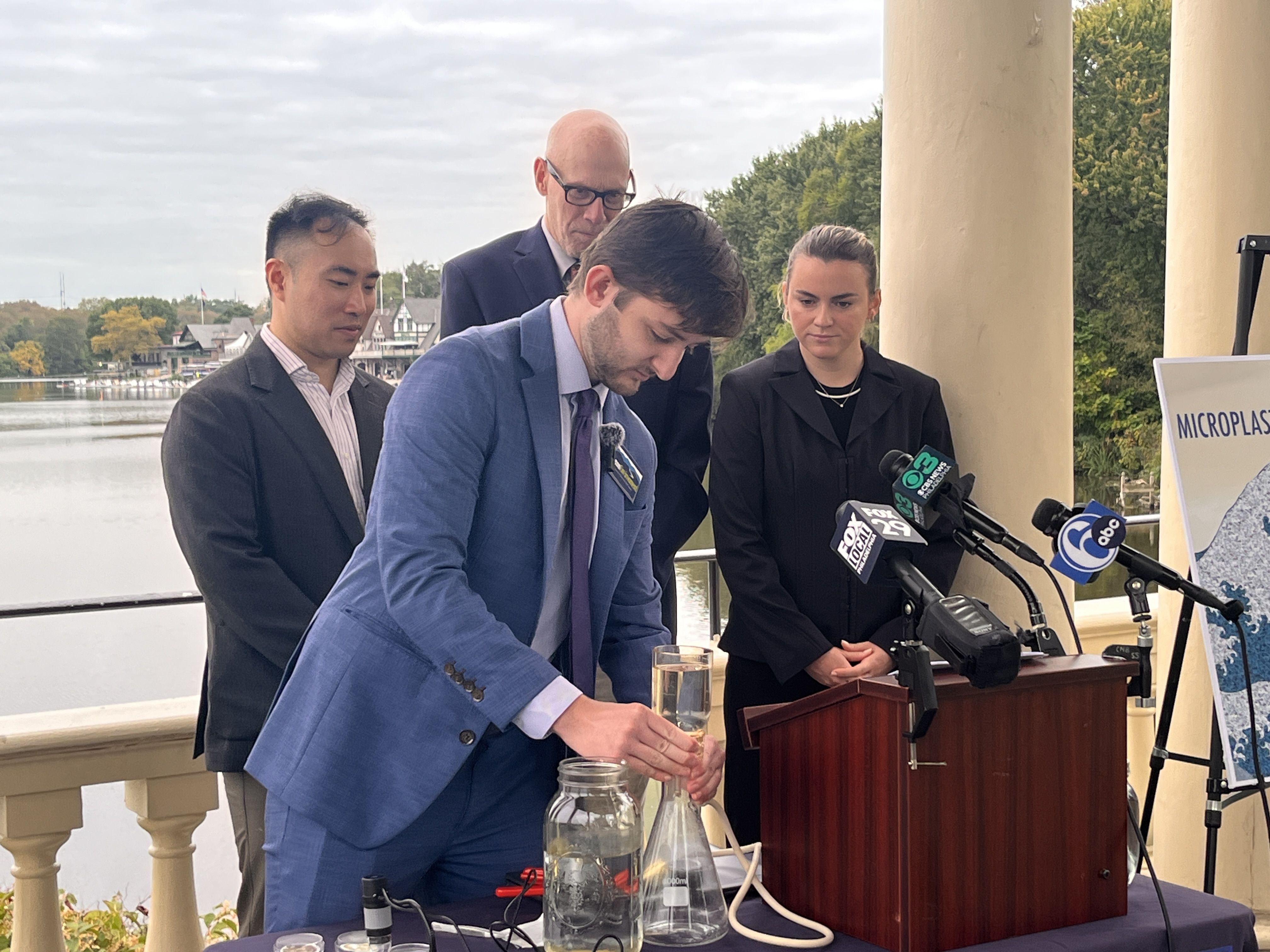
    Faran Savitz with PennEnvironment demonstrates water testing. In the background from right are: Lizzy Mulvenna, with Environment New Jersey Research & Policy Center; David Velinsky, senior scientist, Academy of Natural Sciences; and Derek Ho, microplastics researcher, University of Pennsylvania.Frank Kummer

    Where do microfibers come from?

    Waterways in and around Philadelphia emerged as significant focal points in the survey results.

    Samples drawn from the Delaware River in Philadelphia tested positive for multiple categories of microplastics including microfibers, microfragments, and microfilm, as did other waterways. Microbeads, often found in cosmetic products, were also found in the Christina River.

    Microplastics are defined as fragments of less than 5 mm in length.

    The synthetic microfibers came primarily from clothing and textiles. Rigid microfragments from items such as fishing line were found in 82% of locations. And flexible microfilm from bags and packaging appeared in 77%.

    (function(){function e(){window.addEventListener(`message`,function(e){if(e.data[`datawrapper-height`]!==void 0){var t=document.querySelectorAll(`iframe`);for(var n in e.data[`datawrapper-height`])for(var r=0,i;i=t[r];r++)if(i.contentWindow===e.source){var a=e.data[`datawrapper-height`][n]+`px`;i.style.height=a}}})}e()})();

    Microplastics have been found in humans

    Researchers explained that laundering synthetic garments releases millions of microfibers that wastewater treatment facilities are unable to completely filter out before they are discharged into local streams.

    However, because plastic does not biodegrade but continuously fractures into tiny fragments, filters capture only a portion of plastic entering a waterway.

    Savitz said PennEnvironment’s study did not release the concentrations of microplastics because it did not want to compare one waterway or state against another.

    The findings carry ecological and public health implications, as microplastics can block digestive tracts in wildlife and absorb toxic chemicals like PCBs and PFAS that bioaccumulate up the food chain, the report stated.

    On average, humans ingest approximately 5 grams of plastic weekly, which is roughly equivalent to the weight of a credit card. Microplastics have been found in human blood, lung tissue, and organs, the researchers said.

    Plastics are also routinely found in wildlife, including sea turtles, birds, and whales. About 60% of all seabirds have ingested plastic, with that number rising.

    The environmental advocates are urging state and local leaders to enact policies such as producer responsibility for plastic packaging, bans on single-use foam and plastic bags, strict limits on pre-production plastic pellets, and enhanced drinking water filtration systems.

    Microbeads once used in personal care products were phased out under President Barack Obama in 2015. But many of those products still linger on household shelves.

    File: A glass vial containing water and microplastic pollutionGetty Images

    Philadelphia’s drinking water

    Philadelphians get their drinking water from the Delaware River and the Schuylkill. Most microplastics are filtered out at the Philadelphia Water Department’s wastewater treatment plants, but some particles still get through.

    In 2025, PWD removed 4.6 tons of plastic litter from the Delaware and the Schuylkill, alongside an estimated 1,000 tons of plastic extracted through sewer maintenance, the researchers stated.

    PWD said in an online report that it is “unclear whether microplastics pose a danger to human health,” noting that the risk could depend on the level of exposure, the type of plastic, and the size of the particles.

    But it noted that research suggests some are harmful to fish and animals and can build up in the organs or bloodstream over time.

    “PWD is always investigating advanced treatment technologies that may eliminate microplastics and other impurities,” the report stated.

    David Velinsky, a senior scientist at the Academy of Natural Sciences of Drexel University, said, “plastics and microplastics are everywhere, from our clothing to the ubiquitous water bottle.”

    When plastics and microplastics are not properly disposed of or recycled, he said, they break down into ever smaller pieces.

    They “can travel great distances through both the air and in the water,” Velinsky noted.

    A plea for ‘producer responsibility’

    To combat pervasive plastics, advocates are urging federal and state lawmakers to enact targeted reforms, including the federal Plastic Pellet Free Waters Act currently before Congress, and state-level producer responsibility legislation for plastic packaging.

    Savitz emphasized that shifting financial and operational burdens back onto manufacturers is critical to curbing waste at its source.

    At least seven states have passed producer responsibility laws, though not all are in effect, according to the Product Stewardship Institute. Those states include Washington, Oregon, California, Colorado, Minnesota, Maryland, and Maine.

    “If we can shift the burden back onto companies that create this waste in the first place,” Savitz said, “we can actually reduce the waste, encourage recycling, and make these broader, more systemic changes.”

  • Life after ICE custody | Inquirer Chester County

    Life after ICE custody | Inquirer Chester County

    Hi, Chester County!

    A couple of newlyweds are working to help others after one was detained, and later unexpectedly released, by Immigration and Customs Enforcement. Here’s their story. Also this week, a Berwyn native’s TV show has been named one of the best of the century so far, East Whiteland has passed a data center ordinance, plus we take a peek inside a Kennett Square home with an Italianate-style tower.

    — Lisa Dukart (chestercounty@inquirer.com)

    If someone forwarded you this email, sign up for free here.

    Charting a path forward after being detained, and then released, by ICE

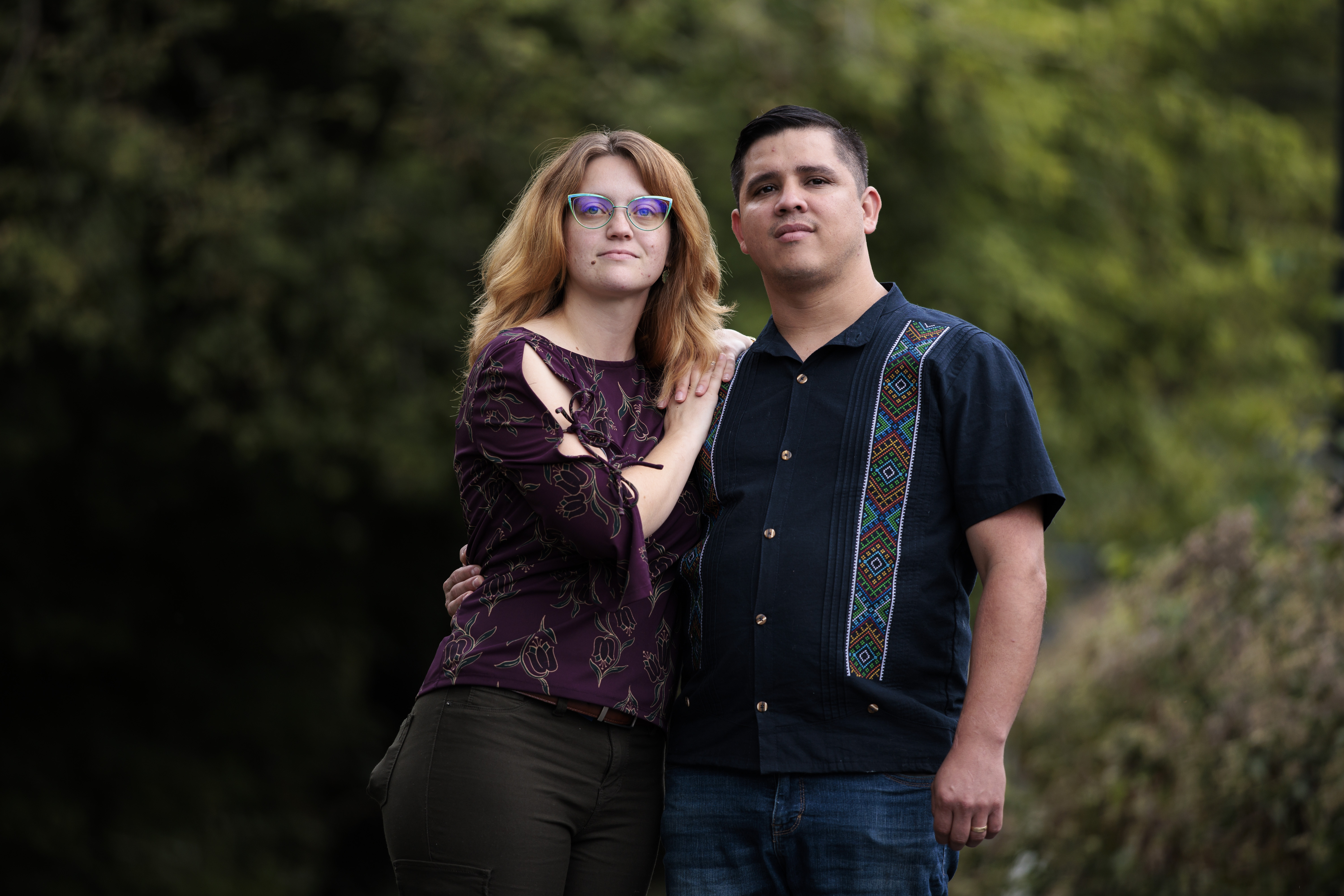
    After being detained by Immigration and Customs Enforcement just one week after his wedding this summer, Chester County resident Nelson Contreras-Gelves was unexpectedly released earlier this month.

    The 35-year-old has lived in the U.S. since 2022, when he came from his native Venezuela seeking asylum. He and his wife, Ariel Whaley, feel “incredibly lucky” that he was released from federal custody and will now have a chance to plead his case in court.

    But life hasn’t returned to normal for the couple, who met three years ago through nonprofit Mighty Writers, which has an outpost in Toughkenamon.

    Though Contreras-Gelves is now under constant surveillance, he and Whaley are using what they learned to help others navigating the system.

    The Inquirer’s Brooke Schultz chronicles their story and the hurdles that lay ahead.

    📍 Countywide news

    💡 Community news

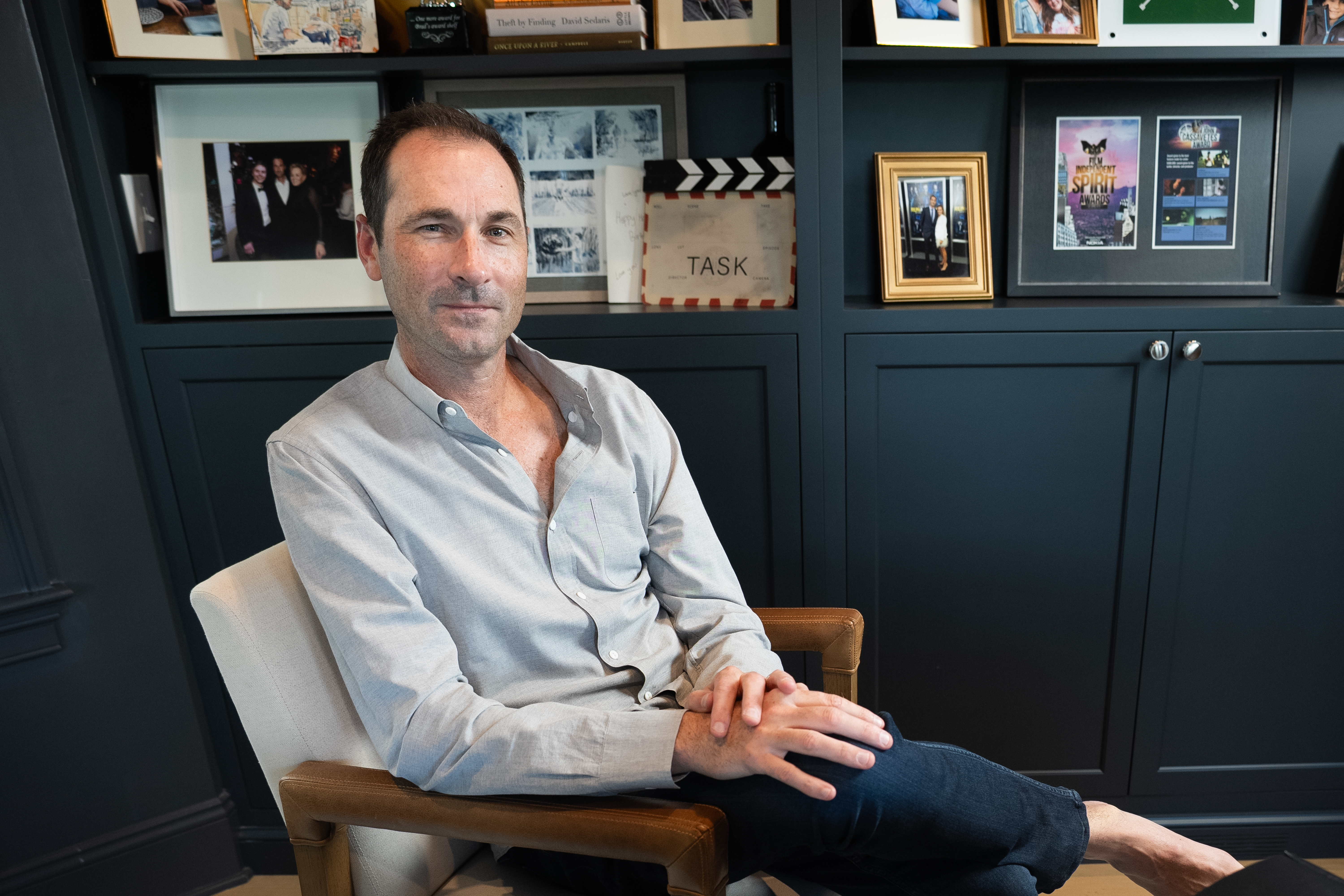
    Brad Ingelsby is the creator of “Mare of Easttown.” Jessica Griffin / Staff Photographer

    🏫 Schools briefing

    🍽️ On our plate

    • Bryn Mawr’s The Bakery House opened its second location over the weekend at 35 W. Lancaster Ave. in Paoli. It sells a selection of treats such as custom cakes, pastries, and pies, plus the viral dot cakes.
    • West Chester Cooperative, which opened this summer, is hosting a grand opening on Friday.

    🎳 Things to do

    🏚️ Pennhurst Asylum: The haunted attraction is open for the season. ⏰ Fridays, Saturdays, and Sundays through Nov. 7, times vary 💵 Prices vary 📍 Pennhurst Asylum, Spring City

    🏡 Chester County Day: The 85th annual event focuses on the northwest section of the county, where visitors can tour homes and barns. ⏰ Saturday, Oct. 3, 10 a.m.-5 p.m. 💵 Prices vary; tickets must be purchased at satellite locations 📍 Chester County

    🪕 Malvern Porchfest: Catch live musical performances from porches throughout the borough. ⏰ Saturday, Oct. 3, noon-6 p.m. 💵 Free 📍 Throughout Malvern

    🎃 Fall Festival at Yeager’s Farm: The two-day event includes a corn maze, pumpkin picking, yard games, and hayrides. ⏰ Saturday, Oct. 3 and Sunday, Oct. 4, 11 a.m.-3 p.m. 💵 Pay as you go 📍 Yeager’s Farm, Phoenixville

    🍻 Oktoberfest: Sip specially priced beers and ciders, nosh on fall-themed appetizers, try your hand at a stein-holding contest, and hear live music at participating restaurants. ⏰ Saturday, Oct. 3, times vary 💵 Pay as you go 📍 Downtown West Chester

    🍂 Festivals: A number of communities are hosting festivals this weekend. The Unionville Community Fair runs Friday through Sunday; New Garden’s and Tredyffrin’s community days, Spring City’s Music and Market, and the rescheduled Warwick Fall Fest are all Saturday; and Downingtown’s, East Pikeland’s, East Brandywine’s, and Westtown’s are slated for Sunday.

    🏡 On the market

    A Kennett Square home with literary roots and a soaring tower

    Built in the mid-1800s for travel writer and diplomat Bayard Taylor, Cedarcroft has undergone a number of updates while staying true to its architectural roots. The Kennett Square home, which is listed on the National Register of Historic Places, has seven bedrooms, living and dining rooms, a billiards room, and, most notably, a five-story tower in the Italianate style.

    Read more about the property here.

    Price: $3.1M | Size: 7,132 SF | Acreage: 2.4

    🗞️ What other Chester County residents are reading this week:

    By submitting your written, visual, and/or audio contributions, you agree to The Inquirer’s Terms of Use, including the grant of rights in Section 10.

    This suburban content is produced with support from the Leslie Miller and Richard Worley Foundation and The Lenfest Institute for Journalism. Editorial content is created independently of the project donors. Gifts to support The Inquirer’s high-impact journalism can be made at inquirer.com/donate. A list of Lenfest Institute donors can be found at lenfestinstitute.org/supporters.

  • Chester County estate with a five-story tower and literary roots is hitting the market for $3.1M

    Chester County estate with a five-story tower and literary roots is hitting the market for $3.1M

    The former Chester County home of a renowned 19th-century author and diplomat is hitting the market this week with an asking price of $3.1 million.

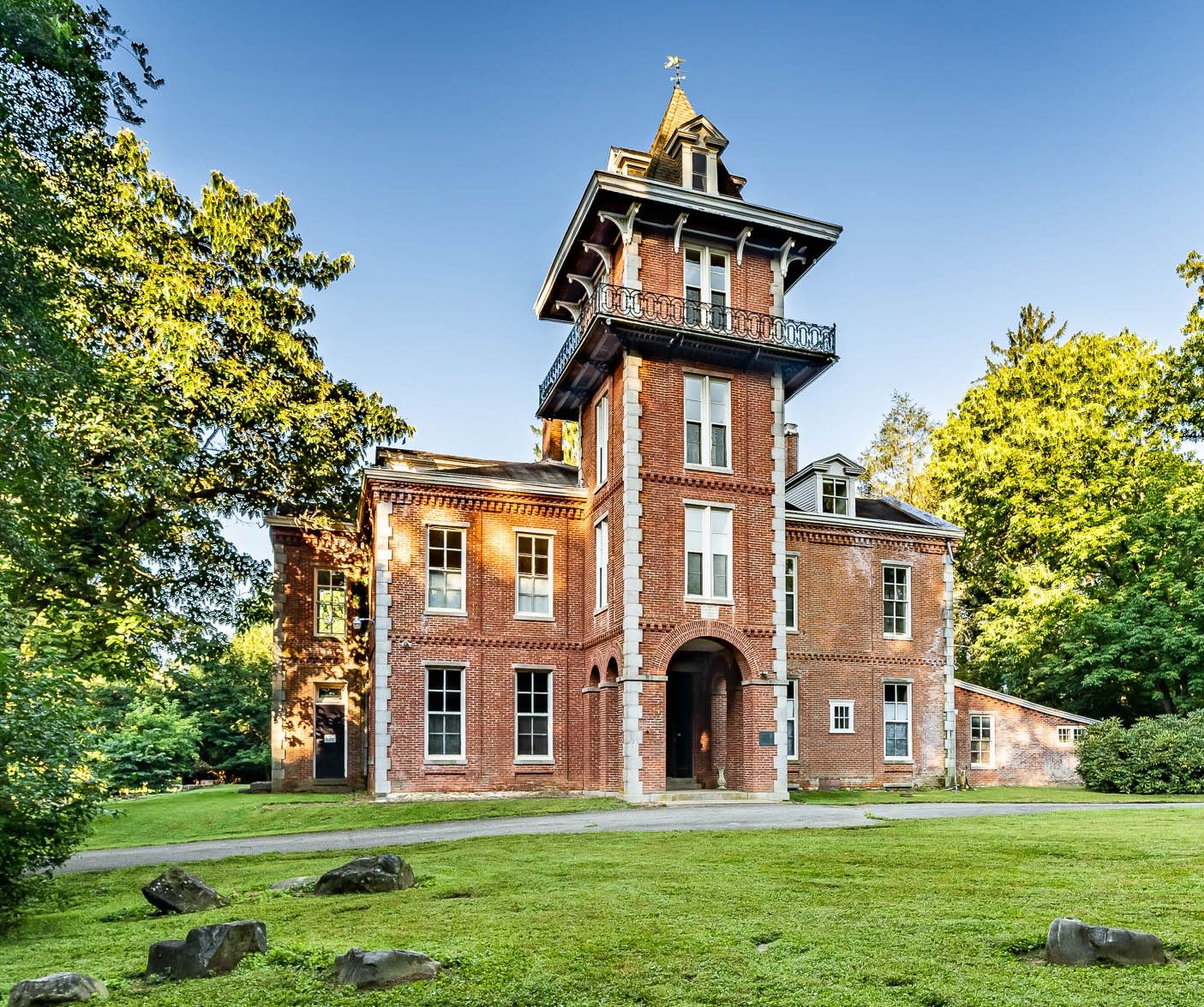
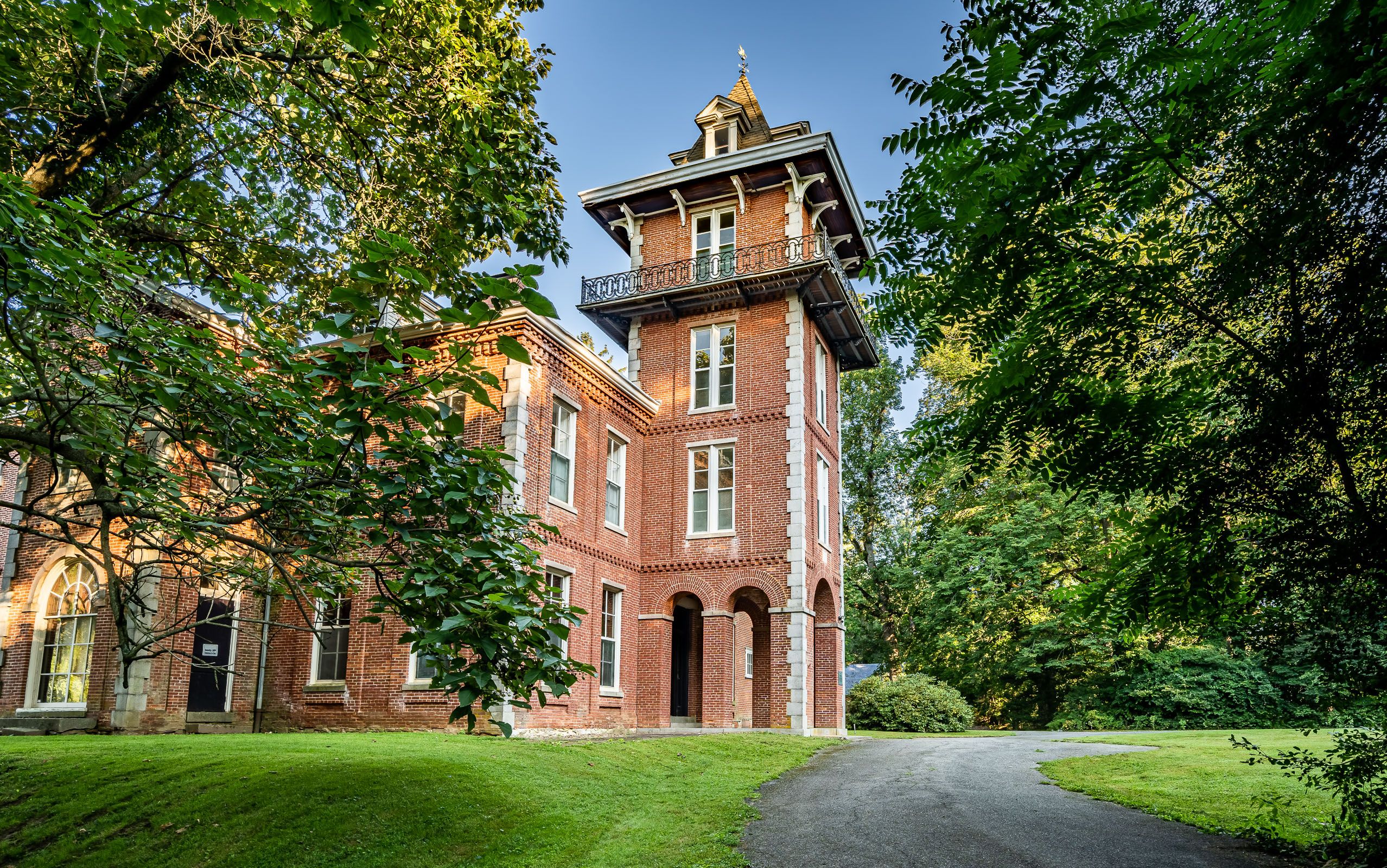
    Known as Cedarcroft, the sprawling Kennett Square brick home spans over 7,100 square feet, sits on 2.4 acres, and has a distinctive five-story, Italianate-style tower overlooking the grounds and surrounding community.

    The tower extends over the home’s covered entryway and is accessible by stairs from the second floor. It has a room with windows on each of the third- and fourth-floor landings. It also has a balcony off the fourth floor and a fifth floor accessible by ladder.

    The home has a five-story, Italianate-style tower.Virtual Vista | Courtesy of Holly Gross Group

    The rooms on the third and fourth floors could serve a number of uses, including as a library, said listing agent Stewart Gross, who is brokering it with Stephen Gross and Holly Gross, all of the Holly Gross Group.

    “It’s breathtaking,” he said of the vantage, where both sunrise and sunset can be seen.

    It’s believed that the home’s original owner, Bayard Taylor, used the tower spaces to write, enjoy cocktails, and survey the surrounding land, Gross added.

    A Kennett Square native, Taylor built the 108 Gatehouse Dr. home between 1859 and 1860. He gained acclaim as a poet and travel writer, publishing a number of works inspired by his global escapades. He also served as the chargé d’affaires of the Russian legation in St. Petersburg.

    One of the living spaces on the first floor.Virtual Vista | Courtesy of Holly Gross Group

    During his tenure at Cedarcroft, Taylor reportedly hosted a number of literary figures, including Ralph Waldo Emerson and Horace Greeley, according to a Kennett Library biography.

    Some of the home’s first-floor features include 13-foot ceilings and “grand” spaces including a living room, a dining room, and a library, as well as a billiards room, Gross said.

    The home has seven bedrooms — six on the second floor, with a seventh on the third level — including a primary suite with a fireplace and a walk-in closet.

    The home has a new kitchen.Virtual Vista | Courtesy of Holly Gross Group

    The home was added to the National Register of Historic Places in 1971. It retains many elements of its early roots, such as hardwood flooring, milling, and molding details, while having undergone a number of updates by its current owners. Those include overhauling household systems and bathrooms, updating the roof, and adding a new kitchen, which has stainless steel appliances and Italian quartzite countertops.

    This suburban content is produced with support from the Leslie Miller and Richard Worley Foundation and The Lenfest Institute for Journalism. Editorial content is created independently of the project donors. Gifts to support The Inquirer’s high-impact journalism can be made at inquirer.com/donate. A list of Lenfest Institute donors can be found at lenfestinstitute.org/supporters.

  • Chester County roadwork to watch out for this week

    Chester County roadwork to watch out for this week

    Roadwork will cause detours, delays, and closures in more than a dozen municipalities throughout the county this week, including disruptions on Routes 23, 30 and 252.

    Here are the traffic changes you need to know, starting Sept. 29:

    • Caln Township: Fisherville Road will be closed between North Bailey and Caln Meetinghouse Roads from 7 a.m. to 3 p.m. from Sept. 30 to Oct. 6.
    • City of Coatesville and Caln, Sadsbury, Valley, and West Caln Townships: There will be a moving weeknight lane closure on westbound Route 30 between Airport Road and Kings Highway from 7 p.m. to 5 a.m. through Oct. 2 for line painting.
    • East Bradford Township: Peco work closing Copeland School Road between Dunmoore Lane and Frank Road is expected to continue on weekdays from 9 a.m. to 3 p.m. through Oct. 30. Ravine Road is closed for road bank stabilization, a project that’s expected to continue through the winter.
    • East Brandywine Township: The township’s paving program is slated to continue through late September or early October. Paving work will impact Crawford and North Buck Roads and Summerhill Drive. There will also be chip seal treatment on Marshall and Highspire Roads.
    • East Caln Township: There will be a lane closure on Bell Tavern Boulevard, with intermittent work expected through Oct. 7, as the township undertakes stormwater infrastructure work.
    • East Pikeland and Schuylkill Townships and Phoenixville Borough: Work on Route 23 is expected to continue through Oct. 30, resulting in weekday lane closures on Bridge Street at the Nutt Road intersection. Work takes place from 9 a.m. to 3 p.m.
    • Honey Brook Township: Starting Oct. 1, the Cupola Road bridge over the east branch of Brandywine Creek will be closed for repairs for about five weeks.
    • Honey Brook and West Nantmeal Townships: Chestnut Tree Road will have a lane closure between Cupola and Creek Roads and Manor Road from 8 a.m. to 4 p.m. through Oct. 2 for resurfacing work.
    • Kennett Township: East Hillendale Road will be closed between Bayard and McFarlan Roads for utility pole work from 8 a.m. to 3 p.m. through Oct. 2.
    • Pocopson Township: Paving work is slated to get underway in October, impacting parts of Parkerville Road and Four Streams Drive. Exact timelines for the work haven’t been announced.
    • Spring City Borough: There will be about three days of intermittent lane closures from Sept. 28 on North Main Street between East Bridge and New Streets for Peco’s gas main replacement project. Work will take place between 9 a.m. and 3 p.m.
    • Tredyffrin Township: There will be overnight weekday closures on Route 252 between Lancaster Avenue and Swedesford and Howellville Roads from 7 p.m. to 5 a.m. through Nov. 21 for utility construction. Also expect some delays between 9 a.m. and 3 p.m. near Timber Lane and Tory Hill Road through early October for Peco work.
    • Upper Uwchlan, Uwchlan, and West Whiteland Townships: Line painting on Pottstown Pike between Byers Road and Bartlett Avenue will result in moving lane closures through Sept. 30. Work will take place overnight from 10 p.m. to 6 a.m.
    • West Brandywine Township: Expect alternating lane closures on Caln Meetinghouse, Germany Hollow, North Hawthorn, and South Hawthorn Roads; Brandywine and Laurel Drives; and Castle and Reason Lanes for base repairs through Oct. 5.
    • West Caln Township: Paving-related work will take place on Ruthland Avenue and North Bonsall, Reservoir, and Zaleski Roads through Sept. 28, resulting in road closures.
    • West Chester Borough: There will be intermittent road closures on the 400 to 600 blocks of West Rosedale Avenue on weekdays from 7 a.m. to 3:30 p.m. through Oct. 2 for Peco’s gas main replacement project. The 600 block of North Walnut Street will also be closed from 9 a.m. to 3 p.m. on Oct. 1 for tree work.
    • West Whiteland Township: Work at the intersection of Ship Road and Lincoln Highway, including for new traffic signal poles, is expected to continue into mid- to late-October, resulting in possible delays.
    • Willistown Township: Paoli Pike will be closed between Frazer Avenue and Cedar Hollow Road from 9 a.m. to 3 p.m. through Oct. 2 every day but Sundays for Peco work.

    This suburban content is produced with support from the Leslie Miller and Richard Worley Foundation and The Lenfest Institute for Journalism. Editorial content is created independently of the project donors. Gifts to support The Inquirer’s high-impact journalism can be made at inquirer.com/donate. A list of Lenfest Institute donors can be found at lenfestinstitute.org/supporters.

  • The Pennsbury School District hid a student’s gender identity from parents, a Christian legal group alleges

    The Pennsbury School District hid a student’s gender identity from parents, a Christian legal group alleges

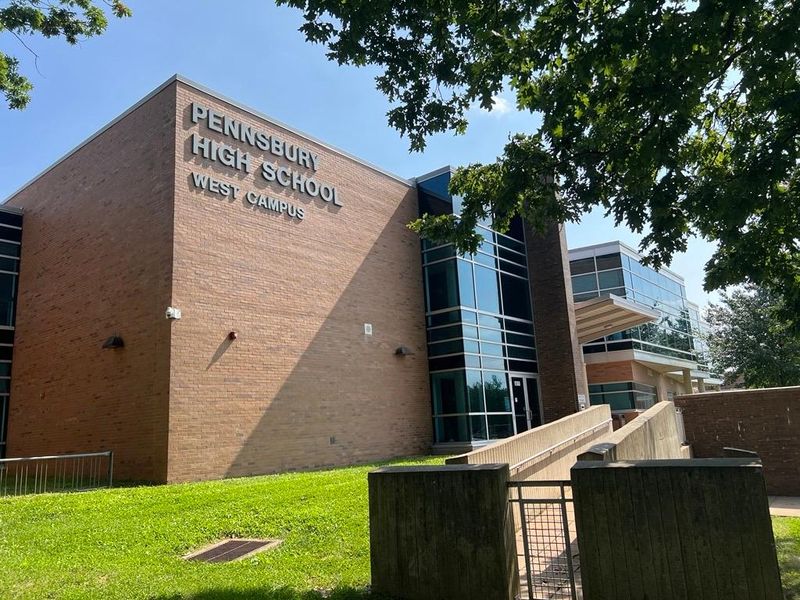
    A conservative Christian legal group is asking the U.S. Department of Education to investigate the Pennsbury School District, after a mother and father said the district violated their rights by hiding their child’s use of a different name and pronouns for nearly three school years.

    After parents confronted the Bucks County district last year, it agreed to use the student’s given name at graduation, but did not change its policy to require that parents be notified of a student’s name change, according to the complaint filed last week by the Orlando-based Liberty Counsel.

    “Parents have the right to know when their child is struggling with an issue, and are the first line of defense for their child,” said Richard Mast, a staff attorney with Liberty Counsel, which has brought cases favoring religious liberty and opposing LGBTQ+ rights.

    A Pennsbury spokesperson declined to comment Monday. The K-12 district enrolls about 9,400 students from Yardley Borough, Lower Makefield Township, Falls Township, and Tullytown Borough.

    The complaint comes as President Donald Trump’s administration has escalated pressure on school districts over policies protecting transgender students. The U.S. Department of Justice earlier this month sued the Kansas City, Kan., school district, alleging it violated parents’ rights by facilitating “gender transitions” for students without informing their parents.

    The Education Department also this month opened an investigation into a Massachusetts school district for using a male name and pronouns for a student without parents’ knowledge.

    Conservative legal groups are also taking aim at schools: The Chester County Intermediate Unit this month rescinded a policy that barred staff from disclosing a student’s transgender status to parents without the student’s permission after receiving a letter from the Alliance Defending Freedom and the Harrisburg-based Independence Law Center, the groups said Monday. A spokesperson for the intermediate unit said it recommended the policy’s repeal “as part of its ongoing review of board policies and in recognition of the evolving legal landscape regarding transgender students.”

    “There is absolutely a targeted attempt by the administration, and those aligned, to try to erase trans students from our schools and elsewhere from our culture,” said Kristina Moon, a senior attorney with the Education Law Center, a Philadelphia-based group that advocates for LGBTQ+ students. The Education Department earlier this year opened an investigation into the Great Valley School District in Chester County for a policy allowing transgender girls to participate in girls’ sports teams.

    Students “need to feel safe and be able to be themselves in school,” Moon said, adding that she worries schools are getting a “very harmful message … that if you care about trans students having a sense of belonging, then you too will be targeted by the Trump administration.”

    Name changes and ‘a right to privacy’

    The complaint filed Sept. 21 by Liberty Counsel against Pennsbury alleges that the mother and father did not learn until the end of their child’s junior year that Pennsbury High School staff had been calling the student by a male name and pronouns since ninth grade. The complaint does not identify the student, who has since graduated, or the parents.

    The district used a “false male name” and pronouns for the student in both personal interactions and electronic information systems, according to the complaint.

    In one handwritten note included in the complaint, a coach wrote to the student in October 2025: “My son! My boy! It’s finally senior night! … Your high school years may not have always been like you dreamt it would be, but it’s okay! … I could not be more grateful and honored to be your coach/mom.”

    While the student’s mother had heard other students referring to her child by the name during sophomore year, the student brushed it off, saying, “‘It’s just a silly name,’” Mast said in an interview Monday. The mother “didn’t pry further,” Mast said.

    But when the student brought home a memory book during junior year, the mother saw a male name was used for her child, Mast said. She then went back and reviewed other memory books and saw they also used the name.

    Had the parents known sooner, “they would have helped the child get the counseling she needed to be comfortable with her natal sex,” said Mast, who said the parents’ relationship with their child has suffered. “No girl should be made to feel like she is born in the wrong body.”

    On Nov. 17, the parents demanded that Pennsbury use their child’s given name and female pronouns, according to the complaint. After a Dec. 1 meeting, the district said it would do so going forward, the complaint said.

    But it did not fulfill all of the parents’ requests, leading Liberty Counsel to issue a demand letter on March 6, according to the complaint.

    The district agreed to use the student’s given name at graduation and on the student’s diploma, but said it could not control what appeared in the memory books, because those were issued by a booster club, the complaint said.

    And it has not updated its policy related to transgender students, according to the complaint. The parents had asked the district to require principals to communicate with parents before a student could be called by a different name.

    The district’s policy says it will accept a student’s asserted gender identity, and “all persons, including students, have a right to privacy. This includes the right to keep private one’s transgender status or gender expansive presentation at school.”

    The policy also includes a section about “parental consent” that says that if a parent or student requests a name change without proof the name has been changed legally, “the parent/guardian and student will be provided” with a form. That did not happen in this case, according to the Liberty Counsel complaint.

    Pennsbury is ‘not unique’

    Pennsbury’s policy is “not unique” among Philadelphia-area districts, said Jeffrey Sultanik, a solicitor for numerous districts in the region.

    Lower Merion’s policy, for instance, says “school personnel should not disclose information about a (transgender or gender diverse) student’s gender identity and expression to others, including the student’s parents/guardians and/or other school personnel, unless legally required to do so or unless the student has authorized such disclosure.”

    The Pennsbury complaint “may dictate what other school districts end up doing,” depending on how the Education Department responds, Sultanik said.

    The complaint alleges violations of the Family Educational Rights and Privacy Act, a federal law protecting the privacy of student educational records.

    The law “prohibits a federally funded school district from maintaining a policy that denies or effectively prevents a parent from inspecting and reviewing a minor child’s education records,” according to the complaint, which also alleges violations of the Protection of Pupil Rights Amendment — a federal law governing surveys administered to students on sensitive topics — and Title IX.

    Moon, of the Education Law Center, said “there is currently no law that schools have to notify parents about students sharing to their counselor, or a trusted teacher, that they identity as transgender.”

    In cases Moon is familiar with, she said, school counselors ask students if they have told their parents about their gender identity.

    “I really don’t think in the vast majority of cases, this is anything like teachers trying to avoid, or counseling students to avoid, conversations with their families,” Moon said.

  • Pennsylvania tops 900 measles cases, as its largest outbreak in 30 years spreads

    Pennsylvania tops 900 measles cases, as its largest outbreak in 30 years spreads

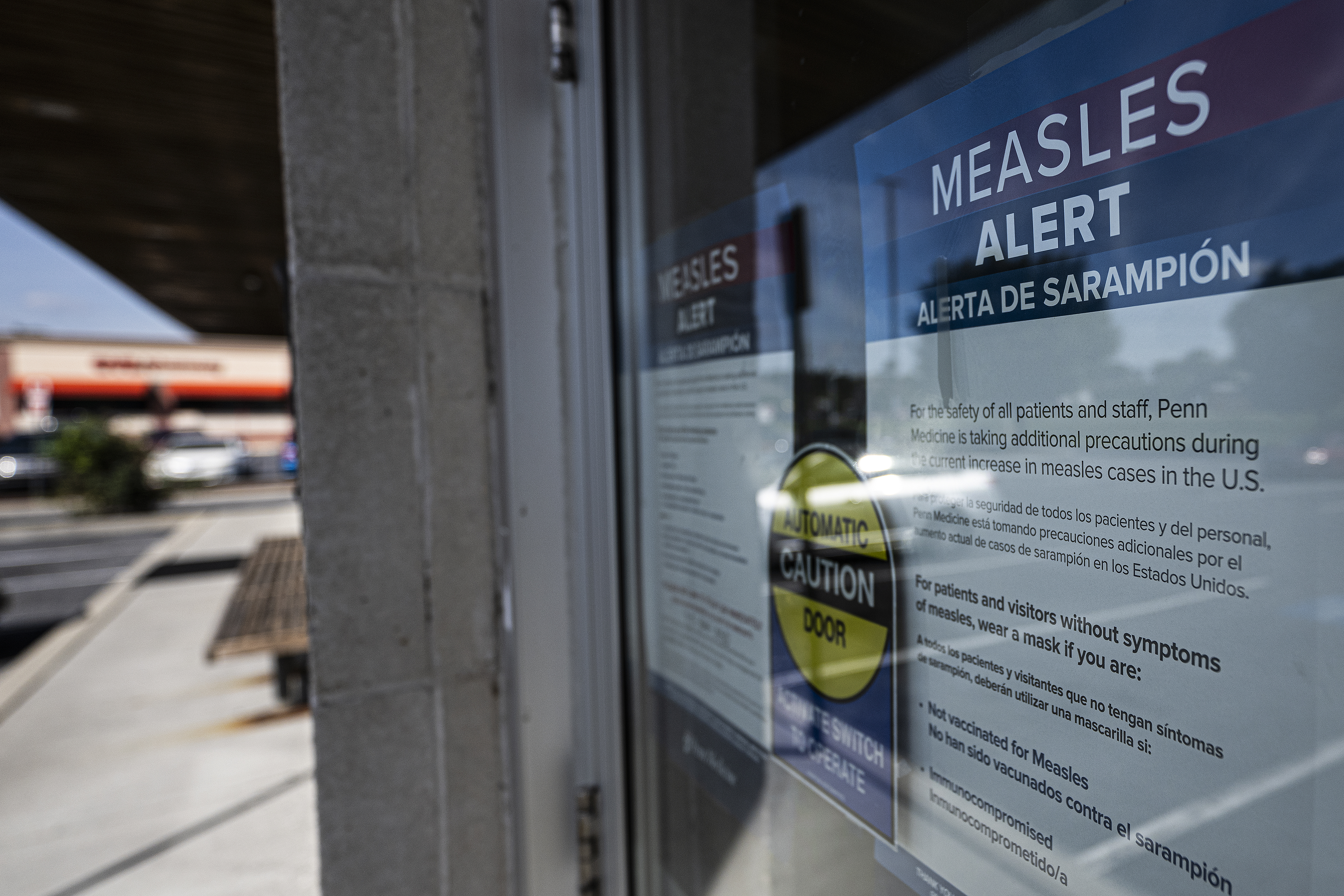
    Measles cases in Pennsylvania topped 900 this week, as the state’s largest outbreak in three decades continues to spread from rural Lancaster County communities into Philadelphia’s suburbs.

    The Pennsylvania Department of Health reported 114 new cases in the last week, reaching a total of 903 cases this year as of Monday. That includes 83 cases in Chester County, the only county in the Philadelphia region where the virus is actively spreading in an outbreak that is also the nation’s largest currently.

    Chester County’s outbreak has emerged as the third largest in the state, having more than tripled in size since early August.

    Physicians and local health officials say the current case count is likely an undercount, with many cases going unreported.

    Cases in Chester County have largely been concentrated along its western border with Lancaster County. But health experts expect the virus to continue to spread statewide. More than half of Pennsylvania’s counties already are affected, as vaccination rates have declined in many communities.

    Overall, Chester County has a 94.5% measles vaccination rate among kindergarten students, just below the 95% of people scientists say need to be vaccinated to prevent the virus from spreading within a community.

    The so-called herd immunity threshold for measles is high because the virus is so contagious: Nine out of 10 unvaccinated people who come into contact with measles will get sick.

    In response to the outbreak, the county’s health department has ramped up communications and outreach, sent nurses into schools and close-knit communities, and held pop-up clinics. The overarching goal of all these efforts: Get more people vaccinated.

    Two doses of the measles vaccine offer 97% protection against the virus.

    “We are working all the time with organizations, businesses, community leaders — whoever we can get the attention of in the communities impacted,” Jeanne Franklin, the county’s health director, said in an interview last week.

    The county has administered 538 measles, mumps, and rubella (MMR) vaccines this year, most of them since the outbreak began in April, she said.

    (function(){function e(){window.addEventListener(`message`,function(e){if(e.data[`datawrapper-height`]!==void 0){var t=document.querySelectorAll(`iframe`);for(var n in e.data[`datawrapper-height`])for(var r=0,i;i=t[r];r++)if(i.contentWindow===e.source){var a=e.data[`datawrapper-height`][n]+`px`;i.style.height=a}}})}e()})();

    Measles spreading in Pennsylvania

    Across Pennsylvania, at least one measles case has been reported in 39 of 67 counties.

    Almost all have been among unvaccinated individuals. The state reported four rare “breakthrough” cases of measles in vaccinated people earlier this month.

    The virus’ most common symptoms include a fever, cough, runny nose, watery eyes, and a telltale splotchy red rash.

    Most people recover, but rare complications can be deadly.

    (function(){function e(){window.addEventListener(`message`,function(e){if(e.data[`datawrapper-height`]!==void 0){var t=document.querySelectorAll(`iframe`);for(var n in e.data[`datawrapper-height`])for(var r=0,i;i=t[r];r++)if(i.contentWindow===e.source){var a=e.data[`datawrapper-height`][n]+`px`;i.style.height=a}}})}e()})();

    Pennsylvania has reported four measles-associated deaths, all affecting people who were unvaccinated and confirmed to have measles infections.

    The deceased include two infants from Amish families in Lancaster County, an 18-year-old in Mifflin County who died from a serious neurological complication of measles, and a 40-year-old woman in Jefferson County with severe respiratory conditions.

    As of Monday, Lancaster County had the largest outbreak, with 363 cases. There have been 106 cases in Mifflin County.