A new head of the county’s economic engine recently took over and he’s focused on balancing development with conservation. We get to know him and his goals. Also this week,a deal to preserve part of Willistown Township’s Rock Hill Farm looks tenuous, the first day of fall is on the horizon and we’ve rounded up the best local spots to view peak foliage, plus People’s Light has scored over a dozen Barrymore Award nominations.
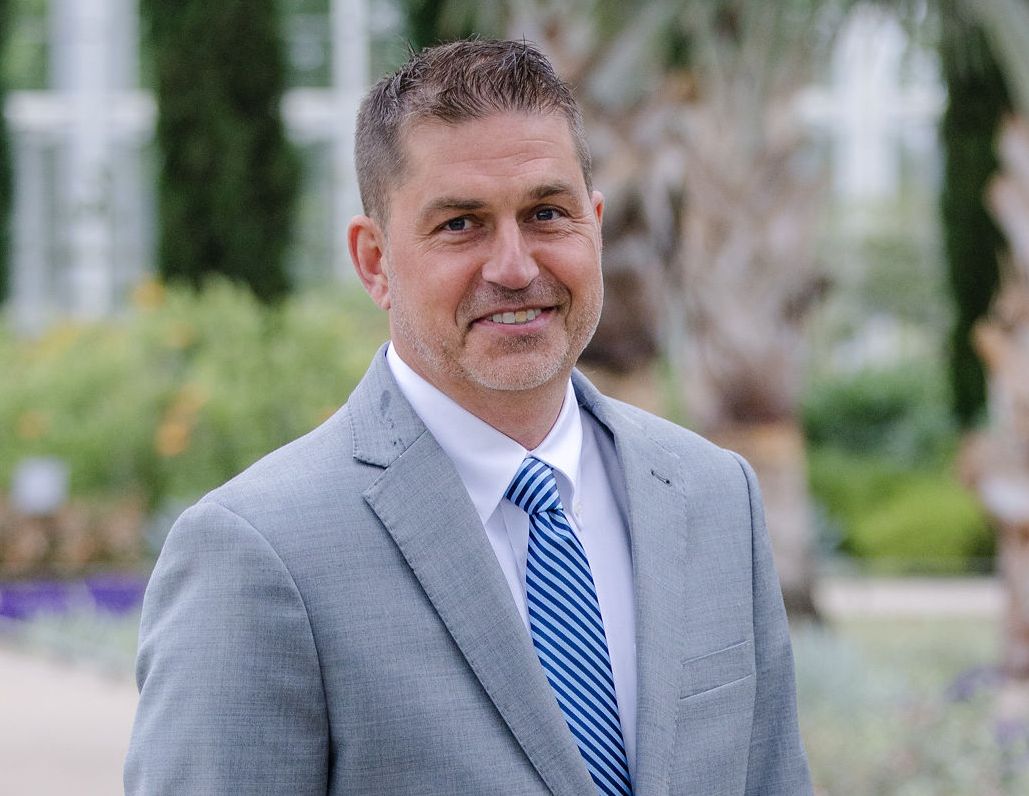
Earlier this summer, Mike Grigalonis took over as CEO of the Chester County Economic Development Council. It’s an organization the Upper Uwchlan Township resident is well acquainted with — he interned there 27 years ago and went on to serve as its chief operating officer and executive vice president before being named to the top role.
As he looks to the county’s future, he wants to balance growth with land conservation, while keeping an eye on changes in office development and farming, as well data centers and Superfund sites.
Chester County History Center has named Kim Collison its next president. She has over 20 years of museum and nonprofit experience, including at nearby Winterthur Museum, Garden and Library.
More roadwork projects are getting underway this week, including a two-week closure on part of Paoli Pike. Here’s what to know.
💡 Community News
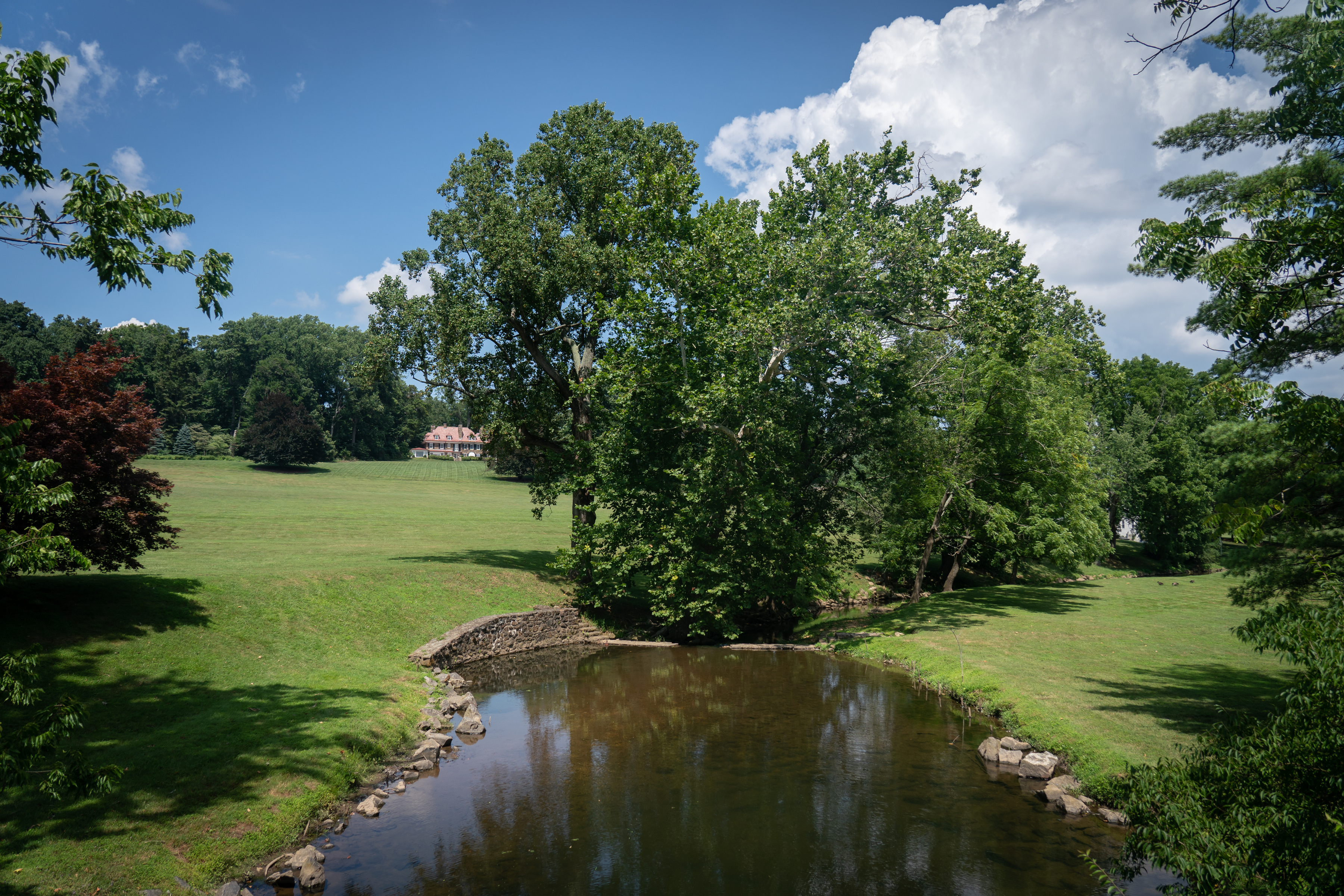
The future of a deal to preserve a swath of Rock Hill Farm while allowing homes on a portion of it looks much less certain after a Monday meeting during which Willistown officials tabled a vote and the developer’s attorney threatened that the “deal is off.” The Inquirer’s Brooke Schultz has the latest.
People’s Light in Malvern received 19 Barrymore Award nominations for its 2025-26 season, including for outstanding overall production of a musical and outstanding ensemble in a play. Here’s a look at its full slate of nominations.
One member of the cast of hit HBO show Task, which was created by Berwyn native Brad Ingelsby, took home an Emmy Award Monday night. Tom Pelphrey, who played Robbie Prendergrast, won in the supporting actor in a drama series category. Task is returning for a second season, though a release date hasn’t been announced yet.
The Inquirer recently released its “25 Under 25” list of the best local athletes under 25, including several from Chester County: West Chester’s Reese D’Ariano; brothers Colton Hiller and Maxwell Hiller from Coatesville; and Jordyn Palmer, a Westtown School athlete. See why they made the list.
East Vincent Township will continue discussions tonight at 6:30 p.m. for AQ Dev’s conditional use application to develop the Ruth Farm property into 53 single-family homes.
Willistown Township has acquired the 12-acre Nike Site, formerly a command and radar control area during the Cold War, with plans to make it open space.
A new IV therapy spot, IV Nutrition, is now open at 1506 Paoli Pike in West Chester.
🏫 Schools Briefing
Some districts are closed Monday, which is Yom Kippur.
A number of schools are pulling back on screen time amid backlash from parents. Tredyffrin/Easttown School District stopped assigning iPads to kindergartners, and elementary students won’t take home tablets. In the Phoenixville Area School District, a one-to-one device program for kindergarten through third graders has ended. The Inquirer’s Maddie Hanna explains the changes and why they came about.
Coatesville Area School District is breaking ground on its North Brandywine Middle School project this afternoon. The 144,000-square-foot addition and 21,000-square-foot renovation is expected to be completed for the 2029-30 school year.
The tracks at Downingtown High Schools East and West will remain closed a while longer as they undergo renovations. East’s track is expected to be closed through the end of this month and West’s track through the end of October.
Registration is now open for Octorara Area High School’s Room-2-Bloom early learning program for 3- to 5-year olds. The two-day program starts Sept. 29.
🍽️ On our Plate
Nottingham-based Herr’s has released a new product — and it was a big hit with Inquirer food reporter Kiki Aranita. The four cheese mac ‘n cheese curls have “achieved what no other puffed cheese curl has,” she said. Here’s why.
🎳 Things to Do
🎞️ Phoenixville Film Festival: Catch some independent films during this four-day festival. ⏰ Thursday, Sept. 17-Sunday, Sept. 20, times vary 💵 Prices vary 📍 Colonial Theatre, Phoenixville
🏇 Plantation Field International: See horses and riders compete in this annual event. ⏰ Thursday, Sept. 17-Sunday, Sept. 20, times vary 💵 $25 per car 📍 Plantation Field, Coatesville
🌃 Craft & Mercantile: Browse local artisan goods, listen to music, and grab a bite to eat at this evening market. ⏰ Friday, Sept. 18, 5-8:30 p.m. 💵 Pay as you go 📍 Burke Park, Malvern
🍻 Moo and Brew and Grapes Too: Sip local brews from Victory Brewing, Saucony Creek Brewing, and Suburban Brewing, plus grab a bite to eat and listen to live music — all benefiting Brandywine Valley Active Aging. ⏰ Saturday, Sept. 19, 5-9 p.m. 💵 $70 📍 Historic Buck Run Farm, Coatesville
🍽️ West Chester Restaurant and Food Truck Festival: Now in its 45th year, the festival features entertainment, artisans, a beer garden, and plenty of food from area eateries. ⏰ Sunday, Sept. 20, noon-5:30 p.m. 💵 Pay as you go 📍 Downtown West Chester
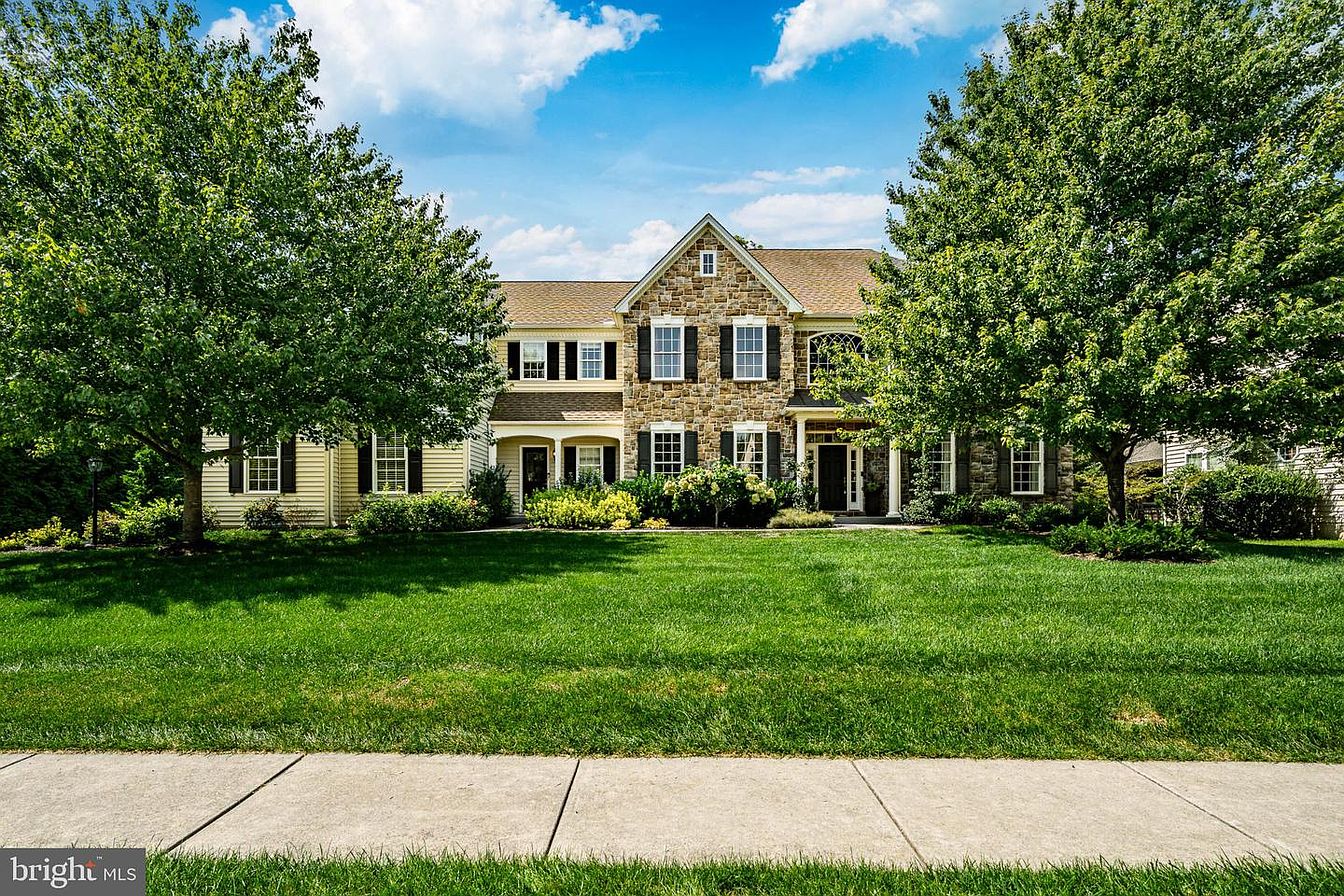
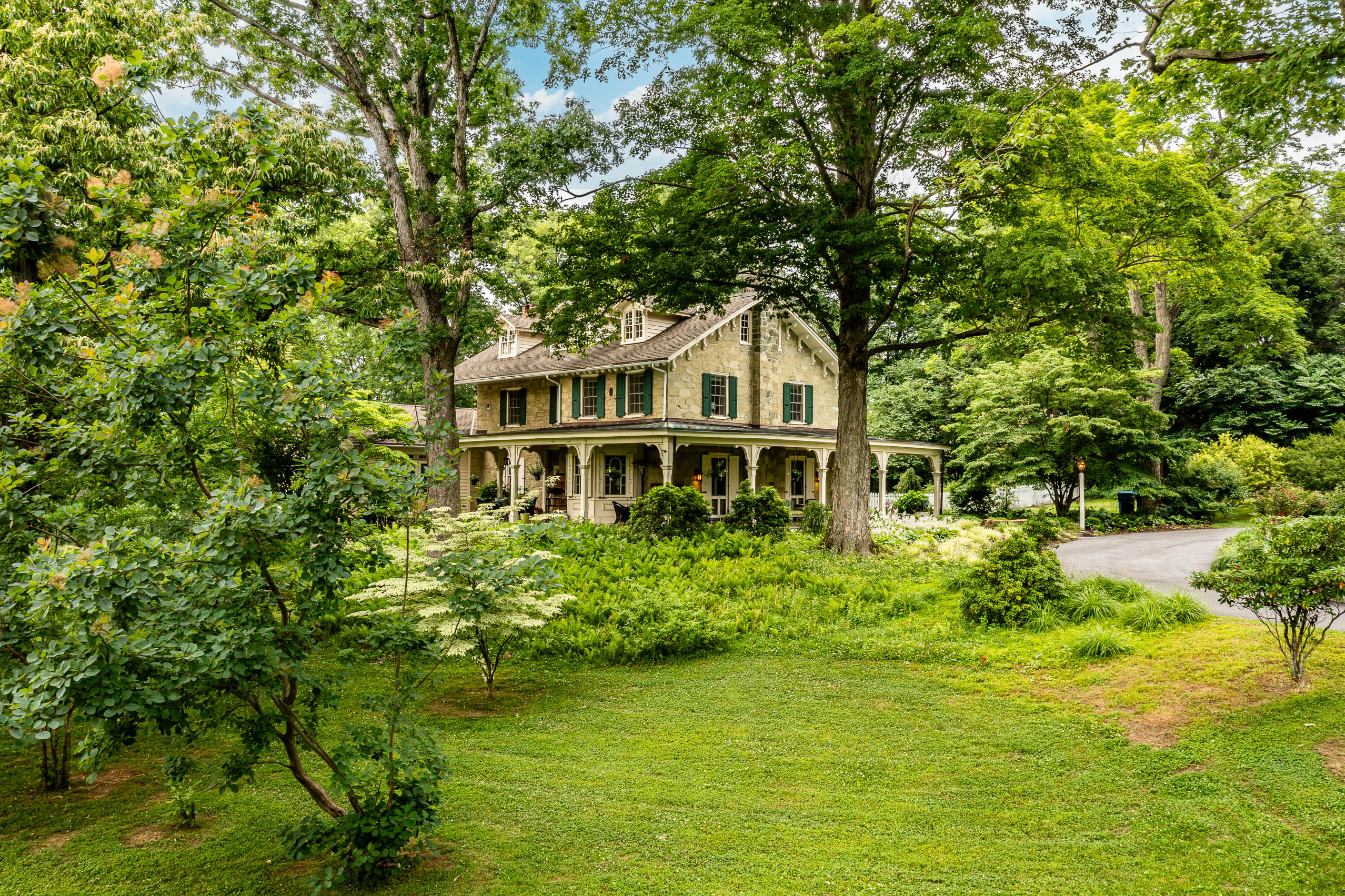
The home has a stone front and sits on about half an acre.Brian Castro/Virtual Vista | Courtesy of The Stein Team
Located in the Bradford Pointe Estates neighborhood, this six-bedroom Downingtown home has ample space to spread out. The first floor has living and dining rooms, an office, an eat-in kitchen, and a family room, while the lower level features a gym, a family room with a wet bar, and a theater room complete with seats and a projection screen. There’s a bedroom and bathroom downstairs, while five other bedrooms, including the primary suite with a soaking tub, are on the second floor. There are open houses Saturday from 11 a.m. to 1 p.m. and Sunday from 1 to 3 p.m.
By submitting your written, visual, and/or audio contributions, you agree to The Inquirer’s Terms of Use, including the grant of rights in Section 10.
This suburban content is produced with support from the Leslie Miller and Richard Worley Foundation and The Lenfest Institute for Journalism. Editorial content is created independently of the project donors. Gifts to support The Inquirer’s high-impact journalism can be made at inquirer.com/donate. A list of Lenfest Institute donors can be found at lenfestinstitute.org/supporters.
The “deal is off,” an attorney for a developer told Willistown elected officials Monday, as the board hesitated to accept a settlement that would preserve a great portion of Rock Hill Farm but still allow for housing to be built.
The township’s three elected officials voted unanimously to table their decision, saying there was a lack of assurances in the settlement that guaranteed it would limit the amount of development and preserve a majority of the 222 acres of rolling hills, meadowlands, and woodlands at the historic farm.
“This settlement agreement has been negotiated for almost over a year,” he told the board Monday. “At the last minute, we were asked for additional concessions; we immediately replied … with a letter addressing those concessions and accepting changes that [the township’s solicitor] proposed. My client needs to make sure that the township understands that the deal is off if the settlement agreement is not approved tonight.”
“I think we understand, and I can’t speak for my fellow supervisors, but I don’t have anywhere near enough information to make a decision,” board chairperson Molly Perrin responded.
Campbell did not immediately respond to a message on whether the settlement had been withdrawn.
The officials’ concern is whether the proposed settlement, which the township presented to the public last month, would bind certain mortgage holders to its terms.
“Without some degree of surety there, we don’t feel that we can move forward,” said board member Bill Shoemaker. “We understand that, from the perspective of the applicant, this essentially, if they take it that way and choose not to continue, will void the agreements. So we’re back to square one.”
A Chester County judge in July sided with the developer, overturning the township’s September 2024 denial of plans to build more than a dozen homes on the property. The township promptly appealed the ruling.
Under the proposed settlement, the developer would radically scale down the plan that was before the court, preserving roughly 166 acres of the larger tract, or 75% of the land, under a conservation easement. The land would be subdivided into 18 lots, down from roughly 24, with all but one lot proposed for residential development. The one non-residential lot would be conserved as open space. The lots vary from about four acres to up to 26 acres.
Separately, the developer has offered Willistown Conservation Trust the exclusive option to buy an adjacent 24-acre property, also purchased by the developer, if the settlement agreement is approved by the township and court. The township would plan to buy it from the trust using designated open space funds, and preserve the property as open land. The board voted to approve the purchase in February, officials said, though that is in jeopardy as part of the settlement.
A number of residents who spoke last month responded positively to the proposal, but others were apprehensive.
The community had rallied together to form a group, Save Rock Hill Farm, in an effort to stave off development of the land.
“We appreciate the Supervisors’ efforts to address these issues carefully,” the group posted on Facebook after the meeting. “The Supervisors have heard the community’s substantial opposition and concerns about what could be lost if the proposal moves forward as presented.”
But as the board prepared to take a vote, there was still uncertainty.
Max O’Keefe, the solicitor for the township, said he and the counsel for Rock Hill Farm LLC discussed additional language, which was sent to the board of supervisors late Monday.
“I certainly don’t anticipate that the board had any real meaningful opportunity to review or digest those proposed changes,” he said.
The board concurred.
“I never want to be the one who’s going to rush into a decision, especially a decision that’s so much value and importance to this community,” board member Matt McCarry said.
This suburban content is produced with support from the Leslie Miller and Richard Worley Foundation and The Lenfest Institute for Journalism. Editorial content is created independently of the project donors. Gifts to support The Inquirer’s high-impact journalism can be made at inquirer.com/donate. A list of Lenfest Institute donors can be found at lenfestinstitute.org/supporters.
This weekend is more than just about breaded mushrooms for Gale Ferranto, even if her family’s farm stand continuously boasts one of the longest lines at the Kennett Square Mushroom Festival.
The two-day annual celebration, featuring educational courses on mushrooms, as well as plates of them fried, grilled, and served in nearly every other method of preparation, is a time for her to reflect on the three generations that came before her, all the way from Italy, to claim a stake in Chester County and its signature crop.
“Most family-run farms don’t last past two generations,” Ferranto, a lifelong Kennett Square resident and president of Buona Foods, said as hundreds of people milled down the borough’s main drag. ”Here, we have fourth-, fifth-, sixth-generation farms still going strong, and we’re proud of that.”
This year’s festival, Kennett Square’s 41st, is celebrating that intergenerational work, which grew a pastoral slice of the Philadelphia suburbs into an agricultural mecca: 64% of the country’s mushrooms are grown in Pennsylvania, and the majority of those farms are located here.
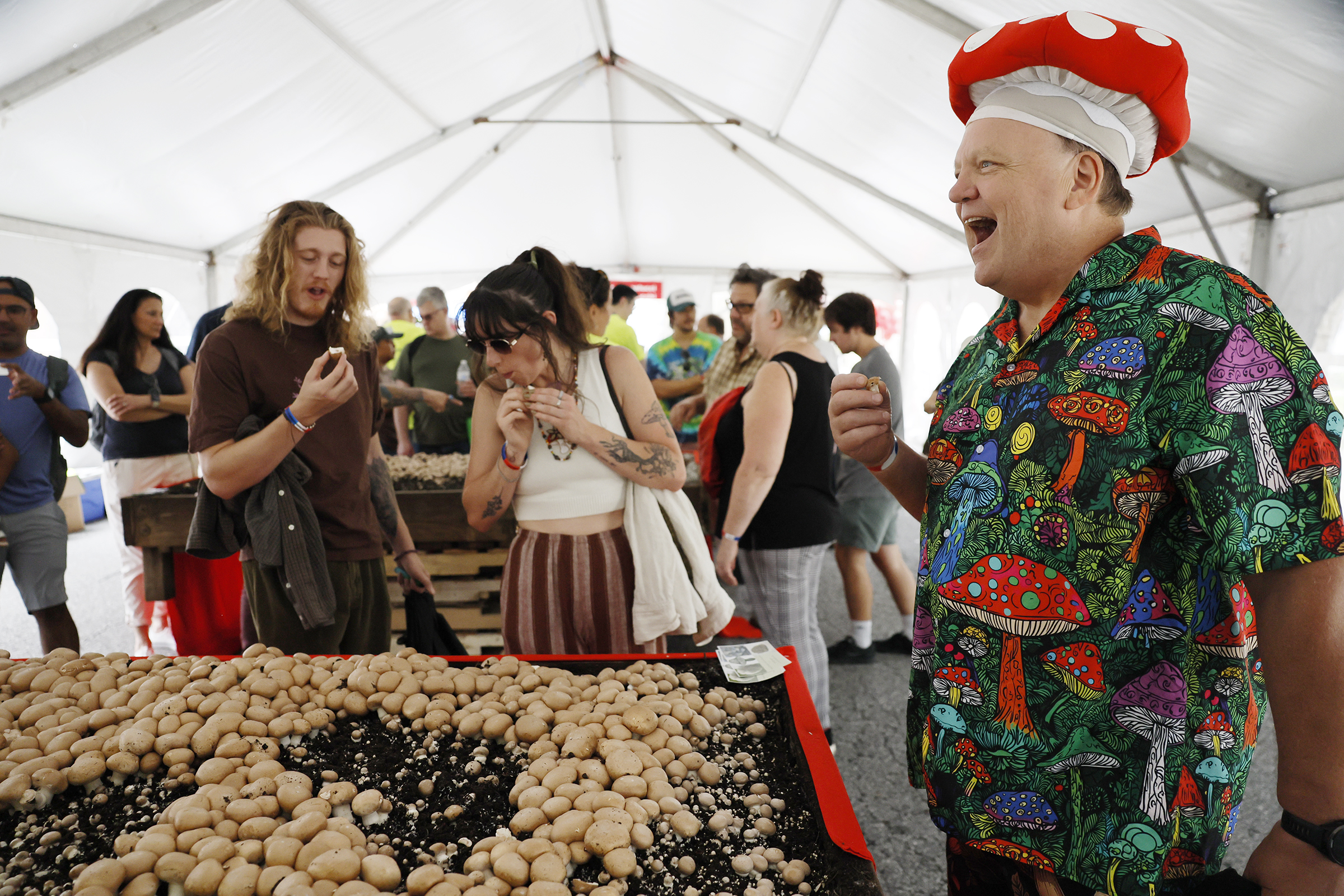
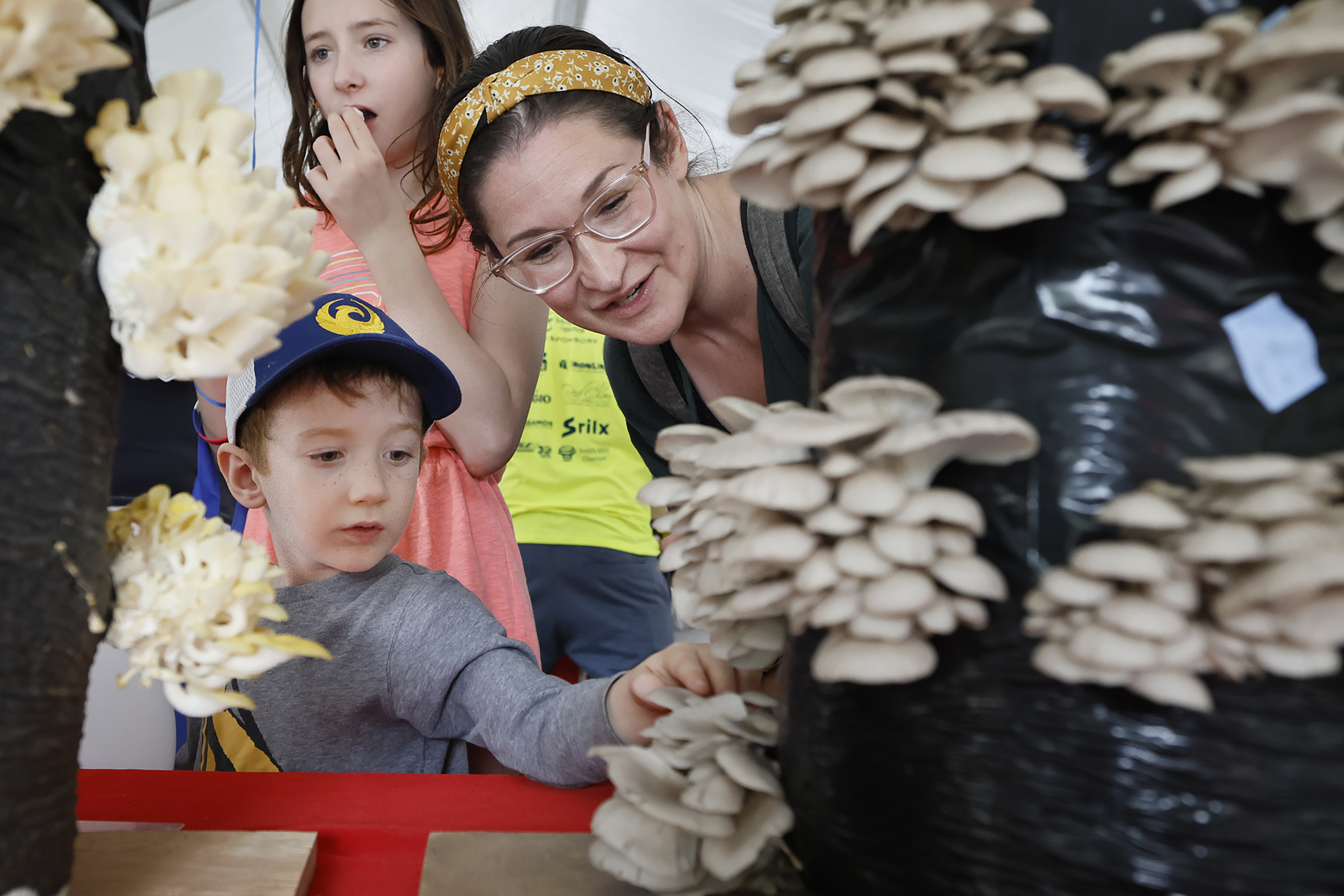
Colleen Farnsworth of Ardmore and her son Ambrose Farnsworth, 4, touch the mushrooms in the mushroom exhibition during Kennett Square’s 41st Mushroom Festival on Saturday. Elizabeth Robertson / Staff Photographer
Recycling sustains mushroom farming
By its very nature, Ferranto said, mushroom farming is forward-thinking. Farms, like her family’s, rely on agricultural byproducts that otherwise would be discarded.
“Recycling is a pillar of everything we do,” she said. “It’s an important message to pass on to younger generations doing this work, because what we’re doing now is shaping the environment of farmwork to come.”
In the nearby exhibit tent, Richie Forte explained that work to festivalgoers, some from as close as Delaware County, and others who traveled from as far as British Columbia to learn about mushrooms.
Forte, who’s been in the mushroom business for 30 years, following his father’s lead, walked visitors through the growing process, from spawn planted in soil to cardboard cartons placed on supermarket shelves.
He said he couldn’t be happier answering questions about a crop he’s been handling since he was a teenager. His father, he said, did the same volunteer work for many past festivals.
“In a world of private equity and big business, the fact that Kennett Square can still maintain this small, hometown feel is amazing,” he said.
“You get to a point in your life where you look around you, at the fabric of a community like this, and you realize it’s responsible for giving you everything you have.”
It’s a family affair
The farmers running the festival stands weren’t the only ones reveling in generational tradition. The event, and its signature, knit mushroom hats, have become an annual tradition for countless families in the region.
Rhiannon Betts has been driving up from Cecil County, Md., every summer for the festival for 21 years, and she and her family previously ran in the 5k race that accompanies it.
This year, Betts brought her boyfriend, Aidan Ward, with her to experience something that was integral to her childhood.
“This has always been an event that seems to put families first,” she said. “No matter what we have going on in the summer, we have to make it out here for this.”
For Corlan Blyskal and his wife, Emily, this year’s festival was the hopeful beginning of a new family tradition: The King of Prussia couple, decked out in homemade mushroom hats, brought their 10-month-old son, Knox, with them for their first visit to the event.
The self-described “mushroom-obsessed” couple gave their son his first bite of a raw mushroom, straight from the source.
In the weeks after the Sept. 11, 2001, terror attacks, I went to New York to report on a story about Johanna Sigmund, a young woman from Wyndmoor who perished after one of the hijacked planes rammed the north tower.
Over the course of my career, I’ve spent more time than anyone would want writing pieces about people whose lives were cut short prematurely. One of the most memorable was Johanna, whose story and positive spirit remain seared into my soul.
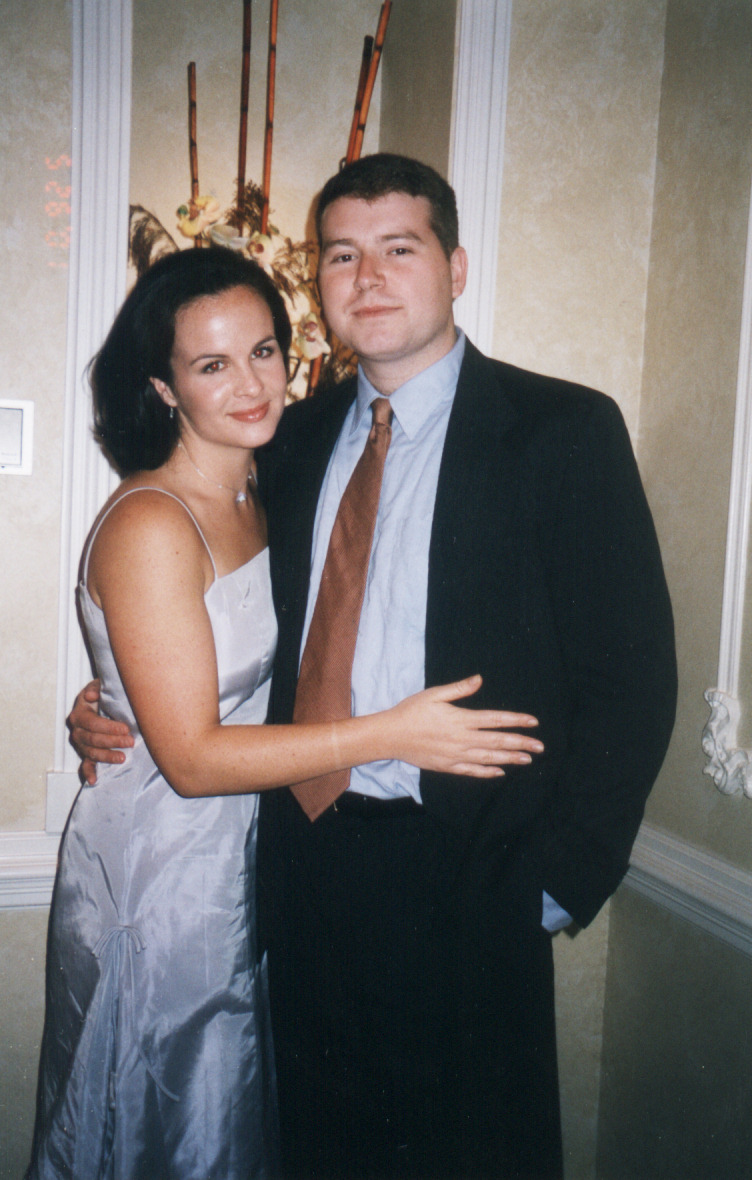
Johanna’s parents invited me, a stranger, into their home at their worst hour. They took the time to tell me about their only daughter, and shared photograph after photograph after photograph — Johanna smiling after she ran the New York City Marathon, Johanna posing with her girlfriends at a wedding, and so on.
One image stood out.
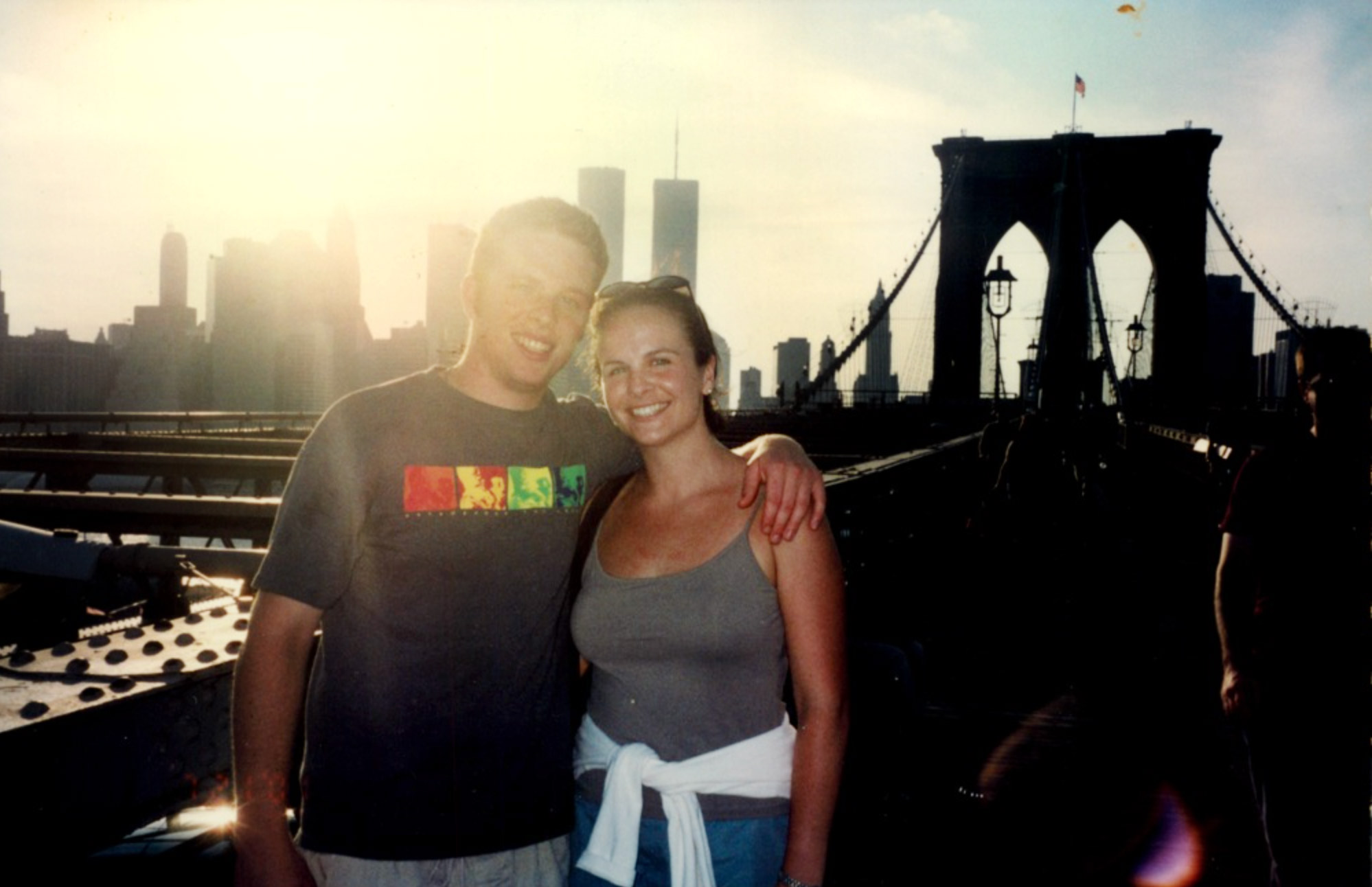
It was a photo of Johanna, 25, and her brother, John, 23, smiling while standing arm in arm at the foot of the Brooklyn Bridge. The photo was taken two months before the terror attacks. In the background loomed the twin towers.
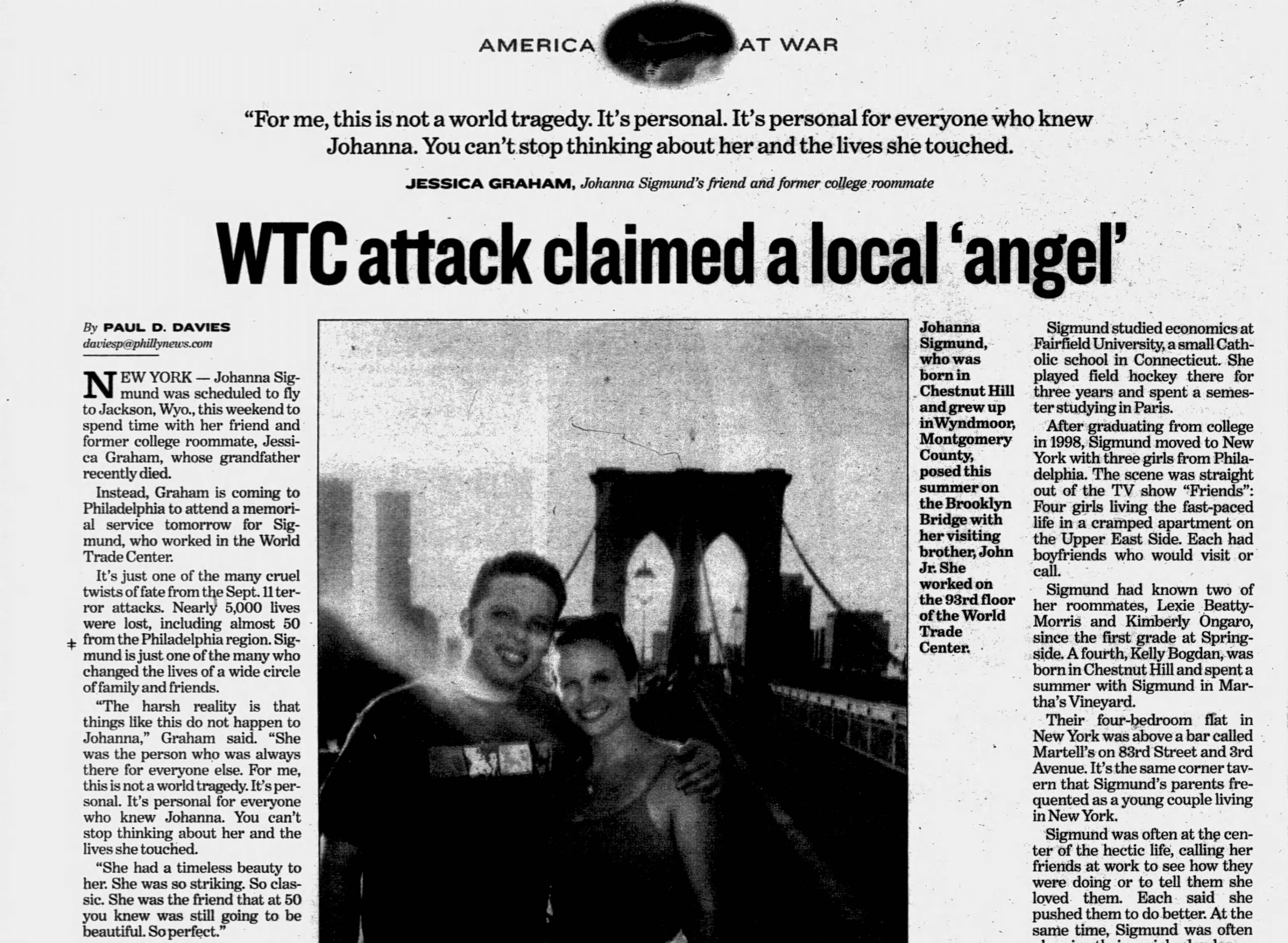
An article by Paul Davies about Johanna Sigmund in the Oct. 19, 2001, edition of the Daily News.Staff
Johanna’s story has stuck with me for a quarter century, but her life is emblematic of the promise and potential of so many others who were lost. At least 40 people with ties to Philadelphia and its western suburbs were killed in the attacks, including 18 from Bucks County, 11 from Montgomery County, five in Chester County, eight from Delaware County, and three from Philadelphia. It may be impossible for any of us to fathom how many other lives were forever impacted by the horrors of that day.
I wondered how Johanna’s family and friends had fared over the years.
So much has been lost in the 25 years since 9/11. Johanna would have turned 50 on the first day of summer — the longest day of sunlight. Her elegant beauty remains frozen in time, and — all these years later — her life remains a catalyst for good.
A scholarship fund set up in her name continues to help students attend St. Malachy School in North Philadelphia, as well as another at her alma mater, Springside Chestnut Hill Academy.
Johanna packed a lot into her brief time here. She was the captain of the field hockey, lacrosse, and squash teams in high school. She studied economics and played field hockey at Fairfield University, and spent a semester in Paris before moving to New York in 1998 with three friends from Philadelphia.
When I met with Johanna’s roommates a few weeks after the attack, they shared stories of her love of cooking, dancing, and listening to U2, often replaying the song “Stuck in a Moment You Can’t Get Out Of” that begins, “I’m not afraid of anything in this world.”
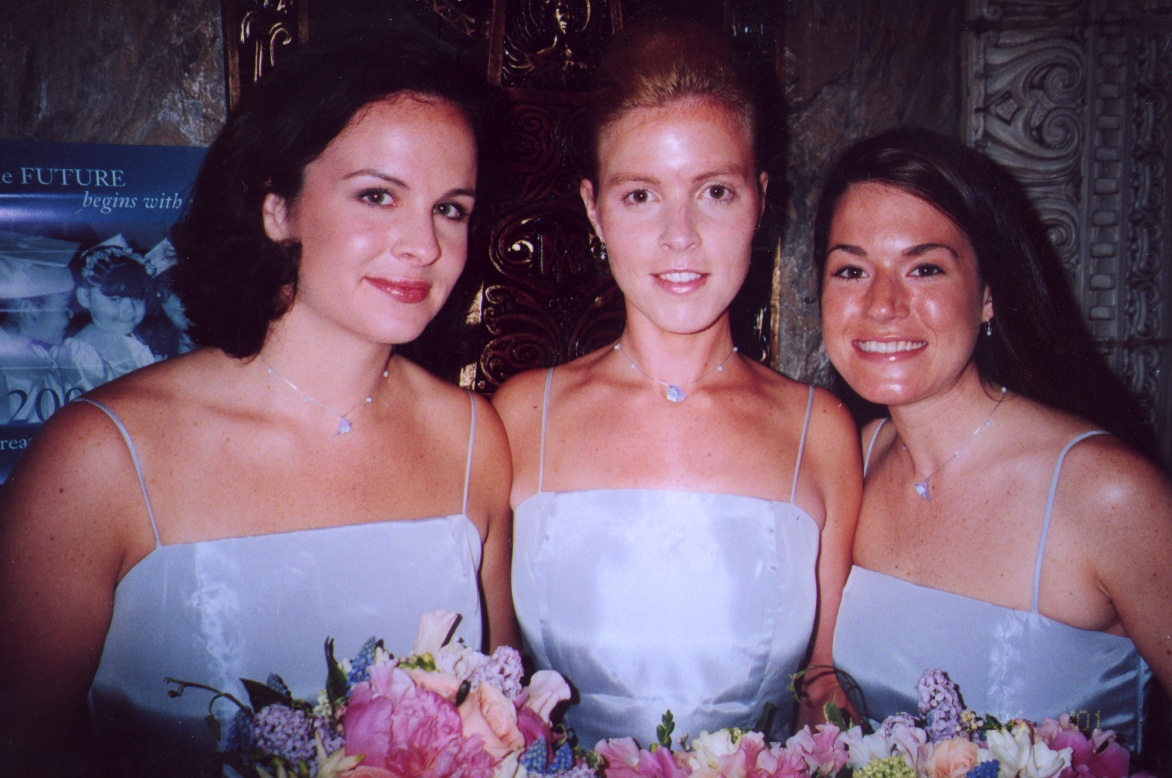
From left: Johanna Sigmund, Rory McDevitt, and Kim Ongaro were all bridesmaids at the wedding of their friend, Lexie Beatty, in May 2001. Sigmund was one of the victims in the 9/11 attacks.h
Johanna cared for others. She distributed pizza and McDonald’s to the homeless people in her neighborhood. She helped a woman who was thrown from a taxi get to a hospital. Johanna spent the night by her side and returned home in the morning with blood on her clothes.
Kimberly Ongaro, a roommate and friend from Springside, called her “an angel.”
The toughest interview in the weeks after the attack was with Johanna’s boyfriend, Joe Bonavita. They had dated for several years and had discussed marriage.
Their final weekend together was a whirlwind. They went to the Yankees game Friday night and drove to the U.S. Military Academy in West Point, N.Y., on Saturday, met up with friends, attended the Army football game, and walked through the cemetery for soldiers, which included Gen. George Armstrong Custer.
On Sunday, Johanna competed in a 5K race down Broadway before continuing on as part of her training for the Philadelphia Marathon. She and Joe shared dinner that night.
Johanna Sigmund and her boyfriend, Joe Bonavita, at the wedding of her friend Lexie Beatty Morris.
Johanna did not feel well on Monday, but went to work. When she was still under the weather on Tuesday — Sept. 11 — Joe urged her to stay home.
But she went into the office at an investment firm on the 93rd floor of the north tower.
Joe worked near the Trade Center. As he exited the subway, he saw the first plane smash into the north tower.
A life upended
I located her brother, John, and emailed him. He responded a few minutes later and graciously agreed to speak. When we connected after 25 years, it almost felt like old friends catching up.
John told me how 9/11 upended his life.
He had planned to move to New York after college, but lost interest after the attack. He visited ground zero to commemorate the first anniversary. President George W. Bush greeted families, including John’s aunt, who offered veiled advice regarding the plans to invade Iraq. “I hope you are making a prayerful decision,” she told the president.
Bush was taken aback, but continued shaking hands before circling back to tell John’s aunt that he prayed every day.
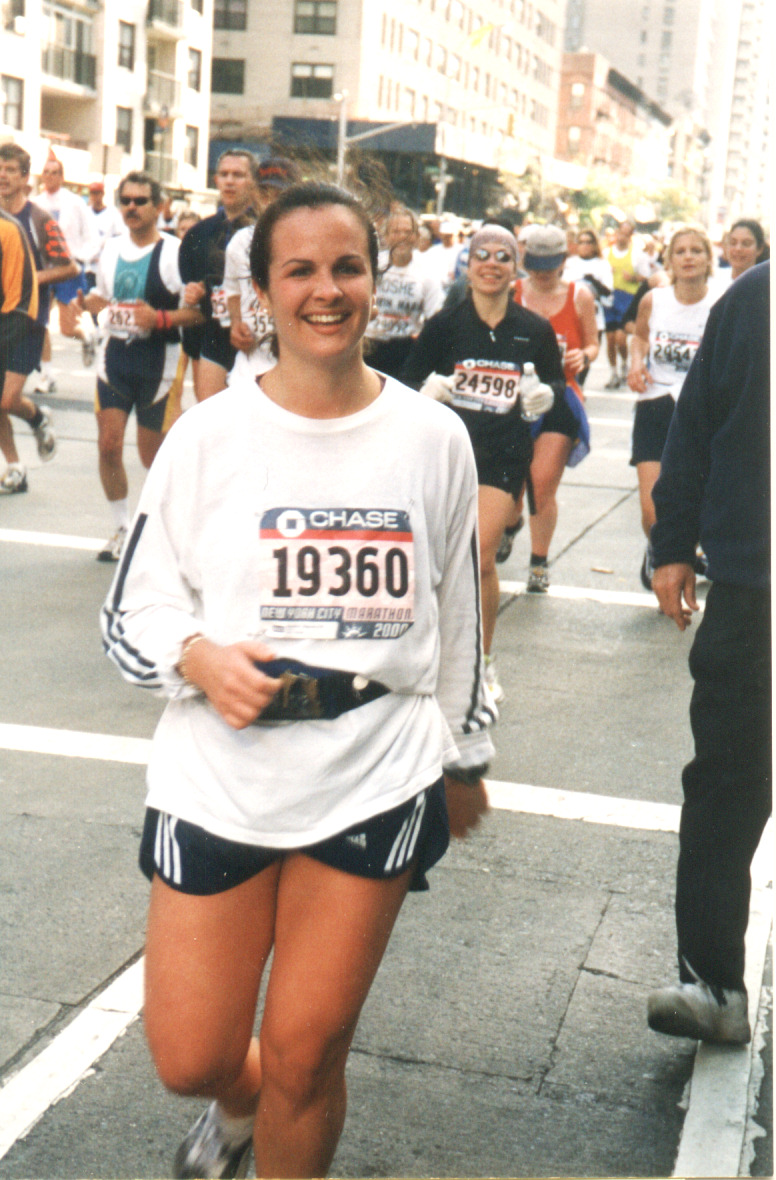
A photograph of Johanna Sigmund running in the New York City Marathon in November 2000.
After college, John, a Spanish speaker, spent a year with AmeriCorps teaching literacy to second graders in Kensington. After he explained to one class’s teacher why he wanted to take off for the anniversary of 9/11, she had her students write notes of support. John was struck by how many kids shared stories of loved ones they had lost to violence.
“Everyone has their 9/11,” he said.
Along the way, we all pay a price. Some more than others. But how one responds is a lesson for all as we navigate these trying times 25 years after 9/11.
John said he wonders how his life would have been different if not for Sept. 11. After a year teaching in Philadelphia, he moved to Texas, in part to get away. He earned a master’s degree in art education at the University of Texas in Austin before going on to teach at Say Sí, an after-school arts program in San Antonio.
John’s attempt to get away brought him back to New York. One of his students won an art award that included a trip for the student and teacher to Carnegie Hall. The artwork was displayed at the Winter Garden located near ground zero in May 2010.
“My heart sank,” John said. “I didn’t want to go anywhere near ground zero.”
Even then, nearly a decade after the towers fell, ground zero remained little more than a giant pit with the Freedom Tower slowly rising alongside it. In a macabre daily scene, tourists jammed the sidewalks, gawking and posing for pictures in front of what John could only see as a mass grave, while street hustlers sold photos of the hijacked planes crashing into the towers.
John tried to maintain his composure as he made his way through the gauntlet to the Winter Garden, but a man stepped in front of him and tried to sell him a fiery photo from the attack.
John snapped. He grabbed the stack of photos from the man, threw them in the air, and cussed him out. The two got into a tussle. After the fracas, John tried to gather himself by channeling his sister’s unflappable spirit.
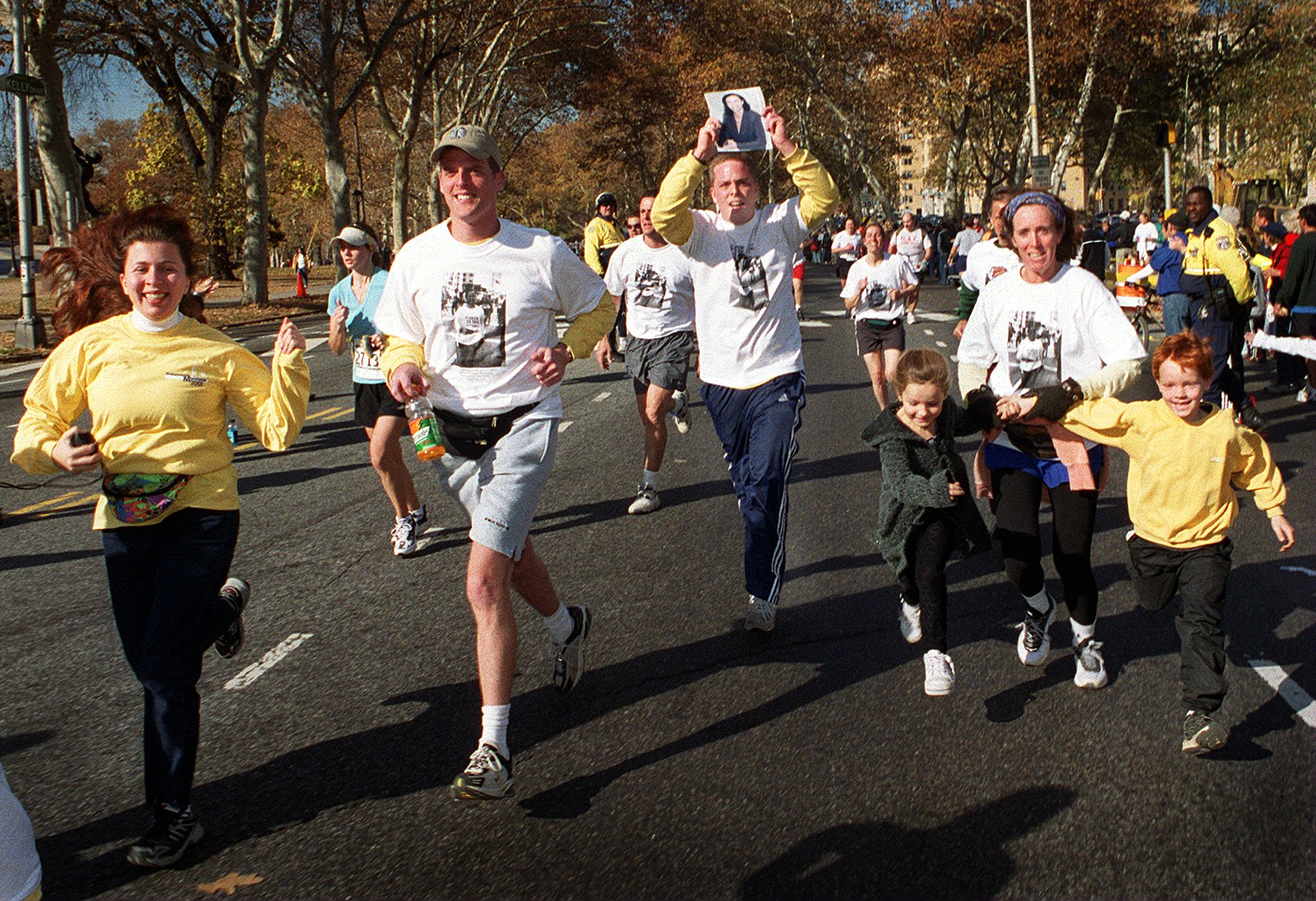
John Sigmund (center) holds a picture of his sister, Johanna, as he and his family run down Kelly Drive toward the finish line of the Philadelphia Marathon in November 2001.d
“Johanna, help me,” he said to himself while overlooking ground zero. “I need to get it together.”
‘Beyond coincidence’
John calmed down and carried on. After the event, he met friends at a nearby bar. John was telling them about the run-in with the street hustler when he suddenly saw Johanna’s old boyfriend, Joe Bonavita, across the bar.
Joe had moved to New Orleans but, in a twist of fate, was in town for a 9/11 event. The two were not close but quickly bonded. John viewed the reunion as his sister’s handiwork.
“Some things are beyond coincidence,” he said.
Eventually, John did move to New York. The city helped him better find himself. After years of worrying about disappointing his parents or adding to their suffering, John told them he was gay. His parents, who have a deep Catholic faith, were supportive.
Twelve years ago, John returned to Philadelphia and fell in love with the city, and especially Fairmount Park.
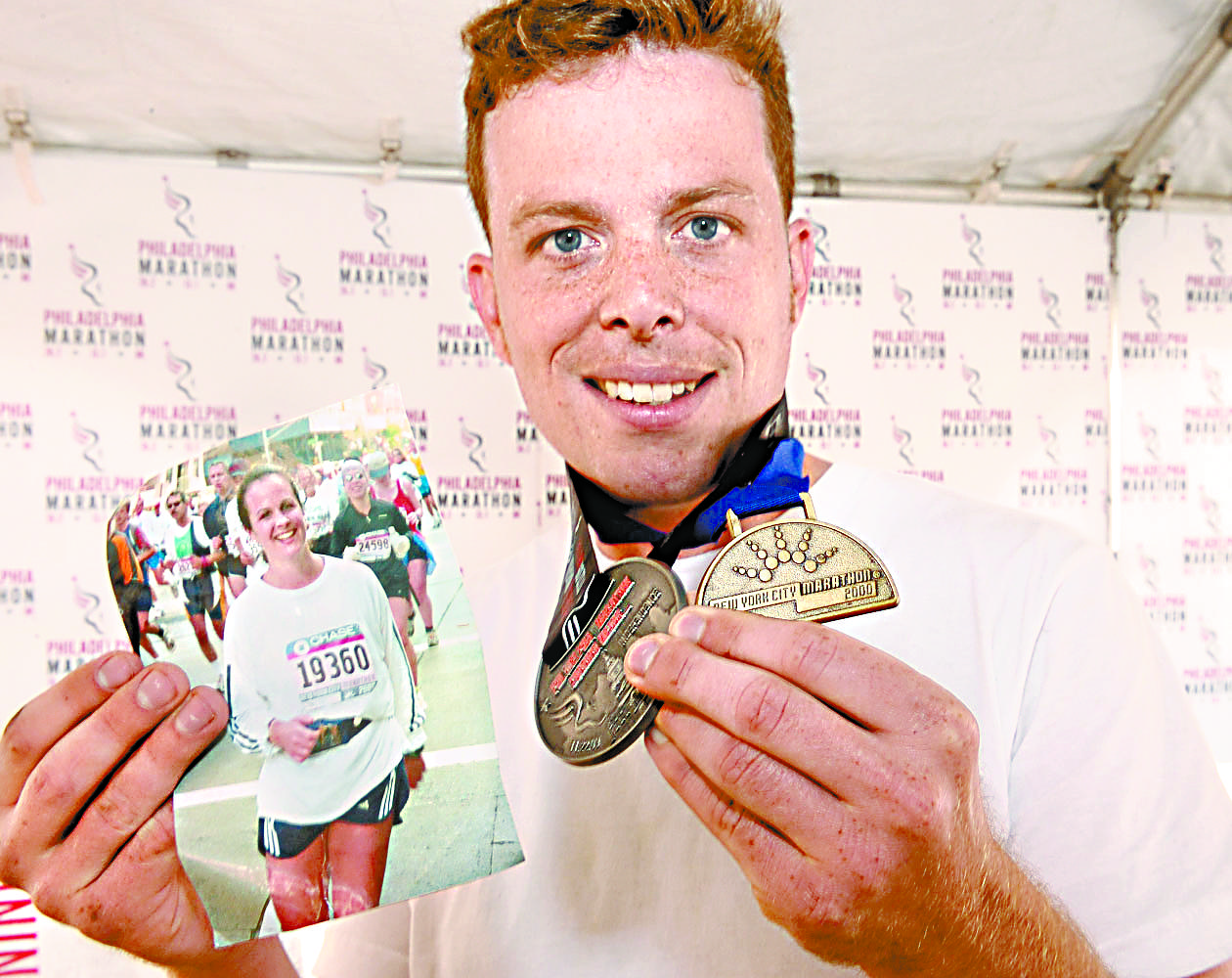
After running the Philadelphia Marathon in November 2001, John Sigmund holds a photo of his sister, Johanna, and wears two medals around his neck — one he earned after finishing the race and another his sister won after completing the New York City Marathon in November 2000.Courtesy of Tony Webb / Office of the City Representative
But tragedy struck again in September. Three days after the 20th anniversary of 9/11, his father died.
For John, September remains the cruelest month. But he credits a strong support network of cousins and friends for helping him navigate life’s challenges — and added that Johanna always feels close by.
“I have a thing with the wind,” John said. “When I think about her, the wind will kick up.”
After losing his sister and father in September, John and his partner, Jaime, decided to add some positivity to the month. They got married last Sept. 26 and are planning an anniversary party in a couple of weeks.
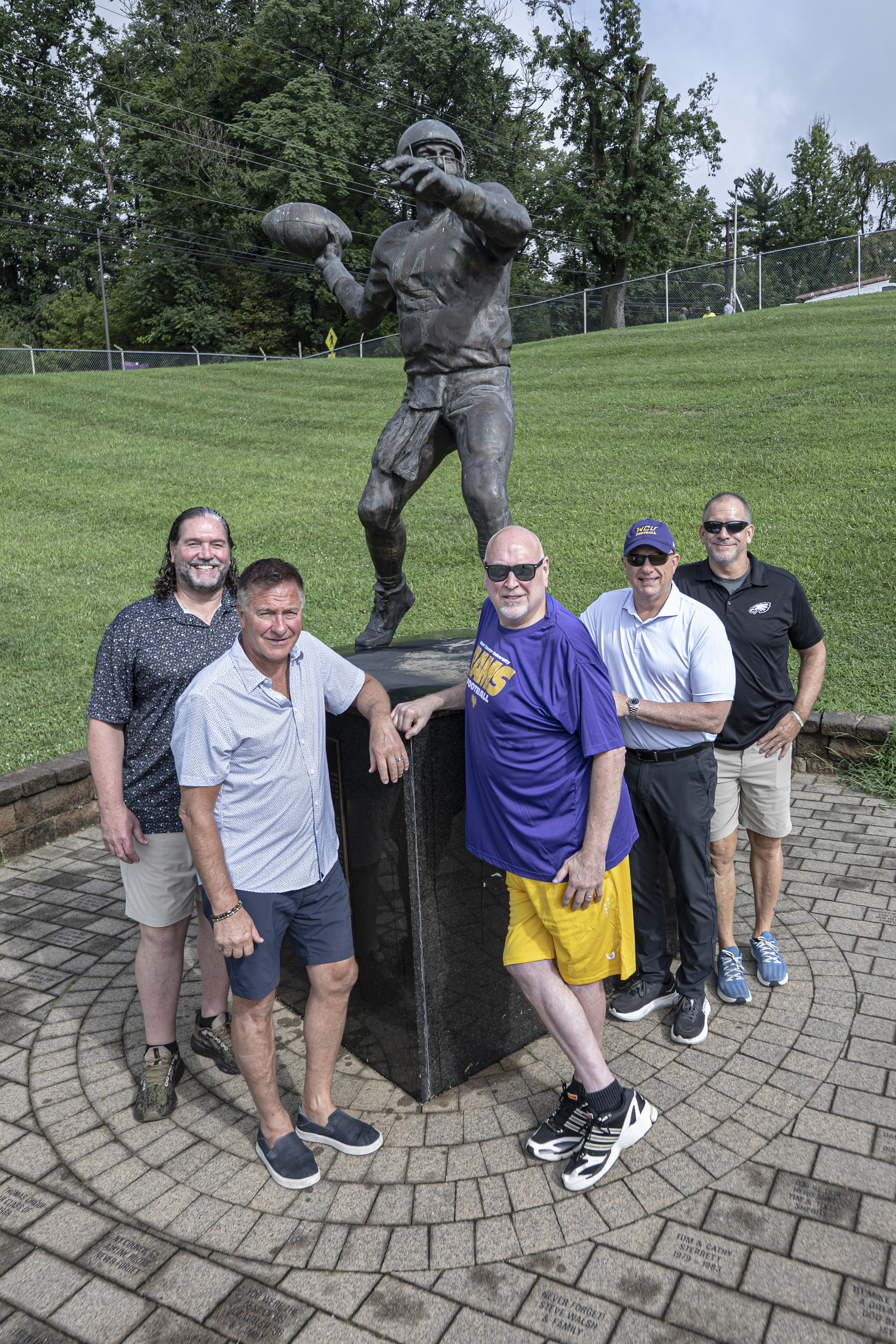
Michael Horrocks’ former West Chester University teammates continue to pay tribute to their late friend, who died co-piloting United Airlines Flight 175 on Sept. 11, 2001. Jose F. Moreno / Staff Photographer
In the years after the 9/11 attacks, football players at West Chester University didn’t know Michael Horrocks’ name. That didn’t sit right with his former teammate Tom Schafer, who, after learning the former quarterback died while co-piloting the ill-fated United Airlines Flight 175 that day, made sure that wouldn’t be the case any longer.
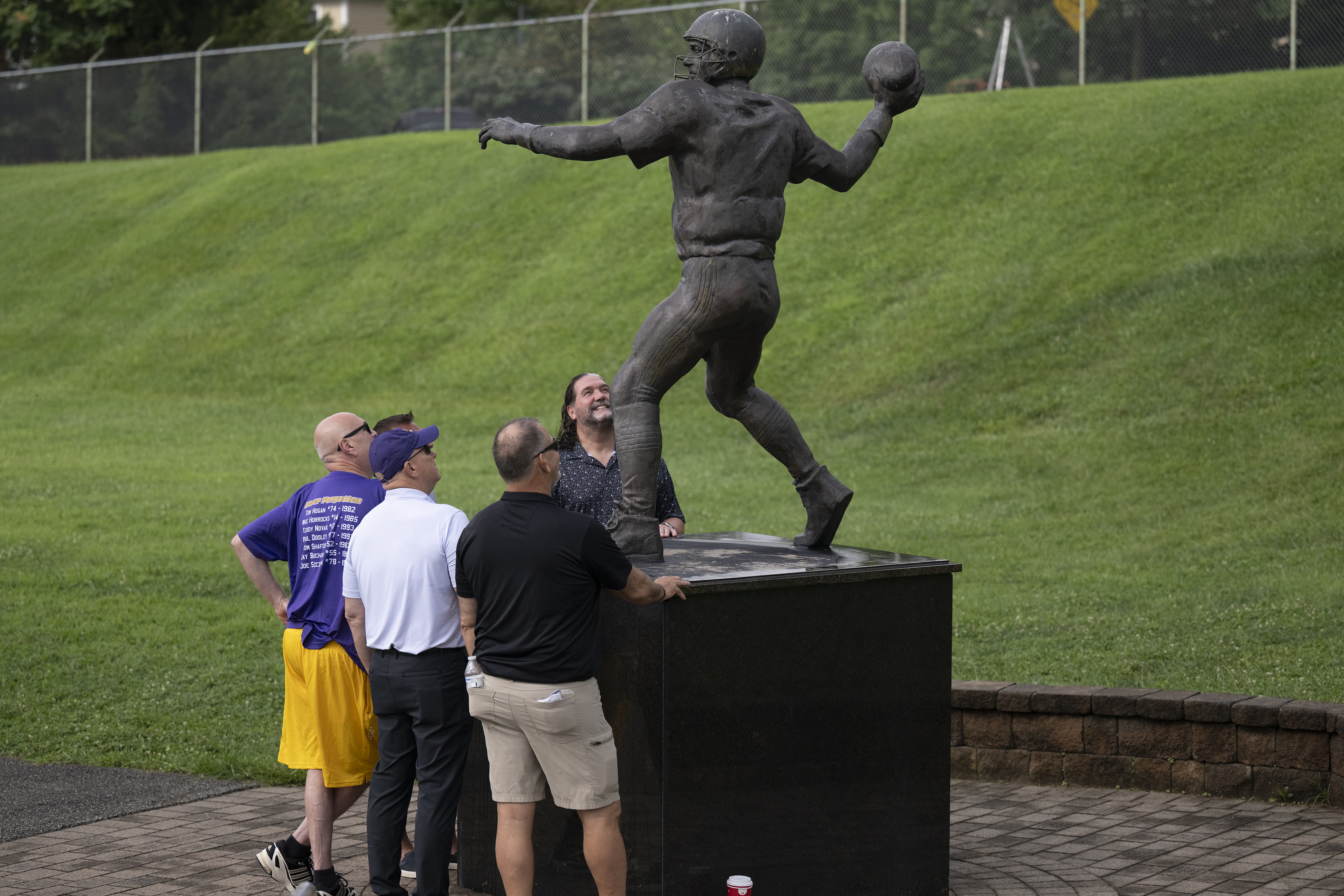
Despite battling cancer, Schafer, along with other former teammates, set out to honor Horrocks with a scholarship endowment and a statue at the Golden Rams’ stadium, which was unveiled in 2010.
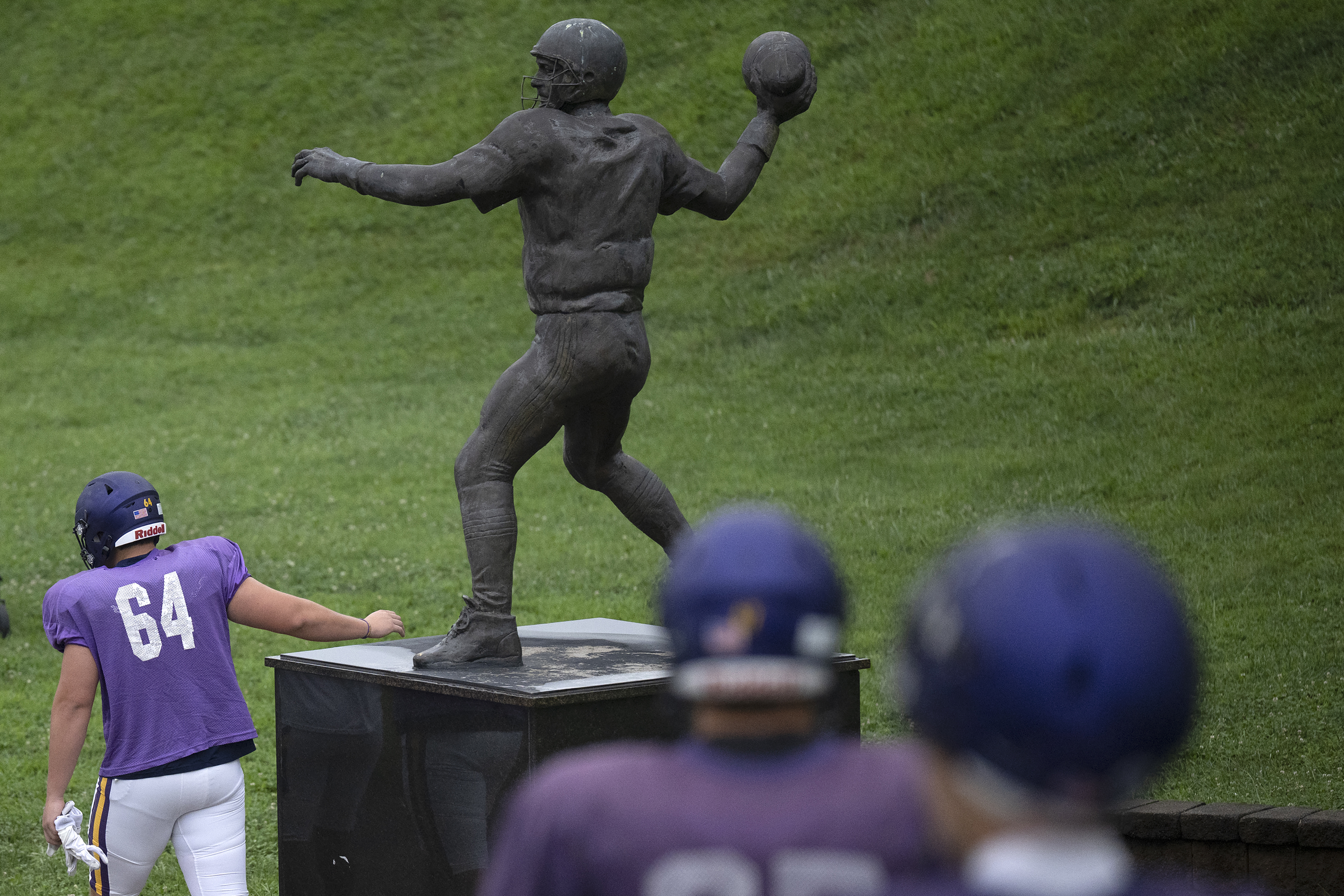
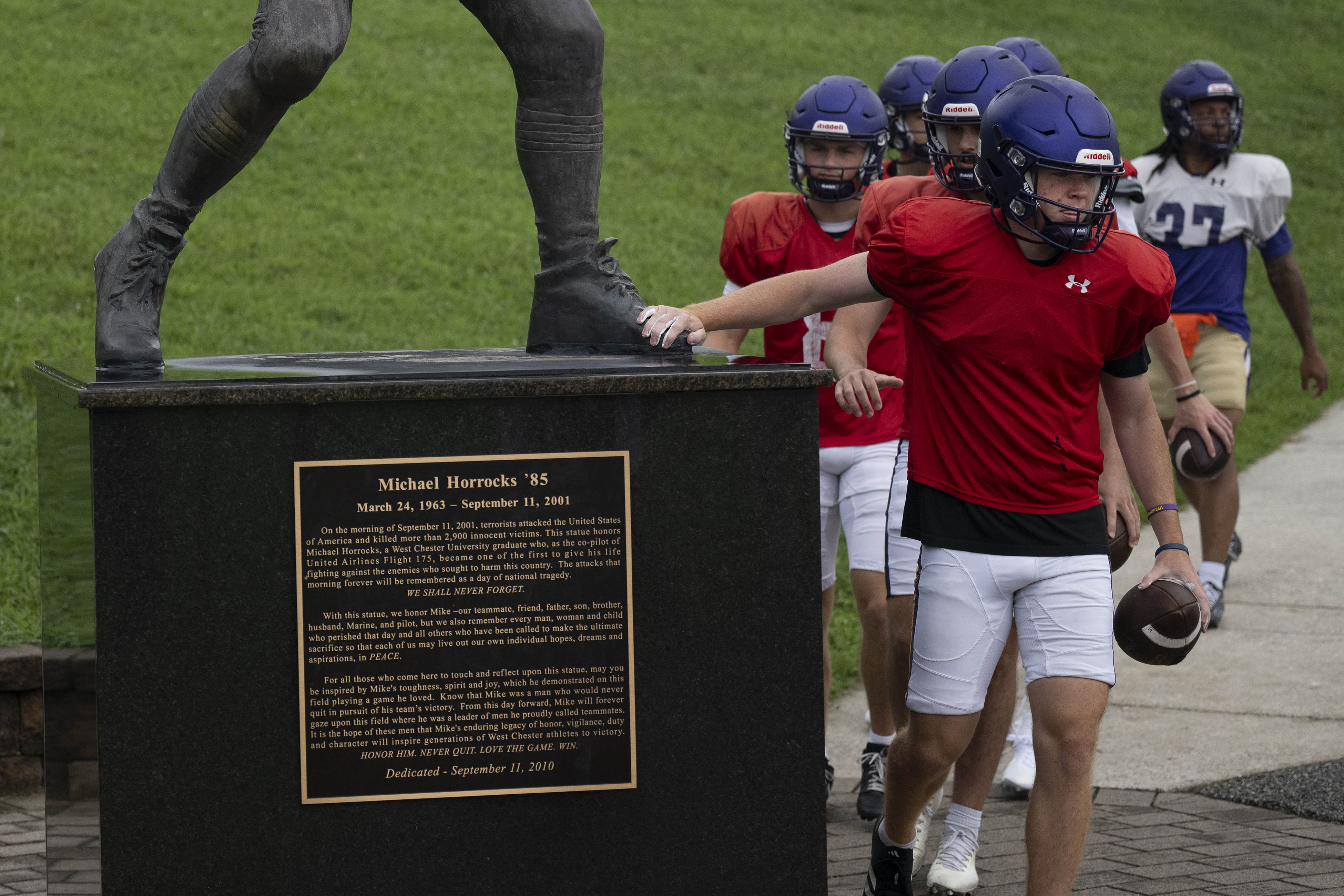
For every practice and game since, players tap Horrocks’ left foot before taking the field, keeping alive the legacy of a man — an illustrious football player, a Marine, and a commercial pilot — none of them would ever know, but who they’d likely never forget.
Chester County and Paoli Hospitals earned high marks in the latest U.S. News Best Hospitals by Specialty rankings. Chester County was recognized in 13 categories, including colon cancer and gynecological cancer surgeries, while Paoli scored top marks in 12 categories such as lung and colon cancer surgeries.
Have an unwanted bike or sewing machine? Chester County Solid Waste Authority is collecting used goods Saturday from 9 a.m. to noon at the West Goshen Municipal Complex. Items will be sent to developing nations and a $20 donation is requested to offset shipping costs.
A number of new roadwork projects are getting underway. Here’s where.


A nearly 5,400-square-foot West Chester home made of locally quarried stone and complete with a two-story wine cellar and tasting room inside a former ice house is on the market for $3.3 million. Take a peek inside.
Two women died after a single-vehicle crash on East Lancaster Avenue in Downingtown on Sunday. The driver died at the scene and the passenger died later at the hospital.
On Saturday, West WhitelandTownship police arrested 23-year-oldJordan Uriah Jones, who had been wanted for the statutory rape of a child, corruption of a minor, and unlawful sexual contact with a minor. After an eight-month investigation, police found that he fathered a child with a young girl.
Downingtown has named a new borough manager, elevating assistant borough manager and interim manager Corinne J. Badman to the role on a permanent basis. She succeeds Jeffrey A. Smith, who stepped down this summer.
A developer is looking to build two industrial flex warehouses on the roughly 15.5-acre property at 979 Octorara Trail in Parkesburg, where there are future plans for a hotel, restaurant, and street extension. West Sadsbury Township’s board of supervisors will hold a public hearing about the proposal at tonight’s 7 p.m. meeting.
East Bradford Township’s board of supervisors is expected to discuss an ordinance regarding data centers at tomorrow’s 6:30 p.m. meeting.
Work is slated to get underway this week on a monthslong sidewalk project in Toughkenamon. The $782,300 grant-funded project will rehabilitate a portion of sidewalk along Main Street.
Discount retailer Ocean State Job Lot, which is known for its selection of household goods and apparel, is grand opening its newest location at the Shoppes at Valley Forge in Phoenixville on Saturday.
🏫 Schools Briefing
Two Chester County high school football programs — Malvern Prep and Downingtown High School East — are among the top 10 to watch this season, according to a new ranking from The Inquirer.
🍽️ On our Plate
The Drift Seafood Kitchen and Raw Bar is now open in Phoenixville. Located at 231 Bridge St., it dishes up a seafood-forward menu of shareable plates, soups, salads, and entrees, in addition to steaks.
Victory Brewing is releasing its newest beer tomorrow. The malty, dry-hopped Borough Brew, a tribute to Kennett Square, has notes of berry, melon, and pear. It’ll be exclusively on tap at Victory’s Kennett location, with $1 from each pour benefiting nonprofit Kennett Collaborative.
🎳 Things to Do
😂 West Chester Comedy Festival: Dozens of comedians will perform stand-up at several venues over the course of three days. ⏰ Thursday, Sept. 10-Saturday, Sept. 12, times vary 💵 Prices vary 📍 Various venues throughout West Chester
🏇 Devon Fall Classic: See equestrian events and explore the country fair, complete with rides and vendors, at this annual event. ⏰ Thursday, Sept. 10-Sunday, Sept. 13, times vary 💵 $10-$20 general admission, $20-$35 for reserved seating 📍 Devon Horse Show and Country Fair grounds
🎃 Glass Pumpkin Festival: Explore glass-blown works of art, see demonstrations, or make your own. There will also be live music, food trucks, drinks, and an artist market. ⏰ Friday, Sept. 11-Sunday, Sept. 13, 9 a.m.-5 p.m. 💵 $7.18 admission 📍 WGK Glass Art, Toughkenamon
🏎️ Radnor Hunt Concours d’Elegance: The three-day event includes a barbecue, a road rally, a gala, and a car show. ⏰ Friday, Sept. 11-Sunday, Sept. 13, times vary 💵 Prices vary 📍 Radnor Hunt grounds, Malvern
🍄 The Mushroom Festival: The annual staple returns, showcasing all things mushroom. There will also be music, cooking demonstrations, and a fire truck show. ⏰ Saturday, Sept. 12, 10 a.m.-6 p.m., and Sunday, Sept. 13, 9 a.m.-4 p.m. 💵 $5 admission 📍 Kennett Square
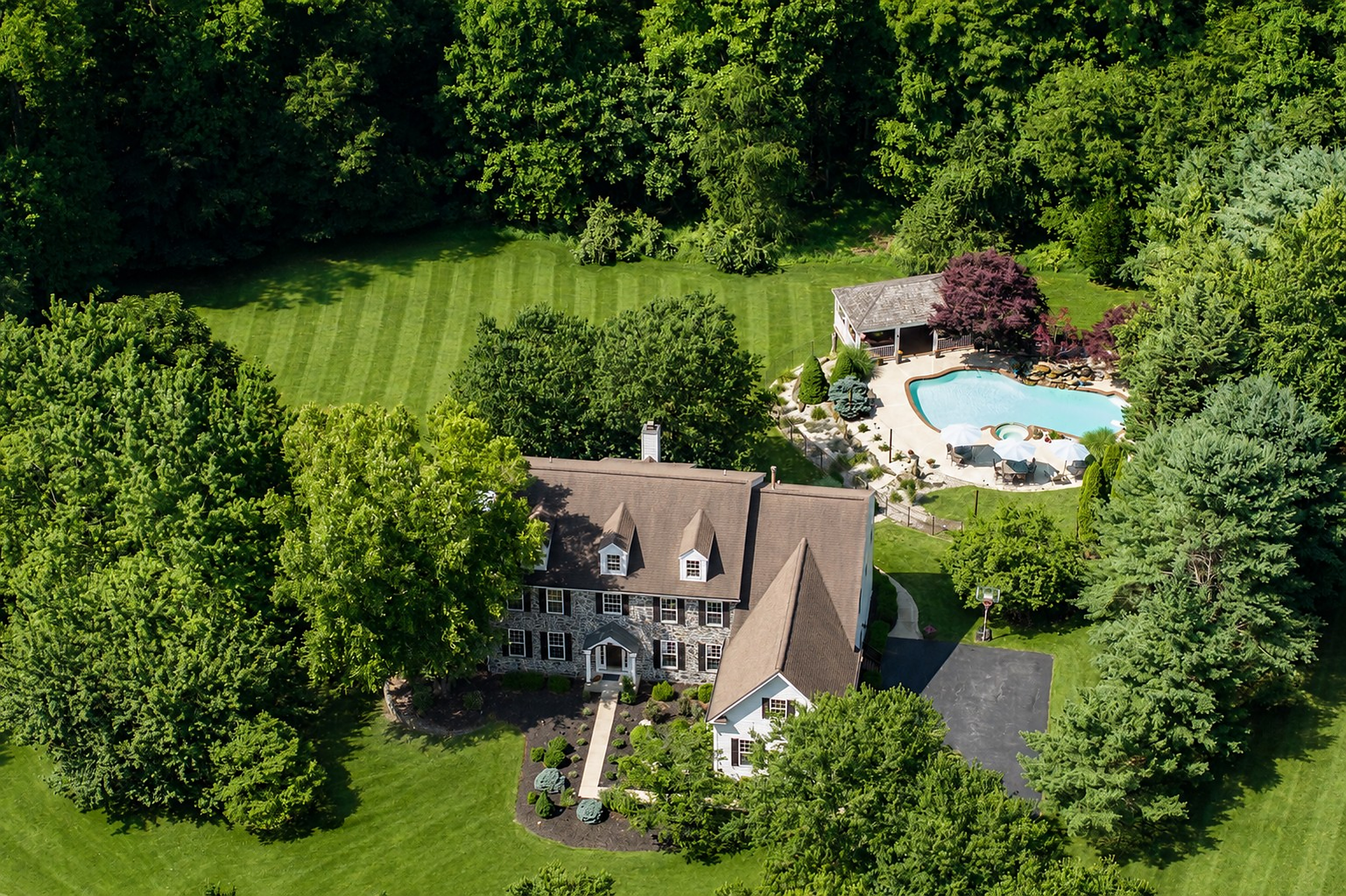
An aerial view of the home, which has a pool and spa and backs up to nearly 30 acres of protected open space.Keith Conrey/Tohickon Media | Courtesy of Cary Simons/Kurfiss Sotheby's International Realty
Situated in a cul-de-sac in the Chester Springs neighborhood Haverhill Estates, this four-bedroom Colonial backs up to a large swath of protected open land, giving it extra privacy. Among the home’s features are several living areas with fireplaces: a great room with a bar area and vaulted ceilings; a two-story family room; and a basement family room. The walk-out lower level also has a wine cellar, a gym, space for a fifth bedroom, and a theater room, complete with reclining chairs. Outside, the home has a deck, screened-in porch, a heated pool and spa, plus a cabana with a bar.
By submitting your written, visual, and/or audio contributions, you agree to The Inquirer’s Terms of Use, including the grant of rights in Section 10.
This suburban content is produced with support from the Leslie Miller and Richard Worley Foundation and The Lenfest Institute for Journalism. Editorial content is created independently of the project donors. Gifts to support The Inquirer’s high-impact journalism can be made at inquirer.com/donate. A list of Lenfest Institute donors can be found at lenfestinstitute.org/supporters.
Tom Schafer was a hulking man when he played one preseason game with the Eagles in the summer of 1984. The undrafted free agent center stood at 6-foot-2 and 270 pounds, with a booming voice and an unabashed confidence to match.
By the fall of 2009, his broad frame had hollowed out. His voice had been reduced to a rasp. Schafer could walk, but only gingerly, and for short distances.
Yet here he was, sitting in a West Chester University parking lot, handing out fundraising pamphlets and preaching to tailgaters about his long-lost teammate.
It was not the way most people battling cancer would have chosen to spend their time. But Schafer was not most people.
When Schafer was told the disease he’d battled two decades prior had returned in 2008, he had already made a commitment and was determined to see it through, no matter how many rounds of treatment he would have to endure.
“He still had that fire about the statue,” said former West Chester center Joe Walsh. “He was talking then about everything we see now.”
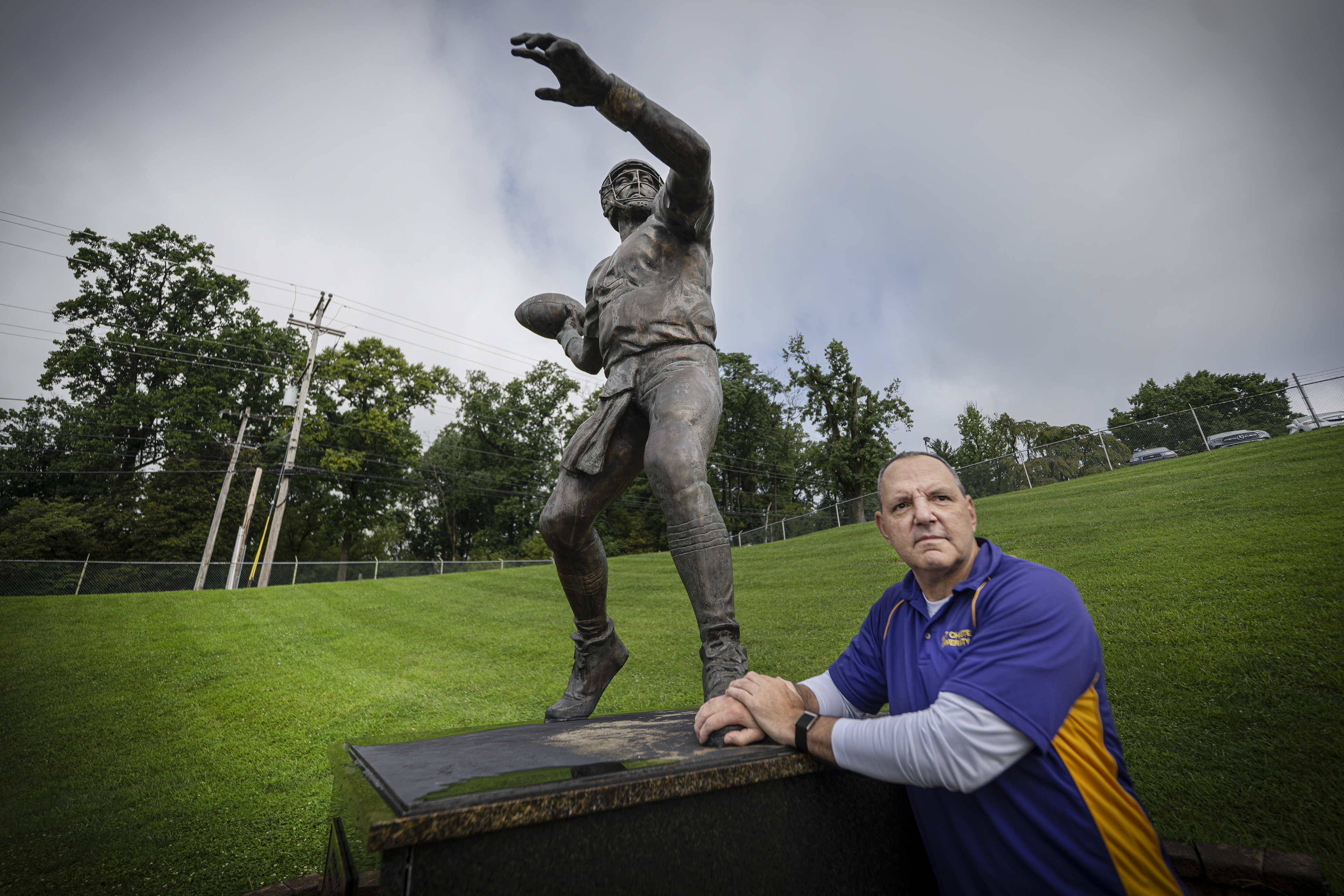
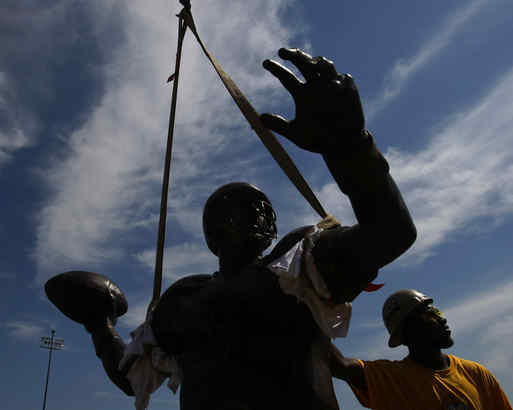
Walsh motioned to the northwest corner of Farrell Stadium. There, at the base of a hill, stood a bronze likeness of a quarterback, his left foot firmly planted, his right arm cocked, ready to uncork a spiral.
Former teammates John Mininno (left) and Tom Schafer (right) visit the statue of Michael Horrocks which was unveiled Sept. 11, 2010. Michael S. Wirtz / Staff Photographer
The man was Michael Horrocks, Class of 1985. He and Schafer overlapped on the football team for twoseasons, but Schafer took a liking to the sophomore’s goofy personality.
And when he found out that that same sophomore had been a copilot of Flight 175, the plane that hit the South Tower on Sept. 11, 2001, he was distraught.
Years passed, and Schafer began to coach high school football throughout the region. Some of his players joined West Chester’s program. None knew of Michael Horrocks. Not of his tragic place in history, or of his greatest moment on the field, when he led the Golden Rams to a 35-27 upset win over Delaware in 1983.
They didn’t know of his service in the Marines, or his devotion to his kids, and his wife, and his friends. They didn’t know his name at all. And Schafer desperately wanted them to.
So he and his teammates came up with a plan to ensure Horrocks’ presence would be felt for years to come. From 2008 to 2010, the West Chester alums raised $150,000 for a scholarship endowment and a statue to commemorate the late quarterback.
They faced all sorts of challenges, some of them logistical. West Chester had never built a statue on campus before, and had no clear guidelines on the process to have one erected.
Former West Chester University football player John Mininno is photographed near a statue honoring his former teammate, quarterback Michael Horrocks.Jose F. Moreno / Staff Photographer
In an initial conference call with Horrocks’ teammates, school officials tried to persuade them to build something smaller, like a plaque or a bench. They warned the former players of the money they would need, and the bureaucratic hurdles they would face.
But Schafer was undeterred.
“Tom went in there and said, ‘F— you, we’re not doing a plaque. We’re doing a statue,’” said Class of 1988 linebacker John Mininno. “And he was not to be denied.”
The result was not just a statue, but a tradition. Since it was unveiled in 2010, West Chester’s players have tapped Horrocks’ left foot before every practice and game.
They have done this so often that you can see scuffs of gold peeking out from beneath the bronze. Horrocks is not here in the physical sense, but this version of him — fearlessly driving down the field, leading his men — is now preserved.
And his teammates intend for it to stay that way.
“We want this to be a legacy,” Mininno said. “We want this to be here for much longer than we’re going to be around.”
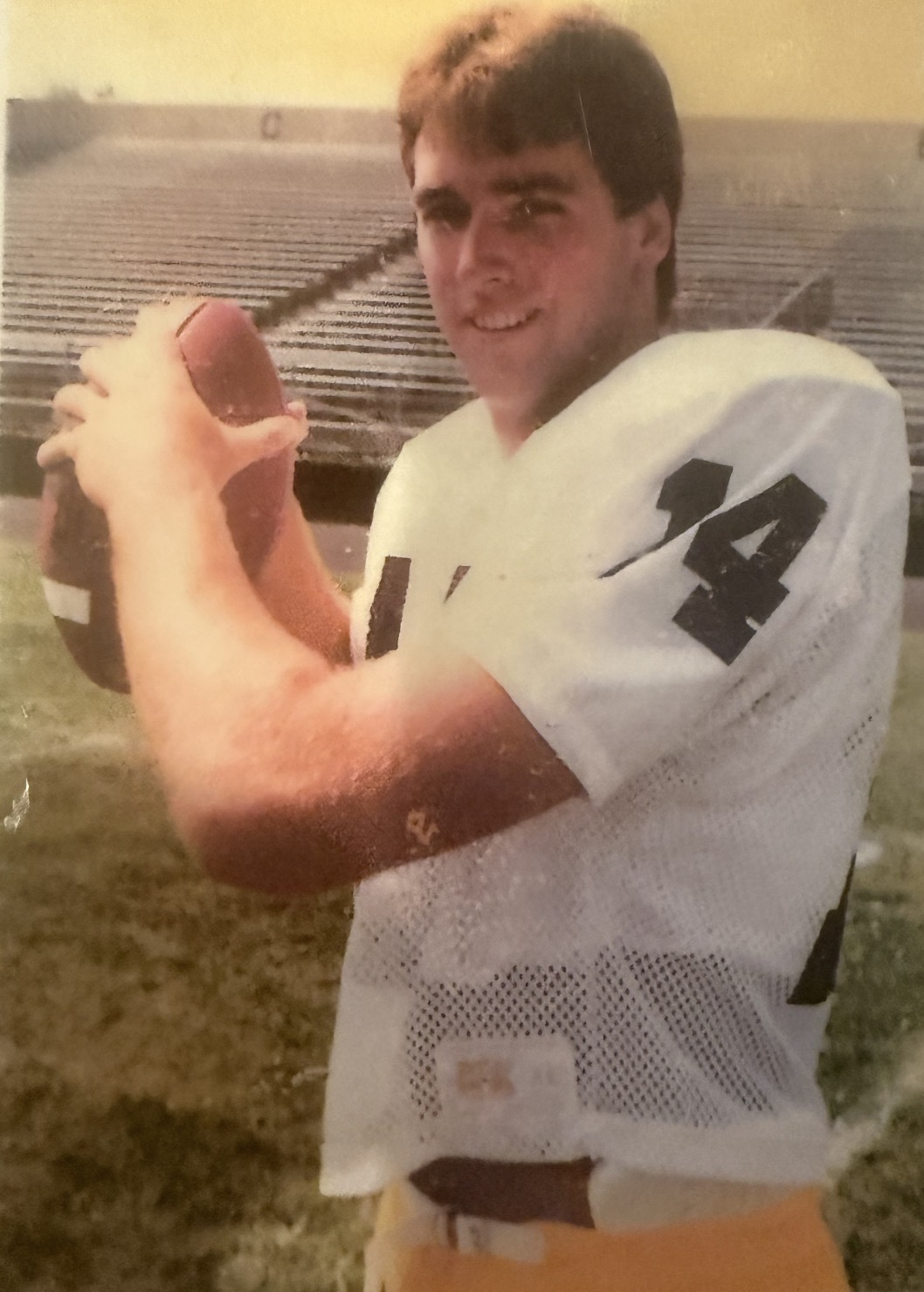
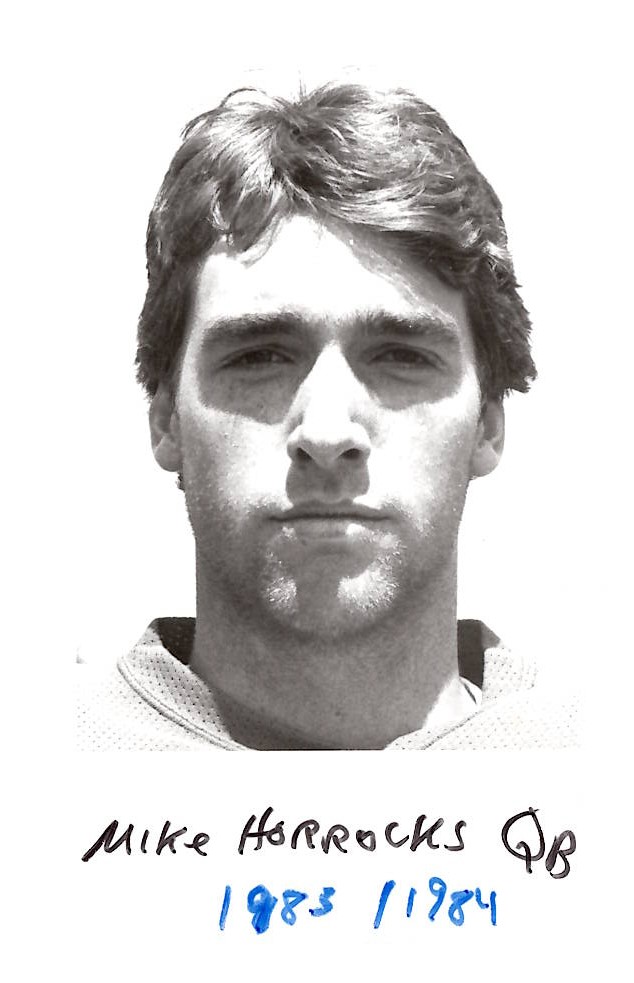
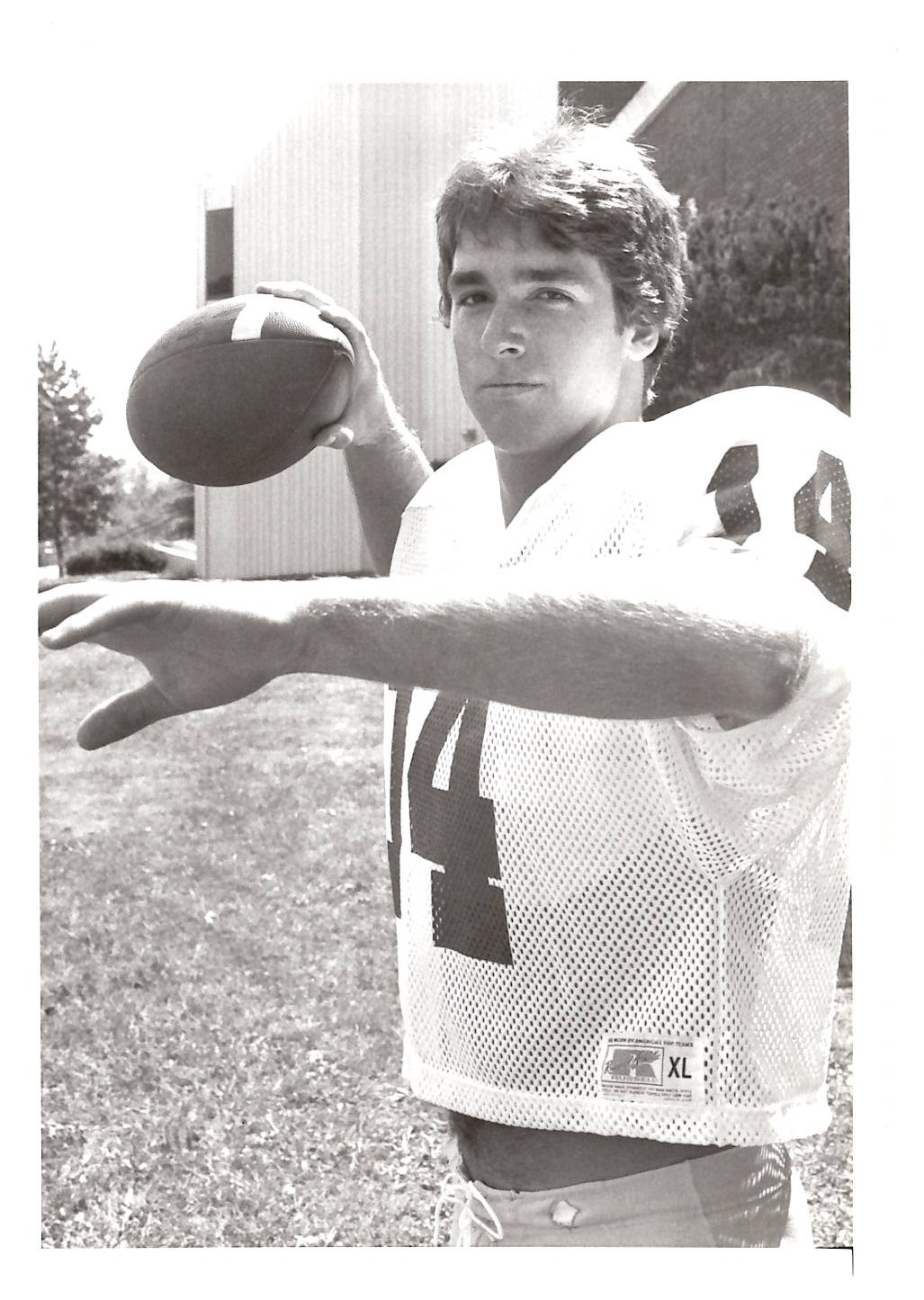
Michael Horrocks emerged as a starting quarterback and a trusted leader at West Chester.provided by Mark Gosik
‘A pilot the entire time’
Horrocks was born and raised about 70 miles west of West Chester, in Hershey, Pa. He attended Hershey High School, where he played varsity football under head coach Robert “Gump” May.
May was tougher than most coaches. His team did three-a-days throughout the summer: an unusually heavy workload, which had the intended effect of whittling unreceptive players from the roster.
The coach would start camp with 75 kids. Two weeks later, he would be left with 30.
One kid, in particular, was always in that lattergroup.
“Mike stayed,” May said.
Horrocks was fighting for playing time with Scott Campbell, a quarterback who would go on to have a six-year career in the NFL. Locals were skeptical that the backup would perform in the opportunities he did get, but he quickly proved them wrong.
Over his one season as a starter at Hershey, and in limited appearances before that, Horrocks led his team to a litany of come-from-behind wins, including one against rival Palmyra High School, which took a 21-point lead in the first quarter.
“After Scott Campbell graduated, everybody thought, ‘Well, they lost their big gun,’” May recalled. “Well, Mike jumped in and he was just as big a gun.”
Michael HorrocksSpecial Collections, West Chester University
Gump reached out to a friend, Rick Daniels, a part-time assistant who later became West Chester’s head coach, and sent him some film of Horrocks. In the spring of 1981, the quarterback drove to campus for a visit.
Daniels was already impressed by what he saw on film. Horrocks didn’t just have a strong arm; he was also quick on his feet, and he had an air of unflappability about him. He joined West Chester’s team that fall as a backup quarterback.
Once again, Horrocks found himself in the unenviable position of filling in for an NFL-caliber player in Ron Gaynor, who later bounced around training camps with the Seahawks, Eagles, and Bills.
Nevertheless, the aspiring starter worked with the intensity of a seasoned veteran. Horrocks and tight end Al DePippo would regularly put in extra hours, throwing after practice and then heading to the weight room. If it was locked, they would use the neck machine beneath the stands.
Horrocks coupled his drive with a lighthearted composure that allowed him to thrive in intense situations. The first time he interacted with Schafer was in 1982,when Horrocks was a sophomore.
Gaynor had gotten hurt; Horrocks was asked to fill in.
“He crouched down in the middle of the huddle, looked up at us, and said, ‘Ah, the big boys,’” Schafer recalled to The Inquirer in 2010. “I said, ‘Shut up and call the play.’”
It was a precursor of huddles to come. Some players got stiff when they first entered regular season games. Horrocks was the opposite. He would walk onto the field with a toothy grin and a laugh, confident in the hours of prep behind him.
Michael Horrocks led West Chester to a rare win over rival Delaware in 1983. Special Collections, West Chester University
This continued even after he was named the starting quarterback in 1983. Horrocks was known to play pranks, like tying teammates’ shoelaces together, or putting slices of cheese in a friend’s textbook.
West Chester had some of its greatest moments under Horrocks and his playful persona. In his first game as a starter, Sept. 10, 1983, the Golden Rams faced the University of Delaware on the road.
It was a harrowing matchup. West Chester played in Division II, while Delaware played at what was then known as the Division I-AA level. The Blue Hens had won their last 15 games against the Golden Rams, a streak that dated back to 1957.
But West Chester was unafraid. After a scoreless first quarter, the Golden Rams jumped to a 21-3 lead in the second. They upped it to 35-3 in the third and held on for the win.
Horrocks finished the day 10-of-18 for 129 passing yards and two touchdowns.
West Chester’s campus erupted into a giant party, as if the team had won the national championship. But the quarterback at the center of it all was already focused on his next game.
When he returned home that night, he recapped different plays and passes to his housemates on Magnolia Street.
“He would talk about even some of the plays that he missed,” said his friend Chris Conner. “He never got too big. Even though he had just beaten Delaware, he was still the same guy.”
From left, West Chester University football alumni Tom Weaver, Mike Esposito, Bob Campbell, Mike Hudson and Dean DiPasquale pose for a photo with a statue honoring their former teammate Michael Horrocks last month. Jose F. Moreno / Staff Photographer
In 1984, West Chester hired a new head coach, Danny Hale, who brought in a new I-formation attack that incorporated elements of the West Coast offense. This system was different from what the team was accustomed to running (a split-back veer offense), and Hale, who was hired late, had limited time to teach it.
He and quarterbacks coach Bill Hart met with Horrocks every day in the football office on campus. They would draw up plays on the chalkboard and quiz their pupil about different coverages and fronts he would face.
Hale’s system allowed Horrocks the ability to audible if the situation called for it, and the head coach wanted him to be well-prepared. But Hale and Hart soon learned that that wouldn’t be a concern.
The Golden Rams went 7-3 in 1984, and 5-1 in their conference, falling just shy of winning the Pennsylvania State Athletic Conference’s Eastern Division title.
When DePippo looks back, he realizes that the same qualities that served Horrocks in the air were those that made him a good quarterback: a natural leader, a hard worker, a man who could balance an easygoing nature with intense focus.
“It comes back to what kind of pilot do you want?” DePippo said. “Do you want somebody that’s going to panic when the s— hits the fan, or do you want a guy that’s going to be confident?
“And Mike was that confident guy; a pilot the entire time. We just didn’t know it.”
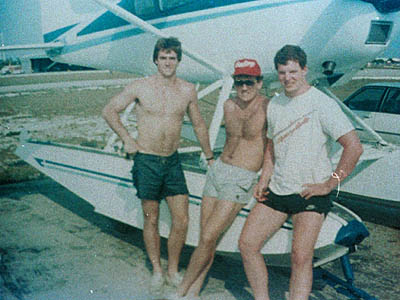
Pilot Michael Horrocks (left) was introduced to flying in the 1980s. (Photo provided by Mark Gosik)INQ WILLIAMS
From football to flight
The first time Horrocks flew a plane was in 1983. He was in Fort Lauderdale, Fla., for spring break with two friends, Mark Gosik, a former guard for West Chester, and Rob Jeffries, a tight end at Lehigh.
They were visiting a family friend of Horrocks’, Bill Blauer, who worked for a commercial airline. One afternoon, Blauer invited them aboard his four-seat aircraft.
Gosik and Jeffries sat in the back, with headgear on, as Horrocks rode up front. About halfway through the two-hour ride, Blauer turned to Horrocks and told him to grab the controls.
Horrocks obliged and cruised the plane down, close enough to see the beachgoers below. As he flew over the ocean, with waves rippling beneath him, he realized he had found his calling.
The former quarterback felt that his best route to commercial flight would be through the Marines. Horrocks knew he would get the best training there, and he liked the idea of a new challenge. So, after graduating West Chester in 1985, he enrolledin Officer Candidates School.
He got his wings at a naval air station in Corpus Christi, Texas, and was stationed in the early 1990s at Marine Corps Air Station Cherry Point in North Carolina, where he joined a marine aerial refueler transport squadron.
Horrocks flew KC-130 turboprop aircraft, which were used to refuel helicopters and jets, but also to transfer cargo, passengers, ammunition — anything that needed to be moved. It was a daunting transition, one that many young pilots struggled with.
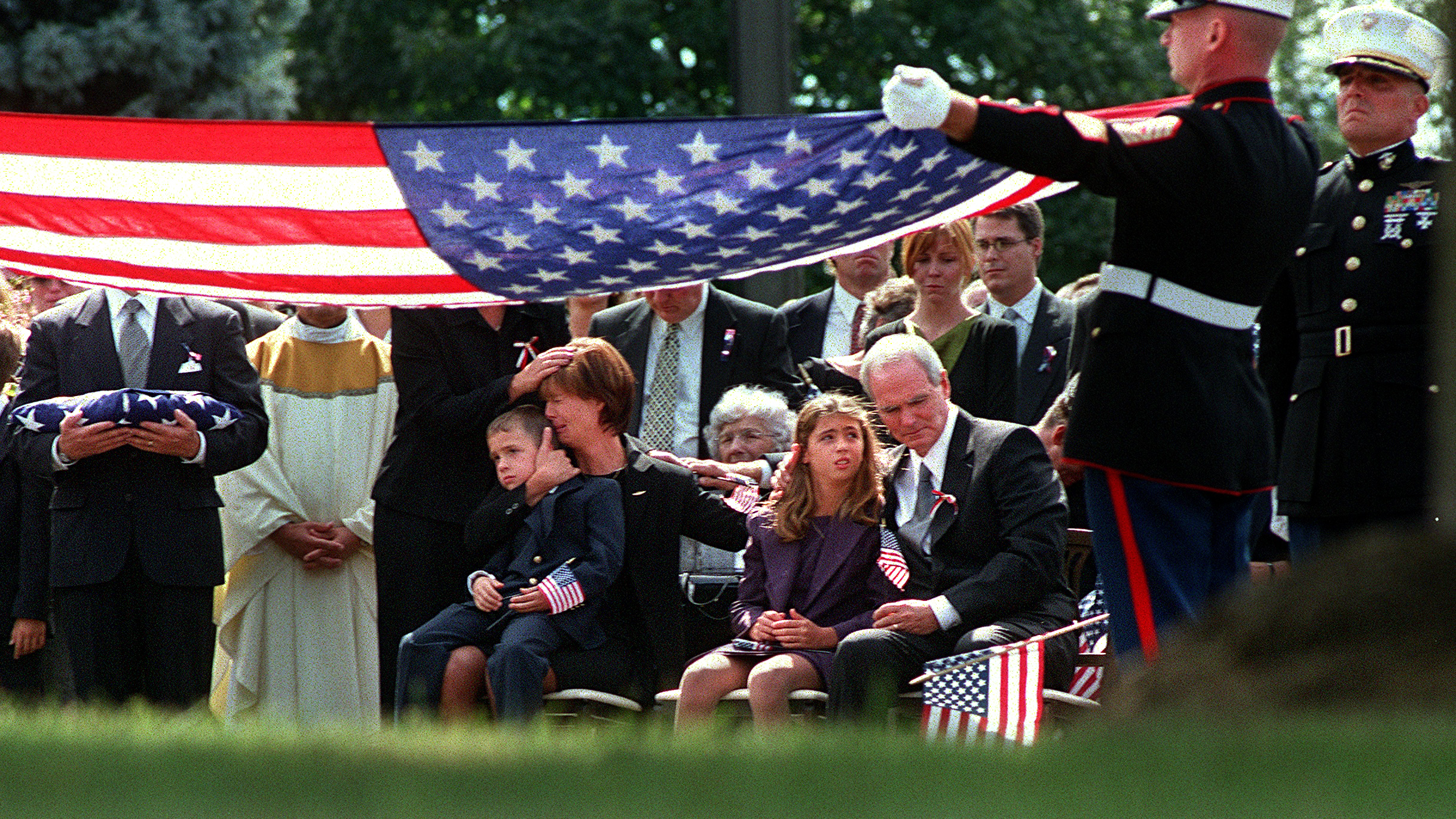
Miriam Horrocks (center, left) cradles her son Mick, 6, as her father-in-law William Horrocks (center, right) sits with her daughter Christa Horrocks, 9, as a US Marine Corps Honor Guard folds up the American flag following a memorial mass and service for her husband Michael Horrocks on Sept. 17, 2001.Tom Gralish / Staff Photographer
In training, they would be flying a single-engine plane, which stretched maybe 18 to 20 feet long. Now, as lieutenants, they were manning a plane five times as big, with three more engines, moving whatever needed to be moved at 30,000 feet in the air.
It was anything but a routine job. Horrocks’ operations officer, now-retired Lt. Col. Bill Franchi, said that when his squadron deployed to Bahrain during the Gulf War, they did so knowing that there was a good chance they would be targeted heavily.
But Horrocks was a natural, and quickly proved he could be relied upon. He went on a number of deployments, to the Middle East throughout the Gulf War, to Europe, to Central America, and became Franchi’s “go-to guy.”
Once, during a three-week detachment to Norway, a panel in the squadron’s KC-130 caught fire. As Franchi tried to put the fire out, he asked Horrocks to redirect the plane back to the local airport.
This was not a scenario that the young pilot had practiced in a simulator. Horrocks would be landing downwind, without flaps on his wings, which helped the plane maintain lift while slowing it down.
With a full-face oxygen mask on, and vapor from a fire extinguisher filling the cockpit, Horrocks guided the aircraft onto the runway, preventing what surely would have been a disaster.
“I told him, ‘I credit you with having saved about six people,’” Franchi said. “Because I didn’t have to do a thing. He had it. And that was sort of typical of Mike. You know?”
Horrocks spent his last few years in the military instructing Marine, Navy, and Coast Guard pilots in Florida. In 1997, his active duty came to an end. He enrolled in new-hire pilot training at United Airlines that summer.
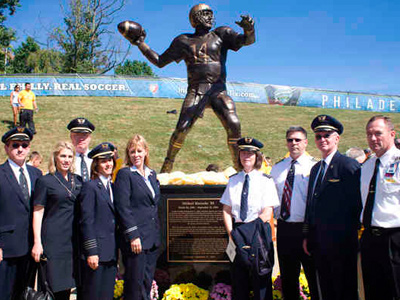
United and Continental Airlines pilots and crew, all friends of Michael Horrocks, stand by his statue at Farrell Stadium in 2010. (Ed Hille / Staff Photographer)
He soon was flying commercial airplanes full-time and living in Glen Mills with his wife, Miriam, and their two young children, Christa and Mick.
Now that Horrocks was local again, he was able to reconnect with old teammates like Bob Rafferty, a former West Chester halfback and quarterback.
They would often see each other in Media, running errands at the Granite Run Mall. In December 2000, while shopping for Christmas gifts, they crossed paths one last time.
Horrocks was walking out of the mall, and Rafferty was walking in. They chatted about family. Horrocks mentioned that he had recently started working transatlantic flights for United.
The two men said goodbye and went their respective ways. Nine months later, Horrocks boarded a Boeing 767 at Logan International Airport in Boston.
Rafferty watched as it hit the South Tower of the World Trade Center. Few, if any, of his teammates knew that Horrocks was piloting commercial aircraft. The idea of him being on that plane didn’t even occur to them.
But Rafferty had a feeling.
“He was the first person I thought of,” he said.
West Chester University quarterback Colin O’Sullivan taps a statue honoring former quarterback Michael Horrocks before practice last month. Jose F. Moreno / Staff Photographer
‘Think of Mike’
Without social media, news of Horrocks’ death at age 38 spread slowly.Some West Chester football alumni found out when they saw Miriam Horrocks on the front page of The Inquirer, at her husband’s funeral in Upper Providence Township.
Others heard through teammates. DePippo was working on Wall Street and lost about 40 or 50 colleagues in the attack. He couldn’t process that Horrocks was gone, too.
In late September, Gosik and two friends, Tim and Patrick Dever, took a train to New York. They spent the day at ground zero, walking through rubble, picking up pieces of people’s lives off the ground: photos, notebooks, newspapers.
Gosik still remembers how dust and soot filled the air. So did the sound of car alarms, blaring for their owners. A few days earlier, a neighbor had made Gosik a lapel pin to commemorate Horrocks, with his No. 14 written on a felt football.
Gosik wore it on his jacket as he traversed the site where his teammate perished.
“We just felt like we needed to be there,” Gosik said. “We just wanted to go.”
Years went by, and the West Chester alums began to wonder why no tribute to their quarterback existed on campus. They were worried that Horrocks would be forgotten, and realized that their fears were well-founded.
West Chester University football players tap a statue honoring former quarterback Michael Horrocks before practice last month. Jose F. Moreno / Staff Photographer
“I don’t recall any of us even being aware of it beforehand,” said Tim Keyser, a wide receiver who graduated in 2013. “That wasn’t something I knew when I was a true freshman on campus or anything.”
The former players began to meet with the school about the prospect of a statue in 2008. Bill Zwaan Sr., who was head coach of the football program at the time, sat and listened as an official from the foundation tried to convey how complicated, and costly, it would be to build such a structure.
Horrocks’ teammates ended the meeting emphatically: by standing up and reiterating, for the umpteenth time, that they were going to move forward with the statue. After they left, the foundation official turned to Zwaan.
“And he said, ‘Do you think they really understood what we were talking about?’” Zwaan recalled. “And I said, ‘They do. And they’re going to do a statue. And you guys have got to be prepared for that.’”
It was a slow, arduous process. The former players not only would have to raise $50,000 for the statue itself, but also would donate $100,000toward a scholarship endowment, which DePippo and another teammate, Bruce Blake, started in 2004.
At this point, most of them had full-time jobs and families of their own, and carving out time was not easy. But they made it happen.
DePippo oversaw the money. Mininno began a letter-writing campaign to raise funds. Walsh served as a liaison between the alumni and the current coaching staff.
Schafer worked as a partner of a local concrete cutting company. He and another West Chester alumnus, Paul Vanscovich, donated their construction crews and equipment for free.
Other teammates chipped in through a team banquet and a Super Bowl pool. A few local businesses, and the pilots union, contributed as well.
The statue of Mike Horrocks at West Chester.MICHAEL S. WIRTZ / Staff Photographer
“I’d kick in $1,000, John would kick in $1,000, Jim O’Donnell would kick in $1,000,” DePippo said. “And then we would get on a text chain, and berate each other in team fashion. Like, ‘You’ve got to do this.’
“We raised money basically only through grassroots. I was specific about that. I didn’t want any corporate sponsorship.You know, ‘CBS Sports presents the Mike Horrocks statue.’ I didn’t want that.”
In the months before construction of the statue was finished, former players would visit West Chester to share stories of their late teammate with the current roster.
Walsh, DePippo, and Blake visited them the day before the dedication. Wearing purple and yellow practice jerseys, the team took a knee as Walsh began to speak.
He explained that one day, Horrocks’ teammates wouldn’t be able to share his story, and that it would be up to the next generation of players to do so.
Then he asked them to close their eyes, and think of a loved one: a sibling, a friend, a parent.
“And when you go down that hill tomorrow, and you touch [the statue of] Mike, think of Mike,” Walsh said. “Say his name. And think of someone else who is special in your life. And thank God that you have them with you today.”
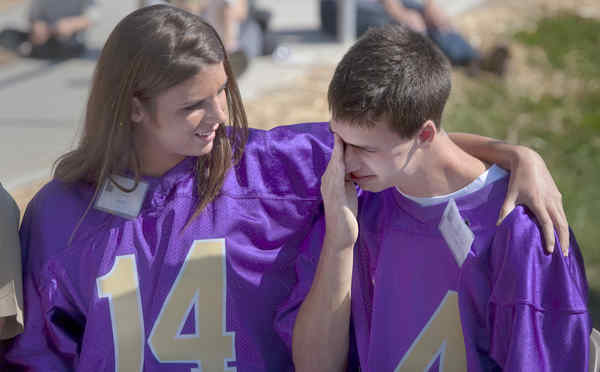
Nine years after their father’s death, Christa Horrocks comforts her brother, Mick, at the unveiling of the statue of Michael Horrocks at West Chester University in 2010.
The statue was unveiled at 10:30 a.m. on Sept. 11, 2010, a perfect autumn day in Chester County. The school arranged a ceremony beforehand, with bagpipes, a marching band, and a flyover.
Miriam Horrocks and the children, now teenagers, were in attendance; Christa gave a speech about her father.
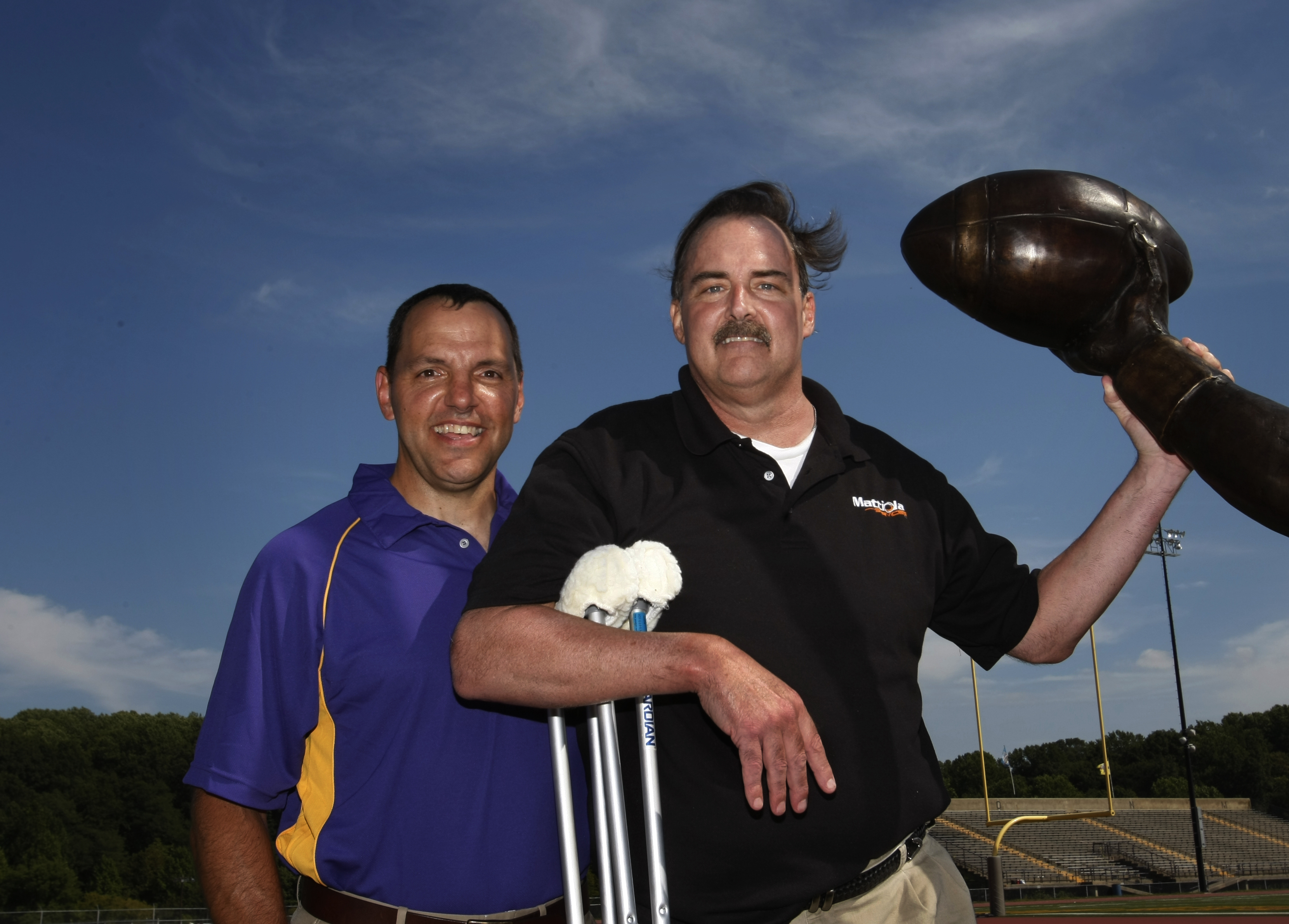
Sitting next to the podium, with crutches by his side, was Schafer. He was unable to speak to a large crowd, but sat throughout the entire ceremony with a smile on his face, shaking hands with football men young and old.
He died of cancer just over a month later, at his home in Phoenixville.
Last August, during a team reunion in West Chester, a thought occurred to Walsh. He pointed to the bricks surrounding Horrocks’ memorial, which contained inscriptions honoring the late quarterback.
He suggested adding a small stone, maybe toward the back, with the number 52 on it; a nod to a teammate who put another above himself, even when his body was failing.
“Tom just believed in his heart that it needed to be a statue,” Walsh said. “And he was right. He was right.”
When the new Herr’s four cheese mac ‘n cheese curls first landed on my doorstep, I was skeptical. The last round of snacks Herr’s sent me found few fans in The Inquirer’s newsroom and left a range of Philly chefs scratching their heads. Would I be subjecting my colleagues once more to snacks that were more or less just fine?
The answer was no. Because I did not share. The package was sent to me right before Labor Day weekend, which gave me too many days alone with the cheese curls for there to be any left to bring to the office.
These snacks have achieved what no other puffed cheese curl (including those peddled by a famous cheetah) has. They are incredibly cheesy, with lingering umami, thanks to the MSG in the ingredient list. They taste exceptionally rich, with a delightful bit of funk from actual blue cheese, noted in the nutrition facts label, but not in the snack’s branding.
While mac ‘n cheese may not be the first inspiration that comes to mind, I get where Herr’s going. There’s a curious meltiness that comes from the curls’ blend of creamy and sharp cheeses: Parmesan, mozzarella, cheddar, and Romano.
The new Herr’s mac ‘n cheese curls are long rather than curly. Consuming them with chopsticks will prevent your fingers from turning orange.Kiki Aranita / staff /
Texturally, they are similar to Cheetos puffs, but shape-wise, they are more elongated, with actually very little curl.
They launched last week and are a permanent addition to Herr’s lineup of snacks. Herr’s first debuted their original cheese curls in 1976 and has introduced a few other flavored cheese curls in the last 50 years, including Old Bay-seasoned cheese curls and Stubb’s Sticky Sweet Bar-B-Q cheese curls.
The curls come in a range of sizes, from a .875-ounce concession bag, to a family-size 7.5-ounces bag. You will want to buy more than one if you have anything like the same need for cheese that I do.
The delivery of Herr’s mac ‘n cheese curls.Kiki Aranita / staff /
I have already given myself a stomachache and possibly permanently stained my fingers orange. I regret nothing.
A six-bedroom West Chester home with a two-story wine cellar and tasting room in a converted ice house has hit the market for $3.3 million.
Known as Fernbank Farm, the nearly 5,400-square-foot homeat 1001 Country Club Rd. was built of green serpentine stone from the nearby defunct Brinton’s Quarry, said Stephen Gross, who shares the listing with Stewart Gross and Holly Gross, all of the Holly Gross Group.
“It’s a beautiful stone that’s just unique to the area,” he said.
An aerial view of the property, which sits on six acres.Virtual Vista | Courtesy of Holly Gross Group
A small portion of the home is believed to date back to the 1790s, said Stephen Gross. It was then expanded around 1846 by James Cheston Morris, a University of Pennsylvania alum and surgeon who invented “a number of surgical appliances,” according to a 1923 Inquirer obituary.
Morris used the property as a summer country estate retreat and also to reportedly experiment with architectural insulation techniques, including in an attached ice house, the Gross brothers said.
A former ice house has been converted into a two-story wine cellar and tasting room.Jeffrey Totaro
That space was converted about five years ago by its current owners into a two-story wine cellar and tasting room.
Situated off the breakfast room, the roughly 1,500-bottle wine cellar is accessed via a staircase that opens onto a room with vaulted ceilings and stone walls. The upper level has seating, a bar, and wine refrigeration, while the lower level is predominantly for wine storage.
“There’s no other space like that I’ve been to in Chester County,” said Stephen Gross, adding that it “would be a really neat space to entertain.” He estimates it can hold eight to 10 people seated or 10 to 15 for a standing cocktail party.
The space has a bar and incorporated millstones.Jeffrey Totaro
Old millstones have been incorporated into the space, which also has a dumbwaiter and an exterior door where blocks of ice would have once been delivered.
Elsewhere, the home has a number of original architectural details, including hardwood floors with distinctive patterns like a two-tone herringbone in the foyer and an octagonal shape in the library.
Other original details include woodwork and fireplace mantels, including the living room’s Campan rubané breccia mantel from 19th-century France.
The home’s six bedrooms are spread across two upper floors, with the primary suite on the second level. It has a fireplace, built-in storage, a sitting area, and an en suite with a soaking tub.
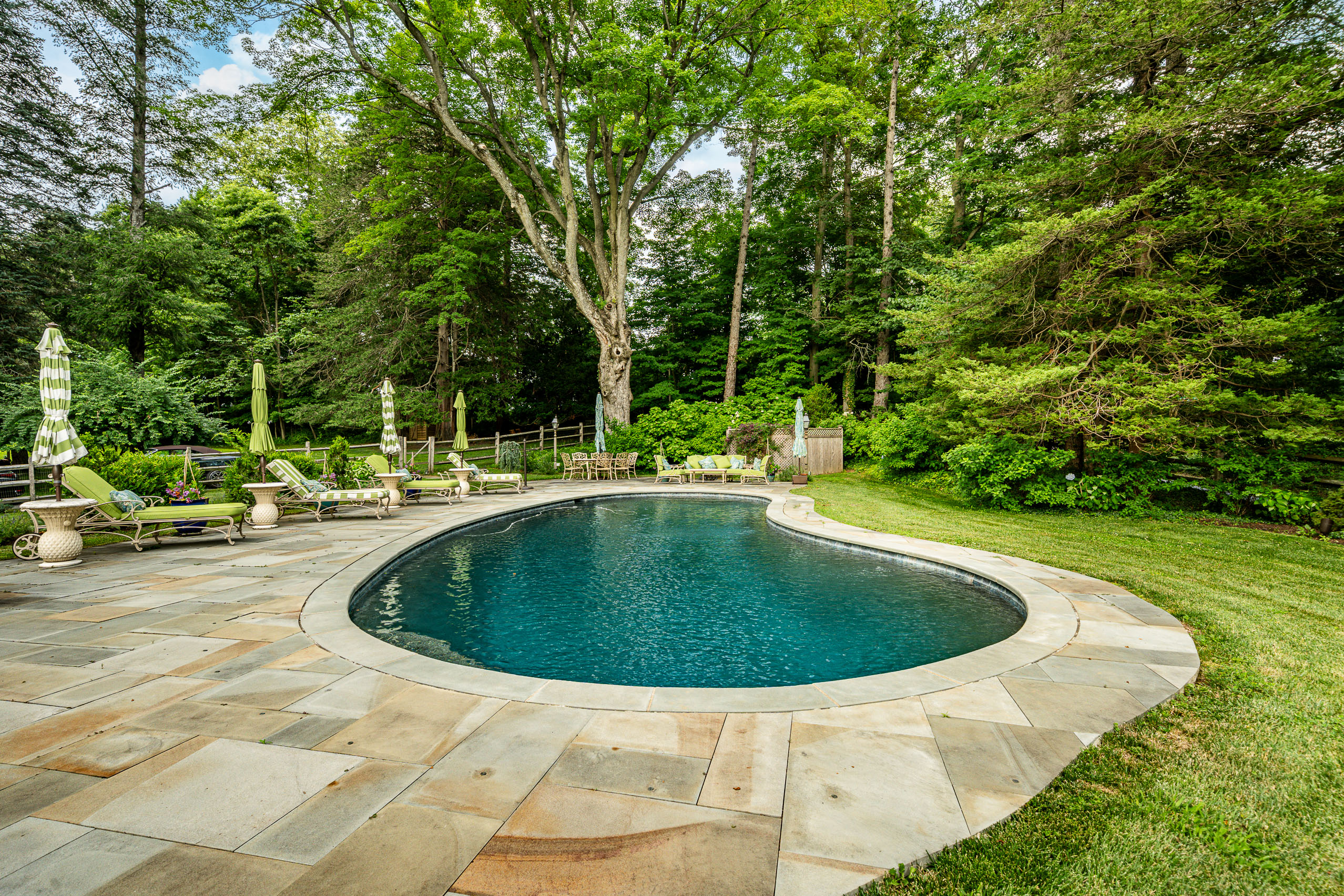
The home has a kidney-shaped heated saltwater pool and a nearby spa.Virtual Vista | Courtesy of Holly Gross Group
Situated on six acres and partly surrounded by conserved land, Fernbank Farm has several seating areas outdoors, including a wraparound veranda that overlooks old and specimen trees. It also has a spa and an in-ground heated saltwater pool, which was restored in 2018.
Elsewhere on the property is a detached three-car garage in a converted 1910 carriage house.
This suburban content is produced with support from the Leslie Miller and Richard Worley Foundation and The Lenfest Institute for Journalism. Editorial content is created independently of the project donors. Gifts to support The Inquirer’s high-impact journalism can be made at inquirer.com/donate. A list of Lenfest Institute donors can be found at lenfestinstitute.org/supporters.
Exton-based Bentley Systems International, the software company with the highest market capitalization in the Philadelphia area, has opened a Center City office as its new base for 150 engineers and other tech and business staff, replacing two smaller outposts in the city.
Bentley customers use what’s now its Cesium Ion mapping platform to show sites and buildings in complex detail on office computers and hand-held devices.
A Penn State grad, who also earned a master’s and taught programming and architecture at the University of Pennsylvania, Cozzi says he sees Philadelphia as a “magical place” for tech companies.
“When I was CEO raising capital on the West Coast, some of the investors told me the best tech entrepreneurs want to move to the [San Francisco] Bay area. I said no, we can build a great tech company in Philadelphia,” he said.
Philadelphia was an early computing industry center. ENIAC, the pioneering system built at Penn to help plan World War II artillery attacks, and other early Philly-built computing systems relied on the vacuum tubes mass-produced for radio manufacturers in Philadelphia and Camden.
But by the 1970s, the industry committed to far more efficient silicon-based microprocessors developed in California’s “Silicon Valley.” Investor-rich cities such as Boston, Seattle, and Austin also became important computer hardware and software centers. Few large tech companies are now based in the Philadelphia region.
Cozzi says Philadelphia’s affordability is now an asset.
“We have reasonable cost of living and fantastic schools, graduates who want to stay here, great restaurants and quality of life, it’s an awesome place for the tech community,” he said, as he prepared to welcome Mayor Cherelle L. Parker, State Rep. Jordan Harris (D., Phila.), and 200 other guests to the new space for a grand opening celebration Thursday evening.
Cozzi said neither the city or state provided incentives for the new office.
Invited guests at Thursday’s event include Bentley clients from Center City-based Pennoni Engineering; Ansys, the Pittsburgh-based owner of AGI, and Earthbrain, a Japanese construction equipment and computing joint venture, which uses Philadelphia as a U.S. base.
Bentley went public in its 2020 IPO at $22 a share. The stock peaked in the low $60s the next year and ran almost as high last summer. It has lately tradedaround $35 a share.
It employs more than 5,000 at offices in 42 countries. The company is worth nearly $11 billion on the Nasdaq stock exchange. That compares to around $6 billion for Newtown, Bucks County-based software-outsourcing provider EPAM, $2 billion for King of Prussia tax-accounting software maker Vertex Inc., and $200 million for Blue Bell legacy hardware and software provider Unisys.
Bentley’s 10th-floor space in the Curtis Center includes a public-meeting area to host events.
The building was built in 1910 for Curtis Publishing and its mass market magazines, led by the Saturday Evening Post and Ladies’ Home Journal. Curtis moved its press operations to Delaware County in 1949 and shut both Philadelphia offices and Delco operations by the time of its 1969 bankruptcy.
The Curtis building’s owner, Keystone Development + Investment, has in recent years added apartments, biotech labs, and other specialized units to help fill the block-long complex.
A 24-year-old man was charged with attempting to burglarize the Chester County home of Eagles running back Saquon Barkley and stealing jewelry worth nearly $800,000 from two other homes, authorities said Wednesday.
Jabir Parker, of Philadelphia, was charged with multiple felonies related to the alleged crime spree through Chester and Montgomery Counties. Parker was being held at the Montgomery County Correctional Facility in lieu of $1 million cash bail until his next court appearance, scheduled for Sept. 10.
In July, Tredyffrin Township police said an attempted burglary occurred at Barkley’s home, with at least one person getting inside. By the time police arrived, the burglars had fled. Barkley and his family were unharmed, police said.
The forced-entry burglaries happened in the overnight hours between June 22 and July 18, Montgomery County District Attorney Kevin R. Steele said Wednesday.
Steele did not name Barkley as one of the victims, but police already had confirmed the case in July.
A spokesperson for the Eagles could not be reached for comment.
Two of the burglaries happened in Lower Merion Township, Steele said. The residents were not at home when they occurred.
In the first burglary, investigators found that 12 pieces of jewelry, with an estimated value of $106,700, were taken.
In the second burglary, 28 items of jewelry worth an estimated $687,292 were stolen. A safe also was taken from the home.
The attempted burglary at Barkley’s home happened on July 18.
During the second burglary, Parker allegedly was captured by a nanny cam talking, presumably on his cell phone, Steele said.
Parker allegedly used his cell phone to communicate with a getaway driver during the two burglaries and one attempted burglary.
Parker allegedly used his cell phone and his Gmail accounts to Google phrases such as “gold presidential rolex,” “briony raymond new york,” asking how much a 1.5 carat diamond was worth, and other searches related to the stolen jewelry items, Steele said.
Parker allegedly rented a white GMC Yukon Denali from a rental location in Philadelphia on July 16 and returned it on July 18 at 6:43 a.m., less than two hours after the attempted burglary at Barkley’s home.
In July, Tredyffrin Township police released an image of a white SUV in connection with the attempted burglary.