Tag: Chester County

  • A Chesco man was detained by ICE a week after his wedding celebration. He was unexpectedly just released.

    A Chesco man was detained by ICE a week after his wedding celebration. He was unexpectedly just released.

    When Nelson Contreras-Gelves arrived at an immigration appointment in June, he worriedly “already saw myself being back in Venezuela.”

    The threat of deportation had loomed ever since he arrived in the United States in March 2022, surrendering at the border and requesting asylum. It hung over conversations he and Ariel Whaley had about marriage. It dictated when they held their wedding reception.

    And just a week after the Chester County newlyweds celebrated their marriage, Contreras-Gelves, 35, walked into an immigration appointment in Philadelphia. An hour later, he called to tell his wife he had been arrested and detained by ICE.

    That is, until Sept. 10, when he was abruptly released after months at Moshannon Valley Processing Center, the giant ICE detention center in Philipsburg, Clearfield County.

    Contreras-Gelves and Whaley say he has no criminal record.

    “Those first couple of days, we just kept on looking at each other, like, ‘Wow, I cannot believe that you are here,’ because it was so out of the world,” said Whaley, 27, during a recent interview in Kennett Square’s Cypress Beach Park, where the pair had volunteered planting trees and rehabbing the park together. Contreras-Gelves does not speak English; Whaley translated his comments during the conversation.

    Contreras-Gelves is one of an increasing number of immigrants taken into custody as they pursue asylum, a long-established legal process that can grant permission to live in the United States to people who could be harmed at home.

    It comes as President Donald Trump takes an aggressive approach on immigration, departing from prior administrations that largely allowed asylum seekers with no criminal record to remain free while they pursued their claims. But in recent months, applicants have been detained across the United States, including Pennsylvania and New Jersey.

    Contreras-Gelves and Whaley are now starting a new chapter — not life as it was before. They don’t know precisely why Immigration and Customs Enforcement granted Contreras-Gelves’ release after a string of denials. And he is under more surveillance than before his detention. He was fitted with an ankle monitor; is limited to traveling only within Pennsylvania, New Jersey, and Delaware; and has frequent in-person check-ins in King of Prussia.

    “There’s still uncertainty, but at the very least, we can go through it together, and not have the same sense of immediacy that we have to make some sort of decision,” Whaley said.

    Nelson Contreras-Gelves talks about his proposal to Ariel Whaley at Cypress Beach Park on Sept. 21 in Kennett Square. Contreras-Gelves was released from ICE detention earlier this month.Monica Herndon / Staff Photographer

    ‘If she enters my heart, she won’t leave’

    When it came to Whaley, Contreras-Gelves was nervous to make the first move.

    The two met in 2023 at Mighty Writers, a nonprofit educational program for children that also offers food and other resources for underserved families in the Philadelphia region.

    Whaley, a Downingtown native, was working at the Spanish-language preschool; Contreras-Gelves started as a volunteer in the food pantry, working his overnight shift at a mushroom farm and then arriving just a few hours later at the nonprofit.

    They spent a lot of time together there. Whaley remembers sorting donations together, sifting through an array of lotions and shampoo. He sniffed each one.

    Something about it struck her: “I just saw a curiosity and a wonder for the little things that I don’t normally see in a lot of people,” she said. “It made me fall in love very quickly.”

    He was likewise smitten. He told a coworker “that muchacha is so pretty.”

    “If she enters my heart, she won’t leave,” he recalled saying.

    As their relationship got more serious and they both considered marriage, they had to discuss it “kind of like in a business way,” Whaley recalls.

    They hesitated for a bit. But ultimately, they bought their rings, and despite his nerves about the pressures of an American proposal, he asked Whaley to marry him in February 2025 at the park where they had their first date.

    After a ceremony in May, Whaley wanted to celebrate their love. They picked the date for their June 2026 reception because it was “literally the last weekend” before Contreras-Gelves could possibly be detained, Whaley said. Whaley’s panic attacks about it got worse, a sharp come-down from the pure happiness she had felt at their reception.

    Though this appointment was routine, and he had been to immigration check-ins previously, they saw what was unfolding around them. They knew the government was increasingly taking people into custody when they appeared. Something similar had happened to Contreras-Gelves’ friend.

    Nelson Contreras-Gelves speaks with a reporter at Cypress Beach Park on Sept. 21 in Kennett Square.Monica Herndon / Staff Photographer

    ‘Keep the faith’

    When the appointment came, what typically was a 15-minute process — fingerprints, a photo — took two hours. Immigration officials asked Contreras-Gelves to report back a few days later with another form of ID from Venezuela.

    Friends and family told Contreras-Gelves not to go back. But he knew it would be worse if he didn’t.

    One week after their party, Contreras-Gelves stopped Whaley 50 feet from the door to the immigration office, told her he would go in alone, and kissed her goodbye.

    He didn’t come back out.

    It was a scramble for Whaley, who mobilized to contact lawyers with the Defender Association’s immigration unit. She struggled to figure out how to see him while he was held at the Federal Detention Center in Philadelphia for roughly three weeks, before he was transferred to the 1,880-bed Moshannon center.

    For months, his detention consumed Whaley’s life. She was constantly on alert, answering calls from the lawyers and waiting to hear from Contreras-Gelves, unsure if the next time he would tell her he was being deported.

    But a community sprung up around them. Whaley helped other detainees contact their loved ones, and helped families navigate adding money to their accounts. She connected others with Contreras-Gelves’ attorneys, and visited another man at Moshannon whom Contreras-Gelves had been detained alongside in Philadelphia, helping him communicate with his wife in Mexico.

    A GoFundMe page, set up by loved ones, raised nearly $40,000 to support Whaley and Contreras-Gelves as they fought for his release. They launched a letter-writing campaign, sending postcards to elected officials.

    Over the months in detainment, Contreras-Gelves faced repeated denials to be released on bond. The conditions of Moshannon were “horrible,” he said. He recalls scalding shower water that burned; a mysterious and unsettling number of bugs; and poor food quality. Medical assistance was often just a pill. He shared his commissary purchases with other detainees who did not have the same access.

    A spokesperson for ICE did not respond to a request seeking comment about the conditions at Moshannon or the reason for Contreras-Gelves’ release.

    He began to get weary. He thought about signing a voluntary departure form and returning to Venezuela. Whaley, at first, agreed, not wanting him to remain locked up when he could be free — and they could be united — somewhere else. But she pressed him to wait.

    “Everybody in our community that already knew us played such a large role in helping us keep the faith, and then all of the people that we’ve met and we’ve been able to help or have helped us have done the same thing,” Whaley said.

    And then on the morning of Sept. 10, as Whaley was heading into work as a graduate assistant at West Chester University, she got a phone call. Contreras-Gelves was talking so fast, it took her a minute to understand: He was being released.

    She hesitated to tell anyone. It didn’t feel real. But after she talked with an ICE agent to coordinate picking him up, she started calling people.

    “I still was like, I’m not going to believe it until he comes out the gate,” she said. “And then he did.”

    Ariel Whaley and Nelson Contreras-Gelves walk through Cypress Beach Park.Monica Herndon / Staff Photographer

    ‘Incredibly lucky’

    When people ask them what comes next, they say there is still a lot of uncertainty. They don’t feel like they are returning to the lives they had before.

    There’s a lot of ambiguity around the relations between his home country and the United States, and what it could mean for his status. But he will have a new court date, some time in the future.

    They hope the momentum they built around Contreras-Gelves’ detention can be directed to others who are still at Moshannon, Whaley said. They continue to help others detained there when they can.

    After Contreras-Gelves’ release, they drove a woman and her children to Moshannon to visit her husband, from whom she had been separated for more than a year without the means to visit.

    “We were so incredibly lucky. There’s so many people who don’t even get the opportunity to fight as hard as we have, and so we are just so grateful to have the support from everybody,” she said. “We both feel a responsibility to help others who are still going through it.”
  • Oxford police officers, uncertain of their futures, resign as borough plans to close department and join regional force

    Oxford police officers, uncertain of their futures, resign as borough plans to close department and join regional force

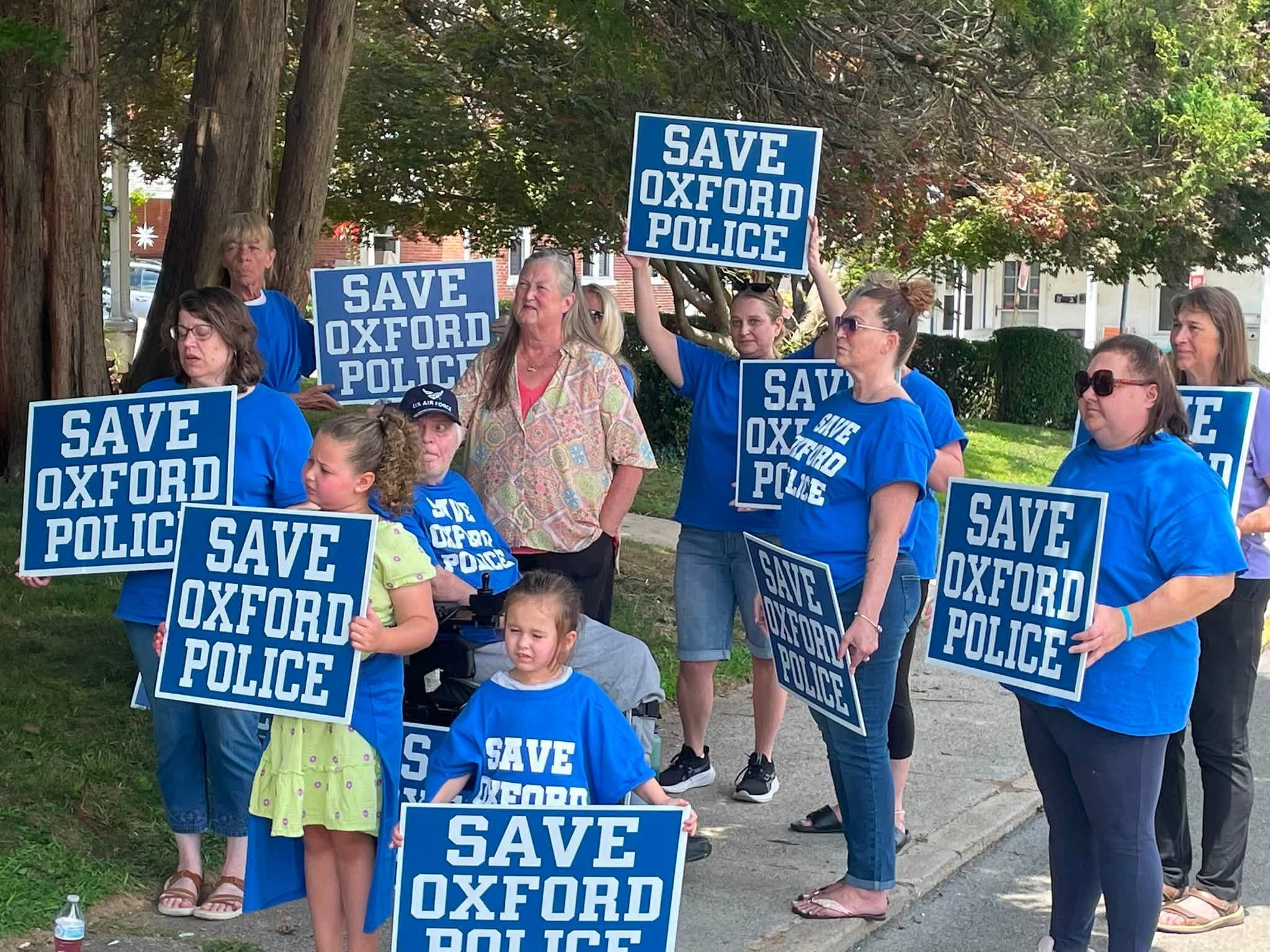
    Three officers will resign from the Oxford Police Department ahead of the borough joining a regional department, with many officers saying the path to employment has felt uncertain and not guaranteed.

    The resignations — which the borough council approved Monday — come after Oxford’s officials approved, in a 5-2 split, to close the doors of their police department, citing ballooning expenses that outpaced the municipality’s revenue.

    Under the vote, the borough will become part of the Southern Chester County Regional Police Department, which serves New Garden, West Grove, and Avondale, on Jan. 1, 2027.

    To accommodate the growing geography, the regional department has pledged to hire 12 additional officers, with Oxford officials saying previously that their goal was for every officer to move over to the new force, if they wanted to. Oxford currently employs 11 full-time officers, including the chief, and several part-time officers.

    Applications for the regional department were sent out to Oxford officers earlier this month, with a deadline to submit by Friday. The applications were also posted publicly.

    But officers said that the road hasn’t been easy or transparent. In a meeting with The Inquirer at their station, the officers said that while it has been publicly stated that they are essentially guaranteed a job at the regional department, everything they have seen is “an opportunity to apply for a job.” Most officers spoke on the condition of anonymity out of fear of retaliation.

    Officers who are leaving said the uncertainty and the borough’s decision to close their department ultimately led them to seek new employment.

    Mayor Philip Harris said the borough was in active contract negotiations and declined to comment broadly on the situation.

    For the officers resigning, he acknowledged the community may “consider that to be in discord with the merger/joinder.” He argued that it “highlights and amplifies what we’ve been saying all along.”

    “It’s an incredibly difficult thing to recruit and retain officers,” he said. “They were recruited by other departments. They were offered better deals. That highlights some of the problems that brought us to this forefront.”

    Officers who have not resigned have begun meeting with the regional department leadership, they said. But with the clock ticking and no formal contract in front of them, the officers are worried about what employment could look like after Jan. 1.

    They are not sure what jobs they will get. With a cumulative experience of more than 280 years, they each have more than one year of service and have acquired rankings from corporal to sergeant. Those positions do not exist at Southern Regional, they say, making it unclear if they will lose rank in the transition.

    Because they have not seen a contract, they don’t know whether they should take a severance package. There are differences in pensions between the two departments that officers think will complicate the transition, too.

    “We have three that have secured jobs at other surrounding departments, and I haven’t seen one damn contract from Southern Regional,” one officer said. “What is my position going over there? How much am I making? What time am I carrying with me? My sick time, my vacation time, my seniority?”

    A yearslong process

    The move to regionalization has, essentially, been three years in the making, with borough officials long saying the police force costs more than it can afford. The borough has had several financial studies done in recent years examining the viability of the police department, and considering alternatives.

    Under the agreement with Southern Chester County Regional, Oxford borough would have two officers on patrol 24-7, like the current structure. Their shifts would begin and end at a local substation, ensuring no gap in coverage, as Oxford is roughly 16 miles away from the other municipalities under the regional department’s coverage. The 12 additional officers, hired as part of this expansion, would join a force of 21 full-time officers.

    There has been a growing trend of municipalities moving toward regionalization for high-price items in their annual budgets, like police, fire, and EMS. Public safety is at least 50% of the pie in most communities, experts have said.

    Regionalization, however, has not been perfect. Across the state, municipalities have joined and then withdrawn from regional services due to increasing costs under the agreement, according to a Keystone Municipal Solutions analysis, which studied police structuring in Oxford.

    Oxford officers said that there had been talks to merge with Southern Chester County Regional several years ago, but those discussions seemingly fell apart. Instead, officers recall, the department tried to make itself a possible regional hub — a force that could serve the municipalities that neighbor Oxford and currently use free coverage from the Pennsylvania State Police. Those talks also struggled to catch on.

    Officers still heard rumblings about joining the Southern Chester County Regional, but formally found out about the renewed effort when the Oxford Police Association received a letter from the borough council saying the start of union contract negotiations would be put on hold as the council explored a merger.

    Meanwhile, officers said, they are frustrated that the borough has not sought to slash costs in other areas, or will not wait for eligible members of the force to retire, where the pendulum on costs could swing back.

    “They have a champagne police department on a beer budget,” an officer said.

    Paul Frie, one of the officers who has accepted a position elsewhere, said that the borough’s decision to close its department caused him to look for other employment.

    “I can’t trust them to have my back,” he said. “I couldn’t work for them when they so haphazardly threw my job to someone else, because it’s not a guarantee.”

    Another officer, who has also resigned, said the uncertainty — and not knowing whether regionalization would stick — ultimately made the decision for him. It was hard: The officer grew up knowing many on the Oxford force, and said it was always a dream to work for the department.

    “I’m glad I got to fill it, partially,” said the officer, who spoke on the condition of anonymity. “It definitely sucks knowing this place isn’t going to be around.”

    This suburban content is produced with support from the Leslie Miller and Richard Worley Foundation and The Lenfest Institute for Journalism. Editorial content is created independently of the project donors. Gifts to support The Inquirer’s high-impact journalism can be made at inquirer.com/donate. A list of Lenfest Institute donors can be found at lenfestinstitute.org/supporters.

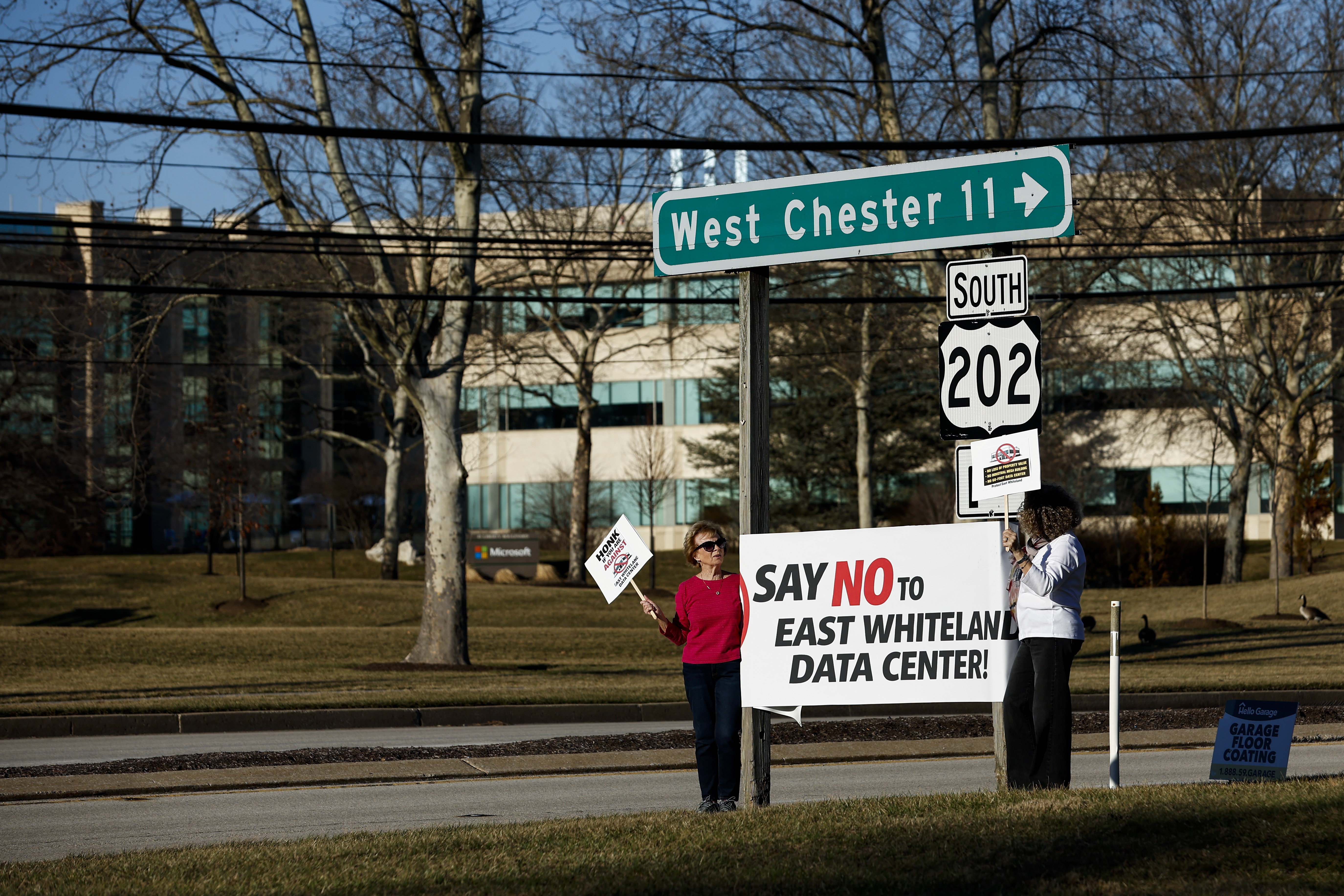
  • East Whiteland officials approve a lengthy data center ordinance, after residents decried the one being built there

    East Whiteland officials approve a lengthy data center ordinance, after residents decried the one being built there

    As East Whiteland grapples with the community’s resounding pushback to a planned 1.5 million-square-foot data center being built, its elected officials have approved an ordinance that would set greater restrictions for any similar proposals in the future.

    The board voted unanimously Thursday to approve the 32-page ordinance, after members had put a data center moratorium in place for months while they re-examined the zoning ordinance that allowed the supersized project to come into the municipality.

    The ordinance doesn’t affect the project, which is slowly taking shape at the former 79-acre Cyprus Foote Mineral Co. property. But the data center’s existence, which has faced staunch community opposition, is certainly what launched the new ordinance, penned in a collaboration between township staff, consultants, and community members.

    “I think this sends the right message,” said resident Tony Gianino, who served on the committee to draft the ordinance. “I know it’s been a little contentious over the last eight or nine months, and I think that we’re not looking at this as a negative, but as a positive, and as a foothold moving forward.”

    East Whiteland is among a number of municipalities in Chester County and the region that have been hurriedly drafting ordinances as more data center projects arrive at their doorsteps. Public backlash against the projects has been loud as data centers, which handle the cloud-storage and computing needs of the companies behind increasingly sophisticated artificial intelligence tools, have come to their communities. Gov. Josh Shapiro, who once sought to make it easier for the projects to call Pennsylvania home, has even evolved his stance.

    In East Whiteland, the ordinance will establish limitations on how close a data center can be to homes, schools, daycares, parks, or churches. It addresses noise, water usage, cooling systems, power supply, and more.

    It’s not a slam dunk, several said Thursday; some speakers were already suggesting amendments. State Sen. Katie Muth, who represents the area and is a frequent flier at data center meetings, suggested changes on portions of the ordinance, quipping, “I would love to have a township to refer to that has a really great ordinance. If you make those changes, you will be that township.”

    Scott Lambert, the board’s chairman, acknowledged it was a living document.

    “Whatever goes on the books tonight, it’s not permanent. It can be amended going forward,” he said. “We’re not locked into this particular ordinance and the specifics at this point in time.”

    Still, there was applause when the officials voted to approve the measure.

    But the effects of data centers don’t stop at the municipal line. East Whiteland residents have been watching nearby Charlestown, which updated its zoning to allow for data centers to be built on the East Whiteland border.

    “I do hope other communities look at this and end up utilizing it, especially Charlestown,” Lambert said. “I hope they do take a look at what we have and implement, to protect both communities.”

    This suburban content is produced with support from the Leslie Miller and Richard Worley Foundation and The Lenfest Institute for Journalism. Editorial content is created independently of the project donors. Gifts to support The Inquirer’s high-impact journalism can be made at inquirer.com/donate. A list of Lenfest Institute donors can be found at lenfestinstitute.org/supporters.

  • Charles P. Baker III, celebrated cofounder of Baker Industries for the ‘least employable,’ has died at 101

    Charles P. Baker III, celebrated cofounder of Baker Industries for the ‘least employable,’ has died at 101

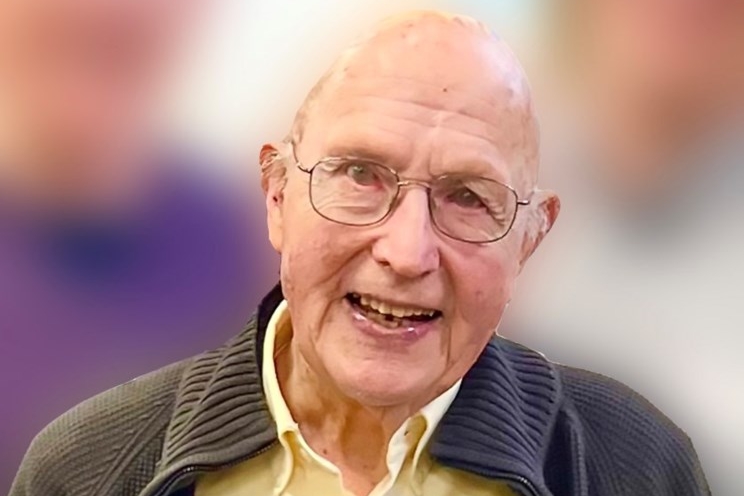
    Charles P. Baker III, 101, formerly of Radnor, celebrated cofounder of Baker Industries, longtime workplace for the “least employable,” former owner of the C.P. Baker & Co. chemical firm, Army veteran, national squash champion, mentor, and volunteer, died Wednesday, Sept. 16, of congestive heart failure at HarborChase assisted living community in Wilmington.

    Born in Philadelphia, Mr. Baker grew up in the old Colonial Hotel at 11th and Spruce Streets in Washington Square West. He and his wife, Louise, founded Baker Industries in 1980, and the workforce development nonprofit has hired, trained, and mentored more than 12,500 workers with physical and intellectual disabilities, substance use disorders, recent periods of incarceration, and housing insecurity who could not find jobs elsewhere.

    Their own son, Justin, lives with epilepsy and, when he could not find suitable employment years ago, Mr. Baker and his wife started their own two-person mail order packaging firm in their Strafford garage. Their son was their first hire.

    “We decided, if we’re going to start something like this, let’s go for the people who need it the most,” Mr. Baker told The Inquirer in 1998, “the ones who are least employable.”

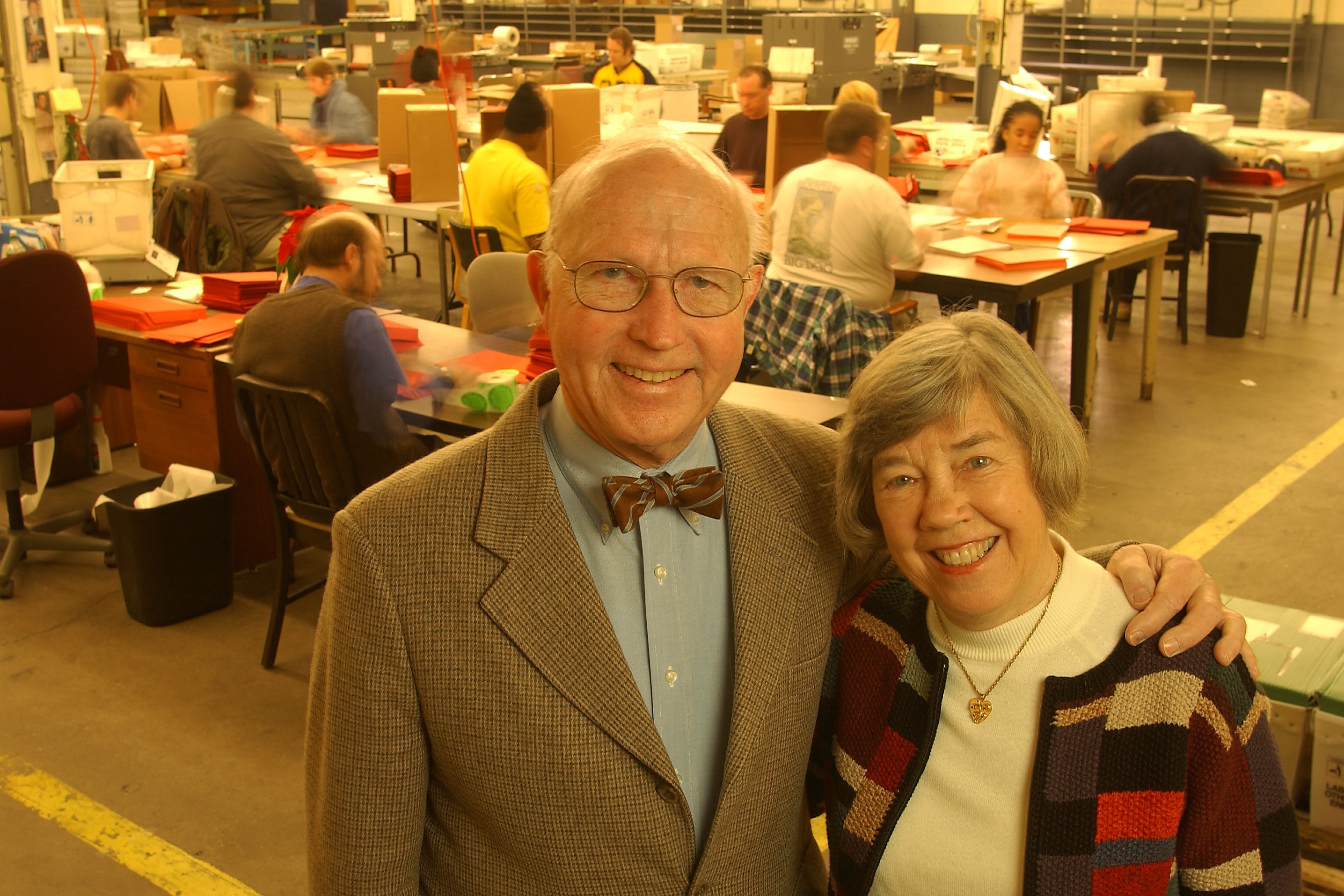
    Mr. Baker and his wife, Louise, stand inside their Baker Industries building in Malvern in 2003. Michael Bryant / Staff Photographer

    For nearly five decades, Baker Industries has contracted light industrial and office work from hundreds of businesses, and operated facilities in Philadelphia, Malvern, and elsewhere. Employees are paid an hourly wage, offered additional training, and encouraged to attend workshops, social events, and support group meetings.

    The company motto is “providing a steppingstone to regular employment,” and many workers have moved on to higher-paying jobs elsewhere. “We have a philosophy of work as rehabilitation,” Mr. Baker told the Daily News in 1988. “The goal is to show these people they can do a whale of a lot more than they think they can do.”

    Mr. Baker served as the unpaid president at Baker Industries until 2002 and then on the board of directors. In the 1950s, he assumed control of his family’s small chemical company, C.P. Baker & Co., and he expanded it before selling it in 1980.

    “Charlie and Weezie Baker believed there is healing in work,” colleagues at Baker Industries said in a Facebook tribute on his 101st birthday in June. “Not just jobs. Work. Showing up. Being part of something. Contributing alongside others.”

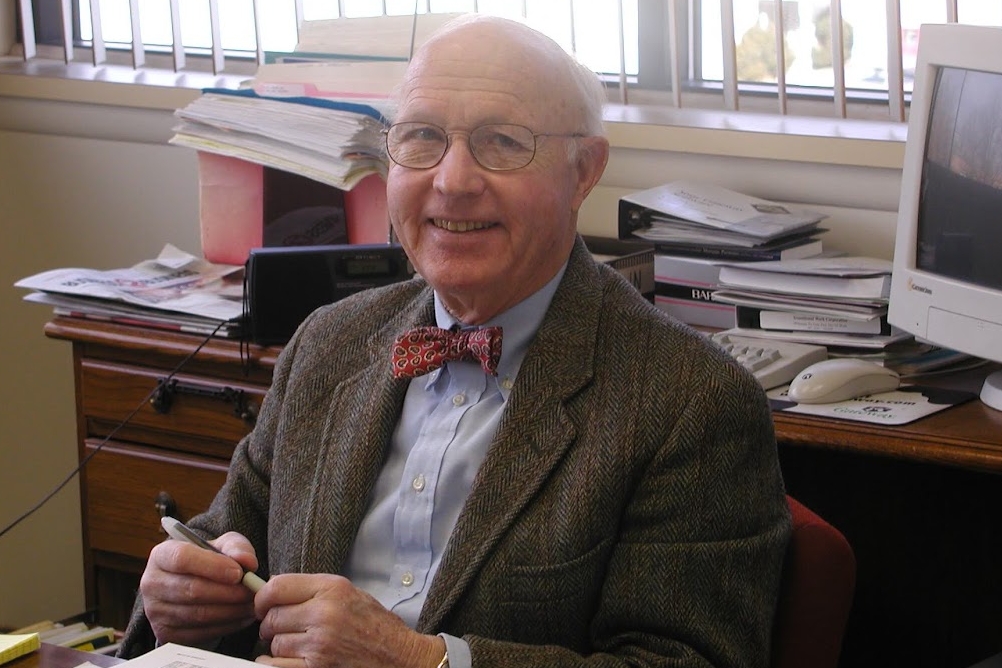
    Mr. Baker played many roles at Baker Industries.Baker Industries

    Turk Thacher, vice board chair at Baker Industries, said: “Charlie was beloved. He was kind to everybody.”

    Mr. Baker, his wife, and their company were featured often on TV shows, and in The Inquirer, the Daily News, and other publications. They won many awards for their community service and innovative business model.

    “I was grateful to have their guidance,” Nic Watson, president of Baker Industries, said, “and we will follow their example for years to come.”

    In 1991, the company was named an inspirational Point of Light by President George H.W. Bush. In 2004, Mr. Baker and his wife earned the legacy award for “community generosity” from the Chester County Community Foundation.

    “They went above and beyond their own self-interest,” a foundation official told The Inquirer then.

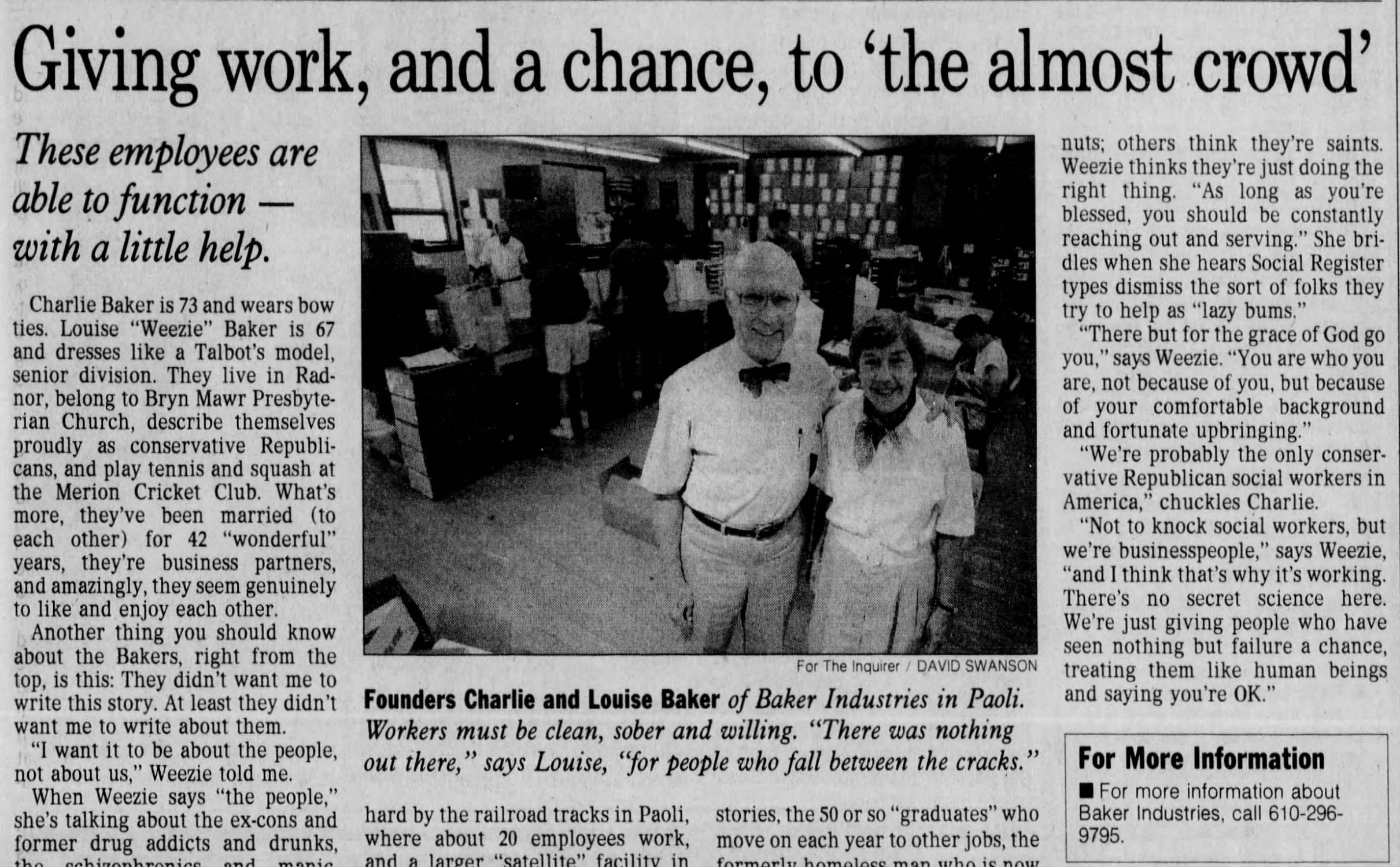
    This photo and article about Mr. Baker were published in The Inquirer in 1998.Newspapers.com

    Away from work, Mr. Baker was an avid squash player, skier, and sailor. He won the U.S. national hardball singles squash championship six times in the 80-and-older division from 2006 to 2016, skied into his 70s, sailed into his 80s, and played squash and tennis at the Merion Cricket Club until recently.

    He graduated from the U.S. Military Academy in 1946 and served more than seven years in the Army. He was stationed in Europe and rose to captain. His family called him a “relentlessly joyful spirit” in a tribute and said: “The world was a better place for his presence.”

    Charles Pitman Baker III was born June 24, 1925, in Philadelphia. His father, Charles Jr., was manager at the old Colonial Hotel, and Mr. Baker told stories of dropping water balloons on passing pedestrians from windows when he was very young and spending summers at the beach and on boats with the Ocean City Yacht Club.

    He was a star squash player at the Haverford School and known by classmates as “the Arm,” his 1943 senior yearbook said, “because of the vicious way he wields a racket.” His mother died when he was 11.

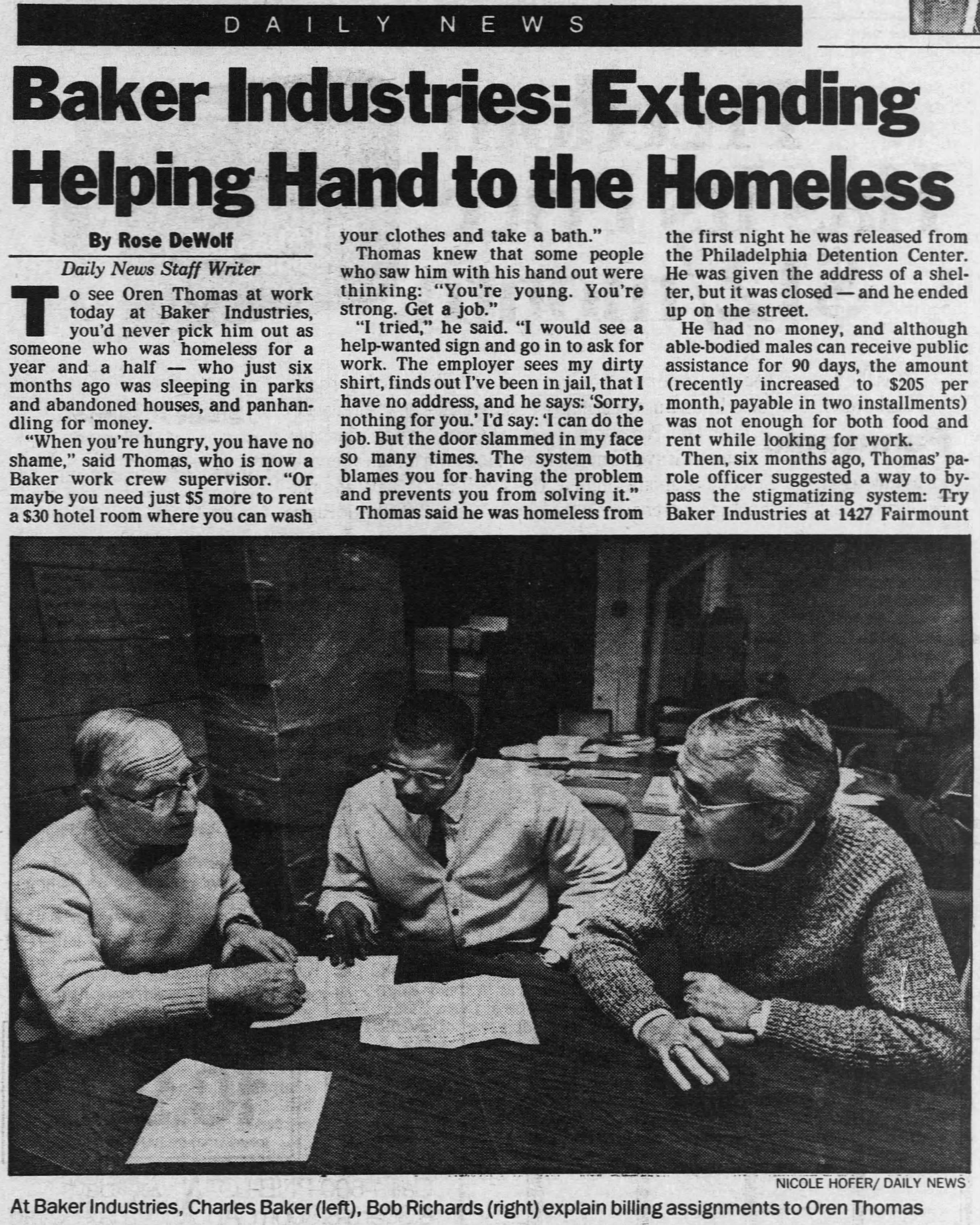
    This photo and article about Mr. Baker (left) appeared in the Daily News in 1990.Newspapers.,com

    He met Louise Wilhelm while water-skiing in Ocean City, and they married in 1955, and had sons Charles IV and Justin and a daughter, Sandra. His wife died in 2025.

    Mr. Baker and his wife attended Wayne Presbyterian Church, and he was known for his bow ties and wide smiles. He was funny, his daughter said, and liked to sing show tunes anytime anywhere, and write corny poems on birthday cards.

    “He was a wonderful dad who loved his family,” his daughter said. His family said in a tribute: “His legacy of service, humor, and kindness will live on for many generations to come.”

    His wife told The Inquirer in 2004: “Charlie has a kind heart.”

    Mr. Baker (front left) celebrated his 100st birthday in June 2025 with his family.Courtesy of the family

    In addition to his children, Mr. Baker is survived by four grandchildren, five great-grandchildren, and other relatives. Two sisters died earlier.

    Visitation with the family is to be from 10 to 11 a.m. Saturday, Oct. 17, at Wayne Presbyterian Church, 125 E. Lancaster Ave., Wayne, Pa. 19087. A celebration of his life is to follow. Bow ties are optional but encouraged, the family said.

    Donations in his name may be made to Baker Industries, 184 Pennsylvania Ave., Malvern, Pa. 19355.

    His wife told The Inquirer in 2004: “Charlie has a kind heart.”Baker Industries
  • Reining in raucous student housing | Inquirer Chester County

    Reining in raucous student housing | Inquirer Chester County

    Hi, Chester County!

    After years of dealing with raucous student tenants, Tredyffrin Township officials have voted on a new ordinance aimed at better curbing problems. Here’s how it will work. Also this week, Vanguard has shifted its focus amid its mutual fund and exchange-traded industry peak and then decline, Phoenixville is temporarily morphing into Gilmore Girls’ beloved Stars Hollow, plus, we look inside a nearly $7 million Malvern property that’s for sale.

    — Lisa Dukart (chestercounty@inquirer.com)

    If someone forwarded you this email, sign up for free here.

    Tredyffrin Township takes on raucous student housing

    Mount Pleasant Avenue has several homes rented to students. Tyger Williams / Staff Photographer

    Tredyffrin Township officials voted to approve a new ordinance this week aimed at giving them more power to address unruly student tenants.

    It allows the township to hold landlords “directly responsible” for the behavior of student tenants and their guests, including directing landlords to evict students with too many violations, and fining landlords for violations.

    The move comes after some residents have dealt with years of bad student behavior ranging from drunkenness and rowdiness to yards and streets strewn with detritus, something they worried could intensify thanks to Villanova University’s new nearby Cabrini campus.

    “I hope this makes a difference, and I hope that we can hold the landlords or the companies, whoever [owns] the property, responsible for this,” said board member Carlotta Johnston-Pugh.

    The Inquirer’s Brooke Schultz delves into the details and what prompted the change.

    📍 Countywide news

    💡 Community news

    • Malvern-based investment giant Vanguard has seen its share of the U.S. mutual fund and exchange-traded industry plateau in recent years and shrink this year, marking the end of an era of decades-long growth in the segment, as it shifts focus under a relatively new CEO. The Inquirer’s Joseph N. DiStefano explores the changes.
    • The Garces Foundation, which provides access to English classes, free healthcare, and other support for immigrants, regardless of their status, is expanding its free community health days to Kennett Square, where more than a quarter of the population is foreign-born. It’s also rebranding to Comunidad Garces.
    • Several businesses in Phoenixville will be transformed into ones straight out of Stars Hollow from beloved TV show Gilmore Girls this weekend, including Le Chat Club, Doose’s Market, the Dragonfly Inn, and Luke’s Diner.
    • A “magical” 15-acre Willistown Township property with walking paths, a waterfall, a meditation garden, and a more than 6,000-square-foot, four-bedroom fieldstone house is on the market for just under $7 million. Take a peek inside.
    • Several gold vehicles have been spotted at the Devon Tesla dealership recently, fueling speculation that the company is looking to expand its autonomous Cybercab program to the region. Here’s what we know so far.
    • Tredyffrin-Easttown Fire Commission has appointed Eric Felker as chief of fire and emergency medical services. Felker is a physician assistant who has a combined four decades of experience with fire and EMS departments.
    • A developer is looking to create a mixed-use residential community at 3200 Horseshoe Pike in Honey Brook. Planebrook Partners, LLC is proposing 35 townhomes and 34 twin homes on the roughly 18.6-acre parcel. Township supervisors will consider the proposal at Monday’s 7 p.m. meeting.
    • East Whiteland Township’s board of supervisors will consider adopting a curative amendment at tomorrow night’s meeting regarding future data center developments.
    • On Tuesday, West Brandywine Township’s board of supervisors will resume discussions about Imaging Associates’ and Toll Brothers’ plans to develop 500 Hibernia Rd. into 163 single-family homes and 74 twin homes. The meeting will take place at North Brandywine Middle School from 6 to 9 p.m.
    • Uwchlan Township officials will present master plans for Lionville and Rossi Parks tonight at 7 p.m.

    🏫 Schools briefing

    🍽️ On our plate

    • Beef and Bird Public House is taking over the former Slow Hand space in West Chester. The new concept at 30 N. Church St. is from the team behind Bar Avalon.
    • Wimpy & Dee’s Diner has reopened under new ownership at 5051 Horseshoe Pike in Honey Brook following a monthslong closure.

    🎳 Things to do

    🎭 Shakespeare in the Park: High school performers will take on the bard’s romantic comedy Much Ado About Nothing. ⏰ Friday, Sept. 25, 5 p.m. 💵 Free 📍 East Bradford Park amphitheater

    🍎 Cider Fest: Get a taste of fall at this annual festival featuring locally made apple cider, bread-baking demonstrations, and live music. ⏰ Saturday, Sept. 26, 10 a.m.-4 p.m. 💵 $5-$10 📍 Mill at Anselma, Chester Springs

    🍻 Bistro on Bridge Oktoberfest: Sip Bavarian-inspired beers and nosh on German-style eats at this celebration where lederhosen and dirndl are encouraged. ⏰ Saturday, Sept. 26, 11 a.m. 💵 Pay as you go 📍 Bistro on Bridge, Phoenixville

    🍂 Warwick Fall Fest: Celebrate the season with pumpkin painting, crafts, vendors, food trucks, and pony and highland cow rides. ⏰ Saturday, Sept. 26, 11 a.m.-4 p.m. 💵 Pay as you go 📍 Warwick County Park, Pottstown

    🍷 Catalina Wine Mixer: This Step Brothers-inspired 21-and-over event features local wines from Penns Wood, Chaddsford, East Cooke, and Harvest Ridge Wineries; Paradocx Vineyard; and Turks Head Wines, as well as beer from Locust Lane Brewery. ⏰ Saturday, Sept. 26, 2-6 p.m. 💵 $25-$50 📍 American Helicopter Museum, West Chester

    🖼️ Fall Arts Fest: Explore local arts and vendors, and grab a bite to eat at this festival benefiting the Chester County Mural and Arts Project. ⏰ Sunday, Sept. 27, noon-3 p.m. 💵 Pay as you go 📍 Kerr Park, Downingtown

    🏡 On the market

    A Kennett Square home with ample outdoor living space

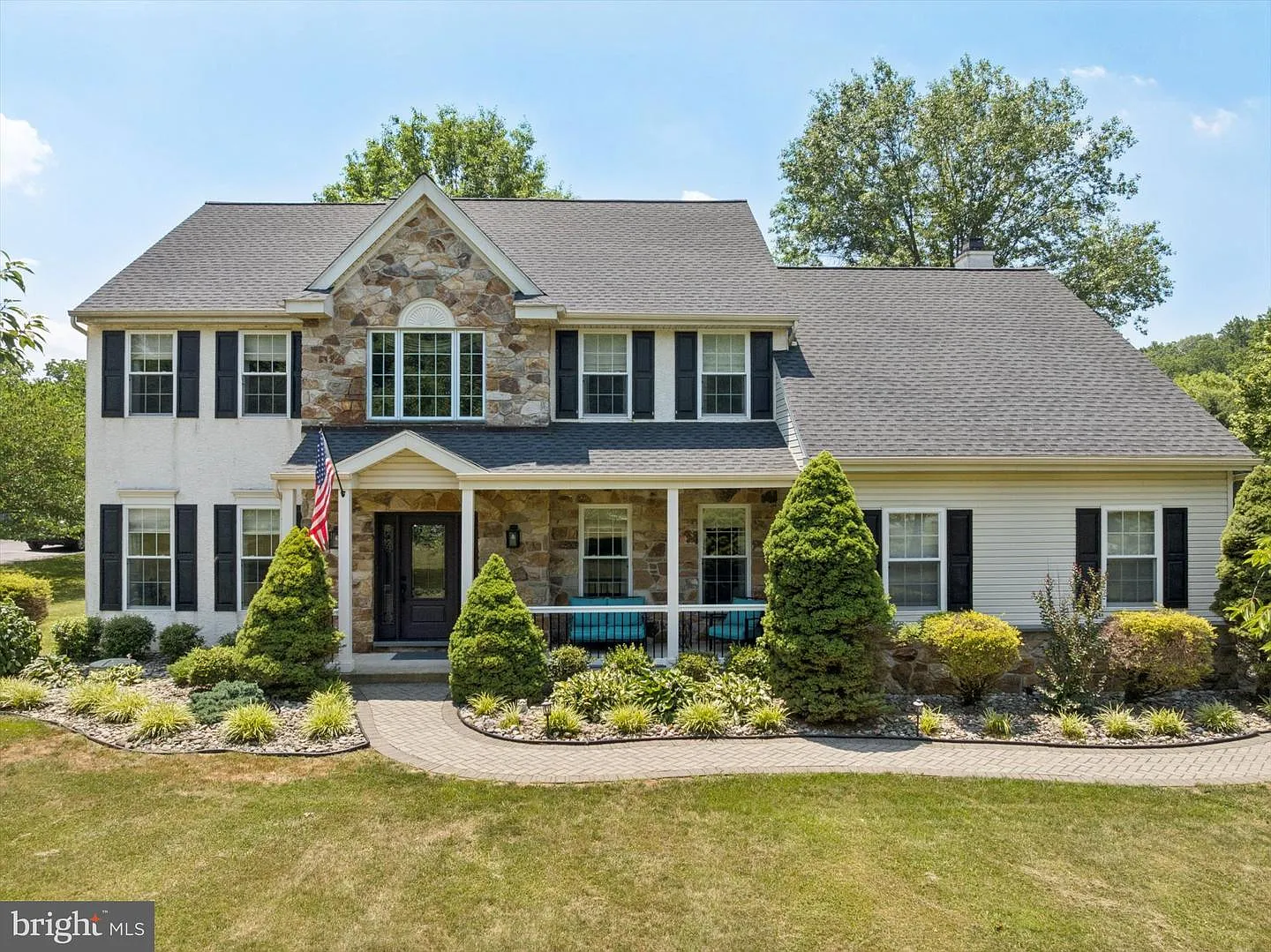
    This four-bedroom Kennett Square home has plenty of outdoor living space thanks to a covered front porch, a large back deck, a separate gazebo-covered patio with a hot tub, and a fire pit. Inside, the updated home has a striking dining room with a built-in buffet and beverage refrigerator, a kitchen with granite countertops, and a family room with vaulted ceilings and a stone fireplace.

    See more photos of the home here.

    Price: $919,000 | Size: 3,937 SF | Acreage: 0.83

    📈 Chester County market report

    • Median listing price: $599,000 (down $900 from July) 📉
    • Median sold price: $568,200 (down $41,800 from July) 📉
    • Days on the market: 33 (down one day from July) 📉

    This Chester County market report is published on a monthly basis. Above is data for August from realtor.com.

    🗞️ What other Chester County residents are reading this week:

    By submitting your written, visual, and/or audio contributions, you agree to The Inquirer’s Terms of Use, including the grant of rights in Section 10.

    This suburban content is produced with support from the Leslie Miller and Richard Worley Foundation and The Lenfest Institute for Journalism. Editorial content is created independently of the project donors. Gifts to support The Inquirer’s high-impact journalism can be made at inquirer.com/donate. A list of Lenfest Institute donors can be found at lenfestinstitute.org/supporters.

  • Raucous student housing has plagued a Chesco neighborhood. A new measure will hold landlords responsible.

    Raucous student housing has plagued a Chesco neighborhood. A new measure will hold landlords responsible.

    A new ordinance seeks to give Tredyffrin officials more power to address unruly student tenants, after quality-of-life issues have plagued a Chester County neighborhood for years.

    In a unanimous vote Monday, the municipality’s seven elected officials voted to approve a new ordinance regarding student housing that changes the enforcement mechanism, allowing them to go after the landlords who rent to students — rather than the students themselves.

    “I hope this makes a difference, and I hope that we can hold the landlords or the companies, whoever own the property, responsible for this,” said board member Carlotta Johnston-Pugh.

    The updated ordinance comes as neighbors — young families, lifelong residents, and aging seniors — on Mount Pleasant Avenue have struggled for years to live alongside a rotating cohort of Villanova University students.

    Residents have said previously that they have walked out in the morning to find vomit on their cars, beer cans strewn across the streets and yards, and students passed out on the porch. They’ve been kept up by loud parties, rideshare cars speeding down the street, or a lost drunk student trying to kick in the door.

    With Villanova’s new 112-acre Cabrini campus off Upper Gulph Road, putting it now within walking distance to the houses and the parties, residents worry that the problems could intensify.

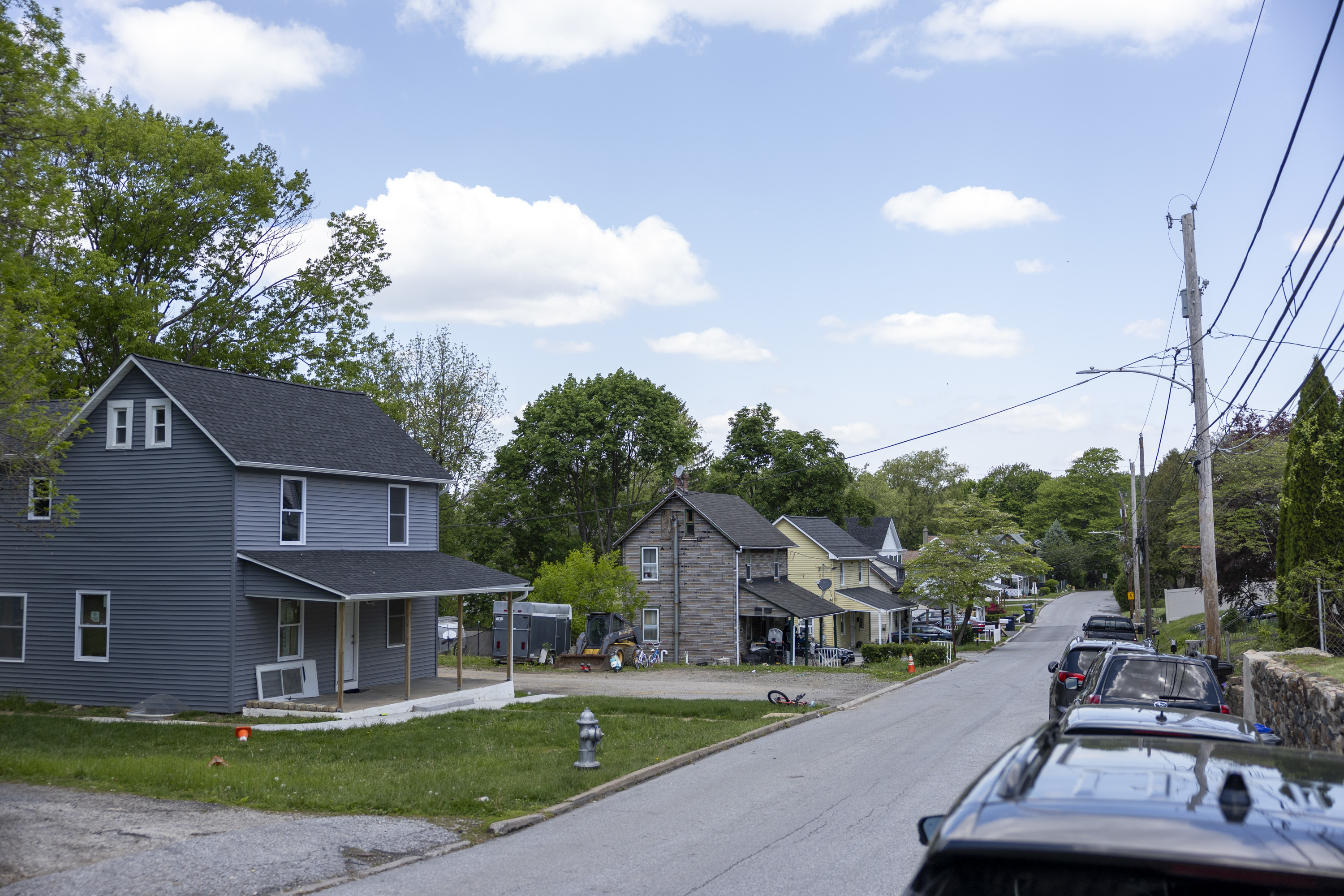
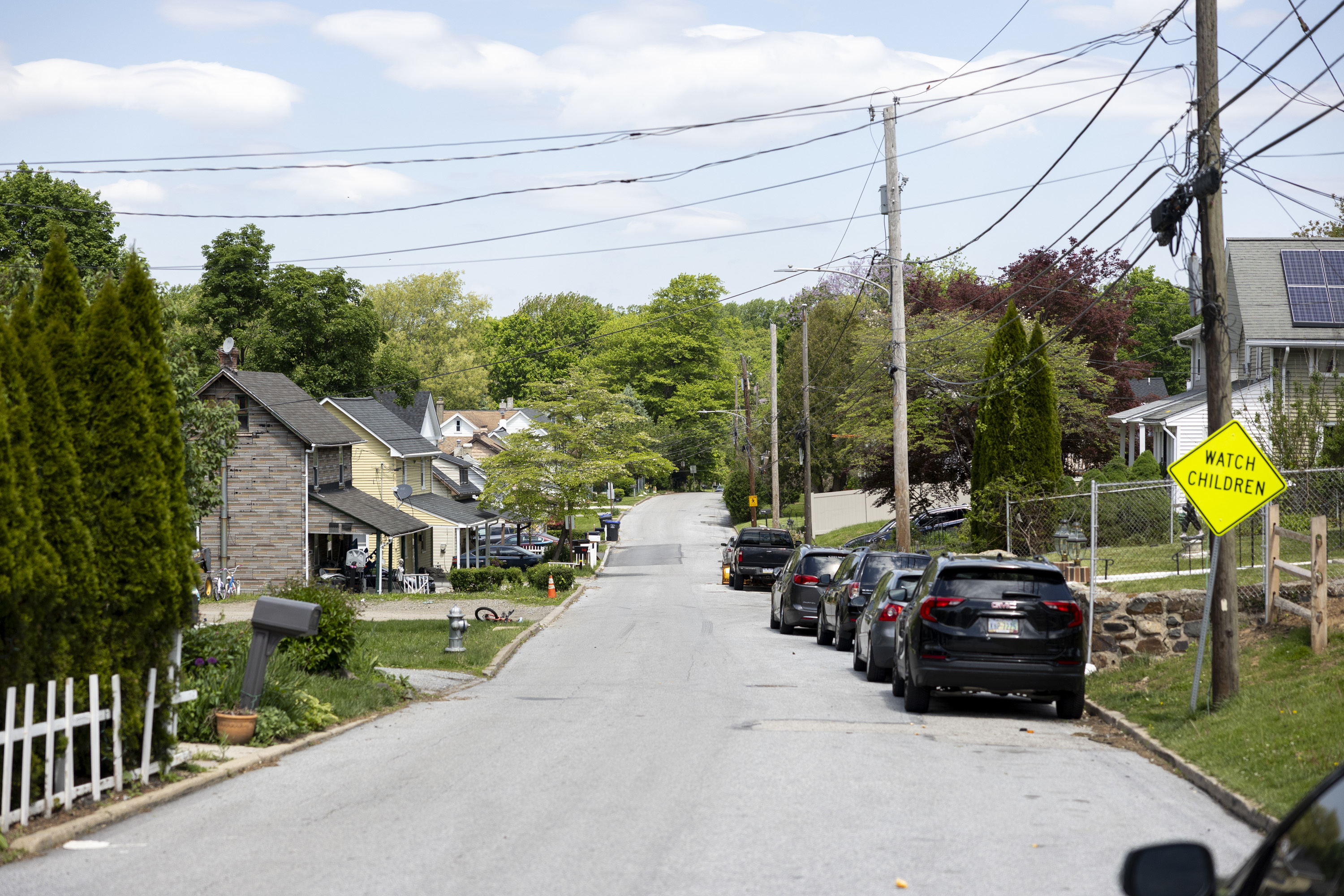
    At least seven houses are rented to students, several along Mount Pleasant, and a few on nearby Henry Avenue, township officials said previously. Another house where students live isn’t zoned properly, which the township has been trying to address, officials said previously.

    Board member Hans van Mol said it bothered him, when he first joined the board less than a year ago, that the Mount Pleasant community felt that the township wasn’t responding to their concerns.

    “Our ordinance wasn’t suited to keep up with the issues that were going on that needed to be remedied,” he said. “I’m very glad that we finally got to this point here, if not even just for the potential that the township can actually promote a safer, stronger community, but that people can actually feel we’re working on it.”

    Tredyffrin first adopted a student housing ordinance more than a decade ago in response to concerns. The measure limited household occupancy to three students and prohibited the houses from being too close together, though the properties along Mount Pleasant were grandfathered in. But its power was somewhat limited.

    The new ordinance — a much more robust measure — notes that the owner of the student house will be “directly responsible” for the behavior of student tenants and their guests. It gives the township the ability to inspect the home, if there are suspicions that there are more than three students living in the house. It allows the township to direct the landlord to evict students if three violations occur within the same year. Landlords can be fined up to $1,000 for violations of the ordinance.

    Residents should keep calling the police when issues arise, “so that they can properly document it to be used against the landlord enforcement of this ordinance,” said board vice chair Sharon Humble.

    For some of the residents, it was a promising effort.

    “Yes, I have been one of those that have come and … voiced my concern about what has been going on,” said Mount Pleasant resident Shawn Jackson. “I read through the ordinance, and it’s very comprehensive, and I’m very happy about that.”

    Kevin Stroman, a longtime resident of the neighborhood who now runs a mentoring program at the historic Carr School/Mount Pleasant Chapel across the street from one of the student houses, has long tried to offset negative relationships with the students and the residents.

    “I think the climate in Mount Pleasant is so bad right now because of certain students getting out of control,” he said. “I like the idea [of the ordinance] because no doubt the owners have to have something that will make them look at who they rent to.”

    Others wished it went further. G. Hayward Simpson, a Mount Pleasant resident who lives in the Montgomery County portion, said that the students “have no need, want, will to be part of any community.” He wanted to see student housing entirely excluded from the neighborhood.

    “I’m not saying this with any kind of malice, or I don’t want these kids to have a good time. I just don’t want them to live on the block. I want to see single families,” he said.

    Jeff Hilliard, a landlord with a student rental on Mount Pleasant, said he “lay[s] down the law” with his tenants.

    When he first purchased the house for rentals, Hilliard said he gave his number to the neighbors so they could call him if they ever had a problem with the students. They’ve never contacted him, he said, but he knows the police have been called and “literally driven away because there was no issue whatsoever.”

    “So unfortunately, I think it’s just a couple bad tenants and a couple bad landlords that are causing this for these nice people of Mount Pleasant,” he said.

    This suburban content is produced with support from the Leslie Miller and Richard Worley Foundation and The Lenfest Institute for Journalism. Editorial content is created independently of the project donors. Gifts to support The Inquirer’s high-impact journalism can be made at inquirer.com/donate. A list of Lenfest Institute donors can be found at lenfestinstitute.org/supporters.

  • The Garces Foundation is changing its name and expanding to Kennett Square

    The Garces Foundation is changing its name and expanding to Kennett Square

    Olivia Ponce left her native Mexico for South Philly in 2001, with a young daughter and no extended family; she strongly felt the lack of a support system.

    Putting her own health and personal growth on the back burner to give her child a better life, she worked unceasingly in the restaurant industry for more than a decade. A phone number on a light pole offering English classes changed her life.

    The digits belonged to the Garces Foundation, created in 2012 by Ecuadorian American chef Jose Garces and Cuban dentist Beatriz Garces after the death of a friend who had avoided seeking medical care out of fear of deportation.

    Since then, the organization has helped Philadelphians from 26 countries in 12 languages, providing access to English classes, free healthcare, and support as they adapt to their new home, regardless of insurance or immigration status.

    Now, to honor its communal sentiment, the foundation has changed its name from Garces Foundation to Comunidad Garces, beginning Tuesday.

    As the organization approaches its quinceañera, the new name is just one change. The agency is expanding its free community health days from Philly to Kennett Square, where more than 28% of the population is foreign-born.

    For Beatriz Garces, the new name responds to the way people have already come to see the organization: as a community.

    “We felt like, given everything the community is going through at this moment, it was even more important to evolve the name to something that really feels welcoming to all immigrants,” she said.

    Although the word comunidad is Spanish for community, Beatriz Garces said, the sentiment and their doors are open to people from all walks of life.

    For years, Comunidad Garces has been holding Community Health Days about every other month in Philly to make medical and dental care free and accessible for people who otherwise would not have it.

    Since 2021, the foundation has treated about 5,000 people through medical assistance and the dental program, Beatriz Garces said.

    Colon and prostate cancer screenings are now available, as well as mammograms through Penn Medicine’s mobile mammography program.

    Now, these services will expand to Kennett Square in partnership with Laurel Dental of West Grove.

    “It’s the first time we expanded beyond Philadelphia,” Jose Garces said. The first Kennett Square community health day was held Saturday.

    “Just on our first day, we discovered five abnormalities in women through our mammogram screening and were able to pass them on to Penn Medicine to continue their evaluation, so day one already making an impact.”

    In the last two years, Comunidad Garces has been expanding to adapt to the needs of a growing immigrant community living through challenging times, Beatriz Garces said.

    Since 2025, the foundation has also offered digital literacy classes, even providing computers so folks can enroll in the program.

    Ponce herself learned English, got her GED certificate, discovered and treated her prediabetes, and found a support system through the organization.

    “Immigration always leaves pain in us, but there is something about the power and resistance we find through this community,” Ponce said. At the South Philadelphia-headquartered foundation, “it feels like you are loved, like there is this family vibe.”

    Most recently, Ponce was hired as a case manager at the foundation. She now helps community members find housing, employment, and schools and manage their healthcare visits.

    The expansion to Kennett Square is, in part, a way to make sure immigrants have access to what they need to build their new lives in the United States, Beatriz Garces said.

    As the name change unfolds, Jose Garces hopes the community feels more included and welcome.

    “Our name is changing, but the world remains the same,” he said. “Comunidad means community, and that means our door is open to everybody.”

  • Swarthmore College renames hall for two prominent Black scholars with Philadelphia ties

    Swarthmore College renames hall for two prominent Black scholars with Philadelphia ties

    Swarthmore College has renamed the former Trotter Hall and its adjacent lawn for two Black scholars who feature prominently in its history: the school’s first African American professor and an alumnus who served as a policy adviser to several U.S. presidents and formerly led the University of California, Berkeley School of Law.

    The move comes after the college last year stripped former professor Spencer Trotter’s name from the hall after the school learned Trotter had dug up a Native American burial ground in Chester County in 1899 and displayed human remains on campus.

    Effective immediately, the hall and its adjoining lawn will be known as Edley-Morgan Hall and Edley-Morgan Lawn, named for Kathryn L. Morgan, the late Swarthmore professor emerita of history, and Christopher F. Edley Jr., the late legal scholar and proponent of affirmative action who worked closely with three Democratic presidents and with six presidential campaigns.

    “This renaming is an important milestone, but not the end of this work,” Swarthmore president Valerie Smith said in a message to campus Monday. “Our further efforts will also ensure that this reckoning with the past is appropriately documented and acknowledged so our community can continue to learn and heal.”

    The late Christopher F. Edley Jr. is a legal scholar and Swarthmore College alumnus. Swarthmore announced it is naming the former Trotter Hall and its adjoining lawn for Edley and Kathryn L. Morgan, the late Swarthmore professor of history, who was the college’s first African American professor.Courtesy of Swarthmore College

    The college undertook an extensive process that included input from more than 500 students, faculty, and staff through a campus survey, a panel discussion with other college leaders who had gone through renaming processes after controversies, a session with a leader of the Delaware Tribe of Indians, and research on potential new namesakes.

    Through the process, the community concluded the new namesake or namesakes should be someone with a direct connection to the college and honor departments based in the building — history, political science, classics, and the writing associates program. The community also wanted the new namesake or namesakes to be “consistent with or expand the diversity of representation on campus.”

    When the process began, of Swarthmore’s 70 primary buildings, 67% were named for people, and of those, 53% were named for one or more men, 26% for one or more women, and 21% for both, the college had said. All but two of the namesakes were white and about half were Quakers.

    More than 75 names were considered for the hall, which initially opened in 1882, the college said.

    Swarthmore hired Morgan in 1970, and she joined the history department as its first folklorist, according to a 2011 Swarthmore story about her passing in 2010. She got her bachelor’s degree from Virginia State University, a master’s degree from Howard University and another master’s degree and doctorate from Penn.

    She taught classes including Folklore and Folklife Studies, History through Folklore and Literature, Black Women in Historical Perspective, and Black Culture and Consciousness, according to the college. Though she initially was denied tenure, she eventually became the first Black woman to get it at Swarthmore and talked about tensions in her department in a 2000 Swarthmore College Bulletin interview, the college said in its piece.

    Her work Children of Strangers: The Stories of a Black Family (1980), was the first work of African American family folklore by a folklorist.

    In 2000, a scholarship was established in her name and a poetry festival in her name was held in 2009.

    “One of the first things I tell my students,” Morgan said, according to the Swarthmore piece, “is to go home, look to your families, to the stories you were told as children. They’re the most important stories in the world.”

    Morgan, who was born and raised in Philadelphia, was described in the Swarthmore piece as “a wise, charismatic woman who intellectually bridged the gap between W.E.B. Du Bois and Malcolm X, a militant yet gentle soul who embraced everything of interest with intensity, and a radiant presence who drew on lessons learned from her ancestors as others draw breath.”

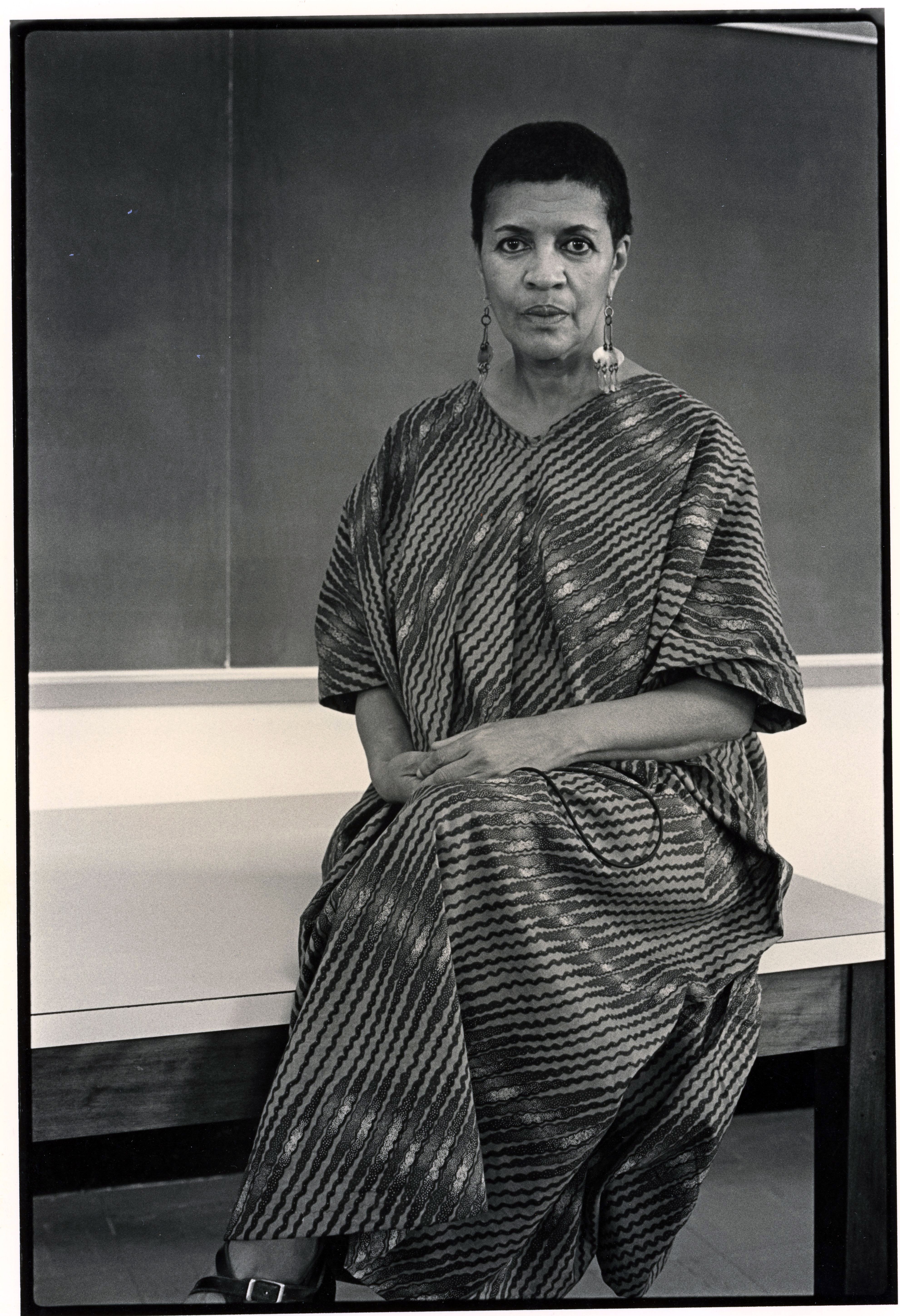
    The late Kathryn L. Morgan, professor emerita of history at Swarthmore College, was the first African American professor at the school. The college is renaming the former Trotter Hall and its adjoining lawn for Morgan and legal scholar Christopher F. Edley Jr., a Swarthmore alumnus.Courtesy of Swarthmore College

    Edley, who died in 2024 and spent part of his youth in Philadelphia, got a degree in mathematics and economics from Swarthmore in 1973 and later a master’s in public policy and a law degree from Harvard. Before serving as law school dean at Berkeley from 2004 to 2013, he was a professor at Harvard. He served on Swarthmore’s board of managers from 1982 to 1993.

    He worked for the White House domestic policy staff in the 1970s when Jimmy Carter was president, advising on issues including food stamps, child welfare and disability, according to an article on the Swarthmore website. During Bill Clinton’s administration, he worked in the Office of Management and Budget and served as special counsel to the president. And in 2008, he worked on Barack Obama’s successful presidential campaign and served on his presidential transition board. Obama had been a student of Edley’s at Harvard, according to Edley’s obituary in the Washington Post.

    When he received an honorary degree from Swarthmore in 1999, Edley talked about what he learned at the school.

    “I learned to face the limits of my intelligence, without fear,” he said, according to the Swarthmore piece. “I learned what it means to really understand something hard, only to realize that I was dead wrong, or that there was another, perhaps better way to understand it … And I learned that when there is trouble, find a grove of lilac bushes, lie down, get drunk on the fragrance, and think about important things.”

    Swarthmore’s renaming process started after a 2022 article in The Inquirer that mentioned how a former Swarthmore professor and student had dug up a burial ground and moved a skeleton and objects buried with it to the college.

    Swarthmore researched and discovered the professor was Trotter. The college first checked to make sure there were no remains from Trotter’s collection being improperly handled at the school; there were not. Officials found a collection of unidentified human bones that the college likely had obtained legally — but probably were initially acquired unethically — and moved them into storage.

    The college renamed the building Old Science Hall last December when Smith named a task force of students, faculty, and staff members to consider the next steps.

  • After decades of fund growth, Vanguard pivots

    After decades of fund growth, Vanguard pivots

    “Trees don’t grow to the sky,” the late Vanguard Group founder John C. Bogle Jr. was fond of warning — meaning that it’s a mistake to think happy days and profitable trends will go on forever.

    Malvern-based Vanguard itself seemed to defy Bogle’s warning. Led by Vanguard’s index funds simulating the S&P 500 and other broad market benchmarks, founded 50 years ago on Aug. 31, Vanguard grew relentlessly, even accelerating after the dot-com bust and in the Great Recession, when rival Fidelity and other investment firms shrank and cut staff.

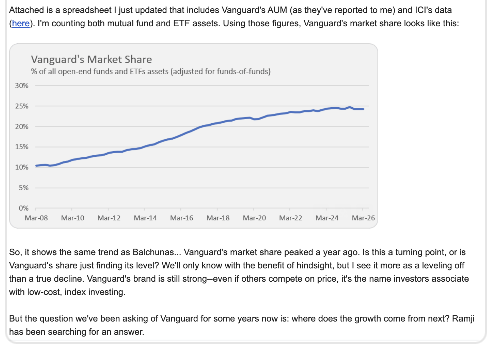
    But data posted by Morningstar Inc. and confirmed by other investment trackers show Vanguard’s share of the U.S. mutual fund and exchange-traded industry, a business that now totals $40 trillion, has plateaued in recent years and actually shrank to 27% from 28% over the past year.

    Vanguard Group’s market share of U.S. mutual funds and exchange-traded funds (EPS), as measured by Jeff DeMaso, publisher of the Independent Vanguard Adviser, using data collected from the Investment Company Institute and other industry sources. The text also references similar findings by Eric Balchunas, a Bloomberg investments analyst and author of a book on Vanguard’s founder, “The Bogle Effect.”Jeff DeMaso

    “SHOCK: Vanguard’s market share of US fund assets has begun to DECLINE after rising for 50 years,” Eric Balchunas, a Bloomberg LP fund analyst and author of The Bogle Effect, posted earlier this month on social media.

    It’s not that Vanguard took its eye off the ball, Balchunas said in an interview. Like other fund groups, Vanguard has shifted some retirement-plan assets — it won’t say how much — into other accounts that don’t show up in the publicly traded fund listings.

    But the shift marks the end of an era, he said, not so much a loss for Vanguard but “a dream realized” as the legacy of founder Bogle, who died in 2019. Fidelity, BlackRock, Schwab, and other Vanguard rivals “lowered fees and increased value” to shareholders because Vanguard’s strategy forced them to compete with low prices and simple products.

    “Vanguard’s market share peaked a year ago,” said Jeff Del Maso, publisher of the Independent Adviser for Vanguard Funds, after reviewing industry data. “I see it more of a leveling off than a true decline. But where does the growth come from next?”

    More Vanguard effects?

    Salim Ramji, a former BlackRock fund executive tapped by Vanguard’s board in 2024 as the company’s first “outside” CEO, has outlined in public interviews some other areas where Vanguard hopes to transfer its energy. He declined to be interviewed for this article.

    Under Ramji, Vanguard has:

    • Added dozens of new bond funds and other debt investments, which tend to attract investors when interest rates go higher, economic expansion slows, and stock prices slow.
    • Emphasized a new generation of cash savings accounts, years after Vanguard did away with its old bank-style checking accounts. Under Ramji, Vanguard has expanded promotion of its FDIC-insured Vanguard Cash Plus Account, with yields comparable to bank certificates of deposit in an effort to keep Vanguard customers from moving short-term money to banks and outside firms and to lure in new investors.
    • Added investor advice. Ramji’s predecessors built advisory services since the 1990s with phone-based, digital, and hybrid systems. Seeing a big still-untapped market, Ramji in August agreed to pay $4.6 billion for Altruist, whose founder, self-described Bogle disciple Jason Wenk, developed Hazel, an “AI-forward” financial tech and custody platform popular with independent investment advisers who sell Vanguard funds. Wenk will run the business, separate from Vanguard’s Digital Advisor and Personal Advisor units, when the deal closes.
    • Partnered with Wellington Management and Blackstone to launch private investment funds, starting in July. The WVB funds expect to report their holdings after Sept. 30. WVB All Markets and a smaller WVB Blackstone All Privates fund are being sold for now through Bank of America and its Merrill Lynch affiliates.

    But Ramji has stopped short of following other investment houses into predictions markets and cryptocurrency investments.

    “We believe investments deliver cash flows or have prospects of cash flows,” which these speculative investments don’t, Ramji said last month in an interview with Peter Mallouk of $800 billion asset, Kansas-based financial adviser Creative Planning LLC. Ramji compared such products to “a slot machine where the house always wins. That does harm to the individual investor.”

    Avoiding activism

    Under Ramji, Vanguard has promised not to use its extra clout — its funds own around 8% of most U.S. stocks — to pressure companies to change policies.

    Vanguard has backed off “environmental, social and governance” commitments. In March‚ Vanguard agreed to pay $30 million to Texas and other Republican-run states to settle litigation alleging that Vanguard violated antitrust laws when it joined environmentally minded groups that sought to reduce U.S. reliance on coal and other carbon energy sources.

    The settlement with the states helped lower Vanguard’s profile in the fraught world of political investing. Ramji went further than other firms. BlackRock and others sued by the states have so far declined to settle similar lawsuits.

    Analyst Balchunas is bullish that Ramji has cleared the way to reach more customers, extending “the Vanguard effect,“ even if its fund business has plateaued for a time.

    “The Vanguard effect is bigger than Vanguard now,” Balchunas said.

    This story has been updated to delete an incorrect figure for the WVB All Markets Fund.

  • There was a possible measles exposure at Philadelphia International Airport

    There was a possible measles exposure at Philadelphia International Airport

    Philadelphia health officials are warning travelers of a possible measles exposure at Philadelphia International Airport early this week.

    The Philadelphia Department of Public Health is notifying travelers and others who may have been exposed. This incident is unrelated to the recent measles exposures at the Children’s Hospital of Philadelphia, the department said in a news release.

    The airport exposure occurred in Terminals B and F, and in areas connecting to Terminals C, D, and E, on Sunday, Sept. 13, from 7:25 p.m. to Monday, Sept. 14, at 12:05 a.m.

    A person with measles was traveling through Philadelphia and stayed in the airport, according to the health department. Officials are encouraging anyone who may have been exposed to check their vaccination status and monitor symptoms.

    “Anyone who is not immune, is unsure of their vaccination status, is an infant, is pregnant and not immune, or is immunocompromised should contact a healthcare provider as soon as possible,” the department said in the release on Saturday, adding that some people may still be eligible for treatment that can prevent the disease or reduce its severity.

    Officials are urging anyone experiencing symptoms to call ahead before visiting a healthcare facility and notify the provider about the exposure.

    “This week’s measles exposures are a reminder of how important it is for all of us to be up to date on our vaccinations,” city Health Commissioner Palak Raval-Nelson said in the statement. “Every Philadelphian who is fully vaccinated has little to fear from the situation at CHOP and the airport. Even more importantly, every one of those people is doing their part to help protect our most vulnerable from measles.”

    Raval-Nelson is encouraged residents to visit the city’s website, phila.gov/measles, to learn more about measles and the MMR vaccine.

    Pennsylvania’s measles outbreak, the largest in the nation this year, has sickened more than 760 people. The state has confirmed four measles-associated deaths, the most seen in the nation in more than three decades.

    The state’s outbreak is centered in Lancaster County, right outside of the Philadelphia region, and measles is actively spreading in suburban Chester County. The widening outbreak has affected more than half of Pennsylvania’s 67 counties.

    Two doses of the measles, mumps, and rubella vaccine have proven 97% effective at preventing the disease, the Centers for Disease Control and Prevention says.

    Nine in 10 unvaccinated people exposed to measles will acquire the disease.

    Typical measles symptoms include a high fever, a cough, runny nose, red, watery eyes, and a rash. Measles can cause severe complications, especially in young children, including pneumonia and brain swelling. While deaths are rare, about three in 1,000 children who contract measles will die.

    Measles, long considered eradicated in the United States, is resurging amid declining vaccination rates. Scientists say that about 95% of a community should be vaccinated to prevent spread.

    In the Philadelphia region, at least 40% of kindergartens were vulnerable to an outbreak as of last school year, up from 33% the prior year, according to an Inquirer analysis of school immunization data widely used to assess community protection levels.