Amid the passionate debate about Philadelphia’s schools, one thing has been getting lost: No public school district wants a budget that requires changing people’s jobs. Behind every position is a person, a family, and years of service to students. Those decisions are difficult and are never made lightly.
As caretakers of Philadelphia’s public schools, the Board of Education and the school district have a responsibility to look beyond this year’s budget. We have to make sure our schools remain financially stable and able to serve students not just this year, but for years to come. That is what good governance means.
That is also why the district should stay the course with its planned reduction of some roles and the reassignment of teachers and staff, even after City Council approved a preliminary budget that includes a one-time $50 million funding increase.
At first, that may seem confusing. If there is more money, why not keep every position? The answer is simple: One-time money should not be used to pay for permanent costs.
A job is not a one-year expense. It comes with salary, benefits, retirement costs, and other ongoing expenses. If those costs are paid with money that exists for only one year, the district will face the same bills next year without the funds to cover them.
Most families understand this idea. A one-time bonus at work might help pay for a new roof or replace an old refrigerator. But it would be foolish to use that bonus for a down payment on a car with a huge car note and no resources to pay it off.
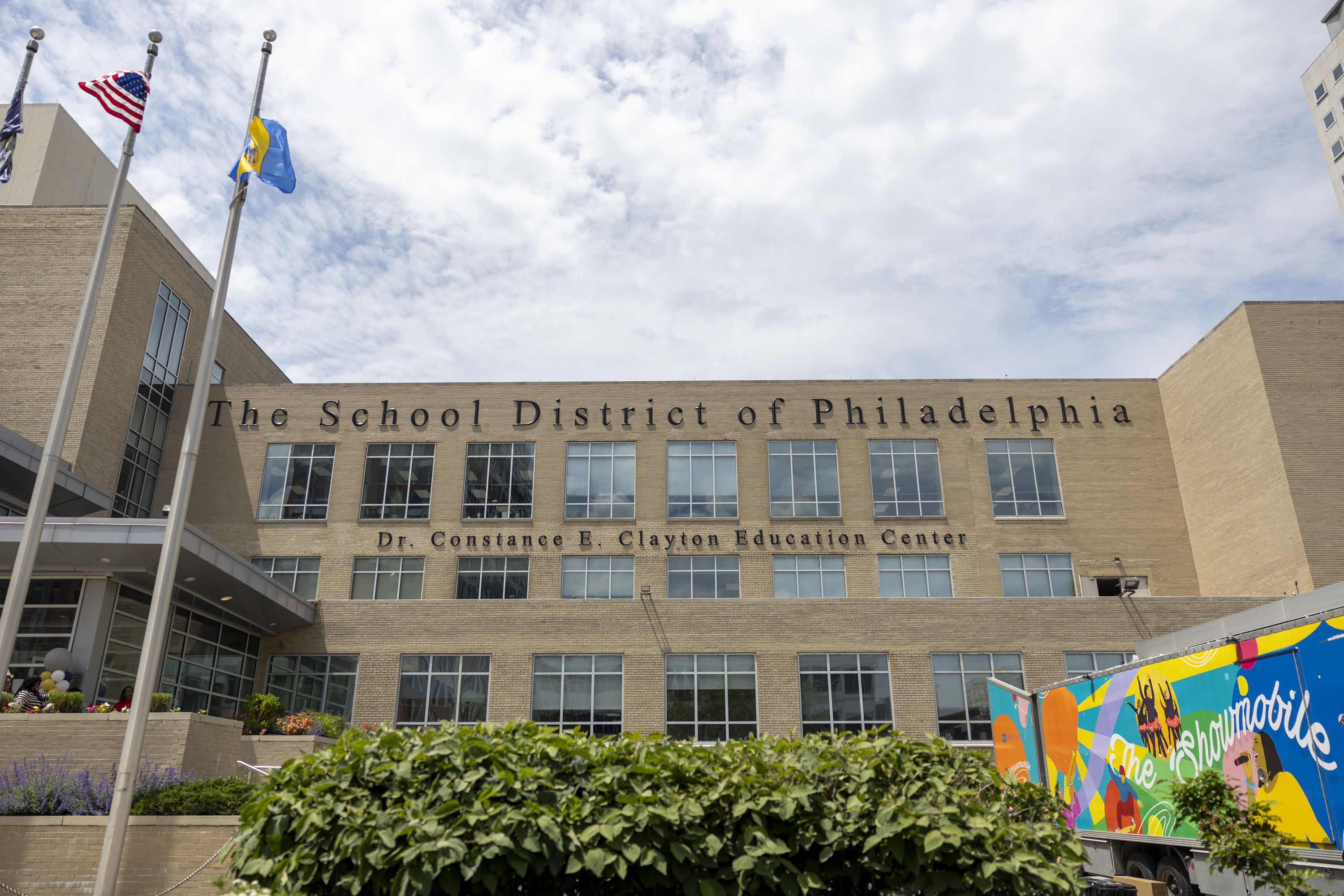
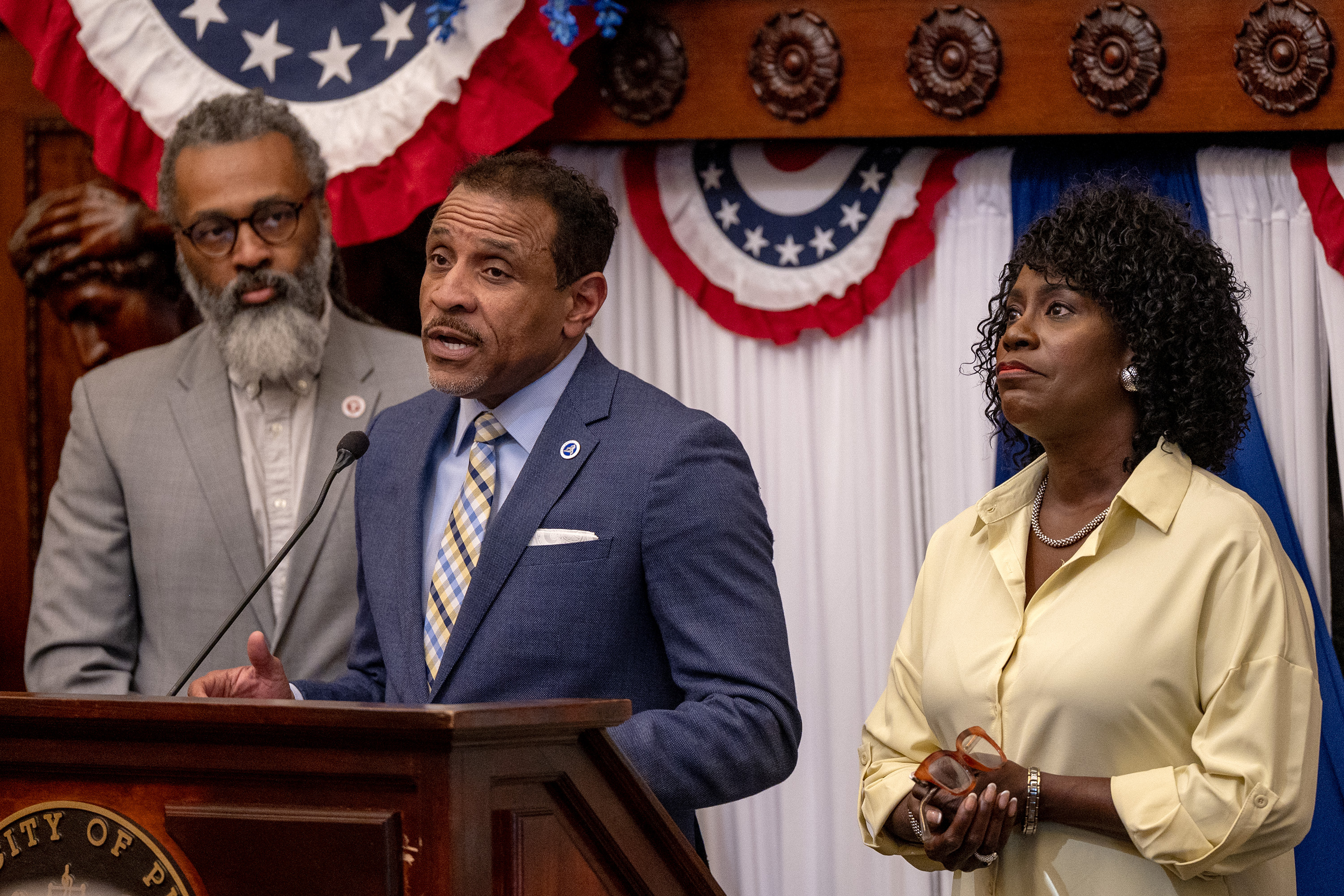
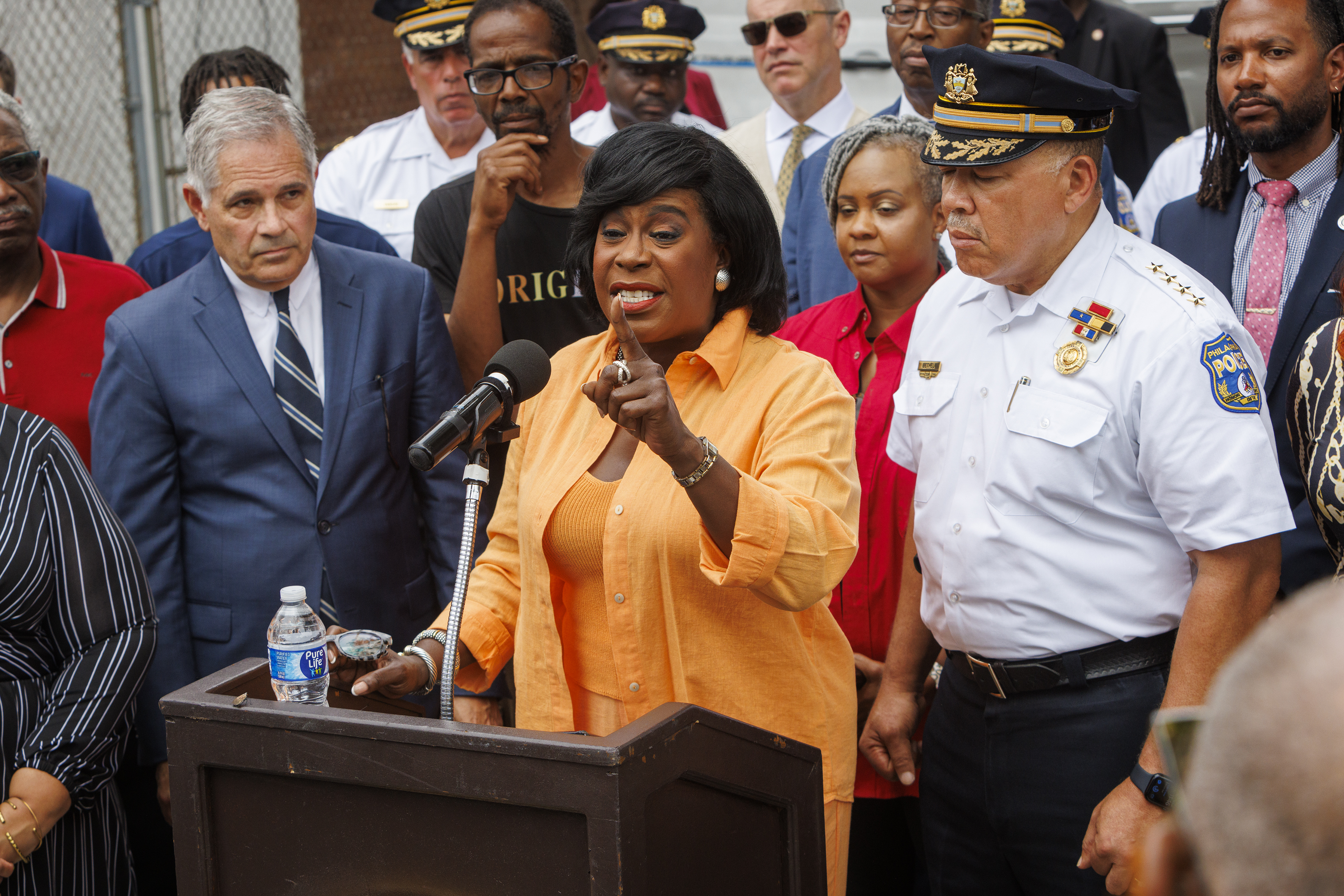
The author writes that the Board of Education is grateful for City Council’s $50 million boost — but won’t use it to fund permanent expenses.Jessica Griffin / Staff Photographer
The same principle applies to the Board of Education and the school district. For too many years, difficult financial decisions have been delayed. Continuing to postpone them only makes the problem larger and harder to solve. Federal COVID-19 relief dollars did help the district avoid cuts, but that was a once-in-a-century time of crisis.
That does not mean the additional funding lacks value, and we appreciate such support from City Council. It gives us a chance to address important needs that do not create permanent expenses. Those dollars can be used for building repairs, school safety improvements, technology upgrades, instructional materials, and managing staffing changes. Such spending would help improve schools today without creating a budget problem tomorrow.
It is also important to understand what these staffing changes mean. The district’s goal is to move employees into positions where they are needed across the system whenever possible, keeping experienced staff and reducing disruption for students and schools.
The Board of Education has a responsibility to protect the interests of both today’s and tomorrow’s students. Sometimes that means supporting new investments. Always it means advocating for more reliable funding from the city and the state. And at times it means making difficult decisions that protect the long-term financial health of the district, even when it appears there are easier choices.
The reality is that Philadelphia’s students deserve a school system built on stable, dependable funding — not temporary fixes. One-time dollars can solve one-time problems. Permanent commitments require permanent funding.
These decisions are not easy. But making responsible choices today is the best way to ensure our students have strong schools for years to come.
Reginald L. Streater is the president of the Philadelphia Board of Education, to which he was elected in December 2022. He was appointed to the board in February 2021.
Philadelphia’s powerfulHouse delegation to Harrisburg will push state lawmakers to close a loophole that allows online sellers to avoid paying Philadelphia’s 2% sales and use tax, its chair, Democratic Rep. Morgan Cephas, said Tuesday, as legislative leaders seek a quick state budget deal in a consequential midterm election year.
The tax would be exacted on online sellers based outside the city selling goods to Philadelphia customers, including retail giants such as Amazon. Currently, sellers outside the city have to collect only the 6% state sales tax.
The proposal — estimated to generate an additional $1.5 million for the city — would require authorizing legislation to be passed by the state and signed by Gov. Josh Shapiro.
When asked about the Philadelphia delegation’s effort to revive one of Parker’s tax proposals — albeit the one that would generate the least revenue for the city — Joe Grace, a spokesperson for Parker, said it is a “technical amendment.”
That development comes as top lawmakers are in closed-door budget negotiations trying to find additional revenue to close the state’s deficit, where Pennsylvania is expected to spend more than it brings in this fiscal year and in the future, ahead of the constitutionally required June 30 deadline. Legislators often blow past that deadline, with last year’s budget agreement stretching nearly five months after talks stalled over mass transit funding and resurfaced Pennsylvania’s rural-urban divide.
Here is a look at the status of state budget negotiations, what Philadelphia’s delegation wants in a final budget deal, and the potential sticking points as the deadline draws nearer.
Talks are ‘further along’ — in a big midterm year
Senate Majority Leader Joe Pittman (R., Indiana) said in an interview last week that legislators are “a lot further along” in their budget negotiations than they were at this point last year, but still have more to do to rein in spending.
Other top legislative leaders echoed a similar hope that budget talks will not draw out into another monthslong impasse during the midterm election year in Pennsylvania’s split legislature, where Democrats hope to ride an anticipated blue wave to gain seats in both chambers while Republicans hope to stave it off and maintain control of the state Senate.
“There’s nothing like a political wave to help politicians focus,” said House Majority Leader Matt Bradford (D., Montgomery) in an interview last week.
Shapiro proposed a $53.2 billion budget earlier this year, which would be a 6.2% spending increase over last year and would largely rely on the state’s Rainy Day Fund and new revenue streams from skill games and adult-use cannabis to help fill a $4.6 billion budget hole. The state House in April passed Shapiro’s budget as introduced, though the final product will be struck in closed-door meetings involving Pittman, Bradford, and Shapiro. The three negotiators may call on additional leaders to join the budget talks in the state’s tightly divided legislature, where Democrats hold a one-seat majority in the House and Republicans control the Senate with a three-seat majority.
In previous midterm election years, the electoral pressure has sped up negotiations, as legislators want to bring home results to their constituents before they return to the campaign trail in a year when the governor’s mansion and control of the state House and Senate are on the line.
‘An opportunity to regroup with Council and regroup with our mayor’
Philadelphia’s delegation to Harrisburg, made up of 25 lawmakers representing parts of the state’s most populous city, will take up Parker’s requested sales tax loophole closure, in addition to any other requests from City Council once the city’s budget receives final approval on Thursday, Cephas said.
“City Council hasn’t finalized their budget just yet. So we are paying close attention as to what is the final product that gets across the finish line, and then we look at it, look at it as an opportunity to regroup with Council and regroup with our mayor to see where we are and where there’s still gaps that would potentially fill,” Cephas added.
State Rep. Morgan Cephas, who leads the Philadelphia delegation in Harrisburg, attends a get-out-the-vote rally for State Sen. Sharif Street at the Church of Christian Compassion in West Philadelphia Monday, May 18, 2026 on the day before Tuesday’s Democratic primary election for the 3rd Congressional District. Cephas was a candidate for the same seat, but withdrew early in the race.Tom Gralish / Staff Photographer
As part of several proposals meant to juice revenue from gig economy companies, Parker requested the city’s sales tax loophole be closed in her budget pitch in March.
Closing the loophole, however, was an easier sell in Harrisburg than Parker’s efforts to raise taxes on city hotels and short-term rentals, which would have also required state legislative approval.
Last week, sources close to state budget negotiations told The Inquirer there was no interest in raising taxes in Philadelphia as Parker had proposed, even on big tech companies, in an election year. Shortly after, any support appeared to evaporate in City Council for Parker’s proposed taxes on hotels and rideshare services to fund homelessness-prevention programs and help plug the Philadelphia School District’s $300 million structural deficit.
Shapiro previously said he was uninterested in raising any taxes, and has boasted about cutting taxes in past budgets.
Shapiro’s office did not immediately respond to a request for comment.
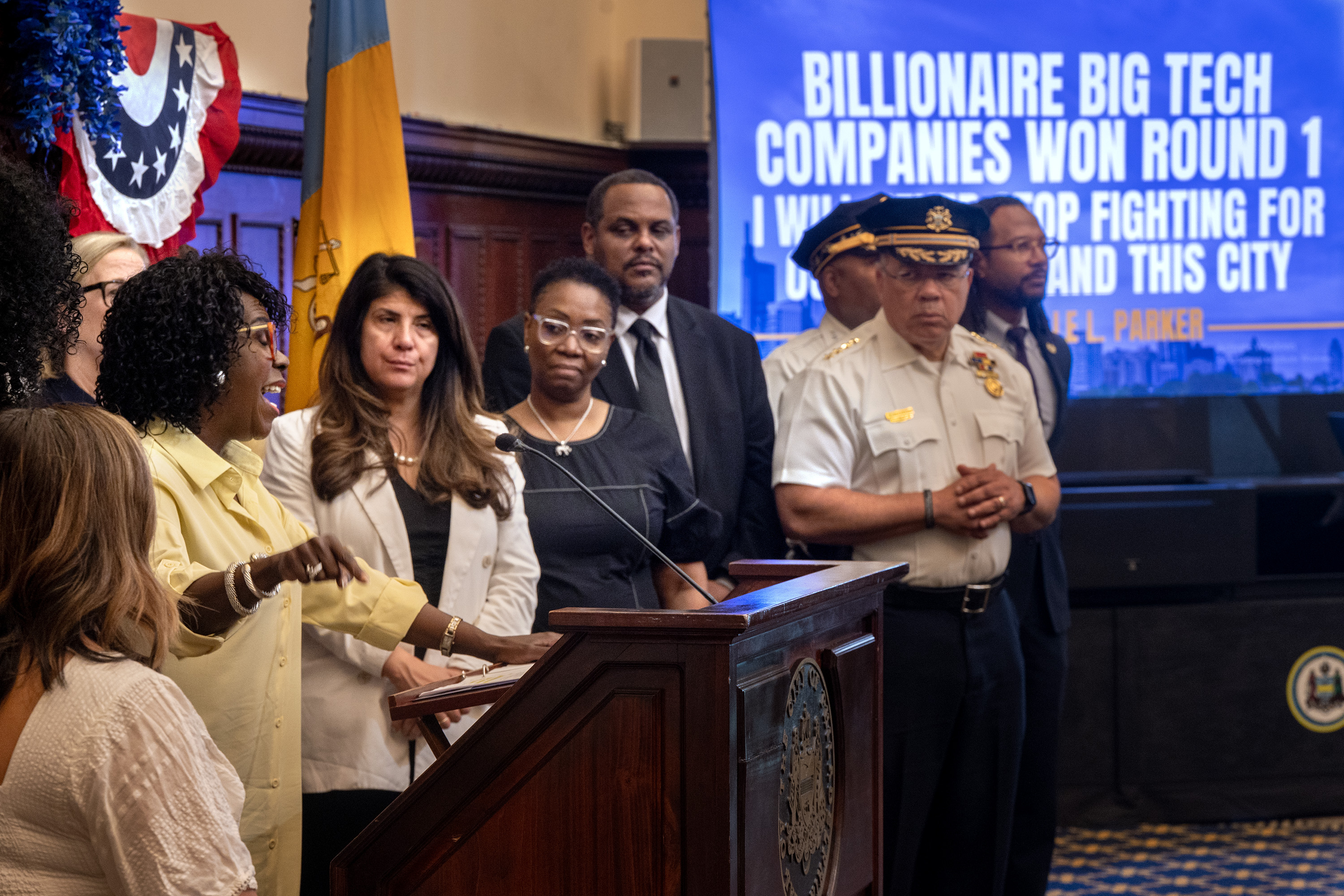
“Billionaire big tech companies just won round one in this process,” says Mayor Cherelle L. Parker at City Hall Thursday, June 4, 2026 after City Council rejected most of her tax proposals for the city budget.Tom Gralish / Staff Photographer
Cephas said Philadelphia’s statehouse delegation is also focused on continuing to increase public education funding through the state’s new adequacy formula, expanding a popular student-teacher stipend program, and increasing funding to improve school facilities.
The delegation — which includes Democratic legislative leaders such as House Speaker Joanna McClinton and House Appropriations Chair Jordan Harris, who are involved in budget talks — will also push to expand a working families tax credit, a childcare tax credit, and an increase to the state minimum wage from its current $7.25 per hour, Cephas said.
Potential sticking point: Skill games and gaming expansions
The big unknown in Pennsylvania’s Capitol is whether lawmakers this year will finally address skill games and other gaming expansions in the state as an effort to raise additional revenue.
Skill games are slot-machine look-alikes that have proliferated around Pennsylvania and, despite coaxing from Shapiro to tax them at a much lesser rate than the hefty 52% levied on slot machines, remain unregulated and untaxed by the state. Shapiro estimated that taxing machines at the same rate as slots would generate $765.9 million in its first year.
A case is before the state Supreme Court to determine whether the machines found in restaurants, corner stores, and bars are legal — and distinct from other gambling devices.
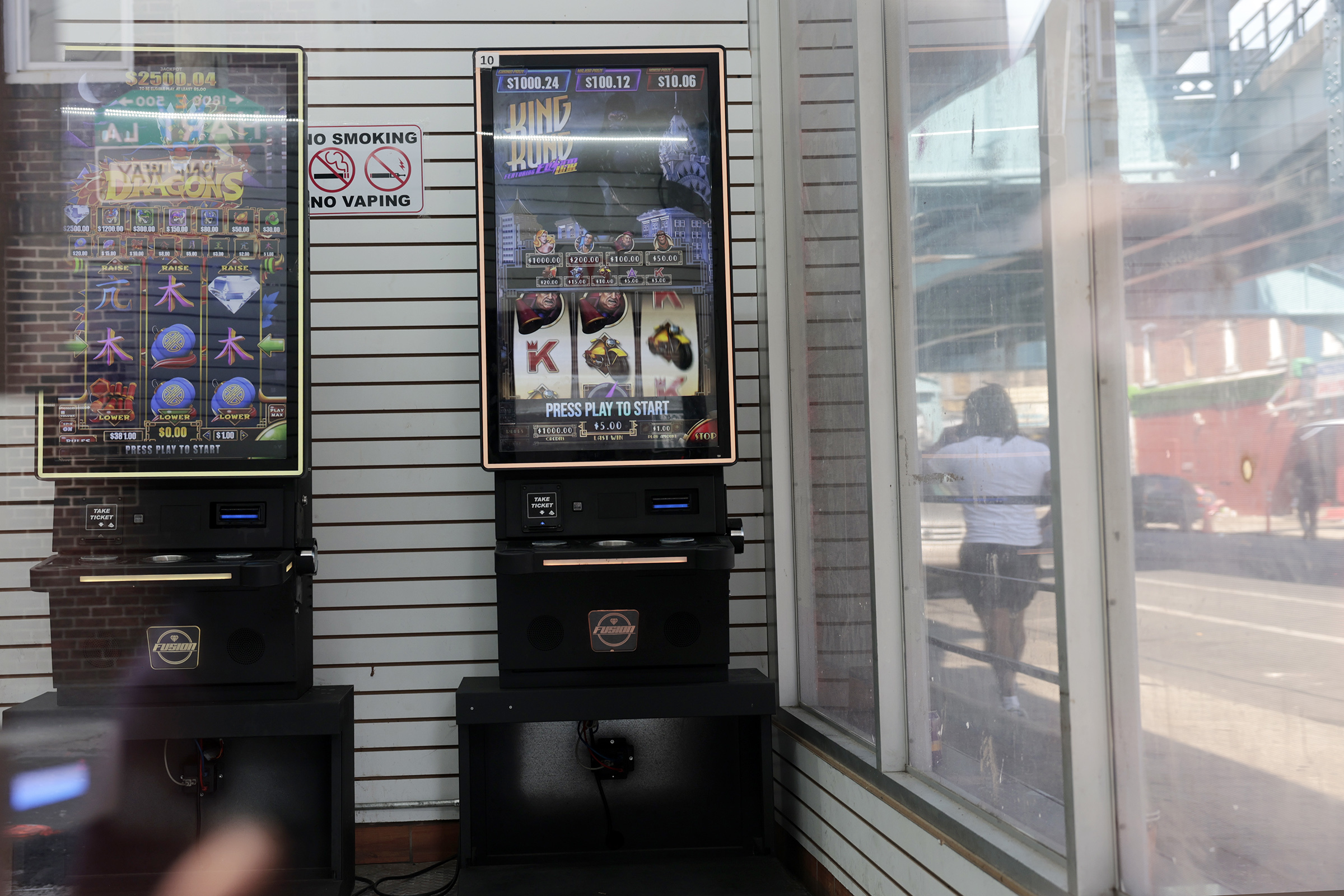
Skill games can be seen through the door of a mini mart on Kensington Avenue in the Kensington section of Philadelphia on Wednesday, July 30, 2025.Elizabeth Robertson / Staff Photographer
The deep-pocketed skill games lobby had long been an ally of the Senate GOP until recent years, when Republicans considered a higher-than-desired tax on the industry that the lobbyists claim would hurt small businesses. The relationship eroded further last month when a conservative group tied to the skill games lobby helped fund three unsuccessful primary challenges to Republican state senators.
Now, top GOP lawmakers say they are awaiting the court ruling before they decide how to tax the devices.
Another emerging form of gaming that could require state regulation would be prediction markets like Kalshi or Polymarket, which allow users to place bets on the outcome of events, including elections. Pittman said he wants federal lawmakers to regulate the new industry, while House Minority Leader Jesse Topper (R., Bedford) said “it will need to be addressed.”
“Prediction markets, to me, seem to be a whole new world,” Pittman said last week. “That is something that the federal government really needs to grab onto in a very consistent manner to make sure that you have consistent policy nationwide on that front.”
Brothers Allen Joseph and Anser Bhatti own Liberty Scoops ice cream and Coffee Tea & Co., both in Old City.
They concede that the past 18 months of construction for improvements to Market Street were often tough on business, especially the coffee shop, because of fencing that had to be erected.
Now, with the $16 million renovation of Market Street complete, and the fencing gone, Joseph said it was worth it.
“It looks much better now,” Joseph said.
Philadelphia officials unveiled the new look Tuesday in time for the nation’s 250th anniversary. The transformation permanently narrowed vehicular traffic, added bike lanes, and built a new public plaza.
“As you can see, walking around the neighborhood is greatly improved,” said Job Itzkowitz, executive director of the Old City District, a business improvement organization.
Itzkowitz noted more open space for pedestrians, shorter distances to cross the street, and new street trees and planters, among other improvements.
“Residents, visitors, and business owners alike have already felt the impact as the fences started to come down over the last few months,” he said.
Officials launched the overhaul in December 2024 to rebuild the corridor from Second to Sixth Streets and transform the historic stretch into a more inviting place to walk, bike, and dine.
The work was to timed for the Semiquincentennial, which marks the 250th anniversary of the signing of the Declaration of Independence. Several other nearby landmarks have also been spruced up, such as Elfreth’s Alley, which recently unveiled a new pocket park, and the long-shuttered First Bank of the United States, set to reopen to the public on July 1 after a $27 million renovation.
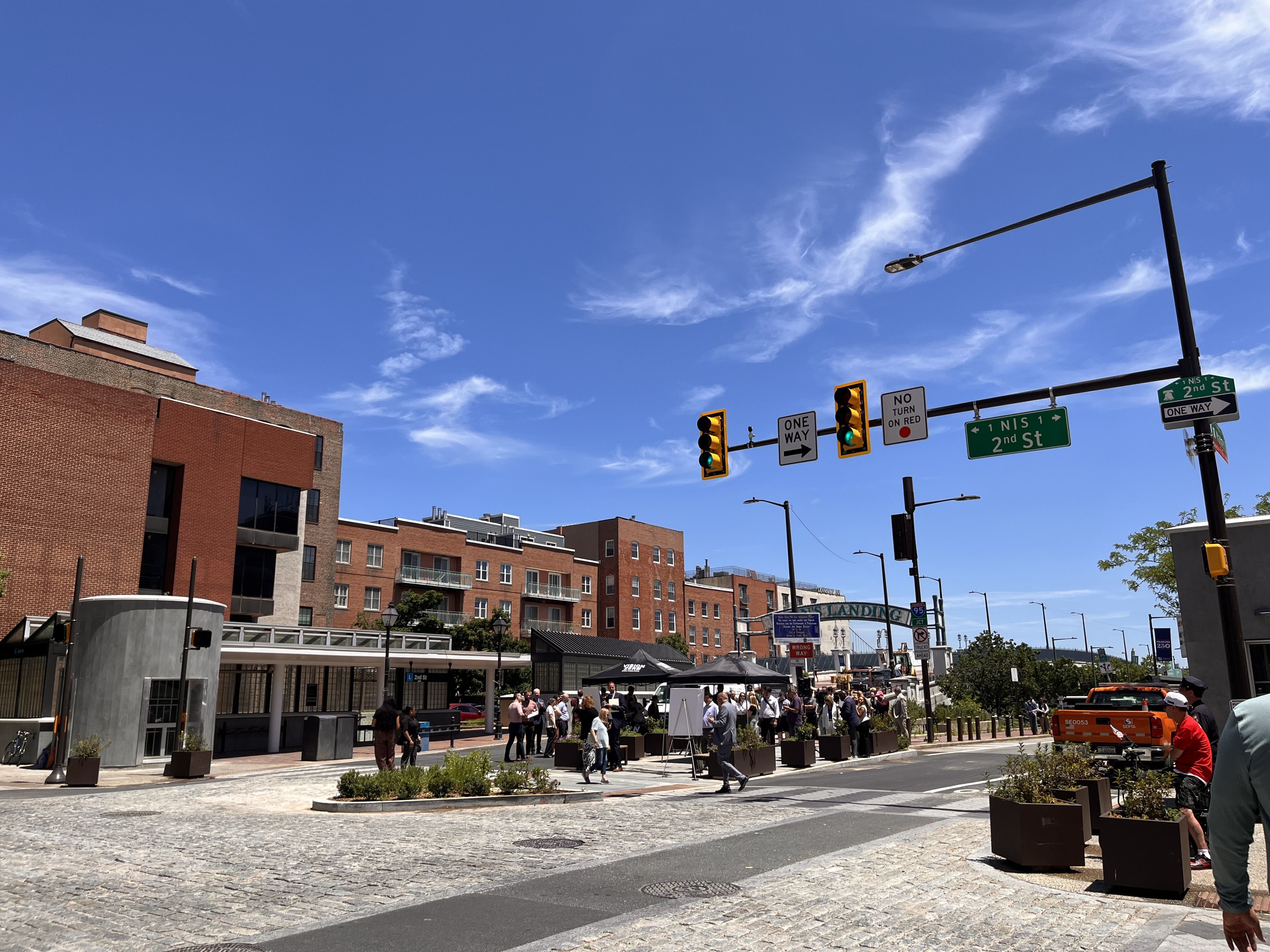
Philadelphia city officials celebrated the completion of a $16 million renovation of Market Street, from Sixth to Second Streets. Improvements include wider sidewalks, protected bike lanes, Belgian block streetscape, and new plantings.Frank Kummer
What’s new?
As part of Market Street’s “road diet,” vehicles have been reduced to one lane in each direction, clearing way for protected bike lanes and adding dedicated left turn lanes at key intersections.
Among other improvements:
A new curbless plaza at Second and Market Streets at the base of the ramp to Penn’s Landing, allowing easier access for pedestrians.
Concrete bump outs at bus stops were lengthened to make boarding easier. The raised bike lanes were installed between parking lanes and sidewalks.
Wider sidewalks.
Belgian block streetscaping.
44 new street trees and 68 shrubs.
55 bike racks.
SEPTA also improved the look of the headhouses for the Market-Frankford Line subway at Second Street.
Officials say the transformation will reduce traffic-related injuries and deaths and better serve tourists, walkers, cyclists, transit users,and motorists.
Also taking a lead was the nonprofit Independence Historical Trust, as part of a larger plan to create better ways for tourists to navigate on foot through Independence National Historical Park, Old City, and other historic or local neighborhoods.
“The new plaza rocks,” said Mayor Cherelle L. Parker.
Parker said the just-completed project fits in with broader efforts to extend improvements on Market Street from City Hall to the Delaware River.
Bill Marrazzo, chair of the nonprofit Independence Historical Trust, called completion of the Market Street project key, given its location in Old City and near Independence National Historical Park.
“No other American city has as many cultural assets per capita as we do here in the city of Philadelphia,” Marrazzo said, “and a very high percentage of those are organized here within this one square mile of history.”
“These improvements are truly transformational,” noted Mike Carroll, the city’s deputy managing director for transportation and infrastructure.
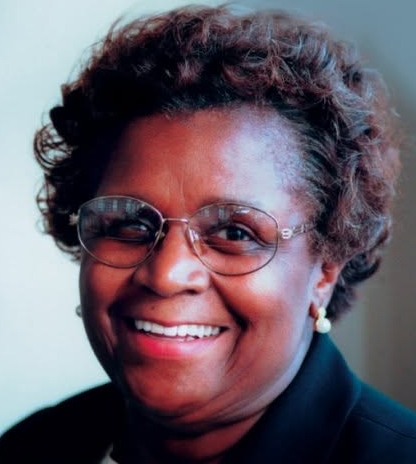
Jackie Love, 83, of Deptford Township, longtime social justice activist, Black political pioneer, former council member and the second Black female deputy mayor of Deptford Township, former director of what is now the New Jersey Division of Disability Services, New Jersey Elected Officials Hall of Famer, mentor, and volunteer, died Friday, May 29, of age-associated decline at Shady Lane Nursing Home in Clarksboro, Gloucester County.
Born in Philadelphia, Mrs. Love moved to Deptford Township when she was 13. She was reared by her grandmother, earned an associate’s degree in business administration at Camden County College in 1972, and served in government leadership roles for Deptford Township, Gloucester County, and New Jersey for four decades until her retirement in 2009.
“Her caring spirit and willingness to help her community is a true example of a servant leader,” a former colleague said on Facebook.
Mrs. Love was hired by Gloucester County officials in the 1970s to coordinate employment training programs and later to prevent and eliminate disability discrimination. She was the first director of the old Gloucester County Office for the Disabled in the 1980s and later was director of the Gloucester County Disabled Persons Advisory Commission.
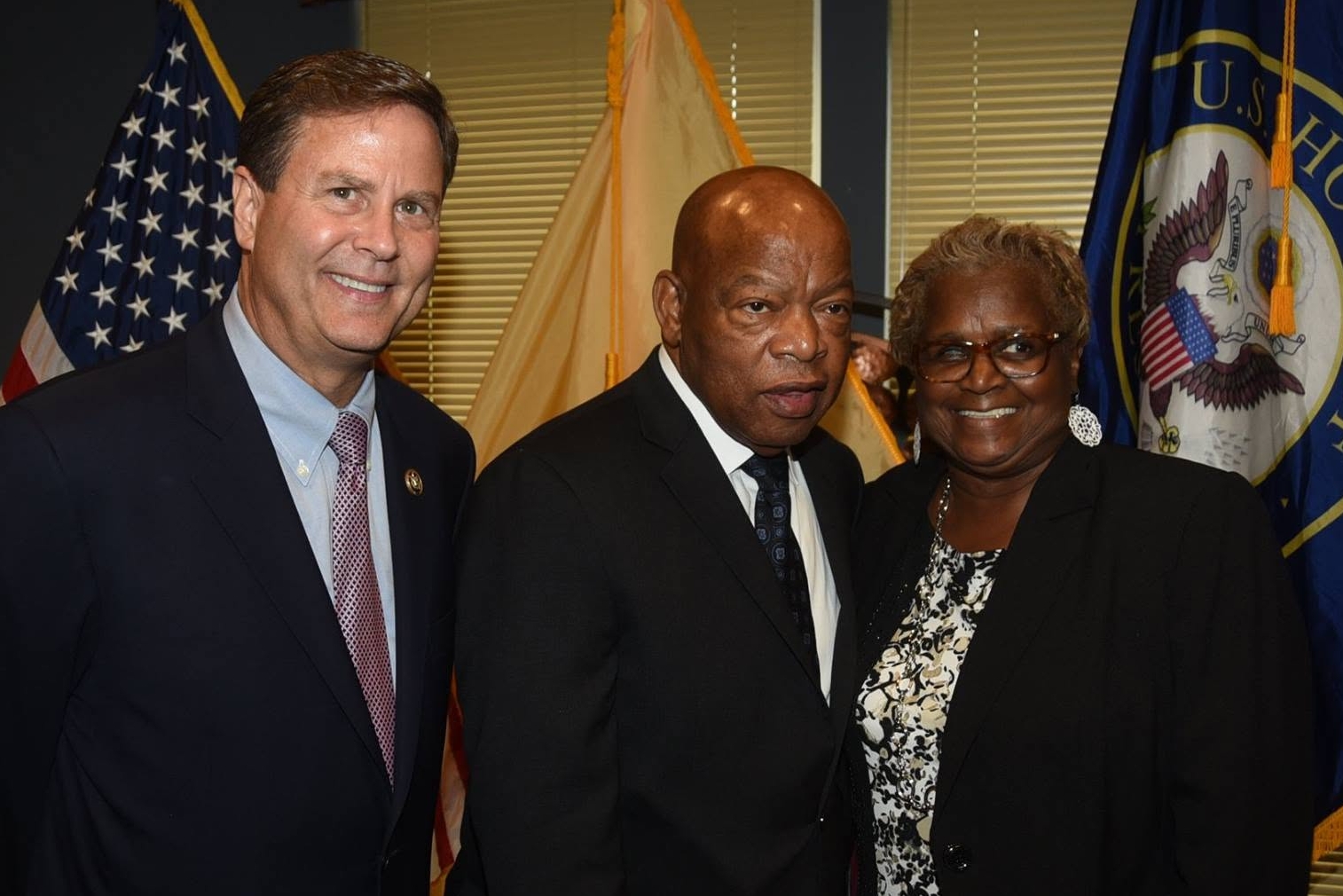
Mrs. Love stands with U.S. Reps. Donald Norcross (left) and John Lewis.Courtesy of the family
She became director at the old New Jersey State Office for Disability, now the New Jersey Division of Disability Services, in the 1990s and championed the installation of sidewalk ramps, curb cuts, and other improvements throughout the state. “We wanted to start making sure that we were accessible,” she told Front Runner New Jersey in 2025. “That’s a highlight of my life.”
Mrs. Love first ran for Deptford Township Council as a Democrat in 1989. She received more votes than any of the other nine candidates, routinely collaborated with members of both parties, colleagues said, and became deputy mayor in 1996.
“When Jackie was on council and she walked into a room, everybody knew who Jackie Love was,” Deptford Township Mayor Paul Medany told The Inquirer in 2015. “She’s known all over the state.”
As Deptford council member and deputy mayor, Mrs. Love focused on reducing juvenile crime and lobbied for sound barriers along the New Jersey Turnpike, lower speed limits on busy township roads, responsible school budgets, improvements to animal waste disposal procedures, and upgraded vendor code guidelines. In 2015, Deptford Township officials renamed Church Street Park as the Jackie Love Community Park.
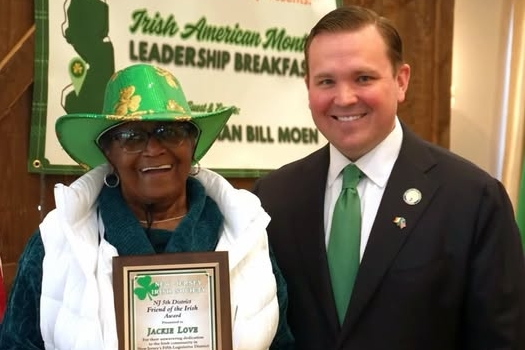
Mrs. Love stands with state Assemblyman Bill Moen in 2025.New Jersey Irish Society
“To see the future politicians and others out there playing and getting involved is another highlight of my life,” she told Front Runner New Jersey about the park.
In 2005, the editorial board for the Courier-Post called Mrs. Love “loyal, hardworking, and a team player.” In a Facebook tribute, U.S. Rep. Donald Norcross (D., N.J.) said: “Jacquelyn Love was a force for good in Deptford for generations. She paved the way for others as a Black female deputy mayor … and long remained a champion for civil rights, faith, the disabled, and many more throughout her life.”
Mrs. Love also served as a commissioner for the Delaware River Port Authority. She was active with the Gloucester County Minority Coalition, the Gloucester County College advisory committee on diversity and civility, and other groups.
She recruited volunteer poll workers and was a delegate for Bill Clinton at the 1992 Democratic National Convention in New York. In the 1970s, she traveled the country with civil rights leader Leon Sullivan and helped organize his Opportunities Industrialization Centers of America.
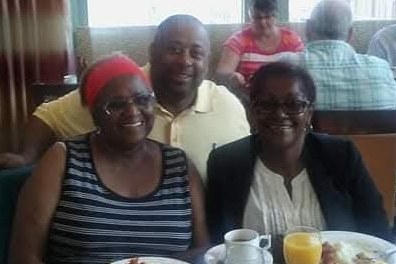
Mrs. Love (left) enjoyed time with her family.Courtesy of the family
She was named the 1987 Woman of the Year by the Gloucester County chapter of the NAACP, honored in 2005 by the Gloucester County Human Relations Commission, and inducted into the New Jersey Elected Officials Hall of Fame in 2010. In March, her achievements were recognized by the New Jersey Irish Society.
Mrs. Love mentored dozens of colleagues and friends, conferred frequently with Philadelphia Mayor Cherelle L. Parker, and volunteered at Mount Zion Wesley United Methodist Church and for the United Way. On Facebook, former colleagues called her “a once-in-a-lifetime type of leader” and “one of the most dedicated public officials I have ever had the honor of working with.”
Jacquelyn Williams was born Sept. 10, 1942. She dropped out of Woodbury High School at 17, earned her General Educational Development certificate later, and worked at first as a counselor at Ancora Psychiatric Hospital in Hammonton.
She married Arnold Love in 1972, and together they reared her daughter, Wanda, and their son, Wayne. Her husband died in 1985.
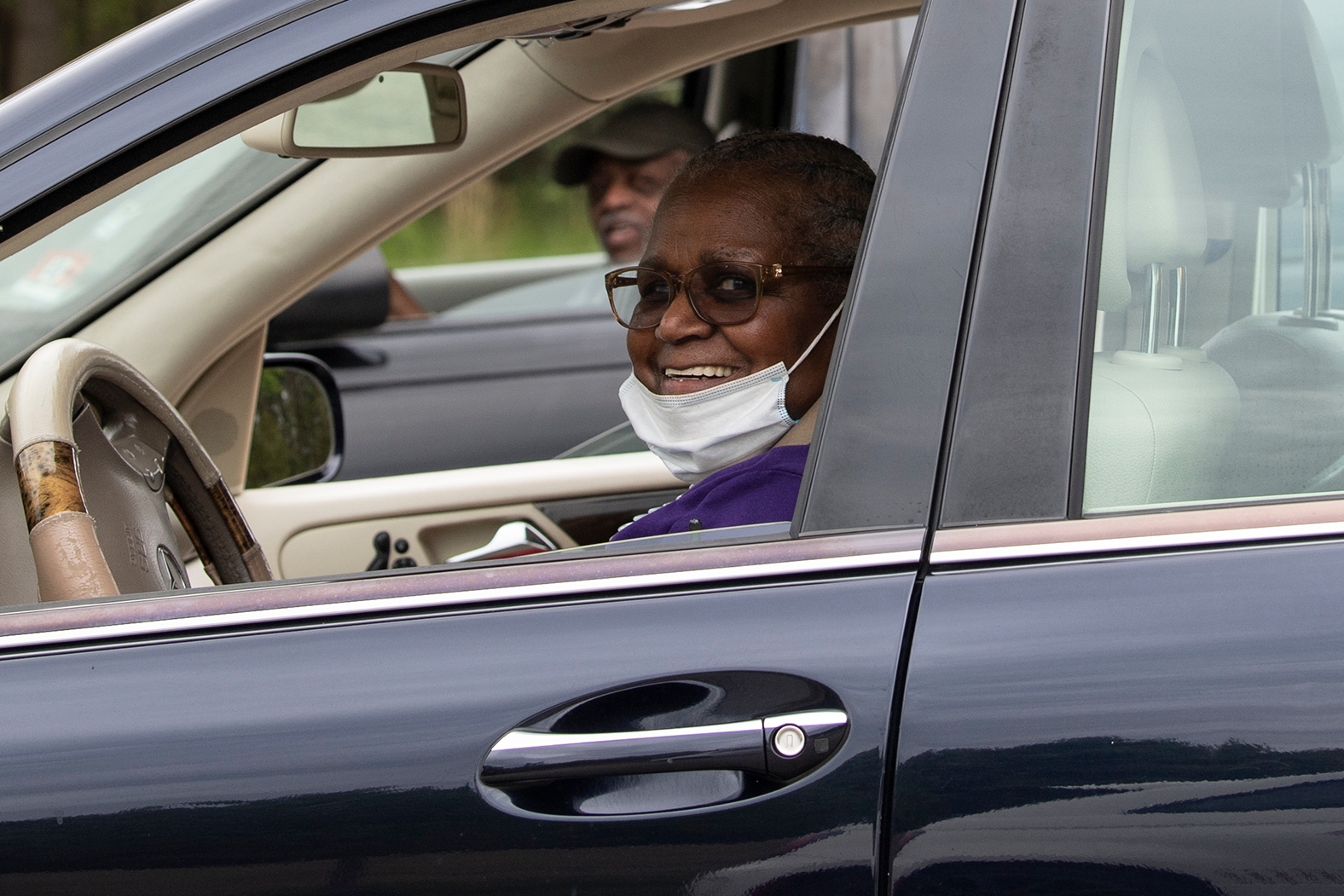
Mrs. Love participated in this 2020 drive-by salute to a friend’s 60th wedding anniversary. Jose F. Moreno / Staff Photographer
Friendly and classy, friends said, Mrs. Love wore memorable hats and enjoyed shopping at local Amish markets. She visited Amish friends in Lancaster when she was young, took classes at what are now Rowan and Rutgers Universities, and lived in Jericho for decades.
Friends called her a “cornerstone of this neighborhood” and a “wonderful down-to-earth lady.” One friend said: “Jackie set the standard for leadership and dedication to her family, faith, friends, and public service.”
Her son said: “She showed love to so many people.”
In addition to her children, Mrs. Love is survived by four grandchildren, four great-grandchildren, a sister, and other relatives.
Visitation with the family is to be from 8 to 10 a.m. Friday, June 12, at Gloucester County Community Church, 359 Chapel Heights Rd., Sewell, N.J. 08080. A service is to follow.
Friends called Mrs. Love a “cornerstone of this neighborhood.”Courtesy of the family
Mayor Cherelle L. Parker and members of City Council could not agree on how to bridge the Philadelphia School District’s structural budget deficit. Now, students and staff will bear the brunt of a political failure.
In some ways, the scope of the deficit seemed to catch policymakers off guard. The mayor’s initial budget proposal included a 20-cent per-trip tax on rideshare services, which then ballooned to $1 per ride. Neither figure came close to filling the $300 million hole in the district’s financial plan.
While both the mayor and City Council have strong oversight powers when it comes to school spending, neither seemed to anticipate the size of that gap — even though Superintendent Tony B. Watlington Sr. had warned of a looming fiscal crisis during the last budget season.
The ripple effects of the deficit are already clear. Principals and teachers have described this hiring season as chaotic. Some district employees whose positions are slated for elimination have begun looking for jobs in suburban school systems, many of which are facing their own budget issues.
The cuts to Philadelphia’s schools come at a time when students are making progress, although pandemic-era declines have yet to be fully reversed. According to the Education Scorecard, the school district’s “learning rate” outpaces other big cities. That could be undermined by shedding hundreds of staff positions and shuffling teachers around to fill the gaps.
Magnifying the impact of the staffing cuts is the scheduled closure of 17 schools across the city. The closure plan — which was finalized in April after a long and contentious process marked by City Council’s opposition — eroded support for the district with both residents and lawmakers. Council members did little to hide their fury over the inclusion of Paul Robeson and Lankenau High Schools on the district’s closure list, despite their efforts to preserve them.
It did not help matters that some of the mayor’s plans seemed somewhat haphazard. Closing the gap between internet retailers and their brick-and-mortar competitors through online taxes makes a lot of sense, as does taxing delivery services in order to fix potholes. But many of Parker’s other proposals were unconventional.
For example, most cities that tax rideshare services use the funds to support public transportation. That use of the revenue may feel more intuitive to taxpayers: If improved transit access allows current rideshare users to take more trips on SEPTA, they’ll save money overall. Instead, the proposal was to send money from the rideshare tax to the school district, and at a level that was still significantly below its needs.
Whatever the details, the proposed tax did not pass. In a news conference last week, Parker said there were just three votes for the plan from the 17-member council. Instead, Council members approved a one-time payment of $50 million in an attempt to forestall the district’s job cuts.
Despite the windfall, Watlington announced that the planned cuts would go through. He has spent weeks citing the need for a recurring source of revenue for the district, and the school system found itself facing the reality that a one-time payment of $50 million simply isn’t enough to stem a $300 million annual shortfall.
This episode has lessons for everyone involved.
For Parker, it is a sign that she must find a more effective way to work with Council. Mayors in Philadelphia tend to lose momentum over time, but she is still in her first term. If she’s already failing to “get to yes” with City Council over such relatively straightforward proposals, it may not bode well for the balance of her tenure.
For Council, there must be a recognition that there is more to governing than just saying no. At some point, inaction is itself a choice. Philadelphia’s students cannot afford another year of this.
District Attorney Larry Krasner said Monday that, in the more than two years since Mayor Cherelle L. Parker was sworn in, he has only met with her three times.
And despite his visit to her City Hall office on Monday in what Krasner described as “the spirit of hopeful collaboration,” that number did not grow to four.
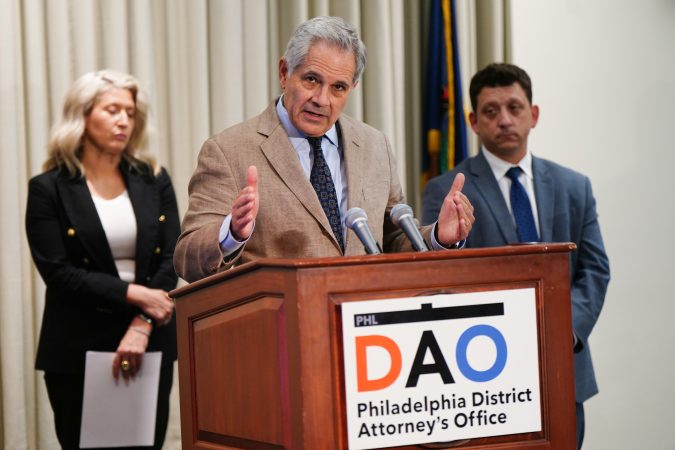
The district attorney, along with a phalanx of staff and television cameras, walked across the street from his downtown office to the mayor’s suite on the second floor of City Hall, armed with a letter lamenting his budget as inadequate. In it, Krasner wrote that he needs an additional $5.6 million from the city to bolster shootings investigations, domestic violence prosecutions, and victim services.
Asked why he was delivering a letter to Parker in person, Krasner said: “There is nothing new and nothing inappropriate about civil rights leaders, activists, and politicians getting the word out.”
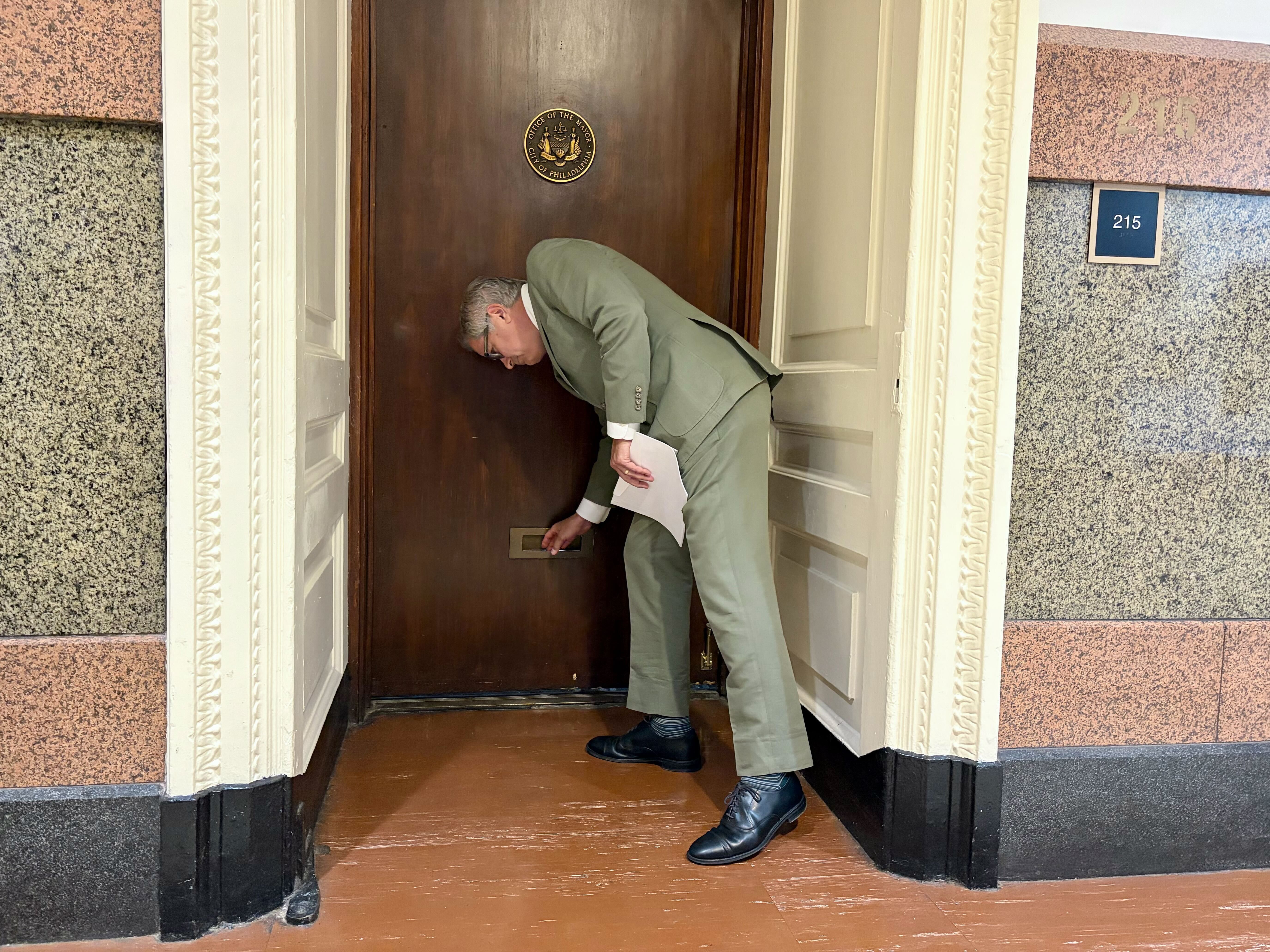
The mayor did not open her door. Krasner pushed his letter through a mail slot.
District Attorney Larry Krasner delivers a letter to Mayor Cherelle L. Parker’s office after hosting a news conference to ask the mayor to consider allocating millions more dollars to his office this year.Anna Orso
The public plea came just days after City Council gave the green light to a city budget for the fiscal year that begins on July 1, including a record-high $62.4 million allocation to the District Attorney’s Office, which is about $3 million more than it received last year.
Krasner, who called a news conference at the district attorney’s office before his trip to City Hall, said his office needs additional funding to “prevent potential layoffs,” but he did not specify the number of jobs on the line. The city budget will be up for a final vote in Council on Thursday, and it is unlikely to substantially change before then.
In response to a request for comment, a spokesperson for the mayor shared data showing that the District Attorney’s Office budget has increased by 55% over the last five years.
“Am I running for these offices today? No. Do I have a plan to run for these offices today? No,” Krasner said. “But if you’re asking me to say that I would never, under any circumstance, no matter what was going on locally or nationally, consider some other office, it would be foolish for me to completely rule out those possibilities.”
He is one of several people who progressive leaders in the city may look to next year to challenge Parker, who is backed by much of the city’s Democratic establishment and organized labor. She has been criticized by some on the left for her law enforcement-driven initiatives to address the Kensington drug market and her cautious approach to President Donald Trump.
The mayor’s race became even more attractive to Philadelphia’s left-wing faction of the Democratic Party last month after State Rep. Chris Rabb, a democratic socialist, won the party’s nomination for an open seat in Congress.
Mayor Cherelle L. Parker is flanked by Police Commissioner Kevin Bethel and District Attorney Larry Krasner (left) on July 22, 2024.Alejandro A. Alvarez / Staff Photographer
Krasner’s public criticism of Parker this week is also notable because he and the mayor have, despite not meeting regularly, attempted to maintain a veneer of civility.
While Parker ran for office on a tough-on-crime message that could be seen as in tension with the district attorney’s progressive platform, she has not directly criticized Krasner. She also campaigned on a promise of close collaboration with other governmental entities after conflict between Krasner and former Mayor Jim Kenney spilled into public view on several occasions.
Krasner on Monday insisted that his trip across the street to Parker’s office was not intended to inflame hostilities. He cited his letter, which began with thanking the mayor for her “leadership, vision, and goals.”
The letter ended with Krasner saying that the city’s leaders should “truly model the peace and unity we hope to see within our communities.”
He added: “We can achieve more together!”
Staff writer Ellie Rushing contributed to this article.
CHESTER — Like a Ben Franklin impersonator waving at Independence Hall and the Liberty Bell, tour guide B. Preston Lyles directed the tour group’s attention to various landmarks as they passed by.
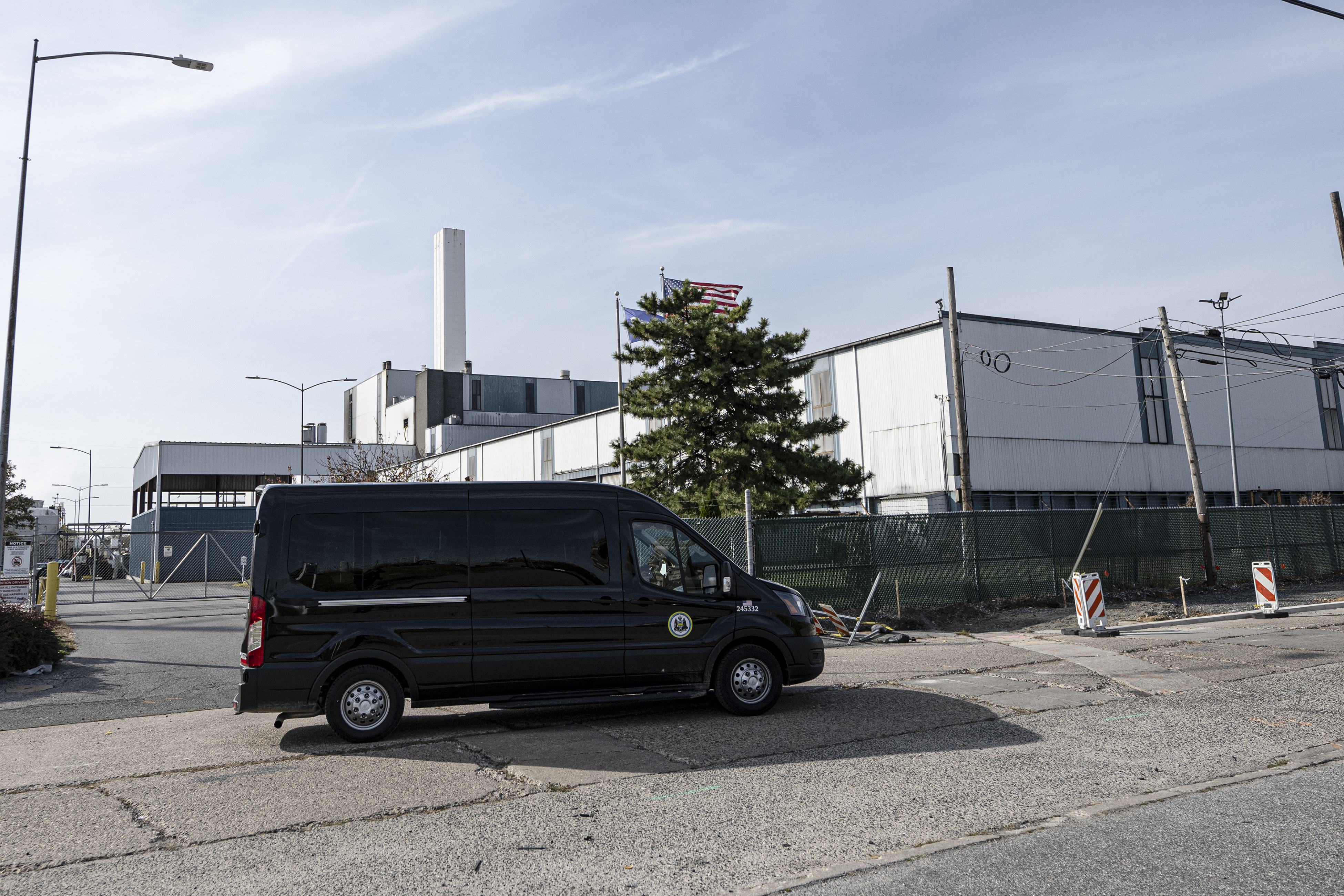
But instead of highlighting monuments that made locals swell with pride, Lyles was pointing to sites he said made thepeople of Chester get sick and die younger: power plants, an oil refinery, a sewage sludge-burning facility, and — most relevantly for Friday’s group — the Reworld trash incinerator, the destination for about a third of the rubbish collected by Philadelphia’s city government.
“Chester City is known as one of the nation’s worst cases of environmental racism,” Lyles, an organizer for Delco Environmental Justice, told the group, referring to the concentration of polluting industries in Black and brown communities. “It is not just because the city holds the nation’s largest waste incinerator, but due to an extreme concentration of toxic industries in and adjacent to such a small city.”
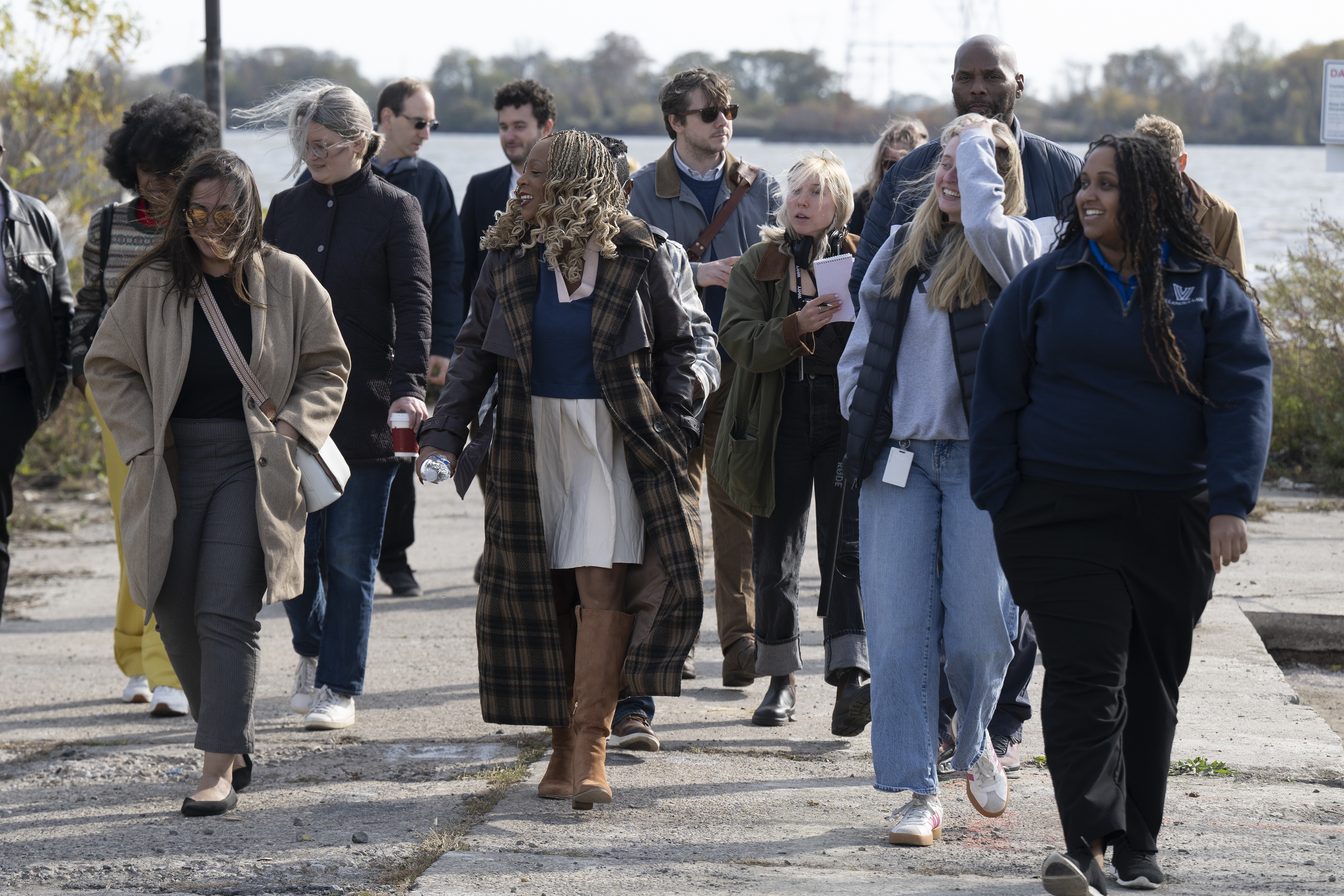
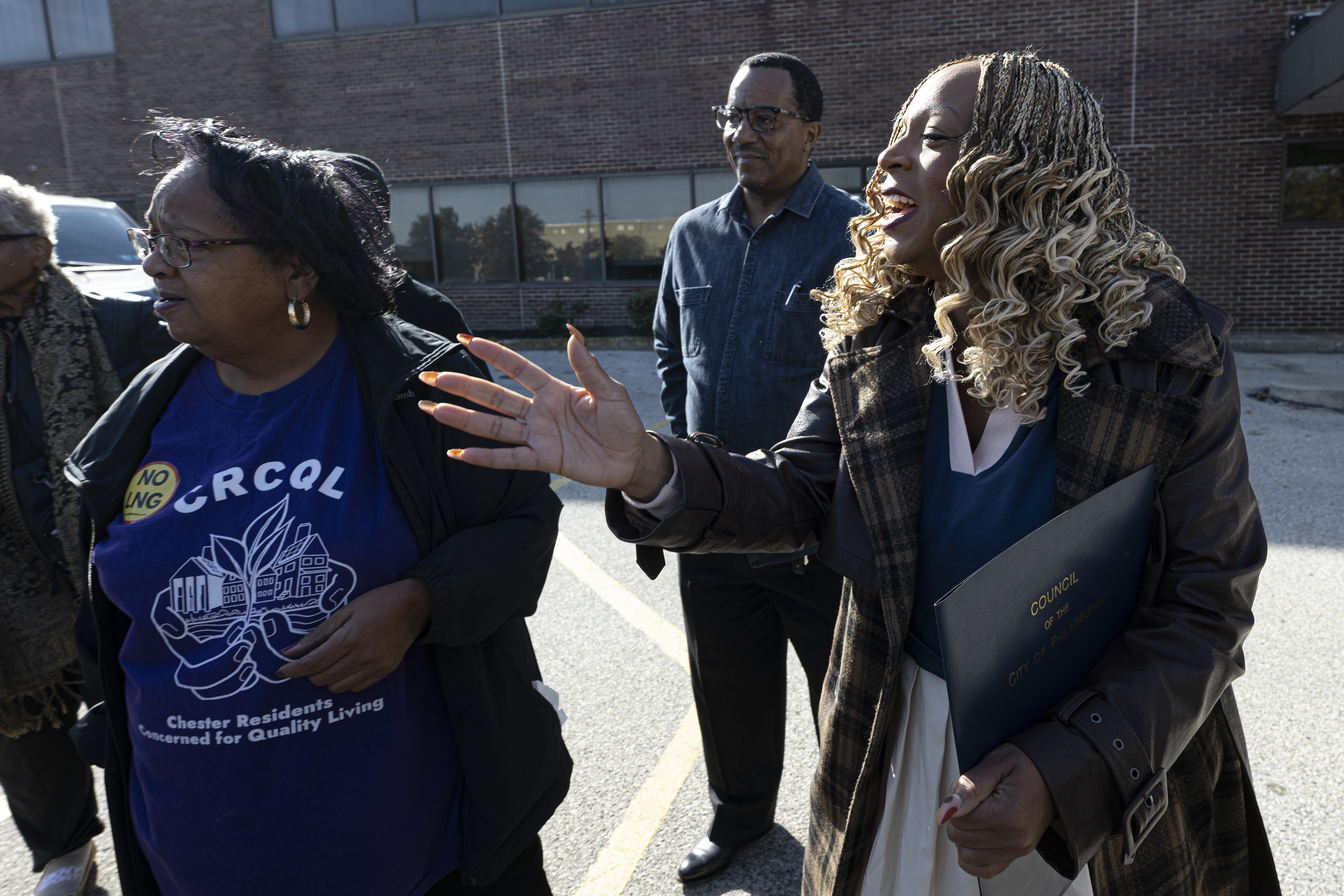
Philadelphia Councilmember Jamie Gauthier tours Chester to discuss her “Stop Trashing Our Air Act,” which would ban the city from incinerating waste, during a visit with lawmakers and staff in Chester, Pa., on Friday, Nov. 7, 2025.Jose F. Moreno / Staff Photographer
“From a justice and fairness perspective, it just seems so wrong to me and so obvious,” said Gauthier, who was joined on the tour by Councilmember Kendra Brooks and staffers for other lawmakers. “Seeing the incinerator on the waterfront and all of these other dirty uses and the abandoned homes, that made me want to do this more, because it’s wrong. It’s wrong that people should be loaded down with all these toxic uses.”
Reworld in 2024 burned more than 355,000 tons of trash collected by the city. Its contract with Philadelphia ends in June 2026.
Gauthier has introduced a bill, the Stop Trashing Our Air Act, that would prohibit the city from incinerating trash, and Council’s Committee on the Environment, which she chairs, will likely hold a hearing on it this fall.
Reworld spokesperson Linda Ribakusky said the company is a “leading sustainable waste solutions provider.” The Chester facility, she said, offers “a more sustainable alternative to landfilling by converting waste into renewable energy and recovering valuable metals that would otherwise be lost.”
“The Reworld Delaware Valley facility helps reduce greenhouse gases by avoiding landfill methane and generates enough clean electricity to power more than 50,000 local homes each year,” Ribakusky said in a statement. “We are proud to be an active part of the Chester community. Working alongside local schools, nonprofits, neighbors, and community organizations, we support initiatives that create real impact.”
‘Now is the time’
The Philadelphia Sanitation Department collects and disposes of about half of the city’s waste, said Michael Ewall, founder of the Philly-based Energy Justice Network. The other half is handled by private haulers hired by businesses and owners of larger residential properties.
Under its contract, Reworld takes one-third of the municipally collected trash to the Chester incinerator, which the company says produces about 87 megawatts of electricity, enough to power 52,000 homes, while burning the waste. WM, which operates a major landfill in Bucks County’s Falls Township, takes the other two-thirds.
When the most recent contracts were signed in 2019, the city agreed to pay roughly $65 per ton of trash to both Reworld, which was then known as Covanta, and WM, formerly Waste Management.
Gauthier said she has had constructive conversations with Mayor Cherelle L. Parker’s administration about eliminating incineration from the city’s waste management operations, and is hopeful the city will include environmental justice concerns in its request for proposals for the new contracts.
Parker’s office did not respond to a request for comment.
The Chester incinerator provided a flashpoint in the 2023 mayoral election, which Parker won. During a debate, a moderator asked candidate Jeff Brown about the incinerator, prompting Brown to say, in part, “The trash has to go somewhere.”
In a debate performance that was key to her rise and Brown’s downfall in the race, Parker was among the candidates who pounced on the soon-to-be-infamous comment.
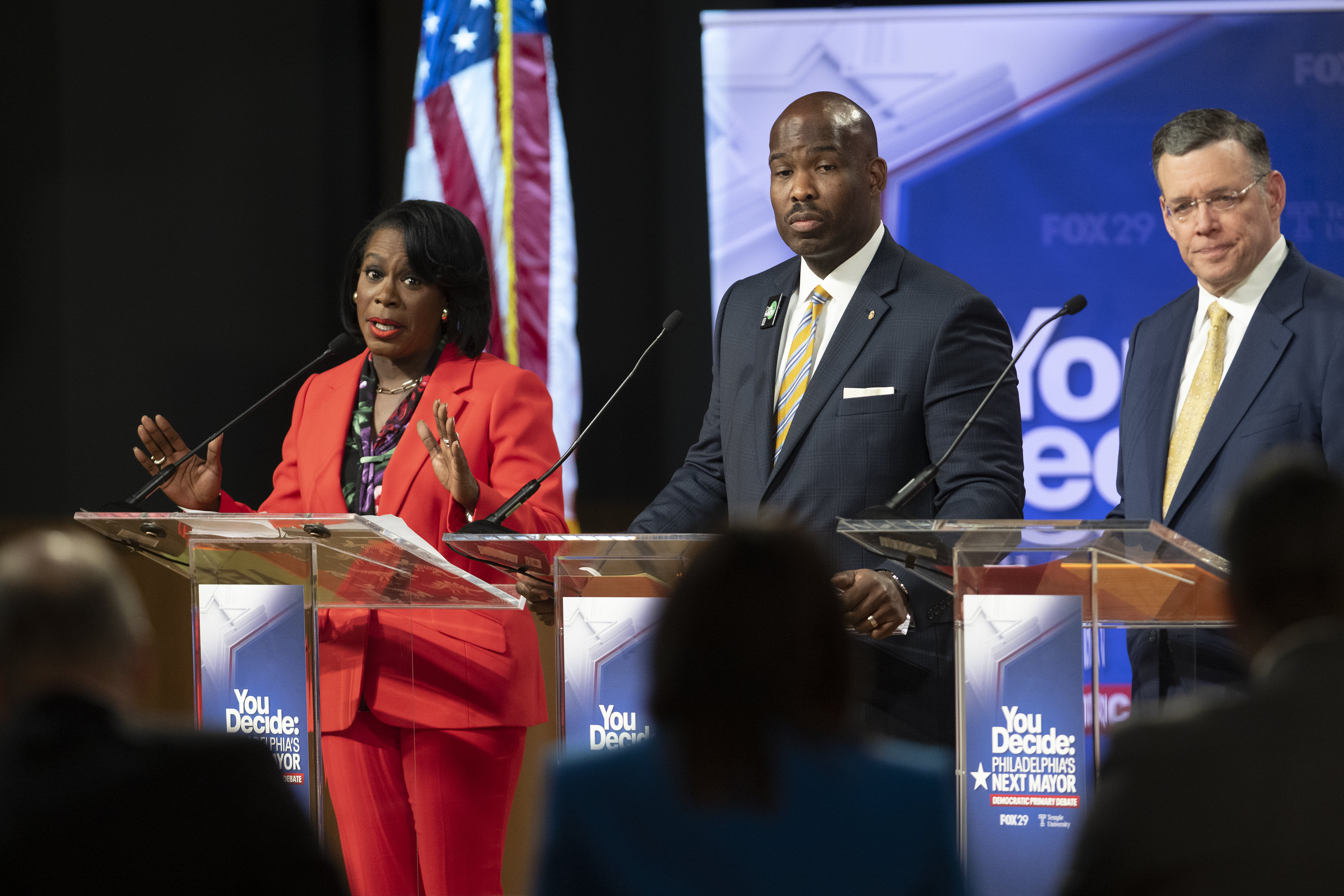
Top candidates for the Philadelphia mayor seat former City Council Member Cherelle Parker, left, Former City Council Member Derek Green, and businessman Jeff Brown, during a televised debate at the Temple performing arts center in Philadelphia, Pa. Tuesday, April 11, 2023.Jose F. Moreno / Staff Photographer
During the debate, however, Parker was not asked directly if she would commit to ending the city’s contract with Reworld.
“I was enthused to hear our mayor speak about this on the campaign trail,” Gauthier said. “I hope we all want to do the right thing. Now is the time to show that.”
Environmental advocates contend that neither landfills nor incinerators are good for the environment and urge municipalities to focus on reducing waste in the first place. For instance, Ewall, who developed a policy platform called the Zero Waste Hierarchy, pointed out that thousands of communities now charge residents for each bag of trash just as utilities charge for each gallon of water or kilowatt of electricity.
But for the “residuals” that do need to be collected, advocates have generally coalesced around the conclusion that incineration is more harmful than landfilling, Ewall said.
Delaware County, which adopted a Zero Waste Plan in September, commissioned a 2021 study that found incineration was the costliest of its waste-disposal options, from both a health perspective and a financial one.
The county determined that each ton of trash burned at the incinerator produced $234 to $337 in health and environmental costs. The impact from landfilling, meanwhile, was $144 per ton.
‘Reverse the environmental tragedy’
Founded by William Penn, Chester is the oldest city in Pennsylvania. But over the last century, it has become a hub for some of the region’s least-wanted uses, including polluting manufacturers, fossil fuel facilities, a state prison, and, since the early 1990s, the incinerator. About 69% of Chester’s 33,000 residents are Black, and 31% live below the federal poverty line.
“We hope that Philadelphia is listening in a strong way … as we attempt to reverse the environmental tragedy that has occurred here in the last 3½ decades due to the incineration of trash,” Chester Mayor Stefan Roots said Friday. “It’s an old technology, and it’s time for it to go. Especially in a community like Chester that’s looking to develop, it’s one of our biggest impediments.”
Chester resident Zulene Mayfield, left, Philadelphia Councilmember Jamie Gauthier, right, and Chester Mayor Stefan Roots meet to discuss Gauthier’s “Stop Trashing Our Air Act,” which would ban the city from incinerating waste, during a visit with lawmakers and staff in Chester, Pa., on Friday, Nov. 7, 2025.Jose F. Moreno / Staff Photographer
About 31% of the trash the incinerator burned in 2024 comes from Philly, with Delaware County accounting for 28% and New York City 26%.
During the tour, Lyles explained how environmental racism can occur even if decision-makers are not consciously prejudiced against certain communities, because wealthier areas often organize to prevent polluting industries in their backyards.
“In the late 1990s, there were about 60 proposals for new gas-fired power plants in PA. Only 16 of them were built,” he said. “Most of them faced a stiff opposition from community groups in suburban and rural areas, but those on either side of Chester went in with no organized opposition.”
The final stop on the tour was a row of boarded-up and dilapidated homes along a railroad used for industrial purposes near the edge of the incinerator property. The homes started emptying out in the early 2000s, Ewall said, and the last was abandoned a few years ago.
He recalled meeting one of the last residents to leave.
“She had six grandchildren. She lived with her granddaughter, around 14, and one of the times I met her, had an oxygen tank that she would carry around with her just to be able to breathe,” Ewall said. “They just kind of disappeared one day, and I saw a boarded house.”