Angel Okeke, a junior at the Academy at Palumbo in Philadelphia, wanted to make sense of the loss of her best friend’s brother to a tragedy spurred by gang violence.
Isadora Pendygraft, an eighth grader at Welsh Valley Middle School in Narberth, felt pulled to explore how restorative justice could reshape the criminal court system.
Avigail Wus, a junior at Pennsbury High in Fairless Hills, hoped to examine how the public, the media, and courts interact with survivors of sexual assault.
They are among a group of students who spent nearly a year thinking, researching, and writing about changes they want to see in Philadelphia. This month, their work culminated in professional performances of their original plays.
“It’s freaking amazing,” Okeke said.
The possibility of performance
The student work is part of What Now: 2026, a new arts festival marking the country’s Semiquincentennial. When the festival was in the planning stages, Madeline Charne, director of education and programs for Philadelphia Young Playwrights, said sheknew youth voices ought to have a place.
That is how PYP’s Civic Theater Project was born.
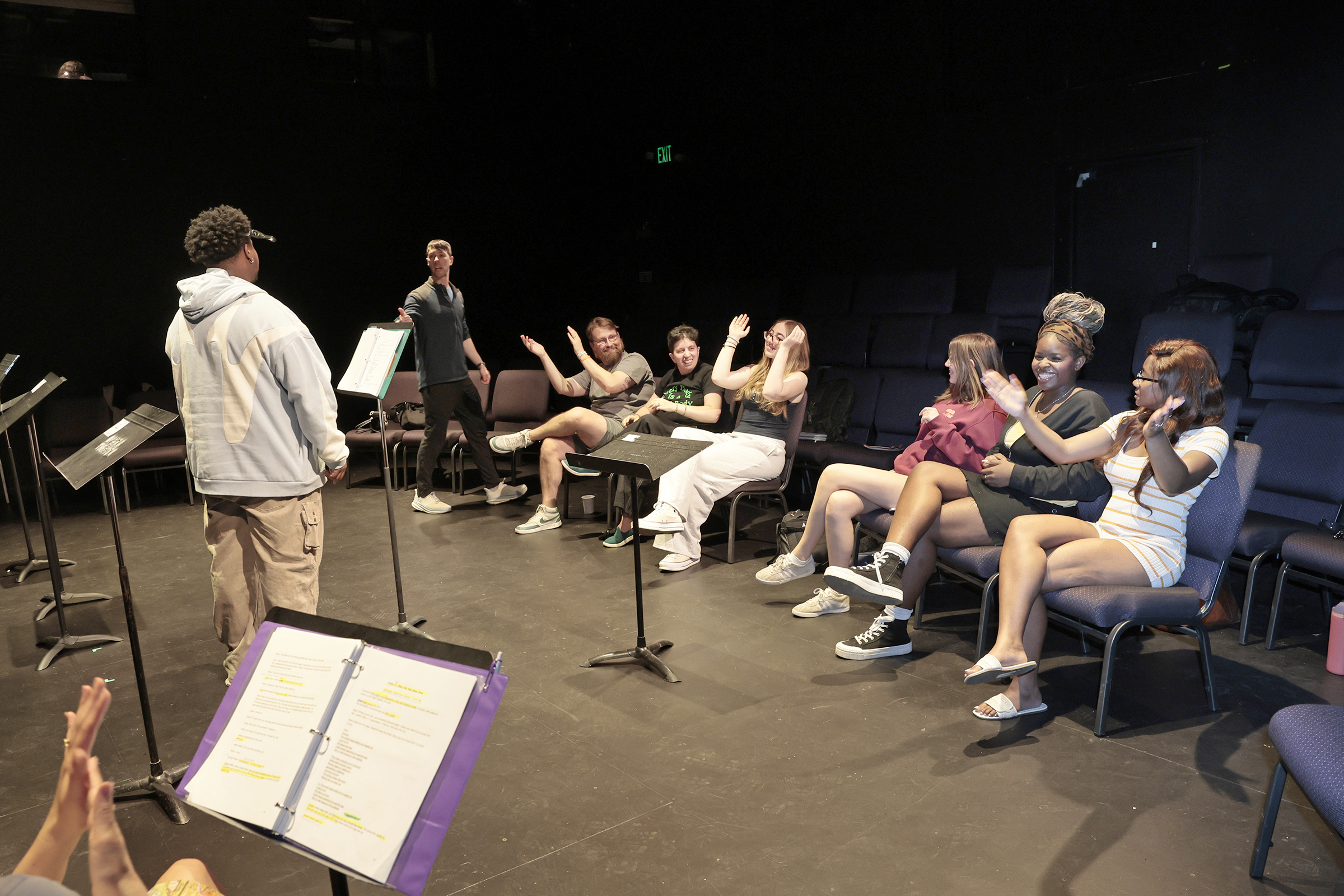
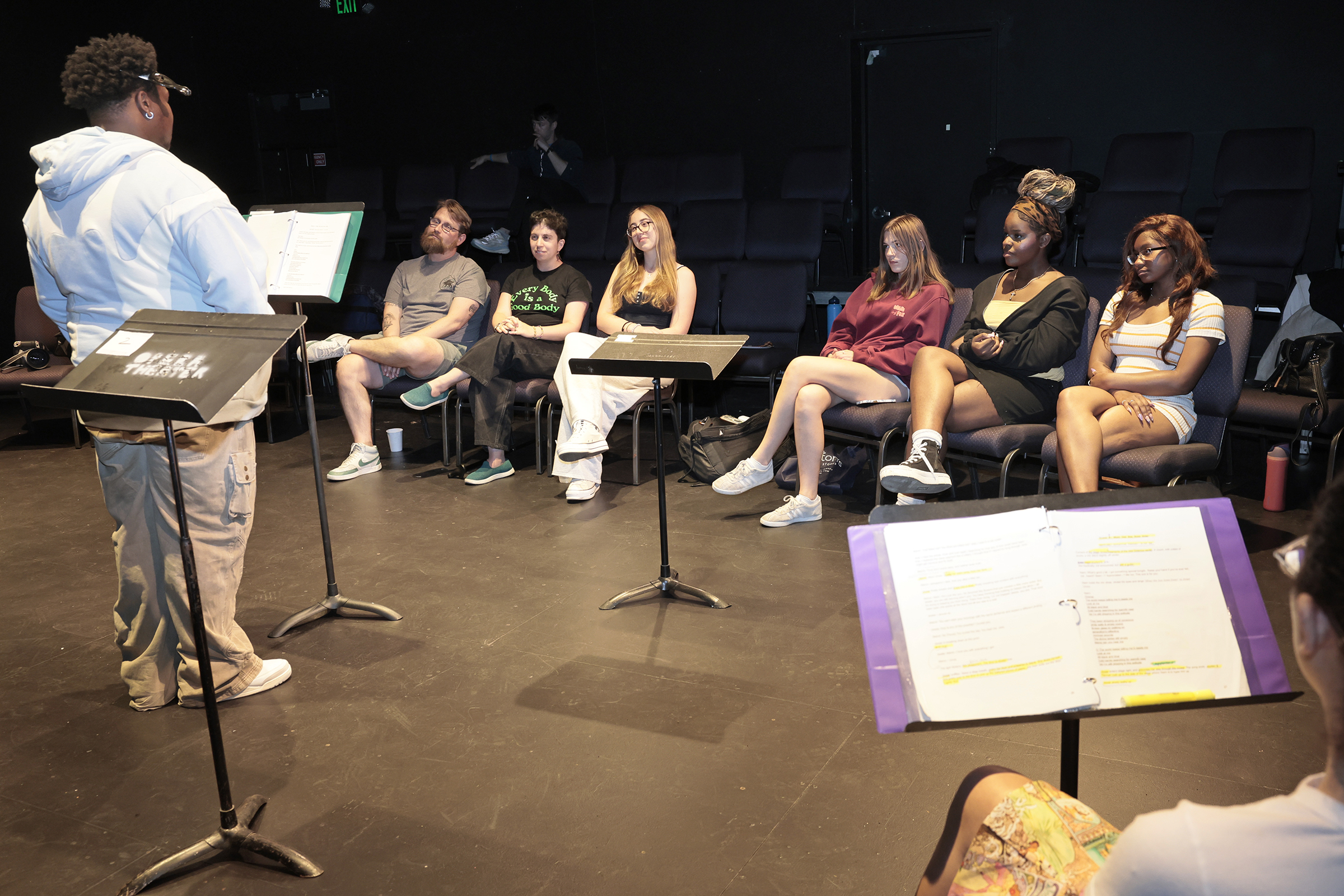
(L-R) Actor Raymond Ingram rehearses as (seated) Palumbo civics teacher Charlie McGeehan, Philly Young Playrights director of education and programs Madeline Charne, students Abigail Wus, Isadora Pendygraft, Angel Okeke, and Harmonee Summers look on during rehearsal at the Drake Theater in Philadelphia earlier this month.Elizabeth Robertson / Staff Photographer
Charne said she wanted students “thinking about how theater itself can create social change, not just be about social change.” She prompted students to imagine Philadelphia 25 years in the future, to dream about what should be changed, and to see their work as the beginning of that shift.
“Creativity and art and performance — that’s what has the possibility to make people actually listen,” said Charlie McGeehan, a Philadelphia School District civics teacher who worked as a PYP teaching artist.
Kids thought so, too. For every spot PYP had in the process, it received roughly five applicants. Eventually, five young people signed on: Okeke; Wus; Pendygraft; Harmonee’ Summers, who attends Springside Chestnut Hill Academy; and Maroua Benfadhla, a student at Science Leadership Academy.
The young playwrights had to commit one day a week to their work — researching and refining ideas, interviewing change makers around the city, committing to their eventual topic, writing, editing, critiquing one another’s work, andeven casting their plays.
The works the five eventually produced were a revelation, McGeehan said — powerful, smart, and character driven. They were presented in staged readings at the Louis Bluver Theatre in Center City.
The right rooms, the right resources
On a sweltering Wednesday this month just before the students’ work debuted, they gathered at the theater for a final run-through.
The playwrights sat in chairs, eyes fixed on the actors in front of them. The actors performed the plays without sets or costumes, just reading scripts on music stands and allowing the audience to take inthe power of the young people’s words.
The moment Summers first heard professional actors reading words she had written, it stopped her cold.
“It is so cliche to say it’s magical, but it feels different when your words are literally jumping off the page‚” said Summers, whose play is called The Double K Show. It chronicles two young women’s rise to stardom and the effect substance use has on their lives, and was shaped by events Summers observed growing up in North Philadelphia and attending an elite private school.
Part of the students’ process was finding resources that might help with the issues they tackled — from recovery and housing assistance organizations to groups that support survivors of sexual assault.
(L-R) Actor Raymond Ingram rehearses as Palumbo civics teacher Charlie McGeehan, Philly Young Playrights director of education and programs Madeline Charne, students Abigail Wus, Isadora Pendygraft, Angel Okeke and Harmonee’ Summers look on during rehearsal at the Drake Theater in Philadelphia earlier this month.Elizabeth Robertson / Staff Photographer
Pendygraft, whose mother, Letitia Stein, is an editor at The Inquirer, is a PYP veteran and the only middle schooler in the group. The playbill lists Pendygraft’s author name as Rut, a nickname. She said she was inspired by The 57 Bus, a book she had read about the ripple effects of a crime committed by one teenager against another.
“The criminal court has a long history of being complicated and a little corrupt and biased,” Pendygraft said, but restorative justice — the theme of her play — would go a long way toward repairing harm.
Wus said she used the motif of the Salem witch trials as “a critique about the way stories of sexual assault have been commodified into entertainment.” It wasa powerful exercise in using her voice, she said, made stronger by the magic of real performers.
“These actors, they’re the people you see on TV — they are so talented,” Wus said. “Hearing my words out loud has allowed me to make revisions to make my script feel more real. It’s probably one of the best writing experiences I’ve ever had.”
Okeke, who wrote Echoes Beyond Shut Doors about the loss of Naim Castleberry, her best friend’s brother, said she struggled for a time with the idea that her ideas would go nowhere.
“It felt very daunting to tackle such big issues. Often, I feel like I feel small as a young person in Philly. I have this doubt, ‘how much of an impact can I really make?’” Okeke said. But she powered through, with words — and the experience was transformative.
“Us youth really have good things to say if we’re put in the right rooms with the right resources,” she said.
If you’re in a church and the ceiling starts pulsating and streaks of lightning splinter down the walls, it’s usually a good sign that more than the homily is about to go down.
But at Luminiscence, it’s all part of a new immersive experience that uses light to alter one of Philadelphia’s most famous altars — at the Cathedral Basilica of SS. Peter and Paul.
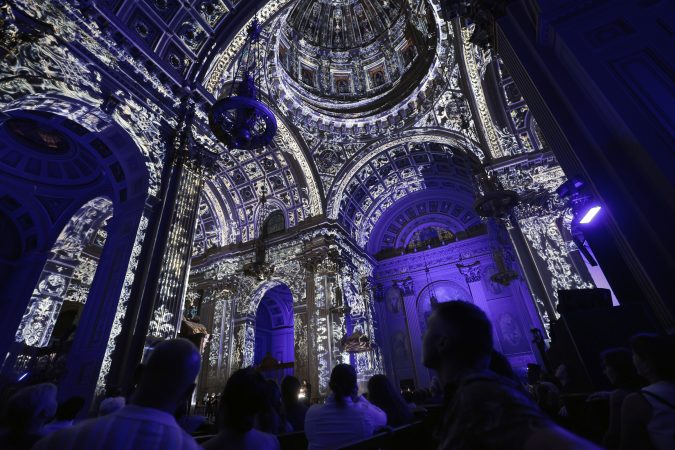
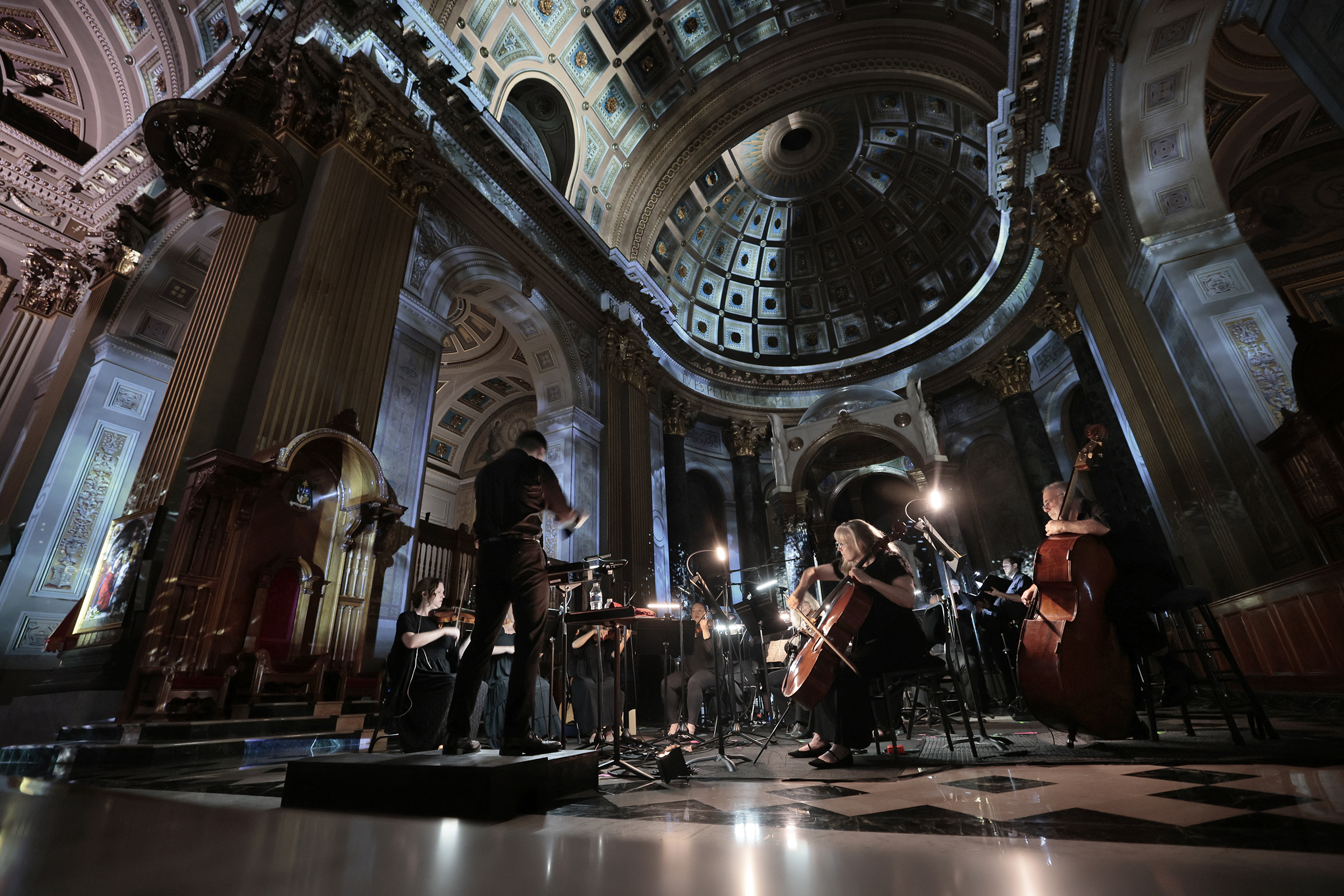
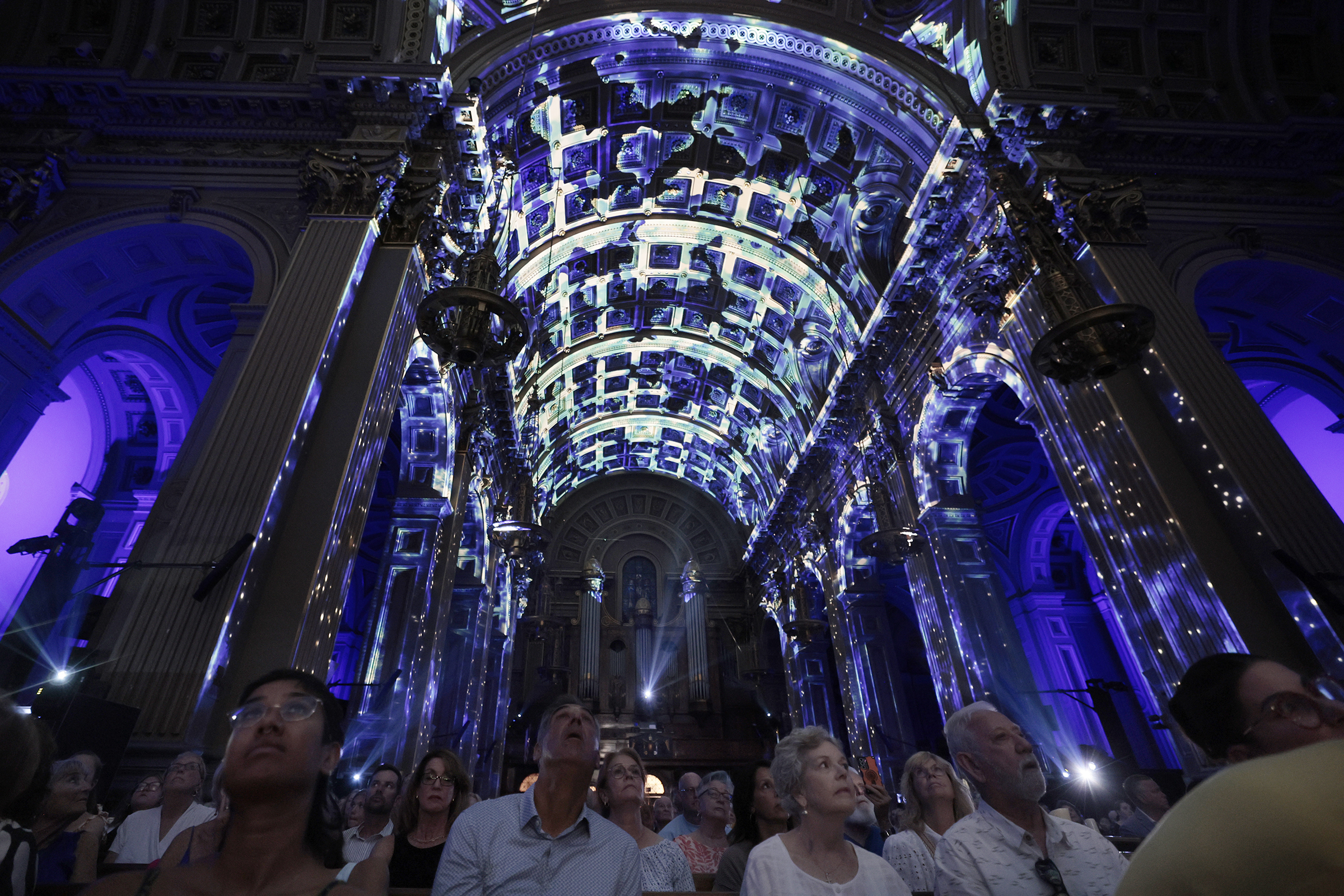
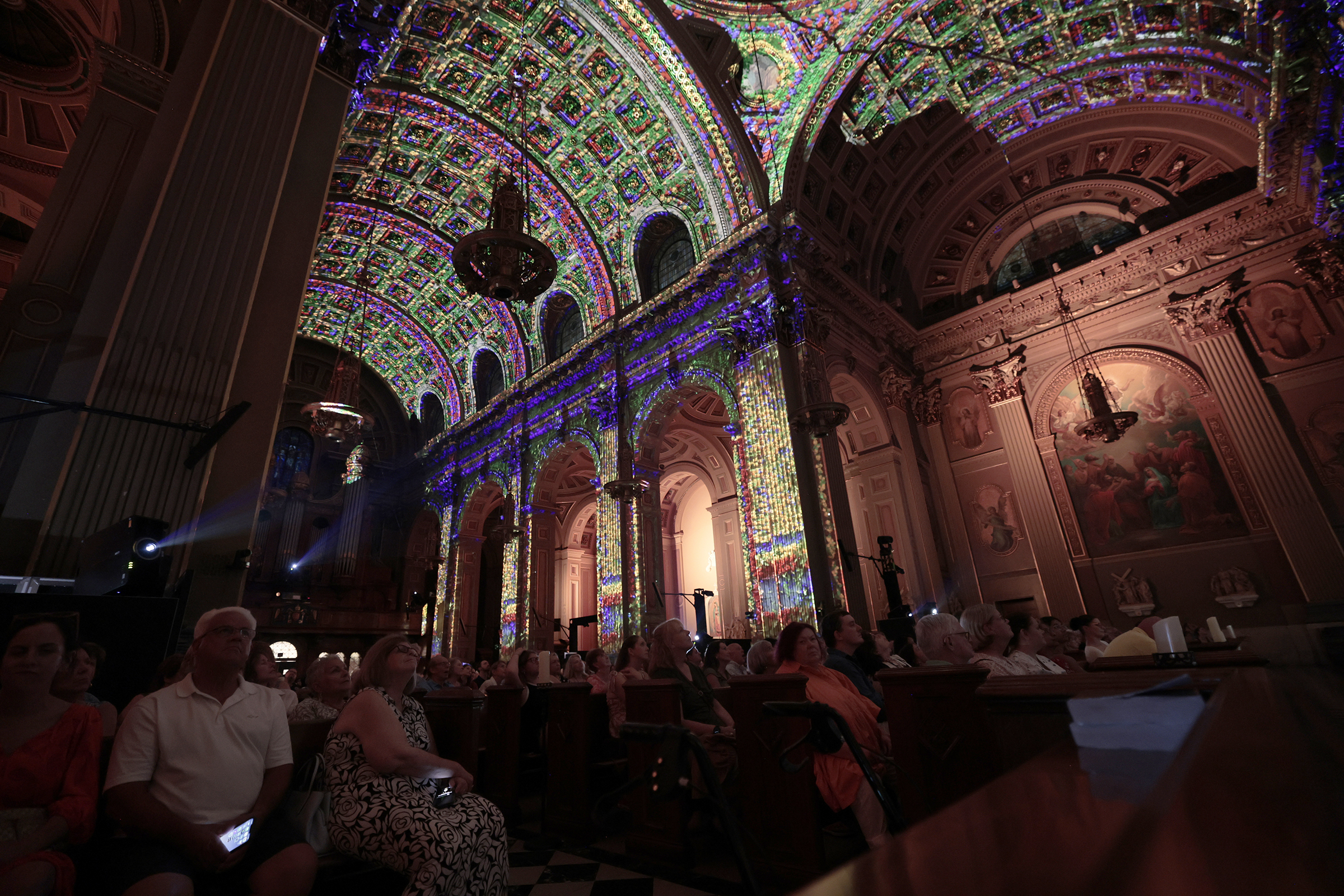
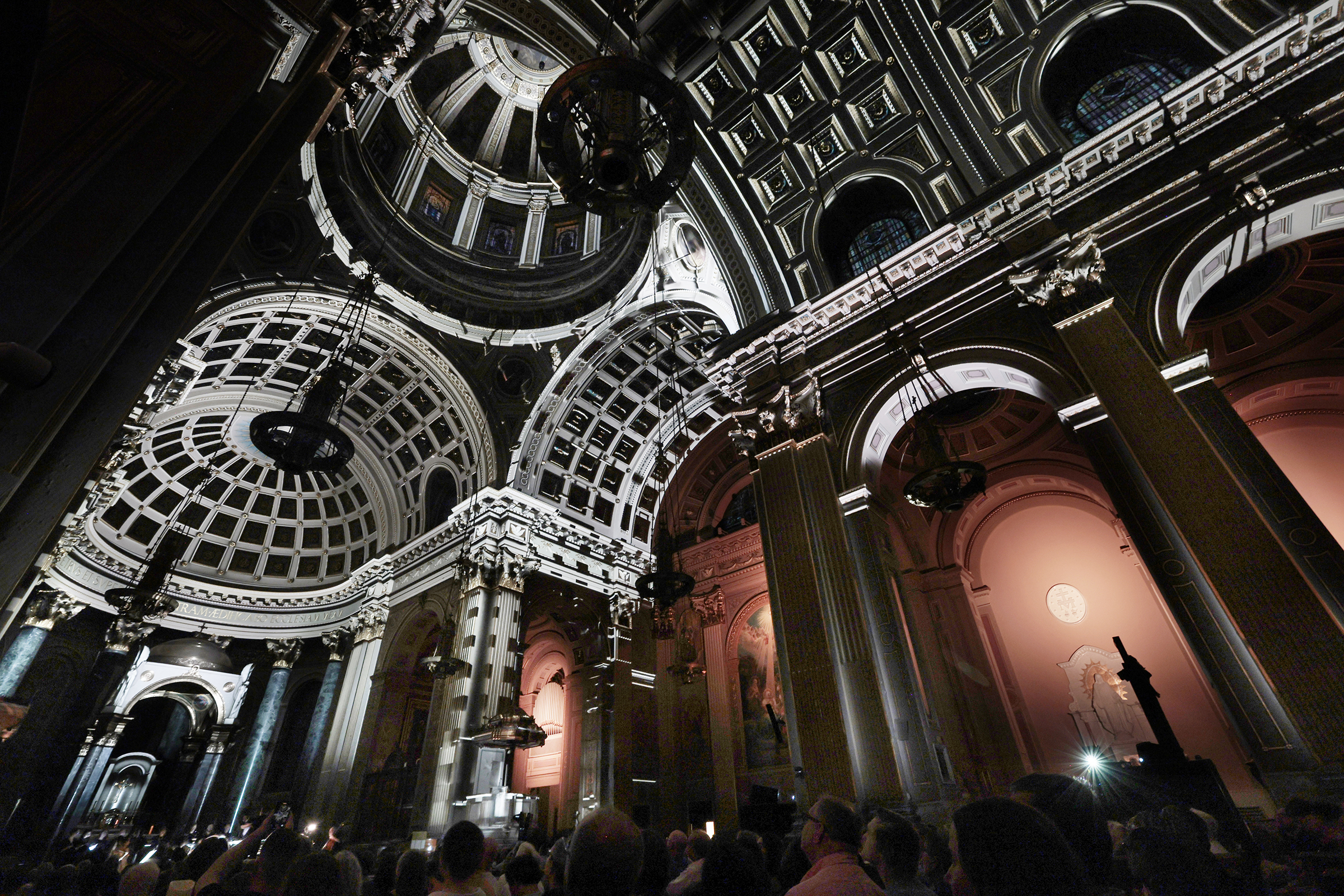
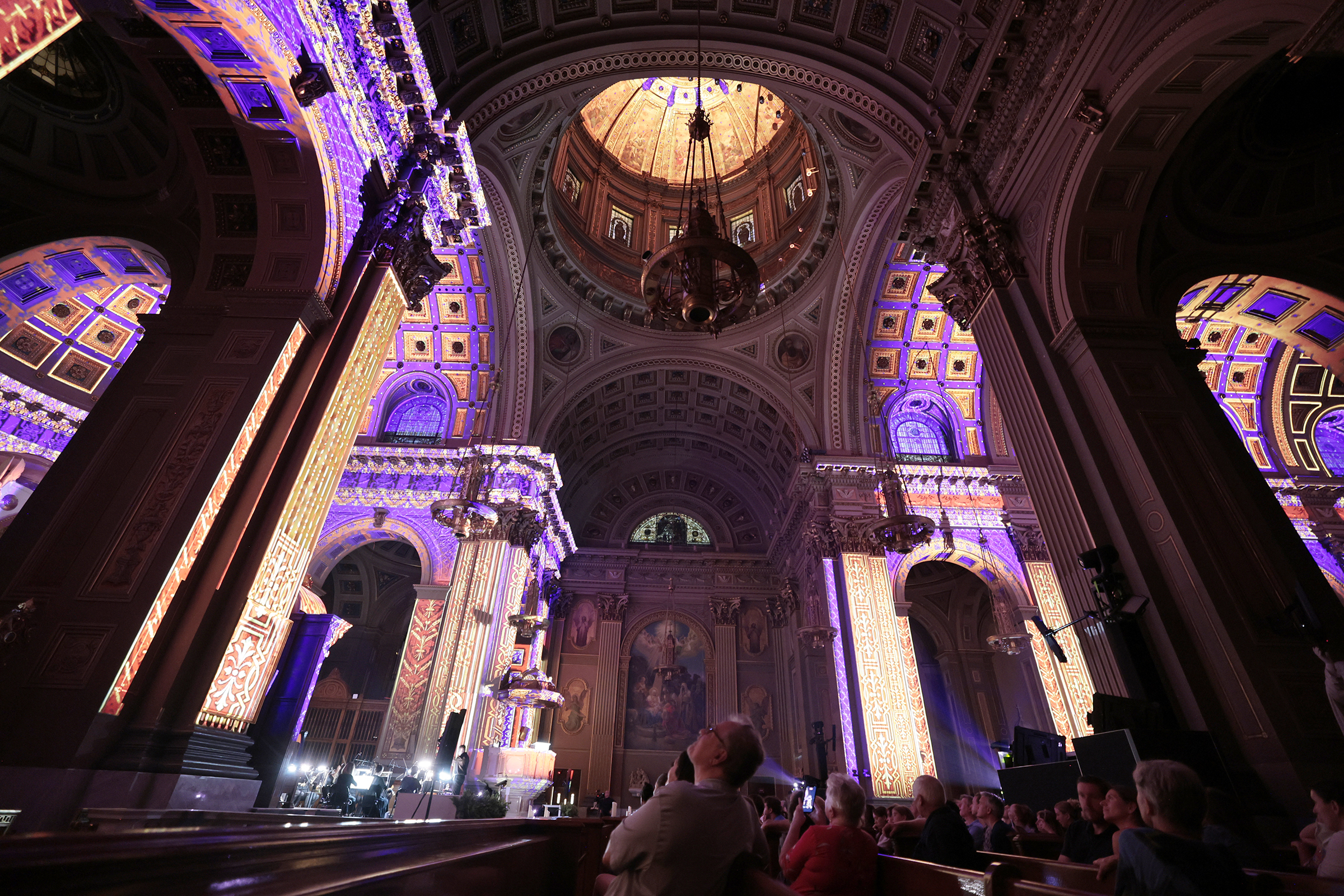
On select evenings through August, Luminiscence brings the interior walls of the 164-year-old mother church of the Archdiocese of Philadelphia to life with 25 high-definition projectors, 360-degree video mapping, and accompanying performances by a live choir and orchestra on select dates.
The orchestra plays during the June 11 premiere of Luminiscence at the Cathedral Basilica of SS. Peter and Paul.Elizabeth Robertson / Staff Photographer
This sacred space where two popes have celebrated Mass, countless Philadelphians have been laid to rest, and the remains of a saint are enshrined is now host to a visual and auditory odyssey that tells the history of the cathedral as high-definition lights trace every nook and cranny of its walls.
Think of it as a laser light show for the digital age and mature palette. Instead of spacing out with Pink Floyd in a planetarium, you’re basking in bright lights with Bach in a basilica.
“We really wanted to see the building come alive and be featured in ways that it hasn’t ever been seen before, together with music that really illuminates the soul,” said Clayton Ferguson, executive producer and general manager for Banijay Americas Live, the media and production company behind show.
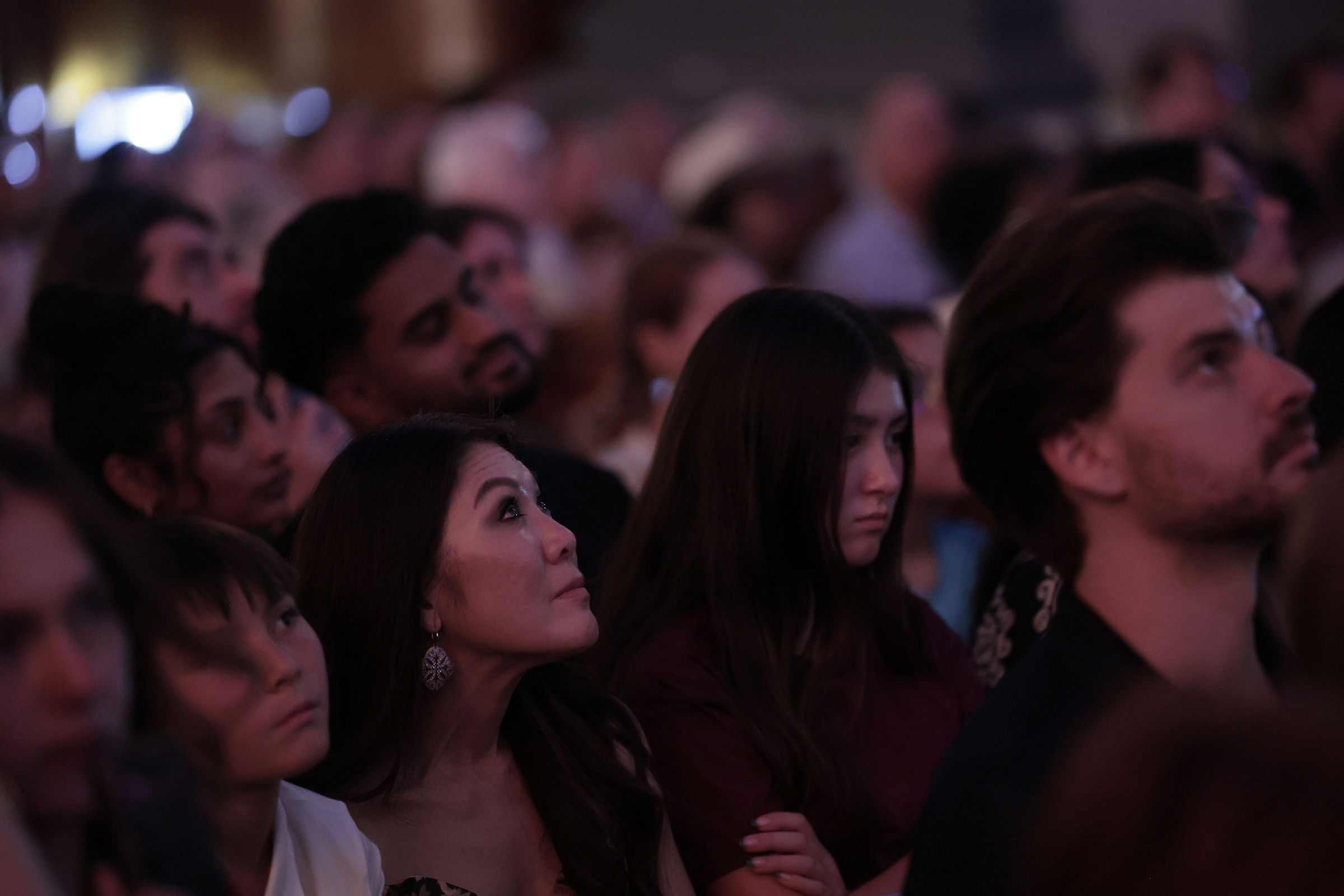
Guests watch the opening night performance of Luminiscence at the Cathedral Basilica of SS. Peter and Paul on June 11.Elizabeth Robertson / Staff Photographer
‘Respecting the cathedral’
Father Dennis Gill, rector of the Cathedral Basilica, said he was approached about hosting the production a little less than a year ago.
“They were very impressed by our cathedral building and they thought it would be a wonderful place to highlight with light,” he said. “It took some convincing. My primary concern was respecting the cathedral. The primary ministry of the cathedral is the worship of God and I wanted to make sure Luminescence would protect and promote that.”
Luminiscence events — which are specifically designed for cathedrals and basilicas — began in France, where Banijay Americas Live parent company, Banijay Entertainment, is headquartered. Philadelphia is only the second U.S. city to host a production. The first was held at the Basilica of Saint Mary in Minneapolis last year.
People watch the opening night performance of Luminiscence on June 11.Elizabeth Robertson / Staff Photographer
“It’s about sacred spaces, but it is not a faith-driven show, so it is absolutely for all audiences,” Ferguson said. “I wouldn’t say that it’s a secular story or a religious story. I think that it is about beauty and hope and creativity.”
This isn’t the first time projection mapping has been used to transform an iconic Center City building. For years, Philadelphia’s own Klip Collective brought the exterior of City Hall to life during the holidays with its free Deck the Hall Light Show. But Luminiscence is the first time an immersive experience like this has been done in the Cathedral Basilica, or in any Catholic church in Philly.
Gill said he had three reasons for agreeing to participate.
“My first reason was it would highlight the architectural beauty of our cathedral. Second, it would draw people to church, and my third reason was it would bring us some financial assistance,” he said.
A portion of the ticket sales goes to the Cathedral Basilica, but Ferguson declined to detail how much.
A purpose
Last week, entry lines snaked around the building as people packed the pews for the first performance. Prior to the start of the show, the basilica’s domed ceiling was bathed in a dark cerulean light dotted by hundreds of stars. Human silhouettes walked slowly and methodically along the walls high above the crowd.
Joseph Blanch of Havertown watches the opening night performance of Luminiscence on June 11. Elizabeth Robertson / Staff Photographer
Ferguson and Gill offered brief opening remarks, with the latter also offering a blessing.
As I sat listening in a pew, I tried to think of the last time I was in the basilica. Was it really 11 years ago when Pope Francis was in town? I often visit churches in Europe just for their beauty and architecture, but not those in my own backyard. Maybe I feel like I need a purpose when it’s so close to home.
Luminiscence at the Cathedral Basilica of SS. Peter and Paul on opening night on June 11. Elizabeth Robertson / Staff Photographer
“Talking it through, everybody kind of understood how it would really, really help get more people through the doors,” Ferguson said. “I mean, this building is stunning. It’s incredible. How many people have maybe walked past it over all of the years and not even had a chance to walk inside?”
‘Goosepumps’
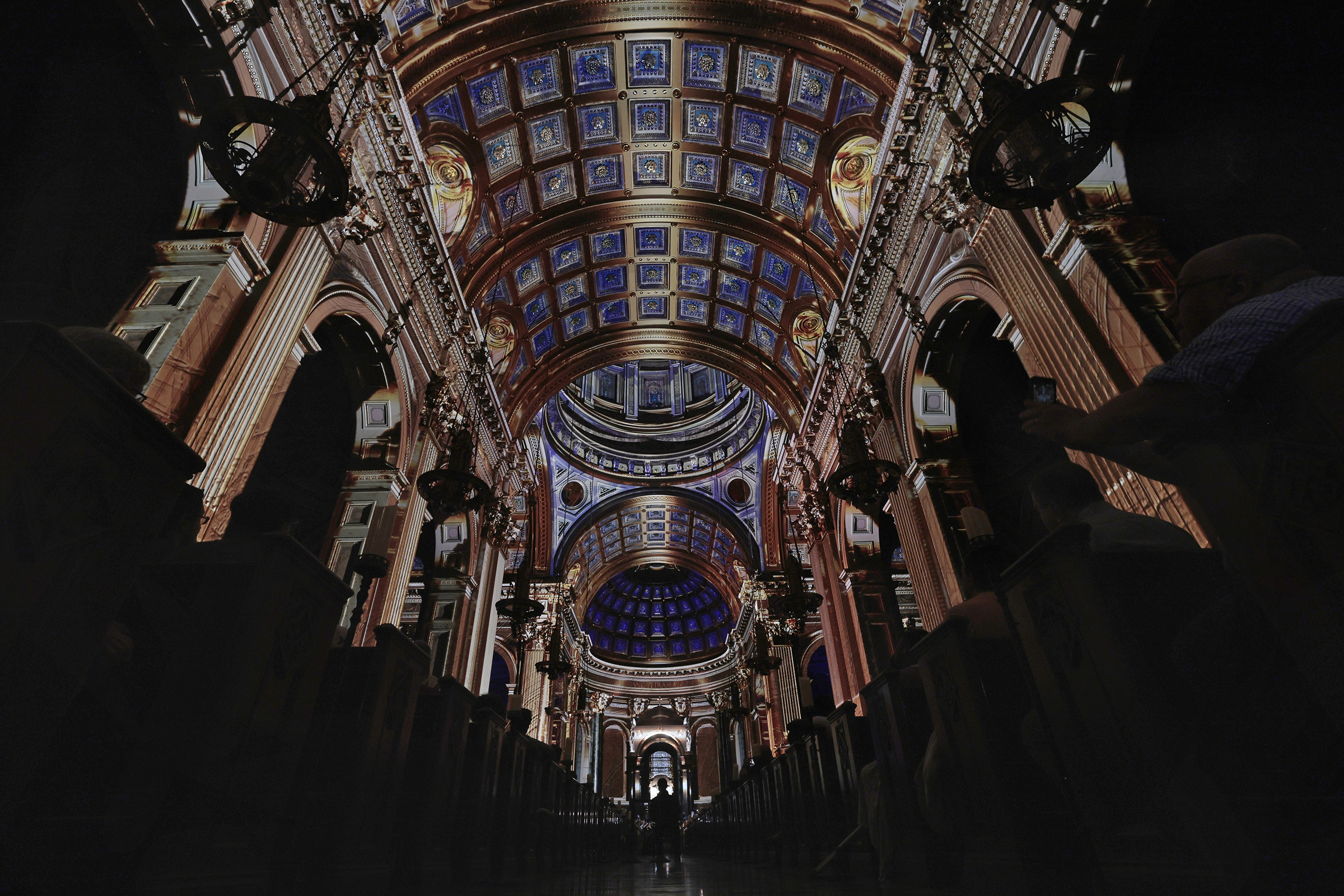
The show began with a narration welcoming us to “prepare to board on a timeless journey.” Over the next 45 minutes, the basilica was transformed into a night sky, a golden palace, an architect’s drawing board, a stormy sea, stained glass, a garden of falling petals (that defied the laws of gravity and rose upward), a kaleidoscope, a cloudy sky filled with angels, and, for a brief moment, a black-and-white scene that looked straight out of a Tim Burton movie.
“Wow!” and “Oh my God!” I can hear myself saying on my video recordings (probably should have rethought that last exclamation in a Catholic church).
“Goosepumps” I wrote in my notebook (hey, it was dark).
The opening night performance of Luminiscence on June 11.Elizabeth Robertson / Staff Photographer
The visuals were stunning and the live orchestra and choir of local musicians sounded lovely, even if I only recognized a few of the pieces of classical music being performed, like “Ode to Joy” from Beethoven’s Symphony No. 9.
I did struggle to follow along with the narration and tenuous storyline though, which mostly focused on the creation of the Cathedral Basilica but also tried to tie in the founding of the United States and Philadelphia. Ferguson called it a “poetic love letter to Philadelphia and the cathedral.”
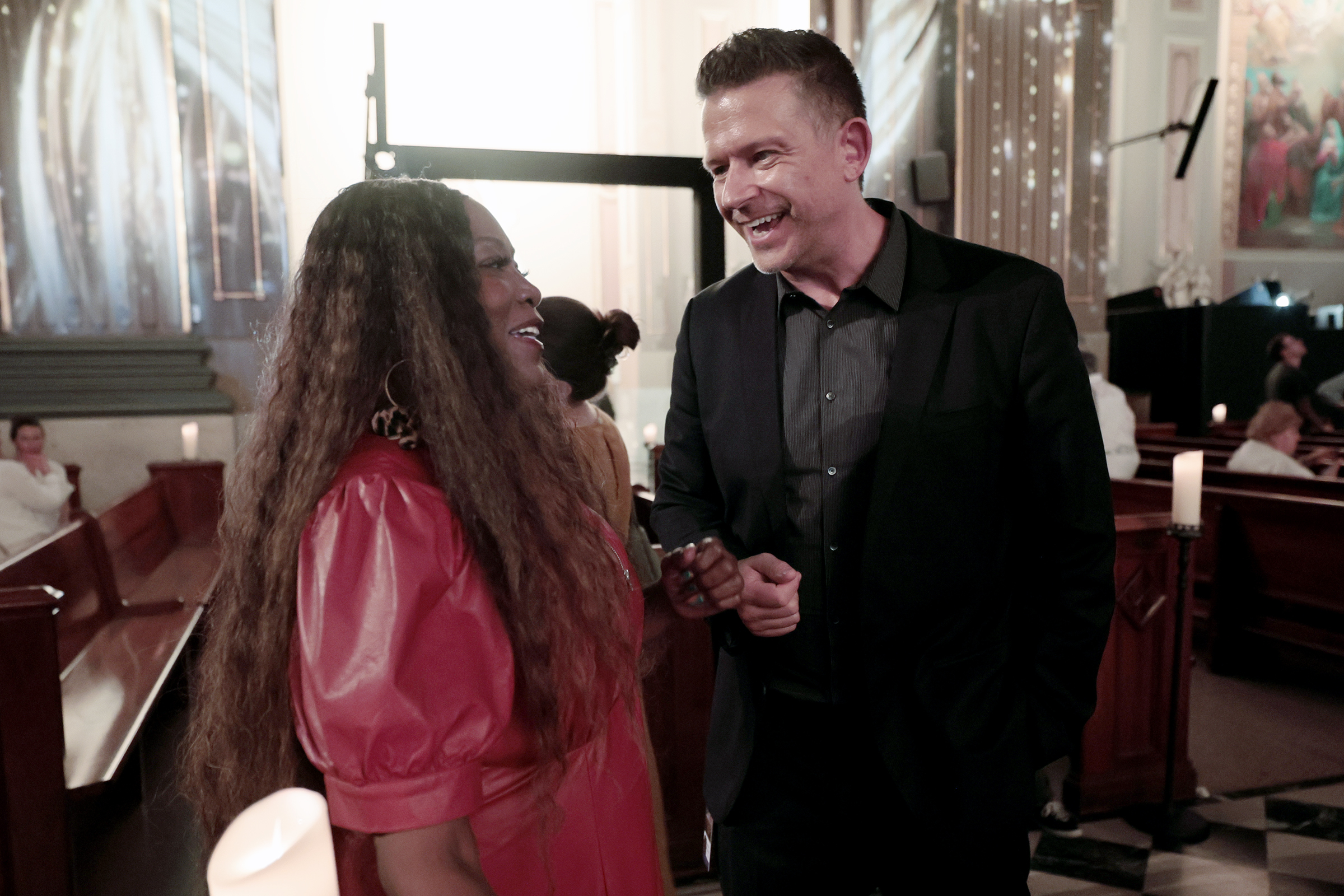
Crystal Safford of Philadelphia and Luminiscence executive producer Clayton Ferguson talk after the opening night performance.Elizabeth Robertson / Staff Photographer
“It’s really about less is more,“ he said. ”We try to use as few words as possible to elevate the senses along the way.”
God and the church feature prominently in the narration, which perhaps is to be expected, given the setting, but it also makes the program feel less than secular. I didn’t find it off-putting, but I can see how some people may.
Faith and wonder
The strength of this show lies firmly in its visuals, which helped me to see one of Philadelphia’s most storied edifices in a new way — alive.
But it’s always alive, every day, with people and services. That was one of the biggest difficulties Ferguson and his crew faced when setting up Luminiscence.
The opening night performance of Luminiscence lights up the interior of the Cathedral Basilica of SS. Peter and Paul in Philadelphia on June 11. Elizabeth Robertson / Staff Photographer
“One of the hardest challenges is how do we kind of disappear so people don’t see speakers everywhere,” he said. “So that’s actually our biggest challenge — staying out of the way.”
If you’ve been staying out of the way of the Cathedral Basilica (or have never visited), Luminiscence is a great excuse to step inside. I’ve felt wonder in grand places of worship over the years — the Sagrada Familia in Spain, the Cao Dai Temple in Vietnam, and the Basilica of San Clemente in Italy — but it’s been a long time since I’ve felt wonder in a church on my own soil. Luminiscence gave me that.
“It’s a very positive, beautiful, uplifting experience and it’s able to be both about faith and about wonder,” Gill said.
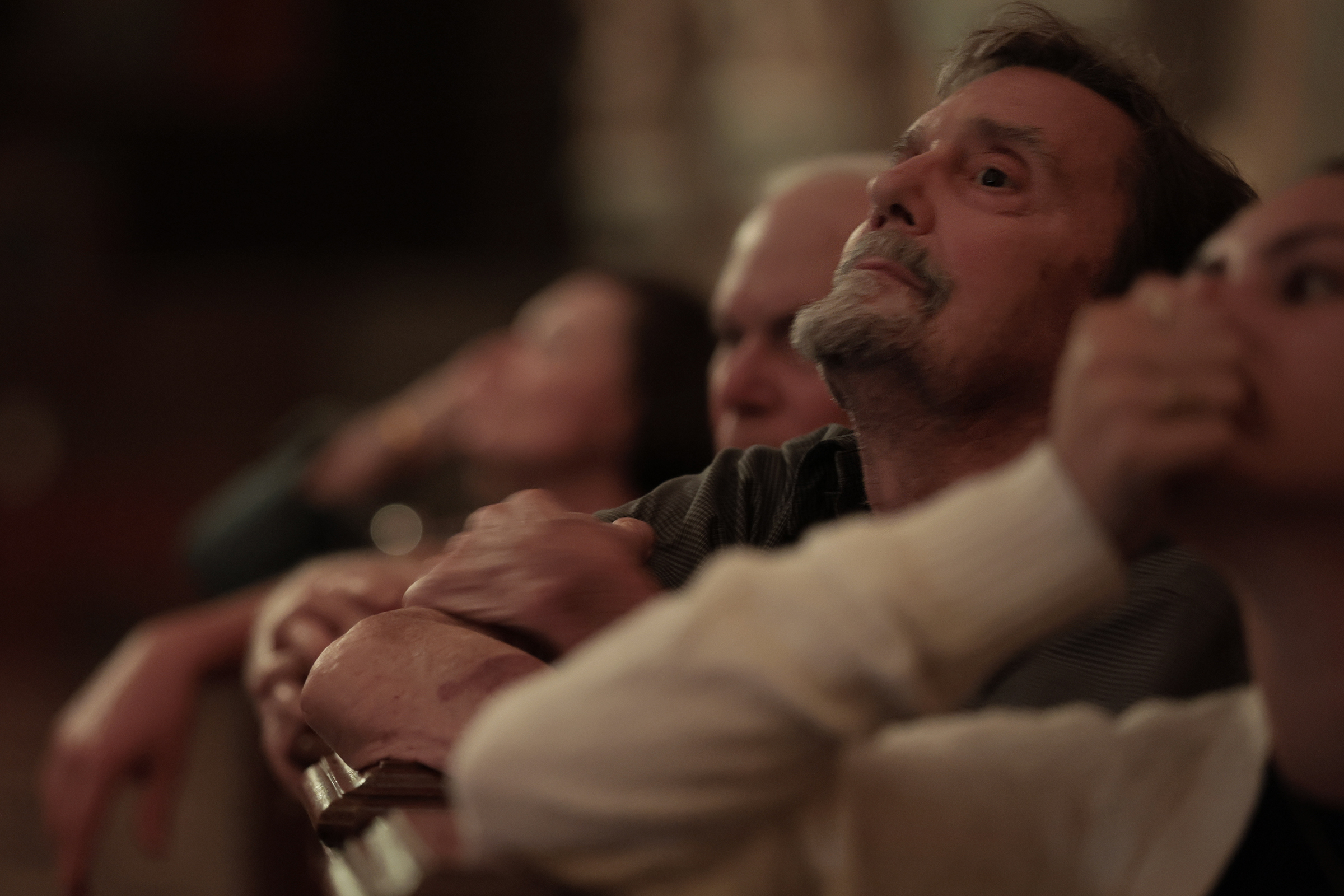
People watch the opening night performance of Luminiscence on June 11.Elizabeth Robertson / Staff Photographer
Know before you go
Three types of shows are available: with a live choir and orchestra, with just a live choir, and with an audio recording.
Adult ticket prices are $29 to $85 depending on the type of show, your chosen seating, and the day of the week. Tickets are available through Feverup.com.
Shows start late, with the earliest beginning at 8:15 p.m., to limit external light during performances.
For the best views, sit as far back as possible.
Do not, like me, bring your leftover dinner from Urban Farmer or you will be forced to throw it away, even if you promise you have no intention of eating mac-and-cheese in a church.
You will be looking up a lot, so if you suffer from neck issues maybe bring an airplane pillow?
Photos and videos are permitted, but limit yourself for your own enjoyment and for those around you. Nobody wants to watch the show through your phone.
At a grand-reopening celebration at Stateside Live!, Stateside Vodka president Matt Quigley’s wife, Megan, grabbed his arm and beckoned to the crowd around them in disbelief.
“It was just such a prideful moment of like … we’re here to stay,” Quigley said.
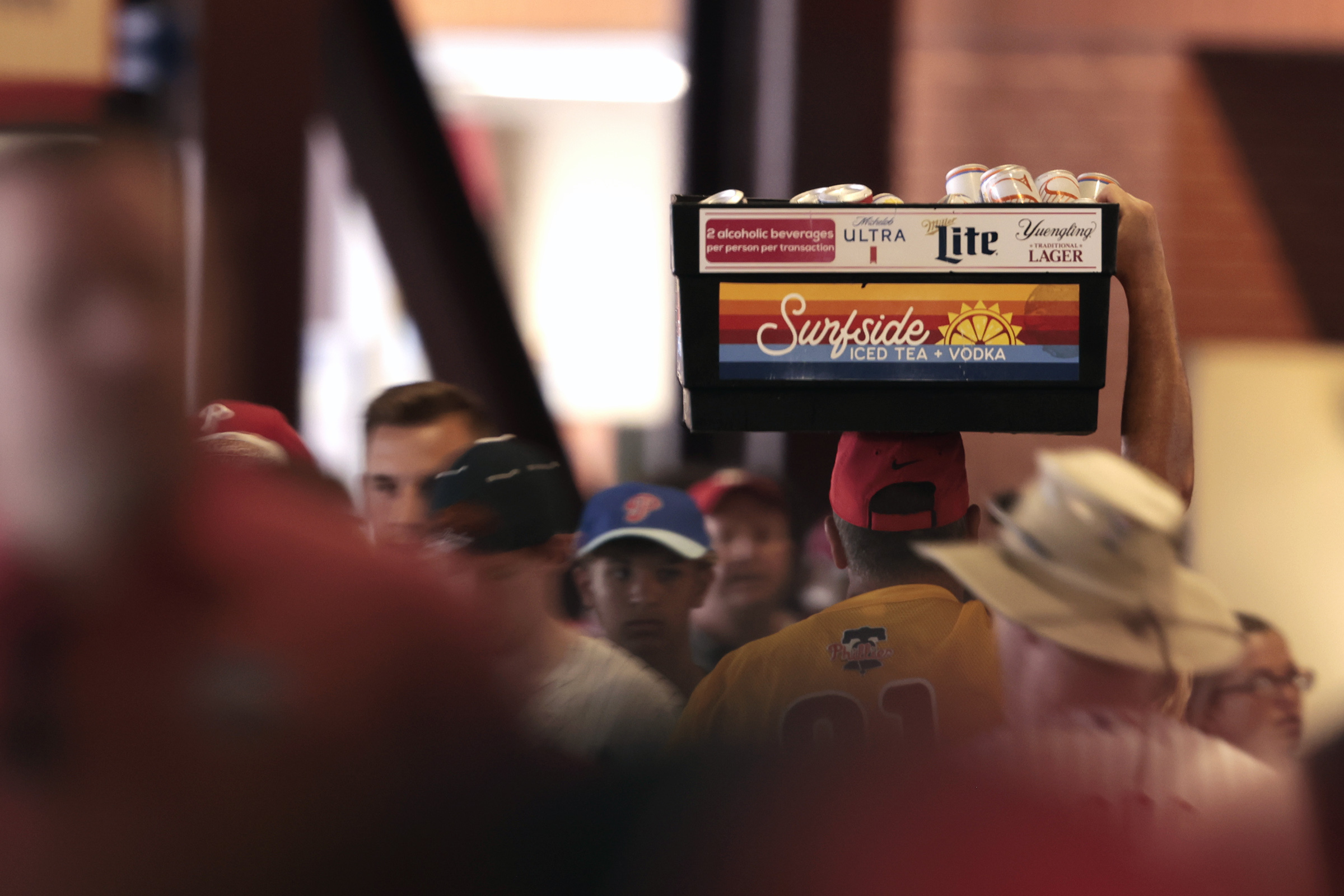
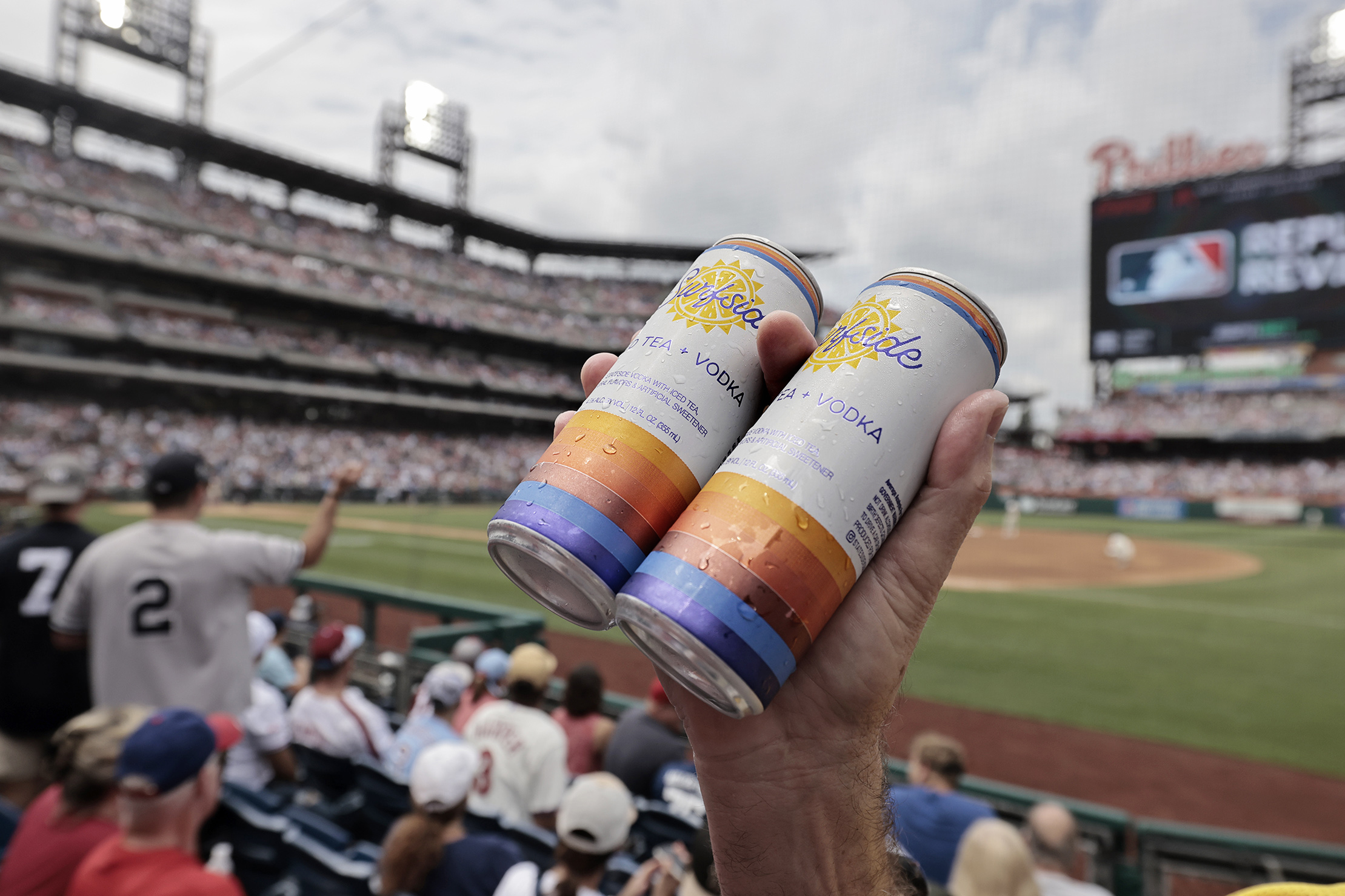
Just a couple years earlier, fellow cofounder and CEO Clement “Clem” Pappas looked around Citizens Bank Park to see as many Surfsides as Miller Lites in the hands of Phillies fans: “Holy s —, this is happening,” Pappas recalled thinking at the time.
At their massive new Center City headquarters last week, Pappas and Quigley said Surfside’s astronomical rise still feels surreal.
In 2015, the area natives founded Stateside Vodka in a distillery near Kensington with their brothers, Zach Pappas and Bryan Quigley. The company started selling canned vodka sodas in 2021. But they launched into a different stratosphere when they debuted their spiked teas and lemonades in 2022.
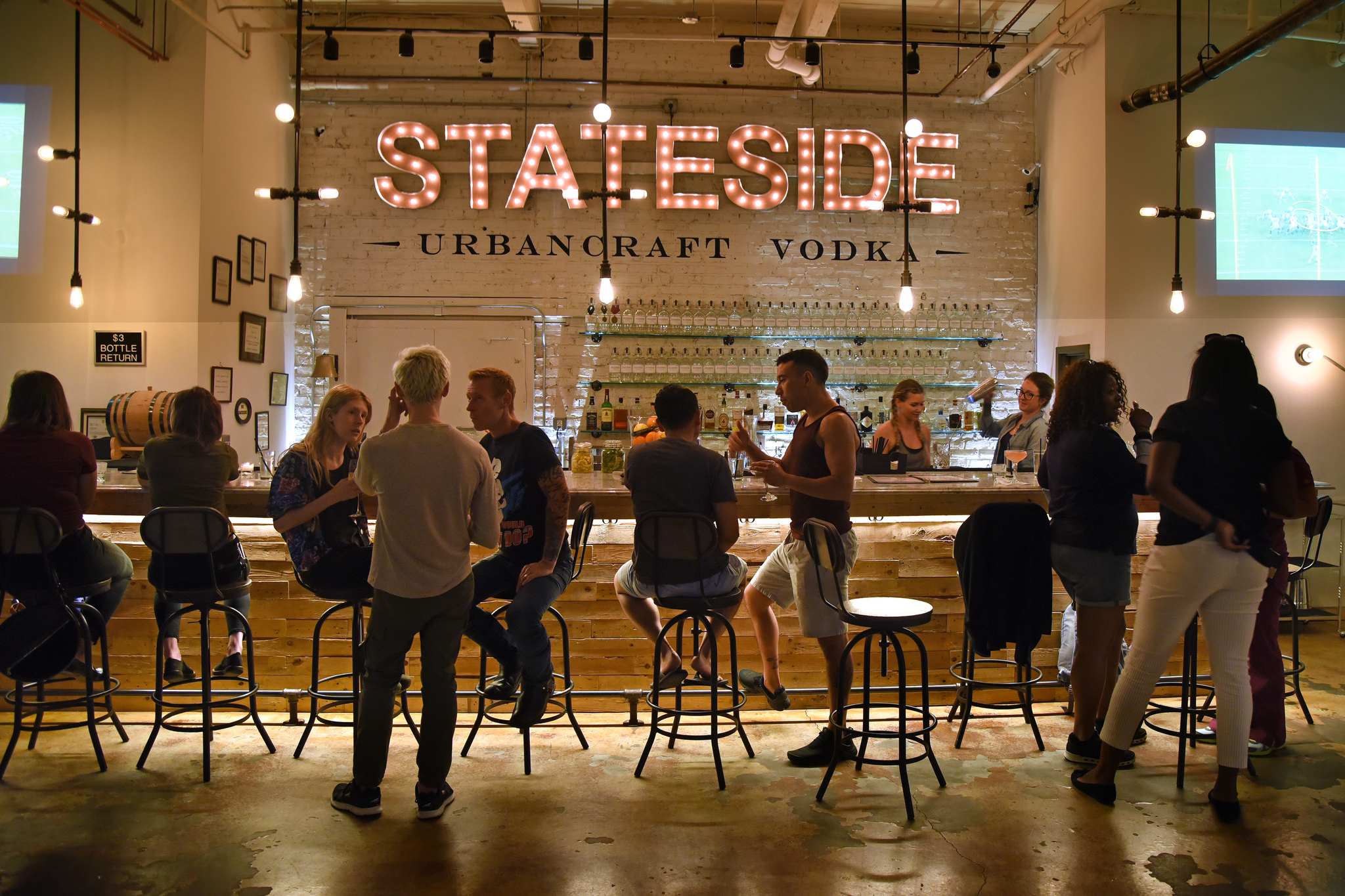
Stateside Vodka’s taproom near Kensington is pictured in 2017, when it was called Federal Distilling. TOM GRALISH / Staff Photographer
Branded as lower-calorie, better-for-you booze, the Surfside cans took off. The cofounders said they sold 200,000 cases in the first year, then 1.3 million in 2023, nearly 5 million in 2024, and a whopping 11.1 million cases last year.
The “slammable” 4.5% ABV cans, as Matt Quigley describes them, are particularly popular in the summertime, a three-month period that accounts for about half the beverage company’s retail sales.
So far this year, Stateside is on track for 70% growth in overall sales, and a 65% growth in Surfside sales, according to the company. That comes after a record year in which the company recorded 111% overall sales growth.
(function(){function e(){window.addEventListener(`message`,function(e){if(e.data[`datawrapper-height`]!==void 0){var t=document.querySelectorAll(`iframe`);for(var n in e.data[`datawrapper-height`])for(var r=0,i;i=t[r];r++)if(i.contentWindow===e.source){var a=e.data[`datawrapper-height`][n]+`px`;i.style.height=a}}})}e()})();
As a private company, Stateside does not have to publicly disclose earnings, and executives declined to share specific sales figures.
While Surfside has accounted for about 90% of sales in the past year, the top executives are bullish on their latest invention, a sports-drink-inspired canned cocktail called Super Lyte. They said the new beverage had sold nearly 400,000 cases in three months, meaning it could outpace Surfside’s early growth.
“The initial response is way beyond our expectation,” Clem Pappas said. “It feels like another hit.”
The company has achieved this success without the backing of an alcohol giant like Anheuser-Busch InBev or Molson Coors, which together manufactures hundreds of brands.
Quigley, 42, and Pappas, 52, said they’ve been approached by nearly every big beverage company, but they have no interest in selling anytime soon.
“As long as you’re still having fun, I see no reason to hang up the metaphorical cleats,” Quigley said.
“I don’t want to sit on the bench. I want to be in the game,” Pappas said. “We still think it’s early days.”
Stateside keeps Philly at its heart amid national growth
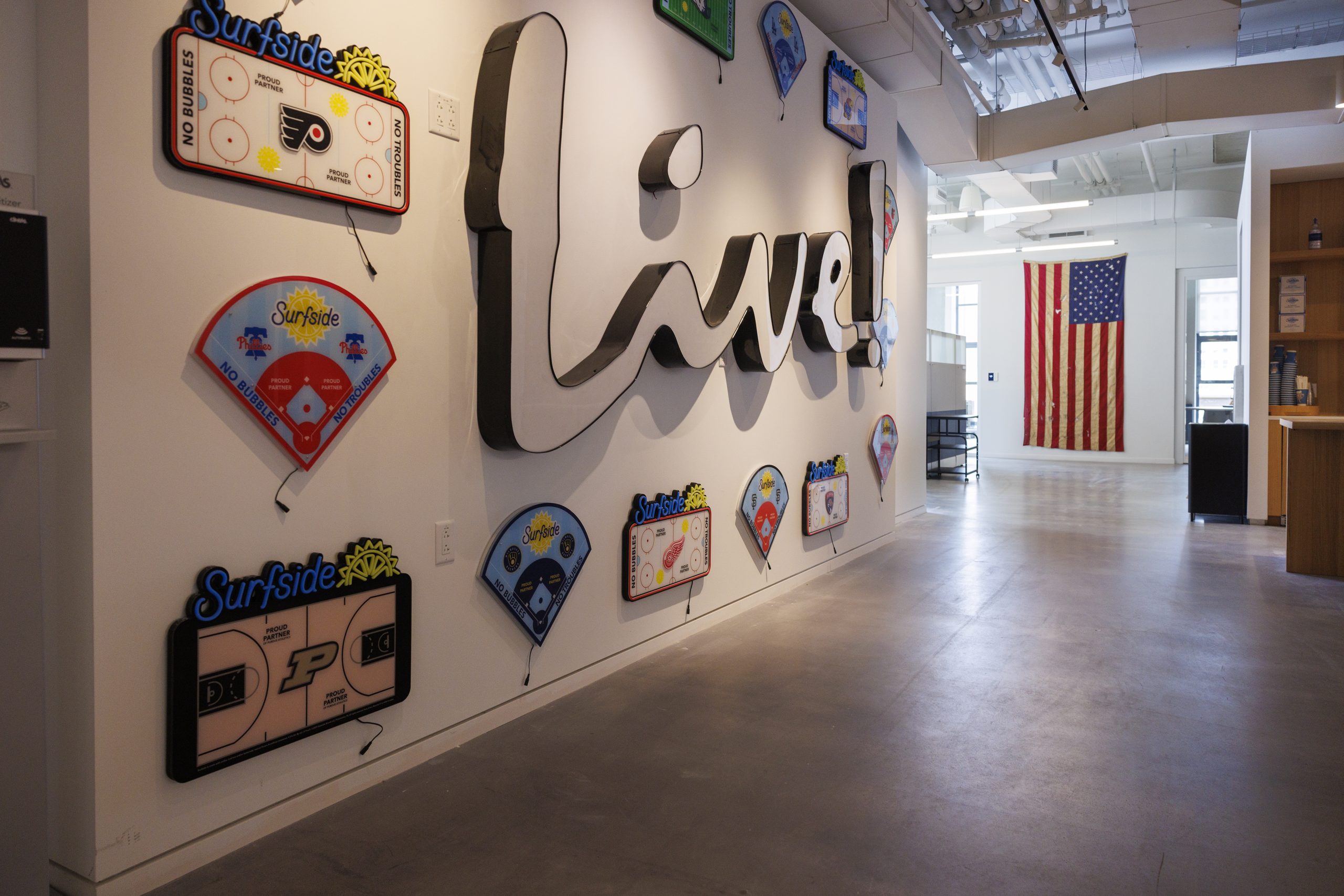
A wall at Stateside Vodka’s new Center City headquarters shows a handful of Surfside’s 170 partnerships.Alejandro A. Alvarez / Staff Photographer
In Stateside’s earliest days, Quigley recalled confiding in Pappas about a pipe dream: “If we ever get super successful, I want a sick office in a high-rise in Center City.”
More than a decade later, they have moved from a temporary office in Feasterville-Trevose, Bucks County, to a chic new headquarters at 11th and Ludlow Streets in Market East.
The company plans to stay put for at least 10 years, the cofounders said. For now, about 80 employees work there four days a week with room to grow.
On a recent day, the office was humming during a new-hire orientation. While everyday operations include the same mundane tasks required of any business, the top bosses pride themselves on keeping the vibes light. “We’re not selling, like, car insurance,” Quigley said.
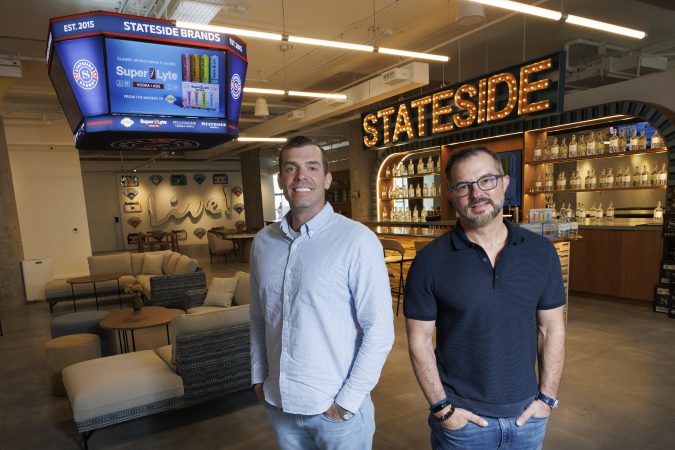
The bright industrial-style space occupies 34,200 square feet across two floors. It is centered around a long bar with a backlit Stateside marquee, a replica of the one at the tasting room. Nearby, there’s an open lounge with couches, underneath a miniature Jumbotron. Ads for Surfside, Super Lyte, and Stateside rotate on the screens.
Office happy hours are a given.
“That’s part of the special sauce,” Pappas said. “We’re in the drinks business.”
Philadelphia has always been at the heart of the company. It’s where they landed their first partnership with the Phillies, which fueled Surfside’s rise. At Citizens Bank Park, the cans have been the top-selling spirit since 2023, according to Stateside executives, citing figures from concessions provider Aramark.
Across the city, the cofounders still run the 7,500-square-foot Kensington-area tasting room and distillery, the latter of which they hope to turn into an event venue.
The distillery has been outgrowing its space for a while. But the need intensified in the past year as the vodka’s retail sales increased 120%.
They attribute the boost in part to greater name recognition thanks to Stateside Live! They said they hope to move vodka production to a larger facility somewhere in the Northeast.
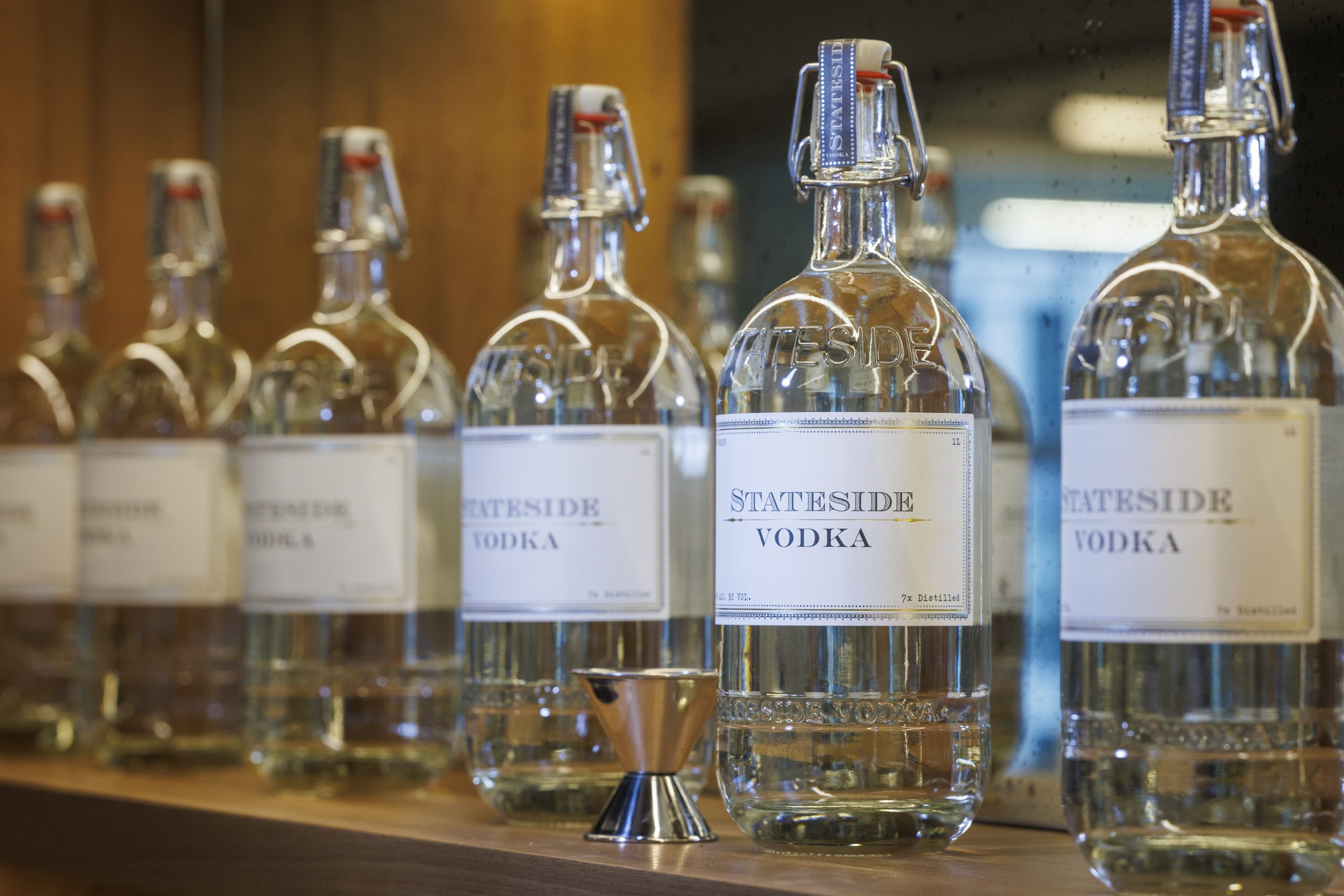
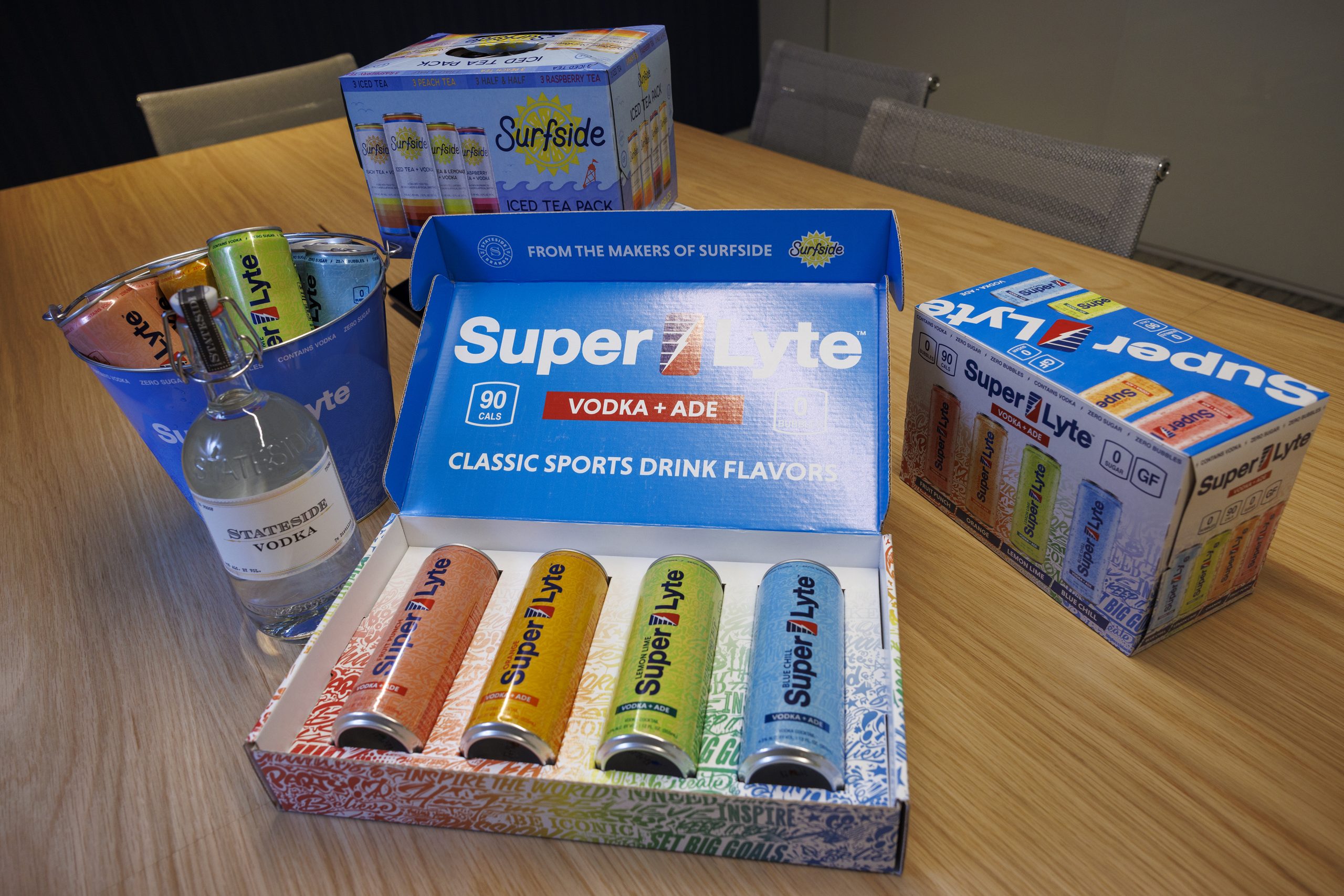
Sales of the original Stateside Vodka, displayed at the company’s office bar, have grown 120% year over year.Alejandro A. Alvarez / Staff Photographer
The cofounders have also stayed local: Quigley, a Fort Washington native, lives in Kensington, and Pappas, originally of Vineland, is in Haddonfield.
Stateside’s reach, meanwhile, has expanded far beyond the region. The company employs about 340 nationwide, up from around 30 in 2022, executives said, and they sell in all 50 states through a network of more than 200 distributors.
Across the country, Surfside has racked up 170 partnerships, including with MLB teams, music festivals, and colleges. Super Lyte has already acquired more than a dozen partnerships, too, including at Penn State, where they said it will be sold at Beaver Stadium this fall.
A hawker carries drinks, including Surfsides, around the concourse at Citizens Bank Park in 2024. The brand now has 170 partnerships at venues nationwide.Elizabeth Robertson / Staff Photographer
In many ways, the cofounders said, they’re trying to replicate the strategy that proved successful with Surfside at Citizens Bank Park: Connect with consumers somewhere where it feels only natural to grab a refreshing, familiar-tasting beverage.
“You’re at a hot baseball game,” Pappas said. “You got a hot dog. You got a soft pretzel. You got an iced tea” — or, rather, a Surfside.
Compared to seeing a new canned cocktail at a beer distributor, he added, “It’s more of an authentic, emotional connection.”
A beverage hawker sells Surfside cans during a Phillies game at Citizens Bank Park in 2024. Surfside has been the stadium’s top-selling spirit since 2023.Elizabeth Robertson / Staff Photographer
Surfside succeeds with familiar tastes
When customers first sip a Surfside or Super Lyte, the taste is likely familiar, perhaps even comforting. It’s similar to iced tea, lemonade, tea cooler, or Gatorade, drinks that for many have been staples since childhood.
That’s intentional, Pappas and Quigley said, and is one of the reasons they think their products have become so popular.
“If you remember your first beer, it was like, ‘Oh God, who wants that?’ It’s bitter. It’s foreign,” Pappas said. “It’s an acquired taste.”
But when it comes to these canned cocktails, “these are not acquired tastes,” he added. “They’re light. They’re easy.”
Quigley said he got the idea for Super Lyte after years of mixing vodka into Gatorade and throwing the bottles into beach bags on summer vacations. He recalled thinking: “I can’t be the only person in America that’s been doing that for a long time.”
The initial uptake of Super Lyte confirmed that, he said.
Super Lyte launched in March with four flavors: fruit punch, orange, lemon-lime, and blue chill.
Surfside now has 16 variations of iced tea, lemonade, iced tea-lemonade, and green tea. A 12-ounce Surfside contains 100 calories, 2 grams of sugar, and no carbonation, while a 12-oz Super Lyte contains 90 calories, no sugar, and no carbonation.
Stateside Vodka’s new product line, Super Lyte, is displayed at the company’s new Center City headquarters.Alejandro A. Alvarez / Staff Photographer
In the alcohol industry, “we’re meeting what was previously an unmet demand,” he said. It’s “all the convenience and the alcohol level of [a light] beer, where you can drink a few of them and you’re not getting sloshed.”
Even younger consumers — who are least likely to drink alcohol, according to recent surveys — are gravitating toward Stateside products, with high sales in some college towns.
Pappas and Quigley said they don’t see drinking rates declining much farther. Instead, they predict an evolution in the market, with an even greater focus on ready-to-drink cocktails.
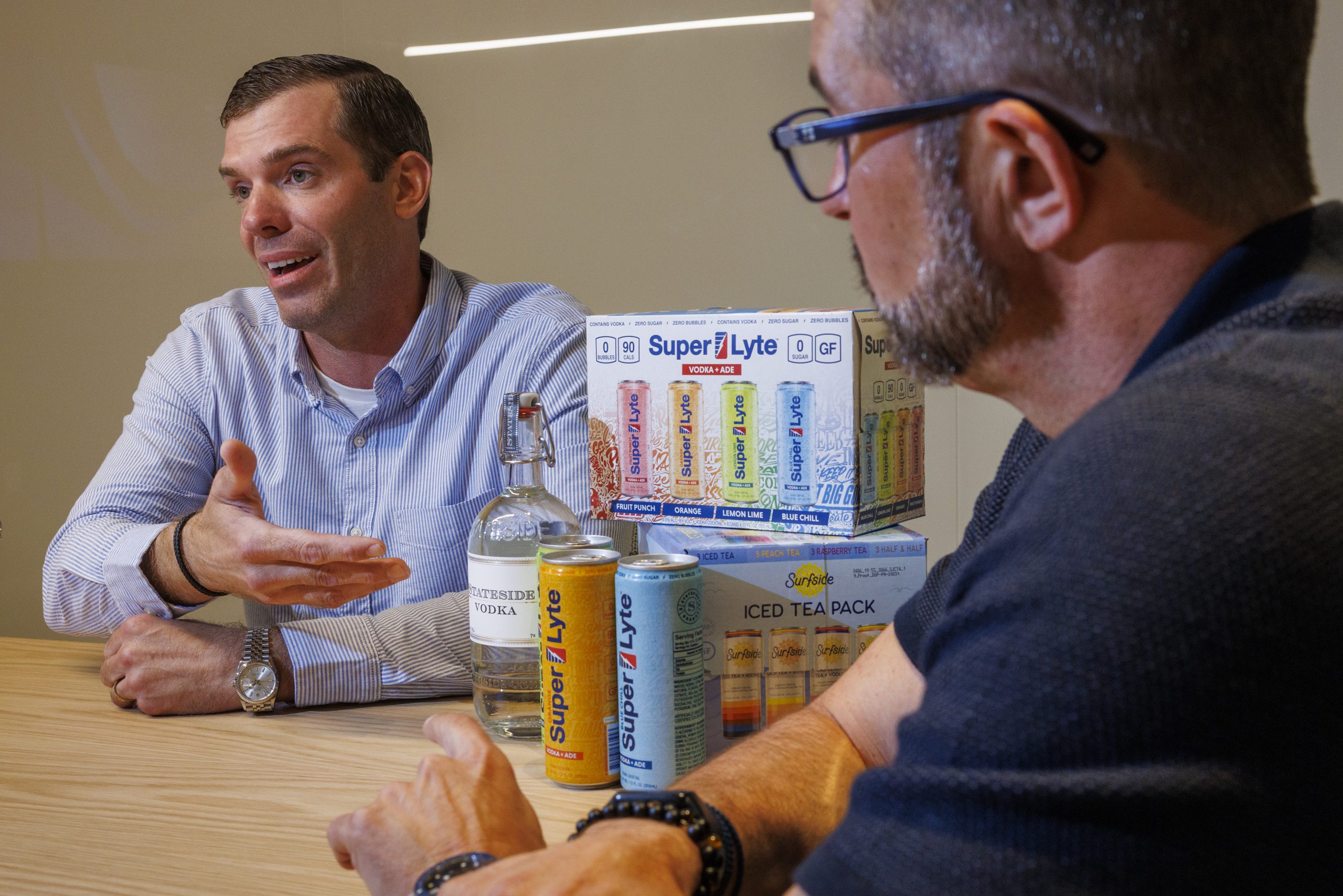
Matt Quigley (left), Stateside’s president and cofounder, talks about the company’s products with fellow cofounder and CEO Clement Pappas.Alejandro A. Alvarez / Staff Photographer
So Stateside’s leaders plan to keep crafting new products, they said, which is one of the reasons they have turned down acquisition offers.
“Big, publicly traded multinational companies just aren’t great at innovating,” Pappas said.
Stateside has now established “enough of the back-end capabilities to really compete pretty effectively,” he said, without losing “that entrepreneurial spirit” and the drive “to innovate and disrupt.”
At the moment, he said, they are working on several beverage ideas, none of which are ready for publication.
But it seems unlikely they’ll dabble in nonalcoholic drinks. As Quigley noted, “then it would just be iced tea.”
Philadelphia can now add two more food awards to its shelf.
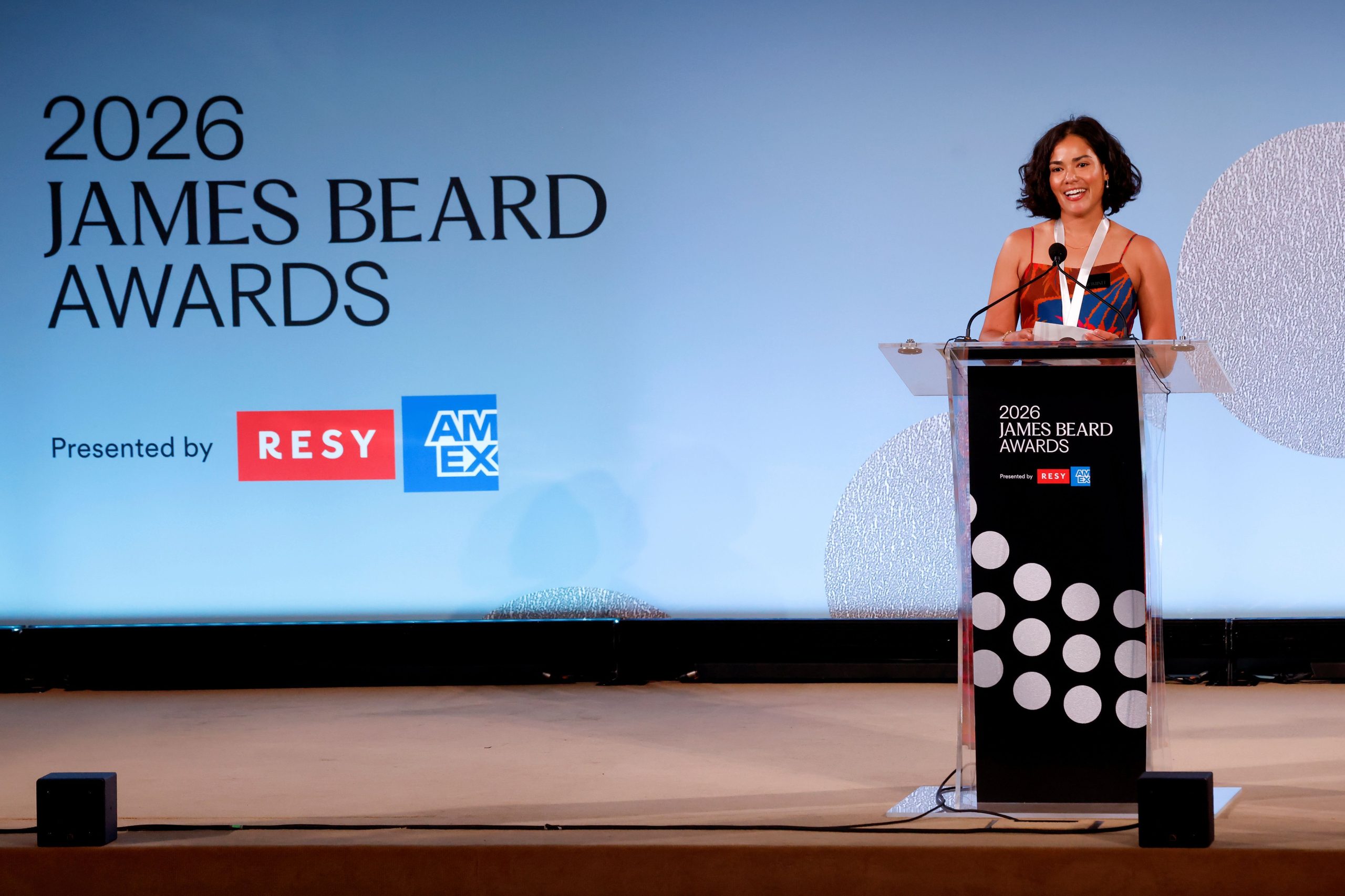
Restaurants and chefs from the City of Brotherly Love took home wins in two categories Monday night in Chicago at the 2026 James Beard Awards, considered to be the most prestigious restaurant industry honor in the United States.
The showing builds on the momentum of last year, when Mawn’s Phila Lorn took home the title of Emerging Chef, an award he dedicated at the time to “the assumption” that the Cambodian noodle house in Bella Vista wasn’t “popular enough,” “focused enough,” or ”good enough” to win.
Now the assumption isn’t that Philly is an underdog. It’s that we’re a full-on culinary powerhouse.
Suntaranon originally opened the restaurant — known for its ornate dumplings — in 2019 in what is currently Mawn’s location, where it was nominated in 2020 for Best New Restaurant. In 2022, Kalaya moved to a bigger space just off Frankford Avenue in Kensington, where it has flourished, earning a Michelin Guide recommendation, a spot on The Inquirer’s The 76, and, in 2023, Suntaranon’s first Beard Award for best chef, Mid-Atlantic.
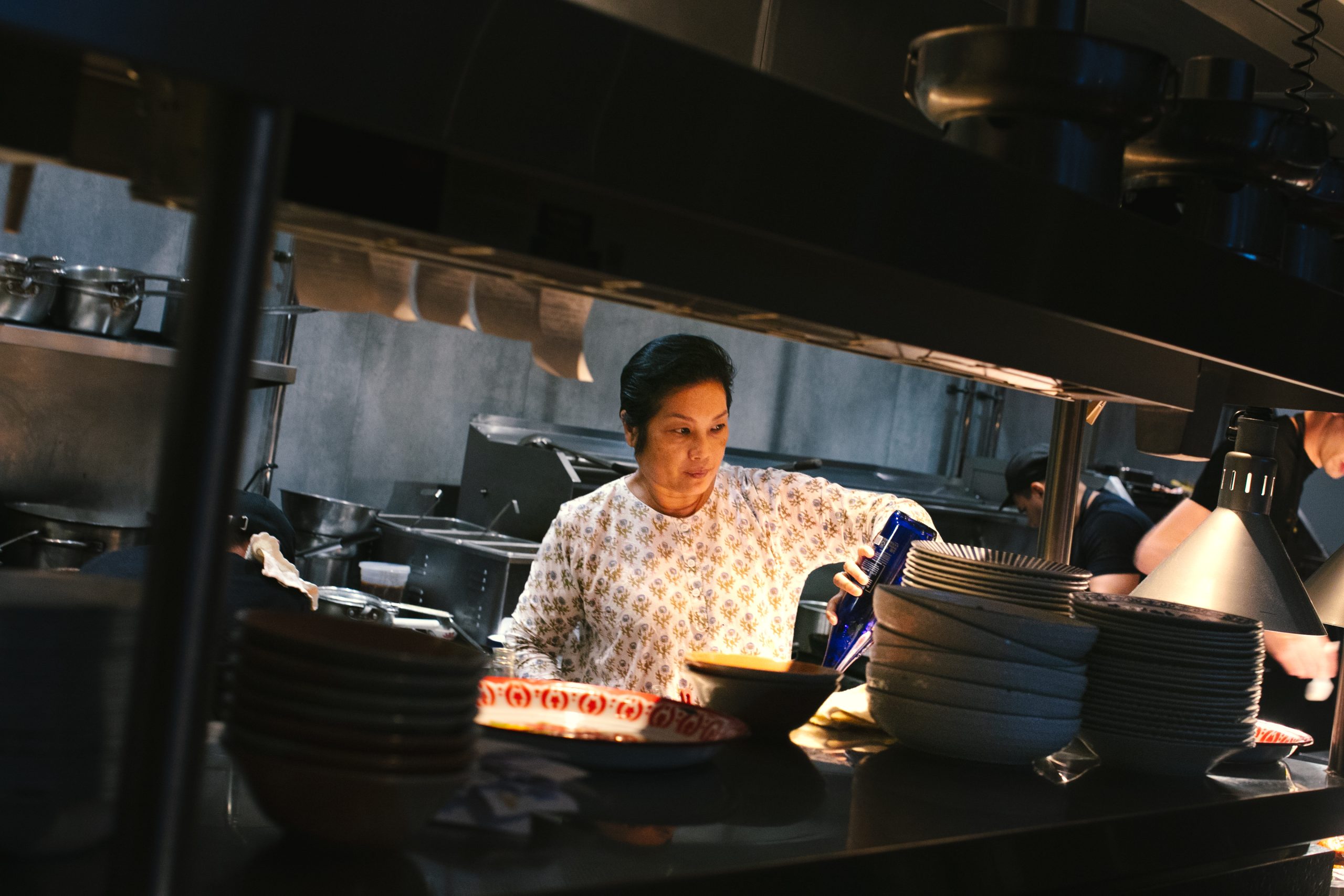
Chef Chutatip “Nok” Suntaranon as seen through the line at her restaurant Kalaya in Fishtown on August 22, 2024.Neal Santos
“This award means a lot to me because it’s validation for Thai food and validation for the city of Philadelphia that we’re a world-class food city,” Suntaranon, in a shimmering floor-length orange gown, said backstage.
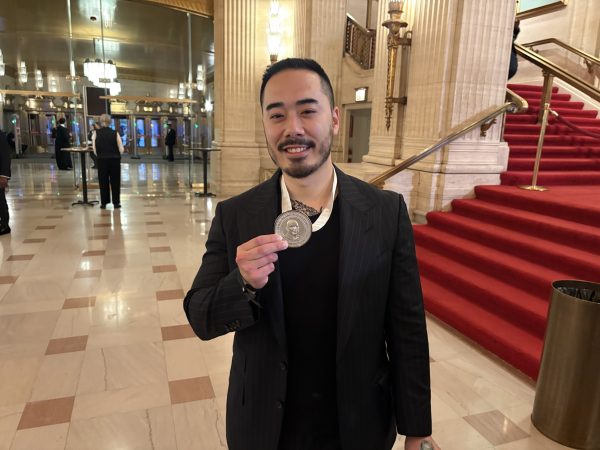
Chef Jesse Ito of Royal Sushi & Izakaya on Monday night took home his first James Beard Award, for best chef, Mid-Atlantic. “It’s been a long ride,” Ito said from the stage at the Lyric Opera theater.
Indeed it has.
The chef behind the notoriously-hard-to-get-into Queen Village omakase counter and its more casual bar and restaurant has been nominated nine times for the award, which honors the top culinary talent across Pennsylvania, New Jersey, Delaware, Maryland, Virginia, and Washington. This go-around, Ito beat outtwo-time finalist Amanda Shulman — whose Her Place Supper Club earned one of Philly’s first Michelin stars last year — and Omar TateandCybille St.Aude-Tate of Honeysuckle, who transformed their cafe-market into a Michelin-recommended prix fixe restaurant in 2025.
During his acceptance speech, Ito invoked the oft-quoted Serenity Prayer and thanked his parents, who ran theCinnaminson and Haddonfield sushi restaurant Fuji for 40 years, before selling. It’s where Ito worked his first restaurant job as a dishwasher, and a place he has long credited for helping him find his footing in the restaurant industry.
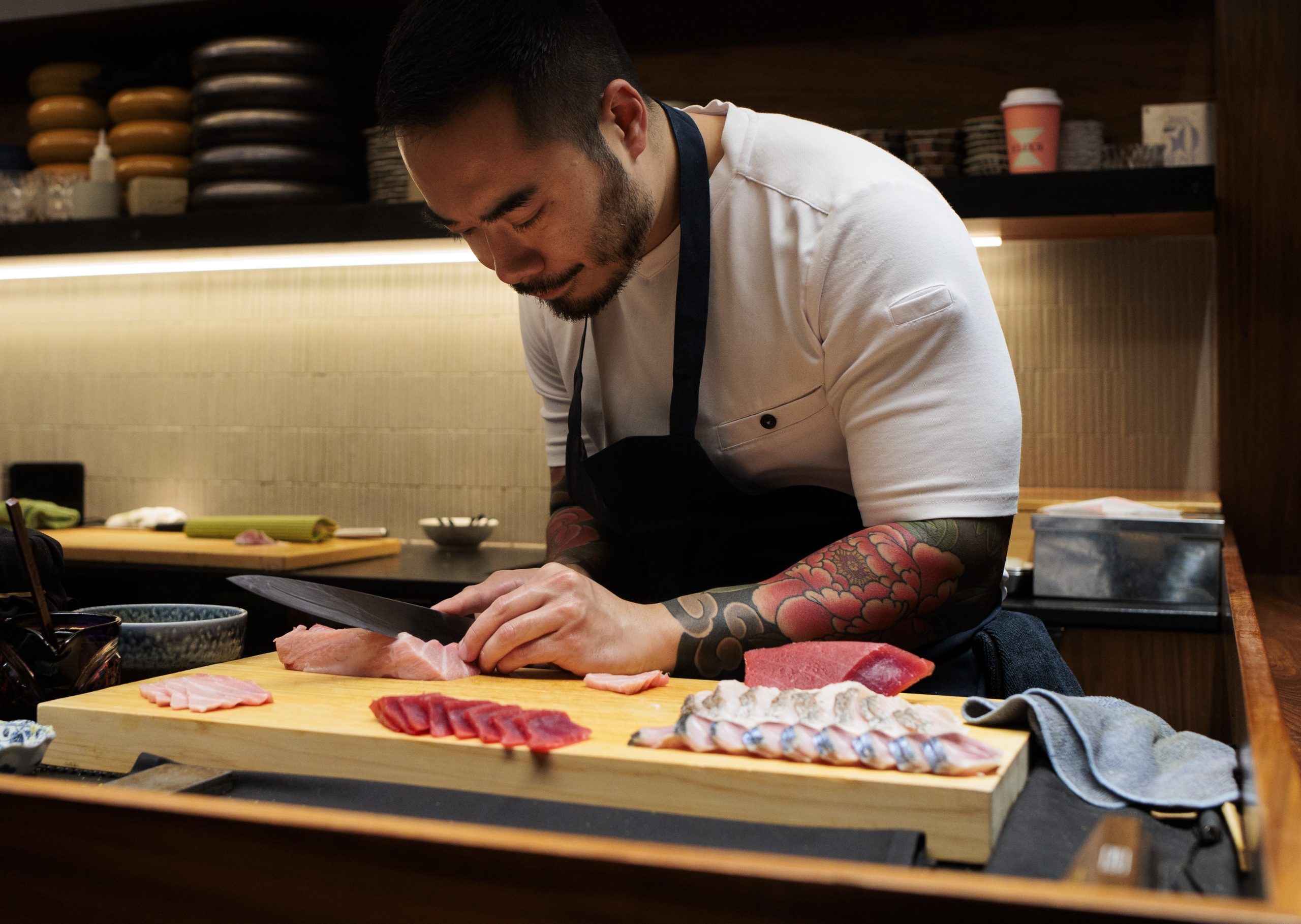
Chef Jesse Ito prepares a course during the omakase at Royal Sushi and Izakaya on Tuesday, Oct. 28, 2025, in Philadelphia.Monica Herndon / Staff Photographer
“We went through so much,” Ito said, choking up. “Restaurants are glamorous, and it seems great, but we went through so much hardship. I’ll never forget the struggle just to get here.”
Royal Sushi’s success has also, at times, been its greatest challenge: The $355, 16-seat omakase prepared by Ito is one of the toughest seats to score in Philly, which potentially led to the restaurant losing out on a Michelin star last year. At the same time, the restaurant earned a spot on North America’s 50 Best Restaurants list in 2025 and high praise from The Inquirer, landing on The 76 two years in a row.
The pendulum swing of accolades keeps Ito on his toes. He told The Inquirer over the phone Monday night that he wasn’t certain what made this year different from all the others.
“I don’t know how it all works,” Ito said. “I came to Chicago 99% certain that I was going to lose.”
Now that he’s won, Ito plans to celebrate by singing Harry Styles’ “Sign of the Times” and “Creep” by Radiohead at karaoke — somber choices for a victorious night.
“They’re just my songs,” said Ito. “I have to sing them.”
Who else represented Philly?
Philly restaurants and chefs didn’t take home medals in every category.
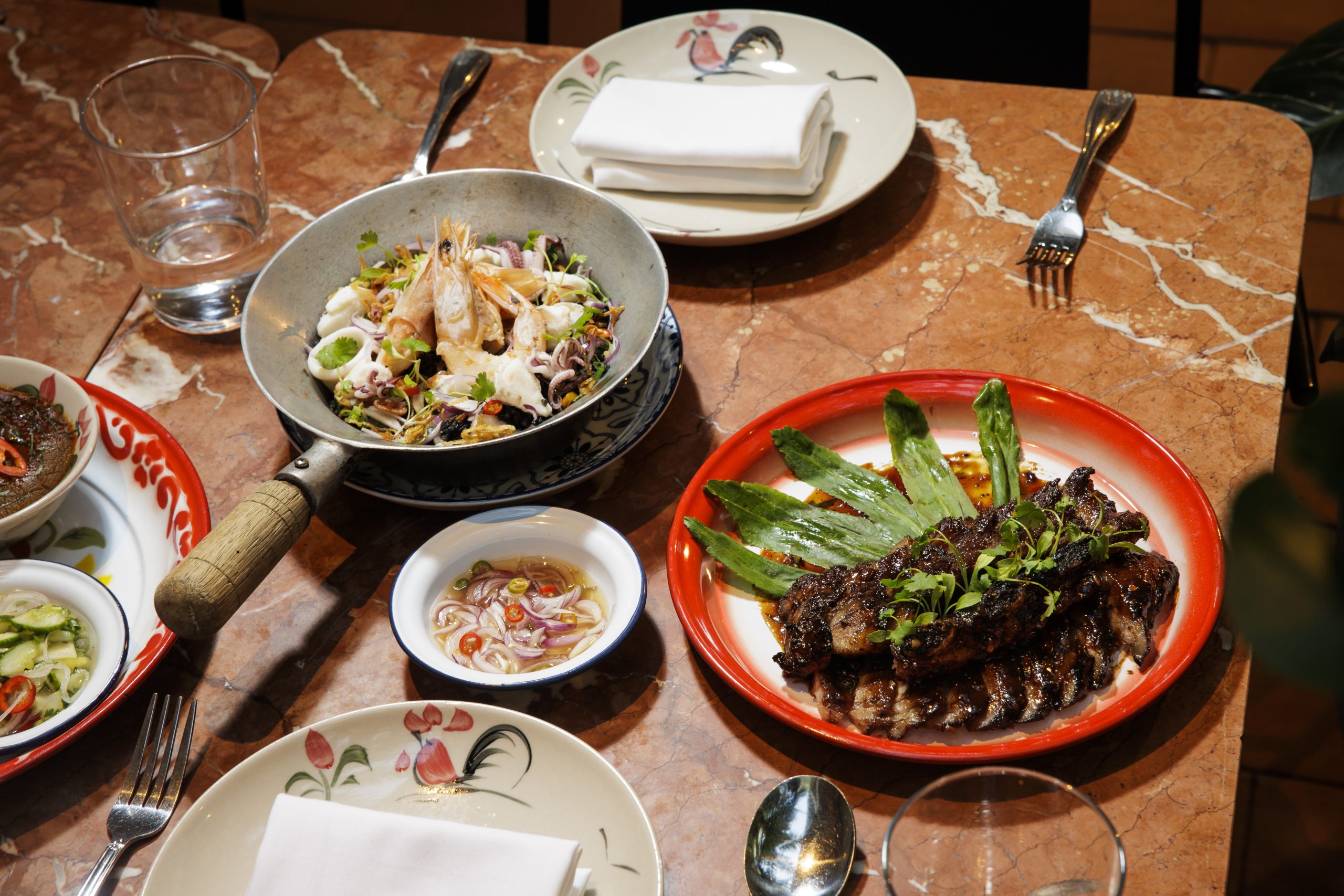
From left: The gaeng pae, khao mun klone, and moo yaang prik at Kalaya on Wednesday, Sept. 3, 2025, in Philadelphia.Monica Herndon / Staff Photographer
First-time nominee Justine MacNeil did not take home the award for outstanding pastry chef or baker, which went to Susan Bay of Washington’s buzzy Vietnamese restaurant Moon Rabbit. At Fiore — the East Kensington cafe MacNeil co-owns with husband Ed Crochet — the former fine dining pastry chef churns out thousands of classic Italian pastries a week, from oversize maritozzi to pistachio cornetti that have earned praise from 2017 James Beard Award-winner Greg Vernick and Inquirer critic Craig LaBan, among others.
Friday Saturday Sunday lost out on its second Beard Award on Monday, this time for outstanding bar. Itsdownstairs, first-come-first-served Lovers Bar was nominated for the honor, which instead went to Portland, Ore., whisky bar Scotch Lounge, a recent addition to the list of North America’s 50 Best Bars from World’s 50 Best. Friday Saturday Sunday won its first Beard award in 2023 for outstanding restaurant, and earned one of Philly’s first Michelin stars in 2025.
The deluxe nigiri box for take-out at Royal Izakaya, in a photograph from 2020.Courtesy Royal Izakaya / Jesse Ito
The Inquirer also took home hardware of its own Sunday night during the James Beard Media Awards, also in Chicago. Inquirer staff photographer Monica Herndon won for narrative photography for “The hunt for life-giving ‘country food’ in the Canadian Arctic.” The photo essay chronicled the food traditions of the Inukjuak, a remote Inuit community in northern Québec. It accompanied reporting from Inquirer food critic Craig LaBan about how the community continues to hunt and preserve foods such as caribou and beluga despite the challenges of climate change.
Philadelphia had 13 semifinalists across eight categories when the Beard Awards were announced in January. They included chef Greg Vernick for outstanding restaurateur; Amá’s Frankie Ramirez for emerging chef; Almanac in Old City for best new bar; and deli magnate Russ Cowan and Michelin Green Star winner Ian Graye of the vegan restaurant Pietramala, both for best chef, Mid-Atlantic.
All three were later eliminated from the finalists’ list.
CHICAGO, ILLINOIS – JUNE 13: Monica Herndon, winner of the Narrative Photography Award, speaks onstage during the 2026 James Beard Media Awards at the Art Institute of Chicago on June 13, 2026, in Chicago.Jeff Schear / Getty Images for the James Beard Foundation
The night’s showing adds one more win from February when Center City stalwart Oyster House was named an American classic, which honors local restaurants across the U.S. with “timeless appeal that serve quality food and are beloved by their communities.” Representatives from the Philly mainstay were in Chicago to receive their medals in person.
“I am very fortunate that I live in Philly. People are loving and caring [here]. People are strong, and we all come together to support one another,” Suntaranon said. “Go Birds!”
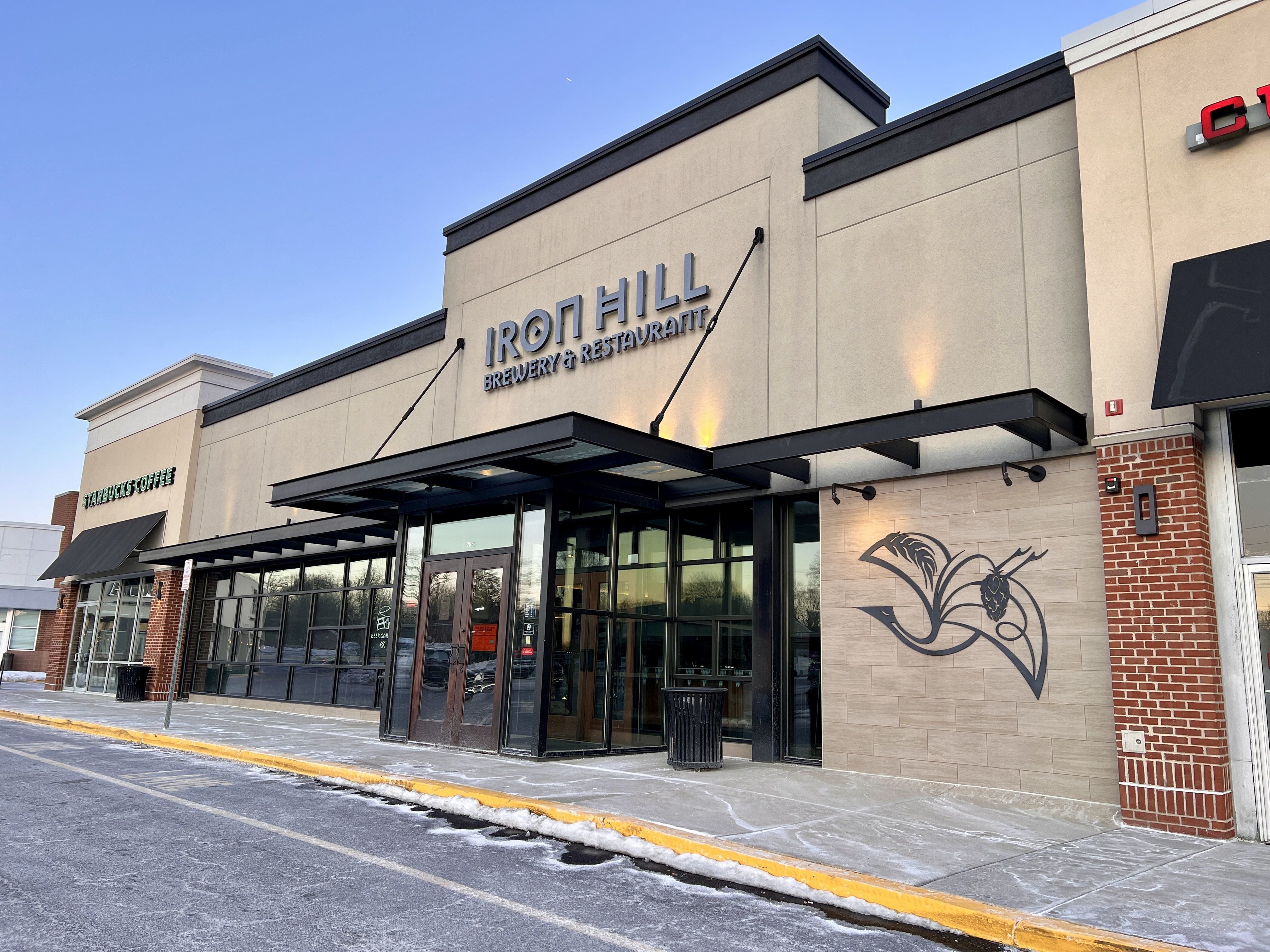
Another Iron Hill Brewery is set to reopen next week.
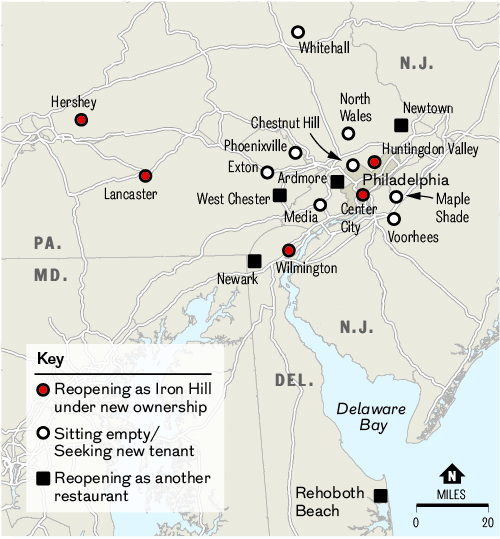
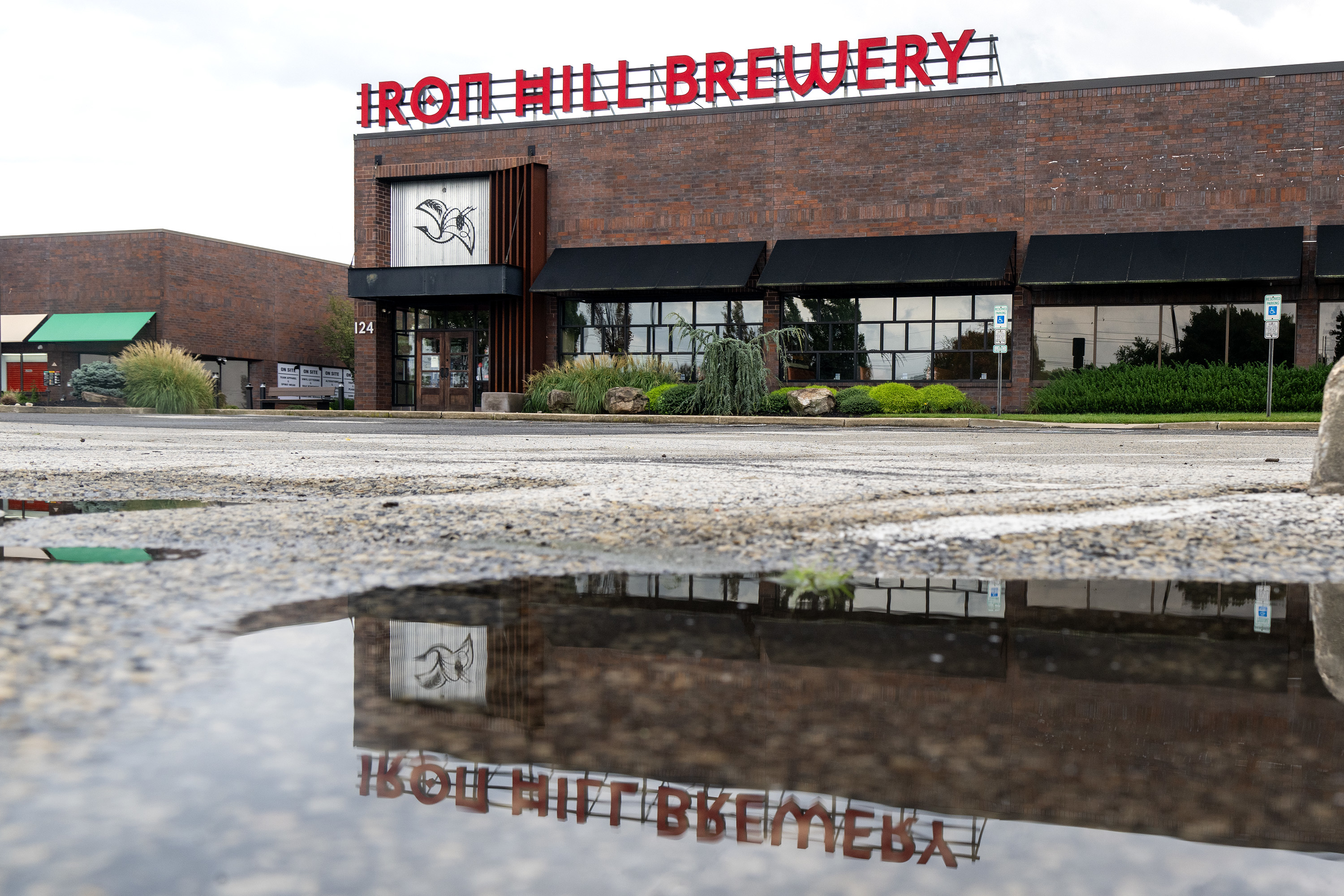
The Huntingdon Valley restaurant will be back in business Monday, June 22, according to the restaurant’s new ownership group. It will mark Iron Hill’s fourth post-bankruptcy revival and the only one in the Philadelphia suburbs.
Amid the reopenings, the new owners have launched a fresh loyalty program and special offers, including a free beer and free appetizer for customers with prebankruptcy gift cards that are no longer usable.
While Iron Hill had a suburban-Philly focus before bankruptcy, the Huntingdon Valley Shopping Center location is the only one set to be resurrected in the collar counties or South Jersey.
Bartenders there will be pouring a new IPA, Hop Chase, brewed exclusively for Huntingdon Valley, according to the new owners. They said patrons can sit inside or outside at the restaurant’s beer garden, which was the chain’s first when it opened in 2016.
“We’re creating a true neighborhood place for the guests we call family, somewhere the community can come together over laughter, great food and award-winning beer,” Naomi Yared, general manager of the Huntingdon Valley Iron Hill, said in a statement.
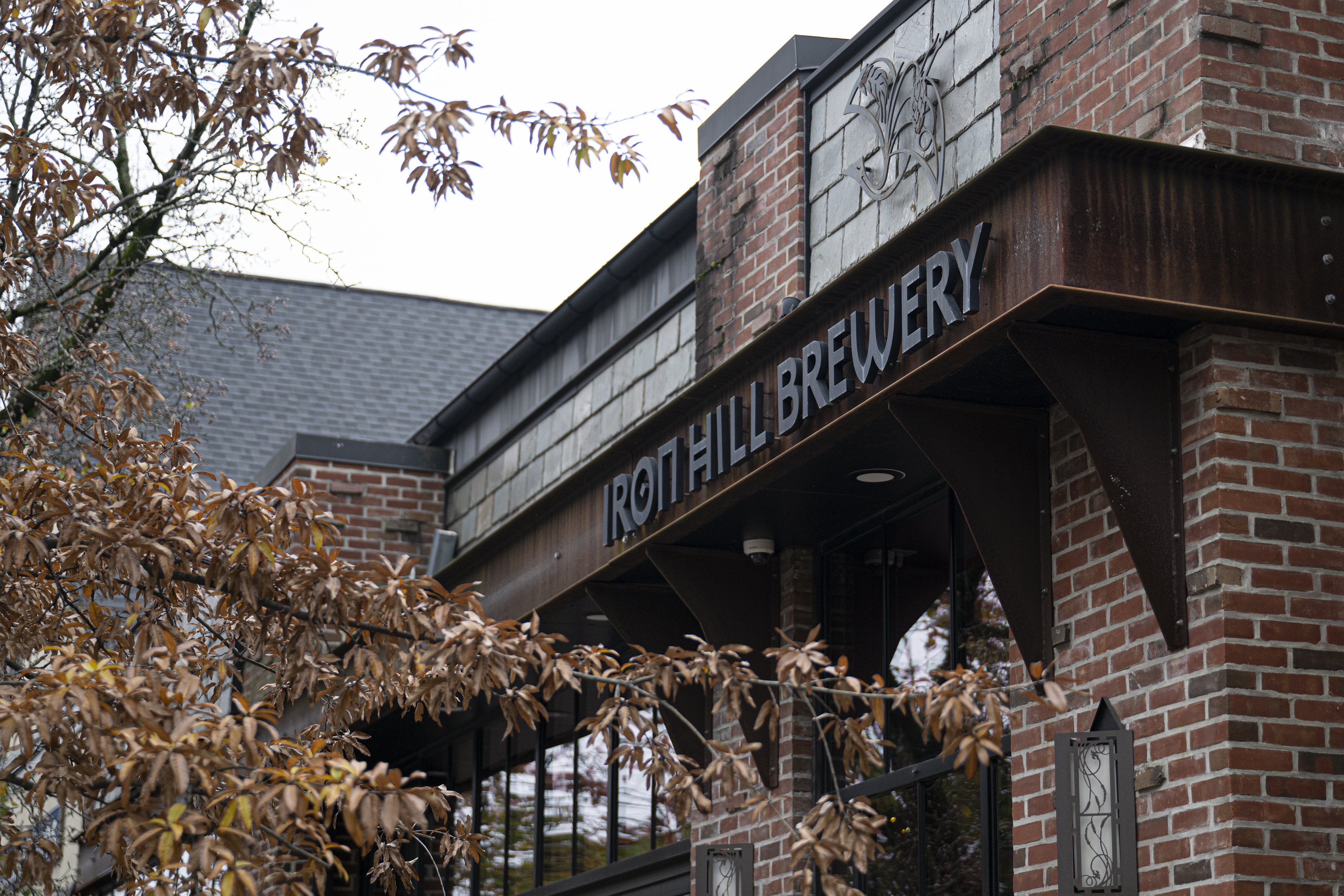
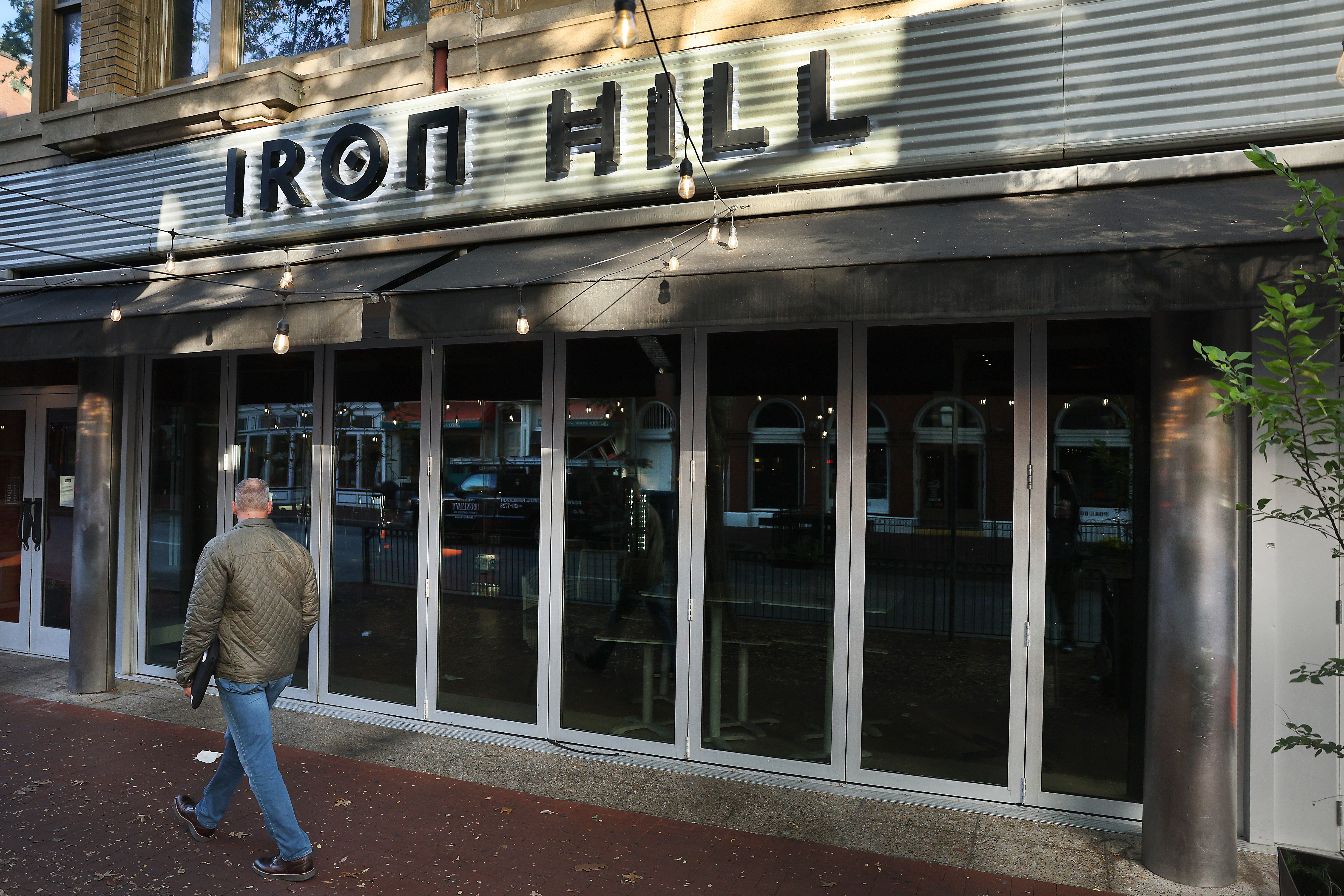
The former Iron Hill Brewery in Chestnut Hill sat empty in November. Property owners are still marketing the space for lease.Jose F. Moreno / Staff Photographer
Here’s what we know about these local Iron Hill Breweries as of publication time June 15:
A pedestrian walked by the closed Iron Hill Brewery in West Chester in October. Magerk’s Pub & Grill is now taking over the space.David Maialetti / Staff Photographer
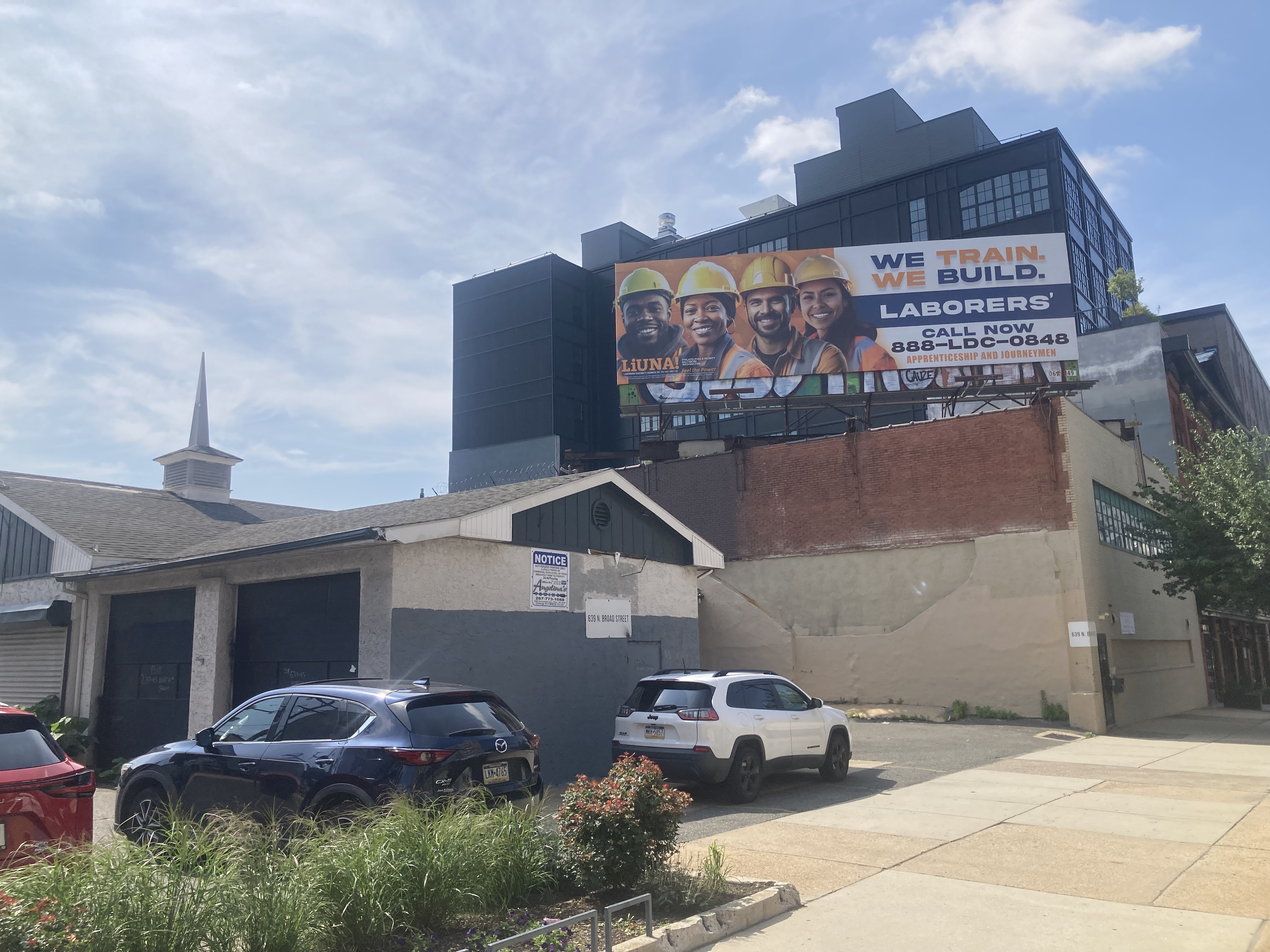
A Long Island-based developer is planning a six-story, 100-unit apartment building — with a rooftop pool — at 639-53 N. Broad St.
The property is owned by the Bill Wolf Petroleum Corp., which has expanded into retail and residential properties from its original focus on gas stations and other fuel-related real estate.
The company has already redeveloped smaller buildings in Philadelphia at Fifth and South Streets and 12th and Walnut.
The company acquired the Broad Street property in late 2021 for $6.9 million, according to city records. This week, Bill Wolf Petroleum obtained demolition permits for the existing auto-oriented and light industrial structures on the lot.
The architect for the project is Stuart Rosenberg of SgRA Architects, who has worked with Bill Wolf Petroleum on its other Center City buildings.
“They are looking for dense, urban, Center City development opportunities. They did not want to be on the outskirts like Northern Liberties or Port Richmond,” Rosenberg said. “They like Philadelphia. At the end of the day, you can build stuff here, so that’s why they’re investing in Philadelphia.”
Documents posted on the Department of Licenses and Inspections website show a 72-foot-tall project, which includes the potential for over 4,500 square feet of bi-level commercial space fronting on North Broad Street.
A parking garage is planned in the rear of the property with space for 33 vehicles as well as bike parking. It also sits directly above SEPTA’s Broad Street Line Fairmount Station.
The property has some of the most flexible zoning in Philadelphia, allowing Bill Wolf Petroleum to move forward easily.
The unit mixture will mostly be one- and two-bedrooms, with a few studio apartments. On the top floor will be between eight and 12 bi-level apartments.
For the exterior, Rosenberg is planning designs in keeping with the surroundings on North Broad Street.
“It’s going to be a classic, industrial type of vibe,” Rosenberg said. “It’s the aesthetic you’d see in a lot of New York or Philadelphia.”
The acclaimed interior design firm Stokes Architecture & Design, which has worked on properties such as Parc and La Colombe’s Fishtown flagship, is being retained as well.
The entrance to both the front lobby and garage will be on Wallace Street on the north side of the site. Retail will front on North Broad Street. In addition to the roof deck with a pool, there will be private balconies for the bi-level units on the top floor and a U-shaped courtyard on the second floor featuring additional outdoor space.
Bill Wolf Petroleum’s project is just the latest in a burst of apartment developments proposed on North Broad Street.
In the last eight months, 1,221 units have been permitted between City Hall and the southern border of Temple University’s campus. Much of the activity is clustered around the former Hahnemann University Hospital.
“This part of the city [North Broad Street] is just really dynamic right now,” Rosenberg said.
Some of the projects, however, are unlikely to break ground any time soon. Property owners like Brandywine Realty Trust obtained zoning permits after Councilmember Jeffery Young proposed a housing ban around the former Hahnemann campus.
142-44 N. Broad St. is another property slated for apartment development. Tom Gralish / Staff Photographer
Although that bill was put on hold in the face of opposition from most stakeholders in the area — no one outside Young’s office ever publicly spoke in favor of it — the legislation prompted a rush to secure 824 apartment permits before it was shelved.
Bill Wolf Petroleum’s project, which is outside Young’s proposed ban area, stands out because it is one of the only efforts that would not involve redeveloping an existing medical, industrial, or office building for residential use.
The current interest in the North Broad Street corridor comes after an earlier boom, which saw developers like Alterra Property Group, Eric Blumenfeld, and Bart Blatstein scooping up struggling properties and vacant lots after the Great Recession.
Some of those projects came to fruition, such as Alterra’s 410-unit Tower Place at Broad and Spring Garden Streets. Others had a more circuitous fate.
North Broad organizations are watching the new developments with wary optimism.
“I’ve learned to not get excited until there are shovels in the ground,” said Shalimar Thomas, executive director at North Broad Renaissance.
But “it’s the main thoroughfare; it’s a great transportation hub, easy walkable,” Thomas said. “The potential and the bones and the structure are there. Maybe now more developers are starting to see that.”
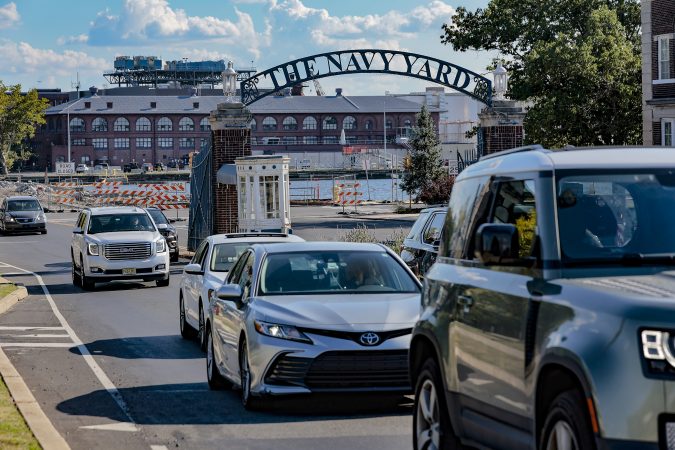
SEPTA is extending Route 45 to provide direct daily bus service to the Navy Yard for the first time in more than a decade, a move aimed at helping to grow both the development and transit ridership.
The new service is scheduled to begin in August, with buses operating at about 20-minute intervals, starting at 12th and Noble Streets in North Philadelphia, through Center City, and to stops inside the Navy Yard itself.
More than 150 employers have facilities in the Navy Yard, with more than 16,000 people working on the campus. There are 614 units of housing and plans for more residential and commercial development.
“Our goal is to provide as many safe, reliable, efficient ways to get to the Navy Yard as possible,” said Alex M. Smith, vice president of Navy Yard strategic initiatives at the Philadelphia Industrial Development Corp. It has built a path alongside South Broad Street to accommodate bike commuters and pedestrians.
“The 45 just provides another level of service for folks that may think otherwise than to take an Uber or their own car,” Smith said.
(function() {
var l2 = function() {
new pym.Parent(‘route45’,
‘https://media.inquirer.com/storage/inquirer/projects/innovation/arcgis_iframe/route45.html’);
};
if (typeof(pym) === ‘undefined’) {
var h = document.getElementsByTagName(‘head’)[0],
s = document.createElement(‘script’);
s.type = ‘text/javascript’;
s.src = ‘https://pym.nprapps.org/pym.v1.min.js’;
s.onload = l2;
h.appendChild(s);
} else {
l2();
}
})();
The Navy Yard’s master plan projects about 3,000 people will be living there within 15 to 20 years. About 450 jobs are expected to be added at Rhoads Industries, a maritime company in the western part of the former military base.
Colin Foley, the chief of service planning and schedules at SEPTA, said a 2023 survey of the Navy Yard workforce found that 86% did not use transit, and 60% of those said they would use SEPTA if more options were offered.
The Broad Street Avenue of the Arts makeover project, which broke ground in January, is inching its way to completion.
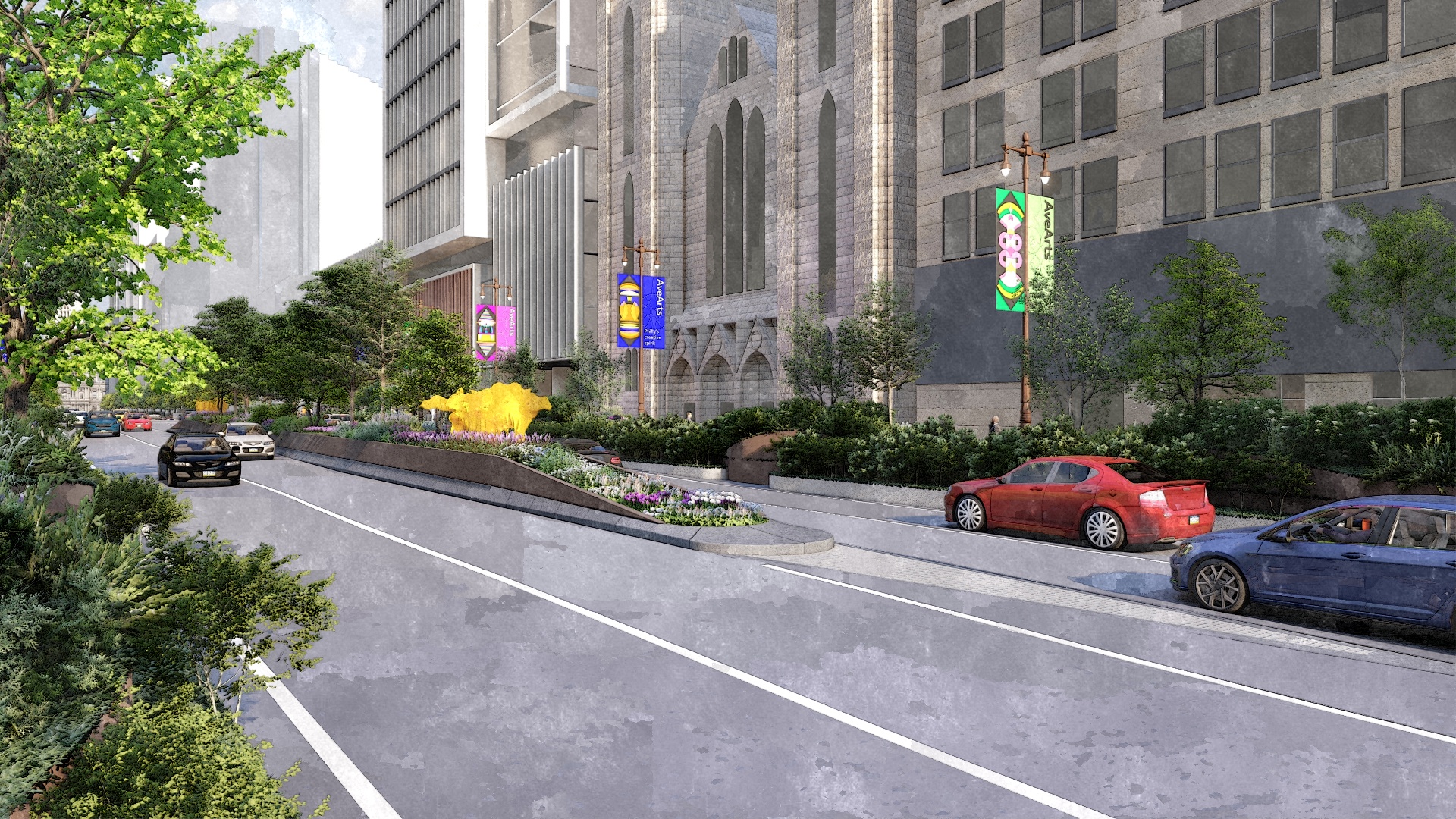
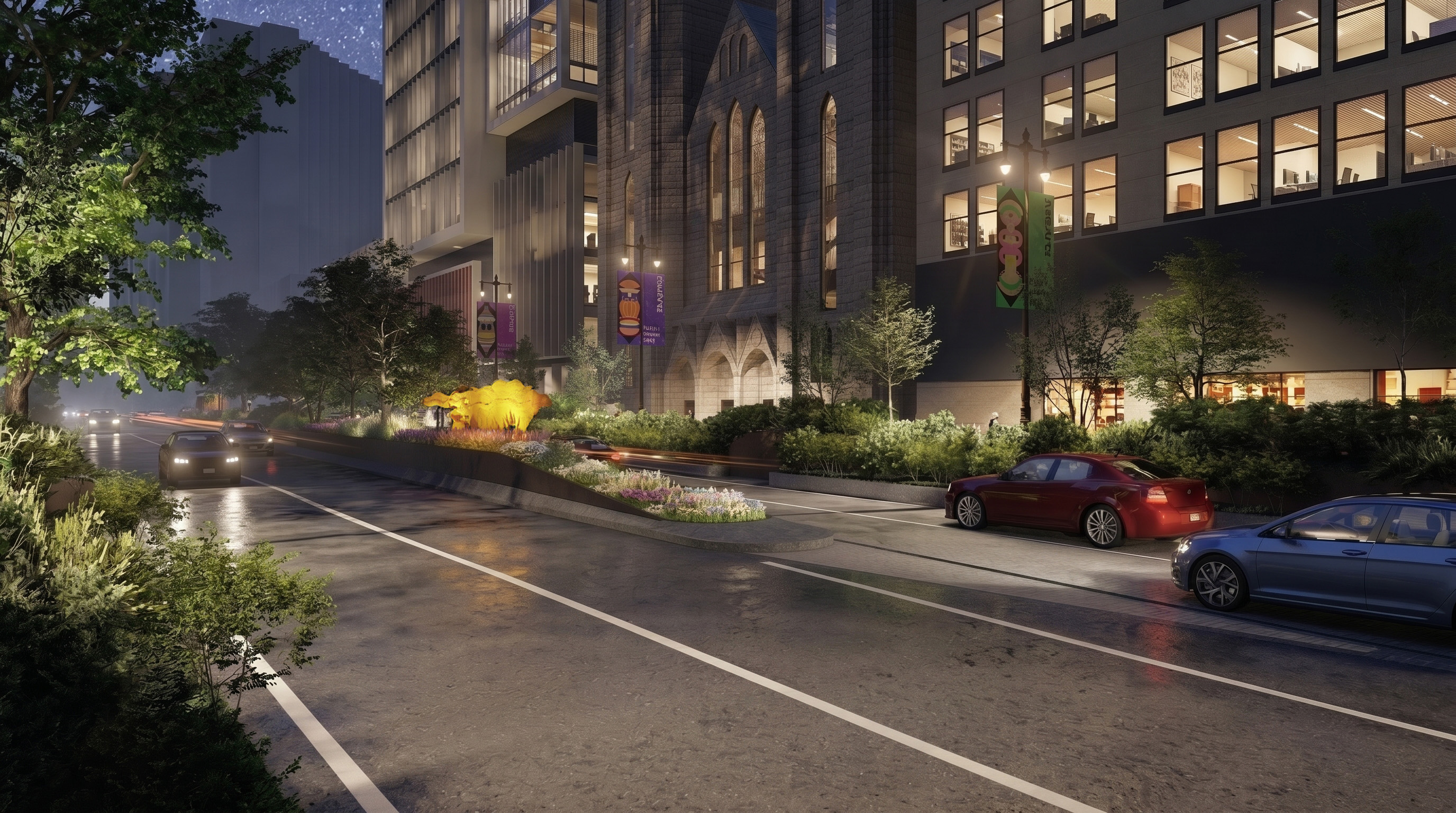
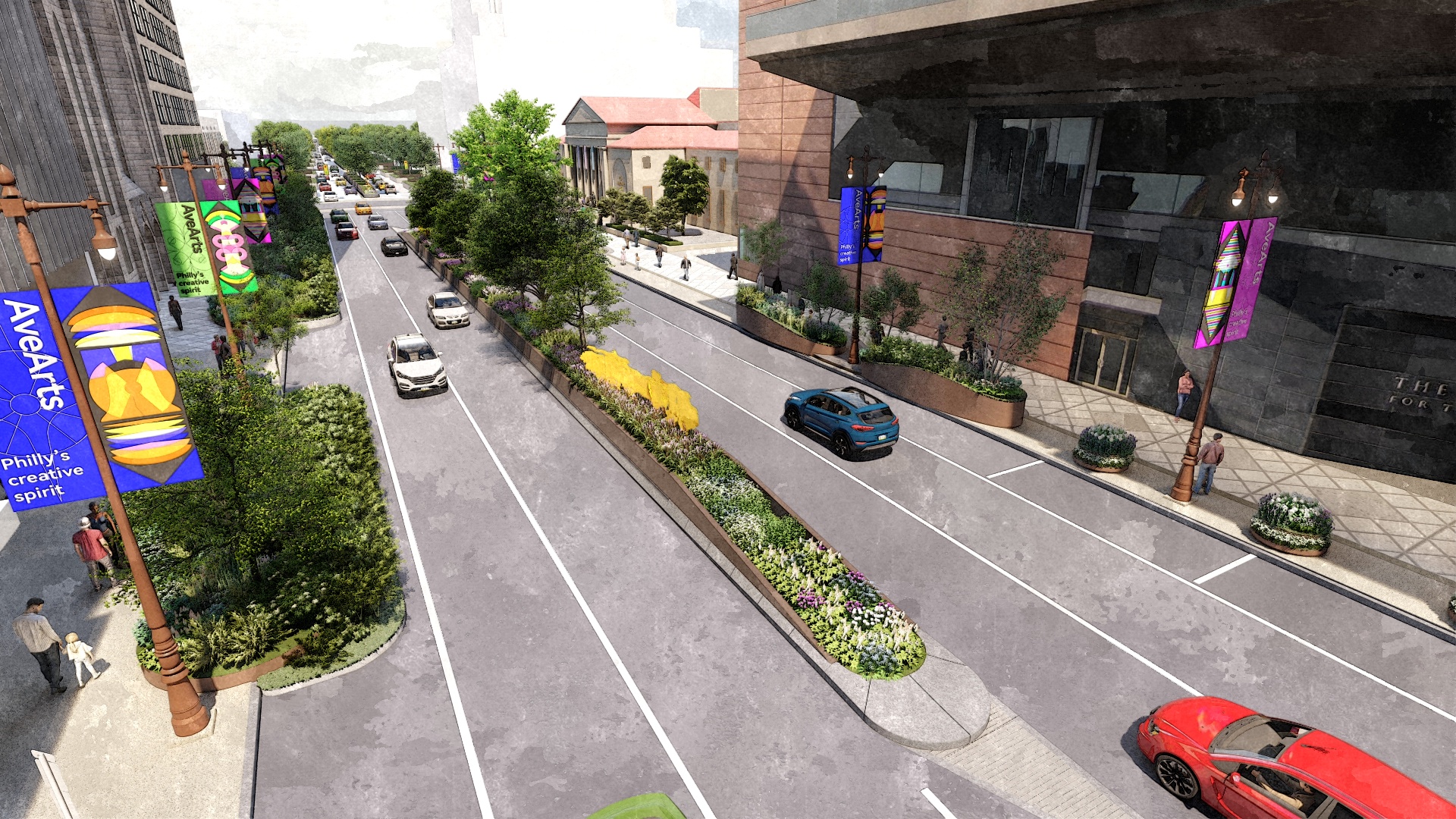
The remaking of the median on South Broad Street in front of the Kimmel Center, part of the larger AveArts 2.0 project, will now include the installation of a pair of sculptures by artist Miguel Horn.
The South Philly-based artist, who is behind several public sculptures in the city, including Center City’sContraFuerte, sought approval for the sculptures’ concept review in a Philadelphia Art Commission meeting on Wednesday.
The sculptures are scheduled to be installed this fall and remain in place for five years.
Artist Miguel Horn at Tacony Creek Park, 1101 E. Cayuga St., in the Juniata Park section of Philadelphia on Tuesday, September 13, 2022.Alejandro A. Alvarez / Staff Photographer
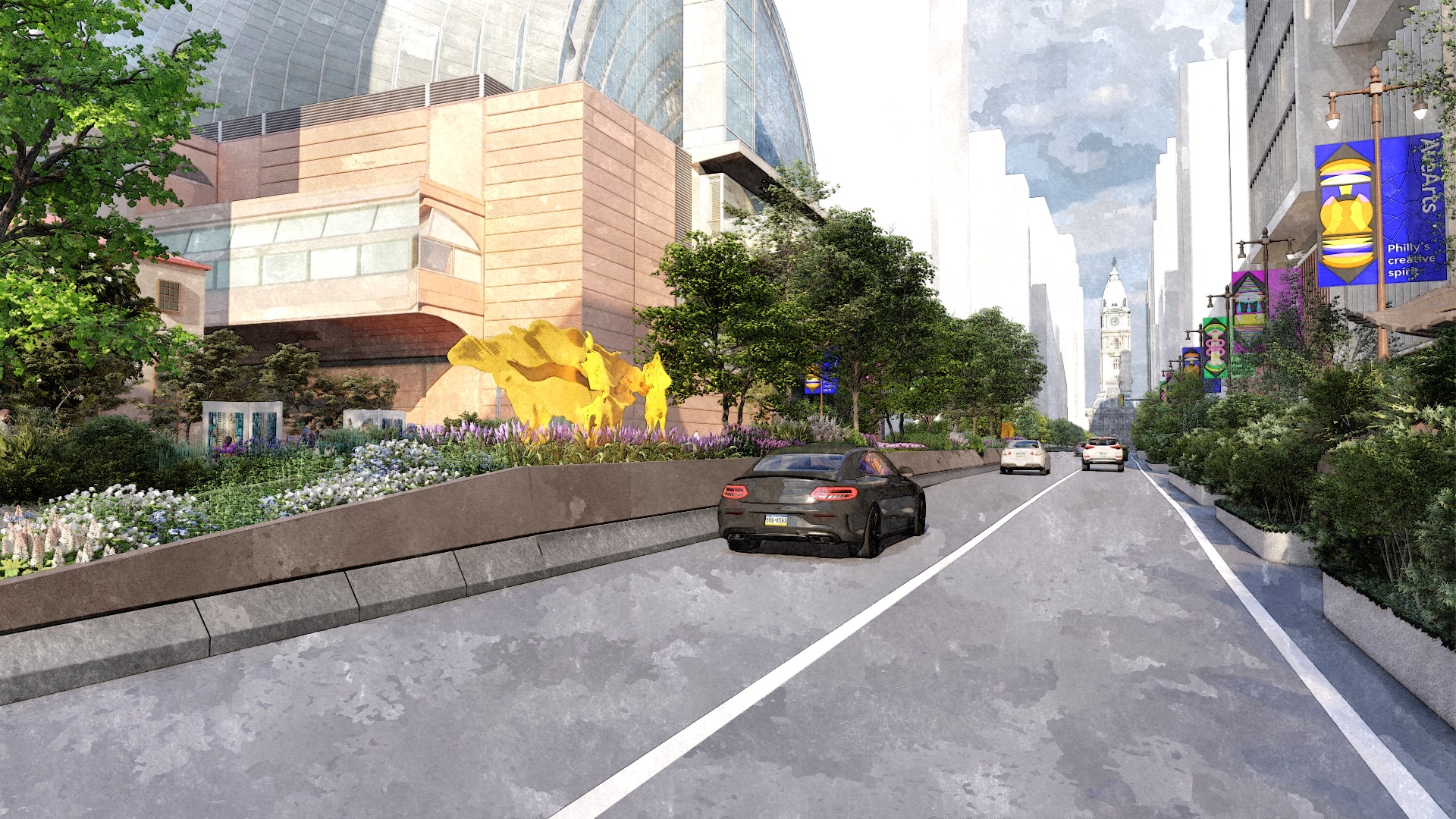
The Broad Street renovation project involves reconstructing the median into a raised planter, adding landscaping, restoring pavement, and installing pedestals and lighting for the public art. The median construction is scheduled to be completed this month, while Horn’s sculptures will be installed in the fall.
Made of bright yellow powder coated steel, Horn’s sculptures will display a blurred image of moving pedestrians. The concept for the design, Horn said, came from him making Light Detection and Ranging (lidar) scans of buildings around Philadelphia. He began to notice something interesting when people walked in front of the scanner.
“This section of the Reading Terminal Market at Filbert Street was flooded with pedestrians walking by, and these movements of pedestrians across this space created this tapestry of figurative elements, abstraction, and I just fell in love,” Horn said at Wednesday’s meeting.
A rendering shows the median on South Broad Street in front of the Kimmel Center, part of the larger AveArts 2.0 project, which will include sculptures by artist Miguel HornCourtesy of OJB & Miguel Horn
He then proceeded to go through the scans and select different movements to create the final sculpture design of walking pedestrians.
“This Muybridge-like study of movement for me was the most compelling thing sculpturally I’ve seen rendered on a computer screen in years,” he said, referring to the pioneering photographer best known for creating The Horse in Motion (1878).
Horn’s design did raise some concerns among attendees on Wednesday, including potential sight line blockages for motorists.
In the meeting, he assured that there was no concern for safety. His presentation to the Arts Commission claimed that the sculptures would still allow for a 215-foot sight line of incoming traffic on either side of the median.
A rendering shows the median on South Broad Street in front of the Kimmel Center, part of the larger AveArts 2.0 project, which will include sculptures by artist Miguel HornCourtesy of OJB & Miguel Horn
“There will not be an interruption to any visual sight lines,” he said.
Design Advocacy Group (DAG) vice-chair David Brownlee, who did not attend Wednesday’s meeting, considers planting trees in the median impractical.
“No one has ever said to me that the problem with Broad Street is there’s no shade in the middle of the street,” he said. “Or that’s the problem with Broad Street is you get out of the street and you look up and see that tower of City Hall.”
Rather than placing trees and sculpture in the middle of the road, Brownlee suggested widening of sidewalks and installing art on each side so pedestrians can view them while walking.
Horn’s concept review for the sculptures was approved by the Arts Commission, with a final review expected at a later date.
A rendering shows the median on South Broad Street in front of the Kimmel Center, part of the larger AveArts 2.0 project, which will include sculptures by artist Miguel HornCourtesy of OJB & Miguel Horn
The AveArts 2.0 project aims to beautify Avenue of the Arts into a cohesive streetscape. The plan is to renovate all 10 blocks between City Hall and Washington Avenue at a cost of $15 million per block.
Funding for the project is expected to be a mix of public money, corporate and individual donations, and foundation support.
“I find this to be a reclamation of our public space through this figurative artwork,” Horn said. “I’m constantly trying to find opportunities to bring the human experience to the forefront of these public spaces.”
A previous version of the article misstated the median project’s timeline. It will be completed this month.
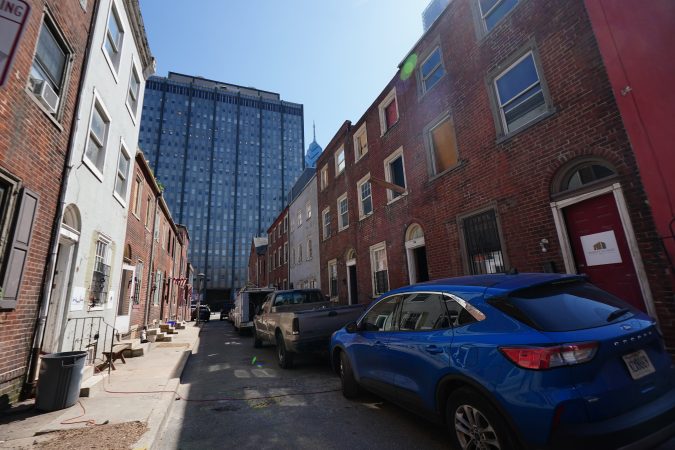
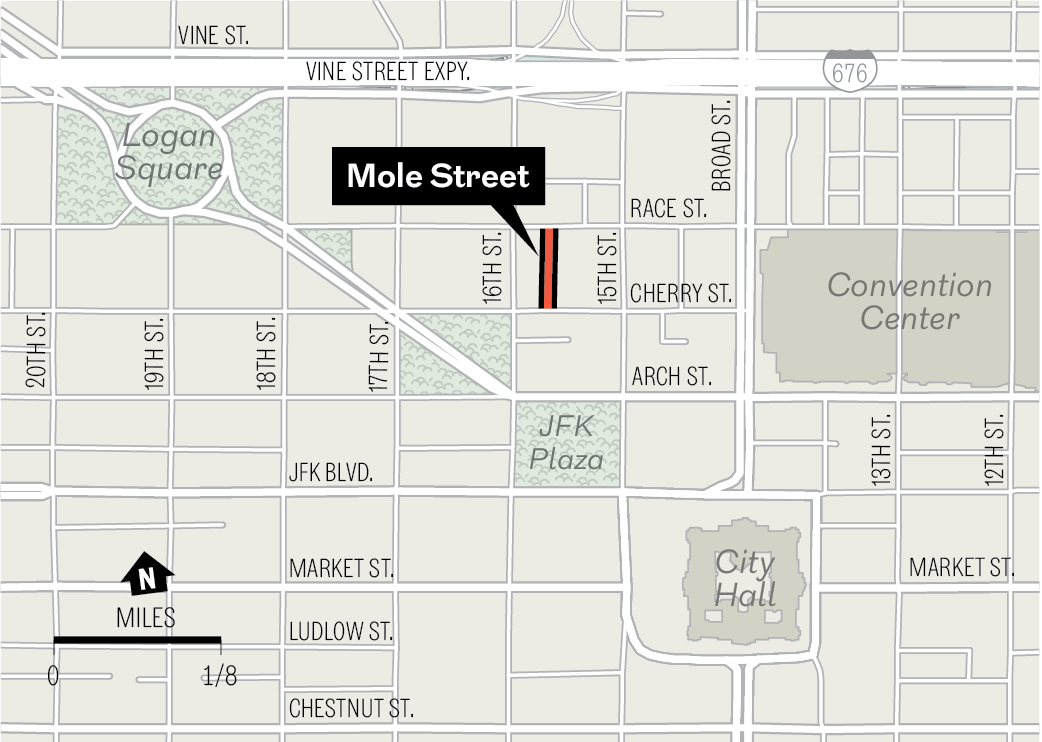
The tree-lined 100 block of North Mole Street seems to cast a spell on everyone who lives there.
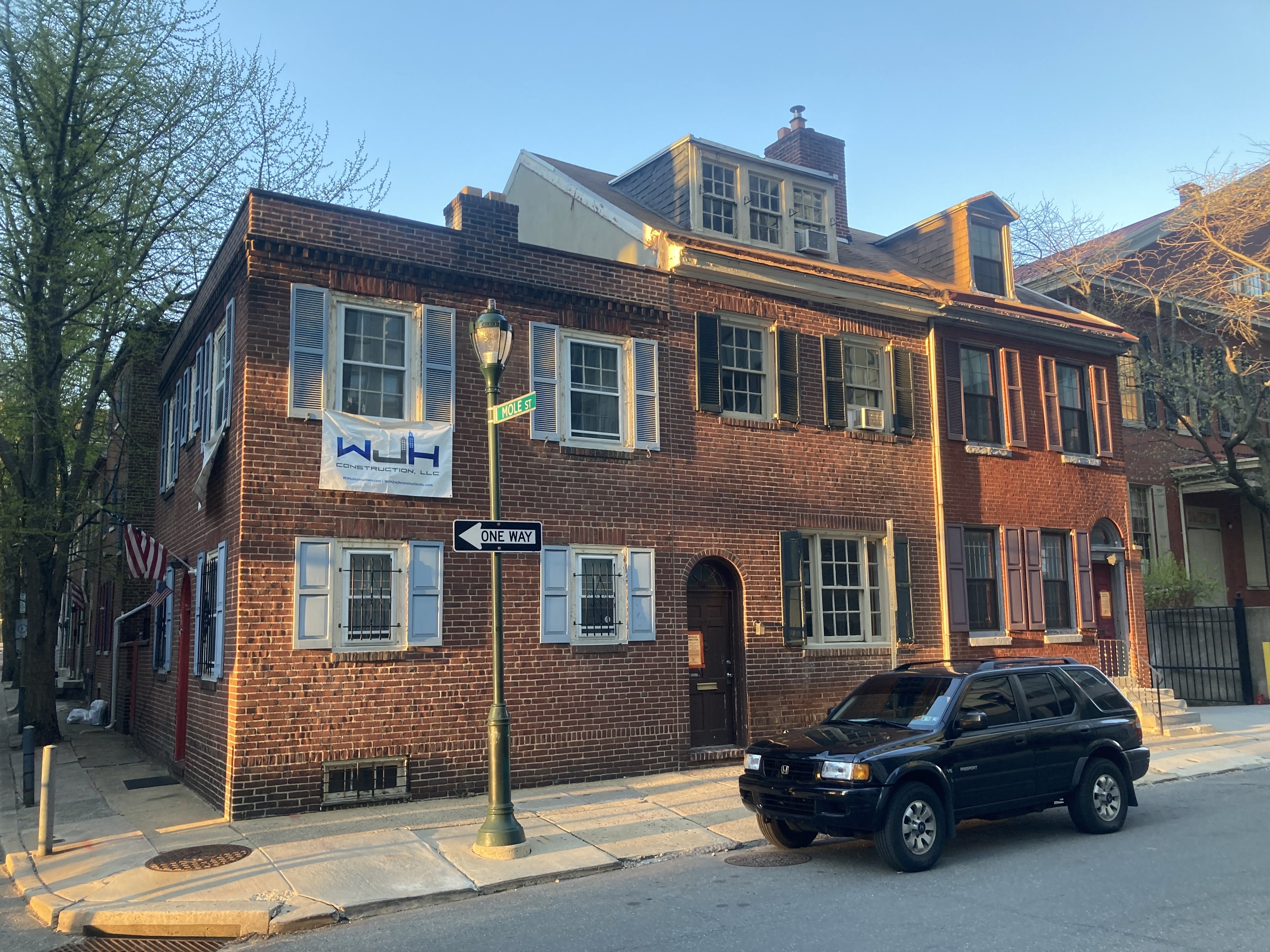
This cluster of 30 two-story brick houses dates to the mid-19th century — some are close to 200 years old — and has long turned residents into devotees of its artsy parties and communal life.
The street standsout from the surrounding blocks of high-rise buildings and surface parking lots, a lone historical holdout in the heart of Center City, where most rowhouses have been erased. Affordable rents two blocks from City Hall have attracted a mix of artists, students, and — for some reason — airline flight attendants.
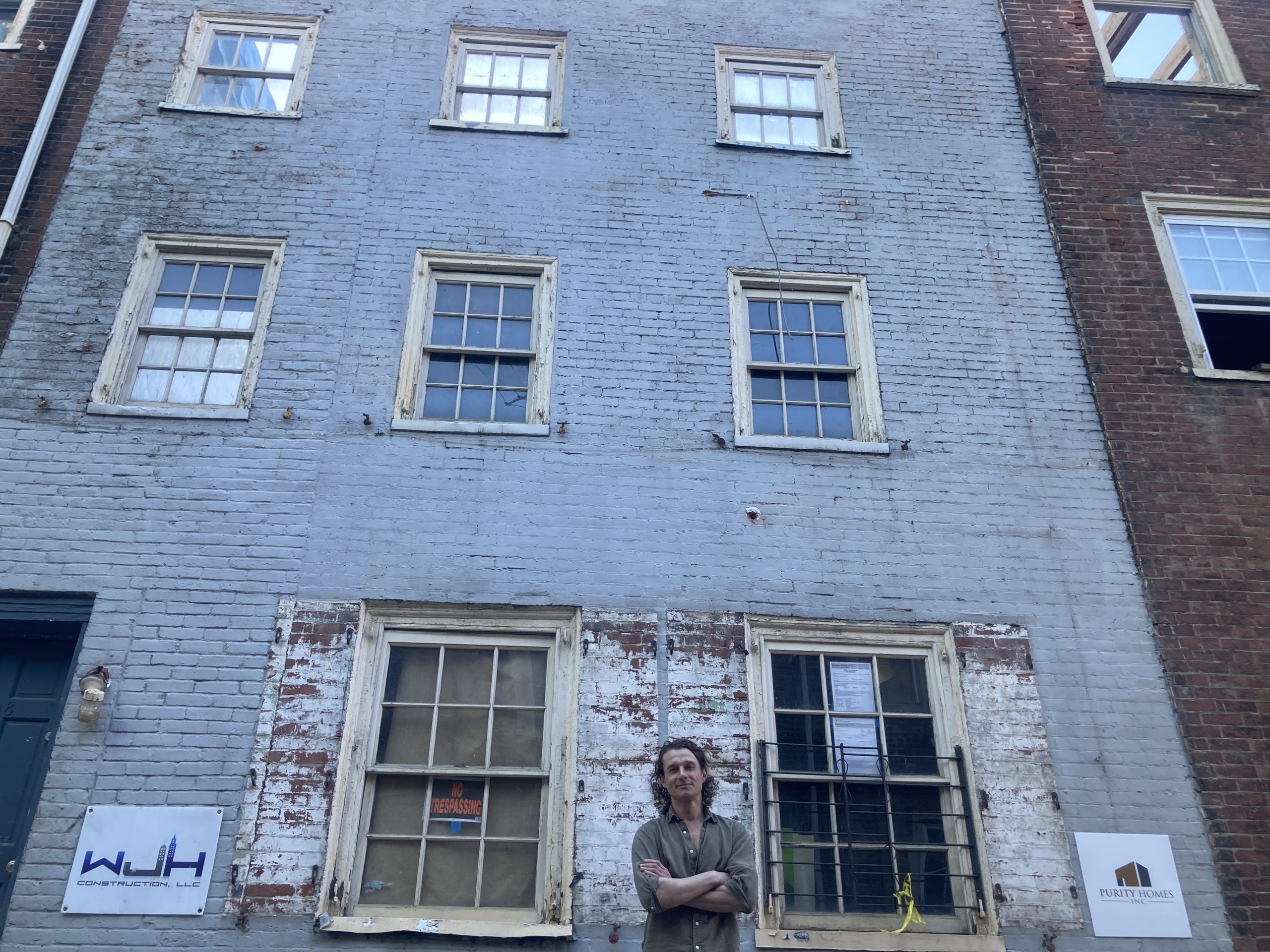
Except, now, almost all the trees have been cut down and the mid-block pocket park torn up. Many of the homes are being redeveloped, and leases are not being renewed for the motley assortment of renters who have long populated the block.
“I’m pretty close with most people on the block, and, I mean, this sucks,” said Teddy Powell, 34, a musician who has lived on this stretch of North Mole since 2020 and can reel off the names and occupations of most people on the block.
“We’re all being forced out of the houses that we love living in,” he said.
Teddy Powell is being forced off the 100 block of North Mole along with most of the rest of the tenants.Jake Blumgart
The 100 block of North Mole Street managed to stand apart for so long because it is owned by a family trust, which also dates to the 1800s, and belongs to descendants of founding father Robert Morris. The homes on Mole Street were given historic preservation protections in 1960.
It neighbors the Central Friends Meeting, which lies just to the east and dates to the 19th century as well.
Until last year, the trust owned 25 of the 30 homes. Rents were kept low: well under $2,000 for four-bedroom homes, mostly hosting roommates, a stone’s throw from City Hall. Individual renters would often pay just hundreds of dollars a month.
That’s a deal that cannot be found in most other parts of Center City, where new buildings have an average rent of over $2,600 and median household incomes are among the highest in Philadelphia.
And the group houses on this block of Mole Street tended to be tight knit, with parties spilling into the shaded street.
From the 1980s until the COVID-19 pandemic, the block hosted the Molestice Festival, with live music, food trucks, and a pop-up bar in the pocket park tucked into the block. In 2018, cheerful chalk graffiti daubed frontages with phrases like “The Mole Hole” and “We R Sky Trash Kappa Mole.”
“We had a lot of fun here; we’ve carried on the tradition,” Powell said. “It’s all over now, though, man. The party’s over.”
Last year, a developer bought eight of the North Mole Street homes for $3.1 million.
The new owner is Purity Homes Inc. Some of the zoning documents filed with the city are signed by real estate investor Armando Ahmad, with the owner’s mailing address listed in either Arlington, Texas, or a Point Breeze rowhouse that hosts seven other real estate-related LLCs.
Ahmad did not respond to a request for comment, and the architect for the project, Carey Jackson-Yonce of Canno Design, declined to comment.
The rowhouses holding out on the 100 block of North Mole Street in Center City are conveniently located to almost everything.John Duchneskie
But at a meeting last September of the city’s Historical Commission reviewing Purity Homes’ plans for eight of the homes, Jackson-Yonce said his client planned to acquire most of the block.
“They are heavily investing on the entire block, and I think in the end they will probably be able to acquire approximately 80% of the block,” Jackson-Yonce said. “This is just probably Phase One of what will probably be at least one more, if not two, more phases.”
Jackson-Yonce noted that the family trust that has owned North Mole Street for the better part of two centuries is selling the properties in batches, perhaps to see how the developer does with the first eight.
He assured commission members that his client was “100% committed to the faithful restoration of these homes.”
The plans displayed at that meeting centered on adding square footage to the rear of the homes, while the interiors are being gutted to create more space. The Historical Commission regulates only the exteriors that can be seen from the street. Currently several of the homes lack roofs.
The exception to the plan to supersize the block is the three homes at 1527, 1525, and 1523 Cherry St., on the south end of the block, which are being demolished.
1527 to 1523 Cherry St., three 19th-century homes slated for demolition at the end of Mole Street. This photo was taken before most of the trees were cut down. Jake Blumgart
They are not protected by historic regulations. Paul Steinke of the advocacy group Preservation Alliance says the developer wants to build an eight-unit apartment block in the place of those 19th-century rowhouses.
Purity Homes’ plans for Mole Street will necessarily entail sharp rent increases due to the amount of money being spent to acquire and redevelop the homes.
Powell and two other tenants on the block say that they were recently told their leases won’t be renewed.
“Everybody that I know over here is pretty sad and disappointed about the whole thing,” said Joshua McIntyre, a more recent resident of the 100 block of Mole.
“It’s a lot of different kinds of young people, artists, and there were several bands that practice over here, but now it’s going to be like the rest of Center City, I guess,” McIntyre said.
Canno Architects’ designs promise that the exteriors of the buildings on this stretch of Mole Street will remain — as preservationists watch closely.
“This block is really a magical one,” David Traub of the preservation group Save Our Sites said at last September’s Historical Commission meeting. “It’s really a miracle that it still exists in the context in which it is situated, immediately adjacent to the very center of the city … [it’s an] extremely important remnant of Old Philadelphia in Center City.”
Christen “Chris” Woods, the former leader of one of Philadelphia’s largest labor unions, was acquitted of theft and conspiracy charges Wednesday by a judge who rejected prosecutors’ allegations that he used a union-funded renovation project to secretly funnel money into local political campaigns.
In delivering her verdict, Common Pleas Court Judge Tracy Brandeis-Roman said prosecutors had failed to prove beyond a reasonable doubt that Woods — who once led District 1199C of the National Union of Hospital and Healthcare Employees — acted criminally when he hired longtime political operative Tracy Hardy to oversee the renovation of a bar inside the union’s Center City headquarters in 2019. The case against him, she said, relied on circumstantial evidence that did not definitively tie Woods to any wrongdoing.
As the judge declared Woods, 41, not guilty, he lowered his head toward the defense table, overcome with emotion. Behind him, family members and friends sprang to their feet, raising their hands toward the ceiling and shouting in celebration until Brandeis-Roman restored order by rapping her gavel.
The verdict brought to an end a protracted prosecution by the Pennsylvania Attorney General’s Office that accused Woods of orchestrating a plot to covertly channel money into Philadelphia’s 2019 Democratic primary elections.
Prosecutors alleged that Woods used a bar renovation project as a vehicle to steer more than $100,000 in union funds toward political consulting and campaign work benefiting candidates he supported, including one of Woods’ closest friends, Isaiah Thomas, who won a City Council seat.
Rather than rely on traditional campaign contributions, prosecutors said, Woods hired Hardy — who owned bars but did not work in construction — to develop fake and inflated estimates for the renovation project, then got one of those bloated proposals approved by the union’s board. Then, they said, Hardy took the excess money and used it to surreptitiously support the candidates.
Woods, who now owns a consulting firm and medical transportation business, was once viewed as a rising star in city political circles, and dozens of supporters sat in the courtroom to watch the case unfold. Thomas was among those who attended the proceedings, making a brief appearance during the trial’s opening phase in February. Brandeis-Roman conducted the nonjury trial over the course of months, before hearing closing arguments in May and issuing her verdict Wednesday.
During the trial, Woods’ attorneys blamed Hardy for any issues with the renovation’s cost or the accuracy of its invoices. Woods never intended to use the union’s funds for anything other than construction, they said, and if Hardy overbilled the union, he did so on his own — and to line his own pockets.
Hardy pleaded guilty in federal court last year to charges stemming from the bar renovation, as well as a separate scheme in which he fraudulently obtained $2 million in pandemic relief funds.
He is scheduled to be sentenced in September.
“This isn’t a case about theft from a union,” Woods’ attorney, Keir Bradford-Grey, said in court. “This case is about a fraud between Hardy and [his contractors].”
Among the evidence presented were financial records and witness testimony that prosecutor James Price said showed the renovation project’s cost ballooned from an initial estimate of about $47,000 to nearly $150,000 by the time the board approved it. Price said that was because Woods and Hardy were secretly using the arrangement to fund political consulting by Hardy for candidates of Woods’ choosing.
“You cannot spend union money just because you think it’s for the best,” he said in his closing argument.
But Woods’ attorneys said that the initial estimate for the construction project was unrealistically low, and that Hardy did ultimately renovate the bar.
If Hardy was a sloppy bookkeeper or dubious project manager, they argued, that did not make Woods guilty of knowingly misdirecting his union members’ funds to another purpose.
Woods’ trial also included testimony by Ryan Boyer, head of the politically influential Philadelphia Building and Construction Trades Council and one of the city’s most powerful political figures. Boyer spent half a day on the witness stand answering questions about his relationship with Woods and Hardy, as well as his assessment of the bar renovation’s costs.
Although Boyer served as a prosecutors’ witness, he delivered testimony that appeared to bolster Woods’ case: He said Hardy was a shady operator who cut corners and spread himself too thin, and suggested that any issues with the bar renovation likely stemmed from Hardy’s conduct.
On Wednesday, Brandeis-Roman said the evidence left room for competing interpretations, with facts that felt as if they “could go both ways.” Combined with testimony from 19 character witnesses who vouched for Woods’ integrity, she said, the uncertainty convinced her that prosecutors had not met their burden of proof.
“Sometimes,” she added, “all you have is your good name, and that should mean something.”
Among those in the courtroom was Woods’ mother, Valencia, who jumped from her seat after the verdict and repeatedly shouted, “Thank you, Jesus. Thank you, God,” until she embraced her son in the hallway outside the courtroom.
There, surrounded by loved ones, Woods said the verdict meant “I’m finally able to move on with my life.”
Bradford-Grey added: “I am glad people will finally get to see he is not the person he was portrayed originally in the paper. It’s time to put this to bed and let Chris be the man we know he is.”