Tag: Camden County

  • Customers looking for nostalgia can buy records, make music, and rent DVDs at this new Camden County shop

    Customers looking for nostalgia can buy records, make music, and rent DVDs at this new Camden County shop

    A new storefront in Collingswood is a one-stop shop for music makers, record lovers, and those who really miss renting VHS tapes.

    Joseph Mallah, the owner of Vintage Future Now, is still figuring out how to describe the place.

    “It’s like a bag of squirrels. I don’t know,” he said. “How do I say stuff about it?”

    Mallah, 42, recently opened the shop at 554 Haddon Ave. as a hodgepodge of all the things he likes. After moving to South Jersey, he said he wanted to invent a creative space for artists to make and buy music.

    Mallah shares his Vintage Future Now space with his friend Mike Jada, who has turned his own lifelong movie collection into Deja Vu Video, where people can rent some of Jada’s favorite movies.
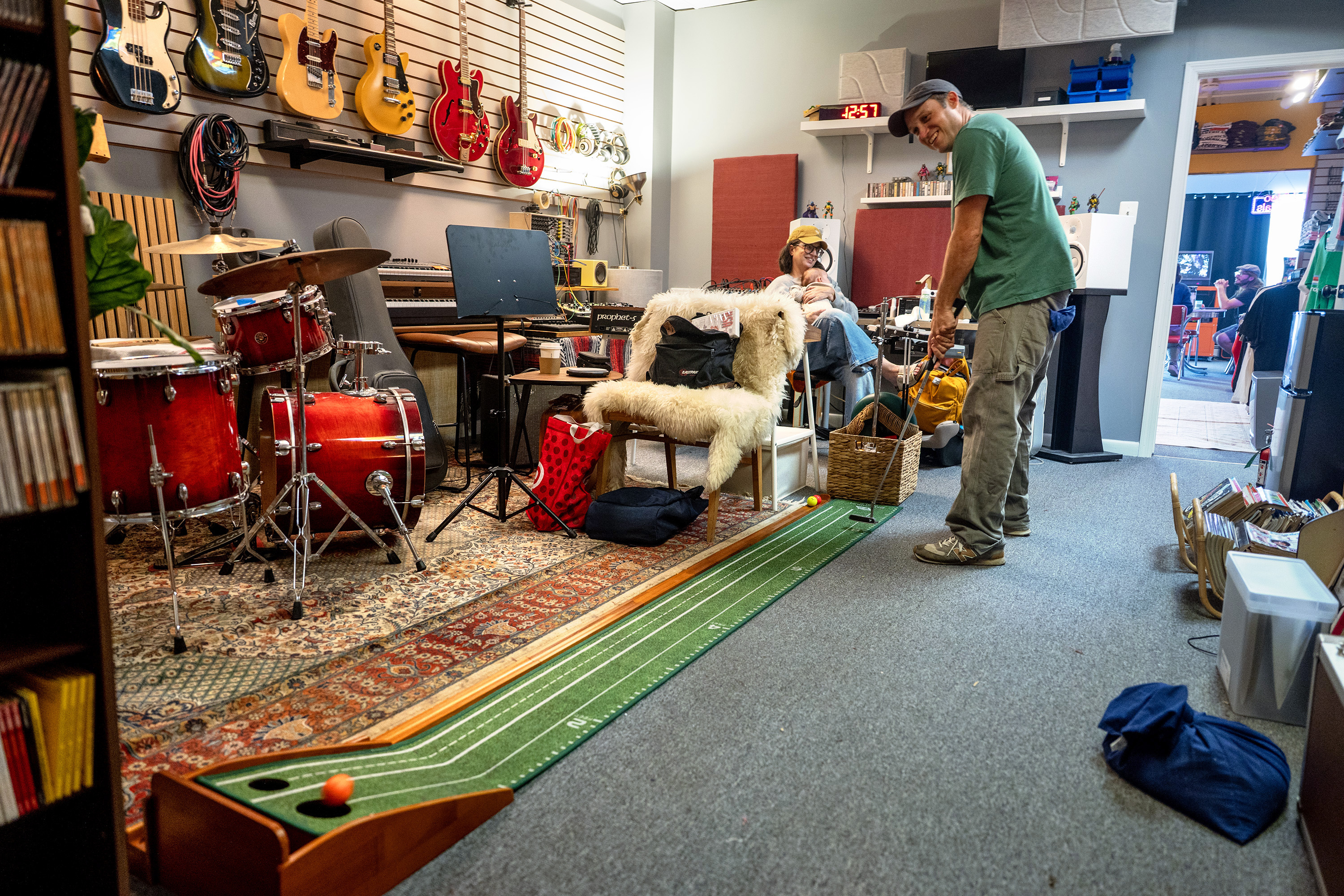
    Owner Joseph Mallah putting in his office/music space in back of the Vintage Future Now shop in Collingswood on Sept. 30. He is not a golfer but has the putting hole green because that’s what executive offices have in movies, he says. His wife Samantha Mallah and their two-month old son Elliot are in rear.Tom Gralish / Staff Photographer

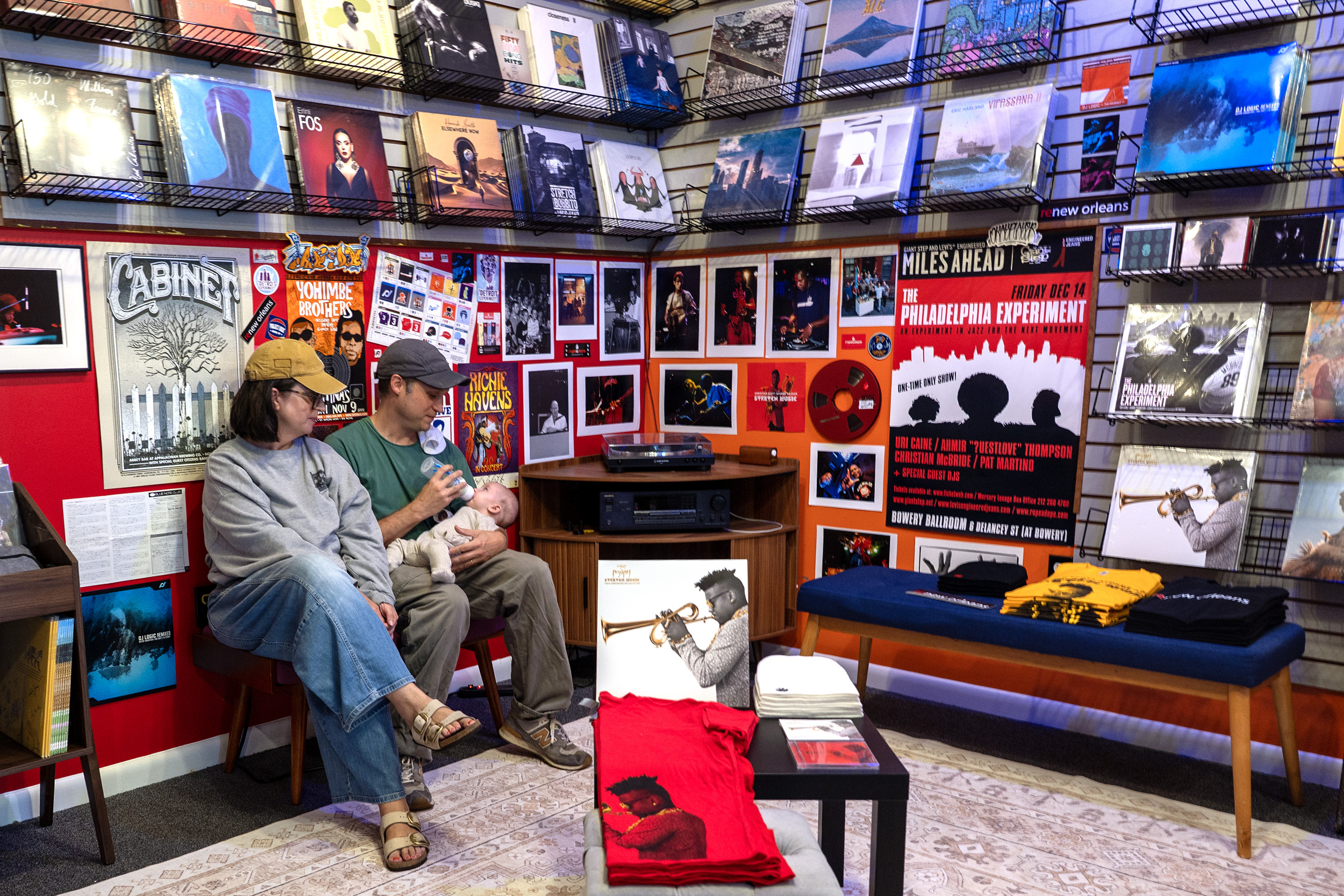
    In the backroom, there are instruments, from synthesizers to guitars, and recording equipment for local bands who need a place to experiment. In the middle of the store, Ropeadope, a music and apparel brand, sells jazz-adjacent vinyl and T-shirts.

    The walls, peppered with film and band posters, will eventually feature pictures of customers that Mallah takes with his Polaroid (at the end of September, there were two). As decor, there’s a mini golf-putting green, Teenage Mutant Ninja Turtle figurines, and a pile of old People magazines.

    Mallah said he wants to give local musicians a low-stakes environment to record quick songs without too much thought, and then release their music onto his shelves so their neighbors can take a listen.

    “Can you imagine if we did an EP a week or album a month for 30 years?” Mallah said. “If you dug it up later … what did the people in South Jersey feel?”

    After years spent teaching Logic Pro at Apple, working at Adventure Aquarium, mailing records, and helping Philly bands cut demos in his garage, Mallah said having his own business could help him spend more time with family.

    Old magazines collected by owner Joseph Mallah — including a People from 1984, the year he was born.Tom Gralish / Staff Photographer

    Deja Vu Video — the DVD, Blu-ray, and VHS rental area — takes up the front of the shop. Jada estimated that about 3,000 films and TV series are on display and categorized by genre, ranging from Poliziotteschi/Eurocrime to Bigfoot to Legit Cinema, a section for movies that are on the more-normal side, he said.

    After years of accumulating physical media, Jada, a Haddon Township resident, decided it was time to share his passion with the community. He met Mallah at Collingswood Music, a store that sells instruments and vinyl records and offers music lessons.

    The movies, rentable for $5 per week, come from Jada’s personal library, taken from his storage space and from a friend who had been holding onto the films to save Jada space.

    His favorite collection is a mishmash genre he calls Bikers, Hippies, Hillbillies, Cars, and Creeps, which includes 1971 horror film Werewolves on Wheels. Some movies are for rent as a pair to make themed double features, like The Incredible Shrinking Man and Attack of the 50 Foot Woman or The Incredible Two-Headed Transplant and The Thing with Two Heads.
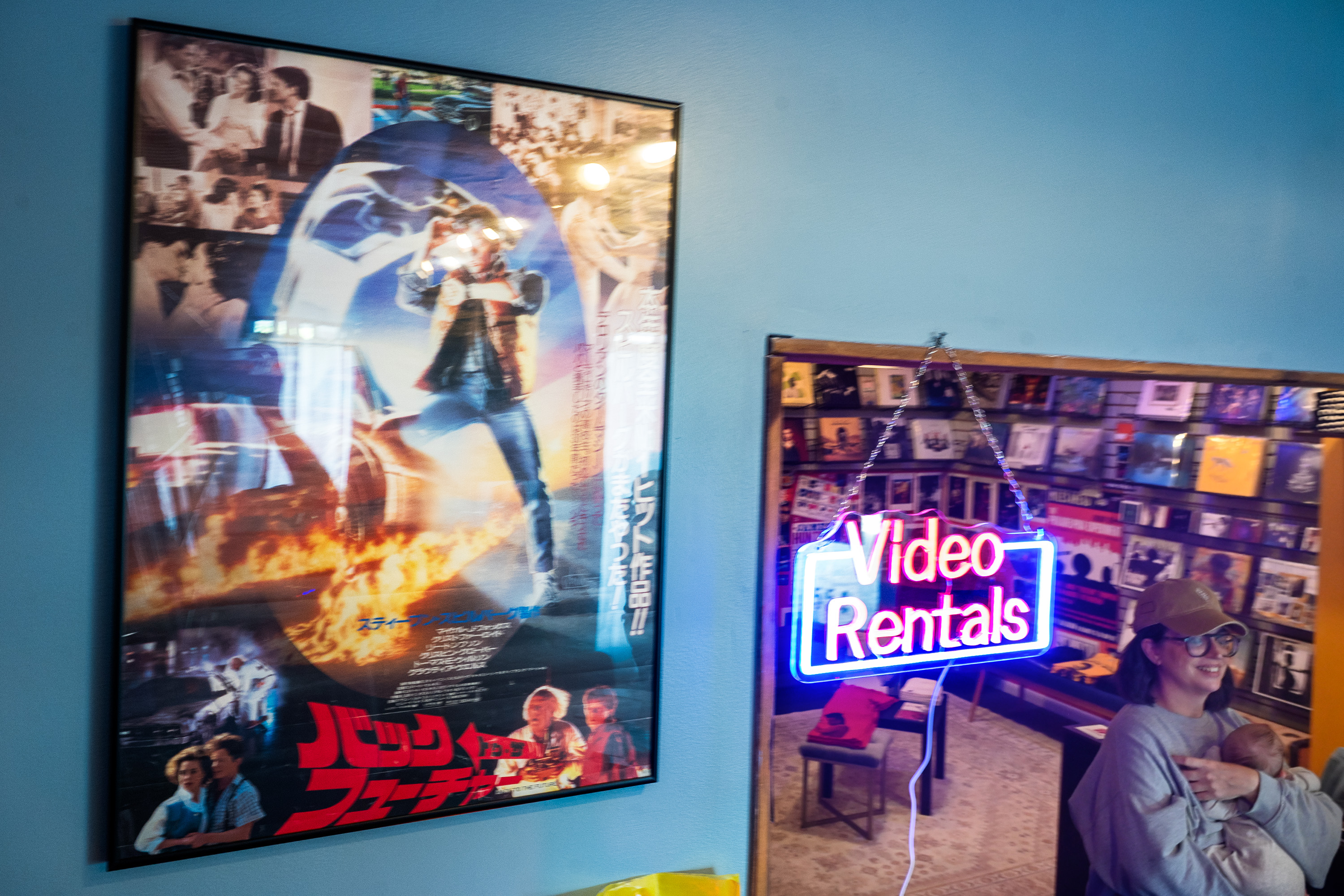
    Samantha Mallah with 2-month old son Elliot at the Vintage Future Now shop.Tom Gralish / Staff Photographer

    It’s been more than a decade since Blockbuster declared bankruptcy, years since the death of Redbox, and longer since the COVID-19 pandemic solidified the appeal of streaming services. But as movie theaters make a comeback in the Philly region and people crave holding physical media in their own two hands, the appetite for a video, music, and record store isn’t so surprising. Mallah and Jada haven’t hosted a grand opening yet, but they’ve already had shoppers wander through their doors and sign up for rentals.

    “It’s not like we’re going to put Netflix out of business or anything,” Mallah said. “We just have to pay the rent.”
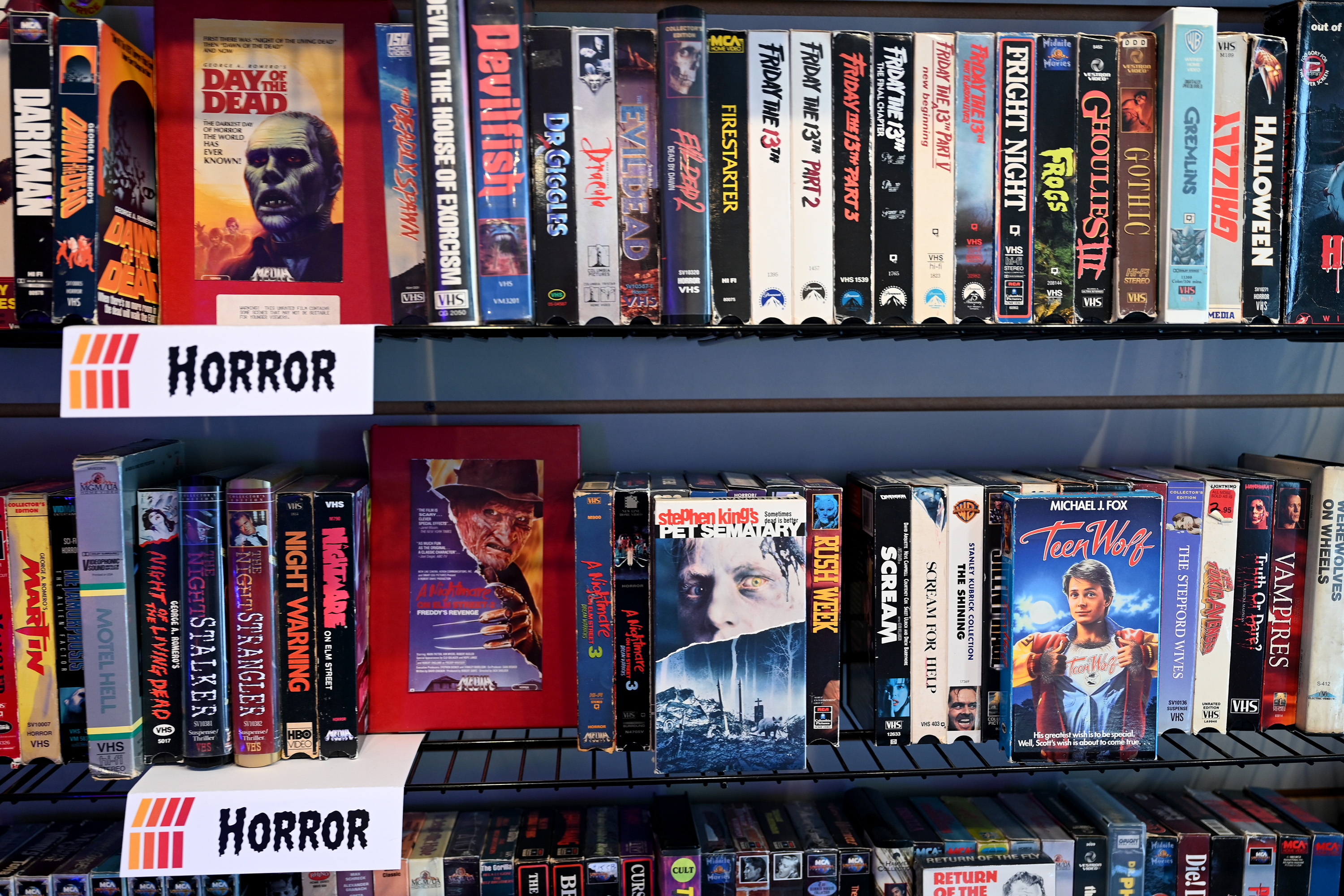
    Horror VHS tapes collected by Mike Jada at the Deja Vu Video section of the Vintage Future Now shop in Collingswood.Tom Gralish / Staff Photographer

    Recently, Doug Huber, 26, left work at Cafe 1903 down the street to check out the new shop, which has started testing the waters with soft opening hours. He said he hasn’t visited a video rental store since his last stop at South Jersey’s long-closed Wow Video when he was a kid.

    “The fact that you have Bill Bixby’s The Incredible Hulk, like, the complete series?” Huber said. The 1977 TV show featured Bixby as Dr. David Banner and Lou Ferrigno, a 6-foot-5 bodybuilder, as his green counterpart.

    Huber, who picked up a shirt from the Ropeadope section and posed for one of Mallah’s Polaroids, said he’d likely be back, potentially to pick up a sci-fi horror film. His favorite is The Thing.
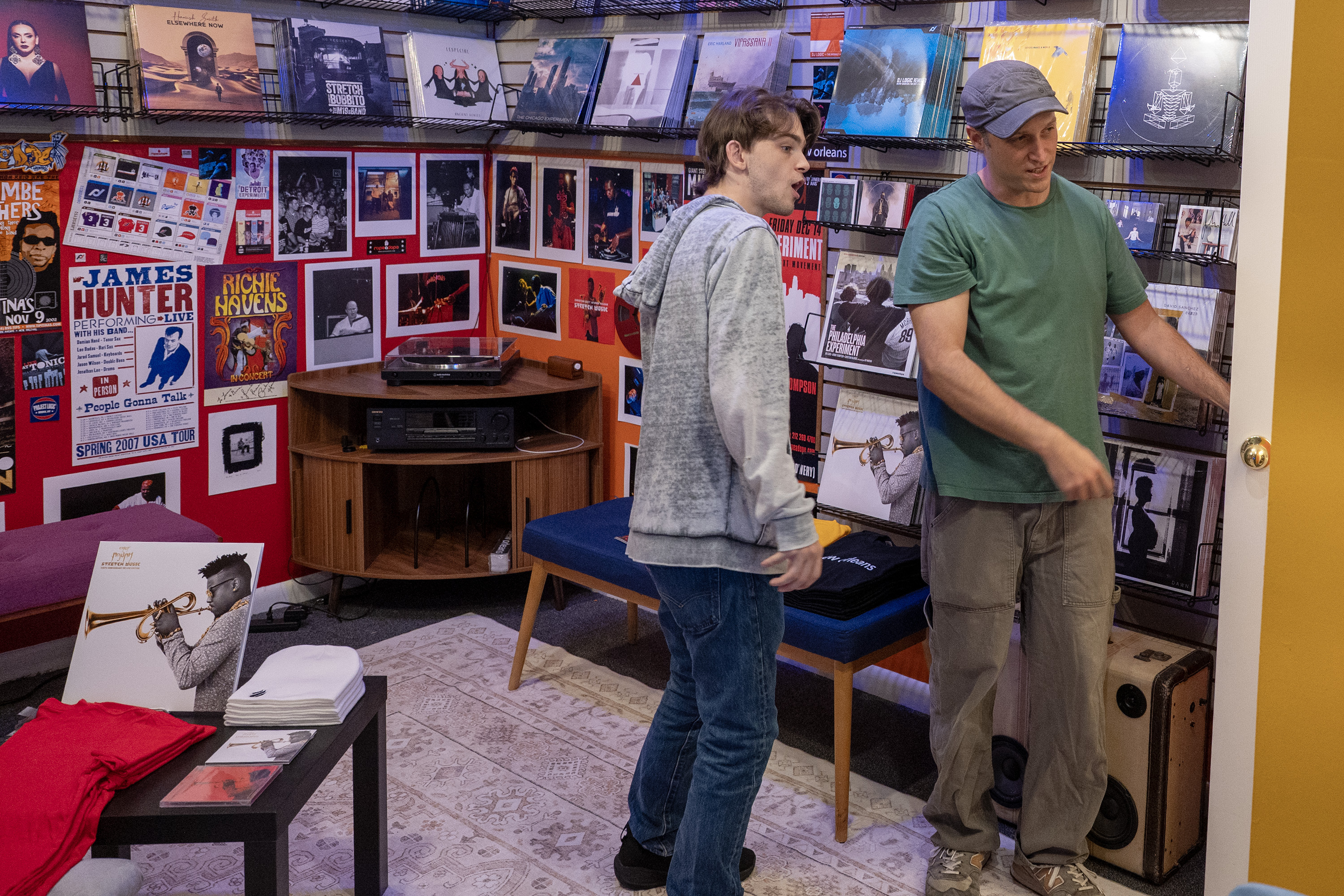
    Owner Joseph Mallah shows customer Doug Huber (left) his T-shirt printer.Tom Gralish / Staff Photographer

    In 2026, most people don’t have VHS and DVD players laying around their houses. To fix that problem, Jada is working on collecting equipment that customers will eventually be able to rent and take home with their movie of choice.

    Plus, Jada still has more films back home awaiting shelf space, so he plans to rotate the selection over time.

    “I feel like every town should have a video store,” Jada said. “And once upon a time, they did. Then they got displaced by the big chains, and then got displaced by streaming. Now that it seems like the sentiment toward streaming has changed a little bit, it seems like it’s a good opportunity to bring some of this stuff back.”
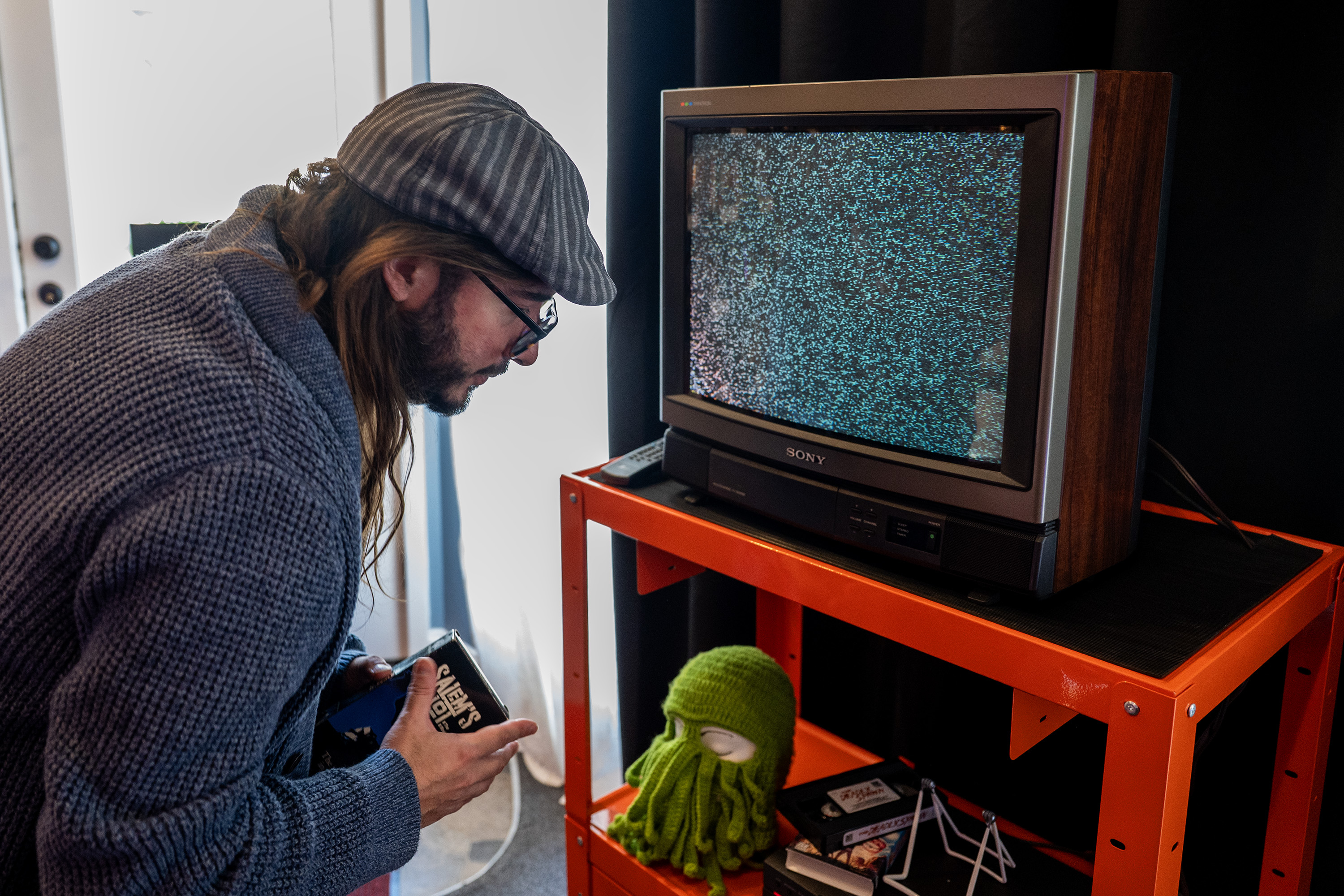

    Mike Jada loads a VHS tape for playing on vintage CRT television at the Vintage Future Now shop in Collingswood on Sept. 30.Tom Gralish / Staff Photographer
  • A teen driver in Camden County was charged with assault after he allegedly struck 6 people with his SUV

    The 16 year-old driver of an SUV that struck six teen pedestrians in Lindenwold Tuesday was charged with aggravated assault and joyriding.

    The teen, who has not been identified, allegedly drove his vehicle onto a sidewalk on Gibbsboro Road, near Lindenwold High School. When police arrived around 2:10 p.m., officers found one pedestrian trapped beneath the SUV and five more people who had been struck while walking on the sidewalk.

    The victims range from 14 to 16 years old, police wrote in a Tuesday statement. “Two occupants of the involved vehicle” had been detained at the scene during the initial police investigation Tuesday.

    The driver will face one count of second-degree aggravated assault, six counts of third-degree aggravated assault, and one count of joyriding. He is being held at the Camden County Juvenile Detention Center.

    The trapped pedestrian was transported by medical helicopter to Cooper Norcross University Hospital, and the remaining teens were taken to local hospitals for treatment.

    “The investigation remains ongoing as all victims continue to recover,” Lindenwold police wrote in a statement Wednesday morning.

  • New Jersey bill would limit employers’ ability to use AI to monitor workers or make changes to their jobs

    New Jersey bill would limit employers’ ability to use AI to monitor workers or make changes to their jobs

    As tech CEOs debate the looming threat of artificial intelligence to worldwide safety and economic stability, lawmakers in New Jersey have begun taking steps to protect the workforce from fast-moving changes that have already disrupted how many do their jobs.

    The state Senate Labor Committee last week voted unanimously to approve a bill that would regulate how employers use AI to monitor, evaluate, and ultimately replace workers.

    The bill, which comes amid a broader backlash to AI and surveillance technology, now moves to the Senate budget committee for consideration before a vote by the full chamber. The “Fair Act” would require private- and public-sector employers to provide 60 days notice before implementing AI that would impose significant changes to job expectations. Employers who eliminated jobs because of AI advances would be required to offer training, extended severance pay, and benefits, according to the bill.

    It would also regulate how employers use electronic monitoring tools to collect information about employees’ productivity, and how “automated employment decision-making systems” are used to hire, promote, and fire people.

    “It makes sure employers can’t spy on you when you are off the clock. Your boss should not be able to follow you home,” said Charle Wowkanech, president of the New Jersey State AFL-CIO, which represents 1 million public- and private-sector workers and their families, who spoke at a recent rally outside the Statehouse to draw attention to the bill.

    Artificial intelligence is already monitoring the productivity of thousands of people who work in grocery stores, factories, and cannabis operations in the state, said Daniel Ross, president of United Food and Commercial Workers Local 152, which represents workers in New Jersey, Pennsylvania, Delaware, and Maryland. “The time-test matrix is so unreasonable that workers skip bathroom breaks, they don’t take water breaks, to avoid falling behind,” Ross said.

    “Surveillance is not mainly harmless oversight, as it’s sold by employers,” Ross said. “Workers subjected to these practices experience elevated stress levels, declining mental health, and [increased] injury rates.”

    Other states have already taken up the issue.

    California, Colorado, Connecticut, Illinois, and New York have enacted various workplace protections from AI, according to Multistate, a clearinghouse for state legislation across the country. Pennsylvania has introduced its own bill to regulate AI in the workplace.

    However, New Jersey business and industry leaders urged the committee to rethink some of the most sweeping provisions of the bill.

    Most of the 1,300 members of the Chamber of Commerce Southern New Jersey are small businesses, which are not equipped with vast human resource or legal departments to implement the law, said Adam Guzjewski, president of Katz Government Affairs.

    The bill requires employers to comply with vague requirements to ensure AI does not undermine “an employee’s autonomy, dignity, or welfare.”

    But Jack Kelly, a lobbyist for the New Jersey Business and Industry Association, said it’s unclear how these requirements will be enforced for businesses.

    “Large corporations may have dedicated legal compliance and technology teams. Many New Jersey businesses do not. For small businesses, these requirements create significant barriers to entry,” Kelly said.

    New Jersey’s legislation is not out of step with how other states have regulated AI use, said Tony L.J. Lin, an associate professor of accounting at Rowan University who studies artificial intelligence in the workplace.

    “If AI materially restructures jobs, we need a mechanism for retraining and redeployment,” Lin said.

    States should push back on efforts to evaluate employees through invasive means like monitoring keystrokes, simply because this strategy likely does not fully show a worker’s productivity or value, Lin said.

    Lin said there is great potential to improve jobs using AI. A nurse-practitioner, for instance, would benefit from technology that handles automated tasks. But a nurse-practitioner will always be valued for the “human judgment, contextual understanding accountability” aspects of the job, he said.

    Debbie White, president of the largest nurses union in New Jersey, isn’t so sure.

    “Healthcare employers are increasingly using AI and electronic monitoring systems to track worker productivity, evaluate performance, and influence staffing decisions,” White testified during the Oct. 1 hearing in Trenton.

    However, White said these systems fail to measure “the reality of nursing care,” which often involves time comforting ailing patients and educating their families among other overlooked aspects of the job.

    “AI can be useful, but it can’t replace the judgment of a nurse at the bedside,” she said.

  • A new pecking order: Collingswood will allow backyard chickens after earlier ban

    A new pecking order: Collingswood will allow backyard chickens after earlier ban

    Collingswood residents have debated whether to permit backyard chickens for more than a decade. On Monday night, the commissioners finally voted to welcome hens to the borough.

    Now, residents can apply to keep hens on their properties by filling out a form, taking a chicken care course, getting their yards inspected before and after installing a coop, and paying a $20 annual fee.

    The new ordinance passed with “yes” votes from Mayor Daniela Solano-Ward and Commissioner Amy Henderson Riley, both elected to Collingswood’s three-person board of commissioners last year. Commissioner Jim Maley, who helped pass the borough’s ban on fowl back in 2008, voted against backyard hens.

    No one from the public spoke out against the chicken ordinance before the vote.

    Graham Patterson, a Collingswood resident and a software engineer, plans to lead the borough’s Backyard Hen Advisory Board with seven other residents, who will be responsible for investigating complaints, inspecting coops, and helping relocate hens in the case that a resident can no longer keep them.

    After years of chicken discourse, Patterson said he’s glad that there wasn’t any negative pushback on Monday. Much of the meeting was focused instead on the fate of Collingswood’s Scottish Rite Theater, a historic event and performance space, and the nonprofit running it.

    “A lot is going on in Collingswood,” Patterson said. “So I think chickens are the least of people’s worries.”

    Collingswood’s pro-chicken residents, currently gathered in a Facebook group called Collingswood Chicken Uprising, will now work to educate residents on how they can start a coop of their own, Patterson said. But with winter rapidly approaching, most residents will likely wait until next spring to get started on an application, he said. That’s his plan, at least.

    Backyard hens are legal in 19 other Camden County municipalities, including Haddon Township, Haddonfield, and Stratford Township. Gwenne Baile, known locally as the “Chicken Lady of South Jersey,” has helped get most of those ordinances passed.

    “In all the towns where I have helped the residents get an ordinance change,” Baile wrote in the Collingswood Chicken Uprising Monday, “Collingwood was definitely the first one where no resident stood up during public comment to say anything negative about backyard hens.”

    Only 30 Collingswood residents can have backyard hen licenses at a time, and residents with properties under 4,000 square feet aren’t allowed to keep hens at all. Roosters are forbidden, and licensees can’t sell their eggs or slaughter their chickens. The new code has rules on cleanliness, smells, and waste.

    The number of hens residents can keep depends on the size of the property, with 12 hens — the maximum — requiring 9,000 square feet or more.

    A person who breaks the rules could get a fine up to $1,250, 90 days imprisonment, community service, or any combination of those after a conviction in court.

  • Sicklerville man arrested and charged with first-degree attempted murder for Wawa shooting

    A 20-year-old Sicklerville man was arrested Tuesday morning and accused of allegedly shooting another man inside a Winslow Township Wawa Sunday night.

    Marcus L. Norman was charged with first-degree attempted murder, second-degree unlawful possession of a weapon, and second-degree possession of a weapon for an unlawful purpose, the Camden County Prosecutor’s Office announced in a news release Tuesday afternoon.

    Winslow Township police officers responded around 9 p.m. Sunday to the Wawa at 400 Sicklerville Rd., where they found Norman with a self-inflicted gunshot wound to the hand, according to police. He was taken to Cooper Norcross University Hospital for treatment.

    Officers were notified later that night that another 20-year-old man with a gunshot wound had walked into Washington Township’s Jefferson Hospital for treatment before he was transferred to Cooper Norcross University Hospital, the department said.

    On surveillance footage reviewed by police as part of their investigation, Norman allegedly had a “physical altercation” with the other man in the store. Prosecutors say Norman can be seen throwing the first punch, and then pulling out a firearm and shooting him. The handgun was found at the scene, prosecutors said.

    Norman is being held at the Camden County Correctional Facility pending a detention hearing in Superior Court.

  • A South Jersey emergency department has lost veteran doctors and staff over its new contract

    A South Jersey emergency department has lost veteran doctors and staff over its new contract

    Al Sacchetti and his team have saved countless lives during his 41 years as an emergency room doctor at Virtua Our Lady of Lourdes.

    Members of the crew keep themselves energized with jokes and endless Philly soft pretzels. Some patients say the doctors at Lourdes are the only reason they’re still here today.

    Now, Sacchetti is one of nearly two dozen people, the majority of his team, exiting the hospital after Virtua Health switched staffing providers for the emergency room. The ER’s three leaders, including Sacchetti, say they were not offered contracts with the new provider, though they were offered roles at other Virtua hospitals that they declined. A Virtua spokesperson said the provider switch was to create consistency across the company’s health system.

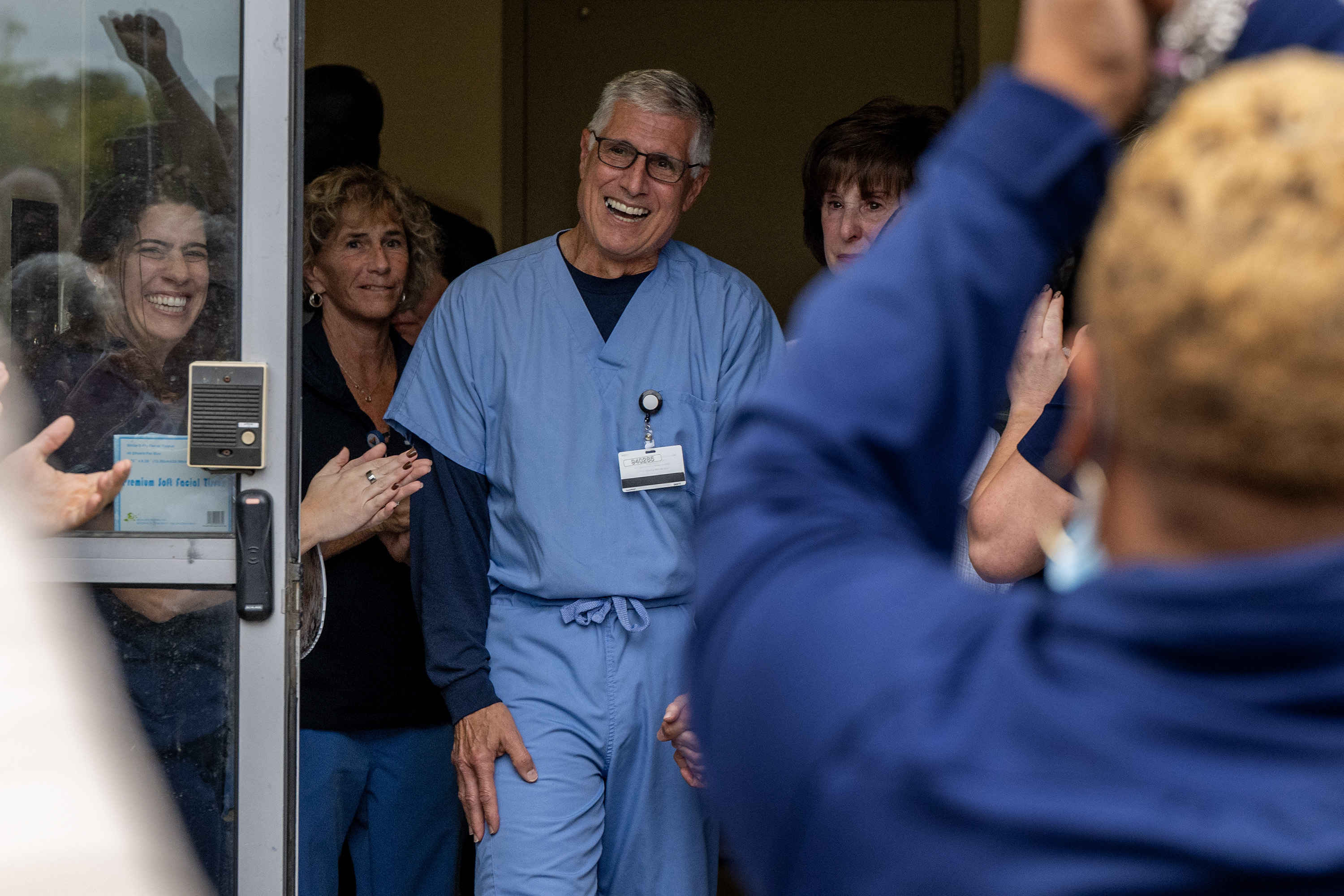
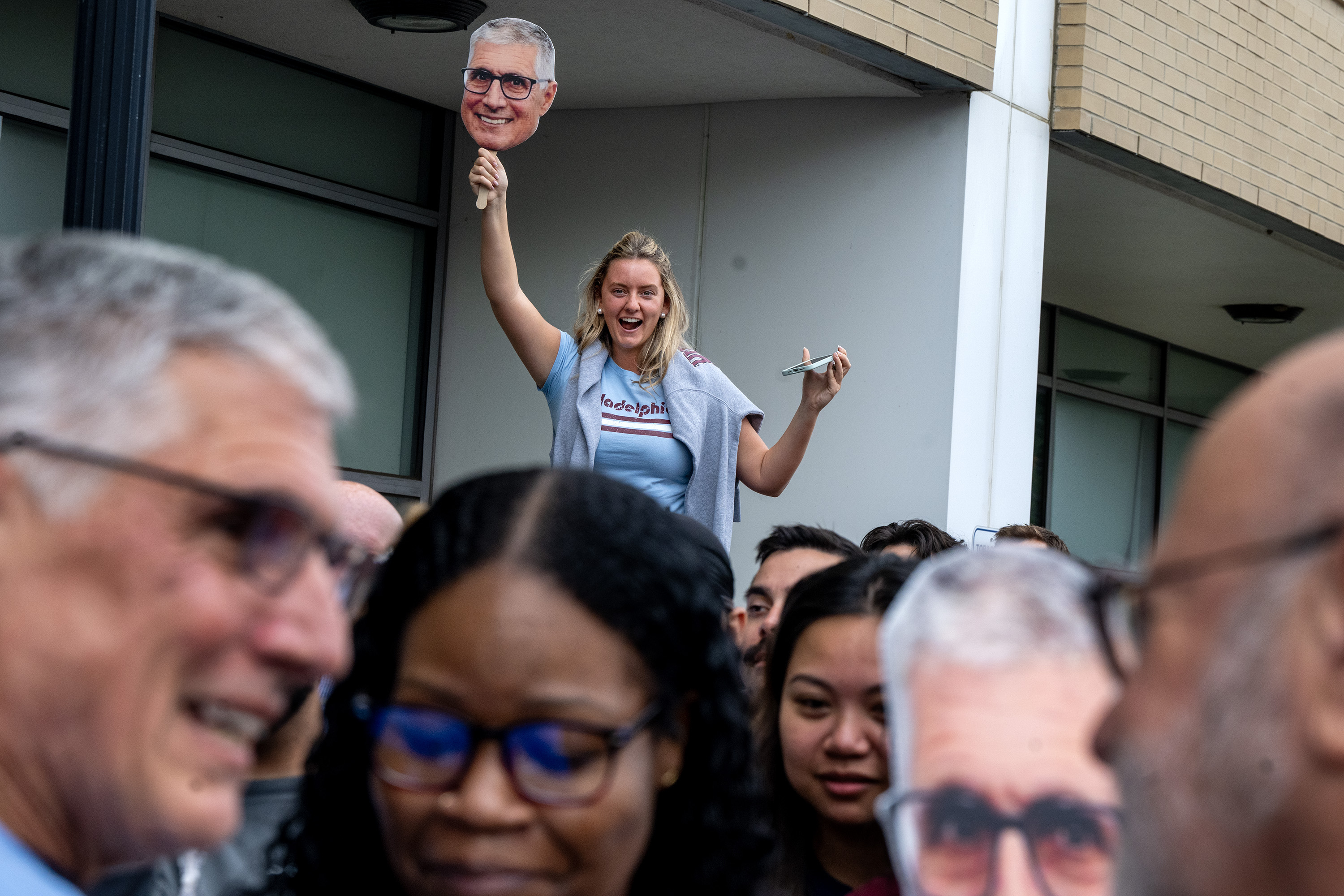
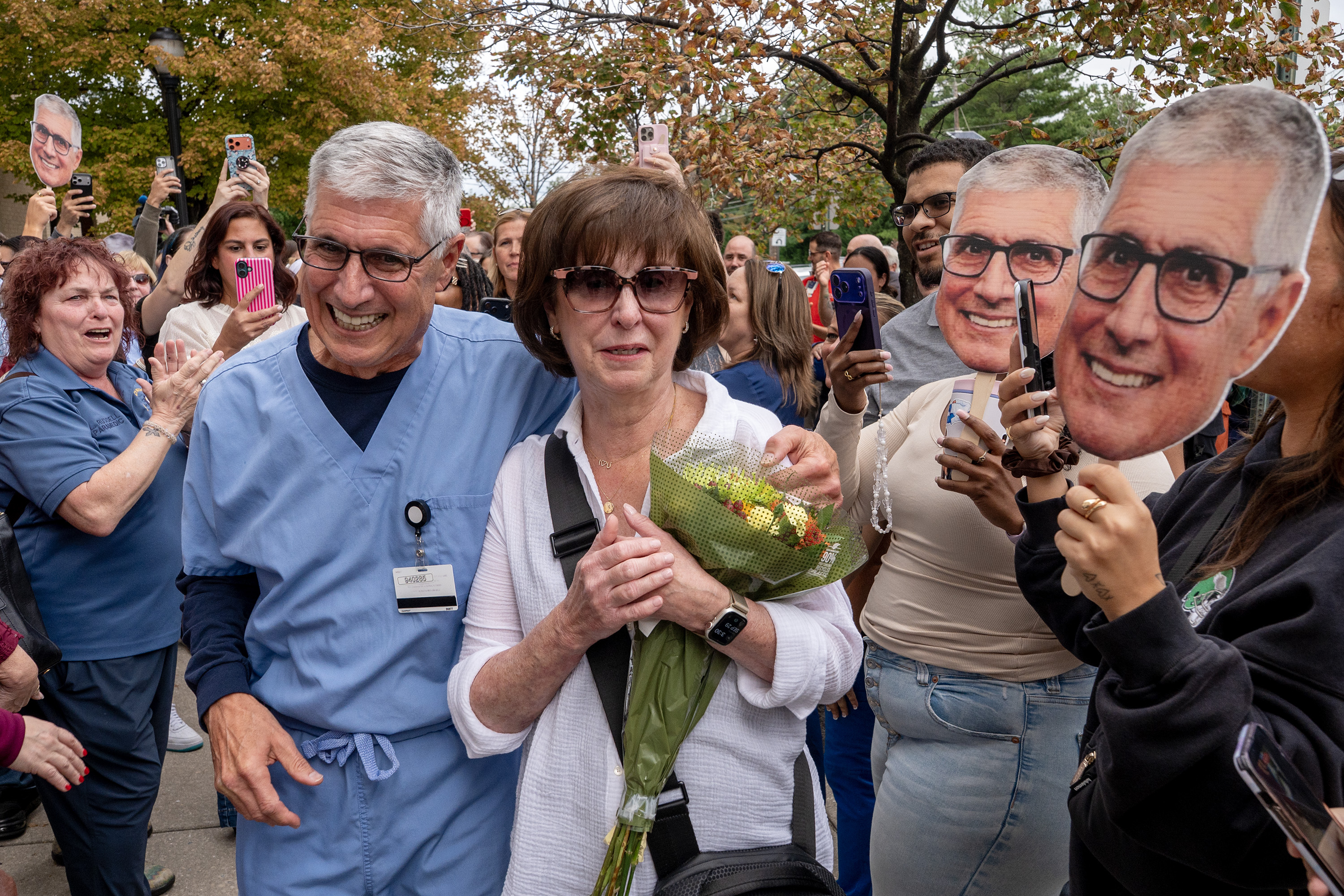
    A crowd of Sacchetti’s colleagues, patients, friends, and family gathered outside the hospital on Sept. 29 to celebrate his final shift. They held confetti cannons and signs with Sacchetti’s face on them. They cried. Staff inside the building banged on the second-floor windows and waved.

    The send-off was organized by Ross Simcoe, Lourdes’ former clinical operations director, who lost his job alongside Sacchetti and medical director Monika Smith.

    “I wanted him to not be able to deflect praise onto other people,” Simcoe said. “To see how important he was. He couldn’t give us all the credit.”

    Al Sacchetti was greeted by a crowd as he finished his shift at Virtua Our Lady of Lourdes Hospital in Camden on Sept. 29.Tom Gralish / Staff Photographer

    The last day for Virtua’s contract with Envision Healthcare — a company that works to recruit and retain clinicians in support of hospitals — was Sept. 30, Smith and other former staff said. Starting Thursday, TeamHealth, another firm, took over managing Virtua’s staff of doctors, physician assistants, and other APPs, advanced practice professionals.

    Aliese Polk, an Envision spokesperson, said the healthcare company is proud of the work its doctors have done in Camden.

    “Their impact extends far beyond the care they delivered, and we are proud to have worked alongside them,” Polk said.

    The new vendor did not renew ER leadership contracts and offered other employees the option to stay — but with pay cuts, according to several staff members.

    “The hospital wanted to make a change, and that’s why I’m not there anymore,” Sacchetti, 72, said.

    A Virtua spokesperson said the company wanted to move Lourdes onto the same subcontractor for staffing management, TeamHealth, used by Virtua’s six other emergency departments. In 2019, Virtua acquired the Lourdes Health System in a roughly $60 million deal that gave Virtua ownership of the Camden hospital and Virtua Willingboro Hospital, formerly Lourdes Medical Center of Burlington County.

    “With Lourdes being the one outlier, there was a desire for consistency across the entire enterprise to move to the other provider at all seven locations,” the spokesperson said. “That’s what motivated that change.”

    Virtua Health declined further comment on the contract and staffing changes. TeamHealth also did not respond to multiple requests for comment.

    The Inquirer spoke to three Lourdes emergency department physicians who weren’t offered new contracts, several physician assistants and doctors who chose not to accept the new contract, multiple current employees, two former nurses, two paramedics, and several patients treated by Sacchetti and his team.

    Virtua’s chief operating officer told Smith, the former medical director, that the contract change was “intended to provide greater consistency and economies of scale,” according to an email reviewed by The Inquirer.

    It’s not unusual for community health systems like Virtua to use outside vendors to staff their emergency departments, and having more than one staffing company would add to the cost. Virtua’s main vendor, TeamHealth, is the largest in the nation, according to a recent report by the Private Equity Stakeholder Project.

    “What we experienced happens more than just at Lourdes. It happens everywhere around the country,” Smith said. “But the work we do, you can’t compare that to any other business. You’re dealing with humans and human lives. I hope physicians and mid-levels have more to say about how we practice medicine.”

    Well-wishers and staff react as Al Sacchetti finishes his shift at Virtua Our Lady of Lourdes on Tuesday.Tom Gralish / Staff Photographer

    Turning it down

    Smith, Lourdes’ former medical director, immigrated to the U.S. decades ago from Poland to pursue her dream of becoming a doctor. At home, women weren’t expected to have a professional life, she said, so she pushed to attend medical school in South Jersey.

    She discovered Lourdes during her rotations and hoped for a job there.

    Her dream came true in 2007, after an interview with Sacchetti.

    Smith, now 50, spent years caring for patients as an emergency physician, and in 2020, in the midst of the COVID-19 pandemic, Sacchetti appointed her medical director.

    Al Sacchetti is greeted by a crowd of past colleagues as he finishes his shift on Sept. 29.Tom Gralish / Staff Photographer

    TeamHealth representatives called the trio earlier this year and said they couldn’t stay at Virtua Lourdes, Smith said. They were told they could be moved to another Virtua location, but all three declined. When Smith asked to be stripped of her leadership title to stay at Lourdes as a doctor, she said she was told no.

    “I wasn’t going to just be tossed around to another institution of their choice,” Smith said. “I was going to make that choice.”

    The rest of the emergency team, 21 doctors and APPs, were offered new contracts by TeamHealth, according to Smith, but only one person chose to stay, and a few more will work only on an as-needed basis.

    Three employees who didn’t accept the new contract said the ER is losing decades of institutional knowledge.

    “We had over 100 years experience that they just let go,” one former physician assistant said, who asked not to be named for fear of retribution.

    Several staff members, including a former doctor and multiple physician assistants, said the new contracts offered them wages 20% to 30% lower than they were making before.

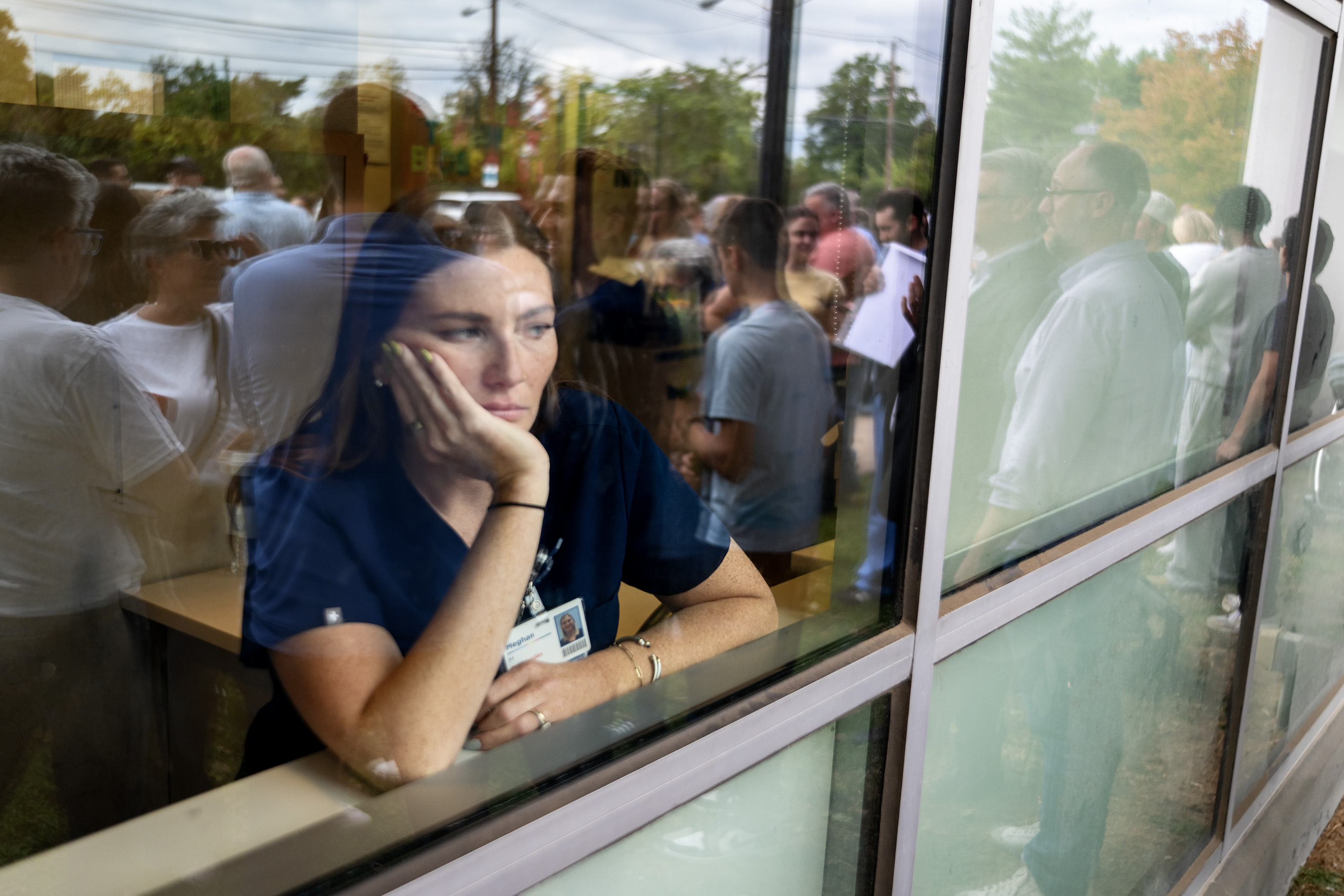
    Emergency room nurse Meghan McTear is still on duty inside, so has to watch through the window as Al Sacchetti leaves the hospital on Tuesday.Tom Gralish / Staff Photographer

    But aside from the proposed pay cut, past and present Lourdes employees said changing the ER’s leadership team would’ve made it difficult to stay.

    “Some people, no matter what they were offering — it could’ve been double what they were making — they would still turn it down,” said another physician assistant, who asked not to be named for fear of retribution.

    Despite the staff changes, the Virtua spokesperson said the emergency department “is fully prepared and able to support the needs of the community through the transition to TeamHealth.”

    Emergency room nurse Danielle Bishop gets high above the crowd surrounding ER doctor Al Sacchetti (left) as he is greeted by a crowd on Sept. 29.Tom Gralish / Staff Photographer

    ‘Too stubborn to be done yet’

    Sacchetti has spent decades working fast-paced days as an emergency room physician at Lourdes, writing articles and textbook chapters, giving lectures, volunteering at the Cherry Hill Free Clinic, and uploading what he learns to YouTube. He does podcasts with the main medical consultant from The Pitt and submits example cases to the show every year. His cases made it on TV both seasons.

    He’s not ready to retire.

    “If the word ‘retirement’ is in this article, he’s going to lose his mind,” said Jessica Aitken, a nurse who has worked with Sacchetti for more than 20 years. “He’s too stubborn to be done yet.”

    Aitken, who has worked at Lourdes since she graduated nursing school, decided to stay at the hospital despite recent leadership changes. Sacchetti taught her to stay prepared, to be a team player, and to cry away from patients. She was among the staffers who called him Dad.

    In his next role, Sacchetti will work part time at Inspira Health’s emergency room in Vineland, Cumberland County.

    Among the Camden first responders who will miss the team is Brian Ball — a Virtua paramedic, Cherry Hill firefighter, and the son of Robert Ball, whose life Sacchetti once saved.

    In 2008, Robert Ball, in his early 60s, returned home from an exhausting shift as a volunteer paramedic and fell asleep without his continuous positive airway pressure (CPAP) machine. He went into cardiac arrest and was revived by his own crew.

    Al Sacchetti with his wife Lisa Sacchetti is “clapped out” by a crowd as he finishes his last shift on Sept. 29.Tom Gralish / Staff Photographer

    At the hospital, Sacchetti and his team kept Robert alive, covering him with ice packs and cooling blankets for eight hours, then a relatively novel treatment.

    With time, Robert returned to shifts as an EMT and a substance abuse counselor, where he helped people struggling with addiction. He became a grandfather, and in a few months, he expects to be a great-grandfather.

    Brian has brought numerous patients to Sacchetti over his own 29-year career and taken Sacchetti’s medical emergency classes.

    Simcoe and Smith aren’t ready to be done, either. Simcoe is headed to Phoenixville Hospital, and Smith will fly out to Kentucky a few times a month to keep working for Envision Healthcare, while she looks for a full-time gig. Leaving Camden, Smith said, feels like losing the love of her life.

    “I think I have another decade in me to continue to care for my patients,” Smith said, “and I hope things get better.”

  • Two people were injured in a shooting at a Camden County Wawa on Sunday night

    Two people were shot inside a Wawa in Sicklerville Sunday night, according to Winslow Township police and the Camden County Prosecutor’s Office.

    Winslow officers responded to a report of a person shot at the Wawa at 400 Sicklerville Rd. around 9 p.m. Sunday, the department said in a news release Monday.

    At the Wawa, police found a 20-year-old man with a gunshot wound. He was taken to Cooper Norcross University Hospital in stable condition, police said.

    Officers were later notified that another 20-year-old man with a gunshot wound walked into Washington Township’s Jefferson Hospital before he was taken to Cooper Norcross University Hospital in Camden.

    No arrests have been made as of Monday afternoon, police said, and the investigation is ongoing.

  • This couple is venturing to eat at every Garden State diner. They’re now onto South Jersey.

    This couple is venturing to eat at every Garden State diner. They’re now onto South Jersey.

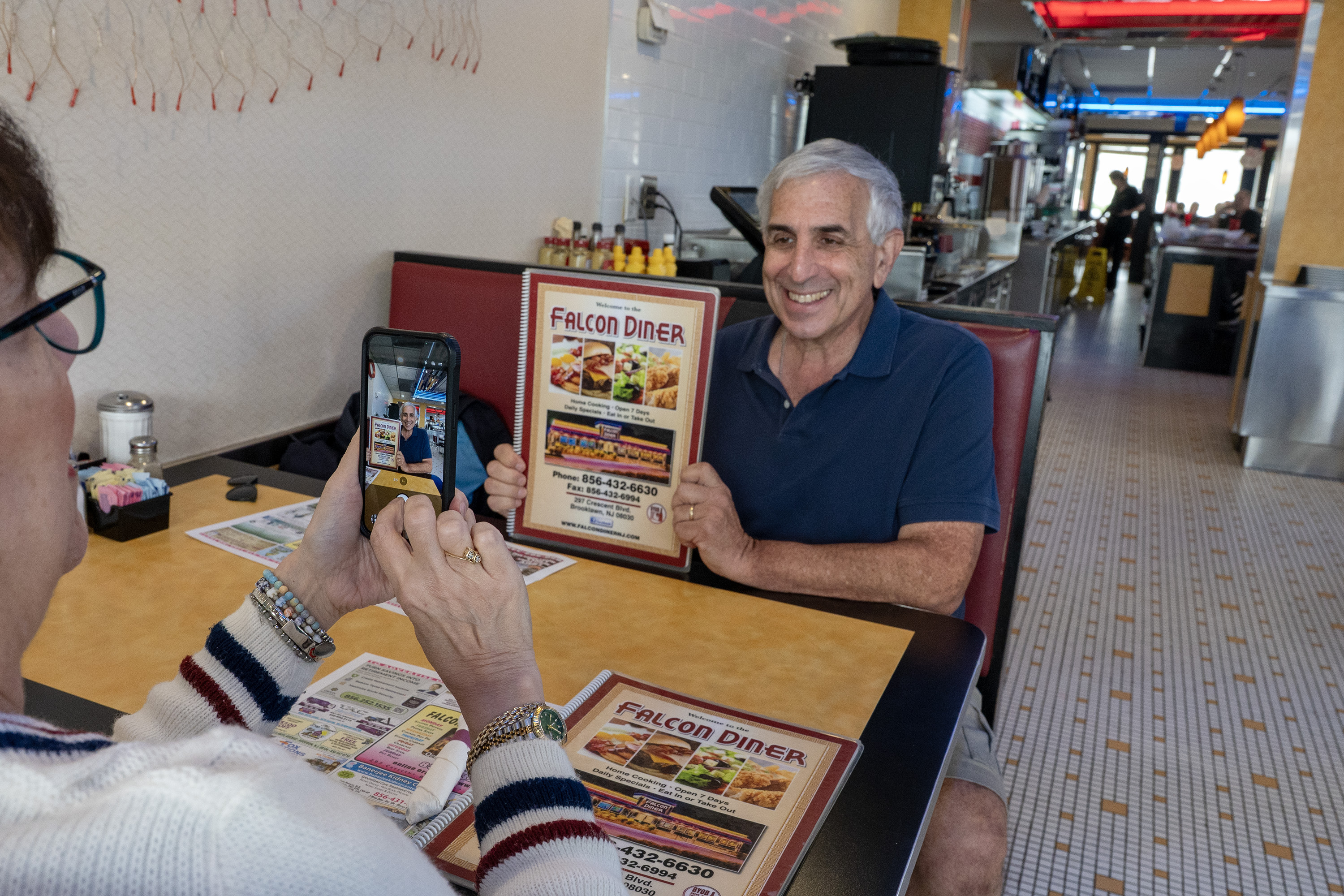
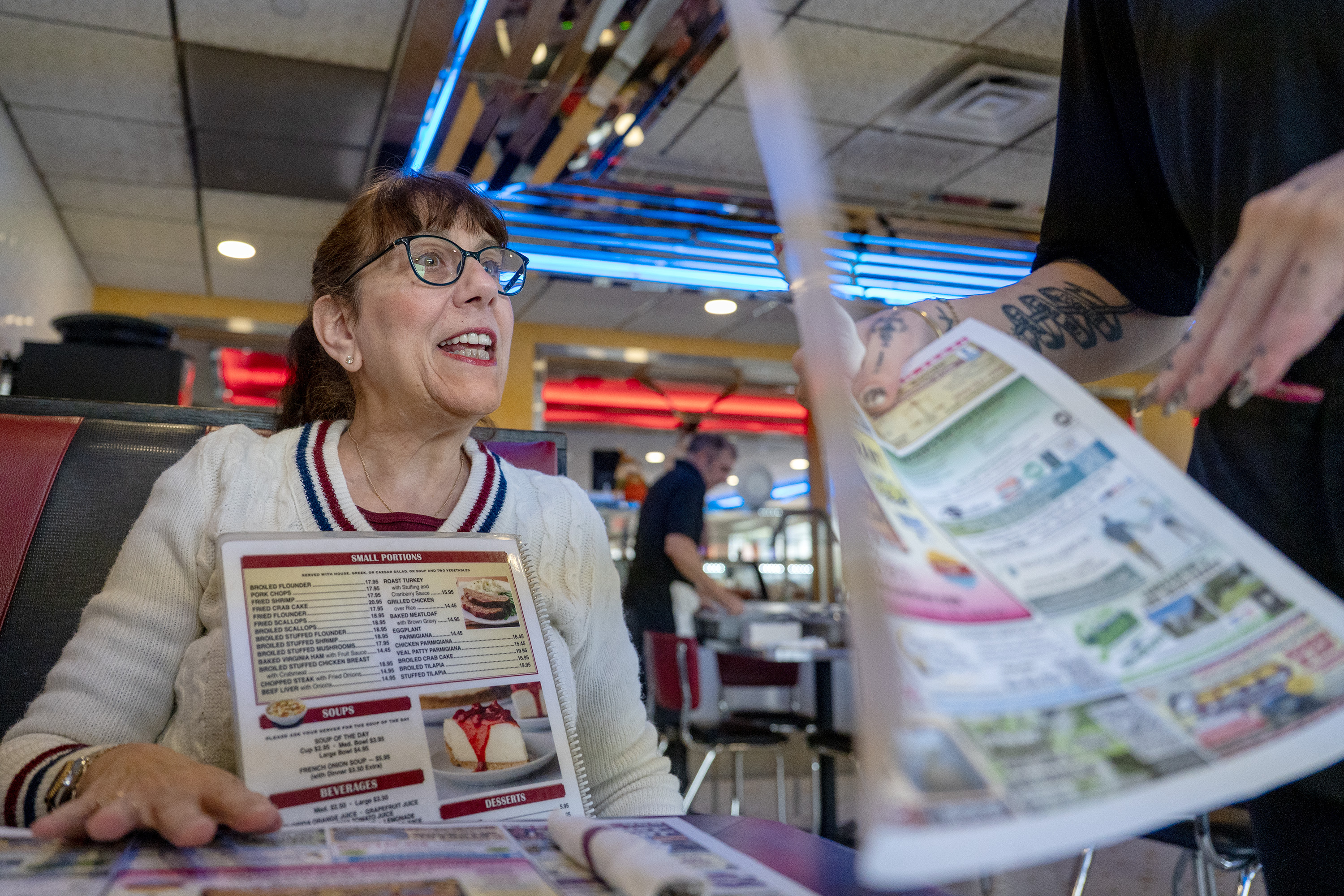
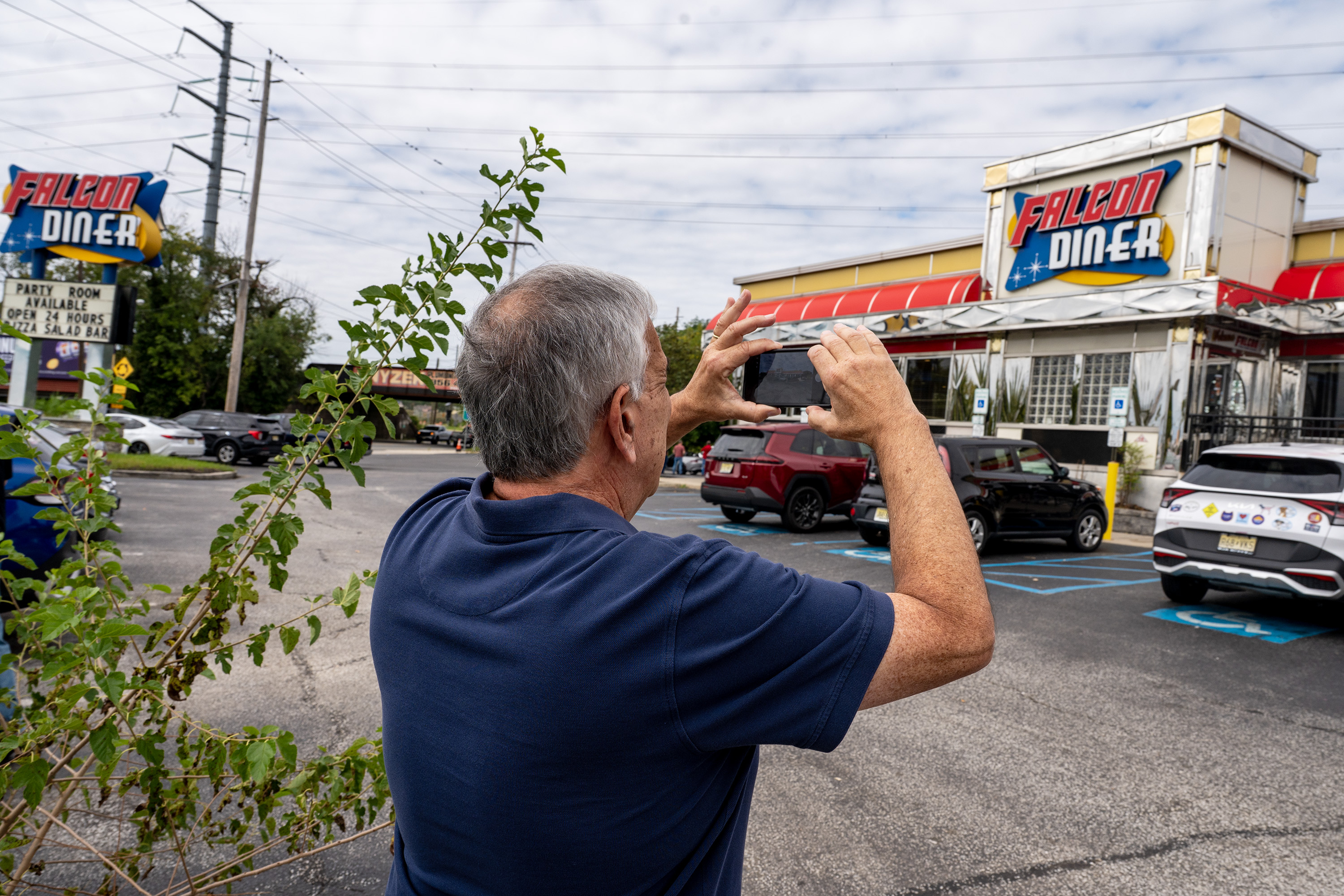
    Tucked into a booth toward the back of the Falcon Diner in Brooklawn in late September, Jon and Karri Ricklin fell into the routine they’ve come to perfect over the past decade.

    As they took their seats, Karri captured a photo of her husband smiling brightly as he held up the multipage menu. This photo — the 331st of its kind — has become their trademark.

    The hundreds of nearly identical shots serve as a sort of digital passport for the pair as they venture to eat at every diner in New Jersey.

    And in a state dubbed the “Diner Capital of the World,” that has proven to be no easy task.

    The list is always changing as diners open, close, and change ownership, Jon said. But of 130 places they haven’t visited, the majority will bring them to South Jersey — stretching from the Philly suburbs to the Jersey Shore.

    At the same time, the longtime Bergen County residents are now considering a potential move a little further south, so far looking around Red Bank and Hamilton Township.

    After Karri’s recent retirement from a 40-year nursing career, the couple is hoping to downsize, and because of their yearslong effort, they “have no choice” but to stay in New Jersey — at least until they cross that final diner off their list, Karri joked.

    “It’s not because of the diner project,” Jon added, “but it’ll help with the diner project.”

    Keeping the tradition alive

    It all began in 2015 when the Hillsdale couple, married for 42 years this summer, stopped at the Livingston Diner in North Jersey after visiting with family in the hospital.

    Karri took the first of the now-famous menu photos to which Jon jokingly suggested, “Wouldn’t it be cool if we take this same picture at every diner in the state?”

    More than 11 years and 330 meals later, the couple is still chasing that goal, documenting the project on their Instagram, @NJDinerJourney, and as of a few months ago, a new website.

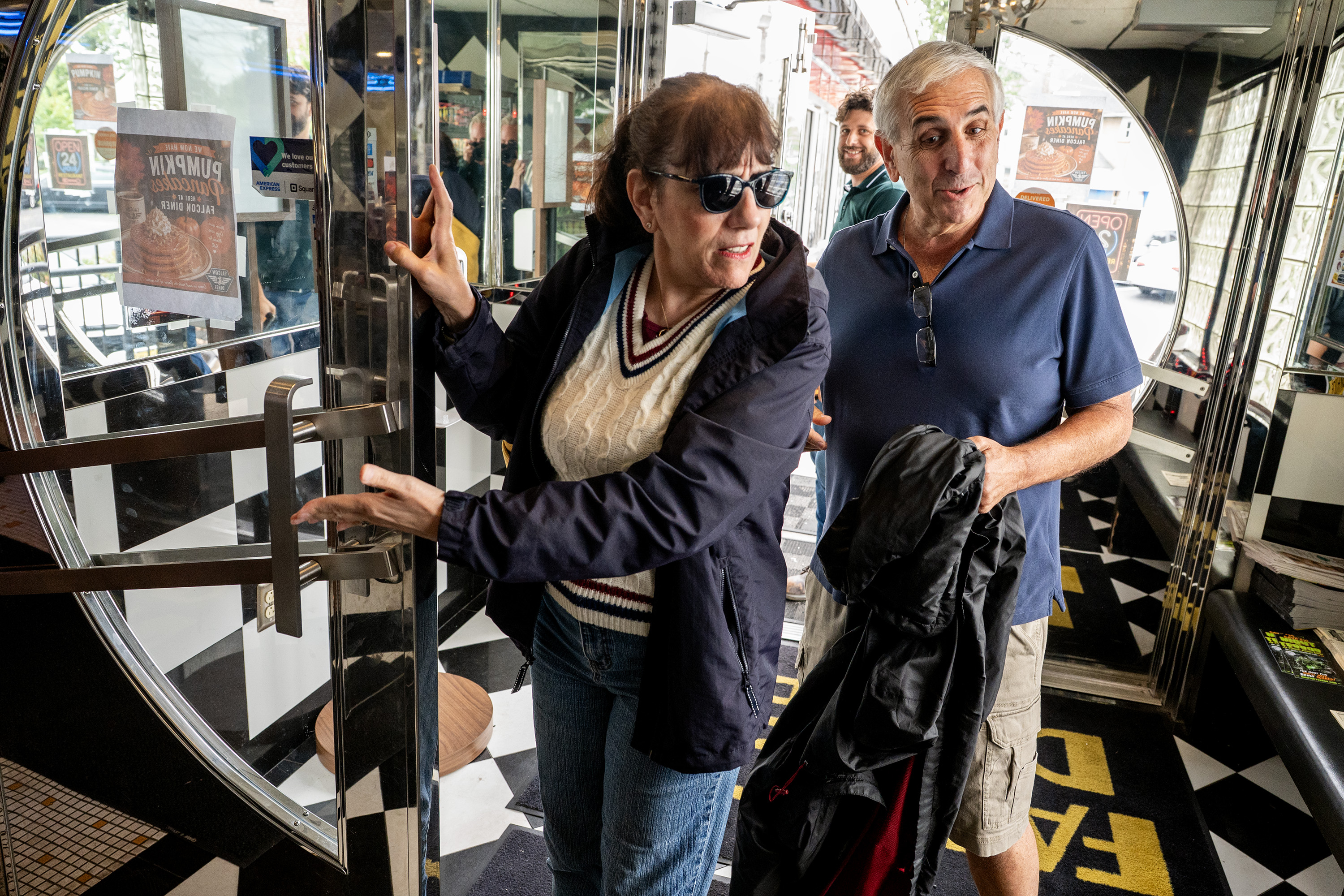
    Jon and Karri Ricklin arrive at the Falcon Diner in Brooklawn on Sept. 30. They’re on a mission to eat at every diner in the state of New Jersey.Tom Gralish / Staff Photographer

    Now with over 6,000 followers, Karri and Jon have become something of unofficial spokespeople for the preservation of diners and diner culture in New Jersey.

    “It’s been fun,” Jon said. “It feels good to be sort of an ambassador to the state. We just never expected it.”

    “Jersey is known for its diners, but you go to any small town anywhere in America, they’re going to have a little coffee shop or a little luncheonette and that’s their diner. So people can relate to that,” he said.

    When they first started their journey, the couple counted between 500 and 550 total diners in the state, Jon said.

    They have since watched that number fall to about 400, he said, with fewer than two dozen around-the-clock operations still standing — the retro-inspired Falcon Diner among them.

    Karri Ricklin inadvertently started the project when she casually grabbed a photo of Jon holding up his menu before a meal in 2015.Tom Gralish / Staff Photographer

    With its chrome trim and neon striping, the Falcon — which locals may know better under its previous names, most recently the Empire Diner and the Brooklawn Diner before that — is one of the few places still carrying on the “any food at any hour” ethos that has made the New Jersey diner so timeless.

    From construction workers grabbing a pre-sunrise breakfast to college kids looking for a late-night meal, the 24-hour diner has long been a central gathering place where everyone in the community is welcome to sit down for an affordable, filling meal, or simply a conversation and a cup of coffee (bottomless, of course).

    “We really want to keep that tradition alive and support small businesses,” Jon said. “Just about every one is a small business.”

    ‘How’s everything, hon’?’

    The couple’s trips are rarely planned more than a day or two in advance.

    Typically the conversation starts with some version of: “Will this be a Parkway day, a Turnpike day, or a Route 80 day?”

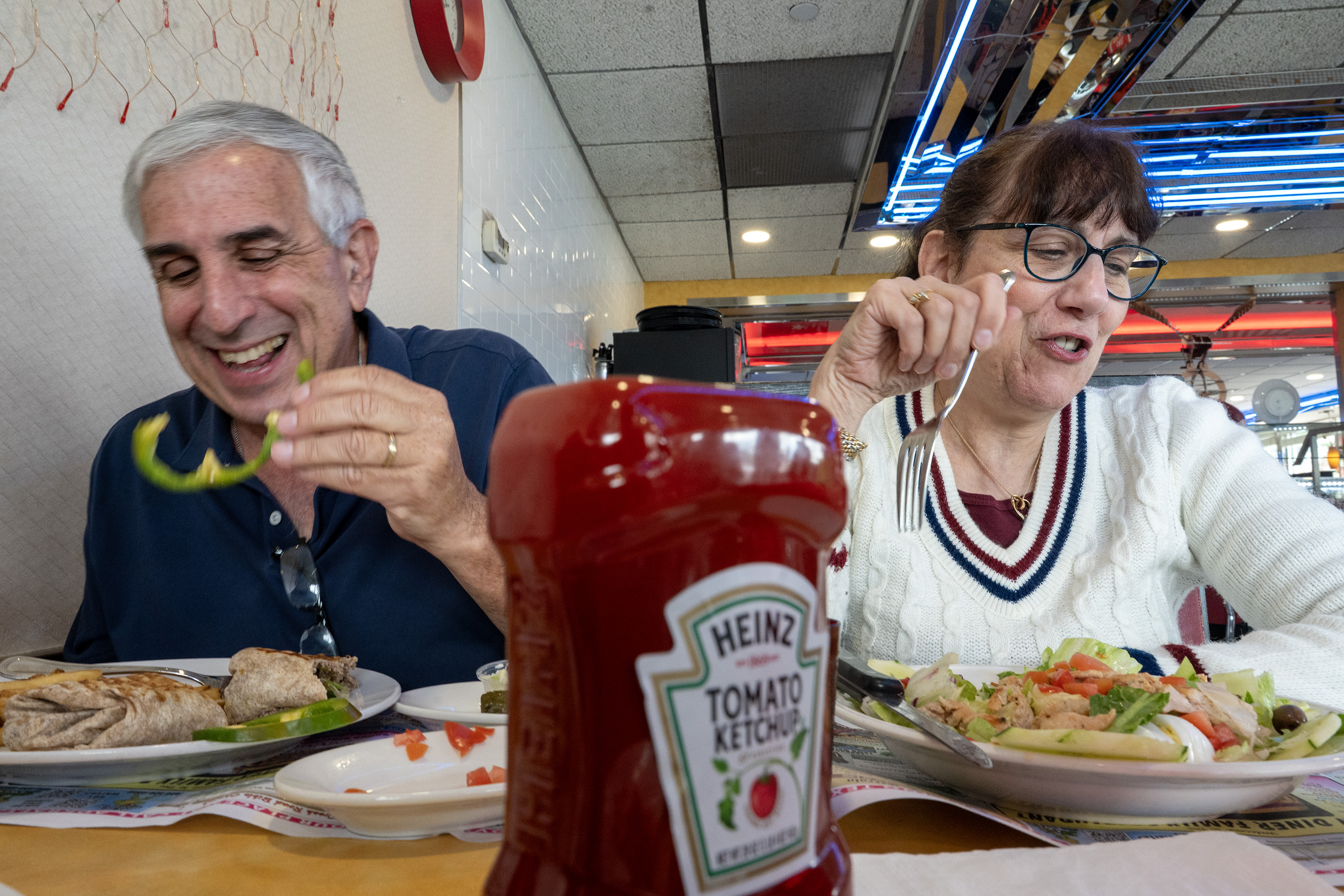
    Lunch at Brooklawn’s Falcon Diner was the 331st meal for Jon and Karri Ricklin as they venture to eat at every diner in the state.Tom Gralish / Staff Photographer

    They pick one, find a diner along the route, and then they’re off, they said.

    After quickly working their way through what Jon calls the “low-hanging fruit” — the diners closest to them in North Jersey — the couple has started venturing into South Jersey more often.

    “It’s been an interesting journey,” Jon said. “We’ve seen a lot of the state that we normally would not have seen.”

    Because their trips often take them to towns they’ve never visited, they also make an effort to check out the community before they head home, whether it be a stroll through a nearby park or a visit to a local farmers market or museum.

    After a recent visit to the Legacy Diner in Audubon, they perused downtown Haddonfield, where Karri fell in love with the English Gardener Gift Shop before they grabbed a drink at King’s Road Brewing.

    Jon and Karri Ricklin look at the flag-painted ceiling above the dessert display case at the Falcon Diner.Tom Gralish / Staff Photographer

    What qualifies as a diner?

    For the Ricklins, the criteria is pretty simple: If it’s called a diner or serves traditional diner food, it’s most likely going to make the list.

    For places that don’t have the word “diner” in the title, such as Maple Shade’s Maple Hill Restaurant or the White House Restaurant in Moorestown, it comes down to the type of food and experience they provide, Jon said.

    A few requirements: A menu offering “classic diner food,” American fare at minimum but often a lot more, including all-day breakfast. A brightly lit dessert display case. Pots of fresh coffee at the ready.

    Jon Ricklin grabs a photo of the retro-inspired Falcon Diner in Brooklawn, one of the many South Jersey diners left on their list.Tom Gralish / Staff Photographer

    Some Jersey diner purists they’ve heard from online approach the question differently and don’t agree with their methodology, he said, and they’re OK with that.

    The Ricklins’ main goal is to have fun together and support small businesses in the process, he said, so in his mind, the more the merrier.

    And as usual, North and South Jersey do things a little differently.

    Beyond the perennial debate about what to call pork roll, a few more regional quirks have emerged over the years. Meals get a bit pricier the further north you are, for instance, but they rarely come with the cup of soup that is customary in many diners down south, they said.

    They also noted South Jersey servers are quicker to throw out a warm “hon’” when greeting the table.

    The Ricklins travel with a map of the state with color-coded push pins marking each of the diners they’ve visited since they began their journey more than a decade ago.Tom Gralish / Staff Photographer

    As more people have taken notice of their journey, Jon said they sometimes get recognized when they’re taking the requisite menu shot. They were even invited to join former Gov. Phil Murphy and his wife for a diner lunch to celebrate National New Jersey Day in 2024, he said.

    But for the most part, they’re still anonymous, just another table of happy patrons chatting over a meal.

    And while they don’t expect anyone else to start their own diner journey, they are hoping that their story inspires people to try something new, even if it’s just a visit one town over.

    “Just get off the couch and go,” Karri said.

  • What it’s like to live by a data center | Inquirer South Jersey

    What it’s like to live by a data center | Inquirer South Jersey

    Good morning, South Jersey. Welcome to October. Hopefully, the sun will return and it won’t be as gloomy as September.

    Vineland residents who are some of the first in the Philly area to know what it’s like to live next to a massive AI data center share their experiences.

    And the Delaware Valley Regional Planning Commission wants to know where you’re headed every day — and how you get there.

    Plus, Clementon Park & Splash World is back up for auction, and more news of the day.

    — Taylor Allen (southjersey@inquirer.com)

    P.S. Submit a story idea via Curious South Jersey. Ask a question about the region, and the answer might just show up in a future article.

    If someone forwarded you this email, sign up for free here.

    When a data center is your neighbor

    Several South Jersey municipalities are considering or have already passed data center bans before any ground broke. Those include Cherry Hill, Collingswood, Medford, Millville, and Monroe Township.

    But a handful of local homeowners have the unique experience of seeing one from their houses — the DataOne facility in Vineland.

    They used to have more neighbors before the data center developers and associates bought several homes that now appear to be abandoned.

    Multiple residents commented on the excessive sound.

    “I think of a prison, and I’m the prisoner with the noise,” said a homeowner of more than 47 years. “You get up in the morning and you’re in a foul mood.”

    Follow along as The Inquirer’s Erin McCarthy visits some of the few in the region with firsthand knowledge of living near a data center.

    🚗 Tracking daily travels

    The DVRPC wants to know just about everything about people’s daily travel habits.

    No, this is not about surveillance. After 13 years, the commission needs an updated survey to help guide funding decisions for infrastructure projects and transportation plans for the nine counties it serves, which include Burlington, Camden, and Gloucester.

    Since January, it has been recruiting participants by mail to randomly selected households. Sorry, you can’t nominate yourself.

    Those who opt in will have to track their household trips for 24 hours using a phone app. It’ll also ask the household basics: size, age, income, etc.

    But how exactly will the experts use this information?

    Transportation reporter Thomas Fitzgerald has that answer and more.

    What to know today

    • Five years after Clementon Park & Splash World was purchased at a bankruptcy auction, the recently shuttered 119-year-old amusement and water park is going back to auction this month.
    • Researchers have found microplastic pollution in every one of the 22 stream and river segments along the Delaware River tested in New Jersey, Pennsylvania, Delaware, and New York. This includes Cooper River in Camden County.
    • Willingboro will unveil its new 570-seat Performing Arts Center on Saturday with its first concert.
    • New Jersey’s minimum wage will increase to $16.48 for most employees beginning in the new year.
    • Residents in Camden and Cherry Hill should be aware of possible detours and prepare to take alternative routes because of roadway projects scheduled for this week.
    • The Inquirer’s editorial board, which is separate from the newsroom, wrote that Gov. Mikie Sherrill’s call for now-former Lt. Gov. Dale Caldwell to resign set “an ethical example for a corrupt era.”

    🗓️ The best things to do this week

    🔮 Boos & Brews Witches Market: Check out this witch-themed market full of themed vendors and activities. Stick around for food trucks, a costume contest, performances, and a beer garden. ⏰ Friday, Oct. 2, 5-9 p.m. 💵 Pay as you go 📍 Rancocas Woods Events and Shops, Mount Laurel

    📚 Collingswood Book Festival: The 24th annual festival is back spanning six blocks of Haddon Avenue. Come to meet booksellers and stay for author and poetry readings, performances, and workshops. ⏰ Saturday, Oct. 3, 10 a.m.-4 p.m. 💵 Free 📍 Haddon Avenue, Collingswood

    🎨 Cranberry Fest: The 36th annual cranberry fest returns with live music, a food court, a beer garden, and more than 100 artisans. 💵 Pay as you go 📍 Farnsworth Avenue, Bordentown

    See more event listings here.

    🧠 Trivia time

    How many dispensaries were open on the day New Jersey first began recreational cannabis sales in 2022?

    A) 25

    B) 20

    C) 12

    D) 3

    Think you know? Check your answer.

    What we’re …

    🍿 Watching: Netflix’s reboot of A Different World.

    🐕 Finding: A quality groomer.

    📚 Choosing: My next read at Words Matter Bookstore in Pitman.

    And that’s all I have for you today. Expect more news tomorrow morning. ☀️

    By submitting your written, visual, and/or audio contributions, you agree to The Inquirer’s Terms of Use, including the grant of rights in Section 10.

  • Microplastic pollution found in 100% of Delaware River tributaries tested

    Microplastic pollution found in 100% of Delaware River tributaries tested

    Fleece fragments in a washer flow into a wastewater treatment plant. A plastic bag blows into a stream. A water bottle washes down a storm drain.

    All can end up in the region’s waterways as microplastics smaller than a grain of rice and find their way into drinking water and the stomachs of animals and fish.

    This kind of microplastic pollution was detected in 22 stream and river segments across the Delaware River watershed, according to a new survey of waterways by the nonprofit advocacy group PennEnvironment Research and Policy Center.

    Researchers analyzed water samples from sites along the Delaware River and its tributaries across Pennsylvania, New Jersey, Delaware, and New York.

    The research was conducted in partnership with the nonprofit Environment New Jersey Research and Policy Center. Scientists with the Academy of Natural Sciences at Drexel University helped analyze the results, which were released Wednesday during a news conference at Fairmount Water Works.

    Contamination was found in the Delaware and Lehigh Rivers and the Schuylkill. It was found in Neshaminy Creek in Bucks County, Brandywine Creek in Chester County, and Cooper River in Camden County. And it was found along the Christina River in Delaware.

    Drexel’s lab analysis confirmed microscopic plastic at every sampled site, highlighting what the researchers say is a widespread environmental threat.

    “We can look at a waterway, and it might be free of litter, it might be free of visible plastic pollution, but that doesn’t necessarily mean it’s clean,” said Faran Savitz, an advocate for PennEnvironment. “The big takeaway is that we should be concerned. The depth, the breadth of this plastic pollution is staggering.”

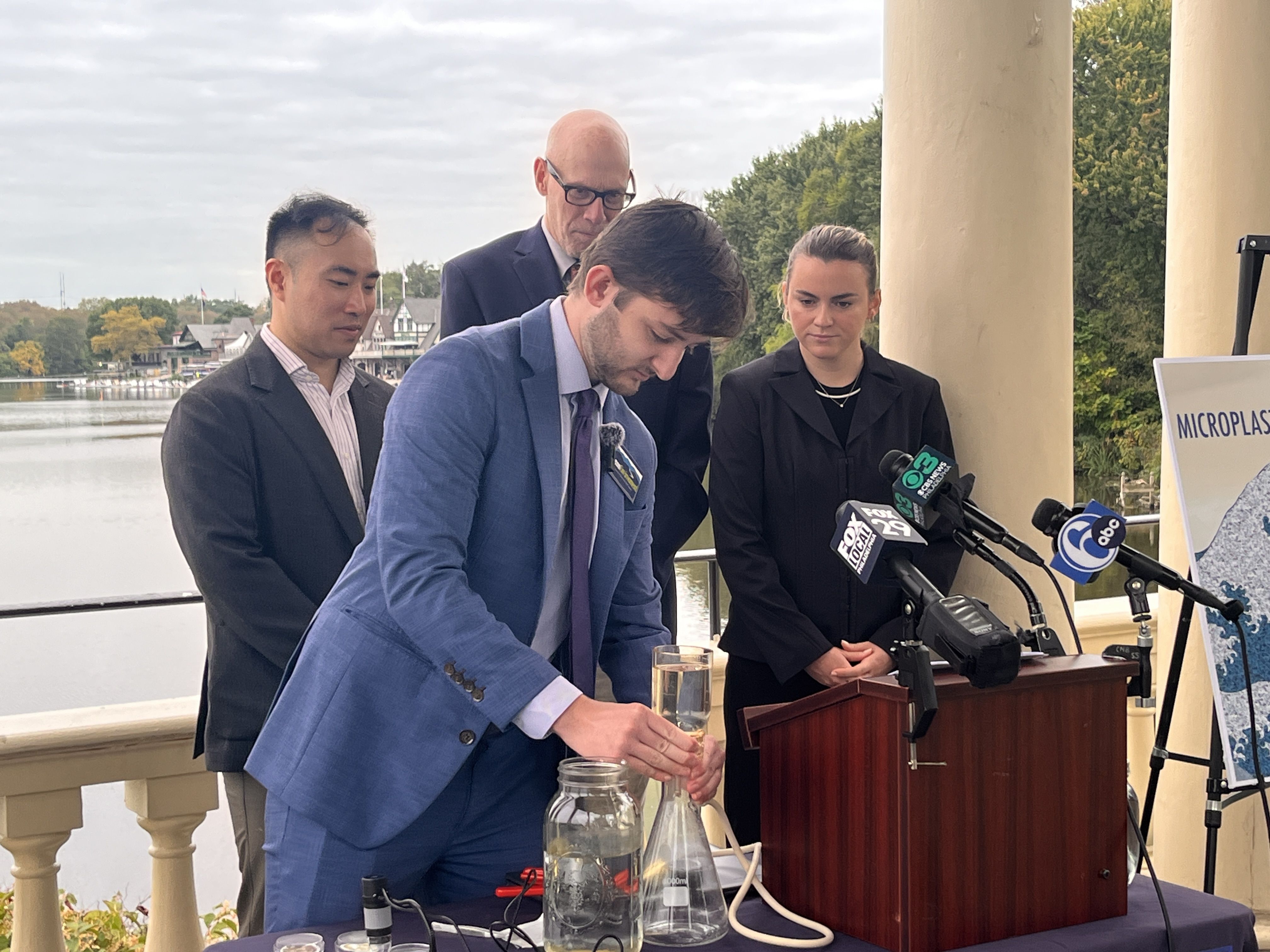
    Faran Savitz with PennEnvironment demonstrates water testing. In the background from right are: Lizzy Mulvenna, with Environment New Jersey Research & Policy Center; David Velinsky, senior scientist, Academy of Natural Sciences; and Derek Ho, microplastics researcher, University of Pennsylvania.Frank Kummer

    Where do microfibers come from?

    Waterways in and around Philadelphia emerged as significant focal points in the survey results.

    Samples drawn from the Delaware River in Philadelphia tested positive for multiple categories of microplastics including microfibers, microfragments, and microfilm, as did other waterways. Microbeads, often found in cosmetic products, were also found in the Christina River.

    Microplastics are defined as fragments of less than 5 mm in length.

    The synthetic microfibers came primarily from clothing and textiles. Rigid microfragments from items such as fishing line were found in 82% of locations. And flexible microfilm from bags and packaging appeared in 77%.

    (function(){function e(){window.addEventListener(`message`,function(e){if(e.data[`datawrapper-height`]!==void 0){var t=document.querySelectorAll(`iframe`);for(var n in e.data[`datawrapper-height`])for(var r=0,i;i=t[r];r++)if(i.contentWindow===e.source){var a=e.data[`datawrapper-height`][n]+`px`;i.style.height=a}}})}e()})();

    Microplastics have been found in humans

    Researchers explained that laundering synthetic garments releases millions of microfibers that wastewater treatment facilities are unable to completely filter out before they are discharged into local streams.

    However, because plastic does not biodegrade but continuously fractures into tiny fragments, filters capture only a portion of plastic entering a waterway.

    Savitz said PennEnvironment’s study did not release the concentrations of microplastics because it did not want to compare one waterway or state against another.

    The findings carry ecological and public health implications, as microplastics can block digestive tracts in wildlife and absorb toxic chemicals like PCBs and PFAS that bioaccumulate up the food chain, the report stated.

    On average, humans ingest approximately 5 grams of plastic weekly, which is roughly equivalent to the weight of a credit card. Microplastics have been found in human blood, lung tissue, and organs, the researchers said.

    Plastics are also routinely found in wildlife, including sea turtles, birds, and whales. About 60% of all seabirds have ingested plastic, with that number rising.

    The environmental advocates are urging state and local leaders to enact policies such as producer responsibility for plastic packaging, bans on single-use foam and plastic bags, strict limits on pre-production plastic pellets, and enhanced drinking water filtration systems.

    Microbeads once used in personal care products were phased out under President Barack Obama in 2015. But many of those products still linger on household shelves.

    File: A glass vial containing water and microplastic pollutionGetty Images

    Philadelphia’s drinking water

    Philadelphians get their drinking water from the Delaware River and the Schuylkill. Most microplastics are filtered out at the Philadelphia Water Department’s wastewater treatment plants, but some particles still get through.

    In 2025, PWD removed 4.6 tons of plastic litter from the Delaware and the Schuylkill, alongside an estimated 1,000 tons of plastic extracted through sewer maintenance, the researchers stated.

    PWD said in an online report that it is “unclear whether microplastics pose a danger to human health,” noting that the risk could depend on the level of exposure, the type of plastic, and the size of the particles.

    But it noted that research suggests some are harmful to fish and animals and can build up in the organs or bloodstream over time.

    “PWD is always investigating advanced treatment technologies that may eliminate microplastics and other impurities,” the report stated.

    David Velinsky, a senior scientist at the Academy of Natural Sciences of Drexel University, said, “plastics and microplastics are everywhere, from our clothing to the ubiquitous water bottle.”

    When plastics and microplastics are not properly disposed of or recycled, he said, they break down into ever smaller pieces.

    They “can travel great distances through both the air and in the water,” Velinsky noted.

    A plea for ‘producer responsibility’

    To combat pervasive plastics, advocates are urging federal and state lawmakers to enact targeted reforms, including the federal Plastic Pellet Free Waters Act currently before Congress, and state-level producer responsibility legislation for plastic packaging.

    Savitz emphasized that shifting financial and operational burdens back onto manufacturers is critical to curbing waste at its source.

    At least seven states have passed producer responsibility laws, though not all are in effect, according to the Product Stewardship Institute. Those states include Washington, Oregon, California, Colorado, Minnesota, Maryland, and Maine.

    “If we can shift the burden back onto companies that create this waste in the first place,” Savitz said, “we can actually reduce the waste, encourage recycling, and make these broader, more systemic changes.”