Tag: Camden County

  • AARP CEO talks affordable housing | Real Estate Newsletter

    AARP CEO talks affordable housing | Real Estate Newsletter

    Last week, I met with the CEO of AARP, Myechia Minter-Jordan, when she came to town.

    We talked about housing affordability, accessory dwelling units (like backyard cottages and in-law suites), and the importance of people having choices about how to live as they age.

    While Minter-Jordan was in Philly, she also spoke with Angela Brooks, the city’s chief housing and urban development officer. AARP is advocating for seniors in Mayor Cherelle L. Parker’s housing initiative to build or preserve 30,000 homes.

    Read on for my conversation with the head of AARP.

    And keep scrolling for that story and more in this week’s edition:

    — Michaelle Bond

    If someone forwarded you this email, sign up for free here.

    Seniors vs. housing affordability

    Roughly one in four people in Pennsylvania is over 60. And by 2030, that population is expected to grow to one in three people, according to the national nonprofit AARP.

    Myechia Minter-Jordan, AARP’s CEO, said these demographic changes show the urgency of addressing issues that matter most to older adults.

    And housing affordability is one of the top issues for seniors in Pennsylvania, she told me. Cost is a common barrier for folks who want to age in their homes or even downsize.

    I told you a few weeks ago about seniors in West Philly who turned to their pastor in their search for affordable homes.

    AARP is pushing for Pennsylvanians to be able to add accessory dwelling units to their properties to live in, rent out for income, or house a caregiver.

    And the organization is advocating for seniors in Mayor Parker’s Philly housing initiative.

    Keep reading for my Q&A with AARP’s CEO about these topics and more.

    Historic district overturned
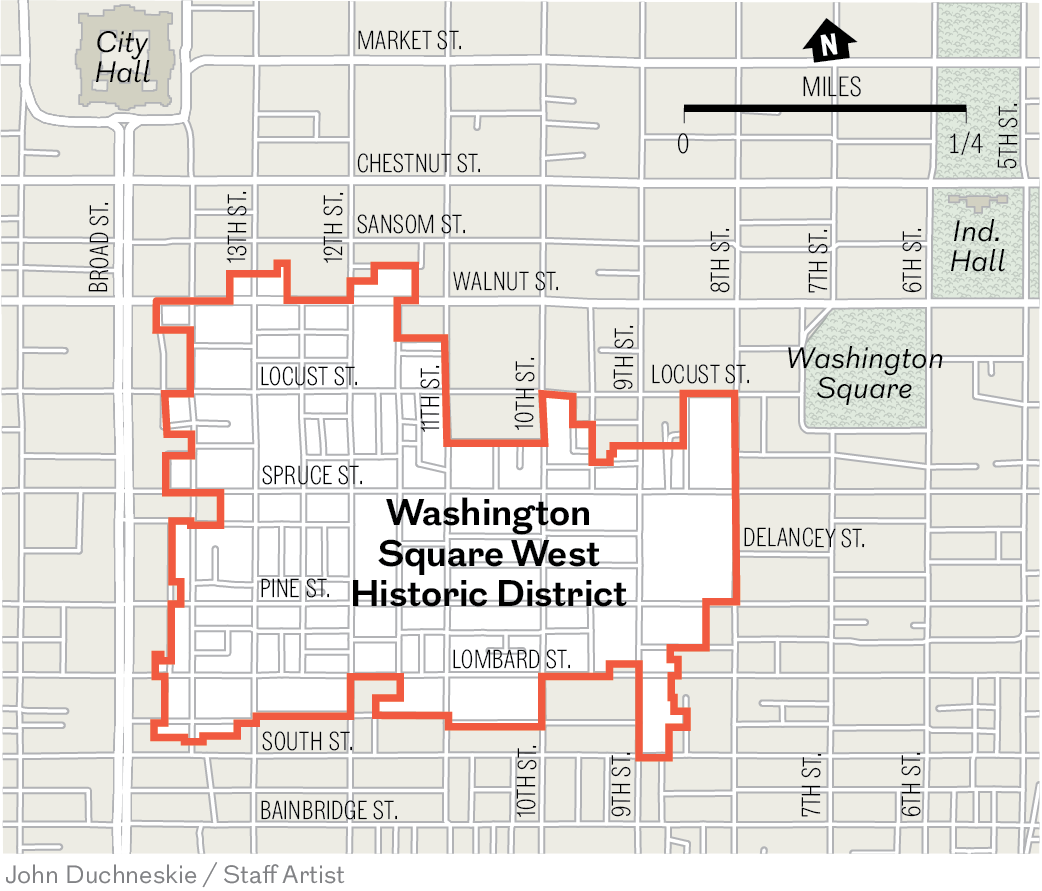
    Two years ago, I wrote about how Philly created its largest historic district in decades in Washington Square West.

    The district spanned roughly 26 blocks and included 1,441 properties, including homes.

    But a lot’s happened in the last two years.

    Residents have been fighting against the area’s historic designation. And they just got another court victory. Last week, a Philly judge overturned the Washington Square West historic district for the second time.

    Keep reading to find out why the judge ruled the way he did and what could happen now.

    The latest news to pay attention to

    Home tour: Old City loft apartment

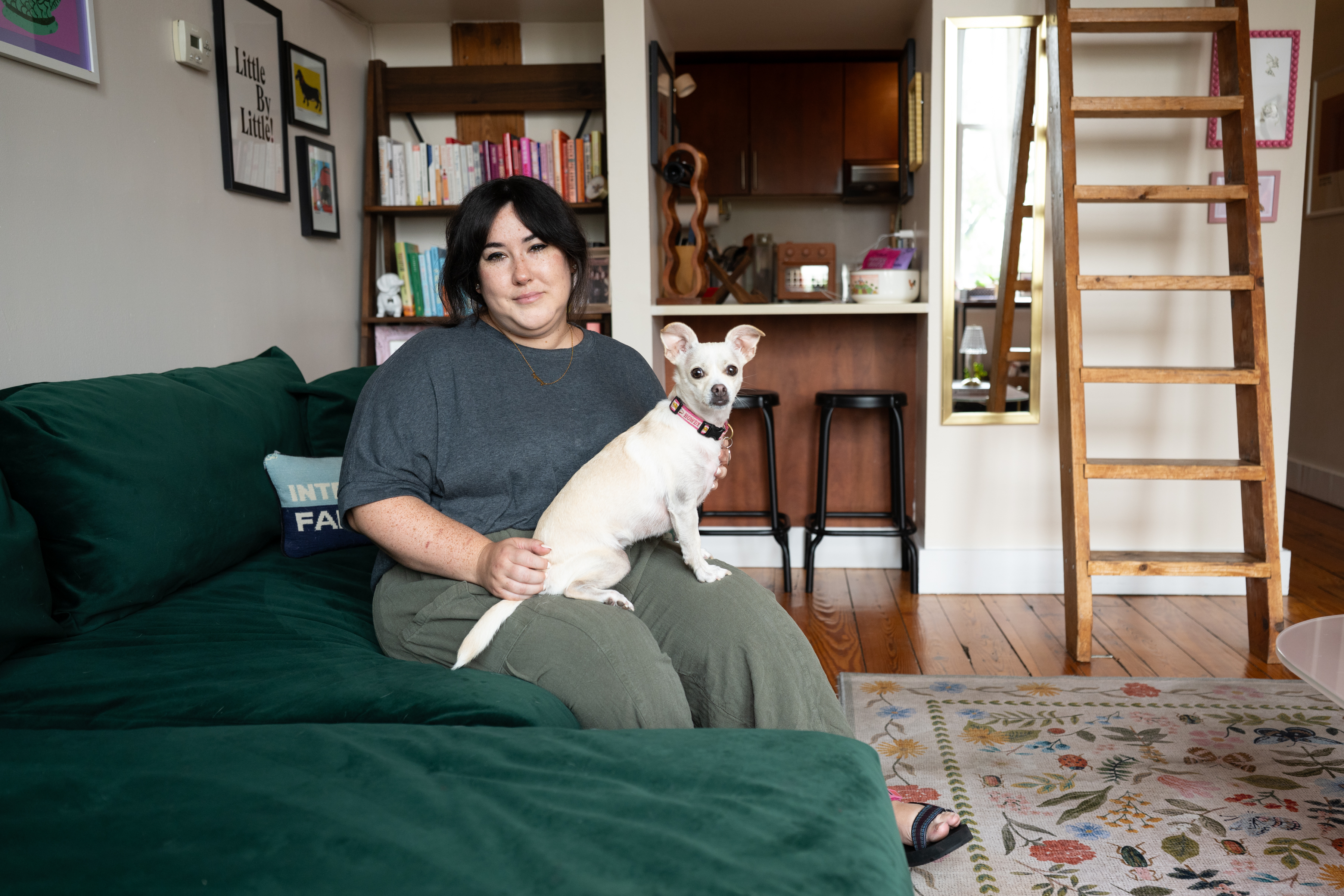
    Isabel Schloss describes her home’s design as “very maximalist.”

    She’s a collector who fills her loft apartment with anything that catches her eye. She says every item comes with a memory attached.

    Schloss likes bright colors in general, but she has a special place in her heart for pink. That’s the color of her desk and its rolling chair and a small globe. In the kitchen, a tea kettle, a heart-shaped pot, and a toaster oven are all pink.

    These appliances help brighten up the small galley kitchen, which has a wooden ceiling and wooden cabinets.

    A gold lamp with a pink glass shade stands next to her TV stand. And Schloss’ chihuahua, Pumpkin, wears a pink collar.

    Peek inside this apartment in the Hoopskirt Factory Lofts and see some of the items Schloss has collected.

    📊 The market

    In September, the average interest rate for the popular 30-year, fixed-rate mortgage shot up from 6.71% to 7.28%. In last week’s newsletter, I shared tips for folks who have to buy a home right now.

    But tips and tricks can do only so much. Elevated mortgage rates and home prices are making homebuying unaffordable for more people.

    Between buyers priced out of the market and those who are waiting for more certainty in the economy, housing activity slowed last month and likely will be slow for the rest of the fall.

    In September in the Philadelphia metro area, according to Bright MLS:

    🔻The number of closed sales — 5,247 — was down 3% from the same time last year.

    🔻The number of new pending sales — 5,159 — was down almost 11% from last year to the lowest September level since 2013.

    🔻The number of home showings dropped by 10.5%.

    🔺Homes are piling up on the market. The number of active home listings — 15,528 — was up almost 20% from last September.

    📷 Photo quiz

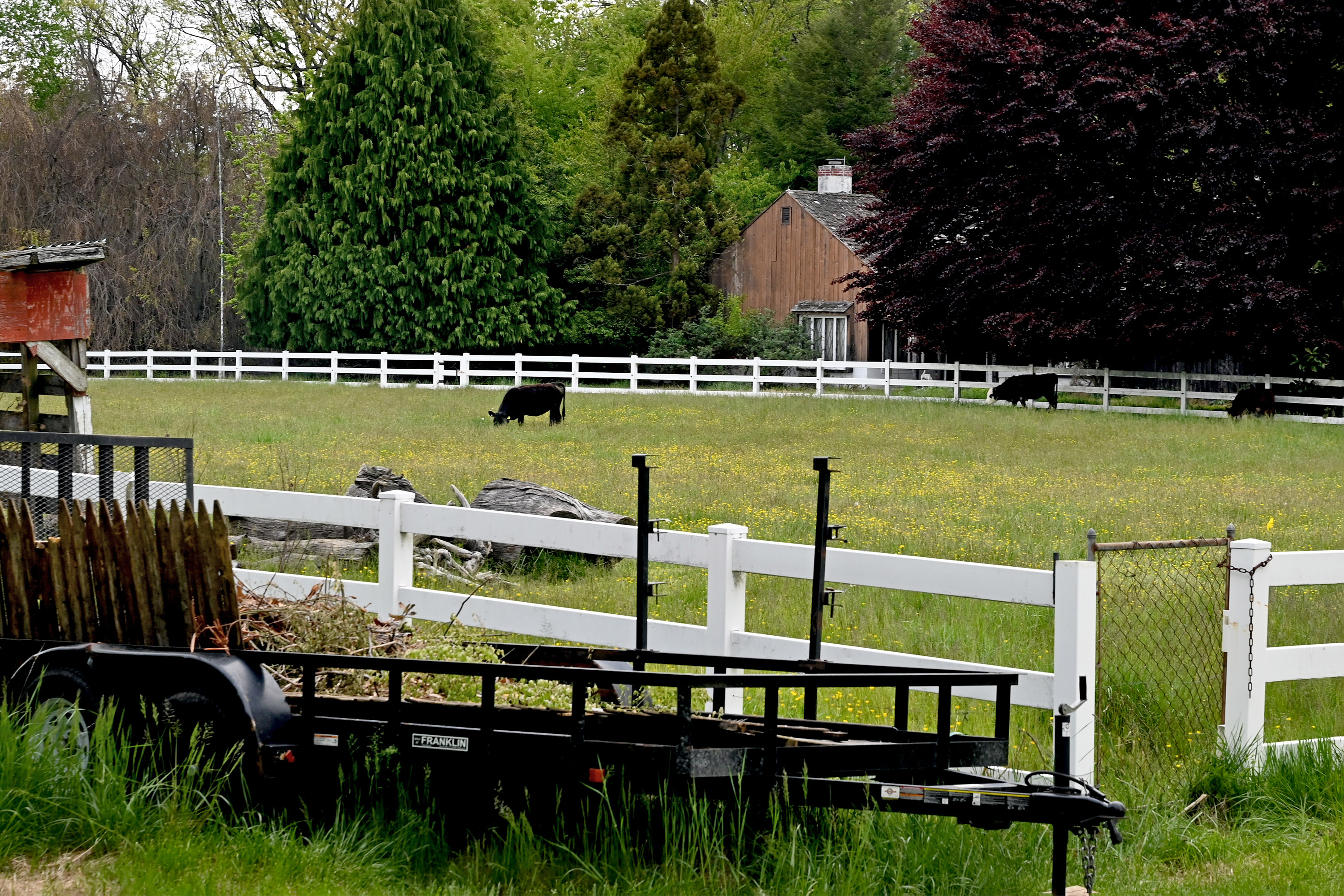
    Do you know the location this photo shows?
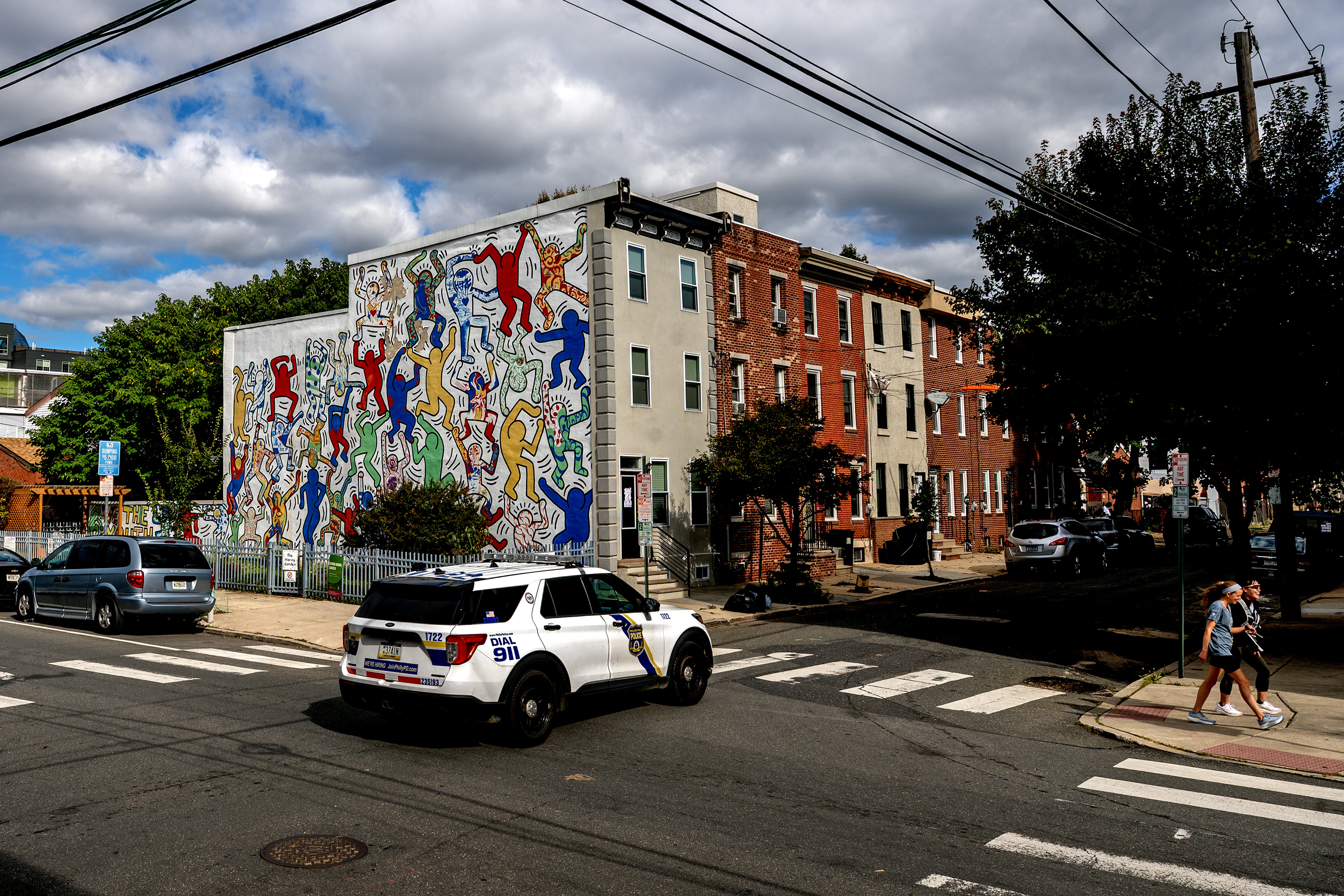
    📮 If you think you do, email me back.

    Last week’s quiz featured a visually interesting photo of the roof at the Kimmel Center.

    Lars W. and Bruce R. were up to the challenge and got that right.

    Enjoy the rest of your week.

    By submitting your written, visual, and/or audio contributions, you agree to The Inquirer’s Terms of Use, including the grant of rights in Section 10.

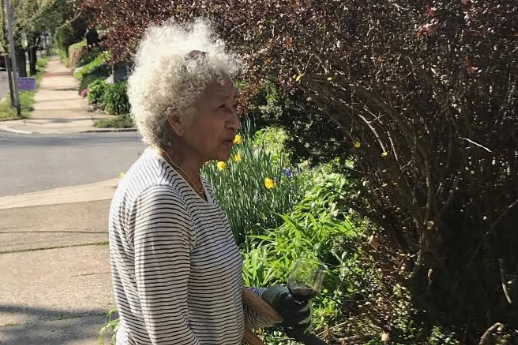
  • Yvonne B. Haskins, longtime attorney, groundbreaking law enforcement official, and lifelong social welfare activist, has died at 88

    Yvonne B. Haskins, longtime attorney, groundbreaking law enforcement official, and lifelong social welfare activist, has died at 88

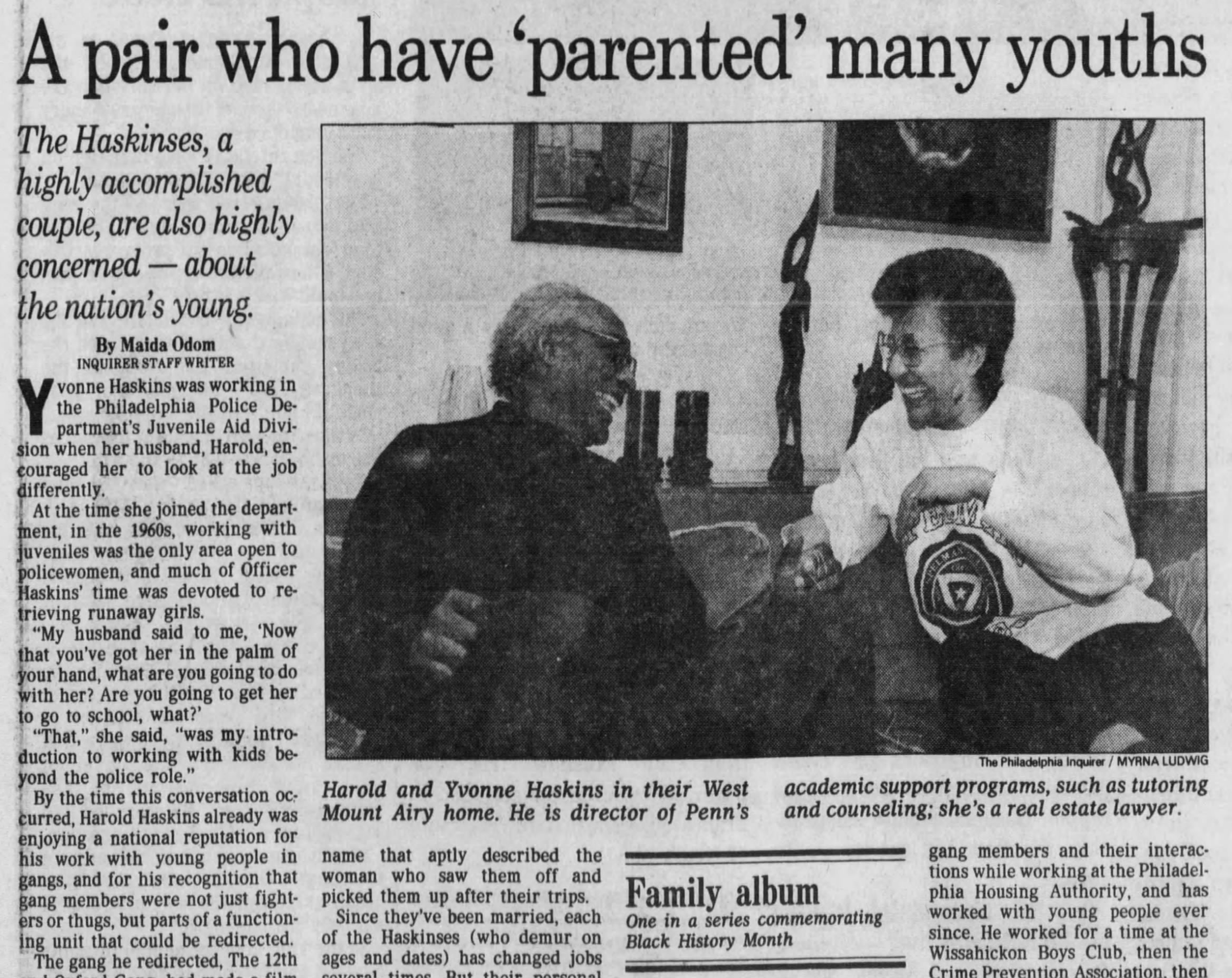
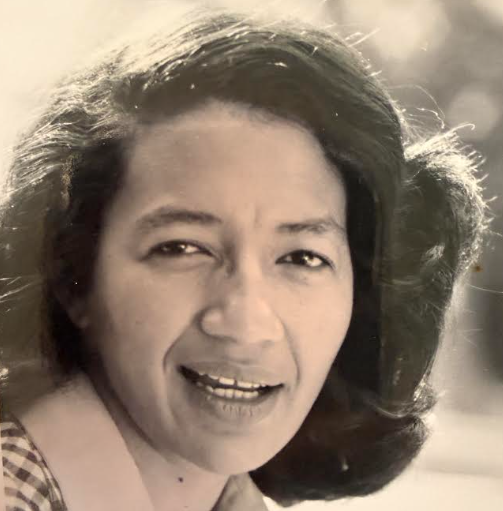
    Yvonne B. Haskins, 88, of Philadelphia, longtime real estate attorney, the first female regional director for what is now the Pennsylvania Commission on Crime and Delinquency, the first female district director of the Pennsylvania Board of Probation and Parole, the first female head of security at the University of Pennsylvania, and one of the first female Philadelphia police officers, died Tuesday, Sept. 29, of metastatic breast cancer at her home in Germantown.

    Mrs. Haskins was also the interim city attorney for Camden, a former manager of the old police community relations department of the Philadelphia Commission on Human Relations, and a tireless local community development and historic preservation activist.

    Born in Atlanta and reared in several small Georgia towns, Mrs. Haskins came to Philadelphia with her two sons in 1962. She worked briefly as a secretary and, on impulse, tested to be a Philadelphia police officer. To her surprise, she said later, she passed the exam and joined the police department in 1965.

    That job, she told department colleagues years later, kicked off her climb to nearly a dozen local leadership roles in law enforcement, government, education, and community development. She was especially focused on serving young people at every stop.

    “Young people need what we all need,” she told The Inquirer in 1992. “We all have to have hope, and we all have to have self-esteem.”

    Mrs. Haskins enjoyed tending neighborhood parks and working outside with others. Courtesy of the family

    Mrs. Haskins earned a law degree at Temple University night school in 1986, specialized in real estate law and community revitalization, and opened Haskins Law Firm with offices in Philadelphia and Camden. She became an outspoken expert on zoning, financial, and political issues, and was appointed by then-Camden Mayor Arnold Webster to serve as interim city attorney for 90 days in 1996.

    She had already spent much of 1994 writing most of Camden’s proposal for a multimillion-dollar community zoning federal grant. A fellow Camden community activist told The Inquirer in 1994: “She knows how to lay out a plan, get back to you, follow the rules, and play the game the way it’s supposed to be played.”

    While working for the police from 1965 to ’69, Mrs. Haskins earned a bachelor’s degree with honors and awards in social welfare at Temple in 1968. She was assigned to juvenile aid, human relations, and criminal justice planning for the police, and, as a liaison to the Philadelphia Commission on Human Relations, helped organize the city’s first police-community workshops.

    “I’m assigned to a police and community program,” she told The Inquirer in 1968. “The community to understand the police, the police to understand the community. Understanding. That’s really the whole thing, isn’t it?”

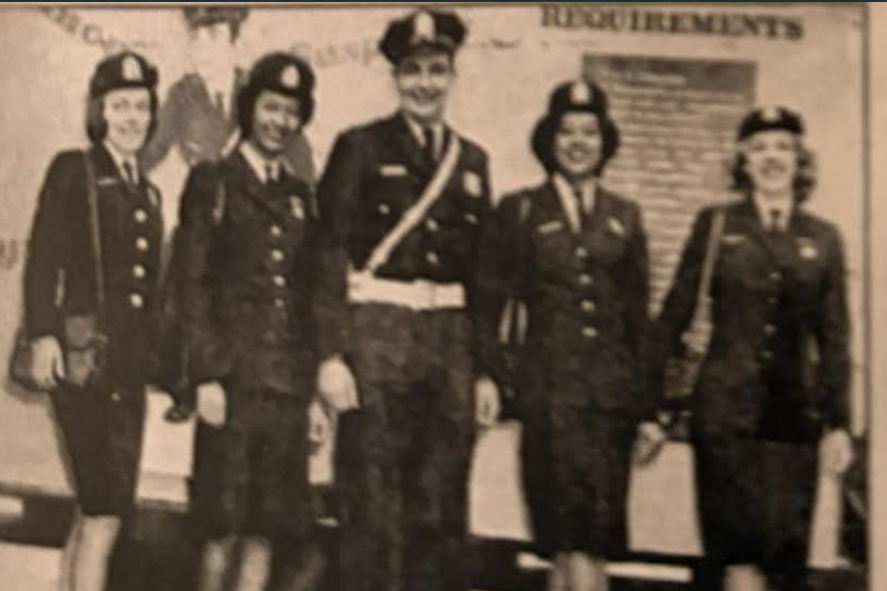
    Mrs. Haskins (second from left) appeared in a Philadelphia Police Department recruiting promotion in 1968.Philadelphia Police Department

    She joined the human relations commission full-time in 1969 and left for the Pennsylvania Commission on Crime and Delinquency in 1973. There, she oversaw a project budget of $100 million, funded the nascent local chapter of Women Organized Against Rape, and established a juvenile law project.

    As Philadelphia’s district director for the Pennsylvania Board of Probation and Parole from 1977 to ’87, she directed a $4 million budget and a staff of 175. She was also a community program planner for the Philadelphia School District, the first female head of security at Penn in 1973, and a senior business development officer for the Fannie Mae mortgage organization.

    In her beloved West Mount Airy and Germantown neighborhoods, Mrs. Haskins helped found the Germantown United Community Development Corp. She was executive director of the West Mount Airy Neighbors group, a board member of the Mount Airy Business Improvement District, and an active member of several other groups.

    “Our house was a hub of community activity,” said her daughter, Kristin Haskins Simms. Neighborhood colleagues recently renamed Trolley Car Park on Germantown Avenue after her and placed a plaque with her nickname, “Good Trouble,” on a nearby bench.

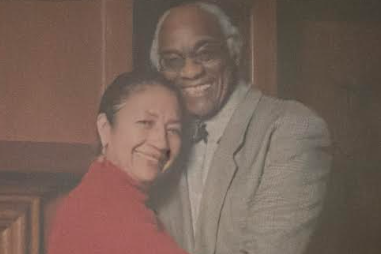
    Mrs. Haskins met her husband, Harold, through a mutual friend, and they married in 1969. Courtesy of the family

    Friends and colleagues called her a “giant,” a “tenacious fighter,” and the “perfect combination of passionate and effective” in online tributes. One said: “She made organizing fun.”

    She told The Inquirer in 2011: “Sooner or later, human beings figure things out.”

    Yvonne Rozlyn Blakeney was born Feb. 23, 1938. Her extended family was full of scholars, and she was enrolled in school when she was 3.

    She graduated as valedictorian of her high school at 15 and took premed classes and made the dean’s list for two years at Spelman College in Atlanta. She left Spelman after her sophomore year and married Walter Booker, and they had sons Russell and Randall.

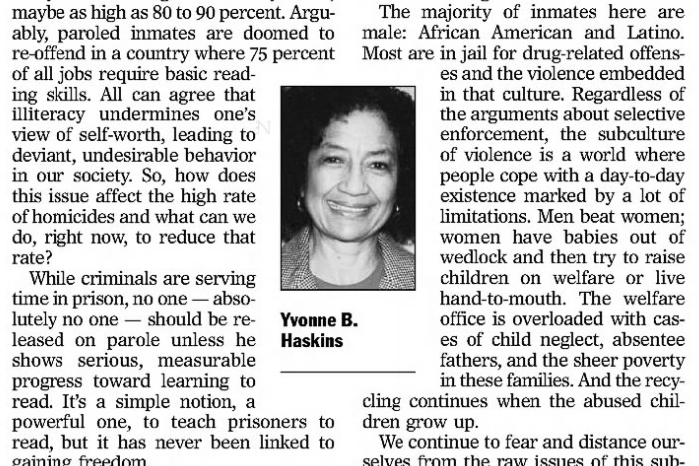
    Mrs. Haskins was featured in The Inquirer in 1992 (above) and 1994 (below).Newspapers.com

    They moved to Washington and, after a divorce, she moved to Philadelphia, where her parents lived.

    She met Harold Haskins, also a social activist, through a mutual friend, and they married in 1969. They had a daughter, Kristin, and lived in West Mount Airy. Her husband died in 2020, and she moved to Germantown.

    Family and friends called Mrs. Haskins “Peachy” because of her Georgia roots. She played piano and enjoyed gardening and impressionist art.

    She lived for years with myeloma cancer and walked in many cancer research fundraisers. She never really retired and wrote about her 2024 breast cancer diagnosis on Facebook. “As much as I want to stay engaged and busy, I may not be able to do much,” she said. “Your understanding and keeping me in the loop of things will be much appreciated.”

    Mrs. Haskins graduated as valedictorian of her high school at 15.Courtesy of the family

    Her daughter said: “She didn’t believe in retirement. She wanted to do the work, stay engaged, fight for justice.”

    In addition to her daughter, Mrs. Haskins is survived by a grandson, a great-grandson, a brother, and other relatives. Her former husband and sons died earlier.

    Services are to be at 11 a.m. Saturday, Nov. 7, at First United Methodist Church of Germantown, 6001 Germantown Ave., Philadelphia, Pa. 19144.

    Donations in her name may be made to the American Cancer Society, Box 6704, Hagerstown, Md. 21741; First Union Methodist Church of Germantown, 6001 Germantown Ave., Philadelphia, Pa. 19144; and Salem Baptist Church of Abington, 2741 Woodland Rd., Abington, Pa. 19001.

    Mrs. Haskins wrote op-eds for The Inquirer and letters to the editor.Nespapers.com
  • Celebrate the season with these fall events across South Jersey

    Celebrate the season with these fall events across South Jersey

    Leaves are falling, cardigans are coming out of the closet, and pumpkin spice is on menus everywhere.

    In other words: Autumn is in full swing.

    With Halloween just around the corner, it’s the perfect time to get into the fall mood at events across South Jersey this month.

    Burlington County

    The Haunting on High Street

    The Burlington County Prison Museum is getting into the spooky spirit with a haunted walkthrough of the historic building and Halloween hangout in the courtyard.

    ⌚️ Friday and Saturday, Oct. 16-17, 23-24, and 30-31, 7-10 p.m. 📍 128 High St., Mount Holly 🌐 bloodshedfarmsfearfest.com 💵 Tickets for the walkthrough and hangout are $31; tickets for just the hangout are $13

    The Witches Bazaar

    The Mill Race Village Shops will once again welcome fire twirlers, stilt walkers, and witches for the bazaar. Come dressed in your best costume and try to win over the audience during the crowd-favorite costume contest.

    ⌚️ Saturday, Oct. 17, 4-10 p.m. 📍 Mill Race Village Shops, 5 Church St., Mount Holly 🌐 millraceshops.com 💵 Free; registration required for costume contest

    Chatsworth Cranberry Festival

    Celebrate New Jersey’s annual cranberry harvest at this rain-or-shine festival featuring a craft show with up to 150 vendors, more than a dozen food options, and live music. Organizers recommend that attendees bring cash as spotty cell reception makes credit card payments difficult. There will be ATMs available onsite, but expect lines to be long.

    ⌚️ Saturday, Oct. 17 and Sunday, Oct. 18, 9 a.m.-4 p.m. 📍 White Horse Inn area, Route 563 and Route 532, Chatsworth 🌐 cranfest.info 💵 Free

    Maple Shade Halloween Parade

    Maple Shade’s annual Halloween parade will start near Fellowship Avenue and travel along Main Street before ending at North Lippincott Avenue. The parade will be followed by a costume contest.

    ⌚️ Saturday, Oct. 24, 2:15 p.m. 📍 Main Street, Maple Shade 🌐 mapleshade.com 💵 Free

    Tricks, Treats & Thrills: Haunted High

    Willingboro is getting into the spooky spirit with a family-friendly night at the Kennedy Center. Expect candy stations, Halloween movies, music, and light refreshments in addition to tours of a Halloween-themed classroom.

    ⌚️ Friday, Oct. 30, 6-10 p.m. 📍 Kennedy Center, 429 John F. Kennedy Way, Willingboro 🌐 Willingboro Township Facebook 💵 Free

    Mount Holly Fall Fest

    Celebrate all things autumn at this annual event featuring the Howl-o-Ween Pet Pawrade, local vendors, and more in downtown Mount Holly.

    ⌚️ Saturday, Oct. 31, 11 a.m.-4 p.m. 📍 Downtown Mount Holly 🌐 Fall Fest Facebook 💵 Free

    Camden County

    Fintastic Pumpkin Glow

    Join more than 5,000 aquatic animals as they get into the Halloween spirit.

    ⌚️ Friday, Sept. 18-Sunday, Nov. 1 📍 Adventure Aquarium, 1 Riverside Dr., Camden 🌐 adventureaquarium.com 💵 General admission tickets start at $32.99 for adults and $27.99 for kids

    Howl-O-Ween Bash

    The Animal Welfare Association is once again hosting its annual all-ages Howl-O-Ween bash to fundraise for South Jersey animals in need. The event will include vendors, free kids activities, a trunk-or-treat, and spooky-themed cocktails and food.

    ⌚️ Friday, Oct. 16, 5-8 p.m. 📍 Animal Welfare Association, 509 Centennial Blvd., Voorhees 🌐 awanj.org 💵 Free; donations encouraged

    Voorhees Harvest Festival

    Enjoy a pumpkin patch, hayrides, children’s activities, a petting zoo, and more at this family-friendly event. Food trucks and vendors will also be on site for the festival.

    ⌚️ Saturday, Oct. 17, 11 a.m.-3 p.m. 📍 Voorhees Town Center, 2400 Voorhees Town Center, Voorhees 🌐 voorheesnj.com 💵 Free

    Pennsauken Fall Festival

    The 12th annual Pennsauken Township Fall Festival will be highlighting America’s 250th birthday in addition to carnival rides, games, music, and food.

    ⌚️ Saturday, Oct. 17, noon-4 p.m. 📍 Pennsauken Sports Recreation Complex, 1601 Bethel Ave., Pennsauken 🌐 pennsauken.gov 💵 Free

    Cherry Hill Harvest Festival

    Over 100 vendors will be at the historic Croft Farm for this family-friendly festival alongside pony rides, a petting zoo, free pumpkins, and a beer garden. Rain or shine.

    ⌚️ Sunday, Oct. 18, noon-4 p.m. 📍 Croft Farm, 100 Bortons Mill Rd., Cherry Hill 🌐 cherryhilltwp.com 💵 Free

    Haunted Haddon Market

    The third annual Halloween makers market will feature a wide variety of spooky vendors alongside a pop-up beer garden and a live DJ. This two-night, family-friendly event will also include fire pits with s’mores stations and a photo booth.

    ⌚️ Friday, Oct. 23 and Saturday, Oct. 24, 5-9 p.m. 📍 Haddon Square, 51 Haddon Ave., Haddon Township 🌐 shophaddon.com 💵 Free

    Haddon Heights Art Walk & Fall Festival

    Enjoy a day full of family-friendly entertainment featuring a wide range of local artists and craft vendors alongside live music, free activities for kids, and more.

    ⌚️ Saturday, Oct. 24, 10 a.m.-4 p.m. 📍 Station Avenue, Haddon Heights 🌐 visitsouthjersey.com 💵 Free

    Brews & Boos Crawl-O-Ween

    Nine Haddon Township restaurants with food and drink specials make up the route for this 21-and-over event. A free jitney will take riders to and from each participating location along Haddon Avenue in addition to the Westmont PATCO station.

    ⌚️ Saturday, Oct. 24, 2-10 p.m. 📍 Haddon Avenue, Haddon Township 🌐 shophaddon.com 💵 Pay as you go; no cover charges and no tickets required

    Gloucester County

    The Great Pumpkin Glow at Dalton Farms

    This new attraction features thousands of glowing jack-o’-lanterns along a festive pathway through huge pumpkin displays.

    ⌚️ Friday, Sept. 25-Saturday, Oct. 31, various evening times 📍 Dalton Farms, 666 Oak Grove Rd., Swedesboro 🌐 greatpumpkinglownj.com 💵 $22.95-$27.95

    Monroe Township Fall Festival

    Drop off your submission for the family pumpkin-carving contest by 10 a.m. before taking a pony ride or strolling through the pumpkin patch in Williamstown.

    ⌚️ Saturday, Oct. 17, 10 a.m.-2 p.m. 📍 Owens Park, 125 Virginia Ave., Williamstown 🌐 Monroe Township Parks & Recreation 💵 Free

    Elk Township Harvest Festival

    In addition to enjoying hayrides and a pumpkin patch, kids can get an early jump on this year’s trick-or-treating with Elk Township’s trunk-or-treat event at the Harvest Festival.

    ⌚️ Saturday, Oct. 17, 1-5 p.m. 📍 Elk Township Recreational Park, Glassboro 🌐 elktownshipnj.gov 💵 Free

    18th Century Field Day & Fall Festival

    Take a trip back in time with living history demonstrations, artillery and cannon drills, and meet-and-greets with Revolutionary War reenactors at Red Bank Battlefield. Vendors and food trucks will also be on site throughout the afternoon.

    ⌚️ Sunday, Oct. 18, 10 a.m.-4 p.m. 📍 Red Bank Battlefield Park, 100 Hessian Ave., National Park 🌐 gloucestercountynj.gov 💵 Free

    Halloween Food Truck or Treat Festival

    More than a dozen food trucks will be at Washington Lake Park for this daylong event full of food, music, candy, and costumes. Kids can trick-or-treat while families enjoy local vendors, mini golf, and face painting.

    ⌚️ Saturday, Oct. 24, 11 a.m.-6 p.m. 📍 Washington Lake Park, 626 Hurffville Crosskeys Rd., Sewell 🌐 Festival Facebook 💵 Admission is $5 at the gate; children under 5 years old get in for free

  • Holly Ravine will become farmland once more as Springdale Farm, the last farm in Cherry Hill, leases the land

    Holly Ravine will become farmland once more as Springdale Farm, the last farm in Cherry Hill, leases the land

    Drive by Springdale Farm in Cherry Hill, and the guy bouncing around on a tractor is likely 28-year-old Clayton Jarvis, whose family has grown produce at the Springdale Road farm since 1949.

    Jarvis, who every January maps out crop rotation on Springdale’s 85 acres, was elated on Tuesday about nine acres of land two miles south on the same road.

    His family on Tuesday was awarded a bid by the Cherry Hill council to grow crops on part of the Holly Ravine Farm, which the township two years ago saved from development and purchased as open space, investing about $4 million so far in the property.

    Jarvis said Springdale’s first satellite farming operation will be an exciting challenge. A cover crop will be planted first, and then he will decide what produce he will grow there.

    But, more important, he said, is the meaning behind turning Holly Ravine into farmland once again.

    “For my entire life, and for decades before that, we’ve only been going in one direction and that’s less farmland,” said Jarvis, proprietor of the last farm in Cherry Hill.

    Taking Holly Ravine back as farmland is big, Jarvis said.

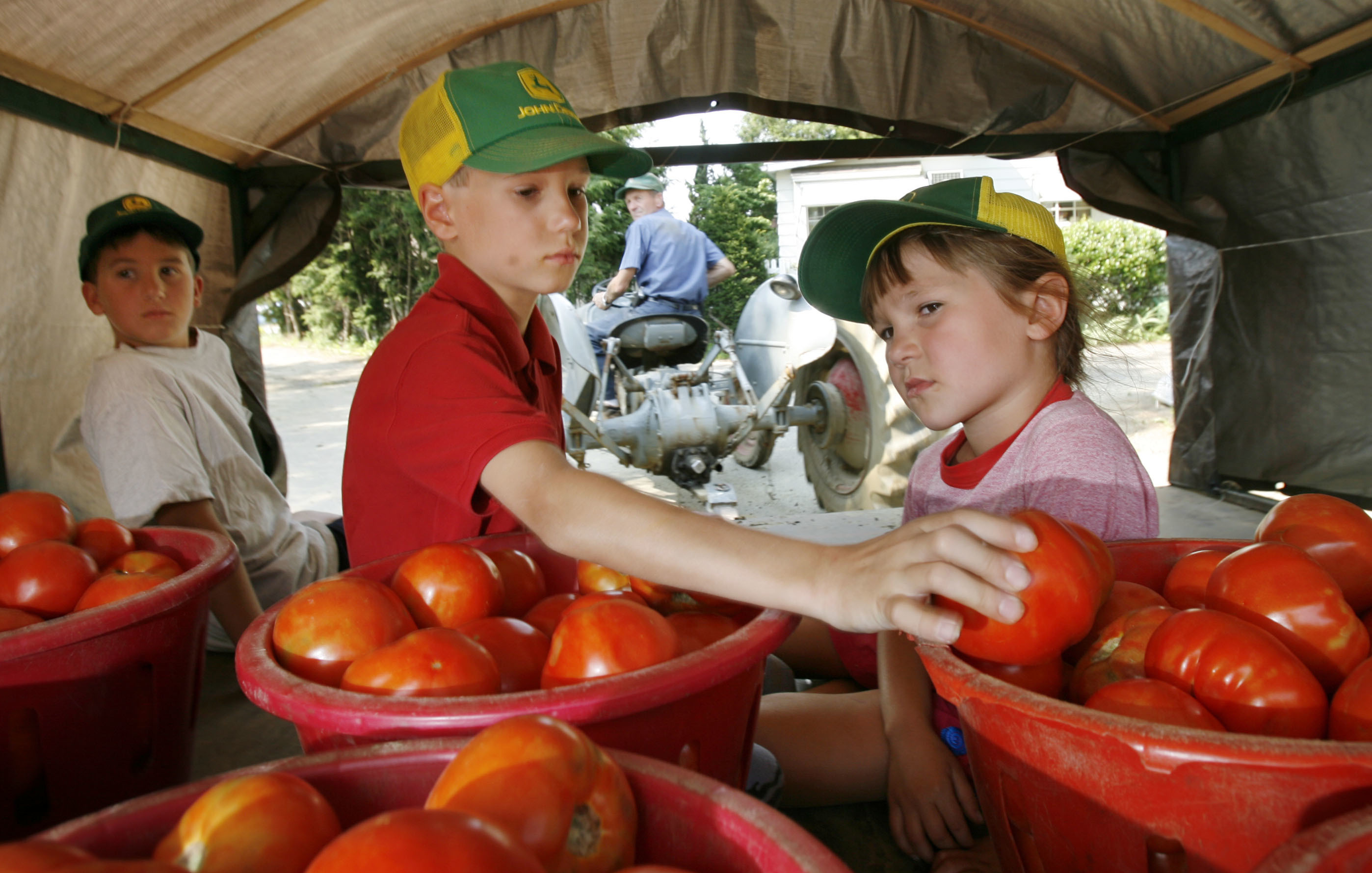
    Pictured here in 2007, Clayton Jarvis, center, 8 at the time, inspected a tomato with his siblings Michala Jarvis, then 6, and Alan Jarvis, then 11, as father Tom Jarvis in the background prepared to back up the tractor.Elizabeth Robertson / Staff Photographer

    Cherry Hill Mayor David Fleisher, who led the efforts to buy Holly Ravine, shared Jarvis’ view of the land.

    “This is more than just a lease,” Fleisher said in an interview Tuesday afternoon. “The intention is to ensure we had a qualified agricultural steward to the site.”

    Holly Ravine Dairy Farm was founded by former Mayor John C. Gilmour Jr. in the 1920s. Gilmour in 1928 bought a milking cow and began dairy farming.

    But Cherry Hill’s suburban boom took its toll.

    “I held out as long as I could, but agriculture and suburban development just don’t mix,” Gilmour told The Inquirer in 1987, the year he sold part of his property at the intersection of Springdale and Evesham Roads for a shopping center. Gilmour died in 1993.

    Many children and parents remember the farm’s Cowtail Bar, the source of countless ice cream cones, and the Moo Zoo animal petting area, both of which shut down in 1987.

    Springdale Farm will pay the town $1,000 a year for the five-year lease. The farm was the only bidder, although there was interest from others, Fleisher said.

    Although the goal of the lease was not to make money for the township, the $1,000 a year for about nine acres is in line with agricultural averages nationally, said Cosmas Diamantis, the township’s municipal attorney.

    Springdale Farm will be farming part of the Holly Ravine land, and the part not leased, primarily the woods and ravine, will be recreational space. The township will construct a parking lot where two farm homes were demolished in April.

    The goals from the beginning have been to protect the site from development, honor Cherry Hill’s agricultural legacy, and give the public access to the area around the ravine, the mayor said.

    Fleisher expects that most of the cost of repurposing the land will be funded with grants from Camden County and the state.

    Jarvis, who has a degree in plant biology from Rutgers University, said Holly Ravine may not seem large compared with his acreage, but it will be strategically important.

    “It’s not huge,” Jarvis said. “But, for example, for me, nine acres could be my entire tomato crop that year or half the sweet corn I need to grow.”

    Crop rotation, which is essential, can be a puzzle in farm planning, and the Holly Ravine acreage gives Jarvis another option for more sustainable crops.

    Two obstacles face Jarvis at Holly Ravine. One is the deer population and the need to erect a fence. The other is irrigation, which may require a well on the property.

    Jarvis farms with his older brother Alan at Springdale, which was founded by their grandfather and grandmother. Their father and mother, Tom and Mary Ann Jarvis, are retired but active in the Springdale Farm Market. Their uncle, John Ebert, also works on the farm, and their sister, Michala Jarvis, runs the market’s bakery.

    “It’s a challenge, but it’s an exciting challenge for me,” he said of the new acreage.

  • A new mini golf course could soon replace a vacant Camden County warehouse once part of a 1940s airport

    A new mini golf course could soon replace a vacant Camden County warehouse once part of a 1940s airport

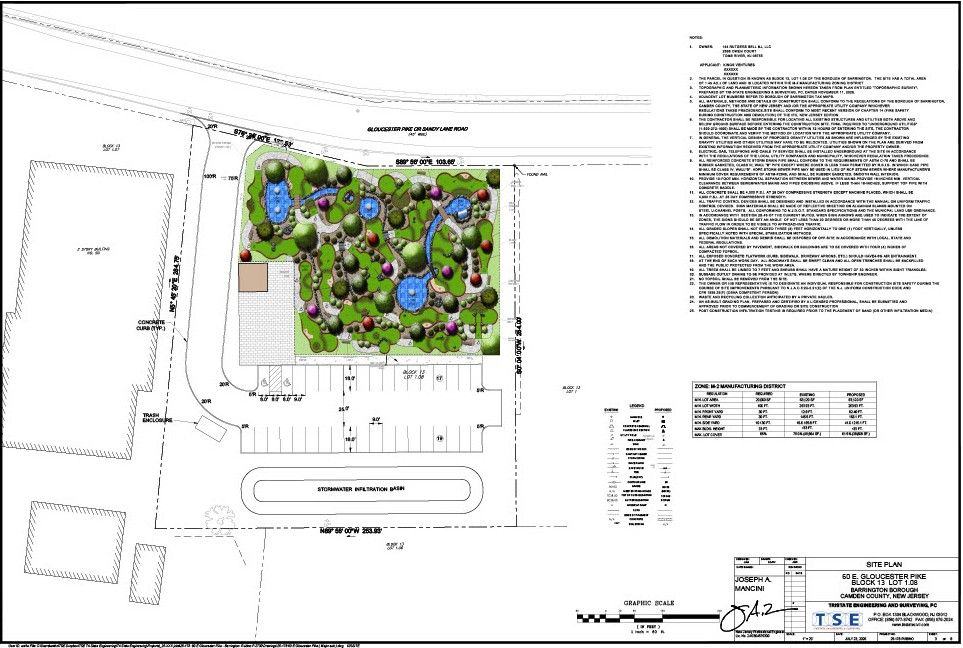
    Families could tee off on a new 18-hole miniature golf course in Barrington next year on a property that once stored airplanes.

    Barrington Borough’s Planning Board unanimously approved site plans for Royal Greens Mini Golf, owned by Tavistock Borough resident and entrepreneur Marc Rubino, on Sept. 28. Rubino said the golf course could cost about $2 million.

    “It’ll be open early spring,” Rubino said. “If nothing plays in our favor, it’ll open early summer. I want it to open tomorrow.”

    While mini golf is a South Jersey staple, especially down the Shore, Royal Greens would be the only golf course in the Camden County borough, said Carol Fultano, secretary for Barrington’s Planning Board. Building the outdoor course at 60 E. Gloucester Pike will require demolition of a warehouse that most recently housed The Kids Castle, a daycare center, which closed in 2019.

    In the 1940s, the property was part of Barrington’s former airport and served as a machine shop for Merrill Engineering Company, before the construction of the New Jersey Turnpike subdivided the property.

    With the warehouse vacant for years, Rubino said it makes sense to tear it down.

    “You’d have to invest more in that building than it would cost to build a new building,” he said. “[It] doesn’t really have a use. It’s a shame.”

    Rubino, owner of investment firm Kings Ventures, purchased the property for $600,000 in September 2025, days after he bought a gym, Royal Fitness, next door. The gym will stay open next to the planned mini golf course.

    Rubino’s history with mini golf didn’t begin in Barrington. He owned Markie’s Mini Golf in Phoenixville in the early 2000s, and he used to help his friend Brian Whelan, owner of Pleasant Valley Miniature Golf in Voorhees, with projects at the course when they were young.

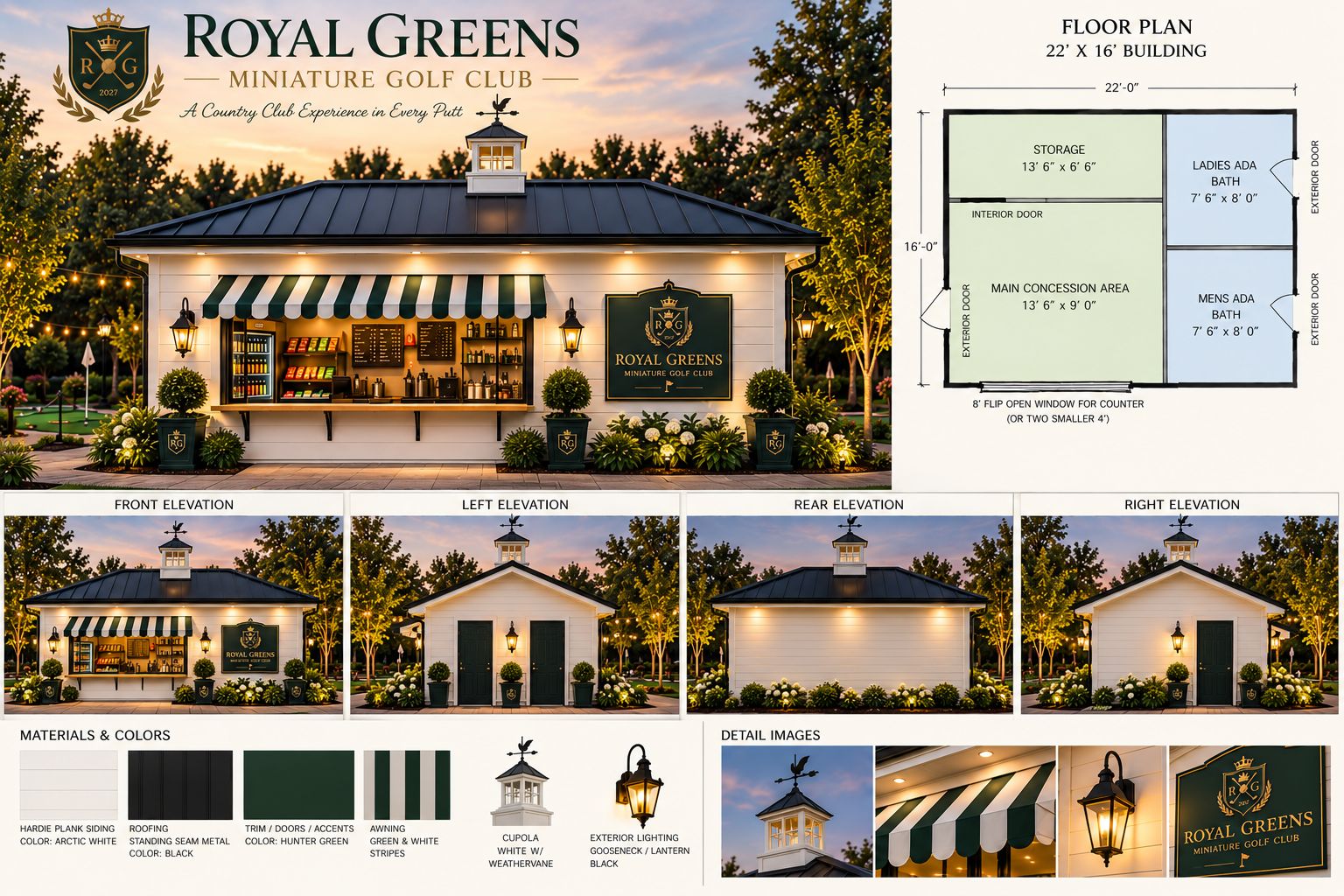
    The proposed course, designed by Harris Miniature Golf Courses in Scranton, would be about 25,000 square feet and ADA compliant, and feature 36 parking spots, bathrooms, and a concession stand selling grab-and-go ice cream and refreshments. Rubino said he wants the course, garden-themed, to feel like a “miniature country club.”

    A rendering of the concession stand at Royal Greens Mini Golf in Barrington Borough, Camden County, which could come as soon as spring 2027.Royal Greens Miniature Golf

    The course will have a practice area and a “free game” hole, in addition to the 18 standard holes. Rubino said Will Pollack, a partner at Royal Fitness, will help operate the business, which will have about 10 employees.

    Before he can break ground on the new course, the Planning Board has a second reading of its site plan approval on Oct. 26, Fultano said. Then, Rubino can submit applications for building permits.

    The course has already been fully designed, but Rubino said he’s still waiting for the demolition permit for the warehouse. And if this winter is particularly cold, Rubino said his team might have to wait until spring to pour concrete.

    As an outdoor course, golfing would be seasonal. The property would be open seven days a week, 9 a.m. to 9 p.m., March through October. Rubino said a round of mini golf will cost $12 for adults and $10 for children, with discounts available for groups and birthday parties.

    When the course opens, Rubino, a father of two, said Royal Greens will give South Jersey families something to do with their kids in an area that needs it.

    “It’s a great community project,” Rubino said. “My goal is to keep it for a long time.”

  • A Camden County old-growth forest preserve is battling a deadly, invasive worm

    A Camden County old-growth forest preserve is battling a deadly, invasive worm

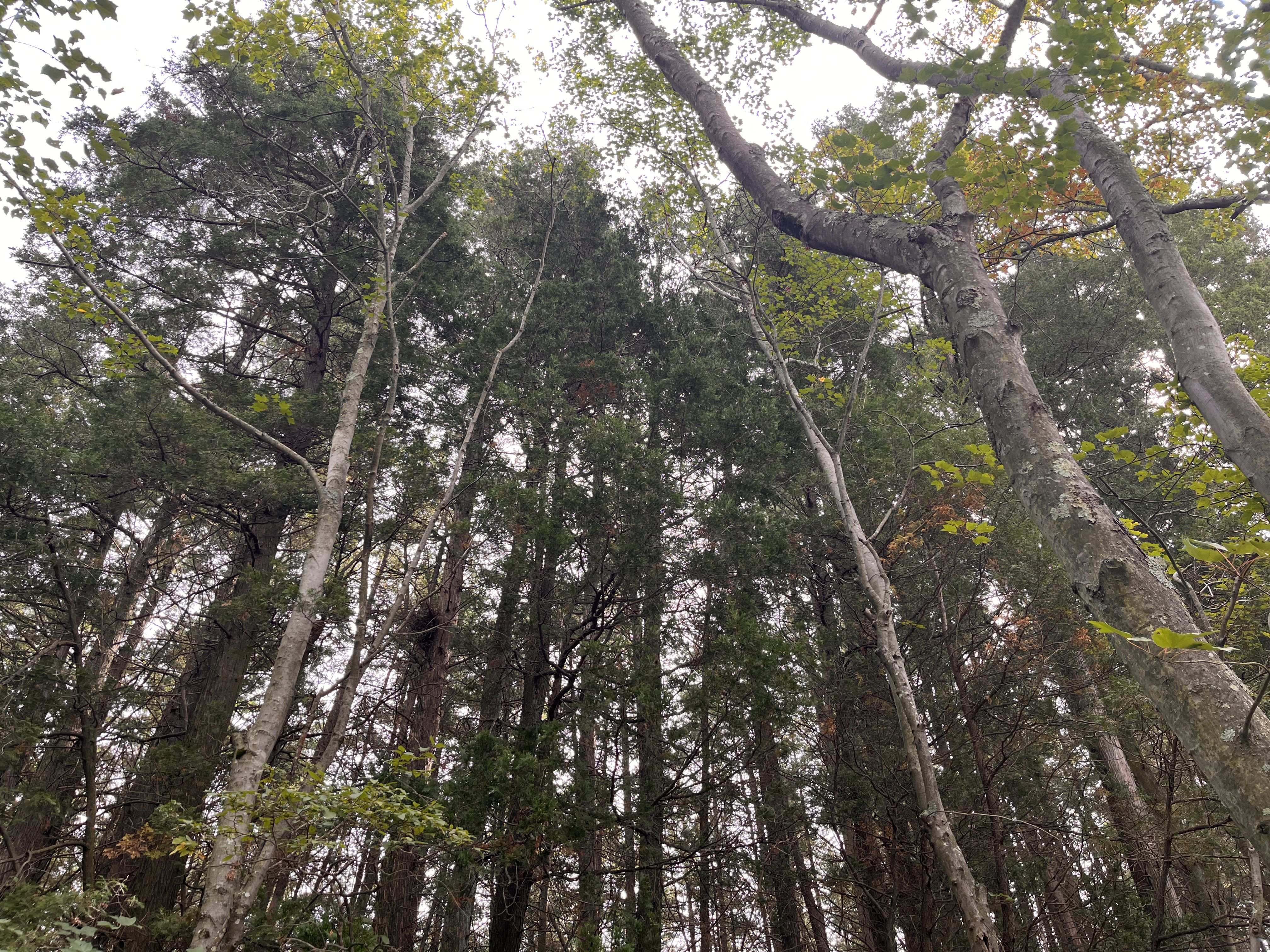
    Nestled neatly between a bustling shopping center and two schools, the lush old-growth forest that sits along MacArthur Boulevard in Haddon Township can be easy to overlook.

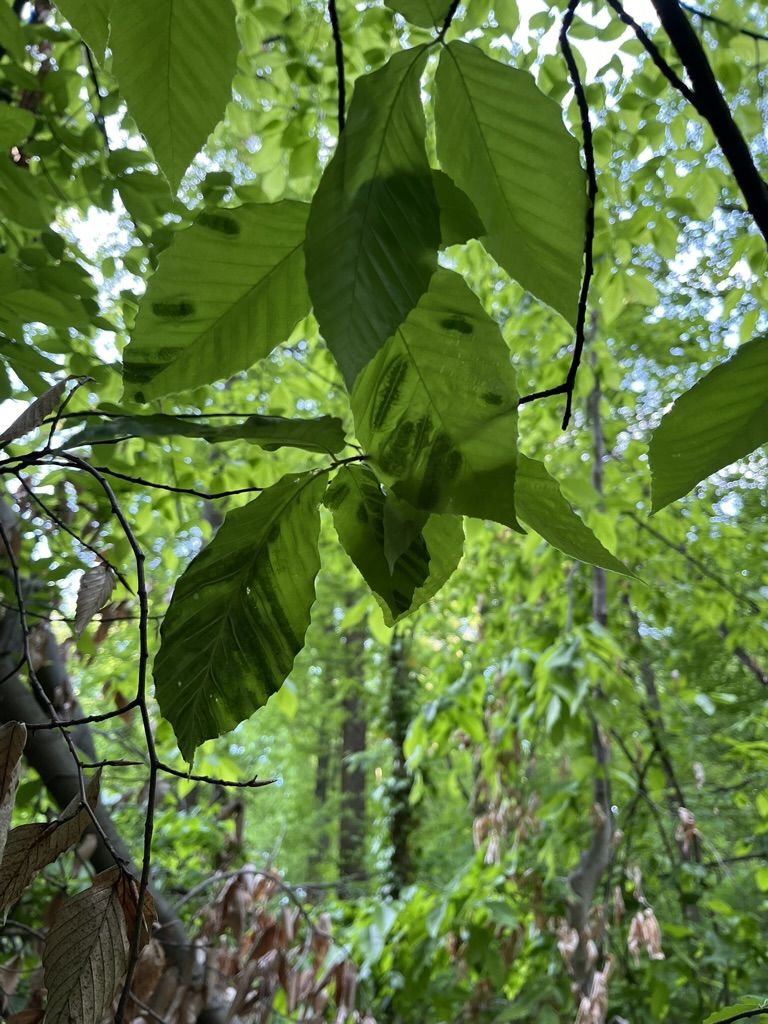
    But this environment, home to hundreds of unique plant and animal species, is being threatened by beech leaf disease, a fast-spreading invasive condition that has taken hold among the American beech trees in Saddler’s Woods. The “widespread” disease, first discovered in New Jersey five years ago, has infected trees in every county in the state, according to the New Jersey Department of Environmental Protection.

    So far, the Saddler’s Woods Conservation Association has counted more than 200 infected American beech trees on the 25-acre preserve, said Janet Goehner-Jacobs, the organization’s executive director.

    There is no effective treatment to combat the disease, she said.

    The disease, caused by a microscopic worm believed to have originated in Asia, can affect trees differently depending on their age, health, and site conditions, but it nearly always kills them.

    And while this is not the first time Saddler’s Woods has dealt with an invasive species, the worm that causes beech leaf disease presents a particularly daunting challenge, Goehner-Jacobs said.

    “There’s mitigations, there’s hope the numbers game works out in your benefit, there’s succession plans that we can build, but it’ll be pretty devastating,” she said.

    The disease is putting centuries-old ferns and countless other plant and animal species at risk of losing the various life-sustaining resources that beech trees provide, she said.

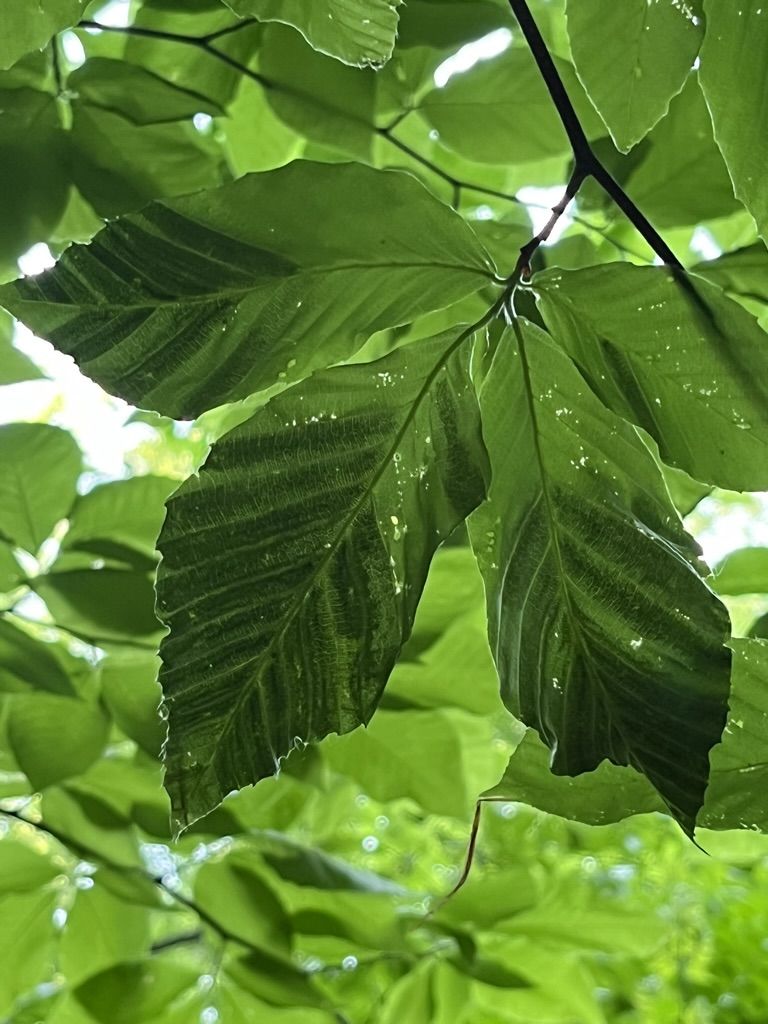
    Signs of beech leaf disease can be found on more than 200 American beech trees throughout Saddler’s Woods in Haddon Township.Courtesy of Saddler's Woods

    Most of the old-growth trees forming the densest part of the tree canopy in Saddler’s Woods are American beech, Goehner-Jacobs said. The shade provided by the canopy allows for young beech trees to mature over time, eventually replacing old or dying trees and filling their gap in the canopy.

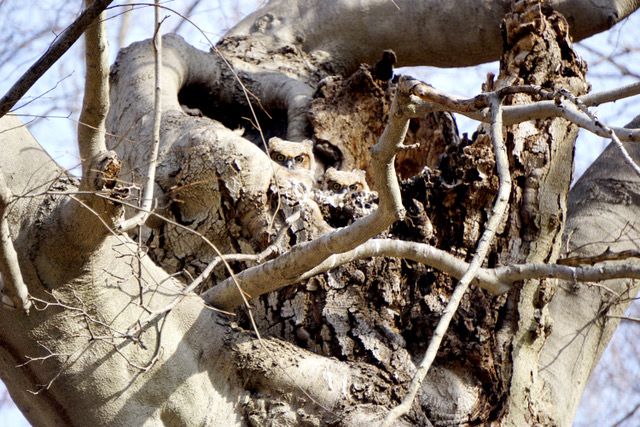
    “Not only are you subject to the loss of those trees, but everything in the ecosystem will collapse to some level that you have to try and rebuild,” she said. The beech nut is a critical food source for many animals, she said, while the tree’s hollows often serve as a nursery nest for horned owls.

    Since it was first confirmed in Bergen and Essex Counties in 2020, beech leaf disease has “spread to all 21 counties — affecting all species of beech — and is considered widespread in the state,” New Jersey Department of Environmental Protection spokesperson Raeanne F. Raccagno said in an email.

    Baby owls nest in a hollowed beech tree in Saddler’s Woods. The bird is just one species that could be impacted by the death of the forest’s American beech trees from invasive beech leaf disease.Courtesy of Saddler's Woods

    With approximately 14 million American beech trees throughout the state, it is likely that several million have been impacted by this disease, Raccagno said, including the nonnative European and Oriental beech trees.

    The state’s forest service reports that across New Jersey, “it is currently more difficult to find a beech tree with no symptoms of Beech Leaf Disease than a tree that is asymptomatic,” Raccagno said.

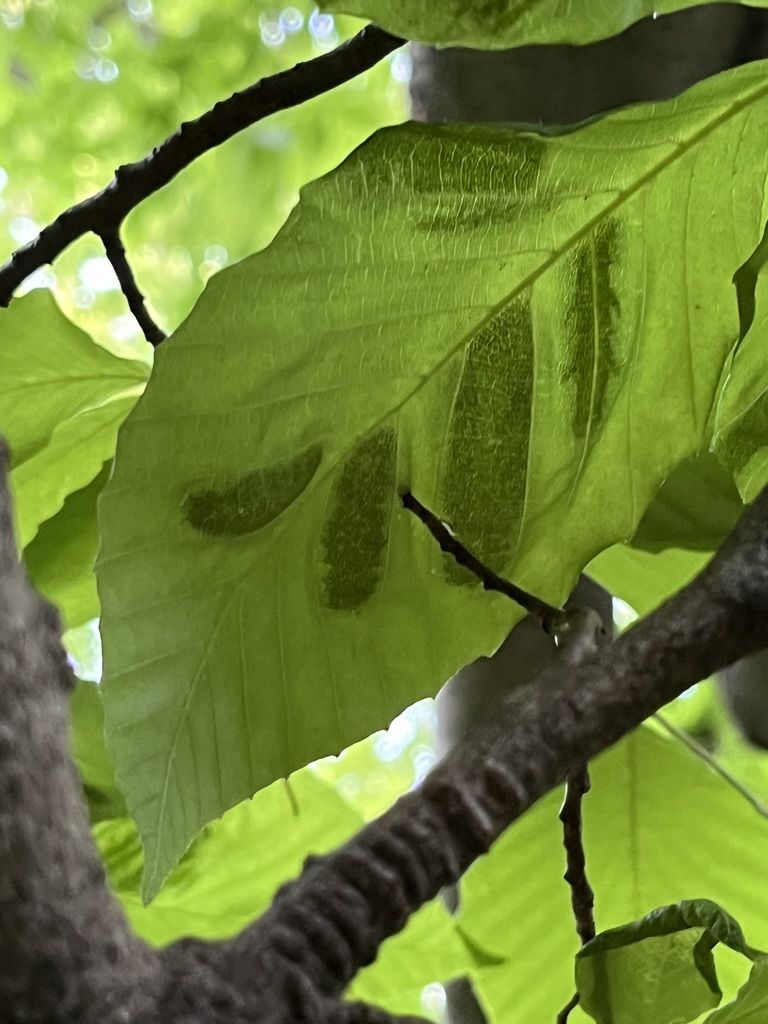
    In infested trees, black banding forms between the veins of leaves, and as the disease progresses, leaves can become smaller, curled, and discolored.

    Trees typically die within four to five years after initial infestation, forest service monitoring has shown, and the consequences of this widespread disease in New Jersey could last for generations.

    In addition to drastically shifting the composition of forest ecosystems, the widespread loss of so many beech trees could shorten “natural forest succession timelines by hundreds of years,” Raccagno said.

    Beech leaf disease is almost always fatal, often killing trees within four or five years of initial infection, according to the New Jersey Department of Environmental Protection.Courtesy of Saddler's Woods

    “As beech declines, other tree species and understory species will fill the available space vacated by dead beech trees,” she said. “With high beech mortality, invasive plant species have the capacity to become more prevalent as light availability and growing space increase in areas previously occupied by dense canopy beech trees.”

    With no clear solution to the threat, the conservation team at Saddler’s Woods — composed entirely of volunteers — is “actively working every angle we have” to combat the disease, Goehner-Jacobs said.

    This includes documenting what currently exists in the forest and creating a succession plan for how the ecosystem can survive and recover if a large number of beech trees die in the coming years, she said.

    The team is also working to identify a few mature beech trees that might benefit the most from an expensive and experimental fungicide treatment that has been shown to help boost the defenses of some trees against the disease, she said.

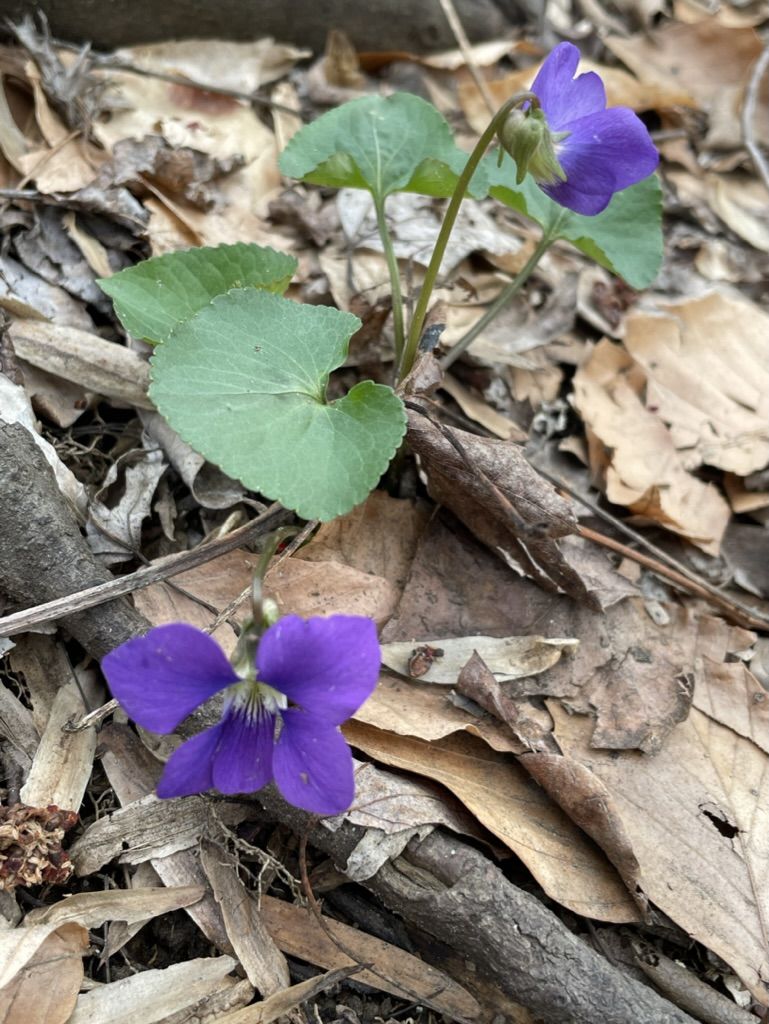
    A native violet sprouts from the forest floor in Saddler’s Woods. The flower is just one of the countless species of plants and animals that rely on the shade cover provided by the canopy of the American beech tree.Courtesy of Saddler's Woods

    Because the overarching mission of the Saddler’s Woods Conservation Association is to preserve the forest in perpetuity, the group has to approach potential solutions thoughtfully, Goehner-Jacobs said.

    While the organization is working to slow and hopefully stop the disease’s spread, the best solution will likely be the defenses that the tree itself develops naturally through evolution, she said.

    But evolution, by definition, takes time. Time that New Jersey’s beech trees might not have, she said.

    “Eventually, just like some people never got COVID, some of these trees will have a defense, and you’re waiting for that one,” she said. “Will it be in Saddler’s Woods? I don’t know.”

  • Sustainable landscaping at new Cherry Hill Subaru dealership will follow carmaker’s eco-friendly image

    Sustainable landscaping at new Cherry Hill Subaru dealership will follow carmaker’s eco-friendly image

    When Subaru vehicles roll into a newly approved Cherry Hill dealership, they’ll be surrounded by landscaping different from most commercial developments.

    Subaru, which promotes an eco-friendly corporate image, will plant sustainable landscaping that the township planning board has agreed will not require a permanent irrigation system that’s a requirement in Cherry Hill’s zoning ordinances for other commercial projects.

    Instead, the drought-resistant plantings in the native pollinator garden will not include turf or require fertilizers, mowing or an irrigation system, said Bernadette Szakal, associate director of real estate and corporate facility services at Subaru.

    She told board members the plan follows Subaru’s corporate landscaping philosophy that was designed by the Pennsylvania Horticultural Society for the carmaker’s Camden headquarters, according to the board resolution adopted on Monday memorializing approval of the project’s preliminary and final major site plan with bulk variances.

    The only irrigation will be from water trucks that temporarily water the landscaping after the initial planting, Tom Morris, vice president of public gardens and landscape operations at the Horticultural Society, told the board.

    Neither Szakal nor Morris was available for comment beyond their board testimony.

    First approved in 2023, the new Subaru dealership required amended plans that include site design changes to reflect New Jersey Department of Environmental Protection flood hazard regulations. The Cooper River is across Park Boulevard from the property.

    Another twist to the dealership move from across Route 70 to the now-vacant land: The site held Subaru corporate headquarters from 1986 until 2018 when it moved into a new $118-million campus in Camden. The Cherry Hill headquarters building was demolished in 2019.

    The Subaru showroom, service area, and other offices will occupy a 67,035-square-foot building footprint at 2235 Route 70 eastbound that includes a 21,840-square-foot showroom and 36,350-square-foot service area. Site plans call for 658 parking spaces, of which 454 will be used to store Subaru’s car inventory.

    Ziad Nashed, owner and operator of Subaru of Cherry Hill, told board members the dealership employs 72 and operates from Monday through Saturday.

    Nashed testified his employees also use a system that solves the noise pollution that’s hotly criticized by neighbors of other dealerships.

    Rather than use a vehicle’s key fob to sound a vehicle’s horn to locate it, the Subaru dealership tracks its vehicles with a digital phone-based system that does not sound the horn.

    70and73.com is a hyperlocal news site focused on South Jersey, including the communities of Cherry Hill, Evesham, Mount Laurel, Voorhees, Medford, Medford Lakes, and Moorestown.

  • N.J. Pinelands Commission approves Atlantic white cedar restoration project, despite objections

    N.J. Pinelands Commission approves Atlantic white cedar restoration project, despite objections

    The New Jersey Pinelands Commission voted Friday to approve an Atlantic white cedar restoration project that has drawn objections from some environmentalists.

    The vote by the 15-member commission allows the New Jersey Forest Service to broaden cedar cover over 171 acres in Wharton State Forest.

    It’s the first phase of an ambitious $19 million state plan to restore 10,000 acres statewide. The state holds the East Coast’s last major concentrations of the tree. It’s historical 115,000 acres have dwindled to 25,000.

    But the process has been bumpy as some environmentalists have railed against cutting existing cedars and the potential use of herbicides.

    Mark Lohbauer, a commissioner from Pennsauken, voted against the plan. So did Commissioner Jessica Rittler Sanchez.

    Lohbauer said he did not believe there had been enough public input or discussion of the project.

    A major sticking point for Lohbauer, and some representatives of area environmental nonprofits, is the location chosen for the project off Sandy Causeway in Waterford Township, Camden County.

    They say the tract already has existing, healthy, mature cedars they fear will be cut down as part of the process.

    “I’m just not comfortable approving a blanket project,” Lohbauer said before casting his no vote. “The plan as it is includes acreage of what I consider to be cathedrals of Atlantic white cedar … as far as the eye could see.”

    He also questioned the potential use of herbicides.

    Lohbauer spoke after a lengthy presentation by Bill Zipse, supervising forester, and Todd Wyckoff, the state forester.

    Zipse said the area was chosen because it has healthy cedars that can provide a natural seed bank for regeneration. The plan calls for both cedars and competing hardwoods to be removed to create zones where new cedar can thrive.

    He also said that if herbicide is used, it could be limited to one application. Herbicides are often the only way to control rapidly growing competing vegetation such as phragmites, a reedy grass, the foresters said.

    Correction: This story has been corrected to note that New Jersey Pinelands Commissioner Jessica Rittler Sanchez voted against the plan.
  • A Cherry Hill man was struck and killed by a vehicle while crossing Route 38

    A pedestrian was struck and killed by a vehicle traveling east on Route 38 on Thursday night, according to the Cherry Hill Police Department.

    Michael V. Mancuso, a 36-year-old Cherry Hill resident, died after a vehicle struck him while he was crossing Route 38 near Longwood Avenue around 7:56 p.m.

    The driver of the vehicle was uninjured and cooperated with investigators, police wrote in a statement.

    The crash is currently under investigation by Cherry Hill police, with help from the Camden County Prosecutor’s Office and the Office of the Medical Examiner, according to police.

  • Bruce Mabine, retired OB-GYN physician and award-winning associate professor at Temple, has died at 76

    Bruce Mabine, retired OB-GYN physician and award-winning associate professor at Temple, has died at 76

    Bruce Mabine knew he wanted to be a doctor after he was mesmerized by an X-ray of his own hand when he was 10. So he graduated from what is now the Temple University Lewis Katz School of Medicine in 1977.

    He knew he wanted to support expectant mothers, babies, and families. So he specialized in obstetrics and gynecology, and delivered thousands of babies over his 43-year medical career.

    He knew he wanted to lift up and educate students. So he taught thousands of aspiring doctors in labs and classrooms, and mentored other health professionals for more than two decades as an associate professor at Temple.

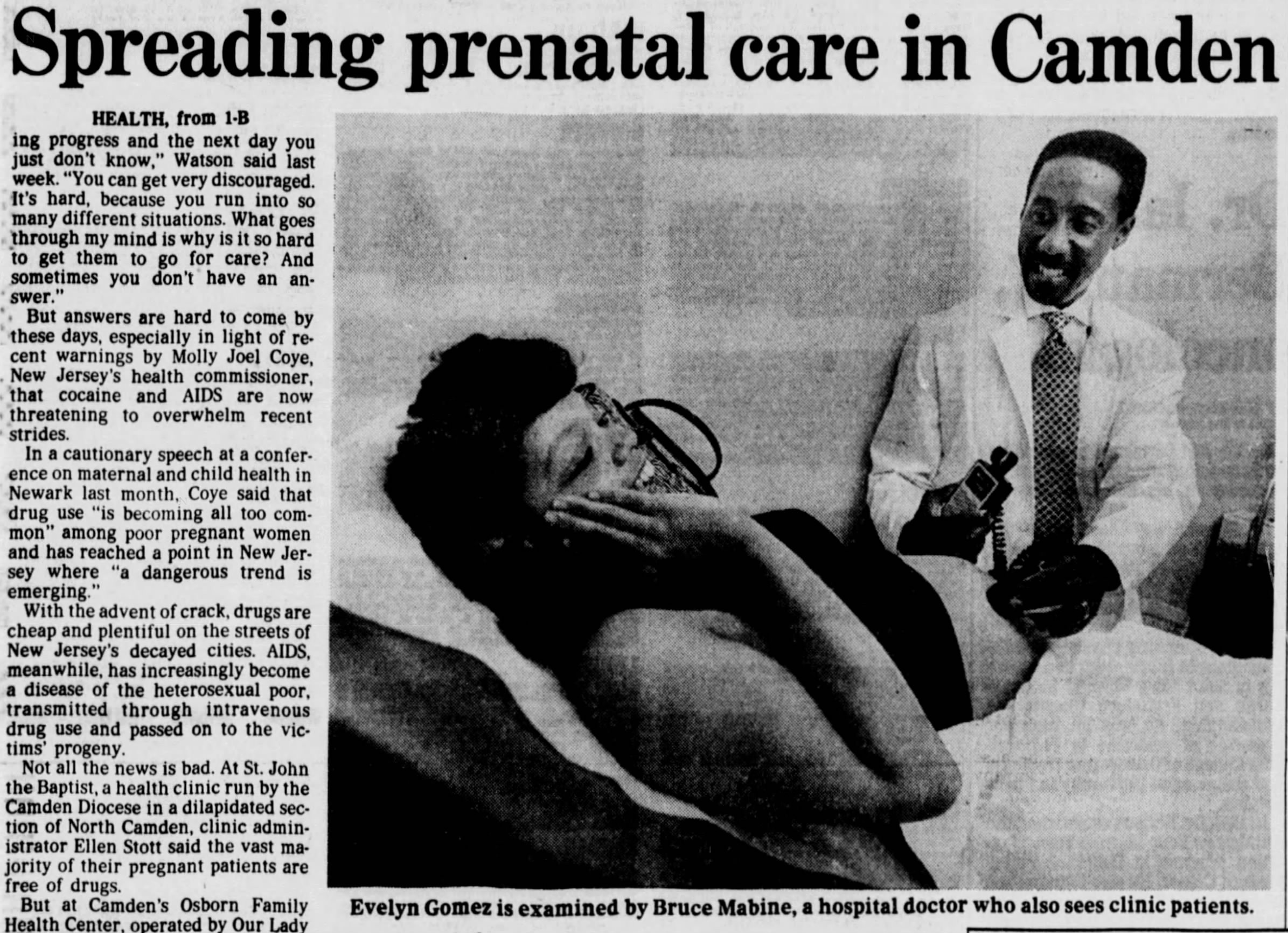
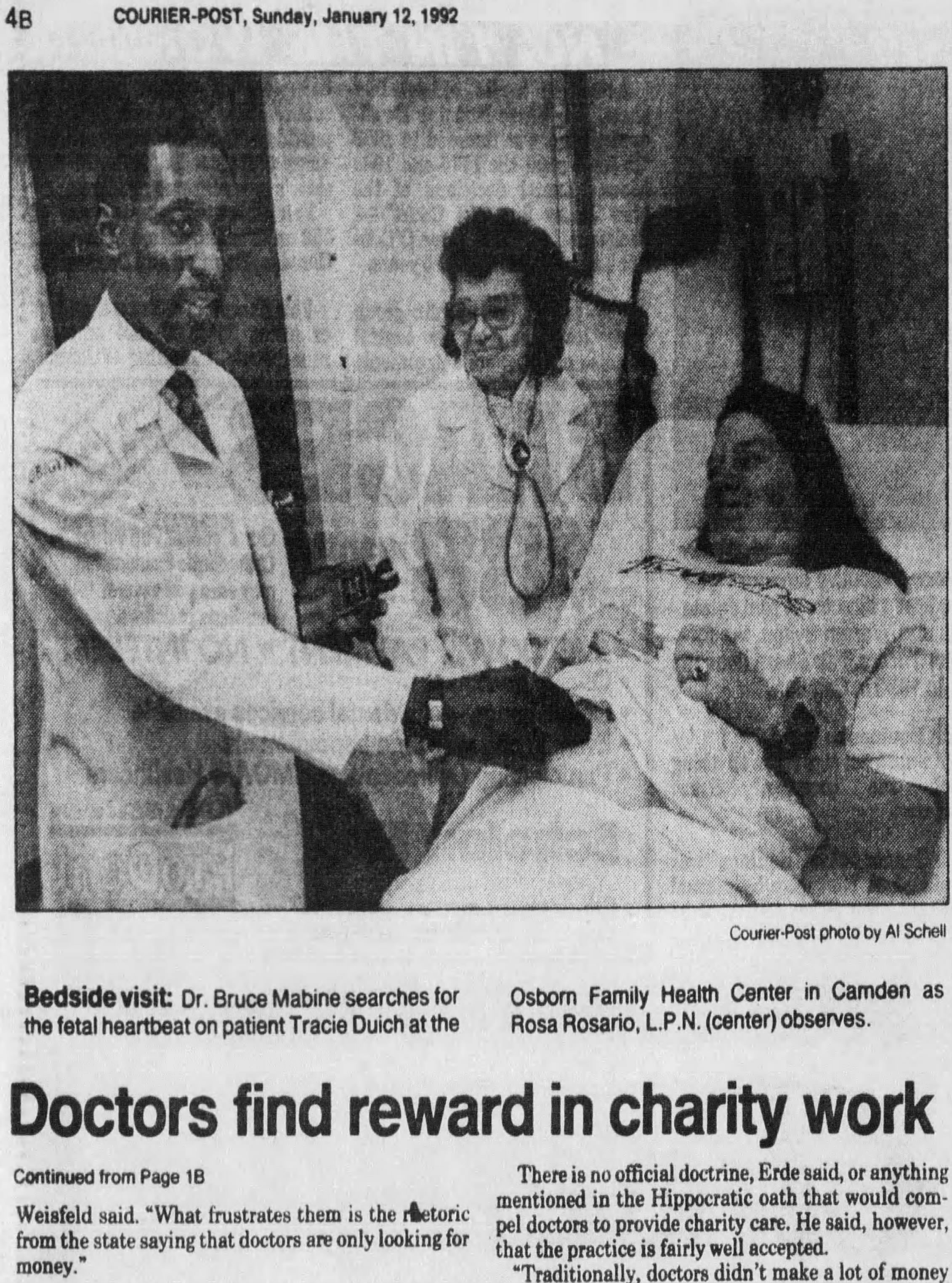
    He also volunteered at clinics, looked after individuals in need wherever they were, and worked at grueling jobs that paid more in satisfaction than money. “Money is not the only issue in life,” he told the Courier-Post of Camden in 1992. “This is a good way to strike a balance. It’s gratifying to help someone who really needs it.”

    On Monday, Oct. 5, Dr. Mabine died of cancer at his home in Philadelphia. He was 76.

    This photo and story about Dr. Mabine was published in The Inquirer in 1989.Newspapers,com

    “He cared deeply about his patients, colleagues, learners, and health equity,” said his wife, Lynda Thomas-Mabine, also a physician. “He was the kind of person whose presence left an impression long after he had left the room.”

    Born in Philadelphia, Dr. Mabine was an associate professor and director of community services for Temple’s Department of Obstetrics, Gynecology, and Reproductive Sciences from 2000 until his retirement in 2024. He worked at Temple, Episcopal, and Jeanes Hospitals, directed the physician assistants clinical rotation, and earned an excellence in teaching award in 2015 from the Association of Professors of Gynecology and Obstetrics.

    Earlier, beginning in 1981, he worked for 19 years at Our Lady of Lourdes Medical Center in Camden and was chief of the Department of Obstetrics and Gynecology at the center’s Osborn Family Health Center. He spoke Spanish and French as well as English, and went out of his way to treat expectant mothers dealing with malnutrition, drug and alcohol abuse, and other issues.

    “Bruce was a wonderful person and a great doctor,” a former colleague at Osborn said in an online tribute. Another called him a “happy, kind, and caring man.”

    This photo and story about Dr. Mabine appeared in the Courier-Post in 1992.Newspapers.com

    His concern for others was featured in The Inquirer and the Courier-Post, and he answered readers’ questions in a Courier-Post column called “The Doctor is In.” He earned a bachelor’s degree in biology at Hampton University in Virginia in 1973 and routinely recruited Hampton graduates to the Temple medical school.

    He and others also fundraised nearly $1 million to support scholarships at Hampton. One of his favorite sayings was “Do the right thing even when no one is watching, especially when no one is watching.”

    His wife said: “Bruce’s life was defined by purpose, intellect, service, and an unwavering commitment to others.”

    Bruce Junious Mabine was born Aug. 29, 1950. He grew up near the Navy Yard in South Philadelphia and was on his high school gymnastics and chess teams.

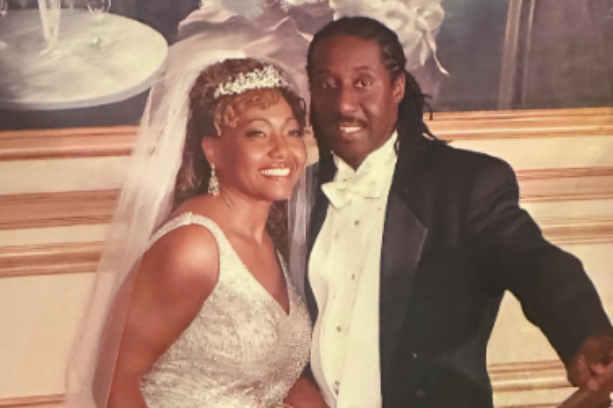
    Dr. Mabine and his wife, Lynda, married in 2006.Courtesy of the family

    His wife said he called himself a “major nerd.” She praised his “dry sense of humor” and “brilliant mind.”

    He graduated from West Philadelphia High School in 1967, became an officer for the Gamma Epsilon Theta fraternity at Hampton, and edited the minority students newsletter at Temple medical school.

    He married Gwendolyn Watts, and they had a son, Kenneth. After a divorce, he married Joanne Smith, and they had a daughter, Joanna. Joanne Mabine died in 2001.

    Dr. Mabine met Lynda Thomas at Temple, and they married in 2006, lived in Lower Gwynedd and Philadelphia, and traveled together for years on memorable trips to Paris, Hawaii, Florida, Virginia, Delaware, and elsewhere. “We built homes filled with love, warmth, laughter, family, music, and faith,” his wife said.

    Dr. Mabine “lived with purpose,” his wife said.Courtesy of the family

    Dr. Mabine enjoyed music, especially Smokey Robinson, the Delfonics, the Beatles, and Jimi Hendrix. He could hear colors and see sounds, his wife said, and he spun records as a popular disc jockey at family and social events.

    He loved peanut butter cups and was a huge Eagles fan.

    “He lived with purpose,” his wife said. “He served with integrity. He gave generously. And he loved deeply.”

    In addition to his wife and children, Dr. Mabine is survived by other relatives. A brother died earlier.

    Dr. Mabine (center) enjoyed time with his family.Courtesy of the family

    Visitation with the family is to be from 8 to 10 a.m. Saturday, Oct. 10, at Salem Baptist Church, 2741 Woodland Rd., Abington, Pa. 19001. A service is to follow.

    Donations in his name may be made to the Hampton University Ogre Phi Ogre 1 Endowed Scholarship, 100 E. Queen St., Hampton, Va. 23668.