Vineland residents who are some of the first in the Philly area to know what it’s like to live next to a massive AI data center share their experiences.
And the Delaware Valley Regional Planning Commission wants to know where you’re headed every day — and how you get there.
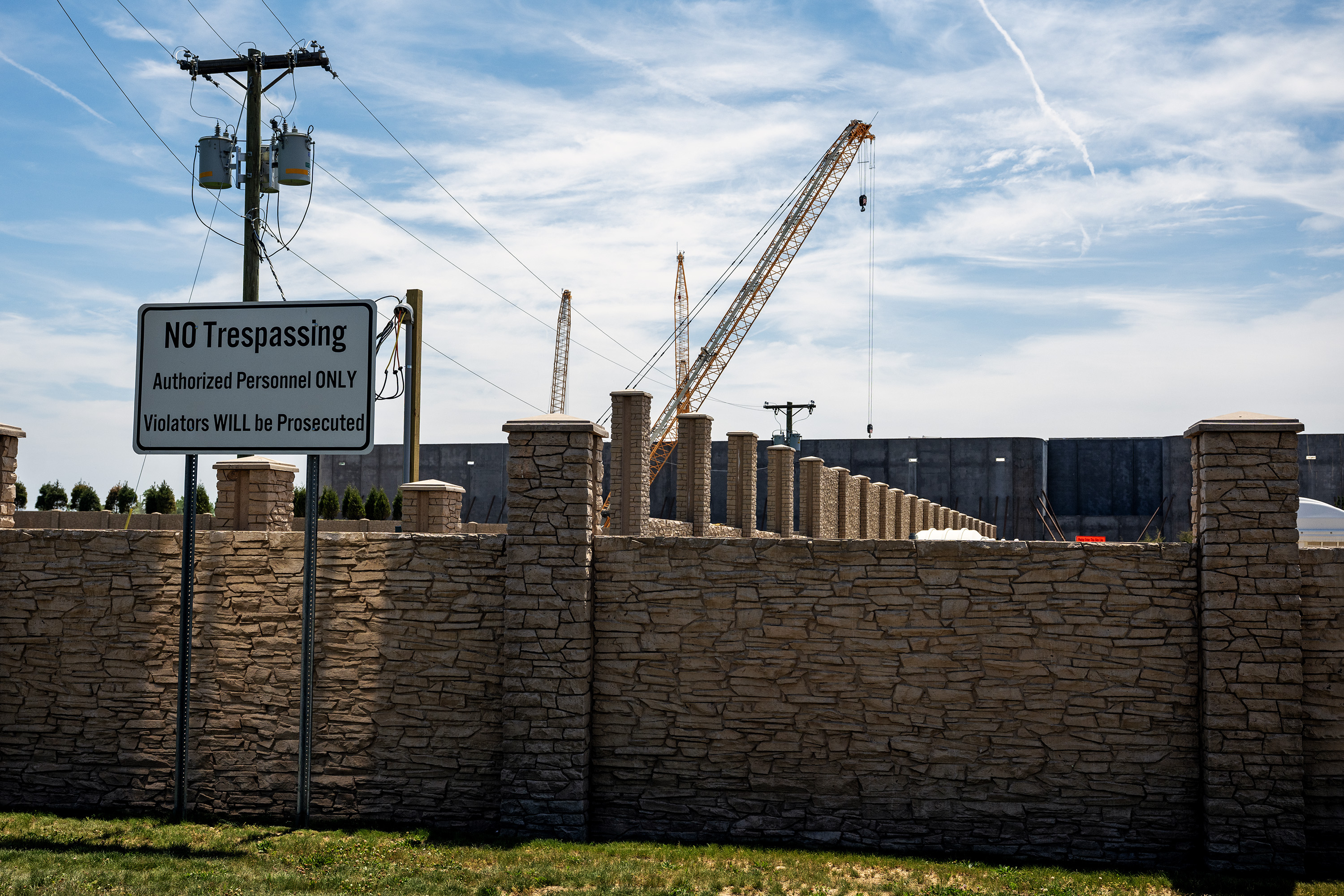
But a handful of local homeowners have the unique experience of seeing one from their houses — the DataOne facility in Vineland.
They used to have more neighbors before the data center developers and associates bought several homes that now appear to be abandoned.
Multiple residents commented on the excessive sound.
“I think of a prison, and I’m the prisoner with the noise,” said a homeowner of more than 47 years. “You get up in the morning and you’re in a foul mood.”
The DVRPC wants to know just about everything about people’s daily travel habits.
No, this is not about surveillance. After 13 years, the commission needs an updated survey to help guide funding decisions for infrastructure projects and transportation plans for the nine counties it serves, which include Burlington, Camden, and Gloucester.
Since January, it has been recruiting participants by mail to randomly selected households. Sorry, you can’t nominate yourself.
Those who opt in will have to track their household trips for 24 hours using a phone app. It’ll also ask the household basics: size, age, income, etc.
But how exactly will the experts use this information?
Five years after Clementon Park & Splash World was purchased at a bankruptcy auction, the recently shuttered 119-year-old amusement and water park is going back to auction this month.
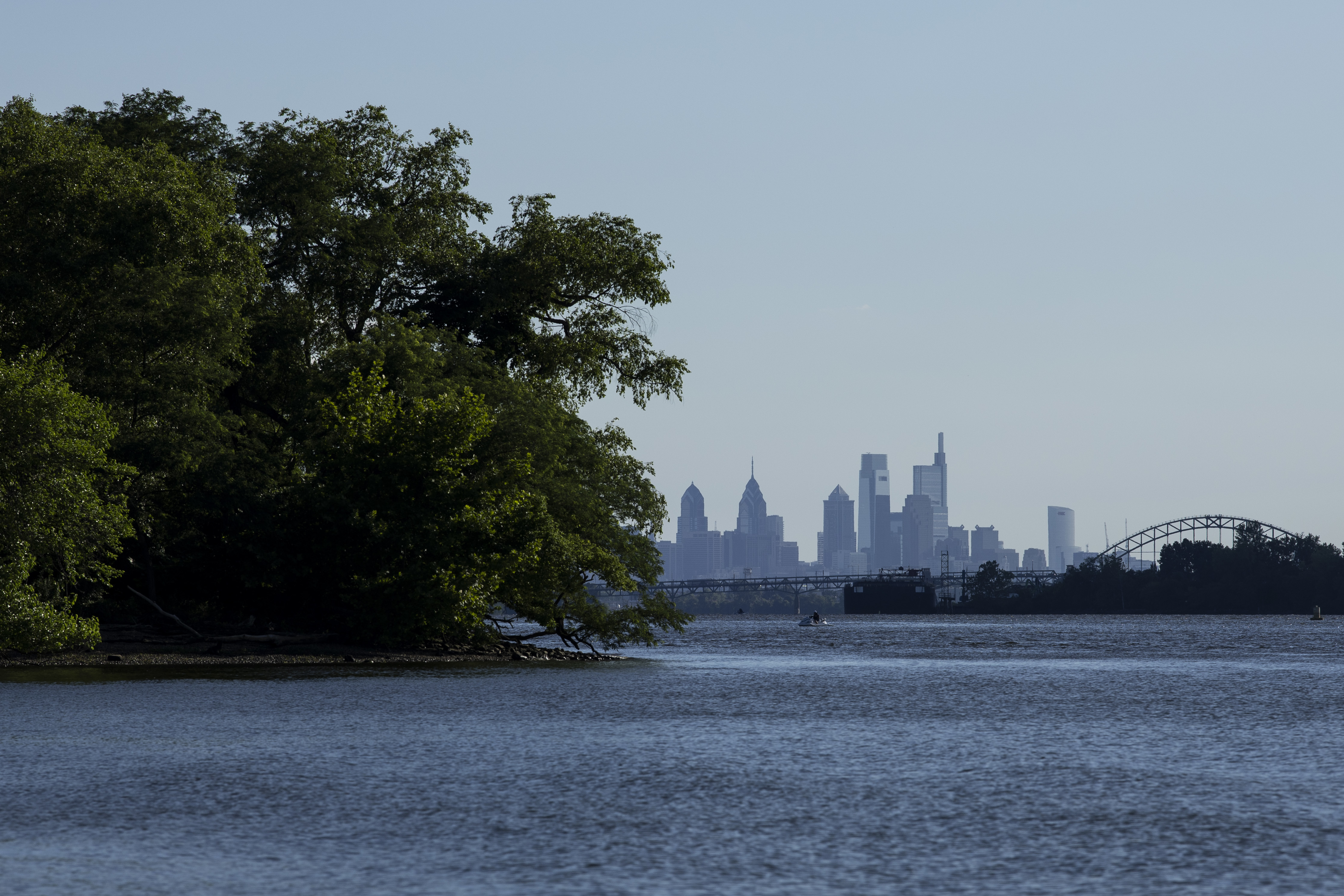
Researchers have found microplastic pollution in every one of the 22 stream and river segments along the Delaware River tested in New Jersey, Pennsylvania, Delaware, and New York. This includes Cooper River in Camden County.
Residents in Camden and Cherry Hill should be aware of possible detours and prepare to take alternative routes because of roadway projects scheduled for this week.
The Inquirer’s editorial board, which is separate from the newsroom, wrote that Gov. Mikie Sherrill’s call for now-former Lt. Gov. Dale Caldwell to resign set “an ethical example for a corrupt era.”
🗓️ The best things to do this week
🔮 Boos & Brews Witches Market: Check out this witch-themed market full of themed vendors and activities. Stick around for food trucks, a costume contest, performances, and a beer garden. ⏰ Friday, Oct. 2, 5-9 p.m. 💵 Pay as you go 📍 Rancocas Woods Events and Shops, Mount Laurel
📚 Collingswood Book Festival: The 24th annual festival is back spanning six blocks of Haddon Avenue. Come to meet booksellers and stay for author and poetry readings, performances, and workshops. ⏰ Saturday, Oct. 3, 10 a.m.-4 p.m. 💵 Free 📍 Haddon Avenue, Collingswood
🎨 Cranberry Fest: The 36th annual cranberry fest returns with live music, a food court, a beer garden, and more than 100 artisans. 💵 Pay as you go 📍 Farnsworth Avenue, Bordentown
Fleece fragments in a washer flow into a wastewater treatment plant. A plastic bag blows into a stream. A water bottle washes down a storm drain.
All can end up in the region’s waterways as microplastics smaller than a grain of rice and find their way into drinking water and the stomachs of animals and fish.
This kind ofmicroplastic pollution was detected in 22 stream and river segments across the Delaware River watershed, according to a new survey of waterways by the nonprofit advocacy group PennEnvironment Research and Policy Center.
Researchers analyzed water samples from sites along the Delaware River and its tributaries across Pennsylvania, New Jersey, Delaware, and New York.
The research was conducted in partnership with the nonprofit Environment New Jersey Research and Policy Center. Scientists with the Academy of Natural Sciences at Drexel University helped analyze the results, which were released Wednesday during a news conference at Fairmount Water Works.
Contamination was found in the Delaware and Lehigh Rivers and the Schuylkill. It was found in Neshaminy Creek in Bucks County, Brandywine Creek in Chester County, and Cooper River in Camden County. And it was found along the Christina River in Delaware.
Drexel’s lab analysis confirmed microscopic plastic at every sampled site, highlighting what the researchers say is a widespread environmental threat.
“We can look at a waterway, and it might be free of litter, it might be free of visible plastic pollution, but that doesn’t necessarily mean it’s clean,” said Faran Savitz, an advocate for PennEnvironment. “The big takeaway is that we should be concerned. The depth, the breadth of this plastic pollution is staggering.”
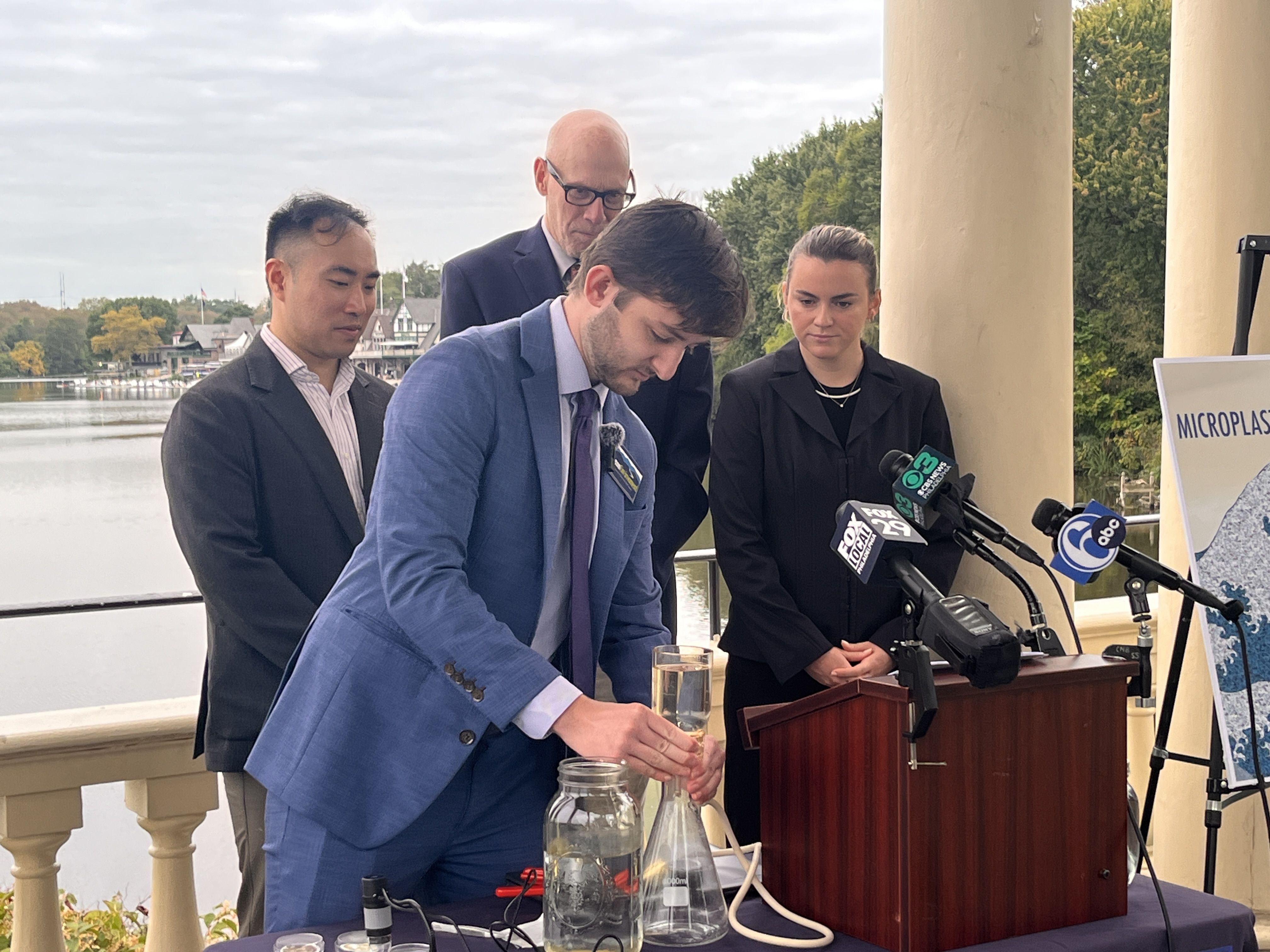
Faran Savitz with PennEnvironment demonstrates water testing. In the background from right are: Lizzy Mulvenna, with Environment New Jersey Research & Policy Center; David Velinsky, senior scientist, Academy of Natural Sciences; and Derek Ho, microplastics researcher, University of Pennsylvania.Frank Kummer
Where do microfibers come from?
Waterways in and around Philadelphia emerged as significant focal points in the survey results.
Samples drawn from the Delaware River in Philadelphia tested positive for multiple categories of microplastics including microfibers, microfragments, and microfilm, as did other waterways. Microbeads, often found in cosmetic products, were also found in the Christina River.
Microplastics are defined as fragments of less than 5 mm in length.
The synthetic microfibers came primarily from clothing and textiles. Rigid microfragments from items such as fishing line were found in 82% of locations. And flexible microfilm from bags and packaging appeared in 77%.
(function(){function e(){window.addEventListener(`message`,function(e){if(e.data[`datawrapper-height`]!==void 0){var t=document.querySelectorAll(`iframe`);for(var n in e.data[`datawrapper-height`])for(var r=0,i;i=t[r];r++)if(i.contentWindow===e.source){var a=e.data[`datawrapper-height`][n]+`px`;i.style.height=a}}})}e()})();
Microplastics have been found in humans
Researchers explained that laundering synthetic garments releases millions of microfibers that wastewater treatment facilities are unable to completely filter out before they are discharged into local streams.
However, because plastic does not biodegrade but continuously fractures into tiny fragments, filters capture only a portion of plastic entering a waterway.
Savitz said PennEnvironment’s study did not release the concentrations of microplastics because it did not want to compare one waterwayor state against another.
The findings carry ecological and public health implications, as microplastics can block digestive tracts in wildlife and absorb toxic chemicals like PCBs and PFAS that bioaccumulate up the food chain, the report stated.
On average, humans ingest approximately 5 grams of plastic weekly, which is roughly equivalent to the weight of a credit card. Microplastics have been found in human blood, lung tissue, and organs, the researchers said.
Plastics are also routinely found in wildlife, including sea turtles, birds, and whales. About 60% of all seabirds have ingested plastic, with that number rising.
The environmental advocates are urging state and local leaders to enact policies such as producer responsibility for plastic packaging, bans on single-use foam and plastic bags, strict limits on pre-production plastic pellets, and enhanced drinking water filtration systems.
Microbeads once used in personal care products were phased out under President Barack Obama in 2015. But many of those products still linger on household shelves.
File: A glass vial containing water and microplastic pollutionGetty Images
Philadelphia’s drinking water
Philadelphians get their drinking water from the Delaware River and the Schuylkill. Most microplastics are filtered out at the Philadelphia Water Department’s wastewater treatment plants, but some particlesstill get through.
In 2025, PWD removed 4.6 tons of plastic litter from the Delaware and the Schuylkill, alongside an estimated 1,000 tons of plastic extracted through sewer maintenance, the researchers stated.
PWD said in an online report that it is “unclear whether microplastics pose a danger to human health,” noting that the risk could depend on the level of exposure, the type of plastic, and the size of the particles.
But it noted that research suggests some are harmful to fish and animals and can build up in the organs or bloodstream over time.
“PWD is always investigating advanced treatment technologies that may eliminate microplastics and other impurities,” the report stated.
David Velinsky, a senior scientist at the Academy of Natural Sciences of Drexel University, said, “plastics and microplastics are everywhere, from our clothing to the ubiquitous water bottle.”
When plastics and microplastics are not properly disposed of or recycled, he said, they break down into ever smaller pieces.
They “can travel great distances through both the air and in the water,” Velinsky noted.
A plea for ‘producer responsibility’
To combat pervasive plastics, advocates are urging federal and state lawmakers to enact targeted reforms, including the federal Plastic Pellet Free Waters Act currently before Congress, and state-level producer responsibility legislation for plastic packaging.
Savitz emphasized that shifting financial and operational burdens back onto manufacturers is critical to curbing waste at its source.
At least seven states have passed producer responsibility laws, though not all are in effect, according to the Product Stewardship Institute. Those states include Washington, Oregon, California, Colorado, Minnesota, Maryland, and Maine.
“If we can shift the burden back onto companies that create this waste in the first place,” Savitz said, “we can actually reduce the waste, encourage recycling, and make these broader, more systemic changes.”
Potential buyers can either continue operating the park, spanning more than 50 acres in Camden County, as an amusement destination or redevelop the property in a variety of ways, including as a hotel or for retail, residential, or entertainment uses, according to the property listing.
The public auction is set to begin Oct. 19 at noon with bids starting at $1.5 million, the listing shows. The 48-hour auction window is scheduled to close at noon on Oct. 21.
IB Parks & Entertainment bought the park for $2.37 million in the 2021 bankruptcy auction after financial struggles forced the park to shut down suddenly two years earlier.
“After five memorable years, we are saddened to announce that we have made the difficult decision to close the park and plan to offer the park for sale,” the company said in a statement announcing the closure on its website and social media accounts earlier this month. “It has been a privilege to care for a place that has meant so much to generations of families.”
At the time of the closure, the park was one of five amusement properties owned by the company, including West Berlin’s Sahara Sam’s.
IB Parks & Entertainment did not respond to requests for comment.
Clementon Park opened in 1907 as the brainchild of state Assembly member Theodore B. Gibbs and his sons and quickly became a popular destination for families across South Jersey.
After years of being independently owned by various families, the park was bought by its first private amusement park operation company in 2007.
With various management companies at the helm over the next decade, the park expanded significantly with the addition of new thrill rides, children’s attractions, and a 23,000-square-foot wave pool.
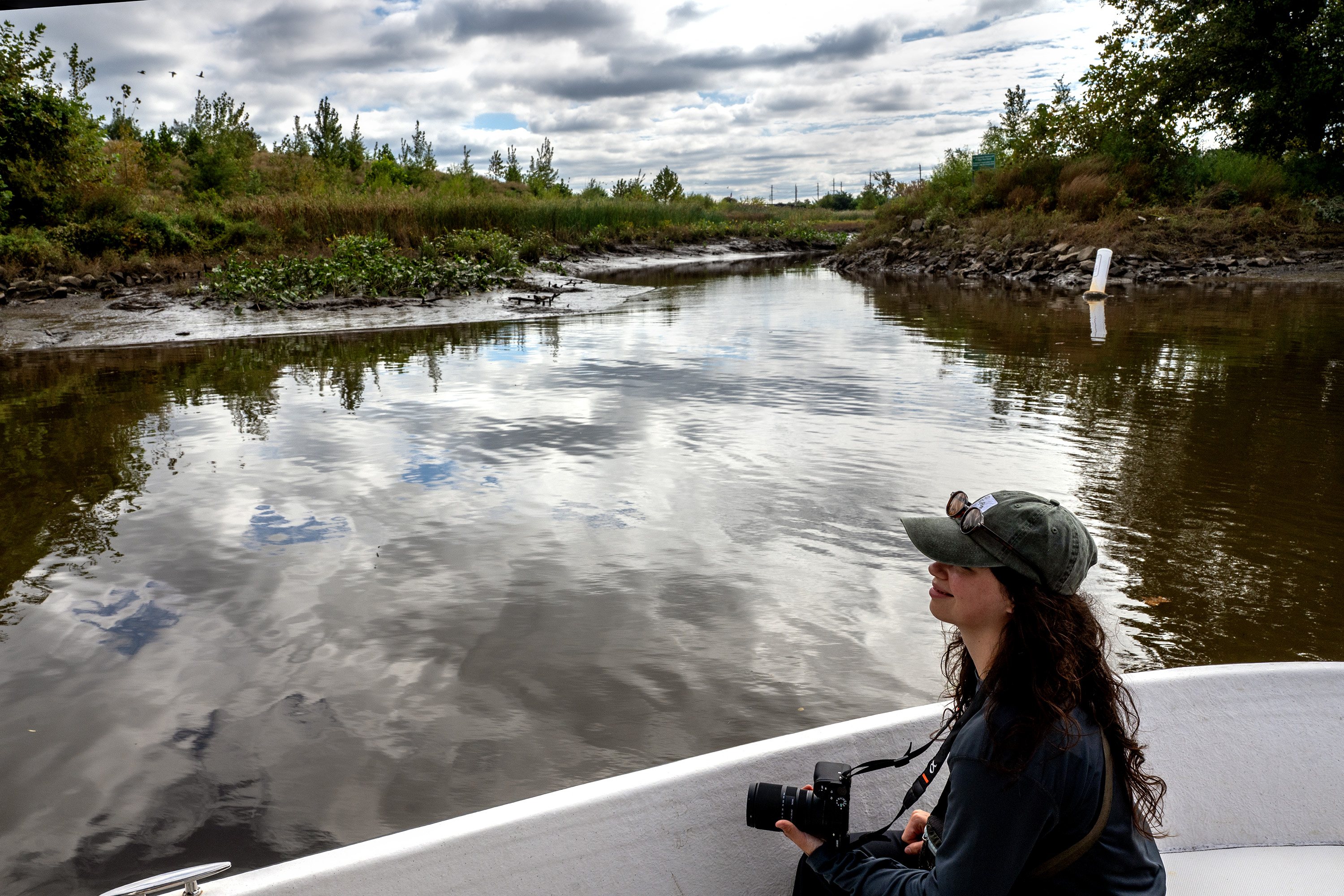
The temperature was in the low 70s with a light breeze and clear skies. It was perfect boating weather. A group of students from Philadelphia’s Maritime Academy were excited to paddle out onto the Cooper River.
But Don Baugh from the Upstream Alliance had to cancel the trip. The water was still too dirty from the weekend’s heavy rain, which can cause sewage to spit out into the river from old pipes in Camden.
“Our goal is that we don’t have to cancel at all … we’d be able to say anybody can recreate, play, swim, on this water 365 days of the year, whether it rained or not,” Baugh said from his motorboat on Tuesday, surrounded by greenery and mud-colored water.
That is why Baugh hopes voters will support a ballot referendum in Camden County that would increase the open space tax by one cent per $100 of property owned. That one-cent increase would go toward the county’s ambitious plan to rehabilitate its sewers and waterways through a multifaceted initiative that is slated to cost about $400 million across the next 10 years. It has become more urgent, county officials say, as powerful storms and flooding become more commonplace due to climate change.
The nonprofit Upstream Alliance provides free kayaking to the public, but the organization has had to cancel about 20% of its programming due to concerns about water cleanliness, Baugh said. His rule of thumb is to wait 48 hours after half an inch of rain falls before allowing people in the water, so the bacteria from the sewage can die. But even that was not enough time following the weekend’s storm.
Put frankly, the water still looked “yucky,” Baugh said, so he was not going to expose people to it.
Olivia Liu with Upstream Alliance on the Cooper River in Camden County on Tuesday. A tax increase ballot referendum would fund projects like sewer rehabilitations aimed at improving the county’s waterways.Tom Gralish / Staff Photographer
What is the referendum?
Camden County voters have already been receiving their mail ballots for the Nov. 3 election. One of the decisions they face is whether to raise the county’s open space tax by one cent — bringing it to $0.03 per $100 of assessed property value. If it passes, the tax will still be one cent lower than in neighboring Burlington and Gloucester Counties.
This means that someone with property assessed at $500,000 would pay $150 a year toward open space, up from $100 at the current $0.02 rate.
The county’s open space tax is used to preserve parks, farmland, and historic sites. But the one-cent increase would be dedicated to the county’s $400 million clean water plan, which includes sewer repairs along the Cooper River, green infrastructure, dredging in local lakes, and recreation programs.
“The county is making a very bold step doing this now, and, frankly, nobody wants a tax, right? But everybody wants a higher quality of life,” Baugh said. “Everybody wants a safe and clean environment today and for tomorrow.”
Scott Schreiber, the executive director of the Camden County Municipal Utilities Authority (CCMUA) —the entity overseeing the project — believes the county could raise about $7 million from the tax increase, which could result in approximately $100 million worth of project funding through the New Jersey Water Bank, which offers the entity very low interest rates and principal forgiveness.
The existing user rate that residents pay to the CCMUA will go toward the projects, Schreiber said, and the county will also seek out funds from the state and federal governments, as well as philanthropies.
“It’s not one entity that can fix this,” Schreiber said. “This is going to take a combination of local government, state, federal government, advocacy groups, and the regular public to make this work. Without that combination of people and funding, it’s going to be really impossible to fix any of this stuff.”
Here is what the $400 million effort, which the tax increase would go toward funding, entails.
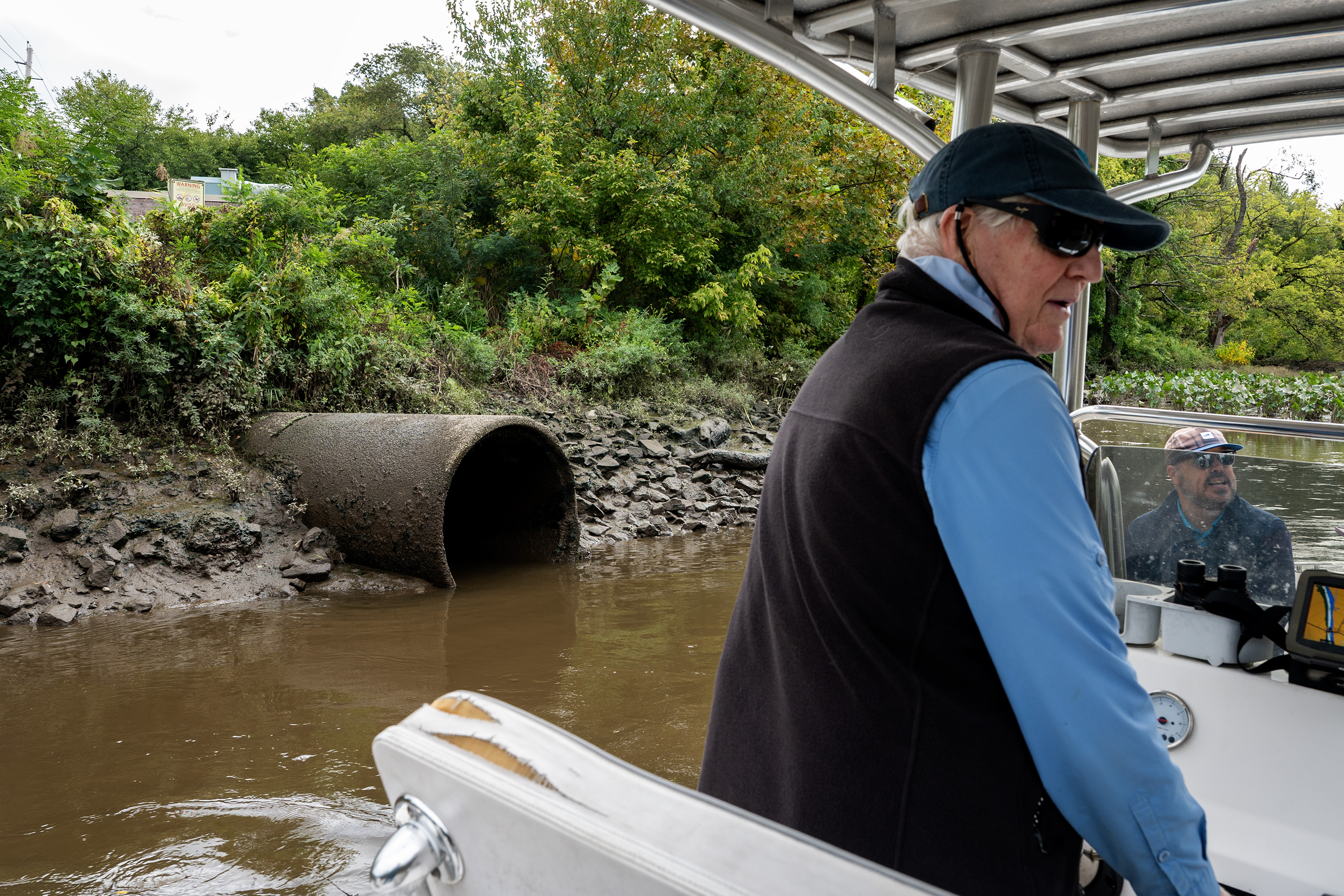
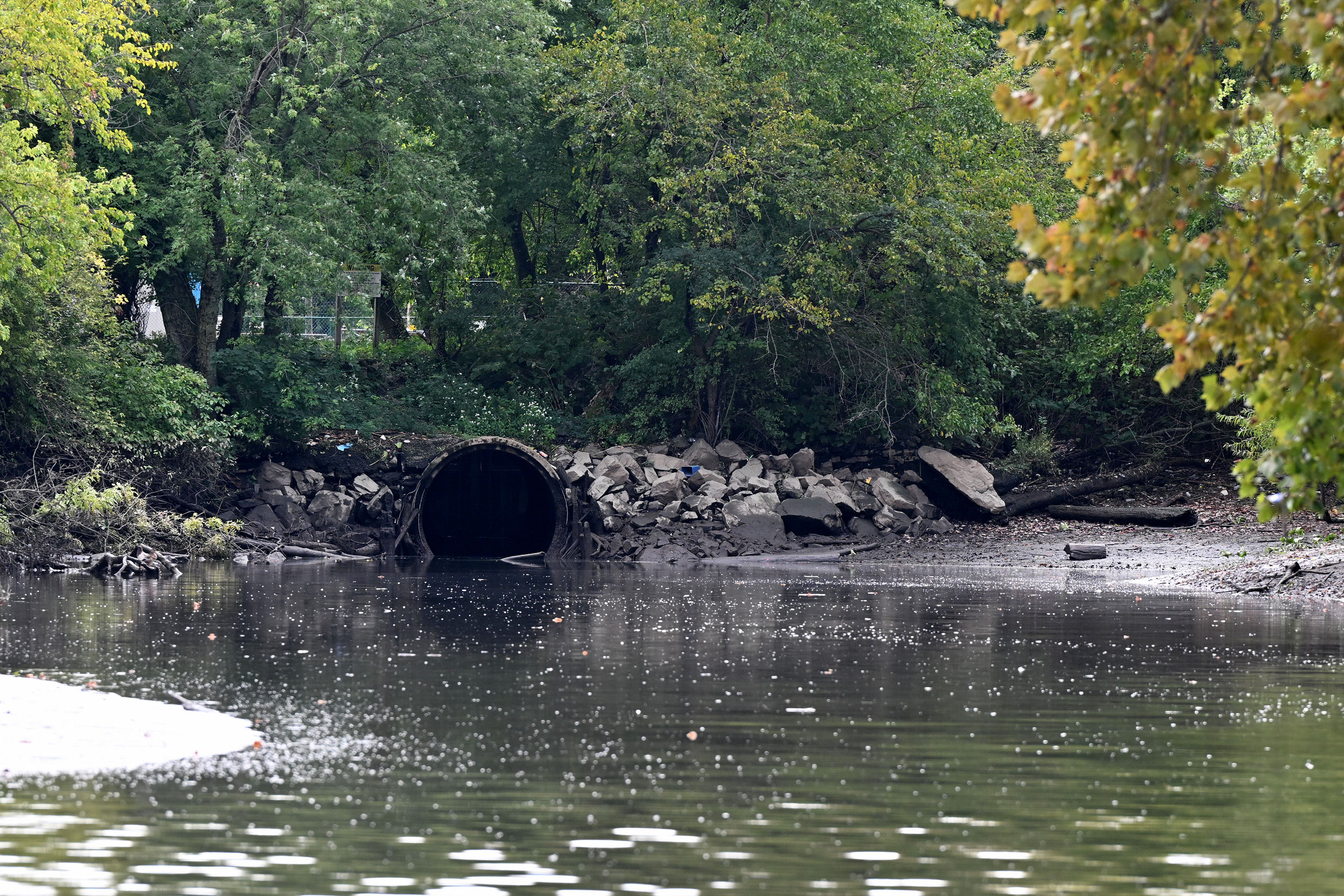
A combined sewer overflow site during low tide on Tuesday. This 60-inch discharge pipe spits out untreated wastewater and stormwater during heavy rain events, which flow directly into the back channel of the Delaware River.Tom Gralish / Staff Photographer
The sewer problem
The cities of Camden and Gloucester have an antiquated sewage system that combines stormwater and sewage in the same pipes. The pipes are designed to carry the combined liquid to the wastewater treatment plant, but when there is heavy rain, they can overflow and the contaminated water spits into the Cooper and Delaware Rivers. The overflow from the combined pipes can cause flooding — and then residents are subjected to sewage-infested waters in their streets and homes.
“These are the old stone pipes that were built before the current technology,” Camden County Commissioner Jeffrey Nash said.
“But as both cities grew, and the storms have become more violent, and rain has become more excessive … flooding has been a large problem,” he added.
On top of the risks to humans, the nutrients from the human waste are harmful for aquatic life.
There are 30 combined sewage overflow spots in the two cities, Schreiber said, that dump waste into the river when there is heavy rain and the system cannot handle it. Just one of the larger combined pipes pours out about 200 million gallons of sewage-filled water a year, he said, and the two cities dump out about 800 million gallons on average altogether.
The county wants to spend $200 million to upgrade this system.
The rest of the county has separate stormwater and sewage pipes, but they still need to be maintained. Leaky pipes can also cause sewage to spill into the river.
The county plans to spend about $50 million for the rehabilitation of these sewer systems across multiple municipalities. The county has already begun the design process for lining some of these pipes, Schreiber said.
The bottom line is, the Cooper River — which runs from Gibbsboro and Voorhees out to the Delaware River — does not meet state and federal water quality standards, he said, so the county is taking a “holistic approach” to fix the waterway that flows through multiple municipalities.
Wildlife along the back channel of the Delaware River near the Cooper River on Tuesday.Tom Gralish / Staff Photographer
Green infrastructure
The plan also includes $25 million for green infrastructure, like rain gardens or bioswales, which are typically sloped channels covered with vegetation.
Green infrastructure gets water directly into the ground, which helps with flooding and decreases the amount of water going through the pipes to the treatment plant, overall alleviating the system. This infrastructure, however, requires expensive and ongoing maintenance, Schreiber said.
“The more that you contain the water on the land, the better it is for the water,” Baugh said.
Dredging
The project also includes $75 million for dredging and other methods of removing sediment from public waterways. This sediment includes toxins that end up in the water from residential and business areas, and if it is not removed, waterways can become defunct. It is part of what makes Camden County’s waterways brown after heavy rain, because “a lot of not-good stuff on the bottom” gets stirred up, Schreiber said.
“We really want to make sure that we’re taking that sediment out, so that even if it does get disturbed and move, it’s moving clean sediment and not polluting or contaminating,” he added.
Cleaning up Evans Pond and Wallworth Lake, Cooper River Lake, and Kirkwood Lake are priorities for the county.
Newton Lake Park, which runs through Haddon Township, Collingswood, and Oaklyn, finished a two-year, $23 million dredging process in 2023 that rehabilitated the lake after it became clogged. And just on Tuesday, the county unveiled the results of a $1.3 million project to improve fishing piers at the rejuvenated lake.
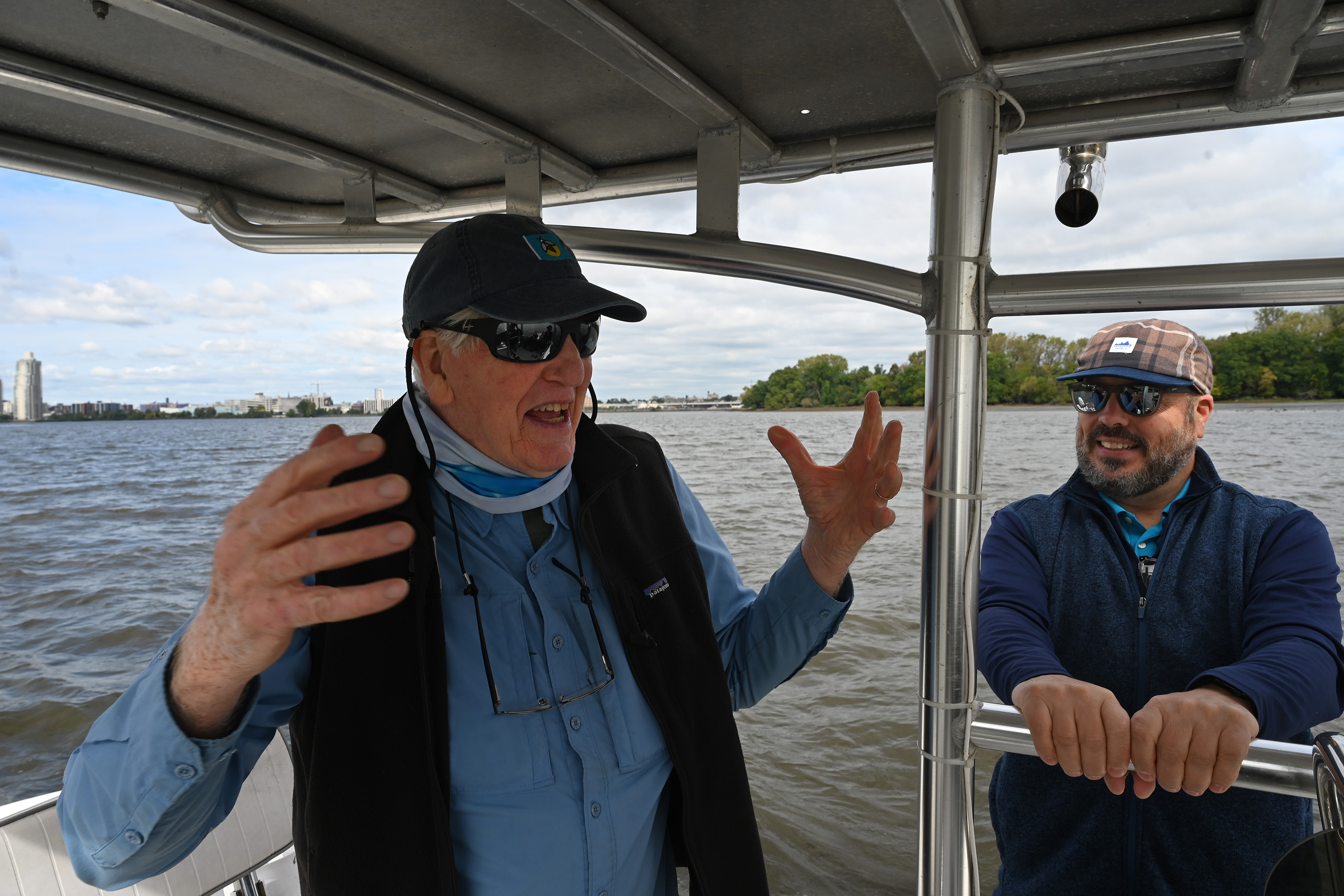
Don Baugh, president and founder of Upstream Alliance is on the Delaware River on Tuesday with Scott Schreiber (right), executive director of the Camden County Municipal Utilities Authority, looking at sewage runoff from Camden’s waterways.Tom Gralish / Staff Photographer
Parts of Camden’s waterways are littered with lead and arsenic that was used in apple orchards decades ago in places like Cherry Hill and Voorhees, as well as toxins from the Sherwin-Williams/Hilliards Creek Superfund site, the location of a former paint manufacturer in Gibbsboro.
Recreation
Baugh said local families who do not have experience on the water and might not know how to swim show up to his free Saturday kayaking program disappointed that they cannot go out on a nice day. As the county gradually addresses its sewage issues, he expects to feel better putting people out on the water under his 48-hour rule and one day get rid of it completely.
And the county’s plan would give more options for residents to enjoy their local waters, with $50 million allocated to restoring recreational lake areas. This effort aims to bring more fishing piers, kayak rentals, boat launches, and water trail systems, Schreiber said. The county is prioritizing rehabilitating Atco Lake, Lake Worth, and Audubon Lake, according to its planning document.
Nash described exploring the county’s urban waterways as a “great thrill.” He wants more residents in Camden to enjoy it, too.
Each of the plan’s components has distinct advantages, but taken together their benefits amplify, Schreiber said.
“And if you do that holistically from the top of the county all the way down, you’re going to have a much more clean and friendly park system and river water system,” he added.
The weekend is so close. If you need help settling on plans, check out this list of our favorite things to do in South Jersey this weekend.
Come back every week, and you’ll always have something fun on your radar.
Boos & Brews Witches’ Market
Check out this witch-themed market full of themed vendors and activities. Stick around for food trucks, a costume contest, performances, and a beer garden.
⌚️ Friday, Oct. 2, 5-9 p.m. 📍 Rancocas Woods Events and Shops, 118 Creek Rd., Mount Laurel 🌐 facebook.com 💵 Pay as you go
Make & Take: Flower Power Pumpkins
Listen to a lecture about growing your own pumpkins and drying and pressing flowers as you decorate a gourd.
The 24th annual festival is back spanning six blocks of Haddon Avenue. Come to meet booksellers and stay for author and poetry readings, performances, and workshops.
Bordentown’s 36th annual cranberry fest returns with live music, a food court, a beer garden, and more than 100 artisans.
⌚️ Saturday, Oct. 3 and Sunday, Oct. 4, 11 a.m- 5 p.m. 📍 Farnsworth Avenue, Bordentown 🌐 btownfest.com 💵 Pay as you go
Clayton Fall Festival
Celebrate the cooler season with crafts, a trunk-or-treat, and music.
⌚️ Saturday, Oct. 3, noon-4 p.m. (rain date: Sunday, Oct. 4) 📍 Autumn Pasquale Memorial Park, 29 East Ave., Clayton 🌐 facebook.com 💵 Free
The Rocky Horror Picture Show
Step into spooky season with The Rocky Horror Picture Show. This event will feature original member Barry Bostwick, who played Brad Majors in the film. The audience will have opportunities to meet him, compete in a costume contest, and interact with a live performance by the local Spooktacular Shadow Cast performing scenes as the film plays.
Brand new this year for Halloween, the Great Pumpkin Glow will feature thousands of glowing jack-o’-lanterns. Walk through the pathway, take festive pictures, and indulge in some treats.
⌚️ Friday, Sept. 25-Saturday, Oct. 31, various evening times 📍 Dalton Farms, 666 Oak Grove Rd., Swedesboro 🌐 greatpumpkinglownj.com 💵 $22.95-$27.95
Live Jazz at blueplate
The restaurant blueplate offers live jazz during the summer on some Friday evenings and Sunday mornings.
⌚️ Fridays, 6:30-8:30 p.m. through the end of September; Sundays, 10 a.m.-1 p.m. through the first weekend in October 📍 47 S. Main St., Mullica Hill 🌐 blueplatenj.com 💵 Pay as you go
Yoga at Cooper River Park
Take a free yoga class. All ages are welcome, but bring your own yoga mat.
⌚️ Mondays, 6-7 p.m.; Wednesdays, 9-10 a.m.; and Thursdays, 6-7 p.m. through Oct. 1 📍 Cooper River Park, 5300 North Park Dr., Pennsauken 🌐 camdencounty.com 💵 Free, but registration is required
Burlington County Farmers Market
Come by one of the most popular farmers marketsin the region, offering local fruits, vegetables, honey, cheese, baked goods, and more.
⌚️ Every Saturday through Nov. 14, 8:30 a.m.- 1 p.m.📍 Burlington County Agricultural Center, 500 Centerton Rd., Moorestown, 🌐 www.burlcoagcenter.com 💵 Pay as you go
Collingswood Farmers Market
The Saturday market brings fresh produce, meat, coffee, flowers, and live music to Collingswood and supports the region’s farmers every week.
⌚️ Every Saturday through Nov. 21, 8 a.m.-noon 📍 Atlantic Avenue between Collings and Irvin Avenues (along PATCO), Collingswood 🌐 collingswoodmarket.com 💵 Pay as you go
Haddon Heights Farmers Market
This Sunday farmers market offers multiple vendors selling fresh produce, crafts, and other entertainment from local businesses.
⌚️ Sundays through Nov. 22, 9:30 a.m.–1p.m. 📍 The intersection of Station and Atlantic Avenues, Haddon Heights 🌐 haddonheightsfarmersmarket.com 💵 Pay as you go
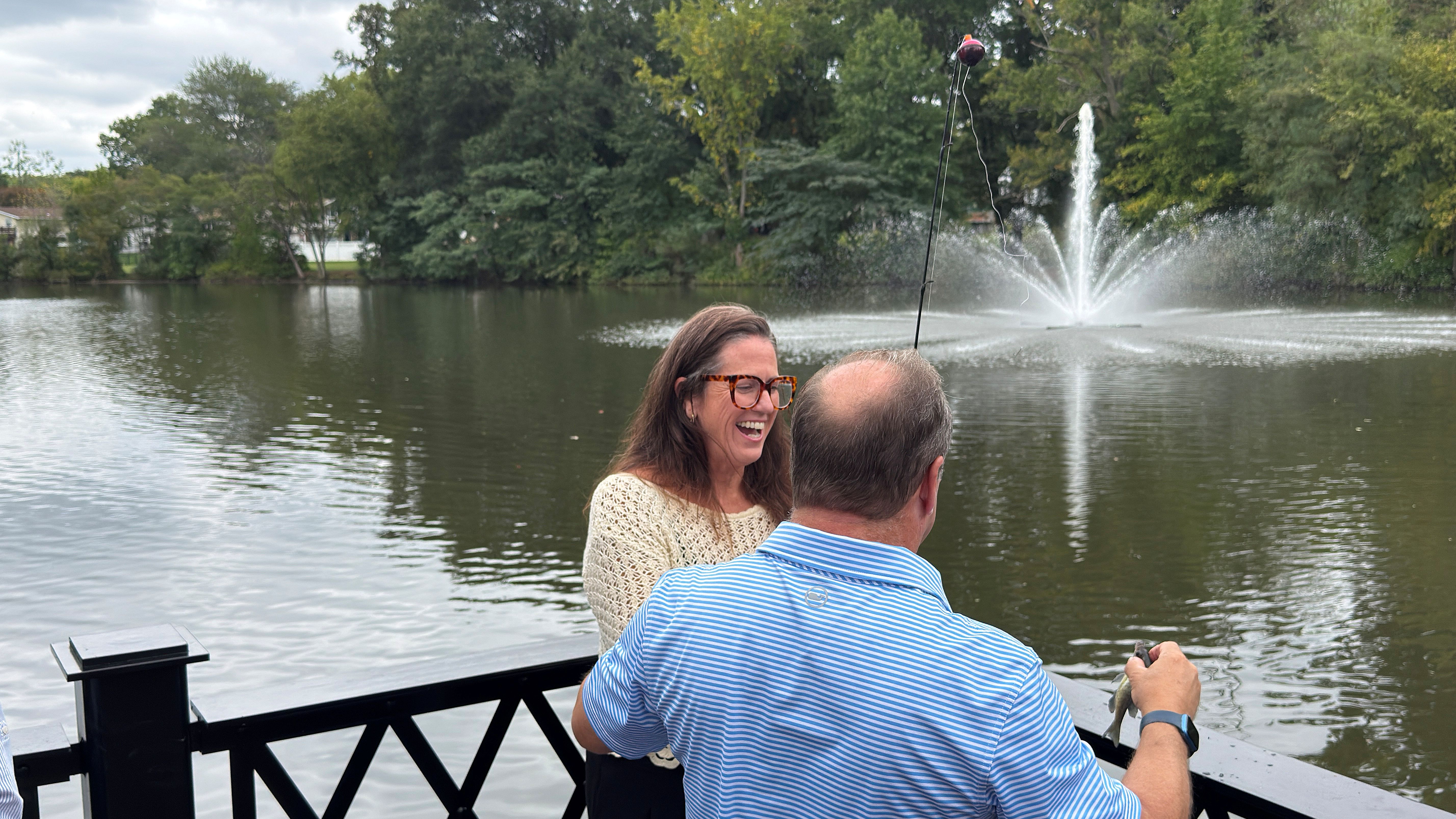
Surrounded by government officials with fishing rods, Nancy MacGregor proved herself to be the master angler of the afternoon at the 103-acre Newton Lake Park on Tuesday.
MacGregor, president of the Oaklyn Borough Council, pulled in a four-inch fish and, with a shocked look, asked what to do next. Camden County Commissioner Director Louis Cappelli Jr., who spent time as a kid fishing in the park that runs through Oaklyn, Collingswood, and Haddon Township, removed the tiny catch from the hook and tossed it back into the lake.
Cappelli, MacGregor, and others were there to officially open seven new fishing piers at the park that replaced deteriorated ones from the 1930s, a $1.3 million project developed using open space funds.
“These piers are safer, stronger, and fully ADA compliant, making sure residents of all abilities can enjoy fishing, spend time along the water, or simply enjoy everything Newton Lake has to offer,” Cappelli said at the opening.
Newton Lake has several varieties of fish, including large-mouth bass and catfish. They are strictly catch-and-release and not safe to eat, according to the county.
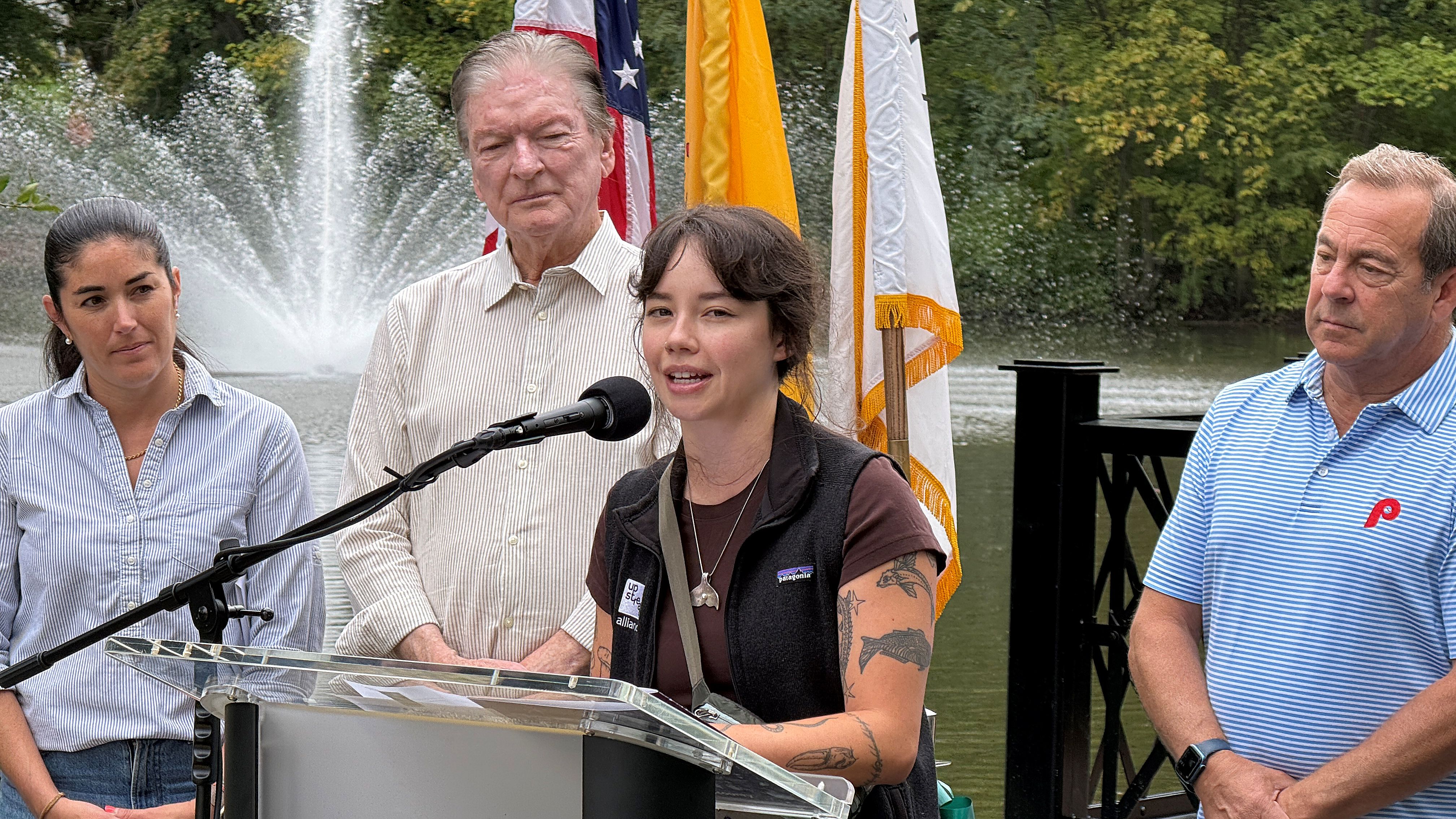
Olivia Liu of the nonprofit Upstream Alliance said the piers mean more than just catching fish. Looking on is, from left, Collingswood Mayor Daniela Solano-Ward, Camden County Commissioner Edward T. McDonnell, and County Commissioner Director Louis Cappelli Jr.Neill Borowski for The Inquirer
Improved paths near the piers will be the next phase of the project, said Jeremy Noll, whose company, Environmental Resolutions Inc. of Mount Laurel, oversaw the project. Some will be raised so they are not covered in mud during heavy rain, which is an issue with the current ones, he said.
The piers are also 6 to 8 inches higher than the old ones, so they will be accessible when Newton Lake rises.
Noll said he expects the piers to last 50 years, but the decking may need to be replaced after 20 years.
Local leaders at the opening said they are excited for the public to visit the piers, which are free to use.
“This project here today isn’t just about catching fish. It’s about improving people’s quality of life and creating fun, engaging, and meaningful outdoor experiences right in their own backyard,” Olivia Liu, program and communications director for the nonprofit Upstream Alliance, told the group. “It’s about having the opportunity to love and appreciate the community that you live in.”
Health insurance premiums will cost 34.4% more for 300,000 public school and county college employees and their familiesacross New Jerseynext year as medical costs continue to escalate and the popularity of costly prescription drugs soars.
The change will affect teachers and other school staff in Camden, Pemberton, Evesham, and nine other South Jersey districts, as well as six unions at four local colleges.
What is to come for students, employees, and taxpayers may be just as dire. Cutting jobs, reducing transportation and student extracurricular activities, and raising property taxes are the most likely options school districts and collegeswill consider, said Jonathan Pushman, advocacy director for the New Jersey School Boards Association.
“The dilemma is there are limited options we can turn to,” Pushman said. “A lot of difficult decisions are ahead.”
On Friday, the New Jersey School Employees Health Benefits Commission voted 4-2 to accept the premium increases forecast by the state’s actuary. Democratic Gov. Mikie Sherrill’s administration had warned that if the commission did not act, it would have closed down the insolvent program at the start of the new year.
Instead, the rate hikes will take effect in January.
The School Employees’ Health Benefits Program serves 212 school districts and county colleges, representing 300,000 employees, retirees, and their dependents.
The local districts covered by the plan are Camden, Brooklawn, Beverly, Delanco, Evesham, New Hanover, Pemberton, Willingboro, Elk, Newfield, Camden County Technical Schools, and the Burlington County Board of Special Services, which serves special-needs students.
It also provides coverage for employees of Camden County College, Rowan College at Burlington County, Rowan College at Gloucester County, and Rowan College of South Jersey, according to the New Jersey Treasury Department.
There are a total of 590 school districts in New Jersey, with the majority of them, including Cherry Hill, obtaining health coverage outside the state plan. In recent years, steeper costs have compelled many districts to leave in search of a more affordable option. Those who stay tend to serve an older and sicker — and therefore a more expensive — population and cannot afford a better deal on the open market.
These conditions have created a “death spiral” for the plan, actuarial and state officials say. The State Health Benefits Plan for state and local workers faces a similar crisis.
The union-affiliated members on the commission voted against the premium hikes, insisting there had to be a way to cut costs.
After the vote, New Jersey Education Association president Steve Beatty and other top officials said in a statement that their members on the commission “requested information, proposed specific steps to reduce the rates and sought greater transparency about the factors driving these increases. Unfortunately, the division has refused to meaningfully engage in that effort.”
The rate hikes “threaten the resources available for students,” the union officials’ statement said. “They should not lose out because health care costs are out of control. When districts are forced to spend significantly more on health care, that leaves less money for the programs, staff and services our students rely on every day.”
School officials huddled this week to consider the array of unpalatable options. Few were ready to say what comes next.
Rowan College of South Jersey “will continue to evaluate the situation and make adjustments as necessary while keeping student success our priority,” said Susan Nardelli, vice president of communications, marketing, and enrollment management. “Every industry is facing the same healthcare struggle.”
Union leaders said they are counting on state lawmakers to find a solution. They said they seek action on a proposed bill that would create a new health benefits trust, composed of union and management leaders, and establish a three-doctor medical advisory panel. Districts that join would not be permitted to leave, according to the bill.
The new insurance trust would “provide greater transparency and accountability and is focused on controlling costs,” the union’s statement said.
School boards agree that dramatic changes are necessary, Pushman said. This must include “honest conversations with unions,” he said.
Schools — which are funded by taxpayers — bear 98% of the cost of health insurance compared with the 2% covered by employees, Pushman said. In the private sector, employers pay about 90% of the cost.
A law enacted during the pandemic set specific limits on what school employees must pay for healthcare, based on their income level. That law, which expires at the end of next year, has limited the options for savings, Pushman said.
“As much as we want to provide quality healthcare coverage, bearing the costs of these incredibly rich plans is getting to the point of unsustainability,” he said.
State Sen. Troy Singleton (D., Burlington) agreed.
“We have to be honest with … what the state can afford to provide sufficient coverage for employees. It’s not a bottomless pit for taxpayers,” Singleton said. “It’s become a frustrating point for all parties.”
Marynelle Milanese didn’t pick up when Pancheros Mexican Grill called her this month. She thought a message crowning her the nation’s first “Queso Queen” was surely a scam.
But when the Mexican fast-food chain followed her on Instagram, the Voorhees resident realized it was true: Milanese, 33, is the first woman dubbed queso royalty. Her family, which runs Milanese Brothers Pizza in Stratford, couldn’t believe it either.
“We all still just can’t get over it, that this is even a thing,” Milanese said.
Pancheros honors its rewards member who buys the most queso in a given year on Sept. 20, National Queso Day, with a trophy, a personal party at the chain, and a prize box — featuring merch, a helping of burrito coupons, and a signed poster of retired WWE wrestler Big E, who has a partnership with the brand.
She also gets free queso for a year.
Pancheros debuted the award in 2019, and Milanese is the second New Jerseyan to win it. She bought queso 235 times since last September and has visited the chain 434 times over the past six years.
The trophy, which calls Milanese the “Queso Cup Champion,” currently sits on her entertainment center at home, five minutes down the road from her local Pancheros in Voorhees, Camden County. Milanese started eating at the chain 12 years ago, when her husband’s family introduced her to “Panch” and gave her a lifetime love of the burrito bowl, which she orders with cilantro rice, pinto beans, extra steak, queso (of course), and sauteed veggies.
More than 200 queso orders might look like a lot in a year, but Milanese has a reason for buying so much.
Debbie Milanese, 63, is somewhat of a queso queen herself. Milanese’s mother-in-law, who lives with Milanese and her husband, can’t stomach most foods due to various health conditions.
“Not everything sits right with her,” Milanese said. “But Pancheros always does.”
Milanese orders queso for the both of them, and they split it, since it’s something her mother-in-law can enjoy. Plus, it gives the pair something to do.
“It has always brought us together,” she said.
With Debbie’s birthday coming up in November, Milanese said she hopes to turn the 20-person Pancheros party, a perk of her queso win, into a family get-together.
Pancheros has about 70 locations across 12 states, including 10 in New Jersey and three in Pennsylvania. The chain has more than a million rewards members.
Last year, Josh Davis of Iowa won the Queso King trophy for the third time with 326 queso orders, less than he ordered in 2023 and 2021 for his previous queso victories.
In 2022, a resident of Bedminster, Somerset County, became Pancheros’ first New Jersey Queso King with 230 orders.
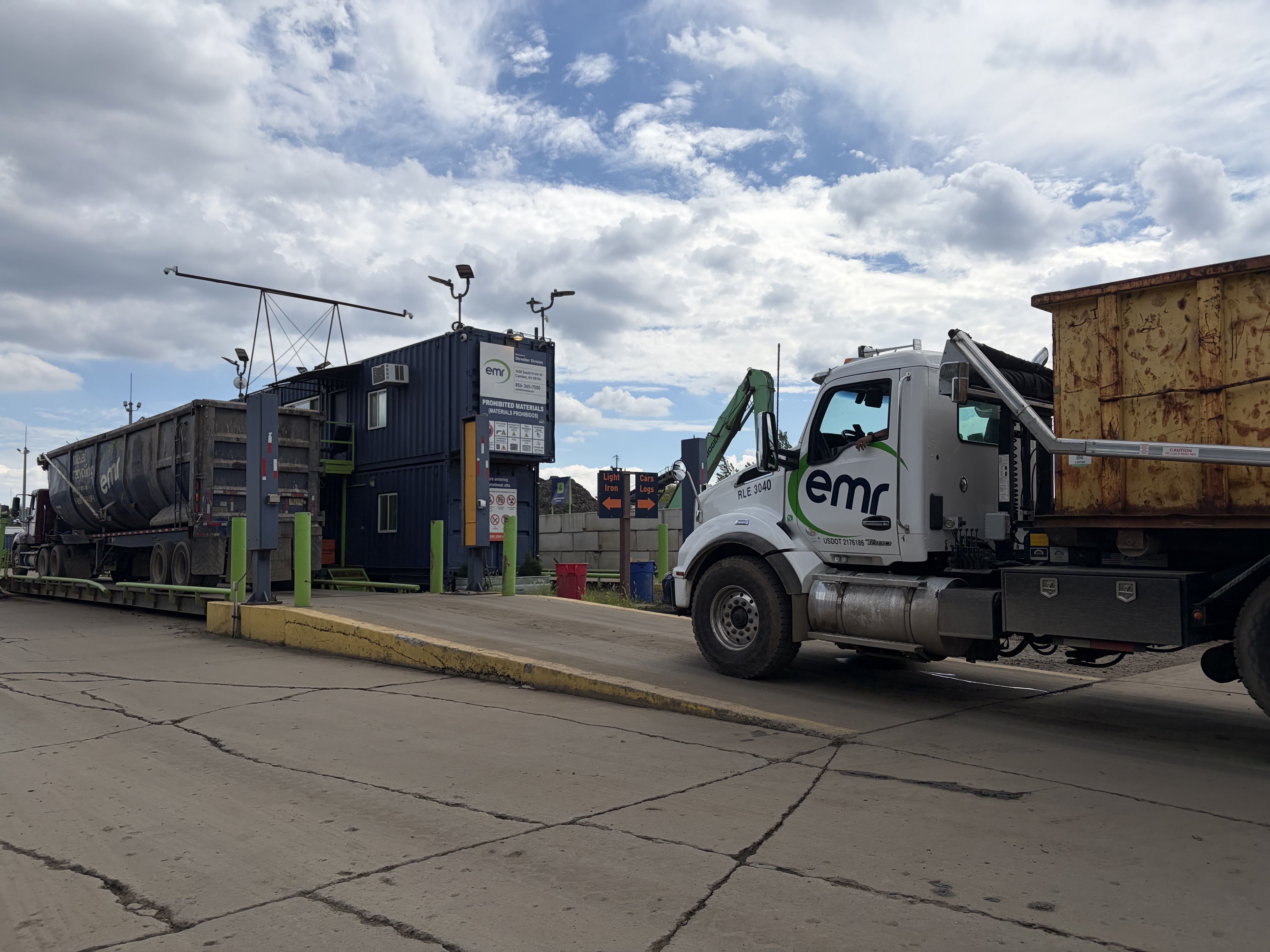
Camden has sued the long-beleaguered scrap metal recycler EMR after it says it failed to donate more than a million dollars promised to the communityin an agreement last summer.
U.K.-based EMR Advanced Recycling signed anAugust 2025 memorandum of understanding with the city, in response to a massive fire earlier that year, agreeing to gift more than $3 million to local initiatives through 2030. This would come in the formof an initial $1 million donation into a community benefits fund,followed by annual payments of $450,000 for five years.
The city claims that EMR still has not paid its initial contribution or the first of its annual payments to the newly created EMR Community Benefits Fund, as of the lawsuit’s filing on Sept. 25. But the company says it has allocated just under $2.3 million to a separate EMR Camden Community Investment Fund since 2023, and believes that money should count.
Administered by the Community Foundation of South Jersey, the new fund is intended for community improvement initiatives in Camden, especially for residents in the Waterfront South neighborhood who have been most impacted by EMR.
EMR, in a statement, pointed to the Community Foundation fund’s current $2.3 million balance as proof that they have been making payments for years. The filing states that the company has made 35 payments total, 22 of which came in before the 2025 agreement.
But because the majority of the payments were made prior to 2025, William Tambussi, a lawyer for the city of Camden, argues that the $2.3 million is entirely unrelated to the money that is owed through the agreement.
“There’s two different funds,” Tambussi said. “For them to suggest that the money that they have been depositing since 2023 was agreed on as the deposit for the MOU — that’s just disingenuous.”
Joe Balzano, the CEO of EMR Metal Recycling USA, says the company has met its obligations up to this point and is now just waiting on the city to move forward with distributing the money. The company said in a statement that is “eagerly awaiting votes from the City-appointed MOU Committee members” to award funds to various organizations in the Waterfront South neighborhood.
“I find some of this stuff abhorrent when you see some of the issues that are plaguing some of the residents of Waterfront South, and we’re ready, willing, able, and trying to distribute some much-needed help, and we’re struggling to get that accomplished,” Balzano said in an interviewMonday.
“The Community Fund of South Jersey was the designated fund in the MOU, which we put $2.3 million in,” he said. “I think Mr. Tambussi is taking a very difficult read when we pre-funded the account.”
“Mr. Tambussi was not in the negotiations that we had with the city, [he] was not present for those,” Balzano said, implying that the city was aware this is how the funds would be used. “And we did everything that we were intending to do and have done more.”
Tambussi argues that it would have been impossible for EMR to prepay into the MOU fund because it didn’t yet exist. The agreement only came about after the February 2025 fire, he said, which the company would have no way of predicting.
“For them to say that this is pre-funded is really astounding because they would have to assume that they were going to have an obligation in the future — an obligation that stemmed from this critical fire,” Tambussi said.
EMR has not officially responded to the filing in court, but the city is requesting a jury trial in the case.
The sprawling recycling operation has five facilities in the neighborhood and has experienced more than a dozen fires in the last six years, including a lithium-ion battery-caused fire that prompted the evacuation of 100 families last year.
In addition to creating the EMR Camden Community Benefits Fund, the agreement also requires that the company install a state-of-the-art fire suppression system, consolidate its facilities into a smaller footprint, and create an emergency notification system for residents in case of a fire or other emergency at the facility.
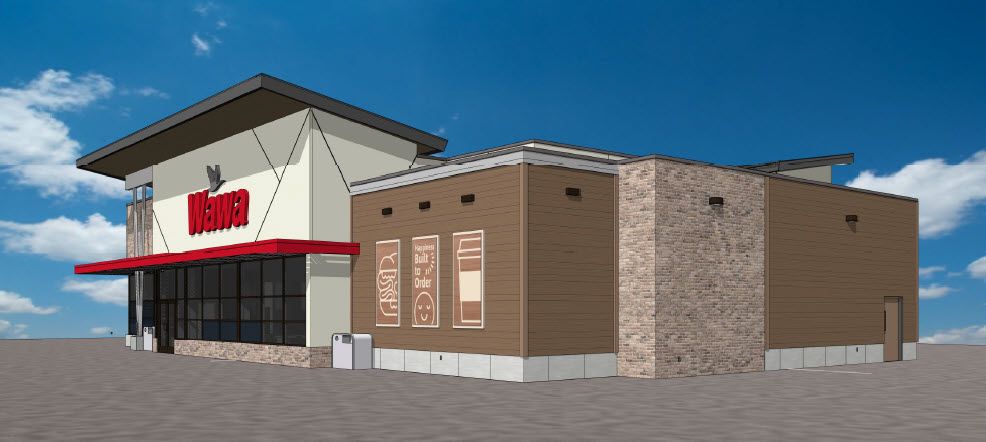
A proposed Super Wawa on the Voorhees-Berlin border protested by residents and rejected by the Voorhees planning board will likely be approved in two weeks.
Developer NIKI-J&J Voorhees Cooper Partners LLC sued after the planning board last September did not approve its plan for a Wawa between Route 73 northbound and Cooper Road located in both Voorhees and Berlin Township.
In August, the board and the developer agreed to a settlement in state Superior Court in Camden that calls for the planning board to reconsider based on a proposal from NIKI-J&J to make improvements to Cooper Road to address traffic concerns.
Reconsideration of the developer’s preliminary and final major site plan is scheduled for the Oct. 14 board meeting. The Berlin Township planning/zoning board approved the Wawa on Aug. 18.
Under the plan, a 5,915-square-foot Wawa store with 12 gasoline-fueling stations would be built on 4.95 acres. Driveways would be on Route 73 and Cooper Road. The property is about a quarter mile south of the intersection of Cooper Road and Route 73.
Residents testifying at a Voorhees board hearing last September expressed concerns over traffic from the planned Cooper Road driveway.
“It’s a disaster … the traffic backs up all the way to the entrance of Forrest Hills Drive,” resident Harry Garabedian, who lives on Forrest Hills Drive, told the board of existing traffic conditions on Cooper Road. “There’s nothing that Wawa is going to do that’s going to alleviate that; it’s only going to add to the burden.”
Board member Jason Ravitz, also a member of the Voorhees Township Committee and deputy mayor, said at the hearing: “This road already backs up during rush hour. … This is going to be a real issue in the operation.”
70and73.com is a hyperlocal news site focused on South Jersey, including the communities of Cherry Hill, Evesham, Mount Laurel, Voorhees, Medford, Medford Lakes, and Moorestown.