No injuries were reported after a fire broke out at an elementary school Tuesday night in Camden County, officials said.
Lindenwold School 4, which is located at 900 E. Gibbsboro Rd., will be closed Wednesday after a fire damaged the school, officials said.
“At the time of the incident, members of our evening facilities crew and a construction crew were on site. We are very grateful that everyone is safe,” the Lindenwold School District said in a statement.
The district said it is “is currently still completing summer construction work at School 4, and we are currently assessing the situation and any impact to the building.”
Firefighters and investigators were on site to determine the cause of the fire, the district said.
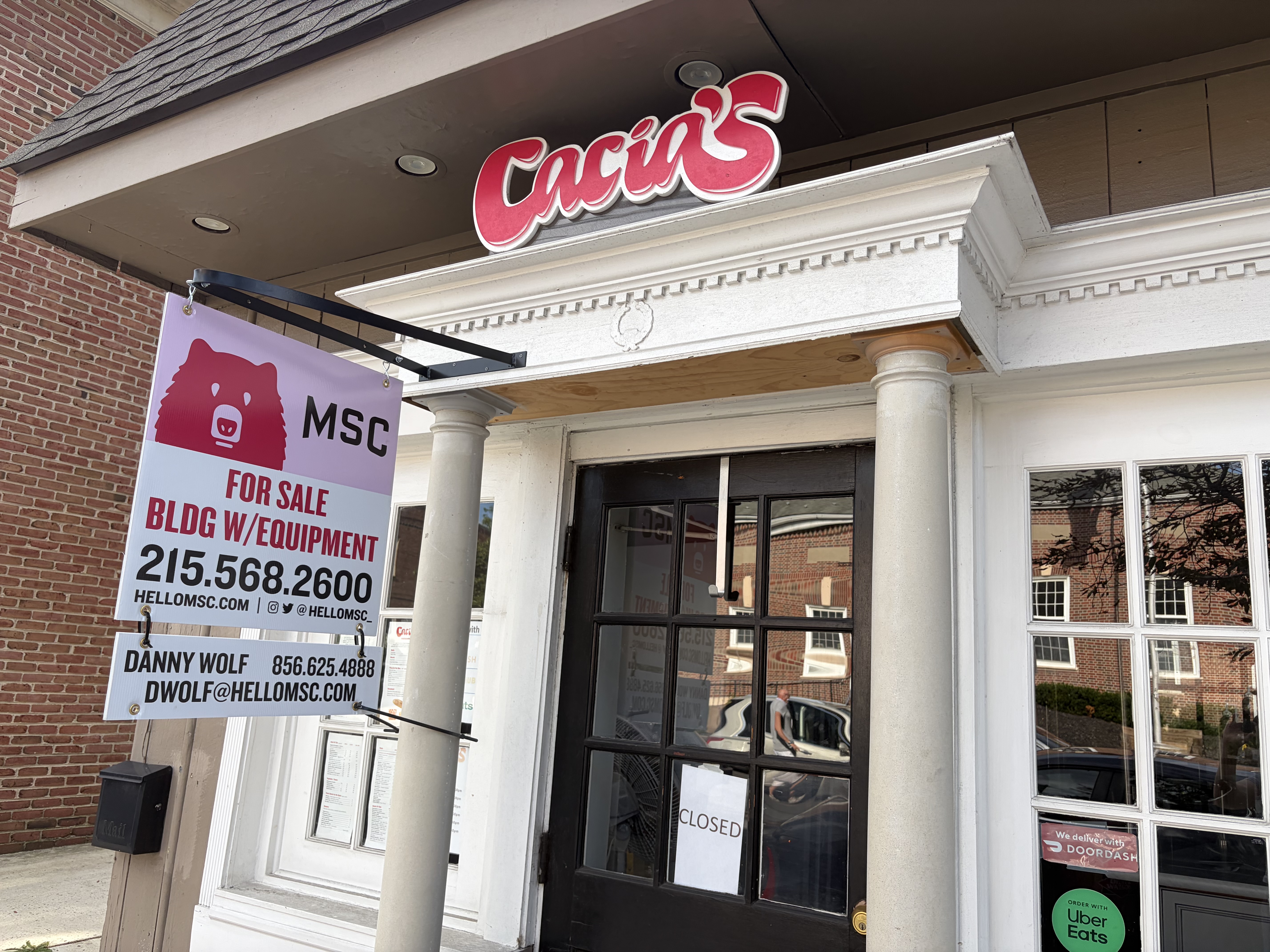
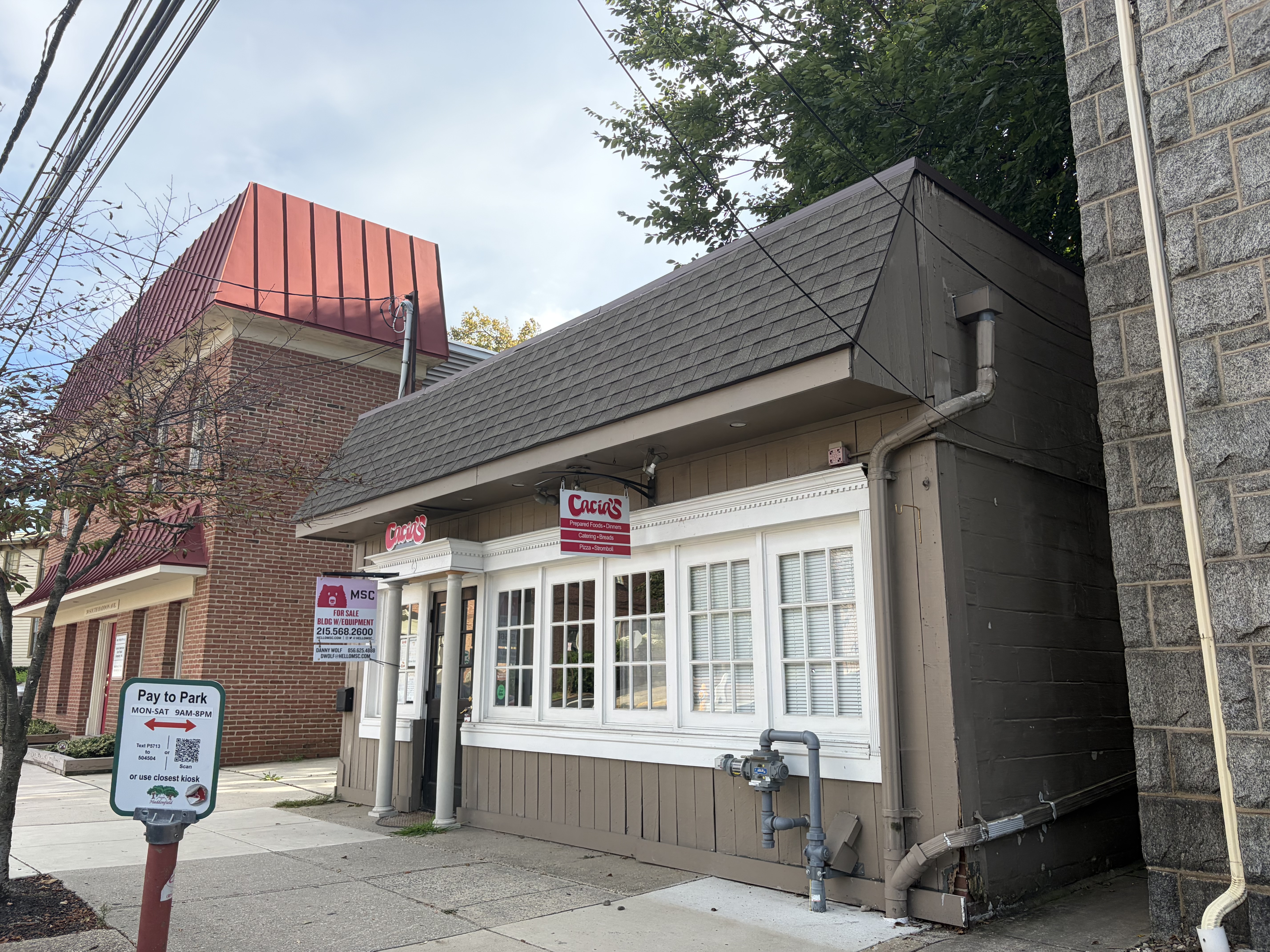
Cacia’s Bakery in Haddonfield appears to have closed its doors without any fanfare after two years in business.
A “closed” sign has been posted on the front door of the Italian bakery at 26 S. Haddon Ave., and the store was dark during a visit last week. Another sign advertises the 1,100-square-foot building and the equipment inside for sale.
Cacia’s Bakery in Haddonfield has not made any public announcement about the closure, nor has the business responded to calls or emails requesting comment.
Leonard Guerriero, who owns the Haddonfield Cacia’s, according to deed records, also did not return requests for comment on why the bakery closed.
But the Cacia’s name has expanded across South Jersey over the years, with current spots in Williamstown, Cherry Hill, and Hammonton that sell Italian bread, strombolis, hoagies, cannoli, and more.
Sam Cacia, a third-generation owner of the South Philly location, said his family taught Guerriero how to bake before he became the private owner of the Cherry Hill and Haddonfield locations.
Cacia said the closure in Haddonfield was due in part to the tough parking situation and competition with sit-down restaurants downtown.
“When you ride around the block looking for a spot, it becomes a bit of a challenge. It just came to, like, there wasn’t enough demand,” Cacia said. “It’s a shame. [He] tried to bring the product to a different set of people and it didn’t work that way.”
Guerriero and co-owner Steven Santore opened the downtown Haddonfield bakery in the summer of 2024, NJ Pen reported, after their Audubon location was demolished by the New Jersey Department of Environmental Protection due to groundwater contamination. The bakery was across the street from the Haddonfield post office.
The pair purchased the Haddonfield property for $375,000 in 2023, according to deed records, from the owners of Spice C, a noodle joint in Chinatown.
The storefront previously occuped by Cacia’s in Haddonfield is now on the market.Sarah Nicell
MSC, a Philly-based real estate brokerage firm, is managing the property sale. Danny Wolf, senior vice president at MSC, said the property hit the market in August and is listed for $495,000. The price includes the equipment inside the bakery, including a double Blodgett pizza oven.
Wolf said the property already has potential buyers, though he declined to provide further details.
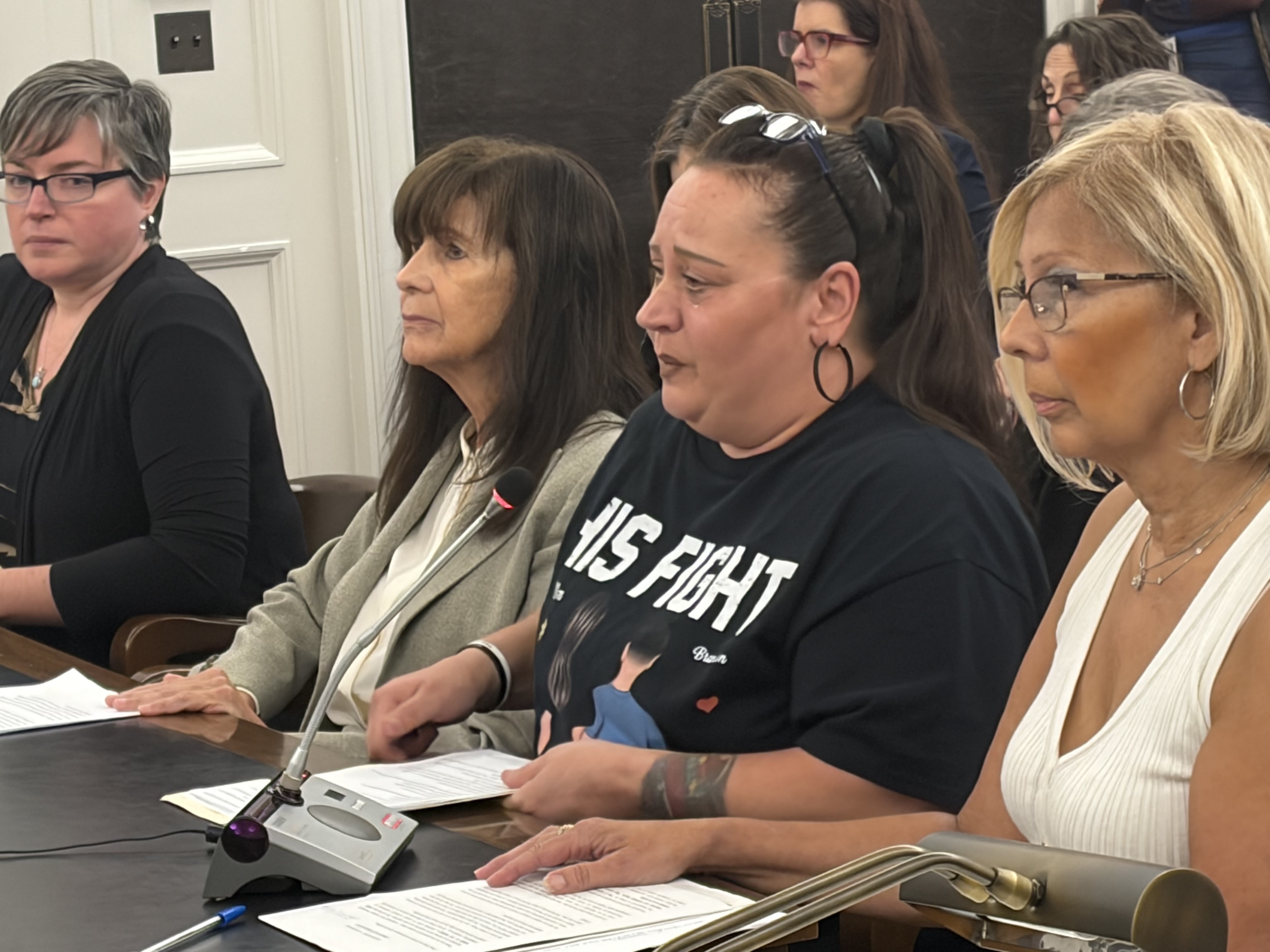
TRENTON — Parents of people with developmental disabilities tearfully pleaded with New Jersey lawmakers on Monday to mandate the installation of cameras inside state-licensed group homes to protect their children from abuse and neglect, which they say have become almost a routine occurrence.
A family’s frequent visits and vigilance are not enough to protect their adult children’s safety, said Priscilla Quesada of Egg Harbor Township, who testified that her son Brandon suffered broken bones and other injuries in group homes in Burlington and other South Jersey counties. He is now in a state-run facility.
“I never imagined I would have to stand before lawmakers and ask for something as basic as cameras to protect my child,” Quesada said.
“As his mother, I have had to fight for answers. I have had to look at medical records. I have had to ask questions about injuries and when they occurred,” Quesada said through tears. “And I keep asking myself one question: If there had been cameras, would we have known what happened to him? Maybe the abuse would have stopped sooner.”
The fight over cameras in group homes has gone on for more than six years without a resolution. And it has been nine years since the bill’s namesake, Billy Cray, died in his group home bedroom in Somers Point.
The Assembly Health Infrastructure Committeeheard nearly three hours of testimony for and against installed cameras in group homes. Chairman Sterley Stanley (D., Middlesex) said he would schedule another hearing after working with group home lobbyists, disability advocates, and family groups to reach a compromise.
“We are all committed,” Stanley said after the hearing. “Cameras in the homes would be a vital first step, but we also want to address the abuse that is happening.”
Several representatives from the group home industry insisted the issue is more complicated than it appears. People with disabilities deserve privacy, a civil right protected under federal law, argued Cathy Chin, executive director for the Alliance for the Betterment of Citizens with Disabilities.
“Common areas in private homes are neither public spaces open to the public nor institutional settings. They are homes, where a degree of individual and communal privacy is to be expected and protected in the same manner as any home or community,” Chin said.
About 30% of group homes already use cameras, Chin said.
“Individuals and their guardians consider this option before choosing a group home, which means they can make the choice freely, without pressure from their housemates or their guardians,” Chin said.
Libby Vinson, CEO of the New Jersey Association for Community Providers, said the camera systems run from $20,000 to $25,000 — which would blow a “huge hole” in the providers’ budgets. She said it made more sense to spend taxpayer money to improve staff training and prevent harm.
The legislation would require licensed group homes serving people with developmental disabilities to install cameras in living rooms, kitchens, and other common areas with the consent of all residents in the dwelling.
The cameras would record video but not audio, according to the bill. The group home operators must retain recordings for at least 90 days and share the recording with a resident or guardian upon request. The state would inspect the homes to ensure the cameras are installed and working properly.
The campaign for group home cameras emerged following the 2017 death of 33-year-old Billy Cray, whose body was found in his bedroom closet in his Somers Point group home. An autopsy said he died of natural causes, but his mother, Martha Cray, said she has never received satisfactory answers about his supervision and care.
The demand for cameras intensified in the last year following media reports detailing abuse and neglect inside group homes and the lack of consequences for the operators and staff.
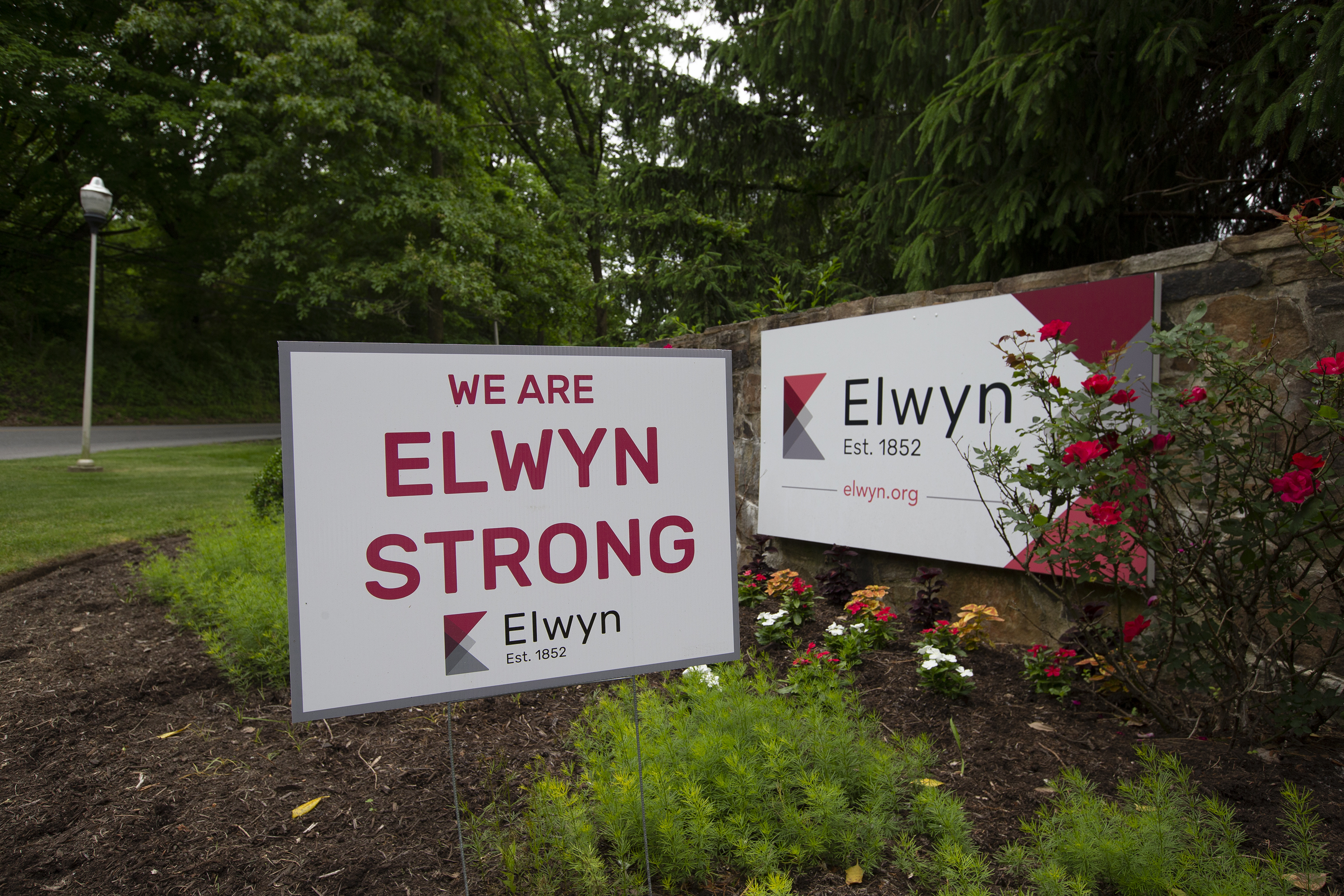
Former Attorney General Matt Platkin last year charged Elwyn, a group home operator based in Media with facilities across multiple states, and an employee with neglect for allowing a resident who had fallen twice to remain on the floor for hours on two occasions in 2023 at a group home in Vineland.
Elwyn, one of the nation’s oldest providers of services for intellectually and developmentally disabled individuals, is based in Media, Pa. CHARLES FOX / Staff Photographer
Attorney General Jennifer Davenport, appointed in January by Gov. Mikie Sherrill, dropped the charges last month in exchange for Elwyn agreeing to be monitored by an outside firm.
Pennsylvania law permits the installation of cameras in group home common areas with consent from all residents. The group home operator must hang signs alerting people cameras are in use.
A new law took effect in New Jersey in July that for the first time gives the state department of human services authority to impose fines on abusive and neglectful group homes.
Families have argued that the state seldom substantiates claims of abuse and neglect. The evidence provided by cameras could help both residents and employees, who may be unfairly accused of wrongdoing.
Camden County resident Mary Jane Lovett said her son, Timothy, 36, endured 15 years of physical abuse — including some injuries requiring hospital care — at group homes in Pennsylvania. He recently moved to a state-licensed group home in Northfield, and she wants the comfort of knowing cameras are present.
“Video speaks for itself. There’s no bias, no way to deny an incident that is captured on video,” Lovett said.
“I never dreamed that I would be sitting in front of you, pleading with you to help keep my son safe in a group home funded by New Jersey taxpayer dollars, including my own.”
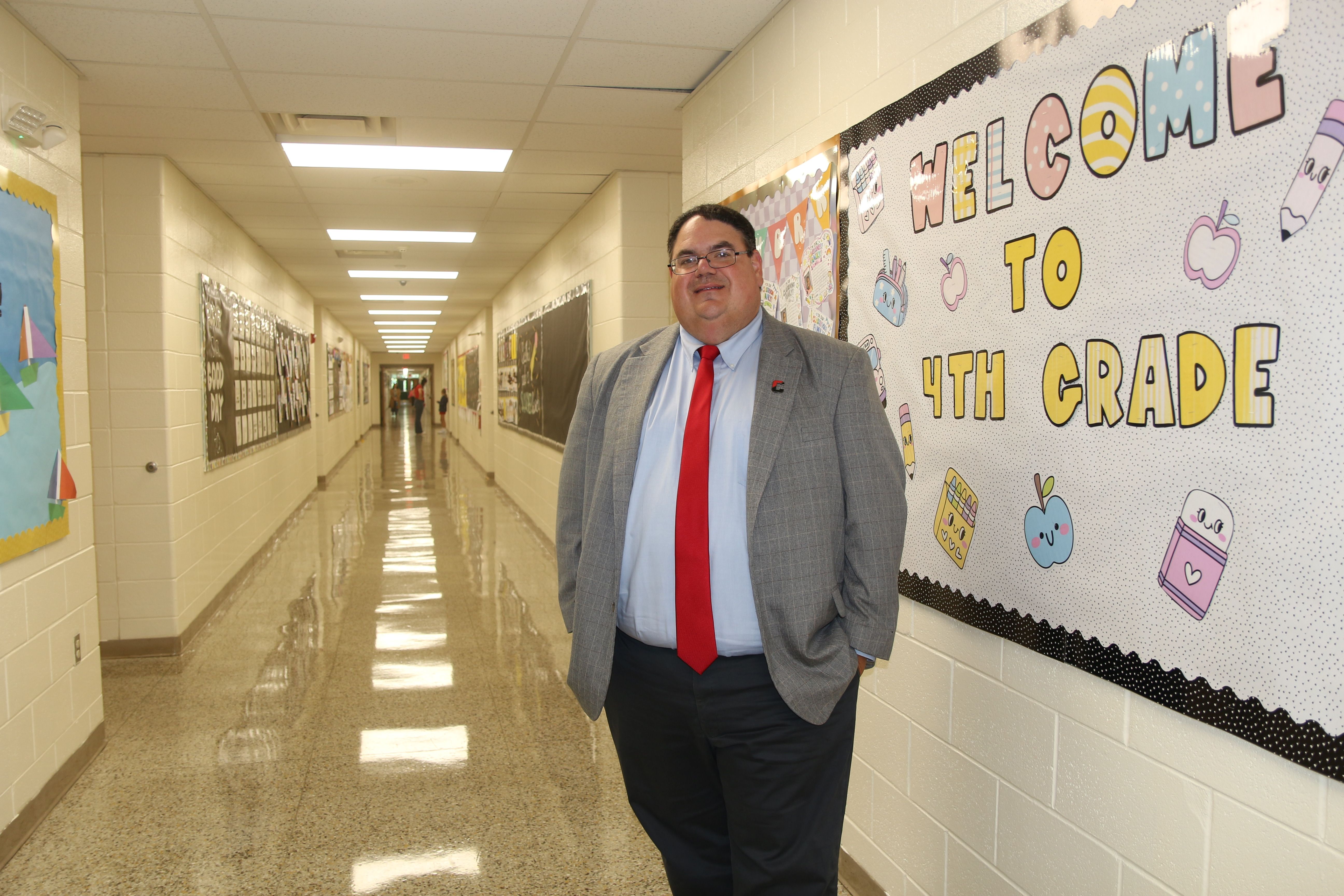
Cinnaminson School District Superintendent Stephen Cappello has big plans for his South Jersey school system — if voters approve a $76 million bond referendum, the largest in the district’s history.
It would allow the district to make desperately needed changes and improvements in all five of its schools. Voters head to the polls Tuesday to consider the proposal that would raise local property taxes.
“This is a big one,” Cappello said in an interview. “This will be an important part of where we are moving forward.”
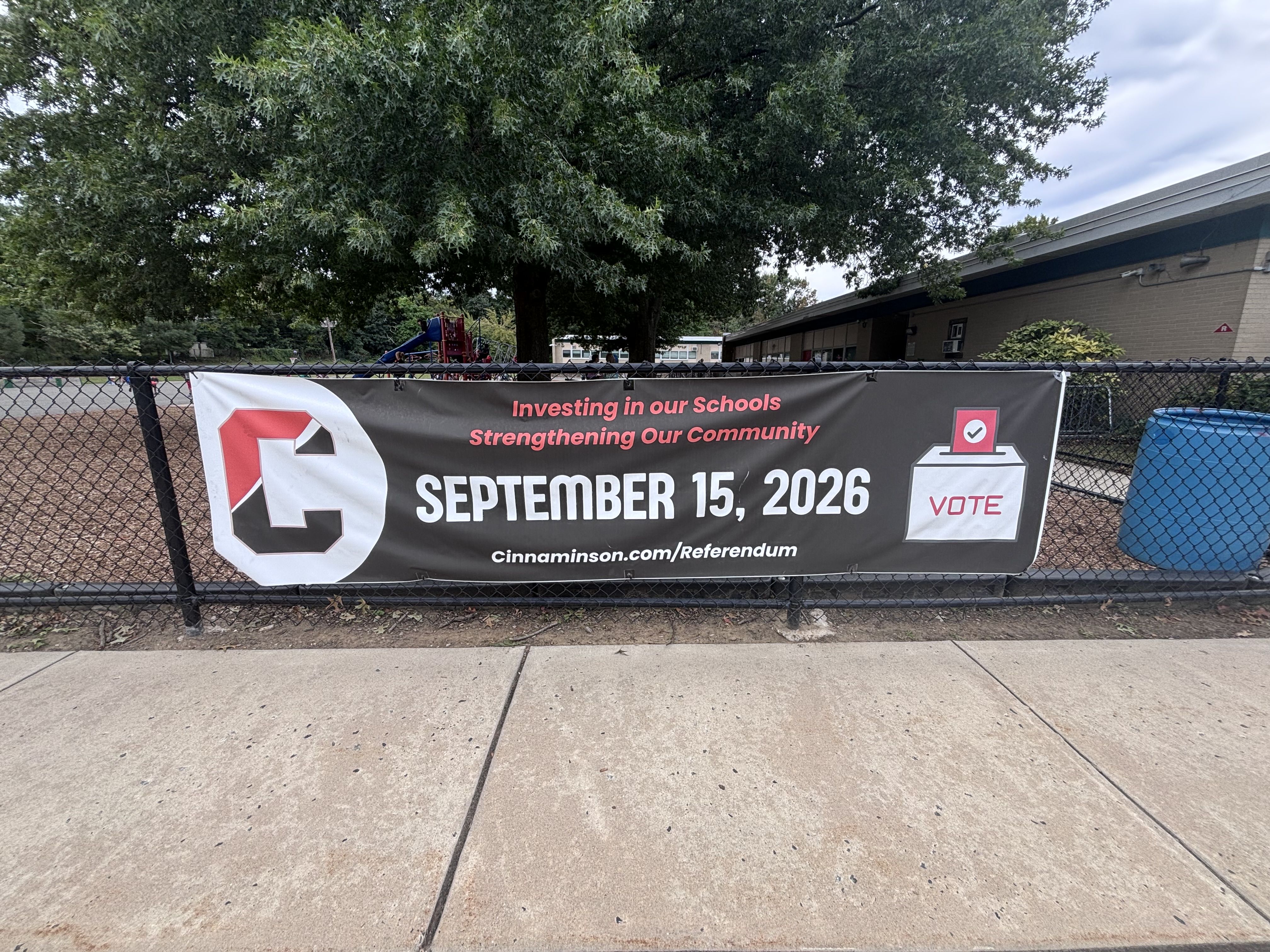
Cinnaminson voters will decide on two school bond referendums totaling $76 million during a special election on Sept. 15.Melanie Burney
If approved, it would help ease overcrowding at two elementary schools where some students attend classes in trailers, upgrade security systems, improve HVAC systems, and add new gyms and a high school stadium complex.
Cinnaminson in Burlington County and Clementon School District in Camden County are the only districts in the tri-county region with bond referendums in Tuesday’s special election.
Cappello acknowledged that referendum questions can be a tough sell especially amid tight economic conditions because they typically seek a property tax increase. Cinnaminson residents are still paying down a $40 million bond referendum in 2014 that added $238 annually to the average tax bill.
“No one takes those numbers lightly,” Cappello said. “We’re all sensitive about that.”
Cappello said the Burlington County district has been struggling with crowding in light of a growth explosion in the township. The district has about 600 more students than it had a decade ago, he said.
The district has spent millions to relocate students to six trailers the district calls “learning cottages.” It also leases space in a strip mall for administrative offices.
“There’s instruction happening in hallways, which is not our favorite,” Cappello said.
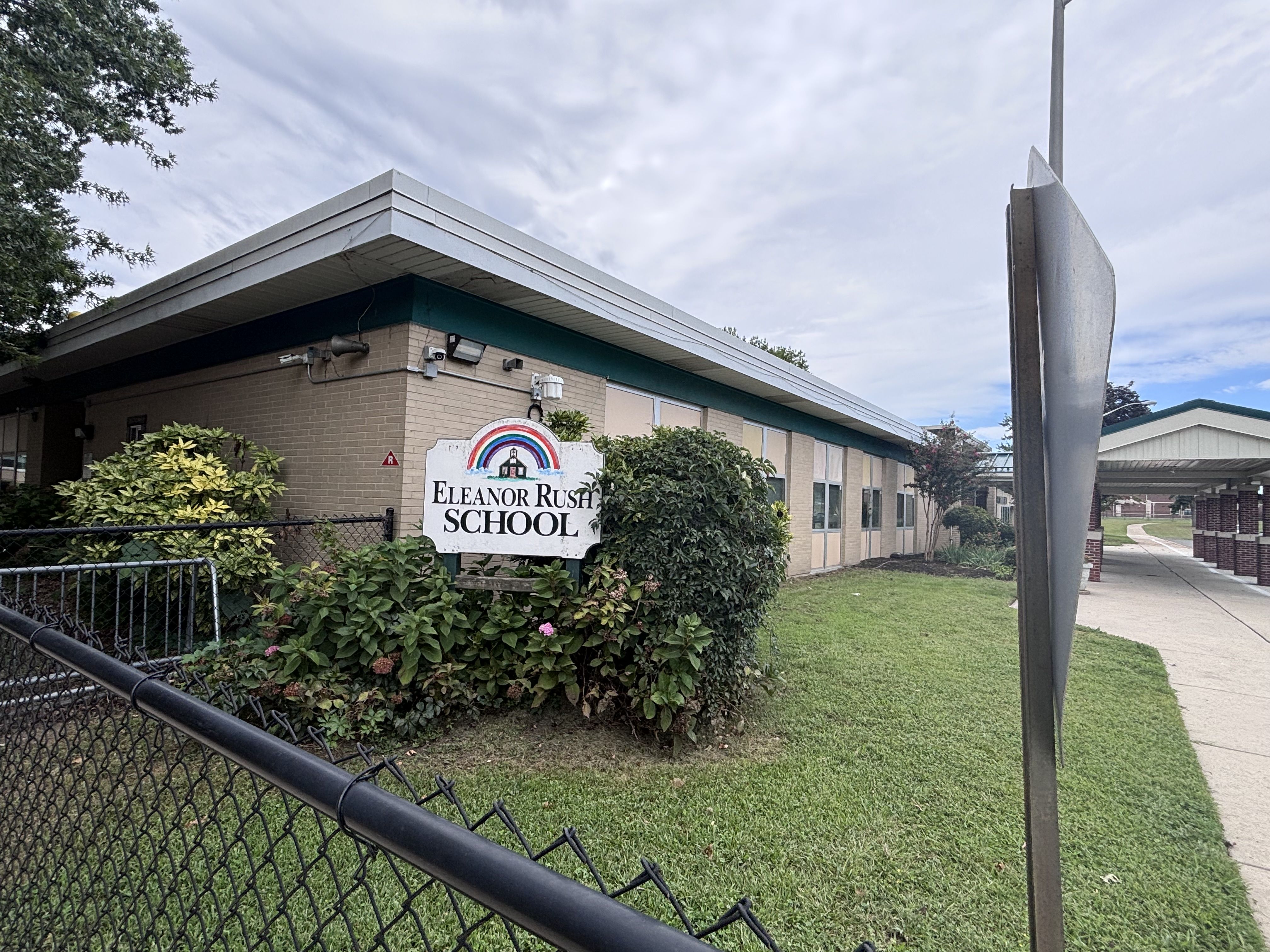
The Eleanor Rush School would get eight new classrooms and other improvements if Cinnaminson voters approve a $76 million bond referendum on Tuesday.Melanie Burney
The need is especially felt at Eleanor Rush Elementary where the all-purpose room is always bustling with activity. Because it is used for lunch, special classes including gym, music, STEM, and art cannot be held during the two-hour lunch period, presenting a scheduling challenge, Cappello said.
Tom Angelone, a STEM teacher at Eleanor Rush and a father of three in the district, said the district desperately needs more space. His classroom is located in one of several trailers on the complex.
Tom Angelone, a STEM teacher at Eleanor Rush Elementary.Melanie Burney
“I think we need to support the future generation,” Angelone said. “I will be voting yes on both questions. It’s a cup of coffee a day.”
Cinnaminson split its list of improvements into two bond questions. The first question includes a repaved parking lot at Memorial School, new fountains and renovated bathrooms at Eleanor Rush, six pre-K classrooms at New Albany School, a new esports arena and robotics classroom at the middle School, and a new roof and STEM lab at the high school.
Voters must approve question 1 in order to adopt the second question. It would fund a new one-story pre-K addition with six classrooms and bathroom additions at Memorial, a new gym addition at Rush, and a new turf field and track and field replacements at Cinnaminson High.
In Clementon, voters are deciding on a $13.5 million bond referendum to build a new early childhood center on a vacant lot. If approved, it would add about $243 annually to the tax bill for a home assessed at the borough average of $115,178.
The new center would include eight classrooms, a multipurpose room, and a playground area, according to the district’s website. Pre-K enrollment is expected to nearly triple to about 135 students for the 2027-28 school year, the district said.
An artist rendering of an Early Childhood Center proposed for the Clementon school district if voters approve a $13.5 million bond referendum in Tuesday’s special election.Clementon school disyrict
By shifting its youngest learners, the district said it would use the vacated space for other grade levels and electives, and add a dedicated sensory room for special needs students. The pre-K classes were temporarily moved this year to a site in Lindenwold, the district said. Clementon enrolls 621 students in kindergarten through eighth grades.
Statewide, voters in at least four other districts are considering 12 bond questions, according to the New Jersey School Boards Association. They allow districts to pay for projects that cannot readily be funded through their annual general operating budgets.
Tuesday is one of five times during the year that school boards may ask voters to approve a bond issue or special question.
The questions total more than $308 million with the state contributing about 40%, or roughly $122 million, if approved by local voters.
Cherry Hill Public Schools is battling with a group for parents of special education students about information tables at back-to-school night.
The Cherry Hill Special Education PTA, known as CHSEPTA, said it has sponsored tables at district schools at the beginning of the school year for 12 years, but the request was denied this year by Superintendent Kwame Morton.
It has filed a grievance with the nine-member school board after unsuccessfully lodging an appeal with Morton. The group has alleged discrimination by the district for refusing to allow an independent group to set up a table.
“This is a clear-cut case of discrimination,” said Jennifer Naddeo, president of CHSEPTA. “Our families that have children with special needs need to have their own table with representation as well.”
Naddeo said her group educates parents about their rights, offers assistance to help them get their children evaluated for services, and makes sure that individualized education plans, or IEPs, are followed. The group, which has about 400 parents on its mailing list, also brings in experts to speak, she said.
The Cherry Hill school district, which enrolls nearly 11,000 students, has a parent-teacher association at each of its 18 schools as well as a Zone PTA, an umbrella group. It also has a special education advisory group, required by the state for every public school district.
In a statement, the district said it“continues to review and strengthen procedures across the district to ensure greater consistency among our schools.”
It said districtwide organizations like the special education PTA will coordinate a table with Zone PTA. Naddeo said that process has not been followed previously and her group had not been notified of any changes in procedures.
Dr. Kwame Morton, Cherry Hill’s schools superintendent, at his office on June 3, 2024.Alejandro A. Alvarez / Staff Photographer
“This approach provides a clear and consistent process for participation while continuing to support opportunities for parent organizations to connect with families throughout the district,” the district’s statement said.
Naddeo said her group, which has about 80 dues-paying members, is a separate nonprofit and should not be required to seek permission from another group. The grievance asked the board to overturn Morton’s decision.
About one-fourth of Cherry Hill’s students are classified as special education and have IEPs, according to Naddeo. Others have a 504 plan that accommodates disabilities. Cherry Hill also sends some students to a school or specialized program outside the district because the student needs services the district cannot provide.
Cherry Hill Board of Education President Gina Winters told the special education PTA that the board lacked the authority to review an administrative decision by the superintendent.
Peg Kinsell, policy director of the SPAN Parent Advocacy Network based in Newark, said the dispute was troubling. Naddeo’s group has a reputation as an active advocacy group for special education, she said.
“I don’t know why you would want to put barriers in front of families getting information,” Kinsell said in an interview this week. ”I can’t figure out what the big deal is.”
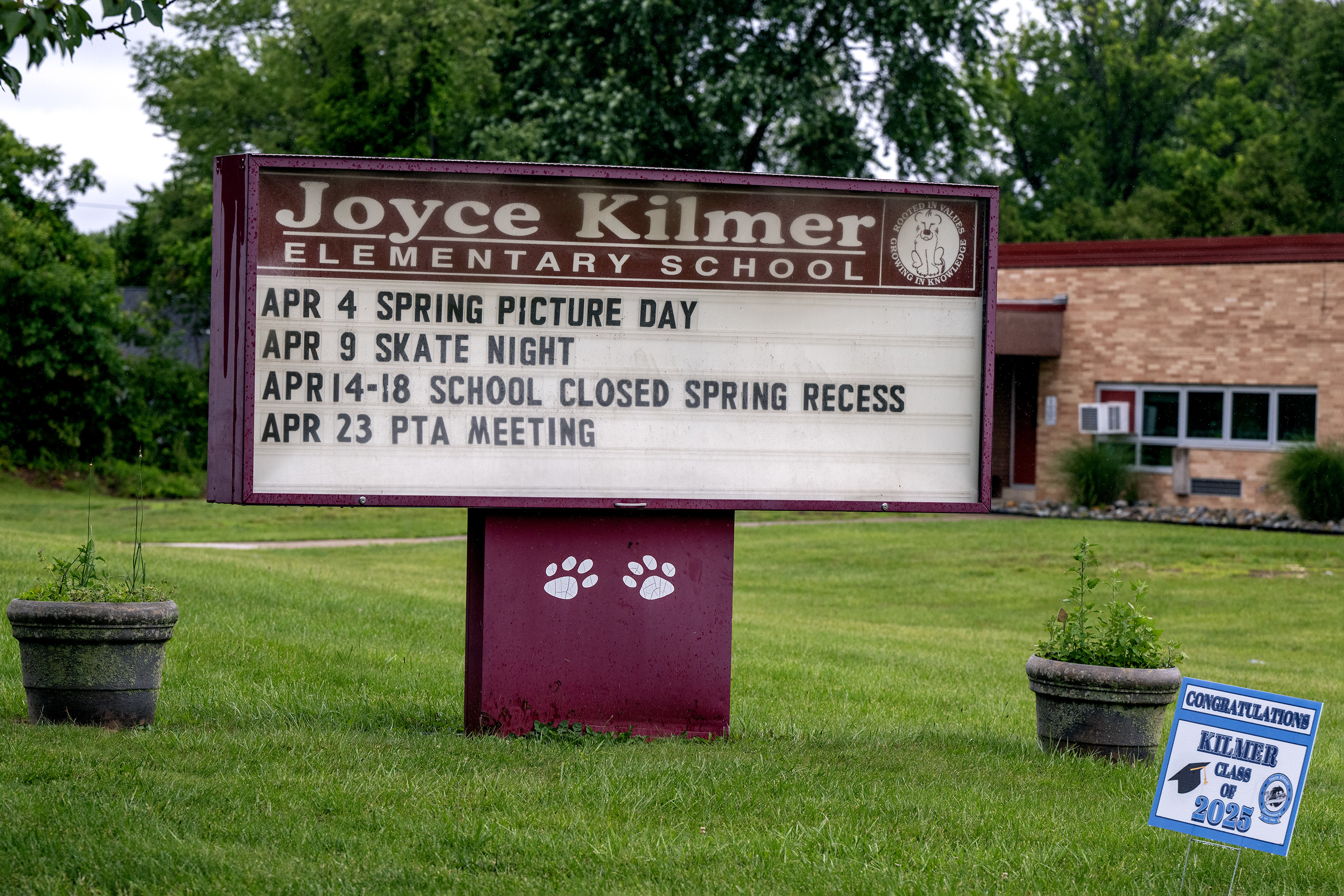
Joyce Kilmer Elementary at 2900 West Chapel Ave. in Cherry Hill, May 28, 2025.Tom Gralish / Staff Photographer
Naddeo said her group missed a back-to-school night held this week at Joyce Kilmer Elementary School because it was not given permission to have a table. The school PTA groups are geared toward general education students, she said.
“When your child is struggling, you want to be represented,” Naddeo said.
She said the group plans to set up information tables next month outside the Cherry Hill library and during the township’s Harvest Festival on Oct. 18.
Hundreds of early-bird shoppers have gotten a sneak peek at the new Asianfresh Food Market in Cherry Hill ahead of the store’s grand opening this weekend.
A colorful mural by Chinatown artist Chenlin Cai welcomes shoppers into the sprawling store at 2005 Route 70 East, the second location of the popular specialty market offering hard-to-find Asian imports.
Shoppers at the Asianfresh Food Market in Cherry Hill on Thursday, Sept. 10, 2026.Elizabeth Robertson / Staff Photographer
Stocked with a wide variety of fresh produce, seafood, and specialty products from across Asia, the new store expands on the offerings available at the two-story flagship on 10th Street in Philadelphia that opened in 2019.
“Anyone with an Asian background can come and find something that they need,” including Cambodian, Vietnamese, Filipino, and Thai staples, spokesperson Karen Louie said.
Employees stocked the shelves at Asianfresh Food Market in Cherry Hill on Thursday, Sept. 10, 2026.Elizabeth Robertson / Staff Photographer
For siblings Eric Alindogan and Daffodil Evans, the opening of Asianfresh creates another option for them to hunt for the best bargains in South Jersey.
The pair primarily cook vegetarian Chinese and Filipino dishes, they said, which often requires trips to multiple grocery stores to get all of the necessary ingredients at a reasonable price.
Jason Huynh, of Cherry Hill, kept the youngsters entertained while his wife shopped at Asianfresh Food Market on Thursday, Sept. 10, 2026.Elizabeth Robertson / Staff Photographer
“We’re just doing research right now,” Evans said as they moved through the aisles, carefully filling their cart while mentally comparing products and prices to other international grocers in the area.
The store’s grand opening event will kick off at 11 a.m. on Saturday and will include a durian eating contest — the winner of which will get a one-minute shopping spree for free drinks and snacks in the store, Louie said.
Shoppers check out at the Asianfresh Food Market in Cherry Hill on Thursday, Sept. 10, 2026.Elizabeth Robertson / Staff Photographer
Given the “overwhelmingly positive” response to the store since its soft opening on Sept. 3, she said they’re prepared for Saturday’s event to be packed.
Once officially open, the store will welcome shoppers daily from 8 a.m. to 8 p.m., boasting large refrigerated and frozen food sections alongside aisles of items ranging from snacks to housewares.
Shoppers at the Asianfresh Food Market in Cherry Hill on Thursday, Sept. 10, 2026.Elizabeth Robertson / Staff Photographer
Similar to popular big-box warehouse stores like Costco and Sam’s Club, Asianfresh also sells a number of items in bulk, both to individuals and to local restaurants, Louie said.
A historic amusement park in Camden County has closed its gates and will soon be back on the market just five years afterit was purchased at a bankruptcy auction.
After more than a century in South Jersey, the future of Clementon Park & Splash World is uncertain as its owner works to “find a buyer who shares our love for Clementon Park and will carry its history and legacy forward,” the amusement park’s owner said when announcing the closure on its website and social media accounts Wednesday. The park’s final day of operation was Labor Day.
“After five memorable years, we are saddened to announce that we have made the difficult decision to close the park and plan to offer the park for sale,” the statement said. “It has been a privilege to care for a place that has meant so much to generations of families.”
The company bought the park for roughly $2.37 million in a 2021 public bankruptcy auction after financial struggles led to its sudden shutdown two years earlier.
Clementon Park is one of five amusement properties owned by IB Parks & Entertainment across the country, including West Berlin’s Sahara Sam’s.
During Clementon Park’s heyday in the early 20th century, it was a popular destination for families across South Jersey, who could be shuttled directly to the park’s entrance by a trolley running from Camden.
Opened in 1907 by state Assembly member Theodore B. Gibbs and his sons, the park was independently owned by various local families over the years before it was bought by its first private amusement park operation company in 2007.
Various management companies expanded the park over the next decade, adding multiple thrill rides, coasters, children’s attractions, and a 23,000-square-foot wave pool to the 52-acre park.
The most notable of the park’s long-standing attractions was the Jack Rabbit, a wooden coaster that was considered state-of-the-art when it opened for riders in 1919. After 83 years, the popular ride was one of the oldest operating roller coasters in the world by the time it closed in 2002.
After more than a decade as a must-visit eatery for Mafia aficionados in South Jersey, Collingswood’s Kitchen Consigliere has run into some financial troubles.
“Like a lot of small businesses, we’ve gone through some very difficult financial periods,” Lutz said in a statement posted to social media Wednesday. “I made decisions along the way to keep our staff working, pay our vendors, keep the lights and gas on, and keep this restaurant operating.”
“We fell behind on certain obligations, including taxes owed to the State of New Jersey and I take full responsibility for that. We are addressing those obligations and have been working through a payment plan,” Lutz said, before emphasizing that the restaurant is operating as usual and all gift cards will be honored.
“The food, the recipes and the experience people have come to know and love are not changing one bit,” he said. “For me, this restaurant has always been more than the food. … It’s about the people who work here and the customers we love to serve — who have supported us over the number of years.”
Lutz first opened Kitchen Consigliere as an 11-table cafe in 2010, but it soon outgrew its original location on Powell Lane. Boosted by an online crowdfunding campaign, he was eventually able to expand to the restaurant’s current home at 700 Haddon Ave. in 2013.
Lutz’s culinary career began in earnest following a seven-year stint in prison on various charges related to organized crime.
When embarking on his second act, Lutz did not shy away from his criminal past — a consigliere is a trusted adviser or right-hand man to Mafia leadership, and the restaurant’s signage is styled to resemble the font used with The Godfather trilogy.
Now, Kitchen Consigliere Cafe LLC’s estimated assets total less than $50,000 while the company owes up to $500,000 to dozens of creditors, according to the bankruptcy filing.
The company’s largest outstanding debt, $117,663.73, is owed to S&M Provisions Inc., a West Philadelphia-based food and deli supply company.
Kitchen Consigliere is disputing the next two largest creditor claims listed in the filing: $102,000 owed to New Jersey’s taxation division and $58,503 owed to regional utility service provider PSE&G.
The next hearing in the case is a meeting of the creditors on Oct. 5 at 10:30 a.m., according to the court docket.
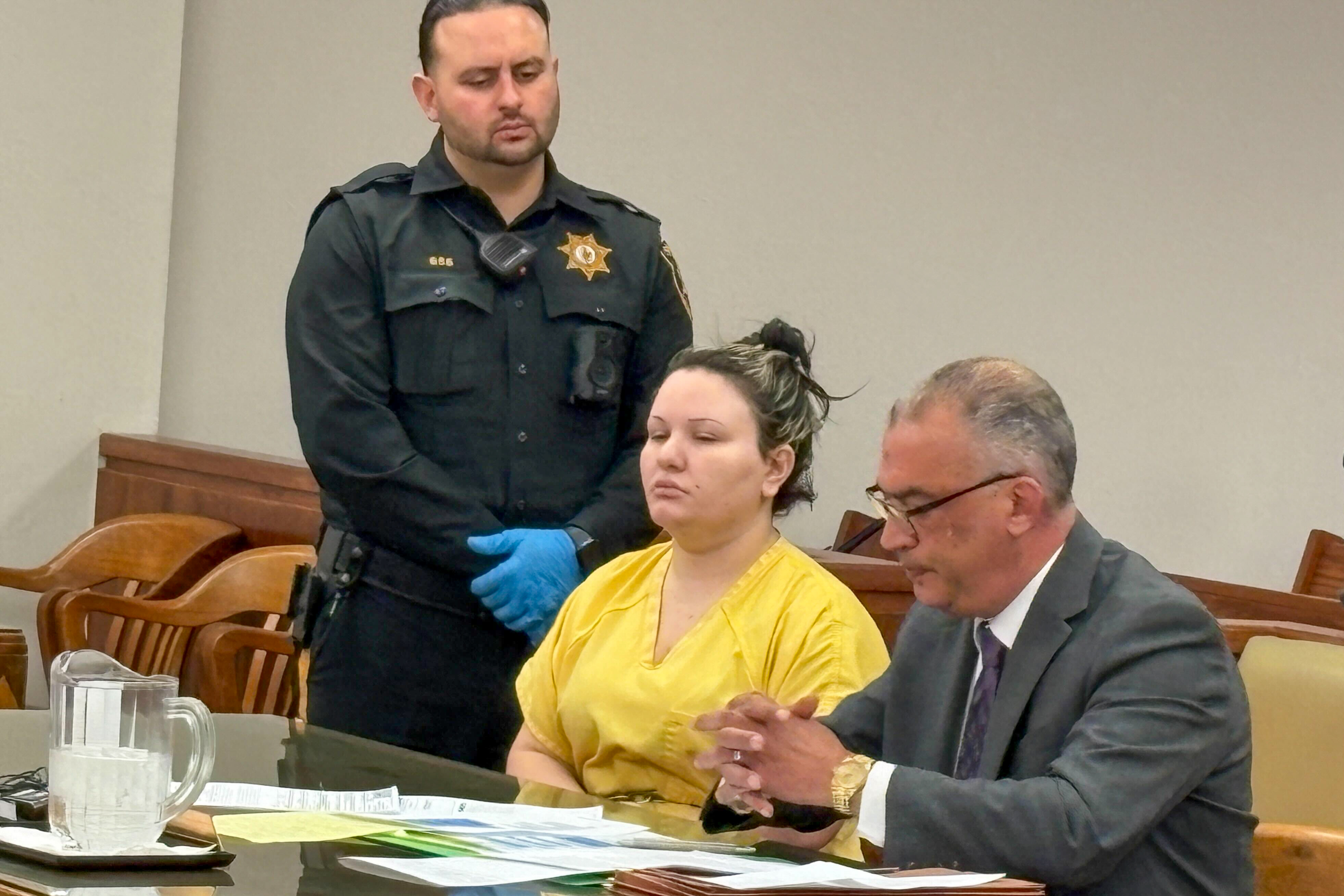
Jaclyn Diiorio, 28, of Runnemede, was charged this month with two counts of using interstate commerce facilities — in her case, a cell phone — in an attempt to commission a murder-for-hire, according to an indictment unsealed Wednesday.
Federal prosecutors will be tasked with prosecuting Diiorio after Camden County dropped its case against her in response to the charges.
It is the latest development in a story that captured national attention from true-crime enthusiasts and curious readers alike.
In April 2025, Diiorio was charged with two counts of attempted murder, conspiracy, and related crimes in the plot, which Camden County prosecutors said involved Diiorio trying to have both her ex-boyfriend, Philadelphia Police Officer Matthew O’Hanlon, and his 19-year-old daughter killed.
The hit man, prosecutors said, was actually an informant working with Camden County detectives who had tipped them off to Diiorio’s request days earlier.
It was not Diiorio’s first attempt at having O’Hanlon and his daughter killed, prosecutors said.
They alleged the New Jersey hairdresser told the informant she had previously been misled by others who had given her “fake pictures” of a supposed completed contract killing.
Prosecutors said the tumultuous relationship between Diiorio and O’Hanlon ended about a month before the murder-for-hire plot fizzled.
The federal indictment, filed Sept. 3 in the U.S. District Court for the Eastern District of Pennsylvania, offers few new details in the case.
It says Diiorio used a cell phone to facilitate an interstate plan to kill two individuals identified as Person #1 and Person #2.
Communications took place between March 30 and April 5, 2025, in both Pennsylvania and New Jersey, according to the document.
Diiorio’s defense attorney, Robert Gamburg, said his client planned to plead not guilty to the charges during a detention hearing before U.S. Magistrate Judge Scott W. Reid on Monday.
Gamburg said the informant who led police to Diiorio was desperate for money, and frequently brought unsolicited information to the sheriff’s department in exchange for cash.
The filing also describes the informant as a rogue operator, one whose phone and text conversations with Diiorio went unmonitored by detectives for days as they orchestrated her arrest.
County prosecutors declined to comment on the allegations at the time and said the matter would be resolved in court.
Reached by email Wednesday, a spokesperson for the U.S. Attorney’s Office for the Eastern District of Pennsylvania declined to comment on the indictment.
A conviction for using interstate commerce facilities to commission a murder-for-hire has a maximum sentence of 20 years in prison.
During their monthly meeting Tuesday, Collingswood’s three commissioners introduced a proposed amendment that would undo the ban on fowl passed back in 2008. Both Mayor Daniela Solano-Ward and Commissioner Amy Henderson Riley, elected in May, expressed support.
Solano-Ward said 19 other Camden County towns have allowed backyard hens with little issue. With their support, the ordinance will move forward for a vote next month.
“We don’t see any data or reason to stand in the way of it any longer,” Solano-Ward said.
Commissioner Jim Maley, a former mayor of Collingswood, long oversaw the borough’s previous fights for backyard chickens and helped pass the original 2008 ban. On Tuesday, Maley voted against moving the ordinance forward.
“No, I’m gonna go ‘no,’” Maley said. “The reason is because I believe that a change like this in our borough, there should be a requirement within the ordinance that there’s notification provided to neighbors.”
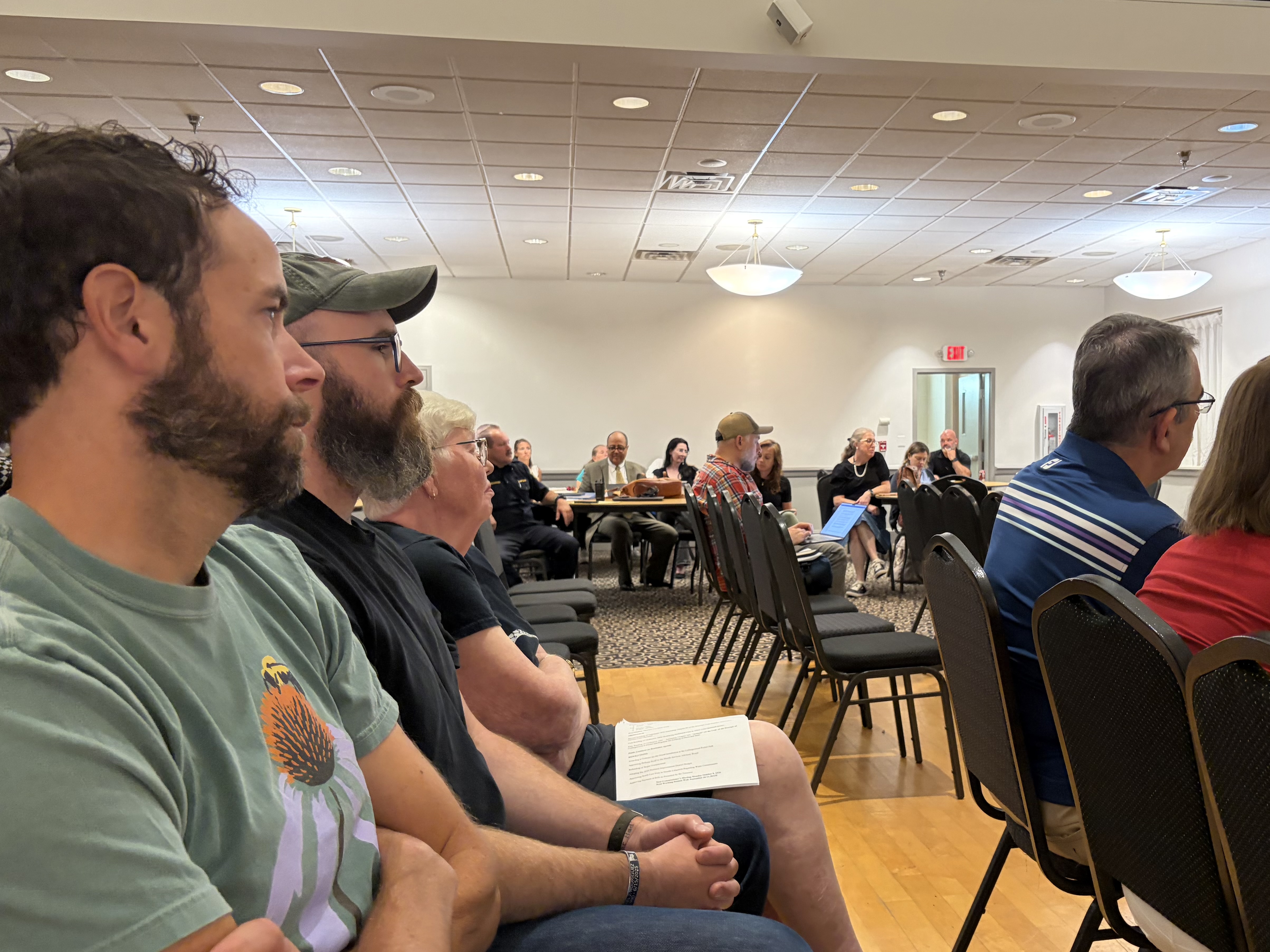
Collingswood Borough officials discuss ordinances at a monthly commissioners meeting on Tuesday, Sept. 8, 2026, at the Collingswood Senior Community Center.Sarah Nicell
The ordinance, like most other backyard chicken codes in the county, does not require notice to neighbors. But there are plenty of other rules, including taking an hours-long online course and undergoing inspections.
Collingswood could distribute only 30 total backyard chicken licenses at a time (among the borough’s estimated 6,500 households), and no roosters would be permitted. The number of hens allowed on a given property would depend on its size — a lot of fewer than 4,000 square feet could not have any hens, and a lot of 9,000 square feet or more would be capped at 12 hens.
The proposal also sets requirements for the coop’s structure and its distance from other property lines, bans the sale of eggs and the slaughter of chickens, and would create a resident-led Backyard Hen Advisory Board to monitor complaints and enforce rules. Violations could come with a fine of up to $1,250 or up to 90 days in prison.
Henderson Riley, who took the three-hour backyard chicken course to test the waters, said the ordinance does not make it easy to get hens.
“It required me to pay attention,” Henderson Riley said. “I didn’t get 100%.”
A few attendees spoke up with concerns about the pitched program, but worries about the chickens’ impact on health and neighboring homes were mostly addressed by conditions set in the ordinance.
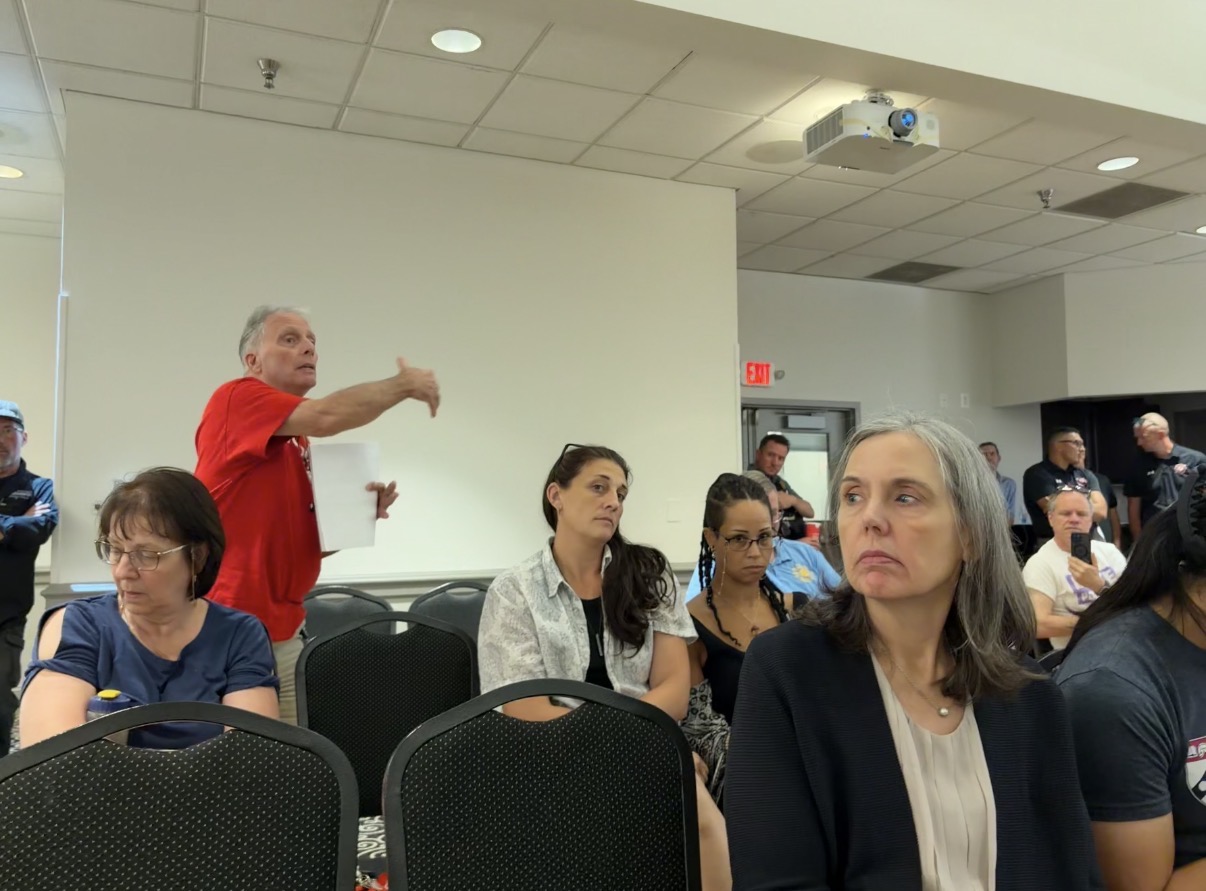
Larry DiGiovanni, a Collingswood resident, asked the commissioners about oversight of potential chicken licensees and how bird droppings could create an unsafe environment for community members.
“I’ve known people who have done this, and it is kind of a daunting task because it’s a lot to take care of,” DiGiovanni said. “And sometimes, you can get a little bit out of control.”
Larry DiGiovanni, a Collingswood resident, speaks on backyard hens at a Collingswood commissioners meeting on Tuesday, Sept. 8, 2026, at the Collingswood Senior Community Center.Sarah Nicell
Graham Patterson, 35, sat quietly at the meeting Tuesday with two of his fellow Camden County chicken advocates, including the “Chicken Lady of South Jersey,” Gwenne Baile, who has fought for backyard hen ordinances across New Jersey since 2009.
When he moved to Collingswood in 2023, Patterson, a software engineer, wanted to start a chicken coop to give his two children the chance to take up more responsibility and get a closer look at the food they eat. If the proposal passes in October, Patterson will become the chairperson of the Backyard Hen Advisory Board.
Patterson said he does not think the program should require notice to neighbors, since residents would not have to bypass zoning rules to have a coop. His goal is to make sure the program makes the borough happy from the jump.
“If we bear a few bad eggs in the program, that’s not really advantageous for us,” Patterson said. “We want the program to be successful. We want to be compliant. We want neighbors to be completely indifferent to whether people have chickens on their property.”