Tag: Camden County

  • Mayor Parker orders examination of foster care system after death of Malayshia Allford

    Mayor Parker orders examination of foster care system after death of Malayshia Allford

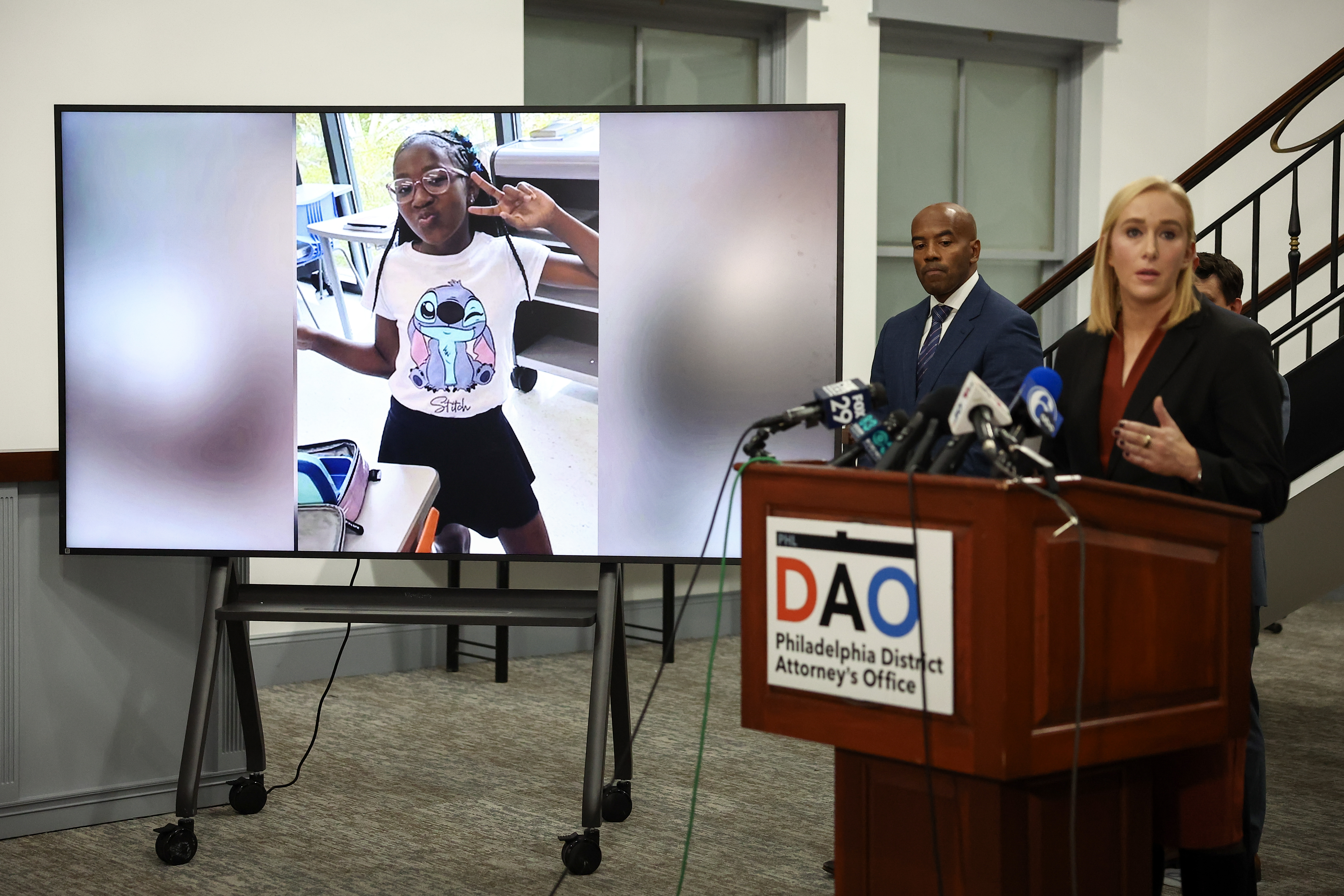
    Calling the death of Malayshia Allford — whose foster mother has been charged with murder — “a crisis of unimaginable proportions,” Mayor Cherelle L. Parker on Tuesday ordered the creation of a special committee to examine what went wrong in the city’s foster care system.

    “The death of Malayshia [Allford] has shaken me and our city to its core,” Parker said in a statement announcing the executive order.

    “The review required by law must take place, but I am requiring the city to do more. We must examine our foster care system thoroughly and independently, identify where it must improve and act to better protect our children,” Parker said.
    Malayshia Allford, 10, was missing for more than a week before her remains were found inside the trunk of a car in South Jersey.Courtesy of Philadelphia police

    As a foster child, Malayshia was in the legal custody of the Philadelphia Department of Human Services, city officials said, adding that the girl was receiving case management services from Catholic Community Services, Community Umbrella Agency No. 4. She also was receiving services from Pennsylvania MENTOR, the certifying foster care agency.

    As required by state law, a team will conduct a review of Malayshia’s death and recommend steps to prevent future child abuse, city officials said.

    Parker’s executive order separately establishes a Child Welfare Review Committee to examine the foster care system and recommend changes to better protect children.

    The special committee will serve as an independent advisory board to review the Philadelphia Department of Human Services, community umbrella agencies (CUAs), and local foster care agencies, city officials said.

    The mayor’s committee will examine how children are placed in foster care and how foster homes are selected, city officials said.

    The committee also will look at city and state oversight of foster homes, the licensing of foster homes and visitation requirements, the city’s requirements for contracting with foster care service providers, and other matters that the committee may deem important, city officials said.

    Parker will appoint up to 15 members to the committee, including national experts and other specialists. The members and two chairs for the committee will be named shortly, city officials said.

    The committee will be required to submit its findings and recommendations with 120 days of convening.

    “We will leave no stone unturned as we seek answers for what happened in this case, to understand more fully how it happened, and to make any changes necessary to ensure that it never happens again,” Parker said.

    On Thursday, Carprice Williams, 36, was charged with murder in the death of 10-year-old Malayshia, whose body had been found the day before in the trunk of a car at an apartment complex in Lindenwold, Camden County.

    Last month, Williams tried to cover up the circumstances of Malayshia’s death over the nearly two weeks the child was missing, police said.

    According to police, witnesses who spent time inside Williams’ West Philadelphia home described chronic and horrific abuses: withholding food from the child for as long as a week, beating her with a phone cord, and throwing her down stairs, police said.

    Williams provided relatives and law enforcement with conflicting accounts about when she had last seen the girl, and crafted a phony text exchange to support her story that the child’s biological parents had kidnapped her, police said.

    A medical examiner determined that Malayshia died of blunt force trauma, police said. She had a fractured rib, bruises on her head, torso, and buttocks, and whiplike marks across her legs, police said.

    Williams had been a teacher in the Philadelphia School District, most recently teaching fifth grade at Lewis C. Cassidy Academics Plus School, a kindergarten-through-eighth-grade school in Overbrook.

    The Philadelphia School District has declined to answer questions about the case.

    Williams had been a foster parent since at least 2020.

    According to a lawsuit, Williams took in two young siblings in 2021 — one of whom ended up in the hospital the next year with a traumatic brain injury, severe malnutrition, and marks indicative of being struck with an object.

    A doctor at Children’s Hospital of Philadelphia certified that 2021 event as a “near fatality.” A subsequent review that found the foster mother had committed abuse and recommended that she never be allowed to foster again, the lawsuit said.

    Williams successfully appealed the child-abuse finding and her record was expunged, a Pennsylvania Department of Human Services spokesperson said.
  • Philly foster mom accused of killing girl faked texts to mislead police, report says

    Philly foster mom accused of killing girl faked texts to mislead police, report says

    In the days after 10-year-old Malayshia Allford was reported missing, her foster mother went to great lengths to misdirect investigators: texting herself affectionate notes from the girl’s phone, responding throughout the day to feign concern, and later claiming the child had fallen down some steps, according to a police report.

    All the while, police say, Malayshia was already dead — her body hidden in the trunk of a car in South Jersey.

    Witnesses who spent time inside the West Philadelphia home of Carprice Williams, the foster mother charged with killing Malayshia, also described chronic and horrific abuses: withholding food from the child for as long as a week, beating her with a phone cord, and throwing her down stairs, according to the report obtained by The Inquirer.

    The report, which details interviews with unnamed witnesses, provides a grim account of what happened inside Williams’ home. It also raises questions about what supervision city-contracted social workers provided, and how Williams was able to continue in her role as a teacher in the Philadelphia School District.

    Williams, 36, was charged with murder on Thursday in the death of Malayshia, whose body had been found the day before in the trunk of a car at an apartment complex in Lindenwold, Camden County.

    The Defender Association of Philadelphia, which represents Williams, did not immediately respond to a request for comment.

    Malayshia Allford, 10, was missing for more than a week before her remains were found inside the trunk of a car in South Jersey.Courtesy of Philadelphia police

    Since early 2025, Williams taught fifth grade at Lewis C. Cassidy Academics Plus School, a kindergarten-through-eighth-grade school in Overbrook. She had also worked at Mifflin Elementary in East Falls for a time, at Young Scholars Charter School in Northern Liberties, and at a Montgomery County preschool.

    School district officials said they could not answer questions about Williams’ tenure, but her $114,041 salary is at the “senior career teacher” pay rate, indicating she had at least 10 years of teaching experience plus a master’s degree and further postgraduate education. Williams’ LinkedIn profile said she holds a master’s and doctorate from Drexel University. Asked to verify that, a Drexel spokesperson confirmed only the master’s degree.

    Arthur Steinberg, president of the Philadelphia Federation of Teachers, said Malayshia’s death was “a horror” and “a tragedy.” Steinberg called for an investigation into the foster care system but said the matter “had nothing to do with her role as a teacher.”

    “To have something like this happen, it’s just unspeakable,” he said.

    The Philadelphia School District has declined to answer questions about the case. A city spokesperson did not respond to a request for comment Monday afternoon.

    Williams had been a foster parent since at least 2020.

    That is when she took in two young siblings — one of whom ended up in the hospital the next year with a traumatic brain injury, severe malnutrition, and marks indicative of being struck with an object, according to a lawsuit.

    A doctor at Children’s Hospital of Philadelphia certified that 2021 event as a “near fatality,” triggering a review that found the foster mother had committed abuse and recommended that she never be allowed to foster again, the lawsuit said.

    However, a Pennsylvania Department of Human Services spokesperson said, Williams successfully appealed the child-abuse finding and her record was expunged.

    The Bureau of Hearings and Appeals, an administrative review board within the state human services agency, overturns roughly 90% of cases brought on appeal, according to a 2021 report by Pennsylvania’s auditor general that found the system was failing child victims.

    Nadeem Bezar, a lawyer representing Malayshia’s estate, said that even if Williams was not in the child-abuse registry, the information about the 2021 incident would have been retained in an internal database and should have been used to bar her from future foster placements.

    In that 2021 case, Williams told officials that she heard a loud noise and then found the child unresponsive with labored breathing. Later, the children in that case alleged that Williams had grabbed the child’s braids and slammed her head to the floor.

    Last month she tried to cover up the circumstances of Malayshia’s death over the nearly two weeks the child was missing, the police report said. Williams provided relatives and law enforcement with conflicting accounts about when she had last seen the girl, and crafted a phony text exchange to support her story that the child’s biological parents had kidnapped her, according to the report.

    Investigators concluded that Williams used Malayshia’s phone to text herself: “Mommy I know you are waiting for me to come home but my family they don’t want me to be adopted. … I love you.”

    The report lays out allegations by witnesses it does not identify who told police that Williams bent a child’s fingers backward until they were injured, made another stand in a corner all night, directed her 4-year-old son to hit another child with a sword, and forced Malayshia to walk up and down stairs wearing a heavy weighted vest. Williams had the inside of the home under video surveillance, according to the report, and required Malayshia to ask permission to use the bathroom.

    Williams contradicted the witnesses’ accounts, saying she had never hit Malayshia, though she told police the child had recently fallen down a few steps. She said Malayshia sometimes wore a weighted vest to calm her during tantrums but had not worn it in about six months.

    A medical examiner determined that Malayshia died of blunt force trauma, according to the police report. She had a fractured rib, bruises on her head, torso, and buttocks, and whiplike marks across her legs, the report said.

    Surveillance video recorded shortly before 2 a.m. on Oct. 26 shows a man dragging a large bag, with what appeared to be a strand of braided hair sticking out, from the alley behind Williams’ block and loading it into a vehicle, the police report said.

    The man, a relative who initially denied his involvement, later told police that Williams said the little girl “didn’t wake up,” and when he urged her to call police she told him it was too late, according to the report.

    Authorities have not said whether the relative is expected to be charged.

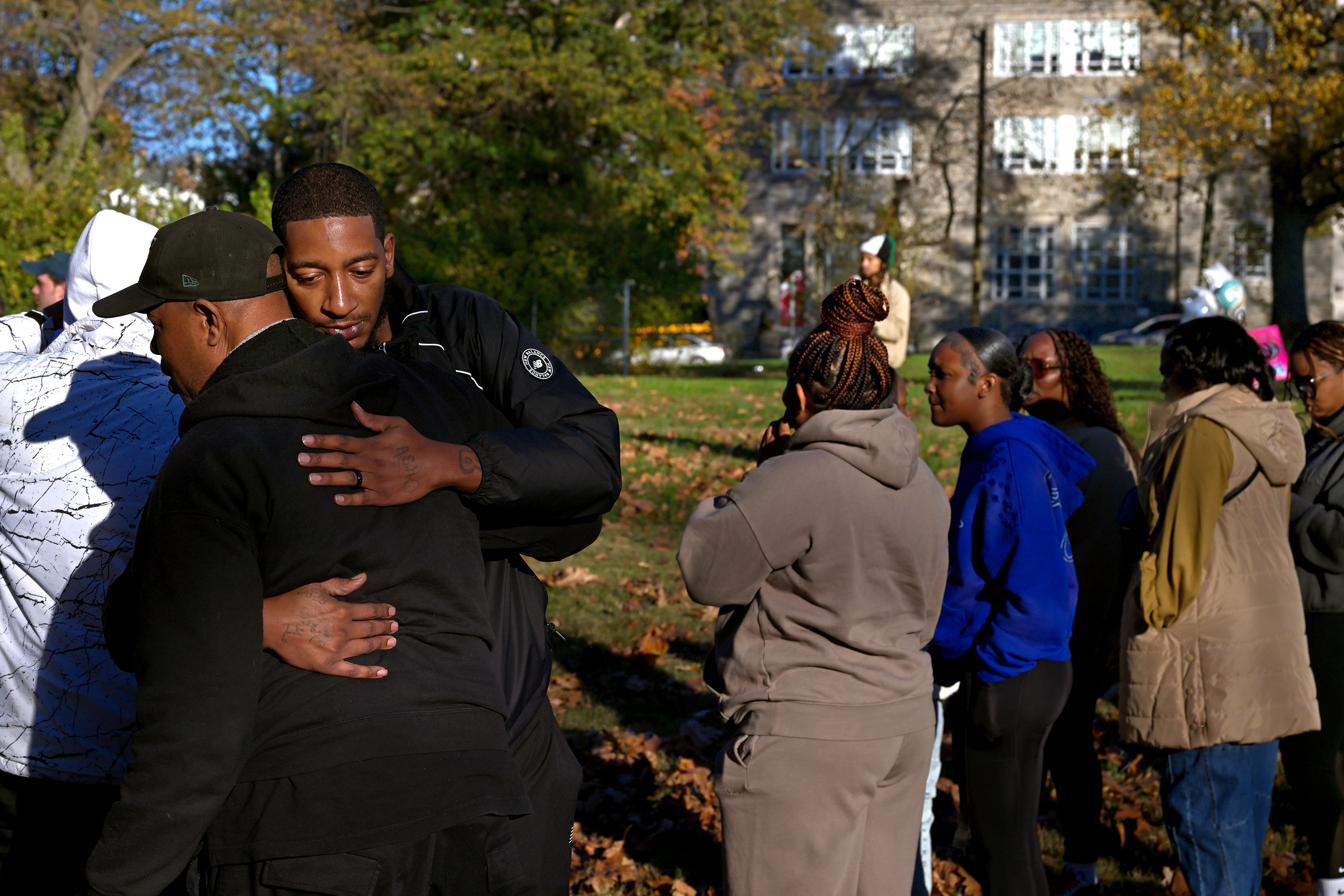
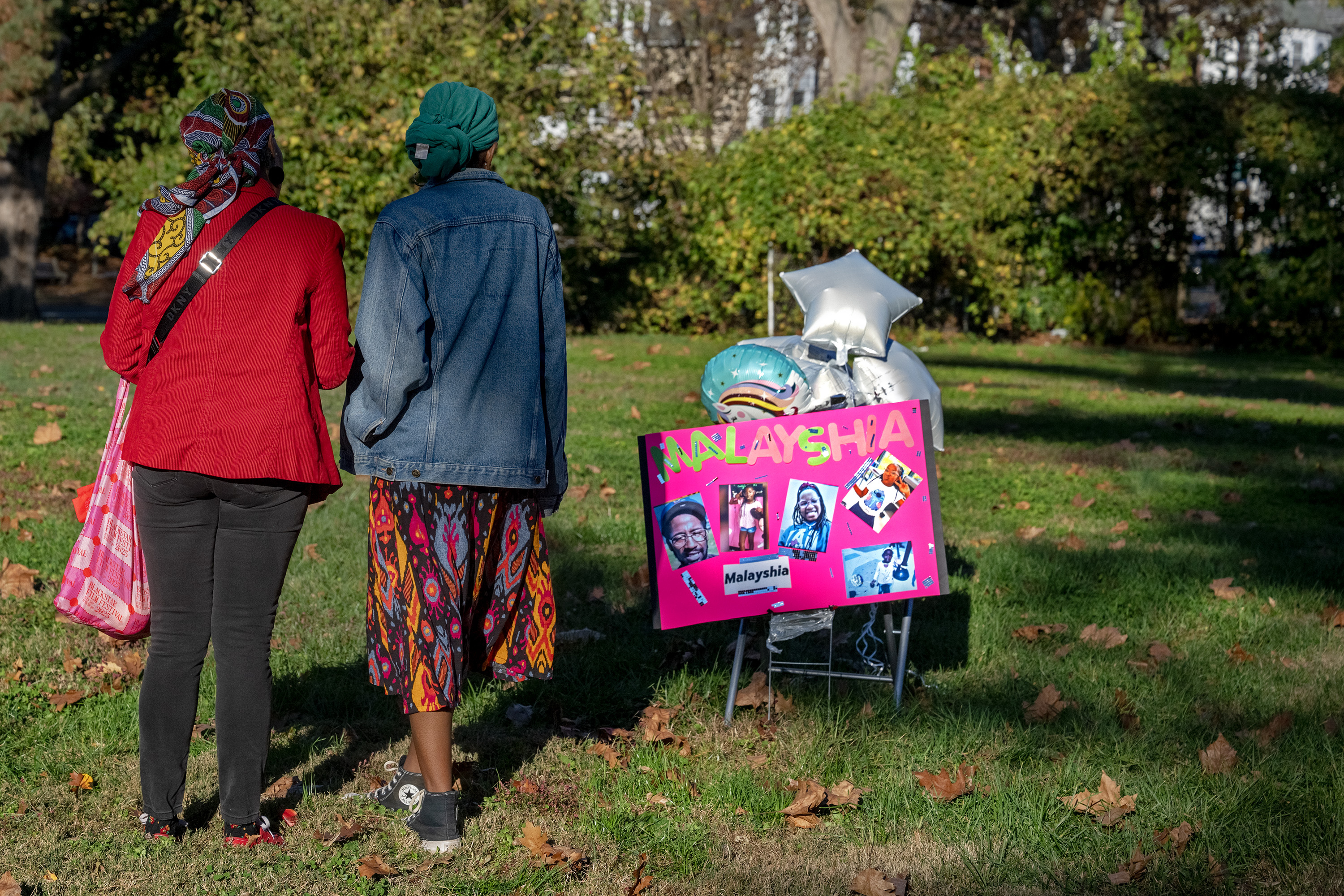
    Family and friends gather on Sunday to remember Malayshia Allford.Tom Gralish / Staff Photographer
  • Kids were asked to name Camden County’s robot dog. Here’s what they recommended.

    Kids were asked to name Camden County’s robot dog. Here’s what they recommended.

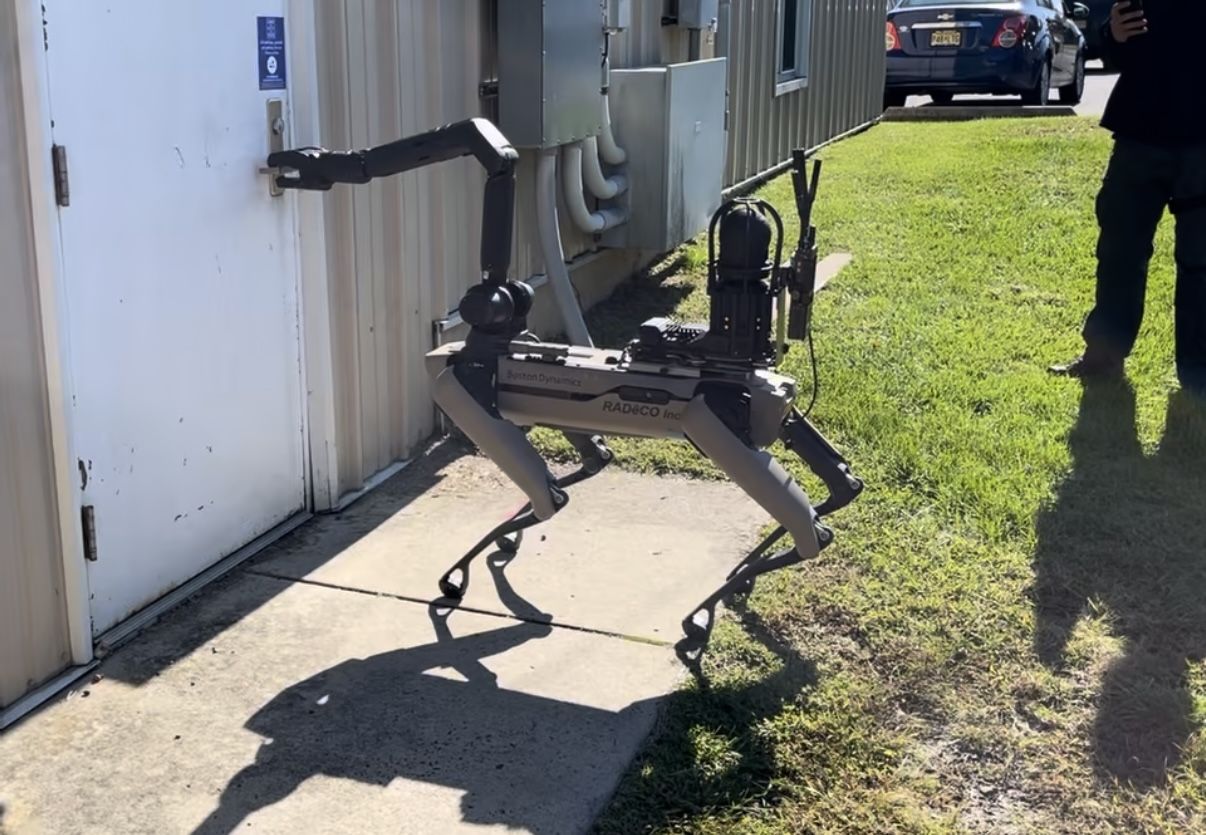
    One of the newest recruits to Camden County’s emergency response team is not a person or a K-9.

    It’s a robot dog, and it’s still waiting on a name. The grant-funded robot joined the Camden County Sheriff’s Emergency Response Team last year. Camden County and Gloucester County’s Office of Emergency Management share custody of the robot.

    The robot dog cost $293,300, with 75% coming from a federal grant. The remaining cost was split between Camden and Gloucester Counties, said Dan Keashen, Camden County’s public affairs director.

    The robot, remotely controlled with an Android tablet, has helped the emergency response team with more than 20 investigations, Camden County officials said in a statement. The bot has multiple cameras, a two-way microphone, a thermal imaging camera, a portable gas detector, grippers, and lights. In action, those tools help the dog assist with hostage situations, barricades, and identifying hazardous materials, according to the statement.

    The robot was manufactured by robotics company Boston Dynamics, owned by Hyundai Motor Group, with some mechanisms added to the machine by RADēCO, an energy and military supplier.

    Last month, after Camden County put out a call to its youngest residents, the sheriff’s office received more than 100 name suggestions. The office recently chose its 10 favorites from the bunch.

    The final contenders are, in alphabetical order:

    • Bob
    • Buster
    • Chase
    • Cookie Monster
    • Debo
    • Donut
    • Jersey Joe
    • Jetson
    • Rover
    • Rufus

    The sheriff’s office is expected to reveal the dog’s name this week, said Morgan Callan, a county spokesperson.

  • The reinvention of Camden’s Ablett Village has sparked a sea change in public housing in Cramer Hill

    The reinvention of Camden’s Ablett Village has sparked a sea change in public housing in Cramer Hill

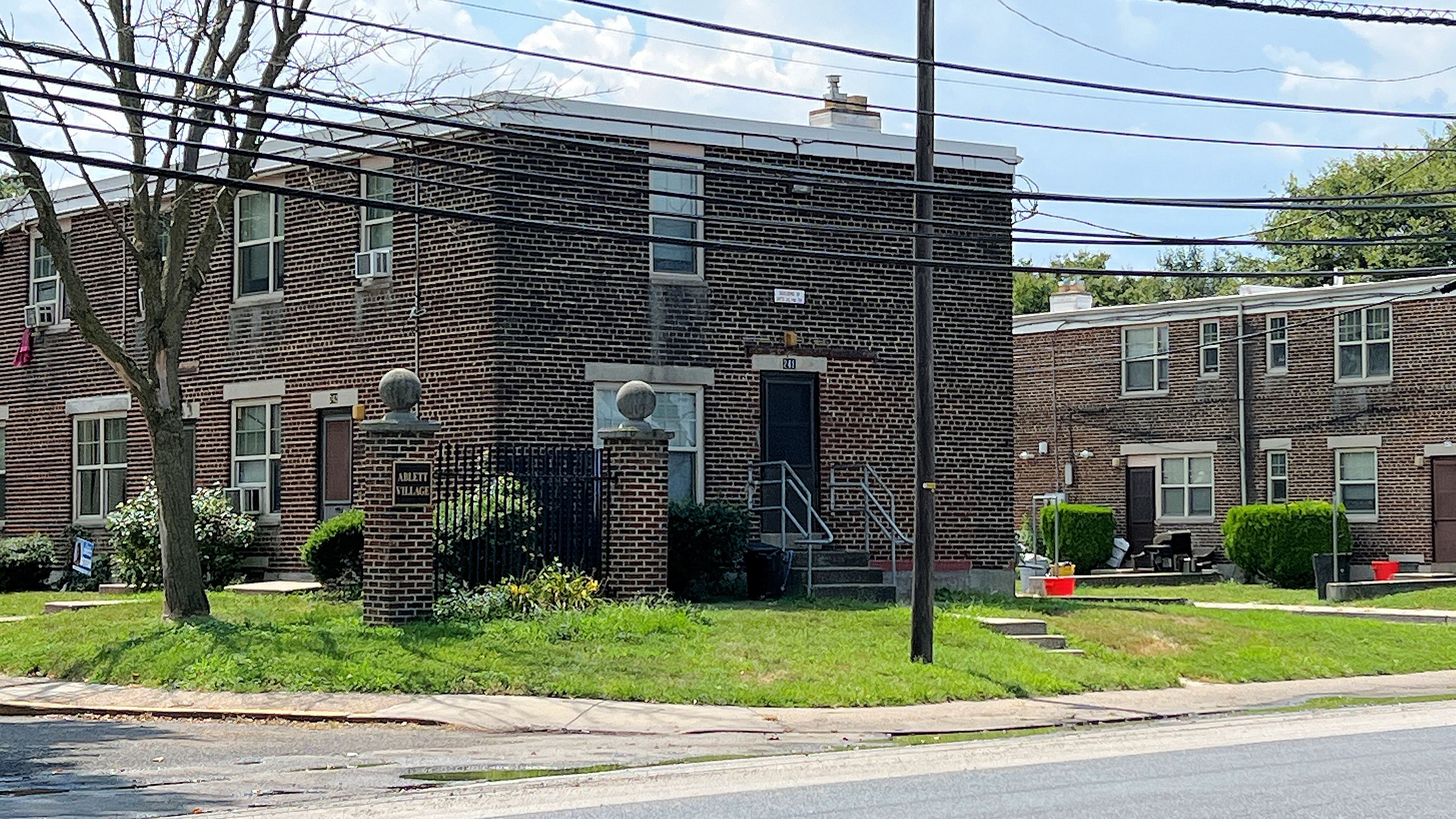
    For more than 50 years, Conrada Sanchez made her home in one of 23 evenly spaced two-story brick buildings off State Street in Camden.

    The Ablett Village buildings, facing each other across narrow streets, opened in 1943 as a partnership between the federal government and the Camden Housing Authority for families of defense industry workers during World War II. The homes, most of which have been demolished over the last year, were named for a Camden soldier killed in France during World War I.

    The old brick Ablett Village buildings on State Street, pictured here in a 2024 photo.Neill Borowski for The Inquirer

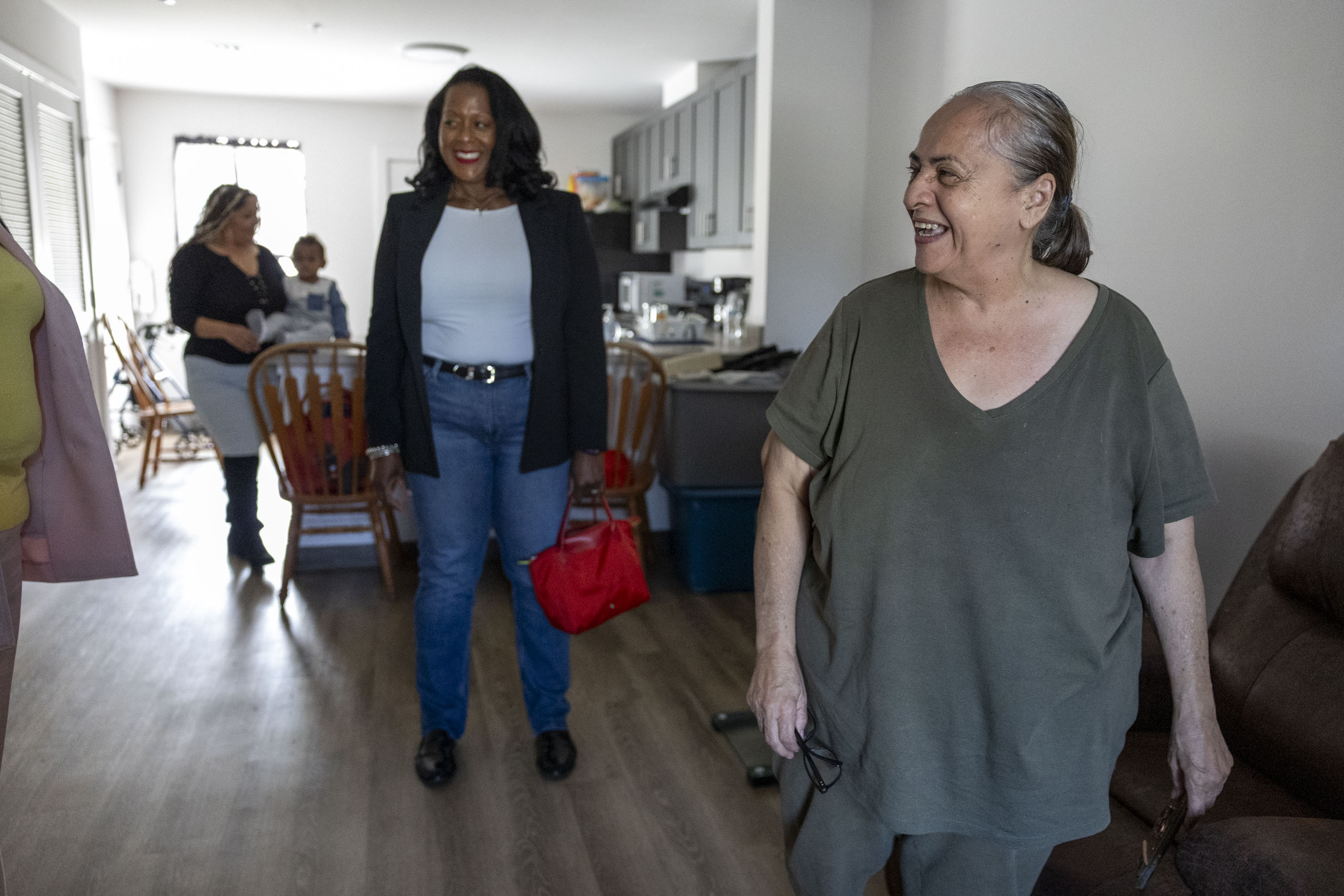
    In October, Sanchez was among the first Ablett Village residents to move into new townhouses built there as part of one of Camden’s largest affordable housing projects in recent years. A second group will move in this month.

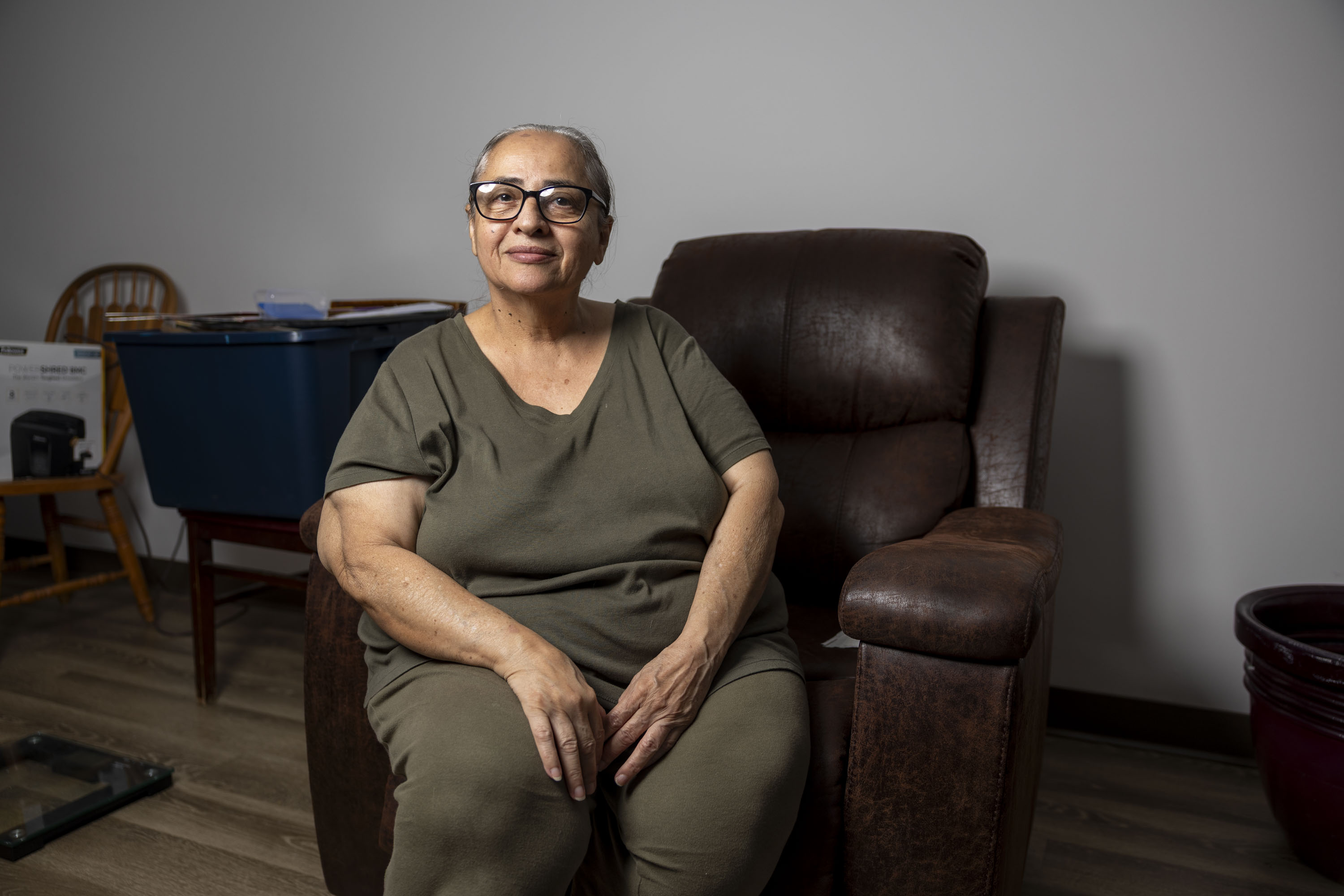
    Sanchez, 69, came from Puerto Rico in 1974 and raised her three children in the old Ablett community. Although she valued her neighbors and enjoyed the apartment, she said, the new construction and appliances made the move worth it.

    Many older Ablett Village residents relocated to the Harrison, a new age-restricted apartment building at North 24th Street and Pierce Avenue that opened in 2024. But Sanchez wanted to stay in the neighborhood she had long called home.

    “I wanted to stay. I raised my kids here, so I’m just going to retire here,” she said through a translator. Sanchez, a retired home health aide, spends her days in church or in prayer at home, taking time to watch her Spanish-language soap operas on the big-screen TV dominating her living room.

    Conrada Sanchez came from Puerto Rico in 1974 and raised her three children in the old Ablett community.Tyger Williams / Staff Photographer

    About 400 units of new housing across Cramer Hill have been completed or are under construction in a massive $220 million program managed by the Camden-based Michaels Organization with the housing authority.

    “It’s been tremendous,” Camden Mayor Victor Carstarphen said. “You’re proud. Our residents are proud. You feel it in the community.”

    There are some perks in the new townhomes: central air and appliances including a washer and dryer. Sanchez’s new home will also be easier for her to age in as it has a first-floor bathroom.

    The housing authority is providing free moving for every Ablett Village resident relocating to one of the new properties.

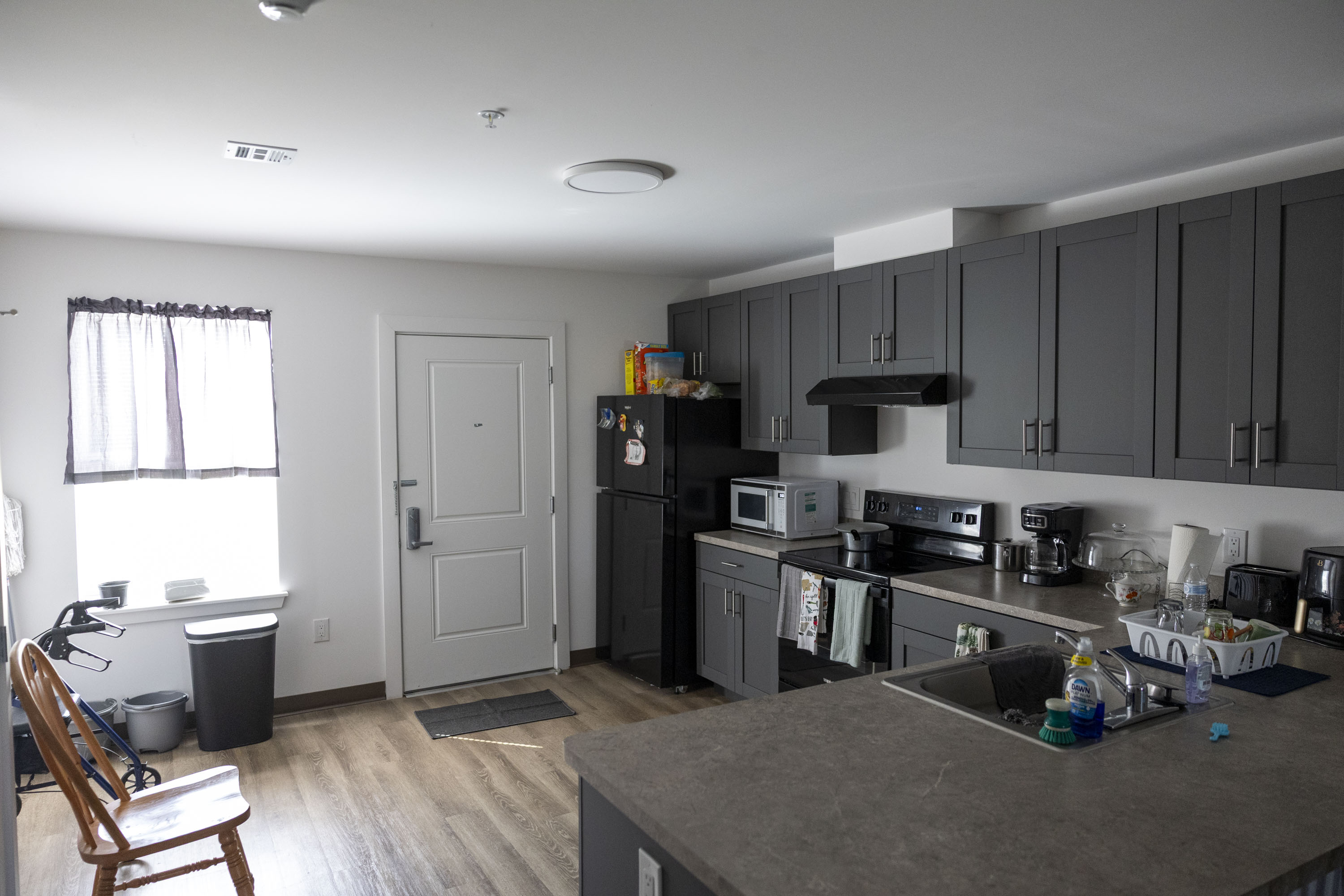
    The kitchen space at Conrada Sanchez’s new home.Tyger Williams / Staff Photographer

    Nick Cangelosi, regional vice president of development for the Michaels Organization, said a key to the design of the new Ablett Village is how the homes are situated.

    The old buildings faced themselves on their own narrow streets. Much of the new Ablett Village has townhouses facing the streets, blending in with the rest of the community, Cangelosi said.

    “You’re part of the neighborhood,” he said.

    In addition to the two groups moving into the Ablett homes this fall, construction will start on the next Ablett Village phase in summer 2027 and those residences will be ready by late 2028, Cangelosi said.

    For other Ablett Village residents, 38 homes are being built across State Street and will be ready for residents by the end of 2027. The development has yet to be named. A site on Harrison Avenue near the Salvation Army Kroc Center will also include 34 homes and will be completed by the end of 2027.

    Among the first projects in the building program, about a half mile from Ablett Village, were townhouses finished in summer 2023 on Hayes Avenue across from Veterans Memorial Family School. They are fully occupied by many former Ablett Village residents.

    Tracy Fleming-Powell, president of the Ablett Village Residents Council, said the residents she has talked to are “freaking crazily happy.” She has lived in Ablett Village since 1987 and was born in Camden.

    Fleming-Powell, also a resident liaison with the housing authority, said replacing Ablett Village had been discussed for years and, at one point, plans did not include residents staying in the neighborhood. She was relieved when the current program kept all residents in Cramer Hill.

    Although she has yet to move into her new townhouse, Fleming-Powell looks forward to the new appliances, including having a dishwasher for the first time.

    “I’m going to hug my floor,” she said of the move. “I can’t wait.”

  • Only 1.2% of veterinarians are Black. A Camden career day aimed to change that.

    Only 1.2% of veterinarians are Black. A Camden career day aimed to change that.

    As a youngster growing up in Camden, Sophia Leon loved animals and set her sights on becoming a veterinarian.

    She had no idea that the odds were against her: Only 8.5% of veterinarians are Hispanic or Latino and even fewer, only about 1.2%, are Black, according to the U.S. Bureau of Labor Statistics.

    Leon, now a 17-year-old senior at Camden Academy Charter High School, learned about the statistics during a recent career day that provided encouragement to students in underrepresented communities like Camden by introducing them to veterinarians who overcame similar barriers.

    “I thought there were more. There should be more,” Leon said.

    Niccole Bruno, a veterinarian from Houston who started the Believe and Belong in Veterinary Medicine program, hopes to make that happen by providing students the hands-on opportunity to learn about career possibilities, meet veterinarians, and obtain mentors to help with their journey.

    “We’re the least diverse medical profession,” said Bruno, founder and CEO of the blendVET Foundation, a veterinary education training group. “My goal is to have them become whatever they want to be in the profession.”

    Bruno recruited veterinarians, mostly Black, from around the country to participate in the all-day career event at the Marjorie and Lewis Katz Clubhouse in Camden in late October. So far, the program, launched in 2023, has reached more than 1,600 students around the country.

    “I do believe representation matters. When they see us, it makes it easier to have it in their mind,” said Lisa R. Branner, the emergency medical director of VCA Old Marple Animal Hospital in Springfield, Delaware County. “It is enlightening to be able to show them this is what you can do.”

    Students rotated among labs that included emergency medicine, general practice, neurology, clinical pathology, and ophthalmology. They learned about careers from veterinary technician to surgeon.

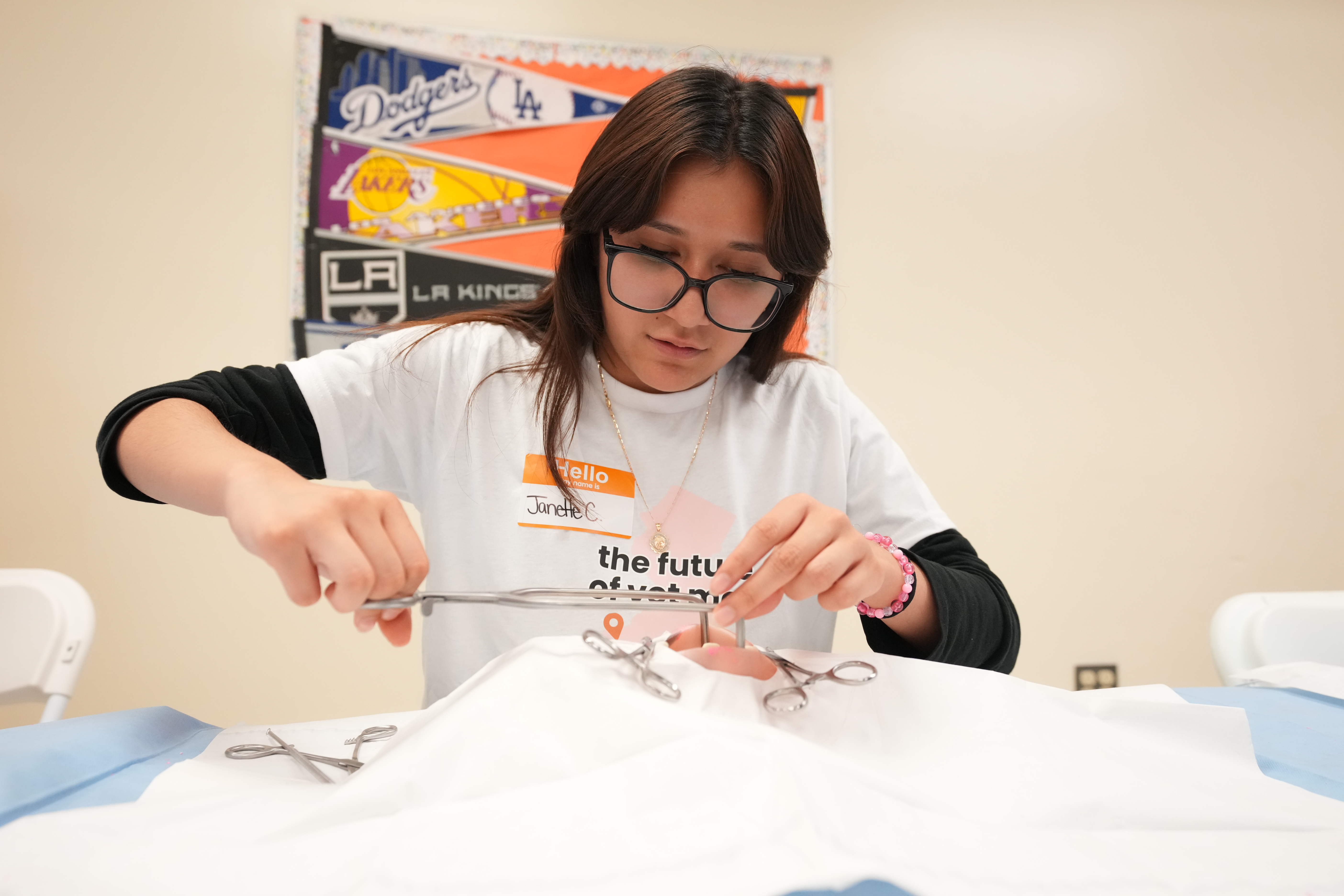
    Janette Campos De Castilla works with a veterinary teaching model at the career day at the Katz Boys & Girls Clubhouse in Camden.Jessica Griffin / Staff Photographer

    A visit to the first-floor gym where they met Hazel, a friendly 2½-year-old golden retriever, was a favorite stop. Her owner, Elsa Schock, described her family pet as “a people dog.”

    A trio of students listened intently as Schock, a veterinarian at the Oakhurst Veterinary Hospital in Monmouth County, showed them how to examine Hazel by checking her ears, paws, and teeth. They took turns using a stethoscope to listen to her heart rate and take her pulse.

    Hazel patiently lay on the floor, occasionally rewarded with treats. She was examined at least 20 times, Schock said.

    “I thought it was cool that we get to interact with the dog,” said Mayte Coyotl, 16, a junior at Camden Academy Charter High School. “I’ve come to love animals.”

    Coyotl said that spending time with Hazel and the veterinarians gave her a new insight and that she would possibly consider a career in veterinary medicine.

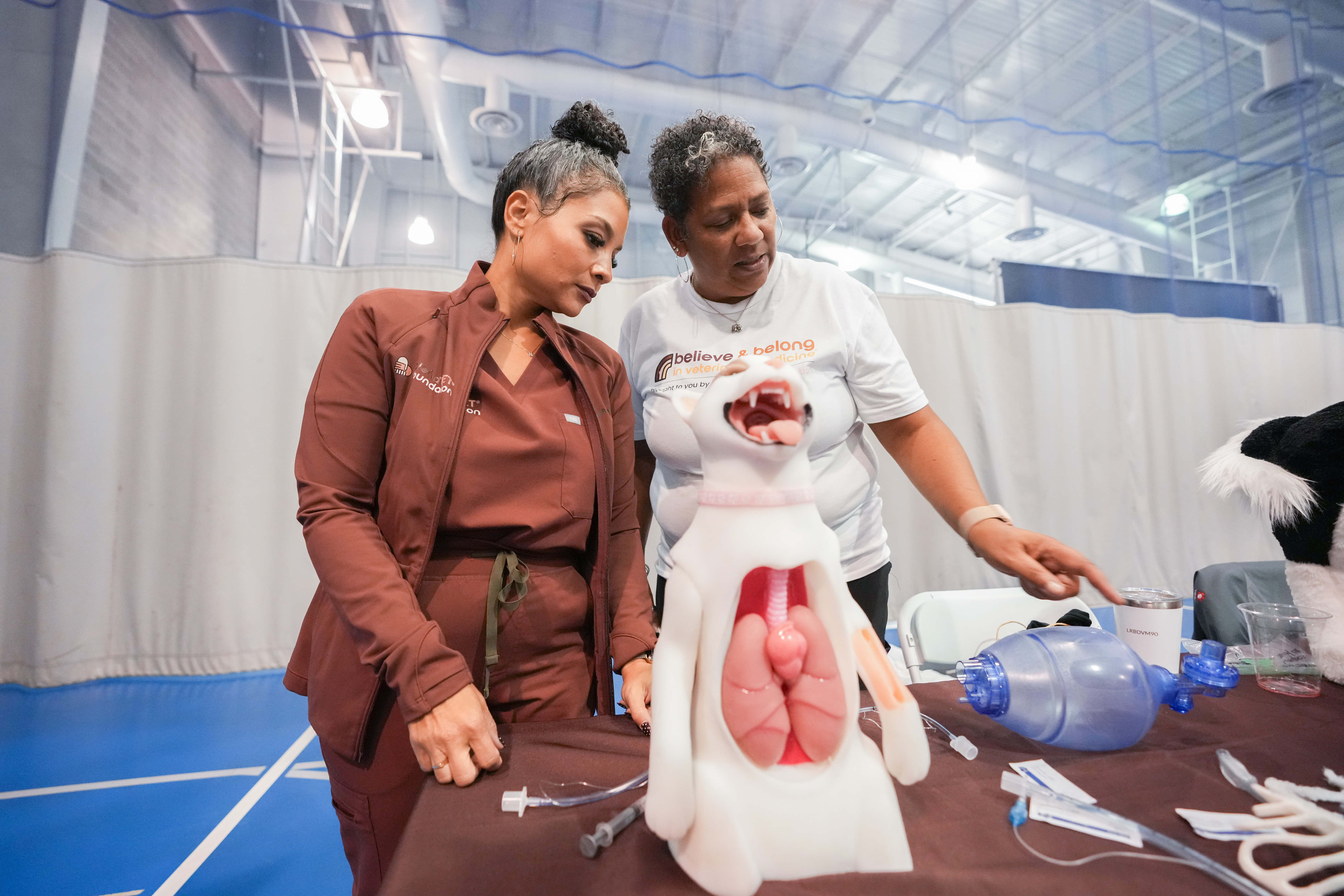
    Dr. Niccole Bruno, left, and Dr. Lisa Branner were both on site to work with the students during the education program.Jessica Griffin / Staff Photographer

    This is the second time that Bruno has brought the program to Camden. Bruno, who grew up in Queens, N.Y., credits her mother with helping her overcome racial barriers. Her younger sister, Jasmine, is also a veterinarian and participates in the program.

    In addition to Camden Academy Charter, students from Camden’s Promise Middle School and KIPP Lanning Square Middle School were also in attendance.

    “I love it,” said Leon, who has enjoyed tending to animals while visiting relatives in Nicaragua. “It’s a great opportunity for us.”

    The students were also able to try surgical techniques, learn how to perform CPR on animals, bandage wounds, and do basic suturing. They learned how to don surgical gowns, carefully keeping them sterile before practicing techniques to neuter or spay stuffed animals.

    “I’m scrubbing out,” quipped Yadrian Gonzalez, 17, a senior at Camden Academy, after taking off his blue gown and moving on to his next rotation.

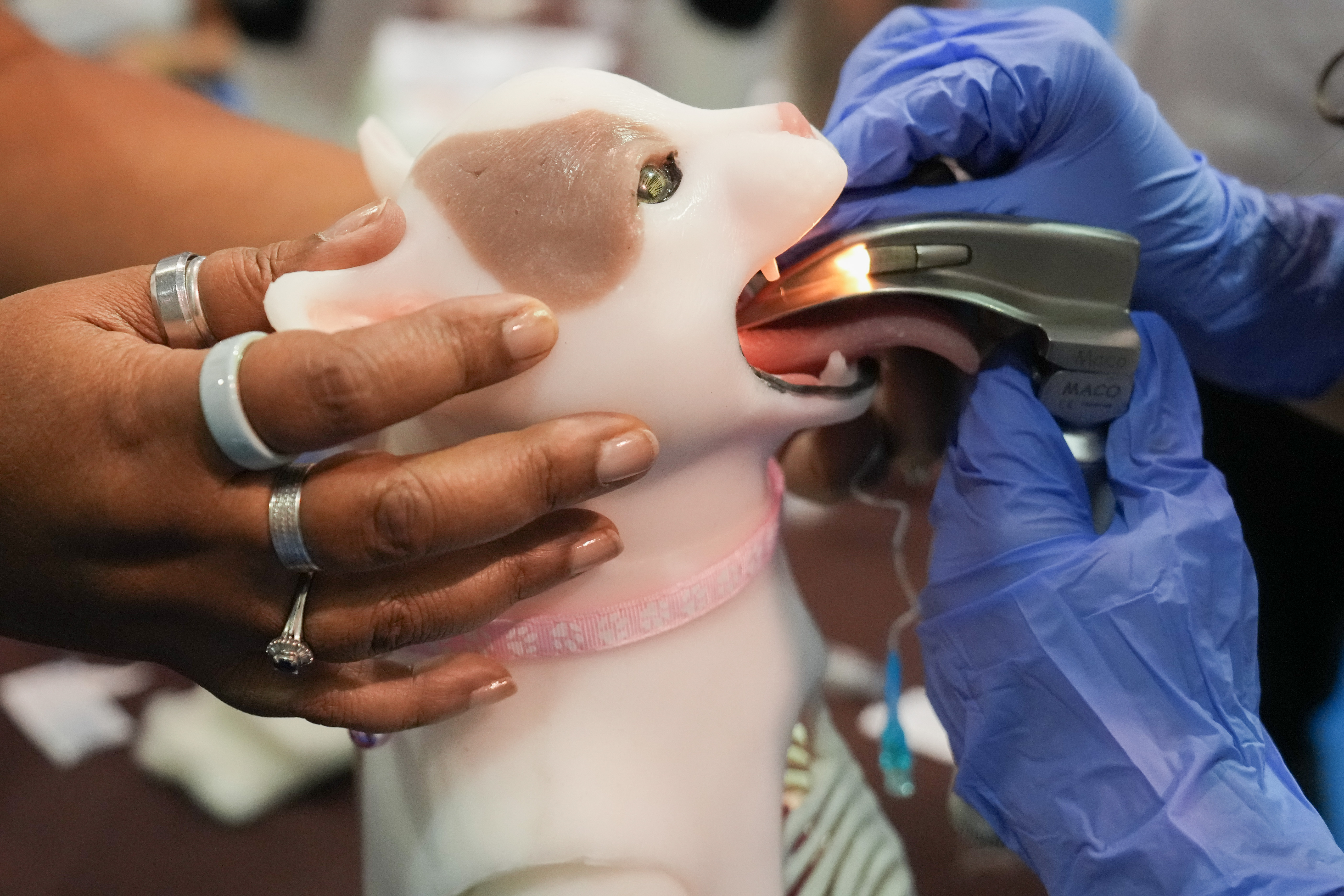
    Students worked with a feline teaching model.Jessica Griffin / Staff Photographer

    Across the hall in a room with the lights lowered, a few students sat at desks hunched over microscopes to examine dead pig eyes. Kenneth Pierce, a veterinary ophthalmologist, showed them how to do an eye exam and diagnose common ocular diseases.

    The students were impressed when Pierce, a veterinary consultant based in Philadelphia, told them that he has treated domestic animals and exotic animals, including performing cataract surgery on a chimpanzee.

    “Do you think this is the best field to go into just starting?” asked Winter Glover, a student at Camden Academy.

    Pierce said he underwent years of training and has enjoyed his career.

    “It’s always in high demand,” said Pierce, who added that he is trained to treat just about any animal. “I’ve looked at humans, too, but legally I can’t prescribe anything for them.”

    The day was an eye-opener for some students. One squeamish student, overwhelmed by the pig eye exam, needed a break and briefly left the room.

    Katelynn Moreno, 17, said she was intrigued by the surgical lab where students were shown how vets treat a herniated disk.

    “I got to learn a lot of new things. This is something I could actually see myself doing,” said Moreno, a senior at Camden Academy.

    Armani Holden, 17, also a senior at Camden Academy, is interested in culinary arts but attended the vet program out of curiosity.

    “Honestly, I liked it better than I thought it would be,” she said. “I thought it would be boring.”

    Bruno, whose program evolved from a presentation she made at an international veterinary conference in 2023, said she looks forward one day to seeing a student she met in the program graduate from veterinary school.

    “The first one will be the most special,” she said. “I’ll be in the audience crying with their parents.”

  • Authorities say an armed man was ‘struck by gunfire’ during an encounter with South Jersey police

    Authorities say an armed man was ‘struck by gunfire’ during an encounter with South Jersey police

    An allegedly armed person was “struck by gunfire” during an encounter with two Gloucester Township police officers Friday afternoon, the Camden County Prosecutor’s Office said.

    The nonfatal shooting happened on the 700 block of College Drive in Gloucester Township, the prosecutor’s office said.

    Helicopter video from 6abc showed a large police presence at the CVS store located on the block.

    “An armed suspect was reported to be struck by gunfire during an incident involving two officers from the Gloucester Township Police Department,” the prosecutor’s office said.

    The injured man was taken to Cooper University Hospital for treatment, the prosecutor’s office said. No one else was hurt.

    As of Saturday, the man was stable and remained hospitalized, a spokesperson said.

    “This is an active and ongoing investigation. To protect the integrity of the investigation, we are unable to provide specific details at this time. We will provide an update later when it is appropriate to release information regarding this matter,” the prosecutor’s office said.

    Staff writer Maggie Prosser contributed to this article.

  • Collingswood voters reject $4.56 million school operating referendum

    Collingswood voters reject $4.56 million school operating referendum

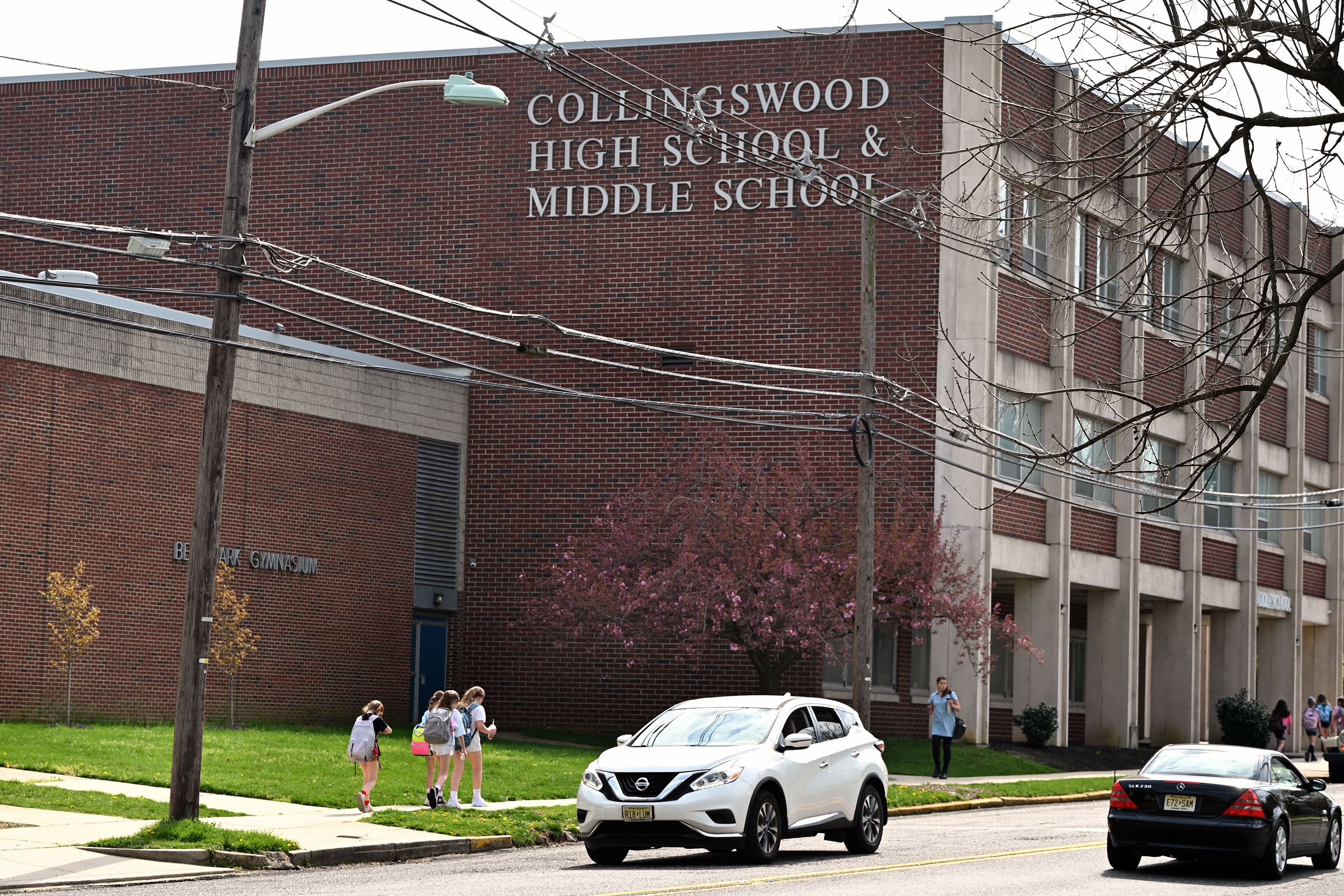
    Collingswood voters rejected a $4.56 million school operating bond Tuesday to pump more funds in the budget and keep schools afloat.

    It was the first bond of its type in the South Jersey school system. District officials said it was needed to close a structural deficit.

    In preliminary unofficial results, the Collingswood bond question was rejected 2,863 to 2,646. It would have added $1,324 annually to a tax bill for a home assessed at the borough average of $448,000.

    “We deeply appreciate every community member who engaged in this process and made their voice heard. While these initial results are not what we had hoped for, our primary focus remains unchanged: delivering a strong, supportive education for all Collingswood students,” Superintendent Fred McDowell said in a statement Wednesday.

    Without the funds, McDowell has said the district would likely face significant budget cuts, including reducing teacher positions, increasing class sizes, reducing elective courses and athletics, and possibly cutting student mental health services for the 2027-28 school year.

    For the current school year, Collingswood raised taxes, cut positions, closed a school, and consolidated its middle school and high school campuses to help bridge a $3.3 million budget gap.

    McDowell has sounded an alarm for another tough budget cycle next year and an expected budget deficit. He said Collingswood’s school tax level yields about $480,000 annually — far short of the $4 million needed to cover salaries, benefits, and state mandates.

    Residents had mixed feelings about the bond proposal.

    “I think in general I had to weigh the future of our schools with the current lack of affordability … but in the long term, with two kids, I need a school system not to crumble,” said Emma Rose, 40.

    Donald Nigro, a software engineer, and his wife, Patricia, an attorney, both voted against the referendum.

    “We don’t have confidence in the members of the school board to be fiscally responsible,” Patricia Nigro said. “I just felt like they need a little more scrutiny and a little more fiscal responsibility.”

    Collingswood was among four districts statewide that turned to operating bonds Tuesday to add to their budgets in the wake of declining state aid. The question enables districts to exceed the 2% property tax levy cap.

    Voters in Burlington Township approved a $567,000 operating bond, and voters in the Bordentown Regional School district passed an $86.1 million capital bond that will raise their property taxes.

    Elsewhere in the state, voters in Oradell in Bergen County rejected a $73,000 operating referendum to fund an armed law enforcement officer and educational programs.

    Burlington Township officials said the funds would be used to hire two additional elementary school teachers, add a music teacher and expand the music program, reduce class sizes, and expand middle school athletic programs.

    The approval, 3,033 to 2,179 vote, will mean a permanent increase in the district’s tax levy. It will add $50 to the annual tax bill for a home assessed at the township average of $234,975, said district spokesperson Liz Scott.

    Voters in the Bordentown Regional school district who reside in Fieldsboro, Bordentown City, and Bordentown Township approved their bond referendum 3,663 to 2,260.

    Superintendent James Altobello said the bond, one of the largest in the district’s history, would be used for renovations at all five district schools.

    The bond will add $588 to the average annual tax bill in Bordentown Township, $456 in Bordentown City, and $420 in Fieldsboro. The state will pick up $34.4 million of the costs.

    Voters in Washington Township in Burlington County approved a measure to reduce the school board from five members to three.

    Staff writer Lacey Latch contributed to this article.

  • Collingswood voters overturn the long-standing liquor ban

    Collingswood voters decided Tuesday to overturn a Quaker-era policy restricting the sale of alcohol in the borough, after more than a century as a dry town.

    The ballot measure passed with just over 60% of the vote, or 3,506 voters, according to preliminary election results from Camden County.

    The move represents a historic shift for a borough that has prohibited alcohol sales since the 19th century.

    “The outcome represents an important change for Collingswood, and the governing body is committed to approaching the next steps thoughtfully, transparently and in a manner that reflects the interests of the community,” the borough said in a statement Wednesday.

    It is not yet clear how quickly alcohol sales could begin. Local regulations will first need to be established to determine how many liquor licenses will be available, what types of businesses can apply for them, what they will cost, and how those businesses will be allowed to operate, according to the borough.

    To abide by the state-mandated population-based cap, Collingswood will be limited to either a single distribution license for a liquor store or four retail consumption licenses that permit restaurants or bars to serve alcohol. It is not clear which route Collingswood will take.

    It is also unclear how much revenue the borough could take in from the new licenses.

    Collingswood intends to award the licenses through a public bidding process and will establish a minimum bid “informed by research into recent successful license bids in comparable municipalities,” according to the borough’s statement.

    Annual licensing and renewal fees could generate between $1,000 and $10,000 each year, borough solicitor Caitlin Harney Norcia said during a commissioners meeting earlier this year.

    In addition to a liquor license ordinance, officials will also need to establish zoning regulations to determine where in town the licensed establishments can operate, the borough said. Right now, they are primarily focusing on the central business district, they added.

    “There’s a general sense that liquor can be a good thing, but there’s a concern that if it’s done in a way that’s unbalanced, it can also throw people off,” borough administrator Cassandra Duffey told The Inquirer in June.

    “The challenge is not to disrupt the balance of businesses that already exist here,” she said.

    Tuesday’s ballot referendum was the result of a concerted effort from Collingswood residents this summer to collect enough signatures to put the question in the hands of voters.

    One of the residents who voted in support of the measure was Emma Rose, 40.

    “We absolutely need liquor in this town,” said Rose, who does not drink but voted in support of the measure.

    “I don’t think businesses should be hampered from being successful in the modern market based on the outdated, outmoded, sort of strange puritanical restrictions,” Rose said.

    “It’s just not possible” for small restaurants to sustain themselves without serving alcohol, Rose said.

    Jill Leeb, a 38-year-old mental health therapist, also does not drink, but she said she wants to see if the liquor licenses can provide a revenue boost for the borough and its restaurants.

    “I don’t think it can do much harm to try it out and see what happens,” Leeb said at her polling place Tuesday. “And we could always walk it back if it doesn’t, but it’s important to enough people that why not try and see how it goes?”

    But longtime residents Donald and Patricia Nigro fear that liquor sales could be a slippery slope for the borough. They both voted against the measure.

    Collingswood’s enduring status as a dry town helps set it apart, they said, and has helped protect it from some of the pitfalls of other municipalities.

    When he moved to the borough decades ago, Nigro said, people were skeptical of his decision.

    “Back in the mid-’80s, Collingswood wasn’t as vibrant as it is now,” he said, attributing its growth into a highly desirable place to live, at least in part, to being alcohol-free.

    “If we have alcohol, it’s going to do nothing for the quality of life here, because when we want to drink at a restaurant, we bring a bottle,” he said. “It’s cheaper.”

  • Camden County voted for a tax hike to protect water, reduce flooding, and update its sewer systems

    Camden County voted for a tax hike to protect water, reduce flooding, and update its sewer systems

    Camden County voters on Tuesday overwhelmingly supported a one-cent increase to an annual tax protecting the county’s natural areas.

    The tax will help fuel a $400 million plan unveiled in July to improve water quality in the Cooper River, a tributary of the Delaware River that runs through Camden County, and other local rivers, lakes, and streams.

    In the county’s final unofficial returns as of Wednesday, 79% of Camden County voters who responded to the ballot question, or nearly 92,000 people, had voted “yes” to boosting the county’s Open Space Trust Fund.

    The tax increase will cost the average Camden County homeowner $1.83 per month. The vote increases the existing open space tax to $.03 per $100 of assessed property value, still one cent lower than in Burlington and Gloucester Counties.

    The county will start collecting that money in 2027, said Dan Keashen, the county’s public affairs director.

    “Now that the referendum has passed we can get to work improving and enhancing our community,” Keashen wrote in a text.

    The ballot question also puts dollars toward protections for the county’s drinking water sources, wetlands, parks, water recreation, and prevention of development in natural areas.

    Don Baugh, president of nonprofit Upstream Alliance, said the new tax will reduce how often his group has to cancel its free paddling and other educational trips through Camden’s waterways. It will also, he said, improve the ecosystem for aquatic life.

    “It will boost the quality of life and economic development of Camden County, where more people will say, ‘I love to live here,’” Baugh wrote in an email.

    County officials are still discussing which projects the levy will fund first, but Keashen said the increase will immediately support fixes for outdated sewer pipes leaking into the county’s waterways and improvements to Camden City’s combined sewer system.

    Those efforts would help reduce flooding in the city and eliminate liquid waste flowing into the Cooper and Delaware Rivers, Keashen said.

    “This referendum reflects a shared commitment to environmental stewardship, and preserving our natural resources for years to come,” wrote Jeffrey Nash, a Camden County commissioner, in a statement.

    In addition to the one-cent tax hike, the county plans to shore up those projects with state and federal funding, philanthropy, and other funding sources.

    Voters approved Camden County’s first open space tax 28 years ago with a referendum establishing a $2 million trust fund for environmental protections. Today, all 21 counties in New Jersey have an open space tax. Camden County raised more than $12 million through the tax last year.

    On Election Day, some voters at the polls supported the new levy, but others were concerned about the extra cost.

    Nicole Fahnestock, 52, has lived in Cherry Hill for nearly two decades. Her main concern at the ballot box was the cost of living.

    “I voted ‘no’ because, honestly, I’m just tired of all the taxes,” Fahnestock said, noting that she has recently been impacted by property tax increases.

    But other Camden County voters, like Shawn Acosta, said they were willing to pay a little more to help the planet.

    “I’m a kayaker, so I’ve noticed our waterways are getting cloudier and cloudier,” said Acosta, a 61-year-old Etsy shop owner and longtime Cherry Hill resident. “I grew up fishing and we ate the fish. I take my grandson fishing and can’t eat the fish. That’s a problem to me.”

    Rudolph Williams, director of climate and culture at the Philadelphia School District, also supported the measure.

    “Anything that’s going to increase the [water] purity needs to happen,” Williams said. “Can you really put a value on purification of the things that we need?”

  • Voorhees planning board approves 120 affordable housing apartments for Centennial Boulevard

    Voorhees planning board approves 120 affordable housing apartments for Centennial Boulevard

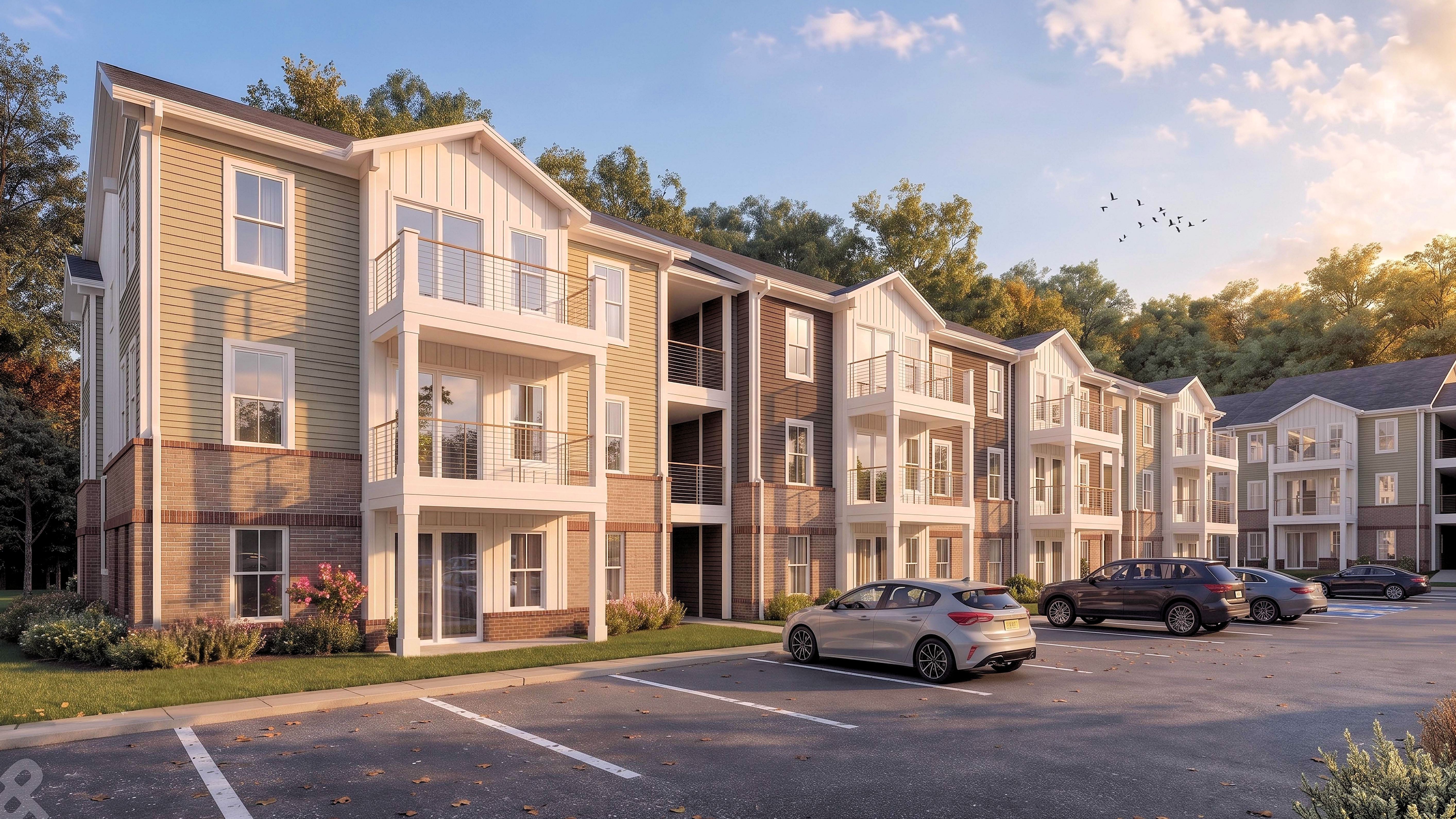
    A now-vacant Voorhees plant that for years sent concrete to South Jersey construction projects will be demolished, and a $50-million affordable housing apartment complex will be built on the Centennial Boulevard property.

    The Camden-based Michaels Organization last Wednesday received planning board approvals for its preliminary and final major site plans and minor subdivision plan to build The Oaks at Centennial in two phases with 60 affordable apartments in each phase. The formal applicant is Centennial Housing Associates LLC.

    For years, L&L Redi Mix Concrete made concrete on the 6.6-acre site until it was acquired in December 2021 by Silvi Concrete, based in Fairless Hills, Pa., and later shut down. At the time of the purchase, the 55-year-old L&L Redi Mix operated concrete plants in New Jersey in Voorhees, Southampton, Woodbury, Cinnaminson, Kingston, and Clayton.

    The 120 affordable one-, two- and three-bedroom units are included in the Voorhees affordable housing plan that was released last year and revised in February. The Voorhees affordable housing report says the site has been cleared of any contamination.

    Monthly rent for a two-bedroom unit at the 600 and 602 Centennial Boulevard development for a family earning 60% of area median income would be $1,587. Rent for a one-bedroom unit would be $1,323 and $1,834 for three bedrooms.

    Nicholas J. Cangelosi, regional vice president of The Michaels Organization, has said affordable housing in suburban towns is a way to help essential workers in retail, healthcare, and the schools to live in the communities they serve.

    Traffic consultant Shropshire Associates LLC of Atco estimates The Oaks would generate 43 extra trips during the morning peak hour and 60 extra trips during the afternoon peak hour.

    70and73.com is a hyperlocal news site focused on South Jersey, including the communities of Cherry Hill, Evesham, Mount Laurel, Voorhees, Medford, Medford Lakes, and Moorestown.