Tag: Camden County

  • This 18th-century tavern with a tainted past is now South Jersey’s American Revolution Museum

    This 18th-century tavern with a tainted past is now South Jersey’s American Revolution Museum

    An unsuspecting property in north Camden that had a front-row seat to the American Revolution has become a multimillion-dollar museum.

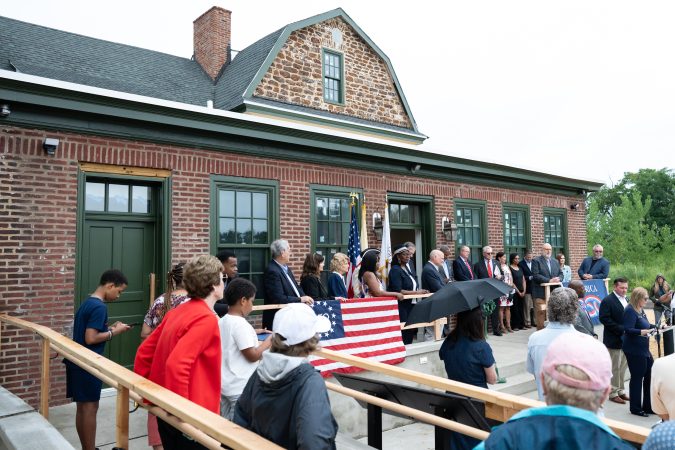
    Elected officials, history buffs, and local organizers gathered at the Benjamin Cooper Inn at 75 Erie St. on Saturday to celebrate the soft opening of the American Revolution Museum of Southern New Jersey. The project was funded by $4.6 million in grants from federal, state, and local sources, with the largest amount coming from the New Jersey Historic Trust.

    The 18th-century stone building has taken on many identities, including a private residence, tavern, British Army outpost, shipyard, luxury yacht building site, storage unit, and dumping ground for toxic materials. In the 1760s, the land was witness to the mass auction of enslaved people. Until recently, the building was abandoned.

    The museum hasn’t fully opened to the public and likely won’t for at least a little while, but leaders of the Camden County Historical Society, which has a 30-year lease with the building’s private owner, wanted to give people a taste of what the museum will be when it does. Right now, the museum is open for limited tours by appointment only.

    The Inn still needs work. The building has a temporary roof installed after a 2012 fire. The floors aren’t finished, and bathrooms have no doors. The second floor, currently sectioned off, hasn’t undergone any renovations, which will require fundraising of hundreds of thousands of dollars. Dirt piles and overgrown foliage block any view of the Delaware River.
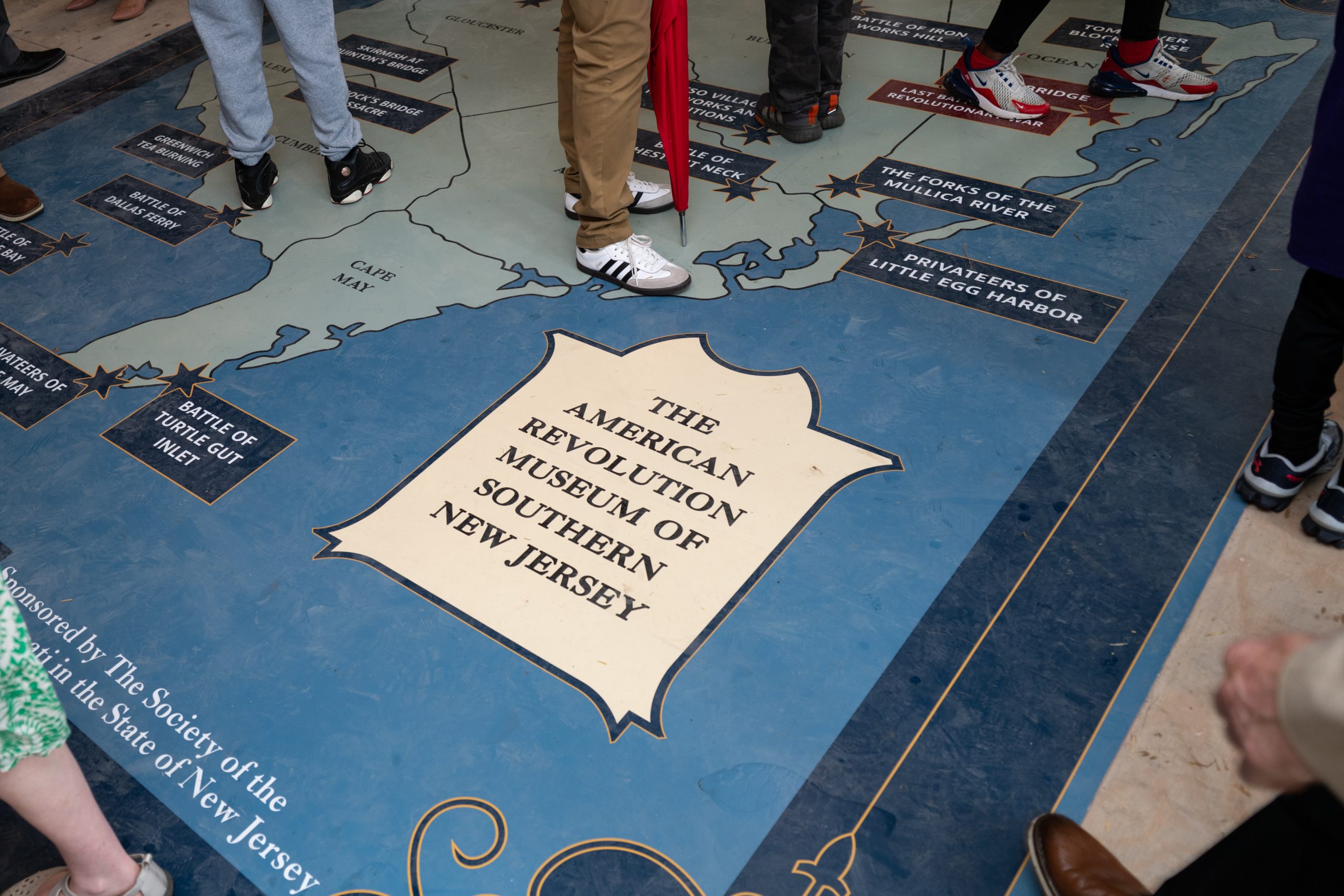
    Visitors explore the exhibits at the soft opening of the American Revolution Museum of Southern New Jersey in Camden on Saturday.Erin Blewett / For The Inquirer

    For the past six years, the society has planned to unveil the museum before America’s 250th, said Jack O’Byrne, the society’s executive director, but they kept running into obstacles. The project’s success came years after the society lost the Hugg-Harrison-Glover House, a Bellmawr home that survived the Revolutionary War, to a highway construction project after a preservation battle.

    “It’s been a race to the end,” said O’Byrne, who will retire from his role on July 4. “The project probably died like 13 times.”

    Zed Fox, the incoming executive director, and the society’s board will determine the future official opening date, hours, and cost. Fox said Monday that the board will meet on Wednesday to discuss those options, but he expects the museum to ready to open at full capacity by fall.

    The museum is planned to serve as the trailhead for Camden County’s LINK trail, a 34 mile shared-use path in the works across 17 municipalities, and educate people on South Jersey’s role in American history.

    A long history and a damaged home

    The new museum doesn’t showcase many historic artifacts. Many gems kept in the society’s archives, such as a letter written by George Washington at Valley Forge and a dozen other Revolutionary War-era items, wouldn’t fare well at the Inn with the sunlight streaming through the windows.

    But scattered amid walls of weapon replicas and educational text are hints of the real thing.

    There’s some 19th-century furniture originally owned by the Cooper family, a British cannon featuring wood blown off an 18th-century Royal Navy ship in Gloucester City, framed New Jersey bank notes from the 1760s and 1770s, and a front door key from when the Inn was a saloon called the “Old Stone Jug.”

    A bell hanging in one room rang to announce ferries landing at Cooper Street Ferry in 1800, and a cheval-de-frise, a sharp wooden log, once blocked British ships from sailing the Delaware River.

    In the same room, there’s a mantel from Hugg’s Tavern in Gloucester City, salvaged in 1929 before the building was demolished. Betsy Ross married her first husband, John Ross, in front of the fireplace at the tavern in 1773, though the mantel at the museum isn’t the original.
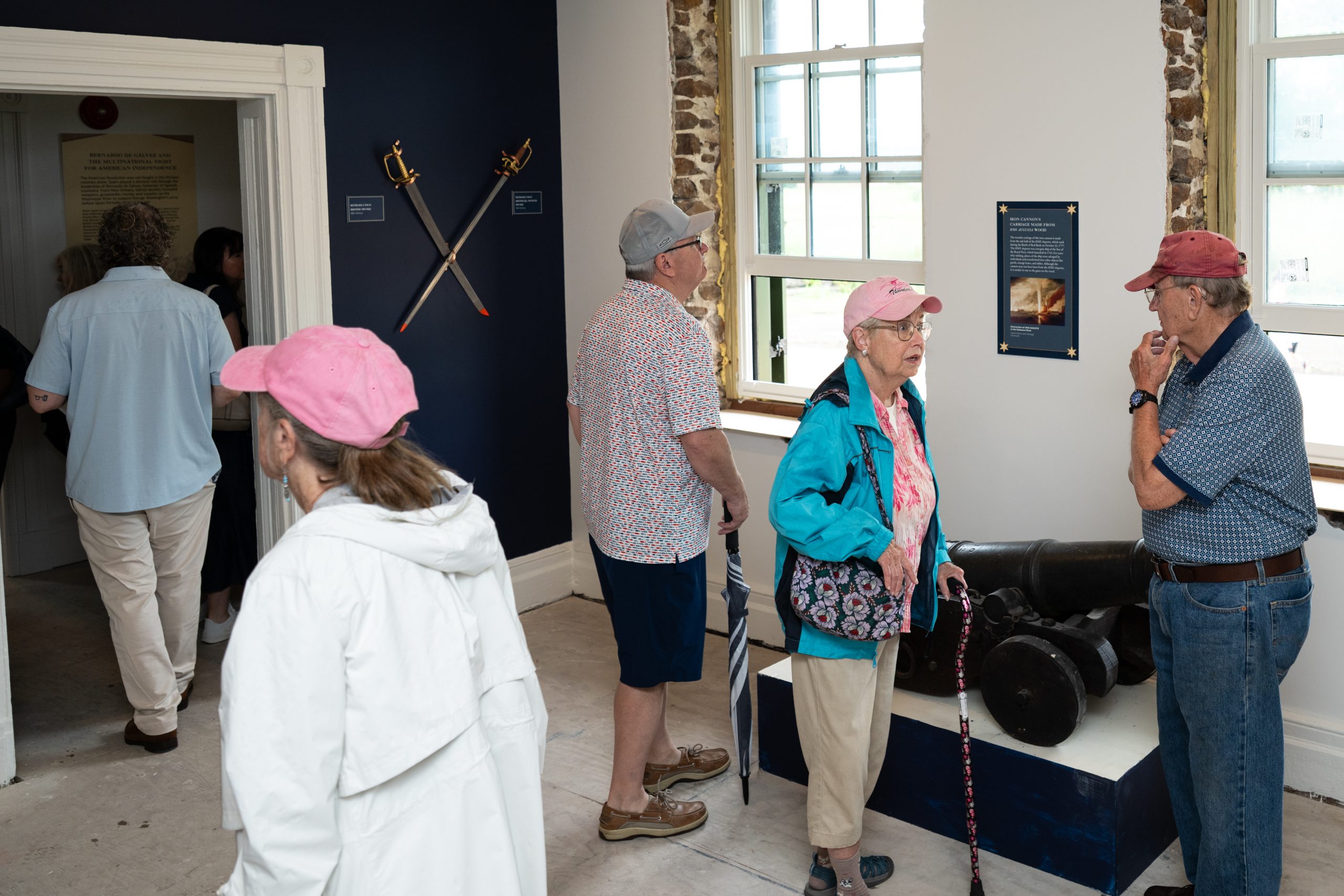
    Visitors explore the exhibits at the opening of the American Revolution Museum of Southern New Jersey in Camden on Saturday.Erin Blewett / For The Inquirer

    But local historians say the displays aren’t the main attraction.

    “The building itself is an artifact,” O’Byrne said. “You know, it’s the most historic building in Camden.”

    Before the house was built, a teenage Benjamin Franklin was said to have slept at the property while traveling from Boston to Philadelphia.

    In 1734, Joseph Cooper, a Quaker, built a 2½-story Dutch Colonial stone home for his son and daughter-in-law, Benjamin and Hannah Cooper, at what became the historic building. Benjamin Cooper, a ferryman, also used the residence as an inn and a tavern.

    In 1777, the Benjamin Cooper Inn was used as a outpost for British Col. Robert Abercrombie. Hessian troops, German auxiliaries to the British Army, marched through Cooper Point during the war, and at one time, local historians say Benjamin Cooper’s sons, Samuel and Joseph Cooper, were jailed in Haddonfield in 1778 on suspicion of being American spies.

    But the property has a more troubling past.

    In the 1760s, the site was used for the auction of enslaved people. Though some who were forced to stay on the Cooper’s property until being sold managed to escape, “all were pursued and re-captured,” according to the Inn’s 2021 historic preservation plan.

    O’Byrne said the museum is working to educate people about that history. One of the museum’s few rooms, which the society has titled “The Declaration’s Promise,” informs visitors about how immigrants, Black people, and the Lenape, who lived in the region before white settlers arrived, shaped South Jersey’s history.

    “What we’re trying to do is make this a balanced history and not just about, you know, white people,” O’Byrne said.

    Camden’s ‘most historic building,’ under threat

    When demolition crews tore down the Hugg-Harrison-Glover House in 2017, the Camden County Historical Society viewed the outcome as a huge injustice to historic preservation.

    “That was a gut punch,” said Chris Perks, board president. “We had invested a tremendous amount of time and the community’s time into that site.”

    Then, in 2018, a private company, 75 Erie St. LLC, purchased the Benjamin Cooper House from Agathon Realty for $1.1 million without knowing the building’s history. The house was in poor condition and graffitied. The windows were boarded up. It was difficult from the street to even know the building was there, because the house faces the river instead. The waterways were the real highways back then, O’Byrne said.

    “When we heard this just got purchased, we were like, ‘Oh, my God, we can’t let Camden’s most historic house go under,’” O’Byrne said. “It took me two years, and I was able to get a 30-year lease.”

    A view of the Benjamin Franklin Bridge from the newly opened American Revolution Museum of Southern New Jersey in Camden on Saturday.Erin Blewett / For The Inquirer

    That lease will last at least through 2051. Perks declined to share how much the historical society will pay monthly.

    The 2021 historic preservation plan for the building estimated that if the building opened in 2025 as originally projected, museum operations would have required an operating budget of $300,000 full time, or $132,000 part time.

    While several organizations came together to fund the Benjamin Cooper Inn’s restoration, O’Byrne said the society will require more revenue beyond the funding for the restorations to maintain operations. O’Byrne applied for an operating support grant from the state and is working to raise $750,000 to match a New Jersey Historic Trust grant to restore the tavern’s upper level.

    “We opened this thing, and it’s a minor miracle that we were able to pull all the funds together and make it in time,” O’Byrne said. “But in some respects, capital fundraising is easier.”

  • Collingswood residents have spent years fighting for backyard chickens. This time, they think they might win.

    Collingswood residents have spent years fighting for backyard chickens. This time, they think they might win.

    Any Collingswood resident over the last 18 years can remember the fight to legalize backyard chickens. Or the second attempt. Or the third.

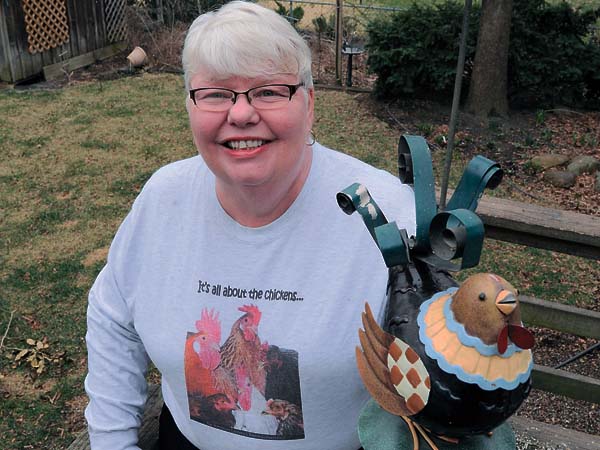
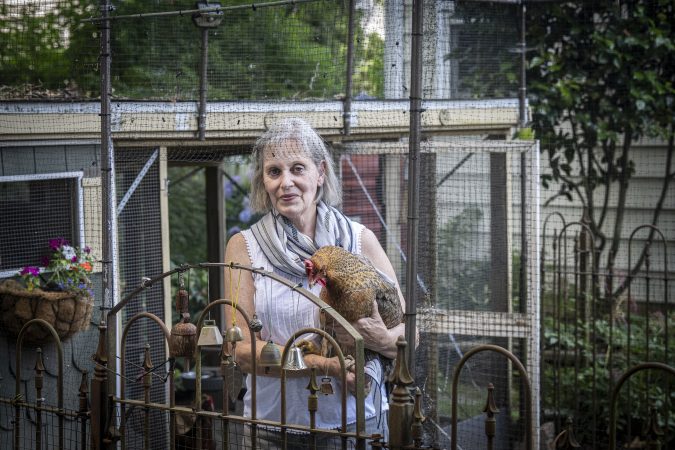
    Gwenne Baile, 77, knows the efforts well. A Haddon Township resident and the unofficial “Chicken Lady of South Jersey,” Baile initially became interested when she saw Martha Stewart showing off her chickens on TV. After retiring in 2009 from a long career as an ob-gyn nurse, Baile decided she needed a hobby.

    “I started looking into it,” Baile said, “but it was illegal here.”

    Since then, Baile said, she has played some part in changing the ordinances in 35 municipalities across South Jersey, including in her hometown. She keeps a list of places with pro-chicken zoning rules, including the 19 municipalities in Camden County that allow them. Baile now has five hens, taken in as fosters, including those injured by predators or forced from owners whose municipalities do not allow coops.

    One hen with arthritis lives indoors. Baile calls her a “mini me” since she hates the heat, doesn’t like exercise, and has golden feathers that match Baile’s hair.

    Gwenne Baile, an advocate of backyard chickens, holds Mimi, a family’s hen in Audubon.TRACIE VAN AUKEN / For The Inquirer

    Baile and a small group of hopeful Collingswood residents have frequented Collingswood Borough Board of Commissioners meetings in recent months. At its last working meeting on June 17, the group handed over proposed language that they hope the board will use in a future ordinance supporting backyard chickens, informed by Baile’s years of advocacy.

    The last major push for residential hens fizzled out in 2019 after several Collingswood residents spent more than a year regularly attending meetings to champion an ordinance that never saw the light of day.

    But this time feels different, Baile said, and some locals and officials agree.

    Dan DiVito, 42, has lived in Collingswood for six years and owns Front Yard Food, a business that teaches people how to grow their own crops and helps design the backyard infrastructure to do it. If Collingswood passes an ordinance, DiVito said, he will get chickens himself and join the new Backyard Chicken Advisory Board — a five-member commission that would oversee the initiative and investigate complaints.

    “Chickens are a no-brainer,” DiVito said. “It’s a pet that makes you breakfast.”

    Gwenne Baile in her backyard in 2014. CLEM MURRAY

    ‘A change and an opportunity’

    Collingswood did not always ban chickens.

    But in 2008, Collingswood’s three-person board of commissioners — made up of a mayor, deputy mayor, and a commissioner — adopted measures prohibiting residents from keeping or breeding a long list of livestock and fowl, including chickens.

    Local news records from 2008 do not give a clear explanation why the rules were adopted, other than comment from then-Mayor Jim Maley that the board wanted to “head off a problem before it presents itself.”

    The maximum penalty for violating the ordinance is a $500 fine.

    Repeated attempts to end the ban have been unsuccessful, even as neighboring municipalities passed ordinances to allow chickens. Some residents voiced concerns about the smell or the noise, or about Collingswood properties being too small to house chicken coops. Collingswood Chicken Uprising, the local Facebook group for the chicken resistance, was created 16 years ago and is up to 234 members.

    But a recent political shift in Collingswood has meant hope for some local chicken advocates.

    Maley’s 28-year tenure as mayor ended last May, when two progressive challengers joined Maley to win seats on the board of commissioners.

    Daniela Solano-Ward became the first female and Latina mayor of Collingswood in 2025, and Deputy Mayor Amy Henderson Riley became one of only a handful of women to serve on the board in the borough’s history. That shuffling was one factor that brought on the chicken resurgence.

    “Advocates and community members saw that this was a change and an opportunity to try this out with the new team and see what could happen,” Henderson Riley said.

    Maley, who has said that he would not want chickens living next door or support a backyard chicken pilot program, would be one of three votes if an ordinance makes it to the floor. It takes only a majority to pass.

    Passing an ordinance takes time. There must be two separate readings of the proposal, and time must be given for residents to comment. The next commissioners meeting is not until July 15, and Henderson Riley said Tuesday that she was unsure whether the proposal drafted by Collingswood residents would make it to the agenda.

    But with an organized, citizen-led group, Henderson Riley said, she suspects this is the most favorable effort thus far. Plus, with concerns like the cost of living and gas prices, she said, there are bigger things to worry about than banning chickens.

    “Let the chicken people have their thing,” she said.

    Maley and Solano-Ward did not respond to requests for comment.

    What advocates are proposing

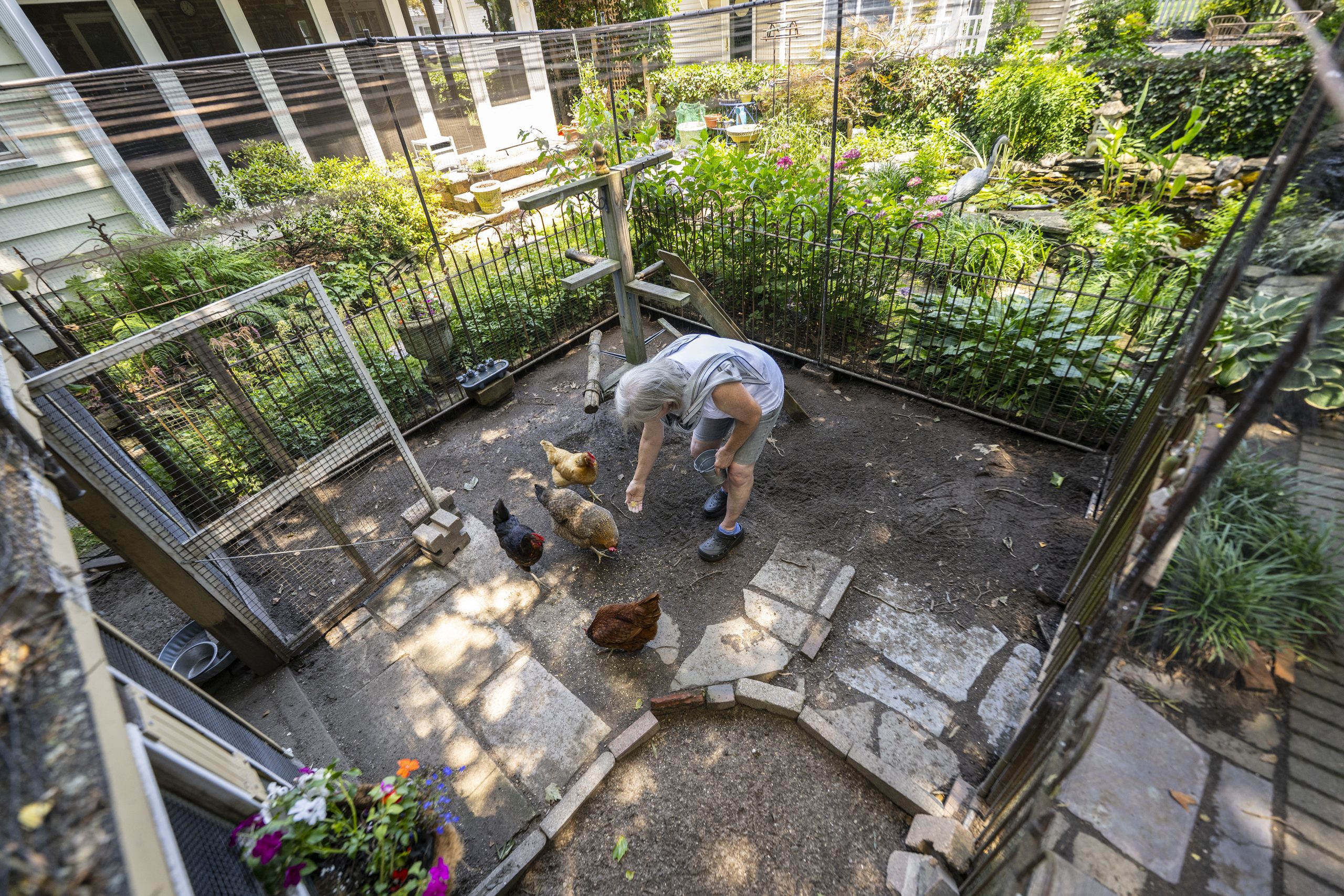
    Suzanne Passante feeds her chickens inside the chicken coop in the backyard of her home in Haddon Township, N.J., on Wednesday, June 24, 2026.Jose F. Moreno / Staff Photographer

    Every municipality’s backyard chicken ordinance is slightly different. Most have strict requirements, including that coops are predator-proof, set a certain distance from other properties, and kept dry and clean.

    Collingswood residents’ pitch to the commissioners would ban roosters, forbid residents from selling their eggs, and require completion of an online course teaching applicants how to care for hens. Collingswood could have only 30 households with hens at a time (of the 6,900 estimated housing units the U.S. Census Bureau estimates are in Collingswood), and new licensees would be capped at four chickens.

    Chicken owners would have to pay $10 fees annually to renew their licenses. The Backyard Chicken Advisory Board would investigate complaints and help relocate chickens that are no longer wanted, since the advocates are calling for a ban on slaughtering hens.

    Any violations could result in a fine of up to $1,250 or imprisonment of up to 90 days, a more severe punishment than the current ordinance gives for keeping chickens.

    Henderson Riley, who has a doctorate in public health, took the three-hour backyard chicken course to learn more about the potential process residents would have to go through to get a coop.

    She passed, but not without a bunch of red markings and a reality check that owning chickens takes time, money, and energy that she does not have. Henderson Riley said she thinks the long list of requirements, along with the difficulty of raising hens, will dissuade the vast majority of people from partaking in the hobby.

    “It’s not like the hens are going to take over Collingswood.”

    Words of wisdom

    Lynn Parker, 52, has 10 hens in her backyard in Stratford Township, Camden County. When Stratford passed its ordinance allowing chickens in 2023 (an effort Baile helped with), Parker was the first person in line for a chicken permit.

    She now chairs the township’s Hen Advisory Commission, which inspects new coops and educates residents. Fourteen homes in Stratford have chickens now, Parker said, and there have been no complaints.

    Her advice to people who want to change their municipality’s chicken law is simple.

    “Even if you get a no, do it again,” Parker said.

    Suzanne Passante, 71 and Baile’s neighbor, chairs Haddon Township’s Backyard Chicken Advisory Board. She has four chickens and averages a dozen eggs per week.

    It took time to educate residents about the benefits of hens and to quell misconceptions, like chickens attracting rats, but she said complaints have been nonexistent in recent years.

    “Now, after 11 years, people don’t even think about it,” Passante said.

  • Camden sees its third fatal shooting victim in June after a homicide-free summer in 2025

    Camden sees its third fatal shooting victim in June after a homicide-free summer in 2025

    A 50-year-old Camden man is dead after being shot on the city’s east side Thursday night, law enforcement said.

    Police responded to reports of a person shot on the 300 block of Morse Street around 10:20 p.m., according to a joint statement from the Camden County Prosecutor’s Office and Camden County police.

    Officers found Cornelius Smith, 50, lying in the street with a bullet wound. The Camden resident was transported to Cooper University Hospital, where he was pronounced dead about 10:46 p.m., officials said.

    No arrests have been made. The investigation into the killing is continuing, police said.

    Smith’s killing was the third fatal shooting in Camden this month.

    Around 12:20 a.m. on June 9, police responded to a report of a shooting in the 200 block of Morse Street and found Luis J. Bonet, 24, of Camden wounded by gunfire. He was pronounced dead at Cooper University Hospital a short while later.

    The following day, Eric Irizarry, 45, was charged in connection with Bonet’s death with first-degree murder, second-degree unlawful possession of a weapon, and second-degree possession of a weapon for an unlawful purpose.

    A week earlier, a fatal shooting in Camden, police said, was tied to a multi-vehicle crash in neighboring Pennsauken.

    While responding to a shooting on the 3300 block of Westfield Avenue on June 2, police discovered multiple shell casings and an unoccupied vehicle that had been struck by gunfire, officials said.

    A few minutes later, Pennsauken police responded to a crash involving five vehicles at Drexel Avenue and Route 130 in Pennsauken. One of the vehicles involved in the crash had been struck by gunfire and the driver, later identified as Izaiah Minzy, 36, of Westville, had been shot.

    Minzy was taken to Cooper University Hospital, where he was pronounced dead at 8:11 p.m.

    Six people in the other cars involved in the crash sustained minor injuries.

    The prosecutor’s office has not announced any arrests in the case.

    The violent June comes after Camden experienced a record year in 2025 with its lowest recorded homicide total in four decades and its first homicide-free summer, police said, in 50 years.

    Camden recorded 12 homicides last year, down from 17 in 2024, and saw an overall 6% drop in violent crime compared with the previous year, including a 32% decrease in sexual assaults and a 12% decrease in robberies, according to police.

    The decline came more than a decade after the city’s police department was disbanded in 2013. Since then, the department’s successor, the Camden County Police Department, has taken a new approach to community policing that includes pairing social workers with officers and supporting programs designed to help at-risk youth.

    Homicides have dropped by 82% since 2012, the last full year of the former police structure. During that time, the city has also invested heavily in public spaces and infrastructure, including $100 million for parks and street repaving.

    Earlier this month, U.S. Sen. Cory Booker (D., N.J.) visited the department’s headquarters alongside Camden Mayor Victor Carstarphen and Camden County Commissioner Director Louis Cappelli Jr. to get a firsthand look at some of the advanced tools and training methods police have utilized in recent years.

    Booker is promoting federal legislation designed to help other law enforcement agencies adopt similar technology, like automated license plate readers, live cameras, drones, and more, which Camden County Police Chief Gabriel Rodriguez has said contributed to the reduction in crime across the city.

    Officials asked that anyone with information about any of the recent shootings contact the Camden County Prosecutor’s Office Homicide Unit or the Camden County Police Department. You can also submit anonymous tips online.

  • N.J. hospitals could lose an estimated $3.6 billion from Medicaid changes through 2032

    N.J. hospitals could lose an estimated $3.6 billion from Medicaid changes through 2032

    New Jersey hospitals could lose an estimated $3.6 billion from Medicaid changes through 2032, forcing them to bring their expenses in line, Inspira Health Network CEO Amy Mansue said Friday during a panel discussion in Cherry Hill.

    “That will only happen with dramatic changes in how we look at our business,” she said during the Southern New Jersey Development Council’s Annual Health Care Leadership Forum at the Legacy Club of Woodcrest.

    Mansue predicted that health systems will close little-used programs. “There is no way to cut that much money out of the hospitals without doing some of that,” she said.

    The $3.6 billion estimate from the New Jersey Hospital Association does not include hospitals’ losses from the growing population of uninsured people who show up at emergency departments because they can’t afford to pay cash for a doctor visit.

    Already nearly 69,000 people have allowed their individual coverage from New Jersey’s Affordable Care Act marketplace to lapse after temporarily enhance tax subsidies expired at the end of last year. Thousands more are expected to lose Medicaid coverage next year when new requirements to stay enrolled take affect.

    New Jersey’s regulatory burden

    The hospital executives pleaded for state officials to reduce the red tape that makes it hard to implement programs needed to meet community needs.

    “We need to be more nimble, we need to be more adaptable, we need to be more flexible,” said Aaron Chang, president of Jefferson Health NJ, which includes hospitals in Cherry Hill, Stratford, and Washington Township.

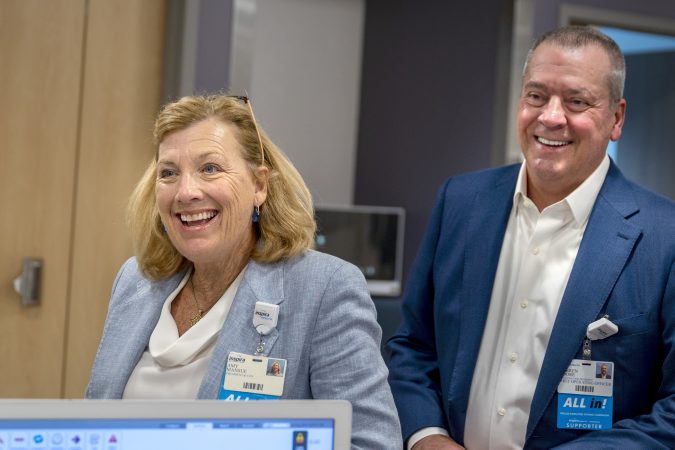
    Jennifer Khelil (left), Virtua Health’s chief clinical Officer; Aaron Chang (center), president of Jefferson Health New Jersey; and Amy Mansue, CEO of Inspira Health spoke Friday at the Southern New Jersey Development Council’s Health Care Leadership Forum.Southern New Jersey Development Council

    Inspira is adding a $220 million patient tower at Inspira Mullica Hill in Harrison Township, near the intersection of Routes 55 and 322. Construction is expected to be completed Oct. 1, Mansue said. “The reality is we’re not going to open until March” because it will take that long to get all the regulatory approvals, she said.

    Inspira operates three other hospitals in Cumberland and Salem Counties.

    Raynard E. Washington, who heads the N.J. Department of Health, spoke after the panel and said Gov. Mikie Sherrill is serious about making it easier to do business in the state. She told state agencies “to limit additional regulations and to look for opportunities to streamline,” he said.

    Workforce development is a top priority

    Six years ago, Virtua and Rowan University started working together to create the Virtua Health College of Medicine & Life Sciences out of Rowan’s School of Osteopathic Medicine, Rowan’s School of Nursing & Health Professions, and Virtua’s Our Lady of Lourdes Nursing School, plus a new school of translational biomedical engineering and sciences.

    The institution officially launched in 2022 with $85 million in support from Virtua and $125 million from Rowan and has seen its class sizes grow steadily.

    “We are now training about 360 nurse graduates every year, 300 medical students,” said Jennifer Khelil, Virtua’s chief clinical officer. Virtua operates five hospitals in South Jersey.

    Workforce efforts also reach into high schools, Chang said. Jefferson Cherry Hill Hospital has a relationship with Cherry Hill West High School that brings 12 to 15 interns to the hospital.

    “Because of the internship, their exposure to the hospital environment, whether it’s the ancillary departments and or the clinical areas, over 95% of those individuals get a healthcare job as a first foray into the workforce,” Chang said.

    Editor’s note: This story has been updated to correct the time period for the Medicaid cuts.

  • Collingswood is considering lifting its dry town status to boost local restaurants. Residents may have the final say.

    Collingswood is considering lifting its dry town status to boost local restaurants. Residents may have the final say.

    After more than a century as a dry town, Collingswood is considering lifting its ban on alcohol sales within the borough.

    For months, the three-person Collingswood Board of Commissioners has been discussing whether to lift the long-standing restrictions on liquor sales both as a potential new revenue source for the borough and as a way to bolster the local restaurant industry.

    Per the state’s population-based license cap 一 one liquor license for every 3,000 residents — Collingswood would be able to issue as many as four retail consumption licenses that permit restaurants or bars to serve alcohol, or one distribution license for a liquor store within borough limits.

    If liquor sales are eventually permitted, the borough could receive anywhere from $1,000 to $10,000 annually through licensing and renewal fees.

    But discussions are still preliminary as the commissioners work to determine what is best for Collingswood’s existing restaurant and business owners, borough administrator Cassandra Duffey said.

    “There’s a general sense that liquor can be a good thing, but there’s a concern that if it’s done in a way that’s unbalanced, it can also throw people off,” she said.

    “Is there strength in the dry-town brand that has been around for years and years?” Duffey said.

    Tracing back to its Quaker roots, Collingswood has prohibited alcohol sales by ordinance since the 19th century.

    A change to the policy would require public approval through a referendum during the November general election, borough solicitor Caitlin Harney Norcia said.

    To begin that process, the borough’s commissioners would need to adopt a resolution by Aug. 21 so that the Camden County Clerk’s Office has enough time to add the question to the ballot. In order to adopt the resolution, at least 15% of voters who participated in the last general election must sign a public petition in favor of putting the question on the ballot, Harney Norcia said.

    After that, “repealing any kind of prior restrictions could all be done relatively easily,” Harney Norcia said, describing the logistics of updating local ordinances if a referendum passes.

    If voters approve lifting the ban, Harney Norcia said, the borough could either award licenses in a competitive bidding process, which could generate one-time revenue for Collingswood’s budget, or enact an application and review process that includes annual fees and public presentations by prospective licensees.

    But if the measure were to fail on Election Day, Collingswood would be barred from holding another referendum on alcohol sales for five years, according to state law.

    Some business owners have expressed concern that the public bidding process could result in one of the borough’s few licenses being awarded to an outside business instead of an established Collingswood restaurant, Duffey said.

    “The challenge is not to disrupt the balance of businesses that already exist here,” she said. “If you get a bidder that gets a license from outside of town, sure, you get the revenue, but then you’ve added somebody and it doesn’t necessarily benefit one of our businesses.

    “The other option is to award [the licenses] directly, but then somebody must make a decision on who gets them, which is also a challenge,” she added.

    The commissioners are in continued talks with the borough’s business improvement team, local restaurateurs, and others about the best approach, she said.

    “Is there a way to distribute licenses or award licenses that is a boost for everybody?” Duffey said.

    The internal debate in Collingswood comes less than two years after residents in neighboring Haddon Heights voted to get rid of its de facto ban on liquor sales. The town has set a $200,000 minimum bid for its first retail liquor license and is currently accepting applications ahead of a public auction sale in September.

    Haddon Heights is hoping to leverage the new liquor licenses as a way to help boost a broader revival and redevelopment, Mayor Zachary Houck said.

    The licenses “would hopefully draw in one or two additional restaurants or enhance existing restaurants and let us then continue to move that ball forward when it comes to enhancing our downtown historic district,” Houck said.

    Making more, and more affordable, liquor licenses available statewide was a goal of legislation then-Gov. Phil Murphy signed into law in 2024. The measure was touted as an unprecedented reform of New Jersey’s liquor laws, long described by critics as arcane and antiquated.

    “By easing restrictions and boosting the availability of licenses, we are creating new opportunities for small businesses, especially mom-and-pop establishments, to expand and facilitate development on main streets across New Jersey,” Stella Porter, a spokesperson for Murphy, told The Inquirer that year.

  • Gov. Mikie Sherrill proposed an 80% cut to a program that provides job training and support to Hispanic women. The budget is due in days.

    Gov. Mikie Sherrill proposed an 80% cut to a program that provides job training and support to Hispanic women. The budget is due in days.

    Consensa Francisca Silva Silva moved to Camden from Costa Rica more than two years ago knowing nobody. She lived on the street for two months, she said, and then was bouncing from house to house when a young man in the neighborhood told her to check out the Hispanic Women’s Resource Center in Camden, one of several such centers in the state.

    She went. With help from the program, Silva received food, obtained a work permit, made a down payment for a studio apartment, and started a job at McDonald’s.

    That statewide initiative is now facing detrimental cuts under Democratic Gov. Mikie Sherrill’s budget proposal. The governor has proposed cutting nearly 80% of its funding, and Silva worries that other immigrant women looking to improve their circumstances will not get the help she received.

    “It was very hard to come here without knowing anyone, and it was really hard because at first I couldn’t find any work,” Silva, who is Nicaraguan, said in Spanish, translated by Jesselly De La Cruz, the executive director of the Latino Action Network Foundation, which funds the centers.

    The initiative is one of numerous South Jersey programs at risk under Sherrill’s proposal, including the Rowan University veterinary school and a program that provides mental healthcare to abused children. But the cuts are not a done deal.

    Sherrill and legislative leaders announced Tuesday they had come to an “agreement” on a budget totaling $60.7 billion, the same price tag Sherrill proposed in March. But it has not been made public and it is unclear how far into the details they have gotten. They have until Tuesday to figure it out.

    And the process is still underway. State Sen. Nilsa Cruz-Perez, a Camden Democrat who sits on the Senate Budget and Appropriations Committee, has been a supporter of the centers. She was unable to speak Wednesday afternoon because she was in a committee budget hearing.

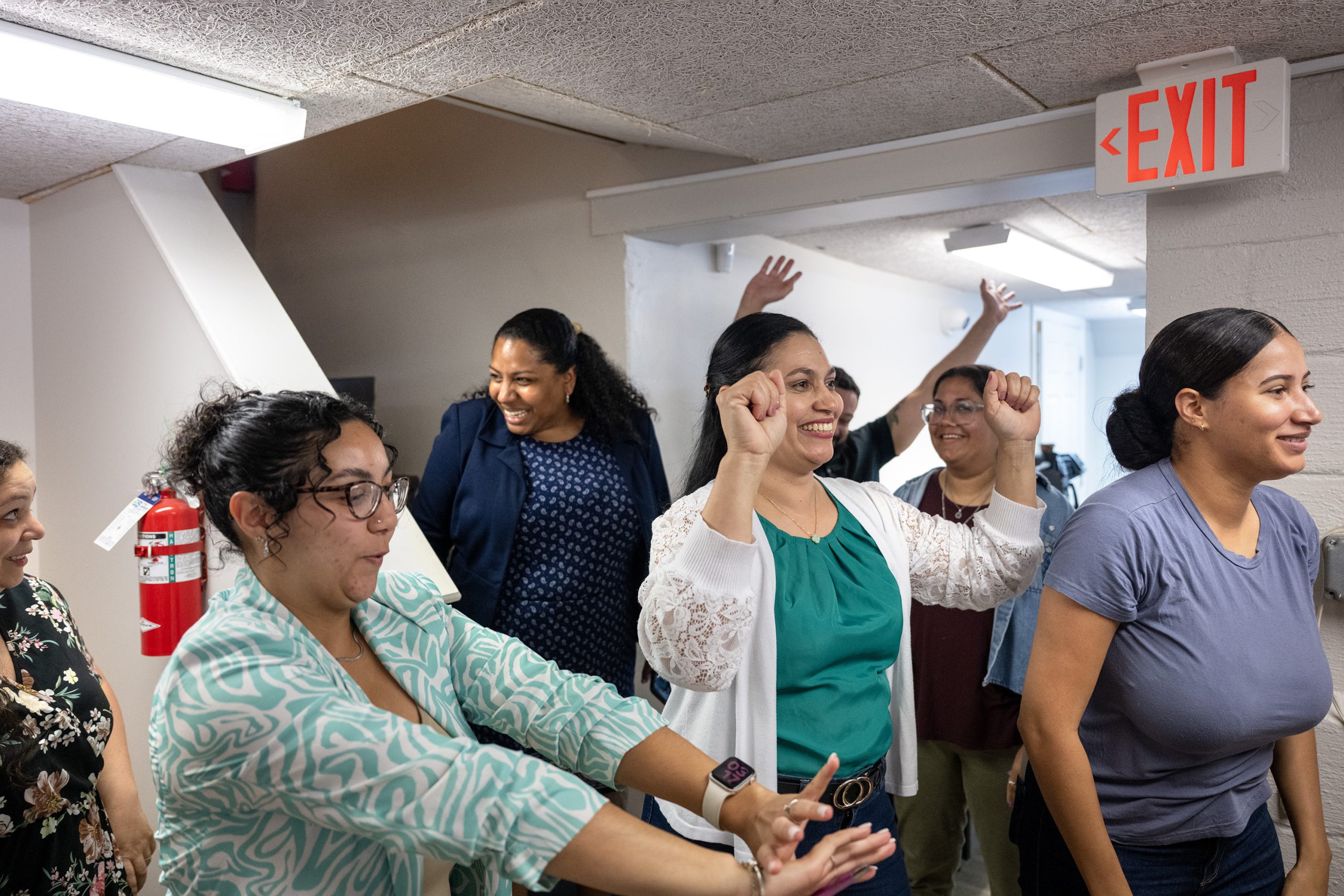
    Client Consensa Francisca Silva Silva (right) participates in a workshop at the Hispanic Women’s Resource Center in Camden Thursday, June 11, 2026.Tom Gralish / Staff Photographer

    On a recent Thursday, Silva participated in a healthy life skills workshop in Spanish at the Camden center, where she learned about taking care of herself as summer temperatures get hotter in the city. About 20 adults clapped for one another with big smiles on their faces, and they received goody bags with sunscreen, lip balm, a towel to keep cool, and a little fan. A young girl played with magnetic tiles and a baby was kept calm, passed between women.

    The governor proposed cutting funding for the center’s programs to $535,000, down from more than $2.5 million this year and more than $3 million in 2025. Murphy had proposed a similar cut last year, but the funding was restored during budget negotiations.

    Hispanic Women’s Resource Centers were established through 1991 legislation to address the wage gap for Latinas. New Jersey is one of the states with the biggest wage gap for Latina workers, according to the National Women’s Law Center.

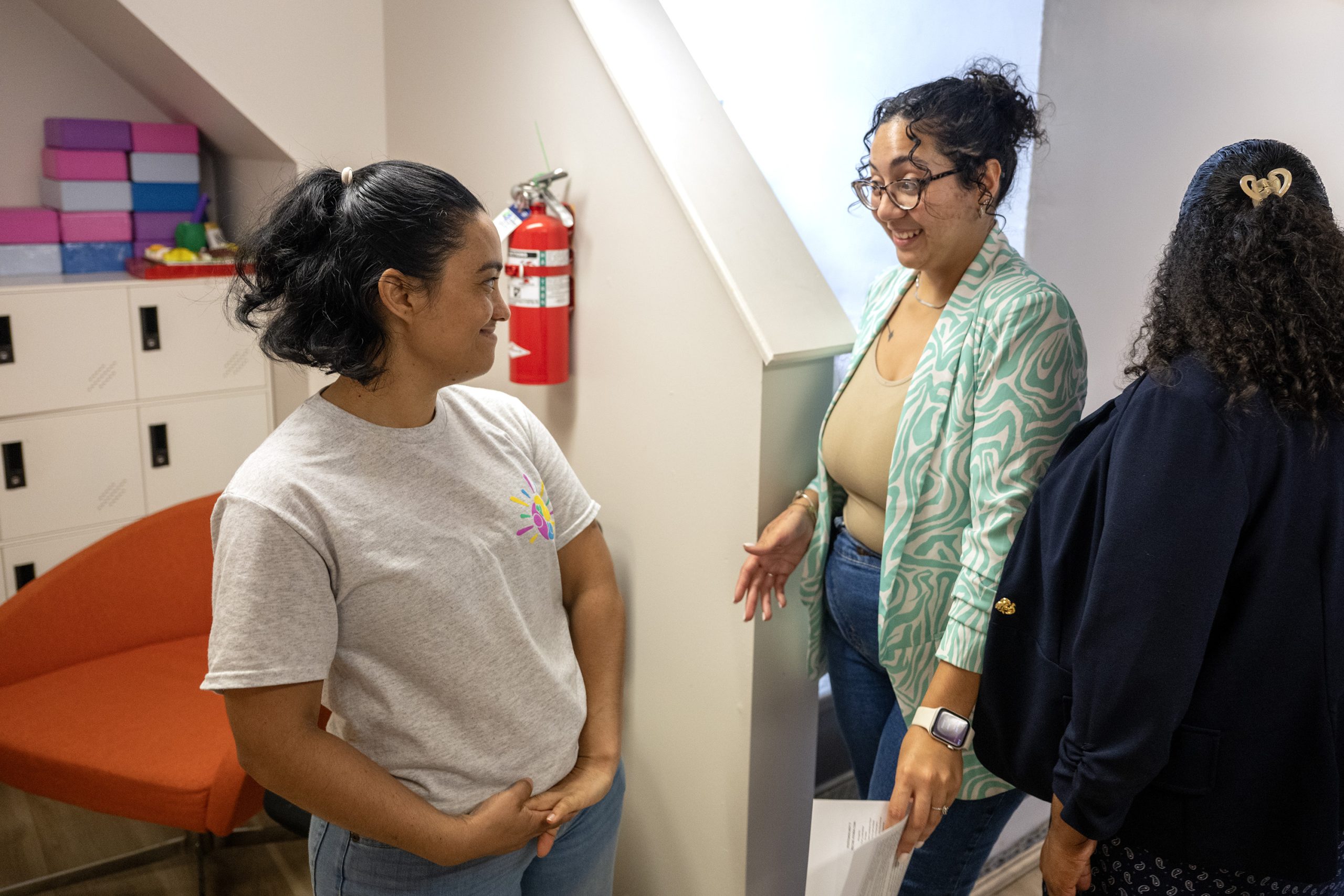
    Staff members observe from back of the room during a workshop at the Hispanic Women’s Resource Center in Camden Thursday, June 11, 2026. Tom Gralish / Staff Photographer

    The Latino Action Network Foundation funds these resource centers in partnership with six nonprofits across 14 sites, including five in South Jersey. The Camden center is located at the nonprofit Healthy Families and Communities, and there are centers in Vineland in Cumberland County, Hammonton in Atlantic County, Pennsville in Salem County, and Rio Grande in Cape May County.

    Sherrill’s proposal would “drastically cut” the number of resource centers, and sites in Hammonton and in Lakewood, in Ocean County, would likely be on the chopping block, De La Cruz said, adding that services would need to be cut in eight of 11 counties.

    Martha Infante, 38, who lives in Pennsauken, said she was disoriented when she moved to South Jersey from the Dominican Republic. But through the Camden center, she found out how to apply for work online and learned basic English. She obtained coats for her daughters’ first U.S. winter, and a staffer accompanied her to a New Jersey Department of Motor Vehicles center to get her driver’s license.

    “I came here and my mind was all over the place, I didn’t know where things were,” she said in Spanish.

    She now works as a home health aide, thanks to training she got through the center, and even participated in a program where she learned about advocating for her community in Trenton.

    “Don’t cut these funds, Gov. Sherrill,” she pleaded. “Don’t cut the funds! This is like a family. It’s like a home for the community.”

    Client Martha Infante (left) talks with staff member Chailienisse Vega (right) after participating in a workshop at the Hispanic Women’s Resource Center in Camden Thursday, June 11, 2026. Tom Gralish / Staff Photographer

    Some of the women in the program are fleeing domestic violence and seeking financial independence. Others are struggling to get a work permit, or may have lost a family member who helped pay the bills to deportation. A lot of former “Dreamers” — undocumented immigrants who came to the U.S. as children — utilize the center as well, De La Cruz said.

    The need for the centers has only escalated under President Donald Trump’s second administration, she said.

    The social worker-turned-executive said she was surprised by the severity of Sherrill’s proposed cut, especially because of the governor’s efforts to push back against Trump’s immigration policies.

    A 2023 Rutgers study funded by the Latino Action Network Foundation found that the most popular services at these resource centers were English-language classes and employment services, such as job referrals, assistance filling out applications, resume writing, and interview preparation.

    Staff member Andreina Pardo pauses to stretch with participants as she leads a workshop at the Hispanic Women’s Resource Center in Camden Thursday, June 11, 2026. Tom Gralish / Staff Photographer

    “Aside from helping them with the technical aspects of job hunting, the assistance from the Centers seemed to provide a boost of confidence for many of the women, giving them an additional push to apply for positions even if they felt hesitant to do so at first,” the study said.

    Gladys, 48, who declined to give her last name due to concerns over her safety, said in Spanish that the free English courses made her feel like she could “come up for air and breathe” after not being able to communicate.

    The Camden resident had been an ecologist in Nicaragua and has gotten involved in the center’s community garden. She said she would love to pursue a career teaching children about the environment, but her plans are on hold because her work visa was canceled.

    In the meantime, Gladys said, activities at the center like art classes have made her feel less alone. She has been able to connect with women in the same situation as her, and those who migrated to the U.S. earlier who can give her advice from their experiences.

    “Maybe my circumstances don’t change, but my emotional well-being changes because I’m able to connect with others,” she said in Spanish.

  • Medford bans data centers within town limits amid public debate about AI

    Medford bans data centers within town limits amid public debate about AI

    Large-scale data centers will not be moving into Medford any time soon thanks to a new ordinance adopted unanimously by the Medford Township Council this week.

    While the township has not yet received any formal applications for data centers, officials are taking steps like the ordinance passed Tuesday that specifically prohibits the land use within town limits as a chance to be proactive.

    “These are extra precautions to ensure that we don’t move forward in a direction that we can’t come back from until we know full well what the impacts of data centers will be,” Medford Mayor Michael Czyzyk said at Tuesday’s public hearing.

    The ordinance received support from Medford-area residents at the hearing but some questioned whether the township might be making its bed too early considering how quickly technology evolves, especially if there’s a chance to reap the rewards of a data center project without negatively impacting the surrounding community.

    “If there’s no impacts to the residents and there’s only a financial benefit, I believe I would consider looking at that at that time, but we’re not there yet,” Czyzyk said.

    While the ordinance constraints may seem all-limiting as it exists today, Czyzyk said, council maintains the authority to at any point amend the ordinance to permit data centers in the township’s redevelopment district.

    “I definitely understand that things will evolve and there may be a time in the future that the term data center is something that is more amenable to the residents and the body that governs them,” Czyzyk said.

    “I will feel comfortable with the vote I cast on this ordinance tonight knowing full well that today I feel that way and that there’s mechanisms in the future if things do change, a process will be undertaken to remedy that,” he said.

    Nearby in Cherry Hill, Mayor David Fleisher has explicitly vowed to block the construction of any large AI or commercial data facilities in the township citing concerns of high energy usage, water consumption, and proximity to residents.

    There are dozens of data centers currently operating throughout the state with major hubs located primarily in North Jersey urban centers like Secaucus and Newark. But more recently, developers have been eyeing spots in rural South Jersey as the industry expands to meet growing demands for generative AI.

    For months, South Jersey residents have been protesting a major AI data center that is currently under construction in Vineland.

    Developers and other data-center proponents say the facilities bring in tax revenue, create jobs, make use of old industrial sites, and put towns on the cutting edge of a hot industry, all without straining school districts or emergency services.

    Opponents, meanwhile, cite concerns about pollution, noise, power and water use, and the impact on their electric bills. Some also say they worry the AI boom is a bubble that could soon burst.

    As concerns continue to grow among towns across the Garden State, representatives from more than 60 environmental, labor, and community groups sent a letter to New Jersey Gov. Mikie Sherrill last month calling for a statewide moratorium on the approval and construction of new facilities that use 20 megawatts or more of power.

    So far in response to the public pressure, Sherrill has proposed a plan that would require new data centers to cover grid upgrades, utilize their own power generators, and publicly report resource usage.

    While some municipalities like Medford have issued moratoriums on new data centers, no state governments have successfully done so, according to the National Conference of State Legislatures.

  • A new rooftop nightclub proposed for the Camden waterfront aims to be part of the city’s ‘evolution’

    A new rooftop nightclub proposed for the Camden waterfront aims to be part of the city’s ‘evolution’

    Clubgoers might soon have the chance to take in nighttime views of the Philadelphia skyline at a new rooftop nightclub along the Camden waterfront.

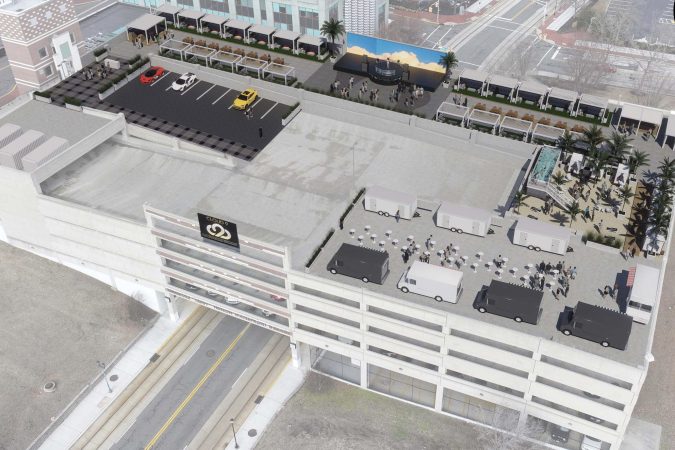
    The Cloud 9 SkyLounge is proposed for the rooftop deck of the fourth-floor Hinson Parking Garage next to the Delaware River Port Authority office tower on Delaware Avenue.

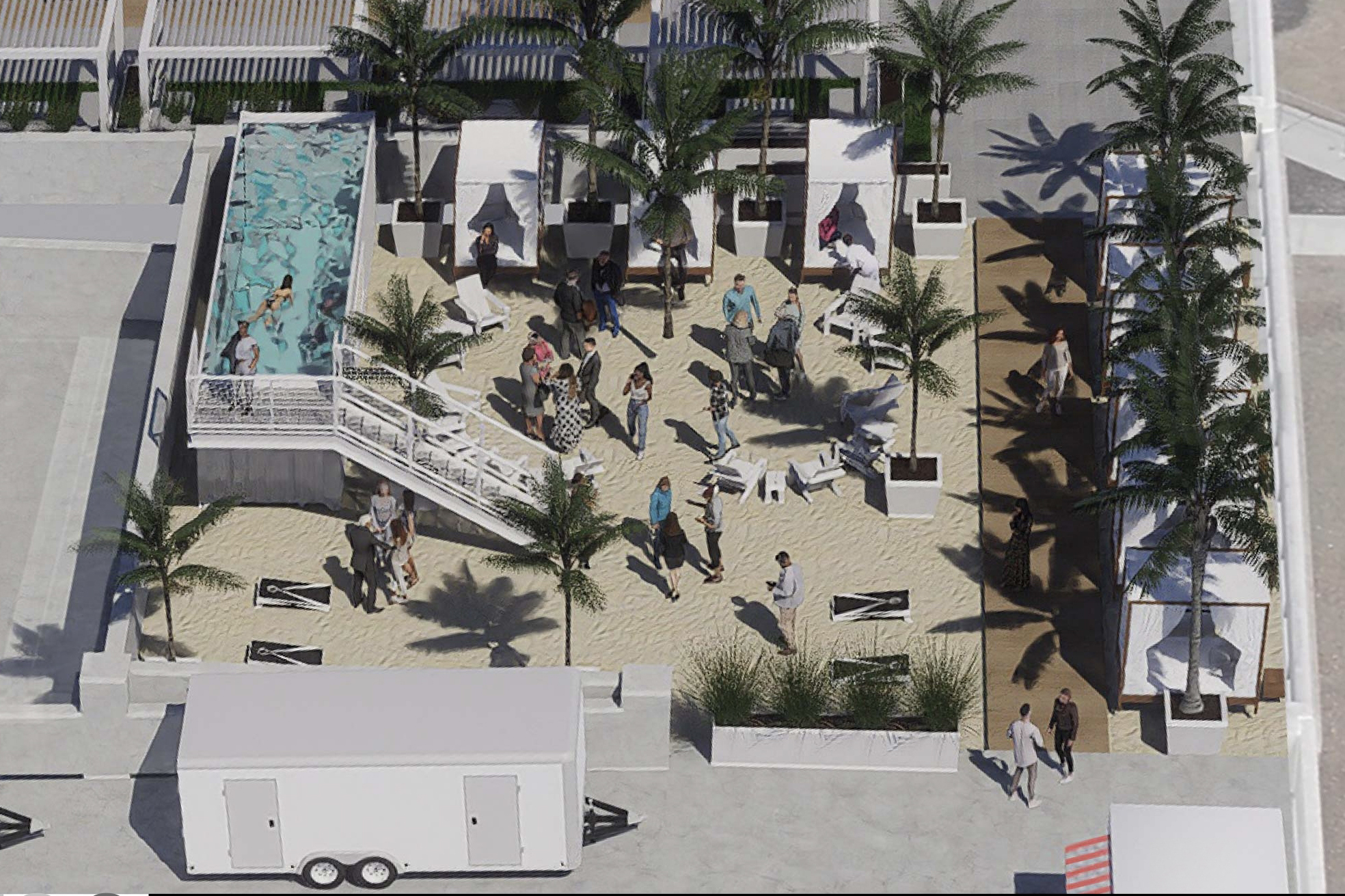
    The club would include a stage and dance floor, private cabanas, a pool deck, bar areas, a food truck zone, VIP parking, and more, according to the developer’s application to the city, which is still awaiting final consideration from Camden’s planning board.

    So far, city officials have approved the new use for the property, said Joe Console, attorney for the Cloud 9 developers.

    Now, the applicant will work on developing more detailed engineering reports, showing that the project complies with local regulations as it relates to traffic, noise, building capacity, and more, Console said. Once complete, the project will eventually be brought back before the planning board for review and final approval.

    “Our vision is to create a world-class entertainment and hospitality destination that showcases the beauty of the Camden waterfront, the Philadelphia skyline, and the energy of the entire region,” Cloud 9 founder and CEO Kenneth Walden said. “We want visitors to experience something they would normally expect to find in cities like Miami, Las Vegas, New York, or Los Angeles — right here in Camden.”

    As an adaptive reuse project instead of new development, the club would require no changes to the parking garage’s existing footprint, and the rooftop venue would be limited to temporary installations, according to the application.

    Parking for the rooftop venue would also be self-contained within the existing parking structure. The developers said they do not anticipate any parking issues extending into the surrounding area.

    A rendering shows the entry view of the proposed Cloud 9 SkyLounge rooftop deck of the Hinson Parking Garage on Delaware Avenue in Camden.Obtained by The Inquirer

    The parking garage is currently owned by the city’s parking authority and the rooftop would be rented to Cloud 9 starting at $5,000 per month, per the application documents. The venue would be open Thursday 6 p.m. to 1 a.m., Friday and Saturday 6 p.m. to 2 a.m., and Sunday 5 p.m. to 12 a.m.

    “Cloud 9 was born from a simple belief: that Camden deserves extraordinary destinations just as much as any major city in the country,” Walden said. “For years, people have viewed Camden primarily through the lens of its challenges. I believe it is equally important to recognize its potential, its resilience, and the remarkable transformation taking place along the waterfront. Cloud 9 is intended to be part of that continued evolution.”

    The property is located within the city’s mixed waterfront zoning district which is designed to help revitalize former industrial or vacant properties into pedestrian-friendly, mixed-use areas along the waterfront.

    The venue’s developers included in their application that the project is “consistent with the overall vision of the [mixed waterfront zone] as it promotes: activation of underutilized urban space, enhancement of the waterfront entertainment environment, increased tourism and economic activity and adaptive reuse of existing infrastructure.”

    The new nightlife destination would be within walking distance to some of the city’s other waterfront destinations such as Freedom Mortgage Pavilion, Wiggins Waterfront Riverstage, and Adventure Aquarium.

    A rendering shows the beach view of the proposed Cloud 9 SkyLounge rooftop deck of the Hinson Parking Garage on Delaware Avenue in Camden.Obtained by The Inquirer

    The office for Camden Mayor Victor Carstarphen said that while they are aware of the proposed rooftop bar and lounge, they declined to comment specifically on the project or its details as it continues to make its way through the land development process.

    “Camden is undergoing an unprecedented transformation as investment is taking place citywide. As a result, there is great interest from developers, and a wide variety of projects are being proposed in every part of the city,” said Vincent Basara, director of communications for the mayor’s office. “Camden is always open to new ideas and proposals. The success of this project will ultimately be based on the merit of the application. We are confident in the public process and the various reviews which are required.”

    About a mile north on the other side of the Benjamin Franklin Bridge, the New Jersey Economic Development Authority is accepting mixed-use redevelopment proposals for a 16-acre waterfront parcel that was previously home to the former Riverfront Prison and Weeks Marine site in North Camden.

    “Beyond the venue itself, I believe Cloud 9 can contribute to the city in several meaningful ways,” Walden said. “The project has the potential to create jobs, attract visitors from throughout New Jersey, Pennsylvania, Delaware, and beyond, generate additional economic activity for nearby businesses, and further strengthen Camden’s reputation as a destination worth visiting and investing in.”

    The Cloud 9 SkyLounge was presented to the city’s zoning hearing board for final site plan approval on June 1 and will need to continue through the development process before finally being voted on by the city’s planning board. The exact timeline for this process varies by project, but a final vote on Cloud 9 is likely still weeks or even months away, as the application must go before the city’s planning board, though they will not officially discuss the project until at least the board’s July meeting.

  • Where to watch Fourth of July fireworks in Philly, the suburbs, South Jersey, and the Shore

    Where to watch Fourth of July fireworks in Philly, the suburbs, South Jersey, and the Shore

    This Fourth of July will be unlike any in recent memory. As the nation marks its 250th anniversary, Philadelphia and the surrounding region are packed with celebrations — and fireworks displays. From the city and suburbs to South Jersey and the Shore, there are dozens of opportunities to catch a show.

    Whether you’re staying in Philadelphia, heading to the suburbs, or spending the holiday down the Shore, here’s where to find Fourth of July fireworks across the region.

    Fireworks in Philadelphia

    Fireworks after the San Diego Padres and Philadelphia Phillies game at Citizens Bank Park on July 2, 2025.Elizabeth Robertson / Staff Photographer

    Fireworks in Bucks County

    Fireworks in Chester County

    Fireworks in Delaware County

    Fireworks in Montgomery County

    Fireworks in Allentown

    Fireworks in South Jersey

    A view of Atlantic City’s fireworks from the Marina. (Courtesy of the Casino Reinvestment Development Authority)

    Fireworks at the Jersey Shore

  • Military members and veterans in Camden County can now get free legal services. Here’s what to know.

    Military members and veterans in Camden County can now get free legal services. Here’s what to know.

    Current and former military personnel can now receive free estate planning assistance in Camden County to help support their families’ futures.

    The Camden County Board of Commissioners launched the new clinic last month, one of several no-cost legal services available to vulnerable South Jersey residents.

    The clinic, currently scheduled monthly, gives active service members, veterans, and their spouses living in Camden County access to certain legal services at no charge. The county will provide a last will and testament, power of attorney, and an advance directive, which documents a person’s preferences for medical treatment in case they become unable to make their own healthcare decisions.

    Sixteen veterans are signed up for the first Veterans Will Clinic on Wednesday at the Camden County One-Stop Career Center in Cherry Hill Township, said Morgan Callan, the county’s external communications manager. There is no current cap for how many veterans can participate.

    The Camden County Office of Veterans Affairs is now accepting registrations for the second clinic, on July 29. Anyone interested should contact the office by calling 856-374-5801, or by visiting the office at 1 Collier Drive in Blackwood, part of the Camden County Lakeland Complex.

    Help for veterans

    Camden County has nearly 19,000 veterans, according to the most recent estimate available from the U.S. Census Bureau.

    The Camden County Office of Veteran’s Affairs has partnered with Susan Purvin, an attorney from Gloucester County, to help provide the services. Louis Cappelli Jr., one of Camden County’s three commissioners, said in a statement that he hopes everyone eligible takes advantage of the program.

    “Our veterans and servicemembers have sacrificed so much in service to our nation, so have their families,” Cappelli Jr. said. “The least we can do is help them get their affairs in order, giving them the confidence that their last wishes will be protected.”

    The cost to Camden County for the program is $50 per will, $25 per power of attorney, and $100 per hour for every legal information session, with the total cost varying based on how many people show up for the clinics, said Dan Keashen, the county’s public affairs director.

    Other counties in South Jersey provide similar services. All active military personnel and veterans in Gloucester County can receive assistance with a simple will, a legal document for those not looking to involve complicated estates or trusts in their end-of-life plans.

    About 20 attorneys recently volunteered for a free event in Cape May County that helped veterans and their spouses prepare a will, power of attorney, and healthcare directive free of charge.

    More free legal services

    You don’t have to be a veteran to find free legal services in Camden County.

    The Camden County Bar Association hosts Wills for Heroes, a small, volunteer-led clinic that provides free wills and estate planning documents to firefighters, police officers, and paramedics, and their spouses annually. The 2026 clinic, which took place in March, was full at 21 participants.

    Kara Edens Graser, the association’s executive director, said she hopes to run the same clinic next year.

    Camden County also offers free legal workshops, which cover the same services as those now available to veterans, for seniors and residents with disabilities aged 18 and over.

    Plus, about 300 attorneys volunteer on an as-needed basis for the Volunteer UP Legal Clinic, a Camden-based nonprofit that provides legal expertise to those who need it. The nonprofit spent more than $300,000 in 2024 to provide legal services for tenants, criminal record expungement, estate planning, and name changes, according to its 2024 tax filing.

    Volunteer UP also provides same-day eviction defense for tenants in Burlington, Camden, Cumberland, Gloucester, and Salem Counties, CEO Steven Salinger said via email.