Tag: Camden County

  • What is the Camden bop, the region’s latest viral dance that has earned over a million fans across the world?

    What is the Camden bop, the region’s latest viral dance that has earned over a million fans across the world?

    Last week, just outside the Camden Waterfront walkway, stood a group of five men, ages 18 to 25. They were all decked out in embroidered hoodies with the words “Camden Bop” stitched on the front.

    They were quiet at first before the sight of a camera and sound of an up-tempo beat grabbed their attention. They smiled and their motionless bodies kicked into action.

    They shifted their hips from side to side, while their arms and heels bounced to the song’s drum kicks and chopped vocal sample. They added leg extensions and shifty pivots into the mix, creating a synchronized dance that flowed like water.

    The words stitched across their hoodies took on new meaning.

    This is the Camden bop. Viral TikTok videos and Instagram clips of the group, known as the Camden Bop Originators, have turned the move into a social media sensation.

    Ethan Tarte, pictured at the center of the image, is the man behind the now-viral dance, the “Camden bop.”Earl Hopkins

    The crew comprises Camden natives Ethan Tarte, Myles Thompson, Nafi Muhammad, Rodney Barge Jr., and Haleem Muhammad.

    At 16, Tarte unintentionally created the Camden bop by trying to imagine what it would be like to circle the rink at Camden’s Millennium Skate World. Before he had skates, he practiced his moves barefoot in front of his mirror.

    What emerged became the foundation of the Camden bop.

    The influence of Jersey Club dances is present in the heel-toe slides, leg extensions, and quick pivots they add to the Camden bop over up-tempo club remixes of popular rap and R&B songs like Ryan Leslie’s “Addiction” and R. Kelly’s “Freaky in the Club.”

    “We grew up Jersey Club dancing … back when dancing was allowed,” Tarte, now 25, joked, “so it definitely comes from that.”

    ‘We’re more than what everybody thinks we are’

    When the dance didn’t yet have a name, Tarte flirted with the idea of calling it the E Boogie Bop, after a nickname he had earned for his quick moves on the basketball court at Camden High School. But he opted for the name of his hometown, hoping the dance would change people’s perception of a city that was once among the nation’s poorest and most dangerous.

    “I hear how people talk about Camden, and people are genuinely afraid sometimes to come through here,” Tarte said. “I was excited it was the Camden bop, so that everyone knew that there was something good that came out of Camden. We’re more than what everybody thinks we are.”

    Not long after, Tarte started posting Snapchat videos of him doing the dance with his friends Thompson, Barge, and Nafi Muhammad. Haleem Muhammad, 18, joined later. Some of their peers called them corny at first, but the bop eventually caught on with others at Camden High.

    “It really started from us having fun, and wanting to be us,” Tarte said. “People used to make fun of us, but it really comes from the love [of dancing].”

    The same people who called the dance corny are now tripping over their feet to learn it, said Tyray Green, who graduated from Camden High with Tarte.

    “People are insecure with themselves,” he said. “The whole time, they could have minded their business.”

    “I feel like they’re doing it worldwide now,” Green said.

    A fan in 2Rare

    The dance shared among high schoolers has now drawn the attention of artists, athletes, and content creators from around the country.

    Among them is North Philly rapper 2Rare, best known for his viral TikTok songs and dance videos, who featured the Originators in the video for his single, “Camden Bop,” after seeing the group’s TikTok videos.

    2Rare, born Naseem Young, reached out to the Originators so he could put a face and name to the dance that was taking over people’s social media feeds.

    “I know how quickly people can steal a wave, and nobody will ever know who the dance was from, who started this or started that,” he said. “I’ve had it happen to me. People have stolen my dances and ran off with it, so reaching out to them was a big deal.”

    He first considered shooting the video in Philly, but thanks to advice from Gillie Da King, he recognized the significance of bringing the production to the birthplace of the dance.

    “I had to make it happen,” 2Rare said. “I want to really shed light on them, and Gillie said, ‘They will never forget about you for doing something like that,’ and he was absolutely right.”

    For Green, the recognition proves what he’s always known: Camden has more than just athletic talent. For him, it’s a city with both grit and style, deserving of its own recognition.

    “We get overlooked a lot,” he said. “To see [2Rare] who has eyes on him, stick their arms out to give our city notoriety is big.”

    ‘There’s love all over the map’

    In April, the dancers joined 2Rare outside of Camden High School to film the music video, now sitting at 2.8 million YouTube views since its May 7 premiere.

    “It’s humbling,” Tarte said. “This all happened for a reason. It all fell into our lap.”

    Earlier this month, their performance on a New York-based music radio show, On The Radar, with 2Rare shined a brighter light on the movement. The viral clips from that performance have reached more than 3 millions views on Instagram, with hundreds of commenters lauding their performance and the homage to their hometown.

    “Keep [putting] on for the city @camdenboppers 🙌🏾🕺🏾,” one user commented.

    Even Chance the Rapper followed the group’s Instagram page, and top streamer Tylil dropped a comment, giving 2Rare and the crew props for their performance.

    Nafi Muhammad, 23, who started bopping as a junior at Camden High, said the reactions have been “overwhelming.”

    “My nephew watched it on his tablet like a thousand times,” he said. “It’s been a lot of love.”

    For years, Muhammad wondered where the group would be if they dedicated more time to promoting the dance back in high school. Now, with the millions of viewers they have reached, little is left to the imagination.

    They are living it.

    “If TikTok was jumping like it is now back in high school, we would have the dance in another stratosphere,” Muhammad said. “But we kept saying it, and then it happened.”

    The “Camden bop,” originated by dancer Ethan Tarte, has become a viral sensation. Tarte’s group, the Camden Bop Originators, includes members Myles Thompson, Rodney Barge Jr., Haleem Muhammad, and Nafi Muhammad.Earl Hopkins

    “There’s love all over the map, and it’s definitely only the beginning,” Tarte said.

    The group has met criticism too, with online comments often ranging from “wild dance” to “horrible song.”

    The criticism isn’t new territory for Tarte. “People used to call me weird in high school, and now I hear I’m too old to do the dance,” he said.

    None of that has ever stopped him.

    The “Camden bop,” originated by South Jersey-born dancers Myles Thompson, Ethan Tarte, Rodney Barge Jr., Nafi Muhammad, and Haleem Muhammad, has become a viral sensation.Earl Hopkins

    “Camden is a small city, but we’re making big noise right now, and we’re trying to keep that going,” Barge said, adding that he’s grateful for the collaboration with 2Rare.

    The love is not one-sided. 2Rare said the collaboration has elevated his career, too.

    “They are part of the reason I’m hot right now, so I could never not acknowledge them,” the rapper said. “If it wasn’t for the dance, it would have still been difficult. I had a quiet moment, but I had to pop out and show out. That was a big jawn.”

    The rapper is already planning for a remix of “Camden Bop,” and wants to bring the Originators to Atlanta for Streamer University, a multiday workshop for growing and aspiring content creators.

    As for the Originators, they want to continue spreading the joy that dancing has afforded them, and encourage others to absorb it as well.

    That’s the Camden way.

  • For these military veterans, Brazilian jiujitsu is a path to healing and finding a new community

    For these military veterans, Brazilian jiujitsu is a path to healing and finding a new community

    As a U.S. Army soldier in Afghanistan in 2013, Dan Kovalik got used to the adrenaline rush of bullets whizzing by while on patrol. Risking his life was part of his job as he radioed in Apache helicopters to protect other soldiers.

    But by the time he retired from the Army in 2018, his 23 years of military service had taken their toll. He had been diagnosed with post-traumatic stress disorder and was rated 80% disabled by the U.S. Department of Veterans Affairs. Kovalik moved back to his hometown of Johnstown, Pa., where he struggled to find the sense of purpose and camaraderie that had come so easily in the military.

    “I was looking for ways to be part of the community,” Kovalik said. “Church. The VFW. Then I tried jiujitsu.”

    Kovalik, 49, shared his story Saturday from the deck of the USS New Jersey, the decommissioned Navy battleship in Camden. The battleship was host to dozens of fans of and participants in Brazilian jiujitsu — a martial art that uses grappling and leverage to subdue opponents — for a day of competition.

    It was part of a two-day jiujitsu seminar and fundraiser put on by the We Defy Foundation, a Texas-based nonprofit that provides qualified combat veterans with free local jiujitsu classes and mentors who help them reintegrate into civilian life. Veterans must have been honorably discharged and have a VA disability rating of at least 80%.

    “The physical execution and mental chess game helps me to focus,” Kovalik said. “That, and just going out for a beer or dinner with friends afterwards.”

    Omar Feliciano, a 33-year-old Marine Corps veteran from Brooklyn, wins his match against Matthew Castillo, with Prodigy BJJ, at the We Defy Foundation jiujitsu event at the USS New Jersey in Camden on Saturday, June 20, 2026.Tyger Williams / Staff Photographer

    The program has over 500 veterans currently enrolled, We Defy Foundation executive director Kevin Linderman said. About 70% of those who enroll complete the one-year program.

    “What makes it so different is, you have to do it with someone else,” Linderman said of jiujitsu. “When you’re grappling, you’re connecting with someone deeply. You’re both getting better through the process. It’s physical, and you’re learning how to operate under stress.”

    It’s also one more way to fight an ongoing crisis, Linderman said. Though military veterans made up 7.6% of the U.S. population in 2020, they accounted for 14% of suicides, according to research published in the National Library of Medicine. The suicide rate among veterans is 1.5 times higher than that of the overall population, after adjusting for age and sex, researchers noted.

    Though prevention efforts have shown some success, nearly 6,400 veterans died by suicide in 2023 — the most recent year for which data were available — according to the Department of Veterans Affairs.

    Omar Feliciano of Brooklyn, N.Y., said he found Brazilian jiujitsu after struggling to process a traumatic event he witnessed while in the Marines.

    “It really affected my sleep, my relationships with people,” Feliciano said. “I was irritable for no particular reason.”

    After another Marine recommended the We Defy Foundation, Feliciano applied. Now, Feliciano benefits from the structure of attending jiujitsu class twice a week, keeping him physically active and building camaraderie with other people in his community.

    The 33-year-old mechanical engineer said jiujitsu is helping him be a better father. He fought — and won — a jiujitsu match Saturday.

    “We’ve seen that it has a significant impact in reducing PTSD, depression, and anxiety,” said Linderman, 52, who came to the sport in 2015 while dealing with multiple deaths among his family and friends. Much like the veterans he helps, Linderman said, he was caught in a “rumination cycle,” and he quickly learned that an evening of grappling with opponents was a great way to break that cycle.

    Ethan Wanner, 21, of Williamsport, Pa. and Tried and True Gym, celebrates after winning his match against Josh Newhart, with 10P Bethlehem, at the We Defy Foundation jiujitsu event at the USS New Jersey in Camden on Saturday, June 20, 2026.Tyger Williams / Staff Photographer

    The foundation was formed in 2015 by Army veterans Alan Shebaro and Joey Bozik. Though Bozik lost part of one arm and both legs from the blast of a roadside bomb in Iraq, he learned how to adapt his body to the martial art. In the process, Bozik regained much of the community he had been missing, Linderman said.

    As the COVID-19 pandemic waned, interest in the group accelerated, Linderman said. The organization has gotten $250,000 a year in financial backing from Facebook head Tom Alison. With 2,000 people moving through the program so far, interest is only growing. Linderman estimated that there are hundreds of thousands of Iraq or Afghanistan veterans who qualify for the program — including some who are struggling to find connection in civilian life.

    “I think that a way for people to stay connected to each other is one of the most important things right now,” Linderman said.

  • How to have a perfect Philly day, according to actor and director Amina Robinson

    How to have a perfect Philly day, according to actor and director Amina Robinson

    South Philly-raised director and actor Amina Robinson is one of the region’s most celebrated theater makers, known for directing major productions including Fat Ham, Once on This Island, and The Color Purple. Now based in Cherry Hill with her husband and son, Robinson was just named the new artistic director of Norristown’s Theatre Horizon, where she’ll take the helm later this year.

    When she’s not directing plays and musicals like this spring’s Ain’t Misbehavin’, the Temple University professor spends her days walking around Philadelphia and visiting family in West Philly. On her perfect Philly day, she takes her family for cheesesteaks at Jim’s before walking around the Schuylkill and, of course, catching a show at her soon-to-be artistic home, Theatre Horizon.

    8 a.m.

    I get up and I wake up my son and my husband. We decide to get ready and go to Philly for breakfast. We’re gonna go to Eggcellent Cafe on Chestnut Street and I’m gonna eat their truffle avocado toast — it’s so big and good. I’m gonna have their golden turmeric latte, too.

    Families and friends gather from all over to watch the firework show over the Delaware River on New Years Eve at Penn’s Landing in Philadelphia on Wednesday, Dec. 31, 2025.Tyger Williams / Staff Photographer

    10:30 a.m.

    We’ll walk breakfast off by taking a nice little walk down Penn’s Landing, right along the water.

    11 a.m.

    After that, we’ll go visit my mom in Overbrook Park. I would bring her decaffeinated Dunkin’ Donuts coffee, that’s a must. Then we’ll sit and talk with my mom for a little bit. I would see my brother and my stepdad, and probably my nephew, and maybe my brother’s girlfriend would be there, but I really would be going to visit my mommy.

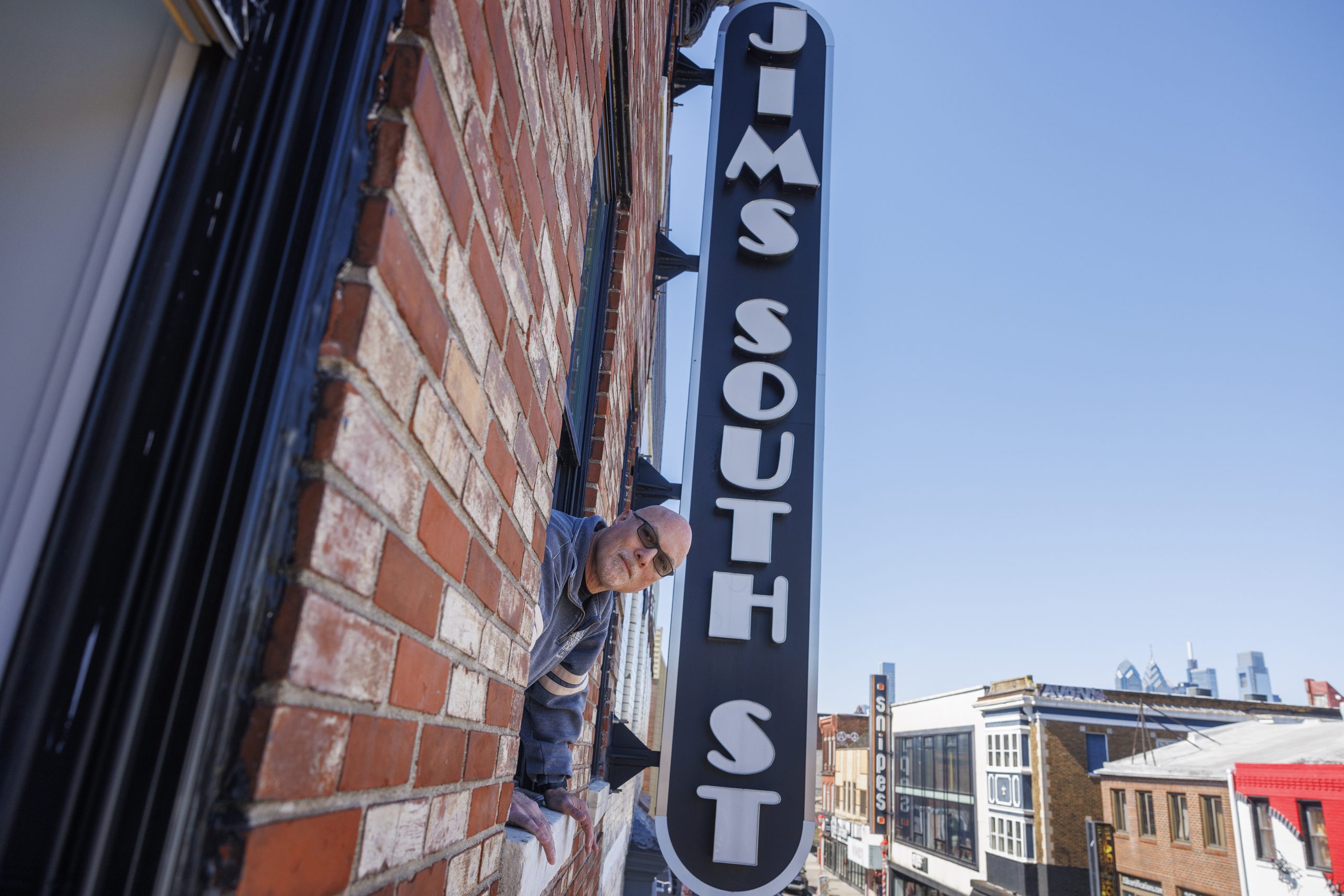
    Ken Silver, owner of Jim’s Steaks, corner of 4th and South Street with sign on front of building.The restaurant is under construction after 2022 fire destroyed the cheesesteak restaurant. Photo taken on Monday, March 25, 2024.Alejandro A. Alvarez / Staff Photographer

    1 p.m.

    For lunchtime I want to go down to Jim’s on South Street and get a cheesesteak with whiz and fried onions. I probably need to walk off my cheesesteak, but I’m not going to walk off my cheesesteak. I’m going to let it just sit in my belly for a while.

    3 p.m.

    Then we’ll go out to the Art Museum area and chill out and walk around. Maybe we’ll have ice cream, there are usually ice cream trucks out there. I love walking around that area so much — I’ve always loved West River Drive and Kelly Drive. When I was a kid, I didn’t know that Boathouse Row was like boathouses, even though it’s called that — I used to always say, when I grew up, I’m gonna live in one of those houses.

    Boathouse Row is relit with a new programmable system containing 6,400 LED lights that allow for 16 million color combinations in Philadelphia, Pa. on Thursday, March 7, 2024.Monica Herndon / Staff Photographer

    5:30 p.m.

    At night, I’m gonna go to Norristown. There’s this Mexican restaurant on Main Street that’s so freaking good, Taqueria La Michoacana. I would definitely have their beans and rice, and tacos, and I don’t know what else.

    7:30 p.m.

    I would go see a show at Theatre Horizon. They want to foster empathy and edify the people who come to see the theater. As the incoming artistic director, I’d love to start programs like that to grow the artistic community there, all the while supporting the community that’s already been built there.

    New artistic director Amina Robinson at an event for Theatre Horizon’s 2018 production of ‘The Color Purple.’Courtesy of Theatre Horizon

    10 p.m.

    I’d head home to sit outside and watch the cars go by, just like chill out and relax. Then I’ll lay on the couch and fall asleep watching a television show, probably a Lifetime Movie Network movie.

  • Peacocks are wandering a Camden County borough. Local police don’t know where they came from.

    Peacocks are wandering a Camden County borough. Local police don’t know where they came from.

    A party of peafowl has spent the past 10 days roaming Berlin Borough in Camden County, and residents and police don’t know where they came from.

    Facebook user Ryan Bigwood of Berlin posted photos last Wednesday featuring a few peacocks wandering Evanine Drive at the Woods, a residential neighborhood on the eastern side of the borough. On Thursday, Bigwood confirmed that three birds, seemingly a family, were still wandering the street a week later, moving from house to house.

    More social media posts followed, including one by the Berlin Police Department on Sunday featuring an artificial intelligence-generated image of an officer riding a horse-sized peacock.

    “This is not the first time they have appeared in recent years and around our community and others,” the post read. “Please only contact your emergency services if there is something alarming about them.”

    Multiple peacocks roam Evanine Drive in Berlin Borough, Camden County, on Wednesday, June 10, 2026. Courtesy of Ryan Bigwood

    Peacocks are no strangers to making South Jersey news. Popeye, a beloved peacock and honorary mascot for Clarksboro in Gloucester County, died in 2019 after someone shot him. In March, a Cherry Hill couple asked the public to find the owner of a peacock that wandered their property for days.

    In Philadelphia in 2018, four peacocks escaped from the city’s zoo. At least two were later recovered after wandering I-76, though at least one more was found dead — likely after being hit by a vehicle, a zoo spokesperson said at the time.

    Michael Scheer, Berlin Borough’s police chief, said this is the first time in his more than two-decade-long career at the department that he’s had consecutive calls related to peacocks. He has no clue where they came from, how many there are, or where they are now.

    “They are not in policy custody, I can tell you that,” Scheer said.

    The department has received about 10 recent calls for peacock sightings, Scheer said. On Saturday afternoon, police reported to the Heritage’s Dairy Store on Route 30 and Tansboro Road in Berlin after a car collided with a peacock crossing the street.

    The peacock seemed fine and quickly ran off.

    Multiple peacocks roam Evanine Drive in Berlin Borough, Camden County, on Wednesday, June 10, 2026. Courtesy of Ryan Bigwood

    “This is definitely the lighter side of the profession,” Scheer said. “They haven’t been aggressive to anybody or anything. They’re just wandering like they’re lost.”

    Another Facebook user posted photos of a pair of peafowl, with different coloring than the birds in Bigwood’s post, on a home roof in Berlin on Monday.

    Dan Keashen, Camden County’s director of public affairs, said wandering peacocks are not a new phenomenon in South Jersey. Keashen said he lives near a farm in Gibbsboro that allows its peacock population to wander freely from street to street. He drives past the birds every day on his commute to work.

    “It’s not an oddity,” Keashen said. “But it’s not like you’ll see them commuting on PATCO either.”

    Scheer said his department hasn’t received any peacock-related calls in a few days. But if people do spot the animals, he advises onlookers to treat them as they would any other wild animal. Camden County animal control won’t come pick up the birds, Scheer said, unless they’re injured or contained.

    “We have never been trained on how to deal with roaming peacocks,” he said.

  • Angelo’s Pizzeria builds toward its opening in South Jersey as its bakery in Montco plans to sell rolls wholesale

    Angelo’s Pizzeria builds toward its opening in South Jersey as its bakery in Montco plans to sell rolls wholesale

    Angelo’s Pizzeria owner Danny DiGiampietro has been pursuing two ambitious goals: reviving a landmark Montgomery County bakery and opening a branch of his Michelin-recommended pizza-and-sandwich operation in South Jersey, where it all began.

    Both projects now appear to be gaining momentum. While Angelo’s vaunted rolls are being baked at the former Conshohocken Italian Bakery property, which DiGiampietro purchased last year, the long-held plans to reopen the bakery’s counter to retail customers remain on hold. DiGiampietro said the building requires additional work, which he declined to specify. “Every time we fix one thing, something else comes up,” he said.

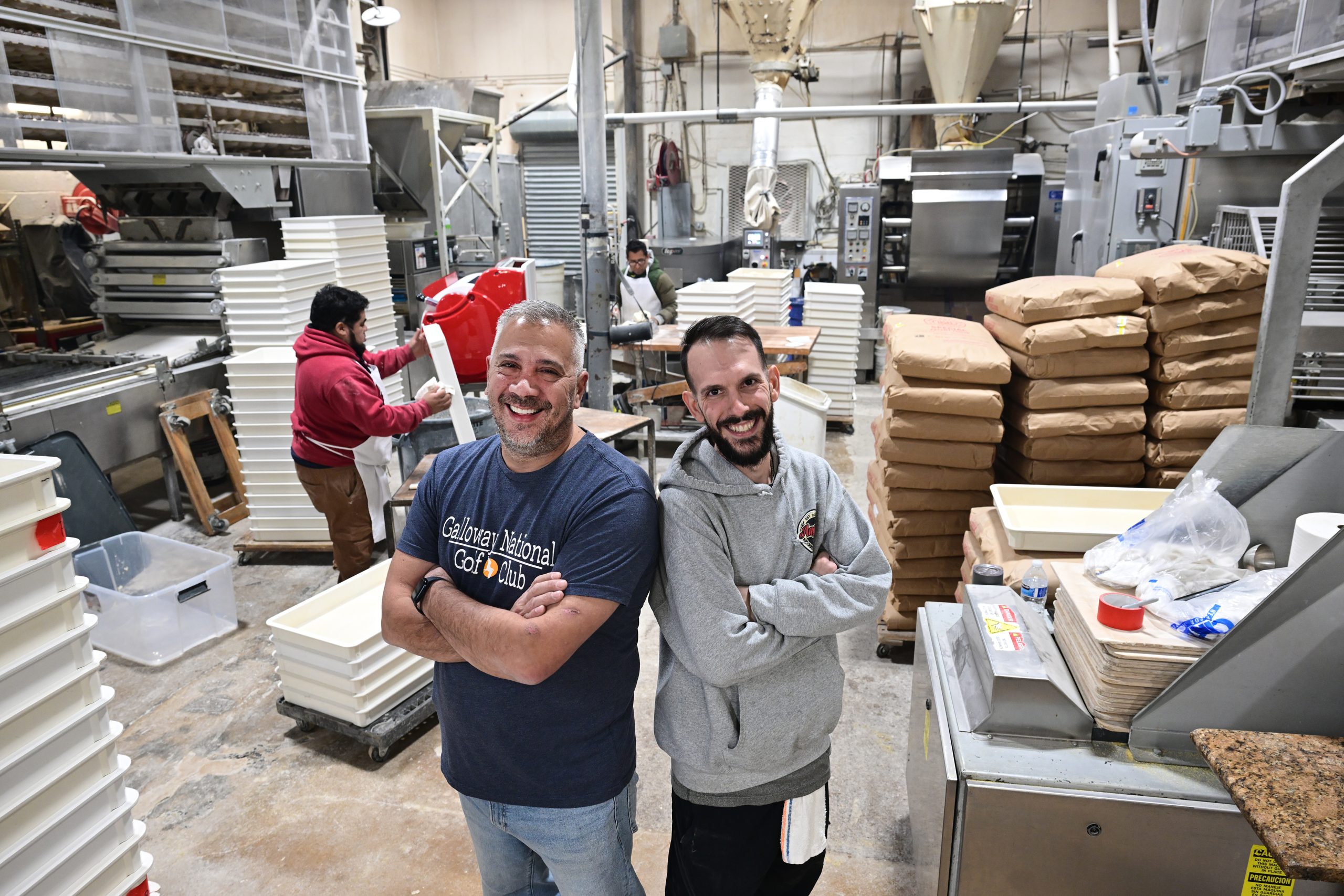
    Danny DiGiampietro (left), owner of Angelo’s Pizzeria, with partner Jared Braunstein at the bakery in Conshohocken in December 2024.Jose F. Moreno / Staff Photographer

    But Angelo’s is moving into wholesale bread production, the backbone of Conshohocken Italian Bakery’s business under the Gambone family for more than a half-century before its 2024 closing.

    A key piece of the puzzle is on the way: a massive Polin oven imported from Italy to give his bakers more flexibility, DiGiampietro said.

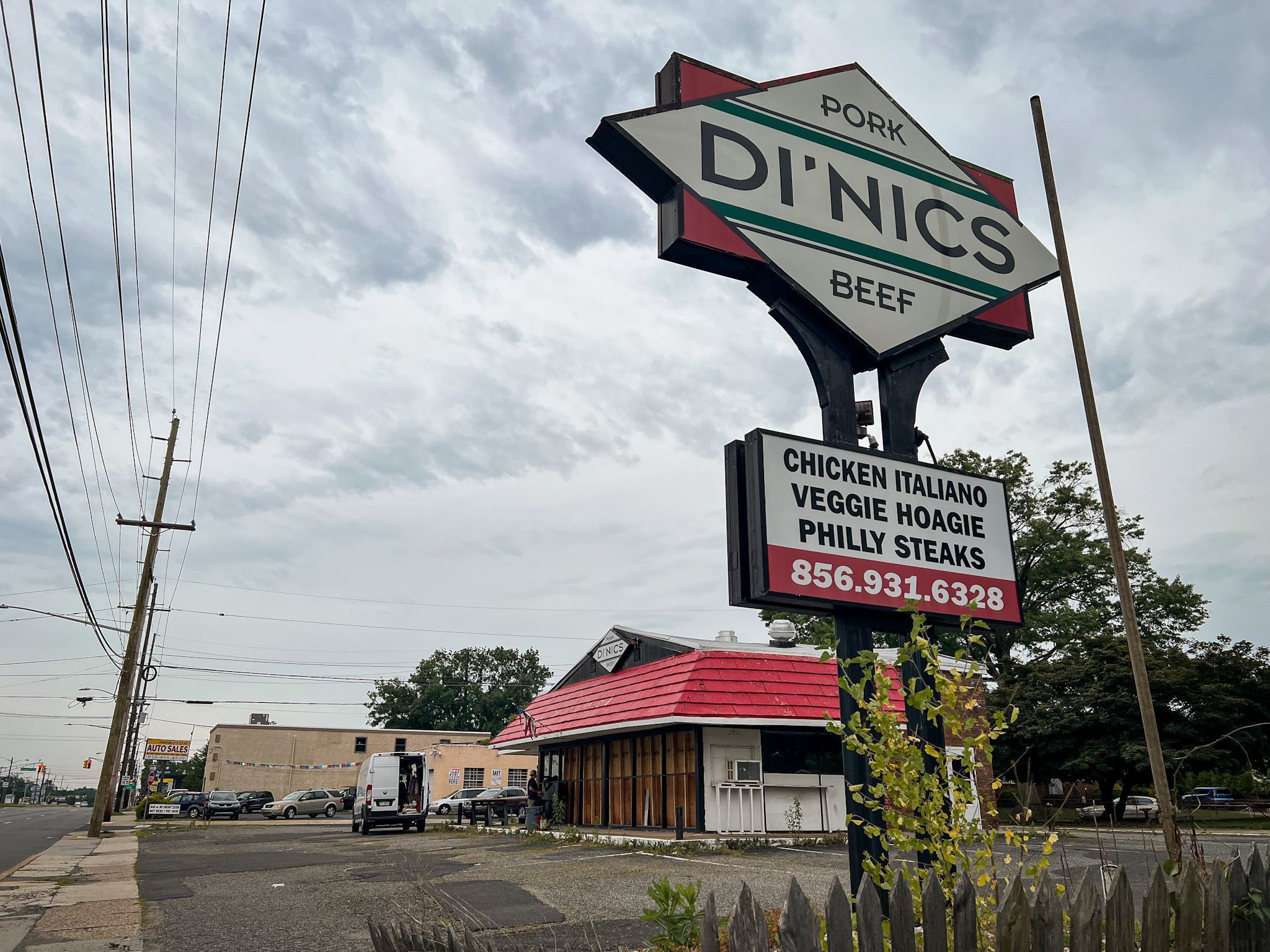
    The future location of Angelo’s Pizzeria in West Collingswood Heights, previously Di’Nics, on June 18, 2026.Michael Klein / Staff

    At “Conshy,” as the Jones Street bakery was known, the Gambone family supplied rolls and bread to hundreds of restaurants and sandwich shops throughout the region. Its closing created a frenzy among customers and competitors.

    DiGiampietro said the new oven will allow bakers to create a line of kaiser rolls, potato rolls, steak rolls, and hoagie rolls. Although he will in effect be selling to his sandwich shop competitors, he likens it to giving shops “the canvas to make their art,” DiGiampietro said. “Everyone’s different.”

    A return to wholesaling was not in the initial plans for DiGiampietro, who owned a bread bakery in South Philadelphia about 20 years ago. “I went bankrupt the first time. So hopefully I don’t go bankrupt again.”

    Meanwhile, demolition and rebuilding are underway at the future Angelo’s Pizzeria location at 310 Black Horse Pike in the West Collingswood Heights neighborhood of Haddon Township, Camden County. The stand-alone building was formerly Di’Nics.

    Crews recently gutted the building, which DiGiampietro hopes to transform into a full-service Angelo’s within the next several months.

    The project will mark his return to New Jersey. DiGiampietro opened his first Angelo’s in Haddonfield in 2013 before closing it in 2018 to focus on the Ninth Street location in South Philadelphia, which opened in 2019 and helped turn Angelo’s into one of the region’s most sought-after pizzeria and cheesesteak shops.

    Since then, Angelo’s has expanded to a second South Philadelphia location at Wolf and Swanson Streets and a counter at Wilmington’s DECO Food Hall. DiGiampietro is also a partner in Uncle Gus’ Steaks at Reading Terminal Market and, with actor Bradley Cooper, at Danny & Coop’s in Manhattan.

    The Angelo’s in West Collingswood Heights, about 10 minutes from the Walt Whitman Bridge, will include table seating as well as a counter overlooking the kitchen. Initially, DiGiampietro wanted more seating. Then he began talking about a takeout-only operation.

    “But people love the show,” he said. “They like to see everything happening.”

    The build-out still requires installation of a pizza oven, walk-in refrigeration, and other equipment. Even so, DiGiampietro believes the compact space can work.

    “We think we can keep a dining room and still fit everything we need in there,” he said. “It’ll be tight, but we work on Ninth Street in basically a submarine, so how much tighter can it get?”

  • A new Virtua Health internship program gives students with disabilities hands-on experience working in a hospital

    A new Virtua Health internship program gives students with disabilities hands-on experience working in a hospital

    During her internship at Virtua Mount Holly Hospital, student Alyssa Eiring greeted cardiology patients with her signature charm, “Welcome to cardiologyyyyyyy!”

    Her disarming and bubbly personality quickly put patients at ease, said medical secretary Heather Davenport, who mentored Eiring in the hospital’s cardiology department.

    “Coming into the hospital for testing isn’t someone’s happy place but Alyssa sure made it feel like that for everyone,” Davenport said.

    Eiring and five other students formed the inaugural class of Project SEARCH, a collaboration between Virtua Health and the Burlington County Special Services School District. The nine-month internship program gives students with intellectual and developmental disabilities hands-on job training.

    Eiring was born with Cornelia de Lange syndrome, a rare genetic disease that causes cognitive and developmental delays. At a graduation ceremony Tuesday, she won the “Compassion in Action Award” for “excellence in customer service.”

    The 21-year-old from Florence Township led the procession of graduates in royal blue gowns onto a stage festooned with blue, red, and silver balloons. She then took to the podium — one of two commencement speakers.

    “I have built real skills, gained so much confidence, and discovered what I am truly capable of achieving,” she said, addressing family, friends, educators, and Virtua employees gathered in a gymnasium on the campus of the Burlington County Special Services Transition Program in Westampton, N.J.

    “We are ready to take everything we have learned here and step out into the employment world.”

    “We did it!” she shouted, eliciting cheers.

    Alyssa Eiring, 21, of Florence Township, celebrates her graduation from Project SEARCH.Jessica Griffin / Staff Photographer

    Eiring will now begin looking for a job. Her 26-year-old sister, Toni Eiring, said she’s up to the task.

    “She has more faith in herself in the workplace,” her sister said. “Her demeanor changed. The way she stands on her own two feet. It’s almost like she developed a different part of her brain.”

    Grace Sullivan (back right, blue eyeglass frames) celebrates her graduation from Project SEARCH with her mother, Teresa Sullivan, and other family members inside the gymnasium on the Westampton campus of the Burlington County Special Services Transition Program. Jessica Griffin / Staff Photographer

    `A true turning point’

    Each student completed 10-week rotations in three hospital departments over the school year. Fellow graduate Tristian Villafuerte, who has autism, started off in patient transport and finished in food services.

    The 21-year-old Burlington Township resident called his second internship in equipment services “a true turning point.”

    “I was given the autonomy to independently navigate the hospital,” he said in his speech, noting he was responsible for collecting soiled equipment and bringing it back to the central supply for sterilization.

    “Having that trust placed in me changed everything,” Villafuerte said.

    Mary Jean Kneringer, principal of the Burlington County Special Services Transition Program, congratulates graduate Tristian Villafuerte. The 21-year-old from Burlington Township was hired by Virtua Health after completing an internship at its Mount Holly hospital.Jessica Griffin / Staff Photographer

    Villafuerte now joins Virtua Health, one of two graduates hired out of the program. He will work as an equipment services technician at Virtua Voorhees Hospital in Camden County.

    The program creates a new pipeline of employees in hard-to-fill areas, said Katherine Kealey, Virtua’s director of workforce development.

    “We have to start thinking about looking at other populations that we haven’t really tapped into previously,” Kealey said. “This is a really great opportunity for us to expand our workforce, mirroring the communities that we serve.”

    Myson Parham, left, and Kortu Lemu attend graduation at Virtua Health at Burlington County Special Services Transitions Campus, in Westampton, NJ, on June 16.Jessica Griffin / Staff Photographer

    Landing a `perfect’ job

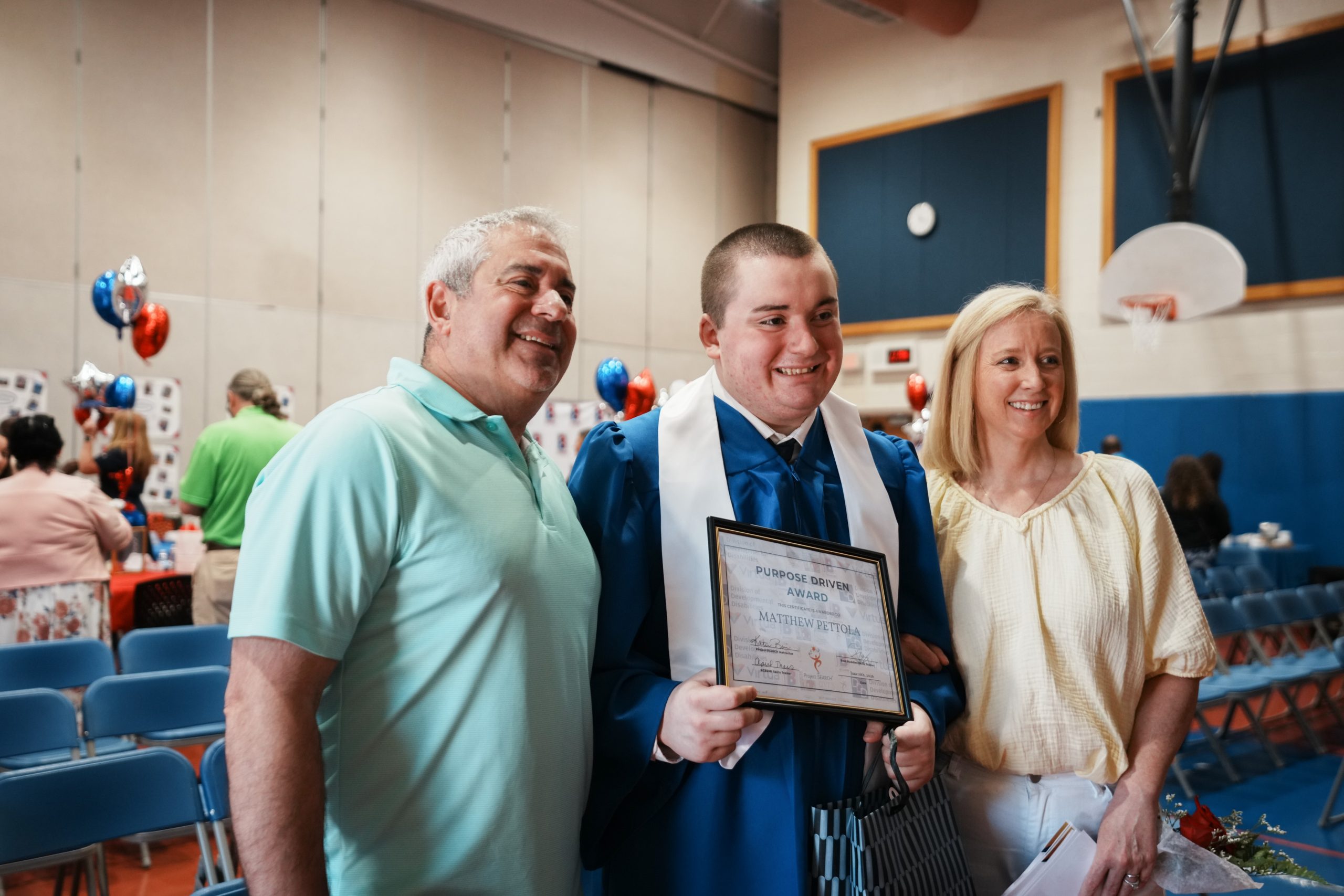
    The program landed graduate Matthew Pettola, 21, of Cinnaminson Township, a job at Virtua. He starts later this month as a food services worker at the hospital’s Mount Holly location.

    Pettola won the “Purpose Driven Award,” recognizing the intern who “used unexpected challenges as a compass — turning difficult experiences into valuable insights.”

    He is autistic, and the frenetic pace of kitchen work proved a “perfect fit,” said his stepmom, Tracey Pettola.

    “Doing the tray line, food prep, dishwashing. It was real fast-paced, which is great for him because he’s fidgety,” she said. “It just worked for him. He loved it.”

    “Every day, he came home so much more confident. He was so excited to talk about his day. What he learned. He made friends. He became more social,” she said.

    Pettola’s father, also named Matthew Pettola, described the program as a “godsend.”

    Matthew Pettola (center) shows off the award he won after completing an internship at Virtua Mount Holly Hospital. His father, also named Matthew Pettola, and his stepmom, Tracey Pettola, attended his graduation on June 16.Jessica Griffin / Staff Photographer

    Teresa Sullivan watched her 21-year-old daughter become increasingly independent during her internship in the rehabilitation department.

    Grace Sullivan would tell her mother to relax and “stay in bed,” because she wanted to get herself up and out the door on her own.

    She took the bus to the hospital alone and started insisting on making her own meals once back at her Florence Township home. Her communication skills and ability to follow directions sharpened, her mother said.

    “We used to give her a little bit more guidance — now she puts her hand up and says, ‘I got it,’” Teresa Sullivan said.

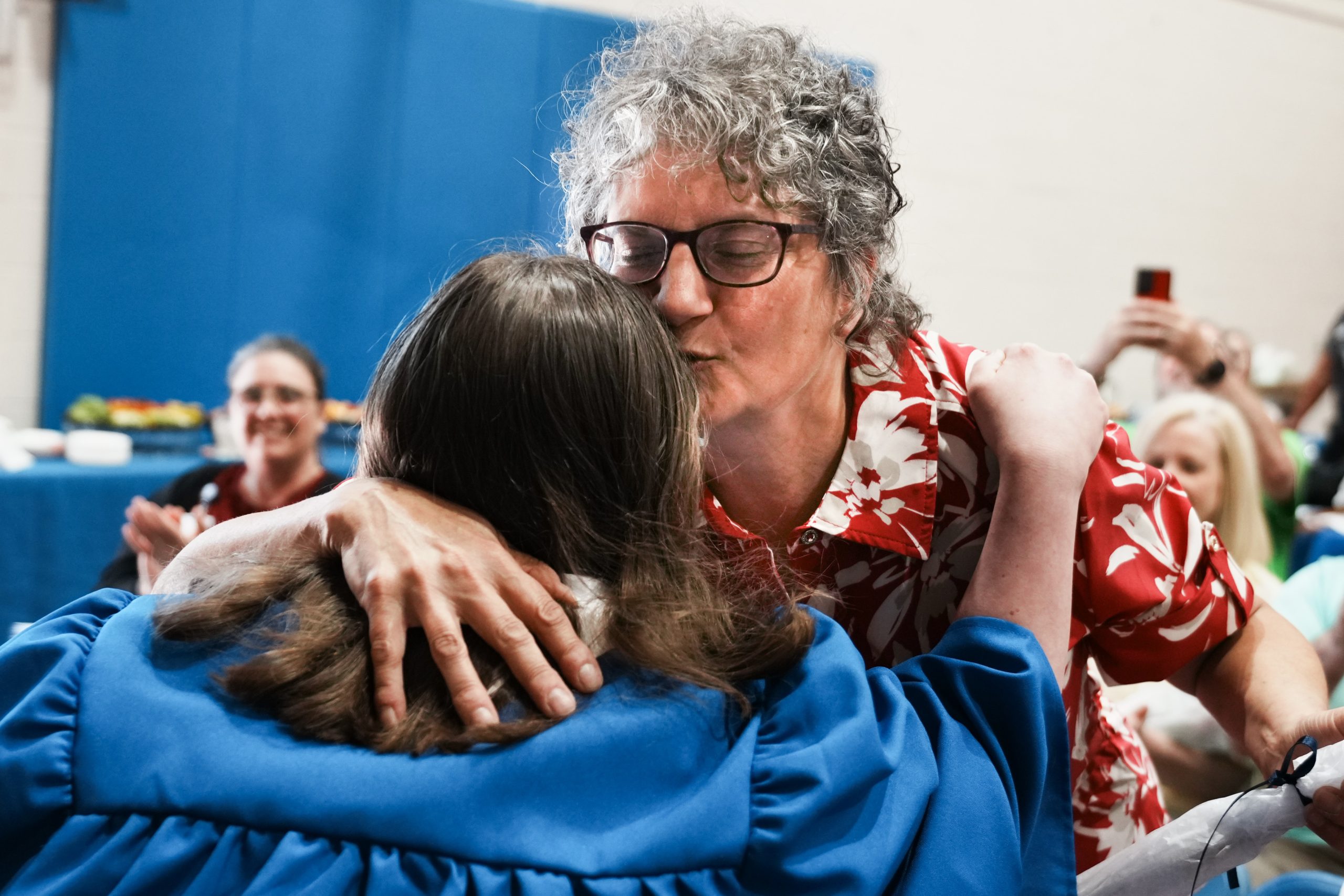
    After accepting her certificate, Grace Sullivan, who was born with Down syndrome, walked to her mother in the audience. Smiling broadly, she handed her a rose as a thank you for supporting her.

    Her mother accepted the flower through tears.

    “I feel good. I liked all of it,” Grace Sullivan said after the ceremony. “My favorite thing was the patients and making friends with my coworkers.”

    The program is accepting applications for new interns, who will start Aug. 31.

    Teresa Sullivan embraces her daughter, Grace Sullivan, from the audience of her graduation ceremony. After receiving her certificate, Grace Sullivan walked over to her mother and handed her a rose to thank her for her support. Jessica Griffin / Staff Photographer
  • Rowan is closing a health center for abused children because of Gov. Mikie Sherrill’s proposed budget

    Rowan is closing a health center for abused children because of Gov. Mikie Sherrill’s proposed budget

    Julie Harrison, a clinical psychologist in South Jersey who works with children who have experienced abuse, received a letter from Rowan University: Notice of Layoff.

    Her position as a teacher, researcher, and provider in Camden County would be eliminated “due to the loss of state appropriation funding,” the May 12 letter said. Harrison works for the Rowan-Virtua Child Abuse Research Education and Service Institute (CARES), which provides evaluation, treatment, and other services to children who have experienced abuse in South Jersey, and conducts research on the subject.

    The notice came after Gov. Mikie Sherrill proposed slashing the $1.85 million line item in her state budget plan for the program.

    CARES has offices in Stratford in Camden County and Vineland in Cumberland County. The Vineland location, which opened two years ago to provide better access to families in deeper South Jersey, is shutting down due to the anticipated cuts.

    “With Mikie Sherrill being in office, we had a lot of hope because she really was pretty loud about wanting to help kids, wanting to help families, wanting to really champion mental health services, and so we were pretty surprised about this budget,” Harrison said in an interview.

    The clinician is pregnant with twins and her job prospects are uncertain as the clock ticks until her final day at CARES. But she is mostly concerned about the impacts the funding cuts will have on children facing trauma in South Jersey, and the workers caring for them.

    The South Jersey program serves more than 1,500 children across more than 4,000 visits in both locations. Though just about 200 families use the more rural Vineland location, that is where these types of services can be the most critical, Harrison said.

    “It’s a pretty resource-dry community,” she said. “There’s not a ton of public transportation to get around. … The amount of services that are available to these families generally is much lower than other parts of New Jersey.”

    Harrison is one of about 20 people whose jobs are being impacted by the anticipated funding cuts across both office locations, according to union members. The majority of those are layoffs, and some employees had their hours dramatically reduced to the point they lost their healthcare benefits, according to union members.

    Ali A. Houshmand, president of Rowan University, said in a May 11 email that Sherrill’s proposed cuts forced the child abuse care center to pull back its services beginning July 1. He announced the closure of the Vineland office without saying it outright.

    “CARES will consolidate its work into our Stratford campus offices and will continue to fulfill its mission there: delivering high‑quality evaluations and treatment, supporting partner agencies across the region and educating the next generation of physicians and health professionals,” he said in the email.

    Joe Cardona, a Rowan University spokesperson, said the program also receives $3 million from other state agencies that will not be cut. He said the program’s goal is to offer the same services but reduce the quantity of care.

    “The exact outcome, of course, is to be determined,” he added.

    What is clear is that the closing of the Vineland center will have a domino effect on Stratford.

    “It’s creating an environment where people who are already doing multiple roles, performing multiple jobs, are going to be asked to do more,” Harrison said. “It’s just that horrible ‘do more with less.’”

    Harrison said she was just days away from submitting a grant application to start a food pantry out of the Vineland office when she heard the news. Her team did not submit the application after learning about the cuts and Vineland’s planned closure.

    CARES is one of four legislatively mandated diagnostic and treatment centers through the New Jersey Department of Children and Family, though it provides more expansive medical and mental healthcare than legally required. The center champions trauma-focused cognitive behavioral therapy, an internationally recognized model that was developed by the South Jersey program’s codirector.

    The program has tried to keep waiting lists for trauma care to under three weeks, but it has now grown to 10 to 12 weeks and the wait for care will probably get longer, Harrison said.

    “There is a high cost to what untreated trauma can look like for medical, mental health, all those services down the road if trauma isn’t treated early on,” she said.

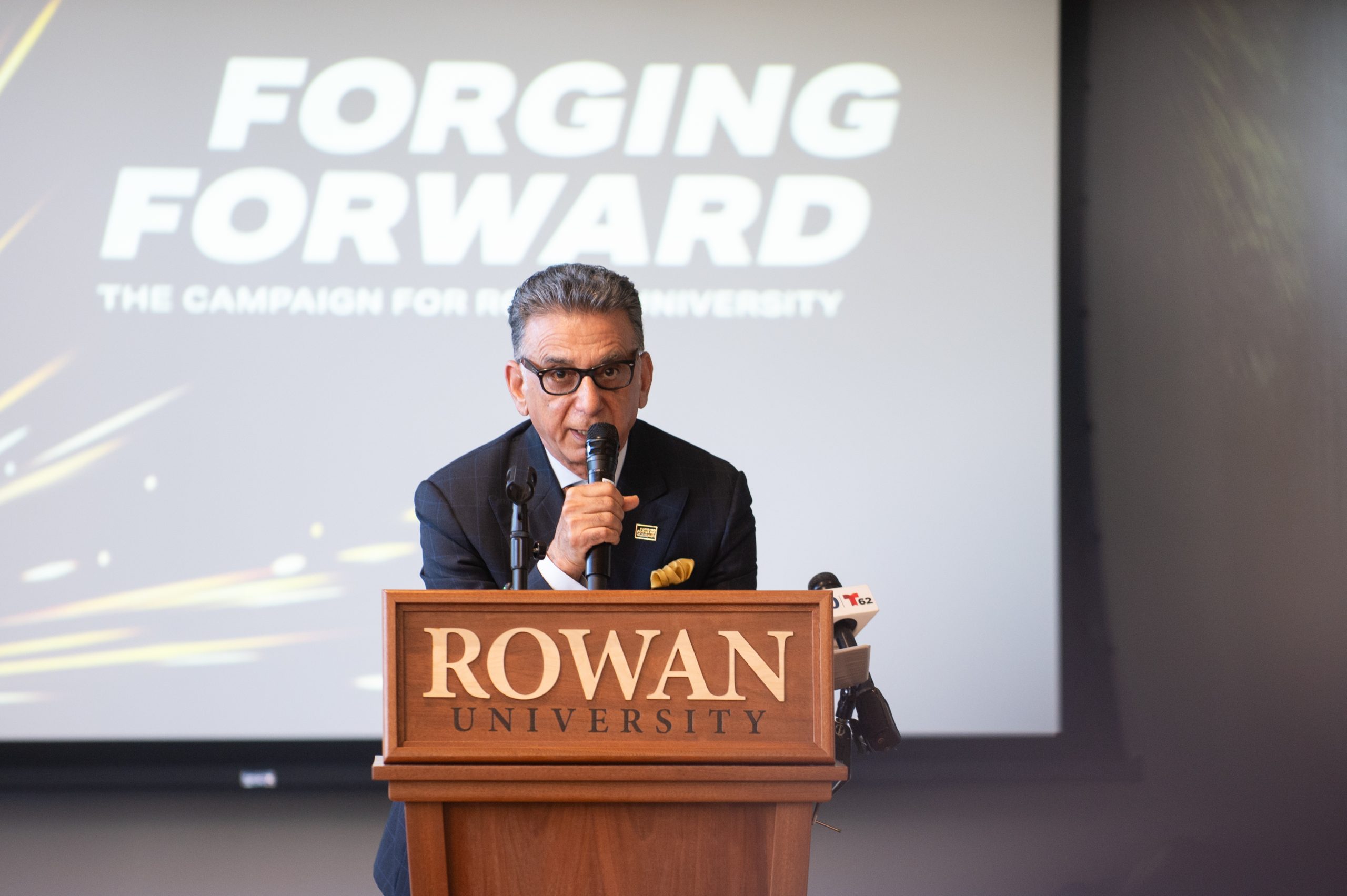
    Dr. Ali A. Houshmand, president of Rowan University, speaks to students and staff at a fundraising event in September 2025. Erin Blewett / For The Inquirer

    ‘Tough choices’

    Sherrill championed improving mental health for young people on the campaign trail and in her budget proposal by allocating $33 million to expand mental health services for students with high needs in K-12 schools, $500,000 for a new social media research center focused on young people’s mental health, and $125,000 for the newly created New Jersey Office of Youth Online Mental Health Safety and Awareness.

    Her office did not respond to a request for comment on her proposal to decrease funding for CARES.

    In response to a request for comment for an earlier Inquirer story about Sherrill’s decision to cut all state funding for Rowan’s brand-new veterinary school, an administration official cited the governor’s “blanket cut to all legislative add-ons.” These items refer to funding allocations legislators secure for their district that are sometimes criticized as “pork” or “Christmas tree items.” They can range from improvements for a local park to community services, like CARES.

    Sherrill, in her budget address, spoke about making “tough choices” in order to have “the most fiscally responsible budget that our state has seen in years.”

    But the governor carved out line items for her own priority projects, like $250,000 toward a new statue of the Rev. Dr. Martin Luther King Jr. in Camden.

    The state budget is a negotiation between the governor and legislative leaders due June 30, so it is unclear how much funding these programs will get in the end. But Rowan has moved forward as if the money for CARES is not on the table.

    This is not the first time the program has been at risk as part of the budget dance.

    Former Gov. Phil Murphy proposed cuts to the program last year, citing “belt-tightening,” but legislators were able to get the money back in the budget.

    This year, Harrison said, people are not optimistic because CARES is one of so many programs Sherrill struck a pen through.

    Dio Tsitouras, the executive director of the American Association of University Professors Biomedical and Health Sciences union, said he hopes Sherrill allocates more money to CARES because more state revenue has been identified since her budget proposal. But state officials have still warned of financial uncertainty on the horizon.

    “The CARES program is invaluable to protecting our state’s most vulnerable children,” Tsitouras said.

  • More people in Philly and region struggle with insufficient food after Trump cuts: ‘Hunger has never been higher’

    More people in Philly and region struggle with insufficient food after Trump cuts: ‘Hunger has never been higher’

    Shelly Gaither, 51, of Cheltenham, makes sure her three sons, ages 6, 9, and 18, get their meals while she manages with whatever is left over — if anything ever is.

    “Oh, my God, groceries are too expensive,” said Gaither, a former data analyst who suffers from a disability that makes working difficult. She visits a food pantry regularly to make sure her kids eat chicken when they can. Her monthly SNAP (Supplemental Nutrition Assistance Program) benefits were reduced from $400 to $200 earlier this year because of changes to the program under President Donald Trump’s One Big Beautiful Bill Act.

    “I don’t think there’s hope,” she said. “I feel guilty for bringing children into a world that doesn’t want them to exist because the government makes cuts that take away their food and their healthcare.”

    For people like Gaither throughout the United States, levels of food insecurity have seen a “remarkable” rise since the pandemic in 2020, according to a national survey taken earlier this year and released in late May by the Federal Reserve Bank of New York.

    Around 10% of 1,300 heads of households polled in February reported a lack of enough food and said their children were missing meals, according to the survey. Nearly 16% relied on food donations. Among families taking in less than $50,000 a year, almost 20% reported being forced to skip meals or go without.

    In 2020, when the federal government stepped in to help families at the height of the pandemic, just 4% of households reported missing meals, including less than 7% of families earning less than $50,000 a year, according to the survey.

    At that time, temporary supplemental unemployment benefits, expanded SNAP payments, and direct government relief payments helped stave off hunger among Americans. Food insecurity increased after COVID-19 relief expired, according to the Urban Institute.

    But the recent surge in hunger has also been attributed to the sweeping law Trump signed last year, which reduces SNAP benefits and other safety net programs to help pay for his tax cut.

    Findings in the bank’s report also reflect Gaither’s sense of despair, a pessimism about personal finances and the overall economy among people with low incomes. That same group exhibits diminished expectations for finding a job and declining levels of consumer confidence, the survey says.

    (function(){function e(){window.addEventListener(`message`,function(e){if(e.data[`datawrapper-height`]!==void 0){var t=document.querySelectorAll(`iframe`);for(var n in e.data[`datawrapper-height`])for(var r=0,i;i=t[r];r++)if(i.contentWindow===e.source){var a=e.data[`datawrapper-height`][n]+`px`;i.style.height=a}}})}e()})();

    According to the reserve bank’s report, non-white Americans have been especially hard hit. The number of such households that reported missing meals increased from 4% in 2020 to 19% in February. At the same time, the number of non-white people receiving SNAP benefits jumped from 14% to more than 26%.

    Overall, the survey found food insecurity was particularly acute among lower-educated and lower-income households, as well as households with young children. Many families are experiencing financial stress due to the high cost of living, persistent inflation, and high interest rates, even as the stock market has been steadily rising, according to the survey.

    Pantries struggle to keep up with demand

    More people are flocking to food pantries, but they are not equipped to take up the slack of reduced SNAP benefits.

    “Pantries across the state are in perpetual crisis mode,” said Stuart Haniff, CEO of Hunger-Free Pennsylvania in Pittsburgh. Add to that the advent of summer, when kids are no longer receiving free breakfast and lunch at school. “Families must now provide those 60 to 80 meals a month,” Haniff said.

    In Norristown, “immense need” has increased the number of people frequenting Martha’s Choice Marketplace, the largest food pantry in Montgomery County, by 100% since 2022, said Patrick Walsh, director of programs. “And I don’t expect things to get better.”

    Food prices are also up 3.2% this spring over last, according to U.S. Department of Agriculture figures, exacerbating the issue.

    In South Jersey, “we are seeing record numbers at our food distributions,” said Jane Asselta, president and CEO of the Food Bank of South Jersey, in a statement to The Inquirer. “Life is getting harder to afford for more and more people.”

    Matt McDevitt (left) and Michael Hickey load their vehicle at the Food Bank of South Jersey Thursday, June 11, 2026. The men are volunteers at the Temple Lutheran Church in Pennsauken and their food bank is open from 5-6 p.m. every Thursday.Tom Gralish / Staff Photographer

    Asselta said the Federal Reserve Bank’s report “mirrors” what her organization has observed through its network of 300 community partners.

    “Hunger has never been higher,” said Pastor Sonita Johnson, who runs the food pantry at St. John’s Pentecostal Outreach Church in Salem City, Salem County. “Food prices are high, and the lines you see you would not believe — a 50% increase in people just over the last two months.”

    Nationwide, between January 2025 and January 2026, SNAP rolls decreased by more than 4 million people — from 42 million to 38 million — according to USDA figures.

    Between last September and April of this year, nearly 90,000 Pennsylvanians lost SNAP benefits due to new eligibility requirements stipulated by the Trump administration, according to an analysis by the Pennsylvania Department of Human Services (DHS).

    And between December 2025 and last month, more than 32,000 Philadelphians lost benefits, DHS figures show.

    In New Jersey, SNAP participation has fallen by more than 50,000 individuals between March 2025 and March of this year, New Jersey Department of Human Services figures show.

    The Trump administration’s SNAP changes include an expansion of work requirements for people who receive SNAP benefits and increased documentation requirements “designed to make maintaining eligibility increasingly difficult,” according to the Food Research and Action Center (FRAC), the largest anti-hunger lobby in the United States.

    Deputy White House press secretary Anna Kelly said in a statement that Trump signed the changes to strengthen SNAP and to ensure that it is “sustainable for future generations.” She added that Trump was “elected to eliminate runaway spending across the federal government.”

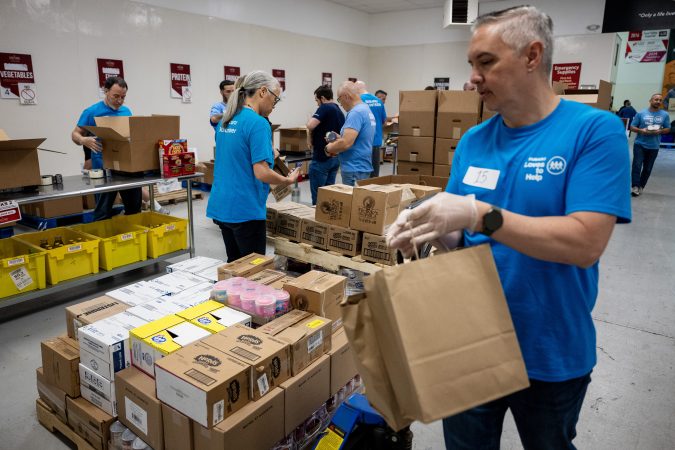
    William Meo works on the loading dock at the Food Bank of South Jersey Thursday, June 11, 2026. Tom Gralish / Staff Photographer

    For people like Shelley Gaither, how her reduced SNAP benefits could be seen as part of “runaway spending” is tough for her to figure, given her needs. To survive this precarious moment, Gaither said, she will do whatever she can.

    “We eat more vegetarian meals and I don’t buy my kids cookies or snacks,” she said. “If I drink enough coffee, maybe I just need one meal a day. This is our existence now. This is how we live.”

  • Robin Cogan, renowned Camden school nurse and national health and safety advocate, has died at 65

    Robin Cogan, renowned Camden school nurse and national health and safety advocate, has died at 65

    The letters that follow Robin Cogan’s name represent some of healthcare’s most impressive achievements. NCSN, nationally certified school nurse. FNASN, fellow of the National Academy of School Nursing. FAAN, fellow of the American Academy of Nursing. Also, RN and MEd.

    Then there are the awards. Two-time President’s Award winner from the National Association of School Nurses. The 2017 Population Health Hero Award from the New Jersey Department of Health. The Johnson & Johnson 2017 School Nurse of the Year. And many more.

    Robin Cogan joined the Camden City School District as a school nurse in 2001 after training earlier as an art therapist and spending 14 years as a psychiatric clinical nurse and corporate health services manager. It was with the school district and its students, families, and staff where she really found her groove.

    For nearly three decades, Robin Cogan championed school safety and population healthcare, and advocated tirelessly for school nurses everywhere. Her website, blog, frequent podcast appearances, and wide-ranging institutional activism gave voice to school nursing stories, and combated gun violence and other pressing problems.

    She started blogging on RelentlessSchoolNurse.com in 2017 and cocreated the No More Empty Desks student art campaign in 2019 to memorialize students killed in gun violence. “Robin’s national reach and advocacy know no bounds,” a Camden colleague said on Facebook. “Robin Cogan is the embodiment of the school nursing profession.”

    On May 10, Robin Cogan blogged: “The profession is better, and so are countless children, because of the relentless, brilliant nurses who choose school nursing year after year.”

    Mrs. Cogan became a school nurse in Camden in 2001.Heather Khalifa / Staff Photographer

    On Thursday, June 11, Robin Cogan died of cancer at Cooper University Hospital in Camden. She was 65.

    “Robin dedicated her life to caring for others,” Pamela K. Clark, president of the Camden Education Association, said in a tribute. “Her work extended far beyond the walls of our schools, leaving a lasting impact on the profession she loved.”

    Born in Philadelphia, Mrs. Cogan graduated from Cherry Hill West High School in 1978 and earned a bachelor’s degree in art therapy and psychology in 1982 at what is now the College of New Jersey in Trenton. She gained her nursing credentials at the Helene Fuld College of Nursing in New York and Rowan University, and earned a master’s degree in clinical, counseling, and applied psychology at Wilmington University in Delaware in 2009.

    As a school nurse in Camden, she oversaw more than 900 students from preschool through eighth grade at Cooper’s Poynt School and, most recently, more than 400 students at three preschools. She took temperatures, counseled worried parents, and personally helped thousands of people weather the COVID-19 pandemic.

    “She influenced policy, championed health equity, elevated the role of school nurses,” a colleague said on Facebook, “and reminded us that one person truly can create ripples that become waves.”

    Mrs. Cogan was the New Jersey director for the National Association of School Nurses and taught in the school nurse certification program at Rutgers University-Camden. She earned grants, sat on boards, lectured around the country, wrote or cowrote dozens of columns, papers, and articles about health issues, and posted advice and information frequently on X, Bluesky, Facebook, and other online platforms.

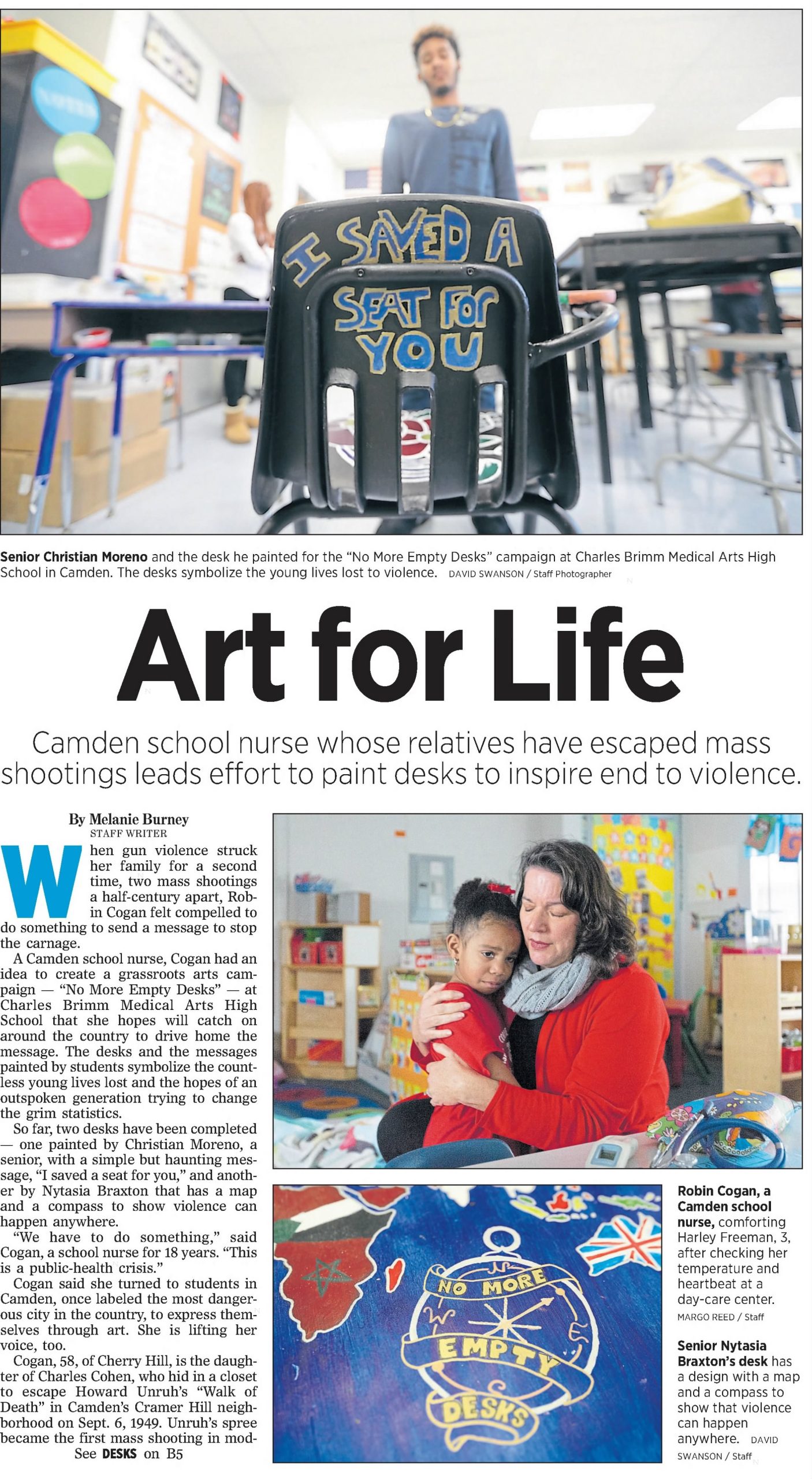
    The Inquirer published this story and photos about Mrs. Cogan’s art program in 2019.Newspapers.com

    She was featured in The Inquirer and other publications, and appeared on TV and radio programs and podcasts. She focused on “shared values” to connect people, she said often, and posted the motto for her Relentless Nurse website on the homepage: “Be relentless in your practice whatever it is.”

    Robin Michelle Cohen was born June 28, 1960. She met Ed Cogan in college, and they married in 1984, lived in Trenton and Cherry Hill, and had twin daughters Allie and Jill.

    Mrs. Cogan was driven to address gun violence, she said, after her father survived a mass murder in Camden in 1949, and her niece survived the 2018 mass shooting at Marjory Stoneman Douglas High School in Florida. “I hope my legacy is helping solve this crisis,” she told The Inquirer in 2022. “Don’t we owe that to our kids?”

    This photo of Mrs. Cogan (left) and others at the old Temple Emanuel in Cherry Hill appeared in The Inquirer in 1996.Elizabeth Robertson / Staff Photographer

    She was a talented painter and designed a popular pin that she and a friend sold in a home-based spiritual jewelry and art business. She loved nature and 1970s folk music. She enjoyed hosting Thanksgiving dinners and visiting the Jersey Shore. She was one-time president of the old Temple Emanuel Sisterhood in Cherry Hill.

    “She was a helper,” said her daughter Allie. “She was good at relationships and never really turned off her working mind.”

    In addition to her husband and daughters, Mrs. Cogan is survived by a granddaughter, Nora, a nephew, Matthew, sisters Lori and Merri, and other relatives.

    Private services were held earlier. A celebration of her life is to be held later.

    Donations in her name may be made to Brady: United Against Gun Violence, 840 First Street N.E., Suite 400, Washington, D.C. 20002; and Grandparents for Vaccines.

  • This scrap metal facility has had 13 fires in Camden. It’s suing the city to reopen operations.

    This scrap metal facility has had 13 fires in Camden. It’s suing the city to reopen operations.

    A scrap metal recycling facility in Camden that has been prone to fires is suing the city for suspending its operations after its 13th fire in six years.

    The city of Camden this month suspended the EMR scrap metal recycling facility’s junkyard license after a late May two-alarm fire that officials said created smoke plumes that stretched to Gloucester Township. It was the latest in a string of several fires in recent years that have plagued the facility and local Camden residents.

    In the complaint, filed Monday and first published by WHYY, the company argues that the city acted outside of its power and did not provide due process by issuing the suspension. The company’s legal team says the pause in operations has cost EMR $10 million in lost revenue and operational expenses, as well as irreparable harm in the “competitive, relationship-driven” industry.

    The most recent fire occurred on May 29 at 3 a.m. and was under control about two hours later. It led to air quality alerts and broke out just days after the company installed a new fire suppression system.

    The company says it had shut down its shredder to investigate the cause of the fire before the city sent a suspension notice on June 4 ordering it to cease its primary operations. The notice, signed by the city code enforcement officer, states that the suspension will be reassessed after 30 days.

    The company said it asked the city on June 12 to continue operating on June 15 after implementing “preventative measures.”

    Camden Mayor Victor Carstarphen said after that fire, “Enough is enough.”

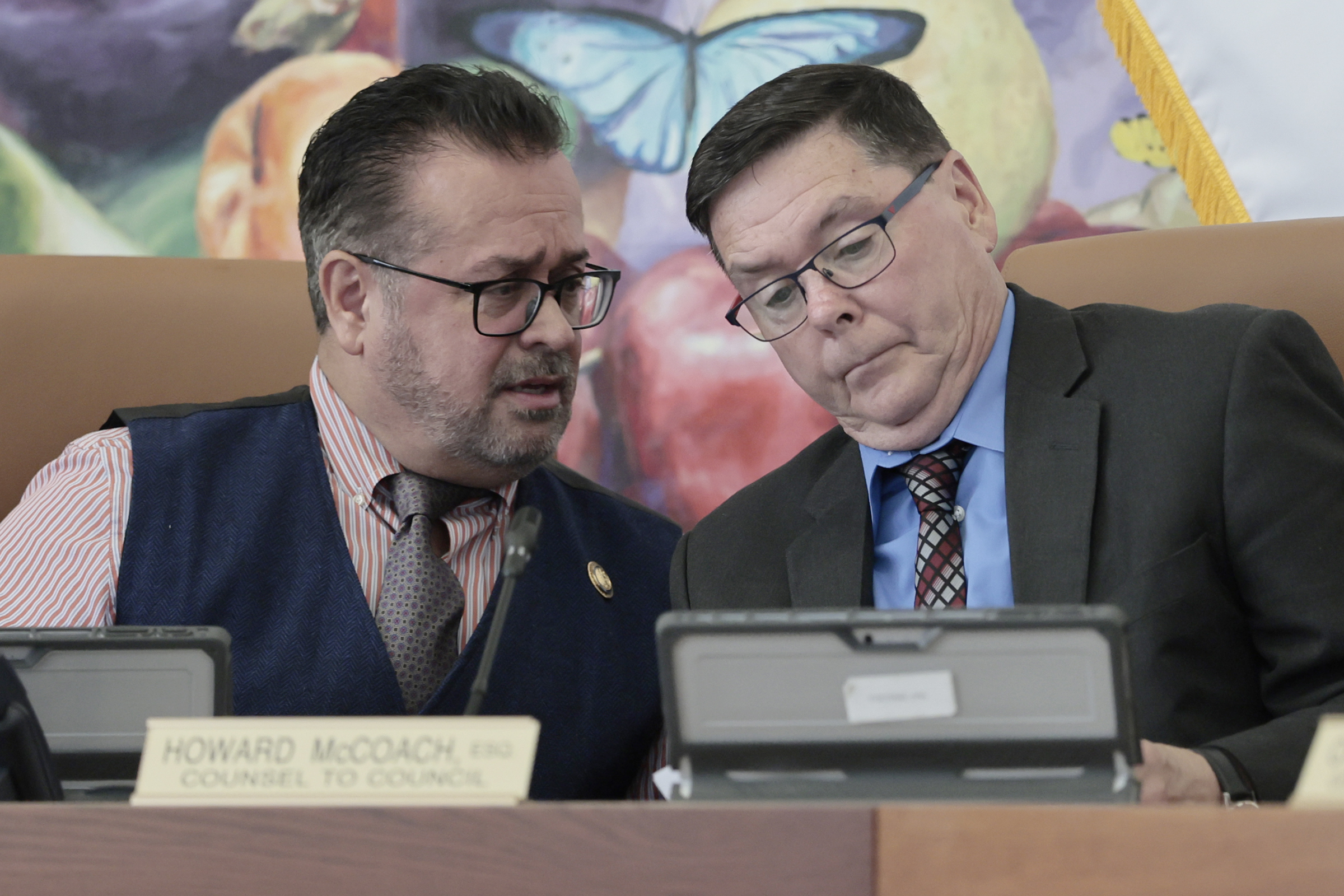
    Camden City President Angel Fuentes (left) and counsel to council Howard McCoach discuss business during a Camden City Council meeting at Camden’s City Hall on Thursday, June 11, 2026.Elizabeth Robertson / Staff Photographer

    The Camden City Council voted on a resolution Thursday calling on all regulatory agencies with jurisdiction over the facility, including on the county and national levels, to shut the facility down. The company has faced lawsuits over fires at the facility, including from the state attorney general’s office and local residents.

    The resolution cites a joint statement signed by Carstarphen, County Commissioner Jeffrey Nash, State Sen. Nilsa-Cruz Perez, City Council President Angel Fuentes, and City Council Vice President Arthur Barclay, all Democrats:

    “We will not stand idly by while residents are exposed to fires on a regular basis and have to bear the burdens of an operation that clearly cannot function in a safe manner,” it says in part. “We will no longer allow shelter in place alerts to go out because of another mishap in this scrap metal operation.”

    At Thursday’s council meeting, Camden residents called for the facility to be permanently shut down — citing health concerns and other disruptions to their quality of life — and criticized the city for not doing more earlier.

    Aliyia Jones becomes emotional during a community meeting for residents, affected by the recent junkyard fire, at MJD Fieldhouse Gym on Broadway in Camden on Sunday, February 23, 2025. Jones was describing her attempt to alert all of her neighbors before fleeing the area with her disabled mother after the fire broke out.Elizabeth Robertson / Staff Photographer

    “I just want to say, too little, too late,” said Aliyia Jones, who was among 100 Camden residents who fled their homes after a four-alarm fire at the facility in February 2025.

    “No one wants to come here and say ‘finally,’ or ‘thank you,’ or ‘hurrah.’ … We can’t breathe,” she added.

    EMR employs 500 people in Camden, including 179 Camden residents, according to the complaint, and if the shutdown continues, employees will face layoffs. EMR workers protested calls to close the facility earlier this month.

    Ajeena Riggs, a project manager at the Center for Environmental Transformation, said that she is sympathetic to workers seeking to keep their jobs and that the city and their union should help them find new positions if they lose their employment.

    “I don’t blame them for fighting for their jobs,” she said at Thursday’s meeting. “They’re fighting for their livelihood. But the only entity that’s to blame is the EMR.”

    The company blames the fires on improperly disposed lithium-ion batteries, but officials said in their joint statement “that story line is old and irrelevant at this point.”

    EMR implemented a fire suppression system and agreed to make other changes after entering a memorandum of understanding with the city last summer following the massive February 2025 blaze. Residents at the meeting criticized that agreement as lacking teeth.

    Camden city spokesperson Vincent Basara declined to comment on the lawsuit.