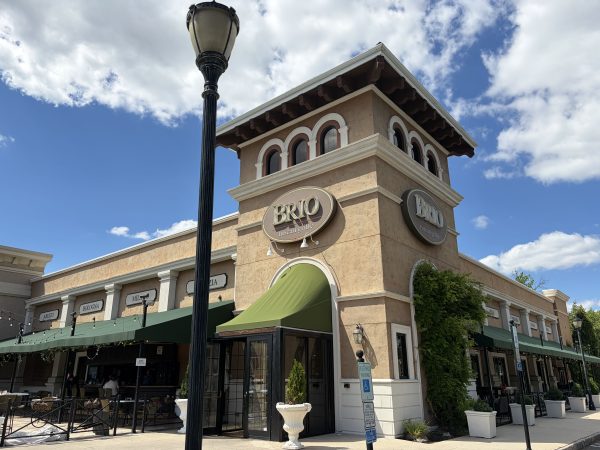
Confusion about the potential closing of Brio Italian Grille in Cherry Hill has felt like a nightmare, Grace Ortiz, the restaurant’s general manager, said.
Staff have been inundated with calls inquiring about the closure, which hasn’t been made official by the restaurant, its landlord, or the Brazilian steakhouse interested in the property, causing confusion for some of the employees.
“We’re here. We want to be busy,” Ortiz saidFriday. “Hopefully this blows over.”
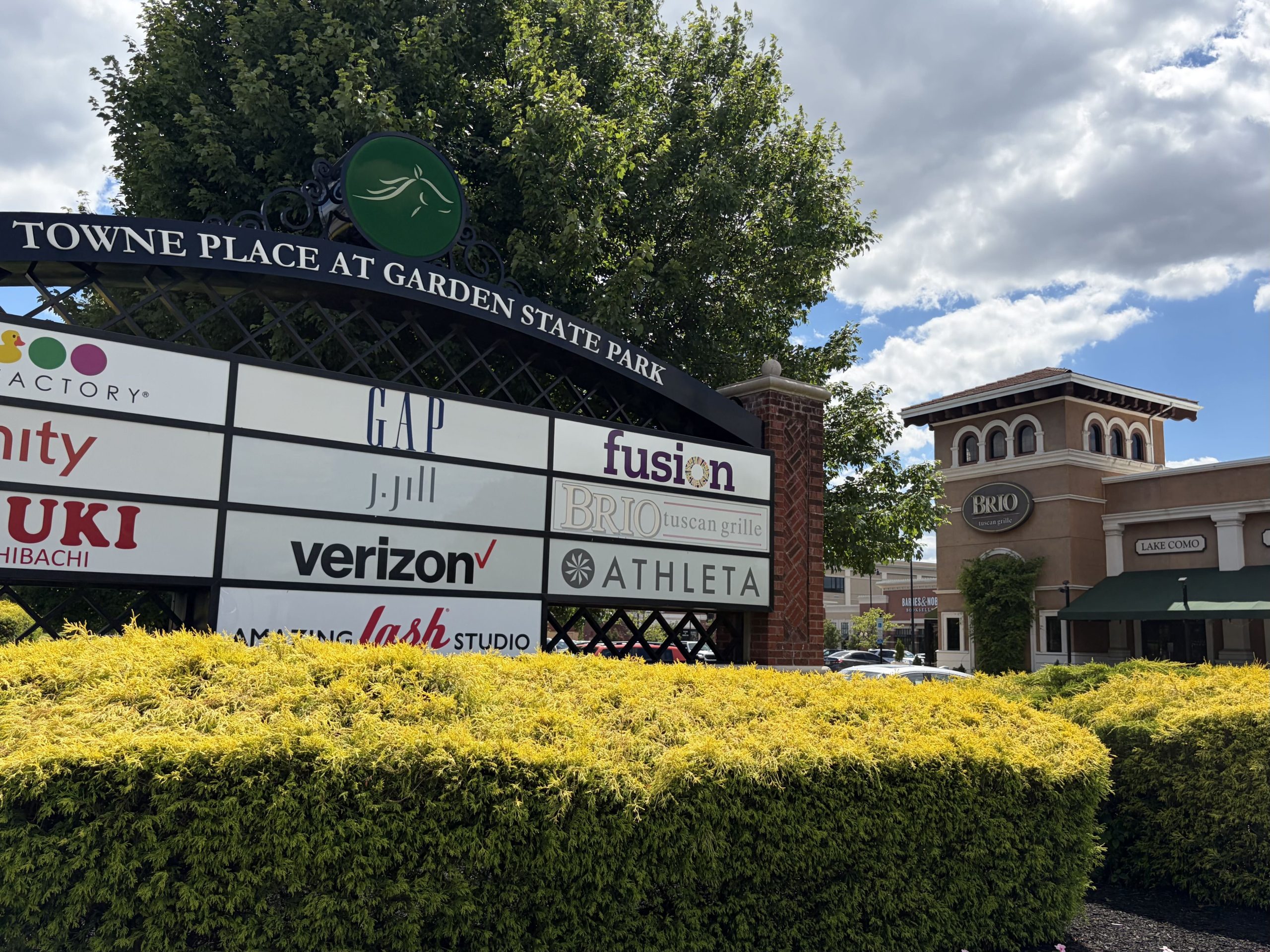
Brio has 19 remaining locations nationwide, including the last New Jersey location at Cherry Hill’s Towne Place at Garden State Park. That retail complex, a five-minute drive from the Cherry Hill Mall, features about 20 eateries from the Cheesecake Factory to Kabuki Japanese Cuisine.
The next closest Brio Italian Grille for South Jerseyans is 200 miles away in Farmington, Conn.
42 Freeway, a publication covering development in South Jersey, first reported in May that chain Fogo de Chão Brazilian Steakhouse would replace the restaurant. NJ.com followed suit, attributing the news to project plans filed by Fogo de Chão and the owners of Towne Place to the Cherry Hill Township Zoning Board in April.
Those plans propose a remodeled restaurant with 296 seats. Cosmas Diamantis, the municipal attorney for Cherry Hill Township, said in an email that the required zoning permits for the conversion from Brio Italian Grille to Fogo de Chão were already issued.
One zoning permit, obtained in a records request to Cherry Hill Township, referred to the restaurant property as “the former Brio Italian Grille.” A design development presentation dated November 2025 shows renderings for what the Brazilian restaurant could look like at 901 Haddonfield Rd.
But Ortiz said Brio Italian Grille’s corporate office told her that there are no current plans to close down, and that her restaurant just got its liquor license renewed last week. So what’s going on?
Brio Italian Grille in Cherry Hill is located at Towne Place at Garden State Park.Sarah Nicell
Is Brio Italian Grille actually leaving Cherry Hill?
That depends on whom you ask. Brio Italian Grille did not respond to a request for comment, and a spokesperson for Fogo de Chão declined to discuss the potential project.
In Cherry Hill Township and elsewhere, restaurateurs must apply for zoning permits before any changes in occupancy are set in stone. That means there’s no guarantee that Fogo de Chão actually has a lease in hand for 901 Haddonfield Rd.
It’s common for work to never actually start on projects even when they receive zoning permits, a Cherry Hill Township attorney said. In Fogo de Chão’s case, the zoning permit just means the proposed project is permitted to happen, even if it never does.
Since rumors of Brio Italian Grille’s closure have swirled, Joe Morris, an executive for M&M Realty Partners, which owns the landlord entity that manages the site’s tenants, said he has received an influx of people interested in developing the property.
Morris, said Monday that Fogo de Chão has not signed a lease for a lot at Towne Place, but the chain has inquired about joining the Cherry Hill retail center for the last 12 years.
M&M Realty, a New Jersey-based real estate development company, has kept a close eye on Brio Italian Grille after it declared bankruptcy in August and recently closed its Marlton location. Morris said those problems could mean the chain might not reup its lease at Towne Place, and M&M Realty might have to find other viable tenants. Morris declined to share when that lease will expire, though he said the restaurant has “a semi-limited period of time before important decisions have to be made.”
Still, Morris said he has no idea whether Brio Italian Grille is in conversations with Fogo de Chão about giving up the property. He said Brio Italian Grille is “alive and well,” isn’t behind on payments, and continues to spend money on its business.
“There are certain things I know I can’t say. There are certain things I can speculate,” Morris said. “I can absolutely tell you, if Brio gives their space back, Fogo is 100% a tenant we would be interested in speaking with.”
After nearly 25 years in operation, the newly renovated H Mart in Cherry Hill is drawing crowds as regulars and newcomers marvel at its major improvements.
The outpost of the renowned Korean grocery store off Route 70 has served the local community since 2001. In April 2025, the Cherry Hill Township Planning Board approved plans for an expansion. A year later, the grocery store reopened with enhancements to the first floor and an open-concept food court, bakery, and retail space on the second.
As a diehard H Mart fan, I decided to venture across the bridge on a recent Thursday and see the 39,000-square-foot store for myself.
Customers shop inside H Mart Cherry Hill.Hira Qureshi
Where to start your H Mart visit
I arrived at the brick building, marked with the familiar “H Mart” sign in big red letters, at about 11 a.m. Entering through the double sliding doors of the second floor, I found myself inside the new food court.
A few customers dined in the massive seating area that morning, enjoying various dishes. I decided to grab an iced brown sugar coffee boba from Tiger Sugar as a little treat to sip on during my exploration.
Beginning the journey on the second floor was the right move, according to Ryan Solot, a regular shopper at H Mart. He and his wife, Miki Solot, came to the store once a week before renovations. The couple were shopping for dashi stock and Japanese sauces when I ran into them. They were happy to see the makeover, particularly on the second floor’s general shop department. But the Solots still felt the first-level aisles were a bit narrow for ideal grocery shopping.
“The layout is strangely unchanged,” Ryan Solot said. “It’s still kind of awkward to get through the aisles … but start from the top [floor] and make your way down, it’s much more organized upstairs.”
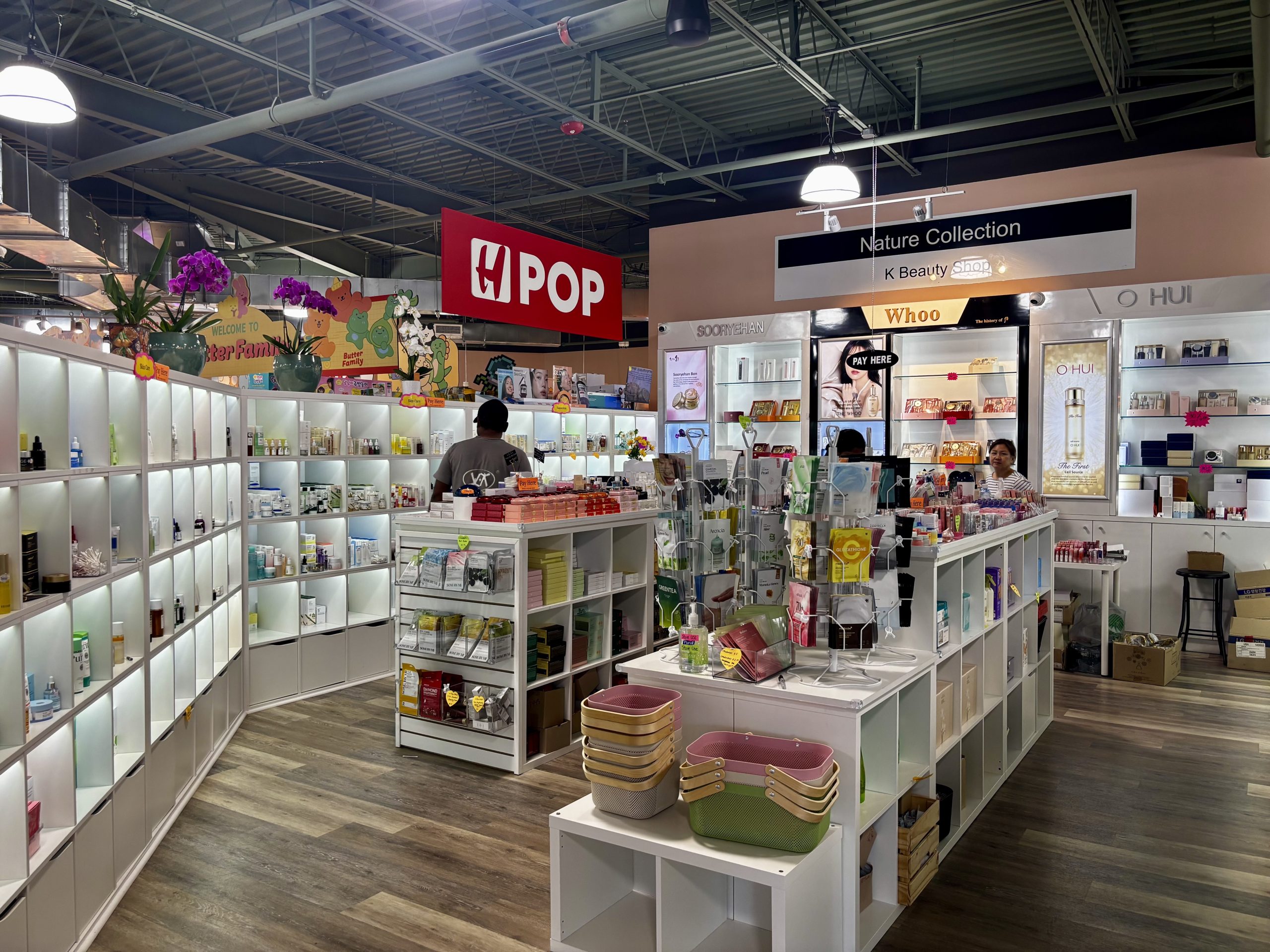
Korean beauty section at H Mart Cherry Hill.Hira Qureshi
The second floor of H Mart: general goods, Korean beauty products, and an arcade
Walking out of the food court area, I found a mini Korean beauty store with boxed shelving displaying creams, serums, cleansers, tonics, and other products from popular brands such as Medicube, Anua, and Beauty of Joseon. Attendants explained the various products to customers, especially to Korean skincare novices like myself.
Neon arrow signs next to the beauty department directed me into H Mart’s general store and “H Pop” section. A small selection of drinks and snacks lined the shelves leading me into the rows of shelves with over-the-counter medicines, vitamins, toiletry items, slippers, bedding, and kitchenware.
In the back corner I found a vast selection of cutesy notebooks, pens (ones with funky kiwi and toilet attachments), furry character key chains, mini toys, makeup storage containers, and other knickknacks. The prices for items were organized by serial numbers, which were listed on a card hanging off the shelves. Pro tip: Take a photo of that price card to reference as you shop.
Customers shop inside H Mart Cherry Hill.Hira Qureshi
The first floor of H Mart: frozen foods, fresh produce and seafood, snacks, and lots of instant noodles
Taped to the elevator, two signs offered directions on where to find specific items. “Second floor: food court, house ware, characters, K-beauty, game, health food” and “First floor: Asian/Western, produce, fish, meat, ready to eat, banchan” were written in all caps and highlighted in yellow.
The elevator also had another sign with an important tip for shoppers: “You are welcome to shop freely on both 1st and 2nd floor, and you may check out either floor.”
Downstairs on the first level, the elevator opened up to aisles upon aisles of snacks, produce, sauces, packaged sweets, and lots of instant noodles. Each aisle is organized by number with a sign noting all the items available.
Shrimp crackers at H Mart Cherry Hill.Hira Qureshi
I walk into Aisle 3 as I exited the elevator and found snacks galore. KitKats, Pocky sticks, Buldak ramen-flavored chips, O’jelly real plum candies, lychee gummies, Poongnyun Bakery seaweed crackers, and so much more lined the shelves. I picked up some of my favorites: Shrimp crackers, crispy snacks made from starch and ground shrimp, and a bag of chocolate yogurt-covered orange slices sitting nearby.
Next, I headed into Aisle 5 for beverages. The vast selection includes soy milk, hojicha, banana milk, corn silk tea, coconut milk and juice, and taro. I grabbed a tall can of Thai tea and a couple of glass bottles of Ramune, a fizzy, fruity, sweet Japanese soda.
Thai tea at H Mart Cherry Hill.Hira Qureshi
I stopped by Aisle 10 for chili oil and pho seasonings. And on Aisle 1, I found instant noodles plentiful — the Japanese-style soba noodle box piqued my interest. At the end of Aisle 9, I saw cups filled with ice in the freezer section and drinks packaged in pouches for easy pouring. I grabbed the peach mango tea to accompany my post-shopping food court lunch.
As I walked deeper into the store, I found Catherine Yao and her mother, Jingjing Dong, in the massive seafood section, picking live crabs from a big box.
Live crab selection at H Mart Cherry Hill.Hira Qureshi
Yao and Dong, who live five minutes from the store, come to the H Mart every week. They come for the fresh seafood — live fish, lobsters, and crabs swim in big tanks near the butchers, while some sit in displays on ice — and frozen meats — think beef bulgogi and pork belly. The two also like exploring the premade foods section next door; I picked up a crab onigiri for the road.
The mother-daughter duo recommended stopping by the vast produce section near the cashiers. “I like the fresh durian, lychees, mangoes, and the gold melons,” Dong said.
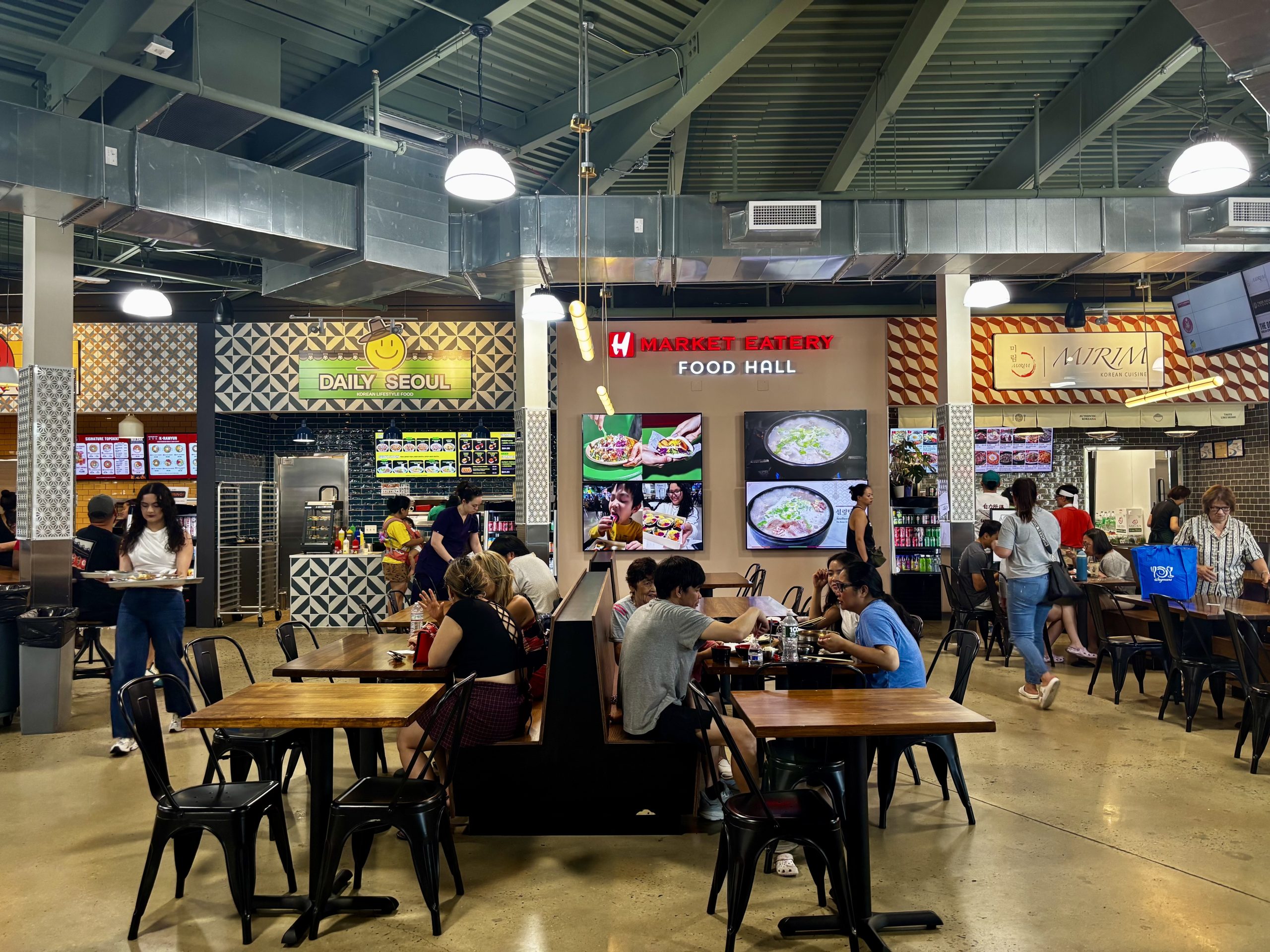
Food court at H Mart Cherry Hill.Hira Qureshi
The food court
Around noon, I took the elevator back up to the second floor and ventured back into the food court for lunch.
The court can feel overwhelming, with nine vendors to choose from — think bibimbap, Korean fried chicken, and noodles. Thankfully, Yao and Dong recommended a couple of options: Kyodong Noodles, a Korean-style Chinese noodle restaurant; Daily Seoul, a Korean lifestyle food brand; and Tiger Sugar, the Taiwanese bubble tea vendor I sampled earlier.
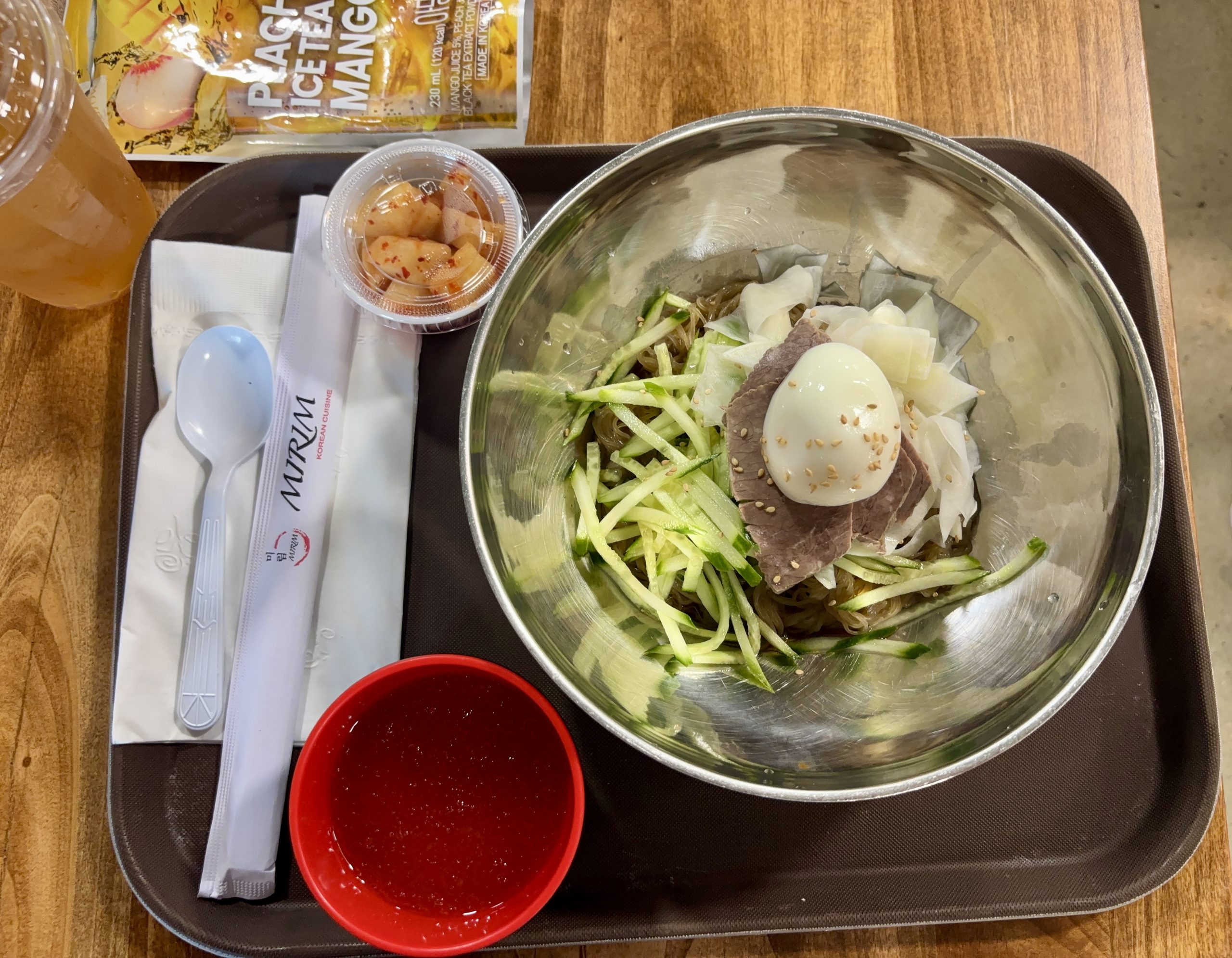
While perusing the vendors, I ran into regular Ryan Solot at Mirim, a traditional Korean restaurant. He recommended the cold buckwheat noodle soup. “I didn’t like how it looked at first but then I tried it and it was very good,” he said.
Spicy cold buckwheat noodle soup H Mart Cherry Hill.Hira Qureshi
I ordered the spicy buckwheat noodles with beef at Mirim. The dish was served in a metal bowl with pickled vegetables on the side, chopsticks included.
For Yao, the food court is a great addition to the store.
“I like coming here more now because they have a food court — we go to eat there pretty often, for lunch and dinner sometimes,“ she said.
H Mart Cherry Hill: 1720 Route 70 E, Cherry Hill; 856-489-4611; Monday to Sunday, 9 a.m. to 9 p.m.
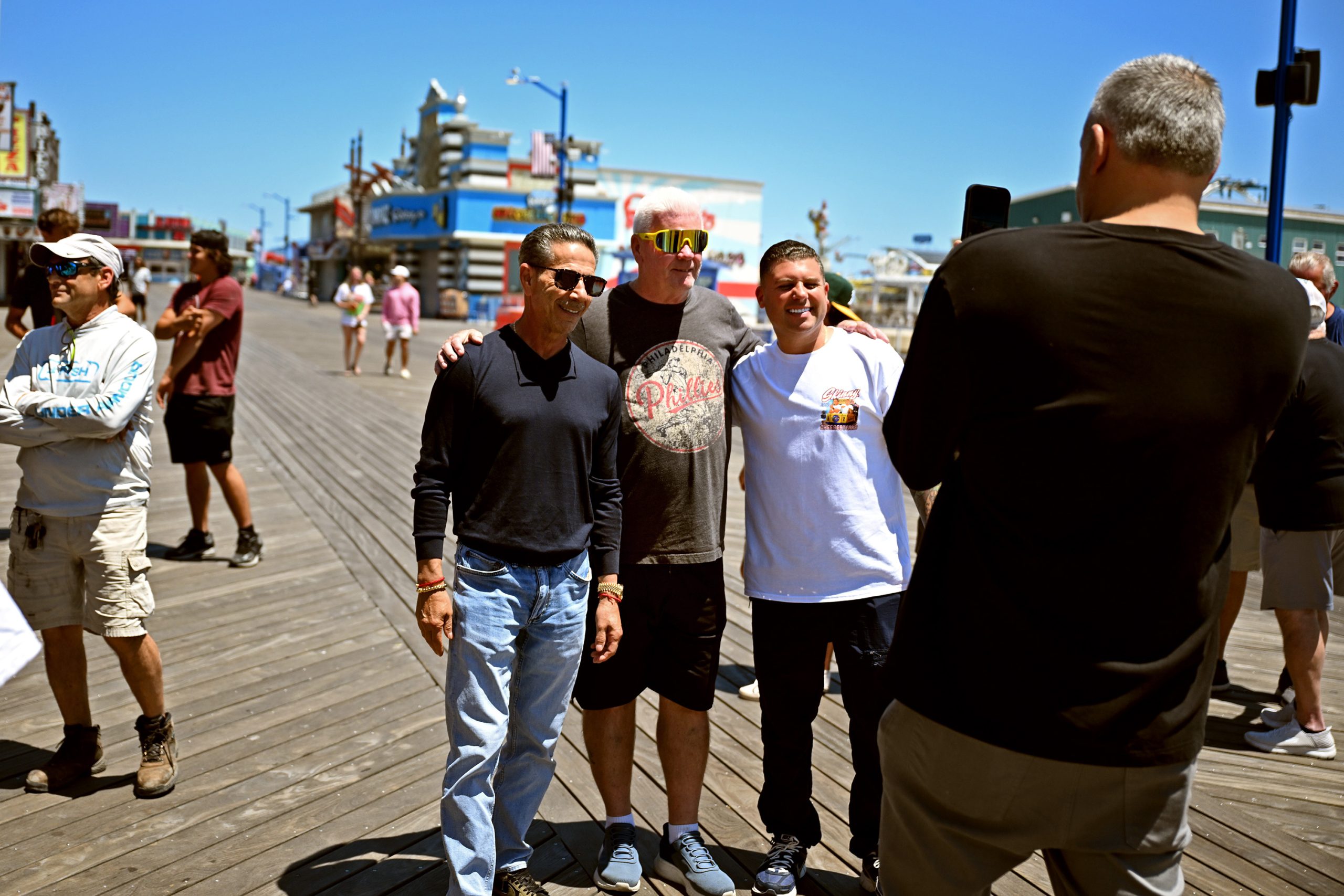
At noon on a bright June Tuesday, the scene at Skinny Joey’s Cheesesteaks & Pizza on the Wildwood boardwalk felt more like a South Philly block party than a soft opening.
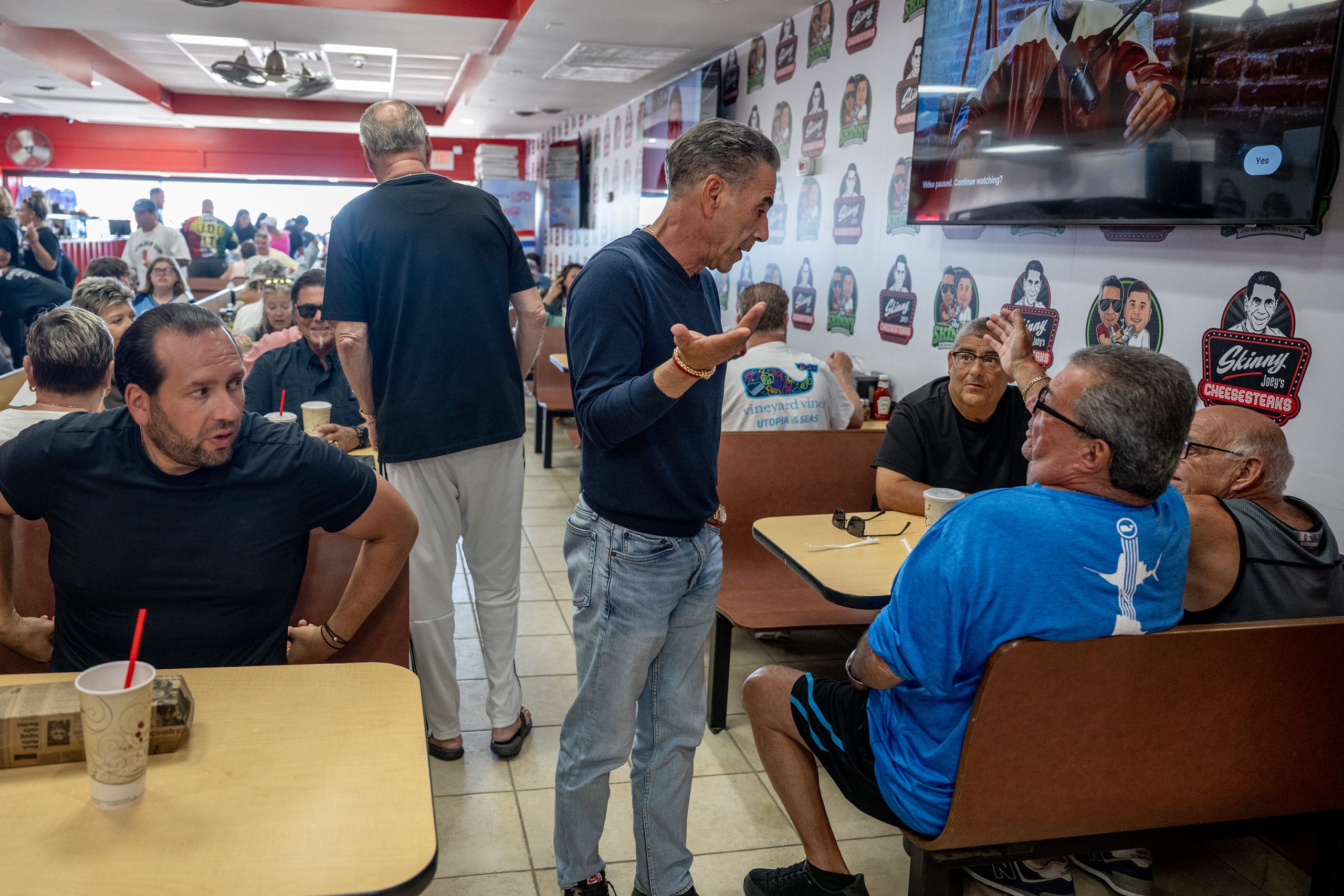
Joseph “Skinny Joey” Merlino worked the crowd at his new shop — hugging, shaking hands, posing for photos — moving easily among his friends and admirers. At 64, five years removed from the criminal justice system, the onetime alleged head of Philadelphia’s underworld is enjoying a second act that few could have predicted: cheesesteak entrepreneur, podcaster, and social-media personality.
Joseph “Skinny Joey” Merlino (left) and Joe “Lil Snuff” Perri Jr. (right) posing with a customer outside the Skinny Joey’s Cheesesteaks & Pizza shop in Wildwood.Tom Gralish / Staff Photographer
Orbiting him with a phone and a grin was Joe “Lil Snuff” Perri Jr. — 30 years his junior — Skinny Joey’s collaborator and the man who helped set him up with a new career. While customers lined up out front for steaks, slices, photos, $35 hats, and $25 T-shirts, Perri was shooting clips for social media.
Their partnership has transformed Merlino from a flashy, polarizing tabloid fixture into a flashy, polarizing Instagram-age brand. Merlino provides the mythology, while Perri supplies the algorithm.
Symbiotically, they are building an unlikely enterprise. Merlino gives Perri access, credibility, and a bigger stage. Perri gives Merlino comic relief, social-media fluency, and a way to be seen as entrepreneurial rather than simply infamous as a reputed former mob boss.
“Without me, there’s no him,” Perri said. “Without him, there’s no me. It’s just a good mix.”
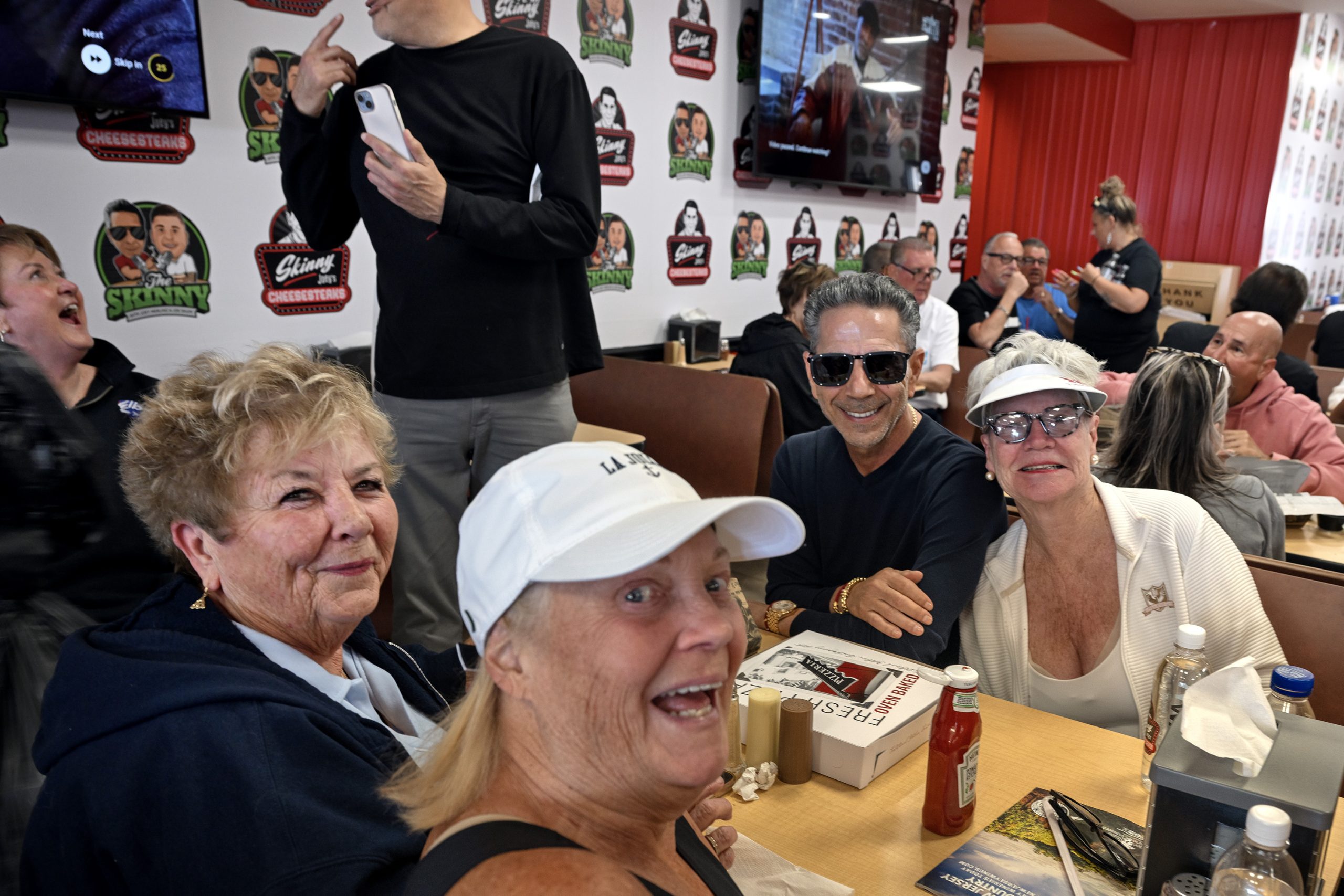
Joseph “Skinny Joey” Merlino joining customers at Skinny Joey’s in Wildwood during its soft opening on June 2. They call themselves “the Schuylkill Girls” (from left): Julie Shelton, Cindy McCullough, and Terry Landy, all of whom now live in Wildwood.Tom Gralish / Staff Photographer
A ‘mob media’ moment
George Anastasia, who covered organized crime for more than 30 years at The Inquirer and now teaches an organized-crime course at Rowan University, said Merlino’s new career fits a broader moment in mob media.
Former wiseguys, associates, historians, and fans now gather in a true-crime subculture known online as “MobTube,” where the lore is packaged into YouTube shows, Patreon feeds, podcasts, clips, and merch.
Merlino has lived the story that fuels the genre. One of Philadelphia’s most recognizable organized-crime figures, Merlino was convicted in 1990 for his role in a $352,000 armored truck robbery in 1987.
In 2001, he and six co-defendants were tried on federal racketeering charges, including three counts of murder and two of attempted murder. Merlino was acquitted on those counts, but served about 12 years on other charges, including gambling and extortion. A supervised-release violation briefly returned him to prison in 2014, and a second major racketeering case ended in 2018 with a guilty plea to a single illegal-gambling charge after a mistrial. In a separate trial in 2004, he was acquitted of the 1996 killing of Joseph Sodano, an underling in North Jersey. Merlino completed federal supervision in 2021, but he’s been banned from New Jersey casinos since 1988 and from Pennsylvania casinos since a 2016 incident at the former SugarHouse Casino.
And Merlino has made it no secret that he is different from many of the former figures who populate the MobTube genre. Unlike Sammy “The Bull” Gravano, John Alito, and Jimmy Calandra, Merlino never cooperated with prosecutors.
“He saw guys who cooperated come back and become media sensations,” Anastasia said. “And I think he got [annoyed] that these are all guys who, in his view, violated the code, and now they’re making money on that old life. He did his time as a stand-up guy. ‘So [to heck with that] — I’m going to make money, too.’ And he created this brand.”
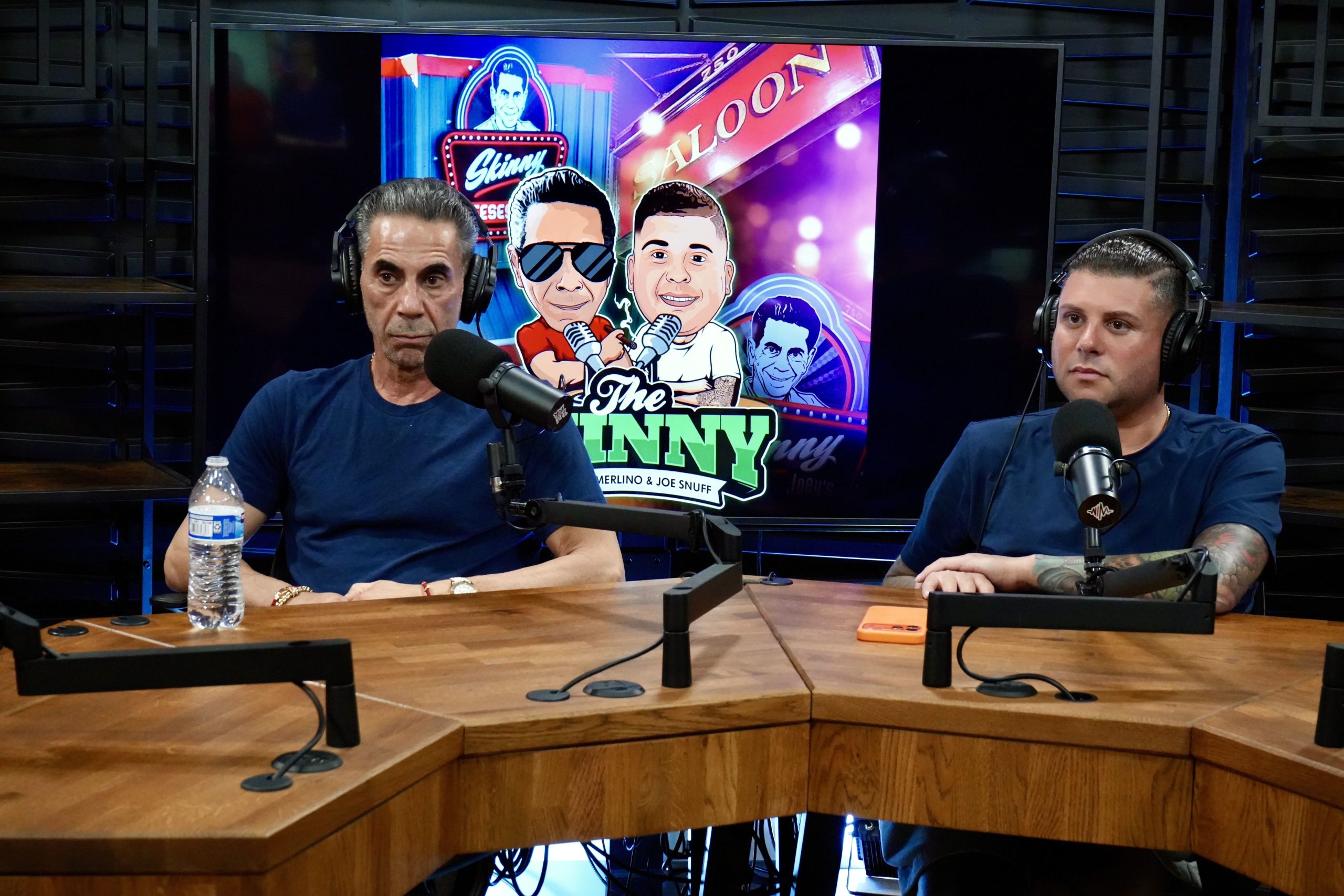
Joseph “Skinny Joey” Merlino (left) and Joe Perri Jr. on the set of “The Skinny” podcast.Courtesy of Joe Perri Jr.
Perri helped make that legible to a younger audience.
“Lil Snuff is part sycophant and part guide,” Anastasia said. “He’s the one who, in a lot of ways, sets the flow. Joey is going to be Joey, but somebody has to keep bringing him back to the point.”
The rise of Lil Snuff
Before he was Merlino’s co-host, Perri was Lil Snuff.
The nickname came from his father: As a 10-year-old, Joe Sr. turned around when a cousin was calling for a dog named Snuffy. Boom. He was Snuff. When his son was born at Methodist Hospital in 1992, Snuff became Big Snuff.
As a teenager, Lil Snuffbussedtables at Stogie Joe’s, the Saloon, and Fitzwater Cafe. At 18, he joined the stagehands union. At 21, he got a job at Mall Chevrolet in Cherry Hill. The older salesmen had relationships and repeat customers. Perri’s mentor told him that he needed a lane.
It was 2013, and social media was beginning to reshape promotion. Perri started making his own brassy, unscripted commercials. “Selling Chevys for less” became his tagline.
He also made videos about gambling and food, his two passions. He was not famous, but he was visible in the South Philly-to-South Jersey social media corridor where restaurants, sports, betting, family, and neighborhood identity blur into one feed.
At the same time, Perri said, he was abusing pills. In 2014, at 22, his parents found him a rehab center in South Florida. To make sure he got there safely, they called a family friend whose Italian restaurant in Boca Raton had recently opened:
Joey Merlino.
“My father grew up with his grandfather,” Merlino said, explaining the bond. “I grew up with his father. I’ve known him since he was born.”
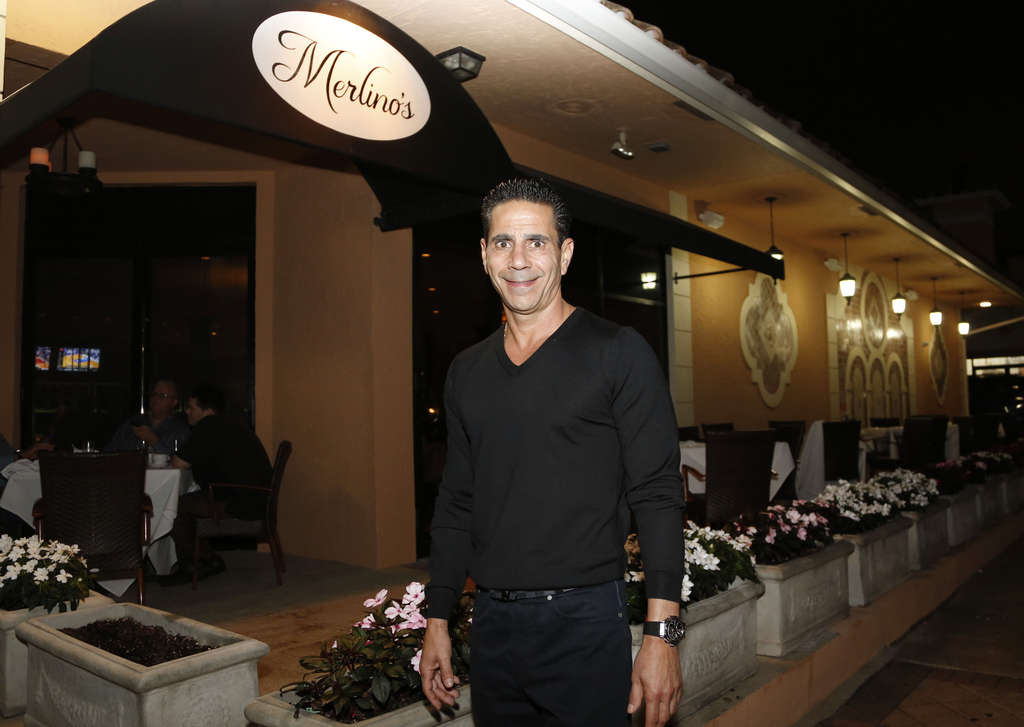
Joseph “Skinny Joey” Merlino in 2014 at the Boca Raton restaurant bearing his name.Terry Renna / For The Inquirer
Perri said it took several attempts before recovery stuck. He has been sober since Sept. 11, 2016. “I’m big with recovery,” he said. “That’s the main thing in my life. I put sobriety first and then everything after that.”
Merlino’s — where Merlino was maitre d’ because his legal situation then precluded ownership — closed in 2016, just before the feds arrested Merlino at his home in Boca in the lead-up to his second racketeering case. “If I didn’t have this trouble, it would still be open,” Merlino said earlier this month.
After Merlino attained freedom in July 2021, producers called with movie, television, and book deals. Merlino turned them all down. “Nothing seemed right,” Merlino said. Someone brought up the idea of a podcast.
“I didn’t even know what that was,” Merlino said.
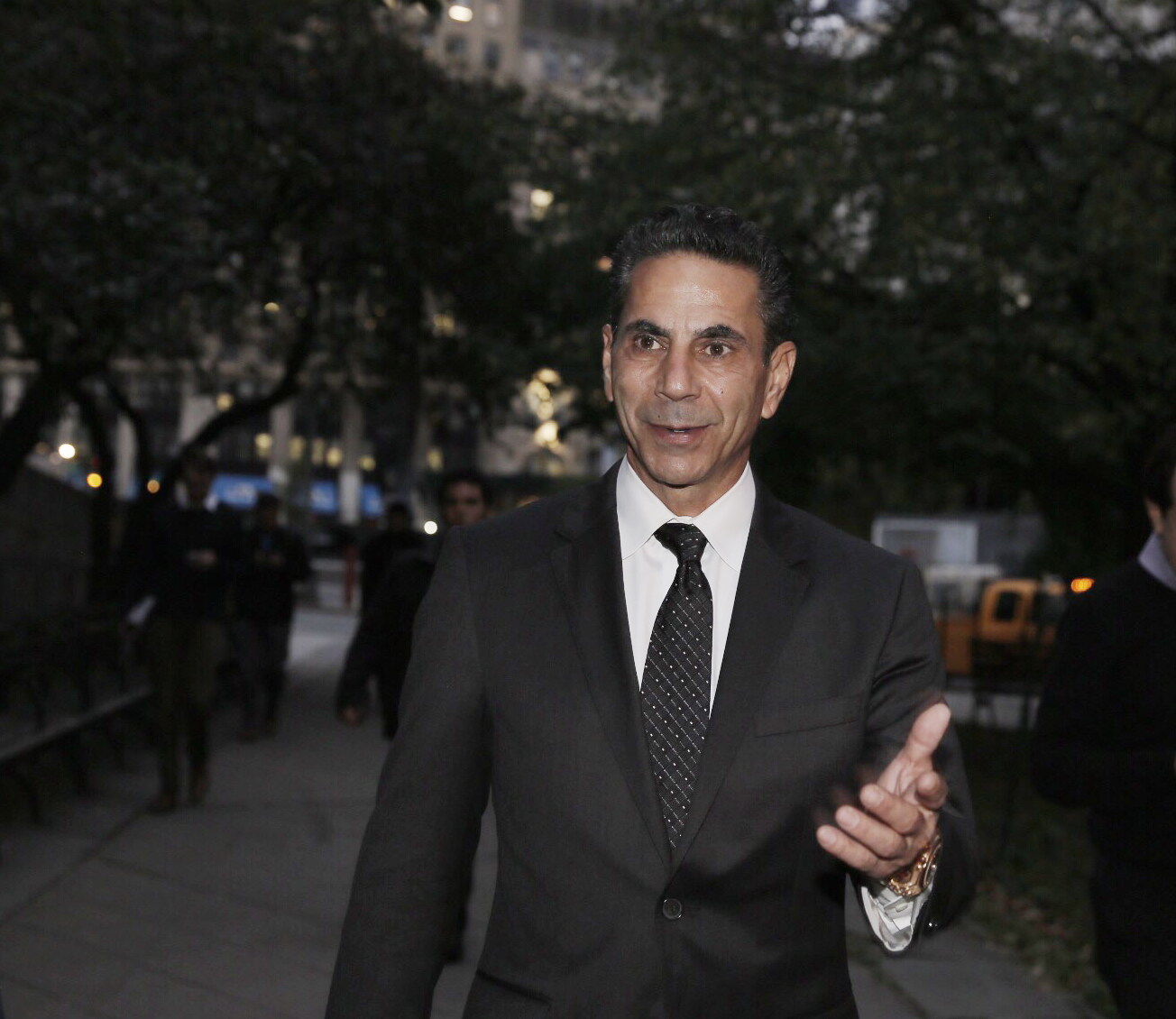
Joseph “Skinny Joey” Merlino leaving the federal courthouse in Manhattan after being sentenced on Oct. 17, 2018.Elizabeth Robertson / Staff Photographer
His friend Raymond “Wags” Wagner explained the concept and suggested a loose format built around food and sports betting. Actor Kevin Connolly of Entourage fame, who was involved early as a producer, told Merlino that he needed a co-host.
“They said, ‘Who would you want?’” Perri said. “They were sending him people, and he was like, ‘I’m not doing nothing with these people.’”
Then Ray Wags suggested Perri.
“Joey was like, ‘100 percent. Get him on the phone,’” Perri said. “Kevin Connolly said, ‘Send me your videos.’ I sent him my videos, and he said, ‘You’re the guy.’ The rest was history.”
The world of ‘MobTube’
Merlino and Perri launched the video podcast in 2023. Viewers are not just watching Merlino talk about the old life. They see him bust Perri’s chops about eating too much and mock his parlays. They get gambling tips, watch them interview athletes and celebrities — all part of a South Philly generational comedy.
Perri describes it in family terms. “My dad’s my dad, but he’s also my best friend, too,” Perri said. “We gamble together. We go out together. We have fun together. So they see me and Joey as that, and they can’t figure out how we mix so good.”
“He’s good,” Merlino said. “I’m old, he’s young. He talks good, he’s funny. He’s a pain in the balls, but it’s a good fit.”
They began The Skinny podcast on YouTube, but now focus more on Patreon, where the content is unfiltered. And better monetized. Perri says TheSkinny has 1,600 Patreon subscribers paying $15.95 a month. He said their social-media pages combined average 30 million views a month.
Perri’s wife, Danielle, handles bookings and schedules. “I produce,” Perri said. “I cut the clips. I do everything. It’s me and Joey. Two-man show.”
A wider audience
When they started, Perri was still selling cars at Mall Chevrolet. But the now-shuttered dealership got tired of people showing up hoping to see Merlino instead of test-driving a Suburban.
Perri quit. The show grew.Merlino’s reinvention has coincided with a broader shift in the gambling world. Legal sportsbooks, now ubiquitous on television and online, have largely supplanted the corner bookmaker, turning an activity once associated with organized crime into a mainstream consumer business. Guests span sports, hip-hop, gambling, and entertainment, including Wallo267, Fat Joe, Ric Flair, and Bernard Hopkins.
Each booking widened his audience, and Merlino was being absorbed into a broader celebrity ecosystem.
Last October, Netflix released Mob War: Philadelphia vs. The Mafia, a docuseries revisiting the violent 1990s power struggle between John Stanfa and Merlino’s younger faction. It steered even more viewers to Merlino and Perri’s world.
‘Skinny Joey,’ wit’
Then came the cheesesteaks.
One night, Perri, Merlino, and friends were playing poker. Merlino wanted cheesesteaks. Perri said he’d make them.
“He’s like, ‘You can’t make cheesesteaks,’” Perri said. “I said, ‘Are you nuts? I’ve been making them my whole life.’”
Perri cooked some. “He was like, ‘This is the best f— cheesesteak ever,’” Perri said. “He said, ‘Let’s open up a cheesesteak place.’ I said, ‘All right. Call it Skinny Joey’s Cheesesteaks.’ And that was it.”
The first shop opened in March 2025 at 3020 S. Broad St., near the sports complex. From the start, Skinny Joey’s was more than a sandwich shop. It was a set. The shop leaned into Merlino’s notoriety; the sandwiches are wrapped in a collage of newspaper articles about his past.
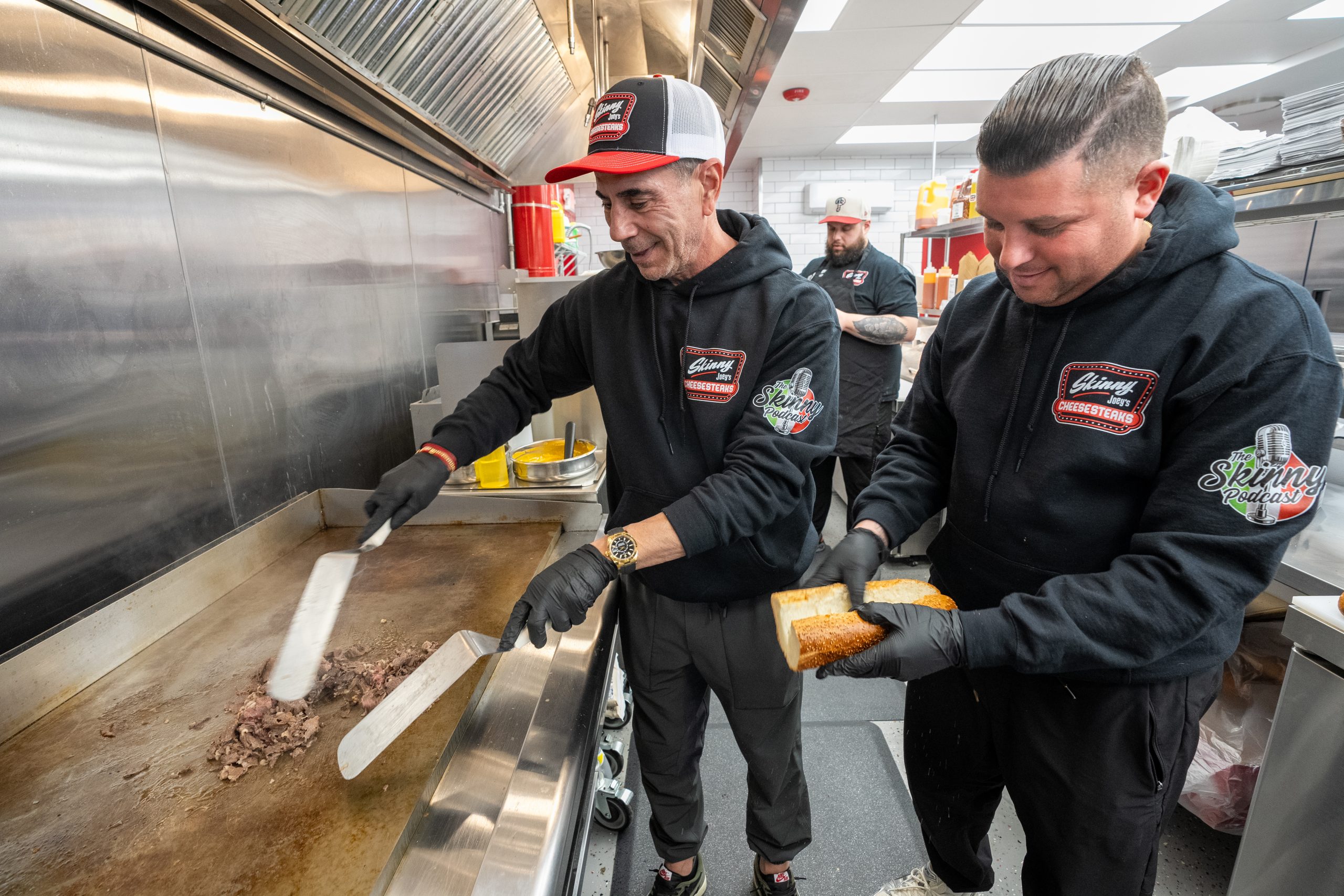
Joseph “Skinny Joey” Merlino (left) working the grill beside Joe “Lil Snuff” Perri Jr. at the Skinny Joey’s Cheesesteaks in Philadelphia at its opening in March 2025.Jessica Griffin / Staff Photographer
Celebrities showed up: Jason Kelce, Landon Dickerson, Mack Wilson. A customer eating a cheesesteak was good content. A recognizable person eating one on camera was better.
The restaurant also became a magnet for the kind of drama that fuels digital engagement: online beef. Podcaster Gene Borrello, a former Bonnano crime family associate and Merlino antagonist, weighed in last year on an apparent feud between Skinny Joey’s camp and Frank Olivieri of Pat’s King of Steaks. Merlino and Perri had taken issue with a video posted by Olivieri — whose great-uncle invented the steak sandwich — in which he chided shops that chop the meat on the grill. Like most online food feuds, this seems to have subsided.
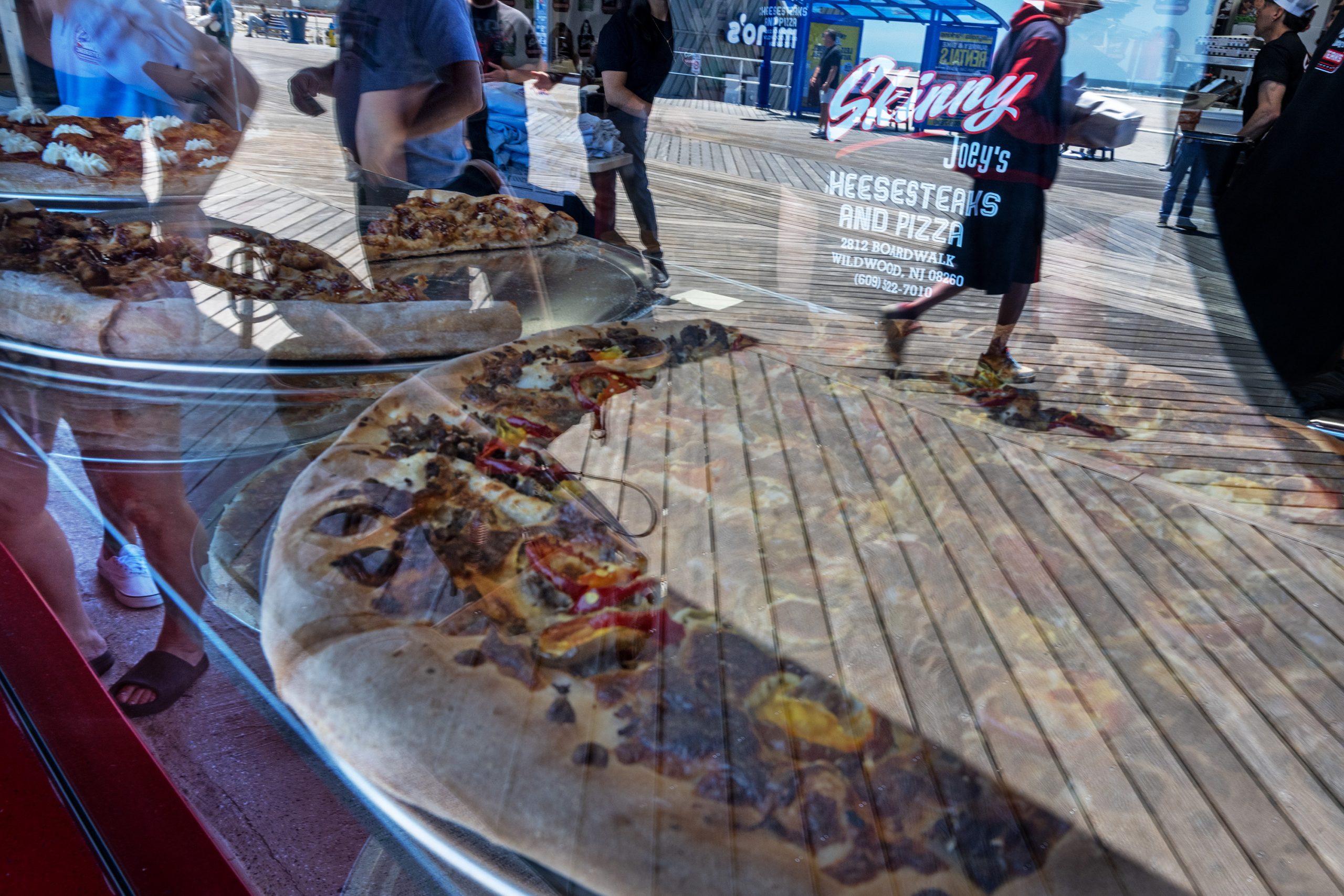
Then came the deal for Wildwood, where Skinny Joey’s replaced Joe’s Pizzeria, which had been on the boardwalk at Magnolia Avenue for 15 years. There, Skinny Joey’s added pizza and stromboli, which are not sold at the South Philadelphia location.
Reflections in the pizza display case on the boardwalk at Skinny Joey’s Cheesesteaks & Pizza in Wildwood.Tom Gralish / Staff Photographer
The pizza recipe comes from Vito’s on Haddonfield Berlin Road in Cherry Hill, and the stromboli from Pizza Shack at 15th and Oregon in South Philadelphia, both owned by Skinny Joey’s business partners Stephen Casasanto and John Fioravanti, whom Merlino also described as longtime friends.
More locations are planned. Perri said a Boothwyn shop is expected around Sept. 1, and several others are in the pipeline.
Bypassing the gatekeepers
Merlino is an extreme case of a recent phenomenon. People with complicated histories — criminal, scandalous, controversial, or simply overexposed — no longer need traditional gatekeepers to reintroduce themselves. They can speak directly to followers and monetize the attention.
Perri is not a journalist, of course, or a publicist, exactly. He is not merely a manager, producer, or sidekick. He is something in between — a new kind of local media operator.
He knows the scene, and how to make content feel unscripted even when the business behind it is deliberate. He is close enough to Merlino to bust his chops and deferential enough to preserve the hierarchy. He can translate Merlino to younger audiences without making him seem managed.
Perri softens Merlino without sanding him down. Merlino still curses, rants, and mocks rivals. Anyone they disagree with is a “bedbug.”
Joseph “Skinny Joey” Merlino greets a table of customers at Skinny Joey’s Cheesesteaks & Pizza in Wildwood.Tom Gralish / Staff Photographer
“At the end of the day, Joey isn’t going to change who he is for anybody,” Perri said. “If he can’t talk the way he wants to talk, what’s the point?”
That is part of the appeal and part of the discomfort. The audience knows Merlino’s history. They may see him as funny, defiant, loyal, misunderstood, or simply entertaining.
“There’s a segment of the American population that has always been fascinated with the outlaw: Billy the Kid, Jesse James, Don Corleone, Al Capone,” Anastasia said. “What the internet has provided is: Here are these guys in their own words. Are they being genuine? I don’t know. You can say that about any personality. But here’s a look at them without any filter.”
The filter used to be people like Anastasia.
“I was, in a lot of ways, the middleman between the people who were interested in this and the guys who were doing it,” he said. “And people who are interested in this don’t need the middleman anymore. They just go online and listen to whoever they want to listen to.”
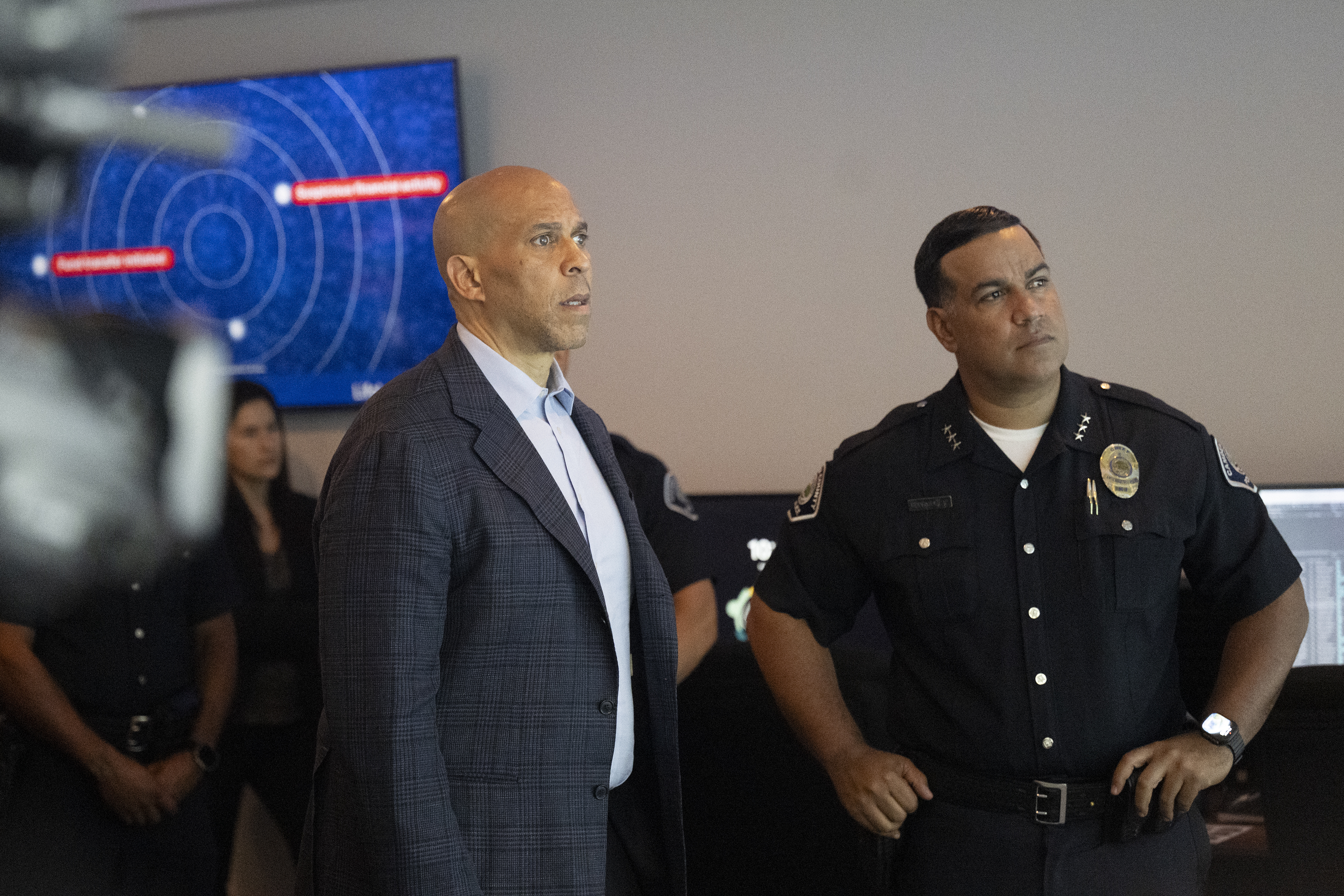
U.S. Sen. Cory Booker stood Friday in the basement of the Camden County Police Department headquarters in downtown Camden, surrounded by floor-to-ceiling video screens displaying a lifelike training scenario: a distraught man teetering near the edge of a bridge, threatening to jump.
A young officer stepped forward and addressed the digital figure: “Just step back from the edge,” the officer said, “and come talk to me.”
The immersive simulation is part of a system the department uses to train officers to respond to volatile encounters without resorting to force — one piece of a growing suite of technology it has embraced over the last decade. Department officials credit those tools, along with broader policing reforms and community-engagement efforts, with helping reduce crime in a city once regarded as among the nation’s most dangerous.
Today, Camden’s homicide total sits at a four-decade low, while robberies, sexual assaults, and other violent crimes have also declined, according to police data.
Booker toured the department Friday to see those tools firsthand as he promotes federal legislation designed to help other law enforcement agencies adopt similar technology.
The proposal, known as the Violent Incident Clearance and Technological Investigative Methods Act, or VICTIM Act, would establish a Department of Justice grant program to help police departments increase staffing, purchase investigative technology, and train personnel to use it. Booker, a New Jersey Democrat, reintroduced the bipartisan legislation in March 2025 alongside Sen. John Kennedy, a Louisiana Republican.
The measure comes as violent crime has fallen sharply in many cities across the country in recent years, a trend Booker said lawmakers should sustain through continued investment.
“What they’re doing here is so innovative and cutting edge,” Booker said after the tour, pointing to Camden as an example for other departments to follow.
Inside the Camden County Police Department’s Real Time Tactical Operations Intelligence Center, analysts monitor live camera feeds, 911 calls, and data streams from license plate readers and other sources. The center provides officers with real-time information during emergencies, helps investigators track suspects, and identifies crime patterns throughout the city, said Chief Gabriel Rodriguez.
The intelligence center works in tandem with the department’s drone unit.
U.S. Sen. Cory Booker, joined by city officials, watches a drone demonstration atop the Camden County Police Department on June 12, 2026.Jose F. Moreno / Staff Photographer
Rodriguez said those tools, combined with training programs such as the simulation Booker observed Friday, have helped drive crime to new lows.
The city recorded 12 homicides in 2025, down from 17 the previous year and the fewest since 1985, according to department data. Violent crime also fell 6% last year, while robberies declined 12% and sexual assaults dropped 32%.
Camden has spent more than a decade reshaping its approach to policing, adding new technologies and investigative tools as funding became available. Booker said departments across the country cannot afford to stop investing in technology as criminal investigations become increasingly reliant on digital tools and real-time information.
“Technology is moving rapidly,” he said. “We’ve got to stay ahead of the curve, and that’s going to take constant investment.”
Several local officials joined Booker on the tour, including Camden Mayor Victor Carstarphen and Camden County Commissioner Director Louis Cappelli Jr., who highlighted the city’s crime reductions and broader public-safety gains as they walked through police headquarters.
Even so, police who have adopted technologies such as automated license plate readers and large-scale camera networks have drawn scrutiny from civil-liberties groups nationwide. And on Friday, Rodriguez acknowledged that some residents are skeptical of the department’s use of technology.
But he said many have also come to view it as a benefit, pointing to faster emergency response times and the department’s efforts to address quality-of-life concerns such as illegal dumping.
Some residents, Rodriguez said, are even curious enough to tour the facility themselves.
“A lot of communities often feel like they have too much of the policing they don’t want and not the policing that they need,” Booker added. “Standing here in Camden, where we’re finding ways … to make tremendous progress … the key for me is making sure that we can continue to get better and better as a state.
“Overall,” he said, “crime is going down in New Jersey. But we want to continue that momentum and not just see crime rates go down, but community strength and community partnerships go up.”
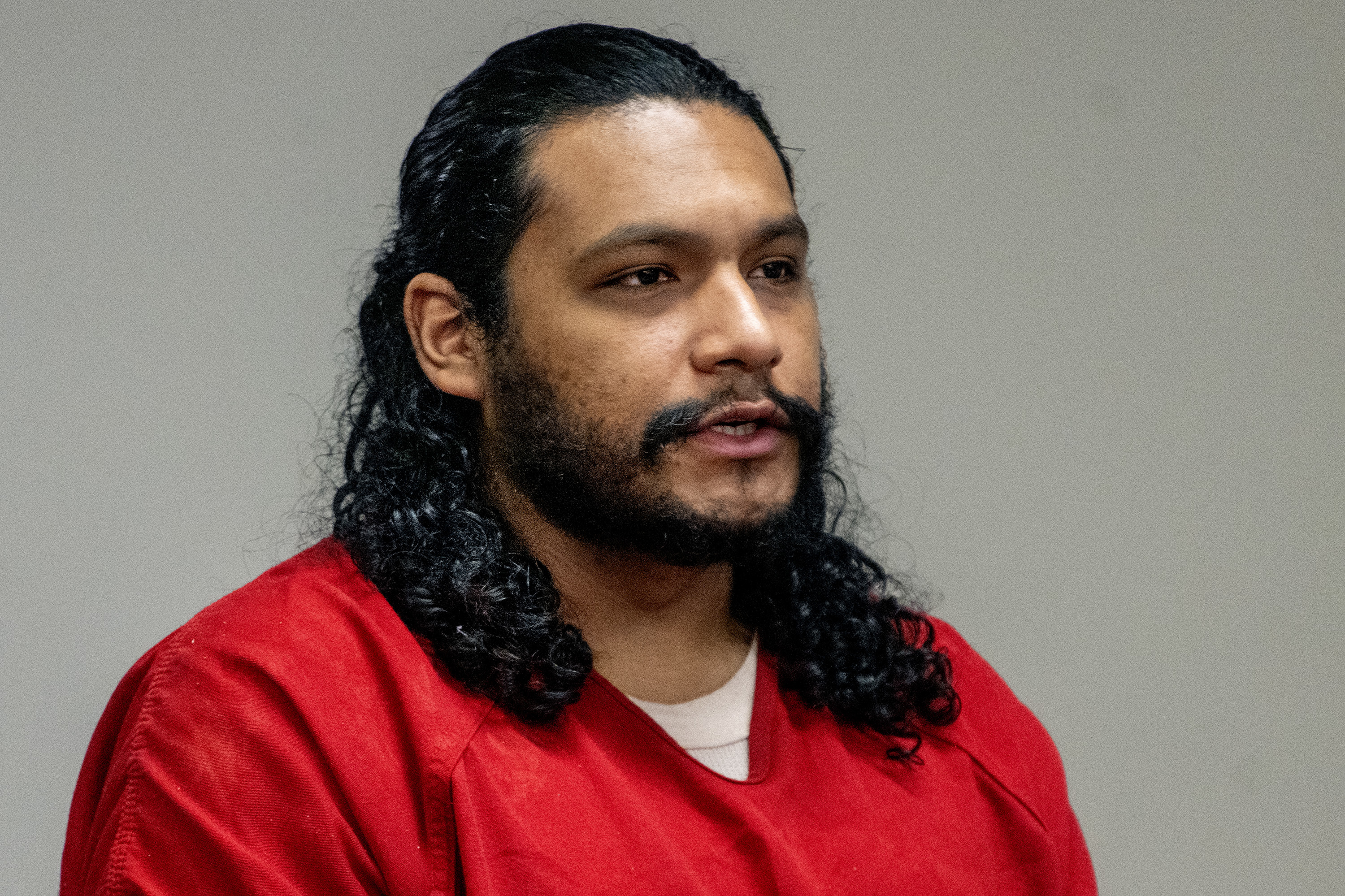
Cristian Custodio-Aquino, 28, of Portland, was charged in the stabbing death of Michael Anthony, a well-liked South Jersey veterinarian.
The body of Anthony, 45, was discovered on the front lawn of his home on Sharrowvale Road early on a December morning, prosecutors said.
Anthony had been stabbed in the body, neck, and head. Detectives soon linked the killing to Custodio-Aquino using DNA from a pair of prescription eyeglasses he had left at the scene and by tracking his vehicle entering and leaving the neighborhood.
He was arrested in California and has since been incarcerated in a New Jersey correctional facility.
With his guilty plea, Custodio-Aquino is expected to be sentenced to 30 years in state prison without the possibility of parole, according to the Camden County Prosecutor’s Office.
Grace C. MacAulay, the county prosecutor, called Anthony’s death tragic, saying it had deeply affected the Camden County community.
“This guilty plea represents a significant step toward justice and ensures the defendant will be held accountable for his actions,” she said in a statement.
Custodio-Aquino’s defense lawyer had said there was little evidence tying him to the crime, but prosecutors pieced together what they said was a compelling case.
In addition to the eyeglasses investigators linked to the Peru native, prosecutors were able to identify Custodio-Aquino’s black Nissan Altima entering Anthony’s neighborhood on the morning of the Dec. 10 killing, and later leaving the scene.
After Anthony’s murder, prosecutors said, Custodio-Aquino drove to Fresno, Calif., where he stayed with a friend. He also wiped his phone and attempted to sell his vehicle. Investigators later recovered samples of Anthony’s blood from inside the car.
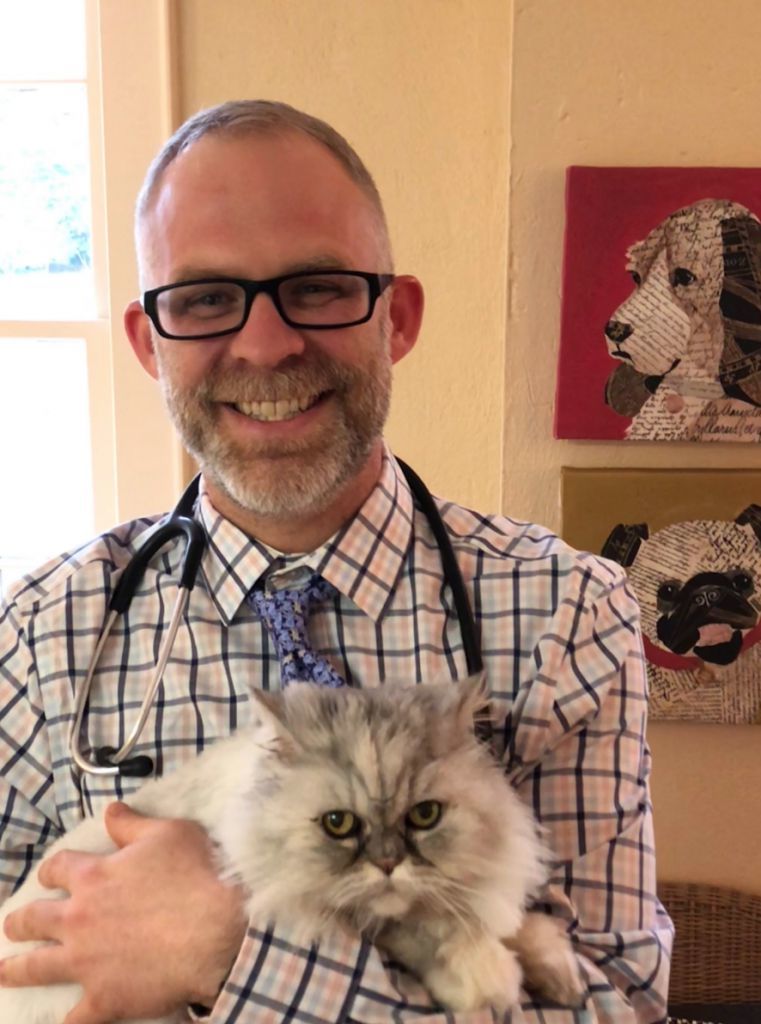
Michael Anthony, 45, a South Jersey veterinarian, was found dead outside his home in Cherry Hill.Courtesy of Haddon Vet
All the while, prosecutors said, Custodio-Aquino searched the internet for news stories that mentioned Anthony’s killing and his memorial service.
Investigators eventually learned that Custodio-Aquino had a previous relationship with Anthony’s partner, Kyle Bartsch, and killed Anthony out of jealousy. Custodio-Aquino and Bartsch had lived together in Haddon Township but separated in 2021 after a domestic dispute, prosecutors said.
Not long before Anthony’s murder, he and Bartsch had communicated with Custodio-Aquino and knew that he was returning to the East Coast, according to prosecutors.
The death of Anthony, a divorced father of two, rattled neighbors in the Barclay Farm section of Cherry Hill.
His body was discovered facedown on the front lawn by his 16-year-old son, who had gone to look for his father after he did not return from an early morning walk, prosecutors said.
Relatives described Anthony as devoted to his family and two sons, and after his death, tributes poured in from friends, neighbors, and people whose pets he treated at his Haddon Heights veterinary clinic.
Bartsch said in an interview last year that he was devastated by the “sudden and senseless” loss of his partner. He described Anthony, his partner of three years, as “an exceptional person, universally loved by those who knew him.”
When Bucks County-raised pop star Pink began the Tony Awards on Sunday evening, she started somewhere she would be comfortable on stage — in the air.
Suspended from the rafters, she joked about feeling underqualified to host the awards ceremony because she’s never appeared on Broadway. But actor Neil Patrick Harris assured her that she would excel as her entertaining, acrobatic self: “Listen you’re Pink, you’re singular, you’re the best.”
Then she went on to belt “Lady Marmalade” with some of Broadway’s best performers and fit right in.
The night of revelry at Radio City Music Hall celebrated the biggest theater shows with major winners including Death of a Salesman, Schmigadoon!, Ragtime, The Lost Boys, and Liberation. The latter won for best play, recognizing playwright Bess Wohl, who became the fourth woman in Tony history to win that award. (Philly audiences will get a chance to see the show this fall when Liberation runs at Philadelphia Theatre Company in October)
The biggest local highlight was director Bill Rauch, who calls New York home now but spent part of his childhood in Haddonfield, where he participated in productions at Haddonfield Memorial High School. Rauch and his codirector, Zhailon Levingston, won the Tony Award for best direction of a musical for Cats: The Jellicle Ball, a revival of Andrew Lloyd Webber’s 1982 feline musical, set in New York’s queer ballroom scene.
“Ballroom is about audacity and disruption, in the words of Junior LaBeija, it do take nerve,” said Levingston when the pair accepted the award.
“Finally, ballroom is about chosen family,” said Rauch, getting emotional. “We chose each other, my husband, Christopher Liam Moore, 42 years ago, and you and our kids, Liam and Xava, are at the heart of anything I do that has any value in this world.”
Rauch, who leads New York’s Perelman Performing Arts Center, previously directed the Tony Award-winning production All the Way, about Lyndon B. Johnson during the civil rights era. That production received Tony Awards for best play and best lead actor in a play (spotlighting Bryan Cranston), in 2014.
Rauch credits his high school teacher and mentor Jack Shaw with inspiring him to pursue theater.
“I did six shows directed by Jack Shaw, and they really changed my life,” Rauch told 6abc. “I learned by example what a great director could be, and it made me want to become a director.”
On Sunday night, Shaw hosted a Tony Awards watch party at his home in Voorhees, where he and a group of about 15 of Rauch’s old theater classmates jumped and screamed as they saw him accept the award. The revered drama teacher is still close with dozens of his former students, who reunite often to celebrate Shaw’s milestone birthdays and have created a scholarship at Haddonfield Memorial High School to fund drama students in Shaw’s honor.
One of Shaw’s favorite memories of Rauch was during a production of Shakespeare’s Twelfth Night, when the teenager powered through his Malvolio monologue while in the middle of an allergic reaction.
“The poor guy literally ended up on the floor of the stage, going through a long speech [as] his neck and back cramped up,” said Shaw. “Unbelievably, he kept going — the ultimate ‘show must go on’ spirit. He delivered the speech from his knees, still in character, and the audience had no idea …[then] we took him offstage and put him in an ambulance.”
A proud teacher, Shaw was “choked up” seeing Rauch receive the Tony recognition and praised his former student’s “remarkable need to bring theater to lots of people.”
“Theater and the drama club was a place where anybody could come and be accepted. To my way of thinking, that’s my most happy part, and Bill, as a director, has had the same kind of philosophy,” Shaw said.
Cats: The Jellicle Ball was nominated for nine awards and took home three, including best choreography and best costume design of a musical, which went to Qween Jean (who also designed costumes for Liberation). Qween Jean made history becoming the first transgender person to win a Tony Award.
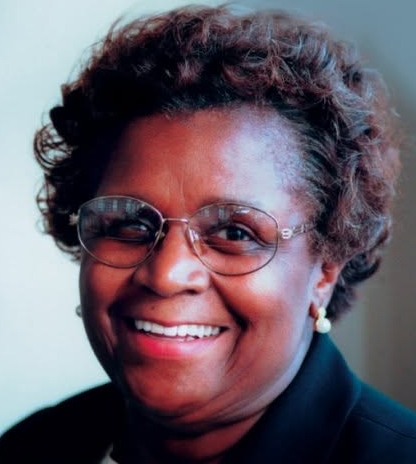
Jackie Love, 83, of Deptford Township, longtime social justice activist, Black political pioneer, former council member and the second Black female deputy mayor of Deptford Township, former director of what is now the New Jersey Division of Disability Services, New Jersey Elected Officials Hall of Famer, mentor, and volunteer, died Friday, May 29, of age-associated decline at Shady Lane Nursing Home in Clarksboro, Gloucester County.
Born in Philadelphia, Mrs. Love moved to Deptford Township when she was 13. She was reared by her grandmother, earned an associate’s degree in business administration at Camden County College in 1972, and served in government leadership roles for Deptford Township, Gloucester County, and New Jersey for four decades until her retirement in 2009.
“Her caring spirit and willingness to help her community is a true example of a servant leader,” a former colleague said on Facebook.
Mrs. Love was hired by Gloucester County officials in the 1970s to coordinate employment training programs and later to prevent and eliminate disability discrimination. She was the first director of the old Gloucester County Office for the Disabled in the 1980s and later was director of the Gloucester County Disabled Persons Advisory Commission.
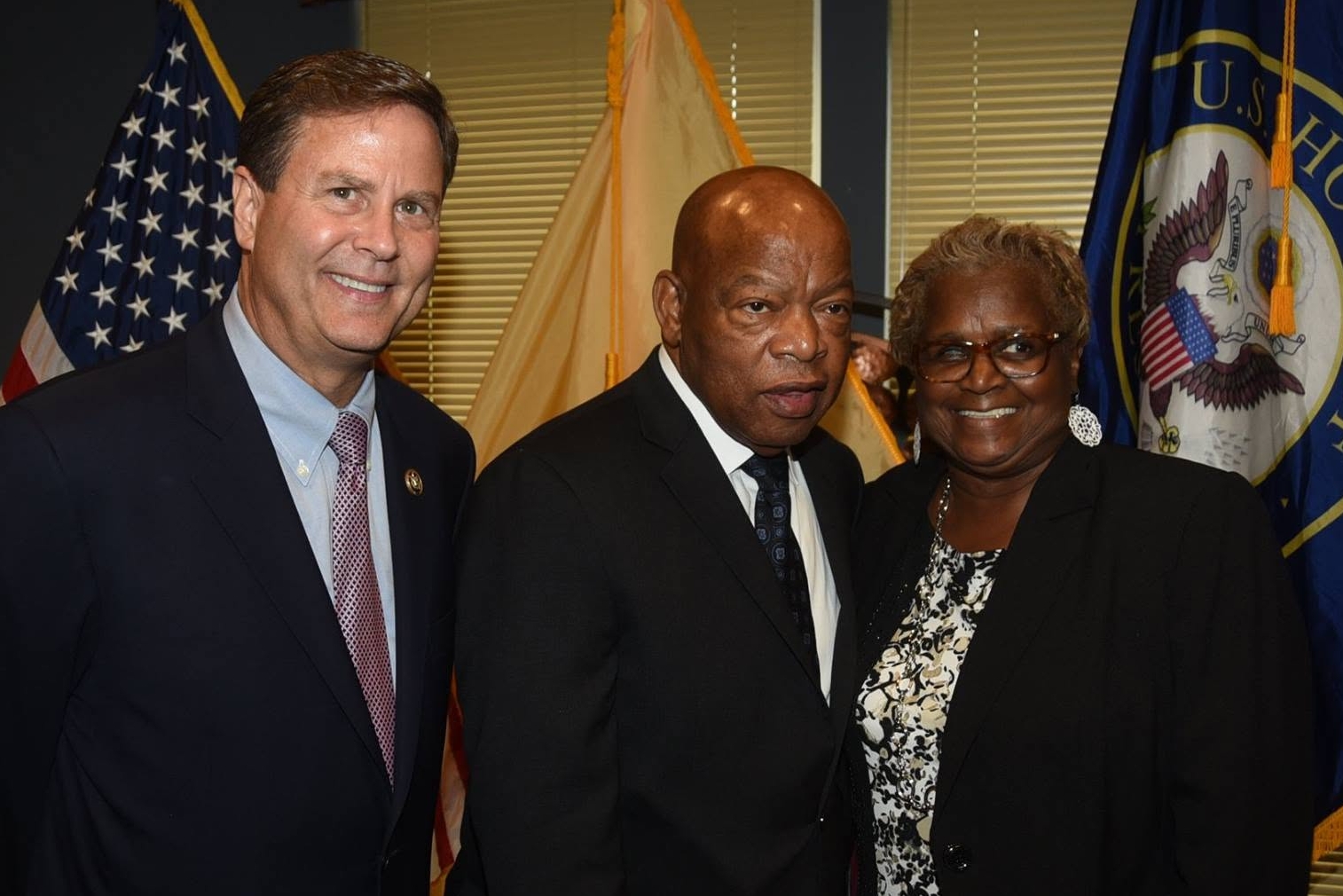
Mrs. Love stands with U.S. Reps. Donald Norcross (left) and John Lewis.Courtesy of the family
She became director at the old New Jersey State Office for Disability, now the New Jersey Division of Disability Services, in the 1990s and championed the installation of sidewalk ramps, curb cuts, and other improvements throughout the state. “We wanted to start making sure that we were accessible,” she told Front Runner New Jersey in 2025. “That’s a highlight of my life.”
Mrs. Love first ran for Deptford Township Council as a Democrat in 1989. She received more votes than any of the other nine candidates, routinely collaborated with members of both parties, colleagues said, and became deputy mayor in 1996.
“When Jackie was on council and she walked into a room, everybody knew who Jackie Love was,” Deptford Township Mayor Paul Medany told The Inquirer in 2015. “She’s known all over the state.”
As Deptford council member and deputy mayor, Mrs. Love focused on reducing juvenile crime and lobbied for sound barriers along the New Jersey Turnpike, lower speed limits on busy township roads, responsible school budgets, improvements to animal waste disposal procedures, and upgraded vendor code guidelines. In 2015, Deptford Township officials renamed Church Street Park as the Jackie Love Community Park.
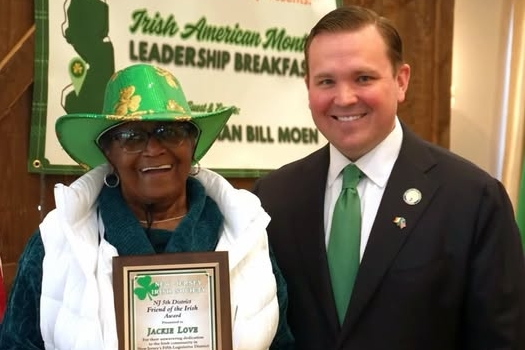
Mrs. Love stands with state Assemblyman Bill Moen in 2025.New Jersey Irish Society
“To see the future politicians and others out there playing and getting involved is another highlight of my life,” she told Front Runner New Jersey about the park.
In 2005, the editorial board for the Courier-Post called Mrs. Love “loyal, hardworking, and a team player.” In a Facebook tribute, U.S. Rep. Donald Norcross (D., N.J.) said: “Jacquelyn Love was a force for good in Deptford for generations. She paved the way for others as a Black female deputy mayor … and long remained a champion for civil rights, faith, the disabled, and many more throughout her life.”
Mrs. Love also served as a commissioner for the Delaware River Port Authority. She was active with the Gloucester County Minority Coalition, the Gloucester County College advisory committee on diversity and civility, and other groups.
She recruited volunteer poll workers and was a delegate for Bill Clinton at the 1992 Democratic National Convention in New York. In the 1970s, she traveled the country with civil rights leader Leon Sullivan and helped organize his Opportunities Industrialization Centers of America.
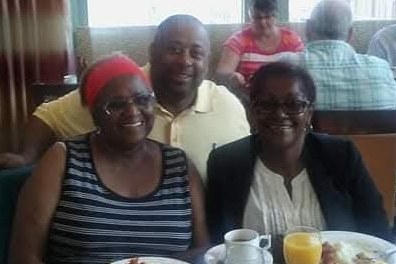
Mrs. Love (left) enjoyed time with her family.Courtesy of the family
She was named the 1987 Woman of the Year by the Gloucester County chapter of the NAACP, honored in 2005 by the Gloucester County Human Relations Commission, and inducted into the New Jersey Elected Officials Hall of Fame in 2010. In March, her achievements were recognized by the New Jersey Irish Society.
Mrs. Love mentored dozens of colleagues and friends, conferred frequently with Philadelphia Mayor Cherelle L. Parker, and volunteered at Mount Zion Wesley United Methodist Church and for the United Way. On Facebook, former colleagues called her “a once-in-a-lifetime type of leader” and “one of the most dedicated public officials I have ever had the honor of working with.”
Jacquelyn Williams was born Sept. 10, 1942. She dropped out of Woodbury High School at 17, earned her General Educational Development certificate later, and worked at first as a counselor at Ancora Psychiatric Hospital in Hammonton.
She married Arnold Love in 1972, and together they reared her daughter, Wanda, and their son, Wayne. Her husband died in 1985.
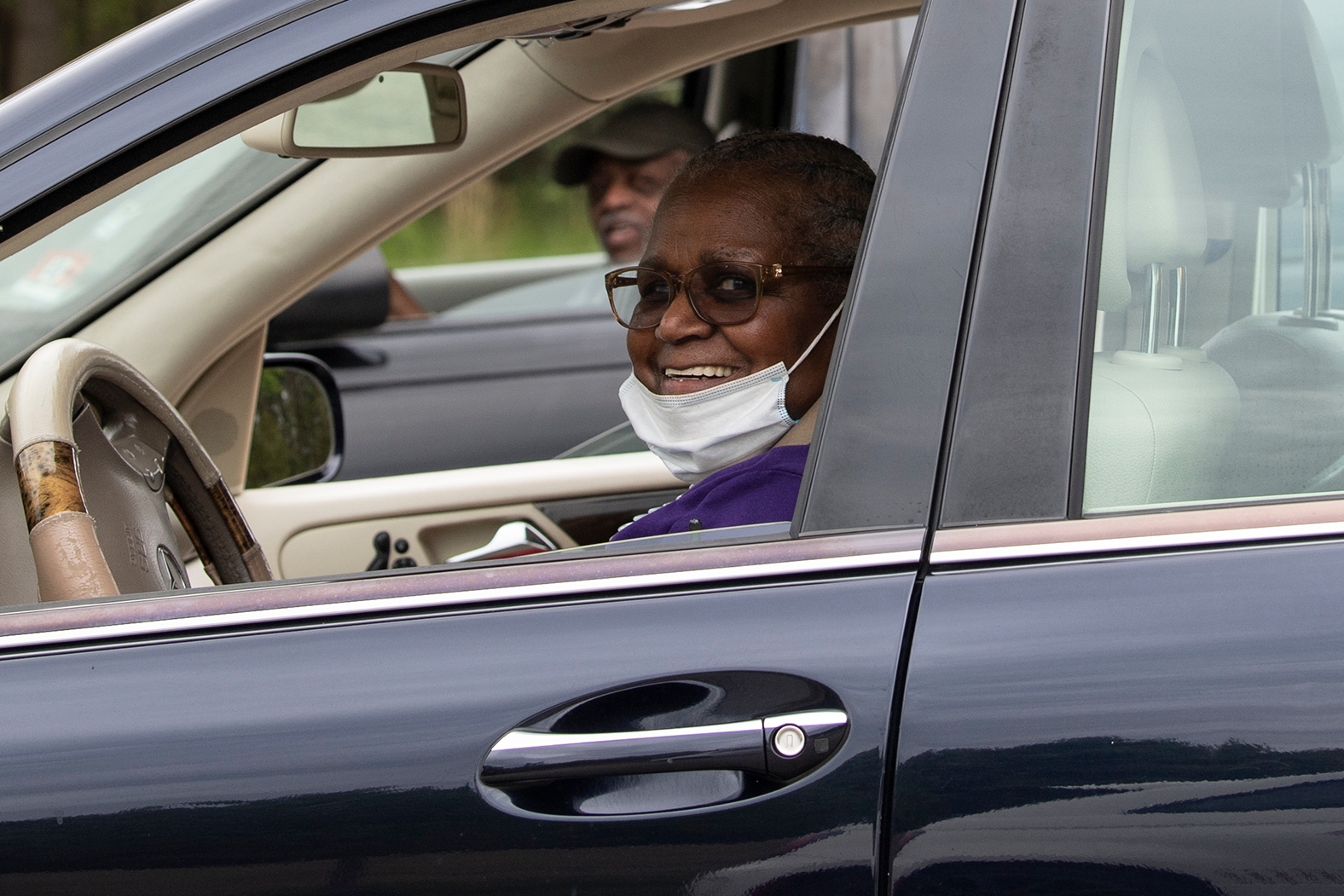
Mrs. Love participated in this 2020 drive-by salute to a friend’s 60th wedding anniversary. Jose F. Moreno / Staff Photographer
Friendly and classy, friends said, Mrs. Love wore memorable hats and enjoyed shopping at local Amish markets. She visited Amish friends in Lancaster when she was young, took classes at what are now Rowan and Rutgers Universities, and lived in Jericho for decades.
Friends called her a “cornerstone of this neighborhood” and a “wonderful down-to-earth lady.” One friend said: “Jackie set the standard for leadership and dedication to her family, faith, friends, and public service.”
Her son said: “She showed love to so many people.”
In addition to her children, Mrs. Love is survived by four grandchildren, four great-grandchildren, a sister, and other relatives.
Visitation with the family is to be from 8 to 10 a.m. Friday, June 12, at Gloucester County Community Church, 359 Chapel Heights Rd., Sewell, N.J. 08080. A service is to follow.
Friends called Mrs. Love a “cornerstone of this neighborhood.”Courtesy of the family
Five years later, the board debated whether the course should be dropped as a requirement in light of budget problems in South Jersey’s largest school system.
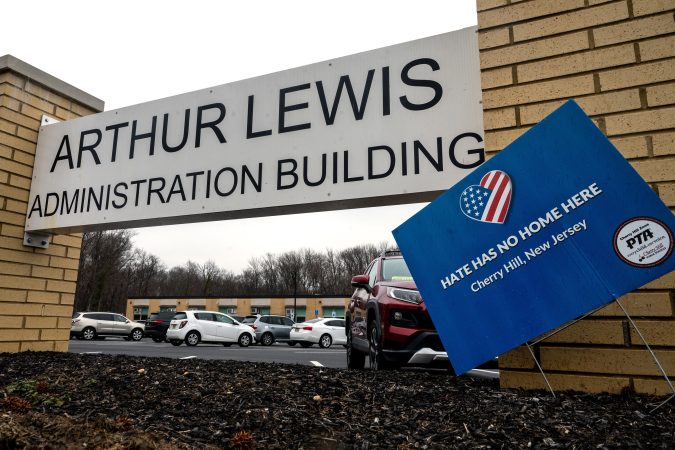
And while officials have assured the community that the course will remain part of the curriculum, the debate highlights the difficult choices that districts are facing during a tough budget year. In Cherry Hill, the board approved a budget that will cut 70 positions, increase class sizes, and raise property taxes to eliminate a $29 million deficit.
As that budget process played out this spring, board member Renee Cherfane suggested the district could reconsider African American history if future budget cuts are necessary. The idea drew pushback from students as well as community and civil rights leaders, who pledged to fight any attempt to roll back the requirement.
“Black history is an essential part of American history,” said Ma’isha Aziz, president of the Camden County East branch of the NAACP. “Teaching it helps ensure students gain a fuller understanding of the nation’s past and present.”
Cherry Hill High School East senior Skylar Adams, a member of the African American Cultural Club, said changing the course would send the wrong message. Black students make up about 10% of the district’s 11,000 students.
“In the world we live in today where the rights and voices of African Americans are constantly being challenged and minimized, now is not the time to make our history seem less important,” Adams told the board. “Making this course an elective instead of a requirement sends a message that learning about Black history is optional and not important enough for every student.”
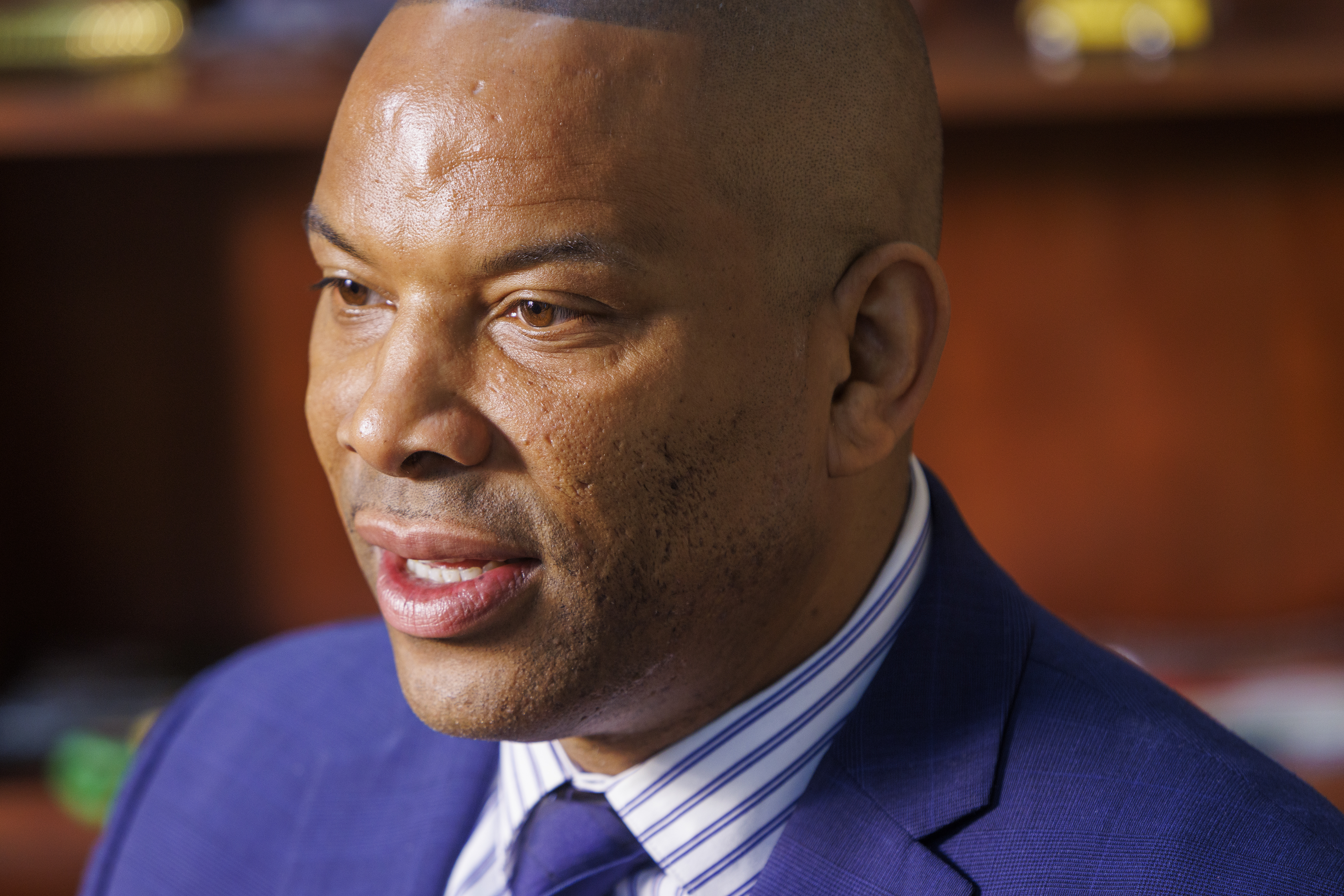
Superintendent Kwame Morton, the district’s first Black schools chief, praised students who made passionate appeals to the board to keep the course. He reassured them that the course was not in jeopardy.
“The board is not at this point taking action on any recommendation to eliminate that course. That’s not what’s happening,” Morton said.
Cherry Hill Superintendent Kwame Morton.Alejandro A. Alvarez / Staff Photographer
Here is what to know about the debate around the course:
How the issue unfolded
Cherfane sparked a heated discussion during a board meeting last month when she suggested making African American studies an elective instead of a required course. She cited the district’s $29 million deficit, which prompted layoffs and cuts.
In the event the board has to cut additional teaching positions in the future, having that class as a mandate limits options, she said. About 800 students are required to take the course every year, she said.
“It’s not about offering the class. It’s about requiring it,” Cherfane said. ”We wouldn’t be getting rid of it entirely.”
Other board members asked Cherfane to explain why she targeted that class. The district offers other electives, such as multivariable calculus, a high-level math course that few students take, that are not required by the state as a graduation requirement, said board member Miriam Stern.
Board president Gina Winters said any review examining potential cost savings should not be specific to one class. The African American history class was pitched by students and supported by the community, she said.
“I understand that it’s a tight budget, but we also have a responsibility as a board to educate our children on the things that our community thinks are important,” Winters said.
Cherfane did not respond to messages seeking comment.
How did the class get started?
By an 8-0 vote, the board approved the course as a graduation requirement in February 2021. Students who organized Black Lives Matter protests sparked by the killing of George Floyd in 2020 in Minneapolis by a white police officer asked for the class. They said Black history was mostly taught only in February.
Cherry Hill became the first district in the state with the requirement, according to the New Jersey Department of Education. New Jersey and Pennsylvania require history to be taught, but districts decide the content of their courses. Philadelphia and Camden schools also mandate a course in African American history to graduate.
The district developed a curriculum for a semester course and began offering it for the 2021-22 school year for freshmen and sophomores at its two comprehensive high schools. The district hired two teachers.
Teacher Jennifer LaShure said the course tackles topics that previously received little attention in U.S. history classes. She has included units on early African culture, arts, systemic oppression of today, anti-racism, and activism.
“I worry about the message that it sends to the students that something as important as history can be taken away,” LaShure told the board. “We see it all over, but it’s scary to see it happening right here.”
Community pushback
Former board member Corrien Elmore-Stratton, who was the only Black member of the board that approved the course as a requirement, said the need for it remains.
“… We are already having spaces and places where our students are being erased, torn down, no longer heard, misunderstood, and DEI has become a dirty word,” she said,referencing President Donald Trump’s attacks on diversity, equity, and inclusion. “It really is disheartening to hear that anyone on this board of education to think of to do.”
Carole Roskoph, a retired educator and former Cherry Hill council member, said she was “perplexed” by the discussion.
“It doesn’t make sense to me,” she said.
Motion withdrawn
Following the discussion, Cherfane made a motion to refer the issue to the policy committee to review possibly adjusting the graduation requirement for African American history. She withdrew the motion midway through voting, after a board member expressed unreadiness, and the discussion abruptly ended.
Cherfane did not reintroduce the motion at the May 26 meeting and it was unclear if the matter would be addressed again.
Other cuts, however, are moving forward in Cherry Hill and will take effect next school year.
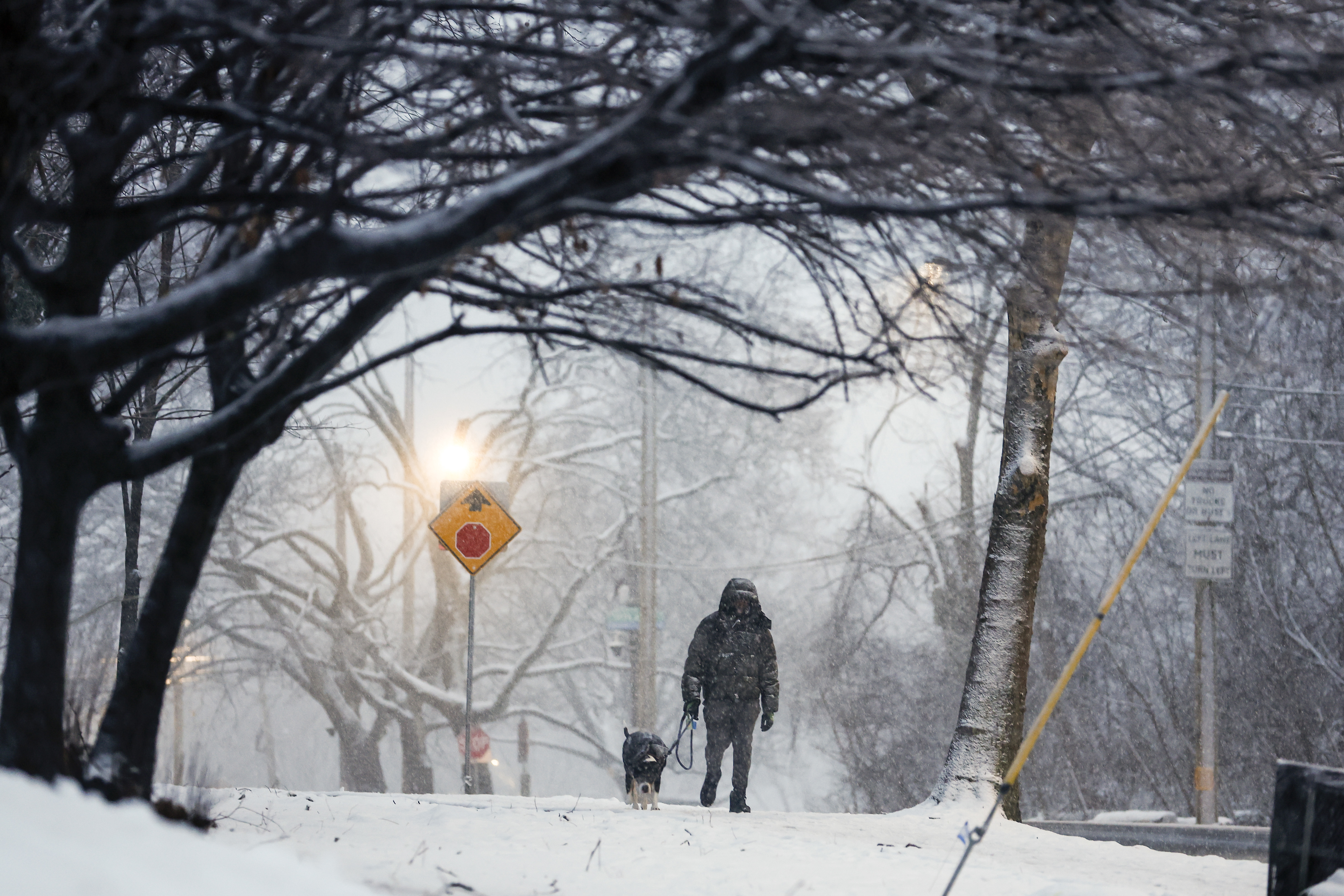
Philadelphia is expected to see its most significant winter storm in years this weekend, with nearly a foot of snow and ice expected from a formidable low-pressure system sweeping across the eastern United States.
Official National Weather Service forecasts say six to 18 inches of snow is possible across most of New Jersey and Pennsylvania, including Philadelphia as the storm pushes through the region Saturday night to early Monday morning. More than 21 states are expected to experience at least moderate impacts from the storm, the weather service said.
Forecasters said that mixing with sleet and freezing rain could hold down overall snow totals across Philadelphia and South Jersey, but the storm is likely to hinder if not halt most travel on Sunday, regardless.
The National Weather Service puts out forecasts for every few square miles of land in the United States four times a day through a system called the National Digital Forecast Database.
The maps below display that data. Use it to find how much snow is expected anywhere in the eastern United States. It will show the most recent forecast for the next three days.
A considerable amount of freezing rain and sleet may also fall during the storm, leading to icing concerns. The map below displays the forecast for ice accumulation, or accretion, over the next three days.