Tag: Camden County

  • Poverty in New Jersey is three times higher than the federal measure, experts say

    Poverty in New Jersey is three times higher than the federal measure, experts say

    Dana Brown-Toure, 52, says her life is in a place “somewhere between drowning and surviving.”

    A former health aide living on disability benefits, Brown-Toure contends with diabetes that threatens to blind her, while rising bills continue to overwhelm her. Brown-Toure shares an arduous existence with her two children, ages 8 and 21, in the house they rent in Camden, made harder by her former husband’s recent stroke, which hampers his ability to contribute money.

    Still, despite their troubles, the family takes in enough money to place Brown-Toure just above the official federal poverty level.

    That the U.S. government does not consider her to be living in poverty is hard for Brown-Toure to believe. “Life’s a struggle,” she said Monday. “I would say this feels below the poverty line.”

    So would the Poverty Research Institute (PRI) of Legal Services of New Jersey, a statewide legal aid nonprofit that has released a new report asserting that the actual rate of poverty in the state is about triple what the U.S. government calculates.

    That means, the report says, the official number of residents living in poverty in New Jersey in 2024 — the latest statistics available — was close to 3 million, rather than the federal figure of 859,000. Brown-Toure did not want her exact income to be disclosed, but the federal poverty level for a family of three such as hers in 2024 was just over $25,000.

    A person living below the official poverty level can more readily qualify for various assistance programs, such as SNAP (Supplemental Nutrition Assistance Program), Medicaid, Head Start, and school meals. The problem, experts say, is that even people with incomes that are twice the poverty rate need help, according to the Center on Budget and Policy Priorities.

    The government “severely understates poverty for high-cost states like New Jersey,” PRI director Shivi Prasad said.

    New Jersey’s cost of living ranks third-highest among states, behind California and Hawaii, according to the U.S. Bureau of Economic Analysis in the Department of Commerce. It also has the highest real estate property taxes in the United States, according to the Tax Foundation, a nonprofit that analyzes tax policy. The average annual tax bill in the state exceeds $10,000, compared with a national average of around $3,119, the foundation said.

    As the issue of affordability continues to plague Americans, thrusting many deeper into poverty, it’s becoming clear that the government‘s methods to measure deprivation are inadequate, PRI explains.

    The report, released in June and titled “2024 Poverty Data at a Glance: How the Federal Measurement Falls Short for New Jersey,” says that “the hard reality is that poverty remains deeply entrenched with millions left behind — a paradox for a state considered among the wealthiest in the nation.”

    The PRI measures what it calls True Poverty Level, described as the minimum income working families need to afford basic necessities without any public or private support, without making tradeoffs such as eating less to make rent payments.

    The basic flaw of the official federal poverty level, according to the PRI and other experts, is that it is a simplistic standard based on computations from 1964.

    “It’s a super-inadequate measure, like the federal minimum wage of $7.25 an hour,” said Laura Napolitano, a sociologist at Rutgers University-Camden. “We’re looking at a dated calculation that’s been unchanged for years.”

    Back in the mid-1960s, poverty thresholds were derived by taking the U.S. Department of Agriculture’s calculation for the minimum cost of food, then multiplying it by three to account for other family expenses. The thinking was that food was one-third of a family’s budget. Each year, the poverty level is updated to keep up with inflation, but the equation has remained the same for more than 60 years.

    Importantly, Prasad said in an interview, as the decades have gone by, the federal poverty level has not accounted for the actual costs of housing, childcare, food, transportation, healthcare, and other aspects of everyday life. And the federal poverty level does not allow for geographic differences in cost across the nation. For example, the average monthly rent for a two-bedroom apartment in Manhattan ($5,746) is vastly higher than it is in Omaha ($1,441), according to Apartments.com.

    “We look at all these realistic costs to see how much a family really needs to make it,” Prasad said. “We want to see how much you’d need to survive on your own, without help from the government or from family.”

    To determine how much basic survival costs in New Jersey, Prasad noted that an average monthly rent in the state is around $1,800 for a two-bedroom apartment. That would make a year’s rent more than $21,000.

    Now look at childcare, Prasad said, where the maximum monthly rate that can be charged for a toddler is $1,417, according to the New Jersey Department of Human Services, which comes to around $17,000 a year.

    With rent and childcare adding up to almost $40,000 annually, even if you are making $50,000 — almost twice the federal poverty rate for a family of three — “you really don’t have enough to survive,” Prasad said.

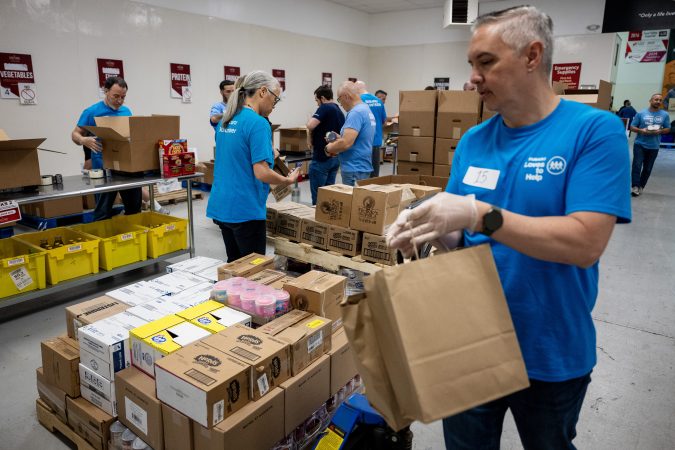
    And that says nothing about skyrocketing food costs, she added. The Food Bank of South Jersey reported that over the last four years in Burlington, Camden, Gloucester, and Salem Counties, the number of meals distributed to compensate for increasing food expenses grew by 34%.

    “More of our neighbors are turning to us amid an affordability crisis that’s hitting a high-cost state like New Jersey harder than poverty measures may show,” Jane Asselta, the food bank’s president and chief executive officer, said in a statement.

    For a more detailed analysis of the area the food bank serves, Prasad focused on South Jersey data for The Inquirer. In Burlington County in 2024, the true poverty rate was 27.2%, Prasad said. Similarly, Camden County’s true poverty rate was 38%, while Gloucester County’s sat at 29%. All rates as calculated by the PRI were more than three times the federal poverty levels for the counties in 2024, figures show.

    Ultimately, Brown-Toure said, no matter how the government classifies poverty, the one constant she endures is that life’s hardships are wearing her down.

    “I’m feeling depressed,” she said. “I miss working and my weekly paycheck. And the dream I once had to own a house is all gone.

    “There’s a lot of struggle right now, a lot trauma. It’s hard. And the hardship never stops.”

  • Gov. Mikie Sherrill says fighting data centers is part of her response to extreme weather during Camden visit after flooding

    Gov. Mikie Sherrill says fighting data centers is part of her response to extreme weather during Camden visit after flooding

    New Jersey Gov. Mikie Sherrill climbed onto an emergency water vehicle in Camden on Tuesday with Camden Fire Chief Jesse Flax. That vehicle, called the High Water One, was used by local emergency responders on Monday to rescue 14 people from the flooded streets of Camden, Flax said.

    The vehicle had arrived in the city one week earlier, just in time for what officials said was the worst flooding they had ever seen in the city, including from Hurricane Sandy in 2012.

    “I’ve never seen this in my whole career,” said Flax, who has worked in the city for three decades. “I’ve seen bad fires, I’ve seen a lot of different things. But I’ve never seen it flood in this capacity.”

    The new High Water Rescue vehicle that was used in the recent rainfall and flooding at the Fire Administration Building in Camden on Tuesday.Tyger Williams / Staff Photographer

    No one was reported injured among 1,000 calls to emergency services.

    Sherrill thanked emergency responders and comforted Maria Perez, a Camden resident recovering from surgery who worked with her neighbors to fight the flooding by “telling them what to do and keeping them calm.”

    “I wanted them to keep plastic bags on their feet, too, because you don’t know what’s in that water. … I’m so glad that we had such a great team,” Perez, a member of the Camden schools advisory board, said in an interview.

    The governor’s visit came just a little more than an hour after she signed legislation in Salem County aimed at data centers. She said that very work can help prevent strain on the power grid during future storms and that the electrical grid is “top of mind” for her.

    Gov. Mikie Sherrill, left, speaks with Maria Perez, center, and Sen. Nilsa Cruz-Perez, right, at the fire house in Camden on Tuesday.Tyger Williams / Staff Photographer

    “We are seeing these extreme weather events more and more and more frequently,” said Sherrill, who was dealt a historic snowstorm just weeks into her term and has recently seen a deadly heat wave. After her stop in Camden, she went to a BJ’s Wholesale Club store in Monmouth County where a roof fell in from Monday’s flooding.

    One of the bills Sherrill signed into law on Tuesday creates a new ratepayer class and rate structure for data centers that is meant to ensure they pay for their own energy. Another creates more oversight for utility companies’ grid upgrades to try to save money.

    “We’ve set them aside in a separate class of utility users, so that if we have storms like this, they will be first impacted, not normal rate payers,” Sherrill said.

    Data centers have caused concern on both sides of the aisle in South Jersey, with towns including Medford taking steps to block their development locally. But according to county spokesperson Dan Keashen, Camden did not have widespread power outages during the storm, just a handful that were rectified the same day.

    Oscar Parra makes his way to his car in the flooded parking lot at the Ferry Avenue PATCO station in Camden on Monday amid a flash flood threat for the region.Tom Gralish / Staff Photographer

    So what about the damage in Camden?

    Sherrill said residents should report damage through the New Jersey Office of Emergency Management so the state can calculate how much federal assistance to request.

    “There are technical things we need to meet,” she said. “I think we probably will, but we’re collecting that now.”

    American Red Cross workers in Camden on Tuesday were providing cleaning supplies like mops, bleach cleaners, gloves, and tarps — as well as snacks and water, said Diane Concannon, the organization’s communications director for the New Jersey region.

    “Flooding is horrible for any family … because everyone wants to be able to save everything,” she said.

    While the rain was intense, it cleared up quickly because the city has maintained its sewers so well, Sherrill said.

    “They have done a really good job here in Camden with some of these resiliency efforts,” she said. “It’s why this wasn’t worse.”

  • Cherry Hill Mall to get new stores including Aritzia

    Cherry Hill Mall to get new stores including Aritzia

    The Cherry Hill Mall is soon set to welcome five new stores that have committed to more than 25,000 square feet of retail space at the South Jersey mall.

    The additions include Aritzia, the viral women’s clothing brand, which is set to open a store at the 1.3 million-square-foot Camden County mall by spring 2027. The complex is also adding legacy brands such as Timberland and True Religion, according to executives with PREIT, which owns the mall.

    “Retailers at this level are choosing their next locations very carefully right now, and the fact that six of them chose Cherry Hill Mall in the same leasing period speaks volumes,” Paula Charles, PREIT’s senior vice president of leasing, said in a statement.

    “For shoppers, it means more of the brands they want in one place and an experience that keeps getting better every time they visit,” Charles added.

    The new stores are slated to open in 2026 and 2027, PREIT executives said.

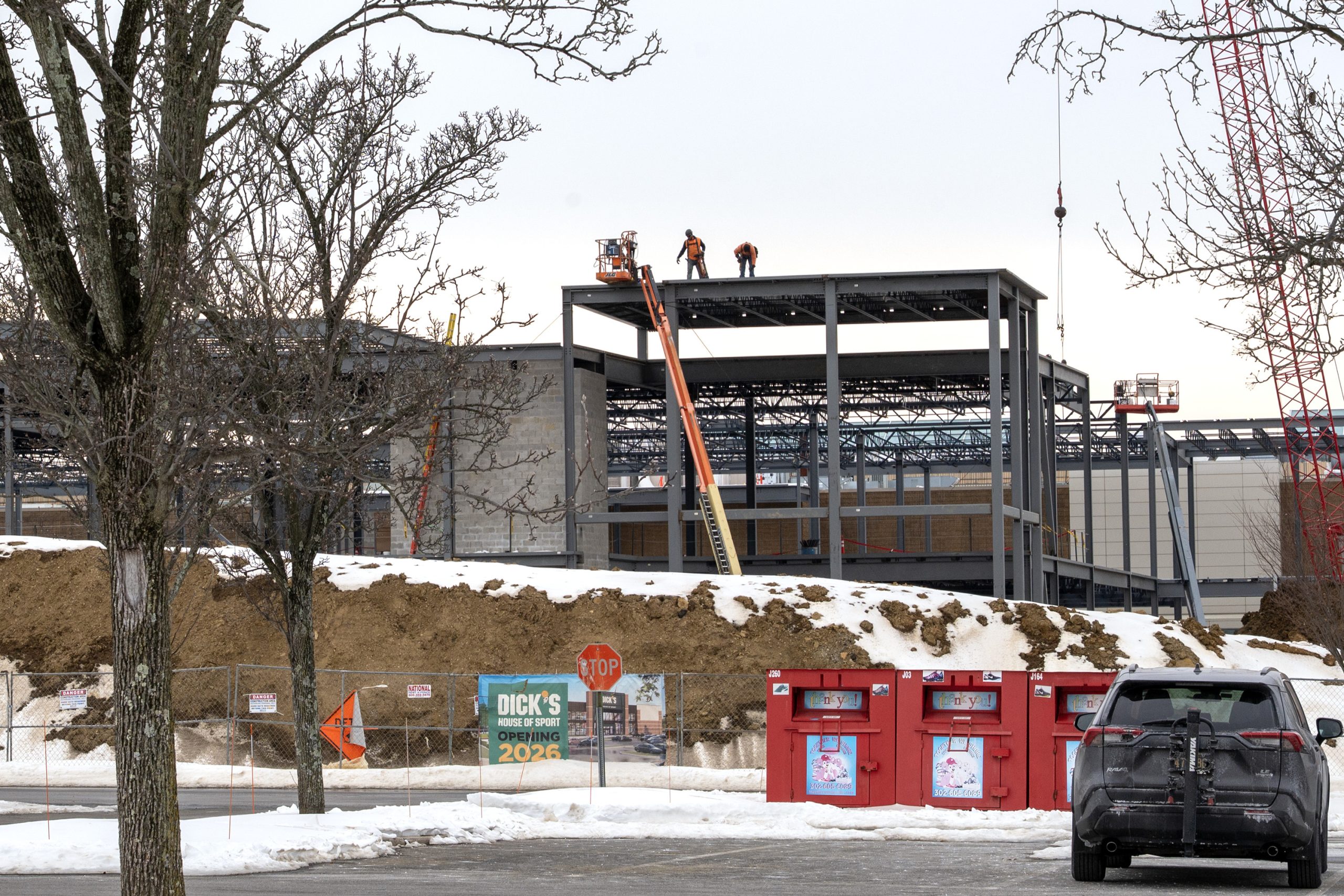
    The retailers will join Dick’s House of Sport, a 120,000-square-foot interactive sporting goods store that is on track to open later this year.

    Construction on Dick’s House of Sport at the Cherry Hill Mall, as seen in February.Tom Gralish / Staff Photographer

    Built on the site of a former office building, the two-story experiential space is set to include a climbing wall, golf simulators, an outdoor track and field, and batting and soccer cages.

    One of dozens of Dick’s House of Sport outposts, it will be represent “the largest single-tenant addition to Cherry Hill Mall in more than a decade,” PREIT executives said.

    The new retailers will also join Crocs, which last month opened a 2,000-square-foot store near the future Dick’s House of Sport, and DoneRight Doner Kebab, a fast-casual Mediterranean food spot that mall executives said will open later this summer in the food court.

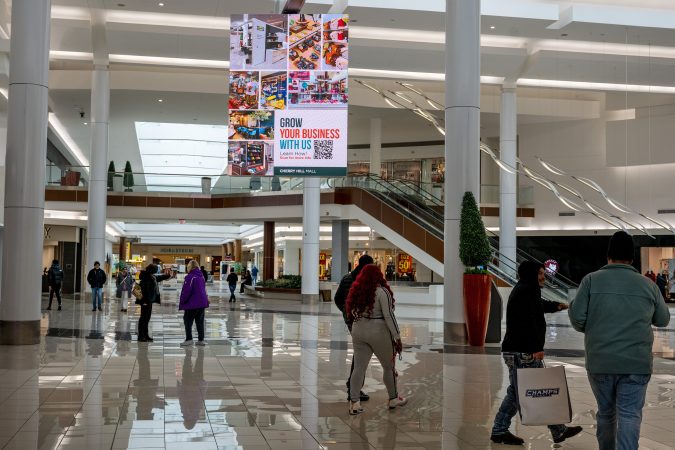
    People walk by a new store, Pop Mart, at Cherry Hill Mall on Black Friday 2025.Tyger Williams / Staff Photographer

    Meanwhile, elsewhere in the region, some mid-level malls continue to struggle and even die. Chester County’s only enclosed mall, Exton Square, closed last week after more than five decades in business.

    But higher-end complexes like Cherry Hill and King of Prussia seem to be thriving. King of Prussia Mall, in Montgomery County, also just announced a slate of new openings.

    Here’s what to know about the new shops coming soon to the Cherry Hill Mall:

    • Timberland: The boots and outdoor-wear company is set to open an 1,800-square-foot store later this summer. It will be near Dick’s House of Sport.
    • Indochino: The custom-suit-maker is set to open a 1,200-square-foot store before the 2026 holiday season. It will be off the Grand Court, near American Eagle and Pop Mart.
    • Aritzia: Set to occupy more than 20,000 square feet in the central Grand Court, its space will include not only a clothing store but also an A-OK Cafe, the brand’s in-house coffee shop. It is on track to open in spring 2027.
    • True Religion: The denim company is set to open a 2,230-square-foot store sometime early next year near Dick’s House of Sport.
    • Gorjana: The viral jeweler known for its gold pieces is set to open a 1,107-square-foot store by the 2027 holiday season in the Grand Court.

    Also at the mall, Pandora and Spencer’s recently moved into larger storefronts, and Lululemon is set to relocate into an expanded space in the Grand Court before the 2026 holiday season.

  • Thunderstorms Monday morning left Camden County with 1,000 emergency calls and intense flooding

    Thunderstorms Monday morning left Camden County with 1,000 emergency calls and intense flooding

    Camden County and city officials are working with the state to assess the damage after severe thunderstorms left the region with heavy flooding Monday morning.

    Mayor Victor Carstarphen said no fatalities or injuries have been reported, but by Monday afternoon, Camden City had received about 90 service calls reporting damages following more than 4 inches of rainfall, and he expected Camden to get more calls as people return home from work to potential flooding.

    “Today, the rainfall exceeded what our stormwater system is designed to handle in such a short period of time,” Carstarphen said.

    Countywide, Camden received about 1,000 911 calls just in the stretch of the morning storm, said Dan Keashen, Camden County’s public affairs director.

    It will take a while for the county to determine how many homes were impacted and the estimated cost of damages. Public assistance teams from the state will work with the city and county to assess damages home by home in affected areas, said Morgan Callan, external communications manager for Camden County.

    Dave Balog of Mullica Hill makes his way to his truck in the flooded parking lot at the Ferry Avenue PATCO station in Camden Monday, July 6, 2026, as a flash flood threat continues for the region. Balog said there were no warnings about a storm when he parked there four hours earlier for an appointment in Center City Philadelphia. His truck did start as it was not in the deepest area of the lot.Tom Gralish / Staff Photographer

    Flooding left vehicles stranded on roadways throughout the county, including two police vehicles and a fire department apparatus in Camden City, Keashen said. But most of the water has receded, according to a press release Monday afternoon.

    Both city pools in Camden will be closed this week, Carstarphen said.

    Camden City residents with damage to their properties can call the city emergency operations center at (856) 757-7132 or (856) 757-7139. Calling in those damages will allow city officials to report them to the state, which then could unlock regional and state disaster aid for residents.

    Residents of other Camden County municipalities can report property damages to their respective offices of emergency management.

    Carstarphen couldn’t confirm the timeline for how long it would take officials to visit properties to assess damages, but he said he encourages residents to file claims with their property insurance providers in the meantime.

  • Extreme heat leads to canceled and postponed July 4 plans across South Jersey

    Extreme heat leads to canceled and postponed July 4 plans across South Jersey

    Countless parades, fireworks, drone shows, and more are scheduled for this weekend to celebrate the Fourth of July and the nation’s 250th birthday across South Jersey, but extreme heat is beginning to complicate plans.

    With temperatures forecast to exceed 100 degrees through Independence Day, some South Jersey towns are taking steps to keep residents out of the heat — even if it means canceling their annual holiday events.

    Others that haven’t taken any major steps yet are advising residents to stay hydrated and out of the direct sunlight as much as possible over the weekend.

    Here are some South Jersey towns that have announced changes to their Fourth of July celebrations:

    Bordentown Township

    Bordentown Township postponed fireworks planned for Friday with plans to reschedule the show for Aug. 4.

    “This wasn’t an easy call to make, but the heat forecast is dangerous, and that’s not something we’re willing to gamble with, not with your families, our volunteers, and our first responders out there for hours,” the township posted on social media Thursday.

    Delanco Township

    Delanco’s summer concert featuring the Nathan Renson Quartet scheduled for Thursday evening was canceled due to the heat. It will be rescheduled for a later date, the township said on social media.

    Haddon Township

    Due to the heat and humidity forecast for Saturday, Haddon Township has canceled its July Fourth parade.

    “This was a difficult choice, but ensuring the health and safety of our participants and spectators alike is our highest priority,” the township wrote on social media.

    The township’s “Happy Birthday America Celebration” fireworks will still take place on Friday night at the Haddon Township High School stadium.

    Amid the heat wave, the township’s Crystal Lake Pool will be open and free to all township residents, their extended family, friends, and guests.

    Haddonfield Borough

    Haddonfield’s Independence Day Parade is taking place as scheduled on Friday morning, but due to the extreme heat forecast for later in the day, the block party and drone show scheduled to start at 5 p.m. have been postponed. A new date for the rescheduled events will be announced soon, according to the borough.

    Magnolia Borough

    Magnolia’s Fourth of July Fair is starting a bit earlier now because of the heat, the borough announced on social media. The fair, which includes food trucks, a beer garden, live music and more, will now take place from 10 a.m. to 2 p.m. on Saturday immediately after the parade.

    Oaklyn Borough

    Oaklyn is hoping to get ahead of the heat by moving up the start time for the borough’s annual July Fourth parade. The parade will now start at 9 a.m., two hours earlier than originally planned.

    Paulsboro

    In light of the heat, Paulsboro has also decided to cancel the borough’s annual Fourth of July parade.

    “We understand how much this annual tradition means to our community. For generations, the Fourth of July Parade has been a source of hometown pride and a celebration that brings families, friends, and neighbors together. We share the disappointment of having to cancel this cherished event, but the safety and well-being of our community must always come first,” the borough wrote on social media.

    Despite the parade cancellation, the borough’s 250th Anniversary Celebration at Fort Billingsport Park will continue as scheduled on Sunday from 9 a.m. to 2 p.m.

    Stratford Borough

    While Stratford will still be holding its annual Fourth of July parade, the borough has decided to cancel its plans for games, inflatables, and other activities scheduled for Mancini Field throughout the day.

    Washington Township

    Washington Township has canceled its annual parade on July 4 after recommendations from public safety and local meteorologists. The township’s fireworks will still proceed as planned at 9 p.m., launched from the Washington Township High School Complex.

    Staff writer Sarah Nicell contributed reporting.

  • Goodwill opens new medical equipment store in South Jersey

    Goodwill opens new medical equipment store in South Jersey

    The young woman with muscular dystrophy wanted a motorized scooter, but her health insurance would only cover a wheelchair.

    So she went to Goodwill’s only medical equipment store in South Jersey, where she found a dozen scooters to choose from. She test drove one she liked and bought it at a steep discount.

    “She burst into tears and said, `You have no idea what a difference this is going to make in my life,’” recalled Mark Boyd, Goodwill’s president and CEO.

    Goodwill Home Medical Equipment on Wednesday opened the region’s second location. The new store is located in Gloucester County, while its flagship, 16,000-square-foot retail store and warehouse is in Camden County.

    Both sell sanitized and refurbished medical equipment, including power and manual wheelchairs, hospital beds, canes, walkers, and lift and shower chairs. The stores also offer unopened medical supplies, like adult diapers and colostomy bags.

    “When people go to a Goodwill store, they don’t really know what they are looking for — they’re on a treasure hunt,” Boyd said. “But when you get sick or somebody in your family gets sick, all of the sudden you need a specific piece of equipment, and it can be quite daunting.”

    The nonprofit thrift organization began offering used medical equipment at roughly one-third the retail price about 15 years ago, Boyd said.

    “Financially, it’s a break-even operation, but it’s such a great service to the community,” he said, adding they cater to people with no or limited insurance, or high deductibles.

    The new store on Mantua Pike in Woodbury Heights will be open Monday through Saturday from 9 a.m. to 6 p.m., and Sundays from 10 a.m. to 6 p.m. The location on Benigno Boulevard in Bellmawr is open Monday through Saturday from 9 a.m. to 3 p.m., and Sundays from 9 a.m. to 1 p.m.

    The two South Jersey stores are the only Goodwill Home Medical Equipment retail locations in the country, according to spokesperson Juli Lundberg.

    “The savings are so great that people do travel to us from New York City, the Philly burbs, and Jersey Shore,” Lundberg said. “We have had many other Goodwills across the country inquire about the concept.”

    People can donate their medical equipment and unopened supplies at any Goodwill location in New Jersey and Pennsylvania. Donation sites and regular thrift stores can be found at https://www.goodwillhomemedical.org/store-locator. Goodwill staff also will pick up home medical equipment that is too large for a car, according to Lundberg.

  • 31 people arrested for running drug ring in Camden County Jail, prosecutors say

    31 people arrested for running drug ring in Camden County Jail, prosecutors say

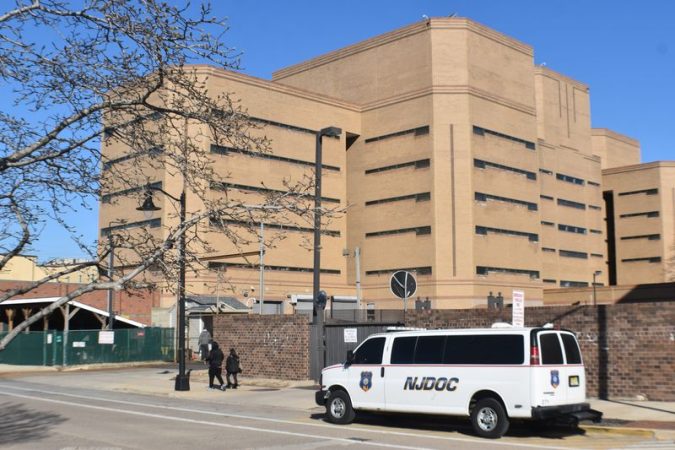
    Thirty-one people were arrested for trafficking fentanyl and other illegal drugs inside the Camden County Jail, authorities said Wednesday, ending what they called a “complex and potentially far-reaching criminal enterprise.”

    The investigation, dubbed Operation Paper Trail, began in October 2025, prosecutors said, and led to the arrests of suspects both inside and outside the jail.

    “The takedown of Operation Paper Trail disrupted a dangerous network responsible for distributing illicit substances and facilitating criminal activity,” Camden County Prosecutor Grace C. MacAulay said in a statement.

    “This operation not only enhanced public safety but also helped prevent further harm, protecting our communities and sparing countless individuals from the devastating effects of substance abuse,” she said.

    The drug ring operations. prosecutors said, were run in part by Howard Dunns of Millville, N.J.

    Dunns, 50, who was incarcerated at the Cumberland County jail, was a lead organizer of the drug ring, coordinating with Camden inmates who peddled fentanyl, synthetic marijuana, PCP, and cocaine at the facility, prosecutors said.

    Dunns was charged with two counts of conspiracy to possess with the intent to distribute a controlled dangerous substance. It was not immediately clear whether he had hired an attorney.

    Two Camden County Jail inmates, Wilfredo Santiago, 31, of Vineland, and Kyle Jones, 31, of Millville, were also accused of participating in the scheme by selling illegal substances to other inmates.

    That included at least 58 grams of synthetic marijuana, which investigators seized in March, according to prosecutors.

    The men were each charged with one count of conspiracy to possess with the intent to distribute a controlled dangerous substance.

    The remaining 28 people were charged with drug crimes, many for possessing illegal substances.

    Prosecutors said Santiago and Jones managed to sneak the drugs into the jail using paper that had been laced with the substances and marked as confidential legal correspondence between inmates and attorneys.

    Detectives with the Camden County Department of Corrections learned of the drug ring in late 2025 after intercepting an envelope addressed to a 21-year-old man who was incarcerated in the jail, prosecutors said.

    Detectives found that the supposed legal correspondence was inauthentic, and the letter later tested positive for traces of cocaine.

    In addition to charging the inmate with a drug offense, detectives arrested the sender, a 32-year-old Camden man, and charged him with similar crimes.

    He was later placed in custody in the Camden County Jail, and within months, prosecutors said, he had instructed an associate to traffic drugs into the facility through similar means.

  • Camden is a winner in New Jersey’s $60.7B budget. Who are the losers?

    Camden is a winner in New Jersey’s $60.7B budget. Who are the losers?

    Gov. Mikie Sherrill signed the New Jersey budget for fiscal year 2027 Tuesday night, shortly before the clock ran out on the constitutionally mandated deadline.

    The budget ranks as the largest in state history, but Sherrill also contends it is the most “fiscally responsible” in decades in part because it fully funds the state pension program and doesn’t come with widespread tax increases for residents.

    Lawmakers approved the budget on Tuesday after adding millions in legislative add-ons Sunday night, a move that countered Sherrill’s earlier vows to change the culture in Trenton. But she softened her stance as the deadline neared and she conceded that lawmakers know their districts best.

    South Jersey Democrats defended the spending, which Republican lawmakers criticized as “pork.”

    “I know sometimes it gets disparaging names, but I think one of our responsibilities as elected officials is to be responsive to the needs of our communities,” said Sen. Troy Singleton, a Burlington County Democrat.

    But the last-minute shuffle didn’t result in the transparency Sherrill originally promised, with some legislators saying they weren’t sure of the details they were voting on. The budget passed mostly along party lines in the Democratic-dominated legislature. Sherrill and legislative leaders touted record funding for schools and property tax relief programs.

    “I know the process needs work,” Sherrill said at a Tuesday night news conference. “It takes too long. It could be much more transparent, but we took steps in the right direction this year.”

    Here are some of the winners and losers in the budget.

    Camden County Commissioner Director Louis Cappelli, Jr., left, with Gov. Mikie Sherrill and Camden Mayor Victor Carstarphen, right, at SoccerFest26, the World Cup fan fest at Wiggins Waterfront Park in Camden on Friday.Aliya Schneider / Staff

    Winner: Camden City and County

    South Jersey obtained funding for projects across the region with Camden scoring one especially big-ticket item: $9 million for property acquisition and demolition. The funding is for a county-run program focused on removing vacant, unusable, or otherwise deemed dangerous properties in the city.

    Louis Cappelli Jr., the director of the Camden County Commissioners, said in an interview that the county has demolished more than 1,200 residential and commercial buildings over the past decade as part of this effort, mostly with state money. He said the program’s mission is to encourage the city’s redevelopment.

    “The city is in desperate need of new housing, especially market-rate housing, and by creating opportunities for development on these properties, we believe we will draw the interest of residential developers to build in Camden City,” he said.

    The city of Camden was also allocated $250,000 for a statue of Martin Luther King Jr., which Sherrill promised the city ahead of her inauguration. This project was a priority for the governor, who systematically struck a pen through legislative projects but dedicated funding to the statue in her proposal earlier this year.

    Several organizations that serve Camden city and county received hundreds of thousands of dollars in the budget.

    The Camden Coalition of Healthcare Providers received $500,000 for a program that connects emergency department patients to outpatient behavioral care and $750,000 for a program that helps people experiencing homelessness obtain housing. Joseph’s House, a homeless shelter in the city of Camden, received $600,000, and a separate spending bill also sends $650,000 to a new construction homeownership project.

    The budget also allocates $300,000 for job training for youth and young adults, $75,000 for a program dedicated to improving school attendance in the city of Camden, and $25,000 for a new county program that supports formerly incarcerated people reentering their community.

    It also includes $3.2 million for structural improvements for a bridge at Route 30 and Somerdale Road and $12.1 million for the Camden County LINK Trail, a planned 34-mile multiuse trail.

    Loser: High-income seniors

    Senior homeowners who earn between $200,000 and $500,000 a year will no longer qualify for the nascent Stay NJ property tax credit program under the new income cap. They just began receiving checks for the program this year.

    Sherrill proposed scaling back the expensive program in her budget proposal earlier this year, which caused some tension because the new program was championed by Assembly Speaker Craig Coughlin, a Middlesex County Democrat and a key budget negotiator.

    But Sherrill and legislative leaders found a compromise by giving higher payments than she proposed for those who make less money, and an even lower income limit than she proposed for the program.

    Qualifying taxpayers will get refunded up to half their property tax bill up with maximum refunds ranging from $4,000 to $6,500, depending on their income, with those earning more getting less.

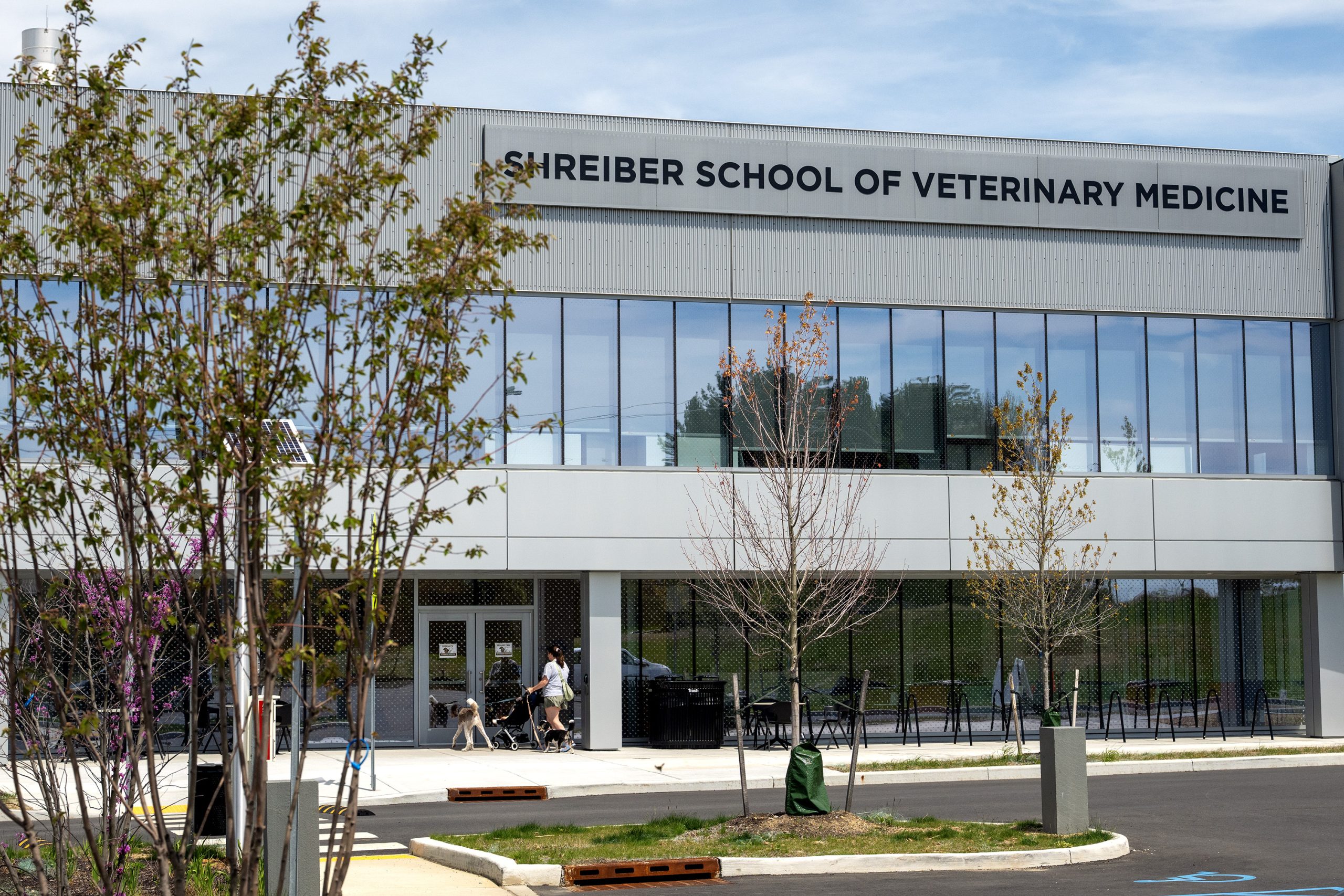
    Rowan University’s Shreiber School of Veterinary Medicine Tuesday, April 14, 2026. Tom Gralish / Staff Photographer

    You win some, you lose some: Rowan University

    Rowan University is receiving less money than it did this year, but significantly more money than Sherrill initially proposed. At the end of the day it’s a win for the university, which saw significant cuts reversed.

    Sherrill’s initial proposal included about $125 million, but legislators brought the total up to nearly $135 million — a drop from the $155 million the state gave the school this year.

    Sherrill zeroed out funding for Rowan’s new veterinary school but legislators successfully got $6.2 million for the program — still less than the $8 million it received this year and a far cry from the $20 million the school requested.

    State Sen. John Burzichelli, a Gloucester County Democrat, said the money is enough for the school to at least “keep the lights on,” for the veterinary school and the medical school funding is “sound.”

    Sherrill also proposed cutting all state funding for Virtua Health College of Medicine and Life Sciences. Legislators restored $2 million to the program — half of what it received this year and much less than the requested $12 million.

    The Rowan-Virtua Child Abuse Research Education and Service Institute (CARES) program, which provides medical and mental healthcare to children who have experienced abuse, had all its $1.85 million funding restored after Sherrill initially zeroed it out.

    In anticipation of the governor’s proposed cuts, Rowan sent employees layoff notices and announced the closure of its Vineland office. A union representing CARES employees has called on Rowan to reverse these changes.

    But Rowan spokesperson Jose Cardona said the university “will evaluate next steps and very soon determine the most responsible path for operations, staffing, and long‑term sustainability.”

    The bill that passed alongside the budget with funding from this fiscal year sent nearly $15 million going to Cooper Medical School of Rowan University and support to Cooper University Hospital. That bill also sends $5 million to Cooper University Healthcare’s South Jersey cancer program, which got an additional $27.4 million in the new budget.

    Winner: Parents

    Legislative leaders secured a 25% increase in the state’s child tax credit program, which is claimed by 217,000 tax filers with children, according to the governor’s office.

    The expansion, which will be in place over the next three tax years, bumps each tax credit tier by 25%. So, for example, a household that previously got the highest tier of $1,000 will receive $1,250 and households that got $800 will get $1,000.

    Sherrill, a former member of Congress and mother of four, said she saw positive impacts of the national tax credit, “giving parents more money for childcare and summer camps, so their kids can thrive while they’re at work.”

    Gov. Mikie Sherrill talks with state Sen. Troy Singleton (D., Burlington) as she arrives to meet with the South Jersey business community for a fireside chat event hosted by the Chamber of Commerce of Southern New Jersey in Mt. Laurel Monday, March 16, 2026.Tom Gralish / Staff Photographer

    Loser: Businesses

    What Sherrill touted Tuesday night as closing “corporate loopholes” and asking employers “to pay their fair share in healthcare,” the business community saw as an attack.

    The budget includes Sherrill’s proposals to introduce new fees for businesses with at least 50 employees on Medicaid, an effort that was led in part by Assembly member Carol Murphy, a Burlington County Democrat, in the legislature. It also imposes limits on two methods businesses use to deduct losses from their taxes.

    Hilary Chebra, the director of governmental affairs for Chamber of Commerce Southern New Jersey, criticized these policies, as well as a bill passed by the legislature that bans food surveillance pricing as it’s written.

    “Employers aren’t reacting to a single tax increase or one new regulation,” she said. “They’re responding to all of it at once.”

    She said these measures will have more severe consequences in South Jersey for small and family-owned businesses that compete with businesses in Pennsylvania and Delaware.

    Tom Bracken, the president & CEO of the New Jersey Chamber of Commerce, said businesses were given “minimal support” and that the budget did not focus on supporting economic growth. He said the policies Sherrill championed in the budget “send the wrong message” to employers that New Jersey should be working to attract.

    “The negative financial and reputational consequences of these policies will make it more difficult for New Jersey to be competitive — and competitiveness is essential if the state economy is going to grow,” he said.

  • Cherry Hill’s Hindu temple approved for major expansion adding height, classrooms, a gym, and more

    Cherry Hill’s Hindu temple approved for major expansion adding height, classrooms, a gym, and more

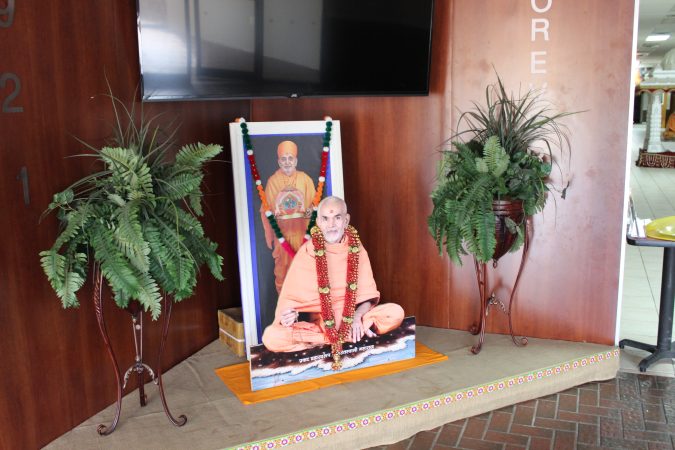
    BAPS Shri Swaminarayan Mandir, a Hindu temple on the eastern border of Cherry Hill, is preparing for a major facelift.

    The Cherry Hill Township Zoning Board approved site plans last week during a 4½-hour meeting for an 18,330-square-foot expansion that would transform BAPS Cherry Hill’s exterior and add a gym, lobby, prayer hall, improved Sunday school rooms, new parking spaces, and more.

    More steps will have to be made before construction can begin, but this approval is a major move forward after what zoning officials say took more than a year of planning.

    BAPS Inc., an international religious nonprofit, has more than 100 temples across the U.S., including eight in New Jersey. Cherry Hill Township approved a zoning variance back in 2002 to allow a former vacant warehouse building on an 11-acre property at 1 Carnegie Plaza, acquired by a real estate company for $1.9 million and conveyed to BAPS, to become a Hindu temple despite the lot being zoned Industrial Restricted. The temple is run by BAPS Cherry Hill, a limited liability company.

    Decades have passed since BAPS Cherry Hill opened, and the mandir, a Hindu place of worship that neighbors King’s Christian School and Remington & Vernick Engineers, still looks like a warehouse.

    But the new plans propose a more decorative exterior, including the addition of three shikharas, tall spires on the roof that would reach 58 feet at their highest. Aavart Patel, the project’s architect, said the change matches more traditional styles of Hindu architecture.

    The current zoning rules put the building’s maximum height at 35 feet, but BAPS Cherry Hill’s lawyer, Damien Del Duca, sought a variance allowing for the boost.

    “Metaphysically, the shikhara represents the spiritual connection between the earthly realm and the divine,” Del Duca wrote in a March letter. “It guides the eyes to move from the earth upwards toward the sky — representing heaven.”

    Del Duca and BAPS did not return requests for comment about the projected cost of the expansion, but Del Duca said during the zoning board meeting that the temple had raised the necessary funds for the project.

    Riya Patel, a BAPS Cherry Hill volunteer and youth coordinator, testified during the zoning meeting that the temple’s current structure poses a problem for its youth classes and group activities.

    “It still serves as this warehouse layout,” Patel said. “So talking about some of our weekly activities, a lot of the space that we have doesn’t have much utility.”

    Neel Patel, a lead volunteer and national coordinator for BAPS, has attended BAPS Cherry Hill for the last 22 years. He said the temple has 400 to 500 worshipers on an average Sunday and offers scriptural studies, language learning, music, and sports programming for attendees from kindergarten age to adults.

    The new additions would mean educational and sports programs could take place in designated classrooms and a gymnasium rather than in the current dining hall, makeshift spaces, or outside on the warehouse loading dock, which the temple converted into a basketball court. The addition of about two dozen parking spaces will accommodate extra visitors during the high holidays.

    Under the current site plans, the building’s footprint would only expand about 3,000 square feet, and the remaining 15,000 square feet of additions come in the form of a second story to accommodate classrooms, offices, and the new gym.

    Anand Bhatt with Arna Engineering, the project’s civil engineer, said the project will be completed in one phase, and the mandir will remain open throughout the process since construction will be limited to weekdays. The temple has little foot traffic except on Sunday.

    ‘A space where I can express my religious freedoms’

    The BAPS location in Cherry Hill came to be in 2002 when Rishi Realty acquired the vacant warehouse space from Graphic Controls Corp. for $1.9 million and quickly conveyed ownership to BAPS.

    Although the property is zoned industrial and accompanied by surrounding commercial businesses, the temple faces a residential neighborhood, Point of Woods, in Cherry Hill.

    Three neighbors attended the zoning board meeting via Zoom last week to voice their concerns, mostly regarding the desire to protect the property’s wetlands and limit lighting at night.

    Jody and Jenn DeMarco, who live across from the BAPS parking lot and its wooded area, asked the zoning board to deny the application unless the front facade of the new temple is reoriented to face away from their neighborhood.

    “It’s a matter of preference, not a matter of necessity, that they are putting this giant variance that impacts our neighborhood negatively facing our property,” Jenn DeMarco said.

    In 2012, BAPS Cherry Hill received violations from the township and the New Jersey Department of Environmental Protection for illegally removing trees in a wetland without proper permits, but BAPS Cherry Hill said in its zoning application that the organization remediated the issue by planting more trees.

    BAPS representatives said at the zoning board meeting that they would follow N.J. DEP’s rules and make sure any lighting above the height maximum of 35 feet turns off by 10 p.m. Plus, BAPS Cherry Hill doesn’t anticipate increased visitor volume after the renovations, and they don’t plan to add any additional seating for its Sunday services.

    Another Cherry Hill resident, Deepak Chhatwal, said he was excited about the upcoming changes.

    “I’m very happy that there’ll be an organization and a space where I can express my religious freedoms, and there will be a better space for myself and my family and other neighbors who are practicing the Hindu faith.”

    The six zoning board members who attended the meeting approved the site plans unanimously.

    Brian Bauerle, the township’s chief of staff, said Cherry Hill still has to adopt a resolution confirming the decision and its conditions of approval at a future meeting on an undecided date.

    As for BAPS Cherry Hill, the nonprofit will have to update its site plans based on the new approvals and satisfy remaining compliance items, which Bauerle said can take weeks to months. Then, the Department of Community Development can issue a zoning permit allowing BAPS to apply for construction permits.

  • International Paper is closing its Barrington facility, laying off 126 workers

    International Paper is closing its Barrington facility, laying off 126 workers

    A Tennessee-based packaging company is closing its plant in Barrington, Camden County, laying off 126 employees amid the business’ larger restructuring plan.

    Workers at International Paper’s Barrington facility, who convert containerboard into boxes, are expected to be laid off on Sept. 24. The site is expected to close at the end of August, company spokesperson Jessica Seidner said.

    The closure follows “a strategic assessment” of the Barrington facility, and International Paper’s larger regional footprint, according to a layoff notice filed with the New Jersey Department of Labor and Workforce Development.

    “Based on the results of that assessment, and in order to operate our packaging business effectively to support our customer needs now, and in the future, we made the difficult decision to cease operations at our Barrington location,” the notice reads.

    International Paper, headquartered in Memphis, was incorporated in 1941. As of December, the company had 62,602 employees — nearly half of which are based in the United States — and roughly 190 packaging mills, as well as converting and packaging plants, and recycling facilities across the country.

    The company has several locations in Pennsylvania and New Jersey, including in Kennett Square, Lancaster, Reading, Bellmawr, Thorofare, and Vineland, according to a recent U.S. Securities and Exchange Commission filing.

    As part of its restructuring, the company announced this month the closure of four facilities, including the Barrington site, to “focus investments on the highest-value opportunities.” The company announced several more facility closures last year.

    “These are difficult but necessary decisions that strengthen our network, focus investments where they create the greatest value and position International Paper to better serve customers and compete for the long term,” Tom Hamic, president for packaging solutions in North America, said in a statement.

    In an April earnings call company leaders said the business had recently been facing financial pressure from inflation, the conflict in the Middle-East, and weather disruptions. The business brought in $23.63 billion in net sales last year.

    International Paper announced in 2025 that it had acquired DS Smith, a U.K. packaging business, in a deal that was valued at $7.1 billion. Earlier this year, the company announced it would split into two separate businesses: one dedicated to the North American market and another for Europe, Africa, and the Middle East. The process is expected to be complete by the end of 2026 or early 2027, according to a U.S. Securities and Exchange Commission filing.