WASHINGTON — A new federal proposal to enact protections for communities opposed to the proliferation of data centers has drawn inspiration from both the Philadelphia suburbs and Western Pennsylvania fracking country.
The Data Center Bill of Rights is one of several national efforts to address a growing dissatisfaction with data centers, which have so far faced few restrictions at either the federal or state level in Pennsylvania.
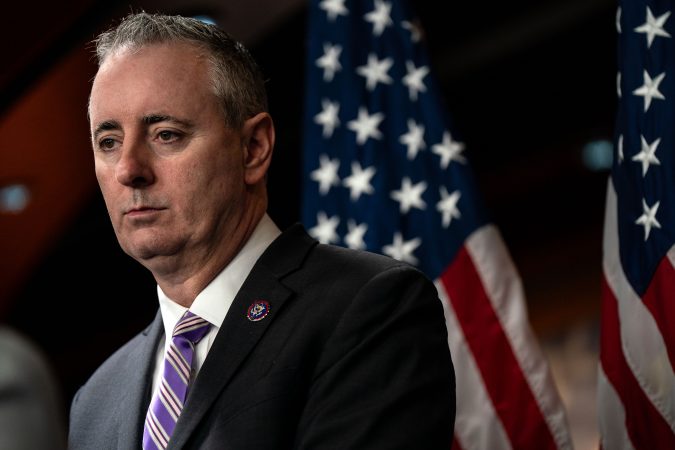
U.S. Rep. Ro Khanna, a California Democrat and Bucks County native considering running for president in 2028, said his home state should be doing more.
He introduced thefederal legislation after a recent tour across Pennsylvania that he said was designed to hear from communities that have lost manufacturing jobs and other economic opportunities.
Data center concerns came up more than any other issue, he said — leading him to incorporate new ideas into the bill healready had in the works, and to call for a pause on data center development in Pennsylvania until further protections and local controls are enacted.
A statewide pause would be more than what Gov. Josh Shapiro — another potential 2028 Democratic contender — has proposed as he seeks to enact data center guidelines. It would also be less than other Democrats, both in Pennsylvania and nationally, who have called for more robust moratoriums. Shapiro’s Republican challenger this year, Treasurer Stacy Garrity, has also called for a pause but not for an extended moratorium.
“I was surprised by the anger about it in Pennsylvania,” Khanna said in an interview after his 15-county tour. “In other states, people are sometimes opposed in local communities, local pockets. But not this widespread anger.”
Khanna, a Council Rock High School graduate who has represented Silicon Valley in Congress since 2017, spoke about the Data Center Bill of Rights during his tour but said afterward that it was “partly inspired” by the concerns he heard in the communities similar to the ones where he grew up.
“As a kid, I used to go to Conshohocken and the King of Prussia Mall. I’m familiar with that area,” Khanna said. “You can’t ride roughshod over what Delaware County wants or when Montgomery County wants.”
The legislation would declare that communities have the right to reject data centers through a “transparent community process” or allow them with specific protections. That includes demanding that data centers don’t lead to higher electricity rates, that they use renewable energy sources and disclose their water consumption, and “pay their fair share of state and local taxes.”
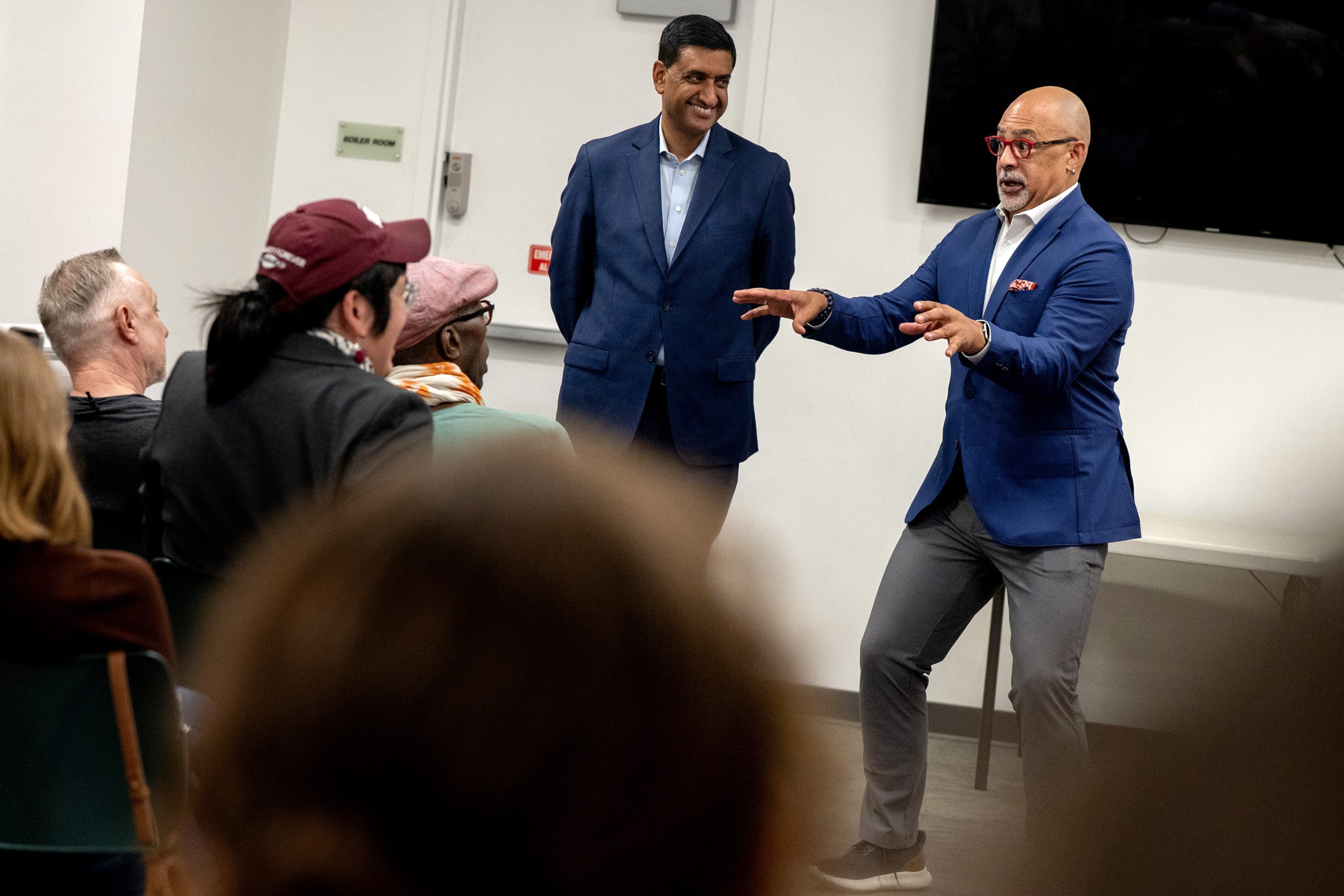
State Rep. Chris Rabb (right) joins U.S. Rep. Ro Khanna (left) Tuesday, July 28, 2026, as he stops on his “Made in PA: New Economic Patriotism Tour” at the City Institute Library on Rittenhouse Square.Tom Gralish / Staff Photographer
One specific provision, Khanna said, was informed by his visit in Washington County with individuals who are paid to host natural gas wells on their properties. It was there that he said he learned of community demands for oil and gas well sites to be at least 2,500 feet from residences. That buffer was a recommendation from a 2020 grand jury report released by Shapiro when he was serving as attorney general and that outlined health and safety issues caused by fracking in the Marcellus Shale region.
The recommendation was not followed, and advocates are continuing to push for extending the buffer from the current distance of 500 feet, according to Inside Climate News.
Khanna’s bill of rights would call for data centers to be built no closer than 2,500 feet from residences, schools, childcare facilities, hospitals or nursing homes. He said the environmental and health hazards for data centers aren’t the same as fracking but they should be kept at a distance from communities that don’t want to live directly next to them.
“At least they were offering royalty checks in the cases of fracking,” Khanna said. “[Data center developers are] not even giving the communities checks. It’s just kind of like, ‘OK, we’re going to build.’ What does the community get out of it? I literally don’t understand it.”
Data center advocates have argued their development is critical in winning an artificial intelligence war with China, and that they will bring construction and some skilled jobs to communities that need them.
Even the staunchest advocates, though, have acknowledged the public blowback.
“I do think that data centers in Pennsylvania have raised legitimate concerns,” U.S. Sen. Dave McCormick (R., Pa.) said during a recent telephone town hall as he continued to promote them in the competition with China and their creation of “thousands of jobs.”
When developers are making their pitch, McCormick said they should come with commitments to protect energy costs and overuse of water, use local labor, invest in the community and pay taxes.
“That should be part of the deal up front,” McCormick said during the telephone town hall in late July. “With all those facts, then the local community can decide whether they want the data center or not. And if they choose not to, that’s their choice.”
Khanna said he’s hoping for bipartisan support as he introduces the bill of rights idea. He’ll also be competing with other proposals — like one from fellow progressives U.S. Rep. Alexandria Ocasio-Cortez (D., N.Y.) and U.S. Sen. Bernie Sanders (I., Vt.) called the AI Data Center Moratorium Act. The bill would enact an immediate federal moratorium on data center construction until other safeguards are passed into law, including some of the ideas Khanna and McCormick have proposed, like around utility costs.
Several Pennsylvania state-level laws have been proposed, though the legislature did not address them during its busy budget season earlier this spring and summer. Lawmakers also left Harrisburg without ending tax breaks aimed at incentivizing data center construction even though the idea had garnered widespread support.
“They shouldn’t be getting these tax breaks to build,” Khanna said. “That’s absurd when you’ve got hyperscalers that are making trillions of dollars.”
The fact that many of those ultra-wealthy corporations are based in his district made the issue a politically dicey situation for him, but also one that the possible presidential hopeful said he was willing to take on.
“We’ve got to pause it in states like Pennsylvania,” Khanna said. “Some of my own constituents aren’t going to like that.”
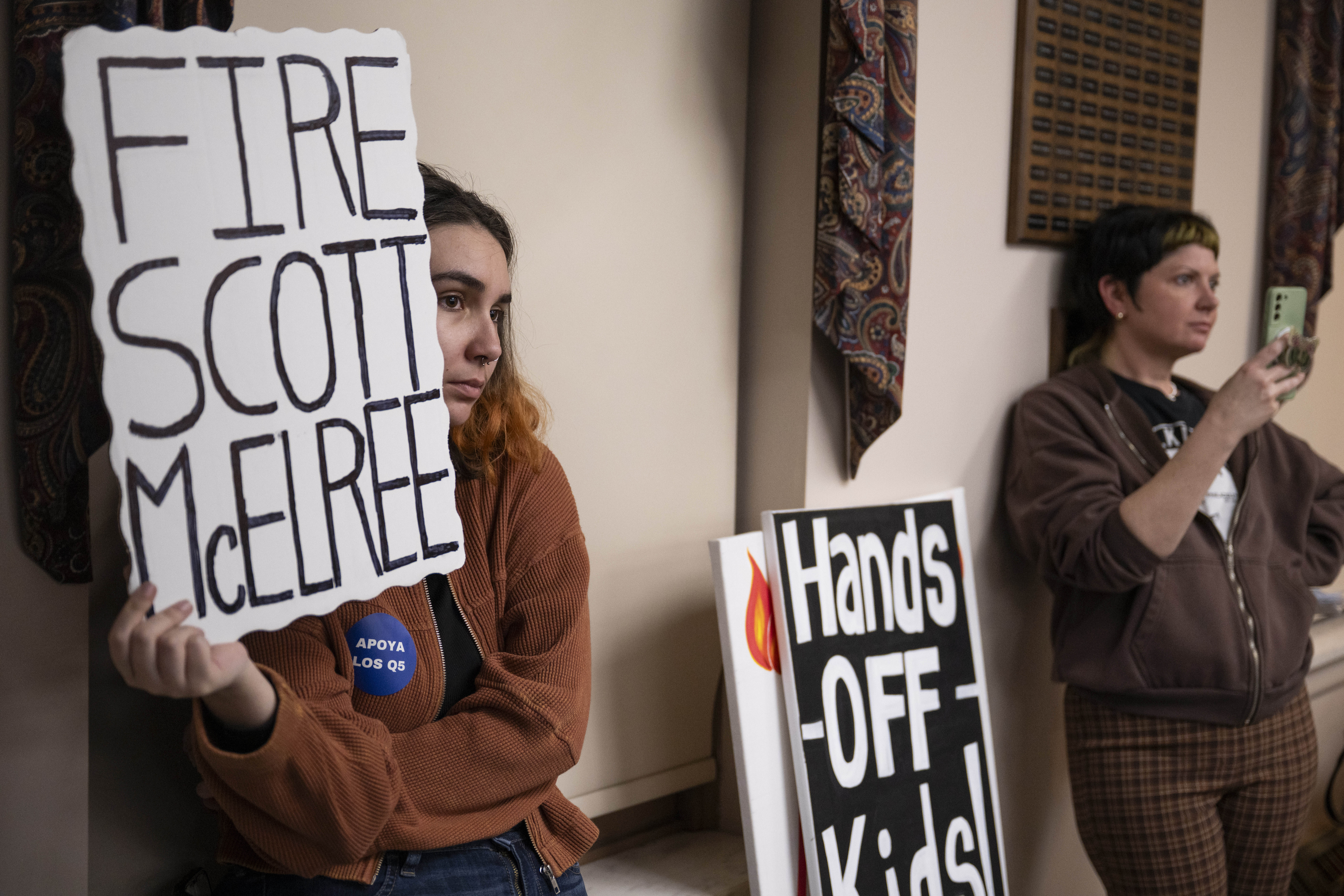
A leader of the Bucks County NAACP and a state legislator on Friday called for reforms in the Quakertown Borough Police Department, saying an investigation that cleared Police Chief Scott McElree of criminal wrongdoing for placing a teenage protester in a choke hold during a confrontation with students earlier this year should not end scrutiny of the incident.
NAACP president Adrienne King joined State Rep. Napoleon Nelson in urging Quakertown police to adopt stronger use-of-force policies to prevent a similar response in the future. Nelson, a Montgomery County Democrat, also said he plans to introduce legislation establishing statewide restrictions on choke holds and expanding the use of body-worn cameras, among other aims.
The calls for change came a week after the Bucks County District Attorney’s Office concluded its almost six-month independent investigation into a Feb. 20 brawl that broke out as students protested ICE enforcement. The investigation concluded that while McElree was the “precipitating factor” in the violence — and confirmed that he held a 15-year-old girl in a choke hold for at least eight seconds — he neither committed a crime nor violated his department’s policies.
In a 20-page report, investigators noted that Quakertown police have no policy restricting choke holds or other neck restraints and that Pennsylvania law likewise places no limits on their use. But investigators said McElree’s decision to engage with the students was “calamitous” and “led to confusion and trauma for an entire community.”
A panel of four members of the Police Chiefs’ Association of Bucks County had previously concluded that McElree had acted reasonably during the incident. On Friday, the group issued a statement saying it disagreed with investigators’ characterization of McElree’s actions as “calamitous.”
Investigators also concluded that several students continued assaulting McElree after it became apparent he was a police officer. McElree, who was 72 at the time, suffered what investigators described as “extensive and serious bodily injury,” including fractured ribs, multiple cuts, and a concussion.
On Friday, King and Nelson said Quakertown’s lack of policies governing choke holds underscored the need for reform, regardless of the district attorney’s conclusion that McElree had not acted criminally. “No criminal charges,” King said, “cannot mean no accountability.”
After George Floyd’s death at the hands of Minneapolis police in 2020, then-Bucks County District Attorney Matt Weintraub announced that all 39 law enforcement agencies in the county had committed to adopting use-of-force policies that met nationally recognized best-practice standards, including restrictions on choke holds.
But by the start of this year, King said, 13 agencies — including Quakertown’s police department — had yet to update their policies.
In a statement Friday, borough attorney Peter Nelson said the NAACP’s characterization of Quakertown’s policies was incorrect, saying that the department had adopted the proposed standards before Weintraub announced the countywide initiative. He said borough officials had reached out to the NAACP “to discuss their misunderstanding of our policies.”
Separately, the district attorney’s office said Friday that Quakertown’s police department does not currently have updated policies in place and that District Attorney Joseph Khan is urging the borough to adopt them.
Khan considers the adoption of the standards by all law enforcement agencies in the county“a matter of unfinished business” that he “is committed to helping complete,” spokesperson Manuel Gamiz said.
McElree, who also serves as the borough’s manager, did not return a phone call seeking comment Friday.
Nelson, the state representative, said the legislation he plans to introduce would include “commonsense measures to help ensure what happened” in Quakertown does not “continue to go unanswered.”
Meanwhile, the Peace Center of Bucks County plans to host four “listening circles” in Quakertown, where residents will be invited to discuss how the conflict affected their lives.
Barbara Simmons, the organization’s executive director, called the gatherings an “opportunity to cultivate empathy” in a community that has remained deeply divided since the confrontation.
The sessions are expected to begin next week, with dates, times, and locations to be posted on the center’s website.
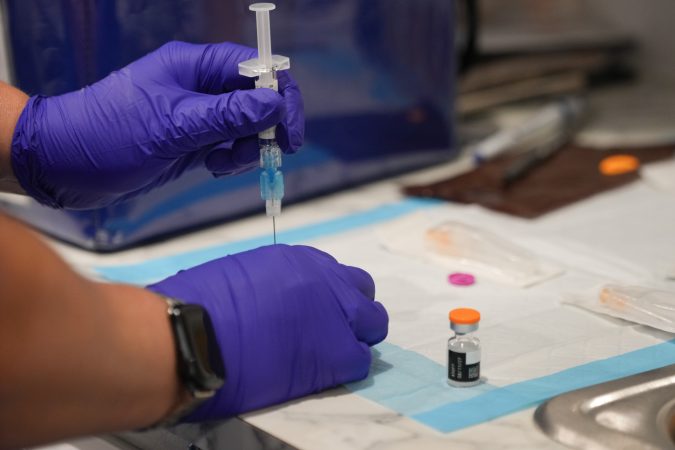
Pennsylvania officials on Monday released a new interactive tool where parents can look up vaccination rates at their children’s schools for the 2025-26 academic year.
“At a time when misinformation and conspiracy theories are sowing distrust in longstanding medical guidance, and reversing decades of science-backed progress, it’s more important than ever that [the state health department] provide Pennsylvanians with as much accurate information as possible,” state officials said in a statement.
The tool was launched amid an ongoing measles outbreak in Pennsylvania. So far this year, the state has seen 176 measles cases in 14 counties, with 35 new cases reported in the last week. Nearly three dozen people have been hospitalized. None were fully vaccinated against the highly contagious virus, which can infect 9 in 10 unvaccinated people exposed to it.
In all of 2025, the state reported 16 measles cases.
Philadelphia-area vaccination rates
The latest data on measles, mumps, and rubella vaccination coverage in the Philadelphia area show that vaccination rates for kindergartners dropped slightly, by less than 1%, in Philadelphia and three of four suburban counties between the 2024 and 2025 school years.
(function(){function e(){window.addEventListener(`message`,function(e){if(e.data[`datawrapper-height`]!==void 0){var t=document.querySelectorAll(`iframe`);for(var n in e.data[`datawrapper-height`])for(var r=0,i;i=t[r];r++)if(i.contentWindow===e.source){var a=e.data[`datawrapper-height`][n]+`px`;i.style.height=a}}})}e()})();
On the county level, no Philadelphia-area counties reported vaccination rates at or above 95% for kindergartners.
That is the “herd immunity” threshold, the rate scientists say is necessary to prevent the spread of the virus.
Bucks County had the lowest MMR vaccination rate for kindergartners, at 93.7%, down from 94.3% the year before.
In Chester County, vaccination rates for kindergartners held steady at 94.5% for both 2024 and 2025. Chester has confirmed 20 measles cases this year and is the only Philadelphia-area county to report cases in the current outbreak, which began in April.
Some counties saw slight rises in vaccination rates for seventh or 12th graders, but Delaware County saw slight drops in vaccination rates across grade levels.
The newly released data also show more parents are using exemptions to opt out of vaccination. Pennsylvania has among the most permissive vaccination exemption provisions in the country; parents can opt not to vaccinate for religious, philosophical, or medical reasons.
Medical exemptions decreased by 7% in the Philadelphia region between 2024 and 2025, but religious exemptions jumped by 14% and philosophical exemptions increased by 19%.
Statewide vaccination rates
Schools are required by state law to report their vaccination rates for kindergarten, seventh, and 12th grades; more than 90% of schools complied, state officials said.
According to the new dashboard, schools reported vaccination data from 5,943 grades. The dashboard obscures data from grades with enrollment below 20 students to protect privacy.
Statewide, more than half of reporting kindergartens had MMR vaccination rates above the herd immunity threshold, state officials said.
Seventh- and 12th-grade classes were more likely to report vaccination rates at or above 95%, with 74% of seventh-grade classes and 83% of 12th-grade classes reaching herd immunity, officials said.
Staff writer Sarah Gantz contributed to this article.
A school bus aide for the Bensalem Township School District groped a special-needs student and filmed the assault with his cell phone, police said Monday.
Ali Khan, 62, was charged late last week with corruption of minors, endangering the welfare of a child, indecent assault, and related crimes after the 14-year-old girl’s parents contacted police.
In a statement, interim Bensalem Township Superintendent Victoria Velazquez said Khan was removed from duty after the district was notified of the police investigation.
The district is cooperating with police and has initiated an internal investigation, she said.
Khan remained in custody, in lieu of 10% of $500,000 bail, court records show. There was no indication he had hired an attorney.
The girl told police that Khan on Thursday touched her inner thigh while she was sitting next to him on a bus heading to Bensalem Township High school, according to the affidavit of probable cause for his arrest.
Before the assault, she said, Khan blocked her path and forced her to take a seat on the bus next to him. He fastened her seat belt for her, the affidavit said, and while doing so put his face close enough to hers “to kiss her.”
During the ride to her home, Khan intentionally dropped a pen and, while bending down to retrieve it, pointed his cell phone’s camera between her legs, the affidavit said.
Surveillance footage from the bus showed that the girl closed her legs to prevent Khan from touching her, but that he pulled her legs apart to continue touching her. At one point during the assault, police said, Khan put his hands in his pants and appeared to touch himself.
On June 1, Kent Groff wrote two $2,400 checks toward his grandchildren’s tuition this fall at United Friends School, a small Quaker early childhood and elementary school in Quakertown.
The checks were cashed on June 4, Groff said. He was shocked when a little more than a month later, United Friends announced it would be closing — in five days.
In a July 10 letter to families, the school’s board of trustees said it could not open for the fall school year because not enough students were enrolled.
“Unfortunately, with slow enrollment activity in early summer and unexpected late attrition, it became clear that there was no sustainable path forward,” the board said in the letter, noting that the school had built a “conservative” budget on 80 students, but only 50 had committed to attend.
The news stunned families, who said they were given no warning that the school, which had been open for 42 years, was on the brink of closure.
“I was like, there’s no way this can be true. There has to be something that can be done,” said Kelly Kringe, Groff’s daughter, who had just picked her children up from a camp at United Friends when she got the email announcing the closure.
Kringe, whose two children had attended United Friends last year and who also paid tuition for the coming fall, said there was “never any plea for help” from the school: “Nobody really knew anything.”
The board — which did not list individual trustee names in the July 10 letter — said it was preparing answers to questions including “how prepaid tuition will be addressed during the wind-down process.”
On Friday, the board said it had followed steps prescribed by the National Association of Independent Schools for closing. It directed families to contact a lawyer, Alex Moretsky, with “questions about tuition reimbursement, compensation or billing.”
Kringe said she called Moretsky but got a message that he was out of the office. Moretsky did not immediately respond to a request for comment Friday.
Before Friday, some families said they had not gotten any answers from the board to their questions.
Groff, for instance, said he got no response to an email he sent the board that read in part: “I’m inquiring on how to get refunded for next year’s tuition that I already paid. … Thanks again for providing 42 years of excellence.”
The board did not respond to a list of questions sent by The Inquirer. United Friends’ head of school, Daena Berdougo Remondelli, did not respond to a request for comment.
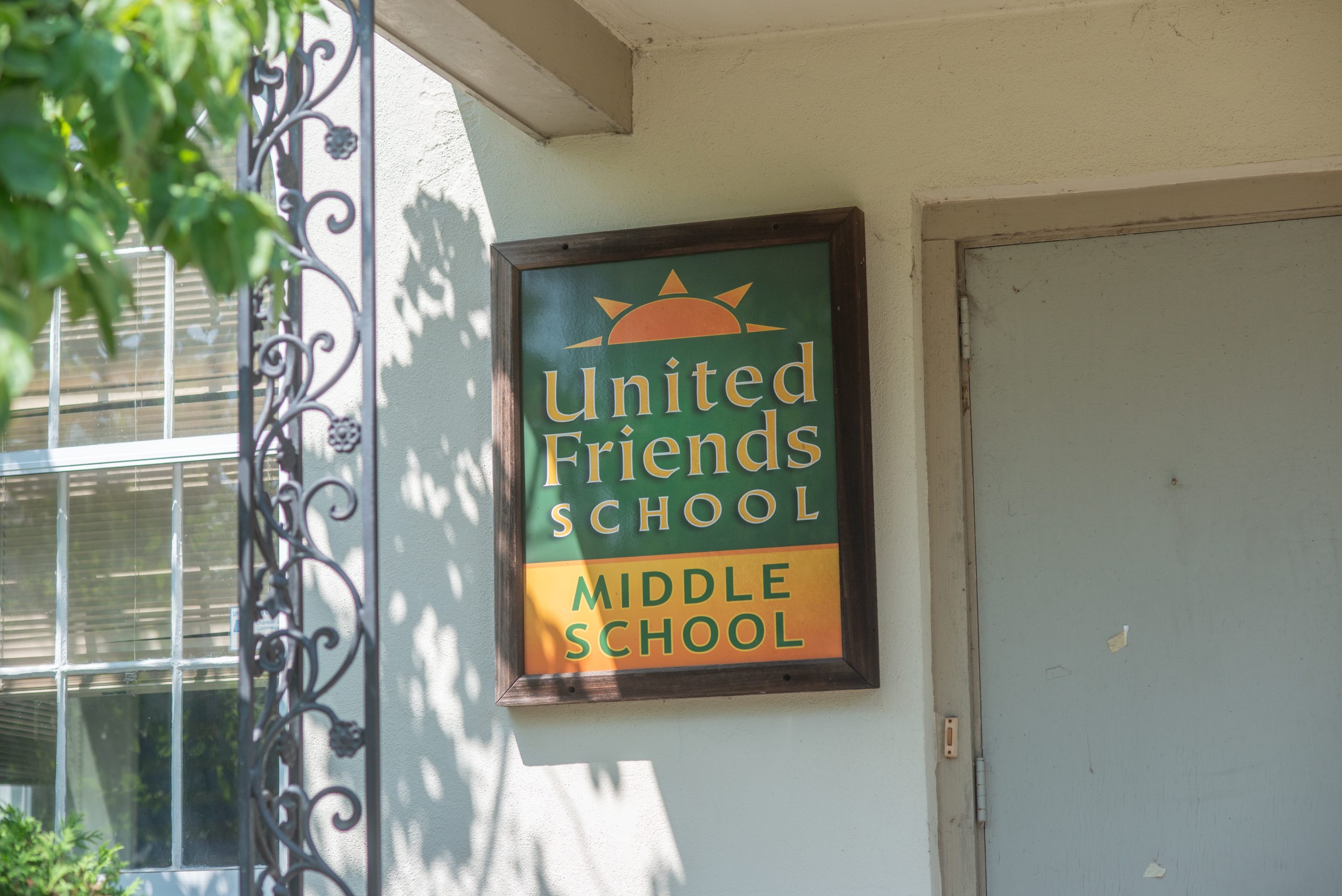
A sign at United Friends School in Quakertown.William Thomas Cain / For The Inquirer
The names of the school’s board members are not listed online. One board member, Bob Wirtschafter, said in a brief phone interview last Monday that he could not comment on what would happen with prepaid tuition.
“We know we owe them,” Wirtschafter said, adding that “I can’t say anything.”
Wirtschafter, who said he had been on the board for 32 years, said he had “seen all kinds of rumors” about the school’s closure, including that there was financial wrongdoing.
“I can tell you, it was all about tuition,” Wirtschafter said. There were 60 students enrolled for the coming year in April, but by May, “we lost five families because of the economy,” he said. The school charged $20,000 a year in tuition.
Wirtschafter said the school had been “struggling for years.” It closed its middle school and sold its building last year, he said, which “kept us alive for another year.”
County records show United Friends sold several properties for $800,000 in May 2025 to AA Property Holdings LLC.
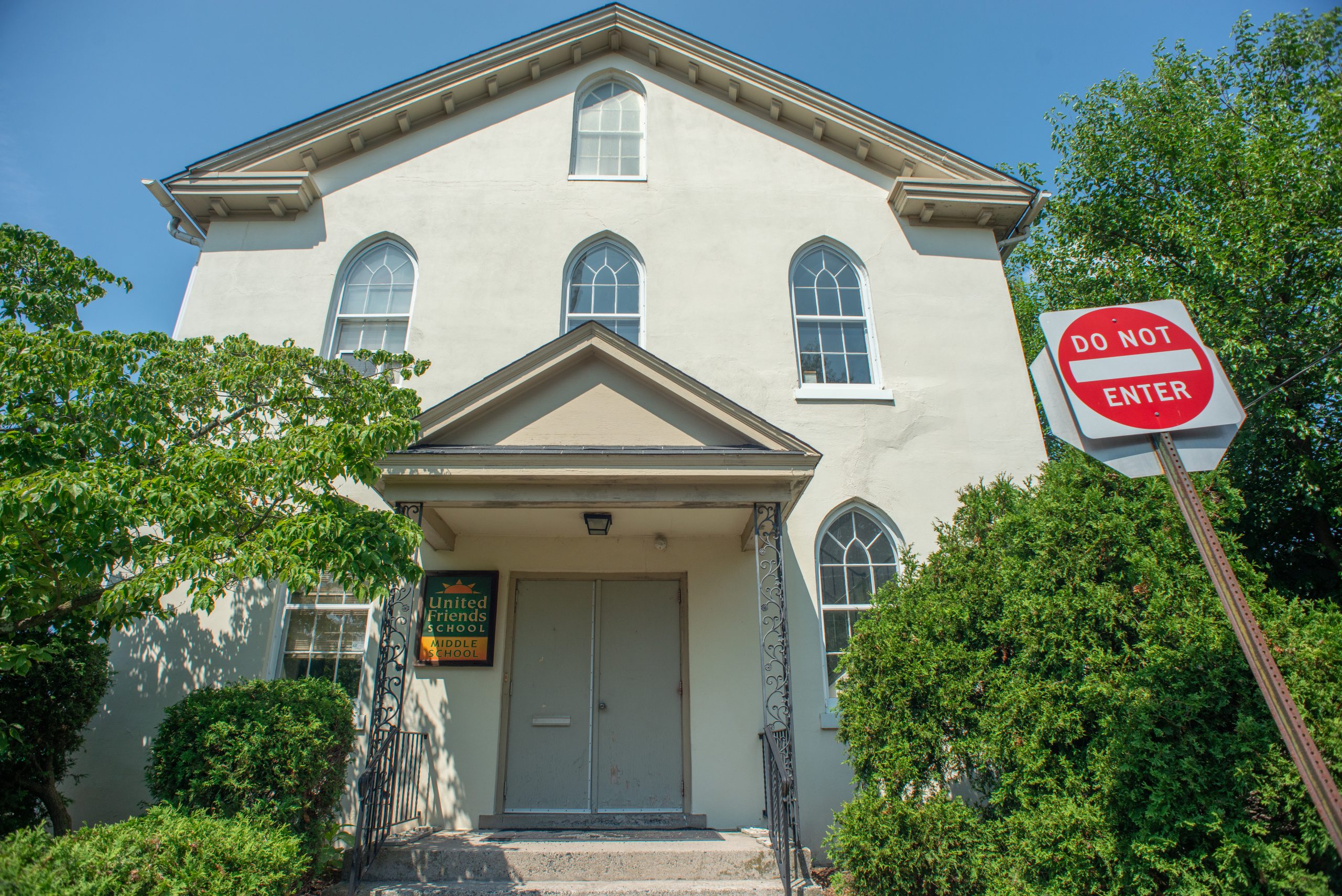
One of the original school buildings at United Friends School in Quakertown.William Thomas Cain / For The Inquirer
The LLC is registered to a Sellersville address owned by Mateen Afzal, whose family founded a manufacturing company in Bucks County and who is listed as director of the Afzal Family Foundation. A message sent through the foundation’s website was not returned this week.
With the drop in enrollment headed into the fall, “we just couldn’t make it work,” Wirtschafter said. “We decided we had to close.”
He said United Friends was not alone among small Quaker schools facing similar troubles, citing Cambridge Friends School in Massachusetts.
Cambridge Friends announced in May that it would be closing after the end of the 2026-27 school year.
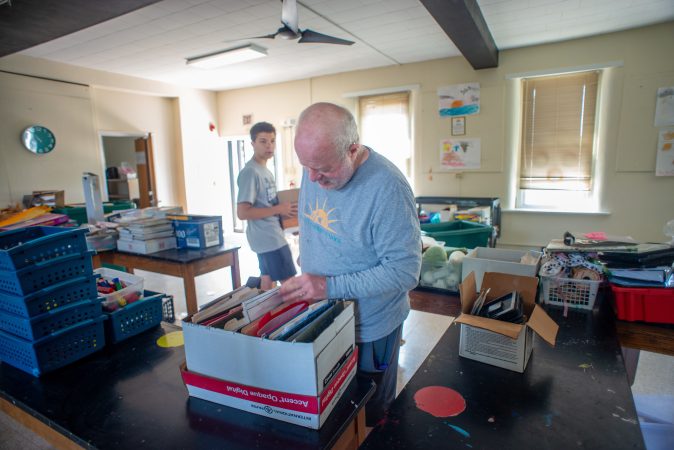
A week after announcing its closure, United Friends sent another message to families, inviting them to a “voluntary two-day work effort” to clean out the school on July 24 and 25.
“Community members who are unable to participate in person are welcome to support these efforts by making a voluntary contribution to help offset the costs associated with the cleanup,” the board said in the message.
A sign announcing a “liquidation sale” at United Friends on July 25.William Thomas Cain / For The Inquirer
“Can you imagine the sheer anger that hit the teachers and the parents? We just closed your school, we took all your money, can you help us clean up and donate more money?” Groff said.
In his efforts to reclaim his tuition payments, Groff went to his bank and the bank where United Friends had deposited the checks, with no success. He said he also contacted the Quakertown police and the Bucks County District Attorney’s Office.
Manuel Gamiz, a spokesperson for the district attorney’s office, said the county’s consumer protection division was taking complaints from families and “attempting to mediate these matters.” Anyone affected can call 215-348-6060 or, toll-free, 1-800-942-2669, Gamiz said.
Groff went to small claims court, but a clerk told him it would be difficult to file a claim because “you won’t be able to serve their papers,” he said. “There’s nothing that exists,” given that the school already closed. Groff said he does not know if the board of trustees has an address.
Groff, who has another daughter who attended United Friends, said the schools and teachers were “absolutely wonderful.”
“That’s why this is just so devastating and shocking,” he said.
Occasionally, I get to share good news in this space. Wu Shaoping — the Chinese dissident who fled to America but was detained by U.S. Immigration and Customs Enforcement after a Central Pennsylvania traffic stop — was freed from ICE’s Moshannon Valley Processing Center Friday night, not long after my column dropped and a couple ofmembers of Congress pressed for his release. His asylum case is still pending. I’ve learned there’s actually a lot more to this story — stay tuned.
The Trump regime is shifting billions from college into AI. That’s no accident.
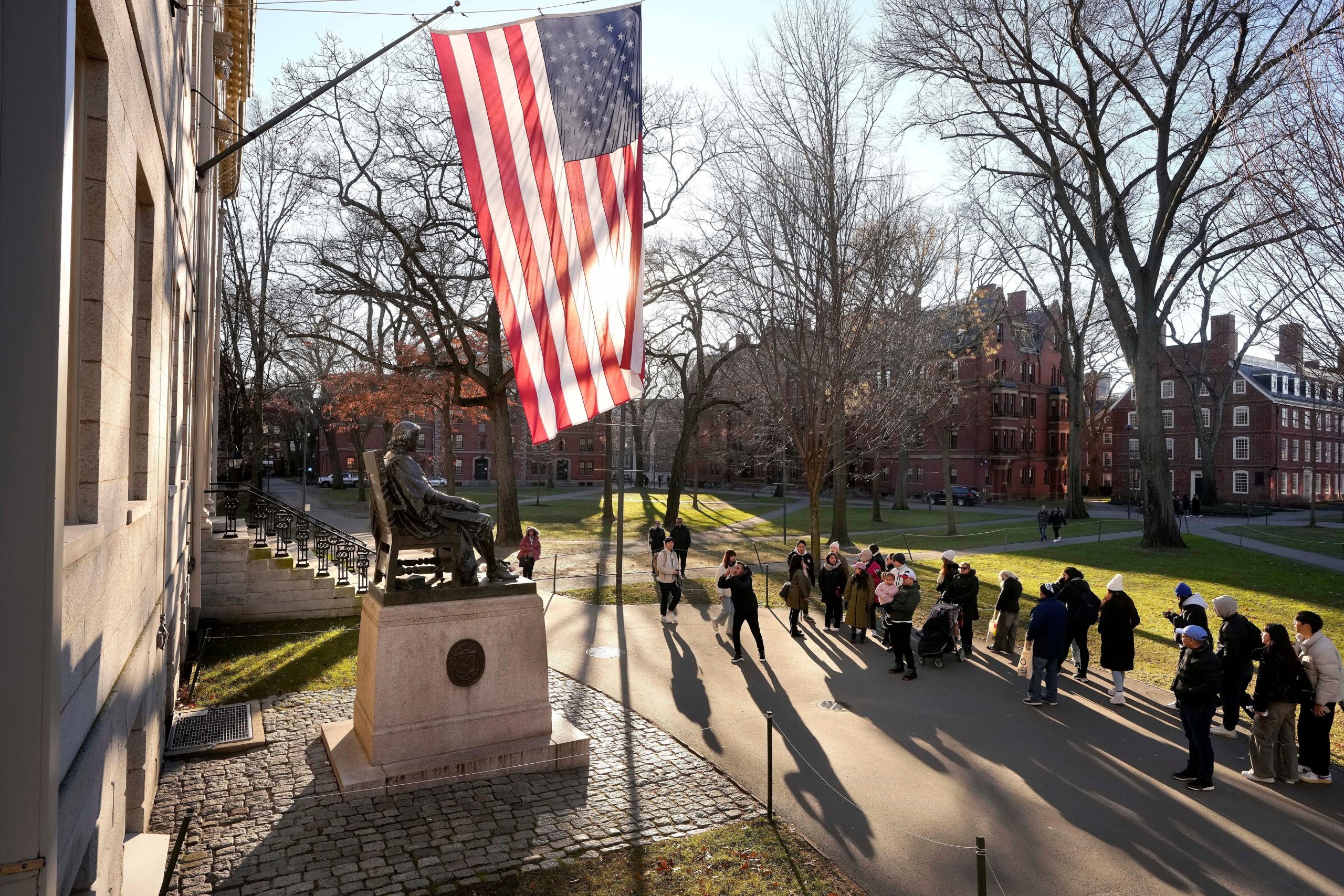
People take photos near a John Harvard statue on the Harvard University campus in 2024 in Cambridge, Mass.Steven Senne
The U.S. government has become pretty stingy when it comes to finding money for human beings — just ask any struggling single mother in Mississippi needing food stamps, or a physician in Africa waiting on vaccines that no longer arrive through American foreign aid programs.
But Washington always seems to have an open wallet for computers.
In fact, the very first one — ENIAC (Electronic Numerical Integrator and Computer), constructed right here in Philadelphia on the University of Pennsylvania campus as World War II came to an end — was funded by the U.S. Army Ordnance Corps at a cost of about $7 million in today’s dollars. Over the years, billions of dollars in federal funding would fuel key moments in the Computer Age, including the creation of the internet, which was also a Pentagon project.
Still, there was something chilling about last week’s report from the White House Office of Science and Technology Policy that called for a surge in research aid in one area: computers and robots using artificial intelligence, or AI. The nuts-and-bolts of the paper — “Science: A New Golden Age” — highlighted a new, more-than-$5 billion commitment for an AI-in-science program called the Genesis Mission.
But the White House paper also called for a radical shift in the way the federal government pays for science, with a massive move of $200 billion away from funding research and basic science at top universities — the system that has thrived since the time of ENIAC — and toward individuals and more directly applied AI projects, including those at private tech companies.
Goodbye, John Harvard. Hello, Claude.
“This plan raises profound concerns about the future of publicly funded science,” the top union leaders for educators — Todd Wolfson of the American Association of University Professors (AAUP) and Randi Weingarten of the American Federation of Teachers (AFT) — said in a joint statement last week. “It does nothing to make anyone healthier or safer, and it isn’t what Americans want.”
Wolfson, Weingarten, and other critics of the new science scheme from the Trump regime say it unravels long-standing protections for academic freedom and transparency on campuses in favor of a process that’s ripe for political interference. “This is a defining moment for American science,” the educators wrote.
Indeed, while the federal funding gains for AI are still mostly theoretical, the cuts for research projects on college campuses across the United States have been underway since Donald Trump took office in January 2025, and the impact has already been dramatic.
The playing field is complex, but a recent deep analysis by the Brennan Center for Justice found that the Trump administration successfully froze about $3 billion in previously approved grants for scientific research, is imposing a scheme to slash an additional $4 billion, and issued a budget proposal calling for a whopping $44 billion additional reduction.
The analysis noted that “these midstream freezes and cancelations have ripple effects far beyond the nominal dollars involved, prompting layoffs, interrupting careers, and destabilizing the budgets of research universities.”
But now it feels like the White House is stating the quiet part out loud: The bigger goal is simply to build smarter computers, even if that means humans get dumber. Intelligent robots still don’t vote in elections, after all, but poorly educated people do.
Ironically, the regime’s rationale for spending our tax dollars on making AI more powerful regurgitates a Cold War mentality that, on the surface, sounds like the reasons behind decades of massive college research funding and programs like the space race of the 1960s or the nuclear arms buildup: to stay one step ahead of the communists — this time in China.
The difference between then and now is that after World War II, Washington made a conscious effort to fund basic science and free inquiry as a way to distinguish the United States from the rigid planned economy of our then-biggest adversary, the Soviet Union. Now, the White House seeks to copy Beijing’s centralized planning. Can we truly promote science without lifting up the actual scientists?
Trump’s “Golden Future of Science” feels more like an extremely narrow wind tunnel. The irony is that many of today’s politicians in both parties see higher education as mainly workforce development, even as corporate recruiters say what they really want are more broadly educated critical thinkers. In other words, the AI era actually screams out for a boost for the humanities like literature or philosophy — the types of majors that are getting crushed in the Trump era.
An epic battle is looming between those obsessed with a new nuclear arms race around AI — especially the Silicon Valley billionaires who stand to gain and who, not coincidentally, have heavily funded the second coming of Trump — and a public that doesn’t want our communities ruined by noisy, energy-guzzling data centers that aim to take away our jobs while making reading a lost art.
A government scheme to build better computers while rendering humans obsolete used to be the stuff of dystopian science fiction. Maybe we can keep it that way before it’s too late.
Yo, do this!
About once a year or so, I write, “Yo, actually maybe don’t do this.” Last weekend, I ventured out of my underground lair to join every other American in devoting three hours to Christopher Nolan’s The Odyssey. To say I was underwhelmed would be, well, an understatement. The movie was a funeral for the now totally lost art of movie dialogue, amid a plot that meandered from gouge-your-one-eye-out boring to bursts of incomprehensible violence. It was a metaphor — Troy was My Lai, apparently — that got terribly lost at sea. But I do feel there’s something happening here. First the World Cup, now this mediocre whale of a motion picture: Americans are desperate to bea part of something, anything, that is bigger than our politics.
Regular readers know I’m a huge fan of the CNN modern history documentaries they now call the Decades Series, but the original format of politics, TV, and music did have gaping holes. A few years ago, they backfilled with a series on The Movies of our post-World War II world. Now, finally, Decades in Sports arrives on CNN with back-to-back episodes (presumably the 1960s and ‘70s) on Sunday night at 9 p.m. I can’t wait. Spoiler alert: Havlicek stole the ball.
Another thing you may have noticed is that Rep. Ro Khanna, who meandered west after Council Rock High School in Bucks County and became the congressman from Silicon Valley, is something of a friend of the newsletter. He’s back in our area frequently, and he’ll be at Philadelphia’s Parkway Central Library on Tuesday at 6 p.m. to deliver a special speech: “America at a Crossroads: A Vision for the Future on our 250th Anniversary.” He’ll talk about his background growing up here as the son of immigrants and the need for economic freedom that ends gross corruption and inequality — go check it out.
Ask me anything
Question: Who should be DNC [Democratic National Committee] chair? And does it matter? — Martha (@marthagrant.bsky.social) via Bluesky
Answer: It does matter. Despite everything else that’s happening in the world right now, one of the more revealing stories of the last week was the New York Times article about Democrats in disarray, focusing on embattled DNC chair Ken Martin, who before the 2024 election was the state leader in Minnesota. Under Martin, the party is sliding deeper in debt, and there are complaints about an abrasive personal style, the botched “autopsy” of the 2024 election, and the Democrats’ muddled message. A change should be made as soon as possible. Hopefully, party leaders could rectify the mistake of not picking Wisconsin’s more skilled ex-party chief, Ben Wikler. The problem is that, under the constant assault of GOP fascism, Dems need to fix this plane while it is flying at 37,000 feet.
What you’re saying about …
There was an excellent response to last week’s question about what a future Democratic president should do on Day One to erase the stench from two Donald Trump presidencies. I wish I could reprint all the suggestions, but recurring themes included a rapid purge of any Trump holdovers, abolishing ICE and related immigration raiders, and a speedy effort to prosecute the many wrongdoers. The two most frequent suggestions included major reform of the judiciary, from fixing the mangled immigration courts to ethics reform, and definitely an expansion of the U.S. Supreme Court. Mark Cohen suggested two more federal appeals courts and then “assign a Supreme Court justice to each one, bringing a total of 13 justices to the Court for fixed term of 18 years.” Another theme was erasing Trump’s various renovations to the District of Columbia. The ex-congressman Joe Hoeffel wrote, “Strip all the cheesy gold out of the Oval Office.”
📮 This week’s question: Speaking of Democrats, some top party officials like House Minority Leader Hakeem Jeffries seem to think the November election is primarily about “affordability.” That seems to miss the bigger moment, but I’m curious: What pithy message would you like to see Dems run on this fall? Please email me your answer and put the exact phrase “Democratic message” in the subject line.
Backstory on the Gen Z revolution rocking India
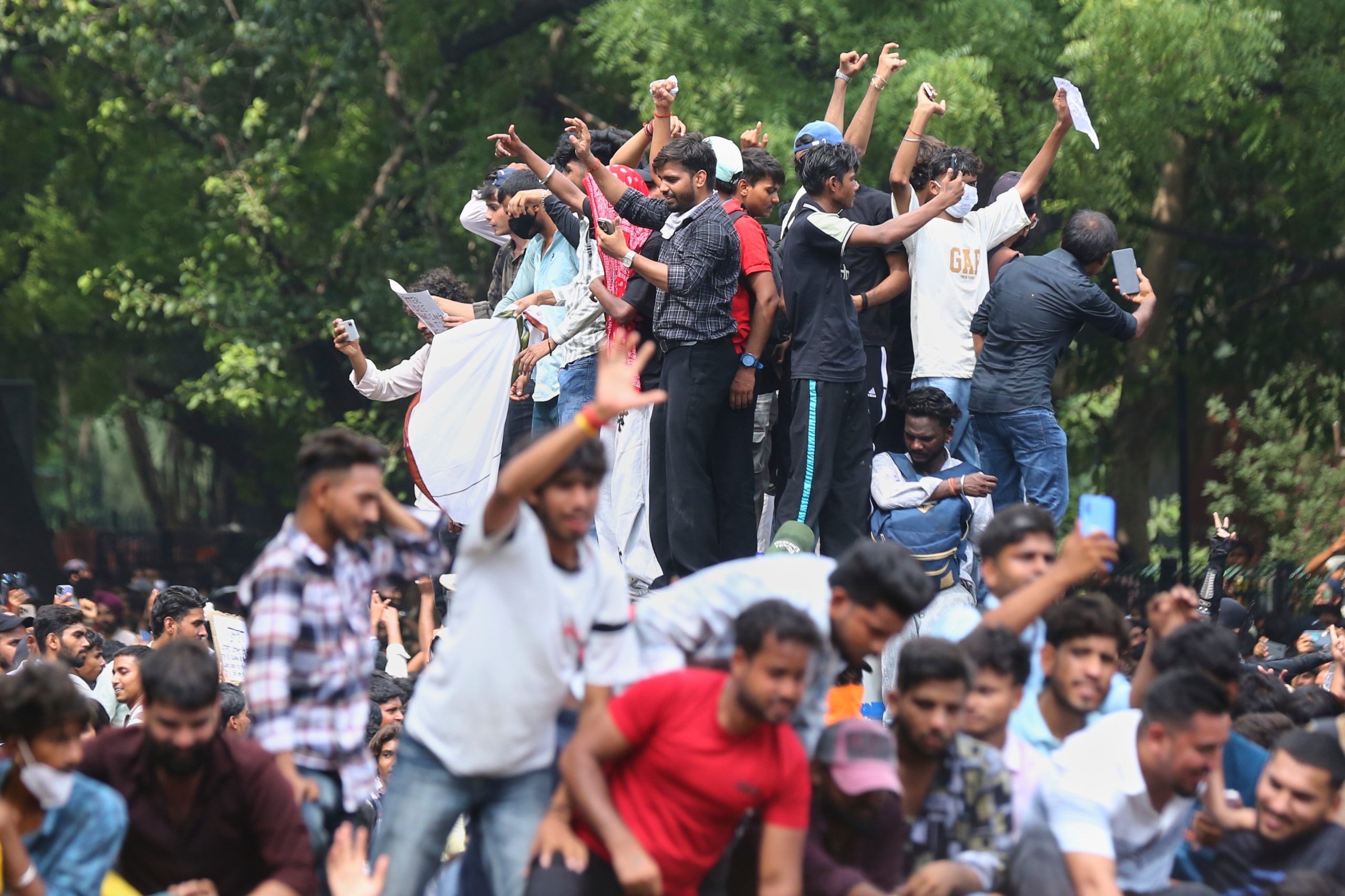
Protesters participate in a demonstration demanding educational reforms as part of the Cockroach Janta Party’s ongoing protest movement in New Delhi on July 25.Vipin
Last October, I wrote a column, with great interest and enthusiasm, about a growing revolution of Gen Z 20-somethings that was taking place across the global south — from Madagascar to Peru to Nepal, and elsewhere — who were fed up with the political corruption of grown-ups and threatening to topple governments. I wondered if this very online youth activism might spread to the United States or other more developed nations, but over the coming months, the momentum for these protesters and their Japanese anime pirate flags seemed to fade. The so-called Gen Z revolution looked like a historical footnote.
But it turns out that the embers of youth unrest were still smoldering, and this summer they have reignited in a big way in the world’s largest — if deeply flawed — democracy: India. And as is so often thecase, the spark was something nobody saw coming: a nationwide exam for entrance to medical school taken by roughly two million students, which the government moved to scrap after allegations that some of the questions had leaked. Some young people who’d studied for months for the exam took tothe streets in protest, and — as so often happens — a repressive police response only caused these demonstrations to get bigger. So did a comment from India’s chief justice, who described young, unemployed Indians as “cockroaches.”
That gave the protests a name when Abhijeet Dipke, a 30-year-old graduate of Boston University, posted on the social media platform X that he was starting the “Cockroach Janta Party” — a wordplay on the Indian authoritarian-minded leader Narendra Modi’s Bharatiya Janata Party. Incredibly, this “CJP” has seen its protests — calling successfully for the resignation of the education secretary and for other deeper reforms, using tactics such as sit-ins and hunger strikes — spread to some 30 cities while clogging the streets of the capital, New Delhi. The movement has become arguably the biggest threat to Modi’s strongman rule since the leader’s ascension in 2014.
All of which raises the same question I posed last fall: Could it happen here? In one sense, it already has. On Friday, about 500 Indian students and other members of the U.S.-based diaspora gathered under a statue of Mahatma Gandhi in Manhattan’s Union Square to express support for the “cockroaches” of their native country. Meanwhile, the kind of pressures that caused India’s youth to erupt — government meddling in higher education, diminished job prospects in a time of rising AI, to name two — are also found in the United States. Young people almost never protest over the same stuff that riles up their parents, as shown by the gray hairs that have populated the No Kings rallies against Donald Trump. When lightning strikes, it will probably be something as unexpected as a college entry exam. But thunderstorms are definitely in the forecast.
What I wrote on this date in 2019
A culture of death permeates the Donald Trump regime, from the doomed fishing boats of the Caribbean to an Iranian girls’ school to the scores now dying in immigration detention cells. But this is not exactly new. The seeds were planted in the first Trump presidency, when his attorney general, William Barr, led a push to revive the death penalty for federal prisoners in a big way. On July 28, 2019, I asked: “What took the American Caligula so long to bring back the spectacle of executions to electrify the masses (but not the prisoners … they’d be lethally injected) and juice his 2020 reelection campaign? Indeed, the five executions are scheduled around the Christmas holiday, presumably to remind us of its pagan roots.”
In 2026, I’ve been very focused on the individuals whose world has been turned upside down — or, in some cases, ended prematurely — by the horrors of life in these authoritarian United States. Last week, I took a deep dive into the story of Wu Shaoping, a Chinese dissident who fled his likely detainment by Xi Jinping’s regime and made it to Pennsylvania with his wife and teen daughter, only to get arrested at a traffic stop, turned over to U.S. Immigration and Customs Enforcement, and detained. The outcry may have had something to do with ICE’s release of Wu shortly after the column ran. Over the weekend, I wrote about the police killing of Corey Ruiz in Madison, Wisc. — noting that the shootings of civilians by cops have only increased since the massive George Floyd protest marches of 2020. I urged an end to the new numbness about police violence in America.
You didn’t really think I could make it all the way through the newsletter without mentioning the face that launched 1,000 hot takes: basketball king LeBron James. He stunned not just the sports world but America’s founding city by announcing Friday that he is taking his aging but still considerable talents to South Philadelphia, hoping to grab one last title with a completely revamped 76ers. Has there been any other story since then? The Inquirer has told you about the first time James played at the Palestra, his new uniform (No. 23), the speculation over how he will (or won’t) gel with the rest of the Sixers, the speculation over where he might live, hisrelationship with Tyrese Maxey and Joel Embiid, and on and on and on. Just wait until he actually takes the court this fall! Actually, don’t wait. Subscribe to The Inquirer today, slam dunk the paywall, and read every story from now until the hoped-for parade down Broad Street.
By submitting your written, visual, and/or audio contributions, you agree to The Inquirer’s Terms of Use, including the grant of rights in Section 10.
The debate over a proposed 2 million-square-foot AI data center in Plymouth Township near Conshohocken has become acrimonious, with local officials and the developer trading accusations of mistreatment.
Plymouth Township Council Chair Lynne Viscio said Monday that the project’s developer, Brian O’Neill, had “bullied” and “intimidated” township officials in an attempt to gain approval to build the facility on the site of the shuttered Cleveland-Cliffs steel mill.
O’Neill’s recent efforts have included a legal challenge to the township’s zoning ordinance. Viscio said it was filed after O’Neill “rejected” the township’s concerns and its proposed data-center “safeguards.”
“This is a blatant attempt by the applicant to demand approval by throwing a tantrum,” Viscio said in a statement, which she delivered during a live streamed appearance by council members, later posted to the township’s website. “The township is not interested in entertaining such theatrics.”
Reached by phone, O’Neill called the accusations “a bold-faced lie” that were part of a “misinformation campaign” against his planned data center. He said he had been “negotiating in good faith” with township attorneys for months and had agreed to “the majority” of the township’s conditions.
“We are sympathetic to the fact that they are under tremendous political scrutiny from people outside the township, as well as residents inside the township, and that makes giving a landowner their property rights … challenging,” said O’Neill, a longtime developer in Conshohocken and on the Main Line.
“However, I am a landowner, and I do have rights,” he added, “and it is their job to be impartial and fair in their analysis and response.”
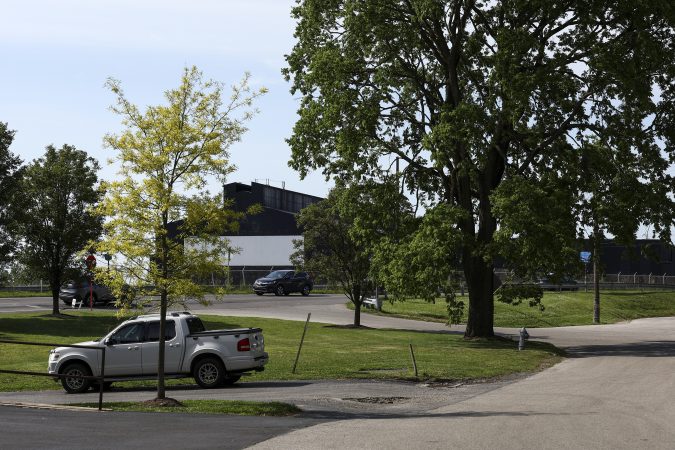
The closed Cleveland-Cliffs steel mill is seen last month outside Conshohocken.Monica Herndon / Staff Photographer
Hyperscale data centers, such as the one O’Neill is proposing, house the energy-hungry technology that powers ChatGPT and other artificial intelligence tools.
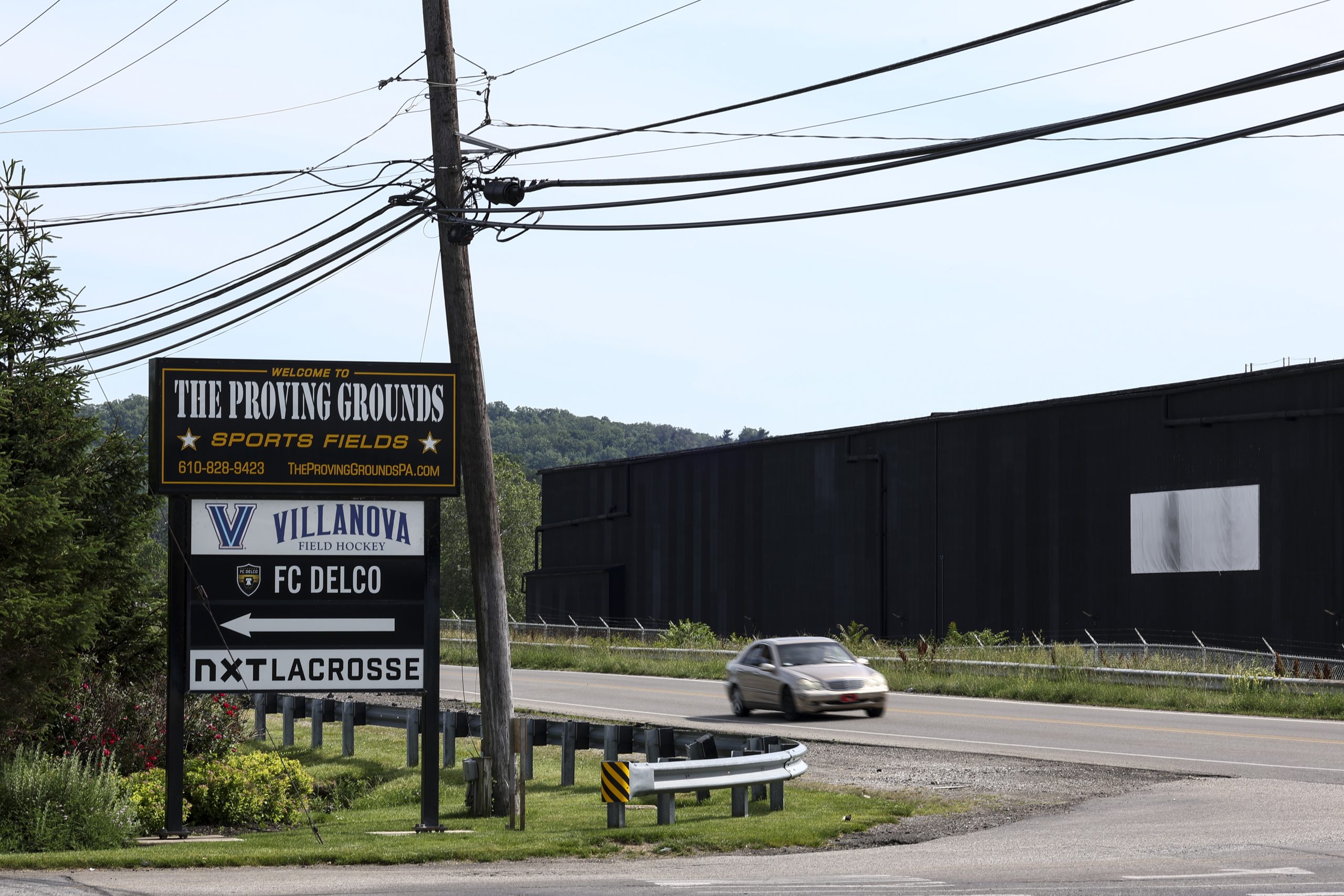
The Plymouth Township site is less than a mile from downtown Conshohocken, near the Proving Grounds sports complex, Tee’s Golf Center, and dozens of homes in the township’s Connaughtown section.
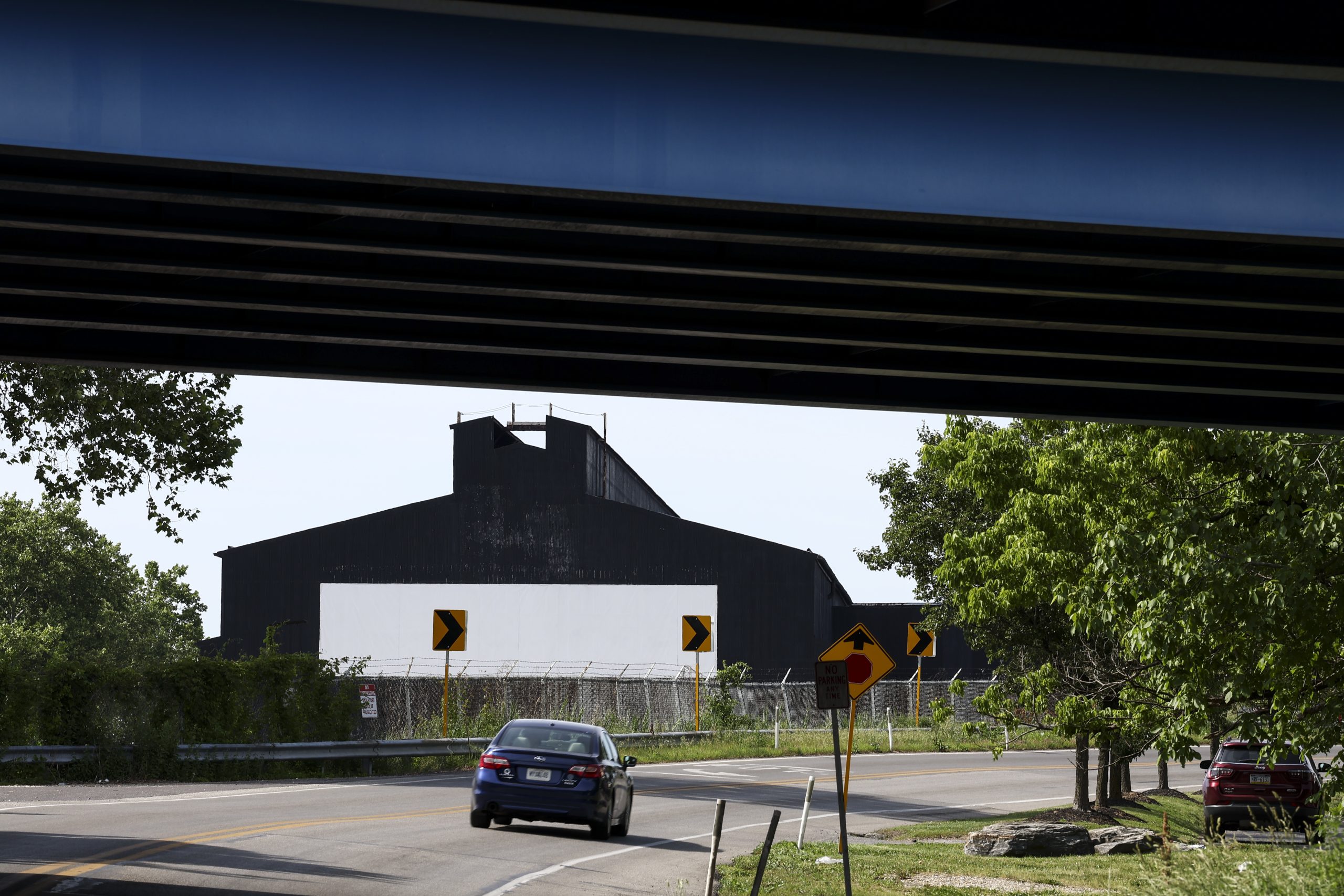
The closed Cleveland-Cliffs steel mill where Brian O’Neill wants to build a data center is shown in June.Monica Herndon / Staff Photographer
O’Neill has not said who would operate the center but has indicated it would be a tenant related to the life sciences.
An initial zoning hearing board meeting on the resurrected Plymouth Township project was held last month. As of Monday, a more substantive hearing was scheduled for Aug. 6 and was set to include the presentation of evidence and testimony.
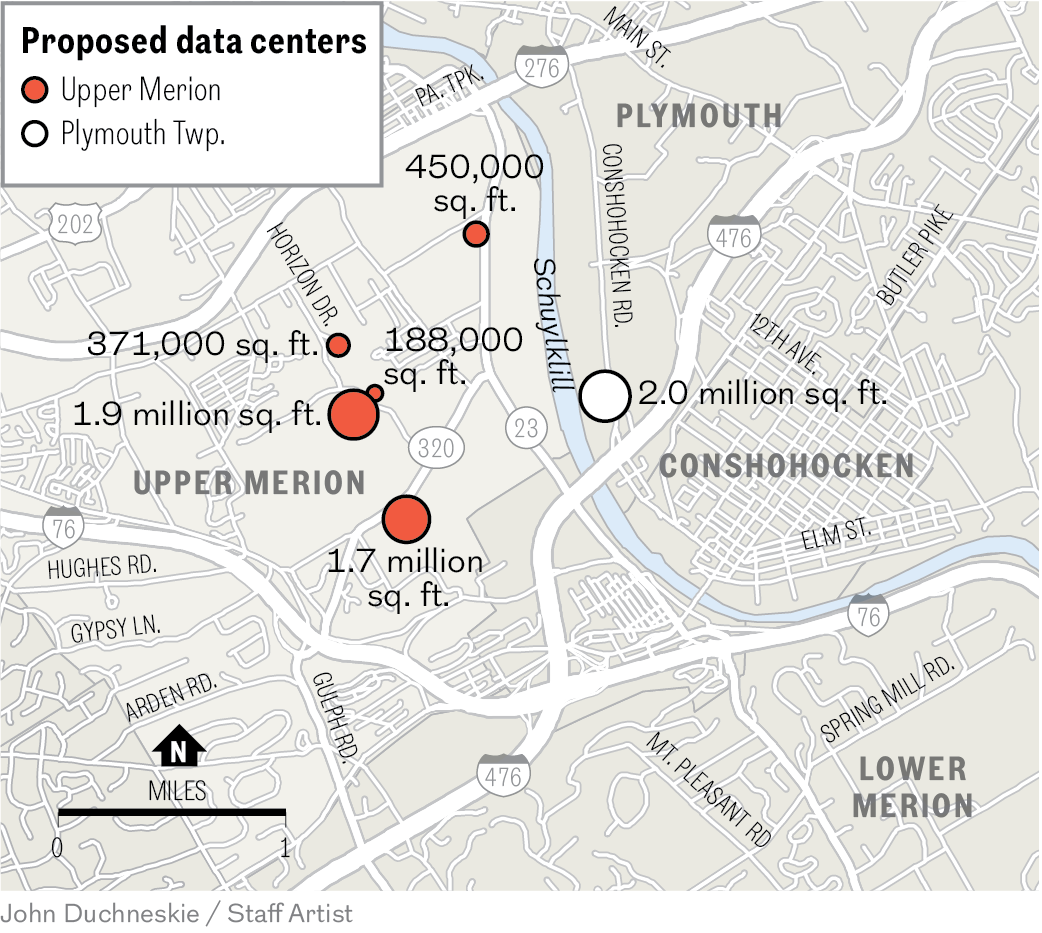
The Plymouth Township project is one of six data centers that O’Neill is proposing in the area. Across the river in Upper Merion Township, where O’Neill’s MLP Ventures already has offices and labs, the developer has proposed a 4.6 million-square-foot data center campus spanning five properties.
The proposed data centers in Upper Merion and Plymouth TownshipsJohn Duchneskie
After a tense Upper Merion Township Planning Commission meeting last week, officials there voted not to recommend approval of three of O’Neill’s five plans. A hearing on the other two Upper Merion plans is set for Aug. 12.
After the planning commission reviews all the applications, the Upper Merion Township Board of Supervisors will ultimately decide whether to approve the projects.
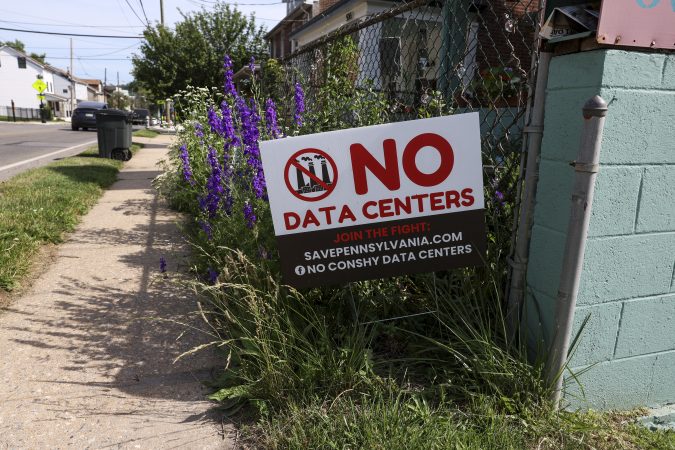
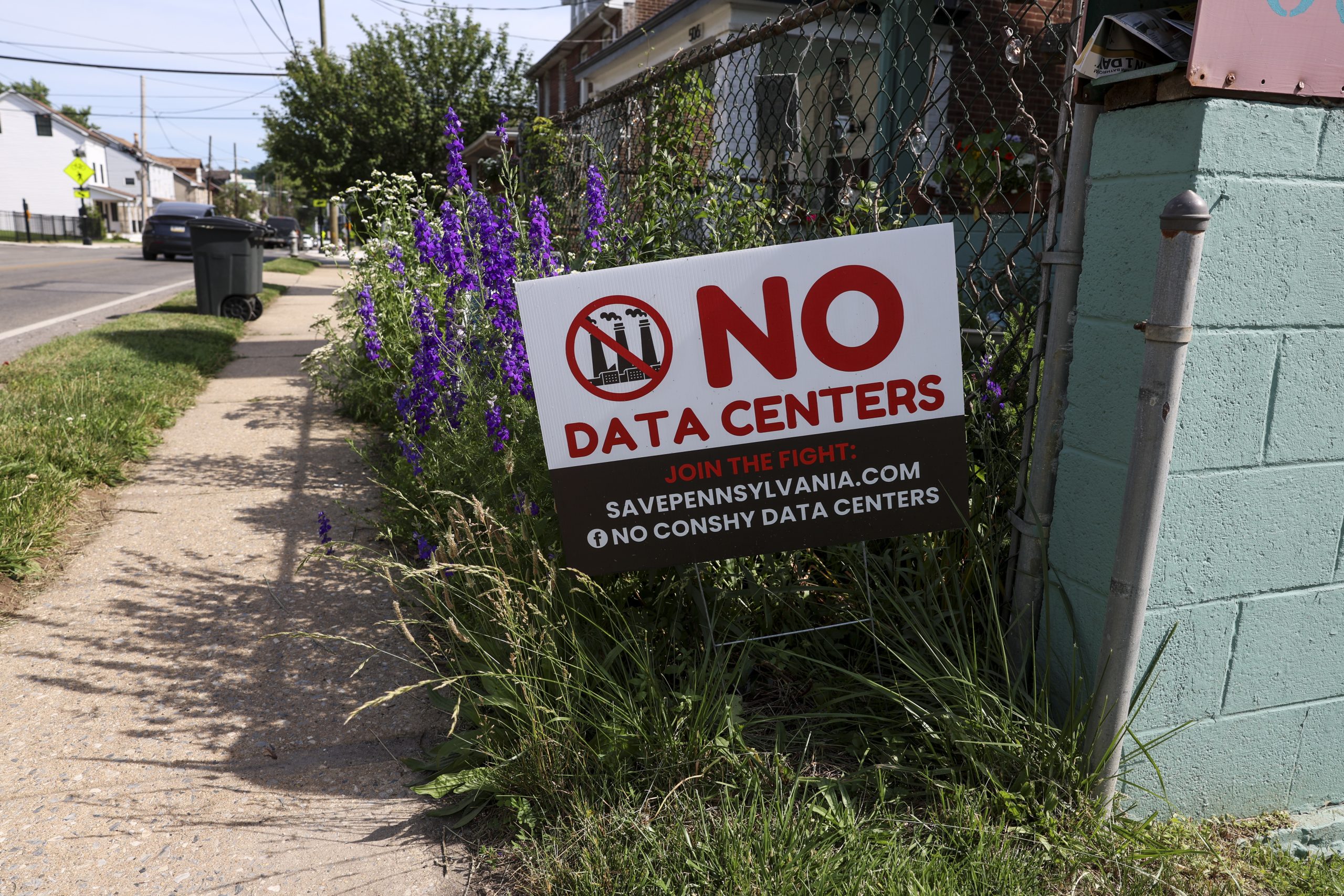
In both Upper Merion and Plymouth Townships, some residents have rallied against the plans, packing township meetings, signing online petitions, putting anti-data-center signs on their lawns, and organizing on social media. They have cited concerns about light, noise, and air pollution; water usage; and electricity costs.
A yard sign protests the proposed Plymouth Township data center.Monica Herndon / Staff Photographer
On Monday, O’Neill reiterated that his Plymouth Township data center would make little noise, emit no light pollution, and operate on a closed-loop system that does not require outside water. He said it would generate its own power, not taxing the grid, and generate “billions of dollars in employment and economic development.”
“I am shocked that [the township council] can in good conscience not promote my plan, let alone publicly oppose it,” given office vacancies in the area, O’Neill said. In the past, “our developments have helped to create the vibrant community that Conshohocken and Plymouth are today.”
Viscio, the Plymouth Township Council chair, said that local officials wanted to ensure that O’Neill’s proposed data center improved residents’ quality of life — and that O’Neill’s efforts could prevent them from doing so.
“We will not allow ourselves to be bullied or intimidated by any developer,” Viscio said. “We will not dismiss legitimate concerns raised by our residents.”
She said the council would continue to oppose O’Neill’s application and his challenge to the zoning ordinance.
On Monday afternoon, O’Neill called back a reporter with an additional message for Plymouth Township officials: “We’re always willing to make a deal if they want to sit down and talk.”
A high-ranking officialresignedfrom the Bucks County Sheriff’s Office earlier this month after having a few sips of beer at a reception then driving home in a county car, which violated department policy, county sources said.
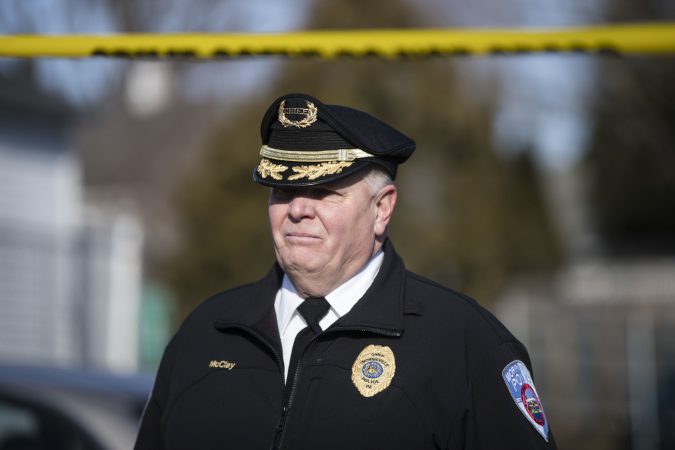
Lieutenant Deputy George McClay stepped down from his role after the incident, which occurred during a department reception held at Chambers 19, a Doylestown restaurant, after a July 9 promotionand new hire ceremony at the nearby county courthouse, according to county sources familiar with the incident but not authorized to comment on personnel matters.
Operating a county vehicle after drinking is a policy violation. McClay, 63, was not accused of driving under the influence, nor wearing his uniform during the incident.
Sheriff Danny Ceisler, a Democrat who took office in January, confirmed that McClay had stepped down, but would not provide details on an “HR situation.” McClay handled standards enforcement and discipline in the office and there was a conversation among command staff around July 11 as to whether he could properly do that job given the policy infraction, Ceisler said.
“The collective group felt that he would not be able to do it,” Ceisler said. “He offered his resignation.”
“It’s pretty difficult once someone has publicly committed a policy violation to have credibility to do that job,” he added.
Ceisler said he expects to eventually fill McClay’s position.
McClay denied being asked to step down in an interview Friday, saying the decision to leave was his own.
“I’m retired,” he said in a call from his home in Ocean County. “I’m 63, and it was time to go.”
When asked about the policy violation, McClay said he had “no idea” what a reporter was referring to. He chose to retire now, he said, because it’s summertime and he wanted to enjoy the season.
McClay’s seven-month stint with the sheriff’s office capped off a 40-year career in law enforcement, more than half of which he spent as a Philadelphia Police officer.
“Lt. McClay has spent over four decades in public service and deserves the opportunity to relax with his family and enjoy life,” Ceisler said.
Most recently, McClay served as the chief of police in Morrisville, a Bucks County municipality across the Delaware River from Trenton.
His nine-year tenure in Morrisville ended in a contentious dispute with the borough council, who terminated him in November 2023 amid allegations he had mistreated other borough officials and influenced matters that were beyond his authority as police chief, according to a report from The Bucks County Courier-Times.
Residents spoke out in favor of McClay at the time, criticizing the council for voting to fire him while he was on vacation and defending his record as a public servant.
McClay appealed his termination, calling it illegal, and was eventually awarded a $200,000 settlement by the borough council.
Early on in his tenure, U.S. Rep. Brian Fitzpatrick proved himself to the largest federal employees union in the United States.
In 2017, President Donald Trump signed a law to improve whistleblower protections and set guidelines for employee misconduct at the Department of Veterans Affairs. But the American Federation of Government Employees began noticing some adverse effects.
As Phil Glover, a national vice president for AFGE, tells it, veterans, including those with disabilities, and lower-level employees were being targeted instead.
AFGE officials went to Fitzpatrick with their concerns, and the Bucks County Republican introduced his own bill repealing and adjusting certain provisions.
That move, Glover said, was an inflection point in solidifying a long-lasting partnership with Fitzpatrick — one that gives the union a rare ally in the Republican caucus and Fitzpatrick a consistent endorsement from a powerful organization as he has repeatedly won reelection in a narrowly divided district.
“He’s carried a lot of water for us within the Republican Party, within the caucus, whether they were in the minority or majority,” said Glover, whose jurisdiction includes Pennsylvania.
In the high-stakes midterm elections this year, union endorsements behind Fitzpatrick and U.S. Rep. Rob Bresnahan, a freshman Republican trying to hold onto his seat in Northeastern Pennsylvania, are shaping up to be a potentially critical factor inthesetwoswing districts that could help determine which party controls the U.S. House.
“They all reached out. I didn’t even have to call them. They reached out to me right away and said we are 10,000% with you,” Fitzpatrick said, describing his relationship with the unions as “beyond advocacy” and “like family.”
Organized labor has traditionally backed Democratic candidates in the state —and that remains mostly true this year.
Fitzpatrick was the only Republican congressional candidate to get an endorsement Wednesday from the Pennsylvania AFL-CIO, which is also backing popular Pennsylvania Democratic Gov. Josh Shapiro.
In two other swing-seat districts centered on Harrisburg and the Lehigh Valley, unions have coalesced behind the Democratic nominees, including by spending big to help union leader Bob Brooks win his primary in May.
But the splintering of their endorsements in both Fitzpatrick’s Bucks County-based 1st Congressional District and Bresnahan’s Scranton-based 8th Congressional District seat has been a striking departure — underscoring some unions’ willingness to reward incumbents’ loyalty to give labor a voice in a Republican caucus that may not always work in their interests.
Last week, the Pennsylvania State Education Association — the largest union for teachers or any other labor organization in the state — backed Fitzpatrick even though Harvie, a former social studies teacher at Bucks County Technical High School, was previously a member.
How those endorsements move the needle in the election is still an open question.
But in a district with independent-minded voters who have shown a willingness to cross party lines, some observers say, the labor endorsements could make a difference — both in the get-out-the-vote and fundraising support that unions sometimes provide, and in appealing to swing voters.
“It suggests to an independent voter or even a moderate Democratic voter that this candidate isn’t a far-right candidate, that this candidate is somebody who will work with workers and work with unions,” said Paul Frymer, a politics professor at Princeton University who studiesorganized labor.
U.S. Rep. Rob Bresnahan introduced before remarks from President Donald Trump in Mt. Pocono, Pa., in December. Steven M. Falk / For The Inquirer
‘We consider them our friends’
With Trump in office and Republicans in control of Congress, Fitzpatrick and Bresnahan have won some union support by backing policies their own party leadership opposes.
In December, they were among 20 Republicans to join 211 Democrats to force a successful vote on the Protect America’s Workforce Act, which aimed to reverse a Trump executive order to strip collective bargaining rights from federal workers. In June, they were again among 20 Republicans — and the only ones from Pennsylvania — to vote for the Faster Labor Contracts Act, an effort to speed up bargaining negotiations.
And Bresnahan’s decision-making, as a freshman going against the White House, “had some guts to it,” Glover said. He said his group “didn’t entertain” endorsing Democrat Paige Cognetti, the Scranton mayor running against Bresnahan, or Harvie in the Bucks County race.
Angela Ferrito, president of the 700,000-member Pennsylvania AFL-CIO, which endorsed Fitzpatrick on Wednesday, said that while he has not always sided with labor, he has become the kind of Republican who will “sometimes almost put their neck out.”
Still, the union’s own public scorecard shows Fitzpatrick has aligned with its priorities far less often than Democrats — about 46% of the time in the current session of Congress. Bresnahan, who did not secure the union’s endorsement Wednesday, voted with the AFL-CIO just once — on the Protect America’s Workforce Act — to give him an 8% score.
Ferrito said the organization supports candidates who “support us and stand up when it matters.”
“Pennsylvania has always been unique in that way, where we do have moderate Republicans who will support unions and the rights of union workers. And so in those circumstances that we consider them, we consider them our friends,” she said.
State of play
As both of their districts draw national attention, Fitzpatrick has touted more than 40 labor-centered recommendations or formal shows of support and Bresnahan has highlighted about a dozen.
Fitzpatrick’s labor endorsements have ranged from local building trade affiliates — such as the Boilermakers Local 13 and the deep-pocketed International Brotherhood of Electrical Workers Local 98 — to national labor organizations, like the Transport Workers Union of America and the National Air Traffic Controllers Association.
The SEIU Pennsylvania State Council, which represents employees in public services, healthcare, and property services, backed him for the first time after a decade of either endorsing against him or staying neutral. But the council’s perspective changed after Fitzpatrick publicly supported reforms for U.S. Immigration and Customs Enforcement and was only one of two Republicans to vote against his party’s cuts to Medicaid in the One Big Beautiful Bill Act.
“For us, that means something,” said Matt Yarnell, president of SEIU Healthcare Pennsylvania and the state council, “if someone’s down to both organize and fight and stand up and speak out against your own party.”
Fitzpatrick said his “unique” role as a labor-friendly Republican has made him a “pivotal voice” in Congress — largely because of the hyperpartisan nature of politics that he has railed against, he said.
“That’s unfortunate,” Fitzpatrick said. “If we did away with the political parties and we just had people form coalitions around ideas, you would see so much support, so much more support for commonsense measures, like supporting labor.”
Bresnahan said he made it a personal mission to cultivate strong relationships with organized labor when he entered Congress last year after having had collective bargaining agreements as the CEO of his family’s electrical contracting business.
As a freshman Republican, he said, he had to prove himself. He got up to speed on the roughly 10,000 federal jobs in his district and made visits to a high-security federal prison with “serious staffing shortages”at the same time as Trump was laying off thousands of federal workers.
“I absolutely encourage my Republican colleagues to take another look at this and find a way to support the people that support us each and every day,” said Bresnahan, who narrowly defeated six-term Democratic U.S. Rep. Matt Cartwright in 2024.
Bucks County Commissioner Bob Harvie addresses supporters after winning the May 19 Democratic primary. Steven M. Falk / For The Inquirer
Harvie, the Democrat challenging Fitzpatrick, grew up in a union household and hasreceived the backing of two unions: the American Federation of Teachers Pennsylvania and Transport Workers Union Local 234, which represents SEPTA employees. His campaign said conversations are ongoing with labor and believes more support is in the works.
Harvie said Fitzpatrick’s endorsements have in some ways been a “reward for doing the bare minimum” while his own track record as a former Falls Township supervisor and as a twice-elected county commissioner proves he would be a steadfast supporter of labor in Congress.
He said he was “anxious to get the support of the rank-and-file workers,” who are bearing the brunt of cost-of-living issues.
“They’re the ones who are really going through all the pain right now with higher gas prices, higher grocery prices, higher energy prices, concerns about their healthcare,” Harvie said.
Cognetti, meanwhile, has credited her endorsements from nearly a dozen local labor unions to her record in Scranton, including increasing the number of jobs and wages for public workers. Endorsements from AFSCME, which represents municipal employees, and others that she announced this month underscore that support, she said.
She also said she would support more labor priorities than Bresnahan, including the PRO Act — a major effort to expand workers rights that Bresnahan has not endorsed — and repealing parts of the One Big Beautiful Bill Act, which Bresnahan voted for.
“It’s very important that you look at the whole picture of someone’s votes. It’s very easy to sign on to a letter and try to make yourself a hero,” Cognetti said.
In one unusual instance, Cognetti appeared to receive the endorsement of the Pennsylvania Conference of Teamsters with a voice vote during an April meeting, but the organization released a statement endorsing Bresnahan in June. But conference president Bill Hamilton, who had called for the vote at the April meeting, said in the June statement that Bresnahan “has always had our backs,” including through his vote for the Faster Labor Relations Act.
Bresnahan, in an interview, also referenced that bill and stressed his relationship with Sean O’Brien, the national Teamsters leader whose podcast Bresnahan appeared on in January.
The state and national Teamsters organizations did not respond to multiple requests for comment about the situation.
“Democrats just can’t take unions for granted anymore,” Bresnahan said.
Scranton Mayor Paige Gebhardt Cognetti hosts the national summer meeting of the Mayors Innovation Project in Scranton in 2023. Tom Gralish / Staff Photographer
‘Stick with them no matter what’
The union endorsements in the 1st and 8th Congressional Districts have been a sharp contrast to other swing-seat districts that have arguably already shown the power of labor as a political force.
In the Lehigh Valley district where Brooks, a statewide union leader and retired firefighter, is running against freshman Republican U.S. Rep. Ryan Mackenzie, high-profile Democrats recruited and rallied around the Democrat largely because of his union bona fides. And when opponents unleashed a last-minute ad campaign against him in the May primary, another political action committee padded with organized labor donations spent nearly $1.8 million to push back and help give Brooks the win.
It is not yet clear whether unions will similarly spend heavily to elect Fitzpatrick or Bresnahan — especially as they mostly look to elect Democrats elsewhere in Pennsylvania and across the country.
TJ Lepera, political director of IBEW Local 98, said he believed a Democratic blue wave would be highly favorable to labor interests. But his union has also backed Fitzpatrick,who“knows our issues, and that could be helpful in trying to calm down a lot of the crazy rhetoric that comes out of the Republican side, sometimes, on the attacks of labor,” Lepera said.
“If somebody has a great voting record with us and has been loyal to Local 98 and the way that we see legislation, we typically stick with them no matter what,” Lepera said.
That emphasis on loyalty was echoed by other unions, even if their political calculus led them to go the other direction.
“We were not going to support anything that would possibly turn the House or the Senate red,” said Joe Coccio, secretary-treasurer and political coordinator from TWU Local 234, which has endorsed Harvie. “If they were a good candidate by us … once we endorse a candidate, unless they break the law or do wrong by us, we continue to endorse them until they move up or move on.”
Coccio said Harvie had proved his appreciation for SEPTA employees when he served on the transit agency’s board.He is also accessible and pro-union, and has valuable experience as a teacher and county commissioner during the COVID-19 pandemic, Coccio said.
AFT Pennsylvania, which is backing Harvie, did not respond to multiple interview requests.
As November inches closer, unions backing both Fitzpatrick and Harvie are planning out their financial and ground-game support.
“For us, is it strategic? Yeah, it’s very strategic,” said Lepera, whose Local 98 has a long history as a political power broker in Philadelphia and statewide. “We want to have a voice on the other side of the aisle.”
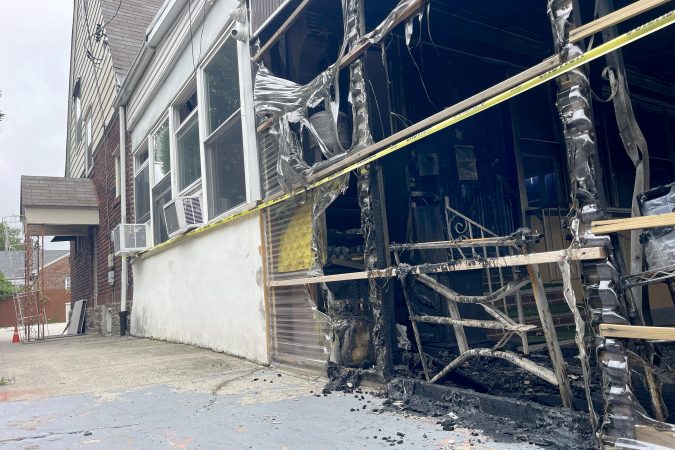
The same weekend America turned 250, I also watched a mosque burn in Northeast Philadelphia, a governor threatened with violence he’d already survived, and masked men march past the U.S. Capitol chanting “Reclaim America.”
None of it happened in the same city or involved the same people — and that is exactly why it matters.
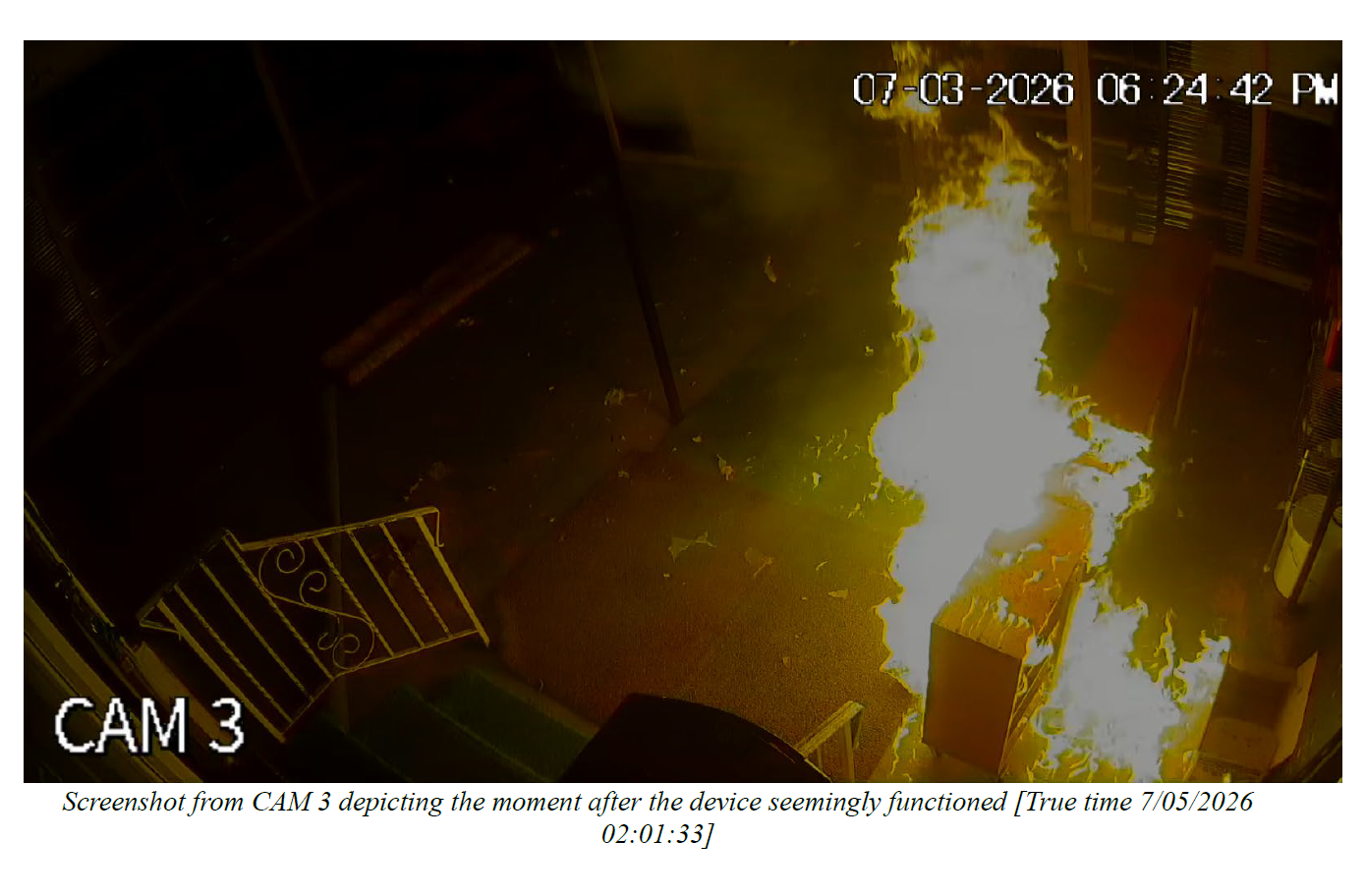
This image provided by Commonwealth Media Services shows damage after a fire at the Pennsylvania governor’s mansion while Democratic Gov. Josh Shapiro and his family slept inside on April 13, 2025, in Harrisburg, Pa.Commonwealth Media Services
Read that twice. A man was arrested for describing arson against a governor’s family as an act of sympathy.
On the National Mall, hundreds of Patriot Front members, a group the Anti-Defamation League calls the most visible white supremacist organization in the country, marched in coordinated uniforms, carrying Confederate flags, chanting about reclaiming a nation they insist belongs to them alone. They did this in broad daylight, on Independence Day, and walked away unbothered.
It doesn’t have to be this way. Pennsylvania has offered a glimpse of the right response to hate.
After mailers went out to Upper Bucks County voters attacking a Democratic candidate as the pick of the “corporate, Israel-first Democratic party,” alongside a photo of State Sen. Steve Santarsiero, who is Jewish, with an Israeli flag under his face, he called the language exactly what it was: “an antisemitic trope that falsely implies Jewish Americans are disloyal to the United States.” Republican Attorney General Dave Sunday agreed, as did State Rep. Dan Frankel (D., Allegheny) and State Sen. Judy Schwank (D., Berks), who called the mailers “unacceptable and dangerous.”
That’s what the response to hate should look like every time, not because it’s convenient, but because antisemitic hate speech is hate speech, and in the end, it is incumbent on all parties and political leaders to speak out.
Extremism doesn’t wait for permission from a party platform. It shows up as a firebomb thrown into a mosque, a slur hurled at a governor, matching uniforms marching past the Capitol, a hateful symbol that doesn’t disqualify a candidate.
The only real defense is what happened with the mailer in Bucks County: leaders naming it immediately, without waiting to see who it benefits politically to stay quiet.
I have spent my career watching people search for the loophole: this hate doesn’t count, this extremist isn’t really one of ours, this symbol was just a tattoo. There is no loophole. Hate doesn’t get a partisan exception, and neither does our responsibility to name it the first time we see it.
Here is what I’d ask, whatever you believe and whomever you vote for:
Condemn it the first time, not the 10th.
Refuse the whataboutism. “The other side does it, too” has never made anyone safer.
Show up for communities that aren’t yours. A mosque needs the same solidarity a synagogue would after an attack, and vice versa.
Report what you see. Silence is how patterns become normal.
This year marks 250 years of a promise: that all people are created equal.
That promise doesn’t come with a partisan carve-out. Leaders in Pennsylvania showed us it doesn’t have to. The question is whether we follow that example, or wait for the next arson, slur, or tattoo before it finally matters.
Andrew Goretsky is the senior regional director for ADL Philadelphia.