Philadelphia Navy Yard mechanical engineer Richard James was experimenting with a torsion spring in 1943 when the coil tumbled from his desk and landed on a stack of books.
The spring didn’t just sit there. The top coil flipped over onto the next book. Then the back coil flipped over to the next book. Before he knew it, this newfangled thing was taking the hardcovers like stairs.
Fascinated, James went home and showed the new toy to his wife, Betty.
She was enthralled and named the metal thingamajig a Slinky because of its wavy, stealthy movement.
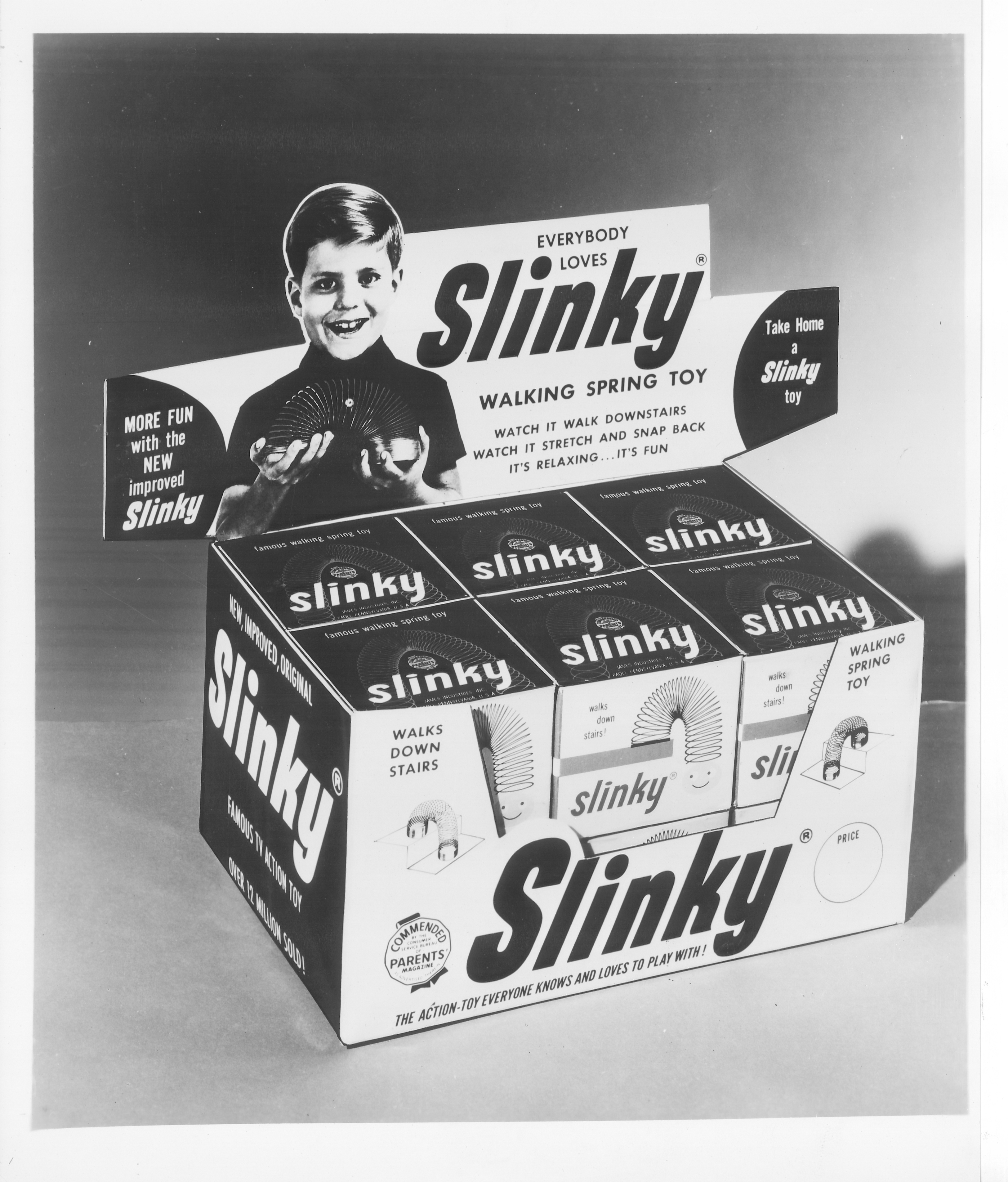
A vintage Slinky display.
James finagled with the metal spring for about two years, perfecting its flip-flop down-the-stack movement. Finally, on Nov. 27, 1945, the Jameses brought 400 Slinkies to Gimbels at Eighth and Market Streets, debuting them to shoppers. The whole lot sold out in 90 minutes for $1 a piece.
A toy craze was born.
This Saturday, the Philadelphia Historic District will host a “Firstival” to fete the Slinky at the American Philosophical Society from 11 a.m. to 1 p.m. The society’s archives house the 1953 study “On Slinky: The Dynamics of a Loose, Heavy Spring” by British mathematician and oceanographer Michael Longuest-Higgens.
Firstivals are weekly day parties celebrating America’s 250th birthday. This week’s Firstival is the 35th.
After the roaring success at Gimbels, Richard James quit his $50-a-week gig at the Navy Yard and founded James Industries, manufacturing Slinkies from a Germantown warehouse. Each Slinky was made from 80 feet of steel on a machine that James invented. It took 10 seconds to make each Slinky.
Jen Procacci’s No. 1 features the original blueprints of the Slinky design, commemorating one of America’s most-beloved toys.Jenn Procacci for Colibrà Workshop
Slinkies, considered the first toy craze, predating Cabbage Patch Kids, Tickle Me Elmo, and Beanie Babies, were so popular in the 1940s that Macy’s stopped selling them for a bit because the swarming crowds created a fire hazard.
In the early 1950s, published reports said the Jameses were making more than $1 million a year. James denied those reports in a 1950 Inquirer article but admitted to making “solid profits.” By the end of the decade, the Jameses’ Slinky operation had moved to manufacturing facilities in Clifton Heights and Paoli.
The couple divorced in 1961.
Richard James became a missionary in Bolivia, leaving his wife to manage the business and their six children. Betty James moved her children closer to family in Hollidaysburg, Pa., and commuted to the Philadelphia area for three years before moving the company closer to home in 1964.
In 1962, Betty James launched an aggressive television campaign to build awareness and increase Slinky sales. Songwriters Homer Fesperman and Charles Weagley wrote the unforgettable, now-iconic Slinky jingle.
“It’s Slinky, it’s Slinky. For fun it’s a wonderful toy.
It’s Slinky, it’s Slinky. It’s fun for a girl or a boy.
It’s fun for a girl or boy!”
The Slinky dog became a party trick. People wore Slinky glasses. Plastic Slinkies were introduced to the market.
The Slinky was everywhere.
“During the Vietnam War, soldiers used Slinkies as portable radio antennas,” said Zach Delphais, the public relations manager for Just Play Products, the Bucks County-based brand that owns Slinky today.
Betty James sold Slinky to Michigan-based Poof Industries in 1999.
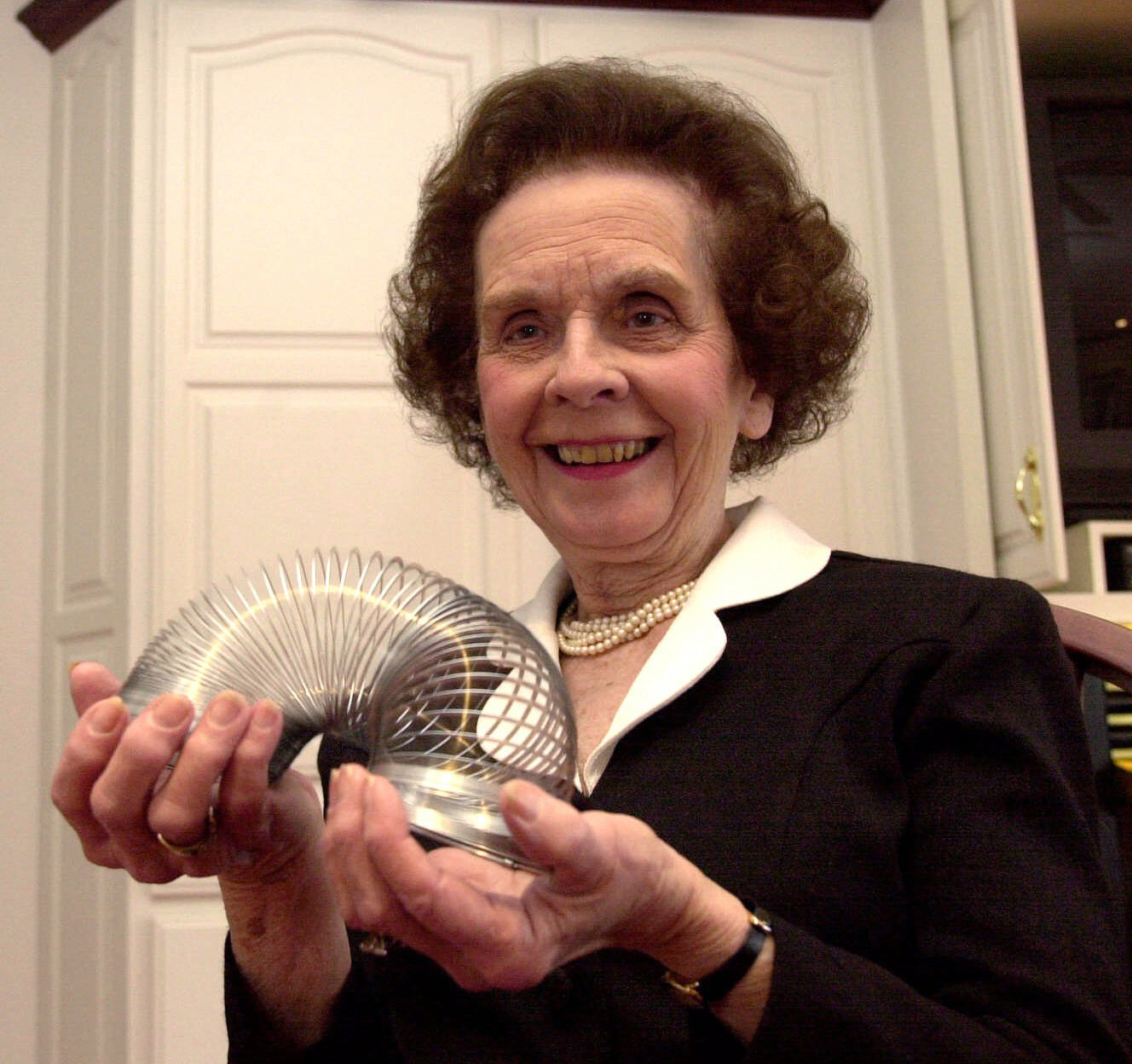
In this Jan. 18, 2001, photo, Betty James, retired president of James Industries, plays with a Slinky. She died in 2008.AP
In 2001, Betty James, then 84, was inducted into the Toy Industry Hall of Fame. At that time, more than 250 million Slinkies had been manufactured from hundreds of thousands of tons of steel.
“Slinky has lasted because it’s simple, it’s iconic, and every generation has connected with it,” Delphais said. “It started right here in Philadelphia. That makes it all the more meaningful.”
This week’s Firstival is Saturday, Aug. 29, from 11 a.m.-1 p.m., at the American Philosophical Society, 104 S. Fifth St.
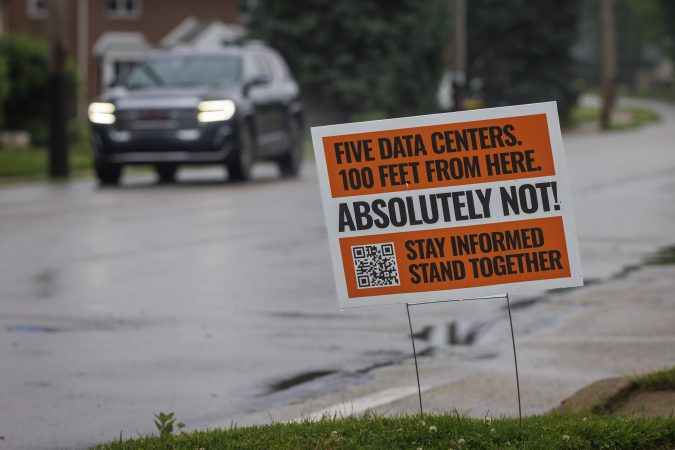
A majority of Pennsylvania voters oppose data center development in the United States, according to a new poll, as the issue has quickly become a flash point in the state’s gubernatorial race and other midterm elections.
Six in 10 likely Pennsylvania voters do not want the U.S. to construct data centers to house artificial intelligence, according to a poll conducted from Aug. 17 to 21 by The Inquirer, the New York Times, and Siena University. The poll, which surveyed 760 likely voters in Pennsylvania, found that Democratic and independent voters oppose data centers at higher rates, while just over half of Republicans support their construction.
(function(){function e(){window.addEventListener(`message`,function(e){if(e.data[`datawrapper-height`]!==void 0){var t=document.querySelectorAll(`iframe`);for(var n in e.data[`datawrapper-height`])for(var r=0,i;i=t[r];r++)if(i.contentWindow===e.source){var a=e.data[`datawrapper-height`][n]+`px`;i.style.height=a}}})}e()})();
The United States is in an international race to lead advancements in AI, with $2.3 trillion in data center projects underway or in the planning stages across the country. Pennsylvania, with more than 100 proposed projects, is among the hot spots targeted by developers for its key location near top U.S. metropolitan areas, vast rural space for building, and significant energy resources.
Gov. Josh Shapiro originally welcomed data center developments to the state, and last year championed a $20 billion investment from Amazon to build at least twodata center campuses in Bucks and Luzerne Counties. He also offered developers fast-track permitting in an attempt to establish Pennsylvania as a leader in AI development.
But in a year’s time, public animosity toward data centers has grownin Pennsylvania and beyond, as residents say they fear the facilities will drive up electricity costs, overuse water supplies, depreciate home values, and disrupt their daily lives. Last week, Shapiro, a Democrat running for reelection in November and a 2028 presidential prospect, announced plans to restrict data center development in the state.
Shapiro said his position on data centers evolved as he listened to more constituents who live in areas like Archbald, a small northeastern Pennsylvania town with six data center campuses under construction, and pointed to a developer in Montgomery County who he said is “bullying” residents to push projects through amid public opposition.
(function(){function e(){window.addEventListener(`message`,function(e){if(e.data[`datawrapper-height`]!==void 0){var t=document.querySelectorAll(`iframe`);for(var n in e.data[`datawrapper-height`])for(var r=0,i;i=t[r];r++)if(i.contentWindow===e.source){var a=e.data[`datawrapper-height`][n]+`px`;i.style.height=a}}})}e()})();
Pennsylvania’s youngest voters were most likely to reject data centers, according to the poll: 83% of likely voters ages 18 to 29 opposed their development, as did 71% of voters ages 30 to 44. Opposition, while above 50% for all age groups, decreased among older voters.
Kelly Harrington, 29, of Conshohocken, who participated in the poll, said she has been attending Plymouth Township Council meetings to oppose a controversial proposal for a 2 million-square-foot data center project there.
“Some of my concerns about that specific data center are selfish in the sense that I think my home value is going to go down, I think it’s going to be loud and obstructive, I think it’s going to pollute the air that I want to breathe every day,” Harrington said. “But in a wider sense, I’m also concerned about the environmental impacts of data centers.”
Front and center in the Pa. governor’s race and beyond
Data centers have become a key issue in the Pennsylvania gubernatorial election, where Shapiro hopes to ride his high popularity to reelection and usher in Democratic gains in down-ballot races for the statehouse and Congress.
Both Shapiro and his Republican opponent, State Treasurer Stacy Garrity, have released ads criticizing the other’s past support for data center development.
Democratic and Republican politicians across the country have reversed course on data centers in recent months as the projects have grown increasingly unpopular.
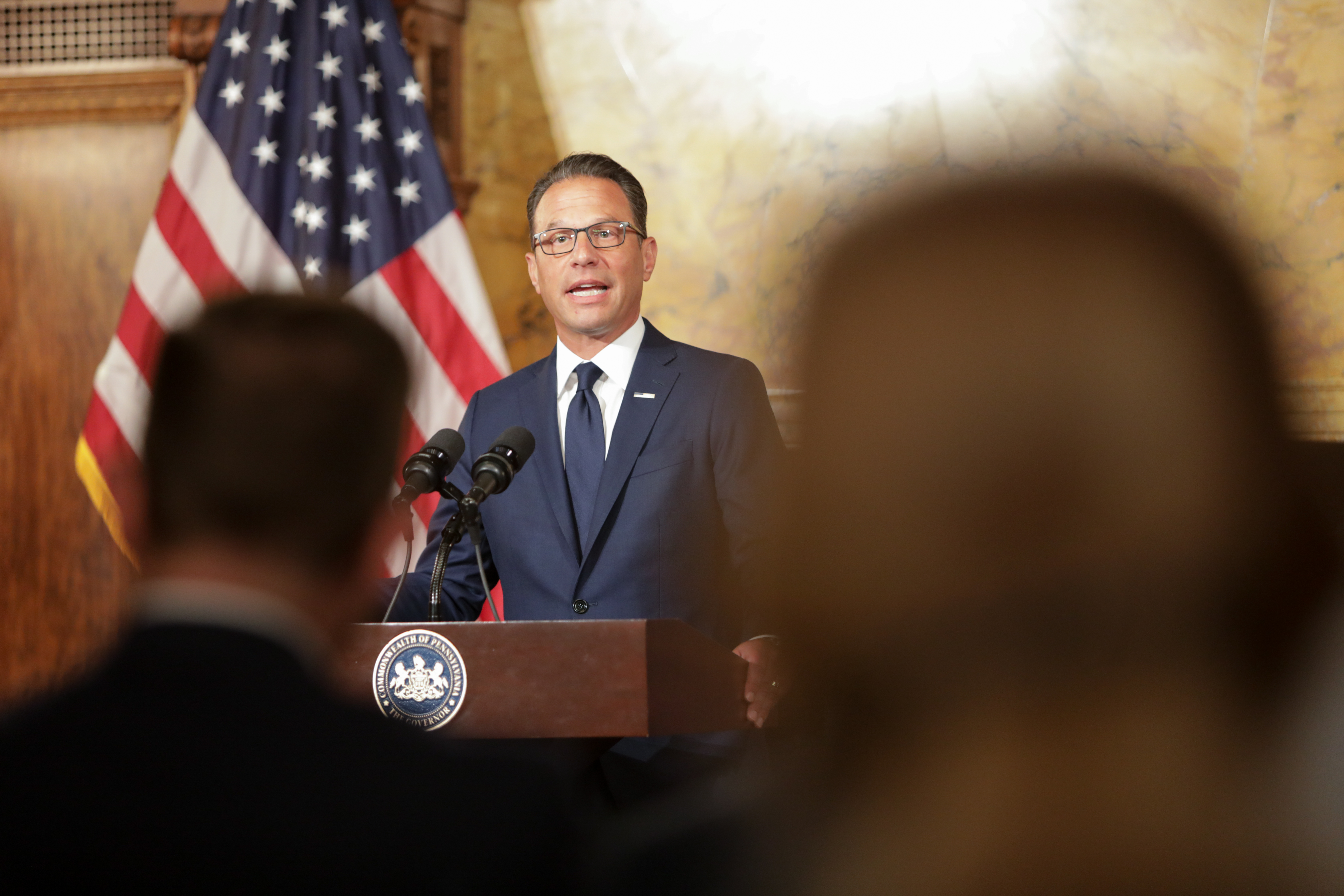
Gov. Josh Shapiro answers questions after signing an executive order restricting data centers in Pennsylvania during a ceremony in the Capitol in Harrisburg, Pa., Tuesday August 18, 2026.Kalim A. Bhatti / For The Inquirer
Prior to Shapiro’s announcement last week touting the “strictest guardrails in the nation” for data center development, his support for the projects appeared to be one of the major tests of his popularity. A Quinnipiac University poll published in July found that while 56% of voters approved of Shapiro overall, only 24% approved of how he was handling data center development in Pennsylvania.
Andsome Pennsylvanians who had voted for Shapiro in 2022 said his support for the developments had caused them to contemplate sitting out the November election or writing in a different candidate for governor.
For some voters, like Montiese McKenzie, Shapiro’s change in position has been enough.
“I’m very proud of Gov. Shapiro for being anti-data center,” said McKenzie, 48, of West Philadelphia. The Democratic voter said she fears that poor communities will face disproportionateconsequences of the construction of AI data centers.
“What happens will be very important for how I see him as a future leader,” McKenzie said.
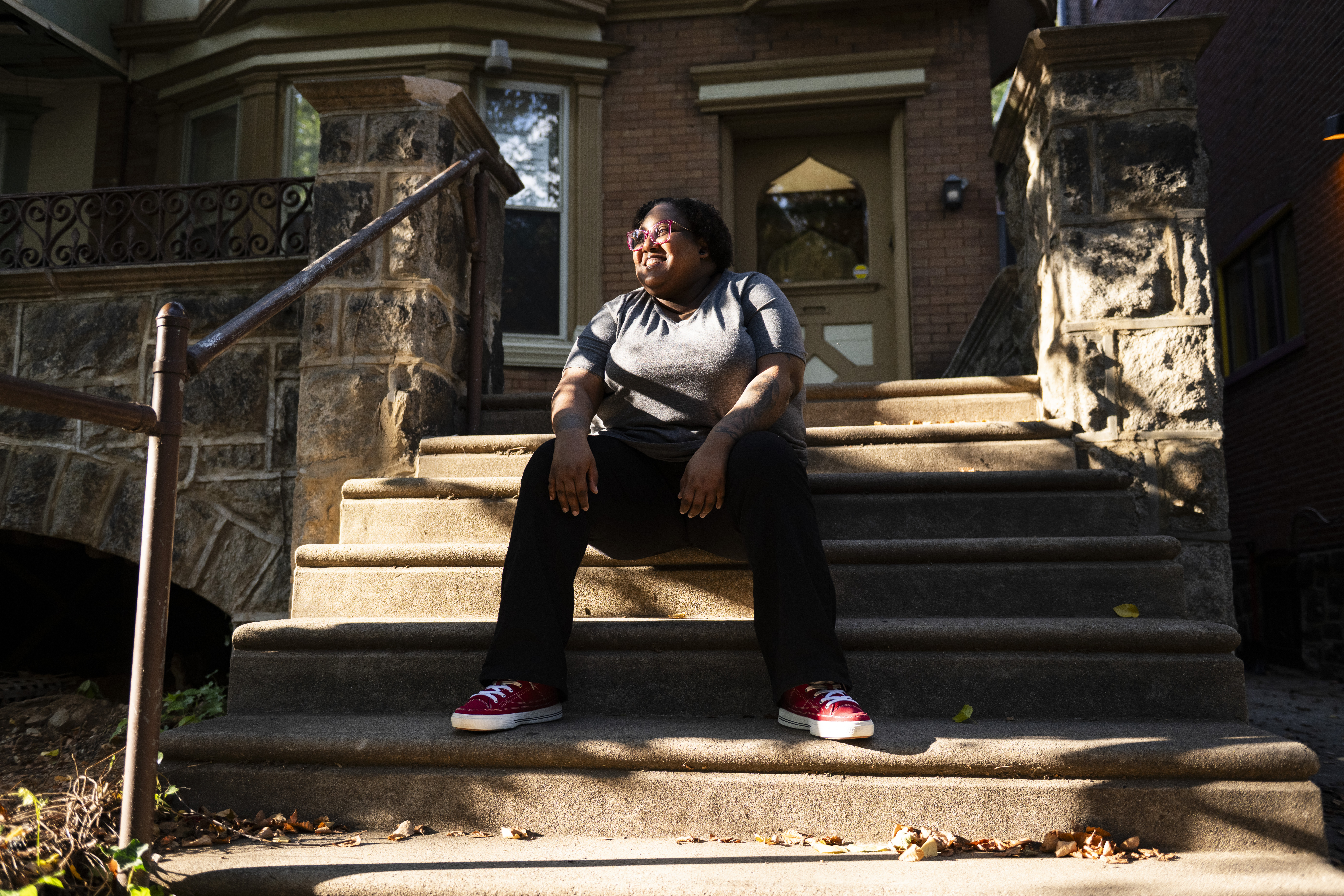
Montiese McKenzie, 48, poses for a portrait near her home in West Philadelphia on Monday, Aug. 24, 2026.Allie Ippolito / For The Inquirer
Still, Shapiro’s recent change in position has not wooed all Pennsylvania voters.
Maryann Klaus, 82, a Democrat in Upper Bucks County, supported Shapiro in 2022. But, she said, his initial embrace of data centers in the region without consulting the community was “just not good governance.” Despite Shapiro’s recent moves to restrict data center development, Klaus said, she is still reconsidering her vote for his reelection this fall.
The executive order Shapiro signed last week is a “a start,” Klaus said. “But, unfortunately, when you open the door, too many things occur and then you can’t walk them back.”
Others, like Steven Keenan of Ridley Township, say they want more data center development in the state.
Keenan, 60, a Republican who is supporting Garrity in November, said he wants Pennsylvania to lead on data centers.
“I’m not afraid of advancement in technology,” Keenan said. “I think we need all that [development]. We’re in a race with other countries that we want to dominate.”
Keenan said Shapiro’s change in position reaffirmed his support for Garrity. The shift in stance, he said, showed Shapiro was reacting to public opinion instead of doing what is right for the state. (Garrity, too, has moved away from her public support for data centers. She has called for the state to temporarily pause all data center development.)
“He goes where the wind blows,” Keenan added.
Staff writer Fallon Roth contributed to this article.
There are ghosts rumbling through the rafters at Mr. Edison. And I’m not sure they’re happy.
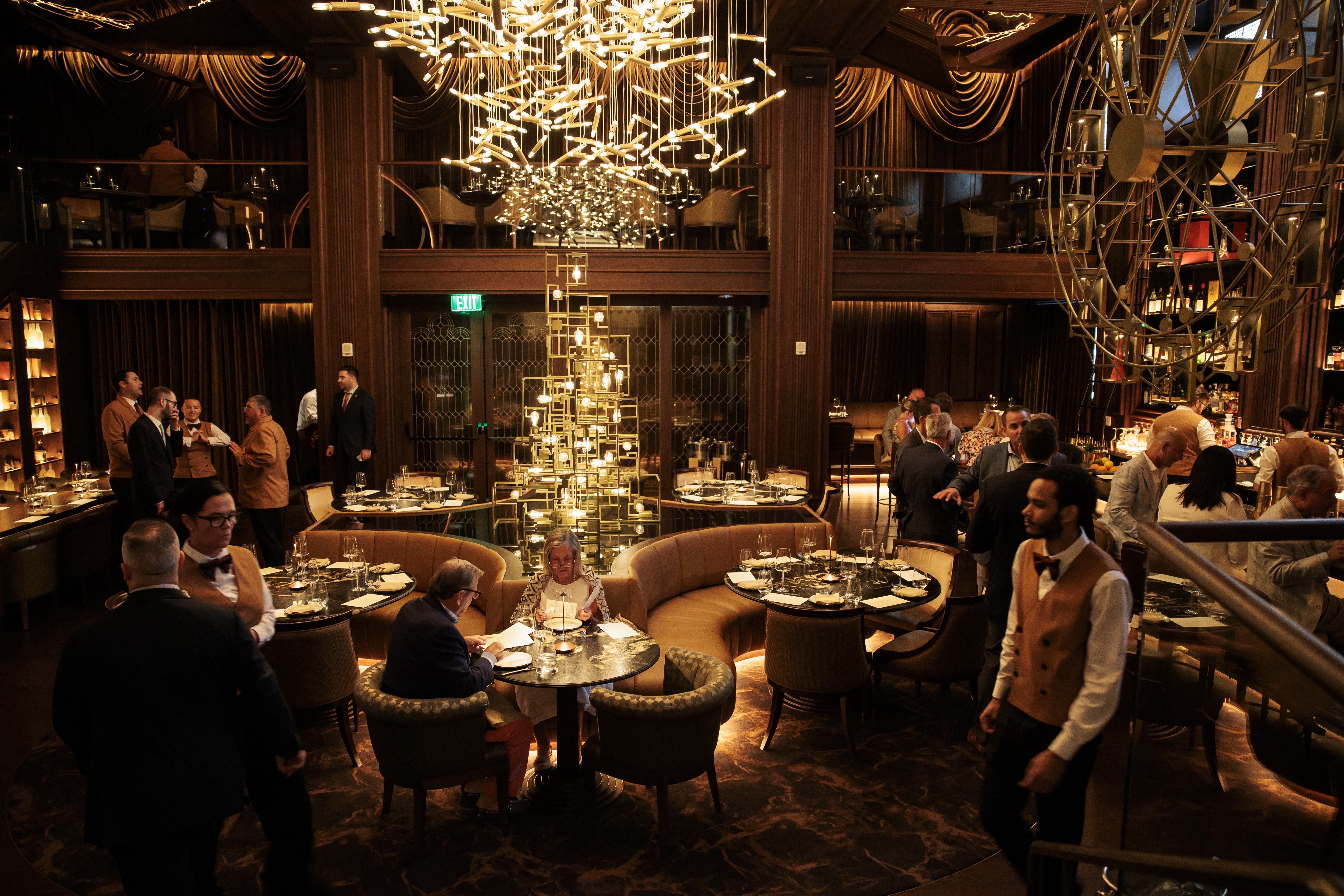
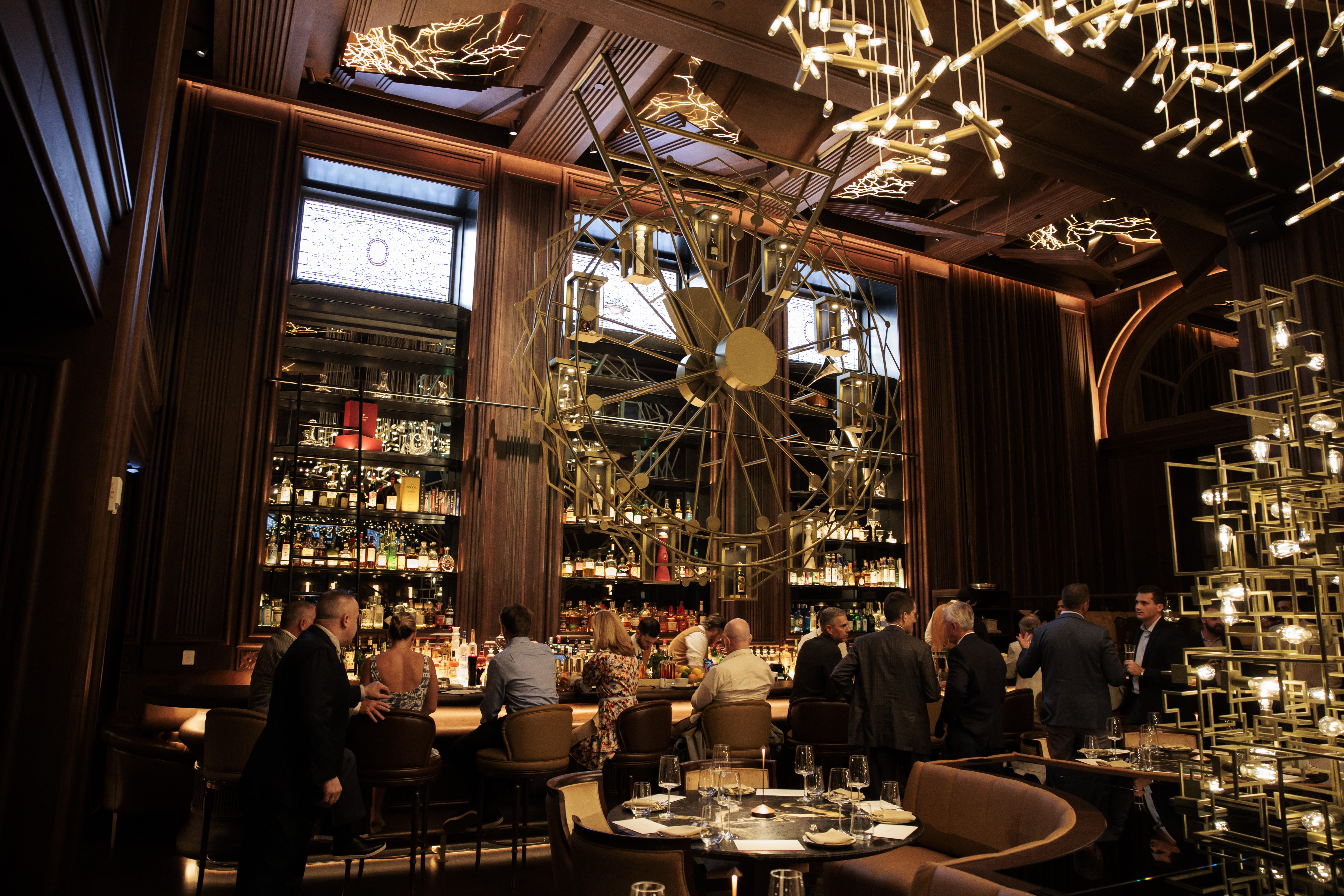
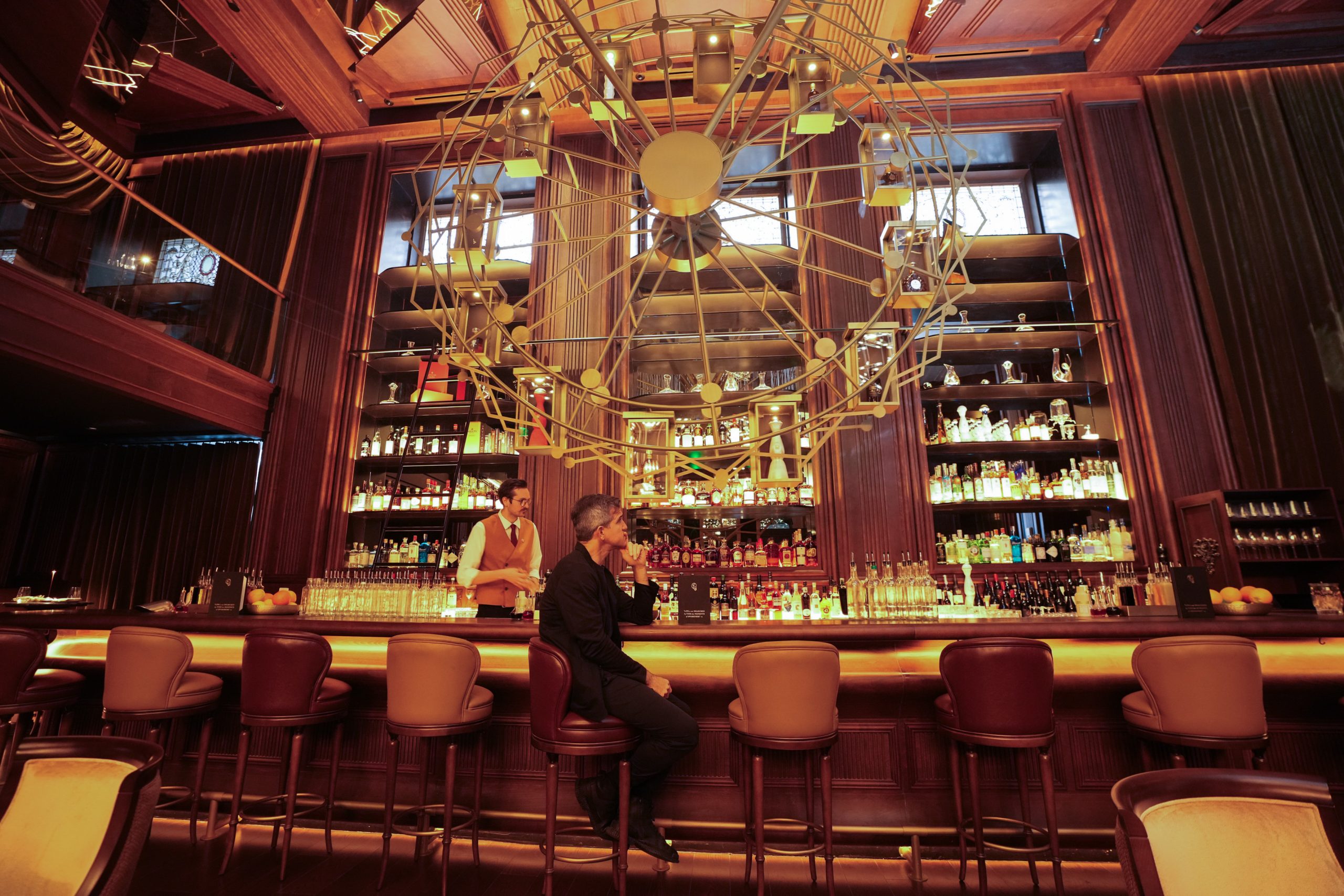
So much energy — both living and remembered —pulses through this dramatic two-story restaurant inside the landmark Bellevue hotel that, as we follow a hostess in what looks like silk pajamas up the long staircase to our table on the mezzanine, the ceiling panels appear to explode with a mirrored tableau of reflected lightning bolts. A chandelier of suspended Edison bulbs showers the plush booths below in a cascade of frozen sparks while a 12-foot brass Ferris wheel nearby cycles slowly over the bar, dangling some of the world’s most extravagant bottles of booze in its hydraulic glass cages.
Am I the target audience for a $350 pour of the Louis XIII “on rotation”? Definitely not. But Mr. Edison has obviously found them, given its guests supposedly go through a bottle a week of the famed cognac (which retails in Pennsylvania for $5,300).
The bar at Mr. Edison in the Bellevue Hotel on Tuesday, Aug. 18, 2026 in Philadelphia.Monica Herndon / Staff Photographer
This carnival of pomp and perpetual motion is overwhelming to take in all at once, along with a live jazz band playing to a crowd tightly cinched into formalwear and glittering jewels. The spirit of Thomas Edison, who in 1904 helped electrify this grand old hotel, would no doubt be moved by this namesake tribute from owner Jeffrey Chodorow, the pioneering restaurateur with a hand in more 60 restaurants, including China Grill and Asia de Cuba.
While those two stars of late 20th-century dining in New York (and Miami) were trendsetters for the eater-tainment fusion movement, Mr. Edison is a decidedly nostalgic throwback to a 1940s-style supper club. It’s built around updates to classic Philly foods, from fried oysters and chicken salad zapped with kimchi to more dutiful re-creations of cakes from Old Original Bookbinder’s and Frog.
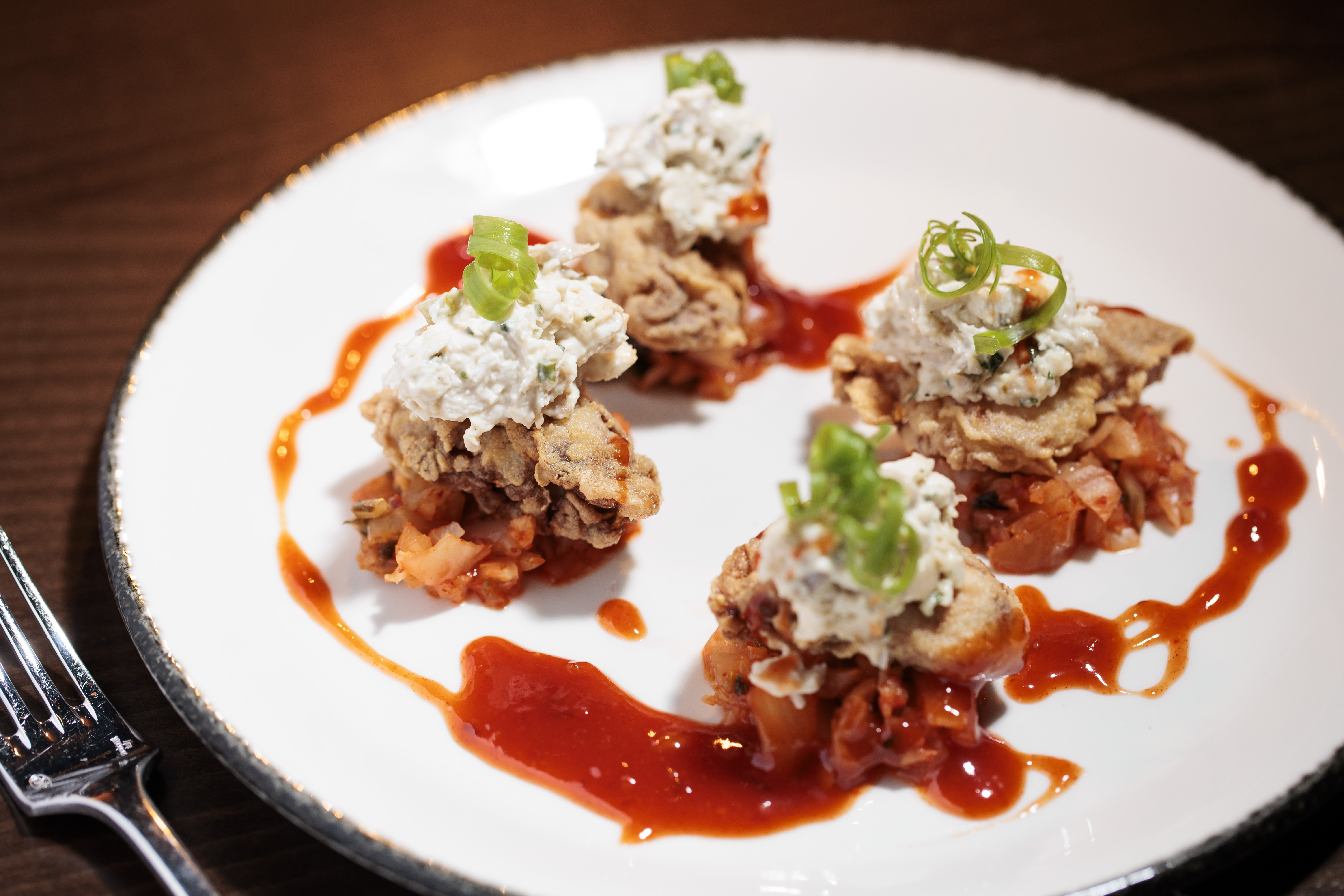
The Korean fried oysters at Mr. Edison in the Bellevue Hotel on Tuesday, Aug. 18, 2026 in Philadelphia.Monica Herndon / Staff Photographer
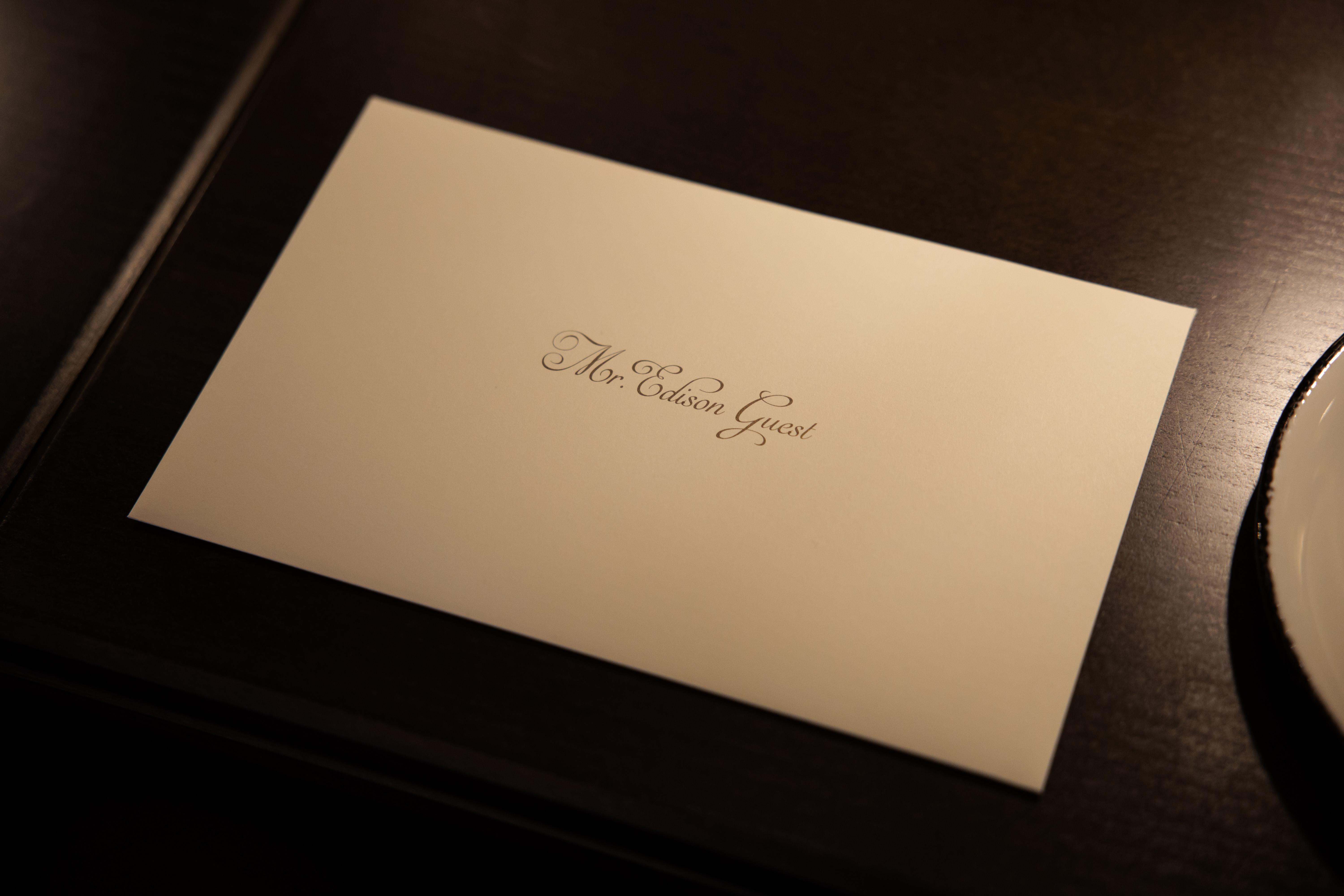
For Chodorow, 76, who studied at Wharton, Mr. Edison’s food is a love letter to legends of the 1970s restaurant renaissance, whichhe enjoyed while practicing law here in the early 1980s. Names like Le Bec-Fin, Le Panetière, and Jimmy’s Milan are invoked like wishful spells across the menus, which arrive tucked inside a souvenir envelope like wedding invitations. (Chodorow, not coincidentally, threw an elaborate engagement party for his wife at the Bellevue in 1982.)
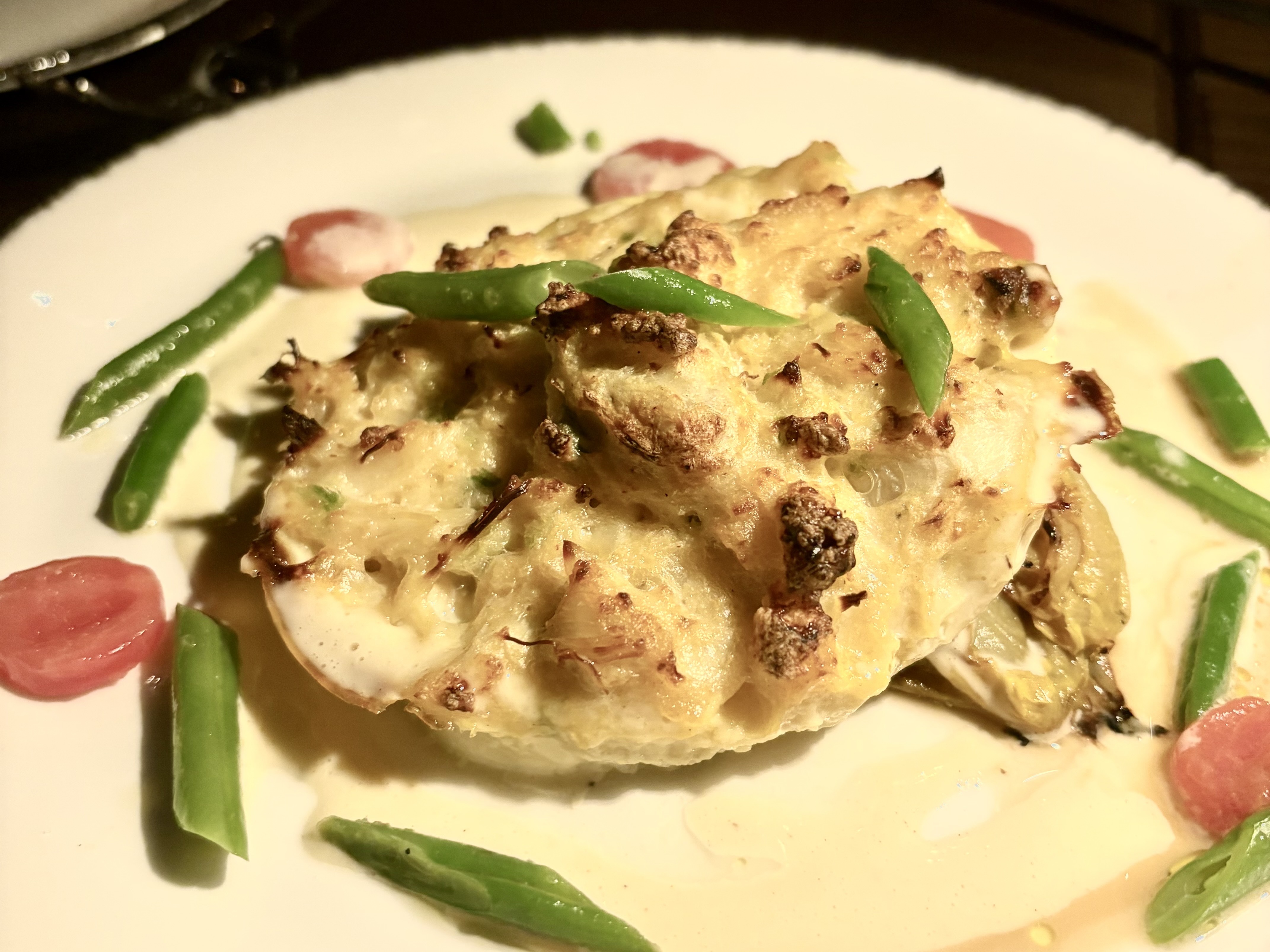
If the Ghosts of Philly Restaurants Past have indeed answered their summons, they might be frowning down on these plates with dismay. The galette de crabe “Le Bec-Fin,” known for its use of seafood mousse to produce a delicately puffy soufflé jeweled with sweet crab, arrived here so deflated and overcooked it tasted like a fishy frittata.
“Chef [Georges Perrier] would probably lock the doors and burn the place down,” replied one of Le Bec’s longtime former chefs after I texted him a picture of my gruesome galette.
Mr. Edison’s rendition of Le Bec-Fin’s crab galette is a far cry from the original.Craig LaBan / Staff
In fact, Mr. Edison’s culinary director, Matt Levin, 53, also cooked at Le Bec-Fin early in his career, which subsequently saw him burst onto the scene in the early 2000s at New Hope’s Moonlight and Lacroix at the Rittenhouse before going solo with Adsum and Square Peg, then eventually landing in the catering world. Most recently, he cooked at the Pineville Tavern in central Bucks County. While his recipe might be the same, Levin’s decision to jettison Perrier’s ring mold for a shallow panwas a fateful miscue. The galette evolved by my second meal into a soggy sponge, still not ideal for $45.
Fewer diners today recall Le Panetière, where Chodorow remembers first tasting Perrier’s food in the late 1960s. But anyone would realize upon one bite of this duck à l’orange tribute that the meaty breast, although still medium-rare, was inexplicably dry and as tough as a chew toy.
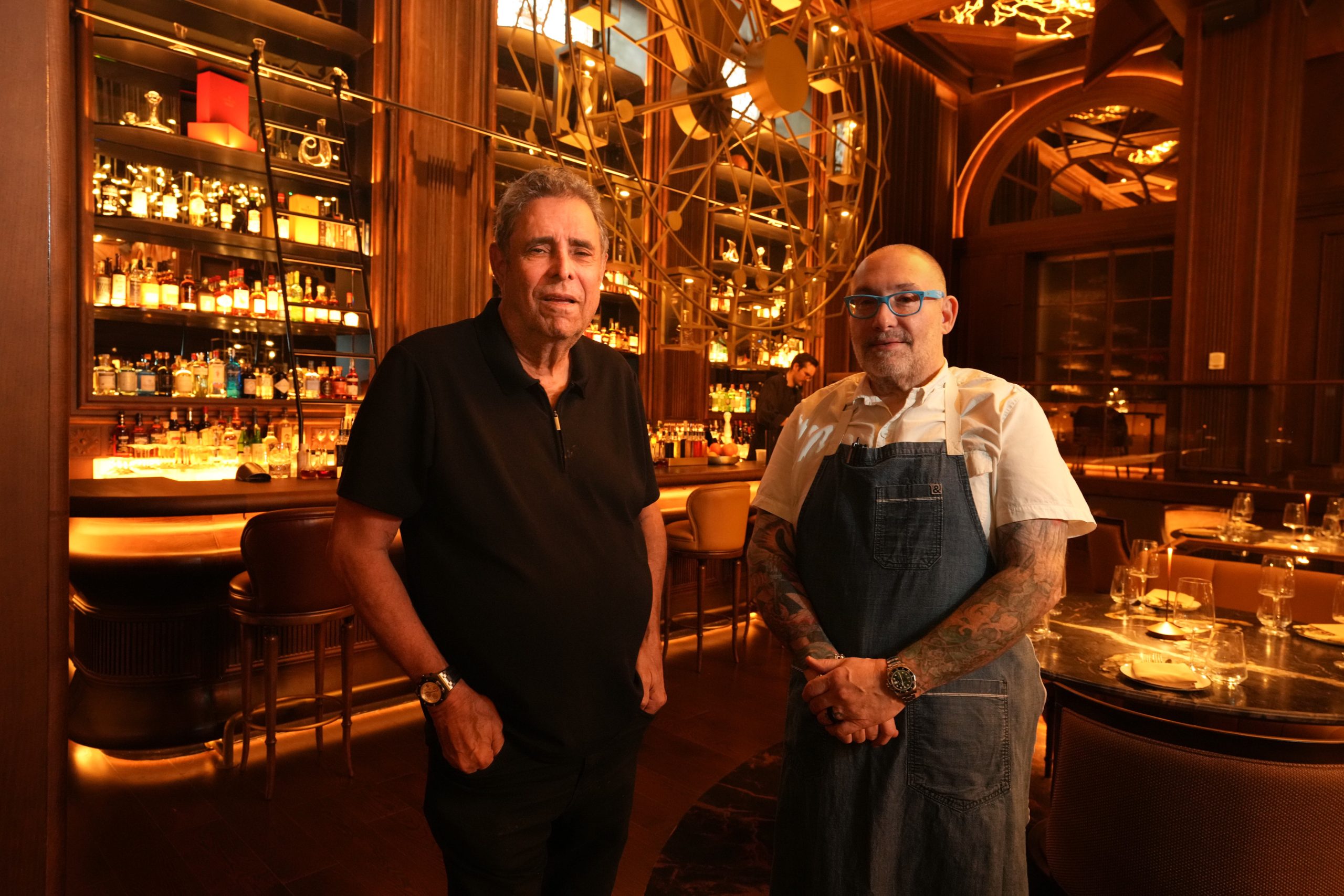
Jeffrey Chodorow (left) and chef Matt Levin, at Mr. Edison, the new restaurant at the Bellevue, in Philadelphia, on June 23, 2026.Jessica Griffin / Staff Photographer
If only I could have found the frequently absent captain overseeing our table on the mezzanine before the two-hour-plus mark of our glacially slow meal, when he finally asked us, too late and far too smugly, “Did that hit the spot?”
“Not very well,” I replied honestly with a detailed report, noting we’d hardly eaten this $90 sharing splurge as a result. He shrugged a faint reply, then handed us our bill with not even the slightest gesture of apology, though I was not surprised. He’d also forgotten so much as a candle for our dessert after we told him upon arrival (after he asked) that we were celebrating a birthday.
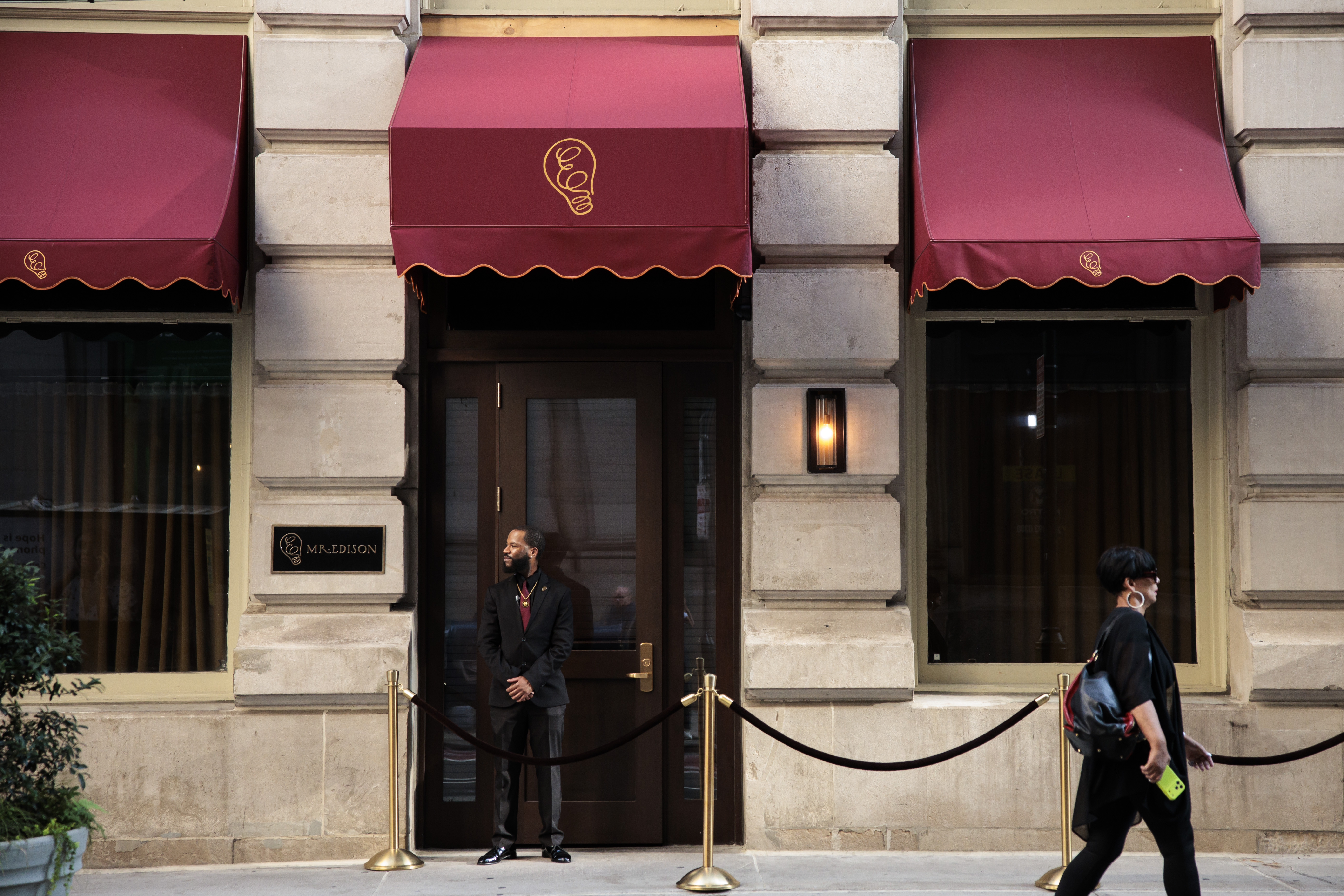
An envelope at each seat holds the menus at Mr. Edison in the Bellevue Hotel on Tuesday, Aug. 18, 2026 in Philadelphia.Monica Herndon / Staff PhotographerThe exterior of Mr. Edison in the Bellevue Hotel on Tuesday, Aug. 18, 2026 in Philadelphia.Monica Herndon / Staff Photographer
As a restaurant romantic, I value grand ambitions such as those that shaped Mr. Edison, a $10 million makeover of the former Polo store that recalls the showplace splendorof Walnut Street’s Restaurant Row in the late 1990s (Striped Bass, Susanna Foo, Brasserie Perrier) more than the DIY quirkiness of the restaurant renaissance that preceded it. It’s far preferable to the cookie-cutter chains that otherwise populate South Broad Street. But executing that ideal in a 133-seat room in 2026 — when, as chef Levin noted, people can make more working for food-delivery apps than actually cooking the food — is a challenge. With check averages of $120 (before tip and tax), no customer wants to hear excuses.
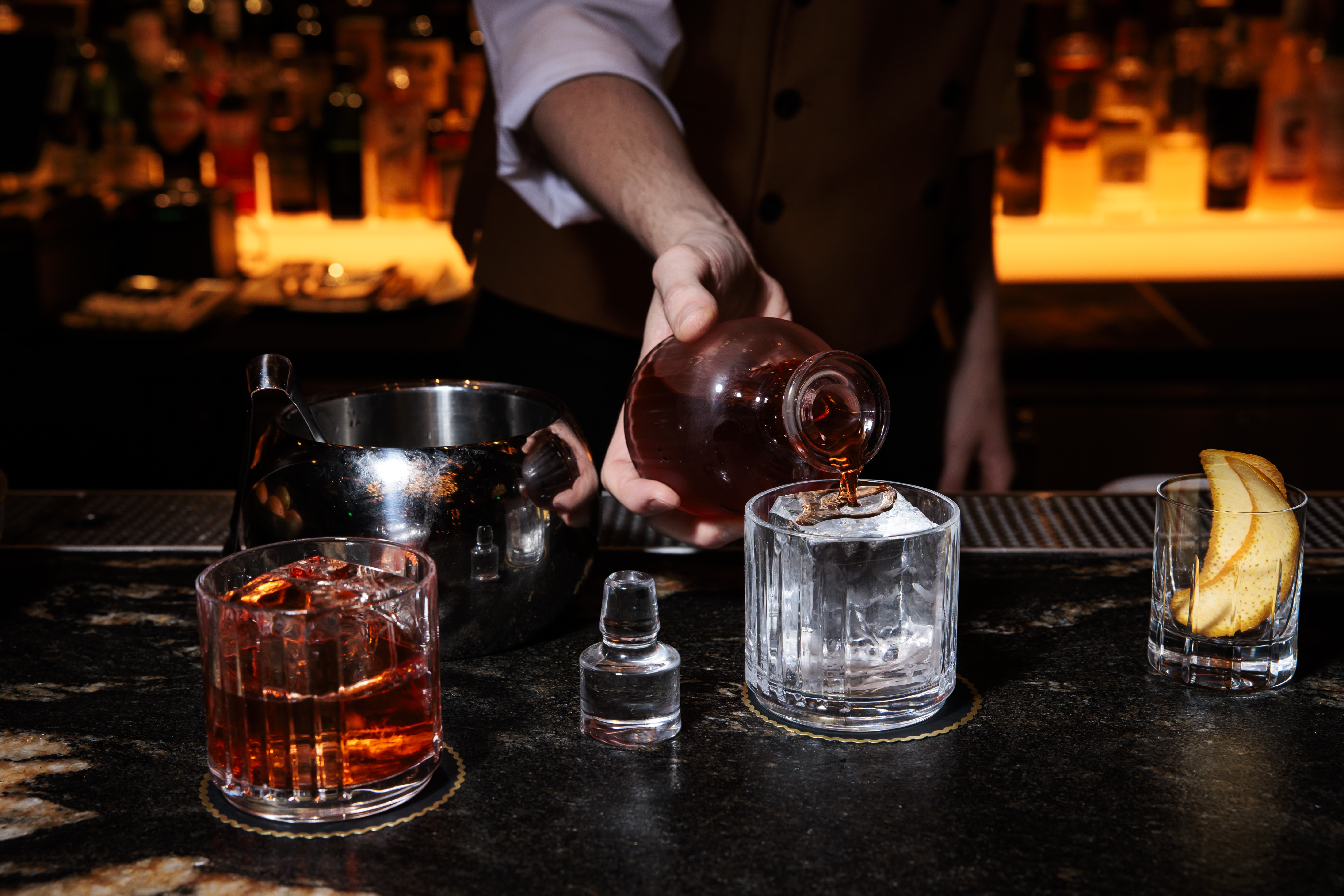
Improvement is within reach. We were seated at my following visit on the daisy wheel banquette that anchors the downstairs dining room, and the service there was much sharper. We had a perfect vantage to hear Drew Nugent & the Midnight Society swing onstage and to drink this bar’s outstanding cocktails, including the large carafe of a superb Negroni (this variation blending Cocchi di Torino and Punt e Mes) poured tableside over giant ice cubes. At $57 for the equivalent of three-plus cocktails, it’s one of Mr. Edison’s best values.
Bartender Michael Chukinas pours the tableside house Negroni at Mr. Edison in the Bellevue Hotel on Tuesday, Aug. 18, 2026 in Philadelphia.Monica Herndon / Staff Photographer
I’d definitely return for a seat at the titanium granite bar to enjoy the well-curated lineup of live music, sip other cocktail hits (the white coffee-infused Wizard or tropical 30 Minute Nap), and graze on some of the small plates.
The Korean fried oysters with kimchi and chicken salad was an intriguing riff on one of my favorite historical Philly food oddities, the spice and fermented funk of the cabbage cutting through the clubby richness. Waffle chips to scoop paddlefish caviar from fancy French onion dip was an accessible alternative to the far pricier sturgeon caviar service. The quail yolk-dotted beef tartare ringed by fried beef tendon puffs was irresistible, while a petite portion of seared filet mignon fanned over a creamy au poivre sauce with morels tapped another red-meat craving without the steakhouse clichés.
The Jimmy’s Milan salad — essentially crunchy lettuce tossed with bacon, big shrimp, hard-boiled eggs, and a zesty Russian-Italian hybrid dressing — is proof that some vintage pleasures don’t need to be reinvented to be appreciated. The restaurant’s $48 baked potato, stuffed with nearly half a pound of sweet lump crab au gratin, was the most memorable thing I ate at Mr. Edison, a super spud splurge that could hit yet another level with a $40 “blackout” addition of caviar.
A couple of the small plates fell short. A meaty flap of tuna carpaccio was not pounded thin enough. The corn-encrusted soft-shell crabs over mole verde were not soft enough, leaving me with a mouthful of shells.
Updating classics is a tricky prospect, and often Levin’s contemporary reworking drifted too far afield for its own good. The baked “Edison meets Rockefeller” oysters were so underdressed, with splashes of Mornay and fines herbes butter replacing the typically lush green puree, it lacked the indulgence to suit its name, even with a crispy nugget of guanciale. A $110 rendition of lobster Thermidor was not simply unrecognizable; without the full shell, into which it is typically stuffed and gratinéed, it was one-dimensional and boring.
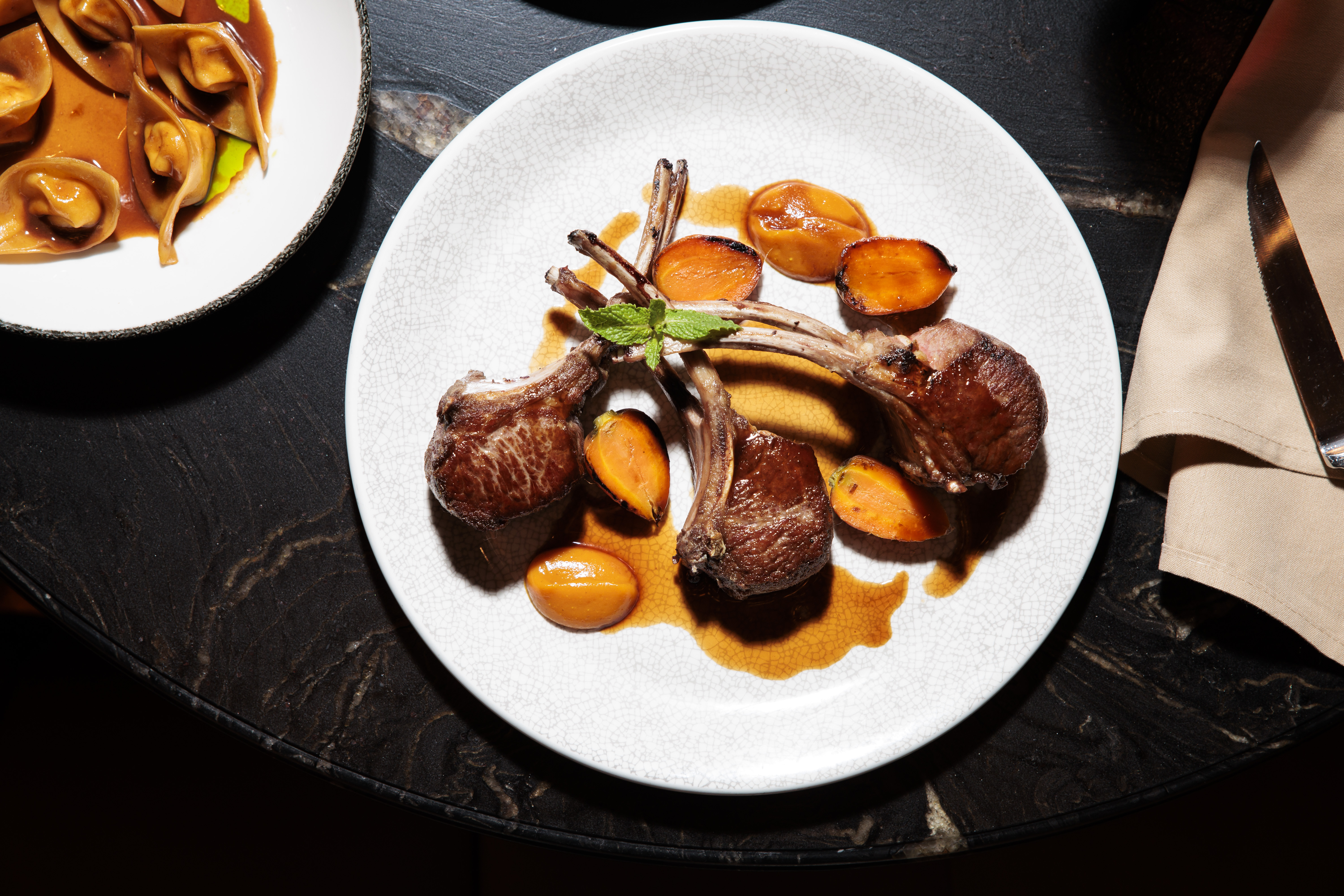
The grilled lamb chops spiced with vadouvan curry with Thumbelina carrots were the most satisfying of the “Grand Plates” for two, while the butterflied whole dorade over chimichurri and the buffalo milk ricotta ravioli were safe bets for the unadventurous.
The lamb chops at Mr. Edison in the Bellevue Hotel on Tuesday, Aug. 18, 2026 in Philadelphia.Monica Herndon / Staff Photographer
Too many other big dishes stumbled over the basics of seasoning — like a veal chop Milanese that cradled a handful of flaky salt atop its breaded crust. The brick chicken was so salty that my gums ached until the end of the meal.
Tucked into the stuffiest far corner of the mezzanine behind the bar for this final visit, I’d hoped an old-fashioned dessert would offer enough sweetness to counter that salty bird. I considered one of the winners I’d already enjoyed at previous visits: a re-creation of the coconut cake from Old Original Bookbinder’s, a tasty nod to Frog’s legendary carrot cake with butter pecan ice cream, or the dense chocolate-and-peanut-butter tart.
I opted for the crème brûlée to keep it easy, only to find its caramel crust — ideally torched to order and still warm — was cold by the time it ascended to our second-floor perch beneath the lightning-bolt rafters. I looked down toward the bar’s Ferris wheel as it cycled up toward us and couldn’t help but imagine the Ghosts of Philly Restaurants Past riding along with those glass cages, so hopeful for their comeback moment. Rising then falling, again and again, they sent shrugs of disappointment in my direction as they rolled away.
The carrot cake at Mr. Edison at the Bellevue Hotel on Tuesday, Aug. 18, 2026 in Philadelphia.Monica Herndon / Staff Photographer
Mr. Edison
Dinner Sunday through Thursday, 5 to 11 p.m.; Friday and Saturday, until midnight.
Small plates, $19-$45; Sharing plates for two, $58-$115.
Fully wheelchair accessible to all parts of the restaurant, including two wheelchair accessible seats at the bar.
Gluten-free: At least half the menu is either gluten-free or can be modified, including items cooked in a gluten-free fryer.
Menu highlights: Caviar dip; Jimmy’s Milan salad; Korean fried oysters; filet au poivre; baked potato with crab gratin; buffalo ricotta ravioli; lamb chops; carrot cake.
Beverage program: Don’t let the ostentatious bling bottles on the Ferris wheel fool you. The bar is Mr. Edison’s strong suit, with well-crafted and thoughtful updates to classic ideas using modern techniques and quality ingredients. The tableside Negroni towers are worth it, along with other cocktail highlights. The wine list is more predictable.
Mr. Edison, the new restaurant at the Bellevue from Jeffrey Chodorow, in Philadelphia, June 23, 2026.Jessica Griffin / Staff Photographer
Fall is nearly here, and for fruit lovers, that means one thing: It’s apple-picking season.
In the Philly area, there are more than a few orchards where you can pick apples for peak autumnal fun. Whether you’re into the crisp, sweet taste of a Gala or the crunchy, tart Granny Smith, you’re sure to get your fill.
When does apple-picking season start?
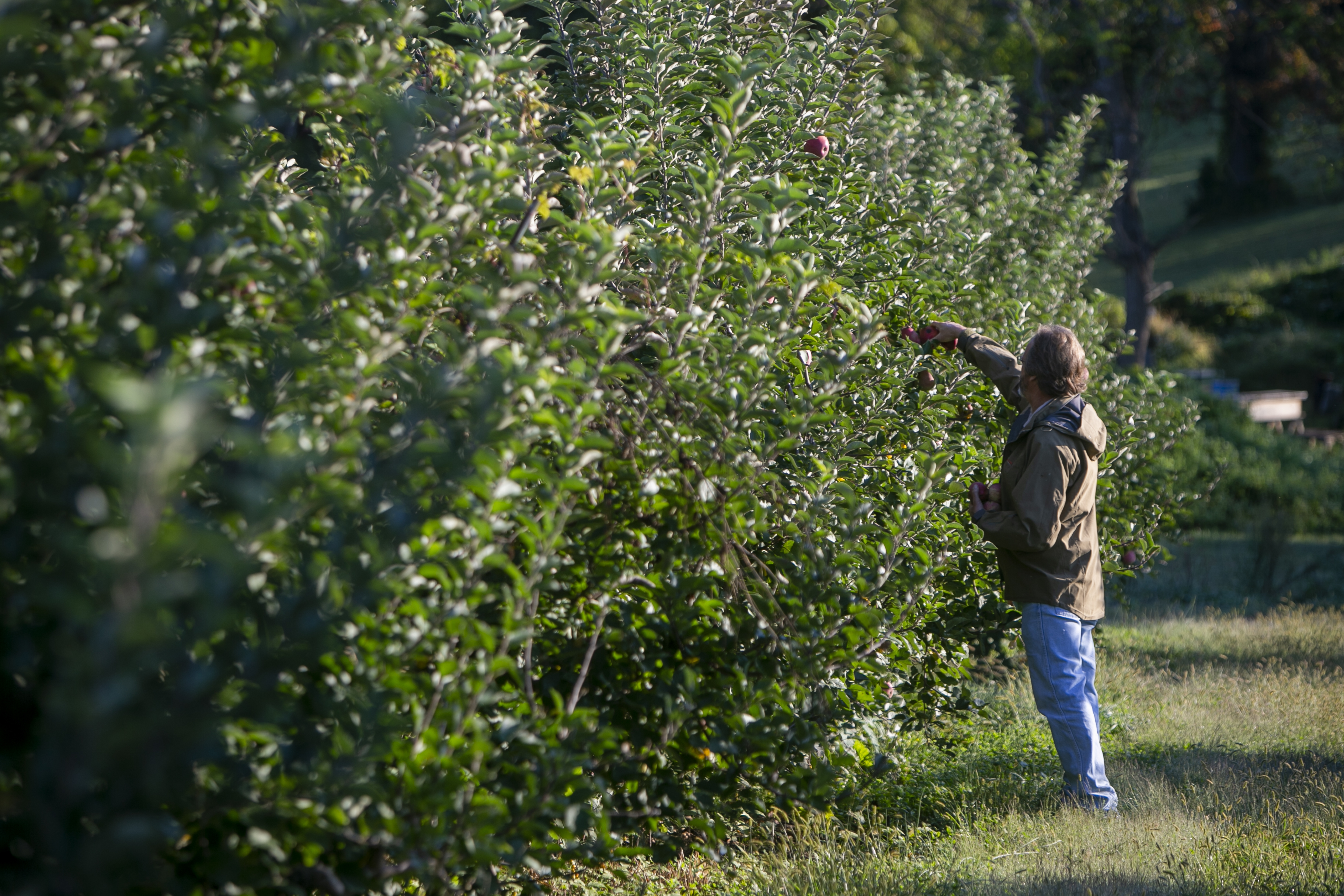
The season begins at the end of August for most of Pennsylvania, with Ginger Golds and Honeycrisps available for picking, and typically lasts until mid-November, said Norman Schultz, farm manager at Linvilla Orchards.
Here are great orchards, in New Jersey and Pennsylvania, for your apple-picking adventures, complete with treats like apple cider doughnuts and apple pies to enjoy on site or take home.
Note: Due to freezing temperatures in the spring, this year’s apple availability will be limited, according to many farms on this list. Be sure to to confirm ripening dates and available varieties ahead of time.
Indian Orchards Farm
Stop by the farm stand to sign up for apple picking. This over 100-year-old farm in Media grows about 25 apple varieties, including Honeycrisp, Gala, and Smokehouse. Admission is $3.50 per person, then pay by the pound for what you pick, with buckets and bags offered. On weekends, get hayride and admission combo tickets for $12.
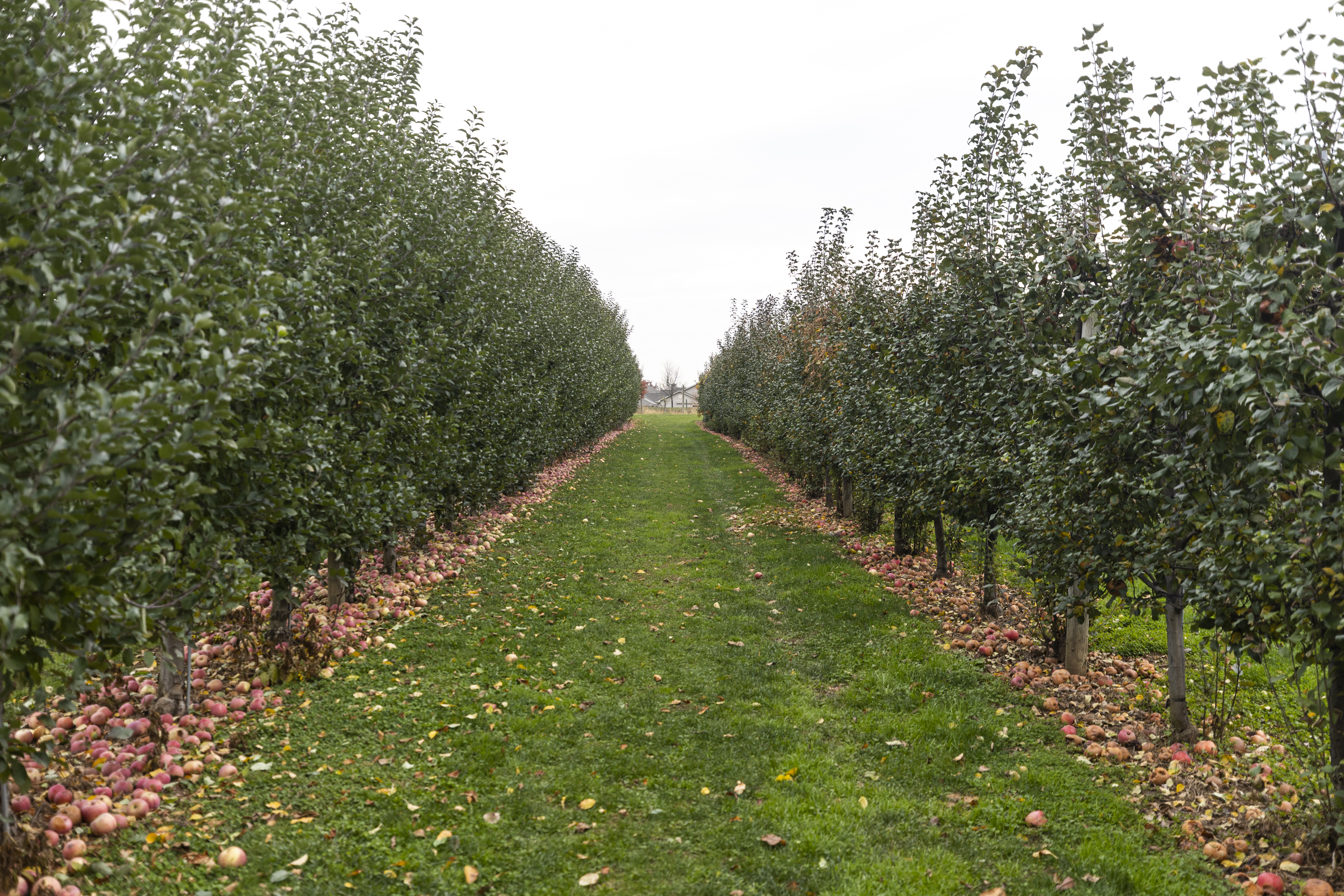
“Farmer Norm” Schultz among the Stayman apple trees at Linvilla Orchards, 137 W. Knowlton Road, Media, in 2020.ALEJANDRO A. ALVAREZ / Staff Photographer
Linvilla Orchards
This Delco orchard is a must visit, thanks to the 25 types of apples grown there throughout the season, like Crimson Crisp, McIntosh, and Jonagold. Fill a two-quart bag for $11 per person. Get tickets online. Linvilla also offers tons of baked goods, including fresh apple cider doughnuts — a seasonal favorite.
📍137 W. Knowlton Rd., Media, Pa. 19063, 🕑 PYO Monday to Sunday, 8 a.m. to 4 p.m., 📞 610-876-7116, 🌐 linvilla.com, 📷 @linvillaorchards
Styer Orchard
This Bucks County orchard will resume its pick-your-own apples this fall. Bring your own bag and purchase the fruit for $1.89 per pound.
This Chester County orchard typically offers pick-your-own apples through early November with over 40 varieties like Mutsu, Gala, and Pink Lady on hand. It’s best to call ahead or check Facebook to see what is available. Pricing for bags varies by size. It’s $3 per person (over 3 years old) to enter the field for picking. Highland Orchards’ farm market is known for its apple cider doughnuts.
📍1000 Marshallton-Thorndale Rd., West Chester, Pa. 19380, 🕑 PYO Tuesday to Friday 9 a.m. to 4 p.m., Saturday and Sunday 9 a.m. to 3 p.m., 📞 610-269-3494, 🌐 highlandorchards.net, 📷 @highlandorchardsinc
Terhune Orchards
Terhune’s pick-your-own apple orchard grows a plethora of varieties. Folks 4 years old and up must purchase bags for $10, $15, or $27 — no entrance fee required. A fall festival, filled with pony rides, live music, and other family fun, runs until the first week of November. Terhune also has an on-site winery and a bakery with apple cider doughnuts. Note: The farm store, winery, and festival events are at 330 Cold Soil Rd. Apple picking takes place at 13 Van Kirk Rd. and 330 Cold Soil Rd. Check the website to confirm location and availability.
📍 13 Van Kirk Rd., Princeton, N.J. 08540, 🕑 PYO Monday to Sunday, 9 a.m. to 5 p.m. (call the farm store during apple season) 📞 609-924-2310, 🌐 terhuneorchards.com, 📷 @terhuneorchards
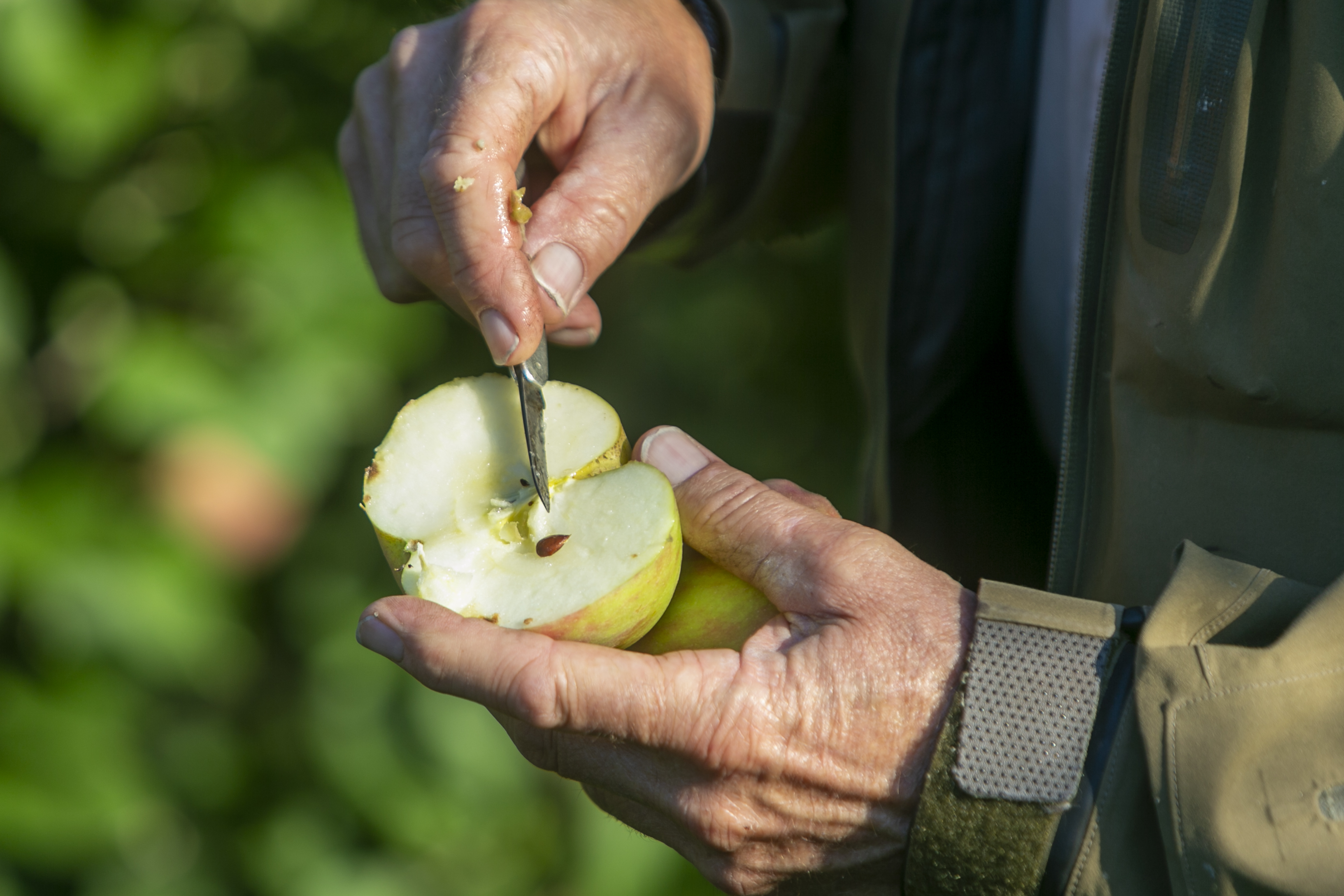
“Farmer Norm” Schultz cutting into a Stayman apple to look at the color of the seeds as a guide for when these can be picked at Linvilla Orchards, 137 W. Knowlton Road, Media, in 2020.Alejandro A. Alvarez / Staff Photographer
Solebury Orchards
Reservations are required for weekend apple picking at this Bucks County farm, where more than 30 varieties of apples are grown each season, according to its website. These include Pixie Crunch, Fuji, Jonathan, and Cortland, among others. Apples are priced by the pound for whatever you pick. Solebury’s farm market is an apple lover’s paradise thanks to its applesauce, apple butter, apple chips, fresh cider, cider doughnuts, and more, with mail order available for applesauce.
Weaver’s Orchard has some 18,000 apple trees on 35 acres of land and a wide selection of apples that include Honeycrisp, Crimson Crisp, Golden Delicious, and Jonagold. No reservations are required to pick-your-own apples, but you will need to use Weaver’s Orchard containers (starting at $29 — but prices may change) to hold your haul. Once you are done in the orchards, check out the market for everything from apple cider doughnuts to apple dumplings, as well as apple cider pressed on-site.
📍40 Fruit Lane, Morgantown, Pa., 🕑 PYO Monday to Thursday, 9 a.m. to 4:30 p.m., Friday 9 a.m. to 5:30 p.m., Saturday 8 a.m. to 3:30 p.m., 📞 610-856-7300, 🌐 weaversorchard.com, 📷 @weaversorchard
Apples lie on the ground as the pick-your-own season comes to an end and the transition to the winter season begins at Shady Brook Farms in Yardley in November 2023.Tyger Williams / Staff Photographer
Brecknock Orchard
Apple-picking season is expected to run into early November this year at Brecknock Orchard, where over 40 varieties of apples, including Gala, Golden and Red Delicious, Jonamac, and Cortland, are grown. If veggies are more your thing, you can pick your own from over 40 types of pumpkins, squash, and gourds. Brecknock’s farm market has tons of homemade items, like apple cider doughnuts, apple dumplings, and pumpkin rolls, plus apple cider and fruit slushies. The farm also has local delivery and curbside pickup. Check the website for updates on available produce for pick-your-own.
📍 390 Orchard Rd., Mohnton, Pa. 19540, 🕑 PYO Monday, Tuesday, Thursday, and Friday 8 a.m. to 7 p.m., Wednesday and Saturday 8 a.m. to 5 p.m. (through October), 📞 717-445-5704, 🌐 brecknockorchard.com, 📷 @brecknockorchard
Grim’s Orchard & Family Farms
A drive to Lehigh County takes you to this orchard, with its some 30,000 trees growing varieties like Premier Honeycrisp, Sweet Maia, Autumn Crisp, and Pixie Crunch. Each person 3 and up needs to buy at least a quarter-peck bag (about 2.5 pounds of produce) for $11 to enter the orchard. Larger sizes (up to 1/2 bushel for $52) are available, too. The Grim’s Fall Festival starts Labor Day weekend, featuring such activities as a corn maze and hayrides.
📍 9875 Schantz Rd., Breinigsville, Pa. 18031, 🕑 PYO Monday to Friday 10 a.m. to 6 p.m. (last picking bags sold at 5 p.m.), Saturday and Sunday, 10 a.m. to 7 p.m. (last picking bags sold at 5:30 p.m.), 📞 610-841-1417, 🌐 grimsorchard.com, 📷 @grimsorchard
Duffield’s Farm
Fill a bag of pick-your-own apples at this farm in Sewell, N.J. Then, take a hayride and enjoy an apple cider doughnut. A small bag (8 to 10 pounds) and a hayride combo ticket is $21; a large bag (18 to 20 pounds) and hayride is $36. Be sure to call ahead to confirm apple availability.
Two years ago, every child in the kindergarten class at Eleanor Emlen Elementary in Mount Airy had vaccine protection against measles.
A year later, the school’s kindergarten immunization rate had dropped to just 80%, putting students and the surrounding community at risk of an outbreak of the highly contagious disease.
Emlen is among more than two dozen Philadelphia-area schools that saw double-digit declines in kindergarten immunization rates last school year — in many cases because parents are increasingly refusing vaccines.
The affected schools span a diverse range of communities, from city neighborhoods like Mount Airy to the outlying suburbs. In Chester County, for example, a small private school in Downingtown saw its vaccination rates plunge by 20%.
Even as countywide immunization levels remain relatively high, some 40% of kindergarten classrooms across the region became vulnerable to an outbreak during the 2025-26 school year, up from 33% the year prior, an Inquirer analysis of newly released state data found.
(function(){function e(){window.addEventListener(`message`,function(e){if(e.data[`datawrapper-height`]!==void 0){var t=document.querySelectorAll(`iframe`);for(var n in e.data[`datawrapper-height`])for(var r=0,i;i=t[r];r++)if(i.contentWindow===e.source){var a=e.data[`datawrapper-height`][n]+`px`;i.style.height=a}}})}e()})();
That means that at least 249 schools had vaccination rates below 95%, the level at which scientists say a population must be vaccinated to prevent the spread of measles, one of the most contagious diseases.
Of these, 98 Philadelphia-area schools reported measles vaccination rates below 90%, presenting an even greater risk to students.
A sharp increase in parents opting out of vaccination for religious or philosophical reasons continued to drive down vaccination rates; exemptions in this category rose by 15% in the latest two years for which data are available.
(function(){function e(){window.addEventListener(`message`,function(e){if(e.data[`datawrapper-height`]!==void 0){var t=document.querySelectorAll(`iframe`);for(var n in e.data[`datawrapper-height`])for(var r=0,i;i=t[r];r++)if(i.contentWindow===e.source){var a=e.data[`datawrapper-height`][n]+`px`;i.style.height=a}}})}e()})();
Pennsylvania is among a handful of states that allows parents to opt out of vaccine requirements for philosophical or religious reasons, often by simply signing a form.
The health department published more granular, school-level vaccination data this summer for the first time, after reporting by The Inquirer and the Pittsburgh Post Gazette made this information public for the prior school year, exposing pockets of vulnerability within counties with overall high vaccination.
The new data show the growing public health threat to the region from Pennsylvania’s growing measles outbreak, in which two people in Lancaster County have died, state officials reported Tuesday. They were the state’s first measles-related deaths in three decades.
(function(){function e(){window.addEventListener(`message`,function(e){if(e.data[`datawrapper-height`]!==void 0){var t=document.querySelectorAll(`iframe`);for(var n in e.data[`datawrapper-height`])for(var r=0,i;i=t[r];r++)if(i.contentWindow===e.source){var a=e.data[`datawrapper-height`][n]+`px`;i.style.height=a}}})}e()})();
So far, nearly 400 cases have been diagnosed, with nearly half in Lancaster County. The rapidly spreading outbreak is edging closer to densely populated Philadelphia. Chester County, just west of the city, has reported the second-highest number of cases in the state.
At a news conference on the measles deaths Tuesday, Gov. Josh Shapiro stressed his concern about the rise in Pennsylvania parents opting out of vaccinations over the last 10 years.
“It has dramatically reduced community immunity in different areas of our Commonwealth,” he said. “Today, we see the consequences of a lack of immunization.”
The new school-level data on vaccines, he said, allow “everyone to see their school’s vaccination coverage and make informed decisions.” Lawmakers have also said they hope that having more access to data about their children’s schools will make families more aware of risks within their communities and encourage them to vaccinate their children.
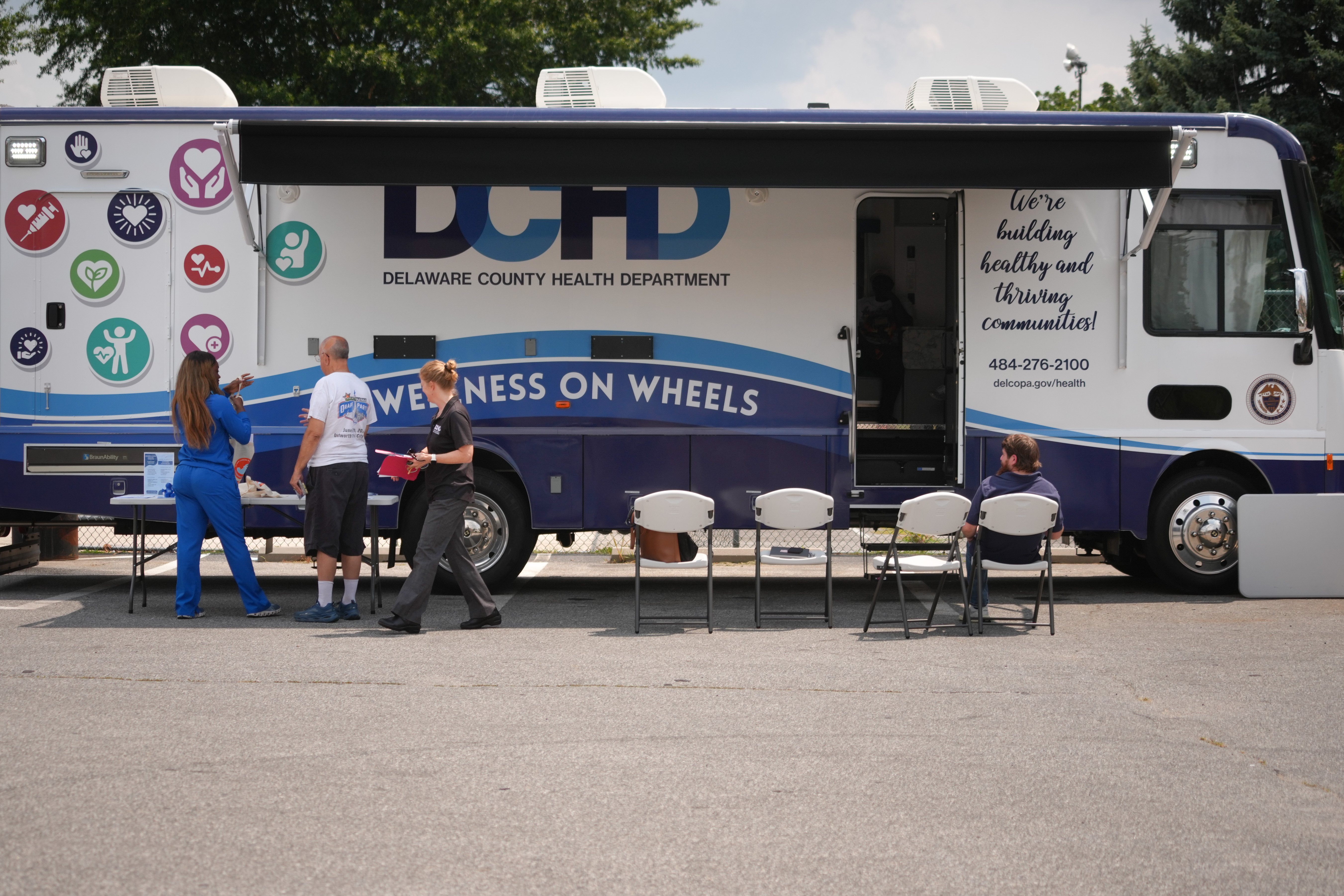
Amid rising measles case counts and declining immunization rates, Delaware County’s health department launched an immunization campaign over the summer to encourage families to vaccinate.Jessica Griffin / Staff Photographer
Emlen, which saw one of the steepest drops in protection, was one of 40 schools in the five-county region that reported 100% measles vaccination rates two years ago, only to drop below the 95% herd immunity threshold last year.
Philadelphia school officials say the changes at Emlen likely reflect increasing hesitancy among parents to immunize their children against measles, mumps, and rubella (MMR) and other diseases. State records show that most unvaccinated kindergarteners at Emlen have philosophical or religious exemptions.
Some fluctuations in kindergarten vaccination rates are typical from year to year, but the rise of anti-vaccine rhetoric in federal leadership appears to be exacerbating fears around vaccination, said Kendra McDow, a pediatrician who serves as the Philadelphia school district’s medical director.
“What we’re seeing is reflective of what I believe are local and national trends,” McDow said. “Families are confused, and they want to do right by their children.”
In the latest federal vaccine maneuver — opposed by the medical establishment, prominent Democrats, and Republican Sen. Bill Cassidy, a physician — President Donald Trump signed an executive order this month asking states to “consider updating” laws to require fewer vaccinations for schoolchildren without any medical justification. He also advocated for splitting the MMR vaccine into three separate shots — even though no separate measles, mumps, or rubella vaccines are licensed in the United States.
The order came after a chaotic year in which Health and Human Services Secretary Robert F. Kennedy fired federal vaccination advisers and pushed to upend the federal vaccine schedule. Kennedy, a longtime anti-vaccine activist, has promoted false concerns that vaccinations can lead to autism.
Families are faced with a barrage of misinformation about vaccines. Jessica Griffin / Staff Photographer
With Pennsylvania now experiencing its largest measles outbreak in three decades, Kevin Ressler, a healthcare nonprofit leader in suburban Philadelphia who was raised in Lancaster County, worries that declining vaccine rates reflect increasing political polarization.
“You don’t have to be a scientist to recognize that’s a problem,” said Ressler, the CEO of Alliance for Health Equity, a Coatesville nonprofit that works to improve access to health services. “A lot of this is rooted in whether we are able to hold trusted relationships.”
Philly-area counties all at risk
Philadelphia and its suburban counties overall remain well protected against measles, state officials say. The declines seen in the latest school year amount to less than 1% of all kindergarteners in each of the five counties in the area, an improvement from the drops that followed the COVID-19 pandemic.
But even small drops can be significant given the contagiousness of measles, which can linger in the air for hours and infect nine in 10 unvaccinated people who come into contact with it.
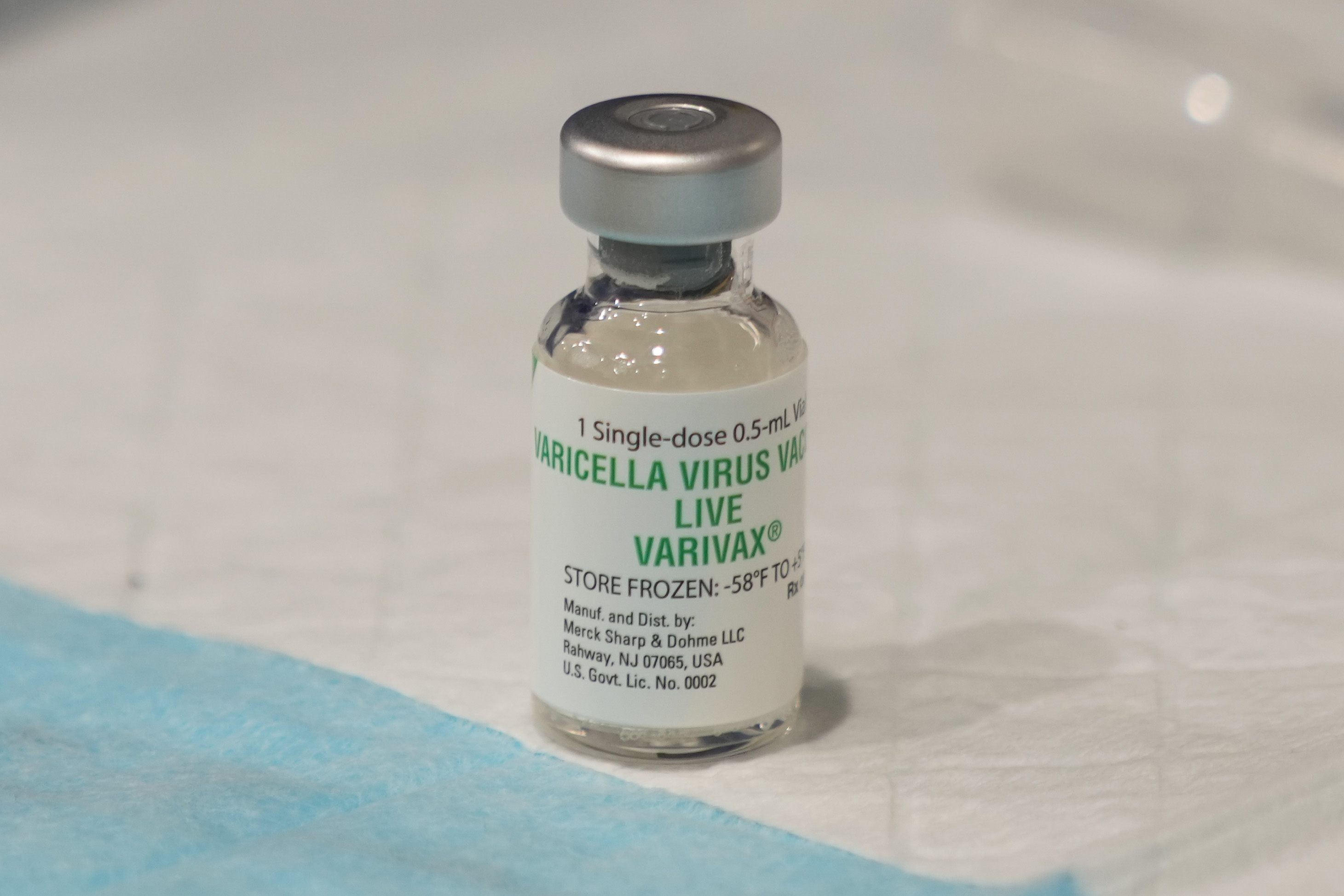
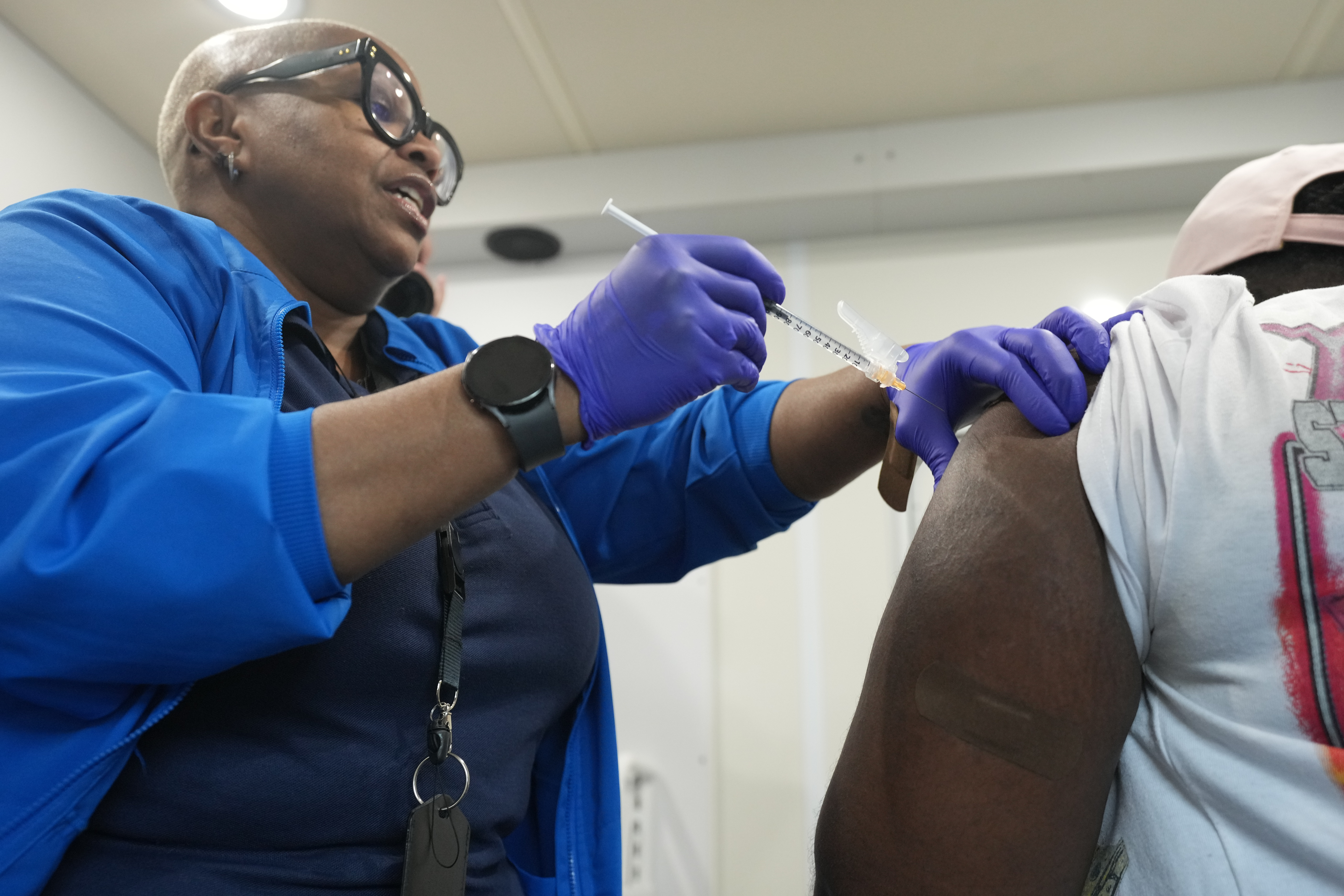
Mia Williams, a registered nurse, vaccinates a client at Delaware County’s mobile clinic in Upper Darby in July. Jessica Griffin / Staff Photographer
“The risk has definitely gone up because of lower vaccination numbers,” said Rene Najera, the director of public health at the College of Physicians of Philadelphia.
Najera says slipping vaccination rates especially endanger vulnerable students and community members beyond the schools, like pregnant women, cancer patients, or babies too young to be vaccinated. Parents of high-risk children should speak with their pediatricians about the risks of attending a school with lower vaccination rates, he said.
Last year marked the first time in more than 10 years that no Philadelphia-area county had reported measles vaccination rates above herd immunity.
Bucks County had the lowest MMR vaccination rate for kindergartners, at 93.7%, down by more than a half a percentage point from the year before.
Montgomery County, the only county in the Philadelphia region with kindergarten vaccination rates at herd immunity two years ago, slipped just below the threshold in 2025, to 94.8% vaccinated.
About 94% of Delaware County and Philadelphia kindergarteners were vaccinated last school year.
In Chester County, the only Philadelphia-area county to report cases in the current outbreak, vaccination rates for kindergartners have held steady at 94.5% for the last two school years. Some schools in the county reported steep drops in MMR coverage ahead of the current outbreak, which has seen 40 cases confirmed since June.
At Windsor Christian Academy in Downingtown, only one in four kindergarteners were vaccinated last year at a school that exceeded the herd immunity threshold the year prior. About 14% of the class had religious exemptions for vaccination. School officials did not return a request for comment.
Caln Elementary School in Thorndale saw measles vaccination rates drop from 100% to 74% in a year. Officials at the school declined to comment. (Caln closed at the end of last school year, and most of its students are transferring to the newly built Doe Run Elementary this year.)
Jeanne Franklin, Chester County’s health director, said she is “moderately” concerned about the current measles outbreak, given that many of the county’s most populous public schools still have high vaccination rates.
The school-level data improve the county’s ability to identify schools with lower vaccination rates.
Chester County health officials talk to school nurses, principals, and other administrators before the start of every school year to remind them of what to do if they identify a case of measles.
Under county policy, a single measles case in a school will mean all unvaccinated students and staff must stay home for 21 days.
This year, conversations that are usually hypothetical have taken on more urgency.
The health department has urged schools to take stock of who within their school is unvaccinated and develop a plan for how they will teach unvaccinated students who are sent home and staff classrooms of absent teachers.
“You don’t own getting them vaccinated,” Franklin said she tells administrators. “But you have to think through these things.”
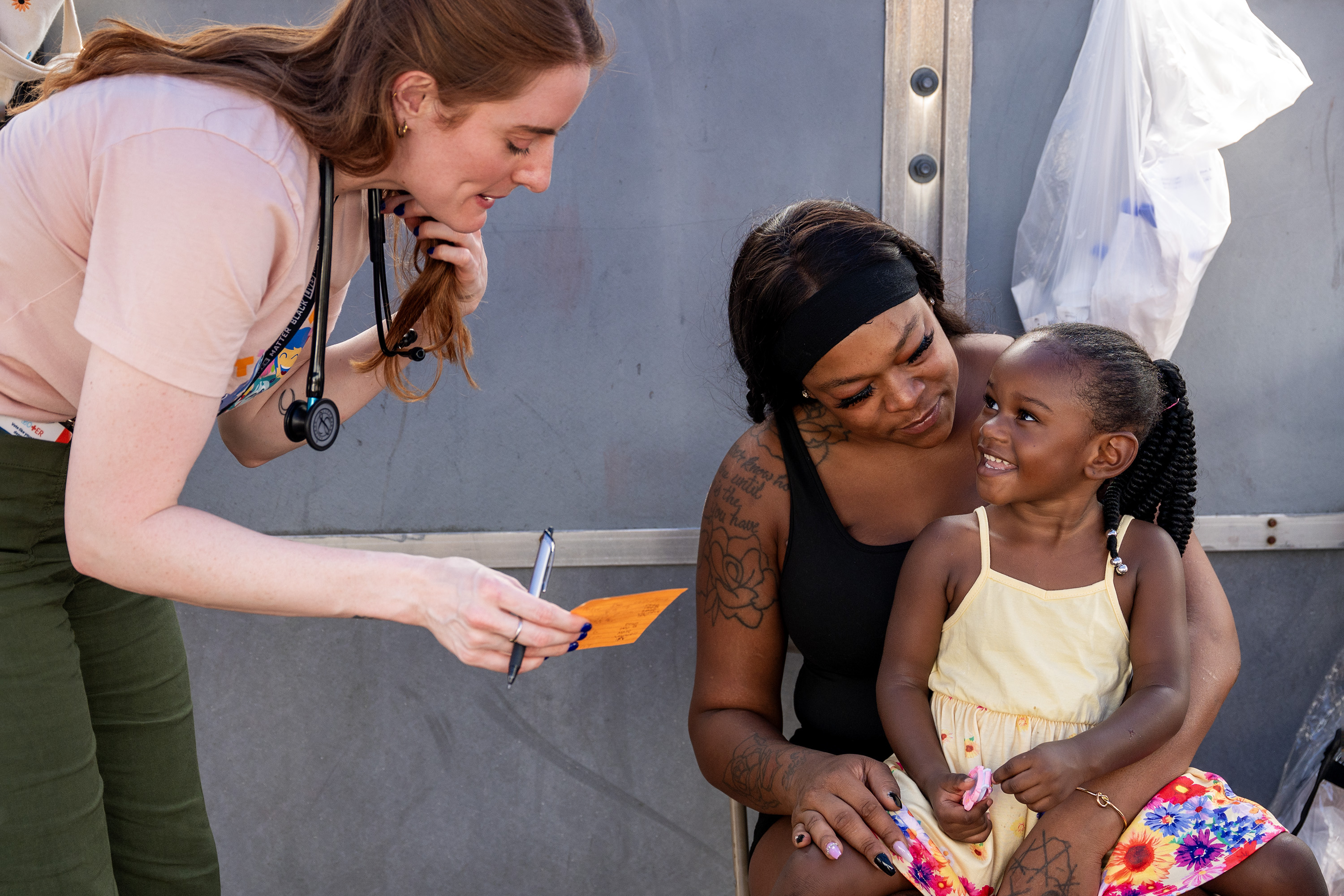
Sisters A’zuri, 3, and A’Sara, 6, wait while their mother, Shania’ Jason, checks in at a vaccination clinic during the School District of Philadelphia’s sixth annual Back-To-School Bus Tour stop this month at Marcus Foster Memorial Stadium. Tom Gralish / Staff Photographer
Philly schools on alert
As the school district’s lead health officer, McDow worries about the threat of measles so close by, but believes concerted efforts in the city have kept vaccination rates “as high as they can be in this current climate.”
She’s also monitoring Philadelphia schools where the state data show declining vaccination coverage. (The publicly available school-level data does not include classes with fewer than 20 students, for privacy reasons, or schools that did not report to the state. About 90% of schools statewide reported data in 2025.)
In some cases, what looks like a decline can be explained by delays in data reporting due to administrative issues or staff absences. School vaccination records are reported to the state during the month of December.
For example, Mantua’s Morton McMichael School reported a 50% drop in MMR vaccination coverage, initially going from nearly nine in 10 kindergarteners vaccinated to just over a third.
But by the end of the 2025-2026 school year, records show 93% of McMichael kindergarteners were fully vaccinated against measles, district officials said, though the state data does not show the improvement.
McDow worries about drops at other schools, from Mount Airy’s Emlen Elementary to North Philadelphia’s James Logan Elementary’s 18.5% decrease in vaccination rates, which are likely related to parents increasingly refusing vaccines.
Pediatrician Amanda Bernard (left) talks with Shania’ Jason and her daughter A’zuri, 3, at a vaccination clinic hosted by the Philadelphia School District this month at Marcus Foster Memorial Stadium.Tom Gralish / Staff Photographer
The school district hosts vaccination clinics over the summer and during the school year, working with the city health department to target families with unvaccinated children and schools with low vaccination rates.
The district also works to ensure vaccination clinics are accessible to working parents, organizing some on weekends or evenings.
“We need to be talking to families and answering questions in transparent ways,” McDow said. “But we also need to be providing the opportunities for vaccination.”
Some families line up for immunizations
On a recent sweltering August afternoon, families lined up at a tent pitched on the football field at Marcus Foster Memorial Stadium in Olney, part of a back-to-school fair sponsored by the Philadelphia School District.
“IMMUNIZATIONS,” read a flag waving in the breeze. Business was brisk all day.
Some families who visited the tent were recent immigrants, getting caught up on vaccinations before their children started at their new schools.
“We’re vaccinated, my husband and I, because our parents vaccinated us. And I’ll do the same for my children,” said Betty Bachene, who moved to Philadelphia from Paris this summer. Speaking in French, she said she’s never been afraid of vaccinating her children, but does fear the diseases vaccines prevent.
Anaiya Burnham, a nurse, said she’d opted against getting COVID or flu shots for her two children, one of whom is entering kindergarten this year. But vaccinating them against measles was never a question.
“I would really be curious to know why anyone would opt out of the MMR, given the research,” she said.
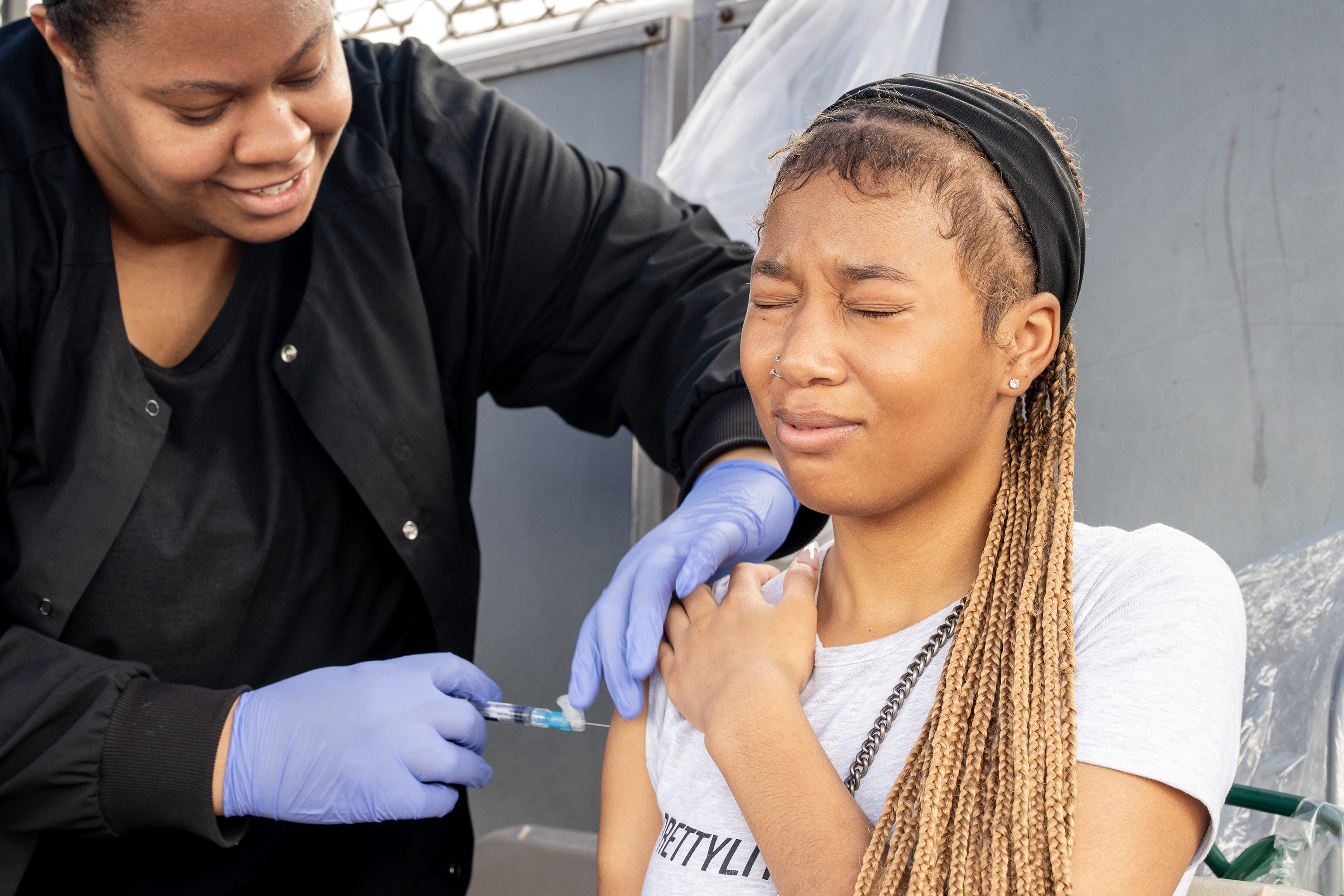
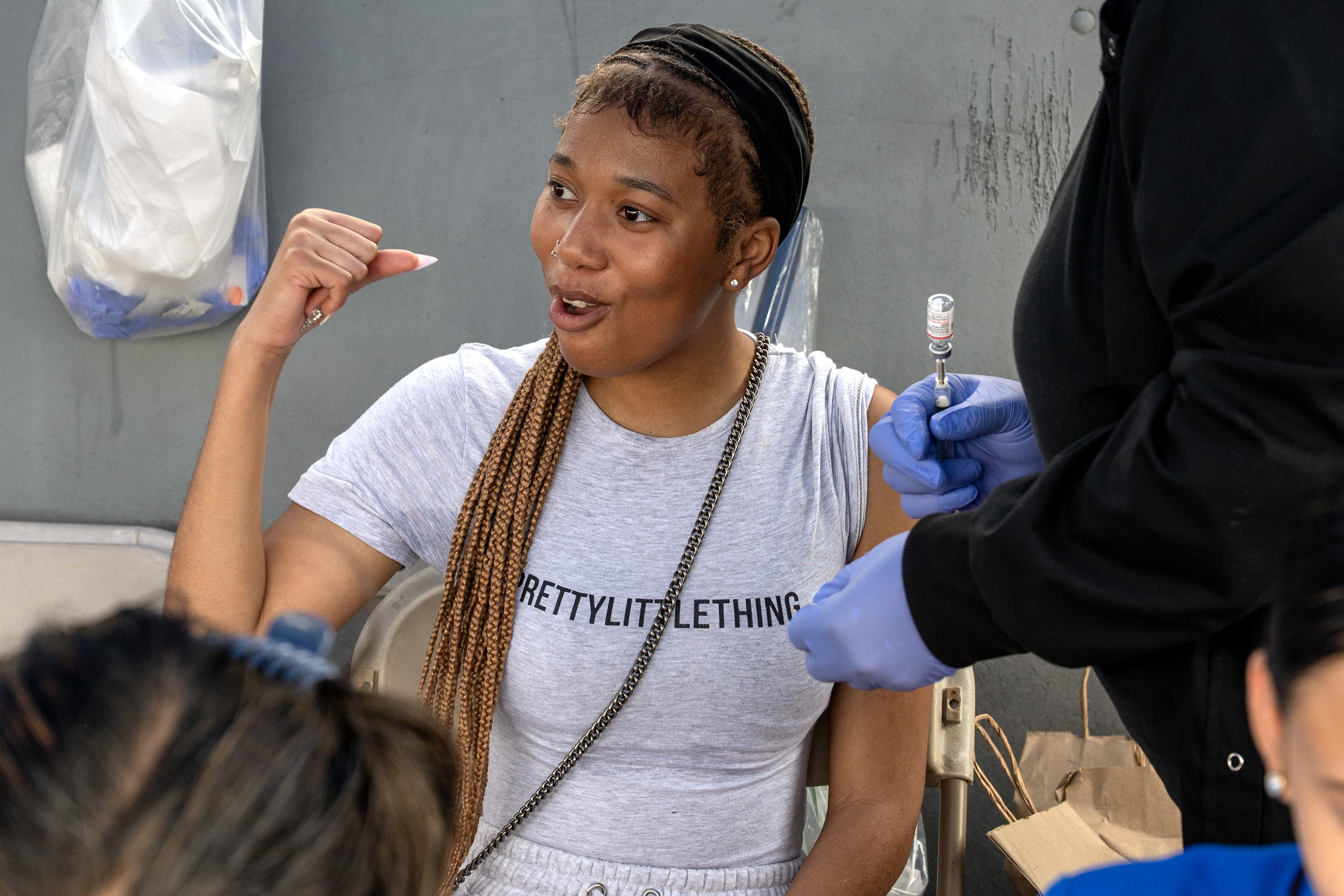
Cianey Brown, 16, reacts and turns to her family after getting an immunization at a Philadelphia school district vaccination clinic this month at Marcus Foster Memorial Stadium. Tom Gralish / Staff Photographer
Philadelphia parents face a number of different barriers that keep them from vaccinating children — and not all of them are related to vaccine hesitancy, said Amanda Bernard, a pediatrician with Greater Philadelphia Health Action, the clinic offering vaccinations at the event.
Some lack transportation to get to a health center outside their neighborhood, or don’t speak English well enough to navigate the healthcare system, she noted.
“I think that these sorts of events are really a way that we could combat that,” said Bernard, who has heightened her advocacy around vaccination as Pennsylvania’s measles outbreak has spread.
“There’s almost a desperation in my education. I sometimes feel like I’m almost begging [families] to get it.”
Editor’s note: This story has been updated to correct the name of James Logan Elementary in Philadelphia.
(function(){function e(){window.addEventListener(`message`,function(e){if(e.data[`datawrapper-height`]!==void 0){var t=document.querySelectorAll(`iframe`);for(var n in e.data[`datawrapper-height`])for(var r=0,i;i=t[r];r++)if(i.contentWindow===e.source){var a=e.data[`datawrapper-height`][n]+`px`;i.style.height=a}}})}e()})();
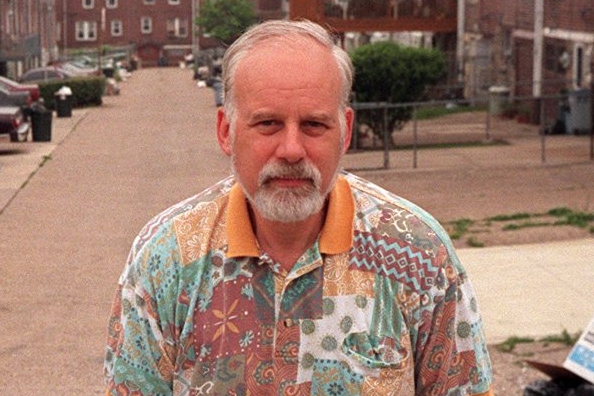
Ron Avery, 85, of Philadelphia, retired eclectic reporter and columnist for the Daily News, Philadelphia historian, volunteer city tour guide, author, high school history teacher, veteran, and canoe enthusiast, died Sunday, Aug. 2, of complications from amyotrophic lateral sclerosis at his home in East Falls.
Reared in Fairmount, Mr. Avery graduated from Thomas Edison High School and earned a bachelor’s degree in history at Pennsylvania State University. He was assigned to the ship newspaper in the Navy after college, found a creative niche in journalism, and went on to work for more than 30 years at the Associated Press, the Bucks County Courier Times, the Courier-Post in South Jersey, and the Daily News.
He wrote for the Daily News as a correspondent in 1981, joined the staff in 1982, and, until his retirement in 2000, wrote thousands of stories about crime, casinos, war orphans, historic houses, the MOVE bombing, local notables, and other subjects. His columns, “Poor Ronald’s Almanac” and “One of Us,” hammered away at local issues and featured everyday people doing exceptional things.
“He covered every nook and cranny of the city,” said his son Serge. “That burning curiosity sustained him till his last days.”
He wrote three books about Philadelphia, including A Concise History of Philadelphia in 1999. He produced a series of video guides he called the Urban Explorer for local TV in 2004 and posted blogs about the city from 2017 to 2019 on a website called Philadelphia Cracks Me Up.
“Like all cities,” he said in a 1995 Daily News column, “Philadelphia is honeycombed with hidden spaces and forgotten places.” In a 1997 review of his book, City of Brotherly Mayhem: Philadelphia Crimes and Criminals, The Inquirer’s Thomas Brady said: “The book … is decidedly a fun read.”
Alex Strang, his director on the Urban Explorer videos, called Mr. Avery an “unforgettable legend” and “a walking encyclopedia of the city’s history and eccentricities” in a Facebook tribute. Other former colleagues said he was “a clever journalist” and “a true Philadelphian.”
Longtime Daily News colleague Robin Palley said on Facebook: “He had an amazing knack of finding quirky people with fascinating skills or habits and making them come to life on our pages.”
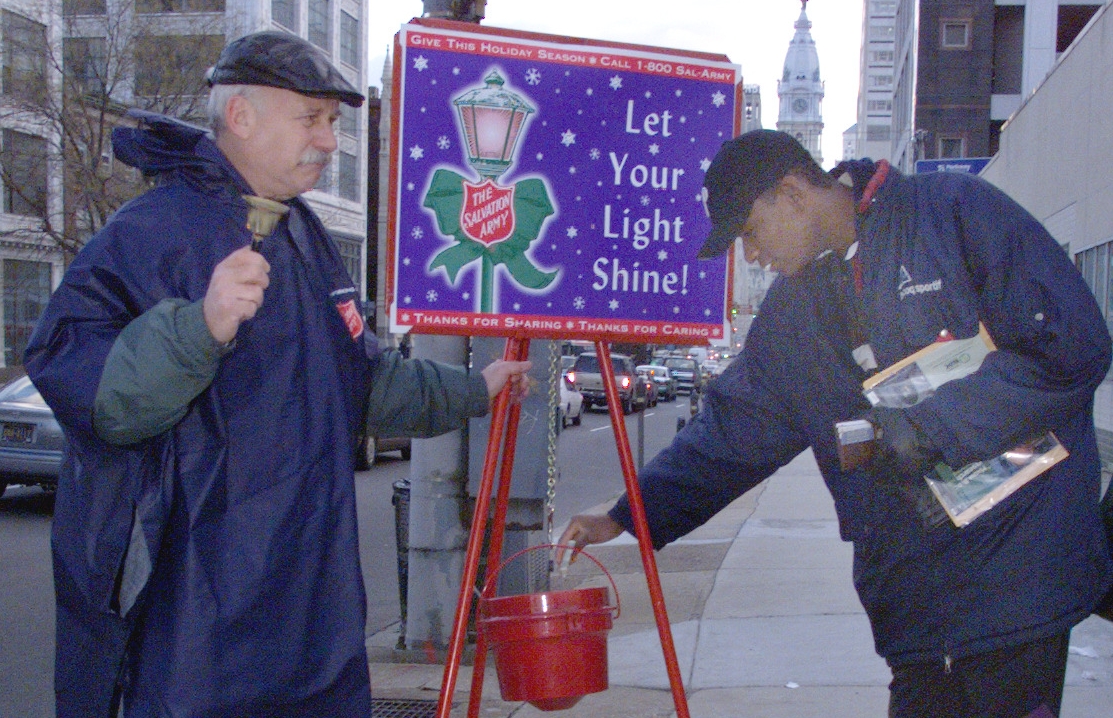
Mr. Avery (left) mans a Salvation Army donation kettle in 1999.Steven M. Falk / Staff Photographer
Before the Daily News, Mr. Avery wrote news and feature stories for the Courier-Post in the 1970s, and the Courier Times and the AP in the 1960s. He moved to Israel for six months in 1972 but returned to work for the Courier-Post in 1973.
He also wrote freelance pieces for the Hidden City Daily, PhillyHistory.org, UShistory.org, and op-eds later for The Inquirer and Daily News. He served in the Navy from 1964 to 1966, joined the Philadelphia Canoe Club later, and led water trips in the New Jersey Pine Barrens and elsewhere.
Knowledgeable, energetic, and naturally affable, he was a tireless promoter and volunteer guide in Philadelphia. He led walking tours throughout the city for students, civic groups, and other organizations, and his explanatory video tours featured cobblestone alleys, urban gardens, museums, statues, and other features of city life.
He was a stickler for details and historical accuracy, and he helped spur City Council to pass an ordinance in 2008 to educate and certify paid Center City tour guides. “They score high as Philadelphia ambassadors of good will,” he said in a 1995 column about uneducated guides, “but as historians they often flunk out.”
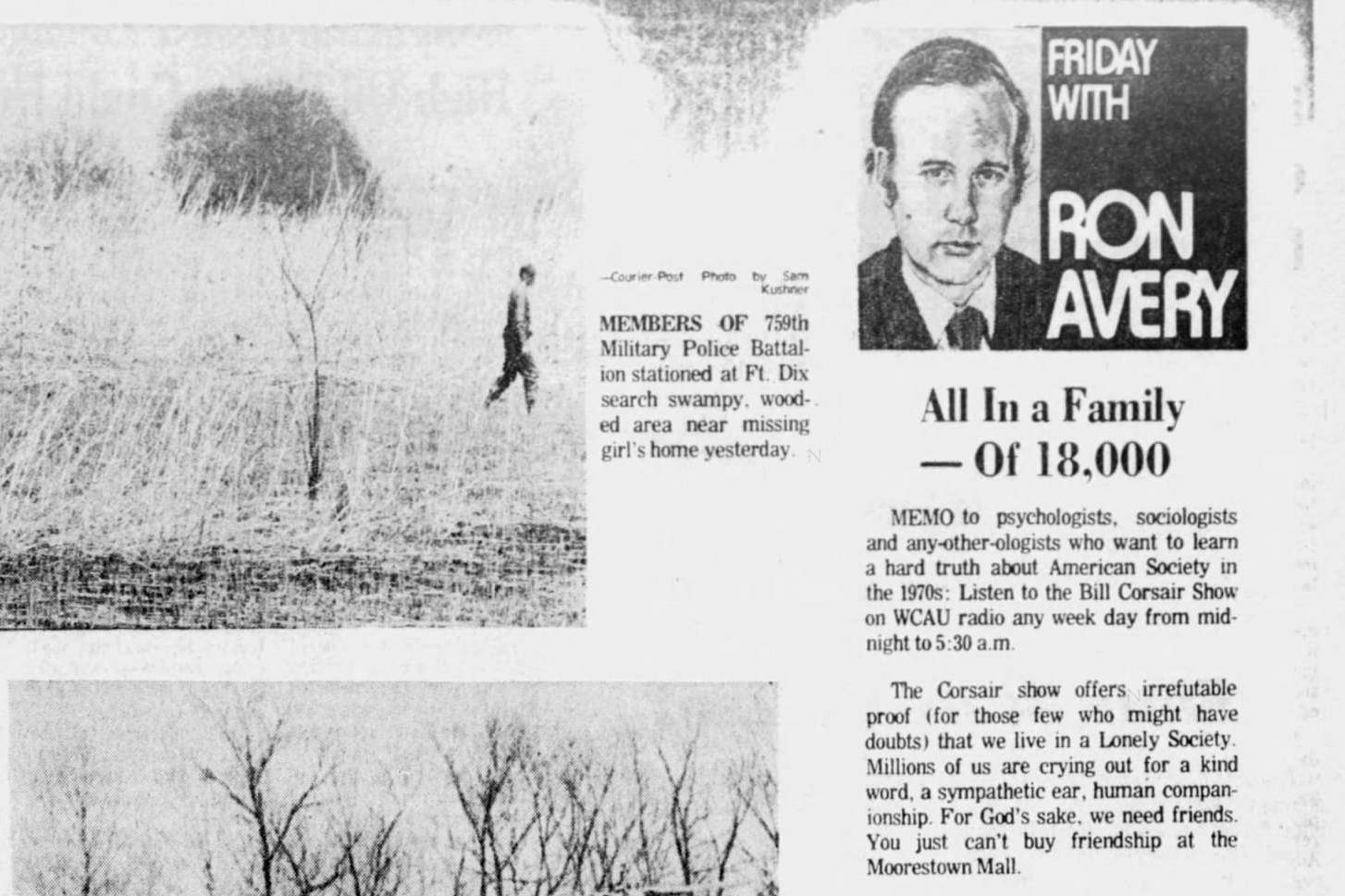
Mr. Avery wrote a column for the Courier-Post in 1974.Newspapers.com
Ronald Avery was born June 10, 1941, in Strawberry Mansion. He joined the Boy Scouts, earned his bachelor’s degree at Penn State in 1963, and taught history at Bensalem High School for a year.
He was a boxer in college and, mesmerized by the sport, later worked as a referee for amateur matches.
He met Suzet Habif in Israel in 1967, and they married in 1968. They had sons Serge and Ben, and lived for years in a rowhouse in Oxford Circle.
Mr. Avery cared for his wife during her long illness in the 1980s and ’90s. She died in 1993.
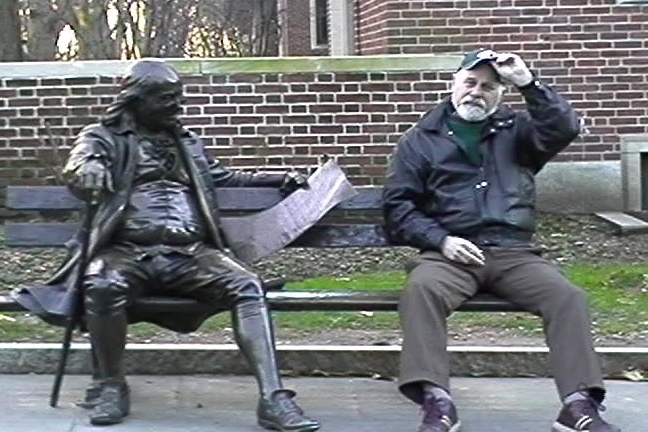
Mr. Avery liked to hang out with Benjamin Franklin and other historic figures. Alex Strang
He lived later in Pennsport and East Falls, was diagnosed with ALS in 2015, and proudly outlived its average life expectancy of 18 months by nearly a decade. “He defied that diagnosis and did not let it define him,” his son Serge said. “He always said he had a lot to live for.”
Mr. Avery was an avid reader and street photographer. He liked poetry, wrote limericks on birthday cards, and posted hundreds of his photos on flickr.com. One of his photos won a contest and was displayed at the airport.
He enjoyed jazz and jokes, led the prayers at family gatherings, and gave Yiddish quizzes to his two grandsons. He shared favorite recipes with Daily News colleagues and whipped up memorable homemade soups, especially white bean.
“I’ll greatly miss his endless anecdotes about all things Philadelphia,” said his daughter-in-law, Rebecca Houlding, “the stories about the local criminals, and his love of his family and friends.”
Mr. Avery wrote about his life in Northeast Philadelphia for the Daily News in 1997.Alejandro A. Alvarez / Staff Photographer
His son Serge said: “He loved chasing the stories from the back alleys and driveways, highlighting the working people of our town.”
In addition to his sons, daughter-in-law, and grandsons, Mr. Avery is survived by other relatives. A sister died earlier.
Northeast Philadelphia’s last traditional Jewish delicatessen will close this weekend, ending a chapter in a food culture that for decades seemed inseparable from the area itself.
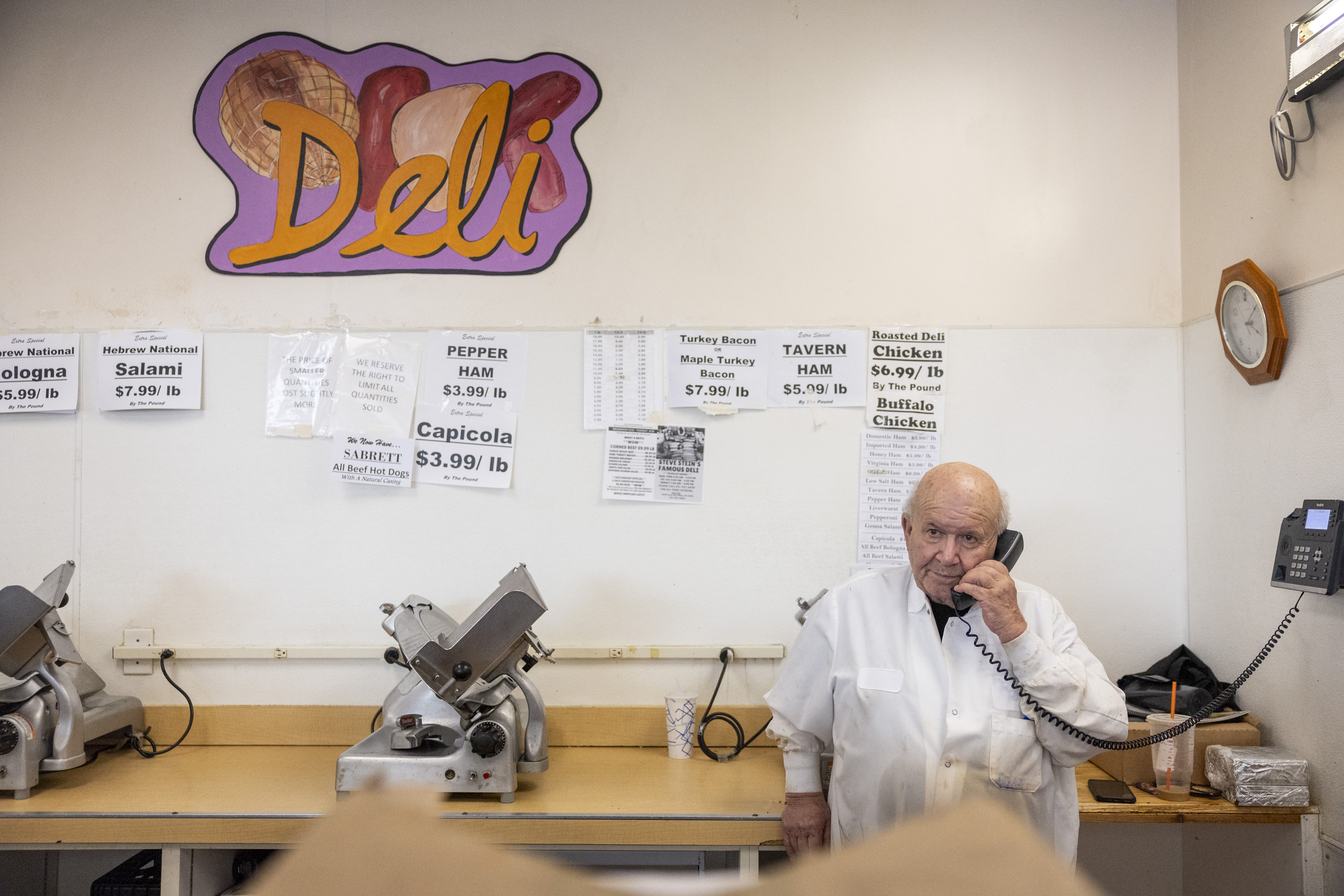
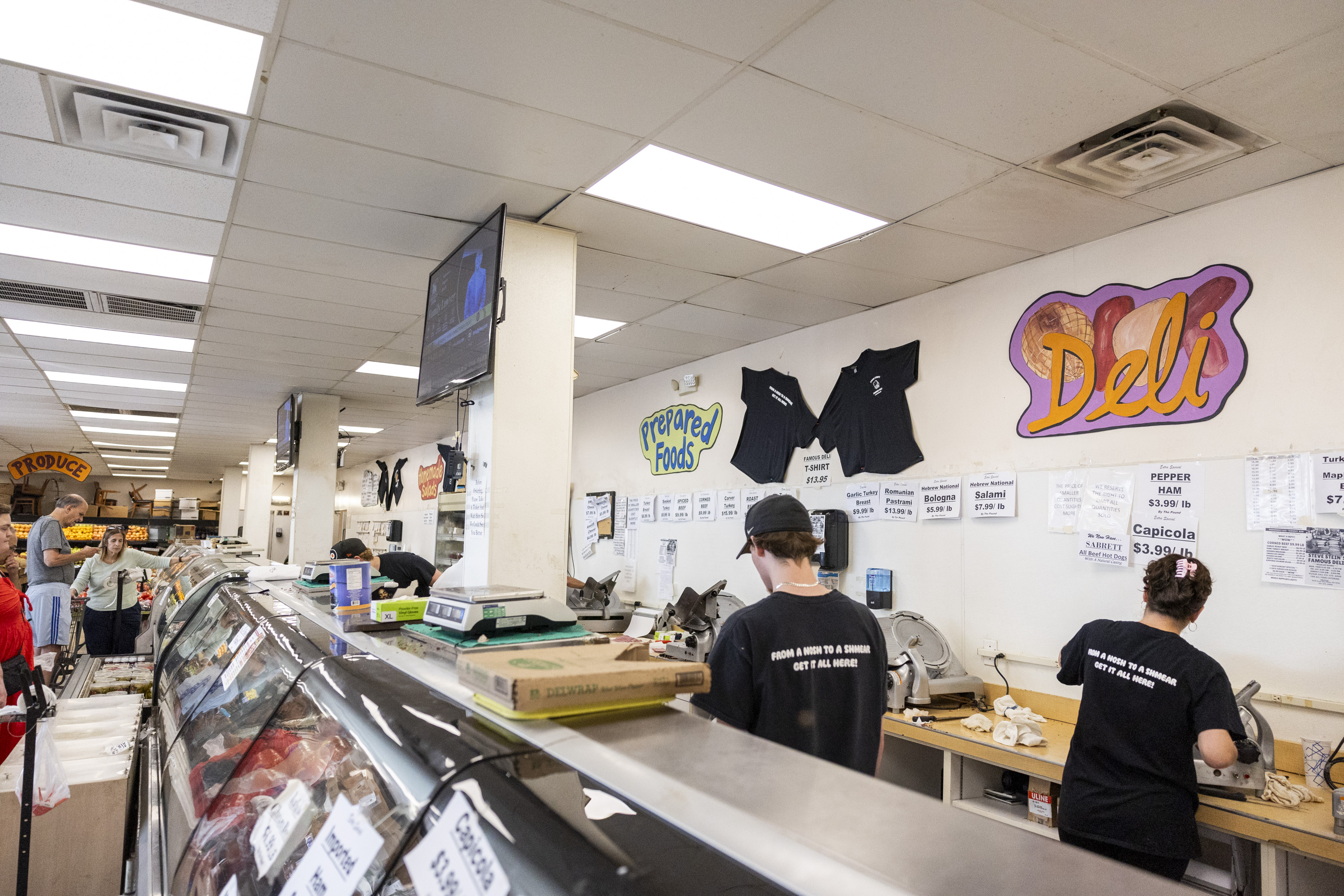
Steve Stein’s Famous Deli, in Bustleton’s Grant Plaza, outlasted a food landscape once crowded with Jewish delis, bakeries, butchers, and other specialty shops. Its closing Sunday comes more than nine years after the finale of Jack’s Deli in Bell’s Corner, the Northeast’s penultimate deli. Like Stein’s, Jack’s combined a retail counter with a restaurant.
The deli counter at Steve Stein’s Famous Deli on Aug. 14, 2026.Tyger Williams / Staff Photographer
For Steve Stein, 83, the closing will end a family business whose roots stretch back to the late 1950s, when his family became involved with the Famous Deli location at 6826 Bustleton Ave. in Castor Gardens.
Famous was part of an older Philadelphia deli dynasty. Beginning in the 1920s, the Auspitz brothers launched a string of delis around the city, including the flagship at Fourth and Bainbridge Streets in Queen Village, now owned by Al Gamble.
Around 1960, Stein said, the Auspitzes sold the Bustleton Avenue Famous to Stein’s father, Mike, his brother Arnold, and his cousin Jack. The boys had run the produce concession there. Steve and Arnie, who died in 2010, later ran it side by side. Steve now runs the place with his son, Lee, now 57.
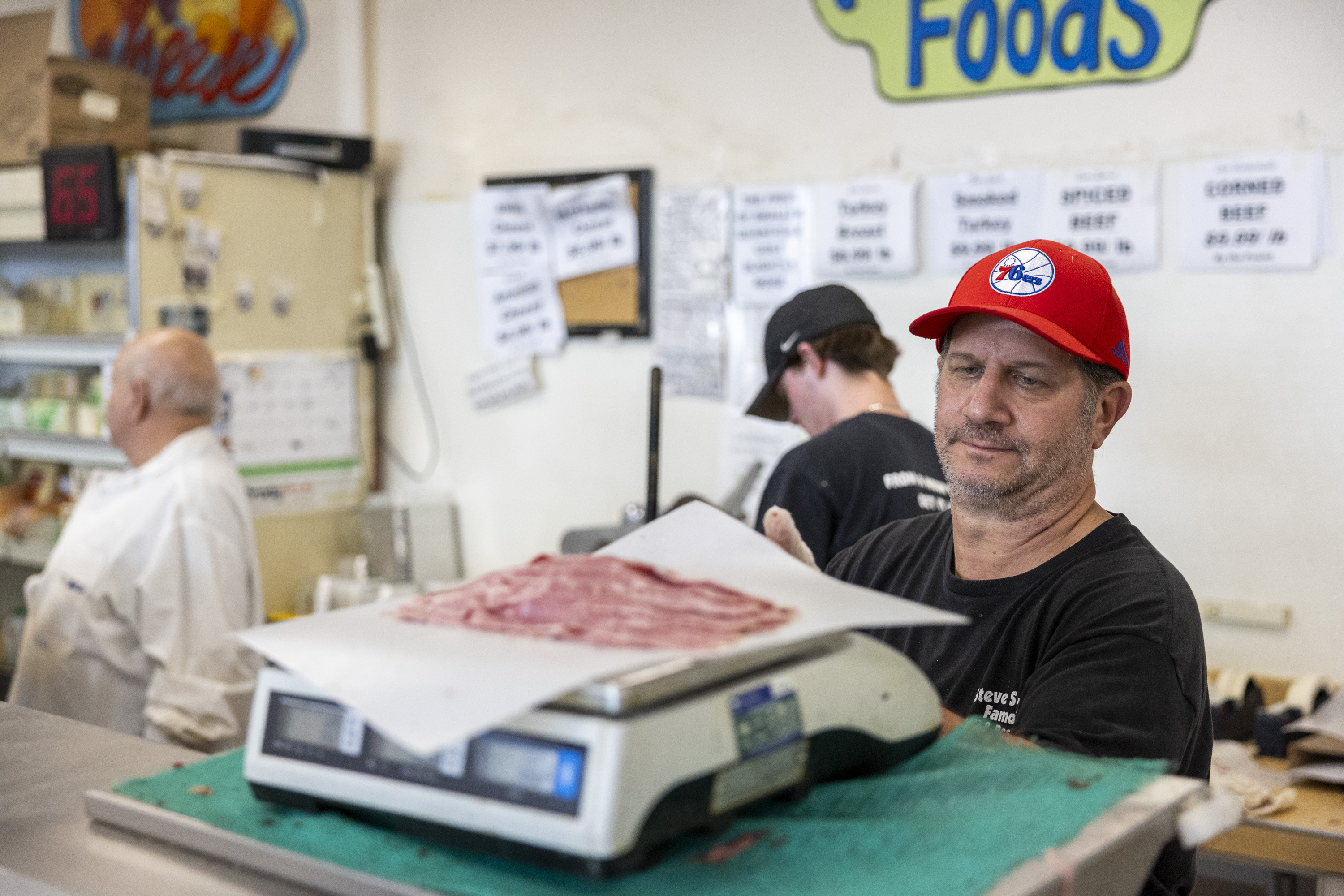
Lee Stein weighs corned beef at his father’s deli on Aug. 14, 2026.Tyger Williams / Staff Photographer
Since Stein announced the closing, customers have been stocking up on corned beef, smoked fish, rye bread, and other foods they fear they will not easily replace. Stein has cut prices as he tries to move inventory.
“Nobody’s charging $9.99 a pound for house-cured corned beef,” Lee Stein said.
On Friday, Tracey Lynn of Fox Chase ordered two pounds of corned beef while plucking garlic-perfumed sour tomatoes from a barrel, telling Stein that she planned to freeze some of the meat.
Lynn said she and her husband have been customers since 1993. She is not sure where she will shop next. “I don’t want whitefish salad from BJ’s or from Costco,” she said.
The closing is partly a retirement story. Stein said problems with his legs have made it increasingly difficult to work.
But it is also about labor costs, food prices, succession, and a neighborhood whose demographics have changed dramatically over the life of the business.
As Jewish families moved farther into the Northeast, Famous followed: first, in the mid-1970s, to Krewstown Road (where it had two locations) and, 14 years ago, to Grant Avenue. Stein, who later also had a short-lived store in Holland, Bucks County, sold the Bustleton Avenue store in the mid-1970s.
In that sense, the history of Famous tracks the movement of Jewish Philadelphia itself.
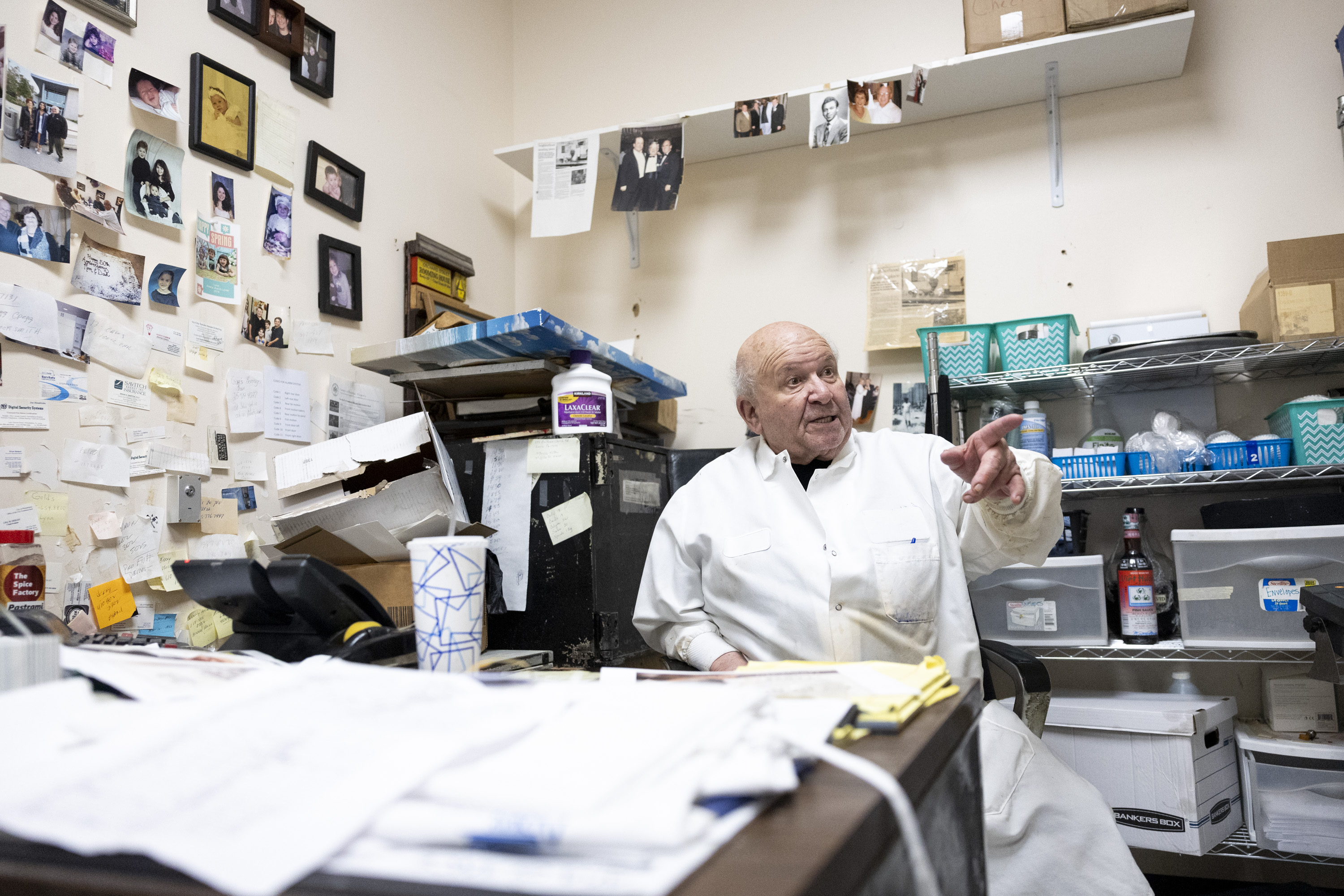
Steve Stein, owner of Steve Stein’s Famous Deli, takes a break in his office.Tyger Williams / Staff Photographer
A suburban diaspora
After World War II, thousands of Jewish families left older Philadelphia neighborhoods such as Strawberry Mansion, Queen Village, and Wynnefield for Oxford Circle, Castor Gardens, Rhawnhurst, and Bustleton in the rapidly developing Northeast. Others moved to Lower Merion and Cherry Hill, which developed large Jewish communities and deli cultures of their own that remain.
By 1970, demographer Ira Rosenwaike estimated, using Census data on Yiddish as a mother tongue, that more than 68,000 Jewish adults 25 and older lived in the Near and Far Northeast.
That population supported an extraordinary density of Jewish food businesses: Abe’s Appetizers, Castor Deli, R&W, Stern’s, Paul’s, Four Lads, Dave’s, Casino, the Nasherei, four Barson-Overbrook locations.
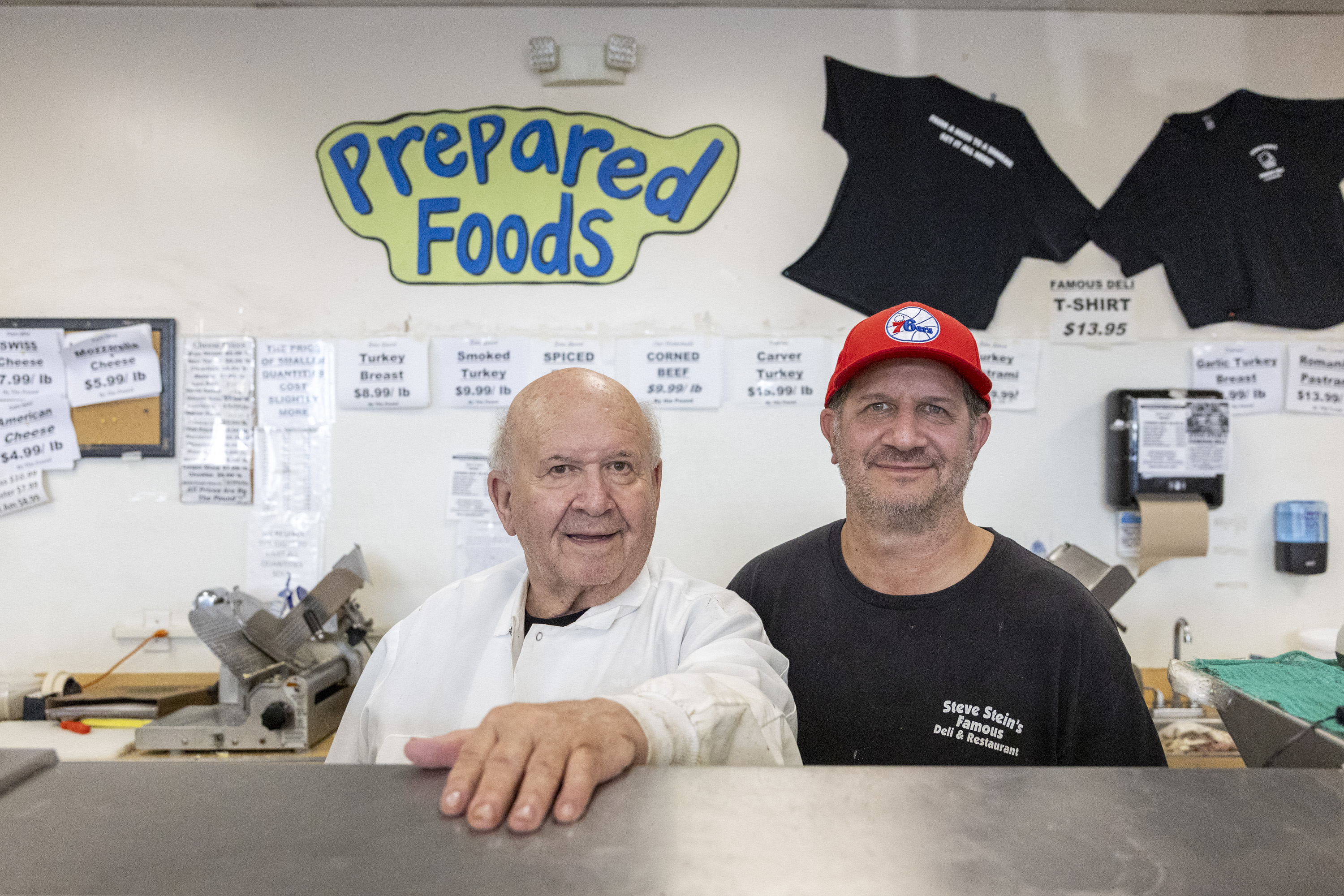
Steve Stein (left), owner of Steve Stein’s Famous Deli, behind the counter with his son, Lee.Tyger Williams / Staff Photographer
To Hasia Diner, a historian and New York University professor who specializes in American Jewish history, the significance of delis was precisely their ordinariness. They were not institutions created to preserve Jewish culture. They were where neighborhood life happened.
“On the one hand, [delis] seem so everyday,” Diner said in an interview. “They’re not great synagogues where religion was expounded, or places where great ideas were pronounced. But they were places where life was lived.”
Some were kosher and others were not. What mattered, Diner said, was that the deli offered a secular Jewish space, rooted as much in neighborhood and food as in religious observance.
By the 1980s, however, those neighborhoods were changing. In a 1987 Inquirer article, Bruce Isakoff of Paul’s Deli, on Castor Avenue near Brighton Street, said his business was doing more lunchtime trade as Jews left the neighborhood and it became a more generic deli. By then, Four Lads, on Castor Avenue at Creston Street in Oxford Circle, had stopped carrying smoked fish and pastrami. Both are long gone.
A ‘kind of shrine’
Many Jewish households moved farther north and into Bucks and Montgomery Counties. A 1996-97 Jewish Federation study found that Philadelphia accounted for 41% of the region’s population living in Jewish households, down from 54% in 1984, while Bucks County’s share had nearly doubled.
The studies used different definitions and geographic boundaries, but the direction was unmistakable: The dense Jewish population that once sustained neighborhood delis had dispersed.
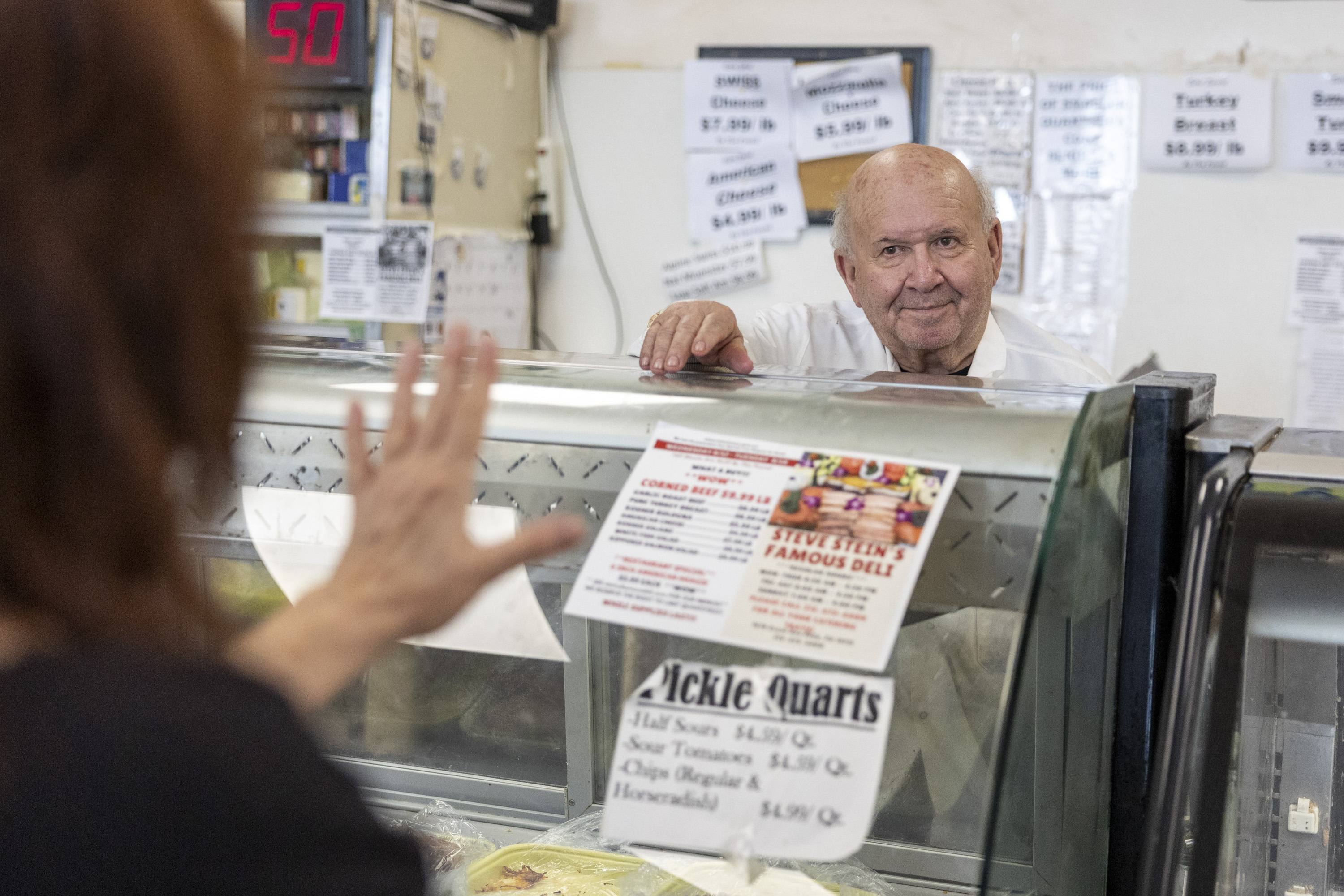
Steve Stein, owner of Steve Stein’s Famous Deli, taking a deli order on Aug. 14, 2026.Tyger Williams / Staff Photographer
The movement itself was nothing new, Diner said. American Jewish communities repeatedly established themselves in neighborhoods and moved elsewhere. What changed was the role of the old neighborhood — and of the deli within it.
“The deli was often the kind of shrine to which they went back,” she said.
The old delis offered something beyond nostalgia. In their heyday, Diner said, they were overwhelmingly Jewish spaces where customers did not have to explain themselves or worry about how they appeared to outsiders.
“These places were so rich with a kind of embeddedness, of comfort and security and, again, letting your hair down,” she said.
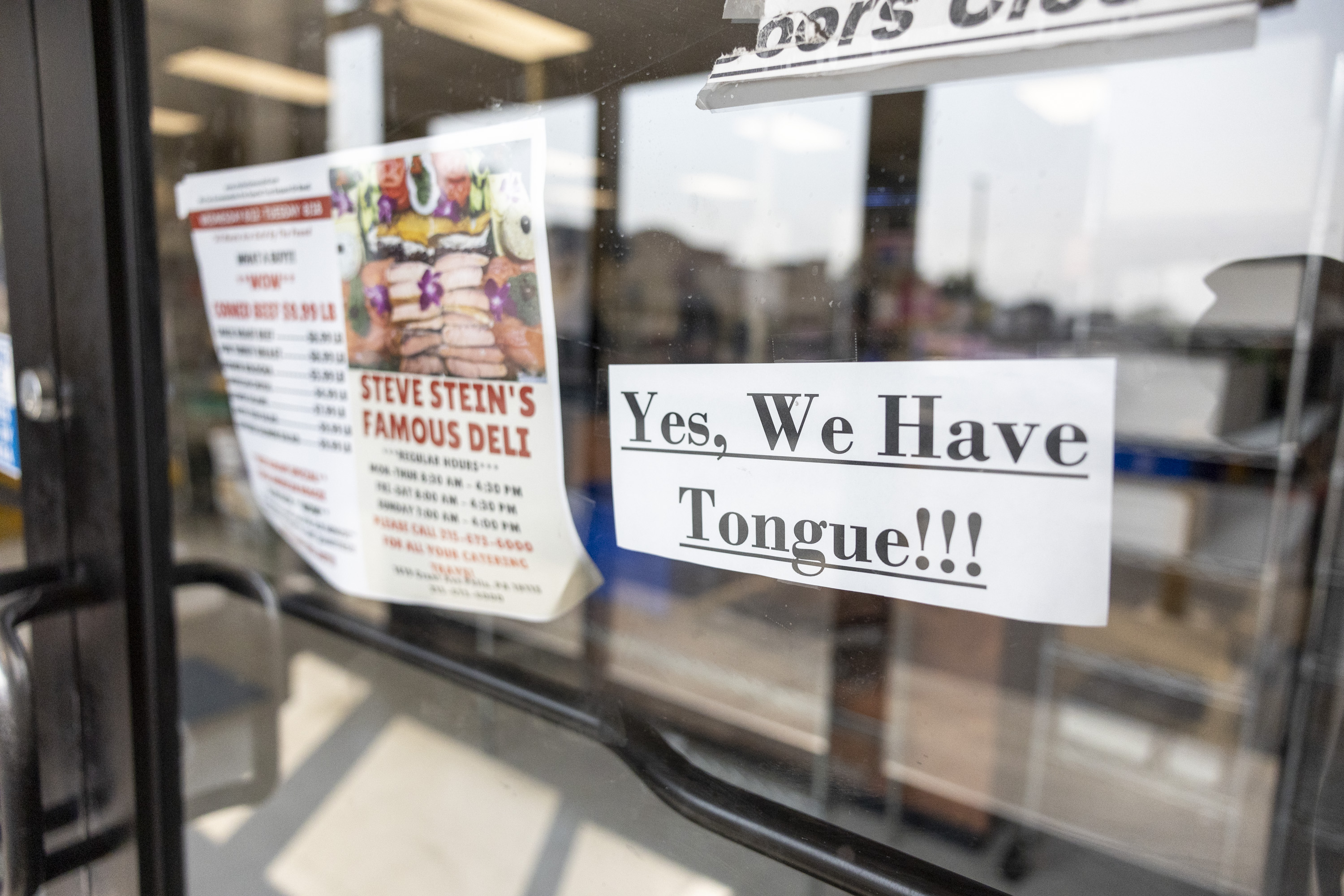
A sign proclaiming, “Yes, We Have Tongue!!!” at the entrance at Steve Stein’s Famous Deli.Tyger Williams / Staff Photographer
Population was only part of the story. Supermarkets increasingly stock foods that once sent customers to specialty counters: corned beef, pastrami, smoked fish, whitefish salad, herring, rye bread, bagels, pickles, and knishes. But not everything. Signs at Famous proclaim, “Yes, We Have Tongue!!!” Not many others do.
More important, Diner said, is what cannot be sold at a supermarket: the deli as a secular gathering place, where being Jewish required neither religious observance nor agreement about politics. “A pastrami sandwich is a pastrami sandwich,” she said.
Costly ingredients
The traditional deli model itself is expensive and labor-intensive, built around extensive preparation and a sprawling inventory. Famous still cures its corned beef and makes its own turkey, pastrami, whitefish salad, and spice beef.
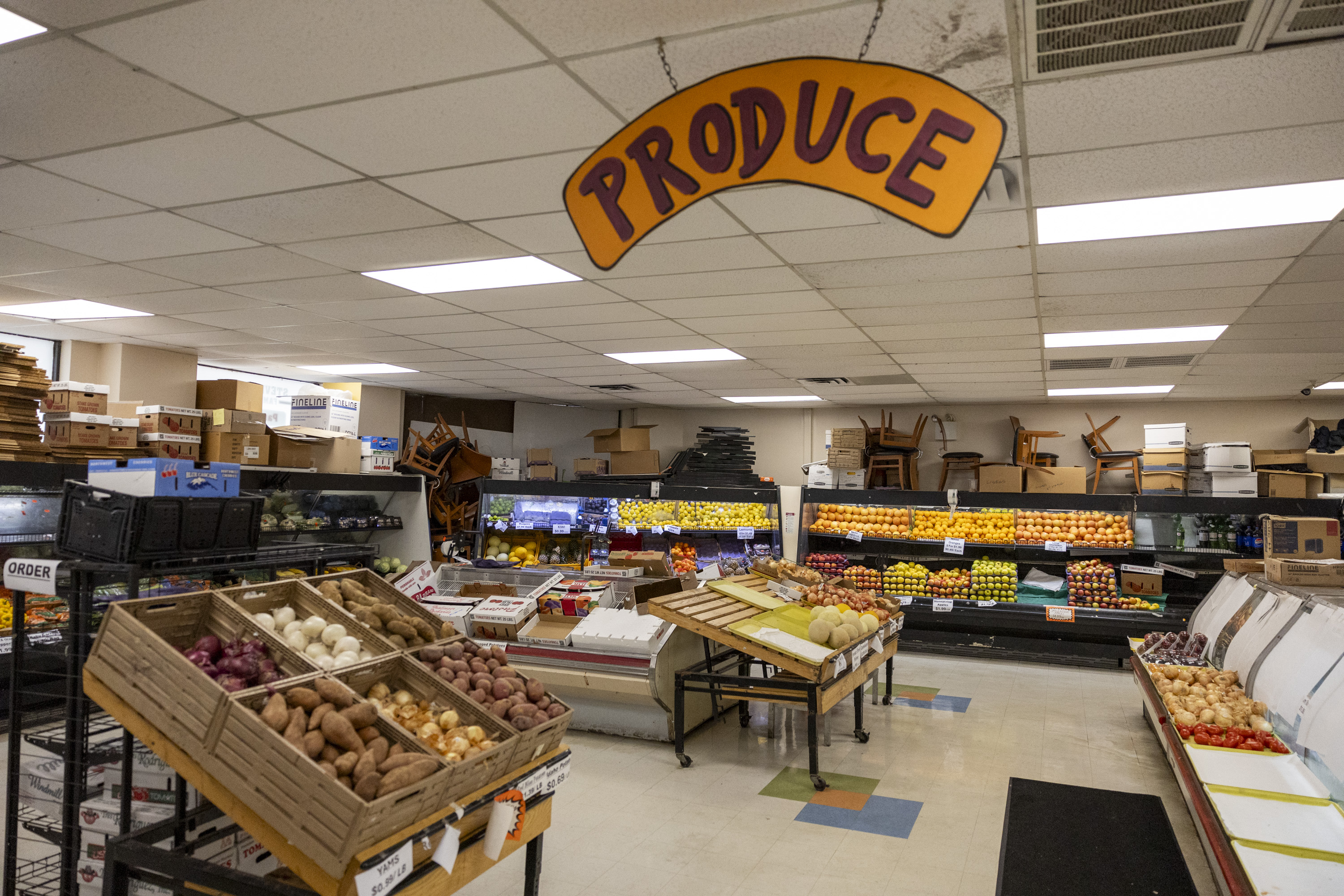
Steve Stein’s Famous Deli is equal parts market, deli counter, and restaurant.Tyger Williams / Staff Photographer
Steve Stein said finding employees has become increasingly difficult. Lee Stein said prospective workers have easier options, such as driving for Uber or making deliveries for Grubhub.
The deli has about 35 employees, many part-time. Some are placed through SPIN, the Philadelphia nonprofit that supports people with intellectual, developmental, and autism spectrum disabilities.
Survival has also required adapting to the customer base, increasingly non-Jewish. Lee said he remembers when Famous carried a single canned ham, hidden behind the counter. Though few Jewish delis are kosher, pork traditionally has been another matter.
“Nobody was allowed to say the word ham,” he said.
Today, their case holds about a dozen varieties.
Rob Woloshin, 40, owner of Manny’s Deli Stop in Willow Grove, grew up going to Stein’s Famous with his father. His deli represents a leaner version of the old model: counter service, a few tables, online ordering, and delivery, with traditional deli sandwiches alongside chicken cutlets, wraps, and other contemporary offerings.
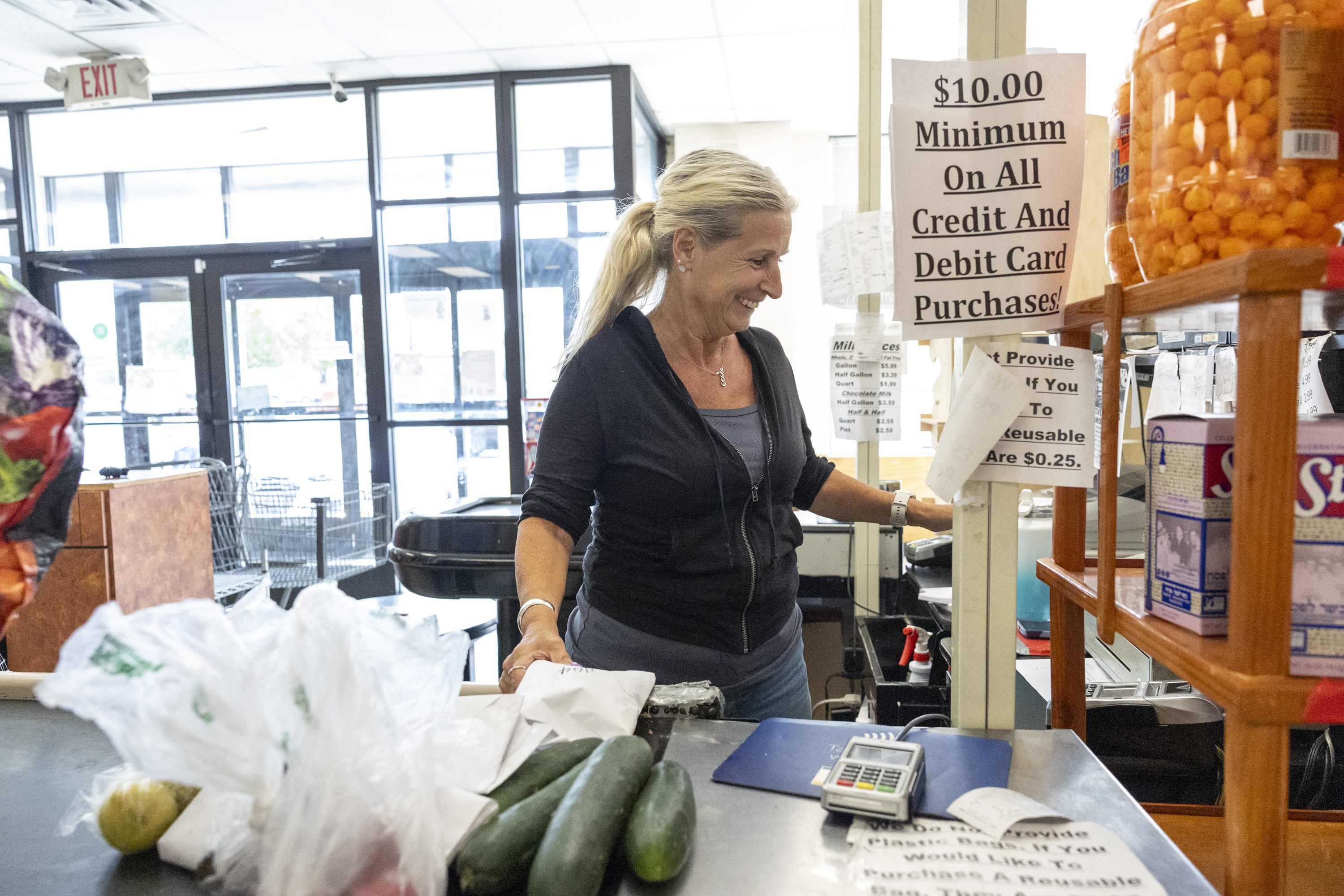
Cashier Linda DiNenno, who has worked at Steve Stein’s Famous for about 13 years, checks out a customer.Tyger Williams / Staff Photographer
“We’ve kind of modernized, I guess, as much as the Jewish deli can be modernized,” Woloshin said.
Famous may yet have an afterlife. Lee Stein said he is talking with the landlord about a deal that could keep him in the space, under another name, in time for the Jewish High Holy Days, which begin Sept. 11. If not, he might offer catering from a synagogue kitchen.
For longtime cashier Linda DiNenno, the closing is less about corned beef than the people around the counter. She said she will miss the family atmosphere among employees and customers who have been calling to say goodbye.
“I’ve got customers calling on the phone, like, ‘Oh my God, I’m gonna miss you, Linda,’” she said.
Candidates are trading debate challenges in a contentious congressional race in a key swing district in the Philadelphia suburbs.
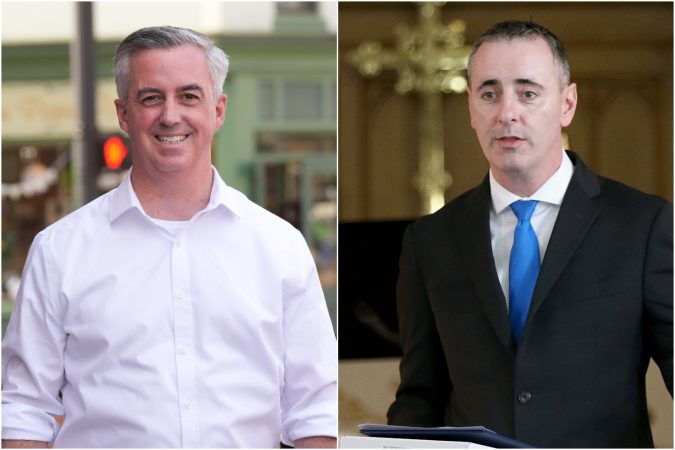
Democrat Bob Harvie is challenging Republican U.S. Rep. Brian Fitzpatrick to four debates, his campaign told The Inquirer.Fitzpatrick, after learning of Harvie’s challenge from The Inquirer, countered with 10 debates — but only if Harvie releases files related to an FBI investigation that Fitzpatrick and allies have routinely alleged focuses on the Democrat.
Harvie does not have files to release, said Dan McCormick, the candidate’s campaign manager. Harvie also has never been under investigation, lawyers for his campaign said. And he has already filed a defamation lawsuit against a pro-Fitzpatrick super PAC for making the same claim.
“Bob would be happy to participate in 10 debates,” McCormick said. “Bob has no files to release and Brian Fitzpatrick knows it. If Fitzpatrick has proof as he says he does, he should put up or shut up.”
The back-and-forth emerged Monday when the Harvie campaign told The Inquirer that the two-term Bucks County commissioner would be challengingthefive-term GOP lawmaker to three debates in Bucks — one each in the lower, central, and upper parts of the county — and a fourth in the Montgomery County portion of the 1st Congressional District.
Harvie said that Fitzpatrick“refuses to answer questions here at home” and “has nothing to show for his nearly 10 years in Washington.”
The increasingly heated race is one of four marquee congressional contests in Pennsylvaniathat could decide which party controls the U.S. House in November.
“It’s time for Fitzpatrick to show up in Bucks and Montgomery County — not Manhattan or the Lavender Fields in France,” Harvie said in a statement, referring to the venues for Fitzpatrick’s wedding and engagement to Fox News senior White House correspondent Jacqui Heinrich. “I’ll be there whether or not he shows, because I will never forget who I am fighting for.”
Heather Roberts, a spokesperson for Fitzpatrick, said as soon as Harvie releases “his full FBI files,” the campaign will move forward with date and venue selections for 10 debates.
“If the Subject of an FBI Corruption investigation is asking to be provided a platform by the only FBI Agent in Congress, he sure as hell will be required to come clean with the public and release these documents in their entirety,” Roberts said in a statement. “If he has nothing to hide, this should be an easy decision for him.”
Roberts also proposed a joint sit-down interview with Harvie and Fitzpatrick, conducted by The Inquirer, to discuss the allegations.
Roberts said that Fitzpatrick, who served 15 years as an FBI agent and a federal prosecutor, “is extremely familiar with this specific grand jury protocol and the documents that are generated.”
The debate drama is the most recent development in what has become an increasingly combative race, filled with personal jabs and legal filings related to controversial ads making allegations that Harvie is the subject of an FBI investigation.
Harvie, a former Falls Township supervisor, and other officials testified as witnesses to a grand jury in an FBI probe in 2022 into political donations and union contracts related to the Pennsbury School District. In 2020, the FBI interviewed several people connected to Falls Township and Pennsbury.
It has been fouryears since voters have been able to see a general election debate in the 1st Congressional District. In 2024, Fitzpatrick did not debate Democratic challenger Ashley Ehasz, after doing so in 2022.
The Harvie campaign said that it would be willing to work with the Fitzpatrick campaign on logistics and other event details, but that the commissioner’s preference is a town hall-style debate so voters can hear from him directly.
Fitzpatrick has held tele-town halls, including one in June, for constituents, and frequently posts on social mediarecapping the meetings and events he attends in the community.
Darwin David Espinal del Cid, 27, was taken into custody during the weekend by officials in his native Honduras in the March 7 death of Maria Popol, Bucks County District Attorney Joe Khan said Monday.
Khan, in announcing the arrest, described Popol as a loving daughter and sister who cared deeply about her family. Espinal del Cid, he said, ended her life in a heartless, violent manner and then furthered her family’s suffering by stealing her cellphone and pretending to be her, in text messages he sent them.
Maria Popol was found dead in March by police in Telford.Courtesy of Maria Popol's family
It was an attempt, Khan said, to throw investigators off his trail as he fled the country.
But investigators were able to track Espinal del Cid’s movements, in part through his cellphone, according to Khan.
“This was a place where he thought he would be safe, that he could outrun the law, that the Bucks County DA’s office and the authorities wouldn’t catch up to him,” Khan said. “And at a certain point he may have believed that he was successful, but he was wrong.”
He remains in custody in Honduras, and is awaiting extradition to Bucks County.
Popol’s body was found on March 15 inside a second-floor apartment on North Main Street in Telford where she previously lived with Espinal del Cid. Her parents had filed a missing person’s report two days earlier, on what would have been her 23rd birthday, Khan said.
A neighbor, helping the family search for Popol, entered her apartment and found her.
Her family, in a statement to The Inquirer, said she was in the process of moving to a new apartment nearby, fleeing what they described as an abusive relationship with Espinal del Cid.
Khan said Espinal del Cid stabbing Popol in the neck with a sharp object and hid her body in a closet as she bled to death.
Popol’s family told The Inquirer they last heard from her on March 6, after she rode in an Uber with Espinal del Cid. The two were arguing, prosecutors said, about Popol’s decision to end their relationship.
She texted her mother and told her she was looking for a new apartment, according to the affidavit of probable cause for Epsinal del Cid’s arrest.
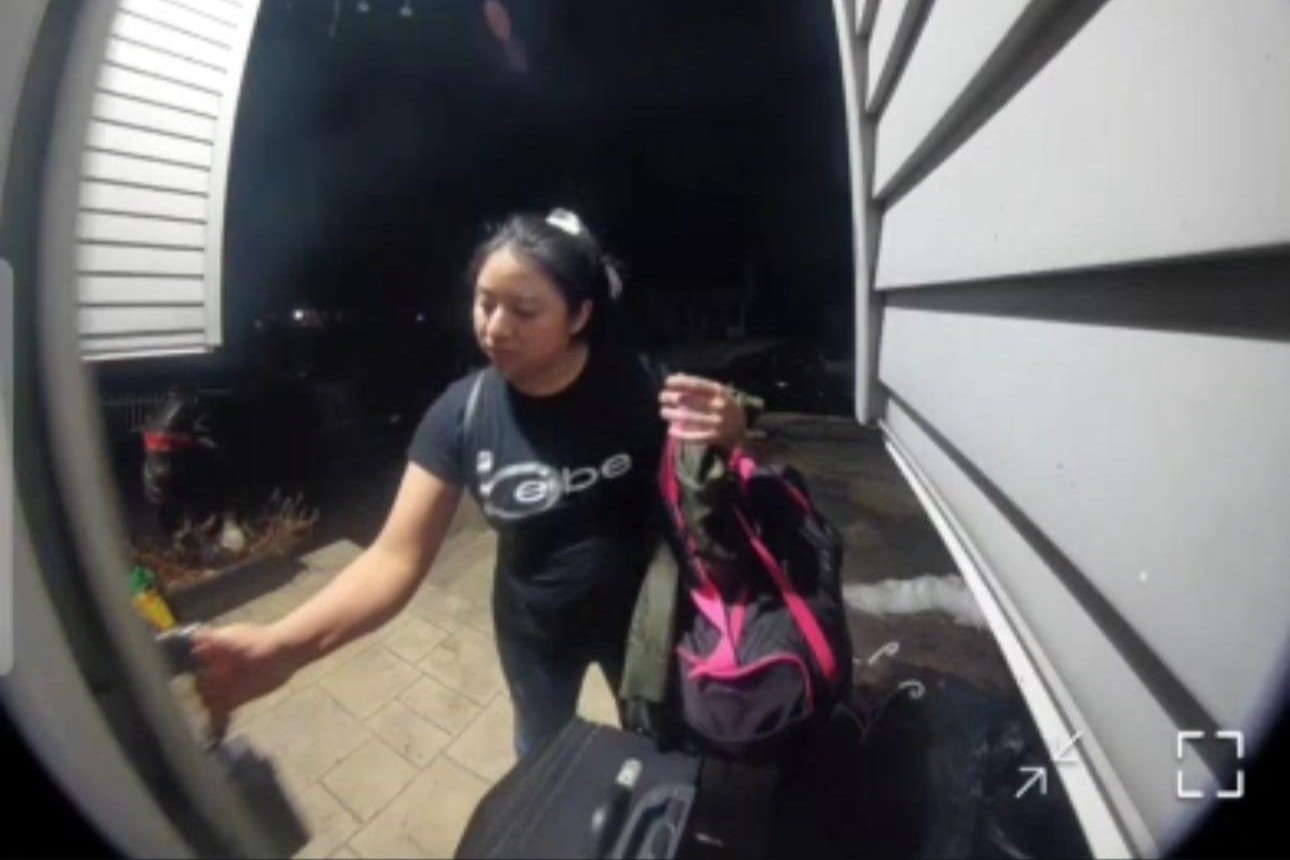
Her brother, Ronaldo, said she was seen hours later in a video from a doorbell security camera carrying luggage while she was moving into her new apartment.
The last time Maria Popol was seen by her family was in a doorbell camera video from March 7 at her new residence. She was found dead March 15 at her old apartment she had shared with a man, her brother said.Rolando Popol
A witness told police that, while picking up Popol to take her to her new apartment, Espinal del Cid forced himself into the car, crying and acting hysterical, saying that he “couldn’t afford to lose her,” the affidavit said.
When Popol returned to the apartment where she lived with Espinal del Cid, the two got into another heated argument, loud enough for neighbors to overhear, according to the affidavit.
In the days that followed, Espinal del Cid continued to act erratically, asking his former boss for money to buy a plane ticket to Honduras, weeping openly in public and saying, “God forgive me.”
A friend of Espinal del Cid who drove him to the airport noted he was carrying three cellphones, one of which appeared to be Popol’s, the affidavit said.
On March 9, Espinal del Cid boarded a plane heading to Honduras by way of Florida at Philadelphia International Airport.
The entire time, investigators said, Epsinal del Cid texted Popol’s friends and employer, asking for money in messages that they agreed were not written in her usual style of talking.
Popol moved to Bucks County from her native Guatemala in 2023 to support her parents, who are in declining health, according to her family. She worked as a waitress at Don Leo, a Latin American restaurant not far from her apartment.
“She had come to this country hoping for a better life,” Ronaldo Popol said, describing his sister as “very affectionate, kind, and patient.”
Khan said Popol’s death is the latest example of fatal domestic violence in Bucks County. Since he took office in January, nearly all of the murders his office has investigated have been committed by one of the victim’s loved ones.
“It’s the reason that we are showing this picture of [Espinal del Cid], not to glorify him, but to ask for the public’s help, because while he thought he was smarter than everyone else, the law was catching up to him and we want the public’s help,” Khan said.
An athletic director at a Mercer County school district has been charged with loitering and prowling after he leered into the bedroom window of his neighbor’s underage daughter, Plumstead Township Police say.
Winfield “Tripp” Becker, 48, was caught on a surveillance camera Aug. 6 looking into the window, according to the affidavit of probable cause for his arrest. The victim’s mother installed that camera after an unidentified man spent months knocking on the window at night and then “fleeing the area,” the document said.
Neither Becker nor his attorney, Thomas Logan, responded to requests for comment.
Becker lives one street over from the victim in Pipersville, according to court records, and is known to the girl and her family. He was charged via summons, and has a preliminary hearing scheduled for next month.
Becker is the athletic director at Hopewell Valley Regional School District, a district north of Trenton that serves about 3,400 students. In a letter sent to parents, Superintendent Rosetta Treece, without naming Becker, said a district employee was the subject of a criminal investigation, and had been suspended until the conclusion of that investigation.
Treece said the district was working to secure temporary staffing to fill the position.