Tag: Bucks County

  • Bob Harvie is the best choice for Pennsylvania’s 1st Congressional District | Endorsement

    Bob Harvie is the best choice for Pennsylvania’s 1st Congressional District | Endorsement

    U.S. Rep. Brian Fitzpatrick (R., Pa.) has been a member of Congress for nearly a decade, and it is difficult to determine what exactly he has accomplished.

    Fitzpatrick, 52, claims to be a problem solver, but he is really part of the problem. Fitzpatrick entered Congress with the MAGA wave that first swept into Washington with Donald Trump in November 2016.

    He is a member of a Republican House majority that has been one of the least effective and most dysfunctional in modern times. The GOP controls the House, Senate, and the White House — and still can’t do much to help the American people.

    Because Fitzpatrick represents a swing district that covers Bucks County and portions of Montgomery County, he doesn’t always vote lockstep with his Republican colleagues. But when Fitzpatrick’s vote is needed, he backs Trump’s incoherent agenda, which has made life more expensive for everyone.

    That agenda speaks for itself: costly tariffs, cruel deportations, unprovoked war, tax breaks for the superrich, massive debt, healthcare cuts, brazen corruption, abuses of power, self-enrichment schemes, and constant chaos.

    For Fitzpatrick’s constituents, Republican control in Washington has resulted in higher interest rates, sluggish job growth, and increased prices on everything from gasoline to food, cars, housing, and utility bills. Not to mention a host of constitutional, ethical, and legal abuses with no oversight or pushback.
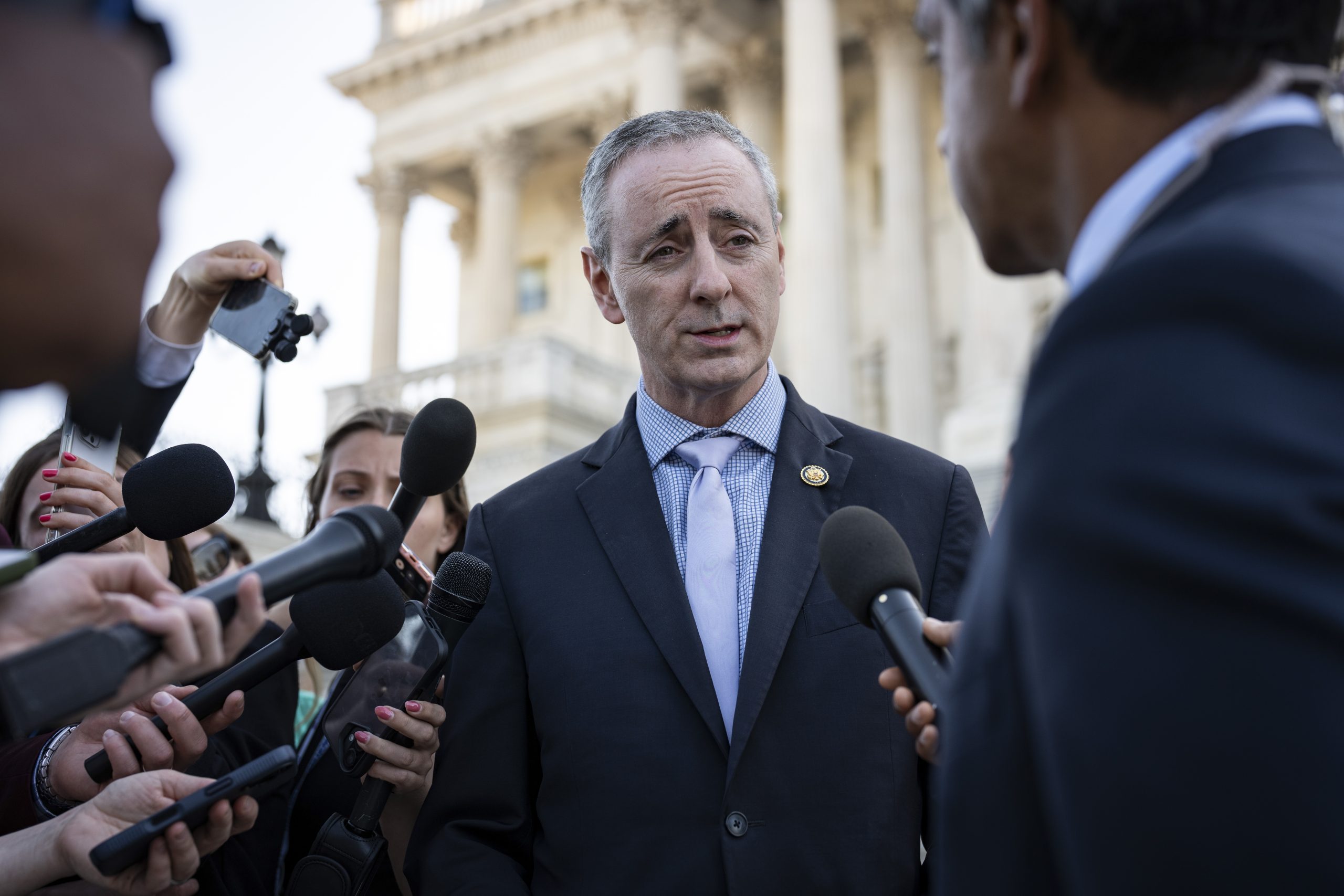
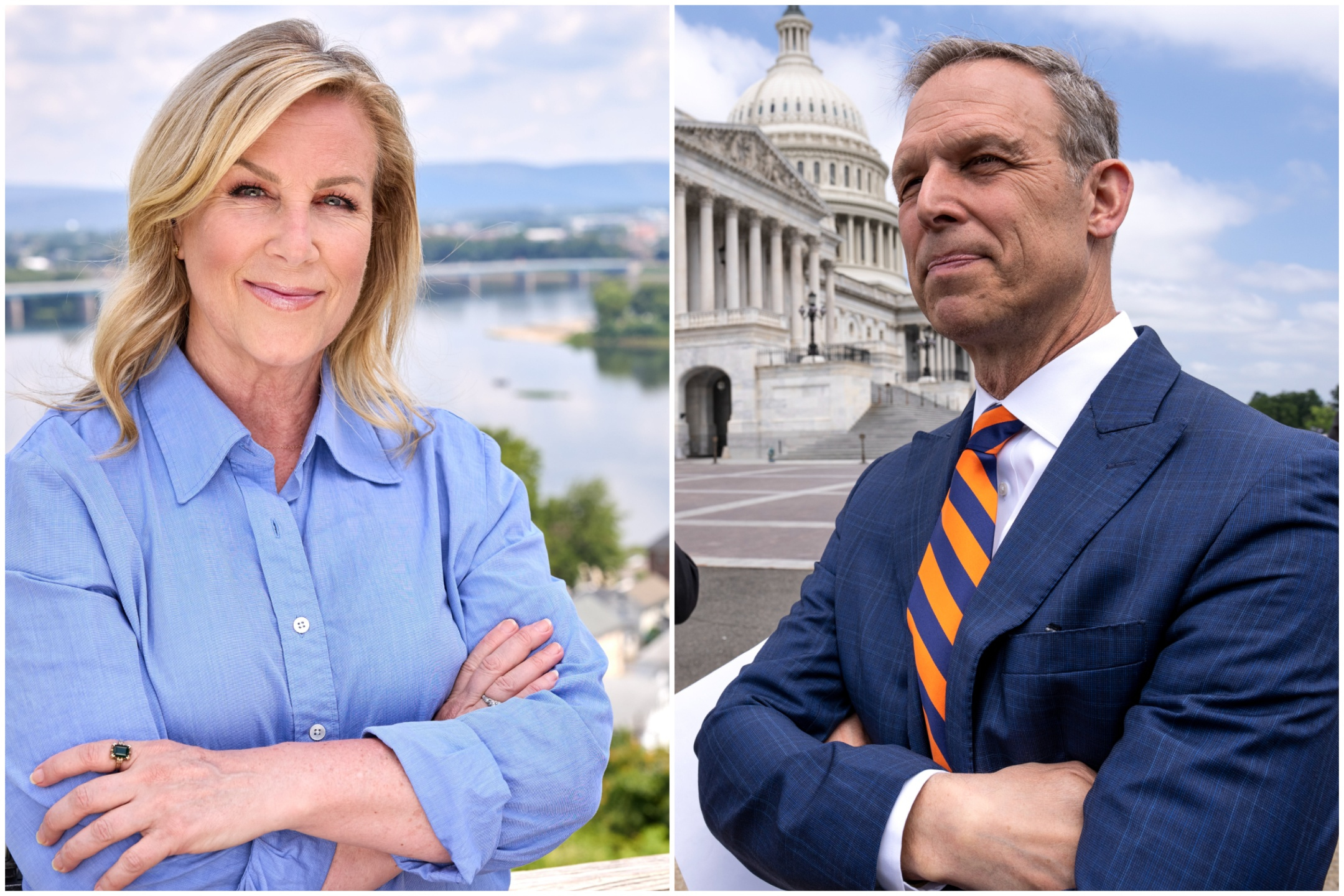
    U.S. Rep. Brian Fitzpatrick (R., Pa.) doesn’t always vote with his Republican colleagues. But when his vote is needed, he backs Donald Trump’s incoherent agenda, the Editorial Board writes.Haiyun Jiang

    He did vote against Trump’s signature legislative accomplishment: the so-called Big Beautiful Bill, which added trillions to the ballooning deficit, extended tax cuts for the wealthy, slashed Medicaid and other support for the most vulnerable citizens, and added billions to support Trump’s deportation roundups.

    But Fitzpatrick’s no vote came only after final passage of the measure was assured. Weeks before the measure’s final passage, he was the deciding vote to advance the bill that ultimately became law.

    He often performs this type of calculated two-step to appear not so extreme to his more moderate constituents. But the results spell pure MAGA.

    Fitzpatrick, who recently married a Fox News correspondent, pulled a similar switcheroo on Trump’s costly war in Iran. Initially, he voted against limiting Trump’s power to wage war in Iran before voting to block further military action. He even issued a muddled statement about the war that said nothing.

    So he was for the war before he was against it. The result of Trump’s strategic blunder that GOP congressional members enabled has been higher gas prices, billions wasted on bombs, and needless death and destruction with no way out.

    Fitzpatrick has harmed his constituents in other ways. He repeatedly supported Trump’s tariffs, which have upended trade relations with allies, roiled financial markets, and increased prices for small businesses and consumers.

    He is increasingly out of step with his own constituents. He supports data center development, which most voters oppose. He also opposes codifying abortion rights, which a majority of the public supports.

    Fitzpatrick has also been largely missing in action in his own district. He has not held a town-hall meeting with voters since 2017, calling them a waste of time.

    He has refused to debate his opponent, Bob Harvie, a Bucks County commissioner. Fitzpatrick declined to meet with this Editorial Board to make his case for reelection — even though The Inquirer endorsed him in the past.

    If 80% of success is just showing up, Fitzpatrick has failed his constituents.

    The problem may rest with who Fitzpatrick really represents. His campaign is largely funded by billionaires and out-of-state corporate PACs backed by Wall Street banks, Big Pharma, and Koch Industries.

    More broadly, the GOP-controlled Congress has failed to uphold its sworn oath to support the Constitution and serve as a check on the executive branch of government.

    Fitzpatrick’s true character is shining through in the onslaught of attack ads aimed at his opponent. An ally with a checkered past was recently exposed for planting negative articles about Harvie. That’s a Tammany Hall move.

    Fortunately, voters in Pennsylvania’s 1st Congressional District have a more upstanding alternative in Commissioner Harvie.

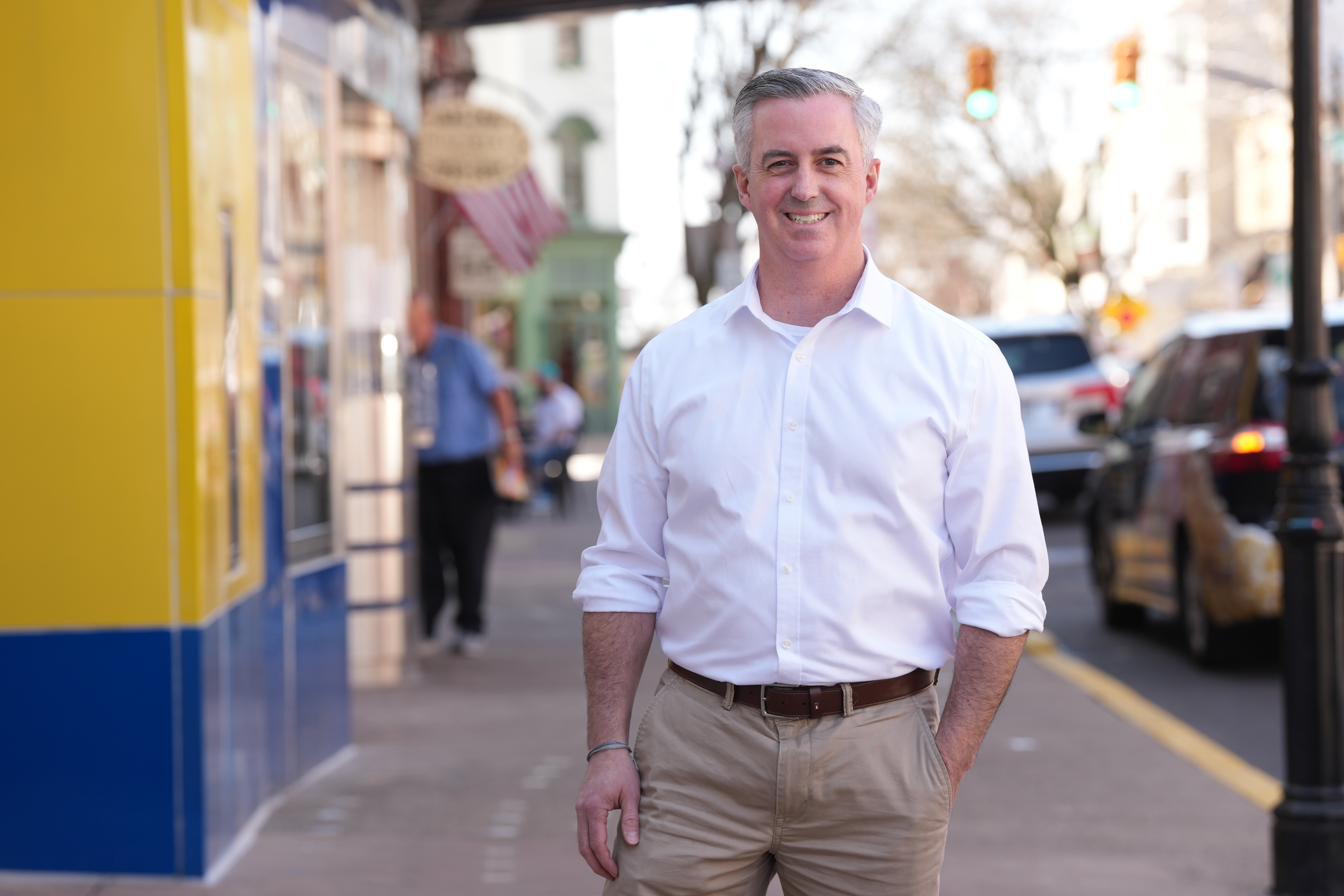
    Harvie, 54, is a Bucks County native who grew up in a blue-collar family (Bristol Borough) and was the first member in his family to go to college. He taught social studies in the public schools there for many years. He is humble, hardworking, and understands the affordability challenges facing Pennsylvanians.

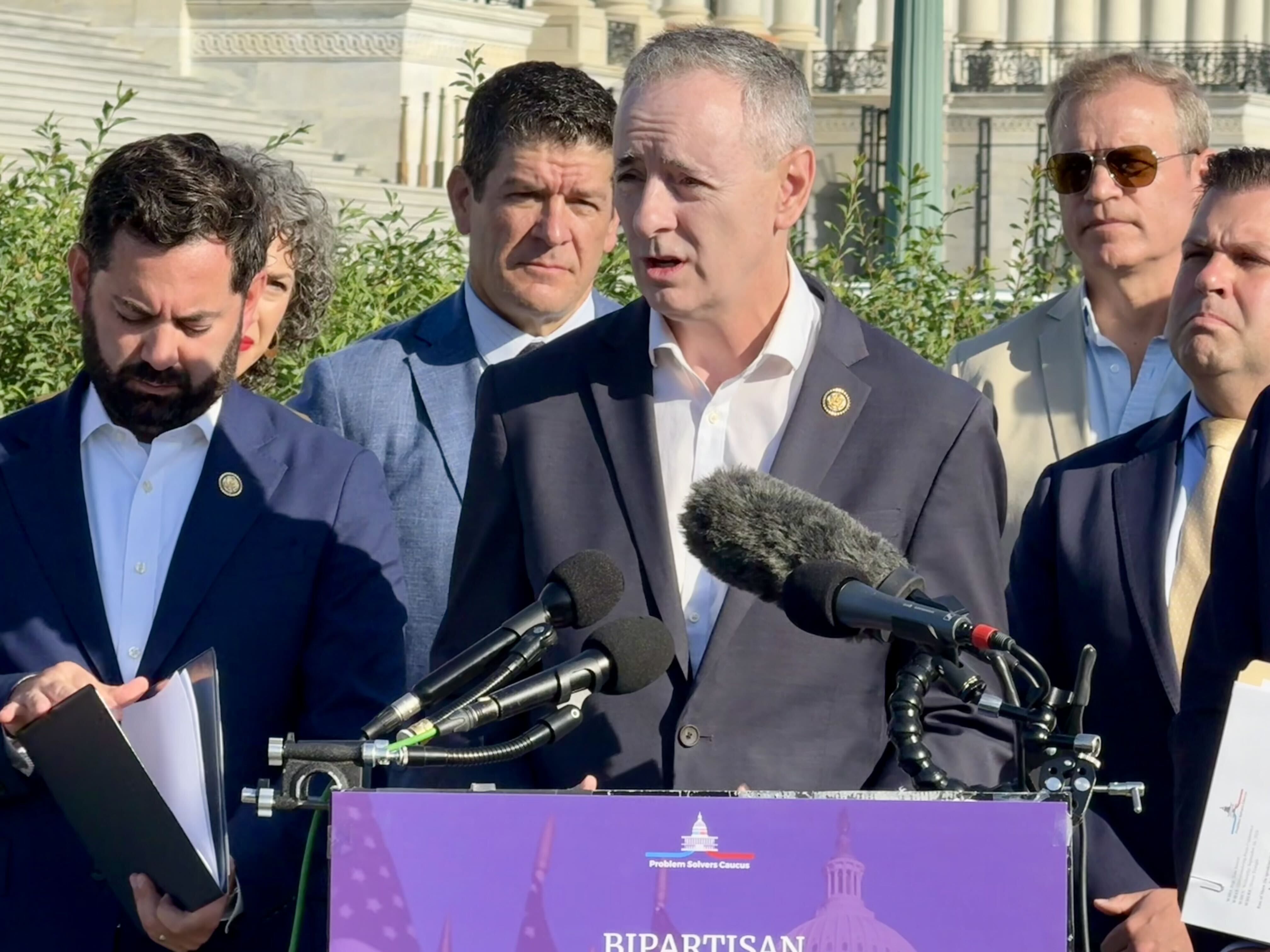
    Democratic Bucks County Commissioner Bob Harvie understands the affordability challenges facing Pennsylvanians, the Editorial Board writes.Monica Herndon / Staff Photographer

    He would bring some much-needed compassion and decency to a Congress that is turning into TikTok performance artists more interested in viral posts than making government work for the people they represent. Even better, Harvie will answer to the people, not Trump.

    Unlike Fitzpatrick, who has not held an in-person town hall in nearly a decade, Harvie has held five town halls since April and has four more scheduled this month.

    Harvie was elected commissioner twice. He knows how to work with Republicans and Democrats. The three-member commission includes one Republican, yet more than 90% of the votes have been unanimous.

    The commissioners have opened mental health care facilities, launched sustainability programs, and passed a bipartisan resolution opposing the use of warehouses as U.S. Immigration and Customs Enforcement detention facilities.

    If elected, Harvie said his top priority would be to address affordability issues facing residents. He also wants to restore trust in government, starting with a ban on stock trading by members of Congress and a clampdown on corporate control of politics by passing a constitutional amendment to overturn Citizens United.

    “I was raised to love this country,” Harvie told the Editorial Board. “I cannot stand what’s happening to it.”

    Many Americans agree. That’s why The Inquirer endorses Bob Harvie for Congress in Pennsylvania’s 1st District.
  • Josh Shapiro campaigned in Bucks County for Democrats in key races: ‘You’ve got a lot of power’

    Josh Shapiro campaigned in Bucks County for Democrats in key races: ‘You’ve got a lot of power’

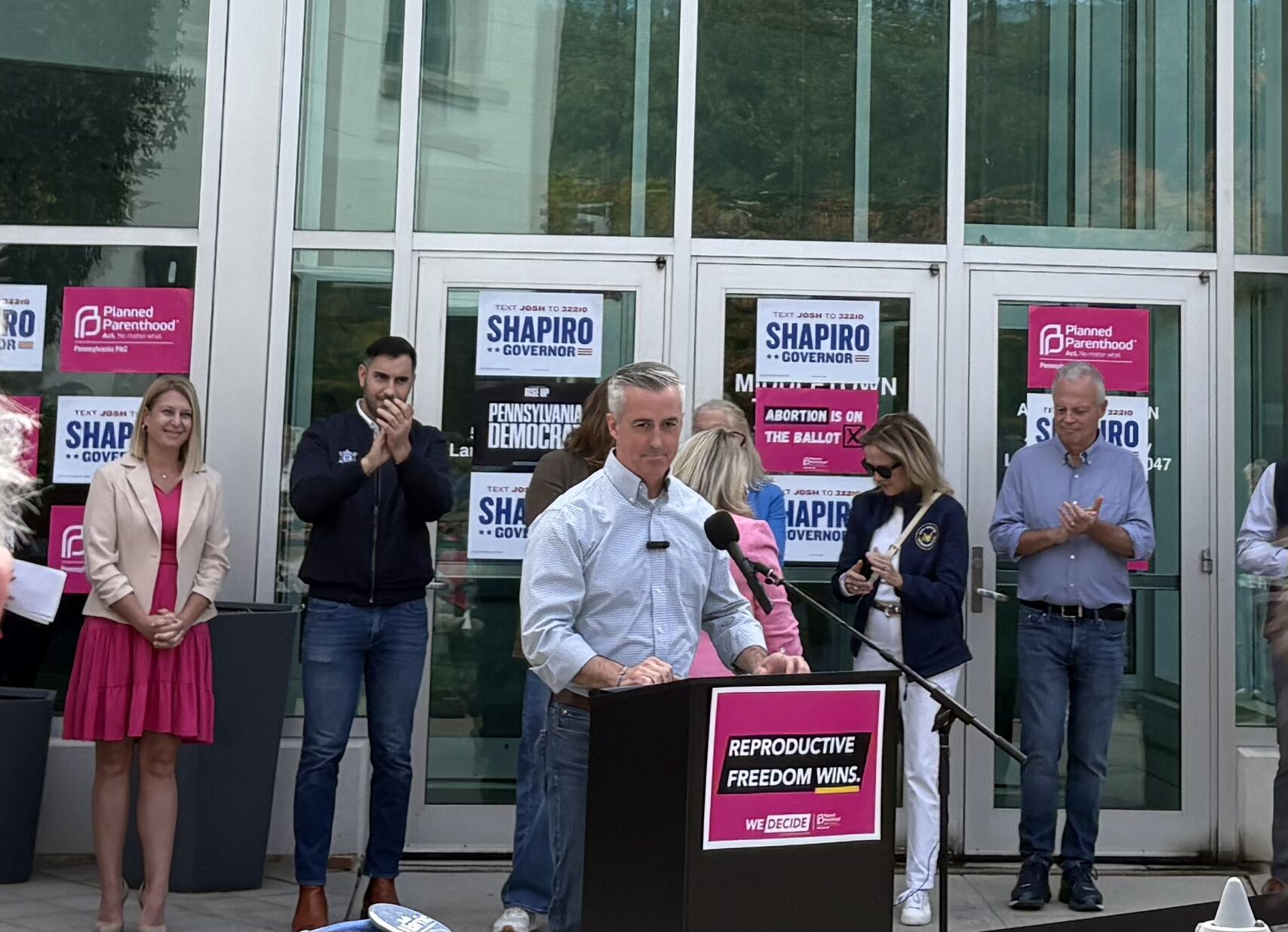
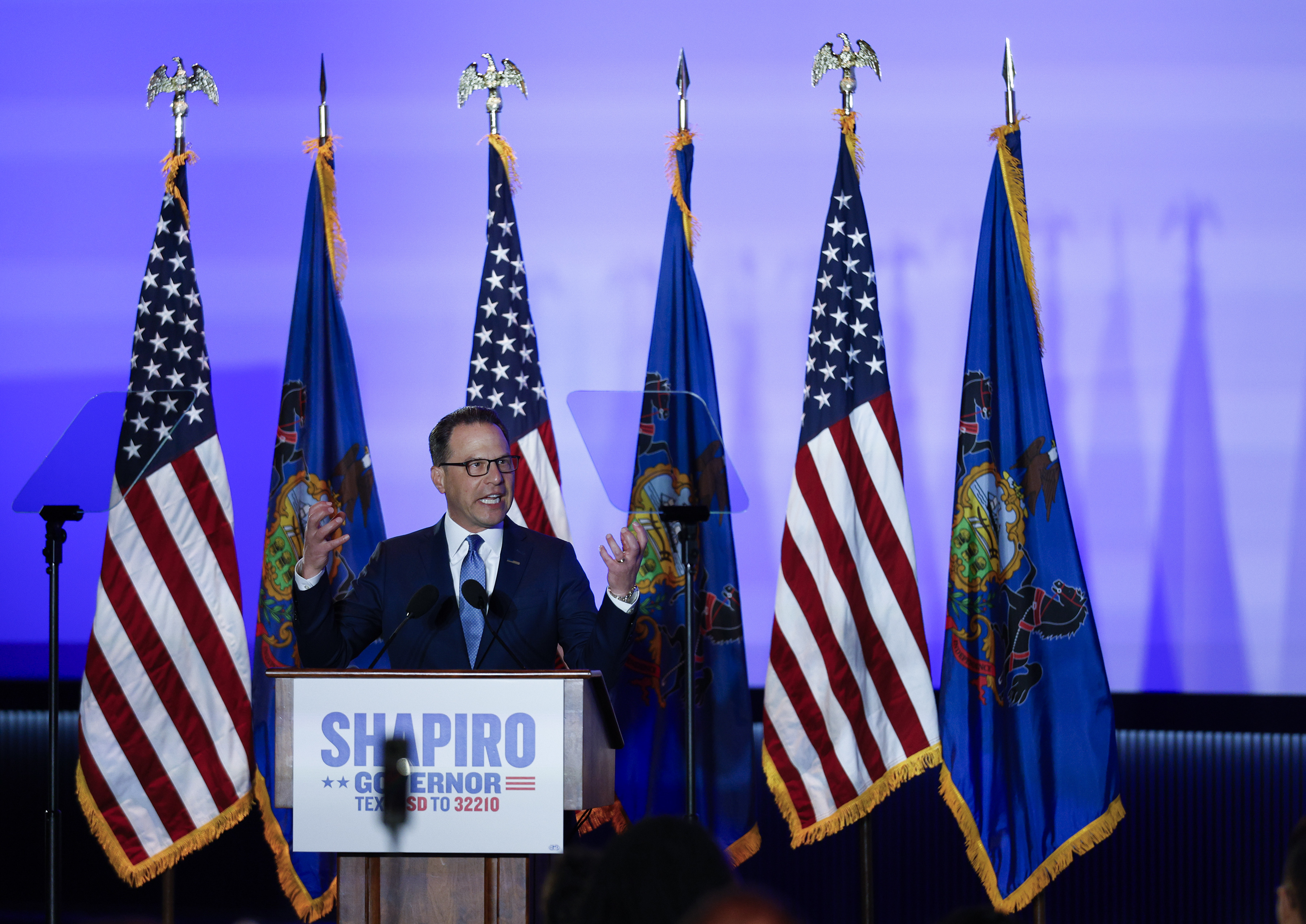
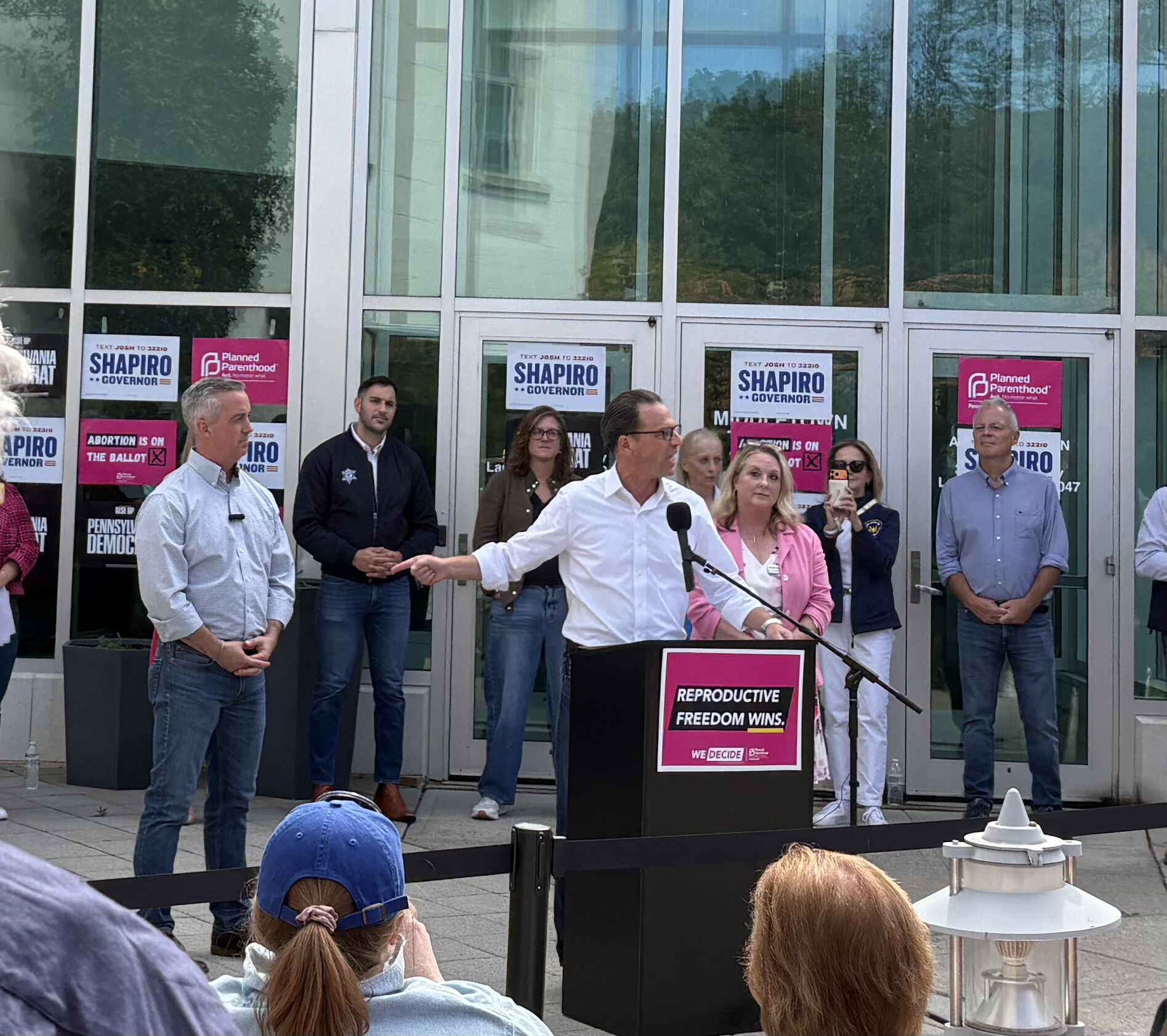
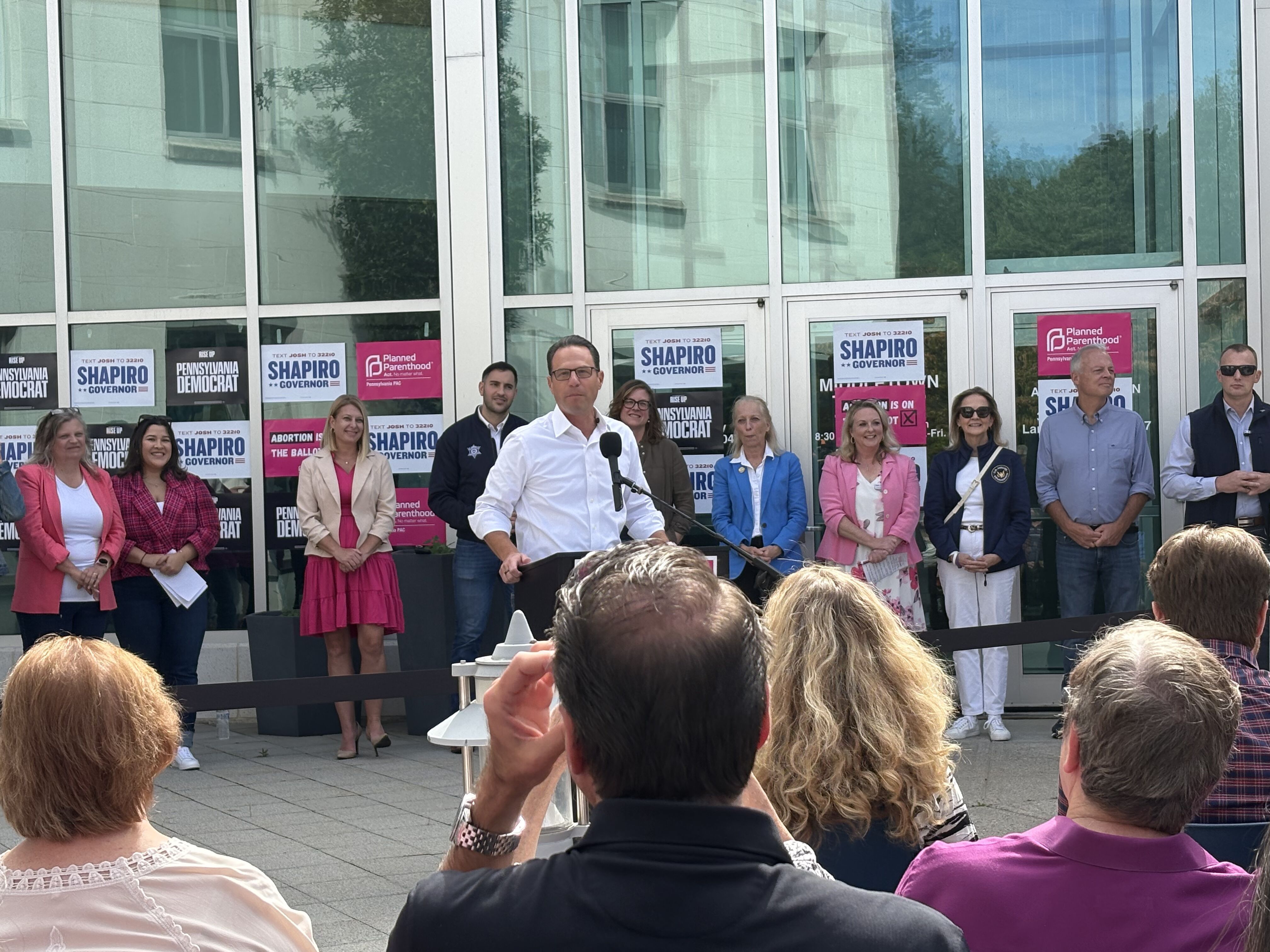
    Exactly one month to the day ahead of the highly consequential midterm elections, Gov. Josh Shapiro stood in front of the Middletown Township Municipal Center and said something pretty much everyone in Bucks County is well aware of:

    “Bucks County, you’ve got a lot of power,” he told the large crowd that gathered on the lawn and under trees with fall-tinged leaves.

    Shapiro kicked off a day of action for Democrats organized by Planned Parenthood’s state-level political action committee Saturday afternoon in Bucks County. The purple county will be the center of crucial races for state Senate and U.S. Congress, and could determine the balance of power.

    Gov. Josh Shapiro speaks to the crowd gathered at the Middletown Township Municipal Center in Bucks County on Saturday.Fallon Roth

    Shapiro, who is also running for reelection, promoted the Democrats at the forefront of those races Saturday, including 1st U.S. Congressional District candidate Bob Harvie and Eileen Hartnett Albillar, who is running in the 6th state Senate district. He framed their election as a chance to put a check on President Donald Trump in Washington, D.C., and an opportunity to flip the state Senate and obtain the first Democratic trifecta in Harrisburg in decades.

    Bryan Allen, Kristin Egan, and Monica Weninger are also running in Bucks County to expand Democrats’ majority in the state House.

    Shapiro called the 1st Congressional District race — between Harvie and U.S. Rep. Brian Fitzpatrick (R., Bucks) — “the most competitive in the entire commonwealth.”

    Three other U.S. House seats in Pennsylvania are also being targeted by both parties: the 7th, 8th, and 10th Districts. Shapiro has also described the 9th as competitive.

    Harvie, in his speech, highlighted the affordability crisis and an “economy that is broken.” He also argued that the U.S. has “lost our stature around the world.”

    Democrat Bob Harvie (center), challenging GOP U.S. Rep. Brian Fitzpatrick in the 1st Congressional District, speaks to the crowd at the Middletown Township Municipal Center in Bucks County on Saturday.Fallon Roth

    “We’re going to put this country back in the path it was meant to be on. A country we can be proud of. A country we can be proud to hand our children and grandchildren, and a country that is strong around the world, strong at home, and we’re going to do that here in this county,” Harvie said.

    With Planned Parenthood PA PAC organizing Saturday’s day of campaigning, the slew of Democratic officials and candidates in attendance also highlighted reproductive rights in their rallying calls.

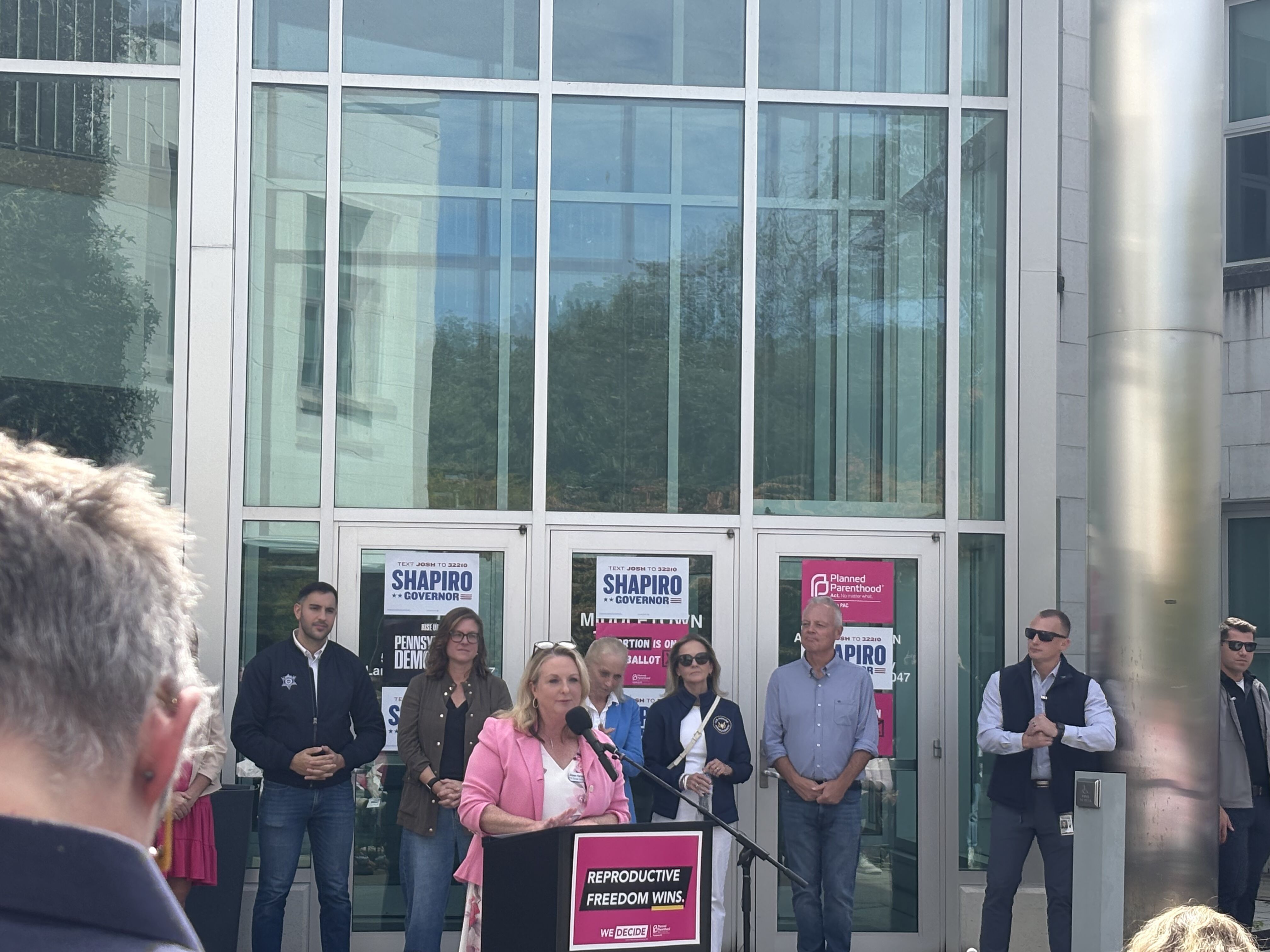
    Hartnett Albillar said in her speech that such rights go in tandem with cost-of-living issues, like making a livable wage and accessing childcare and paid family leave.

    Democrats in Bucks County, including Harvie and Hartnett Albillar, have been branding their messaging on abortion and reproductive rights as affordability issues.

    “People are scared about the unsustainable economic path that we are on, and reproductive healthcare is part of that affordability conversation,” she said. “Reproductive healthcare is something we need to ensure we have in order for economic futures for families.”

    She pledged that with a Democratic state Senate, abortion rights would be codified.

    “The folks that live here are going to determine whether or not we are going to be able to get that trifecta,” she said.

    Democrat Eileen Hartnett Albillar (center) speaks to a crowd gathered at the Middletown Township Municipal Center on Saturday.Fallon Roth

    Shapiro’s appearance in Bucks County on Saturday afternoon came after his morning campaign stop in Philadelphia’s Ninth Ward and reflects how the popular governor has spent most of his reelection campaign trying to boost other Democrats across the state.

    For instance, in July, he launched “Rise Up Pennsylvania” — an effort that is aimed at pooling donations to fund campaign resources for key state Senate and U.S. congressional races.

    Before the door knocking and canvassing around town ensued, Shapiro framed November as an inflection point for Bucks County residents and pondered future conversations between crowd members and their kids or grandkids.

    “You’re going to be able to look at them and tell them, ‘in the swingiest town, in the swingiest state, in the entire country, you dedicated yourself to meeting your neighbors … telling them what’s at stake.’”

  • Epstein abuse survivor tours Bucks County and other Pa. swing districts as Democrats highlight Trump’s ties

    Epstein abuse survivor tours Bucks County and other Pa. swing districts as Democrats highlight Trump’s ties

    Democrat Bob Harvie thumbed through hundreds of pages bound together in a book labeled “The Partially Redacted Epstein Files” and said he was disgusted with what he read — or at least what he was able to read.

    Entire blocks of text regarding the investigation into Jeffrey Epstein, the financier and convicted sex offender who died in prison in 2019, were marked black.

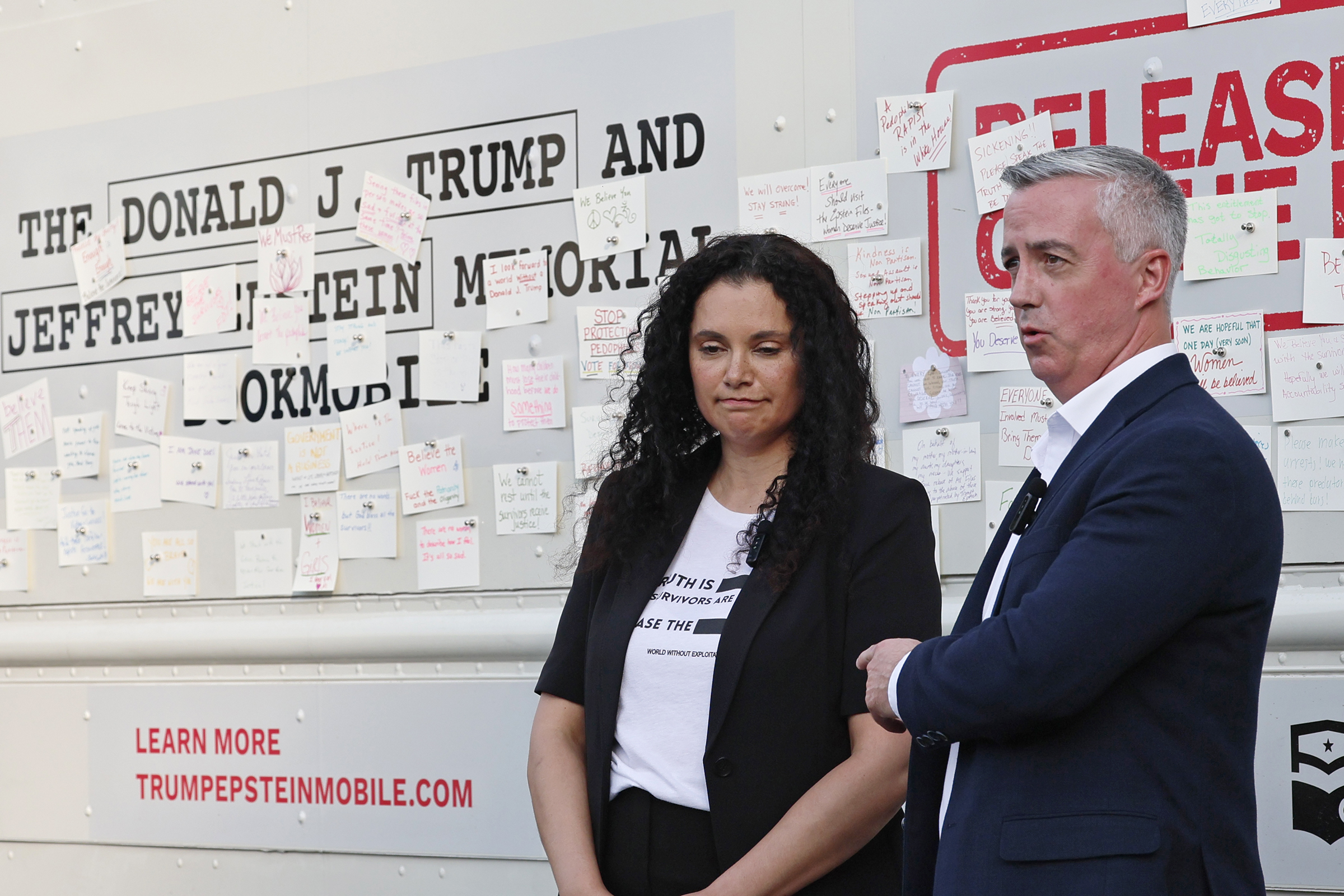
    But survivors of Epstein’s predatory behavior, including Sharlene Rochard, who appeared with Harvie Friday in Bristol, are heroes for illuminating what has been blocked from the public, the congressional candidate said.

    Harvie pledged to push “very, very hard” to release the full, unredacted files related to Epstein’s crimes if elected.

    The Bucks County commissioner is running against Republican U.S. Rep. Brian Fitzpatrick to represent the 1st Congressional District, one of two swing districts in the state that Rochard visited Friday to campaign for Democrats. She’ll be hitting another the following day.

    “These are files, but I’m in these files, and that is my life in these files,” Rochard told Harvie. “And I need justice. We need accountability, and we need some transparency, and we need people like you.”

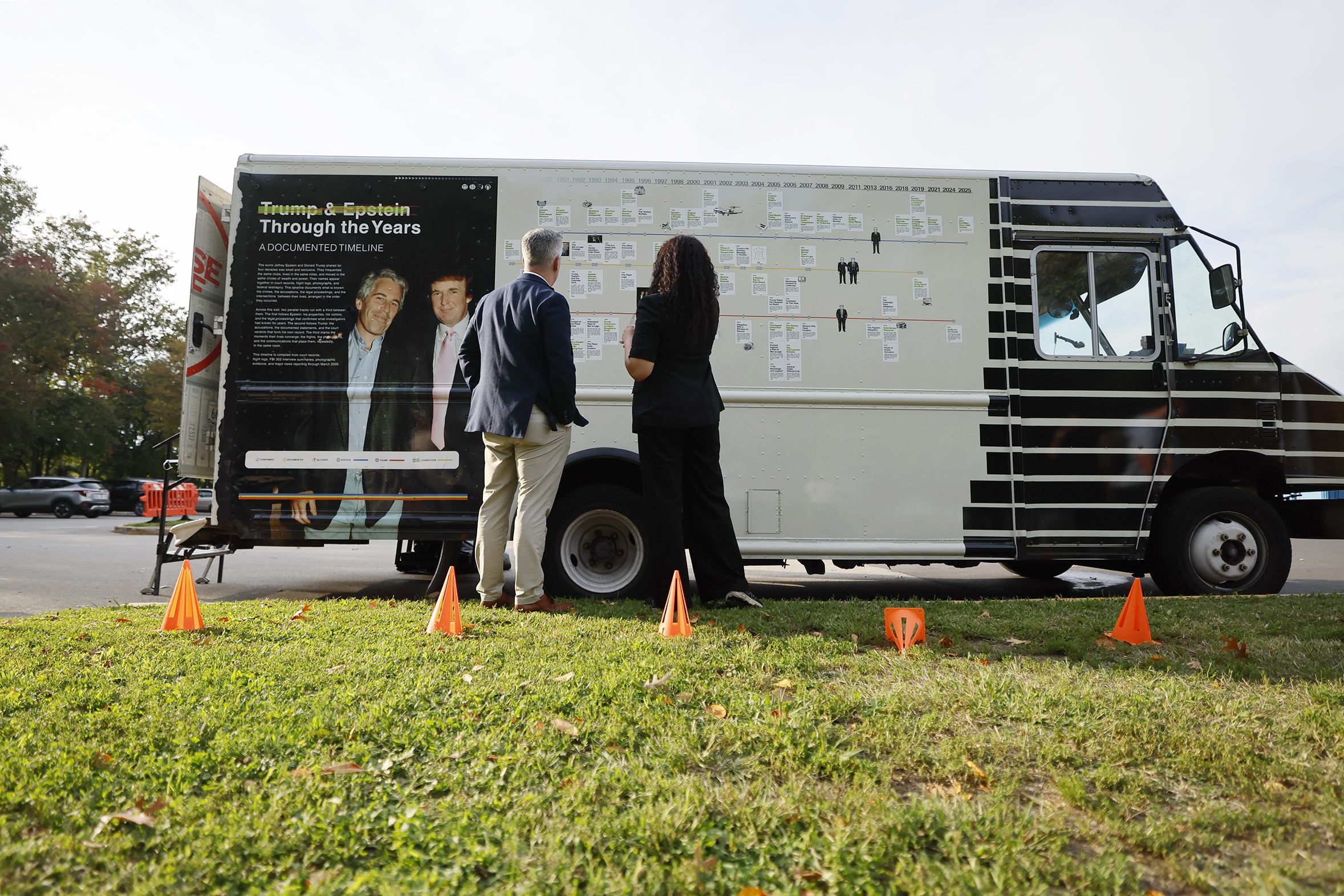
    Rows of files were contained inside a traveling bookmobile parked in front of the Bristol waterfront. Plastered on the outside of the truck was a decades-old image of President Donald Trump with his arm around Epstein.

    Reminding voters of Trump’s history with Epstein has been a campaign tactic used by Democrats in competitive contests across the country, but Harvie said the issue of justice for survivors should go beyond partisan politics.

    “I don’t care what party they’re from,” Harvie said. “I don’t care what office they hold or held. I don’t care how much money they have. I don’t care. We need to do everything we can to protect the victims and honor them and shine a light on this part of our society.”

    Sharlene Rochard, a survivor of Jeffrey Epstein’s sexual trafficking and abuse, and Bob Harvie during a news conference at the Donald J. Trump and Jeffrey Epstein Memorial Bookmobile in Bristol.Elizabeth Robertson / Staff Photographer

    Earlier in the day, Rochard visited Harrisburg, where she was welcomed by Democrat Janelle Stelson, a former news anchor who promised to “take on the culture of corruption across the government” if elected over incumbent Republican U.S. Rep. Scott Perry in the 10th District.
    Rochard was slated to appear Saturday in Bethlehem with Democrat Bob Brooks, who is running against U.S. Rep. Ryan Mackenzie in the 7th District, one of the most competitive contests in the nation.

    The truck arrived in Pennsylvania one month before Election Day as Trump continues to plummet in popularity among likely voters in the state. It’s an officially nonpartisan project of Institute for Primary Facts, a nonprofit that builds public art installations, and DEFIANCE.org, a group dedicated to ending sexual exploitation of children and adults.

    Rochard, who was born in Canada, began traveling to the U.S. as a teen to model when she met Epstein and was with him in New York, Florida, and on his private island in the U.S. Virgin Islands, she said. Though she’s unable to go into details about her trafficking experience because she is involved in ongoing legal action, she now works alongside fellow survivors to advocate for the files to be exposed.

    Every Pennsylvania lawmaker voted to release the Epstein files last year, including Fitzpatrick and the other vulnerable Republican incumbents whose districts Rochard was touring this week.

    In a statement last year, Fitzpatrick said he is “unequivocally behind the victims and their family members who suffered immensely” from Epstein’s crimes.

    “He 100% stands with the victims, and will support disclosure and transparency every single time,” Heather Roberts, a spokesperson for Fitzpatrick’s campaign, said Friday.

    A couple dozen people trickled through the bookmobile during its Bristol stop, though multiple people interviewed entered with familiarity about the files and were already convinced of a strong connection between Trump and Epstein.

    “I’m dumbfounded that there are people who don’t believe the victims,” said Deb Crasnick, 69, of Langhorne.

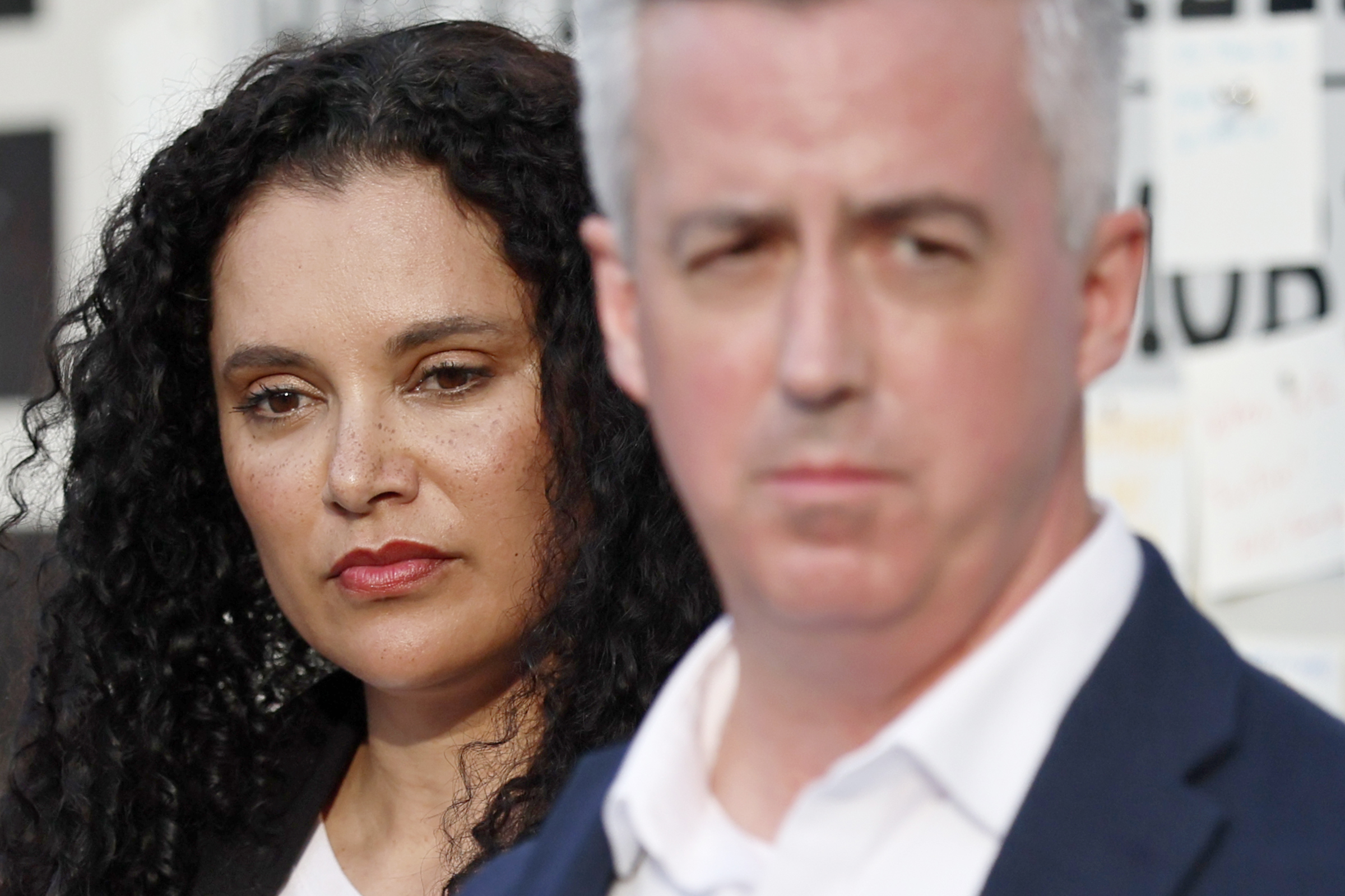
    Sharlene Rochard, a survivor of Jeffrey Epstein’s sexual trafficking and abuse, and Bob Harvie at the Donald J. Trump and Jeffrey Epstein Memorial Bookmobile in Bristol on Friday. Elizabeth Robertson / Staff Photographer

    Crasnick found out about the event from her friend Diane Grant, 71, of Bensalem, who has been following the tour on social media. But Grant, who called the revelations disturbing, worried the tour’s effectiveness may have limits.

    “People have their mindset. Nothing said or shown in there will change it,” she said.

    And most guests — all of whom said they plan to vote for Harvie, who is polling just behind Fitzpatrick — said cost-of-living concerns rather than Epstein are their top priorities to address in this year’s election.

    “The economy keeps me up at night,” said Tracey Marshall, 57, who lives in Falls Township. “We need a change.”

    Rochard said the purpose of the tour goes beyond Election Day.

    Trump has called the Epstein case “a hoax” and said that the files that have been publicly shared are “enough,” a notion the survivor is hoping to dispel with the tour.

    “This is something that has happened to me,” Rochard said. “I’m not a Democratic hoax. I am a real person, and we need some justice.”

  • The screening of a Bucks County-set documentary series was canceled last month. It’s now available to stream on PBS.

    The screening of a Bucks County-set documentary series was canceled last month. It’s now available to stream on PBS.

    In Bucks, the suburban collar county, a series of high-profile culture wars in the post-COVID-19 years has included efforts to remove queer-themed books from school curriculum, a push to ban the display of the Pride flag in classrooms, contentious school board elections, and an even more tense run-up to the 2024 presidential race.

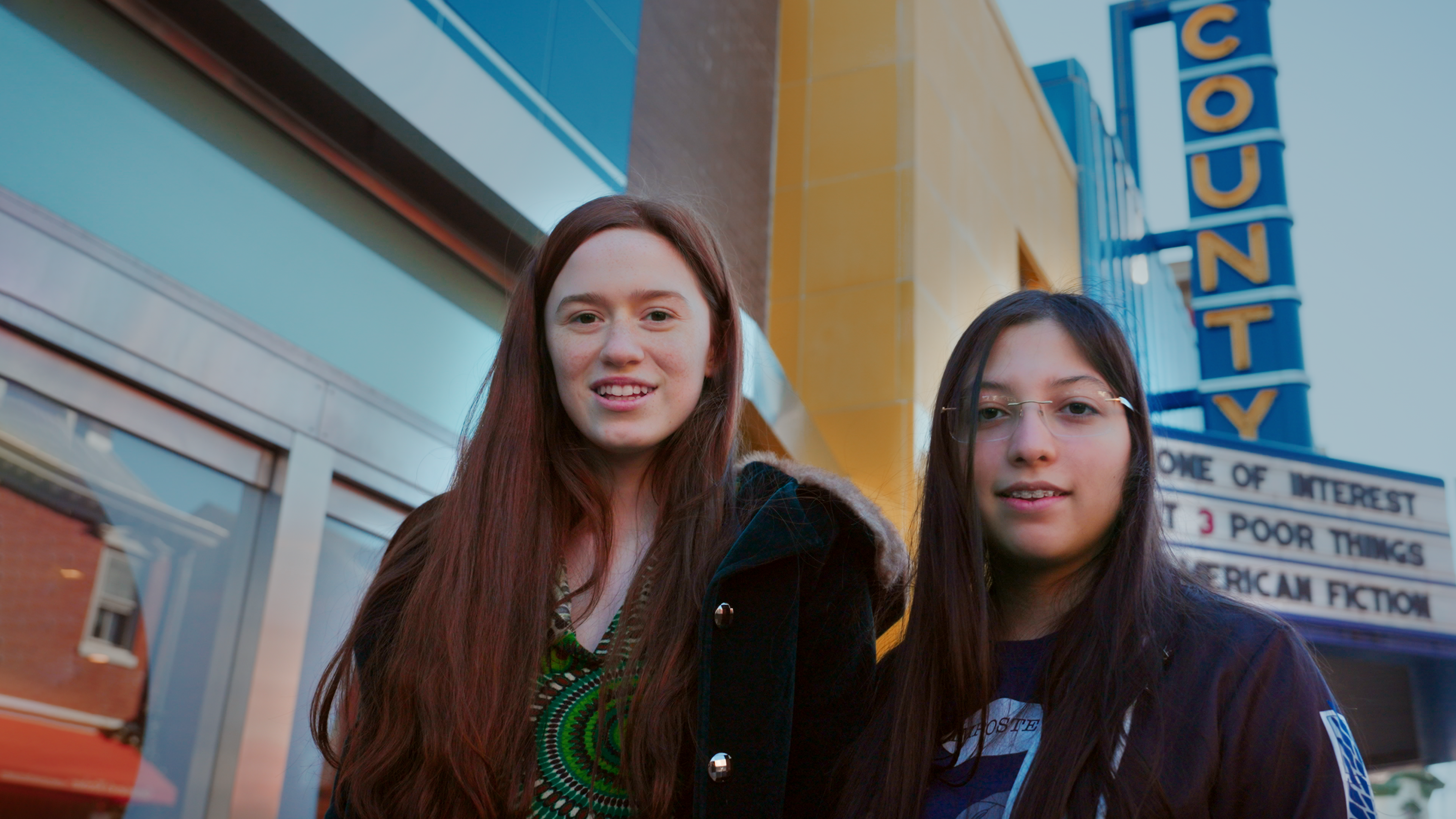
    Starting in 2022, for more than three years, a group of filmmakers chronicled much of it, mostly in Doylestown and the Central Bucks School District, and some in the Pennridge School District. At the heart of the story are two teenage girls who maintain their close friendship, even as their parents took opposite political sides.
    The result is a five-part documentary called Bucks County, USA. Its first two parts debuted at the Sundance Film Festival in January 2025, when the series was far from complete; even those first two episodes have been revised.

    A still from the docuseries “Bucks County, USA” that premiered at the Sundance Film Festival in 2025 and is now streaming on PBS. Using Bucks County as a focal point, the series examines political polarization and culture wars in America.Courtesy of SenArt Films & Baltimore Pictures

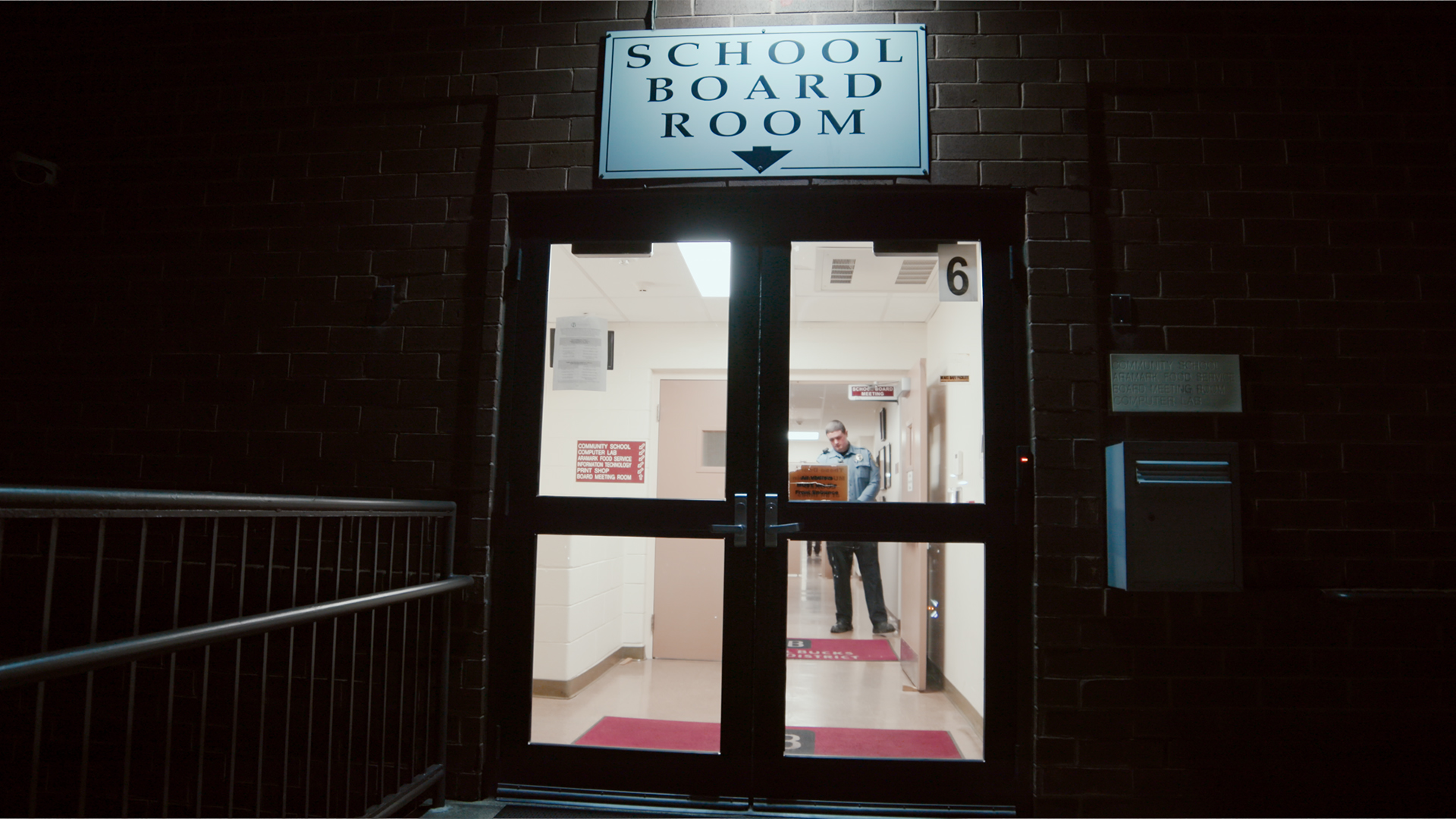
    The series includes footage from contentious public meetings and talking-head interviews with a range of participants — from school board members to families with queer children, who all feel they have been adversely affected by the district’s policy decisions. It also includes scenes in which residents on opposite political sides discuss their differences.

    Bucks County, USA, features plenty of Bucks County color, from a visit to an annual re-enactment of Washington’s crossing of the Delaware to Doylestown’s Oscar Hammerstein Museum, which, during the period of filming, was the subject of a fundraising campaign. We hear “You’ve Got to Be Carefully Taught,” a Hammerstein composition from the musical South Pacific, about the scourge of racial prejudice.

    Filmmaker Robert May, who codirected the first episode and directed the other four, is a Pennsylvania native who now lives in the Poconos. The other codirector of the first episode is filmmaker Barry Levinson, whose work includes best picture Oscar winner Rain Man.

    Both May and Levinson have previously made films about Pennsylvania scandals: May directed Kids for Cash, the 2014 documentary about a Pennsylvania judicial corruption scandal of the same name. Levinson directed Paterno, the 2018 HBO drama about the Penn State abuse scandal.

    Jason Sosnoff, who has long worked with Levinson, is Bucks County, USA’s producer.

    A still from the docuseries “Bucks County, USA” that premiered at the 2025 Sundance Film Festival and is now streaming on PBS. Using Bucks County as a focal point, the series examines political polarization and culture wars in America.Courtesy of SenArt Films & Baltimore Pictures

    Sosnoff said the seeds of the docuseries were planted when he was invited to a focus group with Trump supporters on Jan. 7, 2021, the day after the Capitol riot. The focus group was led by pollster and Penn alum Frank Luntz.

    The producer came to the focus group with skepticism, but, he said, “I would say, about an hour into it, I started really hearing the people … I began to actually just hear and listen to them and see them as humans who have a point of view, rather than names and labels we give to them.”

    He went to Levinson, his business partner, proposing that they start a project that would “humanize the right to the left and the left to the right.”

    The next step was to find a community that could serve as a microcosm of that story and to ask, “Why is there such opposition now between the left and the right, Democrat or Republican, whatever you want to call it? Why is there such animosity in the air?” Levinson said.

    The answer lay in “The School Board Wars,” a 2021 two-part episode of the New York Times podcast The Daily.The podcast examined the bitter political fights that had come to school boards nationwide, with the Central Bucks School District featured as an example.

    “In that podcast, you hear people from the town screaming at each other, yelling at each other, death threats,” said Sosnoff, who thought, “Wow, this is a community that’s in trauma. And I think there’s a story there.”

    A still from the docu-series “Bucks County, USA” that premiered at the 2025 Sundance Film Festival and is now streaming on PBS. Using Bucks County as a focal point, the series examines political polarization and culture wars in America.Courtesy of SenArt Films & Baltimore Pictures

    He met May around that time, and they went to Bucks County, a crucial swing country in Pennsylvania where in 2024 President Donald Trump won by just 291 votes.

    “What we saw in Bucks County was the possibility of using the school board wars and the school board campaign … as a narrative drive for the series,” May said. “These parents are all going to school board meetings, and they’re firing shots at both sides for the sake of their children.”

    They started filming in April 2022 and continued through the end of 2025. Over that time, the filmmakers documented many school board meetings in which community members yelled at each other, wrote hundreds of angry social media posts, and battled over a 2023 school board election in which control of the Central Bucks School Board hung in the balance.

    “They’re all protecting their kids, but they’re all fighting in front of their kids, too,” said May.

    Two of those kids are Evi and Vanessa, who were 14 when the series started filming and remained best friends, even as their parents battled over political considerations. Vanessa’s father, Paul Martino, is a businessman who funded the conservative Back to School political action committee. His wife, Aarati, ran for the school board. Evi’s mother, Lela Casey, is a contributing writer to the local, progressive-leaning publication, the Bucks County Beacon.

    The film team shifted its focus, in part, to Evi and Vanessa. The two teenagers were initially reluctant to speak on camera for fear of jeopardizing their friendship, but they ultimately did and remained friends.

    It’s part of a repeating theme, May said. “The kids were a lot more civil with each other, and had a great deal of respect for each other, much more than a lot of the adults did.”

    The filmmakers wanted to apply fairness to all sides and give everyone a say on camera. Winning the trust of some participants was hard.

    A still from the docuseries “Bucks County, USA,” now streaming on PBS. Using Bucks County as a focal point, the series examines political polarization and culture wars in America.Courtesy of SenArt Films & Baltimore Pictures

    “The conservative folks that we talked with viewed us as the media. ‘You’re making a movie, so you’re gonna bash us. We don’t want to be part of that.’ So it took a while to really convince them,” said May, who believes the team has been able to create a “nonbiased portrayal.”

    The rancor has continued, nonetheless.

    Bucks County Community College was set to host a local premiere screening of the documentary Sept. 15 but canceled it two days earlier. The screening instead took place that same night at a different venue: the Hiway Theater in Montgomery County’s Jenkintown, a Democratic stronghold.

    In a statement provided to the media, the BCCC said the screening was canceled after “after we received information that raised concerns about our ability to provide a safe environment for campus visitors.”

    “With the docuseries premiering locally on WHYY in less than one week,” the statement read, “and erring on the side of caution, the decision was made to cancel the event.”

    “It is obviously unfortunate,” May and Sosnoff said in an email. “We had taken months to plan a great event at this location.” The entire point of the special screening was, they said, “to thank the community for their hospitality over the past four years, and in particular, thank all those who participated in our project.”

    ”Unfortunately, we live in fearful times, and while the school was not acting with ill intentions, they took something away from the community they are supposed to serve. Our series is all about community — how it can be built and how it can be destroyed,” they said. “Our goal is to foster more trust going forward.”

    “Bucks County, USA” is available to stream via the PBS app, as well as The World Channel.

  • 🗳️ It’s Bucks season | PA 2026 Newsletter

    🗳️ It’s Bucks season | PA 2026 Newsletter

    📅 There are 32 days until Election Day.

    It wouldn’t be a Pennsylvania election without Bucks County becoming the star of the show.

    And that’s exactly what’s happening this weekend, when Gov. Josh Shapiro travels to the swingiest of the swing counties to stump for Democrats up and down the ballot in key races.

    🎤 I’m Fallon Roth, the suburban politics reporter at The Inquirer, coming to you live from Bucks (my home county) as we dig into how the suburb will be the make-or-break place for Democrats’ wishlist next month, including a win for Bob Harvie in the 1st Congressional District and shift in party control in the state Senate, which could only happen with help from the Philly suburbs.

    We’ll also explore whether Pennsylvania voters would support Shapiro turning his attention to a bid for the White House in 2028.

    In this edition:

    🗳️All hands on deck: Shapiro will be in Bucks County Saturday to launch a day-of-action for Democrats, organized by Planned Parenthood’s state-level PAC.

    🗳️ The Bucks stops here: Two Bucks County swing districts and another in Montco could determine which party controls the state Senate.

    🗳️Homefield (dis)advantage?: Pennsylvania voters are split on whether Shapiro should run for president in 2028.

    -Fallon Roth, Michelle Baruchman, Sam Janesch, Gillian McGoldrick (pa2026@inquirer.com)

    The latest

    • The price of gas, groceries and, well, living is on the rise and Pennsylvania’s swing district voters will have affordability on their minds as they head to the ballot box next month.
    • As democratic socialist candidates become more mainstream — including in Philly — most Pennsylvania Democrats said in a recent Inquirer/New York Times/Siena University poll that they have a positive view of socialism.
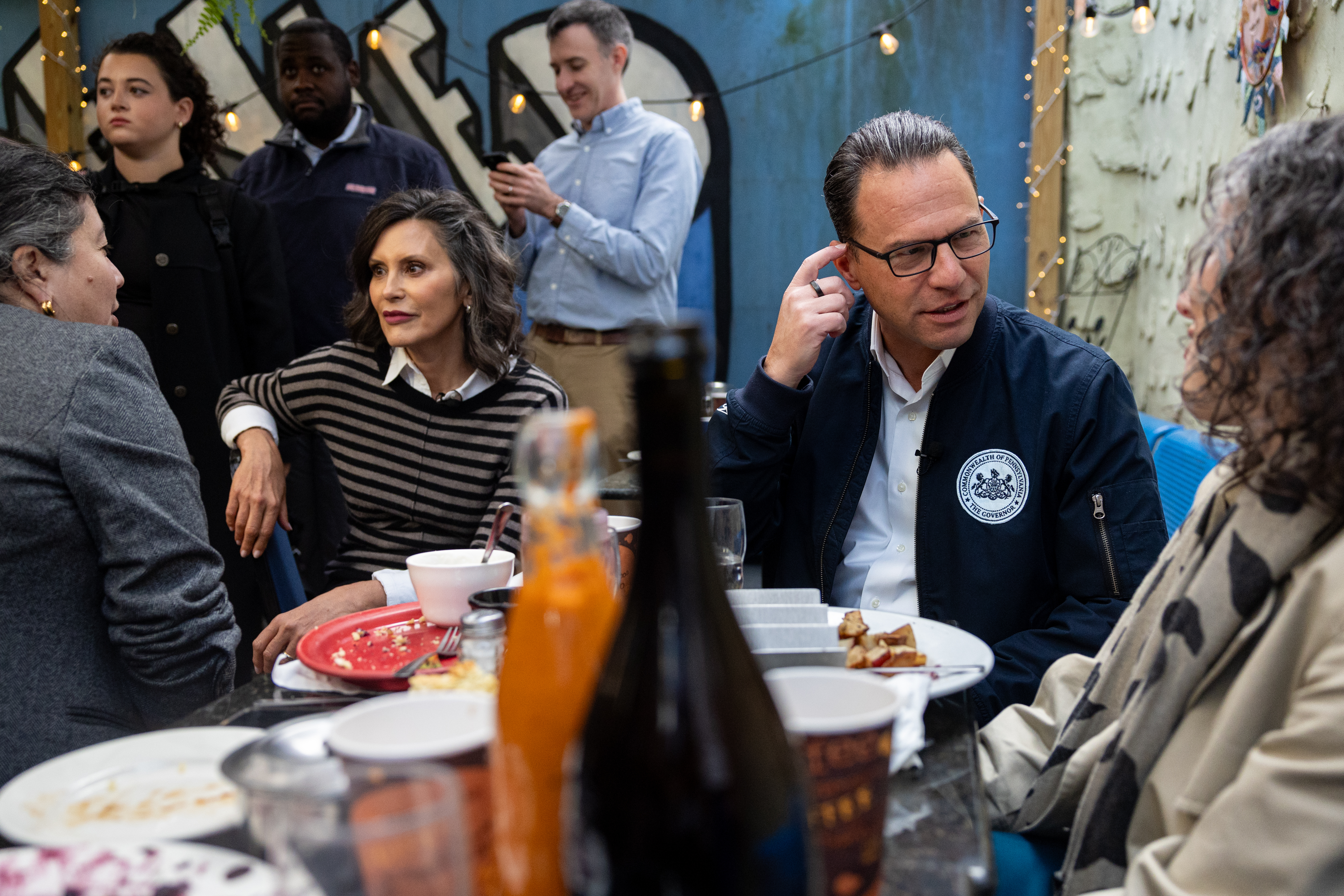
    • Shapiro and Michigan Democratic Gov. Gretchen Whitmer (possible 2028 rivals) went to Sam’s Morning Glory Diner in Philly to energize voters ahead of the midterms.
    • Robert F. Kennedy Jr., President Donald Trump’s health and human services secretary, is even less popular than the president with Pennsylvania voters.

    Data dive

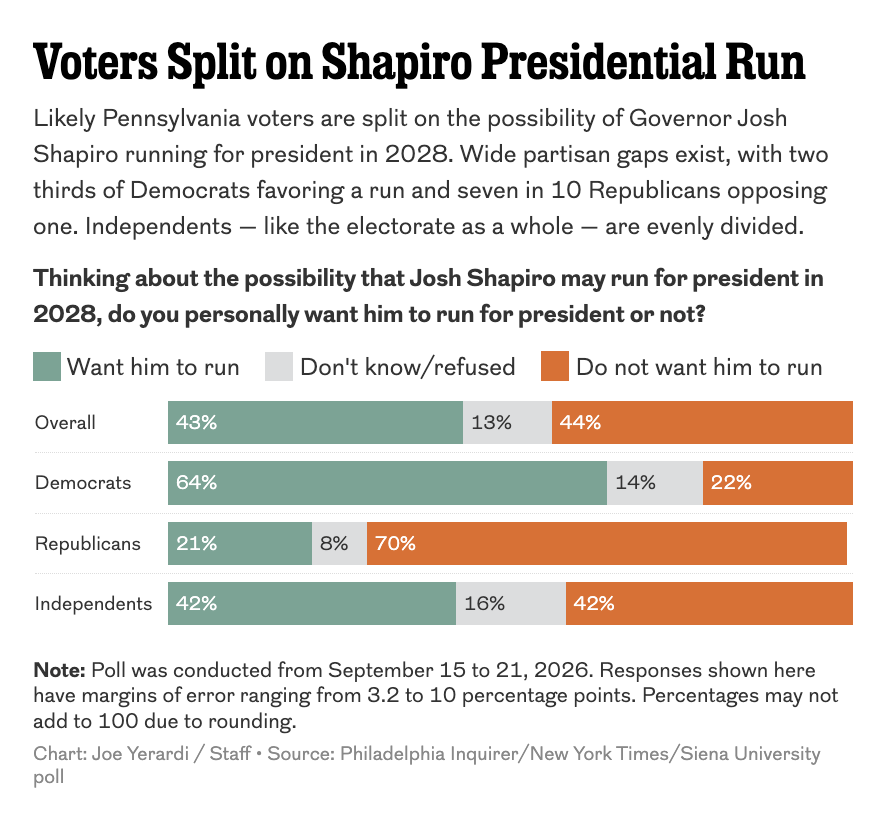
    📊 Without a doubt, Shapiro is a popular governor. He’s viewed favorably by Democrats, independents and even some Republicans — no small feat in a swing state that voted for President Donald Trump in 2024. But whether these likely Pennsylvania voters want Shapiro to run for president in 2028 is an entirely different question.

    Voters, in a poll conducted by Siena University on behalf of The Inquirer and the New York Times, were split on whether Shapiro, who is expected to pursue a White House bid, should run: 43% of respondents want him to run, and 44% don’t.

    Of those supporting a potential presidential campaign, 41% ranked his character and competence as their reasons, and nearly one in five said they were satisfied with Shapiro’s performance as governor. But for those who oppose a run, it’s not necessarily because they don’t like him (although that is the case for 21% of respondents).

    About one in 10 said they would prefer Shapiro, who is up for reelection this November with a commanding lead against his competitor, to remain in Pennsylvania. Campaigning and presidential debates would likely begin soon into his second term.

    Others, however, said they are worried that the U.S. is not ready for a Jewish president. Shapiro has spoken openly about his faith and experiences with antisemitism.

    “I like his views. I like his policies. I like everything. I just think his religious affiliation will stop him from winning because I think the rest of the country, especially the middle of the country, will rally against him,” said Michael Biello, a 68-year-old Democrat in Philadelphia.

    Campaign scrapple

    🏥 Is the U.S. ready for Medicare for All?

    Democrat Bob Harvie thinks there needs to be more trust in the federal government first before it starts running the healthcare system, he told The Inquirer on Tuesday evening.

    Harvie, a Bucks County commissioner challenging GOP U.S. Rep. Brian Fitzpatrick in the swingy 1st Congressional District, has focused his campaign on addressing rising costs and increasing access to healthcare, such as advocating for 55-year-olds to be able to buy into Medicare.

    Congressional candidate Bob Harvie (D, Pa.) speaks on Friday, September 11, 2026 at the Garden of Reflection in Yardley, Pennsylvania.William Thomas Cain / For The Inquirer

    “My worry is you start talking to people about well, ‘We’re going to take away the healthcare system you have, and we’re going to give you another one, and the government’s going to run it,’” Harvie said of Medicare for All. “We’ve got a lot of work to do to rebuild trust in the government, just like we have a lot of work to do to rebuild how this healthcare system works.”

    Harvie was joined Tuesday by Democrats Eileen Hartnett Albillar, running in the key 6th state Senate district, and U.S. Rep. Lauren Underwood, of Illinois.

    📸 Behind the scenes snapshot

    Michigan Gov. Gretchen Whitmer (second from the left) and Pennsylvania Gov. Josh Shapiro chat with diners at the Morning Glory. The two Democrats have grown close in recent years, but they could become rivals in 2028 if they both pursue the presidency. Aidan T. Gallo / Staff Photographer

    👀 What we’re watching

    Shapiro and Garrity will face off in a live, televised debate this coming Wednesday, Oct. 7. The Harrisburg-based TV station ABC27 is hosting the debate, which will air on several stations owned by Nexstar across Pennsylvania, including WPHL-TV in Philadelphia. Politics reporters Gillian McGoldrick and Michelle Baruchman will break the major moments down at inquirer.com/politics.

    Quote of the week

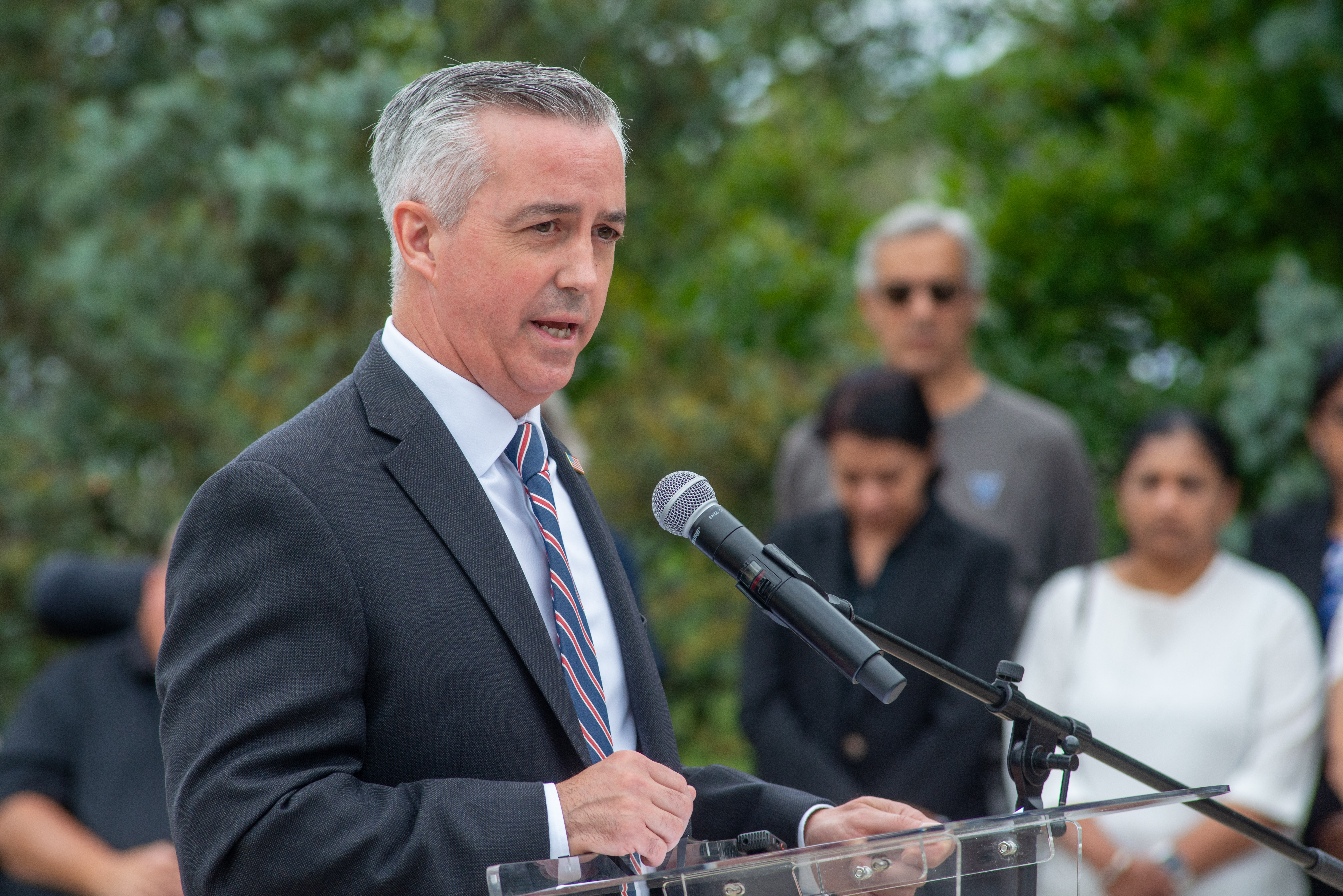
    U.S. Rep. Brian Fitzpatrick weighs in on the No. 1 issue this election. William Thomas Cain / For The Inquirer

    Fitzpatrick agrees with his opponent, Harvie, on one thing: this election will hinge on which party voters think will do a better job lowering the cost of living.

    Voters in the four key congressional swing districts have repeatedly expressed frustration that their dollar doesn’t go as far as it used to and that could be trouble for incumbents this fall.

    👋 Thanks for reading, and don’t forget to check back as we enter a final campaign month packed with debates, candidate events and maybe even a few October surprises. You can follow The Inquirer politics team’s coverage here, and we’ll see you in your inbox next Friday.

  • Josh Shapiro will be in Bucks County this weekend to campaign for Democrats in key races

    Josh Shapiro will be in Bucks County this weekend to campaign for Democrats in key races

    Gov. Josh Shapiro will be in Bucks County on Saturday to campaign for Democrats up and down the ballot in the key swing county.

    Shapiro, who kicked off Democrats’ general election campaigns at a space centrifuge in Warminster this past spring, is returning to Bucks, emphasizing the important role that the perennially purple county will play in November’s midterms with competitive contests for Congress and state Senate on the ballot.

    The governor will appear at a canvass launch in Langhorne organized by Planned Parenthood PA PAC, the organization’s state-level political action committee. The PAC has endorsed Bucks County Democrat Eileen Hartnett Albillar, who is running for state Senate in the 6th District, a crucial seat for the party, and state House candidates Bryan Allen, Kristin Egan, and Monica Weninger.

    Shapiro will also appear alongside Democratic County Commissioner Bob Harvie, who is challenging GOP U.S. Rep. Brian Fitzpatrick in the Bucks-based 1st Congressional District — one of four seats in the state being targeted by both parties. Harvie is endorsed by Shapiro and Planned Parenthood’s federal PAC.

    Democratic U.S. Reps. Madeleine Dean, of Montgomery County, and Mary Gay Scanlon, of Delaware County, will also be in attendance.

    Democrats are hoping to win control of the state Senate — which they haven’t had for 33 years. The GOP currently holds 27 seats in the 50-member state Senate.

    To take control of the chamber with the lieutenant governor’s tie-breaking vote, Democrats would need to flip at least two seats and maintain control of the governor’s office. With a trifecta in Harrisburg, Democrats hope to advance legislation on issues that haven’t gained support in the Republican-controlled Senate, like codifying abortion protections.

    The Shapiro-endorsed candidates have an opportunity, if successful in November, to give Democrats more governing power, whether that’s winning party control in the U.S. House, the state Senate, or giving Democrats an expanded majority in the state’s lower chamber.

    Shapiro is running for a second term as governor, but he’s spending much of his time using his political prowess to bolster other Democrats ahead of the midterms. Recently, he was in Philadelphia with Democratic Michigan Gov. Gretchen Whitmer to energize volunteers. Earlier this month, he was in Montgomery and Chester Counties campaigning for down-ballot candidates.

    Shapiro has invested more than $5.7 million in the state party since fall 2025, his campaign said last month.

    Gov. Josh Shapiro poses with Democratic Pa. Senate candidate Chris Thomas (left) and his supporters after a rally in Towamencin, Montgomery County before heading out to canvass Sunday, Sept. 29, 2026.Tom Gralish / Staff Photographer

    In July, he launched an effort — “Rise Up Pennsylvania” — that is aimed at pooling donations to fund campaign resources for key state Senate and U.S. congressional races.

    Abortion protections remain a key piece of the party’s platform, even as Democrats have refocused their messaging on affordability ahead of November.

    “Bucks County will be critical to building a pro–sexual and reproductive health care trifecta in Pennsylvania,” Signe Espinoza, executive director of Planned Parenthood PA PAC, said in a statement Friday.

    “We endorsed these candidates because we know they will stand up to fight to protect every Pennsylvanian’s freedom to make their own decisions about their body, health and future.”

  • Affordability is on voters’ minds in Pa. swing districts as the cost of gas and groceries skyrockets

    Affordability is on voters’ minds in Pa. swing districts as the cost of gas and groceries skyrockets

    SCRANTON — Four of Mike Parry’s tenants can no longer afford to pay their rent. Suddenly, their financial pain is his.

    “It’s the affordability of everything that’s the problem,” said Parry, 60, of Clarks Summit, Lackawanna County. “We’re all feeling it now.”

    With the war in Iran rocketing gas to almost $5 a gallon, inflation surging to 3.4% from 2.6% in 2025, and food prices up nearly 3% over last year, the high cost of living is weighing on the minds of many voters — and candidates — as the midterm elections draw near.

    Nowhere is that more critical than in four tightly contested Pennsylvania congressional districts that could decide the control of the U.S. House — in Bucks County, the Lehigh Valley, the Harrisburg area, and Northeast Pennsylvania.

    Mike Parry of Clark Summit, Lackawanna County.Courtesy of Mike Parry

    Parry, a Republican and supporter of President Donald Trump, said he is aware that many Americans hold the president and his party accountable for the affordability crisis, including in the 8th Congressional District, where Parry plans to back GOP U.S. Rep. Rob Bresnahan over Scranton Mayor Paige Cognetti, the Democratic nominee.

    But other voters might not be so kind to Trump-aligned incumbents this fall.

    Among likely voters in Pennsylvania, 75% disapprove of how Trump is handling the cost of living, compared with just 25% who approve, according to a recent poll from The Inquirer, the New York Times, and Siena University. And 73% disapprove of how he has handled gas prices, vs. 24% who approve. About 65% disapprove of his handling of the economy, vs. 34% who approve.

    “It doesn’t matter what party you’re in,” Parry said. “We’re all getting hammered the same.”

    ‘Spend less’

    At his local Wawa gas station in Allentown, P.J. Santos, 32, removed his finger from the pump trigger before his tank filled.

    “Now I tell myself to spend less,” said Santos, a Democrat who is supporting former firefighter Bob Brooks over Republican U.S. Rep. Ryan Mackenzie in the Lehigh Valley’s 7th Congressional District.

    P.J. Santos of Allentown.Courtesy of P.J. Santos

    “So I buy less than I need,” he added, tightening his gas cap. “Same goes for date nights with my wife: Spend less.”

    That is harder when you’re buying food, said Tammy McCoy, 52, of Easton, in the same district. “Walk into any grocery store,” said McCoy, a Democrat and professional cook. “It’s like you have to hand them $50 at the door.”

    (function(){function e(){window.addEventListener(`message`,function(e){if(e.data[`datawrapper-height`]!==void 0){var t=document.querySelectorAll(`iframe`);for(var n in e.data[`datawrapper-height`])for(var r=0,i;i=t[r];r++)if(i.contentWindow===e.source){var a=e.data[`datawrapper-height`][n]+`px`;i.style.height=a}}})}e()})();

    Trump, she remembered, promised to lower prices on Day 1 of his presidency. Not only did that not happen, she added, he raised tariffs, making imported staples like coffee, nuts, and olive oil more expensive. “Because of that,” McCoy added, “I’m against him and Republicans.”

    Tapping into the frustration over food prices, Democrat Janelle Stelson’s campaign is pointing to the cost of hamburgers as she seeks to oust Republican U.S. Rep. Scott Perry in the 10th Congressional District.

    Janelle Stelson (left) and Rep. Scott Perry, R-Pa.(right) from a Stelson campaign photo in 2024, the last time the two squared off against each other in a bid to represent the 10th Congressional District. Stelson Campaign, AP

    Stelson eats a burger in a TV ad that says Americans now pay $7.29 for a pound of ground beef — a result of tariffs Trump imposed and Perry supported.

    But criticism of Trump’s tariffs will not sway Tammy Green, 60, a Republican voter in the 8th Congressional District who supports Bresnahan over Democrat Cognetti.

    “Because he’s a businessman, President Trump understands the economy. … He’s negotiating fair prices with tariffs,” said Green, a former travel agent who lives in West Wyoming, Luzerne County.

    More households need help

    On a hot September day in Levittown, people gathered to celebrate the grand opening of the new headquarters of the United Way of Bucks County. Focused on helping anyone experiencing financial hardship, the building features an expanded HELP Center, where diapers, fresh produce, and clothing are available at no charge.

    As need skyrockets, the nonprofit expects a 40% to 50% increase in demand this year, Marissa Christie, president and CEO, said in an interview.

    “Folks are telling us that in the grocery store, their budget is not going as far as it used to,” Christie said. “When they go to fill up their gas tank, their money is not going as far as they expected.”

    Attending the event alongside other local lawmakers was U.S. Rep. Brian Fitzpatrick (R., Bucks), who secured $4.15 million in federal funds for the building and said the agency will “always be in that top-10 list” of key nonprofits helping those in need.

    U.S. Rep. Brian Fitzpatrick (R., Bucks) speaks outside the U.S. Capitol about legislation to put national restrictions on gerrymandering on Sep. 16, 2026.Sam Janesch / Staff

    The cost of living has become a focal point in the 1st Congressional District race as Fitzpatrick fends off a challenge from Democratic County Commissioner Bob Harvie in the Bucks County-based swing district.

    Pennsylvania Democrats, including Harvie, have centered their campaign messaging on affordability in hopes of appealing to voters across the political spectrum.

    “Costs are what affect people every single day … whether it’s at the pump, whether it’s in the grocery store,” Harvie said in an interview with The Inquirer’s Editorial Board. “Housing costs obviously are huge. It’s a major issue here in this district, especially in the county.”

    (The Editorial Board, which runs The Inquirer’s opinion pages and decides endorsements, operates independently from the newsroom. Newsroom editors and reporters have no role in endorsements, and opinion staffers have no role in news coverage.)

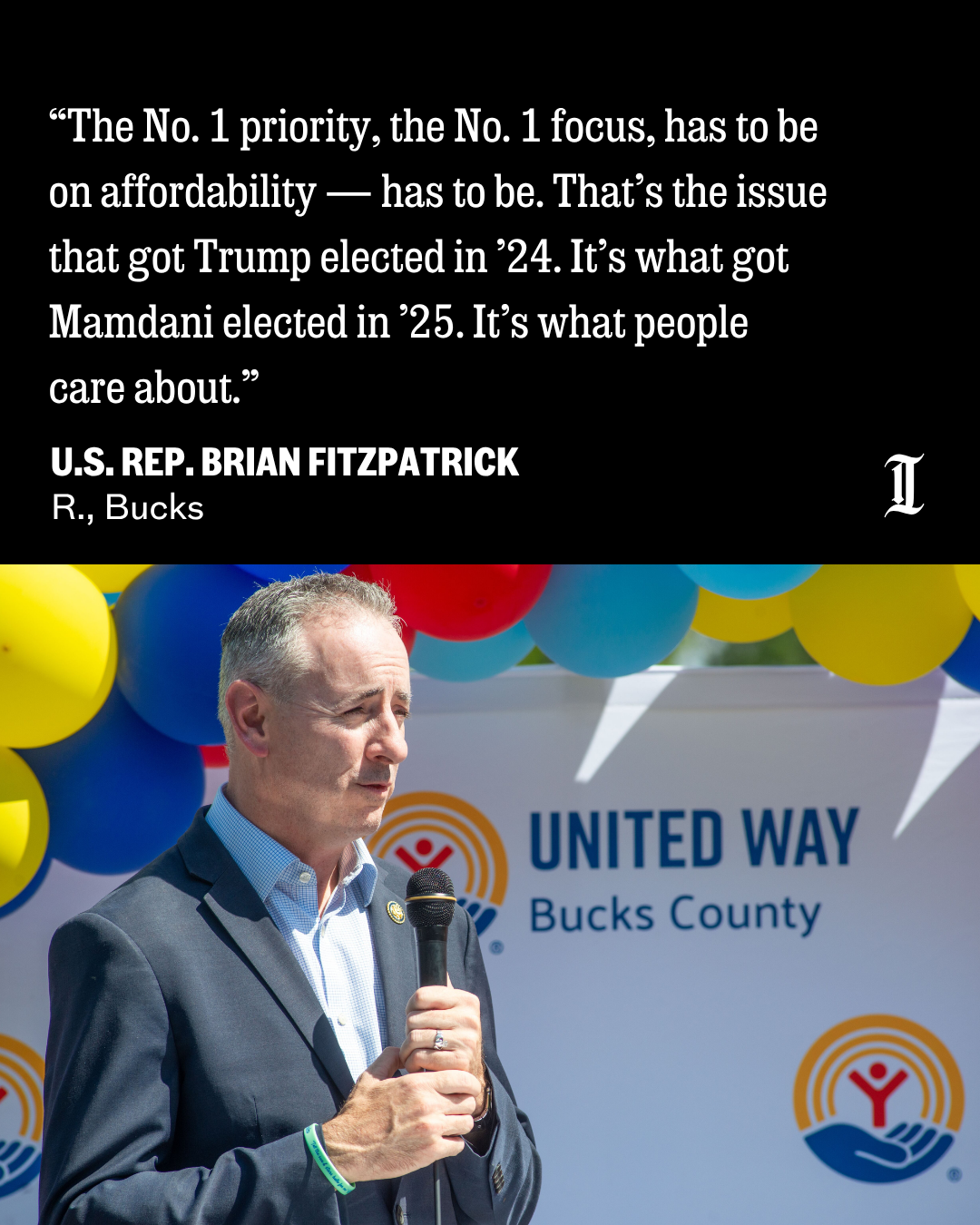
    Fitzpatrick, too, acknowledged in an interview at the U.S. Capitol last month that affordability is the top issue not just in this election, but in every election.

    “The No. 1 priority, the No. 1 focus, has to be on affordability — has to be,” he said. “That’s the issue that got Trump elected in ’24. It’s what got [New York Mayor Zohran] Mamdani elected in ’25. It’s what people care about.”

    ‘Affordability front and center’

    Demonstrating their awareness of voter focus on the high cost of living, Trump administration officials and local Republicans repeatedly emphasized “affordability” as they touted their work to combat rising electricity prices at a PPL Electric Utilities facility in Allentown last week.

    “This is a quick way to lower electricity prices and increase reliability,” U.S. Energy Secretary Chris Wright said as he announced up to $71.5 million in federal funding for PPL, which was among $2 billion in new spending aimed at improving the electric grid.

    Upgrades to existing transmission lines will include new technology like sensors to detect weather conditions, improving efficiency and ultimately lowering electricity costs, according to the Energy Department.

    Asked how quickly consumers might see those improvements, Wright did not specify a timeline but noted that new, large-scale energy users — like data centers — are negotiating with utilities about how much of the increased demand they will cover.

    Mackenzie, a freshman lawmaker whose district includes the Lehigh Valley and Poconos, also emphasized a bill he supports that would set federal standards for data centers to pay for their electricity use, and another to promote transparency around retail electric costs.

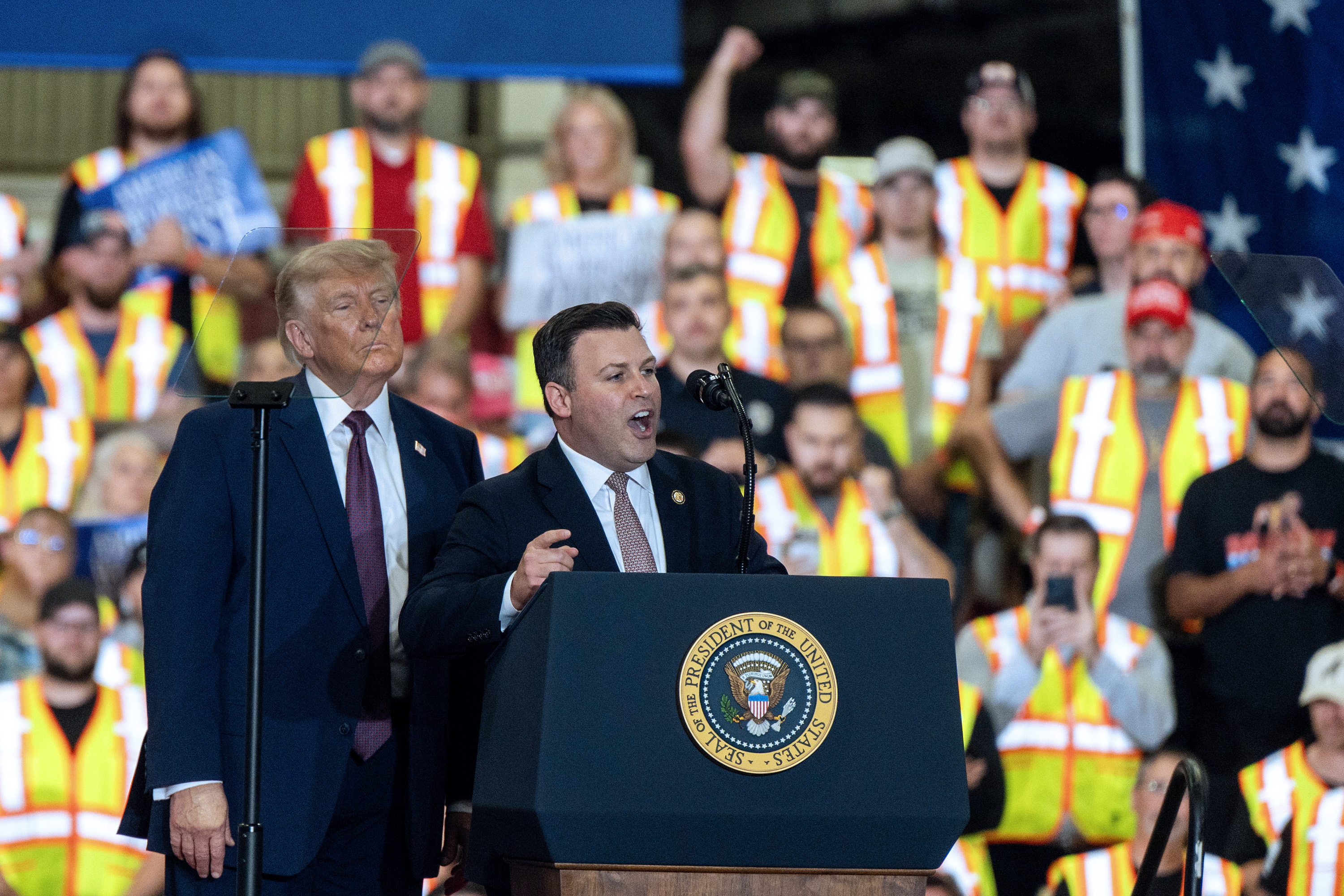
    President Donald Trump invites 7th District U.S. Rep. Ryan Mackenzie (right) to the stage to visit Mack Trucks in Macungie, outside Allentown in the Lehigh Valley, in June.Tom Gralish / Staff Photographer

    Mackenzie said energy policy needs to keep “affordability front and center.”

    The war’s economic consequences

    Some Trump voters say they are willing to pay more for gas and other essentials as the president pursues his policy goals at home and in Iran.

    “We incur a cost that stinks now to avoid another Sept. 11 later,” said T.J. Fitzgerald, 60, a Republican bail bondsman from Nanticoke, Luzerne County, in the 8th Congressional District. “Fighting Iran, a terrorist organization, is worth inflation at the pump.”

    Ryan Kavulich, a 37-year-old project manager from Dunmore in nearby Lackawanna County, disagreed with that logic.

    “The war’s a nightmare with what it’s costing for diesel,” said Kavulich, a Democrat who plans to back Cognetti in November.

    (function(){function e(){window.addEventListener(`message`,function(e){if(e.data[`datawrapper-height`]!==void 0){var t=document.querySelectorAll(`iframe`);for(var n in e.data[`datawrapper-height`])for(var r=0,i;i=t[r];r++)if(i.contentWindow===e.source){var a=e.data[`datawrapper-height`][n]+`px`;i.style.height=a}}})}e()})();

    People in the 8th District know that Bresnahan voted against ending the war with Iran in September, Kavulich said.

    “And that makes voting for Paige [Cognetti] in November the easiest choice ever,” he said. “So many people around Scranton have a blue-collar, kitchen-table, commonsense vibe. They know going into Iran isn’t what you do. They know it’s time to be over Bresnahan and Trump.”

    As the cost of fuel continues to climb, even some longtime Republicans in the district are expressing their doubts about the economic consequences of Trump’s war.

    “I voted for Trump three times,” said Greg Kerrick, 58, a Republican voter from Scranton.

    “But I don’t like him pushing up gas prices,” added Kerrick, who is unemployed. “And I feel for anyone paying over $4 a gallon.”

  • Stop airing Brian Fitzpatrick’s TV ads, Bob Harvie’s campaign asks Philly area stations

    Stop airing Brian Fitzpatrick’s TV ads, Bob Harvie’s campaign asks Philly area stations

    Bucks County Democrat Bob Harvie is asking TV stations in the Philadelphia area to stop airing advertisements from U.S. Rep. Brian Fitzpatrick, calling them misleading to viewers.

    In letters sent Thursday, an attorney for the Democrat’s campaign highlighted two attack ads from Fitzpatrick’s campaign related to Harvie’s time as a county commissioner.

    He said the ads relied on dubious reporting from a source who has personal connections to Fitzpatrick, the incumbent Republican who has represented the 1st Congressional District for five terms. Harvie is challenging Fitzpatrick for the Bucks County-based seat, one of four in the state that both parties are targeting ahead of November.

    In one of the ads, for example, Fitzpatrick’s campaign cited a headline from Patch.com, the hyperlocal news organization, that said “Bob Harvie was the lone vote to abolish local police funding on the Board of Commissioners.”

    Harvie opposed a roughly $43,000 purchase of “civil unrest protective equipment” for the Bucks County Sheriff’s Office in a 2024 vote, attorney Timothy Ford said in the letter, but voted to approve every other law enforcement spending request, including about $31,000 for a sheriff’s deputy vehicle and about $44,000 for a police interceptor utility vehicle.

    The legal action comes after revelations from Politico that the author of multiple Patch articles Fitzpatrick is using in his campaign ads is Dave Sommers, who received occasional payments from Fitzpatrick’s campaign over the years, though not in the most recent financial reporting cycle.

    “Sommers’ claim that Mr. Harvie voted to ‘abolish local police funding’ is a deliberately false characterization of the official and public record of the Bucks County Commissioners’ Meeting,” Ford wrote.

    Harvie’s campaign asked the TV stations to scrutinize any future advertisements that refer to Sommers’ work.

    “These advertisements rely on reporting from a highly uncredible and biased source with a penchant for publishing out-of-context, false statements that mislead voters and damage Mr. Harvie’s reputation in the community,” Ford wrote.

    Sommers had previously been charged with stealing an election sign for a previous Fitzpatrick primary challenger and attended the lawmaker’s June wedding, Politico reported.

    Representatives for the Fitzpatrick campaign did not respond to The Inquirer.

    Thursday’s letter is the latest effort by the Harvie campaign to use legal means to thwart an ad blitz from Fitzpatrick, who led Harvie in fundraising, according to campaign finance reports this summer. The next round of financial disclosures will be available Oct. 15.

    Several public polls put Harvie and Fitzpatrick in a tight race, but the Cook Political Report, a nonpartisan group that provides election analysis, indicates the seat will likely remain in Republican control.

    This summer, Harvie’s campaign sent a cease-and-desist letter to Fitzpatrick and his campaign for what it said were defamatory allegations that falsely suggest Harvie was the subject of an FBI investigation. A PAC supporting Fitzpatrick that used similar language in its social media posts, news releases, and video content also received a cease-and-desist order and was slapped with a lawsuit.

    The practice of sending these kinds of letters is common for campaigns, and some go ignored.

    In another ad Harvie’s campaign complained about in the letter, Fitzpatrick referenced a Patch headline that said “Bob Harvie Voted to Give Himself a Significant Taxpayer-Funded Pay Raise.”

    As chair of the Bucks County Board of Commissioners, Harvie approved an annual 1% increase in salaries beginning in 2024 for commissioners and several other local offices. State law requires commissioners to set salaries prior to a forthcoming election year for most county-level roles, including their own.

    “There was nothing ‘significant’ or unusual about the pay raise that Mr. Harvie and his fellow Commissioners approved,” Ford wrote. He added that the raises were approved across party lines, including support from the Republican commissioner.

  • Mortgage rates reached 7.28%. If you have to move right now, here are some tips.

    Mortgage rates reached 7.28%. If you have to move right now, here are some tips.

    The average interest rate for the popular, fixed-rate 30-year mortgage shot up to 7.28% this week, the highest it’s been since November 2023.

    Elevated mortgage rates and high home prices are making homebuyers cautious about entering the market in the Philly area and beyond.

    “They’re not jumping in with two feet,” said Patrick Lopez, a Philadelphia-based mortgage banker at Quaint Oak Mortgage.

    At the same time, some people need to move. They’re driven by personal factors such as job relocations, growing households, and plans for the future.

    Mortgage rates are unlikely to slide back down to pandemic-era levels of 3% or lower. And waiting for rates to drop significantly is often a losing game, Lopez said.

    While interest rates fluctuate, home prices overall have historically moved in one direction: up.

    “What I tell people is if you can afford it and you can buy, the least expensive the property is going to be 99% of the time was yesterday or today, because prices keep trending higher,” Lopez said.

    When aspiring homebuyers tell him they are waiting for interest rates to drop into the 5% range, for example, he asks, “Do you also understand how many other people are waiting for that?”

    A significant drop in rates would likely flood the market with buyers, increasing competition for properties.

    Here’s what real estate pros are telling buyers now.

    Don’t assume your rate

    Individual mortgage rates depend on a bunch of factors, including credit scores and participation in homebuyer assistance programs.

    “The good news is that people have more power over interest rates than they think they do,” said Matt Schulz, chief consumer finance analyst at LendingTree, an online loan marketplace.

    Taking steps to get a lower rate, he said, “can make a really unaffordable situation a little less so.”

    One of the first steps a homebuyer should take is to shop around to compare loan offers from several lenders, he said.

    “People would be surprised how much difference there can be,” Schulz said. And even a slight difference in the interest rate can mean tens of thousands of dollars in savings over the life of a mortgage.

    Get your credit score in shape

    Buyers with higher credit scores get lower mortgage rates, so improving those scores can help a lot.

    “There’s very little in life that’s more expensive than having crummy credit, and that’s especially true when you’re buying a home,” Schulz said.

    Jeffrey Ruben, the Bryn Mawr-based president of WSFS Home Lending, said that “first and foremost,” homebuyers should make credit card payments on time. They also need to control their credit card debt, so they’re not carrying over large balances from month to month.

    They should cap how much they spend on a card to maximize how much credit they have available at any given time. Keeping total outstanding charges under 30% of the card limit gives people better credit scores, Ruben said.

    Do your homework

    Before buyers start looking at homes, they should sit down with a professional to determine how much they’re comfortable spending up front and monthly, said Peter Buchsbaum, manager of the mortgage brokerage Good Cents Financial, which is based in Bucks County and does most of its business in Philadelphia.

    “Start the process earlier than you want to,” he said. “And it should begin with the financial piece.”

    Schulz said homebuyers should factor in elevated mortgage rates when they calculate “what they can afford and what sort of homes they should be looking at and whether they should be in the market, period.”

    An increase in mortgage rate from 6.5% to 7% on a $300,000 home in Philadelphia would mean a monthly payment that grows by about $130, Buchsbaum said.

    “If that’s stopping me from buying a house, I probably shouldn’t be shopping for houses,” he said.

    Buyers should also look into assistance programs they may qualify for.

    First-time homebuyer programs, such as those offered through the Pennsylvania Housing Finance Agency, can come with lower rates.

    Make a down payment plan

    Households should go into home buying with a plan for making their down payment, which can include saving more of their own money or getting grants or loans from governments, lenders, and nonprofits.

    “The down payment is a challenge for many buyers,” Ruben said. “There’s no question about that.”

    But buyers who can make bigger down payments get lower mortgage rates.

    Be flexible, if possible

    Rates can vary by location, so buyers with more flexibility in where they live can get lower rates.

    Rates also can vary by loan type. Mortgages backed by the Federal Housing Administration and the U.S. Department of Veterans Affairs come with slightly lower interest rates than conventional loans.

    Rates also vary by property type. Condos and duplexes come with higher interest rates than single-family homes, Lopez said.

    Be prepared to compromise

    With mortgage rates elevated, buyers should also keep in mind that a home they purchase now might not be their forever home, Schulz said. They may need to dial back their expectations and their budget in order to purchase.

    First-time buyers, especially, can get on the first rung of the market ladder and start building home equity with the understanding that they can buy another home later that checks all their boxes.

    “Tough times require compromise sometimes,” Schulz said.

    The rate doesn’t tell the whole story

    Homebuyers shouldn’t jump on a low interest rate without question.

    Recently, a homebuyer asked Buchsbaum whether he could match an interest rate of 6.5% for a mortgage the buyer saw online. But in the fine print, the buyer would have had to pay discount points, or up-front fees to a lender, to buy down the rate to that level.

    The buyer didn’t know about that caveat.

    Buyers can get mortgage rates down fairly low if they pay enough points, Buchsbaum said, but “the juice isn’t worth the squeeze” in many cases. Buyers have to weigh whether they’ll stay in their home long enough that savings will make up for the up-front expense.

    You don’t have to be stuck with one rate

    Buyers who purchase homes now and get an elevated mortgage rate can pay to refinance their mortgage later if rates drop.

    Also, more borrowers now are opting for adjustable-rate mortgages (ARMs) to get into homes, according to the Mortgage Bankers Association. These loans come with lower initial interest rates than fixed-rate loans. After a period of time, rates adjust up or down based on the market.

    Ruben said seven-year ARMs for 30-year periods are currently popular among WSFS’s mortgage borrowers. The interest rate stays the same for seven years and can adjust twice a year after that.

    There’s a reason borrowers get a better initial rate: “They are assuming the risk of potentially higher rates in the future,” Ruben said.

    But Ruben said WSFS is hopeful that rates will drop over the next several years to pre-pandemic norms. Rates in the high-4% to low-5% range for 30-year fixed-rate loans weren’t uncommon, he said.

    Don’t expect mortgage rates to drop

    Mortgage rates aren’t likely to drop significantly anytime soon, thanks to surging energy prices, government debt, and inflation.

    “It’s a really unfortunate situation because home buying was already really unaffordable for an awful lot of people,” Schulz said.

    WSFS tells mortgage borrowers “there are things they can control and there’s things that they can’t,” Ruben said. They can change their financial standing to some extent, but they can’t change broader market forces.

    Buyers have to be realistic about their financial situations and the rates they’re likely to get, he said.

  • What’s it like living in the shadow of an AI data center? These Vineland residents know.

    What’s it like living in the shadow of an AI data center? These Vineland residents know.

    When Amber Ayrer bought her Vineland home 25 years ago, she envisioned growing old there, enjoying lazy afternoons with the windows open and a view of farmland from her front door.

    After her adult daughter, Ally, suffered a traumatic brain injury, Amber made the rancher accessible, installing a ramp that aides use to push Ally’s wheelchair outside for her daily walks.

    The place had all the makings of a forever home, Amber Ayrer said — until a massive AI data center moved in across the street.

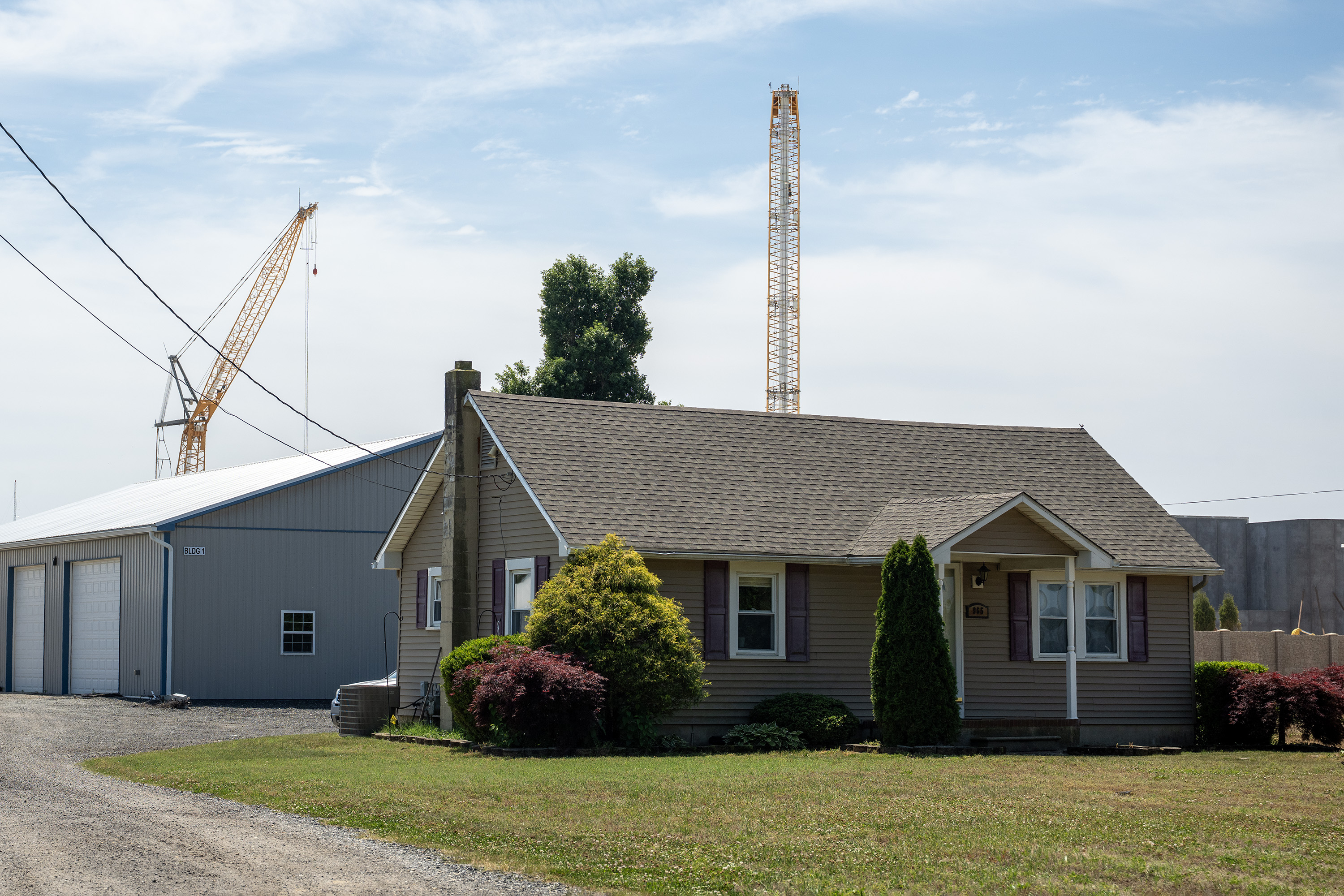
    Now, the 71-year-old looks out her front windows at the hulking DataOne facility, a windowless compound surrounded by walls and metal fences.

    In recent months, Ayrer said, the 2.4-million-square-foot complex has emitted a near-constant hum. She struggles to sleep, she said, and has suffered from headaches. She turns the TV on to mask the sound.

    Residents who live farther away have also complained about the noise, including in a recent lawsuit that was thrown out due to procedural issues. In the suit, residents said the Cumberland County Department of Health measured the hum as higher than 50 decibels a mile away in the middle of the night. A sound higher than 50 decibels is equal to a running refrigerator and is 10 times louder than a typical suburban area at night.

    Ayrer, who was not involved in the lawsuit, said she doesn’t want to move, even as she sees neighbors sell their homes to the data center developers.

    “In order to get another home, I’d have to get one built” to be accessible, Ayrer said, standing in her entryway. She shrugged, adding, “I need to be here for my daughter.”

    The noise had quieted, she noted, since around Sept. 22. That’s when the New Jersey DEP ordered the data center to pay a $1 million fine for running 62 gas generators without the required permits. She isn’t sure why the hum stopped, or whether it was related to the fine.

    By late Wednesday, the sound had returned, she said, and she worried it would be even louder when the center is fully operational.

    The Ayrers are some of the first Philly-area residents to live in the shadow of a massive AI data center. Only a handful of homeowners live within eyesight of DataOne’s South Lincoln Avenue complex in Vineland.

    They used to have more neighbors. But since 2025, DataOne Vineland and LJR Real Estate — which is registered to the address of Northeast Precast, a local company that has partnered with DataOne — have purchased at least five surrounding homes for a combined $3 million, according to online property records.

    DataOne and Northeast Precast did not respond to requests for comment about the acquisitions. Several former Vineland residents who sold their homes to these companies could not be reached or declined to comment.

    Asked about residents’ concerns, DataOne spokesperson Naomi Rice shared a previous statement, which said in part that the facility was “transitioning to low-emission, quiet fuel cells.” These generate energy through an electrochemical reaction rather than combustion, pistons, or rotating machinery.

    Nebius Group, which is operating the center’s internal AI infrastructure, says the fuel cells from Bloom Energy — a company expanding locally — and enhanced sound mitigation will make for a quieter environment than what residents experienced during construction, according to spokesperson Ava Iuliucci.

    Charles-Antoine Beyney, DataOne’s founder and chief executive officer, previously said the Vineland center would use “breakthrough” technology to reduce its environmental impact. He said the complex would be a good neighbor, promising a vertical farm — which uses technology to grow crops indoors — to help feed Vineland residents in need.

    “Most of the data centers that are being built today suck, big time,” Beyney said in January.

    “No freaking way am I going to do what the entire industry is doing … just killing our communities and killing our lungs to make money.”

    What it looks like near a South Jersey data center

    The Vineland DataOne center, as seen in June, could be finished by the end of the year, developers have said. Tom Gralish / Staff Photographer

    The dark exterior of DataOne abuts busy South Lincoln Avenue, towering above homes and farms on the outskirts of Vineland City. In spots, rows of crops extend to the data center’s walls.

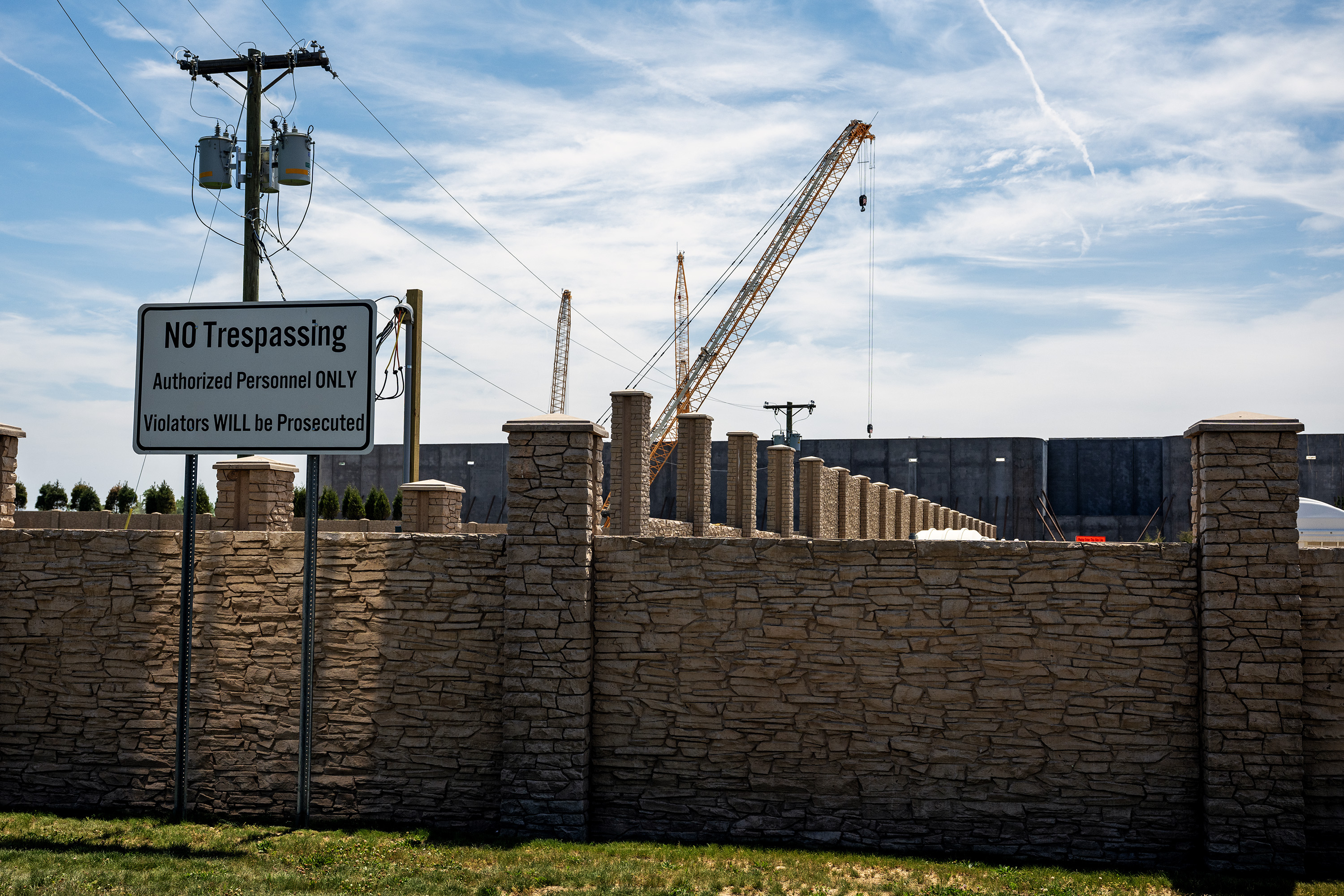
    On a recent day, the data center appeared abuzz with activity, although residents said it was relatively quiet, as cars and yellow school buses drove in and out of its gated-off parking lot. Giant “no trespassing” signs are prominently displayed.

    While the front portion of the data center appeared complete, cranes farther back reached into the sky.

    Meanwhile, several large homes across from the entrance — purchased by the data center developers and associates — appeared abandoned, with recycling cans askew in the driveways, indoor and outdoor lights on in the middle of the day, and swing sets sitting empty in the backyards. No one answered the doors.

    At another home, a woman shook her head, saying she’d lived there forever and would never speak publicly about the development across the street.

    Who is behind the Vineland data center?

    Data centers like this one handle the cloud-storage and computing needs of increasingly sophisticated AI tools.

    DataOne, a French company that manages advanced data centers, is the owner, operator, and builder of the Vineland data center. Its client, Nebius Group, an Amsterdam-based AI-infrastructure company, operates the center’s internal technology, which fuels Microsoft’s AI tools.

    As demand for these facilities has surged, so has the controversy surrounding them. Across the country, proposed complexes have received fierce pushback from nearby residents concerned about environmental, noise, quality-of-life, and property-value impacts.

    The debate has intensified in recent weeks as some top AI executives urge a slowdown of the technology amid fears that it may eventually wipe out humanity.

    Several of these facilities have been proposed in the Philadelphia region, from King of Prussia to Limerick. But few plans have been approved.

    DataOne Vineland could become the region’s first hyperscale AI data center. The developers have said the complex is partially operational, and they expect it to be complete by the end of the year.

    Construction continued on the DataOne center as seen from a nearby home in June.Tom Gralish / Staff Photographer

    Theresa Lewis, who has owned her home for 47 years, said living by the data center has gotten worse in recent months.

    Stepping outside and seeing the building, “I think of a prison, and I’m the prisoner with the noise,” said Lewis, 74, who compares the sound to a tractor trailer idling outside her home all day and night.

    “You get up in the morning and you’re in a foul mood,” Lewis said.

    Both she and Ayrer said they have called the Cumberland County Department of Health to report excessive noise in the middle of the night, but doing so comes at a cost. They said they then have to get up, get dressed, turn the lights on, and wait for an official to come take a decibel reading, making for another sleepless night.

    Data centers are being built in different communities

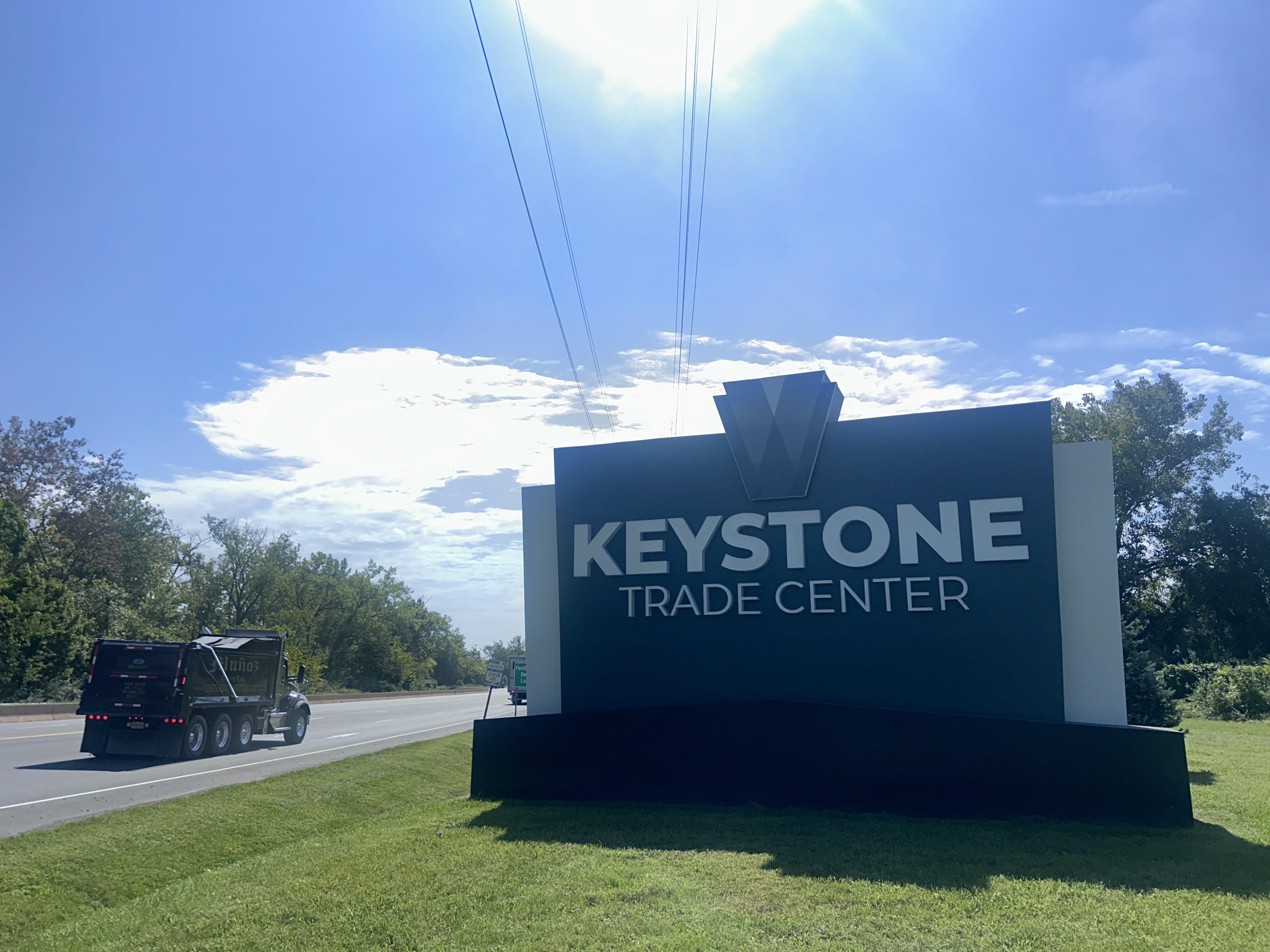
    The view outside the Keystone Trade Center in Falls Township. Amazon is building a data center inside the private complex.Erin McCarthy/Staff

    The scene in Vineland is vastly different from the one outside Amazon’s 2-million-square-foot data center campus in Falls Township, Bucks County, the Philadelphia region’s other facility nearing completion.

    That data center sits deep inside the Keystone Trade Center, an industrial hub surrounded by water, with no homes in sight. On a recent day, tractor trailers whizzed by Keystone’s main entrance. Only the transmission wires overhead hinted at what may be inside the private property.

    Still, neighbors have pushed back against the complex, with more than 5,000 people signing a petition in favor of a data center moratorium in Falls Township.

    Elsewhere, data center plans proposed by developer Brian O’Neill have faced fierce opposition in King of Prussia and on the outskirts of Conshohocken. So have projects in East Whiteland, where data center construction recently began, and in East Vincent, where a center was proposed for the site of the former Pennhurst State School and Hospital.

    In Vineland, Lewis said she wishes she and her neighbors had a chance to push back against the data center before it was built. Residents were first asked to provide input about the project at a contentious town hall in January, more than a year after the project was approved by city council and months after construction started.

    “I don’t want to move — and who is going to pay what the house is worth with that right there?” Lewis said, motioning to the data center across the street. “But I wake up angry.”

    She added: “I can’t imagine living next to this for the rest of my life.”

    Editor’s Note: This story has been updated to reflect that the noise from the data center returned Wednesday, according to Ayrer.