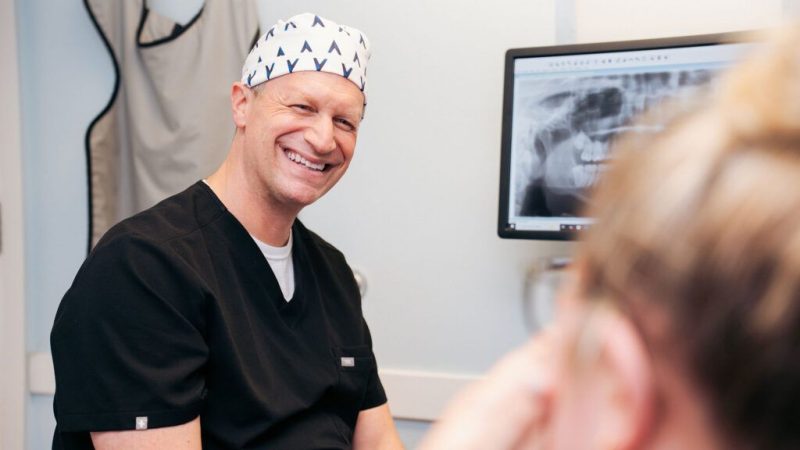
MAX Surgical Specialty Management, a private-equity backed company consolidating oral and maxillofacial surgery groups in the Northeastern U.S., has acquired two more practices in the Philadelphia area.
The latest deal, announced Friday, gives the Hackensack, N.J., firm 12 surgeons at 12 locations in Pennsylvania. Surgeon Jason M. Auerbach founded MAX in 2022 with private-equity backing and entered Pennsylvania two years later.
The two newly acquired practices have six offices in Bucks and Chester Counties.
Oral and Maxillofacial Surgeons P.C. has three surgeons, and offices in Doylestown, Quakertown, Warminster, and Chalfont. Oral Associates of the Main Line has two surgeons and offices in Exton and Paoli.
MAX did not disclose financial terms of the transactions.
In addition to New Jersey and Pennsylvania, MAX has practices in Connecticut, New York, and Vermont. The company — a management services organization — is majority-owned by its physicians, Auerbach said.
Oral and maxillofacial surgeons work at the crossroads of dentistry and medicine. Most have dental degrees, but some also have medical degrees. They remove wisdom teeth, install dental implants, repair facial traumas, and treat jaw injuries, among other services.
North Jersey origins
Auerbach founded Riverside Oral Surgery in Bergen County in 2007 and grew it to 12 locations before founding MAX with private equity partners. Part of his motivation was to create a home for independent physicians, Auerbach said in a May interview.
The Philadelphia region still has a high concentration of independents, with strong patient demand. “It’s hard nowadays to be an independent oral-maxillofacial surgeon, in terms of the complexities in running a healthcare business,” Auerbach said.
Robert Mogyoros, whose Greater Philadelphia Oral Surgery is in Elkins Park, said he valued his independence above all, but decided to look for a group to joinafter the business side had gotten too challenging.
Physician groups get better prices from vendors, better deals with insurers, and have an upper hand in physician and employee recruitment, said Mogyoros, who became part of MAX last July.
“What attracted me to MAX was that it’s doctor-driven and doctor-run,” he said in a May interview.
Rothman and Kim Oral & Maxillofacial Surgery, with offices in Northeast Philadelphia and Cinnaminson, was MAX’s first acquisition in Southeastern Pennsylvania. That deal also happened last year when MAX announced that it had borrowed $77 million to support growth.
When doctors sell their practices to MAX, they typically invest about 30% of the value into MAX, Auerbach said. MAX’s outside investors are MedEquity Capital near Boston, RF Investment Partners in New York, and Kian Capital in Charlotte, N.C.
Editor’s note: This article was update to correct the year when MAX made its first Pennsylvania acquisition.
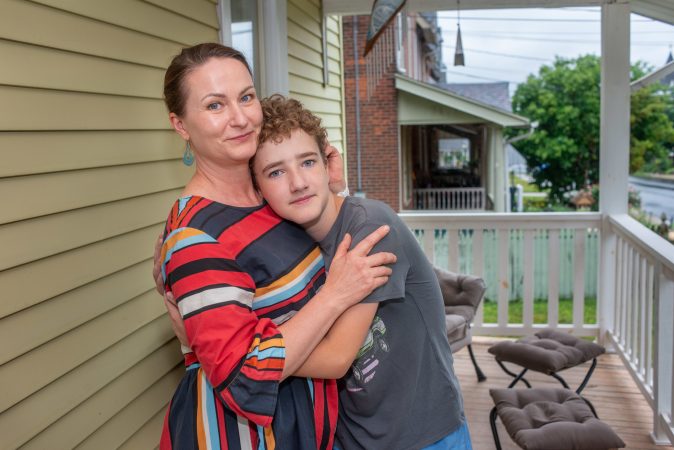
Four years ago Veronika Pavliutina and her three young children landed in Philadelphia after fleeing Ukraine, escaping the war as Russia shelled their home city of Odesa.
Their big shock: the outpouring of care and kindness that greeted them here.
A Mount Airy couple, strangers, invited the family to live in their home ― just move in and take the third-floor bedroom while figuring out next steps. Neighbors delivered meals and clothes and Target gift cards, and others organized events and outings.
Pavliutina, 48, said she’ll never forget it.
But now, she said, it’s time to leave.
Federal pressure on Ukrainian war immigrants has created doubt about the family’s ability to stay in the United States and raised fears about what could happen if they do.
The government designation that allows Pavliutina and her children to live here, temporary protected status, expires for Ukraine in October. There’s been no sign the Trump administration plans to renew it, fostering uncertainty among thousands who have worked to rebuild their lives in this country.
TPS, as it’s known, is a humanitarian immigration status that can be granted to nationals of countries embroiled in war, environmental disasters, or other extraordinary circumstances. It allows people to legally live and work here and protects them from deportation.
The Trump administration wants to end TPS for some countries ― and the Supreme Court ruled on June 25 that the administration could lawfully strip protections from more than 350,000 Haitians and 6,000 Syrians, leaving them vulnerable to removal.
Pavliutina has felt the changed government attitude toward immigrants, the ICE arrests and detentions, the common resentment and casual hate.
“More and more I can see, it’s becoming not safe,” she said in an interview at the family’s home in Perkasie, Bucks County. “I may not be their target for now, but we don’t know.”
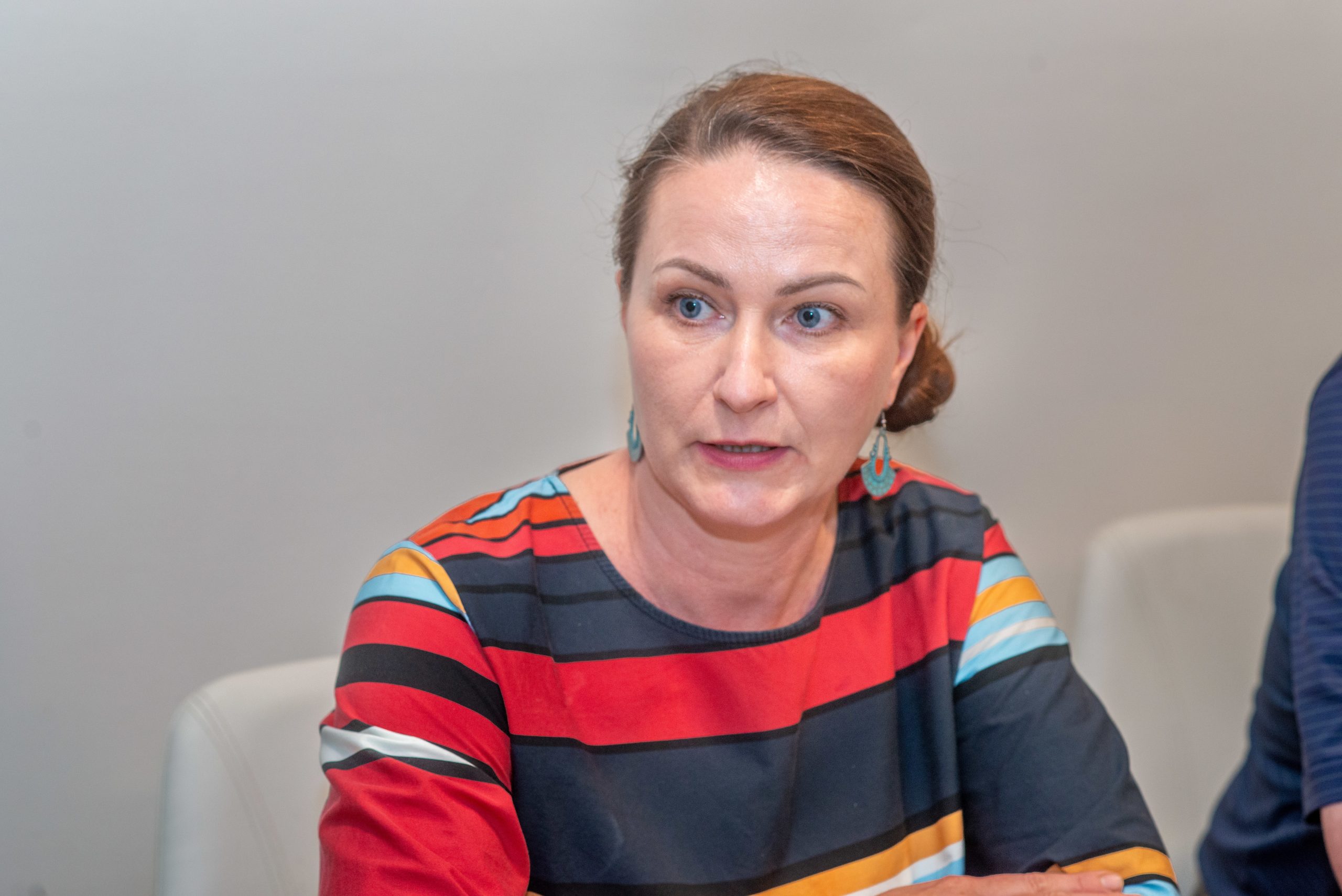
Veronika Pavliutina speaks about leaving the U.S. for Italy during an interview at the family’s home in Perkasie. William Thomas Cain / For The Inquirer
She and her two younger children, Nina, 15, and Yegor, 12 ― Polina, 19, is studying in South Korea ― intend to move to Italy in mid-July. Pavliutina doesn’t know anyone there, but for a family that is again starting over it’s a logical choice.
In Italy, Ukrainians escaping the war can receive a Permesso di Soggiorno per Protezione Temporanea, a fast-track residency permit that provides work authorization and access to healthcare.
“It makes me very sad to know they’re leaving,” said Richard McIlhenny, who with his wife, Marissa Vergnetti, welcomed the then-newly arrived family to live in their Mount Airy home. “I’m excited for their new adventure, but sad that it’s not here.”
Russia struck the southern city of Odesa on the first day of the war, Feb. 24, 2022, blowing up warehouses and air-defense systems and killing at least two dozen.
Meanwhile, 4,700 miles away in Philadelphia, McIlhenny, a real estate agent, and his wife, a preschool teacher, watched the war unfold on TV and decided to become actively involved in helping refugees.
McIlhenny contacted a childhood friend who was working in Ukraine, asking if perhaps there was a family in need. The friend knew of someone, a single mother with three children.
The Russian invasion drove a mass exodus, with an estimated 6.9 million Ukrainians leaving the country by the end of 2025, according to the Migration Policy Institute in Washington. An additional 3.7 million were displaced internally, forced from their homes to other parts of the country.
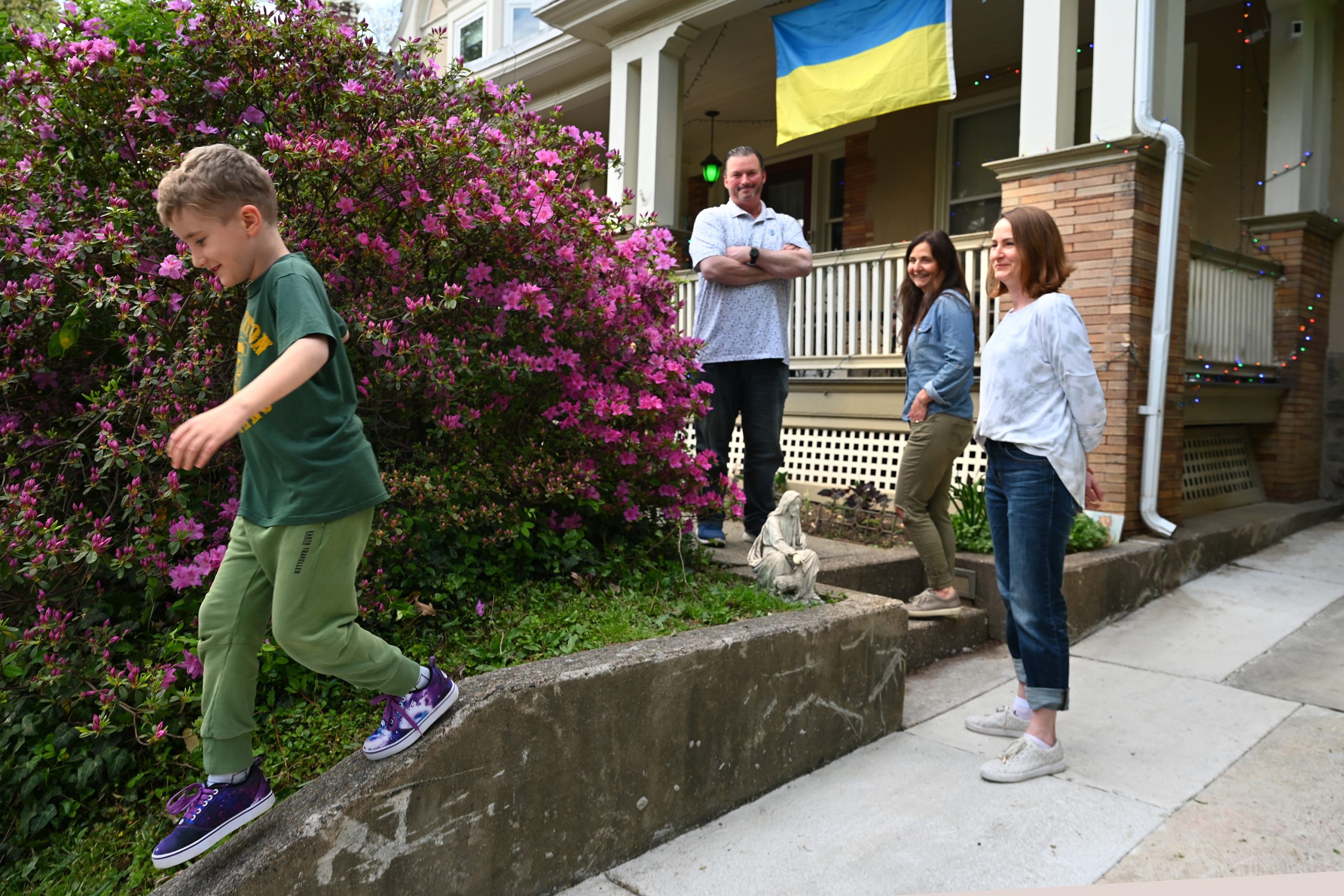
Richard McIlhenny and Marissa Vergnetti (rear) outside their Mount Airy home May 2, 2022, where they are hosting Veronika Pavliutina (right) and her son, Yegor, then 8, and her two daughters. At the time, Pavliutina and her children had just arrived, escaping the Russian shelling in Ukraine.Tom Gralish / Staff Photographer
The United States opened its arms. And the Philadelphia region, home to one of the nation’s largest Ukrainian communities, helped lead that effort. Churches, civic groups, and families organized to help new arrivals navigate housing, employment, and schools.
Now tens of thousands of Ukrainian war immigrants face uncertainty.
“The protections Ukrainians rely on in the United States are quietly but dangerously eroding,” Krish O’Mara Vignarajah, president and CEO of Global Refuge, said in a statement earlier this year. “We’ve even seen Ukrainians swept up by immigration enforcement.”
The Trump administration placed an indefinite pause on applications for the main Biden-era humanitarian program, “Uniting for Ukraine.”
That effort admitted more than 200,000, but now expired work permits have left many struggling to maintain jobs and housing. Losing legal status can result in deportation, and some have left on their own.
Meanwhile, as of March 2025, more than 100,000 Ukrainians were in the U.S. under TPS, which has faced backlogs and delays. The designation for Ukraine is due to end on Oct. 19, the prospect of renewal clouded as Trump touts his close relationship with Russian dictator Vladimir Putin and criticizes Ukrainian President Volodymyr Zelensky.
Since 2022 TPS for Ukraine has been extended twice, each instance a nerve-fraying rise and fall of worry and relief that makes it hard to plan for the future.
Last year, Pavliutina, who has worked as a chef, began thinking it might be time to, as she put it, self-deport.
The children adjusted to the U.S., she said, learning English, making friends, and earning good grades in school. They also hear other kids talking up Trump, whose pledge to deport millions of immigrants was central to his election campaign.
Son Yegor said he’s ready to move, “because I’m tired of America a bit.” Nina did not wish to be interviewed.
Their mother follows the news.
“It’s a little bit concerning, to be honest with you, because you don’t know when exactly it will be triggered to some kind of violence,” Pavliutina said. “For me it’s easier to think about a new country than to stay here with unknown status, with an unknown future.”
She’ll miss their house in Perkasie, she said. In fact, it was a new American friend who provided the private loan for her to buy it, an example, she said, of the extraordinary kindness that’s been shown to her family.
When she hears “Make America Great,” Pavliutina said, she thinks of the countless big and small acts of caring offered by everyday people, the Americans who help others simply because it’s their nature and think it’s a good thing to do. That’s what makes America great, she said.
“I would definitely keep it in my heart, everything and everyone who was contributing to our life here,” Pavliutina said. “I love the country. I love the people. I just don’t feel safe to stay. And I don’t see the legal way to do so.”
Local police and fire responded to a house explosion in Sellersville, Bucks County, on Monday that left the property in ruins and white debris scattered in a broad blast radius.
Hilltown Police Department, which serves Sellersville, said the reports of the explosion on Highview Road came in sometime around 9 a.m.
Hilltown Police Chief Christopher Engelhart told Fox29 that a contractor was on site at the time of the explosion and was taken to an area hospital for treatment. His injuries and condition, however, were not immediately clear, though Engelhart said the worker was expected to survive.
The blast resulted in a flood of support from neighboring fire and police departments.
Silverdale Volunteer Fire Company, Sellersville Fire Department, Hilltown Police, Hilltown Township Volunteer Fire Company, Souderton Fire Company, and Telford Fire Company were among the crews on site.
The source of the blast is under investigation.
Properties on Highview Road are spaced out with lots of green space between, and aerial footage from local television stations shows the debris was largely contained within the home’s property line.
The three-bedroom “contemporary designer farmhouse” sits on a three-acre lot, according to a previous real estate listing. The home garnered media coverage from publications such as Elle Decor and Philadelphia magazine in 2022 after interior designer Ghislaine Viñas listed the renovated property for sale.
From George Washington crossing the Delaware and the Continental Army lodging at Valley Forge to the so-called real Penn’s Landing and the Battle of Brandywine, the Philadelphia suburbs played a crucial role in the early development of the United States.
And though Philadelphia — the birthplace of American democracy — has taken center stage for this year’s Semiquincenntenial celebrations, Bucks, Montgomery, Delaware, and Chester Counties have spent years preparing for 2026 and have curated an extensive list of activities for residents and visitors alike who are looking to honor the United States’ 250th birthday outside the city.
Here is what the Philly suburbs have in store for the 250th:
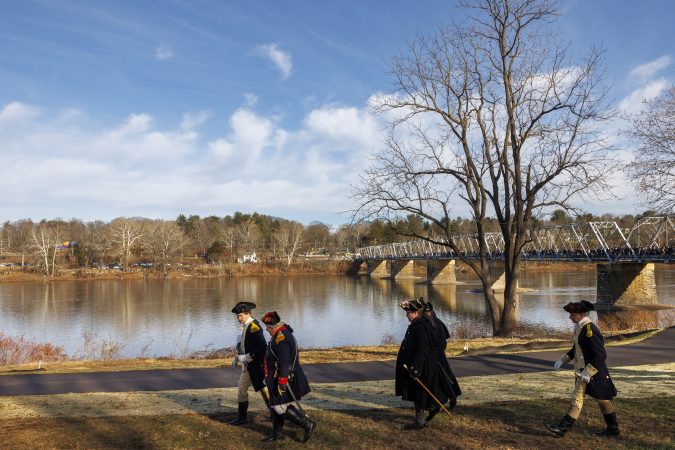
Reenactors fire off a Galloper gun during a reenactment of George Washington’s river crossing, Washington Crossing Historic Park, Washington Crossing, Pa., Thursday, December 25, 2025.Alejandro A. Alvarez / Staff Photographer
Bucks County’s history-packed celebrations
For Bucks County — established by William Penn in 1682 — 2026 is set to be chock-full of celebratory events tied to the founding of the U.S.
Bucks’ commissionin charge of planning 250th celebrations has partnered with numerous nonprofits to promote their events on a shared calendar on a dedicated county America 250 website.
Forthcoming activities include art exhibitions, a Doylestown bash featuring big-band music and the reading of the Declaration of Independence, tours of a Revolution-era exhibit at the Mercer Museum, and fireworks at Washington Crossing Historic Park on July Fourth. Not to mention the annual reenactment of Washington crossing the Delaware River on Christmas Day.
The group also worked with the Bucks County Planning Commission and the Bucks County Herald to release a Revolutionary War trail map that takes participants throughout the county to visit historical sites.
Bucks gave $7,500 to the 250th commission in July 2024 in support of the celebrations, a county spokesperson said. Other financial support has come from sponsors, including several companies that have dished out at least $10,000 apiece.
Bucks County Commissioner Bob Harvie, who chairs the county’s 250th commission, said these events underscore the pride that communities have in their rich history.
“It’s also a chance for us to think back, I think, and remind ourselves about the foundation of this country, and the values that united us, because especially now we’re seeing a lot of attempts, unfortunately, within our country to divide us,” said Harvie, a Democrat who is running for U.S. Congress.
It is difficult to predict how this year’s 250th celebrations will affect the county’s tourism numbers, but Bucks typically hosts about 8 million visitors a year, Harvie said.
“We’ve been pitching ourselves sort of — no pun intended — for people who are coming here for the World Cup,” Harvie said. “We’re right between Philadelphia and New York, where you happen to have a place that’s sort of a central hub.”
The Valley Creek Trail at Valley Forge National Historical Park in Valley Forge, Pa., on Tuesday, Feb. 20, 2024.Tyger Williams / Staff Photographer
A ‘birthday bash’ and celebrating Valley Forge
Montgomery County’s 250th commission has curated months of events to commemorate the Semiquincentennial, but a free “birthday bash” on Monday at the county courthouse will kick off the height of the July Fourth celebrations.
Attendees can graze food trucks, take pictures, and meet an animal from the Elmwood Park Zoo.
Other programs this year include fireworks and live readings of the Declaration of Independence over July Fourth weekend, exhibits to commemorate the 50th anniversary of Valley Forge becoming a national park, and a gathering (with food and drink, of course) at a Skippack farmstead to honor Washington and his troops’ encampment in the town in 1777.
The 250th events have been planned by the county and local municipalities, said Jamila Winder, chair of the county commissioners, as an “opportunity to create meaningful, inclusive celebrations” and cultivate “civic pride.”
Montgomery County typically gets about 8 million visitors a year and are projecting an additional 1 million to the region for the 250th, said Winder, a Democrat.
To help fund this year’s festivities, the county started a grant program through which municipalities can apply to receive up to $500 to support their 250th events between now and Dec. 1.
The county has allotted a $35,000 budget for 250th celebrations, including the grant program, which 22 of 62 municipalities are a part of, a spokesperson said.
“It’s an opportunity for visitors to see how Montgomery County played a unique role in America’s founding, including our deep ties to Valley Forge in the Revolutionary area,” Winder said. “You know, people always think about Philadelphia, right? Philadelphia is a big piece of this story, but Montgomery County plays a huge role in that.”
The Delaware County Courthouse in Media is reflected in a solar panel atop one of the borough’s on-street parking kiosks along Front Street.Tom Gralish / Staff Photographer
Delco is ‘pretty lit’ about its 250th celebrations
“If you thought Delaware County residents were proud of being Delco before America 250 — you’re just, like, next-leveling it now.”
That’s what Delaware County Council member Elaine Paul Schaefer said about Delco’s excitement leading up to the 250th, making sure to set the record straight that William Penn’s storied first steps in the New World hundreds of years ago were actually in Chester, not at Penn’s Landing in Philadelphia.
The county — through its America250PADelco commission — is promoting over 100 county, town, or nonprofit events through November, from art exhibits, concerts, and fireworks to “dining under the stars” in Media, a late-summer drone show, and a reading of the Declaration of Independence on the county courthouse steps.
“Delco is pretty lit about this,” said Schaefer, a Democrat.
The county’s 250th commission has disbursed more than $650,000 in grants for various initiatives. That grant money comes from a mix of funds from the American Rescue Plan Act and from different county agencies.
Schaefer said she hopes the events encourage residents to harness a connection to their communities, particularly through the county’s 250th volunteer program.
“You can do something small, do something big. … It’s a really great way to get people involved and connected, and I think that kind of volunteerism and increasing connection to the community will carry on after this big celebration,” Schaefer said.
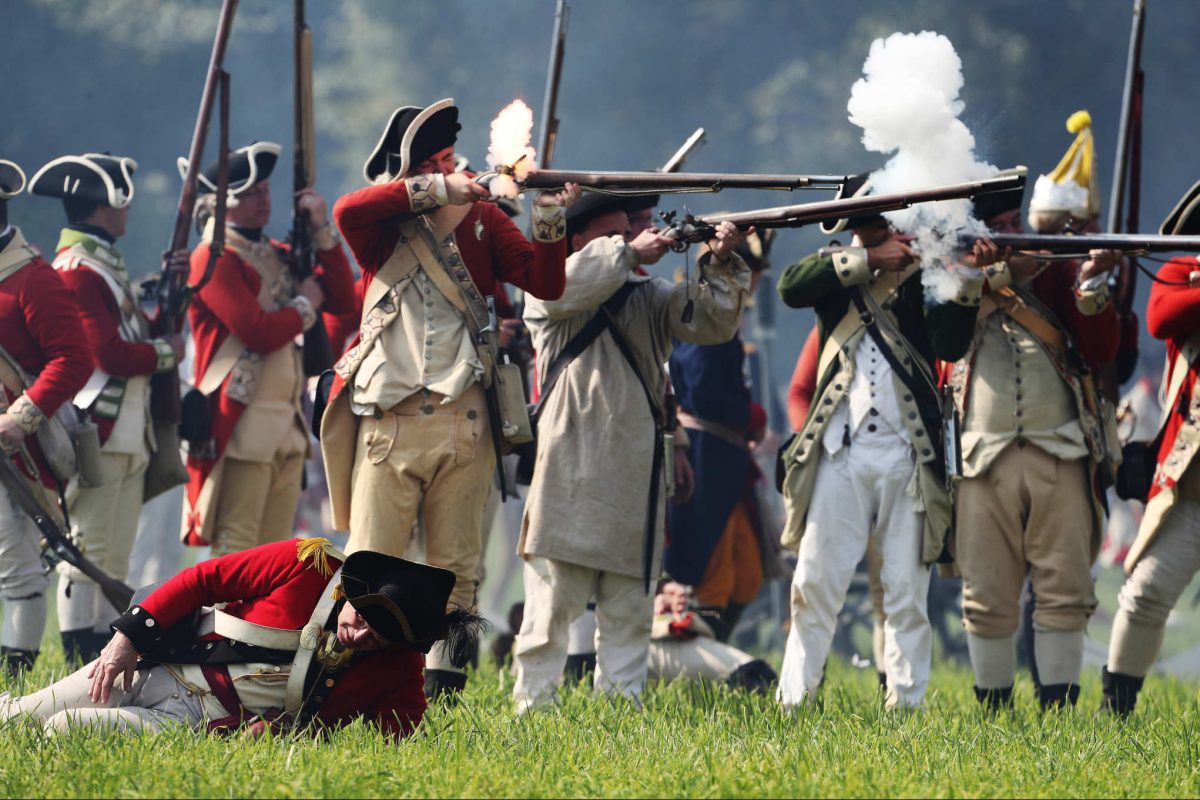
About 800 Battle of Brandywine reenactors in Chester County.David Swanson / Staff Photographer
For Chester County, the party will last through next year
And the events planned for this year (and next year, as it honors various Revolutionary War-era battles, including the Battle of Brandywine) are key to celebrating the county’s role in the founding of the United States.
Residents and visitors have a wide array of activities to choose from outlined on the commission’s website, including driving tours of historical sites and Declaration of Independence readings. On the evening of July Fourth, the Chester County Concert Band will be playing patriotic music as a precursor to the fireworks show.
As opposed to hosting tons of large-scale events, Chesco is more focused on local events that can foster community building, said David Blackburn, heritage preservation coordinator at the Chester County Planning Commission. The commission is working with the county’s 250th commission to carry out plans.
“We’re really oriented to supporting the communities of the county to share their stories,” Blackburn said.
The county has invested over $170,000 in educational materials and programming related to the 250th, in addition to a more than $330,000 grant from the state, a spokesperson said.
But once the clock strikes midnight on New Year’s Eve, the celebrations won’t end for Chester County, said Matthew J. Edmond, executive director of the planning commission.
In 1777, many significant Revolutionary War battles took place in the collar counties, and Chester is planning to pour a lot of resources into commemorating those historical events next year.
“We are actively talking with our commission board about ways to celebrate, ways to fundraise for it, and ways that we can make maybe 2027 to be even better than celebrations in 2026,” Edmond said.
The Navy Yard got a new boat this month. It isn’t a military ship and won’t be setting sail.
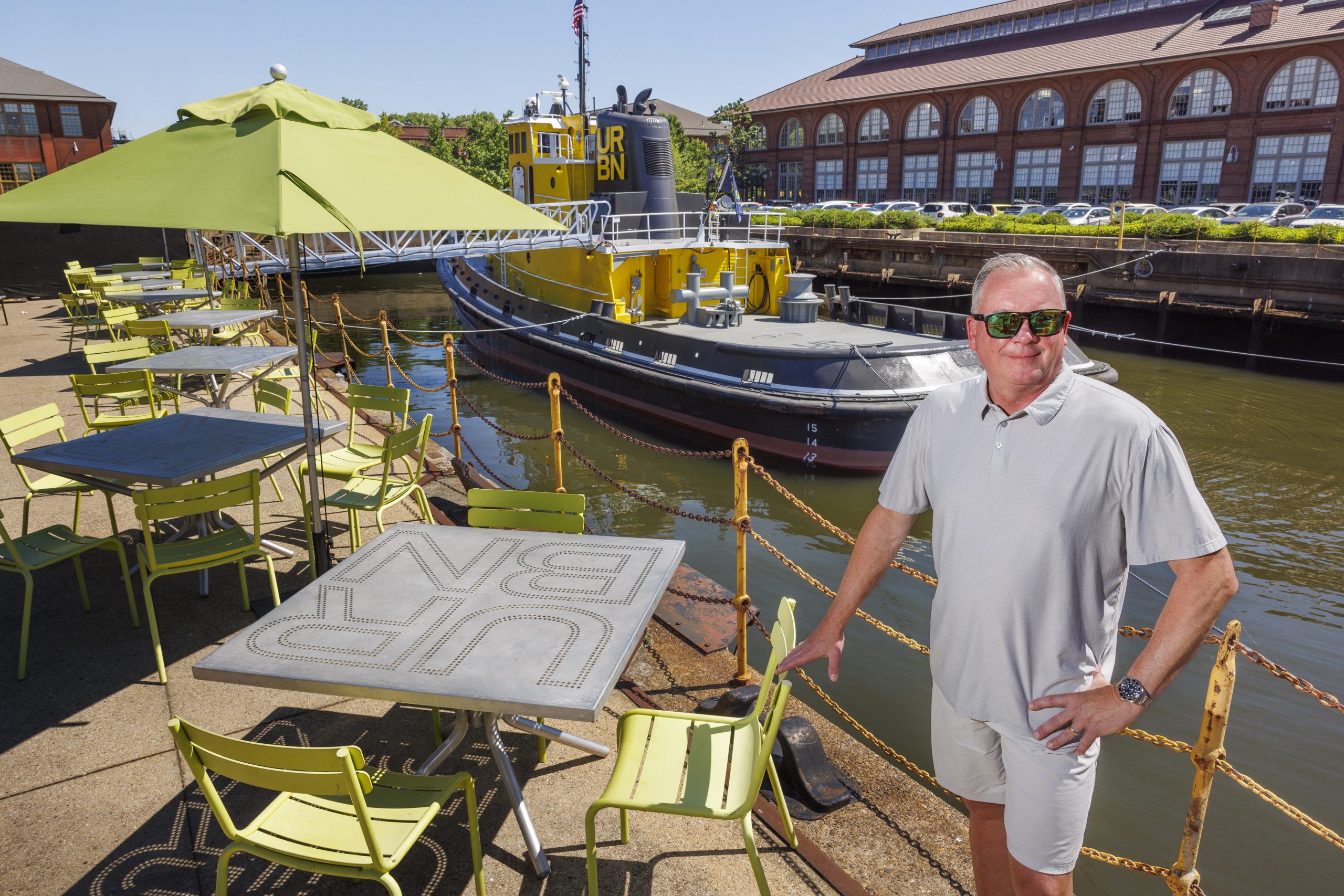
The decommissioned 1977 tugboat, now painted in Urban’s signature yellow and marked by its logo, is now permanently stationed outside the company’s headquarters — as a sort of mascot, to company cofounder and CEO Dick Hayne.
The tugboat’s arrival coincides with a momentous anniversary for Urban: the company’s 20th year at the Navy Yard. Urban staff started relocating 500 employees there in 2004, and the headquarters was fully operational by 2006. Now it has 15 buildings and just over 2,500 employees.
And the company is continuing to grow.
Urban Outfitters chief development officer Dave Ziel stands with a retired tugboat the company acquired for display at its Navy Yard headquarters.Alejandro A. Alvarez / Staff Photographer
Urban’s newest addition at the Navy Yard is a 117,000-square-foot photo studio building, which opened in April.
Urban announced earlier this month that it plans to hire at least 450 workers at the Navy Yard and at least 600 at a new Bucks County facility, which is set to open by 2028. Gov. Josh Shapiro joined Hayne for the news conference, and lauded the business as a home-grown global company bringing jobs to Pennsylvania.
“We intend to stay here,” said CEO Hayne. “We have no thought of leaving.”
How Urban grew from Philly roots to global retailer
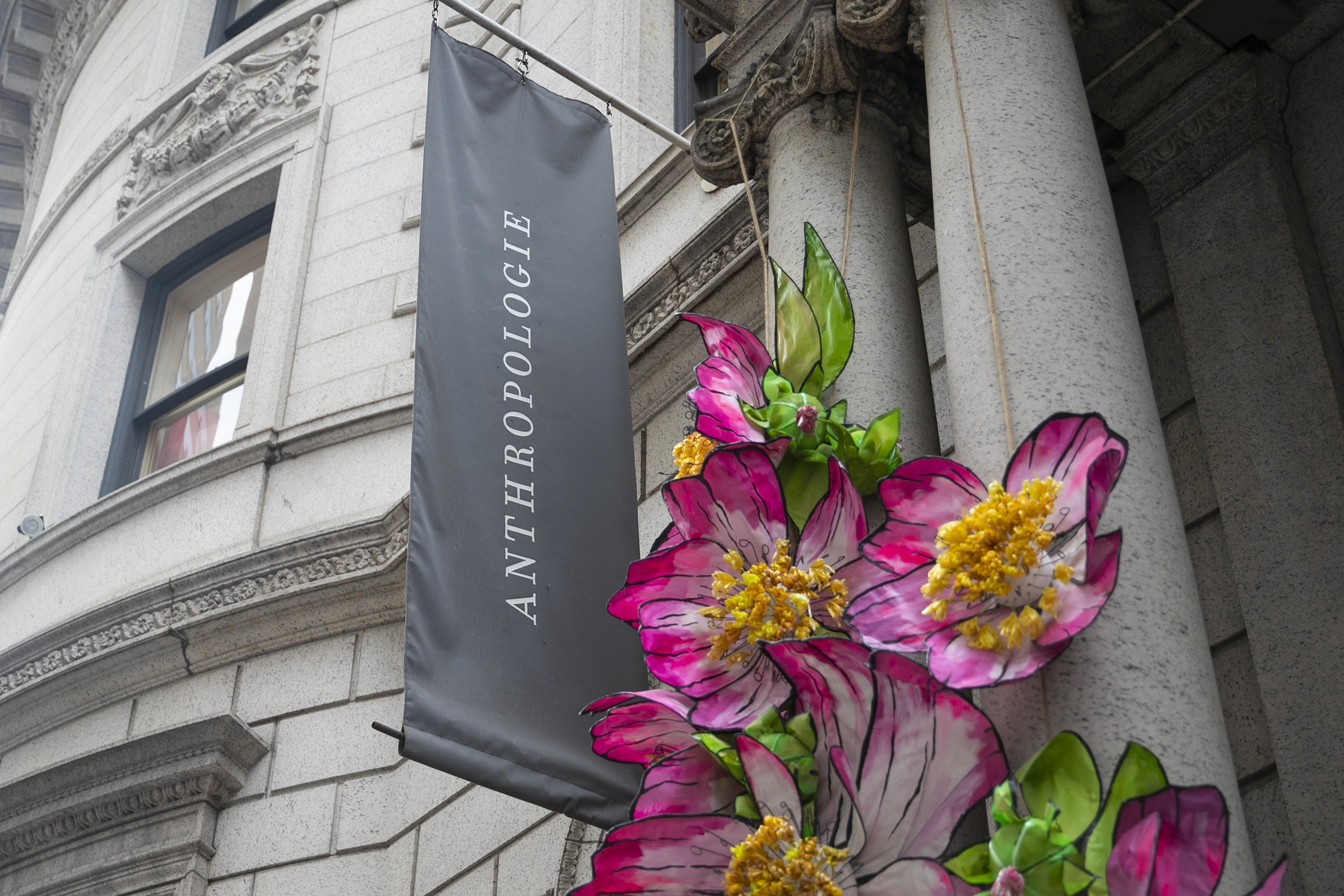
Urban was founded in 1970. The company’s roots are in West Philadelphia, where it opened its first store, a Free People. It now has almost 800 stores across the globe under the brand names Urban Outfitters, Free People, FP Movement, and Anthropologie.
Walking into an Urban store doesn’t feel like stepping into a Macy’s where there are racks of clothes and bright fluorescent lighting, said senior analyst Gerard Machado at RetailStat.
“It’s not like you’re running an errand to get something,” said Machado. “You might want to spend a little time looking at things. That’s a unique feature of Urban Outfitters.”
Similarly, customers who wander into Anthropologie find artfully arranged dinner plates and glassware amid scented candles — not just items stacked in rows on shelves.
Analysts say Urban is one of the more successful names in retail today, with strong sales numbers, loyal customers, and the ability to market to different audiences with its multiple brands. The company competes with the likes of J.Crew, Abercrombie & Fitch, Uniqlo, Ralph Lauren, Zara, and H&M.
The company grew profits by more than 15% in its most recent fiscal year, with nearly $465 million in net income in the year ending Jan. 31.
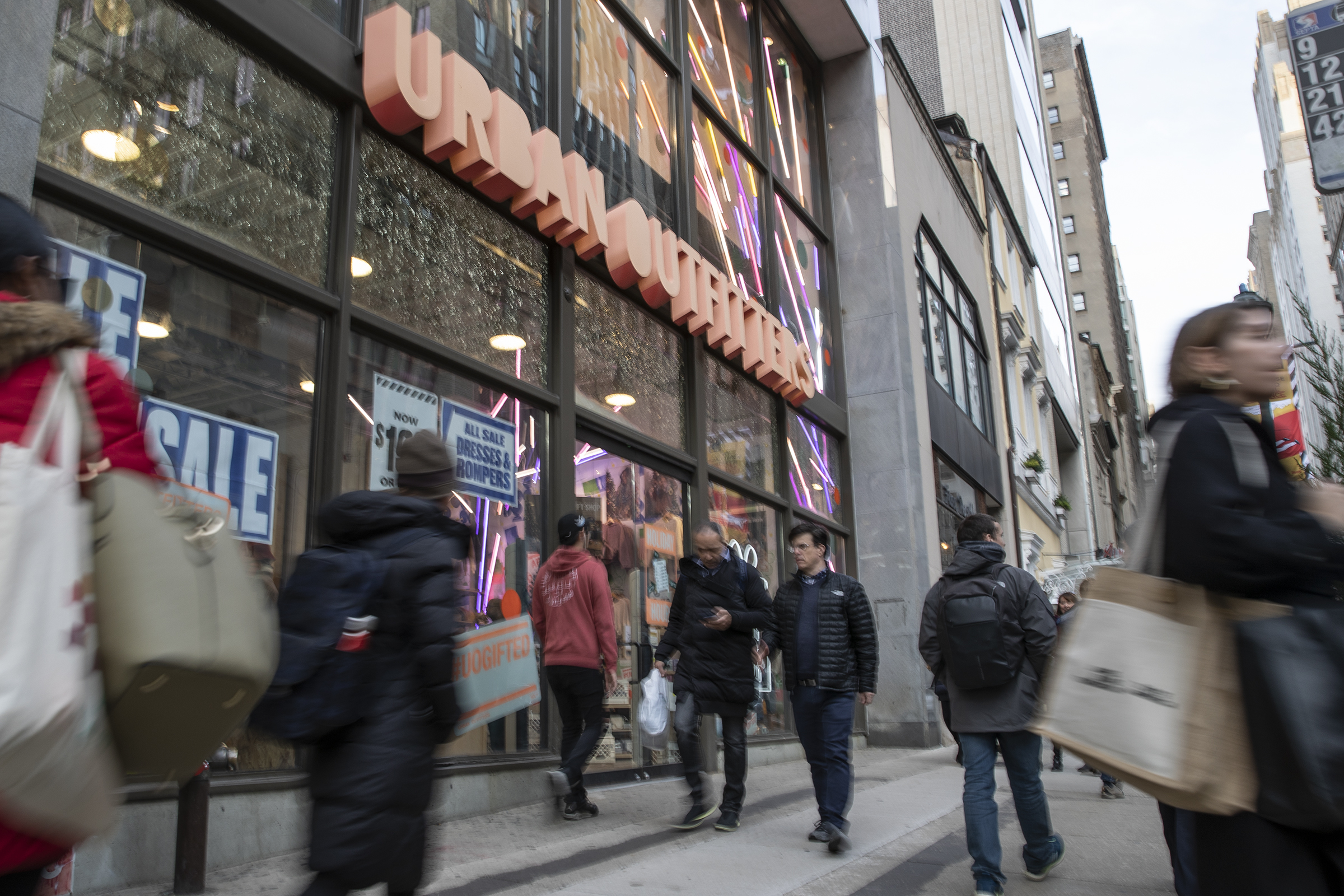
The Anthropologie store at 18th and Walnut Streets in Center City is shown in this 2020 file photo. Heather Khalifa / Staff PhotographerPeople walk outside the Urban Outfitters store near 16th and Walnut Streets in Center City in November 2019.Heather Khalifa / Staff Photographer
One key feature of Urban is that it’s experimental and innovative, said Neil Saunders, a retail analyst and managing director at GlobalData. Nuuly, the company’s clothing rental platform, which launched in 2019, is one of the “very few players that’s really successful” in that industry, he said. For $98 a month, subscribers get six fashionable items delivered to their door, which they can wear for a month and then ship back.
But there have been financial hurdles, too.
The Urban Outfitters brand struggled with declining sales in recent years. Gen Z consumers migrated “heavily into ultra fast fashion,” said Machado, and the brand didn’t adapt quickly enough. As merchandise piled up in inventory, Urban cut prices, which consumers grew to expect.
To turn the brand around, the company set out to rebuild relationships with customers, bring on more items attractive to Gen Z, and engage with customers on platforms they were already on, like TikTok and YouTube, The Inquirer reported in 2023. The company hired a new president to helm the brand in 2024, and it returned to profitability last year.
(function(){function e(){window.addEventListener(`message`,function(e){if(e.data[`datawrapper-height`]!==void 0){var t=document.querySelectorAll(`iframe`);for(var n in e.data[`datawrapper-height`])for(var r=0,i;i=t[r];r++)if(i.contentWindow===e.source){var a=e.data[`datawrapper-height`][n]+`px`;i.style.height=a}}})}e()})();
Tariffs have also pushed the company to adapt in part by negotiating better terms with vendors, shipping items by sea instead of air, and slightly adjusting pricing.
There have been workforce challenges too. In 2020, when a racial reckoning erupted in the country and seeped into corporate offices following the killing of George Floyd, Urban saw criticism from within its own workplace. Reports emerged of employees allegedly racially profiling customers as potential shoplifters, and some employees said people of color faced challenges to advancing their careers at the company, or reporting discrimination.
“Since 2020, we have prioritized creating a culture of inclusion and belonging at our home office, in our stores, and at our facilities,” said Meaghan Condon, Urban’s director of communications and impact, in an emailed statement this month. She said that includes training for new hires and managers focused on inclusivity.
Another key ingredient in the company’s culture: the Hayne family.
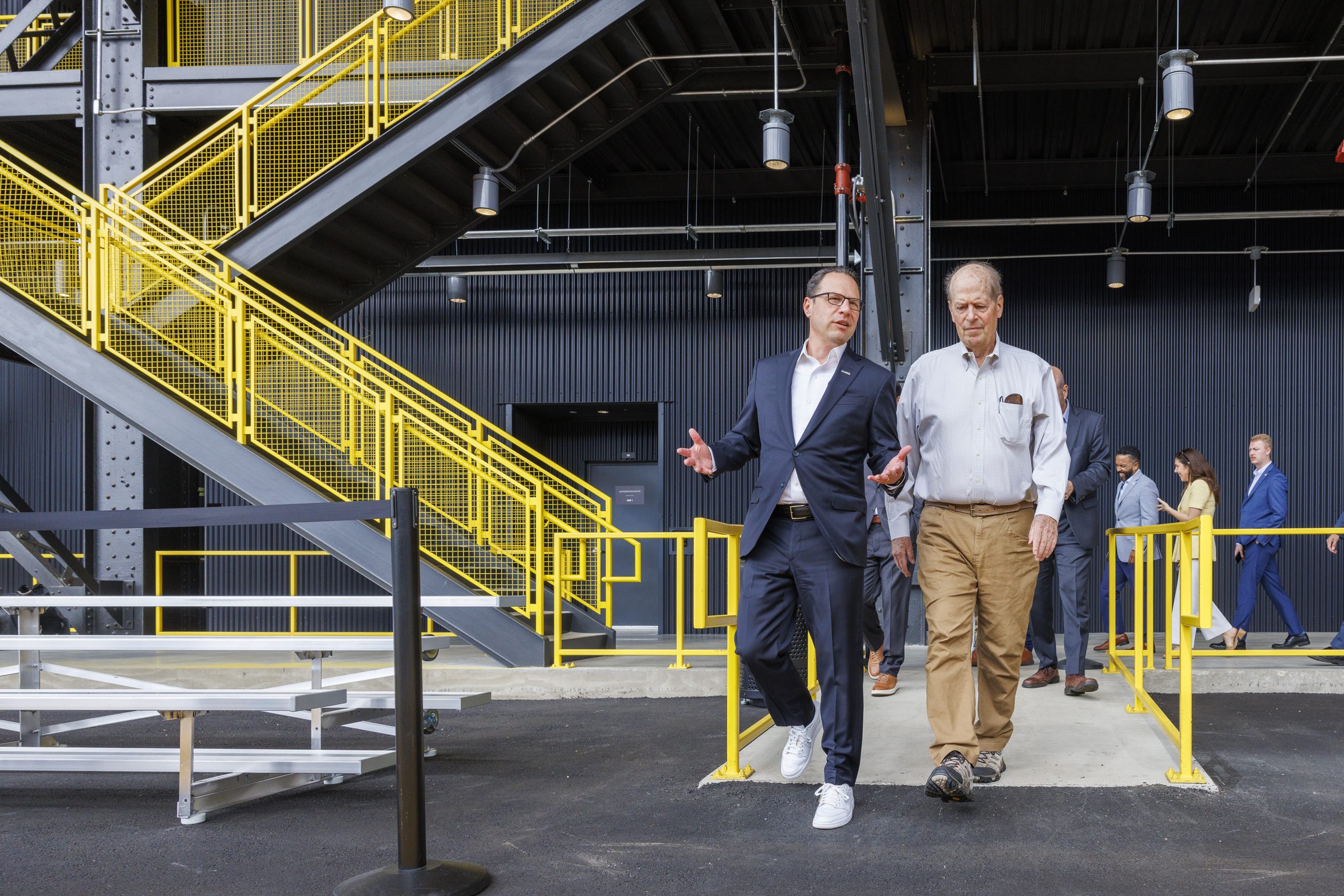
Pennsylvania Gov. Josh Shapiro (left) with Urban Outfitters CEO Dick Hayne at the company’s newest building, which houses photo studios. They held a press conference in June to announce Urban Outfitters’ plans to hire over 1,000 new employees.Alejandro A. Alvarez / Staff Photographer
Cofounder and CEO Dick Hayne’s son, Dave, is chief technology officer and president of Nuuly, and his nephew, Azeez Hayne, is chief administrative officer. His wife, Meg, is Urban’s co-president and chief creative officer.
Frank Conforti, chief operating officer and co-president at Urban, said the family ties are an asset and part of the culture.
Having a cofounder still at the helm has allowed Urban to focus on long-term strategy and take calculated risks, said Conforti, such as launching Nuuly. Investors weren’t all in on the idea to begin with.
Now Nuuly has over 450,000 active subscribers — more than doubling that number since 2023.
“We sort of don’t rest on what we did yesterday,” said Conforti. “It’s not about yesterday’s bestsellers.”
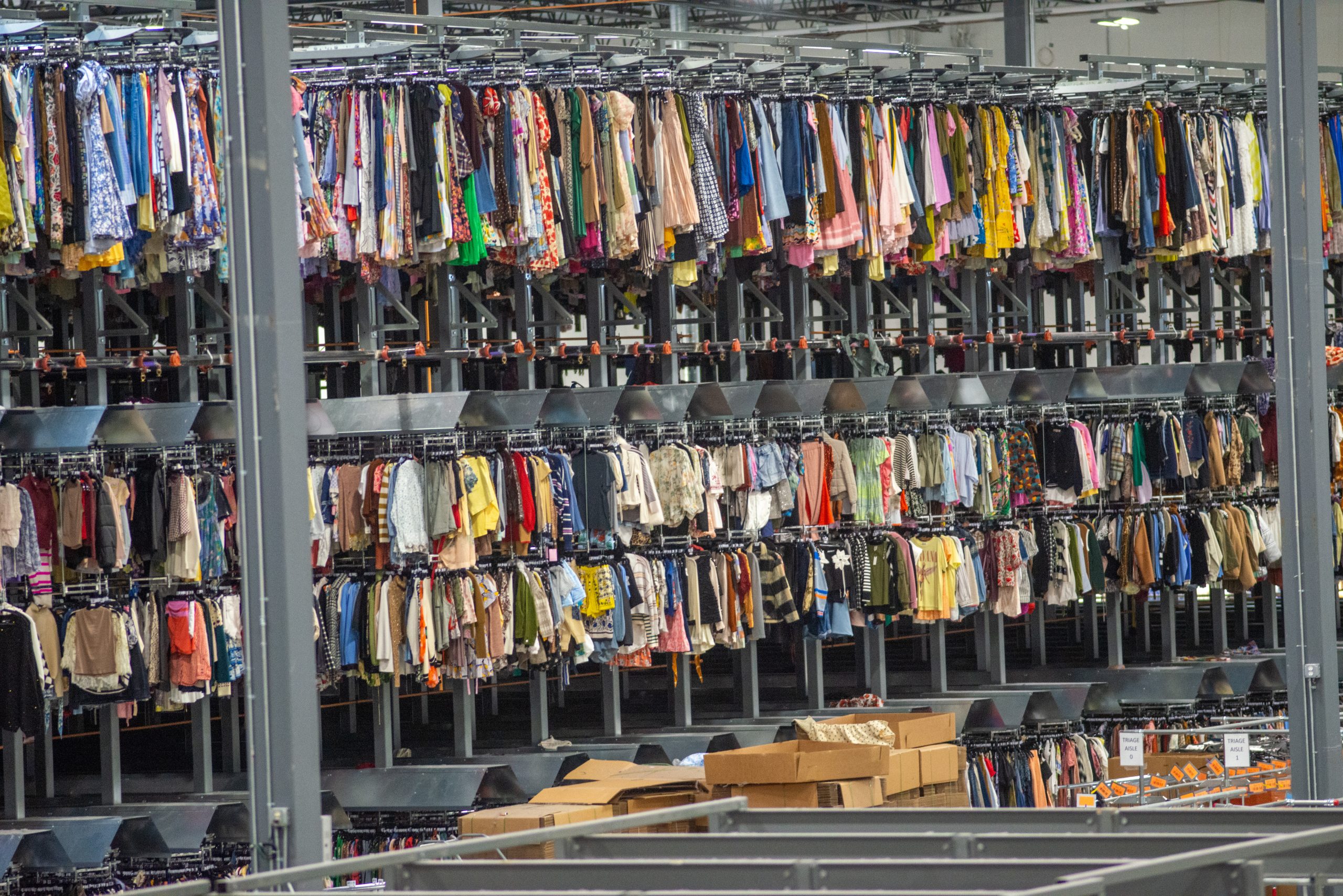
Racks of clothing inside the Nuuly warehouse in Levittown, Pa., last year. Nuuly is a clothing rental subscription service that offers a variety of styles, sizes, and brands.William Thomas Cain / For The Inquirer
A more efficient process
In Urban’s newest building at the Navy Yard, rows and rows of wheeled clothing racks are spread across several rooms. Industrial metal shelves are filled with sneakers, sandals, and handbags. Lamps and armchairs wait to be photographed for e-commerce.
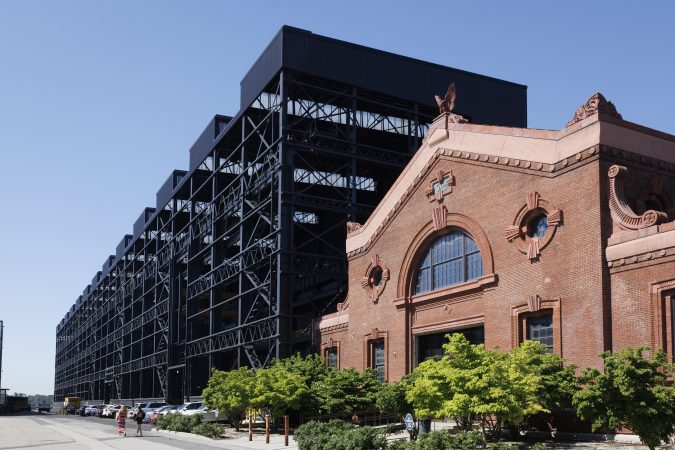
The space was once used for building and housing ship components, noted Jennifer Calliagas, Urban’s North America director of planning, who led the new building’s development. Urban bought it from Rhoads Industries in 2016 for an undisclosed sum.
Urban spent about $40 million to fit the space for its needs, which included stripping the building down to its structure, said chief development officer Dave Ziel. Construction started last year, and Urban employees began working in the space by mid-April.
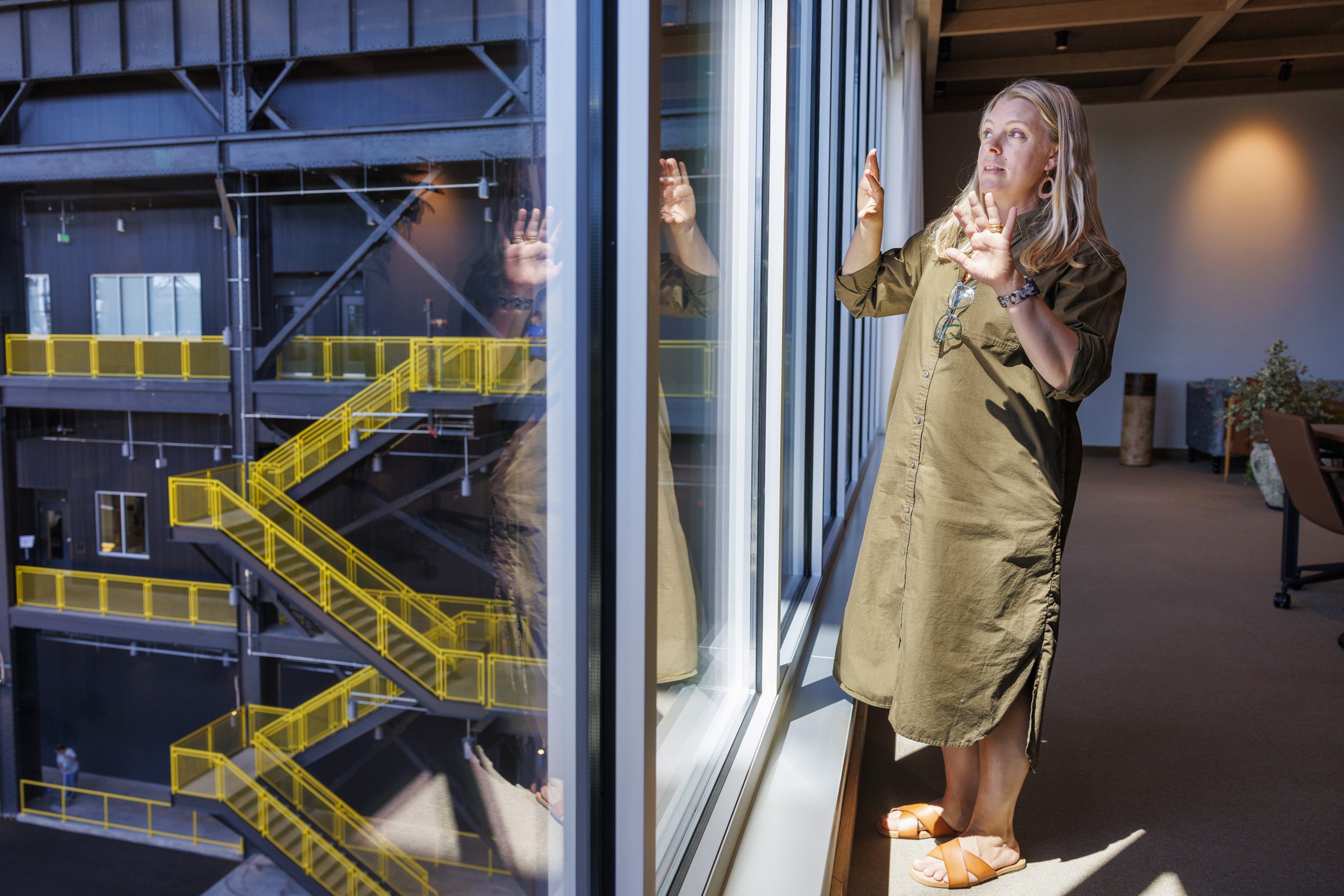
Inside the new building are adjoining rooms to seamlessly carry out the photography process: Clothing, shoes, and accessories are received in one room, then moved into the next room to be styled, and finally to the studio where they’re photographed. Staging areas are set up to portray bedrooms and bathrooms, functioning kitchens were built for cooking food to show in photos, and plants are on hand to finish off the staged living spaces.
The Inquirer was not permitted to photograph the studios because the merchandise had not yet been released publicly.
Not long ago, the company’s photo work was done in rented studios in New York City, Calliagas said, or scattered across the company headquarters.
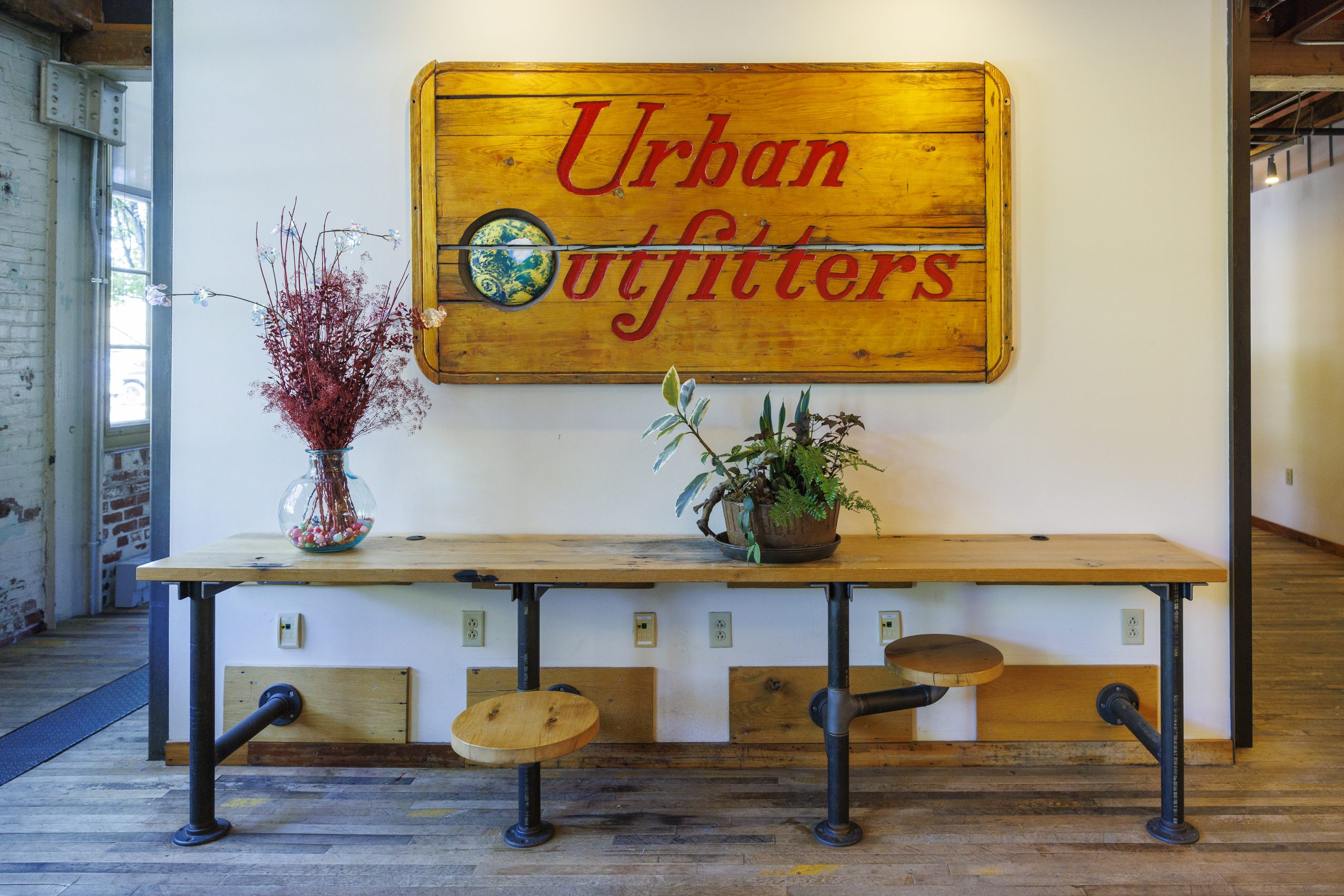
Vintage signage from the early days of Urban Outfitters, now displayed in the company’s Navy Yard headquarters.Alejandro A. Alvarez / Staff PhotographerMassive outdoor signage marks Urban Outfitters’ presence at the Navy Yard.Alejandro A. Alvarez / Staff Photographer
“Anthropologie, for instance … would be receiving in one area and then going to another building for style-outs, and then sometimes going back into another building for shooting,” Calliagas said. “It was a really inefficient process.”
At the Navy Yard, the company’s brands are housed in separate buildings, in part because they each “speak to their customer” in a different way, said Oona McCullough, executive director of investor relations. She called this kind of separation “states’ rights.”
Consolidating the photo work under one roof has freed up space in other buildings, said Ziel, which is helpful for the continued growth of brands.
“The brands are still growing pretty aggressively,” said Calliagas.
Jennifer Calliagas, director of planning for North America, discusses how the company will use its photo studios at its newest building in the Navy Yard.Alejandro A. Alvarez / Staff Photographer
A campus with more possibilities
Conforti refers to the headquarters as a “campus,” with a “youthful” and “very collegiate” atmosphere. When bankers or investors visit the headquarters, “we tell them to dress down casual,” he said. “They drop their tie.”
In keeping with standards set long ago by Google and other Silicon Valley tech companies, the campus is full of amenities. The newer ones include pickleball courts, a basketball court, and a walking track. And there’s plenty of green space for employees to walk their dogs, which are welcome in the workplace.
Most people work in the office at least three days a week, said Conforti.
“We’re not the most red-tape, bureaucratic company,” he said. “There’s just nothing like being here on campus getting things done. There’s an efficiency to it — and there’s a community.”
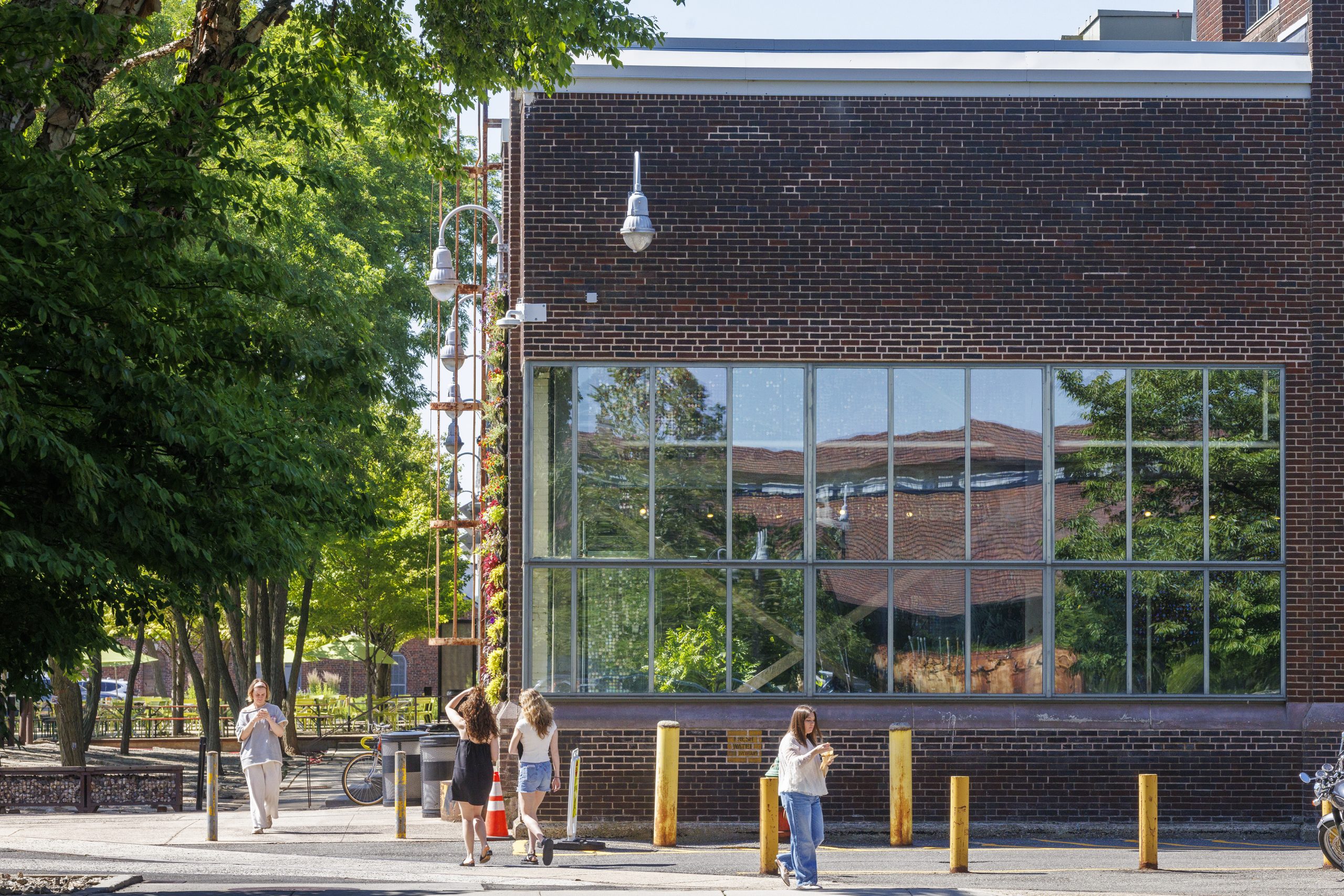
People walk to and from the building that houses Urban Outfitters’ cafeteria, which is open to employees and the public.Alejandro A. Alvarez / Staff Photographer
On a recent Monday, Urban’s cafeteria was just about to start serving warm lunches, and a few dozen people waited in line, while others roamed the large building with its decorative pools. Some wore U.S. Navy uniforms — the cafeteria is open to the public. Options included pizza, Teriyaki beef rice bowls, and grab-and-go items like ice cream bars and boxed sushi.
CEO Hayne stopped in for a bag of chips and a wrap, seemingly unnoticed.
At the June news conference, he recalled his first impression of the Navy Yard over 20 years ago: “I drove down Broad Street, came in Kitty Hawk [Avenue], looked at all these beautiful old brick buildings from the turn of the 20th century, and I said ‘sold!’”
Then & Now: Building 18 in 1917 and in 2024. Built in 1908 and used as a machine shop, it is now part of the URBN campus. Building 16 in the background was also used as a machine shop and is now a another example of an adaptive reuse project. #discovertheyard#navyyardhistorypic.twitter.com/VutWsQwrUc
More funding for SEPTA and dozens of financially strained mass transit systems across Pennsylvania has beenon the back burner in this year’s budget debate, but it may get some more attention now.
“By dedicating a portion of skill game revenue to transportation, we can protect and strengthen transit services without placing additional burdens on taxpayers, while ensuring our transit agencies have the resources they need,” Republican State Sen. Frank Farry of Bucks County said Friday in a statement.
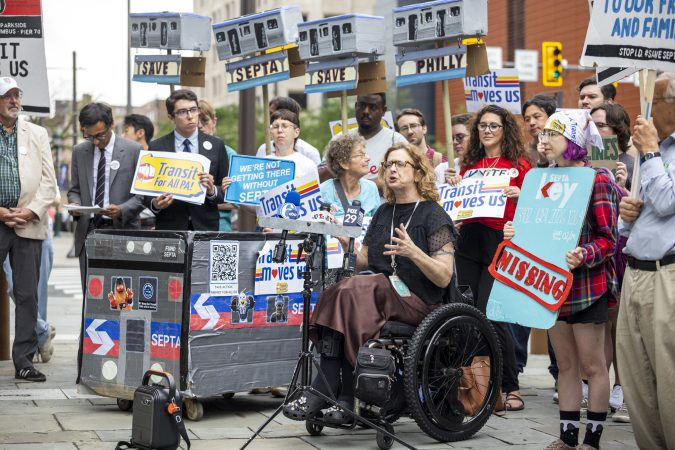
Transit advocates renewed what has become an annual public push for more money for SEPTA and fellow transit agencies at a news conference in front of the Fifth Street/Independence Hall Station — prompted in part by the court decision.
Farry issued the statement in support of that effort.
“I have the freedom to be able to come here, thanks to this elevator behind us, which was recently renovated,“ said Julie Rea, an organizing fellow for Transit Forward Philadelphia who uses a wheelchair and depends on the Market-Frankford El (now called the L).
“Without the long-term funding that SEPTA really needs, we’re not going to be able to keep the system accessible for all,” she said.
Last year, lawmakers and Gov. Josh Shapiro failed for a third time to reach agreement on his proposal to dedicate an increased portion of general sales tax revenue to consistently fund transit agency operations for five years.
Republicans, who control the Senate, did not want to take more sales tax revenue for transit, and the Democrats in charge of the House did not want to take up the GOP leadership’s counterproposal to use state money for infrastructure projects for operations instead.
Farry offered legislation in 2024 to regulate and tax skill games and dedicate 50% of the revenue to create a stable source of funding for public transit. The most optimistic assessments are that taxes on the games at or near the rate casinos must pay for their slots could generate up to $1 billion a year.
Taxing skill games has been discussed in budget deliberations for several years, though it never came together, in part because of differences of opinion in the GOP Senate caucus.
“Maybe the court decision will spur people to get their act together,” Farry, who is up for reelection in the fall, said in an interview. “We have a pathway.”
Meanwhile, this year, paratransit and shared-ride services are in trouble throughout the state and transit systems in Lancaster, Westmoreland County, and the Lehigh Valley are considering service cuts.
“We know that the rural-urban divide is manufactured, and that a public good, like transit, touches us all,” said Connor Descheemaker, statewide campaign manager for Transit for All PA.
Veteran restaurateur Jeffrey Chodorow has spent decades in and around Philadelphia without ever opening a restaurant here.
That changes Thursday at the Bellevue, where the mind behind such destinations as China Grill and Asia de Cuba is opening Mr. Edison, a supper club-style restaurant and bar built around dinner, drinks, and live music.
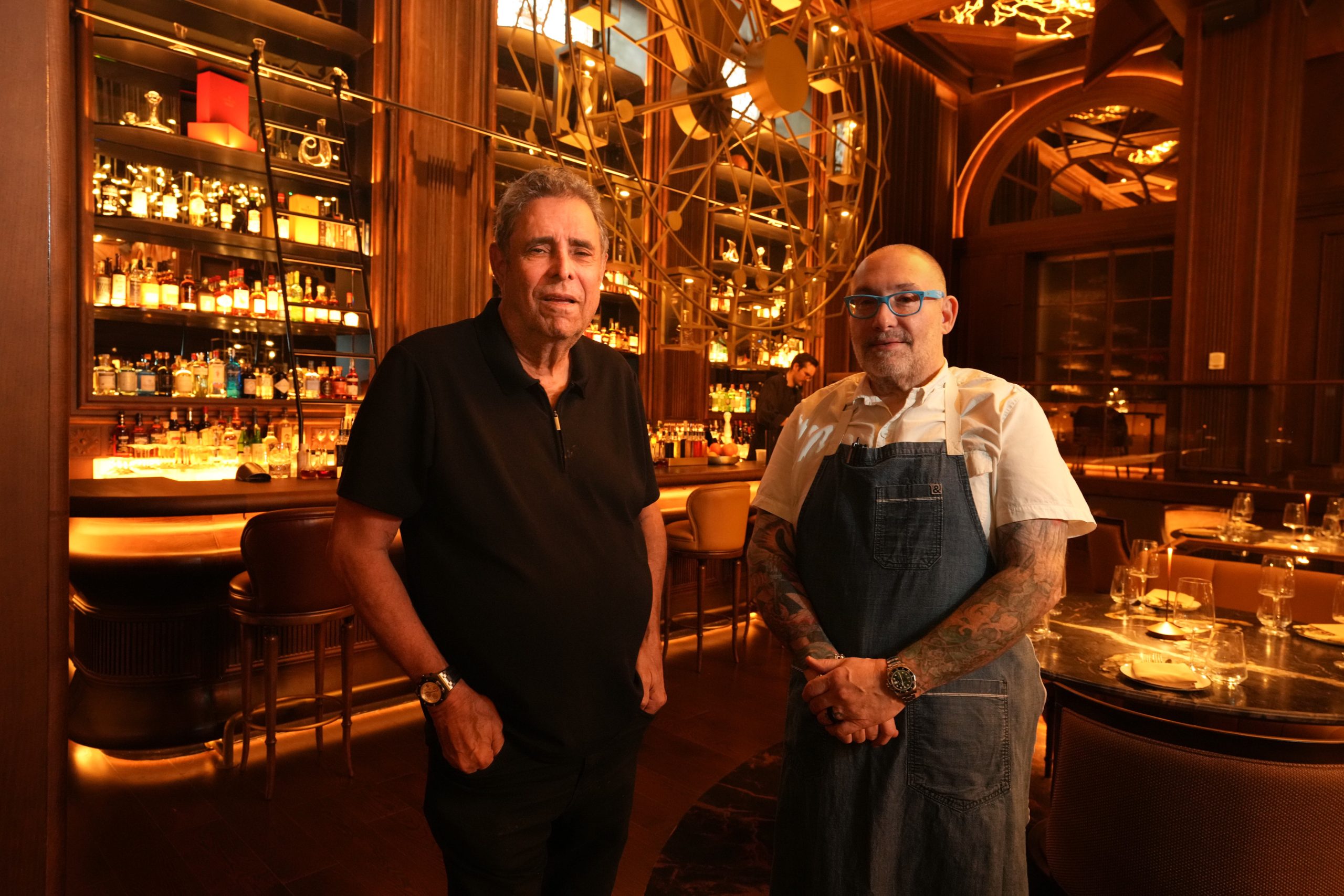
Jeffrey Chodorow (left) with chef Matt Levin at Mr. Edison at the Bellevue.Jessica Griffin / Staff Photographer
Mr. Edison is also a throwback: a large, theatrical restaurant built as much for occasion as for dinner.
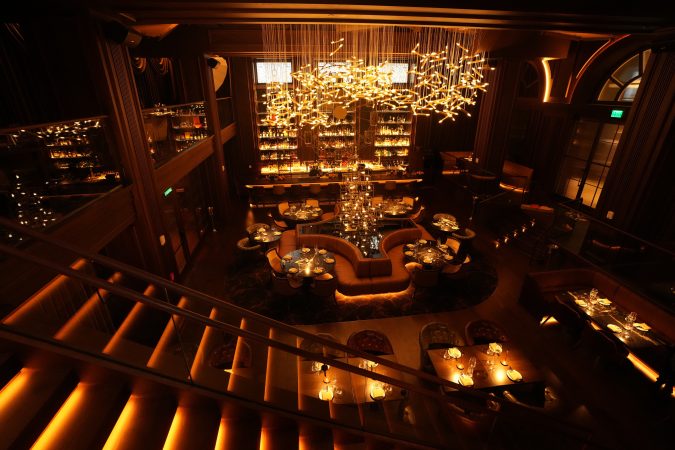
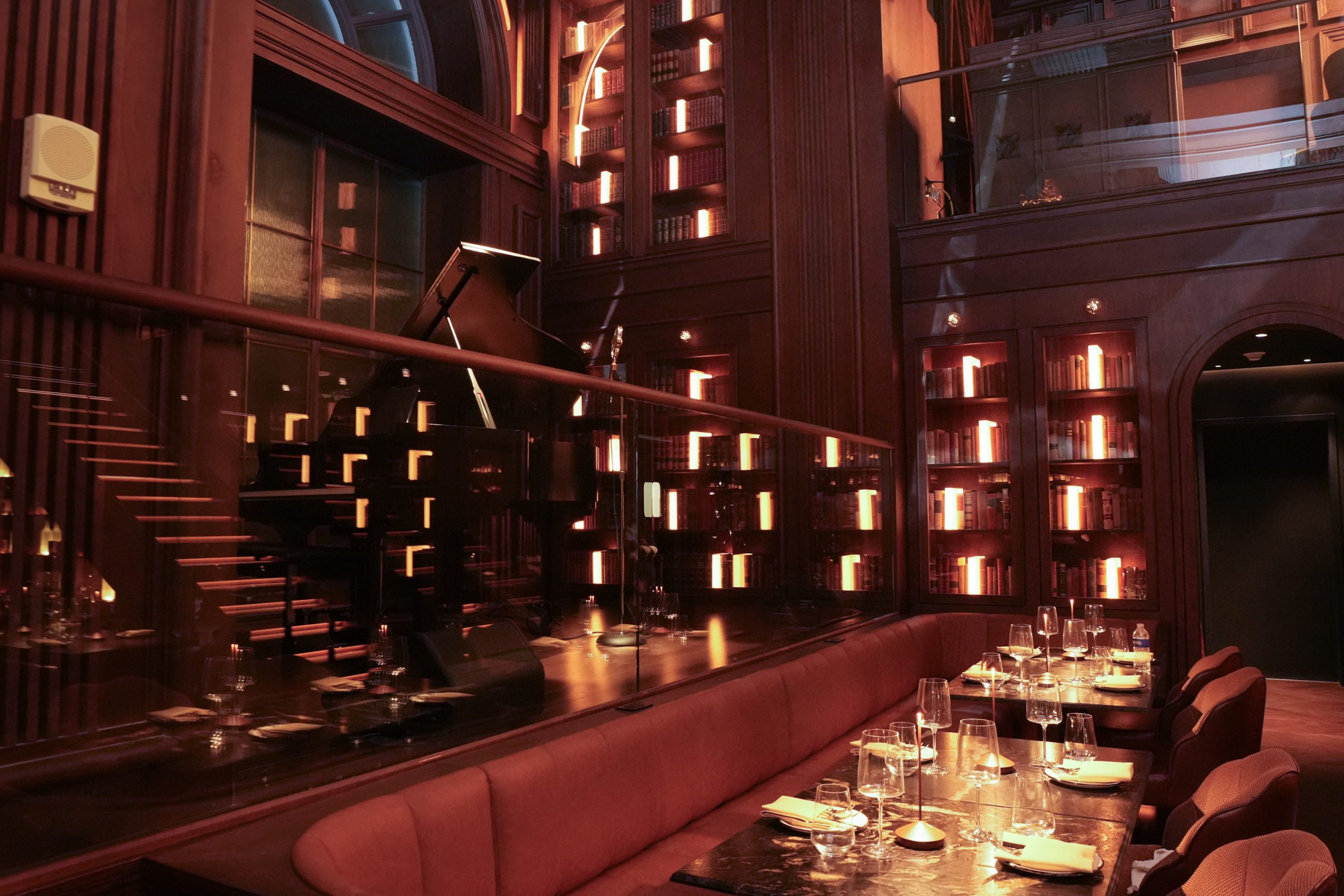
The room, in the former Polo Ralph Lauren store, announces itself immediately from the new Walnut Street entrance just west of Broad Street: a two-story space topped by a dense canopy of suspended Edison bulbs, clustered in branching formations that cast the dining room in a warm amber glow.
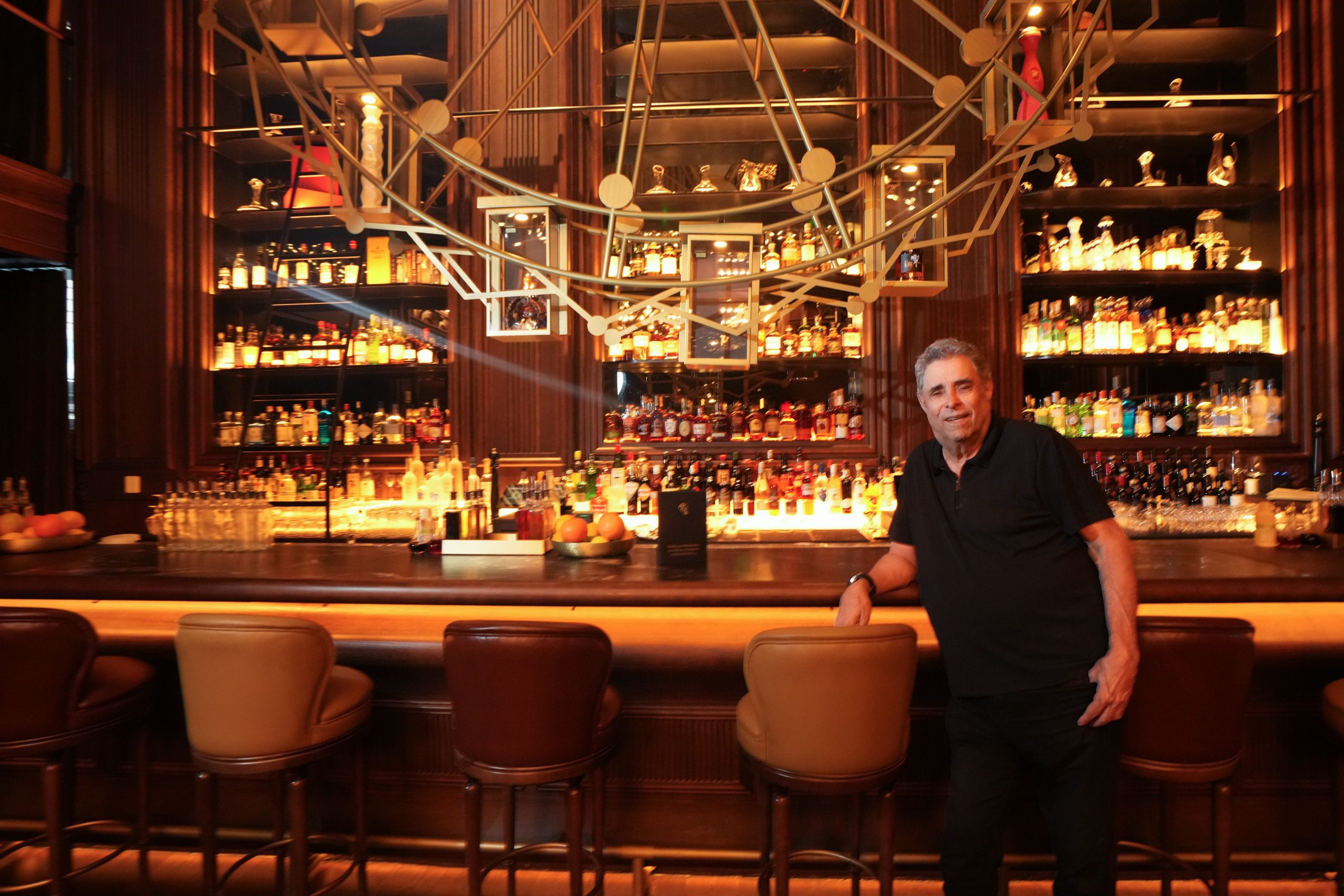
The ceiling seems to split open in places, allowing lightning bolt-like streaks of light through — all the work of Manuel Clavel of Spain’s Clavel Arquitectos. Behind the bar is a 12-foot-tall Ferris wheel, its dozen spokes each carrying a bottle of wine or spirits and turning the backbar into something like a stage set.
Caviar service at Mr. Edison.Courtesy of Mr. Edison
Building owner Dean Adler, who is investing millions in the Bellevue as part of its redevelopment, put the 160-seat restaurant’s price tag at $10 million. “I think I got my money’s worth,” he said Tuesday. Adler also plans to install a library bar off the Bellevue’s lobby on the Broad Street side, where the Palm was before its closing in 2020.
“I love history, so to take a genre — a 1940s-type environment — and bring it into 2026 has been really exciting,” said Chodorow, who of late has been shuttling between his Bucks County home and Miami Beach, where he opened China Grill Bar Harbour two weeks ago.
Mr. Edison — named for Thomas Edison, who helped bring electricity to the Bellevue in 1904 — is calibrated to the building’s long identity as a grand social address. It also carries a personal connection for Chodorow. In 1982, when he was a lawyer at Blank Rome, he rented the roof for his own Rio-themed engagement party to celebrate with his wife, Linda.
“This is not a tiny little neighborhood restaurant,” Chodorow said. “This is a place where you come to have a night.”
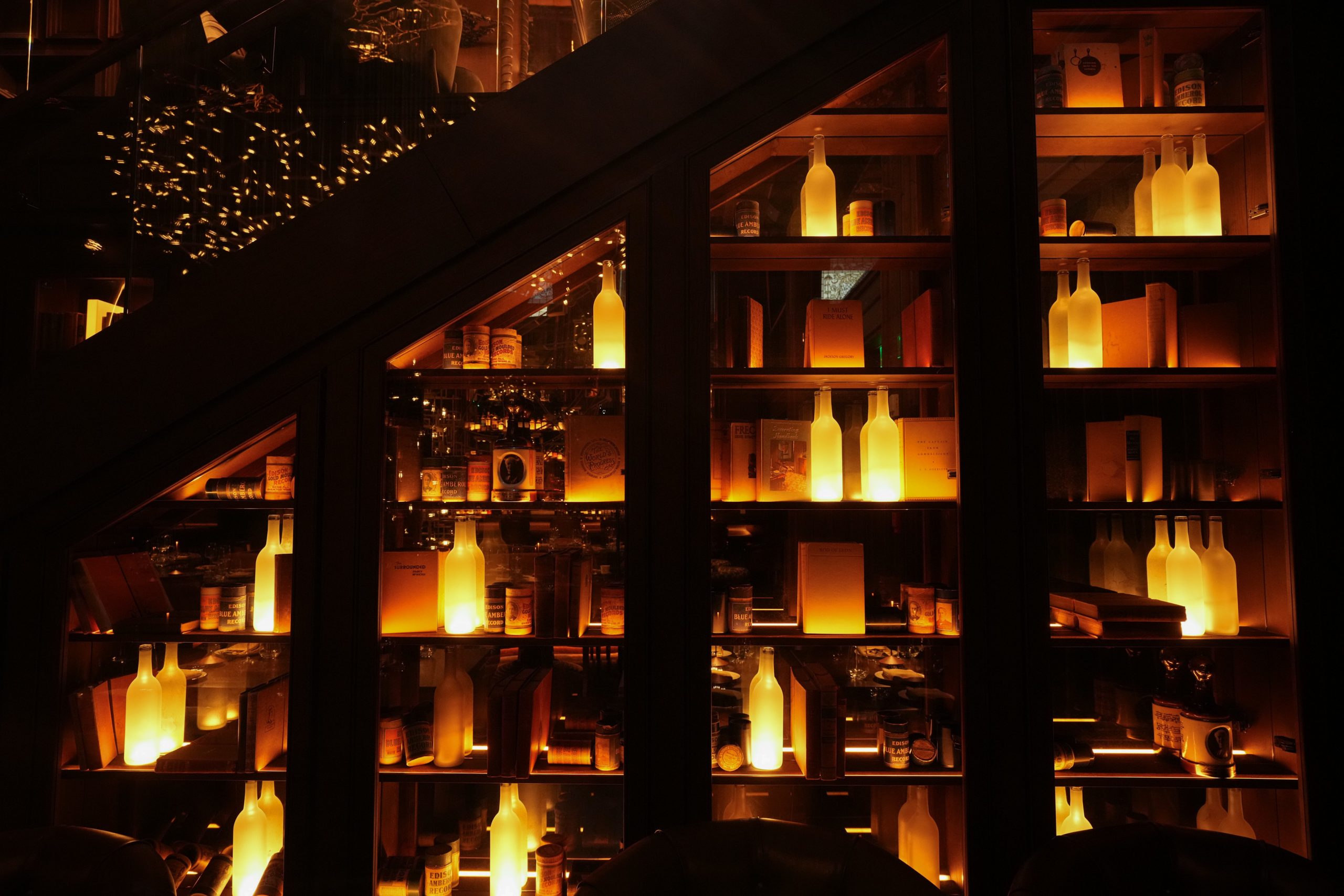
Bottles glow inside niches at Mr. Edison.Jessica Griffin / Staff Photographer
Chodorow built his reputation on restaurants that function as entertainment as much as dining. He rose in the business in the 1980s and ’90s with New York hotspots, such as Asia de Cuba, Kobe Club, and Red Square, and said he long avoided opening in the Philadelphia area because he wanted to keep work separate from family life.
With his children grown, that changed. At the Bellevue, Chodorow said, he saw an opportunity to build destination dining — a place where patrons might stop in for cocktails and snacks or settle in for dinner and stay long into the evening. The room is arranged to support both. A large bar runs along one wall; tables and banquettes wrap around in multiple zones and along a mezzanine; and a piano with an old-fashioned microphone sits on a platform to one side.
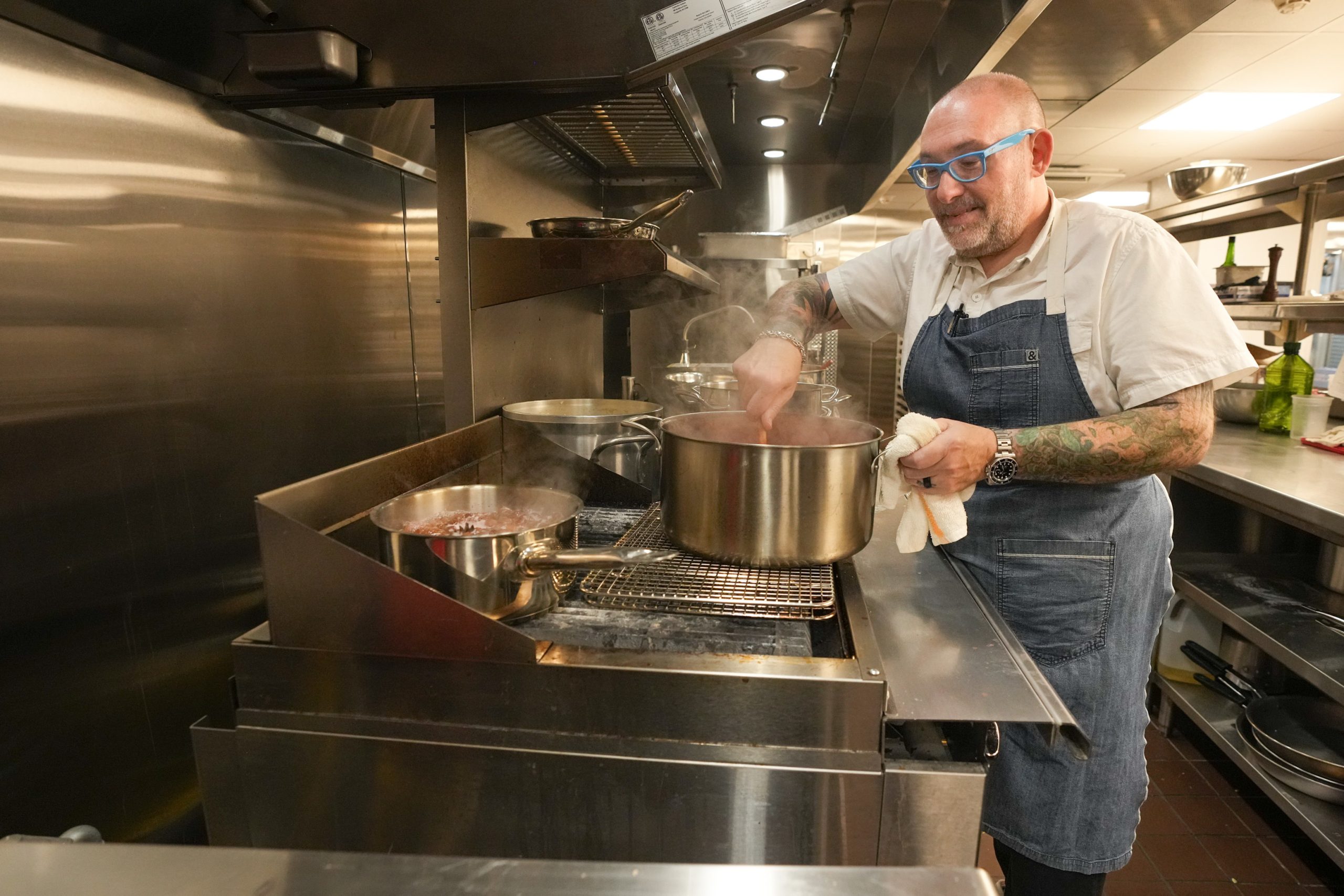
Chef Matt Levin at the stove at Mr. Edison.Jessica Griffin / Staff Photographer
“We’re trying to create an experience,” he said. “Not just a restaurant.”
To run the kitchen, Chodorow recruited chef Matt Levin to come back downtown. Levin, who made his name at Lacroix at the Rittenhouse and later at Adsum in Queen Village, has spent much of the last decade in catering, consulting, and Bucks County restaurants. Chodorow found him at Pineville Tavern in central Bucks County, where Levin had been consulting and where owner Andrew Abruzzese is an old friend and neighbor.
Mr. Edison is more interested in reworking the classics than experimentation. Levin and Chodorow drew on dishes from Philadelphia landmarks, including the crab galette from Le Bec-Fin, where Levin worked for several years, the Milan salad from Jimmy’s Milan, and duck with orange sauce from La Panetière.
Edison bulbs provide the lighting at Mr. Edison.Jessica Griffin / Staff Photographer
Levin said the menu is a way of tapping into Philadelphia’s dining memory. “I think Philadelphia has a lot of shared history,” he said. “I think people will remember bits and pieces and say, ‘Oh, I remember that — let me try it.’”
The challenge, Levin said, was to build a menu flexible enough to support several kinds of nights at once. “You want to be able to have people come in and just have a drink and a couple of things,” he said, “but also have the people who are coming in to really have dinner.”
Jeffrey Chodorow in front of the bar and Ferris wheel at Mr. Edison.Jessica Griffin / Staff Photographer
Chodorow said average tabs would be $100 to $110 per person for a dinner experience. He said roughly 25 dishes can work as a grazing menu, alongside larger-format entrees, raw-bar offerings, seafood, and steaks. Levin also brought over a foie gras tartlet with cherries and pistachio, adapted from a dish he served at Moonlight.
The beverage program leans into the Edison theme with cocktails named for his inventions, including Patent Pending and Filament No. 6.
Filament No. 6 at Mr. Edison.Courtesy of Mr. Edison
For Chodorow, the point of Mr. Edison is straightforward: “I wanted something that felt special,” he said.
“I wanted people to walk in and say, ‘Wow.’”
Mr. Edison opens Thursday at the Bellevue, Broad and Walnut Streets. Hours are 4:30 to 10 p.m. Sunday through Thursday and 4:30 to 11 p.m. Friday and Saturday. The bar will remain open later.
Erica and Micky Goldfin’s 2-month-old son wasn’t eating and seemed to be having trouble swallowing. His cries were weak, and his eyelids were droopy.
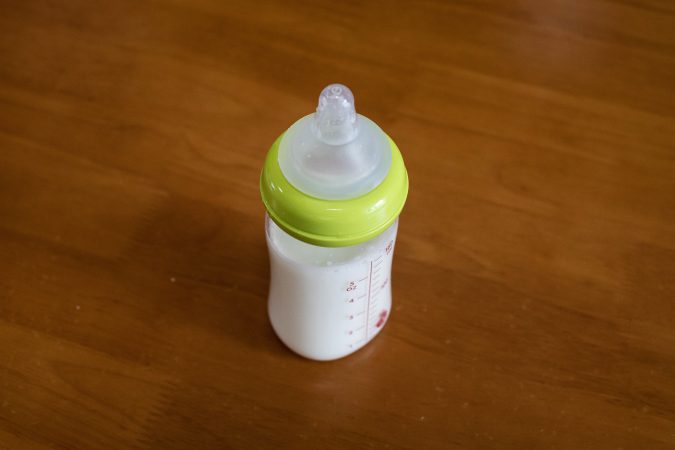
Within weeks, the Yardley parents were rushing their baby to Children’s Hospital of Philadelphia, where he was admitted June 1to the intensive care unit and treated for infant botulism, a rare, potentially deadly infection that affects the nervous system and can lead to paralysis, according to court records.
The couple are now suing Nara Organics, the maker of the whole milk infant formula they began feeding their son days after his birth in March, and Target, where they bought it. New York-based Nara Organics voluntarily recalled all of its infant formula on June 13, after the U.S. Food and Drug Administration and Centers for Disease Control and Prevention reported three cases of infant botulism in babies who had consumed Nara formula in Pennsylvania, California, and Washington.
In the lawsuit, filed Monday in the U.S. District Court for the Eastern District of Pennsylvania, the family alleges that Nara Organics did not do enough to protect customers after federal regulators cautioned that whole milk powder can carry the bacteria that cause botulism.
“Parents trusted a label that told them this was the safest, most premium thing they could feed their child,” said Bill Marler, a foodborne illness lawyer and a managing partner at Washington-based Marler Clark, who is representing the family.
The Goldfins, who declined an interview through their lawyer, are also represented by Cherry Hill’s Ferrara & Gable.
Nara Organics did not respond to a request for comment, but said on its website that it had issued the recall “in an abundance of caution,” and that none of its formulas had tested positive for the botulism-causing bacterium C botulinum. Tests are ongoing, according to the lawsuit.
“We believe in taking the strongest possible measure to protect the safety of babies,” the company wrote in its recall. “Your family deserves to have complete confidence in the safety of your baby’s food.”
Target did not respond for a request for comment.
This is the second recent botulism outbreak linked to powdered whole milk infant formula. An infant botulism outbreak associated with ByHeart formula that began in November sickened at least 28 babies.
What is botulism?
Infant botulism is caused when babies ingest C botulinum in foods or dust and dirt particles. The bacteria’s spores colonize in the large intestine and release a toxin that affects the nervous system.
Symptoms include changes in facial expressions, such as smiling less; slow feeding; constipation; and low energy.
Untreated, the toxin can spread and cause paralysis, making it hard for babies to breathe and eat.
Infants are at greatest risk of illness because their digestive systems are still developing and less able to fight off infection. Nationally, there were 181 cases of infant botulism in 2021, the most recent year for which CDC data are available.
The Goldfin infant,who was identified only by the initials W.G.,spent two nights in the intensive care unit at CHOP, where he was treated with BabyBIG, the botulism antitoxin that is manufactured by the California Department of Public Health and must be flown to hospitals overnight. The medication’s antibodies bind to the toxin and neutralize it, and symptoms improve within 48 hours.
On June 6 he returned home, where he is feeding well again, and regaining movement in his arms and legs. He is receiving weekly physical therapy for head lag and delays in his gross and fine motor skills, according to the lawsuit.
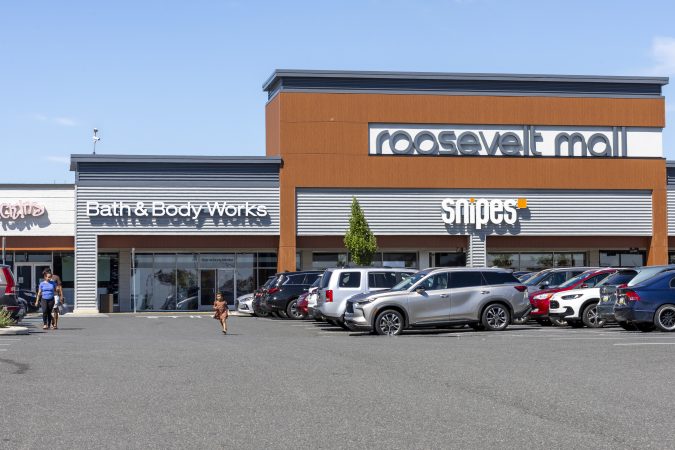
As Brixmor Property Group executives began transforming the Roosevelt Mall, they briefly debated whether to change the name.
After all, the 60-year-old Northeast Philly shopping center is undergoing a more than $70 million makeover that promises to bring it into the modern age with new tenants, upgraded facades, and a better layout.
As Brixmor executives walked around the 620,000-square-foot complex on a recent day, they said they already see the outdoor mall becoming a community hub — with a gym, an organic grocer, and new fast-casual dining options.
Despite these changes, they have decided the Roosevelt Mall should not be rebranded.
“It’s an iconic name,” said David Vender, Brixmor Property Group’s executive vice president for the north region, who is based in Conshohocken. “People know it as a landmark.”
Brixmor operates about 350 shopping centers nationwide, but some of its top executives — including new CEO Brian Finnegan, who grew up in Roxborough — have soft spots for Philly, forged by personal or family connections to the region.
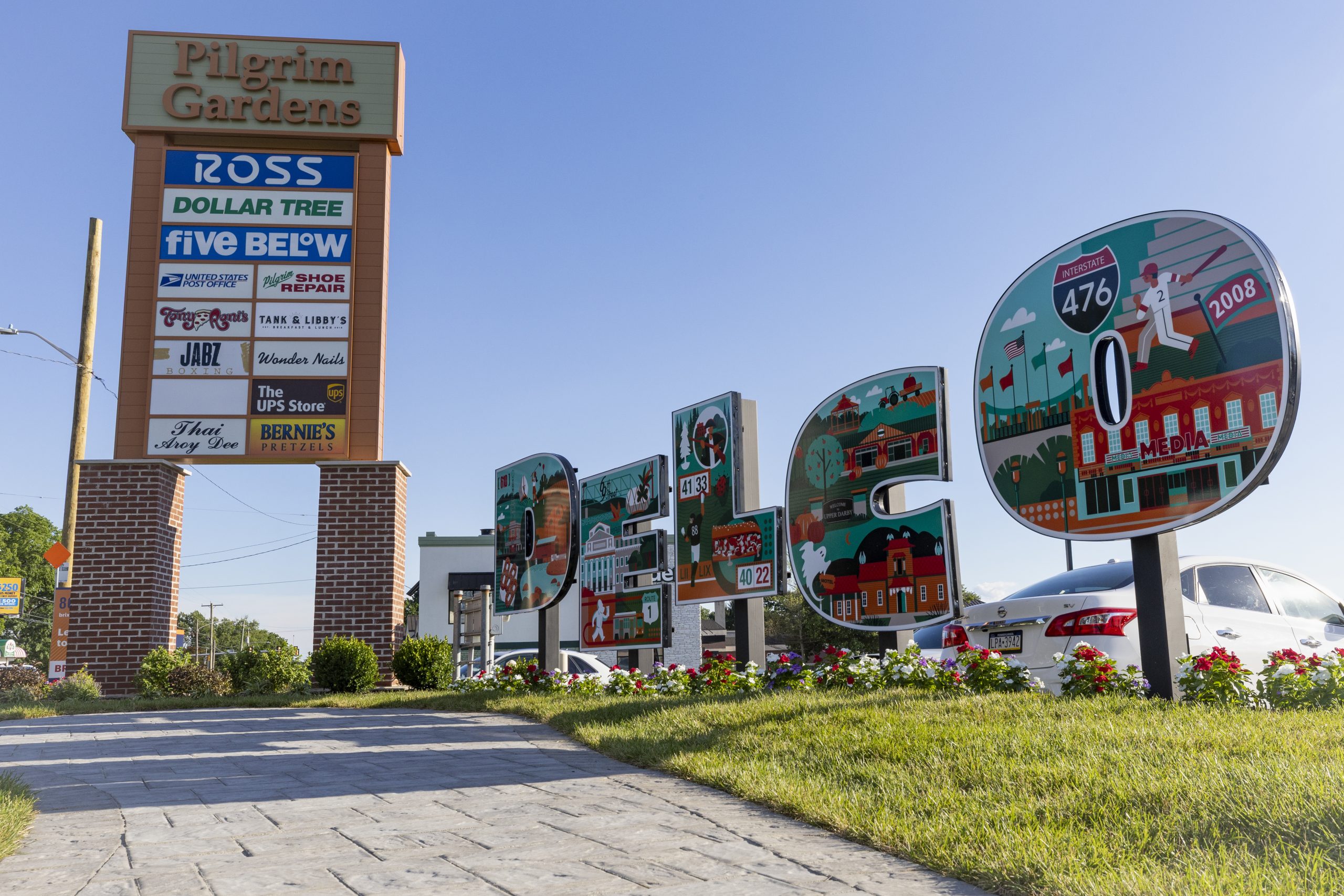
A new Delco sign is shown at Pilgrim Gardens in Drexel Hill on June 16.Aidan T. Gallo / Staff Photographer
And they said their connection to the community around the Roosevelt Mall has only grown stronger since last year’s plane crash, which killed eight people, injured two dozen, damaged nearby homes, and left an 8-foot-deep crater in front of the mall.
Even before the tragedy, they said, they considered how their local redevelopments affected the Philly-area residents who shop, eat, and drive by their centers every day.
At the Roosevelt Mall — which sits on 36 acres between Cottman Avenue, Roosevelt Boulevard, and Bustleton Avenue — these decisions have begun to pay off.
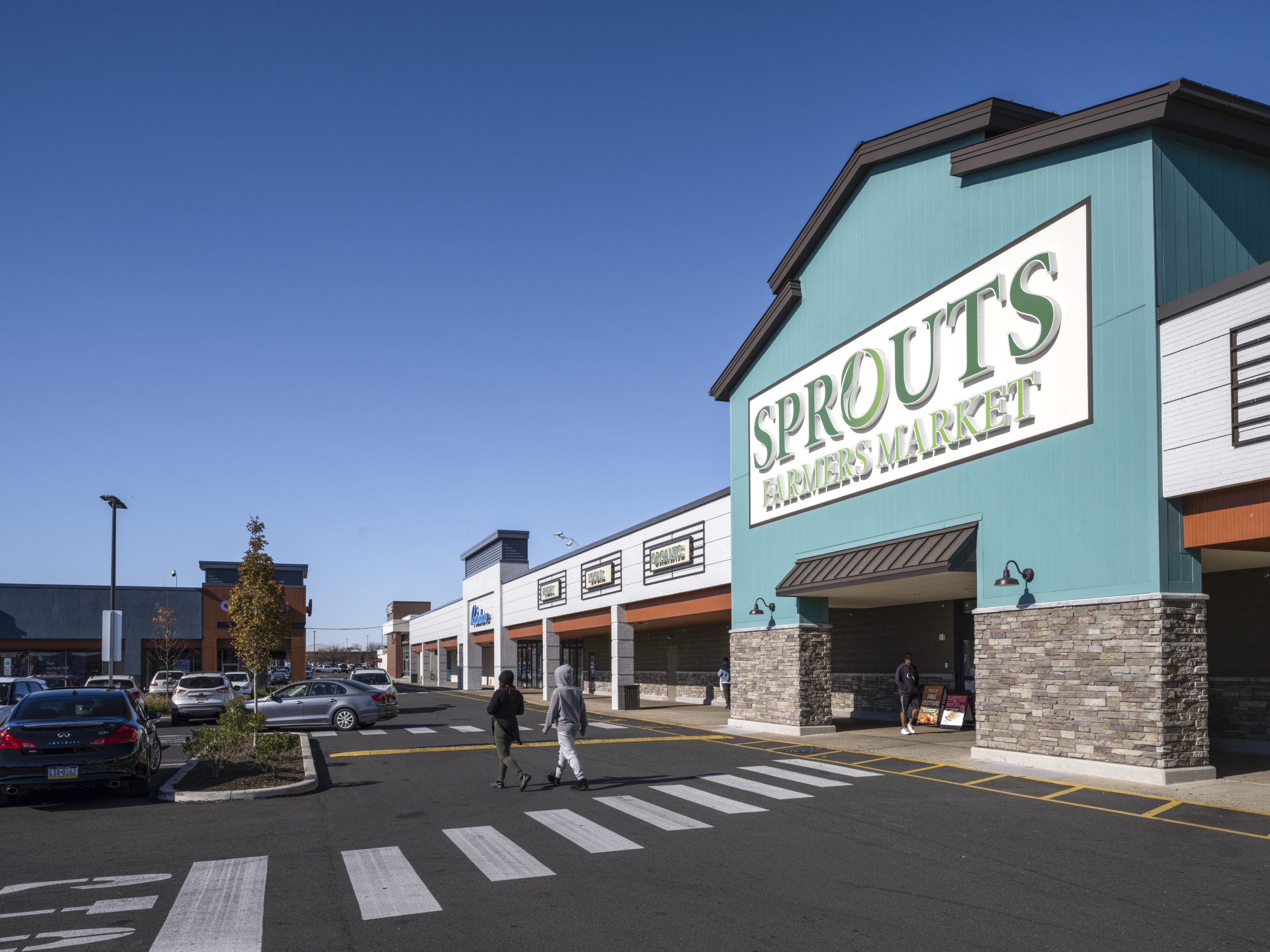
In the last year, the center logged 6.3 million visits, a 5% year-over-year increase and a 19% jump when compared with the 12 months before Sprouts Farmers Market’s 2024 opening, according to company executives.
Occupancy was over 98% this spring, they said, and customers spend about 35 minutes there on average, on par with the national average for all Brixmor complexes.
When you’re able to bring together “higher-quality food and beverage, fitness, service … then you’re also able to attract more elevated retail” stores, said Finnegan, noting that Ulta Beauty and Victoria’s Secret are among the tenants signed on for the next phase of the Roosevelt Mall’s redevelopment.
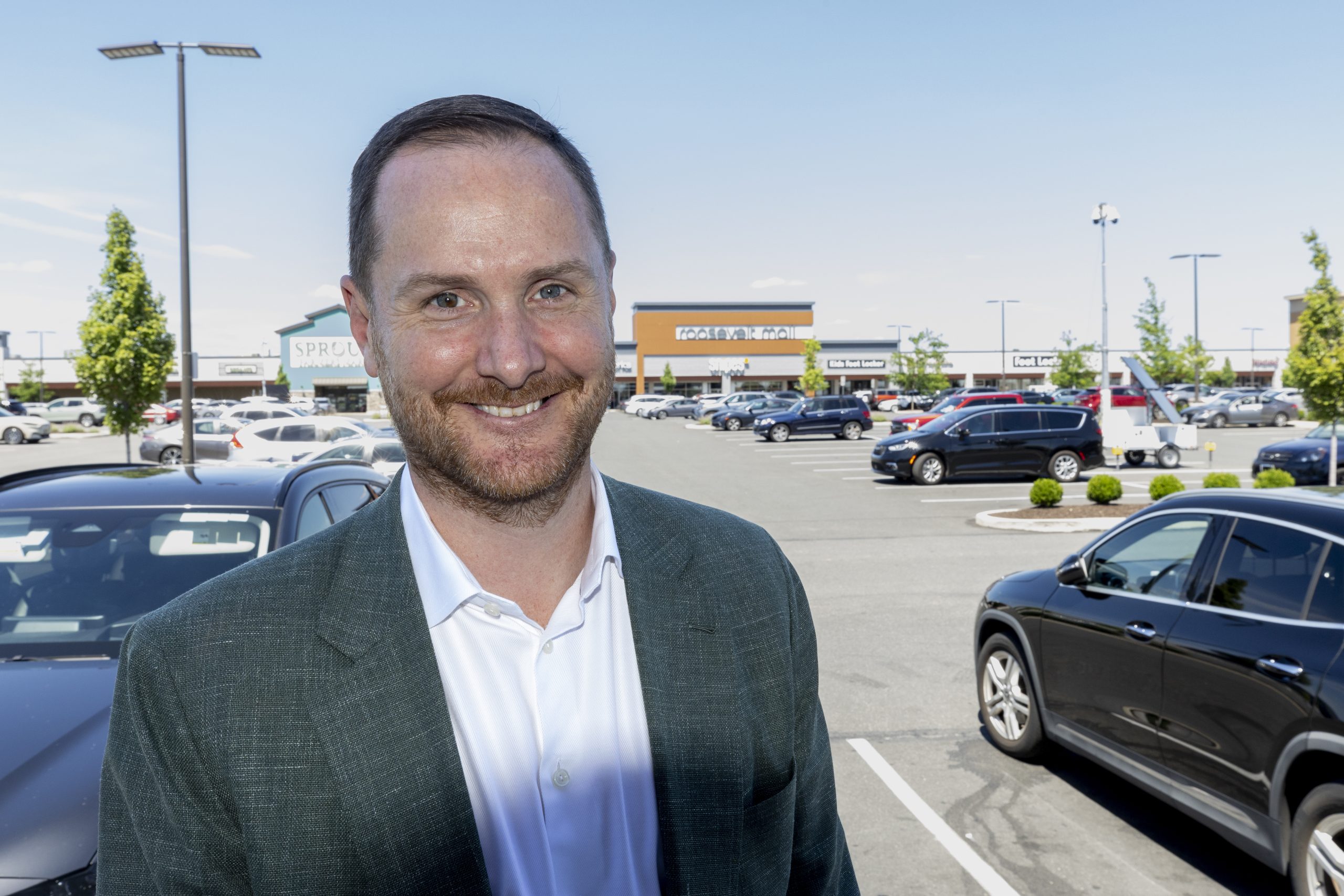
Brian Finnegan, CEO and president, at Brixmor Property Group, at the Roosevelt Mall in Northeast Philadelphia.Aidan T. Gallo / Staff Photographer
Achieving the tenant mix of a modern shopping center
When the Roosevelt Mall opened in 1964, its main promenade was referred to as “Chestnut Street Northeast,” with several outposts of Center City clothing stores, according to an Inquirer article from the time.
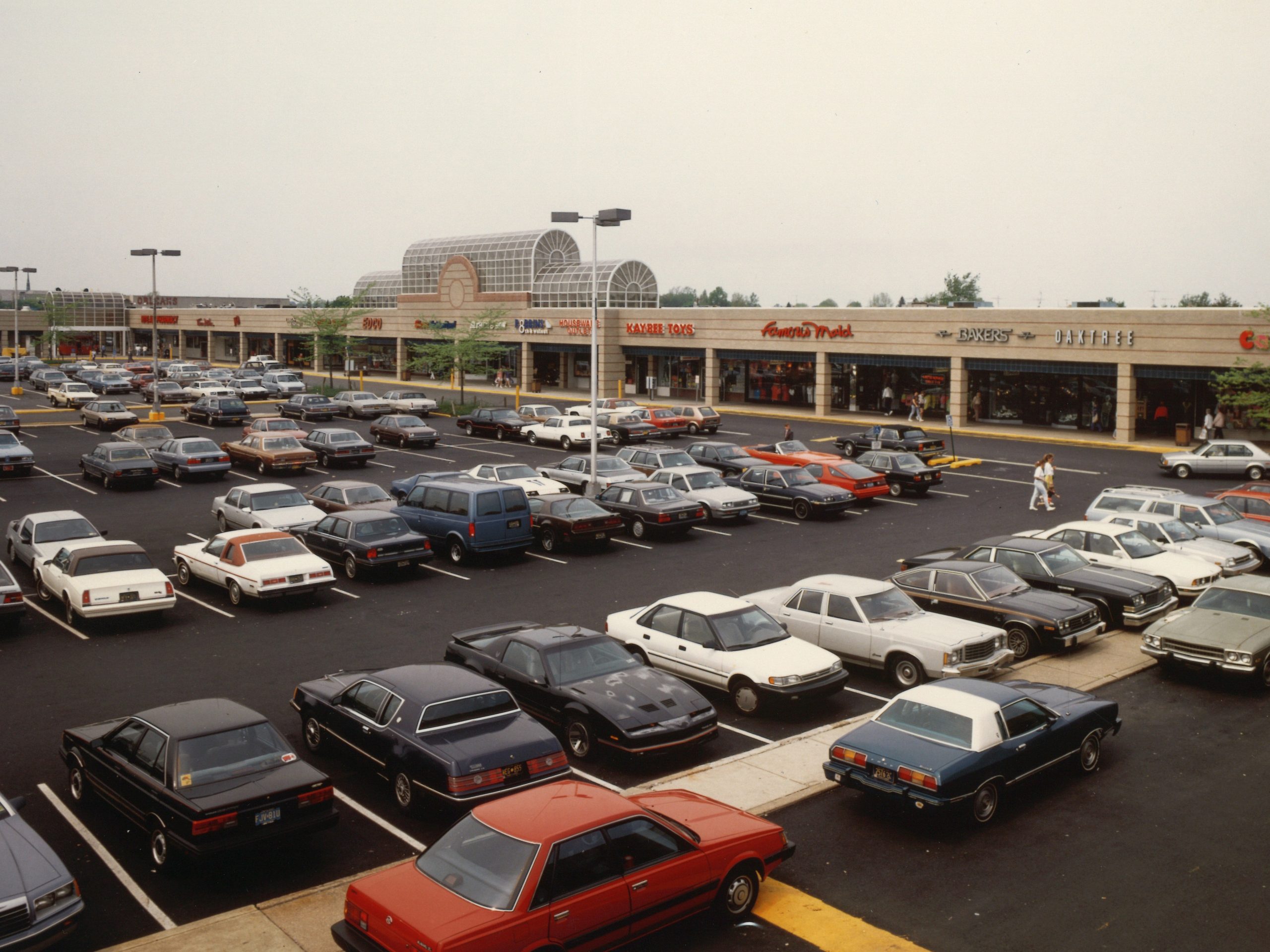
The shopping center had apparel shops, such as Baker Shoes and Famous Maid, as well as “the Cavalier, a cafeteria-style restaurant with a game room and a retail bakery,” The Inquirer reported. It was anchored by an S. Klein’s discount department store.
The Roosevelt Mall was built as part of the Roosevelt Boulevard shopping complex, bordered by Cottman and Castor Avenues. The larger development — which also had Gimbels and Lit Bros. department stores — was called the country’s largest “in-town” shopping center at the time.
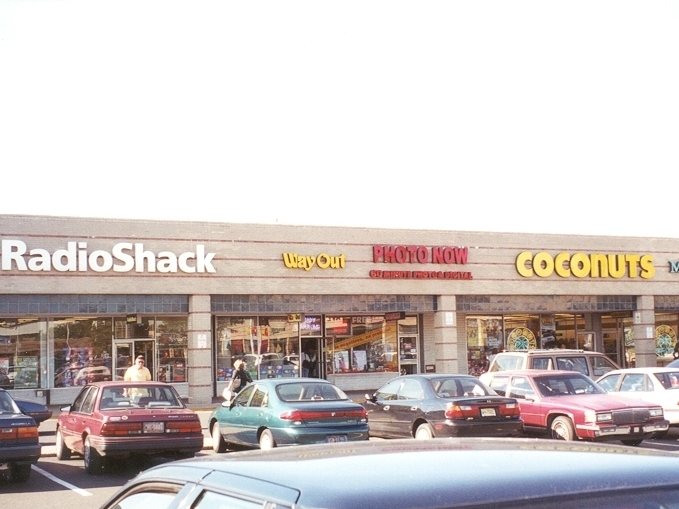
Roosevelt Mall in Northeast Philadelphia is shown in earlier days, long before Brixmor Property Group remodeled the property.Courtesy Brixmor Property Group
They said they have intentionally brought in tenants that customers may visit multiple times a week and added more pedestrian walkways, open-air plazas, and outdoor seating.
“Historically, shopping centers were very utilitarian, and now they’re really becoming more community assets, so we’re really careful about our merchandising mix,” said Ryan Guheen, Brixmor’s senior vice president of development.
Roosevelt Mall in Northeast Philadelphia is shown in earlier days, long before Brixmor Property Group remodeled the property.Courtesy Brixmor Property Group
The latest redevelopment push began around 2020, when Brixmor opened an LA Fitness outpost on the site of a former Turf Club off-track betting venue, near a new Oak Street Health clinic.
Since then, the company has constructed buildings in underused sections of the parking lot and filled them with popular chain eateries like Raising Cane’s chicken; the American-Chinese food spot Panda Express; and Tous les Jours, a Korean-French bakery and coffee shop.
Annual customer visits to Roosvelt Mall have increased 13% since Sprouts organic grocer opened there in 2024.Courtesy of Brixmor Property Group
The 37,000-square-foot under-construction building, set to house a Victoria’s Secret and an Ulta, will also include fast-casual staples like Shake Shack and Cava, which serves Mediterranean bowls and pitas.
Tenants like these, Guheen said, provide “multiple opportunities for people to stay on property to shop retail, get their workout in, go to the bakery, get a coffee.”
Some mall retailers have found homes in shopping centers
As Brixmor executives diversify the tenant mix at their shopping centers, they say they do not see retail stores going extinct.
Elsewhere in the Northeast, the Franklin Mall, formerly Franklin Mills, has been in decline for years and was recently listed for sale. Real estate investor Dean Adler has said he wants to buy the 137-acre mall and turn it into a youth sports complex with a hotel and Margaritaville-themed water park.
Seven miles away, the Roosevelt Mall is home to several shops that were once found almost exclusively in enclosed malls, such as Bath & Body Works, Foot Locker, and the forthcoming Victoria’s Secret. These companies’ higher-ups have pivoted in recent years, adding more locations in open-air centers.
“It’s not like retailers are leaving malls en masse … at least in the best malls,” Finnegan said. But “as they open stores in open-air shopping centers with grocery stores, with fitness uses, with elevated food and beverage, they’re seeing the sales performance” — and then want to keep investing in shopping centers.
Longer-standing retail tenants are continuing to see success, too. Finnegan said the Roosevelt Mall’s 300,000-square-foot standalone Macy’s is among the company’s top-performing locations in the region, rivaling the King of Prussia Mall store.
The department store is the center’s largest driver of traffic, recording more than 900,000 annual visits, said Brixmor executives, who are not worried about the department store closing as the Center City store did last year.
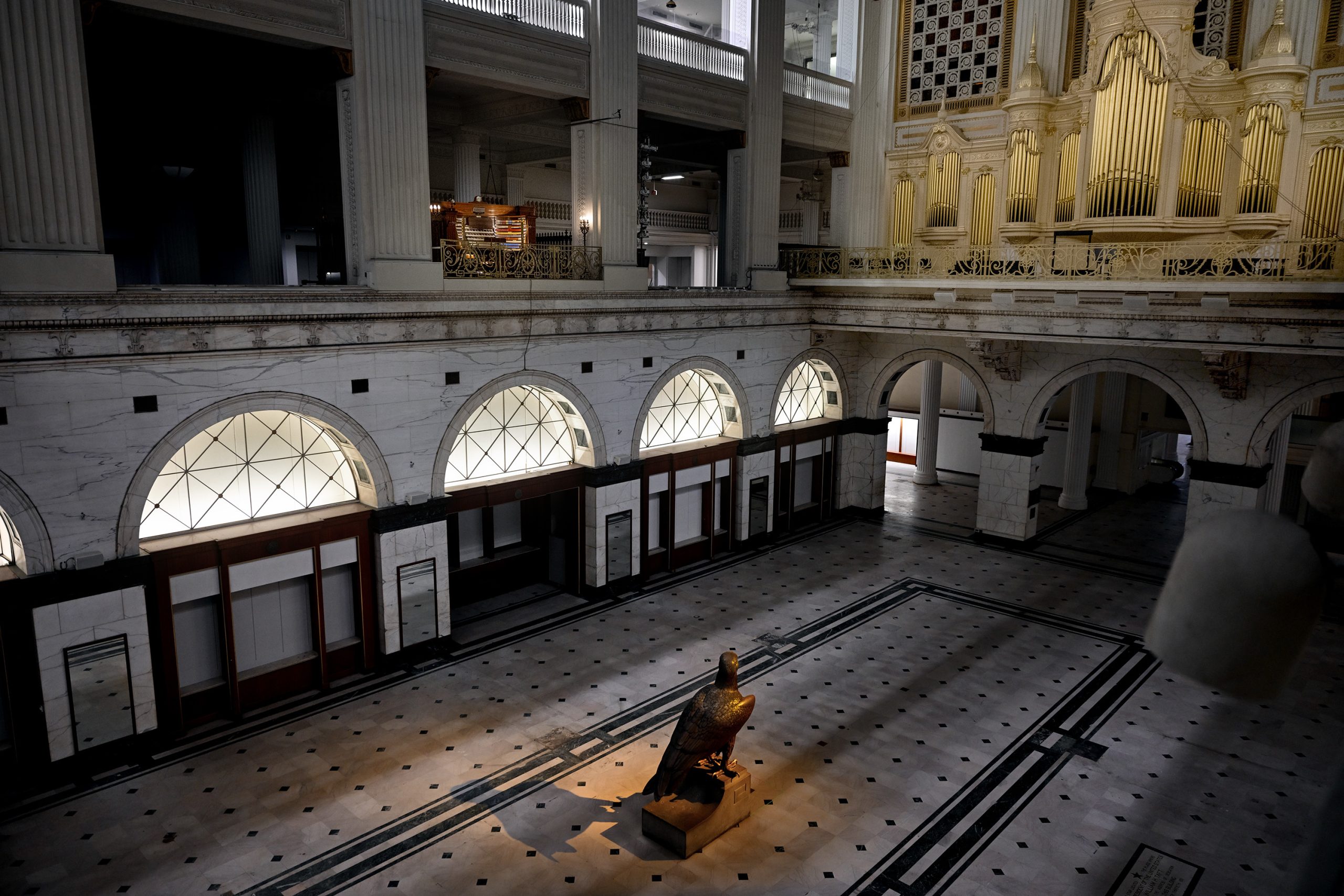
As seen in September, the Macy’s in the Wanamaker Building in Center City now sits empty. It closed last year.Tom Gralish / Staff Photographer
Company executives said they are optimistic this momentum will continue. Along with the under-construction section, redevelopment plans also include another standalone building that has yet to break ground — and the cost of which is not included in the current price tag.
Finnegan put it simply: “Opportunity begets opportunity.”
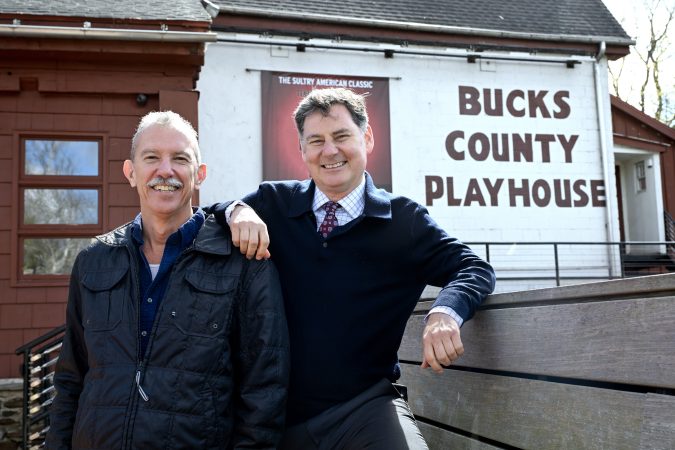
Before the opening of every new production at Bucks County Playhouse, producing director Alexander Fraser scans the audience and walks to the front of the stage to deliver a speech.
In his 12 years with the Playhouse, he has talked about preparation, execution, and the magic of seeing all these things coalesce. He’s thanked all the people involved in the production and the rows of theatergoers who’ve made it worth the grind.
When he arrived in New Hope over a decade ago, Fraser was “terrified” of these speeches. Now he relishes the spotlight.
“I hated doing them in the beginning, but now I’ve turned into Joan Rivers,” he joked.
Saturday’s opening of the 1949 musical South Pacific, however, won’t have him do his usual spiel. The opening of the Rodgers and Hammerstein classic is his last as the Playhouse’s producing director.
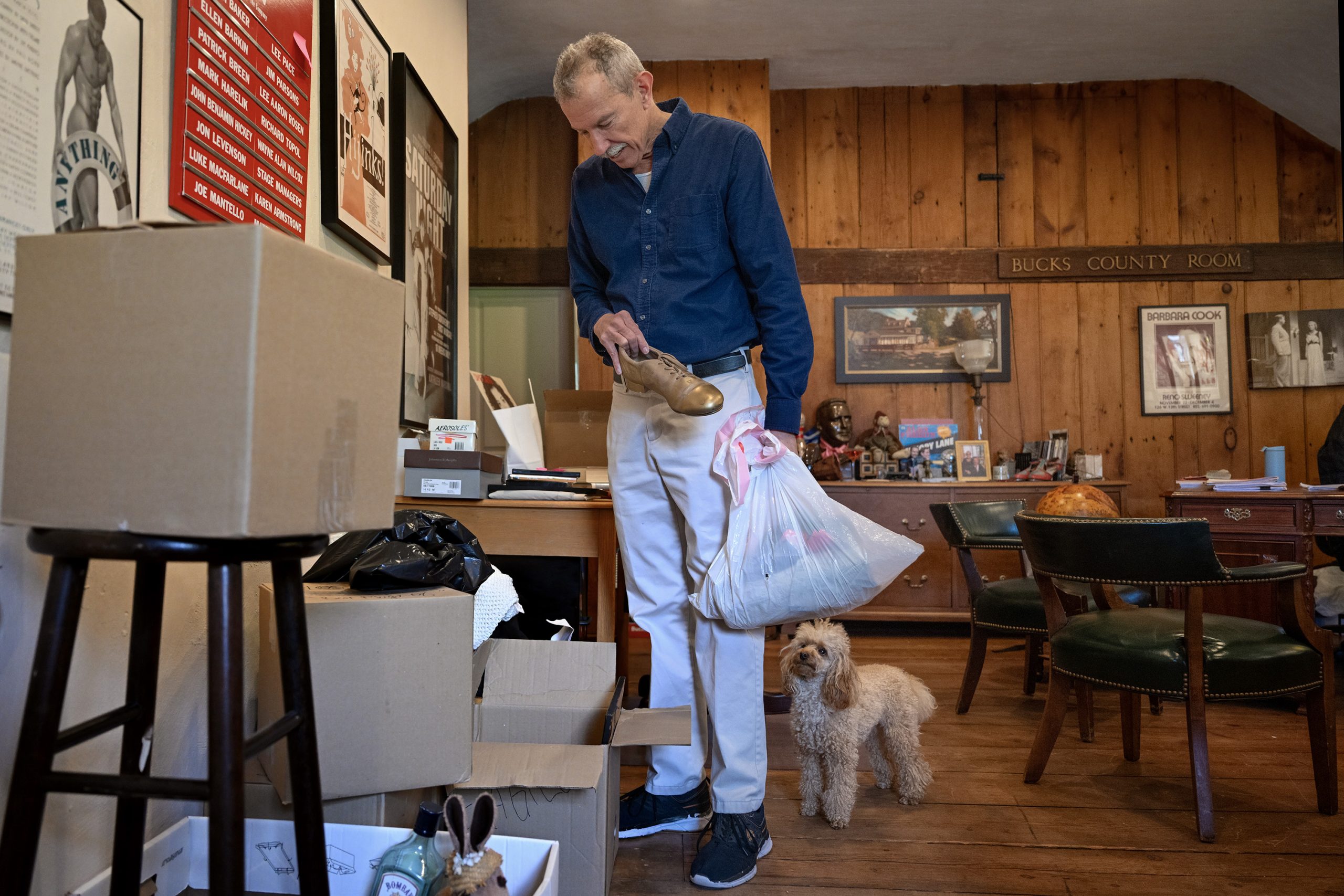
Alexander Fraser finds a pair of shoes from the 1975 musical A Chorus Line as he clears out his office Tuesday, April 7, 2026. His dog is Milo.Tom Gralish / Staff Photographer
“It’s just surreal,” Fraser, who announced his departure last year, said. “It’s been a whirlwind couple of months …It’s been sweet and I feel really complete. I don’t have any regrets about it. I think it’s the right thing to do.”
Fraser is retiring from full-time production, and instead lending his services to develop new musicals and nightclub experiences. His production partners, Robyn Goodman and Josh Fiedler, will also be departing to work on current and future productions under their company, Aged in Wood.
Fraser said he already has a few irons in the fire, but he plans on spending the majority of his days sun-soaked on a beach in Puerto Vallarta, Mexico, and tanning like the “raisins” that walk the beaches of Palm Springs.
The departure, Fraser said, is easier knowing there’s an incoming leader with experience and ideas that mirror his own.
On June 22, theater veteranBT McNicholl will step in as the Bucks County Playhouse’s producing artistic director.
“I’m at home here,” said McNicholl, who grew up in Connecticut and led Los Angeles’ La Mirada Theatre for a decade.
Like Fraser, McNicholl has worked on several Broadway plays and musicals , including Billy Elliot, Cabaret, and A Funny Thing Happened on the Way to the Forum. As director, his work spans productions across Europe, Asia, and Australia, and his regional directing credits include productions at Goodspeed Musicals, the Walnut Street Theatre, and other places.
He said he’s excited to be at the helm of the nonprofit theater and embrace its audience, one that’s seen tremendous growth under Fraser’s leadership.
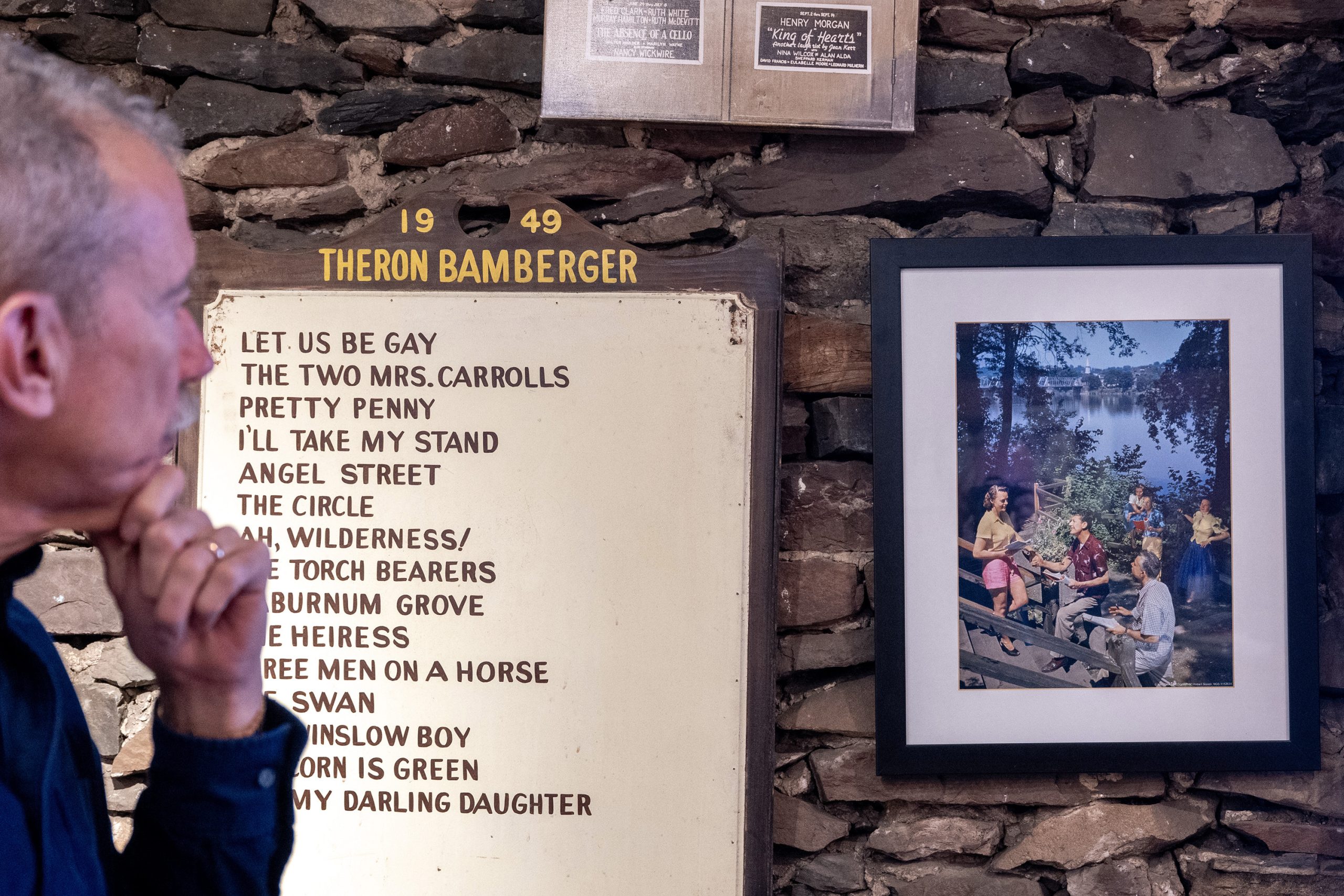
Alexander Fraser, producing director of Bucks County Playhouse, looks at memorabilia as he clears out his office on April 7, 2026. At right is a photo from the July 1952 issue of National Geographic, by photographer Robert F. Sisson for an article about the Delaware River. The caption reads, in part,: “June Lockhart Rehearses Her Lines on the Steps of Bucks County Playhouse. At left is list of plays produced by Theron Bamberger in 1949.Tom Gralish / Staff Photographer
Fraser came to the Playhouse in 2014 from New York, where he produced on and off-Broadway productions for decades. It had only been three years since the historic theater’s $3 million facelift, thanks to Doylestown couple Kevin and Sherri Daugherty.
The theater, founded in 1939, was in dire straits after longtime owner Ralph Miller fell into debt in 2010. The theater lost its status with the Actors’ Equity union and Miller’s mortgage holder seized the venue.
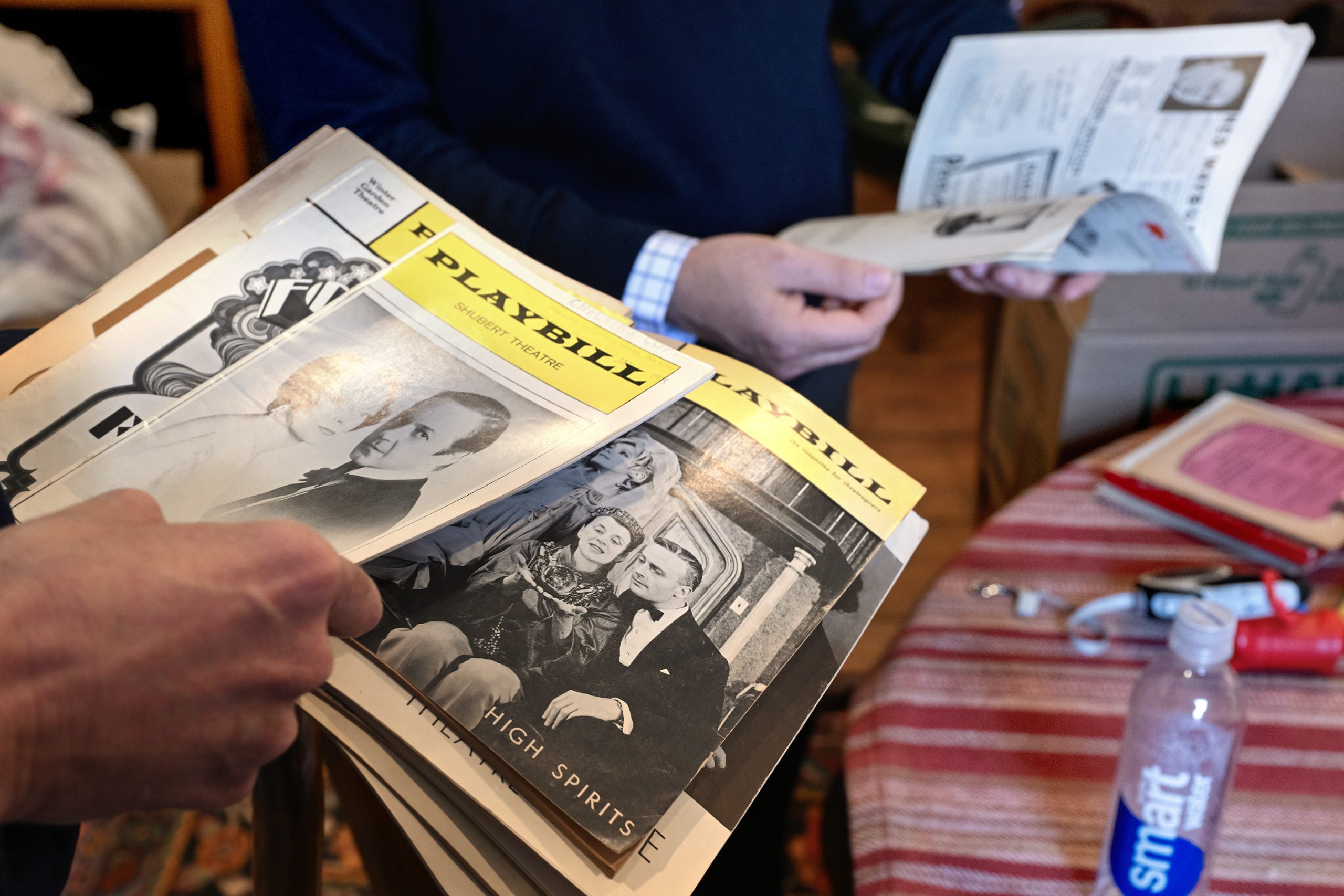
Alexander Fraser (left), outgoing producing director of Bucks County Playhouse, clears out his office on April 7, 2026, joined by newly-appointed producing director BT McNicholl (right) going over old Playbills.Tom Gralish / Staff Photographer
The Daughertys purchased the Playhouse in 2011, and reopened the theater after a year of renovations and repairs. Jed Bernstein, then producing director, set the revamp in motion and went on to become the president of New York’s Lincoln Center. That’s when Fraser stepped in to expand the theater’s revitalization. He recruited Goodman and Fiedler to the Playhouse.
The goal was to reinvigorate the Playhouse and New Hope’s theater community within two years. “It was naive on my part,” Fraser said.
He said people talked about the theater’s heyday, but the majority of people who came to New Hope were “bikers” and not interested in local theater.
“I didn’t realize how depressed [New Hope] was, and frankly, it was a challenge for me and my two producing partners to motivate this community and make this work,” he said.
Around 2019, Fraser said he finally felt things had turned around.
The trio went on to bring in productions like Steel Magnolias, Anastasia, Bridges of Madison County, Other Desert Cities, and Candace Bushnell’s one-woman show, True Tales of Sex, Success, and Sex and the City.
The productions drew theatergoers, both from in and outside of the borough.
During Fraser, Goodman, and Fiedler’s tenure, the organization’s annual attendance doubled, growing from just under 40,000 in 2014 to more than 85,000 in 2025, according to Playhouse officials. Subscriptions also increased, from 1,479 in 2015 to 3,303 in 2026.
The Playhouse then transitioned from a seasonal producing theater to a year-round producing organization.
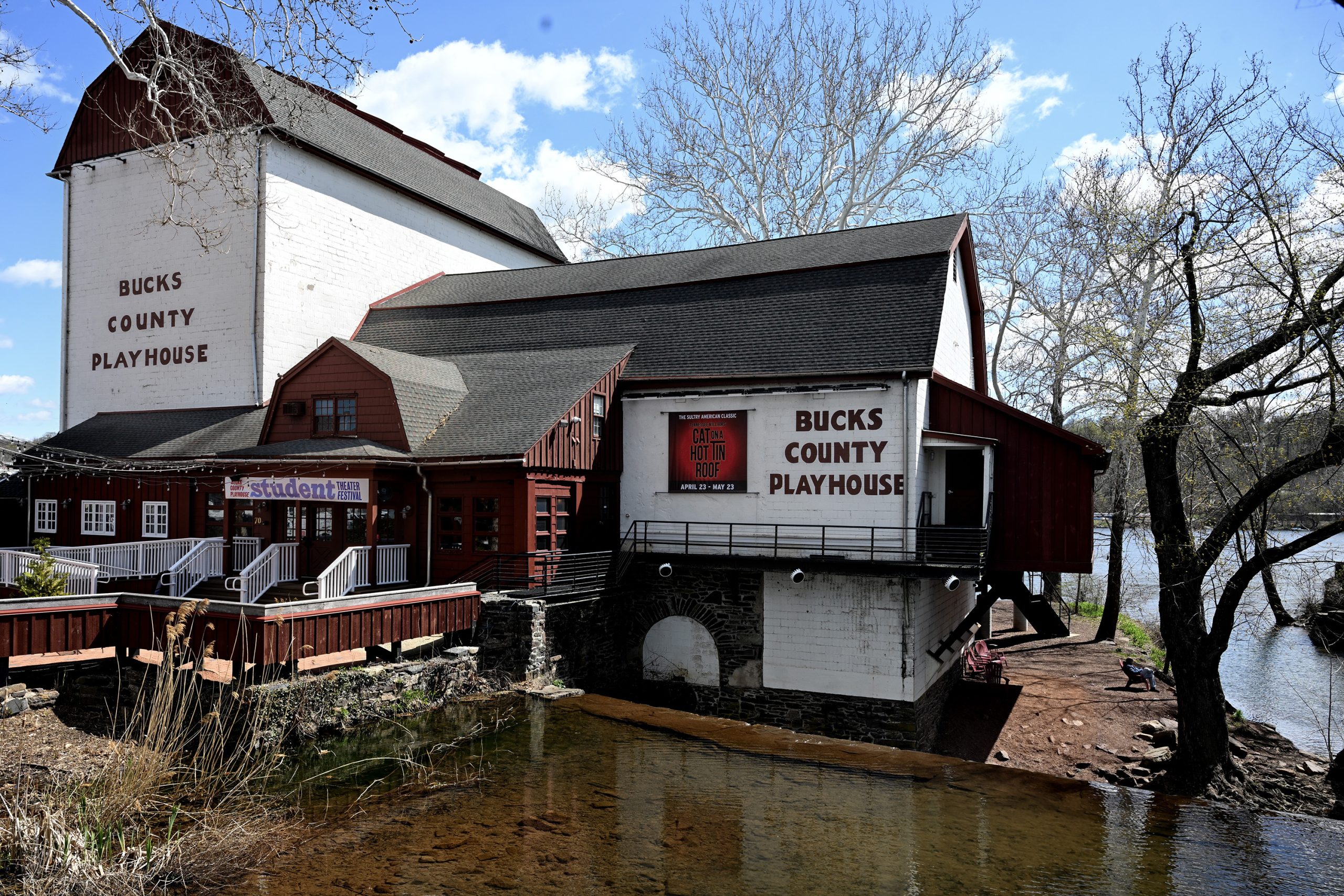
The Bucks County Playhouse on April 7, 2026.Tom Gralish / Staff Photographer
Nicole Hackmann, executive director at the Playhouse, said Fraser was on the front lines, ensuring there was enough funding to bring in top-end productions, and Goodman and Fiedler used their resources and connections to fill in the gaps.
The Playhouse’s revival didn’t just enliven the region’s theater community. It sparked an economic boom in the borough. As new restaurants, shops, and other businesses populated the town, New Hope Mayor Frank DeLuca said the Playhouse’s resurrection helped drive up support.
“The Playhouse is far more than a theater. It’s one of the cornerstones of New Hope, and a vital part of our community’s identity,” DeLuca said in a written statement to The Inquirer. “It enriches the lives of residents, attracts visitors from throughout the region, and helps support our local businesses by bringing people into town year-round.”
While leadership changes are difficult to navigate, Hackmann said, McNicholl is coming into a theater and arts community with “strong bones.”
“The brick work has been done so well, and [McNicholl] can come in and take off like a shot,” she said. “He’s inheriting an organization with an incredible staff that’s dedicated, determined, and has built something, which means he can fly.”
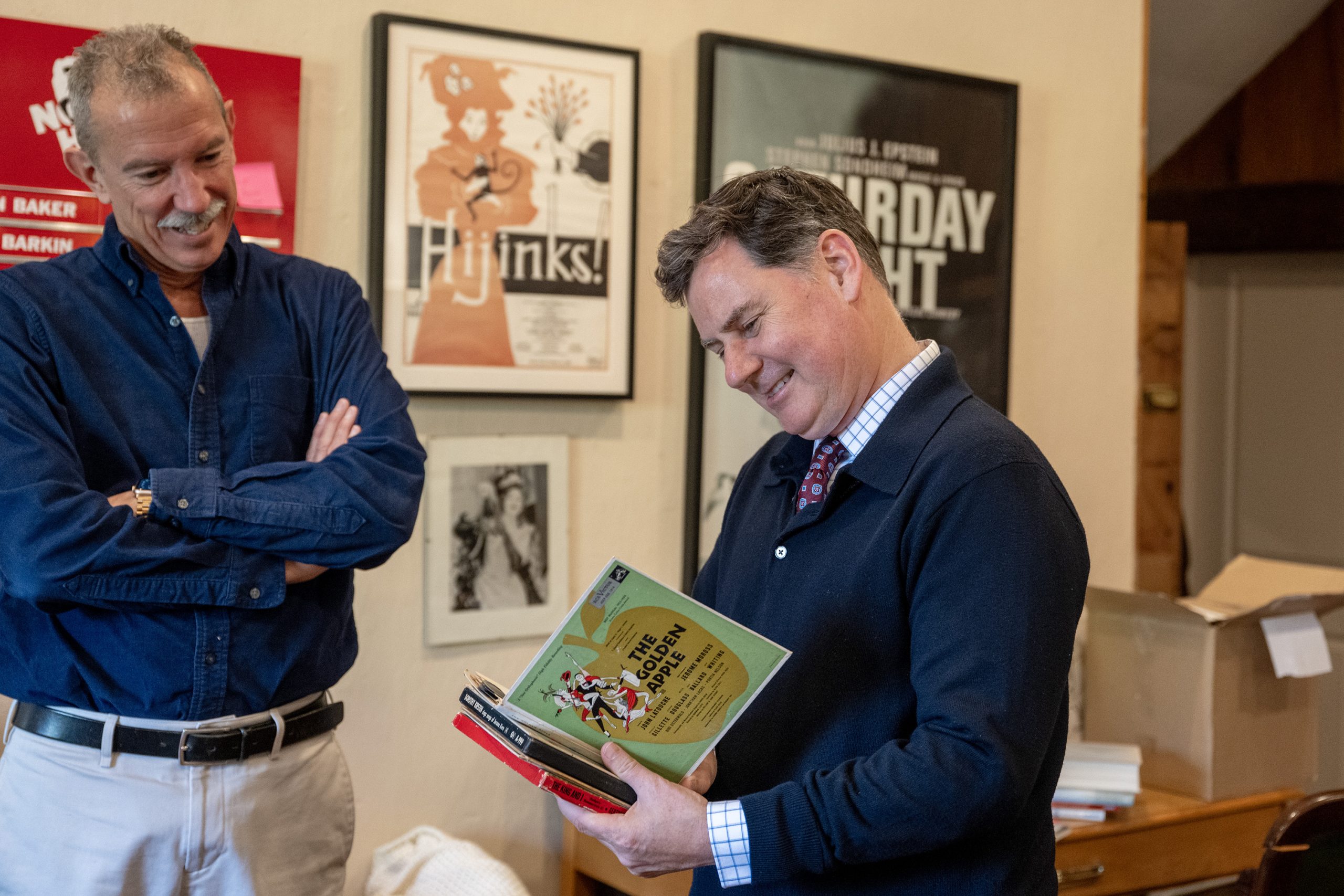
Alexander Fraser (left), outgoing producing director of the Bucks County Playhouse, clears out his office Tuesday, April 7, 2026, giving his old Broadway musical CDs to newly-appointed producing director BT McNicholl (right).Tom Gralish / Staff Photographer
With the “magic set in place,” McNicholl said he’s ready to accept the baton Fraser, Fiedler, and Goodman are handing off to him.
“We’re part of the relay race,” he said. “I’m taking the next step on the trajectory that they’ve set in motion.”
McNicholl intends to strengthen the “symbiotic relationship” between the New Hope theater and Broadway, not only by bringing New York artists to Bucks County, but also by nurturing in-house productions that end up on Broadway.
At the top of his priority list, however, is to listen to the community that Fraser helped rebuild and the longtime theatergoers who grew up attending the regional gem.
“My job as a steward is to continue that growth and expand upon it,” he said.
Fraser is confident McNicholl will make those strides.
“I learned early on to leave while on top,” Fraser said. “I’m really happy this all worked out. The theater is doing great and there’s a great person coming in after me.”
As for his last speech on Saturday, Fraser doesn’t have notes prepared. He’s usually an “easy crier,” he said, so a friend convinced him to place a rubber band on his wrist, and then snap it whenever he felt the tears coming.There’s no telling how many times he will flick the rubber band against his wrist.
He looks forward to the journey that lies ahead but doesn’t think about his legacy.