Tag: Bucks County

  • Before Ryan Richter became the Union’s interim manager, he was a hooper from Bucks County with Iverson-like swag

    Before Ryan Richter became the Union’s interim manager, he was a hooper from Bucks County with Iverson-like swag

    About two to three times a week, Ryan Richter will sit in front of reporters in the bowels of Subaru Park. His hair will be neatly combed to the side, his hands folded in front of him, with his shirt buttoned to the very top.

    The Union’s interim head coach will calmly discuss the game ahead, or the game just played, answering questions as anyone else in his position would. But every now and then, those watching from his hometown of Southampton, Bucks County, have to laugh.

    In some ways, this version of Richter is just like he was as a kid: driven, focused, thoroughly prepared. But aesthetically, it is completely different. Richter, a three-sport athlete at William Tennent High School, was captivated by NBA culture growing up, particularly Allen Iverson.

    He’d wear a headband during basketball games. He pierced both ears. He’d drive around Bucks County in a white Kia, with an enlarged Jumpman logo on its hood, and Sixers jerseys covering its seats.

    À la Shaquille O’Neal, Richter would give himself nicknames: “Shaq Daddy,” “Shaq-Daddy-Licious,” “Ric-Daddy-Docious.” Those monikers are long gone, but that side of Richter isn’t.
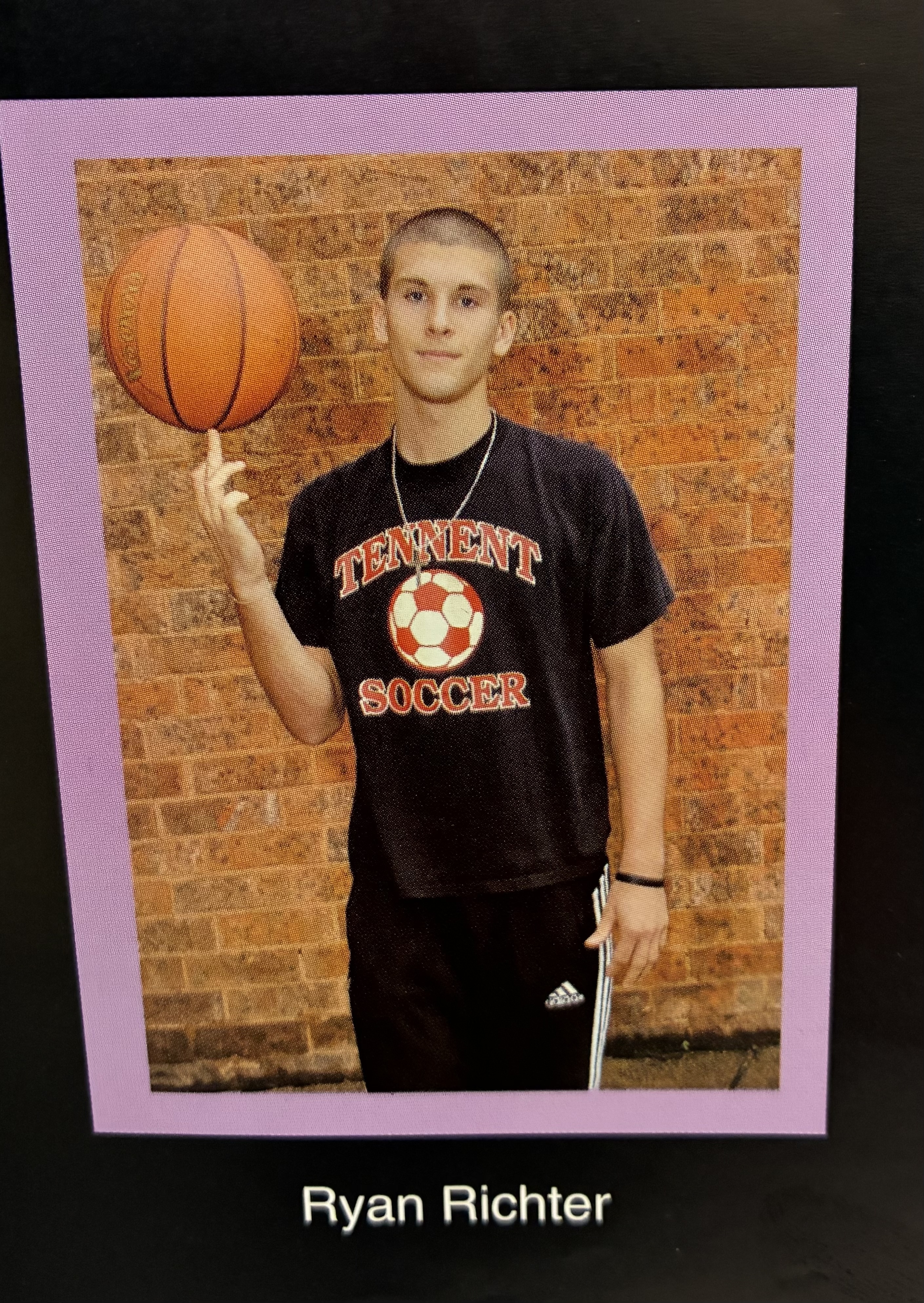
    Ryan Richter was a three-sport athlete at William Tennent High School, who parlayed his talents into a pro soccer career and now an interim role as the Union’s head coach. Courtesy / William Tennent H.S.

    “It’s like, I’m still listening to Get Rich or Die Tryin’ when I’m driving into work,” Richter said. “You know?”

    His high school basketball coach, Glenn Dolton, called this a “paradox.” Beneath the panache was a teenager who was confident, but not cocky. Hard-working, but also light-hearted, with a self-deprecating sense of humor.

    Treating pro soccer as a profession wasn’t a main goal. Richter was always immersed in the sport — his dad played at The College of New Jersey, back when it was known as Trenton State, and his grandfather played for a team in Warminster — but he also played basketball and football through high school.

    The Sixers were Richter’s favorite team, and Iverson his favorite player. Richter was in the building for Game 5 of the 2001 Eastern Conference semifinals, when The Answer dropped 52 points, and returned for the Eastern Conference finals against the Milwaukee Bucks.

    Before he was the Union’s interim head coach, Ryan Richter was the Atlantic 10 Player of the Year at La Salle University.Courtesy / La Salle Athletics

    A La Salle graduate, Richter was drafted by his hometown MLS team in 2011, began coaching for them in 2018, and has gradually worked his way up since.

    Now, the 37-year-old is at the helm, leading the Union from the worst record in the league to playoff contention. At the time of this report, the club hasn’t lost a league game under his watch. Players say the energy in the locker room has changed for the better.

    The soccer world might be surprised. But Southampton isn’t.

    “He knows what it takes to get the job done, and he does not like to lose,” his childhood best friend, Mike Pio Jr., said. “And, I mean, that’s pretty evident with how they’ve been doing so far.”

    A fierce competitor

    Some people hate losing more than they love winning. Richter says he’s the opposite, and has been that way since he was a child.

    He was competitive not just on the field, but in everyday life. If he was playing a game of Connect Four, he’d want to crush the opposition. He and his friends would hang out at the local youth center to jump into hotly contested pickup hoops games.

    Once, the teenagers joined an adult bowling league. They were the youngest members by about 20 years, but that didn’t quash Richter’s spirit.

    “The competitiveness was also there,” Pio said. “I think everybody else in that league was probably old enough to be our fathers.”

    A formative moment came in his freshman year of high school. Richter tried out for the junior varsity basketball and soccer squads, and failed to make either team. He got to work, and by sophomore year, made varsity in both sports.

    Ryan Richter (center) didn’t make the varsity team his freshman year at William Tennent. The next season, he made varsity in both soccer and basketball. Courtesy / William Tennent H.S.

    But he never forgot the feeling of being passed over — or the names of the students who passed him.

    “He still reminds me of that occasionally,” Dolton said, “that I should have brought him up. Which, looking back on it, I’m like, ‘Yeah, you may have a good point there.’”

    Coaches loved Richter, because he’d push his teammates as hard as he’d push himself. If a fellow athlete wasn’t hustling enough, he’d pull him aside or ask a higher-up to step in.

    Pio’s father, Mike Pio Sr., experienced this firsthand when he worked as an assistant soccer coach at Tennent.

    Union interim manager Ryan Richter not satisfied with landing in a playoff spot
    Video: Union interim manager Ryan Richter not satisfied with landing in a playoff spot

    “He expected his teammates to basically bleed the way he bled,” Pio Sr. said. “Even during practice, he would call people out.”

    Teenagers didn’t always love being challenged, but Richter had an affability which allowed him to break through. He was athletically gifted on the field, but didn’t take himself too seriously or act like he was better than anyone else.

    The hood-sized ode to Michael Jordan was evidence of this. So was a photo that Richter took with Pio Jr. when they were in high school. The two friends were at the Willow Grove Park Mall, in an Abercrombie and Fitch dressing room.

    Before he was the Union’s interim manager, Ryan Richter (right) was a three-sport athlete at William Tennent High School, with an affinity for NBA culture and swag.Courtesy / Mike Pio

    Images of models adorned the walls, and Richter and Pio Jr. wondered how easy that work must be.

    So, they tried it themselves, posing for a photograph that still hangs beneath a magnet on Pio Sr.’s refrigerator door.

    “It was like they were posing for GQ magazine,” Pio Sr. said. “Hilarious.”

    The teenager would set up silly challenges, like singing the national anthem before a basketball game, despite the fact that he was not musically inclined. And physical challenges, like improving his vertical so he could dunk in a game.

    Richter stood at 6-foot, but had smaller hands, which made it difficult to palm the ball. But he was determined. In a game against Abington, he finally got the moment he’d been waiting for.

    “He threw one down, and it was like the place exploded,” Dolton recalled. “It was like the greatest thing that ever happened. It was really funny.”

    Union interim manager Ryan Richter starred on William Tennent’s varsity basketball team.Courtesy / William Tennent H.S.

    Richter was recruited by several nearby soccer programs: Temple, Delaware, and Iona. But he ultimately chose La Salle because of its coaching staff.

    Head coach Pat Farrell’s rules were rigorous, but aligned with Richter’s already sky-high expectations. He noted that Farrell pushed him, personally too.

    “It was just the things that he emphasized,” Richter said. “About taking responsibility, about being a man and taking care of your school stuff, and staying out of trouble.

    “He’s not a guy of so many words, but he was just a father figure for everybody.”

    Before he was the Union’s interim head coach, Ryan Richter was the Atlantic 10 Offensive Player of the Year at La Salle University.Courtesy / La Salle Athletics

    Richter upped his work ethic to a new level in college. The striker showed up to practice an hour-and-a-half or two hours early. He’d train with the Ocean City Nor’easters, a USL League Two team, to stay in shape during the offseason.

    When he returned in the fall, he’d be ready for more. And by 2011, he was en route to a professional career.

    “He would say, ‘Do you want to do some extra [shooting], or do you want to do some skill work,’ like ball work and things like that,” Farrell said. “And we could never say no.”

    Bringing back that ‘Philly’ mindset

    Richter’s playing career with the Union was brief — only making an appearance in two international friendlies and 10 reserve league matches — but his time as a coach there has spanned nearly nine years.

    After playing professionally for seven years, Richter was hired by the Union in 2018 to work at their academy, serving in various development roles.

    In 2022, he was promoted to assistant coach of the Union, under then-head coach Jim Curtin, and in 2025, was named head coach of the Philadelphia Union II.

    Ryan Richter has held several roles within the Union, including former head coach of the club’s developmental team, Union II. Jonathan Tannenwald / Staff

    When Bradley Carnell was fired in late May, after a league-worst record of 1-10-4, and replaced with Richter, many current players were already familiar with him.

    The Southampton native had coached Cavan Sullivan since he was 8. Outside back Frankie Westfield had never played for Richter, but knew him through regular games of teqball and basketball with his teammates at the Academy.

    Centerback Neil Pierre started his season on a six-month loan to a team in Denmark. When he returned in July, he wasn’t sure what he’d find.

    He’d heard from teammates that the locker room was “losing its head.” But with Richter already having an established relationship with multiple players, it helped make Pierre’s immersion back into the squad smooth.

    “We were going through a tough time,” Pierre said. “I guess it wouldn’t be the same upbeat attitude. People wouldn’t be as into the culture. Kind of lost that ‘Philly’ mindset. And I think when [Richter] came back, he just brought it back.”

    Ryan Richter (left) greets Union midfielder Quinn Sullivan during a recent match.Elizabeth Robertson / Staff Photographer

    Richter’s Bucks County tendencies are never too far. He has been known to challenge other coaches on the basketball court. He is still a massive Sixers fan, and gleefully shared the news of LeBron James coming to Philadelphia after a Union practice in July.

    But perhaps the biggest way his upbringing shines through is in his approach to younger players. Sullivan is only 16, but a teenage phenom who is bound for Manchester City when he turns 18.

    In an Aug. 19 match between the Union and Inter Miami, Sullivan defended his brother, Quinn, after defender Ian Fray stepped over him and pushed his head down.

    Cavan ran over, and got in a scuffle that instantly became the story of the game. He received a red card (later rescinded).

    Cavan Sullivan and Richter talked about the incident two days later. The head coach told him that he did nothing wrong, but to remember that he draws scrutiny like nobody else on the roster.

    And that if he does act up, it’ll become international news.

    “I always try to keep in mind of where some of the younger guys are at, and remember what I was like,” Richter said. “When I was 16, I was driving around with a Jordan logo on my car, and who knows what kind of trouble I was getting in.

    “That’s why I think Cavan is such an amazing kid; because of the pressure that he has to deal with, and the spotlight that’s always on him. Could you deal with that when you were 16?”

    Richter, seen here with Union teen midfielder Cavan Sullivan, says he tries to remember himself at a young age in order to keep his players, many of whom are still in their teens, focused on the team’s mission.Yong Kim / Staff Photographer

    Learning soccer on the fly

    Richter’s friends did not grow up diehard soccer fans. Like most Philadelphians, they are all-in on the Eagles and the Phillies; maybe some basketball and hockey, too.

    His new role has served as a teaching moment for everyone. Last month, a group of Southampton natives went to Subaru Park for a game against Atlanta United. They were stunned by what they saw: Union goals in 96th and 97th minute, en route to a 3-2 comeback win.

    “They’re like, ‘Soccer is amazing!’” Richter said. “It’s like, ‘This is a one-in-a-thousand game that you guys saw tonight.’”

    Nevertheless, the head coach’s buddies have since tuned into to every press conference and every match, home or away. They’ve been filling his group chat with lots of “DOOP” and other words of encouragement.

    Ryan Richter says his approach is solely game by game and isn’t taking too much stock in the success the Union have had since he took over as interim manager. Isaiah Vazquez / For The Inquirer

    They’re also provided some friendly, albeit superstitious, advice.

    “One of our buddies just texted this morning,” Pio Jr. said “He goes, ‘I changed my mind. I don’t think they should remove the interim tag, because you’re doing way too good with it.’”

    Richter’s friends have nine more games to learn; maybe more, if the Union make the playoffs. But regardless of how this season ends, his community will continue to be proud of him.

    A local kid, who once patrolled Bucks County, is now patrolling the sidelines of Subaru Park — and doing a good job, at that. The headband and earrings may be gone, and so is the White Kia.

    But somewhere, beneath his outward professionalism, is that same Iverson-loving teenager; better known not as Ryan Richter, but as a “licious” or a “docious.”
  • After 25 years, hers is the 9/11 story I can’t let go of

    After 25 years, hers is the 9/11 story I can’t let go of

    In the weeks after the Sept. 11, 2001, terror attacks, I went to New York to report on a story about Johanna Sigmund, a young woman from Wyndmoor who perished after one of the hijacked planes rammed the north tower.

    Over the course of my career, I’ve spent more time than anyone would want writing pieces about people whose lives were cut short prematurely. One of the most memorable was Johanna, whose story and positive spirit remain seared into my soul.

    Johanna’s parents invited me, a stranger, into their home at their worst hour. They took the time to tell me about their only daughter, and shared photograph after photograph after photograph — Johanna smiling after she ran the New York City Marathon, Johanna posing with her girlfriends at a wedding, and so on.

    One image stood out.

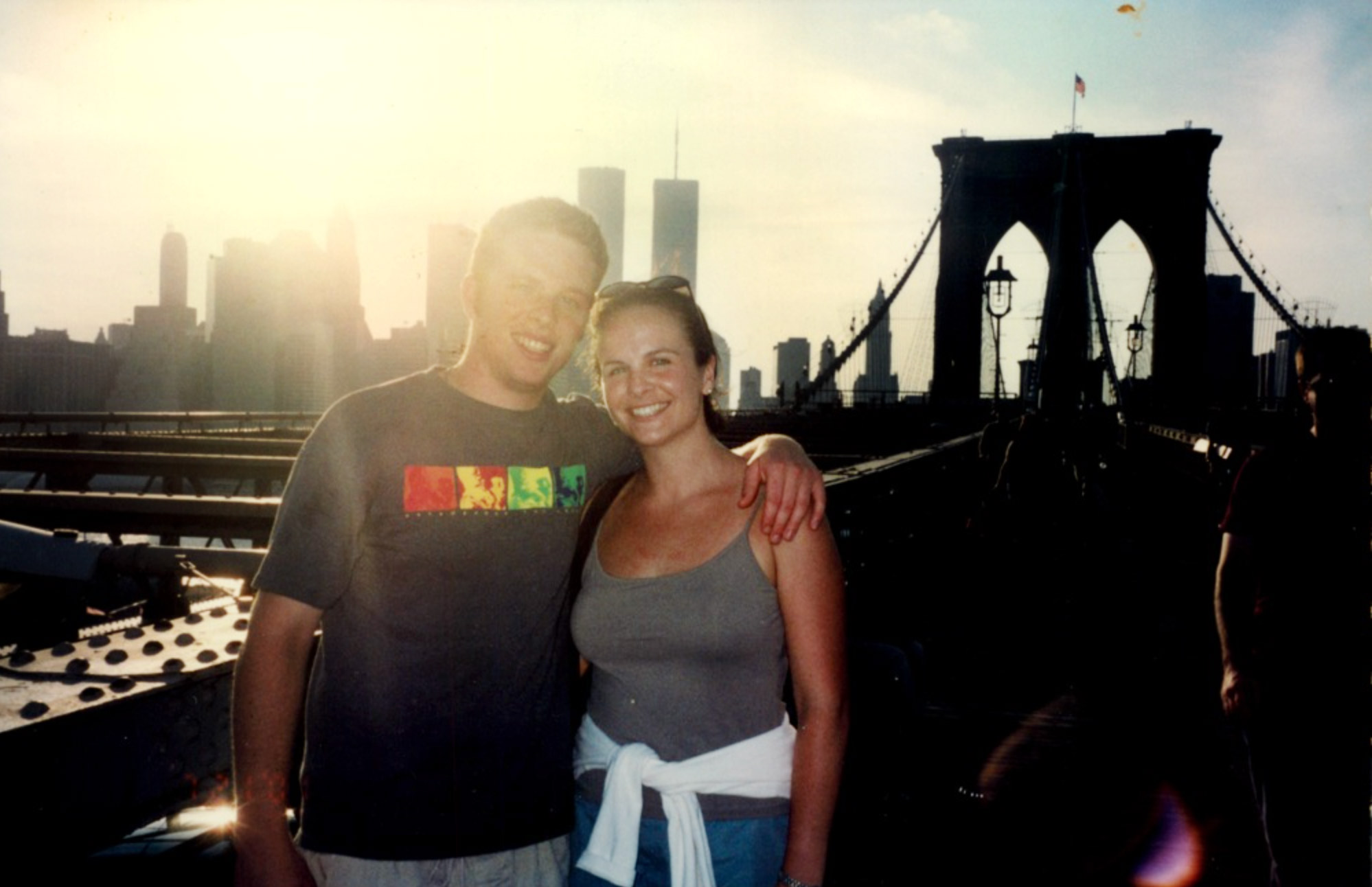
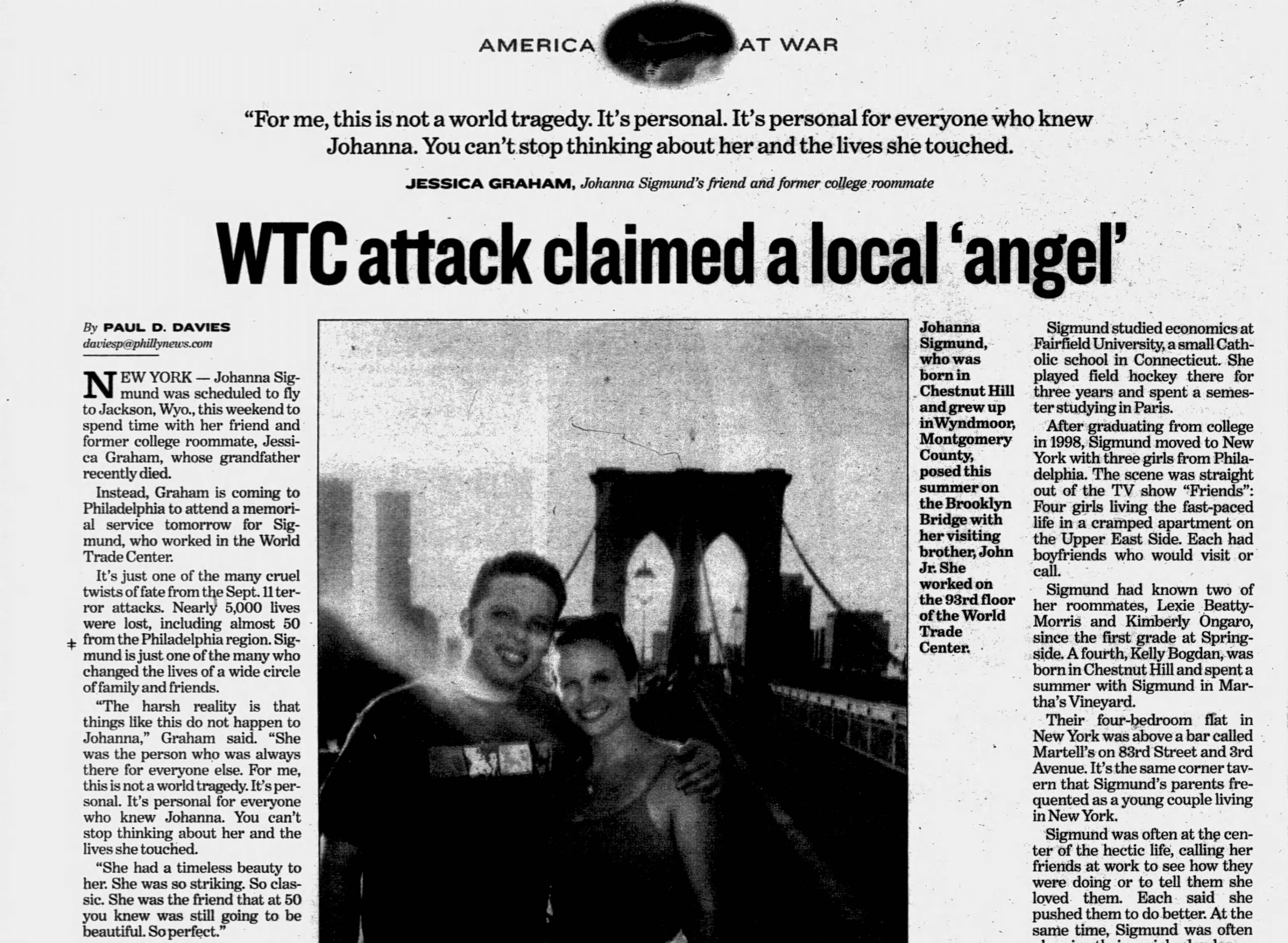
    It was a photo of Johanna, 25, and her brother, John, 23, smiling while standing arm in arm at the foot of the Brooklyn Bridge. The photo was taken two months before the terror attacks. In the background loomed the twin towers.

    An article by Paul Davies about Johanna Sigmund in the Oct. 19, 2001, edition of the Daily News.Staff

    Johanna’s story has stuck with me for a quarter century, but her life is emblematic of the promise and potential of so many others who were lost. At least 40 people with ties to Philadelphia and its western suburbs were killed in the attacks, including 18 from Bucks County, 11 from Montgomery County, five in Chester County, eight from Delaware County, and three from Philadelphia. It may be impossible for any of us to fathom how many other lives were forever impacted by the horrors of that day.

    I wondered how Johanna’s family and friends had fared over the years.

    So much has been lost in the 25 years since 9/11. Johanna would have turned 50 on the first day of summer — the longest day of sunlight. Her elegant beauty remains frozen in time, and — all these years later — her life remains a catalyst for good.

    A scholarship fund set up in her name continues to help students attend St. Malachy School in North Philadelphia, as well as another at her alma mater, Springside Chestnut Hill Academy.

    Johanna packed a lot into her brief time here. She was the captain of the field hockey, lacrosse, and squash teams in high school. She studied economics and played field hockey at Fairfield University, and spent a semester in Paris before moving to New York in 1998 with three friends from Philadelphia.

    When I met with Johanna’s roommates a few weeks after the attack, they shared stories of her love of cooking, dancing, and listening to U2, often replaying the song “Stuck in a Moment You Can’t Get Out Of” that begins, “I’m not afraid of anything in this world.”

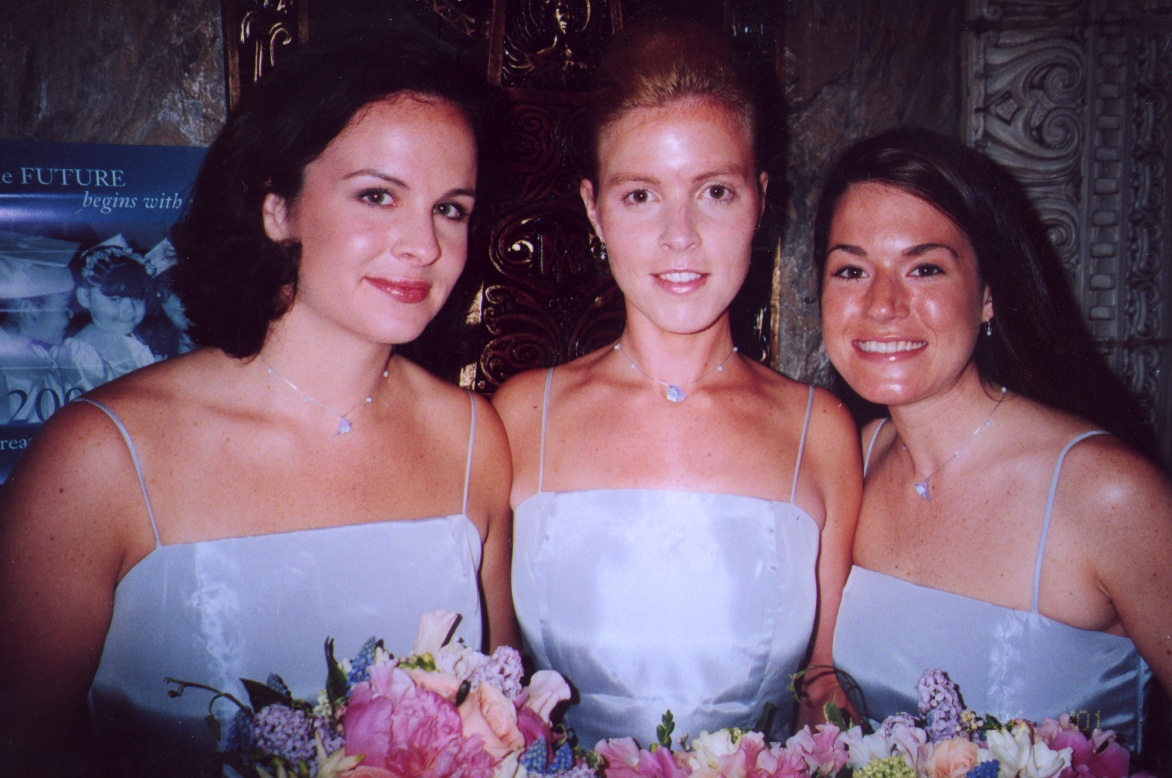
    From left: Johanna Sigmund, Rory McDevitt, and Kim Ongaro were all bridesmaids at the wedding of their friend, Lexie Beatty, in May 2001. Sigmund was one of the victims in the 9/11 attacks.h

    Johanna cared for others. She distributed pizza and McDonald’s to the homeless people in her neighborhood. She helped a woman who was thrown from a taxi get to a hospital. Johanna spent the night by her side and returned home in the morning with blood on her clothes.

    Kimberly Ongaro, a roommate and friend from Springside, called her “an angel.”

    The toughest interview in the weeks after the attack was with Johanna’s boyfriend, Joe Bonavita. They had dated for several years and had discussed marriage.

    Their final weekend together was a whirlwind. They went to the Yankees game Friday night and drove to the U.S. Military Academy in West Point, N.Y., on Saturday, met up with friends, attended the Army football game, and walked through the cemetery for soldiers, which included Gen. George Armstrong Custer.

    On Sunday, Johanna competed in a 5K race down Broadway before continuing on as part of her training for the Philadelphia Marathon. She and Joe shared dinner that night.

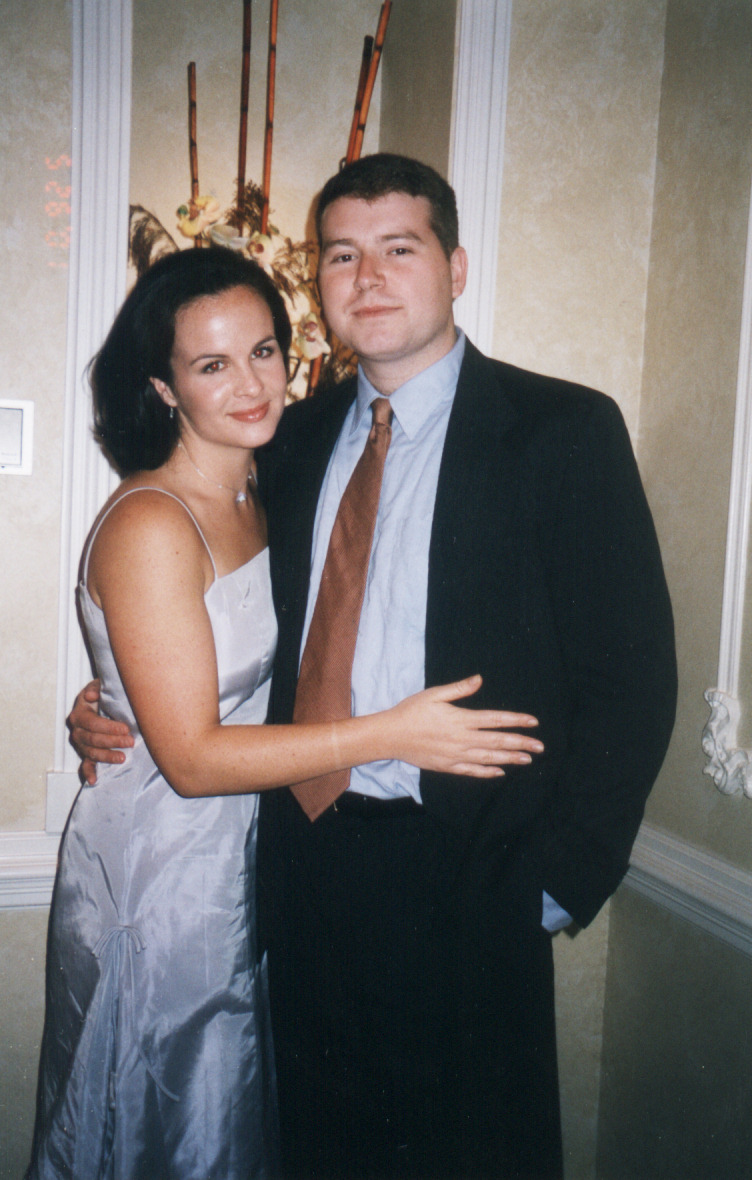
    Johanna Sigmund and her boyfriend, Joe Bonavita, at the wedding of her friend Lexie Beatty Morris.

    Johanna did not feel well on Monday, but went to work. When she was still under the weather on Tuesday — Sept. 11 — Joe urged her to stay home.

    But she went into the office at an investment firm on the 93rd floor of the north tower.

    Joe worked near the Trade Center. As he exited the subway, he saw the first plane smash into the north tower.

    A life upended

    I located her brother, John, and emailed him. He responded a few minutes later and graciously agreed to speak. When we connected after 25 years, it almost felt like old friends catching up.

    John told me how 9/11 upended his life.

    He had planned to move to New York after college, but lost interest after the attack. He visited ground zero to commemorate the first anniversary. President George W. Bush greeted families, including John’s aunt, who offered veiled advice regarding the plans to invade Iraq. “I hope you are making a prayerful decision,” she told the president.

    Bush was taken aback, but continued shaking hands before circling back to tell John’s aunt that he prayed every day.

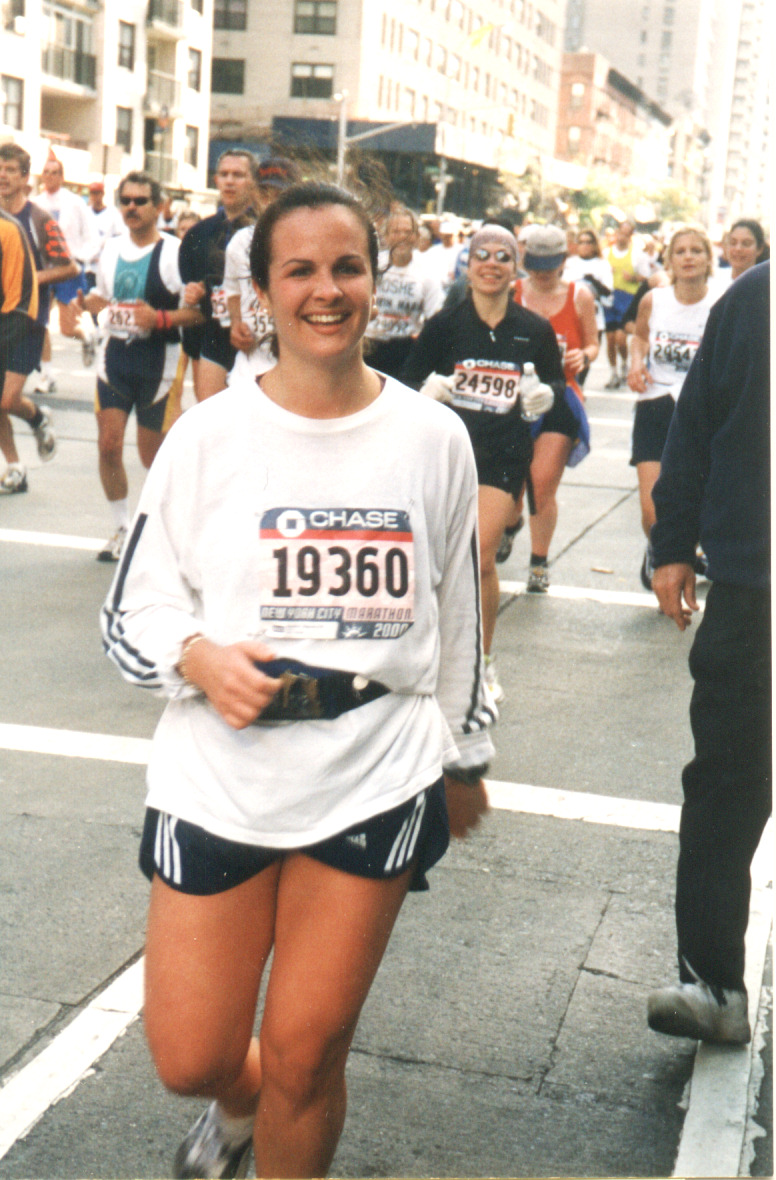
    A photograph of Johanna Sigmund running in the New York City Marathon in November 2000.

    After college, John, a Spanish speaker, spent a year with AmeriCorps teaching literacy to second graders in Kensington. After he explained to one class’s teacher why he wanted to take off for the anniversary of 9/11, she had her students write notes of support. John was struck by how many kids shared stories of loved ones they had lost to violence.

    “Everyone has their 9/11,” he said.

    Along the way, we all pay a price. Some more than others. But how one responds is a lesson for all as we navigate these trying times 25 years after 9/11.

    John said he wonders how his life would have been different if not for Sept. 11. After a year teaching in Philadelphia, he moved to Texas, in part to get away. He earned a master’s degree in art education at the University of Texas in Austin before going on to teach at Say Sí, an after-school arts program in San Antonio.

    John’s attempt to get away brought him back to New York. One of his students won an art award that included a trip for the student and teacher to Carnegie Hall. The artwork was displayed at the Winter Garden located near ground zero in May 2010.

    “My heart sank,” John said. “I didn’t want to go anywhere near ground zero.”

    Even then, nearly a decade after the towers fell, ground zero remained little more than a giant pit with the Freedom Tower slowly rising alongside it. In a macabre daily scene, tourists jammed the sidewalks, gawking and posing for pictures in front of what John could only see as a mass grave, while street hustlers sold photos of the hijacked planes crashing into the towers.

    John tried to maintain his composure as he made his way through the gauntlet to the Winter Garden, but a man stepped in front of him and tried to sell him a fiery photo from the attack.

    John snapped. He grabbed the stack of photos from the man, threw them in the air, and cussed him out. The two got into a tussle. After the fracas, John tried to gather himself by channeling his sister’s unflappable spirit.

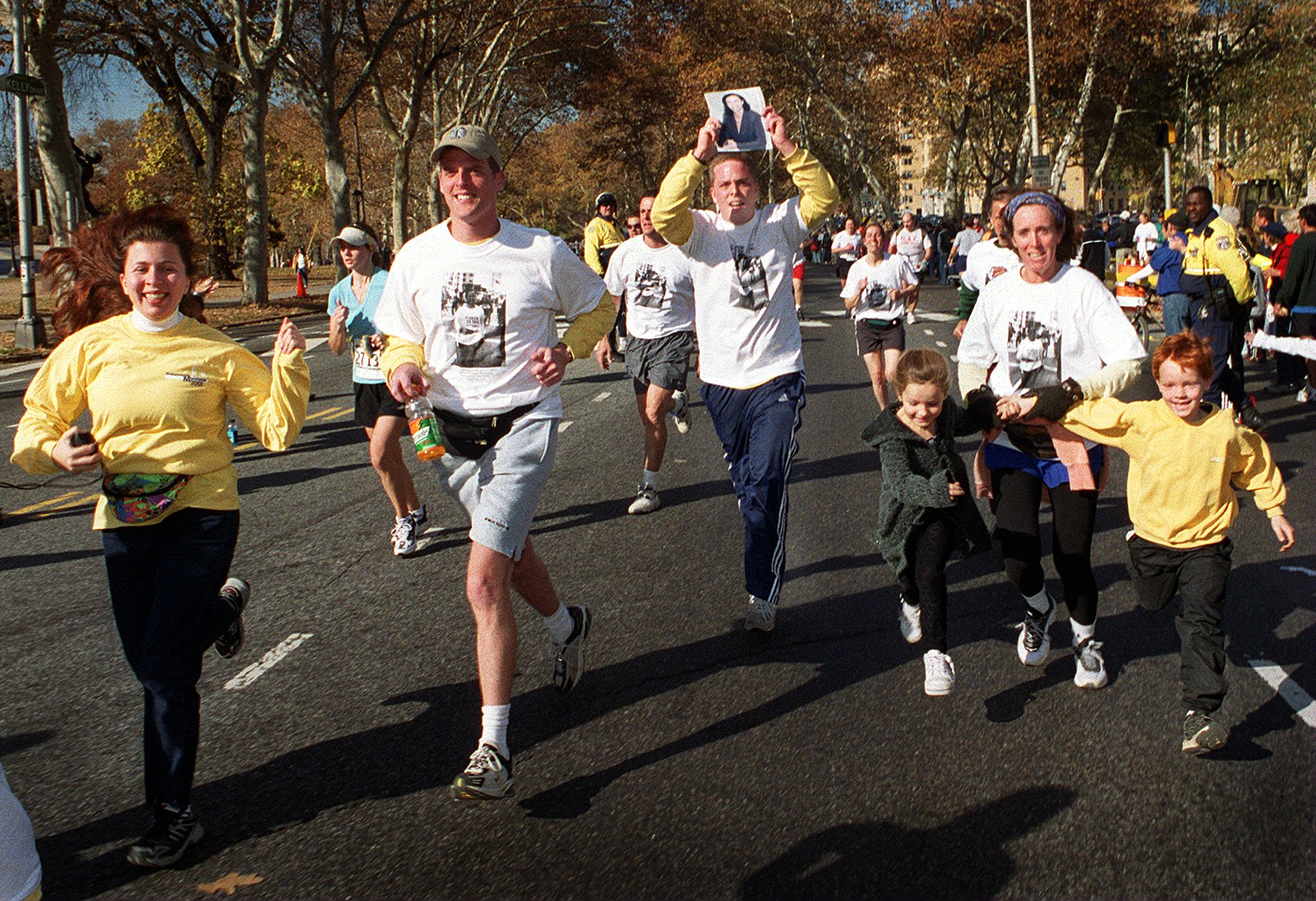
    John Sigmund (center) holds a picture of his sister, Johanna, as he and his family run down Kelly Drive toward the finish line of the Philadelphia Marathon in November 2001.d

    “Johanna, help me,” he said to himself while overlooking ground zero. “I need to get it together.”

    ‘Beyond coincidence’

    John calmed down and carried on. After the event, he met friends at a nearby bar. John was telling them about the run-in with the street hustler when he suddenly saw Johanna’s old boyfriend, Joe Bonavita, across the bar.

    Joe had moved to New Orleans but, in a twist of fate, was in town for a 9/11 event. The two were not close but quickly bonded. John viewed the reunion as his sister’s handiwork.

    “Some things are beyond coincidence,” he said.

    Eventually, John did move to New York. The city helped him better find himself. After years of worrying about disappointing his parents or adding to their suffering, John told them he was gay. His parents, who have a deep Catholic faith, were supportive.

    Twelve years ago, John returned to Philadelphia and fell in love with the city, and especially Fairmount Park.

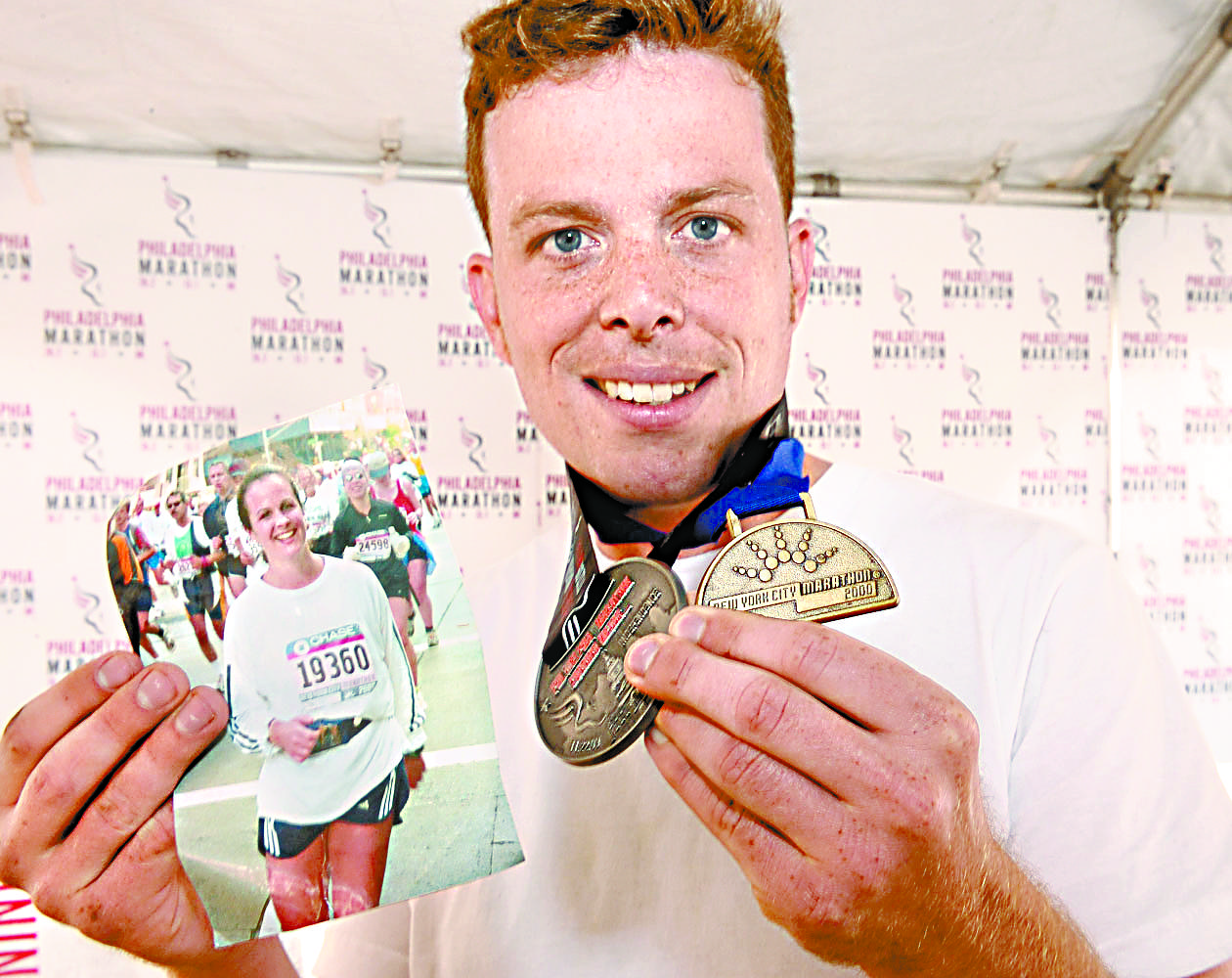
    After running the Philadelphia Marathon in November 2001, John Sigmund holds a photo of his sister, Johanna, and wears two medals around his neck — one he earned after finishing the race and another his sister won after completing the New York City Marathon in November 2000.Courtesy of Tony Webb / Office of the City Representative

    But tragedy struck again in September. Three days after the 20th anniversary of 9/11, his father died.

    For John, September remains the cruelest month. But he credits a strong support network of cousins and friends for helping him navigate life’s challenges — and added that Johanna always feels close by.

    “I have a thing with the wind,” John said. “When I think about her, the wind will kick up.”

    After losing his sister and father in September, John and his partner, Jaime, decided to add some positivity to the month. They got married last Sept. 26 and are planning an anniversary party in a couple of weeks.

    Expect a comforting breeze.

  • In a shift, Bob Harvie calls for data center moratorium in new TV ad in race against Brian Fitzpatrick

    In a shift, Bob Harvie calls for data center moratorium in new TV ad in race against Brian Fitzpatrick

    Democrat Bob Harvie released his first general election TV ad Thursday morning, calling for a moratorium on artificial intelligence data center development and attacking U.S. Rep. Brian Fitzpatrick (R., Bucks) for his stance on the issue.

    “I don’t want any more data centers. I want a moratorium. Big tech owns enough; they shouldn’t own our congressman, too,” Harvie says in the 30-second ad.

    The ad marks the first time the congressional candidate and Bucks County commissioner has called for a moratorium and signifies a shift in his position.

    Previously, in an interview with The Inquirer last week and on his website, Harvie had called only for strict regulations on development. To focus his first major television ad on the topic shows how the projects are becoming a top issue for voters in Bucks County’s swingy 1st Congressional District amid a national backlash against data centers.

    As residents across the state protest proposed data centers in their communities, political candidates and elected officials have been taking — and sometimes changing — their positions. In August, Gov. Josh Shapiro shifted from his original stance and signed a sweeping executive order to increase restrictions on data center development.

    In Bucks County, both Harvie and Fitzpatrick have to grapple with the development of an Amazon data center in Falls Township, which is nearing completion.

    Harvie, who lives just miles from the project, voted in December 2020 to approve a county tax break for NorthPoint Development, the property owner of the Falls Township site.

    Last year, Harvie celebrated Amazon’s investment in the data center and Fitzpatrick called it “one of the most transformative investments Bucks County has seen in decades.” More recently, they both supported Shapiro’s executive order.

    In Harvie’s television ad, images of Elon Musk and Mark Zuckerberg flash on the screen. “Big tech is taking over our lives,” the candidate says in the ad. “And they want more. Grabbing our land, water, electricity, and sticking us with the bill.”

    Harvie also targeted Fitzpatrick’s initial vote for the One Big Beautiful Bill Act in the House last year, which included a provision that would ban state or local governments from enacting limiting or regulating AI systems and models. (Fitzpatrick voted against the final version of President Donald Trump’s bill, citing changes in the U.S. Senate that increased cuts to Medicaid. The final version did not include the controversial AI provision.)

    Heather Roberts, a spokesperson for Fitzpatrick’s campaign, said in a statement that the Bucks County Republican has always been supportive of “uniform federal regulations” and “100% control by local residents who could be impacted.”

    She also pointed to his cosponsorship of two bills aimed at regulating the effects of data centers: the Ratepayer Protection Act and the Data Center Transparency Act.

    “Bob Harvie literally created this problem in our community — and he is now well aware of the massive albatross that this is around his neck. Hence, his latest lie in this ad,” Roberts said.

    Fitzpatrick has also released a digital ad targeting Harvie on data centers.

    In an interview about data centers last week, Harvie did not call for a moratorium on the projects, but rather for strict regulations — as is also reflected on his campaign website. He also touted tasking the county planning commission with developing guidelines for municipalities facing potential data center proposals.

    When asked last week why he had not called for a moratorium, Harvie said: “I think there’s probably areas in the country where data centers can make sense, where the energy grid can handle it, where there’s limits to it on the impact it could have on other people who might live in the area.”

    “But I do think certainly we need to have a lot of cause for concern about how rapidly this is happening and making sure we can put some kind of handle on it,” he added.

    He also echoed residents’ environmental concerns related to data centers and said that the developments need the increased oversight outlined in Shapiro’s executive order and that projects should not continue if the local community opposes.

    Nine days later, Harvie said Thursday in another interview with The Inquirer that the decision for a moratorium did not come “out of left field for me” but was the product of many conversations amid what he says is a “complete failure of leadership” by Trump and Republicans, including Fitzpatrick, on the issue.

    Of his 2020 vote to give NorthPoint a tax break, he said there was not an indication that the property was going to be used for data centers, but rather for e-commerce distribution.

    He said that he is not set on one particular time frame for the moratorium but that “setting up guardrails” is most important, and he hopes a Democratic-controlled Congress would further hold hearings on imposing a moratorium.

    “As we’ve seen more and more of what’s going on around the country with data centers just trying to gobble up space and build, build, build without any regulation, I’ve come to the point now where we have to do something to slow down this genie getting out of the bottle,” Harvie said.

  • Why Democrats’ priorities shifted from abortion to affordability in Bucks County’s key midterm races

    Why Democrats’ priorities shifted from abortion to affordability in Bucks County’s key midterm races

    In what might have been unheard of just two years ago, the Democrat in Bucks County’s key congressional race does not mention abortion or reproductive rights by name on his campaign website.

    Instead, Bob Harvie, the county commissioner challenging U.S. Rep. Brian Fitzpatrick (R., Bucks) in the crucial 1st Congressional District race, largely highlights affordability issues, like tax cuts for the middle class and raising the minimum wage, on his list of 12 priorities.

    It’s not that Harvie is suddenly against abortion — he has been vocal about his support for reproductive rights — but it exemplifies a broader shift in how Democrats are fine-tuning their message for must-win races in the county this fall.

    Once a top-line issue for Democratic candidates in Bucks — one of the swingiest counties in Pennsylvania — discussion of abortion and reproductive rights has faded into the background in local political campaigns in favor of issues related to the economy and the cost of living.

    “People [are] feeling that right now they’re living in an America that’s not fair for them,” Harvie said.

    The issue has also been so far been absent from Fitzpatrick’s campaign and his website. The Republican currently holds a moderate view on abortion, though he has previously voted for restrictions.

    For Harvie, discussions surrounding access to affordable healthcare — which is his No. 1 listed campaign priority — includes abortion. All of these issues reflect a broader struggle, he argued.

    “They’re losing their rights, they’re losing their power over their own futures, they’re losing the American dream, all of that is combined,” Harvie said.

    It’s a noticeable shift from Fitzpatrick’s last challenger Ashley Ehasz’s strategy in 2022 and 2024 when abortion and reproductive rights served as the focal point in both of her campaigns, which followed the backlash to the U.S. Supreme Court’s decision to strike down Roe v. Wade in 2022.

    She lost to Fitzpatrick in both elections, the second time by a wider margin than the first.

    “Folks are pretty pragmatic when it comes to the politics here, and if something isn’t working, we’re not going to just keep doing it over and over again,” said Kierstyn Zolfo, co-leader of the progressive group Indivisible Bucks County, which supported Ehasz and is now backing Harvie.

    Pennsylvania voters’ overwhelming disapproval of President Donald Trump and his handling of economic-related issues, as highlighted in a recent Inquirer/New York Times/Siena University poll, offers Democrats an opportunity as they target key state Senate seats in addition to the congressional contest.

    “The point is to move the needle with the voters,” Zolfo said.

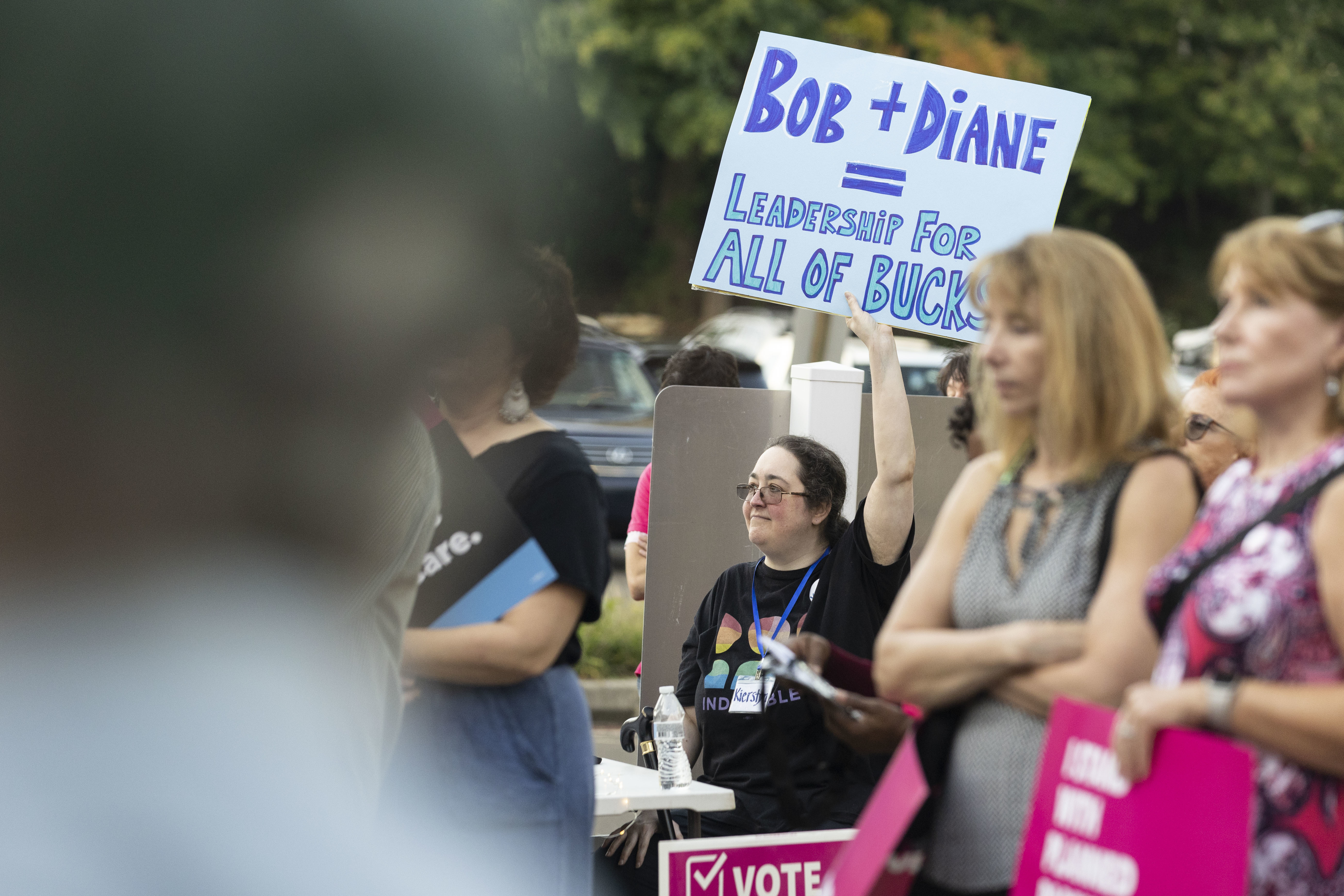
    Kierstyn Zolfo, from Indivisible Bucks County, holds a sign that reads “Bob + Diane = Leadership for All of Bucks,” during a rally outside of the Middletown Township Police Department and Administrative Offices in Langhorne on Oct. 5, 2023. Harvie was running for county commissioner.Monica Herndon / Staff Photographer

    How abortion became a ‘dormant’ issue in the midterms

    The League of Women Voters of Pennsylvania has thousands of volunteers and members talking to voters across the state ahead of the midterm elections.

    And leaders of the nonpartisan organization are hearing very little about reproductive rights. Instead, they’re getting feedback on crucial cost-of-living issues and concerns about democracy.

    Abortion has become a “dormant” issue, said Amy Widestrom, executive director of the League of Women Voters of Pennsylvania.

    “Nobody’s coming to us saying I need talking points on reproductive health in Pennsylvania,” Widestrom said.

    The shift reflects a national trend, with ads related to abortion drastically receding amid Democrats’ focus on bread-and-butter issues, NOTUS reported.

    The midterms are mainly about serving as a “referendum” on Trump’s economic agenda and foreign policy, said State Sen. Steve Santarsiero, chair of the Bucks County Democrats, though reproductive rights “must always be a central plank” of the party and its candidates, noting that majority of the country support a woman’s right to choose.

    “Affordability is really the key issue, so you would expect candidates to talk about that, and then you know they’re obviously going to talk about other issues as well, and abortion rights would be one of those,” said Santarsiero, who is also up for reelection this year.

    In The Inquirer/New York Times/Siena poll, Pennsylvania’s likely voters in November’s gubernatorial election between Shapiro and Republican challenger Stacy Garrity indicated that the economy and the cost of living were the two most important issues.

    Abortion was ranked fourth.

    Democrat Eileen Hartnett Albillar, a social worker and the county’s clerk of courts who is running to unseat state Sen. Frank Farry in the 6th state Senate district, said she doesn’t see abortion and the economy as “competing issues,” though conversations with voters have primarily focused on making ends meet. People, she said, will engage in discussion over protecting abortion rights and related topics if she raises the issue.

    “They want to protect reproductive freedom,” Hartnett Albillar said. “But you know, the cost of living is just so incredibly crushing for so many people. Just because they’re quiet about it, doesn’t mean it’s not important.”

    Reproductive rights took center stage in the 2022 election after several GOP-led states enacted restrictions on abortion following the Supreme Court’s decision to overturn Roe v. Wade.

    In Pennsylvania, the issue helped motivate voters to turn out for Democrats Josh Shapiro and John Fetterman in the contests for governor and Senate. But as the procedure remains protected in the state under Shapiro, the topic has faded from focus.

    Lehigh County Controller Mark Pinsley, a Democrat who is challenging GOP State Sen. Jarrett Coleman in the 16th district straddling Bucks and Lehigh Counties, still believes reproductive rights can motivate voters. But while he thinks his party doesn’t talk about abortion enough, he acknowledged the dynamic is different now than it was then.

    “I think you could win on that issue by itself,” Pinsley said. “I don’t think that’s true in the moment.”

    Brianna Twofoot, vice president of organizing, elections and campaigns at Planned Parenthood Votes, said abortion and reproductive rights still matter to voters even if it’s not taking center stage this year.

    “We’re not asking for anyone to make abortion or reproductive healthcare the number one issue, but we do think that voters want to hear about it,” Twofoot said. “And we do think that elected officials should be standing publicly on the issue.”

    But any discussion of abortion will come amid what’s shaping up to be an apparent rebrand of the topic, folded into conversations about access to basic needs.

    Signe Espinoza, executive director at Planned Parenthood Pennsylvania Advocates, said it’s key to look at reproductive rights through the lens of affordability, especially if health centers are defunded or closed.

    “If Planned Parenthood doors close, where are you going to get your healthcare?” said Espinoza, whose organization is planning some days-of-action in Bucks. “It’s going to become more expensive. Everything’s going up.”

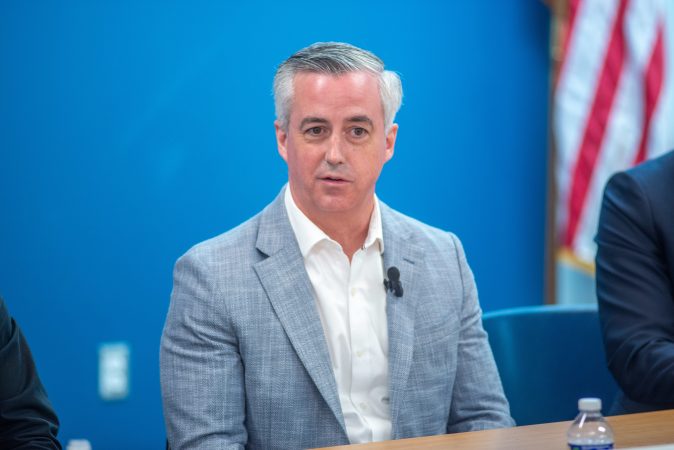
    Bucks County Commissioner Bob Harvie hosts a veterans roundtable in May at Middletown Township Building in Langhorne.William Thomas Cain / For The Inquirer

    How is the issue playing out in Harvie vs. Fitzpatrick?

    Past elections in the Bucks County swing district have shown the abortion argument does not work against Fitzpatrick, who has been known to survive blue wave after blue wave.

    Harvie, a twice-elected county commissioner backed by groups like Reproductive Freedom For All and Planned Parenthood Action Fund, said voters in the district already know where he and Fitzpatrick stand on abortion. The Democrat criticized Fitzpatrick and the Republican Party for supporting “pretty extreme restrictions on abortion.”

    “I think that’s the reason why you’re not hearing it very much because everybody knows the positions and knows who’s on what side,” Harvie said.

    Heather Roberts, a spokesperson for Fitzpatrick, said the Bucks County Republican has long supported “full reproductive freedom” for the first five to six months of pregnancy, as is outlined by Pennsylvania law.

    “We also note that the Congressman’s position is the position held by the overwhelming majority of PA-1 residents,” Roberts said.

    His campaign also noted Fitzpatrick’s backing of legislation in recent years that aimed to protect the right to cross state lines for an abortion as well as bills that protect access to contraception and in vitro fertilization and support of pregnant workers and women’s rights.

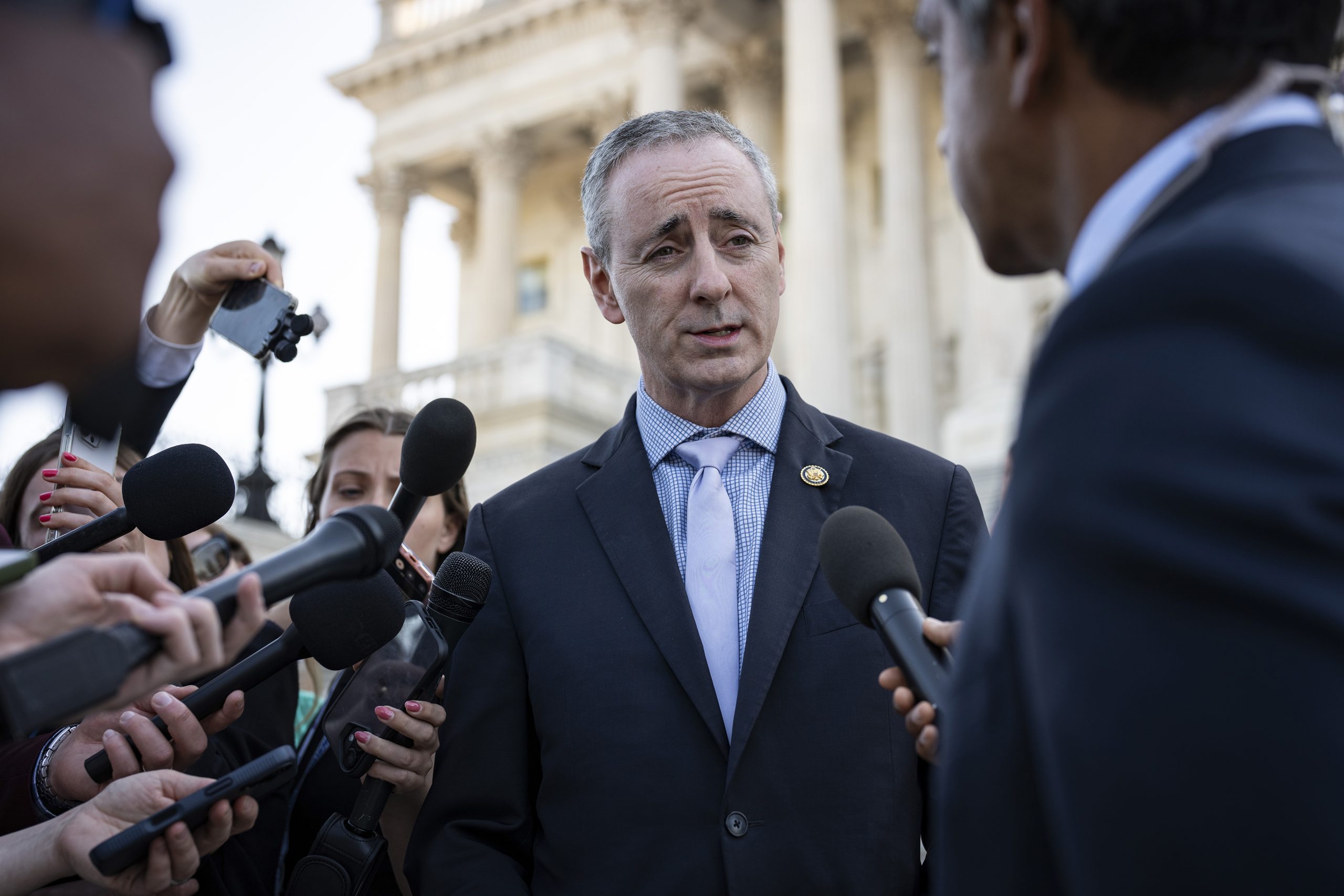
    Rep. Brian Fitzpatrick (R., Pa.) speaks to reporters on June 3 on Capitol Hill after the House passed an Iran war powers resolution.Haiyun Jiang

    But he has also voted for abortion restrictions, including a 20-week abortion ban in 2017 and twice against the Women’s Health Protection Act, which would have codified protections to access abortion into law.

    The issue is absent from Fitzpatrick’s campaign website, which does not reference abortion in sections about healthcare or empowering women.

    Widestrom, the executive director of Pennsylvania’s League of Women Voters, said Fitzpatrick has found a way to “neutralize” issues related to his position on abortion by continuing to win races where his opponents wage such arguments and refraining from touting a “hardcore pro-life” agenda.

    “By not staking a claim, by not talking about it, it loses saliency in voters’ minds,” Widestrom said.

  • An airman stationed in Dover raped a Bucks County teen he met on Snapchat, prosecutors say

    An airman stationed in Dover raped a Bucks County teen he met on Snapchat, prosecutors say

    Dylan Drake Williams knew the girl he had befriended on Snapchat was 15. But that didn’t stop him, federal prosecutors said Friday, from asking her how badly she wanted to be kidnapped, and whether she would be his “sex slave.”

    And Williams, an airman stationed at Dover Air Force Base, eventually followed through, according to court filings. He drove to the girl’s Falls Township home Aug. 20, instructed her to leave her phone behind and delete some of the incriminating text messages, and took her to his home, where, the girl told police, he raped her.

    Williams, 27, has been charged in U.S. District Court in Delaware with coercion and enticement, transportation with intent to engage in criminal sexual activity, and travel with intent to engage in illicit sexual conduct. Prosecutors in Bucks County have filed a parallel case, in which he faces similar charges, including unlawful contact with a minor and corruption of minors.

    He also faces a third, separate investigation in Kent County, Delaware, where he is charged with rape.

    Williams will remain in federal custody ahead of a detention hearing later this month, according to court records. Neither his federal attorney, Conor Wilson, nor the attorney representing him in Bucks County, Ellis Klein, returned calls for comment.

    The girl told police she began messaging Williams in April, according to the affidavit of probable cause for his arrest. He knew she was underage, she said, but asked her to send him explicit photos of herself, which he returned in kind.

    Eventually, Williams arranged to meet the girl in Bucks County, and drove to a basketball court not far from her home, the affidavit said. There, Williams coerced the girl to perform a sex act in his car.

    Afterward, the two continued to exchange sexually charged messages. In early August, Williams asked the girl if he could see her again, telling her he wanted “to take ownership” of her and was planning to drive to her home to pick her up in the middle of the night.

    As they planned the meeting, the girl, fearful, asked Williams if he was going to kill her, but he reassured her, telling her he genuinely liked her, and that she “was brave for doing this.”

    Before dawn on Aug. 20, the girl left her home through her bedroom window and walked to Williams’ nearby car. Per his instructions, she had left her cell phone behind.

    Her parents, finding her phone and reading some of the text messages the two had exchanged, called Falls Township Police. Detectives there were able to identify Williams through his Snapchat account, and find that he was enlisted at the Dover base.

    Meanwhile, Williams drove the girl more than 100 miles back to Delaware, where he hid her in the basement apartment he was renting. The girl later told police he forced her to have sex, ignoring her complaints that she was in pain.

    When police arrived at the base, Williams admitted that the girl was at his home, and that he had sex with her.

    He said he knew that getting caught would ruin his life, and said he preferred the death penalty, because he “was too much of a coward to take his life,” the affidavit said.

  • Key Pennsylvania races to watch in the midterm elections this November

    Key Pennsylvania races to watch in the midterm elections this November

    In the country’s premier battleground state, Pennsylvania Democrats believe they’re in striking distance of a tidal-wave victories that would dramatically shift the balance of power in both Washington and Harrisburg.

    For the first time in decades, the party could take full control of the legislature. That would give Democratic Gov. Josh Shapiro — seeking reelection with a wide polling gap on his Republican challenger Stacy Garrity — significantly more power to shape the direction of the state as he potentially pursues a White House bid in 2028.

    Democrats also see a chance to flip four congressional seats and take control of the U.S. House. Republicans, meanwhile, are prioritizing defending the Pennsylvania seats with their House majority on the line as President Donald Trump, who won the state just two years ago, sinks in popularity.

    The path for power in Washington in the high-stakes midterms runs through Pennsylvania and its results will be closely watched as both parties prepare for a presidential race in two years when the state promises to play a pivotal role.

    Voters across Pennsylvania will head to the polls in November to cast their ballots for races that will decide the balance of power in the state and nation.

    Here are the races to watch and how to vote.

    Shapiro’s November could dictate his 2028

    Shapiro, widely viewed as a likely contender for the 2028 presidency, has big ambitions this fall when he’ll stand for reelection against Garrity, the state’s treasurer.

    More than just securing his own reelection, Shapiro hopes to run up the margin and carry downballot Democrats across the finish line.

    Another double-digits win and a string of coattail victories would be a show of strength about his ability to perform in a key swing state that his party lost in the last presidential election. In a presidential primary, Shapiro could use that result to make an argument that he’s a strong general election candidate who can boost the Democratic brand.

    Two months out from the election, all signs point to a Shapiro win. He holds a historically large campaign war chest and a commanding 55-39% lead in the race against Garrity, according to a recent Philadelphia Inquirer/New York Times/Siena University poll.

    Garrity, who has been endorsed by Trump, broke the record in 2024 for the most number of votes received by a candidate running for state-level office in Pennsylvania. But support from the national GOP establishment has been limited, and as she faces off against a formidable incumbent, the question is: Can she overcome her stark cash disadvantage and low name recognition to become the state’s first female governor?

    Will Republicans hold on in competitive congressional seats?

    There are four U.S. House districts in the eastern portion of Pennsylvania, targeted by both parties as must wins. In each, the Republican incumbents are seeking to fend off highly financed challengers amid deep frustration among voters with the leader of their party that could translate into a wave of Democratic victories down ballot.

    1st Congressional District: Five-term Republican U.S. Rep. Brian Fitzpatrick faces a challenge from Bucks County Commissioner Bob Harvie in the district, which covers all of Bucks County and a portion of Montgomery. Fitzpatrick, a moderate who has survived previous blue waves, has maintained a fundraising advantage on Harvie unlike the other swing-district incumbents.

    7th Congressional District: Freshman Republican U.S. Rep. Ryan Mackenzie narrowly flipped the Lehigh Valley district two years ago and is widely seen as one of most vulnerable incumbents in Congress. He’s facing a challenge Democrat Bob Brooks, a retired firefighter and union leader whose blue-collar campaign has attracted support across the party’s ideological spectrum with endorsements from Shapiro and U.S. Sen. Bernie Sanders.

    8th Congressional District: Freshman Republican U.S. Rep. Rob Bresnahan ousted a six-term incumbent in this district centered in former President Joe Biden’s hometown of Scranton two years ago. But as he faces a tough challenge from Scranton Mayor Paige Cognetti, Bresnahan has faced scrutiny over his stock trades and his vote to cut Medicaid — to pay for Trump’s tax cuts — despite a promise to protect the program.

    10th Congressional District: Republican U.S. Rep. Scott Perry, a close ally of Trump, faces a November rematch against Democrat Janelle Stelson, a former TV anchor, in the Harrisburg area district. Stelson has consistently outraised Perry after narrowly losing in 2024.

    In addition to these four races both national parties have targeted, Shapiro has argued that the 9th Congressional District, where Democrat Rachel Wallace is taking on incumbent GOP U.S. Rep. Dan Meuser, is flippable — despite the strong GOP lean in the district, which stretches from Berks County to the New York state border. The district is home to two warehouses that ICE was planning to convert into detention centers before abandoning the plan after a backlash from residents.

    Will Democrats flip the Pennsylvania Senate?

    In Harrisburg, Democrats hold an extremely narrow majority in the state House, but the Pennsylvania state Senate has been under Republican control for more than 30 years.

    This year, Shapiro wants to flip the chamber and win a trifecta to push forward his key priorities, such as codifying abortion access, raising the state’s minimum wage, and increasing funding for transit.

    Republicans currently hold 27 of the chamber’s 50 seats. Democrats, who currently hold 23 seats, need to win at least two additional seats and the governor’s office to win control of the chamber with the lieutenant governor as a tiebreaking vote.

    The seats, drawn advantageously for Republicans, have been stubbornly resistant to political change for decades.

    But this year a blue wave could usher in Democratic pickups in Philadelphia suburbs and the Lehigh Valley.

    Races to watch include:

    • Bucks County’s 6th District, where Republican incumbent State Sen. Frank Farry faces a challenge from Democrat Eileen Hartnett Albillar.
    • Montgomery County’s 24th District, where incumbent Republican State Sen. Tracy Pennycuick is up for reelection against Democrat Chris Thomas.
    • Bucks and Lehigh County’s 16th District, which will see a rematch race between incumbent Republican State Sen. Jarrett Coleman and Democrat Mark Pinsley, the Lehigh County controller.

    What are the important dates to know?

    Election Day is Nov. 3.

    The deadline to register to vote is Oct. 19. You must be at least 18 years old, a resident of Pennsylvania and a citizen of the United States to vote. You can register online, by mail, at your county elections office, or at one of several other government buildings.

    You can check your voter registration on the Department of State’s website.

    Pennsylvanians can vote by mail with no excuse required. To apply, fill out an application by mail, online, or in-person and send it into your county election office. Applications must be received by Oct. 27 at 5 p.m. and the completed mail ballot must be received — not just postmarked — by 8 p.m. on Election Day.

    An application and mail ballot can be completed in one visit at an election office, essentially functioning as early voting.

    Staff writer Fallon Roth contributed to this article.

  • Construction software giant based in Exton opens a new Philly office

    Construction software giant based in Exton opens a new Philly office

    Exton-based Bentley Systems International, the software company with the highest market capitalization in the Philadelphia area, has opened a Center City office as its new base for 150 engineers and other tech and business staff, replacing two smaller outposts in the city.

    The construction design and building software maker’s 22,000-square-foot hub in the Curtis Center building will replace Bentley’s 14-year-old office on Cherry Street and the 30-person 400 Market St. former headquarters of Cesium GS Inc., which Bentley acquired in 2024.

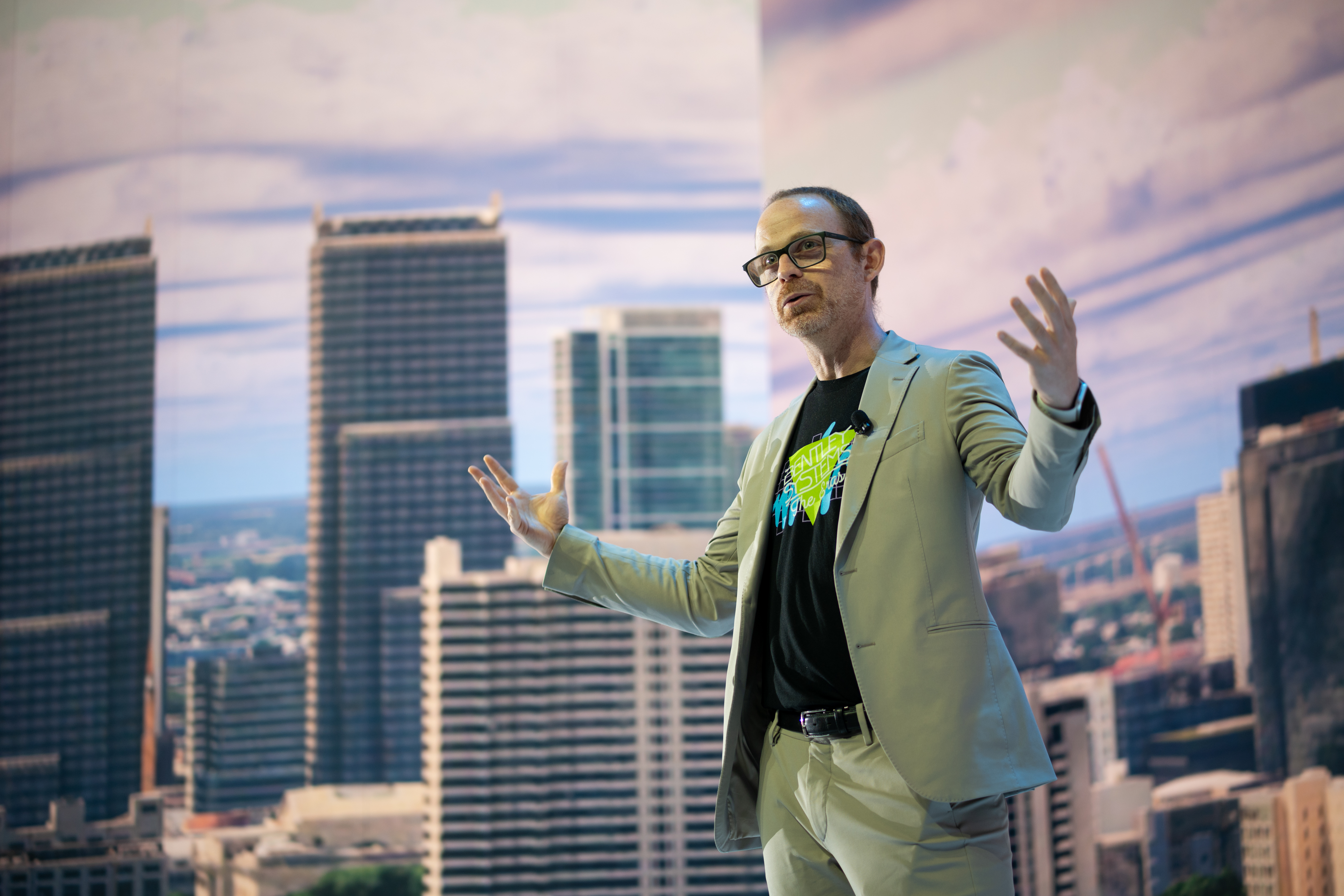
    Cesium founder and past CEO Patrick Cozzi is now Bentley’s chief platform officer and will head the new office, near Independence Hall.

    At Bentley Systems’ new Philadelphia office, where the company’s Cesium team has its home, in the Curtis Center, 2026.Bentley Systems

    Bentley, founded by five brothers from Delaware in 1984, has sales totaling $1.5 billion last year.

    Cozzi set up Cesium as a geospatial-mapping applications unit of serial tech developer Paul Graziani’s Exton-based Analytical Graphics Inc. (AGI) in 2011 and spun Cesium off as an independent company in 2019.

    Bentley customers use what’s now its Cesium Ion mapping platform to show sites and buildings in complex detail on office computers and hand-held devices.

    A Penn State grad, who also earned a master’s and taught programming and architecture at the University of Pennsylvania, Cozzi says he sees Philadelphia as a “magical place” for tech companies.

    “When I was CEO raising capital on the West Coast, some of the investors told me the best tech entrepreneurs want to move to the [San Francisco] Bay area. I said no, we can build a great tech company in Philadelphia,” he said.

    Philadelphia was an early computing industry center. ENIAC, the pioneering system built at Penn to help plan World War II artillery attacks, and other early Philly-built computing systems relied on the vacuum tubes mass-produced for radio manufacturers in Philadelphia and Camden.

    But by the 1970s, the industry committed to far more efficient silicon-based microprocessors developed in California’s “Silicon Valley.” Investor-rich cities such as Boston, Seattle, and Austin also became important computer hardware and software centers. Few large tech companies are now based in the Philadelphia region.

    Cozzi says Philadelphia’s affordability is now an asset.

    “We have reasonable cost of living and fantastic schools, graduates who want to stay here, great restaurants and quality of life, it’s an awesome place for the tech community,” he said, as he prepared to welcome Mayor Cherelle L. Parker, State Rep. Jordan Harris (D., Phila.), and 200 other guests to the new space for a grand opening celebration Thursday evening.

    Cozzi said neither the city or state provided incentives for the new office.

    Invited guests at Thursday’s event include Bentley clients from Center City-based Pennoni Engineering; Ansys, the Pittsburgh-based owner of AGI, and Earthbrain, a Japanese construction equipment and computing joint venture, which uses Philadelphia as a U.S. base.

    Bentley went public in its 2020 IPO at $22 a share. The stock peaked in the low $60s the next year and ran almost as high last summer. It has lately traded around $35 a share.

    It employs more than 5,000 at offices in 42 countries. The company is worth nearly $11 billion on the Nasdaq stock exchange. That compares to around $6 billion for Newtown, Bucks County-based software-outsourcing provider EPAM, $2 billion for King of Prussia tax-accounting software maker Vertex Inc., and $200 million for Blue Bell legacy hardware and software provider Unisys.

    Bentley’s 10th-floor space in the Curtis Center includes a public-meeting area to host events.

    The building was built in 1910 for Curtis Publishing and its mass market magazines, led by the Saturday Evening Post and Ladies’ Home Journal. Curtis moved its press operations to Delaware County in 1949 and shut both Philadelphia offices and Delco operations by the time of its 1969 bankruptcy.

    The Curtis building’s owner, Keystone Development + Investment, has in recent years added apartments, biotech labs, and other specialized units to help fill the block-long complex.

  • Bucks DA files suit saying vape shop illegally sold tobacco and THC products to minors

    Bucks DA files suit saying vape shop illegally sold tobacco and THC products to minors

    Bucks County District Attorney Joe Khan filed a lawsuit Wednesday against the owners of a Buckingham Township vape shop, seeking to close the business, which he said sold potent THC products, as well as tobacco and kratom, to minors.

    Khan announced the suit, filed in the Bucks County Court of Common Pleas, outside of Zaza Cigar & Vape after what he described as months of investigating complaints about the business from parents in the Central Bucks School District.

    “This store is selling marijuana cigarettes under the guise that they’re selling products that are legal and perfectly safe for people to own and to use, but that’s not the truth,” Khan said. “Thanks to the work of our detectives, we have uncovered the fact that this is a store that is really running an illicit drug operation under the cover and guise of a legitimate business operation.”

    In the suit, Khan said the business was the only one of the county’s 580 licensed tobacco shops that sold tobacco to undercover minors 100% of the time during routine enforcement checks.

    During at least five documented sales this year, he said, clerks at the store did not even do “the bare minimum to comply with Pennsylvania state law,” and, in one instance, sold kratom, which was listed as a Schedule 1 drug last week by the federal government, to a minor.

    Khan is seeking an emergency court order to close the store, located in a shopping center on Durham Road, and said he has launched a parallel, criminal investigation into its owners and their business practices.

    The lawsuit did not name the owners of the business, and no one answered the phone at the store on Wednesday. Court records did not list a lawyer for the business.

    “This is a store that does not care in the slightest about the welfare of our children, but we do, and that’s why we’re here to stand up for them,” Khan said.

    Court records show Zaza Cigar & Vape was fined twice this year for selling tobacco to minors. Khan said the vape store viewed these fines as “simply the cost of doing business.”

    The larger concern, he said, is the access the business is providing to THC products.

    The items are legal to sell through a provision in the 2018 U.S. Farm Bill, which legalized hemp products that contain a minuscule amount of Delta-9 tetrahydrocannabinol (THC), the psychoactive compound in marijuana.

    But Khan said the products sold at Zaza Vape & Cigar contained an illegal, more potent amount of Delta-9 and were offered for purchase by minors.

    A 2025 Inquirer investigation found samples of these products purchased from different stores in the Philadelphia region exceeded the 0.3% Delta-9 THC potency level cited in the Farm Bill, making them illegal to sell in Pennsylvania.

    Those items contained Delta-9 THC at levels 200% to more than 2,400% over the federal limit. Six samples, strengthened by other hemp-derived THC variants, were as potent as most dispensary-grade marijuana.

    “We are not going to wait to take action,” Khan said. “That’s why we went to court today to put a stop to this behavior, so that the kids who go to Central Bucks East, the kids who go to Buckingham Elementary, which is less than a mile away from where I stand, are not going to be exploited by a business like that.”

    Khan’s lawsuit is the latest example of his application of the civil-enforcement powers afforded to his office in pursuing cases that present ongoing harm to the public.

    Earlier this year, he filed suit against the company that operates Roblox, an online video game, for what he described as lax security features that allow child predators to contact underage players.

    Khan filed another lawsuit against the owners of a boarding house in Dublin that he described as squalid and dangerous.

    Both cases are ongoing.

  • ‘Obsolete’ 225-foot-long dam at Tyler State Park in Bucks County will be removed

    ‘Obsolete’ 225-foot-long dam at Tyler State Park in Bucks County will be removed

    A curved dam at Tyler State Park in Bucks County well known to anglers and hikers is coming down.

    Pennsylvania officials will begin removing the Spring Garden Mill Dam, which is 225 feet wide and 9 feet tall, on Sept. 8.

    It will be the second-largest dam ever removed in Pennsylvania. The largest, the Oakland Dam in Susquehanna County, was torn out in 2023.

    The Spring Garden Mill Dam, which spans Neshaminy Creek, no longer serves a purpose, impedes fish, and could present a danger because it can create a powerful current at its base, officials say.

    The Spring Garden Mill, once powered by the dam, still stands in the park near where Route 332 crosses Neshaminy Creek but now houses a community theater.

    The dam’s removal, which has been planned since at least 2023, is expected to take several weeks and is overseen by the state Department of Conservation and Natural Resources (DCNR) and the Fish and Boat Commission (PFBC).

    The Neshaminy Weir Dam near the Boathouse and main parking lot at Tyler State Park will remain.

    (function(){function e(){window.addEventListener(`message`,function(e){if(e.data[`datawrapper-height`]!==void 0){var t=document.querySelectorAll(`iframe`);for(var n in e.data[`datawrapper-height`])for(var r=0,i;i=t[r];r++)if(i.contentWindow===e.source){var a=e.data[`datawrapper-height`][n]+`px`;i.style.height=a}}})}e()})();

    Mike Parker, a spokesperson for PFBC, said dams are being removed across the state to reduce impediments in rivers and to increase public safety.

    “In many cases there was once a function to a dam, whether it was used to impound water, power a mill for stone milling of grain,” Parker said. “But those functions became obsolete.”

    Parker said the budget for the dam’s removal is $1.3 million and is being funded by $750,000 from the National Fish and Wildlife Foundation and $550,000 from the DCNR.

    Officials say that the park, including the popular Fisherman’s parking lot, will remain open during the removal. But a section of trail along Tyler Park Drive near the dam will be temporarily closed.

    PFBC will temporarily remove and relocate red‑bellied turtles, which are classified as a threatened and endangered species, from the work zone.

    Parker said the dam’s removal will increase safety.

    He said that the low-head dam can create a dangerous condition for paddlers and anglers by creating a “boil” at its base. Boils can cause powerful churning currents sometimes referred to as the “washing machine effect” that traps people under water.

    The removal will also aid fish moving through Neshaminy Creek, Parker said.

    The creek is popular with anglers, but the state Department of Environmental Protection (DEP) issued an advisory in 2021 against eating fish from it because of PFAS contamination. As a result, it is no longer stocked.

    Further, officials say the dam does not provide any flood control.

    Tyler State Park spans 1,711 acres with its main entrance in Newtown, about 33 miles north of Center City. Its steep grade is known for its trails and a covered bridge. It is divided by Neshaminy Creek.

    On Memorial Day weekend in May 2025, Alec Campbell, a 38-year-old park resource ranger, was trying to place a buoy in the water when his kayak flipped near the Weir Dam at the park following powerful rains. His body was recovered after several days of search.

  • How to give up your car (sometimes), save money, and save the planet

    How to give up your car (sometimes), save money, and save the planet

    If you have ever considered giving up your car, now is the time.

    There’s the price of gasoline, which has shot up by more than 35% since President Donald Trump launched the war against Iran in February. Even if you never start the ignition, simply owning a car will now set you back an average of $8,000 a year in insurance, maintenance, and loan payments.

    And those are just the immediate costs. As a major source of greenhouse gases, cars contribute significantly to climate change, which is already pushing up the price of food and everyday purchases.

    So, let’s say you’re ready to ditch your money pit on wheels. Then what?

    I’ve been struggling with this question since I moderated a panel this spring with Sarah Goodyear and Doug Gordon, the duo from the popular podcast The War on Cars, who just published a rousing call to arms, Life After Cars: Freeing Ourselves from the Tyranny of the Automobile. The event, held at the capacious Resurrection Philadelphia church in Center City, was sponsored by Philly Bike Action and 5th Square Advocacy, two groups dedicated to promoting alternatives to driving.

    Resurrection’s sanctuary was packed — with the converted. When Goodyear and Gordon asked the audience who had traveled to the event by car, only a few sheepish hands went up.

    While their book does a great job of detailing the ways cars “ruin everything,” there is little in it to help the car-dependent kick the habit. The problem is, most people have no idea where to start.

    Even in the Philadelphia region, which has better-than-average transit and cycling infrastructure, the prospect of living without a car can seem a little like trying to swim without arms and legs. How will you take the kids to sporting events, look after elderly parents, and buy groceries without a vehicle? Our local transit services — SEPTA, NJ Transit, and PATCO — don’t serve every nook and cranny of the region and don’t run as frequently as they should.

    Like everything else in America these days, the debate over the role of cars in our daily lives tends toward extremes. Philadelphia urbanists can sometimes come off as unsympathetic, as if they expect people to go cold turkey and swap their vehicles for bikes and SEPTA. Meanwhile, the pro-car lobby keeps insisting, against the evidence, that the car-free life is not practical outside a few transit-rich neighborhoods, like Center City.

    But who says it has to be all or nothing?

    ‘Habituate walking’

    My advice: Keep your car — for now, at least — but look for opportunities to get around by other means. Walk to the grocery store. Ride a bike to dinner at a nearby restaurant. Think of these excursions as a trial run. Once you feel comfortable, take the train or bus to work. You may never give up your car permanently, but you will save a bundle on gas and maintenance, reduce congestion, and boost your step count.

    That’s how Jane Murray started weaning herself from the car. The Ardmore resident, who now runs a popular Instagram account called @Janewalksardmore, first began taking long walks as a way to experience her Main Line town on a deeper level. To give shape to her Instagram project, she decided to visit every block in Ardmore and document her travels.

    Jane Murray walks along Lancaster Avenue in downtown Ardmore, as part of a project to to walk every street in the Main Line town.Alejandro A. Alvarez / Staff Photographer

    The more she walked, the more comfortable she felt leaving her car at home. She now wheels a “granny cart” to Trader Joe’s, a 15-minute walk from her house. Not long ago, she hopped a SEPTA bus to meet friends for quizzo in a pub a few towns away. At the end of the night, she took an Uber home.

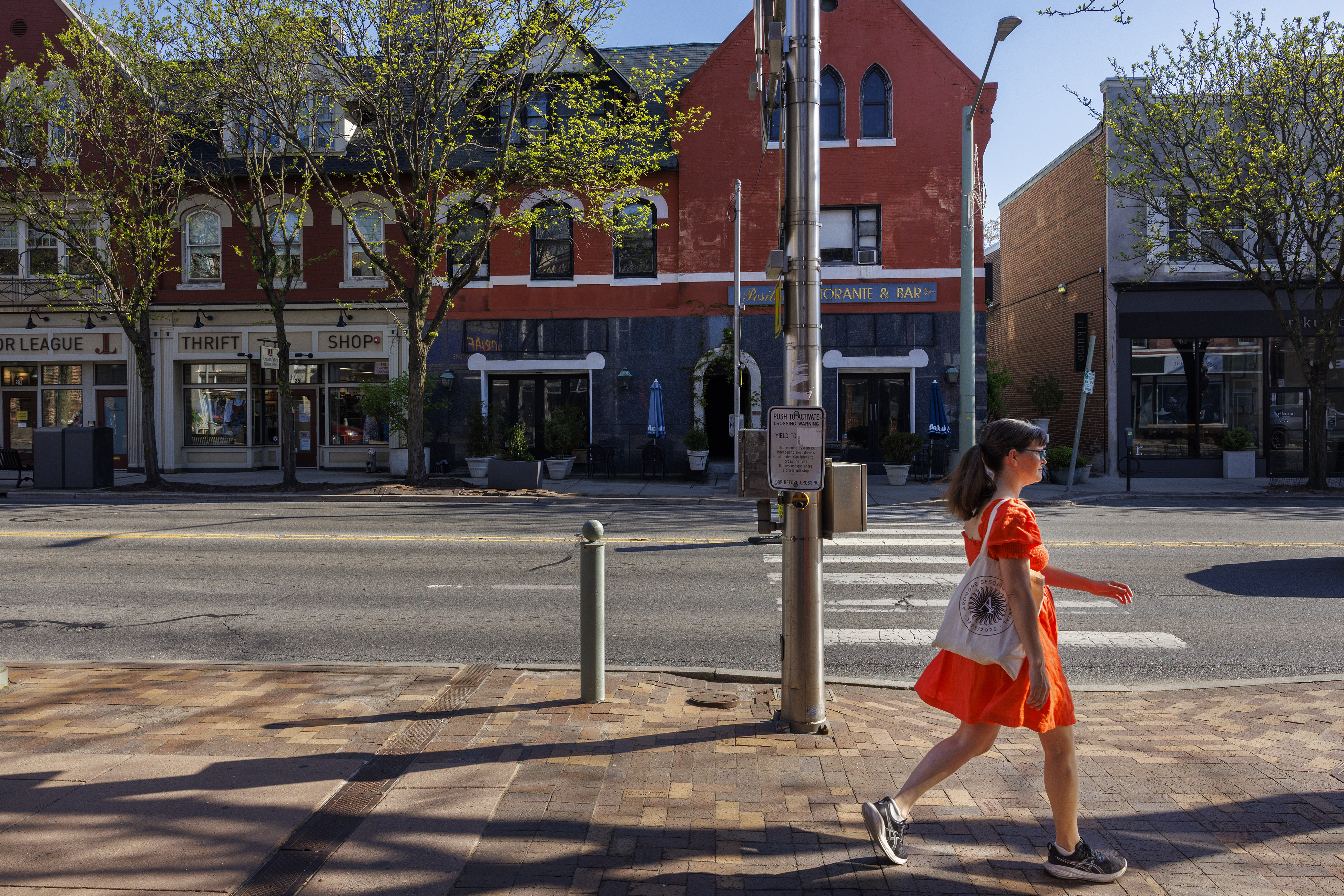
    Murray’s kids still have to take a bus the four miles to their middle school and she drives them to distant sporting events, but makes a conscious effort to “habituate walking” into her routine. Before leaving the house, she checks her transit apps to see if she can get to her destination without driving. Sometimes, she mixes it up: When she’s running errands, she’ll drive part of the way, then walk the last few blocks. Her Instagram has inspired her neighbors, who pepper her for tips about safe walking routes.

    A mobility menu

    Living in America without a car is often portrayed as a hardship, something that people on the margins are forced to endure. But, for me, living without a car has been a joy.

    I didn’t know what to expect when I impulsively decided to get rid of my aging clunker 30 years ago after being presented with an expensive repair bill. Before then, I had rarely taken taxis or splurged on Amtrak to visit family in New York. Since I would no longer have to pay for car insurance, I promised to allow myself those indulgences. My husband and I were living in Center City, which certainly made our experiment more doable. (I should mention that I was pregnant at the time. I took a taxi to and from the hospital.)

    Besides saving a lot of money, not having a car has liberated me in ways I never could have imagined. Bike lanes were virtually nonexistent in Philadelphia in the ’90s; today my bicycle is my main form of transportation. Thanks to the city’s mostly flat terrain, I can easily cycle to interviews and events in far-flung neighborhoods. My ride is equipped with side baskets, allowing me to do my grocery shopping by bike. When my destination is beyond biking distance, or when I have to look presentable, I’ll take SEPTA or reserve a Zipcar from the local car-sharing company. In a pinch, I can always summon an Uber, a Lyft, or a taxi. I still walk a lot, and it’s no exaggeration to say I run into people I know on every outing.

    The key here is to think of mobility as a menu of options, rather than a car/no-car binary. While low-speed electric bikes have made it easier to cover long distances, not everyone can, or wants to, bike. Even transit can be daunting for a novice. The fear of crime also deters some people from using SEPTA, even though serious incidents have fallen dramatically in the last decade.

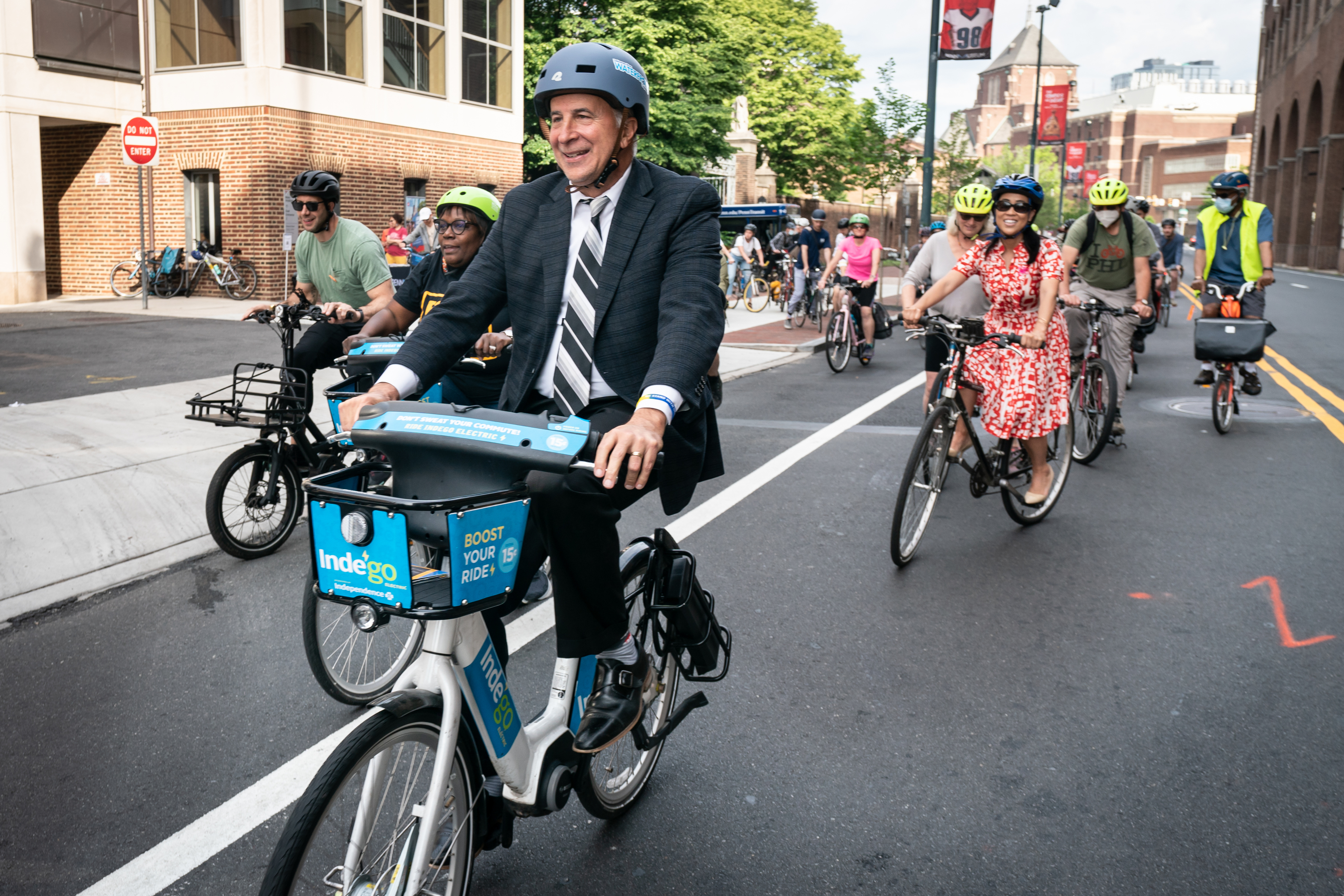
    In 2022, Councilmember Mark Squilla (center), former Eagle Connor Barwin, Councilmember Kendra Brooks, and Councilmember Helen Gym took part in a Bike to Work Day event sponsored by the Bicycle Coalition of Greater Philadelphia to promote cycling as a means of transportation.JESSICA GRIFFIN / Staff Photographer

    Eden MacDougall vividly remembers his trepidation when he started commuting from Langhorne, in Bucks County, to Temple University on SEPTA’s Regional Rail. “I kept thinking, how will I know it’s my stop?”

    By the time MacDougall graduated in 2022, he was a super-commuter. To get to his new job at Mastery Charter School, where he is an AmeriCorps reading instructor, he had to use three forms of transportation: He started his day by biking two miles from his home to the Langhorne station. After taking a SEPTA train to Fern Rock, he changed to the Broad Street subway, getting off at Erie. The trip took an hour and 45 minutes, but MacDougall, who never learned to drive, loved it. “I’d open up my book and read the whole way.”

    Stephen Bronskill, coalition manager for Transit Forward Philadelphia, shows incoming Temple University students how to navigate SEPTA during a tour organized at the start of the new semester. Bastiaan Slabbers / For The Inquirer

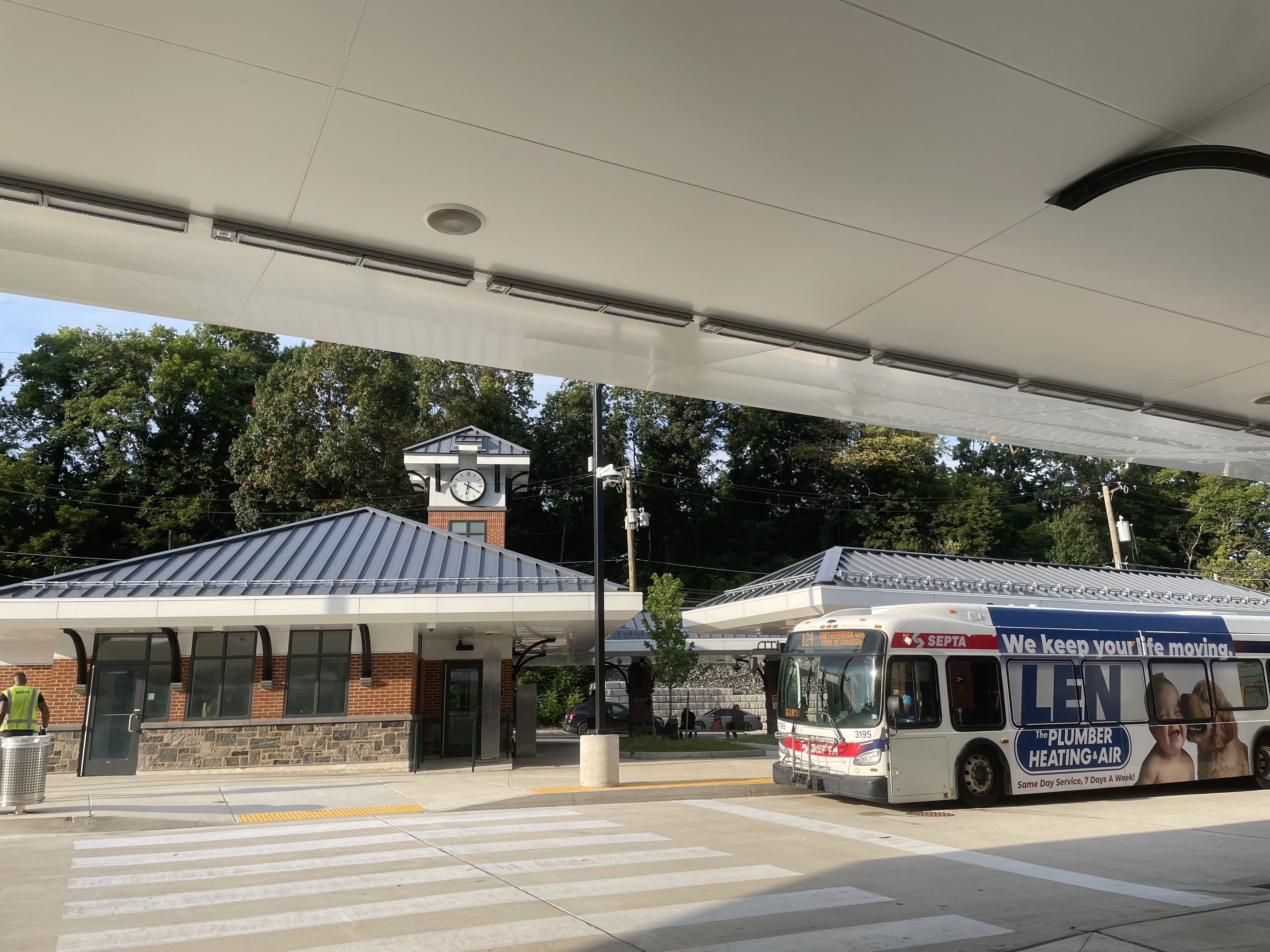
    Now he lives in Philadelphia and volunteers as an instructor for Transit Forward Philadelphia and the Bicycle Coalition of Greater Philadelphia, which run Saturday tours to help people feel more confident riding SEPTA. Although the events provide practical advice, like how to use a transit app, they’re intended to be fun excursions. MacDougall recently shepherded a group from Roxborough to the Clark Park farmers market, showing them how to change from the Route 9 bus to a West Philadelphia trolley. Along the way, the group got to see SEPTA’s efficient new Wissahickon Transit Center on Ridge Avenue, where 11 bus routes converge.

    The two groups, which have been lobbying the state legislature to help SEPTA secure much-needed state funding, started the Saturday tours as an extension of their advocacy work. They believe the exposure to SEPTA’s system can help reset public perceptions.

    SEPTA’s new Wissahickon Transportation Center on Ridge Avenue in Manayunk is a major upgrade for the city’s bus riders. The sprawling, $50 million station opened in January 2026 and allows 5,000 passengers a day to switch between 11 bus lines. (photographeed Aug. 2026)Inga Saffron / For The Inquirer

    “People had a lot of negative experiences during the pandemic,” Julio Rodriguez, the Bicycle Coalition’s policy director, told me. So, when SEPTA announced it was implementing its long-awaited schedule changes this summer, the transit advocates saw a chance to change the conversation.

    Helping SEPTA boost ridership isn’t their only goal, however. Because they believe fewer cars will make Philadelphia a safer, more livable city, they’re organizing similar outings to get people comfortable with bike commuting.

    Changing habits

    Even while these advocates are gaining adherents, many skeptics remain convinced people will never give up their cars.

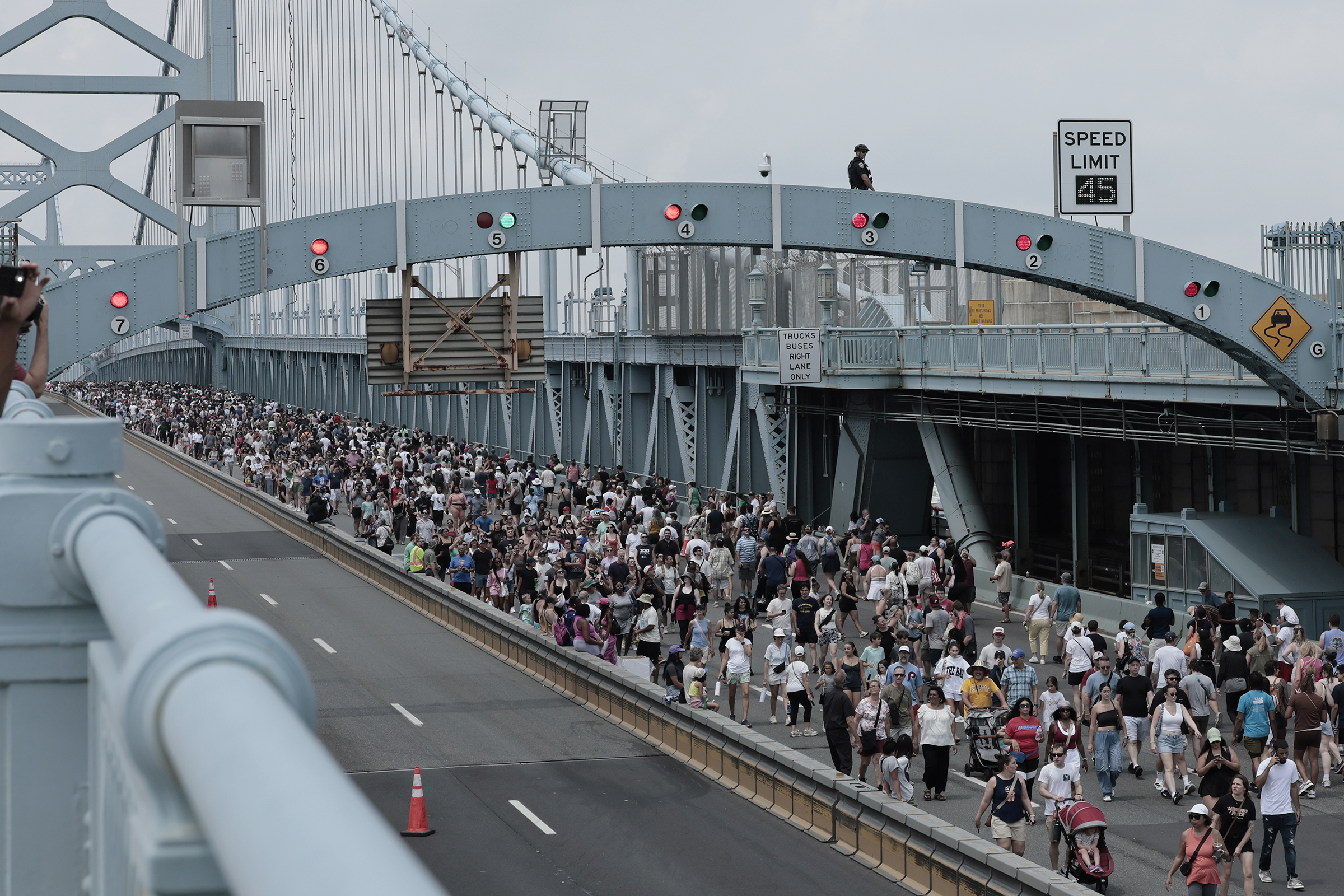
    But the public’s cheerful response to this summer’s car-free celebrations around Philadelphia suggests that habits can change. Almost 600,000 people converged for World Cup watch parties at Lemon Hill in Fairmount Park during the 39-day FIFA Fan Festival — even though parking was banned. After the games ended, I saw hundreds of people streaming along the Schuylkill River Trail to 30th Street Station, a distance of 1.5 miles. Thousands took transit, rode bikes, or walked to the Ben Franklin Bridge to celebrate its centennial in July.

    Thousands of people took transit, biked, or walked on July 11 to parade across the Ben Franklin Bridge to celebrate the 100th anniversary of its opening.Elizabeth Robertson / Staff Photographer

    For people who switch to alternative forms of transportation, the payback is immediate. But Philadelphia and the region also have much to gain from having fewer cars racing through the streets: cleaner air, less noise, more casual social encounters with neighbors, and less wear-and-tear on infrastructure

    The impact on climate change is a different story. Individual actions can only do so much to slow the dramatic shifts in global weather. It’s also a frustrating chicken-and-egg situation. People won’t see car-free living as truly feasible until there is intensive government investment in transit, bike infrastructure, and pedestrian safety.

    Until that happens, carry a fare card, sign up for car-share, install a transit app on your phone — and don’t forget to wear a helmet.