Tag: Bucks County

  • Bucks and Montgomery Counties could determine which party gets control of the Pa. state Senate

    Bucks and Montgomery Counties could determine which party gets control of the Pa. state Senate

    Gov. Josh Shapiro’s hope for a Democratic state Senate likely hinges on the Philadelphia suburbs, where three swing districts could give his party the majority in the chamber for the first time in 33 years.

    And that includes two seats in purple Bucks County — forever the focal point of Pennsylvania’s political landscape — where Shapiro will be campaigning for downballot candidates in key races on Saturday at a canvass launch organized by Planned Parenthood’s state PAC.

    Democrats in the Keystone State have zeroed in on the GOP-held seats in the 6th District in Bucks County, the 16th in Bucks and Lehigh, and the 24th in Montgomery and Berks Counties as three of the districts they’re hoping to flip to create a Democratic trifecta in Harrisburg with a possible blue wave in November.

    The competitive races in Bucks and Montgomery Counties are unfolding ahead of this November’s midterm elections when Pennsylvania will also be in the spotlight for Shapiro’s reelection bid and four congressional contests that could determine party control of the U.S. House.

    Like most Democrats across the country, Eileen Hartnett Albillar in the 6th District, Mark Pinsley in the 16th District, and Chris Thomas in the 24th are centering their pitch to voters around affordability as Pennsylvanians’ signal their overwhelming disapproval of President Donald Trump’s handling of economic issues and gas prices.

    “Individual candidates matter, campaigns matter … but I do think it’s pretty clear that all these elections, to one extent or another, wind up being a referendum on President Donald Trump, and I think that puts Democrats in a very strong position,” said State Sen. Santarsiero, the chair of Bucks County’s Democratic Party. Santarsiero is also running for reelection this year.

    Republicans currently hold 27 seats in the 50-member state Senate. Democrats would need to flip at least two seats and hold the governor’s office to take control with the lieutenant governor’s tie-breaking vote.

    A Democratic trifecta in Harrisburg — if the party maintains its House majority and flips the Senate — would allow Shapiro in a second term to usher through a minimum wage increase and more transportation funding among other priorities that have been blocked by the GOP Senate.

    But Democratic candidates will have to win over independent and even some Republican voters to prevail in the swing districts against GOP incumbent State Sens. Frank Farry in the 6th, Jarrett Coleman in the 16th, and Tracy Pennycuick in the 24th. The GOP has a registration advantage in all three districts, according to state data.

    Farry, Coleman, and Pennycuick did not respond to requests for an interview, but the state party projected confidence about their ability to hold their seats.

    “Maintaining the majority in the Senate is a top priority for Republicans in Pennsylvania,” said James Markley, executive director of the PA GOP.

    He also praised Farry, Pennycuick, and Coleman for their work to lower costs and improve the state’s education system.

    “When it comes to majorities in the State House or the State Senate, every seat matters,” he said.

    Here’s what to watch.

    Gov. Josh Shapiro addresses supporters at a primary night part in Warminster on Tuesday, May 19, 2026Steven M. Falk / For The Inquirer

    ‘You don’t take for granted anything in Bucks County’

    Bucks County’s importance ahead of November has been clear for months.

    In Warminster last May, Shapiro held a primary night party at a former space centrifuge where he promoted his reelection campaign and a slew of downballot candidates. There, Hartnett Albillar, who is also the county’s clerk of courts and a social worker by trade, declared: “The path to flipping the Senate runs right through Bucks County.”

    As she continues knocking on doors and courting voters in the 6th District, which includes most of the middle of the county, that reality could not be more obvious. But, Hartnett Albillar said, despite Shapiro’s support (he has endorsed all three candidates) and a blue wave in the forecast, she’s not thinking of her election as a shoo-in.

    “We know that you don’t take for granted anything in Bucks County,” she said in an interview last month.

    That’s because the suburb is notorious for split-ticket voting, she said.

    “Democrats have won here in other races, but I believe you have to make your case to voters individually,” Hartnett Albillar said, adding that voters in her district don’t look at party labels.

    It’s a dynamic that has, for example, allowed GOP U.S. Rep. Brian Fitzpatrick to maintain his congressional seat even in years Democrats do well — like in 2022 when Shapiro won the county by nearly 20 points.

    Pinsley is trying to make that argument in the Upper Bucks County portion of the 16th where voters are less familiar with the Lehigh County controller and where Republicans have a roughly 22,000 voter registration advantage — the largest gap of the three districts.

    Eileen Hartnett Albillar (center) is challenging State Sen. Frank Farry in Bucks County’s 6th District.Hartnett Albillar Campaign

    This race is also a rematch for Pinsley after he lost by 8 points against Coleman in 2022.

    But the Democrat was given another chance by voters this year after he succeeded in a heated primary without the Bucks County Democratic Committee’s backing.

    Now that he has the party’s support, he says it’s helped him reach a whole new circle of people for his events, including “Pastries with Pinsley,” a regular meet-and-greet at various coffeehouses in the district, but especially in Bucks. This weekend, he’s headed to the So Fresh So Green Cafe in Perkasie.

    “60% of the vote is in Lehigh County, and 40% of the vote is from Bucks County,” Pinsley said in an interview last month. “We need Bucks. We need Bucks to win. You’re not going to win in just Lehigh.”

    Across county lines into Montgomery County — Shapiro’s home county, which has a reputation for being deep blue — also lies another swing district that Democrats are investing in as Thomas, a volunteer firefighter and community organizer, hopes to bring Pennycuick’s tenure in the state Senate to a close.

    Until now, the 24th District, a hodge-podge of suburban and rural communities in Montco and Berks County that Thomas calls “all-encompassing of Pennsylvania” has “always been just out of reach in terms of how the district was drawn.”

    But this year, with a combination of voters’ frustrations and Shapiro on the ballot, Thomas believes “a lot of the stars are aligning.”

    “There’s a slim path to the majority without this district,” he said.

    But Republicans won’t be giving up these suburban swing districts so easily.

    Michael Straw, a spokesperson for the Pennsylvania Senate Republican Campaign Committee, said the GOP is “ready to compete for every vote in Bucks County.”

    Straw said in a statement that candidates will highlight the bipartisan bills that lawmakers have introduced and have since been signed into law, including Farry’s legislation to reduce cost barriers for breast cancer screenings and Coleman’s bill to address school safety and increase parental transparency.

    “We are making these legislative accomplishments known to voters across the political spectrum,” Straw said.

    Both parties are betting on affordability

    Heading into November, both Democrats and Republicans are trying to make the case to voters in these key swing districts that they are the party of affordability.

    Straw said that Republicans view these elections as an opportunity to emphasize affordability and fiscal responsibility to put “an important check on the Democrats overspending.”

    “Senate Republicans have helped to prevent wasteful spending, stop the Democrats’ electricity tax that would have cost Pennsylvanians more, and have supported reducing taxes on working families,” Straw said. “PA Senate Republicans have made affordability the priority while Democrats have repeatedly stood in the way.”
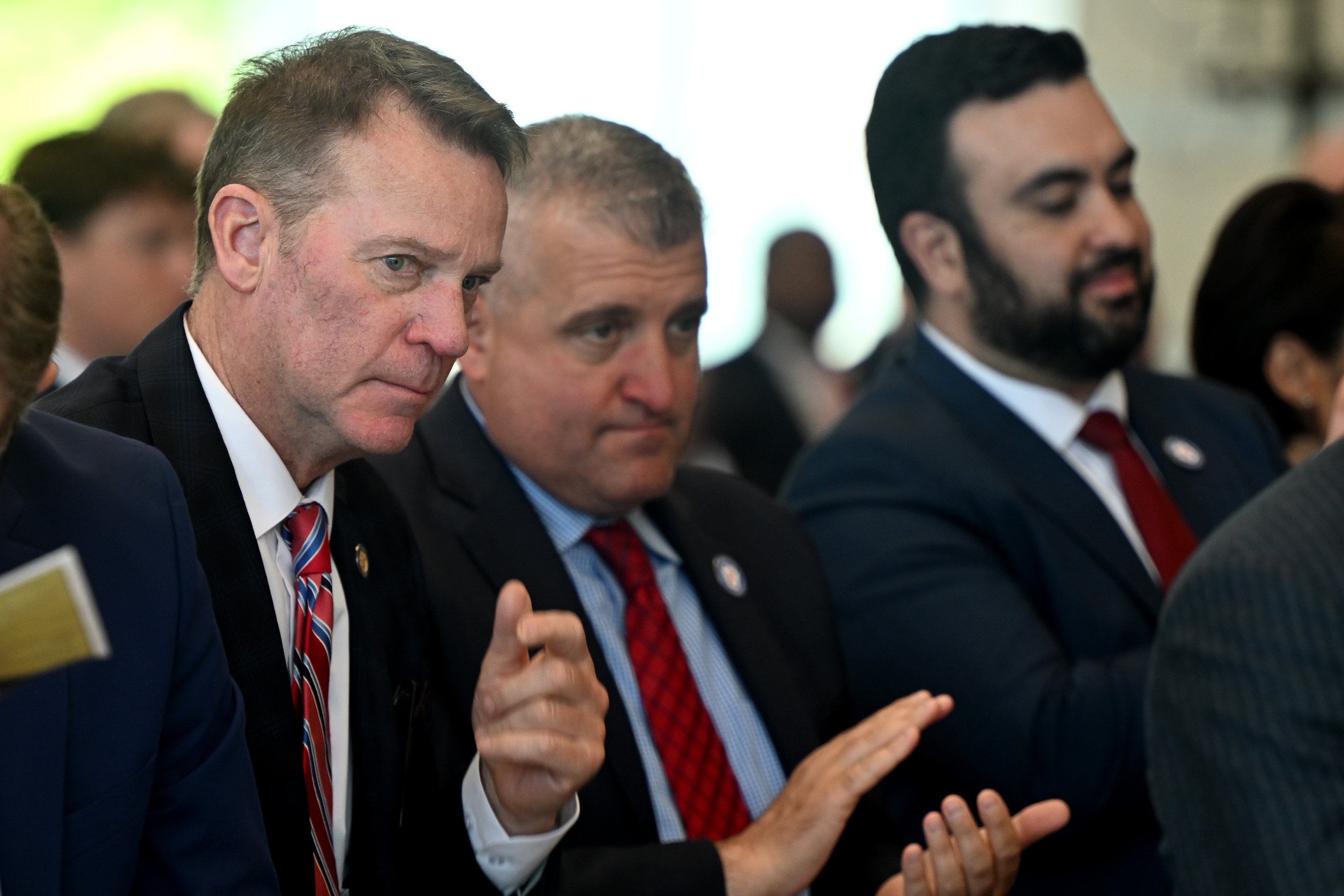
    Bucks County GOP State Sen. Frank Farry (center) during a ceremonial meeting of the Pennsylvania Senate at the National Constitution Center May 5, 2026.Tom Gralish / Staff Photographer

    And for Democrats, that means addressing voter frustrations that have trickled down from federal policies.

    Trump — who has urged voters to think of him as being on ballot — is getting worsening marks on the economy from Pennsylvania voters. The president’s own voters in 2024 are also dissatisfied with his handling of gas prices, polling shows.

    “They’re not happy about the Iran war. They’re not happy about the cost of gas. There are other costs that are going up, and many of them do blame the president, and all of these races have been federalized in many ways,” Pinsley said.

    In response to the rising costs of living, affordability has taken up most of the oxygen in Democrats’ messaging as the party shifts away from issues that have been prevalent in previous campaigns, such as abortion.

    With a focus on prices, the three swing district candidates have not had to switch up their stump speech even when chatting with Republican or independent voters that they’ll need to win over to be successful in November.

    Hartnett Albillar said that all voters are simply looking for a “functional” and competent government.

    Other key issues popping up in these races include funding for SEPTA and data centers; the latter of which has sparked contentious ads, including one by Hartnett Albillar’s campaign in the 6th District that provoked Farry’s campaign to file a cease-and-desist.

    “I’ve heard many times that folks are not looking at whether there’s a ‘D’ or an ‘R’ next to the name,” she said. “They’re looking at the person who will be able to bring change and bring fresh ideas because the current system is not working for us. Costs are way too high, and they want someone who’s going to do the work.”


  • Police in Bucks County investigating swastika vandalism at golf course near Jewish school

    Police in Bucks County investigating swastika vandalism at golf course near Jewish school

    Police in Bucks County are asking for the public’s help in identifying the perpetrator who vandalized a golf course with swastikas and an antisemitic slur near a Jewish school.

    The Yardley Borough Police Department on Monday said the vandalism occurred between Friday at 8 p.m. and Saturday at 7 a.m.

    “During this time, portions of the golf course greens were intentionally damaged with racial slurs and swastika symbols carved into the turf,” police said.

    “This type of behavior is not only a criminal act, but it is also hateful, offensive, and has no place in our community. The Yardley Borough Police Department is committed to thoroughly investigating this incident and holding those responsible accountable,” the police said.

    Anyone with information about what happened can contact the Yardley police at 215-493-2782 and ask for Officer Alex P. Bires at Ext. 411.

    <iframe src="https://www.facebook.com/plugins/post.php?href=https%3A%2F%2Fwww.facebook.com%2Fpermalink.php%3Fstory_fbid%3Dpfbid036TEzEio8BxWnbrCLsUkm2KXG7pVmfd8MbEXGLFGhKh6SHrSRnEXARUHKcx8V8Kval%26id%3D100087590190153&show_text=true&width=500" width="500" height="628" style="border:none;overflow:hidden" scrolling="no" frameborder="0" allowfullscreen="true" allow="autoplay; clipboard-write; encrypted-media; picture-in-picture; web-share"></iframe>

    “Despicable behavior!” Yardley Councilmember David Appelbaum wrote on Facebook as he shared the Yardley police post about the vandalism.

    The incident happened near the Abrams Hebrew Academy.

    Rabbi Ira Budow said police came to the school on Monday to review surveillance video, but the school’s cameras had not recorded the perpetrator.

    Budow said he has been director for 46 years and the school has never experienced antisemitism from the Yardley community.

    Nonetheless, Budow said, the academy has spent $150,000 a year on beefed-up security since the Oct. 7, 2023, Hamas attack on Israel that sparked the brutal conflict in Gaza.

    John Shapcott, director of golf and club operations at the Yardley Country Club, on Wednesday said members were told in a notice about the vandalism.

    “Two swastikas were scratched into the 10th green, and a racial slur was written in the greenside bunker on the 4th hole,” the country club told members.

    The club immediately contacted police, notified Abrams Hebrew Academy, and promptly repaired the damage, the statement to members said.

    “Yardley Country Club unequivocally condemns hate speech, fascism, antisemitism, and all forms of hateful conduct. Such acts are reprehensible, have no place at the Club or in our community, and will not be tolerated. The Club will continue to cooperate fully with local authorities as they investigate the incident and work to prevent similar acts,” the statement said.

    Adrienne King, president of the NAACP Bucks County Branch 2253B, said in an emailed statement Tuesday night that her organization “was deeply disturbed to learn of the racist and antisemitic vandalism discovered at the Yardley Country Club. Swastikas and racial slurs are not simply acts of vandalism. They carry a painful history and send a message of hate and intimidation that can impact an entire community.”

    King said the incident was “especially troubling given other recent incidents here in Bucks County. Just last week, our Branch spoke out following alleged threats containing racist and anti-Muslim language directed toward a historically Black church in our county.”

    She added: “We cannot become numb to expressions of hate simply because there is so much happening around us. Each time they occur, we have a responsibility to name them, condemn them and stand with the communities affected.”

    The Pennsylvania Human Relations Commission said it was offering its “unwavering support” to Abrams Hebrew Academy.

    The commission “is also grateful to the Yardley Borough Police for their swift action to investigate this incident as a potential hate crime and their request for community assistance are encouraging steps toward accountability. We urge anyone with information to come forward, as public cooperation is critical to identifying those responsible and ensuring justice is served.”

    The American Jewish Committee Philadelphia/Southern N.J. said in a statement on Wednesday that the antisemitic vandalism was “deeply disturbing and unacceptable.”

    The organization continued: “As the Jewish community prepares to mark the third anniversary of the October 7 terrorist attacks, many Jews are already grappling with an increasingly hostile environment and are feeling especially vulnerable and concerned for their safety.”

    The committee added: “This is a moment for people of good conscience to stand together in rejecting hate in all its forms. We all have a responsibility to ensure that our communities remain safe, welcoming, and inclusive.”

  • Microplastic pollution found in 100% of Delaware River tributaries tested

    Microplastic pollution found in 100% of Delaware River tributaries tested

    Fleece fragments in a washer flow into a wastewater treatment plant. A plastic bag blows into a stream. A water bottle washes down a storm drain.

    All can end up in the region’s waterways as microplastics smaller than a grain of rice and find their way into drinking water and the stomachs of animals and fish.

    This kind of microplastic pollution was detected in 22 stream and river segments across the Delaware River watershed, according to a new survey of waterways by the nonprofit advocacy group PennEnvironment Research and Policy Center.

    Researchers analyzed water samples from sites along the Delaware River and its tributaries across Pennsylvania, New Jersey, Delaware, and New York.

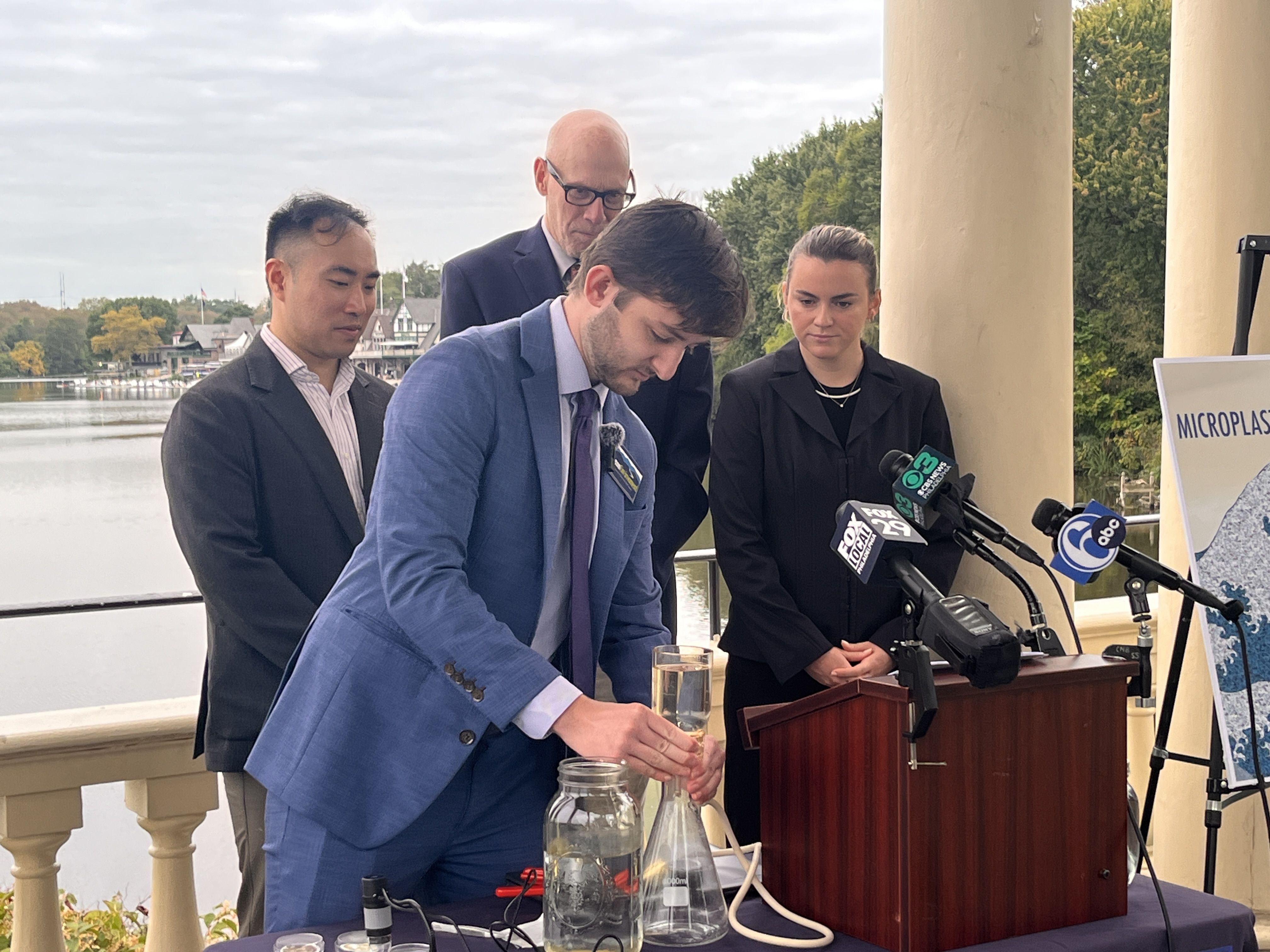
    The research was conducted in partnership with the nonprofit Environment New Jersey Research and Policy Center. Scientists with the Academy of Natural Sciences at Drexel University helped analyze the results, which were released Wednesday during a news conference at Fairmount Water Works.

    Contamination was found in the Delaware and Lehigh Rivers and the Schuylkill. It was found in Neshaminy Creek in Bucks County, Brandywine Creek in Chester County, and Cooper River in Camden County. And it was found along the Christina River in Delaware.

    Drexel’s lab analysis confirmed microscopic plastic at every sampled site, highlighting what the researchers say is a widespread environmental threat.

    “We can look at a waterway, and it might be free of litter, it might be free of visible plastic pollution, but that doesn’t necessarily mean it’s clean,” said Faran Savitz, an advocate for PennEnvironment. “The big takeaway is that we should be concerned. The depth, the breadth of this plastic pollution is staggering.”

    Faran Savitz with PennEnvironment demonstrates water testing. In the background from right are: Lizzy Mulvenna, with Environment New Jersey Research & Policy Center; David Velinsky, senior scientist, Academy of Natural Sciences; and Derek Ho, microplastics researcher, University of Pennsylvania.Frank Kummer

    Where do microfibers come from?

    Waterways in and around Philadelphia emerged as significant focal points in the survey results.

    Samples drawn from the Delaware River in Philadelphia tested positive for multiple categories of microplastics including microfibers, microfragments, and microfilm, as did other waterways. Microbeads, often found in cosmetic products, were also found in the Christina River.

    Microplastics are defined as fragments of less than 5 mm in length.

    The synthetic microfibers came primarily from clothing and textiles. Rigid microfragments from items such as fishing line were found in 82% of locations. And flexible microfilm from bags and packaging appeared in 77%.

    (function(){function e(){window.addEventListener(`message`,function(e){if(e.data[`datawrapper-height`]!==void 0){var t=document.querySelectorAll(`iframe`);for(var n in e.data[`datawrapper-height`])for(var r=0,i;i=t[r];r++)if(i.contentWindow===e.source){var a=e.data[`datawrapper-height`][n]+`px`;i.style.height=a}}})}e()})();

    Microplastics have been found in humans

    Researchers explained that laundering synthetic garments releases millions of microfibers that wastewater treatment facilities are unable to completely filter out before they are discharged into local streams.

    However, because plastic does not biodegrade but continuously fractures into tiny fragments, filters capture only a portion of plastic entering a waterway.

    Savitz said PennEnvironment’s study did not release the concentrations of microplastics because it did not want to compare one waterway or state against another.

    The findings carry ecological and public health implications, as microplastics can block digestive tracts in wildlife and absorb toxic chemicals like PCBs and PFAS that bioaccumulate up the food chain, the report stated.

    On average, humans ingest approximately 5 grams of plastic weekly, which is roughly equivalent to the weight of a credit card. Microplastics have been found in human blood, lung tissue, and organs, the researchers said.

    Plastics are also routinely found in wildlife, including sea turtles, birds, and whales. About 60% of all seabirds have ingested plastic, with that number rising.

    The environmental advocates are urging state and local leaders to enact policies such as producer responsibility for plastic packaging, bans on single-use foam and plastic bags, strict limits on pre-production plastic pellets, and enhanced drinking water filtration systems.

    Microbeads once used in personal care products were phased out under President Barack Obama in 2015. But many of those products still linger on household shelves.

    File: A glass vial containing water and microplastic pollutionGetty Images

    Philadelphia’s drinking water

    Philadelphians get their drinking water from the Delaware River and the Schuylkill. Most microplastics are filtered out at the Philadelphia Water Department’s wastewater treatment plants, but some particles still get through.

    In 2025, PWD removed 4.6 tons of plastic litter from the Delaware and the Schuylkill, alongside an estimated 1,000 tons of plastic extracted through sewer maintenance, the researchers stated.

    PWD said in an online report that it is “unclear whether microplastics pose a danger to human health,” noting that the risk could depend on the level of exposure, the type of plastic, and the size of the particles.

    But it noted that research suggests some are harmful to fish and animals and can build up in the organs or bloodstream over time.

    “PWD is always investigating advanced treatment technologies that may eliminate microplastics and other impurities,” the report stated.

    David Velinsky, a senior scientist at the Academy of Natural Sciences of Drexel University, said, “plastics and microplastics are everywhere, from our clothing to the ubiquitous water bottle.”

    When plastics and microplastics are not properly disposed of or recycled, he said, they break down into ever smaller pieces.

    They “can travel great distances through both the air and in the water,” Velinsky noted.

    A plea for ‘producer responsibility’

    To combat pervasive plastics, advocates are urging federal and state lawmakers to enact targeted reforms, including the federal Plastic Pellet Free Waters Act currently before Congress, and state-level producer responsibility legislation for plastic packaging.

    Savitz emphasized that shifting financial and operational burdens back onto manufacturers is critical to curbing waste at its source.

    At least seven states have passed producer responsibility laws, though not all are in effect, according to the Product Stewardship Institute. Those states include Washington, Oregon, California, Colorado, Minnesota, Maryland, and Maine.

    “If we can shift the burden back onto companies that create this waste in the first place,” Savitz said, “we can actually reduce the waste, encourage recycling, and make these broader, more systemic changes.”

  • Central Bucks engaged in a ‘concerted cover-up’ of abuse at elementary school, lawsuit says

    Central Bucks engaged in a ‘concerted cover-up’ of abuse at elementary school, lawsuit says

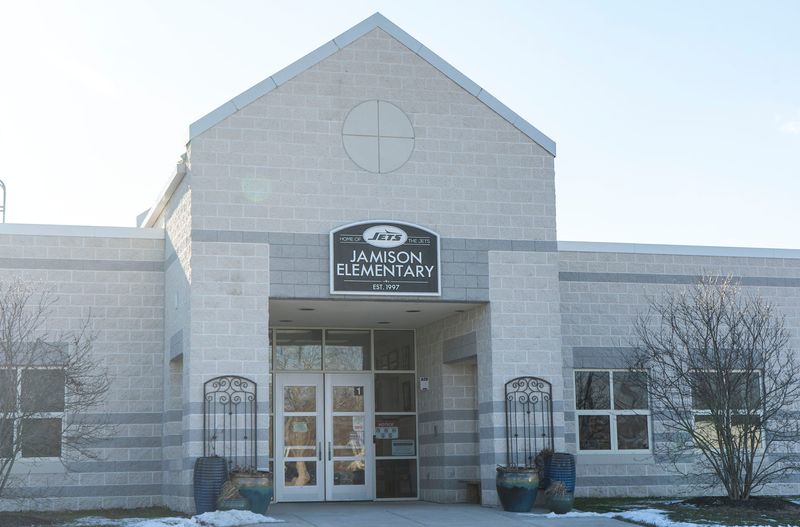
    The parents of a nonverbal autistic 10-year-old who was among the students the Central Bucks School District has said were abused in an elementary school classroom in 2024 have filed a lawsuit against the district and nearly a dozen former and current employees.

    James Pepper, a former school board member, and his wife, Lisa Pepper, say their son’s “horrific abuses” at Jamison Elementary School amounted to a “calculated pattern of debasement” that district and school leadership failed to report as part of a “concerted cover-up.”

    The bulk of the 92-page complaint, filed Tuesday in federal court in Philadelphia, outlines events that began in fall 2024, when a special education aide reported the abuse. Her allegations rocked Pennsylvania’s third-largest district, spurring an investigation by a disability rights watchdog, a public outcry, and a series of terminations that included the district’s superintendent.

    Now, the Peppers are suing Central Bucks, as well as former Superintendent Steven Yanni, former Jamison principal David Heineman, other former district administrators, the special education teacher and educational assistant accused of misconduct, and teachers union representatives.

    The district continued to endanger the child after learning about the abuse, and the alleged “cover-up” was motivated by James Pepper’s position as a board member and history of advocacy, the suit says.

    “This case involves an extraordinary betrayal of a child who depended entirely on the adults around him for his safety, education, and care,” M. Stewart Ryan, the attorney representing the parents, said in a statement.

    Central Bucks spokesperson Michael Petitti said in a statement that the district “has acknowledged what occurred” in that classroom.

    Petitti said the district “took the actions within its power” to discipline employees, including firing Yanni, Heineman, and the former special education director, Alyssa Wright. It also “fully litigated” terminations of the teacher and educational assistant, Petitti said, and “implemented significant changes at Jamison Elementary School to make sure that nothing like this ever happens again.”

    “The district understands that none of these actions can change what happened,” Petitti said.

    The allegations

    District officials learned about the allegations in November 2024 from Alyssa Kline, who was assigned as the one-on-one aide for the Peppers’ child.

    Kline said special education teacher Gabrielle McDaniel and educational assistant Rachel Aussprung had improperly restrained and punished the Peppers’ child, among other forms of abuse.

    The abuse included “nearly 3,000 illegal restraints … water restriction, corporal punishment, forced exposure to nudity and sexual self-stimulation, screaming, mocking, belittling, and concealment of a head injury in a series of events that were intended to, and indeed did, dehumanize” the boy, the lawsuit says.

    The nonverbal child could not share his experience in school, and his parents were not initially informed of the accusations, the suit says. The district reassigned Kline days after she made the allegations, telling the Peppers the reason for the change was a “personal conflict” between the aide and classroom staff, according to the complaint.

    The Peppers learned about the allegations of abuse only in December, when Kline reached out to share what she had reported with the parents, the suit says. But in an official letter that month, the district said its investigation found “no evidence of abuse.”

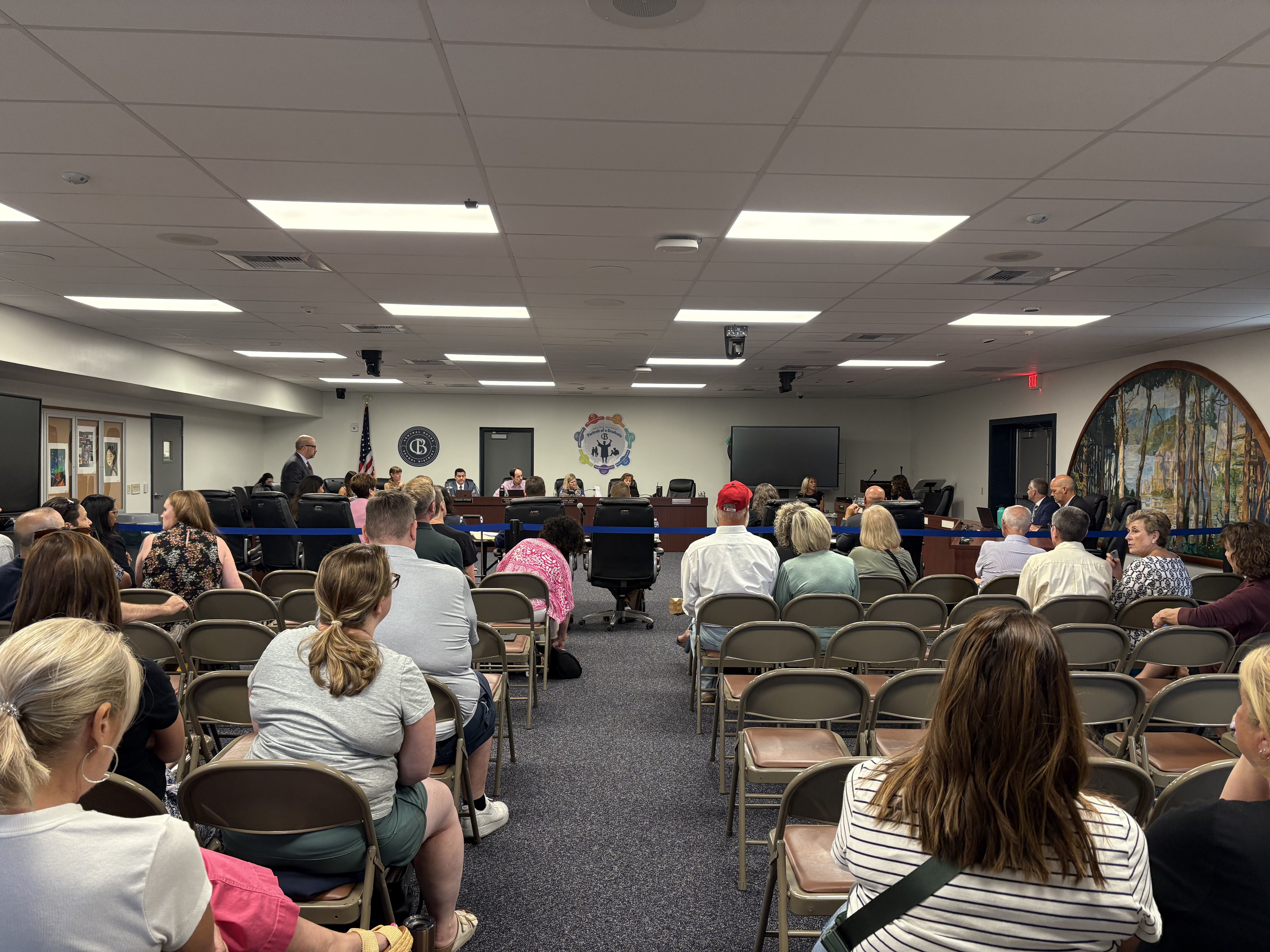
    Members of the public watch the joint termination hearing of Central Bucks Superintendent Steven Yanni and Jamison Elementary School Principal David Heineman in August 2025.Fallon Roth / Staff

    School board members initially stood by district officials, who noted police had not found any abuse. But that changed in April 2025, when a report from the watchdog group Disability Rights Pennsylvania found that the teacher and assistant had illegally restrained students, creating a “reasonable likelihood of bodily injury” and likely interfering with their breathing, among other abusive behaviors.

    It also faulted Yanni and other administrators for failing to adequately investigate the allegations, and accused Yanni of withholding information from police.

    The school board terminated Yanni and Heineman in October. Pepper recused himself from the vote and the termination hearings that preceded it.

    Yanni, now the CEO of Northwood Charter School in Philadelphia, did not respond to a request for comment.

    A lawyer for Heineman did not return a request for comment. Neither did a lawyer for McDaniel and Aussprung, who have sued the district since their terminations. Wright, whose lawyer did not return a request for comment, has also sued the district, saying she was scapegoated.

    The Peppers’ lawsuit says district and teachers union officials, whom Kline also informed, failed to report the abuse.

    Cara Alderfer, the union president, declined to comment Tuesday.

    The ‘cover-up’

    The Peppers’ lawsuit alleges a sprawling cover-up that started the moment Kline made the allegations.

    The accused teacher and assistant were not removed from the classroom, and the district recommended that McDaniel or Aussprung take the Peppers’ child to therapy sessions after Kline was reassigned, according to the complaint.

    The district did not turn over an email outlining Kline’s allegations to Disability Rights Pennsylvania, the suit says.

    Yanni and other officials “were actively engaged in a conspiracy to bury the reports of child abuse they had received,” the complaint says.

    The complaint blames a few factors as motivating the alleged “cover-up.”

    Yanni, who took over the deeply divided district after a bitter and highly publicized school board election won by Democrats, said one of his goals was to keep the school system “out of the newspaper,” the suit says.

    And the district was motivated to retaliate against Pepper — then the only Republican on the board — for stances he had previously taken against the district, the suit says.

    The actions of the school district and its employees deprived the Peppers’ son of “safety, liberty, and bodily integrity,” the complaint says.

    “It is devastating to learn that our son was treated this way by the very people we trusted to care for and protect him,” the Pepper family said in a statement. “Our son and entire family have been changed forever. This can never happen again to another child.”

  • Jeff Scott, award-winning TV writer and former Bucks County journalist, has died at 72

    Jeff Scott, award-winning TV writer and former Bucks County journalist, has died at 72

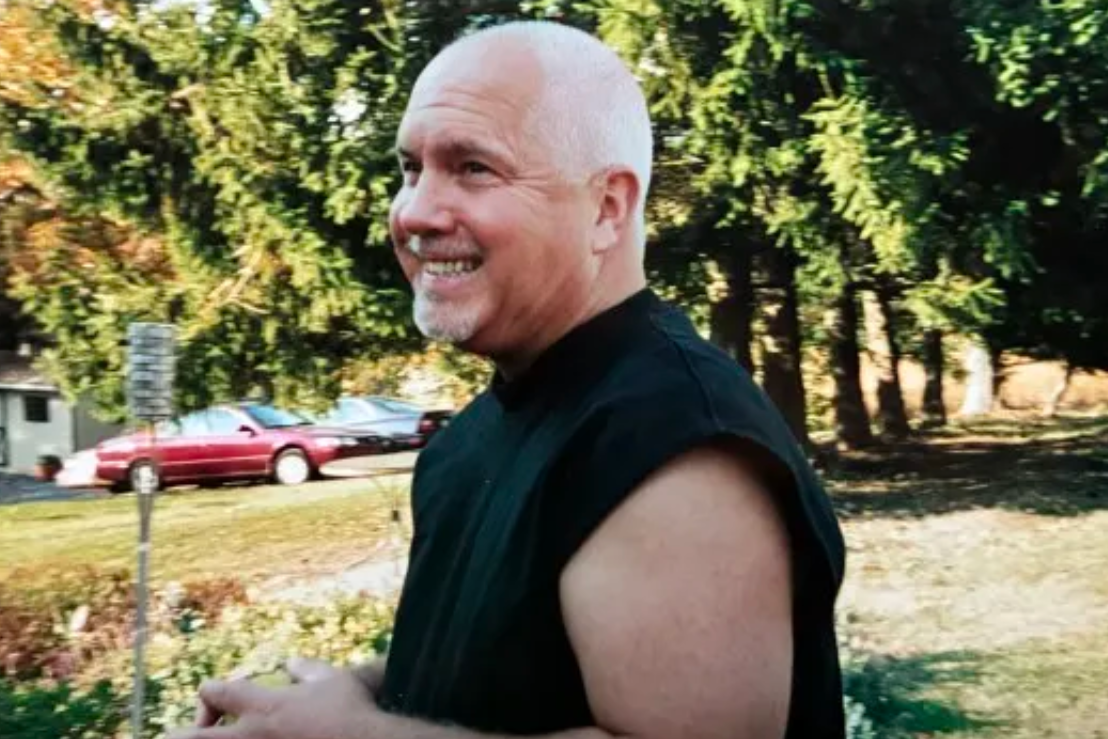
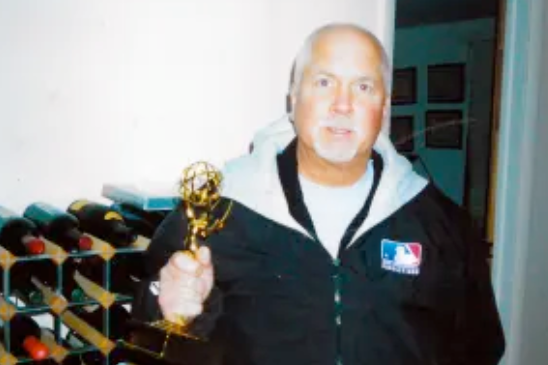
    Jeff Scott, 72, formerly of Hilltown, Bucks County, longtime award-winning TV and video scriptwriter, director, and producer, former columnist and editor at the Quakertown Free Press, and green-thumb gardener, died Saturday, Sept. 19, of pulmonary fibrosis at Hunterdon Medical Center in Flemington, N.J.

    Born in Philadelphia, reared in Hilltown, and a graduate of Pennridge High School, Mr. Scott turned his lifelong interest in sports, affable collegiality, and writing, reporting, and editing skills into an award-winning career as a TV and print journalist that spanned more than four decades.

    For 32 years, from 1983 to 2015, Mr. Scott wrote scripts, directed talent, and produced shows for TV, film, video, radio, and DVDs. He worked for Major League Baseball Productions through Phoenix Communications from 1988 to 2015 and wrote more than 1,000 TV show scripts for ABC, NBC, ESPN, Fox, and other networks, including 176 episodes of ESPN’s Major League Baseball Magazine and 450 consecutive episodes of the popular This Week in Baseball.

    His dramatic scripts detailed many memorable baseball seasons, went behind the scenes with championship teams, and shared stories about star players on and off the field. They were narrated by iconic announcers such as Mel Allen, Curt Gowdy, Bob Costas, and Harry Kalas, featured thousands of players, coaches, and managers, and earned 16 New York Emmy Awards.

    Mr. Scott earned 16 New York Emmys.Courtesy of the family

    Former colleagues at MLB Communications posted a video tribute to Mr. Scott on X and noted his “indelible impact” on This Week in Baseball. Buzz Brainard, a former narrator for This Week in Baseball, said on Facebook: “Honored to bring his words to life every season for 11 years.”

    Earlier, from 1983 to 1988 at the old Halcyon Days Productions, Mr. Scott wrote scripts for the weekly This is the USFL for ABC and other shows about John Madden, Mike Schmidt, and other sports and entertainment notables. Sports reporter Jayson Stark said on X: “You may not know the name, Jeff Scott. But you should.”

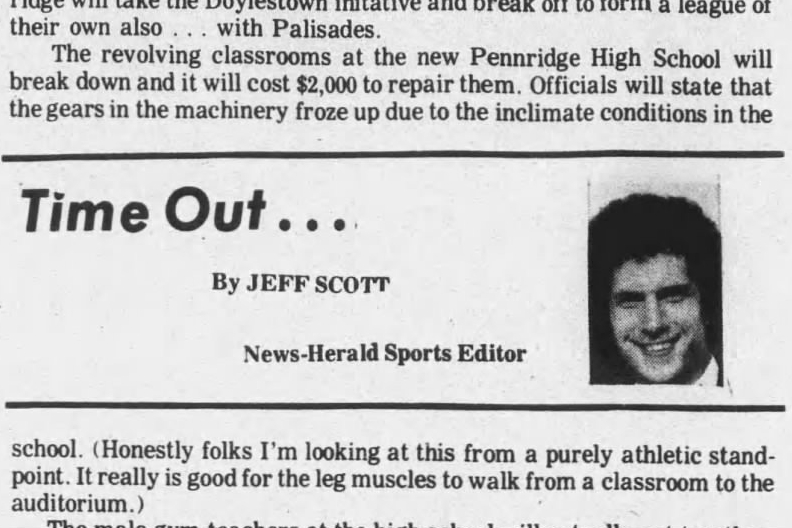
    In print, Mr. Scott was a columnist and weekend magazine editor for the Free Press in the early 1980s. In the 1970s, he was sports editor and a features writer for the Perkasie News-Herald, and a part-time sports reporter for the Doylestown Intelligencer.

    At the Free Press, he won awards and covered all kinds of local stories, including his publisher’s triple-bypass heart surgery. At the News-Herald, he wrote a sports column called “Time Out” and a news feature called “Know Your Community.”

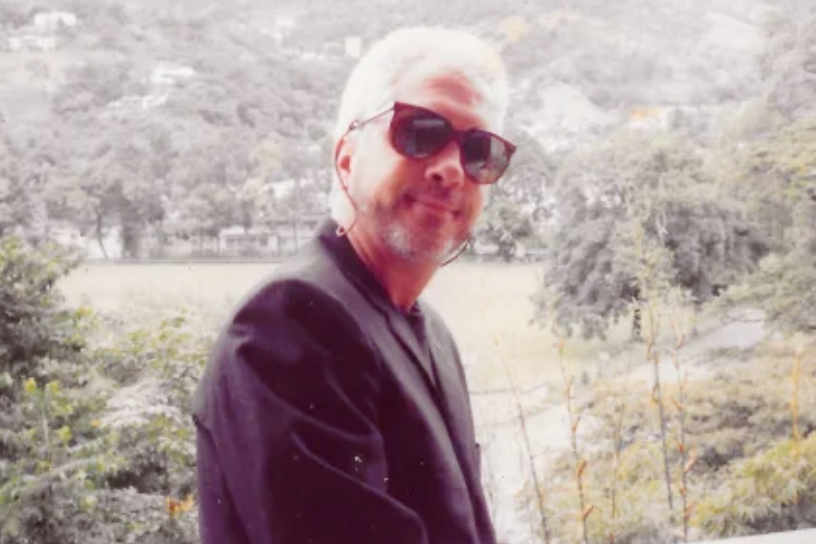
    To know Mr. Scott, a friend said, “was to like him.”Courtesy of the family

    In 1976, he opened a News-Herald sports story with: “Some would call it luck. Some might call it breaks. And some might even consider the fact that somebody upstairs is carrying the fate of the Pennridge football team this year. We prefer to call it pure, unadulterated hustle.”

    A former Pennridge baseball player said in a tribute: “It always was a big deal when he came to our games.” A former colleague at the Free Press said: “He made me feel important, and he made sure I knew that he was my friend.”

    Other former colleagues praised Mr. Scott’s “sense of humor,” “warmth and kindness,” and “quick wit that never waned” in online tributes. “To know Jeff was to like him,” longtime friend and colleague Jim Burger said. “To know him well, which I had the good fortune to do, was to love him.”

    Jeffrey Llewellyn Scott was born Nov. 18, 1953. He played street hockey in Hilltown and baseball at Pennridge, and attended what is now West Chester University.

    Mr. Scott wrote a sports column in Perkasie in the 1970s.Newspapers.com

    After college, he drove a truck, worked as a disc jockey, and traveled across the country. He married and divorced Lorrie Greenly and Amber Hudson.

    He met Lenore Homeward on vacation in Tobago, and they married in 1991 and lived in Manhattan and Pittstown, N.J. He created seven flower beds on their property and tended many flower pots. “It was like a full-time job,” his wife said.

    Mr. Scott enjoyed music and followed the Phillies, Eagles, 76ers, and Flyers. “He was a homebody,” his wife said.

    His niece Shanice said: “My uncle Jeff had a big heart and meant the world to me.” A longtime friend said: “The world will be a less warm and kind place without him in it.”

    Mr. Scott enjoyed time with his family.Courtesy of the family

    His wife said: “He was loyal, funny, humble, and compassionate. He had the ability to see the better in people. He was friends with everybody.”

    In addition to his wife and niece, Mr. Scott is survived by a sister, Kathleen, and other relatives. Three brothers and one sister died earlier.

    Private celebrations of his life are to be held later.

  • The Pennsbury School District hid a student’s gender identity from parents, a Christian legal group alleges

    The Pennsbury School District hid a student’s gender identity from parents, a Christian legal group alleges

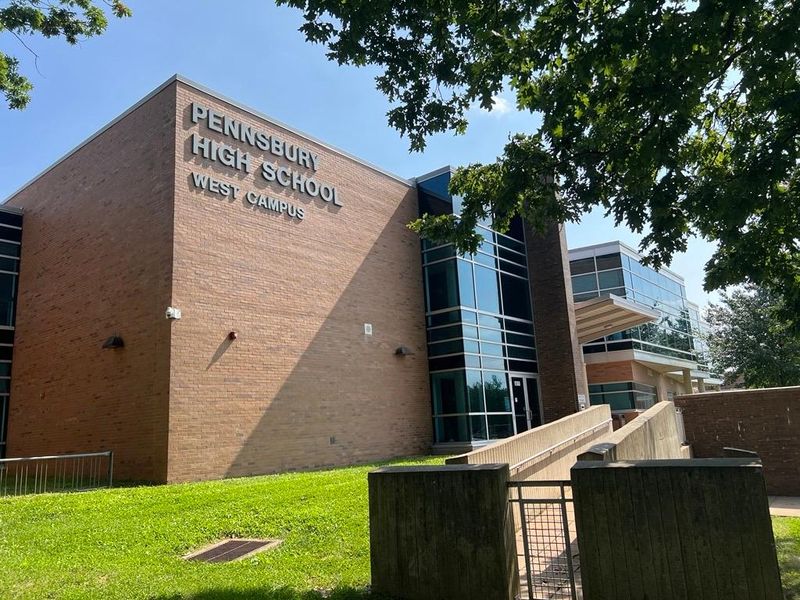
    A conservative Christian legal group is asking the U.S. Department of Education to investigate the Pennsbury School District, after a mother and father said the district violated their rights by hiding their child’s use of a different name and pronouns for nearly three school years.

    After parents confronted the Bucks County district last year, it agreed to use the student’s given name at graduation, but did not change its policy to require that parents be notified of a student’s name change, according to the complaint filed last week by the Orlando-based Liberty Counsel.

    “Parents have the right to know when their child is struggling with an issue, and are the first line of defense for their child,” said Richard Mast, a staff attorney with Liberty Counsel, which has brought cases favoring religious liberty and opposing LGBTQ+ rights.

    A Pennsbury spokesperson declined to comment Monday. The K-12 district enrolls about 9,400 students from Yardley Borough, Lower Makefield Township, Falls Township, and Tullytown Borough.

    The complaint comes as President Donald Trump’s administration has escalated pressure on school districts over policies protecting transgender students. The U.S. Department of Justice earlier this month sued the Kansas City, Kan., school district, alleging it violated parents’ rights by facilitating “gender transitions” for students without informing their parents.

    The Education Department also this month opened an investigation into a Massachusetts school district for using a male name and pronouns for a student without parents’ knowledge.

    Conservative legal groups are also taking aim at schools: The Chester County Intermediate Unit this month rescinded a policy that barred staff from disclosing a student’s transgender status to parents without the student’s permission after receiving a letter from the Alliance Defending Freedom and the Harrisburg-based Independence Law Center, the groups said Monday. A spokesperson for the intermediate unit said it recommended the policy’s repeal “as part of its ongoing review of board policies and in recognition of the evolving legal landscape regarding transgender students.”

    “There is absolutely a targeted attempt by the administration, and those aligned, to try to erase trans students from our schools and elsewhere from our culture,” said Kristina Moon, a senior attorney with the Education Law Center, a Philadelphia-based group that advocates for LGBTQ+ students. The Education Department earlier this year opened an investigation into the Great Valley School District in Chester County for a policy allowing transgender girls to participate in girls’ sports teams.

    Students “need to feel safe and be able to be themselves in school,” Moon said, adding that she worries schools are getting a “very harmful message … that if you care about trans students having a sense of belonging, then you too will be targeted by the Trump administration.”

    Name changes and ‘a right to privacy’

    The complaint filed Sept. 21 by Liberty Counsel against Pennsbury alleges that the mother and father did not learn until the end of their child’s junior year that Pennsbury High School staff had been calling the student by a male name and pronouns since ninth grade. The complaint does not identify the student, who has since graduated, or the parents.

    The district used a “false male name” and pronouns for the student in both personal interactions and electronic information systems, according to the complaint.

    In one handwritten note included in the complaint, a coach wrote to the student in October 2025: “My son! My boy! It’s finally senior night! … Your high school years may not have always been like you dreamt it would be, but it’s okay! … I could not be more grateful and honored to be your coach/mom.”

    While the student’s mother had heard other students referring to her child by the name during sophomore year, the student brushed it off, saying, “‘It’s just a silly name,’” Mast said in an interview Monday. The mother “didn’t pry further,” Mast said.

    But when the student brought home a memory book during junior year, the mother saw a male name was used for her child, Mast said. She then went back and reviewed other memory books and saw they also used the name.

    Had the parents known sooner, “they would have helped the child get the counseling she needed to be comfortable with her natal sex,” said Mast, who said the parents’ relationship with their child has suffered. “No girl should be made to feel like she is born in the wrong body.”

    On Nov. 17, the parents demanded that Pennsbury use their child’s given name and female pronouns, according to the complaint. After a Dec. 1 meeting, the district said it would do so going forward, the complaint said.

    But it did not fulfill all of the parents’ requests, leading Liberty Counsel to issue a demand letter on March 6, according to the complaint.

    The district agreed to use the student’s given name at graduation and on the student’s diploma, but said it could not control what appeared in the memory books, because those were issued by a booster club, the complaint said.

    And it has not updated its policy related to transgender students, according to the complaint. The parents had asked the district to require principals to communicate with parents before a student could be called by a different name.

    The district’s policy says it will accept a student’s asserted gender identity, and “all persons, including students, have a right to privacy. This includes the right to keep private one’s transgender status or gender expansive presentation at school.”

    The policy also includes a section about “parental consent” that says that if a parent or student requests a name change without proof the name has been changed legally, “the parent/guardian and student will be provided” with a form. That did not happen in this case, according to the Liberty Counsel complaint.

    Pennsbury is ‘not unique’

    Pennsbury’s policy is “not unique” among Philadelphia-area districts, said Jeffrey Sultanik, a solicitor for numerous districts in the region.

    Lower Merion’s policy, for instance, says “school personnel should not disclose information about a (transgender or gender diverse) student’s gender identity and expression to others, including the student’s parents/guardians and/or other school personnel, unless legally required to do so or unless the student has authorized such disclosure.”

    The Pennsbury complaint “may dictate what other school districts end up doing,” depending on how the Education Department responds, Sultanik said.

    The complaint alleges violations of the Family Educational Rights and Privacy Act, a federal law protecting the privacy of student educational records.

    The law “prohibits a federally funded school district from maintaining a policy that denies or effectively prevents a parent from inspecting and reviewing a minor child’s education records,” according to the complaint, which also alleges violations of the Protection of Pupil Rights Amendment — a federal law governing surveys administered to students on sensitive topics — and Title IX.

    Moon, of the Education Law Center, said “there is currently no law that schools have to notify parents about students sharing to their counselor, or a trusted teacher, that they identity as transgender.”

    In cases Moon is familiar with, she said, school counselors ask students if they have told their parents about their gender identity.

    “I really don’t think in the vast majority of cases, this is anything like teachers trying to avoid, or counseling students to avoid, conversations with their families,” Moon said.

  • ‘Data senator’ ad prompts Frank Farry to send a cease-and-desist letter to his Democratic challenger in Bucks County

    ‘Data senator’ ad prompts Frank Farry to send a cease-and-desist letter to his Democratic challenger in Bucks County

    Bucks County Republican State Sen. Frank Farry’s campaign this week demanded his Democratic challenger take down an advertisement attacking Farry for his position on data centers and air an apology instead, calling the commercial “defamatory” and “demonstrably false.”

    Shohin H. Vance, an attorney representing Farry’s campaign, called for Democrat Eileen Hartnett Albillar to remove the ad and issue a 30-second retraction advertisement, according to an eight-page letter sent Wednesday and reviewed by The Inquirer.

    Harnett Albillar’s ad calls Farry a “data senator” and says he is “the data center industry’s number one fan.” The ad also accuses the Republican lawmaker of voting for data center tax breaks in Harrisburg and notes that Farry’s law firm represents NorthPoint, a real estate company which redeveloped the Keystone Trade Center in Falls Township — the soon to be home of an Amazon data center.

    “The Advertisement, which accuses my client of abusing his public office for his own pecuniary interest, is not only misleading — it is demonstrably false,” Vance wrote in the letter.

    The dispute signifies how AI data centers have become a politically toxic issue as candidates from both parties distance themselves from supporting their development.

    Farry’s 6th State Senate District is one of a handful of competitive seats being targeted by Pennsylvania Democrats in hopes of flipping the state Senate and delivering a Democratic trifecta in Harrisburg.

    Hartnett Albillar’s campaign said Friday it has no plans to stop running the ad.

    “His temper tantrum won’t silence this campaign or stop Eileen from fighting to make Bucks County more affordable,” campaign manager Leigh Stafford said in a statement.

    The Farry campaign, in the letter, rejected the notion that Farry or any clients at his law firm — including NorthPoint — benefitted or profited from Farry’s vote in 2021 to support Act 25. The legislation allows computer data center equipment to be exempt from Pennsylvania’s sales and use tax if it’s being used or sold to a certified data center by a valid owner, operator, or tenant.

    “The vote did not, and could not, benefit the client, and none of it put a dollar in Senator Farry’s pocket,” Vance wrote.

    Farry was serving in the state House at the time and did not raise a conflict of interest on the floor. When asked about this, he said in a statement: “I didn’t raise a conflict on the House floor in 2021 BECAUSE I DO NOT REPRESENT DATA CENTERS.”

    The campaign emphasized in its letter that Farry’s law firm, Begley, Carlin & Mandio, has not represented a data center operator in at least 20 years.

    “To be sure, the Keystone Trade Center is now also the site of a data center, and its developer, NorthPoint, is a client of Begley Carlin. But NorthPoint is not a data center, and the fact that it leases a portion of its 1,800-acre site to a data center operator does not make it one,” Vance wrote.Begley Carlin has represented NorthPoint since July 2020.

    Farry has been with Begley Carlin since 2011, but he said in a statement that he has “not done much work at all” for the firm “as my time is filled with being a State Senator, our local volunteer fire chief, a dad to two young kids, and a husband who among other things recently supported my wife through a two year battle with breast cancer.”

    Adam C. Bonin, an attorney representing Hartnett Albillar’s campaign, wrote in a response to Vance Friday that: “We will neither cease nor desist from engaging in this truthful, accurate speech.”

    Bonin highlighted NorthPoint’s close proximity to the Bucks County data center project, including mentions of the company in Falls Township press releases and in news articles. Bonin also argued that the 2021 state House bill, which Farry supported “made this an attractive deal for NorthPoint and Amazon to make. Without them, perhaps Amazon would have stayed out of Bucks County altogether.”

    “While Senator Farry might not like seeing the truth displayed in such an unflattering way, the advertisement’s statements are amply supported by Farry’s legislative record, his law firm’s own website, official Falls Township records and copious news reporting,” Bonin wrote.

    This is not the first legal dustup to happen in a Bucks County race this election cycle. Last month, Democrat Bob Harvie, a county commissioner challenging GOP U.S. Rep. Brian Fitzpatrick in the 1st Congressional District, filed a defamation lawsuit against a super PAC supporting the Republican. The suit argued that the PAC falsely claimed Harvie was under FBI investigation.

    That followed two cease-and-desist letters: one to the PAC and another to the Fitzpatrick campaign.

    Staff writer Gillian McGoldrick contributed to this article.

  • How Pennsylvania’s quarries went on to inspire a national art movement

    How Pennsylvania’s quarries went on to inspire a national art movement

    What often gets called cobblestones on old Philadelphia streets are actually Belgian blocks. But no, the neat rectangles cut so they can fit tightly together did not come from Belgium. They came from nearby quarries, often from the New Hope area.

    Apart from the city’s architecture, Bucks County’s stones have also shaped the Pennsylvania Impressionism movement that flourished in the first half of the 20th century. New Hope, with its location on the Pennsylvania-New Jersey border, right by the Delaware River, was home to several artists who could afford to buy homes in the area, commute easily to Philadelphia to teach in art schools like the Pennsylvania Academy of the Fine Arts, and easily get to New York for shows and other networking opportunities.

    “The land was pretty cheap at the time, and artists could move into an old industrial mill or buy a property for not a lot of money. They could also escape urban life and get out into the country. It was just a really beautiful landscape, so people wanted to live in that area,” said Laura Igoe, chief curator at Doylestown’s Michener Museum and curator of the museum’s ongoing “Abstractions of Nature: Quarries and Industry in Pennsylvania Impressionism” show.

    The artists Edward Redfield and William Lathrop, Igoe said, were the first artists to settle in the area around 1900. Their works are a part of the show. Daniel Garber, who studied and taught at PAFA, soon followed them into the area and became one of the foremost artists living in New Hope. Then his students started moving to the area.

    “It was kind of like this self-perpetuating colony in a way,” said Igoe, “There was a very active artistic community there at the time, and also a lot of quarries.”

    John Folinsbee (1892-1972), “Slate Quarry, Bangor,” 1929. Oil on canvas, 32 x 40 inches. Courtesy of the Woodmere: Gift of the John F. Folinsbee Art TrustCourtesy of the Michener Art Museum

    Pennsylvania Impressionism by way of Europe

    At the time, there was a new interest in abstraction and Postimpressionism coming from Europe. Cezanne, particularly, was a big influence on some of the New Hope artists who often traveled to Europe and painted in the style of Impressionists like Monet. The Philadelphia art collector Albert Barnes even collected Cezanne paintings where the artist paints abandoned quarries, including Bibémus Quarry (Carrière de Bibémus) (1895).

    Like most Impressionists, the New Hope artists painted landscapes en plein air — outdoors, amid nature, directly drawing from subject matter. Naturally, the quarries that were a part of the landscape made it into the paintings and now form the focus of the exhibition.

    “But while in Europe Impressionism was a much more avant-garde style, it became kind of the style of the academies in the United States,” said Igoe, “so this was what was taught at places like PAFA.”

    “They emphasized capturing effects of light and atmosphere,” said Igoe, “really quick brushwork, quick application of paint.” Many of the artists, she said, were painting landscapes early in the morning or in the evening, painting sunrises and sunsets. “There’s frequently this shimmering sense of light in a lot of these Pennsylvania Impressionist paintings,” she said, “It is this really beautiful reflection of light off the stone that they’re trying to capture.”

    Igoe considers 1900 to the 1930s as the peak of Pennsylvania Impressionism, with the 1915 Panama Pacific Exposition in San Francisco being a highlight. Many of the New Hope Impressionists exhibited their work in the show.

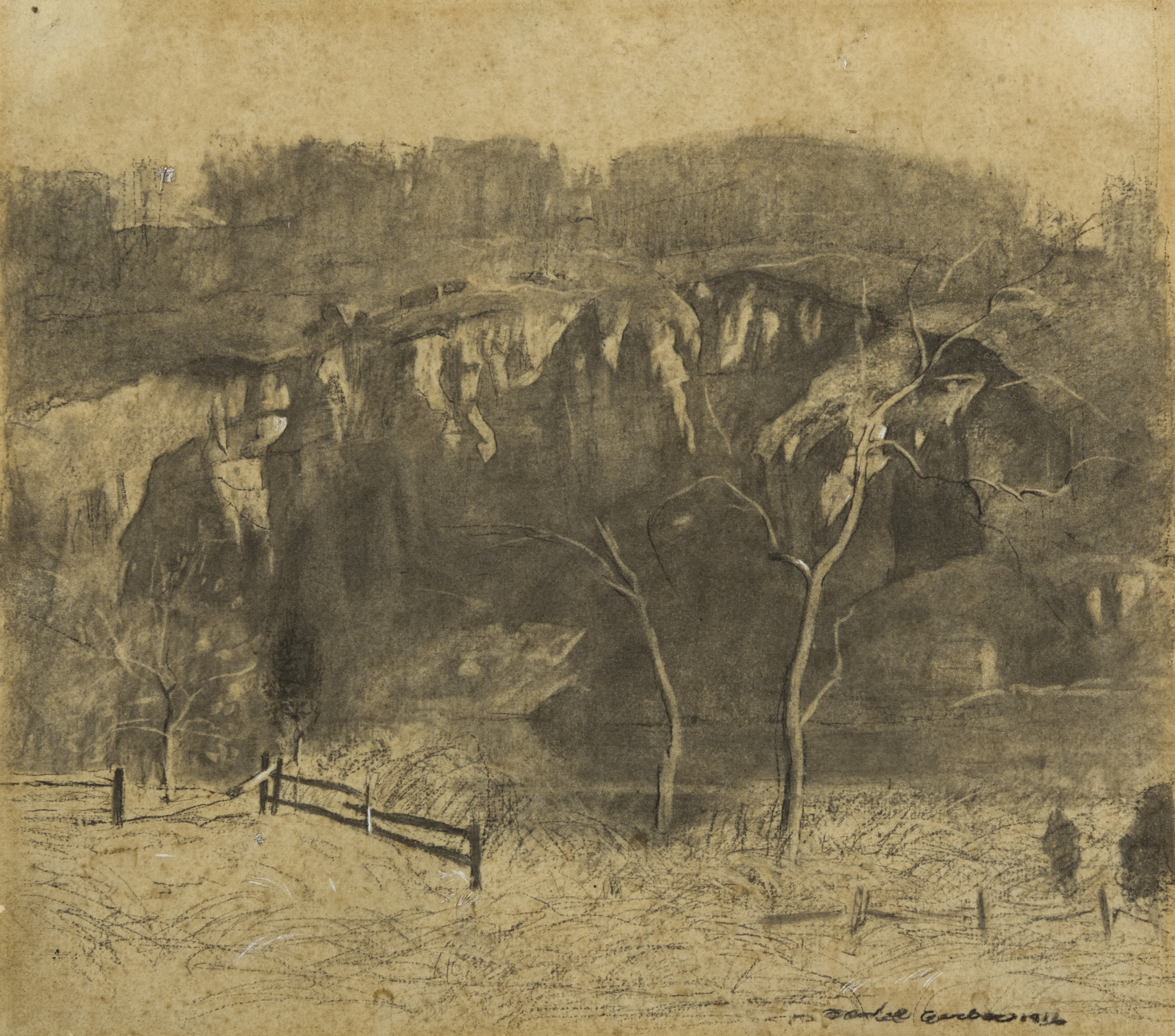
    Daniel Garber (1880-1958), “Abandoned Quarry,” 1916. Charcoal on paper, 10 ¼ x 12 1/8 inches. James A. Michener Art Museum. Michener Art Endowment Challenge Gift of Mr. Herbert WardCourtesy of the Michener Art Museum

    Redfield, notably, had a full room dedicated to his art; “which was an honor that was bestowed upon the likes of John Singer Sargent and Childe Hassam,” said Igoe. Many of the artists won medals at the show “and it led to them being proclaimed by some critics as the most American school of painting at the time,” said Igoe.

    “They painted the landscape of the New Hope area, and they painted in this, what was considered at the time, bold … in this very masculine style. We might not think of Impressionism that way today, but it was considered a very national style for the United States.”

    The artists continued to exhibit under the name of the New Hope Group, and their work was collected by museums across the country. Several women artists were members of the group. Together, they founded the Phillips Mill Community Association in 1929, which remains active as an exhibition venue.

    “The Michener Art Museum was really founded to preserve the legacy of those artists. Especially in Bucks County, those artists have always been well known. But Michener was founded so more people could learn about these artists and preserve their legacy and collect their work,” Igoe said.

    Roy C. Nuse (1885-1975), “The Quarry at Rushland,” 1938. Oil on canvas, 22 x 24 inches. Courtesy of the Woodmere: Museum purchase, 2012Courtesy of the Michener Art Museum

    Why paint quarries?

    The artists, Igoe said, weren’t always painting exact reproductions of the nature around them, so they had the option of omitting the quarries from their art. “But they frequently chose to include these quarries,” she said, “and that led me to this exhibition where I wanted to look a little more closely at these paintings and think about why artists were so drawn to this subject.”

    Firstly, she thinks, the quarries added a drama to the landscape of New Hope that was attractive to the artists. Comparing quarries to the Grand Canyon, Garber said in an interview that they were “on a scale commensurate with the canvas,” said Igoe.

    “So you can include these dramatic rock faces, but it doesn’t overpower the canvas in the way the Grand Canyon can. You can’t get the Grand Canyon on a canvas, but you can get a quarry,” said Igoe.

    George Lear (1897-1956), “Quarryman’s House,” ca. 1930-1950. Oil on board, 2 5/8 x 3 ¾ inches. James A. Michener Art Museum. Gift of Drs. Irwin and M. Susan RichmanCourtesy of Michener Art Museum

    The way the light at different times of the day and year reflected off the stones also inspired the artists, as did the geometric forms of the rock face that often inspired the artists to play with abstraction.

    “They were also interested in this human impact on the natural world, the way humans could excavate these rocks, from the landscape, I think was appealing to them,” said Igoe.

    Show highlights

    Many works in the show portray factories, smoke, and industrialization without much critical commentary, but Garber’s Harmonville (1925) shows a landscape near Conshohocken. To Igoe, it is “one of the artworks in the show that is the most critical of industry.” A sickly tree in the foreground of the print, she said, is perhaps Garber’s way of saying “that this industry can be really destructive to nature too.”

    Other artists in the show include Letitia Maxwell Ely, the lone woman artist in the mix, who was one of Garber’s students. “I just wasn’t finding a lot of paintings of quarries by women artists. I am not sure if it’s because it’s perceived as a more masculine subject,” said Igoe. But Maxwell Ely’s work, she said, stands out in the way the artist paints in proximity to the quarries. Masters like Garber, Igoe said, took a distant view of the quarries, not usually engaging with the human labor at the quarries.

    Letitia Maxwell Ely (1886-1967), “Quarry,” 1914. Oil on board, 8 x 5 inches. James A. Michener Art Museum. Gift of David B. Long.Courtesy of the Michener Art Museum

    But Maxwell Ely, whose work was much smaller in scale, “brings you right into the quarries themselves in those little paintings, and she is more interested in the labor.” In works like Quarry (1914), there are no sweeping vistas, but a more zoomed-in perspective at life of those working in the quarries.

    “There’s not a lot of work known by her that’s still available. She’s an artist that I wish we knew a little bit more about, but she didn’t leave a very large body of work behind,” said Igoe.

    Among the other highlights of the show, according to Igoe, is a postcard-sized painting The Quarryman’s House by the artist George Lear. Another artist is Roy Nuse who lived by the Rushland quarry and painted that quarry many times throughout his life. “Nuse has this reputation as being somewhat of a homebody, he painted things close to his home,” said Igoe. “I just found it interesting that there was a quarry close to his home, and he painted it in all different seasons, in the winter and spring. And I think he really enjoyed the shapes that the quarry provided as well.”

    Charles Rosen (1878-1950), “Quarry and Crusher,” early 1930s. Oil on canvas, 32 x 40 inches. James A. Michener Art Museum. Museum purchase funded by George C. Benson in honor of his friend, John Horton.Courtesy of the Michener Art Museum

    Charles Rosen, another artist in the show, started his career being an Impressionist but moved onto more avant-garde European styles after moving to Woodstock, N.Y.

    Pennsylvania Impressionism eventually dwindled as a movement around the 1940s as public interest shifted to more modern, abstract art forms. Some of the quarries depicted in the show remain active, some are overgrown, and some are part of protected land along the Delaware River.

    Igoe’s colleagues have even picked up some rocks from nearby quarries that, with the art, will also be a part of the show.

    So visitors can touch and feel the stones that they have walked over thousands of times. Stones that, with their jagged faces and smoothened ends, have witnessed artists’ curiosities and have gone on to outlive the hands that painted them.

    “Abstractions of Nature: Quarries and Industry in Pennsylvania Impressionism” runs through Feb. 28, 2027. Michener Art Museum, 138 S. Pine Street, Doylestown, Pa. 18901. michenerartmuseum.org

  • The deaths of two young athletes, and a mother’s words, must start a difficult conversation

    The deaths of two young athletes, and a mother’s words, must start a difficult conversation

    Before the soccer game, teenagers draped their arms over each other’s shoulders and let tears wash down their faces and parents listened in silence as a mother stood in the middle of a stadium to tell everyone there about her boy.

    “I’d do anything,” Megan Hanson said into a microphone, “to have my beautiful son back.”

    Sam Hanson was 16 years old when he died by suicide on April 5. A sophomore at Central Bucks High School East, a catcher on its baseball team, he was the second student-athlete at the school to take his own life in less than four months. The first — Frankie Pacitti, who was 17 and a standout lacrosse player, a self-described ladies’ man who could get guys guffawing and girls giggling just by being himself, the kid in school everyone knew — had died in December.

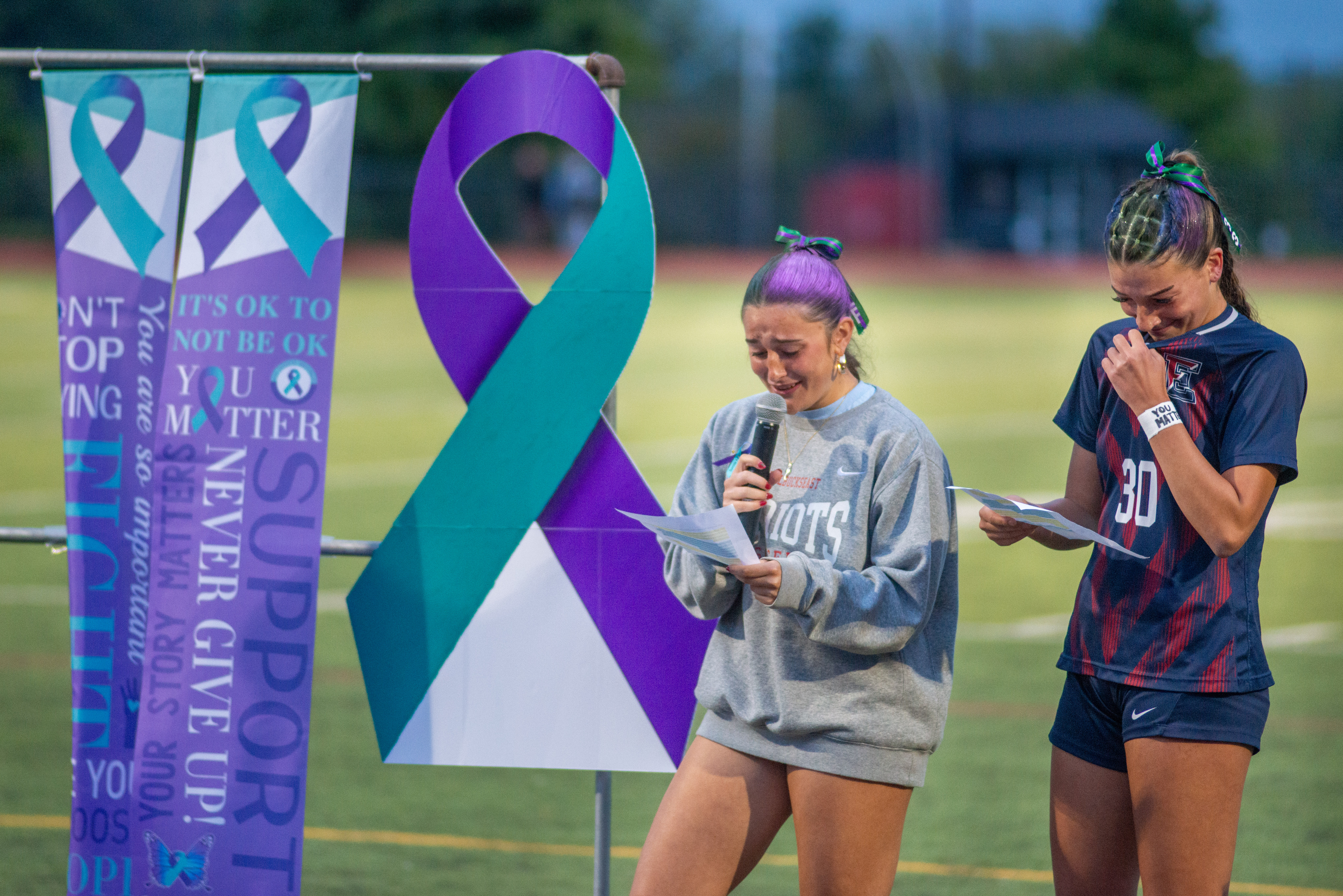
    A few members of CB East’s girls’ soccer team, among them Mia Forney, a senior forward and perhaps the best female high school soccer player in Pennsylvania, arranged to hold a mental-health awareness night in the aftermath of Sam and Frankie’s deaths. “Once Sam passed,” Forney said, “we realized this is not normal.” When the players asked Megan Hanson if she would speak at the event, she wasn’t certain she was ready. Still, she wanted to try to prevent something like this from happening to someone else. So she wrote a brief speech, and she delivered it Tuesday night, just before the CB East girls’ team beat CB West, 4-0, and she hoped that the people in the bleachers and on the field were listening.

    “Parents,” she said, “I’m not here to scare you but to share some insights I’ve learned … I won’t insult you by telling you to ‘talk to your kids.’ We all talk to our kids, and most of us are highly invested in their lives. What I will tell you to do is to talk to your kids directly about their mental health. Don’t be afraid to ask them hard questions, like, ‘Have you thought about suicide?’”

    Megan Hanson, whose son Sam died by suicide in April, speaks during a pregame mental health awareness presentation on Sept. 22. William Thomas Cain / For The Inquirer

    It was her most important, urgent, and accurate message. It aligned perfectly with what Derrick Gordon, an associate professor of psychiatry at Yale University, described as “the myth we have out there is that, if we suspect somebody is suicidal, we shouldn’t raise this with them because we don’t want to put the idea in their head.

    “The reality is, you can’t put an idea in their head that’s already there,” Gordon told me in an interview last year. “Actually, the best course of action is to ask the question of the individual, then talk about it and address it. It’s been my experience, and I think other professionals would say this, that if you raise the issue of suicidality with people who are contemplating it, they feel relieved. ‘Oh, Jesus, I can now finally say it out loud.’ You can talk to them about the possibility that if they’re going to hurt themselves, it would impact you. Oftentimes, they get lost in their own experience of what they’re going through, and you want to get them outside of that space.”

    Megan Hanson had no idea that her son was considering harming himself, how dark his world could get. How could she have an idea? Sam was pulling A’s and B’s in a roster of advanced-placement and honors courses at CB East. As a fourth grader, he had constructed a gift for his Connie Mack coach, Mike McCardle — a pen-and-pencil holder with a photo of the two of them set into it, a gift that McCardle still keeps on his desk. He died on the day before Easter, and it had been a full and wonderful day. Sam had practiced parallel parking in a middle-school lot in the morning, then passed his driver’s test and earned his license and was proud that he had.

    CB East soccer players Mia Forney (left) and Rylie Leedy make remarks about their late friend, Frankie Pacitti, before the start of their game with CB West on Sept. 22. William Thomas Cain / For The Inquirer

    He and Megan had gone out to lunch to celebrate. He had worked a few hours at the local pub and restaurant where he was a familiar and welcome face to the owners and patrons. Megan allowed him to borrow his car to drive to a friend’s house that night, and when he returned they talked about their plans for Easter. They would go to church in the morning and head to her parents’ house in the afternoon, and when she said good night to him she could never have thought, even in her most dismal nightmares, that he would get out of his bed and go downstairs into the basement and never come up again.

    “It’s hard with teenagers because they’re moody and they don’t talk,” Megan said in a private moment Tuesday, “and I felt like we were getting to a better place where he was being more open with me, and I felt like we were getting to another level in our relationship. The hardest part is just looking back and saying, ‘Maybe this was a warning sign or a cry for help.’ I truly don’t believe it was something he planned out. I wish whatever went on in his brain, if he had just woken me up …”

    She could not finish the sentence, and she did not need to. Home from the soccer game, I called my sons, who are 15 and 12, into the living room. Our family lives in the same school district that Sam Hanson and Frankie Pacitti did. My older son is a sophomore and has a class this semester with Sam’s sister. The boys paused the baseball video game they were playing and plopped on the couch. My wife and I wanted to talk to them directly about something.

  • Raymond Horsch was convicted of luring a 9-year-old girl to his car in 2009. Now those court records could be destroyed.

    Raymond Horsch was convicted of luring a 9-year-old girl to his car in 2009. Now those court records could be destroyed.

    In 2009, Raymond “R.C.” Horsch — the violent pornographer now linked to seven dead or missing women — was arrested and charged with trying to lure a 9-year-old girl into his green Jeep Wrangler in Kensington.

    “Come here, in my car, sexy girl,” Horsch told the girl, according to an arrest report.

    When police found Horsch circling the neighborhood that March night, officers recovered a pair of high-powered binoculars, a digital camera, a telephoto lens, an eye patch, and a condom from inside his Jeep, the prosecutor on the case said.

    Horsch was convicted of two misdemeanor counts of luring a child into a motor vehicle and corrupting the morals of a minor at a trial in Municipal Court in 2010. He was sentenced to 2½ to 5 years in prison, and would have been required to register as a sex offender under Megan’s Law, said Jill Fertel, the prosecutor who handled the case.

    But Horsch insisted he did nothing wrong, and requested a new trial in Common Pleas Court. Another prosecutor took over the matter.

    The victim and her mother became too afraid to testify in court again, according to two people familiar with the matter. The case fell apart and prosecutors dropped the charges. The original conviction was vacated, and in 2015, Horsch successfully petitioned a Common Pleas Court judge to expunge the case.

    Fertel, in an interview Tuesday, said Horsch — and that outcome — had “haunted her for the last 16 years.”

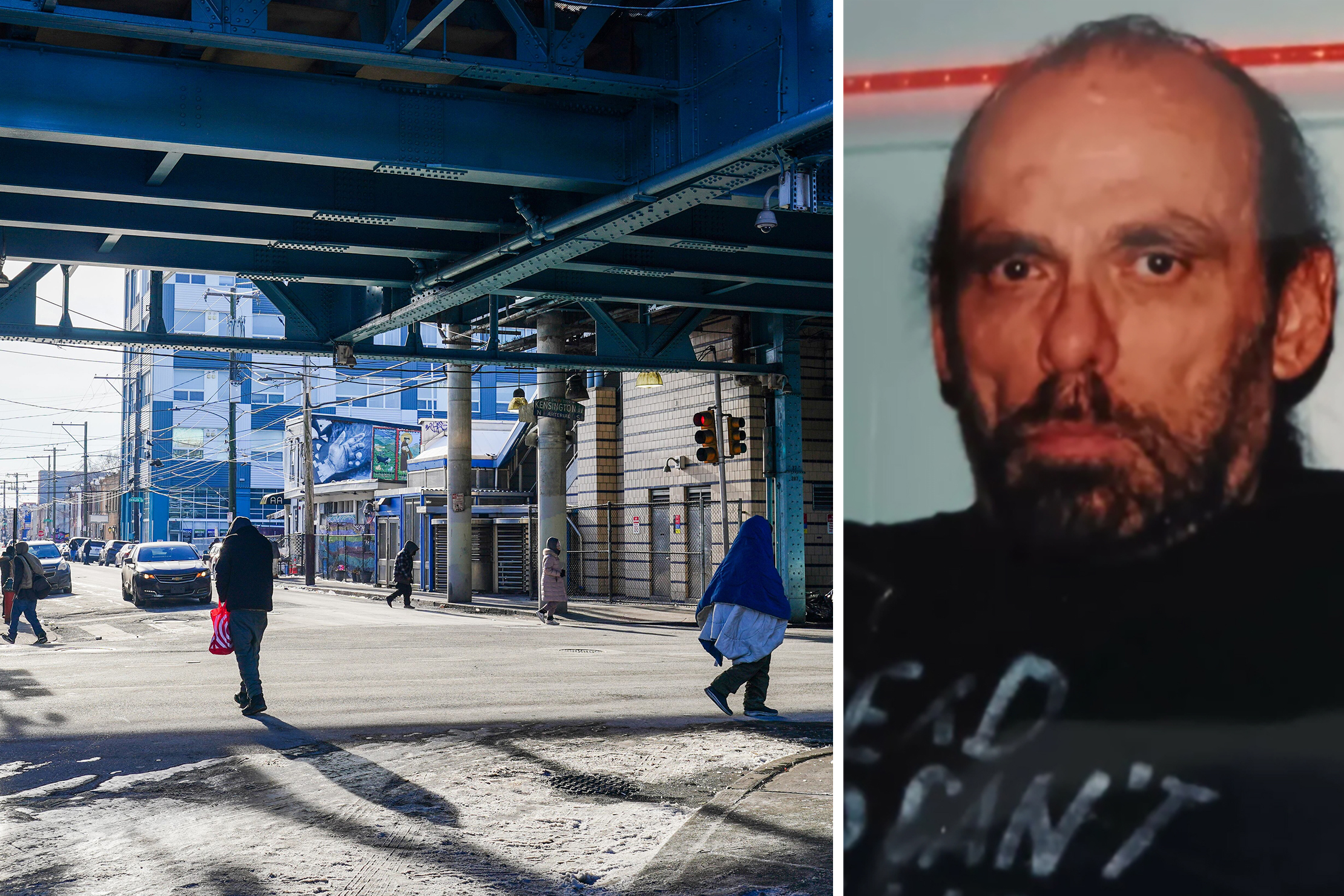
    Horsch was known to prowl Kensington to recruit women in addiction to appear in his violent pornographic works in exchange for drugs, cash, and a place to stay at his home. But the details of the expunged conviction, which have not been previously reported, indicate Horsch may have also sought underage girls — and suggest that law enforcement was alerted to his troubling behavior nearly two decades ago.

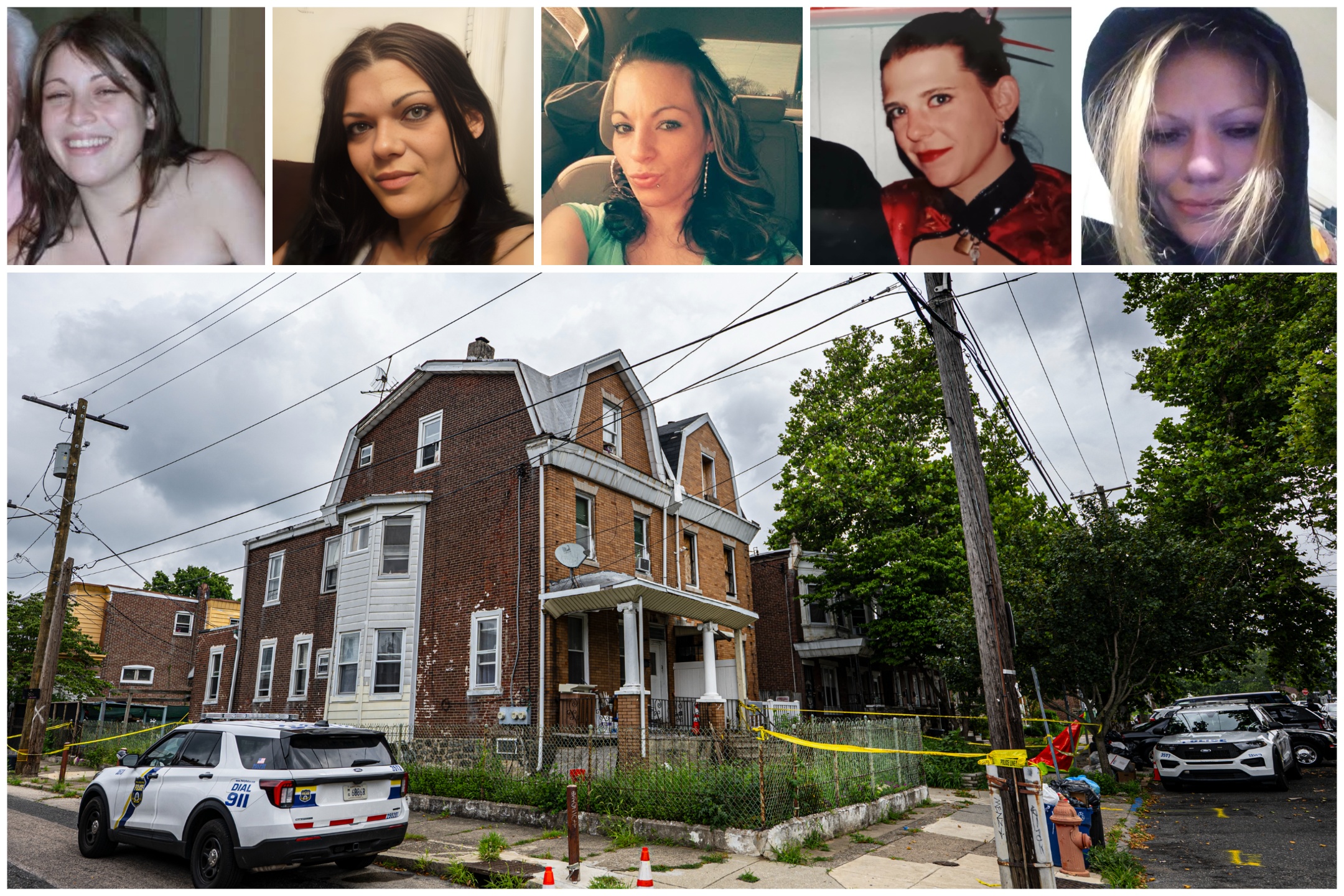
    (Top from left) Gabrielle Amarando, Nicole Fusaro, Maribel Fresses, Amy McHale, and Blair Tonzelli. Nicole Fusaro, Gabrielle Amarando, and Maribel Fresses are presumed dead. Blair Tonzelli and Amy McHale are still missing, but last seen at Horsch’s home.Obtained by The Inquirer

    Now, the court records in the case — the sole known sex crime Horsch is believed to have been charged with — are at risk of being destroyed.

    The records are on file at the Criminal Justice Center, but when The Inquirer sought to review them on Monday, a clerk denied that request.

    Because the case had been expunged, the clerk said, the records should have been destroyed years ago. The filings could not be reviewed, he said, and would ultimately be destroyed in accordance with state law.

    The Inquirer sent a letter Monday night to administrative judges in Philadelphia’s First Judicial District, asking that the records be preserved in the interest of the public, and that they be unsealed because of the ongoing investigation into Horsch’s connection to missing women.

    “Horsch is dead, and this case has extraordinary public interest and news value,” the newspaper wrote. “The filing could hold pieces of information that are irreplaceable and important to the public and the criminal investigation.”

    Fertel — who left the district attorney’s office in 2018 — said there are likely essential records of the case that remain in the court file, including notes of testimony, psychology examinations, and letters from Horsch’s defense lawyer submitted as part of his sentencing hearing.

    She said the sex offenses triggered a sexually violent predator assessment of Horsch, and recalled that the psychologist was “horrified” by Horsch’s pornography and feared he could be violent.

    “This is the only sexual offense he was ever convicted of, that I know of,” Fertel said in an interview Tuesday. “His conduct and his films and video were part of the sentencing. What he was doing [in Kensington] was part of the sentencing. That record is important to have, if we’re to prevent this from happening again.”

    Police said they have so far recovered footage on hard drives inside Horsch’s home that appears to show five women dead — including a video of Horsch filming himself while strangling a woman to death with a zip tie. Two other women, including Horsch’s ex-wife, were last seen at the home but remain missing.

    Luring a child

    Around 7 p.m. on March 20, 2009, the 9-year-old was walking on Ontario Street when Horsch, in a green Jeep, slowed next to her.

    “Yo, come here,” Horsch said, before getting out of his car to approach her and calling her “sexy,” according to the arrest report.

    The girl ran home and told her mother an old man in a green Jeep had asked her to get into his car. The mother ran outside and chased after the Jeep, which circled the block and drove off, the report said. They called police, who responded and found Horsch in his car near the 3200 block of Kensington Avenue, the report said.

    The girl identified Horsch as the man who approached her, the document said.

    Fertel said that during the trial, the victim cried on the stand, at times prompting the judge to leave the bench to comfort her as she testified before Horsch, who was standing just feet away.

    Horsch was released on bail.

    While Horsch was facing those charges in Philadelphia, in July 2009, police responded to his home in Chalfont — where he lived before moving to Olney in 2013 — after a 21-year-old woman called to report a break-in. When officers arrived, they found 455 marijuana plants and two shotguns spread among five partitioned rooms in the basement, according to the Bucks County Courier Times.

    Officers also recovered bondage gear, photographs of bleeding women, and a homemade movie labeled with the word “rape,” the newspaper reported.

    Court records show that the woman who called police later told investigators she struggled with a heroin addiction and had met Horsch while doing sex work in Kensington. (That woman died of an overdose in January 2016 when she relapsed, her mother said in an interview this week.)

    When Horsch returned home that night in July to find police raiding the property, he ran down his tree-lined suburban street, according to the news report.

    He was later arrested and pleaded guilty in federal court to manufacturing drugs and illegal gun possession, and was sentenced to 54 months in prison, plus five years’ probation.

    Ligature marks on the arms of an unidentified woman in Raymond Horsch’s 2003 two-volume photobook “Eroto: To The Prurient Interest.”Obtained by The Inquirer

    Fertel said that, as she prosecuted Horsch in Philadelphia, she learned details of the Bucks County drug raid — including that officers had found disturbing pornography, guns, and explosive materials at his suburban home. That became part of her case, she said, and led her to ask that Horsch be sentenced to the maximum penalty of five to 10 years in prison.

    Common Pleas Court Judge Roger Gordon — who presided over the case — sentenced Horsch to 2½ to 5 years.

    But then Horsch appealed, and the case collapsed after the child and her mother became too scared to testify against him again.

    Fertel said the materials found in Horsch’s home, and the psychologist’s fears of his potential threats to the community, have been seared in her memory ever since.

    “He was able to treat women in this fashion for decades and no one has stepped up to protect them. No one was able to stop him,” Fertel said this week. “Everybody knew about it.”

    A ‘fabricated thing’

    Horsch, who died in May 2025, boasted about his criminal career as a drug manufacturer and document forger. He also spoke openly about how he recruited drug-addicted women in Kensington to appear in his violent pornographic photos and films that featured drug use, overdoses, and staged hangings, drownings, and killings.

    But Horsch vehemently denied ever trying to lure a child into his car. He spoke about it years later, in a 2013 interview with the Rialto Report podcast, and said the 9-year-old girl had lied.

    “It’s just a totally weird, fabricated thing,” he said. “All you have to do is go to the state sex offender list and you won’t find my name there.”

    In his 2003 movie Slaves, Horsch played a semiautobiographical character who, in one scene, described approaching a young girl in a mall. The girl’s mother, Horsch’s character said, then yelled, “Get away from my daughter!”

    “The place froze, literally froze. Time stood still. Every eye was on me, from every direction, hundreds of eyes,” Horsch said in the movie. “And I realized in an instant that, to every single person there, I was a child molester.”

    Raymond “R.C.” Horsch in character for film role, 2014.S. E. Stokowski / Wikimedia

    As Philadelphia police sort through more than one million photos and videos on the hard drives recovered from Horsch’s home on West Chew Avenue in Olney, they have encountered what they believe was staged violence as part of his art — and also photos and a video of what they now believe were real missing women, dead inside Horsch’s home.

    So far, police have identified five women in the footage who they now believe are dead: Maribel Fresses, Gabrielle Amarando, Nicole Fusaro, a 25-year-old woman who has not been identified at the request of her family, and another woman investigators are still working to identify.

    Two other women who were last seen at Horsch’s Olney home — Blair Tonzelli and Amy McHale, his ex-wife — remain missing.

    Police have so far reviewed only about 30% of the materials on the hard drives.

    Fertel said she hopes revelations about the 2009 case will draw more attention to the exploitation of women in Kensington.

    “No one was getting arrested for what Raymond Horsch was doing,” she said. “This is an opportunity for people to recognize that this is wrong and that we can’t let it happen again. We can’t let this happen to more people.”