Blog

  • Vic Fangio talks safety, cornerback battles as Eagles near decisions on 53-man roster

    Vic Fangio talks safety, cornerback battles as Eagles near decisions on 53-man roster

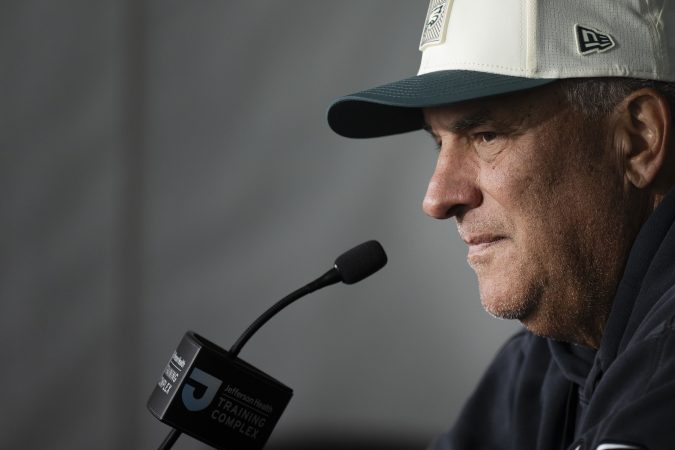
    Eagles defensive coordinator Vic Fangio effectively offered an update when asked for the latest on the safety battle between Marcus Epps and Michael Carter II — the Eagles’ most contentious position battle in training camp.

    “It is close,” Fangio said. “Michael has been doing a good job back there. It’s just all new to him and we need to get him more exposure, which is hard to do, but I do think Michael eventually can do it.”

    Translation: Epps has won the job.

    It’s been a long time coming for the 30-year-old safety, who worked his way back from ACL surgery last year before getting cut by the Patriots at the end of training camp.

    Fangio’s rationale makes sense, too. Epps, who was a key starter during the Eagles’ 2022 Super Bowl run, has a much lengthier resumé than Carter’s. The former has 49 starts in 94 career games with three interceptions and 315 career tackles, while Carter has 26 starts in 73 games with two interceptions and 233 tackles.

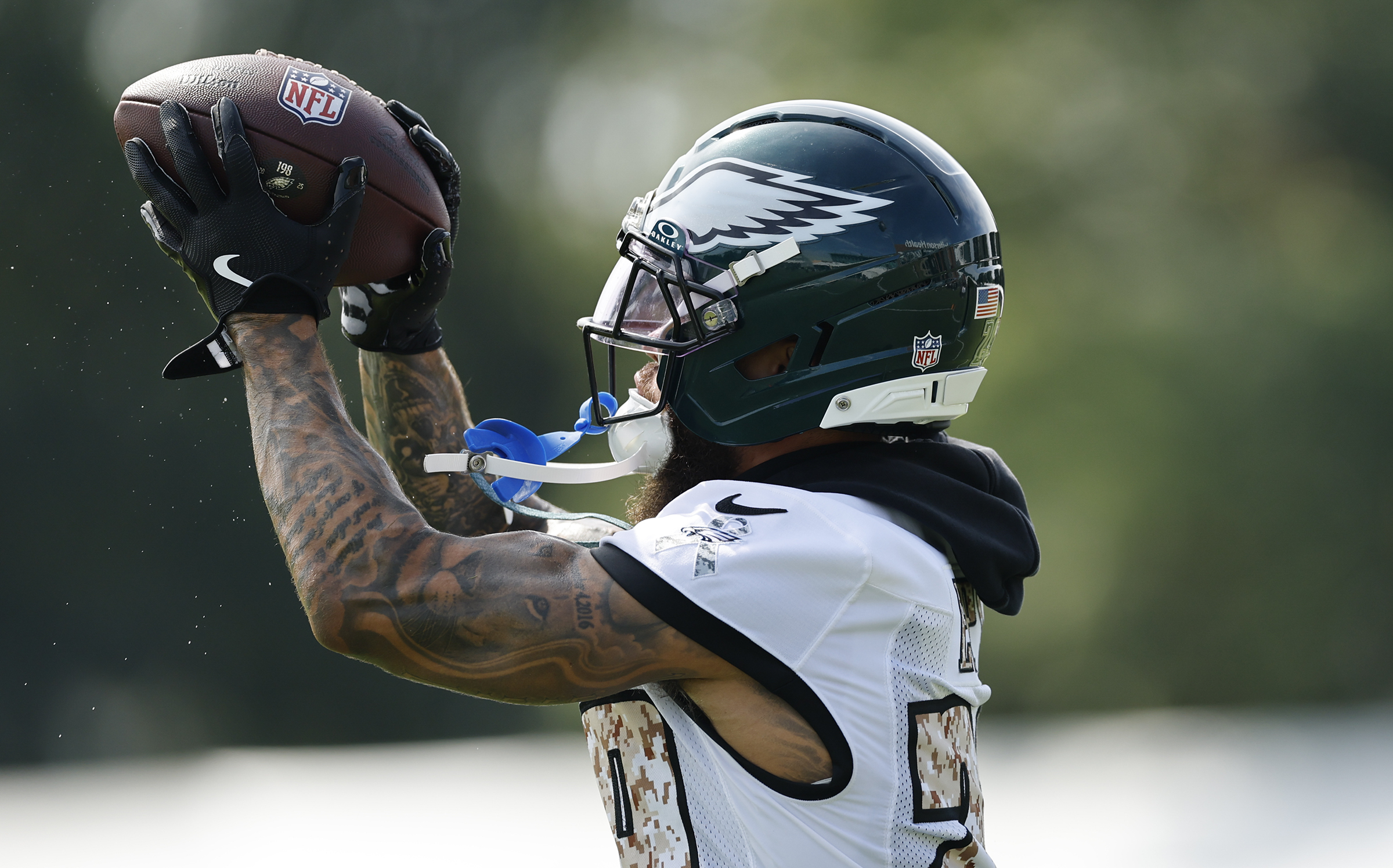
    Barring an outside acquisition, it appears that Marcus Epps has wrapped up a starting safety job. Yong Kim / Staff Photographer

    Time will tell if general manager Howie Roseman makes an additional move at safety, which is widely considered the thinnest position on the Eagles roster. But for now, the job is Epps’ — which “means everything” to him.

    “I worked real hard to get back to where I’m at, man, and there were a lot of dark days,” Epps said Tuesday. “But I still got work to do. I haven’t arrived by any means. It’s a long season, and we’re still here just in camp. That’s where my focus is, on camp, finishing out camp the right way and just continuing to get better.”

    Revealing the starting safety wasn’t the only tidbit Fangio dropped before Wednesday’s practice, which was the team’s final session of their 2026 training camp. The veteran defensive coordinator also gave a glimpse into where the cornerback room currently stands. When asked a question about the depth at the position, Fangio tipped his hand on five of the six most likely corners to make the final 53-man roster — Quinyon Mitchell, Riq Woolen, Jonathan Jones, Mac McWilliams and Kelee Ringo.

    “I feel good about Q [Mitchell] and Riq,” Fangio said. “Jonathan Jones has missed a lot of time here, so hopefully we can get him back at some point. I think Mac has made a lot of strides. He’s dinged right now a little bit, [and] wasn’t able to finish the other night. Kelee, I think, is making strides.

    “Those are the five main ones, plus the guys that are competing for the sixth spot.”

    The “guys competing for the sixth spot” are Jakorian Bennett, Ambry Thomas, Shaun Wade, Tariq Castro-Fields, and Isaiah Bolden, with Friday’s game against the Bengals possibly offering another chance for players to set themselves apart.

    What Fangio’s complete group looks like will become more clear when the final roster is due Sunday at 6 p.m. ET.

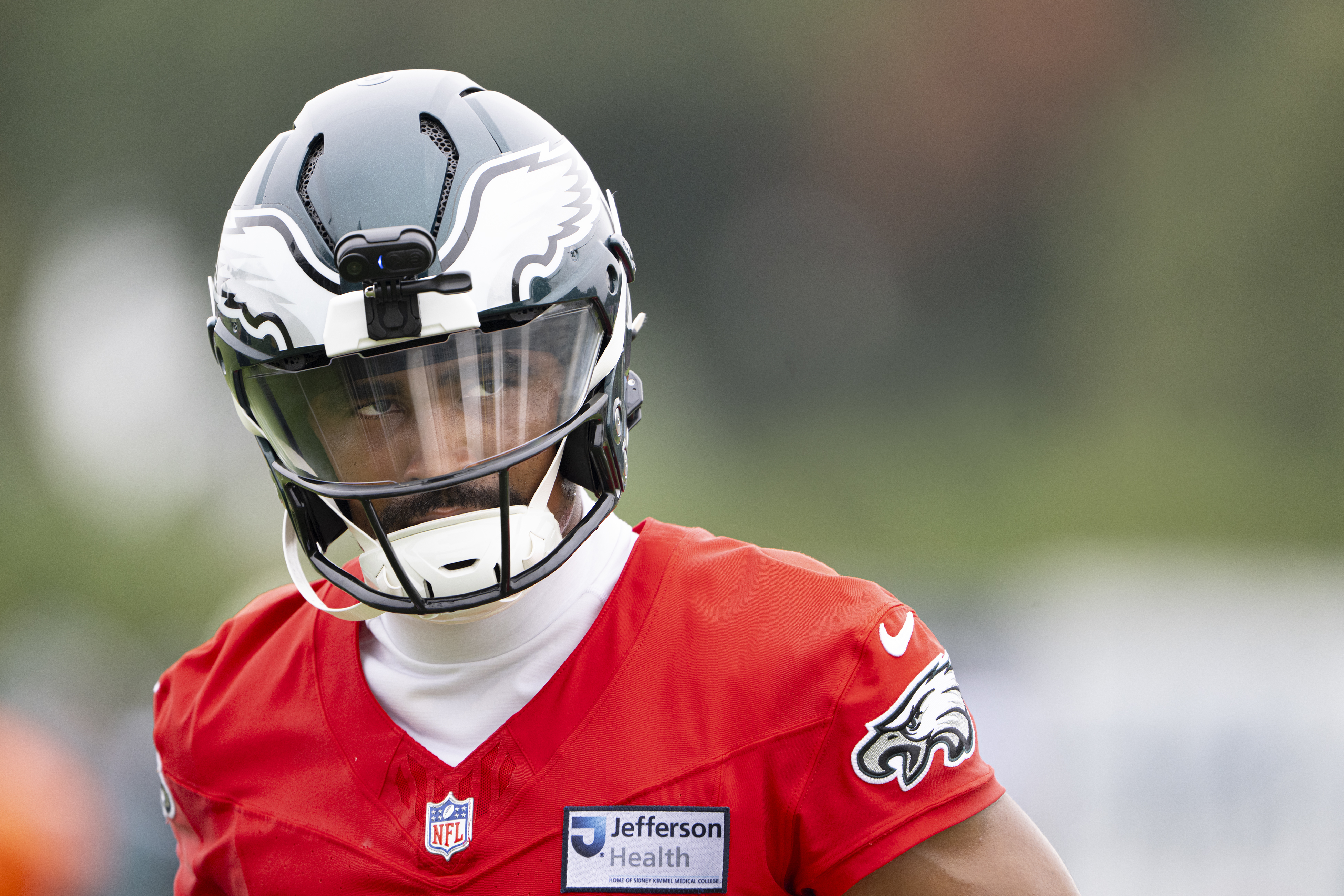
  • Jalen Hurts isn’t sweating the Eagles’ continued search for an offensive identity: ‘It’ll come together’

    Jalen Hurts isn’t sweating the Eagles’ continued search for an offensive identity: ‘It’ll come together’

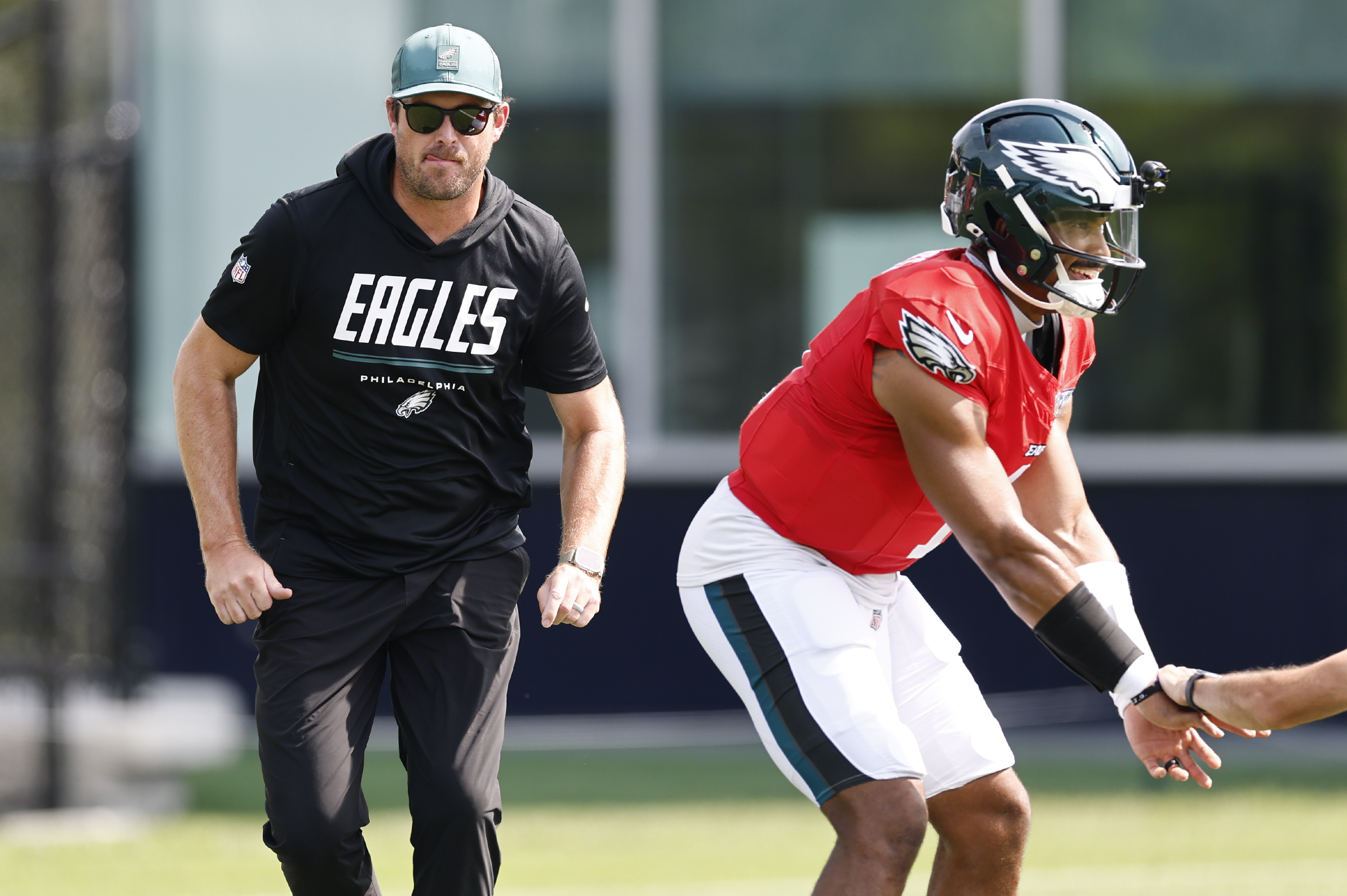
    Back in the early days of training camp, Jalen Hurts used the term “calibrating” to describe the state of the offense as it installed Sean Mannion’s new system.

    Hurts and his teammates have spent the past month taking Mannion’s broad playbook and putting those designs to life on the practice field. Those experiences in practice — from the touchdowns to the interceptions — have helped inform Hurts on how to approach any given play.

    The Eagles held their last practice of training camp on Wednesday and will play their final preseason game against the Cincinnati Bengals on Friday, signaling the impending end of the “calibrating” phase.

    Still, it’s not time to put a label on the Eagles’ offensive identity in 2026 just yet.

    “We’re very widespread in what we’re doing right now, and I think that’s good,” Hurts said Wednesday. “So when we can hone it down and see who we are, establish what exactly the identity is for us, it’ll come together. So, still very early.”

    Rarely has an Eagles offense looked the same in Week 1 and Week 18. It evolves over the course of the season, and from year-to-year. In 2024, it was rooted in the highly successful run game behind Saquon Barkley and a dominant offensive line. Last year, it was less clear-cut, and in turn, the offense wasn’t nearly as efficient as it was when it won the Super Bowl the season before.

    At the very least, with the season opener against the Washington Commanders just 18 days away, the Eagles offense has a foundation. Setting that foundation has been Mannion’s responsibility this summer.

    Eagles offensive coordinator Sean Mannion (left) has praised Jalen Hurts’ work in helping to evolve the team’s scheme.Yong Kim / Staff Photographer

    Mannion has been clear with his “intent” for the offense, Hurts said. As the season gets underway, it will be on the new coordinator to shape the offensive identity for the Eagles based on the strengths of the personnel and the concepts they execute well.

    “As you see who you have on your team and you begin to progress forward, you hone things down and you say, ‘This is who we are. This is how I want to lead it,’” Hurts said. “So I think that’s where Sean is. And a lot of that is, it’s up for him to mold and put together so in the end, we can go out there and be in the best position to win.”

    Hurts called the offense “multifaceted” at this moment in time. Once the coaches begin game-planning for the regular season, the 28-year-old quarterback expects the breadth of the offense to narrow down to a specific direction depending on the opponent.

    With all of the changes to the offense, will there be room for the Eagles to incorporate plays that have been successful in the past?

    “I think that’s a great question,” Hurts said. “And it’s something that you keep in mind of when you’ve had so much success. How will it look? You don’t really know. Do you want to win? Absolutely.

    “So we’ve got to figure out who we are as a team. Obviously, coaches come in with a great mindset, great philosophy and putting everything together. It brings us a bit more structure. In the end, it’s about what’s going to go out there and be the best for our team.”

    The offense that Mannion is installing and some of its personnel are new to Hurts. The schematic shift isn’t a novel concept to him. Hurts has adapted to a new play-caller almost every season as a starter. This year, he has new receivers, too, in Dontayvion Wicks, Makai Lemon, and Hollywood Brown, who are expected to contribute alongside DeVonta Smith and tight end Dallas Goedert.

    Lemon was sidelined for three weeks of camp with a hamstring injury. He returned to action in team drills on Monday as he eyes the opportunity to play in Friday’s final preseason game. Hurts said he was happy to have Lemon back on the field as the duo continues to build chemistry.

    As Hurts gets acclimated to all of the newcomers, from his teammates to his offensive play-caller, he takes the same approach.

    “I think any time you’re playing with a new unit, it’s just about being on the same page,” Hurts said. “That’s no different than coaching, too. When you’ve got [a] new play-caller, you’ve got [a] new voice, you’ve got new perspective. Everybody’s chasing the same thing. Everybody wants the same outcome. Everybody’s process looks a little different. So being able to navigate how does our process look? How does this look for this unit, this team?”

    Hurts said he is in a “good spot” with his command of the offense heading into the start of the season. He said it was a “good camp” overall in which he has been in “sponge mode” while learning from Mannion and the rest of his coaches.

    He said the team has built chemistry over the course of camp through their time spent together, both competing on the field and spending “fun moments” off it.

    Hurts can’t yet answer the question of what this iteration of the Eagles offense will look like. But the past month has offered glimpses into what the group could become, he acknowledged.

    “I think this camp has given us an opportunity to come closer to [an identity], and we’ve still got time before we tee it off and it’s live ball,” Hurts said. “We just want to continue to progress every day. Keep the communication open. Being on the same page, being aligned, and going out there and doing it together as a team.”

  • A newborn baby was one of Pa.’s two measles-related deaths, state says as RFK Jr. questions whether they were ‘fabricated’

    A newborn baby was one of Pa.’s two measles-related deaths, state says as RFK Jr. questions whether they were ‘fabricated’

    A newborn baby from Lancaster County was among the two unvaccinated residents whose deaths were associated with measles, Pennsylvania health officials said Wednesday.

    The state disclosed the age of one of two Lancaster County residents whose measles-related deaths were announced Tuesday. Their deaths were the first in Pennsylvania in 35 years, and the first in the United States this year, tied to the highly contagious disease.

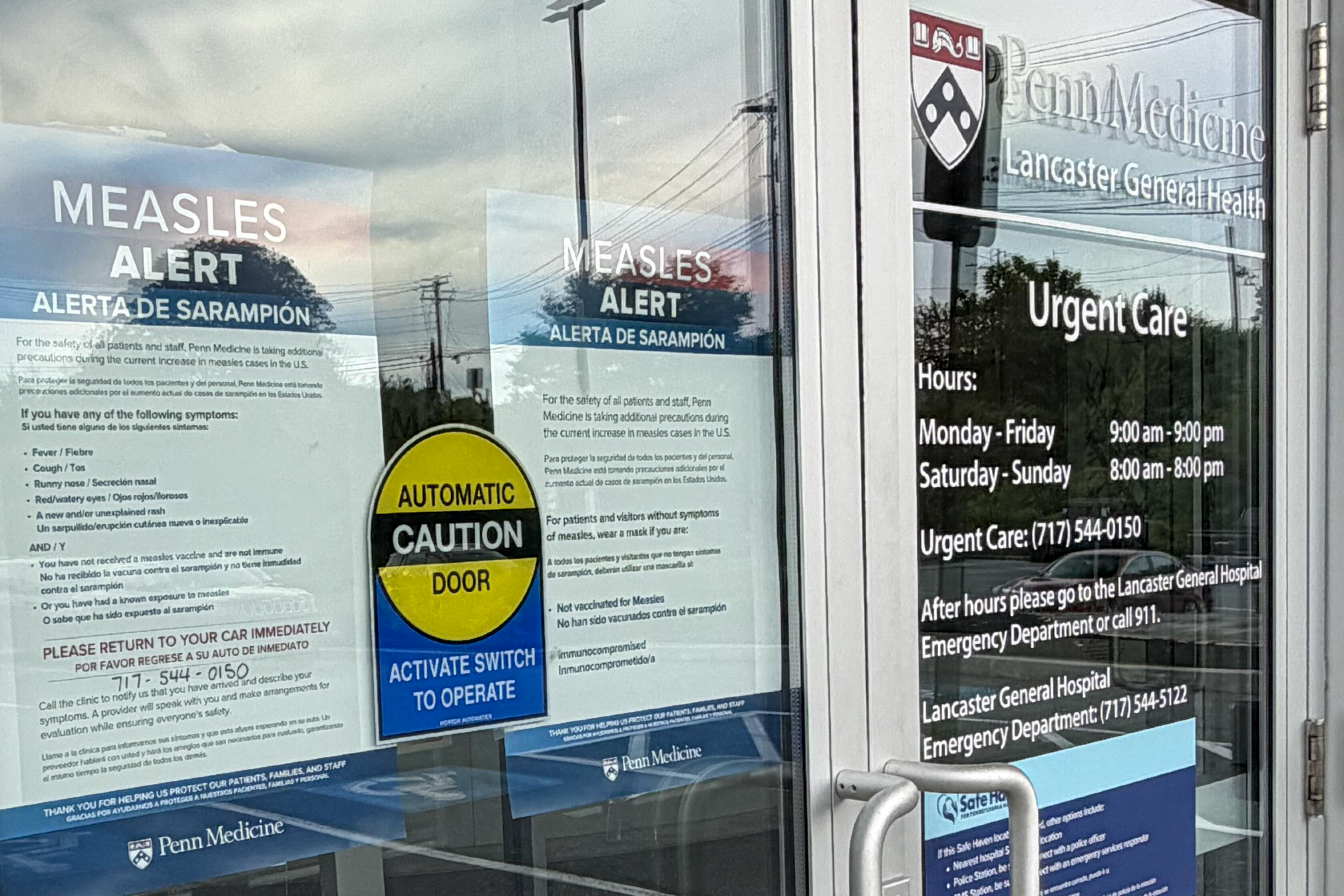
    As vaccination rates decline in the state, an outbreak that began in April this year has sickened more than 400 people in 29 counties — with the epicenter in Lancaster County, where nearly 200 individuals have tested positive for the viral disease. Local physicians and health officials say the true case count is likely much higher.

    The state initially declined to share any information about the deaths, citing privacy concerns, and no information has been released about the second Lancaster resident who died.

    The Pennsylvania Department of Health confirmed information about the newborn’s death on Wednesday only after the Lancaster County coroner publicly stated his office was investigating a newborn who had tested positive for measles and died from a ruptured spleen.

    Lancaster County Coroner Stephen Diamantoni, a physician, said the cause of death was not the measles. The newborn died shortly after birth from a laceration of the spleen. A postmortem test on the baby’s lung tissue showed that the child had a measles infection that was acquired before birth, he said in an interview.

    His description of the death, shared with reporters and a local county commissioner, contributed to a growing uproar on social media over the nature of the deaths and the state’s release of information.

    President Donald Trump’s secretary of health and human services, Robert F. Kennedy Jr., traded attacks with Gov. Josh Shapiro, a Democrat, on X over the deaths and the safety of the measles vaccine.

    In his own posts on X, as well as during a news conference Tuesday, the governor said Kennedy was spreading misinformation about vaccine safety and scaring parents; Kennedy replied that the governor was “gaslighting.”

    Late Wednesday, Kennedy went further in another X post. He accused Shapiro’s administration of potentially having “fabricated” the deaths, after saying in an interview on C-Span that “they cannot find any measles deaths in Lancaster County.”

    He said that Shapiro was not cooperating with the Centers for Disease Control and Prevention or the county in giving information on the deaths.

    Shapiro administration staff said the department has been in regular contact with the agency during the outbreak. Pennsylvania Health Secretary Debra Bogen said in a statement late Wednesday that she “sadly can confirm” two measles-associated deaths in Lancaster County.

    Measles deaths are rare. Most patients recover after mild illness, but the virus can cause pneumonia and brain swelling and kills about one to three patients in 1,000. The disease is so contagious that it can infect nine in 10 unvaccinated people.

    The Pennsylvania Department of Health explained that it reports deaths where measles are present as “measles-associated,” and it “may not be assessed by the medical examiner or coroner to be the immediate cause of death.”

    In Lancaster, the coroner’s office determined that the baby’s primary cause of death was a laceration of the spleen, Diamantoni said.

    Despite the baby’s positive measles test, the forensic pathologist who conducted the autopsy “did not feel it was related to measles,” Diamantoni added.

    His office is seeking to learn whether the baby’s mother had measles at the time of the baby’s birth.

    He said state health officials had not contacted him personally as of Wednesday about the two Lancaster County measles-associated deaths, but his chief deputy spoke to the department prior to Shapiro’s news conference Tuesday.

    Paul Offit, a national vaccine safety expert and physician at Children’s Hospital of Philadelphia, said news of the coroner’s investigation “doesn’t really give us more information” on the death.

    Children can acquire the disease after birth, or can be born with measles if their mother is infected and develops a rash within 10 days of giving birth, he said.

    Measles can cause an enlarged spleen, and birth can cause it to rupture, he said. After a spleen ruptures, Offit said, it is difficult to tell whether it had been enlarged, and he added that the coroner should provide an alternate explanation for the rupture if it had not been caused by measles.

    Diamantoni said the doctor who performed the baby’s autopsy did not note that the spleen was enlarged, and the office is still investigating the cause of the rupture.

    To prevent speculation, the state could release information about the patients’ age, vaccination status, and cause of death while still protecting their privacy, Offit said.

    In conversations with state health officials, he said, he learned that “these patients would not have died were it not for measles.”

    Anti-vaccination advocates “try and completely misdirect and say it really wasn’t measles. They try to do everything they can to distance themselves from it,” he said. “You’re making it a lot easier for them when you don’t give more information.”

    In her statement, Bogen said the department reported the deaths to the CDC on Tuesday morning and met with CDC staff on Wednesday afternoon to discuss the cases.

    “DOH’s Epidemiology team thoroughly investigated and verified both individuals tested positive for measles. The information was not reported to the public until the results of the epidemiological investigations were confirmed,” she said.

    She noted that state health officials are prohibited from releasing death certificate information except under limited circumstances that do not apply to this case.

    A county commissioner questions measles-associated deaths

    The clash over the deaths began within hours of Shapiro’s Tuesday news conference.

    Lancaster County Commissioner Josh Parsons, a Republican, shared the coroner’s account on Facebook, suggesting the state was spreading incorrect information on the deaths.

    In several posts, Parsons questioned whether the patients had died “OF measles or WITH measles” and suggested the state was spreading incorrect information on the deaths.

    “We have ZERO information that corroborates the idea that there were two measles deaths in Lancaster County,” he wrote in a post several hours before the state’s announcement. Later, he shared Kennedy’s remarks on C-Span.

    Parsons has not responded to several requests for comment from The Inquirer about the outbreak over the last several months.

    Democratic County Commissioner Alice Yoder, a registered nurse, said she has been unable to persuade him and the other county commissioner, Ray D’Agostino, a Republican, to post details about the measles outbreak or information encouraging vaccination on the county website.

    Yoder, who attended the Tuesday news conference, said at a Lancaster commissioners meeting Wednesday that she had no additional information on the recent deaths.

    Shapiro and Kennedy clash

    While announcing the deaths Tuesday, Shapiro blamed the federal government’s rhetoric around vaccination for confusing parents and leading to declining vaccination rates.

    The consequences, he said, were apparent in the deaths reported in Pennsylvania. He said he had told Kennedy as much in a recent phone call.

    Later that night, on X, Kennedy said that Shapiro had falsely accused him of spreading misinformation and that drops in the state’s high vaccination rates occurred mostly during President Joe Biden’s administration.

    Kennedy, a longtime anti-vaccine activist, has for years promoted false claims about vaccines.

    Replying to Kennedy on X, Shapiro said that he asked the secretary to help him encourage people to get vaccinated and “stop spreading misinformation.”

    The governor joined a lawsuit earlier this year against Kennedy’s department’s decision to scale back federal vaccine recommendations for children.

    Shapiro noted that Kennedy had visited Lancaster in 2021, during the Biden administration, and told a crowd there that measles could be cured by “chicken soup and vitamin A.”

    Measles has no specific treatments, and although vitamin A is sometimes given to severely ill patients, it cannot prevent the disease and is not a cure.

    Shapiro added that measles cases have increased in the United States and Pennsylvania under Kennedy’s watch.

    Editor’s note: This story has been updated to clarify that the newborn who died had a measles infection acquired before birth.
  • ACLU-NJ has urged Bellmawr police to investigate its officers after alleged unlawful targeting of protesters

    ACLU-NJ has urged Bellmawr police to investigate its officers after alleged unlawful targeting of protesters

    The ACLU of New Jersey has urged the Bellmawr Police Department to investigate its officers’ conduct after local protesters alleged the department gave out citations while attendees engaged in “free-speech activities.”

    The letter, sent by email Tuesday, said ACLU-NJ had been contacted by several members of Cooper River Indivisible, a Camden County-based grassroots organization, after members alleged that they were targeted by Bellmawr police officers during months of summer protests against President Donald Trump and his administration despite sidewalks and streets being “traditional public forums.”

    “As I understand the facts, officers have been issuing traffic and criminal citations — for honking, jaywalking, and other offenses — to participants and supporters during lawful roadside rallies,” the letter reads.

    Rebecca Uwakwe, ACLU-NJ’s criminal law reform advocacy director, said Cooper River Indivisible members told her that Bellmawr police have been targeting them since at least June, but that the citations have ramped up this month. She could not confirm how many citations have been given out but said she is representing “a good amount of people” affected by the citations in municipal court.

    “No one’s freedom of speech should be chilled because they’re afraid of getting a citation,” Uwakwe said.

    The letter asks the police department to investigate officers’ conduct and requests that the department respond by Sept. 11.

    The Bellmawr Police Department declined to comment. Uwakwe said she has not heard from police yet.

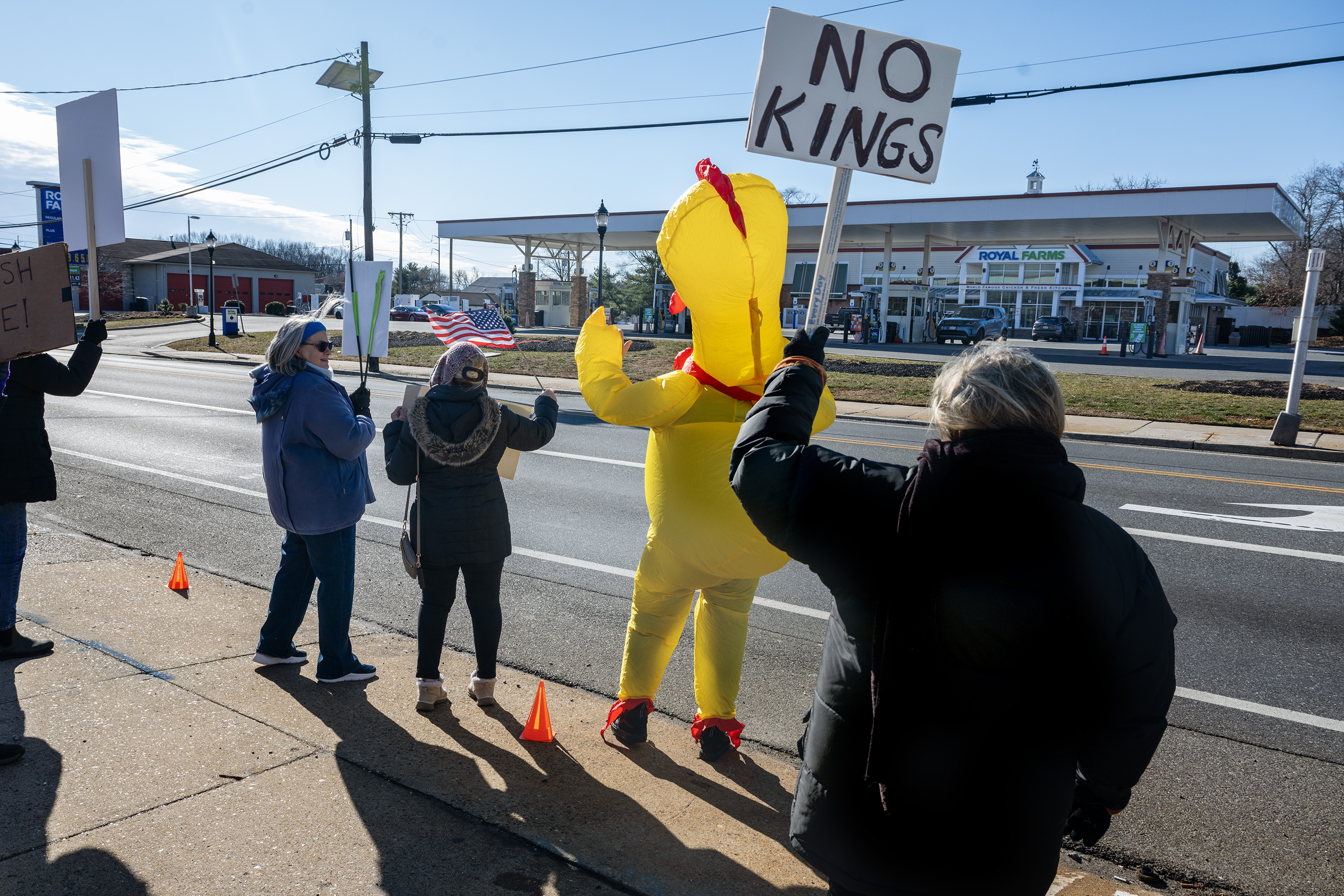
    Cooper River Indivisible, a South Jersey affiliate of nonprofit Indivisible, hosts weekly roadside rallies at an intersection in Bellmawr Borough, Camden County, where people gather to “joyfully disturb the peace” to protest fascism and actions taken by the Trump administration.

    Neither Cooper River Indivisible nor its founder, Craig Strimel, immediately responded to requests for comment.

    A recent newsletter by the organization said the Bellmawr group “has been unfairly targeted by local police,” noting that one attendee who was recording during a rally was arrested.

    It was unclear who was arrested or whether charges were filed after the recent rally.

    If the police department is not receptive to dialogue, Uwakwe said, the ACLU will continue to defend protesters and drivers against citations. ACLU-NJ is still interviewing people affecting by the citations, she said, and investigating the situation.

  • Controversial apartments slated for Manayunk’s PHS beer garden site have been delayed

    Controversial apartments slated for Manayunk’s PHS beer garden site have been delayed

    The developer of a controversial apartment project at 106 Jamestown Ave. in Manayunk requested that the Zoning Board of Adjustment delay its Wednesday hearing.

    The six-story, 73-unit building would replace the Pennsylvania Horticultural Society’s pop-up beer garden that currently leases the space.

    Neighborhood backlash against the project from developer Dan Greenberg has been intense.

    Critics say the project doesn’t provide enough parking; offers no commercial space; and would eliminate the beer garden, a popular community gathering place.

    “It was prudent that he postponed,” said Councilmember Curtis Jones Jr., who represents the area and recently came out in opposition to the project.

    Jones’ opinion is relevant because the project is seeking to build taller and denser than current zoning rules would allow, and the zoning board heavily weighs the opinions of neighborhood groups and the district City Council member. (The project is 60 feet tall, above the height limits imposed by the Main Street Manayunk overlay.)

    Greenberg also needs permission to build apartments in an area that is not zoned for residential development.

    A rendering of the proposed 73-unit apartment building for 106 Jamestown Ave. in Manayunk.Barton Partners

    “Fortunately for him, he’s not finally purchased it yet because zoning is an essential part of the sale,” said Jones. The delay “gives them the opportunity to talk to the community, but as it stands, I cannot support it.”

    Greenberg’s team declined to comment, but a city staffer confirmed that Wednesday’s delay stemmed from the real estate company. A new hearing is not yet scheduled.

    “This means that the applicant will contact us to reschedule the next hearing date,” wrote Ian Hegarty, a Planning Commission staffer who advises the zoning board, in a message to a questioner on the board’s Zoom on Wednesday.

    The Manayunk Neighborhood Council led opposition to the project, submitting a petition against it to the zoning board with more than 500 signatures.

    A community meeting earlier this year attracted 200 attendees, 97% of whom were opposed to the project, according to the neighborhood council.

    “Even we are a little surprised at the universal opposition,” said John Hunter, the council’s zoning chair, in an email.

    The Jamestown Avenue proposal also faced criticism from the Civic Design Review committee, an advisory-only city body.

    In a June meeting, the board asked the developer to consider adding commercial space, criticism of the project also raised by the neighborhood council.

    A rendering of the paused 73-unit apartment development from under the railway bridge. Barton Partners

    At that meeting, Hunter criticized the plan’s 36 parking spaces, arguing that the standard in Manayunk is one parking space for every housing unit. The notoriously hilly neighborhood is less walkable and has fewer transit options than neighborhoods closer to Center City.

    The developer’s team has repeatedly declined to speak publicly, but at a meeting in June, lawyers for the project indicated that compromise is possible.

    “There have been, and there still can be [modification to this project],” Adam Laver, a land-use attorney with Blank Rome who represents the developer, said at the June design committee meeting. “This team remains very interested … in hearing your feedback and continuing to make this project, which we believe in, as good as it can possibly be.”

    For now, the beer garden will remain in place until the end of the season. Although PHS says it does not yet have a final closing date, the organization typically ends its outdoor pop-ups in October.

    PHS declined to comment further on the future of the beer garden in light of the project’s delay. It opened the garden in 2020 as a temporary pop-up.

    “He should consider if he can reduce the scope of the project to preserve the garden,” said Jones.

    The project is part of a wave of apartment development on and around Main Street in Manayunk, with 1,800 units in the pipeline. That includes more than 800 homes slated for Venice Island, the flood-prone spit of land next to Manayunk in the Schuylkill.

  • Pew gives $1.15 million for a greening program in Nicetown and Tioga

    Pew gives $1.15 million for a greening program in Nicetown and Tioga

    The Pew Charitable Trusts has awarded $1.15 million over the next four years to the Pennsylvania Horticultural Society to support the next phase of its greening plan in Philadelphia’s Nicetown and Tioga neighborhoods.

    The grant will continue funding the horticultural project, including placing more plants, trees, and flowers, and programs aimed at building community connections. Those initiatives will include front porch beautification, adding solar lighting, signage, fence improvements, and more in the neighborhoods.

    The funding will also be used to study outcomes from the greening plan, and to continue collecting resident feedback.

    L-R: Marilyn Berry, Shirley Anderson, and Dr. Renae Norris-Jones relax in the park. Gardeners and community members came out to a unity dinner at Tioga Hope Park and Garden to celebrate green space and push the city’s agricultural plan.Charles Fox / Staff Photographer

    “We believe that Philadelphians need to be able to meet their basic needs, feel safe in their neighborhoods, and have access to public and community spaces and cultural enrichment. Only when these needs are met can people begin to think about gaining skills and finding quality jobs that lead to economic advancement,” said Donna Frisby-Greenwood, Pew’s senior vice president for Philadelphia and scientific advancement in a statement.

    PHS president and CEO Matt Rader said the greening plan began in earnest about a decade ago, when the nonprofit shifted its focus toward using horticulture to influence well-being.

    “Our core thesis, our core strategy as an institution, is to put horticulture to work to transform the social determinants of health, so that everybody yields a healthier life,” he said.

    After researching which Philadelphia neighborhoods could benefit most from a greening plan, in 2019 PHS connected with Nicetown and Tioga residents who were enthusiastic about greening. PHS and community groups Nicetown CDC and Tioga United then collectively engaged with more than 400 residents. Those residents identified reducing trash and crime in the neighborhood and increasing access to healthy food and job opportunities as priorities.

    The groups developed a plan based on how greening could address those concerns. Beginning in 2022, they focused on cleaning and greening vacant lots, restoring the neighborhood tree canopy, supporting residents’ gardening and beautification efforts on their blocks, helping residents get green jobs, and mobilizing neighbors and local businesses to build healthy food access.

    “It’s not really about [greening]. It’s about how it changes the social, economic, and social environment of the neighborhood,” Rader said. He gave the example of the program’s curbside appeal challenge, which was a contest for residents to develop the best gardens and porches in front of their homes.

    Dhavon Thomas goes by the Tioga Hope Park and Garden sign on his scooter on June 28, 2024Charles Fox / Staff Photographer

    “You have whole blocks that have organized themselves by participating. … You have people that have gotten to know each other across the neighborhood by trading ideas,” he said. “… It really has helped build a social fabric around gardening and greening.”

    Pew and PHS’s strategy is informed by research that suggests greening and connective programming can have wide-ranging benefits, from reducing violence to improving neighborhood mental health and sense of community. A 2018 University of Pennsylvania study found a 29% reduction in gun violence in Philadelphia neighborhoods below the poverty line where vacant land was restored or greened.

    Rader said it was critical to build sustainability and longevity for the social and greening impacts. Far too often, he said, nonprofit programming drives positive change that gets eroded as the formal programs end and the funding stops.

    “We approach this as a long-term investment in Nicetown and Tioga, to support the residents there to do what they want,” he said.

    Estelle Vaughn, 63, lives in the same Tioga home her parents carried her into as a baby. Her mother and their neighbors always maintained some kind of garden along West Tioga Street, but she never got very involved herself until her son was playing baseball at a field across the street, where she noticed there were some underutilized garden planters.

    “I’m kind of fidgety, so I was like, well, we got to make this park look good,” she said, and began planting flowers.

    Two youngsters pick berries off of a bush in the Tioga Hope Park and Garden on June 28, 2024.Charles Fox / Staff Photographer

    Now, she is a member of the Green Team, the community-led steering committee for the greening plan, and an avid gardener. Vaughn said the horticultural society has “been our saviors.” She has appreciated the organization’s willingness to let residents’ concerns drive the plan strategy, particularly since she said she recalls visiting the beautiful horticultural work at the Philadelphia Flower Show over the years, but not feeling like that was something for neighborhoods like hers.

    The program has already made positive changes in Tioga, Vaughn said. When PHS hands out new flowers, pots, and soil, her neighbors are so excited “they’re like children,” she said. When Canadian wildfires worsened Philadelphia’s air quality earlier this year, Vaughn went out into the Tioga Hope Park and Garden that was a focus of the first phase of the plan, and said the air felt cooler and cleaner.

    “I think that people are just generally happier … it brings our communities together,” she said.

  • Zack Wheeler is ‘a click off,’ but the Phillies don’t think big changes are needed

    Zack Wheeler is ‘a click off,’ but the Phillies don’t think big changes are needed

    SEATTLE — Despite how it looked — or how Zack Wheeler sounded — after his latest rough start, the Phillies don’t believe their ace is far away from getting back on track.

    “He’s a click off, but I don’t think it’s big adjustments,” pitching coach Caleb Cotham said Wednesday before the Phillies wrapped up a series here against the Mariners. “It’s small things.”

    The Phillies ruled out pitch-tipping, a theory floated by Wheeler after he allowed a season-high eight runs on nine hits, including four homers, and five walks Monday night to leave his ERA at 8.51 over his last six starts.

    Instead, after reviewing recent video and comparing it with previous seasons dating to 2021 when Wheeler threw from a higher arm slot, Cotham identified “some things in the delivery that [opponents] are kind of attacking.”

    “I think it’s just kind of getting back to the basics that we know is like headquarters for him,” Cotham said. “Just making sure we’re getting into the lift and out of the lift and the postures are in a spot where he can be freed up to let the ball rip.”

    Earlier this month, Wheeler drew scrutiny from the Blue Jays for the placement of his right foot. He tends to keep his foot on the farthest edge of the rubber as he goes through his delivery. Toronto contended that he was disengaging from the rubber.

    The Phillies ruled out pitch-tipping as a potential reason for Zack Wheeler’s recent struggles.Yong Kim / Staff Photographer

    Wheeler said then that the Phillies were contacted by MLB a few weeks earlier after a camera angle from a nationally televised game gave rise to questions about whether he was on the rubber. The Phillies provided camera angles to show that he was.

    “I would defend that until I’m blue in the face,” Cotham said. “It wasn’t really for me a thought. He wants to be on the rubber. He’s on the rubber.”

    Regardless, Cotham said Wheeler is “pitching from the same spot he’s always pitched at.”

    And upon reviewing video from Monday night, Cotham said Wheeler’s command wasn’t as erratic as it looked. Despite the five walks, he actually threw 61% strikes, not far off his 63% season average.

    “It was a pitch here and there that he normally hits, that he’s hit for a long time, and he didn’t hit that and they put good at-bats and didn’t miss it,” Cotham said. “It’s just a click off enough that one pitch is in the zone when he wants to be out of the zone, one pitch is expanded when he wants to throw a strike, and you lose the count.”

    “So, it might be a little delivery and a little maybe [pitch] mix and targeting and where we’re trying to throw pitches. But I think it’s just a sum of a couple of small things for him.”

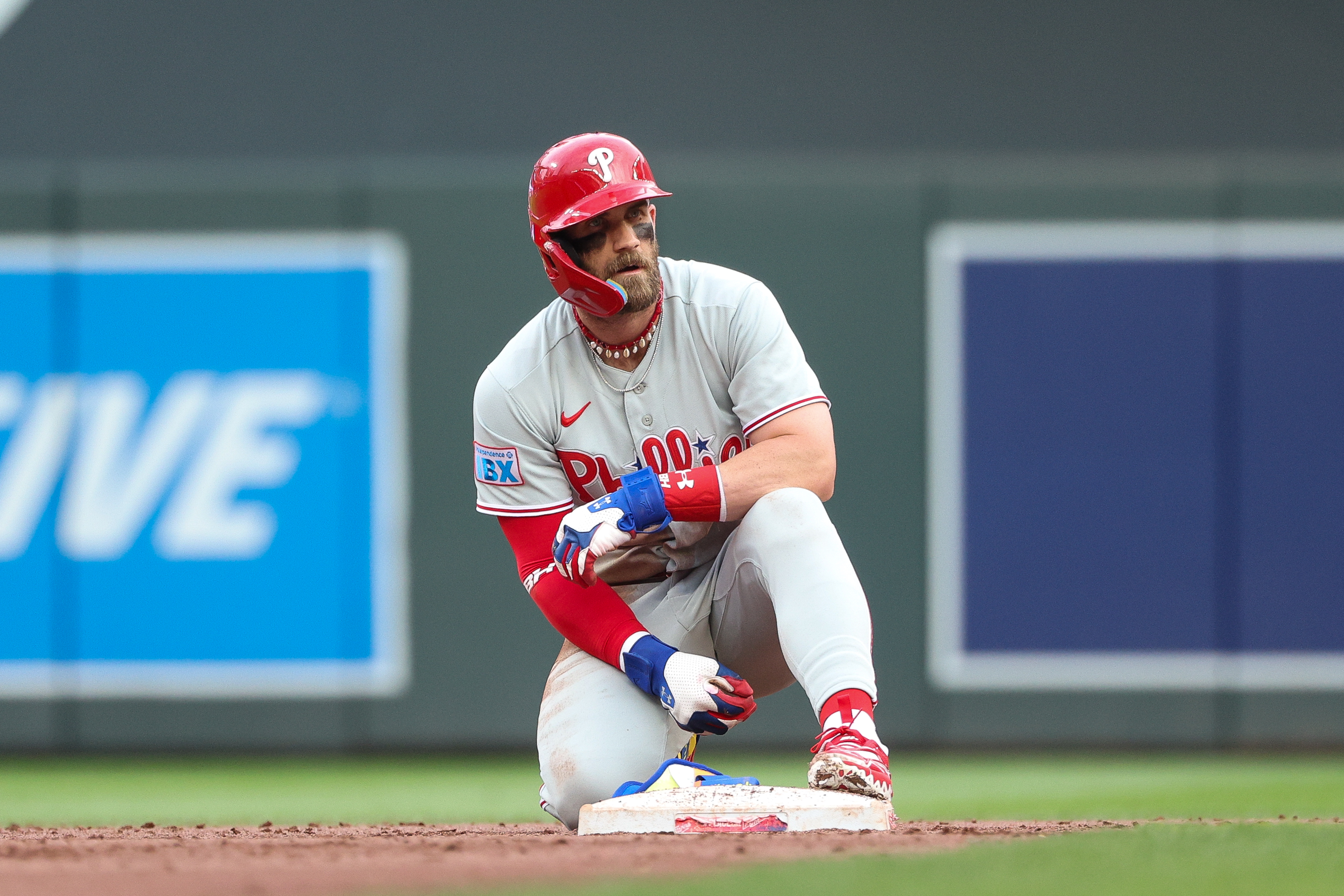
    Bryce Harper is playing through mild tendinitis in his left knee.Matt Krohn

    Don’t Harp on it

    It hasn’t stopped him from having the best month of his Phillies career, but Bryce Harper continues to manage a “tendinitis-type scenario” in his left knee, according to interim manager Don Mattingly.

    “Yeah, he’s going to be dealing with it,” Mattingly said. “Any kind of tendinitis-type scenario, every once in a while you take a misstep, you feel a little swelling and soreness.”

    In those cases, Mattingly said the Phillies will continue to look for opportunities to use Harper as a designated hitter. But he has started 13 of the last 14 games in right field, a sign that his knee isn’t flaring up.

    Extra bases

    Two weeks into a rehab assignment in triple A, backup catcher Rafael Marchán (knee) was 6-for-24 with five walks and five strikeouts through seven games. It’s likely he will rejoin the Phillies after rosters expand to 28 players on Tuesday. … Lefty reliever Tanner Banks (forearm) began a rehab assignment in triple A. … After a day off in Southern California, the Phillies will open a three-game series against the Angels. Andrew Painter (3-6, 6.04 ERA) is scheduled to start Friday night against lefty Reid Detmers (4-8, 3.62).

  • Philly judge imposes six months of outside supervision for sheriff’s auctions

    Philly judge imposes six months of outside supervision for sheriff’s auctions

    A Philadelphia judge on Wednesday took the rare step of imposing six months of outside supervision of sheriff sales after years of dysfunction in processing deeds and distributing money from the auctions.

    The decision came after a hearing in City Hall in which a top aide to Sheriff Rochelle Bilal acknowledged withholding thousands of pages of documents the judge had previously requested.

    Common Pleas Court Judge Paula Patrick grilled representatives of Bilal’s office over the surprise revelation, which followed a Monday Inquirer report noting that many of the requested records were missing.

    “My order,” the judge said, “was very specific.”

    Patrick, supervisor of the court’s commerce division, had requested the documents in May and scheduled Wednesday’s hearing following years of complaints about chronic delays in processing deeds and distributing funds from sheriff sales.

    Since at least mid-2024, winning bidders at property auctions have been paying the sheriff, then waiting a year or more for the office to process deeds of sale.

    The courts have been bombarded with petitions for those deeds, which prompted Patrick to take action. She required Bilal to produce, among other things, “a detailed accounting of all sales proceeds received and disbursed” since she took office in January 2020.

    In July, the office submitted thousands of pages of records to an official court docket along with a statement indicating it had resolved many of the deed delays and complied with all terms of the order.

    When The Inquirer asked Friday why none of the submitted records detailed sale revenues distributed after 2023, Bilal and her staff declined to comment.

    Bilal’s representatives admitted in the hearing Wednesday that the records were not submitted.

    On Tuesday afternoon, following the publication of The Inquirer’s report, an attorney for Bilal dropped in excess of 5,000 pages of sales records into the court docket.

    Steven Wakefield, a former city tax attorney appointed in June as deputy undersheriff to clean up the troubled sheriff sale process, said in the hearing that his initial representation to the court, based on assurances from staff that all sales had been pulled, “was not accurate.”

    Wakefield said that after the news organization’s inquiry Friday morning, he immediately followed up with staffers about the missing post-2023 sales records.

    “They said, ‘Oh, yeah, we didn’t do that,’” Wakefield recounted.

    It was unclear Wednesday whether all the records from that time period would ever be turned over.

    “Some of the information the court asked for did not exist,” said Jonathan Rardin, an attorney appointed by the city to represent Bilal.

    Later Wednesday afternoon, Bilal’s staff agreed to allow an outside person or group to monitor how auctions are conducted, then report back to the court in six months. The judge did not name the overseer or say when the outside supervision would begin.

    “This is in essence exactly what we were asking for,” said Daniel Bernheim, a lawyer for JSB Property Group, a real estate investment company that filed a lawsuit in March alleging that Bilal had breached the terms of a 2003 consent order requiring the office to issue deeds within 40 days of settlement.

    Bernheim said Patrick’s order will “have somebody independently come in, take a hard look at what’s going on, ask a lot of the questions that still need to be asked, and make recommendations.”

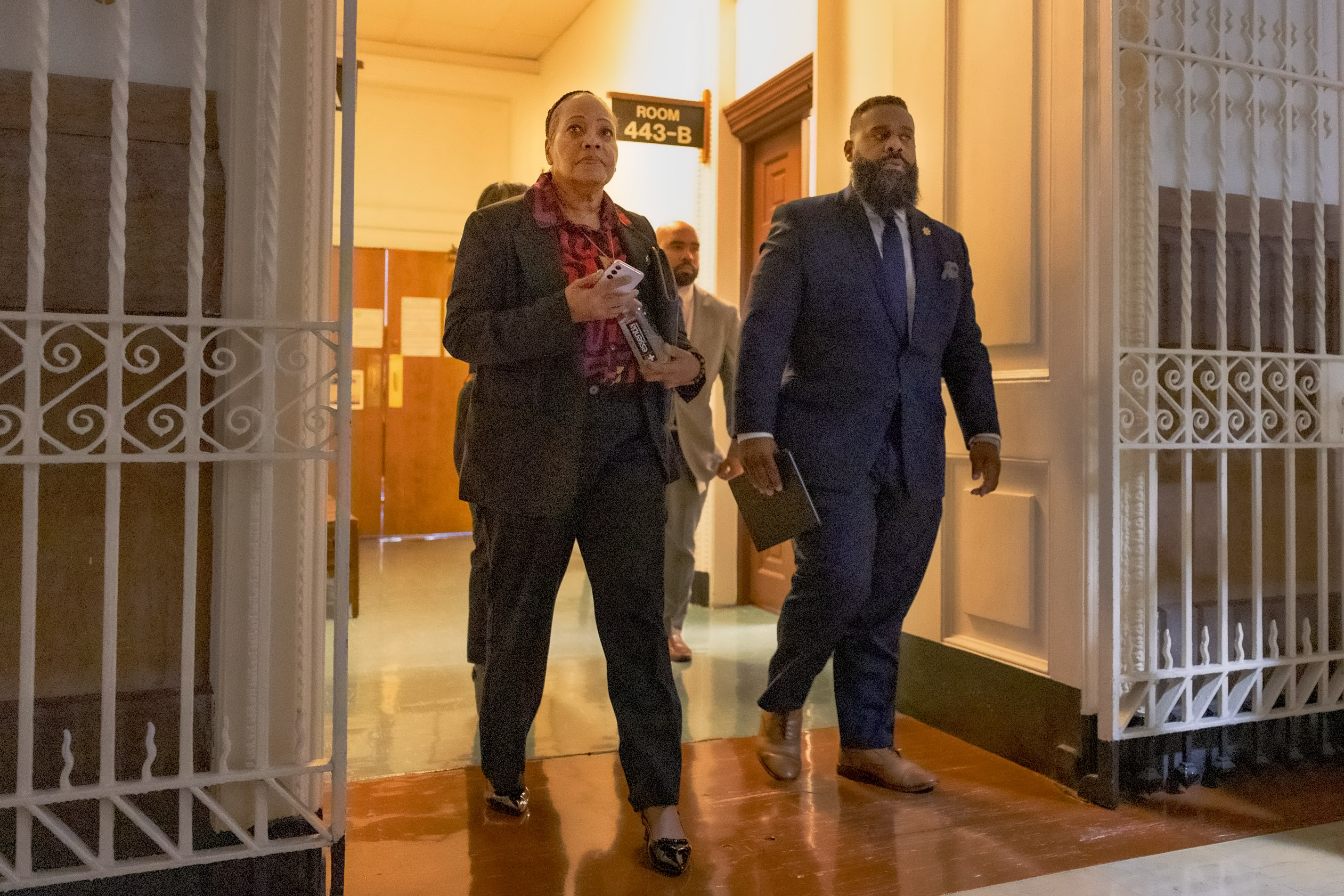
    Bilal, in civilian dress, sat before the judge silently during the hearing and did not respond when asked by an Inquirer reporter for comment.

    After the hearing, Bilal told a group of reporters that she supported the court supervision.

    “It’s better that we come together and make an agreement so we can continue working together and moving forward,” she said. “That’s all it is.”

    Bilal’s attorney had filed a last-minute motion on Friday seeking to protect the sheriff from having to testify at the hearing, writing that it involved “matters outside her unique personal knowledge.” Patrick denied the motion. But, in the end, Bilal was not called to testify.

    The hearing offered other insights into the sheriff’s office, which has struggled in recent years to perform many of its core functions under Bilal.

    Wakefield blamed the deed delays on a single person: Melissa Simpson, Bilal’s former director of real estate. He said Simpson had been manually filing documents and became overwhelmed when auctions picked up in the aftermath of the pandemic.

    In a certification filed last month, Wakefield claimed Bilal was not even aware of the deed backlog.

    “Simpson was telling everyone it was fine,” Wakefield said Wednesday. “One person can’t do the whole job.”

    Simpson could not be reached for comment. But three current sheriff’s office employees, who were not authorized to speak publicly, disputed that Simpson was solely to blame for the problem.

    Even when more staffers were hired, Wakefield said, the office could process only 40 or 50 deeds a day at most.

    Wakefield also said the slow pace of deed filings was eclipsed by even more serious problems with the issuance of legally mandated distribution sheets, which detail how money from each auction is divided.

    “The distribution backlog is worse than the deed backlog,” he said. “There was a period of time where distribution sheets were not being uploaded.”

    Even so, Wakefield presented a picture of an office that has now been reformed. He said it was moving to automate large parts of the deed process.

    However, he acknowledged that despite his July statement to the court that the outstanding backlog had been cleared, there are still some that must be processed.

    Wakefield told the judge that a recently hired staffer, William A. Brownlee Sr., is conducting an audit to find any sales that were inadvertently passed over.

    One real estate agent told The Inquirer last week that he was still waiting on deeds from auctions that occurred in late 2024.

  • Judge denies Minnesota’s bid to compel the extradition of an ICE officer from Texas

    Judge denies Minnesota’s bid to compel the extradition of an ICE officer from Texas

    BROWNSVILLE, Texas — A federal judge on Wednesday refused to order Texas to extradite an Immigration and Customs Enforcement officer charged with shooting a man and lying about it during the immigration crackdown in Minneapolis.

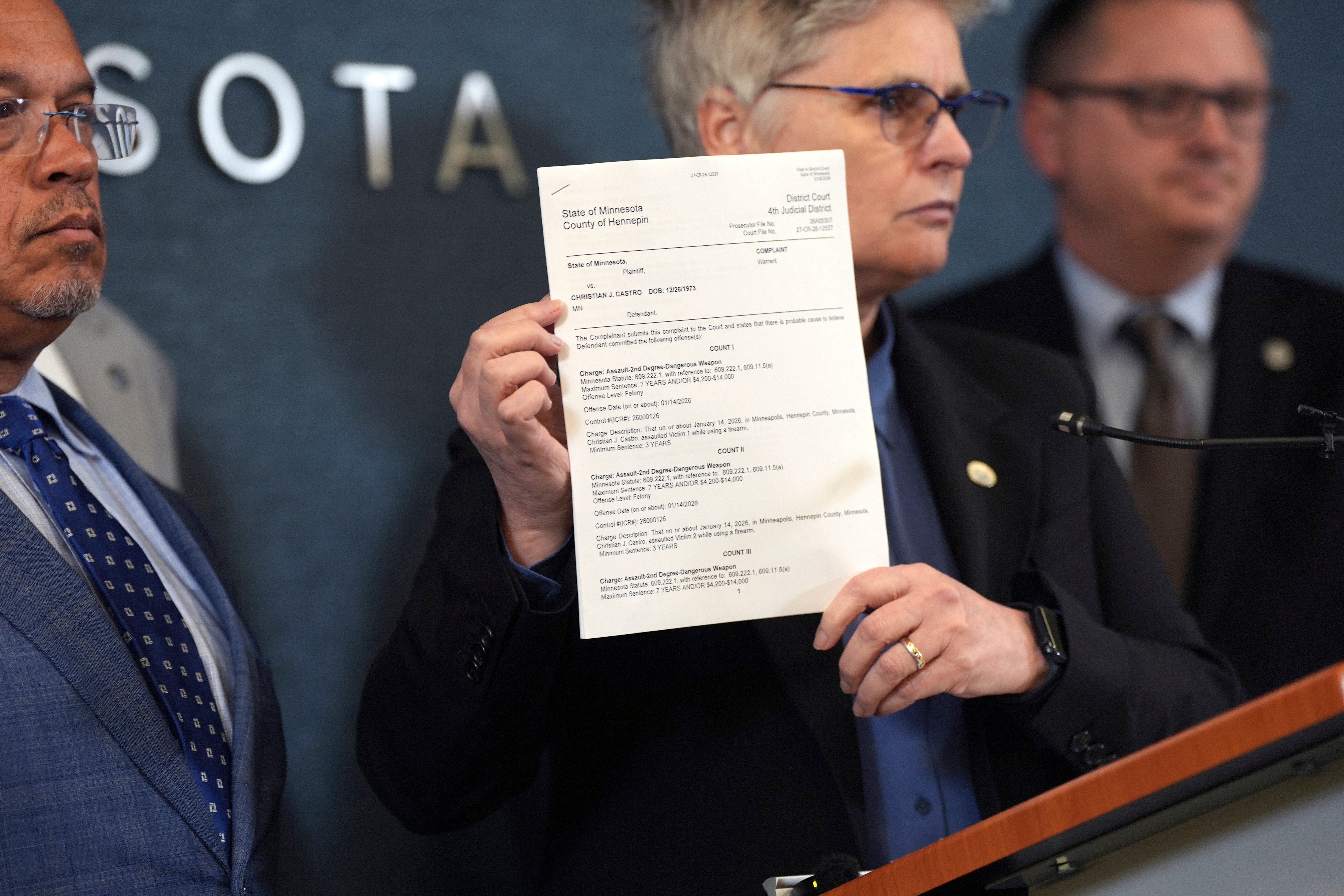
    Christian Castro is charged in Minnesota with assault and falsely reporting a crime in the Jan. 14 shooting of 24-year-old Julio Cesar Sosa-Celis. Minnesota authorities have sought his extradition since his arrest, but he remains in custody in Brownsville, Texas, a city bordering Mexico.

    Under Texas law and barring extradition, Castro must be released after 90 days of detention, which is Thursday.

    Minnesota Attorney General Keith Ellison filed a request for a temporary restraining order last week, asking a federal judge to prevent the sheriff in Cameron County, Texas, from releasing Castro, and to order Texas Gov. Greg Abbott to sign his extradition warrant.

    Minnesota officials believe Castro could flee the country, citing calls he made from jail to a woman in Mexico, talking “about marrying her and buying a house in Mexico when he is released,” according to the lawsuit.

    Castro is accused of firing a gun through the front door of a Minneapolis home, shooting Sosa-Celis in the leg. Prosecutors say Castro also falsely accused Sosa-Celis and another man of attacking an ICE officer with a broom handle and a snow shovel.

    At a federal hearing in Brownsville on Tuesday, attorneys with the Minnesota Attorney General’s Office argued it would be hard to compel Castro to face charges in their state if he is released, and they fear Castro may flee the country, citing his phone conversations with a woman who lives in Mexico.

    Texas Gov. Greg Abbott said last week he would not respond to the extradition request, citing the ongoing investigation into fraud in government social service programs in Minnesota, which President Donald Trump used to justify his immigration crackdown there.

  • Lower Merion has issued more than 600 violations from red-light cameras since mid-July

    Lower Merion has issued more than 600 violations from red-light cameras since mid-July

    Lower Merion’s automated red-light cameras have captured hundreds of violations since they went into effect last month.

    As of Monday, red-light cameras installed at the intersection of Lancaster Avenue and Remington Road had led to 663 citations, according to Andy Block, Lower Merion’s superintendent of police.

    The cameras went live on May 13, kicking off a 60-day warning period before the police department began issuing tickets on July 13.

    Lower Merion’s cameras capture photos and videos of drivers apparently running red lights. Video and photo evidence is sent to the police department, which reviews each case and determines whether to send a citation to the vehicle’s owner. Red-light violations come with a $100 fine and can be contested at an in-person municipal hearing.

    The intersection of Lancaster Avenue and Remington Road was chosen as the first site for the automated red-light enforcement cameras, and officials have said they hope to expand the program to other high-traffic intersections. Other locations being considered for red-light cameras include the intersections of Montgomery Avenue and Airdale Road and of Lancaster Avenue and Haverford Station Road.

    The township has estimated that if cameras are placed at all three high-traffic intersections, around $24 million in annual revenue could be captured initially, with revenue dropping to around $8 million annually as compliance improves.

    The township, however, will not collect revenue from the automated red-light tickets. Collected funds will cover administrative costs, with the rest going to a state fund that supports transportation enhancement projects across Pennsylvania. Municipalities that participate in the automated red-light enforcement program receive priority status when applying for transportation grants from the state.

    The township has stated that the program is, first and foremost, about traffic safety. Residents have long complained of dangerous conditions for drivers and pedestrians traversing the township’s roads. Nearly 3,800 vehicle crashes were reported in Lower Merion between 2019 and 2023.

    Block said in an email that traffic enforcement is a priority for the police department and that using the automated cameras “provides additional safety for our motorists traveling in the township.”

    Under the township’s ordinance, the cameras must be used strictly for red-light violations, not general surveillance. Photo and video evidence taken by red-light cameras must be destroyed within 30 days of a violation being settled and cannot be released under Right to Know requests.

    This suburban content is produced with support from the Leslie Miller and Richard Worley Foundation and The Lenfest Institute for Journalism. Editorial content is created independently of the project donors. Gifts to support The Inquirer’s high-impact journalism can be made at inquirer.com/donate. A list of Lenfest Institute donors can be found at lenfestinstitute.org/supporters.