Blog

  • Top Trump official blasts Larry Krasner over comments about blowing up White House ballroom

    Top Trump official blasts Larry Krasner over comments about blowing up White House ballroom

    Philadelphia District Attorney Larry Krasner drew a rebuke Wednesday from Attorney General Todd Blanche after he said President Donald Trump’s White House ballroom, which is currently under construction, should be blown up and pieces of debris sold as paperweights.

    Krasner, a progressive Democrat who has centered much of his political identity on opposing Trump, made the initial comments Tuesday during an event at the President’s House Site, George Washington’s Philadelphia home. The Trump administration this year removed educational panels about slavery from the site and replaced them with an exhibit that experts say sanitizes history.

    According to NBC Philadelphia, the district attorney said during his remarks at the annual Slavery Commiseration ceremony on Tuesday that “there is a beautiful time coming [when] the memorial will be here.”

    “Let me tell you what will not be here: There will not be a ballroom,” Krasner said, referring to the ballroom and military bunker that Trump wants to replace the demolished East Wing of the White House. “What is going to be happening is that, in about 10 or 15 years … I’m gonna have a paperweight sitting on my desk. You know what that paperweight’s going to be? It’s gonna be a piece of the ballroom after we all blow it up.”

    Krasner paused, then added: “In an official ceremony, just so we’re clear. In an official ceremony, we’re gonna blow it up, and we’re gonna give the taxpayers their money back by selling all the pieces as paperweights.”

    The remarks by the Philadelphia district attorney, a third-term prosecutor who has recently flirted with running for higher office, were the latest in a long line of provocative comments he has made about Trump and other GOP officials. Earlier this year, the White House press secretary and Republican members of Congress ripped Krasner after he called federal immigration enforcement agents “wannabe Nazis” and said Trump’s administration is orchestrating a “fascist takeover” of the country.

    And last month, Krasner rallied with protesters in Washington and slammed House Republicans after they subpoenaed documents from his office related to the city’s immigration policies.

    Video of Krasner speaking at the event in Independence National Historical Park rocketed around social media this week, drawing condemnation from prominent supporters of the president, some of whom said his comments were inciting violence.

    The White House’s “rapid response” account wrote Tuesday on X that Krasner’s comments were “sick” and that “Democrats are the party of violence.”
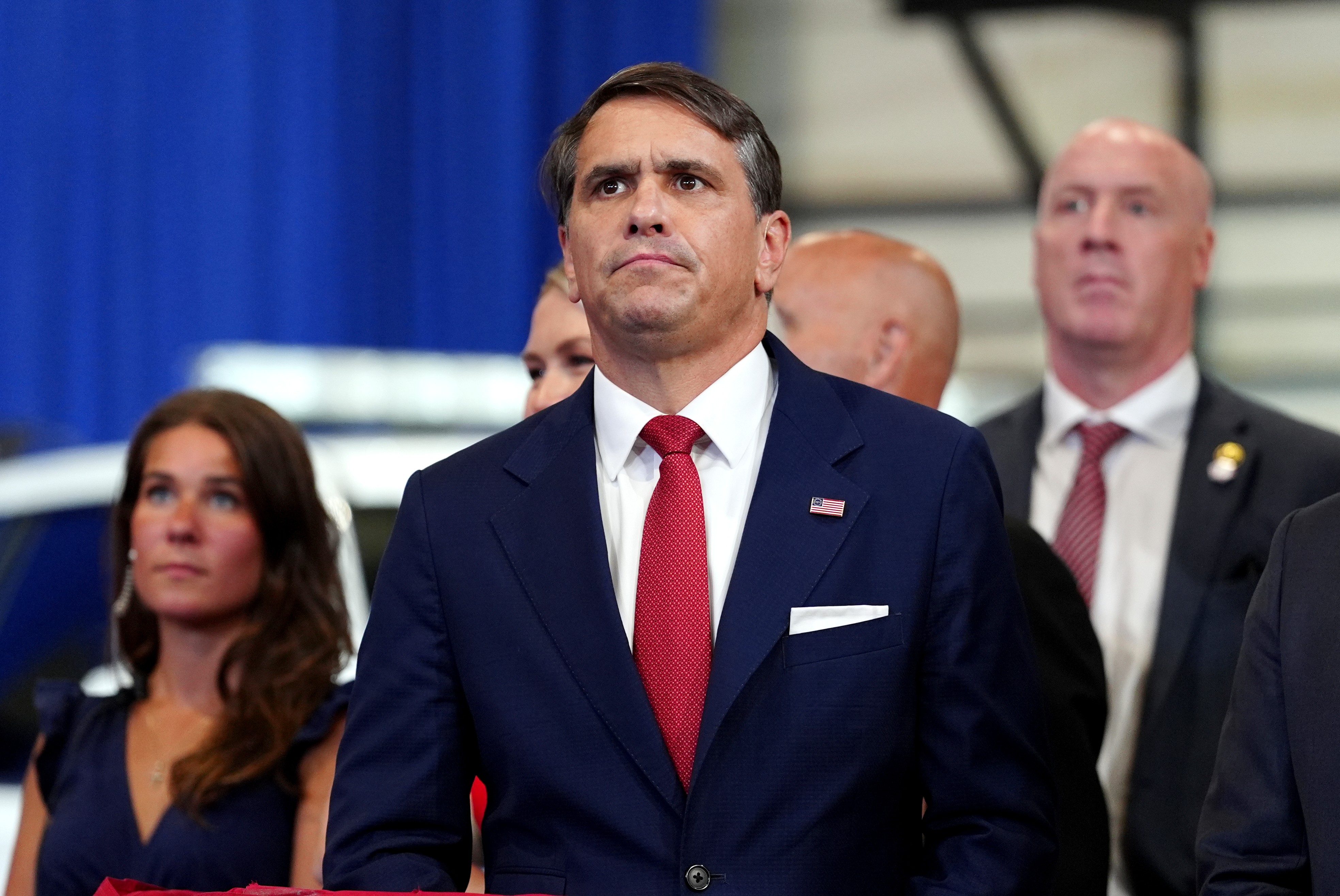
    Attorney General Todd Blanche listens as President Donald Trump speaks at the David Mack Center for Training and Intelligence, Friday, Aug. 14, 2026, in Garden City, N.Y. (AP Photo/Julia Demaree Nikhinson)Julia Demaree Nikhinson

    On Wednesday, Blanche, who was confirmed earlier this month, appeared on Fox News’ America’s Newsroom to discuss a range of issues. Host Dana Perino asked him about Krasner’s comments and the timeline for the controversial ballroom, which had been briefly on hold amid litigation contending the Trump administration needs congressional authorization for the project. The Supreme Court this week allowed construction to proceed while justices consider the case.

    “The ballroom is being built,” Blanche said. “And it’s disgusting that a district attorney in Philadelphia, who, by the way, has a city with its own problems, is so focused on what the president is doing in the White House.”

    In an interview Wednesday, Krasner said he stands by his initial comments about the ballroom “100%” because “when you demolish a building, you do it with explosives and/or wrecking balls.”

    Krasner added that he sees Blanche’s opposition to his rhetoric at the Slavery Commiseration event as part of the Trump administration’s broader project of stripping historical sites like the President’s House of references to slavery.

    “I support the permanent existence of this historically important memorial in Philadelphia. I know that may be disturbing to white supremacists, but too bad,” Krasner said. “Philly is going to stand up for its history, and Philly understands that being an elected official is not about making everybody your friend. It’s about having the right enemies.”


  • Tim Curry, star of ‘Rocky Horror’ and much more, dies at 80

    Tim Curry, star of ‘Rocky Horror’ and much more, dies at 80

    Tim Curry, the British-born actor whose gift for garish eccentricity lit up stage and screen, most notably as the outlandish, cross-dressing mad scientist in the midnight cult film The Rocky Horror Picture Show, died Tuesday at his home in Los Angeles. He was 80.

    The death was confirmed by Marcia Hurwitz, his longtime agent and manager. In 2012, Curry suffered a serious stroke, from which, he said last year, “I’ve been recovering for quite a long time.”

    With a mischief-maker’s good looks, a casual athletic grace, and a supple and resonant voice, Curry was a favorite in roles calling for expressive villainy or general cartoonishness.

    In the first screen version of Annie (1982), adapted from the comic strip turned stage musical and directed by John Huston, he brought more than a dollop of slime to the part of Rooster Hannigan, the con artist who concocts a plot to kidnap the plucky orphan of the title.

    In Clue (1985), a suspense spoof derived from the popular board game, he played Wadsworth, a logorrheic butler who leads a cast full of murder suspects (played by Madeline Kahn, Christopher Lloyd, Martin Mull, Eileen Brennan, and others) around a spooky mansion with the speed-talking fervor of a manic Sherlock Holmes.

    As a greedy gazillionaire presumed to be the chief malefactor in Charlie’s Angels, the 2000 movie adaptation of the television series about three female detectives, Curry laid on the oily self-satisfaction until the moment he was killed by the real bad guy.

    And in Spamalot, the stage musical based on the Monty Python troupe’s bottomlessly goofy retelling of the King Arthur legend, which opened on Broadway in 2005, he played Arthur himself and was nominated for a Tony Award. It was the most straight-faced role in the show, and yet, as Ben Brantley wrote in his review in The New York Times, he was “the best of the cast at translating classic Python style into a musical-comedy idiom.”

    “His stalwart, plummy-voiced Arthur wears a smile as inflexible as armor,” Brantley wrote, “and it deflects any suggestion that this manly king is in on the show’s jokes.”

    No other role marked Curry’s career as emphatically, however, as Dr. Frank-N-Furter, the “sweet transvestite from Transsexual, Transylvania,” as he proclaimed himself in The Rocky Horror Picture Show, the 1975 screen adaptation of The Rocky Horror Show, the hit London stage musical that played for seven years in different theaters, and in which Curry originated the role in 1973. He also starred in the premiere American production in Los Angeles in 1974 and on Broadway in 1975, where it was a notable flop, closing after 45 performances.

    Although Frank-N-Furter would become Curry’s signature role, he initially had doubts about taking it. “I was hesitant in that, if it worked, it might be a difficult image to shake off,” he said in a television interview in England just as The Rocky Horror Picture Show was opening in 1975. “But then, really, I’ve always thought it wasn’t worth doing unless you took a risk, really. So I just took the risk.”

    Forty years later, when he received a lifetime achievement award from the Actors Fund, Los Angeles magazine asked him to reflect on his career-making role. How did he look at it in retrospect?

    “With a sort of bemused tolerance,” he said. “It’s neither a blessing nor a curse. I was lucky to get it.”

    FILE — British actor and author Tim Curry in Los Angeles, Sept. 18, 2025. Curry, the British-born actor whose gift for caricature and garish eccentricity informed a variety of performances on stage and screen, notably as the puerile Mozart in the original Broadway production of “Amadeus” and as the outlandish cross-dressing mad scientist in the midnight cult film “The Rocky Horror Picture Show,” died on Tuesday, Aug. 25, 2026. He was 80. (Maggie Shannon/The New York Times)MAGGIE SHANNON
    FILE — Michael McGrath, left, as Patsy and Tim Curry as King Arthur in “Spamalot” at the Shubert Theater in New York, Feb. 12, 2005. Curry, the British-born actor whose gift for caricature and garish eccentricity informed a variety of performances on stage and screen, notably as the puerile Mozart in the original Broadway production of “Amadeus” and as the outlandish cross-dressing mad scientist in the midnight cult film “The Rocky Horror Picture Show,” died on Tuesday, Aug. 25, 2026. He was 80. (Sara Krulwich/The New York Times)SARA KRULWICH
    FILE — Tim Curry, center, as King Arthur in “Spamalot” at the Shubert Theater in New York, Feb. 12, 2005. Curry, the British-born actor whose gift for caricature and garish eccentricity informed a variety of performances on stage and screen, notably as the puerile Mozart in the original Broadway production of “Amadeus” and as the outlandish cross-dressing mad scientist in the midnight cult film “The Rocky Horror Picture Show,” died on Tuesday, Aug. 25, 2026. He was 80. (Sara Krulwich/The New York Times)SARA KRULWICH
    FILE — Tim Curry on screen during a silent disco showing of “The Rocky Horror Picture Show” at Damrosch Park in New York, Aug. 7, 2015. Curry, the British-born actor whose gift for caricature and garish eccentricity informed a variety of performances on stage and screen, notably as the puerile Mozart in the original Broadway production of “Amadeus” and as the outlandish cross-dressing mad scientist in the midnight cult film “The Rocky Horror Picture Show,” died on Tuesday, Aug. 25, 2026. He was 80. (An Rong Xu/The New York Times)AN RONG XU
    FILE — Tim Curry and Marcia Hurwitz, his longtime agent and manager, at a Museum of the Moving Image event in New York, Feb. 11, 2011. Curry, the British-born actor whose gift for caricature and garish eccentricity informed a variety of performances on stage and screen, notably as the puerile Mozart in the original Broadway production of “Amadeus” and as the outlandish cross-dressing mad scientist in the midnight cult film “The Rocky Horror Picture Show,” died on Tuesday, Aug. 25, 2026. He was 80. (Hiroko Masuike/The New York Times)HIROKO MASUIKE
    FILE — Tim Curry as King Arthur in “Spamalot” at the Shubert Theater in New York, Feb. 12, 2005. Curry, the British-born actor whose gift for caricature and garish eccentricity informed a variety of performances on stage and screen, notably as the puerile Mozart in the original Broadway production of “Amadeus” and as the outlandish cross-dressing mad scientist in the midnight cult film “The Rocky Horror Picture Show,” died on Tuesday, Aug. 25, 2026. He was 80. (Sara Krulwich/The New York Times)SARA KRULWICH
  • HBSE president Bob Myers calls LeBron’s choice to pick the Sixers his ‘hardest path’

    HBSE president Bob Myers calls LeBron’s choice to pick the Sixers his ‘hardest path’

    Did choosing Philadelphia mean LeBron James chose the hardest path for his final decision in the NBA?

    Bob Myers, Harris Blitzer Sports Entertainment president of sports, said he believes so on the Cousins podcast with Vince Carter and Tracy McGrady. If James had returned to Miami or Cleveland, there would have been minimal expectations, Myers said, pointing out that the Sixers star already achieved at the highest level in those stops.

    Instead, Myers argued, he opens himself up to more scrutiny by heading to a new destination for a shot at winning.

    “He goes back to Cleveland, he’s made, man,” Myers said. “There’s only one reason [to come to Philadelphia]. It’s to win. It wasn’t because I played there before, or I grew up there, I want to play with my friend. It was because I want to win. So, I’m going to go where I want to go because it gives me the best chance to win.”

    Brett Brown

    James’ decision to come to Philadelphia is an “endorsement” of where the Sixers are and the roster they have built, after over a decade of The Process, said Brett Brown, who was part of the Sixers’ last chase for James in 2018.

    The only Sixer remaining from Brown’s time coaching the team is Joel Embiid, the centerpiece of The Process. Brown coached perhaps the Sixers’ most competitive championship team, the 2017-18 squad that ultimately fell to the Raptors in Game 7 of the 2019 Eastern Conference semifinals, following Kawhi Leonard’s miracle buzzer-beater.

    Brown was fired by the Sixers in 2020. He never managed to acquire the third star he felt the squad needed alongside Embiid and Ben Simmons after Jimmy Butler’s departure. After the team’s huge summer, which included the acquisition of James and Jaylen Brown, he said the upcoming years will be “fantastic” for the city.

    “And you know what?” Brown told Liberty Ballers. “Down deep, I’m really happy for Joel. It’s an opportunity, maybe the last, that he can do what I know down deep he wants to do — and that’s to be remembered as a champion. There’s a side of me that thinks like that as it relates to my old days with Philadelphia, and Joel especially.”

  • The Kremlin says the CIA director held talks in Moscow with his intelligence counterparts

    The Kremlin says the CIA director held talks in Moscow with his intelligence counterparts

    The Kremlin said Wednesday that CIA Director John Ratcliffe held talks in Moscow with his intelligence counterparts, a rare and secretive visit at a time when relations with Washington remain strained over Russia’s war in Ukraine.

    Kremlin spokesman Dmitry Peskov said Ratcliffe did not meet with Russian President Vladimir Putin, who was informed of the contacts that were “on the intelligence agencies’ level.”

    “Of course, President Putin is immediately informed of everything,” Peskov added, refusing to say what was discussed.

    Russian state news agencies reported that a U.S. military plane landed in Moscow’s Vnukovo airport on Tuesday and departed later that day.

    U.S. President Donald Trump played down the significance of Ratcliffe’s trip, saying it was “sort of semi-routine.”

    “I hate to disappoint people,” he said on conservative broadcaster Glenn Beck’s radio show Wednesday.

    A senior Ukrainian official told The Associated Press that Washington informed Kyiv a delegation would be traveling to the Russian capital and asked it to suspend strikes until it left. The official said the request did not apply to all Russian territory, but specifically to Moscow, St. Petersburg and some northern regions. Strikes on other parts of Russia continued, the official said, speaking on condition of anonymity because he is not authorized to talk publicly.

    CBS News first reported on the visit.

    Kremlin says US-Russia relations are in a ‘profound crisis’

    Peskov said that “contacts between intelligence agencies are, in and of themselves, a positive phenomenon, a positive process,” but he stressed that Russia-U.S. relations remain in a “profound crisis.”

    He added that it was “too early to say” what impact Ratcliffe’s visit would have on the ties between the two countries.

    Andrei Soldatov, an expert on Russia’s security services, told AP that visits like the one by Ratcliffe do not “happen every year.”

    Official channels of communication between Moscow and Washington have been kept alive since the 1980s and exist so both sides can talk if American or Russian lives are in danger or for other reasons, Soldatov said.

    In 2021, Nikolai Patrushev, the secretary of Putin’s Security Council, met CIA Director William Burns in Moscow months before Russian forces invaded Ukraine. Burns later met Sergei Naryshkin, the head of Russia’s foreign intelligence agency, in Turkey in November 2022 to warn Russia not to deploy a nuclear weapon in Ukraine.

    Details of Tuesday’s discussions have not been revealed, but such meetings normally take place only when there is a matter of pressing national security and when it is in “American national interests,” Soldatov said.

    Russia-U.S. relations sank to Cold War lows after Moscow’s full-scale invasion of Ukraine in 2022, but appeared to warm after Trump returned to office. He had promised to end the war swiftly, holding multiple phone calls with Putin and even hosting him in Alaska a year ago.

    In his radio appearance Wednesday, Trump repeated that he wants to see the Russia-Ukraine war end.

    Efforts to negotiate a peace deal have largely stalled, with U.S. attention turning to its war with Iran and both Moscow and Kyiv stepping up their long-range attacks on each other. Putin has rejected Ukrainian President Volodymyr Zelenskyy’s push for an immediate ceasefire, arguing that Russia wants a comprehensive settlement, not a temporary truce.

    Russia has proposed to mediate in the U.S. and Israel’s war with Iran, Moscow’s important ally in the Middle East.

    Russia and Iran have a partnership treaty

    After Putin sent troops into Ukraine in February 2022, Tehran provided Russia with Shahed drones and later licensed their production in Russia. In January 2025, Moscow and Tehran signed a “comprehensive strategic partnership” treaty. But even as it has built ties with Iran, Russia also has remained friendly with Israel, and analysts have described its relations with Iran as complex and challenging.

    In March, AP reported that Russia provided Iran with information that could help Tehran strike American warships, aircraft and other assets in the region, according to two officials familiar with U.S. intelligence on the matter. The officials, who were not authorized to comment publicly on the sensitive matter and spoke on the condition of anonymity, cautioned that the U.S. intelligence has not uncovered that Russia is directing Iran on what to do with the information.

    Asked at the time whether Russia would go beyond political support and offer military assistance to Iran, Peskov said there has been no such request from Tehran. Pressed on whether Moscow provided any military or intelligence assistance to Tehran since the Iran war’s start, he refrained from comment.

    Soldatov said it’s possible Tuesday’s meeting involved protecting U.S. personnel, bases or facilities in the Middle East that have been targeted by Iran. Ratcliffe could have traveled to Moscow to try to influence this relationship, he added.

  • Pa. and N.J. will each get more than $500 million from landmark Meta settlement over child protections

    Pa. and N.J. will each get more than $500 million from landmark Meta settlement over child protections

    As part of a settlement involving almost every U.S. state, Pennsylvania and New Jersey will each receive more than $500 million from Meta, the parent company of Facebook and Instagram, after a multistate coalition sued the tech giant for failing to protect kids from becoming addicted.

    The two states’ shares are part of a larger payout of the $12.1 billion to $17.1 billion Meta will be required to make over the next 10 years to the states and U.S. territories involved in the suit. The exact figure will depend on other social media companies agreeing to make similar changes.

    Pennsylvania is expected to receive at least $516 million and up to $729 million, while New Jersey is expected to receive at least $525 million and up to $752 million, according to statements from each state’s attorney general.

    “We can’t simply tell parents to do better while allowing technology companies to design platforms that are engineered to addict children,” Pennsylvania Attorney General Dave Sunday said during a news conference Wednesday. “Parents deserve better. Children deserve better, and today shows that Big Tech can do better — some just chose not to. Today is the first step in forcing Big Tech to do better.”

    Earlier this week, Sunday announced a lawsuit against Snap Inc., owner of Snapchat, and earlier this month he announced a lawsuit against TikTok over similar child protection issues.

    Meta did not immediately respond to a request for comment.

    In addition to the monetary payments, the tech giant will also be required to make changes to satisfy the states’ concerns over child safety.

    “As a parent, protecting your kids is always your North Star,” New Jersey Attorney General Jennifer Davenport said in a statement. “This agreement achieves critical protections for our children today.”

    Neither attorney general commented on how the settlement funds would be used.

    Instagram and Facebook will have to implement a combined two-hour daily time limit for child users with a mandatory pause after 15 minutes of continuous use and again at 60 and 90 minutes. These time limits will be in effect for five years. If Snapchat, TikTok, and YouTube — social media apps owned by other companies — agree to adopt similar terms, the daily limit on each platform would drop to 60 minutes and last for 10 years.

    Child users also will not be able to access the websites from midnight to 6 a.m., will have limited access during school hours, and will not receive push notifications on weekdays between 8 a.m. and 3 p.m. during the school year.

    The company will be required to bolster its age-assurance measures to more accurately verify the age of users. It will also need to improve its age-appropriate content controls to better shield child users against bullying, content promoting eating disorders, and content related to suicide and self-harm.

    Meta will have to limit its social comparison features, including beauty filters and visible tallies of likes on posts, and will be required to make parent controls stronger and more user-friendly.

    “These are changes that matter because they directly address how young people interact with these platforms, how long they use them, when they use them, what they are exposed to on these platforms, and the role that parents can play in keeping them safe,” Sunday said.

    These changes, which are required to be enacted in the next six months, will be regularly assessed by an independent auditor and the settling parties.

  • DA Larry Krasner asks victims of Chucky-style mask incidents to come forward

    DA Larry Krasner asks victims of Chucky-style mask incidents to come forward

    A day after U.S. marshals captured the man accused of menacing pedestrians in Center City while wearing a Chucky-style mask, Philadelphia District Attorney Larry Krasner urged victims to come forward, saying prosecutors are eager to pursue additional charges against the man whose antics terrorized people and went viral.

    Zymire Hughes, 22, was taken into custody on Tuesday night in Las Vegas by marshals who tracked him across the country. Authorities said Hughes wore a frightening mask to harass and scare more than a dozen people, including a woman he approached while she was jogging near City Hall earlier this month and asked, “Are you ready to die?”

    As the 40-year-old woman ran from him, Krasner said, she fell and suffered injuries that required hospitalization and weeks of recuperation.

    Hughes faces aggravated assault and other charges in connection with that incident, the district attorney said, and prosecutors are reviewing as many as 15 other reported incidents involving the masked man that same morning.

    “If more victims are identified,” Krasner said, “we look forward to prosecuting him in other cases as well.”

    He added: “Who’s scared now?”

    Authorities have not identified most of the people who appear to have been confronted or frightened by the masked man. But in a widely publicized incident, Jameka Wilson, a 25-year-old actress, told several news outlets that a man wearing a similar mask approached her on her way to an exercise class near City Hall and that she kicked him in the chest.

    Philadelphia police said that Hughes did not display a weapon during the incidents and that the woman who fell was the only person known to have been injured. Investigators have said they believe he may have been frightening people to create social media content.

    On Wednesday, Krasner dismissed the idea that Hughes could characterize the crimes as online entertainment.

    “You can’t just say, ‘I’m an influencer,’ and commit crimes,” he said. “You can’t just terrorize people, terrorize a community, because the reaction of someone who believes she might die at any second, you find funny.”

    Hughes remained in custody Wednesday in the Clark County Detention Center in Las Vegas, court records show, and was scheduled for a court hearing Thursday.

    After Hughes is extradited to Philadelphia, prosecutors will seek “very high bail” in an effort to keep him in custody while the case proceeds through court, Krasner said.

    “One of the questions that bail answers is: Will this person run?” Krasner said. “I mean, yes. Obviously, he already has. … Running away is the ultimate way to high bail.”

    Hughes’ extradition could take as little as a week or stretch into months, depending largely on whether he contests his return, Krasner said.

    Hughes’ flight from Philadelphia took him from New Jersey to Florida and then Nevada, authorities said.

    He left the Philadelphia area Aug. 19 from Trenton-Mercer Airport in Ewing, N.J., according to the U.S. Marshals Service. He flew to Orlando and then to Las Vegas.

    Philadelphia and Las Vegas deputy marshals began working together Friday, said Robert Clark, a supervisory deputy U.S. marshal, and spent the weekend trying to locate him.

    Investigators eventually tracked Hughes to an apartment complex in southeast Las Vegas, where they believe he had been staying for about five days, Clark said.

    Marshals arrested Hughes about 8 p.m. Tuesday. Clark said Hughes tried to pull away from his handcuffs and had to be subdued by deputy marshals.

    Hughes’ arrest followed a week of intense public attention after Philadelphia police released images of him and asked residents for help in finding him. The case had already gone viral because of photographs and videos showing a man wearing a cracked, baby-faced mask resembling the horror character Chucky from the movie Child’s Play.

    Prosecutors are continuing to review evidence, Krasner said, and “will be pursuing all charges that apply.”

    Anyone who was approached or menaced by the masked man can contact the district attorney’s office at 215-686-8000.

  • Trump mulls renaming Lake Ontario as ‘Lake America.’ Canadians balk at the idea

    Trump mulls renaming Lake Ontario as ‘Lake America.’ Canadians balk at the idea

    WINDSOR, Ontario — With his trade war with Canada intensifying, President Donald Trump floated the idea of renaming Lake Ontario to become “Lake America.” America’s northern neighbors quickly panned the idea.

    “He can blow out his hole as much as he wants to, but it’s never going to happen, because Canadians are strong,” said Patricia Wiseman, an Ontario resident, as she walked along the waterfront of the Detroit River.

    It may be more complicated than that. Trump has wide latitude over how the U.S. government recognizes geographic places and landmarks. But the Republican president cannot force Canada or individual citizens on either side of the border to follow his preferred naming conventions. And his latest branding idea — reminiscent of his move to rechristen the Gulf of Mexico as the “Gulf of America” — highlights how much his rhetoric and trade policy have sundered the previously warm relationship between Washington and Ottawa.

    “I believe the American people love us, and we love them,” Wiseman said. “They’re going through as much turmoil as we are. Hopefully, one day we can reunite.”

    Trump introduced the idea of renaming the easternmost area of the Great Lakes hours before Canadian Prime Minister Mark Carney’s scheduled announcement of reciprocal tariffs on U.S. imports into his country.

    “The United States is giving serious consideration to changing the name of Lake Ontario to Lake America in that we don’t expect to doing much business with Ontario any longer,” Trump posted Tuesday on Truth Social.

    The White House followed later in the day by posting on social media a toy Lego map of the U.S. labeling the Gulf of Mexico with Trump’s preferred name, Gulf of America.

    Ontario is leading trade partner for many U.S. states

    The U.S. and Canada, which share borders along multiple Great Lakes, including Lake Ontario, are locked in an extended trade dispute, with the Trump administration imposing 50% tariffs on $20 billion worth of Canadian goods over the weekend after talks between the countries broke down. That ratcheted up lower tariffs that Trump imposed in 2025, shortly after his second presidency began.

    Trump has also threatened new 50% tariffs on Canadian vehicles, auto parts and steel, while Carney said U.S. trade demands showed that Washington wanted to “destroy our major industries,” including autos, steel and aluminum.

    The official U.S.-Canada border stretches across the water between Lake Ontario’s northern and southern shores. The body of water forms much of New York State’s coastline and separates Buffalo from Toronto, the capital of the province of Ontario. Toronto is Canada’s most populous city and Ontario its most populous province.

    Ontario is also the single largest export destination for more than a dozen U.S. states.

    “It’s disappointing,” Ontario resident Paul Butler said of Trump’s policy and rhetoric. “The more you hear it, it just gets downright infuriating.”

    Ontario Premier Doug Ford, who traded personal insults with Trump on Monday, dismissed the Lake Ontario threat as “a lot of rhetoric” and urged the two countries to resume negotiations. Ford acknowledged in a CNN interview that the dispute had “got a little personal” and agreed it was time to lower the temperature, saying the trade fight was hurting both countries and that Canada and the United States should “get back to the table” to negotiate.

    Lake Ontario’s name predates either country

    The lake’s name comes from the Huron Indigenous people’s word “oniatarí:io,” which means “lake of shining waters,” and it predates European settlement in the region. The province, founded in 1867, took its name from the lake.

    The International Hydrographic Organization — of which both the United States and Canada are members — works to ensure that the world’s seas, oceans and navigable waters are surveyed and charted uniformly, and also names some of them. But there is no single international body that determines names of international bodies of water.

    “It’s been like that for so long, so, why do we need to change it?” said Nancy Minard, an Ontario resident. “It seems to work for Canada and I think probably works for the U.S., too.”

    Trump has at least some support for his idea on Ontario’s south shoreline.

    “I like it. Absolutely. Because I like America, and right now Canada’s not treating us very nicely,” said Jim Fetterhoff, a resident and fisherman in Port Ontario in upstate New York.

    He cited Canadian tariffs on dairy and other products. Nothing against Canadians themselves, Fetterhoff added, “just the Canadian government. I love Canadians.”

    Trump has been antagonizing U.S. neighbors

    Canada and Mexico are the largest U.S. trading partners but have drawn Trump’s ire throughout his second presidency on trade, immigration and crime. He has called for Canada to become the 51st state, alternating between joking tones and seemingly serious assertions that Carney and other Canadians have rejected and mocked.

    On the day of his second inauguration, Trump fulfilled one of his 2024 campaign promises with an executive order to rename the Gulf of Mexico to the Gulf of America. The body of water forms a shared border between Mexico and the U.S.

    Mexico does not recognize the change, nor do many other countries and international bodies.

    In 2015, President Barack Obama changed the name of Alaska’s Mount McKinley, named for the 25th U.S. president, to Denali, its historical name given by Alaska Natives as well as the preference of many Alaska residents. Trump, the same day he ordered the Gulf of Mexico to be renamed, returned McKinley’s name to the Alaska mountain to honor “a great president.”

    That back-and-forth in Alaska could be a preview for a certain ancient lake. Said Wiseman of Trump, “He’s not going to be in the presidency forever.”

    ___

    This story has corrected to reflect that Trump floated the idea in a social media post on Tuesday, not Monday.

    ___

    Barrow reported from Atlanta. Gillies reported from Toronto. Associated Press writer Cara Anna in Lowville, N.Y., contributed to this report.

  • A principal who lost her job is suing a Deptford tech school. So is the principal who replaced her.

    A principal who lost her job is suing a Deptford tech school. So is the principal who replaced her.

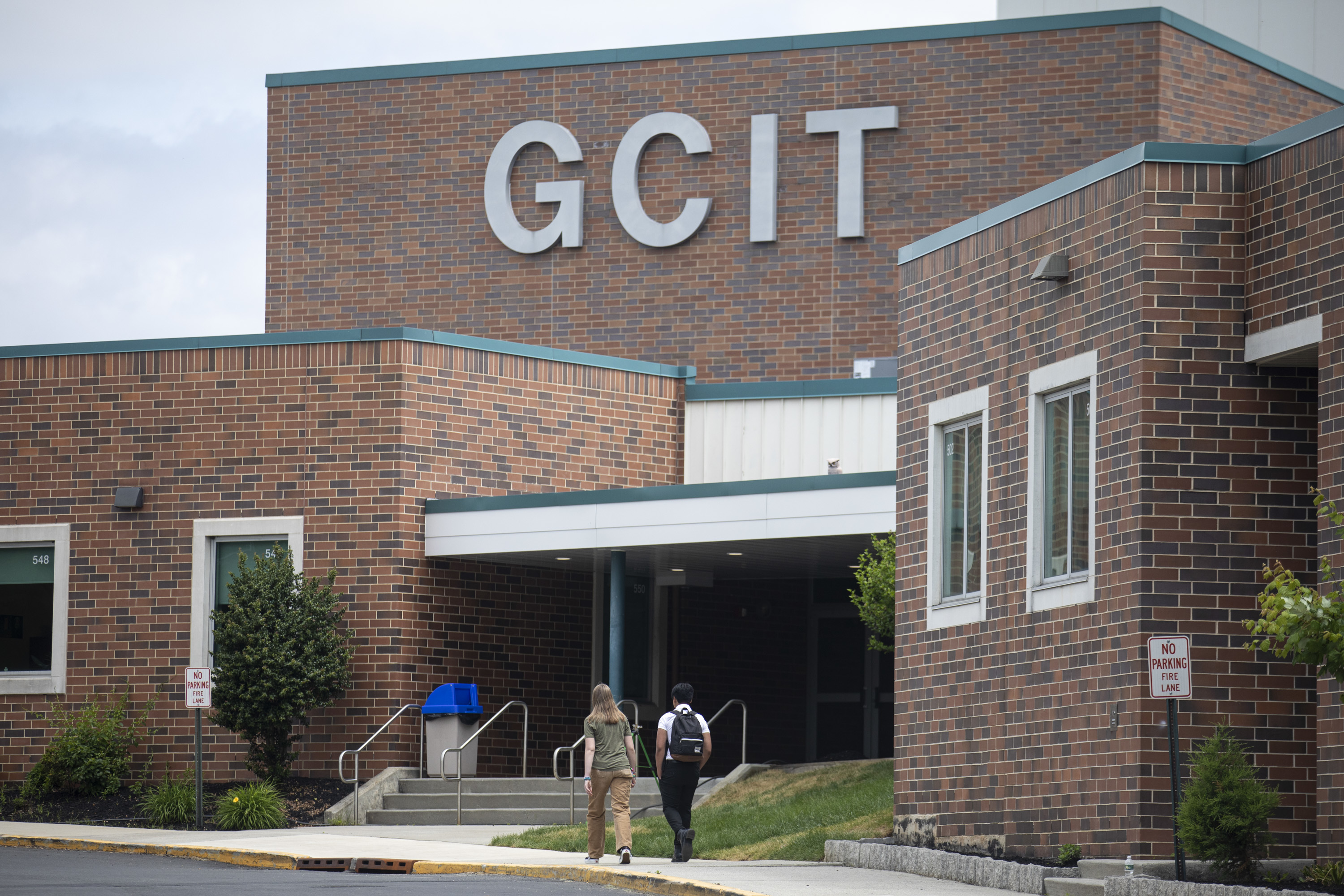
    The Gloucester County Institute of Technology and its superintendent are facing multiple lawsuits after the school’s former principal and the administrator who replaced her filed complaints alleging the school discriminated against them and mishandled its recent staff cuts.

    Two lawsuits, filed in June weeks after GCIT first voted on the cuts, are the latest in a series of legal actions against GCIT alleging retaliatory and discriminatory behavior.

    GCIT, the sole school in the Gloucester County Vocational-Technical School District, did not renew the contract of former principal Sybil Girard and two teachers. The school also cut the positions of former vocational education director Gina Mateka, another teacher, and the aquatics coordinator in a reduction of force.

    The cuts, a response to a $500,000 budget shortfall that was only partially supplemented by the county, came down in a unanimous vote first in May and then again in August, according to meeting minutes approved last week. They follow budget struggles across South Jersey school districts.

    Girard, who was hired in 2020 and was the district’s only Black administrator as well as the first Black principal in GCIT’s 55-year history, according to the complaint, sued the Deptford tech school and its superintendent, Susan Heiken, about four weeks before the school first voted not to renew her contract. She alleged racial- and gender-based microaggressions, negative performance reviews, and exclusion from staff hiring processes.

    In a separate lawsuit filed in June, Girard alleged the school board voted not to renew her contract without providing the 48-hour notice required by New Jersey’s Open Public Meetings Act.

    That case closed in state court Thursday, after GCIT’s school board hosted a special meeting, only two minutes long, to redo the personnel vote with proper notice.

    Mateka, meanwhile, alleged in another June lawsuit that the district cut her administrative position and demoted her to principal to retaliate against a suit she filed last year alleging age and gender discrimination.

    Mateka’s position was the only administrator role cut by August’s reduction in force, and the only tenured administrator position eliminated, according to her lawsuit.

    Both Girard and Mateka declined to comment due to ongoing litigation. Heiken did not return repeated requests for comment, nor did Assistant Superintendent Amy Capriotti, who sits on the GCIT school board. Two board members also did not return requests for comment.

    Students and others in the district community have spoken out against the staff reductions by defending the impact Girard and their teachers have had on their lives.

    “For us GCIT students, our teachers and staff serve as parental figures, inspirations, support systems, and outlets; it would be a grave disservice to them, the students, the school, and morale to let them go,” former student Serena Smith wrote in a Change.org petition to call for the protection of staff. The petition garnered more than 1,600 signatures.

    At board meetings leading up to the cuts, dozens spoke in defense of Girard and other employees at risk. At one March meeting, 58 people spoke, according to meeting minutes, and those comments took up more than 2½ hours.

    A longtime district employee, who declined to be named for fear of retaliation, said recent actions taken by Heiken have hurt staff morale.

    “Nobody is feeling secure,” they said.

    Mounting complaints

    Mateka’s beef with Heiken and the Gloucester County Vocational-Technical School District began in 2022.

    The district had long shared its school board and administration with the Gloucester County Special Services School District, which educates children with disabilities, down the street.

    But county officials restructured the district in 2022 and split the Deptford education campus back into two separate entities, meaning each school had to find its own staff.

    Heiken became the temporary superintendent at the special services district while the school sought a permanent option.

    According to an April 2025 complaint, Mateka saw herself as that option. She worked for the vocational technical school district since 1997 and became a shared chief academic officer in 2014.

    With her teaching and administrative experience, Mateka applied for the superintendent opening at the special services school district, but the district’s board of education chose to hire James Dundee, a principal at GCIT, instead. Dundee is still superintendent.

    Mateka sued GCSSSD, its school board, Dundee, and Heiken. She claimed the district did not handle the hiring process equitably, due in part to her age — she was 66 years old when she applied — and gender.

    She alleged that Dundee did not have teaching experience, had never been a superintendent or assistant superintendent, and was not certified by the state to be a school administrator. That lack of experience, the complaint alleges, meant Dundee required a mentor when he was hired.

    The same day, Brian Shakespeare, who held several roles at GCSSSD since 1992, also filed a lawsuit alleging age-based discrimination, since Shakespeare — 10 years Dundee’s senior — had applied for the position and lost out, too.

    Both lawsuits are ongoing in state court.

    Girard’s discrimination lawsuit came in April 2026, about a year after the complaints by Mateka and Shakespeare.

    In its 20 pages, Girard alleges Heiken sought “dirt” on her and another Black administrator (who had her own racial discrimination lawsuit seeking $300,000 against GCSSSD, Heiken, and Dundee until the case was settled this summer), demoted Girard but not her white colleagues, refused to call her by her professional title, and constantly left Girard out of the loop.

    After she first reported Heiken’s discrimination to the district’s human resources department, the complaint alleges, Heiken began to try to force Girard out of her position, including cutting Girard’s speech from the 2025 GCIT graduation program.

    When GCIT did investigate Girard’s discrimination allegations, no one ever asked why she felt discriminated against, the lawsuit reads, and GCIT’s counsel notified Girard that her complaints were “unsubstantiated.”

    This is the second consecutive year that GCIT had to pursue a reduction in force due to rising costs and cuts to state education funding, Heiken said during a spring budget hearing.

    “[The rising costs are] primarily everything that we need to run a school,” Heiken said in the meeting recorded by the Woodbury Warbler. “Our energy costs, our medical infrastructure costs have risen double digits.”

    Carl Heil, GCIT’s teachers union president, said in an interview that the district was ”going through tough waters.”

    “My hope is that we navigate it together rather than someone just making decisions and us just dealing with it,” Heil said.

  • A coyote killed in Cheltenham had rabies, police say

    A coyote killed in Cheltenham had rabies, police say

    A coyote killed by Cheltenham police last week was rabid, the police department announced Wednesday.

    Cheltenham police responded to reports of an aggressive coyote in the Wyncote area but were initially unable to find the animal, until someone reported a coyote attacking a resident and their dog at Curtis Dog Park on Friday.

    Cheltenham Township Police Chief Richard Schaffer said the animal was “humanely dispatched” but declined to say how.

    Police are advising township residents who have had contact with a coyote to seek medical or veterinary care.

    The incident marks the fifth rabies case in Montgomery County this year, according to the state’s rabies tracking dashboard, and the first in a coyote.

    The other four cases were identified in two raccoons, a skunk, and a cat.

    Cheltenham officers will continue to work with the Pennsylvania Game Commission to monitor the area, and advised residents who see wildlife acting erratically to call 911.

    This suburban content is produced with support from the Leslie Miller and Richard Worley Foundation and The Lenfest Institute for Journalism. Editorial content is created independently of the project donors. Gifts to support The Inquirer’s high-impact journalism can be made at inquirer.com/donate. A list of Lenfest Institute donors can be found at lenfestinstitute.org/supporters.

  • At least 160 killed and hundreds missing after flash floods in Nepal and China

    At least 160 killed and hundreds missing after flash floods in Nepal and China

    UDIN DHUNGA, Nepal — Massive flash floods in a border area of Nepal and China on Wednesday killed at least 160 people and left hundreds of tourists, workers and others missing after sweeping through communities and bringing travel in some areas to a halt. Experts said an avalanche from a glacier was the likely cause.

    Police in Nepal reported at least 157 dead. China’s state broadcaster CCTV said a mudslide in the Tibet region’s Gyirong County near the border killed at least three and left 265 missing. Drone footage showed roads destroyed and buildings buried. State news agency Xinhua reported significant casualties.

    Nepal’s steep valleys are economic lifelines and travel corridors but precarious ones when disaster strikes. Images showed what appeared to be the second floors of buildings in hard-hit Nuwakot district slathered in mud after the torrent rushed by. Debris hung from tree branches and wires, vehicles were buried and stunned survivors were caked in mud.

    Many missing were on pilgrimage to a sacred site

    Officials in Nepal said 403 people, including 341 foreign nationals, were reported missing. Sunil Sharma, a tourism board spokesperson, said 133 were from India on pilgrimage to Mount Kailash in Tibet, a sacred site for Hindus. Also missing were 47 from the United States, 34 from Australia, 33 from Britain and 24 from Canada, he said. The State Department said it was aware of Americans affected.

    At least 62 missing Nepali citizens were among hundreds of locals trekking in the Gosaikunda Lake area in Rasuwa, coinciding with the local festival of Janai Purnima on Friday, Sharma added. Nepal police spokesperson Abi Narayan Kafle told The Associated Press at least 28 police officials were missing.

    Officials warned residents in several districts to stay away from the banks of the Bhotekoshi, Trishuli and Narayani rivers. The Bhotekoshi flooded around 9 a.m. Wednesday, destroying several villages and hydropower projects, officials said. At least 19 bridges were swept away.

    “We have asked both India and China to help us with the rescue efforts,” said government spokesperson Sasmit Pokharel.

    The U.S. Geological Survey had reported a magnitude 4.4 earthquake early Wednesday, about 60 miles north of Kathmandu, near the border with China’s autonomous region of Tibet.

    Though the current monsoon season is less favorable for trekking in Nepal, it’s a major season for Kailash trekking in Tibet, which follows the route in Nepal’s Rasuwa district bordering Tibet’s Gyirong.

    Countries express alarm over missing citizens

    South Korean government officials said nine citizens working on building a hydropower plant in Nepal were among those reported missing. Malaysia’s foreign ministry said its embassy received reports from travel agencies that they had lost contact with 11 Malaysians believed to be in Rasuwa district. Russia’s embassy in Nepal said four citizens reportedly in the affected area were missing.

    Indian Prime Minister Narendra Modi spoke with Nepal’s Prime Minister Balendra Shah and offered help. “India is prepared to provide Nepal with all possible types of humanitarian assistance. Our teams are closely coordinating on rescue and relief efforts,” Modi said on social media.

    Some United Nations bodies were deploying “in an effort to meet what will clearly be massive humanitarian need,” U.N. spokesperson Stephane Dujarric said.

    In a joint statement, Australia, Britain, the European Union, Finland, France, Norway and Switzerland expressed solidarity with people in Nepal, adding: “We encourage all those in affected areas to follow the guidance of local authorities and official safety advisories as the situation continues to evolve.”

    The same region saw flash floods last year

    Climate experts at the Kathmandu-based International Centre for Integrated Mountain Development said an avalanche from a glacier likely caused Wednesday’s flash flood.

    “Hydrological observations indicate the exceptional speed and magnitude of the flood wave,” they said in an emailed statement, noting that water levels at one point on the Trishuli river rose by as much as 27 feet over half an hour.

    The Lhende Khola River, a tributary of the Bhotekoshi, had maximum flooding, they said.

    “The Lhende Khola has flooded twice in 14 months, this time triggered by an ice rock avalanche from a glacier on the Nepal side that blocked the river and released a sudden surge downstream,” said Saswata Sanyal, a disaster risk reduction specialist at the climate research group.

    He noted the importance of early warnings in “a warming Himalaya.”

    The region saw similar flash floods in August last year, when a glacial lake in Tibet overflowed because of high temperatures. Nine people were killed, and critical infrastructure, including a bridge connecting Nepal and China, was damaged.

    The Himalayan region, which spans several countries including India, is especially vulnerable to heavy rains, floods and landslides because of warming due to human-caused climate change. Research shows that extreme weather events, including heat waves, rains and melting glaciers, have become more frequent.

    Researchers in Kathmandu found earlier this year that glaciers across the Hindu Kush Himalaya region are melting at an accelerating rate, with ice loss rates doubling since 2000, primarily due to rising global temperatures and climate change.