Blog

  • Trump adds another giveaway to his midterm pitch: Pardons

    Trump adds another giveaway to his midterm pitch: Pardons

    WASILLA, Alaska — As President Donald Trump has crisscrossed the country in recent weeks, he has offered voters a variety of financial rewards before the midterms: $500 Obamacare “refund” checks, $90 to seniors to offset Medicare premiums, and $5,000 for every American adult — called the “Trump Dividend” — if Republicans retain control of Congress.

    On Tuesday, the president added another giveaway to his midterm gift basket: pardons.

    With Republicans’ political fortunes declining, Trump has stepped up his Oprah-style handouts to voters in an effort to eke out any last votes he might be able to find for endangered Republicans.

    As evidence of the difficult electoral landscape, top Republican super political action committees aligned with Trump cut off financial support this week for two Republican House members seeking reelection in an effort to prevent more losses.

    After all, Trump was in Alaska to help Republicans in a state he won by large margins in the last three presidential elections, including by more than 13 percentage points in 2024.

    So in the middle of his rally in Wasilla, Alaska, the president called up two young men to join him onstage. Also joining them was Natalie Harp, the president’s personal aide, who carried two black folios.

    The two men, Zachary Czubak and Patrick Fleming, pleaded guilty to modifying diesel vehicles in violation of the Clean Air Act. A third, Michael Hanzuk II, also pleaded guilty. The Department of Justice said the three men, co-owners of Arm Rippin Toys, removed emission control systems that are designed to reduce pollutants being emitted from vehicles.

    But the president framed the men’s actions as helping their neighbors fix engines so they would survive cold weather. He said he read about their cases and decided all three deserved pardons.

    “That means you’re as clean as a newborn baby’s ass,” he said to the two men standing behind him. “I never understood that. Why is that so clean?”

    He added: “I love doing this stuff. This is worth the eight hours in the plane.”

    Trump then ushered Fleming to the lectern to address the crowd.

    “Well, I’m not too good at this but he asked me to say something,” he said. “This means the world to me. It really did destroy us. It destroyed friendships. It destroyed families. We’re not criminals. We’re not trying to hurt anyone. We want to help Alaskans.”

    Czubak then stepped up to the microphone: “Cut to the chase here and let’s reelect Dan Sullivan. Let’s reelect Nick. Let’s get it done,” he said referencing Sen. Dan Sullivan and Rep. Nick Begich, the two incumbent Republicans on the ballot next month.

    The giveaways started with Trump floating the $5,000 payout at the midterm convention he demanded his party throw last month in Dallas. The proposal immediately drew bipartisan criticism, with Democrats accusing him of trying to buy people’s votes and some Republicans panning it as a socialist-style giveaway. The feasibility of the proposal is also in question, as it would cost more than $1 trillion and likely require congressional approval.

    Even some of Trump’s supporters on Tuesday were skeptical of the electoral benefit of the giveaways.

    “There’s probably an amount of skepticism about it now, but we’ll see how it does,” Frank Tomaszewski, a Republican state representative in Alaska, said of the proposed $5,000 checks. “We really need to consider all the amazing things President Trump has done for Alaska.”

    Tomaszewski said he has not heard any voters bring up the $5,000 or other financial bonuses from the White House.

    “That’s not what’s concerning them,” he said, noting that the high cost of energy was at the top of voters’ minds.

    Dez Martinez, 61, an Anchorage resident, also said the $5,000 payout was not a motivating factor for him. But he did appreciate the public pardons.

    “They were arrested publicly,” he said. “He did a great thing to show they did something good.”

    This article originally appeared in the New York Times.

  • Twelve Villanova interns work in and around the Vatican. What’s it like to work with the pope?

    Twelve Villanova interns work in and around the Vatican. What’s it like to work with the pope?

    ROME – Finley Doherty walked the papal retreat grounds on Tuesday, interviewing those who were there for the awarding of Villanova University’s inaugural sustainability medal. She also recorded the ceremony.

    It was all part of her work as one of 12 Villanova students who are interning this semester in offices and news agencies in and around the Vatican.

    Doherty, 21, a junior communications major, is working for the communications department of the General Curia of the Order of Saint Augustine, the central governing body of the Augustinian Order, which is just outside the Vatican walls. Doherty, who is Catholic, was excited to get a study-abroad experience that also allowed her to work in her faith.

    “I help out with their social media coordinating, as well as with their website,” said Doherty, who is from Hopkinton, Mass. “Recently, a fun thing I’ve been doing is interviewing people within the Curia and then taking a part of the interview that I think maybe will resonate with people regardless of their faith or their background and posting it on social media.”

    Villanova’s intern program at the Vatican started in 2003 after the Internet Office of the Holy See told some Villanova alumni it needed computer programming help. The school sent computer science majors to assist. In 2005, the program was opened to communications majors, and the relationship with the Pontifical Council for Social Communications — the Vatican’s social media arm — began in 2008. More than 150 students have participated in the program over the two decades since its launch.

    Interns in 2009 filmed a virtual tour of the Sistine Chapel, even moving inside the small area where the ballots are counted in the election of a new pope — a space normally roped off to the public. They have also done virtual tours of the Basilica of St. John Lateran, the Basilica of St. Peter, and the Redemptoris Mater Chapel, used exclusively by the pope for prayer and special Masses for small groups.

    Over the years, Villanova interns helped start the pope’s official Twitter presence and have ferreted out impostor accounts. When the Vatican launched its pope channel on YouTube, it was a Villanova intern who proposed advertising it on Facebook.

    And in May 2025, when Robert Prevost was elected the next pope, Villanova interns were on the ground, watching.

    Doherty, who has been interning in Rome since August and will finish in December, would have liked to see Pope Leo XIV present Villanova’s sustainability medal, but he had to have surgery on Tuesday for what was later revealed to be lung cancer.

    As a Vatican program intern, Doherty has already been close to the Holy Father. She sat on the front platform about 10 rows back from the pope during one of his general audiences. She filmed the pope and posted clips.

    “Every day, I just feel so lucky,” she said.

  • Fewer people are parking in SEPTA garages, so it cut parking fees in half

    Fewer people are parking in SEPTA garages, so it cut parking fees in half

    Prices are rising on everything, everywhere these days.

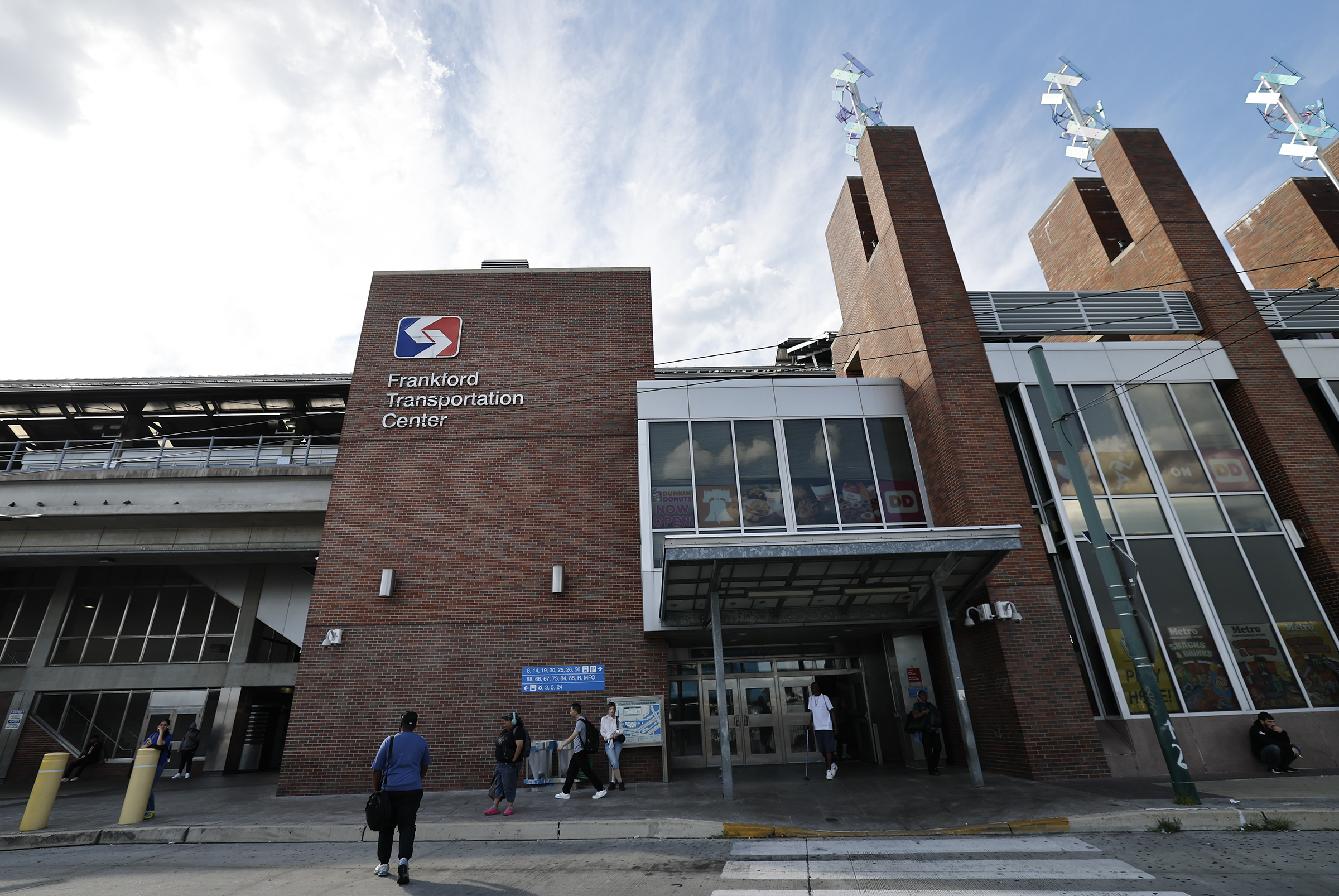
    SEPTA, however, has cut the parking fee at its garages in half.

    Until Dec. 31, it will cost only $2 a day to use the Frankford, Lansdale, and Norristown garages, instead of $4.

    Fewer commuters are parking in the garages, which are about 5% to 10% full on weekdays, SEPTA spokesperson Andrew Busch said. The transit agency hopes the price break will entice riders.

    “We want to see if there’s a demand we’re not serving,” Busch said. “Maybe we just landed on the wrong price point.”

    In early 2020, SEPTA stopped charging for parking at Regional Rail stations and transportation centers as people adjusted to pandemic shutdowns and changed commuting patterns.

    The transit agency began phasing in paid parking again in 2024 and doubled daily fees — to $2 to park in Regional Rail surface lots and $4 for garages.

    SEPTA was tightening its belt during a period of fiscal crisis and looking for ways to generate new income. Officials believed that the price was still relatively low and would help the bottom line.

    In fiscal 2019, the agency raised $3.5 million from parking fees, Busch said. For the 2026 fiscal year that ended June 30, SEPTA parking lots and garages took in $5.3 million, he said. That was the first full year after all parking was paid.

    Most of Regional Rail’s parking capacity is in surface lots, which are often full or nearly so.

    SEPTA says it has noticed more people using street parking around the 989-space Frankford garage instead.

    “We’ve heard from some people that they feel unsafe, particularly at the Frankford Transportation Center,” Busch said. SEPTA has added lighting and 30 blind-spot mirrors in the garage, he said.

    In June, Lansdale police increased patrols around SEPTA’s parking garage after reports of fighting and underage drinking among teens and young adults using it as a gathering spot.

    It is not clear whether customer concerns about the situation contributed to a drop in parking there.

  • Ukraine’s vulnerability grows as Starlink is restricted and Russia escalates

    Ukraine’s vulnerability grows as Starlink is restricted and Russia escalates

    KYIV, Ukraine — Nearly five years into its fight for national survival, Ukraine has entered a moment of intense vulnerability, under growing pressure not only from Russia but also now from the United States.

    A double blow came overnight Wednesday.

    Ukraine said that its military, with no warning, had lost access to a military version of Starlink, a pillar of its battlefield communications. Ukraine relies on the satellite internet network, known as Starshield, which is paid for by the Pentagon. That led Ukrainian officials and analysts to surmise that the restrictions had come from Washington, as President Donald Trump is locked in his latest feud with Ukraine’s leadership.

    At the same time, Russia unleashed dozens of ballistic missiles in a broad attack on Ukraine’s energy infrastructure early Wednesday, cutting power to 600,000 people in the capital, Kyiv. It was a dark omen for a rapidly approaching winter in which Russia is gearing up to try to push Ukraine to the breaking point as Ukraine runs low on lifesaving air defenses.

    It was unclear how long the Starshield restrictions would remain in place. Still, the Trump administration’s treatment of Ukraine has caused outrage in a country already reeling from a string of challenges.

    Its energy system is at risk of collapse in the coming months as Russia pounds power plants and substations, trying to deprive Ukrainians of heat and water. Its economy is being pushed to the brink by Russian strikes on ports, warehouses, and steel factories. And its budget faces a multibillion-dollar gap this year and next that could leave its military severely underfunded.

    The Starshield development was interpreted in Ukraine as part of a Trump administration pressure campaign to limit Ukraine’s ability to fight. Trump is pushing Ukraine to stop attacking oil refineries so Russia can pump more diesel onto global markets as high prices threaten the prospects of Trump’s Republican Party in the midterm elections.

    “Clearly, this action cannot be a coincidence and is linked to the current political situation,” Serhiy Beskrestnov, a Ukrainian military expert who advises President Volodymyr Zelensky on weapons technologies, wrote on social media about the Starlink restrictions.

    SpaceX, which operates Starlink and Starshield, and its CEO, Elon Musk, did not respond to requests for comment.

    Ukraine was stunned to discover the Starshield restrictions, which it said caused disruptions to several combat operations. The Ukrainian military uses Starshield in part to guide its ever-growing fleets of drones, including interceptors used to down Russian drones. The restrictions, Ukrainian officials said, tied Ukraine’s hands while leaving Russia free to wage war.

    Perhaps nowhere was that imbalance clearer than in the Russian air assault overnight. The barrage included 39 ballistic missiles, Zelensky said. That would be the largest such salvo during the entire war, according to a New York Times data set based on Ukrainian air force figures.

    Even as Russia pounds Ukraine day after day, leading to some of the highest civilian death tolls seen in years of war, Ukraine says it is abiding by Trump’s demand not to strike Russian oil refineries. Its campaign against refineries, which had led to fuel shortages across Russia, made Russians feel the war as never before.

    Ukraine has said it is unfair that Russia is still attacking Ukraine’s power plants and substations. Zelensky has asserted that the strikes violate Trump’s self-declared energy ceasefire in Ukraine. The Trump administration views the ceasefire as covering only strikes on oil refineries, even though Ukraine has none that are operational.

    Ukraine has set aside its most potent tool against Russia in part because it is worried that Trump could follow through on an apparent threat to stop providing intelligence that Ukraine needs to warn its people of incoming Russian strikes.

    While Ukraine’s European partners have so far stepped in to patch Ukraine’s ballooning budget gaps as Russia batters the Ukrainian economy, Europe is not believed to be able to fully fill intelligence deficits if the United States were to pull back.

    Ukrainian fears have been elevated over the past two days as Zelensky has reported that Ukraine did not receive early warnings about Russian missile strikes, though Trump said Tuesday that intelligence was still being shared.

    The Ukrainian air force clarified Wednesday that while it had received no advance warning before a Russian missile struck at about 10:40 p.m. Tuesday, it did receive warnings related to three subsequent waves of attacks that night. Such intelligence sharing is separate from Ukraine’s use of the Starshield system.

    Serhii Sternenko, a former Ukrainian defense ministry adviser, said it was galling that Ukraine had complied with Trump’s demand that it stop attacking Russian oil refineries and had gotten only more restrictions in return.

    “Trump was looking for any opportunity to undermine our defense capabilities,” Sternenko wrote in on social media.

    The Starshield limitations, if they continue, could cripple Ukraine’s military operations. Starshield terminals are used for nearly everything the Ukrainian army deploys on the battlefield: the cars that carry troops and matériel, the drones that ferry food and water to soldiers at the front, and the attack drones that fly long distances to hit Russian positions.

    The Ukrainian military uses thousands of terminals connected to Starshield, a version of the Starlink network that is harder to hack or jam. Musk said earlier this year that Starshield was “operated by the U.S. government.”

    Officials from Ukraine’s Defense Ministry said Wednesday that, without warning, SpaceX had restricted the use of Starshield for devices traveling faster than 100 mph. When the device exceeded this speed, the terminals lost connection. The officials said the Defense Ministry was in touch with the U.S. government, SpaceX, and NATO partners to address the issue.

    Starshield provides connections to the interceptor drones that Ukraine uses to shoot down the Russian attack drones known as Shaheds, especially the fast-flying jet-powered models that Russia is now launching toward Ukraine en masse, Beskrestnov said.

    “In effect, our partners’ actions are depriving us of one of the few ways we have to defend the country against jet-powered Shaheds,” Beskrestnov said.

    On Wednesday, official digital chats among military units at the front warned soldiers driving vehicles and pilots flying drones that the speed at which Starlink worked had been lowered, according to exchanges seen by a reporter for the Times.

    Starlink does not operate in Russia, meaning the restrictions are not related to Trump’s demands that Ukraine stop its strikes on oil refineries. Instead, the restrictions appear designed to hobble Ukraine’s ability to fight within its own territory, just as its forces are regaining territory through counterassaults.

    As Ukraine faces the new Starshield challenge, Russia is escalating its campaign against Ukraine’s energy system, aiming to make life unbearable for civilians, Ukrainian officials say.

    The overnight attack Wednesday hit all three of Ukraine’s combined heat-and-power plants, Prime Minister Serhii Koretskyi wrote on social media.

    The assault followed a handful of strikes on the energy infrastructure earlier this month that caused power and water outages in Kyiv — a sign that it now takes only a few strikes to disable a power grid battered by years of attacks.

    This article originally appeared in the New York Times.
  • A Cherry Hill school board member is stepping down from his seat

    A Cherry Hill school board member is stepping down from his seat

    Cherry Hill school board member Kurt Braddock has resigned from the board, leaving a vacancy weeks before voters will fill three other open seats in the November election.

    Board President Gina Winters announced Braddock’s resignation at a board meeting Tuesday night. Braddock was not present.

    In a Sept. 24 email to Winters obtained by The Inquirer under the state’s Open Public Records Act, Braddock said: “Serving on the Cherry Hill BOE has been one of the greatest honors of my lifetime, and I hope to continue to remain involved with the District in any way that I can.”

    Winters said Braddock, an assistant professor in the School of Communication at American University, informed her that he had recently been promoted and said he would not be able to continue serving on the nine-member board.

    Braddock was elected to a three-year term on the board in 2024. His term was set to expire at the end of 2027. Winters and other board members praised his service.

    Winters said the board would appoint someone to complete Braddock’s term. The board has 65 days to fill the seat. The district will collect resumés from candidates and hold interviews, she said. An appointment is expected in late November, she said.

    “I think running for election can be very daunting. I think it’s very scary to run for election and to put yourself out there in that way,” Winters said at the meeting. “If you’re interested in board service, I really encourage everybody in the community who thinks they might be interested to apply to fill the vacancy. It is extraordinarily rewarding.”

    Seven candidates, including two incumbents, are running for the three open seats. During a candidates forum last month, the school budget and uncertainty over state funding were cited among the biggest issues facing the district.

    Cherry Hill is the 12th-largest public school system in the state, with nearly 11,000 students and more than 1,700 employees.

  • A former Philly-based sports gambler pleaded guilty in gambling scandals targeting the NBA, NCAA, and Chinese league

    A former Philly-based sports gambler pleaded guilty in gambling scandals targeting the NBA, NCAA, and Chinese league

    A former Philadelphia-based professional gambler pleaded guilty in federal court Wednesday to helping engineer two separate betting schemes: one in which he bribed players to underperform in the NCAA and Chinese professional league, the other in which he placed bets on NBA contests using inside information about player injuries or performance.

    Shane Hennen, 41, said little beyond answering routine legal questions while admitting to crimes including bribery and wire fraud. He declined to comment afterward.

    But the pleas were a significant development for Hennen, who became a central figure in several high-profile betting prosecutions over the last year. This summer, he also pleaded guilty in a third gambling case, one in which he provided rigged card-shuffling machines to Mafia-affiliated poker games in New York City — high-stakes contests that also involved former NBA players.

    His connection to each of those schemes made Hennen — known as “Sugar Shane” in gambling circles — one of the more prominent players in scandals that shook the sports world and led to questions about the explosion of legalized sports betting. Hennen now faces the prospect of years behind bars.

    For a while, Hennen was unrepentant, saying it was normal for gamblers to use any available method to find an inside edge, comparing his methods to those used by financial professionals on Wall Street.

    “There ain’t one stockbroker who became rich just by guessing right all the time,” he told the New York Times this summer. “This is what the United States of America has revolved around, for hundreds of years.”

    Such bravado may have helped contribute to his downfall. In text messages he sent to coconspirators in one of the schemes in 2023, Hennen boasted about how bribing a star player for the Jiangsu Dragons was providing clear and easy winnings on bets his group could place in Philadelphia.

    “Nothing gu[a]rantee[d] in this world,” Hennen wrote, ”but death taxes and Chinese basketball.”

    In the scheme targeting games in the NCAA and China, prosecutors said, Hennen and another professional gambler, Marves Fairley, launched the operation in 2022.

    That year, prosecutors said, the pair approached Antonio Blakeney — a former NBA player who became a leading scorer in the Chinese Basketball Association — to deliberately underperform in games in China.

    In return, prosecutors said, Blakeney received bribe money. Hennen and Fairley, meanwhile, placed large bets against Blakeney or his team, including at the Rivers Casino sportsbook in Fishtown.

    In one instance in 2023, prosecutors said, the men wagered nearly $200,000 on the Guangdong Southern Tigers to beat Blakeney’s team, the Jiangsu Dragons.

    Blakeney averaged 32 points per game that season, prosecutors said. But in the game the bettors targeted, he scored just 11 points, and his team lost by nearly 30.

    Following their success in China, Hennen and Fairley went on to expand the point-shaving operation to target NCAA games.

    With the help of so-called fixers — typically basketball trainers or others with connections to NCAA players — the men used the same template: Players were recruited into the conspiracy with the prospect of bribe money, while bettors would then place wagers against the players or teams they paid to underperform.

    Prosecutors said the scheme became unusually large in scope. Over the course of two NCAA seasons, prosecutors said, the operation affected at least 29 games involving 17 universities, and caused gamblers to place more than $3 million in illicit bets.

    In the NBA scheme, meanwhile, prosecutors charged players including Terry Rozier and Jontay Porter with deliberately underperforming in games to benefit gamblers. And Hennen, prosecutors said, often received tips from those players’ associates, including that they planned to play poorly or even find ways to remove themselves from forthcoming contests.

    Hennen then went on to place large bets against Rozier, Porter, or their teams, prosecutors said.

    Prior to his time as a high-stakes sports gambler, Hennen was convicted in a smaller-scale gambling operation, receiving probation in 2006 in Allegheny County for using a magnetic device to rig illicit dice games.

    After that, he served 2½ years behind bars after he was convicted of stabbing a Duquesne University basketball player in the neck over a dispute about a card game, and later getting caught with cocaine in his car near a Pittsburgh-area casino.

    For his most recent gambling cases, U.S. District Judge Nitza I. Quiñones Alejandro said, Hennen faces a maximum sentence of decades in federal prison.

    He is scheduled to be sentenced in the poker case in New York in January.

    Quiñones Alejandro said she would then sentence Hennen for the two basketball gambling cases in February.

  • Penn’s quarterback situation remains up in the air following injury to starter Miles Teodecki

    Penn’s quarterback situation remains up in the air following injury to starter Miles Teodecki

    Penn football is prepping two quarterbacks for this week’s home game vs. Columbia.

    Quakers freshman quarterback Miles Teodecki suffered a knee injury early in the second quarter last Saturday that sidelined him for the rest of the game. Backup Karson Siqueiros-Lasky then led them to a 24-20 upset over Howard.

    Teodecki was seen taking snaps at practice Tuesday, but coach Rick Santos declined to commit to a starter for Friday’s game at Franklin Field (7:30 p.m., ESPN+). Teodecki will continue to test his knee in the coming days.

    “It was very frustrating,” Teodecki told The Inquirer. “Obviously, as an athlete and a competitor, whenever you have to watch on the sideline, it’s always an annoying moment, especially knowing that something happened outside of your control that you can’t control.”

    After a strong showing in his first start against Bucknell, Teodecki has experienced growing pains. In three games and a quarter, he has completed 56% of his passes for 607 yards, two touchdowns, and three interceptions. Teodecki also has rushed for 166 yards and a touchdown.

    If Teodecki cannot go, Siqueiros-Lasky will get the start. During the offseason, the junior signal caller appeared to be getting his shot after backing up Liam O’Brien last year. Santos previously referred to Siqueiros-Lasky as “the clear-cut No. 1” at Ivy League media day.

    Just days before Penn (2-2, 0-1 Ivy) kicked off its season against Bucknell on Sept. 19, Santos reversed his decision. Instead, Teodecki — the highest-rated Penn recruit since 2000 — was going to get the starting nod. At the time, Santos called it “one of the hardest decisions I’ve had as a coach.” Now, Santos is commending Siqueiros-Lasky’s character after the junior was jolted into Saturday’s game.

    “There was a reason why his teammates voted him captain,” Santos said. “It’s easy to be a leader when things are going your way. It’s extremely difficult when things happen that are unforeseen. And obviously, in his mind, he was a starter going into it. We made a really tough decision, and one that we could have went either way. … So for him to stay focused, to continue to prepare — he never made it about himself. He really, honestly, amplified himself as a leader through some of those moments, and I’m really proud of him.”

    Added Siqueiros-Lasky: “Facing adversity and being able to stay up on yourself, stay motivated is a really important characteristic, not only in football but just in life in general.”

    After throwing an interception early, Siqueiros-Lasky completed 19 of 29 for 226 yards and two touchdowns. He also caught a touchdown on a Philly Special-esque trick play, marking his first touchdown reception since playing flag football as a kid.

    “It was crazy,” Siqueiros-Lasky said. “When he called that play, I was like, ‘Oh wow, we’re running this. … OK, let’s go.’ I wasn’t really nervous; I was excited. I saw the defense start to flow, and I was like, ‘All right, it’s gonna work.’ Then, I saw the ball. I just had to go make a play.”

    Game at hand

    Siqueiros-Lasky said he will be prepared if he is asked to make more plays against Columbia (3-1, 0-1 Ivy). Last season, Columbia went 1-6 against conference opponents to finish in the Ivy’s basement. Things look to be trending upward this season for the Lions, who are coming off a 41-28 win over Marist.

    One player to watch is Columbia senior running back Griffin Johnson. Last season, Johnson split carries with then-freshman Michael Walters. This season, Johnson is averaging 101.5 rushing yards and has two rushing touchdowns. Statistically, the Quakers have the best rushing defense in the Ivy League, allowing 113.5 yards per game.

    Columbia senior quarterback Chase Goodwin also is off to a hot start. He is averaging 313 passing yards and with eight touchdowns.

    Columbia is allowing a conference-worst 28.5 points per game. Santos hopes his offense can build off the success it had late against Howard.

    “We have shot ourselves in the foot offensively,” Santos said. “I think that’s been the most frustrating thing as a team overall, especially being an offensive-minded coach. I felt like it wasn’t necessarily some of the things the other teams were doing. We had some plays that we left out there and didn’t make.

    “Halfway through the third [against Howard], we did make some mistakes, but then really, for a quarter and a half, we played nearly perfect football. It gives us a ton of momentum, a ton of confidence.”

  • Extreme weather is hurting independent farms and restaurants, owners say

    Extreme weather is hurting independent farms and restaurants, owners say

    Heat and weather shifts are making it harder to plan menus and grow traditional foods, chefs and farmers say.

    Across Pennsylvania, April was among the warmest on record and encouraged certain plants, like fruit trees, to bloom early. But the last hard frost — the date after which fruit blossoms, tomatoes, and other cold-sensitive produce can survive — arrived the same month, decimating crops like peaches and apples. Pennsylvania has estimated the late April cold snap cost the specialty crop industry up to $200 million.

    “Those 90-degree days were really the abnormal part of it,” said Adam Dusen of Buckingham’s Hundred Fruit Farm, which he estimated lost 80% to 90% of some crops in the April frost.

    The hot spring followed years of rising temperatures: In 2023, the USDA updated its guide to where plants grow, and placed southeastern Pennsylvania in warmer categories once more common in Virginia and North Carolina.

    Restaurateurs who gathered at FarmerJawn Community Greenhouses in Elkins Park on Tuesday said they’re expecting the food instability to worsen as Pennsylvania’s climate becomes warmer and more extreme. The changes make it even harder to rely on the small, local farms many restaurants hope to support, restaurant owners said.

    The growers and chefs at the Montgomery County event, hosted by the James Beard Foundation, were eager to ensure independent businesses in both industries, which typically operate on razor-thin margins, can survive in a post-global warming era.

    “If there’s anybody who understands what farmers do, it’s restaurants,” said Jeremy Asch, cofounder of Schmaltz, in Point Breeze.

    Philly food industry preps for post-warming Pa.

    FarmerJawn, an organic produce farm that sells to restaurants and the general public, is growing species from hotter climates at the Elkins Park greenhouses and saving the seeds of successful plants to grow at the company’s bigger Chester County farm. The company plans to offer produce that’s prepared to thrive in a warmer Pennsylvania, founder Christa Barfield said.

    The hope is that chefs and farmers can use a wider variety of crops in case extreme weather or a supply chain disruption suddenly makes a favored vegetable unavailable.

    Briana Mills-Walker, who runs the Elkins Park site, invited visitors Tuesday to sample uncommon greens, like long beans from Southeast Asia and huacatay, a marigold cousin from South America.

    Tagetes minuta, also known as huacatay, is being grown at FarmerJawn, seen here during a farm tour on Tuesday.Tyger Williams / Staff Photographer

    “The herbs … a few things blew my mind,” said Kwame Williams, chef at Pleasantdale Chateau in West Orange, N.J. “It was like, ‘I could use this right away.’”

    But crafting a menu from local produce remains a challenge: Large-scale distributors can more reliably deliver specific products, while small farms might contribute just one item. Chefs who want to source local produce need many more of those relationships to make it work, restaurant owners said.

    Dusen said by phone that chefs asked Hundred Fruit for chokeberries and autumn olive this year, but both crops were damaged by weather and neither yielded enough for a sale.

    “We thought we’d have enough [autumn olive] for the one chef but we probably lost half the crop,” Dusen said. “I think he had to scramble a bit.”

    Kelsey Givler, manager of Merrymead Farm in Lansdale, said by phone that they were able to sell cider this year despite the apple decimation because of their established relationships with growers, who sold their limited harvests to existing buyers like Merrymead. But that meant apple buyers without good contacts may have missed out.

    Barfield, of FarmerJawn, said Tuesday that chefs could work with farmers to select produce before it’s planted in the ground — although that can mean planning menus months in advance and praying the plant makes it to harvest.

    And though chefs at the Elkins Park event were excited about new ingredients, some also lamented how environmental shifts are threatening traditional foods, from mollusks to cereals.

    Corn is central at South Philly Barbacoa and Casa México, with chef Cristina Martínez Guerrero making thousands of tortillas every weekend. But a weak U.S. corn harvest driven by extreme heat and rain has raised prices, forcing her to cut esquites, a corn dish, from her menu.

    “We need our corn,” she said. “We need to care for and protect traditional kitchens.”

    Philadelphia-area farmers said this week that the instability of agriculture requires diversification and creativity.

    Guevin’s Far View Farm in Pottstown lost all their apple trees this year, Kim Guevin said by phone, but they grow more than 150 different plants for a reason.

    “You never know,” she said. “You have to be resilient in farming.”

    This suburban content is produced with support from the Leslie Miller and Richard Worley Foundation and The Lenfest Institute for Journalism. Editorial content is created independently of the project donors. Gifts to support The Inquirer’s high-impact journalism can be made at inquirer.com/donate. A list of Lenfest Institute donors can be found at lenfestinstitute.org/supporters.

  • Penn launches new cost calculator to show that with financial aid, it’s ‘more affordable than most people realize’

    Penn launches new cost calculator to show that with financial aid, it’s ‘more affordable than most people realize’

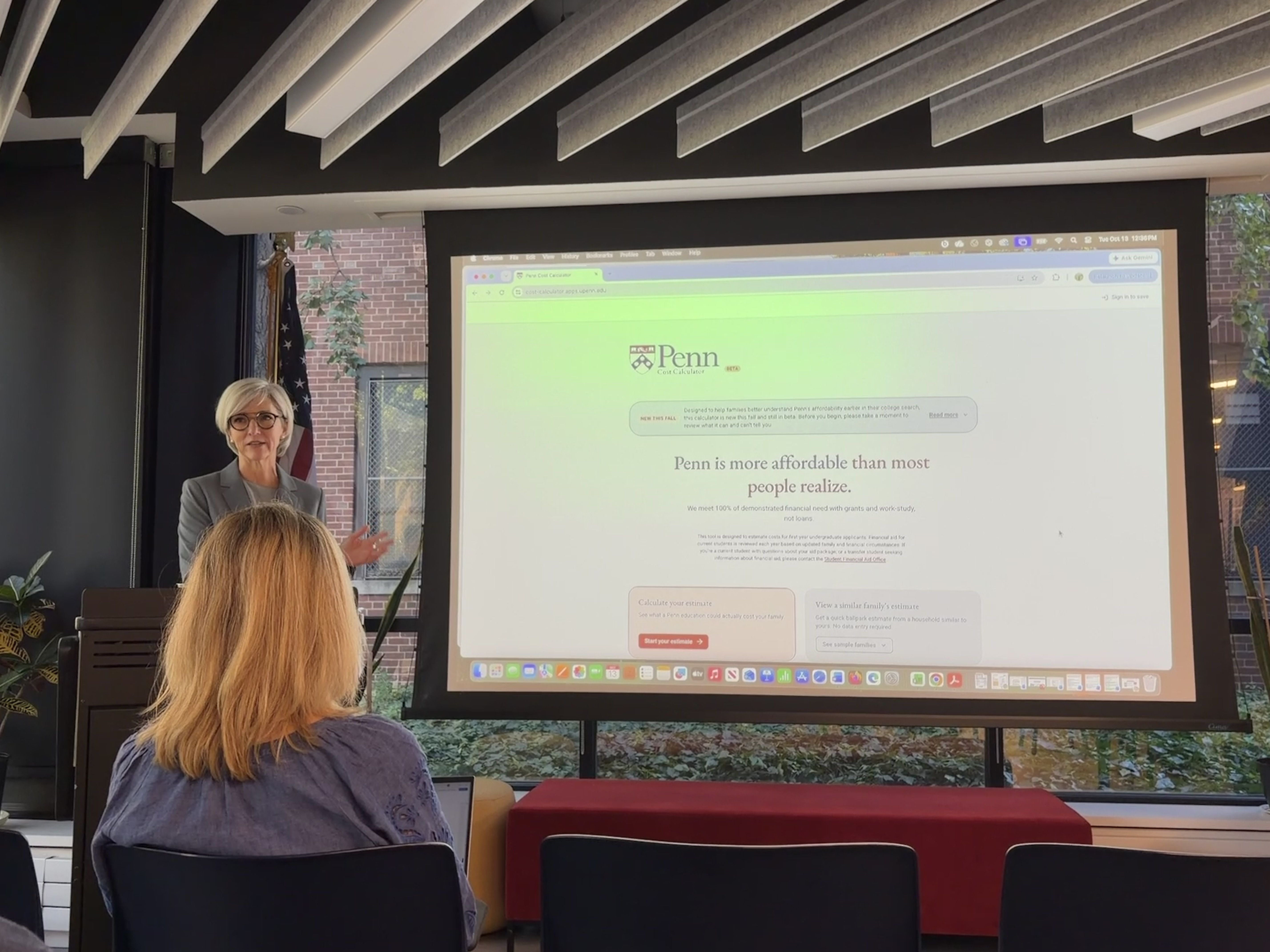
    The University of Pennsylvania launched a new cost calculator Wednesday that gives prospective students a more precise estimate of what they would pay to attend Penn.

    Officials said the tool aims to increase transparency — including around the availability of financial aid — for families who might otherwise assume they cannot afford the Ivy League institution. Tuition and estimated costs for living on campus at Penn topped $99,000 this year.

    Yet many students receive aid, including through a program launched two years ago providing full-tuition scholarships to students from families earning less than $200,000 a year.

    The university also on Wednesday announced a $20 million gift from hedge fund billionaire Scott Shleifer and his wife, Elena, that would largely be devoted to scholarships.

    “It can still be really intimidating for families to see the cost of an education,” dean of admissions Whitney Soule said at a media briefing Tuesday ahead of the announcement of the new calculator.

    Soule, who worries that many students may never apply to Penn because they believe the college is out of reach, said the calculator will help the university pursue its goal of finding talent, “wherever it is.”

    The cost of higher education has faced growing scrutiny as tuition bills have continued to mount. President Donald Trump’s administration this year imposed new limits on how much students can borrow in federal loans, an effort it said would incentivize universities to lower tuition. Critics said it would make it harder for some students to access higher education.

    A number of elite universities have moved in recent years to offer more students free tuition. Penn, for instance, expanded its “Quaker Commitment” program in 2024 to provide full-tuition scholarships to students from families earning less than $200,000 a year, up from $140,000.

    Nearly 50% of Penn students receive aid, according to the university, and among those, nearly 70% receive packages covering all of their tuition and fees.

    Colleges have also increasingly adopted financial calculators intended in part to show prospective applicants that the price they would pay may be significantly different from the sticker price.

    Penn says its new tool goes further than what many other colleges are offering.

    “I hope a lot of our peers will follow this example,” Penn president J. Larry Jameson said during the Tuesday media briefing.

    A more precise estimate

    Dean of Admissions Whitney Soule presented the calculator on Tuesday.Kayla Yup / Staff

    The Department of Education already requires schools to have a net price calculator available for prospective students. However, these tend to rely on generic formulas and do not consider an institution’s unique financial aid policies, Penn officials said.

    For example, Penn does not factor a family’s primary house equity into its aid calculations, while many other schools do.

    The old calculator would also provide a broad estimate, while the new version gives families a more precise figure.

    Prospective students can either upload their 1040 tax form or manually enter their information.

    The page features eight hypothetical households and the financial aid each would receive, including one for a student named “Maya.” Her parents collectively earn $120,000 a year and would pay about $15,000 a year for her to attend Penn.

    The other examples represent families earning between $37,000 and $425,000.

    The tool goes beyond the first year, accounting for changes to project the full four-year cost of a student’s time at the university, officials said. It also features an AI chatbot trained by Penn’s financial aid team to answer families’ questions.

    “We hear often that there’s so much confusion and frustration around the financial aid process in general, and so this tool is really going to allow students to have a much more transparent view into our financial aid process,” Mariana Valdes-Fauli, associate vice president of student registration and financial services, said at the Tuesday briefing.

    A $20 million gift

    Along with its efforts to demonstrate affordability, the university also on Wednesday announced a $20 million gift from the Shleifer family, with $12 million to create and endow a new scholarship program.

    The Shleifer Scholars Program “will establish a permanent cohort of undergraduate students whose Penn education is made possible through the Quaker Commitment, delivering comprehensive funding that covers full tuition for students from middle-income families and empowers them to engage in experiences beyond the classroom,” the university said in a statement.

    An additional $3 million will go toward a Shleifer Family Quaker Commitment Challenge that will match donations of $500,000 to create new endowed scholarships. And $5 million will go to the university’s President’s Priorities Fund.

    Shleifer, a 1999 graduate of the Wharton School and a former partner at Tiger Global Management, said in a statement that Penn had a “profound impact” on his life.

    “Elena and I want more students to have access not just to a Penn education, but to the full range of experiences that make that education so meaningful,” Shleifer said.

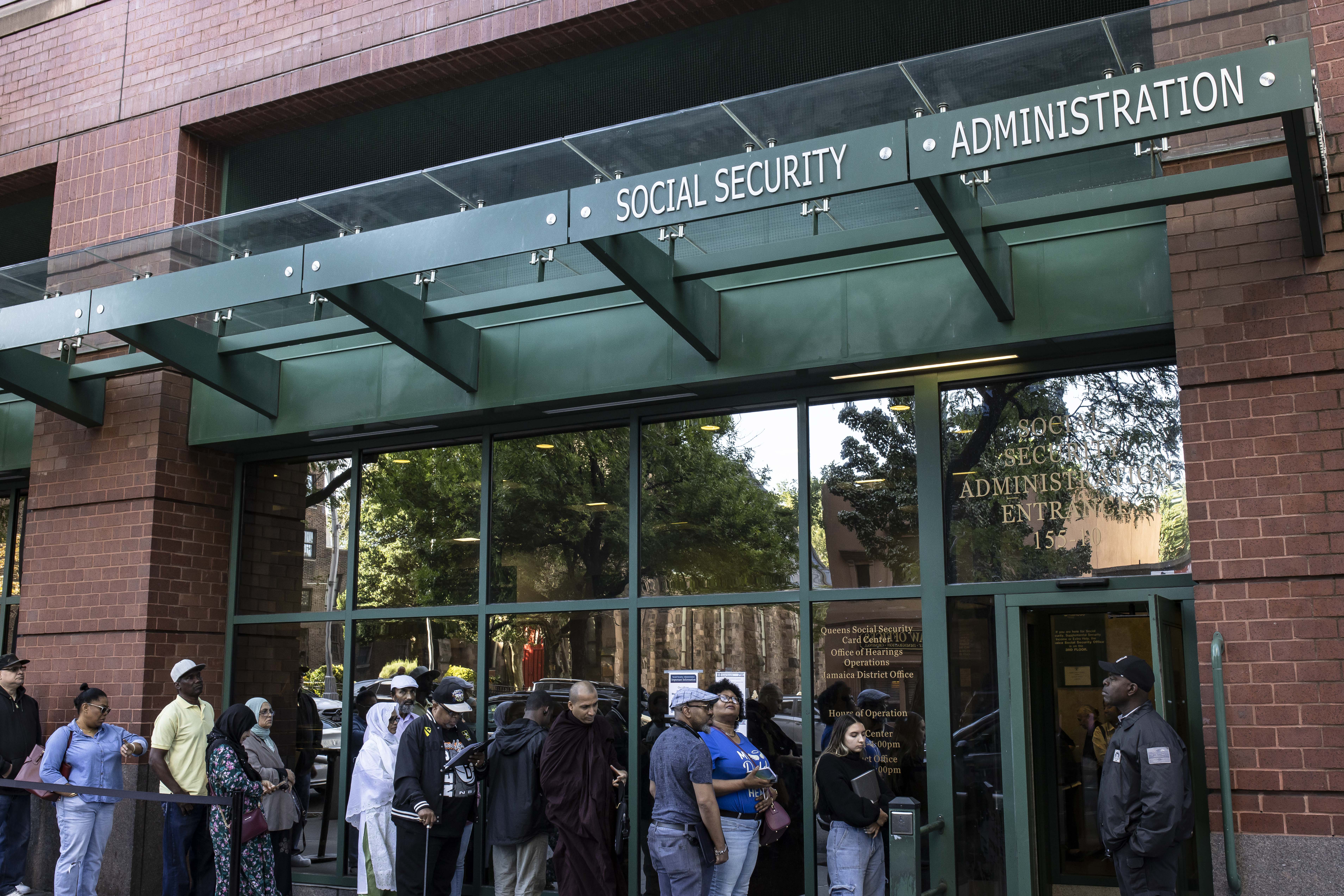
  • Social Security says retirees will get a 3.6% raise for 2027

    Social Security says retirees will get a 3.6% raise for 2027

    Retirees and other beneficiaries will receive the largest annual cost-of-living adjustment since 2023 in their Social Security checks next year, driven mainly by persistently high inflation.

    The Social Security Administration announced a 3.6% annual cost-of-living adjustment, or COLA, on Wednesday after the release of government inflation data for September. The COLA is determined using the Consumer Price Index for Urban Wage Earners and Clerical Workers, or CPI-W. The index values for July, August, and September are averaged to produce the official adjustment figure.

    For the average Social Security beneficiary, the COLA will translate to a $75 monthly increase, the government said. However, the actual amount for any retiree enrolled in Medicare will vary. The Part B premium, which covers outpatient care, is usually deducted from Social Security benefits, changing net COLAs. Separately, Social Security said the maximum amount of earnings subject to the Social Security payroll tax would rise to $192,300, up from $184,500 this year.

    The Medicare board of trustees has projected that the monthly Part B premium will rise $6.60 in 2027 to $209.50. The final figure will be released this fall, but if the projection holds, most beneficiaries will receive net COLAs of at least 3%.

    Other Medicare costs are rising, too. Monthly premiums for some prescription drug plans, which are known as Part D, will jump $50 or more next year — although plenty of lower-cost options are available for people who shop the market during the annual enrollment period that begins Thursday. In addition, costs will rise and supplemental benefits will be reduced in private Medicare Advantage plans next year.

    The CPI-W reflects price changes for goods and services that working people buy and use, and it is underweighted for healthcare costs, which have an outsize impact on older Americans. The health spending burden for people enrolled in Medicare is more than twice as large as that of other households, accounting for 14% of total spending in 2024, according to KFF, a healthcare research nonprofit.

    The COLA announcement comes at a time when Americans are feeling less confident that they will have enough money to live comfortably in retirement. An annual survey released this year by the Employee Benefit Research Institute found that 61% of workers were confident they will have enough money to be comfortable in retirement, down from 72% in 2021; retiree confidence fell to 73% from 80% during the same period.

    “For retirees who aren’t confident, inflation and the rising cost of living are overwhelmingly the top reason,” said Craig Copeland, director of wealth benefits research at EBRI.

    The automatic COLA is one of Social Security’s most valuable features, but some advocates have long argued that it isn’t adequate to help seniors cope with inflation — and that the CPI-W should be replaced by a yardstick that does a better job measuring the inflation that affects retirees.

    A new AARP survey found that just 23% of adults over age 50 think a 3.5% COLA keeps up with rising prices. “For most people, the COLA just isn’t enough to keep up with what they see as rising costs in their life,” said Bill Sweeney, AARP’s senior vice president for government affairs. “When they go to the grocery store or fill up their tank with gas or get a notice that their rent is going up, it’s almost always higher than those numbers.”

    Worries about the future of Social Security itself also are eroding confidence.

    Social Security’s trustees projected in June that the retirement trust fund would be exhausted in 2032 — just six years from now. The combined retirement and disability funds are projected to run dry in 2034. Those are likely best-case projections, as key underlying factors have deteriorated over the past year, including lower long-range assumptions about the size of the U.S. population, which were affected by lower projections on the number of children women will have.

    Trust fund exhaustion does not mean Social Security would stop paying benefits altogether, but it would set off an across-the-board cut of about 22% for retirement benefits in 2032, absent congressional action, according to the SSA. The top concern for retirees in this year’s EBRI survey was possible government changes.

    “People are realizing that they’re going to have to make adjustments in their expectations of what the benefits are going to be in the future,” Copeland said.

    The AARP survey found that 46% would cut back on dining out if benefits were reduced 5% — but a nearly equal share, 45%, said they would have to cut back on groceries and basic household items.

    Retirement savings and investments can help plug the gap in meeting living costs, but those savings are available mainly to higher-income people. Among households ages 55 to 64 that have a 401(k) account, the median balance for the lowest fifth in 2022 was just $25,000 — and $220,000 in the third fifth, according to the Center for Retirement Research at Boston College.

    At the same time, poverty rates for the lowest-income households are rising. The Census Bureau reported recently that the rate of poverty for Americans 65 and older rose to 15.4% in 2025 — the highest rate for all age groups, and up sharply from 12% in 2019.

    The Social Security Administration will notify recipients about their new benefit amounts by mail and online starting in early December, and the COLA will be added in January to the benefits of millions of Americans, a group that includes retirees and their spouses and survivors, as well as those who receive disability benefits and Supplemental Security Income.

    Some older people also will receive a separate one-time payment of $90 this month from the government. Characterized by the Trump administration as a Part B “premium rebate,” the payment will be sent by direct deposit or check to 21 million people enrolled in Part B under traditional fee-for-service Medicare. The payments, before the midterm elections, were described by the White House as a “historic action to help senior citizens,” but KFF noted that the 2027 projected Part B premium increase alone would consume most of the $90 — and that less than half of all beneficiaries will get it, since Medicare Advantage enrollees are ineligible.

    “An extra $90 in the bank won’t hurt,” said Juliette Cubanski, vice president and director of the program on Medicare policy at KFF. “But it’s not likely to stretch very far to cover higher costs for everyday essentials like putting food on the table, filling up the gas tank, and paying the utility bill.”

    This article originally appeared in the New York Times.