Blog

  • In about-face, the Atwater Kent Collection won’t be going to Drexel University

    In about-face, the Atwater Kent Collection won’t be going to Drexel University

    Years after being assumed a fait accompli, the ownership transfer of the Atwater Kent Collection to Drexel University appears to be off.

    Dubbed “Philadelphia’s attic,” the collection will remain in the hands of the City of Philadelphia, under the terms of a deal being hammered out between the city and Drexel.

    The 130,000 objects relating to the city’s history had been slated for a handover to Drexel after Philadelphia Orphans’ Court approved the move in 2022, but a transfer agreement was never signed.

    The historic trove became unmoored from its longtime home at 15 S. Seventh St., the Philadelphia History Museum at the Atwater Kent, when the museum closed in 2018. Plans now call for the city to continue owning the collection, with Drexel maintaining its role in conserving, exhibiting, and loaning out the artifacts.

    It was Mayor Cherelle L. Parker who initiated the change in plans, according to a joint statement from the city and Drexel that was produced after The Inquirer asked about the status of the collection’s ownership.

    After Parker took office in 2024, “she insisted that Philadelphians would be best served by the Collection staying in the City’s ownership, with continued expert care and curation by Drexel collections professionals,” said the statement, issued earlier this month.

    “The history of Philadelphia belongs to Philadelphians. I directed my team to ensure that the City’s treasures would always be owned by Philadelphians,” said Mayor Parker in the statement, which added that “today’s announcement reflects that the City and Drexel are [in the process of] reaching an agreement to do just that.”

    In another change in course, Drexel will no longer become trustee of the collection. Instead, the artifacts will be overseen by a body of trustees drawn from the former Atwater Kent museum board.

    “It’s going to be up to the city and the trustees to oversee Drexel’s work,” said Jeffry Benoliel, vice president of the museum trustees.

    “I think it’s good for the city. It’s a great collection,” Benoliel said. “Our biggest question mark is the city commitment. I know the mayor’s office is very committed — they have a five-year budget for this. But after seeing I don’t know how many years of pulling back their support,” Benoliel said, he is looking forward to seeing “what their commitment and City Council’s commitment is.”

    ‘Multiyear financial commitment’

    City cultural chief Val Gay said that the city has made a “multiyear financial commitment that exceeds its previous contractual support to Drexel,” but added that “we are not disclosing specific financial terms until the agreement is finalized.”

    The change in ownership plans was applauded by Francis W. Hoeber, an independent historian with a concentration in Philadelphia, who has long been critical of the Atwater Kent Collection’s ownership transfer out of city hands.

    “This collection belongs to the people of Philadelphia,” he said. “It is an incredibly valuable part of Philadelphia’s history, and it should be maintained and treasured by the city and not by some private entity — not by any private entity.”
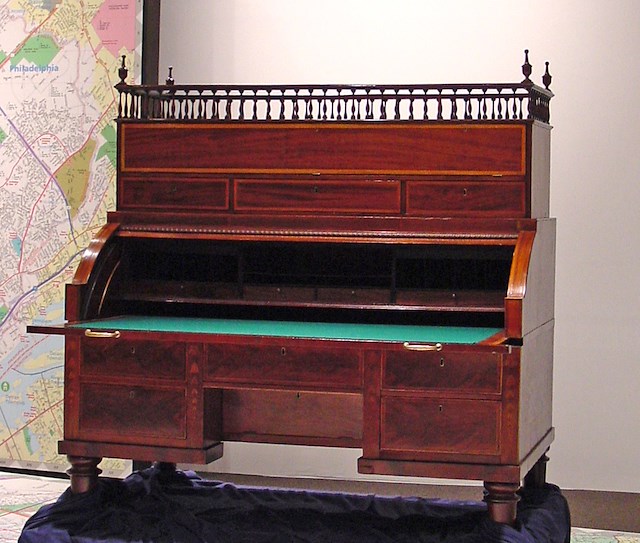
    George Washington’s writing desk, 1789, Thomas Burling, New York, mahogany, maple, pine, ebony, and brass. The desk is among a number of items that went from the Historical Society of Pennsylvania to the Atwater Kent Collection. Courtesy of the City of Philadelphia Atwater Kent Collection / Gift of Charles Hare Hutchinson, Historical Society of Pennsylvania Collection.

    The Atwater Kent Museum (as it was originally called) was the gift of inventor, radio manufacturer, and entrepreneur A. Atwater Kent, and opened to the public in 1941. Kent purchased the former Franklin Institute building on Seventh Street just south of Market and donated it for use as a museum devoted to the city and its history.

    Among the collection’s treasures are the wampum belt given to William Penn by the Lenape in 1682 and George Washington’s mahogany desk; artifacts from the city’s industrial heritage and 1876 Centennial Exposition; sports memorabilia; and artistic achievements such as works by painters Charles Willson Peale, Benjamin West, and Thomas Sully.

    A Kent family representative declined to comment on Monday until the details of the latest development were worked out and available.
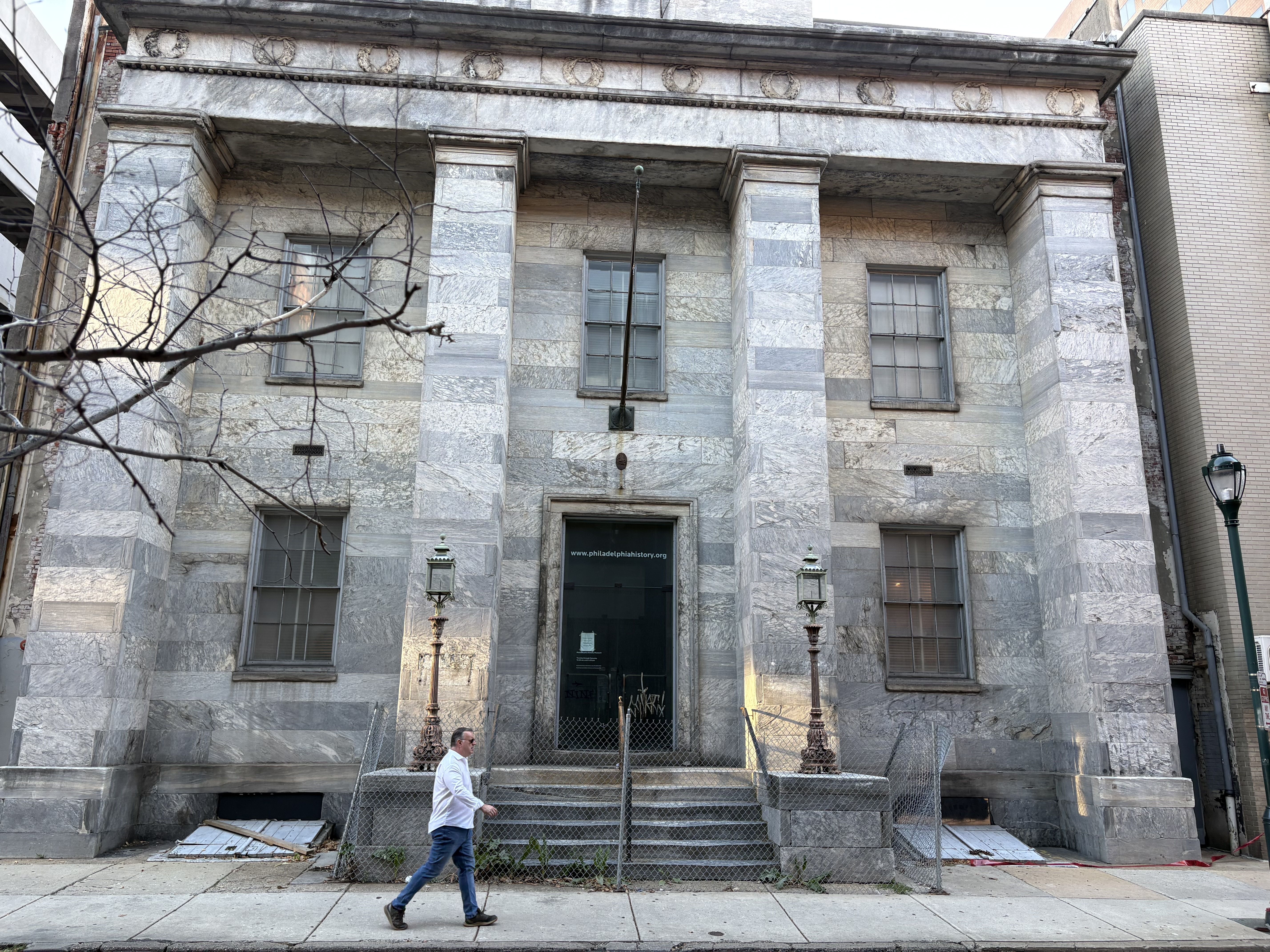
    The former Philadelphia History Museum at the Atwater Kent on 7th St. just south of Market St., Oct. 14, 2026. The Greek Revival structure, designed by the important architect John Haviland, was built from 1824-26.Peter Dobrin

    ‘A huge win’

    The museum closed its doors in 2018 after experiencing declining support. Then-Mayor Jim Kenney tapped Drexel to take over the collection itself, and the building was shuttered. It remains closed.

    Though the final transfer to Drexel never happened, the university has proceeded with its work in the last several years, digitizing the collection, conserving specific items, organizing exhibitions, and raising the money to pay for its work.

    “This is a huge win,” said Rosalind Remer, Drexel’s senior vice provost for libraries, collections, and archives, who has led Drexel’s work with the Atwater Kent Collection. “I also think it opens up the possibility, maybe sooner than we had hoped for, of some more permanent option. I don’t know that there will necessarily be a new museum, but there could be a permanent presence, a public presence, which we would be very happy to curate and support.”

    The deal as it was originally envisioned called for the collection’s name to be changed to the “Atwater Kent Collection at Drexel University,” but now the name change is uncertain.

    “The exact terms of the new agreement between Drexel and the city have not been finalized, so it is premature to speculate on that,” said Remer, who is also a member of the board of managers of the Lenfest Institute for Journalism, which owns The Inquirer.

    “We’re in the final stages. It’s really dotting I’s and crossing T’s at this point,” she said of the deal between Drexel and the city.
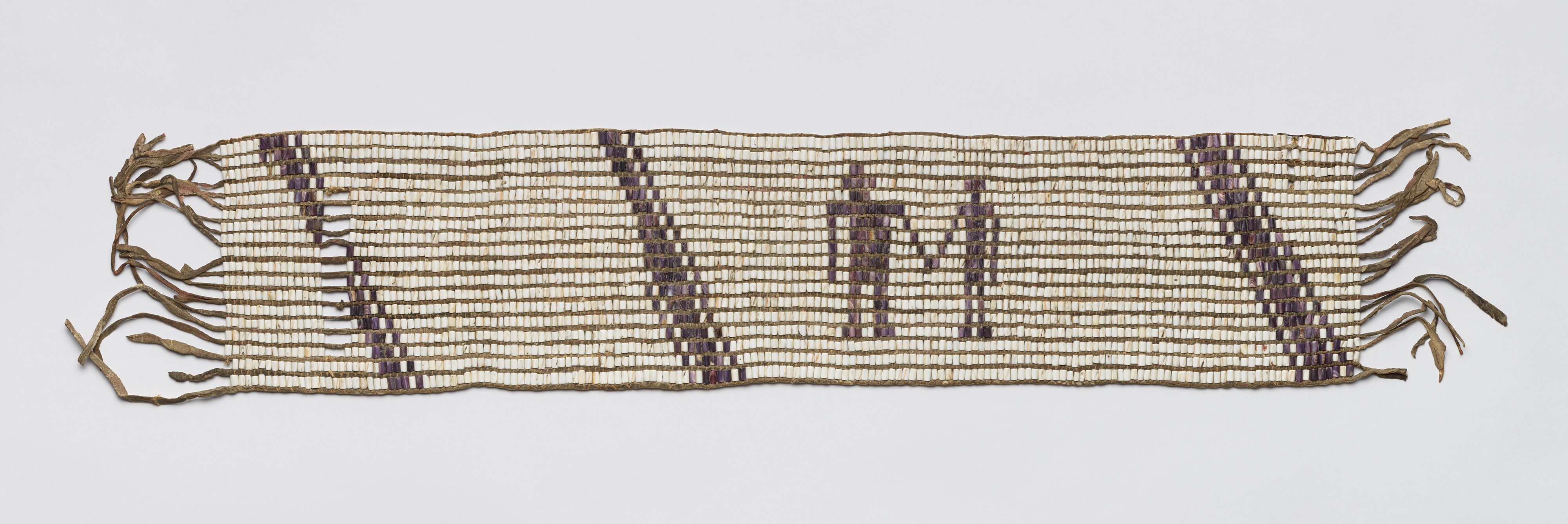
    Wampum belt, 1682, likely made by Lenape women artisans, made of shell, beads, and leather.Courtesy of the City of Philadelphia Atwater Kent Collection / Gift of John Granville Penn, Historical Society of Pennsylvania Collection.

    Patricia Wilson Aden, president and CEO of the Greater Philadelphia Cultural Alliance, said she was optimistic about this latest development, but was also eager to learn more about important details — especially regarding what level of financial support the city might offer in the future.

    “This is not only a matter of good intentions, it’s a matter of funding, addressing concerns about leadership and stewardship at the board level and staffing level, and ensuring that the collection is treated as that invaluable resource that we all know it is.”

    A long time in the making

    Remer said that the change in ownership plans had nothing to do with Drexel’s finances. Facing deficits, the university has been in belt-tightening mode and has been in negotiations for a new affiliation agreement with the board of the Academy of Natural Sciences.

    “Absolutely not,” Remer said. “In fact, when president [Antonio] Merlo came to Drexel and I met with him for the first time, he affirmed his support for it and said that he had no intention of backing out of any kind of agreement like this. He thought it was great and he’s been very supportive of our work.”

    The idea of the city retaining ownership of the collection predates the arrival of Merlo and began during the term of his predecessor, acting Drexel president Denis P. O’Brien, Remer said.

    Financially, Drexel’s cost of managing the Atwater Kent Collection is “pretty neutral,” Remer said. The lease for storage at the Pennsylvania Academy of the Fine Arts is paid by the city, she said.
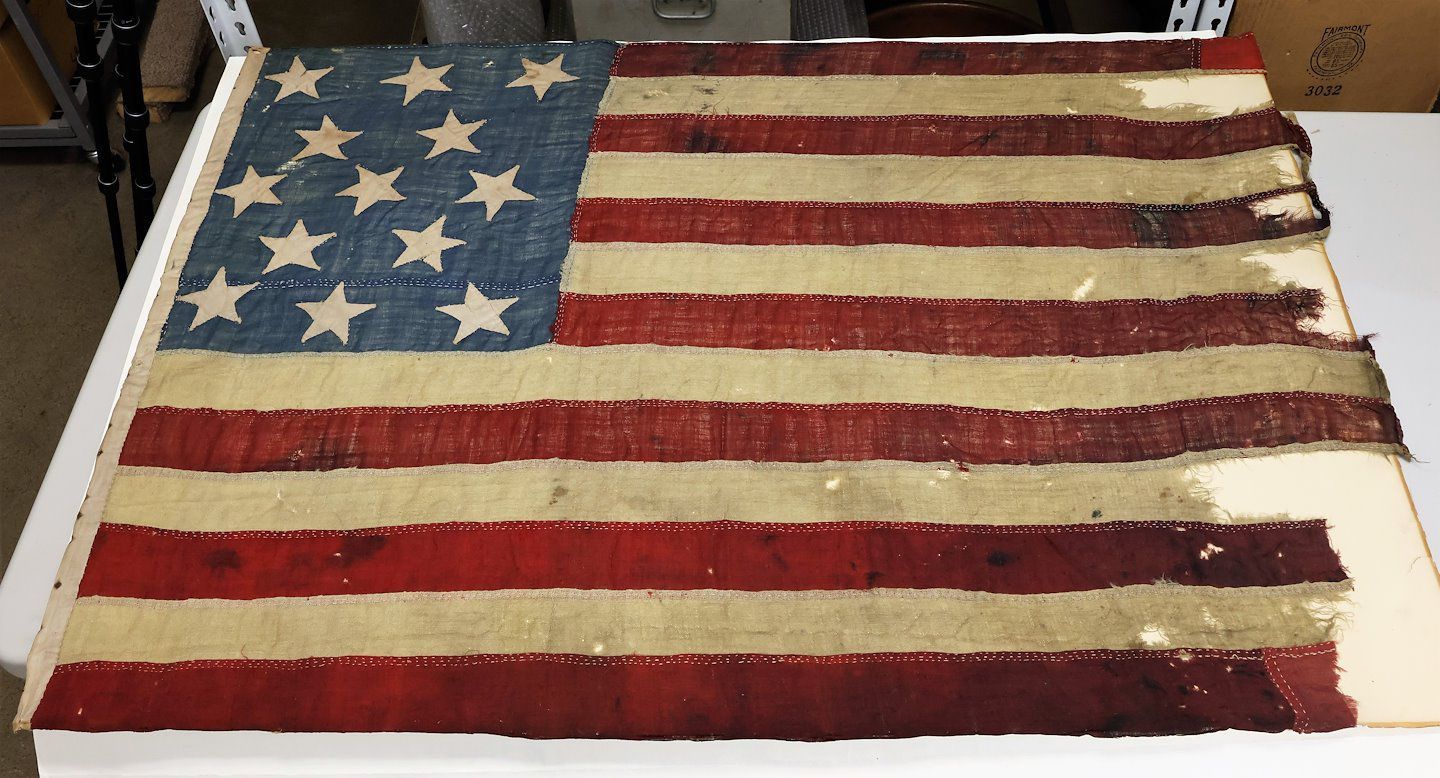
    The Perry Expedition flag in the Atwater Kent Collection. The flag, made of cotton, was on display at the 1876 Centennial celebration following Matthew Calbraith Perry’s 1854 mission to Japan. It is currently being restored with funds from the Institute of Museum and Library Services.Courtesy of the City of Philadelphia Atwater Kent Collection / Purchase, Museum Fund (AKM).

    Drexel contributes staff time, but as for the collection’s programs, exhibitions, and other activities, “we only do what we fund. And we’ve been really lucky and grateful to have found so many great funders, both private and foundation grants and even federal funds.” Among the sources are the William Penn Foundation and the federally funded Institute of Museum and Library Services.

    Remer says that since Drexel began its work, the collection has received $2,700,297 in grants (as of September 2026) and landed donations of $739,641 (as of December 2025).

    In addition, an endowment drive has brought in $637,500 toward a goal of $2 million. The endowment will remain in perpetuity, with its investment income going toward care of the collection.

    The transfer of the collection from the city to Drexel had already been approved by Orphans’ Court. Asked about the legal aspect of what might need to happen now that the transfer is off, a Drexel spokesperson said:

    “The details of any future court process would ultimately be a matter for the court, and we won’t speculate about what that process may entail.”

    No dedicated museum yet

    Though public perception has often been that the Atwater Kent items went into hiding after the museum closed, hundreds of its artifacts have been displayed and loaned in recent years.

    “Philadelphia Revealed: Unpacking the Attic,” which ran at the Pennsylvania Academy of the Fine Arts in 2024 and 2025, featured more than 600 objects from the Atwater Kent Collection.

    In addition, other 250th anniversary-related exhibits utilized almost 500 objects, Remer said.

    When the Atwater Kent museum was open, “at any one time in the museum there were only a maximum of 200 or so [objects] that were ever on view permanently, so we’re already way beyond that in terms of the numbers of objects people have been able to actually see and the stories that they tell.”
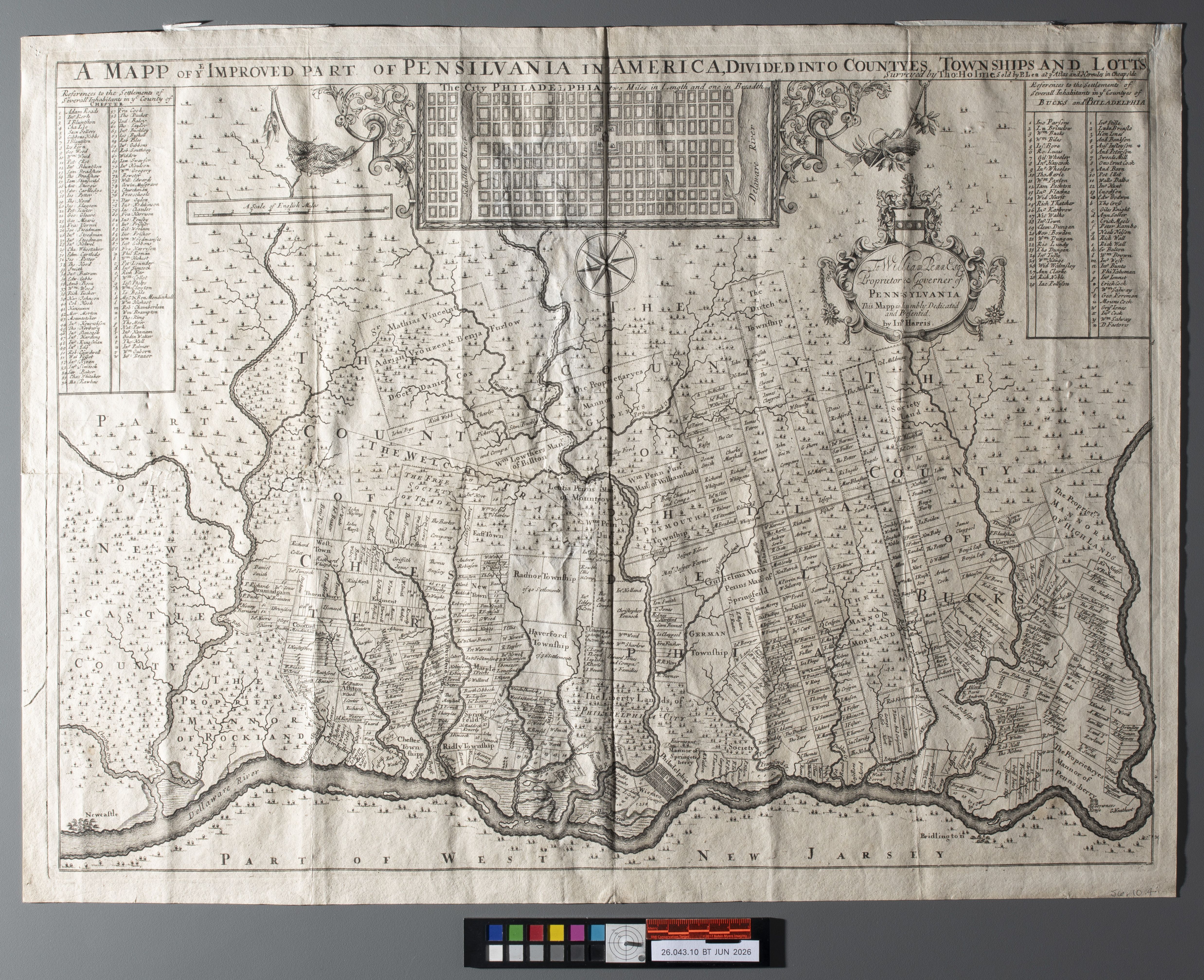
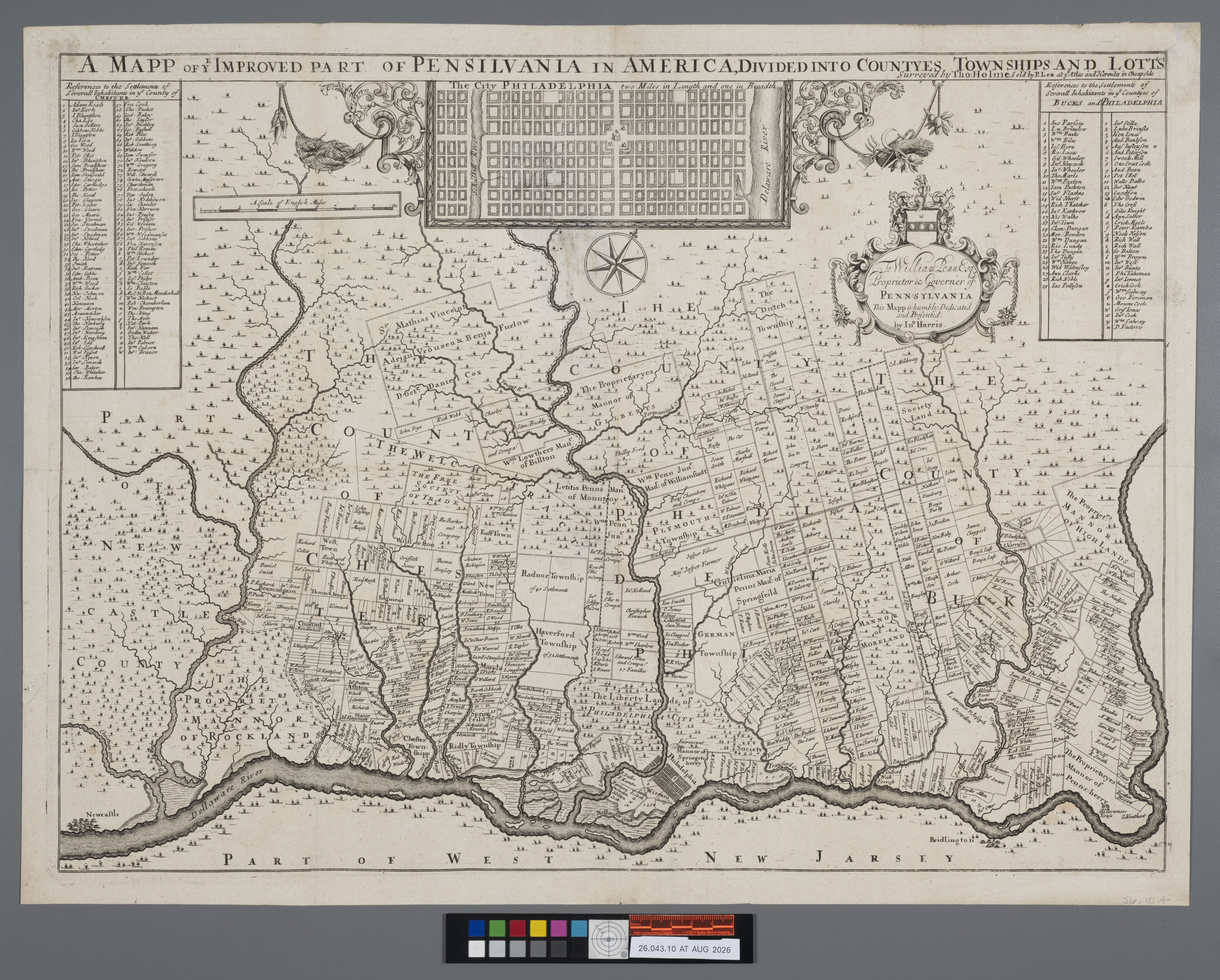
    Before conservation was completed: A Mapp of Ye Improved Part of Pensilvania in America, Divided into Countyes, Townships and Lotts, c. 1687, Thomas Holme and John Harris, Philadelphia, paper and ink.Courtesy of the City of Philadelphia Atwater Kent Collection / Purchase, Museum Fund (AKM).
    After conservation was completed: A Mapp of Ye Improved Part of Pensilvania in America, Divided into Countyes, Townships and Lotts, c. 1687, Thomas Holme and John Harris, Philadelphia, paper and ink.Courtesy of the City of Philadelphia Atwater Kent Collection / Purchase, Museum Fund (AKM).

    A free exhibition that recently opened at the National Constitution Center — “Pennsylvania’s Founding: How a City and a Colony Shaped America’s Civic DNA” — features 29 items, 16 of which are from the Atwater Kent.

    Drexel has digitized about 20,000 items from the collection, and in addition to photographing, it has made 10 million metadata entries and corrections, “which means every object is researched and understood.”

    In the meantime, between 5,000 and 6,000 Drexel students have had some kind of interaction with the Atwater Kent materials — through class assignments, in co-ops working in the collection, by designing exhibitions on campus, and by learning about conservation and designing catalogs.
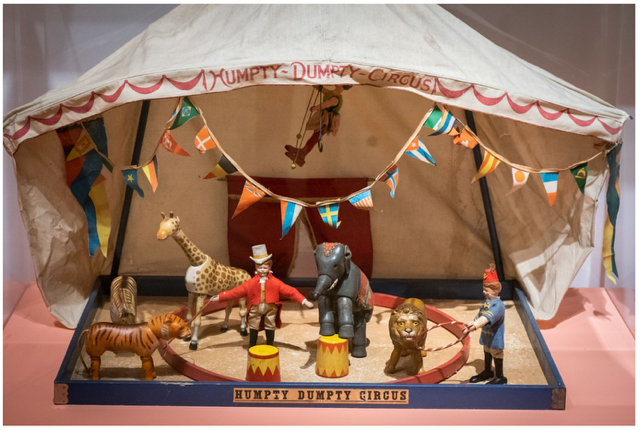
    Humpty Dumpty Circus, A. Schoenhut Company, Philadelphia, c. 1930 (Atwater Kent Collection at Drexel, Museum Purchase, 10.16.1)

    Schoenhut Toys: Born into a German toy-making family, Albert Frederick Schoenhut (1849–1912) was invited to Philadelphia in 1872 to repair toy pianos for Wanamaker’s. Six years later he launched his own toy piano company, later expanding it to make other instruments, dolls, figures, and other toys. By the early 1900s, the Philadelphia-based company was the largest in the country. Though the company declared bankruptcy in 1935, because it is part of the Atwater Kent Collection, Schoenhut’s charming Humpty Dumpty Circus will continue to delight toy lovers of all ages long into the future.Courtesy of the City of Philadelphia Atwater Kent Collection / Gift of Schoenhut Club

    The new plan for the Atwater Kent items does not restore a dedicated museum for Philadelphia history. The loss of such a permanent, standalone museum was bemoaned by historians when the museum closed its doors in 2018 — and has continued to be cited as a major loss for the city.

    Hoeber, the historian, says he still believes Philadelphia should have a museum solely devoted to it.

    “We were the birthplace of American industrial might, we were the birthplace of America’s leadership in finance, not to mention leadership in constitutional politics, in abolition, in public knowledge and education,” he said. “That affected the way institutions operated in every state in the union, and people deserve to know that.”

    Still, Remer said, there is nothing that prevents the return of a separate institution should the civic will find a way to make that happen in the future.

    In fact, the collection is intact, and it continues to grow, Remer points out.

    “I know people are sad about it, and it’s perfectly fine and reasonable for all of us to be sad that we don’t have a great [Philadelphia] history museum. At the same time, we’ve made sure that we haven’t lost all those materials that can someday make a great history museum or a permanent gallery of some sort. So I feel good about that.”
  • A LeBron James-designed car is going up for auction, with proceeds going to charity

    A LeBron James-designed car is going up for auction, with proceeds going to charity

    LeBron James has a new ride, but one lucky bidder could soon have a nearly identical version.

    The 76ers star designed two custom Mercedes-Maybach S 680 luxury sedans, one of which will be auctioned in November to benefit the LeBron James Family Foundation and its work in his hometown of Akron, Ohio.

    Gooding & Christie’s announced Wednesday that it will offer one of the vehicles at its Retromobile New York Auctions on Nov. 20 and 21 at the Javits Center in New York. Mercedes donated the vehicle to James’ foundation, which will receive the sale proceeds.

    James will keep the “sister” car in his personal collection.

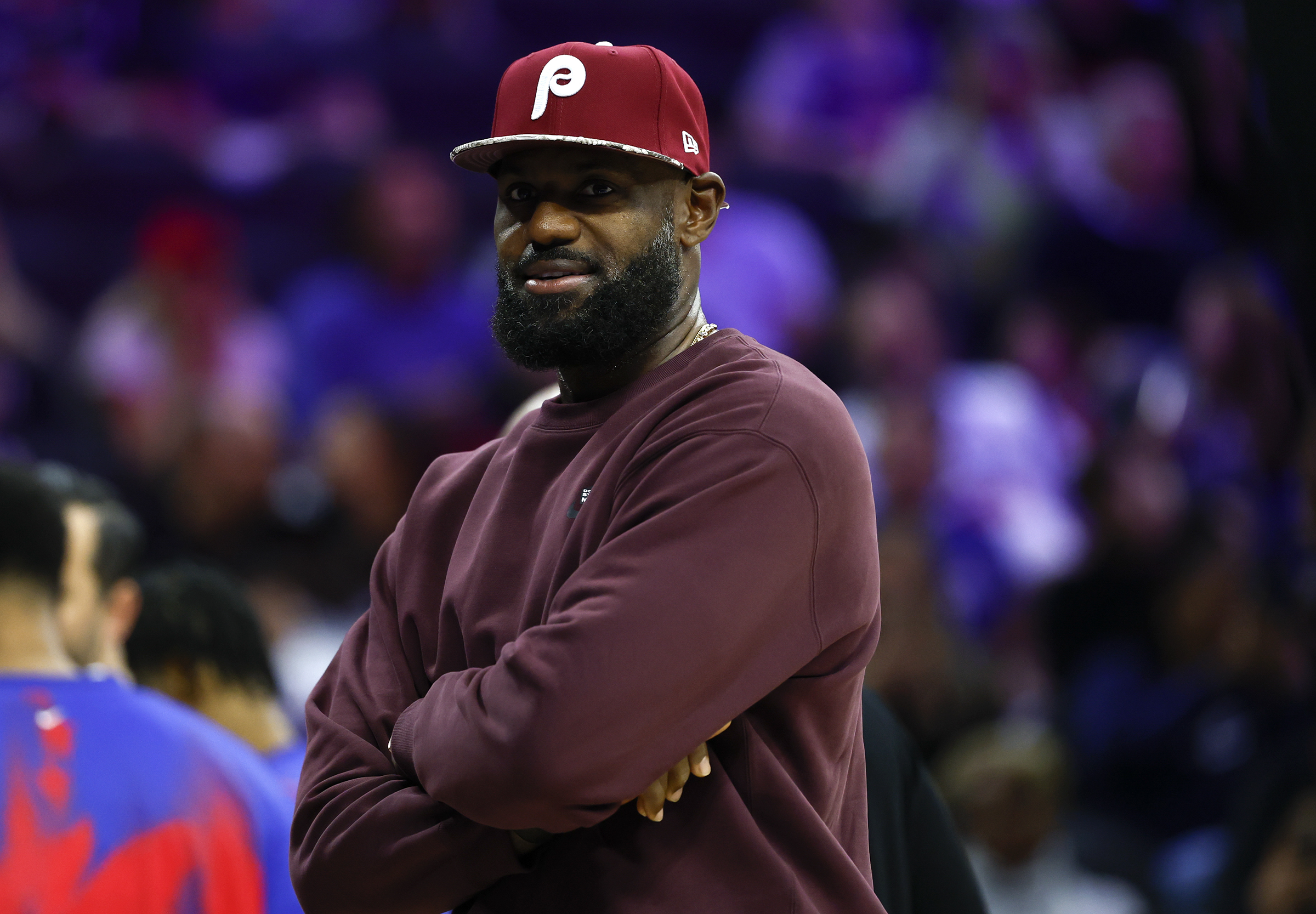
    LeBron James is entering his first season with the Sixers and 24th overall.Yong Kim / Staff Photographer

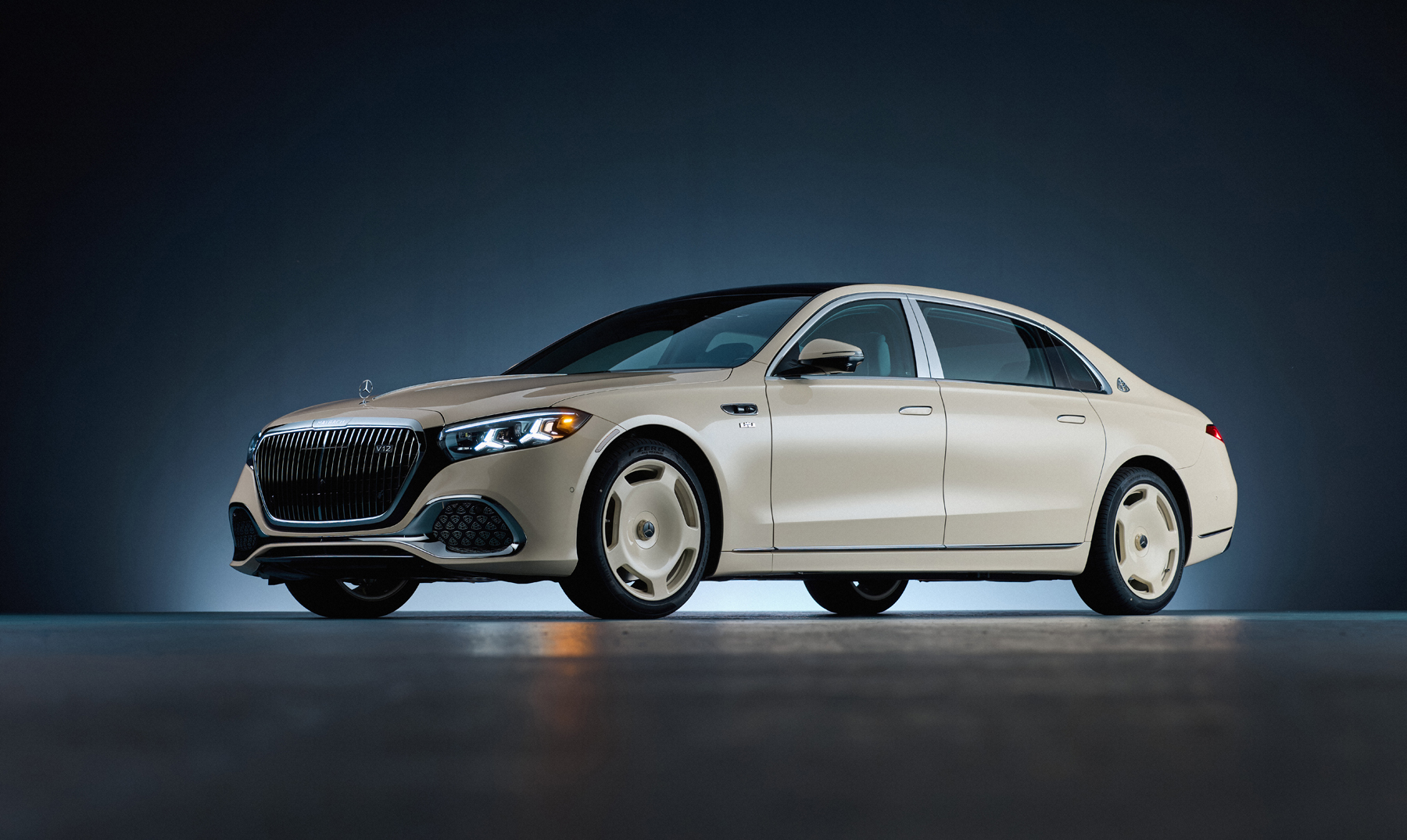
    The custom Maybach features a 6.0-liter V-12 engine producing 621 horsepower, an exclusive light ivory exterior and a “stormy weather blue” leather interior with porcelain stitching.

    James also incorporated his signature crown logo throughout the vehicle, including on the front fenders, headrests, dashboard, and floorboards. A custom Maybach badge features the crown, while the center console is inscribed with the geographic coordinates of Akron.

    “The chance to design my own customized Mercedes-Maybach was something I never even dreamed of as a young kid growing up in Akron,” James said in a statement. “To now have the opportunity to uplift my community and the families we serve through this auction means everything to my Foundation.”

    The interior of a LeBron James-designed Mercedes being auctioned for charity.Mercedes-Benz

    Proceeds will support the foundation’s I PROMISE Program, which provides educational resources and family support services to students in the Akron area.

    The foundation opened the I PROMISE School in 2018 and has since expanded its initiatives to include housing assistance, job training, health services, and other resources.

    James, 41, joined the Sixers this summer after spending the previous eight seasons with the Los Angeles Lakers. The NBA’s all-time leading scorer is preparing for his 24th season, bringing another spotlight to Philadelphia as the Sixers pursue their first championship since the 1982-83 season.

    The car will be available for public viewing during Retromobile New York from Nov. 19 through Nov. 21.

  • Inflation worsened last month to 3.7% in sign that prices remain elevated as midterm elections near

    Inflation worsened last month to 3.7% in sign that prices remain elevated as midterm elections near

    WASHINGTON — U.S. inflation accelerated last month as gasoline and many other goods and services became more expensive, evidence that rising prices remain an economic challenge just a few weeks before midterm elections that have focused heavily on affordability.

    The Consumer Price Index rose 3.7% in September compared with a year ago, the Labor Department said Wednesday, up from 3.4% in August. On a monthly basis, costs jumped 0.6% from August to September, the biggest gain in five months, up from a 0.4% increase the previous month.

    The figures underscore the lingering impact of the Iran war on gas prices and the stubborn persistence of inflation, which has ticked higher since the war began in late February. The rise isn’t all linked to oil and gas, as surging investment in data centers and AI has also pushed up prices for computer chips and the consumer electronics that use them. Elevated inflation has posed political problems for Republicans in Congress and is a challenge for the Federal Reserve, which is required by Congress to seek stable prices.

    Excluding the volatile food and energy categories, core prices rose 2.6% in September from a year ago, up from 2.4% the previous month and higher than economists had expected. And they climbed 0.3% from August to September, an elevated pace that, if it continued for a year, would run well above the Fed’s 2% target.

    Higher inflation will likely put more pressure on the Fed to lift its key interest rate at its next meeting Oct. 27-28. Economists noted that the report showed price increases were spread more broadly across the economy than in recent months.

    “The report was worse than expected,” Bill Adams, chief U.S. economist at Fifth Third Bank, said in a note to clients. “Price increases were widespread. … Consumer demand seems to be holding up better than the downbeat consumer surveys would suggest, helping businesses maintain pricing power.”

    Wednesday’s figures are the last major inflation data to be released before the upcoming elections. Ongoing inflation has taken a toll on Trump’s standing with U.S. voters. A poll by the Associated Press-NORC Center for Public Affairs Research found that just 17% of U.S. adults approve of his handling of the cost-of-living issue. And only 26% approve of his handling of the economy overall, a new low.

    Gas prices jumped 9.1% just from August to September, the government’s Consumer Price Index report said. Rising gas costs are a highly visible sign of inflation and often drive down measures of consumer sentiment about the economy.

    With fuel much more expensive, air fares rose 1.2% last month and have soared 22% compared with a year ago. Hotel prices rose 2% from August to September and are up 4.4% compared with a year earlier.

    Consumers saw some relief in grocery prices, which actually declined 0.1% last month and are up just 1.8% from a year ago. Ground beef prices fell 0.8% in September, though they are still up 5.4% from last year.

    The cost of toys, new and used cars, sporting goods, and shoes all rose at a rapid clip last month, the government said.

    The government also said Wednesday that Social Security recipients will receive a 3.6% cost of living increase, based on the inflation figures.

    The Middle East and Russia-Ukraine conflicts have also sharply inflated the cost of diesel fuel, which is used by long-haul trucks and will likely inflate shipping expense, which in turn could push up prices for a range of goods.

    Ralph Newhouse, CEO of Chefman, which makes countertop appliances, said that rising diesel prices could force him to raise prices in the coming months.

    The Mahwah, N.J.-based company, which makes milk frothers, air fryers, blenders, and other appliances in China, last increased its prices in 2024. This year, it has used its $20 million in tariff refunds to offset the rise in fuel costs, but may not be able to do so much longer.

    “We’re at the point right now that if we continue to see any additional rises in [diesel] prices, then these conversations are going to be forced upon us. We just day by day, hope and pray that we don’t have to have this conversation.”

    Federal Reserve officials are watching inflation data closely to determine whether they need to raise their short-term interest rate further, and by how much.

    Fed Chairman Kevin Warsh said last month that inflation isn’t moving quickly enough back to the central bank’s target, causing the Fed to hike rates for the first time in three years, to about 3.9%.

    Yet some key Fed officials have suggested the central bank can wait before increasing rates again. The Fed has a policy meeting Oct. 27-28, but most Wall Street investors expect it to hold rates then, and potentially implement another hike in December. Fed officials have penciled in just one more rate hike this year.

    Still, Wednesday’s report has led many Wall Street investors to project that the Fed will now act in two weeks. The odds of a rate increase at the central bank’s October meeting have doubled, though remain at just 50-50, according to futures pricing tracked by CME Fedwatch.

    Stock prices fell slightly after the report, while greater expectations for rate hikes pushed up bond yields, which will raise borrowing costs throughout the economy.

    By raising borrowing costs, the Fed hopes to slow spending and growth and cool price increases. Yet much of the current inflation comes from supply shocks, such as the Iran war’s disruption to oil and gas supplies, and higher interest rates can’t address those bottlenecks.

    Warsh has said his goal is to keep the gas price spike from seeping into more areas of the economy. It’s already pushed up the price of air fares about 22% from a year ago.

    Prices at the pump have ticked lower in the past two weeks to a nationwide average of $4.33 a gallon, according to AAA, though they remain higher than a month ago.

    Those costs raise shipping and other expenses for many large and small businesses, some of which are forced to pass the cost to consumers. Last week, PepsiCo said that it will raise prices for its snack foods, including Doritos, Ruffles, Sun Chips, and some sodas to offset higher costs for fuel, aluminum, and food ingredients.

    The artificial intelligence buildout has also sharply elevated the cost of semiconductors, computer equipment, and electrical components, which have been passed on to consumers in the form of more expensive electronics such as gaming devices, laptops, and smartphones.

    Goldman Sachs estimated in a report Tuesday that the AI buildout has added about a half-percentage point to the annual inflation rate, according to the Fed’s preferred inflation gauge.

    On Sept. 1, Nintendo increased the price for its Switch 2 gaming system by 11% to $499.99. And Apple’s newest iPhone, the iPhone 17, cost about 10% more than its previous upgrade, though some of that likely reflects greater capabilities.

    Anne D’Innocenzio contributed to this article.

  • Workers at the Hilton Garden Inn in Center City could soon strike

    Workers at the Hilton Garden Inn in Center City could soon strike

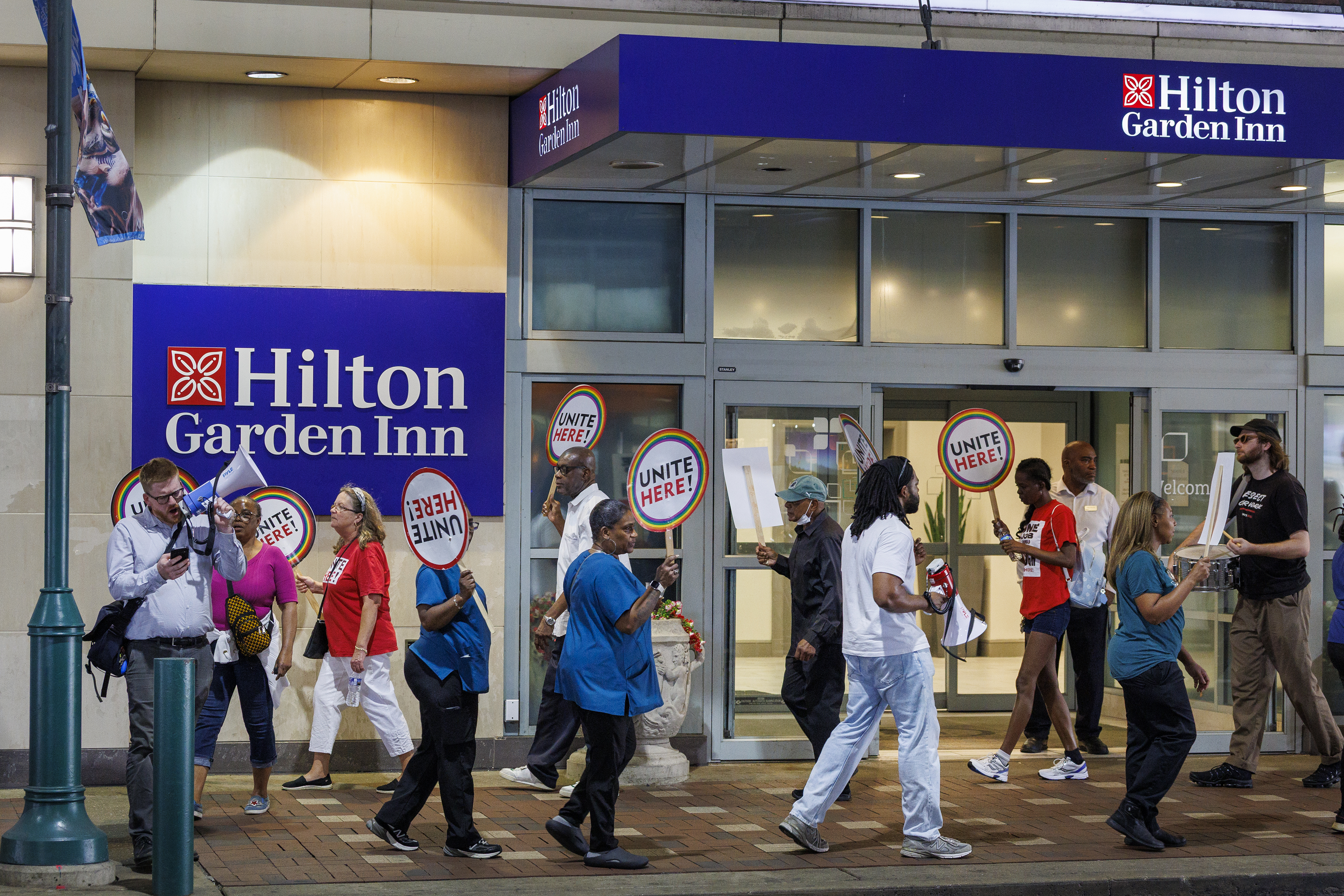
    Dozens of workers at the Hilton Garden Inn hotel in Center City are ready to strike.

    The workers, who are represented by Unite Here Local 274, voted earlier this month to authorize a strike if their union calls for it. Workers voted on a single day at the hotel, according to Mat Wranovics, a union spokesperson, who didn’t specify when that happened or how many workers voted but noted it was “a supermajority.” The union represents 48 workers at the hotel, and 96% of those who voted supported a strike.

    Wranovics added that the union is not sharing further information about strike plans at this time.

    Unite Here Local 274 has been bargaining for new contracts since spring 2025 for room attendants, cooks, servers, bartenders, dishwashers, and banquet staff across several hotels in Philadelphia. Workers at some of those hotels have gone out on multiday strikes since then, and all of the union hotels that are part of the bargaining except for the Hilton Garden Inn have reached a deal that includes improvements to wages and workloads. The most recent union contract at the Hilton Garden Inn expired in 2024.

    “This hotel has dragged its feet for too long. We are ready to walk,” Andre Williams, hotel worker said in a statement shared by the union. “This is a union hotel in a union city. It’s a no-brainer that we should be at the union standard.”

    GF Hotels & Resorts, which operates the hotel, and ACRES Commercial Realty, which owns the hotel, did not immediately respond to requests for comment.

    Across the other hotels that now have new union contracts with Unite Here Local 274, a standard has been set for wages and benefits. New union contracts include raises to $30 an hour by 2028 for employees who do not receive tips and an increase in employer contributions to worker pensions. The new contracts also cap the number of rooms a worker can be tasked with cleaning to 15 per day.

    Since bargaining began at the Hilton Garden Inn, sticking points have emerged around wages and workload improvements, said Wranovics. According to the union, hotel management walked away from negotiations in March and laid off six employees.

    The Hilton Garden Inn, located at 1100 Arch St., has been listed for sale by ACRES, but the Philadelphia Business Journal reported in August that the company has faced difficulties selling it because the hotel lacks a union contract with workers.

  • People who have taken hyped, unregulated peptides have regrets

    People who have taken hyped, unregulated peptides have regrets

    After the third day of squirting an experimental drug up his nose, Dylan Meetze felt horrible.

    “It was like I was underwater, like it took the most to do anything,” he said.

    Meetze stopped taking the drug, but he endured fatigue and anxiety for months afterward, and his eyes and muscles twitched, he said.

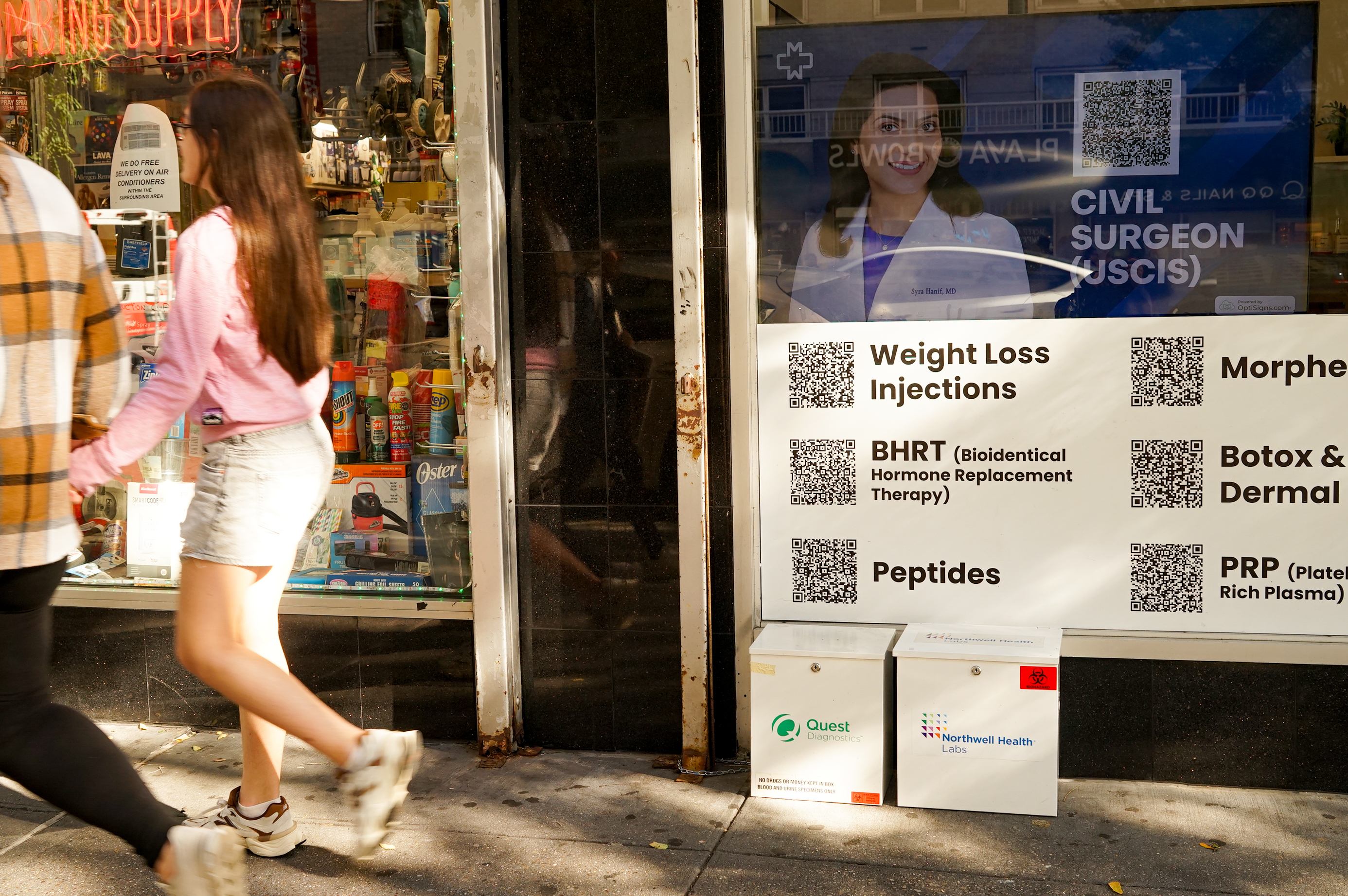
    He had taken BPC-157, a peptide drug popularized by podcasts about wellness, longevity, and what’s called “body optimization.” Peptide is a general term for substances that are smaller than proteins but composed of the same building blocks. Dozens of peptide drugs, including insulin and GLP-1 weight loss medicines, have garnered approval by the Food and Drug Administration. But BPC-157 and many others have not because they haven’t undergone clinical trials.

    This fact hasn’t stopped online influencers from promoting them as remedies for muscle injuries, gut issues, COVID, and more. Use of BPC-157 is growing in the United States, particularly among white males, according to a new analysis of millions of de-identified electronic health records. Since 2020, the analysis, which hasn’t yet been published in a peer-reviewed journal, found that more than 1,000 people told doctors they had used the drug.

    Meetze said he decided to take BPC-157 after listening to Andrew Huberman, a Stanford neuroscientist with more than 16 million followers on YouTube, Instagram, and TikTok, who talks up peptides frequently on his podcasts. Studies in mice suggest that BPC-157 helps muscles heal and has “very high safety profiles,” Huberman has said, “at least, with respect to the lethal dosing.” His guest on one episode, Craig Koniver, a doctor who sells peptides through his wellness clinic, called BPC-157 “super safe” and recommended it for “anyone who’s working out on a regular basis.” Koniver did not respond to requests for comment.

    Huberman didn’t respond to multiple queries from KFF Health News, but an automatic reply linked to a disclaimer on his Huberman Lab website that says the podcast doesn’t constitute medical advice: “Any reliance on information provided through the podcast is solely at the user’s own risk.”

    Hoping BPC-157 might help him advance as a weightlifter, Meetze said he bought the drug last year from an online vendor, Researchem. A chemical supply company with that name sells experimental peptides through its website, warning that the substances are “solely for laboratory research” and are “not intended for human consumption.” (It lists an address in Hillsboro, Ore., that corresponds to a shared office space. A receptionist at the space said Researchem wasn’t registered there, and multiple queries from KFF Health News to the email address listed on the website went unanswered.)

    Companies are required to warn that experimental peptides, which haven’t been approved by the FDA, are for research use only. But many companies may soon be permitted to drop the warning because of a push by Health Secretary Robert F. Kennedy Jr. to lower barriers to their use. He and other leaders of the Make America Healthy Again movement have promoted peptides as a way to improve the country’s health.

    On X, before he took the helm at the Department of Health and Human Services, Kennedy vowed to end the “aggressive suppression” of “peptides, stem cells, raw milk” and “anything else that advances human health and can’t be patented by Pharma.” (In fact, peptides are heavily patented.)

    President Donald Trump signs an executive order on psychedelic drugs. Health Secretary Robert F. Kennedy Jr. and podcast host Joe Rogan were among those who joined Trump at the signing. (Allison Robbert/For The Washington Post)Allison Robbert

    He has repeated the pledge since taking office. On Joe Rogan’s podcast early this year, Kennedy said he was a “big fan” of peptides and wanted to make many of them “more accessible.” On a podcast with the co-chair of the MAHA Action committee, Gary Brecka, Kennedy said the FDA’s role should be to assess science, “but not tell people and not tell physicians what they can and cannot prescribe.”

    “If you want to take an experimental drug … you ought to be able to do that,” he added.

    This summer, Kennedy’s health department appointed doctors with financial stakes in the peptide industry to a panel that advises the FDA. At an FDA meeting in July, the new appointees voted to ease restrictions on six experimental peptides, including the trendy compounds BPC-157, TB-500, and MOTS-c. They advised adding these peptides to a list, called 503A, that would allow specialized pharmacies to make the drugs for human use, even though the FDA hasn’t approved them.

    In an email, HHS spokesperson Emily Hilliard wrote that every committee member satisfies the FDA’s ethics requirements. “FDA — not podcasts or politics — determines which substances qualify for inclusion on the 503A Bulks List,” she wrote. The FDA has yet to issue a final decision.

    The vote went against FDA scientists who presented research on the six peptides, concluding there wasn’t enough evidence to show that they improved any condition. Furthermore, the scientists highlighted a potential for liver damage, allergic reactions, or other serious consequences.

    “People are saying this is about medical freedom — putting decisions back in the hands of patients,” said Reshma Ramachandran, a regulatory science researcher at Yale School of Medicine. “But what we see in practice is that incentives aren’t actually centered around patients. They’re centered around selling products.”

    Scientists also warned that drugmakers would be reluctant to invest millions of dollars into clinical trials on peptides if they could be sold without FDA approval.

    “The chances of clinical trials getting done now are diminished,” said Eric Topol, executive vice president of Scripps Research, a biomedical science institute in San Diego. “We will have more people who are prey to predators that will sell, sell, sell.”

    A lack of data leaves consumers in the dark.

    Meetze sought help on Reddit, where people post about pain, headaches, vision problems, and a lack of motivation after taking experimental peptides. Peptide enthusiasts often comment on these posts with skepticism, attributing a person’s problems to contaminated products, preexisting conditions, or misuse of the drugs. The online vitriol can be intense, so Meetze welcomed an invitation to join a private group on the social platform Discord, in which people with BPC-157 side effects tried to figure out what happened to them and how to fix it.

    “There are millions of success stories with these peptides,” Meetze said, “but no one wants to believe that this wrecks some of our lives.”

    Reports of side effects

    One member of the private side-effects group, a 46-year-old software engineer named Dominik E., said he got an excruciating migraine within days of taking BPC-157 with TB-4, another unapproved peptide — a combination called the “Wolverine stack” because of its purported ability to heal wounds rapidly like its namesake Marvel superhero.

    “My left eye started throbbing really badly, and the left side of my face became numb,” he told KFF Health News, which agreed to only partially identify him and others interviewed for this article who were concerned about divulging sensitive health information.

    After two months of migraines, Dominik said, the pain eased, but his face felt inflamed. “It is a total nightmare,” he said.

    “I’m afraid how people will judge me,” said Lois S., a woman who works at a Michigan elementary school. She hoped BPC-157 and another unapproved peptide, retatrutide, would help with weight loss, but she stopped taking the treatment when she felt pain.

    “I sought out this substance from a lab that clearly labeled it not for human use, purchased a syringe, and injected this in my kitchen,” she said. “That belies all logic about what a normal person would do.”

    Peptide proponents argue that shoddy manufacturing — not the peptides — causes harm. Therefore, they say, the FDA must protect the public by allowing doctors to prescribe peptides made for human use by pharmacies that specialize in compounding medicines. Typically, compounding pharmacies manufacture alternatives to FDA-approved drugs: for example, so that a patient can get a liquid version of a drug that the original manufacturer makes only as pills.

    Adding unapproved peptides to the FDA’s list of compoundable drugs would mark a departure from the list’s purpose, said Peter Lurie, a former FDA official who now directs the advocacy group Center for Science in the Public Interest. He said that federal and state oversight for compounding pharmacies is often lax, and the pharmacies have been cited for contamination.

    Furthermore, he added, the move would mislead consumers into thinking they’re buying drugs backed by clinical trials. People promoting peptides often point to promising laboratory research as evidence. Rats with spinal injuries regained tail mobility after BPC-157 injections, for example, and old mice given the experimental peptide MOTS-c could run longer. On average, however, fewer than 10% of substances that show promise in animal studies prove effective in clinical trials.

    “A lot of this pseudoscience stuff sounds deeply impressive — inflammation this and telomere that — but at the end of the day, none of it really matters,” Lurie said. “You’ve got to show clinical benefit in humans: Does it work?”

    Peptide promoters lean on anecdotes, often without verifiable numbers. In a podcast recorded at the White House, the MAHA influencer Brecka said: “Twenty million people have been prescribed these things without adverse events.” His guest on the episode, Brigham Buhler — the co-author of The Peptide Revolution and owner of a compounding pharmacy that sells peptides and a clinic, Ways2Well, that prescribes them — told Brecka that none of its 75,000-plus patients had reported adverse events from peptides.

    Buhler cited even higher numbers in the movie MAHA Uncensored, a documentary featuring Kennedy and other leaders of the MAHA movement, and that bears the MAHA trademark. In the segment on peptides, Buhler said, “Having treated literally hundreds of thousands of people through our compounding pharmacy, we’ve never had a major adverse event.”

    Topol asks why those boasting success haven’t conducted clinical studies. “If influencers and companies really believe these peptides are helping people,” Topol said, “then they should put their profits back into rigorous research.”

    Chris Woodward, a spokesperson for Brecka and his company, the Ultimate Human, said in an email that the health and wellness issues discussed on Brecka’s podcast do not constitute medical advice. “Mr. Brecka consistently advises his audience to consult a licensed physician,” Woodward wrote. Buhler did not respond to requests for comment.

    Not all anecdotes are rosy. At an antiaging conference in July 2025 Las Vegas, two women were rushed to the hospital and intubated after being injected with experimental peptides and vitamins at a booth in the exhibit hall, according to citations that Nevada’s state pharmacy board issued against the doctor running the booth and his colleagues for prescribing and administering drugs without a state medical license.

    An FDA database for adverse events contains concerning reports. Although the database can’t prove that a drug, vaccine, or medical device caused harm — the reports are brief, unverified, and voluntary — it signals issues worth exploring. A 36-year-old woman was hospitalized in December after taking BPC-157 for weight control and a skin disorder, for example, and a 48-year-old man was hospitalized with a “life-threatening” condition after taking the peptide.

    FDA scientists presented some of these reports at the July meeting and flagged worrisome outcomes in animal experiments, such as a 2020 study revealing signs of liver toxicity in rats and dogs injected with BPC-157.

    Brian Lee, a liver disease specialist at the University of Southern California, was among the panel’s minority who voted against easing restrictions. Without clinical studies, he said, afflictions that take time to develop, like liver damage and cancer, might not be spotted for years: “I think this endorsement can be potentially harmful, and I cannot in good conscience vote yes.”

    The panel’s newcomers disagreed. “I do not believe the FDA made a good case on issues with safety with BPC,” said Kris Wusterhausen, founder of an antiaging company in Texas, the Resurge Clinic, which sells a BPC-157 product for $149.

    “Once you’ve seen the effects of BPC,” he said, “you can’t unsee it.”

    Awaiting trial

    Deepak Srivastava, president of the Gladstone Institutes in San Francisco, designed a clinical trial two decades ago to see if a peptide he studies, TB-4, could repair tissue after a heart attack. Before enrollment, people volunteering for the study would be screened for early signs of cancer because TB-4 triggers vessel growth and cell migration, which might exacerbate malignant growths. He worries about the FDA panel’s vote to ease restrictions on a derivative of TB-4, before such trials have been completed, saying, “You need to have a healthy respect for the fact that drugs can be harmful.”

    Pinchas Cohen, a peptide researcher at the University of Southern California, was less cautious, saying the FDA buzz might drive investors to fund trials. He’s seeking support to bring a peptide his lab identified, MOTS-c, to market. It’s “un-ideal” for people to take unproven drugs, Cohen said, but that’s what’s happening: “The world is changing, and people like me need to accept that this is the new reality and find ways to make it as safe as possible.”

    In the meantime, people like Meetze resort to podcasts and online forums for advice. His symptoms faded after a year, but he still had spells of feeling “zero emotions.”

    Peptide users describe this condition as anhedonia. It’s come up on Huberman’s podcasts.

    Huberman occasionally mentions other potential peptide risks, like cancer, sprinkling them into advice on how to take them. Take a 2024 episode with 1.2 million views: “I do not think that BPC-157 is not without its quote-unquote ‘side effects,’” Huberman says. He adds, “If you’re going to go down this path of taking BPC-157, I would encourage you to take the minimal effective dose, to not simply do it every day, and certainly to not do it continuously, and of course to monitor your other health metrics for anything that could potentially resemble cancer or tumor growth, because obviously stimulating angiogenesis for wound repair sounds like a great thing — recovering and being able to do your workouts or play your sport, or move about more comfortably, of course — a wonderfully attractive thing to do.”

    “Isn’t that what we all want? But obviously not with the trade-off of growing a tumor,” he said, before interrupting the discussion to advertise a supplement company sponsoring the show.

    KFF Health News is a national newsroom that produces in-depth journalism about health issues and is one of the core operating programs at KFF — the independent source for health policy research, polling, and journalism.

  • Drexel announces first jersey patch sponsor for men’s, women’s basketball

    Drexel announces first jersey patch sponsor for men’s, women’s basketball

    Drexel is getting a jersey patch.

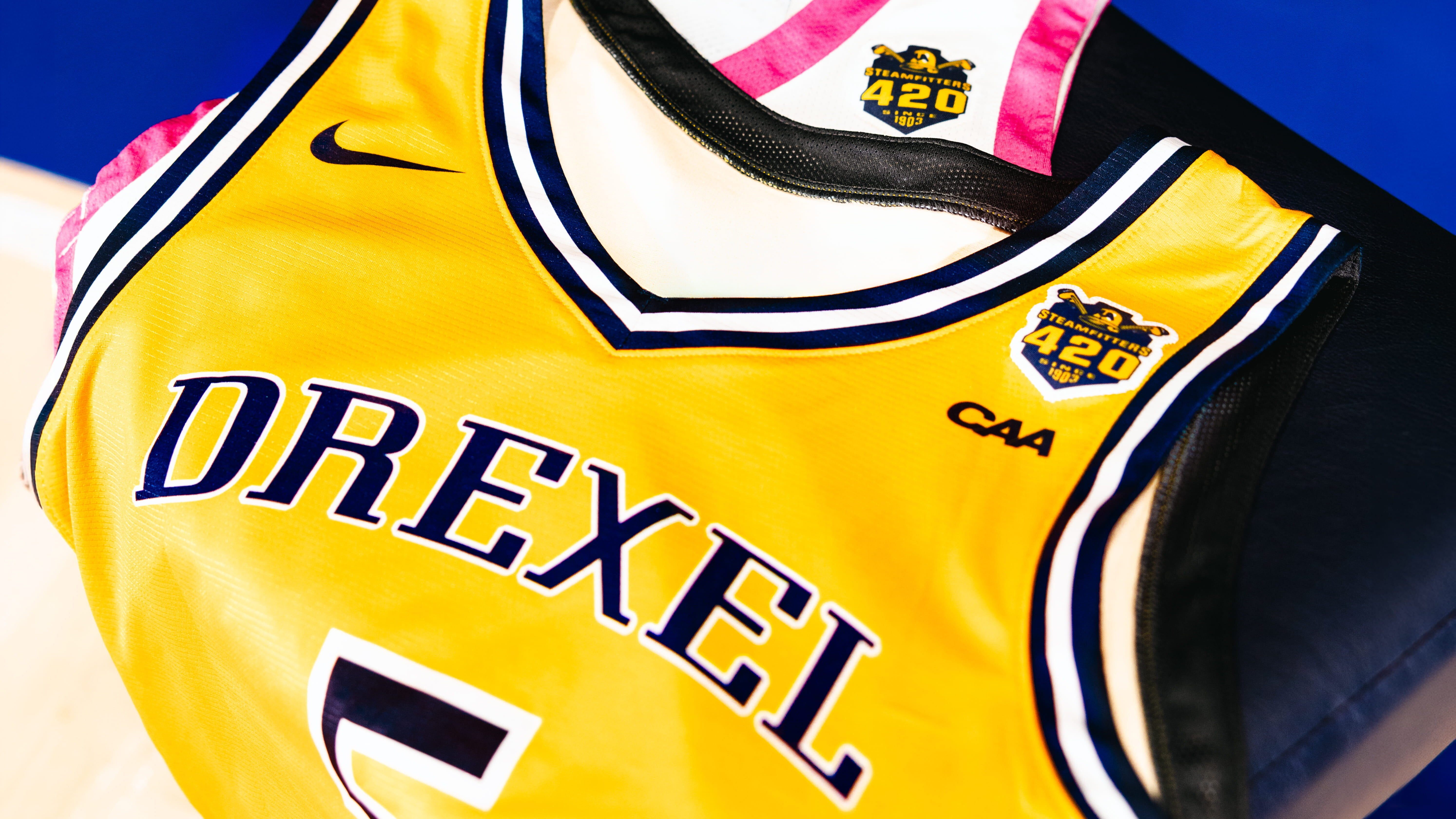
    On Wednesday, Drexel announced a partnership with Steamfitters Local 420 to feature the logo of the labor union on the men’s and women’s basketball uniforms for the next three seasons.

    “We are truly appreciative of the expanding partnership with Steamfitters Local 420,” Drexel athletics director Maisha Kelly said in a statement. “This outlined agreement dates back to April, and we are thankful that Steamfitters has been accommodating to an evolving landscape, allowing our marks to align with all of our valued partners. Having a true Philadelphia brand represented within such a high-visibility touchpoint creates a meaningful connection between both organizations and the city.”

    Steamfitters Local 420 represents steamfitters, pipe fitters, and HVAC technicians in the Philadelphia region and serves the entire state for gas pipeline distribution. The union has long sponsored Drexel athletics. The jersey patch deal was spearheaded by Learfield’s Dragons Sports Properties, Drexel’s multimedia rights operator.

    “Steamfitters Local 420 is a true asset and advocate for so many in the Drexel fanbase and community,” Dragons Sports Properties general manager Brian Radle said. “We’re proud to partner with them to bring more attention to their mission through this incredible opportunity to travel with the Dragons for every single men’s and women’s basketball game day as our first jersey patch partner.”

    In January, the NCAA Division I Cabinet approved the addition of “commercial logos or patches” on team uniforms.

    With the move, Drexel becomes the second school in the Big 5 to enter a jersey patch sponsorship deal. In July, St. Joseph’s entered a partnership with Main Line Health, a local healthcare company. A Penn athletics spokesperson told The Inquirer that the Ivy League is “actively prospecting” the addition of a jersey patch sponsorship, but no such deal has been made.

  • Philly-based AI medical analysis start-up to be acquired for up to $270 million

    Philly-based AI medical analysis start-up to be acquired for up to $270 million

    Agilent Technologies Inc., a California-based lab equipment maker, says it has agreed to pay $240 million cash for Proscia, a 10-year-old, Philadelphia-based developer of AI-based pathology-records search and diagnosis systems.

    Agilent will add up to $30 million in performance incentives if the business goes well after the merger, the buyer said in a statement.

    With sales of over $18 million over the past year, Proscia says it has more than 4,000 clients, including hospitals, labs, clinics, and 16 of the 20 largest drug companies. The founders have said they intend to improve pathologists’ speed and accuracy, not replace them.

    Philadelphia-based investor group Robin Hood Ventures was an early Proscia backer alongside state-backed Ben Franklin Technology Partners.

    “I’m so excited” about the acquisition, said Robin Hood executive director Ellen Weber. She noted that when she met Proscia cofounders David West and Nathan Buchbinder, “they were kids” just out of school.

    That was in 2016, two years after Proscia’s founding, Weber added. “It’s been a long journey. This is good for Philadelphia.”

    For West and the third cofounder, Coleman Stavish, moving their start-up to Philly was a homecoming. They were classmates at St. Joseph’s Prep. Stavish went on to study at the University of Pittsburgh and West went to Johns Hopkins, where Buchbinder studied, too.

    Their goal in founding Proscia while still in school: “To rewire pathology for precision medicine and help change the way we fight diseases like cancer,” West recounted in a blog post explaining the Agilent deal. “The case for digital pathology is now clear in a way that it wasn’t when we started Proscia,” and its models have gained “integration, validation, and trust,” as shown by increased sales.

    He called Agilent, with annual sales of $7 billion, an obvious acquirer and trusted partner, given its large size and years spent building and acquiring “global reach, a broad installed base, and long-standing relationships across leading laboratories, health systems, and pharmaceutical companies.”

    “Proscia brings software speed, product velocity, and AI; Agilent brings the scale and scientific infrastructure to amplify it,” West added.

    The federal Joint Pathology Center, University of Pennsylvania, and Johns Hopkins were early users of Proscia technology, which has included DermAI skin-cancer detection and the Concentriq digital-pathology platform.

    Proscia has raised around $130 million from investors in the decade since its founding, including $50 million last year from a group led by New York investor Insight Partners.

    Proscia focuses on speeding pathologists’ painstaking individual review of microscopic cells by adding detailed computer and video images. These are scanned for irregularities that suggest cancer and other diseases, using artificial intelligence queries to improve diagnosis as many more images are scanned.

    Proscia reviews can consume up to 20 gigabytes of data into large, high-resolution files that allow pathologists to view cell structures.

    Drugmakers also use the company’s platform to analyze clinical trials and patients’ response to treatment.

    Agilent says Proscia will be the base of a new product line in its own pathology business.

    Proscia’s staff of over 100 and its market-leading digital platform will make Agilent “better equipped to help laboratories and biopharma customers manage and derive insights from pathology data,” CEO Padraig McDonnell said in a statement. “Digital pathology is quickly becoming the foundation for pathology data generation, analysis, and application across biopharmaceutical research, clinical development, and diagnostics.”

    West called the sale “an exciting milestone for Proscia,” in a statement and said he expects the Proscia team to continue developing its business within Agilent “as the market embraces digitalization and AI.”

    Agilent’s assets include an FDA approval for making primary diagnoses. The company in its statement said Proscia has accumulated case data that Agilent can use to boost its own diagnostics business, making those services more valuable to doctors and hospitals.

    After the deal closes, Proscia will become part of Agilent’s Life Sciences and Diagnostics Markets Group.

  • Don Mattingly ‘carried the stick.’ That helped make him the best choice as Phillies manager.

    Don Mattingly ‘carried the stick.’ That helped make him the best choice as Phillies manager.

    The Phillies finally embraced inevitability.

    Don Mattingly will return in 2027 as their manager, the team announced on Wednesday. He’d been promoted from bench coach to interim manager in April, but he was never the team’s first choice.

    Which was foolish.

    Mattingly was always the only right man for this job.

    These Phillies players are a sensitive group who need a firm hand, which is a complicated road to travel. Mattingly did so this season. He was honest with players in his criticisms and his congratulations. He did not protect players who made mistakes. He commanded the clubhouse in a way that had not been done in the Bryce Harper/Zack Wheeler/Trea Turner era.

    Indeed, these Phillies seemed to have a greater appreciation for a guy who “carried the stick.”

    That’s the condescending phrase Nick Castellanos used on a podcast in September of 2025:

    “The only opinions that I honestly care about are [from] the ones that have carried the stick,” Castellanos said, referring to managers and coaches who played in the major leagues. “The ones that have put on the gloves and put on the cleats.”

    That did not include his manager at the time, Rob Thomson, or Thomson’s staff. It was an insubordinate comment from an insubordinate player whom the Phillies released a few months later. But that doesn’t mean it wasn’t true for Castellanos, and it doesn’t mean it wasn’t true for his teammates, almost all of whom said they wanted Mattingly to return.

    Phillies Extra: What is Trea Turner's role with the Phillies moving forward?
    Video: Phillies Extra: What is Trea Turner’s role with the Phillies moving forward?

    “I liked him a lot,” said Turner.

    That’s as ringing an endorsement as Mattingly will get, considering Turner had his worst season as a pro in 2026 and was consistently and candidly reviewed, publicly, by Mattingly.

    “I just felt like he was just calm, man. He was easy to talk to. You could talk to him about anything,” Turner said. “He just seemed like a cool guy that wanted to be here.”

    But not Mr. Nice Guy.

    “If he needed to let you know something was wrong, he’d let you know.”

    By the middle of the spring of 2026, Mattingly, 65, had seen it all. He was a six-time All-Star and the face of the Yankees, he’d managed the big-market Dodgers and the small-market Marlins, coached for the Yankees, Dodgers, Marlins, and Phillies, appeared on The Simpsons, and was the victim of a wardrobe malfunction on an episode of Seinfeld.

    Steady as a rock, Mattingly went 79-55 after he replaced Thomson 28 games into the 2026 season. Mattingly navigated a tumultuous season, rashes of injuries, and took the Phils back to the playoffs, where they lost to the Braves in the wild-card round, two games to one.

    When Mattingly took over, the atmosphere in the clubhouse changed. The team became less whimsical. More professional.

    It felt like the kindly uncle had gone home and a stern father had taken over.

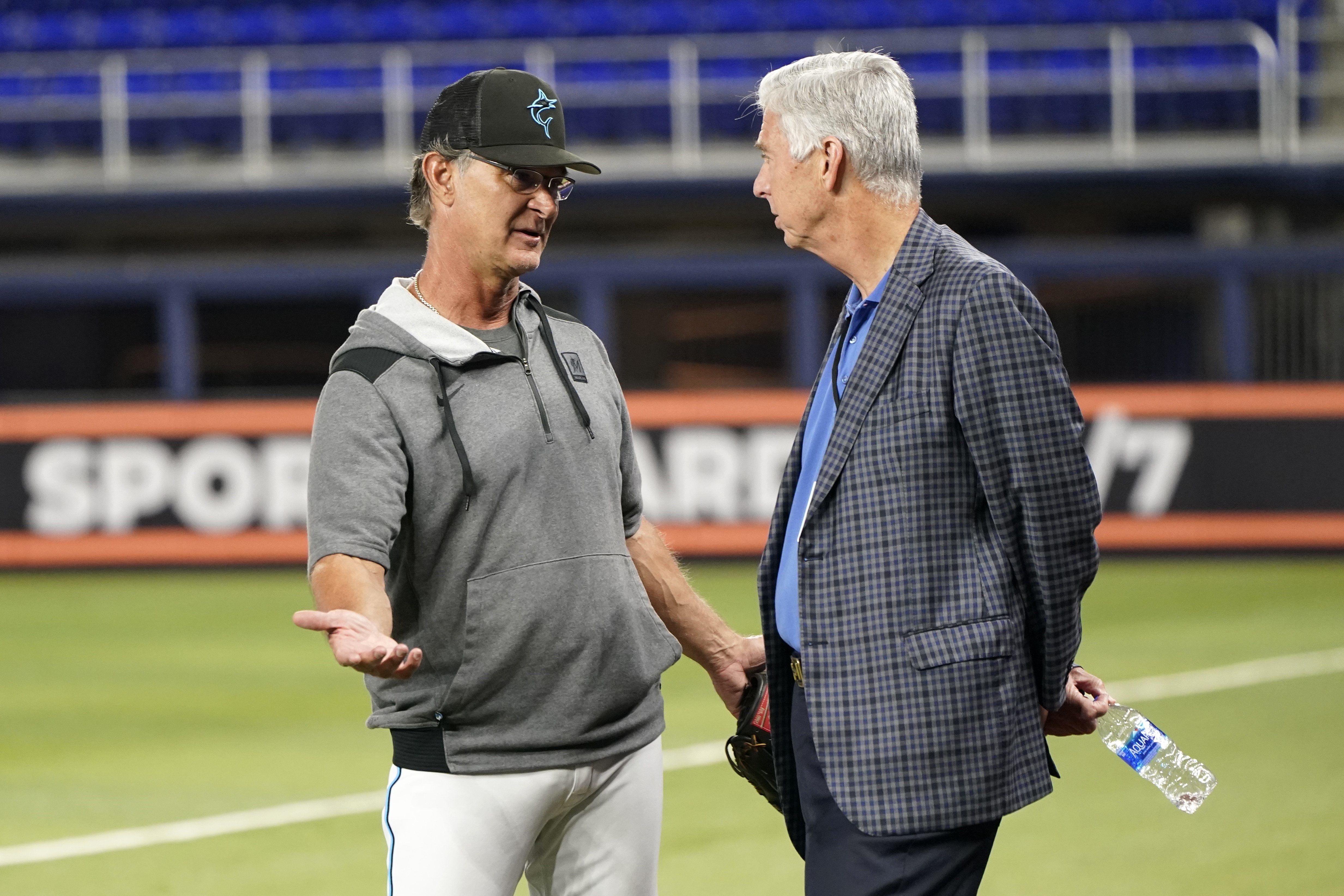
    Don Mattingly, here as Marlins manager in 2022, talks with Phillies president of baseball operations Dave Dombrowski.Lynne Sladky / AP

    This is meant as no slight to Thomson. As a first-time manager, — his first season as an interim in place of fired friend Joe Girardi, — Thomson did a magnificent job pushing a star-studded lineup to the playoffs four times in a row. He deserves a second chance, if he wants it: He’d planned to retire from baseball after the 2022 season after serving as Girardi’s bench coach one more time.

    This is not meant as a full-throated endorsement of Mattingly. He left the Blue Jays after serving as the bench coach who helped them win the 2025 American League pennant. He wanted to spend more time with his family. However, Mattingly agreed in January to delay retirement to spend two seasons as the Phillies’ bench coach. It was a position of convenience, since Mattingly’s son, Preston, is the Phillies’ general manager.

    This is not meant to imply that Alex Cora could not have done the job. He just would have been a poor fit. The egos of Cora, Harper, Wheeler, and Phillies president Dave Dombrowski might have been too big for the confines of Citizens Bank Park. Maybe Cora knew that when he told Dombrowski for the second time in six months that he didn’t want to manage his baseball team. Cora won the 2017 World Series as the bench coach for the Astros, then won the 2018 World Series in his first season as a manager, with the Red Sox, but he was involved in illegal sign-stealing scandals each of those seasons.

    And this certainly is not meant as a congratulatory bouquet thrown at the feet of Dombrowski. He failed to build a viable bullpen for the fourth straight year, and he failed to acquire a right-handed power bat for the third straight year, but he also botched managing the manager’s job all season.

    First, it was unfair of Dombrowski to fire Thomson after the 9-19 start, considering the Phillies’ withering strength of schedule and the fact that both Wheeler and closer Jhoan Duran had been injured during that slow start. Second, it was unprofessional when Dombrowski solicited the services of Cora while Thomson was still managing the team; then reluctantly giving the job to Mattingly. Third, it was in poor taste that Dombrowski let this decision linger for two weeks after the season’s end.

    But now it’s over. Dombrowski will meet with the media on Thursday to discuss the past season, the near future, and his new-ish, full-time, major league veteran manager.

  • Flyers takeaways: Trevor Zegras sparks to life, but penalties continue to doom the Orange and Black

    Flyers takeaways: Trevor Zegras sparks to life, but penalties continue to doom the Orange and Black

    The Flyers lost their eighth straight game to start the season, falling 3-2 in a shootout to the Seattle Kraken on Tuesday.

    Here are our positives and negatives.

    The positives

    Trailing 2-0, the Flyers finally got it together and tied the game in the third period. Christian Dvorak and Trevor Zegras notched their second and first goals of the season, respectively, within 73 seconds of one another.

    “Yeah, honestly, throughout the whole game I thought we had better energy,” said defenseman Travis Sanheim, who set up the streaking Zegras for the tying goal. “Just seemed like we had some more jump playing … the style that we need to play to win in this league. And it was nice to get rewarded in the third. Would have been nice to finish it off in the shootout.”

    Less than two minutes in, Zegras sent a shot just wide, but it had a zing to it that seemed to send a message. Across his 21 minutes, 43 seconds of ice time, he was easily one of the Flyers’ best players, registering a team-high five shots on goal and a takeaway. Aside from his goal, he played a gritty game — he went at it with Kraken goalie Philipp Grubauer twice, which Sanheim said gave the bench and the building energy — and was moving his feet to create time and space and put pressure on the opposition.

    “This is the best I’ve seen Trevor play [this season],” coach Rick Tocchet said. “This is what we need from Trevor, this type of game where he wanted the puck. He wanted to be in situations. He was in the corners digging, taking a hit to make a play. That’s what he has to do.”

    After a rough first game on Sunday, Oliver Bonk played the kind of game expected from the highly-touted prospect. He logged 20 minutes and registered five shot attempts, one hit, and one blocked shot. But nothing was more impressive than how he showcased his calmness with the puck to get away from Ryan Winterton, skate up the ice — he even stumbled in the neutral zone but stayed with it — and send a pass to Dvorak for an assist on the Flyers’ first goal of the night.

    “I was just doing my best to keep my feet moving,” the 21-year-old defenseman said. “It’s a big thing to like not throw pucks away at this level, so just keep going [until] I can make a play.”

    The negatives

    Penalties continued to plague the Flyers, with Bobby McMann scoring on the first man-advantage of the night. The Kraken had five power plays — Philly went 0-for-3 — and while Seattle got one past Dan Vladař on a broken play, it was held to six shot attempts, with the Flyers getting three while shorthanded. The worst penalty of the night came in overtime on a bad line change.

    “I think I’d have to look at it again. I was supporting [Denver Barkey], so I was still on the ice,” said winger Owen Tippett, who was one of four guys going to the bench with Sanheim getting a pass. “But obviously, one of our guys jumped a little too early.”

    After tying the game and seizing momentum, the Flyers only got two more shots on goal — with none coming after Simon Benoit’s shot with 10:43 left in the third period and a big zero in overtime. They had just five shot attempts, with Bonk missing the net twice and shots by David Jiříček, Tyson Foerster, and Nick Seeler getting blocked. Zegras tied the game with 12:40 left, and the Kraken had 21 shot attempts, including 14 shots on goal the rest of the way.

    The Flyers were better on Tuesday but still couldn’t find a way to pull out a win.Monica Herndon / Staff Photographer

    “It’s not strategic,” Tocchet said when asked. “We’re not trying to play soccer.”

    “Ran some guys pretty heavy in minutes. I don’t know why. Maybe they went tight; it could be. Yeah, maybe. I don’t know. Got to ask the guys,” Tocchet added. “There’s some good energy on the bench. Yeah, you do want some guys to kind of grab that puck and make a play — I agree with that. There are a couple of times [when] we did have it where, if we got to the middle, the weak side was wide-open, and we did chip it in. But that comes with experience, and continue to learn from it.”

  • These Villanova priests have been friends with Pope Leo for decades.  Now they are praying for him.

    These Villanova priests have been friends with Pope Leo for decades.  Now they are praying for him.

    Rome – What’s it like to vacation with Pope Leo XIV?

    Just ask the Rev. Arthur Purcaro, assistant vice president for mission and ministry at Villanova University. He has done it twice at the pope’s summer residence at Castel Gandolfo, a scenic hilltop town southeast of Rome.

    “Boring,” he kidded.

    The day started with a private Mass by Pope Leo with only Purcaro, one other Augustinian priest, and the pope’s personal secretary in attendance. Then breakfast, and a brief golf cart ride to the tennis courts — the pope played tennis, while Purcaro sat by the pool.

    “After he played tennis, he’d come to the pool,” Purcaro recalled.

    There were snacks, chats about family and world news, afternoon rests typical in Italy, and, for three days, they put together a 1,000-piece puzzle of St. Peter’s Basilica that Purcaro had brought with him.

    “Then about 5-ish we’d take a walk to the end of the property and have snacks as we overlooked Lake Albano,” he said. Dinner followed, he added, punctuated by time for relaxation.

    Purcaro, who spent a week there with the pope in July, is one of several Augustinian priests who work at Villanova and are close friends of the pope. These relationships stem back decades before the papal conclave chose Cardinal Robert Prevost to be the first American-born pope — and have endured.

    These priests regularly walk the picturesque 260-acre main Villanova campus with collegiate Gothic-style buildings and green spaces and teach students. They email regularly with the Holy Father and visit him.

    And they were among the pope’s closest friends grappling with the lung cancer diagnosis Leo received on Tuesday, which was announced publicly by the Vatican after he underwent surgery.

    “He’s in my prayers and the prayers of many, many people,” Purcaro said Wednesday. “I know he will say, ‘It’s all in the hands of God.’”

    The Rev. John Lydon

    The inaugural director of Villanova’s Mother Cabrini Institute on Immigration, Lydon graduated from Villanova the same year as Prevost. Lydon was not yet studying to become a priest, but they knew each other through the Villanovans for Life group, Lydon said.

    He described Prevost as studious, bright, and very friendly, but “more introverted than extroverted.”

    The Rev. John Lydon, right, Villanova’s inaugural director of the school’s Mother Cabrini Institute on Immigration, stands with then-Rev. Robert Prevost, now Pope Leo, when they worked together in Peru. They lived together in Peru from 1990 to 1999.Courtesy of the Rev. John Lydon

    They really got to know each other years later when both were stationed in Peru as priests. Lydon got there in 1983 and Prevost in 1985. They lived together from 1990 to 1999, Lydon said.

    They were tense years in the South American country, marked by terrorism, and military curfews enforced by an authoritarian government. It was “a time of great human rights violations,” Lydon said. Three priests were assassinated in the diocese south of them in 1991.

    “We had to navigate that together,” Lydon said.

    Prevost’s fierce support for human rights can be traced to his time in Peru, Lydon said. Lydon was especially struck by a speech the pope gave to his Italian security service early in his papacy, emphasizing the importance of keeping human rights in mind while doing their job, he said.

    The Rev. John Lydon talks about his friendship with Pope Leo at Villanova University. poses for a portrait at Villanova University in VillaDavid Maialetti / Staff Photographer

    A math major in college, Prevost used to do math problems “as a form of relaxation,” Lydon recalled.

    Driving was his other form of relaxation, Lydon said, and he liked to go fast. Lydon did not accompany him.

    “I wasn’t that brave,” Lydon said with a smile.

    Lydon attended a Villanova University immigration conference in Rome about a year ago and spent time with his friend, who had become pope earlier that year. He invited Lydon to his apartment, which Lydon described as “pretty simple” with a picture of Pope Leo XIII and a cross made in Peru on the wall. They spoke for about an hour, and then the following Sunday, Lydon accompanied the pope for Mass and later rode with him in the popemobile.

    “It was surreal,” said Lydon, who started at Villanova earlier this year.

    Lydon on Wednesday was concerned but was hopeful and praying that Pope Leo’s doctors are correct that his lung cancer was caught early and his friend will have a quick recovery.

    “When it’s a friend of yours or family member, you’re naturally more concerned than if it was somebody you didn’t know,” Lydon said.

    The Rev. Bernie Scianna

    Many people know that Pope Leo was gifted a 2026 Ford Explorer Platinum hybrid, but not the role Scianna — vice president for mission and ministry at Villanova — played.

    Ford had reached out to Scianna, 61, before making the offer.

    Pope Leo meets with the Rev. Bernie Scianna, vice president for mission and ministry at Villanova University.Courtesy of Vatican Media

    “‘We think you, Father Bernie, are the one to figure out whether the pope wants it or not,’” Scianna said he was told.

    When Scianna relayed the offer, the pope asked which model of Ford.

    “And I said, ‘Well, I think you’re the pope,’” Scianna said. “‘You say what you want and you’re going to get it.’ And indeed he did.”

    Scianna, who has been at Villanova for eight years, got to know Prevost in 1999 when he was based in Tulsa, Okla., and Prevost was his boss. Later, he became Prevost’s boss for a year. Their relationship has grown over the last 25-plus years. They communicate about every other week, Scianna said.

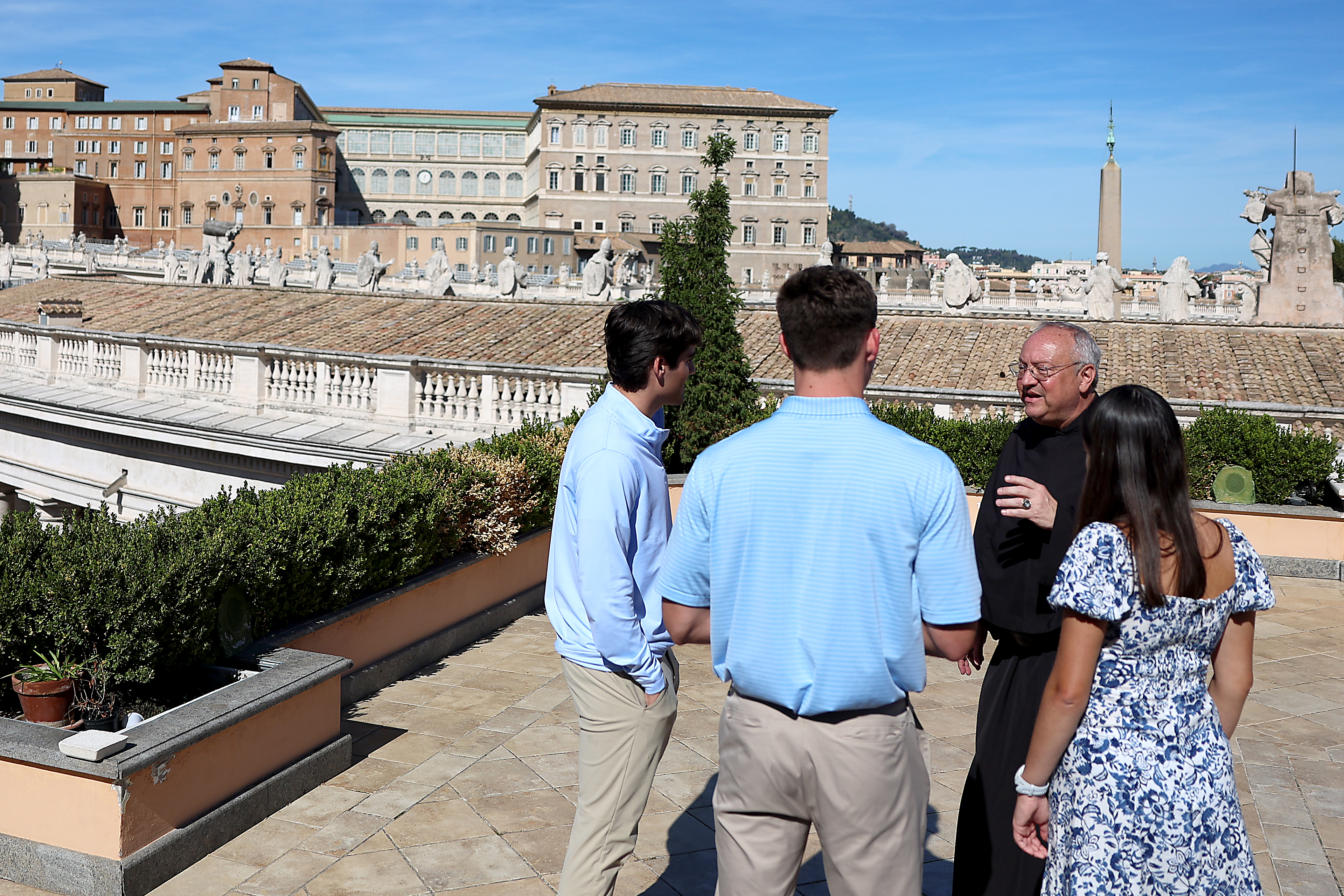
    Fr. Bernie Scianna talks with Villanova University students (left to right) Will Aprahamian, Jack Ferry, and Rose Mazzeo on the rooftop of the pontifical institute in Rome, under the Order of Saint Augustine in Rome.David Maialetti / Staff Photographer

    He has already been to Rome five times since the pope was elected, is back for this week’s sustainability conference, and plans to return in a couple of weeks for the Villanova-Notre Dame basketball doubleheader. In May, he took a group of the pope’s high school classmates from Chicago to visit.

    “He’s a world leader now and he’s the head of the church and he’s the vicar of Christ, successor of Peter, all these things, but in my mind he’s still Bob,” Scianna said.

    The pope usually answers Scianna’s emails around 6 p.m. Eastern time, which is about midnight in Rome.

    “He’ll say it himself that he doesn’t need much sleep,” Scianna said.

    Scianna described Prevost as “mild-mannered” and “even-keeled.”

    “I’ve seen him get upset, but I’ve never seen him fly off the handle,” Scianna said.

    “If he were sitting here, he would have a coffee, or if it’s later in the evening, have a scotch, talk about the White Sox,” Scianna said.

    Both men were born in Chicago; Scianna is a Cubs fan.

    “We do disagree on that,” he said.

    Their Chicago ties have figured in. Prevost at one time wanted to set up a bank account in Chicago for donations instead of having people send money to Peru. Scianna became the cosigner.

    When Prevost became pope, he changed his phone number and called the bank with the update. The bank offered to send a code, and he said that would not work because he has a different number.

    The bank employee told him he would have to come to the bank in person then, which the pope said was not possible, Scianna said.

    The employee asked why.

    “‘Because I’m Pope Leo,’” the pope responded, according to Scianna.

    The employee hung up.

    The pope’s friend came to the rescue. He reached out to Scianna for assistance since he was the cosigner. And soon the problem was resolved.

    On Wednesday morning, Scianna went to St. Peter’s for a Mass that was supposed to be delivered by Pope Leo.

    “Instead of being with Leo, we’re going to pray for him,” Scianna said from a platform next to the altar. “The fact that he is a fit 71-year-old very strong in his health will help him in his treatment, whatever it may be.”

    The Rev. Arthur Purcaro

    Purcaro, 76, met Prevost in 1985 when Prevost visited the Andes village where Purcaro was stationed, and they continued to see each other periodically for years while they worked in Peru.

    But he got to know him even better when they lived together for six years in Rome, from 2001 to 2007.

    “He always has been somebody who asks questions and actually listens to the response,” Purcaro said, calling him “a team player.”

    Like Purcaro, Prevost never liked crowds. Purcaro asked him how he was able to handle it now as pope.

    His friend, he said, told him it comes “from inside.”

    The pope invited Purcaro for summer vacation in July 2025 and he went for a few days. Then he spent a whole week there this summer.

    “He’s not somebody to be waited on,” Purcaro said. “He’s very, very happy to wait upon people. He is entirely ordinary, extremely ordinary.”

    Asked what the pope likes to eat, Purcaro said: “I can’t think of anything he doesn’t like to eat.” Drinks? “Normal wine.”

    He doesn’t really think of his friend as an American pope because he also spent about a third of his life in Italy and a third in Peru.

    “If you can only use one word to identify him … he’s Augustinian,” Purcaro said.

    The pope wrote the foreword for Purcaro’s recent book, Building a Better World.

    “I said, ‘Would you mind?’” Purcaro recalled.

    Like any good friend, he said, the pope responded: “‘No problem at all.’”

    Purcaro on Wednesday said he texted his friend after learning of the cancer diagnosis.

    “I care very much for him as a person,” he said. “He’s in my prayers and the prayers of many, many people.”