Blog

  • Christa Pike is in critical condition after Tennessee’s failed execution attempt, her lawyers say

    Christa Pike is in critical condition after Tennessee’s failed execution attempt, her lawyers say

    Christa Pike was in critical condition Thursday and receiving “lifesaving care” at a hospital, her lawyers said, a day after a failed attempt to execute her in what Tennessee’s governor called a “deeply disturbing” outcome.

    Pike, who was sentenced to death in a 1995 murder, was taken to a hospital Wednesday night after she received a double dose of the drug Tennessee uses to execute prisoners but survived.

    “We don’t have a sense of her prognosis or much update on her health at the moment,” attorney Randy Spivey said during a news conference. ”But we know she is alive right now.”

    The failed execution, which one death penalty expert described as unprecedented, led Republican Gov. Bill Lee to order a review and to indefinitely postpone Pike’s execution and Tennessee’s lone other one scheduled for this year. It also reignited the debate over the state’s execution procedures, including its single-drug lethal injections.

    Spivey called the process cruel and tortuous, saying he was “haunted” by what he saw after the execution team struggled to find a vein for the lethal drugs. He said he counted at least seven needles in her left arm.

    During the struggle to locate a vein, Pike even suggested where they might find a spot, he said.

    “Please try here, please try here,” Spivey recalled her saying. “She told them over and over, please try higher on my shoulder.”

    An execution fails

    The state tried to execute Pike by lethal injection, but neither the initial nor backup dose of pentobarbital killed her and she was still snoring when the execution chamber’s microphone was cut off more than an hour into the attempt. She was later taken to a hospital for treatment.

    At one point during the execution attempt, she asked prison officials if her arm was supposed to feel that way, though it’s unclear if it was after the first dose entered her body, as officials don’t share that information. Later, more than an hour after the process began and nearly 30 minutes after a backup dose of pentobarbital was administered, she could be heard snoring loudly.

    Another of Pike’s attorneys, Steve Ferrell, said she feared there would be complications with the lethal injection because of a lifelong blood disorder that made it tough to get needles into her veins. “Throughout her life, she’s explained to us that she had trouble having blood drawn,” he said.

    It was quite possible, Ferrell said, that the IV line didn’t enter her vein properly and that the drug was filling her arm instead of entering her bloodstream.

    Her lawyers called for her death sentence to be commuted, saying what she went through Wednesday amounted to torture.

    May Martinez, whose daughter was murdered by Pike and her boyfriend and who traveled to Nashville to watch the execution, told NBC News “it was a mess.”

    Pike, 50, was sentenced to death for a murder she committed at age 18. She would have been the first woman executed in Tennessee in more than 200 years.

    An appeals court stopped the lethal injection an hour before it was scheduled to begin, but the U.S. Supreme Court overturned that stay hours later.

    It was the second time this year that Tennessee was unable to complete an execution. In the other case, officials couldn’t find a suitable vein for an IV line so the drugs weren’t administered.

    Governor halts another 2026 execution

    The governor said it appeared prison staff followed procedure, but he described what transpired as “deeply disturbing.”

    “There are very few answers this morning. It’s very early,” Lee told reporters Thursday. “The people of our state deserve to have those questions answered.”

    Officials gave Pike two doses of pentobarbital, her attorneys said in court filings late Wednesday. The drug has been used in executions in multiple states and by the federal government, but there have been concerns raised about the potential for “unnecessary pain and suffering.”

    The Tennessee Department of Correction said in a statement that it “followed every step of the State’s lawful, established execution protocol approved by the Attorney General’s Office.”

    The state changed its execution method two years ago

    Tennessee announced in 2024 that it was switching from a three-drug series for lethal injections to a single drug, pentobarbital. That came more than two years after the state abruptly halted the execution of Oscar Smith and acknowledged it had failed to ensure its lethal injection drugs had been tested properly.

    Robin M. Maher, executive director of the Death Penalty Information Center, said what Pike experienced is “singular and unparalleled” in that she survived long enough to be moved to a hospital.

    Seven other people have survived medical problems due to an execution team’s failure to access a vein to administer lethal injection drugs, but no one has stayed alive after receiving the drugs used in such executions, she said.

    Executions in the U.S. have fallen sharply since the beginning of this century amid growing public opposition and concerns about the costs and the drugs used. But the number of executions nearly doubled last year behind a record increase in Florida.

    Pike would have been the 30th person executed in the U.S. this year.

    Pike was awake in the chamber

    Strapped to a gurney in the execution chamber, Pike described herself as at peace.

    When asked if she had any last words, Pike said several things, including, “I’m at peace. I’m ready to be free. … This is a happy day.”

    But she remained awake, and at one point complained about the feeling in her arm. The chamber’s curtains were closed briefly, suggesting it had been five minutes since the first dose was administered. But they were reopened three minutes later.

    An hour after officials first raised the curtains, witnesses reported that a second dose of pentobarbital was administered. Pike could still be heard snoring behind a closed curtain until the microphone was cut off almost 30 minutes later.

    Her lawyers filed an emergency motion with the Tennessee Supreme Court seeking to immediately halt and stay the execution, saying she was in “unnecessary agony” and the procedure violated her right to be executed free of cruel and unusual punishment.

    Last May, Tennessee officials called off the lethal injection of Tony Carruthers, who was convicted of kidnapping and killing three people in 1994, after executioners tried for over an hour but failed to find a suitable vein for a secondary IV line.

    Pike didn’t deny her role in the killing

    Pike and her boyfriend were convicted of the fatal stabbing of 19-year-old Colleen Slemmer, a classmate. The killing stoked fears of Satan worship because of a pentagram carved on Slemmer’s body.

    Pike’s boyfriend wasn’t eligible for the death penalty because he was 17 at the time of the killing and received a sentence of life in prison. He was denied parole last year.

    Pike didn’t dispute that she helped kill Slemmer, but supporters argued that Pike’s age at the time of the murder, her mental illness and her allegations of severe sexual abuse should be considered. She was diagnosed with bipolar disorder and post-traumatic stress disorder after the killing.

    “It took me numerous years to even realize the gravity of what I’d done,” she once said.

  • unCovering the Birds: Signs of Early Season Flaws

    unCovering the Birds: Signs of Early Season Flaws

    It was a blowout, and it left a lot of questions. The Eagles’ 27-7 loss to the Bears Monday night at Soldier Field featured an offense that fizzled, a defense that folded, and a coaching staff that looked outmatched. The Philadelphia Inquirer’s Jeff McLane and Jeff Neiburg provide a postmortem of the defense’s disappointing start to the season, critique of offensive coordinator Sean Mannion’s approach, and assessment of how some of general manager Howie Roseman’s moves have panned out so far.

    00:00 The defense has been a major disappointment

    16:12 Sean Mannion’s offense has yet to impress

    34:17 Scrutinizing Howie Roseman’s roster construction

    unCovering the Birds is a co-production of KYW Newsradio Original Podcasts and The Philadelphia Inquirer, hosted by award-winning Inquirer reporter Jeff McLane. Look for new episodes throughout the season.

    We’re always looking for mailbag questions! Hit Jeff up on his socials, or drop a question in the comments. Jeff could answer it in a future episode!

  • In a disgraceful emergency ruling, SCOTUS lets Trump resume violating human rights

    In a disgraceful emergency ruling, SCOTUS lets Trump resume violating human rights

    Just when you are tempted to assign sole blame for our growing reputation as human rights abusers to President Donald Trump and his misbegotten administration, up steps the Supreme Court of the United States.

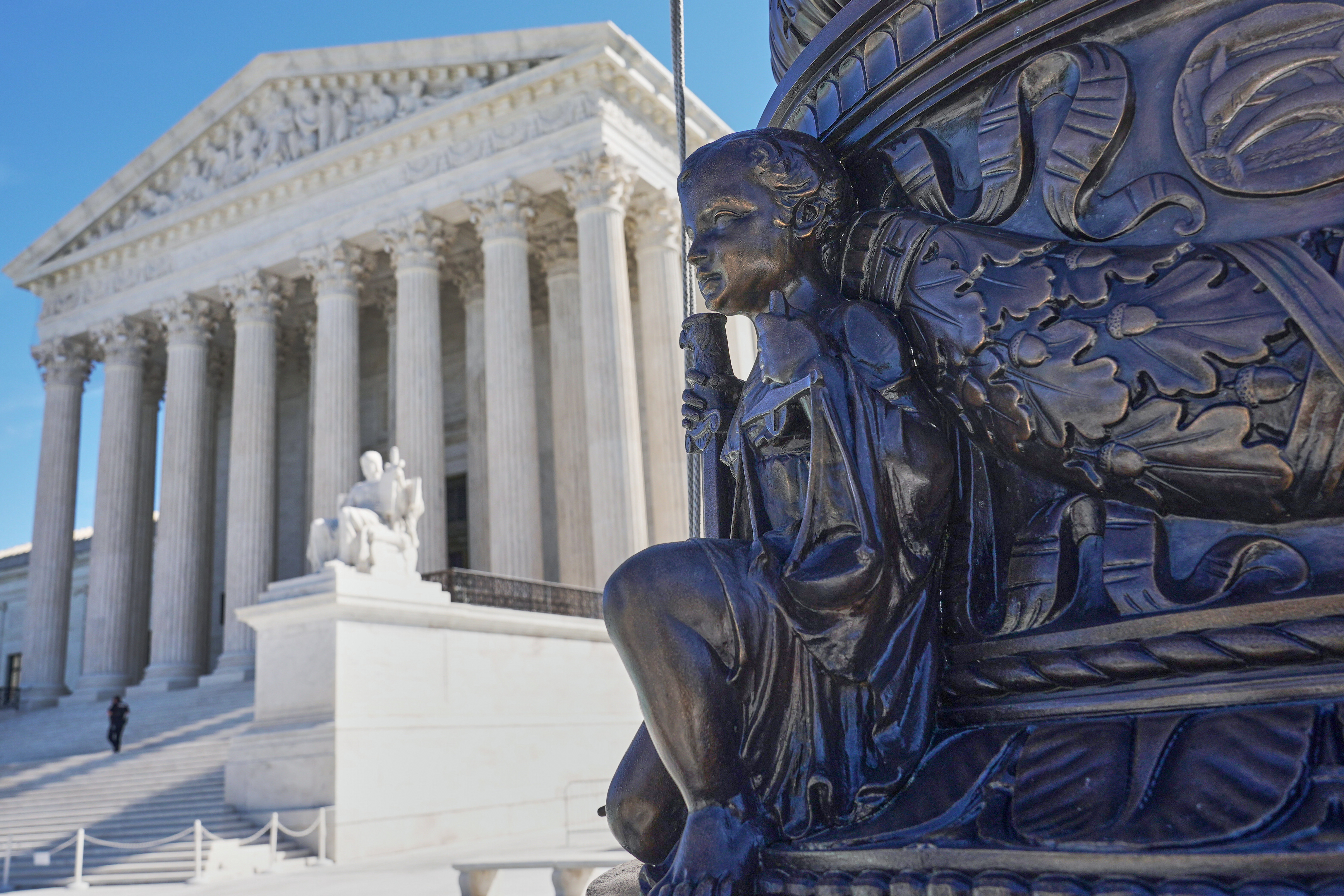
    In an emergency ruling Monday, the Supreme Court cleared the way for the Trump administration to resume uncontested deportation of immigrants to countries that are not their nations of origin, where they may be subjected to further human rights abuses and persecution.

    The ruling, which was not signed by the justices, does not make a determination on the legality of the process itself — the court will begin hearing arguments on that question in December. Nevertheless, it was, according to the New York Times, being celebrated as a victory by the Trump administration, which has deported more than 25,000 migrants to 29 “third countries.”

    Yet, for those of us who look to our judicial system as a means to ensure this White House doesn’t get away with every human and civil rights violation it can think of, the court’s decision is deeply troubling.

    Sarah H. Paoletti, the director of the Transnational Legal Clinic at the University of Pennsylvania Carey Law School, says the order is “yet one more example of the Supreme Court majority ceding exceptional deference to the Executive.”

    “In granting the stay, the court has cleared the way for [the U.S. Department of Homeland Security] to disappear individuals overnight and transport them to countries without notice, and without the opportunity to be heard on their fear-based claims as to those countries, with callous disregard to the grievous rights violations they are likely to face,” Paoletti said via email.

    Paoletti noted that the court’s ruling came on the same day 20 independent human rights experts appointed as U.N. Special Rapporteurs and a Special Rapporteur of the African Commission on Human and Peoples’ Rights condemned the practice of third-country removals.

    Malka Older — writer, sociologist, aid worker, and executive director of Global Voices, the international newsroom made up of writers and human rights activists — sees the harms as part of a pattern of unethical national choices.

    “The Supreme Court allowing the government to continue removing immigrants to third countries — countries where they know no one, have no safety net, no connections, no assistance, and may be under active threat for their identity or convictions — is allowing irreparable harm to continue being done to those people,” Older told me via Facebook. “This kind of deportation rips apart people’s lives, leaving them stranded, and it demonstrates the moral vacuity of U.S. policy, pushing people off somewhere else as though that absolves us of all responsibility.”

    “It is the same dynamic that sees the U.S. export plastic waste, dangerous industrial byproducts, unappealing jobs, and increasingly data centers, hoping that if people can’t see the harm they’ll pretend it isn’t happening but in this case, the harm is happening very directly to human beings, to our neighbors.”

    The administration releases no real information about who it has sent to third countries, and it has reportedly started vanishing thousands of detainees held for deportation from DHS’s online detainee locator system. According to the most reliable tracking data, however, more than 70% of current detainees have no criminal convictions (and, lest we forget, even people who have been criminally convicted have rights).

    But anecdotally, and through the work of journalists here at The Inquirer and at other media organizations, we know that most of those being detained for deportation — even to third countries — are mostly just ordinary human beings.

    “There are people who have lived in this country for upwards of 30 years who are being deported because they lack residency,” Guatemalan-born and Brooklyn-based author and translator David Unger said via Facebook.

    A deportee from the United States who was sent to Liberia stands on the balcony of a hotel in Marshall, Liberia, in August.CARIELLE DOE

    “My daughter, an immigration lawyer, had a Jamaican client who was deported to Eswatini in Africa and held incommunicado for three months before finally being sent to Jamaica, where he has no living relatives,” he added. “Guatemala has accepted 2,000 deportees originally from Mexico. Who knows what danger they may be in when they finally reach their birth land. This is simply cruel and, possibly, lethal to them.”

    Trump is fond of repeating that our nation is the hottest country in the world right now, but what I see is that we’re radioactive. Our ranking in the Human Rights Measurement Initiative rights tracker, which compares us with our peer high-income countries and fellow members of the Organization for Economic Co-operation and Development (OECD), is pretty terrible: 3.7 out of 10. And a number of the categories in which we are dead-last — “freedom from torture and ill-treatment,” “freedom from arbitrary arrest,” and “freedom from forced disappearance” — are tied directly to the administration’s mass deportation plan.

    You know what to do. Thirty-three days from now, get yourself to a polling place and elect people willing to limit the executive branch’s morally disgraceful inclinations. And come December, pray the Supreme Court is willing to limit it, too.

  • Mikie Sherrill is less popular in South Jersey than she is in the rest of the state, new poll finds

    Mikie Sherrill is less popular in South Jersey than she is in the rest of the state, new poll finds

    New Jersey residents generally support how Gov. Mikie Sherrill handled the sexual harassment investigation into her lieutenant governor, which led to his resignation last week, a Rutgers University poll found.

    The overall approval rating for the first-term Democratic governor also remains steady eight months into her tenure, the poll said.

    The poll found 44% of New Jerseyans approve of the way Sherrill is handling her job, 34% disapprove, and 22% are unsure. The poll was conducted from Sept. 24 through 27, a period covering the investigation’s release and former Lt. Gov. Dale Caldwell’s resignation.

    South Jersey residents were less supportive of Sherrill, however, with 33% approving of her performance, 47% disapproving, and 21% unsure.

      (function() {
        var l2 = function() {
          new pym.Parent(‘SHERRILLPOLL3.html’,
                         ‘https://media.inquirer.com/storage/inquirer/projects/innovation/arcgis_iframe/SHERRILLPOLL3.html’);
        };
        if (typeof(pym) === ‘undefined’) {
          var h = document.getElementsByTagName(‘head’)[0],
            s = document.createElement(‘script’);
          s.type = ‘text/javascript’;
          s.src = ‘https://pym.nprapps.org/pym.v1.min.js’;
          s.onload = l2;
          h.appendChild(s);
        } else {
          l2();
        }
      })();

    “Gov. Sherrill’s approval numbers look much like they did at 100 days, which in this political climate — and after a challenging summer — is itself an accomplishment,” said Ashley Koning, an assistant research professor and director of the Eagleton Center for Public Interest Polling at Rutgers University-New Brunswick.

    ”She continues to draw more positive reactions than negative ones, and more New Jerseyans have formed an impression of her than had of Phil Murphy at this same point in his first term,” Koning said. “But a quarter of residents still have no opinion of her almost a year in, and how those New Jerseyans eventually break will decide whether her net positive ratings hold.”

    Stephen Sigmund, a spokesperson for Sherrill, said the poll reflects how the governor has approached the job.

    “Since day one, Gov. Sherrill has been taking action to drive down costs, build a stronger future for our kids, make Trenton more accountable, and stand up to Donald Trump’s attacks on our state. That work is resonating with New Jerseyans, and her focus will always be on delivering for them,” Sigmund said.

    The pollster asked participants to evaluate how well she had handled the independent investigation into claims that Caldwell used his job to meet women.

    The center had to adjust the question to reflect Caldwell’s resignation last Friday, but there was no statistically significant difference in how people responded. The poll found 68% saying she handled the situation “very well” or “somewhat well,” 14% “not very well” or “not well” at all, and 19% were unsure, the poll said.

    Sherrill released the independent counsel’s report, which corroborated allegations of sexual harassment, last Thursday. Caldwell resigned the following day. He and his attorney, Thomas Calcagni, denied any wrongdoing and called the investigation flawed.

    “She brought in an outside investigator and then called publicly for her own lieutenant governor to resign, and most residents read that as accountability rather than protecting her own or politics as usual,” Koning said.

    The governor released a 61-page report from a monthlong investigation conducted by an outside law firm late Thursday afternoon. The report said Caldwell had made inappropriate comments to women and violated ethics rules. Caldwell, a minister, is the former president of Centenary University.

    According to the report, Caldwell made a “romantic advance toward a female staffer’s friend.” When she turned him down, Caldwell told the staffer that ambitious women like her and her friend needed a man in his position to help them “but you young women are looking for young sperm,” according to the report.

    Although Sherrill’s marks are favorable, participants were less optimistic on the direction of the state, with 43% saying New Jersey was on the wrong track, 37% on the right track, and 20% unsure.

    The poll also asked residents their opinion on President Donald Trump. He remained overwhelmingly unpopular in New Jersey, with 24% saying they had a favorable impression of him, 66% unfavorable, and 10% no opinion.

    In South Jersey, 60% of residents had an unfavorable opinion, 30% had a favorable opinion, and 10% had no opinion. The poll defined South Jersey as Camden, Burlington, Gloucester, Cumberland, Salem, and Cape May Counties.

    The results are based on a survey of 1,004 adults. The poll has a margin of error of plus or minus 4.1 percentage points.

  • DC judge permanently dismisses case charging ex-Olympian with vandalizing Reflecting Pool

    DC judge permanently dismisses case charging ex-Olympian with vandalizing Reflecting Pool

    WASHINGTON — A judge in the nation’s capital agreed on Thursday to permanently dismiss a criminal case charging a former Olympian with vandalizing the Lincoln Memorial Reflecting Pool, a move that could prevent federal prosecutors from reviving the case under political pressure from President Donald Trump.

    D.C. Superior Court Judge Todd Edelman ordered the dismissal of David Hearn’s case with “prejudice,” which would block U.S. Attorney Jeanine Pirro’s office from refiling the felony charge against him. The judge ruled nearly a month after hearing attorneys’ arguments.

    Hearn’s lawyers say Trump administration officials have continued to falsely accuse the Maryland resident of vandalizing the reflecting pool despite Pirro’s decision to drop the case on July 31. Trump responded by saying Pirro “choked” and “folded like an umbrella.”

    Edelman said the case presents “exceptional circumstances” that warrant dismissing the case permanently. He agreed with defense attorneys that the government “shot first and asked questions later” by charging Hearn in a “a lightning-fast indictment process.”

    “While the government wishes to hold open the possibility of the development of evidence that would support a future prosecution, its own representations make plain that such a possibility is theoretical at best, and more likely, is simply fanciful,” the judge wrote.

    Permanently dismissing the case protects Hearn from prosecutors electing to revive the case under political pressure from Trump, the judge said.

    “Although the prosecutors assigned to this case have deemed it meritless, the President of the United States has repeatedly disparaged them and pressured them to change course,” Edelman wrote.

    In a court filing in July, Pirro said new evidence produced by the Interior Department showed Hearn wasn’t responsible for damage to the pool’s lining. Pirro’s office attributed the damage instead to a botched installation by a contractor as well as a rush to complete the project in time for this summer’s America 250 celebration in Washington.

    Pirro’s admission was an embarrassing setback for the White House. Interior Secretary Doug Burgum has backed Trump’s claims that vandals damaged the pool.

    Hearn has said he was on a bike ride on June 19 when he reached in to examine the pool’s newly peeled coating and briefly touched a chunk attached to the side of the pool. But he said he obeyed a park worker’s command to let go of it.

    Hearn was charged with one count of property destruction, which carries a maximum prison sentence of 10 years. His lawyers questioned whether prosecutors properly presented the grand jury with adequate evidence to support the charge and the amount of damage alleged by the government.

    Hearn, 67, of Bethesda, Maryland, competed in three Summer Olympics, earning his best finish, ninth, at the 1996 Atlanta Olympic Games, the U.S. Olympic and Paralympic Committee says on its website.

    Trump, a Republican, appointed Pirro, a former Fox News host, to serve as the top federal prosecutor for the District of Columbia. Edelman was nominated to the bench by Democratic President Barack Obama.

    Hearn’s attorneys said the ruling is “a victory for the rule of law and for an innocent American seeking justice” and allows Hearn to “move forward with his life as he deserves.”

    “This administration chose to pursue an unjust prosecution against Mr. Hearn. It should not get repeated chances to wield the power of criminal prosecution against someone who should never have been prosecuted,” the lawyers said in a statement.

  • Supreme Court grants review of Trump administration’s mandatory detention policy for immigrants

    Supreme Court grants review of Trump administration’s mandatory detention policy for immigrants

    WASHINGTON — The Supreme Court on Thursday agreed to review a Trump administration policy denying bond hearings for immigrants as the government carries out a sweeping crackdown.

    The justices will consider whether immigrants who have been living in the U.S. have a right to a hearing to determine if they should remain detained while challenging their possible deportation.

    The case will test a key pillar of the Trump administration’s hard-line immigration agenda.

    Most appeals courts to have considered the issue have found that it violates federal law to detain immigrants, including those living in the U.S. illegally, without a bond hearing. Those decisions conflict with rulings by the 5th and 8th circuits, which held that immigrants accused of illegally entering and remaining in the U.S. must be detained while their deportation cases are pending.

    The high court agreed to hear the case of Ricardo Aparecido Barbosa da Cunha, a citizen of Brazil. Authorities say he entered the United States illegally two decades ago and applied for asylum in 2016. He sought a bond hearing after an immigration judge determined that his detention was mandatory following his September 2025 arrest.

    He has never been charged or convicted of a crime, his attorneys said. The court is expected to hear the case in the coming months.

    President Donald Trump’s administration had urged the high court to take up a different but related case that involves the broader constitutional implications of the new policy.

    Attorneys from the Republican administration argue the circuits’ split is “disrupting the orderly administration of immigration law.” They say the nation’s courts have been inundated with thousands of petitions filed by immigrants challenging the government’s legal interpretation.

    “The result is an unworkable patchwork of inconsistent immigration enforcement, where aliens present without admission are subject to mandatory detention in some circuits but are entitled to bond hearings and often released in others,” lawyers for the administration wrote.

    The plaintiffs are immigrants represented by the American Civil Liberties Union, which says hundreds of district court judges have joined most circuits in rejecting the Trump administration’s new reading of the statutes. Plaintiffs’ lawyers say the administration is trying to deny bond hearings for immigrants apprehended anywhere in the U.S. — no matter how long they’ve lived in the country — rather than limiting the restriction to noncitizens stopped at the border.

    “Millions of noncitizens could be affected by the government’s new interpretation,” ACLU attorneys wrote.

    The Trump administration says its new mandatory detention policy is legal under a 1996 immigration law. The policy change departs from the practices of prior administrations, which typically allowed most noncitizens without criminal records to request a bond hearing if they were arrested away from the border.

  • Renee Good’s family sues U.S. government and immigration officials over her killing in Minneapolis

    Renee Good’s family sues U.S. government and immigration officials over her killing in Minneapolis

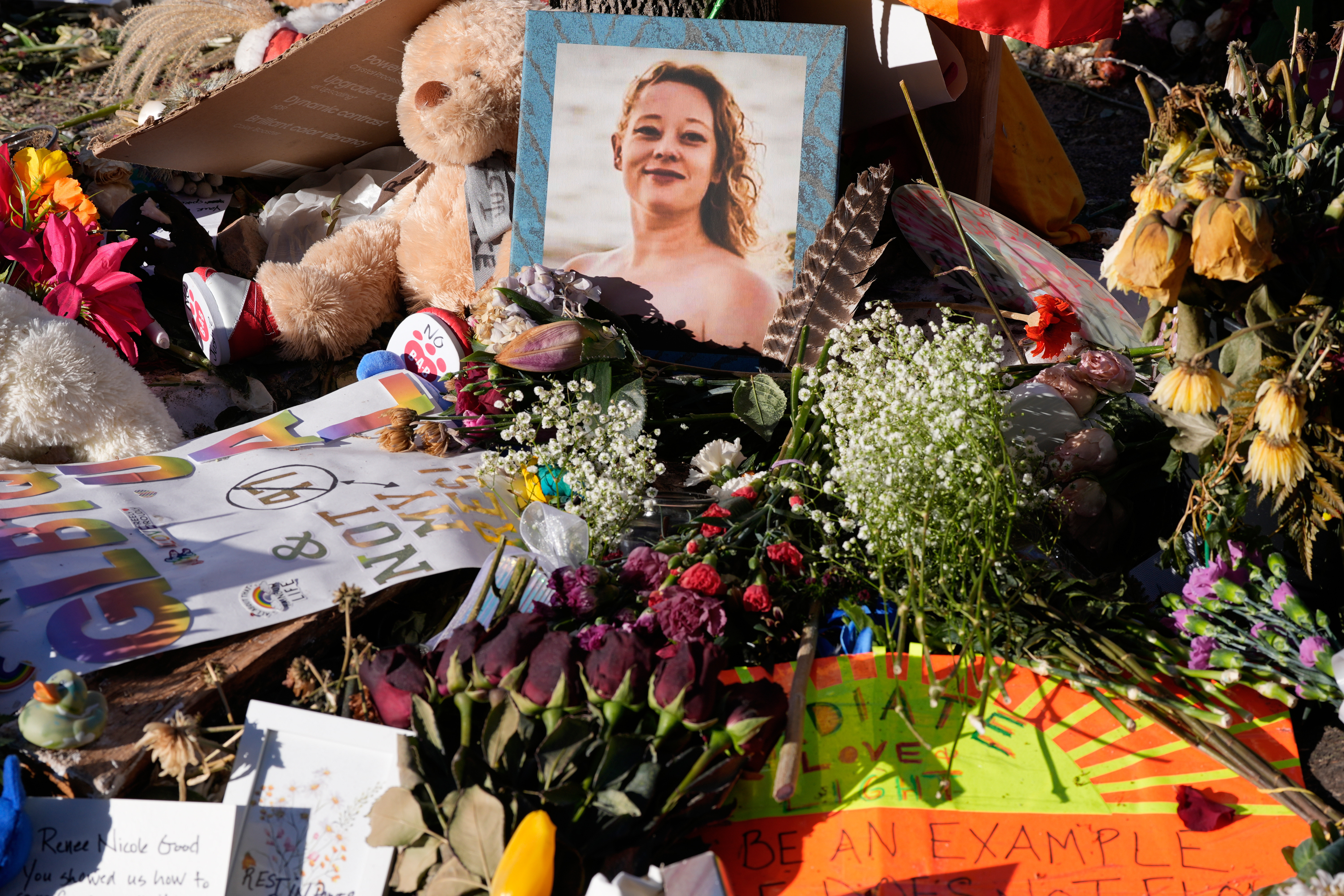
    Renee Good’s family sued the U.S. government and the architects of President Donald Trump’s immigration crackdown on Thursday, saying “the time is absolutely now for accountability” after her killing in January by a federal agent in Minneapolis.

    Good’s partner, Becca Good, and brother, Brent Ganger, accused the government and the Immigration and Customs Enforcement officer who shot into her SUV and killed her, Jonathan Ross, of unjustified and excessive use of force.

    The Jan. 7 shooting, captured on bystander video, was “the predictable and intended product” of the Trump administration’s crackdown on Somali and other immigrants in Minnesota, an exercise that officials dubbed Operation Metro Surge, the lawsuit said.

    “I’m here today because last January the whole world had to watch as our entire universe was destroyed,” Becca Good said at a news conference announcing the lawsuits.

    The killings of Good, a 37-year-old mother, and another U.S. citizen, Alex Pretti, in Minneapolis just weeks later sparked outrage across the country and calls to rein in immigration enforcement. At least 10 people have died in encounters with immigration officers during Trump’s second term.

    “What happened to Rene was completely senseless,” Ganger said. “And the fact that there’s been no accountability, no investigation, no expression of condolence, no change in policy is completely mind blowing.”

    “The hole in my family and myself created by my sister’s passing is hauntingly apparent,” he added.

    The lawsuits — one against the government, the other against Ross and officials including White House Deputy Chief of Staff Stephen Miller, ex-Homeland Security Secretary Kristi Noem and White House border czar Tom Homan — seek unspecified damages for wrongful death, conspiracy and other violations.

    “Our government has become a grave and mortal threat to its own citizens,” the family’s lawyer, Antonio Romanucci said.

    The Justice Department didn’t immediately respond to an email seeking comment.

    Officer shot Good as she turned her car away from him

    Renee Good was fatally shot Jan. 7 as protests against immigration raids flared across the city. According to Becca Good, her partner stopped their car in a street to support neighbors during an immigration operation.

    Bystander video shows Renee Good in the driver’s seat of a red SUV blocking part of the road and repeatedly honking her horn.

    Two immigration officers get out of a truck, their faces covered, and one orders Good to get out of the car. She reverses briefly, then turns the steering wheel as the officer says again, “get out of the car.”

    Almost simultaneously, Becca Good, standing in the street, shouts: “Drive, baby, drive!”

    One officer standing in front of the vehicle pulls his weapon and fires into the windshield. He lurches back as the car turns away from him. The officer, who is now very close to the open window on the driver’s side, fires two more times, fatally shooting Renee Good, according to an analysis of the videos by The Associated Press and others.

    Federal officials at the time said the officer acted in self-defense and that Good had engaged in “an act of domestic terrorism.”

    One lawsuit alleges wrongful death

    The lawsuit against the United States of America seeks damages for Good’s wrongful death and “the immense suffering Renee endured in the final moments of her life and for the profound and permanent losses that her death has inflicted upon her family,” according to a news release by lawyers for Ganger and Good.

    The lawsuit, which seeks a bench trial, also alleges “intentional infliction of emotional distress and negligent infliction of emotional distress” on Becca Good.

    Becca and Renee Good, the mother of three children, were not legally married, according to a family lawyer, but referred to one another as wives. They had only recently relocated to Minneapolis from Kansas City, Missouri.

    Another lawsuit alleges conspiracy to conceal evidence

    The other lawsuit alleges a conspiracy to interfere with civil rights and seeks a jury trial. It says the federal government moved to hide the evidence of what actually happened on Jan. 7.

    It describes a “carefully planned, coordinated effort between senior federal officials and private actors to make two ethnic communities — Minnesotans of Somali and Hispanic descent and origin — the object of aggression and abduction, and to silence by intimidation, arrest and violence the neighbors and allies of those targeted communities who observed, documented and warned of that campaign.”

    Other defendants include: Corey Lewandowski, a Trump campaign manager who also served as one of Noem’s advisers; former acting director of U.S. Immigrations and Customs Enforcement Todd Lyons; former U.S. Border Patrol commander Gregory Bovino; and 10 unnamed federal agents.

    Good’s partner acknowledges other lives lost in immigration crackdown

    In social media accounts, Renee Good described herself as a “poet and writer and wife and mom.” On Pinterest, a profile picture shows her smiling and holding a young child, alongside posts about tattoos, hairstyles and home decorating.

    In an interview shortly after her death, Renee Good’s mother, Donna Ganger, told The Associated Press: “She had this way of making you feel special and loved that I didn’t even understand that until we lost her.”

    Good’s partner noted the broader loss to communities nationwide.

    “As we have tried to navigate our own massive loss, I am also devastated by how many other lives have been destroyed in this darkest of times,” Becca Good said in a news release Thursday. “So many other families are dealing with the loss of their loved ones; to everyone who has had to witness it — the pain of this moment extends far beyond our family. What happened to us should never happen to any family.”

  • Penn State held players-only meeting to get ‘on the same page’ after its loss to Wisconsin

    Penn State held players-only meeting to get ‘on the same page’ after its loss to Wisconsin

    Penn State coach Matt Campbell and his senior leaders knew they needed to do something after losing to Wisconsin to get the team on the same page.

    The solution? A players-only meeting on Monday. No coaches — just teammates hearing each other out and bonding in the face of adversity.

    “Having those player meetings is huge for us because it does bring us closer together,” quarterback Rocco Becht said on Tuesday. “It does [help us] find out about one another, and we just got to continue the grind and move on.”

    Becht is one of the key leaders for Penn State, as the redshirt senior has been named a captain for each game this season. He rallied the team together at Temple, and took accountability in the locker room after the loss to Wisconsin.

    So it’s no surprise Becht was one of the players to speak during the meeting.

    “He played a big role,” offensive lineman Trevor Buhr said. “I think overall, we were just kind of making sure we were all on the same page, kind of going over what we had to do, what our goals are getting ready for this week, just making sure everyone’s on the same page.”

    Becht said they don’t have regularly scheduled player meetings, but it’s also not the first time the team has met separately. These gatherings come around when the Nittany Lions “feel like it needs to happen,” according to Becht.

    But being on the same page means something different to everyone. For defensive tackle Keanu Williams, it means understanding how everyone is feeling, not necessarily having the whole team agreeing on one idea.

    Penn State running back James Peoples said the team “can’t get stuck in the past.”Craig Houtz / For The Inquirer

    “It comes into play in the sense of whatever the problems we’re having, lay it on the table, and we all kind of got to sit here and just talk it out,” Williams said. “Whatever it is we need to talk out, whatever problems we’re having, we need to sit there and be on the same page with that. That’s what I really mean by getting on the same page.”

    The players meeting is one example of how Penn State has made an effort as a team to move past the unexpected loss. Running back James Peoples said in the immediate aftermath of Saturday’s collapse, everyone handled it differently.

    “You don’t want that, what happened last Saturday,” Peoples said. “You don’t want that outcome, but we understand there’s still a lot more ahead of us. So you got to be looking down the line and seeing what you got in front of you to understand, ‘OK, we can’t get stuck in the past.’”

    Starting right tackle Anthony Donkoh, a Penn State returnee, knows what it feels like to have a loss that snowballs into more after last year’s collapse. He doesn’t want that happening this year, but he feels confident moving forward because of how the players have rebounded emotionally.

    “I feel like a lot of the guys handled it well this time around,” Donkoh said. “I feel like there’s a lot more emotions last year, and you just felt like a big negative shift, like after a game sometimes.

    “But then like after this loss, everybody is still in good spirits. Like we know that we still have a lot of the season ahead of us. We know that if we just keep our head down and keep working every day, then we’re able to get ourselves out of the situation that we’re in.”

  • One of the gloomier Septembers on record in Philly has come to a merciful end

    One of the gloomier Septembers on record in Philly has come to a merciful end

    Given the remarkable gloominess of the last 30 days, it would be reasonable to believe that the sun had lost its will to shine.

    It is due to make a comeback by Thursday afternoon on the first day of a fresh month, but last month has entered the books as one of the wetter and cloudier Septembers in the period of available records.

    Ordinarily, the September sun is some consolation for what is a month of rapidly shrinking daylight hours and lengthening nights. Not this time.

    Officially, Philly had more than a half-foot of rain during a month when the daytime skies were more than 70% cloud-covered.

    “Not your typical September,” said Ray Martin, lead meteorologist at the National Weather Service office in Mount Holly, who has his own hypothesis that includes an indirect connection with the burgeoning El Niño event in the equatorial Pacific.

    For some folks, the gloominess is more than an aesthetic issue: It can have deleterious effects on mood and overall well-being, mental health experts advise.

    “We’re losing daylight quite rapidly, and a stretch of cloudy weather like we’ve certainly had lately can make that change feel even more pronounced,” said Alan Jacobson, a psychologist practicing in Massachusetts and a specialist in seasonal affective disorder, known as SAD.

    What’s going on up there in the skies over Philly?

    Perhaps both the sun and moon, whose fullness last weekend also was obscured by the clouds, had spent so much time out of the public eye they developed a certain shyness.

    For the month, 18 days came close to or exceeded the criteria for “cloudy,” according to the weather service.

    Unfortunately, sky-cover records are wanting since the agency radically changed the observation protocols — replacing humans with a sky-scanning machine — in the mid-1990s.

    However, this September by far was the gloomiest since September of 2018, when close to 10 inches of rain was measured at Philadelphia International Airport. The 6.61 inches of September 2026 was the highest total since then.

    As to why it has been so cloudy: “We’ve definitely had a lot of systems move through, a lot of moisture,” Martin said.

    And why might that be?

    This has become the longest wait on record for the first hurricane of the season in the Atlantic basin, as the warming of waters in the equatorial Pacific has interacted with the atmosphere to generate powerful storm-shearing winds from the West. It is at least possible that what’s not happening in the Atlantic has been a factor in the clouds over Philly.

    “You could almost argue that the energy that normally would be expended in the tropics by hurricanes … maybe kind of worked its way north,” Martin said, but added: “That’s pure speculation.”

    Whatever the cause, the lack of sun has not been exactly an energizer.

    The effects of the lack of sunlight

    To feel enervated and melancholy at times as the days shorten is a sure sign of normality, Phyllis Zee, a circadian and sleep-medicine specialist with the Northwestern University Medical Center, has observed.

    The sunrise-to-sunset periods are shrinking by more than 2½ minutes daily in the Philadelphia region.

    Plus, the sun is losing radiative power daily, and clouds dilute whatever reaches the surface.

    Less light affects people in a variety of ways.

    “For some people, reduced light can affect sleep, energy, concentration, and mood,” Jacobson said.

    An estimated 5% of people experience serious symptoms of seasonal affective disorder, which is a form of depression, and 10% to 20% are affected by mild versions.

    For those who do not require clinical intervention, Jacobson and other specialists advise that an excellent remedy would be to spend time in the sun (assuming it returns), especially in the morning

    “Get outside and move your body daily,” said Tonya Ladipo, a Philadelphia therapist and founder of the Ladipo Group counseling service. “Even if it’s dark and cloudy, you’ll get some natural vitamin D in addition to the mood and energy boost that comes with being outside in fresh air.”

    The sun is due for a comeback

    And the sun is due to rule the day Friday, and it is at least possible it will show up Saturday and every day of the next workweek.

    But showers are possible Friday night and rain is looking likely Sunday, although conditions certainly should not approach anything like last weekend’s.

    At least that’s the forecast.

  • It may be ‘A Different World,’ but ageism and misogyny still rule

    It may be ‘A Different World,’ but ageism and misogyny still rule

    The reboot of A Different World on Netflix is a welcome distraction from ruminating about the upcoming midterm elections and worrying about whether AI will kill us all.

    I’ve enjoyed getting reacquainted with the characters from The Cosby Show spinoff, which originally debuted in 1987 and is set on the campus of the fictitious HBCU Hillman College. The show’s leads, Whitley Gilbert, played by Jasmine Guy, and Dwayne Wayne, played by Kadeem Hardison, have gone from being undergraduates to serving as the president and first lady of Hillman. They both look considerably older, and therein lies the proverbial rub.

    Hardison, who was a skinny kid with flip-up glasses during his days on the show, is heavier now and has gray hair. Guy, who in our modern vernacular would have been considered a WCW back in the day, has visibly matured, too. At age 64, she’s refined, elegant, graceful, and still attractive, but she doesn’t look 25 anymore and — despite the vitriol she’s getting on social media — that’s completely natural and not a bad thing.

    The actress Jasmine Guy in 1988 when she was 26 years old.Lynn Goldsmith / Getty Images

    This shouldn’t be a big deal. Maturing — emotionally and physically — is part of life. But from the way some commenters have criticized Guy for looking older, you’d think she was the only one on the show who has been touched by the hands of Father Time.

    I take umbrage at some of the online vitriol. I was a young woman myself when the show first aired and have gotten older right along with the cast members. An awful lot has happened since the show ended in 1993.

    Guy, 64, during an appearance on “The Jennifer Hudson Show” last month.Chris Haston /WBTV via Getty Images

    Guy must have read some of the terrible things people have been saying online about her appearance because on Monday, she addressed them by posting on social media: “The internet can be brutal to women as we grow older. It asks us to celebrate life while criticizing every sign that we’ve lived it.”

    Some national cultures venerate older people, but that’s not so here in the United States. We are obsessed with beauty and youth, which is why TikTok filters and AI-generated “de-aging” photos proliferate. Older women in all walks of life don’t always get the respect they deserve. It irritates some people when older females refuse to fade quietly into the sunset. An estimated two out of three female workers over 50 regularly face ageism, according to a survey by AARP.

    Former Secretary of State Hillary Clinton experienced this when she ran for president in 2016. Instead of being praised for launching a presidential bid when she was 68, she faced questions about her age. Donald Trump, who happens to be two years Clinton’s senior, publicly mocked her after she contracted pneumonia on the campaign trail and claimed she lacked the stamina to be president. Trump also accused her of not looking presidential enough for the job.

    Democratic presidential nominee Hillary Clinton speaks as Republican presidential nominee Donald Trump listens during a presidential debate in St. Louis in October 2016.Rick T. Wilking

    You’d think female Republicans would have automatically disqualified him for that. Instead, many nodded right along with his ageist, sexist rhetoric and most voted for him. This is one reason why America is in the situation it is today, with a narcissistic megalomaniac running the country.

    Deep-seated bias against older women might also be what keeps America from electing a female president during our lifetime. I respect former CNN anchor Don Lemon and his work as an independent journalist. But Lemon uttered what a lot of voters thought when he said on air in 2023 that then-GOP presidential candidate Nikki Haley, who was 51, “isn’t in her prime.” He went on to say, “If you google when is a woman in her prime, it will say 20s and 30s and 40s.”

    Meanwhile, white male politicians don’t have to waste inordinate amounts of time convincing skeptics that their advanced age doesn’t automatically disqualify them from holding elected office. Female candidates shouldn’t have to, either. The same should apply to women in other walks of life, as well.

    It’s A Different World, all right. But when it comes to ageist bias against women, some things haven’t changed a bit.