Pennsylvania topped 1,600 measles cases Friday, as the nation’s largest outbreak in three decades continued to spread.
Pennsylvania’s measles outbreak had appeared to be slowing down in recent weeks, but on Friday the Department of Health reported 97 new cases in the past week. Health officials have cautioned that infections could surge again as colder weather and seasonal holidays bring large groups of people together indoors.
Earlier this week, the health department confirmed the state’s eighth measles-related death, an unvaccinated Clinton County resident.
The state has also confirmed measles-associated deaths in Jefferson, Lancaster, Mifflin and Montour Counties.
The health department said it has concluded its investigation into a measles-associated death reported by Franklin County’s coroner and deemed the case did not meet the state’s criteria to be considered a measles-associated death.
The state defines a “measles-associated death” as one that occurs within 30 days of a person developing measles symptoms, with clinical evidence of an infection and a positive lab test for the virus, that is not caused by another unrelated incident, like a car crash.
In October, Franklin County reported that a 39-year-old woman had died after contracting measles. The woman had “several underlying conditions, including a past diagnosis of measles with treatment,” Coroner Jordan Conner said in a news release posted on Facebook. He said the woman’s cause of death was a “probable acute cardiac event due to possible complications of the measles.”
(function(){function e(){window.addEventListener(`message`,function(e){if(e.data[`datawrapper-height`]!==void 0){var t=document.querySelectorAll(`iframe`);for(var n in e.data[`datawrapper-height`])for(var r=0,i;i=t[r];r++)if(i.contentWindow===e.source){var a=e.data[`datawrapper-height`][n]+`px`;i.style.height=a}}})}e()})();
A spokesperson for the health department declined to say which of the state’s criteria was not met by the Franklin County death, citing strict privacy laws.
The Franklin County Coroner’s Office did not respond to a request for comment.
Joshua Sharfstein, a public health professor at Johns Hopkins University, said coroners and state health officials have different jobs and different frameworks for evaluating deaths.
“A coroner’s job is to make their best judgment in a particular case — what may have contributed to death,” he said. “But the state health department is going to apply a pretty rigorous definition, and the reason to do that is so it’s consistent over time. They’re not using variable judgment on a case. They’re applying a precise definition.”
He added that the Council for State and Territorial Epidemiologists is working on developing a nationwide definition for a measles-associated death; after widespread vaccination eliminated measles in the country, “it wasn’t an active question,” he said.
“The big picture is that there are measles-related deaths now, and there really shouldn’t be. Measles absolutely can be lethal. From a policy perspective, the goal is to not have this debate at all by avoiding serious measles outbreaks,” Sharfstein said.
As of Friday, Pennsylvania has reported 1,631 cases in 46 counties this year.
(function(){function e(){window.addEventListener(`message`,function(e){if(e.data[`datawrapper-height`]!==void 0){var t=document.querySelectorAll(`iframe`);for(var n in e.data[`datawrapper-height`])for(var r=0,i;i=t[r];r++)if(i.contentWindow===e.source){var a=e.data[`datawrapper-height`][n]+`px`;i.style.height=a}}})}e()})();
In the Philadelphia area, Bucks County has reported one case, and Chester County has reported 100 cases, the third-most in the state.
Nationally, the Centers for Disease Control and Prevention has confirmed 5,838 measles cases in 47 states and jurisdictions.
On Tuesday, the Pan American Health Organization, a regional office of the World Health Organization, stripped the United States of its measles elimination status.
Losing the largely symbolic designation indicates that measles — a highly contagious, vaccine-preventable disease — is once again circulating continuously in the US.
“I want a dome,” Parker said. “Don’t you tell. This is a secret between us. I just saw a rendering of this beautiful dome that they’re talking about for the Bears.”
Parker, whose son showed her the Chicago rendering, then seemed to agree with co-host and producer Casey Fosbenner when he mentioned a possible retractable roof.
“Shoutout to Jeffrey Lurie and the Eagles, the Sixers, and Comcast for our Flyers and don’t forget John Middleton and our [Phillies],” Parker said. “We have amazing leadership here. We’re coming together to do something spectacular.”
The Eagles are at Lincoln Financial Field until 2032 under their current lease agreement. But the team has begun what Lurie called “exploratory research” on a new or renovated stadium. Last year, the organization sent out surveys to season-ticket holders to seek input on the prospects of a stadium renovation or a new building.
Earlier this year, Lurie said the goal is to have a more “definitive approach” to the team’s stadium plans in a year or two.
“They’re going to think about what they want as a home for the next 30, 40, 50 years, and then we’ll have a conversation when they’re ready to have that,” Gov. Josh Shapiro said in August.
“Here’s what I can tell you for sure,” Shapiro said. “It’s going to be in the city of Philadelphia, and we’ll work with the Eagles once they determine what it is they’re interested in doing, but I appreciate the thoughtful and deliberate approach that they’ve taken to this process.”
Shapiro hasn’t publicly weighed in on the roof, no roof, or retractable roof debate.
NOWA DEBA, Poland — Two Russian missiles and a suspected drone came down in Poland on Friday in what its prime minister said was likely a provocation timed to coincide with European military exercises in his country for a possible postwar mission in Ukraine.
The incidents occurred while Russia carried out a major nighttime bombardment of neighboring Ukraine. The development stoked tensions between Europe and Moscow just as the U.S. tries to add momentum to talks it is mediating on ending the war that began with Russia’s all-out invasion of Ukraine nearly five years ago.
Polish Prime Minister Donald Tusk said it appeared that “we are dealing with an intentional provocation” by Russia.
There was no immediate comment from Moscow on the missiles and suspected drone, or on Friday’s drills.
One Russian missile is believed to have crashed around 22 miles from where the military exercises were taking place, officials said. A Kh-101 cruise missile went down roughly 30 miles from the Ukraine border, and what officials believe was likely a jet-powered drone hit about 20 miles from the border with Ukraine.
There were no immediate reports of injuries or damage.
European troops were taking part Friday in an unprecedented two-week military exercise that began Nov. 9 in southeastern Poland. Forces are preparing for a possible postwar mission in Ukraine aimed at helping to stabilize the country and rebuild its military.
U.S. President Donald Trump discussed the war at a summit in China on Thursday with Russian President Vladimir Putin and Chinese leader Xi Jinping, according to his envoy Steve Witkoff. Another envoy, Trump’s son-in-law Jared Kushner, told European leaders that the United States believes Russia is “comfortable” with NATO-like security guarantees for postwar Ukraine, in what could be a step toward compromise.
Russia’s nighttime attack on Ukraine came hours after Putin vowed to retaliate for Ukrainian strikes this week on a bridge linking occupied Crimea with the Russian mainland. The bridge is vital to Moscow’s war effort.
NATO chief addresses a ‘grave violation’ by Russia
Images from closed-circuit cameras and a mobile phone in the region collected by Poland’s PAP news agency showed a large, loud explosion and a bright flash, apparently in a wooded area, in one of the crashes.
NATO Secretary-General Mark Rutte called the development in Poland a “grave violation” of that country’s airspace. “This incident is clearly dangerous — a consequence of Russia’s ongoing war against Ukraine,” Rutte wrote on X.
Rutte is expected to go to Poland this weekend in response.
Under NATO’s collective security guarantee — Article 5 of its founding treaty — an attack on any ally should be considered an attack on all 32 members. It obliges members to provide support to that ally, most likely military backup, but does not limit them to that alone.
Article 5 is not triggered automatically. Ultimately, it is a political decision that all members must agree to. Poland also has the option to enact Article 4, which it did last year. This provides for emergency consultations only.
The development brought a chorus of European condemnation.
British Prime Minister Andy Burnham described it as “utterly unacceptable.” European Council President António Costa said that Russia “continues to spread (its) threats.” Germany’s Foreign Ministry called it “yet another example of Russia’s ongoing provocations.”
Ukrainian Foreign Minister Andrii Sybiha said the incident in Poland “demonstrates the threats posed by Russian aggression to the whole of Europe and the trans-Atlantic community.”
Later Friday, the chief of defense intelligence for the U.K. said he was confident that Russia “does not actively seek war with NATO.”
But, Lt. Gen. Matthew Jones said in a speech at a college in Cambridge, his greatest fear “is the risk of a significant miscalculation.”
“There are too many recent examples of reckless Russian behavior where, if the incident had been slightly different, the results could have been extremely serious,” said Jones, who did not directly mention the incidents in Poland.
Putin has said that Russia will not accept any European troops deployed to Ukraine after a prospective peace deal and will view them as legitimate targets.
Russian attacks batter Ukraine, killing at least 8
Overnight strikes killed at least eight Ukrainian civilians and wounded more than two dozen, Ukrainian President Volodymyr Zelensky said. Russia fired more than 400 drones and over 110 missiles, 27 of them ballistic and some carrying cluster warheads that scatter dozens of smaller bomblets across a wide area, he said.
The attack fit the pattern of Moscow’s heavy responses to eye-catching Ukrainian attacks, such as the ones this week on the Kerch Bridge, and added to uncertainty about the prospects for ongoing talks brokered by Washington.
Russia and Ukraine are still far apart on the possible terms for a peace deal.
Russia takes aim at Ukraine’s missile and drone plants
Russia’s Defense Ministry said the sites it hit Friday were linked to the Ukrainian military. It said it hit a facility where missiles are assembled, a plant making components for rocket fuel, and a facility where drones are assembled.
Ukraine said the deadly attacks also wounded more than a dozen people as apartment blocks, medical facilities, warehouses, and three bridges took hits.
Russia’s nighttime barrage also extended its campaign to knock out Ukraine’s power grid ahead of winter. Strikes on power plants, substations, and transmission lines forced Ukraine’s three operational nuclear power plants to reduce generation, bringing emergency outages in 11 regions, said Deputy Energy Minister Artem Nekrasov.
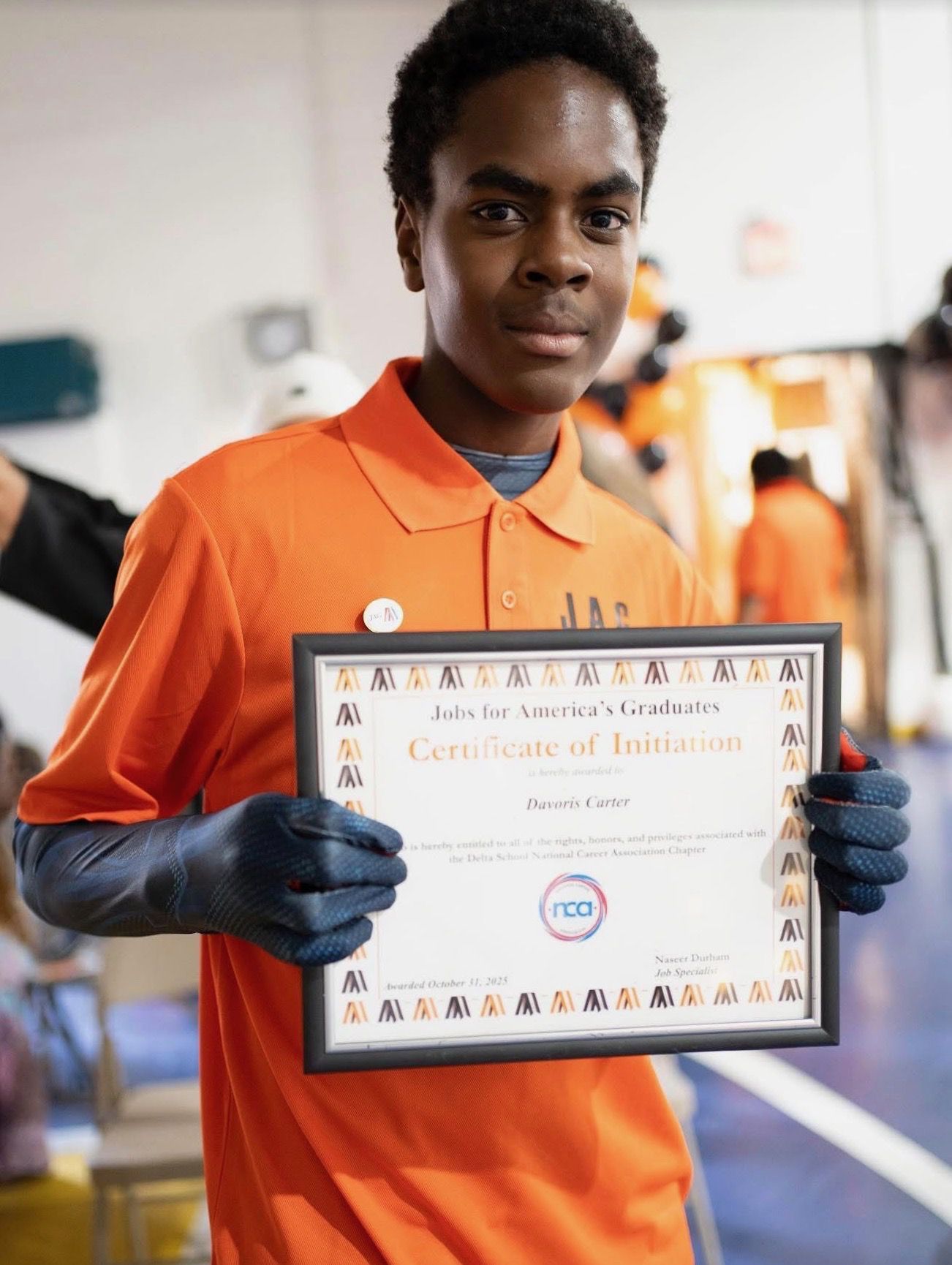
In a wrongful-death lawsuit filed Wednesday in Common Pleas Court, Shyara Hill, the 14-year-old’s mother, accuses the school of an “egregious and reckless failure to supervise and protect” her son and his classmates by letting them enter the ocean with no lifeguard on duty and leaving them unsupervised in the water.
“We are seeking accountability and justice for the tragic death of Davoris Peter Carter III, who senselessly drowned in a preventable accident, and we seek to assure that this kind of tragedy doesn’t happen again,” attorneys Tom Kline and Bob Mongeluzzi said in a statement.
Davoris Carter, a 14-year-old special-needs student from Philadelphia who went drowned in the Atlantic Ocean during a school trip in June 2026.Courtesy of the family
The private school near Northeast Philadelphia Airport serves students ages 6 to 21, according to its website.
Delta’s chief executive officer, David Weathington, declined to comment on the lawsuit.
“We continue to mourn the tragic loss of our beloved student, Davoris, and extend our deepest condolences to his family, friends, and the broader school community,” Weathington said in a statement.
June 1 was meant to be a celebratory day for Carter and his classmates.
The itinerary included time on the beach, lunch on the boardwalk, and amusement rides.
Parents were told staff would “be positioned to maintain full supervision and line of sight” on the beach, the suit says.
On the morning of the trip, Carter and four classmates left Delta en route to Wildwood, the suit says. Six staff members accompanied the students, as well as adult chaperones, including Carter’s stepfather, according to the complaint.
Carter and three other students entered the beach around noon with three Delta staffers while his stepfather remained on the boardwalk, the suit says.
Because the trip was on a weekday early in the summer, no lifeguard was stationed at the beach.
But Delta staffers allowed four students to enter the ocean, the suit says, with one staffer briefly entering the water with them.
Delta staff members did not continuously supervise or keep the children in sight while they were in the water, the suit says.
A Delta staffer on the shore noticed the students were more than 20 yards into the ocean, the suit says. He yelled at them to swim back, but the students struggled, according to the complaint.
Carter “could not overcome the strong ocean current as his body began to tire,” the lawsuit says, and he began drifting away.
The Delta staffer reentered the water and Wildwood police arrived quickly to assist in the rescue effort, the complaint says. Three students made it back to shore and were taken to the hospital. Carter did not.
Swimmers from area fire departments and beach patrols, boats, and helicopters from agencies including the U.S. Coast Guard and New Jersey State Police, as well as people on rescue boards and personal watercraft, searched for Carter.
Three days later, Wildwood officials said the “initial large-scale search operation has concluded” even as recovery efforts and monitoring continued.
Carter’s body was found June 9 near the U.S. Coast Guard Training Center in Cape May.
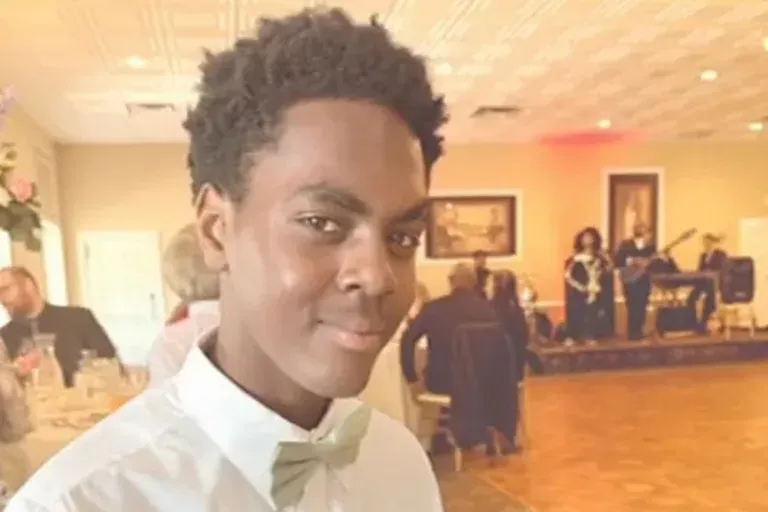
A photo of Davoris Carter III provided by his family.Courtesy of the family
The lawsuit says Delta violated school policies and procedures, which required staffers to maintain full supervision and sight of students who were in the ocean. It asks for an unspecified amount of compensatory and punitive damages.
Carter was the oldest of four siblings, Hill told The Inquirer previously. He was a kind and funny teen and a good student, and enjoyed basketball and ice hockey. Before his death, the teen had been accepted into the Philadelphia City Rowing program and the Philadelphia Police Department’s “explorer cadet” program, which introduces young people to aspects of law enforcement.
OTTAWA, Ontario ― Several leads were written and rewritten on a Thursday night in Canada. A laptop was almost thrown.
It’s what happens when a team plays badly, goes down by three goals in the third period, with all signs pointing to another loss coming, and then claws its way back to victory.
That team was the Flyers, who registered their first third-period, three-goal comeback since March 29, 2021, and their first overtime victory in seven tries this season with a 6-5 win against the Ottawa Senators.
Here are three things to know:
Oliver Bonk (59) and the Flyers were able to stay within striking distance despite a shaky second period. Keito Newman
The second period was ‘a disaster’
Jamie Drysdale was the first player to speak postgame, and he called the second period “really ugly.” Rick Tocchet was the last to speak, and the Flyers coach said it was “a disaster” and “one of our worst periods.” And the Flyers have had a lot of bad periods this season.
The Flyers were repeatedly hemmed into their own end. How bad? The stats match the eye test:
According to Natural Stat Trick, Ottawa had 78.1% of the shot attempts (32-9); surprisingly, only four were from high-danger spots.
The Flyers were outshot 11-3 and didn’t have a shot on goal until there was 3:59 left in the period. Christian Dvorak sent a shot from 30 feet out.
The Senators had 84.2% of the scoring chances, a whopping 16 on Joseph Woll. The Flyers had three.
Ottawa had an expected goals for of 1.3 — it scored twice — and the Flyers were at 0.15 — somehow scoring once. A 10.4% expected goal share is, well, less than ideal, but somehow the Flyers were only outscored 2-1.
But this was one of those games Tocchet has spoken about in the past, of winning a game when the team doesn’t have its “A” game. “Yeah, we kind of figured it out a little bit in the third,” Drysdale said. “It was ugly. We didn’t play very well, but we found a way. No quit.”
Added Travis Konecny: “You know what, we had a feeling that we weren’t out of it. I don’t know why; sometimes when you’re getting so much pressure from a team, sometimes it feels like you’re not able to come back, and then there’s other times where you feel like you’re applying pressure still, and you’re going to get your opportunities. And I think that’s how we felt for the most part.”
The Flyers have gained at least a point in six of their past seven games. Are they back? Sort of. While they are playing much better than at the start of the season — and have more confidence to come back like they did Thursday — they are still struggling to find a complete 60-minute effort.
First 18 games
Stats at all strengths
Last seven games
4-10-4 (0.333)
Record
4-1-2 (0.714)
45.8
CF%
51.1*
23.5, 29.3
Shots, Shots against
27.7, 23.7
39.4
GF%
50.0
43.6
xGF%
58.3
43.8
SCF%
54.6
43.1, 44.9
HDCF%, HDGF%
61.9, 66.7
*The Flyers have the most shot attempts in the NHL since Nov. 8 (395), after having the fourth fewest (179) across the first 18 games.
Travis Konecny’s outing in Thursday’s win was encouraging. Yong Kim / Staff Photographer
Is Travis Konecny back?
It sure felt like a statement game from Konecny. The veteran forward spoke to reporters after participating in an optional morning skate — a bit of a twist for the alternate captain — and addressed the recent reports swirling around him.
He also provided insight into where his game is after missing 10 games — he was hurt in the Flyers’ first meeting with the Senators on Oct. 8 — and how he needs to get out of his own head.
“It’s all upstairs for me, I think,” he said. “I’ll go out there and play physical and still try to make a difference and make sure I’m not affecting the team while I’m going through something like that. And just trying to help us win … and not get in the way of that, obviously. But, yeah, it’s just up top; you just got to get past your own thoughts.”
On Thursday, Konecny not only had three assists in regulation — a heads-up pass to Owen Tippett for his power-play goal, a secondary assist on Cam York’s first goal, and a pass right in Tyson Foerster’s wheelhouse for a quick strike to make the score 5-4 — he also scored the overtime winner for the Flyers.
“TK, heck of a game, took charge, especially in that third period. Very vocal and awesome to see,” Drysdale said.
“He’s the man,” the defenseman added. “You know how much of an impact he has off the ice alone, and when he’s playing, the way we all know TK can play, he’s a difference maker at the end of the day, and he was that tonight.”
While he was putting up his first four-point night since January 2025, Konecny played more than 18 minutes for the sixth time in his 15 games and got the most shifts (25) since the second game of the season. He also led the team with four hits.
“That was vintage TK,” said York, who Tocchet acknowledged as a key player with two goals. “When he’s going, there’s not many guys like him in the league. He’s an elite talent, so it’s fun to watch him when he’s like that, just confidence flowing and buzzing around.”
The Flyers scored early in the extra session and did not allow a shot on goal during the frame. Keito Newman
An overtime win
The last time the Flyers won an overtime game, York threw his stick into the stands. It was way back in the Flyers’ first-round series-clincher against the Pittsburgh Penguins. Since then, including two overtime losses in the second round to the eventual Stanley Cup champion Carolina Hurricanes, the Flyers have lost five games in overtime and one in a shootout.
But when their first chance came after working diligently on three-on-three action during a long practice in Columbus, Ohio, on Oct. 13 — two days after losing to the Edmonton Oilers in the extra session — the Flyers were victorious.
The overtime was short, with Konecny scoring 39 seconds in on a squeaker through former teammate Sam Ersson. And because of that, the Flyers held the Senators off the shot chart.
“We’ve struggled a little bit for sure in overtime,” Drysdale said. “So we’ve got to start somewhere, and it’s a good place to be.”
Tocchet started with Konecny, Drysdale, and Christian Dvorak, who did lose the opening faceoff, something Tocchet has mentioned was important to get on the right foot.
And the Senators did come close to a scoring chance, but Drysdale closed out Dylan Cozens, looking for a hat trick, and kept him to the outside. Konecny then chopped the puck away from Jake Sanderson, with the puck going to Joseph Woll, who smartly kept it in play.
The Flyers headed up ice, with Drysdale drifting back after getting the puck for Konecny, allowing the forward to gain speed before getting the puck back. He used his speed to create space and scored his second game-winner of the season.
It all followed two of the three tenets Tocchet was trying to install, with the one that didn’t come into play being better line changes. He noted that you can’t lose pucks in certain areas — the Flyers were able to get control in their own end and made smart decisions to maintain possession — and you can’t throw pucks away, with Drysdale making a tape-to-tape pass and Konecny keeping it for the strike.
“We’ve been talking a lot and actually practicing it quite a bit, and it’s just, I think, being on the attack mentality, wanting to kind of be the team to apply the pressure, but also keeping control of the puck,” Konecny said.
“… Jimmy makes a great play to see me kind of cutting up the ice, and then had a little one-on-one match going with Erss there. He got me in the first, and I got him back.”
As Nvidia became wealthier and wealthier in recent years, Jensen Huang grew increasingly frustrated with his staff.
He told groups of subordinates that they had become so rich that he couldn’t motivate them simply with money, according to three people who spoke on the condition of anonymity to discuss confidential conversations. The only way he could grind more work out of them, he added, was through humiliation.
This was an extension of a philosophy that went back decades. Huang had for years been berating his employees, documents and interviews show. His tongue lashings were savage and inventive. He told one executive that his mother should have aborted him, according to one witness. He said he would rip both arms off a subordinate and beat the person over the head to death with them. And he told another employee he would rip off the top of their head and “pee on your brain.”
The tirades were a centerpiece of the culture at Nvidia throughout its meteoric rise to a $5 trillion company and cornerstone of the artificial intelligence revolution. They were also foundational to Huang’s management style.
“I’d rather torture you into greatness, because I believe in you,” he once said.
He has long used humiliation as a tool, excoriating employees in front of their peers with insults, personal attacks and violent comments, while telling them it was good for them or for the business, according to more than a dozen current and former employees, who spoke on the condition of anonymity for fear of reprisal, and to a review of hundreds of pages of court records and other documents spanning more than 20 years. The behavior kept Nvidia’s human resources department busy fielding workplace complaints, but some employees said the department did not take them seriously.
Huang also inspired love and reverence from many of his employees. Thousands have signed a letter asking for his return. Some have tattoos of Nvidia’s logo. Both those who liked Huang and those who disliked him described Nvidia as cultish. He cultivated loyalty through not just his technical mastery but also acts of personal compassion and praise. But he ruled through fear.
Huang’s behavior began long before Nvidia became one of the most valuable companies in the world. In at least two cases originating in the mid-2000s, the company struck settlements with former senior leaders, both of whom had raised concerns about Huang’s conduct, saying it was unlawful and exposed Nvidia to liability.
Michael Winston, a former senior vice president of human resources, threatened to sue Nvidia in 2005, saying that he had been fired after objecting to Huang’s conduct, which he described as “the most verbally abusive, threatening, and intimidating behavior” he had witnessed in his career. Huang “thinks he can get away with anything,” Winston wrote in notes he made around that time, which were reviewed by the New York Times.
Michael Winston, a former senior vice president of human resources at Nvidia, who reached a confidential settlement after threatening to sue the company, in Westlake Village, Calif., on Feb. 11, 2011. J. Emilio Flores
Nvidia reached a confidential settlement agreement with Winston for more than $1 million, which has not been previously reported.
Huang resigned from Nvidia last week, after revelations of multiple extramarital relationships, including one with a subordinate and another with a woman whom U.S. intelligence believes to be a Chinese intelligence asset. But his imprint remains on the culture of the company he cofounded in 1993.
Some managers followed Huang’s lead, six current and former employees said — including his own daughter, Madison, who as his de facto chief of staff often yelled at people, including executives senior to her. (She continues to work at Nvidia.)
Huang denied Winston’s allegations in a statement from his spokesperson, John Fisher, saying they are from an employee who was fired. They are “fabrications that are now impossible to disprove specifically, and the thousands of Nvidia employees who continue to speak out for Jensen show they’re false,” Fisher said. Fisher declined to answer other questions regarding Huang’s behavior.
Nvidia declined to comment. Its board and Colette Kress, its interim chief executive, must now decide if the company will continue in the mold of Huang or forge a new way forward. She will do so in the face of pressure from Huang and his supporters, who are agitating for his return to the company. Huang once belittled Kress in a meeting with top executives, the Wall Street Journal reported.
Harvey C. Jones, the chair of Nvidia’s board, said Tuesday that it “does not intend to reinstate Jensen as CEO.” Earlier this month, the board opened an investigation into Huang.
‘It pained me’
Silicon Valley has a long history of founders and chief executives with caustic management styles. Steve Jobs, the cofounder and chief executive of Apple, was infamous for screaming at and insulting employees who did not meet his exacting standards. He was also beloved. Employees credited his approach with helping to create culture-changing products like the iPod and iPhone.
Huang had a similar effect on his staff. He created a flat organizational structure where he interacted with employees at almost every level of the business. He impressed them with his vision for the future of technology, his command of business strategy and the speed at which he tackled and seemed to conquer new areas of importance, leading the company to the forefront of the AI boom.
Many of the company’s senior leaders have worked for Huang for more than a decade. Some shared Huang’s belief that mediocrity should be stamped out and excellence pursued, said four current and former employees. If employees didn’t like it, they could leave.
But in the eyes of some, Huang’s behavior was extreme, even by Silicon Valley standards.
In September 2004, Winston joined Nvidia to lead human resources. A longtime human resources executive who previously worked at Merrill Lynch and Motorola, Winston was soon taken aback by the disarray of the HR department and the cultural norms of Nvidia. This account of his time at the company is based on interviews and Winston’s notes and emails, as well as drafts of a lawsuit and other legal documents reviewed by the Times.
In his first days at Nvidia, he learned that two key human resources leaders had just quit and others were on the verge of resigning.
That October, at a two-day off-site meeting attended by about 50 employees, Winston said Huang unleashed graphic violent threats.
“You have to do this, or I will rip your f— heart out and stomp on it,” Huang said at one point.
“I watched them helpless, as they were publicly humiliated, indeed tormented, for extended periods of time, by this lunatic!” Winston said in his notes. “It pained me physically, intellectually and emotionally to be in the room.”
Winston said other attendees were “terrorized” and pleaded with him to intervene. Days later, he voiced his concerns during a meeting with top executives. One told him that the conduct was typical but could be a liability for the company. Another advised him to “toughen up.”
Winston said he then confronted Huang, warning him that he had “crossed the line” and that mistreating employees could expose Nvidia to lawsuits. He said Huang dismissed the concerns and defended public humiliation as a “rite of passage.” Winston said Huang bragged to him that he subjected new employees to it during their first six months at the company to test whether they would stand for it.
Winston said Huang told him that he would not stop. “It has good entertainment value,” Huang told him.
That November, Winston was called into a meeting with Huang and another executive, who then fired him. Huang told Winston that he was “not a good fit.” If Winston sued Nvidia, Huang said he would make sure Winston never worked in Silicon Valley again.
“To say Nvidia fired me because it just was not ‘a fit’ is nothing more than a smokescreen,” Winston said in his notes. “The real issue,” he wrote, was Huang’s “unconscionable behavior.”
In the months that followed, Winston filed a formal complaint against Nvidia with California’s Department of Fair Employment and Housing, making allegations that he was fired for opposing Huang’s treatment of employees, including what he said constituted sexual harassment. Winston then drafted a lawsuit against Nvidia and Huang.
But before the complaint was filed, both sides reached a settlement. Neither side admitted liability or wrongdoing.
Winston rejoined the banking industry, and later blew the whistle against Countrywide Financial Corp. for its conduct during the buildup to the financial crisis. He died earlier this year.
In 2007, Stephen Pettigrew, a former lawyer for the company, sued Nvidia over claims that included age discrimination and retaliation for reporting Winston’s allegations of sexual harassment. Pettigrew reported in a complaint filed with the California Department of Fair Employment and Housing that he sought “emergency medical attention for severe nervous tension and anxiety, as a direct result of the actions of Nvidia.”
Pettigrew discussed Winston’s complaint during depositions for his own lawsuit, citing Winston’s allegations as evidence of misconduct that exposed Nvidia to legal risk. Nvidia’s general counsel at the time, David Shannon, confirmed during another deposition in the case that Winston’s dispute was resolved in a pre-litigation financial settlement.
Nvidia denied all wrongdoing, and said that Pettigrew was fired for poor performance. The company countersued, saying that he breached his contract and misused company documents. The case ultimately settled out of court in 2009.
‘Thank you, Jensen’
After Nvidia’s chips were used in 2012 to train an early artificial intelligence system, Huang concluded that the future of computing would be AI. Employees recall receiving his email on a Friday saying the company was pivoting its business from graphics to deep learning, a precursor to AI. He froze hiring for anybody but experts in that field, and Nvidia became an AI chipmaker overnight.
A decade later, Huang’s bet paid off when ChatGPT arrived, kick-starting frenzied interest and investment in AI. Demand for Nvidia’s chips skyrocketed, and the company’s value soared. Many of the company’s 42,000 employees became fabulously wealthy and were exhilarated to be at the forefront of a technology Huang referred to as the next Industrial Revolution.
In the wake of Huang’s resignation, some employees have shared stories of a boss who went out of his way to support them. Last week, Vartika Singh, who works on strategy at Nvidia, recalled Huang’s support when her sister had brain cancer.
“Thank you, Jensen,” Singh wrote in a social media post. “For your guidance, for believing in people and ideas long before the rest of us understood them, and above all, for your extraordinary humanity.”
Huang’s mix of disparagement and motivation created something akin to Stockholm syndrome, six current and former employees said. The phenomenon, in which somebody held captive develops an emotional bond with their abuser, mirrored their relationship with Huang, they said.
Rather than fire people, Huang sometimes preferred to further humiliate them. When Ned Finkle, his former vice president of strategic marketing, faltered in a meeting with a major customer, Huang chewed him out in front of executives from the other company, said two people who spoke anonymously about the private exchange.
Huang then named Finkle vice president of external affairs, or government relations. At the time, Huang considered it one of the least important jobs at Nvidia, the two people said. Finkle did not respond to requests for comment.
Power plays
Huang’s tirades continued until the end.
He usually did not meet one-on-one with subordinates because, he has publicly said, such meetings reduced transparency within Nvidia. But top executives considered the move a power play that gave Huang more control. If anyone disagreed with Huang, they would have to do so in front of a group. Huang could then fire back, ridiculing that person in front of everyone else.
Huang also ripped into longtime leaders in front of their own teams, telling them their boss was incompetent and unqualified, two people said.
In one instance, Huang went around a room, telling managers he would kill them, according to one person with knowledge of the incident. When he reached a person in their 70s, Huang said that the person was really old and everyone hoped they would drop dead.
Huang also made personal attacks. He once made fun of an executive who had taken his children camping and said he needed to find a more committed employee for the job, according to one person. He often mocked another executive for enjoying aviation as a hobby, two people said.
In 2019, after Nvidia lost a bid to help build a U.S. government supercomputer, Huang castigated a sales executive in front of government officials for missing out on part of a contract worth hundreds of millions of dollars. The executive then threw his employee badge at Huang, who said he accepted the executive’s resignation on the spot, according to two people with knowledge of the incident.
Huang’s behavior rubbed off on other senior leaders at the company, including his daughter, Madison. On one call last year with Nvidia’s marketing team, Madison Huang repeatedly berated a vice president, who then left the call, according to a recording of the meeting reviewed by the Times.
“I’m having an anxiety attack,” the vice president said. “I’m going to drop off. I’m sorry.”
Madison Huang did not respond to requests for comment.
As Nvidia became the linchpin of the AI boom, Huang’s conduct started to spill outside the company. At Nvidia’s developer conference earlier this year, Huang moderated a panel with business partners, including Arthur Mensch, the CEO of the French AI startup Mistral.
During the panel, Huang interrupted Mensch several times, apparently taking issue with his French accent, according to two people who watched the talk.
“You’re not even speaking human,” Huang said at one point, before another panelist intervened. A spokesperson for Mistral declined to comment.
Daniel Gutierrez, an AI researcher and longtime “Jensen fan” who was watching the panel, said the interaction changed his perspective on Huang.
“I thought in the moment, what is happening right now that’s causing you to attack this poor guy?” Gutierrez said. “When all the new stuff happened in the last week, I go, wait a minute now. Maybe Jensen isn’t the guy I thought I revered.”
WASHINGTON — The Senate on Thursday passed sweeping legislation to overhaul federal permitting rules in an effort to make it easier to build all sorts of large projects in the United States, from gas pipelines to railway expansions.
The bill, which was approved by a 62-33 vote, would amend or pare back several landmark environmental laws to allow for faster federal approvals of long-distance power lines, wind and solar farms, gas-fired power plants, broadband, housing, and more.
Overall, the legislation represents the biggest change to environmental law in a generation, experts said.
Nearly every Republican senator voted for the bill, which had the enthusiastic support of the Trump administration, business groups, energy developers, and labor unions.
But most Democrats were opposed, and only 15 senators who caucus with the party voted for the measure. The legislation was contentious with environmentalists, who said that many of its changes would limit the ability of communities to use lawsuits to fight polluting facilities, as well as with many Native American tribes.
The legislation must now pass the Republican-controlled House, where its fate is uncertain. Lawmakers won’t be in Washington next week, and they face a tight timeline to fund the government and consider a variety of other bills before the new Congress takes office in early January. President Donald Trump has indicated that he would sign the permitting overhaul into law if it reaches his desk.
The bill was put together after months of closed-door negotiations between two Republican senators, Mike Lee of Utah and Shelley Moore Capito of West Virginia, and two Democratic senators, Sheldon Whitehouse of Rhode Island and Martin Heinrich of New Mexico.
The legislation was partly a response to long-standing complaints from businesses that building virtually anything in the United States has become too difficult. One giant wind farm and power line in New Mexico took nearly 20 years to complete after numerous lawsuits and route changes. Regulatory challenges delayed a 303-mile natural gas pipeline through Virginia and West Virginia for a decade.
The challenge has become more acute in recent years as the country has struggled to build enough power sources to keep up with soaring electricity demand, especially for artificial intelligence data centers.
While Republicans have long favored cutting environmental rules that can inhibit industrial development, a growing number of Democrats like Whitehouse have also recently come to support streamlining federal permitting. Some argue that it will be extraordinarily difficult to reduce planet-warming emissions and tackle climate change without building many more long-distance power lines and large solar arrays.
At the same time, many Democrats are weighing affordability concerns after making huge gains in the midterms by channeling voter anger at rising prices. Electricity prices in the United States have increased by roughly one-third since 2019, and some studies indicated that the permitting bill could help lower costs by a few percentage points by making it easier to expand energy supplies.
Even so, the bill faced a significant backlash. Major green groups like the Sierra Club and the Natural Resources Defense Council opposed it, as did 17 Democratic state attorneys general. Critics warned of a barrage of potential environmental harms, including a spate of new gas-powered data centers or new mining in sensitive habitats.
In the final days before passage, the bill received significant pushback from Native American tribes that criticized the bill’s alterations to the National Historic Preservation Act. That 60-year-old law lays out how the federal government should consult with tribes on projects that could affect areas of cultural significance. The bill seeks to narrow and speed up some of those processes in ways that tribal groups said would leave them with less input into new industrial developments.
The bill would curtail landmark environmental laws that have guided courts and policymakers for decades.
For example, the 1970 National Environmental Policy Act, or NEPA, requires many projects with federal involvement to go through lengthy reviews that document their potential impacts on air and water. The bill would exempt certain projects, such as expansions of pipelines or power lines along existing routes, from these reviews. It would also set tighter deadlines and restrict the ability of environmental groups and communities to sue under NEPA.
Notably, the bill would prevent courts from halting a project if they found an environmental review inadequate. Judges could only order federal agencies to update reviews while construction proceeds. Industry groups had pushed for that provision, but some environmentalists fear it could render NEPA toothless by removing a key enforcement mechanism.
The bill makes other major changes, such as limiting states’ ability to object to gas pipelines under the Clean Water Act and providing ways for state governments to oversee endangered species reviews.
Other provisions aim to prevent presidents from rescinding permits for already approved developments or blocking projects they don’t like, something both parties pushed for in response to Trump’s efforts to obstruct wind and solar developments and the Biden administration’s efforts to stifle oil drilling on public lands.
Yet some legal experts warned that these “project certainty” provisions were ambiguously written and could create unintended consequences, such as potentially preventing future administrations from issuing new pollution restrictions.
One of the most far-reaching sections in the bill aims to expand the electric grid by pushing utilities to plan more long-distance power lines and giving the federal government greater authority to site transmission across state lines. The United States has built very few long-distance power lines in recent years, in part because of permitting obstacles, and supporters say a bigger grid could potentially help the country use far more wind and solar power while lowering costs and averting blackouts.
In a nod to the growing backlash over data centers, the bill’s authors also inserted a provision that would charge the energy-hungry facilities far more for electricity. One study estimated that these provisions could potentially save tens of billions of dollars over the next decade for households and other ratepayers. Yet the bill is also expected to benefit the AI boom by making it easier to build power plants, pipelines, and transmission to serve new data centers.
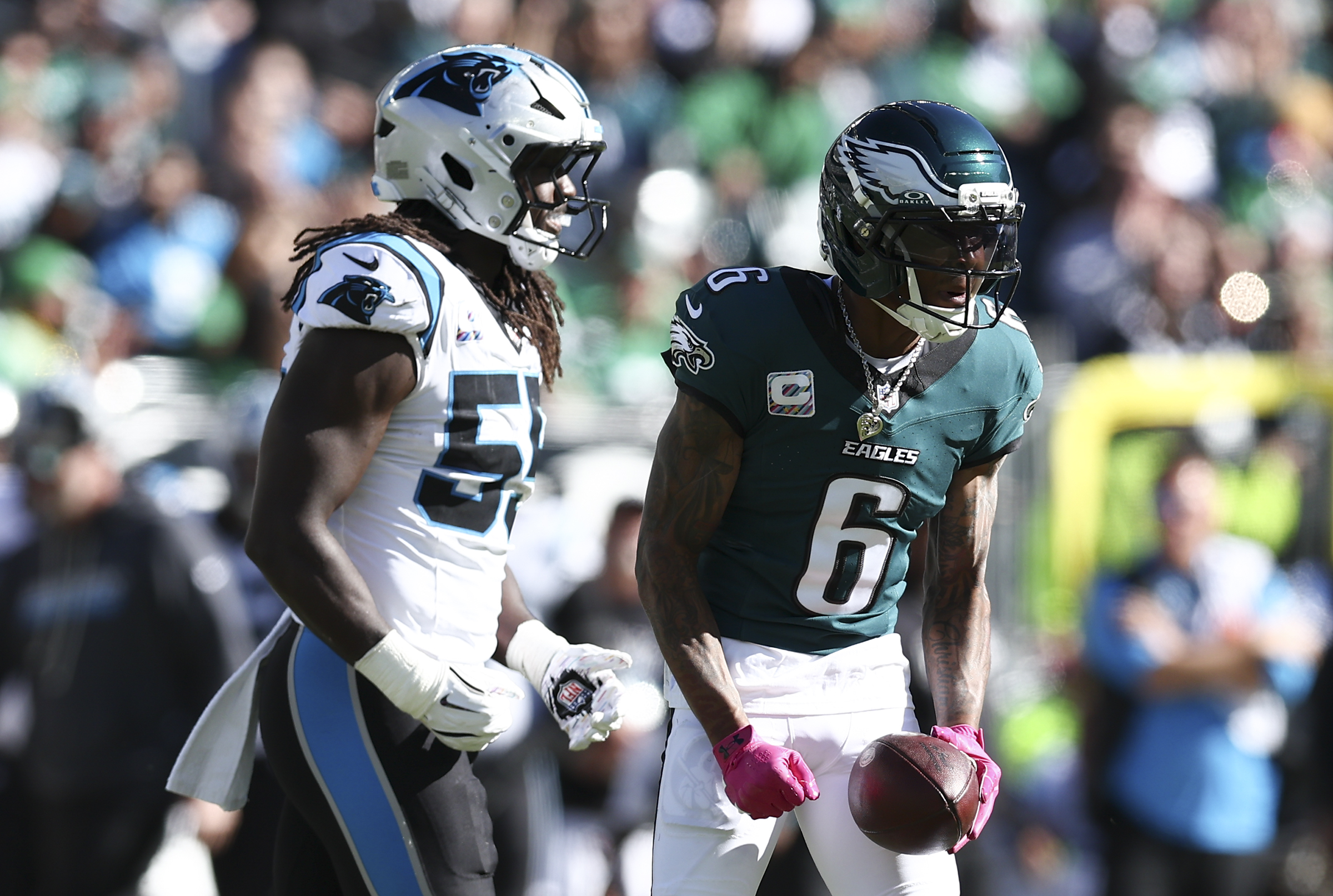
The Eagles, who have lost seven straight games, will look to get back on track against the Pittsburgh Steelers on Sunday at Lincoln Financial Field (1 p.m., CBS).
The Birds (2-7) are coming off a bye week, while the Steelers (6-3) are looking to bounce back from a 38-18 loss to the Cincinnati Bengals. With DeVonta Smith expected to return from injury, the Eagles will try to find some momentum for the rest of the season.
Here’s a look at what experts are saying ahead of Sunday’s matchup.
Video: What is the Eagles’ endgame with the 2026 season? | unCovering the Birds
Inquirer predictions
All three Inquirer beat reporters are picking the Steelers.
Jeff Neiburg said the return of Smith and Wicks on offense might add some hope, but he’s going to “need to see it to believe it.”
Read more of Neiburg’s take and the rest of our predictions here.
National media predictions
NFL.com: All five experts picked the Steelers over the Eagles. Analyst Gennaro Filice said, “Because I envision Terrible Towels flying across the Linc in this battle of Pennsylvania. For the first time in the Nick Sirianni era, Philadelphia’s season is over before Thanksgiving. The Eagles entered their Week 10 bye with a seven-game losing streak and came out of it without their best run-stuffer.”
ESPN.com: Pamela Maldonado is the lone expert out of the 11-person panel to back the Eagles.
The Athletic: Six of the seven panelists picked the Steelers over the Birds. “Vic Fangio’s defense is in the bottom seven in efficiency, allowing +0.24 EPA per pass on blitzes,” J.J. Bailey wrote. “And their offense is strictly a volunteer unit at this point. If you can’t beat that, even in Philly, look inward.”
CBS Sports: Every CBS Sports expert picked Pittsburgh.
USA Today: Nick Brinkerhoff is the only expert out of six choosing the Birds.
Sports Illustrated: Seven of the eight analysts picked the Steelers. Mike Kadlick was the only analyst to back the Eagles.
Bleacher Report: Out of the seven-person panel, Brent Sobleski was the only expert to back the Birds against the 4.5-point spread. “The Eagles have the luxury of playing at home while coming off their bye week,” Sobleski said. “Plus, the roster is getting healthier.”
Pro Football Talk: Mike Florio has the Steelers winning, 16-12, writing, “Pittsburgh has no chance at holding its ticket to another quick exit from the playoffs if it can’t win the games it’s supposed to win.”
Sporting News: Bill Bender has the Steelers winning, 26-18.
Eagles wide receiver DeVonta Smith is expected to be back Sunday after missing time with a hamstring injury.Monica Herndon / Staff Photographer
Local media predictions
Philly Voice: All four analysts backed the Steelers. Geoff Mosher said, “The Eagles are getting healthier on offense, but we still won’t see progress until they feature some kind of respectable run game. Unfortunately for them, the Steelers’ defense is not a get-right group for your run game.”
Bleeding Green Nation: Alexis Chassen and Ben Natan picked the Birds, and the four other experts went with the Steelers.
Metro Philly Sports Network: David Neisz is picking the Steelers, 23-13. “The Eagles have struggled to play over four quality quarters of football this season, and it is hard to bet they’ll do it now,” he wrote. “After more than six decades, it seems likely that Pittsburgh finally wins in the City of Brotherly Love and ends one of the strangest and longest road streaks in the NFL.”
Soufiane at the Morris, the ambitious French Moroccan restaurant that opened in June at the historic Morris House Hotel in Washington Square West, will close after dinner service Saturday, following months of financial difficulties that led to a staff walkout and an overhaul of its menu.
Owner Soufiane Boutliliss announced the closing Friday on Instagram, thanking customers and employees and saying that his other restaurant, Sofi Corner Cafe on Locust Street, would remain open, along with its catering operation.
“Sadly, despite our efforts, we could not overcome the financial and operational challenges that came with this adventure,” Boutliliss wrote. “The lessons have been difficult and deeply personal, but the beautiful memories we created together will stay with me forever.”
Soufiane at the Morris, 225 S. Eighth St., includes a barroom, dining room, and outdoor dining.Tyger Williams / Staff Photographer
The announcement comes four days after The Inquirer reported on an Oct. 3 walkout by staff, including executive chef Henry McGuigan, that was preceded by months of late and missing paychecks, dating back nearly to the restaurant’s June opening.
After McGuigan’s departure, Boutliliss put himself in charge of the kitchen, removing much of the French menu in favor of dishes rooted in his Moroccan heritage. The restaurant began operating with a substantially smaller staff.
Boutliliss and McGuigan offered widely differing accounts of the restaurant’s financial troubles, particularly over staffing decisions and labor costs. Former servers, bartenders, and kitchen workers described irregular payments and bounced checks.
According to his payroll and payment records, no servers are owed wages, Boutliliss said.
He acknowledged payroll delays and said administrative errors and excessive staffing had contributed to the problems. McGuigan disputed the owner’s characterization of labor costs and said Boutliliss had been involved in discussions about staffing.
“Looking back, if I could do things differently,” Boutliliss said in a statement, “I would have been much more involved in the selection of our executive chef, and perhaps taken a more direct role in the kitchen myself, while maintaining a stronger focus on the overall management of the restaurant.”
While it’s situated at the boutique Morris House Hotel, the restaurant at 225 S. Eighth St. operated independently and is not affiliated with the hotel. A representative of the hotel’s owner declined to comment.
Soufiane at the Morris represented a considerable leap for Boutliliss, who entered Philadelphia’s restaurant scene in September 2023 with Sofi Corner, a small cafe with a French Moroccan menu. The new venture had a full bar and seating for 100 between its dining room and courtyard.
Boutliliss said previously that Soufiane at the Morris’ financial troubles had depleted his savings. He said Friday that he planned no changes at Sofi Corner.
“At the end of the day, I’m responsible for this restaurant, and I fully accept that responsibility,” Boutliliss said in his statement. “I’ve learned a great deal from this experience, and I know there are things I would have done differently. But we can’t change the past. What matters now is how we move forward. We roll up our sleeves, learn from our mistakes, and keep going. We’re part of this community, we care deeply about Philadelphia, and we believe we still have a lot to contribute to its dining scene.”
ANTALYA, Turkey — The United Nations climate talks are wrapping up in Turkey after failing to produce any concrete agreements on how to drastically slash the use of fossil fuels, which experts warn is crucial to averting the most catastrophic effects of global warming.
The term “fossil fuels” wasn’t even mentioned in the draft of the final agreement — meant to address how the world will deal with climate change — sending activists and country leaders into an uproar Friday, the last scheduled day of the two-week summit known as COP31. Such agreements, often adopted by nearly 200 nations, are voluntary and nonbinding.
Negotiators, who pulled an all-nighter from Thursday into Friday, said they expect to go into overtime on Saturday.
Although past summits also have failed to agree on how to transition away from fossil fuels that fuel global warming — primarily coal, oil, and gas — this year’s talks came amid urgent warnings that the planet is sure to overshoot the goal set in the 2015 Paris Agreement of limiting warming to 1.5 degrees Celsius (2.7 degrees Fahrenheit) above pre-industrial temperatures.
“There is nothing on the table that protects people, or addresses the priorities of the Global South,” said Tasneem Essop, executive director of Climate Action Network International, at a Friday event, where attendees chanted and held signs that read “SHAME!”
As talks near their end, fossil fuel debate rages
One of the main goals on the table would increase the share of electricity in total global energy consumption from roughly 21% today to 35% by 2035.
But the final draft doesn’t stipulate that electricity should be generated with renewable energy sources like solar and wind, leaving the door open for fossil-fueled power plants to be counted as part of an electrification push.
“At a time when the climate crisis demands decisive action, weakening commitments on fossil fuel phase-out risks undermining progress,” said Ghiwa Nakat, executive director of Greenpeace in the Middle East and North Africa.
The U.N. has hosted climate talks for more than 30 years, but didn’t acknowledge that fossil fuels contribute to climate change until the 2021 summit in Glasgow, Scotland. Two years later in Dubai, United Arab Emirates, countries explicitly called for a transition away from fossil fuels for the first time.
Turkey’s Murat Kurum, minister of environment for Turkey, who is overseeing this year’s summit — co-hosted with Australia — said the electrification push implies a transition away from fossil fuels, adding: “We are not here to discuss decisions at previous COPs.”
In a rare move, Panama vowed to “formally object” if the final agreement doesn’t add climate finance, cap oil production, and acknowledge failing goals, among other demands. The country’s Environment Minister Juan Carlos Navarro said the talks are being held hostage by a “petroleum mafia” and need to be reformed.
“The COPs have become an exercise in hypocrisy and futility,” he said. “What we have here is a contest to see who speaks the most, who blows the most hot air.”
Vulnerable nations say climate finance is lacking
The draft agreement also says a fund to compensate countries ravaged by climate change should be tripled but doesn’t specify an amount. A previous version of the draft said at least $120 billion would be needed annually to help the mostly poorer, vulnerable nations that are bearing the brunt of climate disasters despite contributing little to the problem.
The money is supposed to come from wealthier nations that have contributed most to climate change. But rich countries are not even providing previously agreed upon funds.
Complicating the goal is that many of the world’s most polluting nations did not participate directly at this year’s talks, including the United States, the second-biggest polluter behind China and the largest historical emitter.
“Disappointment is rife,” said Iskander Erzini Vernoit, an adviser to African negotiators in Turkey. Next year’s climate summit is scheduled to take place in Ethiopia’s capital, Addis Ababa, in November 2027.
“Hope is not lost, but absent a course correction, we are headed toward a low-ambition set of outcomes at COP31,” he said.