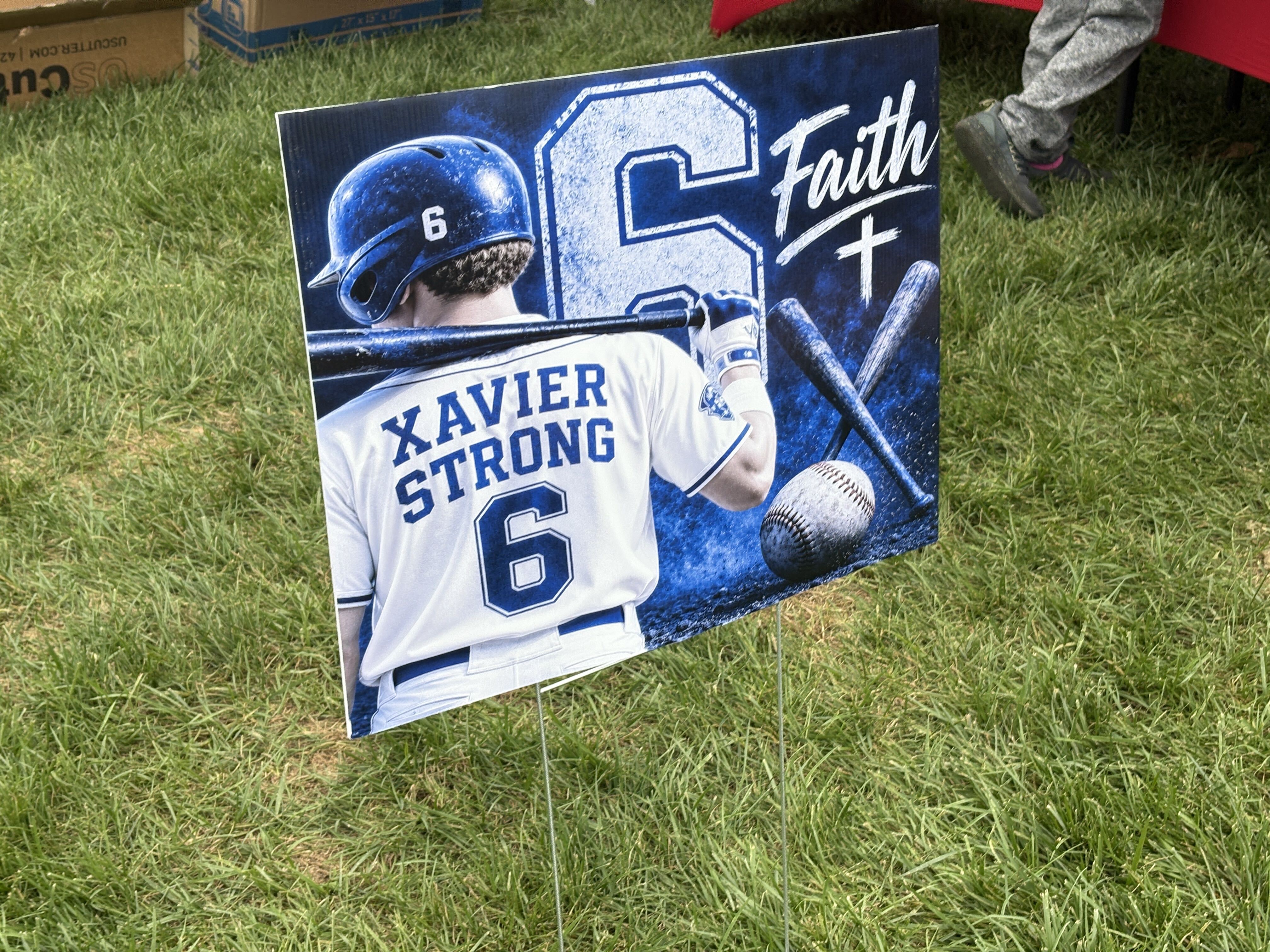
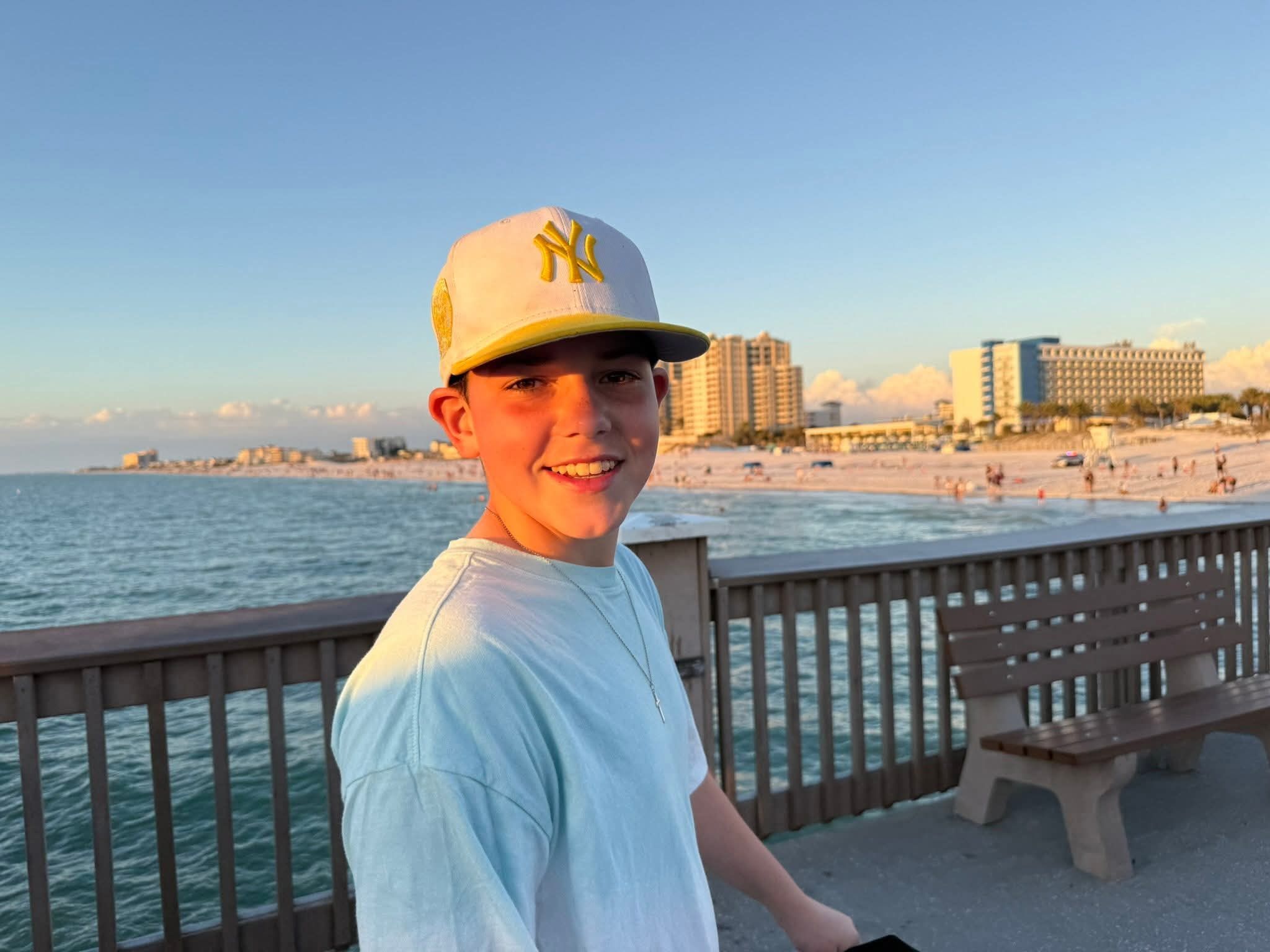
The region is mourning the loss of Xavier Taylor, the 12-year-old athlete from Maple Shade who died after he was struck in the head by a baseball before one of his games.
And Mount Laurel’s mayor made it clear that he is not a fan of the idea of implementing an outright data center ban, referring to the practice that other towns have adopted as “all theater.”
Plus, Low Cut Connie’s Adam Weiner and the Ben Vaughn Quintet are set to perform tonight, and more news of the day.
Xavier Taylor died Wednesday after spending five months in the hospital, roughly a week before his 13th birthday.
His community in Maple Shade and throughout the region has shown support in the form of prayer vigils, yard signs, and T-shirts sporting his name and jersey number. The Ben Franklin Bridge was lit blue for him in June and professional baseball players posted videos about him.
After his death, his community is sharing the stories that reflect his impact. Loved ones told The Inquirer that Xavier was known as a talented player bursting with energy and who knew extensive baseball trivia. He enjoyed making people laugh, too.
The township is inviting residents to illuminate their homes blue through Nov. 27 in his honor.
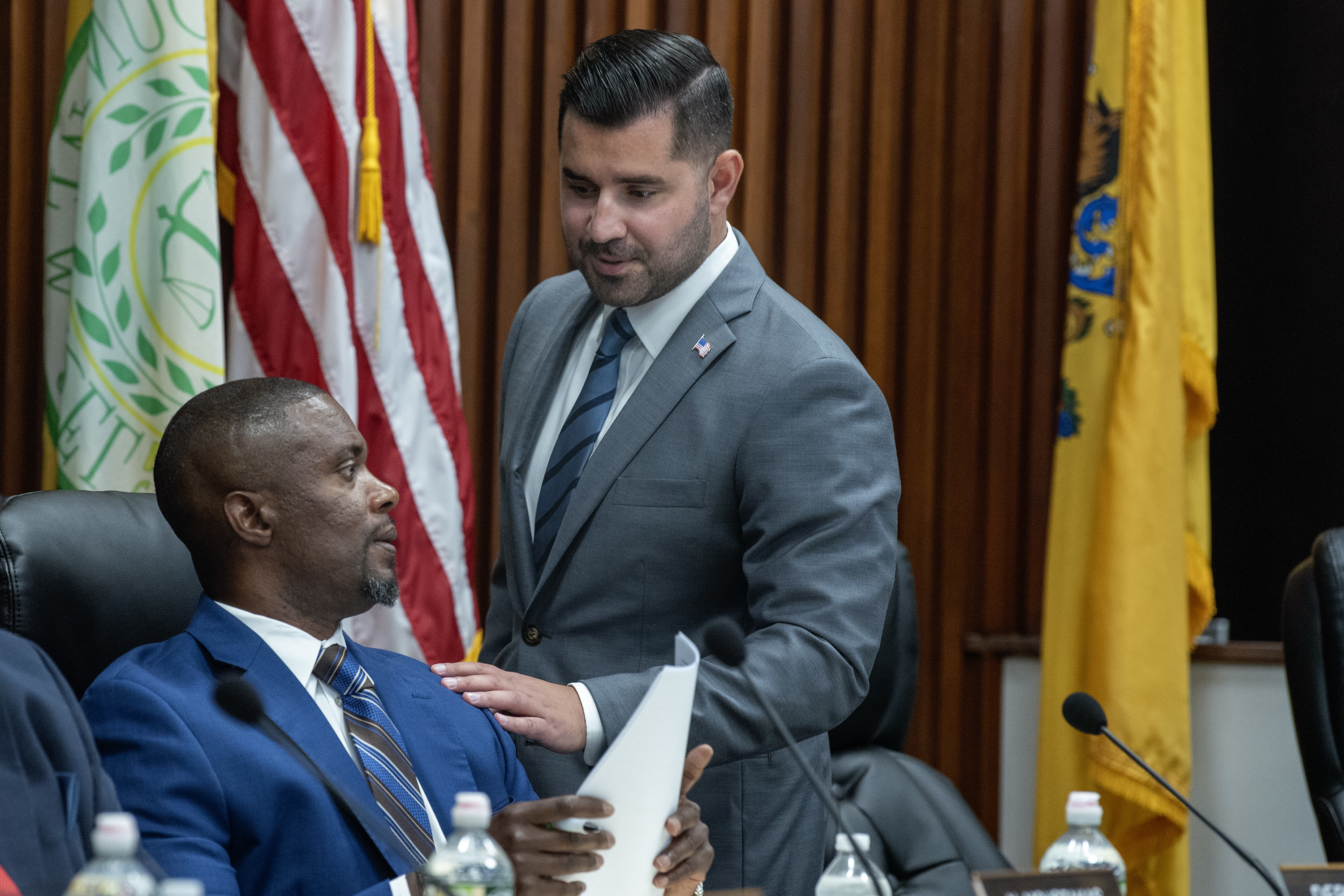
Mount Laurel Mayor Stephen Steglik seems to be firm in his stance against data center bans.
When residents pushed for council members to support a ban of any future development of the facilities during a Monday evening township meeting, he warned about ramifications. In particular, he raised the alarm about a potentially expensive lawsuit.
Nearby Cherry Hill passed a prohibition in July. Meanwhile, Monroe Township is in an ongoing legal fight with a developer in federal court after it denied its bid for a center and passed a ban.
“Why anyone would tell you your township can specifically ban an industry is beyond me,” Steglik said. “Personally, I think that’s irresponsible with rhetoric, and that’s not my brand of politics or my kind of leadership.”
So far, there haven’t been any proposals for data centers in Mount Laurel.
Police are warning South Jersey businesses to be alert for someone using fake $20 bills after an alleged incident in Washington Township, where someone used counterfeit money to purchase a $400 gift card at a Wawa to pay for online sports betting earlier this month, per NBC10.
The Delaware River Port Authority commissioners approved a five-year capital program Wednesday which means there will be $807.2 million intended for infrastructure work for the four bridges and PATCO, Philly Voice reports.
When Low Cut Connie and the Ben Vaughn Quintet perform tonight at Union Transfer, it’ll be the first time Adam Weiner and Ben Vaughn will share a stage in Philly. The two South Jersey natives, Weiner from Cherry Hill and Vaughn from Mount Ephraim, are both protégés of Jerry “The Geator” Blavat.”
Washington Township High School senior quarterback Jalen Parker at practice Wednesday. He will compete in the NJSIAA Group 5 semifinal Friday night. Tom Gralish / Staff Photographer
And that’s all I have for you this morning. Enjoy your weekend. 😎
By submitting your written, visual, and/or audio contributions, you agree to The Inquirer’s Terms of Use, including the grant of rights in Section 10.
This week’s edition of Shackamaxon covers a short-lived reprieve, the future of Market East, and a welcome flood of candidates for city jobs.
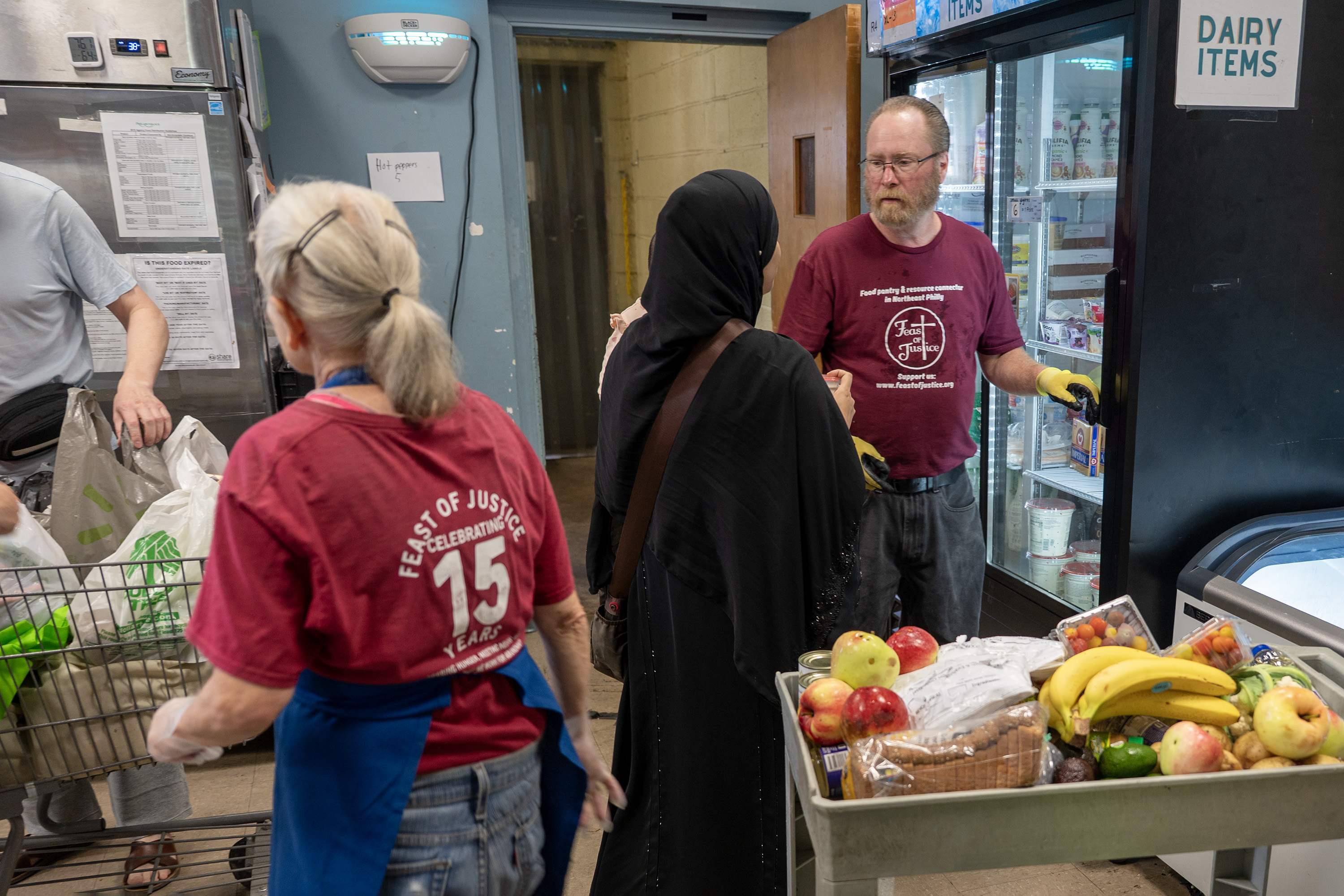
Volunteers help clients load groceries into their shopping carts at the Feast of Justice Food Pantry in August.Tom Gralish / Staff Photographer
Poorest, again
It was nice while it lasted. Last fall, Philadelphia shed a title we’d held for too long: America’s “poorest big city.” One year later, we’re back.
Unfortunately, this should not be a surprise. While poverty in Philadelphia has slowly receded from 2011’s high of 28%, the city and the region simply do not have enough jobs or economic opportunities to lift up the roughly one in five residents who live in poverty. In fact, research suggests the stagnation has led to Philadelphians of all income levels being less likely to earn more than their parents. Out of the 50 cities economist Raj Chetty looked at for economic mobility, Philadelphia was 50th.
There are some who’d like to spend their way out of this situation. This would be ill-advised.
Chicago, a city that shares many of Philadelphia’s positive and negative attributes, has tried that strategy. While Philadelphia’s leaders have spent decades being prudent with money, Chicago’s have repeatedly chosen the easy and popular route. The result is $55 billion in debt, a number that threatens the Windy City’s ability to perform basic services. Philadelphia, on the other hand, has the highest bond rating in city history.
Still, Philadelphia’s stagnant economy and low wages limit our ability to raise revenue. Despite seeing regular tax increases, Philadelphia spends less than $4,500 per resident. Chicago spends more than $6,000 per resident, and Baltimore spends nearly $9,000.
Because of Pennsylvania’s uniformity clause, any new taxes would fall on all, including the poorest. They also wouldn’t raise enough money to make a serious difference. Mayor Cherelle L. Parker’s rideshare tax would have raised $50 million. That’s enough to save important jobs in the school district, but it doesn’t come close to covering the billions of dollars’ worth of maintenance our schools need, let alone a sum that could substantively change the lives of the 300,000 residents who live below the poverty line.
If Philadelphia wants to permanently stop being called America’s poorest big city and supply economic mobility to all our residents, we’re going to need to embrace commerce and growth.
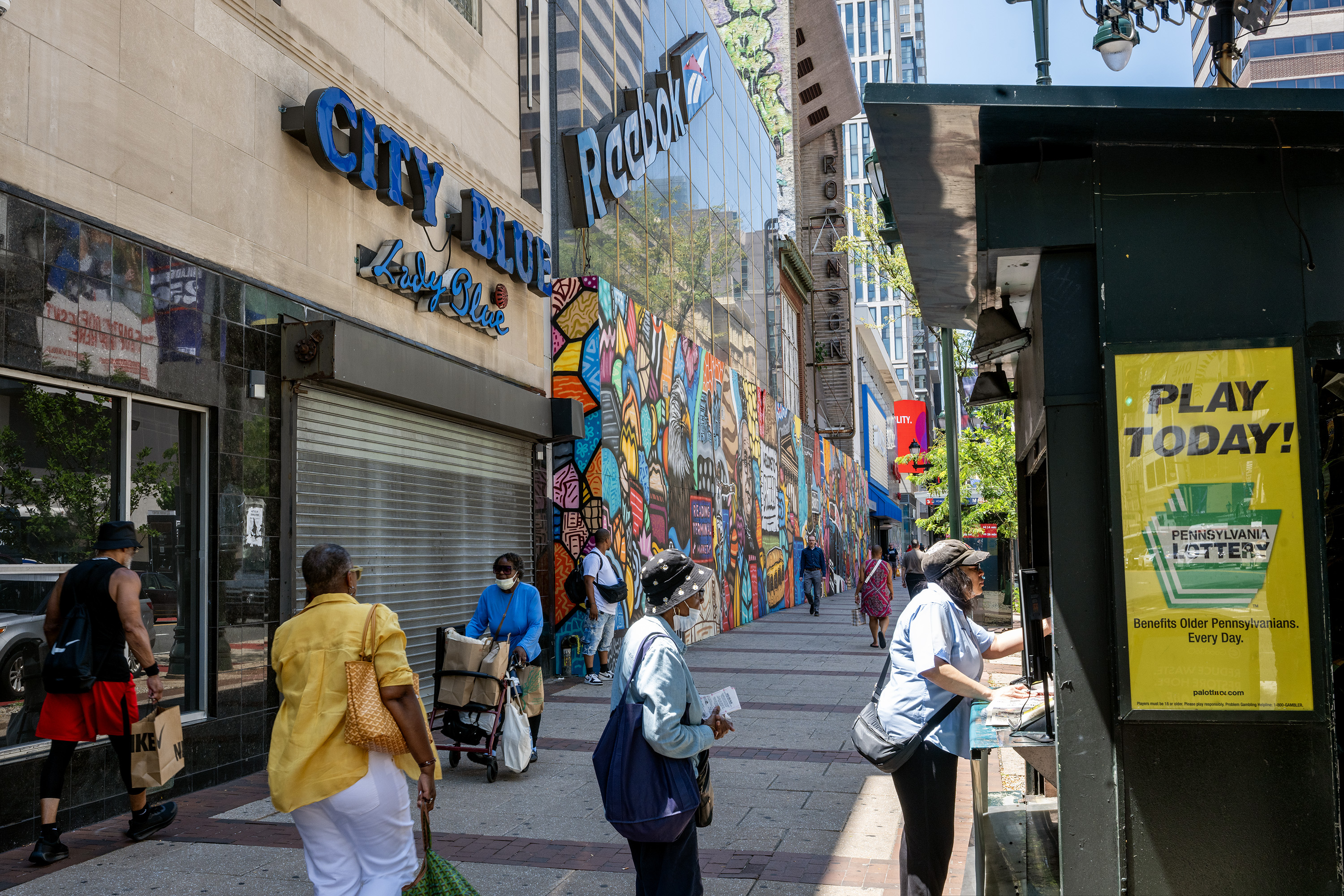
People walk on the south side of the 1000 block of Market Street in July.Tom Gralish / Staff Photographer
Market East muddle
After a year of conversation, Mayor Parker’s Market East Advisory Group has finally issued its recommendations for the long-underutilized corridor. They want to add thousands of homes to the area. Of course, new housing is positive for the city and the region, but the plan is frustratingly unambitious — and poorly timed.
After all, housing construction is a struggling industry these days. One of Philadelphia’s largest multifamily apartment building contractors, Clemens Construction, is literally closing its doors. Higher interest rates, tariffs on building materials, and other factors have raised costs, and existing residential buildings have struggled to attract tenants, leading their owners to sell to the Philadelphia Housing Authority.
Market East’s struggles are downstream of the city’s economic stagnation. In a Philadelphia that grows jobs at the same pace as the median American city, Market East would have long ago been filled with office towers and hotels.
Beyond supplying residents with opportunity, these buildings would make use of the billions of dollars’ worth of infrastructure that already exists in the area, including access to 13 Regional Rail lines, five trolleys, two highways, and both of Philadelphia’s subways. Ideally, this corridor would serve as a regional destination, rather than simply an urban bedroom community.
Of course, a plan to do just that was attempted … and abandoned. While the Sixers did not do the best job selling the public on their proposed Center City arena, the concept represented a more ambitious alternative than simply building more apartments. It would have made Market East a place the entire Delaware Valley visited again.
The 60-member committee that drafted the plan has no shortage of brainpower or economic intuition. I know and respect many of its members. But meetings cannot overcome the corridor’s underlying problems.
There’s no amount of collaboration or tinkering with zoning that can substitute for a cultural shift toward embracing growth and opportunity.
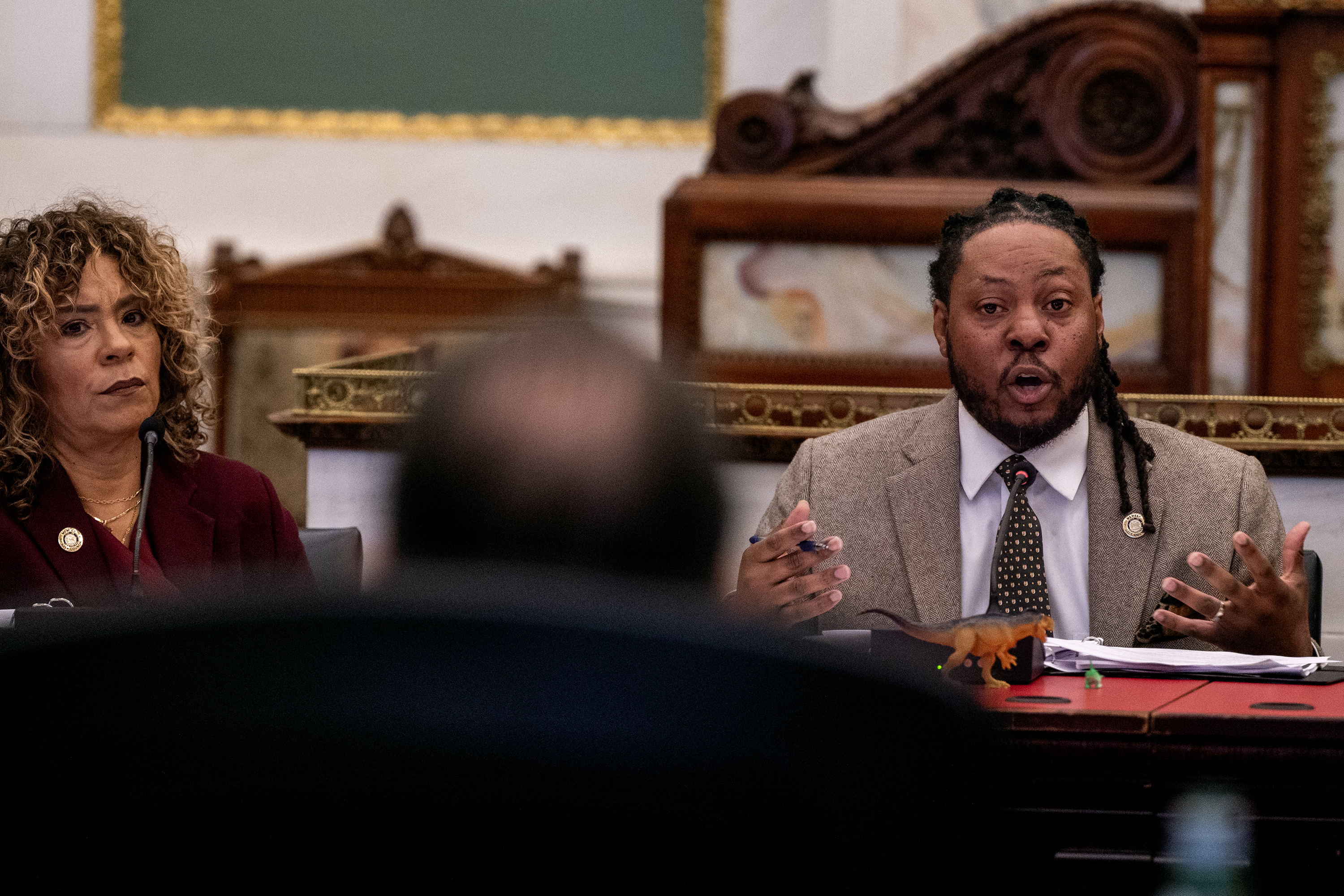
Councilmember Jeffery Young Jr. questions Drexel president Antonio Merlo during a hearing by City Council’s Committee on Legislative Oversight. Young has the most declared challengers looking to unseat the incumbent.Tom Gralish / Staff Photographer
Full field
For years, I have wanted Philadelphia to have more competition for its 10 district Council seats. Often, these legislators see few, if any, challengers once they take office, and even fewer of them actually lose after completing a full four-year term. The fact that district councilmembers have near total control over planning and development within their districts has been cited as an obstacle to fundraising and coalition building by past competitors. Simply put, it is hard to write a check or issue an endorsement if it could have a negative impact on your business or the community groups that you support.
Next year, however, promises to be different.
Even if Councilmember Mark Squilla takes a job at the Philadelphia Parking Authority, I expect fierce competition for his 1st District seat. Challengers are also circling around Curtis Jones Jr. in the 4th District, thanks to a series of gaffes as varied as asking transportation officials to delay a bridge reconstruction process and taking a payment from the notorious retirement program known as the Deferred Retirement Option Plan, or DROP.
The 8th District’s Cindy Bass, who narrowly defeated Seth Anderson-Oberman in 2023, looks set to face him once again. The self-proclaimed former member of the communist party came close to defeating her last time, dominating the decidedly non-proletarian Chestnut Hill in the process.
But it is the 5th District, represented by Jeffery “Jay” Young Jr., that has brought out the biggest field. While local attorney Jalon Alexander has been openly seeking the seat for some time, he’s been joined by at least four others: Kellan White, a former first deputy city controller, Dustin Dove, a Fairmount resident and lawyer, and Curtis Wilkerson, formerly chief of staff to Darrell L. Clarke, Young’s predecessor. Aissia Richardson, a staffer for State Sen. Sharif Street, told me she’s also planning to run, and local philanthropist Max Tuttleman gave me a statement that suggested that while he’s likely not going to run, he hasn’t totally ruled it out.
The surge of challengers exists, in part, because Young is seen as the weakest incumbent district councilmember in decades. At the same time, it could also help him survive. The more divided the field is, the fewer votes are needed to win.
While fundraising and petition gathering could trim the field, it would be against the city’s and the district’s interests for a winner to emerge with a mere 25% of the vote. Especially if their support is concentrated in just one neighborhood or community in what is an extremely racially and economically diverse district.
As the drumbeat of bad news for Republicans grew louder on election night, U.S. Rep. Brian Fitzpatrick called to apologize.
Jim Worthington, the owner of the Newtown Athletic Club and a prominent GOP booster in Pennsylvania, had supported Fitzpatrick for a decade as he won time after time in their purple district outside Philadelphia. Worthington also backed President Donald Trump over that time — hosting campaign rallies and raising money for the president even as Fitzpatrick, a moderate Republican, repeatedly survived reelection by distancing himself from the leader of their party.
Now, though, it was clear Fitzpatrick was calling amid a “bloodbath.” Republicans had lost up and down the ballot in the nation’s biggest midterms rout in a half-century, and Pennsylvania was no exception. Fitzpatrick knew his time in office would be over and he wanted to tell Worthington personally that he was sorry, that there was more he wanted to get done for Bucks County and now would not be able to.
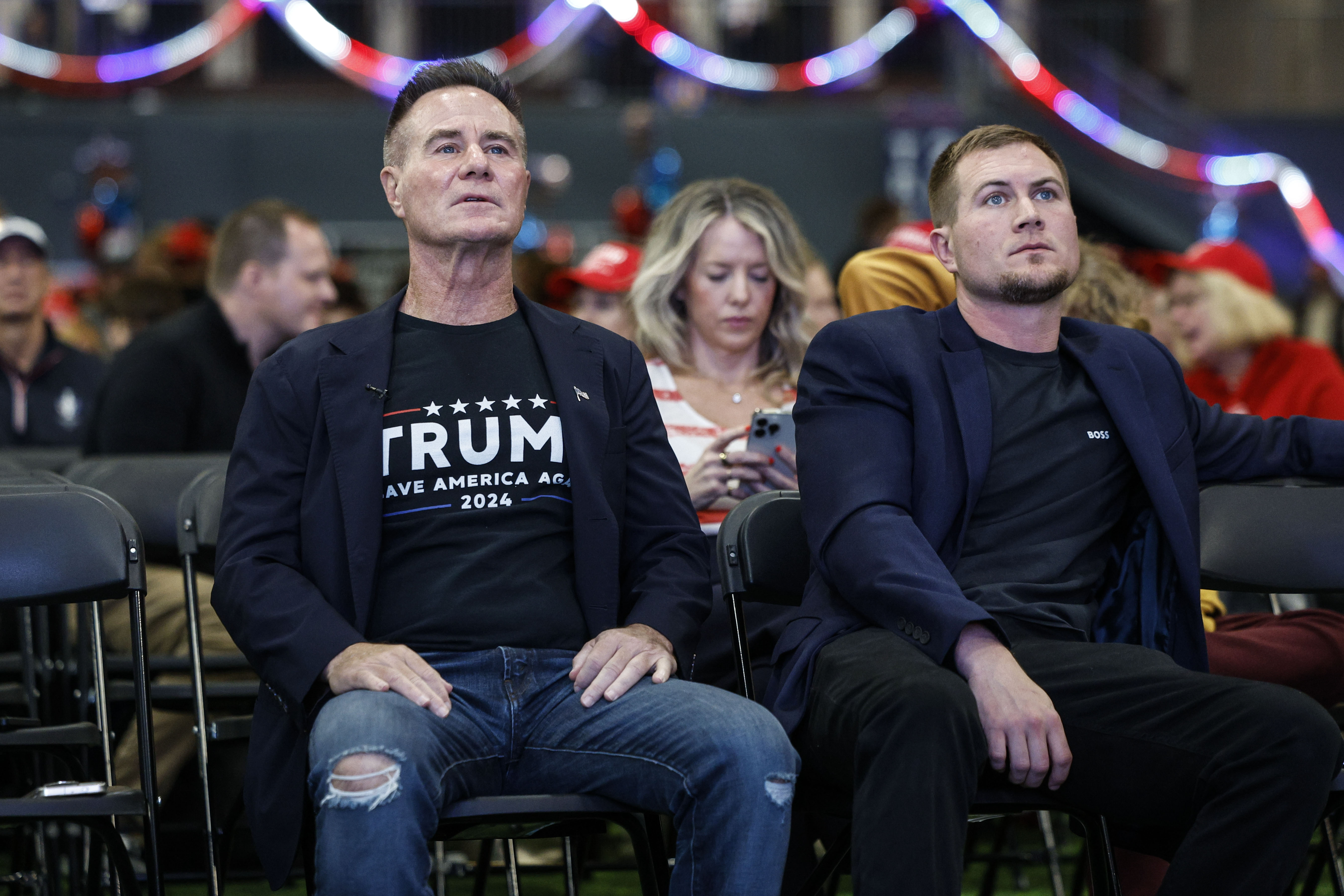
GOP booster Jim Worthington, left, sits with his son Jack during an election night watch party in Newtown Bucks County, in 2024, when Republicans won in Pennsylvania and across the country. This year, many GOP candidates fell to Democrats in a blue-wave election.Steven M. Falk / Staff Photographer
Worthington, recalling the conversation from election night, said he has come to blame the widespread losses on both state and federal Republicans. And, he said, that has put him at a “crossroads” that could determine whether he keeps helping their efforts in the future.
“I’m not going to beat my head against the wall and not make a difference; raising a lot of money, spending time, and losing,” Worthington said last week. “I could conceivably be stepping away, particularly when you see that people on both sides of these parties, Democratic and Republican, are in it for the wrong reasons, making fortunes, scamming the system, and being grifters. I’m just doing this because I want my country to be better.”
The party, by some measures, is at its lowest point in the Keystone State in decades. In January, the GOP will sit in the minority in the state legislature for the first time since 1993 and will hold just six of the state’s 17 congressional seats, and it has lost four consecutive races for governor, including Gov. Josh Shapiro’s sizable 22-percentage-point win over Republican Stacy Garrity this year.
And after a decade in which Trump twice won the critical swing state and remade the GOP in his image, his cratering popularity and final years in office have made some Republicans eager to move on.
“It needs to send a message to the party and President Trump, too, that MAGA is not bigger than the Republican Party,” said one Pennsylvania Republican Party official, who requested anonymity to freely discuss intraparty conversations. “We’ve all learned a hard lesson that it isn’t. Many of us have believed that for a long time.”
The party official said Republicans who want to win general elections moving forward must recognize the “deadly, devastating, negative effect” of continuing to tie themselves solely to Trump, including in the nomination process for a 2028 presidential candidate and other races in Pennsylvania. That may be easier said than done.
“The anti-Trump sentiment that controlled the day in ’26 will not fully dissipate by ’28,” the official said, adding that Pennsylvania Republicans might be best suited to consider a “2030 strategy” rather than one focused only on 2028.
Such a move would set the party’s sights more on the next gubernatorial race and presidential midterms in four years.It is not impossible to rebound in two years, the official said — especially if the national mood shifts, if Democrats overreach in their new power, and if Republicans recruit strong candidates for everything from the state House to the U.S. Senate, when Democrat John Fetterman’s seat is up for election. But it will be challenging.
“We got thumped,” said U.S. Sen. Dave McCormick, Pennsylvania’s top elected Republican, who could play a key role in rebuilding the party.
McCormick told reporters this week that Republicans ran on a “really great track record” of border control, reductions in violent crime and fentanyl deaths, tax cuts, and school choice.
But he said they also did not talk enough about the cost-of-living pains that voters were expressing around gas, healthcare, and housing — or about perceptions of corruption in Washington, like when lawmakers trade stocks tied to issues they legislate.
President Donald Trump appears at a Defense and Innovation Summit hosted by U.S. Sen. Dave McCormick (left) at the US Army War College in Carlisle Wednesday, July 15, 2026.Tom Gralish / Staff Photographer
McCormick defeated longtime Democratic U.S. Sen. Bob Casey in 2024, when Republicans’ wins, including Trump’s, were propelled partly by economic concerns. A former hedge fund leader whose wife, Dina Powell McCormick, is the president of Meta, McCormick is one of the wealthiest members of Congress and said he supports legislation to ban stock trading by lawmakers. He said the public has concerns about both insider trading and the cryptocurrency market — which he also has investments in — and Republicans need to “build back confidence” that voters should have in them.
“Lesson one is: More focus, more attention, on giving them confidence that we heard you and we have a plan to deal with that,” McCormick said. “I don’t think the voters expect us to fix everything right away. But I don’t think they felt like we were focused enough on the things that they were feeling were most important.”
State Rep. Craig Williams, who had been one of the few remaining Republicans representing the Philadelphia collar counties in Harrisburg, was among the more than a dozen GOP state lawmakers who lost reelection. He was ousted by Democratic Rep.-elect Elizabeth Moro, a local small-business owner and real estate broker, who had challenged him unsuccessfully in 2024.
“I don’t think it had anything to do with the work we were doing in the 160th District,” said Williams, who represents parts of Chester and Delaware Counties. “This election was entirely about affordability and a national sense that our party hasn’t done enough to address it, and I tend to agree with them.”
Williams said he is unsure what he will be doing come January, but hopes that Republicans work with the Democrats while in the minority. The former federal prosecutor and retired U.S. Marine Corps colonel said he is unlikely to run again.
“I have to say, all credit to the Democrats. They found the right message,” Williams added. “It falls to Republicans to decide how they want to respond. … If we’re not awake, then we’re going to be facing these same problems in the future. Right now we should do whatever we can to help everyday Americans.”
House Agriculture Committee Chairman Glenn “GT” Thompson visits a dairy farm in Lebanon County Apr. 14, 2025Tom Gralish / Staff Photographer
In Washington, U.S. Rep. Glenn “GT” Thompson (R., Pa.) said the party, in some ways, has been here before.
The Centre County Republican is the longest-serving House member from Pennsylvania. He won his first election in his sprawling and heavily conservative central Pennsylvania district in 2008, the last high-water mark for Democrats. Republicans responded after the first two years of President Barack Obama’s administration by winning across the board in the 2010 midterms, allowing them to put up roadblocks for the rest of Obama’s term and paving the way for their eventual success in the Trump years.
“There’s a lot of people that love to declare the end of either party after an election. That’s just not true. I think 2009-2010 proved that,” Thompson said in an interview Thursday on Capitol Hill.
Thompson compared the massive swing this year to the post-Watergate era, when Democrats swept into office after President Richard Nixon’s scandalous collapse. But, like others in his party who have made the comparison in recent weeks, he attributes it not to corruption but to the economic pressures that voters felt Republicans were not doing enough to address.
Thompson said the Iran war’s impact on fuel prices and Trump’s widespread tariffs, though well-intentioned, played a role. So did the president’s immigration agenda, which Thompson and other Republicans see as largely necessary but have looked to tweak through bills like the Securing Agriculture’s Workforce Act. Thompson, who chairs the House Committee on Agriculture, sponsored the bill to expand seasonal harvester visas — a move that agriculture leaders in Pennsylvania have hailed amid frustrations with Trump’s agenda.
“Do I think that that would have made a difference in this election, if the administration and leadership would have embraced this five months ago? Yeah, I think it would have, actually,” Thompson said. “Because it is one of the things in rural America.”
Worthington said Trump’s success in areas like immigration were overshadowed by his failure to address “kitchen-table issues.” And at the state level, he said he blames the Pennsylvania Republican Party, of which he is a committee member, for continuing to rely on outside groups to run its mail-ballot strategy as Democrats continue to vote at significantly higher rates.
The Pennsylvania Republican Party, for its part, said it ran “great candidates up and down the ballot” and attributed the GOP’s losses in the state to the blue-wave election that impacted even deep-red states like Texas and Mississippi, spokesperson James Markley said in a statement.
Pennsylvania Republicans this election built an expansive early voting and mail-ballot chase program in which they reached out to voters to get them to turn in their mail ballots,and for the first time had a higher return rate than Democrats, Markley added. Republicans returned 87.5% of their requested mail ballots, for a total of 285,397, according to Pennsylvania Department of State data. Democrats returned 85.2% of their requested mail ballots, or 734,477.
“The Democrats ran on affordability, but are already pivoting to job-crushing policies and an agenda that will drive Pennsylvania and our country into the ground,” he said in a statement. “The Republican Party of Pennsylvania is taking the necessary steps today to ensure our strength and preparedness for the road ahead.”
People watch the evening election returns on TV on Tuesday, Nov. 3, 2026 at Bucks County Republican Committee Headquarters in Doylestown, Pennsylvania.William Thomas Cain / For The Inquirer
Both parties, from Harrisburg to Washington, are set to face their share of challenges moving forward.
Democrats are entering the majority in Congress with warring factions of progressives and moderates. Republicans have largely seen their ranks purged of candidates who oppose Trump but are now considering different leaders heading into the president’s final years in office.
McCormick, for one, had urged his Senate Republican colleagues after the election to hold off on their internal leadership elections, saying there should be a thorough review of what went wrong before they picked who would guide them through the aftermath. That move — which a few other senators also joined — came up short, with Republicans picking Senate Majority Leader John Thune of South Dakota to continue as their leader in the minority next year.
This week, McCormick said the “accountability” conversation needs to happen at all levels.
“In business and the military and elsewhere, you start with accountability,” McCormick said, referencing his own personal background. “It’s from the commander in chief, to the leadership in the Senate and the House, to individual senators like me. What did I miss? What did we do wrong?”
Staff writer Michelle Baruchman contributed to this article.
What role could artificial intelligence play in courtrooms of the future?
In the present day, a group of federal judges in Philadelphia are welcoming the technology into their workflows, as part of a pilot program at the University of Pennsylvania’s Carey Law School.
The judges and their staff are provided with ongoing training and support in navigating new norms and the growing impact of AI on the legal system.
While they are largely using AI to fast-track administrative tasks, concerns remain over the risk of generative “hallucinations” and its handling of more time-consuming work, such as case summaries or legal document drafts.
Notable quote: “People are aware of the dangers,” one civil attorney said. “It’s another tool in the toolbox — you just have to use it appropriately.”
In an effort to provide a reliable cash flow for the Philadelphia School District, newly proposed legislation seeks to expand the city’s 7% tax on outdoor advertising.
This would impact all ads that are “intended to be seen, read, or heard in Philadelphia,” and means that anyone who buys ads in newspapers, on television, or online would pay the levy.
An estimated $95 million per year could be generated, $50 million of which would go to schools, according to City Council President Kenyatta Johnson’s office.
In other civic news: Following the death of 10-year-old Malayshia Allford, City Council will soon consider legislation that would force the city to overhaul its child welfare system.
What you should know today
The Justice Department filed federal charges against the former Penn State student accused of being a “major supplier” of cocaine at the university, operating out of two fraternities.
The Maple Shade community is mourning the loss of 12-year-old athlete Xavier Taylor, months after he was struck by a baseball.
The Philadelphia region is home to tens of millions of oaks, each of which can shed thousand of acorns. In 2019, a seemingly nutty number of acorns were dropping everywhere. This week, we’re resurfacing an explainer on the intriguingly big crop, and what caused it.
According to Tony Wood, The Inquirer’s expert on all atmospheric things, weather in earlier seasons may affect how oak trees produce acorns. But there’s another prime suspect to consider. Here’s the full story.
The new Philadelphia edition of Monopoly features a bunch of local landmarks, including the Reading Terminal Market and SEPTA. Which cheesesteak spot is included?
Cheers to Phillip Gilliam, who correctly guessed Thursday’s answer: Brass Monkey. The pop-up bakery Brass Monkey Bread is getting a storefront in Point Breeze.
Photo of the day
Chef RJ Smith, 22, with a seafood plateau at the Rittenhouse.Jessica Griffin / Staff Photographer
This young chef is on a roll, extending his big break as the Rittenhouse Hotel undergoes a transformation. Inquirer food writer Mike Klein offers a taste of the Drexel grad’s latest moves.
👋🏽 That’s a wrap for this week. Thanks for reading, and I’ll catch you next time.
By submitting your written, visual, and/or audio contributions, you agree to The Inquirer’s Terms of Use, including the grant of rights in Section 10.
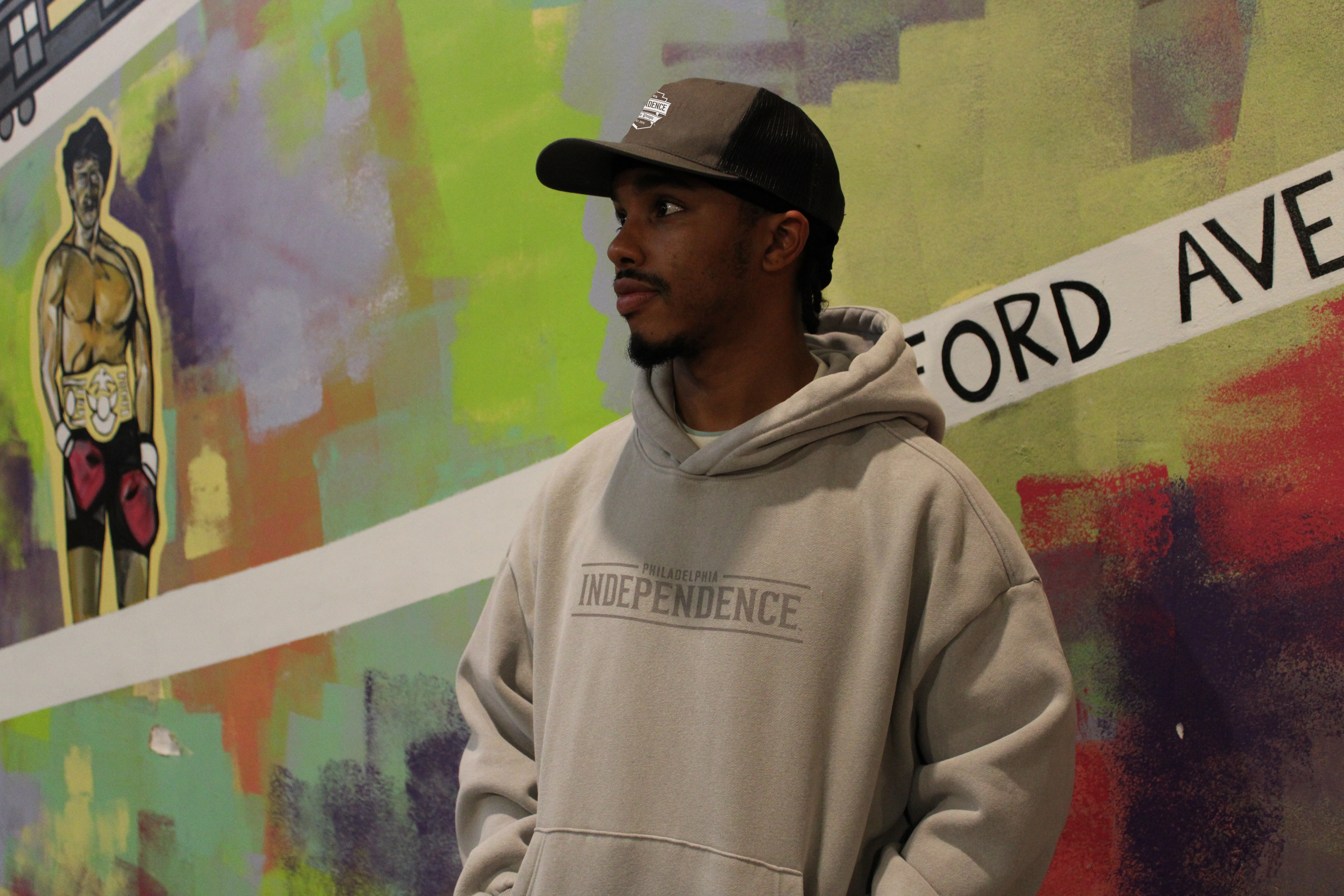
Fifteen years since Philadelphia’s last professional women’s soccer team folded, the Independence are getting another moment in the spotlight.
The leaders of Love City FC, an amateur team that debuted this year in the Women’s Premier Soccer League, struck a deal with former Independence owner David Halstead to bring back the team’s logo on a new line of merchandise.
“Launching the Independence brand is a way to stay on the shoulders of the women that came before us,” Love City CEO Jami Dansingburg said. “We want to honor the women that paved the way for us to be able to do what we’re doing now.”
Halstead, who is now based in Virginia, said he was happy to share his old team’s trademarks.
“I have been talking to her on and off for a long time,” he said. “I just want to see women’s soccer, really across the country and the globe, in Philly and elsewhere, be successful and soccer players be given the opportunity to play and thrive. And if in any way this branding helps that, I welcome the opportunity for Love City FC and Jami to use it however they see fit. And I love what they’ve done.”
Megan Rapinoe (left) is one of the many famous players who suited up for the Independence when they played from 2010-11.
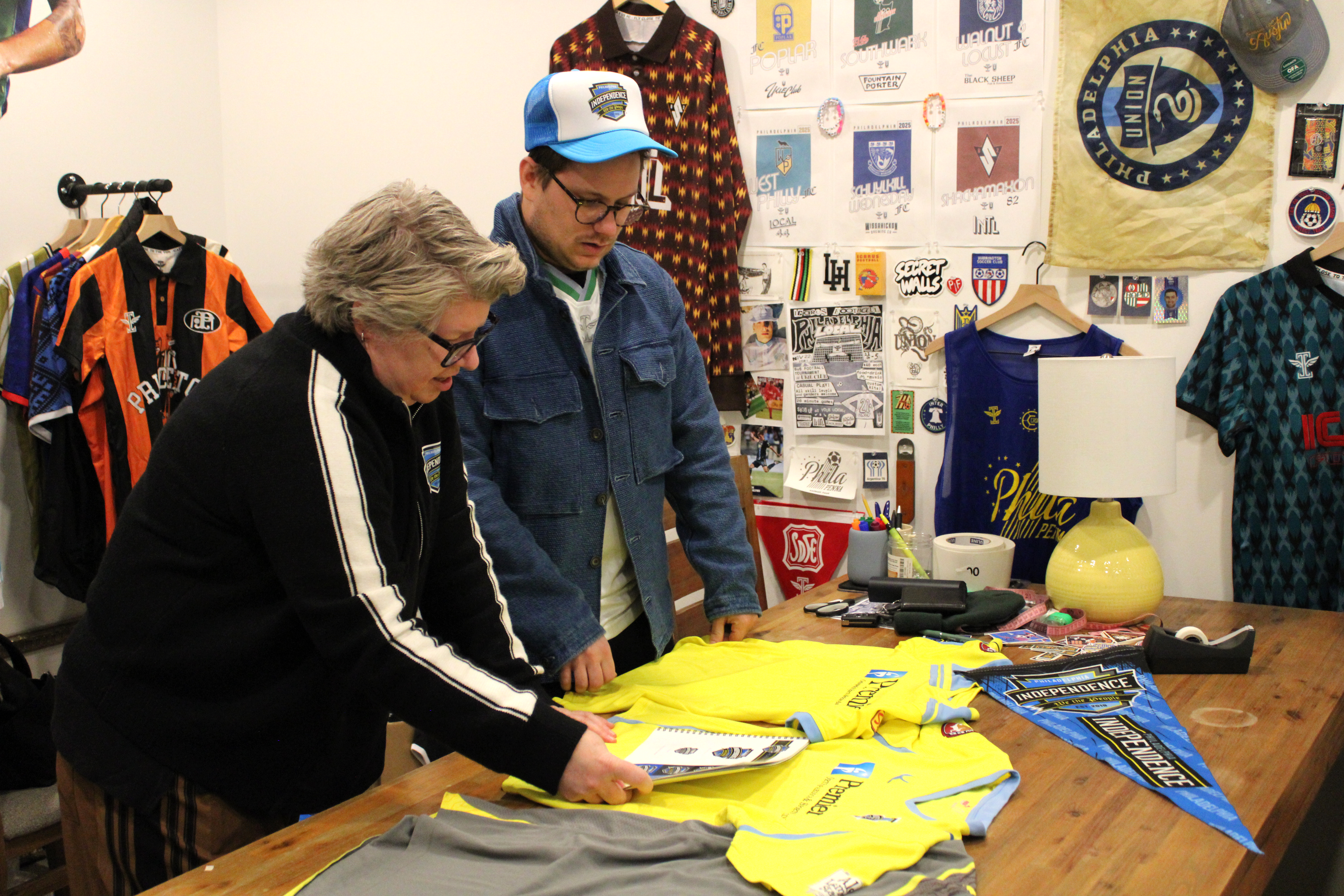
The jersey is produced by Icarus Football, a Philadelphia-based custom soccer apparel creator.
Icarus founder Robby Smukler has been a fixture on the local scene since launching the company nine years ago. Dansingburg didn’t need long to find him: She worked for Icarus from 2020 to 2022.
“I always want to be involved in anything going down here that is soccer related,” Smukler said. “Especially projects like this that are a really cool manifestation of a lot of work, especially with someone that I know and care about.”
The aim is to get soccer fans’ attention in the area and beyondIt’s well-known at NWSL headquarters that when Atlanta joins the circuit next year, Philadelphia will be the only city that had teams in the two previous leagues — the Women’s United Soccer Association and Women’s Professional Soccer — but is not in the current one.
A new line of merchandise draws inspiration from the former Philadelphia Independence, a pro women’s soccer team.Love City FC
Some people in the region travel north to Gotham FC’s games in Harrison, N.J., as they did when Sky Blue FC played at Rutgers. But it will get harder in 2028 when Gotham moves to New York City FC’s new home in Queens. That could increase the league’s appetite for a Philadelphia team, though Gotham’s place in north Jersey never was a formal obstacle.
A group has been working behind the scenes for a few years to try to assemble a formal Philadelphia bid, but its leaders have yet to come forward publicly. The most important piece of the puzzle — finding an owner to bankroll it — also remains unsolved.
Given that, Dansingburg is aiming in a different direction. She’s trying to help build out Love City into an entity that can compete in a second-division league, WPSL Pro, that plans to launch in 2028.
Love City FC CEO Jami Dansingburg and Icarus Football owner Robby Smukler examine original Philadelphia Independence jerseys and memorabilia for inspiration behind Love City’s newly designed heritage jersey.Icarus Football
Before then, Love City will wear the throwback jerseys in some games next year.
One of the Independence’s most popular players back then, midfielder Joanna Lohman, is connected with the new project.
“In 2010, I put on the Philadelphia Independence jersey, knowing it represented something so much bigger than myself,” she said in a statement. “It carried the hopes of every woman who fought to make this league possible. They paved the way for us, and now it’s Love City FC’s turn to carry that legacy forward and ensure every girl has a future in this game.”
“All of these [players under age 18] that are being signed by NWSL clubs are not getting any competitive minutes, and it’s a problem because it’s really stunting their growth,” Dansingburg said. “So the idea of implementing the kind of academy that Richie Graham and Striker Partners and the Union have put together, that’s really our long-term goal.”
Building such a program for local girls would be its own big investment, but that has not deterred Dansingburg from making it her north star. And if a NWSL team does come along, “we’d work closely with them, and we want to build this to support them,” she said.
Think you know your news? There’s only one way to find out. Welcome back to our weekly News Quiz — a quick way to see if your reading habits are sinking in and to put your local news knowledge to the test.
Question 1 of 10
The new Philadelphia edition of Monopoly features a bunch of local landmarks, including the Reading Terminal Market and SEPTA. Which cheesesteak spot is included?
CorrectIncorrect. XX% of other readers got this question right.
The game’s food squares include the Philly Pretzel Factory, Rita’s Water Ice, and Geno’s Steaks.
Question 2 of 10
Buzz Bissinger, Inquirer alum and author of Friday Night Lights, recently weighed in on Nvidia founder Jensen Huang’s choices. He considers himself an expert on this particular subject matter:
CorrectIncorrect. XX% of other readers got this question right.
Bissinger, who went viral 13 years ago for an essay in GQ about his Gucci addiction and penchant for leather jackets, considers himself an expert on the clothing article. He actually thinks Huang’s collection could go further.
story continues after advertisement
Question 3 of 10
Brass Monkey, an area pop-up, is working on opening an inaugural brick-and-mortar space in Point Breeze. What is Brass Monkey best known for?
CorrectIncorrect. XX% of other readers got this question right.
Brass Monkey Bread, owned by Zach Posnan, is best known for its sourdough goods, including bread, babka, muffins, bagels, and tomato pie. The new space will be located at 20th and Dickinson.
Question 4 of 10
Employees at this Callowhill business went on a planned single-day strike Tuesday seeking their first union contract:
CorrectIncorrect. XX% of other readers got this question right.
Workers have been organizing for years at Movement climbing gym locations across the country with more than 500 employees across 10 locations represented by Workers United. Employees of the Callowhill gym unionized in 2023 and have been negotiating for a first contract as far back as June 2024. But a spokesperson said the Callowhill location management has not been acting in good faith, leading to the strike.
story continues after advertisement
Question 5 of 10
Jason Kelce is back on the saxophone. The former Eagles center picked up the horn again during ESPN’s Monday Night Countdown and sat in with the Baltimore Ravens’ Marching Ravens as a guest. What song did they play together?
CorrectIncorrect. XX% of other readers got this question right.
It was “In the Air Tonight,” commemorating Phil Collins’ induction into the Rock & Roll Hall of Fame over the weekend.
Question 6 of 10
Kareem Edouard assembled an all-Black creative team to adapt Jason Reynolds' Stuntboy into an animated series exploring childhood anxiety and highlighting more Black characters in children’s TV shows. Edouard is an assistant professor at this school:
CorrectIncorrect. XX% of other readers got this question right.
Edouard moved to Philadelphia in 2018, and is now an assistant professor at Drexel University. He said he was tired of seeing “flat representation” of Black characters in children's shows. He decided to make Stuntboy: The Animated Series to help.
Question 7 of 10
Comedian Shane Gillis has responded following backlash to his opening monologue on Saturday Night Live last month. How many times has the Mechanicsburg, Pa., native hosted SNL?
CorrectIncorrect. XX% of other readers got this question right.
It was Gillis’ third time hosting Saturday Night Live. He graduated from West Chester University and cut his teeth in Philadelphia’s comedy scene.
Question 8 of 10
Pianist and composer Dave Palmer scored the movie I Play Rocky using all Philly musicians. He’s new to living in Philly. What housewarming gift did War on Drugs drummer Charlie Hall bring Palmer when he and his family moved here?
CorrectIncorrect. XX% of other readers got this question right.
Palmer and Hall were connected by an industry friend. They’d never met in person, but the day the Palmers arrived in town in June 2025, Hall showed up at their door with a box of cookies as a welcome gift.
Question 9 of 10
Community members in Flourtown want Phil Dougherty to get his job back after he was fired. Where did he work?
CorrectIncorrect. XX% of other readers got this question right.
Dougherty is known to community members at Wawa Phil. He had worked at the same Flourtown location since 2005 until he was recently fired. Then, the community came together, protesting the company’s decision and hoping to overturn it.
Question 10 of 10
Kalshi, the prediction market company, has been DMing some Philadelphia restaurants on Instagram, encouraging them to place bets on the following:
CorrectIncorrect. XX% of other readers got this question right.
A bakery, deli, and a BYOB all received messages from Kalshi’s verified Instagram account that asked if they would consider trading on the Eagles-Giants matchup. The Birds went on to lose that match.
Your Results
You have skipped .
You scored XX out of 10.
The average reader scored XX out of 10
Seems like you’ve been skimming more than reading there, buddy. There’s always next week.
You’ve read some articles (or made some educated guesses) but we wouldn’t come to you first for our local news recaps. Better luck next week!
Do you work here? You’re a local news stan with the latest updates on Philly happenings. Your friends definitely ask you for summaries on what’s going on and it shows.
With the Wanamaker Light Show on hiatus this season for the first time in more than 70 years, families across the Delaware Valley are wondering where to find their dose of holiday magic this year.
The Ministry of Awe is hoping to save the day like Clarence the angel and remind us that it’s (still) a wonderful life with “Miracle on 3rd,” a new and interactive holiday light show intended to fill the void left by one of Philly’s longest-held holiday traditions. The show’s name is a nod to the Ministry’s location on Third Street in Old City.
Unlike the old-timey blinking light bulb show at Wanamakers, the Ministry of Awe’s holiday light spectacular is decidedly high-tech. Using projection and video-mapping technology, visitors are turned into holiday spirits that can hang Christmas lights and throw snowballs.
Confused yet? Well, welcome to the Ministry of Awe, which is about as easy to explain and magical as a holiday narwhal.
Orifice the Awebot, an ambassador for the Ministry of Awe, wears her best holiday gear. Orifice was created by Philadelphia-based artist Madison Polidoro in response to the Uber Eats robots taking over Philly sidewalks. Aidan T. Gallo / Staff Photographer
The six-story immersive art exhibit in a 19th-century bank that opened in March is a mapless labyrinth of nearly every kind of art imaginable, from sculpture and video to painting and theater. More than 100 local artists collaborated to create the surreal experience, which was the brainchild of Philly muralist Meg Saligman.
Since the Ministry of Awe already deals in wonder, Saligman felt it was the right place to sow some communal holiday magic.
“The show was created with the hope of bringing a little of the awe and collective exchange that Wanamaker used to bring,” she said. “Granted, we’re not at the scale of the Wanamaker Light Show, it’s our first year, but we hope we provide that special feeling and grow each year.”
As visitors enter the Ministry, its atrium is now decorated with Christmas ornaments donated by the community.
A holiday-themed installation with ornaments donated by the community appears inside the atrium of the Ministry of Awe. Artists, volunteers, and employees of the exhibition helped make and set up holiday ornaments surrounding the giant eyeball sculpture.Aidan T. Gallo / Staff Photographer
“We have had an open call for trash, and you’ll see it hanging in the skies, from the ordinary to the extraordinary,” Saligman said during a media preview Thursday.
Throughout the space, walls are now decorated with white angel wings upon which guests have written miracles they have experienced, from “Finding your forever person, especially when they are pretty okay” to “My grandmother coming to this country from Armenia in 1915.”
“People who feel they have experienced something miraculous in their life, please, we invite you to write it down so that we can have them and they can grow throughout the season,” Saligman said.
Also hanging high in the atrium is a large, beige orb resembling a moon, which visitors can project their face onto, if they want to see their nose that big.
Violet Whitney demonstrates the new moon feature as her face is projected upon it while William Martin records it inside the Ministry of Awe. The installation utilizes a motion sensor camera (center) to project faces onto the various moon props.Aidan T. Gallo / Staff Photographer
But the main holiday attraction takes place in a room called “The Heavens,” the ceilings of which are permanently decorated with fantastical murals by Saligman.
Since the opening of the Ministry of Awe, “The Heavens” has been brought to life with AI technology from Violet Whitney and William Martin, co-owners of Spatial Pixel design studio in Old City, who have projected snow and added interactive elements in the space.
But the “Miracle on 3rd” show, which was also created by Whitney and Martin, takes the experience to another level.
Globes throughout the room containing video cameras track guests’ body movements and project them onto the walls to make them appear as if they are glowing spirits. Visitors can then move their spirit’s arms and head (they don’t have feet, their bodies just come to a point like Casper the Ghost). At various times throughout the show, guests can use their spirit to hang colored Christmas lights around the room and to throw snowballs (which was, by far, the best part).
Guests throw projected snowballs to spirits as part of the new holiday-themed show inside the “The Heavens” room at the Ministry of Awe in Old City. Aidan T. Gallo / Staff Photographer
Martin assured the crowd that videos are not recorded, only live feeds are used.
“[It’s] like your virtual skeleton, if you will,” he said. “Your spirit is being observed.”
The entire show, which runs about eight minutes, is accompanied by soaring holiday music. Visitors are told they are able to control the different instruments in the soundtrack with their movements, depending on where they sit in the room, but it was hard to discern what effect guests had, if any.
“Miracle on 3rd” doesn’t provide the warm nostalgia of the Wanamaker Christmas Light Show, but it does introduce a new and novel kind of holiday magic you won’t experience anywhere else in Philly. And you don’t have to stand in between racks of clothing to see it.
The show runs every half hour at the Ministry of Awe from Nov. 20 to Jan. 15. Tickets to the Ministry, which are $29.99, are required for adults to access the show.
Kids 12 and under will receive free entry to the Ministry and the holiday show from Nov. 27 to Jan. 15.
“We’ll take both naughty and nice,” Saligman said.
Before rising into a national icon, Mark Twain was an Inquirer.
Samuel Langhorne Clemens started working for newspapers at the ripe age of 12, prematurely entering the workforce in the late 1840s following the untimely death of his father.
Clemens’ journey started in his home state, at the Missouri Courier, where he worked as a printer’s apprentice before serving as a typesetter and editorial assistant for the Western Union paper, owned by his brother Orion.
He would then pass through St. Louis, en route to New York and Philadelphia.
Now, he wasn’t in Philadelphia for long. But considering he is one of the United States’ most famous writers, it counts as street cred: We knew him before he was cool.
The newspaperman
In the early 1900s, the man now known as Twain set about writing his life story.
His method of doing so was as odd as it was revolutionary: “Start it at no particular time of your life; wander at your free will all over your life.”
The celebrated author instructed his next of kin to wait until 100 years after his death to publish the story in full. So on Nov. 15, 2010, the University of California Press published the first of three rather robust volumes that together constitute the stream-of-consciousness-style Autobiography of Mark Twain — retaining its signature chaotic prose just as the author had intended.
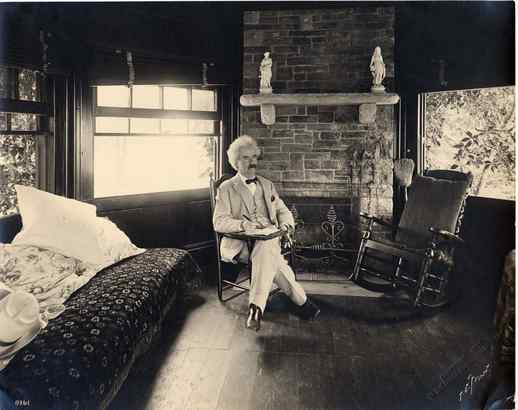
In that first volume, Twain looked back at his brief time working as a substitute typesetter for The Inquirer in 1853-54, when he was all of 17 years old.
His role was to help set the printing plates. Back then, each letter and each punctuation mark from every article had to be individually set in metal before the plates could start stamping out broadsheets.
But his remarks in the book were brief: “By and by I went to Philadelphia and worked there some months as a ‘sub’ on the Inquirer and the Public Ledger.”
And heleft out the best part.
The Philadelphian
While working for The Inquirer, Clemens wrote a letter to his brother, in which he revealed an astute and accurate preference.
“Unlike New York,” he wrote, “I like this Philadelphia amazingly, and the people in it.”
He added:“I will try to write for the paper occasionally, but I fear my letters will be very uninteresting, for this incessant night work dulls one’s ideas amazingly. … I believe I am the only person in the Inquirer office that does not drink.”
Despite his ambition, the byline Samuel Clemens would never appear in print.
In the subsequent 50 years, though, Mark Twain’s prose would grace the newspaper’s pages in the form of reprinted excerpts from his essays and speeches.
But by then most of the country had joined the bandwagon.
Anthropic’s market debut is a coming-out moment for a corporate structure that’s so far remained niche: the public benefit corporation, or PBC.
The legal framework, also known in some places as a benefit corporation, dates back to the early 2010s and has been adopted in more than 40 U.S. states. Thousands of American companies are now set up as BCs or PBCs, but fewer than two dozen are publicly traded.
In simple terms, the model gives mission-driven businesses extra protection to pursue a public good without risk of backlash from profit-focused shareholders. That’s why it’s been favored by do-gooder retailers like Patagonia, Dr. Bronner’s, and Warby Parker Inc.
“It allows corporations that really are sincere about these missions to do this without fear of being sued,” said Michael Dorff, executive director of the Lowell Milken Institute for Business Law and Policy at the University of California at Los Angeles School of Law.
Now, a very different kind of PBC — a tech company valued at more than $1 trillion, which has warned of its products’ existential dangers to humankind — is behind the biggest IPO in history. And Anthropic isn’t alone among its peers. OpenAI’s for-profit arm is also a public benefit corporation, and xAI initially was set up the same way.
In its S-1 filing with the Securities and Exchange Commission, Anthropic acknowledged that its structure is unusual and described it as “carefully designed” to fulfill its mission. It also said it can’t promise that the expected positives of PBC governance will be realized.
The structure comes with some soft guardrails, experts say. PBCs in Delaware are required to submit status updates to shareholders, but only once every other year and they don’t have to make them public. Shareholders can sue if they think the company isn’t appropriately balancing profit against purpose. (That doesn’t extend to employees, consumers, or communities.)
Prior to its IPO filing, Anthropic announced the creation of a public benefit fund, where it will commit a portion of shares that will increase as the company grows. It has also set up a long-term benefit trust to oversee the corporation and its mission. (Similarly, OpenAI Group PBC receives oversight from the nonprofit OpenAI Foundation.)
The trust has the power to elect and remove a majority of board members, with Anthropic cofounders choosing the remaining seats, so shareholders won’t have the power to elect them.
That gives pause to some investors. “In theory, the PBC could help us get the right balance on safety versus growth because they’re explicitly allowed to prioritize their mission,” said New York City Comptroller Mark Levine. But “because it keeps full power in the hands of the seven founders, it gives no avenue for public accountability through shareholder activism.”
Anthropic’s mission in its charter under Delaware law is “to responsibly develop and maintain advanced AI for the long-term benefit of humanity.” One critique of the PBC structure is that it allows for mission statements that are vague or subjective. For example, if reaching artificial general intelligence comes with major societal risks and a heavy climate toll, does that ultimately benefit humanity, and who decides?
“What it means to have socially responsible AI right now is just really contestable,” said Jill Fisch, a business law professor at University of Pennsylvania Law School.
Anthropic did not respond to a request for comment.
Legal status as a benefit or public benefit corporation is distinct from third-party certification as a B Corp, although the former evolved out of the latter. B Corp standards are in some ways more stringent — for example, a company must meet certain sustainability criteria, which isn’t required to become a PBC. Sampurna Khasnabis, senior equity analyst at Nia Impact Capital, a green investor, says “there isn’t as much accountability or teeth” with a PBC as with a B Corp certification.
Public PBCs face the risk of a plunging share price, which could ultimately lead them to abandon the structure in favor of strategies to boost the stock, according to Dana Brakman Reiser, a professor at Brooklyn Law School. “That, I think, would exert a huge amount of pressure, regardless of what your governance system might be,” she said.
In Anthropic’s case, the PBC model “is now about to face the full force of public markets: quarterly earnings expectations, index-driven ownership, and investors focused on growth,” said Kristin Hull, founder and chief investment officer at Nia Impact Capital. It “may not stand up to the risks of AI itself.”
It’s not unheard of for a company to go the public benefit route and then walk it back. Allbirds incorporated as a PBC when it was private, to advance an environmental mission. Earlier this year, after a long period of share price decline, the company (now Smartbird Inc.) switched from footwear to AI computing infrastructure and dropped its PBC status. In an SEC filing, it said that going forward it would “be operated in the best interests of our stockholders, without balancing the best interests of our stockholders against the public benefit of environmental conservation.”
Even as AI development raises safety concerns — with the companies themselves warning of grave dangers — and as the data-center build-out stirs strong backlash, PBC status may connote social responsibility. But how long that will remain the case is an open question.
PBC designation can be seen in part as “an effort to reassure both the public and the regulators,” said Fisch. “I don’t think the PBC structure gets you that. But I can see why if you were running one of these companies, you would like to send that signal.”
If AI developers want their public benefit status to confer credibility, they should be taking specific actions like disclosing their climate emissions, said Carol Liao, a law professor at the University of British Columbia.
“These companies are making extraordinarily broad claims about benefiting humanity, while building an industry with rapidly growing demands for electricity, water, land, data centers, physical infrastructure,” she said.
Ultimately, PBC governance is “akin to having a workout buddy,” said Dorff, of UCLA. “When the alarm goes off at five in the morning, if you know your friend is waiting for you at the gym, you’re probably more likely to show up. But it doesn’t require you to.”
Last month, the U.S. economy added 165,000 jobs, a report widely characterized as surprising and strong. But for women, the jobs picture has not been so positive.
More than 240,000 women age 20 and older have left the labor force since January, according to a National Women’s Law Center analysis of Bureau of Labor Statistics data. Over the same period, more than 287,000 men entered the workforce.
“I don’t even want to say these are ‘nice’ jobs numbers,” said Sarah Javaid, a senior research analyst at the National Women’s Law Center. “There is still this disparity between women and men that gives us a lot of concern.”
This growing employment gap reflects entrenched structural inequalities that continue to slow down women’s career growth, Javaid said.
Take caregiving responsibilities, the lion’s share of which still fall on women. As the cost of childcare and adult care continues to rise, and as companies impose stricter return-to-office mandates, many households face difficult decisions: Should both partners continue to work, or should one drop out of the workforce to care for family members?
“We’ve seen a lot of moms exit the labor force,” Javaid said. “We suspect that work and care are becoming too difficult to manage together. With less flexibility in the workplace and more care demands, especially amid an affordability crisis, wages are just not enough to keep up with the cost of childcare, long-term care, and adult care.”
For some women, leaving the workforce may have more to do with the state of their professions. Last month, the U.S. economy added jobs in healthcare and education, sectors in which women tend to be overrepresented. But the leisure and hospitality field lost jobs throughout the year, which could be affecting the number of women who do such work, Javaid said.
Layoffs at all levels of government also hit women particularly hard. In the five Cabinet-level departments subject to large-scale layoffs during the Trump administration, women made up a substantial majority of staffers, according to the National Women’s Law Center.
The reduction in the federal workforce also had a disproportionate effect on women of color, particularly Black women, said Susan Averett, professor of economics at Lafayette College.
“We had a lot of layoffs of government jobs, which is always a stronghold for Black women,” she said. “That and the rollback of DEI has probably played a role in some of this as well.”