Blog

  • Why Claire Borelli Embraces Change

    Why Claire Borelli Embraces Change

    For Claire Borelli, the future of work isn’t a choice between technology and humanity, but an effort to bring the two together. A native Philadelphian and an enormous Eagles fan, Borelli is the senior executive vice president and chief people officer at the retirement services provider TIAA. She is helping lead the organization’s 13,000 employees through one of the most consequential shifts facing today’s workforce: the rise of artificial intelligence. Drawing on three decades of experience in HR, Borelli is a champion of an employee-first approach to AI adoption. She believes technology should be used to augment human capabilities and that change is an opportunity for growth. Her philosophy is simple: Welcome change while valuing the humanity at the heart of the workplace.

    What does it mean to be a changemaker?

    The first thing it means, and this is much easier said than done, is being okay with change. I’ve always been energized by change because it creates opportunities to make things better. I’ve been fortunate to have a platform to help drive that change and, more importantly, help others see the possibilities that come with it.

    You are the driving force behind TIAA’s ELEVATE program, an internal workforce development initiative that gives employees dedicated space to build new skills, connect with peers and leaders, and actively manage their professional paths within the company. Did something in your own career inspire this mission?

    My career changed because I said yes to something I wasn’t ready for. I didn’t set out to work in HR, but at Merrill Lynch, I was asked to help build an employee service center and rethink how HR operated. I had no HR background. I was way over my skis, and it scared me.

    But I learned to take risks, trust the process, and give an opportunity a chance, even when it isn’t what [I] imagined for [myself]. That stretch assignment gave me new skills, relationships, and exposure, and ultimately launched my HR career. That’s what I love about ELEVATE: creating those unexpected opportunities for others, especially in the age of AI, when roles may shift and employees can take advantage of expanding their skill sets to prepare for an AI-powered future.


    Was there a moment that shifted your thinking about AI?

    My oldest son changed how I think about AI. Two years ago, when my CEO asked me to help lead our AI transformation, I was intimidated. My son said, “Mom, imagine having someone in your office 24/7 who knows more than you do and can help with anything: recruiting, compensation, talent. And yes, they’re smarter than you.” That visual stuck. AI wasn’t going to replace me; it can make me better.

    That’s the message I share with our people. Some jobs will disappear, new ones will emerge, but many will simply get better. If AI gives someone 30% of their time back, that’s 30% they can devote to a new project, skill, or opportunity. The challenge now is reimagining how we put that capacity and our people to work.

    TIAA has emphasized an employee-first approach to AI adoption. How did the organization put that into practice?

    What built trust wasn’t just talking about an employee-first AI strategy. It was putting action behind it. We knew AI would change roles, and in many cases, expand them. We doubled down on internal hiring and strategically paused most external hiring. Rather than immediately going to market and backfilling, we asked our leaders to consider if AI could take on the work or if it made sense to expand the scope of an existing internal role.

    We told managers: before you look outside, look at our existing talent first. There were skeptics initially, but it worked. Year over year, we saw a 67% increase in internal hiring. That sent a powerful message to our associates: as AI changes work, we’re investing in you, not leaving you behind.

    Which leadership traits do you believe will matter most over the next decade as AI automates more routine work?

    AI is changing the landscape. When I was growing up, knowledge was power. If you knew your subject and were sharp, you were good to go. That won’t be enough in the future. As AI takes on more technical and routine work, traits like empathy, innovation, emotional intelligence, and strong communication skills will become even more valuable.

    Think about an architect designing something for Philadelphia. Technical knowledge will still matter, but AI can increasingly support that expertise. What becomes more important is understanding the context: What is Philadelphia’s history? What does its art and culture tell us? How do its neighborhoods and politics shape what people need? And how can you think differently to solve for those needs?

    That’s what we need to teach the next generation: not simply what to know, but how to think, connect, and understand people. You can’t always get those nuances from data. Sometimes you need to have coffee with someone, walk a neighborhood, or understand what motivates people. That humanity, and the relationships that come with connecting to others, will be essential to success in an AI-powered world.

    You report directly to CEO Thasunda Brown Duckett and serve on TIAA’s executive committee. What have you learned about leadership by working alongside her?

    Thasunda is a force, probably the most inspirational leader I’ve ever worked with. What sets her apart is that she truly leads with people and culture in mind. Technology and products can be replicated; people are the real differentiator, and she walks that talk.

    She’s also a rare combination of visionary and operator. She can set a bold vision and get into the details to make it happen. She’s taught me the importance of connecting with people personally, understanding what motivates them, finding purpose, and having fun at work.

    You’ve said trust accelerates decision-making and collaboration, especially during periods of rapid change. What are some practical ways leaders can build that trust?

    Trust starts with transparency, communication, and active listening. Leaders need to explain what they’re doing and why, but also create opportunities to hear what people are saying and then be clear about what they can and can’t change.

    At TIAA, we heard that employees at some of our smaller office locations weren’t feeling as connected as those in bigger hub offices. We introduced site leaders who could listen, communicate, and bring people together. Engagement scores rose significantly, by nine percentage points in Philadelphia. It reinforced for me that trust isn’t just about communicating early; it’s about listening intentionally and showing people that you’ve heard them.

    How do you strike a balance between empathy and accountability when making tough organization-wide decisions or delivering news that may affect employees’ lives?

    People may forget what you told them, but they remember how you told them. As a leader, especially in HR, you sometimes have to make difficult decisions that are right for the organization.

    The key is to be clear about the decision and the why, transparent and timely in communicating it, and empathetic in how you deliver it. The same applies to tough feedback: holding someone accountable and telling them what isn’t working early, honestly, and with care is ultimately an act of respect.

    If you could give one piece of advice to a young professional, what would it be?

    Take risks. Don’t assume your career has to follow a straight line. The sideways moves and unexpected opportunities often teach you the most and make you more versatile.

    I’m a Type-A person; I like a plan, so I had to learn this myself. Every career “swerve” adds something to your toolkit. And in an AI-driven world, that range of experiences, perspectives, and human judgment will only become more valuable.

    You raised five kids while building a C-suite career. What advice would you give to other parents on how to manage big jobs and big families? Any secrets to keeping everything and everyone on track?

    There’s no such thing as balance. At any given moment, work or family is going to get more of you, and you have to be okay with that.

    I’ve been fortunate to have a true partner in my husband, especially raising five kids (now ages 42 down to 29). But the biggest lesson is to be present where you are. If you skip the staff meeting for the soccer game, be at the soccer game. If you stay for the meeting, be at the meeting. Shut down the voice telling you that you should be somewhere else.

    Our CEO Thasunda says life is like a diversified portfolio: how you invest your time will shift. Stop trying to give everything 100% at once.


    PHILLY QUICK ROUND

    Favorite Philadelphia neighborhood? Rittenhouse is great to walk to and have dinner, but I just love the neighborhood where my two younger children live, which is Queen Village. I just love the historic feeling of it.

    Favorite place to celebrate an Eagles win? Lincoln Financial Field, unless it’s an away game, and then it’s in my home. I like all the cooking and all that family time.

    What do you cook for a game? Every Sunday game is a pot of gravy. We’re Italian!

    Favorite local restaurant or hidden gem? I love The Saloon. Their appetizers are fabulous. They have the long hots, poblanos, and fabulous steaks there. Just open the menu, and I’ve ordered them all.

    Which Philadelphian past or present do you most admire? Can I say Rocky? I’m kidding. I admired Kobe Bryant, for sure. I think about how driven and Type-A he was. And in his later life, he became more like a coach to his daughters and really inspiring.

    Personal motto or mantra? It’s “This too shall pass.” Because no matter how good life is, we always have moments that take us out. It’s important to remember that those moments pass.

    What are you most grateful for right now? I’m pretty happy about LeBron James coming to the Sixers!


    Lucy Danziger is a journalist, an author, and the former editor-in-chief of Self Magazine, Women’s Sports & Fitness, and The Beet.
  • Flyers lay an egg in opener, get booed off the ice after 7-0 loss to the Penguins

    Flyers lay an egg in opener, get booed off the ice after 7-0 loss to the Penguins

    It didn’t feel like 144 days had passed.

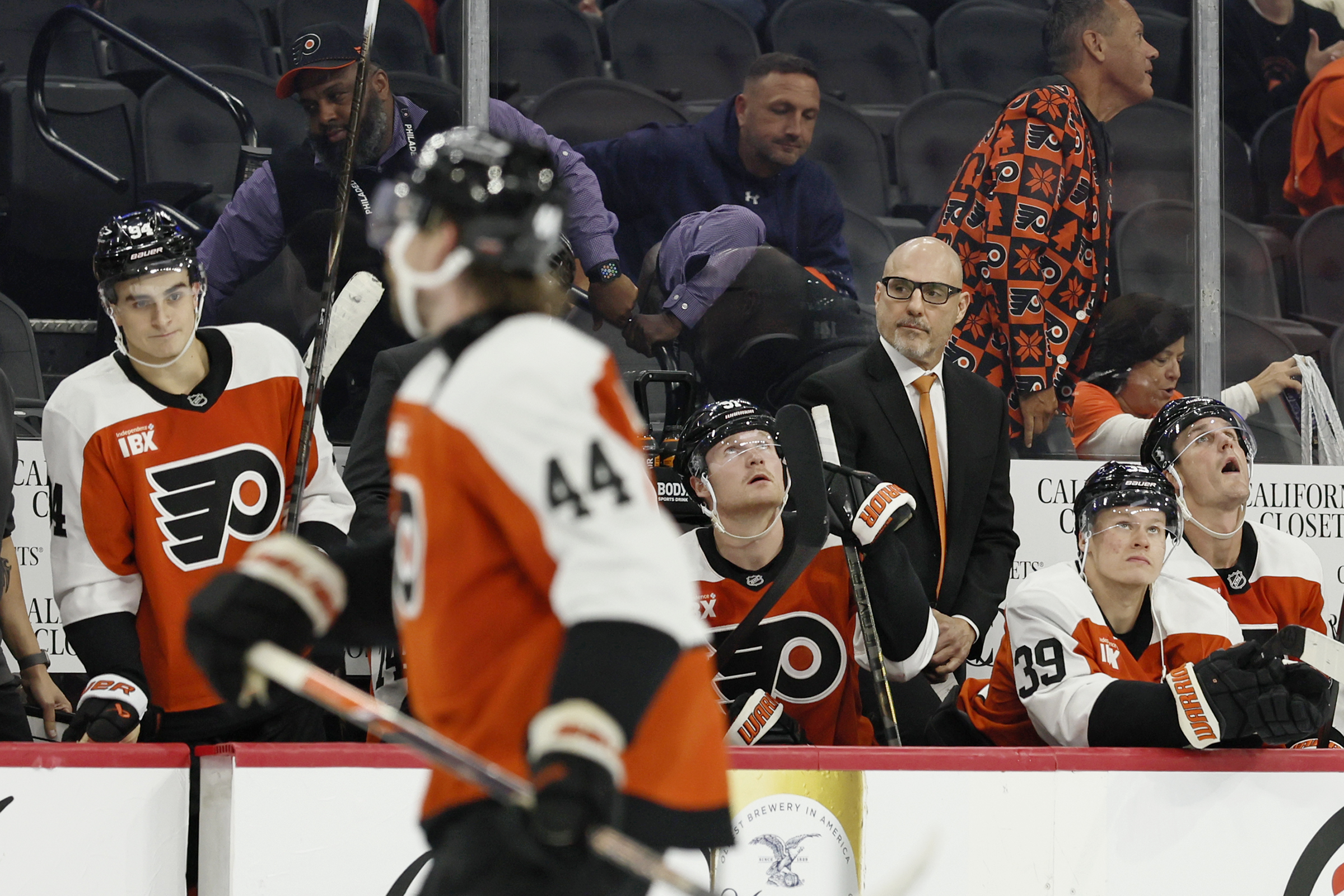
    The roars — at the start — seemed to roll on from that spring day in May when the Flyers’ season ended. The fan appreciation felt as they left the ice following a sweeping loss to the eventual Stanley Cup champion Carolina Hurricanes was still palpable, especially when coach Rick Tocchet and players like Denver Barkey (who is injured), Matvei Michkov, Porter Martone, Trevor Zegras, and Dan Vladař were introduced.

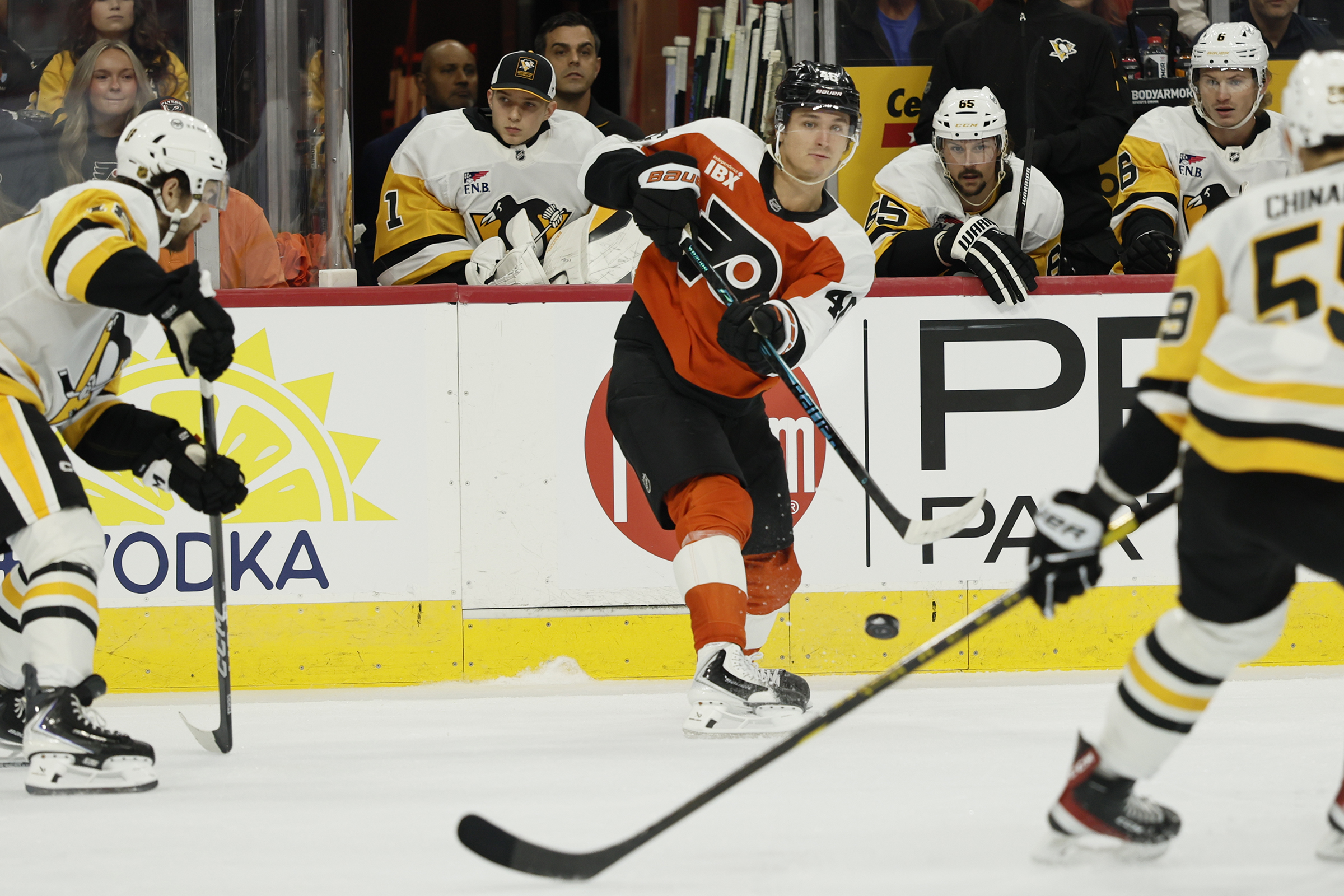
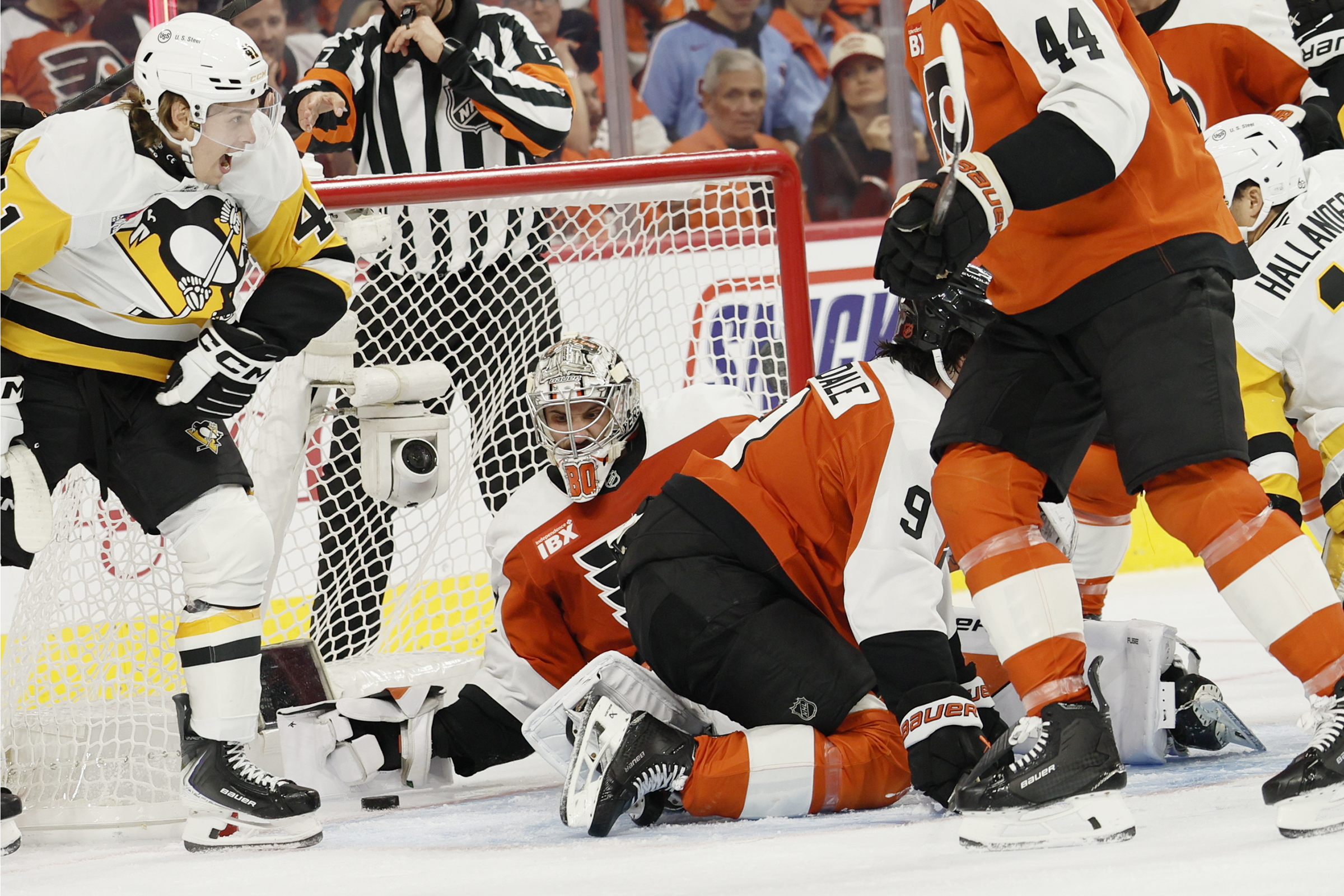
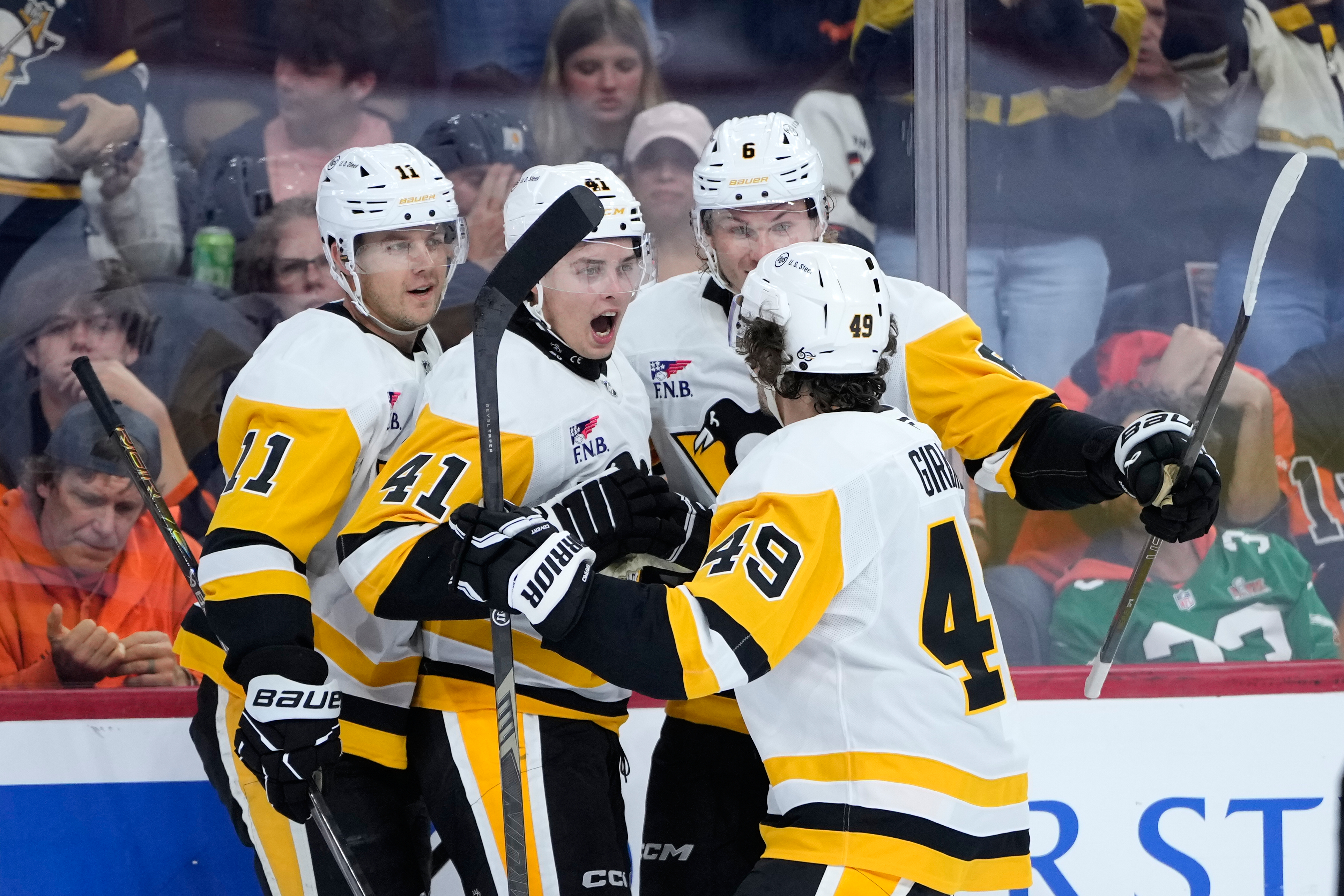
    But that, and a thundering open-ice defensive-zone hit by Rasmus Ristolainen early on, were about the only times the hometown faithful were happy, as the Flyers were thumped 7-0 by the visiting Pittsburgh Penguins. Almost like whiplash, the cheers quickly turned to boos.

    “It’s the first game. If this is going to be happening in a steady [way], it’s not a place you want to be around,” coach Rick Tocchet said. “I think the fans, obviously they hate losing to the Penguins [but] I just thought when you get a battle, and the fans pay good money, that’s what they’re mad about. We didn’t come up with any loose pucks.”

    “I don’t know. You [the media] saw it. I honestly don’t have an answer,” he said. “I don’t know if we won a battle tonight. When you go win battles, they have the puck. They outcoached us tonight. They outplayed us. They did everything better.”

    The Flyers ended the Penguins’ season last year on Cam York’s overtime winner in Game 6. Pittsburgh played like a group looking for revenge and handed the Flyers a loss so lopsided it equaled the worst opening-night dud in the team’s history. The Flyers also lost 7-0 to the Los Angeles Kings on Oct. 21, 1971, at The Spectrum.

    “We got to wake up. Last exhibition game [a 5-1 loss to a young Washington Capitals group] we played was the same way, and everyone’s like, ‘Oh, it’s training camp, we’re going to ease our way into the season, but we got to wake up here,” captain Sean Couturier said.

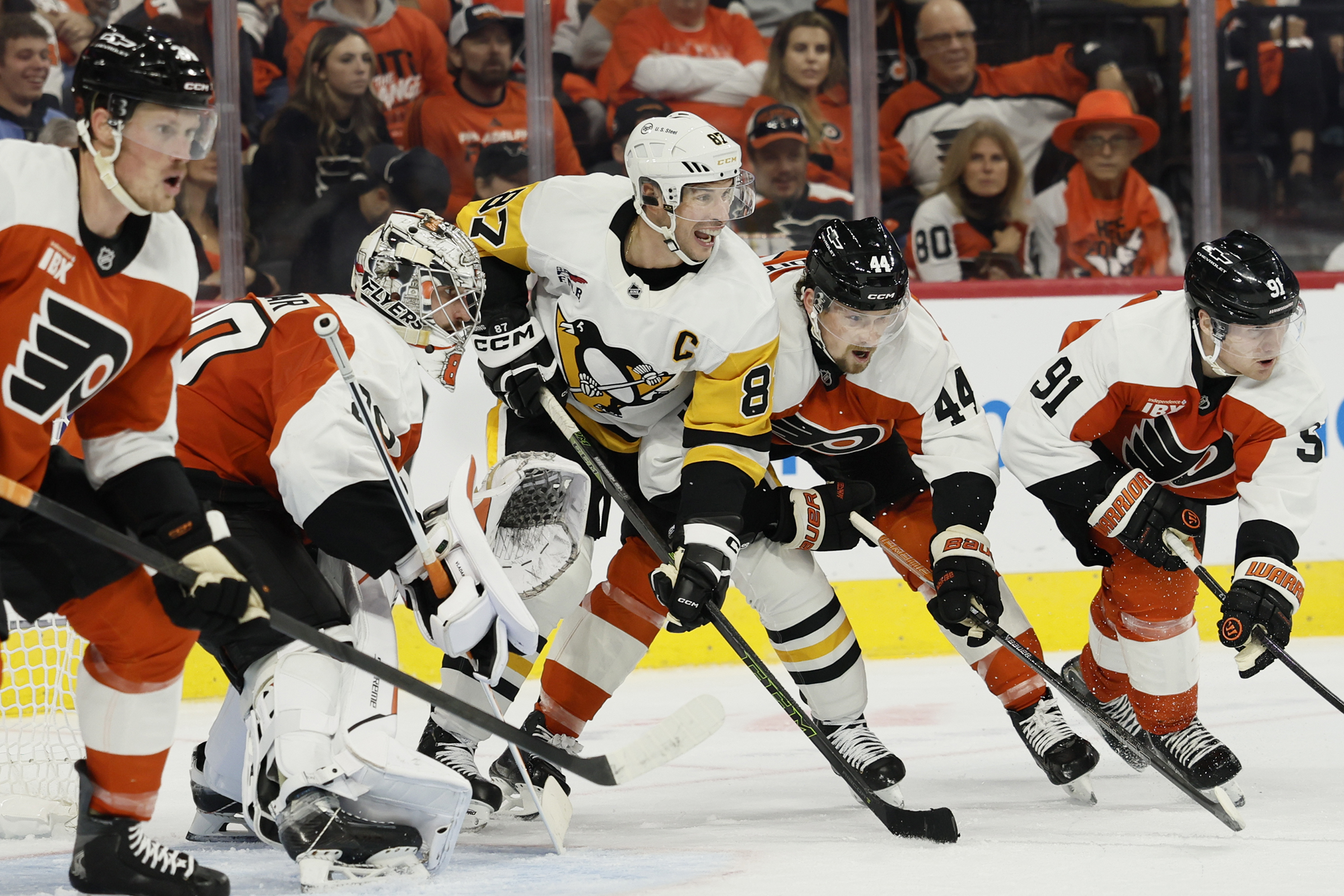
    The Penguins buzzed the Flyers from the start and didn’t let up all night.Matt Slocum

    “I mean, there’s no panic. Nothing. But I just think we’ve got to realize that we’re not that good. What happened last year is last year, and you’ve got to move on, and it’s a fresh year.”

    The Flyers were a mess at both ends of the ice Wednesday. Although the roster from last year largely remains intact — Noel Acciari and Simon Benoit made their debuts — the players were disconnected when passing the puck in the Penguins’ end and, in turn, in their defensive structure. The Flyers often allowed Pittsburgh to breeze through the middle, drive to the net untouched, and pile 38 shots on goal compared to their 19.

    As a team, they had 21 giveaways to the Penguins’ 11, with veteran blueliner Travis Sanheim and rookie winger Martone leading the way with four each.

    Martone did not play the final 4 minutes, 21 seconds of the first period after he was part of a bad line change that led to Ville Koivunen’s goal that made it 2-0. Koivunen received a stretch pass from Sam Girard, got behind the Orange and Black’s defense, and out-deked Vladař to score five-hole.

    The teenager was then demoted to the fourth line halfway through the second period as Tocchet started shuffling lines, with every other right winger moving up a spot, including Michkov moving to the second line to skate with Tyson Foerster and Christian Dvorak.

    But it didn’t matter who was with who. According to Natural Stat Trick, the Flyers did not put a single high-danger shot on Penguins goalie Artūrs Šilovs at five-on-five. Vladař faced 12. This easily translates to: the Flyers did not drive to the net, and they let the Penguins swarm theirs.

    “We shot ourselves in the foot on a couple of them,” said Sanheim, who was on for two goals against. “We gave them probably half their goals.”

    Nick Robertson quieted the crowd less than 8 minutes into the opening frame with his first as a Penguin, scoring on a nifty redirect of a pass by Kris Letang near the right post. Crosby got the secondary assist, and the crowd, of course, booed mercilessly as he registered his 140th point against the Flyers, the most in NHL history.

    Evgeni Malkin made it 3-0 on a give-and-go with Hendrix Lapierre during a Penguins power play. The future Hall of Famer passed the puck to Lapierre at the left flank and rotated down from the point into the bumper, opening up his body for the quick strike.

    Lapierre added his own tally 2:23 later, scooping up the puck in the neutral zone, catching Carl Grundström flat-footed as he blew past him, and scoring short-side on a late-developing two-on-one. Filip Hållander then made it a handful of goals with just his second career marker, scoring on his second swipe atop the crease as everyone crashed down.

    In the third period, Robertson added a sixth during a Flyers power play when his missed shot went off the end boards, off Vladař’s skate, and in. Finally, Egor Chinakhov wrapped up the scoring with a power-play tip-in off of a shot from Erik Karlsson.

    And to compound things, although it is expected these days, a Flyers power play that ranked dead last last season (15.7%) and tied for the fourth-most short-handed goals allowed has picked up right where it left off. According to Natural Stat Trick, the man advantage had 13 shot attempts, six shots on goal, and six scoring chances. It still went 0-for-3, allowed two scoring chances, and that goal.

    Rick Tocchet called a lot of what he saw Wednesday “alarming.”Elizabeth Robertson / Staff Photographer

    “If we won 7-0, I’d say the same thing: It’s a long year. We can’t get too high. We can’t get too low. So you have to have that approach, but there’s alarming things,” Tocchet said. “We obviously didn’t want to battle. We had a lot … snowblowers. It was a couple of plays [where] we don’t go through people. We don’t have to kill them, but you can’t play this game if you don’t win battles.

    “I don’t know if guys are reading the press clippings. I don’t know. But it wasn’t good, even the last two exhibition games, the same thing. We play like this tomorrow with a team like Jersey; it’s going to be worse. So we’ve got to be careful.”

    Breakaways

    Alex Bump and Nick Seeler were the only two players who were not on the ice for a goal against. … Owen Tippett led the team with seven shot attempts, including four shots on goal, and six hits. Michkov had five shot attempts, with one needing to be saved by Šilovs. … Konecny had the best Flyers chance of the night, tipping in a pass from Tippett as he stood atop the crease on a power play. … Benoit got drilled by Robertson from behind in the second period but the Penguin was only given a minor. … Malkin became the sixth player in NHL history to notch 100 or more points against the Flyers, joining Crosby (140), Mario Lemieux (124), Jaromír Jágr (120), Bryan Trottier (117), and Wayne Gretzky (100).

    Up next

    The Flyers get right back to action on Thursday, taking on the Devils in New Jersey (7 p.m., ESPN+, Hulu, Disney+).

    The Flyers and their fans had precious little to cheer about in Wednesday’s season opener.Elizabeth Robertson / Staff Photographer
  • French vineyards are growing grapes with minimal chemicals — and making better wines

    French vineyards are growing grapes with minimal chemicals — and making better wines

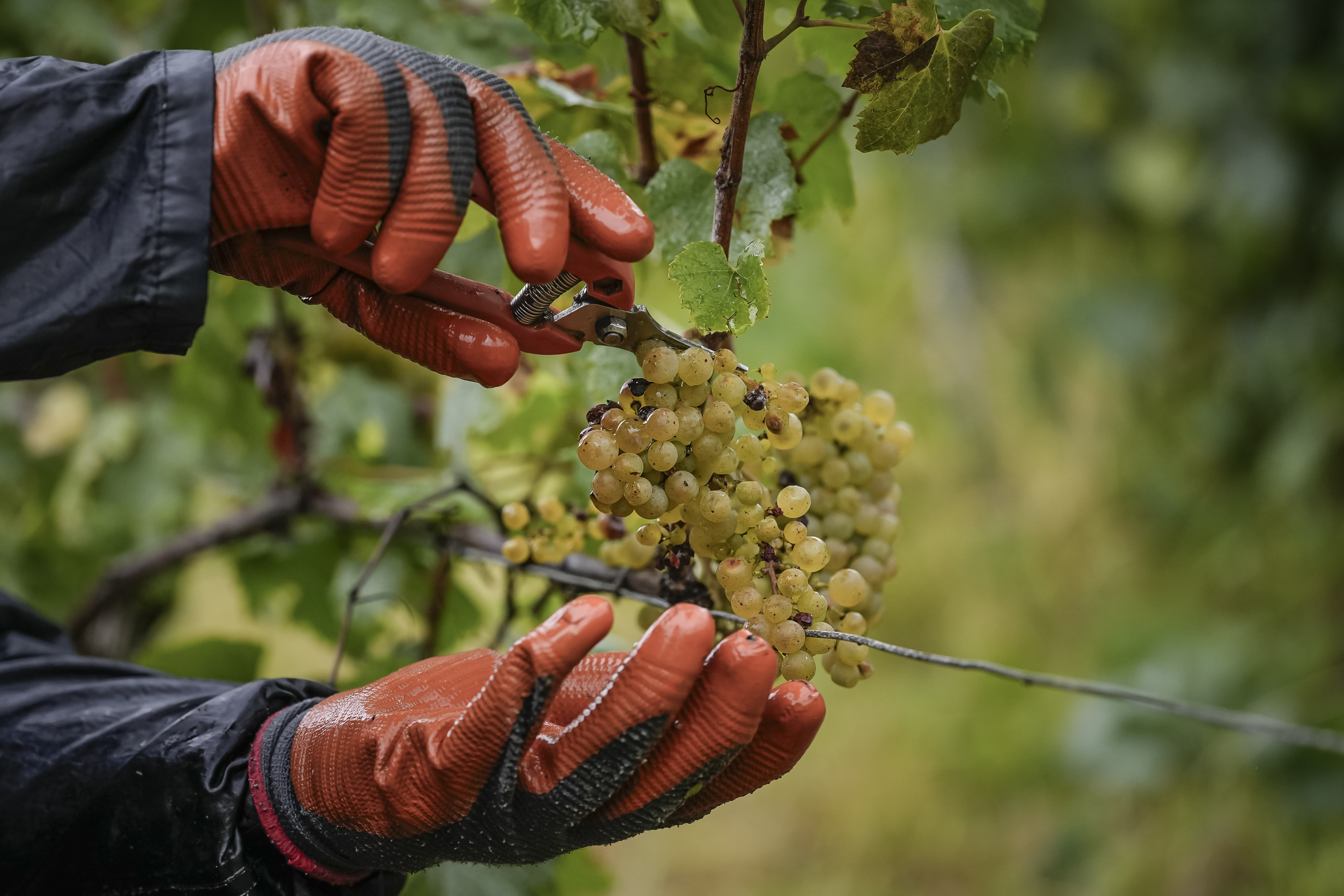
    Burgundy is in many ways the birthplace of fine wine. Not only is it the native region for both chardonnay and pinot noir, but Burgundy also was the first place where winemaking practices were systematically organized in Medieval times around quality, not quantity.

    Today, Burgundy is still viewed as the world’s most ambitious wine region, which helps explain why more and more of its small producers — including this one — are embracing an “organic lite” approach to grape growing.

    The cachet of a certified organic label continues to grow within the wine world, but obtaining the certification is far more costly in some regions than others. In dry and sunny places where fungus and other pests are naturally suppressed, such as southern Spain or most of Chile, certification can be relatively cheap and come with little risk. In cooler and more humid regions like Burgundy, though, a commitment to organic farming can force growers to watch as their entire crop is destroyed before their eyes.

    It’s in this context that we see more producers find a middle ground between relying on chemical sprays for pest control and a zero-tolerance policy for manmade chemicals. The French call this lutte raisonée — or the “reasonable fight” — because sprays are avoided where possible but not prohibited. They can be used when absolutely necessary.

    This common sense approach also produces more interesting wines, since the regular use of chemical sprays can result in a loss of character and complexity. Here, we find a clean, bright chardonnay with layers of pear and apple flavors that’s laced with palate-cleansing minerality, all in the understated style Burgundian monks first pioneered almost 1,000 years ago.

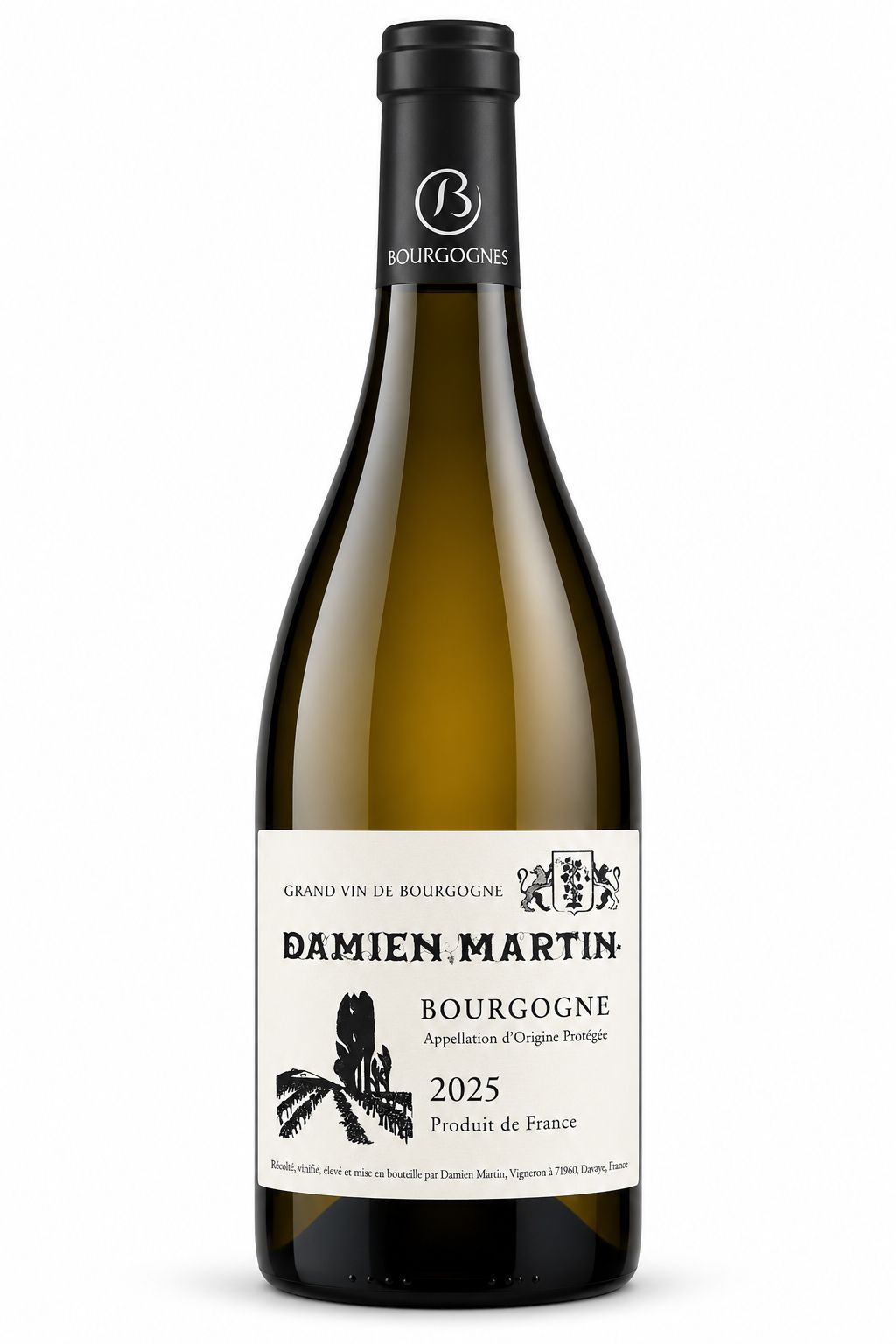
    Damien Martin Bourgogne BlancCourtesy of Damien Martin

    Damien Martin Bourgogne Blanc

    Burgundy, France

    13% ABV

    PLCB Item #100048584

    On sale for $17.99 through Oct. 4 (regularly $19.99)

    No alternate retail locations within 50 miles of Philadelphia. according to Wine-Searcher.com.

  • Andrew Painter delivers a ‘career-altering performance’ in playoff debut and keeps Phillies’ hopes alive

    Andrew Painter delivers a ‘career-altering performance’ in playoff debut and keeps Phillies’ hopes alive

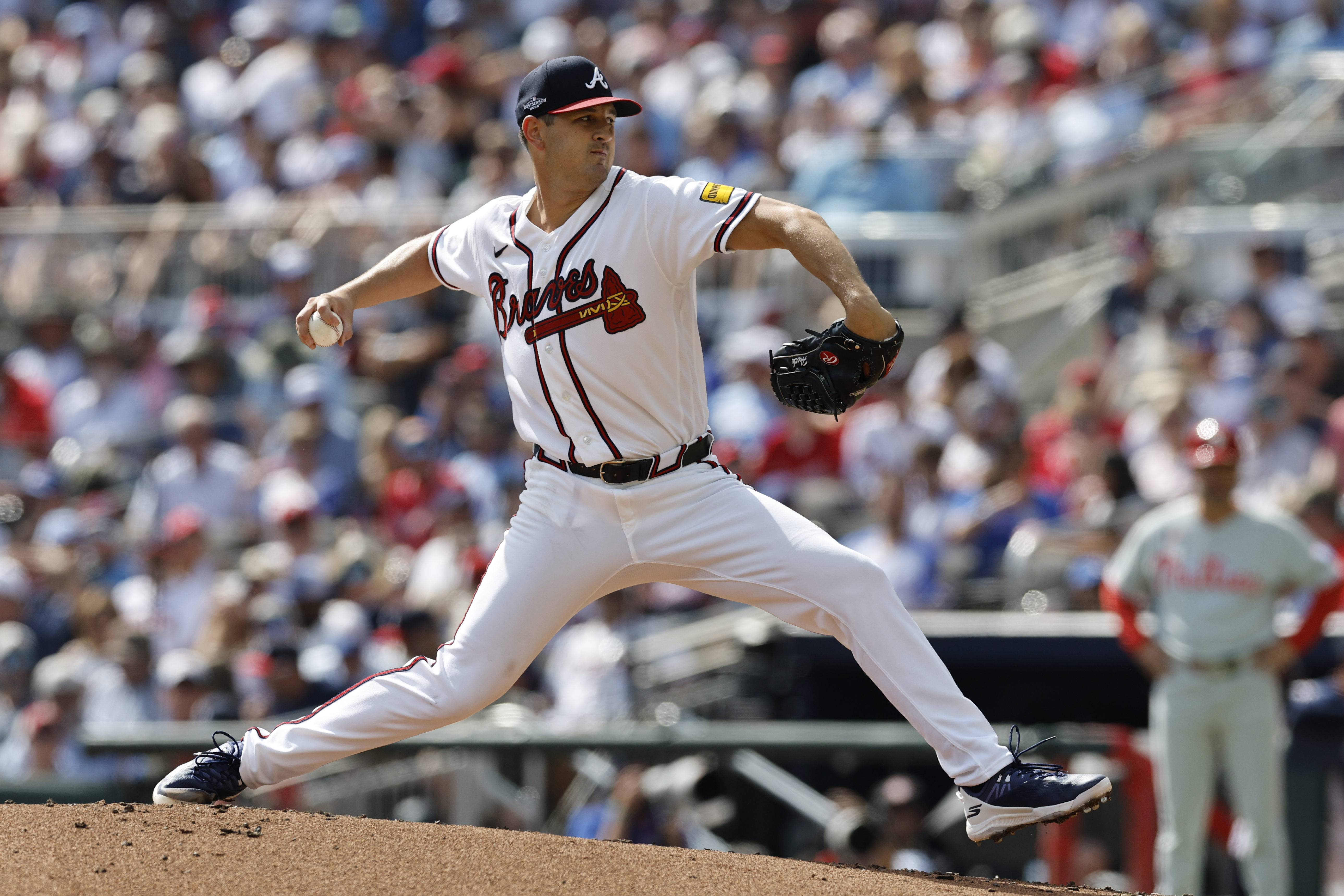
    ATLANTA — The first six pitches from Andrew Painter missed the zone.

    They weren’t particularly close, either. The Braves hitters left their bats on their shoulders. The home fans at Truist Park could smell blood in the water.

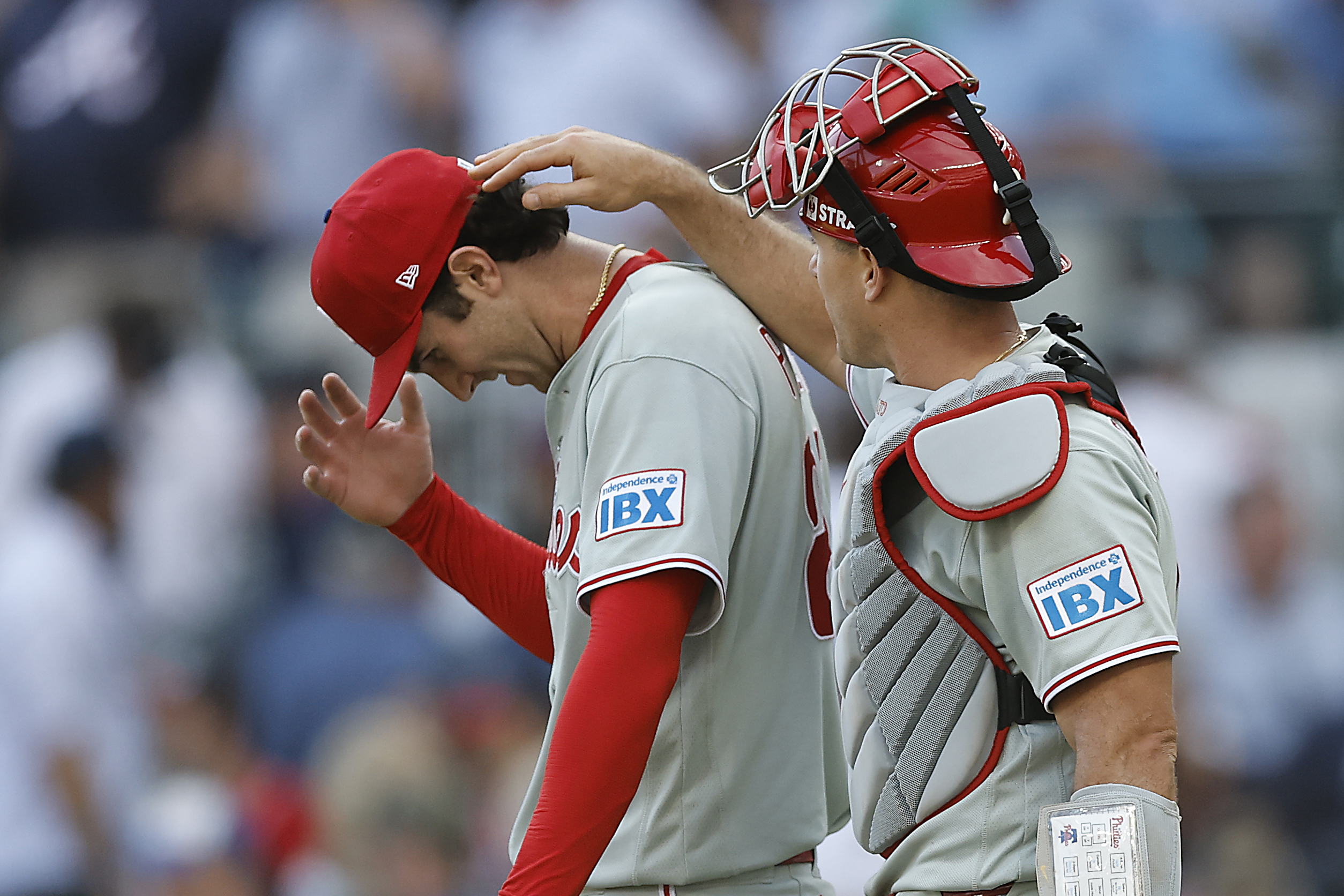
    Painter was nervous. He said as much afterward. Game 2 of the wild-card series Wednesday was deadlocked at 3 in the eighth inning, and one pitch could mean the difference between their season extending another day or the Phillies packing their bags that night. And it was entirely on the rookie’s shoulders, in his postseason debut, in his first career late-inning relief appearance.

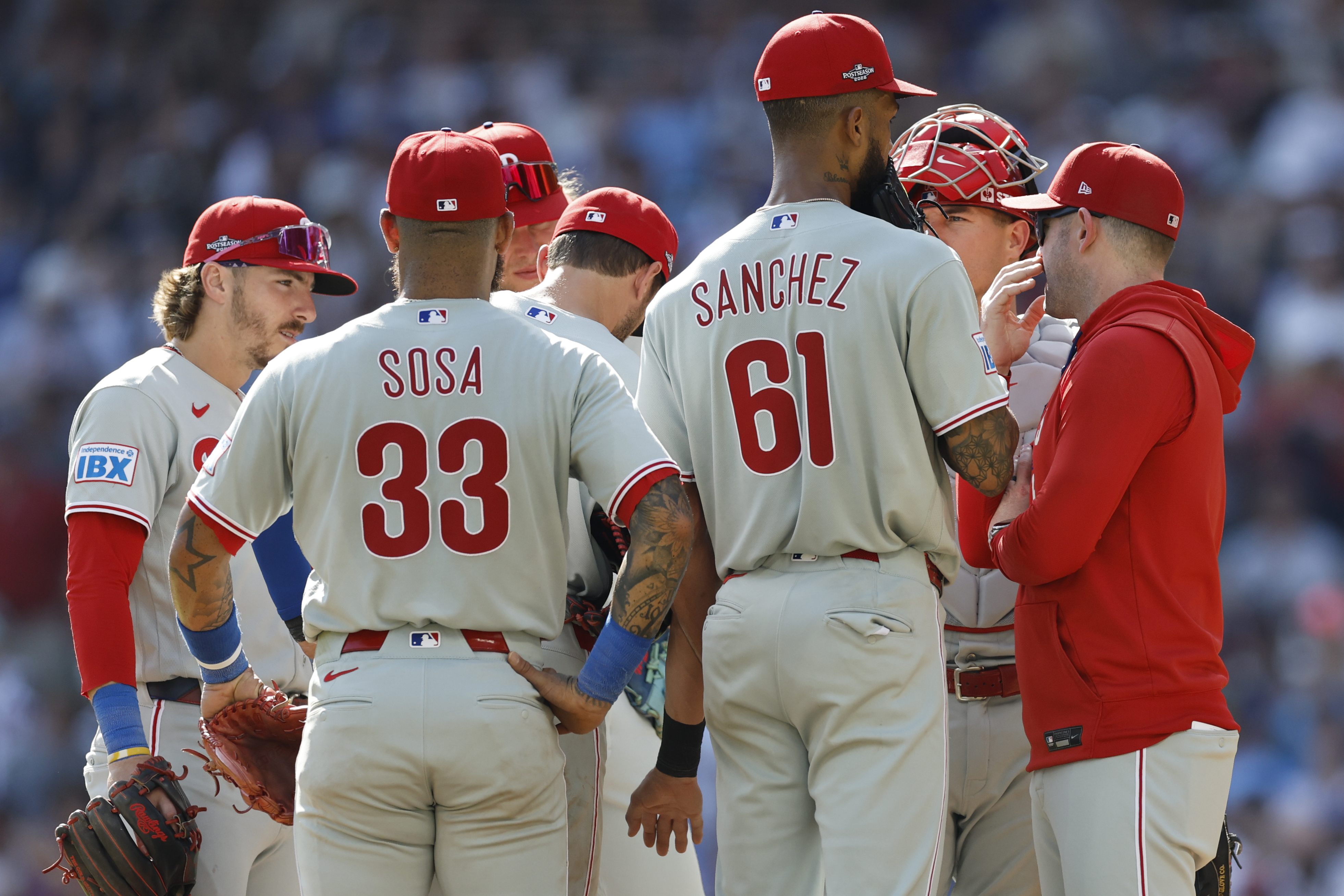
    After the sixth straight ball — a 99.5 mph fastball inside to Michael Harris II — J.T. Realmuto stood from his crouch. Pitching coach Caleb Cotham started toward the mound. They told Painter to trust himself. To attack.

    “Just me and you,” Realmuto told him. “Let’s go get him.”

    And that’s what Painter did, in the Phillies’ 4-3 win over Atlanta that forced a deciding Game 3 on Thursday. He attacked Harris with a fastball in the zone, and then got him to ground into a double play with a changeup.

    From there, the 23-year-old pitched a scoreless eighth and ninth to force extra innings, and returned to close it out after the Phillies at last took the lead in the 10th on a go-ahead home run from Alec Bohm.

    Andrew Painter had three strikeouts over three scoreless innings to earn the win in his first playoff appearance on Wednesday.Yong Kim / Staff Photographer

    “I was trying to be super aggressive and go down with my best stuff,” Painter said. “Knowing the situation we were in there and backs against the wall a little bit, just stepping on the gas there and just giving it everything I had in that moment.”

    Painter’s gutsy performance was one of several in the Phillies’ chaotic victory to stave off elimination. Cristopher Sánchez threw a career-high 116 pitches. The Braves made him work, drawing five walks (two intentional). But he limited the damage to one run over the first six innings, as he remained locked in a duel with Atlanta starter Tyler Mahle.

    “A lot of adrenaline going out there,” Sánchez said through team interpreter Diego D’Aniello. “No tomorrow for us, today. … Just tried to give the best of myself out there on the mound, and a lot of energy.”

    But it seemed like it wouldn’t be enough. After Sánchez returned for the seventh, he allowed a leadoff walk to Sean Murphy, and Bohm failed to get an out on a sacrifice bunt from nine-hole hitter Ha-Seong Kim.

    Sánchez fought off one threat by striking out Atlanta star Ronald Acuña Jr. And then disaster struck in the outfield.

    Bryce Harper had moved back to right field at the trade deadline in a switch he and the Phillies thought might give them the best chance to win in October. He did it to open a spot at second for new acquisition Luis Arraez, who is not even on the wild-card roster due to an ankle sprain. But Harper has remained out there anyway.

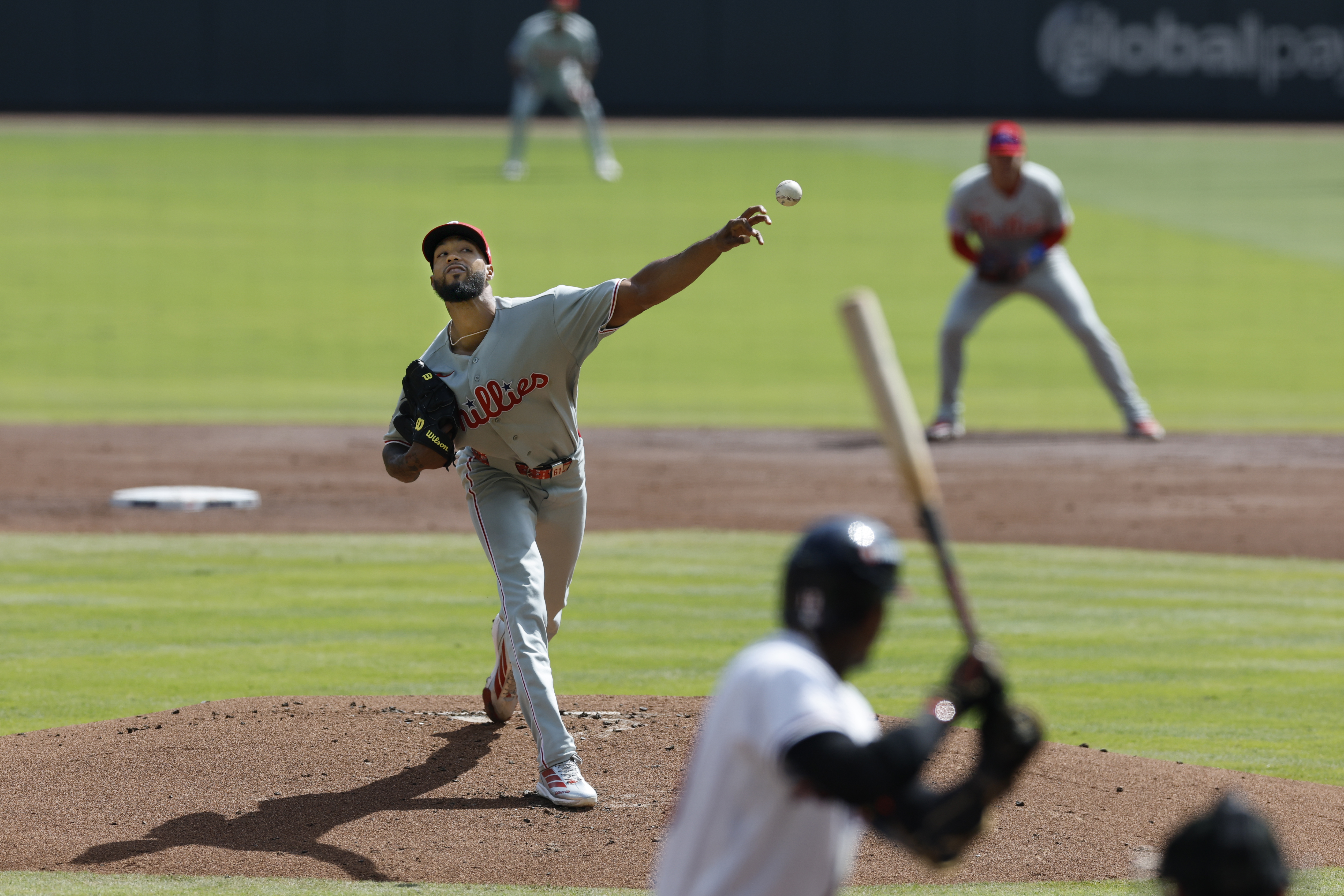
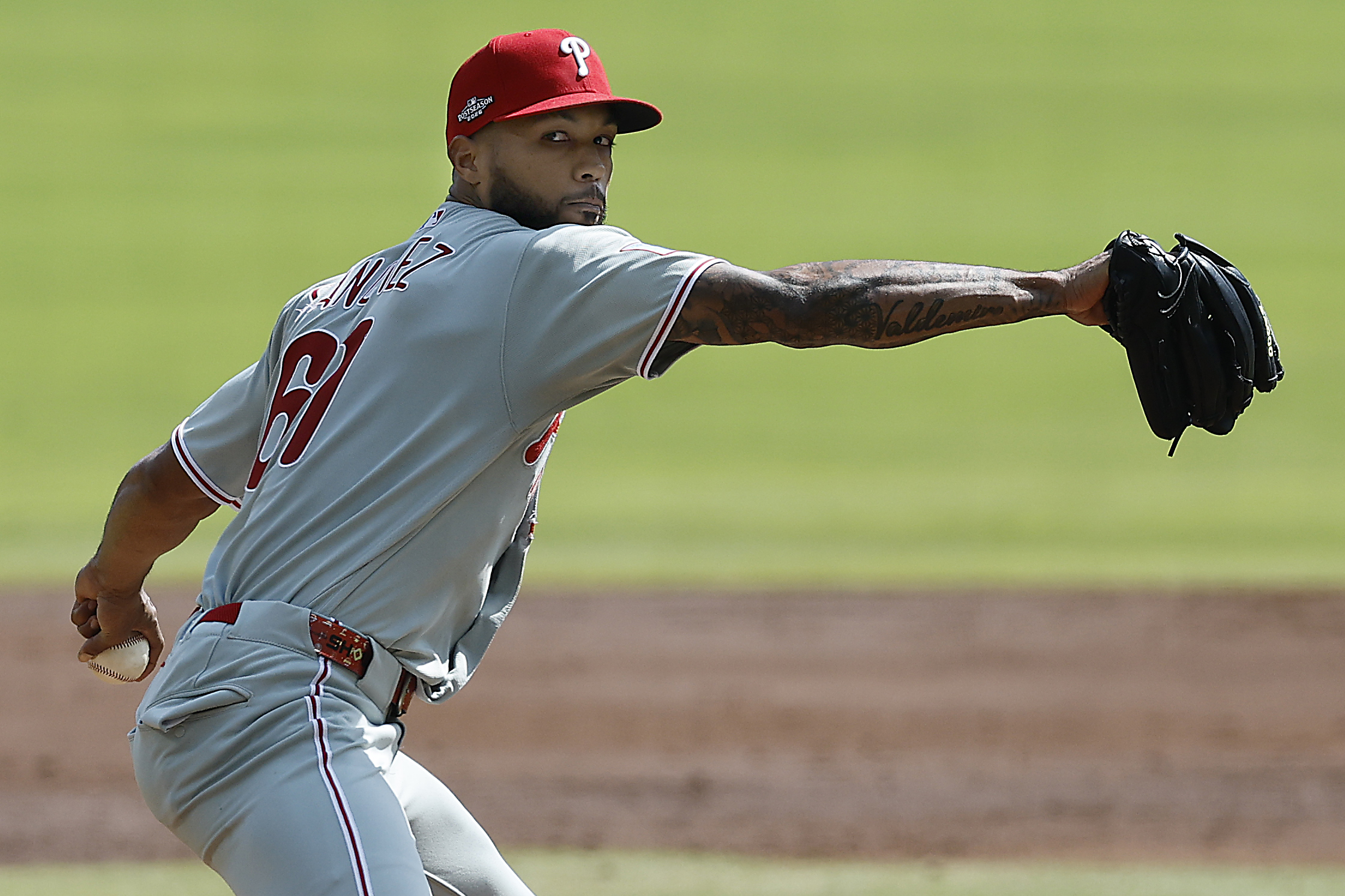
    Cristopher Sánchez allowed three earned runs in 6 2/3 innings on a season-high 116 pitches against the Braves in Game 2.
    Yong Kim / Staff Photographer

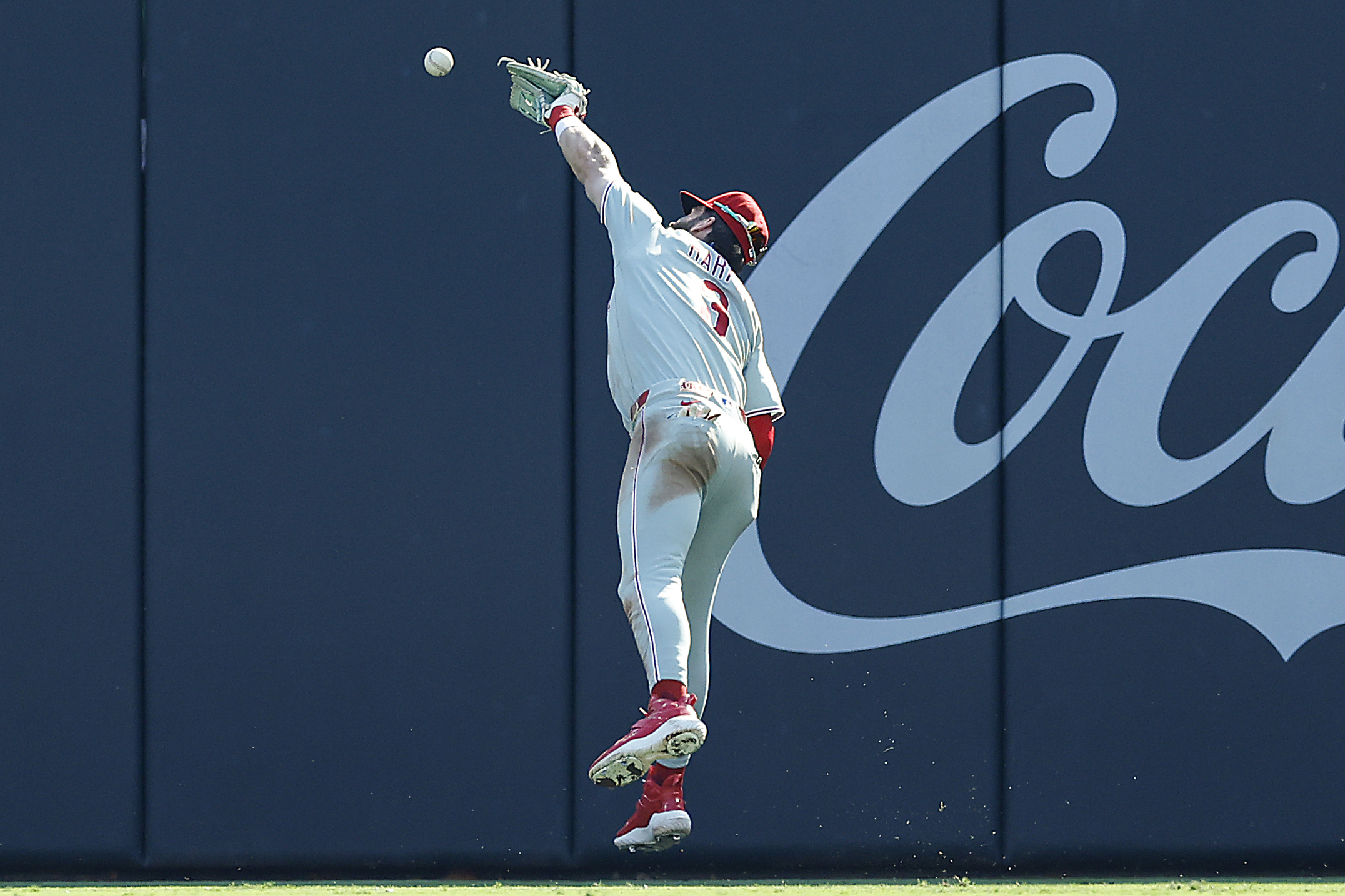
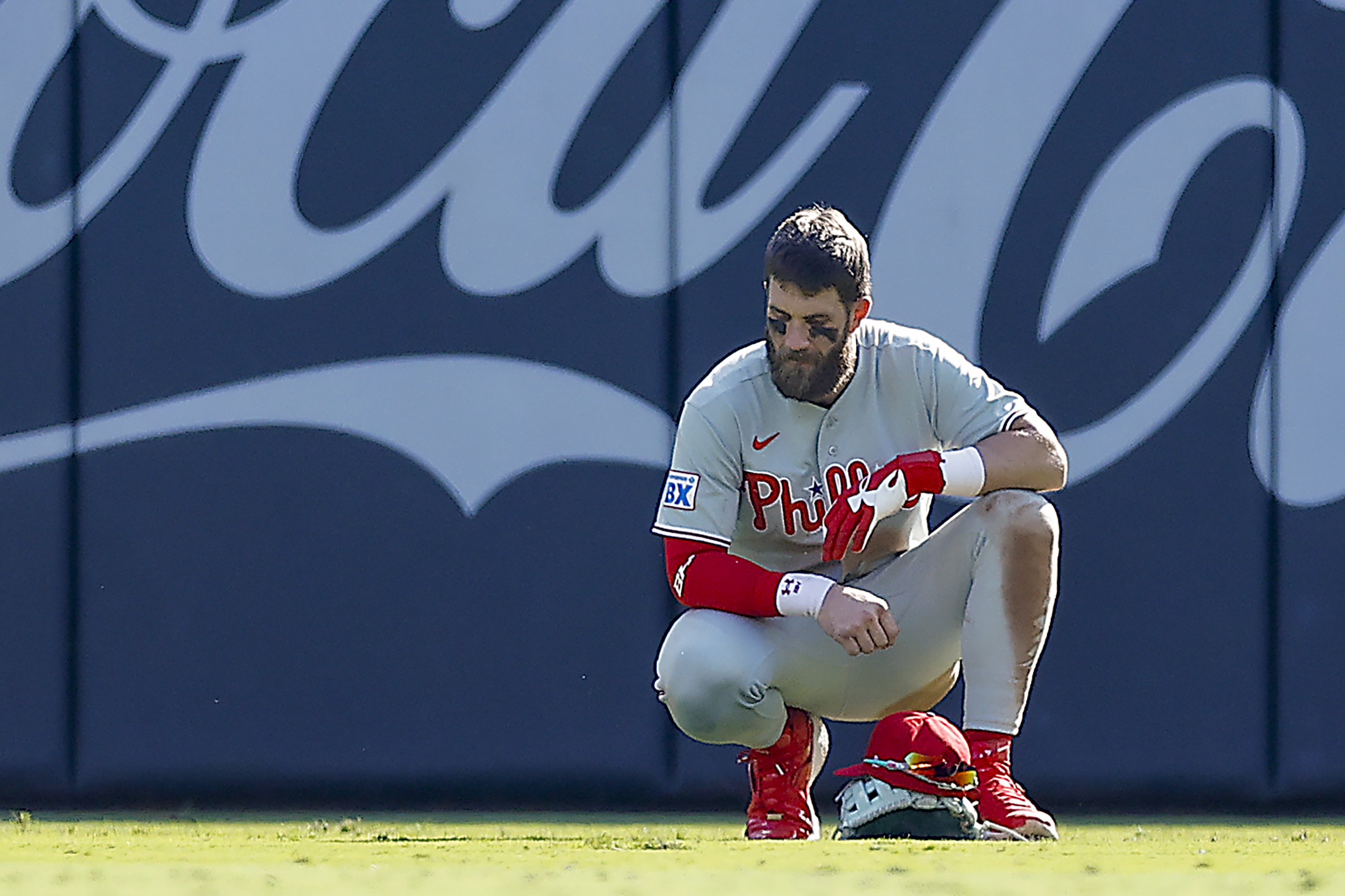
    When he misread a fly ball from Drake Baldwin in the seventh, it appeared the Phillies’ season might end for the second straight year because of a defensive miscue. But instead of a young reliever who cratered under pressure on a soft grounder back to the mound, it was the Phillies’ biggest star.

    Harper broke in at first, then drifted back, then tried to jump at the last moment. But the ball was over his head, and went toward the wall for a double. The inning suddenly spiraled into a 3-1 Atlanta lead. Sánchez was lifted with two outs for rookie Alex McFarlane, who came through to stop the bleeding with runners on the corners.

    In the dugout afterward, Sánchez approached Harper.

    “I told him he was bound to have a great moment,” Sánchez said.

    Phillies right fielder Bryce Harper misplays a ball hit by the Braves’ Drake Baldwin that scored the go-ahead run for Atlanta in the seventh inning of Game 2 on Wednesday.Yong Kim / Staff Photographer

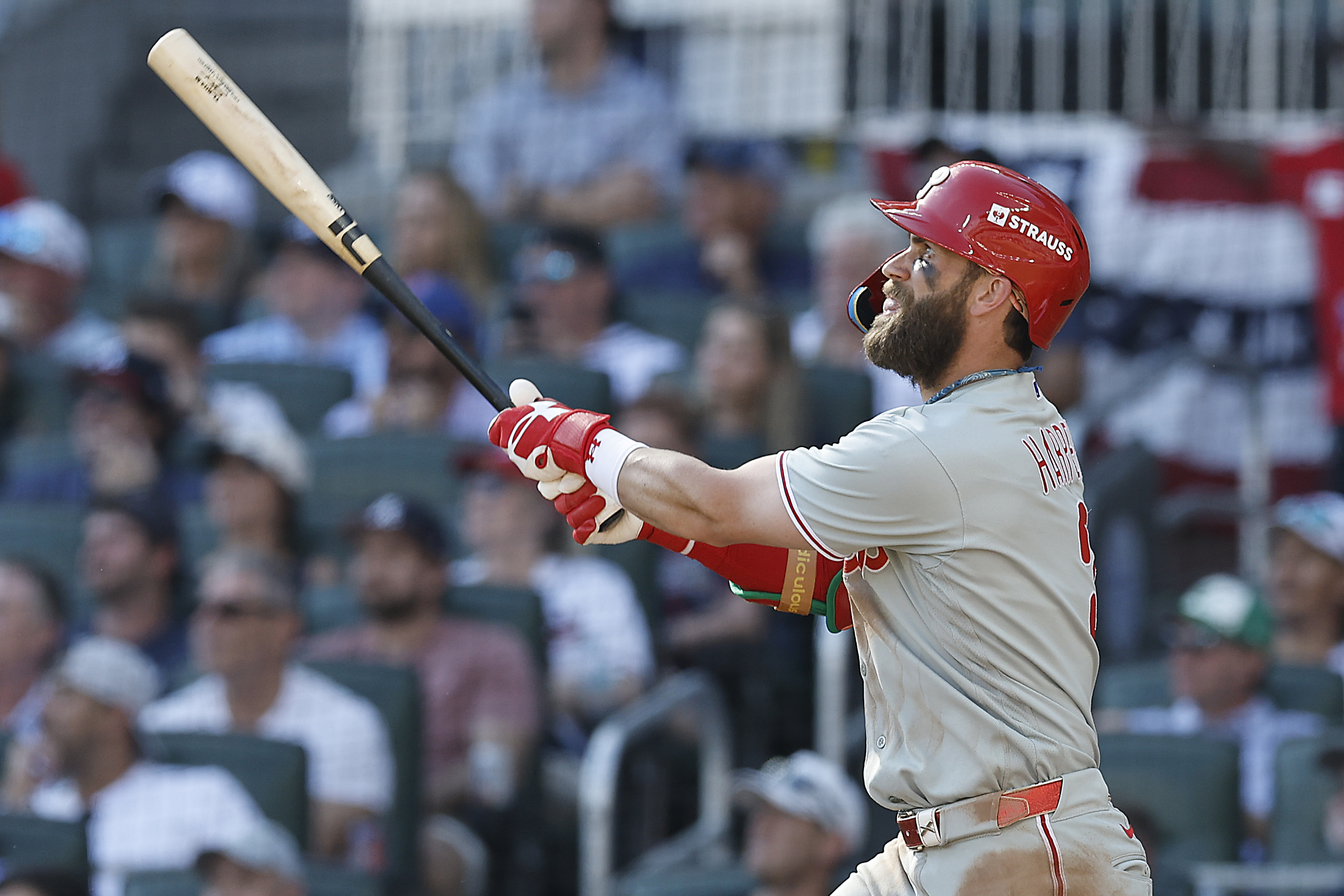
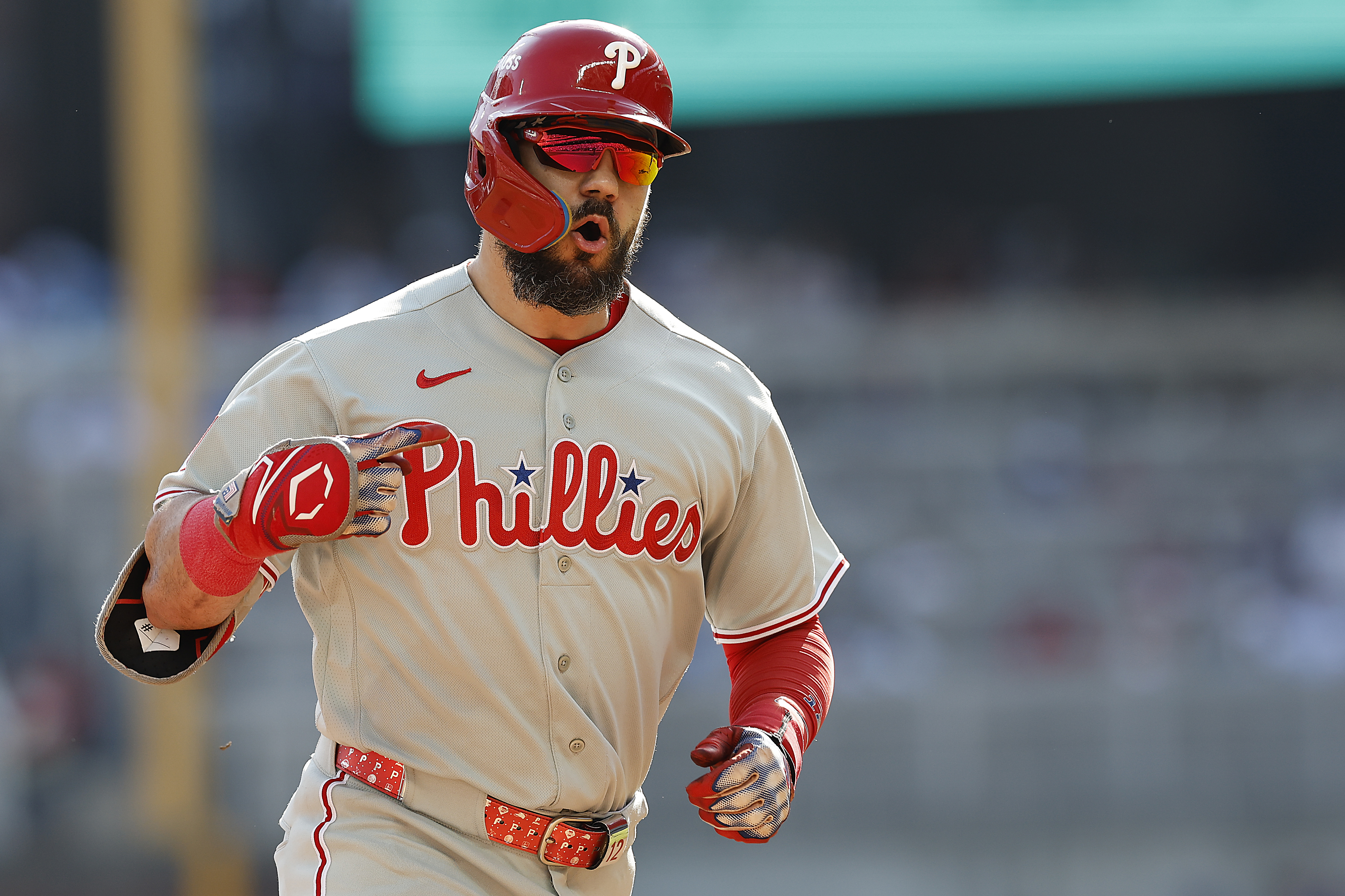
    As both Phillies and Braves fans jeered at him for the mistake, Harper said he thought about what he might say to his 7-year-old son, Krew, if this had happened to him. Harper was due up in the top of the next inning after Kyle Schwarber, and from the on-deck circle, watched as Schwarber sent a slider from lefty Dylan Lee 447 feet.
    And then Harper did the same.

    “I wasn’t not trying to hit a homer, I can tell you that,” Harper said.

    The Braves outfielders didn’t move a muscle either time; they didn’t even turn around to watch them go. Silence settled over the stadium, which had been raucous just moments before, as the Phillies’ biggest bats tied it 3-3 and resuscitated the season.

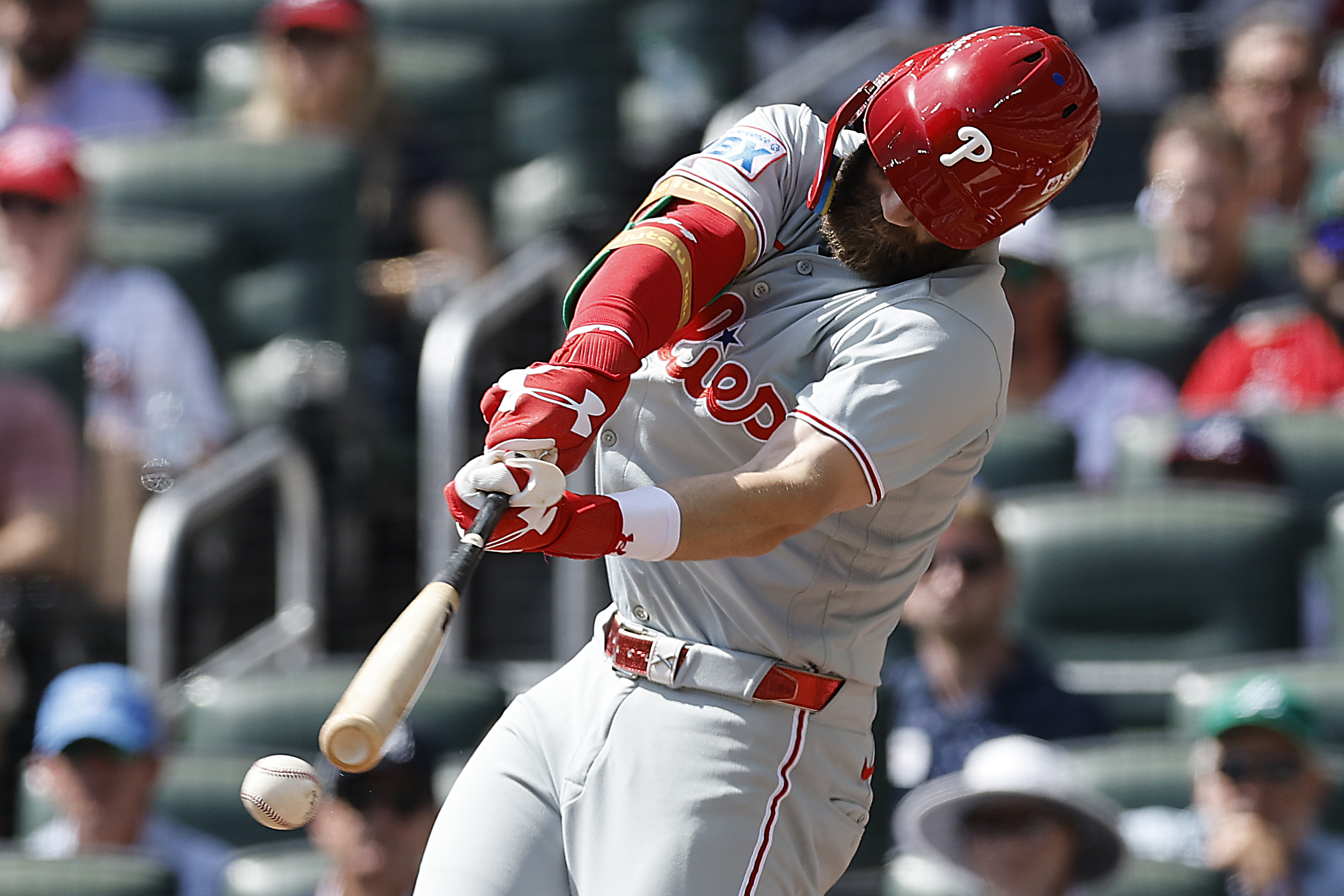
    The Phillies’ Bryce Harper hits a solo homer in the eighth inning to tie the game at 3.Yong Kim / Staff Photographer

    In the visitors’ clubhouse, Sánchez watched the homers on television and started slamming his hands on everything within reach in excitement.

    “It’s easy to beat yourself up,” Schwarber said. “I’ve been there plenty of times. So to not beat yourself up, look forward to that next pitch on defense, and then get right back into the box and be in tune to your bat. That’s what it’s all about. He was able to do that.”

    From there, it was all Painter’s game. Closer Jhoan Duran was unavailable. The Phillies were going to live or die with the rookie.

    “I didn’t think I was going to be closing a game in the playoffs,” Painter said, “but I think I’m capable of a lot.”

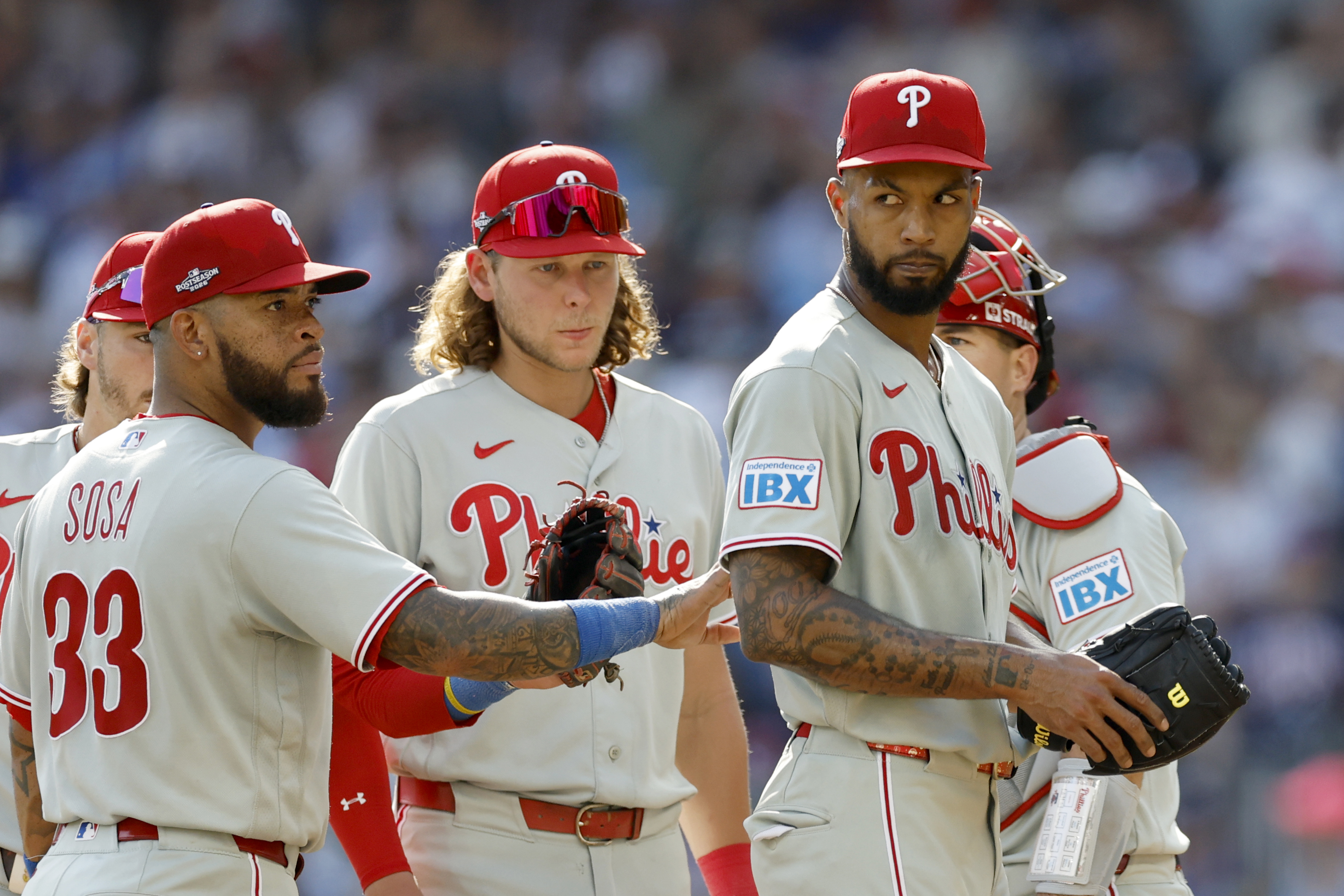
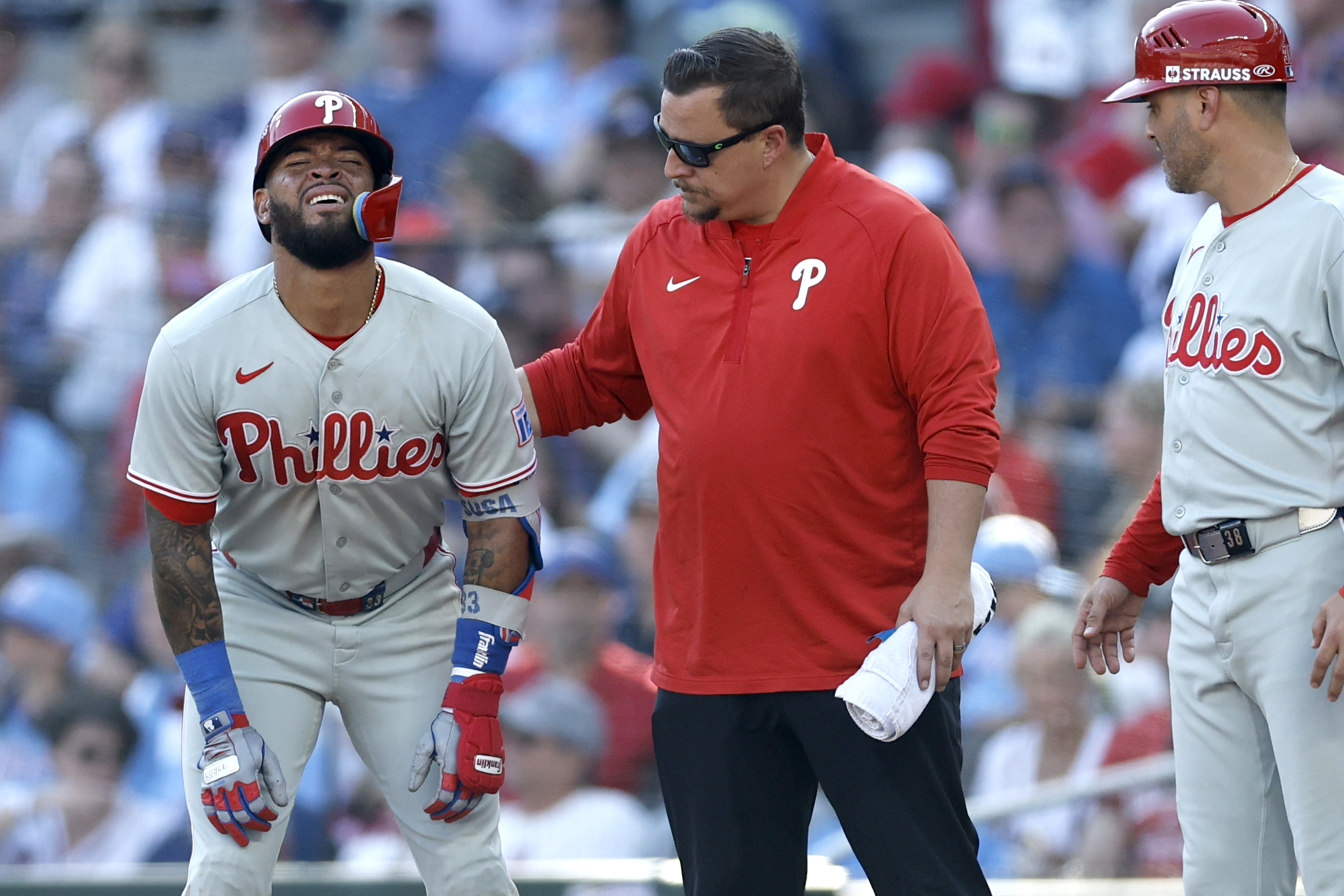
    In the ninth, Edmundo Sosa hit a leadoff single but was removed with a leg injury after running to first. Sosa said afterward he tweaked a muscle in his upper thigh, and that he was hopeful he would be available Thursday.

    After Bohm’s go-ahead homer off Didier Fuentes in the 10th, the Braves advanced the winning run to first on a pair of singles in the 10th. But Painter took a breath. He went back to the rosin bag. And then he attacked again.

    He went right after pinch-hitter Dominic Smith, getting two swings on his changeup. Smith watched the third pitch, a four-seam, go by for a ball, but Realmuto successfully challenged the call for a game-ending strikeout.

    “That’s a career-altering performance, in my opinion,” said Realmuto.

    Jesús Luzardo agrees. He entered in the 10th inning of Game 4 last season on short rest to try and extend the Phillies’ season another day against the Dodgers. But he wasn’t a rookie. He wasn’t making his postseason debut. And he didn’t have the year that Painter had.

    “I always knew he had it in him,” Luzardo said. “But it was nice to see him flourish, and show everyone that he has that dog inside him.”

    Phillies rookie pitcher Andrew Painter celebrates with his teammates after he pitched the final three innings to beat the Braves in Game 2 on Wednesday.Yong Kim / Staff Photographer

    Luzardo said he reminded Painter to stay calm, not to get too worked up. But he didn’t want to overwhelm him with advice. He knew he didn’t really need it.

    The two pitchers are both from South Florida and have been friends for years, even before the trade that brought Luzardo to the Phillies organization. They were in touch last season, as Painter languished in triple A, still searching for his command after Tommy John surgery.

    With both starting the season in the Phillies’ starting rotation, Luzardo had a front-row seat to Painter’s early struggles and how he worked his way back. As the Phillies’ top prospect, Painter entered the year with sky-high expectations that he had trouble meeting at first. Painter was sent back to triple A for over a month to address his fastball command, and returned in July, armed with better stuff and more confidence.

    “Just to see the development that he’s had over the year, it’s been awesome,” Luzardo said.

    When he was demoted, the Phillies told Painter it was not a situation where he would go down for a start or two, take a breather, and come back. Returning to the majors at all wasn’t a guarantee.

    He had to earn it. He did. And almost exactly two months later, he saved the Phillies’ season. For one more day, at least.

    “I think it does speak to him and who he is,” said interim manager Don Mattingly. “Went down, went to work, came back. He’s been a different guy.”

  • Porter Martone’s rough opener provided a worthwhile reminder that he’s still just 19

    Porter Martone’s rough opener provided a worthwhile reminder that he’s still just 19

    Porter Martone started off with a bang last season, joining the Flyers at the end of March and scoring at over a point-per-game clip to help them to a once-improbable playoff berth. He was so steady and unfazed amid the Flyers’ run that it almost looked like he wasn’t going to have one of those “welcome to the league” moments.

    On Wednesday night, in the Flyers’ 2026-27 opener, he had it.

    After Ville Koivunen beat the Flyers, including Martone, on a bad line change, the latter sat for the final four-plus minutes of the first period. Martone was then assessed a cross-checking penalty, which quickly resulted in Pittsburgh’s third goal. He was later demoted to the fourth line, alongside Sean Couturier and Carl Grundström, in the team’s 7-0 loss to the Pittsburgh Penguins.

    “I just thought the first four or five shifts, he had a couple times to go through [Erik] Karlsson, and he let up, and you can’t do that,” coach Rick Tocchet said. “His game is something — he has to play that style, like a gritty style. He’s not going to go up the ice flying around.”

    Martone had no shot attempts and four giveaways, tied for the most among the Flyers. Per Natural Stat Trick, the Flyers had a team-low 2.64 expected-goals percentage with Martone on the ice at even-strength.

    Tocchet said his line changes, including his decision to demote Martone, were the result of the overall poor offensive performance from the group.

    Rick Tocchet was disappointed in his team’s defensive structure on Wednesday.Elizabeth Robertson / Staff Photographer

    “To have offense, you have to have the puck,” Tocchet said. “We had chances to skate the puck in, and we’re throwing pucks in, and we just reset the puck to them. If you’re not battling, that means you’re not battling offensively. That means you’re not willing to take the puck.”

    Martone, 19, was far from the only player to have a bad night. Tocchet said the team won “no battles” and that the defensive structure was the worst he’d seen it since he arrived in Philadelphia a year ago.

    As bulletproof as Martone might have looked to start his NHL career — he was a preseason Calder Trophy favorite, and projected to be one of the Flyers’ most important players heading into this year — there were signs in the playoffs that there was still going to be an adjustment period. He endured a five-game scoreless streak before picking up two more assists in the final two games of the Flyers’ second-round playoff series loss to Carolina.

    Tocchet said pregame that the Flyers are trying to “cocoon” Martone and all the young players from the outside attention, and to use the team environment to avoid overloading him in his rookie season.

    But Wednesday’s opener is a reminder that, as even-keeled as Martone can be, there are still growing pains in becoming an NHL regular.

    “I don’t think it’s an excuse, but I find younger players need longer,” Tocchet said. “You need a longer training camp. Veteran teams don’t. That’s not an excuse. That’s the way it is. Everybody lives in that world.”

  • 2026 Lincoln Nautilus: The biggest screen wins

    2026 Lincoln Nautilus: The biggest screen wins

    2026 Genesis GV80 3.5T Prestige AWD vs. 2026 Lincoln Nautilus Hybrid AWD Reserve III: Battle of the big screens.

    This week: Lincoln Nautilus

    Price: $76,380 as tested.

    What others are saying: “Highs: Nicest interior in Lincoln’s lineup, cool extra-wide dashboard display, hands-free driving feature is standard. Lows: Acceleration and road manners are mid, real-world highway fuel economy isn’t better than the nonhybrid model, best features reserved for Black Label trim,” says Car and Driver.

    What Lincoln is saying: “Experience the SUV named best luxury hybrid of 2026.” (A U.S. News and World Report award.)

    Reality: I’m not sure I’ve ever cited U.S. News here, and there’s a reason for that.

    What’s new: The Nautilus was last redesigned for the 2024 model year. It gets a new look for 2027 as well. Time to shop for a deal.

    Competition: In addition to the GV80, there are the BMW X5, Land Rover Defender, Lexus RX, Mercedes-Benz GLE, and Toyota Land Cruiser.

    Up to speed: The Nautilus tested uses a 2.0-liter engine and hybrid motor and battery that together make 280 horsepower. The vehicle gets to 60 mph in 6.6 seconds, according to Car and Driver, which is not bad for a hybrid SUV. There’s also a non-hybridized version which creates just 250 horses.

    Shiftless: Lincoln uses five buttons where the center of the dashboard meets the console for PRNDL, in a nod to the original 1958 Edsel, which pioneered a push-button transmission in the center of the steering wheel. That one was ridiculous because what an odd location; this one is ridiculous because it wastes so much valuable real estate.

    On the road: The Nautilus rides quite nicely, even among luxury midsize SUV competitors. Super smooth and quiet, but not as detached as the Mercedes. It’s not much fun on the curves but definitely easy to get around in, and highways are a delight.

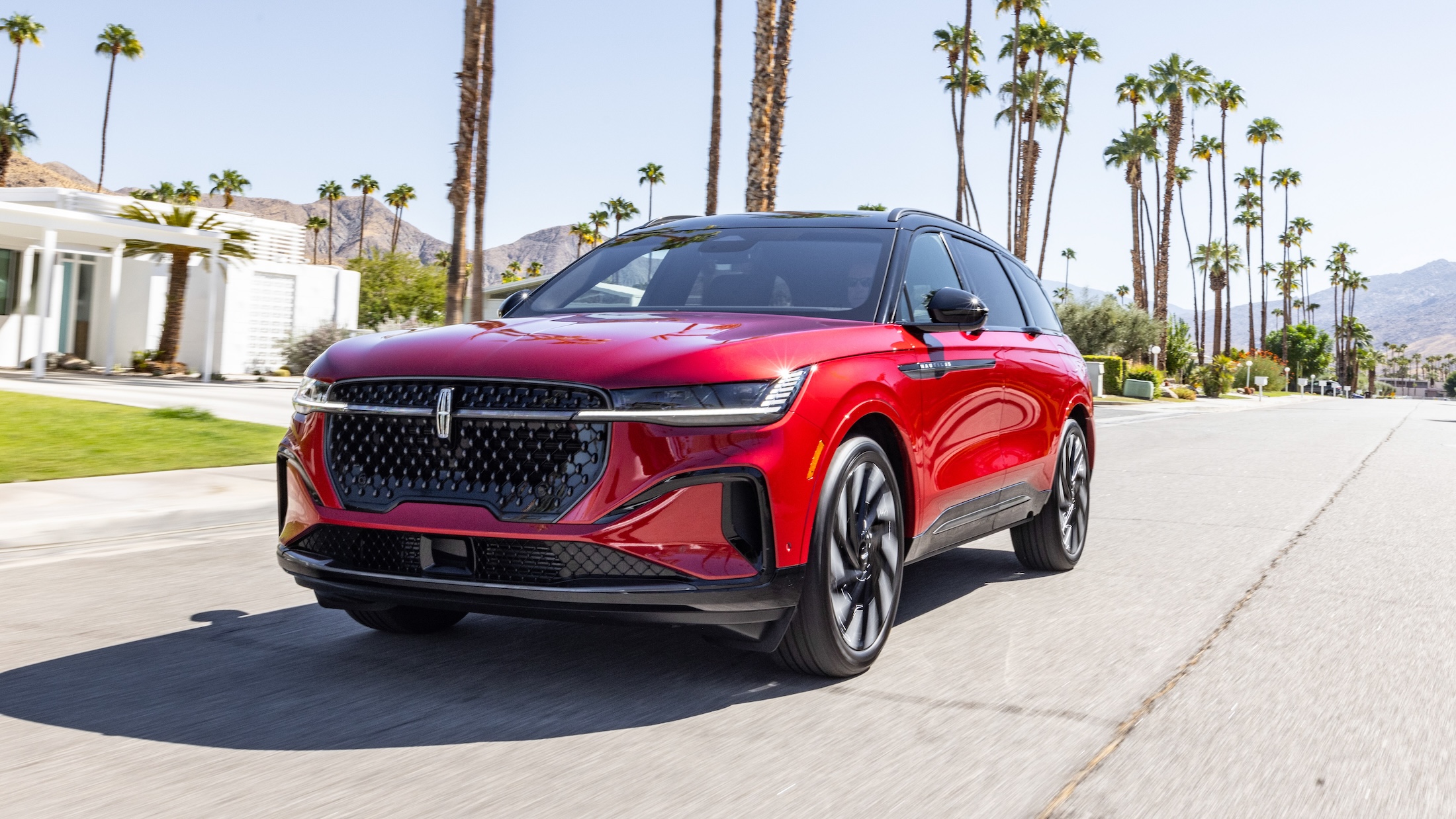
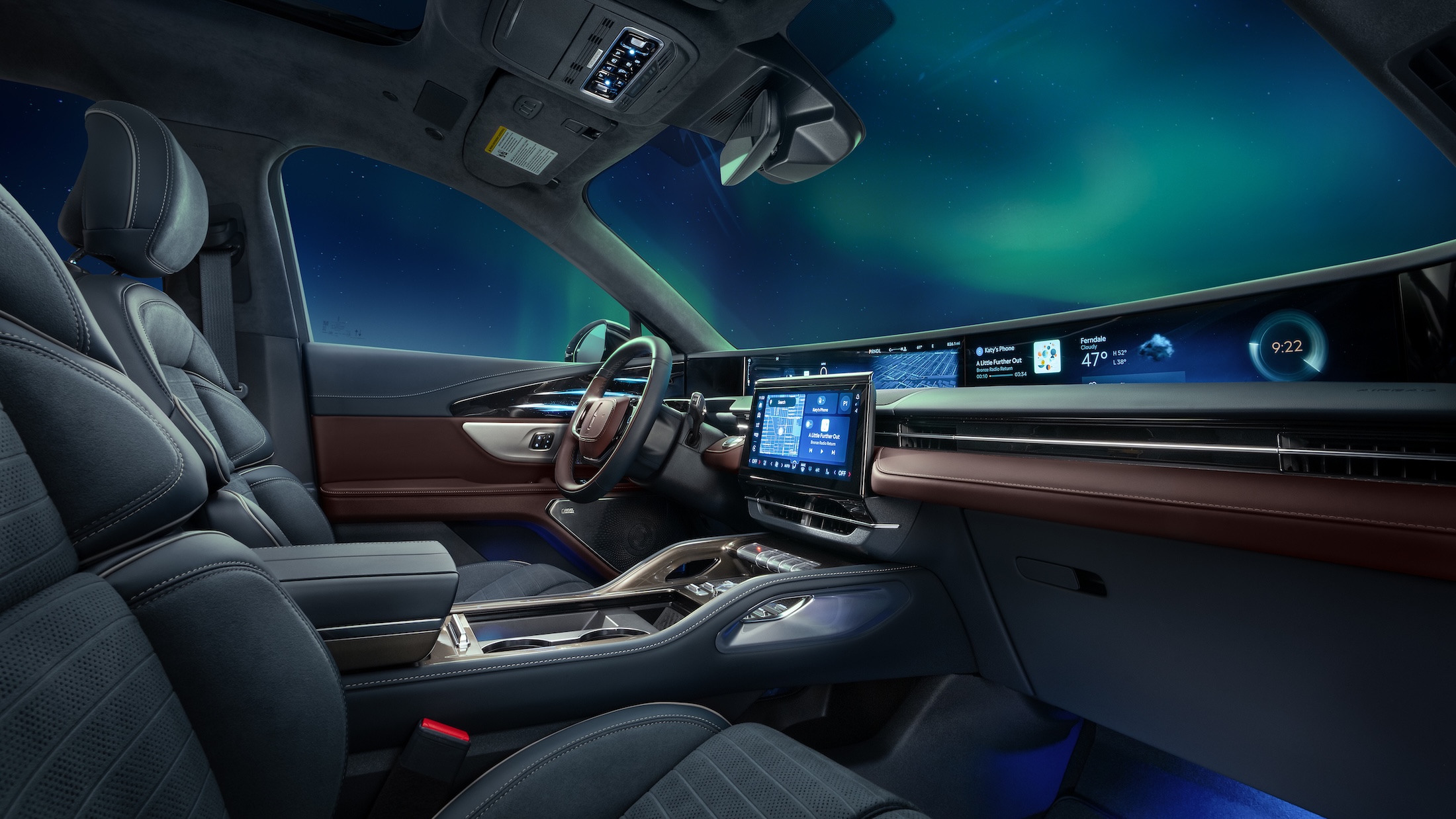
    Unlike the subtle outside, the interior of the 2026 Lincoln Nautilus gets the full Vegas treatment.Lincoln

    Driver’s Seat: First, the screen. I’ve heard raves about the screen, and I’ve seen pictures of the screen. But it is not until you sit in front of the 48-inch screen that you realize the IMAX 3D nature of the screen. The weather. The date, as big as a calendar. The time in huge numbers, turning from the minute before to the current minute and the minute after, flipping like a graphic representation of the old mechanical flip digital clocks. The map. The gauges. All swept across the top of the dashboard in an arc. Mr. Driver’s Seat’s aging eyes approve.

    But in the end it’s kind of a letdown. There are only three changeable screens from a total of six choices. Woo hoo. You still have a separate 11.1-inch touchscreen near you for the things you can change, and that touchscreen faces awkwardly out of your gaze where you might reach for a cup, and it looks smaller than it is.

    The seat itself is super comfy and beautifully proportioned, rife with snuggles, from the shape of the seat and the side bolsters.

    Finally, let’s talk about getting into and out of the Driver’s Seat. Lincoln has long since dispensed with the fake tire on the trunk but the designers made an unexpected nod to tradition with the door handles.

    There’s an exterior trim piece riding the beltline under the windows, and it is there you’ll see the bump-out handles with the opener mechanisms underneath. It took me a minute to find them. This looks to be a nod to the 1960 Mercury Montclair, a vehicle I recall seeing once as a small child, and this design touch completely fascinated me — even almost 50 years later. But it does seem like something for children, honestly. Still, I guess this is better than the pop-out handles that may not, in fact, pop out — or worse.

    The exit ramp from the Nautilus is almost as clever/silly. The door armrest has a large toggle sticking up in the front of the part that you grab to close the door.

    Sturgis Kid 4.0 had to move the vehicle in the driveway and commented on how hard it was to find different features. When I first sat down in it later, I messaged him, “Tried to release the emergency brake. Opened the gas tank.”

    Friends and stuff: The rear seat feels like a letdown compared to the front. It’s flat and kinda blah feeling, not hard nor soft, and yet not just right. Legroom, foot room, and headroom are all awesome, though the middle passenger will dispute that.

    Cargo space maxes out at 71.3 cubic feet.
    In and out: The Nautilus sits at a nice height, so everyone should find it easy to enter and exit.
    Play some tunes: The stereo is mostly controlled by the touchscreen save for an enormous volume dial in the console, something that cars from the 2010s made me think would be the PRNDL. Add this and the transmission controls together, and factor in the six pretty toggles with the fairly illegible-for-a-man-of-a-certain-age labels, and one just wants to shout “WHY?!?!” into the sea.
    Sound from the 28 Revel Ultimate 3D speakers is just fair, about a B+. It had flashes of being better but it was not overall.

    Keeping warm and cool: Most of the controls can be found along the bottom of the touchscreen, and those are fairly easy to sort as long as the vehicle is not in motion.

    The vents look like they stretch across the front of the cabin but they really don’t. I didn’t find any way to redirect the air flow.

    Fuel economy: The vehicle averaged around 26 mpg over about 2,500 miles of travel in various journalist and delivery-driver hands. Advantage, Lincoln.

    Where it’s built: Hangzhou, China.

    How it’s built: The Nautilus Hybrid gets a 2 out of 5 for predicted reliability from Consumer Reports.

    In the end: The fuel economy and the bargain price over the Genesis makes this Lincoln worth a second look, and honestly the cool stuff is kinda cool after all.

  • In his rightful spot as the Union’s main striker, Milan Iloski is doing more than scoring goals

    In his rightful spot as the Union’s main striker, Milan Iloski is doing more than scoring goals

    Just how much of a team player is Milan Iloski?

    During an interview in March conducted while Iloski was serving in a hybrid role under former Union manager Bradley Carnell, both the coach and player confirmed that his role was essentially meant to be the glue, the bridge between the opposition’s final third and the goal.

    But what did that message mean to Iloski’s subconscious?

    Milan, you’ll still get your opportunities, but they’ll be fewer in your new role as the support system we believe we need offensively right now.

    Here’s how Iloski explained it back in March.

    “For me, I love playing next to someone up top and I like scoring goals,” he told The Inquirer. “But also, I can be that creative player who can come inside or can float underneath the strikers. So, for me, I’m open to anything that can help the team. And I’m totally bought in. So whatever the staff needs from me is what I’ll try and provide.”

    How diplomatic of him, knowing now that he was miserable.

    Not miserable enough that he couldn’t still score a team high seven goals by the time the Union limped into the FIFA World Cup break. But enough to know that this role was not sustainable, even if he was taking advantage of his fleeting moments in front of goal.

    But since the team’s return to the pitch, while much of the spotlight has gone to the Union’s young guns, the limelight has been Iloski’s to the tune of 16 goals, finishing that run with a hat trick against Orlando City on Saturday to head into a weeklong break for FIFA’s international window.

    “When [interim coach Ryan] Richter came in and the new staff, it was really clear what we were going to do with me, and it was to switch me back into what I’ve been used to, and I was super happy to hear that,” Iloski said. “So really comfortable, really happy. And I feel like I’m impacting games, which is really important.”

    One can easily tell he’s much happier now.

    Proof of that came by way of the smile Iloski flashed when talking about the freedom he has under Richter. He’s the club’s target man again.

    “I mean, that’s what I was brought here to do and the position I was brought into to play,” Iloski said. “It’s where I’ve had all the success in my career really.

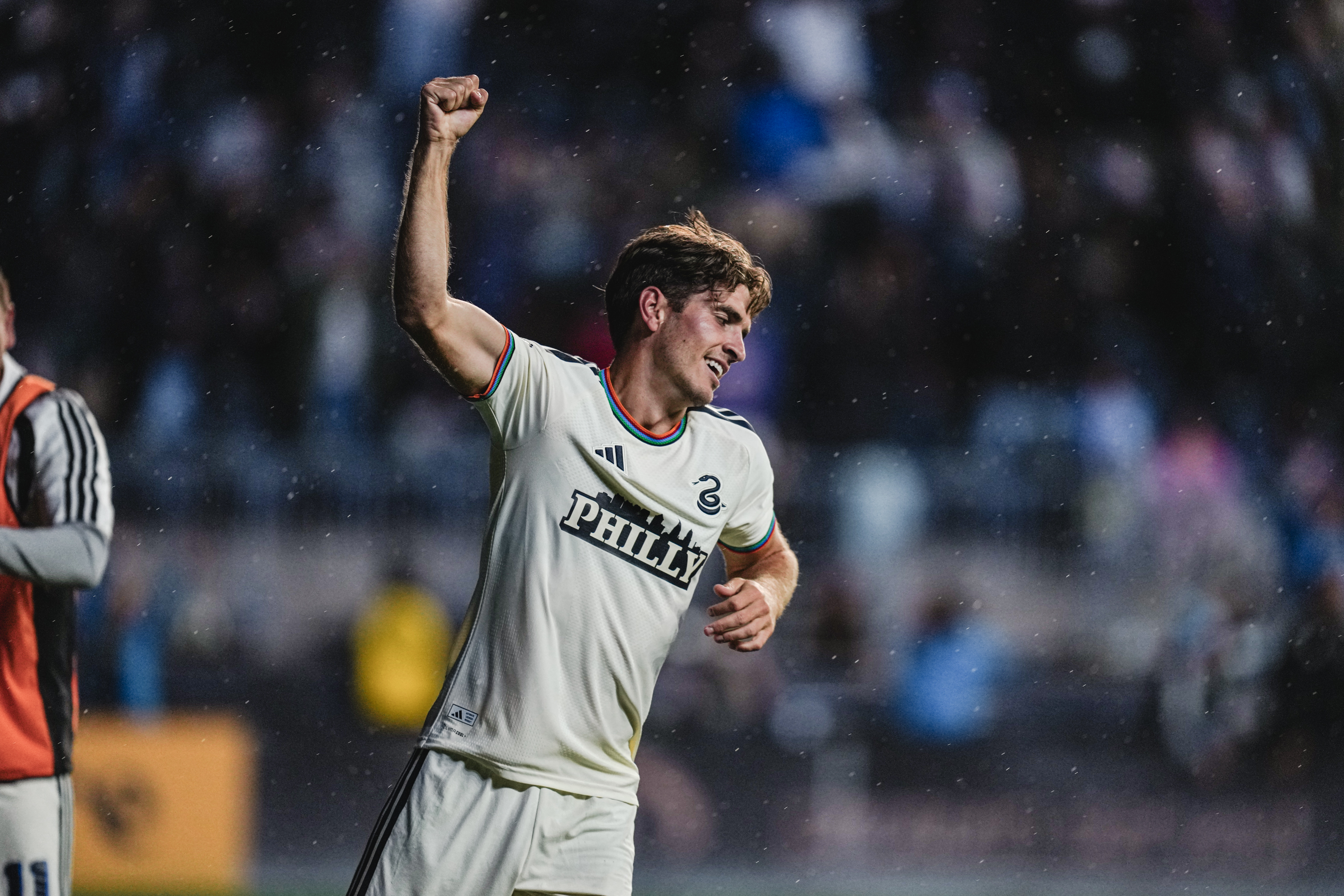
    Milan Iloski (center) celebrates with defender Kai Wagner (right) and Quinn Sullivan in the Union’s 4-2 win against Orlando City last Saturday.Courtesy / Philadelphia Unio

    The “fun” he had last Saturday led to an MLS Man of the Matchday Award alongside teammate Indiana Vassilev, who had a goal of his own and two assists in their 4-2 win. The team, now producing goals at a feverish rate, recently set the club record for an unbeaten streak at 12 games, and tied an MLS record for having taken the most points (32) from any 12-game span in league history.

    Over those 12 games, you can credit Iloski with nine goals in that time. He’s also been sharing a good deal of the responsibilities with fellow striker Bruno Damiani, who has also turned it on as of late to the tune of five goals in the last five matches, including a hat trick of his own in the club’s 5-0 rout of FC Cincinnati on Sept. 9.

    “Me and Bruno have a great connection up there and really work well together,” Iloski said. ”It’s been a lot of fun and a guy I’ve been pushing to play alongside for a while. When [coach] Richter came in and the new staff, it was made really clear that that was what we were going to do, and I was super happy to hear that.”

    Iloski and the Union aren’t resting on these good vibes even though they were afforded a weeklong respite from MLS action due to the break for the latest FIFA international window. He noted that the job is not over and that there’s still plenty of work to be done.

    The difference is, for the first time in quite some time, he did it with what felt like an all-knowing smile across his face.

    Milan Iloski’s 16 goals ranks tied for third-best in Major League Soccer. Courtesy / Philadelphia Unio

    “It’s important that we don’t allow ourselves to get too wrapped up in the moment,” Iloski said. “I mean you saw it in this [last] game [against Orlando] … it’s easy to lose a little bit of focus there when you’re up 4-0. We know what we want and how we all want this season to end. All of this doesn’t matter if at the end of the day we’re not in a good position to chase what every other team is chasing, so we just need to get out there and finish the job.”

  • New PIAA rule lets these Holy Ghost Prep students play football with their hometown schools

    New PIAA rule lets these Holy Ghost Prep students play football with their hometown schools

    Last October, the Pennsylvania Interscholastic Athletic Association (PIAA), the governing body of high school sports in the state, initiated a policy that would allow students attending faith-based private schools to play sports for their home public school district, if the faith-based private school they attend does not offer a particular sport that their home school district does.

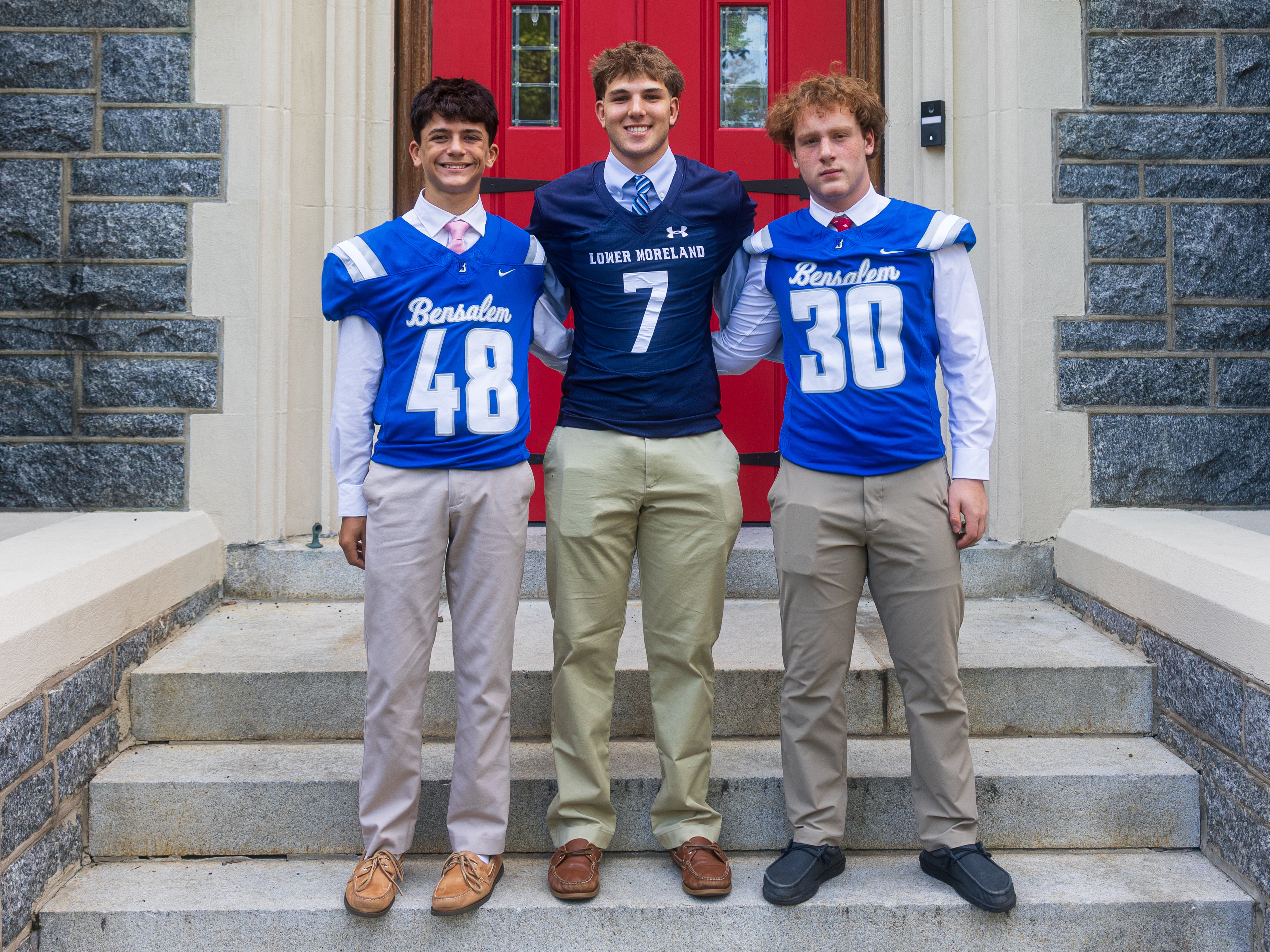
    Holy Ghost Prep, the newly minted member of the Philadelphia Catholic League this sports season, does not have a football program. So the new PIAA policy allows students to play football for their home school districts. Three HGP students have made that move: freshmen Connor Gear and Brennan McDonough, who both play for Bensalem High School, and senior Andy Lynch, who has made an immediate impact for Lower Moreland High as a two-way starter in his first year of playing football.

    McDonough, who is 5-foot-11, 190-pounds, is a starting outside linebacker and a backup running back on varsity. Gear, at 5-8, 130-pounds, is the backup junior varsity quarterback. Lynch, at 6-3, 210 pounds, is a starting defensive tackle and tight end for a 4-1 Lower Moreland team that is ranked No. 4 in District 1 Class 4A.

    It is a unique situation for the trio, more so for Lynch, who never played organized tackle football before this fall.

    “I always thought about playing football,” said Lynch, who attended school in Lower Moreland district until eighth grade and is the manager of the HGP basketball team. “I was at my friend Cole’s house last November when my friend’s dad [Mike Zalewski], who is Lower Moreland’s offensive line coach suggested I try out. In early January, I started working out with the team once I found out this new [PIAA] rule was passed. We’re winning games, it’s pretty cool. Once I knew I was playing, I started lifting every day. I had a lot of learning to do. I’m still learning. … It’s been a great experience, reuniting with the guys I grew up with.”

    Lynch reshaped his frame and had to be shown how to put on football pads for the first time in August. He’s learned fast. He has three sacks in four games (Lower Moreland beat Jenkintown by forfeit when Jenkintown ended its season due to low participation).

    “Andy has been amazing,” Gregorio said. “He’s been doing an unbelievable job. He works hard. He is so raw, I think he could play at another level. He’s very athletic. He has one catch for 16 yards. We’re doing well and Andy has been a big part of that. We beat Tennent a few weeks back, which is the first time we’ve beaten a Suburban One team in decades.”

    Gear and McDonough represent the future of a Suburban One League team that has struggled. Bensalem has not had a winning record since going 6-5 in 2004. Gear and McDonough are hoping to change that. The Owls have had a couple of years in 2024 and 2025 when they went 5-5. Bensalem is 1-4 this season.

    “We’re in games,” said McDonough, whose father picks him up every day at 2:30 p.m. from HGP to Bensalem for 2:45 p.m. practice. “We should be 3-2. The mental aspect has been the biggest adjustment, being a freshman and starting on defense. Time management has been good. I get home at 6:30 every night. It is like going to two schools. I know everyone on my team, because I grew up with all these guys.”

    Gear played football until the fifth grade before giving it up. Once he heard about the new PIAA rule, he wanted to try football again.

    “It’s been an adjustment, learning all the plays and getting them in, but right now, I’m sitting in a good spot,” Gear said. “I’m also reading defenses, which is a challenge for me. I truly do like football. I jumped on the chance to play again. What I like most is how the coaches push us. The guys at Bensalem are really surprised that I go to Holy Ghost and I play for Bensalem. I tell them I love the game. The plan is to continue doing this the next three years.”

    Pennridge is No. 1 again

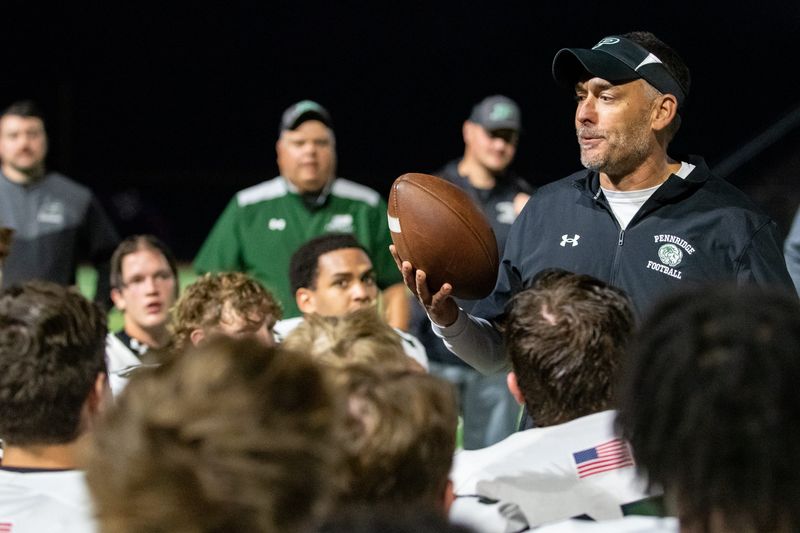
    Pennridge is riding a special motivation this season. The Rams are coming off a record-setting 2025 year when they won 13 games for the first time in program history, finishing 13-2 overall and reaching the PIAA District Class 6A championship before losing 21-14 to North Penn. Instead of taking their district silver medals home, the Rams hung them up in the school weight room, tangible reminders of just how close they came to capturing their first district championship.

    For the second-straight year, the Rams have started 5-0. but this year, they only have 11 seniors. Pennridge coach Kyle Beller has done an impressive job of keeping the Rams on top after graduating a core group, including starting quarterback Noah Keating to Marist.

    The Rams seem to be even better than they were a year ago, when they beat North Penn during the regular season for the first time since October 2012.

    Only two years ago, the Rams were 4-7.

    Pennridge head coach Kyle Beller has led his team to a 5-0 start for the second straight year.Michele C. Haddon / Bucks County

    “No one expects to start a season 5-0, and the teams we beat were district playoff teams,” said Beller, who is in his fourth season. “We had a young team coming in, and this is a credit to the guys of playing to the standard of what we want.”

    Junior Aiden Tetkowski has taken over at quarterback and junior Trevor Picciotti, the nephew of former CB West great Dustin Picciotti, is the Rams’ bull, rushing for 509 yards on 93 carries and averaging 101.8 yards rushing a game. Senior wide receiver Sean Leuthe averages 15.5 yards a catch, while senior linebacker Brody Blomgren and junior linebacker Blake Landherr lead the team in tackles.

    Beller did not mention last year’s success to this team, even though the Rams are a combined 18-2 over these last two years, the best record in District 1 Class 6A.

    “The message was to trust our process. We spoke about playing to our standard and playing with grit,” Beller said. “A lot of freshmen and sophomores got playing time last year. The biggest surprise of this group has been learning to grow up faster. The senior group that graduated did take a lot of lumps (going 7-15 their sophomore and junior years). It’s why we won a lot of close games last year. This group is very even keeled. They just keep playing.”

    Right now, it’s a Pennridge team that looks like it could keep playing into deep November.

    The secret behind Great Valley’s emergence

    Great Valley was a combined 6-14 over the previous two years. The Patriots may be one of the biggest surprises in the area this season, beginning 5-0 and rising to a No. 3 rank in PIAA District 1 Class 5A. The team has been buoyed by the play of 5-10, 185-pound junior tailback Beau Kosmalski, who has scored 17 times, including two five-touchdown games this season, and rushed for 933 yards overall.

    Patriots coach Gary Phillips is in his second year of his second stint at Great Valley and 19th overall, after his previous tenure from 1992-2010.

    “I knew the kids and what they could be this year,” Phillips said. “What we focused on was the weight room. They bought in. We started lifting a week after the season ended last year. They worked and worked, and the kids invested into it. Across the board we added 10 to 20 pounds of weight to each player’s lift. It’s reduced injuries, added size, and we have a small number of seniors. This junior class played as sophomores and gained valuable experience. I put in the defense last year and the kids know it. They move faster. The real leap has come on offense.

    “Beau is just different.”

    Kosmalski already holds the Great Valley single-season and career rushing touchdown records (32). Last year he rushed for 945 yards in 10 games. He is just 13 yards from exceeding that this year on a team with 10 seniors on a 45-man roster. Great Valley may be small in numbers, but is large up front with Alan Johnson, a 6-2, 250-pound junior center, 6-3, 290-pound junior right tackle Dean Hickman, who has fully recovered from a broken leg suffered last fall, and 6-2, 270 senior right guard Najee Dorsey.

    Another victory by Great Valley, which will host West Chester Henderson at 7 p.m. on Friday night, would equal the combined number of victories the Pats had the previous two years.

    Kosmalski distinctly remembers the down years. He still lugs the bricks from those 3-7 seasons.

    “The culture here has changed, and everyone knows it,” said Kosmalski, who is 15 pounds heavier than he was last year and is getting Ivy League attention. “Everyone is committed. When everyone wants it, it’s unbelievable. And everyone on this team wants to win. We have a bunch of guys on this team who want to be physically dominant. I’ll admit it, we have a chip on our shoulders. There was a lot of chirping on social media at us last year, a lot of teams laughed at us; not so much this year. We feel we can beat any team we face.”

  • Eagles defensive tackle Jalen Carter playing with hairline fracture in his wrist

    Eagles defensive tackle Jalen Carter playing with hairline fracture in his wrist

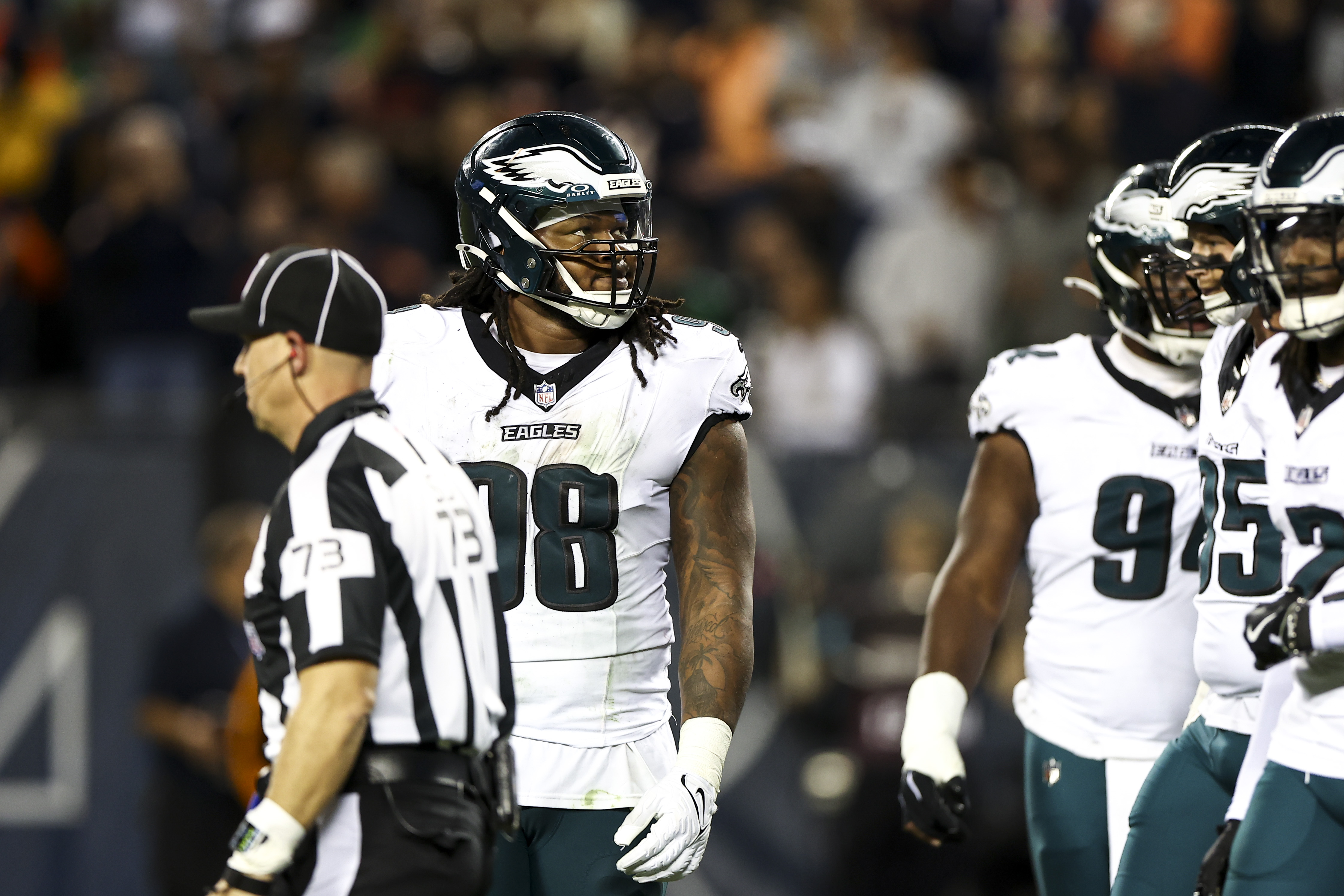
    Eagles defensive tackle Jalen Carter has a hairline fracture in his right wrist, NFL sources told The Inquirer.

    Carter suffered the injury in the Week 1 win over the Washington Commanders and has played with a soft cast in the last two games.

    He was an estimated full participant in Wednesday’s walkthrough ahead of Sunday’s game vs. the Rams.

    Carter’s playing time has decreased since the injury. He played 66 snaps in the opener (94%), 41 snaps vs. the Titans in Week 2 (77%), and 51 snaps (71%) in Monday night’s 27-7 loss at the Bears.

    The 25-year-old declined to go into detail about his wrist injury when it first popped up on the injury report two weeks ago.

    While he has made a few splash plays in the last two games, Carter hasn’t been as productive as usual. He has yet to record a sack and has just one quarterback hit. The Eagles defense, as a whole, has just three sacks and has yet to force a turnover.

    Defensive coordinator Vic Fangio was asked how effective Carter can be playing with the injury on Wednesday.

    “It’s a negative,” Fangio said. “There’s no way it can’t be, but to be honest with you, he’s done better than I thought he would with it.”

    Carter played through shoulder injuries last season. He struggled in last November’s loss to the Bears and underwent procedures on both shoulders and missed four of the next five games.

    The former first-round draft pick signed a four-year, $152 million extension in July ahead of training camp that made him the highest-paid interior defensive lineman in the NFL.

  • Alec Bohm’s homer saved the season for the Phillies against the Braves. He’d ’love’ to stay. Re-sign him.

    Alec Bohm’s homer saved the season for the Phillies against the Braves. He’d ’love’ to stay. Re-sign him.

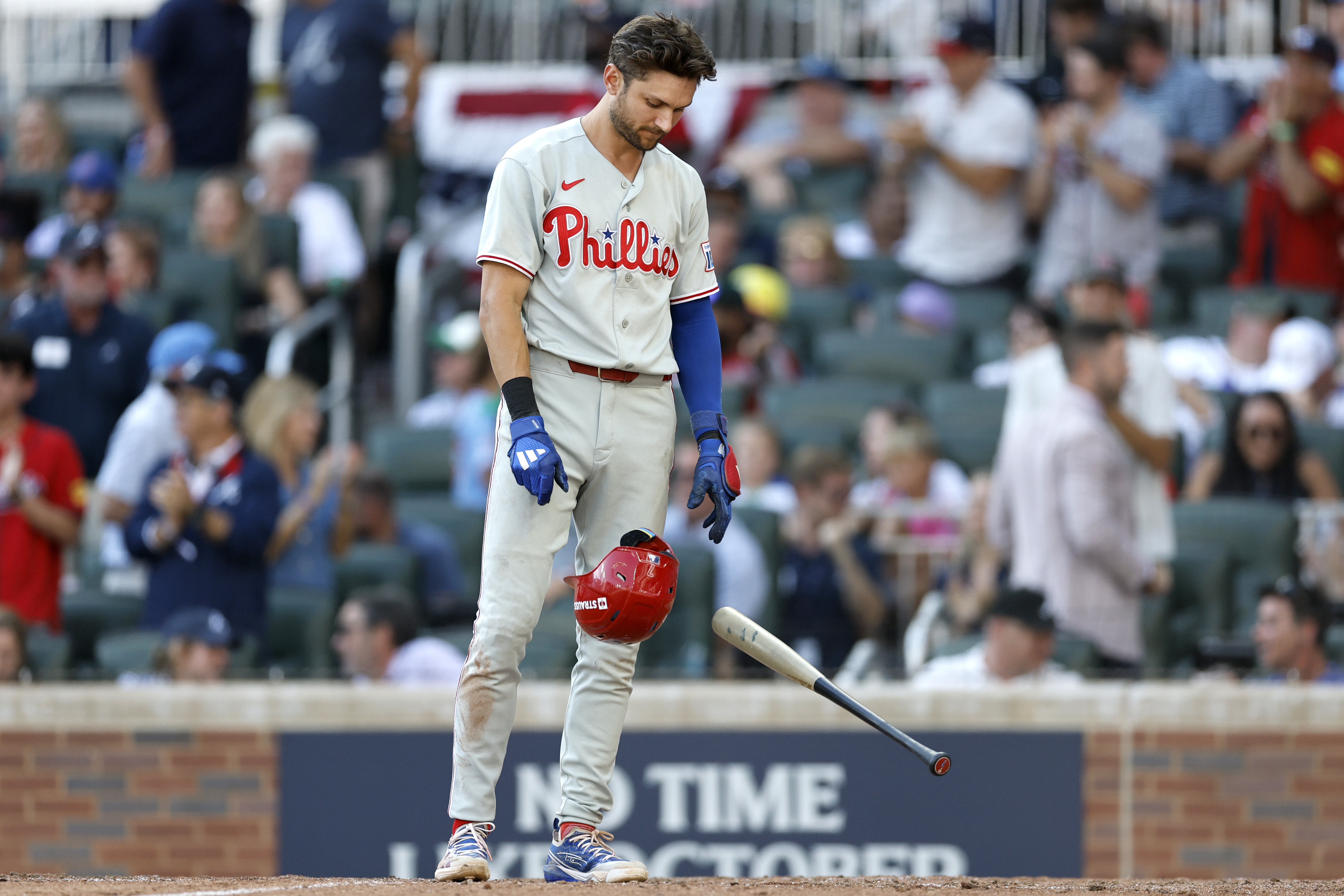
    ATLANTA — Alec Bohm sat behind a microphone for what could have been the last time as a Phillie on Wednesday morning, and he reflected on his 6½ seasons in the majors as a Phillie, supporting rosters dotted with future Hall of Famers. He will be a free agent this winter, and his inconsistent play combined with his occasional truculence have led to assumptions that he will be moving on.

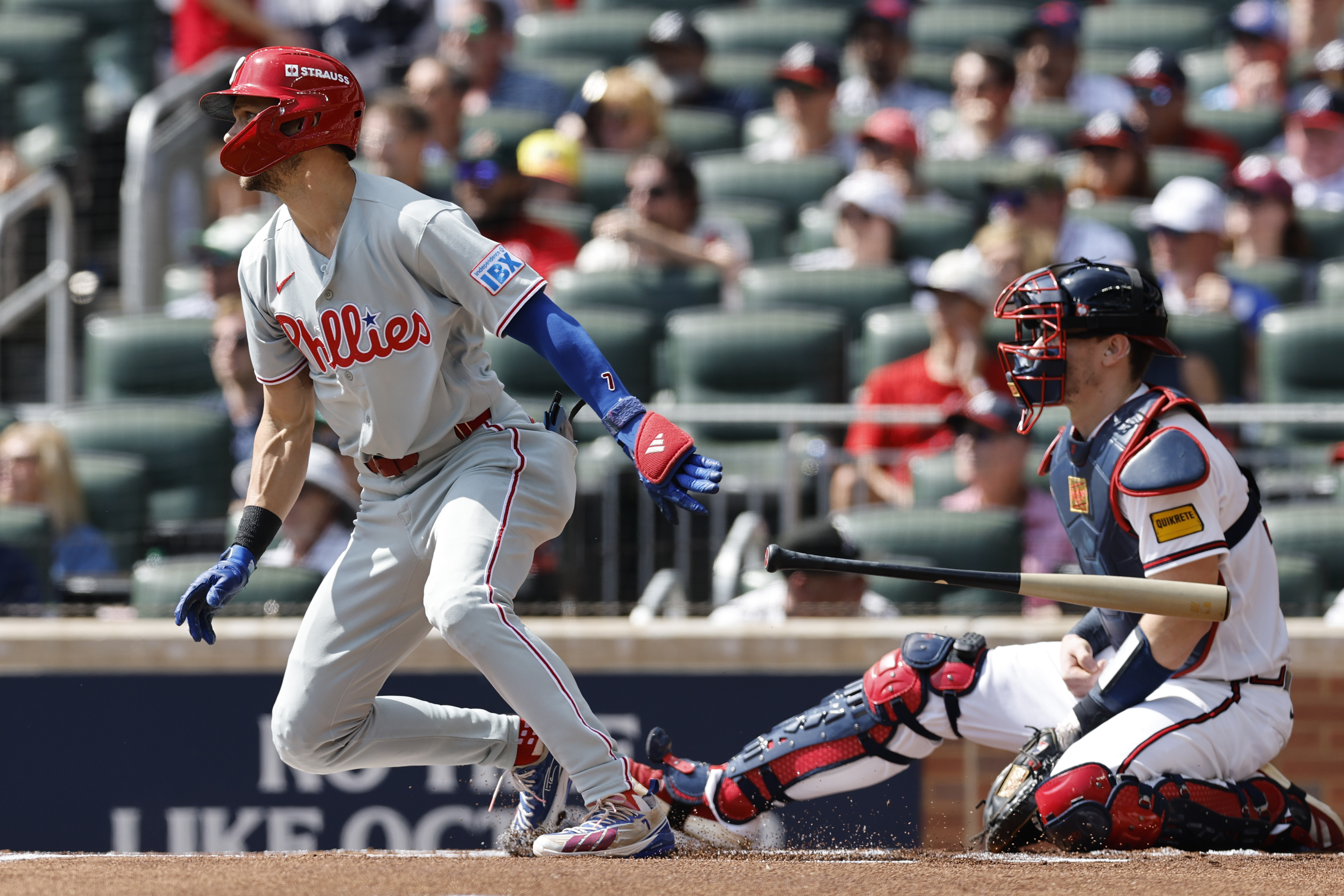
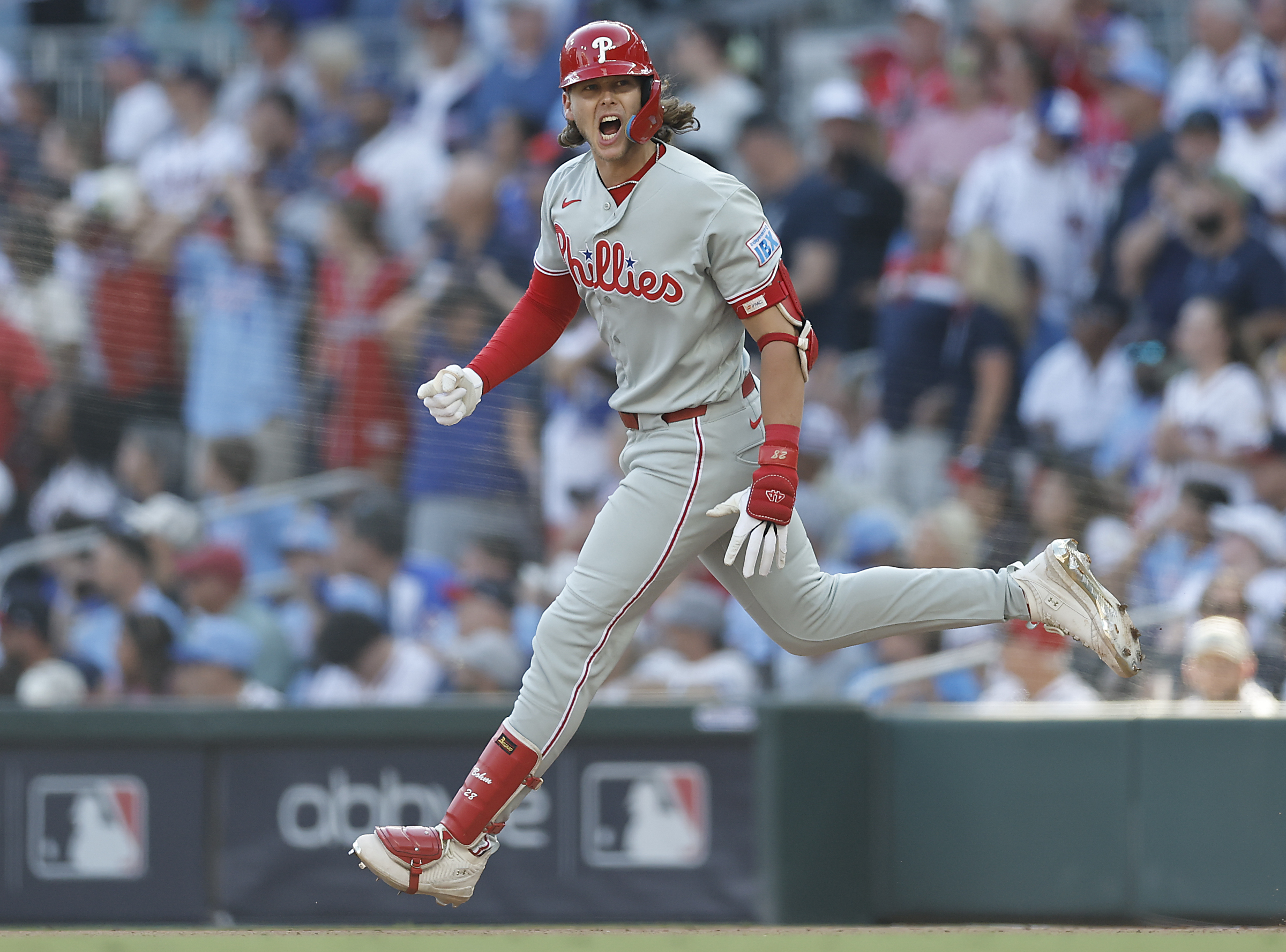
    Then, five hours later, Bohm, hitting in the No. 4 spot, rocked the winning home run in the 10th inning of Game 2 of the wild-card series against the Braves. The Phillies took a 4-3 lead, which held up in the bottom of the inning as rookie Andrew Painter dealt the third of his three scoreless innings, and the season was saved.

    With it, Bohm might have saved his future in Philadelphia and erased some of the less jubilant moments of his past.

    The Phillies have tried to platoon him, they’ve benched him in the playoffs, they’ve shoved him from the cleanup spot to the bottom of the order, and they’ve put him on the trading block so often he might as well have been a bale of beaver pelts in the Old West. He never much cared, it seemed, until now.

    Once a Philly hater, he now desperately wants to be a Phillie for life.

    “I would love nothing more than to stay,” he said afterward. “I mean, if you think about it, like, not that often does a guy get to play his whole career in one place.”

    Did Wednesday improve his chances?

    “Yeah. You got to show up when it matters,” he said. “I think that’s a big part of it.”

    The hit was Bohm’s second of the game, his third of the playoffs, and, with an earlier walk, it marked the fourth time he’d reached base in his nine plate appearances. He also drove in a run in Game 1.

    That’s what he does. He doesn’t hit many home runs, but, hitting behind Bryce Harper, Kyle Schwarber, and Trea Turner, he has averaged just over 82 RBIs the past five seasons.

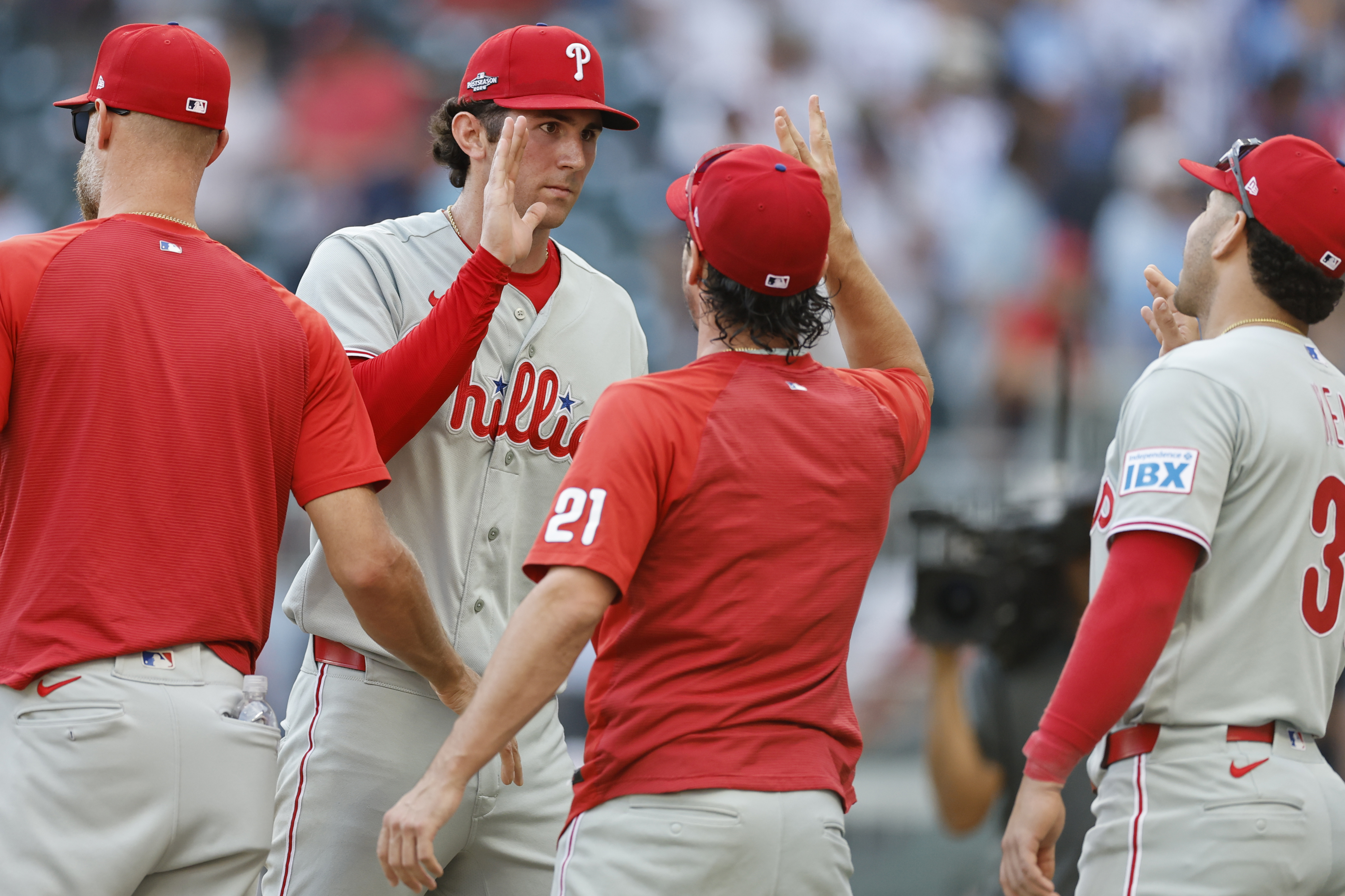
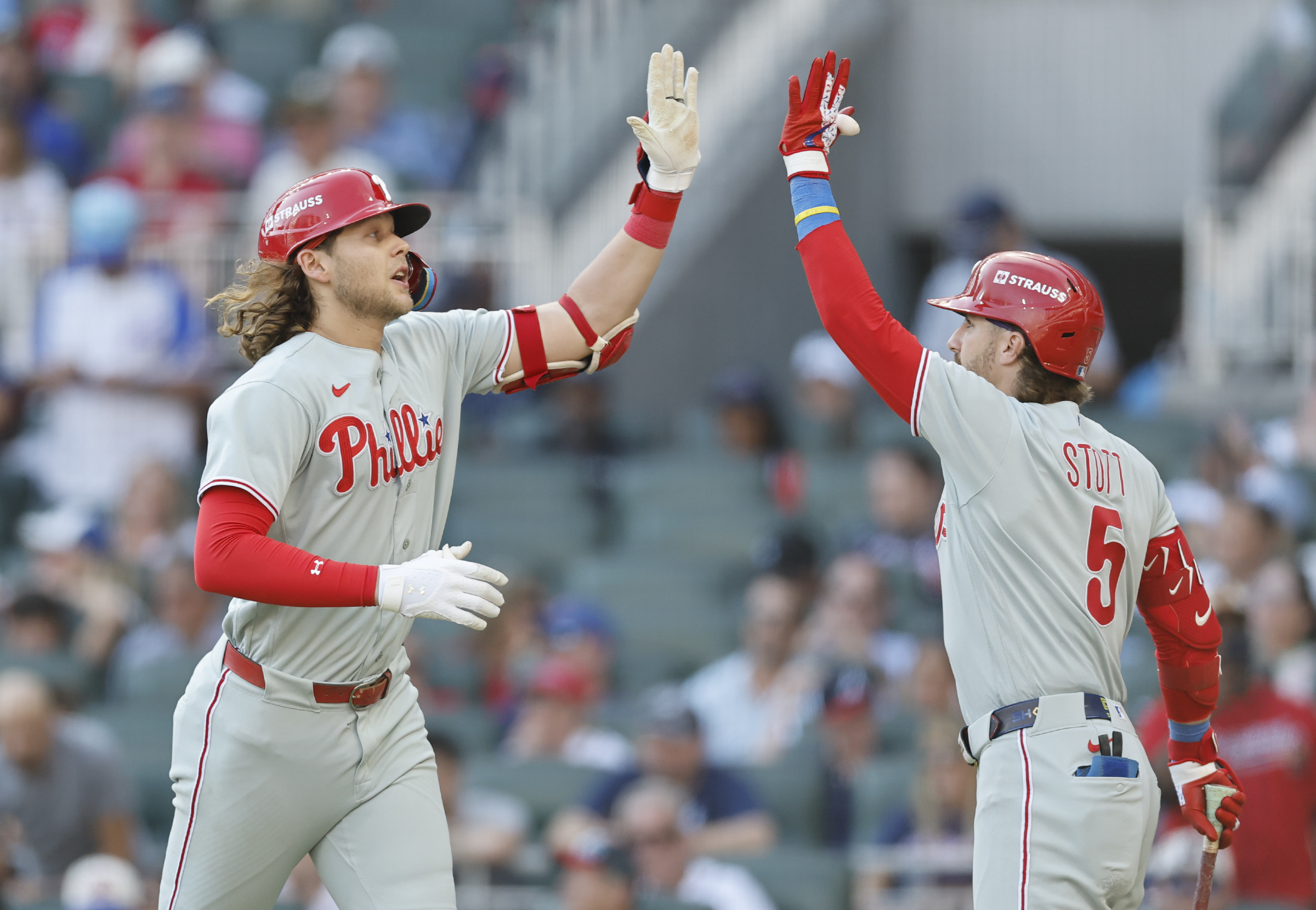
    Alec Bohm celebrates with teammate Bryson Stott after Bohm hit a go-ahead 10th-inning homer.Yong Kim / Staff Photographer

    “Seems like with Alec, everybody is always looking for more, for more,” interim manager Don Mattingly said before the game. “And he always ends up driving in around 90 runs, gets key hits.”

    He has played among veterans his whole career, and he’s played like a veteran lately, to be sure. He’s a rare right-handed bat who plays first and third base and produces runs.

    The question: If Bohm moves on, can the Phillies adequately replace him?

    And, if so, how much will it cost … and how much will he cost?

    Bohm is a homegrown first-round pick, drafted third overall in 2018. He turned 30 in August. He’s a productive everyday player.

    Pay him.

    He started slowly this season, but there were mitigating circumstances. He was in a contract year. He was suing his parents for mismanaging his money (that has been settled).

    Harper stressed that the situation with his family clearly affected Bohm more than anyone let on.

    “Man, I’m proud of him,” Harper said. “He’s been through the wringer this year, you know, on and off the field. No person, or player, or anybody should have to go through those situations.”

    It all has worn on Bohm, both over the years and over the past few months.

    “It’s just been a long road, with a lot of ups and downs,” he said. “I’ve learned a lot. I’ve made a lot of really close friends along the way. I’ve had a lot of people to lean on.”

    He was an All-Star two years ago, but, really, he’s never been a better player than he is today.

    From Aug. 2 to the end of the regular season, Bohm hit .308 with an .818 OPS, destroying lefties in particular.

    “I don’t think there was a specific adjustment that I made,” Bohm said before the game. “I kind of just started seeing the ball a little better and got more comfortable.”

    Bohm sure is comfortable. He has been as big a part of the Phillies’ late-season surge as anyone. He is entering his prime. There is no reason to end this relationship, now that it’s just heating up.

    It hasn’t always been a rosy relationship.

    In 2022, the Phillies planned to either replace Bohm at third base or platoon him with Bryson Stott, but injuries squelched those plans. Still, as Bohm struggled early that season, he was caught on camera on the home field saying, “I [bleeping] hate this place.”

    Bohm apologized for that moment. He’s a kid from Nebraska who played college ball in Kansas, so he had to learn how to survive in a big city. He got better at third base. He moved to first base this year at the trade deadline when the Phillies acquired second baseman Luis Arraez, and there he has shined: He made two fine plays Wednesday.

    Certainly, it wasn’t all Bohm on Wednesday.

    Cristopher Sánchez delivered 6⅔ innings, allowed three runs, and threw a career-high 116 pitches, helping Mattingly avoid a beleaguered bullpen.

    Painter, the fifth starter, made his playoff debut with three scoreless innings of relief — the eighth, ninth, and 10th — the first time he’s ever pitched in relief in those innings.

    And, of course, there was Lightning and Thunder.

    Bryce Harper’s eighth-inning homer tied the game at 3.Yong Kim / Staff Photographer

    With their season in peril, Schwarber and Harper hit back-to-back home runs in the eighth inning and tied the game at 3. That took Sánchez off the hook.

    They also absolved Harper and Bohm of defensive miscues in the seventh that gave the Braves two runs and a 3-1 lead.

    More than anything, they forced extra innings in a must-win game whose loss not only would have given the Braves a 2-0 series sweep but, considering how disappointing the Phillies have been the past three postseasons, might have ended this era. It almost certainly would have ended Mattingly’s tenure.

    And, likely, Bohm’s.

    Instead, they play Game 3 on Thursday. Bohm will be in the four-hole.

    It’s hard to overstate, fairly or not, the low regard the organization has shown Bohm.

    The Phillies spent $100 million on Nick Castellanos to serve as their right-handed cleanup hitter from 2022-26, but they released him this offseason after he’d failed in the role. They spent $10 million on his replacement, Adolis García, but he hit just .195 before injury ended his season in June. They traded for Arraez at the deadline and let him hit fourth until he sprained his ankle last week. Stott batted cleanup in the season finale Sunday.

    But it’s been Bohm’s spot the past two games, and he has shown up, to the delight of the fans who have ridden him harder than any Phillie in the past six years.

    Alec Bohm battled cleanup on Wednesday and will do so again for Thursday’s decisive Game 3.Yong Kim / Staff Photographer

    He’s a hero tonight, even in Harper’s eyes. Harp is a good and nurturing teammate, but, as a future Hall of Fame No. 3 hitter, in spring training he was disappointed that the Phillies failed to better fortify the No. 4 spot in the offseason.

    “I think the numbers in the four-spot weren’t very good last year for our whole team,” Harper said. “Whoever is in that four-spot is going to have a big job to do.”

    Bohm got the job done Wednesday, and Harper acknowledged it.

    “Today, he’s one of the best players, and probably one of the favorites, in Philadelphia right now,” Harper said.

    That should continue far into the future.