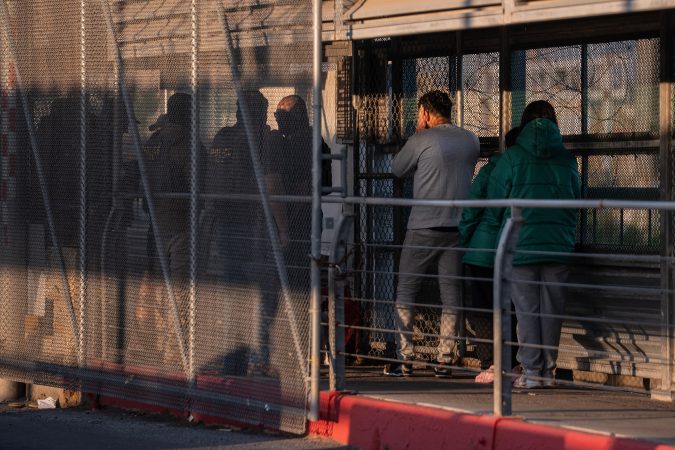
The Trump administration cannot deny immigrants detained inside the United States a chance for release on bond, a federal appeals court ruled Thursday.
The 2-1 decision by the San Francisco-based 9th U.S. Circuit Court of Appeals, with a judge appointed by President Donald Trump in the majority, deepened a split between federal appeals courts over the administration’s mandatory detention policy.
Four other appeals courts have also rejected it, while the Fifth Circuit in New Orleans and Eighth Circuit in St. Louis have sided with the Trump administration.
The expanding circuit split increases the likelihood that the U.S. Supreme Court will eventually take up the issue.
An email to the U.S. Department of Homeland Security for comment was not immediately returned.
Under previous administrations, most noncitizens without a criminal record who were arrested inside the U.S. were allowed to seek a bond hearing while their immigration cases were pending. Mandatory detention was generally reserved for people arrested at the border.
Last July, immigration officials issued guidance expanding mandatory detention to immigrants in the U.S. interior. The move — part of the administration’s mass deportation campaign — prompted a deluge of federal lawsuits by immigrants seeking release from custody.
Some federal judges who ordered bond hearings blasted the administration for repeatedly violating their orders.
The Trump administration has argued that Congress changed immigration law in 1996 to allow mandatory detention beyond the border, but previous administrations didn’t enforce that provision.
Writing for the majority in Thursday’s ruling, 9th U.S. Circuit Judge Daniel Bress rejected that argument.
“Although no reading of the complicated and interrelated textual provisions at issue here is without some shortcomings, the historical understanding of the statute is the better one,” Bress, a Trump appointee, wrote.
He was joined by Judge M. Margaret McKeown, who was appointed by President Bill Clinton.
Judge Carlos Bea, who was appointed by President George W. Bush, dissented, saying the text and purpose of an amendment Congress approved in 1996 support the Trump administration’s reading.
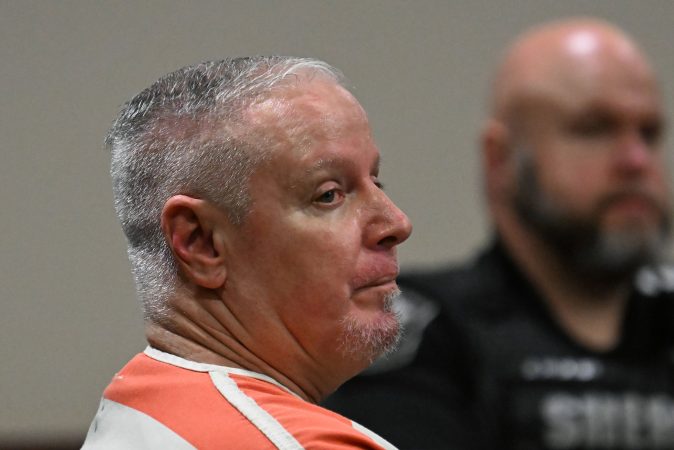
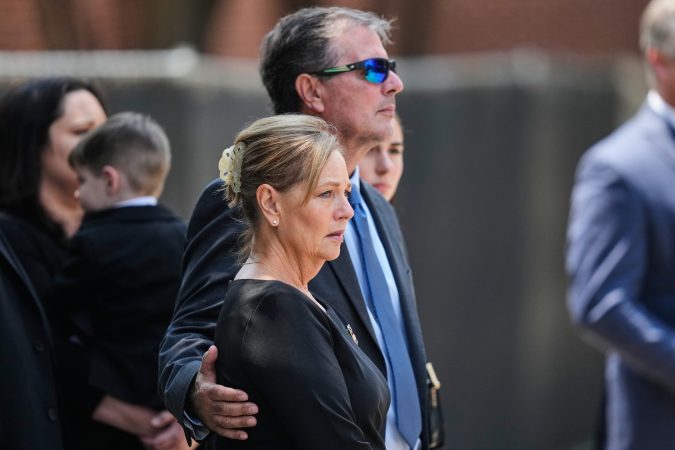
A man who gave his son the gun he used to kill two students and two teachers at Apalachee High School in Georgia was sentenced Thursday to 15 years in prison.
Colin Gray’s sentencing comes days after his son, Colt Gray, was sentenced to life in prison without the possibility of parole in the Sept. 4, 2024, shooting at the school 45 miles northeast of Atlanta. Colt Gray, 16, had pleaded guilty to murder and other charges.
Judge Nicholas Primm, who also sentenced Colt Gray, was blunt in addressing the elder Gray: “It is clear you failed as a parent.” But he said punishing crimes of negligence is particularly difficult because there was no intent to commit a crime.
“My heart aches for everyone that was there that day, for all of you that have been impacted by it. But the law requires that I set aside emotion. I don’t get to sentence with passion. I have the nearly impossible task of sentencing you without passion despite the immeasurable heartache that you caused,” Primm said.
Gray, 55, is one of a handful of American parents who have been criminally charged after their children were accused in shootings.
A jury in March found Colin Gray guilty of second-degree murder in the deaths of two 14-year-old students, Mason Schermerhorn and Christian Angulo. Georgia law defines second-degree murder as causing the death of a child by committing the crime of cruelty to children. Gray was also found guilty of involuntary manslaughter in the killings of teachers Richard Aspinwall, 39, and Cristina Irimie, 53.
Another teacher and eight other students were wounded, seven of them hit by gunfire.
Families speak their pain
Family members of those who died and victims of the shooting, many of whom also spoke during Colt Gray’s sentencing, condemned what they said were Colin Gray’s failures as a parent and urged the judge to give him the maximum sentence.
“This wasn’t unavoidable. This was preventable. Because of the choices made inside the Gray household, four families were handed life sentences of grief,” said Breanna Schermerhorn, whose son was killed.
“He did not pull the trigger but purchased and left a firearm accessible to a minor,” said Shayna Aspinwall, whose husband was killed. She said the sentence must take into account ”the families left behind who must carry the grief and trauma for the rest of our lives.”
The judge addressed those in the courtroom after announcing the sentence: “This only closes the legal chapter for this horror. The pain, the heartache, they continue. I understand that. I hope all of you know this community loves you, and I ask that God gives you peace.”
Prosecutors said Colin Gray missed red flags
Prosecutors said Colin Gray gave his son the rifle as a Christmas gift along with ammunition, a gun sight, and other shooting accessories.
An investigator testified that Colt Gray carried the semiautomatic rifle onto the school bus with the barrel sticking out and wrapped in poster board. The teenager left his second-period class and went to a bathroom, emerged with the rifle, and shot people in the hallway and a classroom, the investigator said.
Colt Gray, who was 14 at the time of the shooting, had shown signs of deteriorating mental health in the weeks leading up to the killings, according to testimony. He belonged to a “true crime community” online where he and other young people discussed their obsession with mass shooters, an investigator testified.
The teen’s mother, Marcee Gray, who was separated from Colin Gray, told investigators she had argued with her estranged husband weeks before the shooting, asking him to secure his guns and restrict their son’s access.
Prosecutors had asked for a sentence of 80 years
Defense attorney Brian Hobbs asked the judge for a sentence of 10 years in prison followed by 10 years on probation. Barrow County District Attorney Brad Smith said Gray deserved a sentence of 80 years in prison.
Hobbs argued that Colt Gray “actively hid the depth of his involvement” in the online community obsessed with mass shooters, and the red flags enumerated by prosecutors were outliers among happier moments.
Smith countered that Colin Gray ignored “a substantial and unjustifiable risk.”
“This was the risk that he was ignoring, that there would be a mass shooting of children at a school, and he gave his son the exact tool he would need to accomplish this,” Smith said.
Colin Gray is not the first parent to face such charges
Prosecutors have in recent years held parents responsible when they believe they can prove a parent contributed to a killing.
Jennifer and James Crumbley were the first U.S. parents to face such charges after their son, Ethan, killed four students and wounded others at Michigan’s Oxford High School in 2021. Like Colin Gray, they were unaware of their son’s plans but had gifted him a gun before the shooting. They are serving 10-year prison terms for involuntary manslaughter. Hobbs, the defense attorney, urged the judge to use that sentence as a guide.
The judge called these cases “divisive.” There would have been no crime by the father if the son hadn’t brought a gun to school and shot people, he noted. But he said Colin Gray could have locked up the guns, kept ammunition out of the house, had someone else keep the guns, and gotten his son counseling.
“You were convicted because the warning lights were flashing brighter and brighter and you didn’t get him help and you didn’t remove his access to the guns,” Primm said.
CAIRO — The United States and Iran each fired barrages of missiles Thursday, as the pattern of back-and-forth strikes took hold again and hope dimmed for a quick end to the five-month conflict.
Following a few days of respite, fears of a wider war have grown, with renewed fighting threatening to engulf even more countries: Jordan said Thursday it intercepted Iranian missiles for the second consecutive day, while Kuwait said a strike in the northern part of the country killed one person. Also this week, drones caused fires on ships at an Egyptian port, and Saudi Arabia said it came under fire from Iran-backed militias in Iraq.
The war — which in its early days President Donald Trump said would last four to five weeks, although he warned it could take longer — has caused the price of fuel to spike and roiled the global economy. As months have passed, concerns have deepened about using up the stockpile of weapons the U.S. needs to defend its bases and allies.
Meanwhile, the war is unpopular among Americans, and a new AP-NORC poll says Trump’s approval rating on Iran has dipped slightly since last month.
The recent pause in fighting, which began over the weekend and spurred hopes among mediators of diplomatic progress, ended with increasing missile and drone attacks across many countries in the Middle East.
“We note with concern that the security situation remains precarious,” said Pakistani Foreign Ministry spokesperson Tahir Andrabi, whose country has been a key mediator.
Talks “are ongoing to normalize the situation, particularly the situation in the Strait of Hormuz,” he told reporters.
The U.S. and Iran trade strikes
An Iranian strike hit a Chinese firm’s building in Kuwait on Thursday, severely damaging the structure and killing a worker, Kuwait’s military said, hours after Jordan’s air defenses shot down five missiles launched from Iran.
No injuries were reported from Jordan’s interception, Jordan’s state-run Petra news agency said, quoting the spokesperson for the country’s armed forces. Both countries are U.S. allies and host American troops.
The military’s Central Command said in a social media post that the U.S. struck dozens of targets belonging to Iran’s Revolutionary Guard, including military command centers, missile and drone facilities, and coastal surveillance and defense sites.
Iran’s official IRNA news agency said three people were killed and two were wounded in a strike on the island of Qeshm, which lies just off the Iranian mainland in the Strait of Hormuz — a crucial waterway for the world’s energy supplies that has been at the center of the conflict.
The latest barrage came after the U.S. partnered with Saudi Arabia on Wednesday to strike Iran-backed militias in Iraq, killing at least 20 fighters and six Iranian advisers.
Fires were reported on two natural gas vessels at an Egyptian port
Also on Wednesday, British maritime security firm Ambrey said drone strikes ignited fires on two natural gas vessels at the Egyptian port of Damietta. It was not immediately clear who was responsible for the strikes on a U.S.-owned floating storage facility and a Greek-owned tanker. No injuries were reported.
The office of the Egyptian prime minister said initial investigations showed the fires on the two vessels had been caused by a drone.
Egypt, a close U.S. ally and regional mediator, is one of the only countries in the Middle East to have been spared direct military action during the war. A strike by Iran or its allies, if confirmed, would mark a significant widening of the conflict. The Iran-backed Houthi rebels in Yemen have denied they were behind the attack.
The war has wreaked havoc on the global economy
Since Iran began threatening and firing on ships in the Strait of Hormuz early in the war, the conflict has wreaked havoc on the global economy as energy shipments through the waterway ground to a near halt. Much of the diplomacy around ending the war has focused on reopening the strait, through which 20% of oil and natural gas shipments passed in peacetime.
The already limited ship traffic through the strait has plunged to wartime lows during the recent exchange of strikes, from 82 ships during the week of July 13-19 to just 39 from July 20-26, Lloyd’s List Intelligence, a shipping data and analysis firm, said in an webinar.
Fighting elsewhere has squeezed energy supplies further.
Saudi Arabia has accused the Iraqi militias of firing drones against its oil facilities over the past days. An umbrella group of Iraqi militias initially denied the allegations, while the Houthi rebels said they had attacked Saudi energy facilities as part of a separate but related conflict.
The Houthis have also declared a blockade of Saudi shipping and threatened to choke off another crucial Middle East trade route, the Bab el-Mandeb Strait from the Red Sea into the Gulf of Aden. That route became even more important during the war, as Saudi Arabia used it to bypass the Strait of Hormuz.
While some Saudi oil exports are continuing through the Bab al-Mandab Strait despite the blockade, Lloyd’s List Intelligence said much of that oil now follows an expensive and time-consuming workaround: It travels from Saudi Arabia on tankers to the Egyptian city of Ain Sokhna on the Red Sea coast before being pumped overland through a pipeline to the Mediterranean port of Sidi Kerir. Then it’s loaded on tankers again.
The Suez Canal is not deep enough to handle the largest and most economical tankers when they are full loaded with oil.
On Monday, the Houthis said they had launched drones targeting facilities used to transport oil across Saudi Arabia to the Red Sea port of Yanbu. The rebels said the attack was in response to a Saudi drone they said breached Yemen’s airspace.
Saudi Defense Minister Khalid bin Salman met Wednesday with Trump and Vice President JD Vance, according to two people familiar with the matter who were not authorized to comment publicly about the private meetings.
They said the Saudi decision to join the U.S. attacks against the Iraqi militias was meant to send a message to Iran that the kingdom would not tolerate Iran or its proxies targeting the Saudi oil industry and other critical infrastructure. At the same time, the defense minister underscored to Trump and Vance that the Saudis want to see a de-escalation in the war and for Washington and Tehran to return to negotiations.
Five Camden County towns could owe some current and former property owners more than half a million dollars collectively as part of a proposed settlement in a class-action lawsuit involving vacant and abandoned properties.
The case alleges that the vacant and abandoned property registration programs previously operated in Barrington, Bellmawr, Runnemede, Voorhees, and Gloucester Township violated New Jersey law. These programs were in place largely to prevent blight by funding the town’s upkeep of vacant properties, but the suit alleges that for a time, the towns were collecting fees unlawfully.
Many of the property owners who were forced to pay fees to these programs had never actually abandoned or vacated their homes, the suit alleges, and the towns unlawfully earned a revenue from these fees as a result.
The settlement proposes a fund of about $545,600. The amount contributed by each town varies based on the total amount collected through program fees, said Stephen DeNittis, an attorney representing plaintiffs in the case.
Here is how much each town will have to pay if the settlement is approved:
Gloucester Township: $280,000
Runnemede Borough: $111,300
Voorhees Township: $94,120.43
Bellmawr Borough: $33,932.50
Barrington Borough: $26,271.57
Because it is a class-action lawsuit, the proposed settlement still needs to be approved by a court, DeNittis said.
A hearing is scheduled for Aug. 14, and if preliminary approval is granted, notices will be sent out within 30 days informing other potential claimants of the case and providing instructions on how to file a claim if they paid into their town’s vacant property program between 2018 and 2022.
Claimants can file for a simple refund of $200, or they could receive 60% of the total amount they paid into the program if they can provide sufficient documentation and proof of payment, DeNittis said.
As part of the settlement, the towns do not admit any liability or wrongdoing.
Officials with both Voorhees Township and Runnemede Borough independently declined to comment on the case, saying they do not publicly discuss litigation. The other municipalities named in the lawsuit did not respond to a request for comment.
Assuming the court grants preliminary approval of the settlement in August, DeNittis said, a final approval hearing will likely be held later this fall.
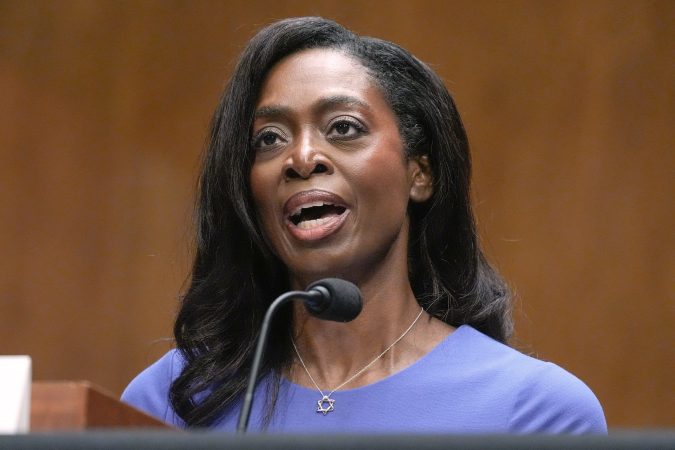
NEW YORK — A Senate committee on Thursday advanced Erica Schwartz’s nomination to be director of the nation’s top public health agency, setting aside concerns that she will not stand up to political meddling.
If confirmed by the full Senate, the 54-year-old would become the 22nd director of the Atlanta-based Centers for Disease Control and Prevention, which is charged with protecting Americans from preventable health threats. Her resume includes medical and law degrees, a stint as deputy surgeon general, and a leadership position at the U.S. Coast Guard.
Schwartz appeared to be on shaky ground after a hearing before the Senate Health, Education, Labor, and Pensions Committee this month. The chairperson, Sen. Bill Cassidy (R.,La.), and others questioned whether she would be willing to stand up to Republican President Donald Trump’s health secretary, Robert F. Kennedy Jr., if he ordered CDC to do something that was unsupported by science and good public health practice.
But when the committee met last week, Cassidy said he had spoken with Schwartz after that hearing and to others who knew her.
“I’m confident that she knows what she is doing and will stand against those who do not,” said Cassidy, whose support was necessary for the nomination to go forward.
The committee’s near party-line vote Thursday moved Schwartz’s nomination ahead.
Among those who opposed her was Sen. Bernie Sanders, a Vermont independent.
“The issue at hand is not complicated,” Sanders said last week. ”Will we have people in the Trump administration who have the guts to stand up to people who are anti-science and into conspiracy theories?”
The CDC has faced more than a year of unrest
The CDC has been in turmoil since Trump returned to office last year.
Largely due to layoffs and resignations, the agency has lost 3,000-plus employees, more than one-quarter of its workforce. Morale has plummeted as a succession of mostly temporary leaders have come and gone. The front office has been staffed by political appointees with little or no training in medicine or public health.
When Schwartz was nominated in April, public health experts were cautiously optimistic, citing her background. They also noted she was the choice of Trump and not Kennedy, a leading voice in the anti-vaccine movement before he was tapped to oversee the CDC and other federal health agencies.
Kennedy had promised not to change the nation’s vaccination schedule but later attempted a substantial rewrite of vaccine recommendations for kids. Some of those efforts were put on hold this year by a federal judge.
Kennedy’s actions have rankled Cassidy, a physician who initially expressed doubts about Kennedy as Trump’s pick to be health secretary. Cassidy ultimately signed off on Kennedy after the nominee promised not to change the nation’s childhood vaccine recommendations.
Public health groups seek reassurance
At Schwartz’s hearing, Cassidy and some other senators asked her what she would do if Kennedy or other political appointees instructed the CDC to make changes that were not supported by science. Schwartz pledged to “never betray the science,” but she repeatedly declined to dissent from some of the actions Kennedy has taken.
The National Public Health Coalition, an organization of former and current CDC workers, was not reassured by her responses and said senators should require specific written commitments from Schwartz on scientific independence, evidence-based vaccine policy, conflicts of interest, and other issues.
“The public needed to hear clear commitments about how she would protect CDC guidance from political pressure,” the group said in a statement. “Too often, her stated commitments were incomplete, vague, or missing.”
At the hearing, Schwartz said she was unaware that CDC programs that worked to prevent smoking and promote vaccinations had been curtailed. She declined to commit to taking down a CDC website that suggests a link between childhood vaccines and autism. She said she had not seen it, though she agreed existing medical evidence has not found a link.
Last week, Cassidy said that “as a sign of good faith” officials at the Department of Health and Human Services had modified the page. But this week, it continued to argue that “vaccines do not cause autism” is not an evidence-based claim, despite numerous studies that have found no such link.
Georges Benjamin, executive director of the American Public Health Association, interpreted Schwartz’s performance as someone trying to please different factions. He disagreed with how she answered several questions, but continued to support her nomination.
Schwartz is qualified, might be able to rebuild the CDC’s depleted command structure, and could start to rebuild public trust in the agency by focusing on bipartisan concerns such as foodborne disease outbreaks, he said in a recent interview.
Daniel Jernigan, a former top CDC official who resigned in August, echoed that.
If Schwartz is not confirmed, “it will mean a continued rudderless journey for CDC,” he said.
For Kennedy, “having to start over is probably what he wants — many more months with no one stopping him from pursuing the same anti-science and anti-vaccine efforts he has been pursuing,” Jernigan said.
The CDC has had several leaders under Trump
Schwartz was the third Trump nominee for the office in the past 18 months.
The first was a former Florida congressman, David Weldon. His Senate hearing in March 2025 was canceled an hour before it was to begin. Weldon said at the time that he had been told not enough senators were willing to vote for him.
The White House then moved on to Susan Monarez, who had been serving as the CDC’s acting director. Monarez was confirmed by the Senate, but she was ousted in less than a month. Trump administration officials said she was not aligned with the president’s agenda so they terminated her.
Since then there have been a series of HHS officials as acting CDC director.
The committee also advanced a controversial health nominee
The CDC position is one of a number of leadership vacancies among federal health agencies, including surgeon general and commissioner of the Food and Drug Administration.
Also unfilled is the job of assistant health secretary for preparedness and response. That official oversees preparations and response to public health emergencies and disasters and is involved in decisions about funding next-generation vaccines against pandemic flu or other infectious disease threats.
Trump wants Sean Kaufman in that post, and the Senate committee on Thursday approved the nomination by a party-line vote.
In LinkedIn postings, Kaufman has made comments cheered by vaccine skeptics, arguing against hepatitis B vaccinations for newborns and saying he served as an expert witness to advocate for people who refused the COVID-19 vaccine. He also supported a Trump administration decision last year to cancel projects to develop vaccines using mRNA technology.
“Mr. Kaufman has said some pretty stupid things and irresponsible things regarding immunization,” Cassidy said.
But Cassidy said he spoke to HHS officials and was assured that personnel changes are being made at the department to provide “better oversight to ensure that science, not ideology, is driving decision-making.”
Cassidy also said he has been assured that if Kaufman is confirmed, “he will not be involved in vaccine policy and nor will he be the ultimate decision-maker on certain issues.”
Sanders, who voted against Kaufman, said: “I think the American people are owed better than what President Trump has nominated.”
More than 13,000 Philadelphia homeowners were receiving assistance on their property taxes from the city despite not being eligible, according to city officials who conducted a review of thousands of properties to identify people fraudulently receiving tax breaks.
Those homeowners — most of whom received the popular homestead exemption that can save owners an average of $1,400 a year — have been kicked off the programs, officials said Wednesday. And they will be charged back taxes, in some cases dating back multiple years, resulting in $33.5 million in additional revenue for the city and the Philadelphia School District.
That is welcome news for the cash-strapped public school system, which is facing a $300 million structural deficit and is the only district in Pennsylvania that cannot legally raise taxes on its own.
Instead, the district receives 56% of property tax revenue, with the remainder going into the city’s coffers. The current property tax rate is 1.3998% of assessed value, which has not changed for nearly a decade.
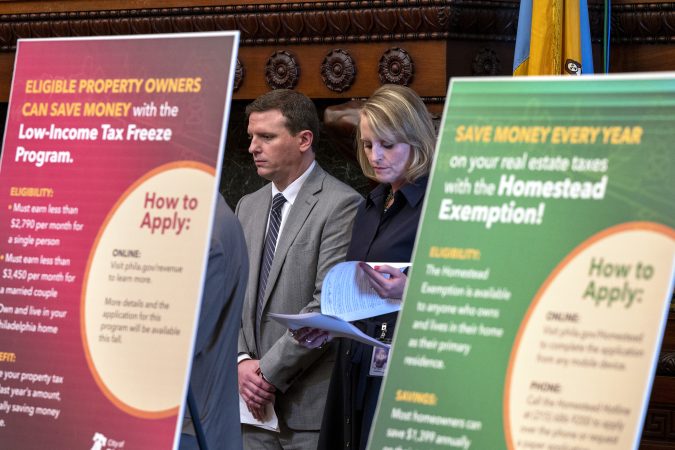
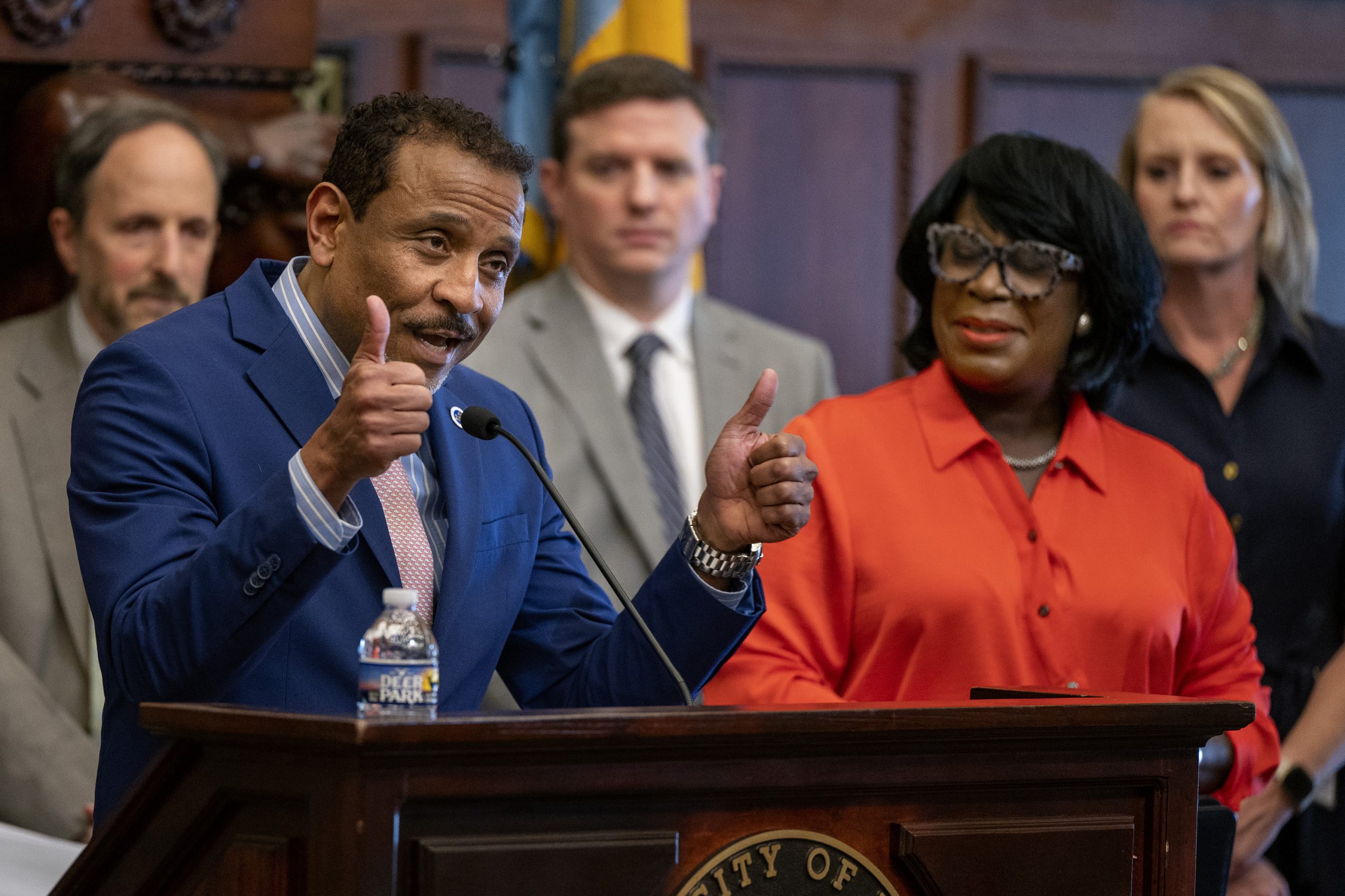
Philadelphia School Superintendent Tony Watlington joins Mayor Cherelle L. Parker and her finance team at City Hall on Monday Aug. 5, 2024, as they prepare to release the first citywide real estate reassessment in two years. Behind them, from left are: Finance Director Rob Dubow; James Aros, Jr., Chief Assessment Officer at the Office of Property Assessment; and Revenue Commissioner Kathleen McColgan.Tom Gralish / Staff Photographer
Philadelphia has a variety of property tax relief programs that are intended to help homeowners weather changes in valuations and avoid displacement. The most popular is the homestead exemption, which exempts the first $100,000 in home value from property taxes. Only homeowners who live in their house as their primary residence are eligible.
That means that, in some cases, homeowners are eligible to receive the exemption while they live in their homes, but no longer qualify if they move and rent out their space.
In 2024, Mayor Cherelle L. Parker’s administration launched a review to identify properties that might no longer meet the eligibility requirements. According to a news release, the Philadelphia Revenue Department reviewed about 22,000 tax accounts, or less than 10% of all the households enrolled in the homestead exemption.
Christian Crespo, a spokesperson for the department, said officials used a variety of data indicators to identify those properties that were up for review. For example, he said, some property owners were claiming homestead benefits at multiple properties.
As a result of the investigation, 13,355 homeowners were removed from a property tax assistance program. There are several other tax breaks for homeowners that are targeted toward low-income people and seniors, but most of those removed were improperly receiving the homestead exemption.
Homeowners were sent two notices and given 60 days to prove their eligibility before they were kicked off an assistance program. They may still appeal the decision.
“We want eligible homeowners to get the relief they deserve,” Revenue Commissioner Kathleen McColgan said in a statement. “These compliance projects help ensure that program participation is accurate, fair, and accessible to residents who truly qualify.”
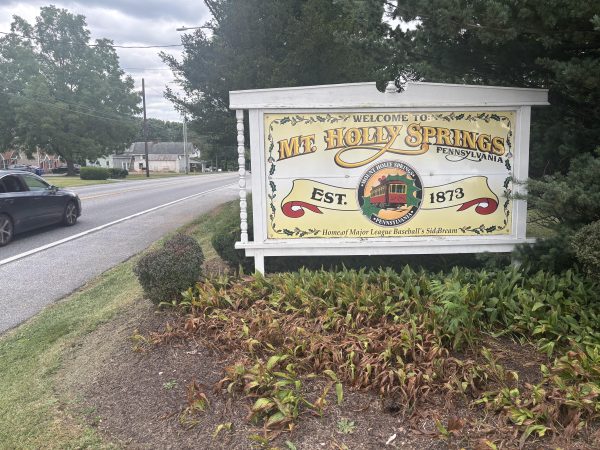
MOUNT HOLLY SPRINGS, Pa. — Still hailed for its trout fishing, this bucolic Central Pennsylvania borough in the shadow of South Mountain was a big draw for tourists at the turn of the 20th century who flocked here to cool off in its mineral-spring waters.
In 2026, this tiny municipality about 25 miles southwest of Harrisburg is developing a much less welcoming reputation. The new notoriety began with an agreement between borough police and U.S. Immigration and Customs Enforcement that has turned Mount Holly Springs into a kind of “speed trap” for unsuspecting immigrants — one with life-altering consequences.
What had been a simmering small-town controversy since the start of the year boiled over into an international incident on July 15 when a prominent Chinese dissident and U.S. asylum seeker named Wu Shaoping was pulled over by a borough officer who claimed Wu had blown through a stop sign. The Amazon delivery driver was then taken into custody by ICE agents who had been running an operation just down the road.
But the outcry over the arrest and detention of Wu — taken to ICE’s Moshannon Valley Processing Center and crammed into a room with 60 other detainees for 10 days before winning his release on bail — also exposed an even darker story.
In March, Mount Holly Springs became the only municipality in Cumberland County and one of a handful across Pennsylvania to execute a formal cooperation agreement with ICE under a controversial program known as 287(g). The program gives local cops expanded powers to arrest suspected undocumented immigrants, while offering training and financial incentives in return.
In just four months, the borough’s four police officers have pulled over and checked the status of dozens of motorists — mainly commercial truck drivers — and turned over 32 arrestees to ICE, the Mount Holly Springs Police Chief Tom Day told me on Wednesday.
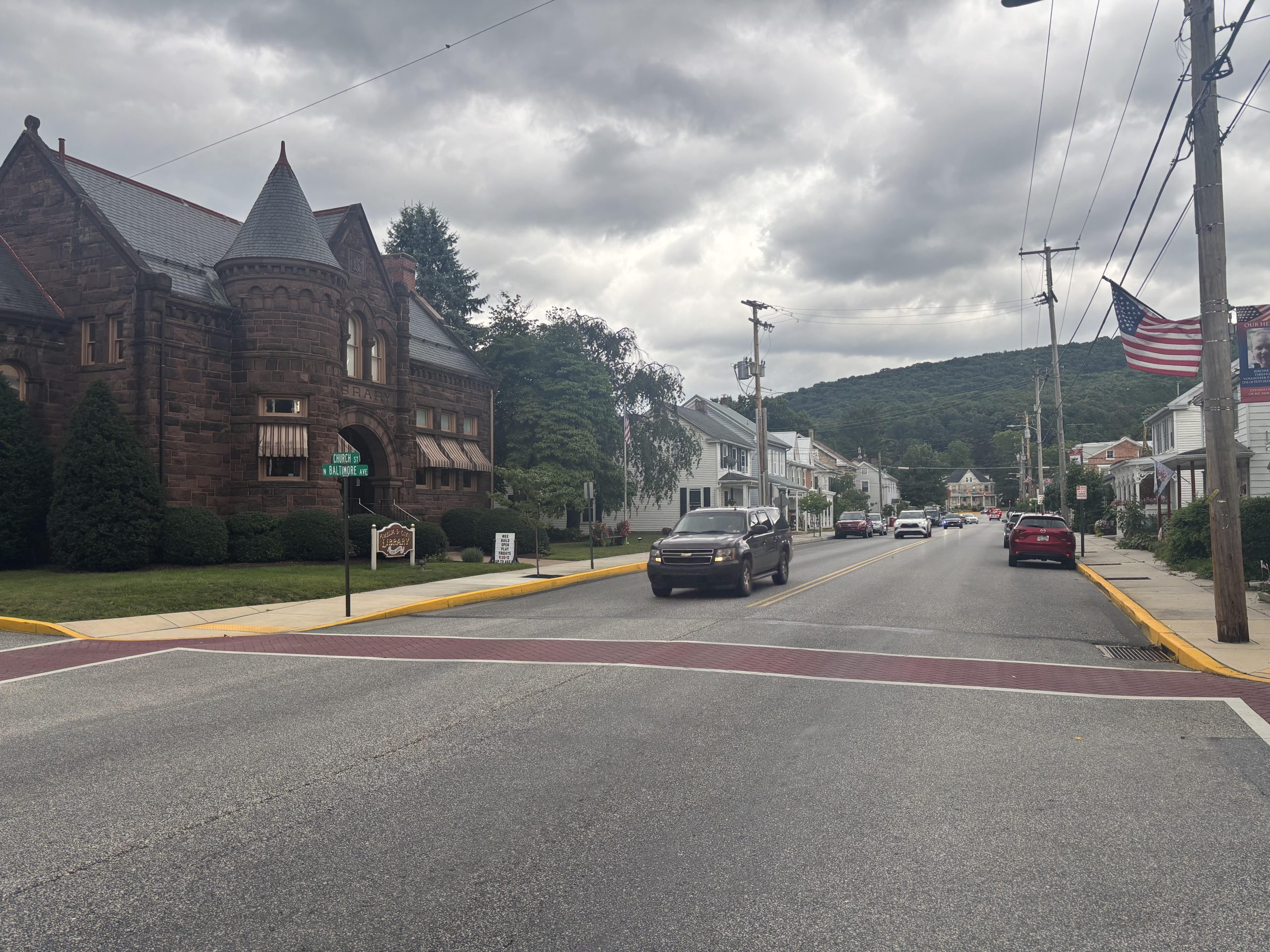
The main drag in Mount Holly Springs, a small borough in Cumberland County, Pa., on Wednesday. The community has seen controversy over local police cooperation with federal immigration authorities.Will Bunch
Day, a gruff ex-Marine in a Nittany Lions cap and blue jeans who doubles as borough manager, insisted to me that the traffic stops and ICE cooperation have nothing to do with racial profiling and everything to do with road safety in a borough with aging bridges and narrow streets.
“There’s no racial profiling of or ethnic profiling of drivers,” the police chief maintained. “We have no clue until we step up on the side of that truck who we’re even dealing with.” Day also said “it’s not that we don’t have a heart” — that he believes in the American dream and understands why refugees want to come here, but when immigrants show up without permission “actions have consequences, you know.”
Minutes later, I met with a gaggle of local residents and business owners who told a very different story — that the wave of immigrant arrests has created a climate of fear that permeates Mount Holly Springs. The growing uproar has riven their once-placid borough into a distrustful cauldron of angry Facebook comments, muttered asides, and occasional threats — a kind of modern civil war just 25 miles north of Gettysburg.
“What I’m hearing from my customers, our people are afraid,” saidRachel Bear, the co-owner of a popular local boutique. “Immigrants are afraid. It’s out there.” She said she’s decided to speak out against the borough’s relationship with ICE because some neighbors are intimidated. “I think they’re just scared.”
Andrew Dapkins, the owner of The “Bird Guy” Tours of local wildlife, told me he’s stopped bringing his excursions into Mount Holly Springs since the deal with ICE was signed. “If I was to bring someone of color, or they were not heterosexual male, I would feel like I was bringing them into a potential hostile environment,” he explained. “So I can’t do that.”
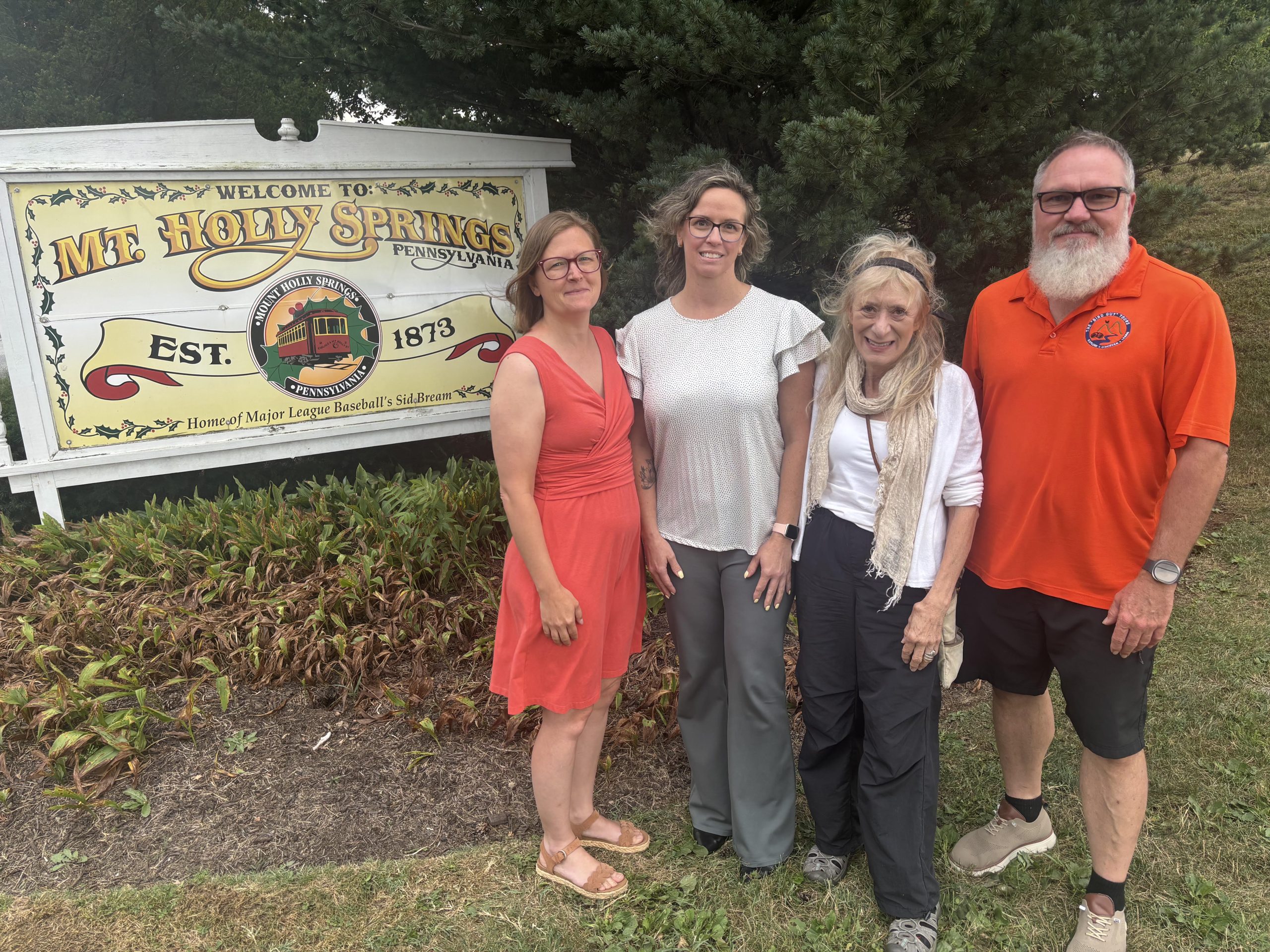
Some local residents who oppose Mount Holly Springs’ police federal immigration arrests include (left to right) Democratic legislative candidate Jessica St. Clair, precinct leader Mandy Taylor, borough council member Pamela Still, and business owner Andrew Dapkin.Will Bunch
What’s happened in Mount Holly Springs since the ICE program began this winter feels in many ways like a microcosm of Donald Trump’s America. It’s the rage, distrust, and paranoia that only metastasizes as the demagogue’s fiery campaign tirades get translated into harsh reality at a small-town stop sign.
But it’s also exactly the chaos that some immigration policy experts warned about when the Trump regime dramatically expanded the 287(g) program, named for a section of 1996 federal immigration law that grants broader immigration enforcement powers to trained state or local police.
Despite warnings about the potential for racial profiling and seeding distrust in immigrant communities, the number of 287(g) agreements has exploded from a few dozen when Trump first became president in 2017 to more than 2,000 today, with at least 88 on the books now across Pennsylvania.
Still, the immigration arrest total in tiny Mount Holly Springs, which covers just 1.4 square miles and has a population of fewer than 2,500 residents, seems staggering. As recently as February, there were only 67 monthly immigration arrests by local police across the entire state. But now this one borough is on a pace for nearly 100 arrests in just one year.
“This is an agenda that’s being driven by numbers for numbers’ sake,” Nayna Gupta, policy director at the American Immigration Council, told me Thursday. “There is an arrest quota that the White House is pushing, and they’re leaning on local police departments to do that work for them” — even as that work paralyzes local immigrants when they learn of increased traffic stops.
“Communities become afraid to go to the grocery store, to go to work every day, to use public transit, even,” Gupta said.
There have been festering recriminations in Mount Holly Springs since January, when residents first learned that Day — seen as a local power broker because of his dual role and his close allies on borough council — had signed the paperwork with ICE to become a 287(g) department. A handful of angry residents denounced the plan — revealed at the same time as two ICE-related killings in Minneapolis sparked national outrage. But the lone Democrat on the seven-member board, Pamela Still, failed to get a second on her push to rescind the deal.
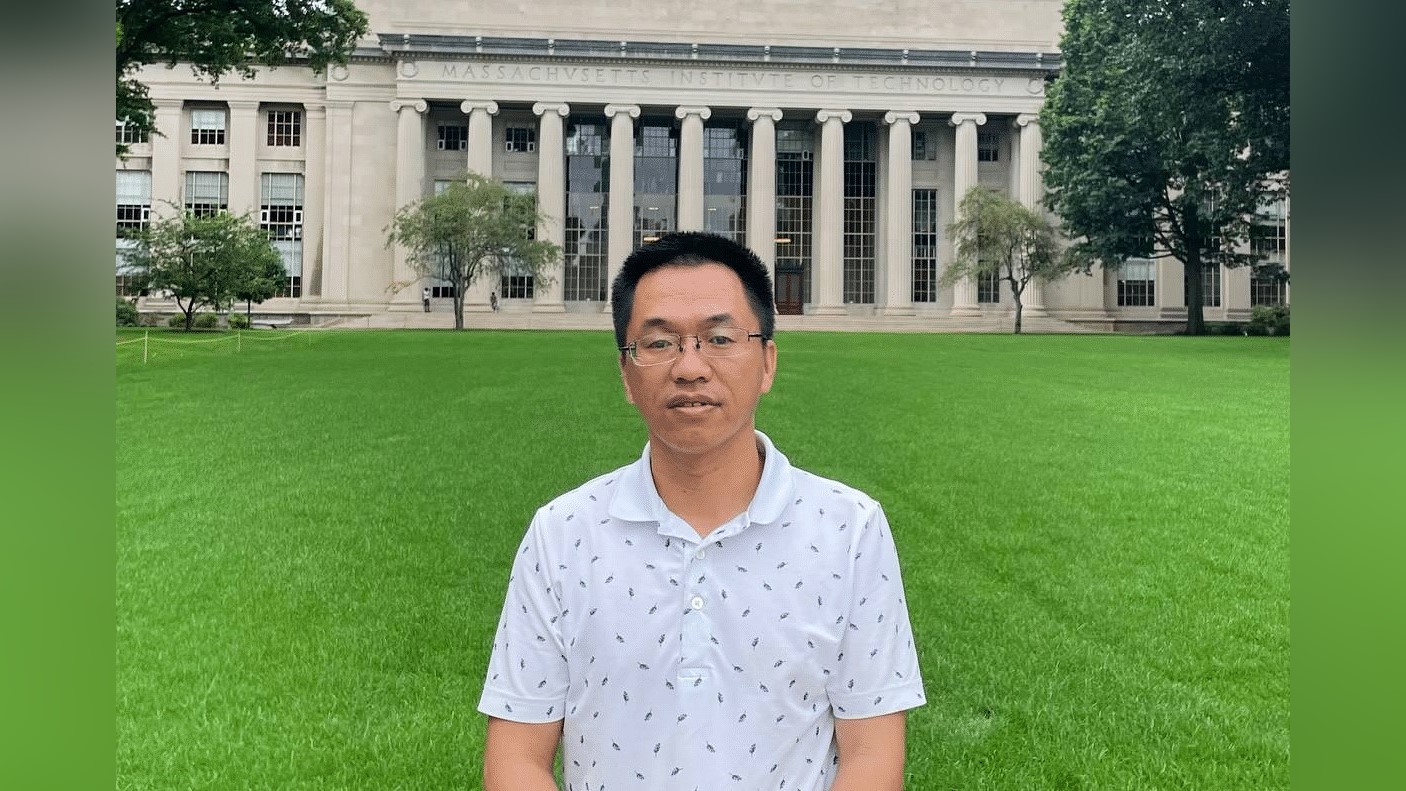
Human rights attorney Wu Shaoping, on the campus of the Massachusetts Institute of Technology in Cambridge, Mass., in an undated photo, was arrested on July 15 and taken into custody by U.S. Immigration and Customs Enforcement.
Trump received just over 62% of the vote in Mount Holly Springs in the 2024 election, although local residents said there are now growing numbers of Latinos and refugees from Nepal who’ve flocked to Central Pennsylvania living in the borough that census data had reported as more than 95% white.
There is clearly considerable local support — often voiced in angry Facebook comments about “illegals” — for Day and his department’s work with ICE. “You guys are doing the right thing; don’t listen to the childless cat ladies,” borough resident Derek Scheuren told a contentious council meeting in February, as reported by PennLive. He also called undocumented truck drivers “illegal invaders” and offered to buy a beer for any officer responsible for detaining one.
That would be nearly a half-dozen six-packs, based on Day’s updated tally. We don’t know if Scheuren has made good on that, but then there’s a lot that local officials and residents don’t know. There’s been little to no information about the multiple arrests since March, and while ICE is bringing the detainees about two hours north to Moshannon Valley, next to nothing is known about their fates.
Locals like council critic Still have also pressed for answers on the carrot of federal dollars that state and local supporters of these 287(g) programs cite as a key benefit. Day only volunteered to me that in addition to federal training of all four borough officers, he has so far put in for just $1,100 in reimbursement for officers’ time on 287(g) stops. But in an email he also sent to local leaders Wednesday, which was shared with me, Day further acknowledged that Mount Holly Springs has received some $130,000 for vehicles and equipment.
The July 15 arrest of Wu, which drew the attention of the New York Times, the Guardian, and other outlets, has so far brought more questions than answers about what’s really happening with immigration arrests in Mount Holly Springs.
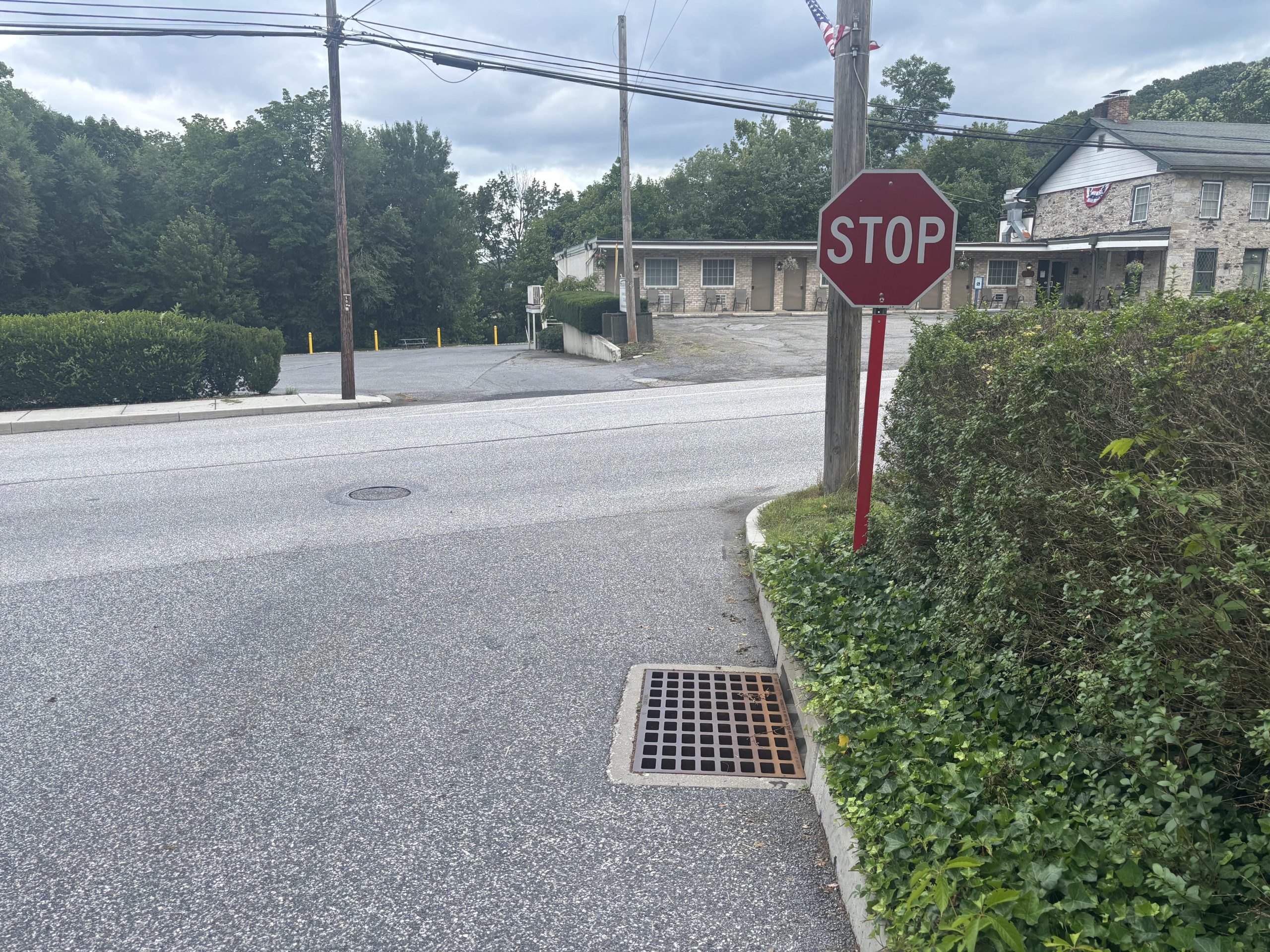
The stop sign at Hill Street and State Route 34 in Mount Holly Springs, Pa., where Chinese dissident and asylum seeker Wu Shaoping was stopped by a local police officer on July 15. Wu’s arrest sparked controversy over the borough’s relationship with federal immigration.Will Bunch
Day insists that Wu, making Amazon deliveries in his Toyota Camry, ran the stop sign at the bottom of steep Hill Street and nearly collided with his officer who happened to be patrolling the main drag, State Route34. The chief said Wu exacerbated the situation by refusing to roll down the window and instead calling his lawyer — causing a commotion that attracted attention from ICE agents who happened to be in Mount Holly Springs doing truck inspections almost right across the street.
Wu disputed that account to Lancaster Online, insisting that he did stop at the intersection, then rolled a bit forward because of its poor visibility. ICE later said Wu was sent to Moshannon Valley because he’s overstayed his 2020 tourist visa, even though he has an active asylum application and a work permit. He was released on bail after two members of Congress formally complained about his detention.
Still, Wu’s arrest — along with the high number of other detentions in Mount Holly Springs — has only fueled suspicion among the program’s critics that cops are racially profiling drivers. Day has repeatedly insisted in past comments and in the Wednesday interview that undocumented truck drivers who can’t read English and don’t follow signs about restricted streets and bridges are a danger to the community.
“I don’t want to sound mean over it, you know, or that I’m not sympathetic,” Day told me. “But they can’t be driving 18,000-pound vehicles and not understand our roadway signs.”
But local critics say cops working so closely with ICE isn’t making Mount Holly Springs safer — not when immigrants are afraid to shop, landscaping crews that largely employ Latinos have seemed to vanish, and a quaint rural town that seeks outside tourists for trout fishing or bird watching starts getting a bad reputation.
“A lot of times, it is this overweight thing — going over the bridge on the Pine Street extension or something is what they get pulled over for, and you know it’s like don’t ruin somebody’s life because their truck was packed or because their GPS didn’t tell them,” said longtime local resident Jen Dieter.
The arrest surge in Mount Holly Springs seems to confirm the fears of immigration experts who’ve found in earlier iterations of the program that immigrants were less likely to call 911 for emergencies or report other crimes. Critics also believe that cops will ignore their public-safety duties to focus instead on immigration arrests, especially as the carrot of federal dollars is dangled before small departments.
“There’s plenty of evidence and data to show that 287(g) agreements undermine trust in the communities where these agreements exist and are used extensively, because the community becomes less likely to report crimes, or to report instances of domestic violence, out of fear that doing so could translate to detention and deportation,” Gupta said.
Experts also say what’s happening in Mount Holly Springs may be the future of mass deportation under the Trump regime. While high-profile, publicity-seeking operations like the ones that targeted Minnesota or Chicago are out, ICE is increasingly relying on its 287(g) partners to make arrests without attracting as much public outcry. The wave of arrests in the Pennsylvania borough came as ICE is nationally reporting as many as 1,400 immigration arrests in a day, an all-time record.
Some longtime residents of Mount Holly Springs are worried that things will never be the same.
Bear, the shop owner, spoke about moving here 25 years ago and slowly building a community around her business. “This is a small community,” she said. “We all know each other. You know these people that we’re talking about, [that] I’ve done business with. You know, hopefully we’ll do it again. But who knows?”
“But more than it being about business, it’s about community. And I think this isn’t how I would treat my neighbors.”
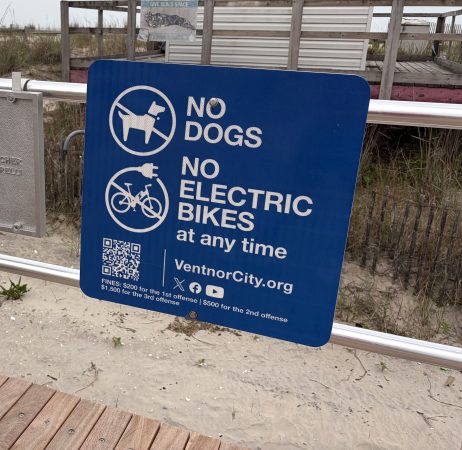
Pennsylvanian e-bikers headed to the Shore, get ready for your appointment with New Jersey’s Motor Vehicle Commission.
In a reversal, the state agency now says out-of-state residents should register their e-bikes in New Jersey in order to legally ride them in New Jersey.
But now the MVC says that because New Jersey is the only state that requires e-bikes to be registered, out-of-state e-bikers should follow New Jersey’s law.
Connolly says as of July 28, New Jersey had issued 9,410 e-bike registrations; of those, 182 were for out-of-state residents.
“MVC is now offering to register e-bikes for out-of-state residents so that they can lawfully ride their bikes in NJ,” Connolly said in a statement e-mailed to the Inquirer.
”Out-of-state visitors who are sixteen or older can also rent a low-speed e-bike from rental companies operating under a contract with a local government, which is an exception to the registration requirement under the e-bike law.”
Properly registered e-bikes will display a sticker issued by the MVC.
The law has caused confusion among riders, bike-shop owners, and law enforcement since its adoption in January. After a six-month grace period, the state went into enforcement mode July 19.
The law requires all riders to wear helmets, forbids riders under the age of 15, and requires insurance for higher-speed classified electric bikes. The classification for basic e-bikes is for pedal-assisted electric bicycles with a maximum speed of 20 mph.
Out-of-state riders without a driver’s license are not permitted to ride an e-bike in New Jersey, according to the Motor Vehicle Commission, which has been embroiled in a national controversy since it was revealed that thousands of non-U.S. citizens were automatically registered to vote while obtaining driver’s licenses in New Jersey.
For non-New Jersey e-bikers, the process for e-bike registration will be the same as for residents, but out-of-staters can use out-of-state proof of identification and register the e-bike with an out-of-state address.
President Donald Trump has put his weight behind Sen. Darline Graham in her bid to succeed her late brother, Lindsey Graham, for a full term. But rather than embracing the president’s endorsed candidate in a whirlwind election less than two weeks away, influential conservative activists in South Carolina say they’re not swayed.
Trump’s conservative base could again reject one of his chosen candidates this year — as they did in South Carolina’s GOP gubernatorial primary in June — as his supporters question whether the president is acting with their top priorities in mind.
“People are going to be independently minded in this, and I don’t think that Trump is the end all, be all that he used to be,” said CJ Westfall, chairperson of the Dorchester County Republican Party.
Many conservative activists say they aren’t sold on Graham because of her lack of a political record, besides her public support for her brother.
Trump initially called for Graham to be appointed to serve the remaining six months of her brother’s term, then quickly backed her after she unexpectedly decided to seek a full term. A dozen GOP candidates filed to run in the Aug. 11 primary election before this week’s deadline. They include Reps. Ralph Norman and Russell Fry, who have conservative voting records in Congress, and former governor Mark Sanford.
The crowded special election is expected to go to an Aug. 25 runoff. And runoff elections, Westfall said, “typically bring out the hard core of the hard core.”
Even national Republican operatives sympathetic to Darline Graham, and who were aligned with her brother, are privately conceding that her odds of success in the primary race appear slim.
In interviews, more than a dozen South Carolina Republican operatives and activists described three issues working against Graham: She had never held office and is little-known across the state, despite her brother’s high profile. Her association with her brother could have downsides in a primary; Lindsey Graham had struggled to please many in Trump’s MAGA-aligned base in recent years because of his hawkishness and willingness to work with Democrats, and he had spent $20 million to fend off a primary challenge this year from the right. And some are simply irked that Trump wants to hand off a coveted six-year term to someone based on family ties, rather than a proven conservative record.
Chad Walldorf, a longtime Republican donor and activist in South Carolina, said he respects Darline Graham’s long career as an advocate in the state for people with disabilities.
“But it’s just hard for that to suddenly translate into a six-year Senate term in a month,” Walldorf said. “And that’s the leap voters are being asked to make.”
Graham, who previously led South Carolina’s Commission for the Blind, has taken steps to demonstrate her conservative bona fides since she was sworn in two weeks ago. She has worked to pass legislation that her brother championed to sanction Russia, and she has announced support for bills to defend gun rights, oppose abortion, support law enforcement, and limit birthright citizenship.
In an interview with Sean Hannity on Fox News, she suggested she would focus more on domestic policy than the national security issues her brother emphasized. Darline Graham also endorsed Trump’s demand on Monday that Senate Majority Leader John Thune (R., S.D.) keep senators in Washington until they approve the Save America Act, a voting bill that Trump has pressured Thune for months to pass.
Following Lindsey Graham’s funerals this week, Darline Graham planned to resume campaigning Thursday, seeking to portray herself as more conservative than her brother, according to a person familiar with her campaign, who spoke on the condition of anonymity to discuss strategy.
“Darline is really in for a dogfight,” said one Republican official working on Senate races, who spoke on the condition of anonymity because they were not authorized to discuss the matter publicly. The person said private polling has not shown Graham pulling significantly ahead in the crowded field. The national official — like many in South Carolina conservative political circles — said they do not expect Graham to win the runoff election, given her limited time to introduce herself to voters.
Randy Page, executive vice president of the socially conservative Palmetto Family Council, cited the low 10% turnout in the party’s June runoff election as he predicted lower participation in the special Senate primary and even lower turnout for a special runoff. Page said that such small electorates tend to favor someone who, “frankly, is known as a movement conservative.”
Norman, who has name recognition and a statewide campaign operation after finishing third in the GOP primary for governor, is widely considered to be the favorite for the nomination. Trump intended to endorse Fry for the six-year term, until Graham decided she wanted to run, according to two people with knowledge of Trump’s decision who spoke on the condition of anonymity to discuss private deliberations.
Norman has secured the endorsements of conservative Republican Sens. Rick Scott (Fla.) and Mike Lee (Utah), along with upstate sheriffs, while Fry has the backing of 40 Republican state legislators. Rep. William Timmons (R., S.C.) has endorsed Graham.
While Graham has received endorsements from several Republican Senate colleagues, she has yet to secure the public backing of two key Senate leaders — Sen. Tim Scott (R., S.C.), who chairs the National Republican Senatorial Committee, the Senate GOP’s campaign operation, and Thune. Much of Lindsey Graham’s remaining campaign cash will be transferred to the NRSC to be spent on behalf of his sister, according to a person with knowledge of the arrangement who spoke on the condition of anonymity because they were not authorized to discuss it publicly. But the person said those funds will be limited and probably well under $1 million.
Some grassroots conservative activists in the state have noted that Darline Graham, according to election records, did not cast a vote in the 2024 presidential primary. South Carolina is a key early state in the process of determining a party’s presidential nominee, and Trump defeated a former governor, Nikki Haley, in that primary election.
The White House did not respond to a request for comment, including on whether Trump intends to travel to South Carolina to campaign for Graham.
Trump was forced to issue a co-endorsement in the state’s June gubernatorial primary runoff to avoid a political loss after his first pick, Lt. Gov. Pam Evette, failed to gain the support of the majority of his base. Her opponent, state Attorney General Alan Wilson, who came in second behind Evette in the primary, ultimately consolidated supporters of the other Republican candidates in the race and won the runoff by 37 percentage points.
Evette’s loss followed similar rejections of Trump-endorsed primary candidates by Republican voters in the Georgia and Iowa governor’s races, as well as outrage from Trump’s base this spring after he was reported to be considering endorsing the reelection of Sen. John Cornyn (R., Texas). Trump ultimately abandoned the plan to endorse Cornyn — whom he had once labeled a “RINO,” or a Republican in name only — instead putting his 11th-hour support behind MAGA candidate Ken Paxton, the state’s attorney general.
“Trump’s endorsements haven’t always been correct in the voters’ eyes,” said Mark Lynch, Graham’s main primary challenger this spring, who is again running to succeed him. “We’re not going to have a coronation in this state and elect Darline as the queen, underneath the king, Lindsey.”
GENEVA — North America’s soccer body on Thursday rejected FIFA president Gianni Infantino’s plan to sell stakes in the World Cup to private equity investors, joining European nations in opposition.
The 41-member Confederation of North, Central American and Caribbean Association Football (Concacaf) held an urgent meeting Thursday after UEFA members agreed to boycott the World Cup and all other FIFA competitions to protest Infantino’s plan.
“During the meeting,” CONCACAF said in a statement, “the membership expressed deep concerns about the lack of due process surrounding the proposal, the artificially short deadline imposed, and the absence of any review or approval by the relevant FIFA governance bodies.
“In addition, the need for private equity investment to fund new and existing FIFA Forward programs following the most profitable FIFA World Cup in history was questioned.”
U.S. Soccer offered a grand total of a one-sentence statement: “U.S. Soccer stands with Concacaf and its members.” A spokesperson said that was all the federation will say for now.
UEFA made its declaration after an urgent online meeting of the confederation’s 55 members.
“UEFA and its national associations will not participate in FIFA competitions,” the European soccer body said in a statement. “Some things are simply too important to sell. The FIFA World Cup belongs to football. It always will. And so long as Europe has a voice, it will never be for sale.”
The strategy meeting was called to counter Infantino’s offer of $20 million to each of FIFA’s 211 global members that has to be accepted by mid-September.
Infantino’s secret proposal was revealed Tuesday to spin off its commercial operations in a new $20 billion subsidiary 20% owned by private investors. The core investor would be a New York investment firm created by Joshua Kushner, the brother of U.S. President Donald Trump’s son-in-law, Jared Kushner.
“This is not merely a profound failure of leadership, but an abdication of FIFA’s duty as the custodian of world football,” said UEFA, where Infantino was a longtime staffer and its CEO-like general secretary when he was first elected to lead FIFA in 2016.
“The moment external investors acquire ownership interests in FIFA competitions, football changes forever,” UEFA said. “Commercial return becomes a permanent obligation. Investor expectations become a daily pressure.”
Infantino has presented the private equity offer as a chance to “turbocharge” funding development of soccer across the world. A majority of the 211 FIFA members rely on its funding.
Officials from about 40 UEFA members spoke at the urgent meeting, with anger expressed that FIFA is not using some of its multibillion reserves to fund extra development programs.
The next scheduled FIFA tournament is in Europe — the Women’s Under-20 World Cup hosted by Poland starting Sept. 5. The following month, Europe stages its last qualifying playoffs for next summer’s women’s World Cup in Brazil.
Inquirer staff writer Jonathan Tannenwald contributed to this article.