Blog

  • Nearly 50 Montgomery County businesses face drug charges for selling illegal THC products, DA says

    Nearly 50 Montgomery County businesses face drug charges for selling illegal THC products, DA says

    Montgomery County prosecutors announced felony drug charges Wednesday against nearly 50 businesses that they say illegally sold powerful THC products, the latest effort in an ongoing crackdown against smoke shops selling unregulated drugs.

    District Attorney Kevin Steele said 46 retailers — including shops, gas stations, and corner stores throughout the county in towns including Haverford, Pottstown, and Narberth — ignored warnings from his office that some of the products on their shelves were illegal to sell in Pennsylvania outside of a medical marijuana dispensary.

    “I think folks thought we were blowing smoke, for lack of a better way to say this, about the things that were coming if they didn’t abide,” Steele said. “They haven’t abided, and so … they are facing felony possession with intent to deliver charges.”

    The crackdown comes about a year after Steele’s office issued a scathing grand jury report on the proliferation of smoke shops selling illegal THC products. The 107-page report was influenced in part by an Inquirer investigation that found some over-the-counter products were not legal at all — and often rife with harmful contaminants.

    The Inquirer began testing over-the-counter THC products in the spring of 2025, at a time when Pennsylvania law enforcement showed little interest in examining the products sold openly at smoke shops.

    But enforcement has risen steadily as storefronts multiply across the region — outnumbering schools in Montgomery County, according to Steele. The shops also peddle an array of other potentially dangerous products, from ultra-addictive 7-OH kratom pills masquerading as health supplements to unregulated psychedelic drugs baked into chocolate bars.

    Shops attempt to sell these supposedly legal THC products through a legal loophole set by the 2018 U.S. Farm Bill, which allows hemp-derived products to be sold if they contain minuscule amounts of Delta-9 THC.

    However, the vapes, gummies, and other items sold in the shops investigated by his office were potent, and had enough THC in them to be intoxicating, according to the prosecutor. Some, he said, contained as much as 2,000 mg of THC and were sold in colorful packaging that seemed to target children.

    These gummies, which contain an amount of THC illegal to sell outside of a medical marijuana dispensary, were allegedly sold at Eagleville Smoke Shop, according to Montgomery County prosecutors.Montgomery County District Attorney's Office

    The charges were not filed against individual owners, but against the businesses themselves, Steele said. Penalties can range from fines to the revocation of business licenses.

    If necessary, Steele added, his office could file more serious charges, including racketeering, against individual owners.

    He stressed, however, that his efforts are not “anti-business.”

    “What we’re trying to do here today is to get businesses operating in Montgomery County to comply with the law, because we care about kids and public safety in our community,” he said.

    Steele’s office sent warning letters to vape shops across the county in December after releasing the grand jury report.

    The letters warned the shops’ owners that the sale of high-THC products was illegal, and asked them to check their inventory and remove any offending products from their shelves.

    Follow-up checks by investigators in subsequent months found that 46 of them were still selling the products, triggering the criminal charges.

    “I had hoped when we did the grand jury report and put people on notice that would be enough,” Steele said. “It was not.”

    Last year’s grand jury report was the product of a joint investigation with prosecutors in Bucks and Chester Counties. It found many stores used “misleading packaging and fraudulent lab reports” to openly sell banned substances across all three counties, and called for greater enforcement of store operators who “knowingly violate the law.”

    Nearly 300 stores selling hemp operate in Montgomery County, outnumbering schools, according to the report, a reality it described as “a public health crisis unfolding in plain sight.”

    The report’s findings referenced the 2025 Inquirer investigation that found samples of these products purchased from different stores in the Philadelphia region exceeded the 0.3% Delta-9 THC potency level cited in the Farm Bill, making them illegal to sell in Pennsylvania.

    Those items contained Delta-9 THC at levels from 200% to more than 2,400% over the federal limit. Six samples, strengthened by other hemp-derived THC variants, were as potent as most dispensary-grade marijuana.

    The Inquirer also found that some companies deceived consumers about what was in their products by digitally altering lab results to remove evidence of contamination. Seven of the samples tested by The Inquirer contained a potentially harmful fungus. Three contained pesticides, including one illegal chemical.

    Owners of some of the stores investigated by Montgomery County in 2025 told detectives they removed illegal products from their shelves after The Inquirer’s investigation was published that July, according to the grand jury report.

    “We are trying to address this for the sake of the children in our community, for the sake of the public who is misinformed about what these items are, and to deface myths that are out there that if a store is selling something like that, it must not be harmful,” Steele said. “That is not the case.”

    Staff writer Max Marin contributed to this article.

  • U.S. is moving thousands of troops aboard ships to the Mideast as Trump weighs new strikes on Iran

    U.S. is moving thousands of troops aboard ships to the Mideast as Trump weighs new strikes on Iran

    WASHINGTON — The U.S. military is dispatching roughly 9,000 troops aboard a group of ships to the Middle East, a U.S. official said Thursday. The bolstering of the American military presence comes as President Donald Trump warned anew that new strikes against Iran could be on the horizon.

    He also said early indications suggest that Iran is linked to the co-pilot who stabbed his captain and tried to crash an Israel-bound flight on Wednesday.

    In an exchange with reporters at the White House, Trump raised the connection when asked by a reporter if there were any links between the pilot behind the attack and Tehran.

    “I would say the answer, based on what I’m hearing, is ‘yes,’ but we’re working on it right now,” Trump said, without offering details.

    Trump also warned that if the link is established to Iran, the United States would retaliate.

    “Oh they’ll be hit, very hard, don’t worry,” Trump said. “You just ask them. They know what happened. They’ll be hit very hard.”

    Meanwhile, the group of ships now en route to the Middle East together carry over 7,000 sailors and 2,000 Marines.

    It includes the USS Theodore Roosevelt carrier strike group, which recently deployed with the cruiser USS Chosin, and the USS Makin Island amphibious readiness group, which includes the USS John P. Murtha and USS Anchorage amphibious landing ships.

    It could mean that three carriers are in the region as early as the end of October, according to the U.S. official who spoke to The Associated Press on condition of anonymity to discuss sensitive military operations.

    Given the personnel already in place in the Middle East, the move would bring the U.S. naval presence to an unusually high number of more than 20,000 sailors and Marines and hundreds of aircraft. The Navy previously had three carrier strike groups in the Middle East in April for the first time since 2003.

    The carriers USS George H.W. Bush and the USS George Washington are in the region now, along with the USS Boxer amphibious readiness group. The Washington is typically deployed to Pacific Ocean but it was moved to the Middle East to relieve the USS Abraham Lincoln, whose arduous deployment resulted in the crew being at sea for more than 260 days straight.

    Trump, in a Time magazine interview published Thursday, also raised the prospects of new strikes, saying it is “possible” that he will ramp up bombing in Iran after the Nov. 3 elections in the United States.

    When pressed, Trump said he could not go further in detailing his strategy.

    “I can’t tell you that because look, you know, you’re asking, where are you going to bomb?” Trump said.

    He said in the interview, conducted Monday, that he rejected the latest ceasefire proposal from Iran because “things that I wouldn’t have approved a year ago I wouldn’t have today.”

    Trump cited as an example an offer from Iran to “open up” the Strait of Hormuz, the key energy shipping corridor, but said the overall proposal was “not good enough.”

    Asked if the increasingly unpopular war would threaten Republican Party chances in November, Trump at first responded, “It’s possible.” But then he added, “It should help, because Iran will not have a nuclear weapon.”

    The president said “100% of the people” oppose Iran having nuclear attack capabilities “including worldwide.”

    “So, when you say it that way, It would help,” Trump added. “If you don’t say that, it could hurt.”

  • Mortgage rates keep climbing, leading some buyers to riskier loans

    Mortgage rates keep climbing, leading some buyers to riskier loans

    Mortgage rates continue to creep higher, compounding an affordability crunch that has squeezed many Americans’ wallets. Now soaring rates are prompting some homebuyers to roll the dice that they will fall in a few years.

    The average 30-year, fixed-rate mortgage, the most popular home loan in the United States, rose to 7.28% this week, up from 7.03% last week and the highest since November 2023, mortgage financing giant Freddie Mac said Thursday.

    “Mortgage rates jumped to their highest level in almost three years, pushing borrowers to the sidelines,” said Joel Kan, deputy chief economist at the Mortgage Bankers Association, a trade group.

    Mortgage rates had fallen below 6% at the end of February but began to inch higher after the United States and Israel attacked Iran on Feb. 28. The war in Iran has driven up energy costs, which in turn has stoked inflation fears. In response, investors have pushed up the yield on the 10-year Treasury note, which on Thursday reached its highest level since 2002.

    The 10-year Treasury yield underpins a wide range of consumer and corporate borrowing, including mortgages. With the yield climbing quickly, the jump in mortgage rates this week was the biggest since October 2022.

    Adjustable-rate mortgages can be significantly lower than their fixed-rate counterparts, real estate experts say, sometimes as much as a full percentage point, a difference that can potentially save homebuyers thousands of dollars annually. The ARM, as the loan is known, also comes with the risk that rates will continue to climb, hurting owners when the loan resets.

    ARMs are an increasingly enticing option among buyers put off by the jump in fixed-rate mortgages, Kan said, adding, “They are looking for more ways to get into that home.”

    The association reported a recent uptick in the share of ARM applications, to 10.3% of overall mortgage applications, the highest in a year.

    Here’s what you need to know about adjustable-rate mortgages.

    How does an adjustable-rate mortgage work?

    Fixed-rate mortgages lock in one rate over the lifetime of the loan, usually 30 years. ARMs, on the other hand, offer a low “teaser” rate for a set time, typically five, seven, or 10 years, after which they readjust to the market rate, often annually, for the remainder of the loan. This helps owners keep their monthly payments lower during the introductory period.

    Borrowers who use ARMs are betting that mortgage rates will eventually fall, giving them the opportunity to refinance their loan at a lower rate or sell their home before the introductory period ends and the rate begins to fluctuate.

    ARMs make up a small portion of the overall mortgage market, which is dominated by fixed-rate products. But now that fixed-rate mortgages have climbed above 7%, interest in ARMs is starting to grow, said Archana Pradhan, the principal economist at Cotality, a provider of housing market data.

    The national average rate for an ARM with a five-year introductory rate that resets annually is 6.56%, according to Bankrate.com.

    “The wider the gap between ARM rates and the fixed rates, the stronger the incentive to choose an ARM,” Pradhan said.

    How safe is an ARM?

    ARMs offer savings for borrowers, but they also introduce market volatility.

    The loans were popular during the early 2000s housing bubble, peaking at around 36% of overall mortgage applications in 2005, according to data from the Mortgage Bankers Association. After the housing market crashed in 2008, the share of applications for ARMs plunged to about 6%.

    Stricter underwriting standards have made ARMs safer for consumers, who are protected by regulatory limits that prevent the variable rate from jumping too high.

    Still, they are not for everyone, said Nick Rocco, a mortgage loan officer in the Baltimore area. Borrowers need to have a plan for what to do after the introductory period ends regardless of where mortgage rates are. “There is no crystal ball,” he said.

    Who should apply for an ARM?

    Nearly 72% of homebuyers who take out an ARM have a chance within five years to refinance it into a 30-year fixed-rate mortgage that is at least 0.5 percentage points lower than their original rate, according to a report from Redfin, an online real estate marketplace.

    That can translate into big savings every month for some borrowers, Pradhan said. “It’s more meaningful for higher loans, because they are able to save hundreds of dollars compared to the lower amount of loans,” she said.

    Rocco said he recently worked with a couple who used an ARM to finance the purchase of a $750,000 home. The buyers had experience with ARMs, he said, and knew to put 20% down, which lowered their introductory rate.

    “They have a little more risk tolerance, and they’re a little bit more comfortable knowing the fact that they can refinance out of that adjustable rate,” he said.

    But Pradhan said ARMs made better sense for buyers who intended to sell after the introductory period ended. “You are not intending to live in the house forever,” she said.

    “Refinancing may be an exit strategy, but it’s not a guarantee,” she added. “One of the risks of an ARM is the higher payment in the future.”

    This article originally appeared in the New York Times.

  • After an identity hoax, one Philly educators’ group dissolves and another goes on hiatus

    After an identity hoax, one Philly educators’ group dissolves and another goes on hiatus

    After being duped by Hannah Gann, one organization closely affiliated with the Philadelphia School District teacher and activist is dissolving, and another is on a two-month hiatus pending a decision about its future.

    The moves come after Gann admitted she lied for years about her identity, claiming at times to be Palestinian, Tunisian, and Black — devastating both groups and drawing national attention to her deception. Gann recently admitted to being a white, Jewish woman, with relatives who she said were Israeli settlers.

    “After much reflection, Philly Educators for Palestine has made the decision to dissolve,” a statement read. “We are deeply grateful to everyone who participated, supported, organized, learned, taught, and stood alongside us. We are proud of what we accomplished together and of the community that was built through this work.”

    The group, which was not affiliated with the Philadelphia School District but whose members taught in the district, began in early 2024, after charter members, including Gann, organized a “teach-in” about Palestinian history and the conflict in Gaza.

    The Racial Justice Organizing Committee, established as an independent group in 2020, is “taking a two-month hiatus to rest, process, and decompress,” the joint statement said. “A decision regarding its future and next steps will be shared by the end of the year.”

    Gann’s deception was publicized by both groups earlier this month. The organizations’ members were “stunned, saddened, and angered by this betrayal,” they said at the time.

    Gann, in a 10-minute video released after the groups revealed her yearslong hoax, said that she “allowed half-truths and obfuscations to grow into outright lies,” but that she “genuinely wanted to commit to the work I was doing in spite of those lies.”

    She has said in a social media post that she was “so, so sorry. It’s so far from being enough, but I don’t know what else to say.”

    ‘Cosplaying Black’

    Most of the teachers and activists who organized with Gann have asked for privacy as they sort through the complicated “why” around her deception.

    But one organizer, furious at the damage done by Gann, shared details around Gann’s deception with The Inquirer. The activist asked that her name not be used because she feared reprisal from the community.

    Gann sought her out, deliberately befriending her, the organizer said.

    At times, the organizer said, Gann was “a little ambiguous” about her background.

    “She has moments when she tries to act extra Black, like cosplaying Black,” the organizer said. Gann often wore African print clothing and large earrings, and used African American Vernacular English. “She told people she was mixed. She told someone she was Lebanese.”

    But Gann seemed to act differently around different people, slipping on different identities as they suited her.

    Gann once talked about having attended an international school in Virginia, the organizer recalled. When the organizer asked Gann how her family, who Gann said had few resources, managed that, “she said, ‘I just used my grandmother’s address; you know how we do.’”

    And though it was not a secret that Gann attended the University of Pennsylvania, “she never ever talked about that stuff with me,” the organizer said. “She would always gloss over the Ivy League.”

    In some ways, Gann “was such a good friend; she’d do anything for you,” the organizer said — cook a dish, do a favor, show up when you needed her.

    But Gann also did things that, in hindsight, give the organizer pause.

    “She is intricately involved in teenagers’ lives, and that is very, very concerning to me,” the organizer said. “I’ve seen kids stay at her house because they got kicked out. I’ve seen her going to kids’ parties as a chaperone.”

    Members of the Racial Justice Organizing Coalition and the former Philly Educators for Palestine said in a statement they believed Gann, who teaches at the Workshop School, a project-based district high school, deserved consequences from her employer for her actions.

    A school district spokesperson said that the district cannot comment on personnel matters, but that support is being provided for any Workshop student or adult who needs it.

    The organizer agrees with the call from the Racial Justice Organizing Coalition and former Philly Educators for Palestine group for consequences.

    “I think Hannah should get fired,” the organizer said. “This has got to be so traumatizing for those kids. This is a group of kids that don’t trust adults anyway, living in Philly at this time. And they had an adult they thought they could trust, and she was lying about something so fundamental.”

    The organizer feels deeply personally duped, too.

    “She was trying to get my perspective as a Black woman, and she was white that whole time,” the organizer said. “It was disgusting. The emotional labor that she has utilized from me is so unbelievable — I can never get that time back, I can never get that trust back. I will never speak to her again in my life.”

    Further questions

    Gann’s actions had troubled some Jewish families in the district long before her deception came to light.

    Jason Holtzman, chief of the Jewish Community Relations Council of the Jewish Federation of Greater Philadelphia, said families in the district began raising concerns about Gann to the organization three years ago.

    “The communities whose identities and experiences she misrepresented were wronged by that deception and deserve honesty and respect,” Holtzman said in a statement.

    Gann’s admission that she lied about her identity “also raises serious questions about her conduct as a teacher,” Holtzman said.

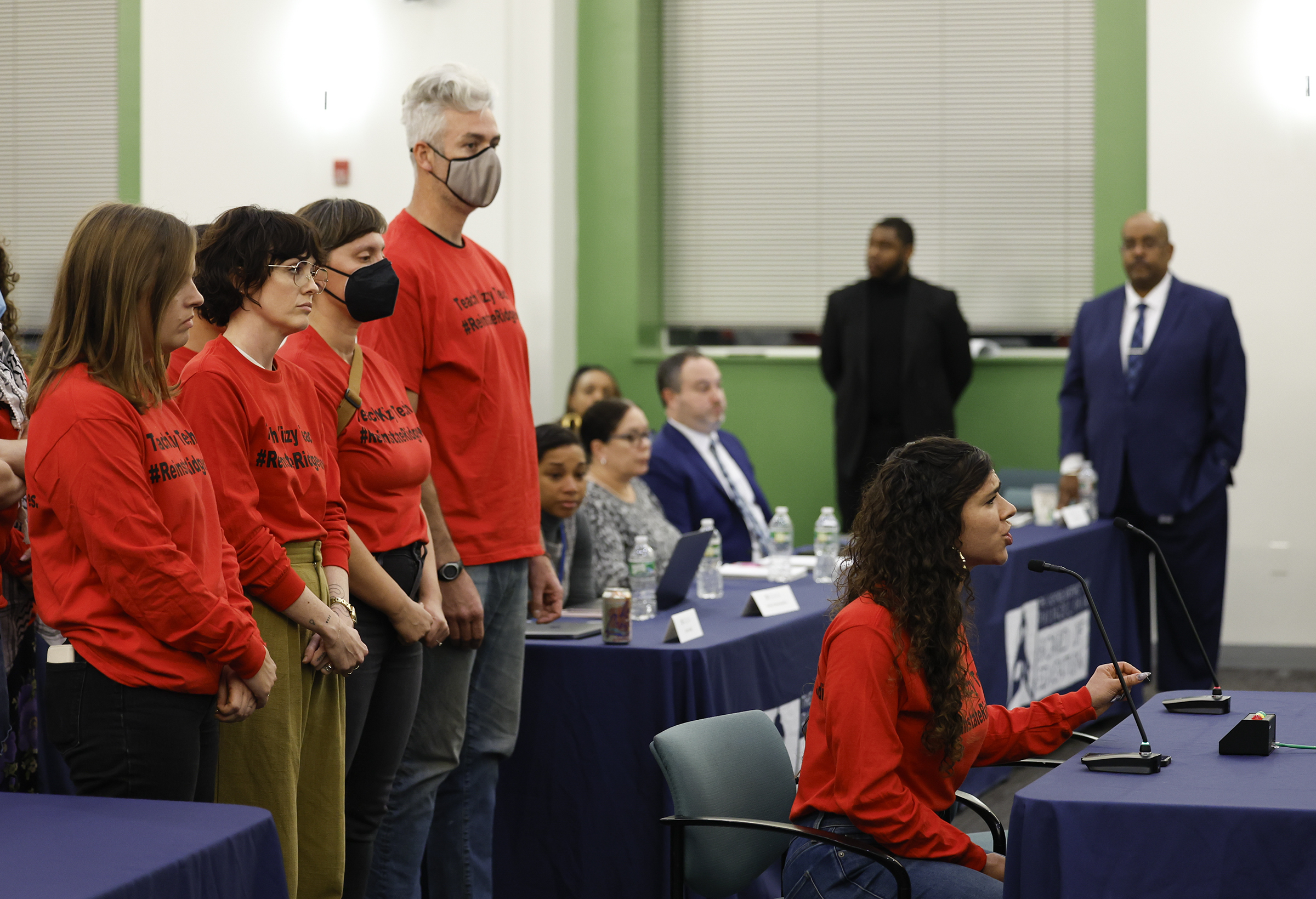
    “Ms. Gann taught and spoke publicly about Israel and Palestinians while invoking a personal identity and lived experience she now acknowledges were not her own. She testified before the Board of Education as a Palestinian teacher, speaking about ‘our homeland’ and ‘my family living in a war zone.’”

    Black, Palestinian, and Tunisian communities “deserve to have their identities and experiences treated with honesty and respect,” Holtzman said. “Jewish students also deserve a classroom where they can be fully themselves, without feeling singled out or ashamed of their Jewish identity or their personal or familial connection to Israel.”

    The Jewish Federation of Greater Philadelphia in 2024 filed a complaint against Keziah Ridgeway, another Philadelphia teacher, accusing Ridgeway of injecting antisemitism into the curriculum and using her personal social media posts to threaten some Jewish parents.

    Ridgeway was ultimately kept out of the classroom for a year before she was reassigned to a new school. She has sued the district, alleging anti-Islamic bias. The suit is still pending.

    Gann was a staunch defender of Ridgeway, who posted on social media that she confronted Gann when her lies came to light.

    “I can no longer be in community with someone who caused so much harm,” Ridgeway wrote. “I hope that she gets the help that she needs.”

    This article has been updated to include the name of Jewish Community Relations Council chief Jason Holtzman.

  • Against the Eagles, the Rams say that ‘humility is only one play away’ for both teams

    Against the Eagles, the Rams say that ‘humility is only one play away’ for both teams

    The Eagles don’t have too much time to dwell on a demoralizing first loss of the season on Monday night. Not with the Los Angeles Rams here on Sunday (1 p.m., Fox29).

    The first game at Lincoln Financial Field since Week 1 finds both teams heading into this game with something to prove, with the Rams losing last week as well to the Broncos.

    During a press conference ahead of Wednesday’s practice, Rams coach Sean McVay, quarterback Matthew Stafford and wide receiver Davante Adams detailed where their focus is before traveling to Philly.

    The trio focused on injuries, veteran leadership, and their offense getting through the Birds’ physical defense.

    Rams quarterback Matthew Stafford says playing against the Eagles, particularly on the road, is “always a tough out.”Matt York

    “They’re always a tough out, especially at their place,” Stafford said. “Obviously, they have guys on that team who have done really special things in this league … It’s always a challenge going up against them, both offensively and defensively, but also from a personal standpoint. They have great players.”

    The veteran quarterback pointed directly to the Birds’ defensive line, describing the Eagles as a team that “plays [an] extremely physical upfront, penetrating style of defensive line.”

    Physicality could be an important factor against a Rams offense that struggled to finish drives last week in a close game, scoring only one touchdown.

    “We want to stay ahead of the chains to be efficient, both in the run game and the pass game,” Stafford said.

    One of the biggest developments going into Sunday is the return of Rams star wide receiver Puka Nacua, a weapon who could potentially break through the Eagles’ defense given some injuries to key players.

    McVay said that he expects Nacua to play against the Eagles after the wide receiver missed the past two games with a hip injury. Nacua led the NFL with 129 catches last season and finished with 1,715 receiving yards.

    Sean Mannion was also a hot topic for the Rams, due to his ties in Los Angeles.

    The offensive coordinator spent the first part of his NFL career as a quarterback with the Rams after the team drafted him in 2015. Mannion was on McVay’s roster during the 2017 and 2018 seasons before eventually moving into coaching, with the Rams coach showing his respect for his former player during the press conference.

    “It’s cool to be able to see him in a great opportunity, a big-time job,” McVay said.

    Adams spoke last in the conference and assured both Rams and Eagles fans that one loss doesn’t define a season or even change the cutthroat mentality they have as they prepare for the matchup.

    “Humility is one play away if you’re sleeping on somebody, so we don’t take anybody lightly at the end of the day,” Adams said.

  • Philly is one of the first cities in the country to formally support boycotting Starbucks | Council roundup

    Philly is one of the first cities in the country to formally support boycotting Starbucks | Council roundup

    Just in time for pumpkin spice latte season, Philadelphia City Council members are giving up Starbucks — and they want you to do the same.

    Council voted unanimously on Thursday to make Philadelphia one of the first cities in the country to explicitly endorse a nationwide boycott of Starbucks amid a unionization drive, and to pledge not to use city funds at the coffee chain until it reaches a contract agreement with its workers.

    Also during Council’s session on Thursday: Councilmember Jamie Gauthier introduced controversial legislation to approve a contract with a trash incinerator that she doesn’t support. We’ll explain.

    What was this week’s highlight?

    Council puts Starbucks on ice: The expression of solidarity with Starbucks workers is a ceremonial resolution that does not carry the weight of law and does not require approval from Mayor Cherelle L. Parker.

    Still, Council’s vote was a formal endorsement of the boycott orchestrated by Starbucks Workers United and targeting the world’s largest coffee chain, which is already reducing its footprint in the city. Starbucks closed six Philadelphia locations last year, and two additional branches — one at 2201 South St. in Southwest Center City and the other at 1018 N. Second St. in Northern Liberties — closed on Sunday.

    The only other city to formally support the unionization effort is St. Louis, where last week the city’s board of aldermen approved a resolution to “express solidarity with Starbucks Workers United as they call for a boycott of Starbucks.”

    People staying dry at the Starbucks Coffee at Dilworth Park near City Hall in Philadelphia, Pa., on Thursday, July 9, 2026.Tyger Williams / Staff Photographer

    Over the last five years, baristas have unionized at hundreds of individual Starbucks locations, but the company has not agreed to a nationwide contract that the union has sought. The union in August called for a nationwide boycott to last until an agreement is reached.

    Councilmember Nicolas O’Rourke, a member of the progressive Working Families Party who represents the city at-large, authored the legislation and said its passage is “another affirmation of Philadelphia being a union town.”

    “I am always interested in making sure that businesses in the city of Philadelphia and people are thriving,” O’Rourke said. “But my first priority is always to make sure that workers and workers’ conditions are right and that they are respected.”

    Council is controlled by a supermajority of Democrats, and the body is largely supportive of organized labor.

    Council President Kenyatta Johnson said he backs the Starbucks boycott, even though he is generally not a big coffee drinker.

    “Unfortunately, they do have a vegan breakfast sandwich,” said Johnson, who follows a plant-based diet. “But I won’t be having those any time soon.”

    A spokesperson for Starbucks said in a statement Thursday that the company is “committed to engaging in productive bargaining.”

    What else happened today?

    Introducing legislation she doesn’t support: Thursday’s meeting featured another twist in the long-running debate over a Chester trash incinerator and how Philadelphia gets rids of its garbage. Gauthier, a progressive Democrat who has advocated for the city to stop burning its trash, introduced legislation that would allow the city to continue doing so.

    Here’s why: The Parker administration is looking to renew its long-held contract with Reworld, the Chester waste-to-energy facility where the city ships about one-third of its trash to be burned. (The rest of the trash is sent to landfills.)

    In order to renew the multiyear contract, Council must approve authorizing legislation. Gauthier, who previously floated a bill to ban the city from incinerating trash but did not garner enough support to pass it, is asking her fellow lawmakers to vote against the contract renewal.

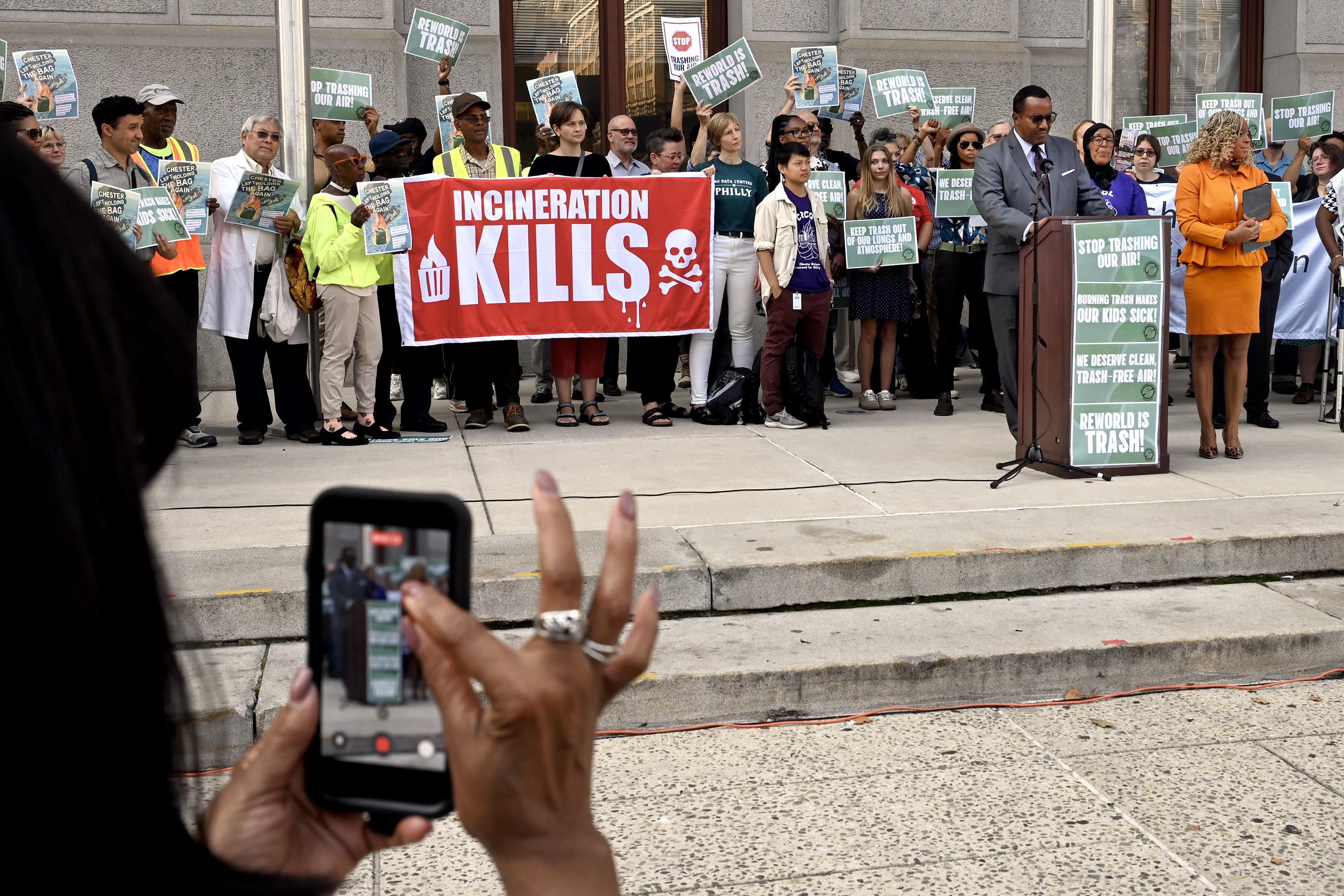
    Chester Mayor Stefan Roots (at lectern) is joined by Philadelphia City Councilmember Jamie Gauthier (right) at a rally outside City Hall early Thursday morning Sept. 17, 2026.Tom Gralish / Staff Photographer

    Although it may seem like a reversal of her position, Gauthier introducing the legislation herself — even when she does not support it — will allow her to have some say when a committee holds a hearing on the legislation. She hopes to amend it to strike Reworld from the deal so that the city processes all trash and recycling through landfills.

    “It gives me and my coalition an opportunity to be at the table on something that we fought really hard on for more than a year now,” she said in an interview. “We’ve been working really hard to make sure that we’re protecting the health of folks in Chester and in Philadelphia, and protecting our environment.”

    Johnson will decide which committee will hear the bill. He said Thursday that he is still reviewing the legislation.

    Mamdani-fication: Create a Philly Medicaid Supplement Program. Expand access to programs that provide transit subsidies to low-income Philadelphians. Use city money to buy properties with expiring federal affordable housing subsidies.

    These were some of the recommendations included in the Affordable Philly Now report, which was recently released by the Cost of Living Task Force.

    O’Rourke, who convened the task force, held a committee hearing Wednesday examining the report’s findings, and he was not shy about noting that it was partly inspired by another progressive a few miles up I-95.

    “You cannot deny the profound impact that … Mayor Zohran Mamdani has had,” O’Rourke said, praising the New Yorker for “mixing moonshot municipal goals with sewer socialism” and working to build a “protective hedge” of social safety net programs.

    Nicolas O’Rourke, Philadelphia City Council member, during the mayor’s budget address on March 12.Alejandro A. Alvarez / Staff Photographer

    Wednesday’s hearing was a meeting of the Committee on Global Opportunities and the Creative/Innovative Economy, which O’Rourke chairs. As a freshman and a member of a minority party, O’Rourke does not have a high-profile committee leadership post like some of the more senior Democratic lawmakers on Council. His committee was previously led by former GOP Councilmember David Oh and does not naturally align with O’Rourke’s progressive politics.

    O’Rourke said at the committee hearing Wednesday — the first time he chaired a Council hearing — that he was shifting the panel’s work.

    “The prior version of this committee revolved around corporate investment fitting into global value chains and making Philadelphia an international destination,” O’Rourke said. “In my reflection on the meaning of the committee, I have spent more time focusing on a part of the committee’s mandate that actually seems more in its merit — that is, to consider all matters related to making Philadelphia a world-class city. … And in some seasons, world-class cities show themselves by being bold in providing a protective hedge for its people.”

    Quote of the week

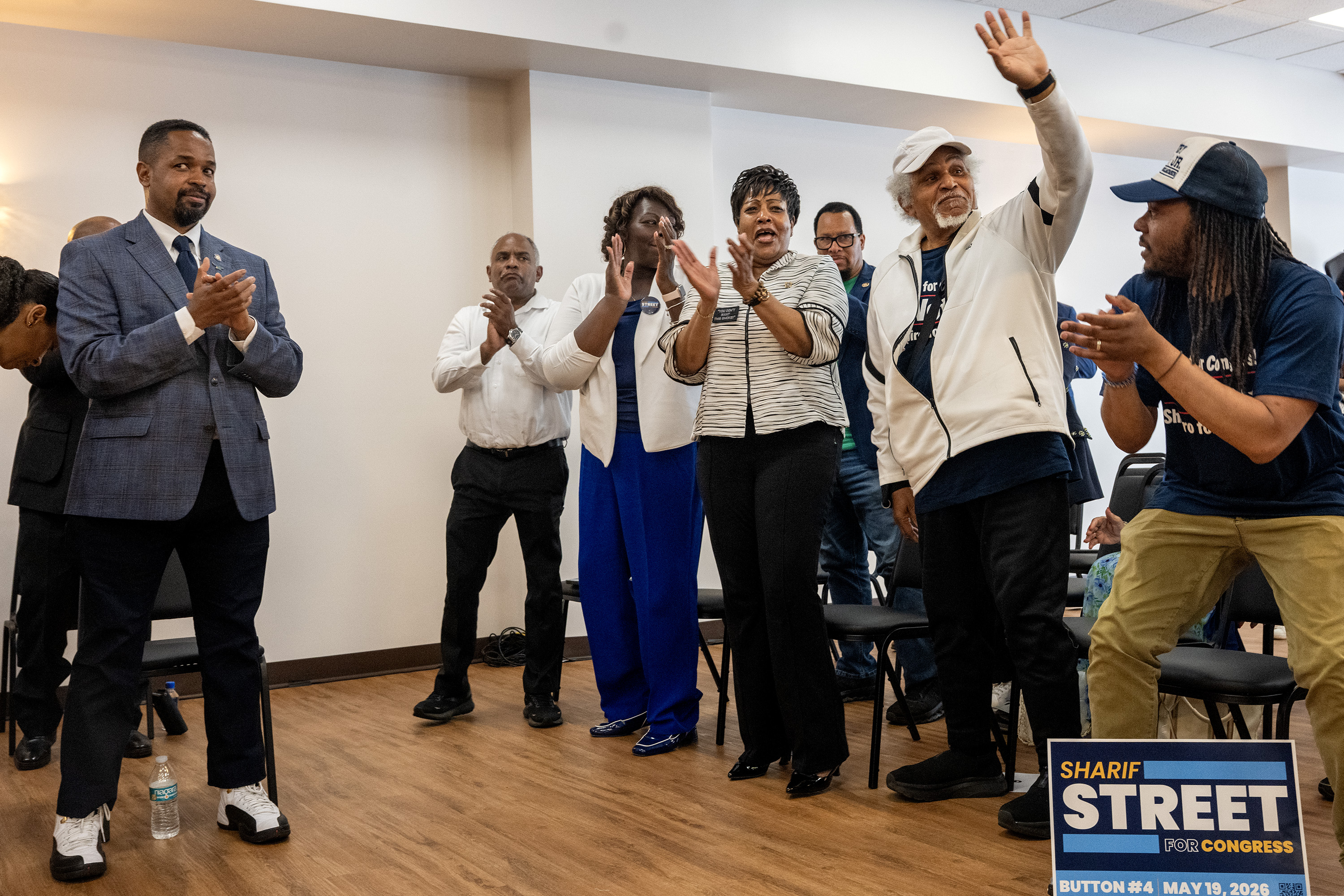
    Former Mayor John F. Street (right) is acknowledged by supporters of his son, State Sen. Sharif Street (left), in West Philadelphia Monday, May 18, 2026.Tom Gralish / Staff Photographer

    That was former Mayor John F. Street, the erstwhile City Council president, who returned to his old workplace Thursday to speak during public comment. He was testifying in support of a resolution to honor Philadelphia Police Lt. Greg Brown, who was, among other assignments, a member of Street’s security detail and is now retiring.

    Street said Brown was one of the few people he never got to humiliate, because Brown “always got it right.”

    “I never had a chance to put him on any list,” Street said.

  • Mortgage rates reached 7.28%. If you have to move right now, here are some tips.

    Mortgage rates reached 7.28%. If you have to move right now, here are some tips.

    The average interest rate for the popular, fixed-rate 30-year mortgage shot up to 7.28% this week, the highest it’s been since November 2023.

    Elevated mortgage rates and high home prices are making homebuyers cautious about entering the market in the Philly area and beyond.

    “They’re not jumping in with two feet,” said Patrick Lopez, a Philadelphia-based mortgage banker at Quaint Oak Mortgage.

    At the same time, some people need to move. They’re driven by personal factors such as job relocations, growing households, and plans for the future.

    Mortgage rates are unlikely to slide back down to pandemic-era levels of 3% or lower. And waiting for rates to drop significantly is often a losing game, Lopez said.

    While interest rates fluctuate, home prices overall have historically moved in one direction: up.

    “What I tell people is if you can afford it and you can buy, the least expensive the property is going to be 99% of the time was yesterday or today, because prices keep trending higher,” Lopez said.

    When aspiring homebuyers tell him they are waiting for interest rates to drop into the 5% range, for example, he asks, “Do you also understand how many other people are waiting for that?”

    A significant drop in rates would likely flood the market with buyers, increasing competition for properties.

    Here’s what real estate pros are telling buyers now.

    Don’t assume your rate

    Individual mortgage rates depend on a bunch of factors, including credit scores and participation in homebuyer assistance programs.

    “The good news is that people have more power over interest rates than they think they do,” said Matt Schulz, chief consumer finance analyst at LendingTree, an online loan marketplace.

    Taking steps to get a lower rate, he said, “can make a really unaffordable situation a little less so.”

    One of the first steps a homebuyer should take is to shop around to compare loan offers from several lenders, he said.

    “People would be surprised how much difference there can be,” Schulz said. And even a slight difference in the interest rate can mean tens of thousands of dollars in savings over the life of a mortgage.

    Get your credit score in shape

    Buyers with higher credit scores get lower mortgage rates, so improving those scores can help a lot.

    “There’s very little in life that’s more expensive than having crummy credit, and that’s especially true when you’re buying a home,” Schulz said.

    Jeffrey Ruben, the Bryn Mawr-based president of WSFS Home Lending, said that “first and foremost,” homebuyers should make credit card payments on time. They also need to control their credit card debt, so they’re not carrying over large balances from month to month.

    They should cap how much they spend on a card to maximize how much credit they have available at any given time. Keeping total outstanding charges under 30% of the card limit gives people better credit scores, Ruben said.

    Do your homework

    Before buyers start looking at homes, they should sit down with a professional to determine how much they’re comfortable spending up front and monthly, said Peter Buchsbaum, manager of the mortgage brokerage Good Cents Financial, which is based in Bucks County and does most of its business in Philadelphia.

    “Start the process earlier than you want to,” he said. “And it should begin with the financial piece.”

    Schulz said homebuyers should factor in elevated mortgage rates when they calculate “what they can afford and what sort of homes they should be looking at and whether they should be in the market, period.”

    An increase in mortgage rate from 6.5% to 7% on a $300,000 home in Philadelphia would mean a monthly payment that grows by about $130, Buchsbaum said.

    “If that’s stopping me from buying a house, I probably shouldn’t be shopping for houses,” he said.

    Buyers should also look into assistance programs they may qualify for.

    First-time homebuyer programs, such as those offered through the Pennsylvania Housing Finance Agency, can come with lower rates.

    Make a down payment plan

    Households should go into home buying with a plan for making their down payment, which can include saving more of their own money or getting grants or loans from governments, lenders, and nonprofits.

    “The down payment is a challenge for many buyers,” Ruben said. “There’s no question about that.”

    But buyers who can make bigger down payments get lower mortgage rates.

    Be flexible, if possible

    Rates can vary by location, so buyers with more flexibility in where they live can get lower rates.

    Rates also can vary by loan type. Mortgages backed by the Federal Housing Administration and the U.S. Department of Veterans Affairs come with slightly lower interest rates than conventional loans.

    Rates also vary by property type. Condos and duplexes come with higher interest rates than single-family homes, Lopez said.

    Be prepared to compromise

    With mortgage rates elevated, buyers should also keep in mind that a home they purchase now might not be their forever home, Schulz said. They may need to dial back their expectations and their budget in order to purchase.

    First-time buyers, especially, can get on the first rung of the market ladder and start building home equity with the understanding that they can buy another home later that checks all their boxes.

    “Tough times require compromise sometimes,” Schulz said.

    The rate doesn’t tell the whole story

    Homebuyers shouldn’t jump on a low interest rate without question.

    Recently, a homebuyer asked Buchsbaum whether he could match an interest rate of 6.5% for a mortgage the buyer saw online. But in the fine print, the buyer would have had to pay discount points, or up-front fees to a lender, to buy down the rate to that level.

    The buyer didn’t know about that caveat.

    Buyers can get mortgage rates down fairly low if they pay enough points, Buchsbaum said, but “the juice isn’t worth the squeeze” in many cases. Buyers have to weigh whether they’ll stay in their home long enough that savings will make up for the up-front expense.

    You don’t have to be stuck with one rate

    Buyers who purchase homes now and get an elevated mortgage rate can pay to refinance their mortgage later if rates drop.

    Also, more borrowers now are opting for adjustable-rate mortgages (ARMs) to get into homes, according to the Mortgage Bankers Association. These loans come with lower initial interest rates than fixed-rate loans. After a period of time, rates adjust up or down based on the market.

    Ruben said seven-year ARMs for 30-year periods are currently popular among WSFS’s mortgage borrowers. The interest rate stays the same for seven years and can adjust twice a year after that.

    There’s a reason borrowers get a better initial rate: “They are assuming the risk of potentially higher rates in the future,” Ruben said.

    But Ruben said WSFS is hopeful that rates will drop over the next several years to pre-pandemic norms. Rates in the high-4% to low-5% range for 30-year fixed-rate loans weren’t uncommon, he said.

    Don’t expect mortgage rates to drop

    Mortgage rates aren’t likely to drop significantly anytime soon, thanks to surging energy prices, government debt, and inflation.

    “It’s a really unfortunate situation because home buying was already really unaffordable for an awful lot of people,” Schulz said.

    WSFS tells mortgage borrowers “there are things they can control and there’s things that they can’t,” Ruben said. They can change their financial standing to some extent, but they can’t change broader market forces.

    Buyers have to be realistic about their financial situations and the rates they’re likely to get, he said.

  • Woman killed in Center City identified as a West Philly teacher

    Woman killed in Center City identified as a West Philly teacher

    Philadelphia police have identified the victim of a fatal car crash in Center City as a teacher at a West Philly elementary school.

    Zoe Schemm, 26, was attempting to catch a bus near 19th and Lombard Streets when the driver of another vehicle struck her at 6:42 a.m. Wednesday. Schemm suffered severe injuries after becoming trapped underneath the vehicle and was pronounced dead at the scene, according to police.

    The driver of the white Audi sedan was traveling west on Lombard when the car hit Schemm while she was crossing the street. The driver remained at the scene. Police are investigating but have made no arrests.

    Schemm was a teacher at Belmont Charter Elementary School in West Philadelphia. Belmont Charter’s elementary and middle school held classes virtually Thursday to give its community space to grieve Schemm’s death.

    “Belmont Charter Network is heartbroken by the unexpected death of a member of our school community. She was a valued teacher who cared deeply for her students and made a lasting impact during her time at Belmont. Her loss is being felt deeply across our community,” Aquilla Waller, Belmont Charter’s head of school, said by email.

    “I’m heartbroken that a young Belmont Charter teacher lost her life after being struck by a vehicle. … This is another somber reminder of how important it is to make sure our streets are safe,” City Councilmember Jamie Gauthier, who represents West Philadelphia, said in a social media statement.

  • France gripped by spreading student protests as PM calls crisis meeting

    France gripped by spreading student protests as PM calls crisis meeting

    PARIS — France’s prime minister convened a crisis meeting Thursday and canceled ministers’ trips to focus on the nationwide spread of protests, some violent, by high school students venting about under-resourced schools, long hours, and other complaints.

    The demonstrations erupted in Paris-region schools last week and have snowballed, with police making hundreds of arrests in clashes with the young protesters. Authorities have reported many dozens of injuries, including from hurled objects but also, in some suspected cases, from police riot-control projectiles.

    The protests are quickly blowing up as a hot topic in the election campaign to replace President Emmanuel Macron, who is constitutionally barred from seeking a third consecutive term next May. They are also heightening pressure on the government beset by France’s growing financial problems, and overshadowing the release on Thursday of its proposed cost-cutting budget for 2027.

    At a Paris high school where students barricaded an entrance, 18-year-old Salama Gargouri said protesters want to target “overloaded schedules, the system, the teachers, people who don’t listen to us, the university application process.”

    High school students in France often start classes at 8 a.m. and remain at school until late afternoon.

    “Older people say, ‘Kids, go to school from 8 a.m. to 6 p.m. every day.’ But you don’t know what that does mentally,” said Janna Tahari, another Paris high school student.

    Arson, thrown projectiles, and other violence on the margins of some protests have caused mounting injuries and recriminations. The interior minister has issued orders for police to break up blockades that prevent pupils from attending classes and to put a stop to violence and vandalism.

    Juliette Estiville, a high school Spanish teacher, said that the repression of the protests led her to join the students.

    “So, I’m here just to provide protection, to form a barrier between the police and the students,” she said. “And indeed, today went well, it’s going well, but I really think that the teachers who come to the blockades are really just there to protect our young people.”

    Education Minister Edouard Geffray said Thursday’s violence included a school set on fire and staff doused with gasoline. He said he issued instructions that classes be held remotely when blockades or damage to schools put students at risk.

    “Violence will not deprive our students of their fundamental right to education,” Geffray said in a post on X.

    Far-left presidential hopeful Jean-Luc Mélenchon has denounced the government response as repressive. His critics have accused Mélenchon’s party of inciting violence and using the unrest to score points ahead of the presidential election.

    The office of Prime Minister Sébastien Lecornu said he asked ministers to cancel any planned official trips in the coming days, to enable authorities and police to focus on dealing with the demonstrations.

  • A Philly man is deported to London. He was arrested by ICE last month while attempting to fly home from a business trip.

    A Philly man is deported to London. He was arrested by ICE last month while attempting to fly home from a business trip.

    A Philadelphia man who thought he was waiting for approval of a green card was deported to London on Wednesday night, his wife said, removed a month after being arrested by ICE at a California airport.

    Michael “Sandy” Sims, 42, had flown to California in September for what was supposed to be a short business trip, but was stopped outside the San Jose airport when he arrived to fly back to Philadelphia. He was held at the Immigration and Customs Enforcement detention center in Bakersfield, Calif.

    His wife, Jennifer Sims, 46, an American citizen, said Thursday that she had spoken to her husband, who was safe and in England. He was deported days before a scheduled Oct. 8 bond hearing that the couple had hoped would free him from detention.

    Jennifer Sims said she and her husband were now trying to figure out the next steps for their future.

    The Department of Homeland Security said Thursday that Sims was “a criminal illegal alien” who on Wednesday was lawfully deported to the United Kingdom.

    “This administration will not ignore the rule of law,” the department said in a statement.

    Sims’ Sept. 2 arrest came as American airports have become risky places for foreigners, even those who are here legally.

    Asian Americans United, which works to track airport arrests, estimates more than 20 people have been arrested at Philadelphia International Airport or while seeking to fly there since July 12. That includes at least 13 taken into custody at the Philadelphia airport itself.

    Sims, a veteran of the entertainment-lighting industry, was born in Ireland and raised in London. He had been expecting approval of a green card that he and his wife sought after they married in 2017.

    He told his wife that immigration agents had been waiting for him when his Lyft driver pulled up at the San Jose airport. He was confined at the Mesa Verde ICE Processing Center in Bakersfield, a 400-bed facility operated by the for-profit, Florida-based GEO Group.

    The Department of Homeland Security earlier said Sims had entered the country legally but overstayed his visa.

    “Criminal illegal aliens are not welcome in the U.S.,” DHS said in a statement. “Under President Trump and [Homeland Security] Secretary [Markwayne] Mullin, if you break the law, you will face the consequences.”

    The department said earlier, and repeated on Thursday, that Sims faces a criminal charge of domestic battery in Nevada, where he lived at one time. DHS provided no further details and, along with ICE, did not respond to requests for information on what allegedly happened and when.

    In a search of Nevada court documents, The Inquirer could find no record of any criminal case against Sims. And Sims’ Philadelphia immigration lawyer said he had no knowledge of and could locate no record of such a case.

    His wife said he had never been charged with a crime.

    Sims’ family and friends started a GoFundMe campaign to cover legal expenses to try to free him from detention and pay related costs. As of Thursday they had raised nearly $21,000 of a $30,000 goal.

    Sims’ wife said he legally entered the U.S. on a work visa in 2016.

    When that expired, he was approved for entry under ESTA, the Electronic System for Travel Authorization. That is an online initiative the federal government uses to prescreen travelers before they visit the United States under the Visa Waiver Program.

    The waiver program allows citizens from 42 countries, including Ireland and the United Kingdom, to travel here for tourism or business for up to 90 days at a time.

    Jennifer Sims said after they wed, she filed Form I-130, the document required to prove a valid family relationship with a foreigner who wants to immigrate to the United States.

    That application, she said, was approved in March 2020 ― a key step toward a green card. Her husband had completed his biometrics appointment, where the government collects the applicant’s fingerprints, photograph, and digital signature, three months earlier, she said.

    The couple thought they were waiting for approval of his green card when he was arrested, Jennifer Sims said.