Category: Washington Post

  • Trump officials seek to weaken public, state input on federal projects

    Trump officials seek to weaken public, state input on federal projects

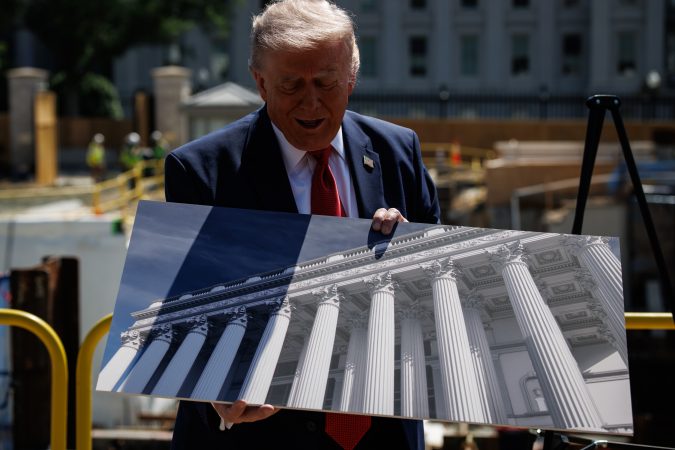
    The Trump administration is seeking to loosen federal rules intended to protect historic sites, alarming outside groups who say the changes would allow government agencies and developers to pursue major projects — such as President Donald Trump’s planned triumphal arch — without soliciting public input.

    The Advisory Council on Historic Preservation, a low-profile federal agency that oversees preservation reviews and advises the president and Congress, on Friday proposed significant revisions to a federally required process that governs changes to landmarks such as the National Mall, sites that are significant to Indigenous tribes, and other properties eligible for listing on the National Register of Historic Places. The process currently applies to any construction projects that are on federal land or receive federal funding, as well as private projects that require any type of federal approval.

    Under the current rules, federal agencies must undertake a multistep Section 106 review assessing the potential effects of construction projects and soliciting public input, among other requirements. The revised rules would let federal agencies build their own projects or grant approval for construction by private developers without public input, according to a proposed rule and an accompanying document obtained by the Washington Post.

    Trump officials have previously said the 60-year-old rules can hamper development projects and needed renovations and had called for the regulations to be overhauled. But the timing of the administration’s announcement and the breadth of the proposed changes caught many historic preservation groups off guard.

    “What is going to happen regularly is communities are not going to know that major projects are happening in their backyard until the bulldozers show up,” said Marion F. Werkheiser, a founding attorney at Cultural Heritage Partners, who has reviewed the proposed changes. Werkheiser’s firm is involved in litigation against the Trump administration over plans to alter the Eisenhower Executive Office Building and the Kennedy Center.

    Sara Bronin, who led the ACHP under the Biden administration, called the proposed rules a “sloppy, ill-conceived draft” and predicted they would be challenged in court.

    Travis Voyles, a Trump appointee who serves as the council’s vice chairman, asked council members to vote on the proposed changes to Section 106 by this coming Friday, according to an email obtained by the Post. If council members support the new regulations, they could advance to the White House for the next step in the formal rulemaking process, Voyles wrote.

    ACHP did not immediately respond to questions about the planned changes and whether the White House had directed them. The White House declined to comment. The Atlantic previously reported the proposed changes.

    Experts said the rules govern changes to 1.4 million properties across the country, ranging from several thousand national landmarks to local historic districts and sites in many communities.

    Several Trump administration projects, such as the president’s planned triumphal arch near Arlington National Cemetery, have been bound up in the ACHP’s historic-preservation reviews. Outside groups have said that the rules are essential to protecting key sites and public spaces and warned that the planned changes would undercut decades of precedent.

    “This is not only a massive assault on laws that have benefited that nation for some 60 years, it almost completely eliminates the role of the public,” Charles A. Birnbaum, the CEO of the Cultural Landscape Foundation, an education and advocacy organization, said in a statement. “The proposal actually eliminates language that says: ‘The views of the public are essential to informed Federal decision making in the section 106 process.’ How un-American is that?”

    The proposal narrows what is considered a “historic property” that can be protected, tightens the scope on what is considered an “undertaking” affecting that property under the law, and makes the process of consulting states and the public optional. What qualifies as a historic property is now limited to places that are “geographically compact” and have been improved by humans at some point.

    “For the avoidance of doubt, noncompact, unimproved natural features such as mountains, valleys, bodies of water, or landscapes, including ethnographic landscapes, do not qualify as property,” according to the proposal.

    Outside groups said they had little chance of stopping this week’s vote. Twenty of the 24 seats on the ACHP are either directly appointed by the president or are reserved for the heads of federal agencies, such as the Interior Department, which are controlled by Trump.

    The Trump administration has separately remade other federal panels, such as the Commission of Fine Arts and the National Capital Planning Commission. Those panels have swiftly advanced some of Trump’s pet projects, such as his planned White House ballroom.

    Several Trump officials at an ACHP meeting last month shared their frustration about the existing Section 106 rules and said they supported reforms.

    Michael Boren, an Agriculture Department official who oversees the Forest Service, said that some efforts to replace unsafe, decades-old infrastructure at ski areas that are on national land had been stymied by the regulations.

    “When they’re over 50 years old, they’re historic structures and when we’re trying to replace them, we sometimes are delayed for years just by the historic piece,” Boren said.

    Werkheiser said the change would exclude landscapes that tribes hold sacred that would have been previously considered under the existing rules, potentially opening them up to development and destruction by industry. That could also remove the law’s protections against projects such as one that would build power lines near Thomas Jefferson’s Monticello estate and spoil the view from the historic site, she said.

    Bronin said that provision would allow the Trump administration to expedite some controversial projects, such as a planned copper mine in Arizona located on a sacred Apache site known as Oak Flat. Democrats and historic preservationists have said that the planned mine will destroy the site.

    “In the urban context, taken to the extreme, this phrase may be used to limit protected properties to just a building or a handful of buildings — making larger historic districts, like the French Quarter in New Orleans or historic Savannah vulnerable to needless destruction,” Bronin wrote in a message.

    The proposal would also give federal agencies a new way to approve projects without reaching agreement with states, tribes, or other parties involved in the review process. Historically, those decisions were memorialized through a “memorandum of agreement” negotiated with state or tribal authorities and other interested parties.

    The new rules would create an alternative called a “memorandum of decision,” allowing an agency to move forward on its own, without consultation with the states or the public. States and tribes would no longer be able to try to block a project or invoke a dispute-resolution process if they object. Agencies would still have to consult affected tribes but would not have to incorporate their feedback.

    Several experts also noted that the current Section 106 rules have required the Trump administration to take public feedback on some of Trump’s projects. Under the new regulations, the federal government could unilaterally decide that public input is not in the general interest, exclude the public from the process, and issue its decision unilaterally.

    “The agency is going to decide if it’s in the public interest to inform the public about what they’re getting ready to do in that public’s local community. And that just seems so Orwellian to me,” Werkheiser said.
  • Trump continues overhaul of White House grounds with new Rose Garden statues

    Trump continues overhaul of White House grounds with new Rose Garden statues

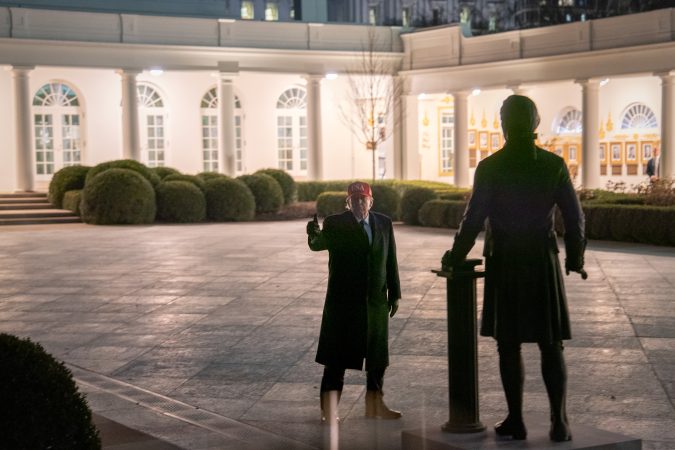
    President Donald Trump installed a statue of Thomas Jefferson in the Rose Garden in mid-July, according to two people who spoke on the condition of anonymity to describe the yet-to-be-announced move — continuing Trump’s effort to remake the White House and Washington.

    The bronze, life-size statue depicts the nation’s third president seated with a draft of the Declaration of Independence. It was sculpted by George Lundeen, who told the Washington Post that he received a congratulatory call from Trump this month.

    “I just wanted to thank you. The sculpture looks really beautiful,” Trump told Lundeen, in audio that Lundeen shared with the Post.

    The piece brings to five the number of sculptures Trump has installed in the Rose Garden, joining George Washington, Benjamin Franklin, and Alexander Hamilton, as well as a sculpture called Freedom’s Charge, which honors Revolutionary War soldiers. The Franklin, Hamilton, and Freedom’s Charge sculptures are on loan from Harlan Crow, a conservative art collector and political donor who had installed them on his Old Parkland corporate campus in Dallas, a spokesperson for Crow confirmed. The White House has not previously disclosed where the statues originated, saying only that they were on loan from “generous private American patriots.”

    The White House declined to comment on Crow’s loan of the statues. A spokesperson wrote in a statement that the president is pushing “to beautify and honor our Nation’s Capital during America’s historic 250 anniversary celebrations.”

    Trump on July 19 posted a flurry of messages related to his Washington renovation projects to Truth Social, including photos of cleaned-up statues outside of the White House and Union Station. He has spent years calling for more statues that recognize prominent Americans, particularly the nation’s Founding Fathers, past U.S. presidents, and other figures that Trump says deserve special recognition.

    “The President enjoys showcasing American Excellence and those Americans who exemplify excellence,” Rodney Mims Cook Jr., a designer and Trump appointee who chairs the Commission of Fine Arts, wrote in a text message.

    “I think he’s spot-on after the billions in Patrimony we destroyed after George Floyd died,” he added, referring to damage done to monuments during protests that followed Floyd’s killing in 2020. Trump responded by issuing executive orders calling for existing statues to be protected, the damaged statues to be restored, and new ones to be constructed. He also required that federally commissioned statues of historic figures be lifelike or realistic — and specifically barred abstract or modernist representations.

    “These statues are silent teachers in solid form of stone and metal,” Trump wrote in one of his 2020 orders. “They preserve the memory of our American story and stir in us a spirit of responsibility for the chapters yet unwritten.”

    Some art critics argue that Trump’s emphasis on memorializing specific people, rather than commissioning abstract works that evoke broader themes and feelings, is a lost opportunity.

    “All told, the statues dating to his second term are of negligible artistic value,” Maxwell Anderson, the former president of the Association of Art Museum Directors, wrote in an email. Anderson also drew comparisons between Trump’s preferences and what he said were similar practices by dictators who led North Korea and the Soviet Union.

    “President Trump’s embrace of an official classicizing style in art and architecture finds its closest equivalent in authoritarian regimes,” Anderson wrote.

    The sculptures have given Trump an unusually direct way to reshape the White House grounds and the broader capital city — albeit with moves that can be more easily reversed than his construction projects, such as his White House ballroom addition. Trump has planned an expansive sculpture garden in West Potomac Park, where he hopes to feature 250 “American heroes,” ranging from athletes such as Muhammad Ali and Kobe Bryant to Canadian TV host Alex Trebek. The president is also overseeing the cleaning and renovation of existing statues in parks across Washington, and he has celebrated the regilding of several statues near the Lincoln Memorial.

    He has also sought to restore some controversial statues to even greater prominence.

    Trump has overseen a new statuary exhibition in downtown Washington featuring a statue of Caesar Rodney, a signer of the Declaration of Independence, that was removed from public view in Delaware during protests in 2020 after criticism of Rodney’s role as an enslaver.

    Trump in March also installed the recreation of a Christopher Columbus statue that was torn down in Baltimore in 2020 on the White House grounds.

    The president has long said he was troubled by efforts to tear down and remove statues honoring Rodney, Columbus, and other historical figures, repeatedly broaching the topic in public remarks during his first term.

    “I like the idea of building new statues to people, to great people, people that have done something. And I think that’s OK,” Trump said in June 2020. “But you don’t want to take away our heritage, and our history and the beauty.”

    Two people who spoke on the condition of anonymity to discuss private conversations said Trump — who has faced his own share of protests — has in the past privately said he identified with figures such as Columbus, who was hailed for centuries as a great explorer before his role in colonization and enslavement made him controversial.

    Several satiric statues have appeared around Washington mocking Trump before being swiftly removed.

    Lundeen, who sculpted the Jefferson statue and whose work is displayed in museums, on campuses, and in capitals throughout the country, has also sculpted Trump himself. Last year, he met the president when installing a 7-foot bronze behemoth at his golf club in West Palm Beach. In the sculpture, Trump holds a MAGA hat in one hand. His other is raised in a fist, inspired by his “fight, fight, fight” stance following the assassination attempt in Butler, Pa.

    In the run-up to the country’s 250th anniversary, Lundeen said his friend Steven Barber, a filmmaker, facilitated communication with the administration in the hopes of getting one of his Jefferson statues to the White House.

    Lundeen, who has worked with his brother Mark to sculpt prominent statues, such as three Apollo 11 crew members for the Kennedy Space Center to celebrate the 50th anniversary of the first human moon landing, said he was delighted to receive the thank-you voicemail from Trump, which the president left on July 4.

    “When you’re a farm boy from the middle of Nebraska, it’s kind of neat to get a call from the president,” said Lundeen, 77. “You get a call like that, and you don’t know if it is one of your buddies playing a trick on you. If it’s a hoax, it’s a really good one.”

    The White House did not immediately respond to questions about Trump’s call to Lundeen. The New York Post first reported plans to install the Jefferson statue in the Rose Garden.

    The arrival of Lundeen’s Jefferson statue follows Trump’s decision to take a George Washington statue that was displayed at the Washington Monument and place it in the Rose Garden last year. The Hamilton and Franklin statues subsequently arrived in the Rose Garden in March, on loan from Crow.

    “Unbelievable statues,” Trump told reporters that month as he walked through the Rose Garden. He has also shown off the Rose Garden statues to foreign dignitaries and U.S. lawmakers.

    Freedom’s Charge — a sculpture by Chas Fagan, whom Trump appointed to the Commission of Fine Arts during his first term, and is on loan from Crow — also now sits in the Rose Garden. The sculpture features two life-size figures of American soldiers who fought during the Revolutionary War.

    Crow, a billionaire real estate mogul who has donated to a wide array of Republican politicians and been linked to conservative figures such as Supreme Court Justice Clarence Thomas, had previously distanced himself from Trump. In a lengthy piece in the Atlantic in 2023, Crow said he had self-diagnosed with “Trump Derangement Syndrome,” and he supported Trump’s rival Nikki Haley in the 2024 presidential campaign.

    Crow’s collection of outdoor sculptures in Dallas — which included a portion he once dubbed “The Garden of Evil” — drew national attention in 2023 for Crow’s selection of deposed dictators and other tyrants.

  • His doctor’s prescription for his unbearable pain seemed absurd. It worked.

    His doctor’s prescription for his unbearable pain seemed absurd. It worked.

    The burning sensation started near the top of Gregory Maassen’s left arm. It quickly spread to his upper back and chest, and within a month, his whole body was burning — from his ears to his feet.

    Maassen, 51 at the time, spent most days in bed but struggled to sleep. He visited doctors who administered tests, including blood draws and an endoscopy, but none could pinpoint his medical condition. One doctor, Maassen said, thought the pain was due to mental illness.

    He got sicker and sicker over a few months. He feared he was going to die.

    More than a year after his symptoms began, Maassen was losing hope of ever identifying his medical condition when he found Ahmet Hoke, a neurologist in Baltimore.

    After a quick look at Maassen’s symptoms, Hoke correctly diagnosed him. The recovery plan Hoke gave Maassen in the following months changed Maassen’s life and unexpectedly led him to a therapy that became his passion: cycling.

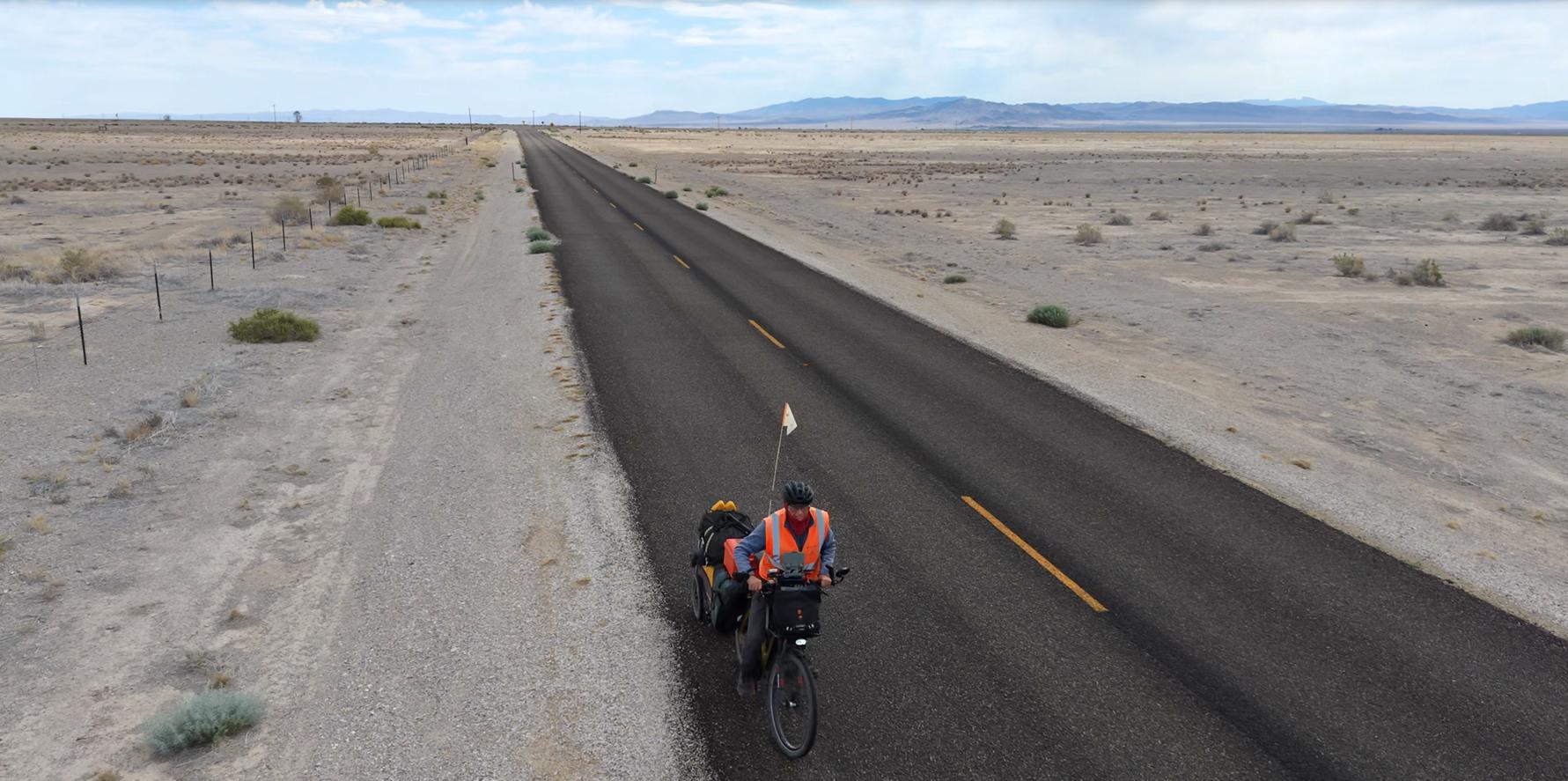
    Gregory Maassen biking near Duchesne, Utah, in June.

    After considering Maassen’s sudden and severe symptoms, Hoke diagnosed Maassen with small-fiber sensory neuropathy, a rare type of peripheral neuropathy that damages small nerve fibers. Since nerve conduction tests examine large nerve fibers, Hoke said, Maassen’s condition can sometimes go undiagnosed. While the likelihood of neuropathy increases with age, Hoke said about 0.1 percent of neuropathy cases match Maassen’s.

    A skin biopsy in April 2019 confirmed Maassen’s condition. Many factors can contribute to neuropathy, including diabetes, chemotherapy, and autoimmune disorders, but Maassen said he believes he developed it from tick bites.

    Hoke, who works for Johns Hopkins Medicine, prescribed Maassen medicine to manage his pain, including a gabapentinoid to treat nerve pain and an antidepressant that can also help with nerve pain. Maassen was relieved, but he was skeptical of Hoke’s other treatment plan: exercise.

    Gregory Maassen rode into Texas in April.

    “Are you out of your mind?” Maassen recalled thinking. He was so tired and sore that moving through daily life was difficult. He could hardly imagine exercising.

    Exercise can regenerate nerve fibers and improve chronic pain for some neuropathy patients, Hoke said. Maassen, who left his contractor job with the U.S. Agency for International Development because of his illness, said he had no other hope.

    He tried swimming and hiking but said the workouts were too demanding. He joined a biking group near his home in Northwest Washington that mostly consisted of 60- and 70-year-olds, thinking their pace would be moderate. But Maassen couldn’t keep up.

    Gregory Maassen biked along the Mississippi River on his way to Los Angeles.

    Some of the bikers were riding electric bicycles, which Maassen had not seen before. E-bikes come with a battery and a motor that can make cycling less taxing and reduce resistance on hills, but bikers still get exercise by pedaling, balancing, and steering. Maassen thought he found the perfect solution.

    Still, after buying an e-bike in September 2019, Maassen felt exhausted on his first few rides around his neighborhood in North Cleveland Park and to-and-from local parks. But he said exercising improved his mood, so he kept returning to his e-bike. After a few weeks, his pain began to subside. His body felt better the more he rode.

    “I never had a day that I said, ‘Oh no, I have to do it again,’” Maassen said.

    Gregory Maassen biked in South Florida in March.

    Maassen started an e-bike group in the D.C. area in December 2019 called E-bike Lovers.

    He had cycled thousands of miles and stopped taking his pain medication by the time he had a more ambitious idea in 2021: He would e-bike from D.C. to San Francisco over four months in 2022 by riding along the Lincoln Highway. Meanwhile, he would fundraise money for neuropathy research.

    Even Hoke, who typically advises his neuropathy patients to walk, lift light weights or do Pilates, told the Post that he thought Maassen was “nuts.”

    Gregory Maassen biking in Baker, Nevada, in June.

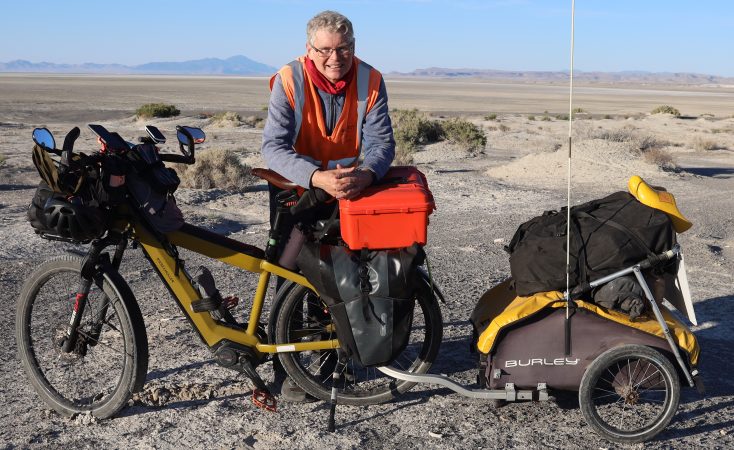
    Maassen rode his e-bike with a nearly 80-pound trailer attached that included a tent, clothes for camping, an orange safety vest, a drone, a camera, an electric toothbrush, and jars of creamy peanut butter. He biked through snow, pouring rain, and heavy winds. He passed deserts, cornfields, and mountains. Each day, he tracked down outlets to charge his bike.

    After traversing about 4,685 miles — about 65 miles per day — he had raised more than $179,000 from people he met along his route, other neuropathy patients, neurologists, family members, and friends, he said.

    This year in March, Maassen started another cross-country bike ride traversing about 7,250 miles. He departed from West Palm Beach, Fla., and was expected to finish in Los Angeles on Tuesday morning. He has raised more than $31,500 for Johns Hopkins Medicine’s neuropathy center.

    Gregory Maassen biked in Nevada in June.

    “I haven’t had a day in 2022, and also this year, that I say, ‘Well, do I really need to do this?’” Maassen said.

    With the money Maassen is raising, Hoke said he’s working to develop medicine that will hopefully regenerate nerves as effectively as exercise for neuropathy patients.

    Maassen, 59, said this will be his last cross-country bike trip, but he’ll find other ways to support neuropathy research. He promised his wife, Janet, that he would spend more time with her and their cat, Queenie.

    “That doesn’t mean that I will stop cycling,” Maassen said.

    Gregory Maassen biking in Texas in April.
  • 5 mosquito-fighting methods that work and 4 that don’t

    Layering on the bug spray might be the first thing that comes to mind when you think about avoiding itchy mosquito bites and the diseases that can come with them. But that’s far from the only tactic that mosquito experts use to minimize bites.

    For starters, Eva Buckner, an assistant professor and state extension specialist at the UF/IFAS Florida Medical Entomology Laboratory, recommends taking a step back and considering the source of the bugs, especially if you live in a home with a yard, deck, or other outdoor areas. Your No. 1 move, she said, is to clear the pockets of water that might be luring the bugs to your space in the first place.

    From there, she recommends a variety of products to repel the biting adults — some of which you might already have at home.

    Remove standing water and set traps

    “Mosquito eggs require water to hatch, and the larval stage is aquatic,” Buckner said. Walking around your home once a week and dumping even the smallest amounts of standing water — for example, in plant pot saucers, dog pools, tarps, or garbage can lids with indentations — can eliminate mosquito larvae and cut down on the habitat necessary for adult mosquitoes to breed, she said. A chat with your neighbors to make sure they’re doing the same can also go a long way toward reducing the number of biting adults that end up in your vicinity.

    If there’s a source of standing water near your home that you can’t or don’t want to remove, such as a bird fountain or pond, Buckner suggests tossing in mosquito bits (granules) or mosquito dunks (doughnut-shaped disks) once a month. These contain Bacillus thuringiensis israelensis, or Bti, a bacteria that can kill developing mosquito larvae without harming other wildlife.

    You can also make a DIY mosquito trap by filling a dark bucket with water and some leaves, and popping in a mosquito dunk. Female mosquitoes will be drawn to the bucket to lay their eggs, but the Bti will ensure they never hatch.

    Use EPA-registered repellent sprays, wipes, gels, and lotions

    The same active ingredients that repel mosquitoes in EPA-registered bug sprays can be found in other topical formats such as lotions, gels, and wipes — and to similar effect, said Buckner.

    “I like using products that contain DEET, which I know may not be everyone’s favorite ingredient because it can be a little oily-feeling and may damage plastics,” Buckner said, such as eyeglass frames, watch faces, and synthetic clothing, but “it is the absolute gold standard for preventing mosquito and tick bites.”

    If you’re looking for another option, she recommends products containing the following EPA-approved ingredients for this purpose: picaridin, a synthetic chemical mimicking compounds in black pepper plants; oil of lemon eucalyptus (OLE); para-menthane-diol, the active compound in OLE that can be synthesized in a lab; or IR3535, a synthetic compound similar to a natural amino acid.

    Among the above choices, the best format is just a matter of personal preference, Buckner said.

    Try permethrin-treated clothing

    Loose-fitting long-sleeve shirts and pants are a great defense against mosquitoes because “they create an effective barrier between you and the mosquito proboscis,” or its tubelike mouthpart, Buckner said. If you’re wearing tighter-fitted clothing, it may pierce right through it.

    To make it less likely that a mosquito approaches you in the first place, you could also wear clothing that’s been treated with permethrin, a synthetic insecticide that mimics a repelling compound naturally found in chrysanthemums, Buckner said. (It can also ward off ticks.)

    You can buy clothing that’s been pretreated with permethrin, or if you want to save some money, you could buy a 0.5% permethrin spray and spritz down a couple articles you own.

    Buckner emphasized following the package instructions when using any at-home permethrin product. It’s important to wait until treated clothing is dry before wearing it and to avoid using permethrin directly on your skin as it can be severely irritating.

    Permethrin is generally safe for dogs but can be highly toxic for cats. However, once a spray has dried onto clothes, it should be fine. Just make sure to use caution.

    Buy spatial and clip-on emanators

    These devices create a bubble of protection by slowly releasing an invisible, odorless vapor containing a mosquito-deterring ingredient. The key is to look for ones that have the chemical actives metofluthrin, transfluthrin or d-allethrin, Buckner said. Thermacell and Off! make several versions, including tabletop and patio lanterns — which can create a protective cloud spanning the surrounding 15- to 20-foot space — as well as smaller battery-powered devices and clip-ons you can take or wear on the go.

    Spatial emanators, also called spatial repellents, are most effective in still, non-windy conditions, Buckner noted, when the chemical cloud is less likely to be dispersed or blown away. Unless you’re holding or wearing a clip-on emanator, it’s also best to stay close to the emanating device, she added. The farther away you move, the less coverage you’ll receive.

    Set up a box or oscillating fan

    If you’ll be staying in one place for a while, for instance having dinner in your backyard or hanging out on the porch, it’s worth setting a big box or oscillating fan nearby, whether on a table or the ground.

    “Mosquitoes aren’t super strong fliers,” Buckner said.

    The breeze created by a fan set on high speed can make it tricky for mosquitoes to fly near you and land, or may even physically push them away from you, she explained. (If you’re already using a spatial emanator, however, it’s best not to involve a fan, too, as the extra airflow could blow away the protective scent cloud.)

    Repellent products to skip

    Combining any number of the above repellents will give you a supercharged dose of protection.

    What won’t help, however, is opting for the below products and tactics, which Buckner said aren’t proven, effective mosquito solutions:

    • Candles, wristbands, clip-ons, and topical repellents using botanical oils like citronella, geranium and peppermint. While these plant oils do have repellent properties, they evaporate rapidly, making them poor substitutes for EPA-registered repellents. (Different from these raw oils, the EPA-registered oil of lemon eucalyptus is an extract that’s been chemically refined to increase the concentration of the bug-repelling compound within it.)
    • Bug zappers, which use light to attract bugs and then electrocute them. “They might kill some mosquitoes, but they’re also going to kill any other insect or arthropod that is attracted to light,” Buckner said, “so they can have a lot of non-target effects.”
    • Mosquito-repelling plants. “For essential oils to have repellent properties, they have to be extracted from the plant and then concentrated by up to 10 or 20 percent,” Buckner said. So a plant that’s still in the ground won’t reliably ward off bugs.
    • A bat box. “Bats want to eat something that offers a high caloric intake, so they’re more likely to go for a big, juicy moth vs. a scrawny mosquito,” Buckner says. “I love bats and want to support their conservation — but they’re just not going to be your solution for mosquito control.”
  • Paramount Skydance’s $110B merger with Warner Bros. Discovery paused by judge

    Paramount Skydance’s $110B merger with Warner Bros. Discovery paused by judge

    A federal judge on Monday paused Paramount Skydance’s $110 billion merger with Warner Bros. Discovery — a deal that has promised to reshape Hollywood and the TV news industry — in response to an antitrust lawsuit brought by 12 Democratic state attorneys general last week.

    U.S. District Judge Araceli Martínez-Olguín granted the states’ request for a temporary restraining order, finding that they raised serious questions about the anticompetitive nature of the deal.

    If the merger closes, it would combine the Paramount and Warner Bros. studios, the TV giants CNN and CBS, and streaming services HBO Max and Paramount+.

    In a statement after the ruling, California Attorney General Rob Bonta called the decision a “critical first win in our case to ensure this megamerger never sees the light of day.” California is the lead plaintiff in the case.

    “History tells the tale of what happens when a few people have great power over markets that are central to Americans’ lives: fewer opportunities for more people, worse products and services for all people,” he said.

    Paramount Skydance said in a statement that it is “confident the evidence will demonstrate that the State AGs’ antitrust arguments are without merit as their alleged markets and claims of anticompetitive effects are without any basis in modern market realities.”

    “This merger is lawful, pro-competitive, and will benefit consumers, creators, workers, and the entertainment industry,” the statement added. “We will continue to vigorously defend the transaction and will look forward to the hearings on the substance of the State AGs’ action.”

    The emergency ruling, pausing the merger for 14 days, comes after a Friday hearing in which California’s attorneys presented their case for the first time. The judge asked the parties to reconvene in court on Aug. 3, when she will consider motions for a longer-lasting preliminary injunction.

    The states aren’t the only parties trying to get courts to stop the deal.

    A group of consumers has sued in federal district court in Northern California, as has the Writers Guild of America, the union representing Hollywood screenwriters and many journalists.

    A shareholder lawsuit was separately filed in Delaware’s state chancery court.

    British regulators, too, are considering efforts to intervene, although it’s unclear whether they could fully block the deal.

    The deal would put David Ellison — son of billionaire Oracle founder Larry Ellison, an ally of President Donald Trump — in charge of one of the most powerful companies in American media.

  • Sen. Darline Graham will seek full term to her late brother’s seat

    Sen. Darline Graham will seek full term to her late brother’s seat

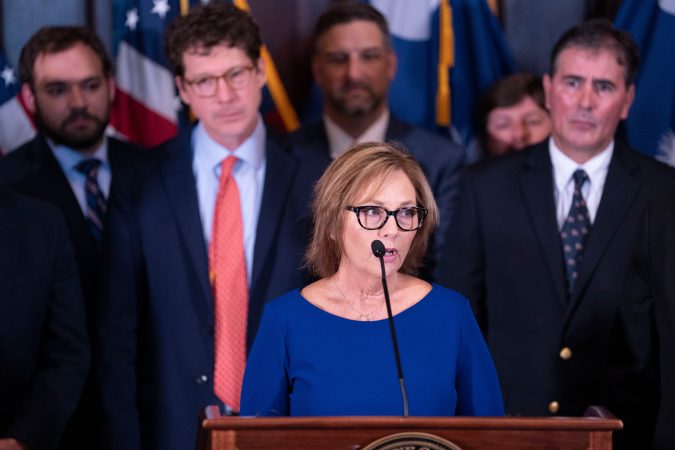
    COLUMBIA, S.C. — Sen. Darline Graham said Monday she’s running for a full term filling her late brother Lindsey Graham’s Senate seat.

    “I’ve made a decision,” Darline Graham told Fox News Channel host Sean Hannity, according to a clip released of an interview set to air later Monday. “I’m in.”

    The entrance of Darline Graham — sworn in last week to fulfill the remaining months of her late brother’s term, which expires in January — into the Republican scramble to select a new Senate nominee further complicates an already rushed process following Lindsey Graham ‘s death earlier this month.

    A weeklong filing period opens Tuesday for the special Republican primary, which will be Aug. 11. On Friday, President Donald Trump said that Darline Graham had his “Complete and Total Endorsement” to seek the nomination, adding, “RUN, DARLINE, RUN!”

    Last week, Gov. Henry McMaster appointed Darline Graham to serve the remainder of her brother’s term, which ends in January. In his announcement, McMaster made no reference to Darline Graham as a placeholder or symbolic appointment, although a person familiar with McMaster’s thinking but unauthorized to speak publicly said the governor, in selecting Darline Graham, had never contemplated that she would run for the seat herself.

    Before the emergence of Darline Graham — and their Oval Office meeting after she was sworn in — Trump had previously suggested he could back a potential candidacy from Rep. Russell Fry, who said Monday he would officially enter the special primary.

    Several other noteworthy politicians, including Rep. Ralph Norman, have already gotten in, and others like Lt. Gov. Pamela Evette have been eyeing a run. Rep. Nancy Mace announced Monday she would not enter the contest.

    Darline Graham told Hannity said she had been “praying a lot” about how to navigate her new role.

    “It is a tremendous amount of pressure,” she said.

    “I know I’m a hard worker. I learned that from Lindsey,” Darline Graham said. “I feel like I can do it. I feel an inner peace about it. Will it be difficult? Yes.”

    Funeral services for Lindsey Graham are scheduled to be held next week in Washington and South Carolina. A preliminary report from the medical examiner said he suffered a tear in his aorta.

    The millions in Lindsey Graham’s campaign account aren’t funds that Darline Graham could directly access in a run of her own, according to Bradley A. Smith, a former chairperson of the Federal Election Commission.

    Under federal rules, Lindsey Graham’s campaign would be limited to transferring just $2,000 to a potential Darline Graham candidacy. However, Smith said, there is no limit on how much it could transfer to the National Republican Senatorial Committee, which could — thanks to a Supreme Court decision last month — “spend an unlimited amount in coordination with Darline’s campaign.”

  • Republicans don’t want to go there again on Trump’s 2020 election fraud claims

    Republicans don’t want to go there again on Trump’s 2020 election fraud claims

    For weeks, President Donald Trump had privately floated the idea of delivering a televised address to detail claims of foreign interference and purported election fraud — “shocking” new discoveries, he’d go on to say, that had been covered up by the so-called “Deep State” and should be a central focus of elected officials.

    Advisers initially steered him away from the idea for a primetime address, but it was quickly resurrected. Dozens of cabinet members and close aides gathered to watch his speech in the East Room on Thursday, dutifully standing and applauding when he finished. The next morning, Trump bragged about the “great reviews” and “big audience” for the address.

    But outside of the president’s list of frequently dialed contacts and the clips assembled of White House-aligned influencers praising his speech, the primetime address failed to galvanize conservatives, with some publicly questioning his focus on 2020 as the midterms approach. Republicans fighting to maintain congressional control this fall largely sidestepped the message.

    By the weekend, the White House-aligned commentators and members of Congress who had pushed the Trump team’s talking points about the speech had seemingly moved on. The muted response underscored a broader political reality: Many Republicans facing voters this fall have shown little interest in making Trump’s renewed focus on the 2020 election central to their campaigns as they head into a midterm complicated by the president’s weak standing with independent voters.

    As Trump’s favorite cable network Fox News largely ignored the address Friday morning, former Republican National Committee chair Michael Whatley, the Trump-endorsed GOP nominee for Senate in battleground North Carolina, held a 34-minute campaign event largely focused on public safety.

    ‘We’re going to talk about the economy and what I’m going to do to make sure everybody makes more and keeps more. We’re going to talk about our military and our national security,” Whatley said. “But the number one issue that we want to talk about in this election cycle, that we need to talk about in this election cycle, is keeping our kids and our communities safe.”

    Asked by a reporter afterward about Trump’s latest messaging, Whatley, who has previously boosted some of Trump’s 2020 election fraud claims, said he is a “big proponent of election integrity,” and of the signature election legislation Trump has pressed Congress to pass.

    Whatley predicted that his race will be “decided within a percentage point,” though he has consistently trailed former Democratic Gov. Roy Cooper in polling by much more than that. He is fighting to succeed retiring Sen. Thom Tillis, a moderate Republican who has had a turbulent relationship with Trump and regularly asserts his independence from the president.

    The “clear and simple” explanation for why most Republican candidates aren’t clamoring to talk about the 2020 election is that voters are focused elsewhere, said Paul Shumaker, a veteran Republican strategist and longtime political adviser to Tillis, who declined to comment directly on Trump’s speech.

    “If candidates are not talking about the economy, if candidates are not talking about affordability, if they’re not talking about how they’re going to make people’s lives at home cheaper and less expensive, then they’re not talking about the issues that voters care about,” he said.

    Democrats seized on the address, which Trump promoted as revealing “really big news,” to accuse the president of laying the groundwork to challenge election results if Republicans lose this fall. Some of Trump’s own hard-right allies, meanwhile, complained the speech amounted to little more than rhetoric, lacking a concrete plan to hold anyone accountable for the purported fraud.

    Trump had initially wanted to give the televised address a few weeks earlier, in late June, according to two people with knowledge of White House deliberations about the speech, but advisers managed to put it off. As an alternative idea — and to avoid a primetime address — the president’s team also mulled the idea of presenting the declassified information to reporters during a White House briefing to be held soon after press secretary Karoline Leavitt returned to work late last month.

    Ultimately, Trump got his way.

    Briefings with Trump on the new material continued into last week. Administration officials, in consultation with some outside Trump allies, reexamined old FBI files and other records dating back to the first Trump administration. But the documents later posted to the White House website largely reflected information that was publicly known and still did not prove foreign countries had hijacked votes or that election officials in the United States conspired to rig the 2020 election against Trump.

    Matthew Bartlett, who served as a State Department appointee in Trump’s first term and is now a Republican public affairs strategist, described Trump’s Thursday speech as “mess,” and said the lack of new evidence undercut Trump’s broader effort to pressure Republicans into passing the Save America Act, “which he has oddly weaponized against his own party.” He said many Republicans seem to be thankful Trump’s message didn’t successfully break through.

    The pervasive sentiment afterward, Bartlett said, seems to be, “If the president makes outrageous claims about an election and no one is listening, did it even happen?”

    Two Republicans opposed to Trump’s Save America Act, Tillis and Sen. Lisa Murkowski (R., Alaska), indicated in interviews afterward that Trump’s speech did not change their position. Senate Republican leadership has long maintained the legislation does not have the votes to pass, but Trump has continued to lambast senators for not doing so.

    Sen. John Cornyn (R., Texas), a co-sponsor of the Save America Act who is retiring after losing his primary election this spring to a Trump-backed challenger, was similarly dismissive. “There wasn’t a whole lot new” in Trump’s speech, he said Friday at the Aspen Security Forum. Foreign adversaries have long tried to “sow discord” and influence American elections, Cornyn said, “but the bottom line is none of this would have changed the outcome.”

    “We have 109 days until the midterm elections, and I don’t understand talking about what happened six years ago in light of these upcoming elections,” Cornyn said.

    The speech also fell short with Trump’s hard-right supporters who wanted a more aggressive response.

    Former Trump adviser Stephen K. Bannon, who hosts the popular MAGA War Room show, said the president’s focus on passing his election bill is no longer enough, arguing the legislation could not take effect before the midterms even if Congress passed it immediately. He said arrests should be made in connection with the “cover-up” of alleged election fraud in 2020, and that Trump should issue a “national security emergency executive order.”

    “It’s too late for the Save America Act,” Bannon said Friday. After Homeland Security Secretary Markwayne Mullin gave a news conference Friday following up on Trump’s claims from his speech about large numbers of illegal immigrants on voter rolls, Bannon told his listeners that he was “decidedly unimpressed” and didn’t hear “any sense of urgency or any real action plan.”

    Prominent right-wing ally Laura Loomer questioned on social media as Trump spoke whether any of the information he was sharing was new.

    The White House did not respond to a request for comment.

    Americans continue to give Trump largely negative reviews on his job performance, as they have for months, according to a recent Washington Post-Ipsos poll. Trump’s renewed focus on his 2020 election loss comes as polls continue to register voters’ frustration with his handling of the economy and the Iran war.

    And while Republicans are not losing by a wide margin on a hypothetical midterm ballot, despite Trump’s deep unpopularity, Republican voters currently aren’t as energized to turn up at the polls, the survey found.

    Democrats are 10 points more likely to be certain to vote this year than Republicans, compared with their two-point edge in 2018.

  • Trump says Qatari-gifted AF1 to be ‘maxed out’ following questions of security

    Trump says Qatari-gifted AF1 to be ‘maxed out’ following questions of security

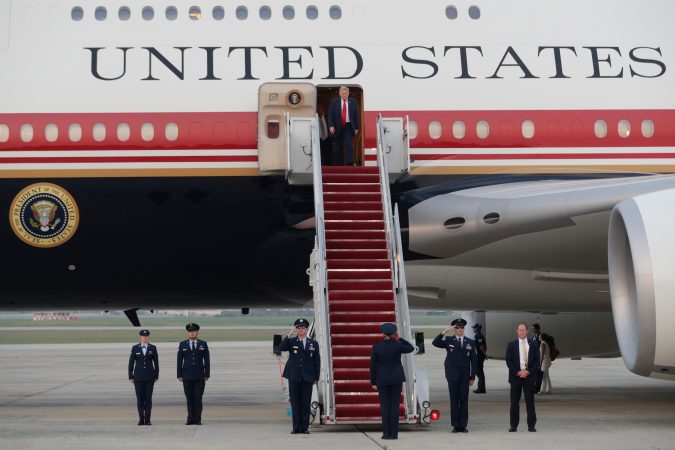
    President Donald Trump said Sunday that the new Qatari-gifted Air Force One will be sent to be “maxed out,” amid questions about the jet’s security technology. Trump will stop flying on the jet and return to an older plane while those upgrades take place over about one month, the White House said Monday.

    “It has a lot of capability, but as I understand it, in about a month or so, they’re going to send it to have it be maxed out,” he said speaking in front of the aircraft at Joint Base Andrews in Maryland. It is unclear what exact upgrades Trump was referring to.

    “The new Air Force One is perfectly safe for the President’s travels, but will receive additional upgrades and enhancements in the fall which will take approximately one month to complete,” Karoline Leavitt said in a statement on Monday.

    “During that time, the President will fly on the old Air Force One,” she said.

    The new plane is a Boeing 747-800 worth $400 million and was donated by Qatar in an unusual deal between the U.S. and Qatari governments, which raised ethical, legal, and national security concerns at the time it was donated and accepted by the Pentagon last summer. The Air Force said in May that the aircraft — now with a dark blue, red, and gold paint scheme — had undergone modification and flight testing.

    After the accelerated modification process, Trump began flying on the new jet this month.

    The Air Force previously told the Washington Post that it “coordinated closely with appropriate government entities to ensure all functional mission requirements were strictly met for transporting the President.”

    The FBI opened an investigation of the New York Times, issuing subpoenas to several reporters, after the outlet published reporting citing sources who said the aircraft lacked some of the defensive countermeasures previous planes had, including advanced antimissile capabilities. The Times reported that a senior FBI official contacted Times journalists before the article was published to caution against doing so, citing national security concerns. The official also asked for the journalists’ sources, which they refused to provide.

    Trump arrived at the NATO summit in Turkey earlier this month on the gifted jet but, in a surprise switch, did not use that plane when he left.

    Trump denied then that security concerns prompted the change but suggested that Iran could have tried to attack the plane. Reporters flying with the president were asked to close their window blinds as they departed Ankara.

    “They asked you to close your windows; they probably feel that way [about possible threats]. They didn’t ask me to close mine, but if they did, I would’ve done it,” Trump said.

    The Qatari jet is meant to serve as a bridge between the older, roughly 35-year-old Air Force One planes and two new Boeing 747s that the company is retrofitting for $3.9 billion. Features will include antimissile defense systems, electronic anti-hacking protection, and advanced communications systems to use with the Pentagon.

    Nearly a decade of delays have meant that the new planes may not be ready by the time Trump’s second term ends. And costs have increased to an estimated $5.6 billion, an overrun for which Boeing is on the hook, according to the Government Accountability Office.

    The inside of the gifted jet has largely been kept the same as the design meant for the Qatari royal family, with cream-and-tan leather seating on the decks, photos showed. The Qatari plane is expected to be gifted to Trump’s presidential library at the end of his term.

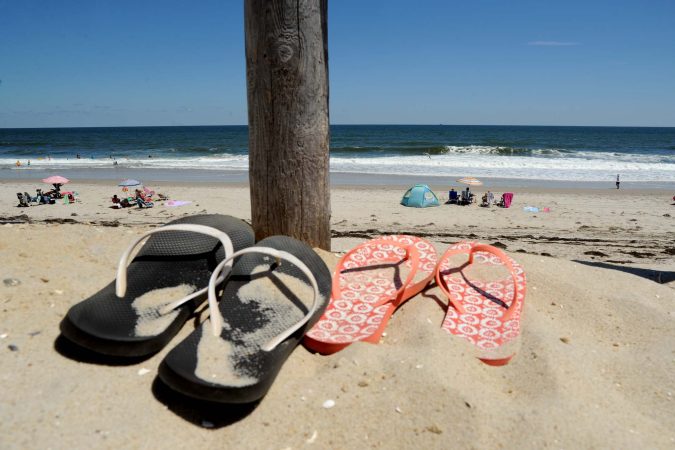
  • I’m a podiatrist. Here’s what I really think about flip-flops | Expert Opinion

    I’m a podiatrist. Here’s what I really think about flip-flops | Expert Opinion

    Q. How bad are flip-flops, really? Am I inflicting lasting damage on my feet every time I wear them?

    A. Flip-flops must be the most vilified form of footwear. Each summer, the media are filled with stories about how bad they are for your feet. According to some experts, wearing flip-flops will cause acute injuries, such as sprains, or contribute to more insidious injuries, such as plantar fasciitis. Some even claim they can contribute to hammertoes and bunions.

    While it is reasonable to be cautious about flip-flop use for those who may be vulnerable to lower-extremity conditions, are they really that bad for everyone? And should you never slip on a pair if you care about your foot health? The answer I give my patients might surprise you.

    As a podiatrist in Minnesota, my clinic is slowest in late winter and becomes busier as we transition to spring and summer. Coincidently, some people also start to wear flip-flops around this time. It would be easy to assume a cause-and-effect relationship for the flip-flop wearers and their foot pain, but that is an incomplete picture.

    A winter spent in more structured shoes combined with the tendency to be more sedentary can essentially decondition your feet, so when you start to become more active and wear less supportive shoes, your feet might hurt as they adjust to the greater demands you’re putting on them. This reduced capacity is often high on the list of potential causes of foot pain whether wearing flip-flops or not.

    It is true that the risk of falling is higher in flip-flops, but this risk applies to all shoes that do not secure well to the foot such as high heels, mules, clogs, or even poorly fitting shoes.

    Additionally, there is no evidence in the research that flip-flops increase the risk of heel pain or toe alignment changes in people with healthy feet any more than other types of footwear. Heel pain, hammertoes, and bunions are common in the general population, even in those who have never worn flip-flops. Many factors contribute to these foot concerns including genetics, lifestyle, and biomechanical imbalances.

    As a general rule of thumb, I caution anyone with poor balance, osteoarthritis, rheumatoid arthritis, a history of lower-extremity surgery, diabetes, lower-extremity swelling, peripheral neuropathy, peripheral vascular disease, neurodegenerative conditions, or gait abnormalities to avoid not just flip-flops but any footwear that does not strap securely to the foot including at the heel. People with these conditions are more likely to fall or worsen existing issues when wearing unsupportive footwear.

    Even if you don’t have any of the health concerns listed above, remember that flip-flops are really made for walking on flat, dry surfaces only. That’s because you are more likely to fall if you are on a wet surface and subsequently injure yourself if your footwear is not secured to your feet.

    If you’re wondering what footwear is best for avoiding foot conditions, the answer is that there’s no one single type. Each of the shoes that we own uniquely alters how our feet function and affects how we move. Therefore, it’s best to have multiple types of comfortable footwear options with varying degrees of cushioning, support, and fit characteristics to allow your feet to maintain their strength, mobility, and adaptability.

    Flip-flops place more demand on the muscles and joints of the feet than conventional shoes, and that can be a good thing. Having a capacity to wear footwear with little to no support is an important part of long-term foot health. If you don’t have any of the health issues that I previously mentioned, this capacity can be built by transitioning to flip-flops gradually at the beginning of the season, wearing them for short periods of time in the beginning to give your feet a chance to adjust. Doing targeted foot-strengthening exercises as part of a fitness routine can also help.

    An often-overlooked benefit of flip-flops (and more broadly, sandals) is that they let our feet spread out more than shoes typically do. This is one of the reasons people find flip-flops comfortable. It is very common for people to develop foot pain due to poorly fitting shoes. In fact, a 2018 study showed that up to 72% of people wore shoes that did not fit properly and there was also an association with improper shoe fit and foot pain.

    All shoes affect our lower extremities in ways that can be potentially beneficial or detrimental. Telling healthy people to avoid certain types of footwear is like telling people to avoid the sun. Sure, too much exposure to either can be bad, but some exposure is beneficial and even necessary for our overall health. Having a variety of comfortable footwear options is a good strategy to maintain foot health — and for many people, that strategy can include flip-flops.

    Paul Langer is a sports medicine podiatrist practicing with Twin Cities Orthopedics in Minnesota and an adjunct clinical faculty at the University of Minnesota Medical School. He is also the author of “Great Feet for Life.”

  • State Dept. again deems Cuba a threat amid talk of U.S. push for regime change

    State Dept. again deems Cuba a threat amid talk of U.S. push for regime change

    The Trump administration issued a report on Monday alleging that a multi-decade Cuban influence campaign in the United States has had “remarkable success” in infiltrating “the highest reaches of the U.S. government,” backing “left-wing terrorism on American soil” and turning “America against itself.”

    The 100-page report, released by the State Department and titled “Cuba: The Capital of 21st Century Communism,” summarizes decades of Cold War-era subversion plots by the impoverished Caribbean island that coincided with years of unsuccessful covert U.S. efforts to decapitate its communist government.

    The report also makes pointed claims against left-wing American groups, listing the Democratic Socialists of America, a rising activist organization that backs a number of Democratic lawmakers, under a section about “front groups and fellow travelers.” It suggests that Cuba has influenced recent political upheavals in the U.S., including “the George Floyd riots and the rise of antifa,” referencing the protests that began after Floyd’s killing and a loosely knit movement of far-left activists who militantly oppose fascism.

    The threat posed by Cuba is described in far more dire terms than those employed by U.S. intelligence officials and State Department diplomats over several decades, reviving speculation that the Trump administration is establishing a pretext for overthrowing the communist government in Havana, a longtime goal of Secretary of State Marco Rubio.

    “From its earliest years in power, the Cuban regime has believed that its own survival and strategic interests were inextricably linked to the advance of the revolutionary left inside the United States,” the report says. “The Cubans trained and armed tens of thousands of left-wing guerrillas, oversaw violent insurgencies that plunged multiple continents into chaos, and backed deadly extremist attacks across the United States.”

    The reference is apparently to Cuban support for left-wing revolutions in Latin America and Africa, largely in the 1970s and early 1980s. During that period, at the behest of the Soviet Union, then its primary backer, Havana sent its military forces to Angola and Ethiopia to support Moscow-favored Marxist groups.

    The report’s publication drew support from some Republican lawmakers. Rubio has already emerged as the de facto head of U.S. policy toward Venezuela, another socialist Latin American state, after a U.S. military operation in January to arrest its president, President Nicolás Maduro.

    “Cuba is next!” Rep. Carlos A. Gimenez (R., Fla.) wrote on X.

    The ominous words of the report stand in contrast to the way President Donald Trump has talked about the economically devastated island, which has been under a 60-year U.S. economic embargo and a six-month-long U.S. naval oil blockade as its national electricity grid has repeatedly gone dark in this summer’s sweltering heat. Trump told reporters last month that Cuba had “sort of collapsed” and that he would “handle” it as soon as his government moves on from the war in Iran.

    “As soon as that’s done, on our way back, we’ll just make a little brief stop,” he said, without spelling out a plan.

    While the State Department report acknowledges Cuba’s troubled economic situation, it attempts to bring modern-day relevance to its revolutionary origin story.

    “The Cubans devoted themselves to recruiting, cultivating and mobilizing a global coalition of activists, intellectuals, and political groups around this cause, building a sprawling revolutionary network that shaped a disproportionate share of America’s most famous and influential extremist movements, from the Black Panthers and the Weather Underground through to antifa,” the report says. “Today, that network continues to maintain ties to powerful leftist nonprofits, anti-ICE collectives, socialist groups, and Marxist militant organizations across the United States.”

    The report goes into great detail about the history of alleged Cuban plots against the U.S., often referring to now-defunct left-wing groups that saw their height of relevance more than 50 years ago.

    It contains some new allegations, including what it describes as a plan by a Cuban activist group to target U.S. military sites and immigration detention facilities if the U.S. moves toward military conflict, citing a document that states the plan was to “make it politically and materially costly for the U.S. government to wage war on Cuba.”

    The State Department said the activist group, the National Network on Cuba, is a key counterpart of the Havana-based Cuban Institute of Friendship with the Peoples (ICAP) — an “international solidarity” group founded in 1960. The U.S. government announced sanctions on ICAP last month, alleging that it supported “Cuban intelligence and counterintelligence activities.”

    The report also alleges Cuban support for the Democratic Socialists of America, a political movement that has seen such members as New York Mayor Zohran Mamdani assume positions of influence in the Democratic Party. The report states that while the democratic socialists are an organic group, they have traveled to Cuba in delegations that were linked to ICAP and other groups recently sanctioned by the State Department.

    Rubio, the son of Cuban immigrants to the U.S. who left before the 1958 revolution, has campaigned against the communist government in Havana since his time as a senator. Since becoming leader of the State Department last year, he has overseen an expansion of the sanctions policy targeting Cuba, a move that critics said would worsen the island’s economic crisis.

    Rubio last week hosted a ministerial event at the State Department during which he sought to rally support for what he described a resurgence of “far-left political terrorism.” At that event, he told the assembled foreign officials that Cuba’s “sprawling intelligence and ideological network helped to build the far left in our country and in our hemisphere.”